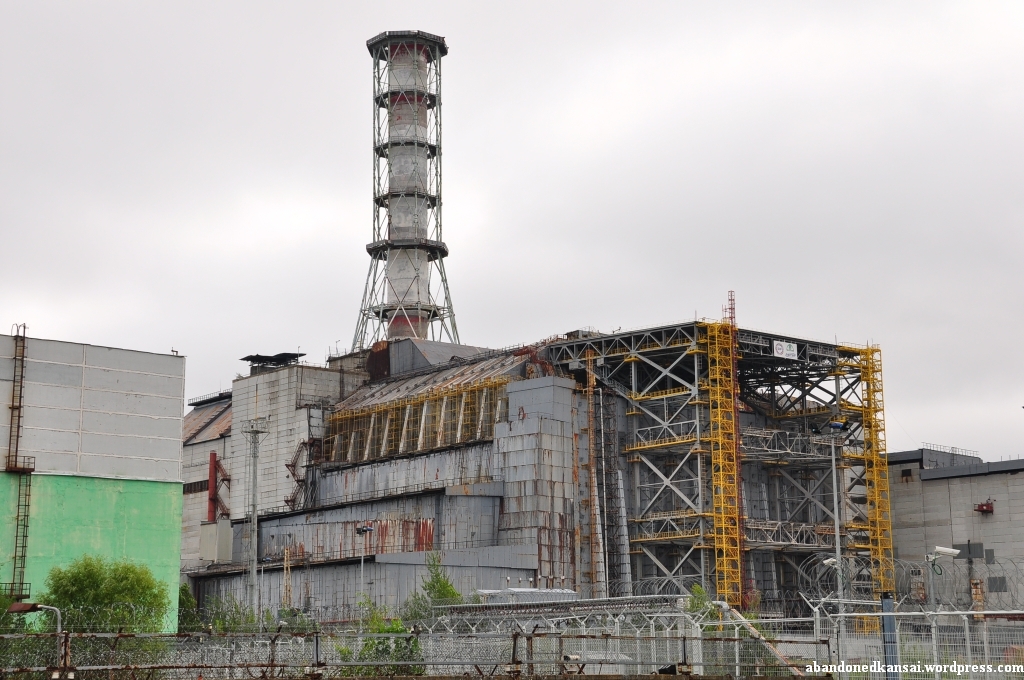
Exploring Pripyat on the first day was very exciting, no doubt about it. But it wasn’t until the morning of the second day that I fully comprehended where I was – and that’s why strongly recommend making the sarcophagus the first place to go if you ever have the chance to visit the Zone Of Alienation.
Don’t get me wrong, before I made my way to the Exclusion Zone I prepared myself quite well. I read up on the catastrophe and watched some documentaries. I studied maps and read reports by other people visiting the zone. The Chernobyl Nuclear Power Plant was clearly visible from Pripyat most of the time and the Geiger counter went nuts every now and then. But overall exploring Pripyat felt like exploring any of the 60 locations I visited before – just more spectacular; way more spectacular.
Entering the cooling tower of reactor #5 was awe-inspiring and then finally standing in front of the sarcophagus at reactor #4 was… It changed my perception of the area. Like I said, I was prepared and aware where I was, but finally seeing the place so familiar from TV while the Geiger counter shows that the level of radioactivity was 400 times the normal level even at a distance of 250 meters… All of a sudden everything became real. Way more real than before. Reading and watching TV is definitely no substitution for actually experiencing stuff – which makes it so hard to describe now how I felt standing there. Because the sight actually isn’t that impressive. A small monument in front of a security checkpoint we were not allowed to take photos of, with a greyish building in the background. But it was interesting how it brought back the imagines of the documentaries I’ve seen… and of the TV news I watched in the 80s, almost 25 years ago.
I just wish Novarka wasn’t behind schedule – the consortium won a contract worth 453 million Euro to build a new sarcophagus replacing the old one which looks quite dilapidated, but it is way behind schedule. A French consortium BTW, as Maxim wasn’t tired to point out – our guide was a very lighthearted guy, but there were two things he couldn’t stand. Well, three: militia, Russian vodka and French companies building stuff in the Zone Of Alienation.
(If you would like to know more about my trip to the Zone Of Alienation please *click here* to get to the “Chernobyl & Pripyat” special. For a map of the area please *click here*.)
Archive for the ‘Abandoned’ Category
Zone Of Alienation – Chernobyl: The Sarcophagus Of The CNPP
Posted in Abandoned, Chernobyl, Map, Monument, Power Station, Ukraine, Urbex, Visited in 2010, Zone Of Alienation on 2011/02/15| 2 Comments »




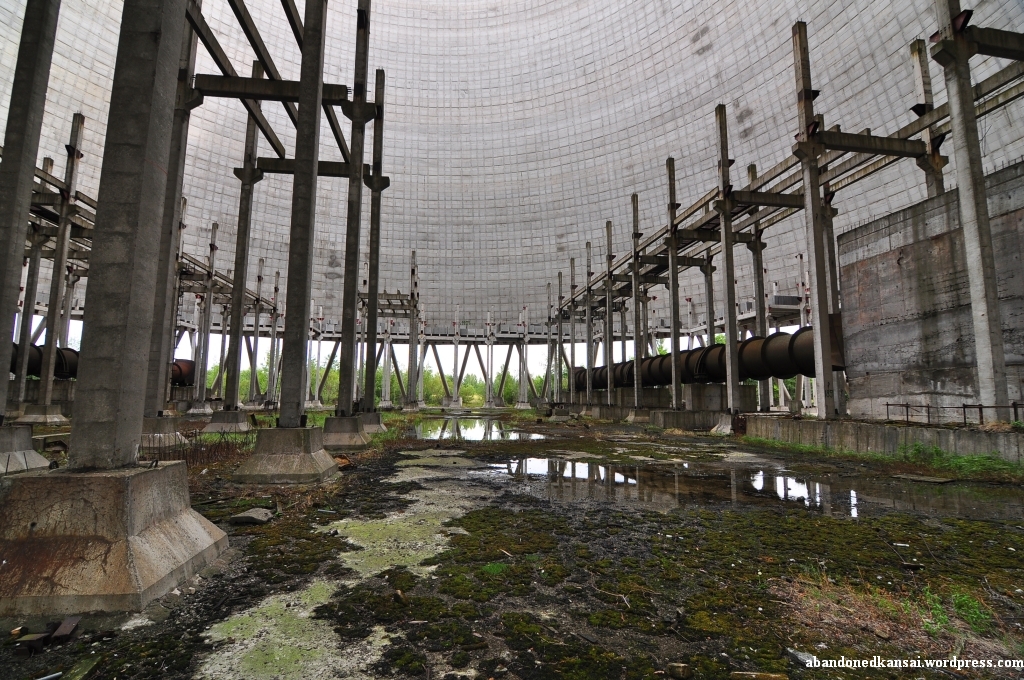
Zone Of Alienation – Chernobyl: CNPP Cooling Towers 5 & 6
Posted in Abandoned, Chernobyl, Map, Power Station, Ukraine, Urbex, Video, Visited in 2010, Zone Of Alienation on 2011/02/11| 5 Comments »
After spending the whole first day exploring Pripyat we started our second day by going to the Chernobyl Nuclear Power Plant to finally see the building where the tragic accident happened almost 25 years ago.
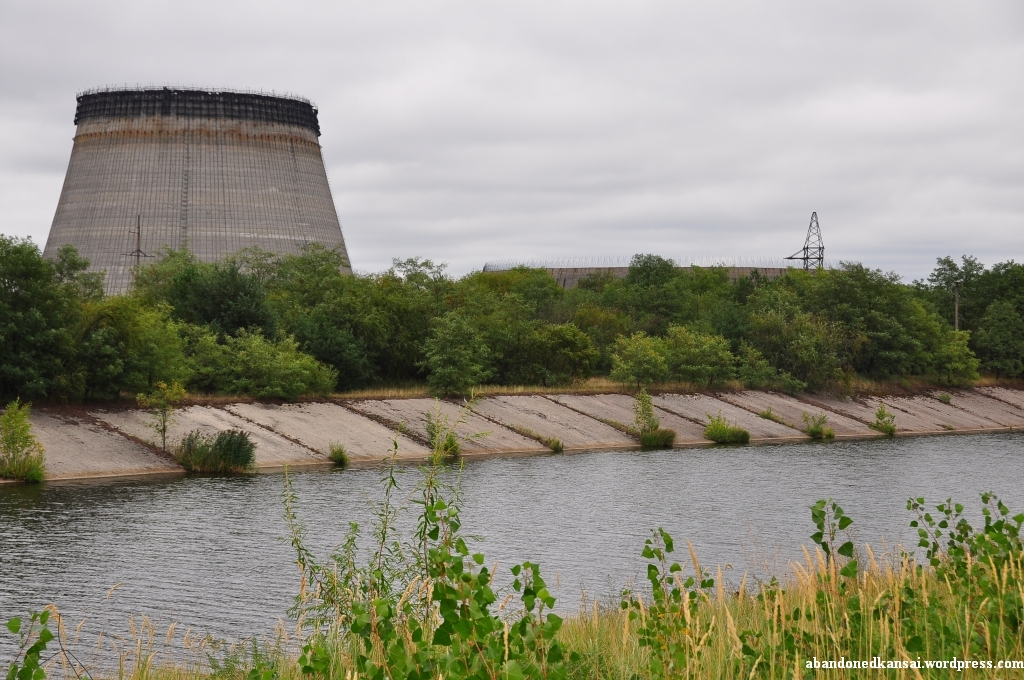
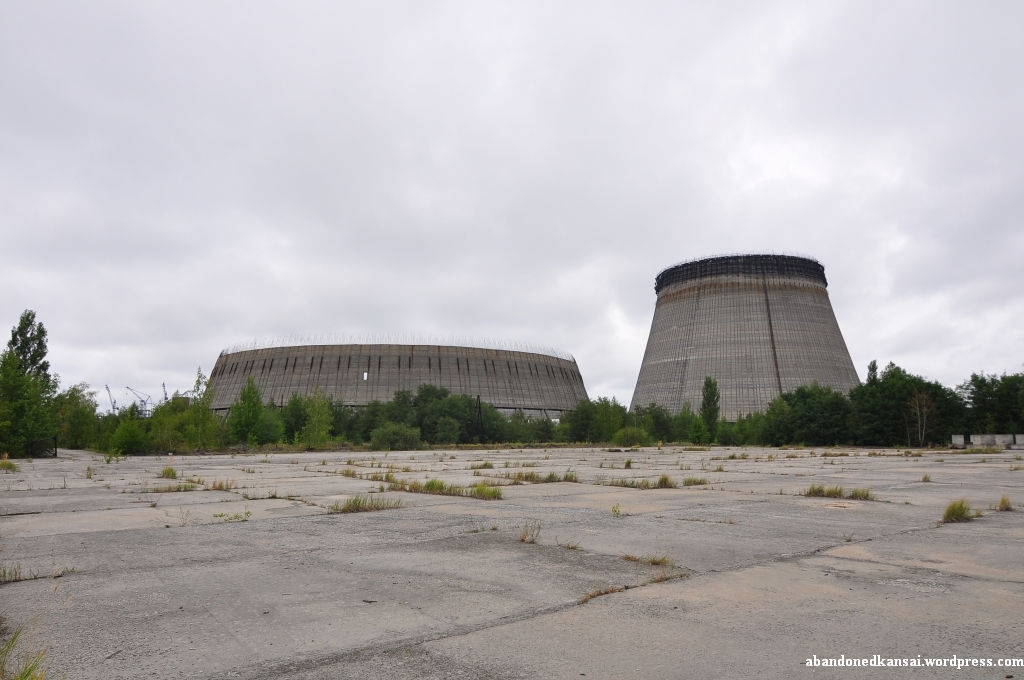
On the way to reactor 4, the one that blew up, we stopped at a water canal a couple of hundred meters away. From there we were able to have a look at reactors 5 and 6, under construction at the time of the accident, as well as their cooling towers. The original plan in the 70s and 80s was to have a huge power plant with up to 12 blocks, by far the biggest in the Soviet Union. After the accident the construction of the reactors 5 and 6 continued, but due the high levels of radiation in the area were put on hold on January 1st 1988 with most of the machinery left behind. When the Soviet Union dissolved a couple of years later and Ukraine became a sovereign state the plans of expanding the Chernobyl Nuclear Power Plant were finally scrapped and so the construction site became another abandoned place in that area.
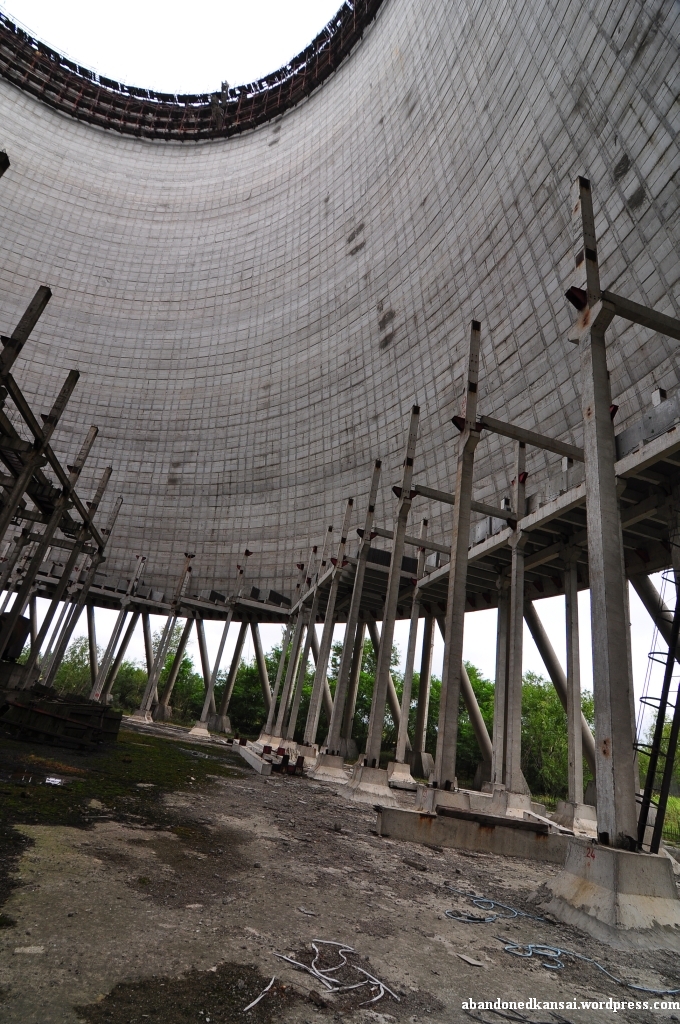
The stop was rather underwhelming and when one of the Swiss guys wanted to get closer I just thought “Really?”… But Maxim, after thinking for a couple of seconds since it wasn’t part of the schedule he planned for us, agreed and so we got back in the van, drove closer, crossed some railroad tracks by foot and walked towards the cooling towers. They looked interesting, but I still wasn’t impressed. Being in front of the almost finished cooling tower Sebi and Michi looked happier than ever before. After standing around for a minute or two I asked, without being serious at all, if we were able to get inside – usually the asphalt and concrete surfaces were not so much contaminated whereas the Geiger counter went nuts once we stepped on moss, grass or soil. To my surprise Maxim said something like “Yes, just make sure to walk this way!”, making a gesture with his hand.
I walked the 30 meters from the street to the cooling tower and entering the giant open hyperboloid structure almost was like entering a cathedral – even if you are not into the purpose of the building the architecture is still mind-blowing, especially when looking up. And then it hit me: I was actually standing in the half finished cooling tower of a nuclear power plant, only 2.5 kilometers away from where one of the biggest man-made catastrophe in history happened! A very humbling, fascinating and knee-softening moment.
Since entering the cooling towers wasn’t planned we only had about 20 minutes there, but given that the lighting was quite difficult it was actually enough – although Maxim told me on the way to the van that he once spent more than 3 hours with a photographer there. Just to shoot the cooling tower. And although I spent two days in the zone, seeing maybe a third of the interesting locations, I often had the feeling that I’ve spent maybe a tenth of the time it deserves at every building…
(If you would like to know more about my trip to the Zone Of Alienation please *click here* to get to the “Chernobyl & Pripyat” special. For a map of the area please *click here*.)





Zone Of Alienation – Pripyat: Police Station
Posted in Abandoned, Europe, Map, Military, Pripyat, Ukraine, Urbex, Video, Visited in 2010, Zone Of Alienation on 2011/02/07| 14 Comments »
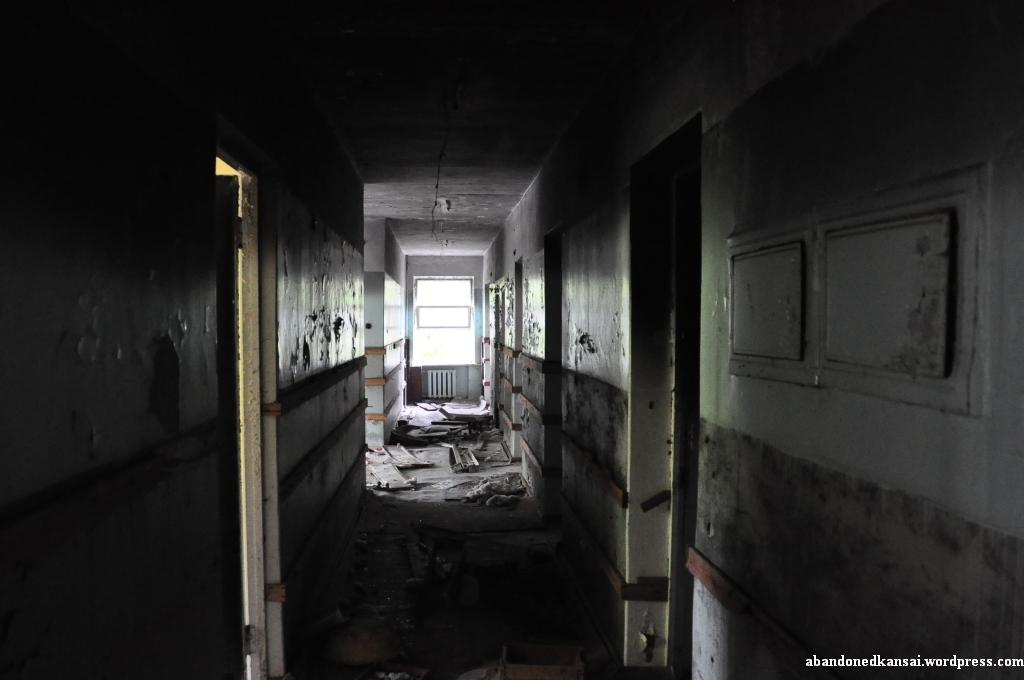
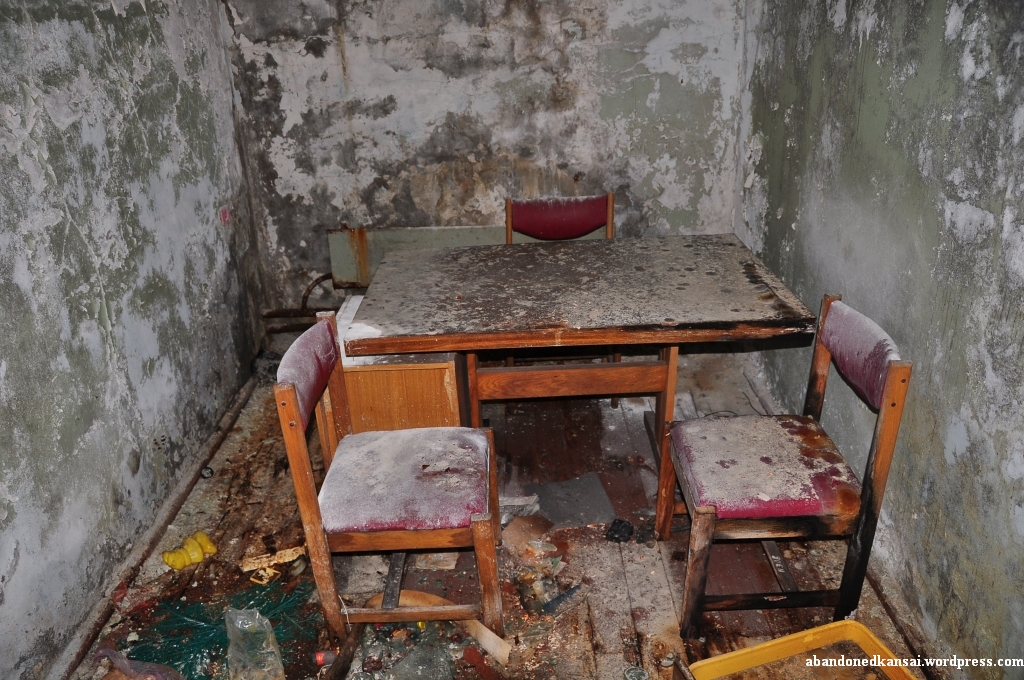
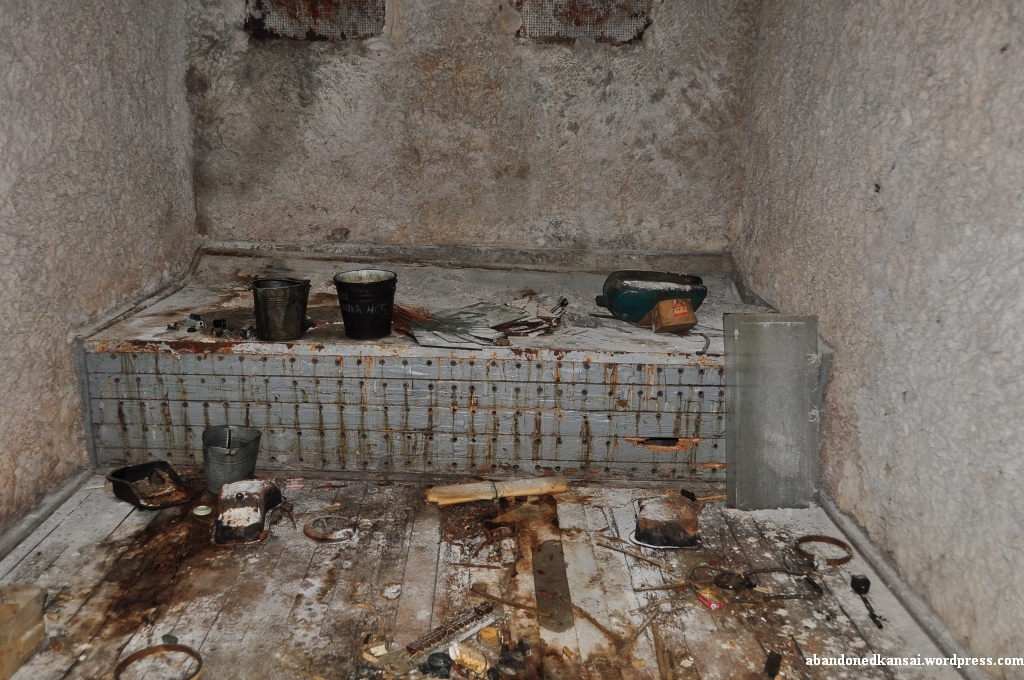
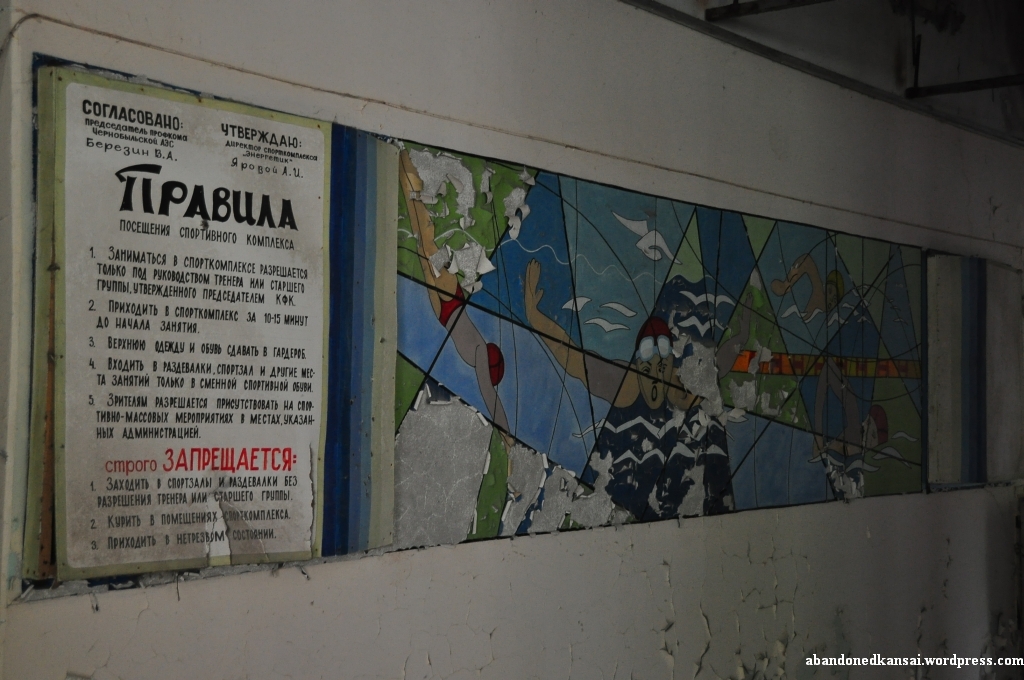
Although Pripyat was a city predominantly inhabited by educated and privileged people of course no city of that size could exist without a police station – it sounds so cliché, but most of the arrested people were accused of alcohol related deeds: making home-brew liquor (samogon, самого́н), driving under influence or being drunk in public. Pripyat’s police station was located at the western end of the town, right across the street from the fire department and in close proximity of the famous Jupiter factory we were visiting the next day. After visiting rather well-known touristy spots like the Swimming Pool “Azure” and Middle School #3 the Police Station was the last destination in Pripyat on the first day.
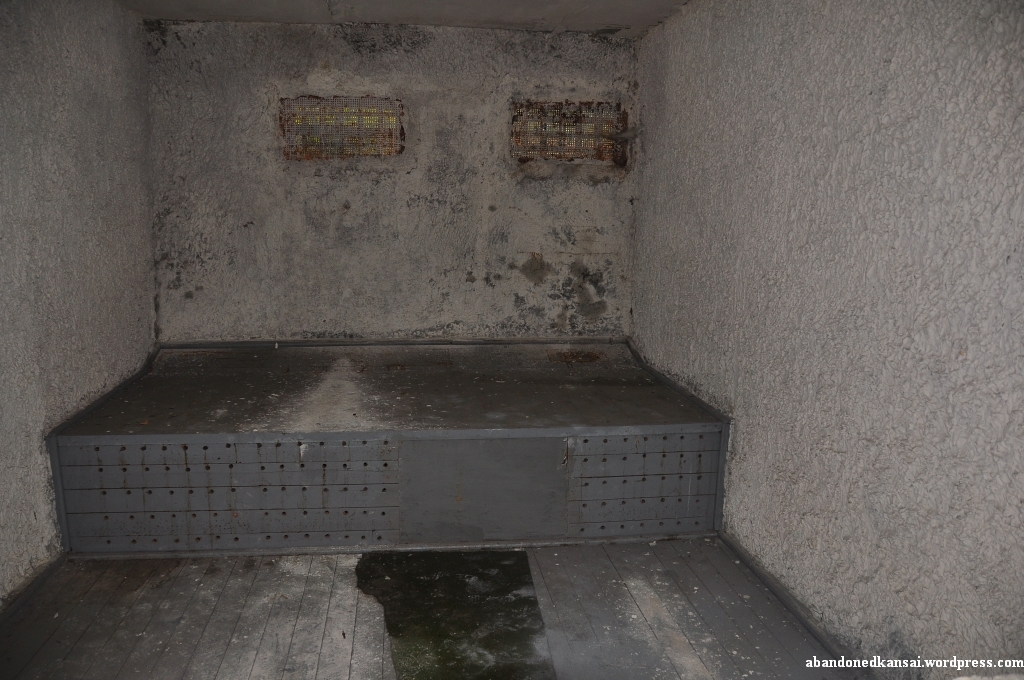
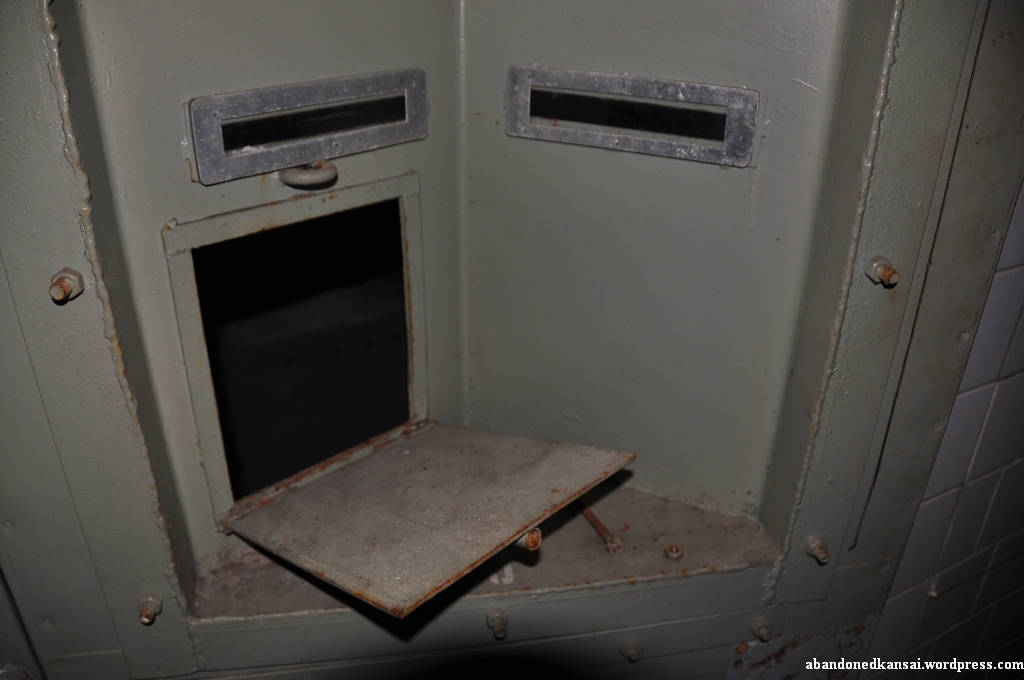
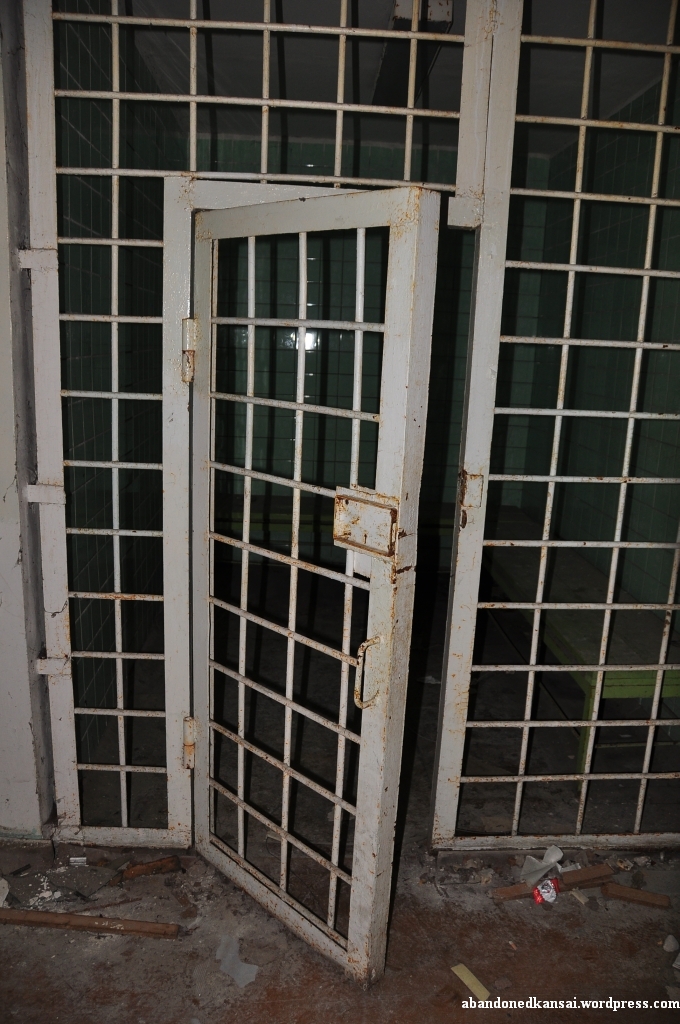
The Police Station was in as bad shape as the rest of the city, just with more books and files. We were only able to see the ground floor since time was running out and Maxim tried to keep the little group together to guide us through the prison part of the police station which was pitch black; and that’s why this time I’ll have to post some photos taken with flash. When I show people some pictures of my visit to Pripyat I often get reactions like “I would expect screaming zombies charging at me at any time!”. I actually never had that feeling, the whole city reminded me more of George Orwell’s “Nineteen Eighty-Four”. Especially when walking through the dark prison hallway… You could almost see Winston Smith being interrogated in one of the cells and being tortured in another one. To my surprise I was the only one with those associations: My fellow Swiss travelers had only heard about the book, Maxim had no idea what I was talking about.
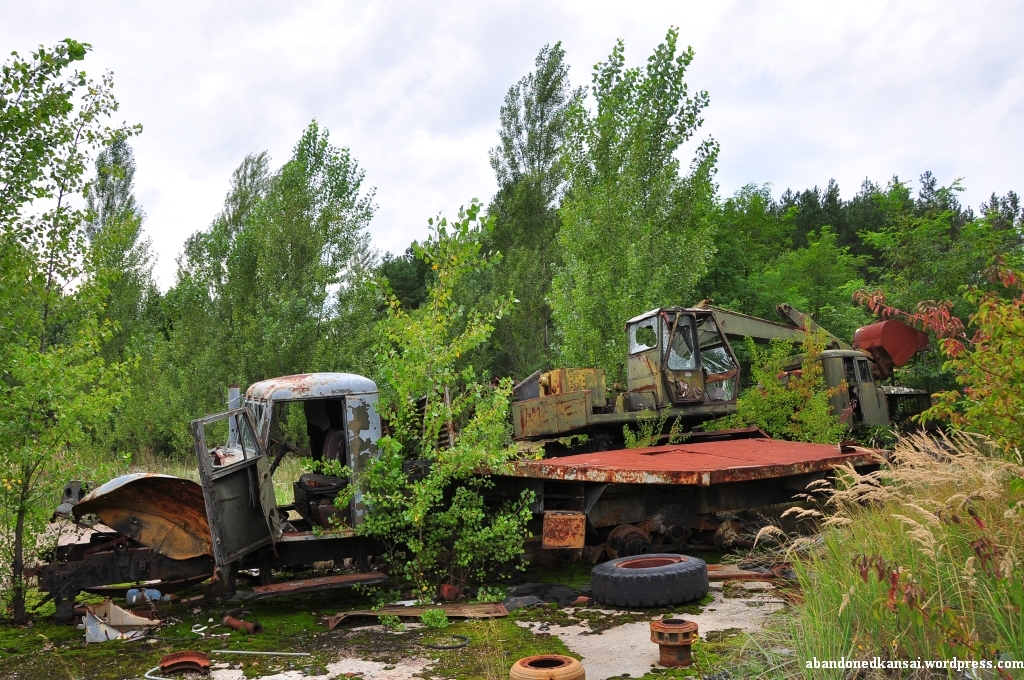
The door leading to freedom at the other end of the cell hallway actually released us to the backyard of the Police Station, once used as a repair shop for automobiles. There we found the remains of all kinds of trucks, broaching machines and even small reconnaissance tanks. Being contaminated too much to be used anymore, but not enough to be brought to the official vehicle graveyard, these wheels and chains were left behind to rust away. And that’s what they were doing. At least what was still left after looters removed the actual wheels as well as doors, headlights, wipers and even motors!
(If you would like to know more about my trip to the Zone Of Alienation please *click here* to get to the “Chernobyl & Pripyat” special. For a map of the area please *click here*.)






Zone Of Alienation – Pripyat: Middle School #3
Posted in Abandoned, Europe, Map, Pripyat, School, Ukraine, Urbex, Video, Visited in 2010, Zone Of Alienation on 2011/02/03| 5 Comments »
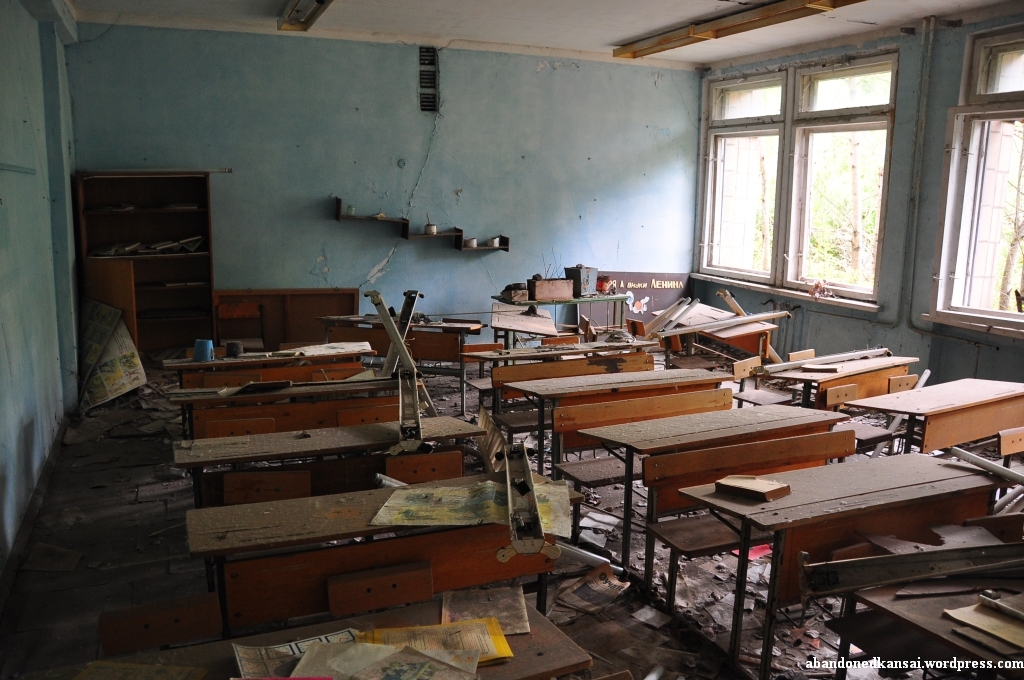
Right next to the indoor Swimming Pool “Azure” was the Middle School #3 at Sportivnaya Street 14, one of 5 secondary schools in Pripyat. Due to its convenient location this school is part of the standard program not only for day tourists, but for pretty much everybody visiting the city.
While middle school #1 partly collapsed in July of 2005, #3 was still intact, but in pretty bad shape. Nowadays being one of the most visited places in town this school for several hundred children must have been a place of education at least up to par with western institutions of its time. I was especially surprised to see several small rooms with pianos, Beethoven sheet music still lying around. Back in the days my middle school had a piano, too. But only one, and I’ve never heard anybody playing…
The atmosphere at Middle School #3 was pretty creepy, maybe because the tone was set pretty close to the entrance: On the way to the kitchen we found several dozens gas masks scattered all over the floor. While I remember certain Cold War related drills at school (mine actually had a bunker including an emergency hospital underneath) I’m pretty sure we never dealt with gas masks, at least not outside of chemistry lessons. For Maxim, who was in his early 30s and therefore spent some of his school education in the communist system, it was perfectly normal to have gas masks at schools as they were part of his drills. I guess while the western hemisphere was “only” in fear of nuclear missiles, the Soviets were prepared for all kinds of attacks…
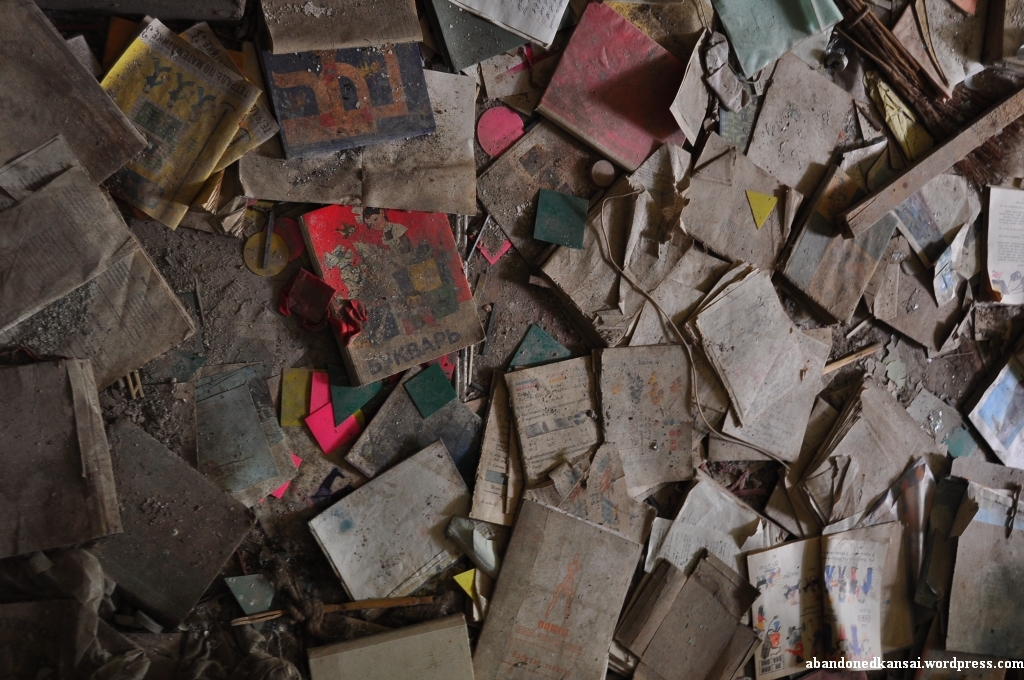
The gas masks were where once the cafeteria must have been as a kitchen was right next to it. From there I could get outside to an inner courtyard, but the floor outside was in really bad shape, so I didn’t risk a broken ankle and stayed inside. While the other guys already moved on to other parts of the building I went up one floor where I found the piano rooms and several class rooms. Parts of the floor were covered with books and documents up to 20 centimeters high, a really sad sight. It’s said that the powers that be systematically destroyed the interior of the buildings in Pripyat to discourage looters from entering the Zone Of Alienation – but it was nevertheless unpleasant to see printed knowledge been treated like that. Who would steal school books anyways?
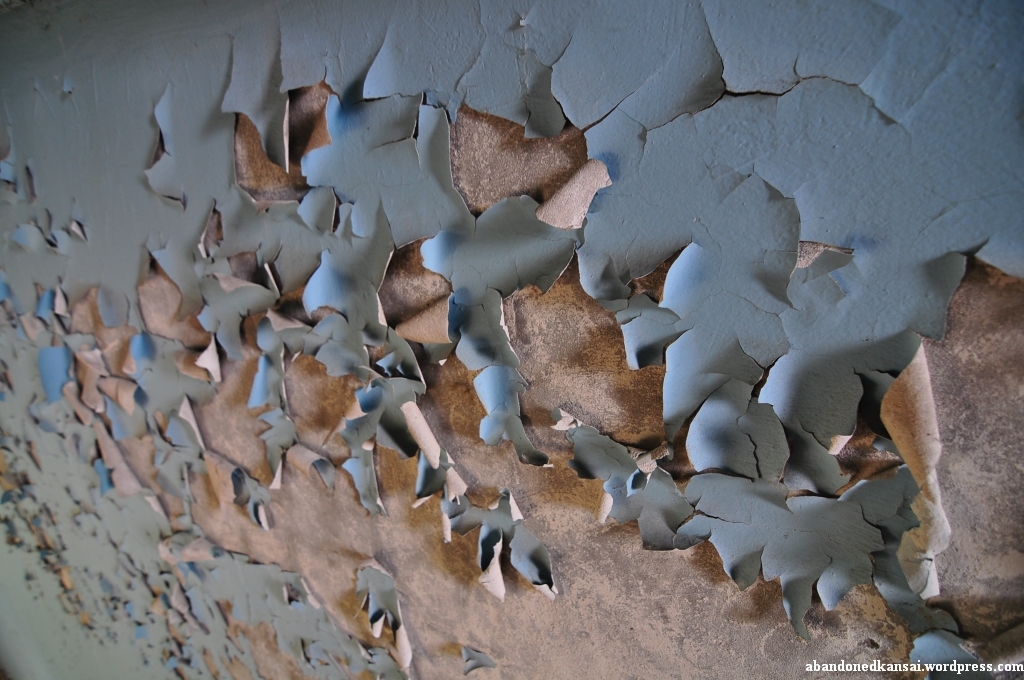
The building itself was in a progressed state of natural decay. In addition to the paint peeling off a lot of the walls were mold-infested, putting the school on a fast track to collapse – after exploring Middle School #3 it didn’t surprise me at all that #1 was one of the first buildings in Pripyat that collapsed, even without having seen it myself. At that point school #3 was by far the most uncomfortable place I’ve seen in Pripyat. But not for long as the Police Station was next on our itinerary…
(If you would like to know more about my trip to the Zone Of Alienation please *click here* to get to the “Chernobyl & Pripyat” special. For a map of the area please *click here*.)







Zone Of Alienation – Pripyat: Swimming Pool “Lazúrnyj” (“Lazurny” – Azure)
Posted in Abandoned, Europe, Map, Pripyat, Spa / Onsen, Sports, Ukraine, Urbex, Video, Visited in 2010, Zone Of Alienation on 2011/01/31| 1 Comment »
After enjoying the stunning view from the roof top of an apartment building in Pripyat’s north we drove back to the center of the city to visit a classic sightseeing spot pretty much all visitors to the Zone Of Alienation and quite a few fans of video games know very well – the swimming pool “Lazúrnyj” (Azure).
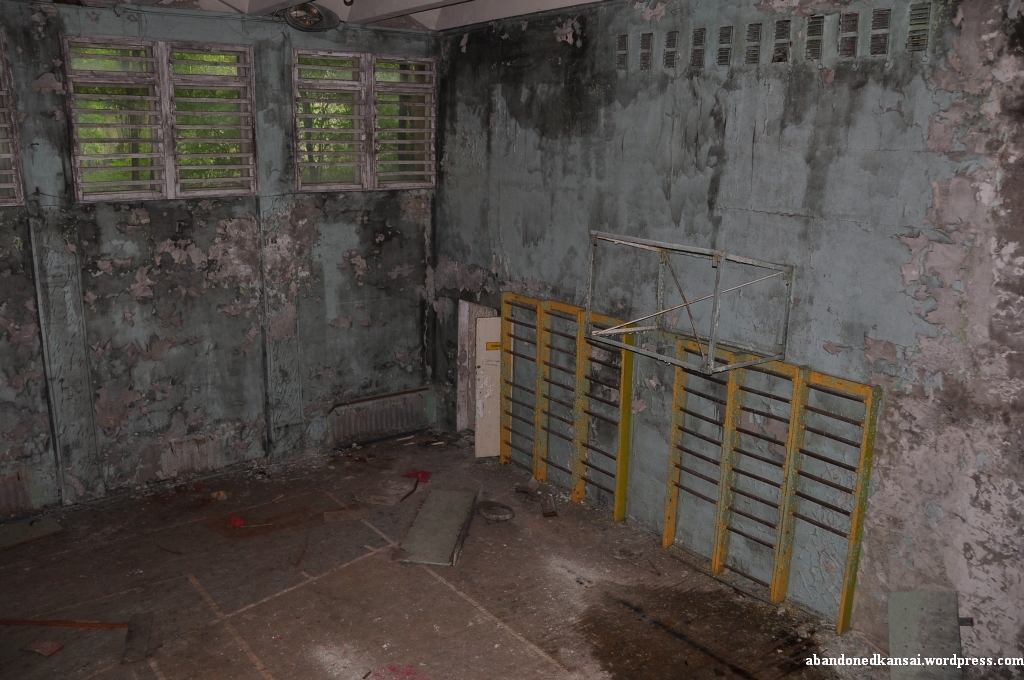
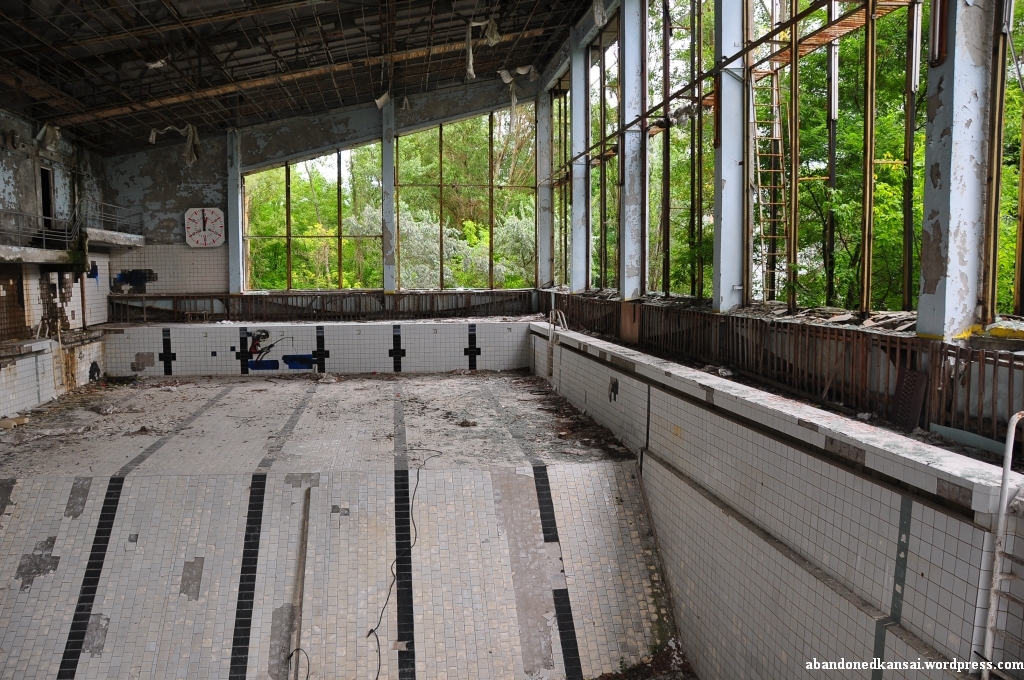
Although being one of actually three indoor swimming pools in Pripyat, Azure is by far the most famous one in town since it was featured as a level in the video game “Call of Duty 4: Modern Warfare” and now is part of the standard program for day groups. Furthermore Azure wasn’t just a swimming pool, it also housed a gymnasium – and it wasn’t abandoned right away with the city according to Maxim. Liquidators and other people working in the Zone Of Alienation used the pool as long as 1997 when it was finally abandoned – sadly there are no photos available anywhere about the that period of time.
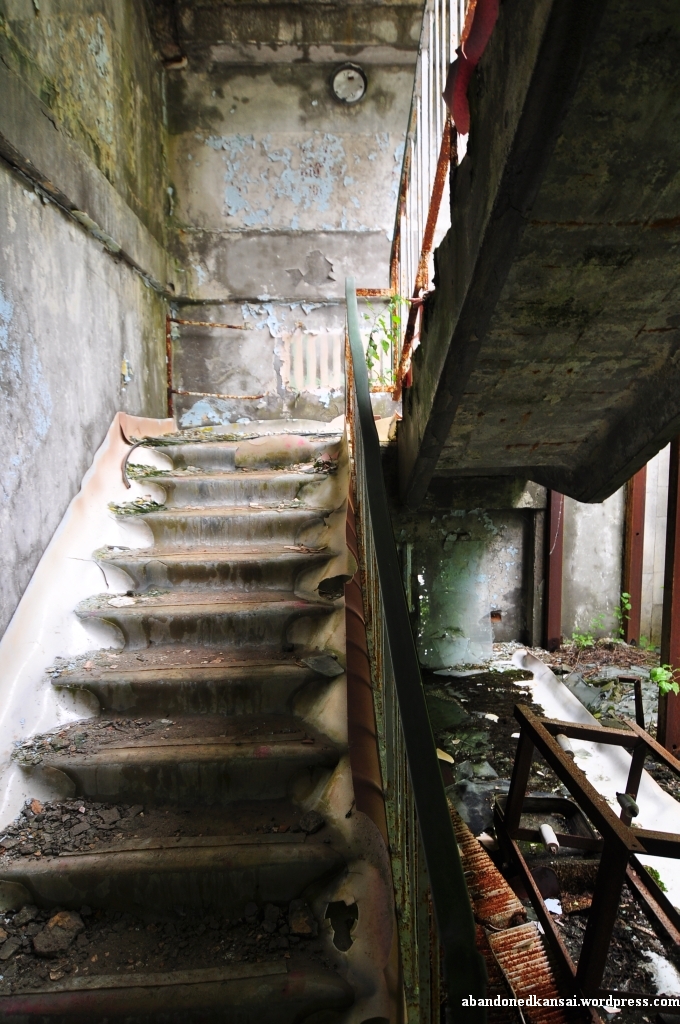
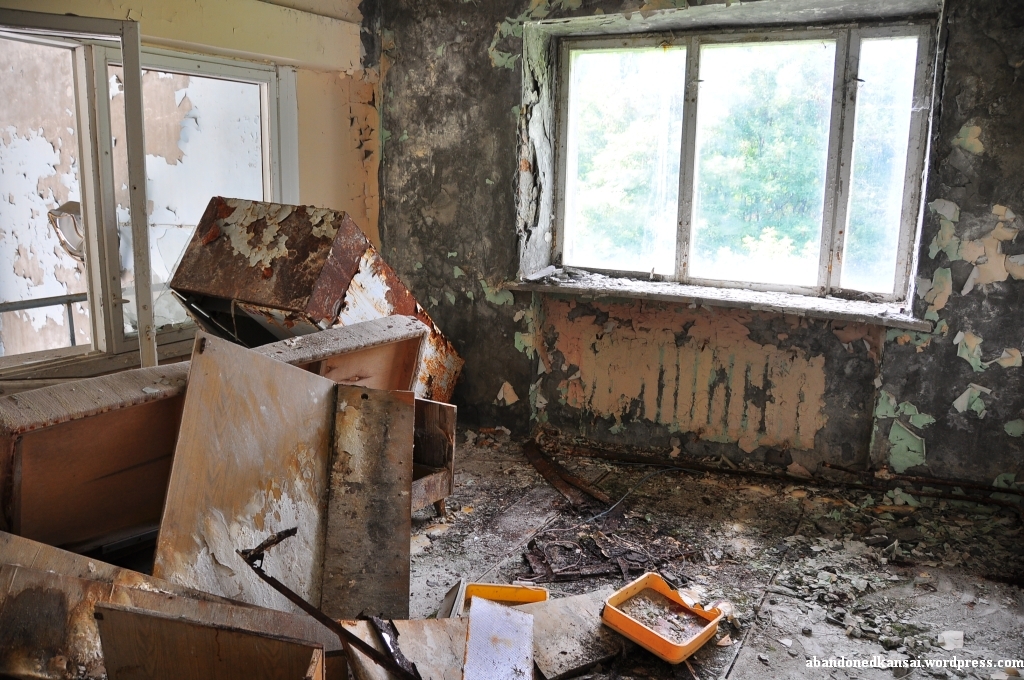
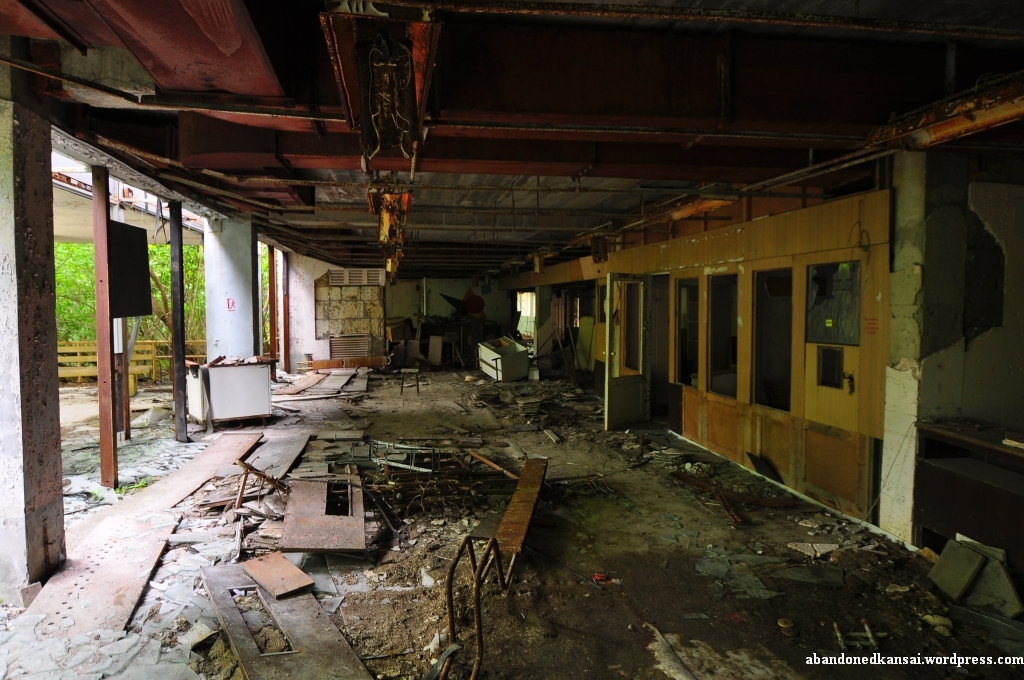
Since I took some outdoor pictures first I lost contact with the other guys even before entering the building. The entrance area looked pretty run-down and vandalized, so I made my way up the first staircase I saw – it was covered in plastic sheeting, now scruffy and cracked. Public baths, especially in Japan where I currently live, are supposed to be spotlessly clean, but of course Azure was in as bad shape as the rest of the city and therefore the building felt even a little bit more depressing. The rather small gymnasium wasn’t nearly as impressive as the huge one with the great view at the Palace of Culture, but the swimming pool itself was quite a sight, even without having played the previously mentioned video game.
(If you would like to know more about my trip to the Zone Of Alienation please *click here* to get to the “Chernobyl & Pripyat” special. For a map of the area please *click here*.)





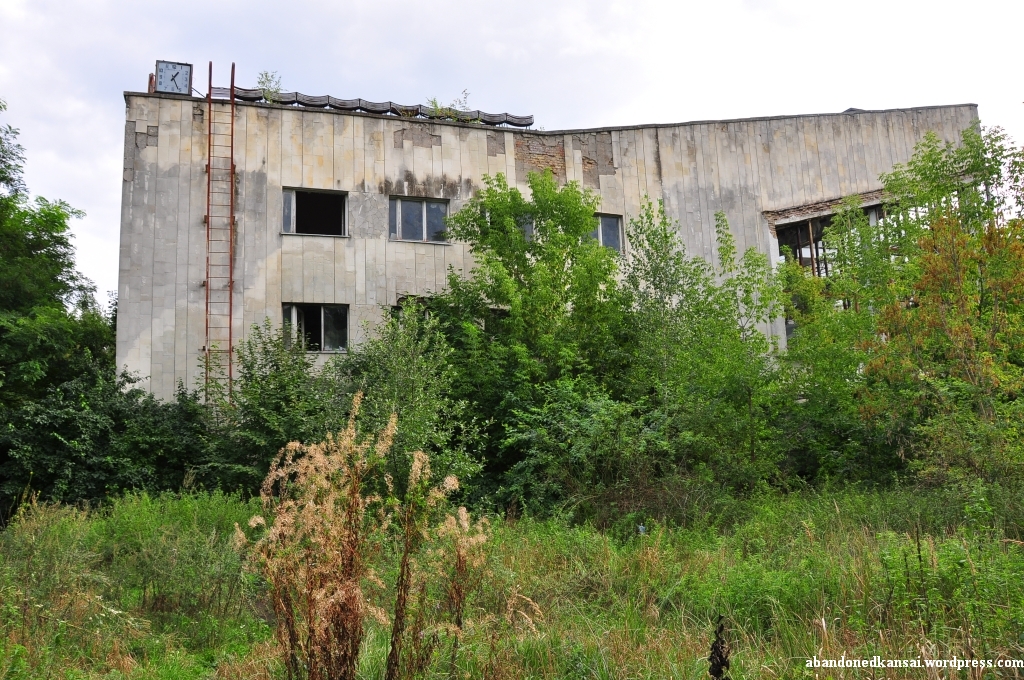
Zone Of Alienation – Pripyat: Apartment Building at Lesya Ukrainka Street 56
Posted in Abandoned, Europe, House, Map, Pripyat, Ukraine, Urbex, Video, Visited in 2010, Zone Of Alienation on 2011/01/27| 5 Comments »
Before going to Pripyat there were two things I badly wanted to do: I wanted to take a really good picture of the ferris wheel at the Amusement Park – and I wanted to have a good view over the city from the top of one of the buildings.
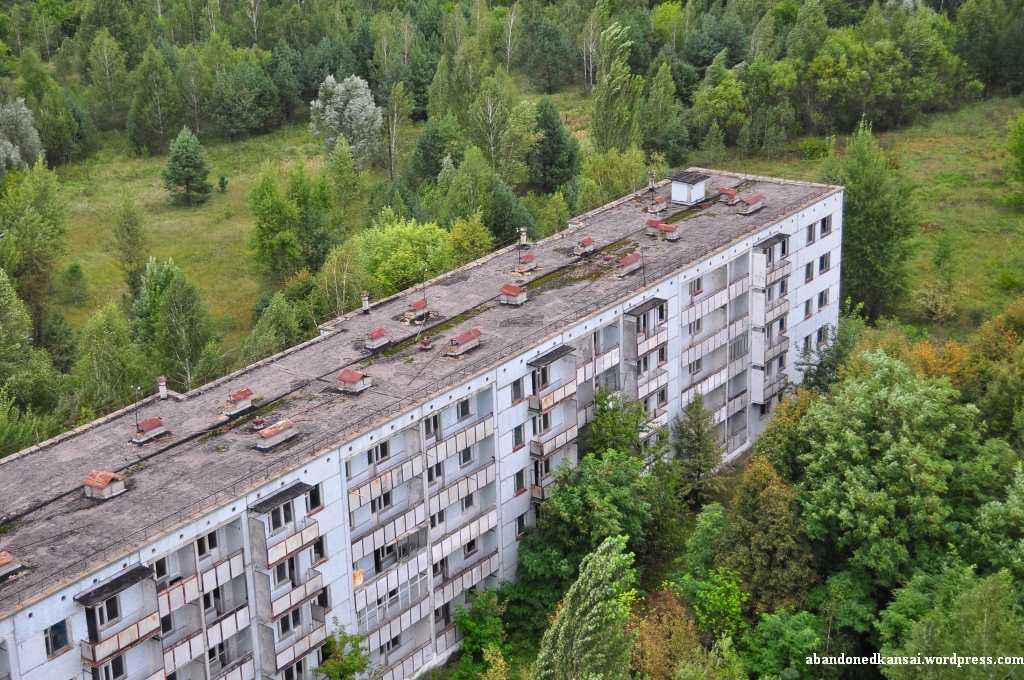
Of course officially it’s way too dangerous to allow people to go on top of any of those buildings, in countries like Germany and Japan they probably wouldn’t even let you inside most of them, but of course nobody really cares about those rules as seen many, many times in magazines, on TV and the internet. So after we left the supermarket we drove through the city for quite a while to get to the northwestern part of Pripyat. There was a 16-story building rather far away from the main attractions and in close proximity of some unfinished buildings. Maxim, who still looked a little bit… well… hungover… told us that he would “guard the car” and asked us to be careful and to stay away from the edges so we won’t be seen by the units policing the area occasionally – and he gave us 30 minutes to get back. (Strangely enough Maxim wasn’t worried that much about 35 minutes later when we running late a bit. We were on our way down and at around the 9th or 10th story we heard a car horn making quite some noise. Being used to unofficial explorations I panicked for about a second or two until I realized that I had no reason to really worry about anything. And neither had Maxim… obviously.)
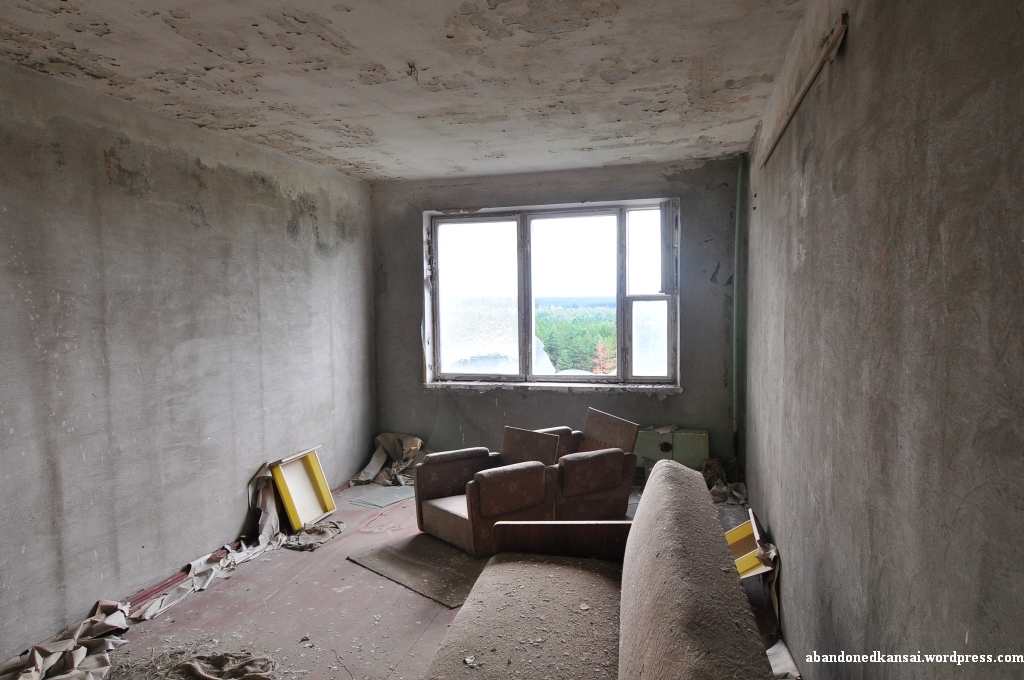
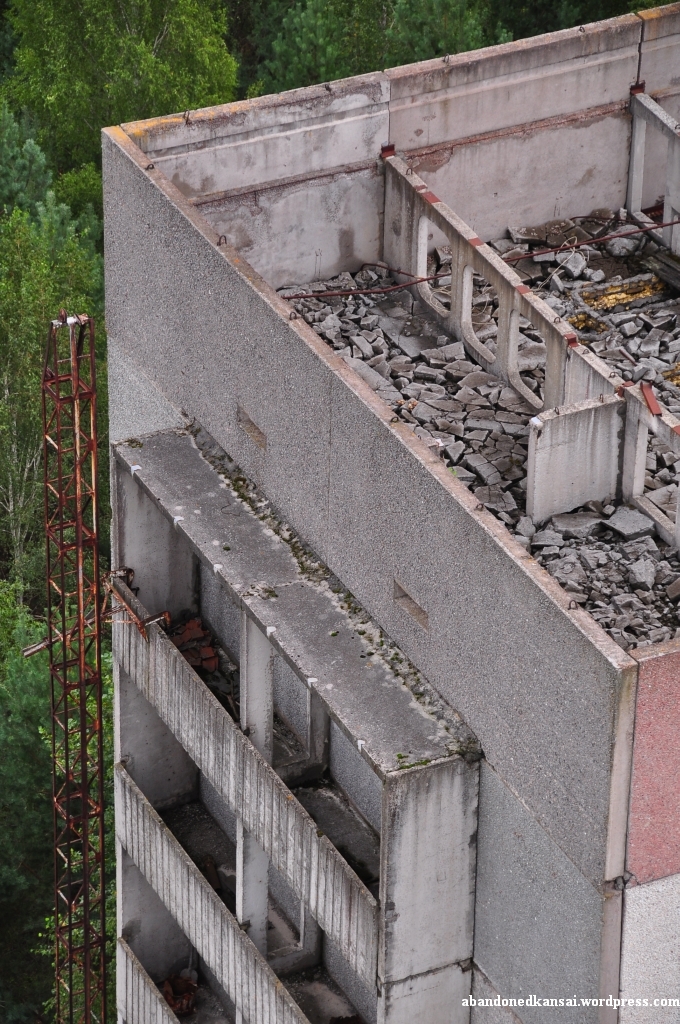
The entrance of the building at Lesya Ukrainka Street 56 didn’t exactly look like a building you really want to enter, let alone stand on top of, but that didn’t cross the mind of either of us – we were eager to experience a view to remember. On the way to the roof I made a quick stop at one of the floors to see with my own eyes how much damage the liquidators and looters did to the apartments. Most of the rooms were indeed empty, electronics were nowhere to be seen and of course both wallpapers and paint were falling off the walls. At the top floor was a machinery room where we had to climb a wooden chair to get to the opening to actually get onto the flat roof. Climbing that chair and looking outside was another magic moment, almost as intense as when I saw the ferris wheel for the first time at the gymnasium of the Palace of Culture – not even two hours earlier, but it seemed like it had been weeks ago.
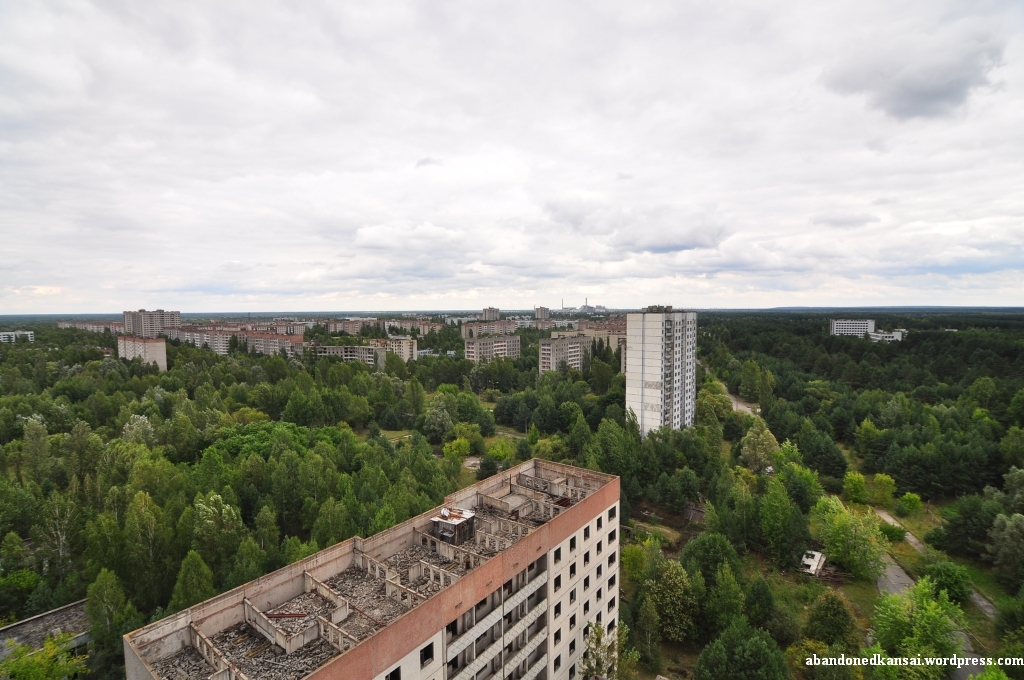
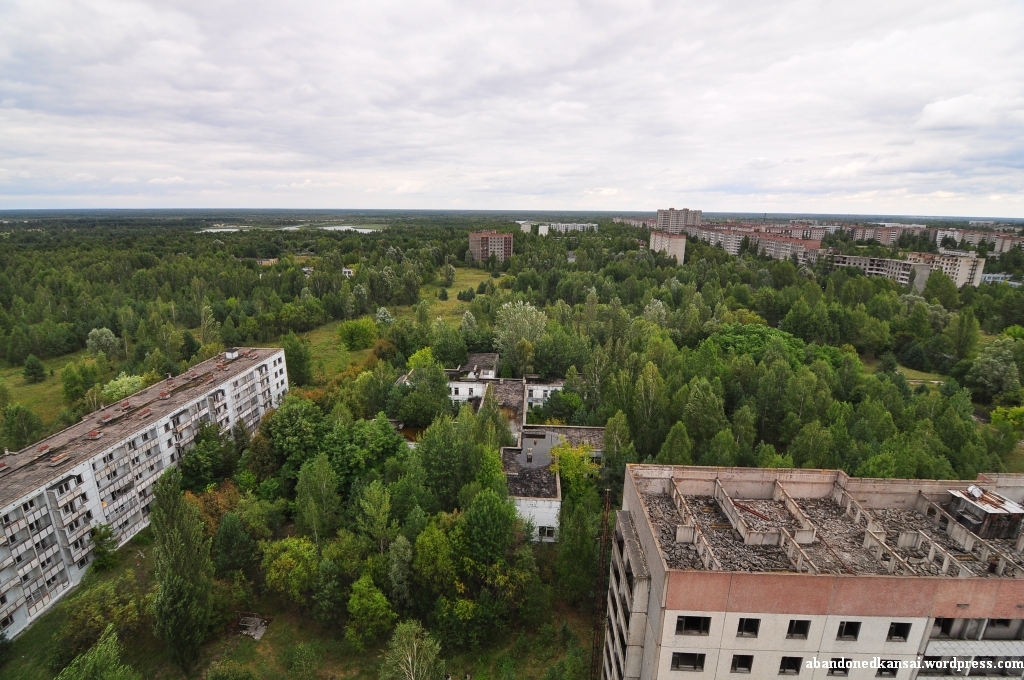
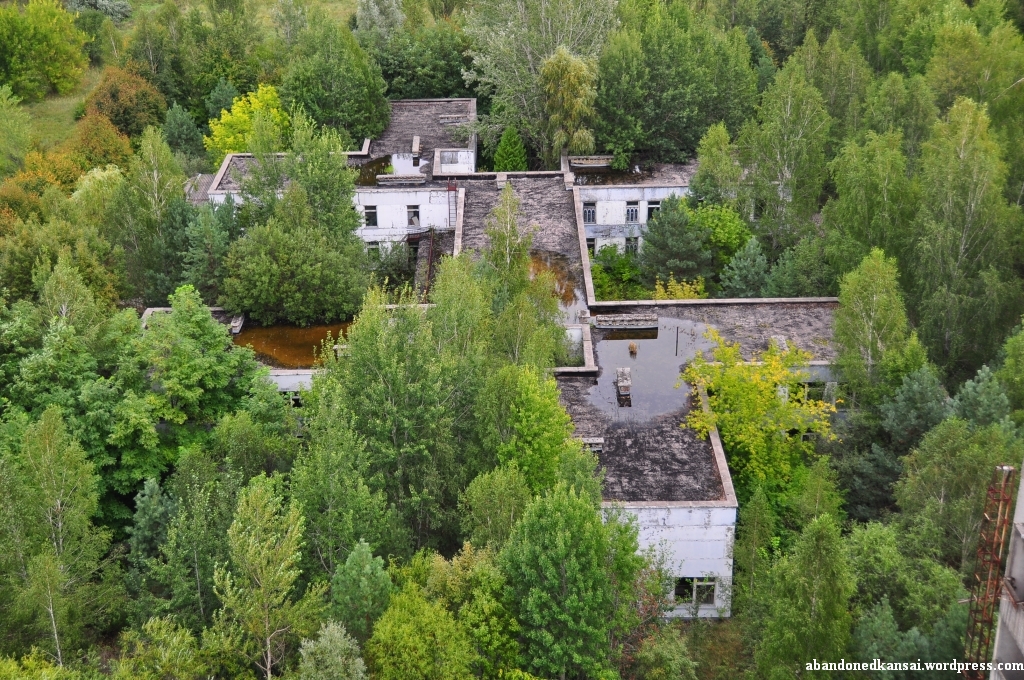
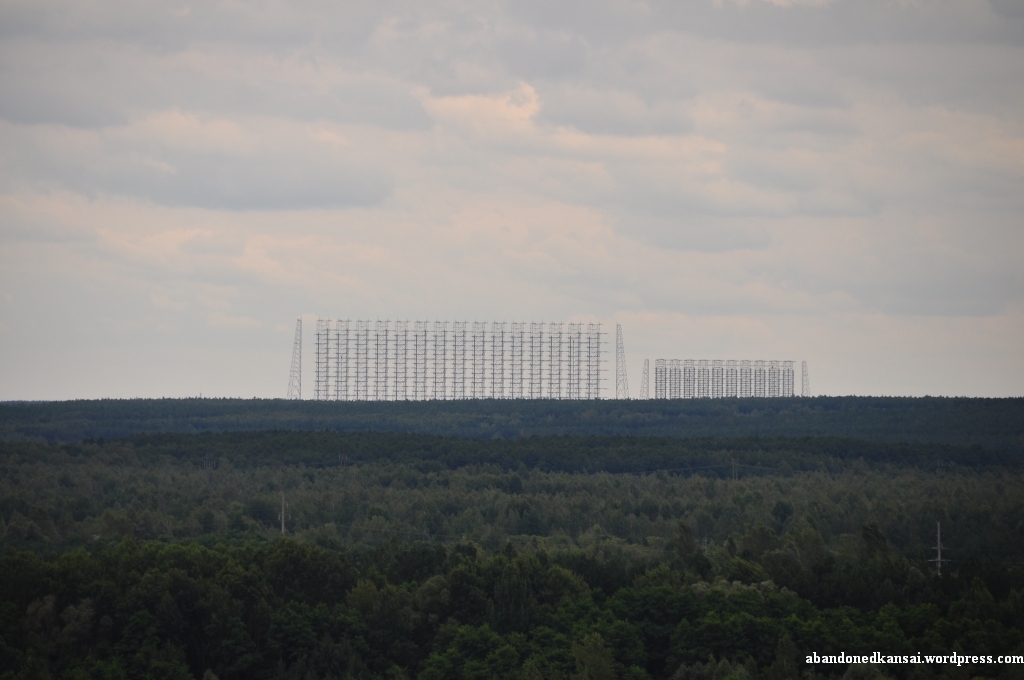
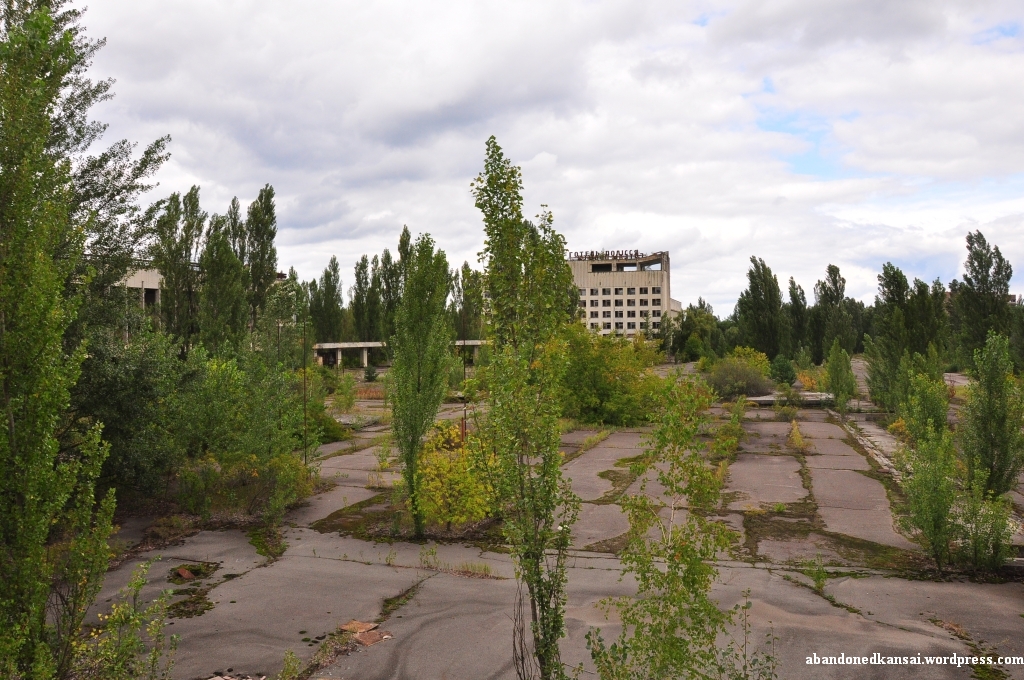
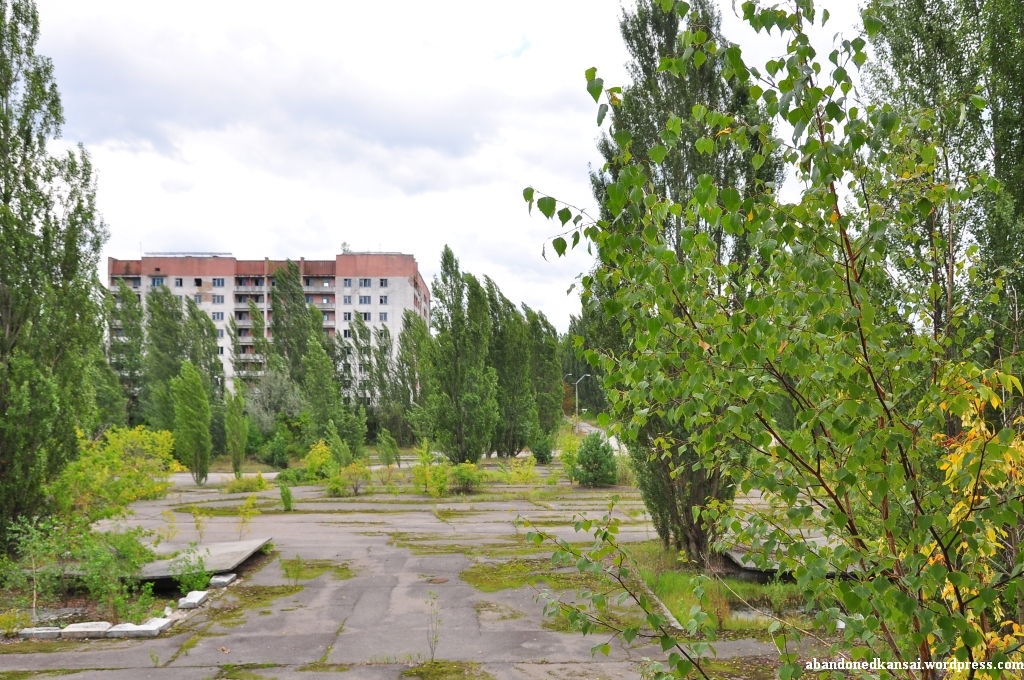
Stepping onto the roof I actually saw just green and grey-ish blue at first – the almost endless forest west of Pripyat and the impressive dramatic sky of that late summer day. The view was breathtaking and seeing Pripyat for the first time from that perspective I realized how big the city really was and how much of it was re-claimed by nature. Lots of the smaller buildings were completely swallowed by the sea of trees and even some of the bigger ones looked like they were drowning. In the south the Jupiter Factory was rising from the forest and at the horizon the remains of the Russian Woodpecker, part of the Soviet Union’s anti-ballistic missile program, were still defying nature. And in the distance in the southeast the Chernobyl Nuclear Power Plant was reminding everybody why the city to our feet was abandoned…
(If you would like to know more about my trip to the Zone Of Alienation please *click here* to get to the “Chernobyl & Pripyat” special. For a map of the area please *click here*.)




Zone Of Alienation – Pripyat: Supermarket
Posted in Abandoned, Europe, Map, Pripyat, Supermarket, Ukraine, Urbex, Visited in 2010, Zone Of Alienation on 2011/01/23| 2 Comments »
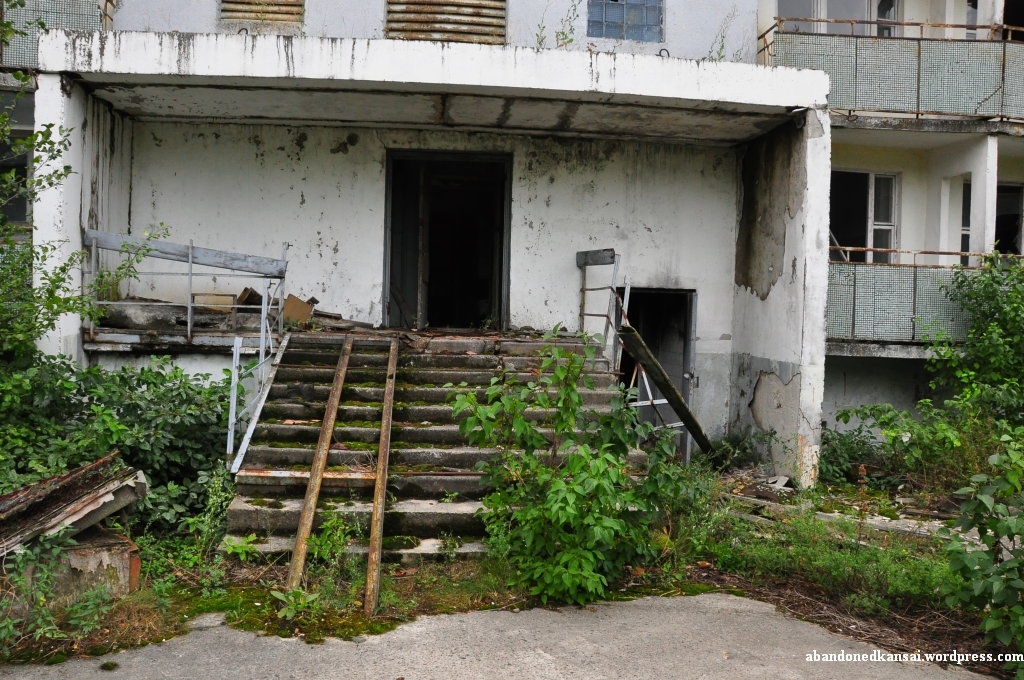
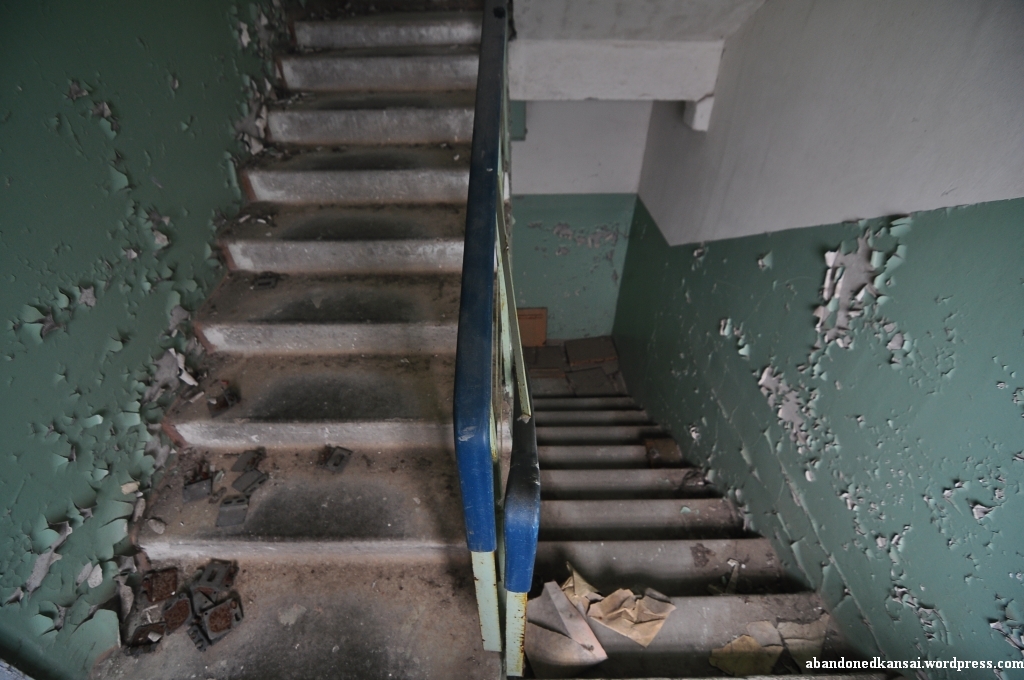
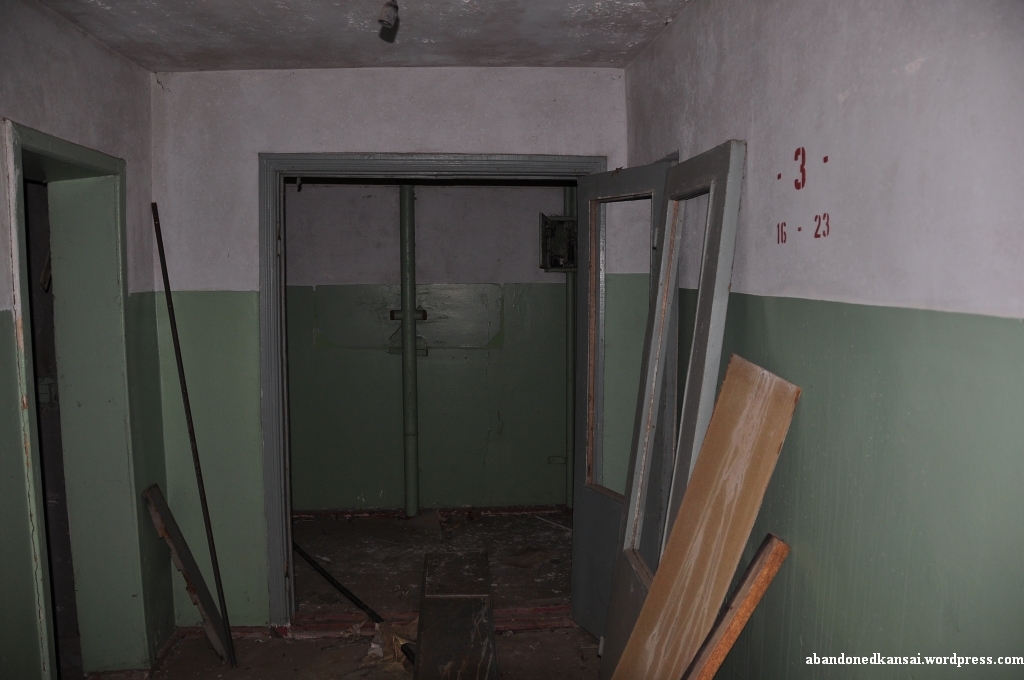
During our visit to the Zone Of Alienation our guide Maxim asked us several times if there is anything specific we really want to see. After we’ve seen the standard attractions Palace of Culture and the Amusement Park I actually wanted to get an overview of the city and since there are so many well-known pictures people standing on top of buildings I asked Maxim if we could do that, too. Of course officially it is way too dangerous and therefore forbidden, but after a well-timed pause of like 10 seconds, part of the program as the information we got about every location, Maxim told us that he knows a building where we might be able to “risk it”. But first he wanted to show us the supermarket on the way to the car.
Since Pripyat was a city built to house the personnel working at the nearby nuclear power plant a lot of highly educated and well-payed people lived in the town – Pripyat was a privileged city in many, many ways. Maxim illustrated that by mentioning that the supermarket in Pripyat was one of the few places in the Soviet Union that actually sold Chanel Nº 5. In times when every one hit wonder teeny idol sells half a dozen perfumes as merchandising the Chanel thing might not seem to be a big deal, but given the political situation back in 1986 it is actually the perfect example of how high the standard of living in Pripyat really was.
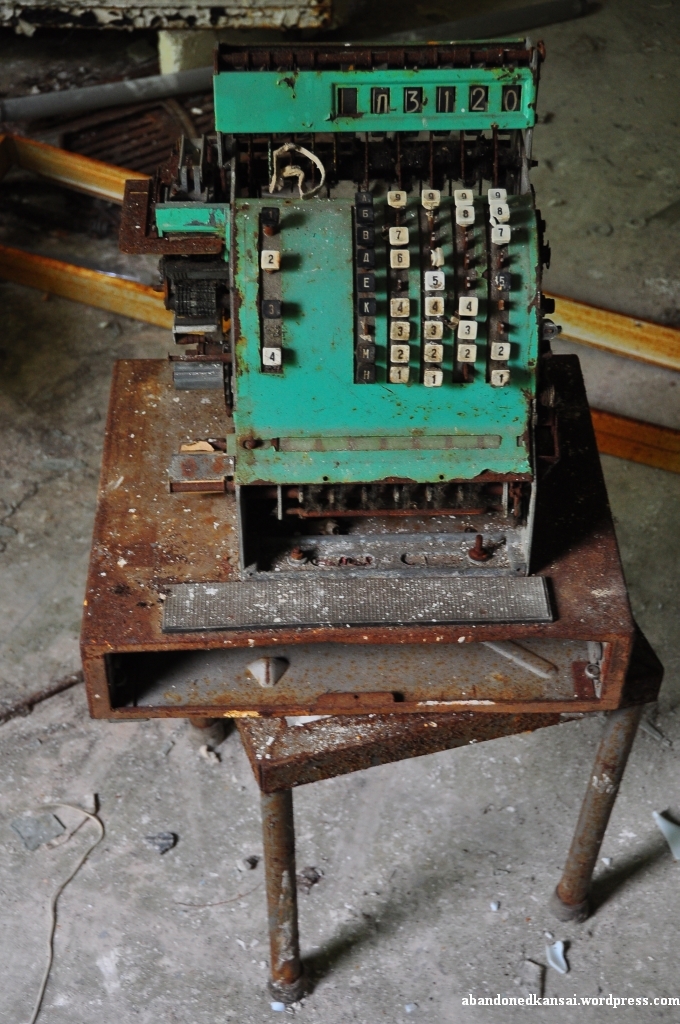
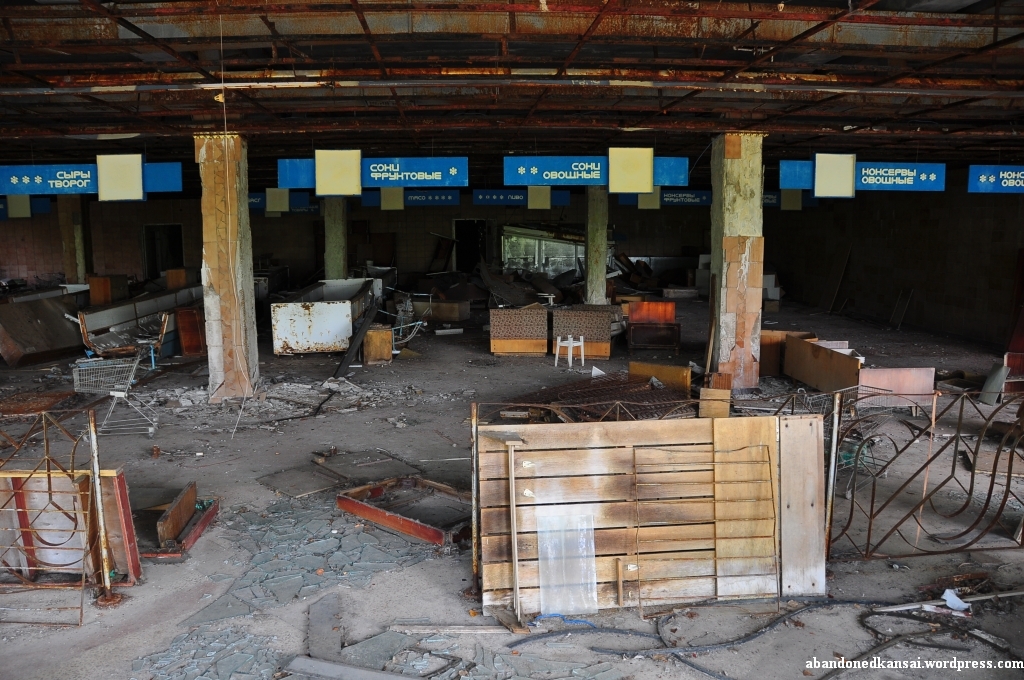
Nowadays the central supermarket, which was part of a small shopping mall, is quite a sad view, but in 1986 it must have been state of the art with a reputation that good that people from the surrounding area took long trips to shop there. The ground floor was mainly for food and the huge freezer cabinets with their isolation containers cracked open made the place look rather creepy. The entire floor was in disarray with shopping carts, shelves and a bunch of broken furniture scattered all over the ground – pretty much the only things unharmed were the signs showing where the aisles once were.
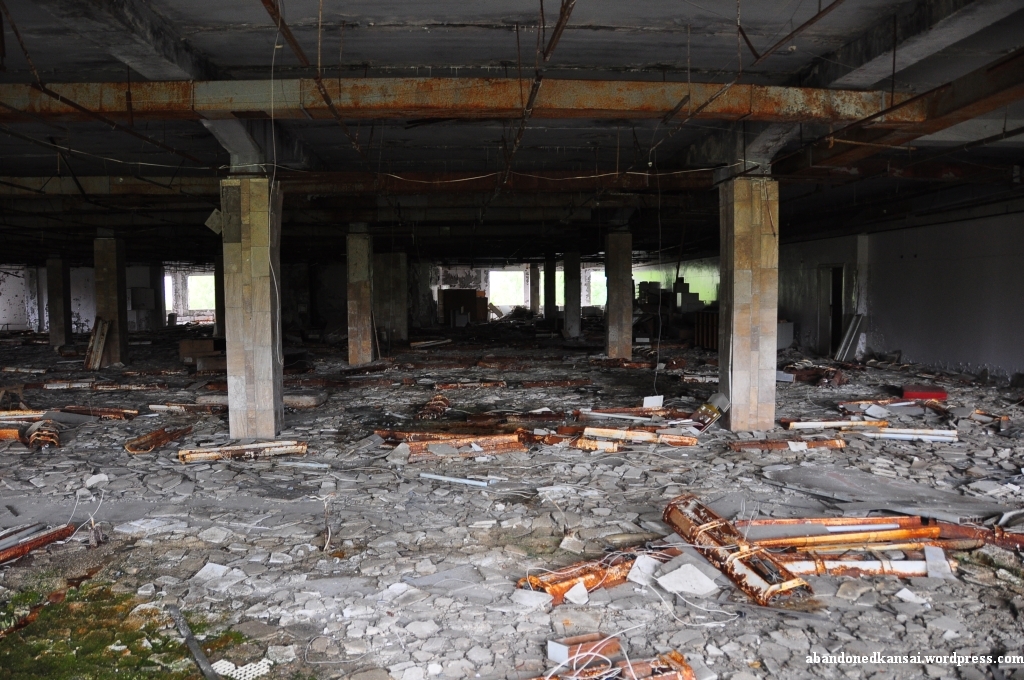
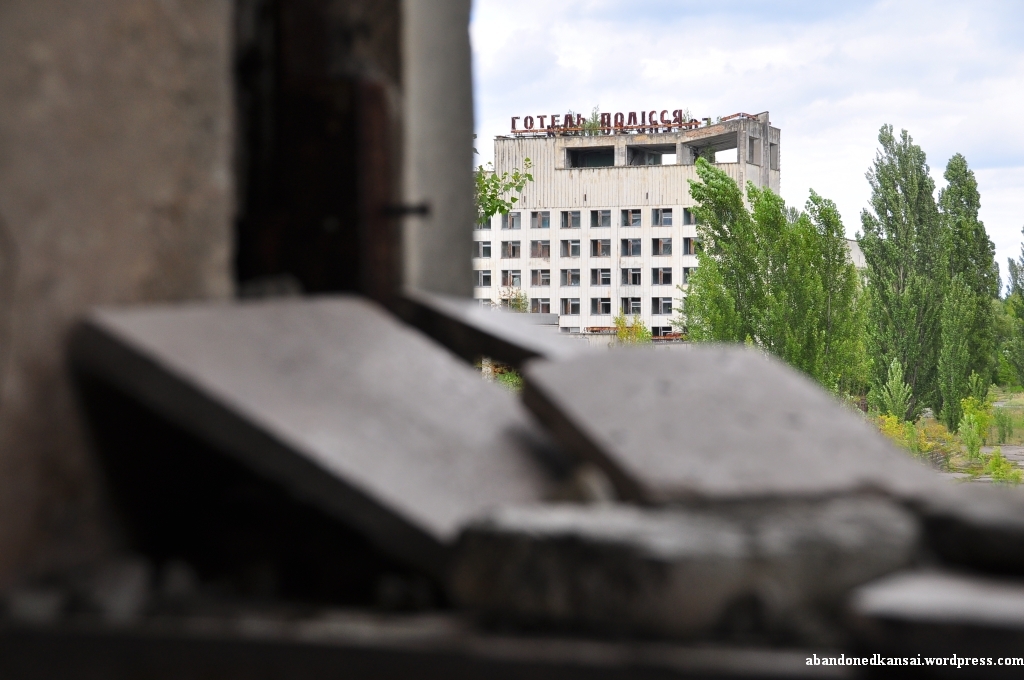
The first floor, reserved for non-food items, was in even worse shape. With all the shelves gone and the ceiling cladding, including all the lamps, crashed to the ground the whole floor made the impression as if it could collapse at any time – that feeling was boosted by the fact that the ceiling remains were softened over the past two decades by the forces of nature; even walking there gave me the creeps. The view across Pripyat’s Lenin Square to the city’s most famous hotel “Polissya” was nice though…
(If you would like to know more about my trip to the Zone Of Alienation please *click here* to get to the “Chernobyl & Pripyat” special. For a map of the area please *click here*.)



Zone Of Alienation – Pripyat: Propaganda Room
Posted in Abandoned, Europe, Map, Theater, Ukraine, Urbex, Visited in 2010, Zone Of Alienation on 2011/01/21| Leave a Comment »
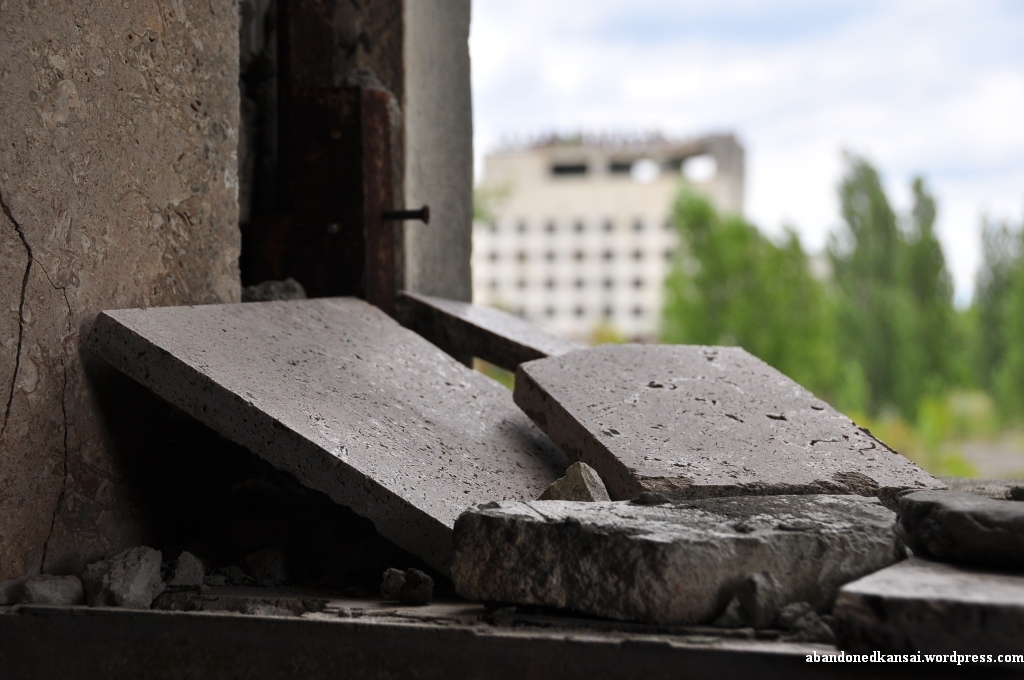
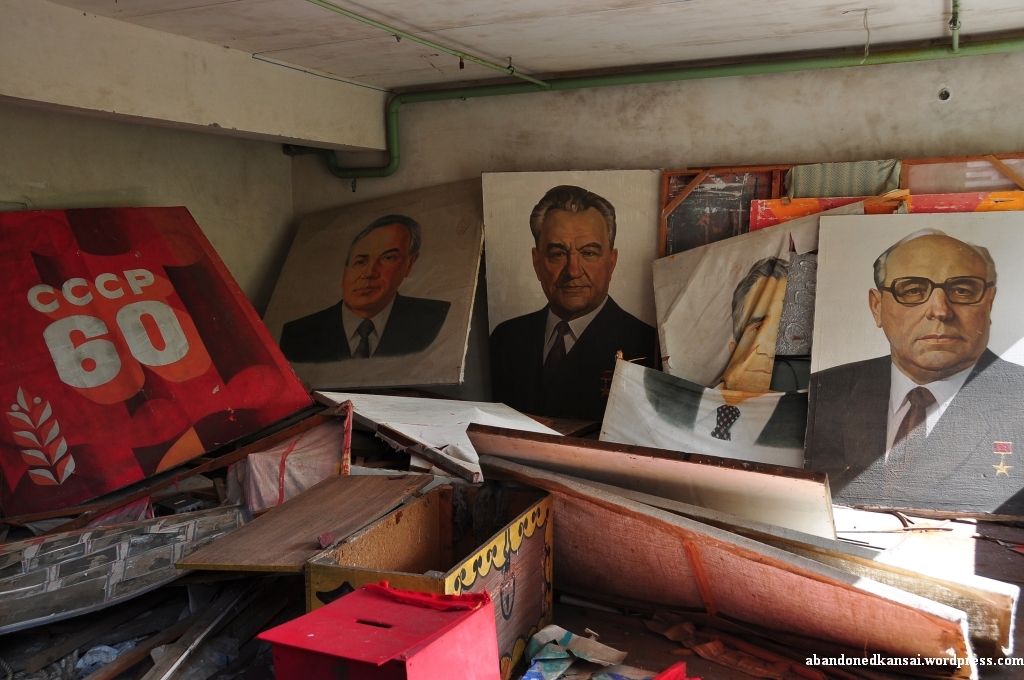
The Propaganda Room is one of the few locations I have barely anything to tell about and I was actually wondering if it’s worth to dedicate it its own posting. But on the other hand it would have been a waste to squeeze it in the general observations about Pripyat, so here we are…
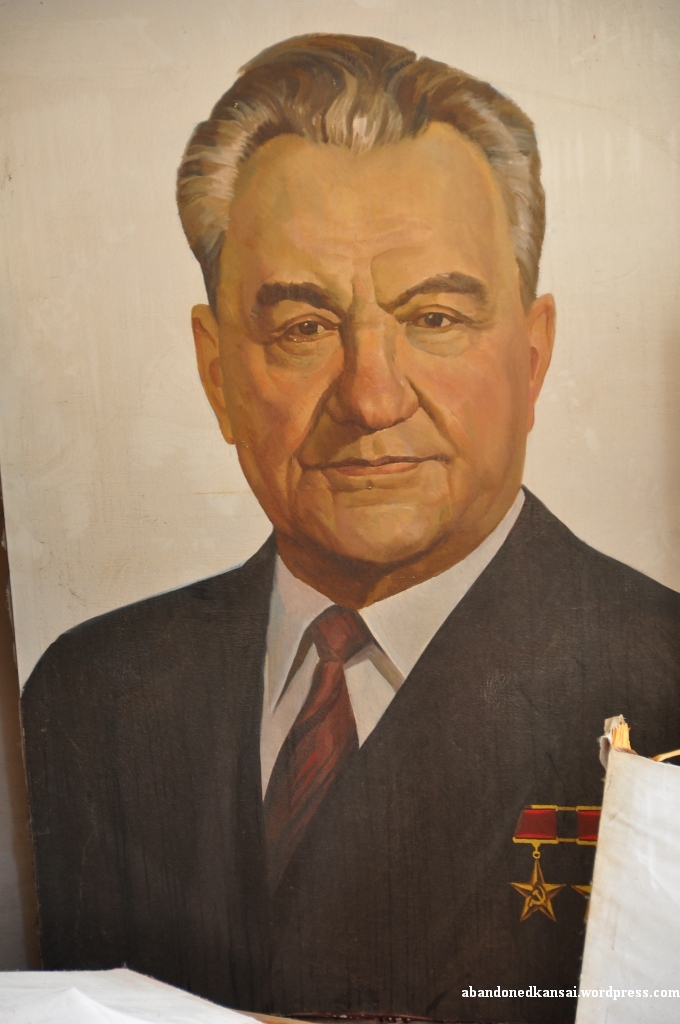
This ground floor location is actually part of the Palace of Culture, though we entered through a separate entrance. Maxim always called it Propaganda Room, so I just go with the name. As you can see on the photos it was filled with large paintings of politicians and symbols as well as props like chests and a throne – so some people on the internet refer to the room as the “prop room”, claiming it was occupied by the local theater group. I guess in the end it might have been a mix of both – there was just not enough material to provide the whole town with propaganda material for May Day. Especially since some of the stuff was rather general (like the painting depicting Lenin) or simply outdated – the “CCCP 60” sign obviously celebrates the 60th anniversary of the Union of Soviet Socialist Republics, which was four years prior to the evacuation of Pripyat.
The Propaganda Room was a nice five minute stop on the way from the Amusement Park to the Supermarket, so expect the next posting here rather soon, too…
(If you would like to know more about my trip to the Zone Of Alienation please *click here* to get to the “Chernobyl & Pripyat” special. For a map of the area please *click here*.)




Zone Of Alienation – Pripyat: Amusement Park
Posted in Abandoned, Amusement Park, Europe, Map, Pripyat, Ukraine, Urbex, Video, Visited in 2010, Zone Of Alienation on 2011/01/16| 20 Comments »
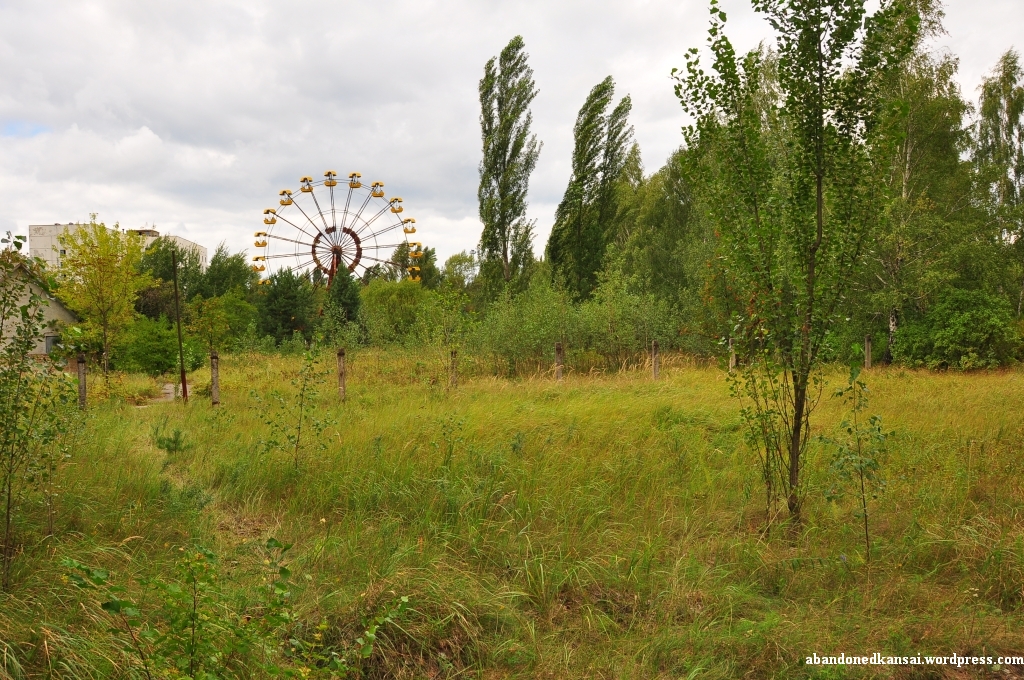
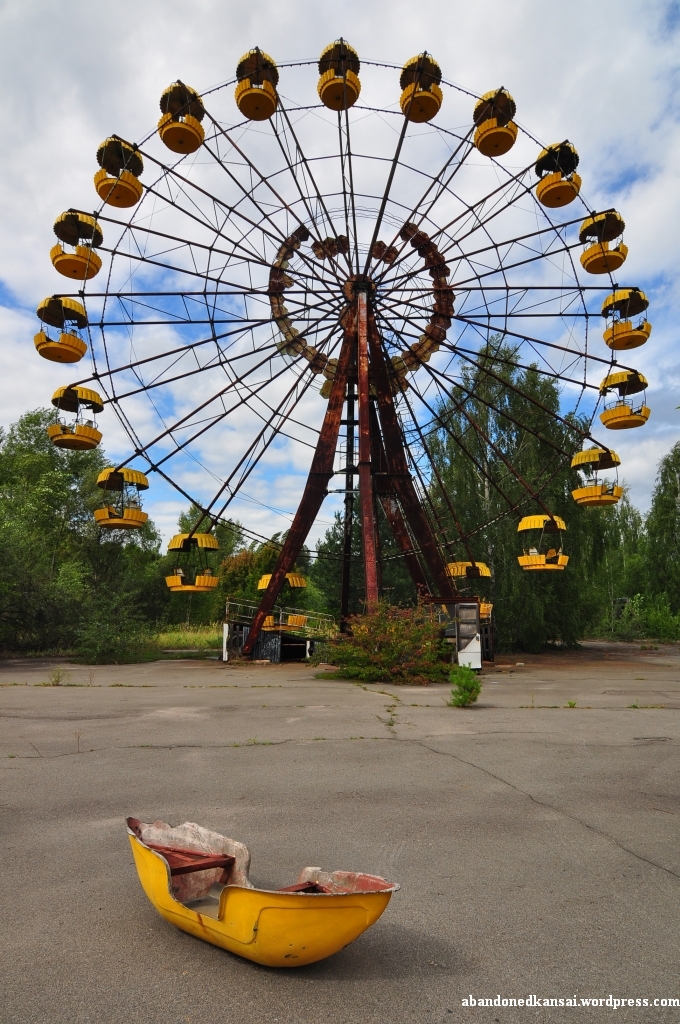
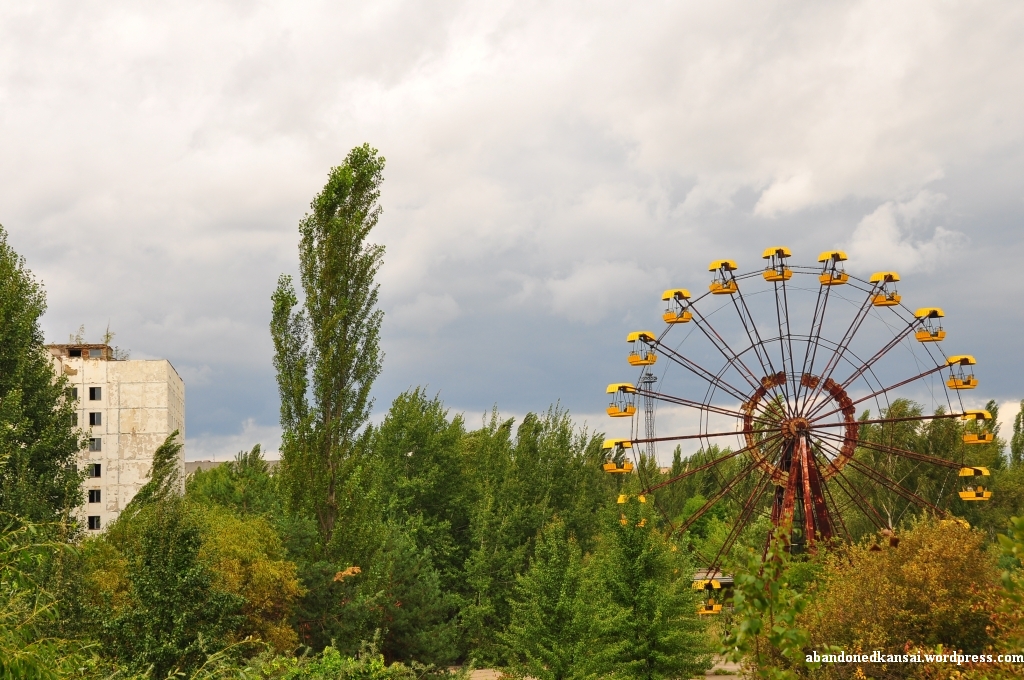
Did you ever wonder why the famous Pripyat amusement park is almost always about the ferris wheel? Well, the answer is simple: There is not a lot more to see.
The amusement park actually barely deserves that title, since it wasn’t a Disneyland or Universal Studios type of theme park, but more like a travelling, temporary kind of old-style amusement park. It was set up in celebration of May Day 1986, but the tragedy happening on April 26th was cause for a change of plans: The park was opened for one day to distract people from what was happening only a few kilometers away at the nuclear power plant. When the city of Pripyat was abandoned on April 27th so was the amusement park. (This is a fact widely unknown – most sources state that the park was never opened, but there are pictures in existence showing people standing in line in front of the rides.)
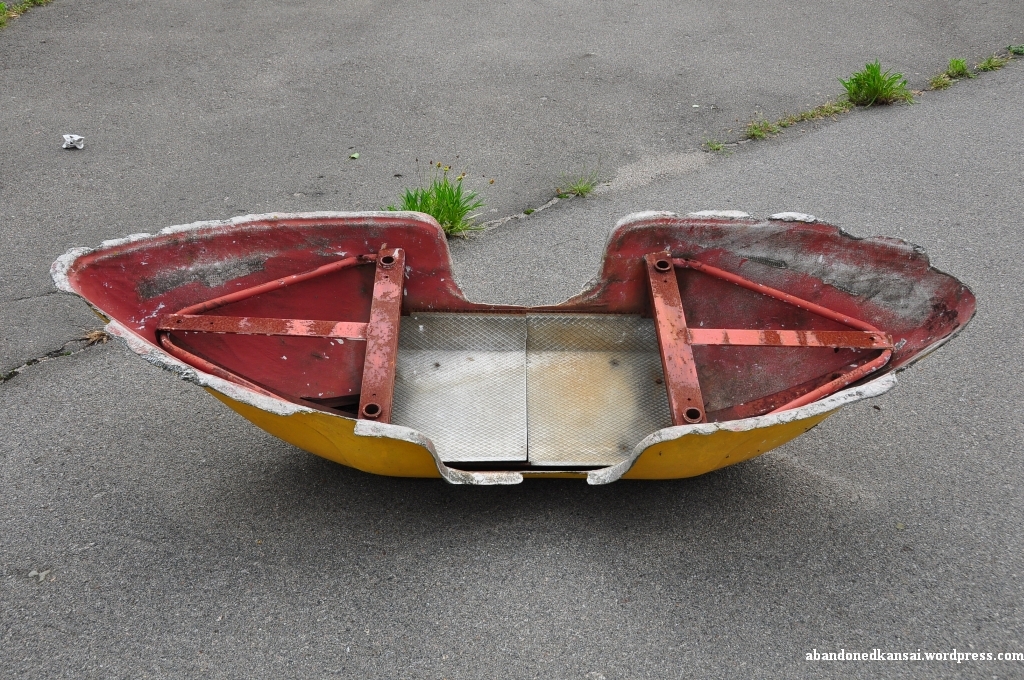
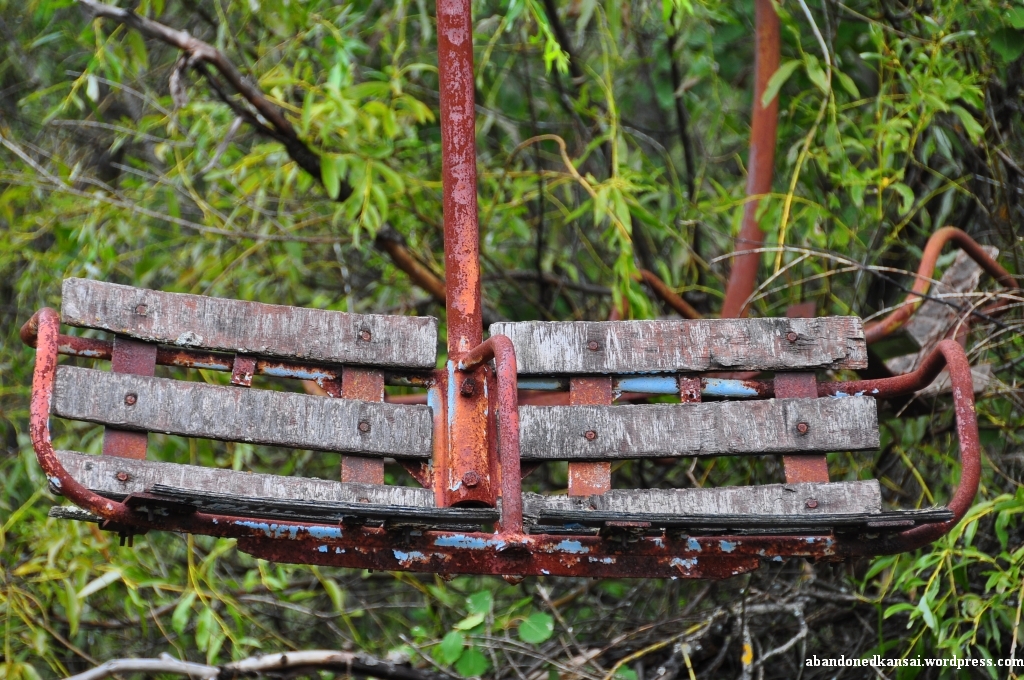
Now the (actually not so big, but nevertheless beautiful) ferris wheels rusts away next to a small and simple merry-go-round, a boat swing and a bumper car – hard to imagine that this small collection of rides was once considered an attraction for 50,000 people…
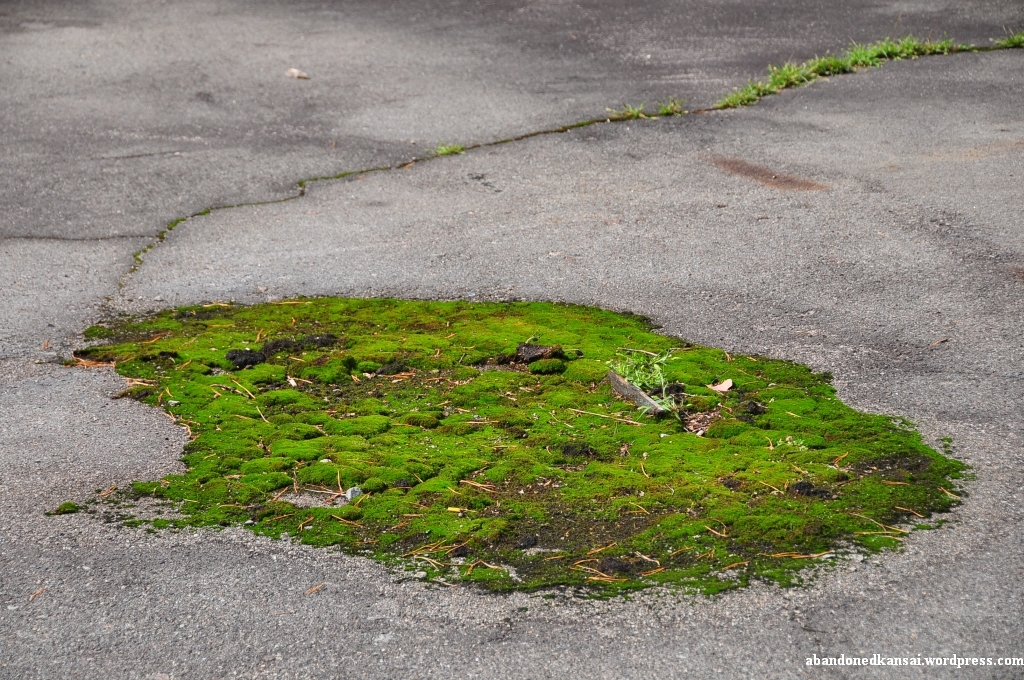
Another fact people usually don’t know about the amusement park: It’s one of the most contaminated areas in Pripyat. Parts of it are perfectly clean, but others are still highly radioactive. While the concrete parts are mostly safe nowadays, the surrounding moss can be as high as 25 µSv/h (microsievert per hour) – the radioactive particles were simply washed into the soil. Walking across such a spot like that won’t harm you instantly, but you don’t wanna build a house there as it is about 400 times the normal terrestrial radiation…
The amusement park is one of the standard locations included in pretty much every Pripyat tour – especially since it gained massive popularity after it was rebuilt in video games like “S.T.A.L.K.E.R.: Shadow of Chernobyl” and “Call of Duty 4: Modern Warfare”.
Before you start looking at the pictures below I hope you will enjoy an Abandoned Kansai first: I uploaded a short video of about 75 seconds to Youtube. Unedited, 720p. I hope it’s a worthy addition to this article…
(If you would like to know more about my trip to the Zone Of Alienation please *click here* to get to the “Chernobyl & Pripyat” special. For a map of the area please *click here*. If you don’t want to miss the latest article you can *like Abandoned Kansai on Facebook* and *follow this blog on Twitter* – and of course there is the *video channel on Youtube*…)








Zone Of Alienation – Pripyat: The Palace Of Culture “Energetik”
Posted in Abandoned, Europe, Map, Museum, Pripyat, School, Spa / Onsen, Sports, Ukraine, Urbex, Visited in 2010, Zone Of Alienation on 2011/01/12| 2 Comments »
The Palace of Culture was a typical institution of the Eastern bloc. The huge buildings were the meeting point for people to enjoy all kinds of recreational activities like sports and arts – and of course they were used for political indoctrination. The PoC usually included a cinema (some of them with several screens), a concert hall, dance studios, a swimming pool, study halls, a boxing ring, rooms with a variety of instruments, an area with tools for all kinds of do-it-yourself stuff and many, many more things – and of course Pripyat had a Palace of Culture, too, being one of more than 137,000 in the Soviet Union in 1988…
Energetik, the local Palace of Culture, was located directly at Pripyat’s center square, Lenin Square, and nowadays is one of the most visited locations in the world’s most famous abandoned city. One reason is that Energetik is on the way to everybody’s favorite Pripyat motive, the amusement park’s ferris wheel – the other is that the building offers a lot of variety on a relatively small space. Crossing Lenin Square Maxim was raving about how beautiful the place must have been 30 ago, given that the huge open space once was the home of a good part of the previously mentioned 33,000 rose plants.
I, on the other hand, was just fascinated by the unique, sad beauty that makes Pripyat what it is today. Struck by awe I entered the Palace of Culture and didn’t even know where to start taking pictures. Anywhere else in the world exploring this building would have taken at least half a day, but I somehow had the feeling that I would have that much time – in the end I had about 50 minutes…
Pripyat’s Palace of Culture is actually in pretty bad shape. Like most other buildings in the zone there isn’t a single window still intact, so the forces of nature – up to 40 degrees Celsius in summer, down to minus 20 in winter – did quite some damage in the past; and having tourists visiting the place every other day doesn’t help much either I guess. Most of the rooms were severely vandalized (a long time ago though!), the cinema barely recognizable. Bushes and little trees were growing inside of some rooms and many of the mural paintings were crumbling away…
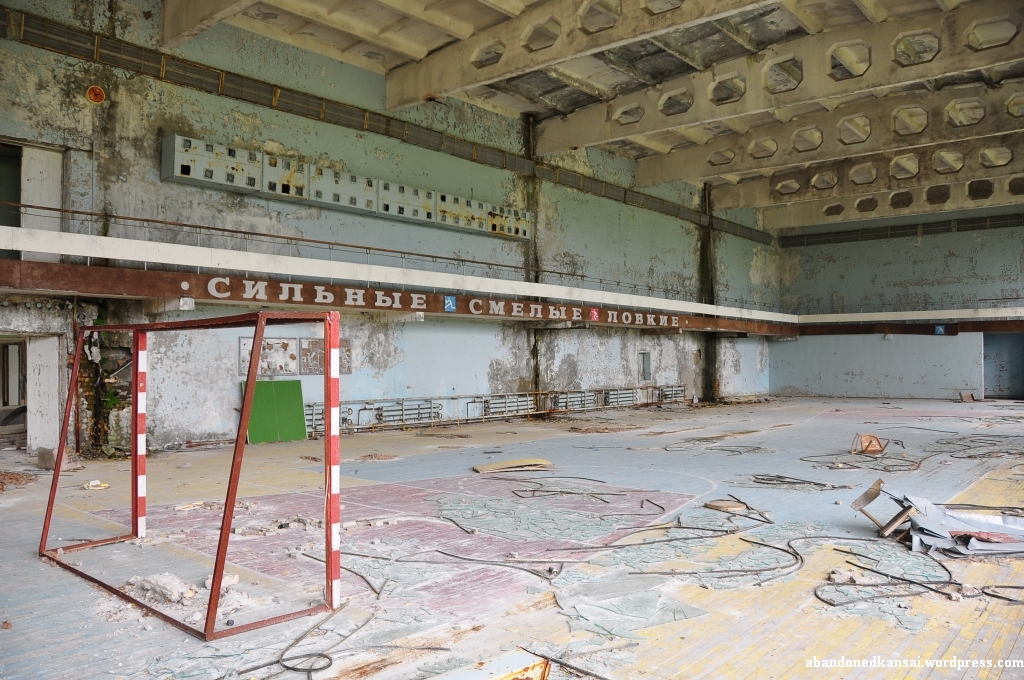
Exploring the different kinds of rooms was an amazing experience, but one moment stuck with me in a special way. It happened when I walked through a hallway towards what I assumed was the main gymnasium in the building. As I entered the huge room I looked outside the gigantic front of window frames and saw the famous ferris wheel 100 meters away in the background. Unexpected and absolutely mind-blowing… still gives me goose-bumps when I think back now.
Sadly only a couple of minutes later Maxim made us hurry-up for the first time – the amusement park was waiting just for us…
(If you would like to know more about my trip to the Zone Of Alienation please *click here* to get to the “Chernobyl & Pripyat” special. For a map of the area please *click here*.)







Abandoned Kansai on Facebook
-
Join 5,146 other subscribers
Pages
Archives
Categories
Recent Comments
gred_cz on Shin-Hakodate Golf Club Emily on Shin-Hakodate Golf Club ETSR on Shin-Hakodate Golf Club drzap on Miyamoto Musashi: Miyamoto, Ok… gred_cz on Pyramid Park Stealthflower on Pyramid Park alculprit on Pyramid Park alculprit on Pyramid Park Emily on Pyramid Park gred_cz on Miyamoto Musashi: Miyamoto, Ok…


