Feeds:
Posts
Comments

Archive for the ‘Europe’ Category

Japan is one of only 25 countries in the world without military – at least by some people’s definition. Others see it a little bit different thanks to Japan’s Self-Defense Force (自衛隊, Jieitai) with active personnel of about 240,000 people – plus about 60,000 in reserve. Abandoned military institutions are nevertheless rare in Japan, usually places (partly) given up by the Americans, like the Tachikawa Air Base, the Fuchu Air Base or Camp Drake – all located in the Tokyo / Yokohama area.
So when I was back in my home country of Germany for vacation I was eager to explore a military basis of the Federal Armed Forces / Federal Defense Force / German armed forces – or just Bundeswehr (that’s what they are called in German). While the Jieitai are still going strong the Bundeswehr had to deal with several structural reforms over the past two decades, main reasons for that being the fall of the Iron Curtain and the German reunification in 1990. Back in the 1980s the Bundeswehr had about half a million employees (career soldiers and conscripts), in 2010 the number was down to 250,000 – with plans to reduce further to a little as 175,000 soldiers; about a quarter of what both German armies (Bundeswehr and NVA (Nationale Volksarmee – National People’s Army)) had combined in the late 1980s… Reducing personnel that seriously you can’t (and won’t…) maintain all the military bases. A lot of them were demolished, some got reconverted to housing projects and business parks – but a few slipped through the cracks and became abandoned; because nobody took proper care or because there were problems reusing the property.
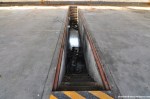
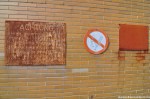
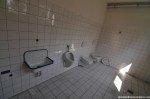
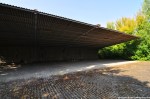
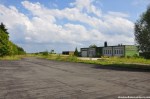
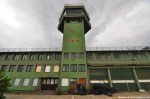
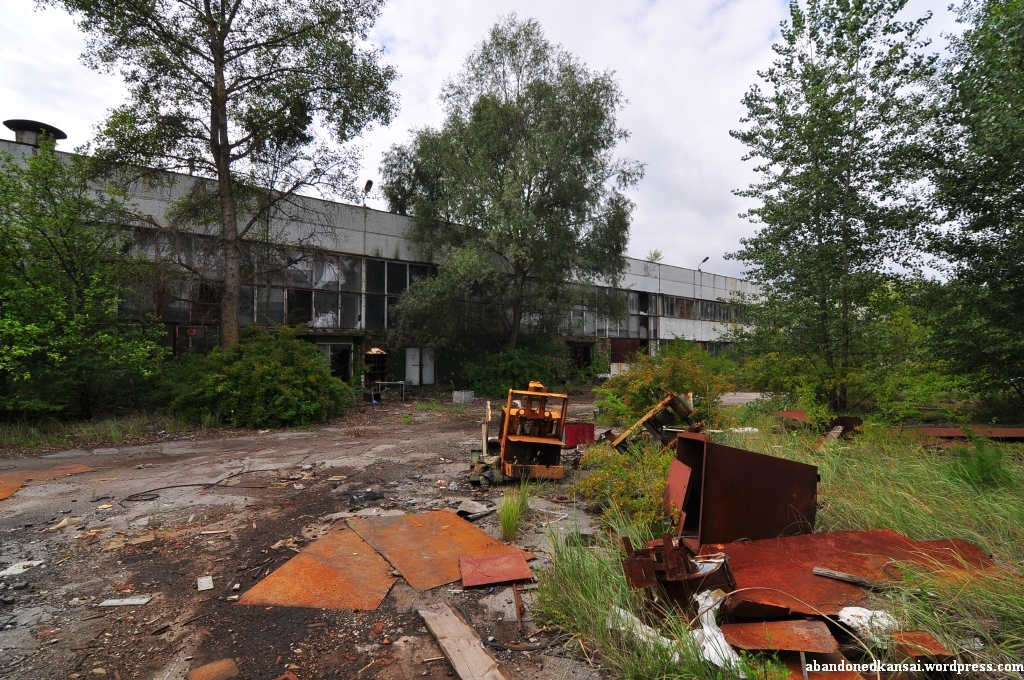
The Federal Armed Forces Depot Pfeddersheim (Bundeswehr-Depot Pfeddersheim – officially “Wehrbereichsgerätelager IV”) is one of these cases where the infamous German bureaucracy took its toll; on a personal note: German bureaucracy actually isn’t that bad, especially when compared to other countries. Built to house Car Pool Company 621 (Fahrzeugpark-Kompanie 621 – and by company I mean the military unit, not the business…) in the early 1950s on the site of the the cannery Braun AG (Konservenfabrik Braun AG), a factory of international fame in business from 1871 till 1951, the depot was one of the main Bundeswehr storages in Germany for many decades. It was closed with effect from 2004-12-31 with the last employees leaving by 2005-03-31 – at that point only 14 people were working at the depot.
Of course early on local politicians were aware what was going to happen and they tried to make use of the location as smoothly as possible, even visiting the still active depot in late 2004. Since Pfeddersheim lost its indepence in 1969 and now is part of the venerable city of Worms a lot of people have a say in what’s going to happen – the Institute for Federal Real Estate (Bundesanstalt für Immobilienaufgaben / BIMA), a city planning officer from Worms, a municipal administrator from Pfeddersheim and of course the citizens of Pfeddersheim; just to name a few. And while everybody was debating whether the depot should be turned into a housing project with a supermarket or being used by established and new businesses the usual hordes of bored youth vandals trashed the place – seven years later the property is still for sale, one of the latest suggestions was to build a showcase project for climate protection housing.
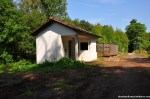
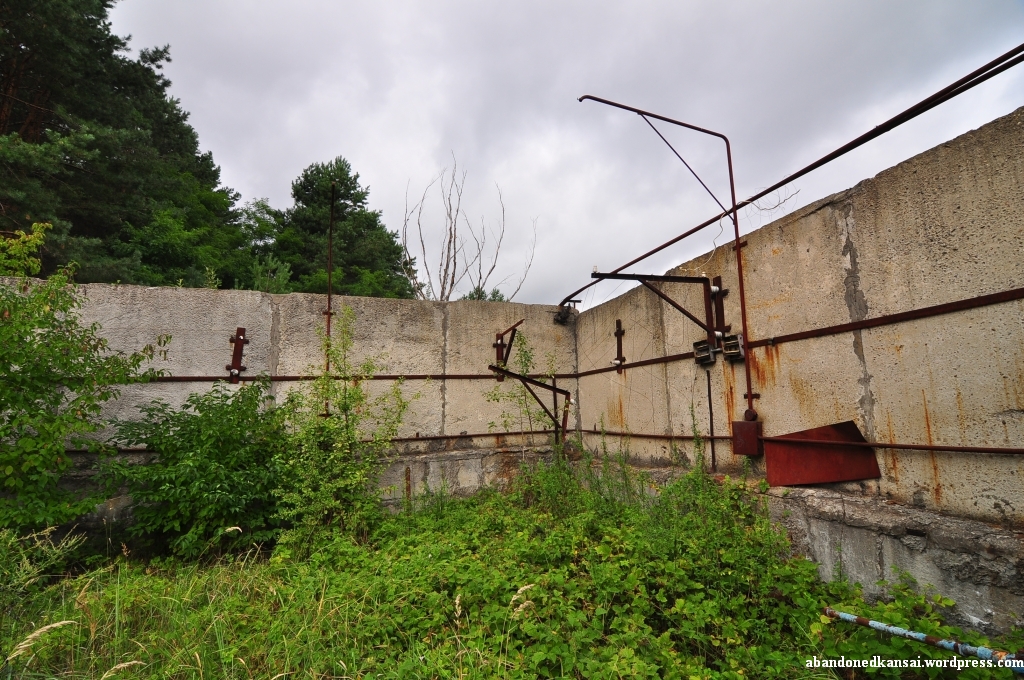
Well at least the buildings were still standing when I paid them a visit in July of 2011 with my high school friend Ira. The main gate was wide open when we arrived and as we were about to enter a building we saw a guy on a bike coming towards us. Judging by his shirt he must have worked for the local public utility company and brought back one of the municipal vehicles. So I told him what I was doing (urbex, Japan, photos…) and if we could take some pictures – he didn’t seem to like the idea, but after some more explanation he said that the main gate actually isn’t locked sometimes; so I told him that we didn’t see him if he didn’t see us – and off he went, with a word of warning that his colleague will lock the gate in the near future. So while I was exploring the first building Ira got familiar with the area and had a look for the colleague to come. When we were about to enter the second building the other guy actually showed up in a car – he stopped next to us, so I told him what I was doing (urbex, Japan, photos…) and if it was okay to take some pictures. He said it was and drove away only to be back a couple of seconds later. “Why?” Well, to keep the memories about those places alive – it’s always nice to hear from people who have been to / worked at places that I visited in their abandoned state. He put up a “those young, crazy people – I’m going to have a beer now and do better things with my time” smile and drove away, this time for good. So Ira and I explored the second building, the open repair shop and strolled along the sealed warehouses and garages. When we were about to leave we found the main gate closed – and locked. The second guy forgot to mention that he would actually do that! Luckily we found an alternative way in and out of the depot while exploring the location – and now was the time to make use of that knowledge…
(If you don’t want to miss the latest article you can *follow Abandoned Kansai on Twitter* and *like this blog on Facebook* – and of course there is the*video channel on Youtube*…)
Read Full Post »

The now abandoned Sembach Air Base has quite a long history. The location was first used as an airfield after World War I by the French occupation troops in 1919 with 10 sheet-iron barracks and 26 wooden hangars. When France retreated from Germany in 1930 the air base was abandoned on June 15th and the land was returned to farmers who used it as a hay field. (The area around Sembach is very rural and agriculture is an important economic factor till this very day.)
In preparation of World War II the Nazi-German Luftwaffe deemed the area proper to build a fighter base and claimed the land in early 1940, but gave it back to the owners in June of 1940 after France was conquered in a blitzkrieg now known as the “Battle of France”.
After the defeat of Nazi-Germany in May of 1945 Sembach was part of the French occupational zone. In April of 1951 German surveyors along with French officers were looking for suitable locations for air bases. The Cold War had begun a few years prior and both the NATO and the Warsaw Pact armed themselves at a remarkable speed. The NATO’s lack of air fields suitable for modern jets made it necessary to build new military airports – so the French authorities began with the construction of a hard surface airfield in June of 1951, much to the protest of local farmers, who demonstrated in Mainz, the capital of Rhineland-Palatinate, without much success. On September 1st the United States took over the construction site, naming it Sembach Air Auxiliary Field, and pushed hard to finish the base – completing the 8500 foot concrete runway by the end of the month working round the clock using nighttime illumination. The rest of the airfield (tower, hangars, repair shops, storages and other buildings) were built during the winter. Local protests rose again when plans for the construction of barracks and office buildings surfaced in April of 1952 – this time with a little bit more success: Instead of using valuable farm land the new buildings were constructed on a sandy area with little agricultural value about 1.5 kilometers away from the airfield (Heuberg). Everybody was happy and after another year of construction the American flag was finally raised at the base now known as Sembach Air Base on July 8th 1953, when a RB-26 Invader arrived from Shaw Air Force Base in South Carolina. It was part of the 66th Tactical Reconnaissance Wing, the first of many units to be stationed in Sembach.
40 years after Sembach Air Base was opened protests rose again – this time because the Americans announced plans that the base will only be used as a substation of Ramstein Air Base; a huge economical setback for the town and nearby cities, directly (German civilian employees at the base) and indirectly (soldiers spending money in the area). The airfield was returned to German control two years later on March 30th 1995, the installations in Heuberg were renamed Sembach Annex. In summer of 1998 the demolition of the base began, the runway being the first “victim” of this process. Since then most of the buildings on the former air base have been demolished – but not all of them, at least not by the time Gil and I arrived at the location.
After the *Deportation Prison Birkhausen* and the *USAREUR Communication Facility Lohnsfeld* turned out to be quick stops we decided to tackle another big one and drove to Sembach to have a look at what was left of the air base. First we went to the western part and found some half-underground bunkers, inaccessible of course. Next was a small office building (?) that looked like it was made of corrugated cardboard. Quite interesting was the former Fire Station, part of the Fire and Emergency Service. I was rather surprised by the coloring of the toilets – white and pink. Seriously? The restrooms of the fire department on a US Air Force base were pink?
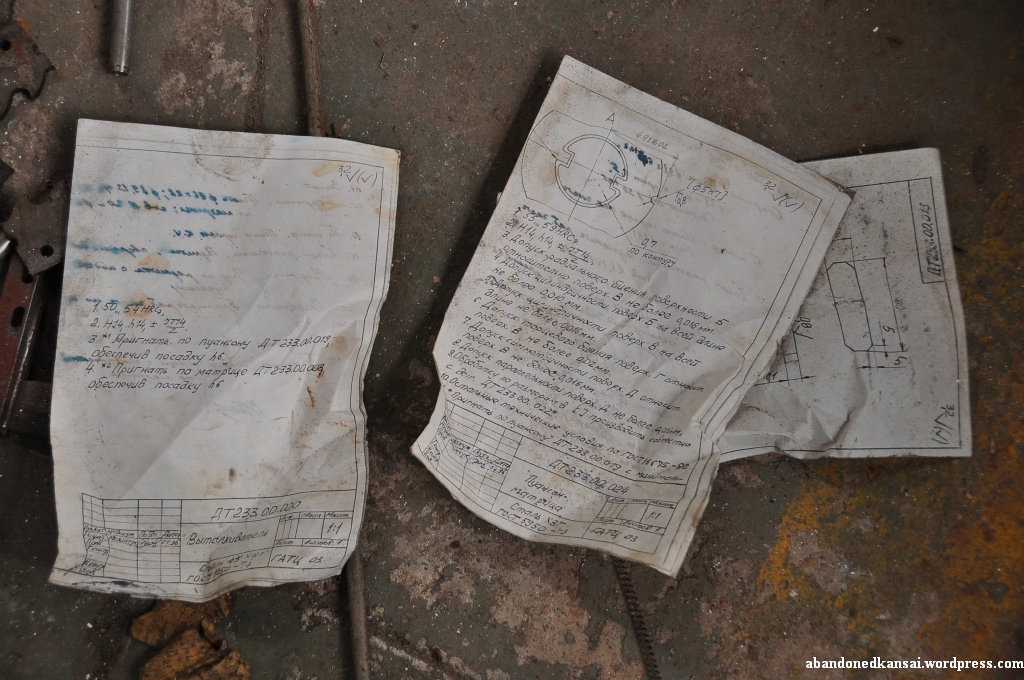
In the afternoon, when we left the fire station, the weather started to turn drastically. The sunshine was gone and dark grey clouds approached quickly. While we were making our way to the abandoned tower the wind sped up massively – to my favor as I should find out minutes later. I just finished shooting the tower building when a wall of rain came closer quickly and before I had the chance to take shelter it poured liked I was standing in the shower; a first class cloudburst. At that time I was close to the eastern wall of the tower, so I pressed myself against the high wall while the wind was blowing so hard that it actually blew the rain over my head. About 15 minutes I was standing there, hoping for the wind to continue and the rain to stop. When the heavy rain turned into light drizzling I started to look for Gil, who found shelter in a nearby building I assumed was inaccessible. That building was boarded up (almost) completely and its massive walls made me wonder right away what it was used for. Sadly it was pretty much empty, nevertheless we found some interesting items – a sleeping bag and other signs of a homeless person being there for a while, a perforated cardboard character and some documents with rather sensitive information; like special travel orders, granting individuals the permission to hand-carry a M16 rifle. I have no clue how those documents escaped the shredder, but I guess I better refrain from posting photos since each sheet of paper contained several names including ranks and addresses…
Going on an exploration trip with Gil was absolutely fantastic (thanks, man!). While the first two locations were quite disappointing from an urbex point of view Sembach Air Base made up for it big time. It was the first US military base I was able to explore (yes, I went to a second one, so stayed tuned!) and I had a blast – no pun intended. The locations in Germany differ quite a bit from the places I usually get to see in Japan, so I really enjoyed this refreshing experience!

Addendum 2013-08-27: If you liked this article, check out the one about the nearby *Hochspeyer Munitions Storage*!
(If you don’t want to miss the latest article you can *like Abandoned Kansai on Facebook* and *follow this blog on Twitter* – and of course there is the *video channel on Youtube*…)

Read Full Post »

Urbex in France? Urbex in Luxembourg? Urbex in Belgium? Or urbex in Germany? That was the big question after our visit to the *Deportation Prison Birkhausen* was a unexpectedly short one – where should we continue our urban exploration day trip? There were plenty of options, but since Kaiserslautern (a.k.a. K-Town, especially amongst American military) was rather close we decided to continue our explorations there. The next place to visit: The USAREUR Communication Facility Lohnsfeld.
Very little is know about this former US military installment. The Energy Engineering Analysis Programm (EEAP) from August 1986 prepared for the Department of the Army, European Division, Corps of Engineers described it as “Located at Lohnsfeld, the station consists of a barracks and receiver building”. The facility was open from at least 1953 and on 1998-09-03 the U.S. Department of Defense announced that the Lohnsfeld Communications Station will be returned to the host nation, in this case Germany. It seems like my home country didn’t have any use for it and left the comm fac in the middle of nowhere abandoned, until… it was demolished in October of 2007. Which I found out about after I went there with my old buddy Gil – after we drove through the middle of nowhere for maybe half an hour, including dirt roads along some fields and an airport for model aircrafts. So maybe urbex in France, urbex in Luxembourg or even urbex in Belgium would have been a better alternative. (The place I really wanted to go, Villa Viktoriastift, one of the few abandoned mansions in Germany, became inaccessible a week prior when the new owner of the place was fed up by geocachers swarming the place – so he informed the police, threatened to sue some people (including the person who put the cache there!) and hired security…) Luckily Lohnsfeld wasn’t our last stop on our trip to Palatinate – and the last location made up big time to the first two less successful ones…

Read Full Post »

The first time I heard about the abandoned deportation prison Birkhausen in the forest near Zweibrücken-Ixhausen, within a stone’s throw from The Style Outlets mall and Zweibrücken Airport, I got really excited. Abandoned prisons are rare… but an abandoned deportation prison? I’ve never heard of a place like that before! Even better: Zweibrücken was in rather close proximity of where I was staying during my yearly vacation to Germany, so I could easily get there by car in about 90 minutes – after I had to wait about 8 month to visit family and friends back home gain…
I met my old friend Gil at a high school reunion and we talked about urbex – he just failed entering an abandoned mill (the huge, early industrial kind from the late 19th century) due to lots of nosy neighbors and the place being boarded up, so I suggested to go on an urbex trip together. I guess it’s no suprise we decided to break into the prison! (And by “break in” I mean “enter through an open door or window” – I’ve never broke or even destroyed anything to access an urbex location and I never will! Vandalism isn’t my thing…)
The history of the prison in Birkhausen was short: The premises were used for decades to house a day-parole building with a market garden and a tree nursery (as a branch of the correctional facility Zweibrücken) before the buildings were converted into a deportation prison in 1996. About 900 people obliged to leave Germany passed through the facilty each year before it was closed in 2005 – from now on Ingelheim was the only deportation prison in Rhineland-Palatinate (no, dear Star Wars fans, not Palpatine…). Instead of demolishing the prison the Justice Department decided to keep it, considering plans to turn it into a prison for senior citizens.
When Gil and I walked along a forest road a truck with an empty construction waste container passed us by – and our hearts sank. A couple of minutes later we had certainty that the prison was in the process of being demolished. We approached the (de)contruction workers and they waved us through to their foremen. As always in situations like that honesty is the way to go, so I explained them what I am doing as a hobby and that I came to take pictures of the prison. The guys were really nice, but blocked right from the beginning – no photos, not without permission from the authorities; which would take way too long even if we could get it since they were about to finish they job by the end of the week. I asked them why the prison was taken down and they told us that geocachers were swarming the place ever since a cache was hidden there (later I found out the cache had almost 1400 logs on geocaching.com alone!) – all of a sudden the prison was kind of famous and irresponsible people brought their whole families, not even thinking about the dangers a place like that would hold. So the State decided to tear it down. So I explained that I have nothing to do with geocaching – urban exploration is about taking nothing but pictures and leaving nothing but footprints, about keeping places secret (unless they were demolished or turned into tourist attractions…). My reason to come here was to take some nice photos to keep the memory about the place alive. The older guy started thinking and said that he wanted to take pictures himself, but never had the chance since they were so fast tearing everything down – so he asked his younger colleague to stay with us while we took some quick shots to prove that the place was gone and to spread the word about it; but no pictures of people or equipment! Gil and I happily agreed and had about five minutes to take some quick shots. All of a sudden the foremen’s boss showed up, so the two guys gave us a sign and we took our equipment to head towards the exit – quickly greeting the boss while hurrying away…
Leaving the deportation prison I was devastated at first. Such a great location gone because it grew to popular – not even amongst urban explorers, but amongst geocachers! Such a shame… (To be fair: Another reason to demolish the place might have been the serious amount of vandalism – and on 2009-08-24 there was a case of arson that burned down half a building. Where those vandals came from? I have no idea, but the cache called Alcatraz was hidden back in 2006…) At least Gil and I were able to take some photos due to our successful conversation with the demolition squad – unique pictures I might add since altogether it took them about 3 weeks to get rid of the whole facility and I don’t think they gave permission to photographers before…

Read Full Post »

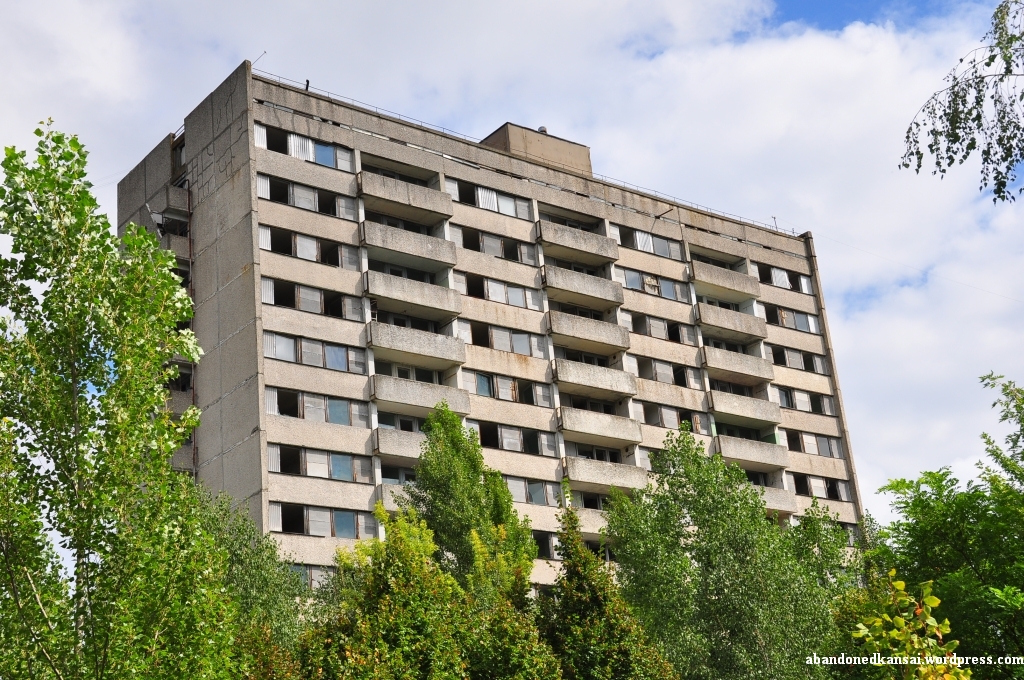
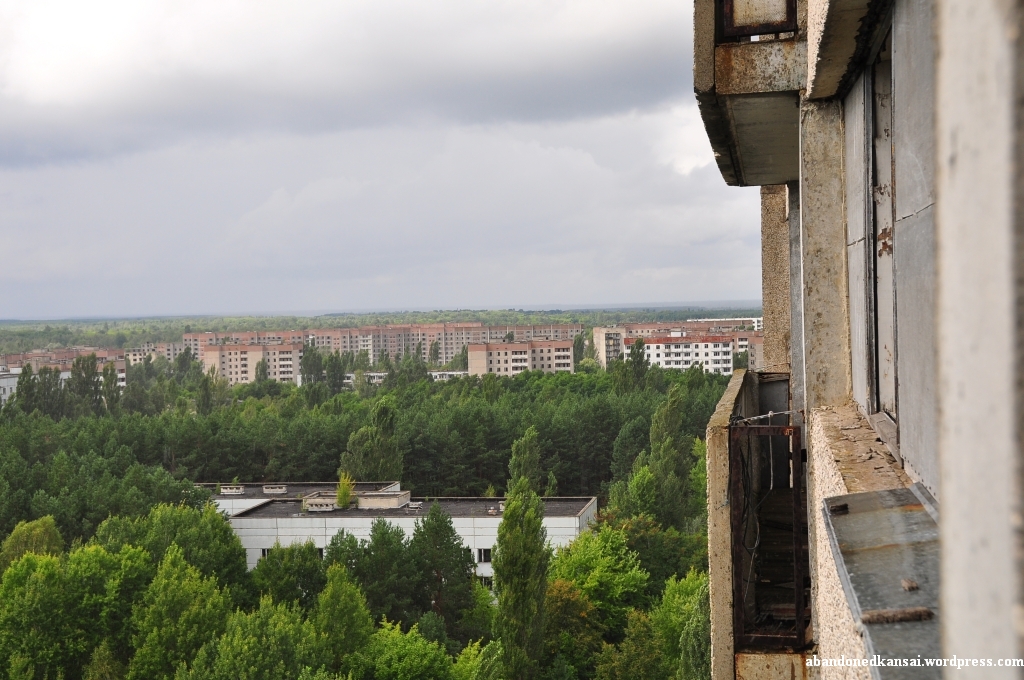
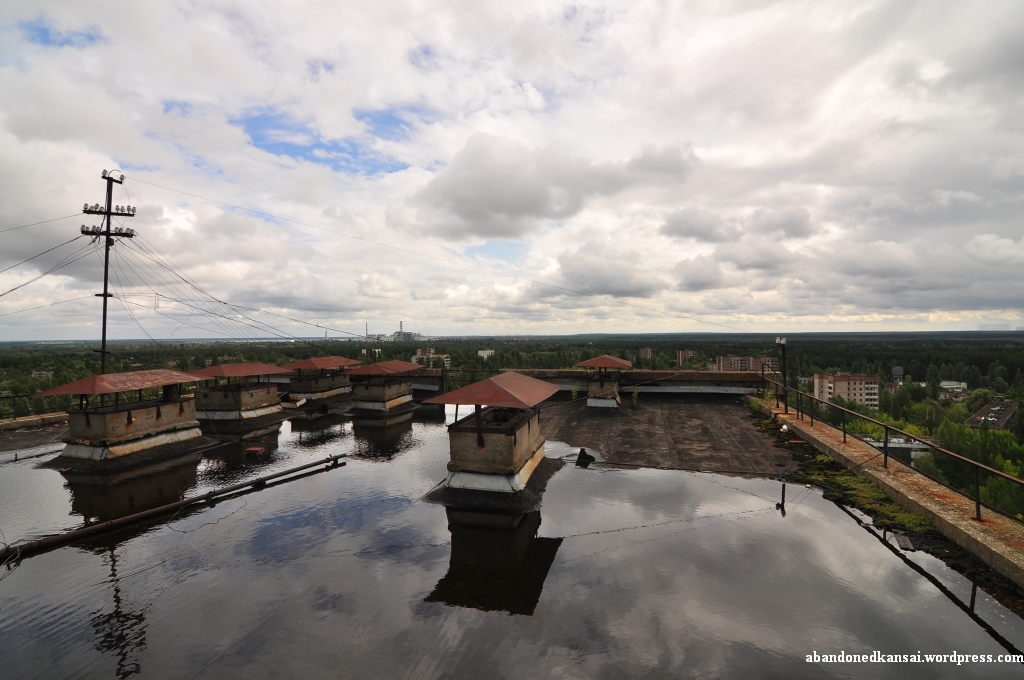
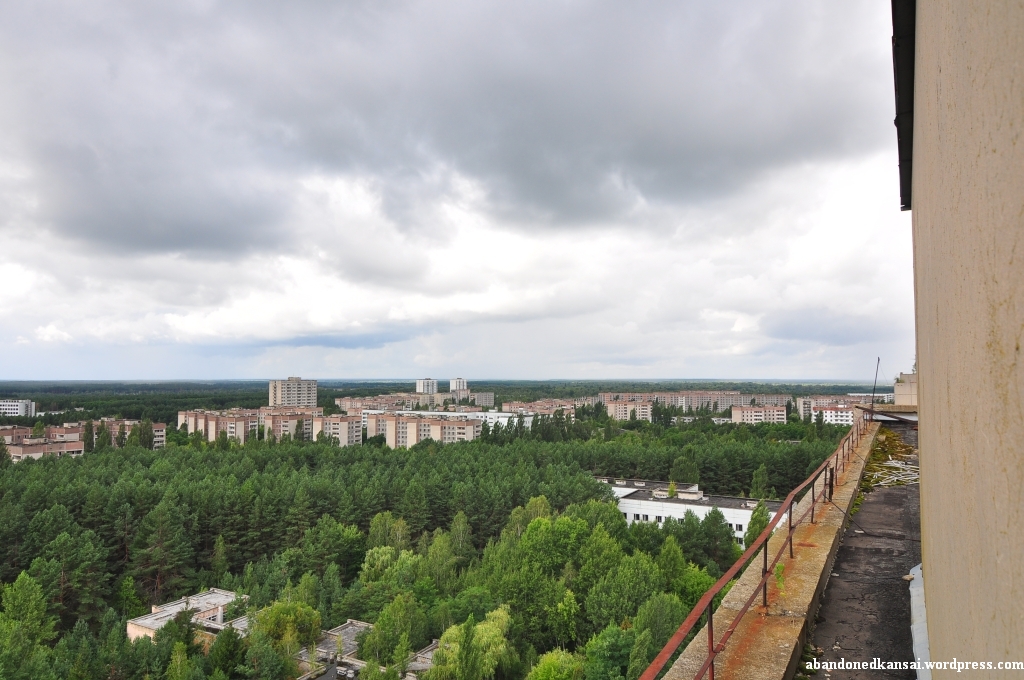
After sunny visits to the Jupiter Factory and the Kindergarten “Golden Key” we had some time left before we had to leave the Zone Of Alienation, so Maxim suggested to go to another rooftop. Of course he had to guard the car again, so Sebi, Michi and I went up on our own.
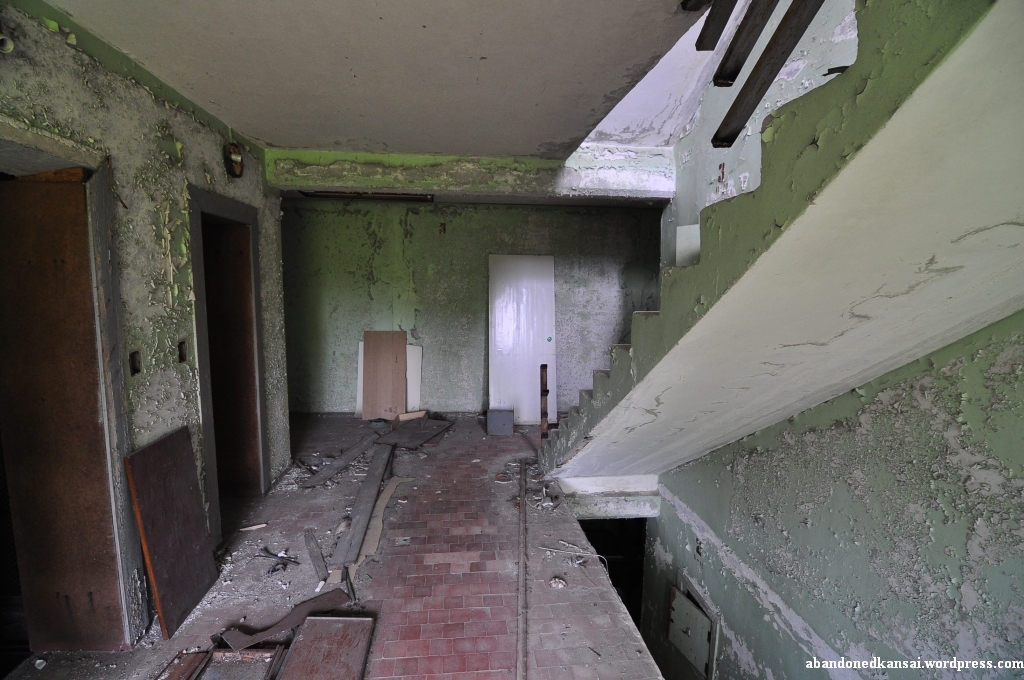
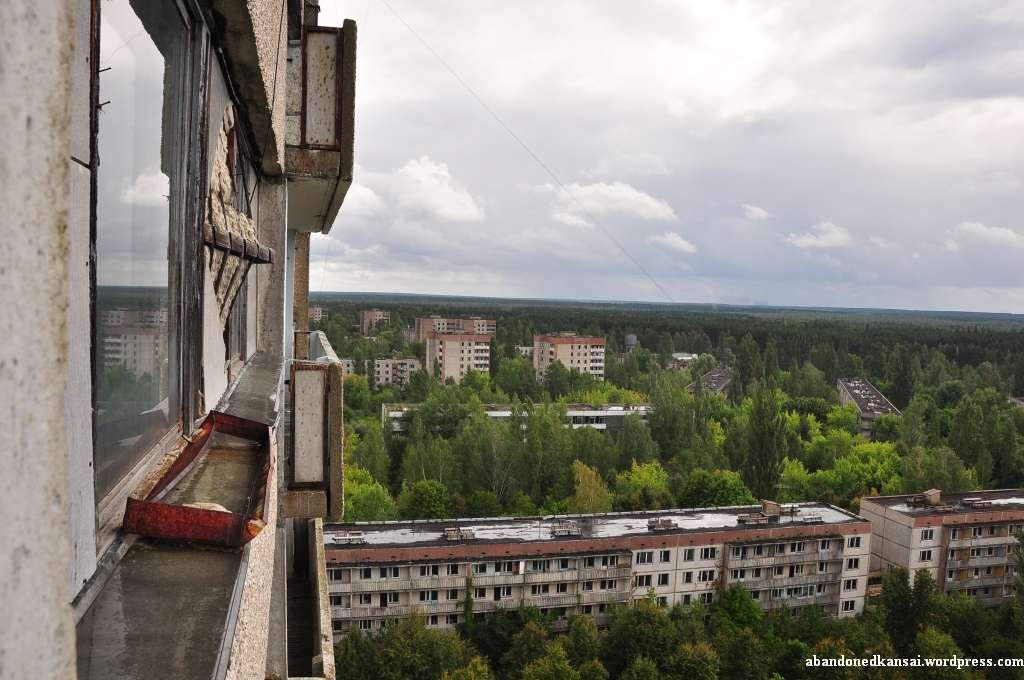
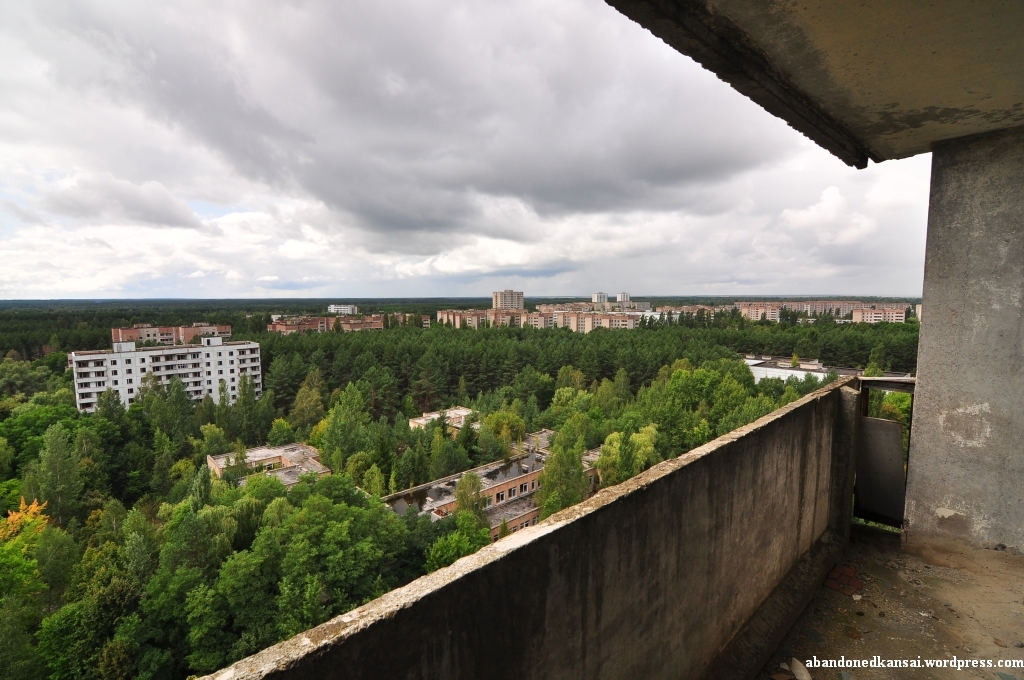
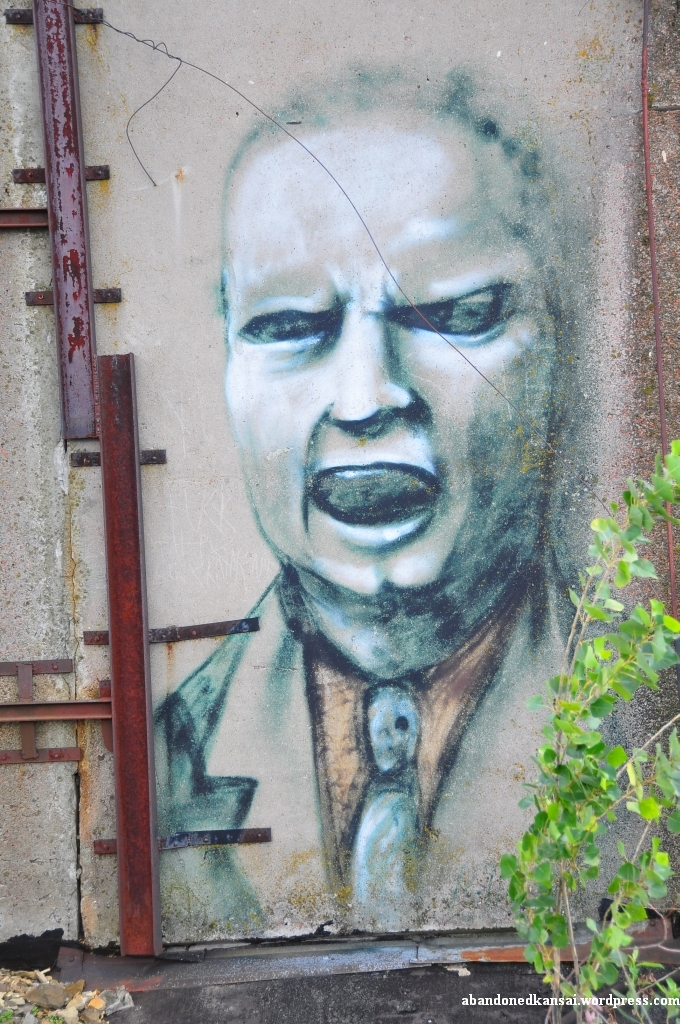
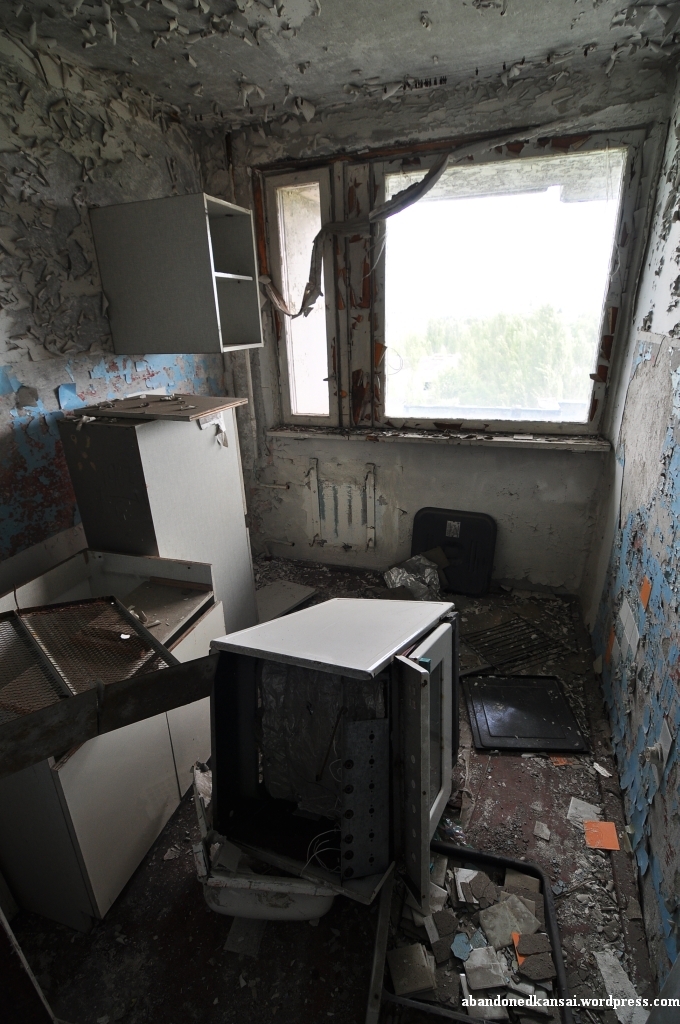
The construction of this building in the city center close to Lenin Square was interesting in that regard that for the first couple of floors the staircase was inside the building, but for the top half we had to go outside on a balcony and then get in again to climb more stairs. Quite weird… and nasty when it was raining, as we experienced on the way down. Furthermore I’m sure sooner or later one of those balconies will crumble (hopefully at a moment when nobody is standing on it) and then the floors above won’t be accessible anymore. Considering the state of the building in hindsight I’m actually not sure if I would go up there again – especially since the roof had huge puddles of water, which I’m sure contribute to the demise of the whole construction. The view was stunning though, no matter in which direction we looked. Seeing how the kindergarten was indeed swallowed by nature was as impressive as seeing the Amusement Park, the Palace Of Culture “Energetik” and Lenin Square at the same time. On the way down I took a quick minute to have another look at some apartments and actually found one with some interior left – in bad shape, but nevertheless interesting. When I left the apartment house at Lazarev Street 1/14 I saw a graffito on a wall at the building next to it – the black show of a girl… and the last photo I took in Pripyat.
Although now as I am writing these lines most nuclear experts agree that what happened in Chernobyl and what’s going on in Fukushima these minutes have barely anything in common, it’s still a weird feeling being only 550 km away from the events that shake the world these days. And I’m actually kind of glad that this is the last entry of my “Chernobyl & Priypat” special. I seriously hope Fukushima will turn to the better and that you, dear reader, will continue to follow this blog when I’m going back to my main topic: abandoned places in Kansai and the rest of Japan.
(If you would like to know more about my trip to the Zone Of Alienation please *click here* to get to the “Chernobyl & Pripyat” special. For a map of the area please *click here*.)

Read Full Post »

While we were exploring the Jupiter Factory the clouds broke up and the sun came out, changing the atmosphere in Pripyat from gloomy-spooky to “Let’s enjoy a picnic on this wonderful day!”. Sadly none of us brought any food, but I guess there wouldn’t have been time anyways – “Zolotoj Kluchik” (Golden Key), one of Pripyat’s many kindergartens, was waiting for us…
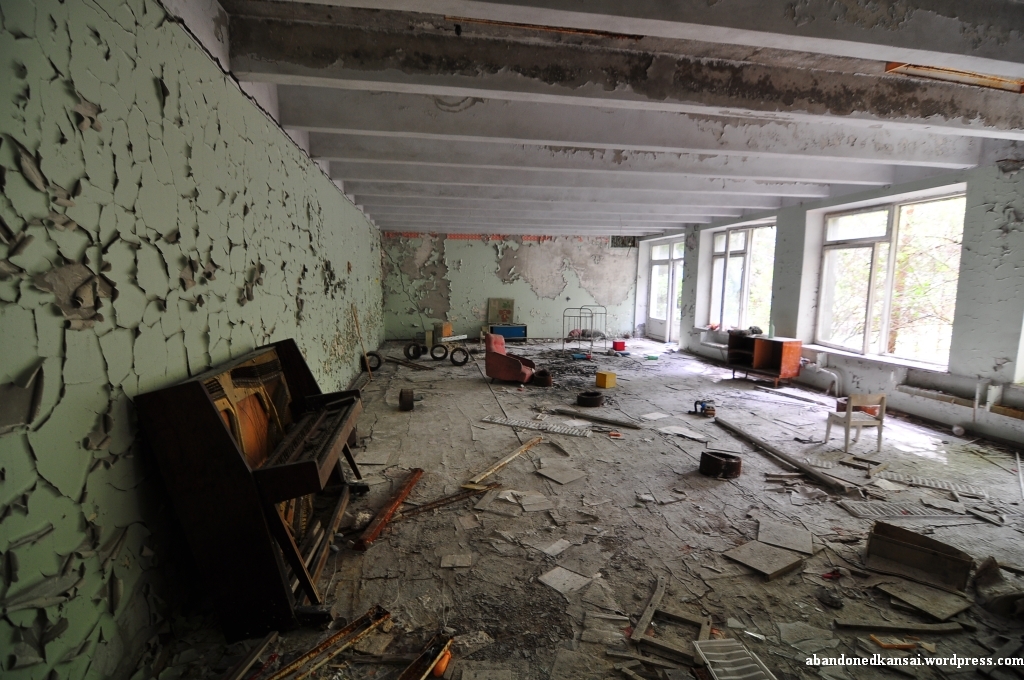
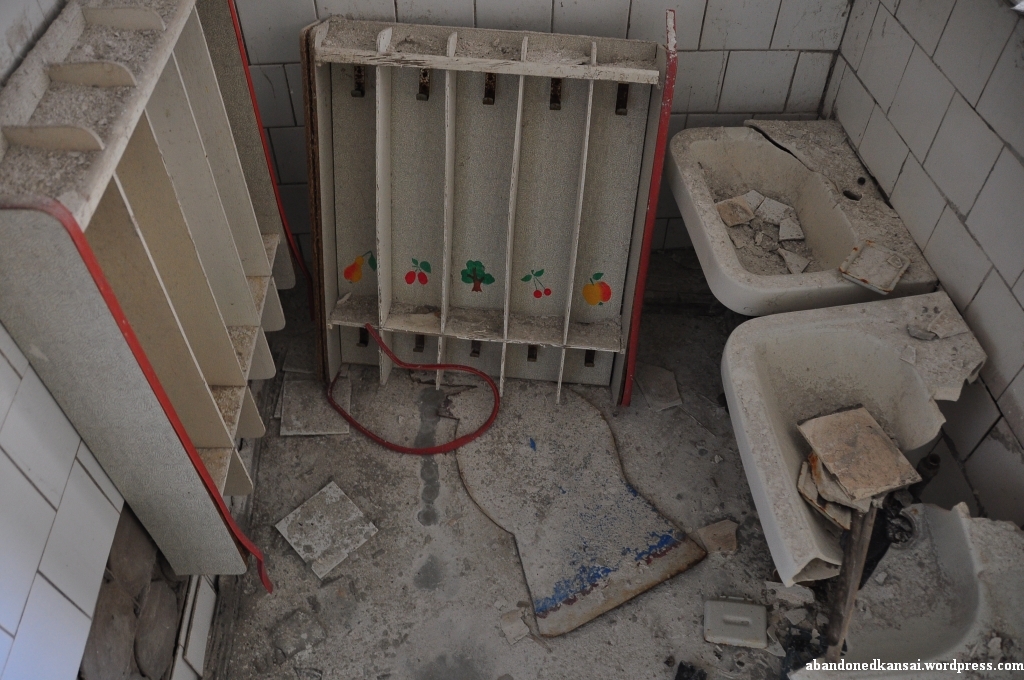
Although quite close to Lenin Square, Golden Key was surrounded by apartment buildings and at the time of our visit, in late August of 2010, mostly overgrown – we even had to push the green aside to get into the building. A building that was in terrible shape.
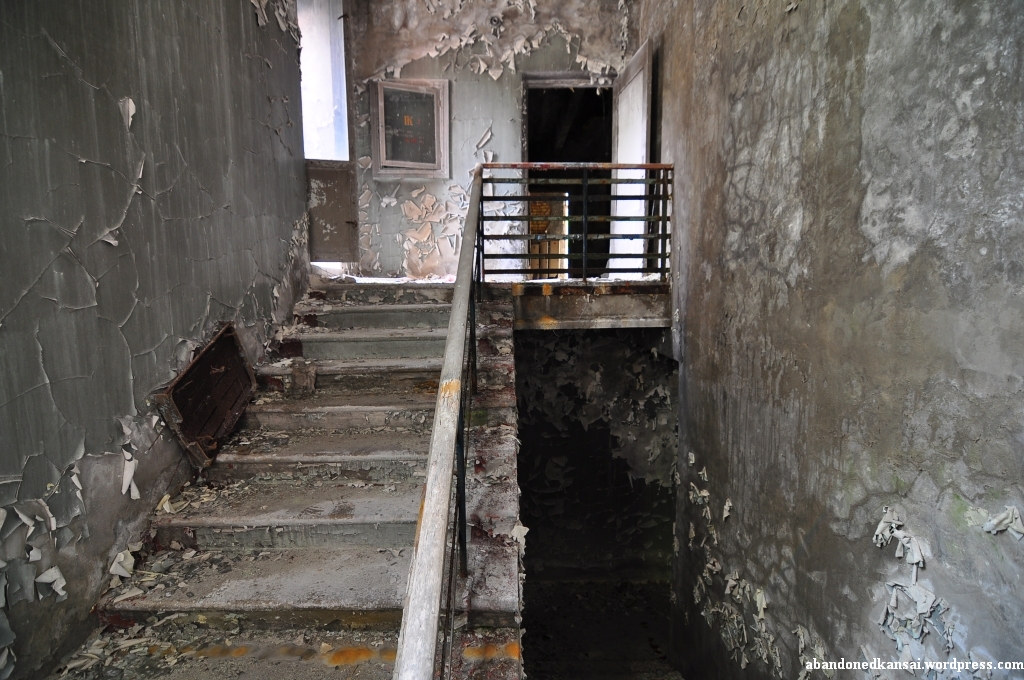
One of the staircases was blocked by… I actually forgot, some kind of construction that once was screwed to the wall. The place was seriously vandalized, dilapidations were visible everywhere and I’m sure the mold does one last thing to make this kindergarten one of the next buildings to collapse. Dripping water was audible in a lot of rooms and I generally had a bad feeling about the Golden Key. Furthermore I was getting pretty tired, so I was slowly moving from room to room, taking pictures rather randomly here and there.
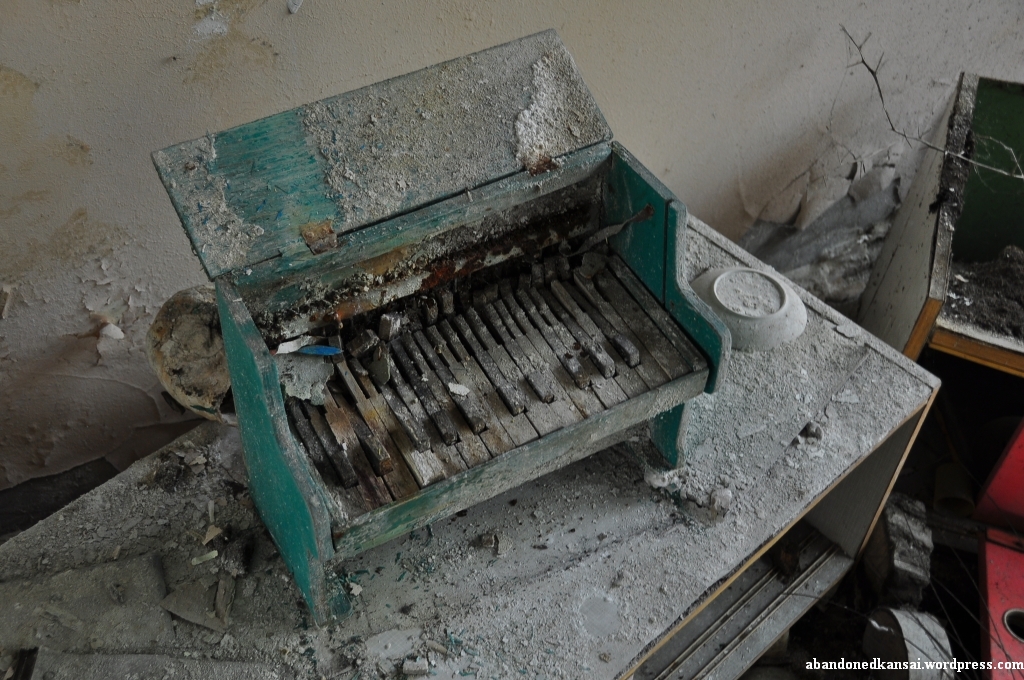
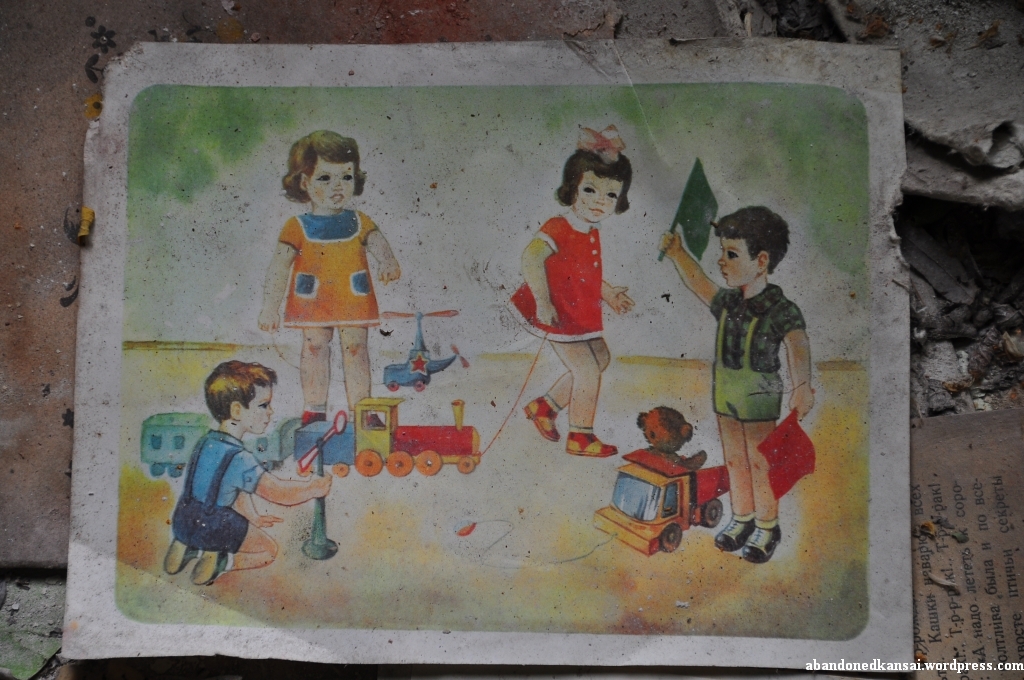
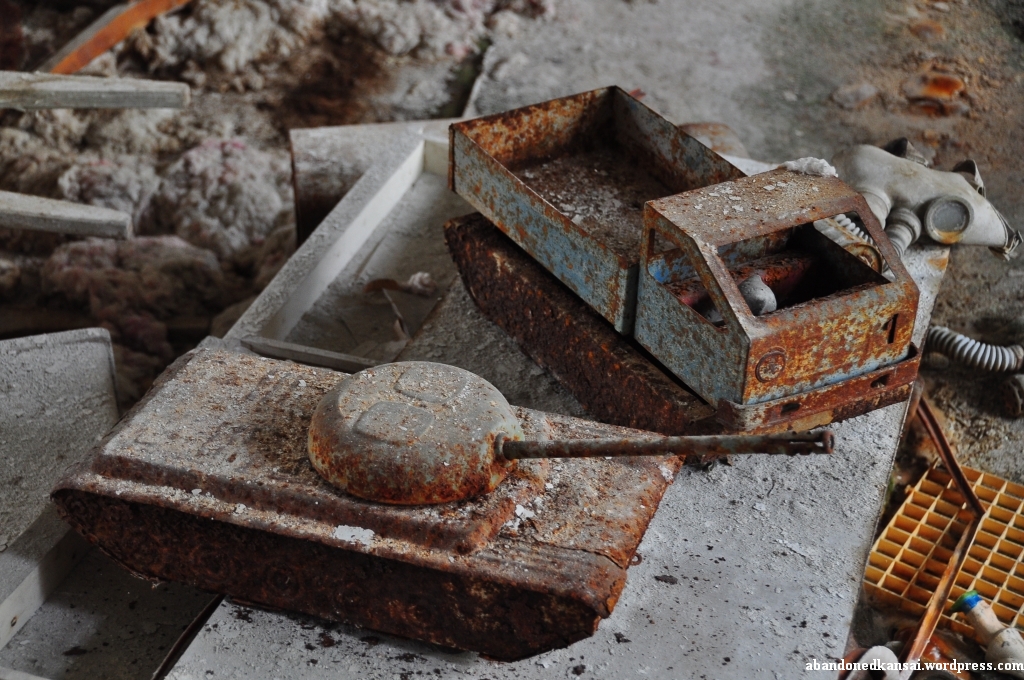
I remember taking the picture of a doll in one of the rooms, but it was not until I saw it on a computer screen that I realized how powerful the subject was: A naked plastic doll with grey hair, the arms connected to the body only by a thread, wearing a gas mask. Obviously set up by some really weird photographer – a week ago, a month ago, a year ago? Who knows… The scene was definitely staged, but not at all shocking – not anymore, not after 1.5 days in the Zone Of Alienation. Same with the tea party and the rotten piano for kids. Just the metal tank and truck… I knew that picture would look good! Although I actually didn’t realize there was a gas mask lying in the background when I pushed the shutter release.
I strongly recommend visiting the kindergarten early on a tour, not in the evening of the second day – it was an awesome location I didn’t fully appreciate when being there and I’m really happy how good the pictures turned out to be. But I didn’t even take a video. So we left the Golden Key after just half an hour – and at that point Sebi and Maxim were sitting on the sunny terrace for 20 minutes already…
(If you would like to know more about my trip to the Zone Of Alienation please *click here* to get to the “Chernobyl & Pripyat” special. For a map of the area please *click here*. You can *like Abandoned Kansai on Facebook* and *follow this blog on Twitter* – and of course there is the *video channel on Youtube*…)
Read Full Post »

“The next location will be even better!”
Those were the words Maxim used to lure us away from the absolutely amazing Hospital No 126. We hopped into the van and drove to the other end of Pripyat to see… an abandoned factory. Wait. What? A factory? Seriously? A factory? Better than a hospital? No way!
Please don’t get me wrong: The Jupiter Factory was awesome! I’ve never been to an electronics factory that big. But in the end it was just a factory… one of the most common abandoned places in the world. And not even nearly as fascinating to me as Maxim hoped it would be. But I’m not into First Person Shooters whereas a lot of people visiting the Zone Of Alienation are. And for them the Jupiter Factory is one of the highlights since it was a setting in the game “S.T.A.L.K.E.R.: Call of Pripyat” by GSC Game World – one of the most popular FPSs of the last couple of years.
We entered the Jupiter Factory, one of the biggest employers in Pripyat, through the main gate and passed by some administration buildings. Since the site is located at the western city limit of Pripyat nature is taking over the area rather quickly. The streets on the premises were partly overgrown with climbers, some of them even seemed to be some kind of grapes. None of us tried them though, for obvious reasons.
The assembly halls were absolutely impressing – huge constructions with all kinds of machinery still in there. The walls displayed dozens of warning posters and the workbenches were covered with tools and instruction manuals. But like with so many other places in Pripyat there is hardly any reliable information about the Jupiter Factory. It’s known that the plant produced tape-recorders and other consumer products under the label “Mayak”, but of course there are also unconfirmed speculations. Rumors about secret military research and stuff like that in underground laboratories. But since the basement is flooded nowadays it only adds to the mystery…
Which makes me wonder why nobody really tried to write a comprehensive book about Pripyat, at least not in English. Every tiny town in Europe has a local historian that knows every little thing about the surrounding 25 km2 – but Pripyat? It’s surprisingly hard to find reliable information about the city… (I’d love to do it, but with no knowledge of Russian / Ukrainian I don’t think I’d get far.)
Anyways, if the Jupiter Factory would have been my first urbex exploration ever I’m sure I would have been completely blown away and could have spent hours there. Even now that I’m back home I wish I had a place like that nearby. It would be worth to write several postings about it and I could come back at different seasons and during different weather conditions. But when I explored the place I was rather underwhelmed, especially since I had to leave the hospital in a hurry…
(If you would like to know more about my trip to the Zone Of Alienation please *click here* to get to the “Chernobyl & Pripyat” special. For a map of the area please *click here*.)

Read Full Post »

Abandoned hospitals are creepy places. It’s kind of in their nature. Like abandoned amusement parks. Hotels, spas, mines… they don’t really get under my skin. Amusement parks and hospitals do – but none of them even nearly as much as Hospital No 126 in Pripyat!
When Maxim asked us on the first day which places we wanted to see, a hospital appeared on top of my priority list instantly. Hospitals are generally hard to find and even harder to access (since they usually are in easy to reach locations and filled with expensive equipment), so this was a great opportunity to explore one in a more relaxed atmosphere. At least that was my hope… sadly it wasn’t fulfilled. Nevertheless Hospital No 126 turned out to be my favorite location in Pripyat.
Although it was still morning we already “lost” quite some time on the Cooling Towers and the Przewalski’s Horses, so we arrived at the hospital way behind the schedule our dear guide has planned for us. As a result Maxim gave us half an hour since “the next location will be even better”.
So there was the time pressure… and then there was the atmosphere that was everything but relaxing. Of all the real places in Pripyat this one was by far the most real. The basement is actually one of the most contaminated places in the world and holds the suits of the first six firefighters that died within a couple of weeks after the accident. Maxim told us that he went down there once with full protection gear, but had to leave after about 30 seconds – something he never wants to do again.
At that point Maxim knew that Sebi, Michi and I were reasonable and responsible-minded people, so he just quickly entered the hospital with us to guide us to one of the interesting floors and then returned outside to wait with our driver. My fellow Swiss explorers headed their own way and so it took about two minutes until I was all by myself. In the maternity ward of an abandoned hospital. In Pripyat. Almost 25 years after the accident. Without the shadow of a doubt the highlight of this trip. We’ve all seen a horror movie or two, played video games like Resident Evil or Silent Hill. The hospital felt like being the star in one of those works of fiction. On a very irrational basis – because the place was perfectly safe. It just didn’t look and feel like it…
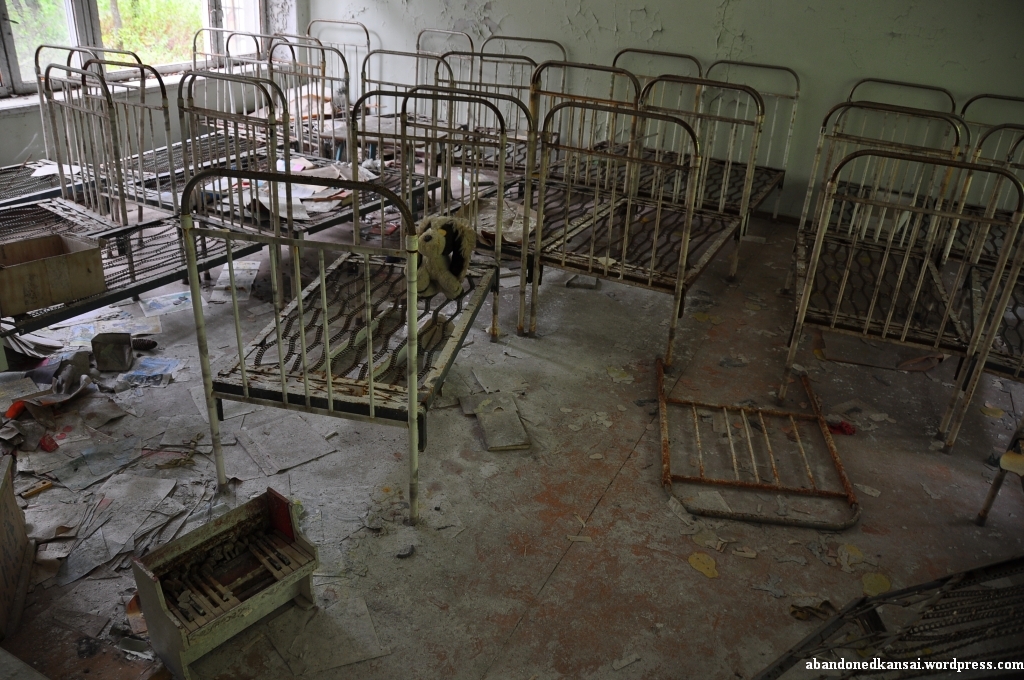
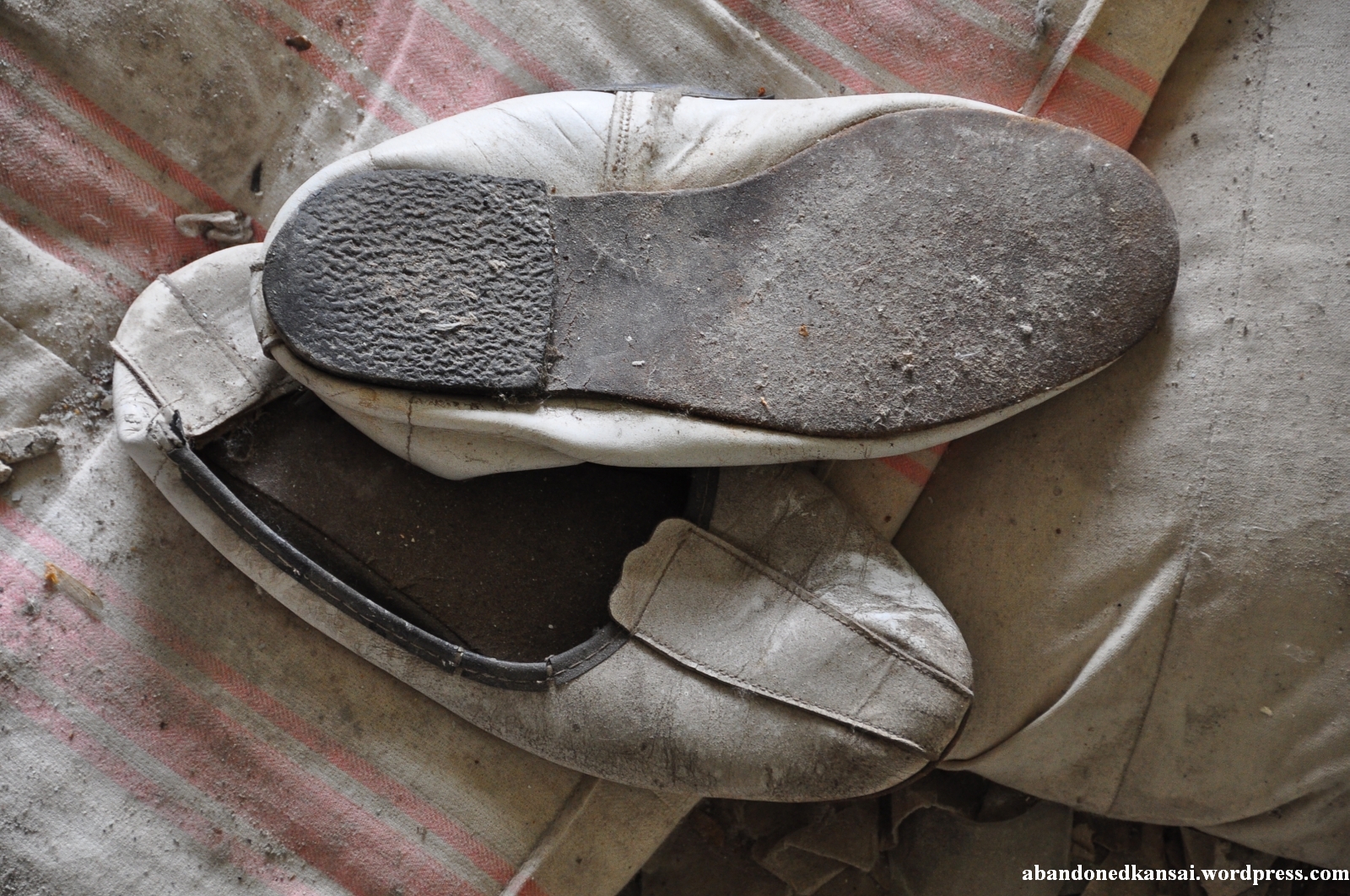
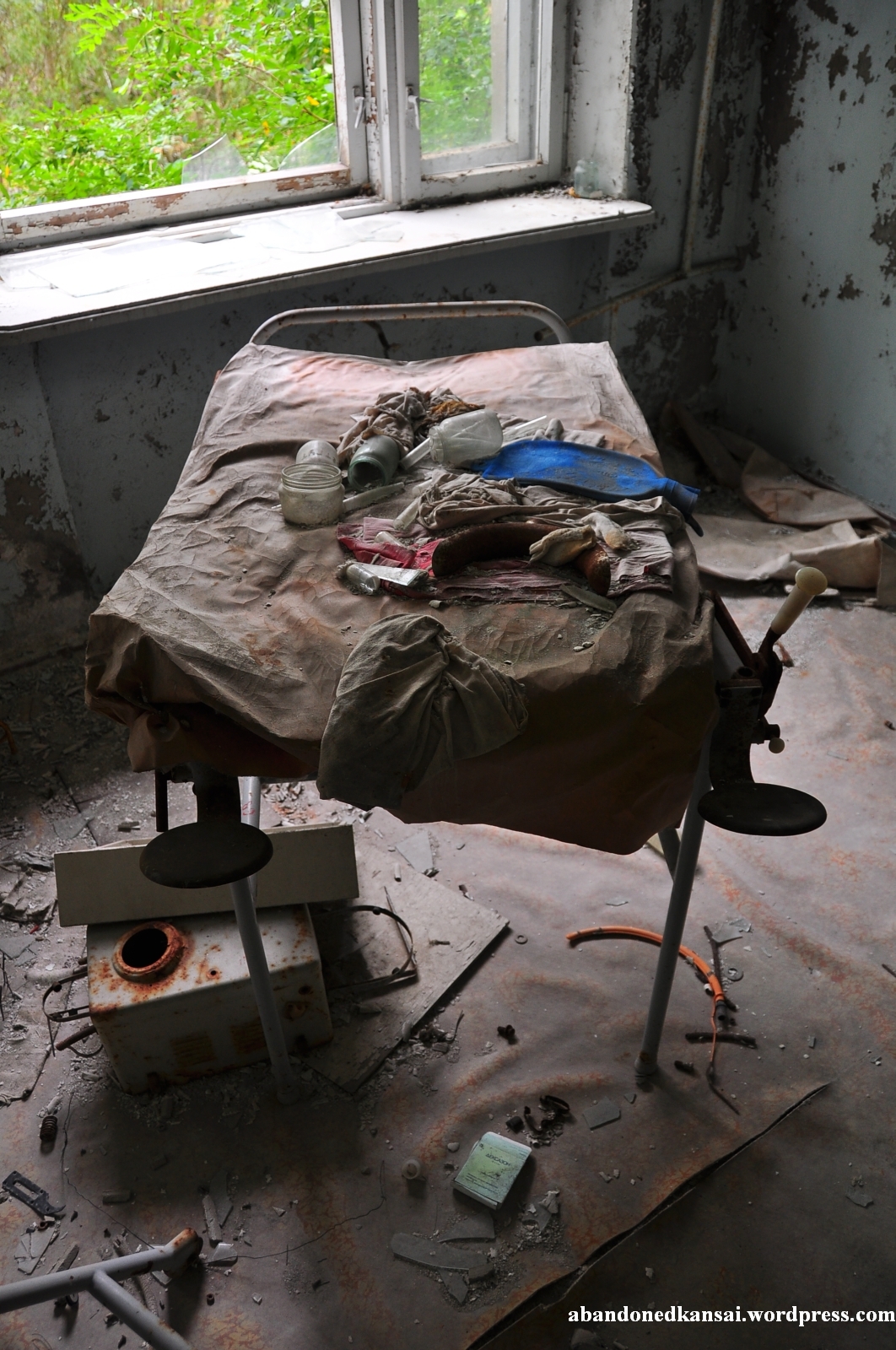
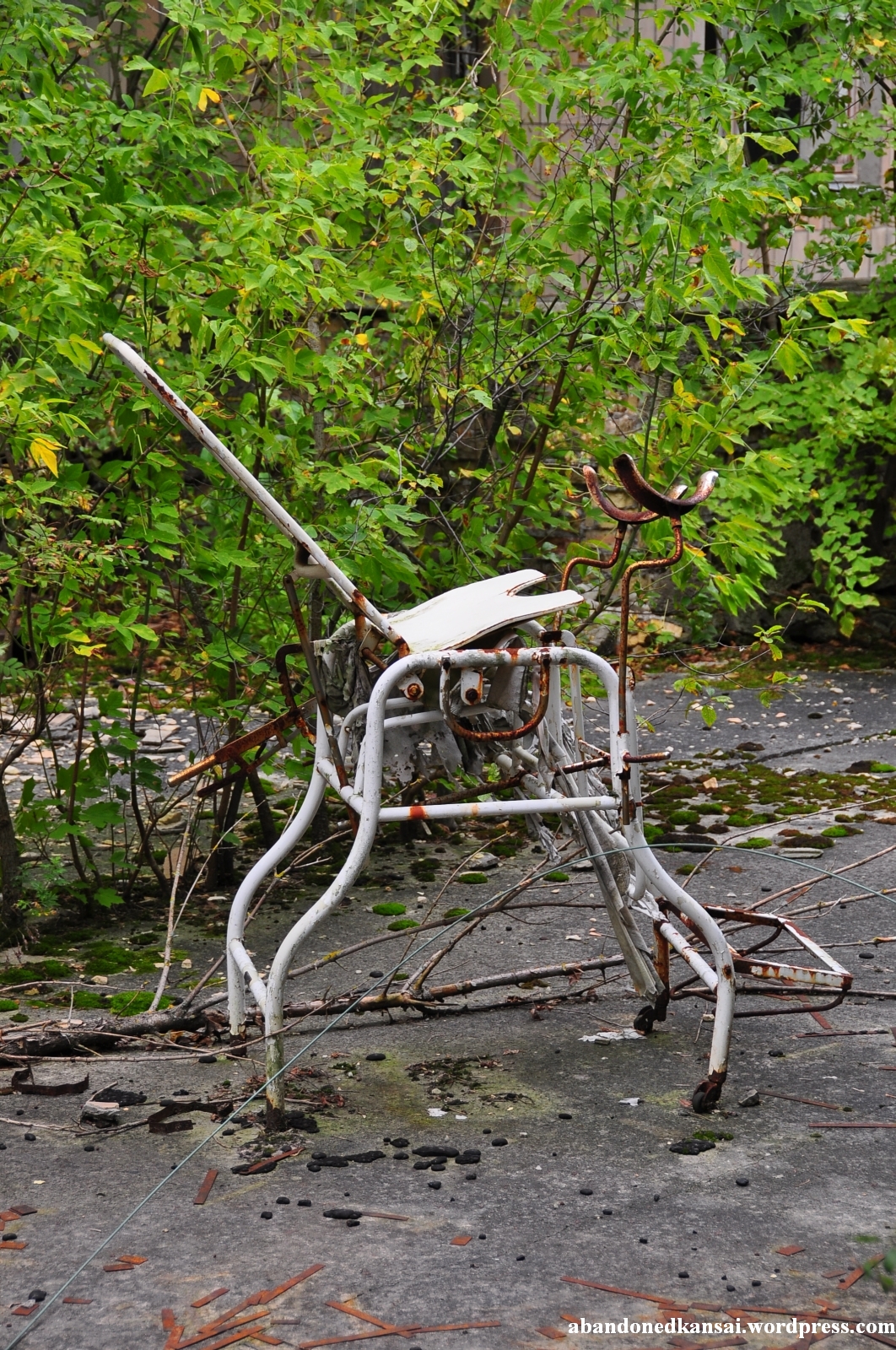
Thanks to the time restraint I was only able to see one of the floors of one of the departments, maybe a tenth of the building, but it was nevertheless amazing. Almost every room, every corner had something interesting to offer. There were surgical instruments, bedpans, gynecological examination chairs, bathtubs, whole boxes of medicine, posters and signs with medical explanations (including explicit pictures) and much, much more. At the end of the hallway were several rooms with rusty baby beds, a really uncomfortable sight. The lighting that day contributed a lot to the atmosphere and made it very difficult to take pictures – never before I wished more that I had a tripod! Since I was in a hurry I cranked up the ISO and took photos while quickly exploring the rooms along the hallway – and on the way back I filmed about two thirds of the floor with my video camera. Sorry that parts of the video turned out to be a bit blurry, but there was no time for re-shooting; just consider it part of the atmosphere…
Looking through the photos from the relaxed comfort of my home, one of them caught my eye and gave me the creeps, although it’s quite unspectacular at a first glance. It shows an opened up register lying on top of other documents. There are lots of handwritten entries and even without speaking any Russian / Ukrainian I guess it’s pretty obvious what it is: Hospital staff logging in for work at 8am and 8pm on April 24th 1986, April 25th 1986, April 26th 1986 – and on April 27th nobody cared to log in at 8pm anymore… (EDIT: Well, obviously I was wrong – Greg let me know in the comments that it’s actually a checklist for people making sure that locked medicine is still where it should be. Thanks again, Greg!)
(If you would like to know more about my trip to the Zone Of Alienation please *click here* to get to the “Chernobyl & Pripyat” special. For a map of the area please *click here*. If you don’t want to miss the latest postings you can *follow Abandoned Kansai on Twitter* and *like this blog on Facebook* – and of course there is the *video channel on Youtube*…)

Read Full Post »

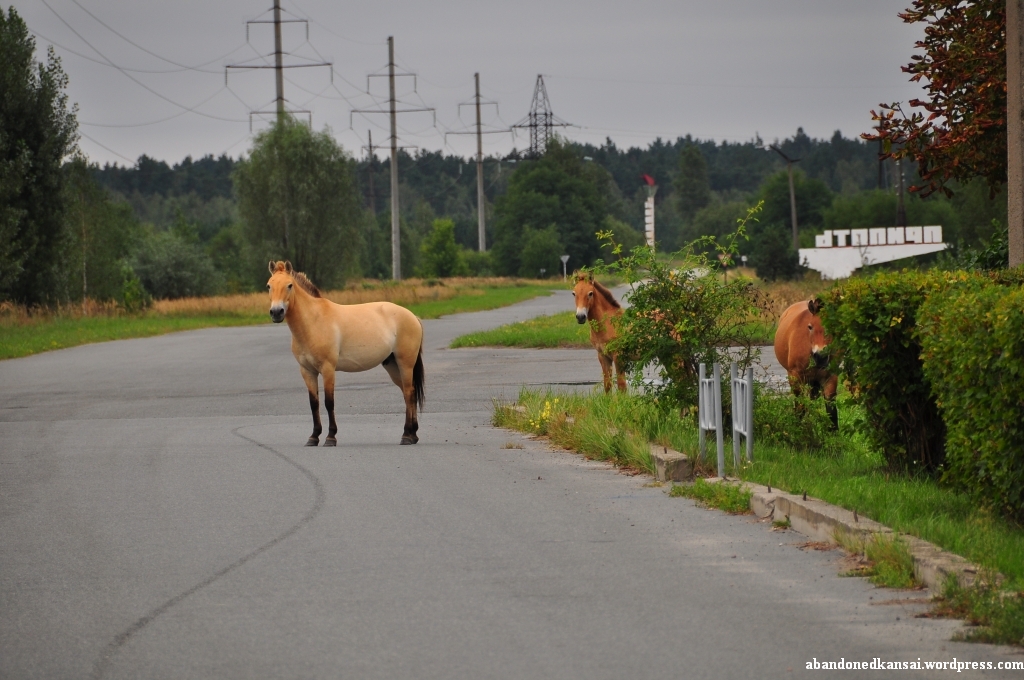
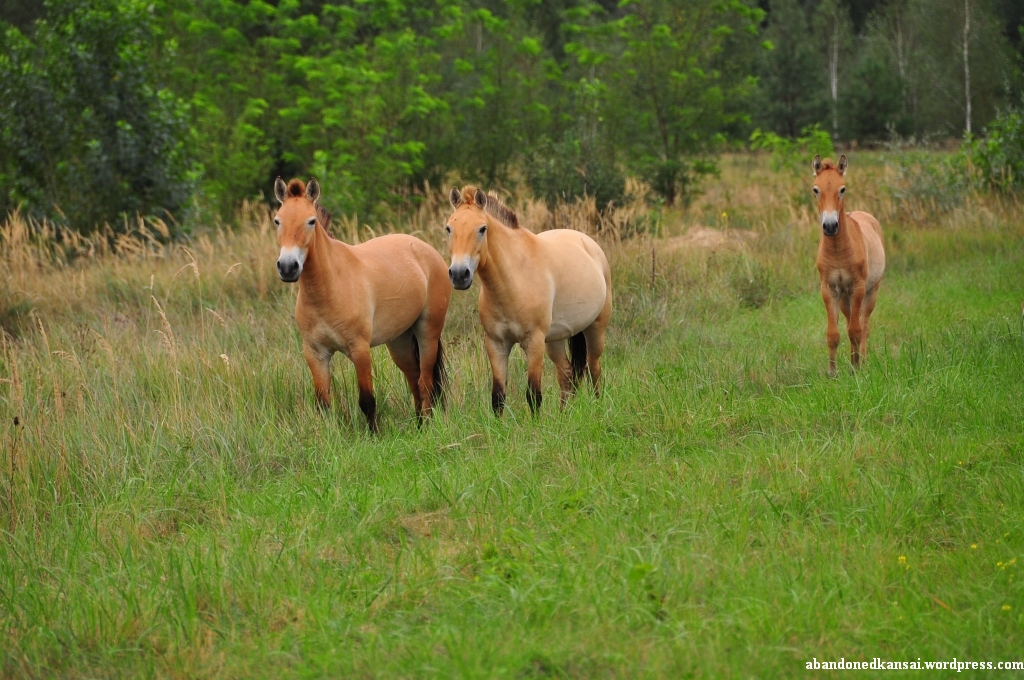
The Przewalski’s Horse (Equus ferus przewalskii, Dzungarian Horse), named after the Russian explorer and geographer Nicolai Przewalski, is a rare and endanger kind of wild horse and was first described in 1881 by L.S. Poliakov. The current world population of about 1500 animals are all descendants from nine horses kept in captivity in 1945 (total population then: 31). At one point extinct in the wild Przewalski’s Horses have been reintroduced to their former native habitat in Mongolia as well as to Hungary, China and Ukraine; the latter one offering space for the wild horses in Askania-Nova and the Zone Of Alienation.
On the first day, on our way from the 30km checkpoint of the Zone Of Alienation to Pripyat, Maxim told us how scientists returned several dozens of Przewalski’s Horses to the wild in the late 80s. The Exclusion Zone was already kind of a natural preserve, so the horses did well and their number raised to about 120. Nowadays, Maxim told us with some sadness in his voice, they are a rare sight since their number is down to about 60. Officially they migrated to the Belarus part of the Zone Of Alienation, but Maxim had a different explanation that involved bored militia and rifles…
On the second day, when we were driving from the monument at reactor #4 of the Chernobyl Nuclear Power Plant to do some more exploration in Pripyat, Maxim and our driver all of a sudden had a quick conversation in Ukrainian. Close to a building in the middle of nowhere they stopped the car, got out and pointed to the road in front of us. Przewalski’s Horses. At first I had no clue what they were talking about, but then a horse’s head appeared behind a tree about 80 meters in front of us. The horse was carefully stepping on the street, followed by about half a dozen more. Maxim and the driver (sorry dude, forgot your name!) were really excited, taking pictures with their cell phone cameras. Luckily I had my 18-200mm lens mounted, so I was able to take some quite nice shots of those shy creatures. I’ve never seen wild horses before and it was very interesting to see how they behaved – they kept us under constant surveillance. While some of the horses nibbled on some grass now and then, at least half of them always had their eyes on us, making sure that we didn’t get too close.
Having urban exploration as a hobby I ran into all kinds of rather unusual wild animals before – snakes, boars, monkeys… but the Przewalski’s Horses were by far the most impressive ones. Another experience that took me completely by surprise.
After we got back into the van to continue our way to Pripyat Maxim told us that he hasn’t seen any Przewalski’s Horses in more than three years – and he spends half his life in the Zone Of Alienation as a guide…
(If you would like to know more about my trip to the Zone Of Alienation please *click here* to get to the “Chernobyl & Pripyat” special. For a map of the area please *click here*.)

Read Full Post »

Although Pripyat was a city predominantly inhabited by educated and privileged people of course no city of that size could exist without a police station – it sounds so cliché, but most of the arrested people were accused of alcohol related deeds: making home-brew liquor (samogon, самого́н), driving under influence or being drunk in public. Pripyat’s police station was located at the western end of the town, right across the street from the fire department and in close proximity of the famous Jupiter factory we were visiting the next day. After visiting rather well-known touristy spots like the Swimming Pool “Azure” and Middle School #3 the Police Station was the last destination in Pripyat on the first day.
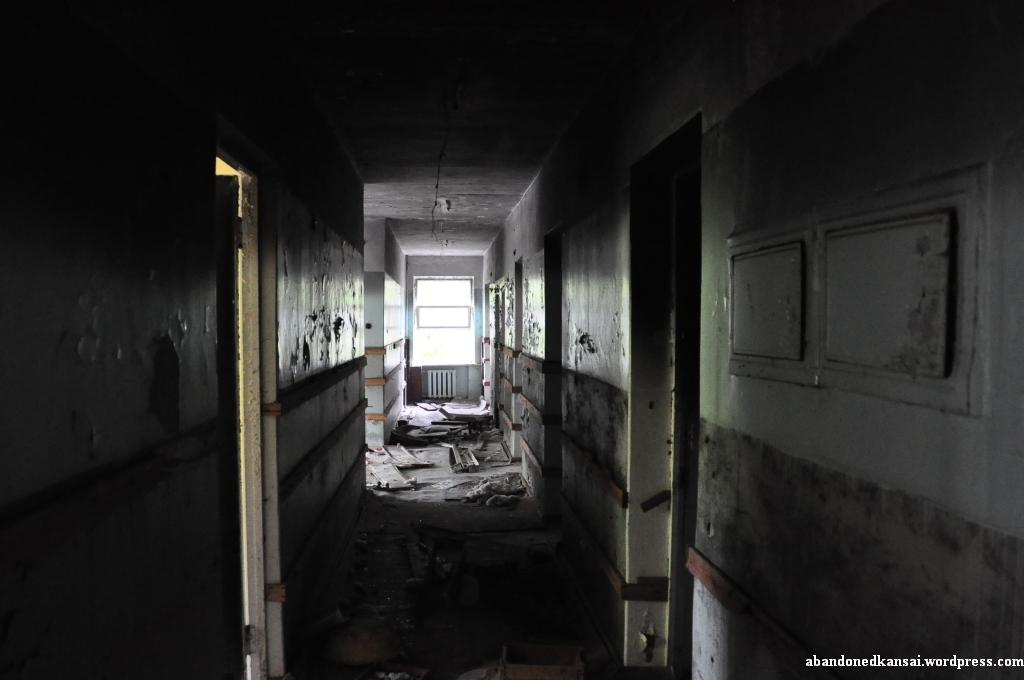
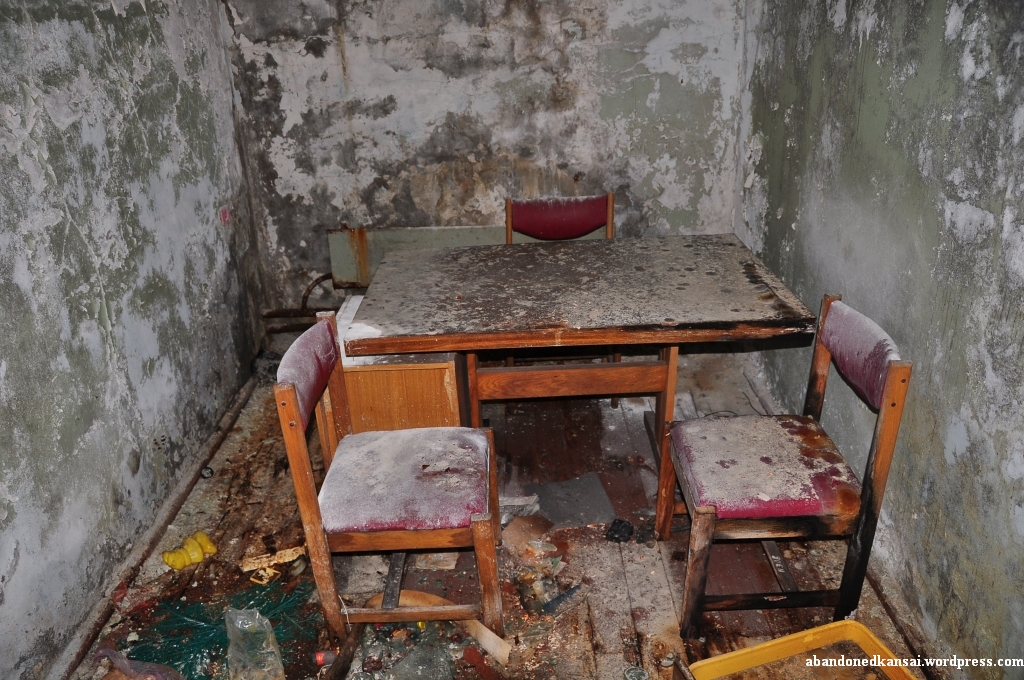
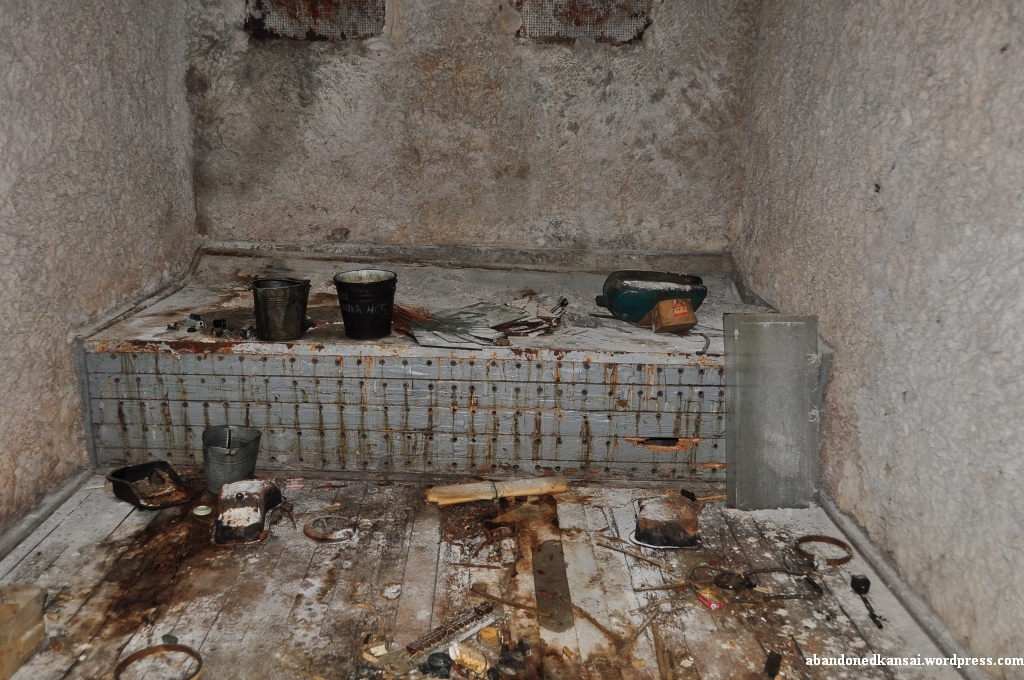
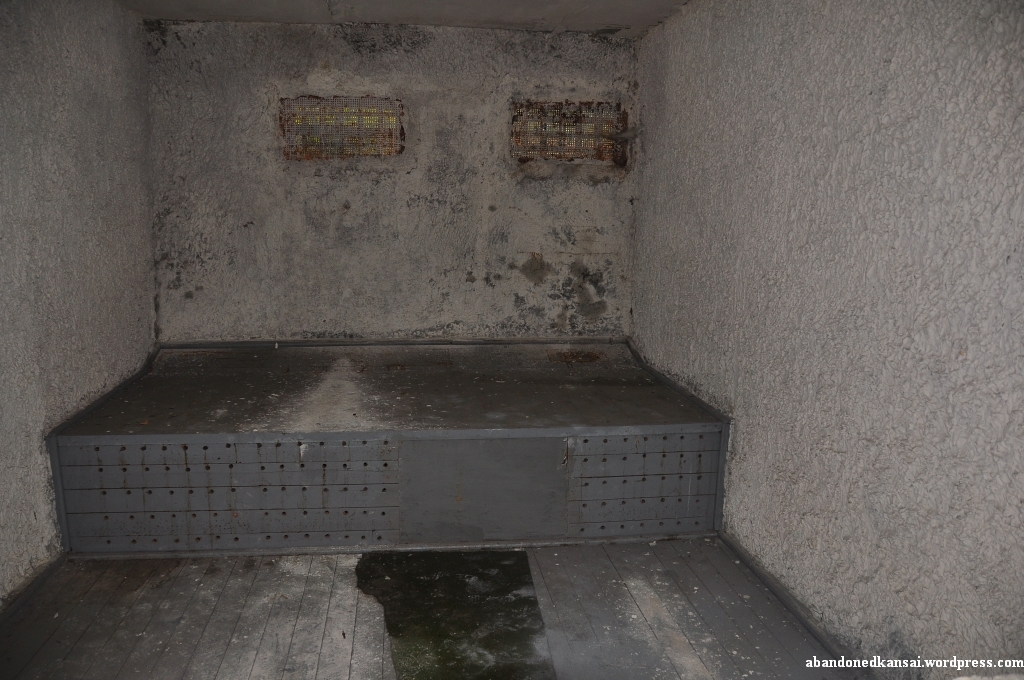
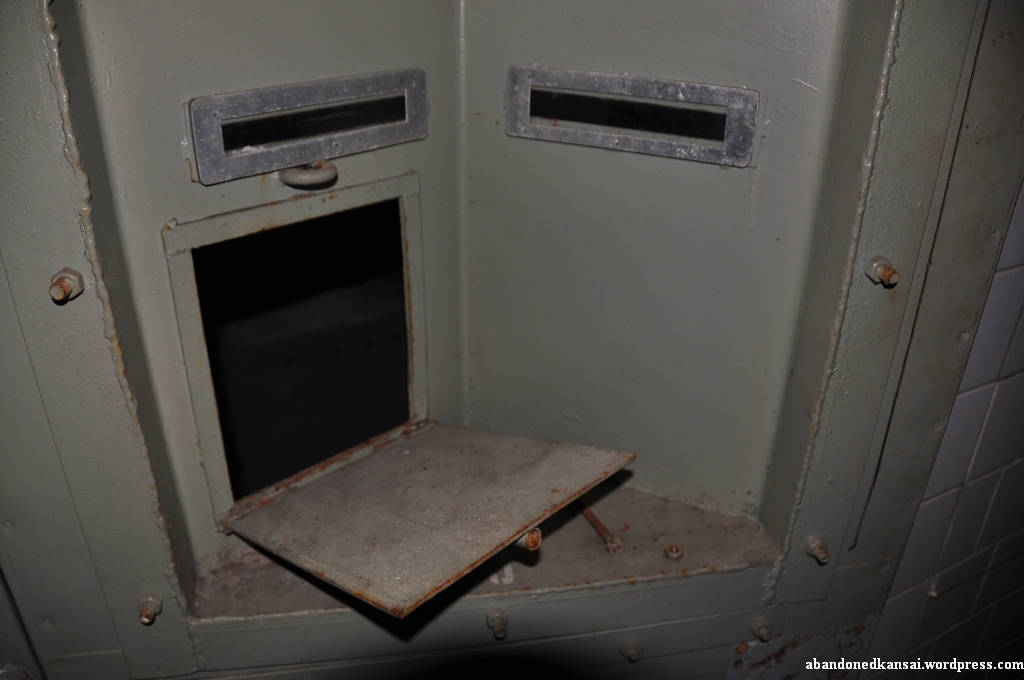
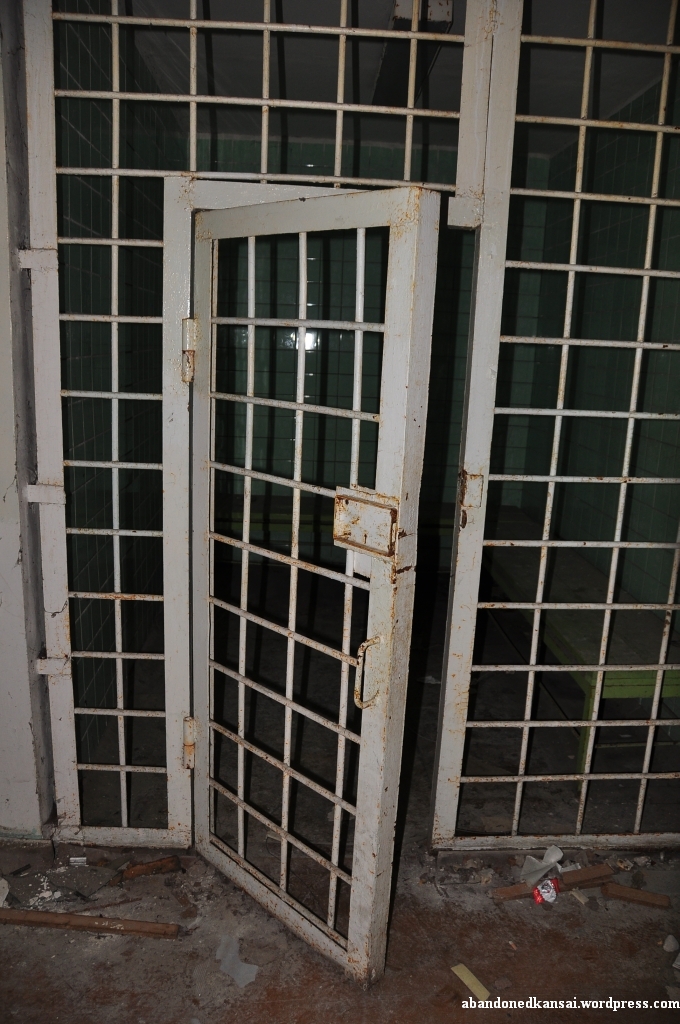
The Police Station was in as bad shape as the rest of the city, just with more books and files. We were only able to see the ground floor since time was running out and Maxim tried to keep the little group together to guide us through the prison part of the police station which was pitch black; and that’s why this time I’ll have to post some photos taken with flash. When I show people some pictures of my visit to Pripyat I often get reactions like “I would expect screaming zombies charging at me at any time!”. I actually never had that feeling, the whole city reminded me more of George Orwell’s “Nineteen Eighty-Four”. Especially when walking through the dark prison hallway… You could almost see Winston Smith being interrogated in one of the cells and being tortured in another one. To my surprise I was the only one with those associations: My fellow Swiss travelers had only heard about the book, Maxim had no idea what I was talking about.
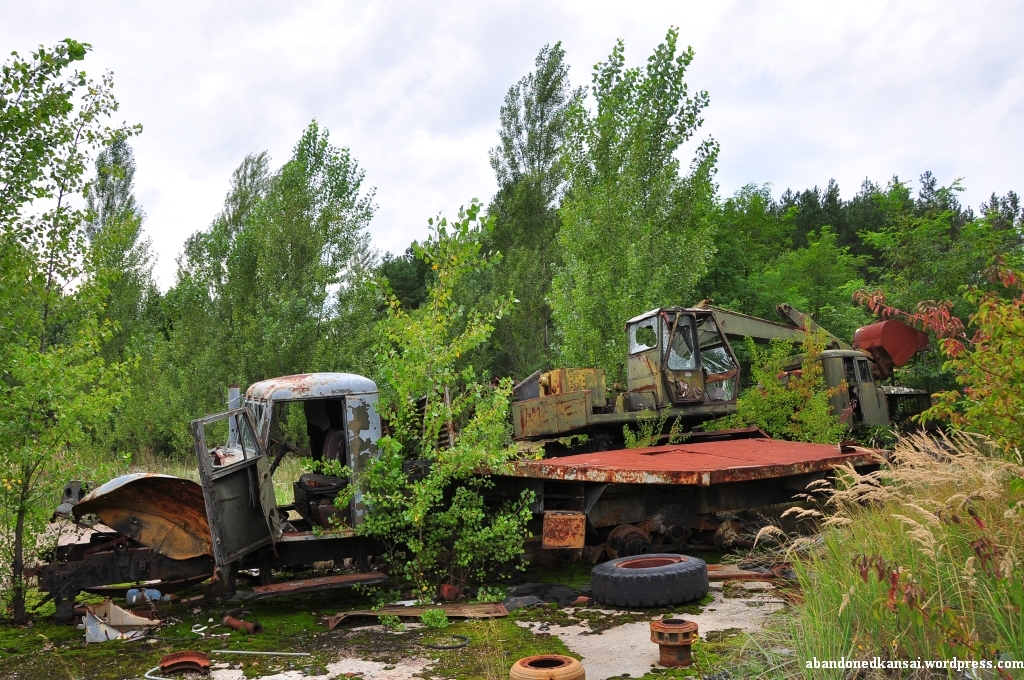
The door leading to freedom at the other end of the cell hallway actually released us to the backyard of the Police Station, once used as a repair shop for automobiles. There we found the remains of all kinds of trucks, broaching machines and even small reconnaissance tanks. Being contaminated too much to be used anymore, but not enough to be brought to the official vehicle graveyard, these wheels and chains were left behind to rust away. And that’s what they were doing. At least what was still left after looters removed the actual wheels as well as doors, headlights, wipers and even motors!
(If you would like to know more about my trip to the Zone Of Alienation please *click here* to get to the “Chernobyl & Pripyat” special. For a map of the area please *click here*.)

Read Full Post »

« Newer Posts - Older Posts »