Feeds:
Posts
Comments

Archive for the ‘Hospital’ Category

Finding abandoned places can be a pain in the ass. Nowadays it’s either impossible to find places (because people don’t reveal names anymore, let alone prefectures or cities) – or you look at a map. Yes, there are more and more blogs with maps, revealing the exact locations of some of the best abandoned places in the world. I don’t like either approach very much as the first one is friggin’ teasing and the latter one contributes to the littering and vandalizing of once beautiful spots. Only a handful of serious people go through the time-consuming shenanigans of piecing information together, but that’s the way I prefer to do it…

Finding the Amano Clinic was a pain in the ass. I did some research on it more than 3 years ago and it took me ages to even pin down the area where the damn thing could have been. It was a famous ghost spot, so quite a few people wrote about the place (in Japanese…) – and everybody dropped another piece of the puzzle. After a couple of hours I concluded that the Amano Clinic must have been in a suburb of Yoshinogawa in Tokushima prefecture, a couple of hundred meters away from JR Awakawashima Station. Easy as pie from that point on, right? Wrong!

When Gianluigi and I arrived in Yoshinogawa (we thought) we knew the area the hospital was in and we (definitely) knew what the place looked like from the inside – but we had no idea what the hospital would look like from the outside! (Or if we really were in the right area…) So we parked the car and had a walk through the rural neighborhood. Up a hill we found an abandoned building… but it was just a barn with an office, not interesting at all. Heck, it was so uninteresting I didn’t even take photos.
So we kept on searching:
Cars? Not abandoned…
People? Not abandoned…
Neat gardens? Not abandoned…
Toys? Not abandoned…
Trimmed hedges? Not abandoned…
Laundry? Not abandoned…

After a while we found a house that probably was abandoned – we opened the door and Gianluigi fired the whole set phrase barrage about “Sorry, anybody home?”, which is an estimated 20 times longer in Japanese. Nobody was home and inside the place looked kind of abandoned, but we weren’t sure (not all houses in Japan are locked…). All we were sure of was that it didn’t look like a hospital or clinic, so we left quickly. In another part of the area we found some old-style storage buildings – raising our confidence that we were getting closer. A house close-by looked abandoned, too, but it was locked-up. So Gianluigi asked the neighbors who came back from grocery shopping and they gave us the final hint where the abandoned hospital was. Hallelujah, we didn’t waste valuable time hunting a ghost…

Like the *Tokushima Countryside Clinic* the premises were huge and overgrown. A bamboo forest turned out to be impenetrable, so we followed a surrounding path till we finally found a fence with a hole in it. We slipped through, made our way through a beautiful (and abandoned) Japanese garden and arrived at the back of a wooden house, abandoned for sure, but with an open door. Before we entered we cleared the surroundings and Gianluigi confirmed that we were at the right place when he saw the name written to the side of the building in gigantic but fading letters – Amano Hospital! Old style – in kanji, from right to left; which is quite unusual as nowadays Japanese texts are either written left to right or top to bottom.

Driving to the Amano Clinic took us several hours, finding it after parking the car took us about 60 minutes – exploring it and taking photos took us less than 20 minutes…
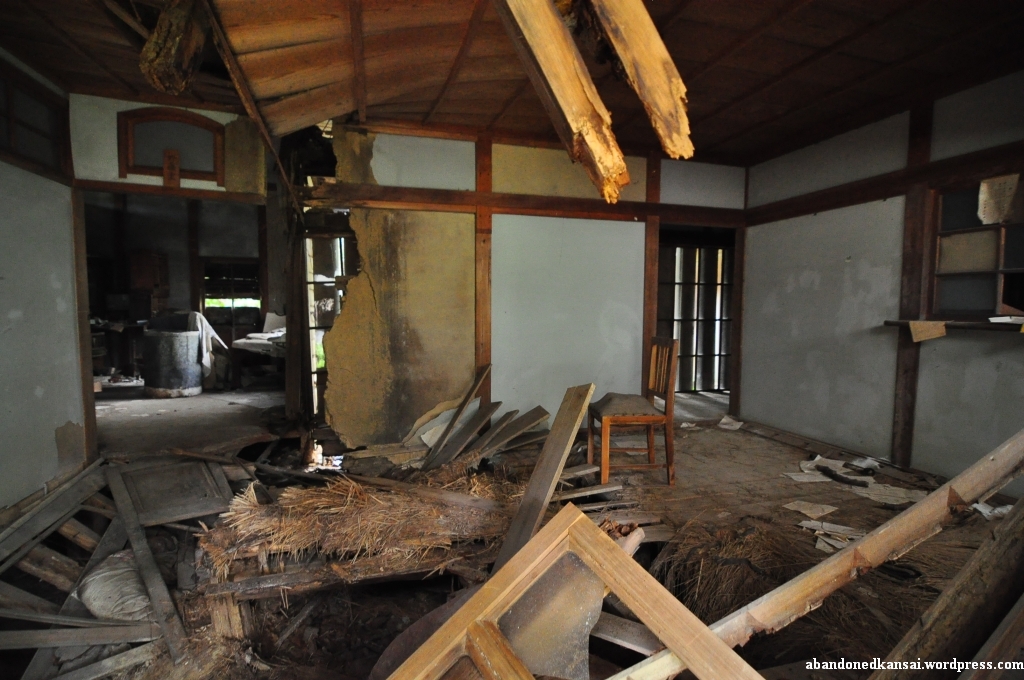
Since most of the windows were nailed up it was almost dark inside and the rotting floors / vandalized interior didn’t help either. The building might have had a history as a local doctor’s residence, but there was nothing left for us to see – it looked just like another abandoned Japanese countryside building, the most common and most boring *haikyo* there is.
A couple of months after exploring the Amano Hospital I read on a Japanese ghost spot blog that the clinic had been demolished. I tried to verify that statement for this article and found my old source again. This time I had a closer look at the text and it said that it is unknown when the Amano Clinic was demolished, but it was before the night porter’s house was torn down, which happened in late 2003. The problem is: Gianluigi and I visited the Amano Clinic in early 2011.
That can mean three things:
1.) The guy wanted to write 2011, but wrote 2003.
2.) The guy found another demolished building and thought it was the Amano Clinic.
3.) The Amano Clinic was demolished before 2004 and somebody nailed its sign to a regular old house – the one Gianluigi and I explored…
My guess would be #2, but I don’t know for sure, so contrary to my announcement in the *Second Road Trip To Shikoku* article I won’t add the Amano Clinic to my *map of demolished abandoned places in Japan* – just in case it’s still there… Sorry for that!

And with that you’ve seen all the locations Gian and I visited on our trip to Shikoku. Next week you’ll find out how I almost died while exploring an abandoned ryokan in Osaka prefecture…

(If you don’t want to miss the latest article you can *follow Abandoned Kansai on Twitter* and *like this blog on Facebook* – and of course there is the *video channel on Youtube*…)

Read Full Post »

The Sudden Stop Syndrome is a widespread phenomenon in Japan. When you least expect it, people just stop walking without any warning signs. Half a meter in front of an open train door (even after lining up for minutes!), 5 cm inside of a train (basically in the middle of the door), at the end of elevators, moving walkways and steps, or right in front of you just as you walk down a street. No slowing down, no looking over the shoulder – just a sudden stop as if they were the last person on the planet. So far no deadly incidents have occurred, but there is always the risk of bumping into somebody… The worst part about it: There is no treatment and it can happen to everybody at any time. I don’t know how widespread the Sudden Stop Syndrome is in your country, but in Japan you most likely will observe it at one point or the other. (And by that I mean “at least weekly”.)
I wonder if the Sudden Stop Syndrome was known to the doctor(s) running the Tokushima Countryside Clinic (TCC) from as early as the 1930s on. Probably not. I imagine back then the times were less rushed – and the slower you walk, the less sudden a stop is.

The Tokushima Countryside Clinic is without the shadow of a doubt one of the best abandoned hospitals in Japan, probably in the world – although “hospital” and “clinic” are words that are used rather loosely in Japan.
When I hear the terms in English (or my native tongue German) I imagine rather big health care facilities with several doctors and departments; buildings for dozens or even hundreds of patients and inpatients. In Japan basically every family practice is called a clinic – but even some hospitals can host only a handful of inpatients and close on the weekends. Clinics are usually named after the doctor who owns and runs it, or by the town they are in.
The spookiest hospital I’ve ever been to is the *Hospital #126 in Pripyat*, abandoned in the aftermath of the *Chernobyl Disaster* – a big hospital with several floors and never-ending hallways, with paint flaking off the walls and wind making scary noises; just right out of a horror movie, though reality probably was scarier.
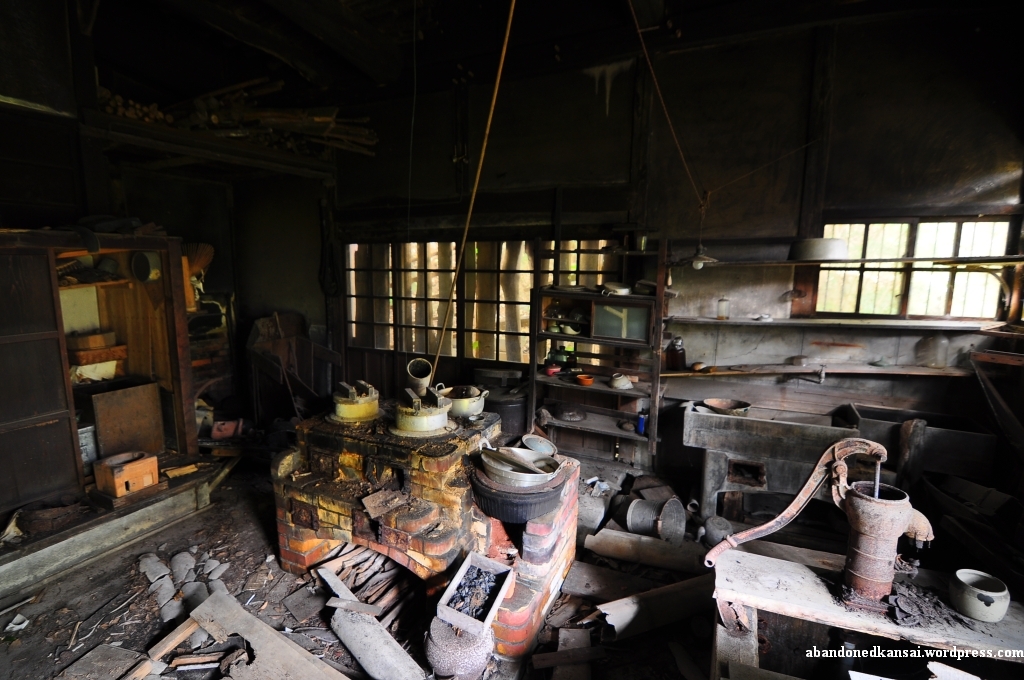
The Tokushima Countryside Clinic on the other hand offered quite a different experience. Located in a small town in the countryside of Tokushima prefecture it once were the rather big premises of the local doctor; half private house, half clinic. Even without the medical equipment it would have been a gorgeous example of an early modern Japanese estate, built about 100 years ago – most likely earlier.
Hidden in the backstreet of a side street in a tiny town the Tokushima Countryside Clinic really is off the beaten tracks and for years it was one of the most secret abandoned places in Japan. Although deserted more than 30 years prior to both of my visits (November 2010 and April 2011) the clinic was in amazing condition – you can find out a little bit more about the clinic’s history *in the article about my first visit*.

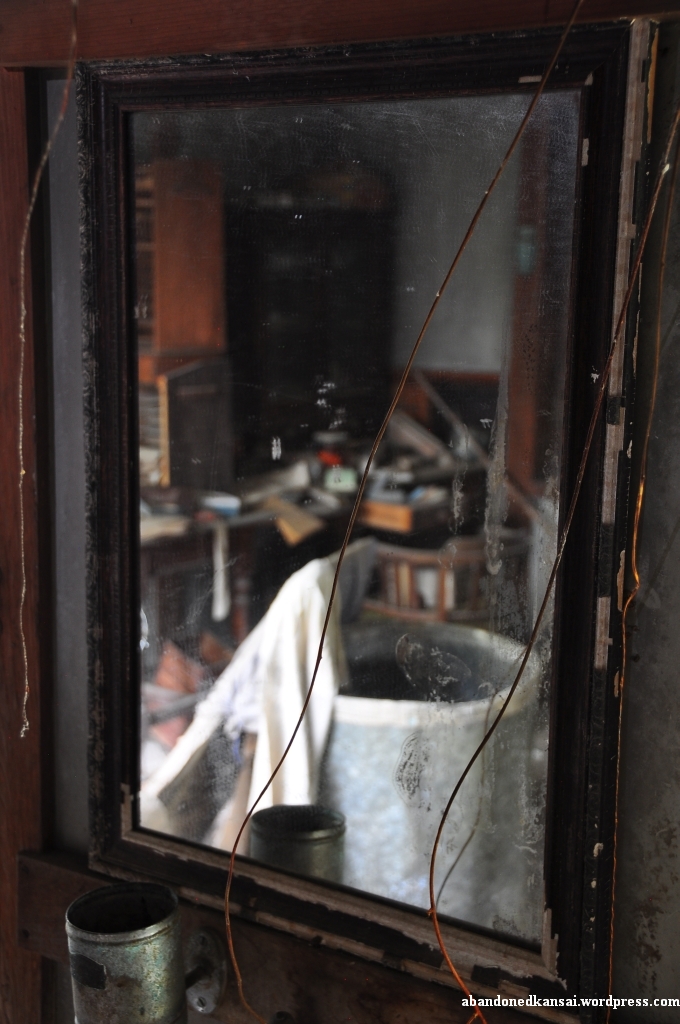
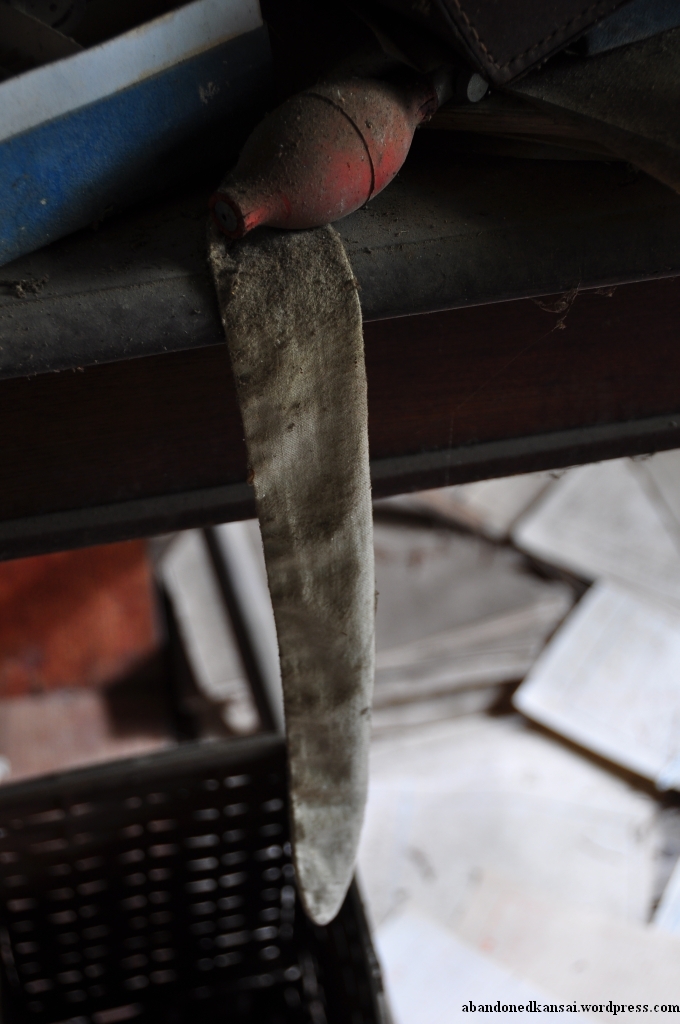
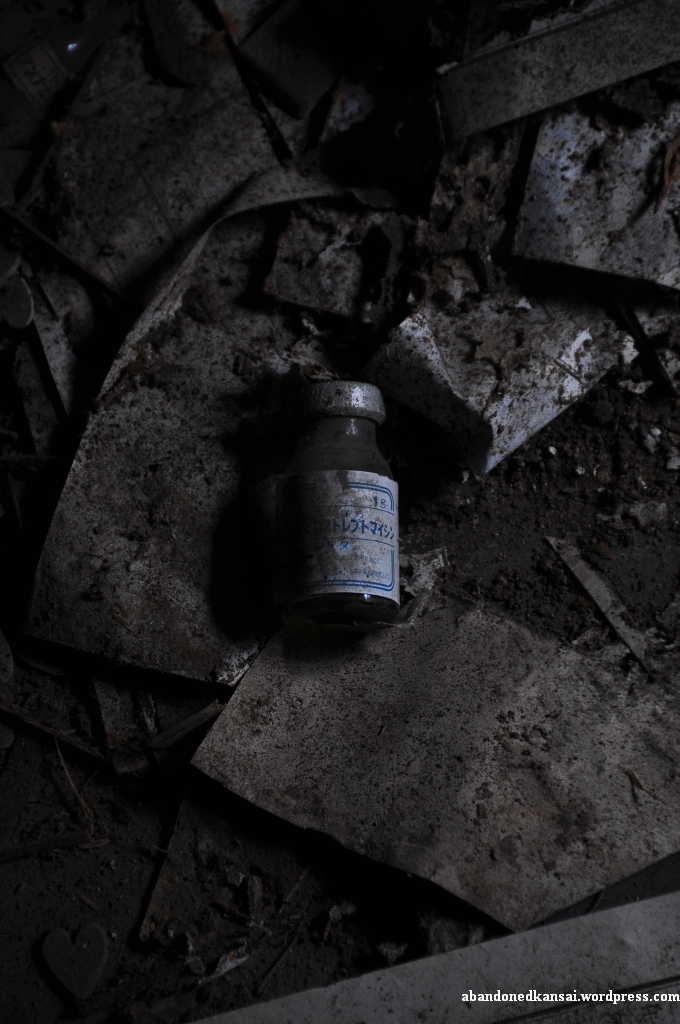
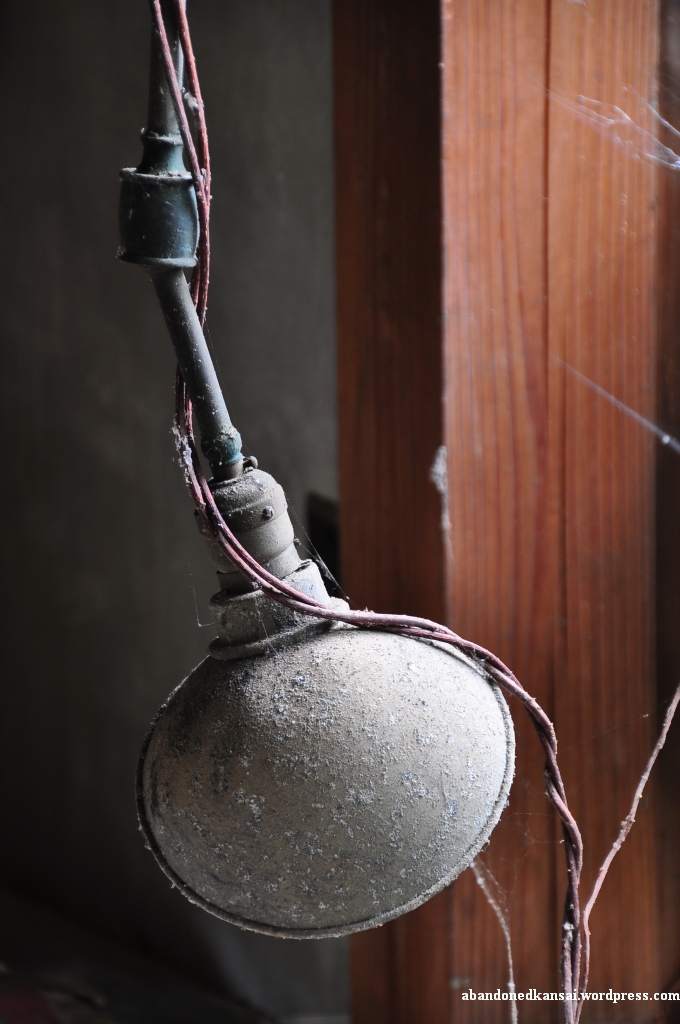
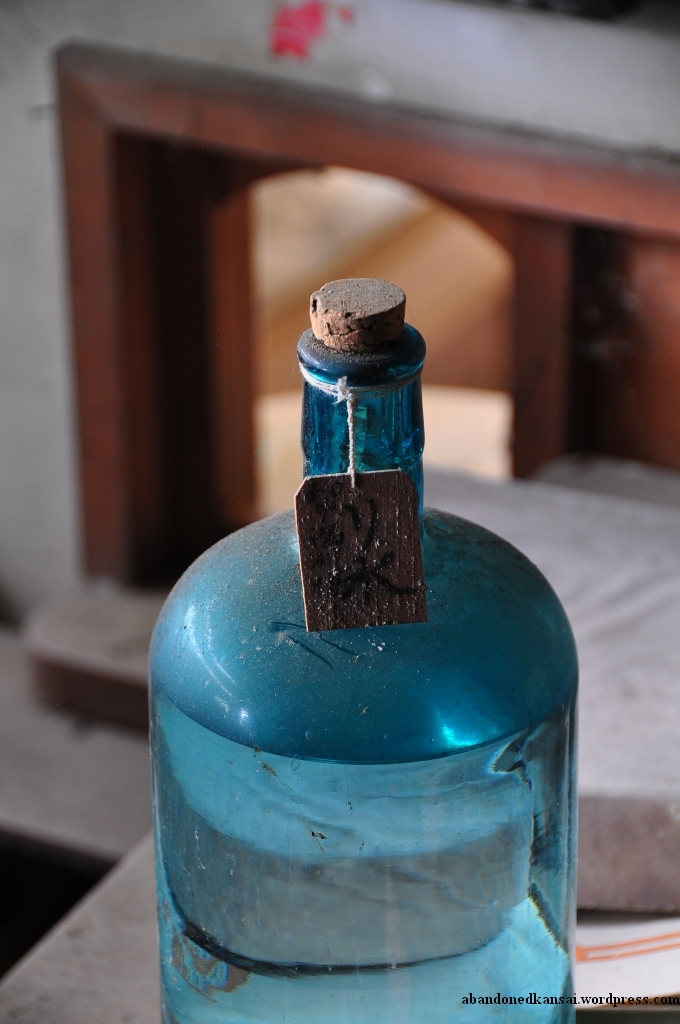
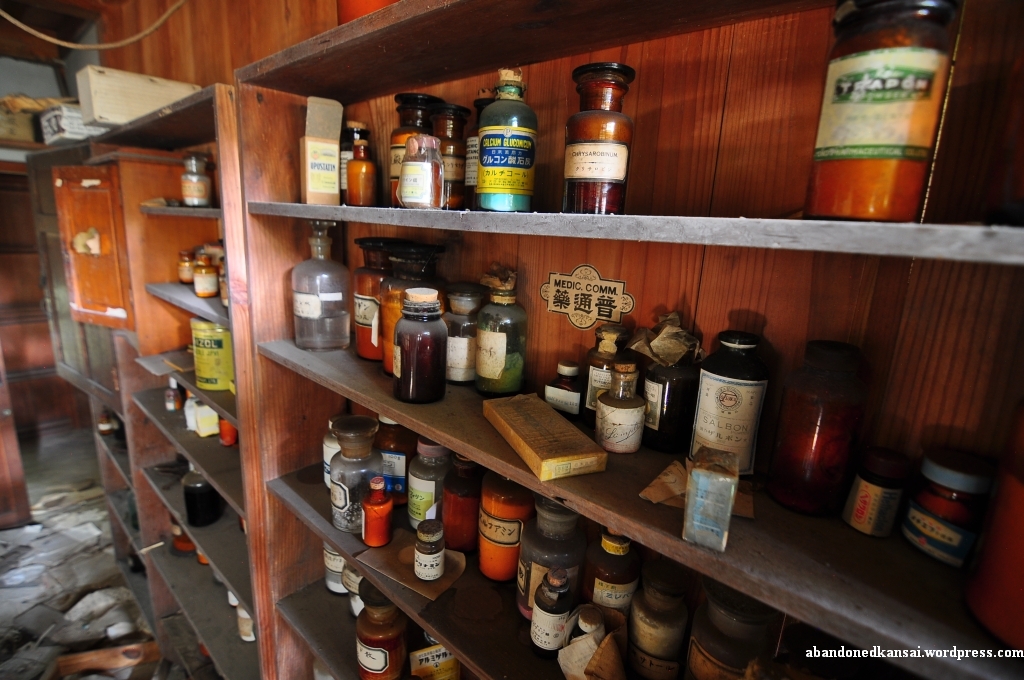
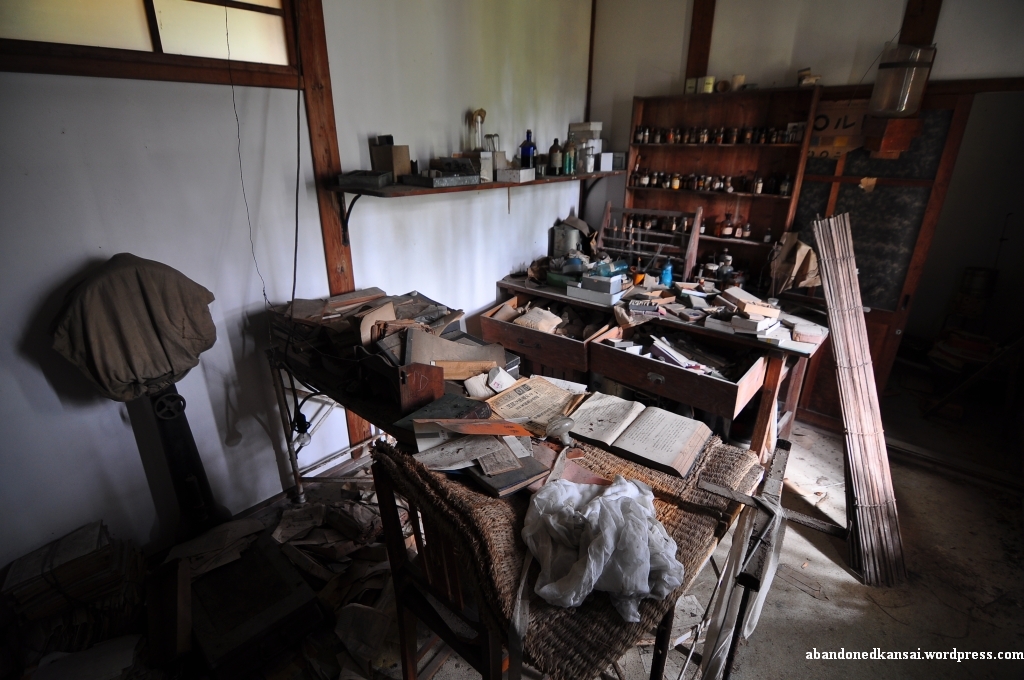
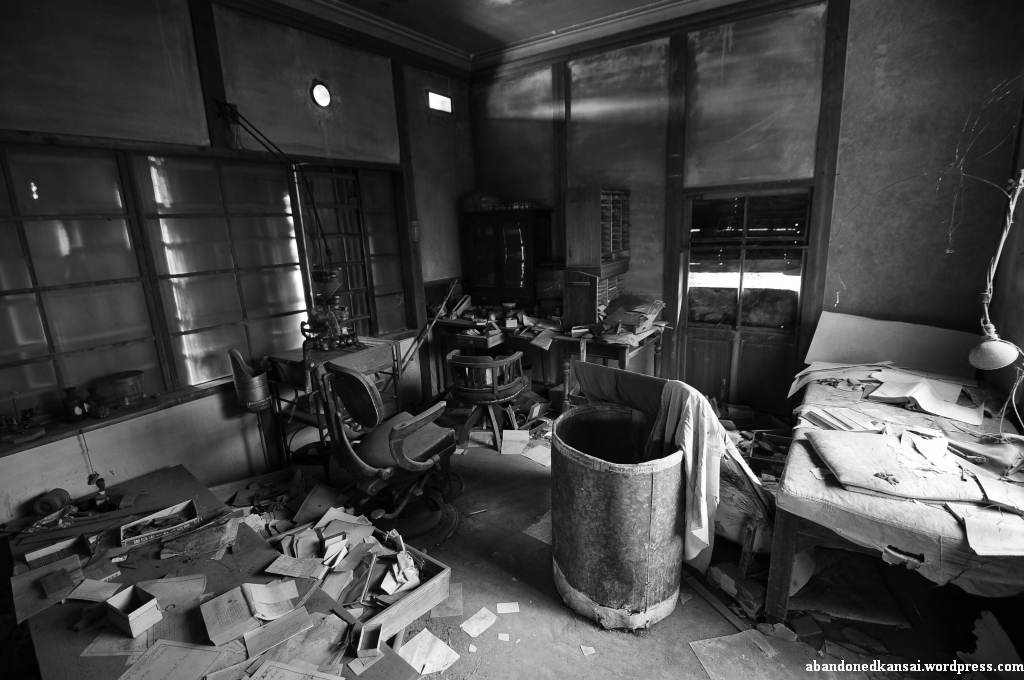
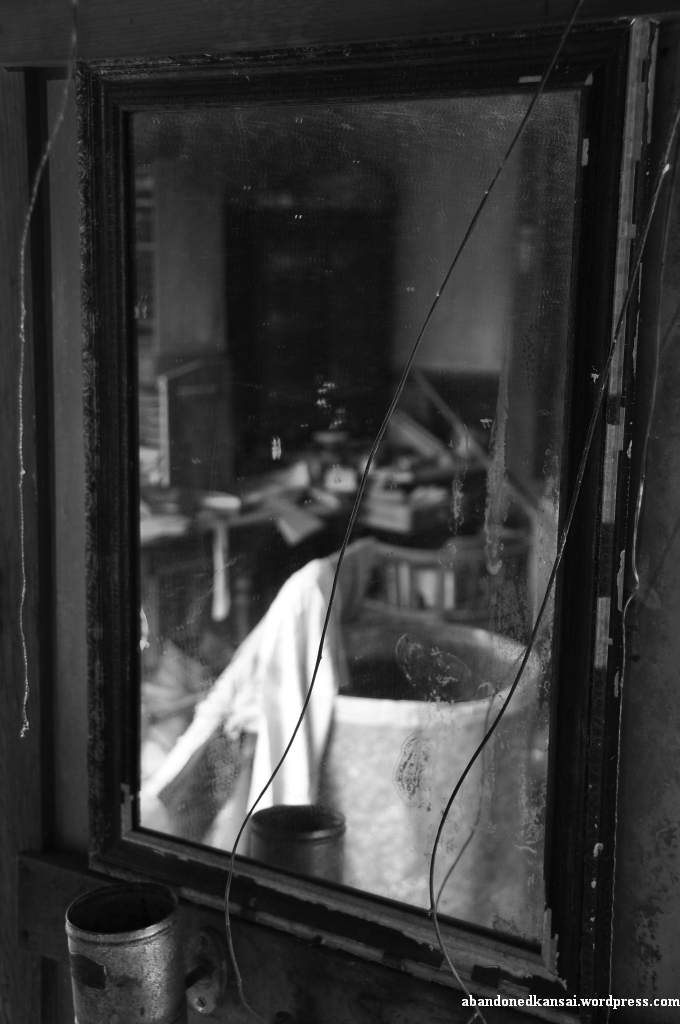
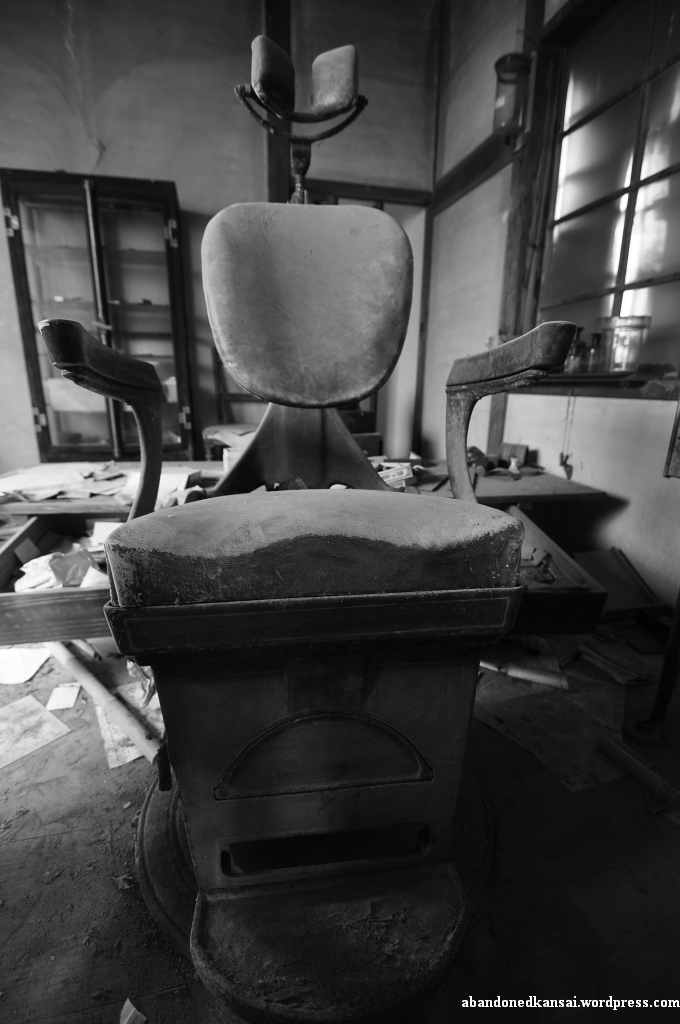
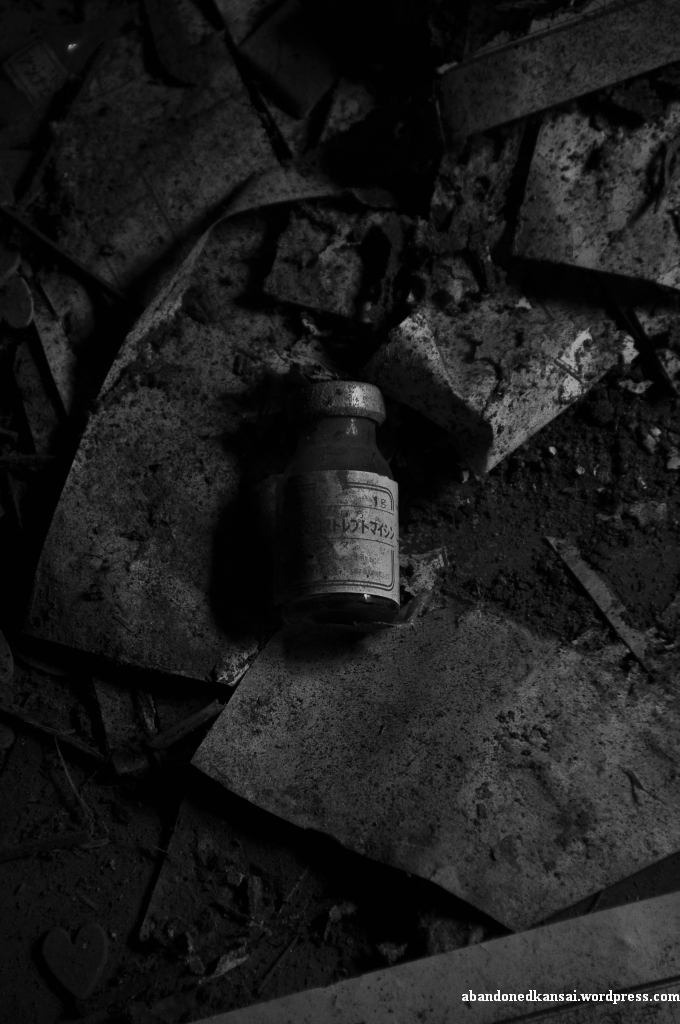
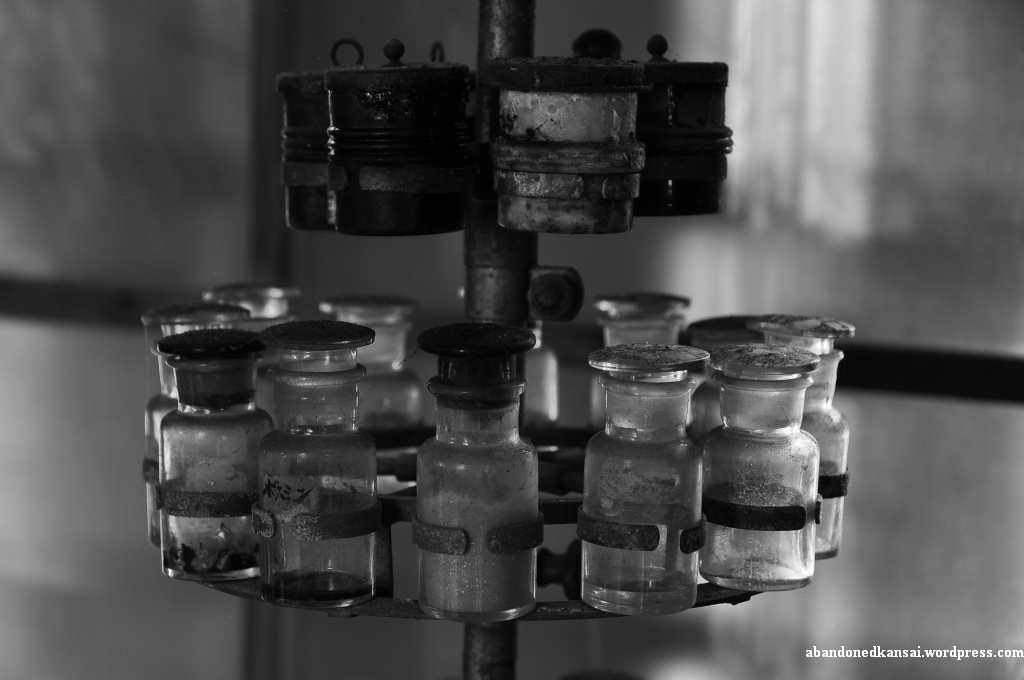
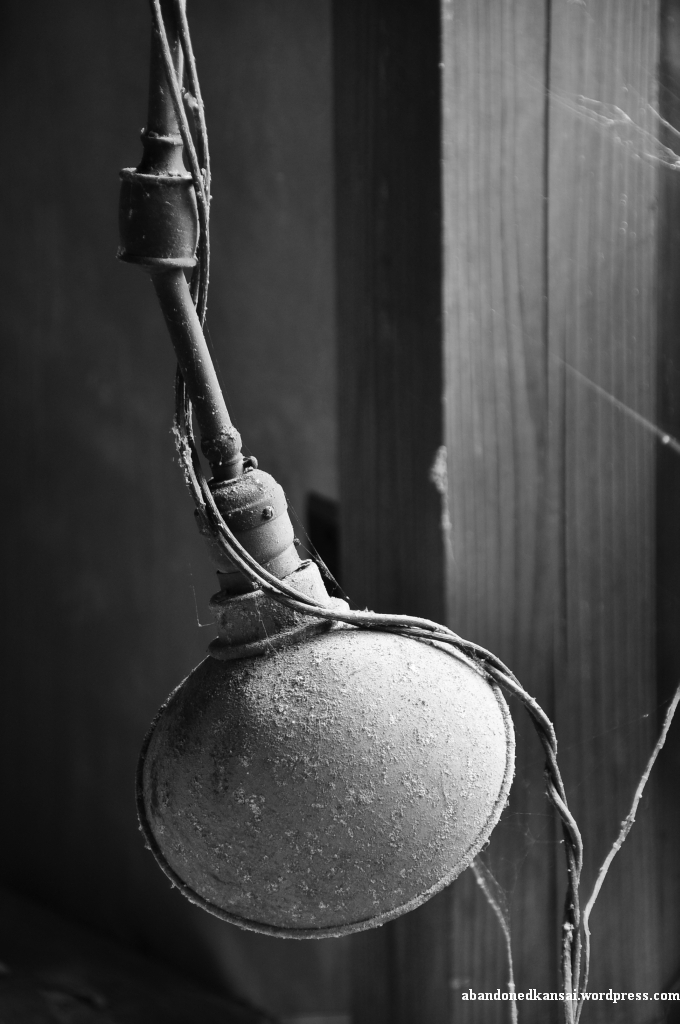
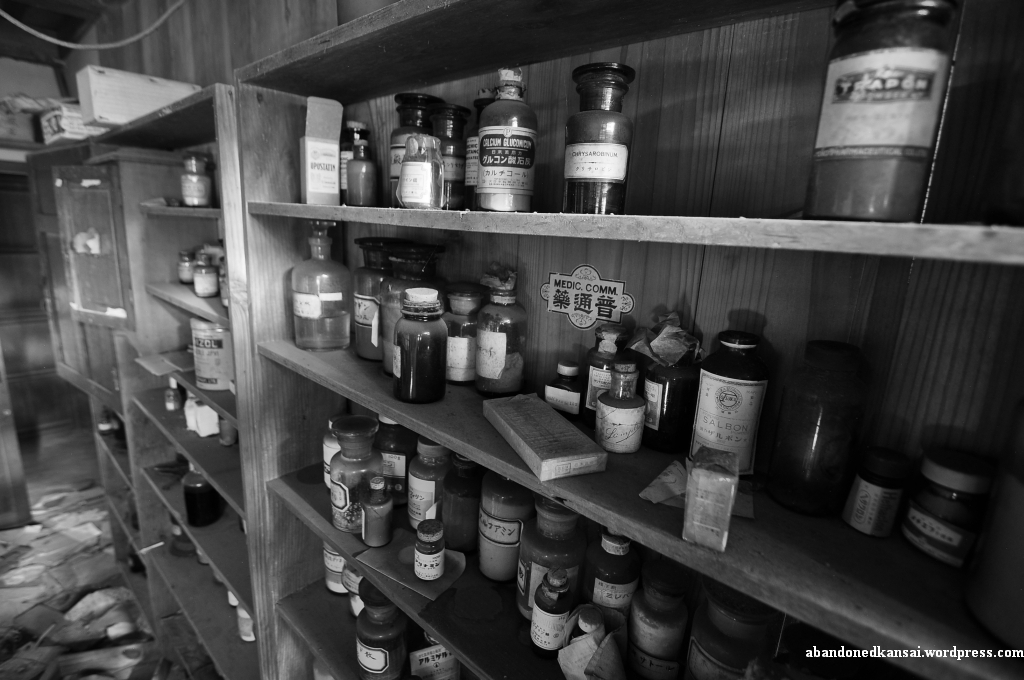
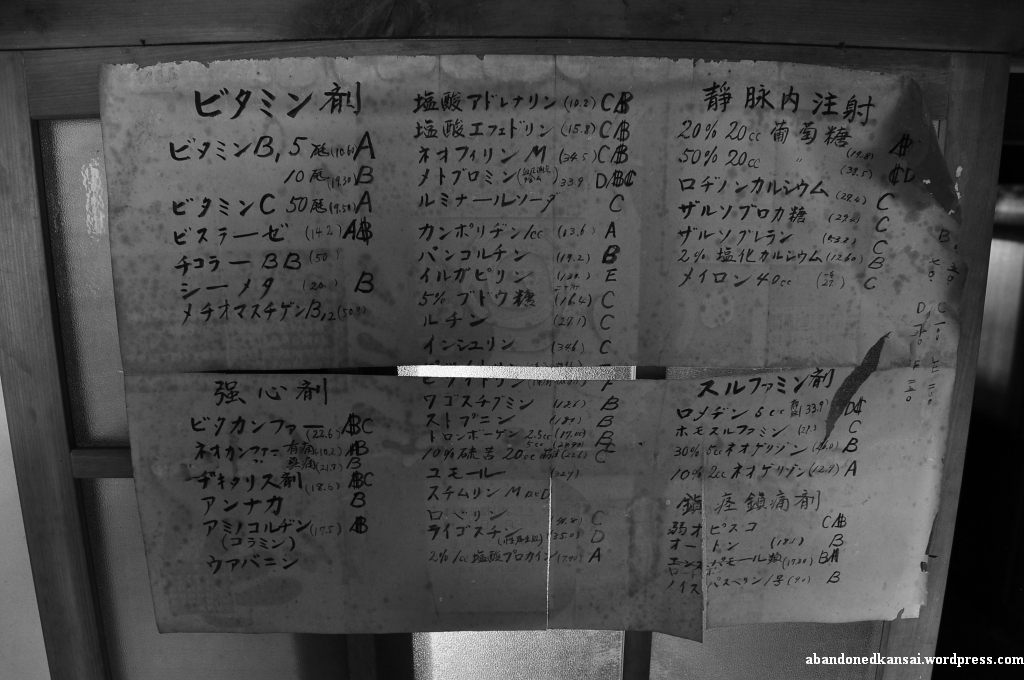
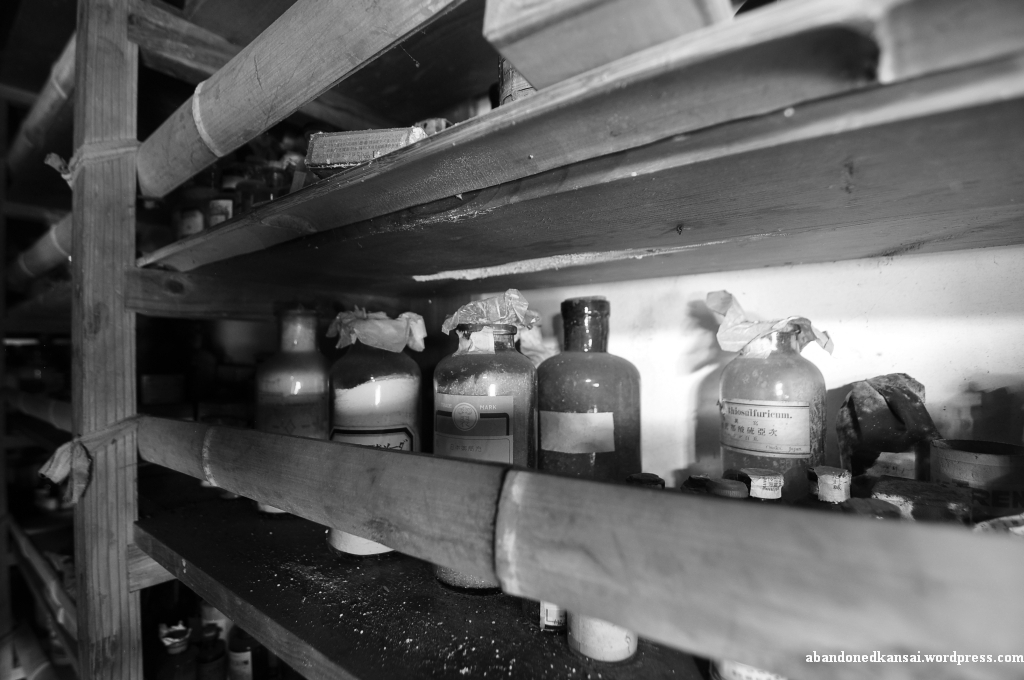
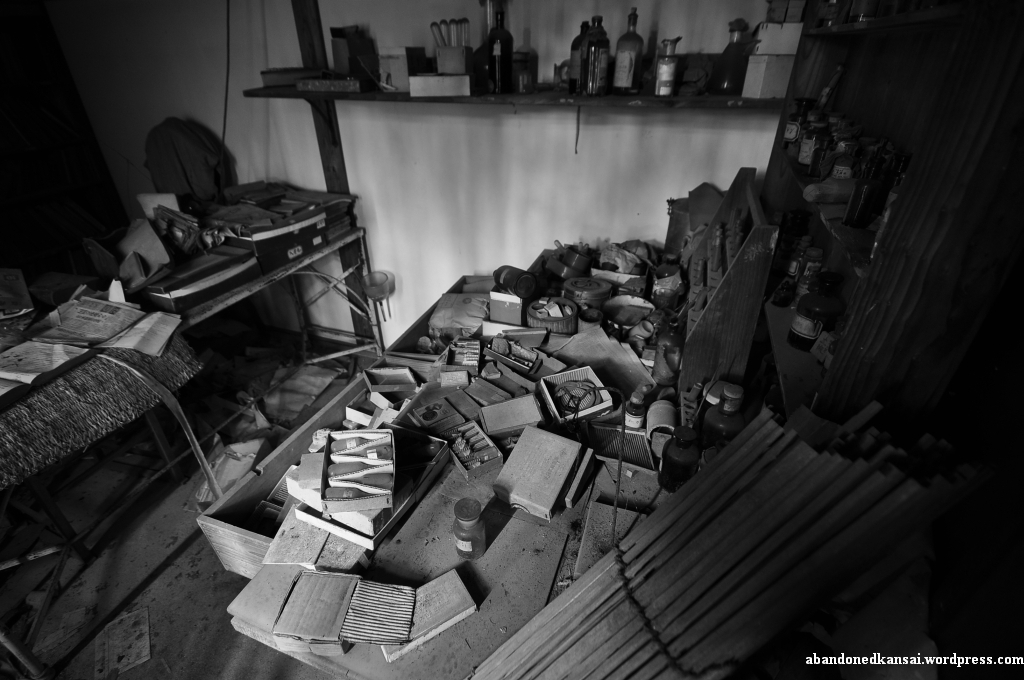
Being at the TCC you actually breathe history. The amount of books, chemicals and equipment left behind is amazing!
On one photo you can see containers of Risoban plaster. “Medical use, “Ideal adhesive plaser”, “Trade mark” – probably high-end when bought, but completely unknown to the internet today.
Oude Meesters on the other hand is still in business. The South African company with the Dutch name is famous for its brandies and actually still uses the same logo you can find on a bottle of Villa Rosa in one uf the photos – putting it dangerously close to containers filled with chemicals probably wasn’t a good idea though.
A box of “Koyamas Safe Pessaries” has written Osaka Juzen Hospital on the side – don’t get your hopes up, that’s not the real name of the Tokushima Countryside Clinic, it’s the hospital Dr. Sakae Koyama was the president of when he developed his birth control method: Koyama designed the conical shaped soft rubber diaphragm, patented as “Koyama Suction Pessary”, first and foremost out of personal motivation as him and his wife were parents to 12 children. The doc made history when he tried to market his invention in the States and the pessaries were seized by the customs as birth control was illegal in the United States in the early 1930s – that lead to a couple of lawsuits legalizing the trade of contraceptives in December 1936.
And the list goes on… and on… and on. Somebody should actually get all the stuff inside of the Tokushima Countryside Clinic and rebuild it as a room in a museum. I think you could spend weeks or months researching all the items in this wonderful family practice, spanning about 50 years in six different decades, maybe seven.

During this two hour long second visit I didn’t even enter the living quarters of this stunningly beautiful mansion – so you have to *look at the previous article* for photos of that part. And like in the article about my original visit I will publish the photo set in monochrome as it adds so much to the atmosphere in this case. I didn’t think much about the TCC recently, but when I went back to the photo set and my notes to write this article I got all excited about it again – some of the pictures actually gave me goosebumps and I hope you’ll enjoy them as much as I do.

(If you don’t want to miss the latest article you can *follow Abandoned Kansai on Twitter* and *like this blog on Facebook* – and of course there is the *video channel on Youtube*…)

Read Full Post »

One of my favorite things about urban exploration is travelling. Most of the time I do day trips within Kansai, but every couple of months I go on mini vacations to other regions. *Okinawa*, *Kyushu*, *Hokkaido*, *Shikoku* … and a couple of more that will be revealed in the future.
I lived in Japan for several years before I started to visit abandoned places – and in those first years I barely travelled within Japan. Kansai has plenty of castles, temples and shrines, some of the most famous in all of Japan. More than enough to get templed out, shrined out and castled out, so I didn’t feel the urge to spend hundreds of bucks on train tickets – and then a similar amount on hotels. Only to see more castles, temples and shrines that look similar to what I can see down the street. Abandoned places on the other hand are unique – and some of them are actually worth spending a couple of hundred bucks, at least to me.
The spring of 2011 saw my second overnight trip to Shikoku. *During the first one* my favorite location on Japan’s least populated main island was the spectacular *Tokushima Countryside Clinic*, a small town doctor’s house, barely harmed by vandals and the ravages of time. My friend Gianluigi, an avid photographer for almost two decades, loved the photos I took at the clinic, so I convinced him to go on a road trip – I would show him that wonderfully spooky gem if we would stop on other abandoned places along the way…
If you are a regular reader of Abandoned Kansai you might remember two articles I wrote about really unique haikyo about half a year ago – the abandoned Japanese spa *Shimizu Onsen Center* and the giant Buddha statue / viewing platform *World Peace Giant Kannon*; both of them were actually part of this second trip to Shikoku.
So here is a complete list of all the locations:
Amano Hospital
Daiwa Pottery
Kuroshio Lodge
Shimizu Onsen Center
Tokushima Countryside Clinic Revisited
World Peace Giant Kannon

One of these places has been demolished since I visited it two years ago – you’ll find out soon which one… and then I’ll add it to my *GoogleMap of Demolished Haikyo*.

(If you don’t want to miss the latest article you can *follow Abandoned Kansai on Twitter* and *like this blog on Facebook* – and of course there is the *video channel on Youtube*…)

Read Full Post »

Japanese doctors are the worst in the world! Well, probably not in the world, but most likely in the industrialized world. If you think that Japan is all about lasers and robots and modern technology… then think again! Sometimes it’s shocking how far behind the rest of the (industrialized…) world Japan already is – and it’s rather getting worse than better.
It’s a complex topic, so where do I start? Probably with the fact that I have never heard of a single doctor who just calls himself a doctor – every doctor in Japan seems to have a clinic or even a hospital, even if it’s just a general practitioner working all by himself. They work long hours (usually closing Wednesday afternoons and Sundays), but one of the reasons for that is the fact that they love to make patients come back as often as possible. Constant check-ups, even on rather long-term treatments like high blood pressure. The standard health insurance here covers 70% of the costs, 30% have to be paid by the patient right after each treatment – so when you get charged 15 bucks, the health insurance pays another 35. For minor things it beats the high insurance rates in my (almost) all-inclusive home country of Germany, but if you get seriously sick it can ruin you financially like in the States, especially since there are no sick days in Japan. If you spend a day in a hospital or at a clinic (or at home with a cold for that matter) you have to use a paid vacation day – and if you are running out, the missed day comes right out of your paycheck. But that’s an insurance thing and has little to nothing to do with the medical staff. So why was I bashing Japanese doctors right at the beginning? Oh, because they are terrible and have a bad reputation even amongst the obedient Japanese populace.
I am lucky for having a good constitution in general, but about 4.5 years ago I injured my ankle playing airsoft with a couple of colleagues. I was jumping into a ditch and heard a loud noise when hitting the ground, instantly feeling serious pain. My American colleagues were all like “Don’t worry, just a sprained ankle!” and continued to play instead of bringing me to a hospital while the Japanese colleagues couldn’t care less. I never had a sprained ankle, so I believed them. Two days later when getting ready for work I almost blacked out, but I though that’s normal. When the “sprained ankle” was still a bit swollen and hurting after two months (yeah, I’ve been naive…) I finally asked a Japanese colleague to accompany me to see a doctor – a “clinic” where they took X-rays. They confirmed that it wasn’t a sprained ankle (really?!), but were unable to say what it was and how to treat it. So they transferred me to a hospital, specialized on fractured bones and stuff. When we went there a couple of days later the doc in charge was really eager to talk me into surgery as quickly as possible after he told me that I fractured my ankle and had torn a ligament. (Yes, I walked to the office with a torn ligament for 2 months! I always knew that I was a tough cookie, but that was suffering through a lot of pain, even for a foreigner in Japan…) His way to solve the problem: A one week stay at the hospital, transferring bone material from my hip to my ankle! (The reaction of my Japanese colleague when I said that I didn’t like that idea very much: “Don’t worry, I can bring you work to the hospital!”) And if it would have been for the Japanese Dr. Frankenstein I would have started treatment right the next day. I asked for a couple of days respite and then the guy admitted that after 2 months it was not that urgent anyway. And that he couldn’t guarantee that I will ever walk without pain even with that operation. What the heck? Was that the island of Japan or the island of Doctor Moreau? My school education started a deafening alarm and all I was able to think of was Erich Maria Remarque’s “All Quiet On The Western Front”… That doc would never ruin my foot! Later that day an American ex-colleague told me how a woman at his new company did the same operation, except that they took bone material from her wrist. One year later she still wasn’t able to walk without pain – neither could she fully move her hand! And with that the surgery wasn’t even an option anymore and I relied on the natural healing power of my body. Half a year later I did 25km hiking day trips to the mountains (which I had never done before, because I was couch potato for most of my life…) and another six months later I started urban exploration. So if you ever need medical treatment while in Japan, ask your embassy for advice and get a second or third opinion. But even that might not be the solution in some cases – look forward to a future article where I will describe how a business trip to Germany probably saved my life when I contracted Lyme Disease, which seems to be undetectable and not treatable in Osaka, although it is native to the northern parts of Japan…

Sankei Hospital

Of course I don’t know if the doctors at the Sankei Hospital were as bad as the ones I had to deal with so far, but they definitely had to deal with some serious problems. And by that I don’t mean their own education or their patients’ quirks, kinks and serious illnesses (the Sankei Hospital was a mental hospital!), but Mother Nature. As beautiful as nature is in Japan (or everywhere else in the world for that matter…) one thing is pretty clear: Nature hates Japan! If you ever spent a summer in Kyoto, a winter in Hokkaido, or if you look at all the typhoons, earthquakes and tsunamis… then it’s pretty clear that Japan isn’t God’s own country, nevertheless the Emperor still claims to be a descendant of Amaterasu, the sun goddess of the Shinto religion. (Although it’s more likely that he is of Korean descent…)
In 1910 the volcano Mount Usu erupted and lead to the establishment of an observatory under the leadership of Prof. Fusakichi Omori, a pioneer seismologist of his time. In 1945 the eruption of Mount Usu created Showa-shinzan, a volcanic lava dome next to Mount Usu – I took a photo of it and published it with the *haikyo trip to Hokkaido* article a while ago. When Mount Usu erupted a third time in the 20th century on August 7th 1977 the observation registered precursors up to 32 hours prior – luckily the hospital’s founder and director Kazuo Kato wasn’t mental at all. He came up with an emergency plan involving both his staff and officials of Sobetsu, where the hospital was located. When the eruption started at 9.12 a.m. the prearranged evacuation program kicked into gear and all 230 inpatients were taken to safety at a former school 12 kilometers away. At first the hospital suffered only minor damage (some small cracks here and there) when the northern flank of Mount Usu was severely deformed, being thrust 200 meters to the northeast. The process continued for months and due to magmatic intrusions the cracks widened further till the building finally collapsed almost a year later. (It goes without saying that the Sankei Hospital is famous amongst Japanese ghost hunters. Nobody was even injured during the evacuation, but a collapsed and abandoned mental hospital? That is as good as it gets if you are into that kind of stuff…)

Going Mental

By the time *Michael* and I arrived at the hospital, via a forest road since we had no clue that we were approaching a publicly known spot, the sun was already really low and behind a mountain range, so I took a quick and rather ugly video from the outside before it was too late to shoot any video at all. Michael was already entering through the back and by the time I jumped the fence and was ready to get in myself I received the advice to climb in through the front to avoid the vegetation in the back – nobody would show up at that time of the day anyway; and nobody did. Running out of light it was a quick exploration – the first part felt like walking in a picture by M. C. Escher as the floor was completely twisted; the fact that the Sankei Hospital was a mental hospital made the whole thing even more bizarre. Thanks to the level function of my camera all the floors on the daylight photos should be perfectly horizontal – but they aren’t, because they weren’t. When it got dark I left the collapsed eastern part and strolled through the (mostly) not collapsed western part. Not a pleasant exploration, especially when Michael was on the floor above me – it sounded like he could crash through the ceiling at any time, as if the whole building could come down at any time. The fences outside were there for a reason and I strongly recommend to respect them and to not enter the Sankei Hospital. That’s why I won’t add it to *my map of abandoned places*, although technically it was another tourist attraction, much like the *Horonai Mine* or the wonderful island of *Okunoshima* – fenced off and equipped with several large information signs in both Japanese and English, nevertheless way more dangerous than all the other locations on that map.
Given that we were running out of time the Sankei Hospital was a nice way to end the second day of explorations in Hokkaido. There wasn’t much to see, but it was a truly unique place and in the end way more interesting than the Xth abandoned hotel with the same moldy rooms and the same interior…

(If you don’t want to miss the latest article you can *follow Abandoned Kansai on Twitter* and *like this blog on Facebook* – and of course there is the *video channel on Youtube*…)

Read Full Post »

Abandoned Kansai in Hokkaido… Who would have thought that? Up till now I never made it further east than the center of Japan’s main island Honshu. I limited myself to the western half of Japan, because that was the reason I started this blog. Heck, initially I wanted to limit myself to the Kansai region; hence “Abandoned Kansai”, not “Abandoned Japan” or “Abandoned West Japan”. But then the “once in a while” hobby urban exploration turned into a regular thing and only weeks later I went to different regions, then to different islands – and in spring of 2012 I did a *haikyo trip to Okinawa* together with my urbex buddy *Michael Gakuran*. “What’s next?” was the big question, and the answer was found quickly – we already explored Japan’s most western prefecture, so we kind of had to explore Japan’s most eastern prefecture, Hokkaido!

Usually I plan my urbex trips on short notice. One time I brought my urbex equipment to work on Friday to see how I feel during the day, booked a hotel in the afternoon and left for a weekend trip right after work. Flexibility like that is impossible when partnering up for a long distance trip, so Michael and I booked plane tickets weeks ahead – and according to the weather forecast we ended up with a rainy weekend; a long weekend even, to which we added some days. Luckily the forecast was as reliable as always in Japan and so 4 out of my 5 days in Hokkaido were sunny and slightly snowy, only the last one came with 8° Celsius and rain.

Since I arrived almost a day earlier than Michael the original plan for me was to do some sightseeing in Sapporo. To my surprise the weather was sunny to cloudy, no rain at all, so instead of visiting indoor classics like the Sapporo Clock Tower, the Ishiya Chocolate Factory or the Sapporo Beer Museum I opted for a little hike to Mount Teine, once home to some of the sports events at the 1972 Winter Olympics in Sapporo. One day of good weather? I had to take advantage of that! Then it turned out that the next three days were pretty nice, too – which is a big advantage when doing urban exploration as you spend a lot of time outdoors…
On the last day Michael and I split – while he drove for hours to infiltrate a location he asked me to keep secret for now, I went on to do some really touristy stuff, like visiting the old harbor town of Otaru and taking a glass blowing lesson. My favorite touristic place though was the Sapporo night view from the freshly renovated observation platform on top of Mount Moiwa – stunningly beautiful! It was soooooo cold up there, but the view was absolutely amazing! I went there on the first day before visiting the Sapporo White Illumination and I strongly recommend to pay Mt. Moiwa a visit – I would love to shoot a time-lapse video from up there…
Overall the trip to Hokkaido was a great mix of urbex and tourist stuff. Five days I really enjoyed, probably more than any five consecutive days I spent in Osaka this year… So this is a list of the abandoned places I ended up visiting:
Advantest Research Institute
Bibai Bio Center
Canadian World Park
Hokkaido House Of Hidden Treasures
Horonai Coal Mine Substation
Mt. Teine Ski Lift
National Sanatorium Sapporo
Olympic Ruins Of Sapporo 1972
Sankei Hospital
Sapporo Art Village
Showa-Shinzan Tropical Plant Garden
Tenkaen – Japan’s Lost China Theme Park

(If you don’t want to miss the latest article you can *follow Abandoned Kansai on Twitter* and *like this blog on Facebook* – and of course there is the *video channel on Youtube*…)

Read Full Post »

„There is no vandalism in Japan!” is one of the most untrue urbex clichés – and whoever still thinks that I will prove wrong with this posting, especially when compared to the previous one. When I visited the *Tuberculosis Hospital For Children* for the first time three years ago it was hardly abandoned and barely touched. No signs of vandalism, no signs of protection. 8 days ago on the other hand…
When my haikyo buddy *Michael Gakuran* came to Kansai to explore my old urbex nemesis *Nara Dreamland* I was devastated I couldn’t join him since I made other plans for that day weeks ago. But I was free the next day, so we met up and I showed him my most closely guarded secret location, the abandoned tuberculosis sanatorium for children I visited and never talked about. Ever. To anybody.
Walking up a gentle slope I didn’t expect a lot of change. Sure, by now two Japanese explorers posted inside shots of the haikyo hospital, so there must be a way in now… But that’s it, right? WRONG!

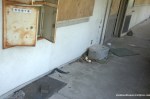
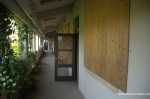
Approaching the tuberculosis clinic the once locked gate was wide open… and 100 meters down the road we found a brand-new barricade. Well, it was brand-new at one point, now it was grotesquely bended and nevertheless almost flat on the ground. It actually looked like a truck ran over it. Again and again. Not one of those Japanese mini trucks! A massive, manly American one! Most windows of the building were boarded up – or smashed after somebody ripped off the solid wooden panels. A half-open box of plastic syringes was scattered in front of a side entrance and glass was basically everywhere. If I wouldn’t have known better I would have said that this location was abandoned forever and a day.
With all the doors broken up and half the windows smashed in, the Tuberculosis Hospital For Children was exposed to the weather for a couple of years – and it showed. A lot of rooms were moldy, in some the wallpapers were falling off already. To make things worse the hordes of vandals (or a single very serious one!) emptied several fire extinguishers in several key rooms (like the radiology and the laboratory), making it hard to breathe after a short while. And of course some areas were swarmed by gnats, but that’s kind of a given for abandoned places in Japan during autumn…
Although the concrete building featured quite a few glass fronts, a couple of areas were still boarded up and therefore dark; darker than a black steer’s tookus on a moonless prairie night. I didn’t expect that and left spare batteries for my flashlight at home, which didn’t influence the photo shooting, but the second video I took for your viewing pleasure.

Exploring an abandoned place I always try to relate to the place I visit – which wasn’t exactly easy at a tuberculosis clinic for children, especially since I just read an article about the Goiania accident in the Brazilian city of Goiânia. (In 1987 two metal thieves stole a cylinder from an abandoned hospital. They punctured it and scooped out some grams of a glowing substance before selling everything to a nearby scrapyard. There the cylinder was opened and people loved the fascinating material they’ve never seen before and spread it all over town by taking some home. To make a long story short – the substance was cesium chloride, a highly radioactive inorganic compound. To this very day the accident is considered one of the most catastrophic nuclear disasters; 4 people dies, more than 110.000 were examined for radioactive contamination.) So here I was, strolling through an abandoned hospital, fascinated by the countless medical equipment that was left behind…
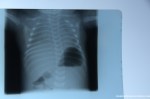
The Tuberculosis Hospital For Children turned out to be a treasure chest of objects big and small. While some rooms were (almost) completely empty, like the swimming pool and the cafeteria, others were stuffed with analysers, boxes of laboratory glassware and even private items like photos and drawings. Without a doubt one of the highlights was right next to the pool, a small room full of boxes containing envelopes filled with X-rays, MRIs and CTs – all of them taken at a hospital in Osaka, which kind of leads to the conclusion that Tuberculosis Hospital For Children was just an extension of a much larger clinic probably still existing… (More about the hospital haikyo’s history in a future posting, this is all about the exploration!)
Pretty much all of the images came with handwritten doctor’s notes, some of them bilingual (Japanese and English). *Michael* seemed to be quite fascinated by the found, so I left for the other building and only took a few quick shots right before we left. It’s a strange feeling going through other people’s medical files, picking up radiographs of potentially terminally ill people and holding them against the sun to take a photo – most of the MRIs seemed to be of adults, but especially the roentgenograms of kids were… eerie.
The massive concrete construction housing the hospital was connected by a bridge with a rather narrow lightweight building (remember the *previous article*?). Typical Japanese architecture of the 1940s / 50s with walls you could punch through. The floor was kind of yielding, but the huge hornets (or maybe suzumebachi?) flying through the smashed windows made my hurry anyway. As expected the lightweight building turned out to be rather unspectacular. One part was in catastrophic condition, so I didn’t even try to enter it. The rest was a couple of bathrooms, lots of empty rooms and some storage rooms – most likely the school part of the hospital in the 40s before it got its own building down the road. But like I said, that’s a story for another time…

(If you don’t want to miss the latest article you can *follow Abandoned Kansai on Twitter* and *like this blog on Facebook* – and of course there is the *video channel on Youtube*…)

Read Full Post »

Waverly Hills Sanatorium in Kentucky is without a doubt the most famous abandoned tuberculosis sanatorium in world (directly followed by the Beelitz-Heilstätten in Berlin), but a rather small Kansai clinic abandoned 20 years ago is slowly rising to fame – the Japanese Tuberculosis Hospital For Children in Osaka. (Of course the official name was euphemistic and translated to something like “Osaka City Resort House For Children”…)

I first visited the Japanese Tuberculosis Hospital For Children almost three years ago – the third abandoned place I’ve ever been to and the first I took video of. So please excuse the quality of both the stills as well as the film material. Back then I had no clue what I was doing… Hell, I barely knew the term haikyo! (Japanese for “ruin” and used as a synonym for urban exploration.)

It was an exciting time, my second day of urban exploration. Back then I spent countless hours doing research on locations and somehow I stumbled across this clinic nobody seemed to know about. It took almost two years after my visit till it appeared on a Japanese blog and almost three before it appeared on another one – and I guess that’s it, from now on it’s only a matter of time until the once secret place becomes public knowledge…

When I walked up to the clinic I had no idea what to expect. I didn’t even know how to enter the premises and if I was at the right location. I found a hole in the fence guarding an overgrown area, so I slipped through – the first time I ever slipped through a fence to get to an abandoned building. Sadly the terrain was so overgrown that I had to retreat and find another way in. So I followed several roads and small paths, slipped past a closed gate with my heart beating like crazy and then it finally appeared through the bushes, the Japanese Tuberculosis Hospital For Children.

I approached the building carefully since I read somewhere that it was still used on weekends for emergency drills. And indeed I heard some sounds from the first floor. Not voices, but machinery; probably some kind of generator. I calmed down a little bit and explored the area. All doors were locked and the shades of all windows I could get close to were down. Some doors had glass elements and looking through them I could see that the interior was spare, but in good condition. No signs of vandalism whatsoever – which kind of confirmed the claim that the building complex was only part-time abandoned. So I took a couple of photos and short videos before I got the heck out of there, keeping the location to myself , trying to prevent it from being damaged…

Recently I revisited the Japanese Tuberculosis Hospital For Children *haikyo* – what I found when I returned I will write about in the near future. If you would like to have a sneak peak please *like Abandoned Kansai on Facebook*, where I will post a short preview later this week. I’m sure it’ll send a shiver down your spine!

(If you don’t want to miss the sequel to this article you can *follow Abandoned Kansai on Twitter* and *like this blog on Facebook* – and of course there is the *video channel on Youtube*…)

Read Full Post »

Okay, after quite a few articles about the Zone Of Alienation it’s about time to go back to Japan. I’ll return by posting the previously announced color set of a location I already described before the “Chernobyl & Pripyat” special: The Tokushima Countryside Clinic. I went there in November of 2010 and wrote a long article about it in December. Please *click here to read what I had to say* and enjoy the same pictures as below – just in black and white. (Next week I’ll continue with another location from my Haikyo Road Trip To Shikokuan abandoned indoor waterpark, which is quite a rarity in Japan!)

Read Full Post »

Abandoned hospitals are creepy places. It’s kind of in their nature. Like abandoned amusement parks. Hotels, spas, mines… they don’t really get under my skin. Amusement parks and hospitals do – but none of them even nearly as much as Hospital No 126 in Pripyat!
When Maxim asked us on the first day which places we wanted to see, a hospital appeared on top of my priority list instantly. Hospitals are generally hard to find and even harder to access (since they usually are in easy to reach locations and filled with expensive equipment), so this was a great opportunity to explore one in a more relaxed atmosphere. At least that was my hope… sadly it wasn’t fulfilled. Nevertheless Hospital No 126 turned out to be my favorite location in Pripyat.
Although it was still morning we already “lost” quite some time on the Cooling Towers and the Przewalski’s Horses, so we arrived at the hospital way behind the schedule our dear guide has planned for us. As a result Maxim gave us half an hour since “the next location will be even better”.
So there was the time pressure… and then there was the atmosphere that was everything but relaxing. Of all the real places in Pripyat this one was by far the most real. The basement is actually one of the most contaminated places in the world and holds the suits of the first six firefighters that died within a couple of weeks after the accident. Maxim told us that he went down there once with full protection gear, but had to leave after about 30 seconds – something he never wants to do again.
At that point Maxim knew that Sebi, Michi and I were reasonable and responsible-minded people, so he just quickly entered the hospital with us to guide us to one of the interesting floors and then returned outside to wait with our driver. My fellow Swiss explorers headed their own way and so it took about two minutes until I was all by myself. In the maternity ward of an abandoned hospital. In Pripyat. Almost 25 years after the accident. Without the shadow of a doubt the highlight of this trip. We’ve all seen a horror movie or two, played video games like Resident Evil or Silent Hill. The hospital felt like being the star in one of those works of fiction. On a very irrational basis – because the place was perfectly safe. It just didn’t look and feel like it…
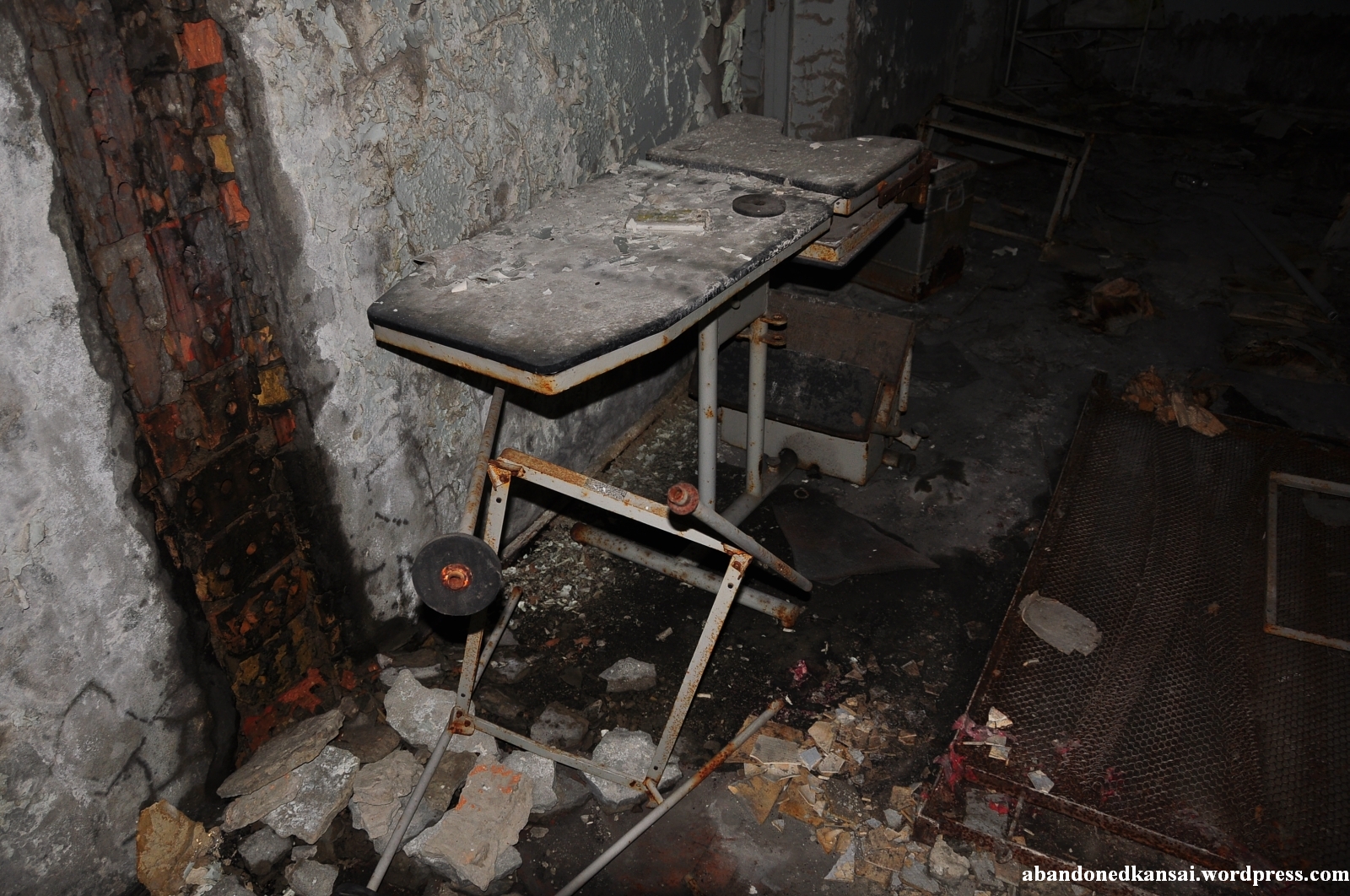
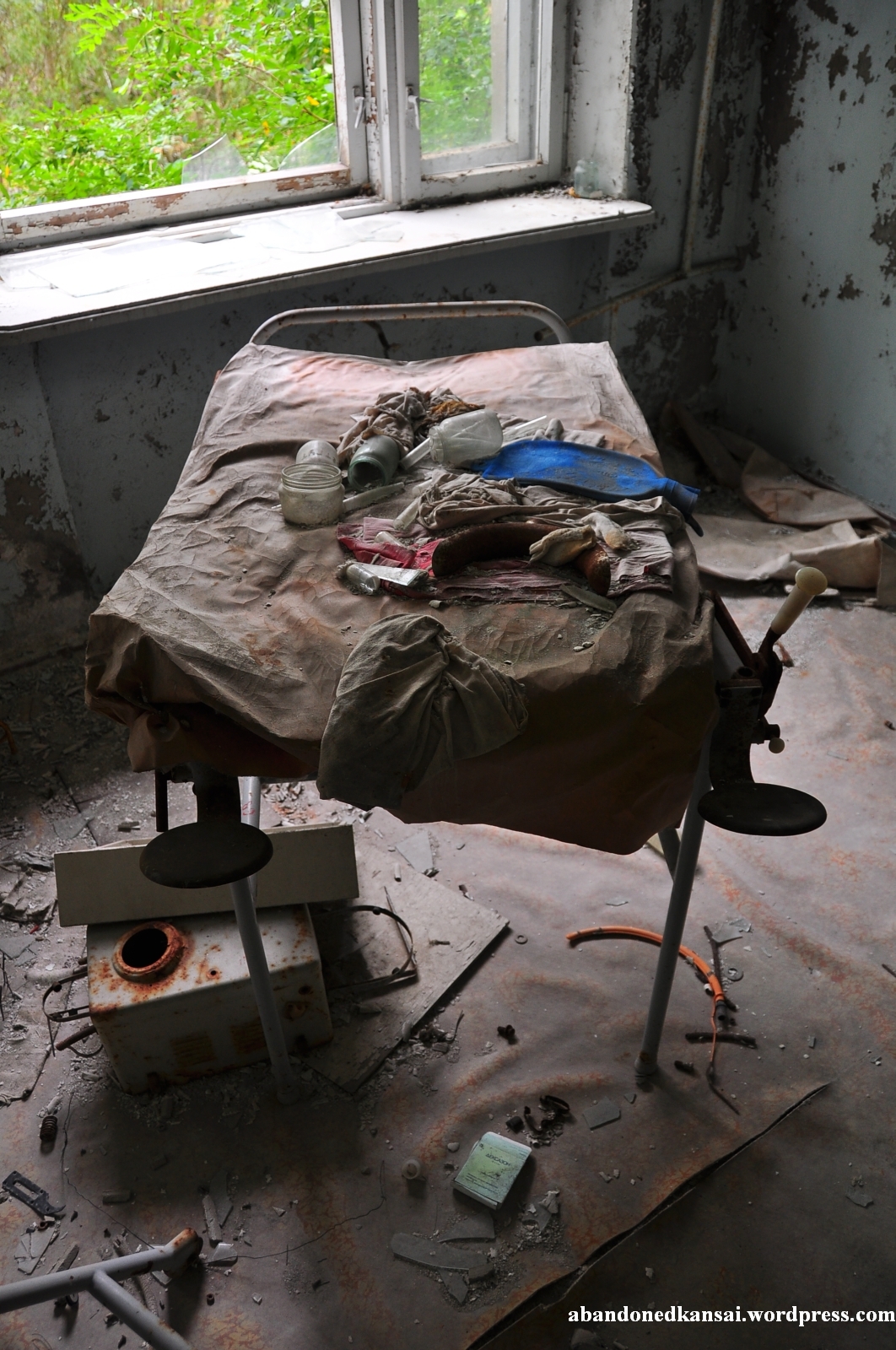
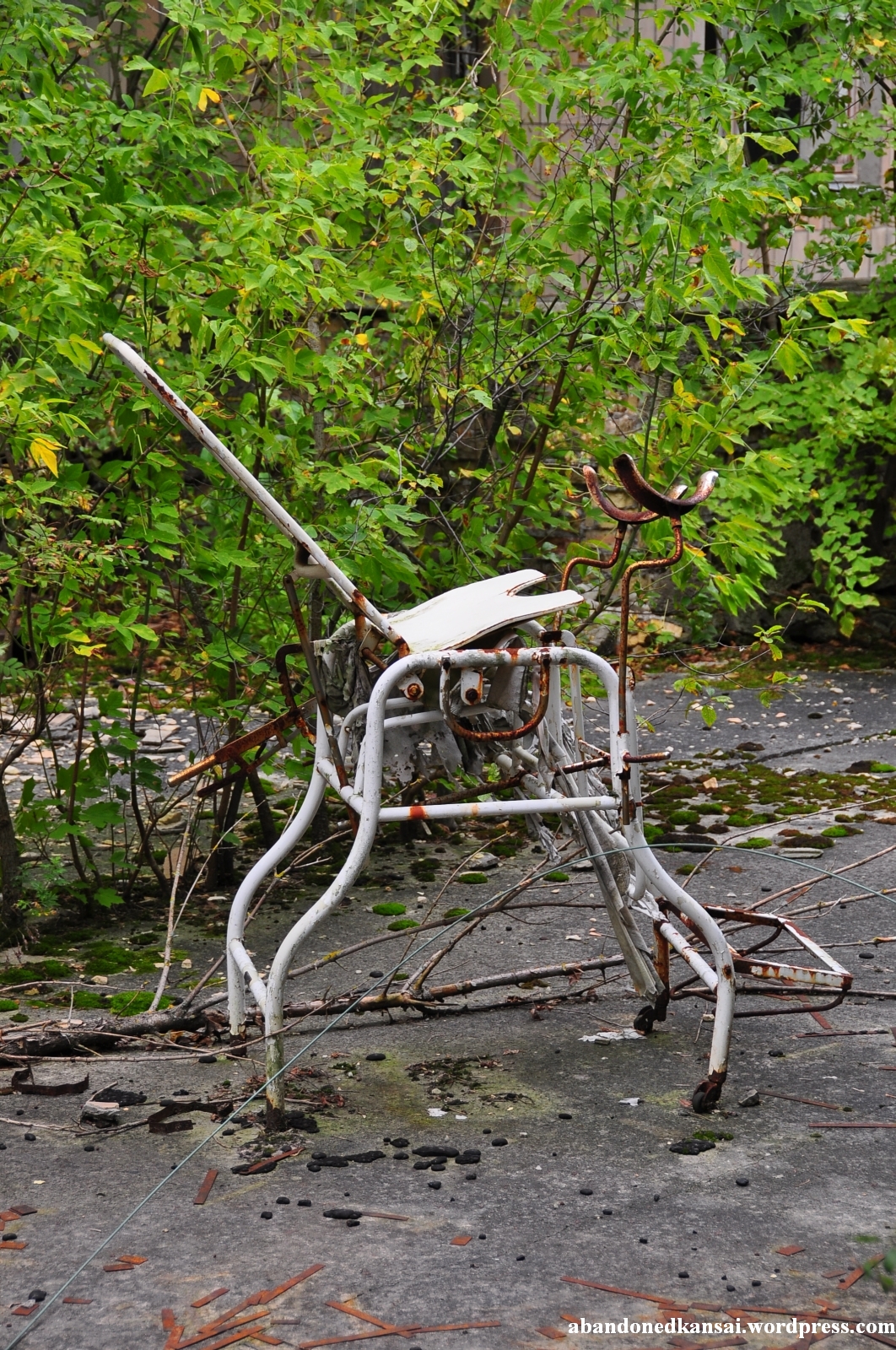
Thanks to the time restraint I was only able to see one of the floors of one of the departments, maybe a tenth of the building, but it was nevertheless amazing. Almost every room, every corner had something interesting to offer. There were surgical instruments, bedpans, gynecological examination chairs, bathtubs, whole boxes of medicine, posters and signs with medical explanations (including explicit pictures) and much, much more. At the end of the hallway were several rooms with rusty baby beds, a really uncomfortable sight. The lighting that day contributed a lot to the atmosphere and made it very difficult to take pictures – never before I wished more that I had a tripod! Since I was in a hurry I cranked up the ISO and took photos while quickly exploring the rooms along the hallway – and on the way back I filmed about two thirds of the floor with my video camera. Sorry that parts of the video turned out to be a bit blurry, but there was no time for re-shooting; just consider it part of the atmosphere…
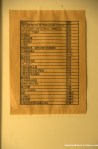
Looking through the photos from the relaxed comfort of my home, one of them caught my eye and gave me the creeps, although it’s quite unspectacular at a first glance. It shows an opened up register lying on top of other documents. There are lots of handwritten entries and even without speaking any Russian / Ukrainian I guess it’s pretty obvious what it is: Hospital staff logging in for work at 8am and 8pm on April 24th 1986, April 25th 1986, April 26th 1986 – and on April 27th nobody cared to log in at 8pm anymore… (EDIT: Well, obviously I was wrong – Greg let me know in the comments that it’s actually a checklist for people making sure that locked medicine is still where it should be. Thanks again, Greg!)
(If you would like to know more about my trip to the Zone Of Alienation please *click here* to get to the “Chernobyl & Pripyat” special. For a map of the area please *click here*. If you don’t want to miss the latest postings you can *follow Abandoned Kansai on Twitter* and *like this blog on Facebook* – and of course there is the *video channel on Youtube*…)

Read Full Post »

Doing urban exploration it’s hard not step into the trap of chasing only after the famous locations like Gunkanjima or Nara Dreamland – everybody has them (for good reasons), so you kind of gotta have them, too. But it’s important to stay open minded and not just look for the big ones when doing research. Because if you are really dedicated and incredibly lucky every once in a while you will stumble across a hidden gem that will blow your mind unexpectedly. Ladies and gentlemen: The Tokushima Countryside Clinic…
I saw the Tokushima Countryside Clinic (徳島田舎診療所) on a small Japanese travel blog about half a year ago. Although its location is quite remote I was able to pin it down. Jordy knew about the place, too, and was even more eager than myself to see the place (I was actually only moderately excited about it beforehand), so we decided to go there first thing on the second day of our road trip to Shikoku – abandoned hospitals are hard to find, but Japanese countryside clinics are almost unknown. Up till now the secret Doctor’s Shack was the benchmark for that type of haikyo, but over the last couple of years it lost quite a bit of its former attraction as it’s not that secret anymore and suffered a lot from vandalism. With the discovery of the Tokushima Countryside Clinic I’m sure its reputation will go down in no time…
I’ve been to several famous locations in Japan and I enjoyed most of them, but this really unknown find came with almost no expectations and therefore captured my heart in no time. Big but quite unremarkable from the outside I entered the TCC through the only room of the building partly collapsed, the former front desk. While Jordy instinctively went to the pharmacy part to the right (which had a sign that straight-up said “If you want medicine you have to pay cash!”) I had a look around on the first floor and finally settled in the treatment room. Abandoned about 32 years ago (as Jordy found out later talking to some locals) the TCC offered an almost endless amount of items and angles. There was so much to see it didn’t get boring for a second, from syringes and rusty needles over patient files to medical books and instruments – and since the partly boarded-up place had hardly any visitors during the last few decades the atmosphere there was just amazing.
I thought maybe 20 minutes had passed when Jordy suggested after 1.5 hours (!) that we should switch rooms. So I went over to the pharmacy, wondering if it was really a good idea to take pictures in a room filled with all kinds of odors. I was setting up my tripod in the narrow pharmacy, but it took me another 10 minutes or so to realize that there was another tiny room behind it, filled with hundreds of bottles, flasks and cardboard boxes full of more medicine and chemicals. Whenever I thought I’ve seen everything there was more. Like when Jordy asked me half an hour later if I had seen the study room behind the examination room – of course I hadn’t! I shot in that room for more than one and a half hours and didn’t even realize there was another (opened) door… So I made my way over to the study room and took some more pictures of books, test tubes and other stuff.
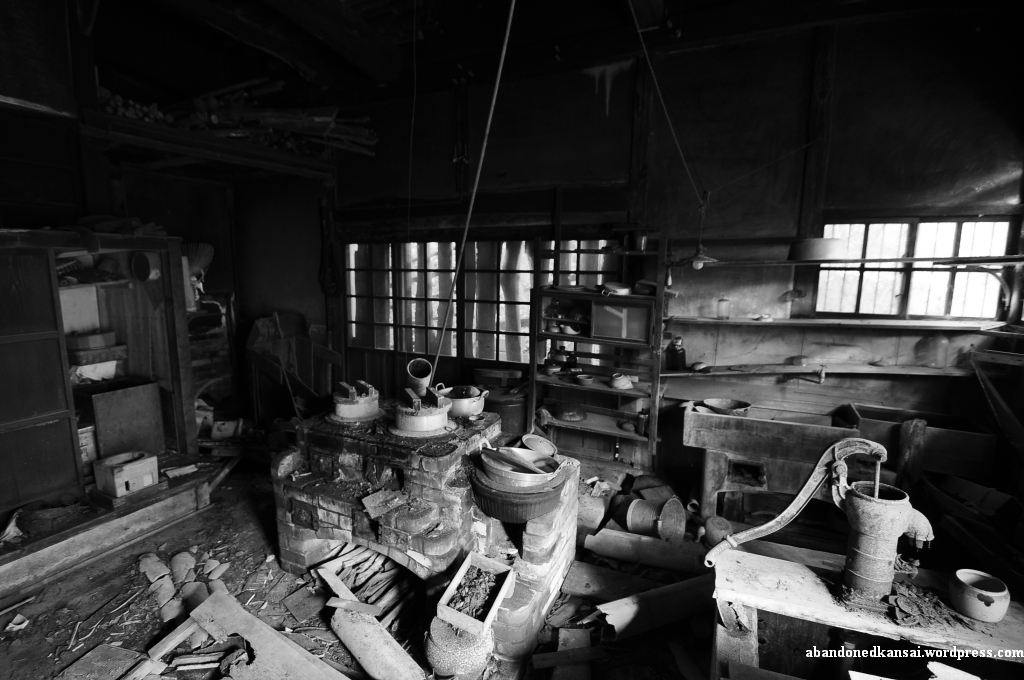
The rest of the TCC was a mansion-like estate with a beautiful huge living room set in complete darkness (harboring a gorgeous house shrine) and a spacious kitchen including a brick-built oven. The sleeping rooms must have been on the second floor and in another building that was also used as a storage.
Overall the Tokushima Countryside Clinic is a haikyoist’s dream and I have to admit it totally blew my mind – it’s unique, it’s in great condition, it’s virtually unknown and I had almost no expectations when going there. I spent about four hours shooting (due to the difficult but interesting lighting conditions exposure times went as high as 30 seconds) and I guess I could have spent another four if there wouldn’t have been other locations on the schedule for that day. The TCC is without a doubt my favorite location in Japan so far and I guess it’s the perfect opportunity to finally present you my favorite location worldwide – so next week I’ll finally start the long overdue series about Pripyat and Chernobyl
I decided to publish the photo set of this location in black and white to stress its unique atmosphere; finally a simple form of post-production – *please have a look at the color version here*.

(*Like Abandoned Kansai on Facebook* if you don’t want to miss the latest articles and exclusive content – and subscribe to the *video channel on Youtube* to receive a message right after a new video is online…)

Read Full Post »

« Newer Posts - Older Posts »