Feeds:
Posts
Comments

Archive for the ‘Hyogo’ Category

When Conan was asked “What is best in life?” he answered “To crush your enemies, see them driven before you, and to hear the lamentation of their women.” – I’m pretty sure if the Mongol general would have asked him “What is worst in life?” Conan would have answered “To marry a Japanese woman, see her taking your paycheck, and to hear the lamentation about setting the AC to a ‘freezing’ 28° C in the middle of summer.”

Please forgive this provocative generalization of an introduction, but whenever I stumble across an abandoned love hotel I can’t help but be reminded of how different Japan is in so many ways to my home country Germany. Especially in the relationship department. What I wrote so far and will write in the lines to come is not an analysis of the Japanese society or even just its love life – I’m just describing what I see and hear as an expat living in Japan, which is quite different from the things one sees and hears as a tourist visiting Japan. After six years in Japan I tend to compare this country to a big amusement park – it’s shiny, it’s tidy, it’s expensive and everybody seems to be nice. But visiting an amusement park and working in an amusement park are two completely different things…

Last time I visited an abandoned love Hotel (*Love Hotel Gion*) I wrote about the love hotel industry in Japan in general – this time I will rant a little bit about relationships in Japan. Back home in Germany, when you talk about your girlfriend or wife, you are usually in the range of being honest to being more positive than it actually is; unless you have a beer with your best buddy, then it might turn into a bitchfest. Not so in Japan! The vast majority of people married to a Japanese woman, no matter if they are foreigners or Japanese, bitch openly about their significant others to everybody – constantly! For every happily married couple I can name two or three where the guy calls his wife “The Dictator” or at least doesn’t feel that it is a waste of time to feed his new-born kid after being pressured into having children… It’s depressing sometimes. (Maybe I should add that I never did any of the above and find Japanese women rather sweet and caring… but I was never married to one.)
While pretty much every woman’s biological clock starts to tick at a certain age that certain age is definitely lower in Japan. The big 3-0 seems to be the current number where cute, open-minded girls turn into little monsters obsessed with marriage – if you meet a woman past 35 you better look for rings right away and get prepared to father a child or two. But that actually is progress in comparison to a derogatory term popular for decades in Japan: Leftover Christmas Cake. Leftover Christmas Cake was a not so flattering way to call an unmarried Japanese woman over the age 25. In Japan Christmas is kind of an additional Valentine’s Day you spend with your significant other eating a beautiful, but extremely overpriced cake – and Leftover Christmas Cake is something nobody wants… Since the ticking deadline is now 30 instead of 25 the term isn’t as popular anymore and you can always see the surprise or even shock on a Japanese person’s face when you mention it.

But even if you get married before the age of 30 it seems like people just follow set behaviors, no matter if they make sense or not; like hardly anybody goes swimming in the ocean after September 1st because according to Japanese definition it’s autumn now – it doesn’t matter that it’s still 32° C outside, you don’t go swimming in autumn since it’s a summer thing to do. And it’s the same with married Japanese women. They quit their jobs, they dress differently, they behave differently. Again: Not all of them, but a lot. A couple of years ago a Japanese friend of mine, a cute girl in her mid 20s, wrote me something along these lines: “I know it’s a horrible thing to say, but I don’t want to work anymore. Maybe I should get married…” – I’m not making this up! In Japan the women have control over the money. No matter how much the husband makes or how high he is on the career ladder: The woman gets the paycheck and the husband gets some pocket money. And if he needs more he has to ask his wife – if he’s lucky enough to have access to a bank account he better remembers when and why he used the ATM, because it’s highly likely that he will have the justify the use of that card. One of the reasons guys married to Japanese women tend to bitch about their wives…

Wives that they sometimes barely know. While arranged marriages are not common in Japan it is not exactly unusual that parents introduce their daughters to suitable candidates – especially when their daughters have passed the devilish age of 30. Traditionally men and women are not platonic friends with each other – and if a couple isn’t working at the same company it’s not really rare that they see each other only once or twice a week, because they are both super busy at work; especially the guys. And that’s another big difference to what I’m used to – unless you are having a long distance relationship you see (and get to know) your significant other on 5, 6, 7 days a week where I come from; way more often than in Japan. With the result that a lot of men (including foreigners) are marrying Japanese women they don’t know nearly as much about as if they would have been in a relationship with a woman in a western country for the same amount of time. On the other hand that fact makes it easier to stay at work till 9, 10 or 11 p.m. every night… Who wants to go home to a wife and kids they barely know…?
For a lot of Japanese men it almost seems to be a hassle to have a relationship after all – the so-called Herbivore Men (草食(系)男子, sōshoku(-kei) danshi) are described as having an “indifferent attitude towards desire of flesh”. Whenever you think you’ve heard it all…

Don’t get me wrong, I’m sure there are many, many, many happy (happy!) marriages in Japan, but when I listen to co-workers and friends hardly anybody seems to be really happy in their marriage – and a lot of them cheat on their wives.

And that finally brings us to the exploration of the Furuichi Love Hotel in Hyogo prefecture – an original find I’ve never seen anywhere else before, including Japanese haikyo blogs! Like the *Love Hotel Gion* the Furuichi Love Hotel was more like a motel. You drove into a garage (this one even had closable doors!) and entered a small apartment from there – on the right side was a Japanese style toilet, on the left side a bathroom, straight ahead the fun room with the king size bed and all the other extras. Like the Love Hotel Gion the Furuichi Love Hotel was in pretty bad shape. Most garages were locked and the dozen rooms were accessible via a two small hallways in abysmal state – some vandals used a pickaxe for some remodeling. They did surprisingly little damage to most of the rooms, so I was able to take photos in three of them. Sadly the light from the hallway wasn’t enough to see anything there, so I had to use my flashlight again to bring some light to those abandoned love caves.

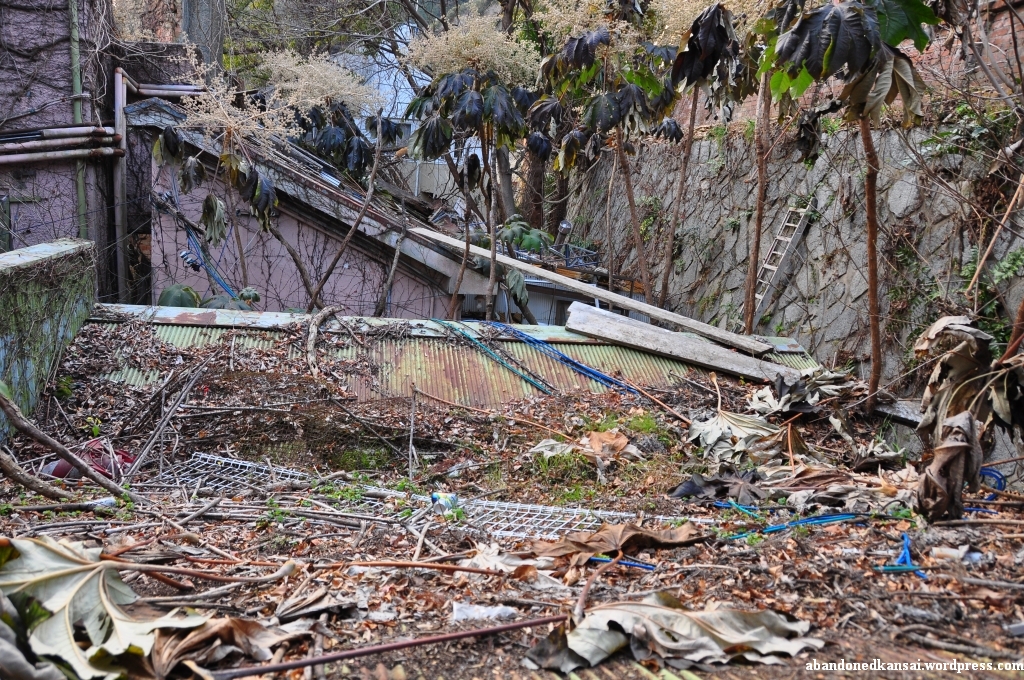
The rest of the area was in a state of destruction, too. Right at the entrance was a small house for the manager of the hotel, the interior covered by some smelly pink powder – most likely somebody emptied a fire extinguisher there. The backyard was turned into a junkyard, but if you are looking for a Japanese style toilet you might find an undamaged one there. Glass shards and pieces of porcelain were all over the place, but what really caught my eyes was a sex toy with a cable remote hanging in one of the trees – Merry XXX-Mas everybody!

(If you don’t want to miss the latest article you can *follow Abandoned Kansai on Twitter* and *like this blog on Facebook* – and of course there is the *video channel on Youtube*…)

Read Full Post »

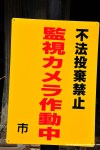
The Restaurant Kent, on Japanese haikyo blogs mostly known as the Good Omen Garden, is one of the staples of urban exploration in Japan. Located on quite a long country road connecting Osaka with Miyazu (home of the famous sandbar Amanohashidate, one of Japan’s three scenic views) the Restaurant Kent was one of the most popular local haikyo when I started doing urban exploration three years ago. Nowadays it lost quite a bit of its popularity, probably because it was photographed to death over the years – or maybe because there are a couple of signs announcing camera surveillance… which I totally respect if it’s true.
In this case the claim was complete bullshit, which annoys the heck out of me as it just cost me time and nerves. The signs looked rather new, so maybe they were put up before the local city administration set up the cameras (government involvement, even on the lowest level, is always a bad thing since it usually means serious business – private companies might hire some slackers, but you don’t want to mess with bureaucrats, especially in a country like Japan…), but when I visited the Restaurant Kent in March of 2011 there were no cameras or other forms of security; a topic I usually leave out, but if somebody lies to me blatantly I have to set the record straight!

Sadly there is not much else to report about the Restaurant Kent, since nobody seems to know a lot of facts about the place. I don’t even know if it was named after the county of Kent in South East England – or after the hugely popular cigarette brand “Kent”, which famously used carcinogenic blue asbestos in their filters from 1952 till 1956 (I guess at least British American Tobacco made cigarettes healthier after all…). The restaurant area itself seemed to be quite small, but neat. Previous explorers set up some tableware in front of a chair with armrests, but other than that there was not much to see.
The Good Omen Garden seemed to be much bigger – one of those festivity locations Japan so desperately needs when you want to be loud and / or with some friends. My buddy Dan and I found several party rooms of various sizes (Western Style and Japanese style, i.e. either carpet floor and tables or tatami floor and furniture that is long gone now…) equipped with all kinds of electronics including laser disc karaoke machines, beamers, microphones (not for karaoke as they were installed to the ceiling…) and mountings for camera and / or additional lighting. One room even featured a disco ball, although it was quite severely damaged – and so was the fake wedding cake one floor down outside. At the first look the Good Omen Garden didn’t seem that big, but then it turned out that there was a second building behind the first one, connected by a kitchen on the upper floor. There were more rooms, including some guest rooms for overnight stays and the usual array of baths for men and women.
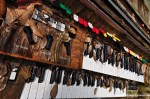
My favorite item though wasn’t in the building, it was outside in the backyard – a wooden electronic organ, beyond repair thanks to years of abuse from vandals and weather; nevertheless an unusual and strangely beautiful sight.

Since the Kent Restaurant / Good Omen Garden was along a busy road, but not within a city, town or even village, there were almost always cars parked outside. But nobody had the intention to bother us, I guess the camera warning signs outside worked. When Dan and I were about to leave though, a pickup-truck with a small crane parked next to the building. We “escaped” through the front entrance while two or three men entered the building through the restaurant. On official order or to loot? We’ll never find out. Dan and I were kind of in a hurry anyway, since on the way to the Kent Restaurant we spotted a location I’ve never seen anywhere else before. But that’s a story for another time. Probably Christmas time…

(If you don’t want to miss the latest article you can *follow Abandoned Kansai on Twitter* and *like this blog on Facebook* – and of course there is the *video channel on Youtube*…)

Read Full Post »

Momijigari (紅葉狩, red leaves / maple leaves hunting) is almost as popular in Japan as the worldwide way more famous hanami (花見, flower viewing). In spring even the biggest couch potato leaves the house to view first the plum and then the cherry blossoms, in autumn they go to different spots to have a look at the autumn leaves. Of course every bigger city has special spots for both, but some countryside towns are pretty much dead for 50 weeks a year and completely swamped on two or three weekends. In Kansai prime examples would be Yoshino (hanami) and Minoh (momijigari). Why? Because those two spots are considered the best – or at least amongst the best. Surprisingly many Japanese people pursue the best of everything – the best food, the best company as an employer, the best spots to view nature. Or at least they pursue what the majority considers the best. With the result that some food is insanely expensive, employers with famous names exploit their employees (because they can!) and the best spots to view nature are so overrun that it’s not really fun anymore going there – you stand in crowded trains for hours just to be pushed past gorgeous trees and through crowded streets with souvenir shops.
So while half of Kansai “enjoyed” autumn leaves in Minoh and Kyoto (just to put up photos on Mixi and Facebook to let everybody know where they went for momijigari…) I made my way to the Hyogo countryside in late November of 2011. My goal was to climb a small mountain with an abandoned temple on top. 15 months prior I was able to explore an abandoned shrine (*you can your all about it here*), so I guess it was only natural to follow an abandoned Shinto site with an abandoned Buddhist site. (I know that there are plenty of abandoned churches – but how about mosques? Has anybody ever heard of an abandoned mosque?)

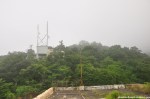
The Shuuhen Temple popped up on two or three Japanese haikyo blogs before, but it was surprisingly hard to locate. Even more surprisingly since the place is still marked on GoogleMaps, and when you are rather close you can find guide signs – which left me rather puzzled for a couple of minutes about how abandoned the place really was. I guess now it’s more abandoned than ever, because in September of 2011 the street up the mountain was closed. Halfway up the mountain a landslide flushed away the small asphalt road on a length of about 5 or 6 meters – even tiny cars could barely pass here anymore safely.
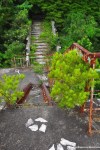
When I reached the mountain top I must have been one of the happiest people in all of Kansai: A stunning view, gorgeous autumn leaves and a temple all for myself. Sure, I couldn’t tweet “I’m in Arashiyama! (Be jealous!)”, but I wasn’t bothered by souvenir shops and crowded locations. Quite the opposite. When I was walking around I had to be careful not to run into one of many one square-meter large spider webs with a nasty middle finger long black and yellow spider in it. The abandoned temple itself was rather unspectacular. All buildings were closed, in rather good condition, and I didn’t even have a closer look if there was a way to open them. I’m not very religious myself, but I respect the beliefs of others and try to be respectful. (Which doesn’t keep me from making fun of them if it’s getting too ridiculous – you know, thetans, magic underwear and stuff like that…)

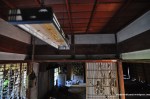
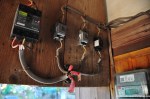
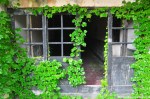
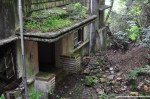
Open and rather interesting was the house of the monk that lived near the Shuuhen Temple. It’s hard to tell when it was abandoned. Some buildings in Japan fade away in no time, others withstand the ravages of time as if they couldn’t care less. It looked like it was built in the 60s or 70s, given the black and white photos of the bell and the belle; judging by the wiring maybe even earlier. The decay there was clearly natural, because thanks to the temple’s location the average bored youth vandal spares the place. Strangely enough the digital display of the power meter still worked…

The temple itself seems to have quite a long history. According to the homepage of the city it is located in, the Shuuhen Temple dated back to Emperor Kotoku’s days (596 – 654) and was first built in 651. In 1578 it was burnt to the ground and stayed a ruin for more than a century until 1682, when it was revived again. Not much information, but way more than one could get for most other temples and shrines in Japan… Now it is famous not so much amongst urban explorers, but more amongst Japanese fans of ghost spots (心霊スポット). I guess it makes sense to look for paranormal activity where people traditionally believe(d) in spirits.

Exploring the Shuuhen Temple was one of those nice, mellow urbex experiences. Sleeping in, taking some local trains, a nice and sunny autumn day, some hiking, some solitude, cold temperatures, but warm sun, beautiful countryside. A relaxed Japanese Indian Summer day…

(*Like Abandoned Kansai on Facebook* if you don’t want to miss the latest articles and exclusive content – and subscribe to the *video channel on Youtube* to receive a message right after a new video is online…)

Read Full Post »

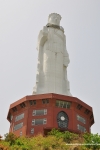
Ruins in Japan are often in such good condition that they are not recognizable as ruins at first sight. One example would be the World Peace Giant Kannon on Awaji Island, Hyogo prefecture – Kannon not being a spelling mistake, but the Japanese name for the bodhisattva associated with compassion, Guanyin. Other spellings include Kan’on, Kanzeon and Kwannon with the latter being the name giver for Canon, which was founded as Kwanon in 1934 and had the bodhisattva in its logo. I guess a World Peace Giant Cannon only exists in the minds of some really crazy people…

In 2010 I actually drove past the 80 meters tall World Peace Giant Kannon on its 20 meters tall socket building. Sure, it looked interesting, but the bright white statue seemed to be rather new in the warm sunlight of that day, so I didn’t even consider stopping. When I got back home and looked up what the statue really was I found out that most important of all it was abandoned… (It’s the 4th tallest statue in Japan and the 13th tallest in the world. Including the socket it ranks 3 and 10.)

The World Peace Giant Kannon is actually part of the Heiwa Kannon Temple (heiwa meaning peace…), which was founded and funded by Toyokichi Okunai, a realtor who became rich dealing with office buildings, private apartments and business hotels in Osaka. The basis is a 5 storey building, 20 meters tall. The first floor was home to all kinds of religious exhibits as well as well as information about the famous Shikoku Pilgrimage (consisting of 88 temples along a 1200 kilometers long hiking course which usually takes between 30 and 60 days to complete). The other floors were stuffed with Mr. Okunai’s private collections – transportation, watches, china, art, armors. The fourth floor was home to a sightseeing restaurant, a banquet hall and a souvenir shop. If you look up the 80 meters tall statue on top of the building you can see some kind of a “collar” right below the statue’s head – that turned out to be an observation platform.

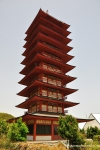
Although attracting up to 2000 visitors per day it seems like a lot of people were appalled by this mix of religion and commerce, some even accused Mr. Okunai of heresy. When Mr. Okunai died in 1988 his wife took over the management of the World Peace Giant Kannon until her death in February of 2006. After her death the Okunais’ real estate company closed the place right away and the Heiwa Kannon Temple started to fall in disrepair quickly, probably due to the lack of management of Mrs. Okunai during her final years. The Lehman Brothers took over, but they failed badly themselves at the time. Put to auction several times in 2007 and 2008 by the Kobe District Court nobody bid any money (which reminds me of the *Former Iranian Consulate* in Kobe…), so the temple was shifted to a separate company in September 2008. Since the World Peace Giant Kannon was liable to collapse (its exterior is molded of gypsum and resulted in the statue’s nickname Whiplash Kannon”) a committee was established in May 2009 by the local government, which took measures against the further deterioration of both the World Peace Giant Kannon and the nearby 10-storey pagoda in September of 2011. Just a couple of months after my buddy Gianluigi and I explored the place…

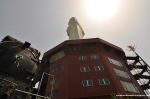
Walking up to the Heiwa Kannon Temple is actually quite impressive. The huge pagoda is right next to a parking lot and a closed restaurant. From there we had to walk up a hill to the back of the socket building. There we found all kinds of statues and items that didn’t go together very well, including a miniature version of the Statue of Liberty and an original Class D51 steam locomotive, the D51 828. We circled the socket building quickly and found an easy entry. The first floor was almost empty as most religious exhibits were gone. A quick look at the office on that floor didn’t give us much insight, so we headed up one of two staircases (one in the north, one in the south) that connected the floors. Some of them were locked, but we gained access to the restaurant on the fourth floor and the tatami room on the fifth floor. Approaching the fifth floor we heard voices, so we talked loudly to make ourselves heard. A minute or two later a young couple in their early 20s rushed past us, the guy holding a photo camera and the girl’s clothes not really being in order – your guess here is as good as mine…

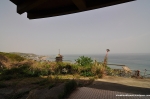
The tatami room once held the Mr. Okunai’s armor, but nowadays well armored soldiers of another kind were all over the floor: suzumebachi, Japanese Giant Hornets, 5 centimeters long killer machines. Luckily they were dead and it wasn’t summer yet, so Gian and I concentrated on the task at hand. In one of the hallways leading to the staircases we found an elevator – and nearby a mysterious claustrophobically narrow und pitch-black staircase that began to wind upwards. After spending a couple of minutes on the rooftop of the socket building admiring the beautiful gigantic Kannon statue we headed back inside and up the staircase. It was dark, the air was bad and some door-like openings revealed unpleasant views at the inside of the statue – even without knowing that people were discussing repairing the Kannon it was pretty clear that investments were necessary. After climbing stairs for about 10 minutes (it felt much longer…) we finally reached the observation platform, which offered both stunning and scary views. The location of the World Peace Giant Kannon between the coast of Awaji Island and the gentle hills was breathtaking – and so were the cracks in the gypsum everywhere. Buildings in Japan are barely constructed for eternity, but this one definitely has seen better days!

And so Gian and I walked down stairs for about 85 meters and left after spending surprisingly much time at this obviously quite popular abandoned statue – passing the also abandoned pagoda a group of about half a dozen Japanese twens was walking up the hill to have a look themselves. And I am sure they weren’t the last visitors as the maintenance work at the Heiwa Kannon Temple started not earlier than four months later…

(If you don’t want to miss the latest article you can *follow Abandoned Kansai on Twitter* and *like this blog on Facebook* – and of course there is the *video channel on Youtube*…)

Read Full Post »

The Tohoku Earthquake of March 11th 2011 was a horrible, horrible event. I was on the 16th floor of an office building in Osaka at the time, almost 1,000 km away from the epicenter – but looking at the faces of my Japanese colleagues I could see that most of them remembered another horrible earthquake: the Great Hanshin Earthquake (a.k.a. Kobe Earthquake), January 17th 1995; the second worst earthquake in Japan of the 20th century with about 6,500 casualties. 200,000 buildings collapsed, the total damage was more than 100 billion US-dollars – with massive consequences for all of Kansai as many companies moved to Tokyo and other parts of Japan, closing subsidiaries in Kobe, Osaka and Kyoto out of fear of another earthquake; which is kind of strange since a major earthquake is overdue in Tokyo for quite a while now…

One of the buildings that were severely damaged in Kobe was the former Iranian general consulate or Persia House, as it was known in its later days. In the 19th century Kobe opened its ports quickly for oversea trade and became host of one of the biggest foreign communities in all of Japan. Especially an area now known as Kitano was the home of many, many merchants from all over the world. Nowadays a major tourist attraction Kitano is the home of small antique shops, fancy bakeries, lots of wedding halls and bridal gown boutiques as well as countless French bistros – or whatever Japanese people think French bistros should be like… And of course there are the old merchant houses. The Weathercock House (German style…), the Denmark House, the Original Holland House – and before the Great Hanshin Earthquake happened there was the already mentioned Persia House.

The Persia House was a 2 storey wooden building with a kiritsuma style roof. Until 1981 it was the home of the Iranian general consulate in Kobe, afterwards it was opened to the public as a tourist attraction, housing the Persian Art Museum which showcased pottery of the Persian Empire. In 1983 the Persia House received three sets of leaded glass windows from Roger Nachman Glassworks, making it even more beautiful than before.

Unlike the neighboring foreign residences the Persia House wasn’t rebuilt after the Great Hanshin Earthquake hit Kobe – nor was it demolished. It seems like the ruin was left alone for almost a decade until in 2004 city of Kobe seized the premises since the owner didn’t pay taxes for quite a while. Since from that point on the ruin was a problem of the city a green stockade was erected to keep people from hurting themselves; and to make it harder for the ruin to catch the innocent tourists’ attention. Hardly anybody likes an “eyesore” like that in a preppy area like Kitano, but it seems like nobody had the will or authority to get rid of it completely – and that assumption would have been dead wrong as the city in fact tries hard to get rid of the whole problem. So far the premises were up for public auction nine times, but there was never a taker, although the minimum bid was lowered in six steps from 159 million Yen to 95,4 million Yen. (1.5 million Euro / 1.9 million US$ to 0.88 million Euro / 1.56 million US$)

When I was visiting the Persia House it was kind of funny to watch dozens of tourists pass through the narrow street the former art museum is located at without even realizing that there was a ruin. But as soon as I took my camera to take some photos over the picket fence 80% of the people passing by did the same. After a while I left trying to take pictures from another angle – when I came back to the front again none of the passing tourists seemed to see the ruins…

I guess those tourists are basically the main reason why the location is one of the least photographed haikyo considering its exposed location in the heart of Kobe. Hopping the fence wouldn’t have been a problem, although a cable and a connected electronic device might have been some kind of alarm system. But even if you made it past the fence you could always be seen by people passing by. On the adjacent estate to the north is actually the Original Holland House (and with that I can as well mark the *location on the map*…) – looking down from its back porch you probably have a pretty good view at the side of the ruins of the Persia House. Sadly the teenager at the entrance wouldn’t let me take a couple of photos and I wasn’t willing to pay the 700 Yen entrance fee for 2 minutes of not entering the friggin house. I recently spent 15.000 Yen on a roundtrip train ticket expecting to see a demolished amusement park, so I don’t consider myself cheap, but come on! The Dutch being of German blood I would have expected a little bit more solidarity…

Anyway: board fence + uncontrolled plant growth + tourists + shooting in west direction in the afternoon = a picture set I’m not very proud of.

To end this article on a funny note, please have a look at the last photo of the set. I took this nearby at one of Kobe’s major tourist spots. It’s the map of a public restroom. Not a map showing public restrooms in the area – a map of ONE public restroom. If your sense of direction is below par you better study the map before you enter to avoid getting lost… unless you are a man. The gentlemen’s section is so small it really is your own fault if you get lost!

(Update 2013-01-05: The Persia House was demolished since I took the photos – I’ll write a RIP article as soon as possible…)

Read Full Post »

Takarazuka is one of those bedroom towns at the foot of the Rokko Mountains, home to thousands of commuters working in Kobe and Osaka. Like Nishinomiya and Ashiya (both to the south) Takarazuka is a rich suburb. While Nishinomiya is famous for sake and the Hanshin Tigers in all of Japan till this very day, Takarazuka’s brightest days are in the past – although it’s still a beautiful place to live and attracts hordes of tourists every weekend. The days of Hanshinkan Modernism, which made Takarazuka one of THE places to be in the early 20th century, may be long gone, but a few parts of this cultural heyday survived for almost a century. Prime example being the Takarazuka Revue, an all-female musical theater troupe, founded in 1913 by the president of Hankyu Railways to attract more people to come to Takarazuka and its hot springs – and of course to sell train tickets… 99 years later the revue is popular as always with ticket prices up to 11.000 Yen. While the hot springs are outshined by the nearby Arima Onsen town Takarazuka gained a new attraction in 1994 when the Osamu Tezuka Manga Museum (Takarazuka’s Tezuka Osamu Memorial Hall) opened its door. This three floor museum is dedicated to Osamu Tezuka (who would have thought it?), the godfather of anime, father of manga, Japan’s Walt Disney – and creator of Astro Boy, Kimba the White Lion (still in development hell at Nintendo?) and Black Jack. Oh, and of course there are dozens of hiking trails in the mountains to Takarazuka’s west and north!

Being one modern and tidy city Takarazuka is way less famous for abandoned places. I’ve actually never seen one on any of the Japanese haikyo blogs. The more surprised I was when I spotted some rusty machinery on my way back from a hiking trip a couple of years ago, long before I started urban exploration as a hobby. So when I remembered the rusty gold a few months ago I saved it for one of those “I wanna explore an abandoned place, but I don’t wanna get up at 6 a.m. to ride several trains for 3 or 4 hours” days. In February of 2012 I finally went back to Takarazuka again – after lunch, because I could!

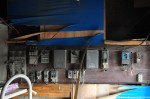
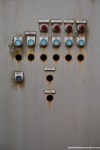
When I was exploring the Takarazuka Macadam Industrial Plant I wasn’t sure what the place was exactly. Judging by the look of the surroundings and the machinery left behind I guessed it was another limestone mine, an industry almost omnipresent in Japanese countryside – just without the chemical plant the *White Stone Mine* had. A stone crusher was also missing, which is kind of ironic in retrospect given the fact that the kanji for macadam are the same as the ones used in the Japanese term for “crushing stones”. So basically all I found were a couple of loading bays (probably with sorting devices to separate small stones from bigger ones) and conveyor belts; plus controls for the machinery. Some installed within wooden huts in dangerously desolate state, some in wooden boxes just nailed and bolted to concrete walls; I guess waterproof wasn’t invented back then…

Exploring the area was especially exciting since I’ve never seen the place anywhere on the internet before – and it was dangerous! Every step forward, every corner revealed more unsound wood and brittle metal. I guess somebody lived for a while in one of the shacks and left behind, among other things, a suitcase full of porn. Yes, not just a couple of magazines – a whole suitcase full of the censored Japanese school girl porn that seems to be so common for abandoned places in this country… I guess you could call it the Porn Shack.

The other thing that really fascinated me was the already mentioned wooden box containing some of the controls for some of the machinery. Being located at the foot of a mountain range Takarazuka gets its share of rain, so I really wonder who thought it would be a good idea to nail a wooden control box to a concrete wall – and put a metal control panel right next to it. One can only imagine how much maintenance those things needed…

And finally a couple of words about the history of the place – stuff I found out after I explored the plant based on the information gathered there; and of course the internet was a big help… The whole rusty thing is / was owned by a company which could (should?) be translated as Osaka Macadam Industrial Place (大阪砕石工場, Osaka Saiseki), which is still a major player in the earthwork / crushed stone industry with 350 employees and several plants all over Japan. But my limestone assumption was wrong, hence the lack of a chemical plant. Osaka Saiseki was founded 1934 and the macadam plant in Takarazuka was opened in 1938. I assume the area I explored was the old separation and transportation line that was abandoned when the plant moved further into the valley to continue ripping some chunks out of the Rokko mountain range…

Read Full Post »

And now to something completely different – an abandoned driving school in Japan. Well, since it’s abandoned and in Japan I guess it’s not that different, but how many abandoned driving schools have you seen? Especially since it’s so much more than just a driving school, at least by what I’m used to.
In Germany a driving school more often than not is a two room “office”. One small real office room and a bigger seminar room where the driving instructor is having his lessons several times a week. Not much more space needed, because German driving schools tend to be small, at least when I got my driver’s license more than 15 years ago. The one to three driving instructors usually are out on the road, because that’s where the real money is for them. Pretty much all driving school cars in Germany are manual / stick-shift cars – probably because there is only one license (no separate automatic-only license!). Most cars in Germany, except for taxis, have manual transmission anyways. A lot of Japanese people are surprised when I tell them about it, even more so when they find out that you don’t have to renew your driver’s license in Germany. It’s lifelong unless you mess up by violating traffic rules too often.
In Japan (and probably your country) the situation is a bit different. First of all: Most cars in Japan have automatic transmission, which kind of makes sense since traffic here can be nerve- and ankle-wrecking. So when you enter a driving school you have the choice between a “general” manual license and a “limited” automatic-only license. And a surprisingly high number of Japanese people actually have a automatic-only license – which feels totally wrong from my German point of view since I would never give up that kind of control over my car; to me shifting gears manually is part of the fun and it (usually…) reduces fuel consumption. Even worse: In Japan you have to renew you license every 3 years, which costs time and money – if you managed to not violate any traffic laws for 5 years you get gold status and have to renew your license only every 5 years. But it gets worse! New drivers have to put a yellow and green sticker to their car denouncing them as beginners. If you are a senior citizen age 75 or above you need a orange-yellow sticker – guess why. (None of that bullshit in the land of the Autobahn!)
The biggest difference between a driving school in Germany and a driving school in Japan is what we would call a “Verkehrsübungsplatz” in German. It seems like there is neither an English nor a Japanese term, but the literal translation would be something like “traffic training location” – a place that has roads and traffic lights and crosswalks, but is on private property, separated from normal traffic; and therefore you are allowed to practice driving there without having a license (if you at least 16 years old, have an experienced co-driver with a regular driver’s license and are able to pay an hourly fee). In Germany those place are separate from driving schools and usually run by automobile clubs. In Japan those traffic training locations are part of the driving school, which is kind of ironic given the fact that Japan has oh so little space… But it gives the students the great opportunity to practice safely in a driving school car. Worst case scenario in Germany: After a couple of theory lessons and a general instruction by the driving instructor you are pushed right into traffic…
About 2 years ago I spent quite a lot of time researching new places. Nowadays you can find at least 50% of the locations popping up on blogs on one map or the other, but 2 years ago that was a dream! (Now it’s actually a nightmare since urban exploration is going to become a victim of its own popularity soon. Maybe not this year or next, but soon…) Japanese blogs have the funny tendency to obscure names by leaving out kanji in the text decriptions, just to show the full name on the photos coming along with blog entry. Happens all the time. In late 2009 I found the blog of a guy showcasing an abandoned driving school, but of course he wasn’t willing to give up the name or even the location. He just said it was a driving school in Hyogo and that the company is bankrupt now, but has a succession company with a similar name. So I did some research with Google and found out about the Daikyo Driving School and its successor. Sadly the original Daikyo school went bust before the internet got popular, so there was no way to find out about the exact locations of the old schools, just the cities they were in. Luckily the same guy was bragging about his GoogleMaps skills – showing different zoom levels of the same place, which turned out to be the driving school. The guy was pretty smart not showing any train stations and other landmarks, but since I narrowed the location of the school to a couple of towns it took me about 20 minutes to compare his screenshots with the current GoogleMaps satellite images and then I knew where it was…
Abandoned driving schools are pretty rare, especially in Japan. Usually they are rather close to train stations since their customers are depending on public transportation. But land close to railroad stations is rather expensive – and driving schools take up a lot of space since they have that huge training area, so I’m sure realtors can’t wait for them to go bust.
The Daikyo Driving School I went to was located in the same distance of 3 train stations, all about 30 to 40 minutes away by foot; forest on one side, surrounded by fields on the other three. Only a few farm houses in sight. And of course the owners of the closest one had to have a big party exactly on the day that I wanted to explore the Daikyo Driving School. Cars were coming almost constantly, parking up to the only entrance of the driving school. So I took my time circling the place, looking for other ways in, but there weren’t any. So after about half an hour I thought “Screw it!” and just went in, not sure if anybody saw me and how they would react if they did. Luckily nobody was able to see or hear me once I was inside since the driving school was slightly elevated with a beautiful view at the surrounding area.
Abandoned places in Japan have a reputation of being mostly undamaged due to the lack of vandalism – which isn’t true. My experience with urbex outside of Japan is limited to Germany and Luxembourg (*Pripyat / Chernobyl* in Ukraine is kind of a special case), but I can’t say modern ruins in Japan are in better condition overall than back home. Some are, some aren’t. The Daikyo Driving School was not. A couple of the inner walls were smashed in, the more solid outer walls were smeared with graffiti. Furniture not bolted to the ground was dragged outside and / or severely damaged, electrical installations were ripped out. Overall the building was in pretty bad shape and I was kind of surprised that the really rusty chairs and tables of the one “modern” lecture room weren’t smashed to pieces. For a rather remote and virtually unknown place abandoned for only about 15 years the school was in pretty bad shape, especially in comparison to other similar locations like the *Jumbo Club Hotel Awaji Island*. It was actually way more beautiful from the outside than the inside. Since it’s getting dark rather early in Japan the training area was equipped with floodlights, now as overgrown as the school building and most other installations on the premises.
Overall the abandoned Daikyo Driving School was a nice and unspectacular exploration, which I appreciate now, two years later, way more than back then – once you’ve realized that a lot of deserted places in Japan are either hotels or mines a unique deserted place like an abandoned driving school is a welcome change.


Read Full Post »

*Nara Dreamland* is the current haikyo hot spot in Kansai, maybe in all of Japan. But the area including Osaka, Nara, Kyoto and Kobe is also the home of a classic urbex location: the Maya Tourist Hotel. (A.k.a. Maya Kanko Hotel, Mayakan, Mount Maya Hotel, Mount Maya Onsen Hotel, and Gunkan Hotel – Battleship Hotel / Warship Hotel; similar to *Gunkanjima*, the now also abandoned Battleship Island off the coast of Nagasaki.)
Mount Maya is one of the highest peaks of the Rokko Mountain Range that spreads from the west end of Kobe to Takarazuka (near Osaka) and is one of the most popular recreational areas in Kansai. In 646 the Tenjo-ji (忉利天上寺), a Buddhist temple, was founded near the top of the mountain at the behest of Emperor Kotoku. During the 8th century a monk named Kobo brought a statue from China to the temple – a depiction of Maya, Buddha’s mother; and that’s how the Mount Maya got its name. (The original temple was burned to the ground by a pyromaniac in 1975. The remains are still a popular destination for hikers, although the temple was reestablished further north and at a higher place.)
The Maya Tourist Hotel is located halfway up the mountain and in walking distance of the original Tenjo-ji. It should be obvious how the place got its name… Something I still haven’t figured out is why it took me almost a year to go to the Maya Hotel and another 17 months to write about it, although the hotel is basically in my backyard, just a couple of minutes down the rail on a single line (yes, no need to switch trains!).
Going to the Maya Hotel was actually my first exploration I haven’t done by myself or with a friend, but with a fellow urban explorer: Michael Gakuran. Mike was passing through the area on his way back home from a summer trip to the Seto Inland Sea and asked if I was interested in a joint adventure – and since he runs one of few blogs I actually read it was a pleasure to say yes. Michael likes his abandoned places rather high profile (who can blame him for that?) and so we pretty quickly narrowed it down to the Maya Hotel. The downside of that location: It’s right next to an active cable car station whose employees have a reputation for calling the police if they see trespassers on their way to or on the premises of the Maya Hotel (you have a beautiful view at the roof of the hotel from the cable car station). Since Mike and I are both rather dedicated explorers we decided to tackle the place hardcore style: During my research about the place I found out that there was a steep closed hiking trail up the mountain that leads there without getting close to the cable car station. To be able to take some photos on the rooftop we met at a Hankyu line station before 5.30 in the morning, hiked about 400 meters up the insanely steep, spider web covered abandoned hiking trail to finally reach the hotel; drenched in sweat and out of breath. Osaka / Kobe summers are everything but nice, the temperature barely ever falls below 30 degrees Celsius (even at night!) and the humidity is breathtaking. Especially in the morning, especially hiking up a forest trail, especially close to an abandoned and rotting hotel. Getting up Mount Maya that morning was my worst hiking experience without getting in physical danger and the third worst overall. Oh, and did I mention that I’m not a fan of alarm clocks at 4.30 in the morning? They tend to make me grumpy…
Luckily the anticipation of exploring a legendary abandoned building dominated over my morning grouchiness and so Michael and I reached the Maya Hotel in good spirits. Until we reached the entrance. Which was recently boarded up and ripped apart again. Carefully we got closer, gigantic flying insects the size of table tennis balls buzzing around and landing on us. Footsteps inside. 100%! What should we do? Getting inside? Waiting to be eaten alive by the insects? After a short deliberation we decided it would be better to take our chances with whoever was inside than with the nasty beasts outside, so we passed through the cracked open plywood and entered undaunted by death – only to find out that the footstep noises were created by dripping water. Of course we weren’t convinced right away, but after 5 minutes… well, 10 – okay, after 15 minutes we were confident that we were alone in the big hotel.
The history of the Maya Hotel started in 1929. Four years after the Maya Cable Car (officially Maya Cable Line (摩耶ケーブル線, Maya Kēburu-sen) began to transport tourists to the foot of Tenjo-ji the same company decided it would be a good idea to have a hotel up there – so they built it right next to the upper terminus. Construction began on May 15th 1929 and the Maya Tourist Hotel opened after a record time of just 6 months on November 16th. 15 years later, late in World War 2 on February 11th 1944, the Maya Cable Car was shut down as a non-essential line and the next year the hotel was forced to close, too. I’m not sure though if it was before or after the damages through air raids occurred – on top of Mount Maya were anti-aircraft guns installed and I guess taking them out damaged the hotel. Shortly after the war plans to turn the hotel into an officer’s club for the U.S. Forces fell through. In 1960 the cable car company decided to sell the severely damaged hotel and the new owner began renovations on September 1st. On August 28th 1961 the once so luxurious lodging was renovated to shine in new splendor – with parts from the French luxury ocean liner “SS Île de France” which was disassembled in the spring of 1959 in Osaka. But the grand re-opening wasn’t followed by a streak of good luck and so the Maya Tourist Hotel was forced to close its doors again in 1967, this time after suffering severe damages from a typhoon and a resulting mudslide. A final and finally rather long-term future began in 1974 when the place was re-opened again as the “Maya Student Center”. But the student center was closed in 1994 and the destiny of the Maya Hotel was sealed on January 17th 1995 when it suffered severe damage from the Great Hanshin Earthquake that killed almost 6.500 people – in the aftermath the construction was boarded up and fenced off, and its rise to become one of the most famous abandoned places (haikyo) in Japan began.
Since time was of the essence when Michael and I arrived at the more than 80 years old Maya Hotel we went right to the rooftop to take some photos outside before the crew of the cable car station would appear for work. The atmosphere was utterly eerie. Half of the mountain was covered by low hanging clouds, so at first our sight was quite limited while the sun tried to break through. I felt like in the middle of a horror film, but at the same time I knew there was an active cable car station just a stone’s throw away. A weird, slightly surreal situation. The chimney on the top of the roof collapsed a couple of years ago and was lying there like a gigantic crumbling grey cigar. Crushed through a lower roof on the southern side I saw the famous plane tire that once actually stuck in the roof. (Nobody seems to know where the tire is from and when it got onto, or better: into, the roof. It’s the tire of a B-29 Superfortress though – used in WW2 and retired in 1960.) The tranquility of the place was amazing, totally worth getting up at a time people should rather go to bed and climbing up a mountain at the worst time of the year. Sadly we had to hurry since 8 a.m., our personal roof deadline, came closer – the cable car started at 8.30 a.m. and we wanted to be out of sight with a little bit of a buffer. Only minutes after we got back inside of the Maya Tourist Hotel we heard a sound signal from the cable car station.
Exploring the inside of the Maya Hotel was almost as exciting as exploring the outside. Since the place was abandoned almost two decades ago with little renovation in the years before, there were only a few pieces of furniture left, the most striking one a red leather couch clearly not part of the original inventory As far as I know it was part of a video shooting – at least three Japanese bands used the abandoned hotel as a location for their music videos. Not to mention the countless photo shoots. Urbex, fashion, nudes – its stunning architecture made the Maya Hotel one of the most photographed modern ruins in Japan, probably in the world. Luckily most visitors carry a tremendous amount of respect for the place, so vandalism is a surprisingly minor factor. I guess when you deal with the hassle of getting to the Maya Tourist Hotel without being discovered you rather enjoy the breathtaking theater hall, the beautiful dining room and all the big and little surprises waiting for curious and careful explorers. And you have to be careful visiting the Maya Hotel! Water is running down the walls and dripping from the ceilings, broken stuff is lying around everywhere and the floors are severely damaged. Nevertheless the Maya Hotel as a whole is stunningly beautiful, magical, just fascinating. Nowadays most abandoned hotels get trashed before they get the chance to age properly – the Maya Hotel was abandoned several times and the 1920s architecture offers a completely different basis than the usual concrete blocks that look like they were designed by the same architect and interior designer.
Now I have to bring this pretty long article to an end somehow; maybe by linking to nk8513’s blog, you can find his collection of old photos and leaflets *here* (it’s in Japanese, but even if you go there just for the picture material you won’t regret it). Well, other than that let me say that this was my last exploration before I got a wide angle lens and a tripod, so the photos are not nearly as spectacular as I hoped they would turn out to be – considering the age of this blog it’s actually quite old material. I hope the three videos will make up for it a little bit… Oh, and thanks for reading till the very end!
(If you don’t want to miss the latest article you can *follow Abandoned Kansai on Twitter* and *like this blog on Facebook* – and of course there is the*video channel on Youtube*…)


Read Full Post »

Ever since I visited the abandoned Ishikiri Shrine in Himeji I am asking myself which kind of places are really worth writing about. I’ve been to demolished places places before and after – but are they really worth writing about? How about historical places like castles or forts – especially when used as tourist spots? I wish all places could be as exciting and stunning as *Nara Dreamland*, *Gunkanjima* and *Pripyat*, but let’s be honest: most of them are not. (And Gunkanjima and Pripyat actually became tourist spots…) Interestingly enough the Ishikiri Shrine wasn’t the worst place I’ve visited; not even close. I guess it just sparked those thoughts as I grew up in Germany in an area where you have abandoned castles and really old churches every couple of kilometers. Heck, I once went kayaking on the river Neckar (near Heidelberg) and at one point I was able to see three abandoned castle ruins at the same time!
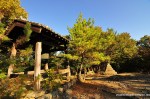
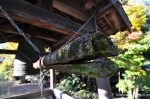
And what castles are for Germany shrines are for Japan – times 10. Or 100. Maybe 1000. They are everywhere. You can barely throw a stone without hitting one (not that I’ve tried… I guess nobody would appreciate that kind of behavior!). At first visitors to Japan are all excited. “How beautiful – and look, there’s another one!” – but after a while this wears off, even for the tourists. Living in Japan for five years I barely notice shrines and temples anymore, unless they are famous tourist attractions – or abandoned. The Ishikiri Shrine in Himeji (not to be confused with the rather famous Ishikiri Shrine in Osaka!) is one of the few abandoned ones. About a third up a small mountain with the former priest’s house right at the bottom the shrine entrance is beautiful – a stone torii at the edge of a bamboo forest, offering much welcomes shade in the summer hear. The main part of the Ishikiri Shrine consists of a now empty building, probably once used for storage, and the shrine itself as well as another small building. Sadly I have no idea about the history of the Ishikiri Shrine – even the few Japanese blogs that write about it only speculate, for example that it was built about 60 years ago and might have been an offshoot of the Osaka shrine of the same name. The place actually got so popular that somebody screwed tight the door of the shrine building with two wooden beams and put up a sign asking people not to break in. The priest’s house at the foot of the mountain was in such bad shape and in July of 2010 already so much overgrown that I only took some outside shots and didn’t even enter – I guess I’m not that much into private houses… especially when people are always near praying at / taking care of another shrine that is not abandoned.
The Ishikiri Shrine is far from being a haikyo highlight, but it was nevertheless a nice little summer hike in the outskirts of Himeji. Furthermore abandoned shrines are rather rare since there are (almost) always some locals taking care of even the smallest places of prayers. Too bad I wasn’t able to find out more about the shrine’s past…

Read Full Post »

I can’t even remember how I found out about the Karadate Golf Center in Himeji. In late 2009 / early 2010 I did quite a bit of research about abandoned places in Japan and I guess one of the leads I had was that one. I just remember that I didn’t even found pictures, just a Japanese list of (operating) driving ranges – and that one of them had a footnote that it was closed / demolished. When I went to an abandoned shrine in Himeji in July of 2010 I went to the Karadate Golf Center, too, since it was only a few kilometers away from the shrine.
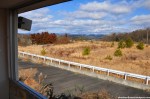
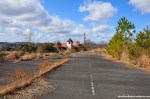
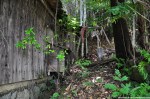
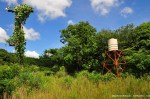
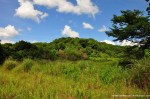
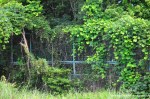
Located on top of a small mountain close to Mount Shosha (a filming location of “The Last Samurai” with Tom Cruise and Ken Watanabe) the Karadate Golf Center offered a stunning view on Himeji and the Seto Inland Sea, but due to its rather remote location (a couple of hundred meters away from the next houses at the end of a now too abandoned winding road) I guess it wasn’t a financial success – and the competition for driving ranges is tough in Japan! At the time I went there GoogleMaps still showed the driving range and a small building in satellite mode, but now these remains are only visible when switching to map mode. When I went there I found the golf center gone, with only a few signs left that it has ever been there: A fence, some bricks on the ground, a water tower, a lamp post… The driving range itself was almost completely overgrown, only two baskets sitting on the ground in the northern part. Unless you have a faible for old lamps the Karadate Golf Center is a demolished and hence uninteresting haikyo. But of course I had to see it for myself… And the view there was really nice!

Read Full Post »

« Newer Posts - Older Posts »