Feeds:
Posts
Comments

Archive for the ‘Japan’ Category

It’s a weird situation. Here I am, living in Japan, writing a series about Chernobyl 25 years after the catastrophe – while the nuclear power plant in Fukushima is getting out of control. I actually don’t have anything to add to the discussion as the media and their experts are all over the topic anyways. But since I got many, many messages, not only from family and friends, but also from readers of this blog, I just wanted to say that I wasn’t affected by the quake directly and that my thoughts are with the people suffering from the aftermath of this disaster – especially with everybody involved in trying to save Japan and the rest of the world from another nuclear catastrophe.

Read Full Post »

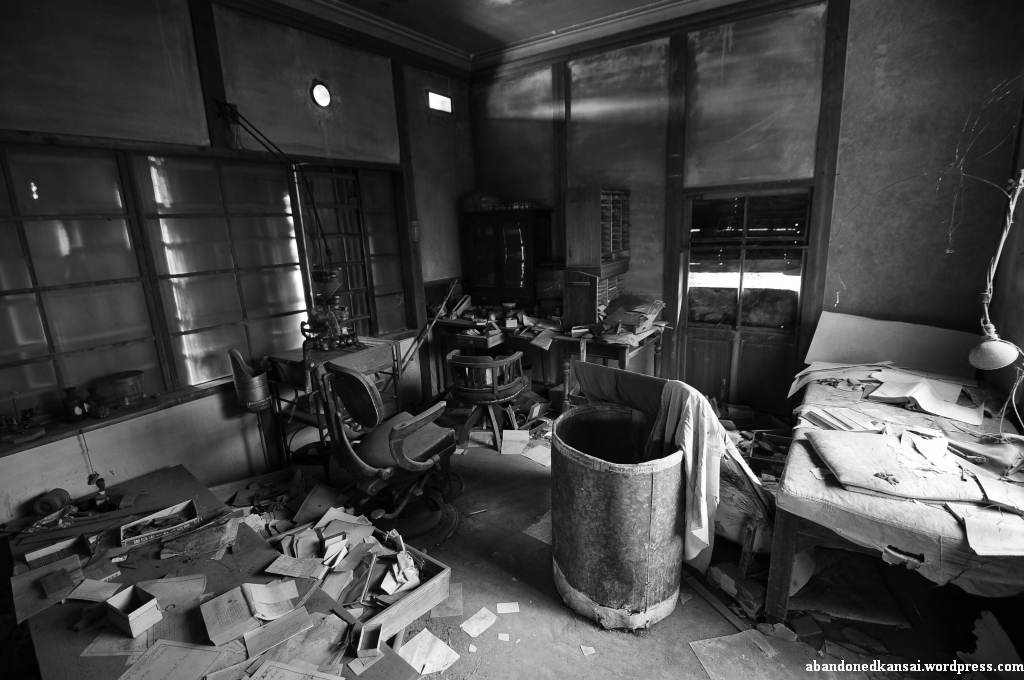
Doing urban exploration it’s hard not step into the trap of chasing only after the famous locations like Gunkanjima or Nara Dreamland – everybody has them (for good reasons), so you kind of gotta have them, too. But it’s important to stay open minded and not just look for the big ones when doing research. Because if you are really dedicated and incredibly lucky every once in a while you will stumble across a hidden gem that will blow your mind unexpectedly. Ladies and gentlemen: The Tokushima Countryside Clinic…
I saw the Tokushima Countryside Clinic (徳島田舎診療所) on a small Japanese travel blog about half a year ago. Although its location is quite remote I was able to pin it down. Jordy knew about the place, too, and was even more eager than myself to see the place (I was actually only moderately excited about it beforehand), so we decided to go there first thing on the second day of our road trip to Shikoku – abandoned hospitals are hard to find, but Japanese countryside clinics are almost unknown. Up till now the secret Doctor’s Shack was the benchmark for that type of haikyo, but over the last couple of years it lost quite a bit of its former attraction as it’s not that secret anymore and suffered a lot from vandalism. With the discovery of the Tokushima Countryside Clinic I’m sure its reputation will go down in no time…
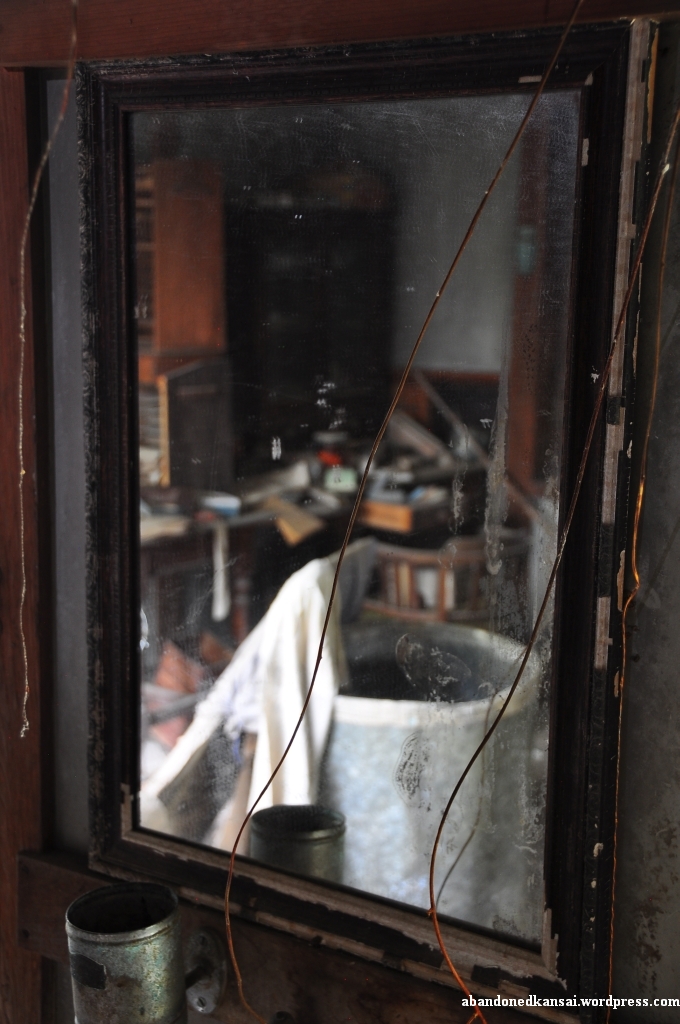
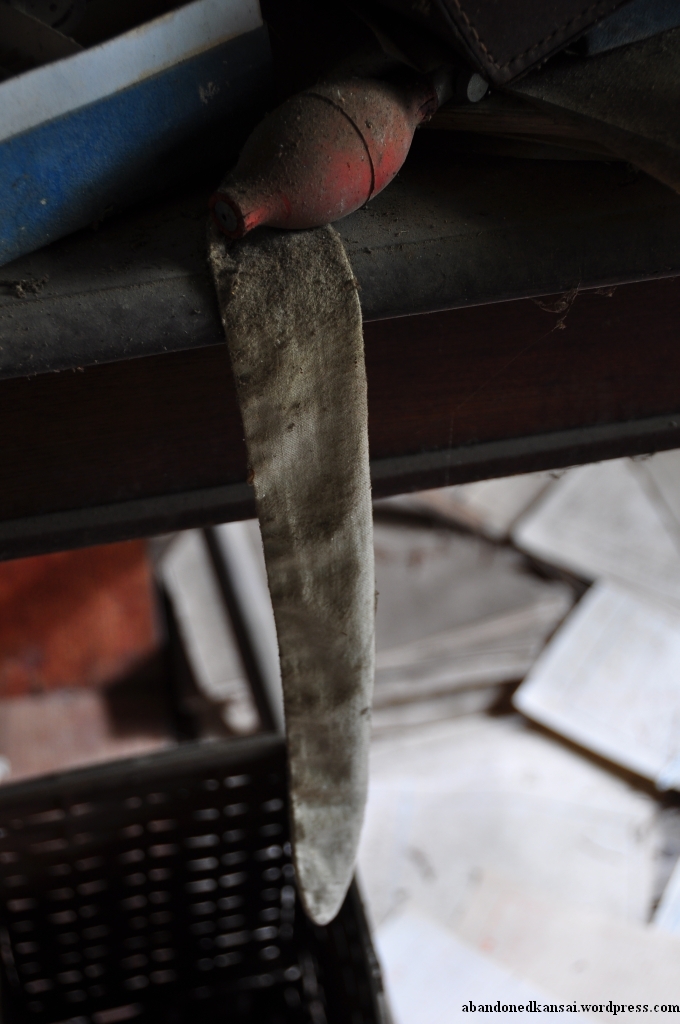
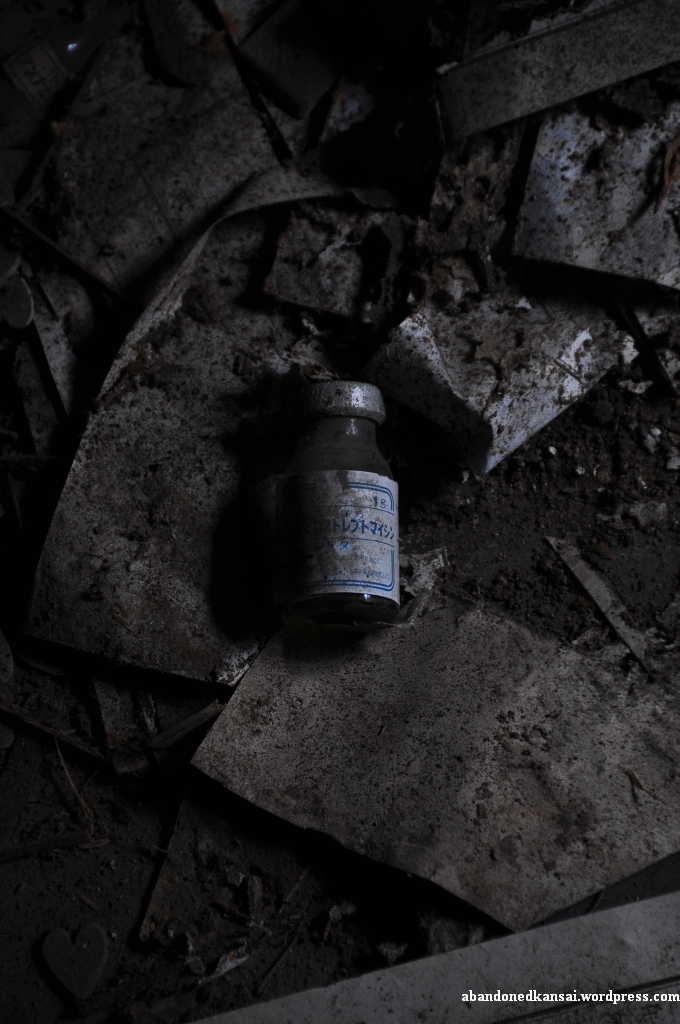
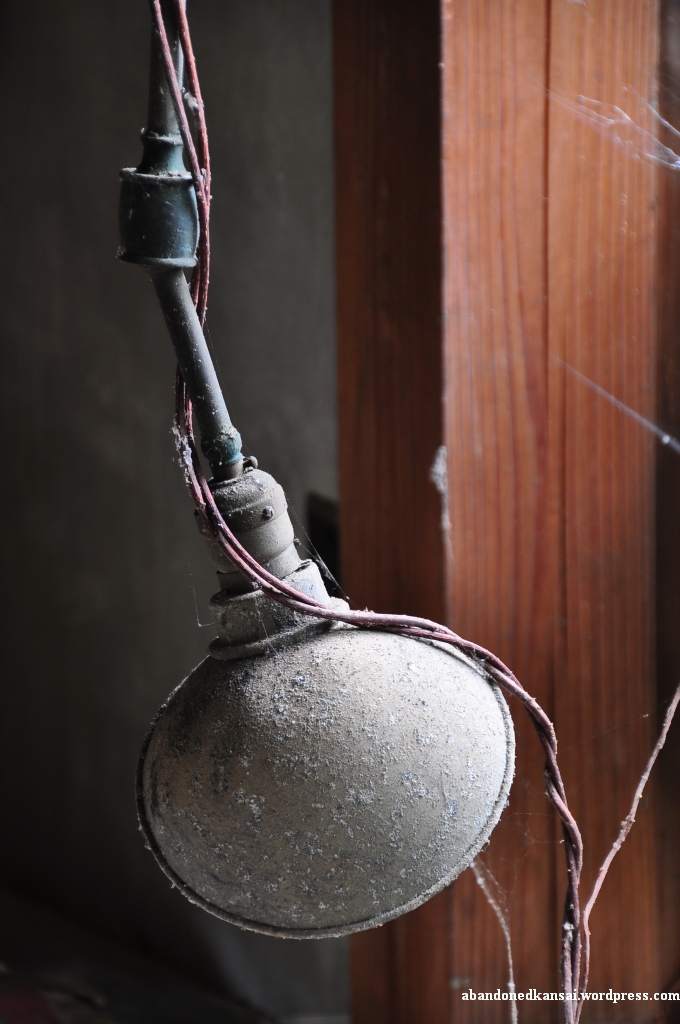
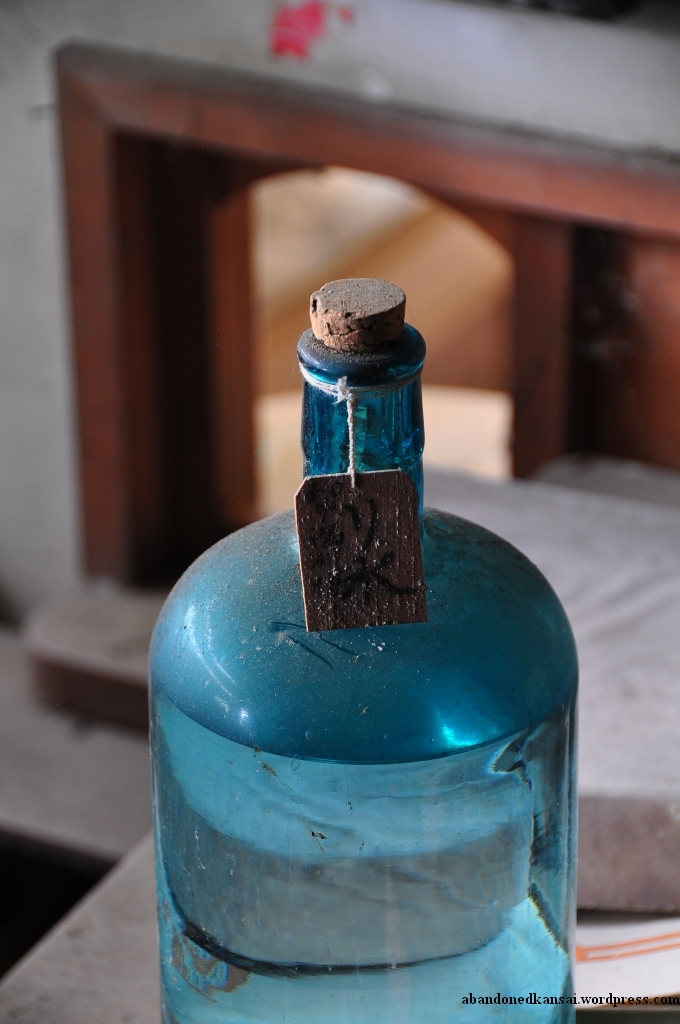
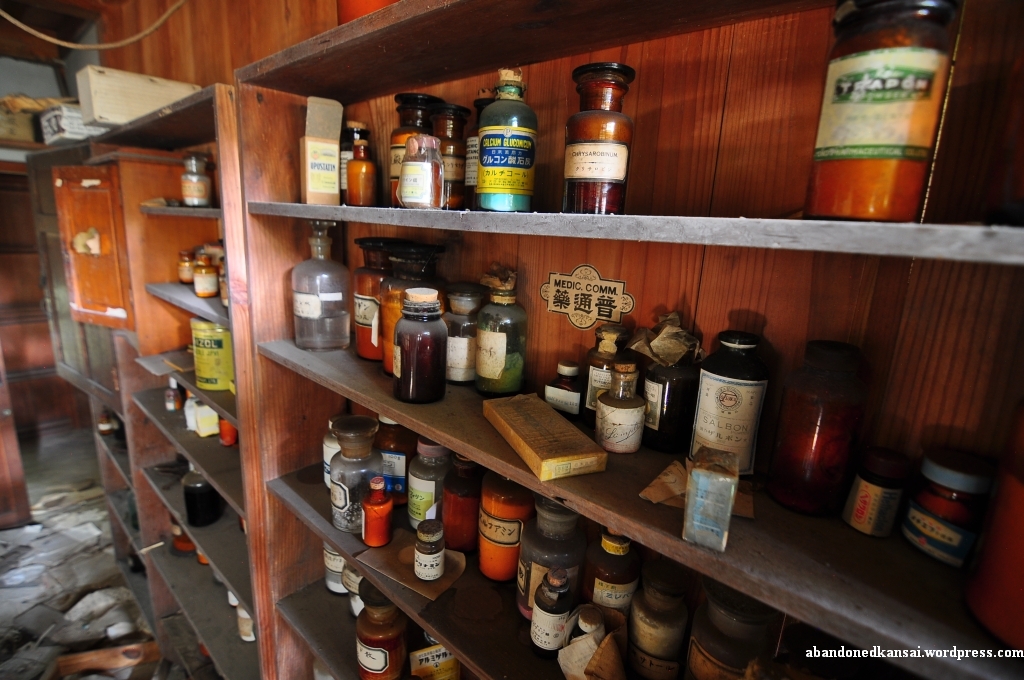
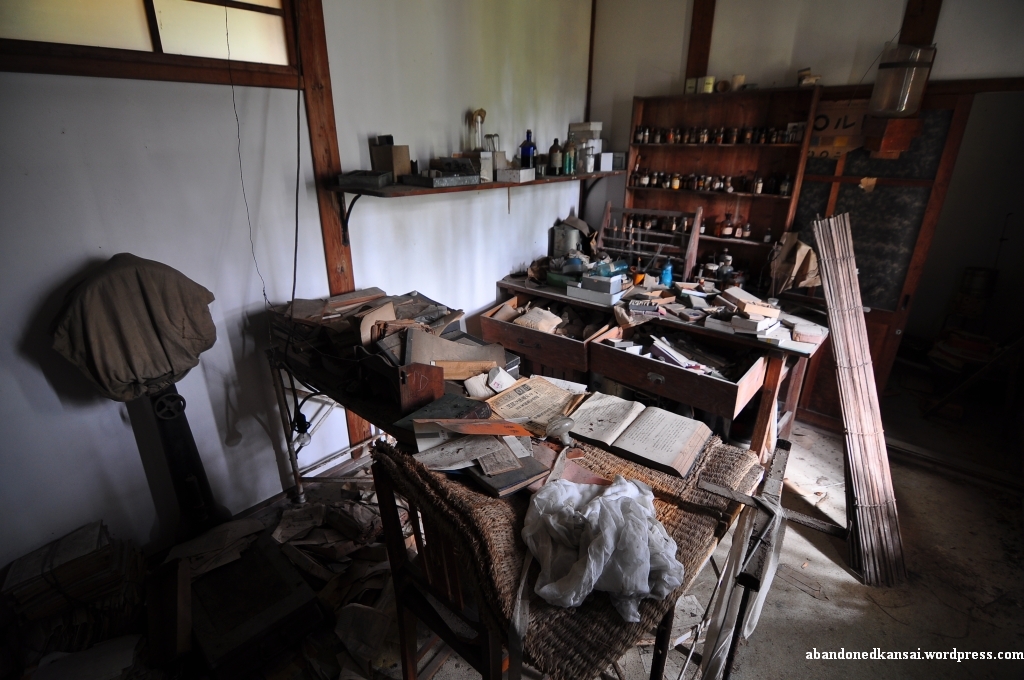
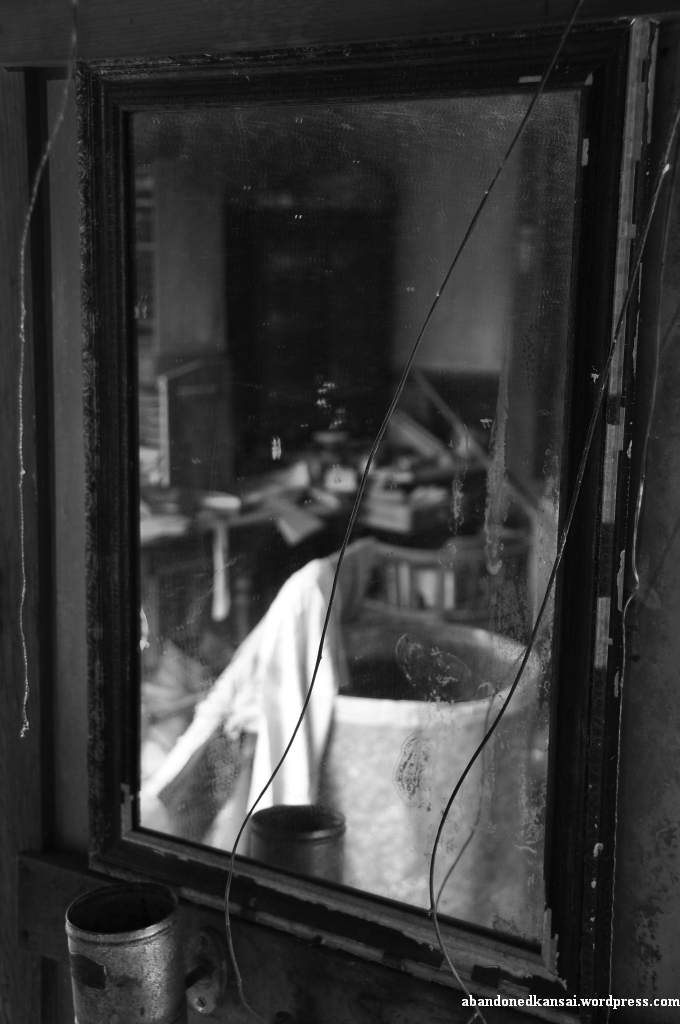
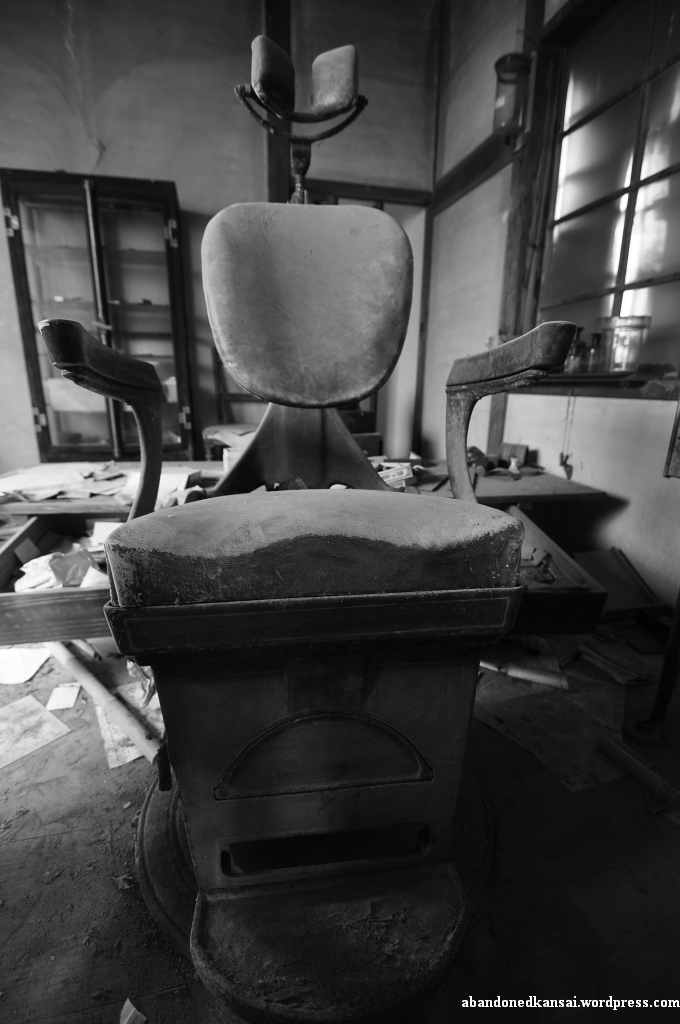
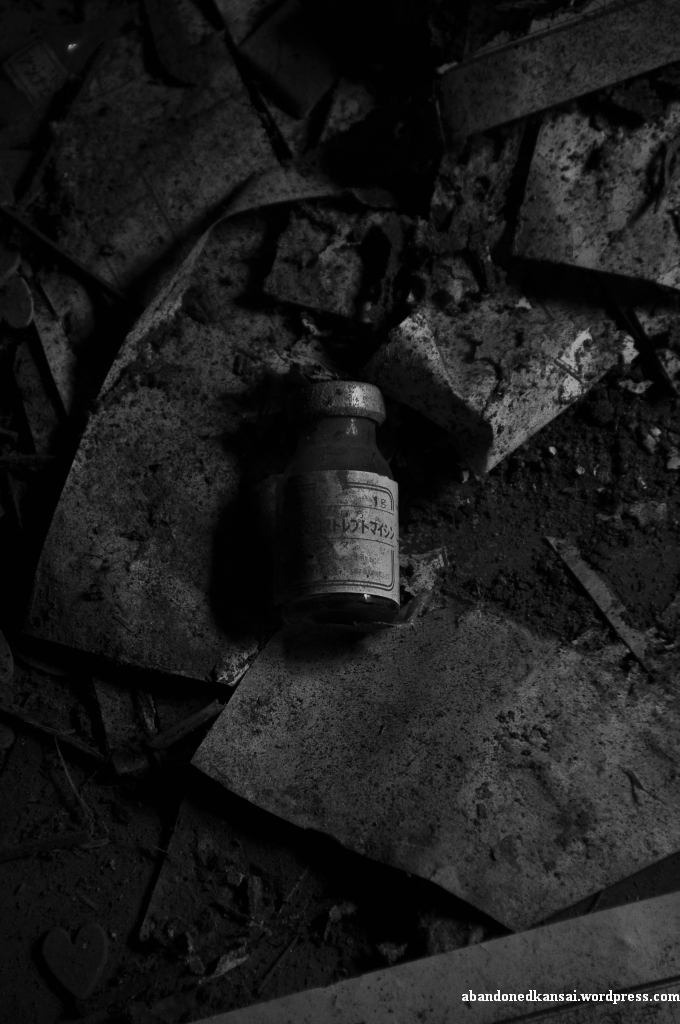
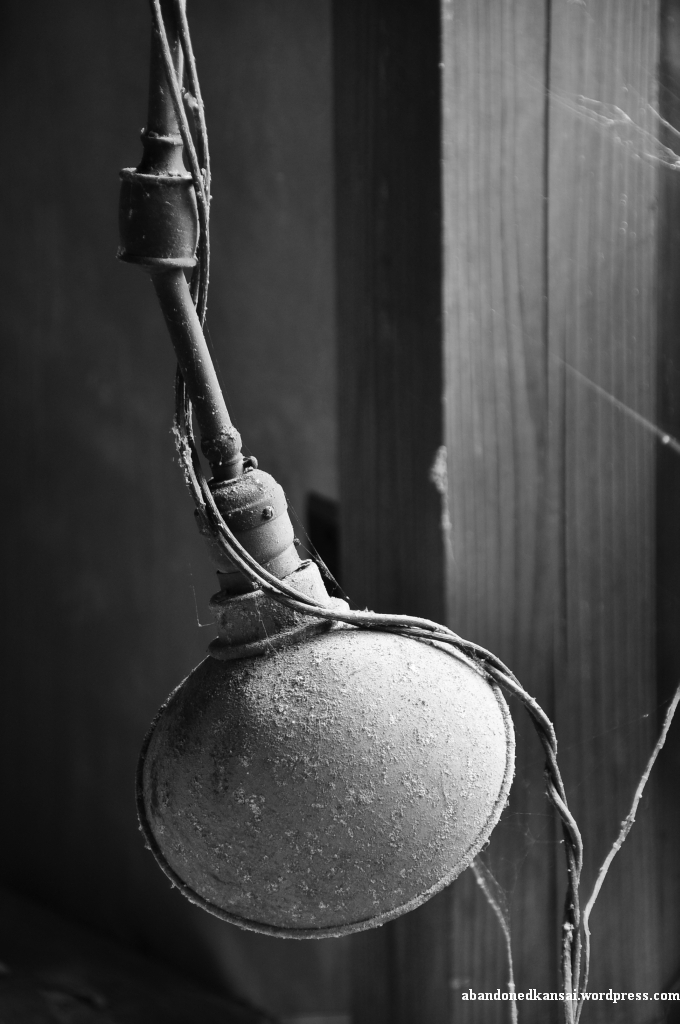
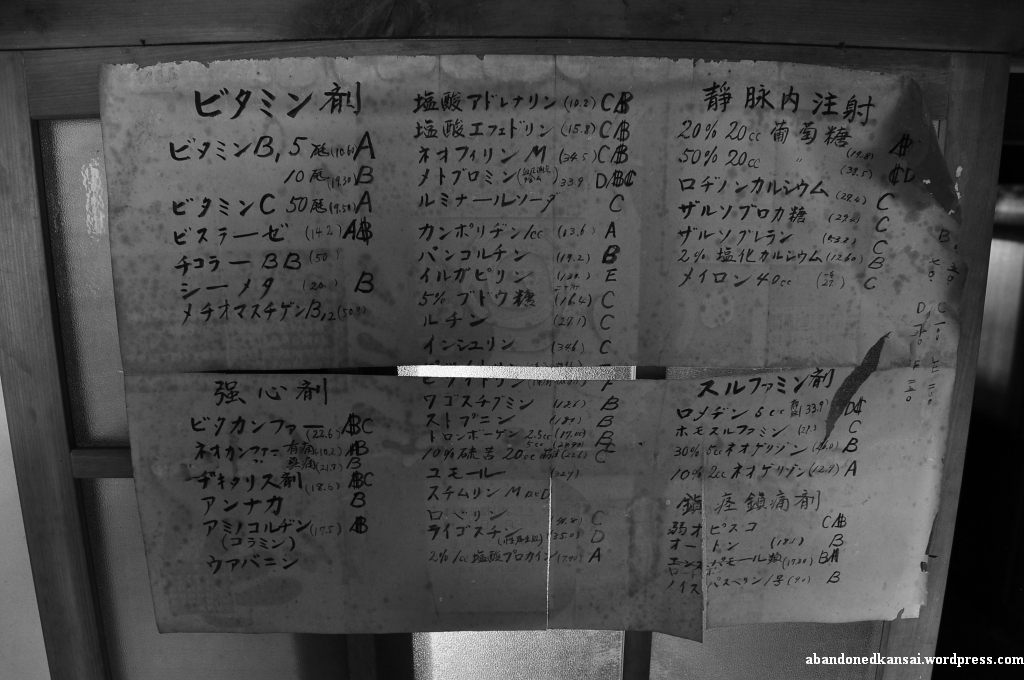
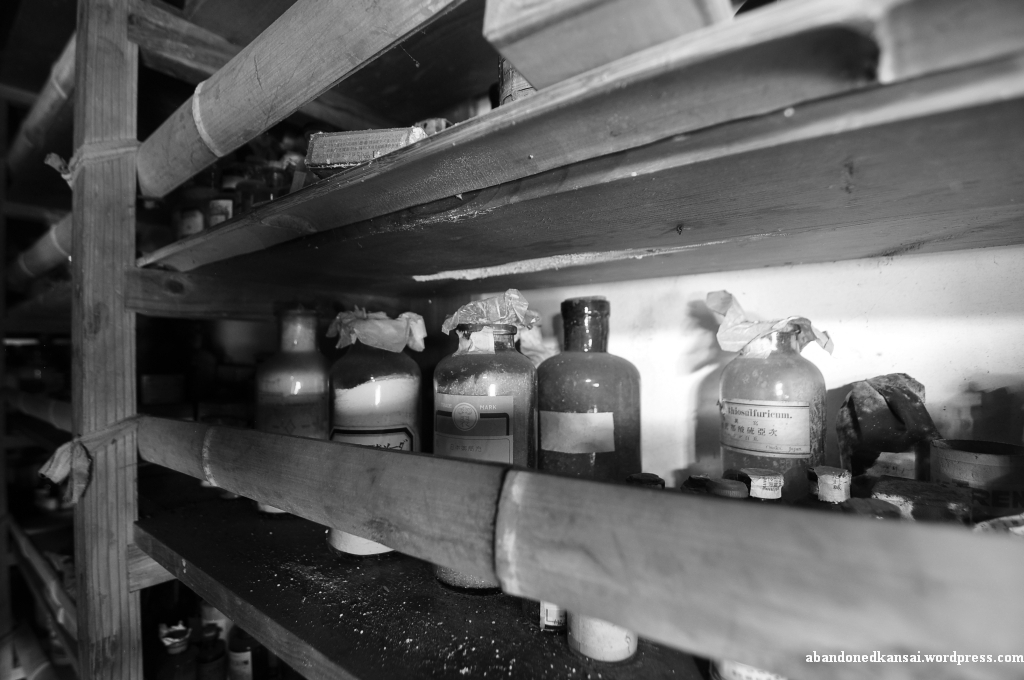
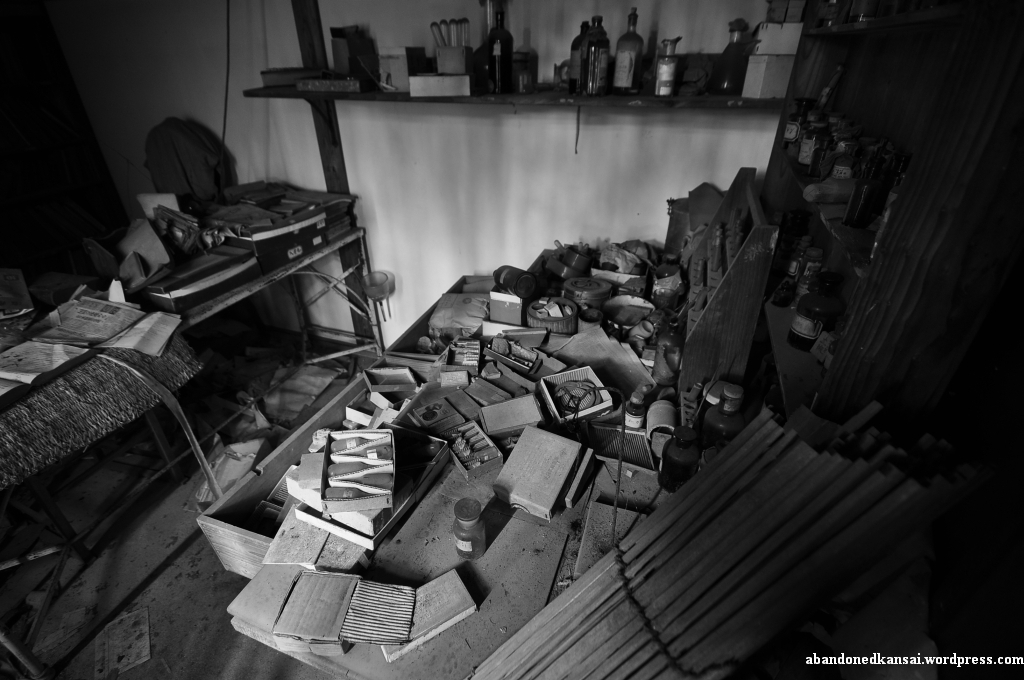
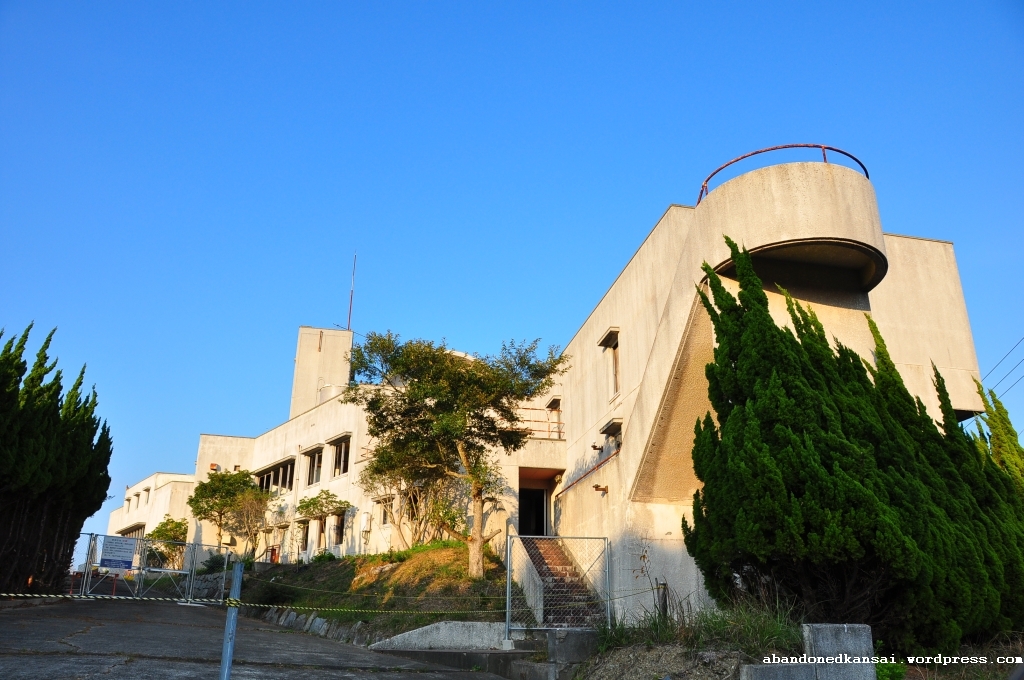
I’ve been to several famous locations in Japan and I enjoyed most of them, but this really unknown find came with almost no expectations and therefore captured my heart in no time. Big but quite unremarkable from the outside I entered the TCC through the only room of the building partly collapsed, the former front desk. While Jordy instinctively went to the pharmacy part to the right (which had a sign that straight-up said “If you want medicine you have to pay cash!”) I had a look around on the first floor and finally settled in the treatment room. Abandoned about 32 years ago (as Jordy found out later talking to some locals) the TCC offered an almost endless amount of items and angles. There was so much to see it didn’t get boring for a second, from syringes and rusty needles over patient files to medical books and instruments – and since the partly boarded-up place had hardly any visitors during the last few decades the atmosphere there was just amazing.
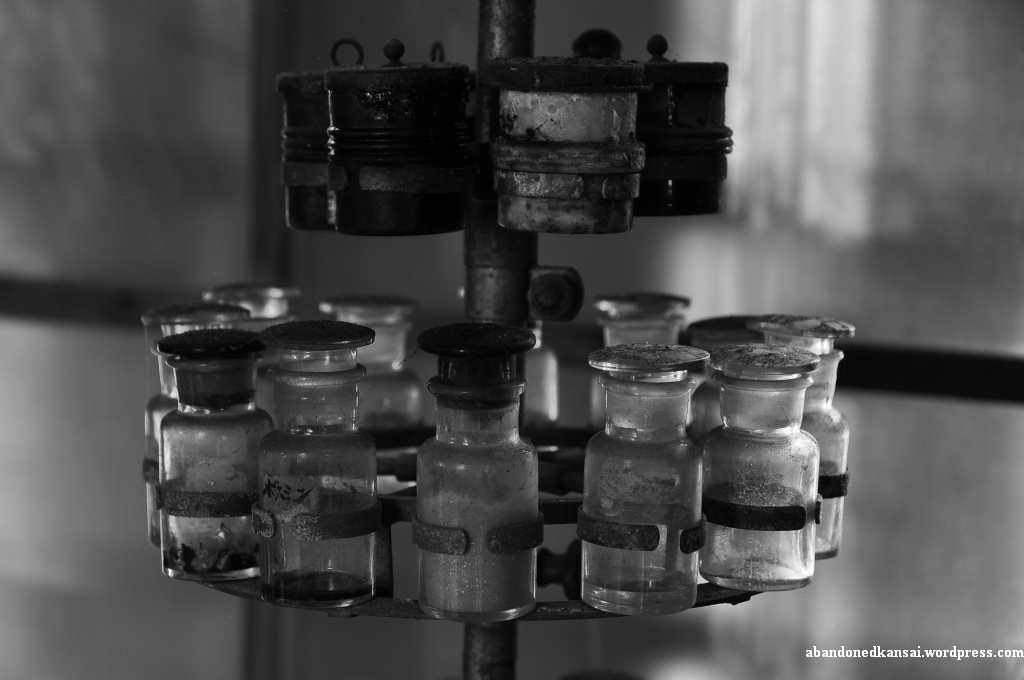
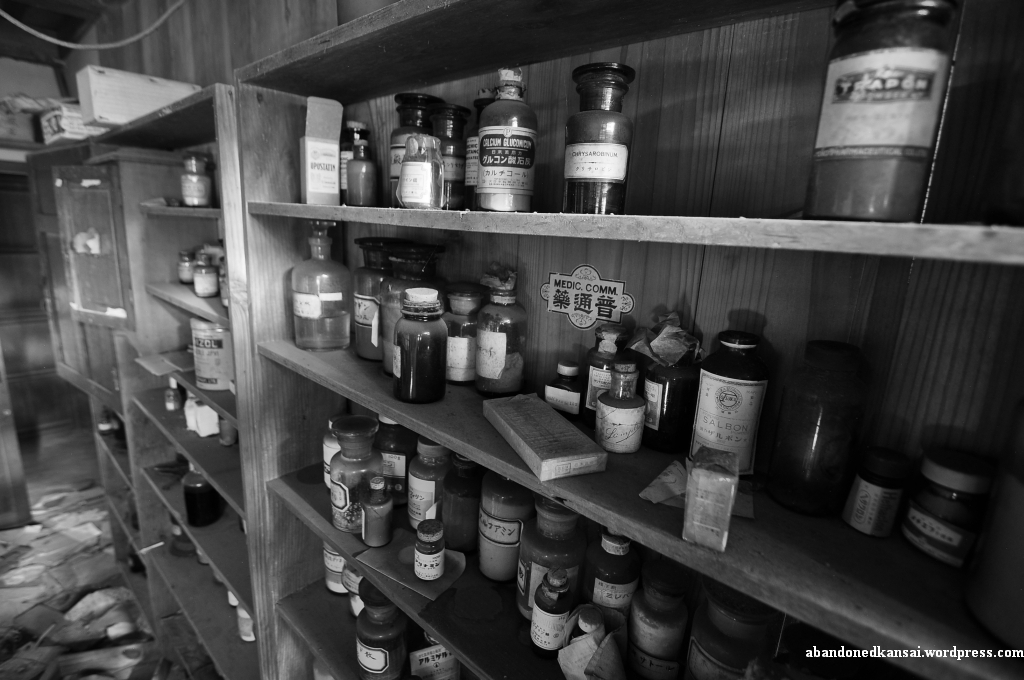
I thought maybe 20 minutes had passed when Jordy suggested after 1.5 hours (!) that we should switch rooms. So I went over to the pharmacy, wondering if it was really a good idea to take pictures in a room filled with all kinds of odors. I was setting up my tripod in the narrow pharmacy, but it took me another 10 minutes or so to realize that there was another tiny room behind it, filled with hundreds of bottles, flasks and cardboard boxes full of more medicine and chemicals. Whenever I thought I’ve seen everything there was more. Like when Jordy asked me half an hour later if I had seen the study room behind the examination room – of course I hadn’t! I shot in that room for more than one and a half hours and didn’t even realize there was another (opened) door… So I made my way over to the study room and took some more pictures of books, test tubes and other stuff.
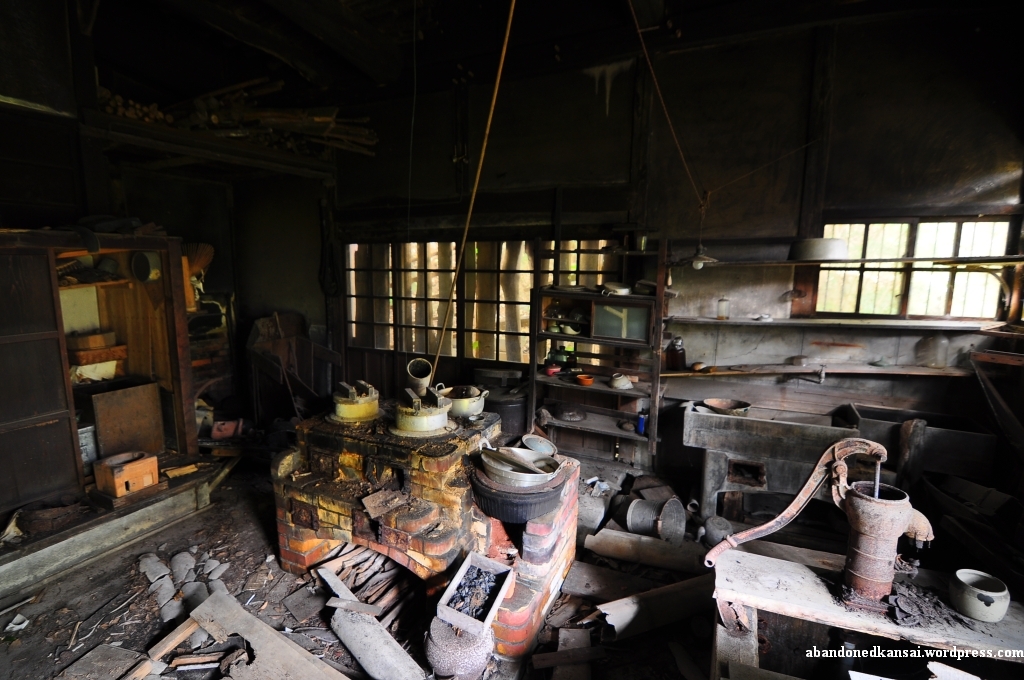
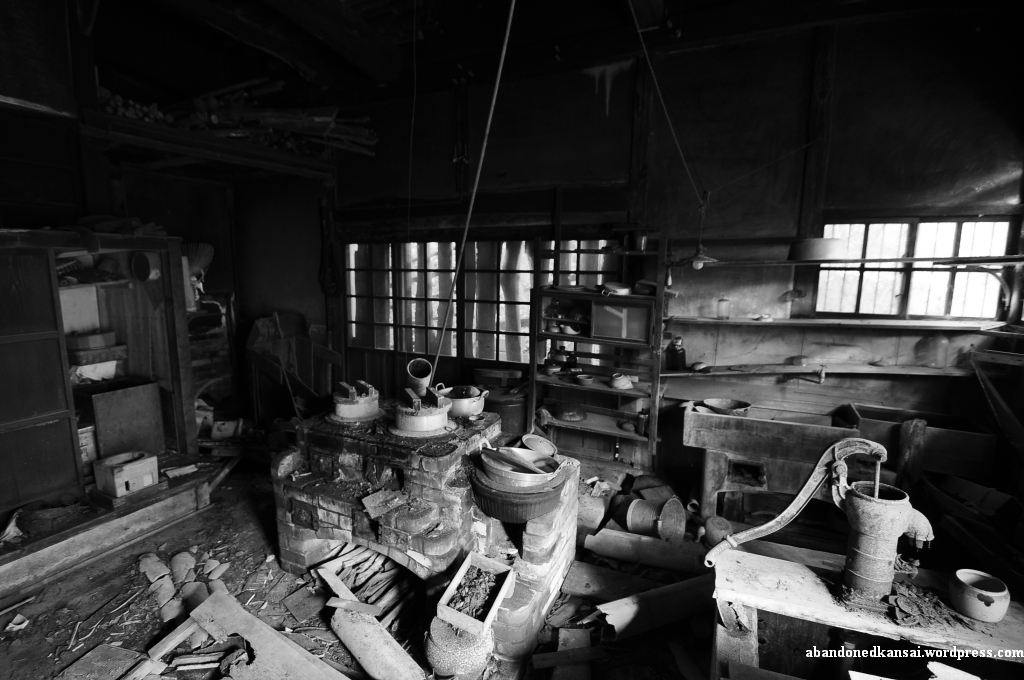
The rest of the TCC was a mansion-like estate with a beautiful huge living room set in complete darkness (harboring a gorgeous house shrine) and a spacious kitchen including a brick-built oven. The sleeping rooms must have been on the second floor and in another building that was also used as a storage.
Overall the Tokushima Countryside Clinic is a haikyoist’s dream and I have to admit it totally blew my mind – it’s unique, it’s in great condition, it’s virtually unknown and I had almost no expectations when going there. I spent about four hours shooting (due to the difficult but interesting lighting conditions exposure times went as high as 30 seconds) and I guess I could have spent another four if there wouldn’t have been other locations on the schedule for that day. The TCC is without a doubt my favorite location in Japan so far and I guess it’s the perfect opportunity to finally present you my favorite location worldwide – so next week I’ll finally start the long overdue series about Pripyat and Chernobyl
I decided to publish the photo set of this location in black and white to stress its unique atmosphere; finally a simple form of post-production – *please have a look at the color version here*.

(*Like Abandoned Kansai on Facebook* if you don’t want to miss the latest articles and exclusive content – and subscribe to the *video channel on Youtube* to receive a message right after a new video is online…)
Read Full Post »

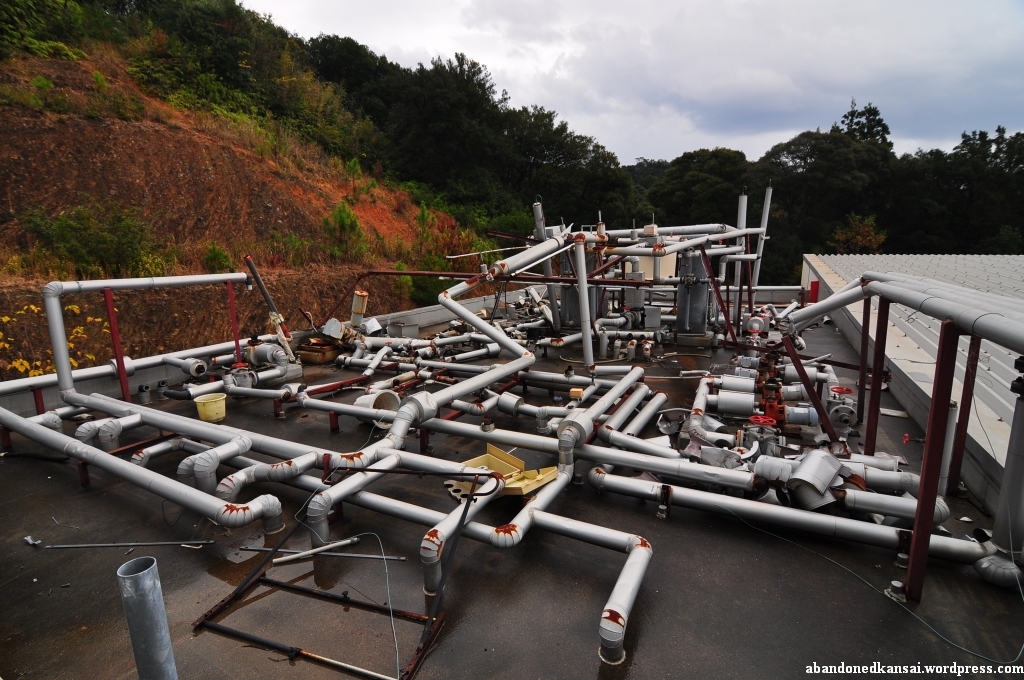
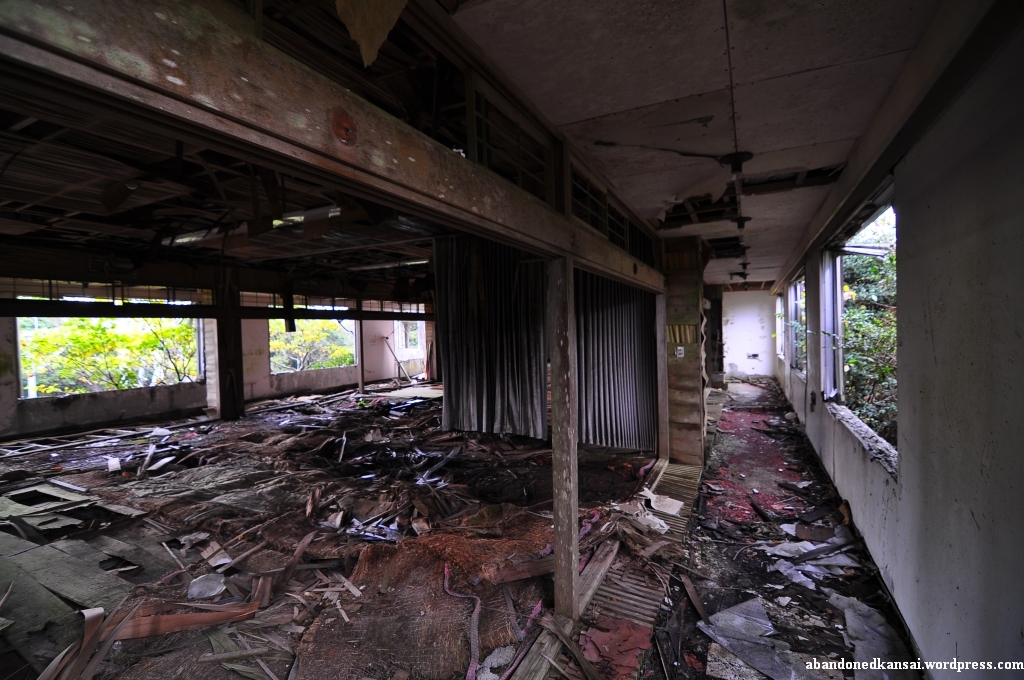
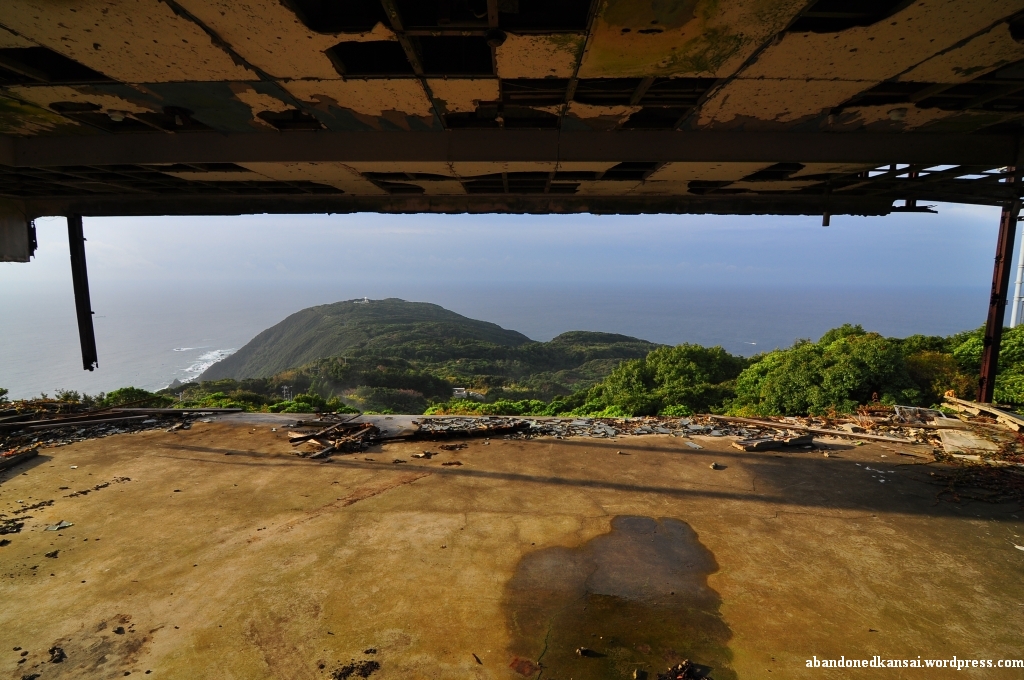
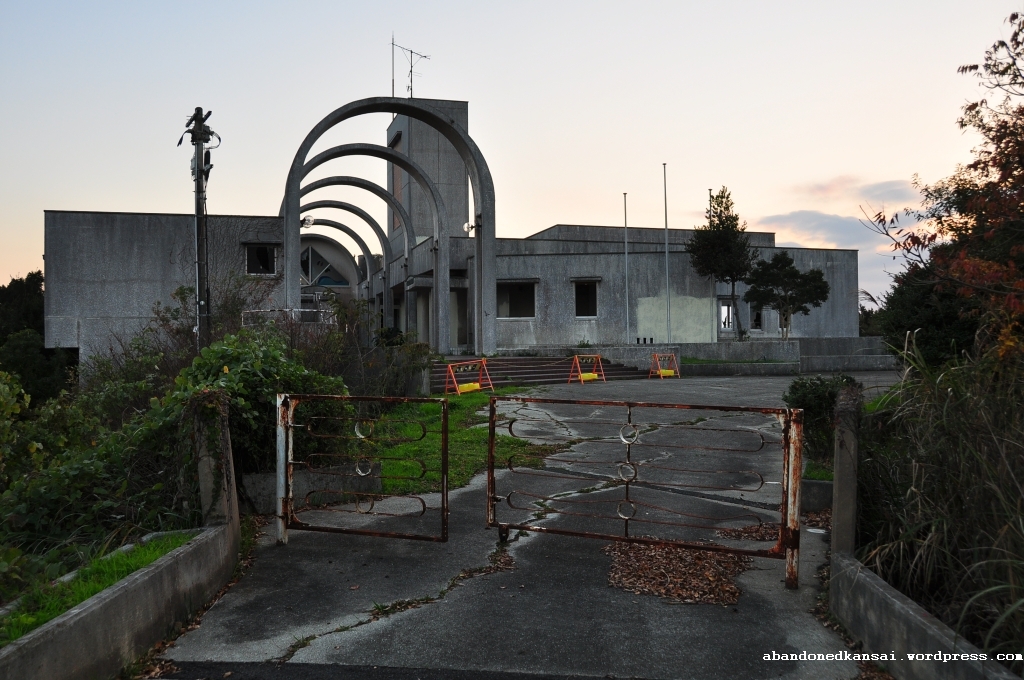
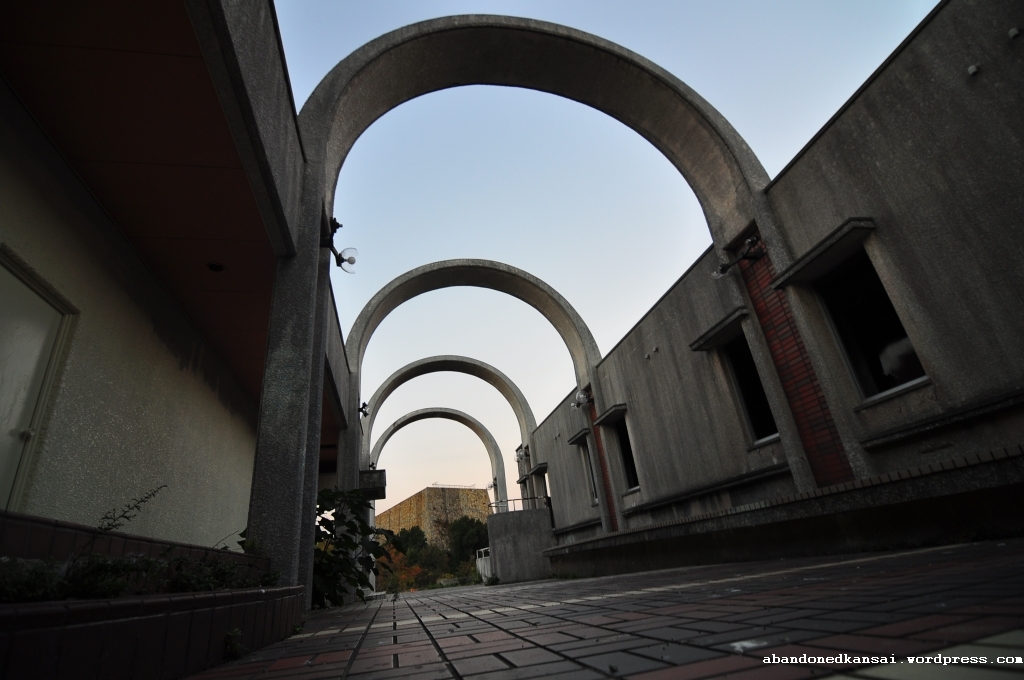
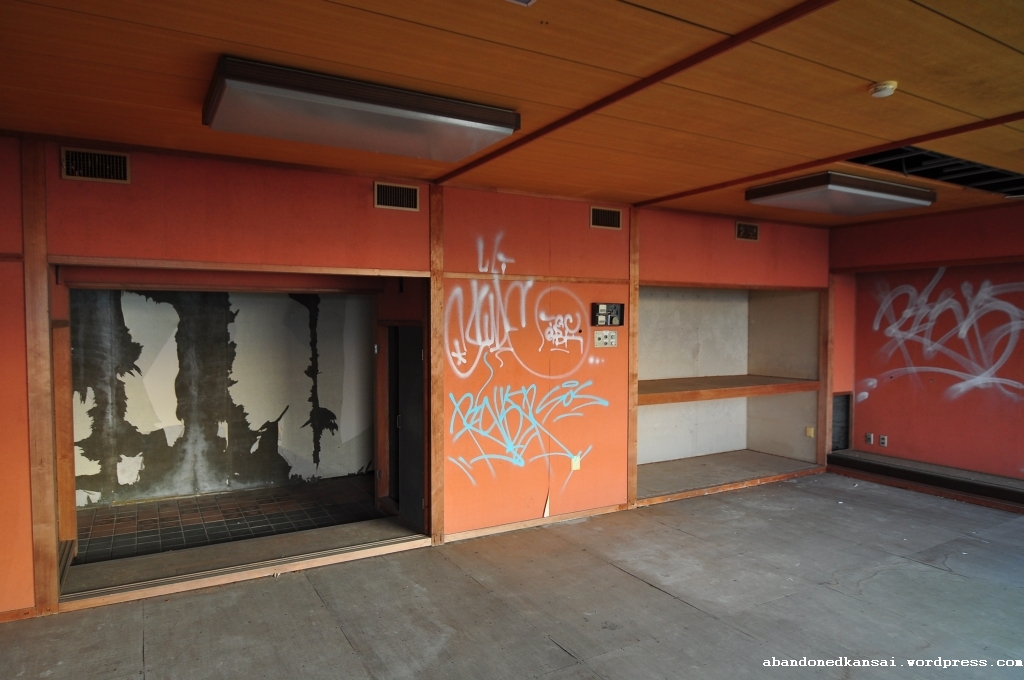
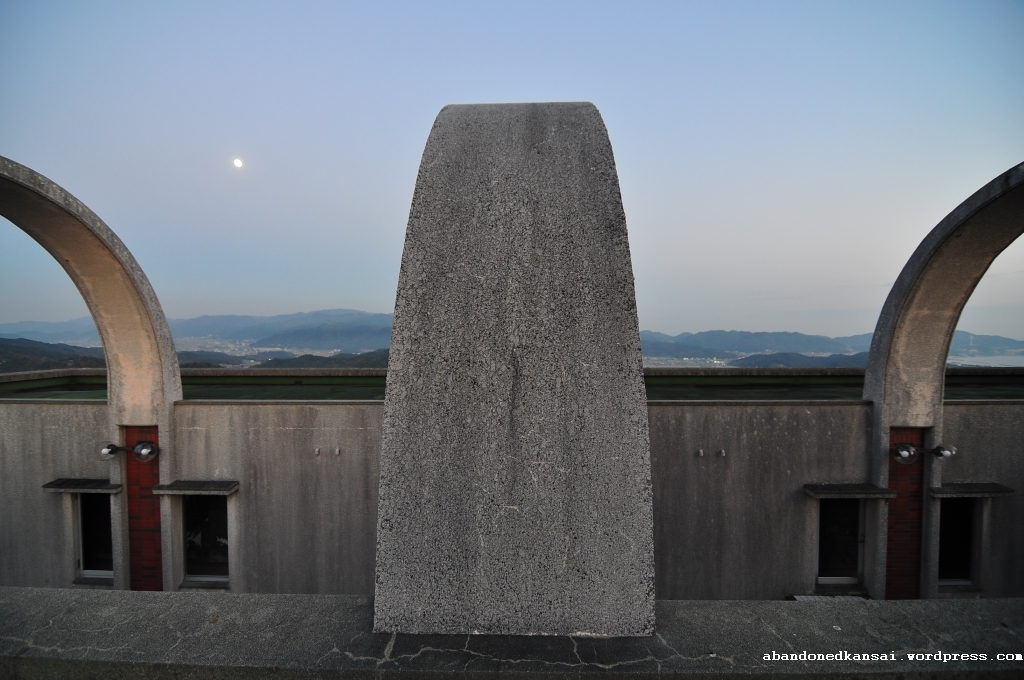
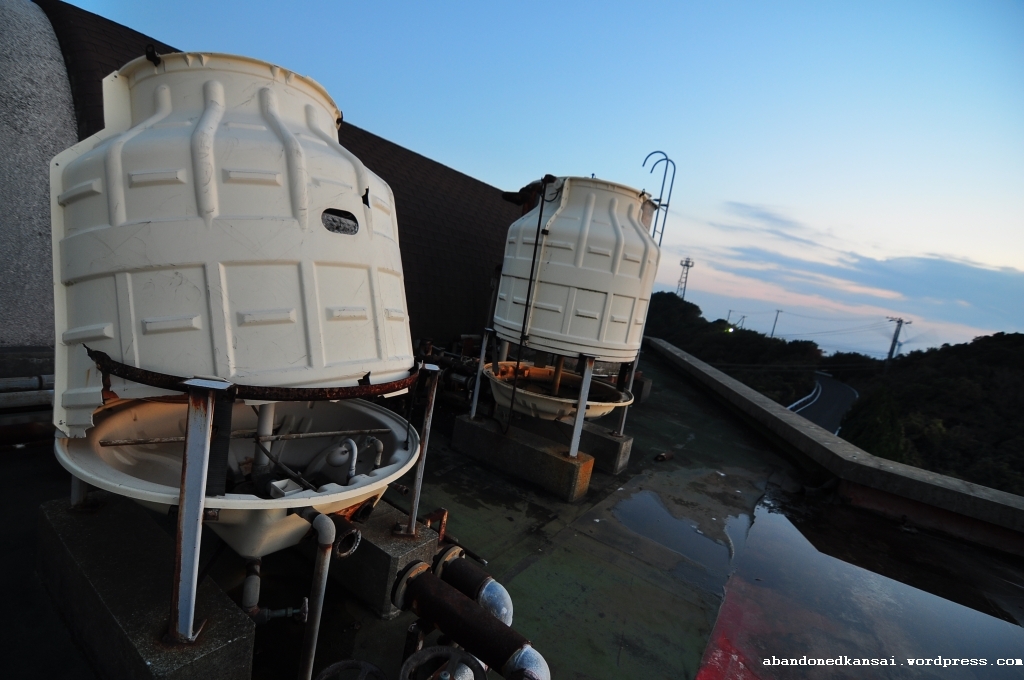
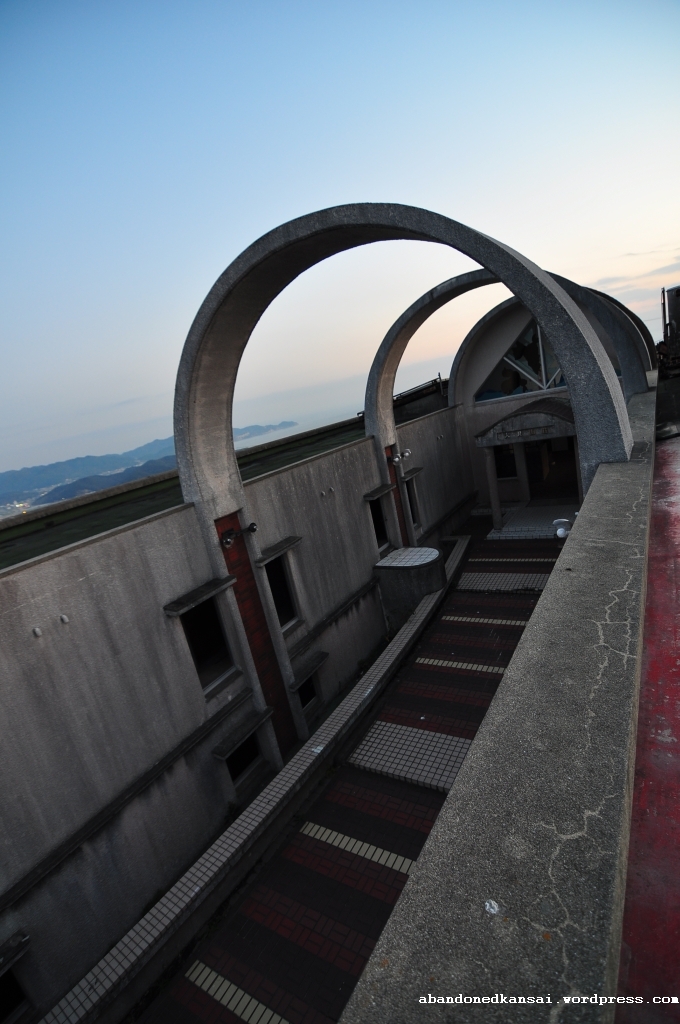
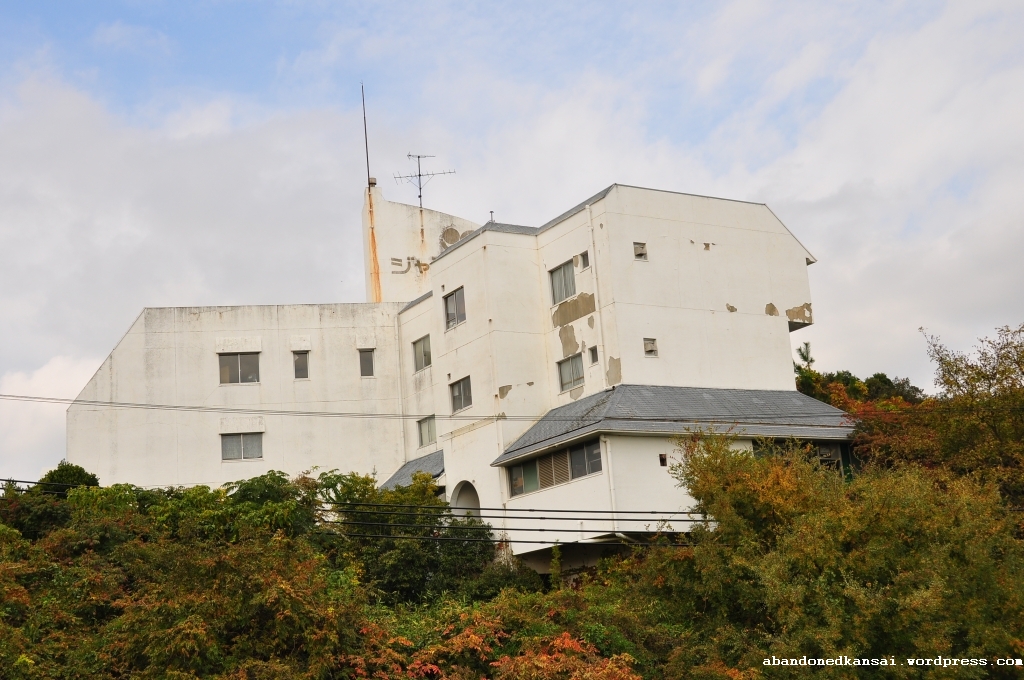
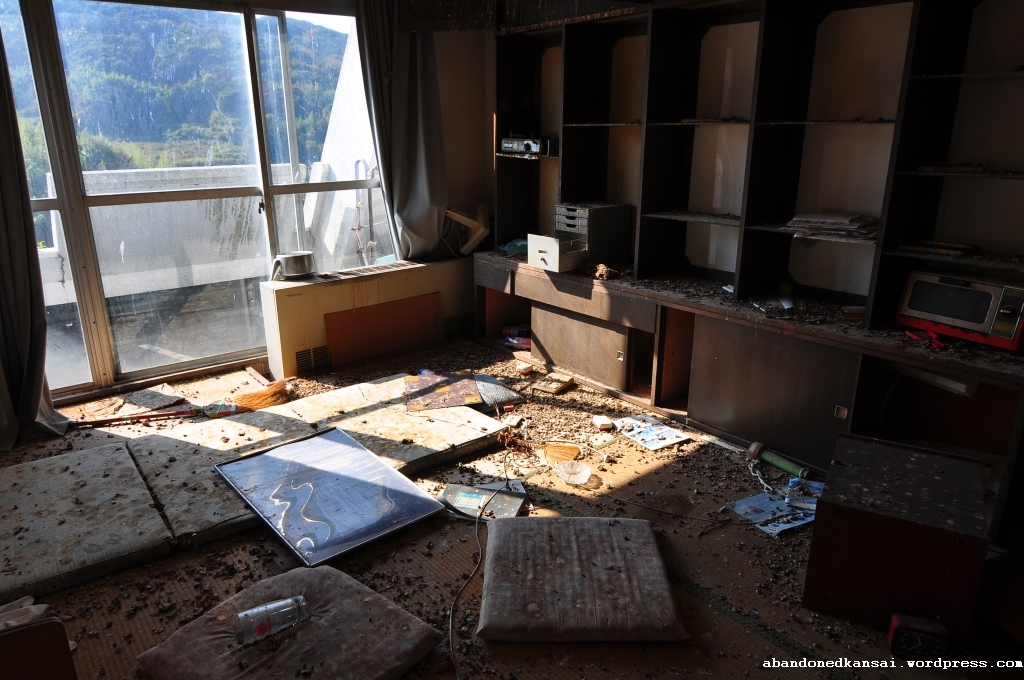
Right next to the Young People’s Plaza and Museum was a building named 大見山荘 according to the kanji above the entrance – the ‘Ohmi Lodge’ or ‘Big View Mountain Villa’. Sadly there is hardly any information about the place available, but it’s safe to say that it was opened and closed along with the close-by monument and museum, providing accommodationto people who wanted to stay in the area overnight while avoiding the costs of the luxury hotel a couple of hundred meters down the road. With about 20 guest rooms, a conference room and a restaurant room the Ohmi Lodge must have been perfect for school trips – nowadays the abandoned building is almost completely empty, tagged with graffiti and without a single undamaged door or window. Luckily the architecture was quite interesting, so I decided to dedicate the Ohmi Lodge its own posting on this blog…


Read Full Post »

Growing up in Germany education about history is almost omnipresent, both in school and on TV. Most people know about the proud events and people of the past – Arminius defeating the Romans, Charlemagne unifying Europe, Ludwig van Beethoven becoming one of the greatest composers of all time, the German Revolution of 1848, … there are too many to name. But people also learn about the darkest time of German history – the years 1933 to 1945; those 12 and a half years out of thousands of years of German history actually make up for about a third of the school’s history classes, most of the rest being used to educate students to be good democrats: the ancient Greeks, the Age of Enlightenment, the French Revolution and similar events are all taught with a purpose.
After studying Japanese history and living in Japan for a couple of years it strikes me that Japanese schools handle history a bit differently. It’s all about the proud samurai past, World War II takes up only a couple of pages in history school books, downplaying events like those in Nanking 1937 by calling them incidents – while the rest of the world uses terms like “massacre” or “rape”. Popular places to remember World War II in Japan nowadays are Hiroshima and the Yasukuni Shrine… remembering losses Japan had to suffer, not so much remembering the misery Japan spread all over Asia from 1931 to 1945.
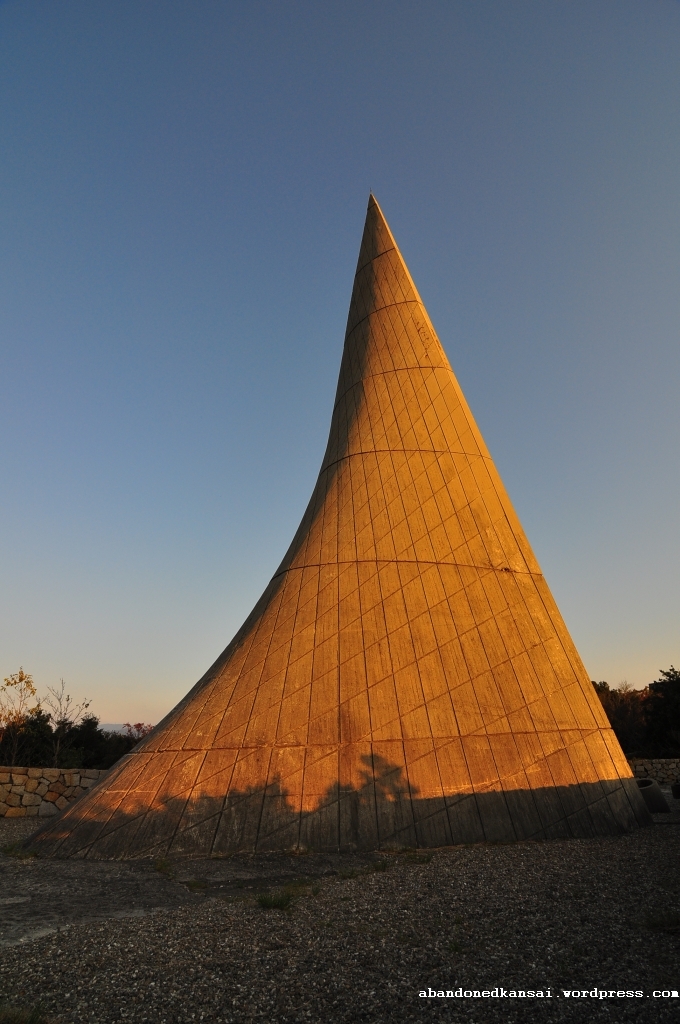
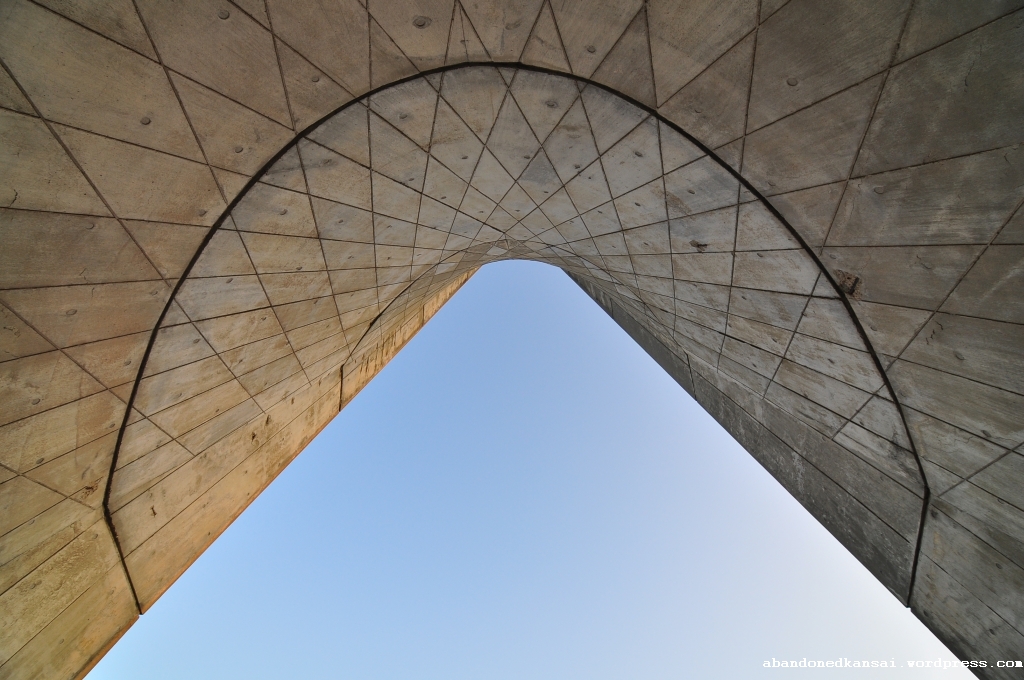
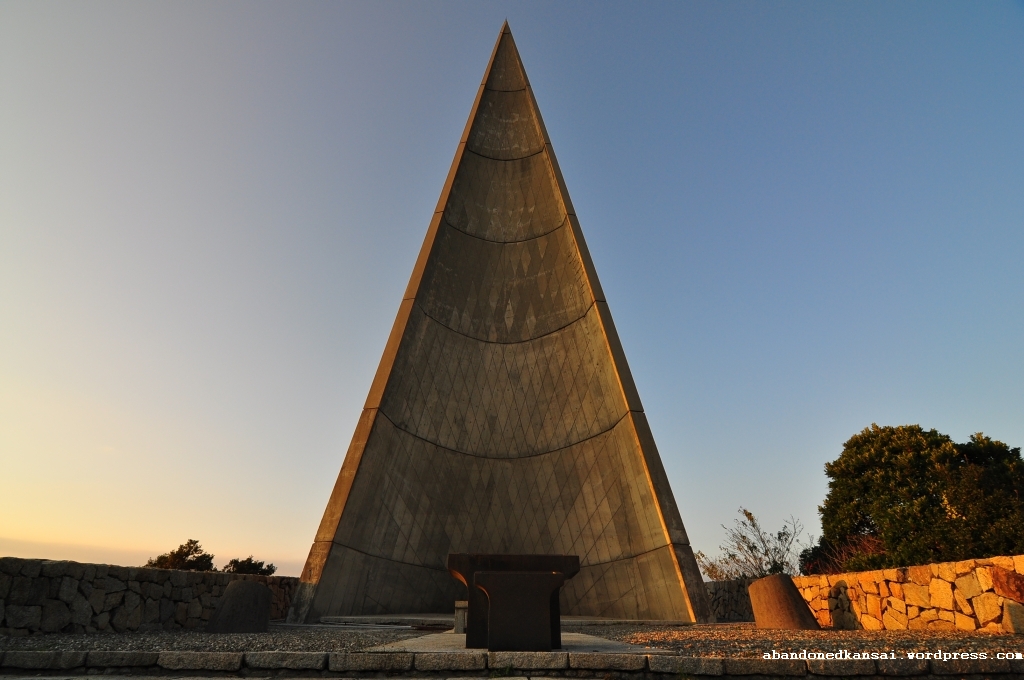
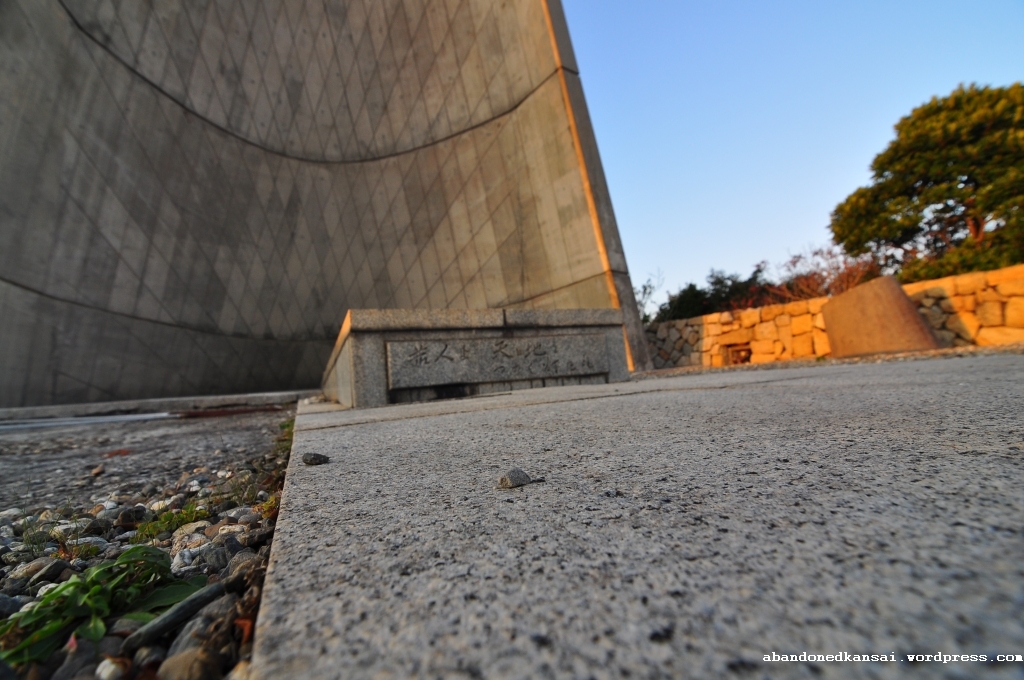
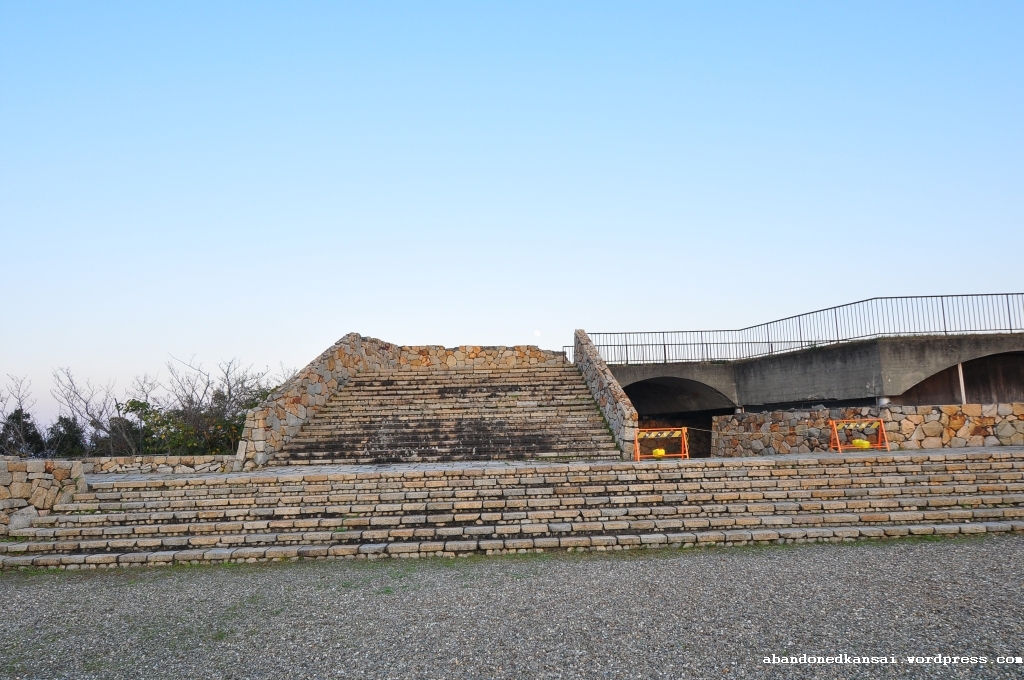
Until a couple of years ago there was another rather huge memorial accessible to the public: The Young People’s Plaza (若人の広場), dedicated to the young people who lost their lives in World War II. Designed by the famous architect Kenzo Tange in 1966 and opened in 1967 this impressive monument with an appendant museum is towering 25 meters high over the once so strategically important straight between Shikoku and Awaji Island. In 1995 the Young People’s Plaza was closed down due to dwindling visitor numbers and irreparable damage caused by the Great Hanshin Earthquake earlier that year. An important part of the centerpiece, an eternal flame placed right at the concrete sculpture once protecting it, was removed since then.
The museum, beautifully embedded into the breathtaking landscape and located on the way to the monument, was once filled with items left behind by the students who went to war, countless pictures and information boards telling their stories. It seems like the museum was boarded up in 1995, but as with all locations like that you will always have people trying to make their way in. Worried about the exhibits all 2000 items of historical value were donated to the Kyoto Museum for World Peace, which is part of the Ritsumeikan University, in 2004. Nowadays the museum is almost completely empty and a rather spooky place…


Read Full Post »

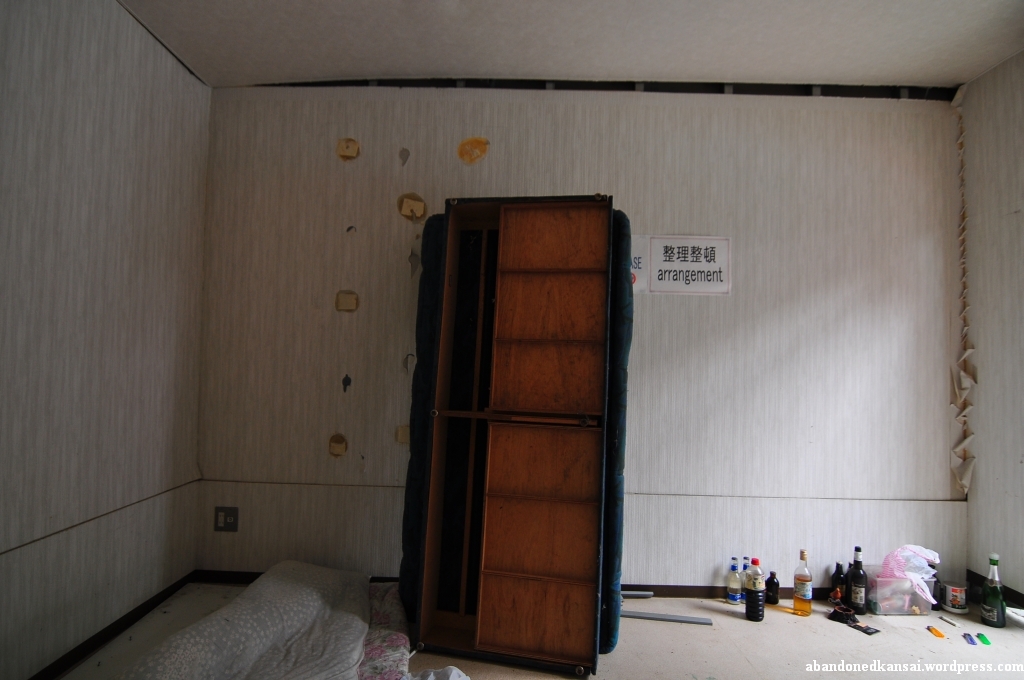
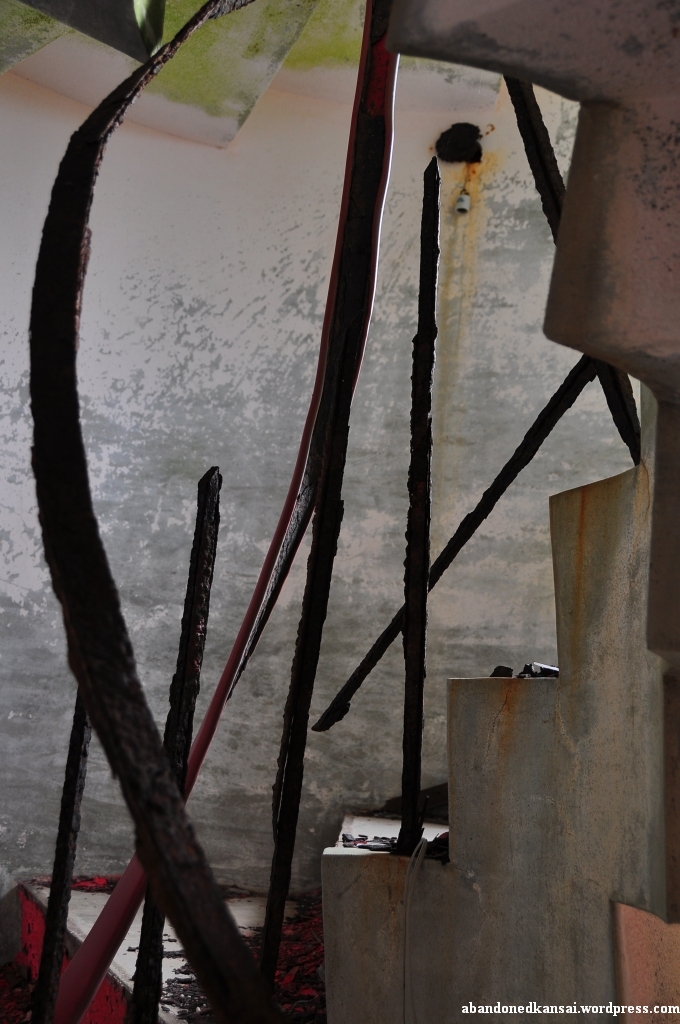
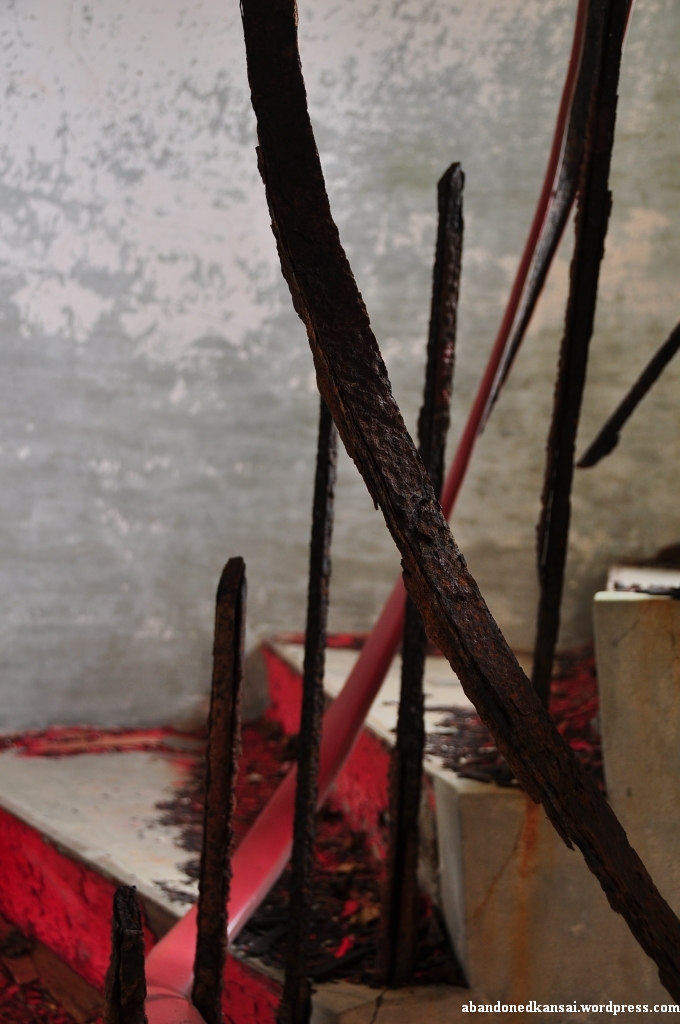
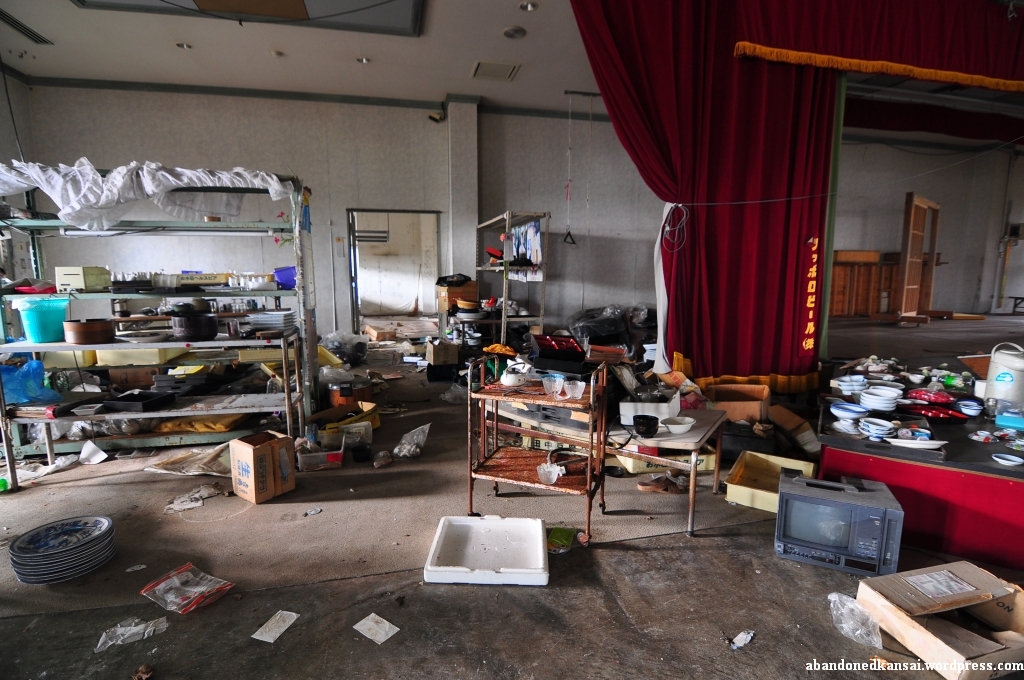
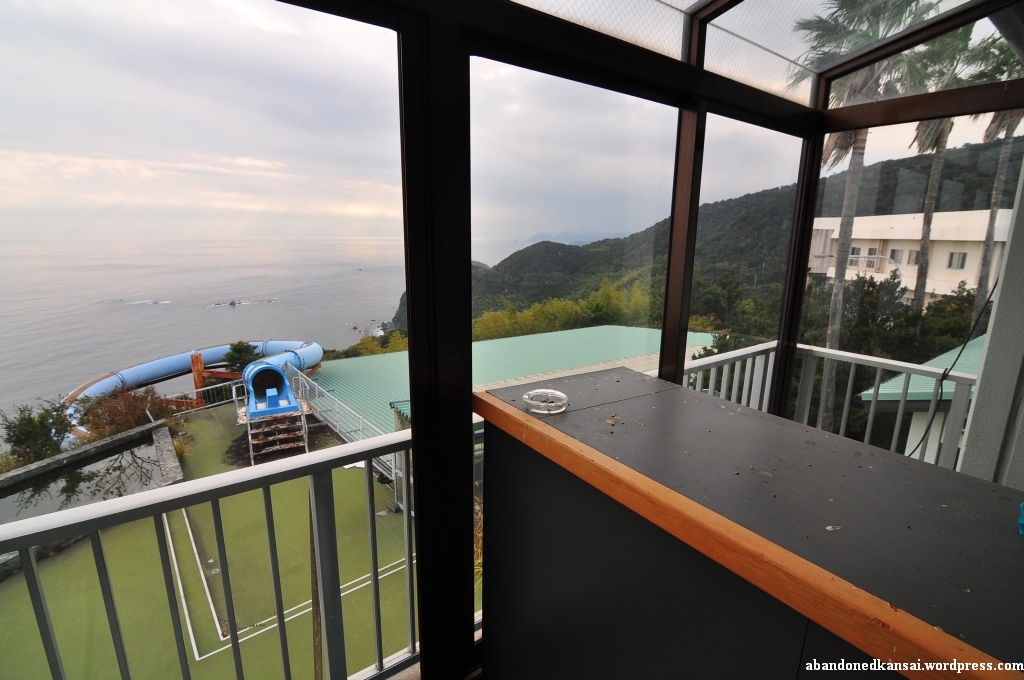
The information I had about the first destination of my little road trip was little – but at least I knew what it was beforehand and I’ve seen a picture. The second destination was just a grey building on a map. No picture, no information about it, not even the certainty that it was really abandoned. But it was on our way to some other locations, so we thought it couldn’t hurt to have a quick look. The quick look turned into a 2 hour long shooting of a hotel once called “Jumbo Club Awaji Island”. I tried to do some research on the place after I came back, but I couldn’t find anything (neither with the Romaji nor with the Japanese name), so I have no problems calling the hotel by its real name. If the calendar hanging in the kitchen is any indication on when the hotel was abandoned then it’s save to say that it happened in 1996 – just before the internet boom.
Once boarded up and fenced off the Jumbo Club hotel now is an easy walk in location if you don’t get spotted by neighbours and close-by companies. Nevertheless we didn’t rush into the place but approached it carefully since there was an intense stench clearly noticeable from the outside. We entered cautiously and my fellow explorer, who foolishly spearheaded the exploration with audacity, froze in shock right after he entered the lobby – never before was a harmless poster of a beautiful woman more scary. But that didn’t slow down his drive at all and just minutes later he found the reason for the stench – it seems like the Jumbo Club Awaji Island is now very popular amongst cats, one panicking in the first room he tried to enter. My fellow explorer closed the door to let the fury furry fella calm down and we explored the rest of the building. Which wasn’t nearly as exciting as those first few minutes…
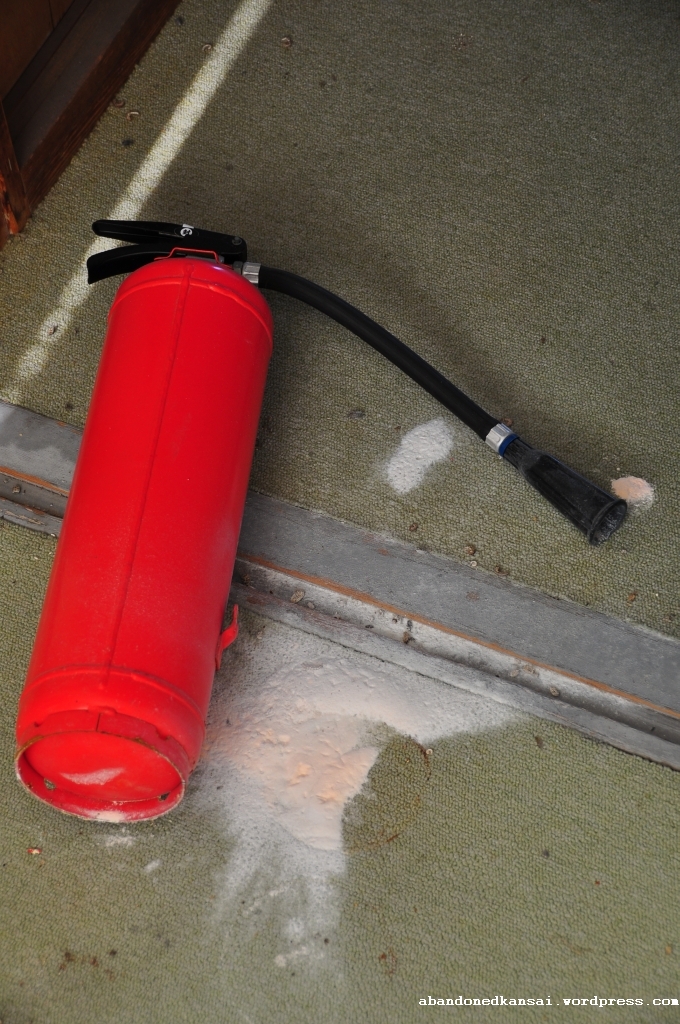
The Jumbo Club Awaji Island turned out to be a normal tourist hotel with Japanese style rooms, Western style restrooms and some nice public bathrooms with a great view. Although the holes in the barricades outside made us expect a totally trashed place the hotel was in fact barely touched. An emptied fire-extinguisher here and some… no, actually no “some” – pretty much all the other damage could have been a result of 15 years of natural decay. All the rooms I’ve entered looked extremely clean, as if you could move in right away – except for the two or three that were inhabited by some birds for a while and therefore were covered with feces. The main kitchen on the first floor didn’t make a trustworthy impression, but who wants to clean up after the last dinner when nobody will ever use the kitchen again anyways? Other than that there was no vandalism: No trashed rooms, no ripped out fixtures, no signs of arson, no broken china scattered all over the place.
Overall the Jumbo Club hotel was an unspectacular but pleasant surprise. I’ve never been to an abandoned hotel in that remarkable condition and the beautiful weather outside made it a relaxed exploration. Oh, and just in case you wonder: Before we left my fellow explorer opened the door of the first room again, but the cat already found its way out…

Read Full Post »

Okay, let’s kick off the travel series with a rare, but unspectacular location: The N# Nursery School. (Sorry for bleeping the name. This haikyo isn’t well-known at all and I don’t wanna be the guy who reveals too much about this untouched place.) I saw it only once on the net so far – luckily it came with a map, so it was easy to find…
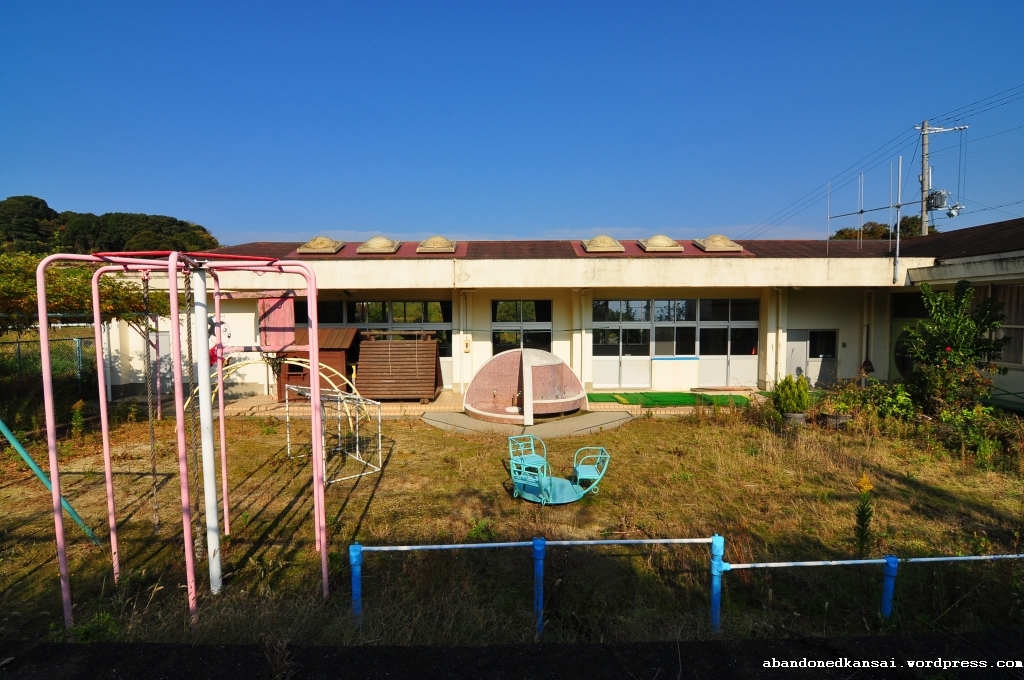
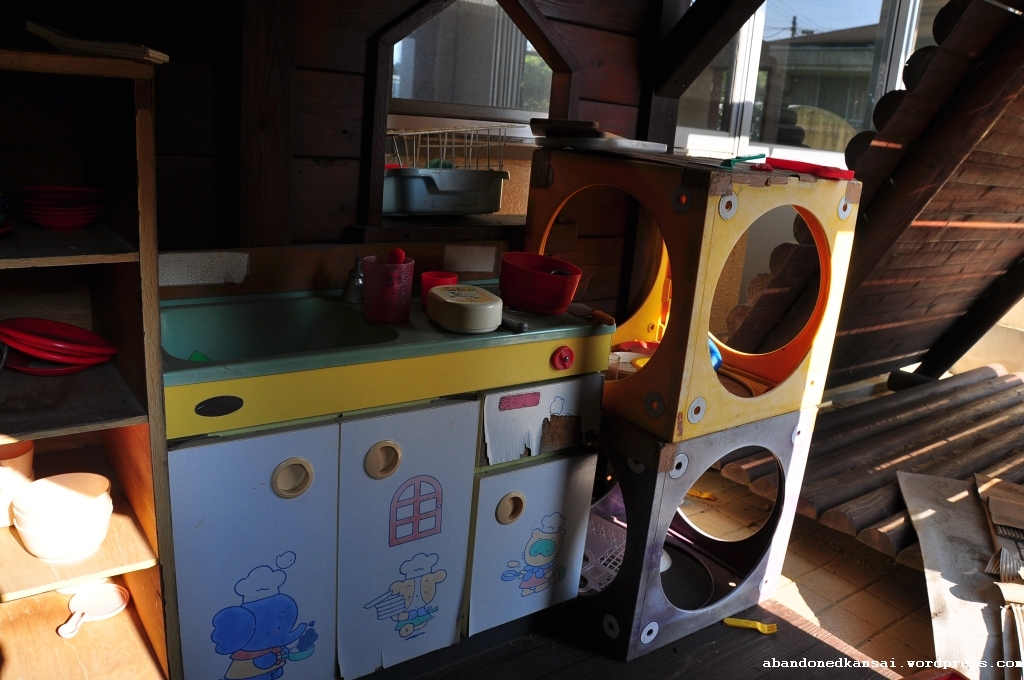
Sadly the map didn’t come with any information. So all I can tell you is that the 1983 built nursery school is located in a very remote area within a beautiful landscape that was in full bloom even in late November; and that all the doors and windows were locked, so I was only able to take some outside pictures. Which wasn’t too much of a loss since the rooms seemed to be empty anyways, judging by looking through the windows. Luckily the N# Nursery School came with a small playground and the weather was very pleasant too (sunny 20 degrees Celsius), so shooting the location was a nice relaxed warm up for the things to come…

Read Full Post »

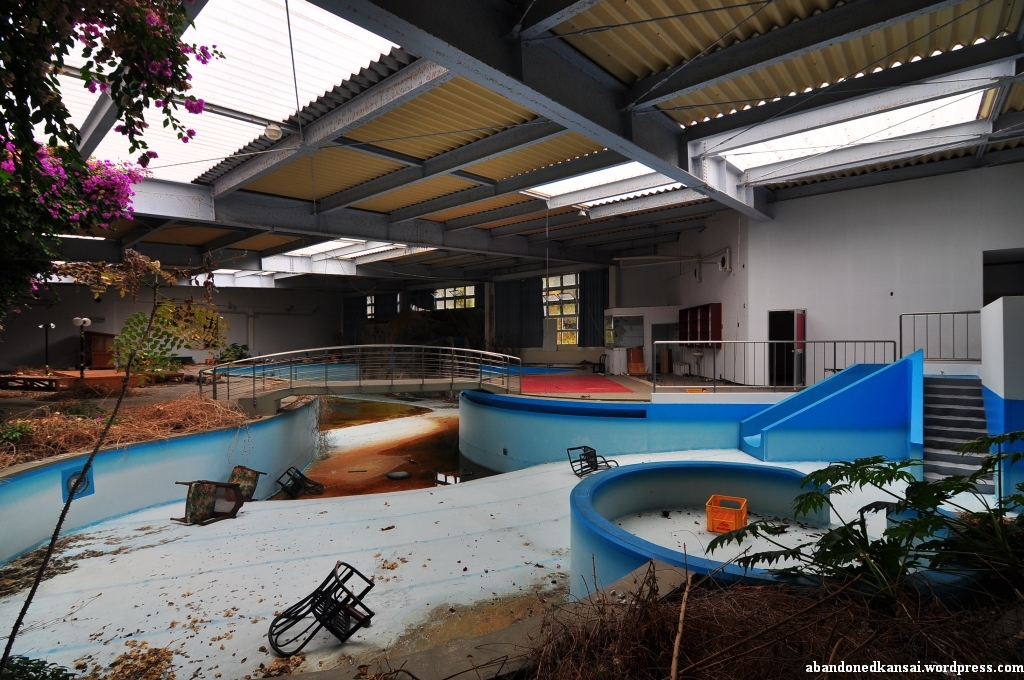
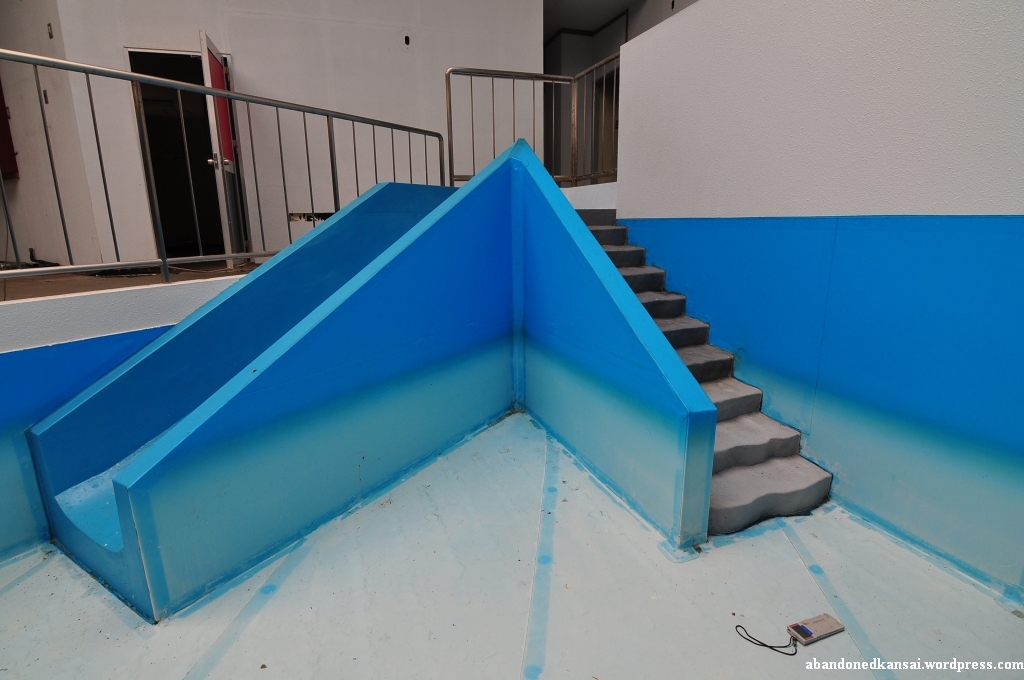
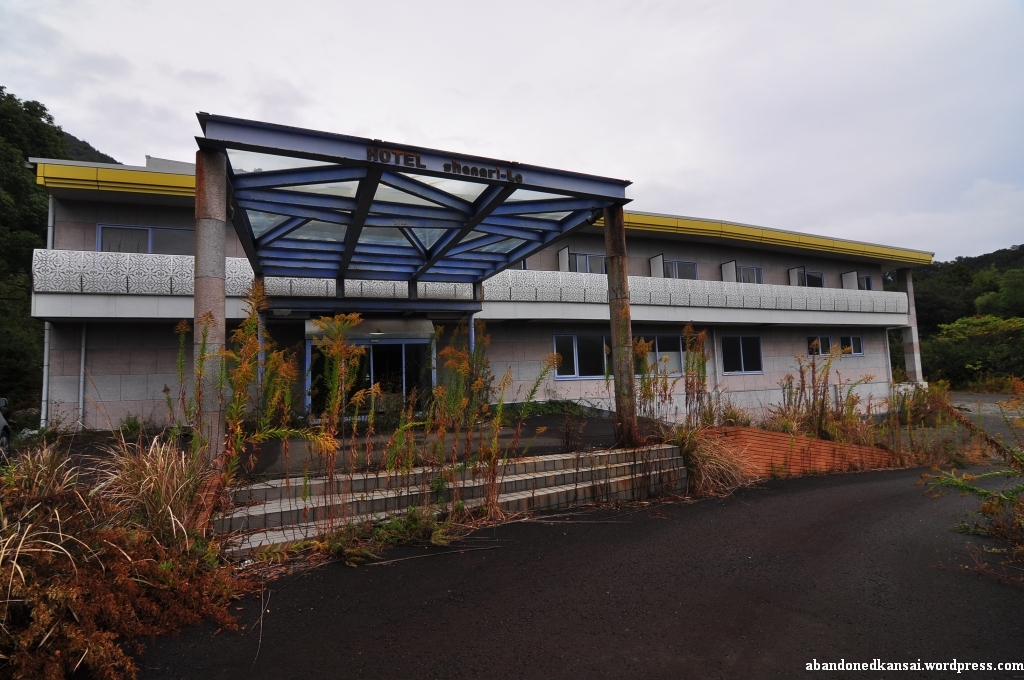
Recently I went on a three day road trip to Awaji Island and Shikoku. Fellow urban explorer Jordy came down to Kobe, we rented a car and off we went. Since Jordy likes to drive and I like to do research we combined our powers to go to some places off the beaten tracks. Pretty much all of the locations will be English speaking firsts, some of them are even barely known to the Japanese haikyo community – including two original finds: A pachinko parlor with all the machines and a hotel called shangri-la. In addition to that we went to an abandoned monument (with a museum right next to it), another hotel, a nursery school, a restaurant with a spectacular view, an abandoned and very countryside elementary school, a spa built on a cliff and, most important of all, an abandoned doctor’s house that makes the previously posted Doctor’s Shack look like… well… a shack.
Please enjoy the preview pictures below – a series of articles about the trip will start ASAP, most likely by the end of this week.

Read Full Post »

After I came back to Japan from my trip to Germany (meeting family and friends) and Ukraine (visiting Prypiat and Chernobyl) I kinda lost my drive a bit – living in Japan is way more wearing than you might think and which haikyo could really compete with an abandoned city in the middle of a radioactively contaminated zone? Going with Mike Grist to Nara Dreamland was exciting, but I’ve been to Dreamland before. Going to the Doctor’s Shack with the Gakuranman was interesting, but the place was already trashed pretty badly. Haikyo hiking alone was relaxing, but… well, it was haikyo hiking. Been there, done that many times. Eight weeks and tons of German sweets after I returned to Kansai I met Michael Gakuran again…
About 4 months ago Michael posted a location he called The Lost Subterranean Shrine, an original find he located in early summer. If he would have kept the location a secret and took it to his grave I don’t think anybody could have blamed him for that. You just don’t come across tunnels with religious artifacts – and vandalism as well as theft are common urbex problems, also in Japan. Nevertheless Michael guided me there and I’m even more grateful for that than I was when he showed me the Doctor’s Shack.
Reaching the entrance of the Lost Subterranean Shrine I was exhausted: Half up a mountain and lunch skipped the pouring rain was killing me – especially since I didn’t bring an umbrella. Michael removed the gate at the entrance to the tunnel and we both let out a little scream looking at the hand size creatures on the walls – Michael of joy (he loves critters of all kinds), me of disgust as I like my nature tamed – or grilled… I decided to keep the soaking wet towel on my head, just in case one of those chitin bastards decided to fall on me, and entered the tunnel, which at about 1.70 meters was 20 cm too low for me. This posture of humility was kind of appropriate considering what I was about to see, but it was nevertheless far from being comfortable. Neither was the insanely high humidity you could actually see in the beams of the flashlights we were carrying. After about 40 meters into the tunnel I saw a statue standing at a bifurcation, brightened by the beam of my flashlight – left: dead end, right: continue. After another 40 meters we reached a cave of maybe 15 by 15 meters with two rather small stone tables and a couple of stone stools around. The head end of the room had kind of an altar with several statues, vases and busts, flanked by a beautiful but damaged vase to the left and a simple brown one to the right – judging by their style the items must be from the south; Okinawa, maybe even Taiwan or China. On the main end of the altar were two openings right at the ground, leading to a secret room as Michael found out previously. Being 1.92m tall and blessed with a broad back I passed on crawling through the tight openings and started shooting. Or at least I tried. I never shot in complete darkness before and since I had my wide-angle lens mounted I couldn’t even use the flash since it creates nasty shadows on the pictures – switching the lens was not an option either as the humidity was crazy inside the cave and it was raining outside. Luckily I had some experience shooting manual thanks to my visit to Nara Dreamland at night and so I grabbed my tripod and two flashlights and started improvising. Playing around with different settings and ways to direct the lights was fun, but extremely exhausting, especially at the altar part because there the ceiling was way lower than in the rest of the comfortably sized cave room. Since it was getting dark outside our time was limited and after about half an hour we had to leave, although I wasn’t nearly pleased with what I had seen on the LCD of my D90 – we had quite a walk in front of us through pouring rain, making me worried if my camera would survive.
Well, the camera survived and I was even spared the week long cold I expected to get. What I got instead was a couple of surprisingly good shots of the vases and busts – never trust a camera monitor, especially when feeling tired and worn out.
Looking back at the exploration of the Lost Subterranean Shrine from the comfort of my apartment actually re-ignited my haikyo fire. When I came home that day I was just exhausted: It took me almost 16 hours and 9000 Yen to get to the place and back, I got caught by a rainstorm, had to drag myself up half a mountain, it was cold and humid, the walls were covered with really nasty beasts, I had to shoot under the most difficult conditions so far and on the way home I was soaking wet, smelling so bad I couldn’t stand it myself. But it’s not the average abandoned hotel on a sunny day that’ll stay in my mind. It’s an adventure like this with a friend like Michael and pictures like those…

(*Like Abandoned Kansai on Facebook* if you don’t want to miss the latest articles and exclusive content – and subscribe to the *video channel on Youtube* to receive a message right after a new video is online…)

Addendum 2010-12-01: As I mentioned in the comments I wrote e-mails to my former professors for Japanese History and I’m very grateful they answered quickly although they had barely any information about the place.
One assumed that the busts might depict the former owner / founder of another haikyo in walking distance, the rest being typical items of a butsudan plus some items the man might have liked when he was still alive. Another professor had a closer look at the vases and thinks that they are not that old, rather from “modern” industrial production, since their colors are very strong and not faded at all – maybe pre-WWII, especially since the busts include suits, not kimonos; going along with what sumi said. She guesses that the items were put there during WWII to protect them from American bombardments during the war. It’s possible that the owner(s) didn’t survive the war and therefore the place was forgotten. Then I asked an archaeologist for advice and she wrote me that the items by themselves are of no monetary value whatsoever. Stuff like that would be available in local “antique” junk shops, even the busts have more personal / sentimental value than actual monetary value.
Since we can’t be sure that the place is really abandoned (just because it looks like it doesn’t mean that nobody goes there anymore or claims it as their possession) and the things don’t seem to be of real value I decided not to take any actions. Maybe the place will be left alone for another 30 or 40 years and then the cave and its items might be interesting to some local historians…

Read Full Post »

After Michael and I finished shooting the Doctor’s Shack we walked about 30 meters along a small, dusty street to get to an abandoned house he found during his first visit to the Doctor’s Shack; Michael ran out of time back then and therefore didn’t have the opportunity to explore it.

The place looked like a typical Japanese countryside house built maybe in 70s and abandoned in the 90s, although both dates are pure guessing on my side. One floor, no basement, wooden floor and tatami mats, plastic lamps and chandeliers, walls you can punch through with your fist, and most important of all: quite spacious. Judging by how (hardly) known it is on the internet I guess it attracts way less visitors although it’s actually easier to find. But if it isn’t in a book and doesn’t have special things (like many bottles with chemicals in them…) I guess most people consider it uninteresting. And while the house of the doctor’s neighbours really wasn’t a haikyo highlight by any means it was interesting to go through a “normal” abandoned building, especially since it was already getting dark (thanks to an approaching rainstorm) and therefore shooting the place became kind of a challenge since neither of us had a (working) tripod. Luckily there were lots of places to put down the camera and I learned quite a bit about shooting under bad lighting conditions at Nara Dreamland, so I got at least a couple of decent shots. Decent, not spectacular, since it seems like the place was inhabited by normal people – there was nothing special to shoot, although somebody brought over some medicine vials from the Doctor’s Shack.
Next to the main building was a smaller one, most likely used for storage. And while Michael still had the patience to play around with some boxes and his headlight I got the heck out of there trying to finally escape the mosquitos…

(Michael combined both locations into one posting and you can read all about it here.)

Read Full Post »

When I started with urban exploration in November of 2009 it was “my” hobby – I did the research alone, I planned the trips and I explored alone. After about a dozen photo shootings my colleague Enric accompanied me once in a while and we became good friends in the process. I still did the research and planned the trips, but it makes a huge difference if you explore a place alone or with a friend. It took another six months until I met somebody for the first time with the purpose of exploring an abandoned place – Michael “Gakuranman” passed through Kansai on a trip and suggested to go to the Maya Hotel. I wanted to meet the guy for quite a while, so I agreed and since we had a blast exploring the most famous abandoned hotel in Japan I took him to one of my favorite places afterwards, the Takada Ranch Ruin. (Both the Maya Hotel and the Takada Ranch Ruin Revisited will be part of future postings.)
A couple of weeks later Michael told me that he wants to revisit the famous Doctor’s Shack and if I was interested in joining him – of course I was! Hanging out with Michael was a pleasure and the Shack is one of the best kept secrets amongst Japanese urban explorers (known to them as S診療所). While other places get published with full name and sometimes even maps the Doctor’s Shack is protected by a wall of silence and vague hints at best. So for the first time ever I didn’t do any research and my only planning was getting a Shinkansen ticket from Osaka to Nagoya. Michael took care of the rest and I didn’t even ask him about where we would go, just how much the several train tickets were.
The Doctor’s Shack is a small country doctor’s clinic somewhere in the middle of nowhere, hidden behind a hedge in a small town in Gifu prefecture. At first glance the place is totally unspectacular and quite vandalized, although the location is supposed to be a secret. Nevertheless Michael noticed a whole lot of differences to when he visited the place first earlier this year – objects were moved around or even stolen, items were destroyed and a wall collapsed. How big the damage was I only realized when I looked up the place on Japanese homepages, for example Team Haikyo.
The first floor obviously was the clinic part of the building with an examination room and a smaller one used as a pharmacy – bottles with chemicals still left on some shelves. Sadly most of the medical books and magazines were covering the floor now, a radio in the hallway (as seen on the Team Haikyo page) was smashed. The examination room looked a little bit better, but it was pretty much chaos there, too. And the mosquitos were nasty! At least 15 of them were swarming around us, no matter how many we killed. The situation in the private rooms on the second floor was a little bit better, but even there the rooms were either mostly empty or quite vandalized. One rather interesting thing I didn’t even noticed until Michael told me about was a footprint – on the ceiling! A really weird discovery that sparked our imagination… (Another neat detail was the fact that some of the medicine and magazines in the building used German terms as Prussia helped Japan in that area during the Meiji period, making German the second  language for doctors in Japan until the 1960s and 70s.)
When I explored the Doctor’s Shack I wasn’t nearly as impressed as I though I would be. The place is small, overgrown and quite vandalized – not beyond recognition, but it’s not nearly in the state anymore that contributed to its fame a couple of years ago. When I came home and looked at the pictures I took I kind of fell in love with the place. Abandoned country doctor clinics are not exactly a common thing and I was able to take some unique photos that I couldn’t have taken at any other place I’ve been to so far. Then I looked up old pictures on the internet… and it made me sad. Five or ten years ago the Doctor’s Shack must have been the definition of “hidden gem”, now it’s still one of a kind, but it suffered severely over the last couple of years. Unnecessarily as it must have survived decades with hardly any damages. One or two more years and the Doctor’s Shack finally will be vandalized beyond recognition…
(If you liked this location go straight to the Tokushima Countryside Clinic – bigger, better, mind-blowing!)

Read Full Post »

« Newer Posts - Older Posts »