Momijigari (紅葉狩, red leaves / maple leaves hunting) is almost as popular in Japan as the worldwide way more famous hanami (花見, flower viewing). In spring even the biggest couch potato leaves the house to view first the plum and then the cherry blossoms, in autumn they go to different spots to have a look at the autumn leaves. Of course every bigger city has special spots for both, but some countryside towns are pretty much dead for 50 weeks a year and completely swamped on two or three weekends. In Kansai prime examples would be Yoshino (hanami) and Minoh (momijigari). Why? Because those two spots are considered the best – or at least amongst the best. Surprisingly many Japanese people pursue the best of everything – the best food, the best company as an employer, the best spots to view nature. Or at least they pursue what the majority considers the best. With the result that some food is insanely expensive, employers with famous names exploit their employees (because they can!) and the best spots to view nature are so overrun that it’s not really fun anymore going there – you stand in crowded trains for hours just to be pushed past gorgeous trees and through crowded streets with souvenir shops.
So while half of Kansai “enjoyed” autumn leaves in Minoh and Kyoto (just to put up photos on Mixi and Facebook to let everybody know where they went for momijigari…) I made my way to the Hyogo countryside in late November of 2011. My goal was to climb a small mountain with an abandoned temple on top. 15 months prior I was able to explore an abandoned shrine (*you can your all about it here*), so I guess it was only natural to follow an abandoned Shinto site with an abandoned Buddhist site. (I know that there are plenty of abandoned churches – but how about mosques? Has anybody ever heard of an abandoned mosque?)
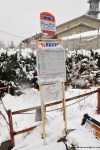
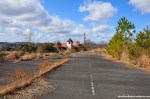
The Shuuhen Temple popped up on two or three Japanese haikyo blogs before, but it was surprisingly hard to locate. Even more surprisingly since the place is still marked on GoogleMaps, and when you are rather close you can find guide signs – which left me rather puzzled for a couple of minutes about how abandoned the place really was. I guess now it’s more abandoned than ever, because in September of 2011 the street up the mountain was closed. Halfway up the mountain a landslide flushed away the small asphalt road on a length of about 5 or 6 meters – even tiny cars could barely pass here anymore safely.
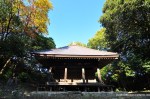
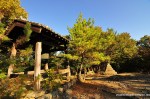
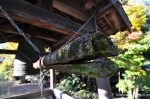
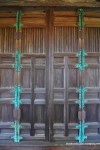
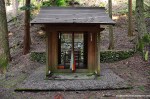
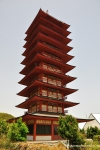
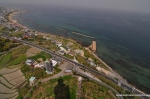
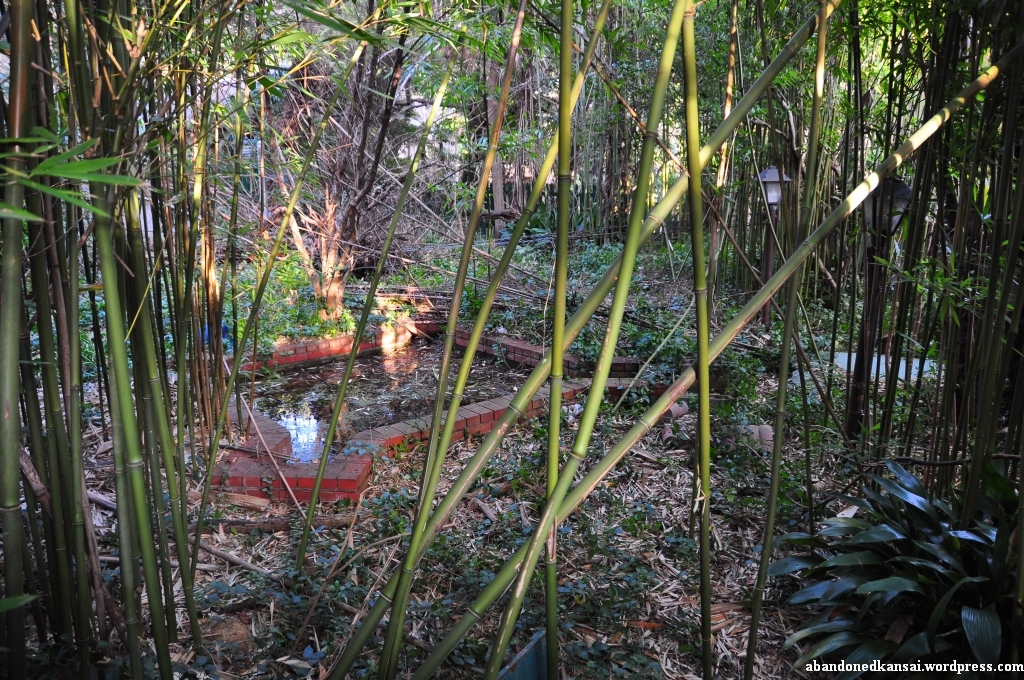
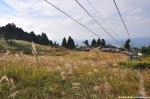
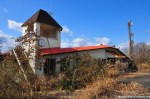
When I reached the mountain top I must have been one of the happiest people in all of Kansai: A stunning view, gorgeous autumn leaves and a temple all for myself. Sure, I couldn’t tweet “I’m in Arashiyama! (Be jealous!)”, but I wasn’t bothered by souvenir shops and crowded locations. Quite the opposite. When I was walking around I had to be careful not to run into one of many one square-meter large spider webs with a nasty middle finger long black and yellow spider in it. The abandoned temple itself was rather unspectacular. All buildings were closed, in rather good condition, and I didn’t even have a closer look if there was a way to open them. I’m not very religious myself, but I respect the beliefs of others and try to be respectful. (Which doesn’t keep me from making fun of them if it’s getting too ridiculous – you know, thetans, magic underwear and stuff like that…)
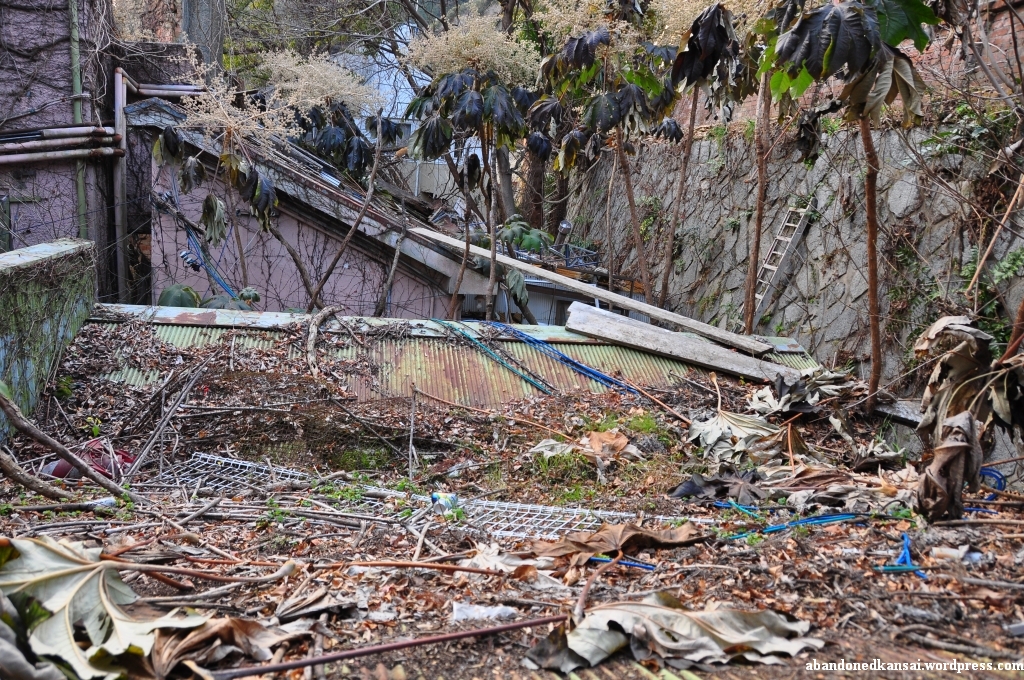
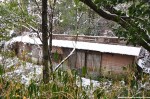
Open and rather interesting was the house of the monk that lived near the Shuuhen Temple. It’s hard to tell when it was abandoned. Some buildings in Japan fade away in no time, others withstand the ravages of time as if they couldn’t care less. It looked like it was built in the 60s or 70s, given the black and white photos of the bell and the belle; judging by the wiring maybe even earlier. The decay there was clearly natural, because thanks to the temple’s location the average bored youth vandal spares the place. Strangely enough the digital display of the power meter still worked…
The temple itself seems to have quite a long history. According to the homepage of the city it is located in, the Shuuhen Temple dated back to Emperor Kotoku’s days (596 – 654) and was first built in 651. In 1578 it was burnt to the ground and stayed a ruin for more than a century until 1682, when it was revived again. Not much information, but way more than one could get for most other temples and shrines in Japan… Now it is famous not so much amongst urban explorers, but more amongst Japanese fans of ghost spots (心霊スポット). I guess it makes sense to look for paranormal activity where people traditionally believe(d) in spirits.
Exploring the Shuuhen Temple was one of those nice, mellow urbex experiences. Sleeping in, taking some local trains, a nice and sunny autumn day, some hiking, some solitude, cold temperatures, but warm sun, beautiful countryside. A relaxed Japanese Indian Summer day…
(*Like Abandoned Kansai on Facebook* if you don’t want to miss the latest articles and exclusive content – and subscribe to the *video channel on Youtube* to receive a message right after a new video is online…)



























































































 Abandoned Kansai