Feeds:
Posts
Comments

Archive for the ‘Korea’ Category

I am a bit in a pickle here…

Do I write and publish the article I have been thinking about for several weeks now – or do I keep my mouth shut? In October I went back to the DPRK for a second time, an experience even more intense than *the first trip in spring*, way more disturbing, way more conflicting. On the one hand I enjoyed both trips tremendously, on the other hand I saw and experienced things I would like to share with all of you. But if I do it in an honest way, I probably shouldn’t show my face again in North Korea for a third time…

When I first visited the “Hermit Kingdom” in spring of 2013 I did it with a slightly ignorant attitude, willing to enjoy the experience, knowingly accepting that I will be fooled and restricted. And I actually enjoyed the tour. A lot! So much that I visited the DPRK again in October of 2013, this time the northern parts; North Hamgyong province and Rason.
The guides in Pyongyang were nice and surprisingly open-minded, the food was fantastic, Pyongyang with its high-rise buildings and solar-powered streetlights was a lot more modern than expected, the photography and video limitations were a lot more loose than (almost) everybody claims… and the bowing in front of statues, the bumpy countryside roads, the regular power-cuts outside of Pyongyang, the restrictions of free movement – all of that was commonly accepted as North Korean quirkiness in a combination of group effort and voluntary Stockholm Syndrome; it became natural within hours, everybody always gave the home team the benefit of the doubt. And I was intrigued, I wanted to see and experience more… despite my friends and family universally thought that it wasn’t a good idea, some of them being worried about the articles I wrote about my first trip, about remarks I made in the comments.
Of course I went anyway, fueled by what appeared to be authentic moments – and I still think that some of them actually were honest and unstaged, like the *picnic at the Taesongsan Park & Fun Fair*. I also believe that life in Pyongyang is decent, but I had to come back with a clear mind and travel to the countryside to get a look at the costs of it, because Pyongyang isn’t a typical example of North Korean progress – it’s an exception, a severely subsidized prestige project that only exists because the almighty political elite doesn’t care much about, and in some regards even sucks dry, the rest of the country. The power-cuts in Nampo and Kaesong weren’t the exceptions, they were just small glimpses at reality in the DPRK outside of Pyongyang – and the southern parts of North Korea are quite blessed. The temperatures are rather mild in comparison to North Hamgyong, the economy is comparatively successful thanks to the train and ship connections to China, and the much larger amount of Western tourists doesn’t hurt either…

Group Photo With North Koreans

Fool me once…

I really enjoyed my first trip to the DPRK, but after going there a second time, I have to admit that I’ve been fooled a lot more than I thought while writing about my experiences. The strange thing is: I liked my second trip to North Korea even more than the first one! Despite (or maybe because?) it dawned on me that this trip was a lot more real – a much better look at the current state of the DPRK, yet still just a scratch on the surface. On the first trip pretty much everybody ate up what the guides / guards / guardguides / guideguards had to say, but this time the vibe was different. People behaved even better, but for different reasons. Some were hardcore North Korea fans, others just wanted to allay all the worries our constant companions might have had about us to get a little bit more freedom and insight than previous visitors. I don’t think the minders were blatantly lying to us, but they were controlling all information – what we heard, what we saw, what we smelled, what we tasted. And when you are in almost total control and nobody questions that power, it is actually quite easy to shape impressions just by leaving things out. Some of it became very apparent during this second tour, some of it only while I was reconstructing the experience with the help of my photos, the adjusted itinerary, GoogleMaps and Wikimapia. (I added lots of new locations to my original GoogleMap about North Korea. *Please click here to have a look.*)

The fact that shocked me the most after my return was that we passed three of the biggest concentration camps in North Korea by less than 10 km! When we visited the city Hoeryong right at the beginning of the tour, our guide kept repeating that the city is famous for its three beauties: Beautiful women, beautiful white peaches and beautiful earthenware. I knew that he was bullshitting us just by looking at photos of Hoeryong’s most famous daughter, Kim Jong-suk, the wife of Kim Il-sung and mother of Kim Jong-il – no offense, but when I talk about the beauty of German women I don’t get Angela Merkel associated! (And after this comment I guess I better not return to North Korea…) Luckily Germans are more forgiving and Mrs. Merkel won’t throw me and my family into jail for the rest of our lives. Speaking of which: Hoeryong is famous for another thing, though it’s everything but beautiful – Kwan-li-so 22, Labor Camp 22; one of North Korea’s biggest and harshest concentration camps, where (according to two defected eyewitnesses) 1500 to 2000 people per year get worked or tortured to death, up to 4% of its total population. Maybe got, as the camp might have been closed in 2012 – which means that those prisoners were either killed or continue their sufferings in other camps. All of that I didn’t know at the time when I was spending a night at a hotel in Hoeryong, just about 5 kilometers away from the camp’s gate… (BTW: Prisoners only receive(d) a small amount of the food per day, despite a food factory in the camp’s labor colony Haengyong-ri. Like everywhere else in the country most of it was delivered to the capital Pyongyang, even if the locals and prisoners were starving, like during the Arduous March between 1994 and 1998.)
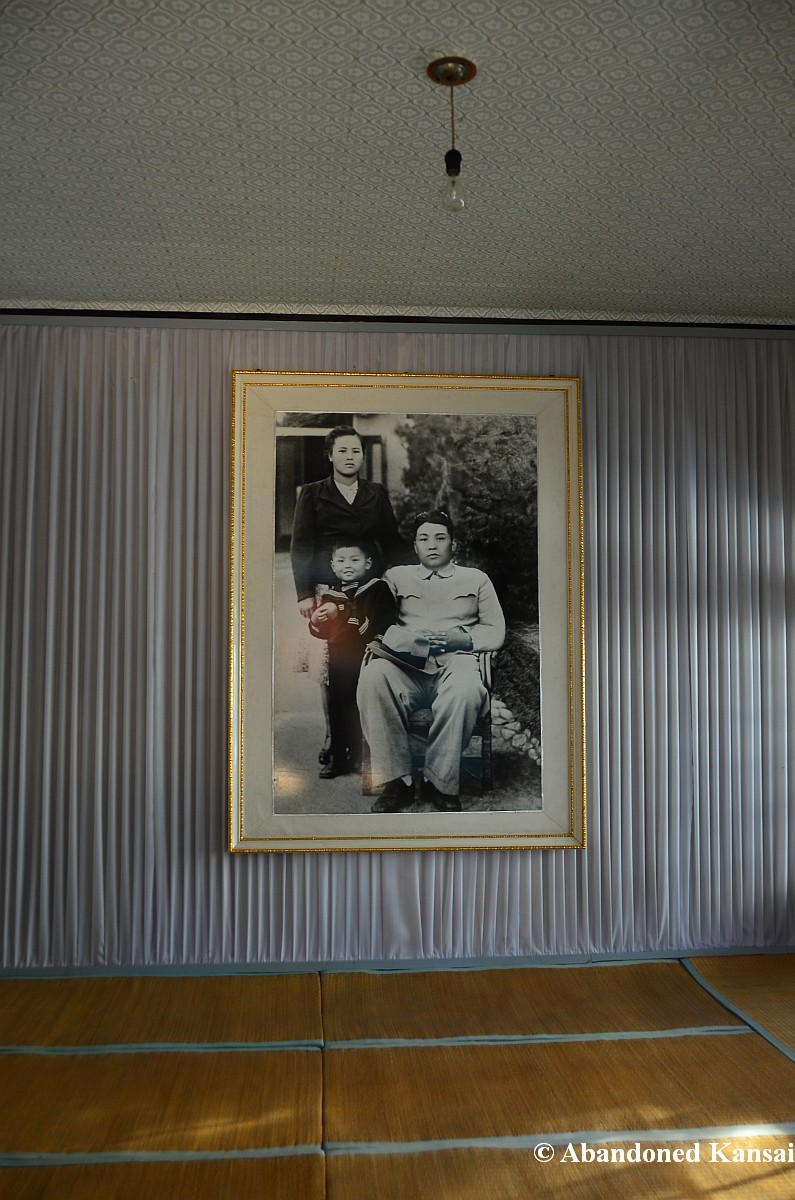
Kim Jong-suk With Husband And Son Food Factory In North Korea

Get them while they are young!

Other examples for leaving out information we experienced at two kindergartens, where we were about to watch typical performances by local children; singing, dancing and playing musical instruments. At the first kindergarten we walked through long hallways on the first floor with Hello Kitty and other colorful child-oriented images painted to the walls, then we were rushed through a staircase directly to the third floor, where the children were waiting to perform for us. I was able to sneak five meters down a hallway on the second floor and took quick photos of a painting depicting two snowmen being attacked by armed children, a subject that didn’t go along well with the stuff I saw on the first floor. Back home I asked friends what was written on the snowmen: American Bastard and a derogatory play on words about a former president of South Korea…
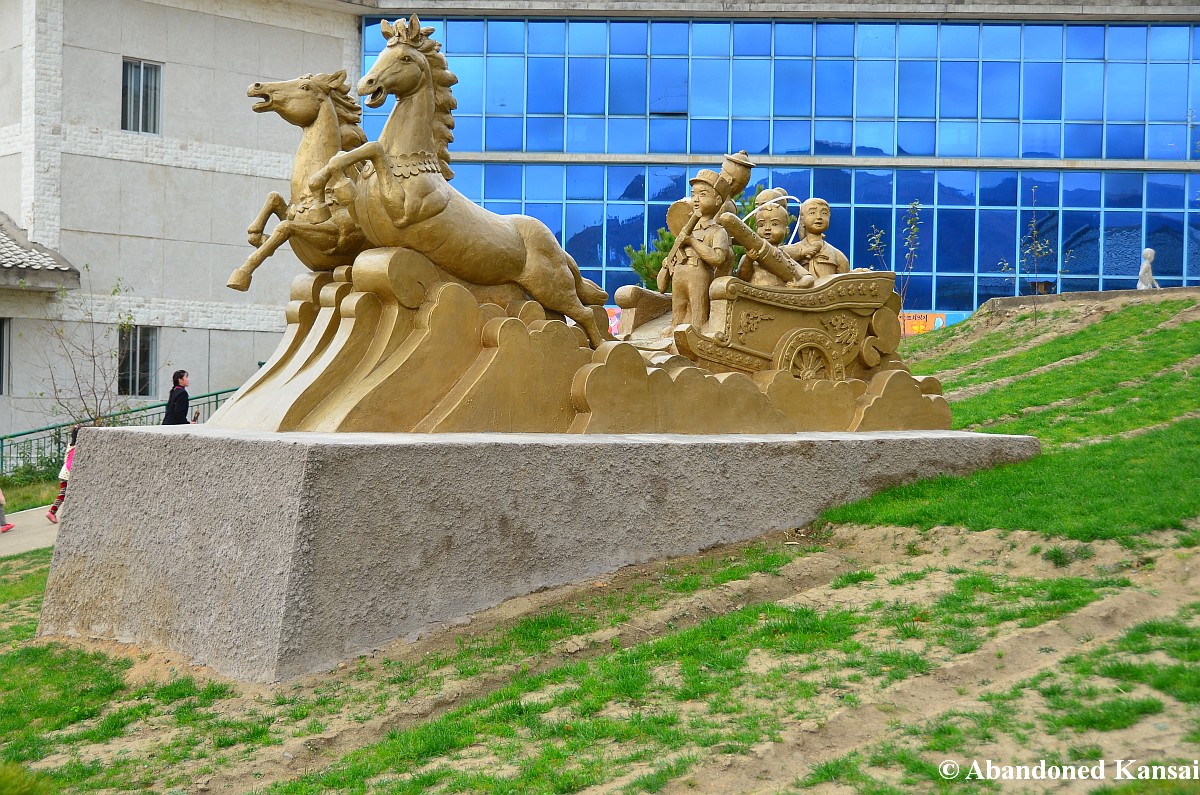
At the other kindergarten (with a different layout) we weren’t shown much of the second floor neither – and this time it was a fellow traveler who found a room she later described as “a war museum”. Sadly I wasn’t able to see it myself, but it goes without saying that our Korean guides didn’t mention it. They also didn’t mention the huge chariot sculpture in front of the kindergarten. At first sight it looked a lot like a simplified version of the one in front of the *Mangyongdae Schoolchildren’s Palace* in Pyongyang, which is all about the future and having fun. The one in Rason? Well, the first child is holding an automatic rifle in his hand, the second one a missile. Nobody pointed out those details…
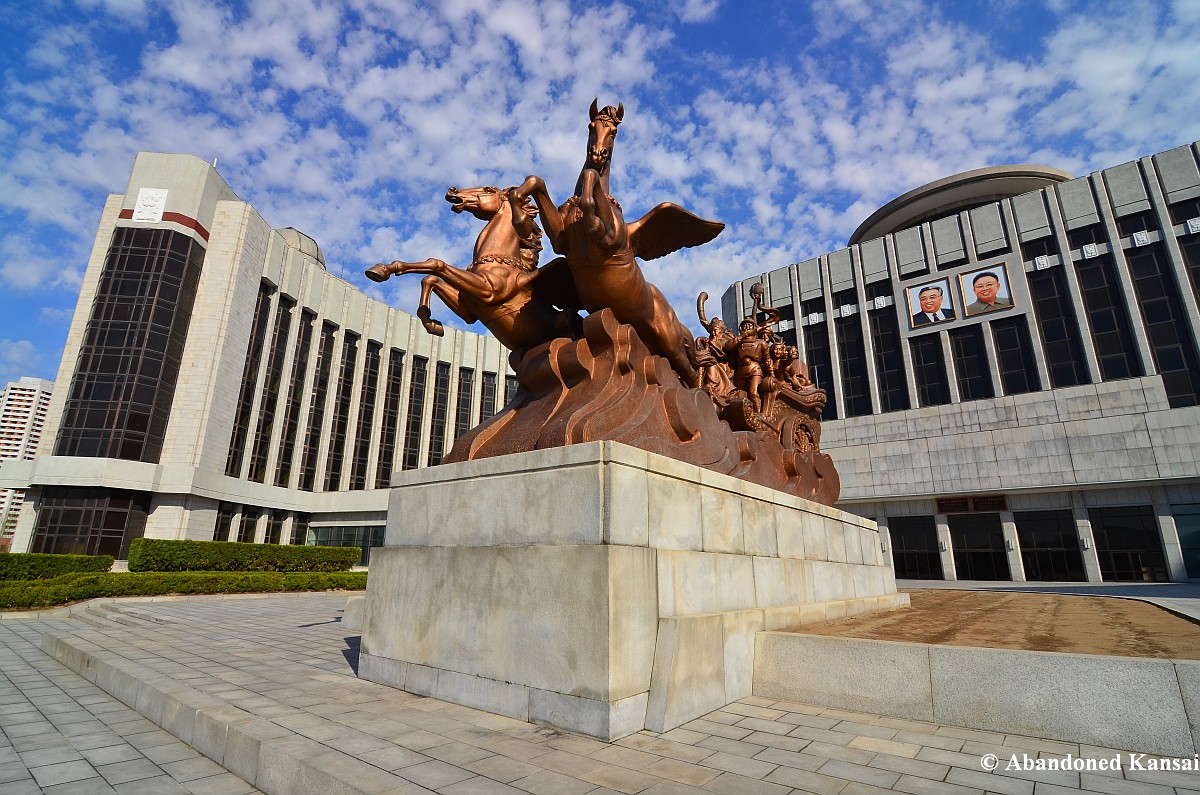
Chariot of Joy Chariot Of Destruction
Instead we went through yet another musical performance, because North Koreans like to sing and dance – I don’t. Malicious gossip has it that it’s because they don’t have anything else, but hey, they love it, so if it helps the understanding among nations I suffer through 20 minutes of creepily smiling kids at a kindergarten… or a guide singing the national anthem / their favorite NK pop song. Usually both the kids and the adults (guides, waitresses…) are pretty good at what they are doing, which eases the suffering. What really started to irritate me is that you never know when you get dragged into the whole thing. You are never safe… not at kindergartens, not at schools, not at restaurants, not at BBQs, not even on the bus. What is announced and starts as a more or less harmless performance can end with you starring it – and I HATE that kind of attention. At the same time you don’t want to be impolite, so you basically have to choose between the devil and the deep blue sea. One time on the first trip all the guides, one after another, were singing the national anthem of North Korea on the bus – and then kept nagging all tourists into singing theirs. My only way out was to claim that Germany is so anti-nationalistic now, that it is actually punishable to sing the national anthem without written permission by the government; interestingly enough not only the Korean guides but also some of my fellow travelers from all over the world believed that story… (And yes, the singing and dancing was even more intense on the second trip!)

Hunger Games, The Musical

While I visited North Korea for a second time in October I felt like being part of “Hunger Games – The Musical”: A totalitarian system concentrating all the power and wealth in the capital… and everybody was singing and dancing all the time! This wasn’t the rather cozy Pyongyang bubble anymore, this was a glimpse at a system that is plain and simple batshit crazy. Back in spring I actually thought that the DPRK was a little bit misunderstood and just needs some good PR, that Pyongyang was just a sample of what’s going on in all of North Korea, but obviously I was wrong. North Korea needs massive change from the inside, the mindset of the population has to change drastically. And I don’t blame individual average people, most of them are just doing what they are told to do (look at the communism loving Russians that now hump capitalism like a pet bunny does its favorite plush toy…), they are simply trying to survive without getting into trouble themselves, probably being traumatized by decades of subjugation from psychotic despots! I’m sure it’s not all bad in North Korea, but it definitely isn’t as good as tourists are made believe when visiting Pyongyang…

It will take me a couple of months to write about my second trip, especially since this time I want to have the whole set written before I start publishing it. Like last time I have no political or financial agenda, and I will write about my vacation as I experienced it. I just wanted to give all of you a heads up that this time it won’t be as positive and naïve – it will be full of love for the coast and the mountains, for fearless toddlers and curious language students. But you will also read some completely messed-up stories about extreme poverty and regular power-outs, about electric fences along the coastline and despicable acts towards children, about denunciation, double standards and deception – and about how I will rather never go back to North Korea again than deliberately ignoring or even sugar-coating the things that I’ve experienced…

(Please *click here to get to Abandoned Kansai’s North Korea Special* and *here for a map about both tours at GoogleMaps*.
If you don’t want to miss the latest article you can *like Abandoned Kansai on Facebook* or subscribe to the *video channel on Youtube*…)

Border guards don’t like to be filmed, yet I managed to tape me walking from China into North Korea. (As far as I know we were the second Western tourist group ever to enter North Korea on foot from Tumen, China!)

At the end of the video you can hear a guideguard approaching me after he caught me taking this video, despite him announcing that it’s okay to take pictures from the bus just 5 minutes earlier…

One of the most beautiful hours I had in North Korea – sunrise at the beach of the homestay village while most of my fellow travelers were still sleeping.

Read Full Post »

My trip to North Korea was an absolutely fantastic experience – and so was writing about it!
If you are a long-time reader of Abandoned Kansai I would like to thank you for sticking with me while I went off-topic! The last urban exploration article I wrote was about the *Abandoned Japanese Sex Museum* – just in case you want to jump back there without going through all the DPRK postings…
If you started reading this blog because of my postings about North Korea I hope you will keep on reading. I think I was able to show you a different side of the DPRK – I sure as heck will show you a different side of Japan, too!
From tomorrow on I will go back to one article per week, every Tuesday evening JST (= Tuesday afternoon in Europe and Tuesday morning in the States).
Forsaken hospitals, deserted amusement parks, forlorn mines, desolated resorts, rotting military bases, dilapidated factories, abandoned hotels, derelict train stations – you’ll see them all, and much more, on Abandoned Kansai!

Read Full Post »

Most of these questions I already answered in the previous articles, but not everybody reads everything… and some friends of mine obviously didn’t read anything, so here are a couple of questions I answered several times since I came back from the DPRK.

# Is it possible to visit North Korea?
Yes, it is. I just wrote 30 articles about it… 🙂

# Is it possible for Americans to travel to the DPRK?
Yes, it is. There are certain limitations though, for example Americans are not allowed to enter or leave the country by train – they have to fly in and out.

# Why are American not allowed to ride trains?
Trains in North Korea are considered of military importance and therefore American are not allowed to ride trains. *Subway* is no problem though…

# Did you go all by yourself?
Yes and no. I went without people I knew, but of course you can’t go to North Korea all by yourself. I joined a group tour – 10 other travelers from all over the world plus a British guide plus 3 Korean guides and a bus driver. (Yes, 11 tourists and 5 guides… It’s the first time I do the math, and I have to admit it looks strange. It didn’t feel strange though when being there.)

# Is it safe to travel to North Korea?
Yes, it is. Your contact to locals is limited anyway and none of them would dare to harm you – especially when the guides are present. I’ve never heard of any tourist being attacked or having things stolen. The few occasions we had unsupervised contact with locals was even better as Koreans are very hospitable and friendly people.
As for the political situation in general: I was more worried that the American would level the country than that the DPRK leadership would start a war…

# So you weren’t worried about taken hostage and used as a human shield?
(I actually got that question several times!) No, I wasn’t. I actually booked my trip during the rather big crisis in early 2013 and nevertheless wasn’t worried.

# How long in advance do you have to plan trips to North Korea?
Most tours stop accepting applications about 4 or 5 weeks before they begin as it takes a couple of weeks to organize the visa for the DPRK – and you have to organize the roundtrip including visa to Beijing, too…

# How long in advance did you book your tour?
I booked a couple of days before the application deadline in late March, so it was about 4 weeks before I had to be in Beijing.

# How long did you stay in North Korea?
I stayed for 8 days, 7 nights in late April / early May of 2013.

# How much does a trip to North Korea cost?
It depends on how long you stay, when you travel and which agency you use.
I paid 1690 Euros plus 50 for the North Korean visa plus 50 for the train to Beijing. The elevator up the *Juche Tower* was 5 Euros, so was the dog soup. As tips for the guides you have to calculate 5 Euros per day; some individual gifts (cigarettes, chocolates, …) for each guide and the bus driver are greatly appreciated. One beer per meal is included, if you want to have some extra it costs 50 Cents or a Euro. (How much you want to spend on souvenirs is totally up to you, I spent about 300 Euros, probably less.) In addition to that you have to organize a flight to, a visa for and an accommodation in Beijing, where the trip begins.
Overall I paid a little bit more than 3000 Euros for the whole trip including my time in China (12 days altogether) – this can be less for tours in early spring / later autumn, but quite a bit more during the Arirang Mass Games in summer. (The basic fare is higher and the mass games tickets are extra, starting at 80 Euros for the cheapest tickets.)

# Did you see the Arirang Mass Games?
No, only the May Day stadium from quite a distance…

# How much do souvenirs in North Korea cost?
North Korea isn’t exactly a shopping paradise, so there is a limited selection of things to buy. Nothing like Japan, where buying souvenirs (especially food items!) is a basic element of even day trips.
T-shirts were 10 or 15 Euros, sets of stamps between 3 Euros and about 40 Euros. Postcards were between 20 Cents and a Euro, cigarettes started at 5 Euros (per carton, not per pack!), hand-painted posters started at 40 Euros, paintings and lithographs at about 100 Euros (open end…) – ceramics, books and pins started at a Euro or two.
Most food you can buy in the so-called gift shops is actually imported – rare exceptions were the *Taegonggang Combined Fruit Farm*, the highway stop on the way to *Kaesong* and the Kumgangsan Store in Pyongyang – the latter being more of a regular shop, so I was able to buy some North Korean candy.

# Can I buy Coca Cola in North Korea?
Believe it or not – yes, you can buy Coca Cola in North Korea. So if you are a funny guy who wants to take some “’Merica, fuck yeah!” photos you won’t have to bring the high-fructose corn syrup / acid mix yourself… it’s already waiting for you.

# You can buy postcards in North Korea? Why didn’t you send me one?
Most likely because I didn’t have your address…

# Can I send postcards to (country of your choice)?
You can send postcards everywhere except South Korea – but be aware that the content might be read. (The stamps on the postcards I’ve sent were dated a week after I handed them in…)

# How long does a postcard take to get to (country of your choice)?
About 3 weeks to Asian countries, about 4 weeks to Europe, New Zealand and the States.

# Can I send letters and parcels, too?
I didn’t try to send letters or packages from North Korea, but I think you can. I saw a DHL car in the streets of Pyongyang and took a photo – scroll down… 🙂

# Do I need a visa to go to North Korea? If so, how do I get one?
Yes, you need a visa – for 99% of the foreign visitors to the DPRK the travel agency you book your tour at will take care of that formality. All you need to do is send them a copy of your passport and a scanned photo of yourself.

# How did you get to North Korea? Is there a direct flight from XYZ?
I flew into Pyongyang from Beijing and left by train at the border between the DPRK and China (Sinuiju / Dandong). There are only a couple of flights to Pyongyang, most likely not from the town you live in, so most of the tours to the DPRK start and end in Beijing. (There are other ways, too, but those are rarely used.)

# Did you use Air Koryo? If so, how was it?
I wrote a whole article about Air Koryo – please *click here to read it*. Overall it was quite a pleasant surprise.

# What is Pyongyang Airport like?
It was small, which wasn’t a surprise given that are about two planes starting or landing every day. Immigration was easy though. I had to fill out two or three standard forms and hand them over together with my visa and my passport. The guy there wasn’t exactly friendly, but not worse than in any other country. After picking up the luggage I had to hand in the baggage claim sticker and that was it – nobody had a closer look at what I brought into the DPRK.

# Can I bring a photo camera to North Korea?
Yes, of course. Lenses above 150 mm are technically not allowed, but nobody cared that I brought my 18-200 mm lens.

# Can I bring a laptop to North Korea?
Yes, that’s no problem at all. I even brought a USB hard-drive I kept separate from the laptop at all times. Nobody cared.

# Can I bring a mobile phone to North Korea?
Yes, but you won’t have reception most of the time. (You might be able to pick up a signal when going to the JSA.)

# How was the food in North Korea?
I loved it! So much that I wrote an article you can *read by clicking here*. 🙂

# What was your favorite dish there?
The kimchi in Pyongyang. It’s amazing!

# Do they have strange food in North Korea?
I guess there is strange food in every country. The only strange food we were offered to try was *Dog Meat Soup*. Oh, and the Petrol Clam BBQ was kind of strange…

# Are there birds in North Korea?
Uhm, yes?! Oh, I get it, the rumors that there are no birds in North Korea due to the famine in the 1990s… You can see plenty of birds’ nests on the photos I’ve uploaded, so yes, there are birds in North Korea. No pigeons in Pyongyang though, at least I can’t remember seeing any of the flying rats. But especially in the countryside I can remember seeing and hearing birds.

# Have you been spied on?
I don’t think so. I ran into motion detectors at the *Yanggakdo Hotel*, but I am pretty sure they have been there for security reasons. I’m an average guy, why should I be of any interest to the DPRK?
But well, that’s what I thought about the United States, too, before the 2013 mass surveillance scandal. Isn’t life friggin weird sometimes? Everybody was like “Oh, you shouldn’t go to North Korea, they are spying on you!” – then I come back and only a couple of weeks later that scandal breaks…

# What were the guards… uhm… guides like?
The guides were very kind and I never perceived them as guards. I actually find the description “guard” very derogatory and at least “my” guides didn’t deserve name-calling like that at all! They started out friendly, but distanced, which I actually liked, since I am not much of a people person myself – all-inclusive resort tummler type characters annoy the crap out of me! After a couple of days of mutual trust building all three of them were actually pretty cool. Being a guide in the DPRK is kind of a risky job as they are responsible for your actions – if you violate rules (like shoving a camera into some soldier’s face) the guide will be questioned how this could happen, not you. After they realized that we wouldn’t cause trouble the guides let their guard down (pun intended!) and we had rather open conversations about all kinds of topic. Some stuff still had to be avoided (like you wouldn’t start a discussion about certain topics with people you know…), but overall those guys were just fun to be around with.
The paragraph above applies only to my guides Mr. Yu, Mr. Kim and Ms. Park – I’ve heard about and sometimes observed other guides who were less friendly and open.

(Please *click here to get to Abandoned Kansai’s North Korea Special* and *here for a map about the tour at GoogleMaps*. If you don’t want to miss the latest article you can *follow Abandoned Kansai on Twitter* and *like this blog on Facebook* – and of course there is the *video channel on Youtube*…)

Read Full Post »

Although I am living in Japan for almost seven years by now I had never been to any other Asian country before this trip – mainly because you don’t get many paid vacation days and no sick days in Japan (i.e. if you get sick, you have to take paid vacation days), so I always went back home to Germany to visit family and friends. When I planned the trip to the DPRK I had to go through Beijing both ways – and when I saw that Koryo Tours offered a layover in Dandong I sacrificed another paid vacation day (sorry, family and friends!) that will shorten my summer trip this year even further. But 23 hours on a train didn’t sound too tempting and I guess I will never have another chance to go to Dandong, so I jumped on the opportunity… and it was a good decision!

While I basically hated every second in Beijing, my 24 hours in Dandong were really enjoyable. We were seven people from Koryo Tours staying there, Patrick and Juliette from my group, four from the other group. Fresh blood, new stories – and a culture shock!
Dandong and North Korea have pretty much nothing in common, that was clear upon arrival. We met our local guide and checked in at the hotel – free WiFi, yay! After more than a week without internet I quickly scanned through almost 200 e-mails (most of them blog related!) and sent a quick one to my sister to let her know that I was okay and had a great time in the DPRK. We only had 1.5 hours till dinner, so I hurried a bit and went across the street to the waterfront as our hotel was right next to the Sino-Korean Friendship Bridge and the tourist attraction “Broken Bridge”. The Broken Bridge was already closed and the waterfront looked too big for the 30 minutes I had left, so I went back to the hotel to sort and read more e-mails.
When I met my fellow travelers in the lobby it turned out that I was the only one who had left the hotel so far – the others said they didn’t dare to do so without permission; and I am pretty sure hardly any of them was joking…
Dinner at the nearby restaurant was a feast. The food in the DPRK was really good, but even after a week it started to become a bit repetitive (no complaint, especially given the situation, I am just saying as it is!) – having Chinese for dinner was… surreal. The flavors were so different, so much more intense. (The Snickers I had for dessert must have been the sweetest food item I ever ate after being mostly off sugar for 8 days…) Also surreal was the amount of food they brought to the table. We were eight people in total, but I think you could have fed 30 with what was brought to us. A shame considering that people are malnourished just half a kilometer away!
It’s amazing how quickly you adapt to situations, which is another reason why I was happy to get off the train immediately after leaving the DPRK – because China hits you like a hammer after a week in North Korea. Not just the food and the freedom of movement. Everything! While in Korea everything seemed normal. The lack of cars, the low noise level, that it is mostly dark once the sun was gone, that we were told to stay in the hotel… friggin everything, you just adapt to embrace the culture you want to experience. 500 meters down the road – BOOM! A buzzing megacity; gluttony and profligacy everywhere! The strange part was: Dandong is pretty similar to big Japanese cities regarding traffic, noise, lights, food, consumerism, so I should have been used to that. But it really hit me like a hammer, an unexpected culture shock.
After dinner we had a walk along the waterfront, huge apartment buildings lit up like Christmas trees. I didn’t have a tripod and still was able to take decent pictures. Candy town. And on the other side of the Yalu river? Not a single sound, barely any lights, low buildings in the dark. The next day I took a photo from the middle of the river while on a boat tour – left China, right DPRK. The countries could have hardly looked more different.

The second day in Dandong was full of touristy stuff. First we went to a reconstructed part of the Chinese Wall, once upon a time continuing on the now Korean side of the Yalu river. Since I didn’t have time to visit the wall near Beijing this was actually a very nice treat – and a very surreal one, since that part of the wall was right next to the border. Not only were there tons of bilingual warning signs (Chinese and English, obviously), but I was also able to take pictures of the Chinese Wall and North Korea at the same time! I had no idea that it was possible…
Why were there no signs in Korean, you ask? Because, and this is a dirty little secret nobody wants to talk about, Koreans don’t dare to cross the border here; at least not permanently. The reason for that is the fact they would be easily spotted by Chinese doing so – and the Chinese government not only sends defectors back to the DPRK, they also pay their own people to rat out fugitives! Yes, while every North Korean who made it to South Korea or the States is celebrated, the same people are everything but welcome in China. To a point that average Chinese people have them deported for money, very aware that caught defectors won’t have an easy life back in the DPRK… Morality is luxury.

Next stop of the tour was the „Museum of War to Resist US Aggression and Aid Korea“ or just simply the Korean War Museum, one of the most interesting places I have ever been to. As you know, history is written by the victors – in this case you had two victors (or none…), and we all know what the Americans are telling us. So it was extremely interesting to hear the Chinese side, a side that was presented with a surprisingly high amount of signs in English; given that Dandong only has a small airport, it’s not exactly a destination for Western tourists. Most of the texts were biased obviously, resulting in sentences stating that the Chinese and Koreans “overcame all the difficulties with incomparable heroism and inexhaustible wisdom and smashed the “strangling warfare” by the U.S. Army”. Stuff like that sounds hilarious to western socialized people, often not realizing that lies can be easily hidden with the help of pretended objectivity. To me the most interesting aspect brought up by the communist side was the aspect of biological warfare. A small section of the museum is dedicated to those allegations brought up by China, the Soviet Union and the DPRK, while the whole topic is denounced by the US government and its allies. The shocking thing about those accusations is that they make sense! When I wrote about the *Rabbit Island Okunoshima* a while ago I mentioned one of the most despicable human beings that ever lived, a Japanese military surgeon named Shiro Ishii. Ishii was the head of Unit 731, a Japanese research group that developed biological weapons in top secret Chinese facilities during World War 2 – by testing them on humans, including vivisections of infected victims! (I mentioned them, because Unit 731 related people also tested poison gas produced on Okunoshima.) Instead of executing Ishii as a war criminal, the Americans granted him immunity in exchange for the data he gained during the human experimentation – MacArthur knew about that plan in 1947 and it was concluded in 1948. In addition to their own biological weapons program in Fort Detrick, Maryland, the Americans now had the Japanese material. But that’s not all! While Ishii’s daughter says that her father spent the rest of his natural life in Japan, Richard Drayton, a senior lecturer in history at Cambridge University, claims that Ishii actually „came to Maryland to advise on bio-weapons”. Just for your information: The Korean War lasted from 1950 to 1953, the allegations are from the year 1952… Ishii died a converted Christian in 1959.
(Another surprising realization I had at the museum is DPRK related. You know how Western media are making fun of Kim Jong-un being a bit chubby and having a terrible haircut? Well, I was walking around, looking at things, when I saw that really old photo on the wall – of a guy that looked like Kim Jong-un; slightly chubby, unconventional haircut. It was Kim Il-sung, his grandfather. Kim Jong-un looks like Kim Il-sung around the time of the Korean War! Now it all makes sense, because given the personal cult in the DPRK of course that’s not a coincidence…)

Last but not least we went back to the waterfront and did a little cruise on the Yalu river that separates China and the DPRK. A few western tourists are claiming that they’ve visited North Korea after taking that 45 minute long boat tour – according to our guide they haven’t as the river is actually considered no man’s land…
The boat tour started just south of the Sino-Korean Friendship Bridge (constructed when the whole area was occupied by Japan) and the Broken Bridge (built between 1909 and 1911) and first gave a good look at the bridges while heading north. Both bridges were repeatedly attacked and damaged by the United States during the Korean War and at first both of them were repaired, but then the communist side focused on repairing the Sino-Korean Friendship Bridge, leaving the Broken Bridge first a ruin and now a historical tourist attraction. Today the Friendship Bridge is one of the few ways to enter the DPRK by automobile or train. After passing the bridges it was bizarre to see gigantic apartment buildings on the Chinese side… and basically nothing on the other. Then we turned around, passed the two bridges again and got closer to the Korean side; pretty close actually… There we could see how the low tide left some old, rusty Korean ships on the shore and how workers loaded coal via small cranes. While the people around us were all excited about getting a glimpse at North Korea I wasn’t able to share that excitement. I actually felt bad, knowing how much Pyongyang needed that coal, wondering if the appointed train would actually make it there to keep one of the two coal power stations running. None of us had goose-bumps looking at “the Evil Empire” as if it was a tiger at a zoo more than a century ago. We had seen more than the waterfront, we had talked to the people; it was surreal looking back, while the Chinese tourists probably were judging the whole country by what they saw there and then, talking about each other instead of with each other. I think all of us Westerners felt a bit desperate and frustrated while on that boat – having enjoyed eight days in the DPRK we finally realized how far away from the global community the country really is; not only ideologically, but also economically…

(Please *click here to get to Abandoned Kansai’s North Korea Special* and *here for a map about the tour at GoogleMaps*. If you don’t want to miss the latest article you can *follow Abandoned Kansai on Twitter* and *like this blog on Facebook* – and of course there is the *video channel on Youtube*…)

Read Full Post »

It takes almost a whole day to go by train from Pyongyang to Beijing – and it’s quite an experience…

One of the few limitations Americans have when visiting the DPRK is the fact that they are not allowed to ride trains as the railway system is considered a military installation; so if you are American and you want to travel to North Korea you have to enter and exit by plane. All other nationalities usually take the plane in and the train out (or vice versa) – not because it is cheaper (it actually isn’t, at least not for the customer, probably for the travel agency though…), but because it is part of the fun. 23 hours on the train, that’s not a bug, it’s a feature! Well, to some people. Not to me necessarily. So I decided to split the train ride in half and have a 24 hour layover in Dandong, right at the border between China and the DPRK.

My last hours in North Korea began with the usual morning routine, but instead of going sightseeing after entering the bus, we went to Pyongyang Station – and I wish I had taken some photos outside instead of rushing inside with the flock as the square in front of the huge station looked quite modern, including some advertising and huge screens. Instead I spent another 15 to 20 minutes in the waiting room for international travelers, featuring the last gift shop before leaving the DPRK.

Pyongyang Station actually isn’t that busy and it seems to have only one platform – a gigantic platform where you can park buses crosswise. Nevertheless it serves four lines: One to Nampo, one to Rajin in the far North, one to Kaesong (theoretically to Busan via Seoul, but you know the problem there…) and one to Sinuiju; the one our group took.
The standard procedure is the following: The train leaves at around 10.30 in the morning for Sinuiju with several stops at stations along the way. At around 15.30 you arrive in Sinuiju, where you have to go through customs on the Korean side, which takes about two hours – sometimes more, sometimes less. Then the train crosses the river Yalu to Dandong, China. There you have to go through Chinese customs, which takes about 30 minutes. (Don’t forget to adjust you watch as China is in a different time zone!) Then you have about half an hour before the train continues at 18.30 to Beijing, where it arrives at 8.30 in the morning. At no time you have to leave the train – customs on both sides take care of everything on board. People going to Beijing directly are located in nice 4 bed compartments, travelers getting off at Dandong enjoy the 5 hour ride plus 2 hour long customs process in a smelly wagon with open 6 bed compartments. Since I opted for the layover in Dandong I was with the latter group…
We had seen lots of settlements and fields on the way to Kaesong and Nampo, but the northern part seemed to be a bit greener – and the train wasn’t nearly as shaky as that bus, so I was able to take some nicer photos and a really decent video.

The train ride through the North Korea countryside was actually quite relaxed, despite the fact that the 160 km long trip took a whopping 5 hours. The reason for that is the fact that the railway system was in abysmal condition. Like I said, we were not allowed to take photos and although we said goodbye to our Korean guides back in Pyongyang I stuck with it – out of respect and out of fear to get in trouble at customs. Our train was by far the most modern one on the way as all the other ones looked like they were from back in the days when Japan was still in charge of the country. The stations were in decent condition, but the trains… it’s actually hard to describe. First of all I don’t remember seeing many of them being in working condition, we saw only a couple of them with passengers in them. The trains and wagons parked within stations… half of them looked like they were involved in fires or explosions, the other half looked like they were rusting away for decades. I guess shock and surprise was another reason why I didn’t take photos. People thought the East German railway system was in bad condition when the FRG “bought” the GDR – but damn, this was a whole different level! Another sign that there was no to barely any railroad modernization since the 1930s or 1940s were the electricity posts along the track you can see in the video and on one of the photos. I’ve seen similar ones in Japan. Along railway tracks. Abandoned tracks! The DPRK must have spent quite a chunk of money on maintenance, but I am sure the railroad system in the 1960s was in better condition than it is now… except for the rather luxurious overnight wagon to Beijing.
Customs in Sinuiju took indeed a little bit more than two hours, but they weren’t really thorough. We occupied 5 or 6 beds in the smelly wagon, but they didn’t look at any of our photos and even forgot to look inside one of our suitcases…
Customs in Dandong were even faster, basically a passport and visa check, they didn’t even open any of our luggage. After the Chinese custom officers were done we left the train, said goodbye to our fellow travelers continuing to Beijing and left the station, where our 24 hours in Dandong began; three people from my group, four people of the other group. More about that on Friday!

24 hours later we were back at the station – well, me and my other two group members Patrick and Juliette as the group A guys actually stayed for 48 hours in Dandong.
This time we checked into one of those luxurious sleeper cars with four beds and a door, shared with a young Chinese woman travelling from Dandong to… somewhere in China. The train stopped every couple of hours and she left maybe two hours outside of Beijing. When I woke up in the middle of the night we just had stopped at one of those stations and I took a photo over my head aiming outside of the window – it turned out to be a quite nice one, so I added it to the gallery.

Overall the train ride to Beijing wasn’t nearly as bad as I expected it to be, probably because I was able to split it into two halves. Arriving in Beijing though my bad luck in the city continued: While at the *Mansudae Art Studio* I bought a lithography too big to put in my suitcase, so I was having an eye on it for almost a week. At Beijing Railway Station I left in a hurry and after about three minutes I realized that I didn’t have the lithography in my hand anymore. Despite the masses, the heat and the humidity I immediately ran back to the train compartment where the cleaning personnel already started their work, less than five minutes after I left in this huge, loud, summer smelly crowd – of course nobody understood me or had seen anything. I don’t think I’ve ever lost anything since I was five years old! But that was just the beginning of another horrible, horrible stay in China’s capital…

(Please *click here to get to Abandoned Kansai’s North Korea Special* and *here for a map about the tour at GoogleMaps*. If you don’t want to miss the latest article you can *follow Abandoned Kansai on Twitter* and *like this blog on Facebook* – and of course there is the *video channel on Youtube*…)

Read Full Post »

When I planned this series of articles about my trip to North Korea I realized quickly that I wouldn’t be able to dedicate each and every location its own article – there were just too many places I’ve visited. So I tried to limit myself to the most important ones, the most entertaining ones, the most impressive ones… and overall I did a decent job, I think. Some places I had to leave out because there was just not enough information about them, at others I wasn’t allowed to take photos or just didn’t have the time to do so. So here are a couple of locations I left out, but are actually worth mentioning…

Mangyongdae is one of the 19 districts of Pyongyang and considered Kim Il-sung’s birthplace by the North Korean authorities. We went there to see what was presented as the house where Kim Il-sung spent the first years of his life, before his family fled to Manchuria to escape the Japanese occupiers. The mini open-air museum was very popular among locals, but none of the foreign tourists seem to be much impressed, even when we heard the story that the family couldn’t afford a proper storage contained and had to buy a misformed cheap one still on display…

Kim Il-sung Square (completed in August 1954, 75000 m2) we saw several times, for example during the *Fun Run* and from the balcony at the *Grand People’s Study House*, but on day 2 we went there on purpose to go to the Foreign Language Book Store (where I didn’t take photos) and to the Ryongwang Coffee Shop. It was raining while we were there, but that didn’t keep locals from practicing for the Arirang Mass Games.

The Ryongwang Coffee Shop was kind of a fill-in since the rain prevented us from going up the *Juche Tower* for about an hour. Since I am not a coffee drinker I had to get a kick otherwise – luckily right next door was an import food store that had sausages and a hazelnut chocolate spread from Germany. I was tempted to buy some since it was actually cheaper than in Japan; where that kind of stuff usually isn’t even available. Two other things I liked were the Chelsea foosball table and the Sacher Kaffee sign at the wall. We also found out how buying stuff in the DPRK works: You go to the counter where you want to buy something (at a store, at a coffee shop, …) and say what you want. Then the clerk writes down the items and their prices. This piece of paper you take to another counter to pay and get the invoice stamped. Having a proof of pay you can go back to the first clerk where you get what you bought. In smaller shops those two counters might be ones, but goods and money are always handled by two different clerks.

The Paradise Department Store was a weird experience, because when we arrived the whole building was completely dark and only a handful of locals were having a look around. The place was stuffed with all kinds of goods, just like a real department store, but to us it seemed more like a show. Even more so since the clerks instantly asked us to stop taking photos once we started. Just as we were about to leave, the whole building came back to life – show or not, the place suffered from a blackout, which explained the lack of customers and the tenseness of the employees. Sadly nobody told us while we were exploring the building on our own, so everybody assumed it was a terrible show put up for us. Jumping to conclusions based on observations, not a good thing… (It was quite an expensive department store, BTW, located somewhere in the area where all the foreign embassies are.)

The National Gifts Exhibition House a.k.a. Pyongyang National Gift Palace was… something special. This building stores all the gifts Kim Il-sung, Kim Jong-il and Kim Jong-un received from Koreans all over the world. From the most trivial things (I’ve heard a story that a British delegation once brought a souvenir plate they got for a couple of bucks in the streets of London) to the most amazing and original artwork you can imagine. And they really display anything, for example a Power Mac G4 and disks of some really old versions of Adobe Photoshop (5.0 IIRC). My absolutely favorite item though was a piece of art, probably the most amazing painting I have ever seen in my life. Do you know about *Larry Elmore*? Larry Elmore is one of the most famous fantasy artists, immortal thanks to his legendary artwork that is forever connected with the Dungeons & Dragons pen and paper role-playing games and the Dragonlance novels. Kim Jong-il on the other hand is famous and legendary for hand-taming tigers. (And holes-in-one when playing golf!) Now imagine Kim Jong-il sitting in the saddle of a pony sized tamed tiger wearing an ancient Korean armor on top of a snow covered Mount Baekdu – painted in Larry Elmore’s style! Mind-blowing, absolutely mind-blowing! I would pay good money for a print. Or a T-shirt. Or the opportunity to see it again. Sadly photography is strictly prohibited in the National Gift Palace and of course there is no way to get a look at it otherwise, like in a brochure or something like that.

The Museum of Metro Construction was one of those museums in Pyongyang that had quite a misleading name. Of course it was kind of about the construction of the *Pyongyang Metro*, but mainly it was about Kim Il-sung and his contributions to the metro construction. What he decided, when he visited the construction site, which ways he went in and out… Of course we saw some of the used machinery, too, but in the end it was mainly about the Dear Leader. Sadly photography was only permitted in one or two rooms, so there is not much I can show you – hence the place’s appearance in this article…

At the Mansudae Grand Monument Memorial on the other hand I took quite a few photos, but just not enough to justify a separate article. The memorial consists of several elements, the most important ones are bronze statues of Kim Il-sung and Kim Jong-il, both 20 meters tall. They stand in front of a mural depicting Mount Baekdu, 13 meters high and 70 meters wide, and are flanked by two memorials – “Anti-Japanese Revolutionary Struggle” and “Socialist Revolution and Socialist Construction”, both up to 22.5 meters tall and 50 meters long, with statues being 5 meters tall. Quite impressive!

A lot less impressive was the Kangso Mineral Water Factory we visited after the *Chongsan-ri Cooperative Farm* on the way to *Kaesong* via Pyongyang. I actually forgot my photo camera in the bus, so I only took a few snapshots with my video camera, but there was not much to see anyway. The water factory was a ROK/DPRK joint venture, but when the relationship between both countries went south during Lee Myung-bak’s presidency (2008-2013) the South Korean market was closed and the water factory… well, it wasn’t bottling water while we were there. Coincidence or not: I didn’t miss much, you didn’t miss much – but the water drinking bears were cute, so please check out the photo I took of those statues…

Next on the itinerary that day was the Arch of Reunification, a memorial at the beginning of the Reunification Highway a couple of kilometers outside of Pyongyang. The arch was built in 2001 to commemorate past Korean reunification proposals by Kim Il-sung and consists of two Korean women in traditional dresses, both leaning forward to hold up a sphere depicting the map of a reunited Korea. During the Sunshine Policy (1998-2008) the reunification was planned to happen in three steps: increased cooperation, nation unification with two autonomous governments, creation of a central national government – sadly those plans fell through, despite the fact that the increased cooperation part worked quite well for a while…

The final stop before reaching Kaesong was at the Pakyon Falls, one of three famous waterfalls in the DPRK. Located in the middle of nowhere about 25 kilometers north of Kaesong the falls connect the 8-meter-wide Pakyon Pool with the 37 meters lower Komo Pond. Sadly we arrived at dusk, so there were no local tourists around and we didn’t have time to climb up to have a look at the pool. Nevertheless a beautiful place indeed, with lots of characters carved into the rock forming the 8-meter-wide pool – sadly nobody asked about their meaning…

And with that you’ve seen pretty much all the places I have seen while in the DPRK. There were a handful of locations where I didn’t take photos at all (for example at the Paradise Microbrewery in Pyongyang), but those places weren’t spectacular anyway.

(Please *click here to get to Abandoned Kansai’s North Korea Special* and *here for a map about the tour at GoogleMaps*. If you don’t want to miss the latest article you can *follow Abandoned Kansai on Twitter* and *like this blog on Facebook* – and of course there is the *video channel on Youtube*…)

Read Full Post »

The Kaeson Youth Park was the exciting final destination of my trip to North Korea. Visiting the most modern amusement park in Pyongyang’s city center was on our schedule almost every day, but every time it had to be pushed back; the first time it rained, the second time was “foreigners’ night” (which defeated the purpose of mingling with locals), the third time we were out of town overnight, …
After getting back from *Kaesong* and having dinner at the famous *duck restaurant in Pyongyang* we finally went to the Kaeson Youth Park on our last night – with the *Arch of Triumph* right across the street our tour basically ended where it began.

Originally opened in 1984, the 40 ha big park fell into disrepair quickly, giving all of North Korea’s theme parks a bad reputation. Being an avid urban explorer I was actually looking forward to seeing some quasi abandoned amusement parks, but it turned out that the ones we saw were all modernized recently. The Kaeson Youth Park for example received a whopping ten new attractions from Italy in April 2010, including a rollercoaster, bumper cars and a freefall tower. It wouldn’t be able to compete with elaborate theme parks like Universal Studios or Disneyland, but it’s attractions would be popular at any funfair in world – hence the place’s nickname Kaeson Funfair, because that’s what it basically is; a non-travelling funfair.
In an article by the Japanese newspaper Asahi Shimbun I’ve read that enjoying all ten rides costs locals 1600 won, more than half of what the average person in Pyongyang earns per month (3000 won) – two things about that:
1.) According to their article 1600 won were about 40 US cents in 2011, according to currency converters it was about 12 dollars back then! (A little less today… Maybe there is a different black market exchange rate?)
2.) What the article fails to mention is the fact that most people in Pyongyang don’t have to live off their 3000 won income, it’s kind of an allowance since the state provides accommodation and their place of work provides meals (though I am not sure if it’s just lunch or three meals a day).
So yes, visiting the Kaeson Youth Park is very expensive for locals (a ride on the subway costs 2 won…), but it is possible for them to enjoy an evening there. Not a whole day though, because the funfair opens at 7 p.m. and closes at midnight or 1 a.m., depending on which guide you asked… 😉

At the *Taesongsan Park & Funfair* we didn’t go on any rides, so our group was set loose and we were able to explore on our own – at the Kaeson Youth Park we had to stick together, nevertheless I was able to take an almost foreigner free video since the group stretched quite a bit. We basically walked to the end of the park and made our way back to the entrance, people hopping on the rides in mini groups; with VIP treatment, i.e. skipping the queue – which came at a price: 1.5 to 3 Euros per ride, according to a guide more than 30 times of what locals pay, which means that the whole exchange rate thing is off completely…
Despite the fact that we arrived past 9 p.m. there were still quite few children around (usually in groups), but overall it was a good mix of locals again (youth groups, couples, families, soldiers), so it felt kind of natural being there, despite the fact that clothing usually was less individual than what you are used to from amusement parks in Europe or the States. We even witnessed a heated argument between two guys, most likely military – much to the embarrassment of our Korean guides. Personally I enjoyed seeing that, it gave the experience quite a human touch.
The Kaeson Youth Park was another hint that things in the DPRK are changing. Like I said, amusement parks in North Korea have a horrible reputation and most articles on the net make fun of them, but all three parks I saw had been renovated since Kim Jong-un became the leader of the country. The KYP looked like a modern funfair and it seems like that the powers that be intend to keep it that way. An estimated half of the park’s staff was busy cleaning and swiping, contributing to the image that I had during my whole trip to the DPRK – a struggling but upcoming country that is trying extremely hard to make the best of a bad situation.

(Please *click here to get to Abandoned Kansai’s North Korea Special* and *here for a map about the tour at GoogleMaps*. If you don’t want to miss the latest article you can *follow Abandoned Kansai on Twitter* and *like this blog on Facebook* – and of course there is the *video channel on Youtube*…)

Read Full Post »

Everybody knows the Berlin Wall – but have you heard of the Korean Wall before?
According to North Korea the wall is 240 kilometers long, 5 to 8 meters high and packed with soil form the southern side (so it can be accessed by vehicles / military personnel) and it is completely invisible from South Korea. The United States and South Korea claim that the wall does not exist… but the DPRK is more than happy to show it to tourists.

We left the *JSA via the DMZ* and headed to the countryside; most likely northeast, probably for an hour. I tried to pin down the exact location of where we went to, but I failed. There are military posts on both sides of the DMZ every couple of hundred meters and it’s close to impossible to figure out with one we visited, so please consider the mark on the map a more or less wild guess.
Our driver parked the bus directly next to a small manned outpost and from there we went up a hill through a narrow trench like passage. Up there we found a rather flat building, partly hidden into the mountain, although the southern side very well knows what’s going on there…

What was going on? Well, a retired Colonel of the Korean People’s Army asked us to take a seat in surprisingly comfy chairs and told us all about the Korean Wall. How big it is, when it was built (between 1977 and 1979) and that it is slightly shorter than the DMZ, since there are openings at border crossings and at the Joint Security Area.
Afterwards we went outside to have a look ourselves. Sadly it was an overcast day and the visibility was everything but good, although the South Korean fortifications were less than 4 kilometers away. Even with the help of the ready to use binoculars and rather big zoom lenses it was impossible to clearly recognize the wall. The visible South Korean outposts were all on top of a mountain range and it looked like there was a wall or two below – whether it was a 240 kilometer long wall to separate the country or just a small construction to support the slope is hard to tell…

(Please *click here to get to Abandoned Kansai’s North Korea Special* and *here for a map about the tour at GoogleMaps*. If you don’t want to miss the latest article you can *follow Abandoned Kansai on Twitter* and *like this blog on Facebook* – and of course there is the *video channel on Youtube*…)

Read Full Post »

There is no frozen banana stand in the DMZ, dear Arrested Development fans! Which isn’t really a surprise, given that it’s not exactly easy to get bananas in the DPRK. Or chocolate. Or nuts. Or a freezer. Or a reliable source of electricity…
Nevertheless I kept my eyes peeled after watching the show’s final episode (of season 3…) for the gazillionth time – at the *Minsok Hotel* on a media player the night before going to the North Korean side of the DMZ / JSA.

I decided to not bore you with too many facts about the Demilitarized Zone (DMZ), especially after I dropped way too many numbers and Korean terms in the previous article – there are plenty of ways to educated yourself about the Korean war and its end, and you probably know the basics anyway. Instead I would like to talk about how it is to visit the DMZ when in the DPRK.

First of all: People who say that they’ve visited the DMZ most of the time actually visited a very tiny part called Joint Security Area (JSA), the only portion of the Demilitarized Zone where soldiers from both Koreas get close to each other and don’t stand 4 kilometers apart – to the best of my knowledge tourists can only visit one other part of the DMZ: A lookout where you are supposed to see the Korean Wall. “The Korean Wall?” you ask? Yes, the Korean Wall. More about that topic next time!
I’ve never been to the southern side of the JSA, but I’ve heard it’s not exactly a relaxed trip. You have to sign a waiver (since there is a theoretical chance that you might be injured or killed…), groups are split by languages (sometimes prohibiting couples of different nationalities to go together), you have to apply several days in advance (some nationalities have to go through a background check), there is a dress code, you are not allowed to do certain things (like pointing at DPRK soldiers) and overall it seems to be quite a rushed experience.
Going to the northern side of the DMZ / JSA is actually quite laid-back. We went through a background check before entering the DPRK, none of us brought offensive clothes, no matter what nationality all of us spoke English, 80% of the previous locations were a rushed experience anyway and our guides knew we would behave properly without reminding us – and signing a waiver was not necessary. It felt like just another place to see, to my surprise without any photography limitations. Even usually off-limit motives like military personnel were no problem at all. Heck, our local guide in the rank of daewi, Captain, patiently posed for photos with everybody who was interested in having one.

Visiting the JSA from the northern side started a couple of kilometers northwest, pretty much at a distance where the DMZ technically begins. There everybody had to leave the bus at a military checkpoint for checks unspecified to us. The procedure took about 20 minutes – and to keep people busy there was a decent gift shop and a separate restroom building. When the buses were ready to continue the waiting groups got a little lecture about the history of the DMZ in front of a huge painted map. Meanwhile the buses actually drove about one hundred meters past a checkpoint and everybody had to pass through an opening in a wall next to the road (rows of two, like in school!) before boarding the bus again. (No metal detectors or being padded down involved…)
About 1.5 kilometers down the road was the first of two stops, a neatly gardened area with a building where the armistice was negotiated and the building where it was signed, now housing the North Korea Peace Museum. Located in the former village of Panmunjom, the buildings were specifically constructed to house the negotiations and the signing of the Korean War Armistice Agreement.
The second stop was the actual Joint Security Area, which most people visit from the southern side. First we visited a monument dedicated to Kim Il-sung reading and signing a document about Korea’s reunification on 1994-7-7, the day before his death. The signature plate is 7.7 meters wide, the whole monument 9.4 meters; and of course it is richly ornamented with Kimilsungias, an orchid named after guess who. From there we went to the Panmungak, the building for visitors on the northern side of the JSA, to take some photos and… that was it. There was barely any activity on the southern side and since it was a quiet sunny morning, the whole visit felt quite peaceful and slightly surreal.

People always seem to be so excited about visiting the JSA, especially those who step into North Korea for half a minute in one of the blue conference buildings on the border between North and South Korea, but after having spent six and a half days in the DPRK the experience was rather underwhelming; nothing in comparison to standing in front of *Chernobyl’s Reactor #4* or *having lunch with North Korean locals*. No disrespect to the incredible importance this place has in history, but to me the first stop was much more interesting than the second one…

(Please *click here to get to Abandoned Kansai’s North Korea Special* and *here for a map about the tour at GoogleMaps*. If you don’t want to miss the latest article you can *follow Abandoned Kansai on Twitter* and *like this blog on Facebook* – and of course there is the *video channel on Youtube*…)

Read Full Post »

The Koryo Museum in Kaesong was without the shadow of a doubt the historical and cultural highlight of my trip to North Korea.
As I mentioned before, Koryo was a kingdom on the Korean peninsula from 918 to 1392; the modern term Korea derives from that name. With modern day Kaesong (then Songdo, later Gaegyeong) being the capital for most of its existence (919-1232 and 1270-1392), it’s not really a surprise that a museum about Koryo is located in Kaesong.
The current day Koryo Museum is located at the Songgyungwan Academy since 1987 and houses more than 1000 artifacts from the Koryo period – and of course the academy itself has a very long history that dates back… to the Koryo kingdom. It started as the Taemyon Palace in the early 11th century and later became first an imperial guesthouse and then the Bureau for Confucian Doctrines. In 1089 it started to house the highest educational institution of the kingdom (for the children of state officials), the Gukjagam. In the early 14th century it was renamed Songgyungwan Academy and burned to the ground during the Imjin War in 1592, when Japanese troops failed to conquer Korea. The Songgyungwan Academy was rebuilt in 1602, so going to the Koryo Museum is impressive for the fact alone that you usually don’t have the opportunity to visit museums in buildings more than 400 years old…
Except for the missing English labeling (compensated for by a local and one of our regular guides) the Koryo Museum totally lived up to international standards, not only exhibiting countless artifacts, but also presenting plenty of photos, models and recreated places like a tomb. I’ve been to quite a few museums in my lifetime and this was definitely one of the better ones!

Even better than the museum itself was the gift shop in front / outside of the museum. Gift shops in the DPRK are more or less the same, but this one was amazing! It offered a huge selection of stamps (to collect and for use to send postcards to all countries but South Korea), a decent selection of art, quite a few different T-shirts, local ginseng products as well as… propaganda postcards and mini-posters! Most gift shops only sell photo postcards, but this one had about 40 different painted propaganda motives – anti-American, anti-Japanese, pro-education, pro-industry, pro-reunification; about a dozen of them available as mini-posters, slightly larger than DINA4. Luckily Sarah told us ahead of time, so I bought all the postcards I’ve sent to family and friends there, plus a few spare ones; but not nearly enough.
I actually regret only one thing about my trip to North Korea – not buying more stuff at that gift shop!

(Please *click here to get to Abandoned Kansai’s North Korea Special* and *here for a map about the tour at GoogleMaps*. If you don’t want to miss the latest article you can *follow Abandoned Kansai on Twitter* and *like this blog on Facebook* – and of course there is the *video channel on Youtube*…)

Read Full Post »

« Newer Posts - Older Posts »