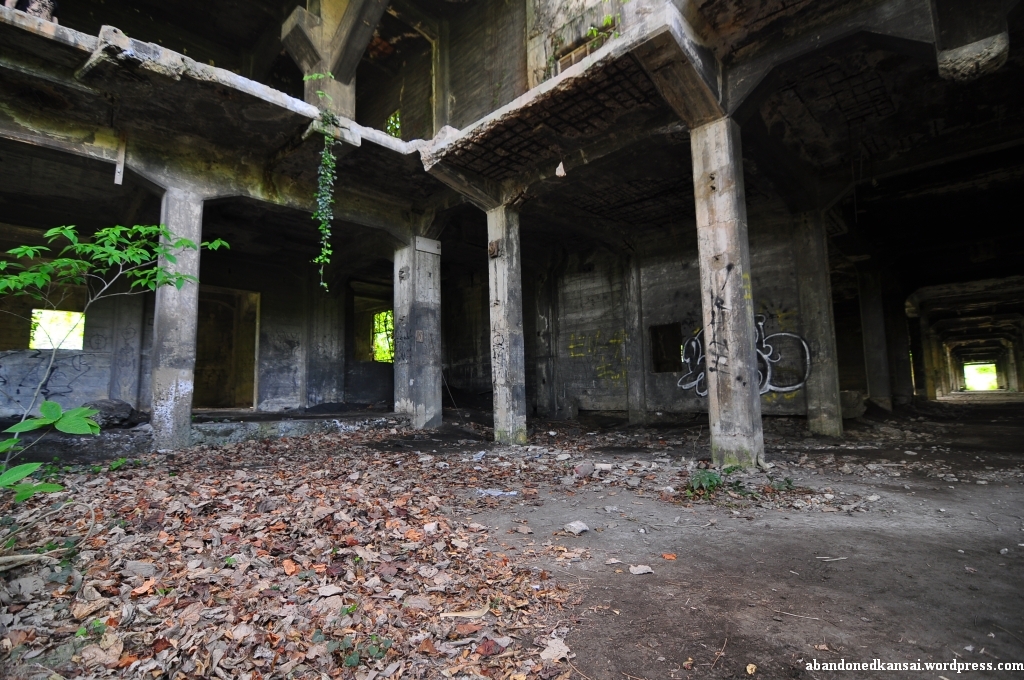
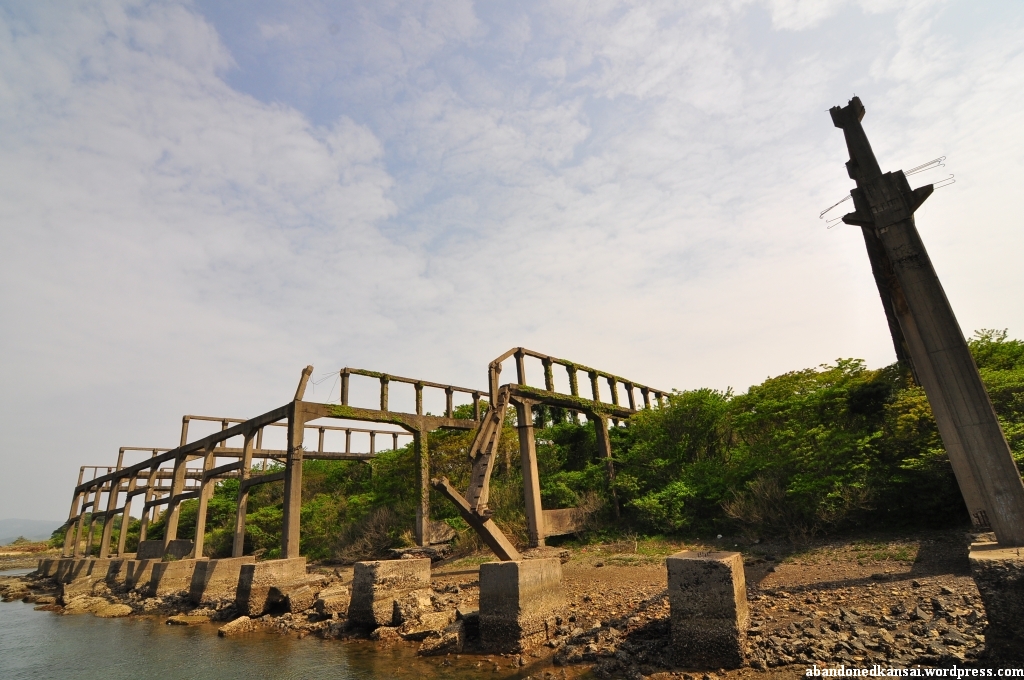
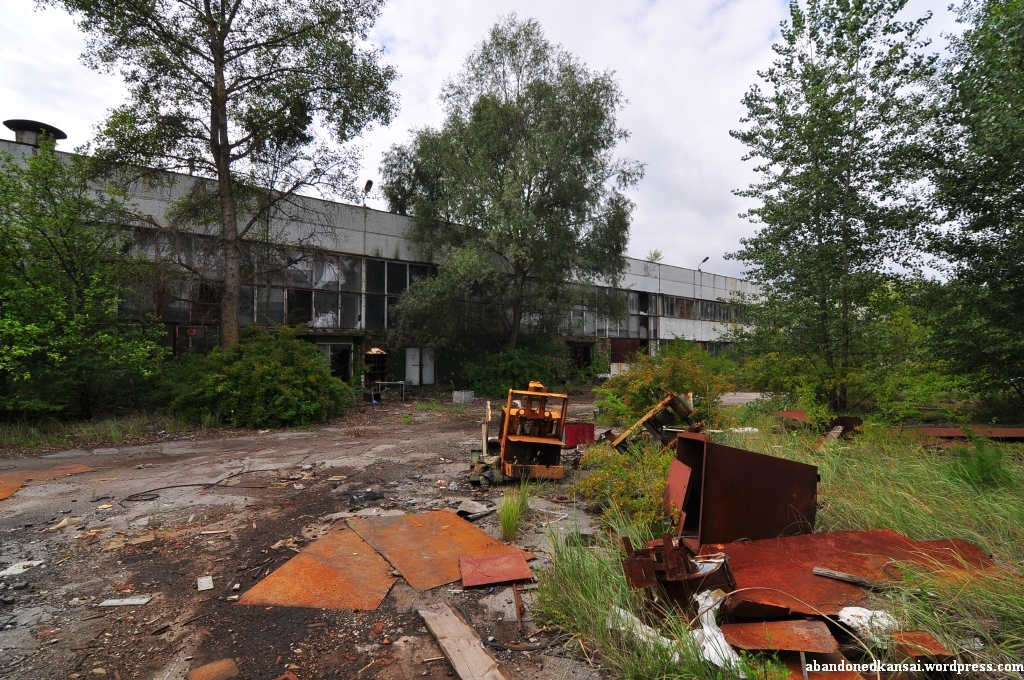
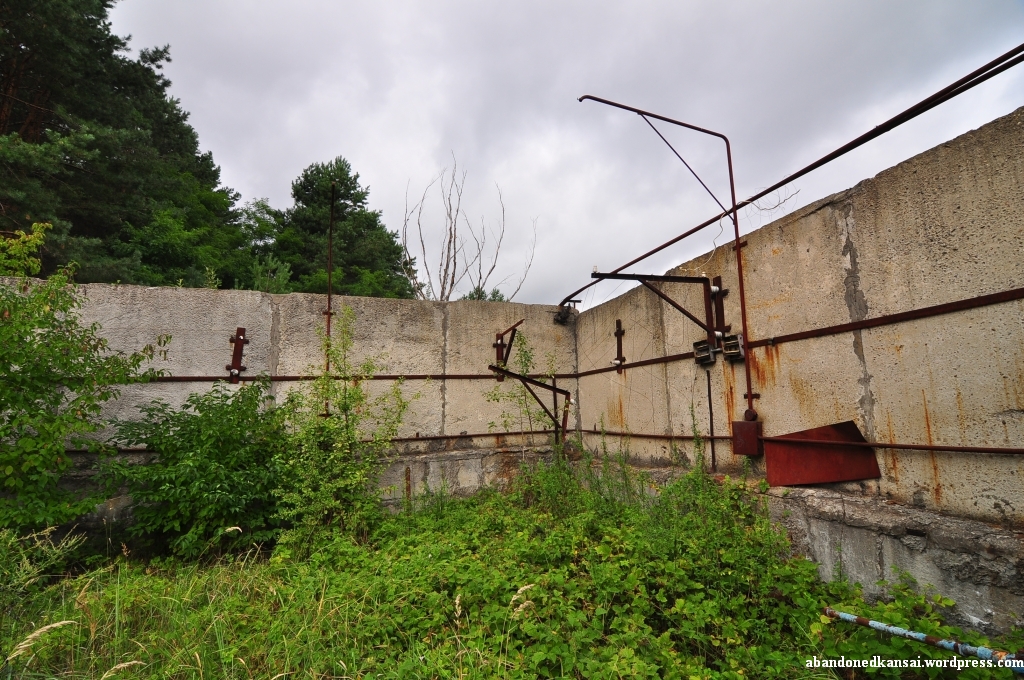
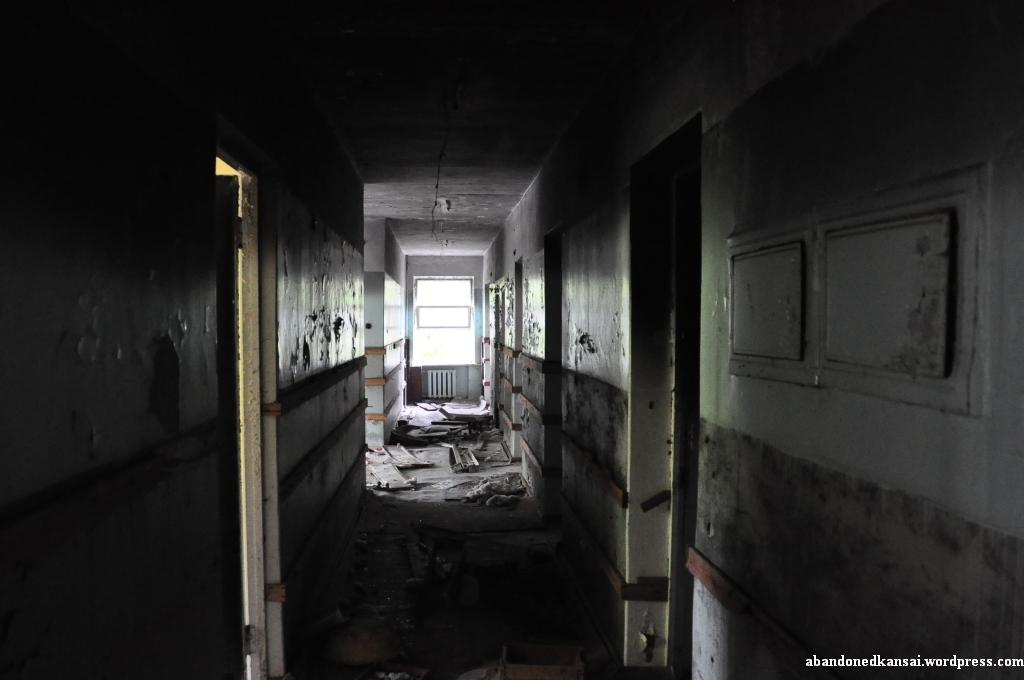
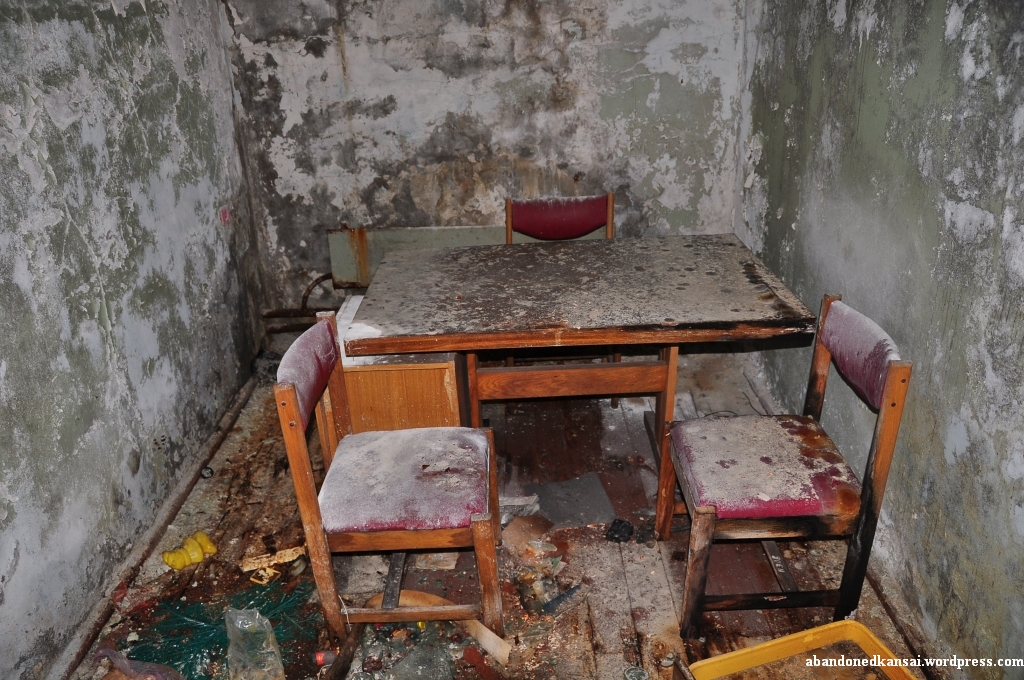
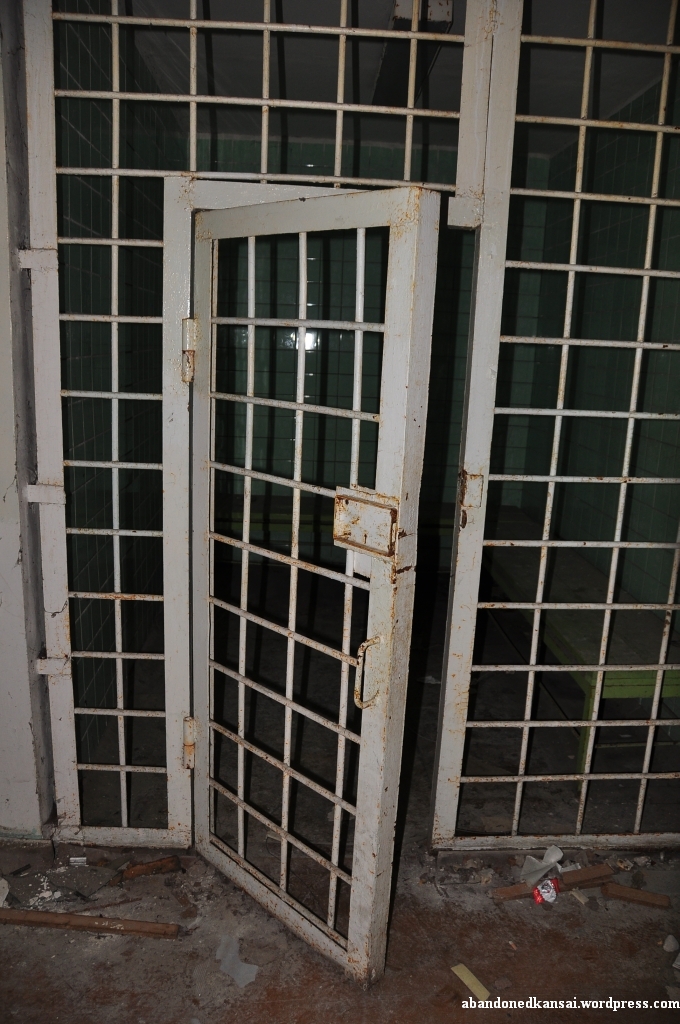
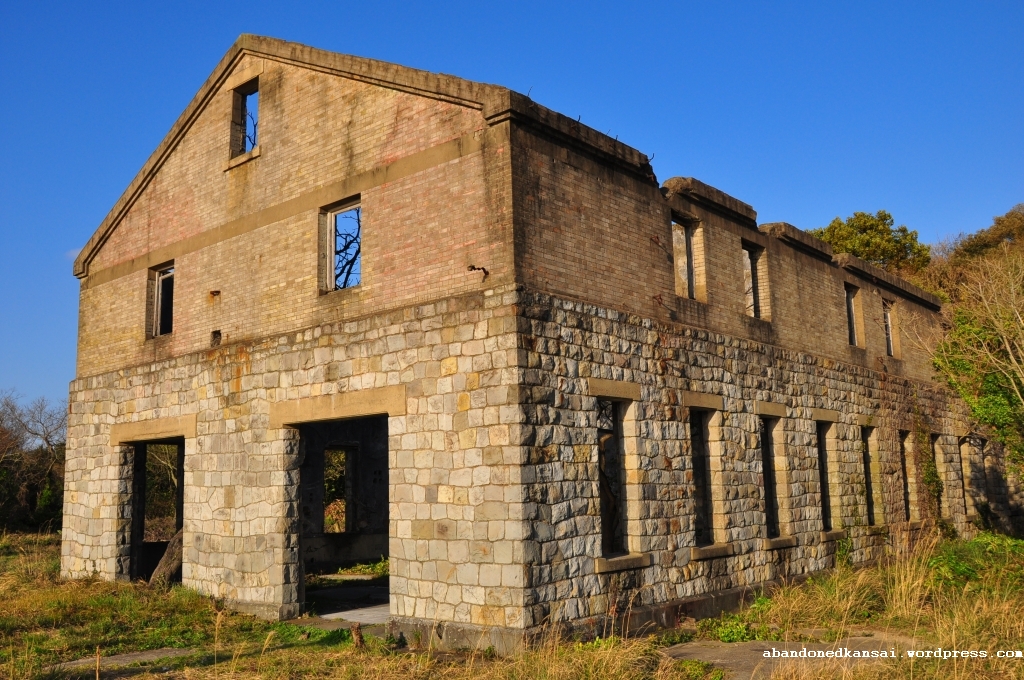
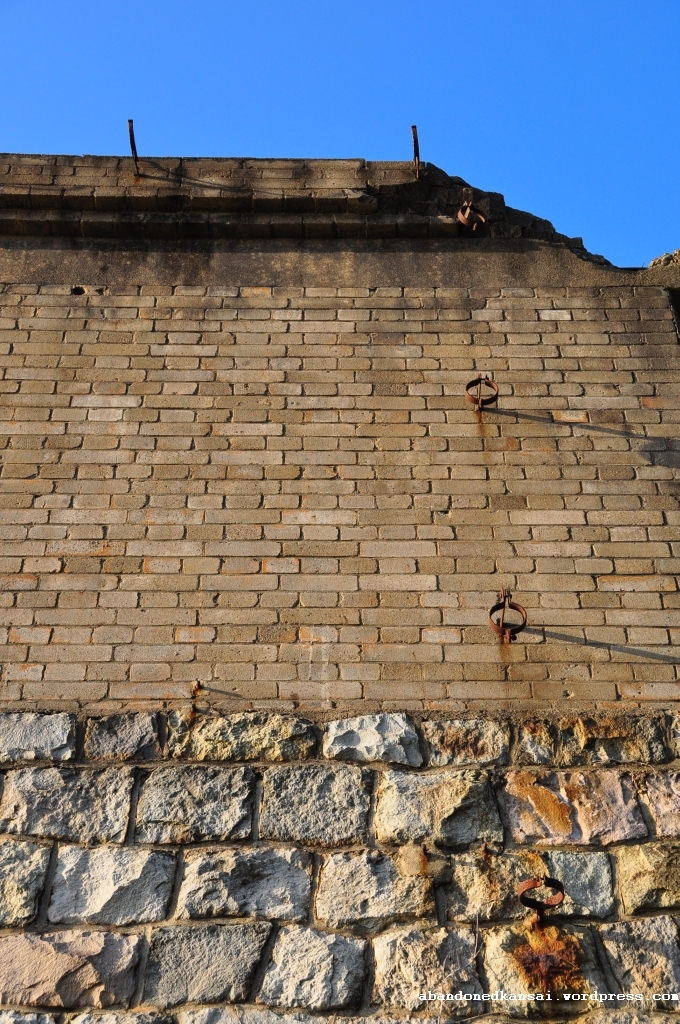
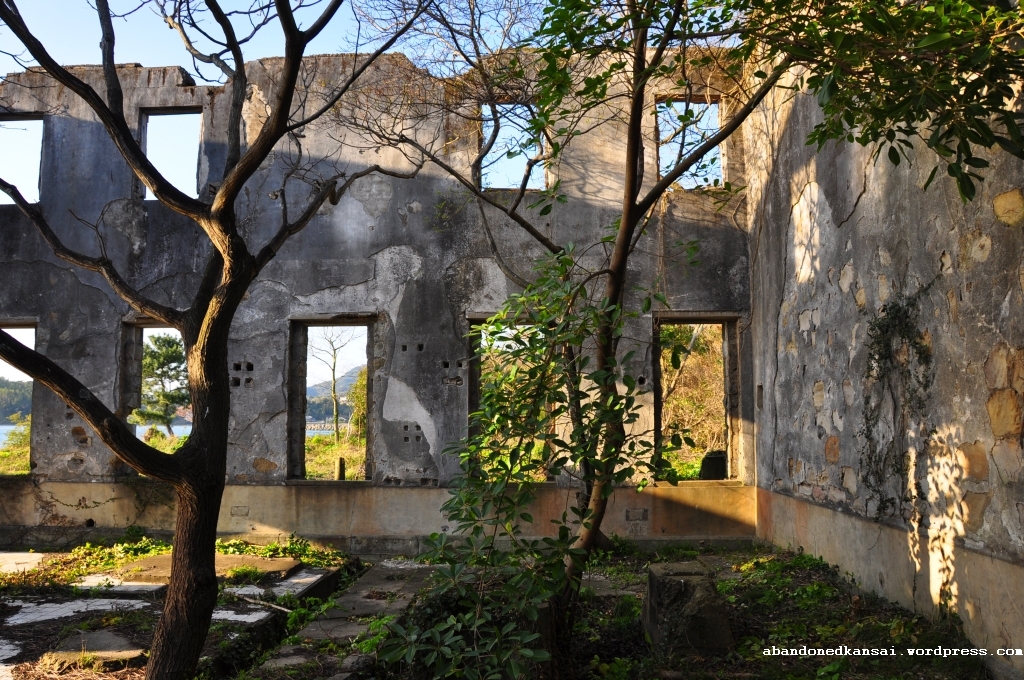
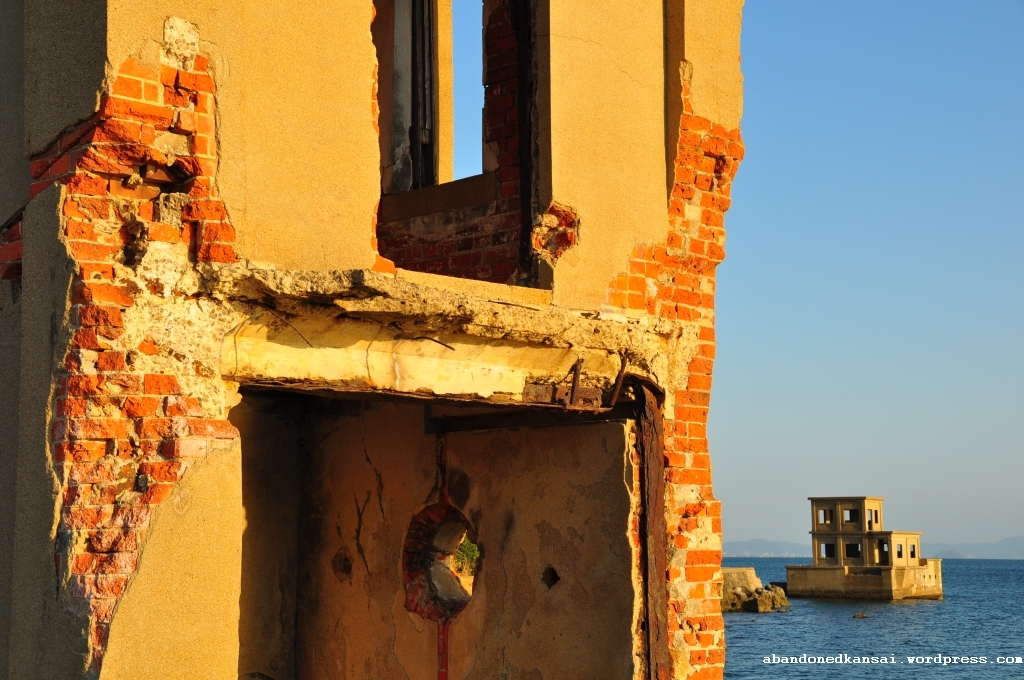
The Imari Kawaminami Shipyard, also known as the Kawaminami Uranosaki Industrial Shipyard or the shorter version Kawaminami Shipyard, is one of the best documented urban exploration spots (haikyo / 廃虚) in Japan. Pretty much all blogs about the topic cover the shipyard, Japanese as well as those written by foreigners living or visiting Japan, and it’s marked on countless maps. It’s a perfect location for beginners since it’s right next to a major road, parking spots are available close-by and a train station is just a couple of 100 meters away. There are no (real) fences, no security, no nosy neighbours. And the place is buzzing! During my 4 hour stay I met about half a dozen people, both Japanese and a foreigner. A relaxed start into my 4 day trip to Kyushu…
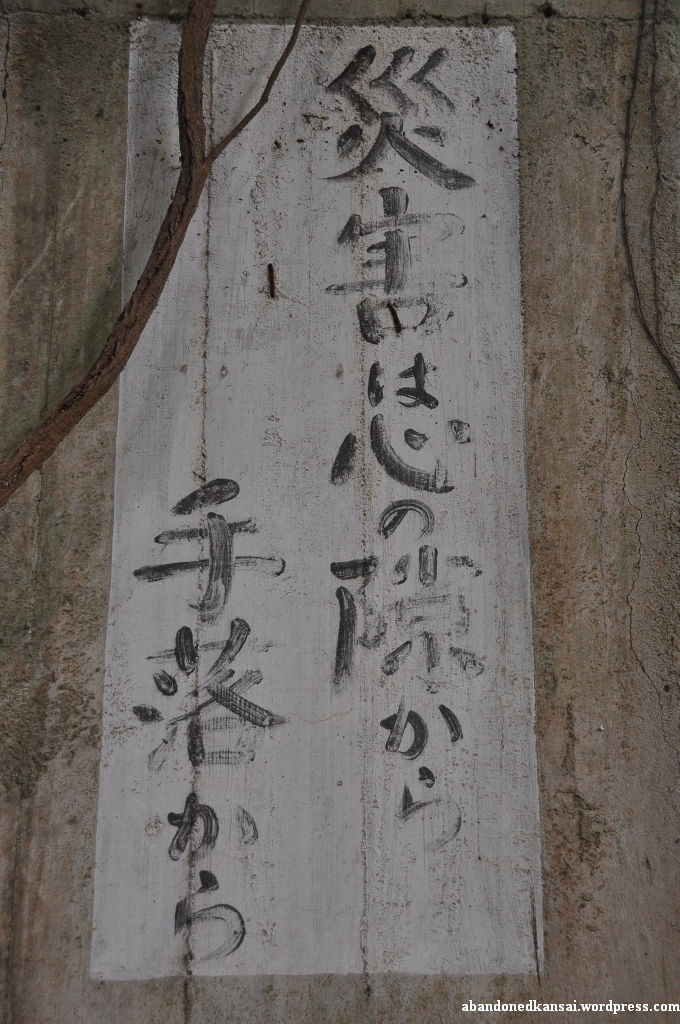
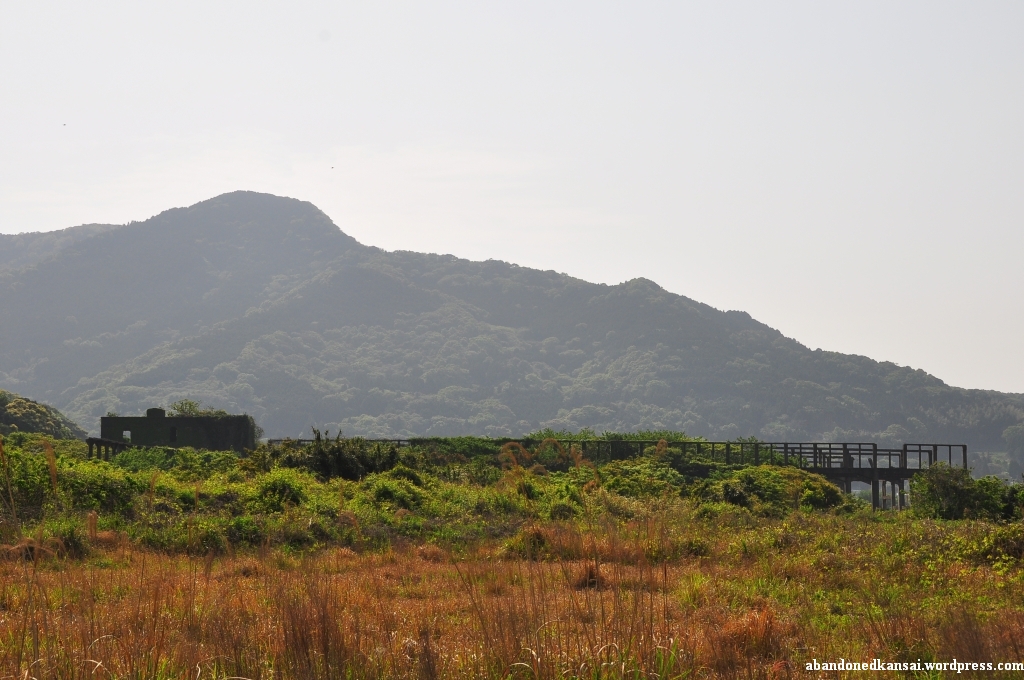
A trip that started at 4.50 a.m. when my alarm clock reminded me that I can rest when I’m dead. I took one of the first Shinkansen high speed trains from Osaka to Hakata / Fukuoka and from there it was another 3 hour train ride to the station mentioned earlier. I finally arrived at the Kawaminami Shipyard at around noon with one of those weird Japanese spring skies that white out most photos as soon as even parts of the sky are visible. After I entered the shipyard I dropped my luggage right at the entrance to have a look around – and I was rather disappointed. The main building is not much more than a concrete skeleton as seen many, many times on all kinds of homepages and blogs. I had a quick look around, taped a walking tour of the building and after I took some pictures for a couple of minutes in the main hall I saw two guys back at the entrance. It’s always a weird feeling when other people show up at abandoned places as you never know if they are fellow explorers, security or some random society outsiders. (The latter kind is rather rare in Japan – I’ve never met druggies, only one homeless guy once.) The guys turned out to be Ben, an English teacher from Otsu in Shiga (close to my current home), and his Japanese friend from Kanto. Extremely nice guys and a welcomed chance acquaintanceship.
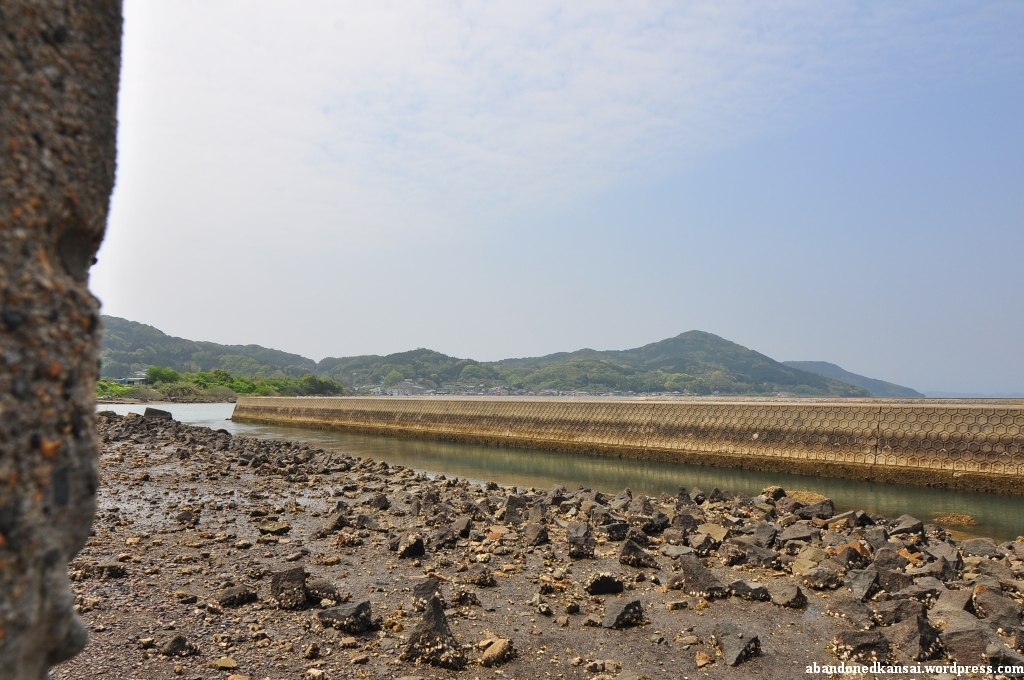
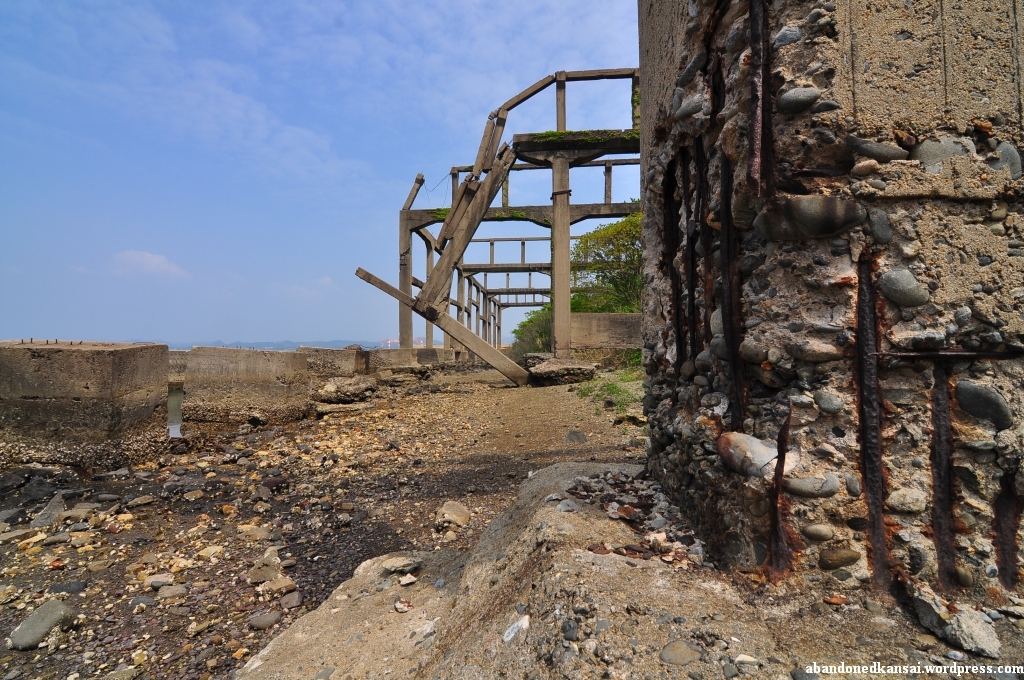
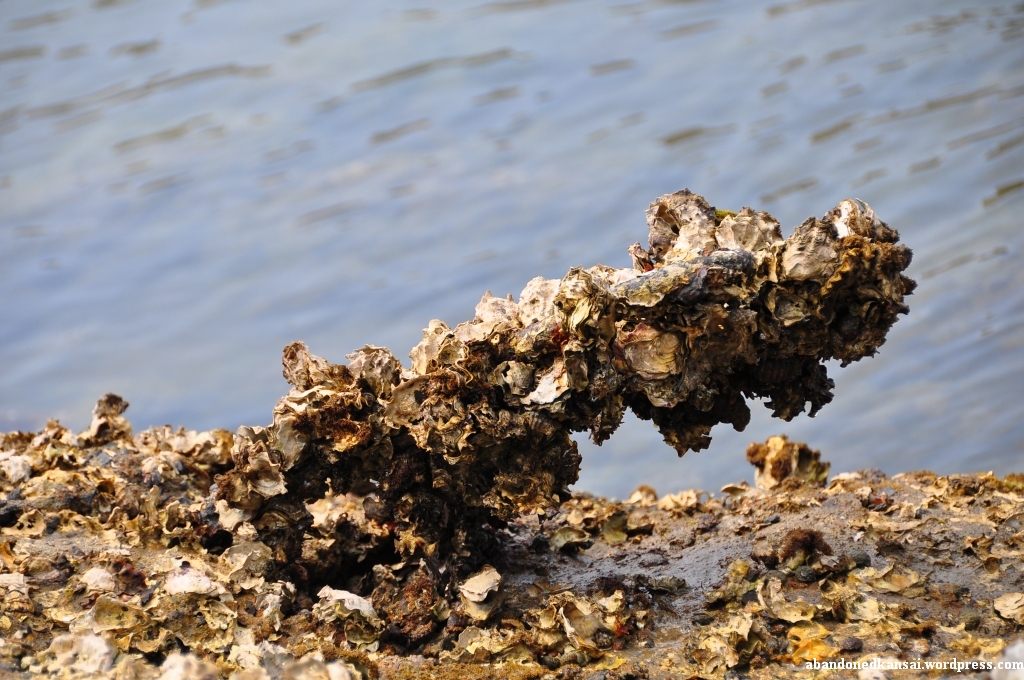
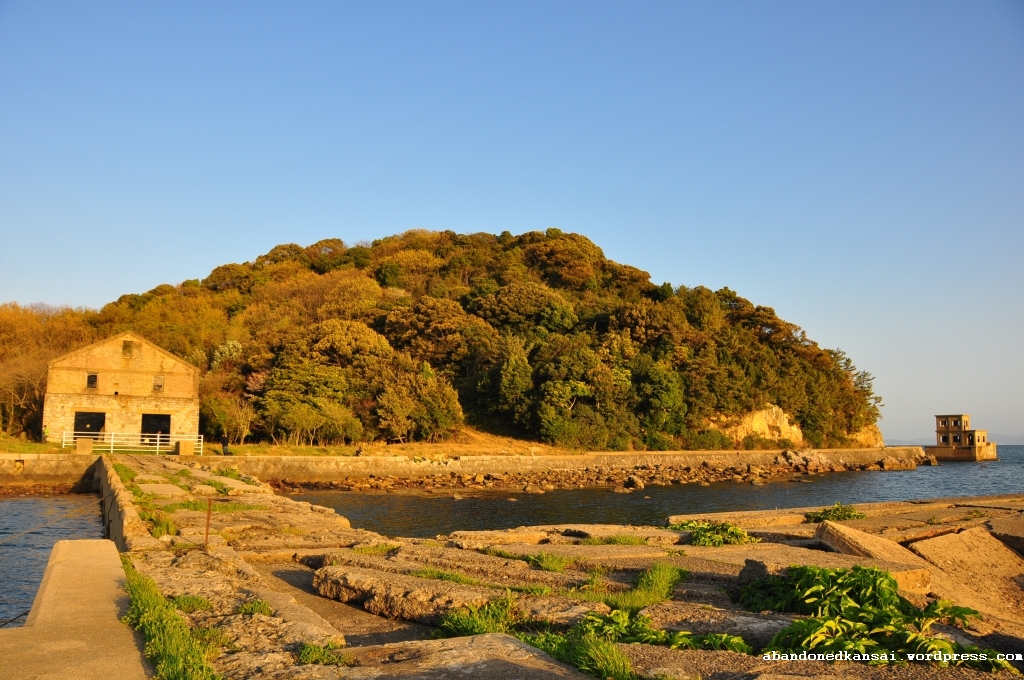
After a while we left the overgrown building to explore the even more overgrown outside part of the shipyard. We followed a narrow trail and after about 3 minutes we reached seaside part of the shipyard which surprisingly many photographers miss. This area I actually enjoyed a lot more. The tide was low, we were free to roam the area and were able to shoot from angles usually covered by water. The sky had almost cleared up by that time and in combination with the nice breeze it created a very relaxed atmosphere.
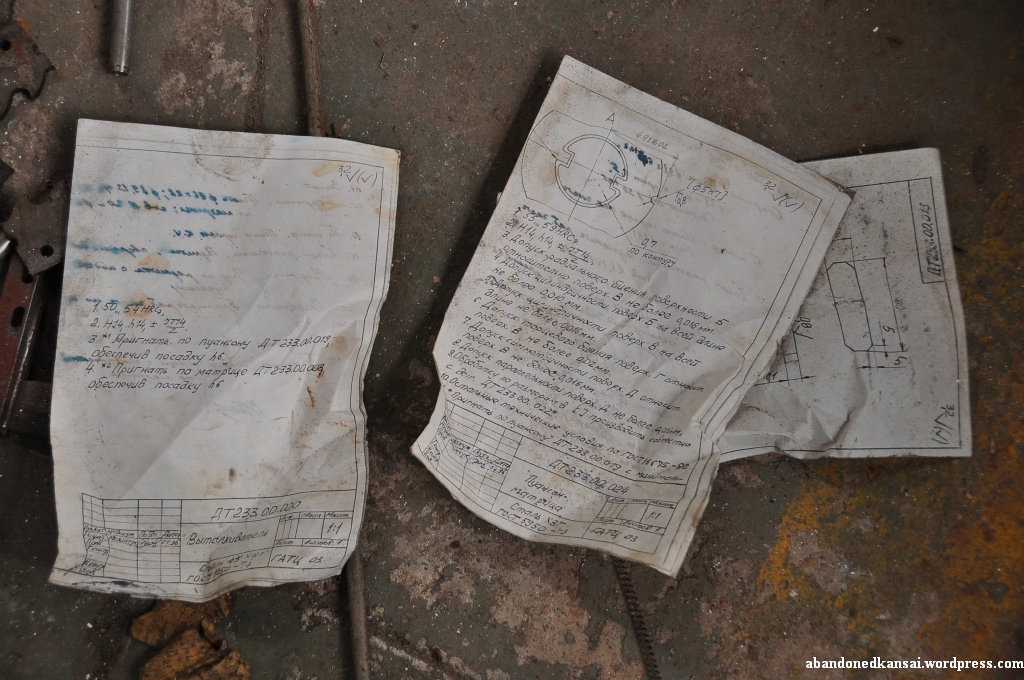
When we were done shooting that part we made our way onto the dam in front of the shipyard, significantly newer than the abandoned complex. We were down halfway when a guy on a bike came closer. Since there was some construction going on close-by I was worried that the guy might be security, but he turned out to be a senior citizen who enjoys fishing. A chatty senior citizen who was more than happy to give us a little bit of insight on the shipyard. According to him the building we were exploring earlier and that is always referred to as the Kawaminami Shipyard actually wasn’t a shipyard, but a factory for spare parts and the administration building of the company. He claimed that the actual shipyard was further up north, but demolished quite a while ago – which is probably only part of the truth given the shape of the building now abandoned. Since the location is completely gutted and there are some articles available in English my interest in the historical background is actually surprisingly low – but according to the Japanese Wikipedia it was opened in 1936 (to support Japan’s efforts in their wars that started earlier in the 30s) and closed due to bankruptcy in 1955. One of the more curious items built there were the manned “suicide torpedoes” called kaiten (回天), probably to be delivered to the rather nearby Katashima Suicide Training School, a place I visited during my first trip to Kyushu in March of 2010.
Anyway, after the fisherman continued his way Ben and I went to another haikyo east of the shipyard (I’ll describe that one in the next posting) before we finished our circumnavigation of the endangered beauty.
The Kawaminami Shipyard is actually way more impressive from the outside than from the inside and I guess in winter even more so than in late spring. Nevertheless it was a perfect first location on my second trip to Kyushu – one that set the tone for the days to come…
Addendum 2012-1-30: The Imari Kawaminami Shipyard was demolished in late 2011 / early 2012. Now you can find its exact location on my *map of touristy and demolished ruins in Japan*.
Archive for the ‘Military’ Category
Imari Kawaminami Shipyard (伊万里川南造船所)
Posted in Abandoned, Asia, Factory, Haikyo, Japan, Kyushu, Map, Military, Nagasaki, Shipyard, Urbex, Video, Visited in 2011 on 2011/06/17| 8 Comments »
Zone Of Alienation – Pripyat: Jupiter Factory
Posted in Abandoned, Chernobyl, Europe, Factory, Map, Military, Pripyat, Ukraine, Urbex, Video, Visited in 2010, Zone Of Alienation on 2011/03/02| 9 Comments »
“The next location will be even better!”
Those were the words Maxim used to lure us away from the absolutely amazing Hospital No 126. We hopped into the van and drove to the other end of Pripyat to see… an abandoned factory. Wait. What? A factory? Seriously? A factory? Better than a hospital? No way!
Please don’t get me wrong: The Jupiter Factory was awesome! I’ve never been to an electronics factory that big. But in the end it was just a factory… one of the most common abandoned places in the world. And not even nearly as fascinating to me as Maxim hoped it would be. But I’m not into First Person Shooters whereas a lot of people visiting the Zone Of Alienation are. And for them the Jupiter Factory is one of the highlights since it was a setting in the game “S.T.A.L.K.E.R.: Call of Pripyat” by GSC Game World – one of the most popular FPSs of the last couple of years.
We entered the Jupiter Factory, one of the biggest employers in Pripyat, through the main gate and passed by some administration buildings. Since the site is located at the western city limit of Pripyat nature is taking over the area rather quickly. The streets on the premises were partly overgrown with climbers, some of them even seemed to be some kind of grapes. None of us tried them though, for obvious reasons.
The assembly halls were absolutely impressing – huge constructions with all kinds of machinery still in there. The walls displayed dozens of warning posters and the workbenches were covered with tools and instruction manuals. But like with so many other places in Pripyat there is hardly any reliable information about the Jupiter Factory. It’s known that the plant produced tape-recorders and other consumer products under the label “Mayak”, but of course there are also unconfirmed speculations. Rumors about secret military research and stuff like that in underground laboratories. But since the basement is flooded nowadays it only adds to the mystery…
Which makes me wonder why nobody really tried to write a comprehensive book about Pripyat, at least not in English. Every tiny town in Europe has a local historian that knows every little thing about the surrounding 25 km2 – but Pripyat? It’s surprisingly hard to find reliable information about the city… (I’d love to do it, but with no knowledge of Russian / Ukrainian I don’t think I’d get far.)
Anyways, if the Jupiter Factory would have been my first urbex exploration ever I’m sure I would have been completely blown away and could have spent hours there. Even now that I’m back home I wish I had a place like that nearby. It would be worth to write several postings about it and I could come back at different seasons and during different weather conditions. But when I explored the place I was rather underwhelmed, especially since I had to leave the hospital in a hurry…
(If you would like to know more about my trip to the Zone Of Alienation please *click here* to get to the “Chernobyl & Pripyat” special. For a map of the area please *click here*.)
Zone Of Alienation – Pripyat: Police Station
Posted in Abandoned, Europe, Map, Military, Pripyat, Ukraine, Urbex, Video, Visited in 2010, Zone Of Alienation on 2011/02/07| 14 Comments »
Although Pripyat was a city predominantly inhabited by educated and privileged people of course no city of that size could exist without a police station – it sounds so cliché, but most of the arrested people were accused of alcohol related deeds: making home-brew liquor (samogon, самого́н), driving under influence or being drunk in public. Pripyat’s police station was located at the western end of the town, right across the street from the fire department and in close proximity of the famous Jupiter factory we were visiting the next day. After visiting rather well-known touristy spots like the Swimming Pool “Azure” and Middle School #3 the Police Station was the last destination in Pripyat on the first day.
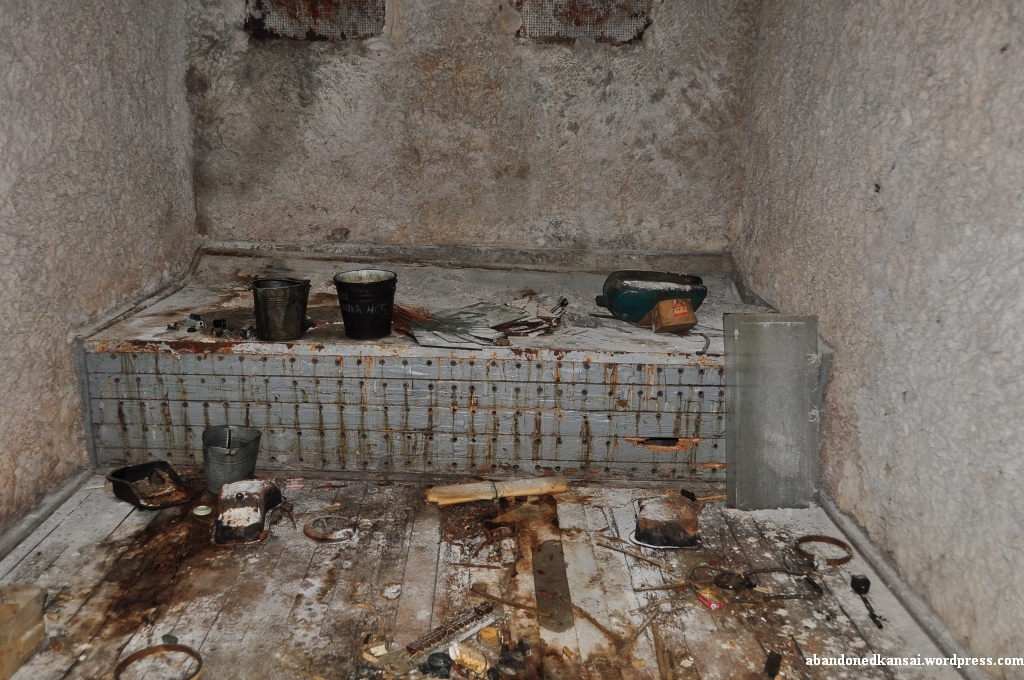
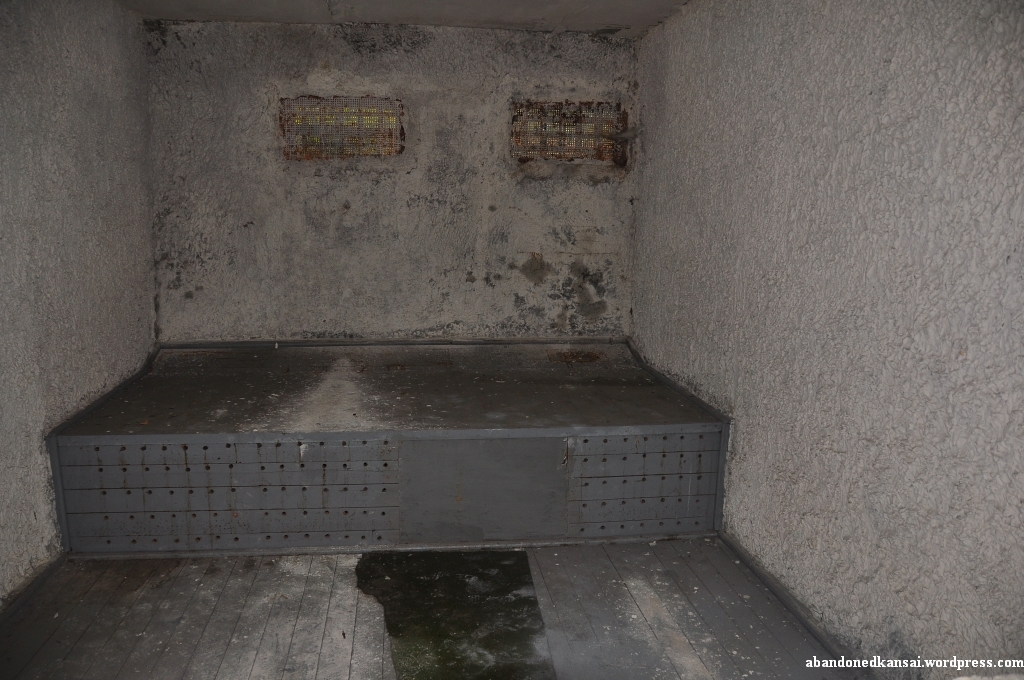
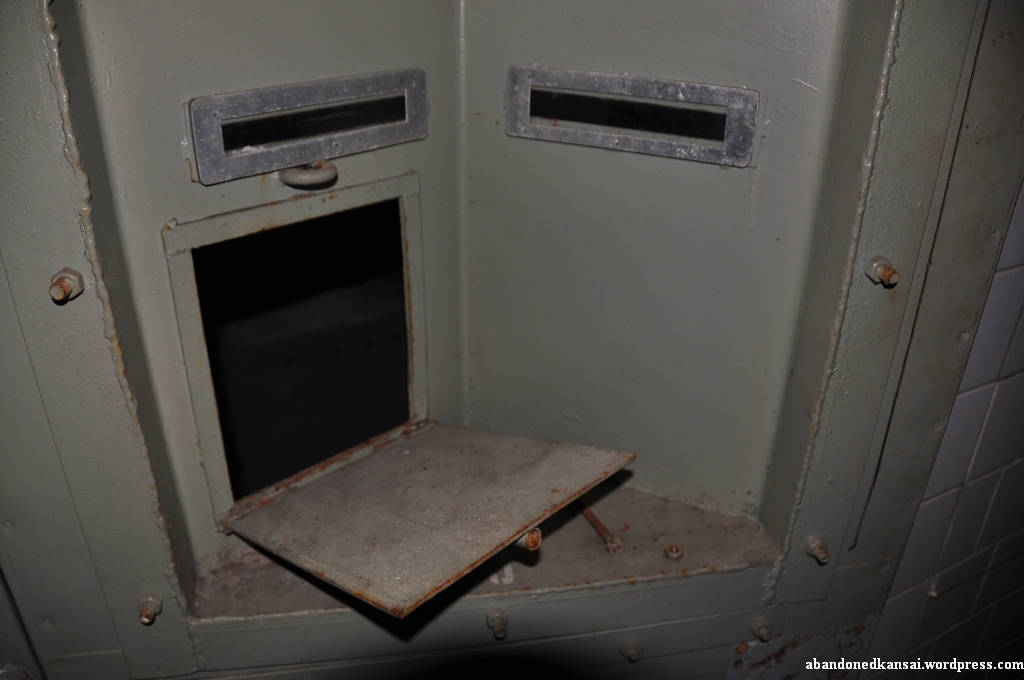
The Police Station was in as bad shape as the rest of the city, just with more books and files. We were only able to see the ground floor since time was running out and Maxim tried to keep the little group together to guide us through the prison part of the police station which was pitch black; and that’s why this time I’ll have to post some photos taken with flash. When I show people some pictures of my visit to Pripyat I often get reactions like “I would expect screaming zombies charging at me at any time!”. I actually never had that feeling, the whole city reminded me more of George Orwell’s “Nineteen Eighty-Four”. Especially when walking through the dark prison hallway… You could almost see Winston Smith being interrogated in one of the cells and being tortured in another one. To my surprise I was the only one with those associations: My fellow Swiss travelers had only heard about the book, Maxim had no idea what I was talking about.
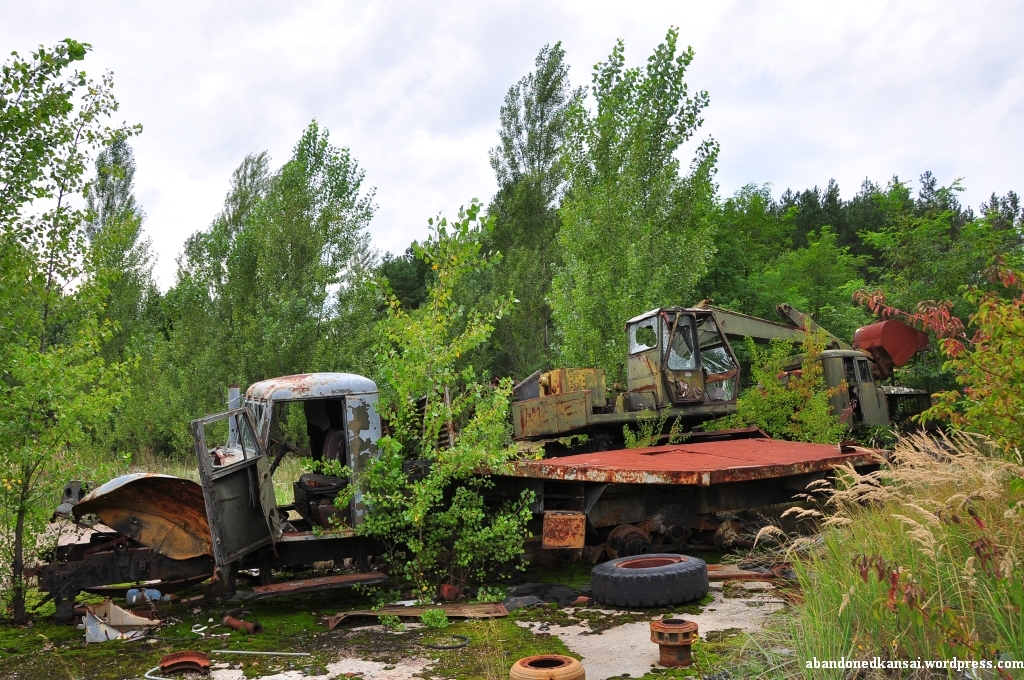
The door leading to freedom at the other end of the cell hallway actually released us to the backyard of the Police Station, once used as a repair shop for automobiles. There we found the remains of all kinds of trucks, broaching machines and even small reconnaissance tanks. Being contaminated too much to be used anymore, but not enough to be brought to the official vehicle graveyard, these wheels and chains were left behind to rust away. And that’s what they were doing. At least what was still left after looters removed the actual wheels as well as doors, headlights, wipers and even motors!
(If you would like to know more about my trip to the Zone Of Alienation please *click here* to get to the “Chernobyl & Pripyat” special. For a map of the area please *click here*.)
Katashima Training School
Posted in Abandoned, Asia, Haikyo, Japan, Kyushu, Military, Nagasaki, School, Urbex, Video, Visited in 2010 on 2010/04/21| 6 Comments »
The Kamikaze suicide attacks of World War 2 are without a doubt the most famous manifestation of Japanese fanatism. But hardly anybody knows that the Japanese military generally had a thing for self-destructing soldiers – they blew up their own people not only in airplanes, but in mini-submarines, speed boats and as divers with mines on top of a 5 meter long bamboo stick. Maybe the weirdest weapon of the “Japanese Special Attack Units” were the kaiten, a strange mix of submarine and torpedo. And all of those poor souls were trained in small town in the south of Japan.
In 1944 the Japanese Navy moved their special training school from Yokosuka (of Shenmue-fame) to the Kyushu countryside – there they set up squadrons for shinyo (“sea quake” – explosive speedboats), kaiten (“change the world” – manned torpedos), koryu (“sea dragon” – mini-submarines) and fukuryu (“crouching dragon” – frogmen). The remains of that training school, including an observation tower and a launching platform for the different vehicles can still be found at a northern shore of Omura Bay.
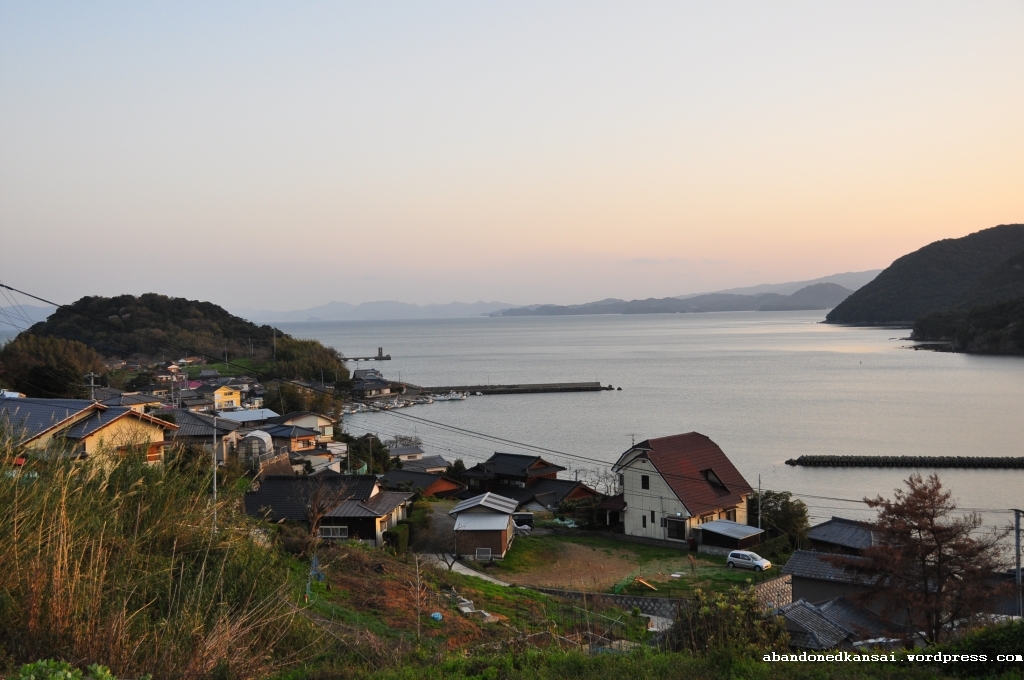
Arriving at the train station closest to the Training School you would never expect an institution like that in the area – the surrounding is picture book countryside, a great place to go for a summer vacation. Located at the tip of a peninsula you have to walk down a small mountain (well, more like a hill) with some beautiful gardens. Except for the one where the owner took the term “scarecrow” too literal and hung up a dead crow to scare away its fellow species.
After passing through a small fishing village we (like I mentioned in earlier postings: haikyo trip with Enric) reached the remains of the school – one rather big building without a roof, with a smaller, overgrown one next to it. Right in front of main building the already mentioned bridge lead into the lake to a launching platform for the vehicles that were the school’s main subject. Further along the coast and a few meters into the lake, once connected by a metal bridge, was a still standing observation tower.
Coming closer I realized that we weren’t the only people there: Two (female) cosplayers and a photographer were in the back of the main building, a fellow haikyoist was shooting the front from the outside – later on two or three more haikyoists joined us; seems like the location isn’t really a secret…
The Training School must have been a lot bigger when opened in 1944 – there were foundations and wall remains on both sides of the main building, indicating a much bigger complex. The remaining building had some pits in the ground and two rather big doors with a track once leading right onto the bridge, so I guess it’s safe to assume that it was used to repair and / or store the different kinds of vehicles. The school itself as well as the accommodations for the staff and soldiers must have been someplace else. Sadly only the walls remained, some of them with leftover fixtures for rainwater gutters and things like that; the same applied for the other remaining structures, too. Enric found a shard somewhere – of course I can’t say for sure that it was from the time the Training School was in use, but I took a picture anyways as I like (broken) items from daily life.
When choosing the Training School as a place to go to I mainly did it because it was located on the way between the two main attractions of the Kyushu trip (one of the two we had to cancel thanks to scheduling conflicts – more about that in the next blog entry…). The pictures I’ve seen on several Japanese sites weren’t that spectacular, but it was on our way, so why not have a quick stop and take a few pictures? Initially we wanted to go there the previous day, but in the end I was glad we didn’t. The weather was nasty that day and I’m sure I would have felt miserable and the pictures would have been quite dull. Instead we went a day later and while the weather still wasn’t good enough to go to Gunkanjima (the boat trip was cancelled – but we made it there the next day, so not much harm was done in the end… you will be able to read all about that in the next blog entry) it was absolutely gorgeous for a photo shoot. A cold, bright, windy day at first the whole place was flooded with warm light when the sun went down…
(*Like Abandoned Kansai on Facebook* if you don’t want to miss the latest articles and exclusive content – and subscribe to the *video channel on Youtube* to receive a message right after a new video is online…)