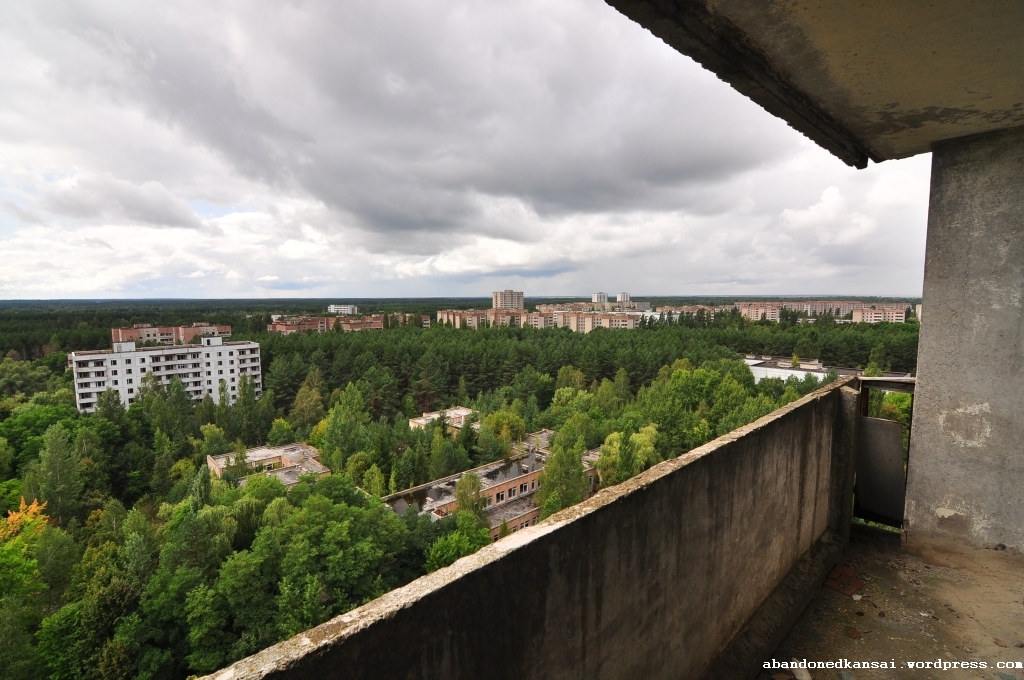
After I came back to Japan from my trip to Germany (meeting family and friends) and Ukraine (visiting Prypiat and Chernobyl) I kinda lost my drive a bit – living in Japan is way more wearing than you might think and which haikyo could really compete with an abandoned city in the middle of a radioactively contaminated zone? Going with Mike Grist to Nara Dreamland was exciting, but I’ve been to Dreamland before. Going to the Doctor’s Shack with the Gakuranman was interesting, but the place was already trashed pretty badly. Haikyo hiking alone was relaxing, but… well, it was haikyo hiking. Been there, done that many times. Eight weeks and tons of German sweets after I returned to Kansai I met Michael Gakuran again…
About 4 months ago Michael posted a location he called The Lost Subterranean Shrine, an original find he located in early summer. If he would have kept the location a secret and took it to his grave I don’t think anybody could have blamed him for that. You just don’t come across tunnels with religious artifacts – and vandalism as well as theft are common urbex problems, also in Japan. Nevertheless Michael guided me there and I’m even more grateful for that than I was when he showed me the Doctor’s Shack.
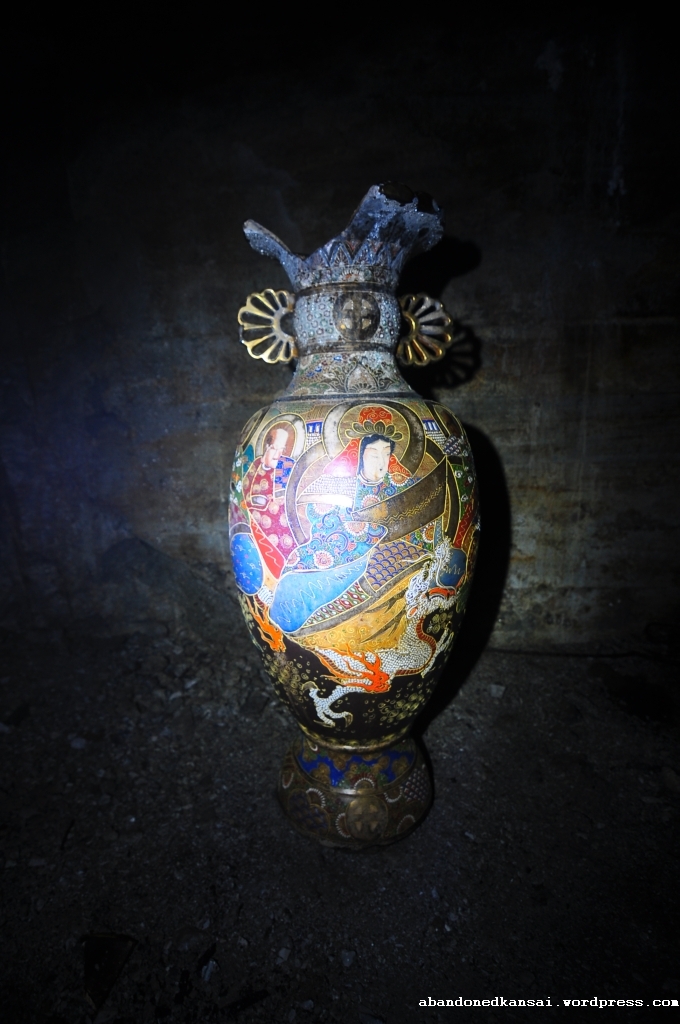
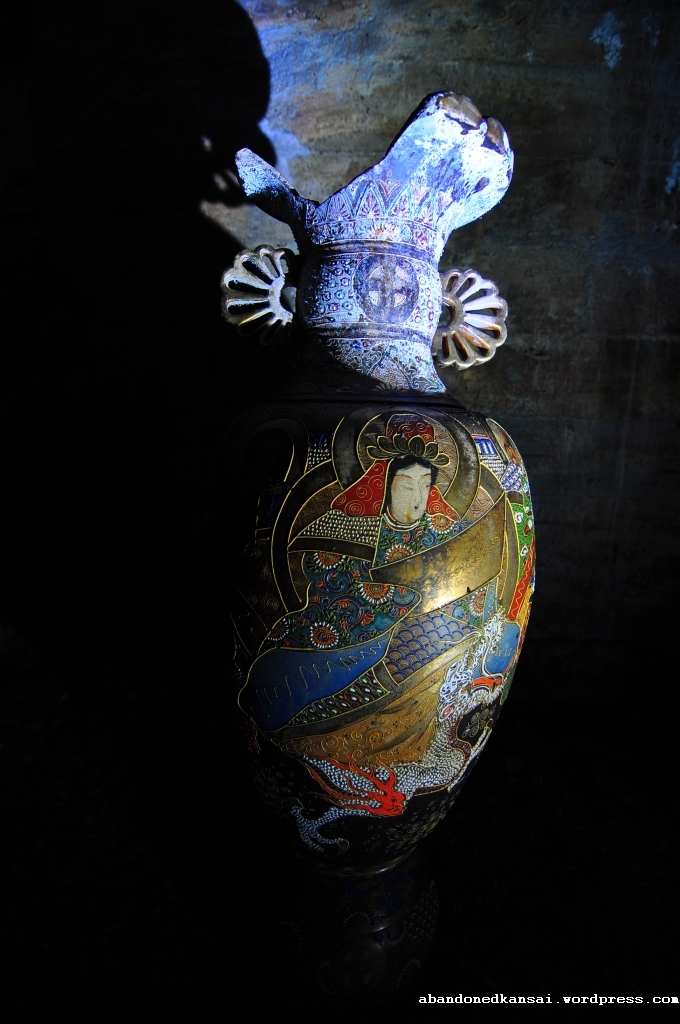
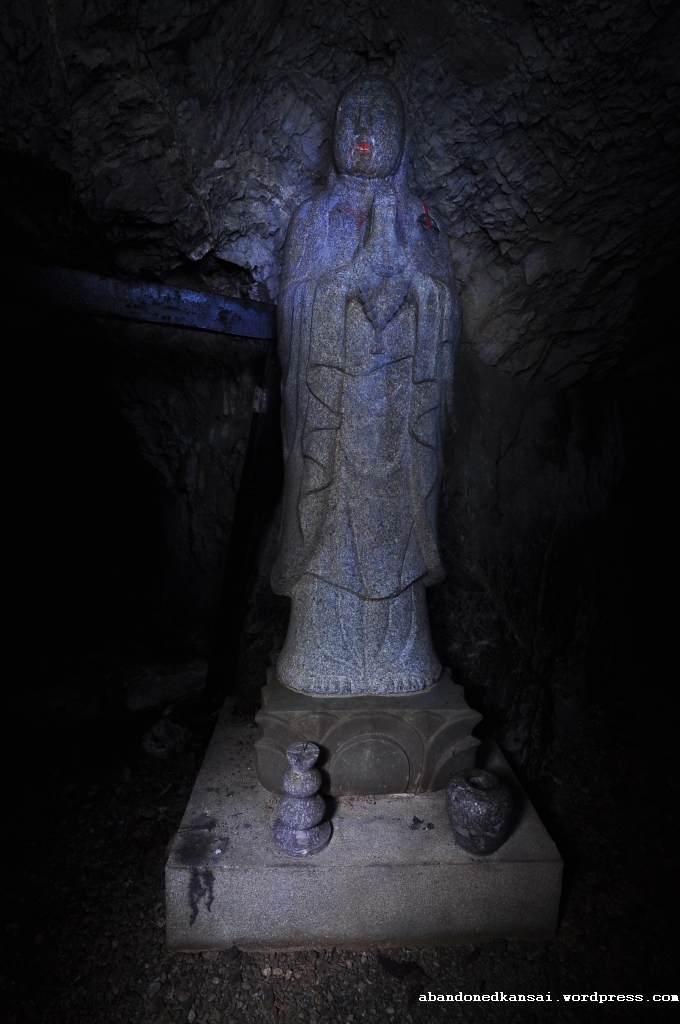
Reaching the entrance of the Lost Subterranean Shrine I was exhausted: Half up a mountain and lunch skipped the pouring rain was killing me – especially since I didn’t bring an umbrella. Michael removed the gate at the entrance to the tunnel and we both let out a little scream looking at the hand size creatures on the walls – Michael of joy (he loves critters of all kinds), me of disgust as I like my nature tamed – or grilled… I decided to keep the soaking wet towel on my head, just in case one of those chitin bastards decided to fall on me, and entered the tunnel, which at about 1.70 meters was 20 cm too low for me. This posture of humility was kind of appropriate considering what I was about to see, but it was nevertheless far from being comfortable. Neither was the insanely high humidity you could actually see in the beams of the flashlights we were carrying. After about 40 meters into the tunnel I saw a statue standing at a bifurcation, brightened by the beam of my flashlight – left: dead end, right: continue. After another 40 meters we reached a cave of maybe 15 by 15 meters with two rather small stone tables and a couple of stone stools around. The head end of the room had kind of an altar with several statues, vases and busts, flanked by a beautiful but damaged vase to the left and a simple brown one to the right – judging by their style the items must be from the south; Okinawa, maybe even Taiwan or China. On the main end of the altar were two openings right at the ground, leading to a secret room as Michael found out previously. Being 1.92m tall and blessed with a broad back I passed on crawling through the tight openings and started shooting. Or at least I tried. I never shot in complete darkness before and since I had my wide-angle lens mounted I couldn’t even use the flash since it creates nasty shadows on the pictures – switching the lens was not an option either as the humidity was crazy inside the cave and it was raining outside. Luckily I had some experience shooting manual thanks to my visit to Nara Dreamland at night and so I grabbed my tripod and two flashlights and started improvising. Playing around with different settings and ways to direct the lights was fun, but extremely exhausting, especially at the altar part because there the ceiling was way lower than in the rest of the comfortably sized cave room. Since it was getting dark outside our time was limited and after about half an hour we had to leave, although I wasn’t nearly pleased with what I had seen on the LCD of my D90 – we had quite a walk in front of us through pouring rain, making me worried if my camera would survive.
Well, the camera survived and I was even spared the week long cold I expected to get. What I got instead was a couple of surprisingly good shots of the vases and busts – never trust a camera monitor, especially when feeling tired and worn out.
Looking back at the exploration of the Lost Subterranean Shrine from the comfort of my apartment actually re-ignited my haikyo fire. When I came home that day I was just exhausted: It took me almost 16 hours and 9000 Yen to get to the place and back, I got caught by a rainstorm, had to drag myself up half a mountain, it was cold and humid, the walls were covered with really nasty beasts, I had to shoot under the most difficult conditions so far and on the way home I was soaking wet, smelling so bad I couldn’t stand it myself. But it’s not the average abandoned hotel on a sunny day that’ll stay in my mind. It’s an adventure like this with a friend like Michael and pictures like those…
(*Like Abandoned Kansai on Facebook* if you don’t want to miss the latest articles and exclusive content – and subscribe to the *video channel on Youtube* to receive a message right after a new video is online…)
Addendum 2010-12-01: As I mentioned in the comments I wrote e-mails to my former professors for Japanese History and I’m very grateful they answered quickly although they had barely any information about the place.
One assumed that the busts might depict the former owner / founder of another haikyo in walking distance, the rest being typical items of a butsudan plus some items the man might have liked when he was still alive. Another professor had a closer look at the vases and thinks that they are not that old, rather from “modern” industrial production, since their colors are very strong and not faded at all – maybe pre-WWII, especially since the busts include suits, not kimonos; going along with what sumi said. She guesses that the items were put there during WWII to protect them from American bombardments during the war. It’s possible that the owner(s) didn’t survive the war and therefore the place was forgotten. Then I asked an archaeologist for advice and she wrote me that the items by themselves are of no monetary value whatsoever. Stuff like that would be available in local “antique” junk shops, even the busts have more personal / sentimental value than actual monetary value.
Since we can’t be sure that the place is really abandoned (just because it looks like it doesn’t mean that nobody goes there anymore or claims it as their possession) and the things don’t seem to be of real value I decided not to take any actions. Maybe the place will be left alone for another 30 or 40 years and then the cave and its items might be interesting to some local historians…
Read Full Post »








 Abandoned Kansai