All abandoned: Chernobyl / Pripyat, Nara Dreamland, Anti-Zombie Fortress, Japanese Sex Museum – and many, many more! Plus: North Korea Special – 2 trips, 16 days / 14 nights! As seen on CNN…
Pyongyang’s June 9th Middle School is the showpiece school in North Korea and the reason for that is not really a surprise: Kim Il-sung himself ordered to build a new school in 1969 – on June 9th, hence the name.
Since we started to run behind schedule due to crashing an English lesson at the *Grand People’s Study House* we basically rushed through the June 9th Middle School, even past the painting of Kim Il-sung and Kim Jong-il surrounded by children that decorated the entrance. Almost all the pictures I took made me fall behind the group, luckily my fellow travelers wanted to take photos, too, so there was always somebody else at the rear. Pauses were only made in class rooms. One showed the history of the school, one housed the an exhibit collection (for example taxidermy animals and eggs of more than a dozen birds) and one was clearly the science room, with two microscopes on each table; different models, by the way – and I have no idea why there were pencil cases on each table; one row for boys (blue), one row for girls (pink). Although there were some boys playing soccer outside the place felt strange to me. Well, it was past 5 p.m., so barely any school in Germany would be more lively, especially in the afternoon before a national holiday, but…
We were in for another treat anyway – since the school is proud of their education in the fields of dance, drama and music a couple of students insisted on performing for us. After two tourists were dragged on stage at the *Mangyongdae Schoolchildren’s Palace* I asked Sarah if this would happen again, so she told me about that school we would visit later during the trip… and I decided to place myself in second row again, making sure to have people sitting both to my left and right. A wise decision, because for the grand finale all but a handful of foreign visitors were dragg–… invited by kids to join them for a group dance performance.
The Mangyongdae Children’s Palace was by far the weirdest destination on my trip to North Korea. Not the weirdest experience in my life, but it turned out to be a very, very close second…
Located right across the KITC restaurant on Kwangbok Street (down the road turning into the Youth Hero Highway leading to Nampo) the biggest of many children’s palaces in North Korea features 650 rooms on 6 floors, including a gymnasium, a swimming pool and a 2000 seat theater; its shape symbolizing a parent hugging their children. (Or Kim Il-sung / Kim Jong-il hugging children. Kim Jong-un still was a kid himself when the building was erected in the late 1980s and officially opened on May 2nd 1989.) Palaces were always popular in communist countries. Not to live in, but for education and leisure. Pretty much every city in the former Eastern bloc had at least one Palace of Culture (*here I visited the one in Pripyat near Chernobyl*) where people could watch movies, rehearse theater plays, practice on musical instruments, do sports, … Children’s Palaces are basically the DPRK version for juniors – I’ve never heard of them in the context of Soviet Russia or the German Democratic Republic, so they might be a North Korean invention. But while Palaces of Culture were open for everybody the Children’s Palaces are only for the most talented kids in the DPRK. Here they learn foreign languages, do sports, perfection their computer skills or practice instruments as extra-curricular activities – reportedly up to 5400 children at a time!
When writing about the *Workers Party Foundation Monument* I mentioned how much monument planners love symbolism – hardly anybody knows that it backfired in this case. In front of the Mangyongdae Children’s Palace is a huge sculpture called Chariot of Joy, depicting a chariot drawn by two winged horses, manned by eleven children – symbolizing the number of school years in the DPRK… raised to twelve in 2012. 🙂
As I mentioned in the *previous article*, my tour group was running late and so we were eagerly awaited by our local guide (most places actually had local guides that guided our Korean guides who guided our western guide who guided us; the DPRK clearly is a communist state…) – a young girl, early teenager, with astonishingly good English. So we rushed through the corridors, stopping here and there for some short presentations. Ballet / dancing, piano, drawing. Most of those presentations were hard to watch, for different reasons. The main dancing girl, maybe 8 years old, was excellent, but she slammed her knees to the ground so hard and so often that it would really surprise me if she would be able to walk pain free when she’s a teenager… or now, for that matter. The drawing / painting room I call fake. About 20 kids were sitting in front of busts, but everybody had a different drawing in front of them. Faces, geometrical structure, ears – it was not only not a consistent class, in the five minutes we spent in that room hardly any of the kids were touching their drawings, some of which looked amazing. I’m not saying those kids are not talented, but I am not really buying their “presentation”. Same for the two painting girls. It took me forever to take a photo where one of them put the brush to the paper…
And then the weirdness meter exploded. I have to say in advance that I am not a big fan of singing and dancing… or overacting… or children performing – and what happened next combined all three (four…) and brought it to a level I hardly thought was possible. My group, along with some other tourist, were lead to the already mentioned auditorium, filled about half with North Korean kids. When I asked Ms. Park before, if she went to the Schoolchildren’s Palace as a child, she told me no, only as a visitor; but that she loved it and admired the children performing. I guess it was a blast from the past for her. I felt more and more uncomfortable by the minute while taking one of the honorary seats all foreign visitor got in the center of the first three rows. Row number 2 in my case, which turned out to be a piece of luck a couple of minutes later. The show started and I have to admit that it was as good as it gets when it comes to kids performing – if you like singing, dancing and overacting. Sadly I don’t, so it wasn’t my cup of tea. Nevertheless I recorded about 20 minutes of it for your viewing pleasure, though you probably might have seen similar performances in reports about the DPRK. I had – and to be honest with you, I don’t get why people always claim that those overacting kids are kind of proof for how North Korea brainwashes its children. Look for example at the child beauty pageant circus in the States – those kids act exactly the same as the kids performing in the video… In Germany we had a TV show called “Mini Playback Show” where kids dressed as stars were lip-synching – terribly, since hardly any of them spoke a word of English, them being German; one of the worst TV shows ever. Interestingly enough both the child beauty pageants as well as the TV show raised public concerns about the sexualization of pre-teen children. At least least none of the Western bashers ever brought up that when criticizing the North Korean child performances. BTW: Whenever there is a “performance” in North Korea, be prepared that you might be included. The one at the Mangyongdae Schoolchildren’s Palace was our first demonstration of North Korea singing and dancing, so everybody went in without suspecting anything – with the result that two rollerblading girls dragged two tourists on stage to first hula hoop themselves and then throw some of those oversized rings at an amazingly talented young boy (see the second video of this article, it’s kinda heartwarming…). Some of us got caught by surprise a second time at a school – but when a couple of women started singing and playing accordion after lunch on the third to last day you could see how people were trying to hide behind others or even getting more distance to the performers… 🙂
Anyway, the Mangyongdae Schoolchildren’s Palace was a place people either hated or loved. At first sight those kids indeed looked like crazy brainwashed maniacs – but so do professional ballroom dancers, at least to me. I am pretty sure most of them enjoy what they are doing and they are actually absolutely fantastic at it, at least those allowed to perform on stage. And I am sure spending the afternoon at the Children’s Palace beats working in the fields – because from the looks of it that’s how most children outside of Pyongyang spend their afternoons…
And now to something completely different – an abandoned driving school in Japan. Well, since it’s abandoned and in Japan I guess it’s not that different, but how many abandoned driving schools have you seen? Especially since it’s so much more than just a driving school, at least by what I’m used to.
In Germany a driving school more often than not is a two room “office”. One small real office room and a bigger seminar room where the driving instructor is having his lessons several times a week. Not much more space needed, because German driving schools tend to be small, at least when I got my driver’s license more than 15 years ago. The one to three driving instructors usually are out on the road, because that’s where the real money is for them. Pretty much all driving school cars in Germany are manual / stick-shift cars – probably because there is only one license (no separate automatic-only license!). Most cars in Germany, except for taxis, have manual transmission anyways. A lot of Japanese people are surprised when I tell them about it, even more so when they find out that you don’t have to renew your driver’s license in Germany. It’s lifelong unless you mess up by violating traffic rules too often.
In Japan (and probably your country) the situation is a bit different. First of all: Most cars in Japan have automatic transmission, which kind of makes sense since traffic here can be nerve- and ankle-wrecking. So when you enter a driving school you have the choice between a “general” manual license and a “limited” automatic-only license. And a surprisingly high number of Japanese people actually have a automatic-only license – which feels totally wrong from my German point of view since I would never give up that kind of control over my car; to me shifting gears manually is part of the fun and it (usually…) reduces fuel consumption. Even worse: In Japan you have to renew you license every 3 years, which costs time and money – if you managed to not violate any traffic laws for 5 years you get gold status and have to renew your license only every 5 years. But it gets worse! New drivers have to put a yellow and green sticker to their car denouncing them as beginners. If you are a senior citizen age 75 or above you need a orange-yellow sticker – guess why. (None of that bullshit in the land of the Autobahn!)
The biggest difference between a driving school in Germany and a driving school in Japan is what we would call a “Verkehrsübungsplatz” in German. It seems like there is neither an English nor a Japanese term, but the literal translation would be something like “traffic training location” – a place that has roads and traffic lights and crosswalks, but is on private property, separated from normal traffic; and therefore you are allowed to practice driving there without having a license (if you at least 16 years old, have an experienced co-driver with a regular driver’s license and are able to pay an hourly fee). In Germany those place are separate from driving schools and usually run by automobile clubs. In Japan those traffic training locations are part of the driving school, which is kind of ironic given the fact that Japan has oh so little space… But it gives the students the great opportunity to practice safely in a driving school car. Worst case scenario in Germany: After a couple of theory lessons and a general instruction by the driving instructor you are pushed right into traffic…
About 2 years ago I spent quite a lot of time researching new places. Nowadays you can find at least 50% of the locations popping up on blogs on one map or the other, but 2 years ago that was a dream! (Now it’s actually a nightmare since urban exploration is going to become a victim of its own popularity soon. Maybe not this year or next, but soon…) Japanese blogs have the funny tendency to obscure names by leaving out kanji in the text decriptions, just to show the full name on the photos coming along with blog entry. Happens all the time. In late 2009 I found the blog of a guy showcasing an abandoned driving school, but of course he wasn’t willing to give up the name or even the location. He just said it was a driving school in Hyogo and that the company is bankrupt now, but has a succession company with a similar name. So I did some research with Google and found out about the Daikyo Driving School and its successor. Sadly the original Daikyo school went bust before the internet got popular, so there was no way to find out about the exact locations of the old schools, just the cities they were in. Luckily the same guy was bragging about his GoogleMaps skills – showing different zoom levels of the same place, which turned out to be the driving school. The guy was pretty smart not showing any train stations and other landmarks, but since I narrowed the location of the school to a couple of towns it took me about 20 minutes to compare his screenshots with the current GoogleMaps satellite images and then I knew where it was…
Abandoned driving schools are pretty rare, especially in Japan. Usually they are rather close to train stations since their customers are depending on public transportation. But land close to railroad stations is rather expensive – and driving schools take up a lot of space since they have that huge training area, so I’m sure realtors can’t wait for them to go bust.
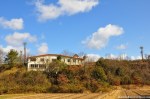
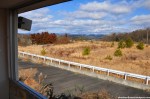
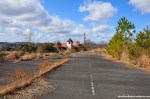
The Daikyo Driving School I went to was located in the same distance of 3 train stations, all about 30 to 40 minutes away by foot; forest on one side, surrounded by fields on the other three. Only a few farm houses in sight. And of course the owners of the closest one had to have a big party exactly on the day that I wanted to explore the Daikyo Driving School. Cars were coming almost constantly, parking up to the only entrance of the driving school. So I took my time circling the place, looking for other ways in, but there weren’t any. So after about half an hour I thought “Screw it!” and just went in, not sure if anybody saw me and how they would react if they did. Luckily nobody was able to see or hear me once I was inside since the driving school was slightly elevated with a beautiful view at the surrounding area.
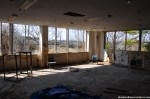
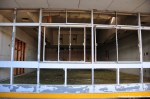
Abandoned places in Japan have a reputation of being mostly undamaged due to the lack of vandalism – which isn’t true. My experience with urbex outside of Japan is limited to Germany and Luxembourg (*Pripyat / Chernobyl* in Ukraine is kind of a special case), but I can’t say modern ruins in Japan are in better condition overall than back home. Some are, some aren’t. The Daikyo Driving School was not. A couple of the inner walls were smashed in, the more solid outer walls were smeared with graffiti. Furniture not bolted to the ground was dragged outside and / or severely damaged, electrical installations were ripped out. Overall the building was in pretty bad shape and I was kind of surprised that the really rusty chairs and tables of the one “modern” lecture room weren’t smashed to pieces. For a rather remote and virtually unknown place abandoned for only about 15 years the school was in pretty bad shape, especially in comparison to other similar locations like the *Jumbo Club Hotel Awaji Island*. It was actually way more beautiful from the outside than the inside. Since it’s getting dark rather early in Japan the training area was equipped with floodlights, now as overgrown as the school building and most other installations on the premises.
Overall the abandoned Daikyo Driving School was a nice and unspectacular exploration, which I appreciate now, two years later, way more than back then – once you’ve realized that a lot of deserted places in Japan are either hotels or mines a unique deserted place like an abandoned driving school is a welcome change.
In mid-December of 2011 the North Korean “Dear Leader” Kim Jong-il died coincidentally at around the same time I wrote my article about the abandoned *K-1 Pachinko Parlor* (about 30 to 40 % of Japanese pachinko parlors have ties to North Korea) – and the whole North Korea thing came back to my mind. You know, my urge to visit North Korea being limited by my unwillingness to support the system by spending money on it.
I’ve been growing up in a divided country myself (Germany) and I’ve been fascinated by dystopian literature and movies as well as the aesthetics of run down architecture for about two decades, so I guess a certain interest in North Korea was only natural – especially when living in a neighboring country, Japan, for more than 5 years now.
Exploring abandoned buildings in North Korea will most likely be off-limits for quite a while; unless you are North Korean, of course, but I guess then you have other and more serious problems…
So what’s the next best thing when exploring abandoned North Korean buildings in North Koreaisn’t an option and pachinko parlors are too obscure? Right, you look for abandoned institutions once run by North Koreans close to where you live. While the Republic of Korea (= South Korea / 대한민국) has one embassy and nine consulates in Japan, the Democratic People’s Republic of Korea (= North Korea / 조선민주주의인민공화국 / 朝鮮民主主義人民共和國) doesn’t have any of those institutions, let alone abandoned ones. But since Koreans are by far the biggest minority in Japan (in 2005 more than 900,000 Koreans lived in Japan, only 285,000 of them naturalized Japanese citizens – most of the rest are Zainichi Koreans, Koreans with a permanent residency) they are pretty well organized to get their interest represented. Of the 610.000 Zainichi Koreans about 65% are members of the Mindan (Korean Residents Union of Japan / 민단) with ties to South Korea, while another 25% are members of the Chongryon (General Association of Korean Residents in Japan / 총련 / 總聯) with strong ties to North Korea. Interestingly enough there is a Japanese group called Zaitokukai (在日特権を許さない市民の会, Citizens against Special Privilege of Zainichi) who opposes both groups – and sometimes even more: On October 31st 2009 some members protested foreigners in Halloween costumes with a sign stating “This is not a white country”. Whenever you thought you’ve seen and heard it all…
But let’s get back to the Chongryon. In addition to offering support and various services to their members (including issuing North Korean passports) the Chongryon not only controls a serious chunk of the Japanese pachinko money, it also runs about 140 schools (朝鮮学校 / 조선학교), kindergartens and a university in Japan. While it is said that all the classes and conversations at those schools are conducted in Korean I am not 100% sure about that since the few leftover books I saw at the abandoned school I visited were (partly) in Japanese. So, yes, some of the North Korean schools in Japan are deserted now. Which isn’t a surprise given the fact that the number of students enrolled in those schools went down from 46,000 in the 1970s to about 15,000 in 2004.
The abandoned North Korean school in Gifu prefecture I visited rather spontaneously in late December of 2011 must have been victim of that loss of interest. Half an hour by foot away from the next train station the school was located on top of a small hill, overseeing the surrounding countryside. With about half a dozen classrooms plus special rooms for sports, physics, chemistry and music it’s quite easy to understand why this Chongryon institution was one of the first candidates to become a modern ruin. Opened in 1975 it closed in 1998 already – its students being transferred to another Chongryon school in the suburbs of Nagoya; 20 minutes away by train, but closer to a railway station.
Exploring a North Korean School on Japanese ground was nothing like I expected. The school looked nothing like I expected. No North Korean flags, no propaganda material, no socialist style architecture. Quite the opposite. The layout of the school was full of nooks and crannies, its level of decay reminded me of *my trip to Pripyat and Chernobyl*. I was actually so fascinated by it that I walked around for maybe half an hour to see every last bit of it without taking a photo – and then I took a 19 minute long video. Usually I try to break up buildings by floors or other units, but this school felt so organic I had to turn into a poor man’s Michael Ballhaus and film the whole abandoned and quite seriously vandalized building in one shot. Always having Sting’s “Russians” in the back of my mind.
Do the North Koreans love their children, too? Having the physical distance of living in Europe, the States or Australia the problem might not sound so serious and North Korea might appear as that wacky little state with its funny looking leaders, but living in a neighboring country there are quite a few people here that are worried about what will happen in the upcoming weeks and months – and given the fact that South Korea and the States placed their troops under high alert I guess there is a serious number of people who are having serious thoughts about that “bonsai Cold War”. Personally I’m not much of a worrier. I actually still like cracking jokes about North Korea being reunited with South Korea and East Korea. (East Korea being Japan, based on a theory that around 300 AD a Korean cavalry army conquered Japan, and therefore the rulers of Japan are actually of Korean descent till this very day. Especially Japanese people don’t think my quirky humor is funny…)
I have no doubts the North Koreans love their children, too – sadly this deserted school was no indicator. I wish there would have been more signs that the school actually was a North Korean school. I found a couple of washed-out pieces of paper showing past school festivities, describing them in Korean, having the cliché level of formality and stiffness you would expect of events like that. In the lobby was a smashed “World Atlas” with several destroyed clocks on top – interestingly enough the people in charge included Moscow, but chose London over (East) Berlin; Pyongyang of course had its own row. Also in the lobby I found several boxes of a sexual stimulant called Samboso. Yes, a sexual stimulant in a school… (Insert clergy joke here!) It seems like the main ingredients were ginseng and honey, but even the crude English text didn’t reveal much information. Neither did the internet. But it gets even stranger: The text on the bottle as well as on the package stated in Roman letters “Pyongyang, Korea”. So here I had a sexual stimulant from North Korea, labeled in English and Korean in a deserted North Korean school in Japan. Finally I have a good answer when somebody asks me “What is the strangest thing you’ve ever seen when exploring abandoned buildings?” – can it get any weirder than that?
(If you don’t want to miss the latest article you can *follow Abandoned Kansai on Twitter* and *like this blog on Facebook* – and of course there is the*video channel on Youtube*…)
Addendum 2014-03-02: Since I wrote this article, I’ve been to the real North Korea twice. Not for urbex, obviously, but those vacations were nevertheless extremely interesting. *You can read all about them here.*
The best way of getting in contact with the locals on Ikeshima seems to be leaving camera equipment on the side of a street. It worked in front of the apartment complex and it worked again about an hour later just down the road next to the school. I left my belongings behind to take a video of the apartment buildings next to the abandoned baseball field. When I came back I saw a guy in his mid-30s and of course I said “Hi!”. His English was actually pretty good, so we started talking about the school and he told me that it still has 9 students – and as many teachers (although this number might include other staff like secretaries). I asked him if he was born on Ikeshima, but he wasn’t. A Kyushu native he studied in Nagasaki and then was sent to Ikeshima by his company – and he didn’t seem to be very happy about it.
For all of you not familiar with big Japanese corporations: In Japan you usually don’t apply for a specific position within a company after graduation (from senior high school or college), you apply at a company in general and then the company decides what to do with you. Commonly this includes intense training from several months to several years, depending on the company you got into. Of course your classes at university kind of give that education a direction, but it’s not unusual that somebody with a degree in mathematics or French literature ends up in marketing or HR – getting into a university in Japan tends to be a lot tougher than actually graduating, so companies tend to start from scratch after 3 years of drinking, sports and art clubs. And just because you are fluent in a second (or third!) language doesn’t mean the company makes proper use of that. (But if you are female and good looking chances are great you won’t have to clean ashtrays for two years – instead you most likely will become some supremo’s secretary.) The same applies for your place of work. Just because your company has its HQ in Tokyo doesn’t mean you won’t end up in a subsidiary somewhere remote. Like on an island off the coast of Nagasaki prefecture…
After the guy told me that he worked for a recycling company on Ikeshima we split since he had to get back to work – and I was eager to continue my exploration.
I was actually starting to run out of time, so I went back to the apartment building area I shot in the morning, this time more to the east. Some of the buildings had new plumbing outside and people were actually living there. At this point everybody I saw gave me a short nod, which I interpreted as a sign of “Yeah, you are welcome here.” – it felt really good. At an abandoned house the window next to the entrance door was broken, so I took a few pictures of the bike, cleaning tools and mailboxes that were still there. When I got back to the main street, route 216, I actually found a house that was open for visitors (I guess… it was unlocked, clean and had a sign in Japanese outside saying something about a room on the 4th floor). All the doors were locked and the staircase kinda smelled funny, but on the 4th floor I was indeed able to look inside an apartment that was arranged like a museum room.
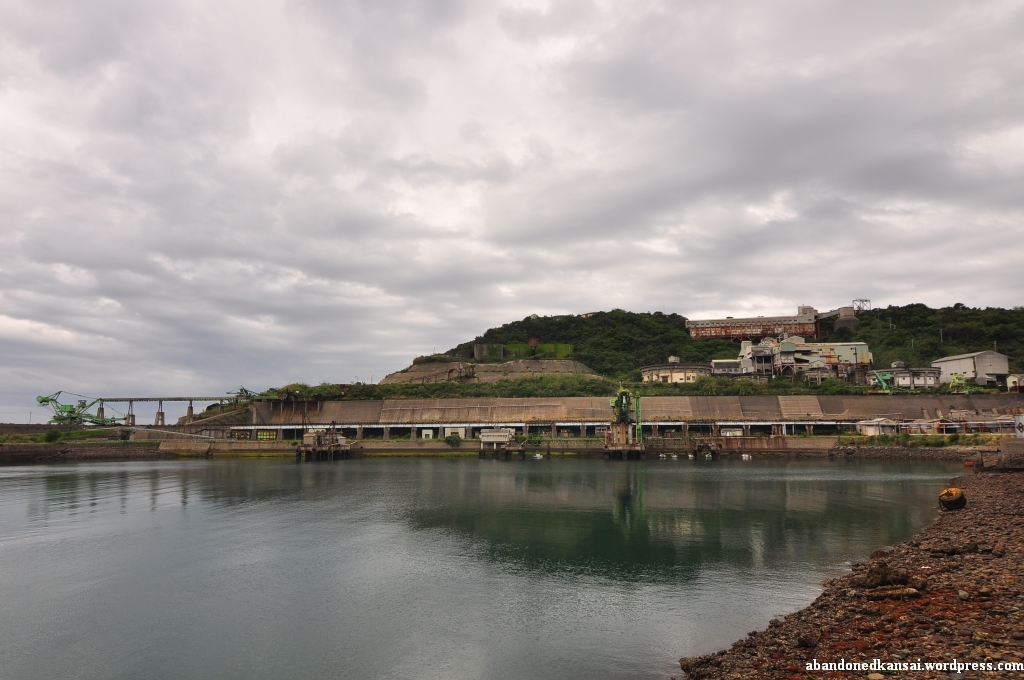
Outside again I followed route 216 to finish my circumnavigation of Ikeshima. I passed by the noisy Ikeshima Urban Mine Co., Ltd. and several apartment buildings before reaching the old loading plant. On the southern side of the harbor entrance was a scrapyard where a single worker was moving rusty stuff around. In continued following route 216, taking some pictures here and there, before I reached the apartments at the harbor again, where my explorations started about seven and a half hours earlier, making my visit to Ikeshima one of the longest photo shoots I ever did. But it wasn’t over yet…
Figuring out the ferry / boat schedule when planning the trip wasn’t exactly easy since all the information was in Japanese and not really clear. I got some help from friends who are Japanese natives and confirmed the schedule with the hotel staff in Sasebo – everybody told me the boat (it actually was a boat, not a ferry, also in the morning – sorry for that!) would leave at 4.09 p.m., so when my ride entered the harbor at around 3.55 p.m. I continued to take some photos and videos. But something felt wrong watching the activities on the boat, so I decided to hurry to the terminal – and of course the boat left right when I arrived, shortly after 4 p.m.; thank you very much, guys! The people arriving on Ikeshima of course saw what happened and told me that there was another boat leaving for Sasebo today, but they couldn’t tell me when. So I waited and thought about the day – my rocky start and how I didn’t even enter any of the huge industrial ruins at the harbor. 10 minutes passed, 20 minutes… Then some senior citizens arrived at the terminal and I felt a bit of relief – I wasn’t the only one wanting to leave Ikeshima. At around 4.35 p.m. the boat to Sasebo arrived. As I took a seat while the ship left the harbor I had a last look at the huge characters in the sand of the breakwater and I couldn’t have agreed more: „絆 池しま 大スキ“ – „Kizuna Ikeshima daisuki“ – „I / We like Ikeshima a lot“
(Since the inhabitants of Ikeshima consider their island a tourist attraction I added it to the *Map Of Demolished Places And Tourist Spots* and created *a new map just for Ikeshima*. If you don’t want to miss the latest postings you can *follow Abandoned Kansai on Twitter* and *like this blog on Facebook* – and of course there is the *video channel on Youtube*…)
I have to admit: After almost five years working for a big company in Japan my view on the country and its people changed quite a bit. Foreigners visiting Japan as tourists and exchange students tend to have a very romanticized image of Japan, even more extreme in the case of people longing to visit Japan for the first time. Actually working in Japan is a totally different thing as the usual struggles at work get multiplied by cultural differences and, yes, sometimes xenophobia – and if you work in an industry that locks you up in rooms without daylight with a lot of “characters” for the major part of the week you tend to generalize certain things. Which is really bad – and the main reason I like to get outside on the weekends and travel to other parts of the Japan to get in contact with people that have nothing to do with my line of work…
After finding the shangri-la and the Big Mountain Pachinko Parlor on our way from the Sky Rest New Muroto to our next haikyo we finally entered the mountainous part of Shikoku. The roads were getting smaller and the weather got worse. When we reached the area we suspected the F# Elementary School was (we only had vague hints…) it was pouring and the road was so narrow it was only wide enough for one car, villages so small they were not more but an accumulation of a few buildings. And none of them looked like a school. We were driving up and down a road and its backstreets while the time was ticking away – in only a few hours we had to return the car…
Doing urban exploration you don’t want to attract a lot of attention as you never know what people might think of you and your undertaking. After about half an hour we decided we had nothing to lose and when we saw a guy from a well-known telecommunications company having a break in his car Jordy insisted asking him about the school. The guy knew where the school was and told us that it was abandoned in the 1960s, but that it was under construction now. Just down the road, we couldn’t miss it (well, we did before…). Very nice guy – and we were so happy that we finally got some directions. We followed the road for about five minutes, parked our car and then something happened I never thought would happen, especially after being surrounded by dopey and to some extent ignorant people for the bigger part of the year: The guy showed up, not only making sure that we found the school, but also talking to the construction workers, telling them the same story we told him (that we were photographers from France and Germany taking pictures of abandoned places), allowing us to enter the school and taking pictures for as long as we wanted. There it was, the personification of the positive image most people have of Japan – and it blew me away. To all the expats in Japan getting frustrated, and I know there are a lot: Go on weekend trips, re-connect with the Japan you once loved so much. Working crazy hours and having only a few paid days off a year it’s easy and dangerous to generalize, especially when gathering with other foreigners who are frustrated, too…
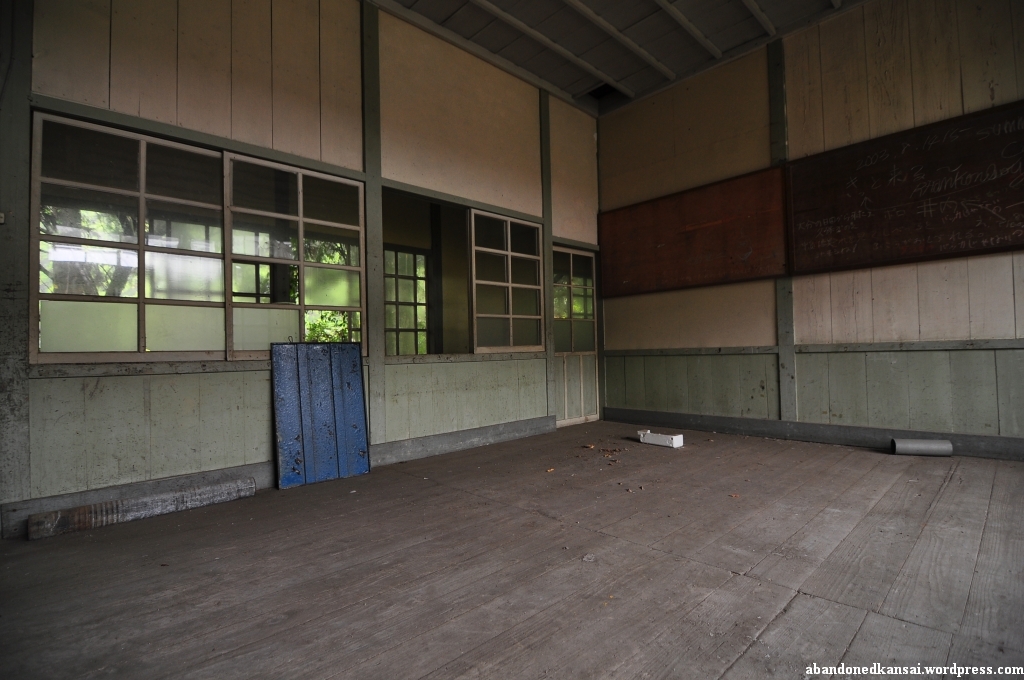
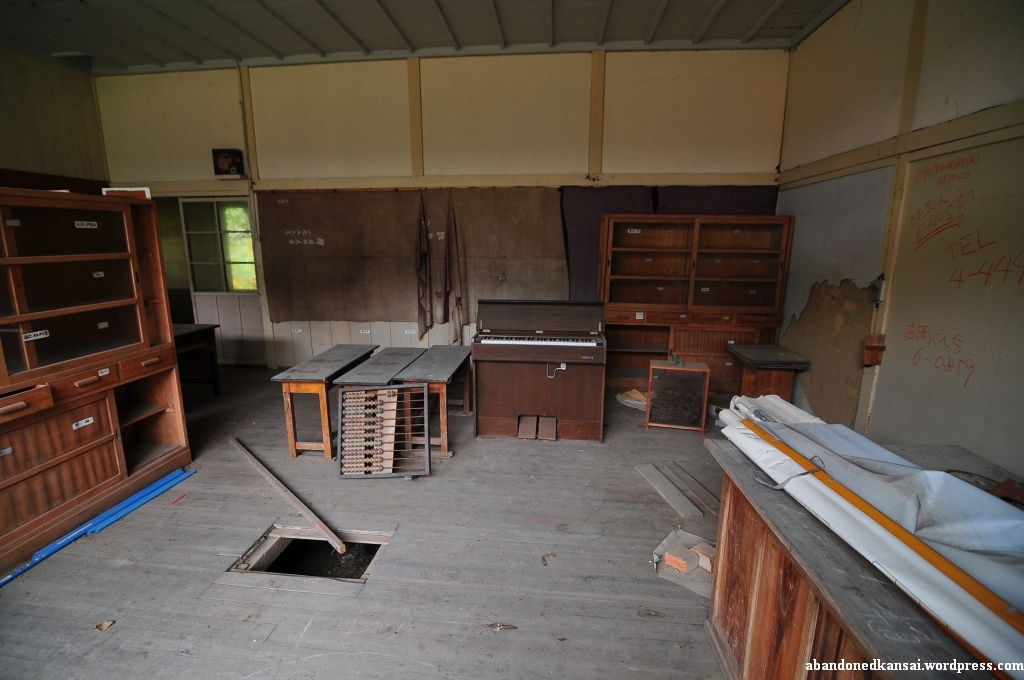
That being said I can finally write a few words about the school itself, although I know barely anything about it. Closed in the 1960s this wooden construction was withstanding decay for several decades until somebody decided not to tear it down, but to renovate it. Construction started about a month prior to our visit (= end of October 2010) and was supposed to finish March 10th 2011. Luckily they spent most of the time building ramps for trucks and machinery as well as taking care of a side building, so the main building of the school was barely touched – giving us the opportunity to take unique pictures as I’m sure the building looks completely different now…
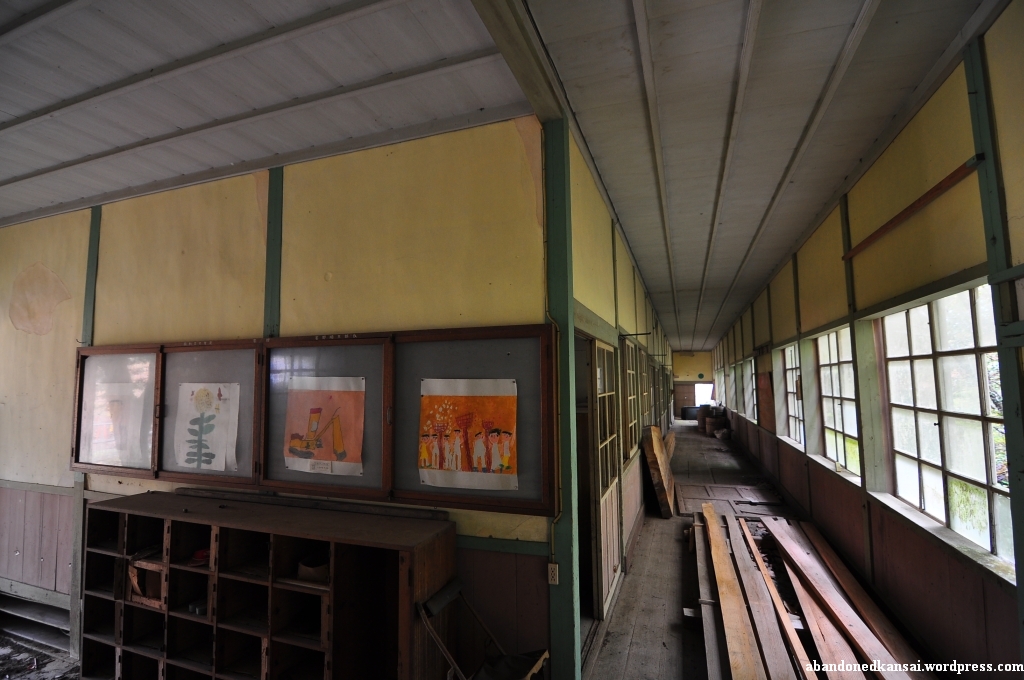
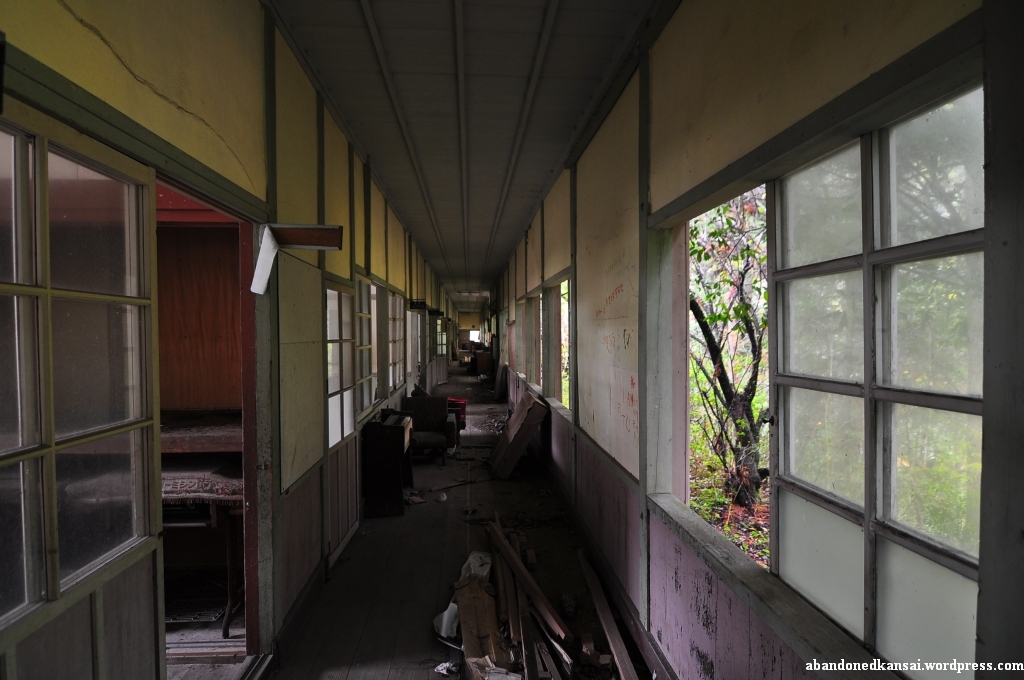
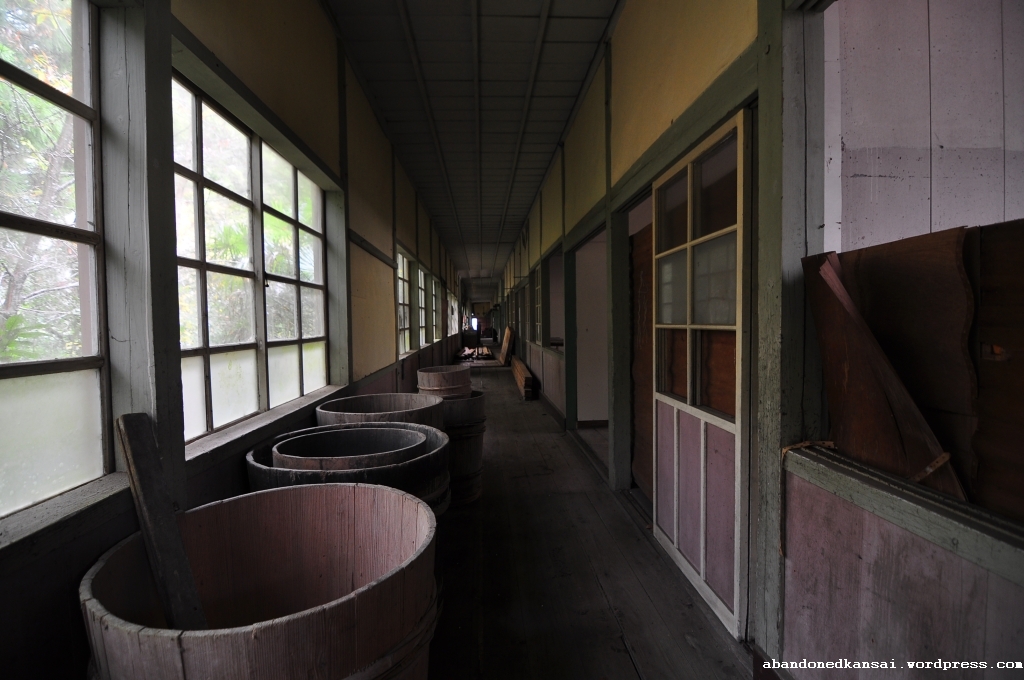
The F# Elementary School was a typical Japanese school of its time: A rather narrow wooden building with a long hallway, classrooms (and other rooms) only to one side. While we entered through a side entrance the main entrance with some lockers and paintings created by students was located in the middle of the building – restrooms being outside on the back side of the school. Most of the rooms were empty, but others were full of all kinds of items: furniture, educational materials, pianos. Yes, pianos. Like the Middle School #3 in Pripyat this school was also stuffed with pianos – I saw at least half a dozen. Another kind of item I didn’t expect were a couple of sewing machines made by Brother, nowadays more famous for printers than for their original core business.
Since this was my first (and so far only) abandoned Japanese school it was an amazing experience to explore it – especially since it was about to be reconstructed and even more so given the story leading to the exploration. The perfect final location of my (first) Haikyo Trip To Shikoku!
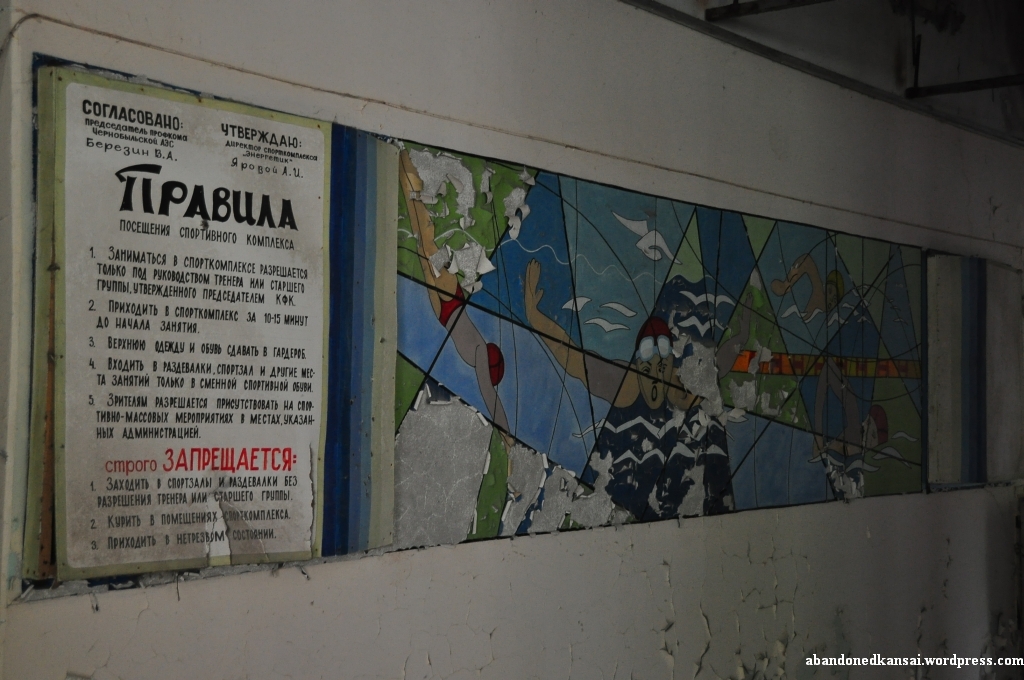
Right next to the indoor Swimming Pool “Azure” was the Middle School #3 at Sportivnaya Street 14, one of 5 secondary schools in Pripyat. Due to its convenient location this school is part of the standard program not only for day tourists, but for pretty much everybody visiting the city.
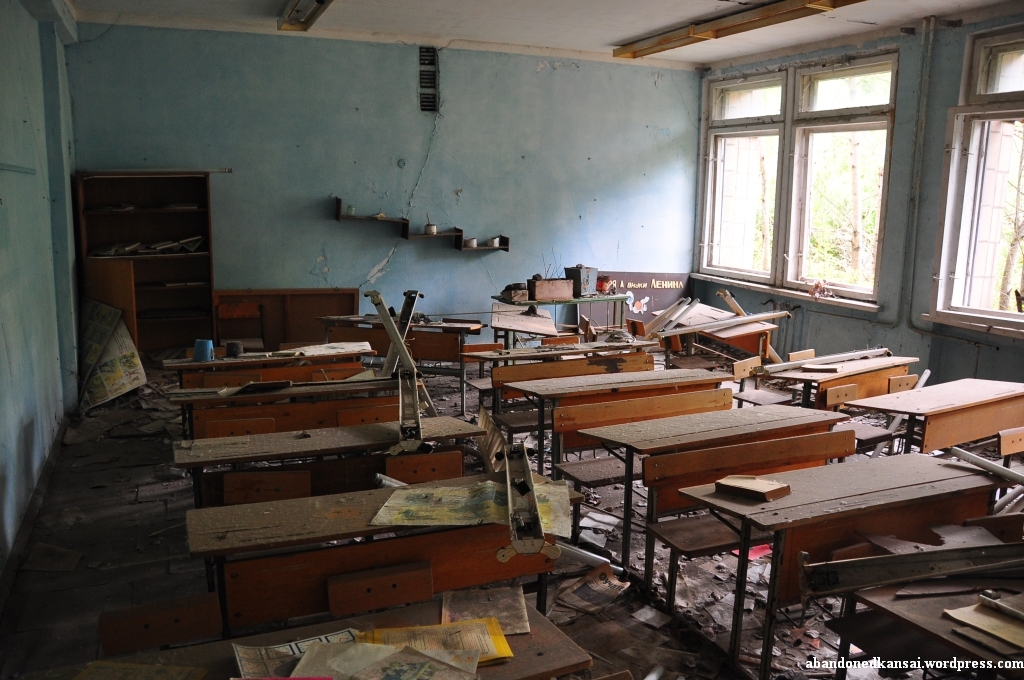
While middle school #1 partly collapsed in July of 2005, #3 was still intact, but in pretty bad shape. Nowadays being one of the most visited places in town this school for several hundred children must have been a place of education at least up to par with western institutions of its time. I was especially surprised to see several small rooms with pianos, Beethoven sheet music still lying around. Back in the days my middle school had a piano, too. But only one, and I’ve never heard anybody playing…
The atmosphere at Middle School #3 was pretty creepy, maybe because the tone was set pretty close to the entrance: On the way to the kitchen we found several dozens gas masks scattered all over the floor. While I remember certain Cold War related drills at school (mine actually had a bunker including an emergency hospital underneath) I’m pretty sure we never dealt with gas masks, at least not outside of chemistry lessons. For Maxim, who was in his early 30s and therefore spent some of his school education in the communist system, it was perfectly normal to have gas masks at schools as they were part of his drills. I guess while the western hemisphere was “only” in fear of nuclear missiles, the Soviets were prepared for all kinds of attacks…
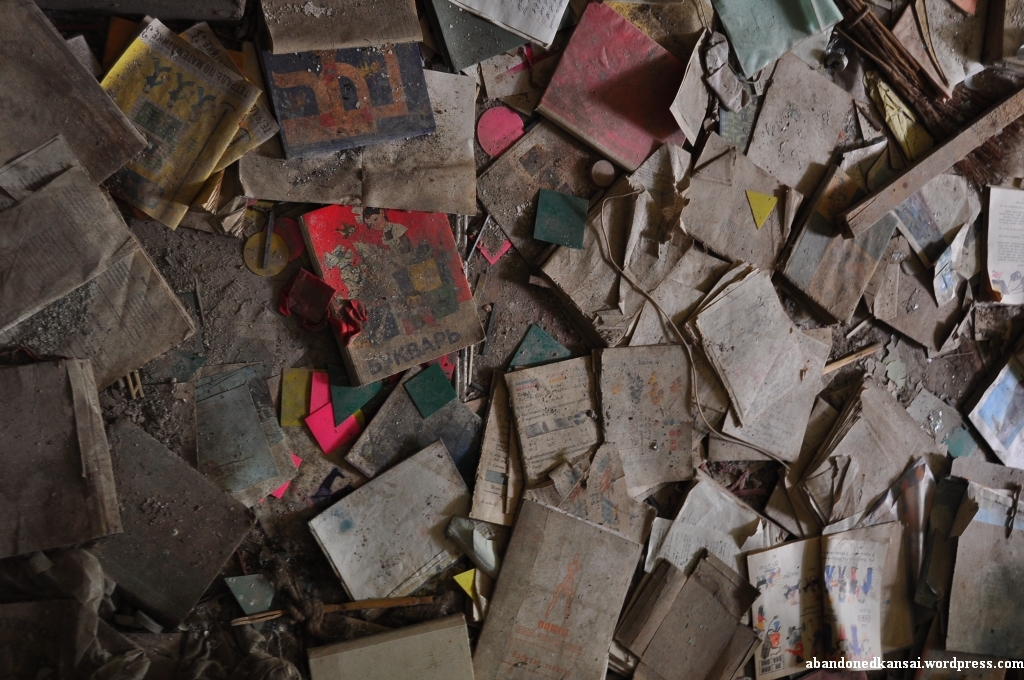
The gas masks were where once the cafeteria must have been as a kitchen was right next to it. From there I could get outside to an inner courtyard, but the floor outside was in really bad shape, so I didn’t risk a broken ankle and stayed inside. While the other guys already moved on to other parts of the building I went up one floor where I found the piano rooms and several class rooms. Parts of the floor were covered with books and documents up to 20 centimeters high, a really sad sight. It’s said that the powers that be systematically destroyed the interior of the buildings in Pripyat to discourage looters from entering the Zone Of Alienation – but it was nevertheless unpleasant to see printed knowledge been treated like that. Who would steal school books anyways?
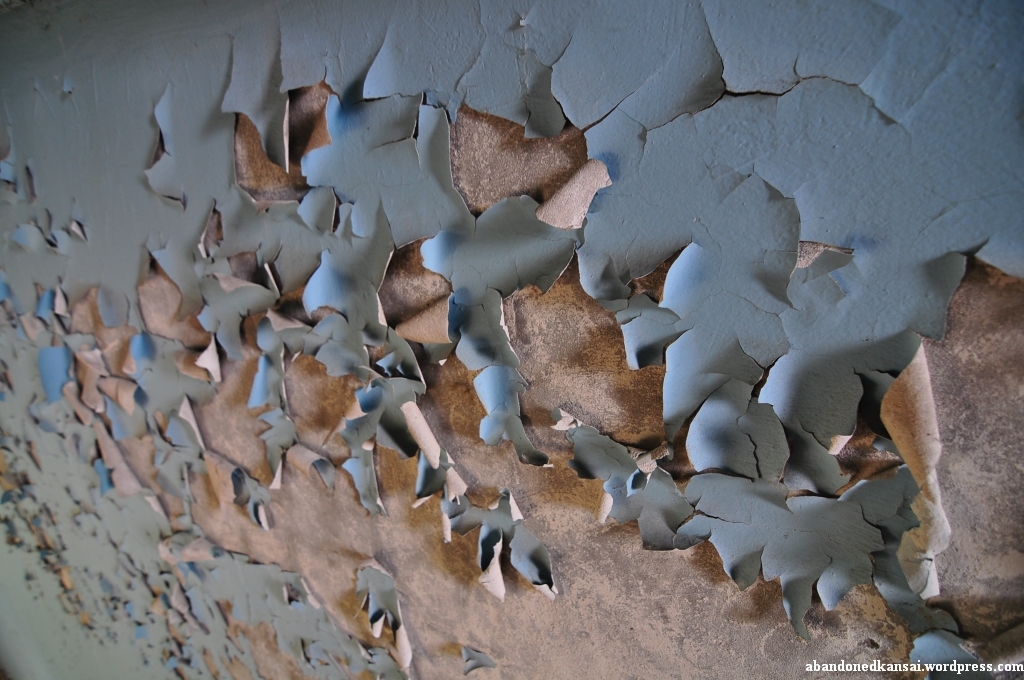
The building itself was in a progressed state of natural decay. In addition to the paint peeling off a lot of the walls were mold-infested, putting the school on a fast track to collapse – after exploring Middle School #3 it didn’t surprise me at all that #1 was one of the first buildings in Pripyat that collapsed, even without having seen it myself. At that point school #3 was by far the most uncomfortable place I’ve seen in Pripyat. But not for long as the Police Station was next on our itinerary…
(If you would like to know more about my trip to the Zone Of Alienation please *click here* to get to the “Chernobyl & Pripyat” special. For a map of the area please *click here*.)
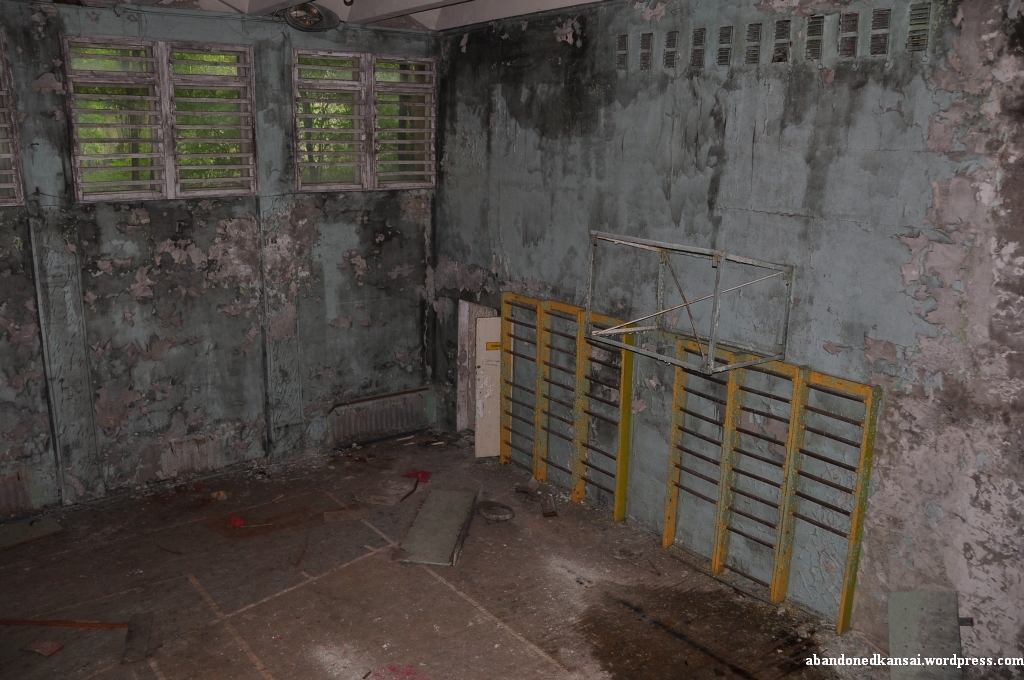
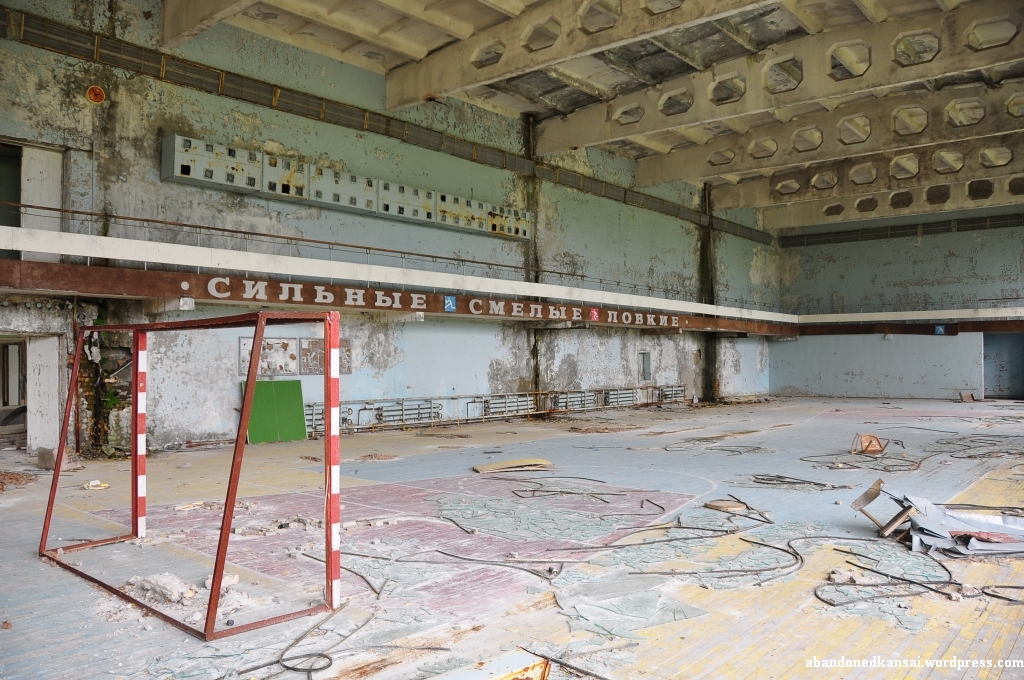
The Palace of Culture was a typical institution of the Eastern bloc. The huge buildings were the meeting point for people to enjoy all kinds of recreational activities like sports and arts – and of course they were used for political indoctrination. The PoC usually included a cinema (some of them with several screens), a concert hall, dance studios, a swimming pool, study halls, a boxing ring, rooms with a variety of instruments, an area with tools for all kinds of do-it-yourself stuff and many, many more things – and of course Pripyat had a Palace of Culture, too, being one of more than 137,000 in the Soviet Union in 1988…
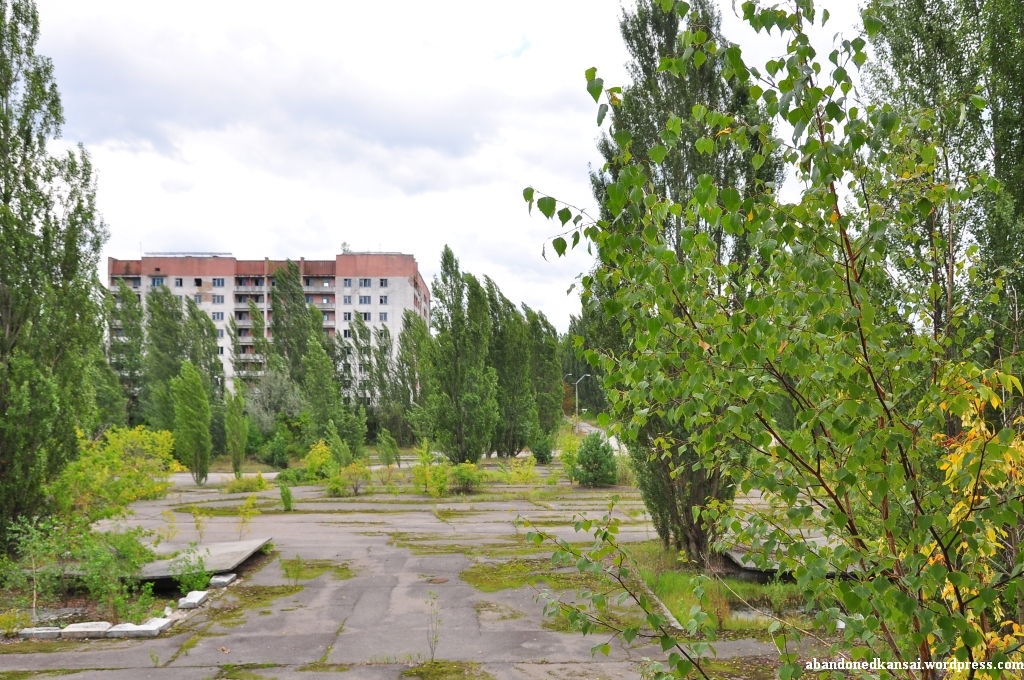
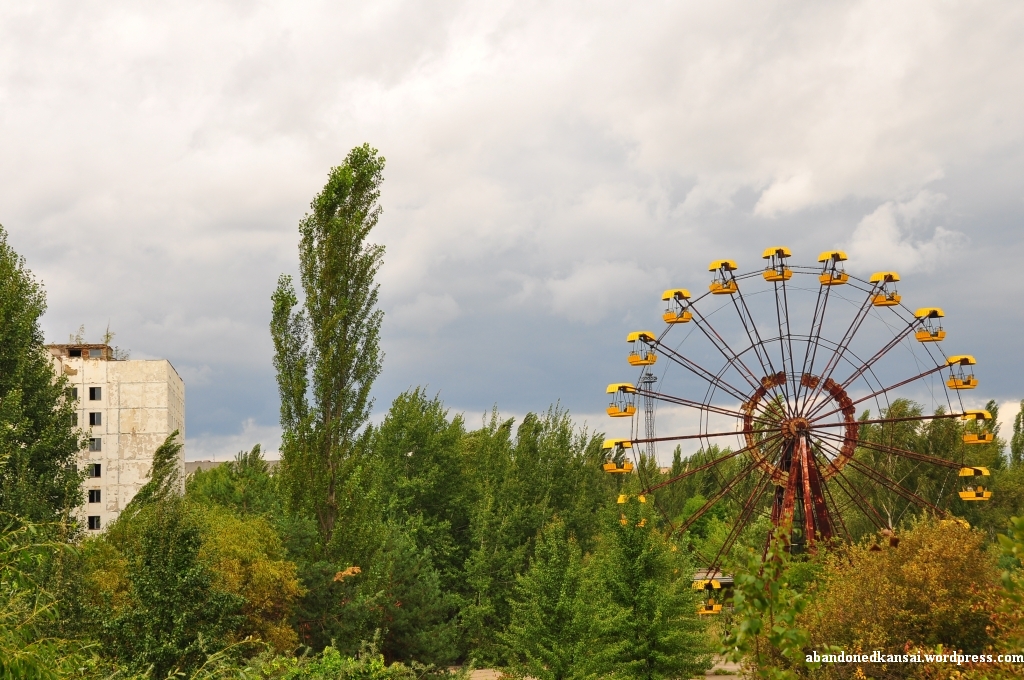
Energetik, the local Palace of Culture, was located directly at Pripyat’s center square, Lenin Square, and nowadays is one of the most visited locations in the world’s most famous abandoned city. One reason is that Energetik is on the way to everybody’s favorite Pripyat motive, the amusement park’s ferris wheel – the other is that the building offers a lot of variety on a relatively small space. Crossing Lenin Square Maxim was raving about how beautiful the place must have been 30 ago, given that the huge open space once was the home of a good part of the previously mentioned 33,000 rose plants.
I, on the other hand, was just fascinated by the unique, sad beauty that makes Pripyat what it is today. Struck by awe I entered the Palace of Culture and didn’t even know where to start taking pictures. Anywhere else in the world exploring this building would have taken at least half a day, but I somehow had the feeling that I would have that much time – in the end I had about 50 minutes…
Pripyat’s Palace of Culture is actually in pretty bad shape. Like most other buildings in the zone there isn’t a single window still intact, so the forces of nature – up to 40 degrees Celsius in summer, down to minus 20 in winter – did quite some damage in the past; and having tourists visiting the place every other day doesn’t help much either I guess. Most of the rooms were severely vandalized (a long time ago though!), the cinema barely recognizable. Bushes and little trees were growing inside of some rooms and many of the mural paintings were crumbling away…
Exploring the different kinds of rooms was an amazing experience, but one moment stuck with me in a special way. It happened when I walked through a hallway towards what I assumed was the main gymnasium in the building. As I entered the huge room I looked outside the gigantic front of window frames and saw the famous ferris wheel 100 meters away in the background. Unexpected and absolutely mind-blowing… still gives me goose-bumps when I think back now.
Sadly only a couple of minutes later Maxim made us hurry-up for the first time – the amusement park was waiting just for us…
(If you would like to know more about my trip to the Zone Of Alienation please *click here* to get to the “Chernobyl & Pripyat” special. For a map of the area please *click here*.)
Recently I went on a three day road trip to Awaji Island and Shikoku. Fellow urban explorer Jordy came down to Kobe, we rented a car and off we went. Since Jordy likes to drive and I like to do research we combined our powers to go to some places off the beaten tracks. Pretty much all of the locations will be English speaking firsts, some of them are even barely known to the Japanese haikyo community – including two original finds: A pachinko parlor with all the machines and a hotel called shangri-la. In addition to that we went to an abandoned monument (with a museum right next to it), another hotel, a nursery school, a restaurant with a spectacular view, an abandoned and very countryside elementary school, a spa built on a cliff and, most important of all, an abandoned doctor’s house that makes the previously posted Doctor’s Shack look like… well… a shack.
Please enjoy the preview pictures below – a series of articles about the trip will start ASAP, most likely by the end of this week.
The Kamikaze suicide attacks of World War 2 are without a doubt the most famous manifestation of Japanese fanatism. But hardly anybody knows that the Japanese military generally had a thing for self-destructing soldiers – they blew up their own people not only in airplanes, but in mini-submarines, speed boats and as divers with mines on top of a 5 meter long bamboo stick. Maybe the weirdest weapon of the “Japanese Special Attack Units” were the kaiten, a strange mix of submarine and torpedo. And all of those poor souls were trained in small town in the south of Japan.
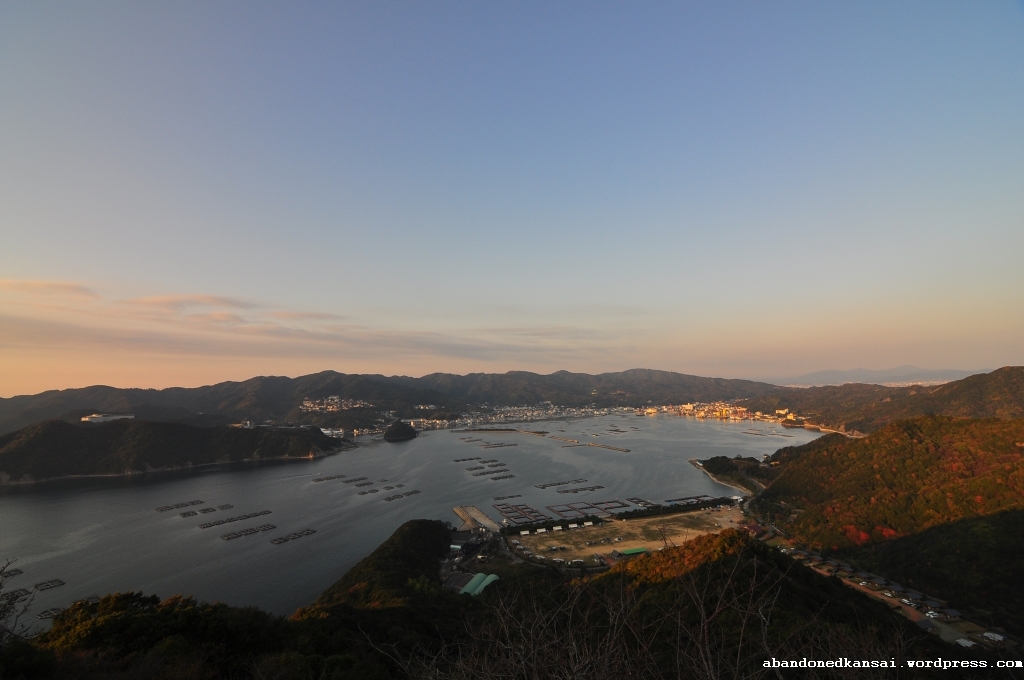
In 1944 the Japanese Navy moved their special training school from Yokosuka (of Shenmue-fame) to the Kyushu countryside – there they set up squadrons for shinyo (“sea quake” – explosive speedboats), kaiten (“change the world” – manned torpedos), koryu (“sea dragon” – mini-submarines) and fukuryu (“crouching dragon” – frogmen). The remains of that training school, including an observation tower and a launching platform for the different vehicles can still be found at a northern shore of Omura Bay.
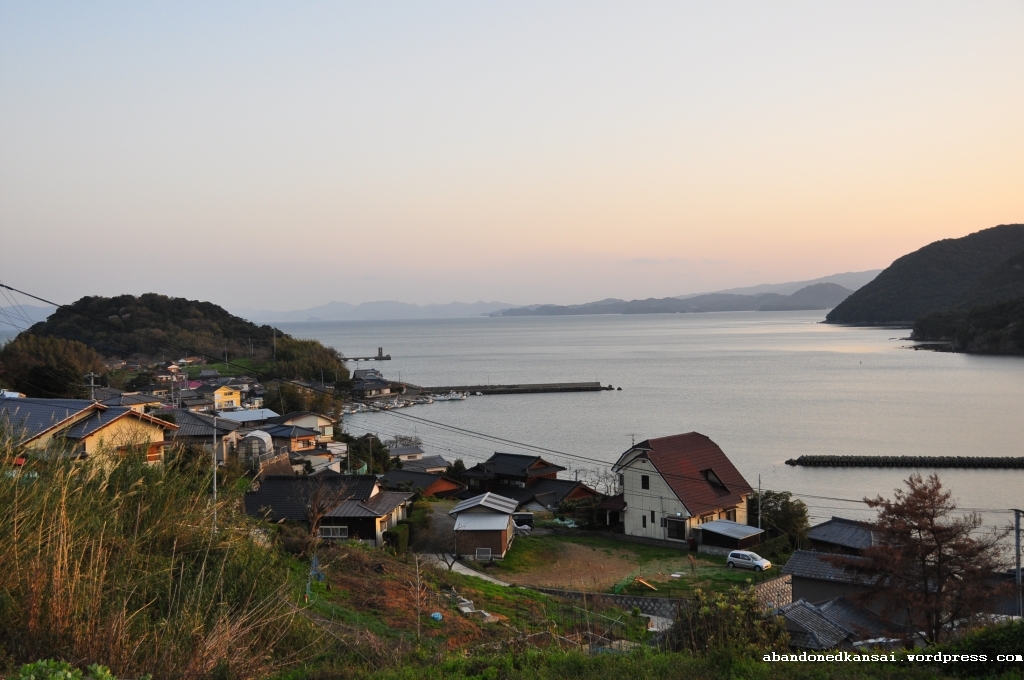
Arriving at the train station closest to the Training School you would never expect an institution like that in the area – the surrounding is picture book countryside, a great place to go for a summer vacation. Located at the tip of a peninsula you have to walk down a small mountain (well, more like a hill) with some beautiful gardens. Except for the one where the owner took the term “scarecrow” too literal and hung up a dead crow to scare away its fellow species.
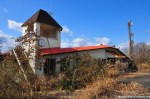
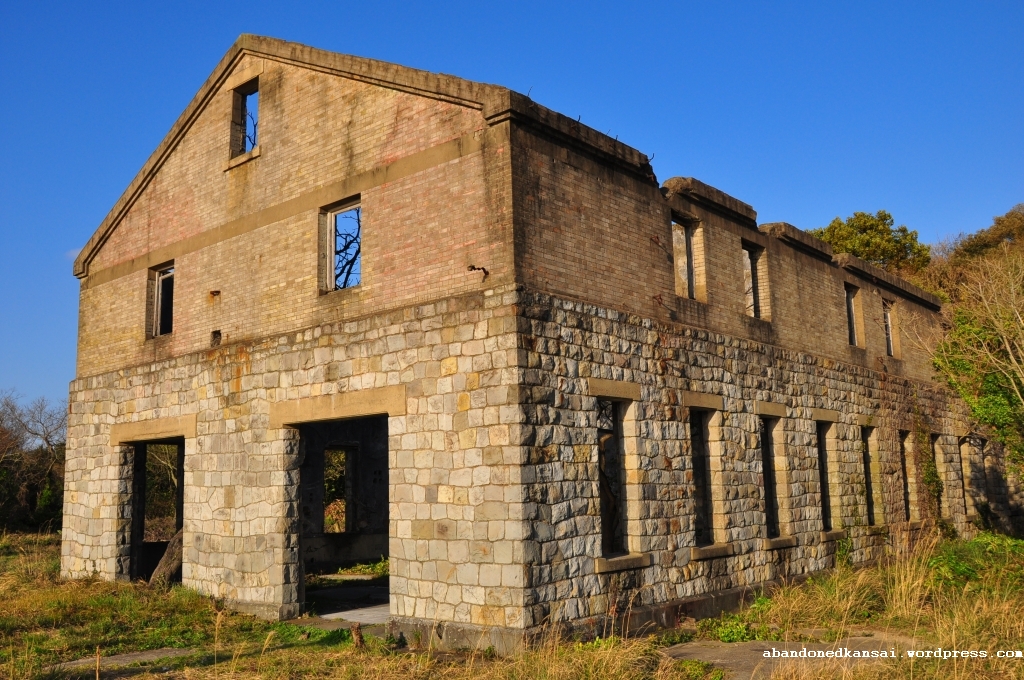
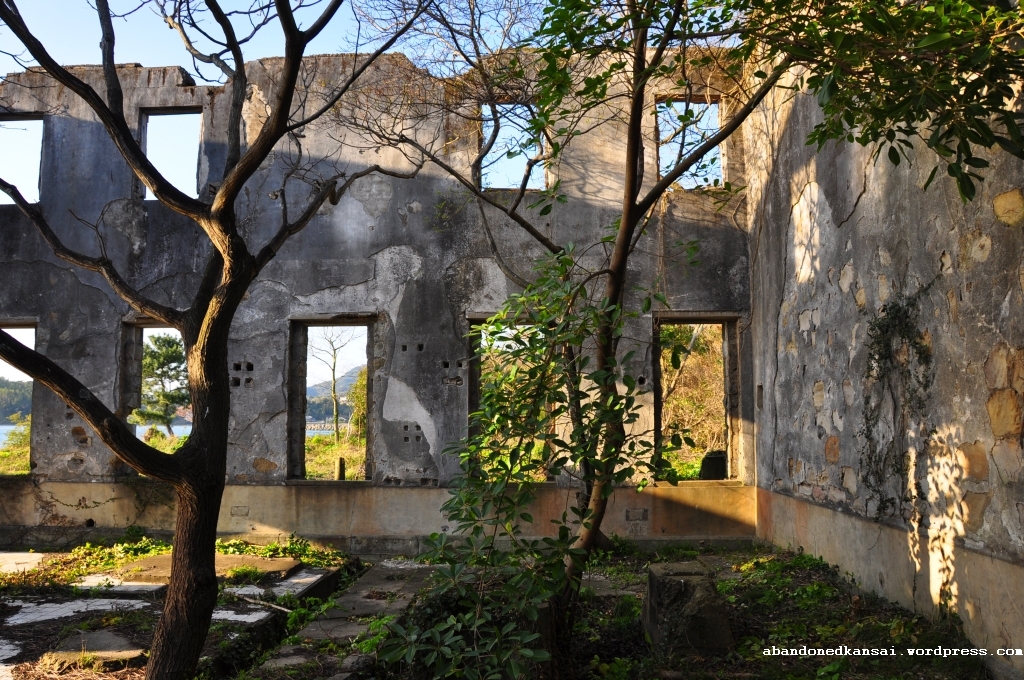
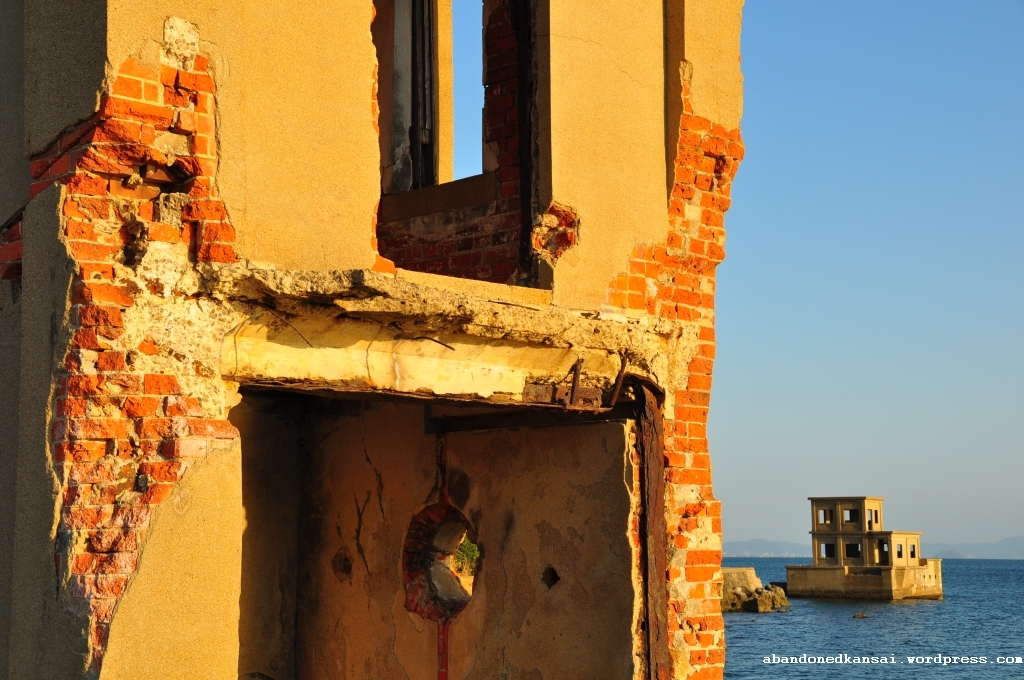
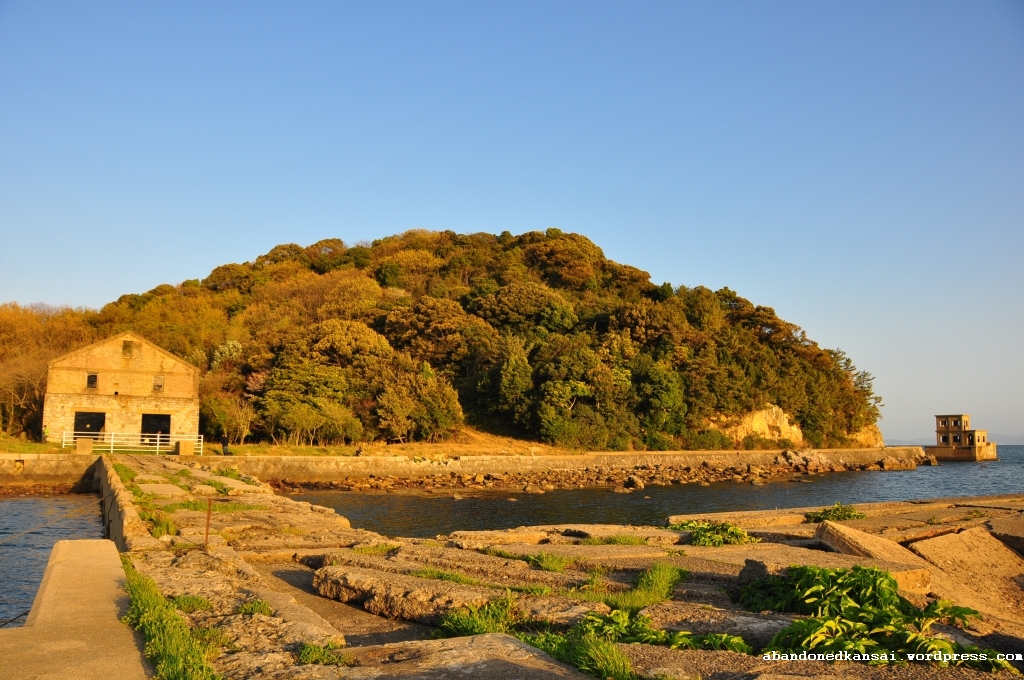
After passing through a small fishing village we (like I mentioned in earlier postings: haikyo trip with Enric) reached the remains of the school – one rather big building without a roof, with a smaller, overgrown one next to it. Right in front of main building the already mentioned bridge lead into the lake to a launching platform for the vehicles that were the school’s main subject. Further along the coast and a few meters into the lake, once connected by a metal bridge, was a still standing observation tower.
Coming closer I realized that we weren’t the only people there: Two (female) cosplayers and a photographer were in the back of the main building, a fellow haikyoist was shooting the front from the outside – later on two or three more haikyoists joined us; seems like the location isn’t really a secret…
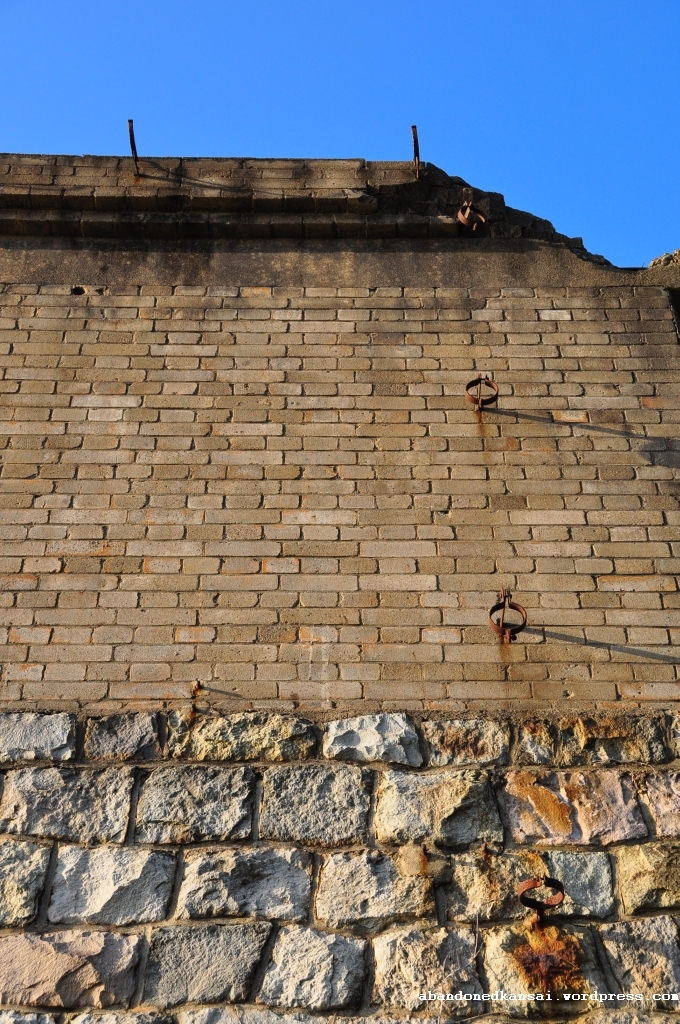
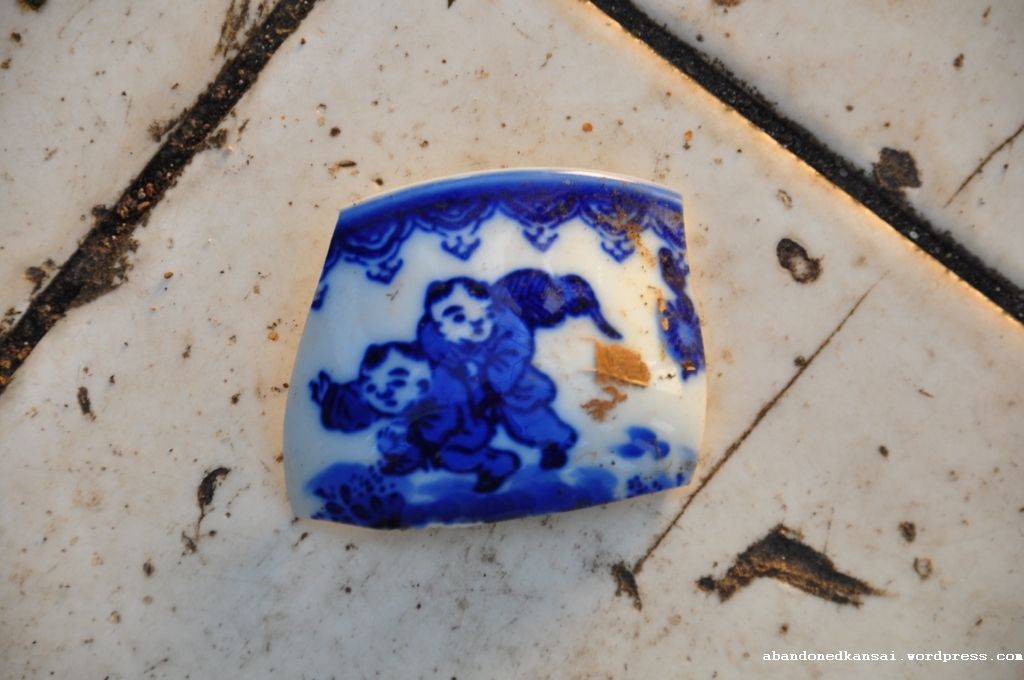
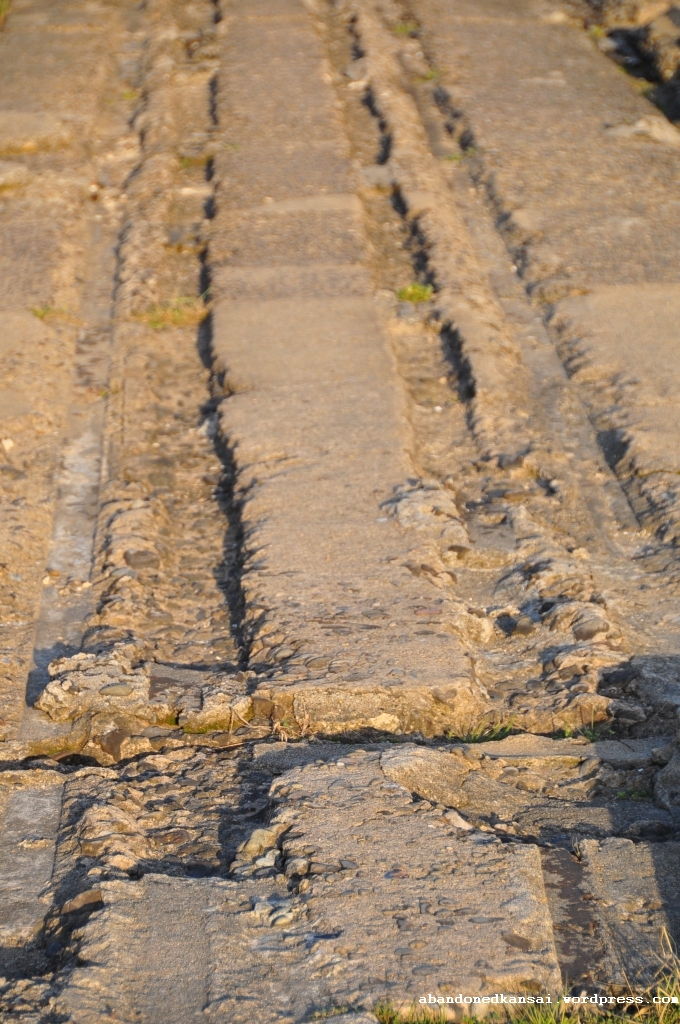
The Training School must have been a lot bigger when opened in 1944 – there were foundations and wall remains on both sides of the main building, indicating a much bigger complex. The remaining building had some pits in the ground and two rather big doors with a track once leading right onto the bridge, so I guess it’s safe to assume that it was used to repair and / or store the different kinds of vehicles. The school itself as well as the accommodations for the staff and soldiers must have been someplace else. Sadly only the walls remained, some of them with leftover fixtures for rainwater gutters and things like that; the same applied for the other remaining structures, too. Enric found a shard somewhere – of course I can’t say for sure that it was from the time the Training School was in use, but I took a picture anyways as I like (broken) items from daily life.
When choosing the Training School as a place to go to I mainly did it because it was located on the way between the two main attractions of the Kyushu trip (one of the two we had to cancel thanks to scheduling conflicts – more about that in the next blog entry…). The pictures I’ve seen on several Japanese sites weren’t that spectacular, but it was on our way, so why not have a quick stop and take a few pictures? Initially we wanted to go there the previous day, but in the end I was glad we didn’t. The weather was nasty that day and I’m sure I would have felt miserable and the pictures would have been quite dull. Instead we went a day later and while the weather still wasn’t good enough to go to Gunkanjima (the boat trip was cancelled – but we made it there the next day, so not much harm was done in the end… you will be able to read all about that in the next blog entry) it was absolutely gorgeous for a photo shoot. A cold, bright, windy day at first the whole place was flooded with warm light when the sun went down…







































 Abandoned Kansai