Feeds:
Posts
Comments

Archive for the ‘Spa / Onsen’ Category

*Nara Dreamland* is the current haikyo hot spot in Kansai, maybe in all of Japan. But the area including Osaka, Nara, Kyoto and Kobe is also the home of a classic urbex location: the Maya Tourist Hotel. (A.k.a. Maya Kanko Hotel, Mayakan, Mount Maya Hotel, Mount Maya Onsen Hotel, and Gunkan Hotel – Battleship Hotel / Warship Hotel; similar to *Gunkanjima*, the now also abandoned Battleship Island off the coast of Nagasaki.)
Mount Maya is one of the highest peaks of the Rokko Mountain Range that spreads from the west end of Kobe to Takarazuka (near Osaka) and is one of the most popular recreational areas in Kansai. In 646 the Tenjo-ji (忉利天上寺), a Buddhist temple, was founded near the top of the mountain at the behest of Emperor Kotoku. During the 8th century a monk named Kobo brought a statue from China to the temple – a depiction of Maya, Buddha’s mother; and that’s how the Mount Maya got its name. (The original temple was burned to the ground by a pyromaniac in 1975. The remains are still a popular destination for hikers, although the temple was reestablished further north and at a higher place.)
The Maya Tourist Hotel is located halfway up the mountain and in walking distance of the original Tenjo-ji. It should be obvious how the place got its name… Something I still haven’t figured out is why it took me almost a year to go to the Maya Hotel and another 17 months to write about it, although the hotel is basically in my backyard, just a couple of minutes down the rail on a single line (yes, no need to switch trains!).
Going to the Maya Hotel was actually my first exploration I haven’t done by myself or with a friend, but with a fellow urban explorer: Michael Gakuran. Mike was passing through the area on his way back home from a summer trip to the Seto Inland Sea and asked if I was interested in a joint adventure – and since he runs one of few blogs I actually read it was a pleasure to say yes. Michael likes his abandoned places rather high profile (who can blame him for that?) and so we pretty quickly narrowed it down to the Maya Hotel. The downside of that location: It’s right next to an active cable car station whose employees have a reputation for calling the police if they see trespassers on their way to or on the premises of the Maya Hotel (you have a beautiful view at the roof of the hotel from the cable car station). Since Mike and I are both rather dedicated explorers we decided to tackle the place hardcore style: During my research about the place I found out that there was a steep closed hiking trail up the mountain that leads there without getting close to the cable car station. To be able to take some photos on the rooftop we met at a Hankyu line station before 5.30 in the morning, hiked about 400 meters up the insanely steep, spider web covered abandoned hiking trail to finally reach the hotel; drenched in sweat and out of breath. Osaka / Kobe summers are everything but nice, the temperature barely ever falls below 30 degrees Celsius (even at night!) and the humidity is breathtaking. Especially in the morning, especially hiking up a forest trail, especially close to an abandoned and rotting hotel. Getting up Mount Maya that morning was my worst hiking experience without getting in physical danger and the third worst overall. Oh, and did I mention that I’m not a fan of alarm clocks at 4.30 in the morning? They tend to make me grumpy…
Luckily the anticipation of exploring a legendary abandoned building dominated over my morning grouchiness and so Michael and I reached the Maya Hotel in good spirits. Until we reached the entrance. Which was recently boarded up and ripped apart again. Carefully we got closer, gigantic flying insects the size of table tennis balls buzzing around and landing on us. Footsteps inside. 100%! What should we do? Getting inside? Waiting to be eaten alive by the insects? After a short deliberation we decided it would be better to take our chances with whoever was inside than with the nasty beasts outside, so we passed through the cracked open plywood and entered undaunted by death – only to find out that the footstep noises were created by dripping water. Of course we weren’t convinced right away, but after 5 minutes… well, 10 – okay, after 15 minutes we were confident that we were alone in the big hotel.
The history of the Maya Hotel started in 1929. Four years after the Maya Cable Car (officially Maya Cable Line (摩耶ケーブル線, Maya Kēburu-sen) began to transport tourists to the foot of Tenjo-ji the same company decided it would be a good idea to have a hotel up there – so they built it right next to the upper terminus. Construction began on May 15th 1929 and the Maya Tourist Hotel opened after a record time of just 6 months on November 16th. 15 years later, late in World War 2 on February 11th 1944, the Maya Cable Car was shut down as a non-essential line and the next year the hotel was forced to close, too. I’m not sure though if it was before or after the damages through air raids occurred – on top of Mount Maya were anti-aircraft guns installed and I guess taking them out damaged the hotel. Shortly after the war plans to turn the hotel into an officer’s club for the U.S. Forces fell through. In 1960 the cable car company decided to sell the severely damaged hotel and the new owner began renovations on September 1st. On August 28th 1961 the once so luxurious lodging was renovated to shine in new splendor – with parts from the French luxury ocean liner “SS Île de France” which was disassembled in the spring of 1959 in Osaka. But the grand re-opening wasn’t followed by a streak of good luck and so the Maya Tourist Hotel was forced to close its doors again in 1967, this time after suffering severe damages from a typhoon and a resulting mudslide. A final and finally rather long-term future began in 1974 when the place was re-opened again as the “Maya Student Center”. But the student center was closed in 1994 and the destiny of the Maya Hotel was sealed on January 17th 1995 when it suffered severe damage from the Great Hanshin Earthquake that killed almost 6.500 people – in the aftermath the construction was boarded up and fenced off, and its rise to become one of the most famous abandoned places (haikyo) in Japan began.
Since time was of the essence when Michael and I arrived at the more than 80 years old Maya Hotel we went right to the rooftop to take some photos outside before the crew of the cable car station would appear for work. The atmosphere was utterly eerie. Half of the mountain was covered by low hanging clouds, so at first our sight was quite limited while the sun tried to break through. I felt like in the middle of a horror film, but at the same time I knew there was an active cable car station just a stone’s throw away. A weird, slightly surreal situation. The chimney on the top of the roof collapsed a couple of years ago and was lying there like a gigantic crumbling grey cigar. Crushed through a lower roof on the southern side I saw the famous plane tire that once actually stuck in the roof. (Nobody seems to know where the tire is from and when it got onto, or better: into, the roof. It’s the tire of a B-29 Superfortress though – used in WW2 and retired in 1960.) The tranquility of the place was amazing, totally worth getting up at a time people should rather go to bed and climbing up a mountain at the worst time of the year. Sadly we had to hurry since 8 a.m., our personal roof deadline, came closer – the cable car started at 8.30 a.m. and we wanted to be out of sight with a little bit of a buffer. Only minutes after we got back inside of the Maya Tourist Hotel we heard a sound signal from the cable car station.
Exploring the inside of the Maya Hotel was almost as exciting as exploring the outside. Since the place was abandoned almost two decades ago with little renovation in the years before, there were only a few pieces of furniture left, the most striking one a red leather couch clearly not part of the original inventory As far as I know it was part of a video shooting – at least three Japanese bands used the abandoned hotel as a location for their music videos. Not to mention the countless photo shoots. Urbex, fashion, nudes – its stunning architecture made the Maya Hotel one of the most photographed modern ruins in Japan, probably in the world. Luckily most visitors carry a tremendous amount of respect for the place, so vandalism is a surprisingly minor factor. I guess when you deal with the hassle of getting to the Maya Tourist Hotel without being discovered you rather enjoy the breathtaking theater hall, the beautiful dining room and all the big and little surprises waiting for curious and careful explorers. And you have to be careful visiting the Maya Hotel! Water is running down the walls and dripping from the ceilings, broken stuff is lying around everywhere and the floors are severely damaged. Nevertheless the Maya Hotel as a whole is stunningly beautiful, magical, just fascinating. Nowadays most abandoned hotels get trashed before they get the chance to age properly – the Maya Hotel was abandoned several times and the 1920s architecture offers a completely different basis than the usual concrete blocks that look like they were designed by the same architect and interior designer.
Now I have to bring this pretty long article to an end somehow; maybe by linking to nk8513’s blog, you can find his collection of old photos and leaflets *here* (it’s in Japanese, but even if you go there just for the picture material you won’t regret it). Well, other than that let me say that this was my last exploration before I got a wide angle lens and a tripod, so the photos are not nearly as spectacular as I hoped they would turn out to be – considering the age of this blog it’s actually quite old material. I hope the three videos will make up for it a little bit… Oh, and thanks for reading till the very end!
(If you don’t want to miss the latest article you can *follow Abandoned Kansai on Twitter* and *like this blog on Facebook* – and of course there is the*video channel on Youtube*…)


Read Full Post »

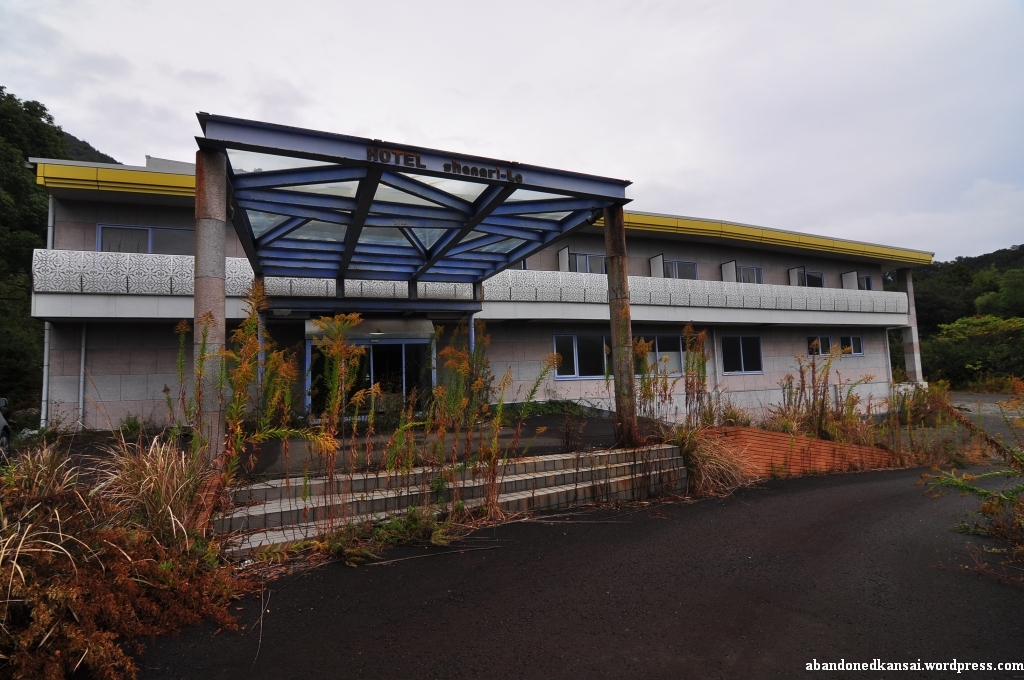
After visiting the Sky Rest New Muroto in the southern part of Shikoku Jordy and I got back on the road to find an abandoned school in the middle of nowhere about 50 kilometers away. While the most popular way of finding places to explore seems to be (mostly useless) books like Nippon No Haikyo and doing research on the internet the most effective way to do it actually is to rent a car and hit the road. In our case we stumbled across two amazing abandoned places (or haikyo (廃墟), ruins, as they are known in Japan) on our way to the school: an abandoned hotel and an abandoned Pachinko parlor in amazing condition.
After about half an hour on the road I saw a huge sign advertising a hotel – and the sign looked like it wasn’t taken care of for at least a decade. I told Jordy about it and we decided to turn around. Driving up a hill for only a short distance there it was, the shangri-la (yes, lower case spelling…). Very unspectacular from the outside Jordy cracked some jokes about how the place doesn’t live up to its name, but we were disabused soon…
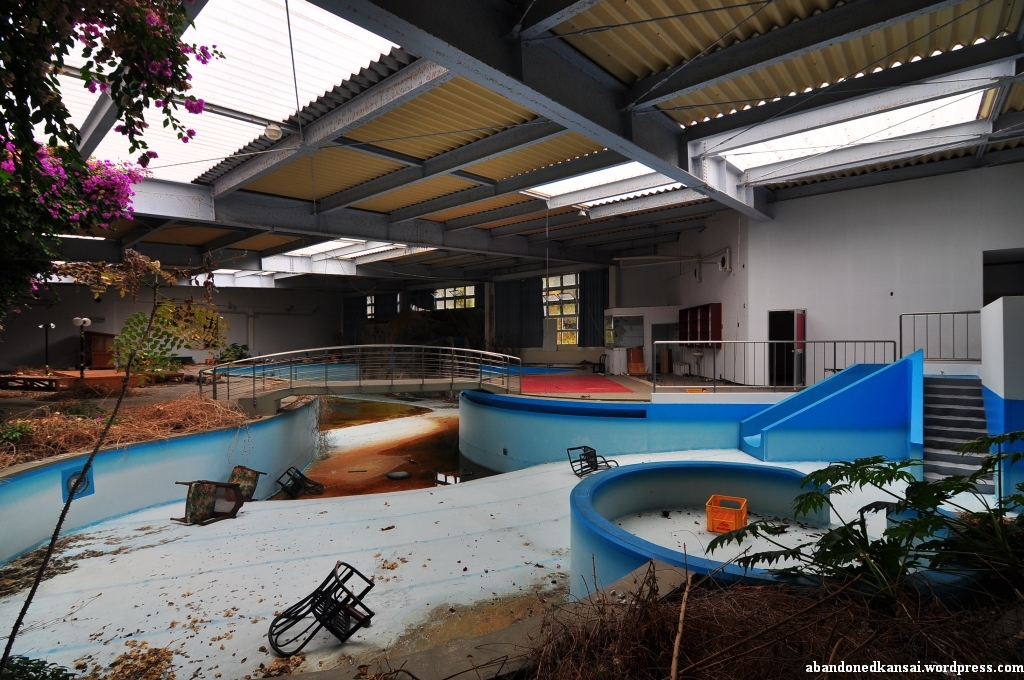
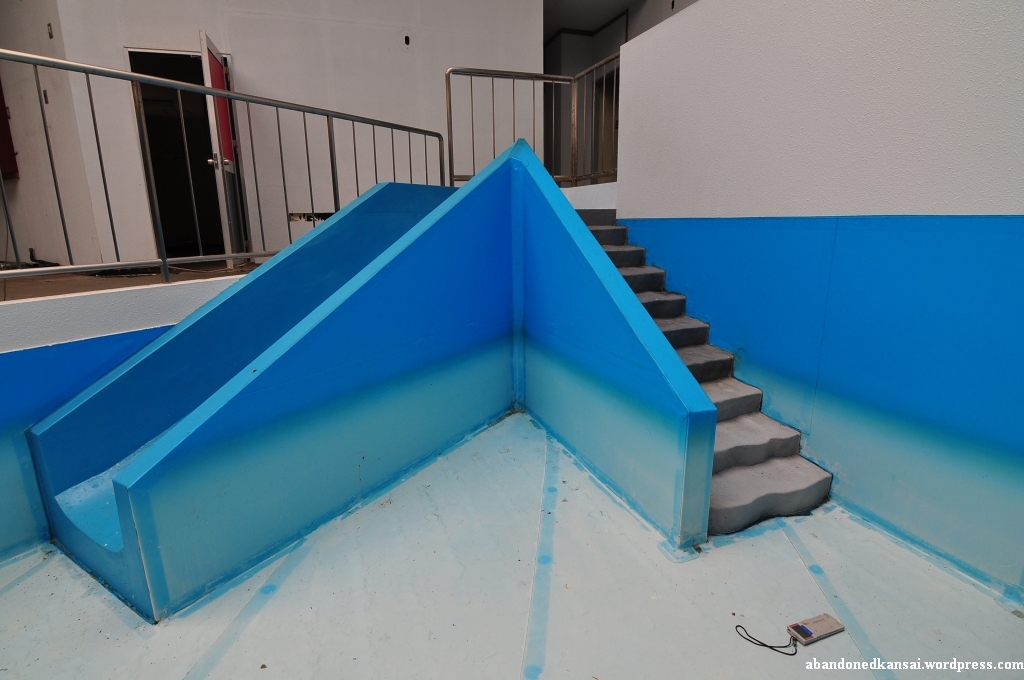
With the front desk gone and the kid’s play area and gift shop almost empty, the shangri-la became interesting when I entered the office behind the front desk. Amongst the mess of documents and office items like ink cartridges scattered all over the floor I found a photo album with wedding pictures. Was the shangri-la maybe more than it appeared from the outside? It was. Right around the corner was a rental counter for towels and other bathing equipment and from there I could already see the indoor water park – huge by Japanese standards, well below average being used to European facilities like that. Nevertheless fascinating, especially since the pool was quite complex with several small water slides and a bridge across to where I assume once a bar was.
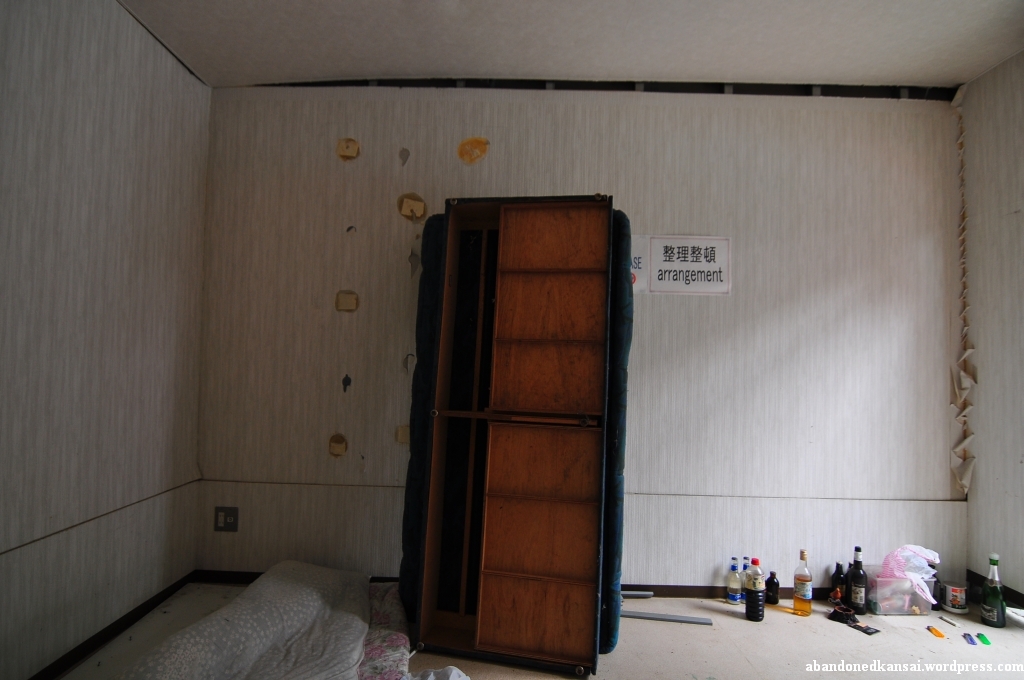
The rest of the ground floor was occupied by a kitchen, another bar and a small recreational area outside. The hotel part of the shangri-la was on the second floor. All rooms were empty by the time of my visit, but one of them was labeled “CHAPEL”, so I guess it’s easy to say that the shangri-la was a wedding hotel.
No Japanese hotel is complete without two shared baths (one for men, one for women) and the ones here were quite nice, including a rather spacious sauna considering the size of the shangri-la.
Jordy and I weren’t the first visitors to the shangri-la in the 10 years since it was closed (judging by the ad for a marathon in November of 2000), but to my surprise I’ve never seen it on the internet before. There was a bit of chaos here and there, but almost none of the typical signs of vandalism ruining the more famous… ruins. No arson, hardly any smashed interior, no broken windows – hardly any mold, well-lit, secluded. A truly great place to explore!

(*Like Abandoned Kansai on Facebook* if you don’t want to miss the latest articles and exclusive content – and subscribe to the *video channel on Youtube* to receive a message right after a new video is online…)
Read Full Post »

Bathing is a very important aspect of Japanese culture, deeply rooted in centuries-old traditions. Although most apartments and houses have their own baths nowadays (unlike 30 years ago), public bath houses are still popular even in residential areas of big Japanese cities. Onsen and sentō are gender-separated places of tranquility where people enjoy a relaxing hot bath (usually around 40°C) after a hard day of work or an intense workout. Onsen towns in the middle of nowhere are popular vacation destinations for the Japanese domestic tourism and a must see / do for many foreign visitors.
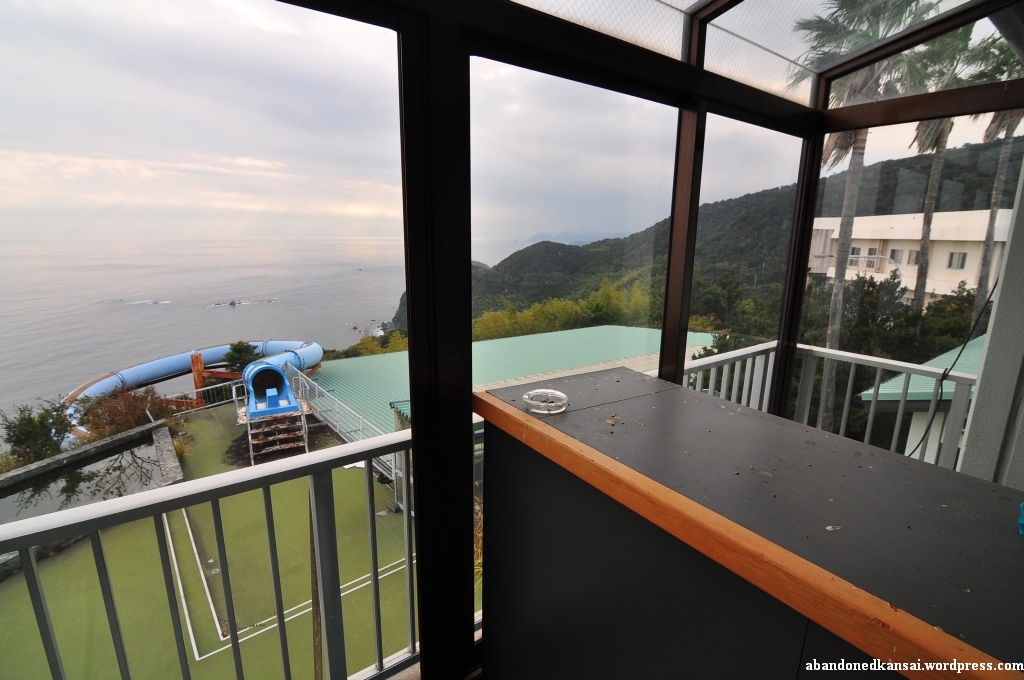
Waterparks with slides and wave pools on the other hand are not nearly as popular in Japan as they are in the States or Europe. Most of the time they are considered one amongst many attractions of amusement parks (like at Nara Dreamland) – and indoor waterparks are even more rare.
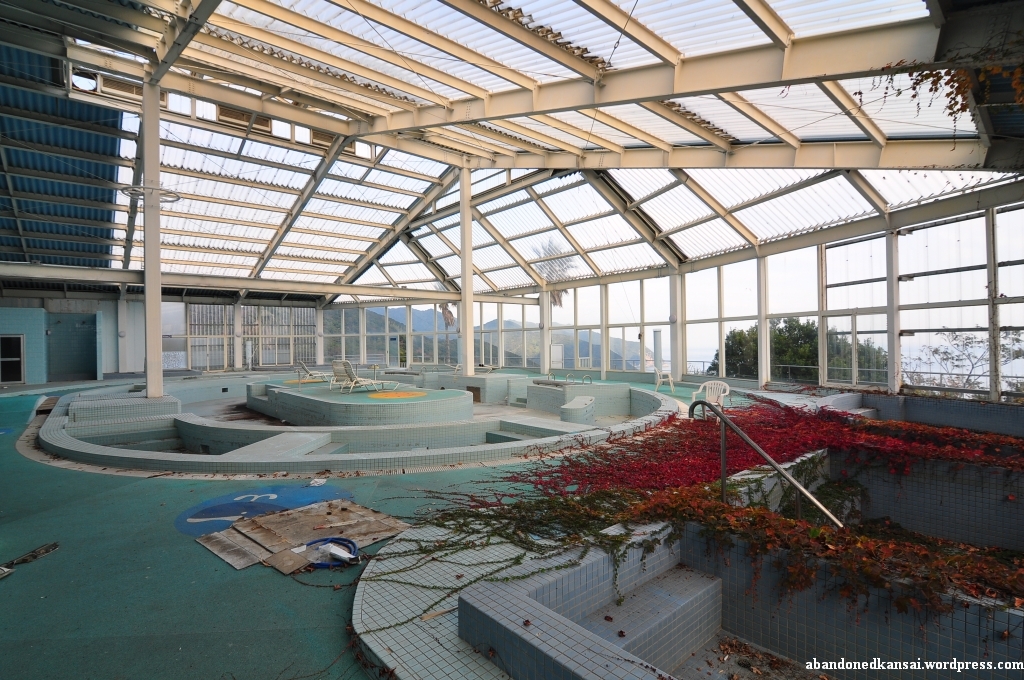
From what I was able to find out the Tokushima Countryside Healthspa (お水荘ヘルスピア), an indoor water park with some hotel rooms, was opened in 1975 (under a different name) to complement a countryside farm, attracting visitors with millions of flowers. It was renovated and expanded in 1994 to be re-opened under its current name – making dance shows and karaoke new selling points. Due to its remote location (35 minutes by bus from the next train station) and the economic crisis the number of guests decreased while the debt piled up to 800 million Yen – and lowering the entry fee from reasonable 1700 Yen per day (10 a.m. to 10 p.m.) with special promotions (Ladies Day on Thursdays for 850 Yen and Friends Day on Fridays for 1000 Yen) didn’t help either – at the end they reportedly sold tickets for as low as 100 Yen… So in 2002, after 27 years, the lights went out at Tokushima Countryside Healthspa.
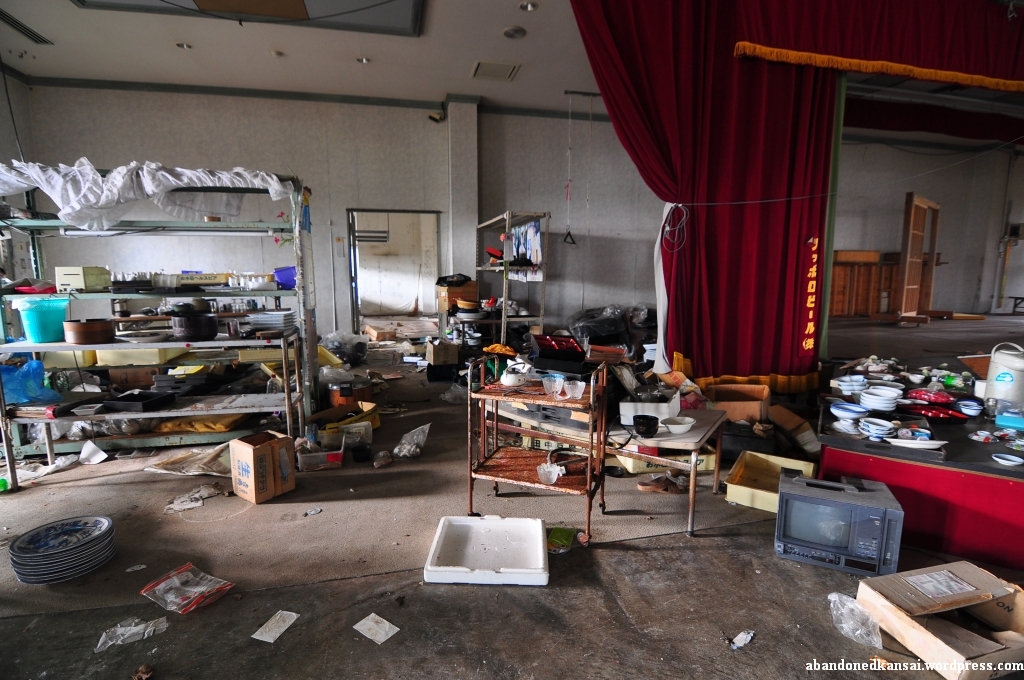
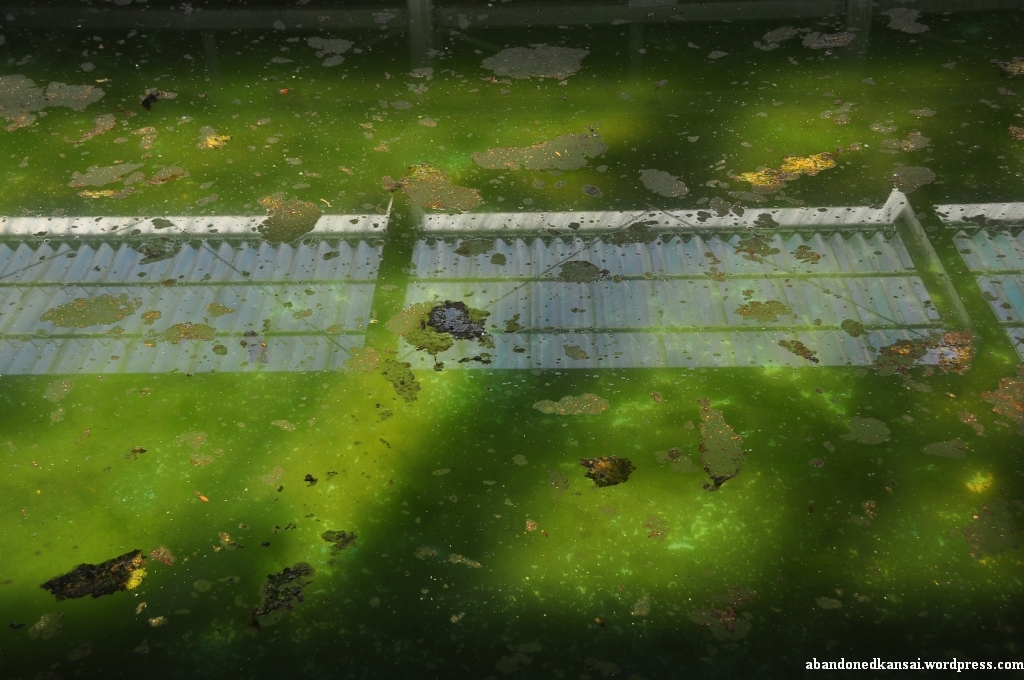
I have to admit: I love indoor waterparks. It’s one of the few leisure activities I really miss living in Japan. Back home in Germany you can find quite a few abandoned public swimming pools, indoor and outdoor, but no abandoned waterparks. So I enjoyed every minute of the two hours I spent there. The hotel part was quite vandalized and rather boring, so I left it rather quickly to go over to the swimming pools and the waterslide. On the way I passed a kitchen and some functional rooms. In two of them quite a few goods and training equipment were lined up, here and there I found price tags scattered all over the place – it seems like the owner tried to sell as much as possible before closing for good. The now empty main pool looked pretty much like a rather local indoor water park in Germany and I loved how red and green leafed plants were growing inside; if there ever was a zombie attack you know where to go to if the Shime Coal Mine is already occupied – if you know what I mean…
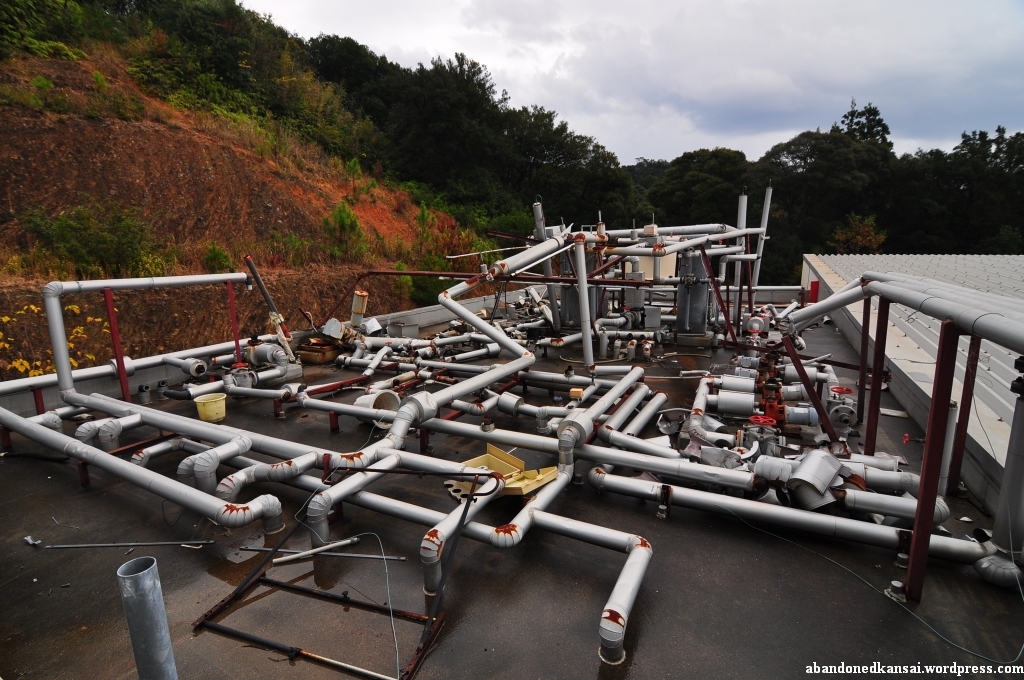
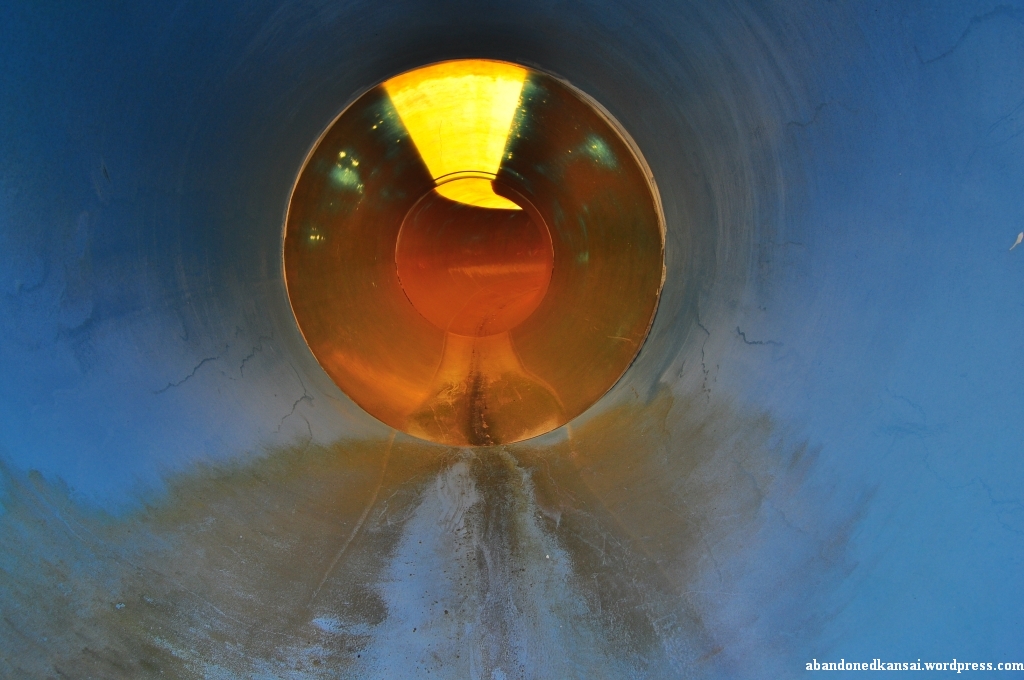
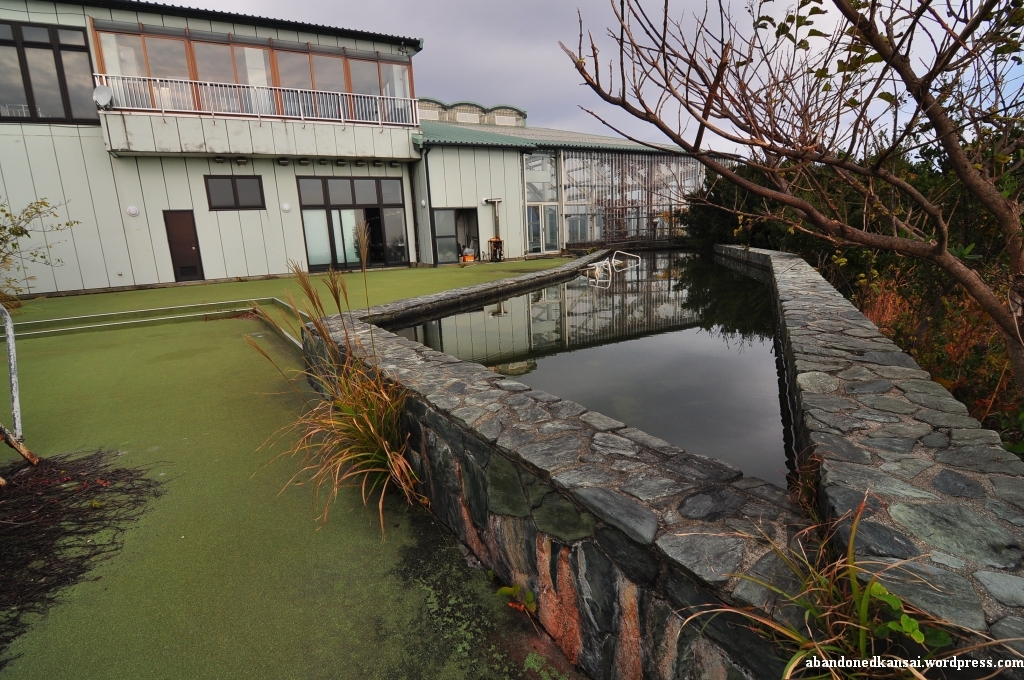
The outside waterslide at the bold cliff looked absolutely amazing, the weather just contributing to the atmosphere, so please have a look at the videos, too. Next to the waterslide was a staircase leading down to a pool, now filled with moldy brackish water, two dead greenish doves lying at the pool edge. Again, amazing atmosphere – kinda spooky, but not dangerous at all; neither physically nor in the form of security or other “guests” thanks to the remote location.
Like pretty much all of the previous and upcoming locations of my Haikyo Road Trip To Shikoku the Tokushima Countryside Healthspa was a unique, relaxed and fascinating place to explore. Shikoku, an urbex heaven!


Read Full Post »

After enjoying the stunning view from the roof top of an apartment building in Pripyat’s north we drove back to the center of the city to visit a classic sightseeing spot pretty much all visitors to the Zone Of Alienation and quite a few fans of video games know very well – the swimming pool “Lazúrnyj” (Azure).
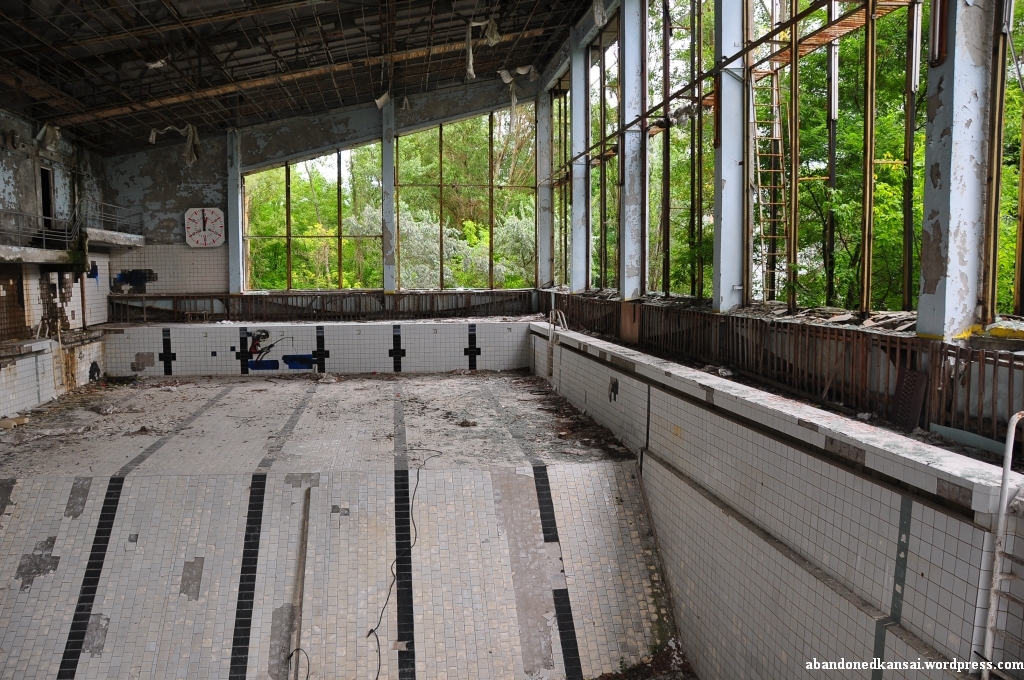
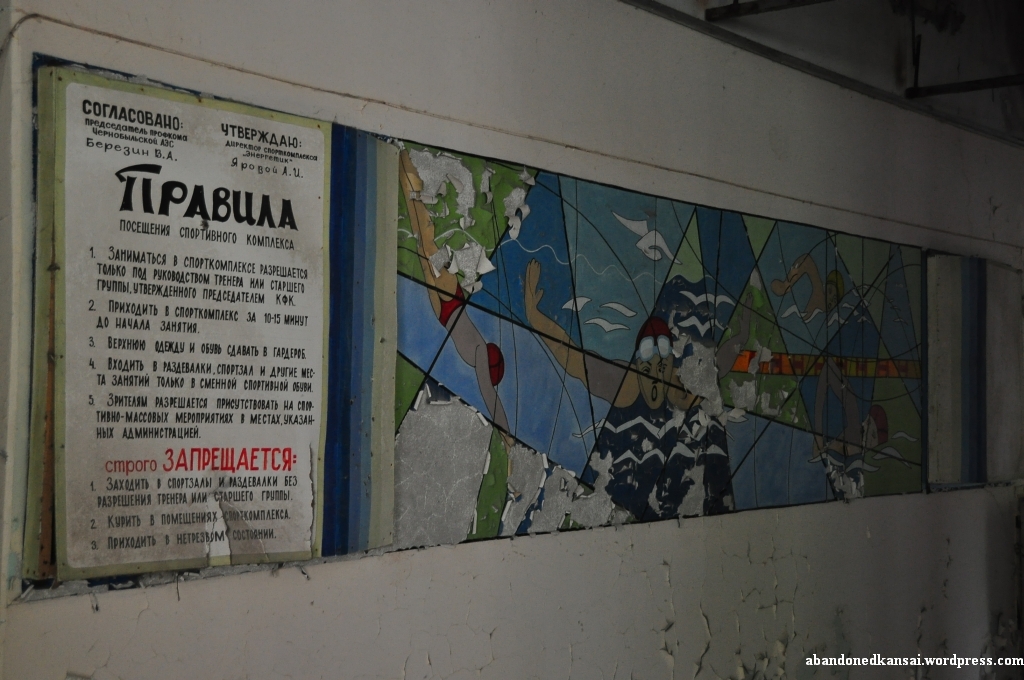
Although being one of actually three indoor swimming pools in Pripyat, Azure is by far the most famous one in town since it was featured as a level in the video game “Call of Duty 4: Modern Warfare” and now is part of the standard program for day groups. Furthermore Azure wasn’t just a swimming pool, it also housed a gymnasium – and it wasn’t abandoned right away with the city according to Maxim. Liquidators and other people working in the Zone Of Alienation used the pool as long as 1997 when it was finally abandoned – sadly there are no photos available anywhere about the that period of time.
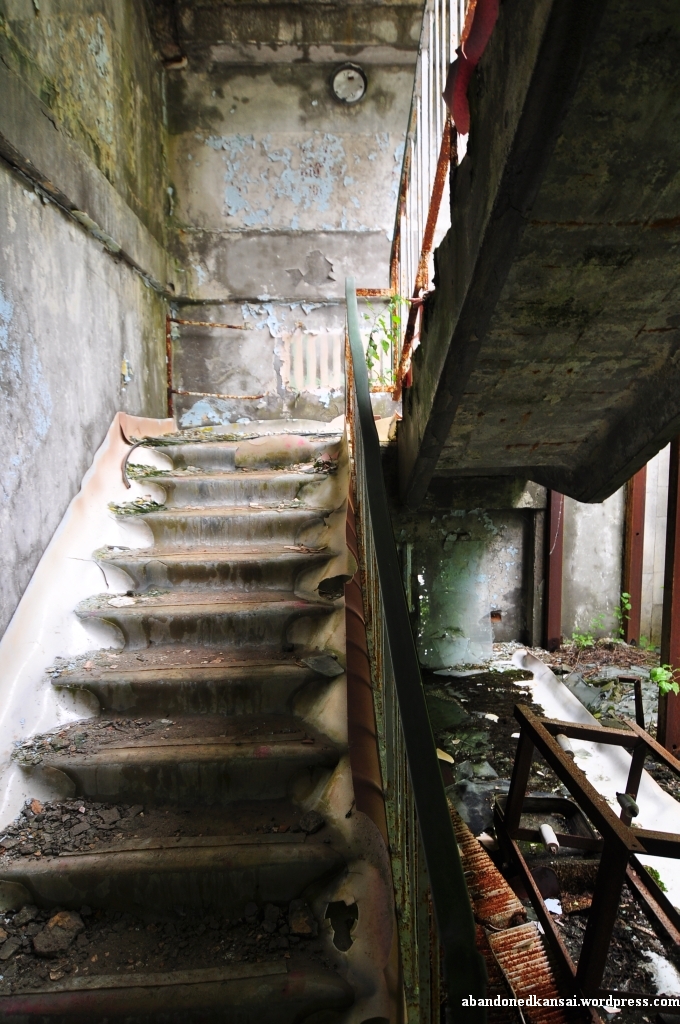
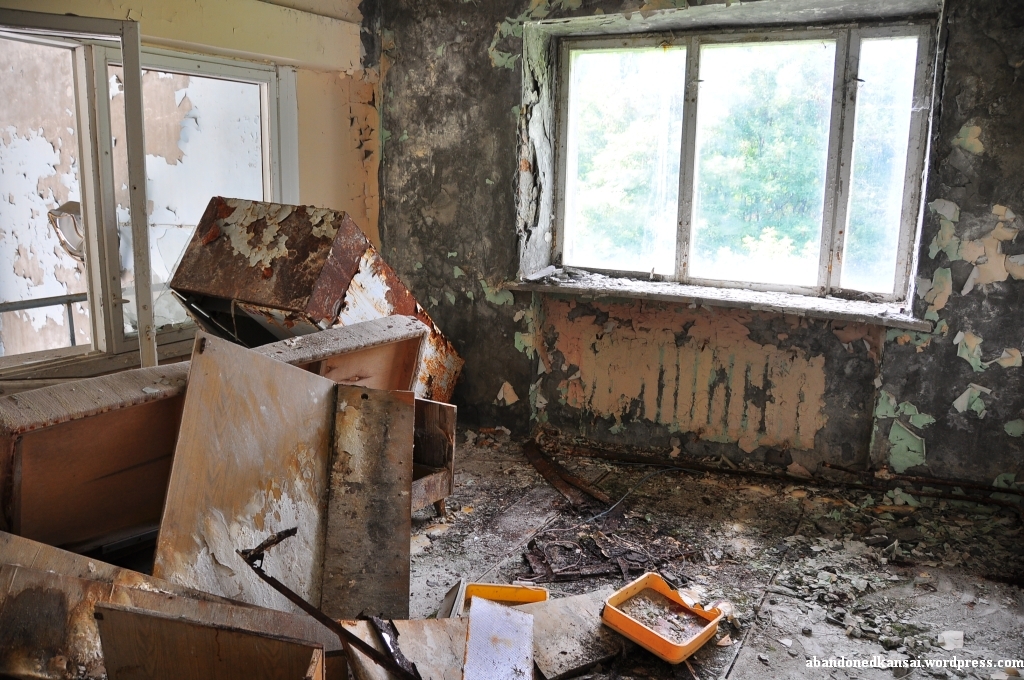
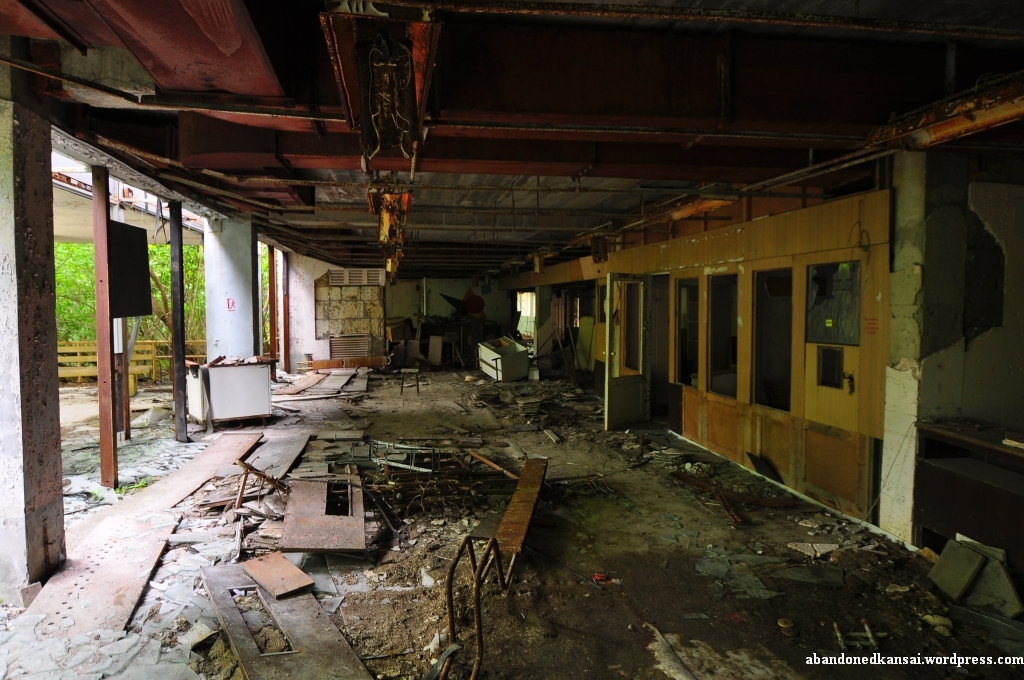
Since I took some outdoor pictures first I lost contact with the other guys even before entering the building. The entrance area looked pretty run-down and vandalized, so I made my way up the first staircase I saw – it was covered in plastic sheeting, now scruffy and cracked. Public baths, especially in Japan where I currently live, are supposed to be spotlessly clean, but of course Azure was in as bad shape as the rest of the city and therefore the building felt even a little bit more depressing. The rather small gymnasium wasn’t nearly as impressive as the huge one with the great view at the Palace of Culture, but the swimming pool itself was quite a sight, even without having played the previously mentioned video game.
(If you would like to know more about my trip to the Zone Of Alienation please *click here* to get to the “Chernobyl & Pripyat” special. For a map of the area please *click here*.)


Read Full Post »

The Palace of Culture was a typical institution of the Eastern bloc. The huge buildings were the meeting point for people to enjoy all kinds of recreational activities like sports and arts – and of course they were used for political indoctrination. The PoC usually included a cinema (some of them with several screens), a concert hall, dance studios, a swimming pool, study halls, a boxing ring, rooms with a variety of instruments, an area with tools for all kinds of do-it-yourself stuff and many, many more things – and of course Pripyat had a Palace of Culture, too, being one of more than 137,000 in the Soviet Union in 1988…
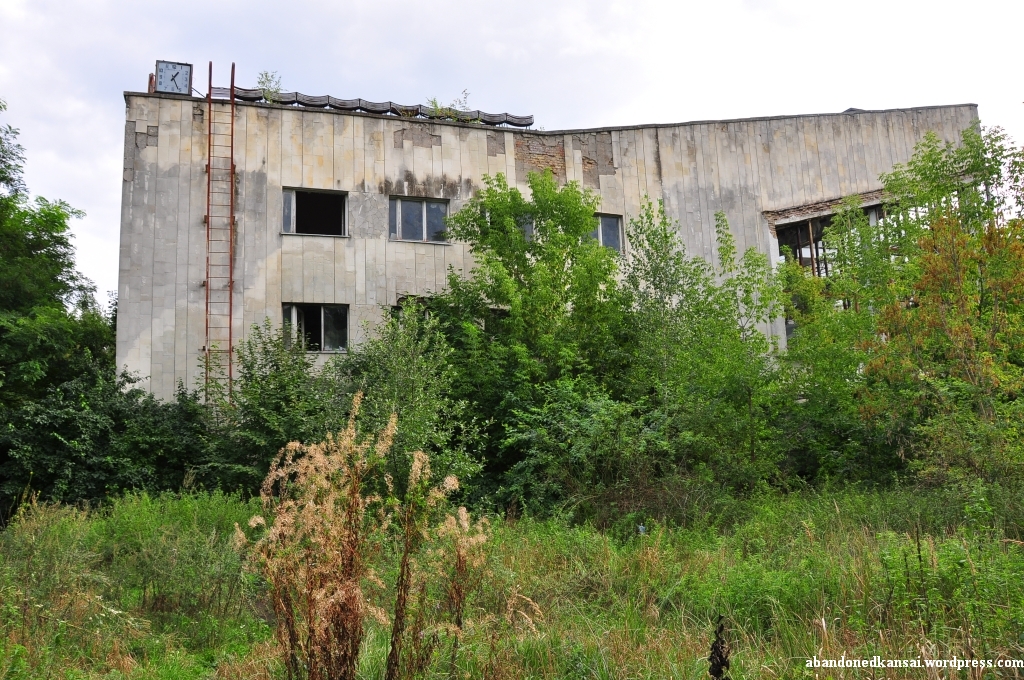
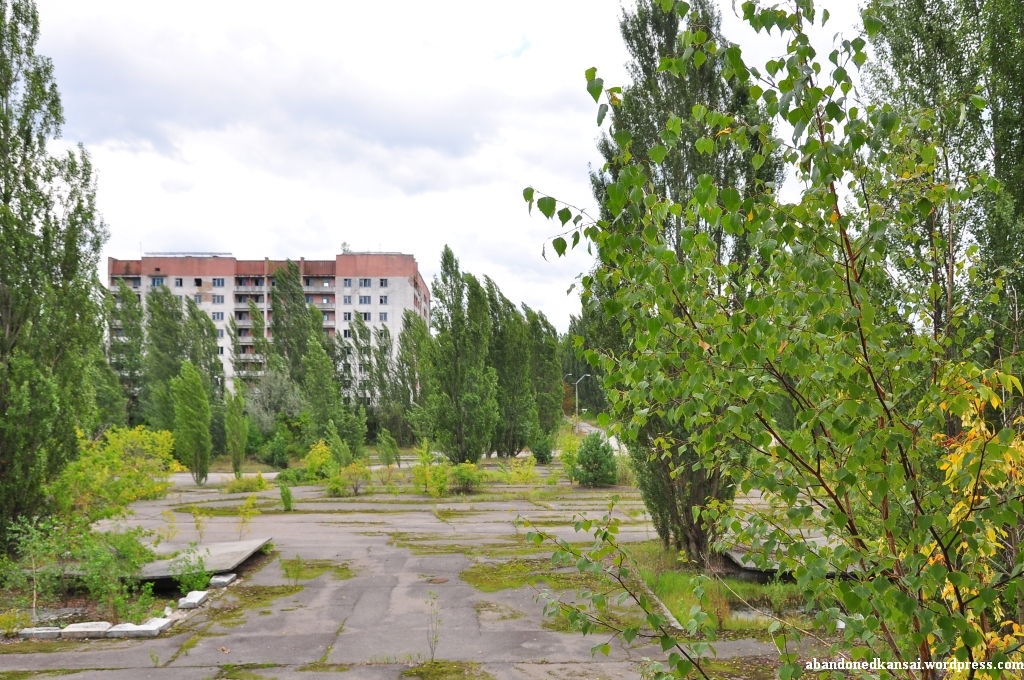
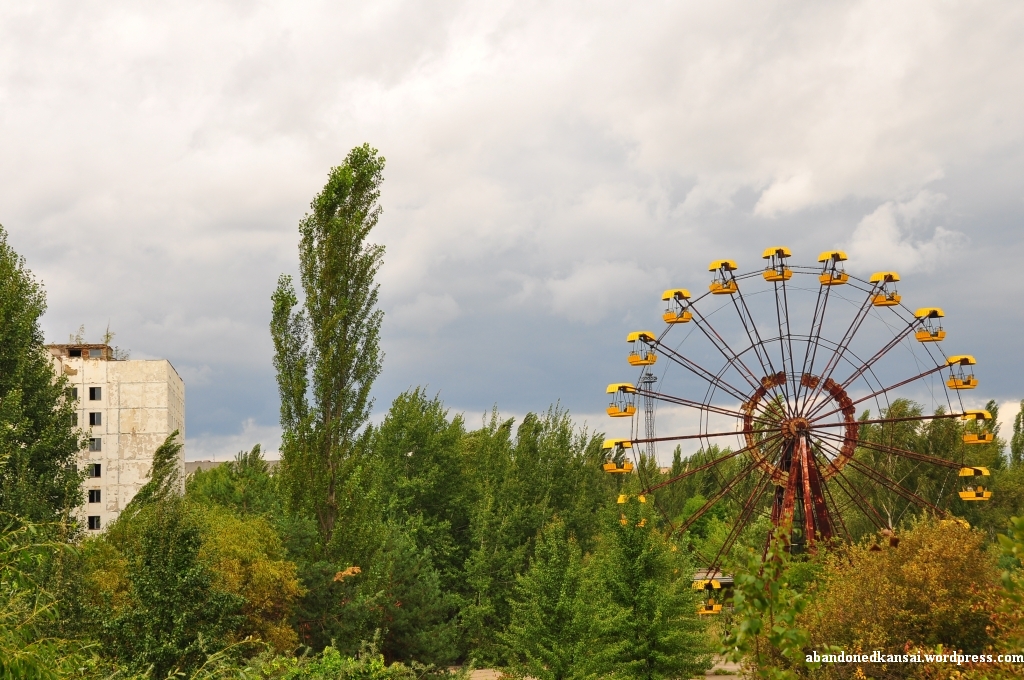
Energetik, the local Palace of Culture, was located directly at Pripyat’s center square, Lenin Square, and nowadays is one of the most visited locations in the world’s most famous abandoned city. One reason is that Energetik is on the way to everybody’s favorite Pripyat motive, the amusement park’s ferris wheel – the other is that the building offers a lot of variety on a relatively small space. Crossing Lenin Square Maxim was raving about how beautiful the place must have been 30 ago, given that the huge open space once was the home of a good part of the previously mentioned 33,000 rose plants.
I, on the other hand, was just fascinated by the unique, sad beauty that makes Pripyat what it is today. Struck by awe I entered the Palace of Culture and didn’t even know where to start taking pictures. Anywhere else in the world exploring this building would have taken at least half a day, but I somehow had the feeling that I would have that much time – in the end I had about 50 minutes…
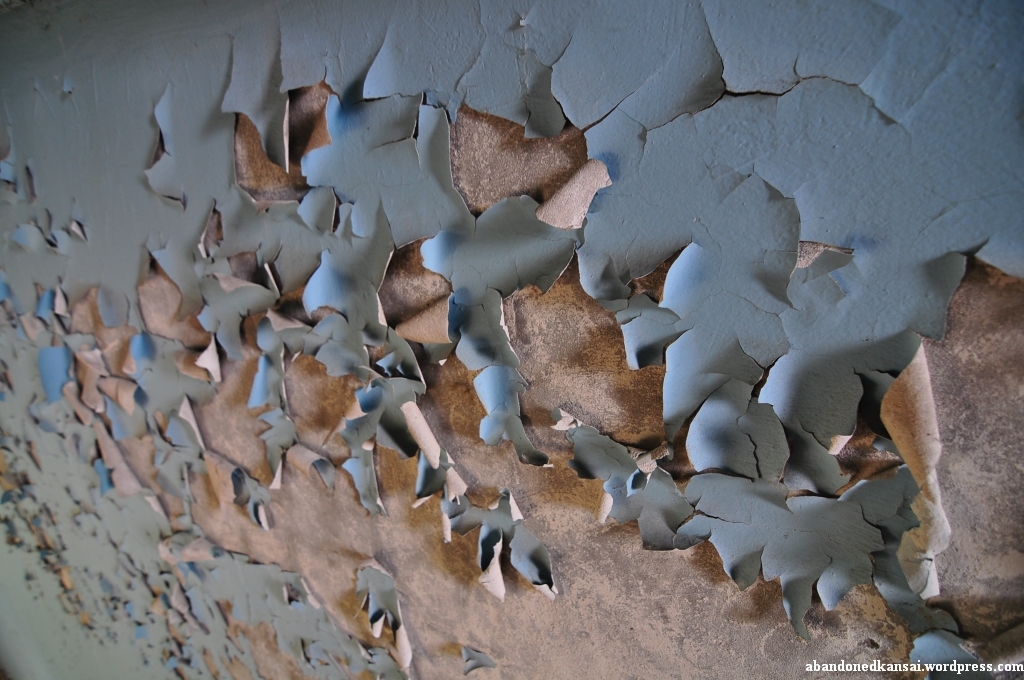
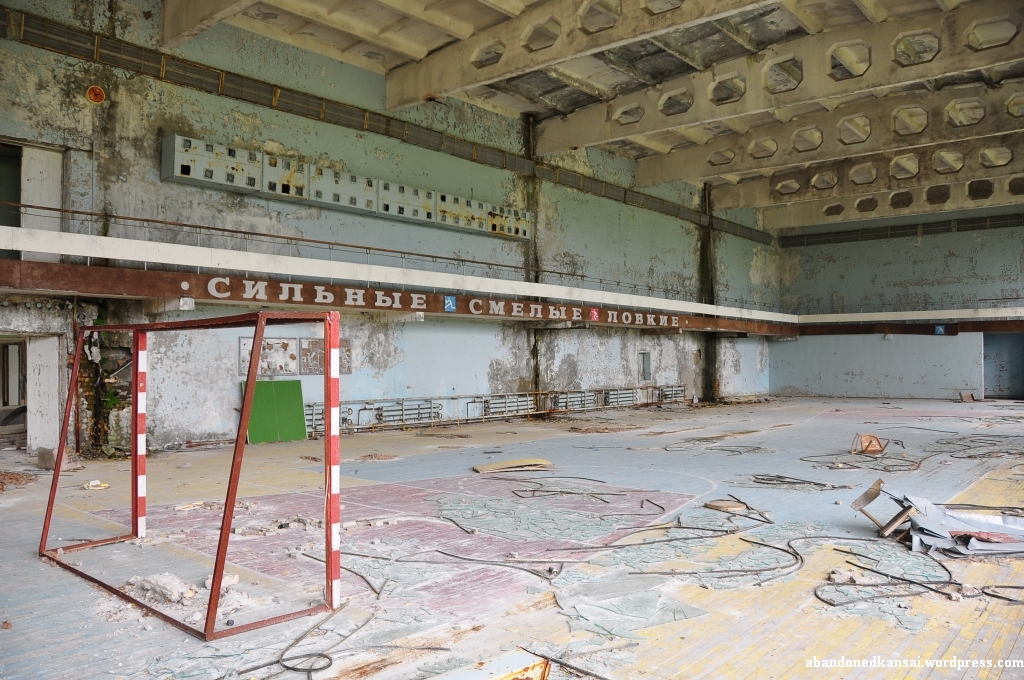
Pripyat’s Palace of Culture is actually in pretty bad shape. Like most other buildings in the zone there isn’t a single window still intact, so the forces of nature – up to 40 degrees Celsius in summer, down to minus 20 in winter – did quite some damage in the past; and having tourists visiting the place every other day doesn’t help much either I guess. Most of the rooms were severely vandalized (a long time ago though!), the cinema barely recognizable. Bushes and little trees were growing inside of some rooms and many of the mural paintings were crumbling away…
Exploring the different kinds of rooms was an amazing experience, but one moment stuck with me in a special way. It happened when I walked through a hallway towards what I assumed was the main gymnasium in the building. As I entered the huge room I looked outside the gigantic front of window frames and saw the famous ferris wheel 100 meters away in the background. Unexpected and absolutely mind-blowing… still gives me goose-bumps when I think back now.
Sadly only a couple of minutes later Maxim made us hurry-up for the first time – the amusement park was waiting just for us…
(If you would like to know more about my trip to the Zone Of Alienation please *click here* to get to the “Chernobyl & Pripyat” special. For a map of the area please *click here*.)

Read Full Post »

Recently I went on a three day road trip to Awaji Island and Shikoku. Fellow urban explorer Jordy came down to Kobe, we rented a car and off we went. Since Jordy likes to drive and I like to do research we combined our powers to go to some places off the beaten tracks. Pretty much all of the locations will be English speaking firsts, some of them are even barely known to the Japanese haikyo community – including two original finds: A pachinko parlor with all the machines and a hotel called shangri-la. In addition to that we went to an abandoned monument (with a museum right next to it), another hotel, a nursery school, a restaurant with a spectacular view, an abandoned and very countryside elementary school, a spa built on a cliff and, most important of all, an abandoned doctor’s house that makes the previously posted Doctor’s Shack look like… well… a shack.
Please enjoy the preview pictures below – a series of articles about the trip will start ASAP, most likely by the end of this week.

Read Full Post »

« Newer Posts