Feeds:
Posts
Comments

Archive for the ‘Urbex’ Category

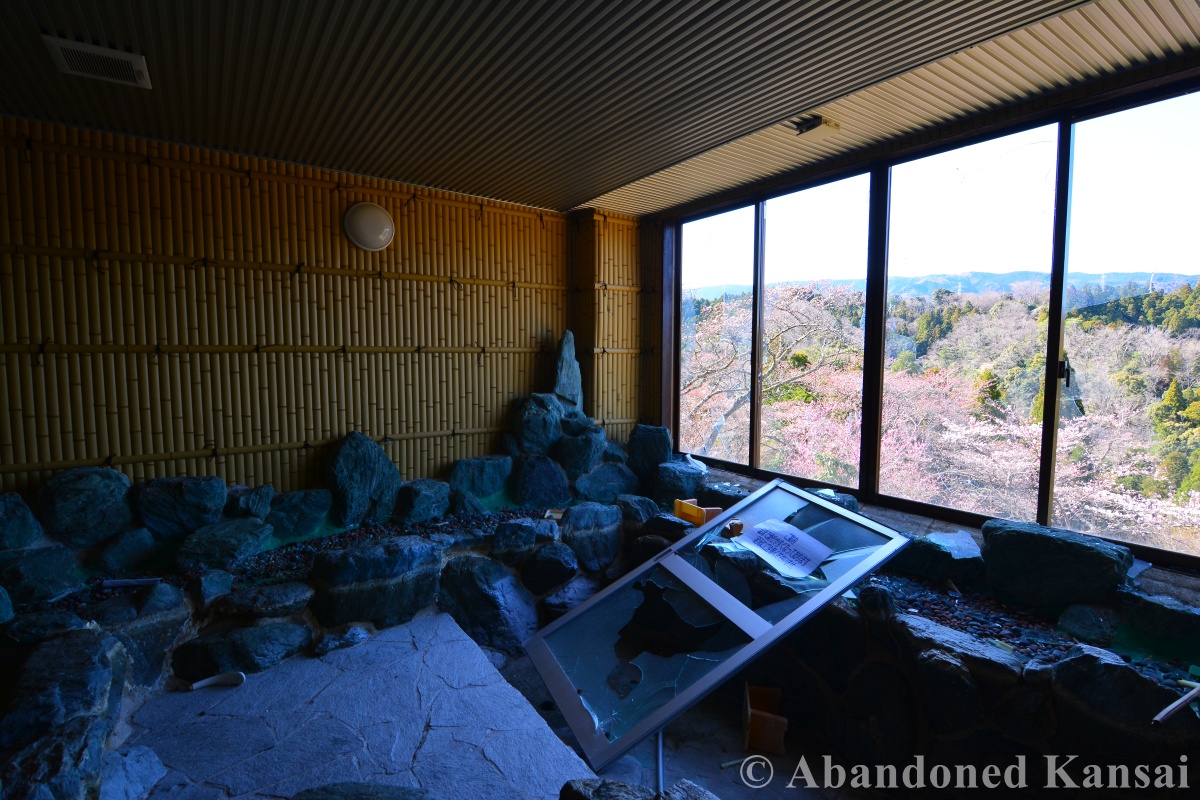
It’s finally autumn, but I know we all already long for spring. So let’s look at a spring exploration today. A hot spring exploration… with cherry blossoms!

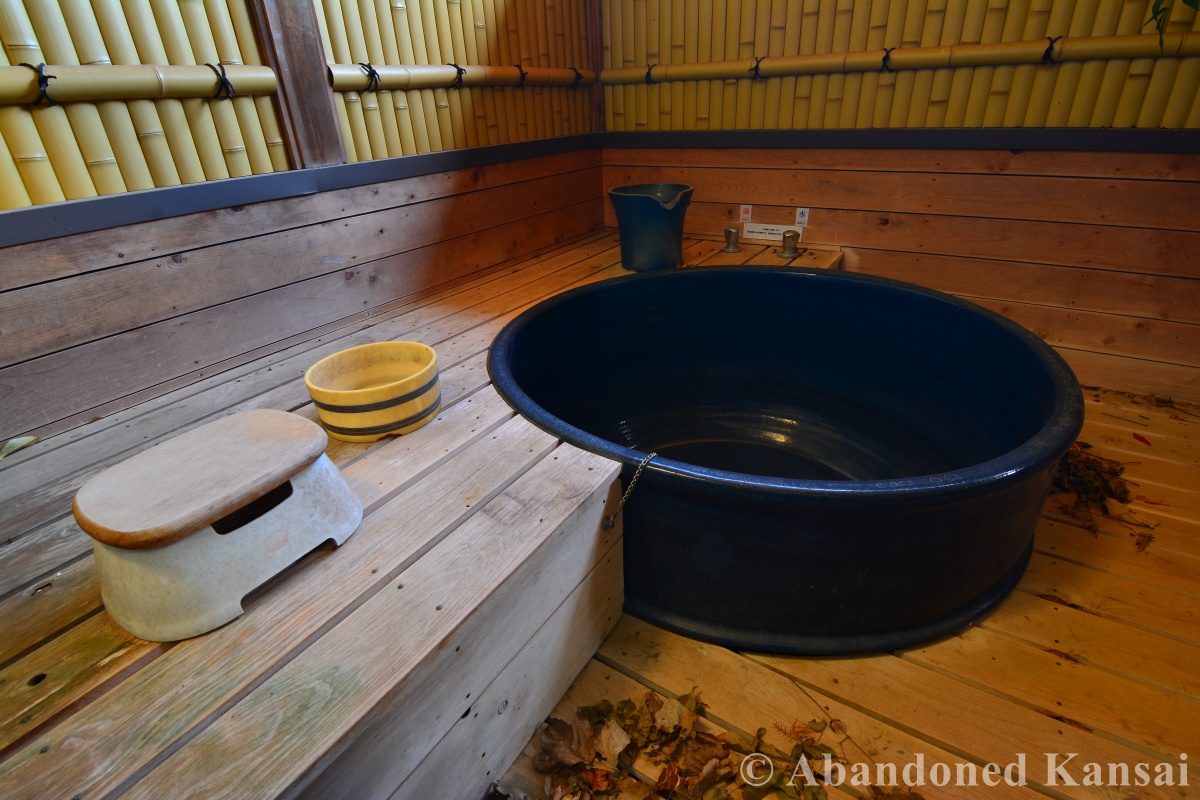
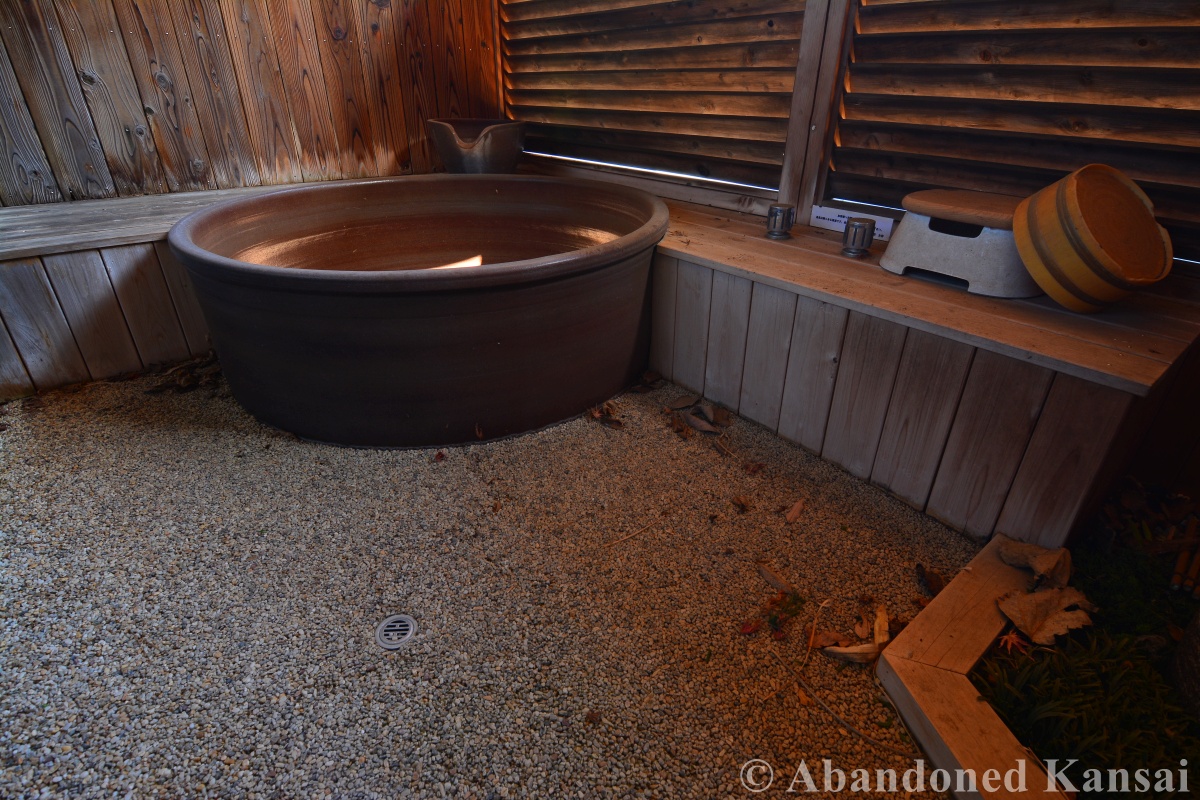
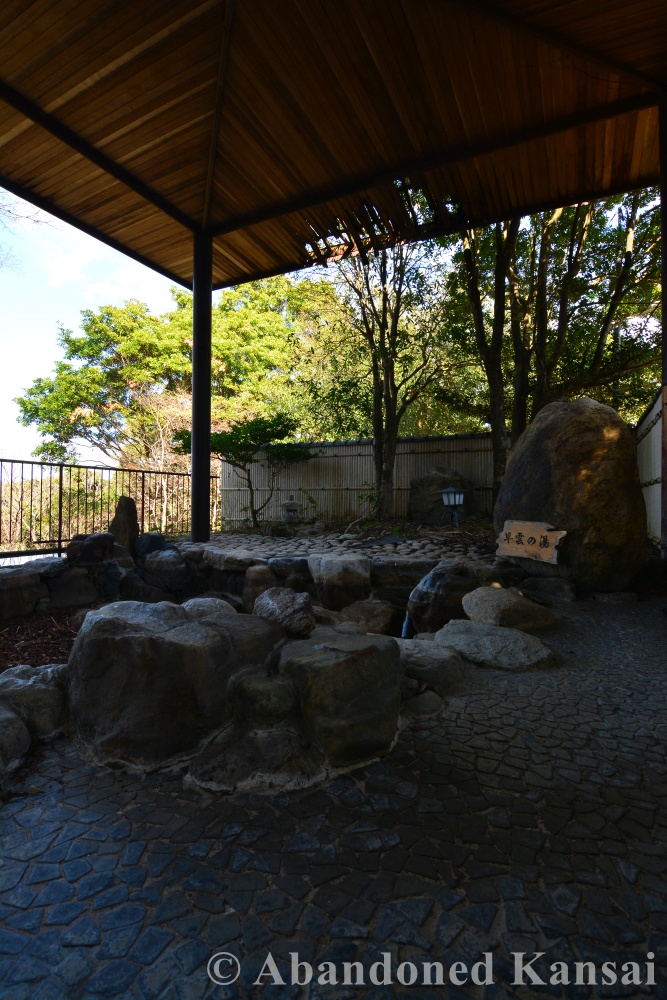
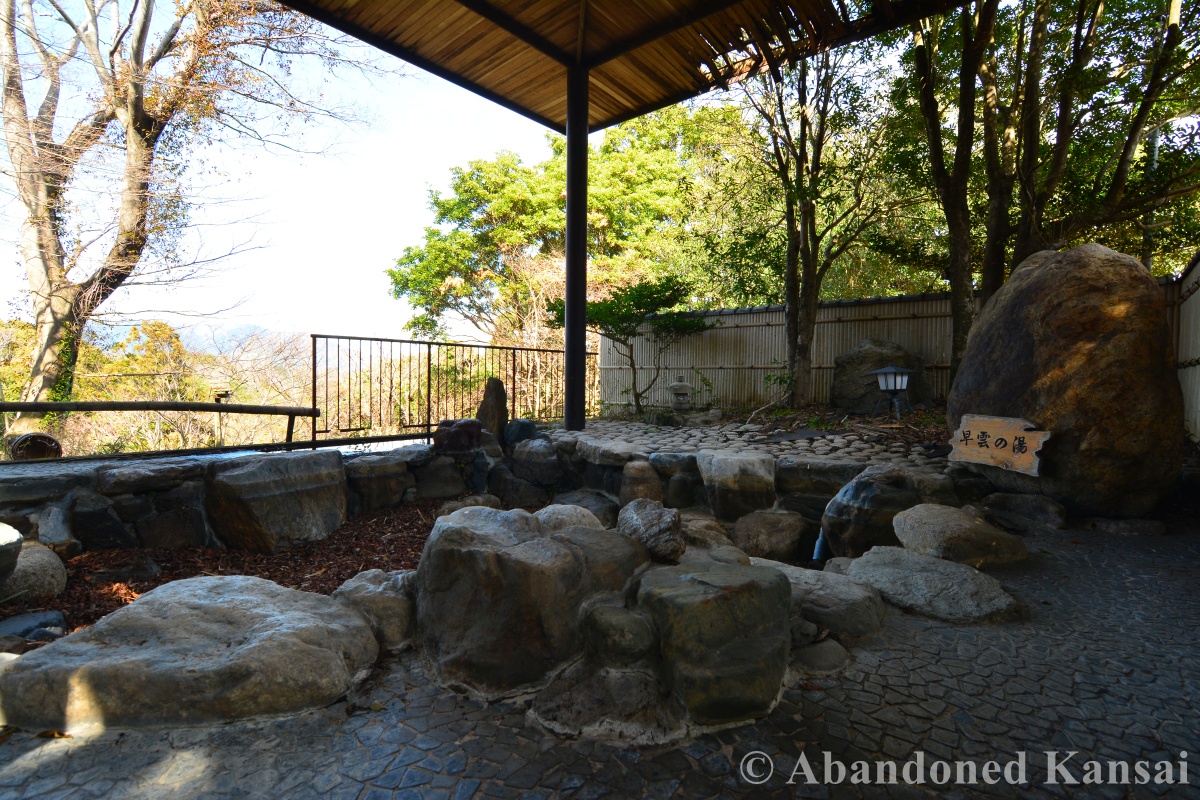
I love a good rotenburo! There is nothing like letting the family jewels dangle while standing knee-deep in hot water, enjoying a (hopefully) spectacular view. Especially after an exhausting day of exploring! You feel like the king of the world, laying your eyes on the conquered land below you!
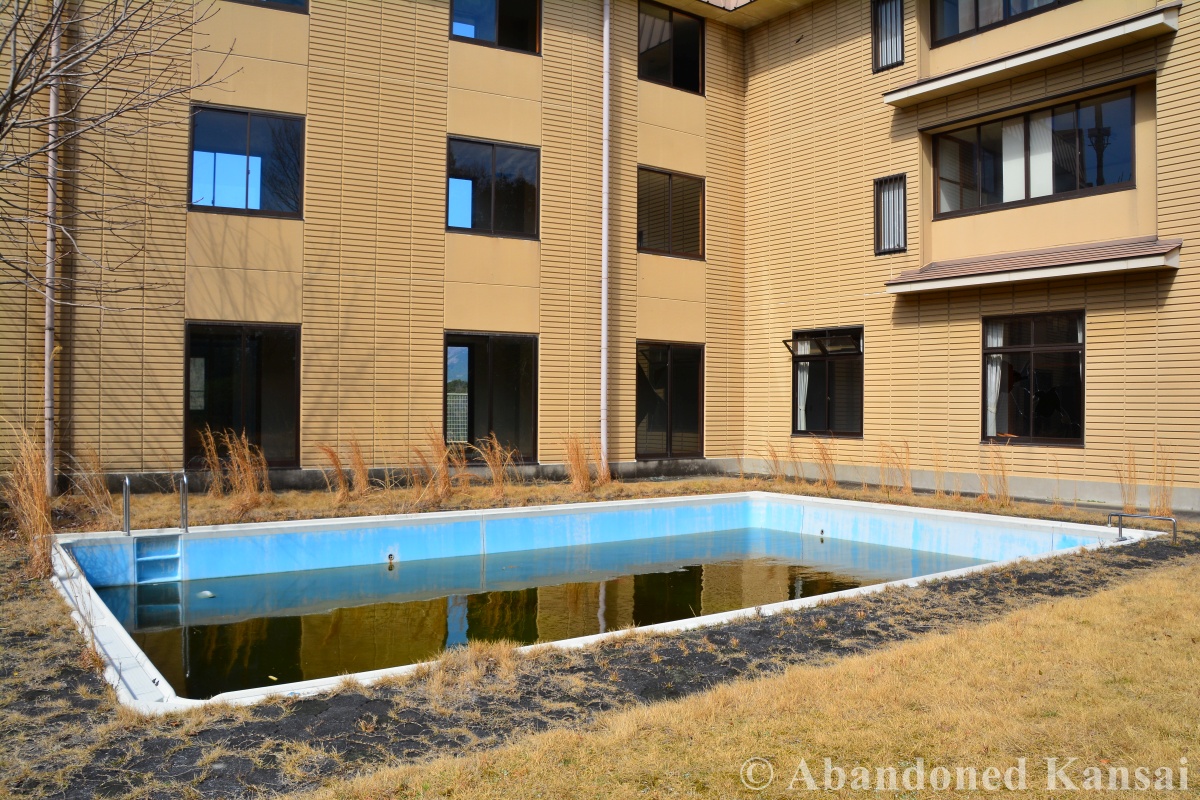
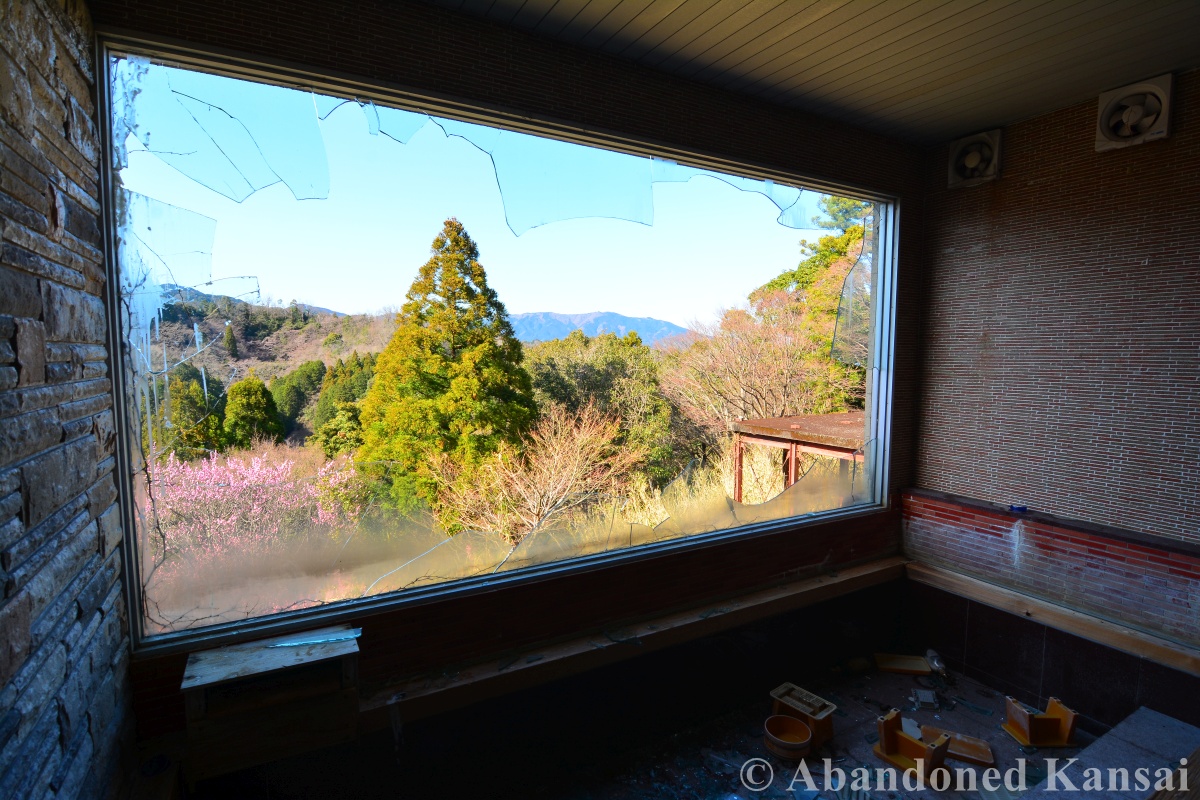
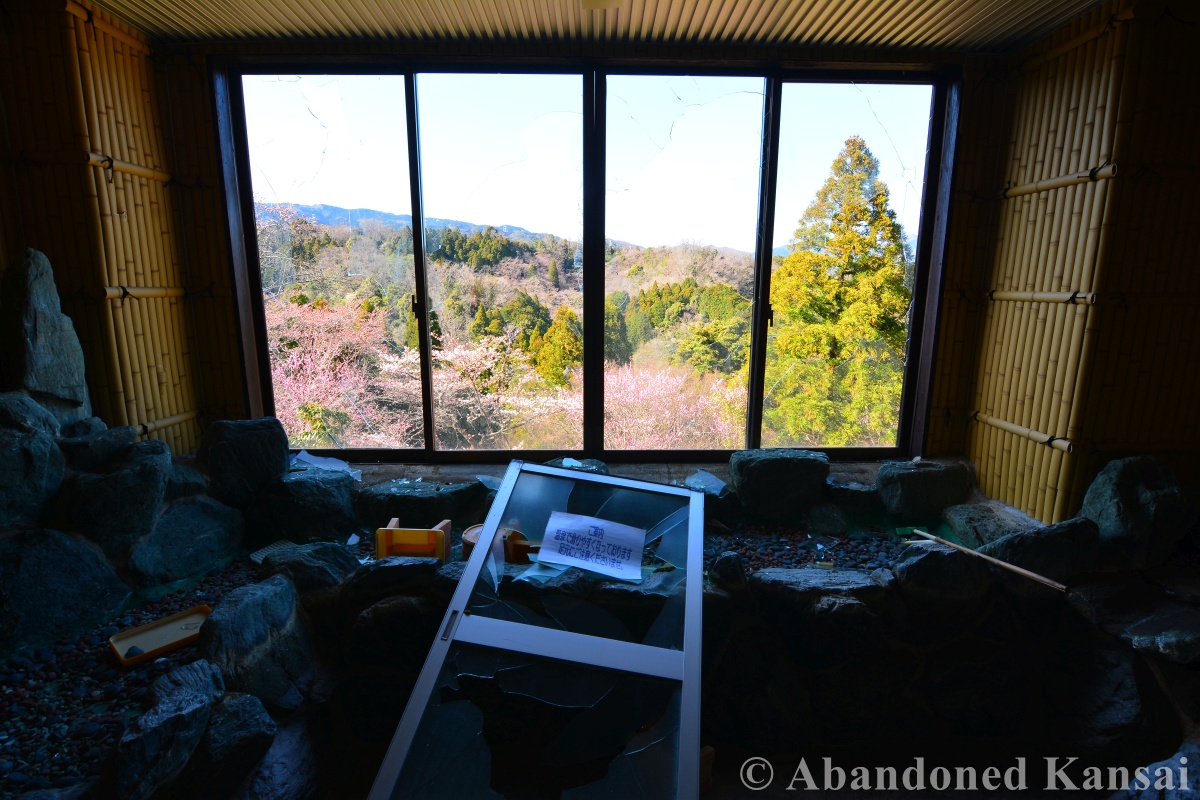
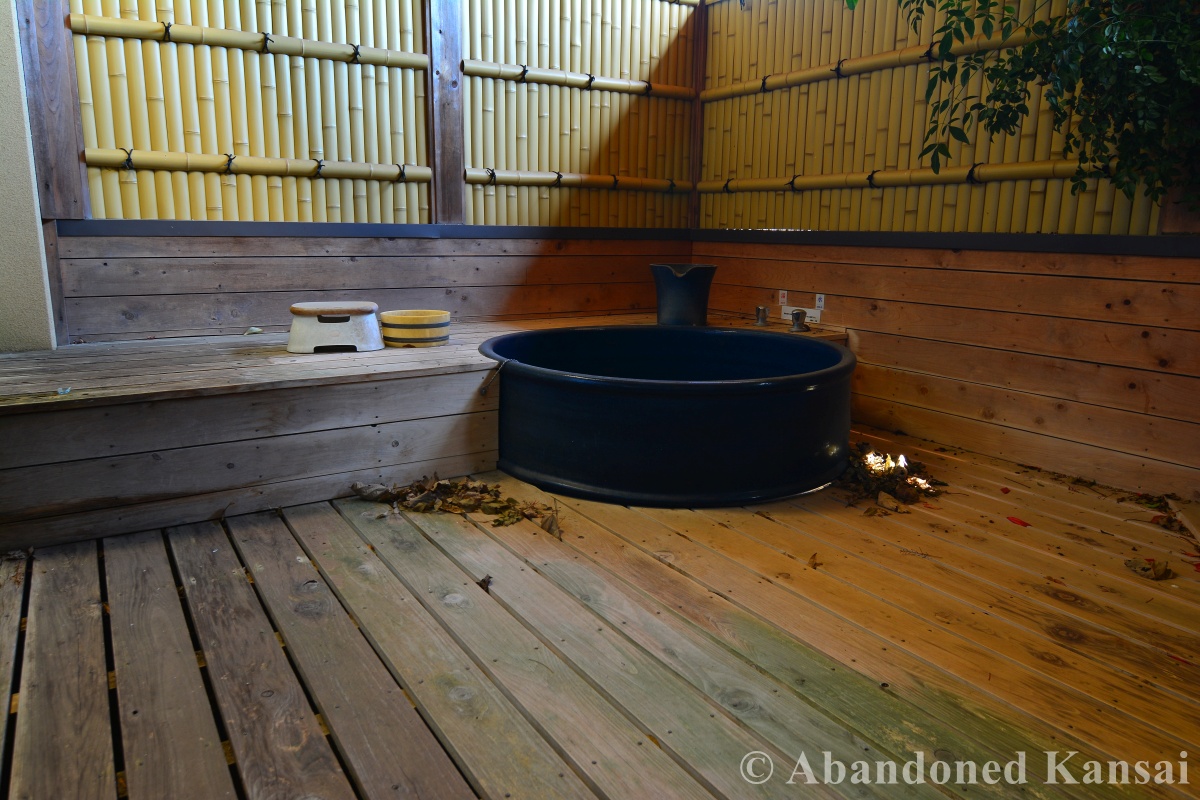
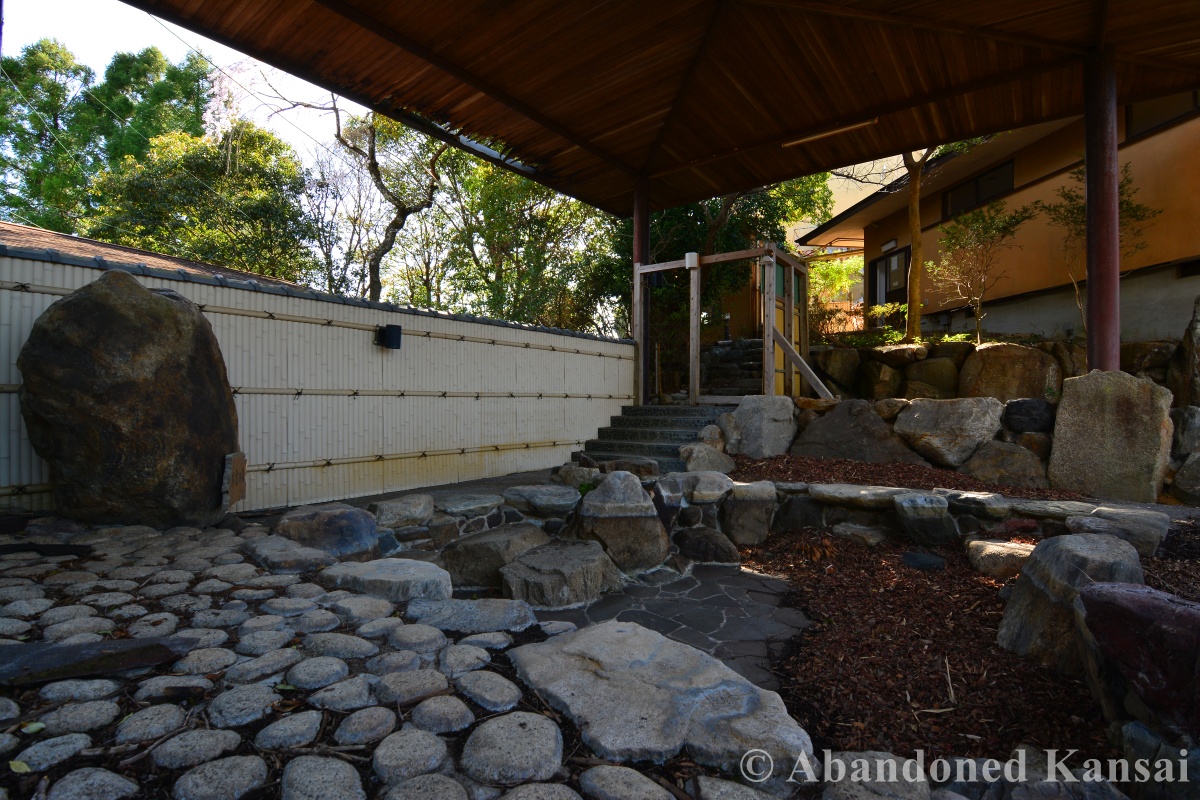
Exploring an abandoned rotenburo is quite a different experience though – no dangling jewels, no hot water… and you are still in the middle of the exhaustion part of the day. The rotenburo (an outdoor hot spring, clothing usually not optional, but strictly forbidden) I had in mind when writing the previous paragraph was part of a large spa hotel somewhere in Kansai and offered spectacular views of the valley below, especially on that hot sunny spring day a few years back. Before I got to this though I had to walk through a whole abandoned hotel, which is not exactly my favorite thing to do, as most of you know by now. I found an open door in the back of the hotel, right next to the surprisingly unspectacular outdoor pool. But then again: How much use can you get out of an outdoor pool in the mountains of Kansai? 2 months a year? And who wants to use it even then, when there are much nicer options both indoor and outdoor?
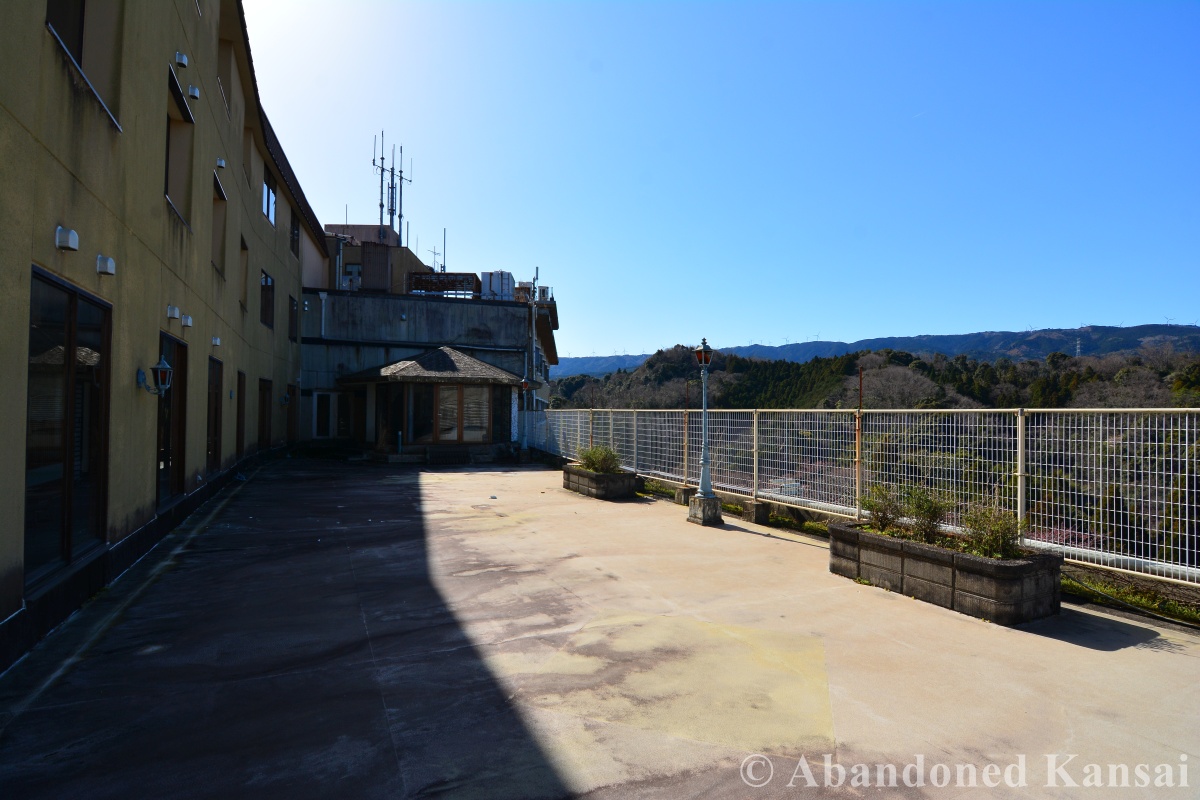
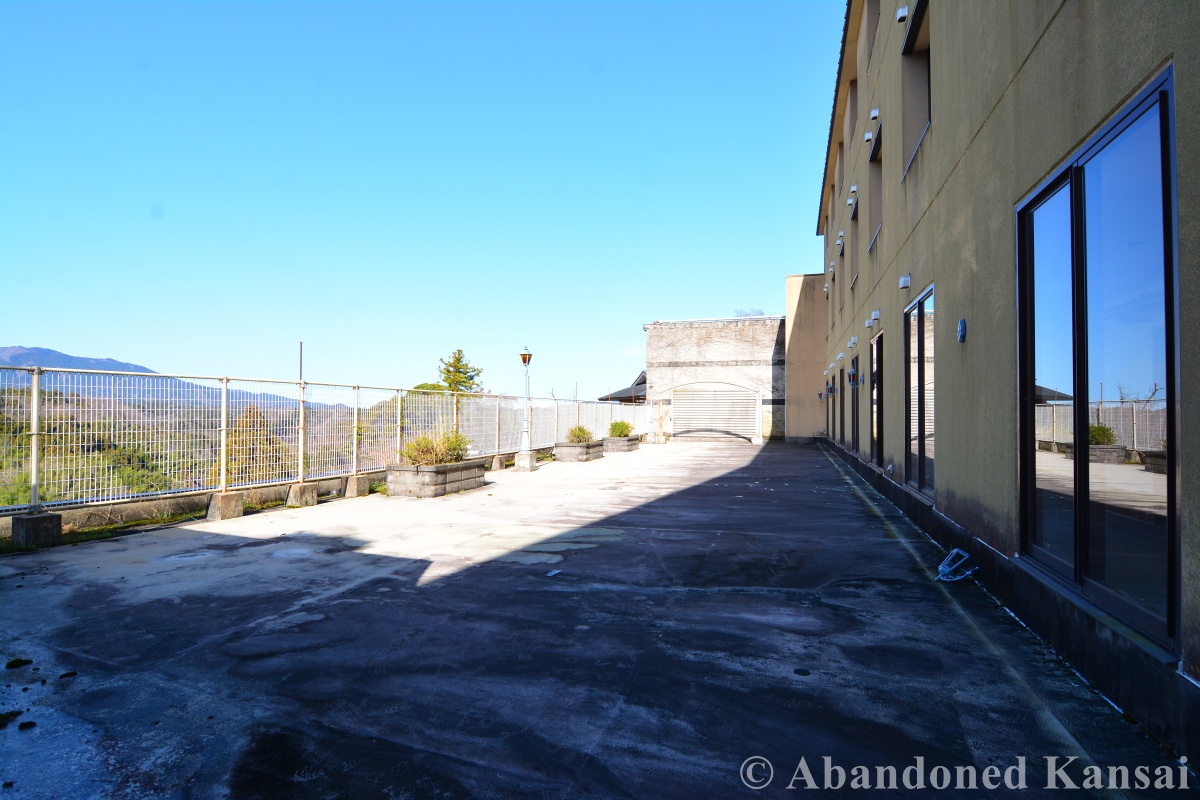
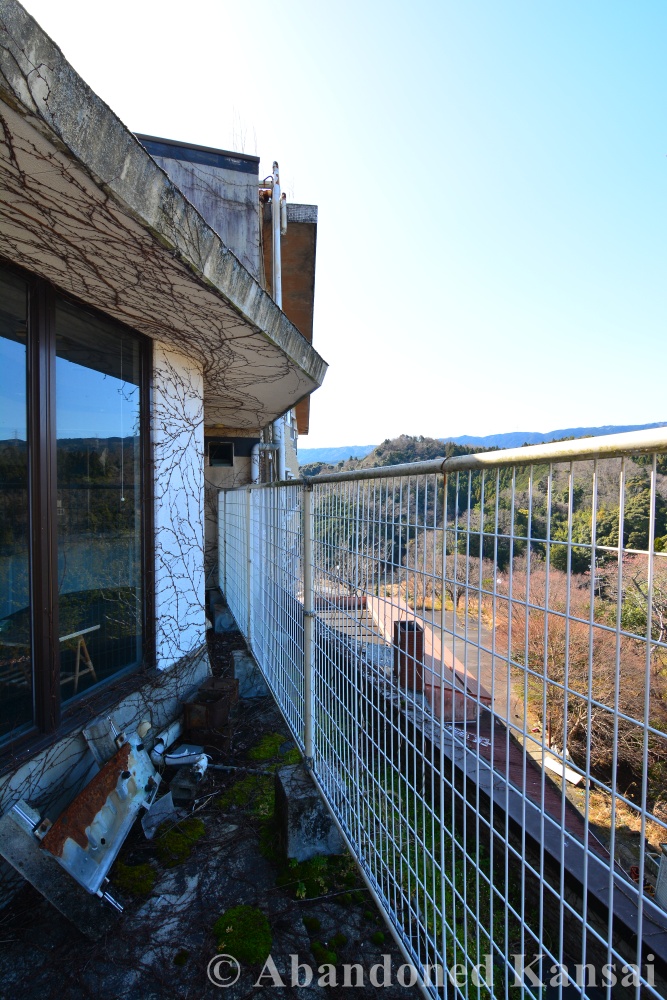
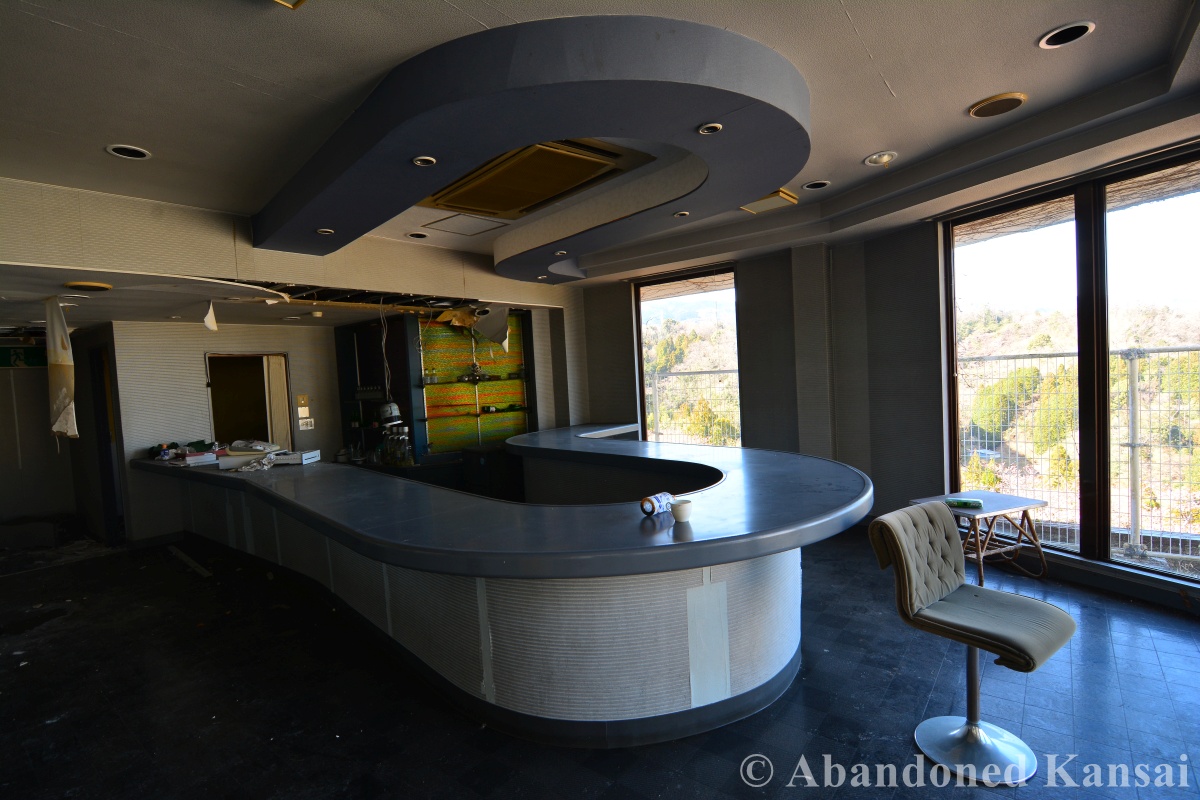
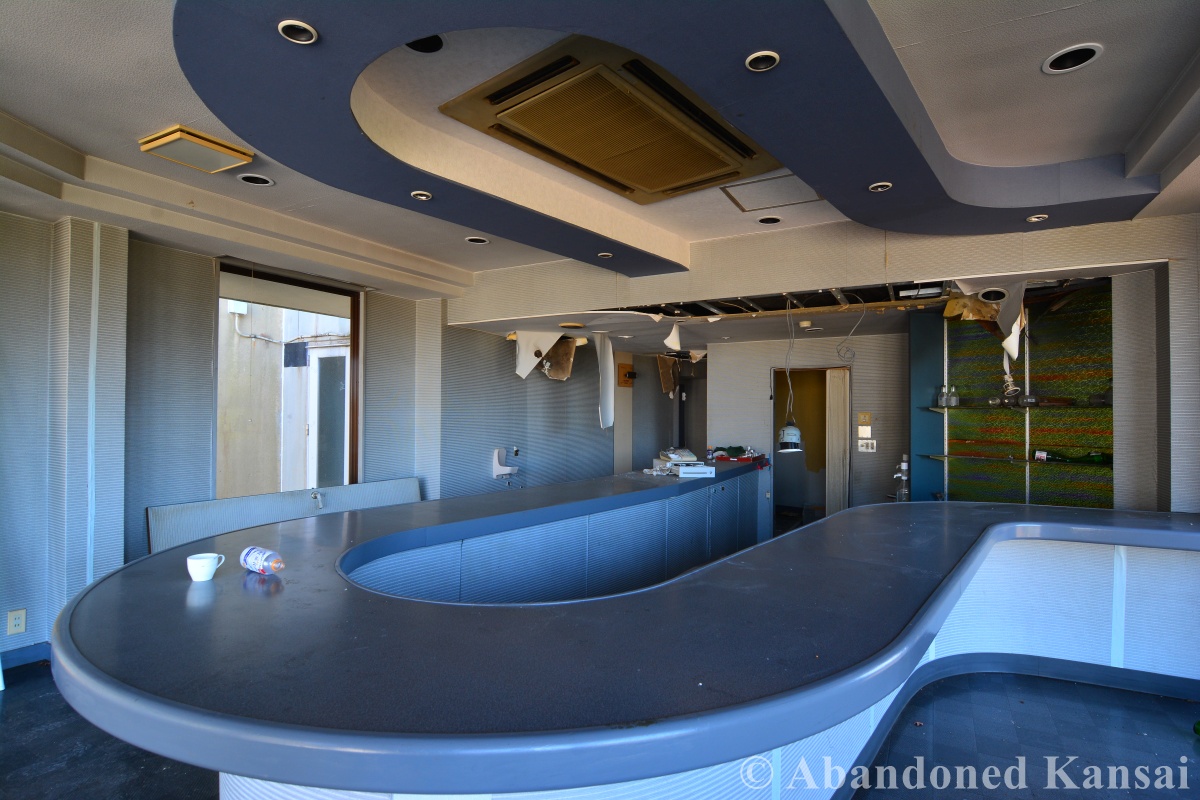
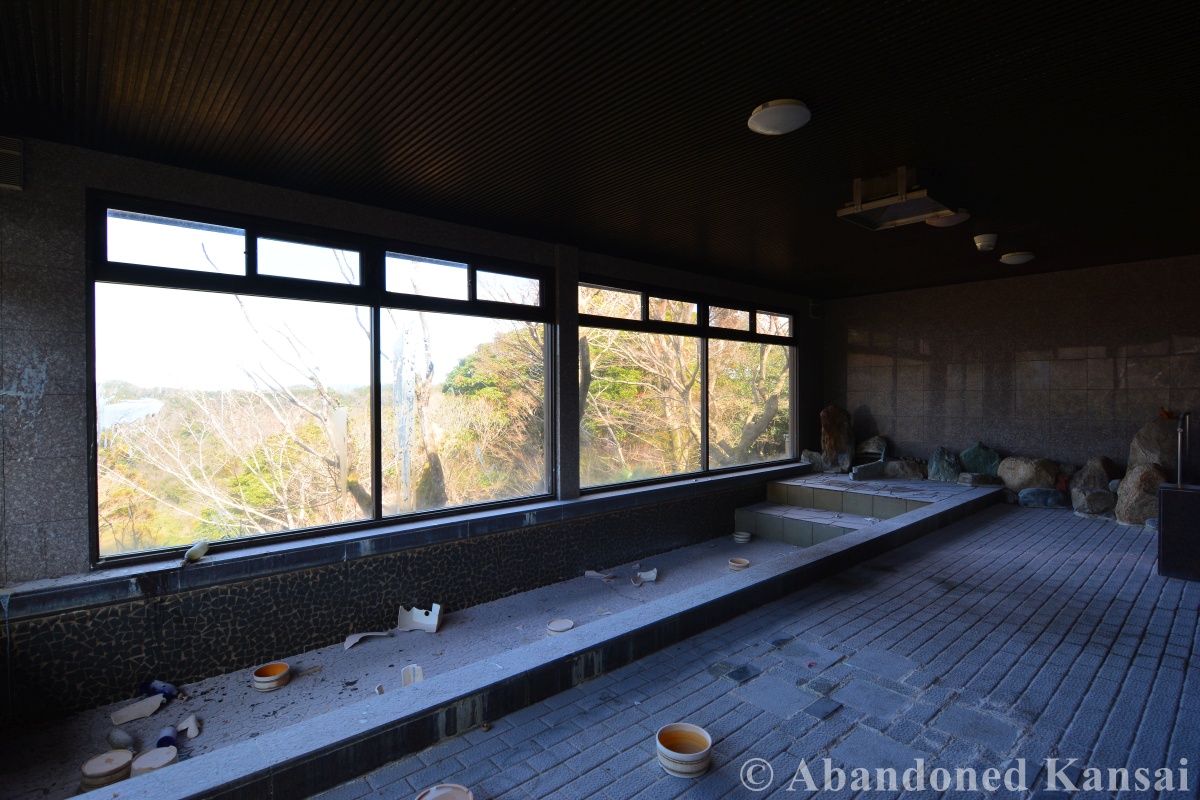
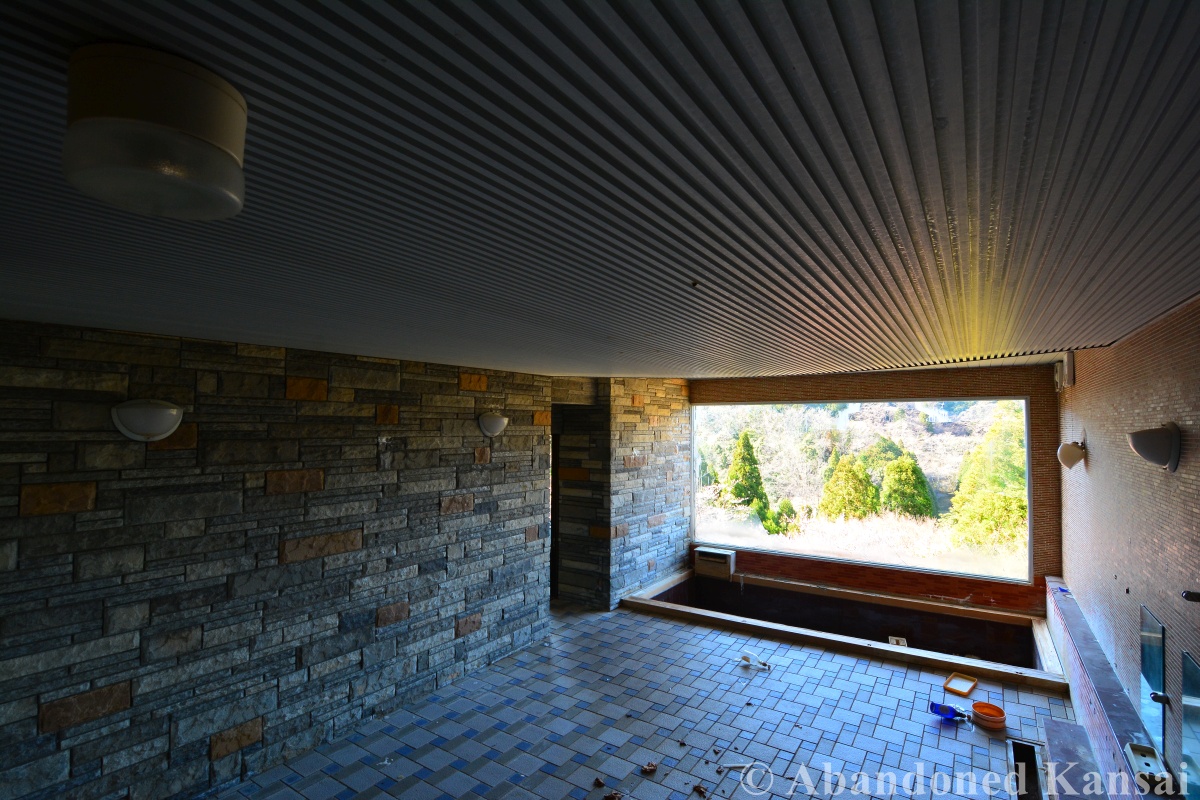
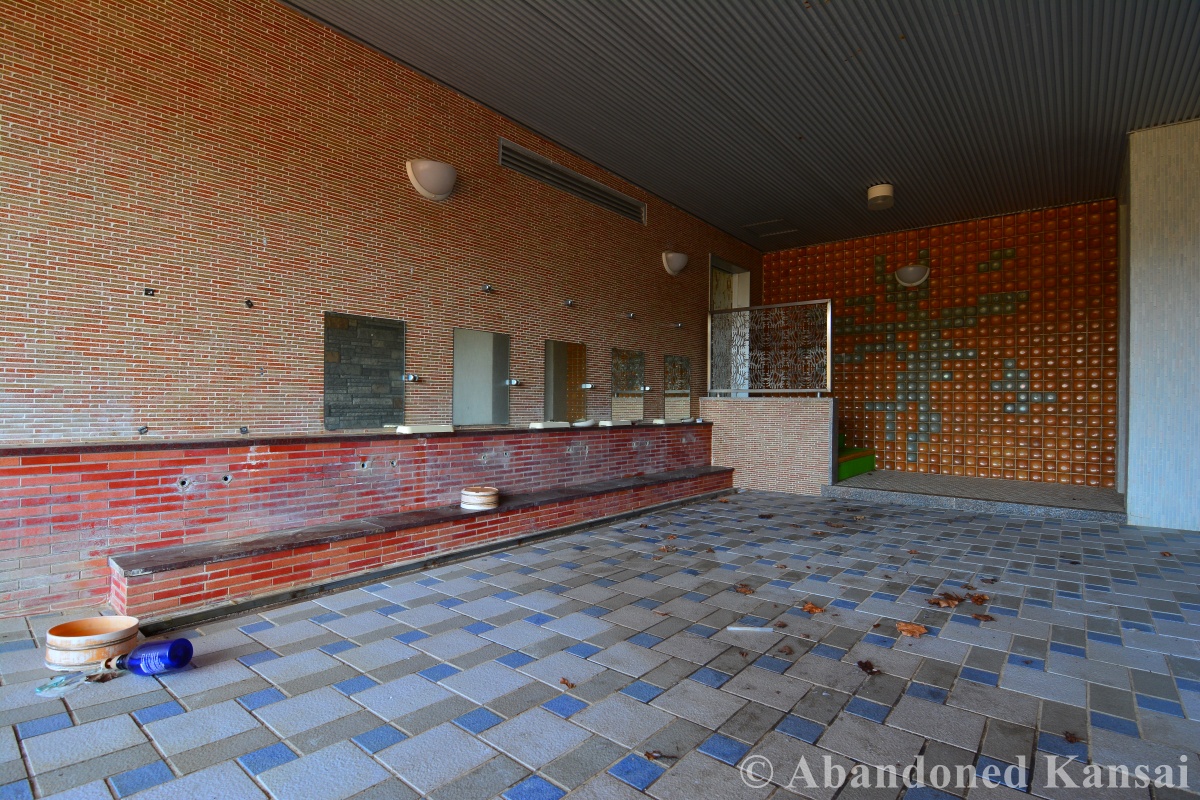
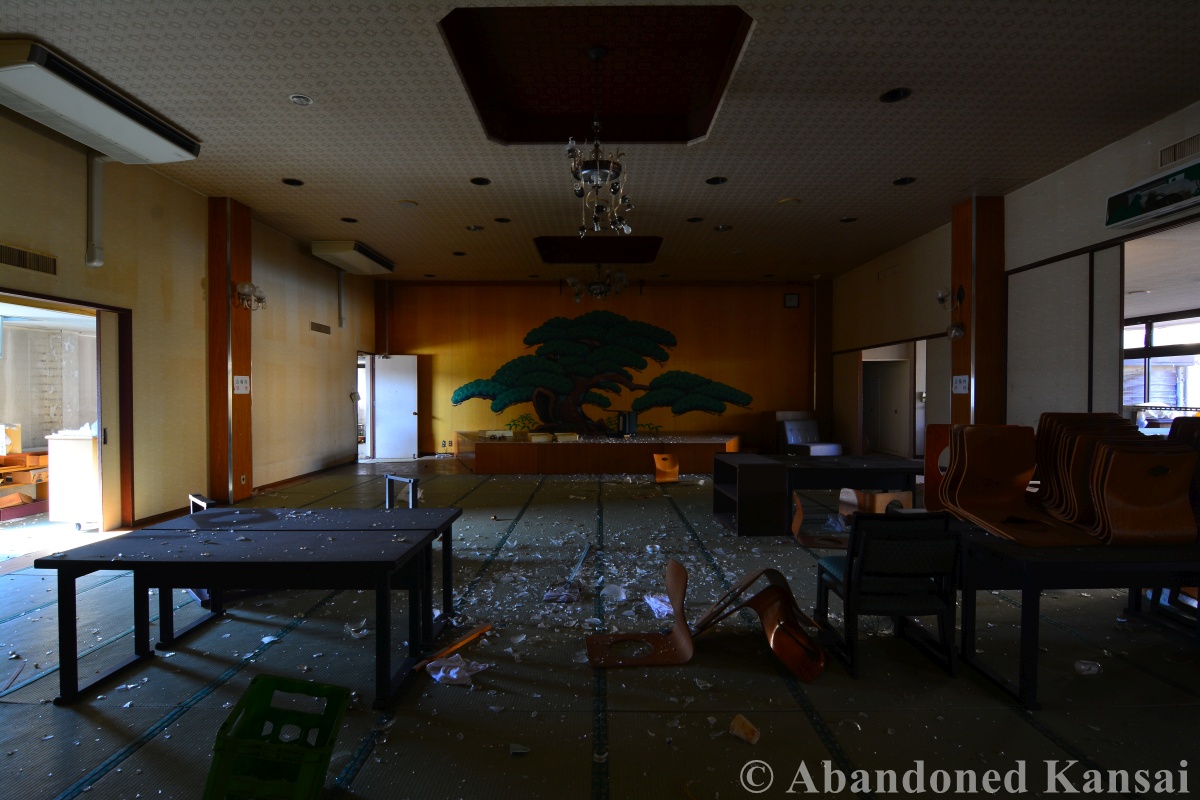
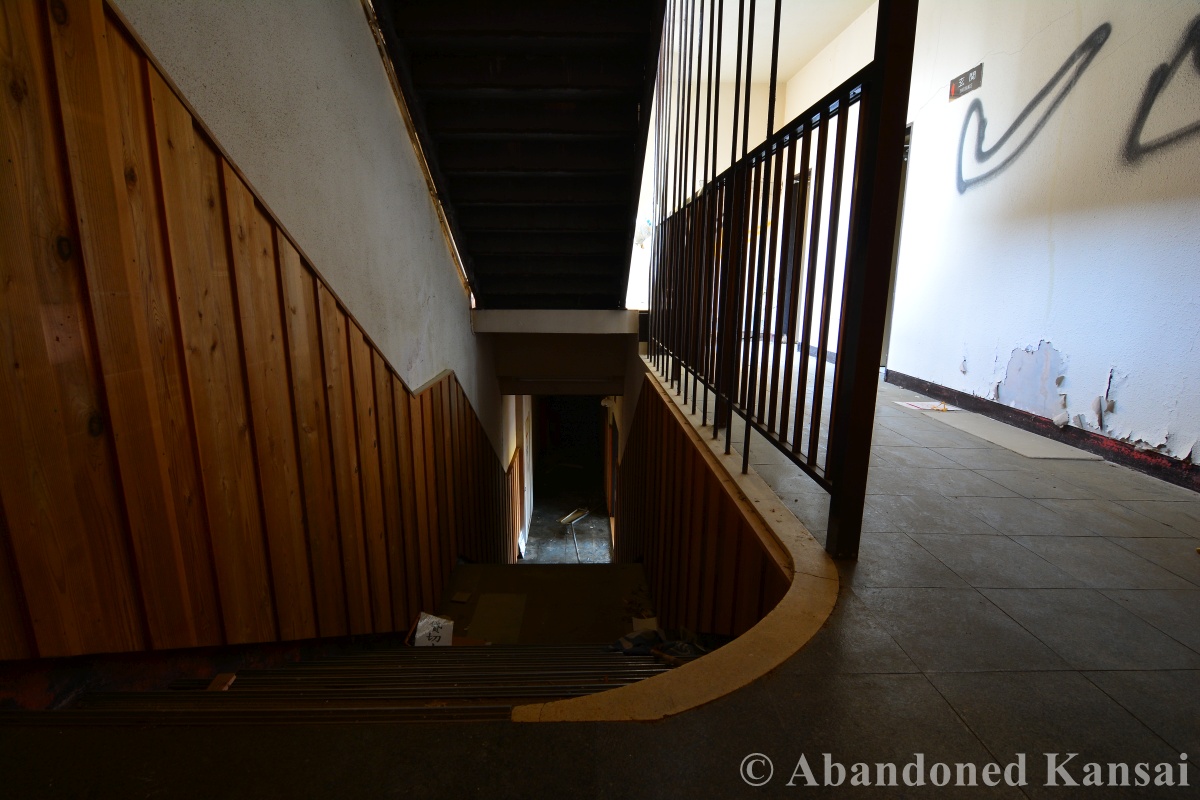
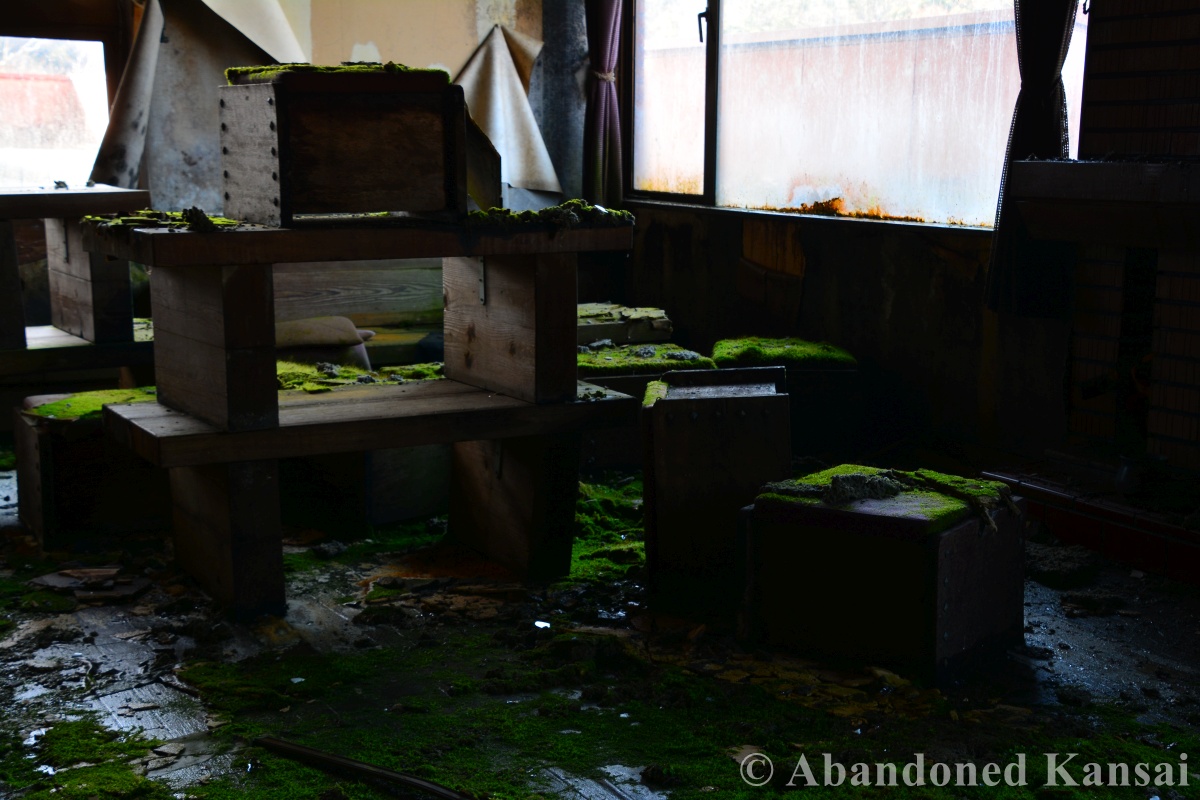
The Sakura Spa Hotel was one of those rather rare, rather high-end “private tub outside of your room” place that are surprisingly uncommon to find abandoned. Since I kinda came in through the bathroom window (props to those who got the reference!) I went straight to the top, where I found a huge outdoor space with a bar. From there I made my way downstairs again – through the shared indoor baths and the private indoor baths that came with certain rooms to the rotenburo in the back… and then I left through the slightly vandalized lobby. Basically a backwards exploration. But there are no rules in urbex. Only good locations and bad locations. And this was a rather good one, because… private baths as part of the rooms. You don’t see those very often. So enjoy! And maybe share with a loved one…

(*Like Abandoned Kansai on Facebook* or *follow us on Twitter* if you don’t want to miss the latest articles and exclusive content – and subscribe to the *video channel on Youtube* to receive a message right after a new video is online…)
Read Full Post »

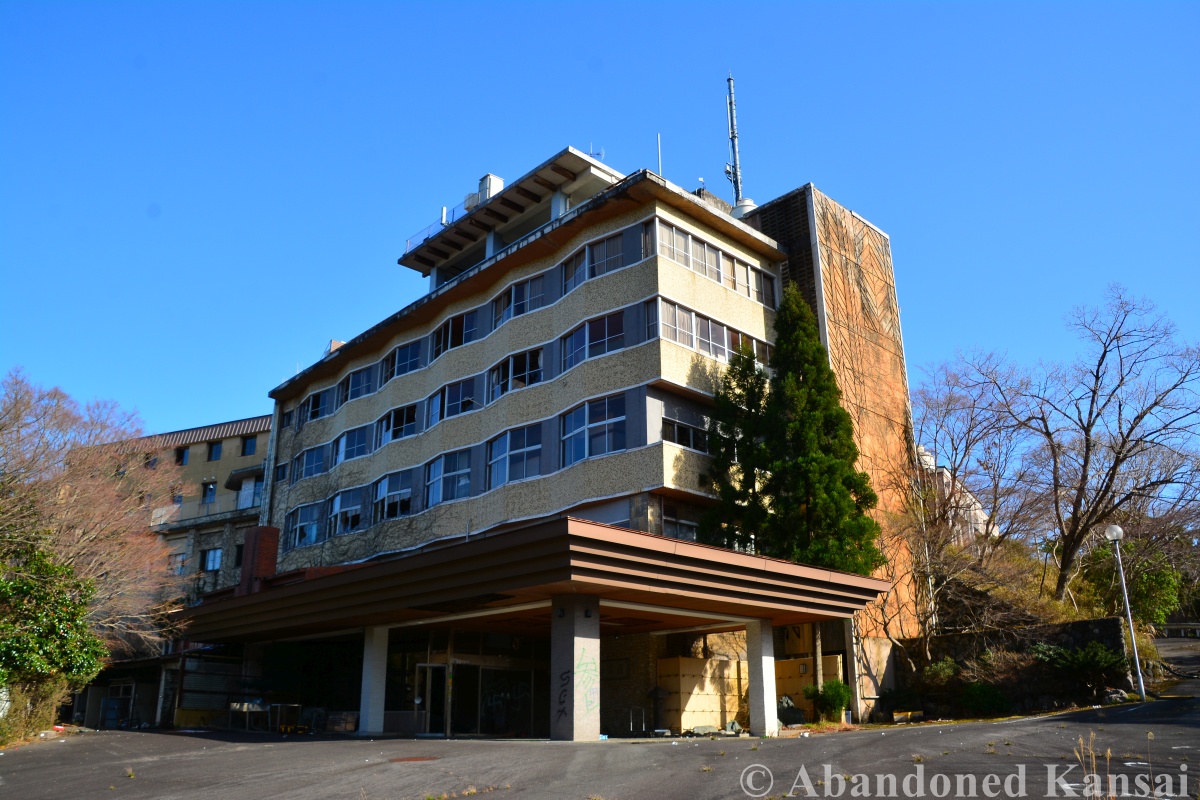
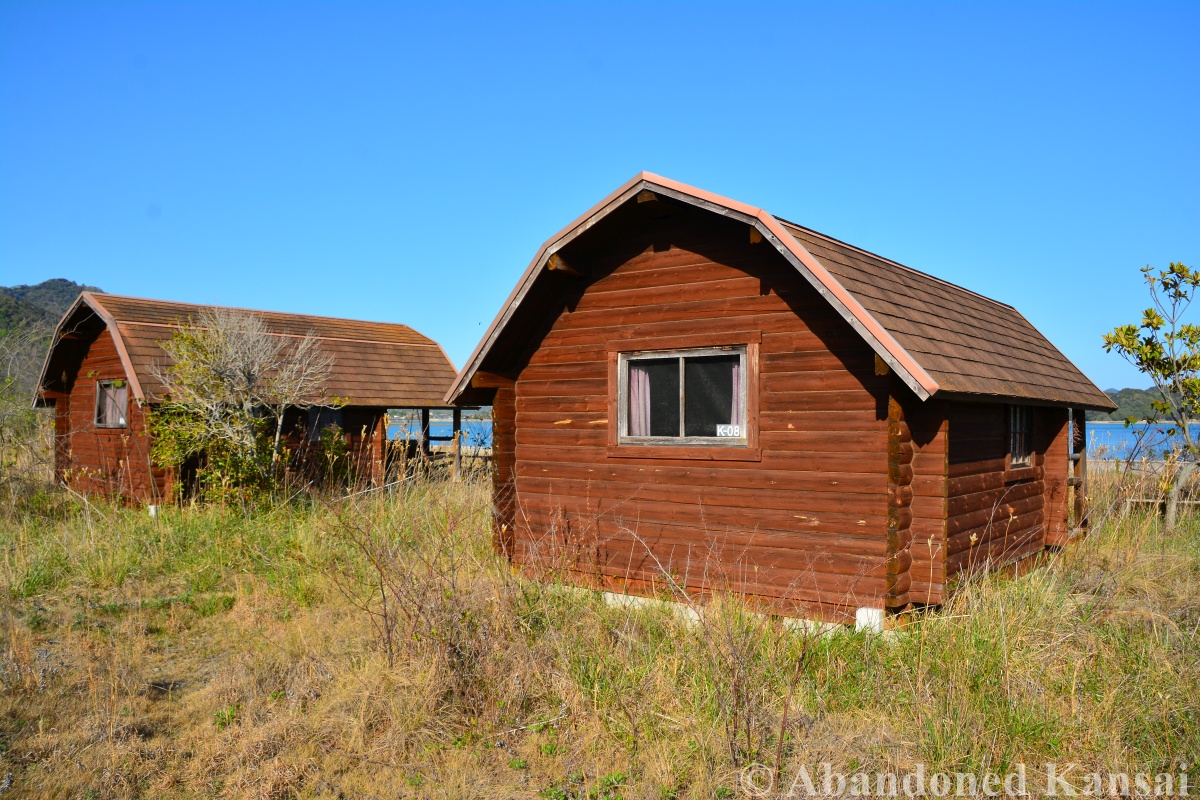
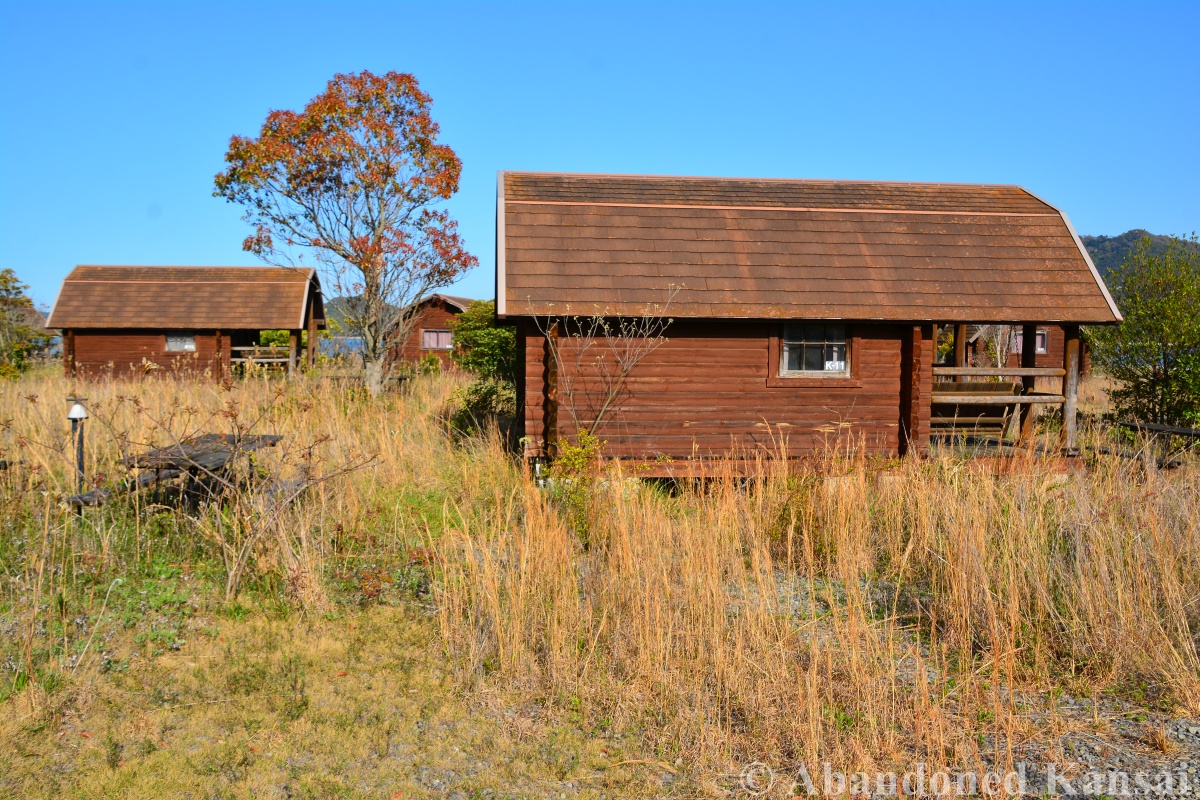
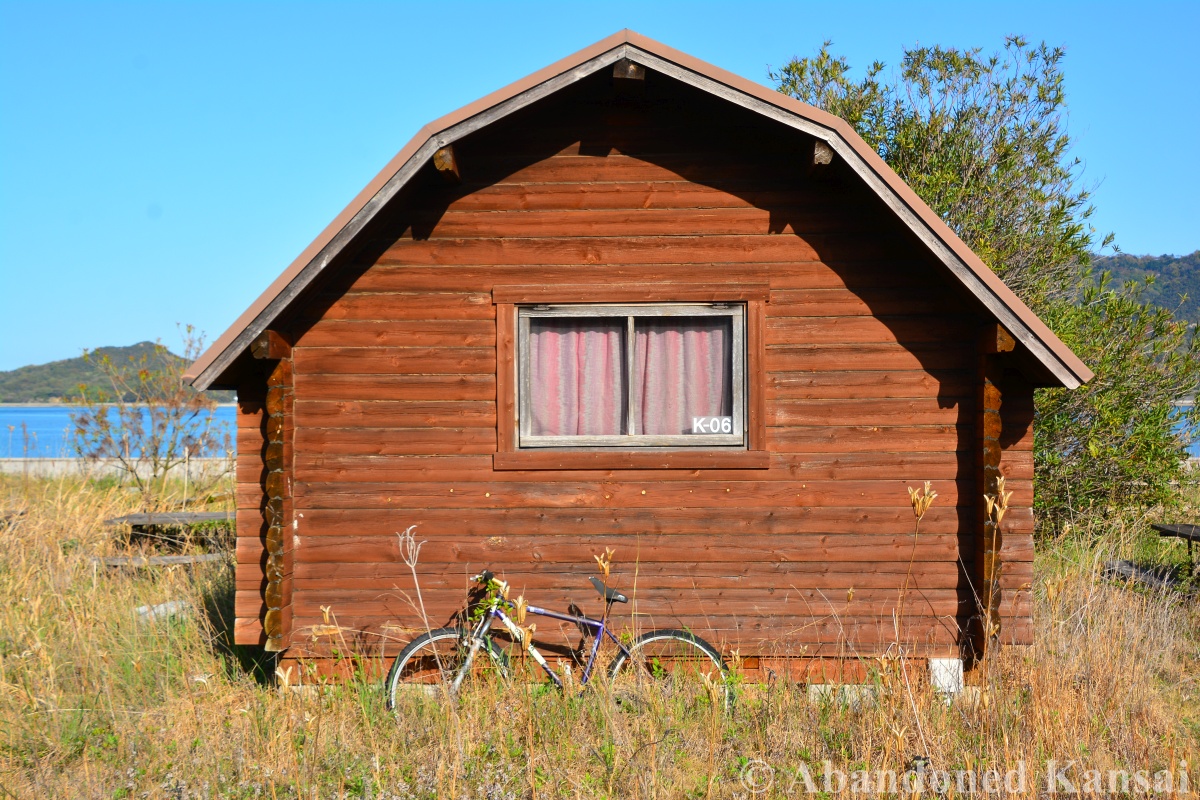
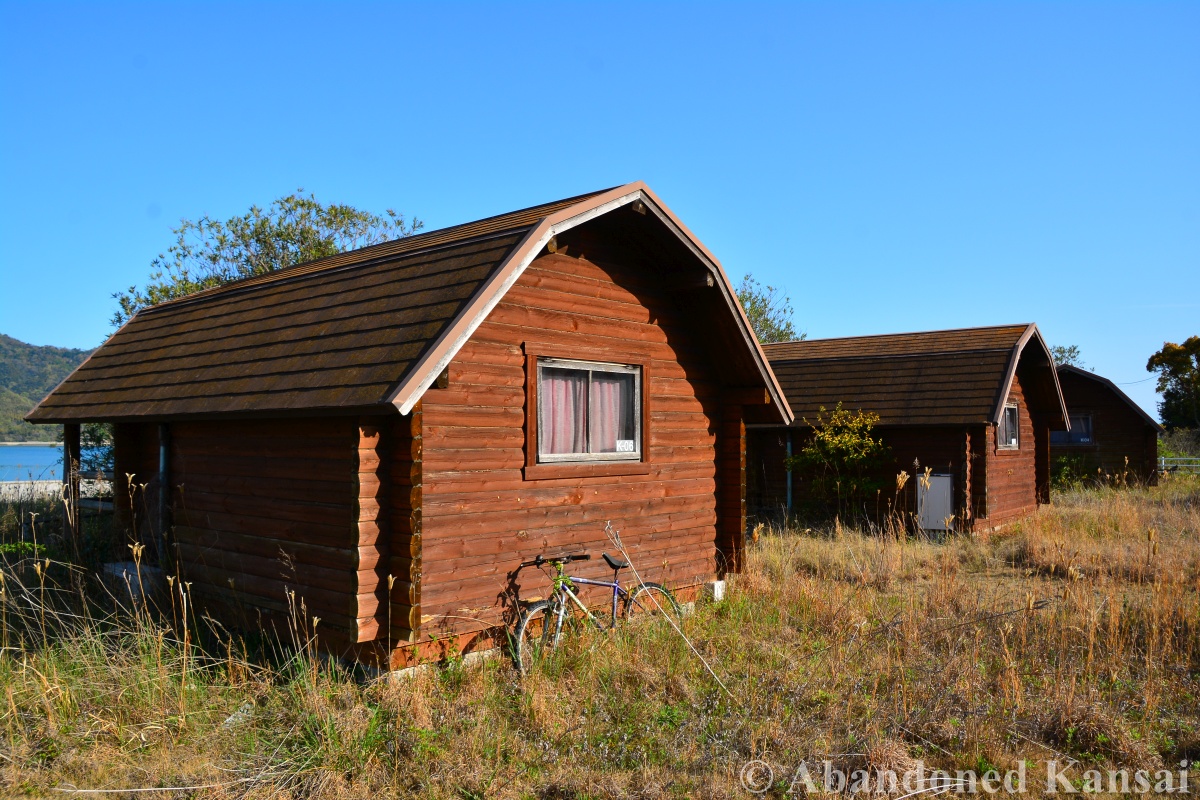
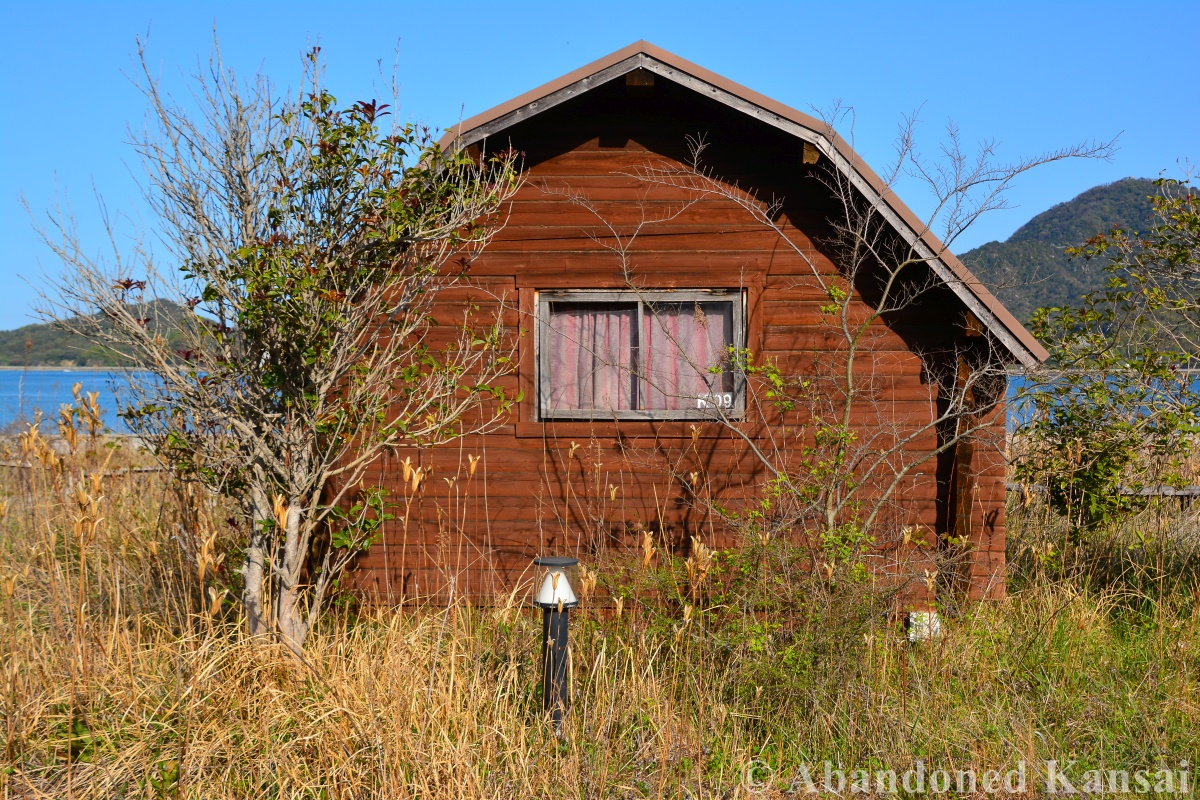
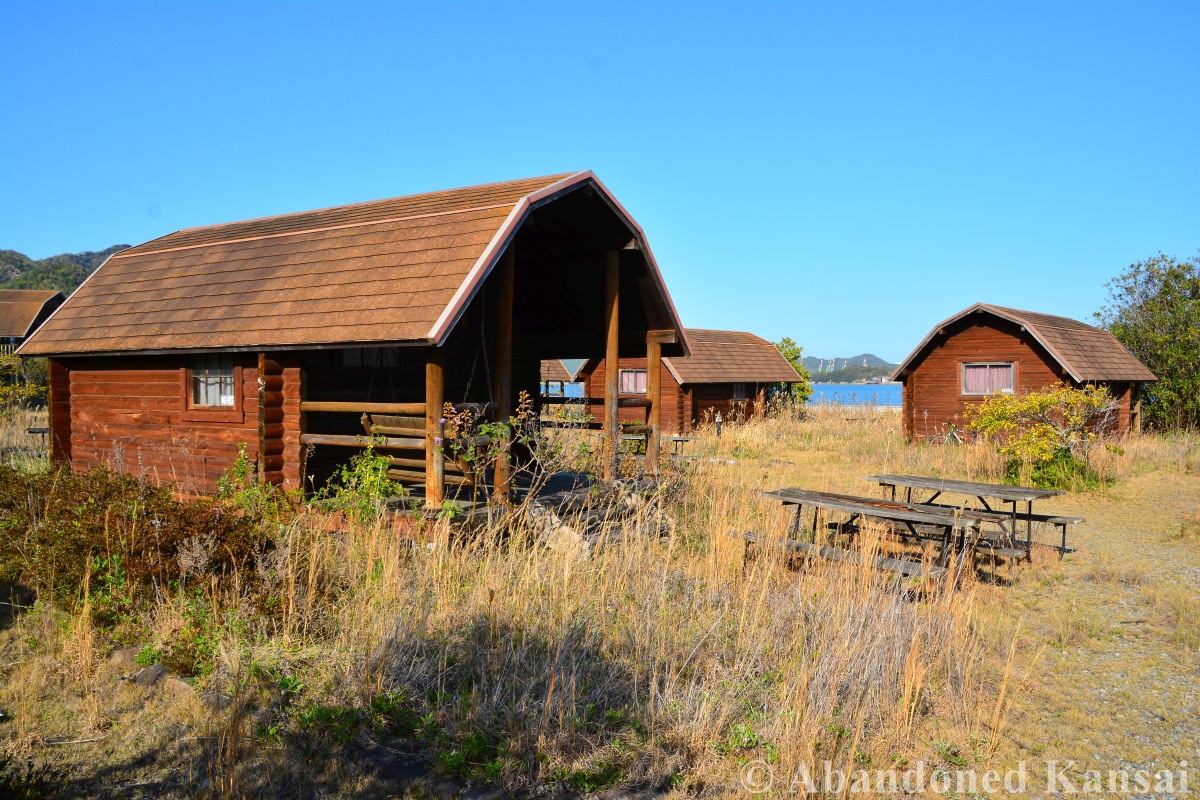
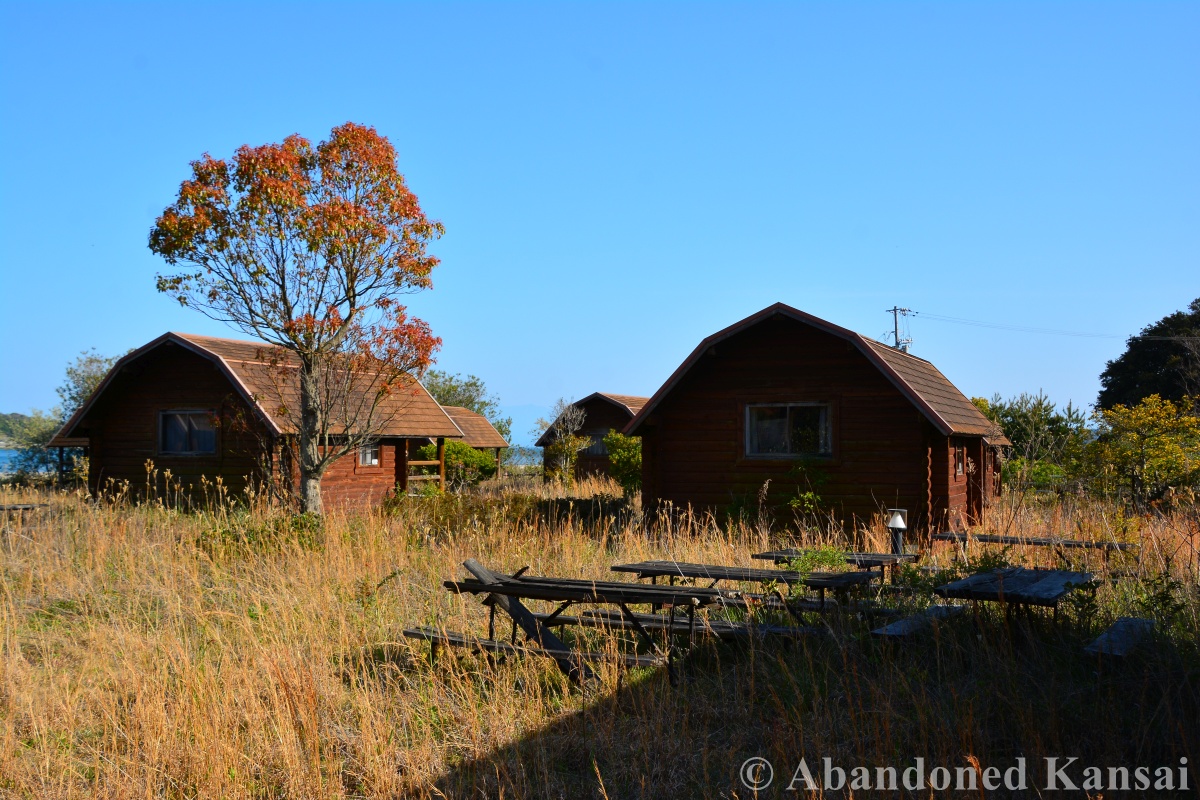
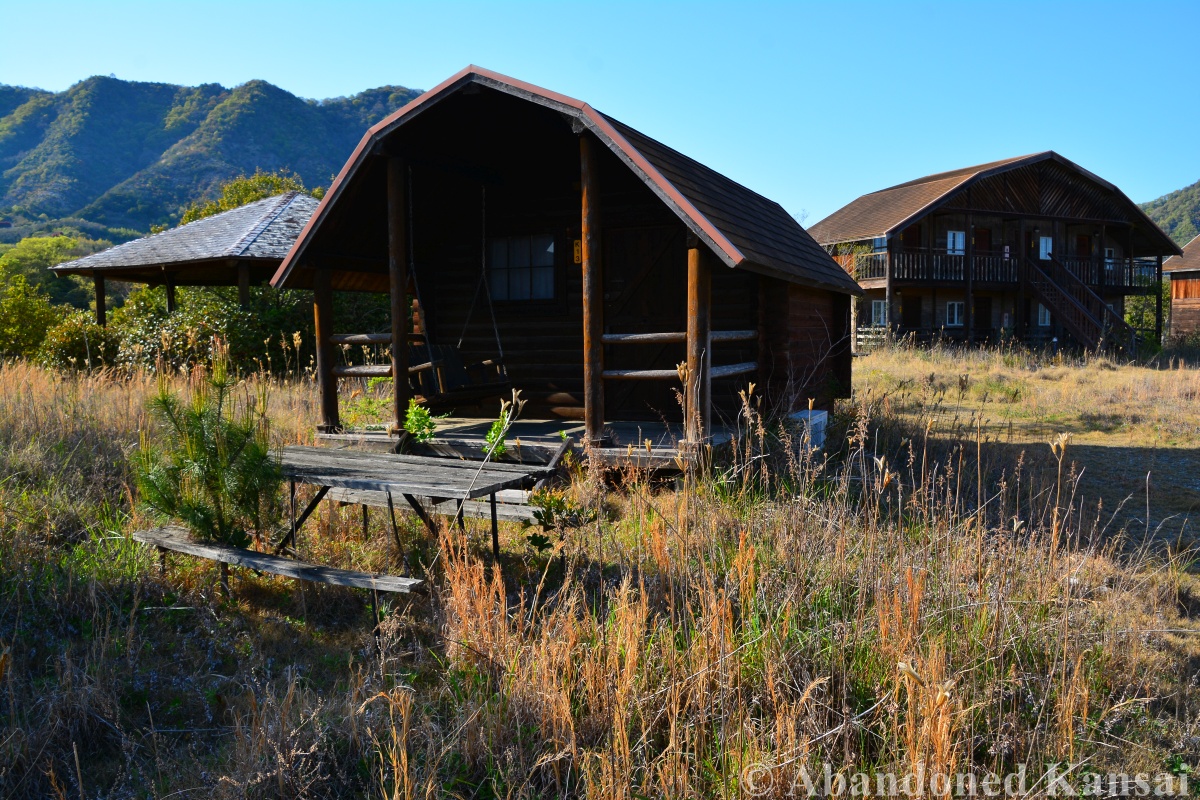
You would think that an abandoned place along a popular car, motorbike and bicycle route would be all over the internet. But no. It was upon yours truly again to explore yet another original find…

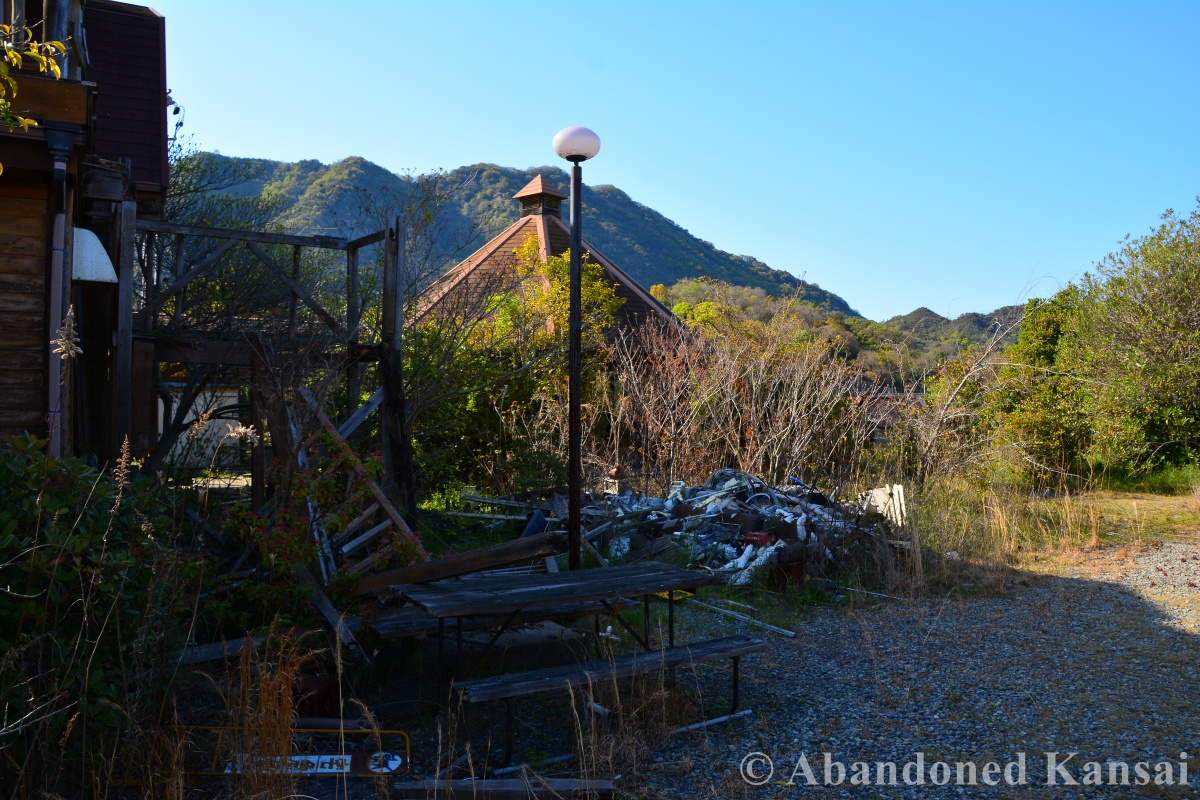
Camping is surprisingly popular in Japan, a country with about 92% urban dwellers. Or maybe it’s that way because of it – from the concrete jungle to a real forest. There are about 1300 campsites from Hokkaido to Okinawa, everything from “just pitch your tent” to luxury glamping sites. Especially the latter ones have become insanely popular ever since the beginning of Covid, or maybe just before it. Glamping sites have been popping up everywhere, some even at coordinates where just years prior you could have enjoyed an abandoned place…
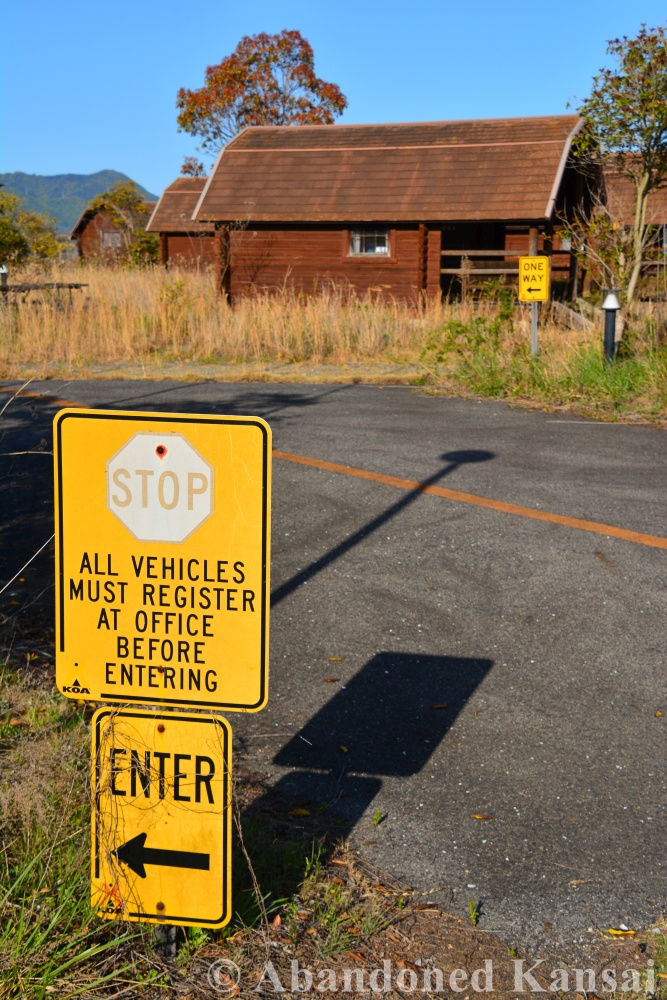
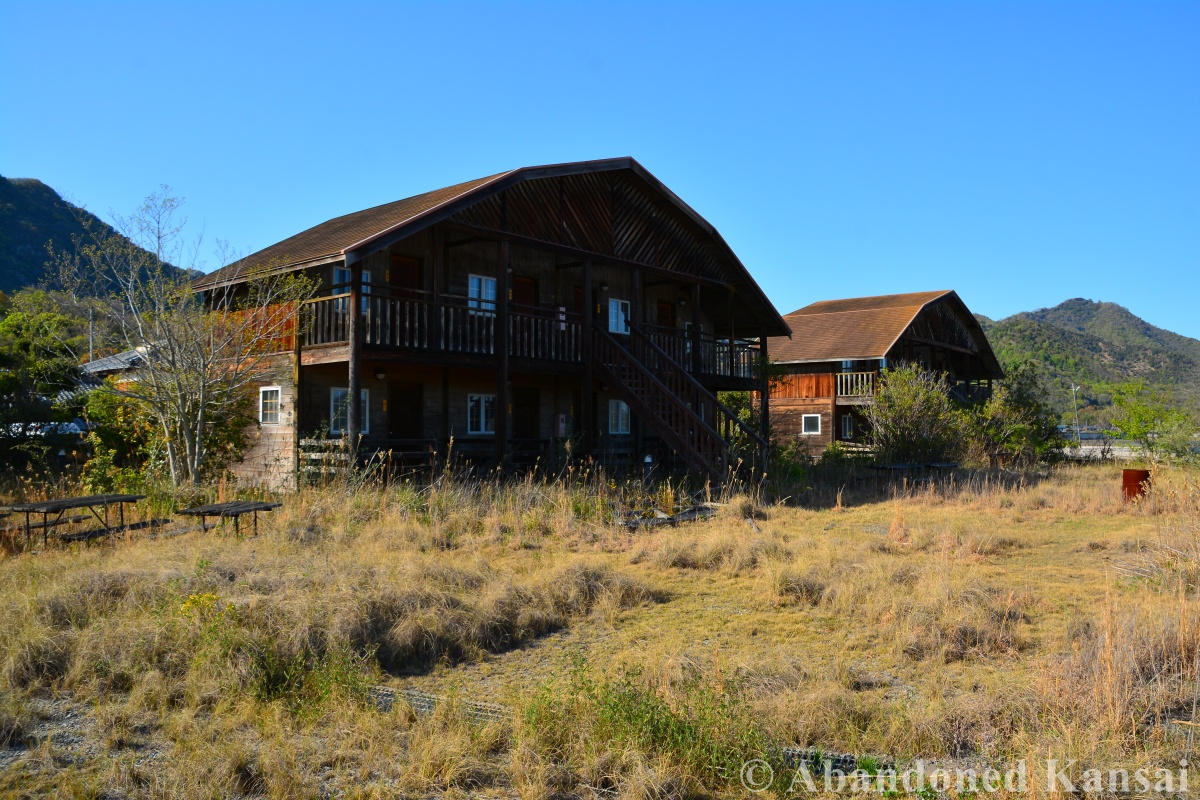
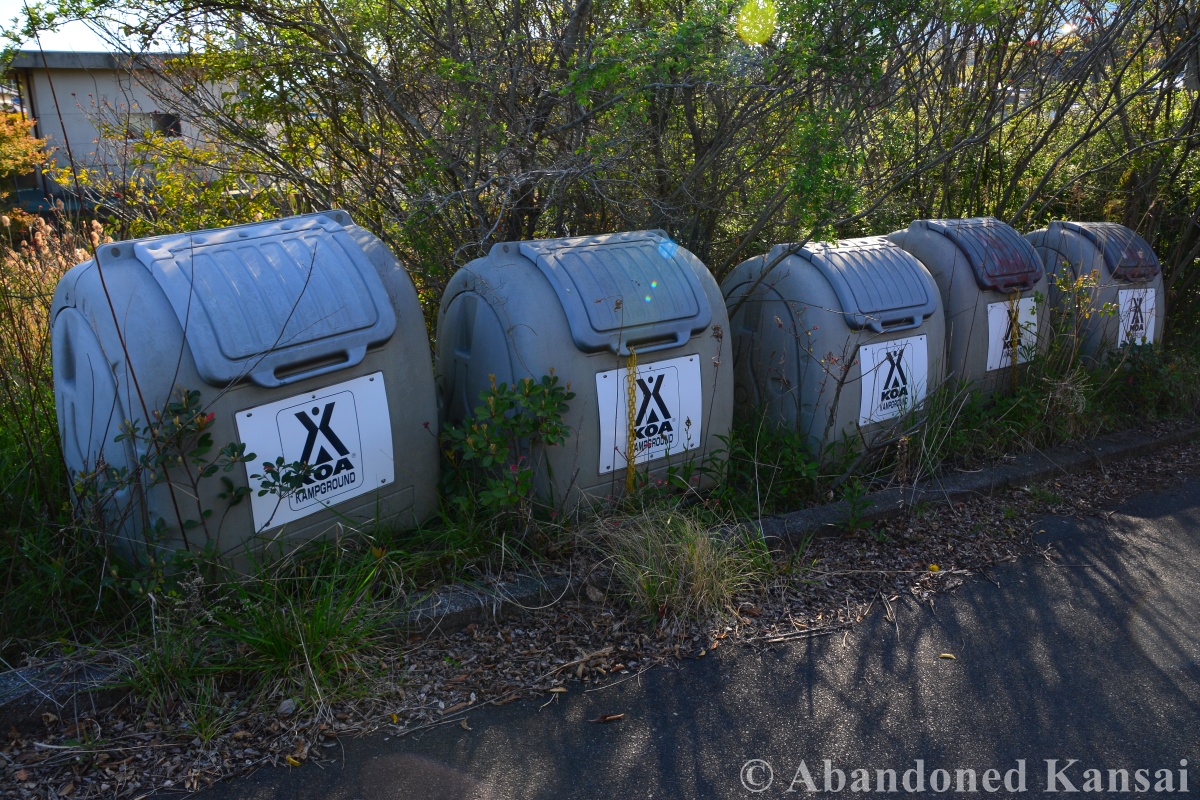
When I first saw the Kampground / KOA sign on the garbage containers at the entrance I was highly irritated – the similar German word Kampfgrund came to mind, which could mean “reason to fight” or “battleground”… if it existed. Weird English words starting with a K of course also remind me of the KKK. So I expected something really strange, like a camping place for racists. Turns out that KOA stands for Kampgrounds of America, a real campground franchise founded in 1962 by a few white businessmen  in Montana. The company grew fast and was bought by Oscar Liu-Chien Tang in 1979. At the height of its growth the franchise had almost 900 locations, but due to higher quality standards it shrunk to under 500. The official website lists locations in the States (not really united recently, are they?) and Canada (or as we Germans call it more appropriately, especially in this context: Kanada), but no word about grounds in Japan. The rest of the internet also didn’t have any information, not even Google’s AI, which I didn’t ask, but who unsuccessfully chipped in anyway. It’s like the place never existed, except on StreetView, where is oldest records are from 2011 – and it already looked abandoned back then, for at least a few years. Which amazing, considering that the place was right at the Shimanami Kaido, Japan’s most famous bike tour, usually done in two days. But nothing. Not from the active days, and nothing about the abandoned phase either. Urban explorers in Japan must have passed it hundreds or thousands of times… yet nothing.
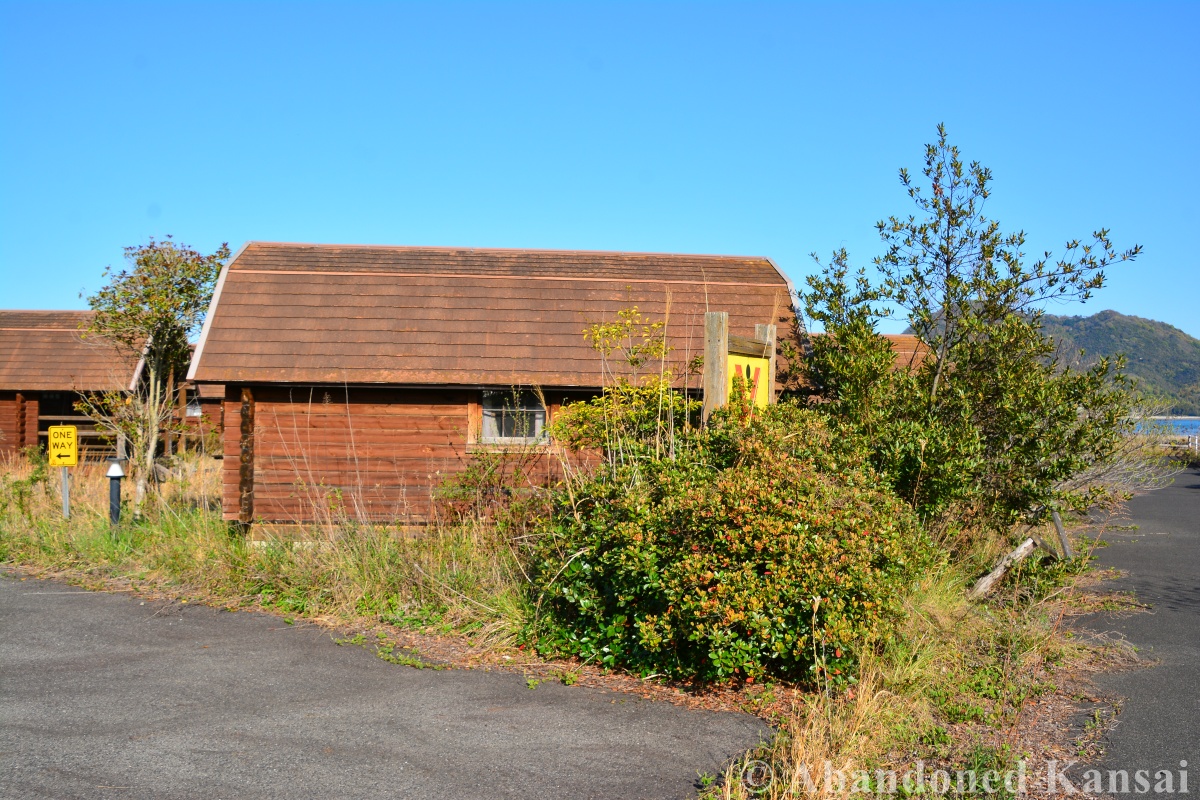
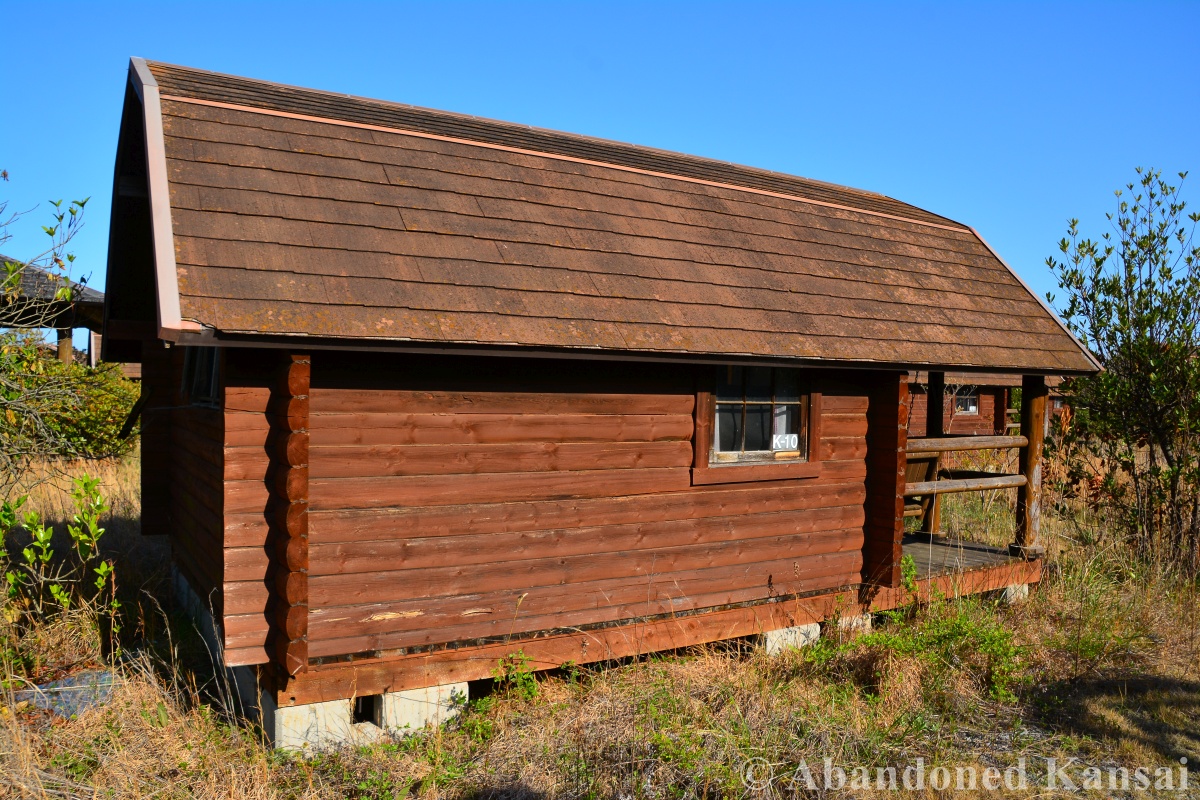
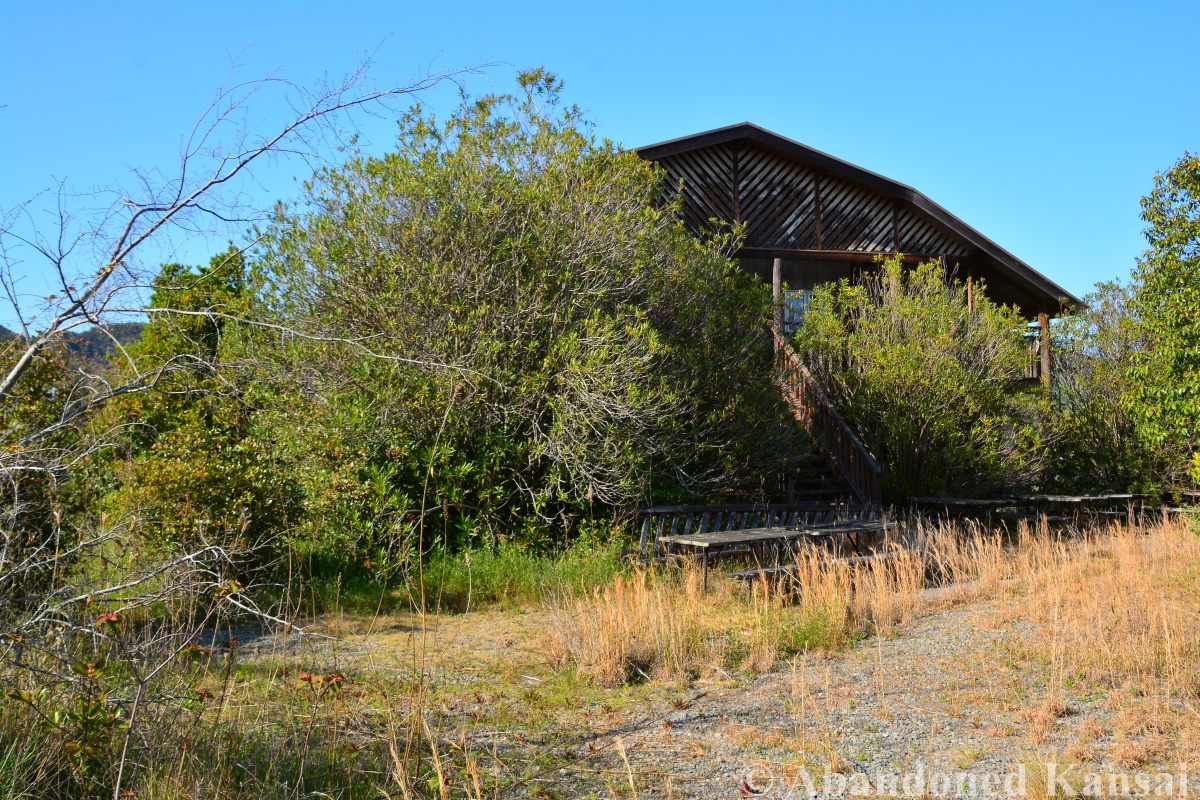
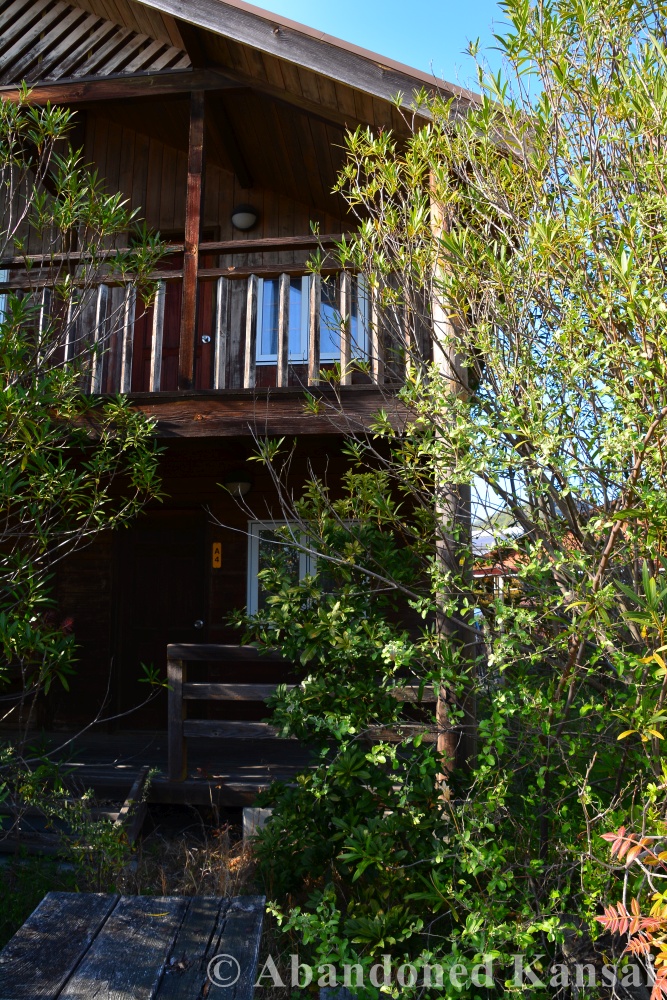
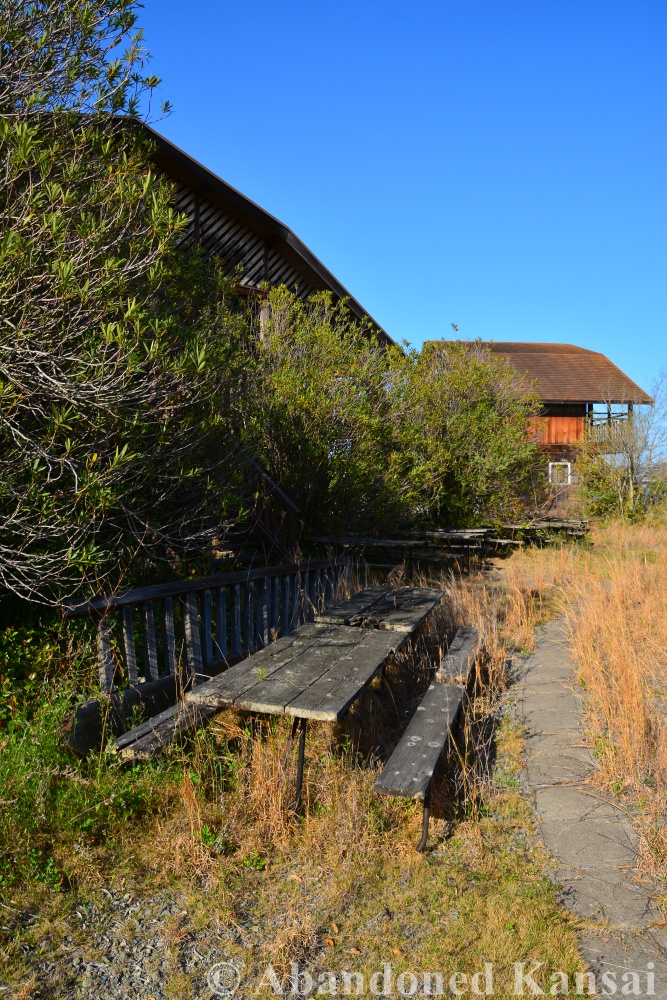
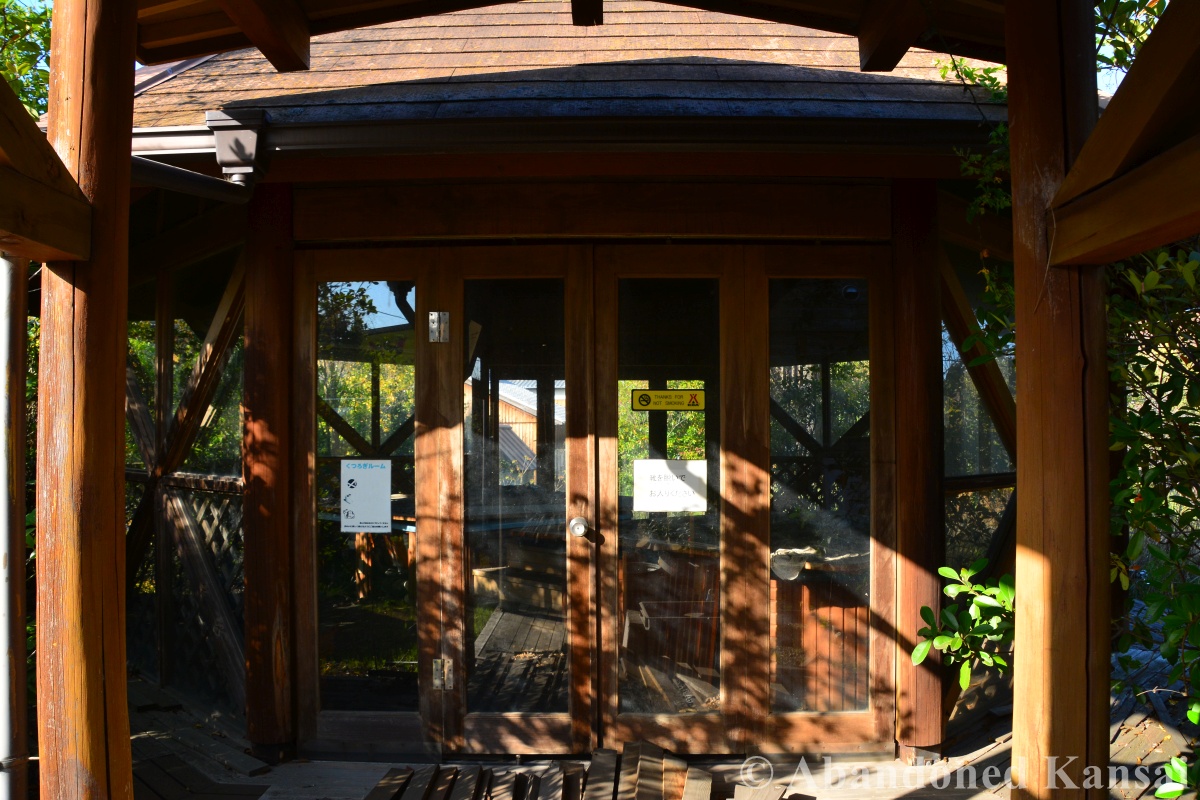
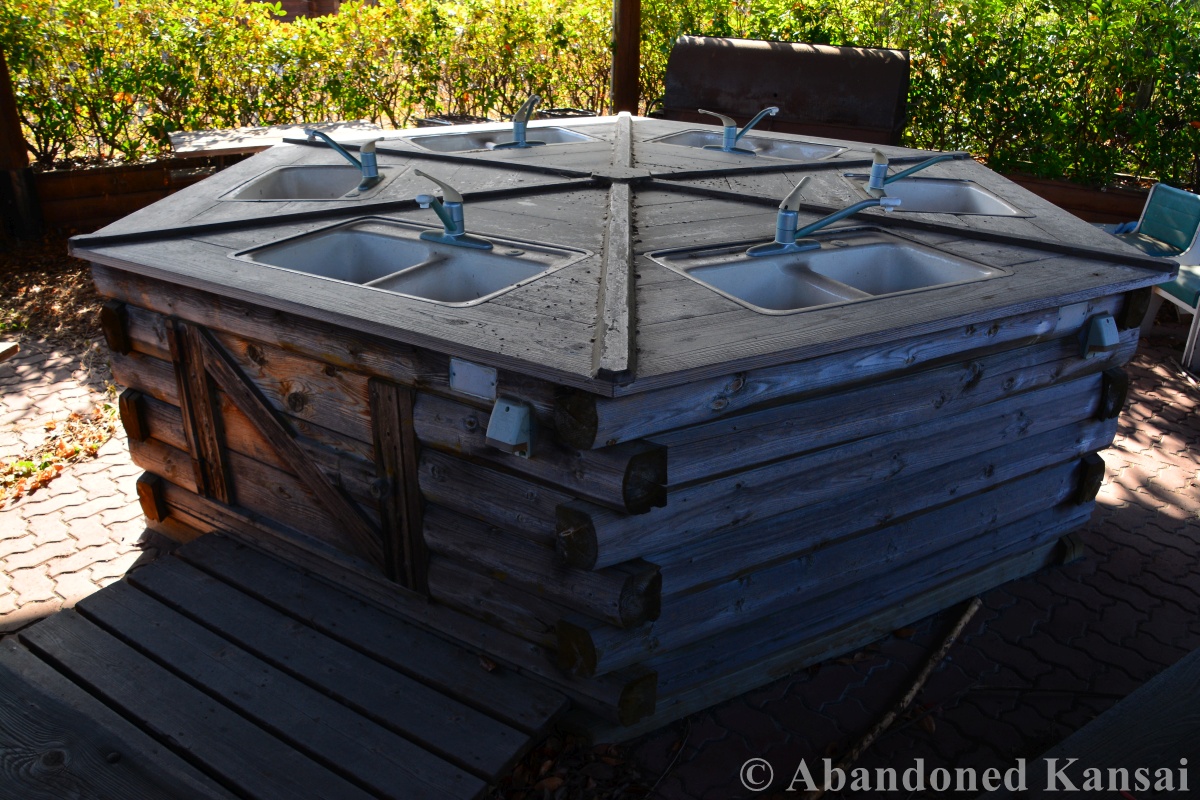
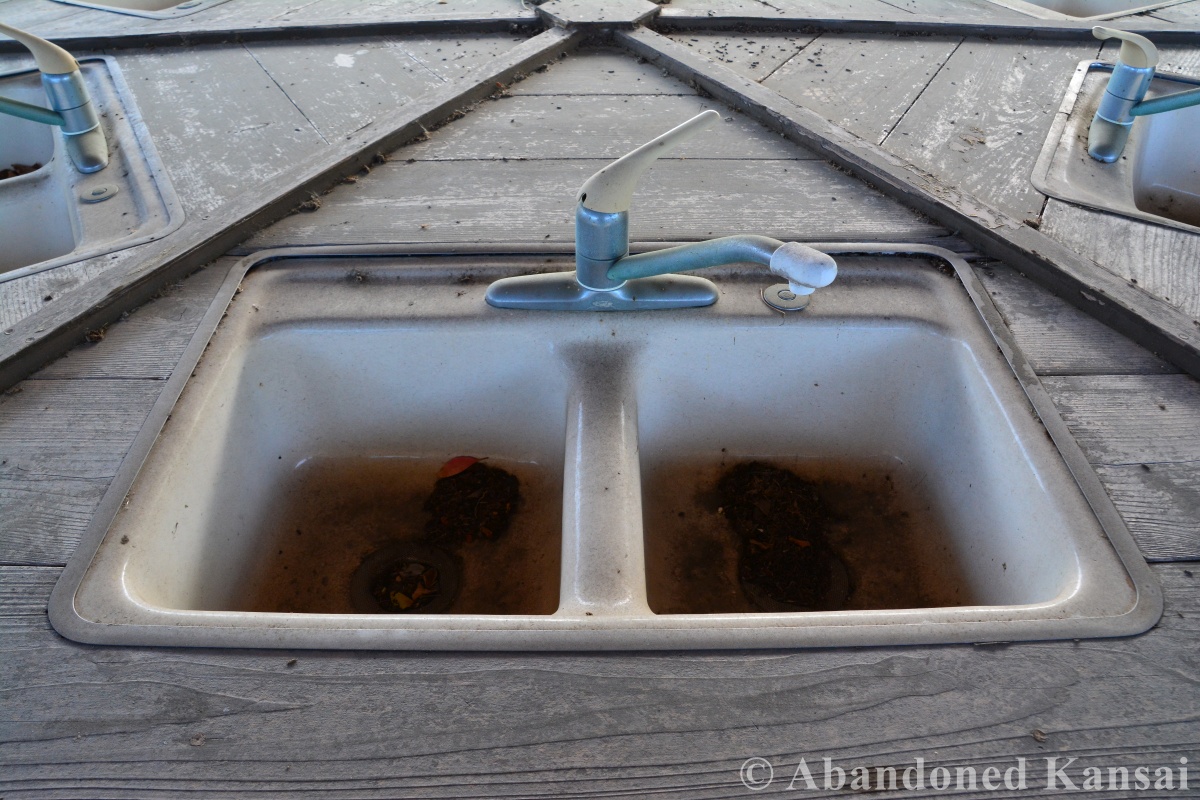
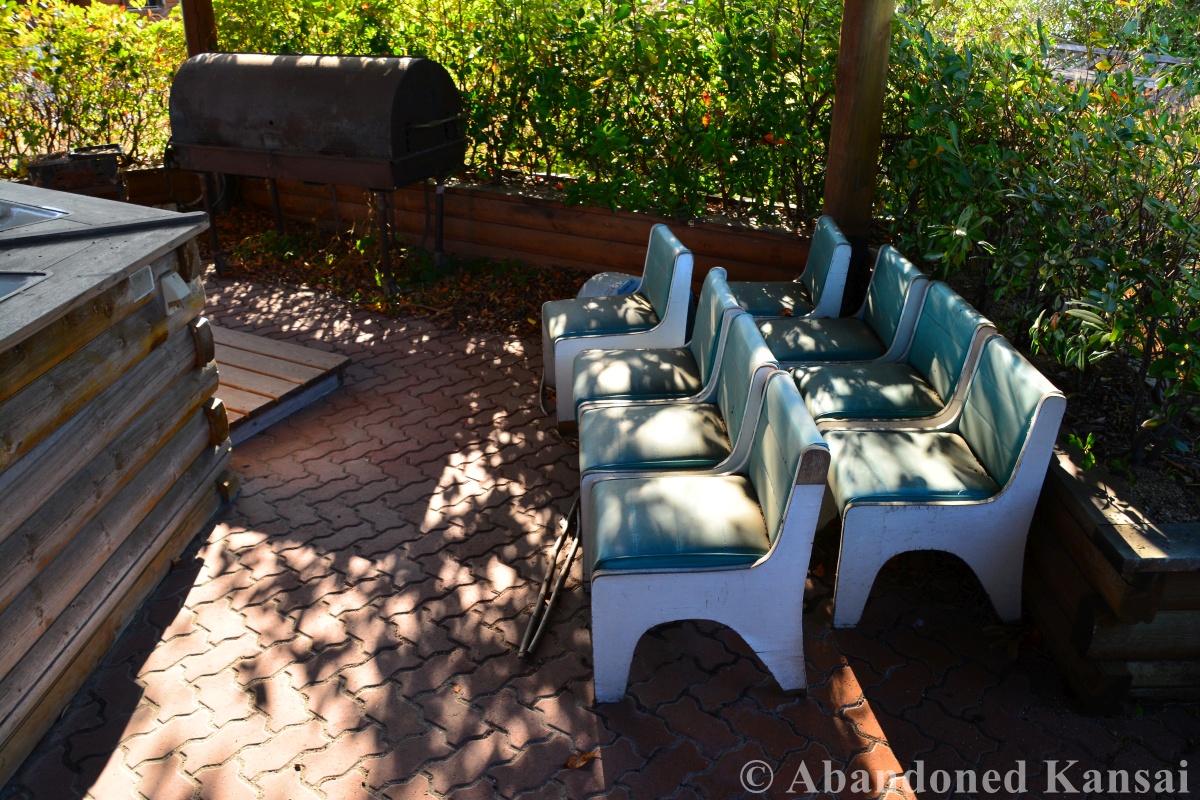
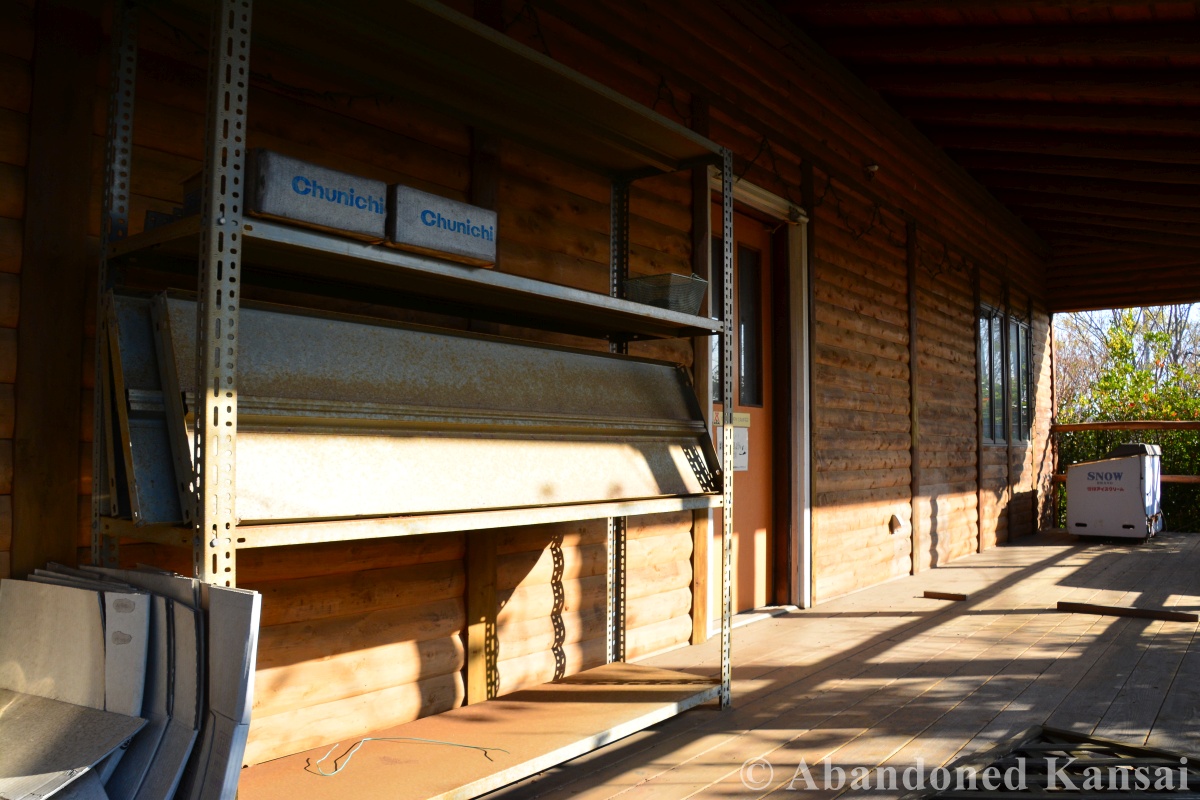
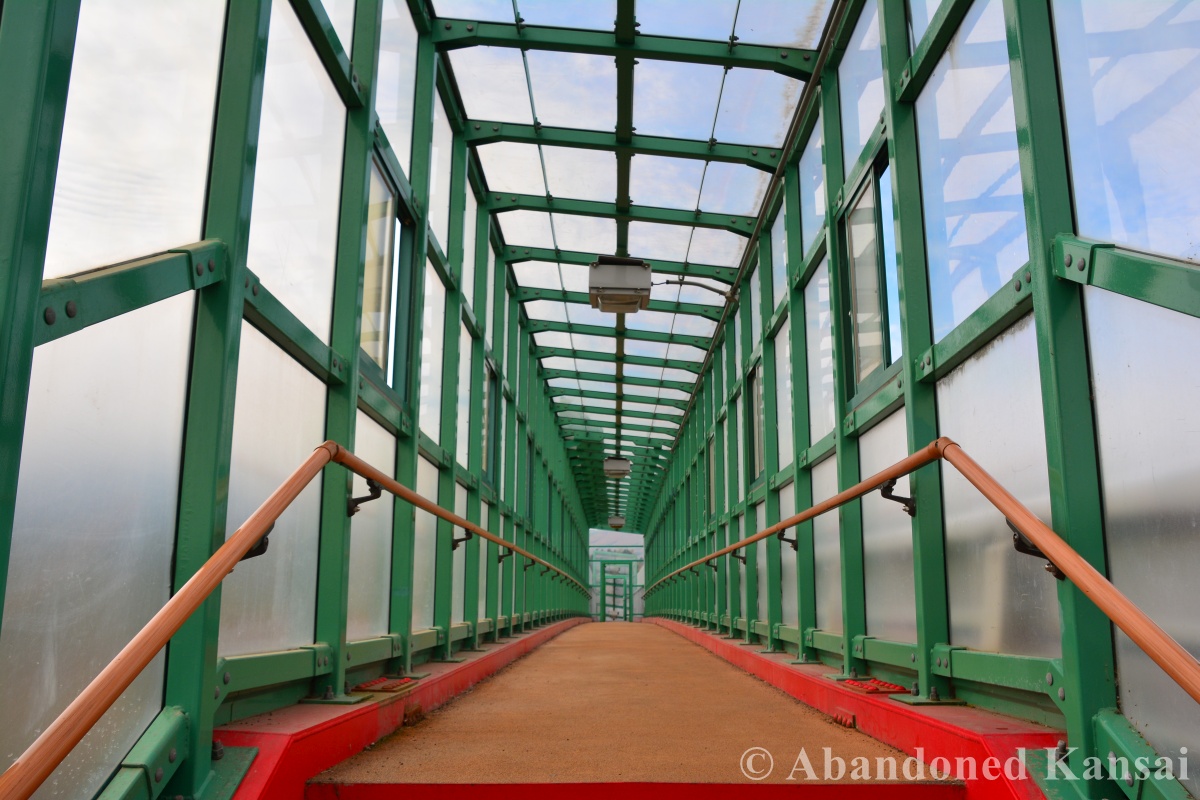
So I guess we can keep the rest short: I came. I saw. I took photos. There were about a dozen huts, a couple of larger block houses with several units, a few BBQ places, plus a communal area with sinks, showers, rest rooms, and a hot tub. Not much more to say. Beautiful outdoor exploration on a gorgeous spring afternoon. A rare original find apparently. I enjoyed it very much, and I hope you will, too!

(*Like Abandoned Kansai on Facebook* or *follow us on Twitter* if you don’t want to miss the latest articles and exclusive content – and subscribe to the *video channel on Youtube* to receive a message right after a new video is online…)
Read Full Post »

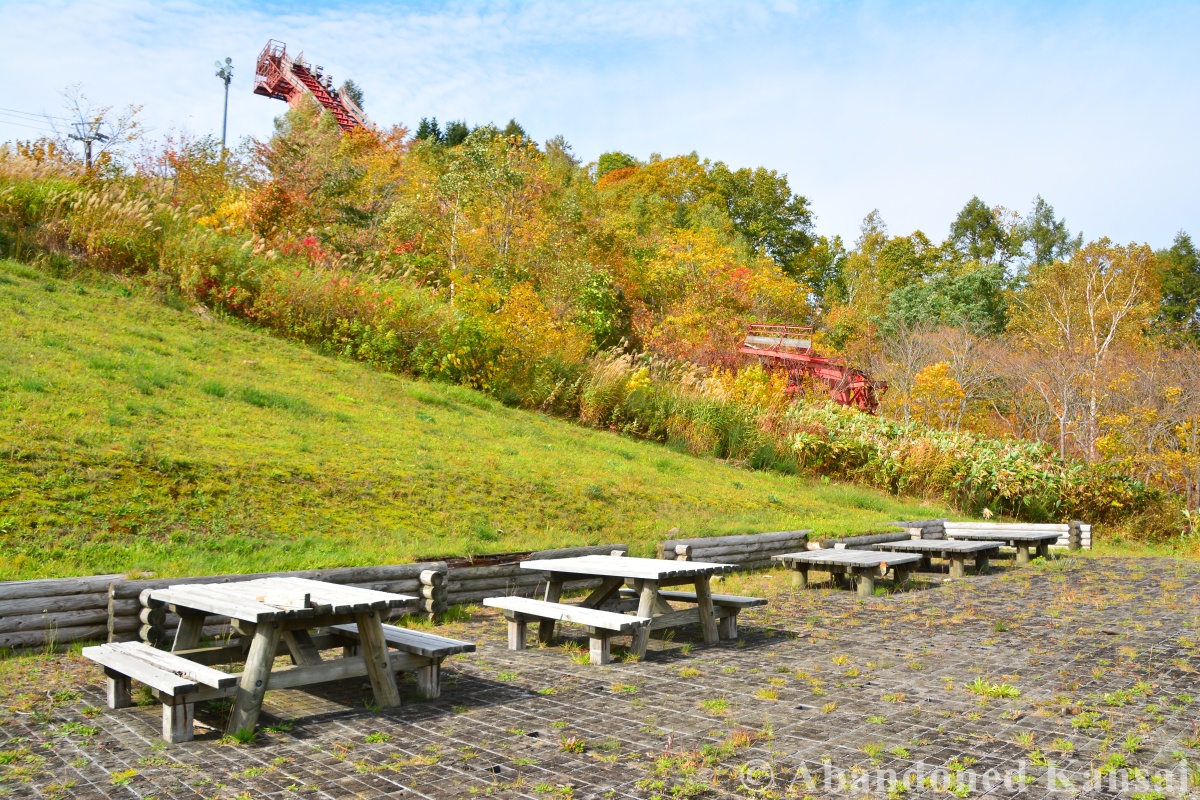
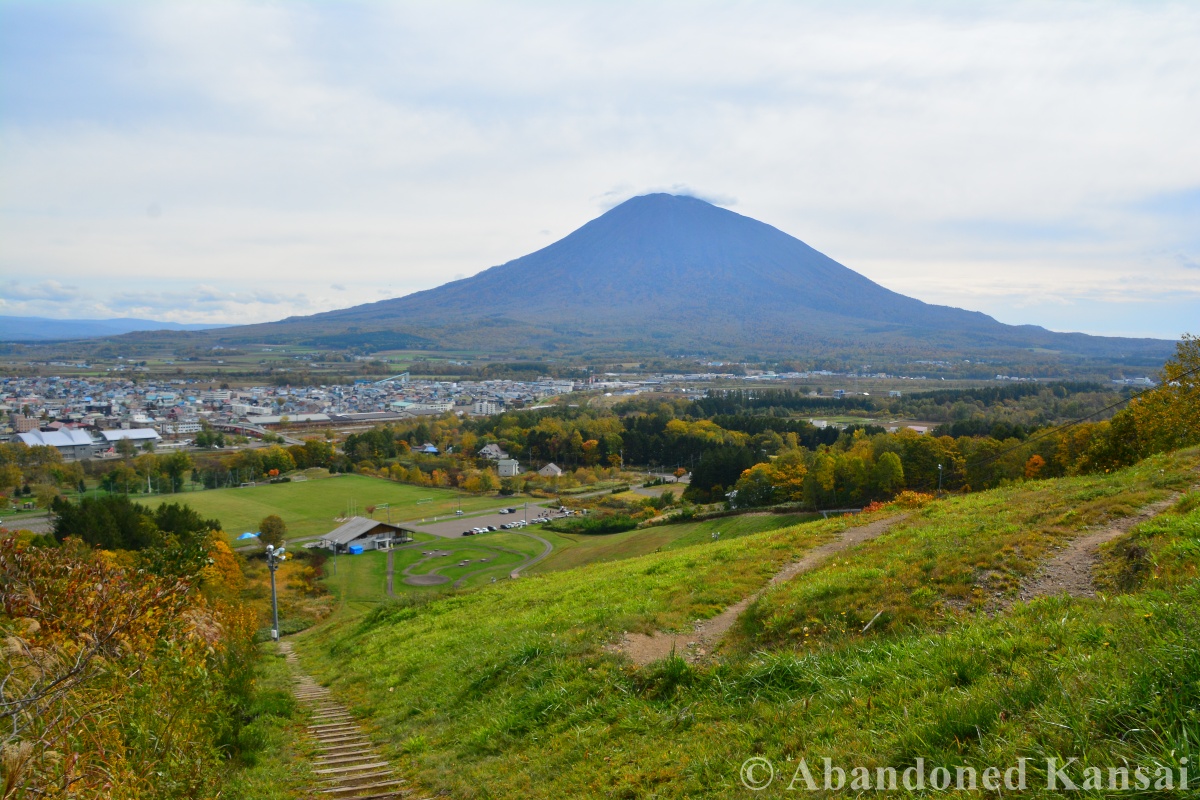
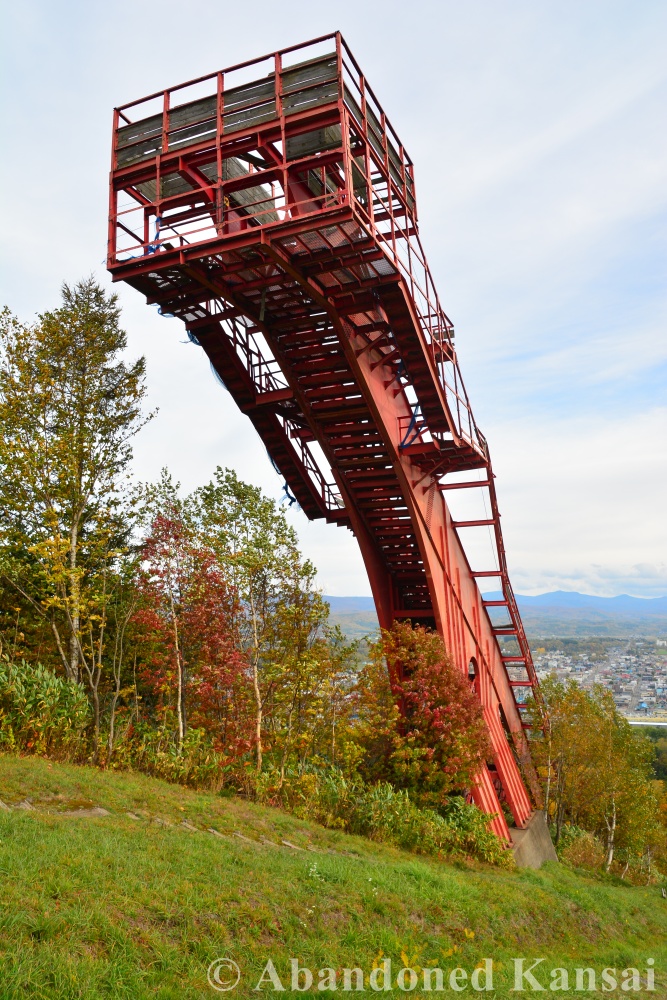
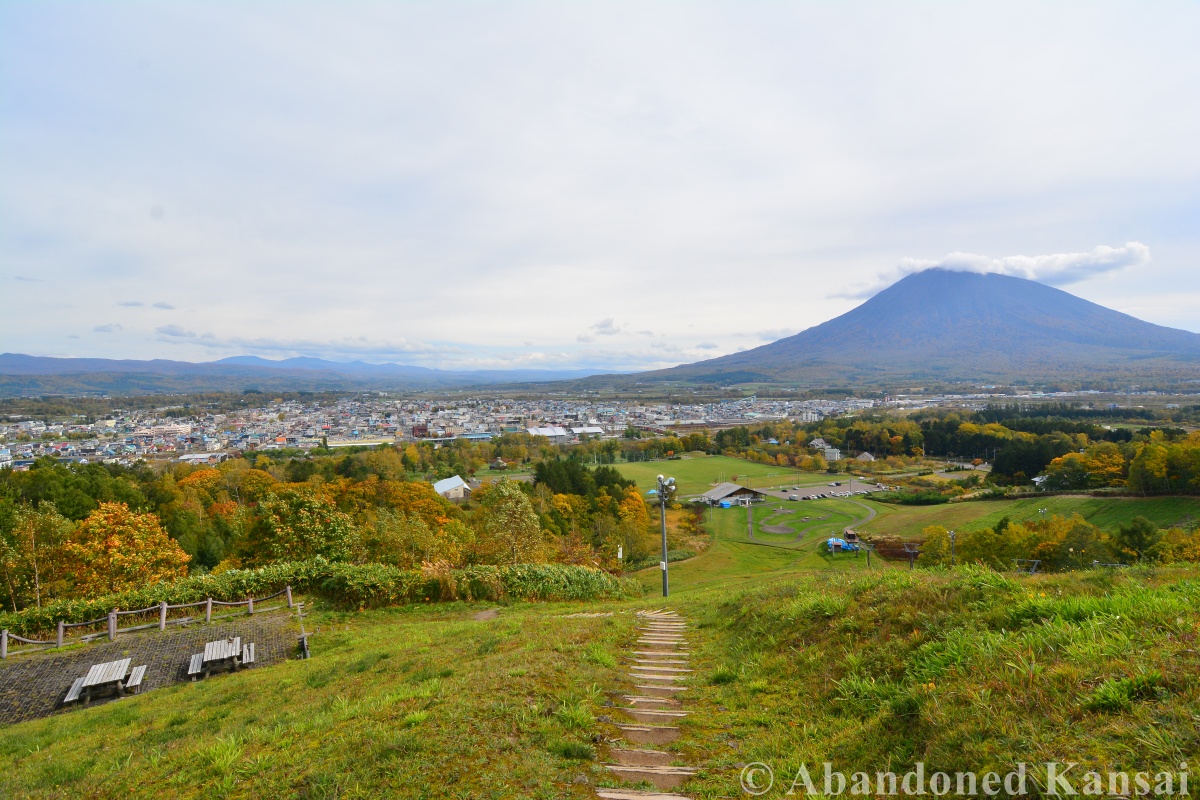
The long-awaited video game Ghost of Yotei will be out soon, so let’s celebrate the release with an abandoned place not on Mount Yotei, but with nice views of Hokkaido’s famous mountain! (Personally I’m more of an Onimusha guy – super excited for the new installment “Way of the Sword”, especially since you couldn’t pay me enough to go Kyoto these days…)

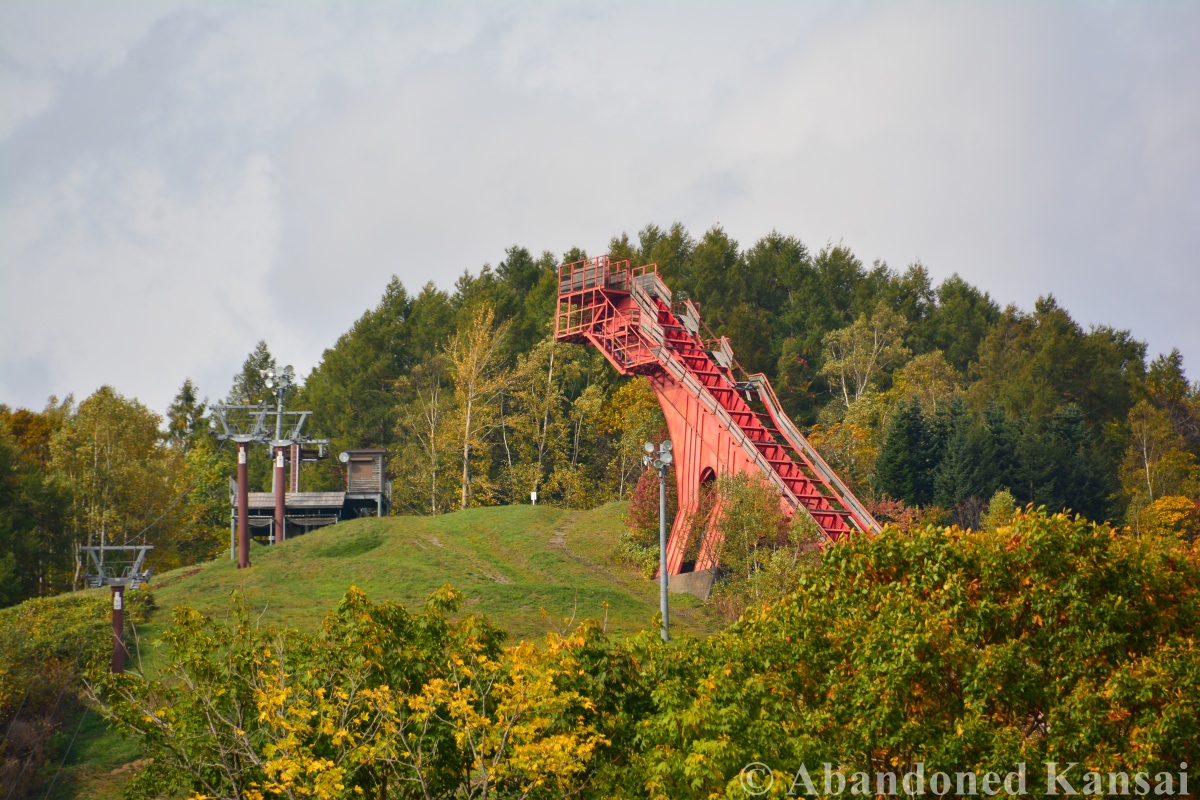
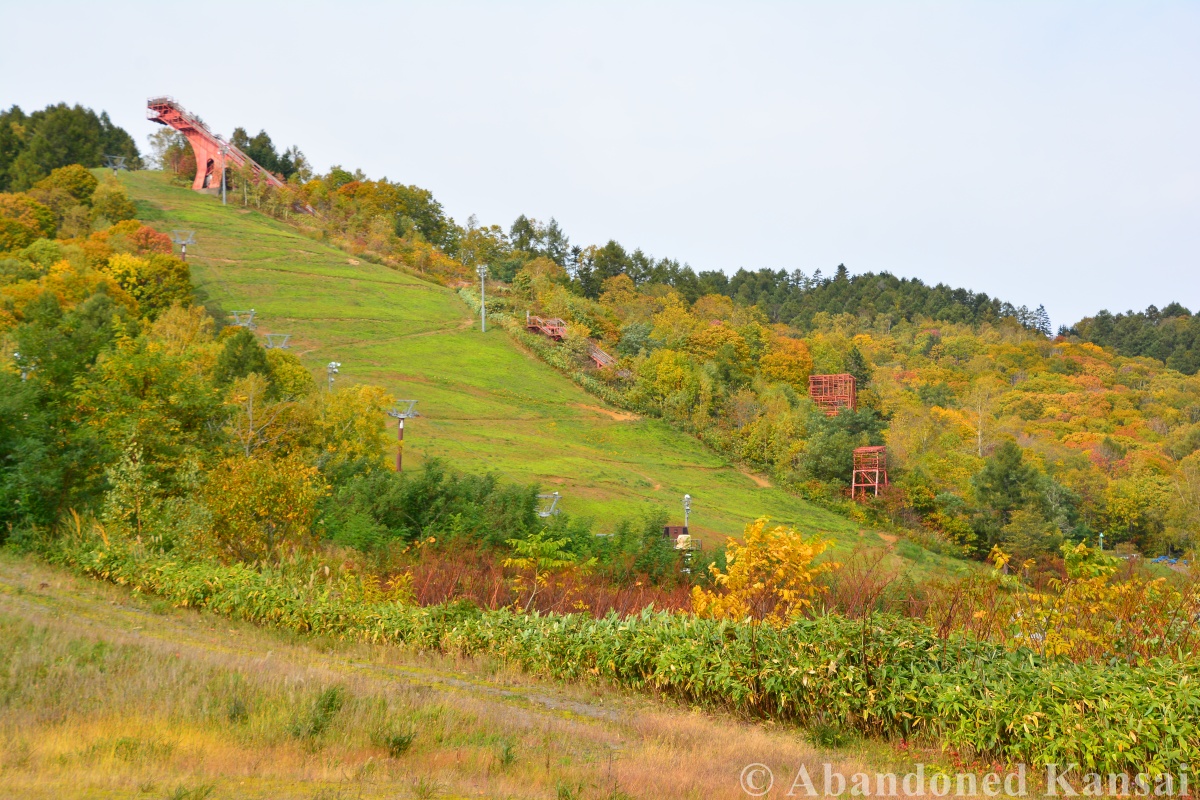
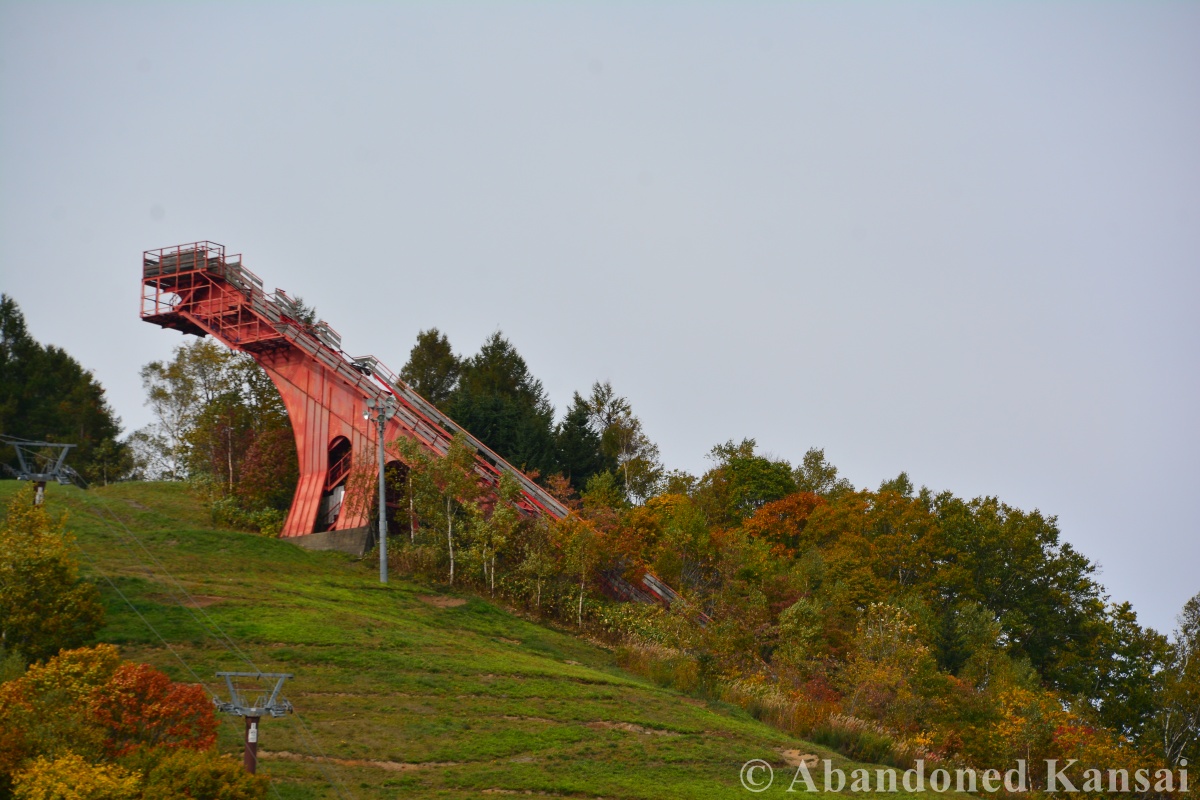
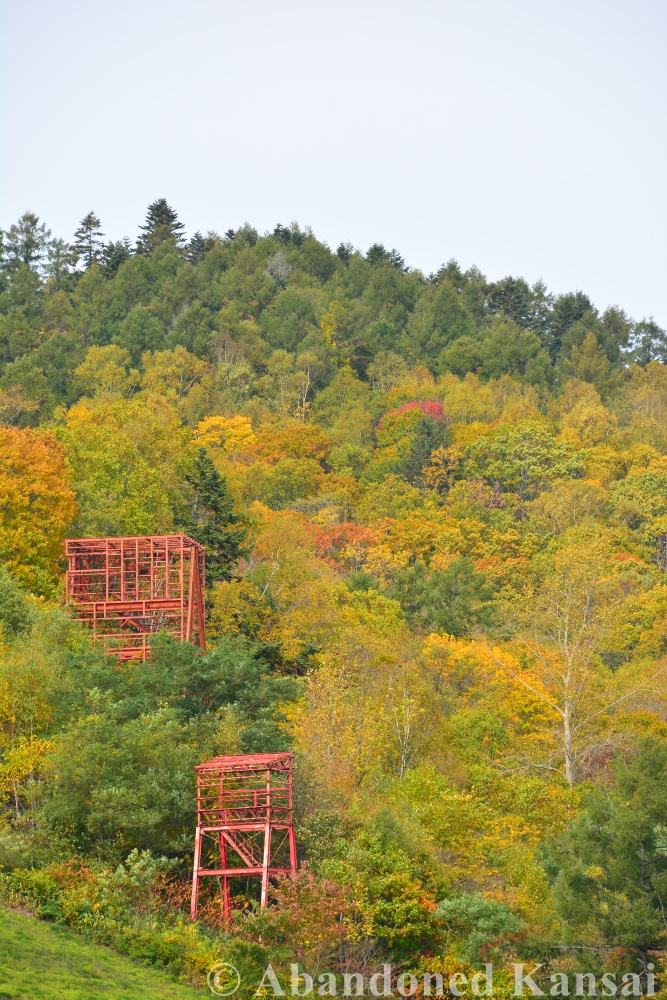
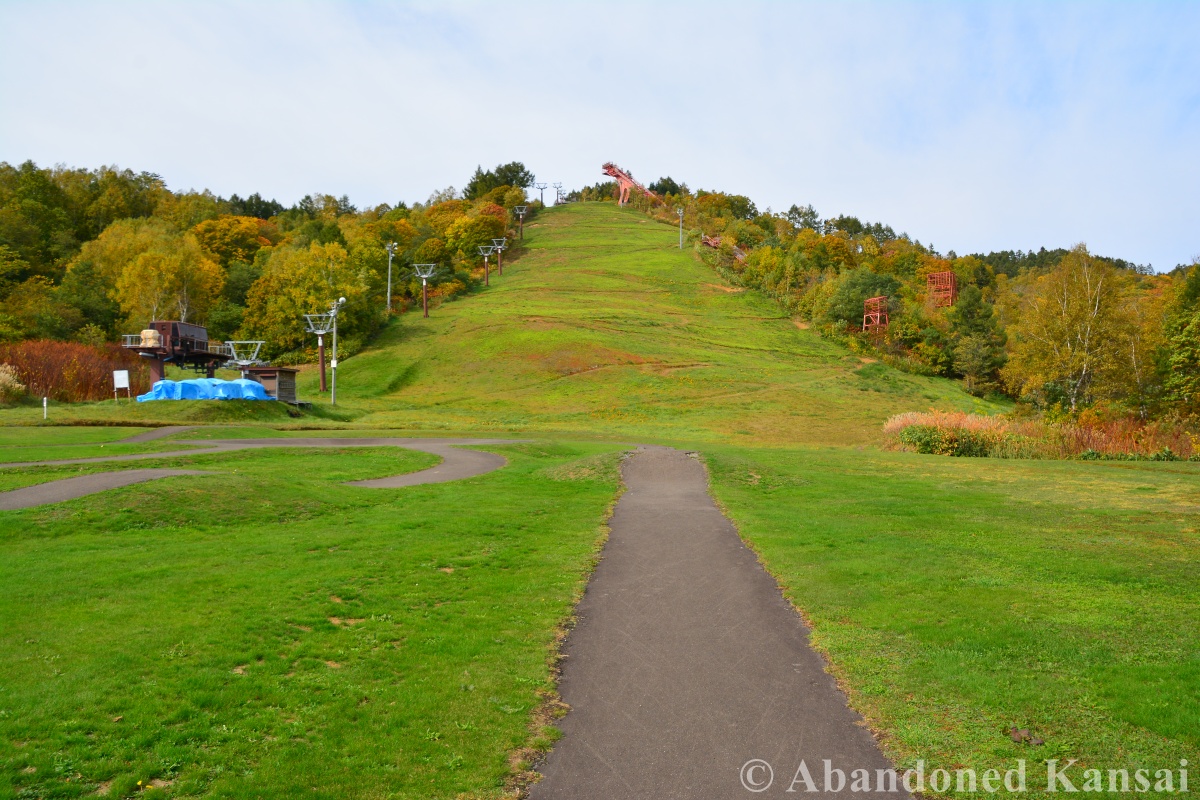
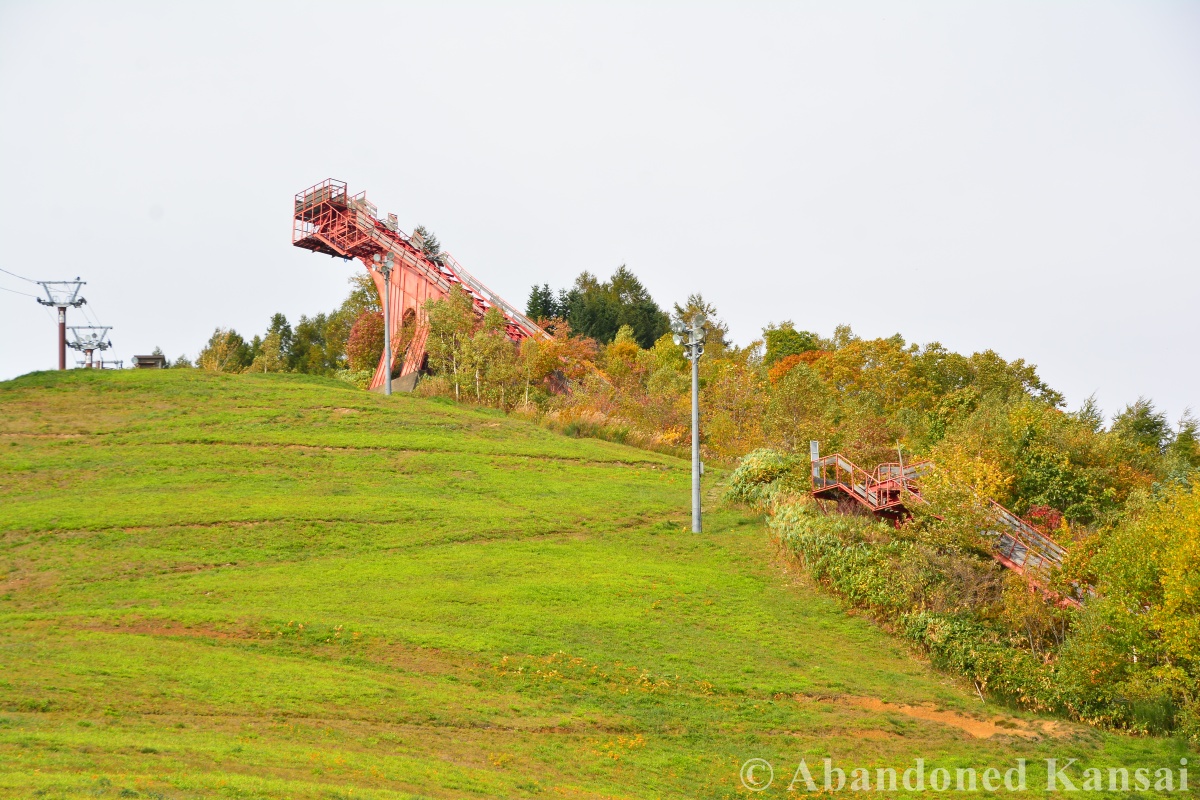
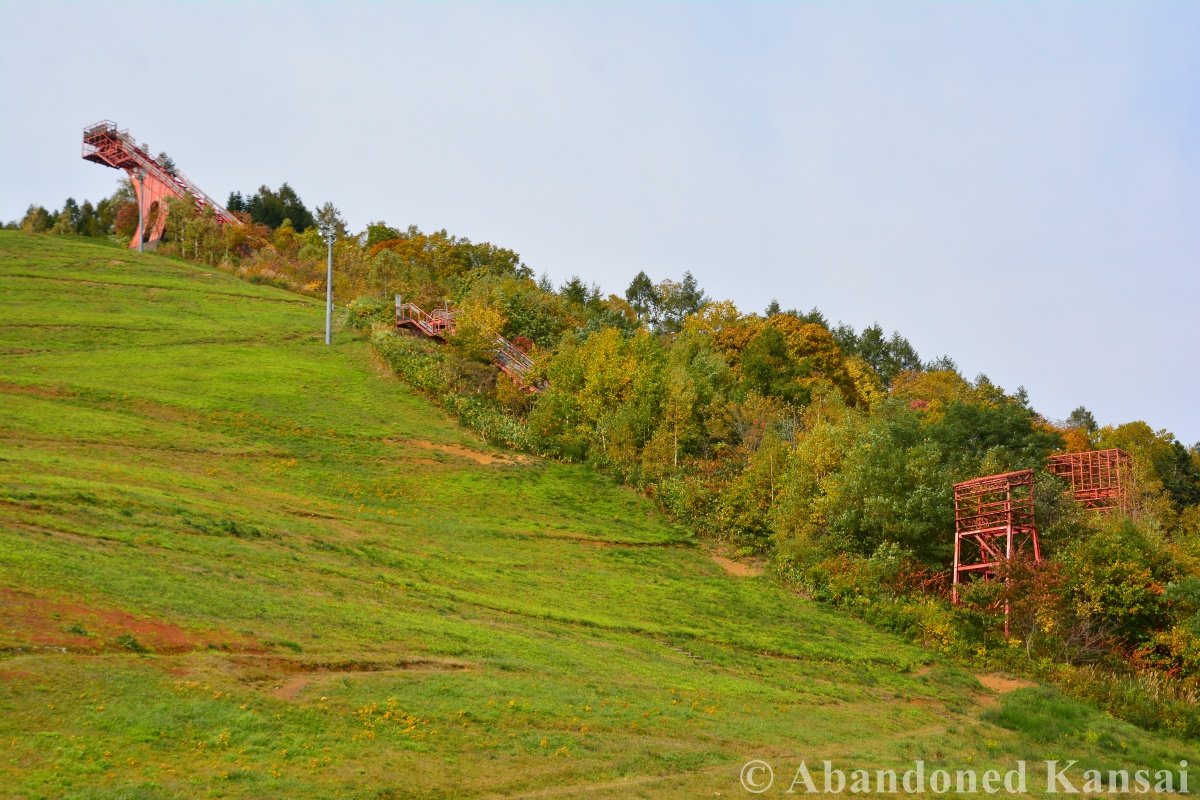
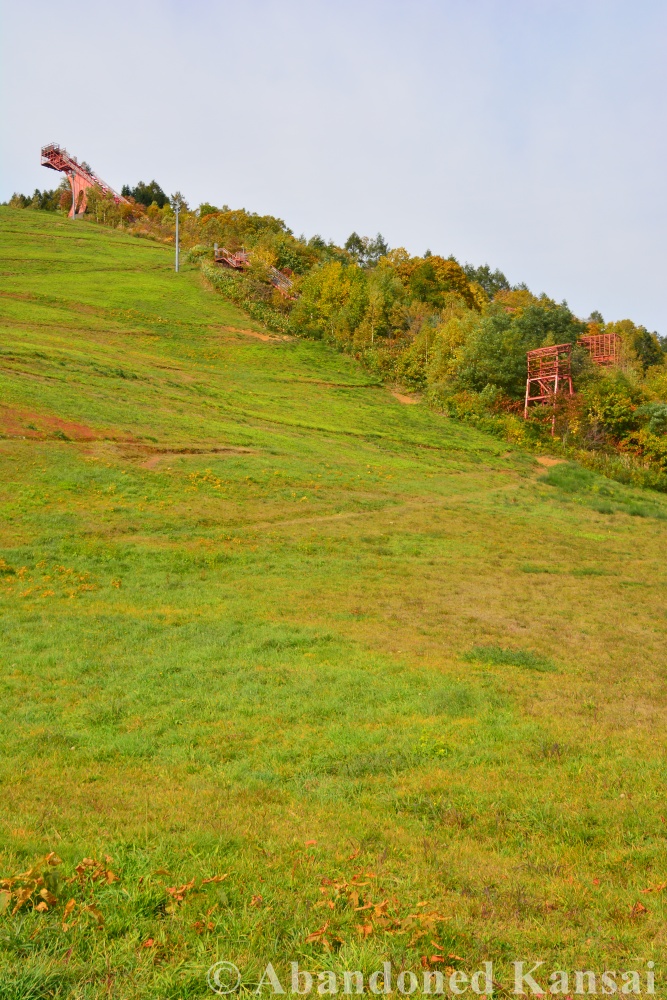
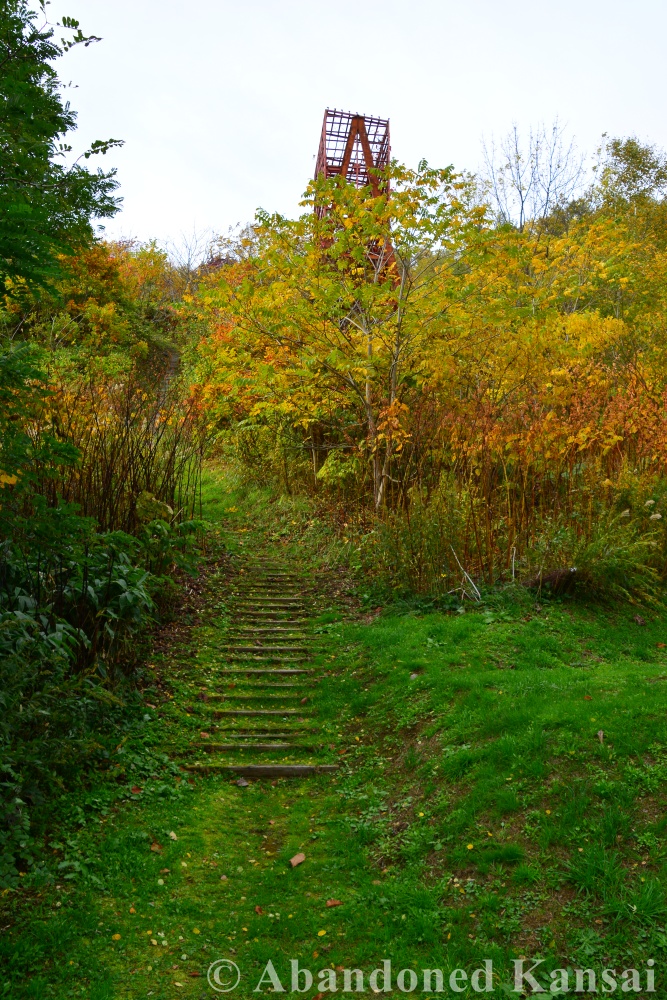
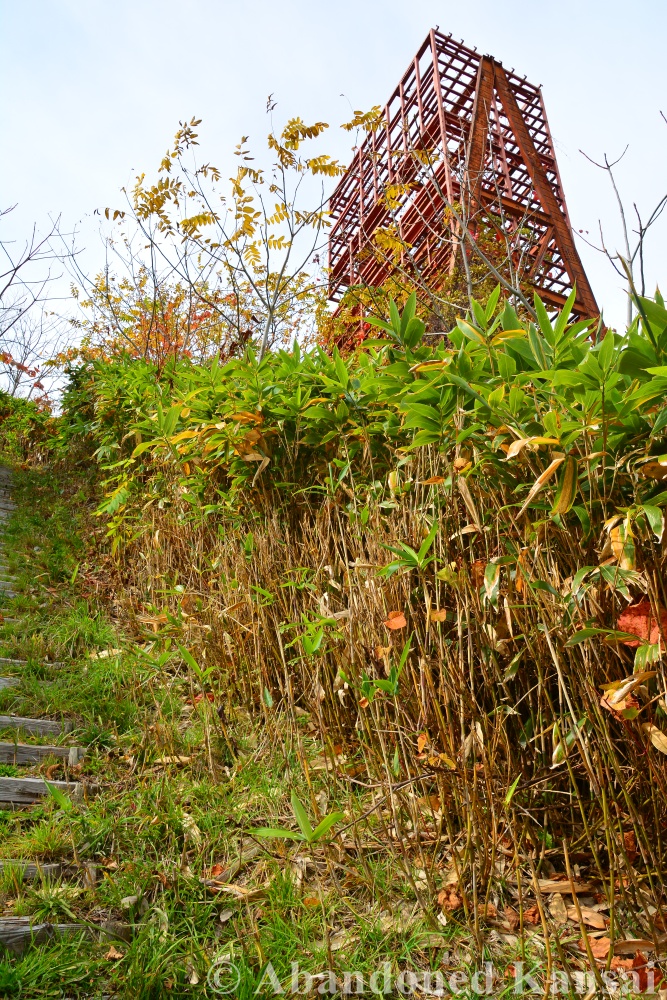
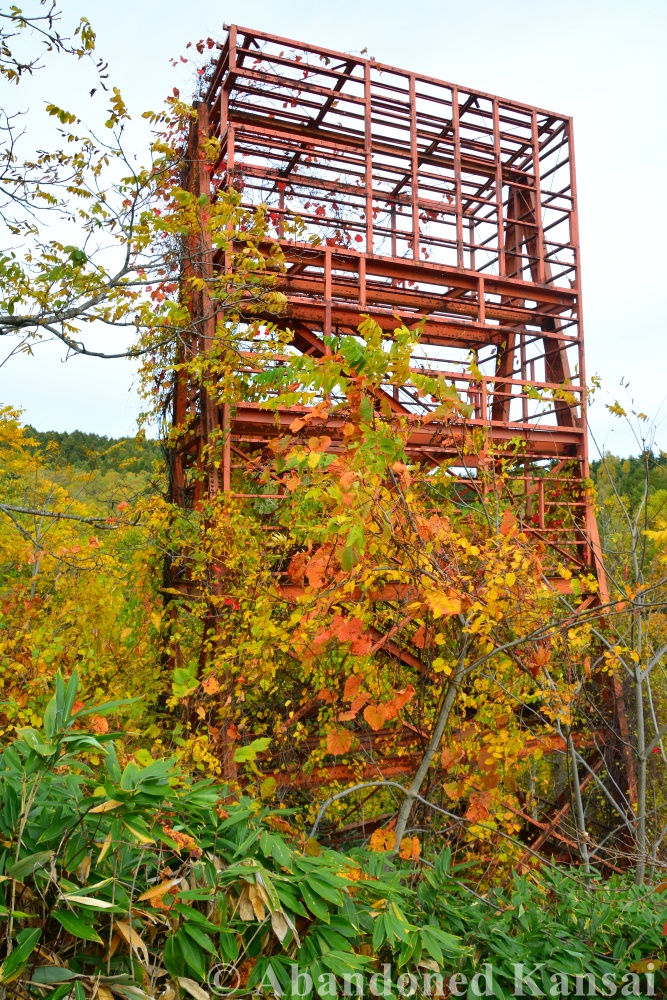
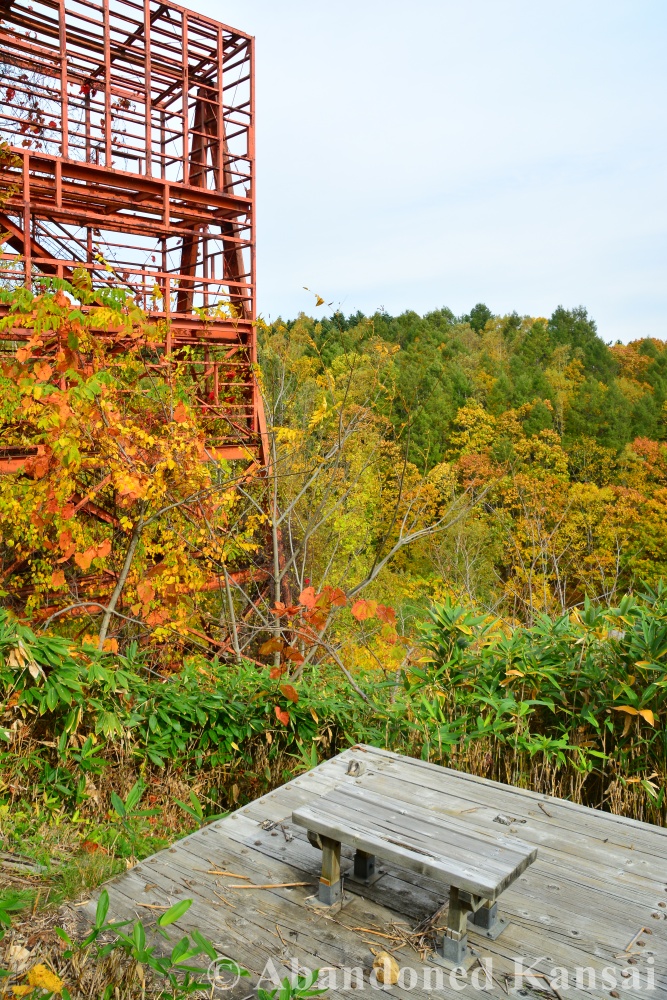
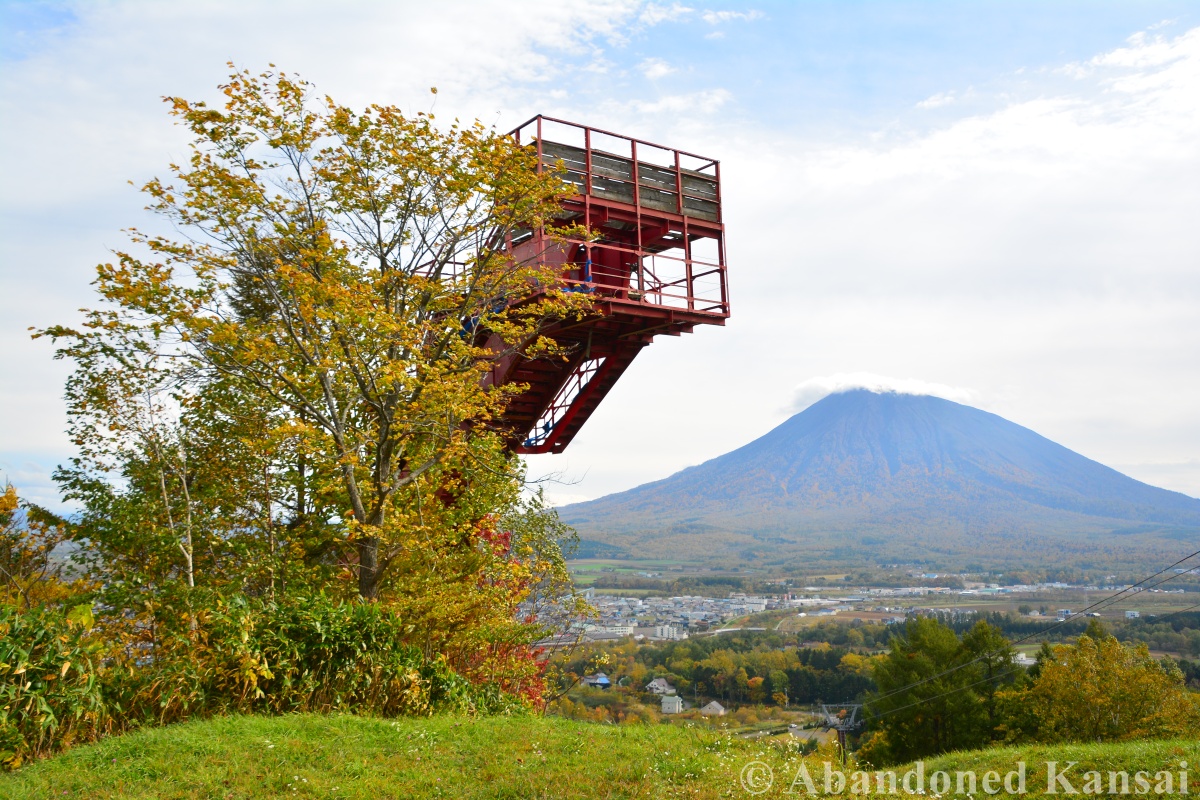
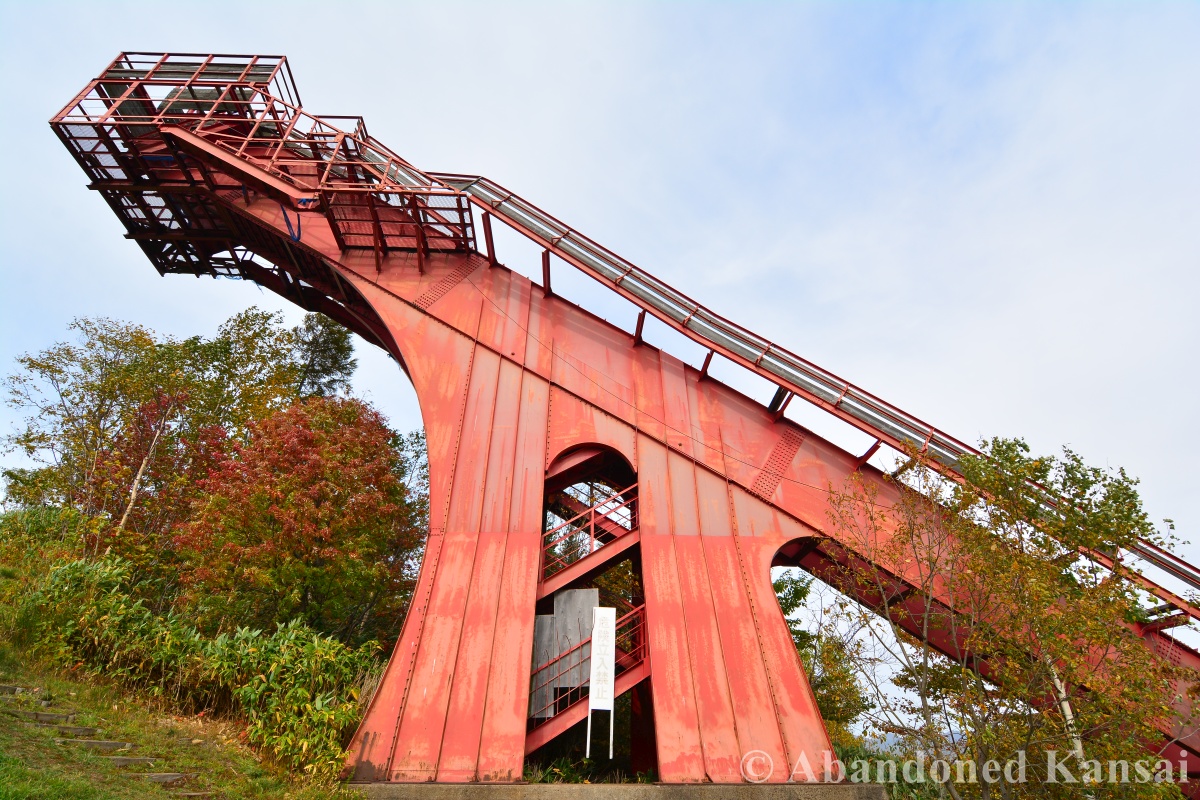
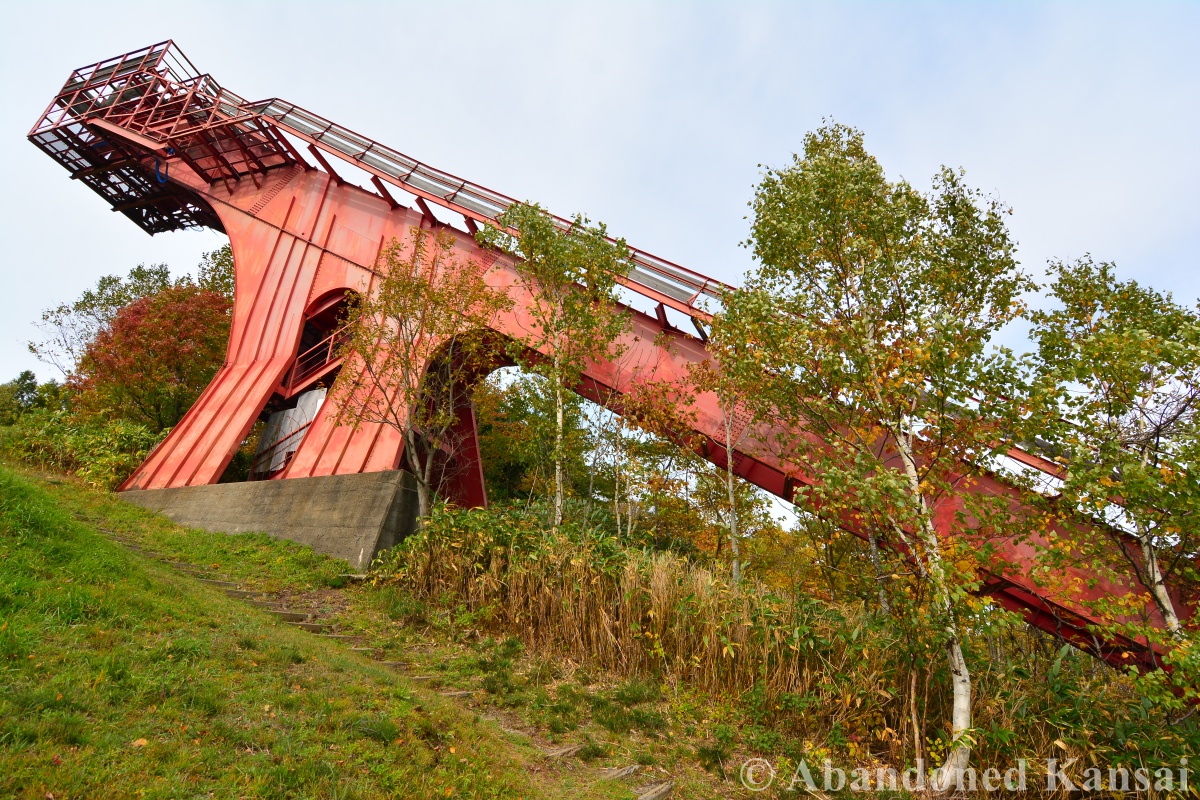
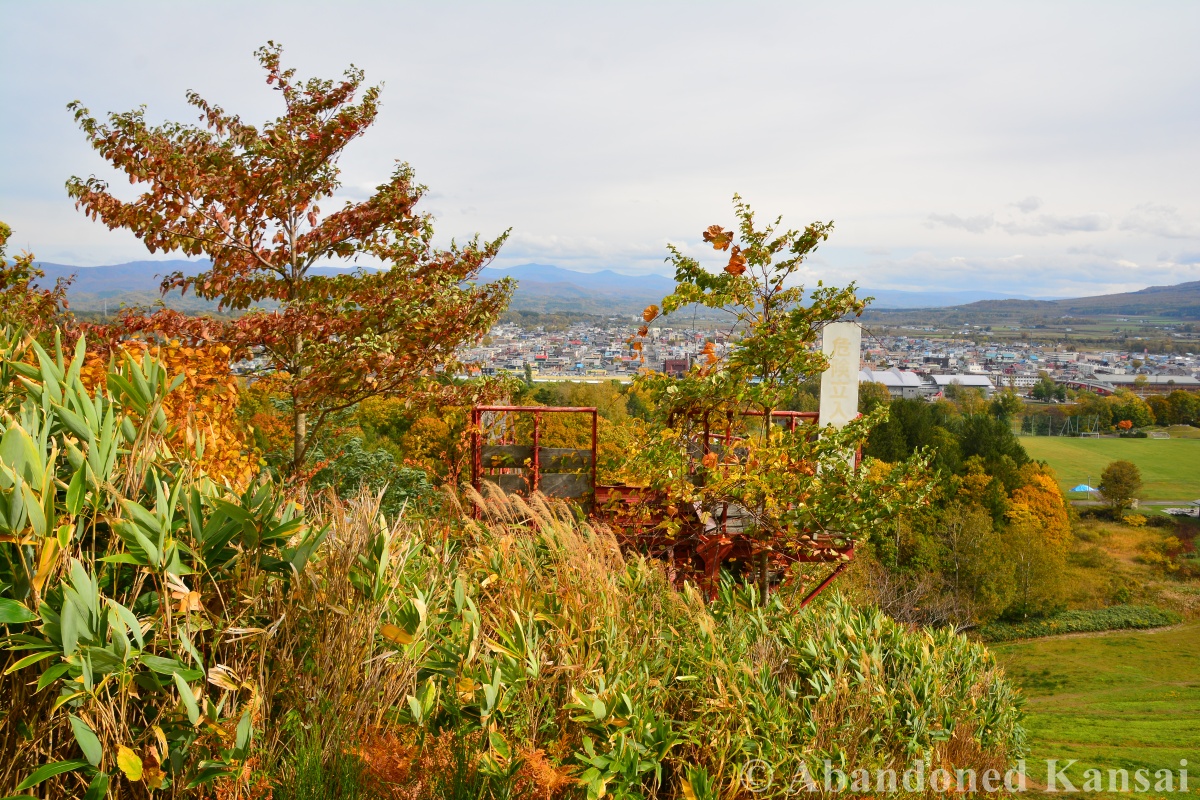
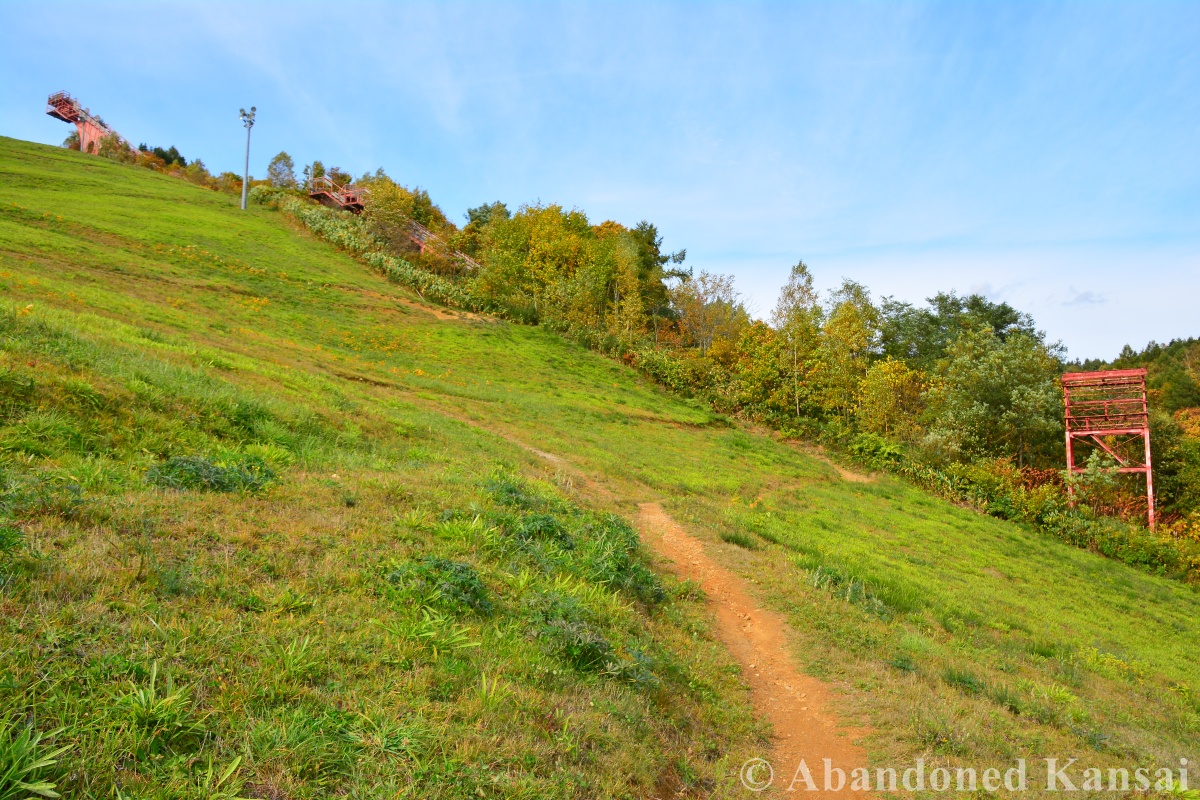
A few years ago I developed a strange fascination with abandoned ski-jumping hills – or rather the constructions use to jump from those hills, called Schanze in German; not to be confused with the military fortification, sconce (most famously used in Wolfsschanze, but let’s not go down that dark road). In the autumn of 2021 I did my own Vierschanzentournee (Four Hills Tournament) when visiting four abandoned ski-jumping hills during one Hokkaido trip. The most famous one probably being the View of Yotei Ski-Jumping Hill, also known as Asahigaoka Park Ski-Jumping Hill in Kutchan.
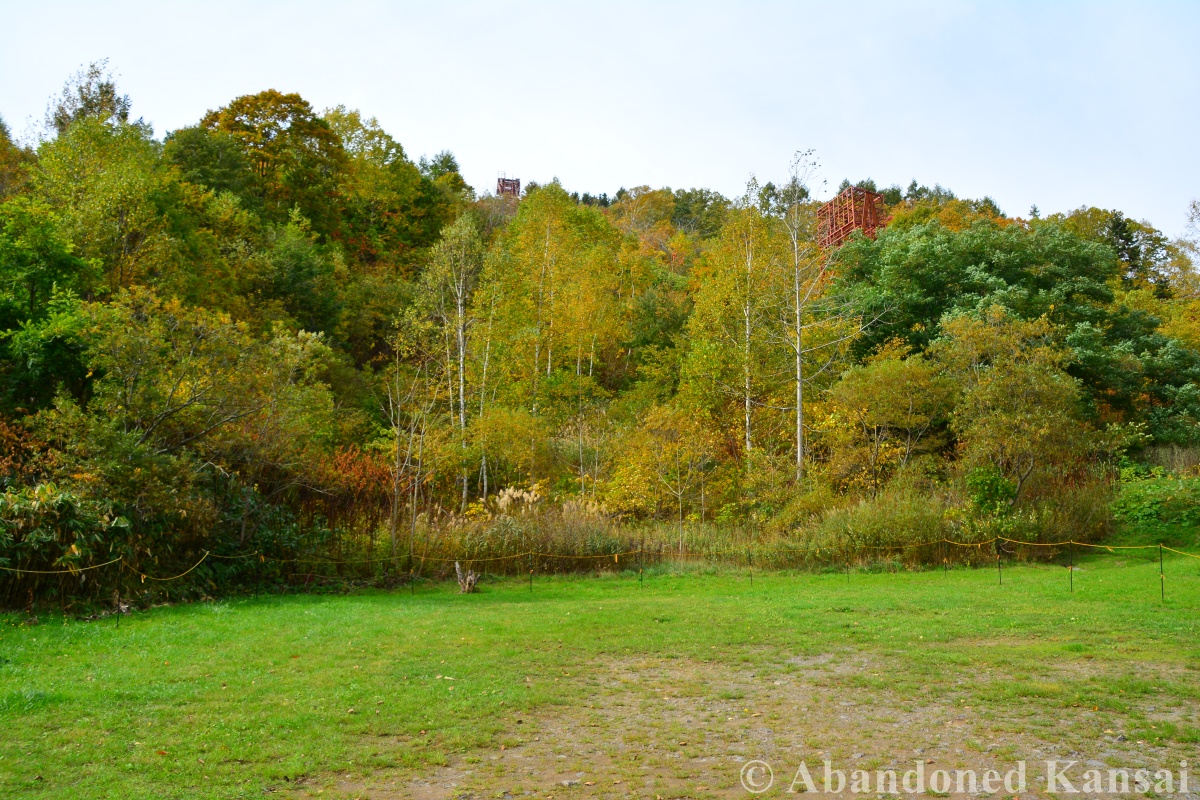
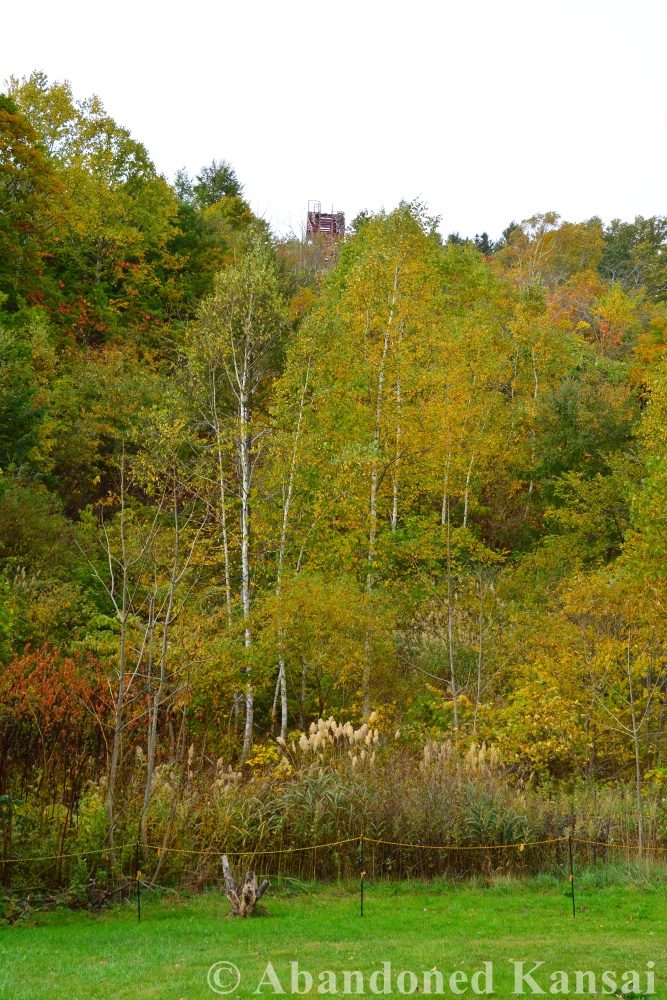
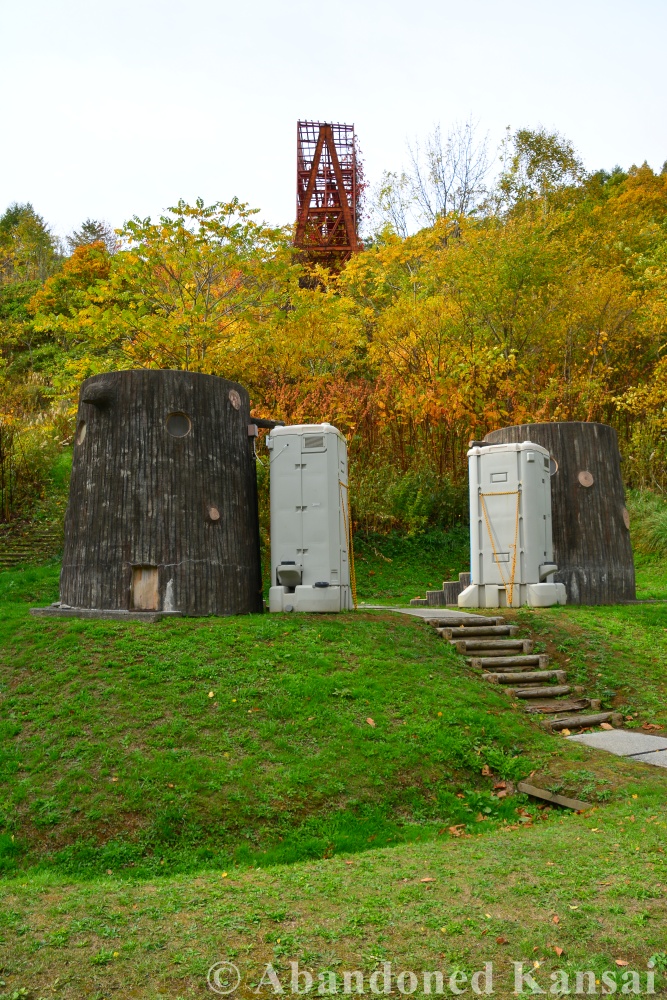
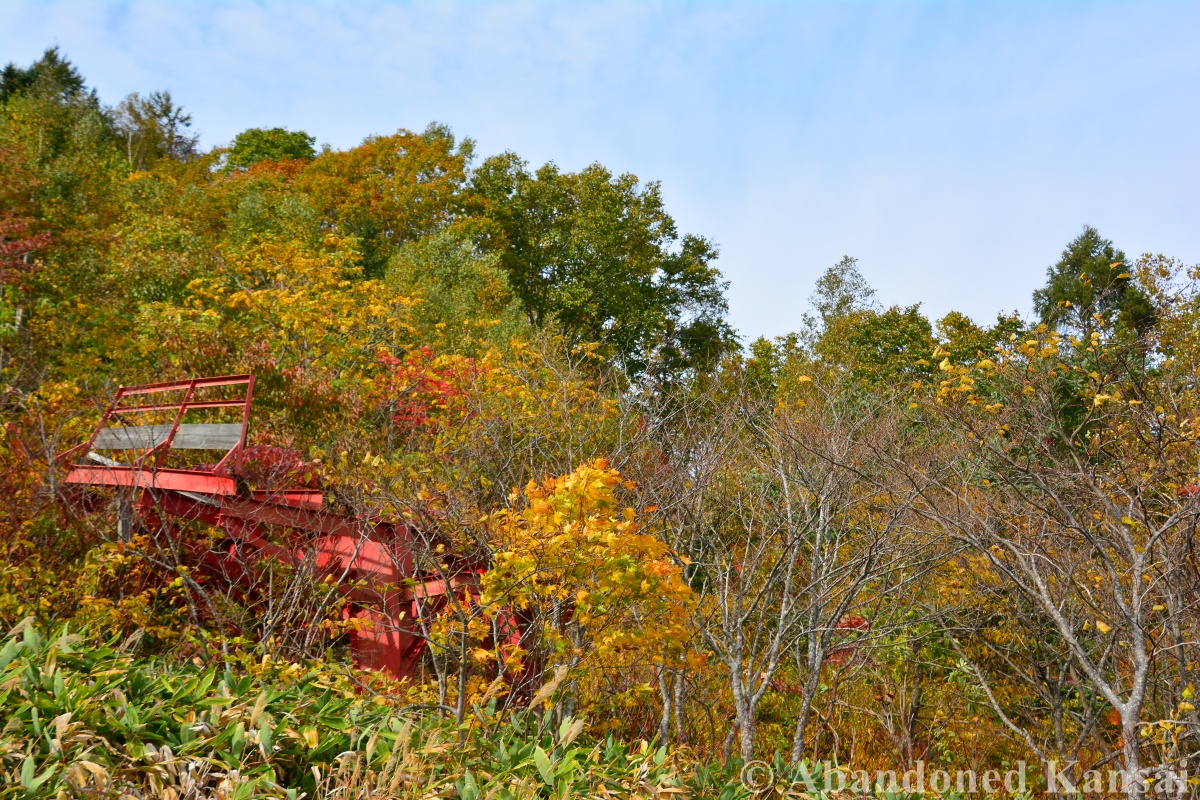
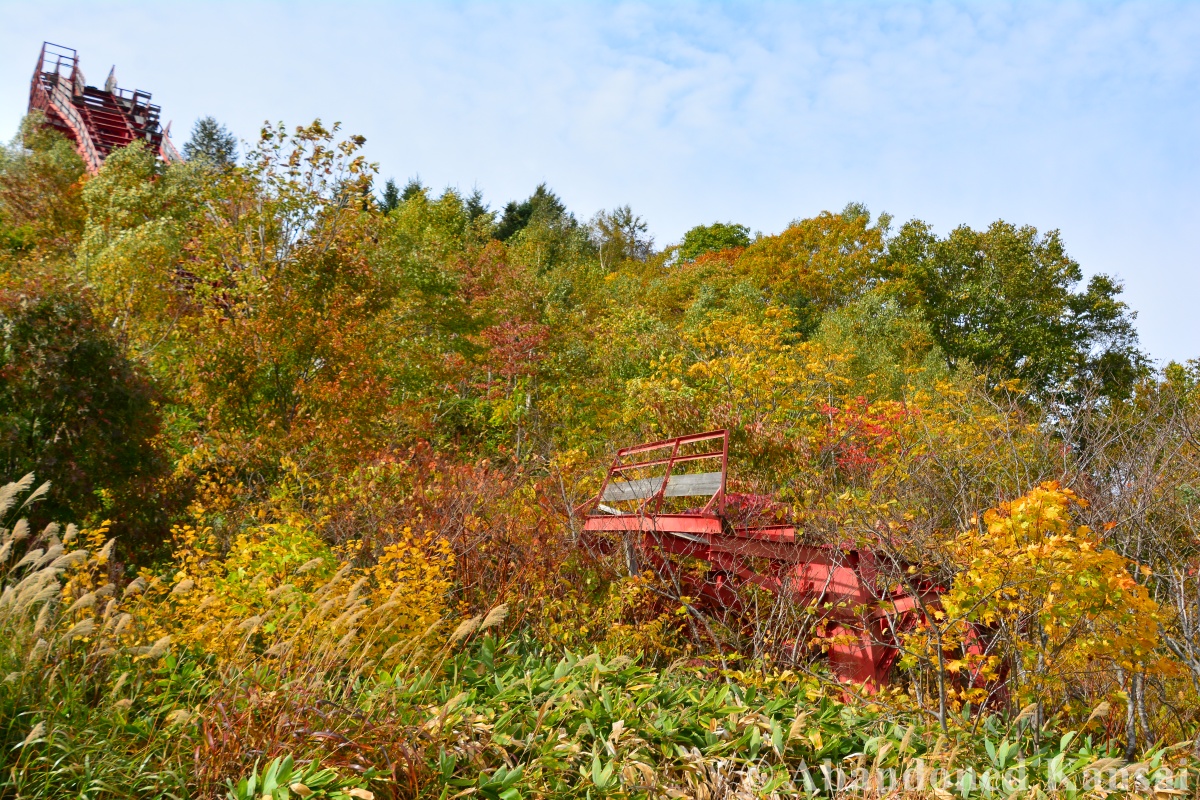
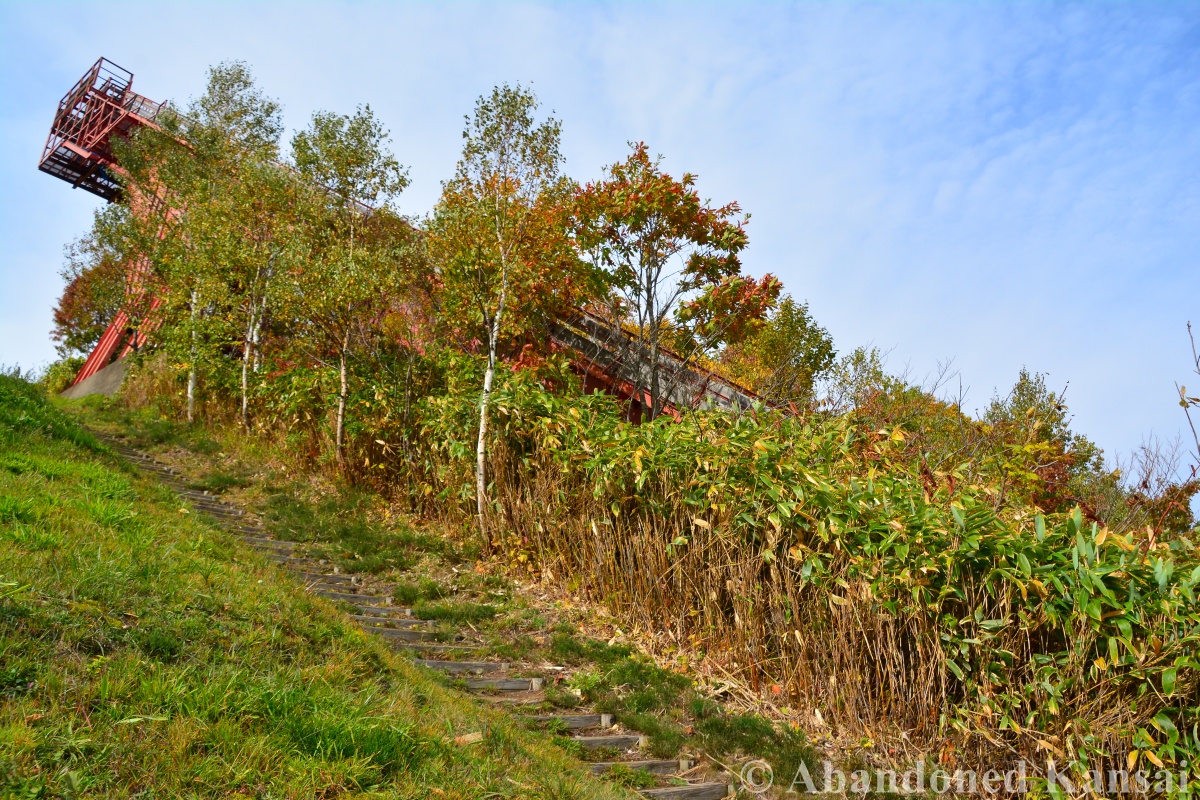
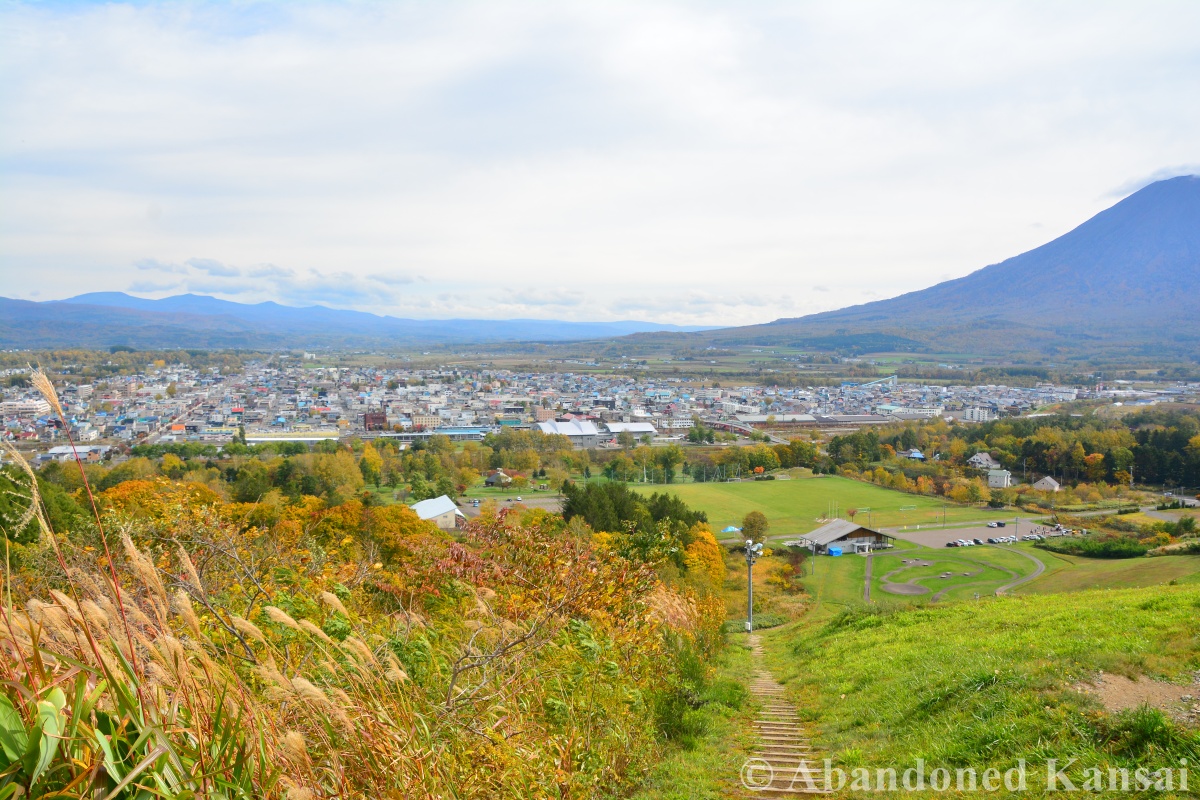
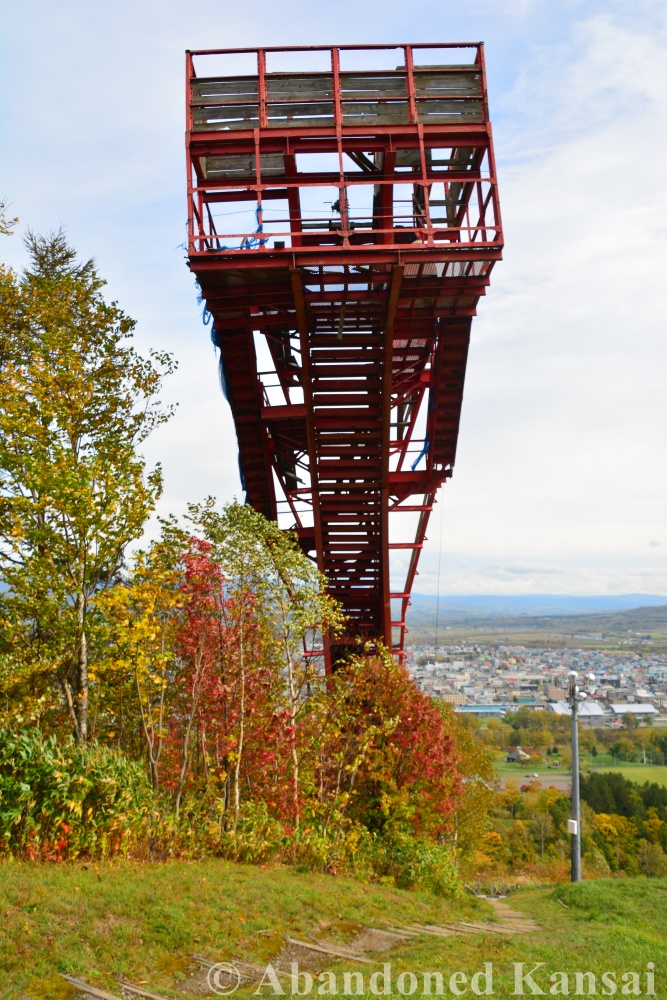
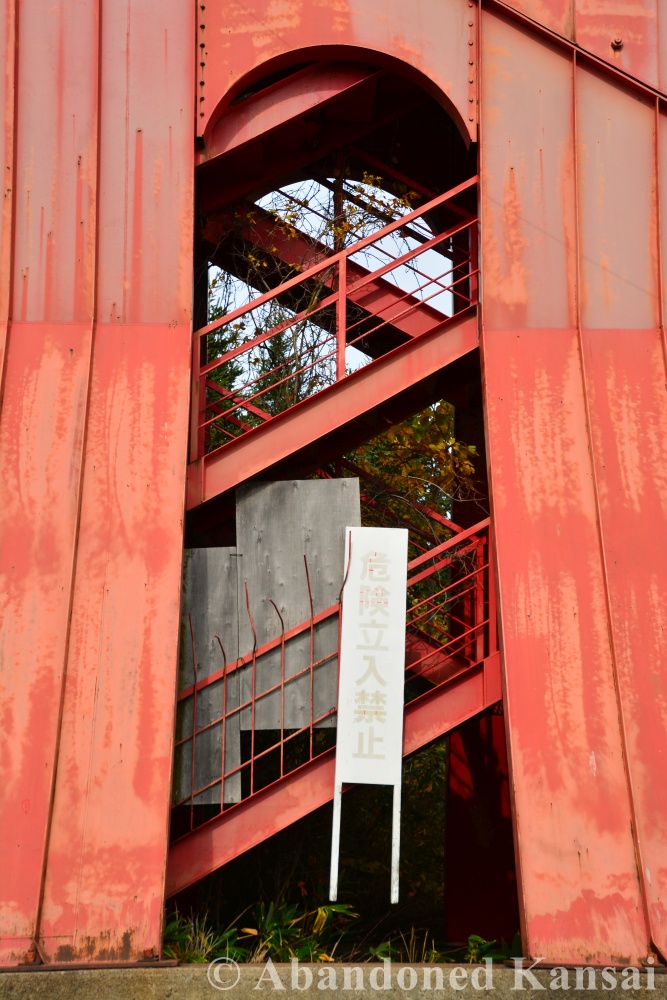
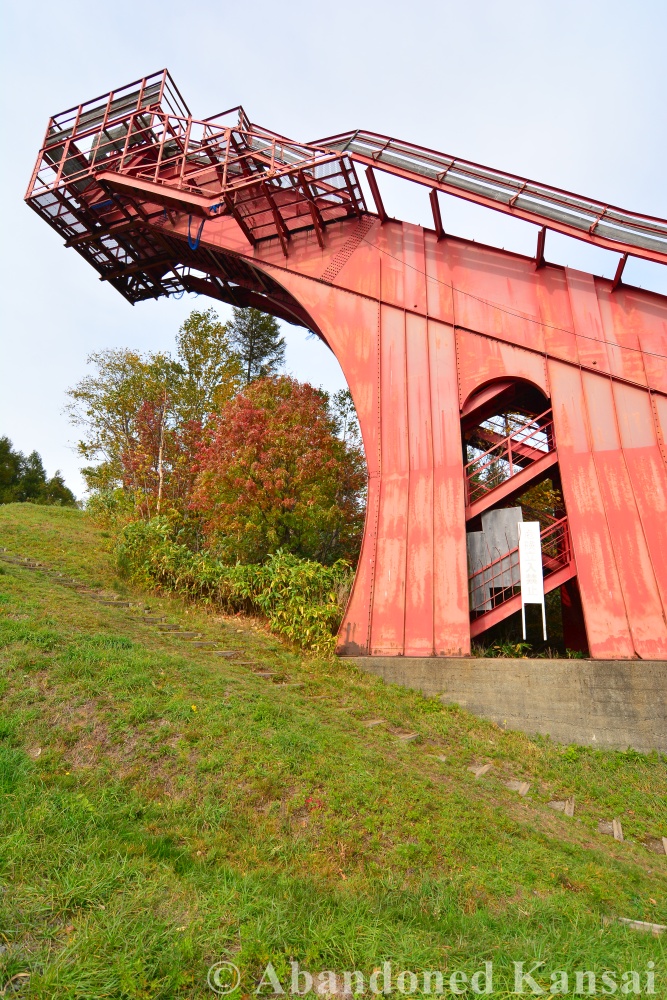
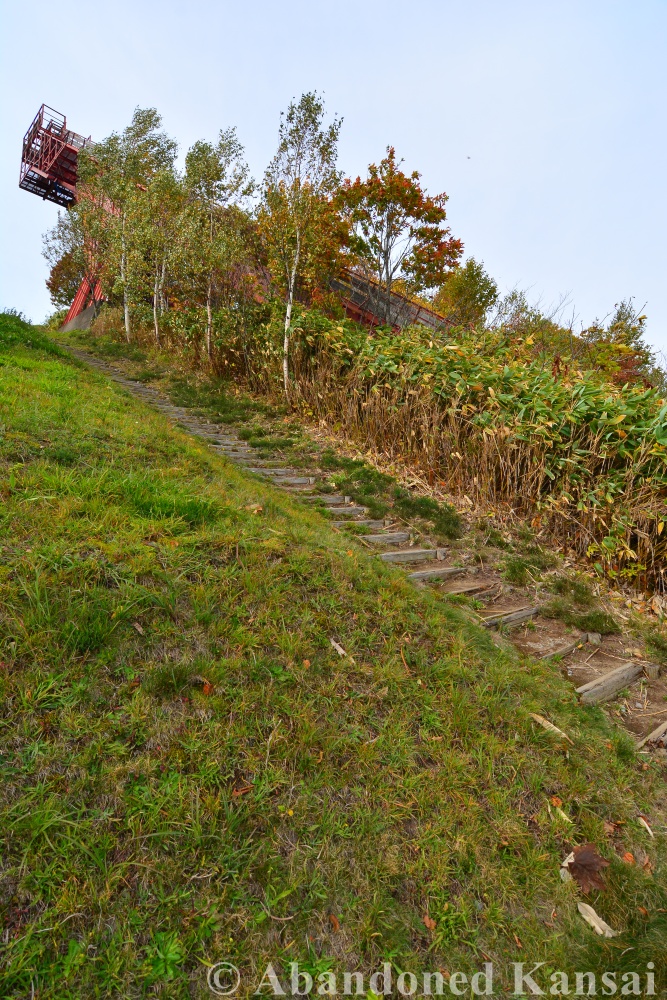
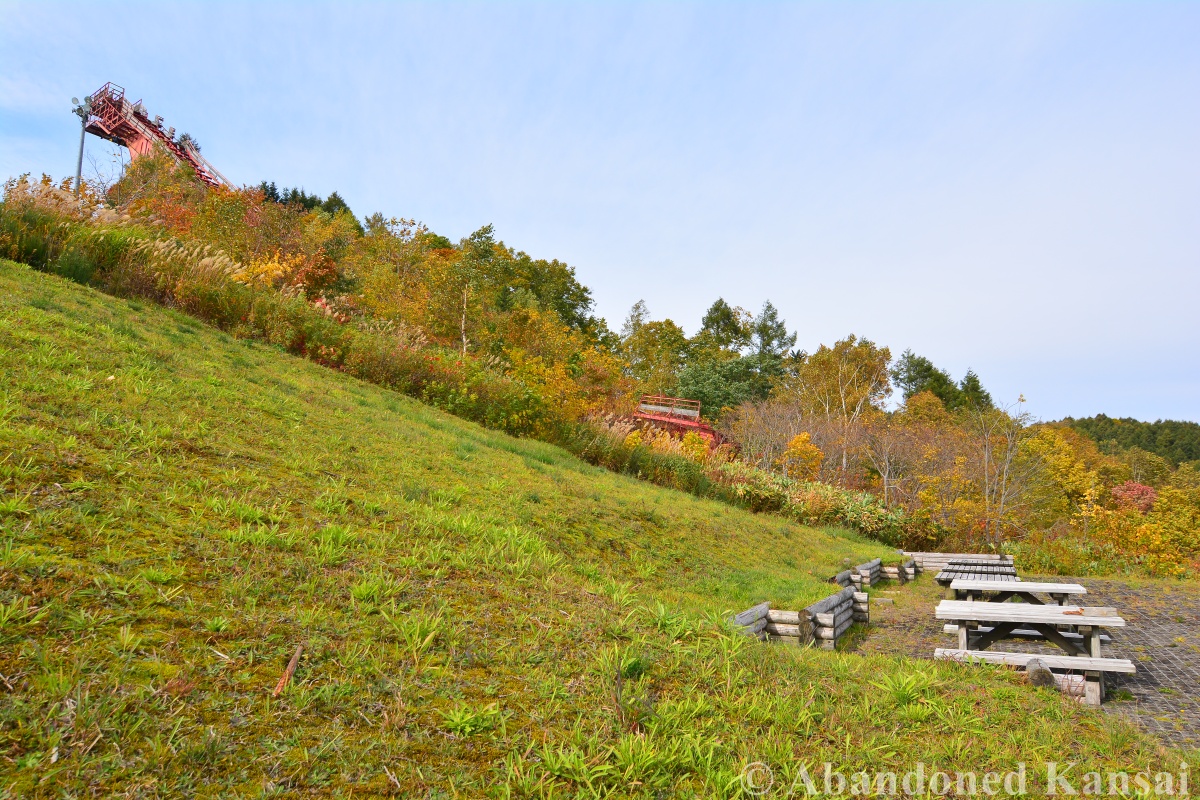
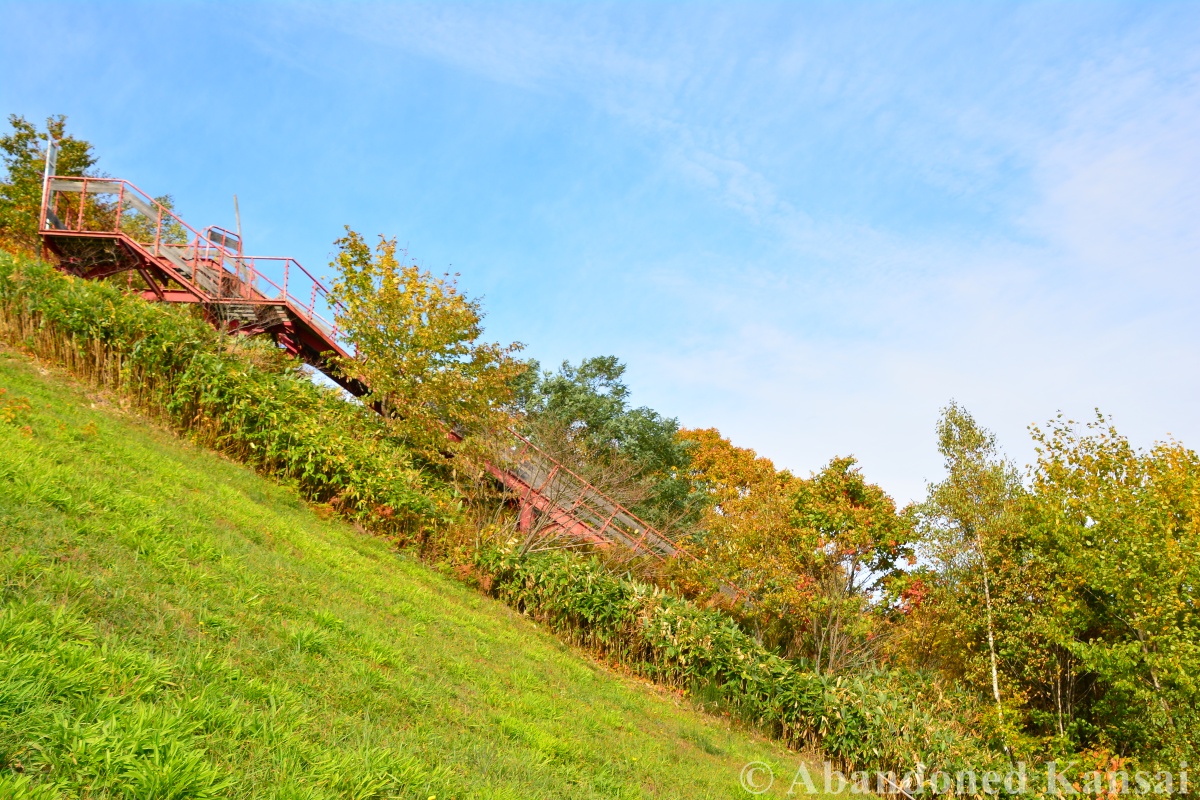
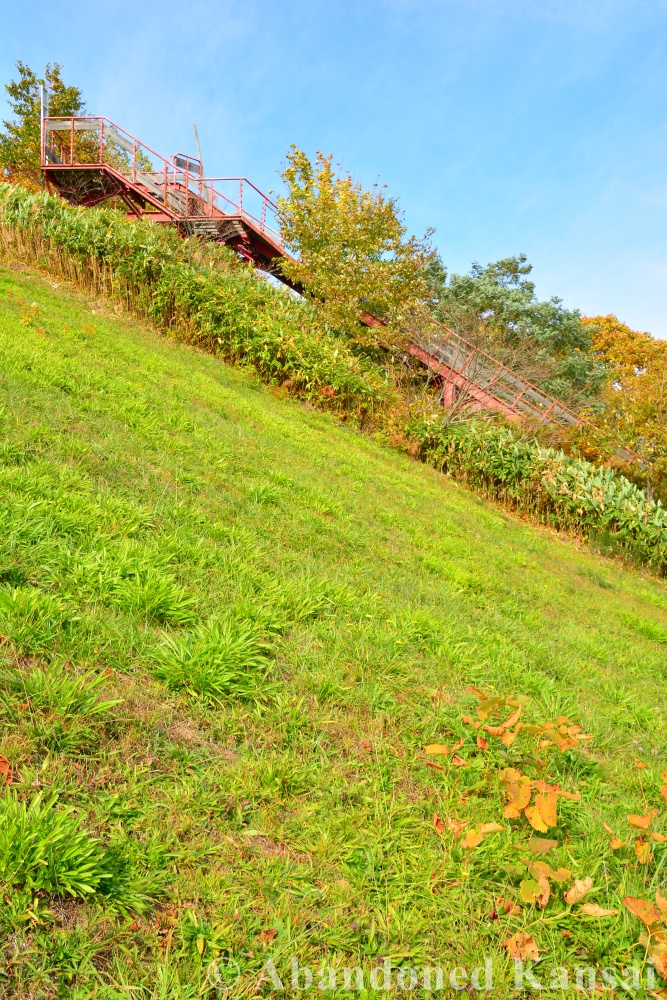
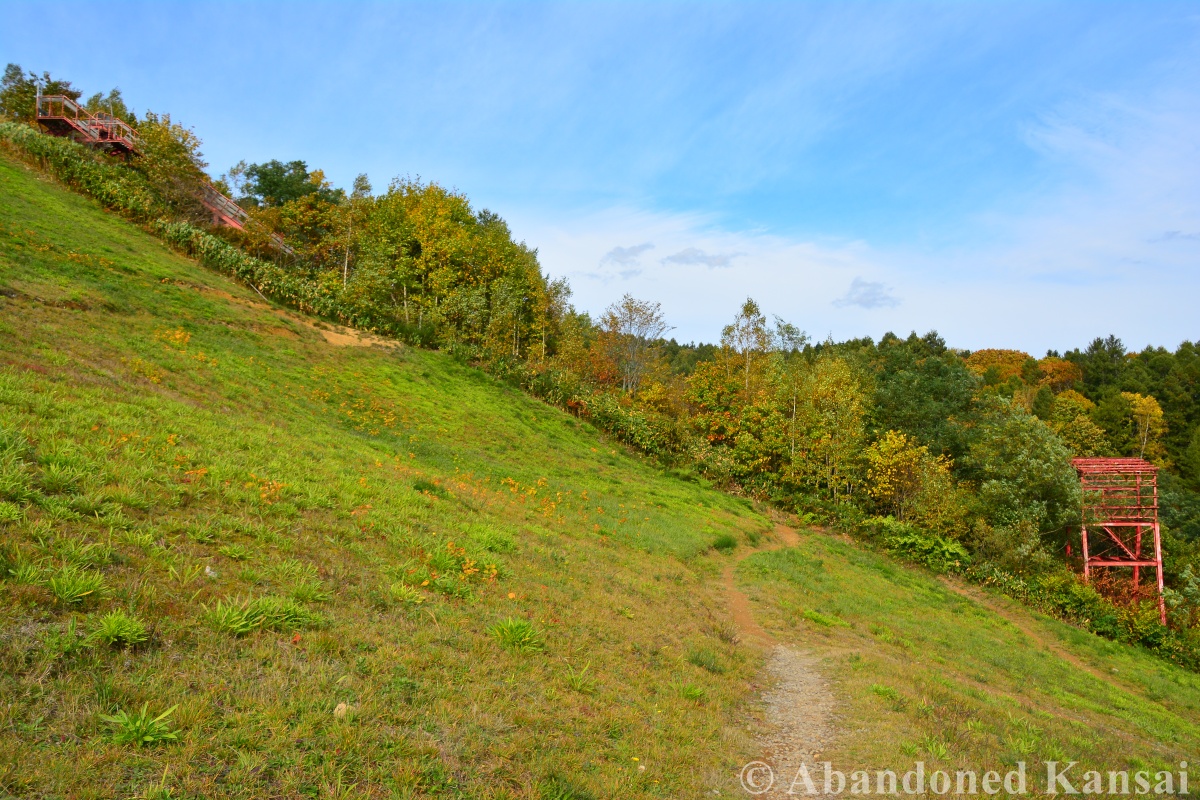
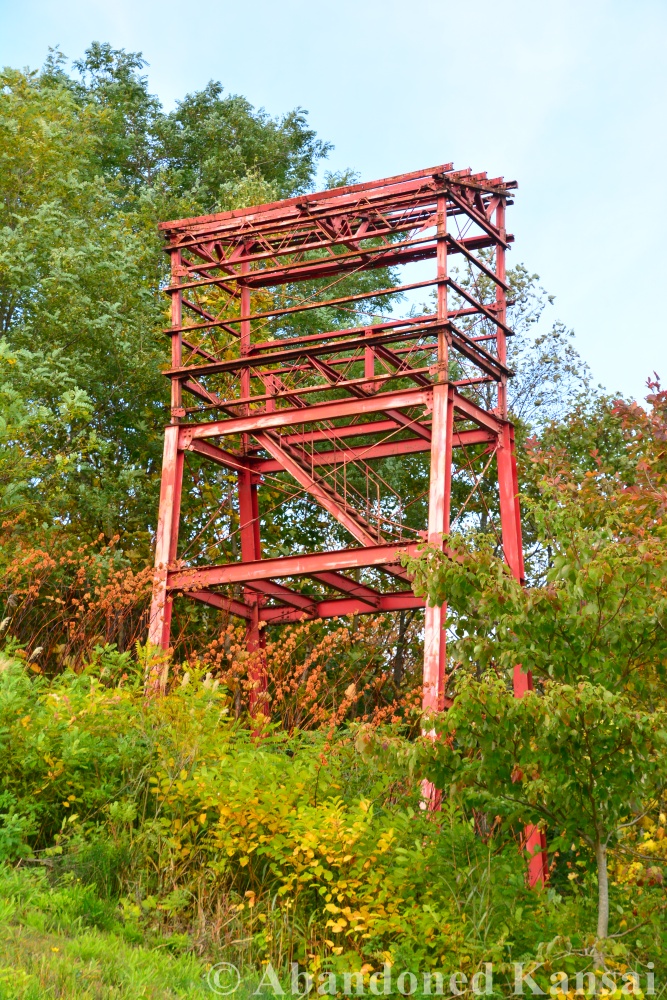
It’s absolutely beyond me why this abandoned place is not more famous in the first place as it is part of a ski area and visible from Kutchan Station, right next to Little Australia, the bogan winter wonderland called Niseko. Tens of thousands of people must see the large red metal construction every year, yet neither tourists nor urban explorers seem to pay much attention to it, despite it being a dream to explore – easy access, outdoors, no fences or Keep Out! signs (except for the welded-up main inrun tower), spectacular views of Mount Yotei – an active stratovolcano nicknamed Yezo Fuji for its shape and one of the “100 famous mountains in Japan” (a list compiled for a book by mountaineer Kyuya Fukada in 1964 and made popular by then Crown Prince and now Emperor Naruhito). To me Mount Yotei was just another mountain at the time when I took pictures of the abandoned structures, and it was pure coincidence that it ended up in some of them – I was there in October of 2021, the game was announced a year ago, on September 24th 2024…
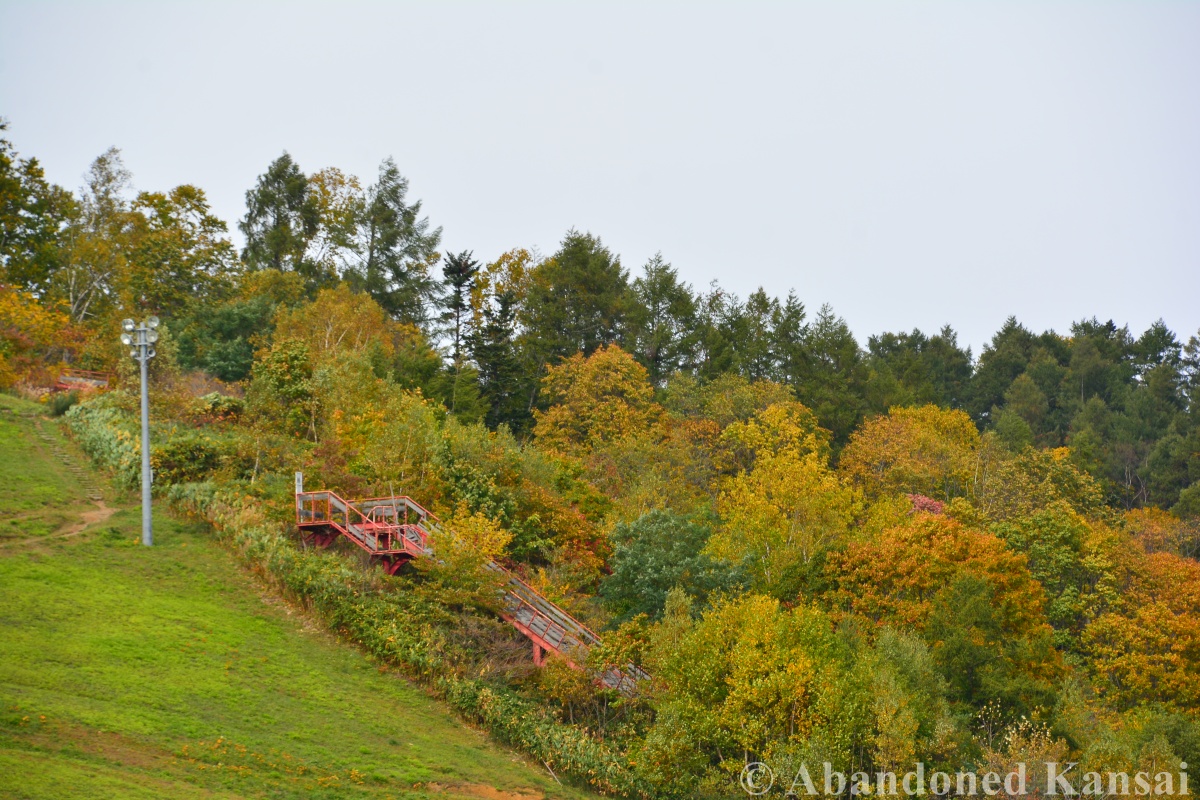
The hill was first used for ski jumps back in 1934. In 1952 a new inrun tower was set up at the current location, a larger one followed in 1963, which was later enlarged to the red monster we see abandoned now. Between 1964 and 1996 the most famous competition on the Schanze was the Major’s Cup of Kutchan Town, which attracted famous ski jumpers like Hiroya Saito, who won the cup in 1992 – and a gold medal with the Japanese team at the 1998 Winter Olympics in Nagano (fun fact – Saito was born in nearby Yoichi, mostly known for the Nikka whisky distillery). The exploration itself was relaxed and uneventful for the most part. Nice autumn day, which means a lot of elements of the ski-jumping hill (inrun towers, observation tower for the judges, landing slope, out-run…) were mostly overgrown. Vegetation grows fast in Japan, even in Hokkaido, but autumn leaves were just past their peak, so the whole area was beautiful. In winter you can see much more of the facility, and you can use the lift to get up the darn hill, but overall it was a very pleasant exploration, a bit reminiscent of *Sapporo Dreamland*. If you are now curious about other abandoned ski-jumping hills, I recommend checking out my articles about the *Hokkaido Ski-Jumping Hill* and the *Sprungschanze Katzenbuckel*.
(*Like Abandoned Kansai on Facebook* or *follow us on Twitter* if you don’t want to miss the latest articles and exclusive content – and subscribe to the *video channel on Youtube* to receive a message right after a new video is online…)
Read Full Post »

As much as I dislike hospitals and mistrust doctors in real life (I’m grateful for them, but to me they are a necessary evil fighting for good) as much do I enjoy clinics and other health facilities when they are abandoned. Japan has not only plenty of them (I must have explored more than 50 over the years), but the variety is also amazing. Everything from *local doctors with a pharmacy in their wooden countryside mansions* to *large concrete monsters with modern machinery* – and except for a handful now vandalized or demolished ones, they are also among the hardest to find abandoned places; even Japanese explorers with no English skills whatsoever occasionally contact me for coordinates.

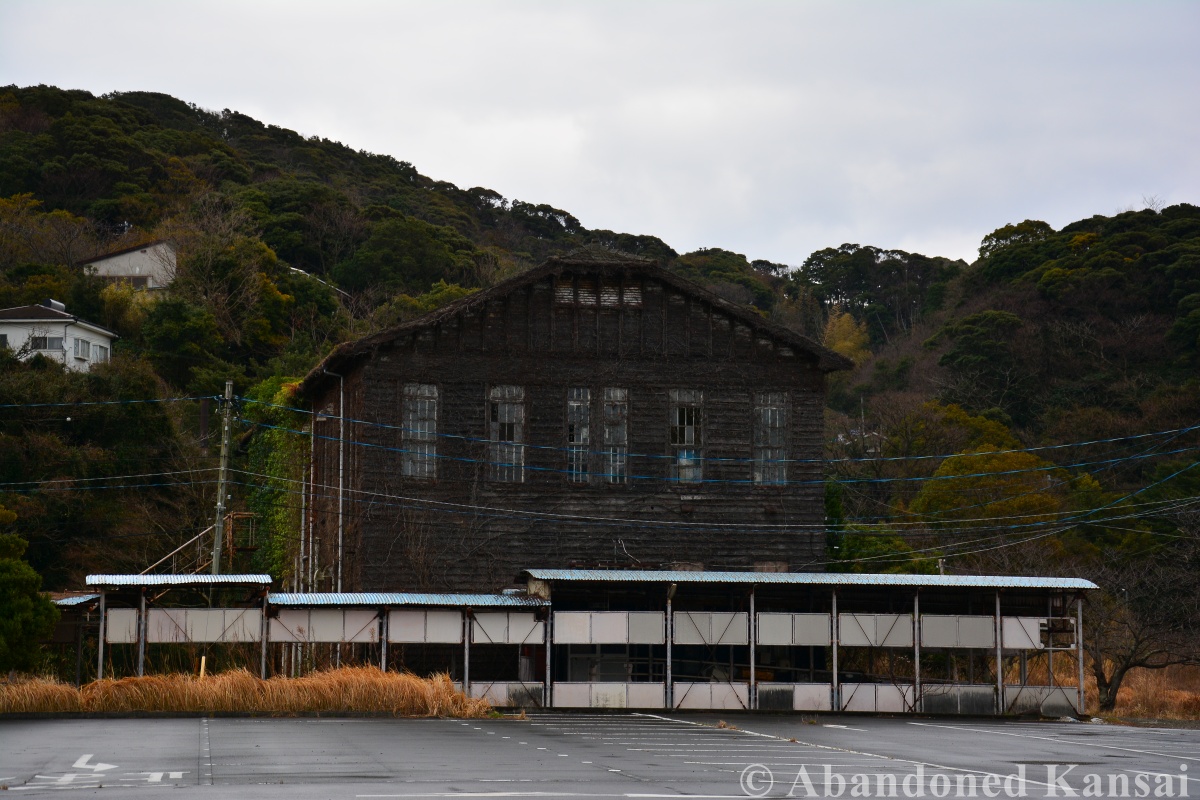
One of my favorite up till now unpublished abandoned medical facilities is the Minato Naval Hospital – an institution so old that the nearest modern JSDF base is about 60 kilometers away, the nearest JSDF naval base even 100 kilometers. The hospital was established in 1923, though the building featured in this article was constructed in 1932. 65 years later it was reorganized into another facility and probably closed as part of the restructuring of national hospitals. In 2012 the institution was renamed and moved to nearby Shimoda where it still exists as the Shimoda Medical Center.

I explored the Minato Naval Hospital back in 2015 on my way to the now demolished *Irozaki Jungle Park* – so I guess it sitting somewhat forgotten on my hard-drive for 10 years is long enough! The exploration was part of a weekend trip to the Izu Peninsula and I have to admit it would have been impossible to do without the help of a friend I was travelling with. The naval hospital was on the premises of a semi-abandoned hospital complex, part of which is still active to this very day… and the building of our interest was tightly locked. Fortunately there was a hole the size of maybe a tennis ball in the plastic part of the door, slightly off above the lock. Now, I’m a big guy with big arms and there was not a snowball’s chance in hell my hand let alone my arm would have fit through that hole – luckily my friend was a skinny woman who literally had a can of coffee and a cigarette for breakfast (guess which country she’s from!), so it took her about 5 seconds to unlock the door and get us into the building.

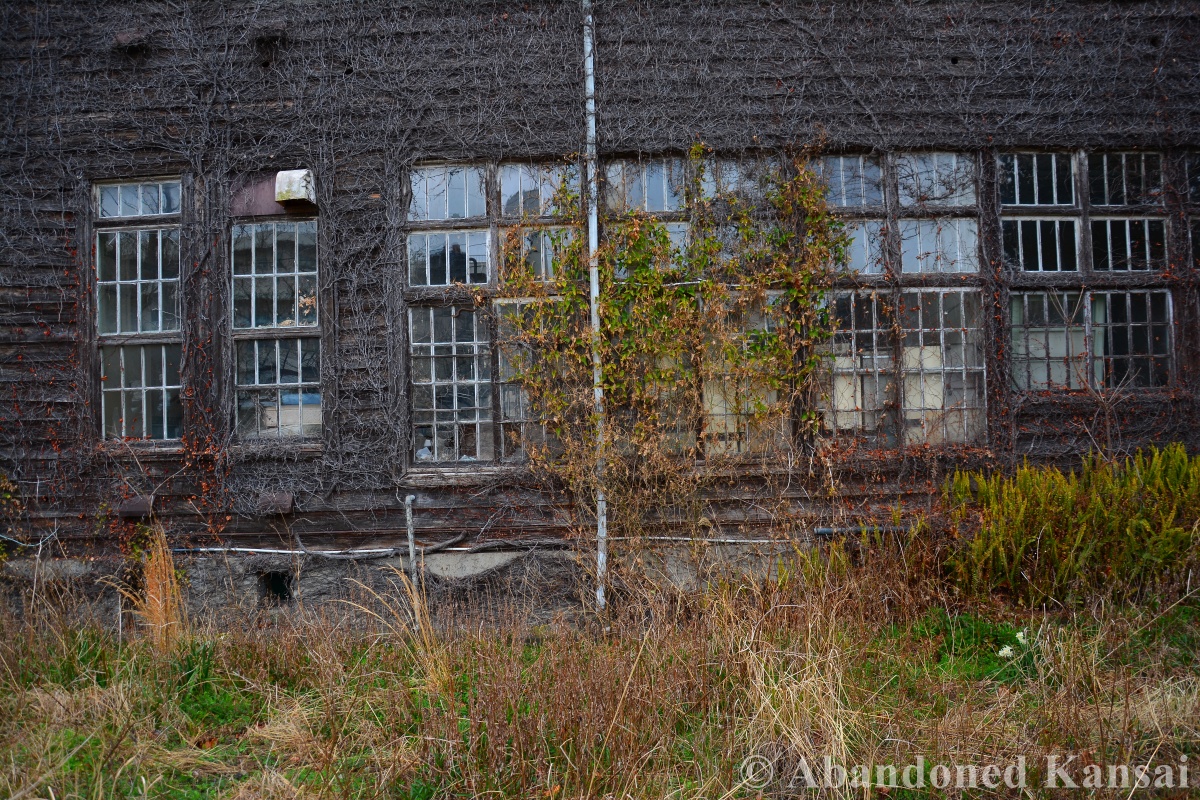
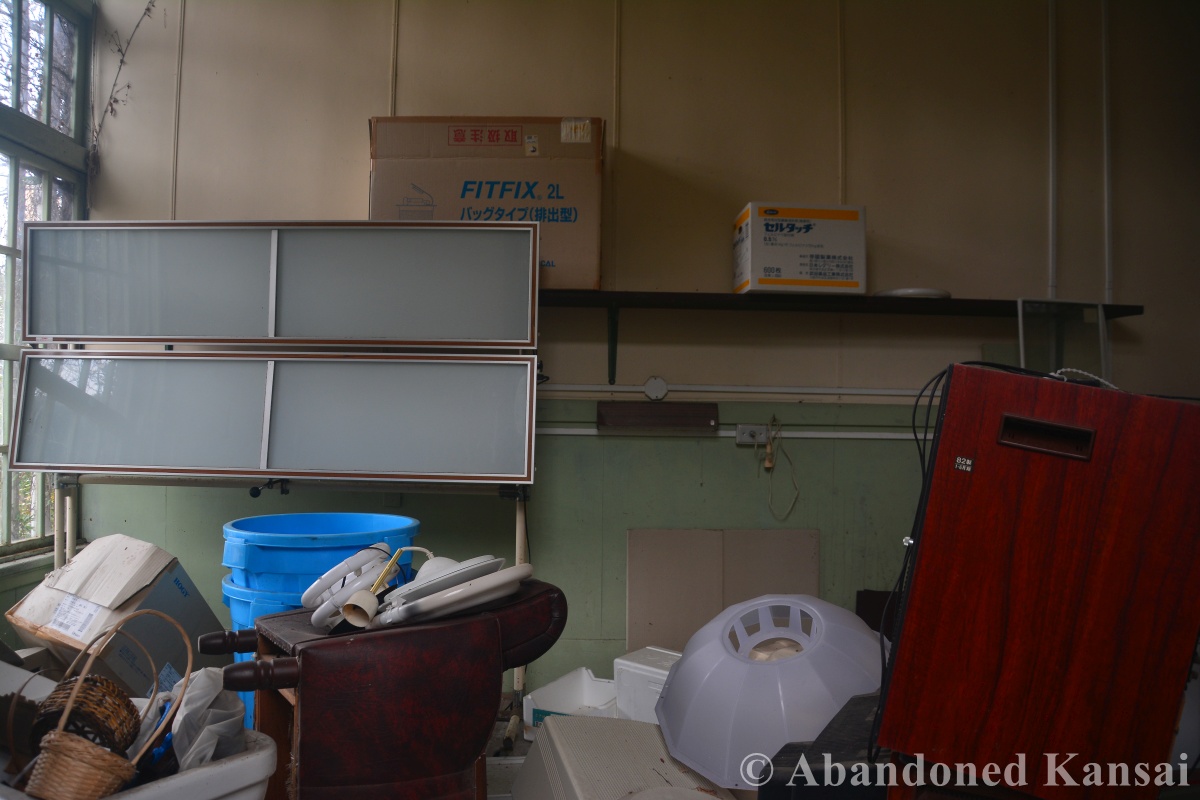
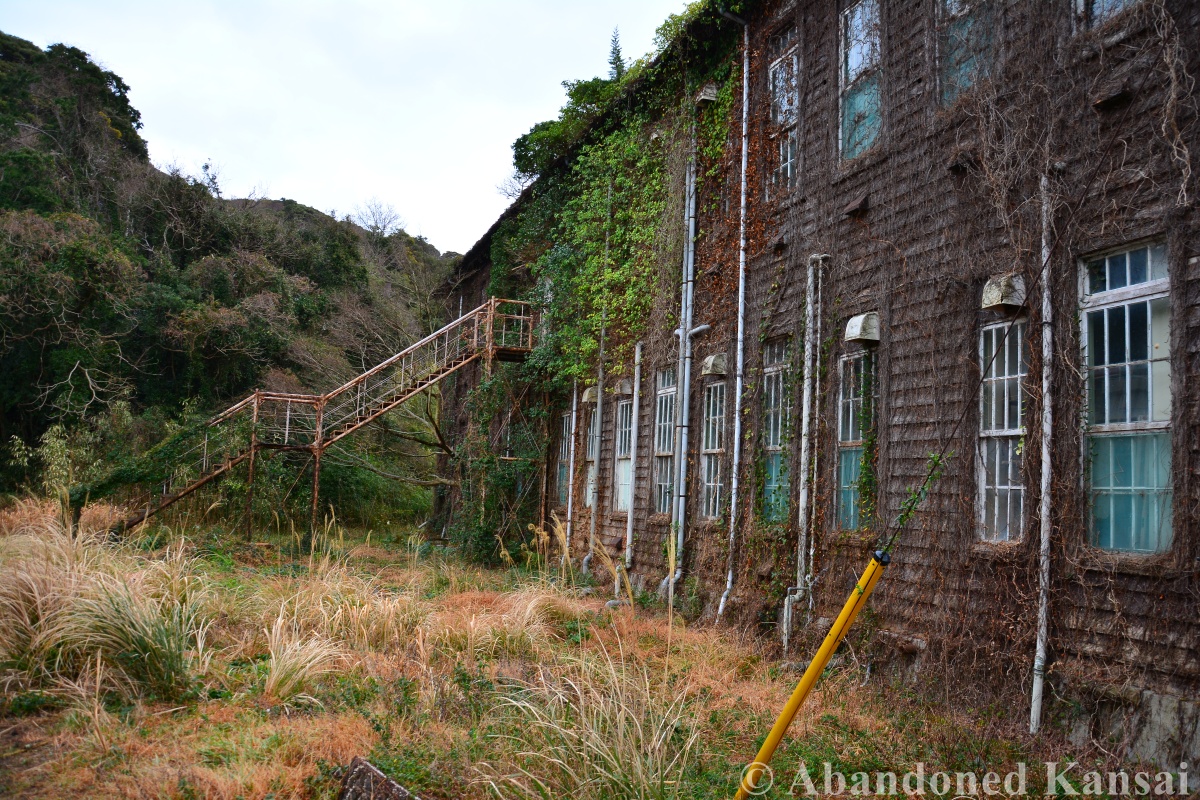
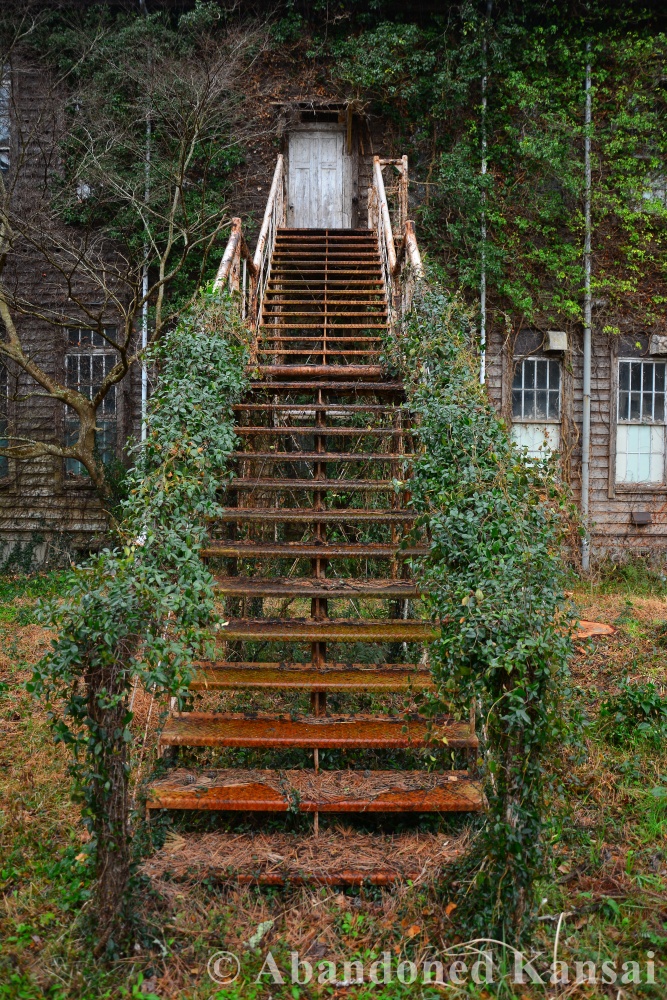
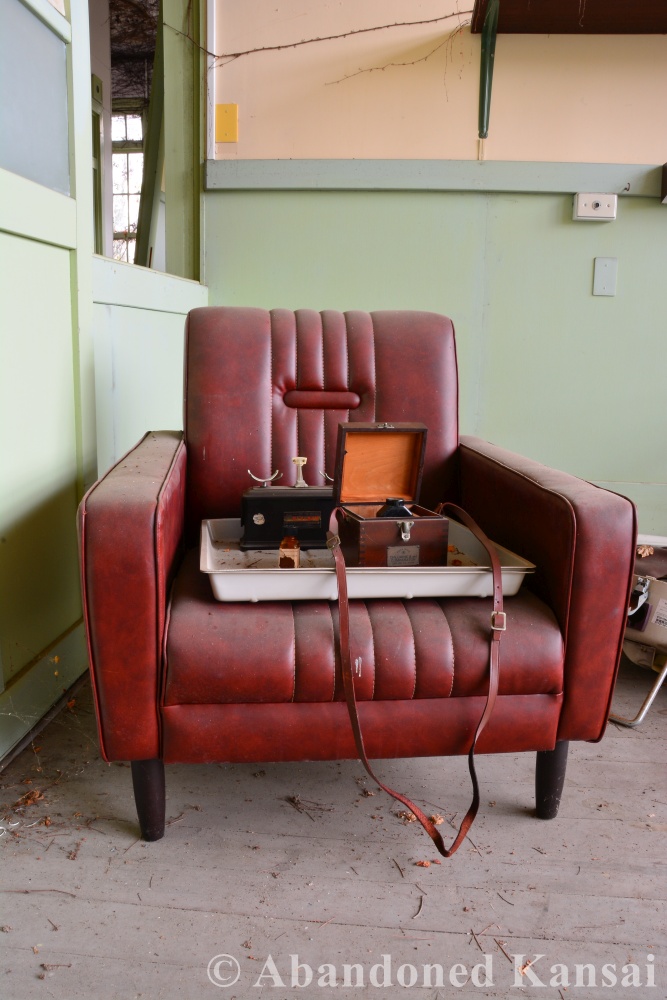
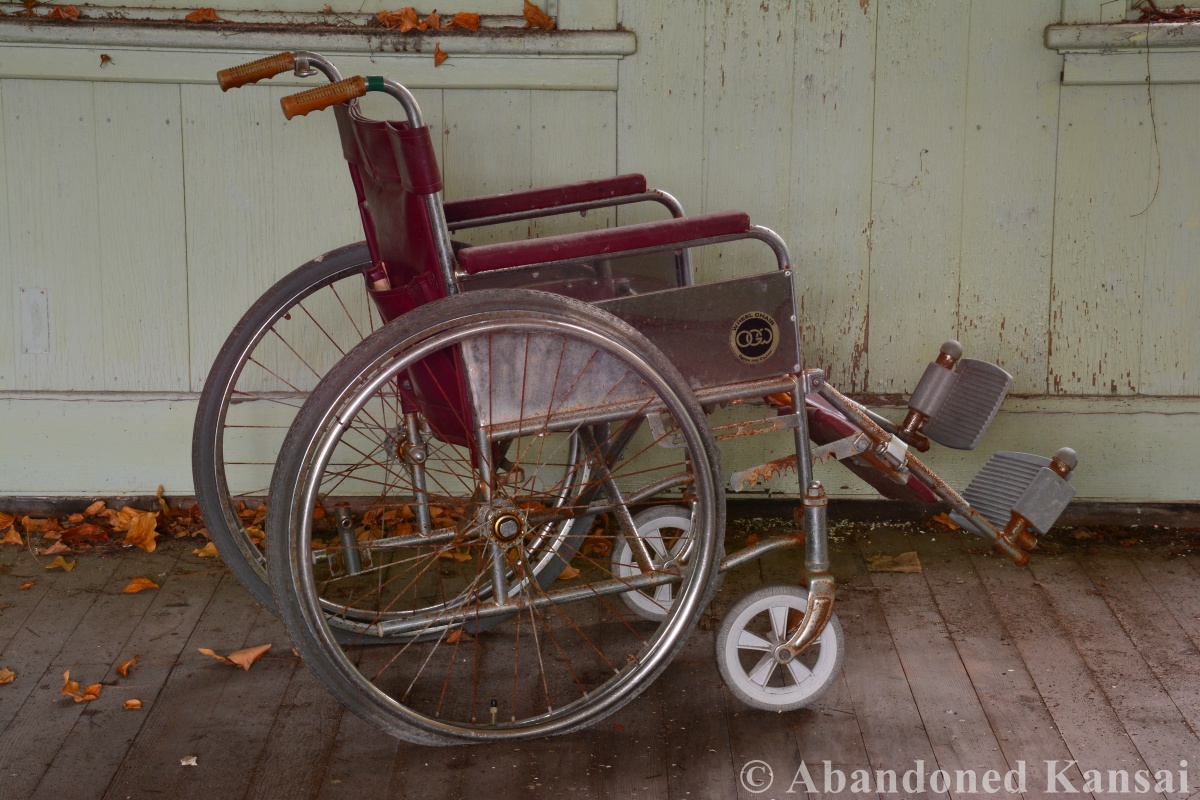
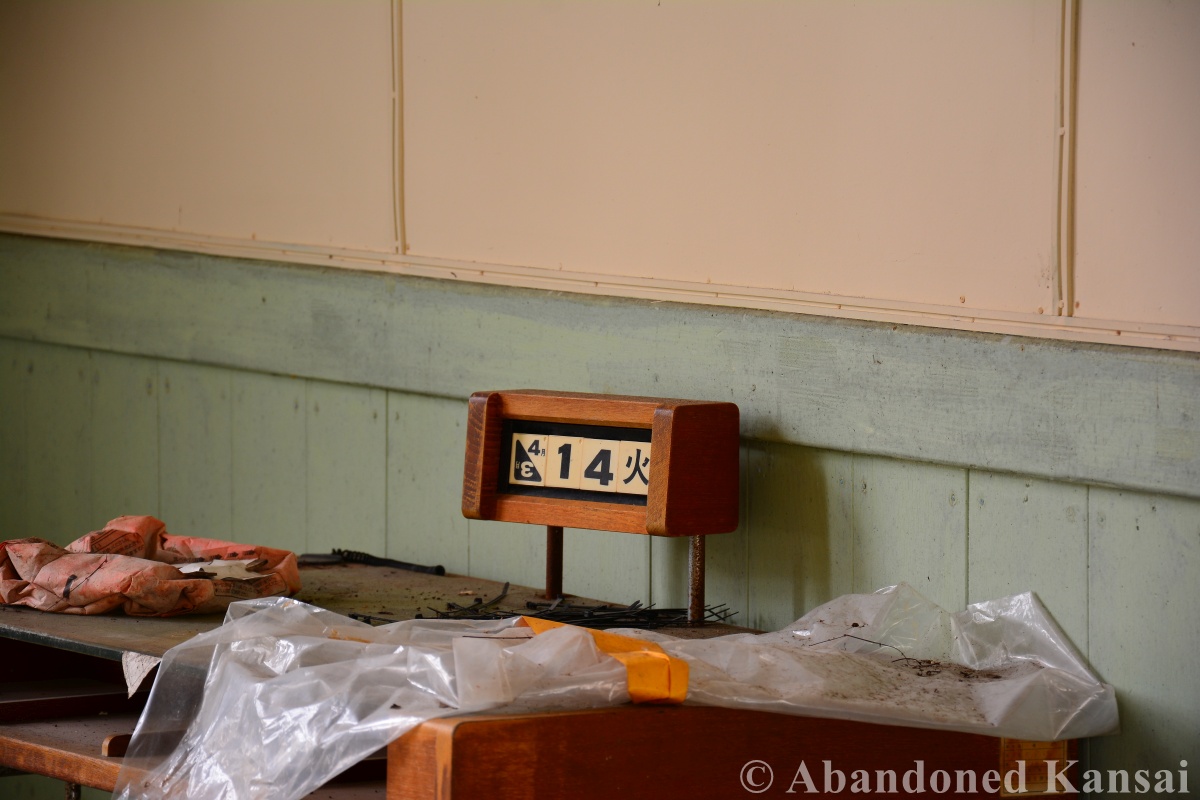
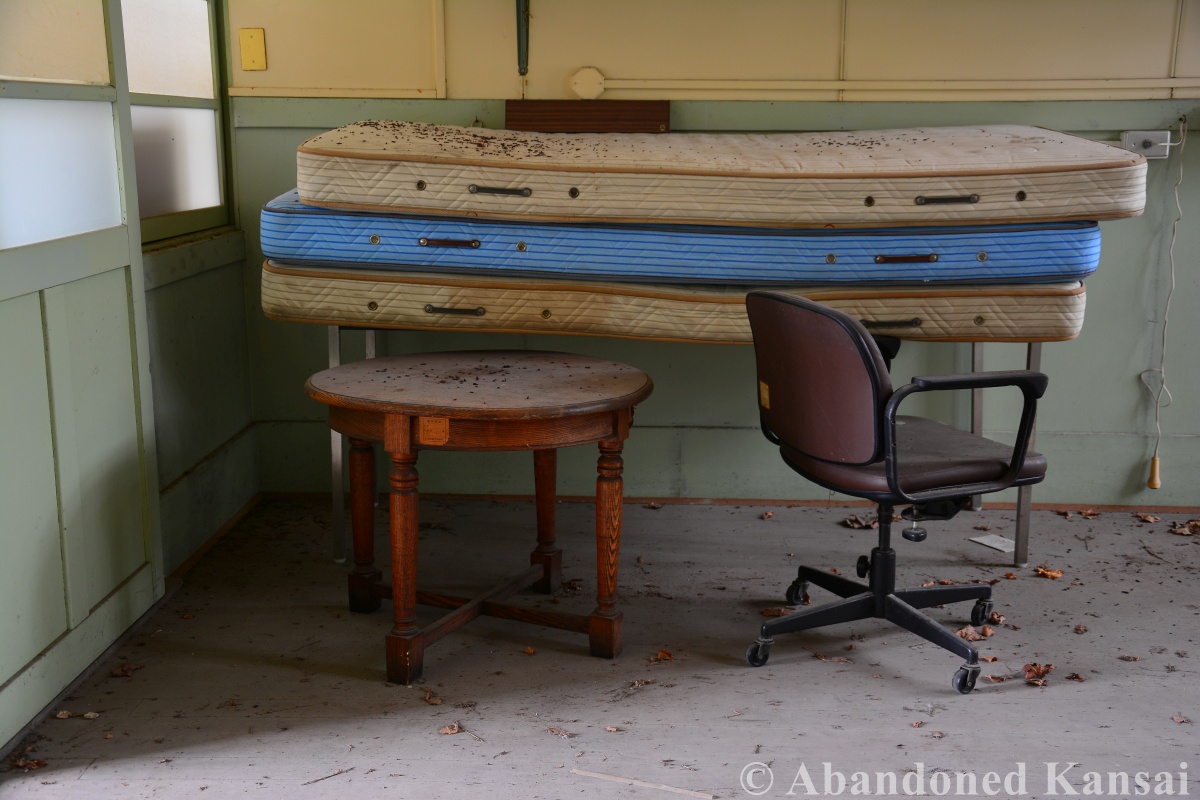
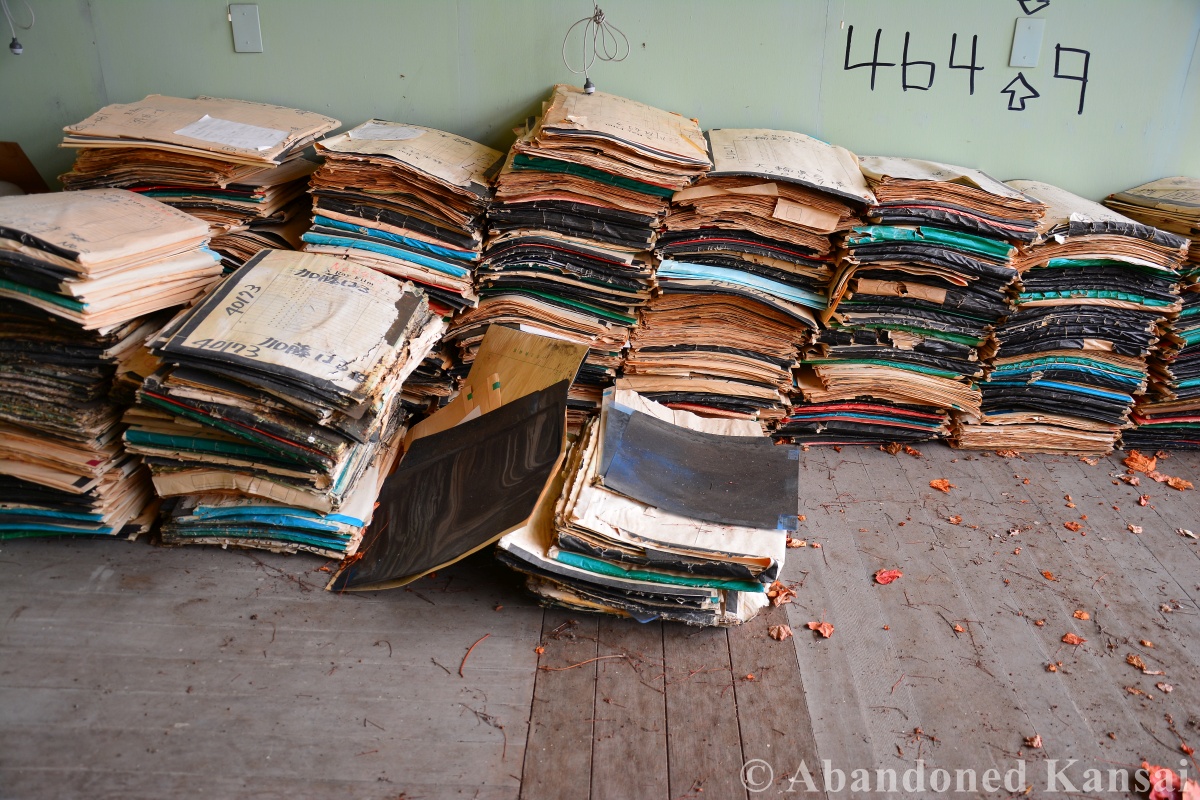
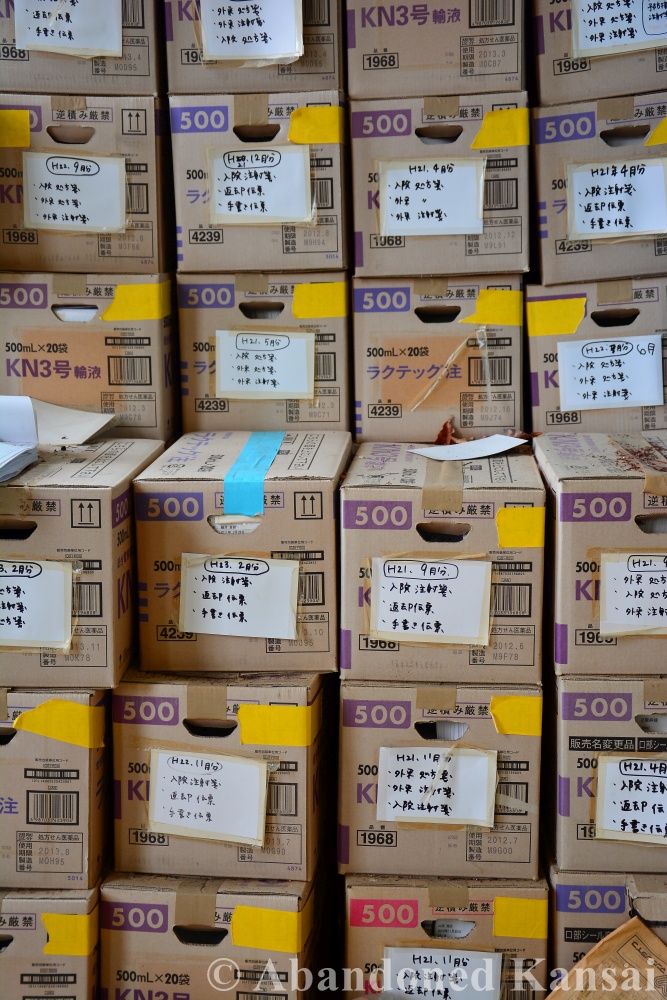
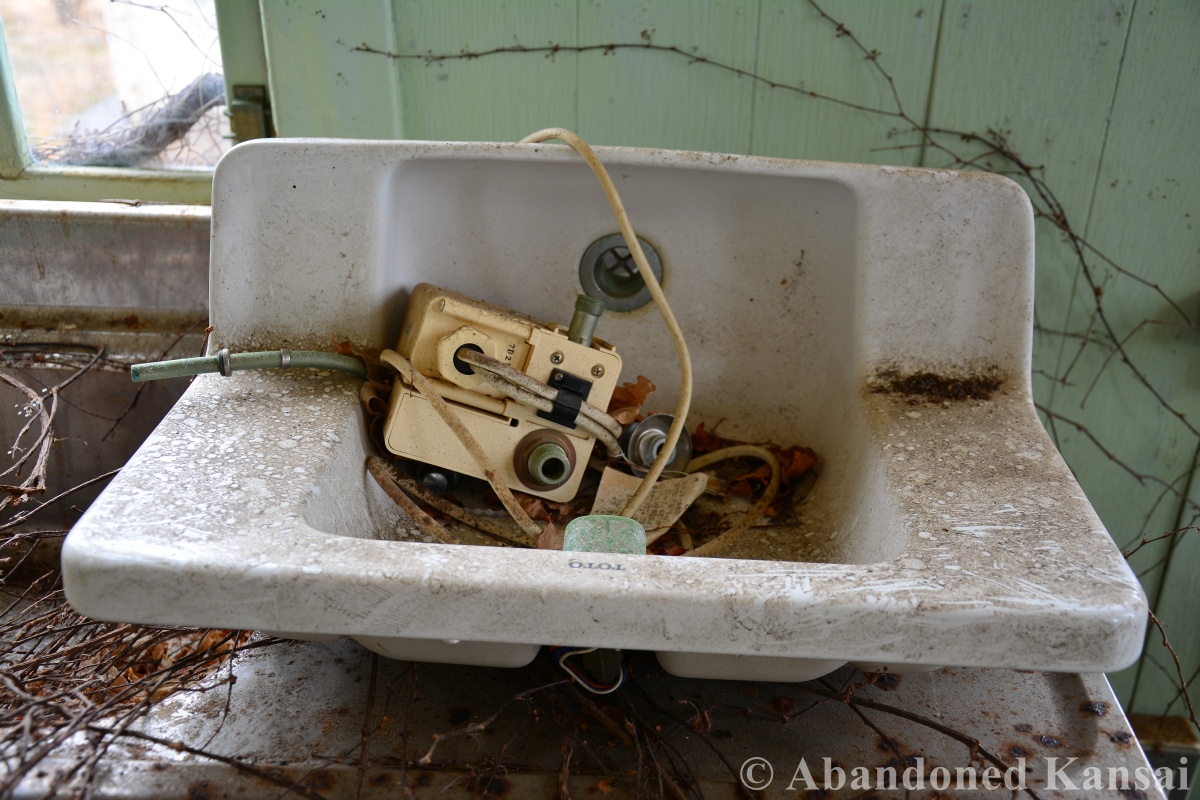
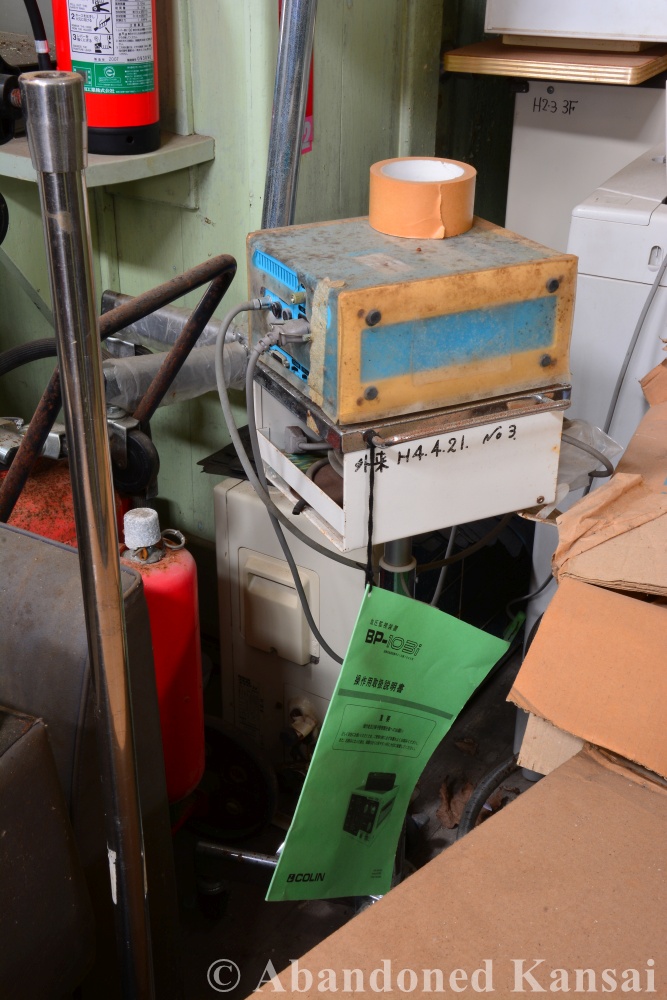
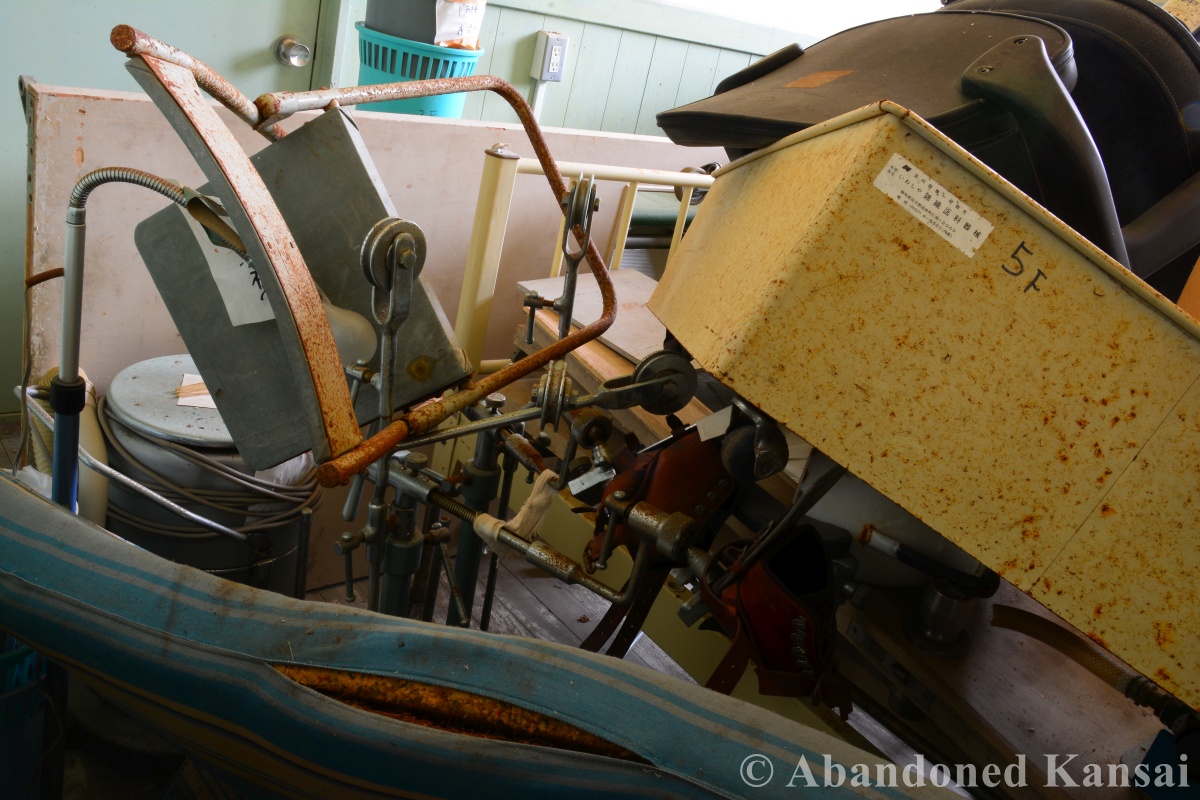
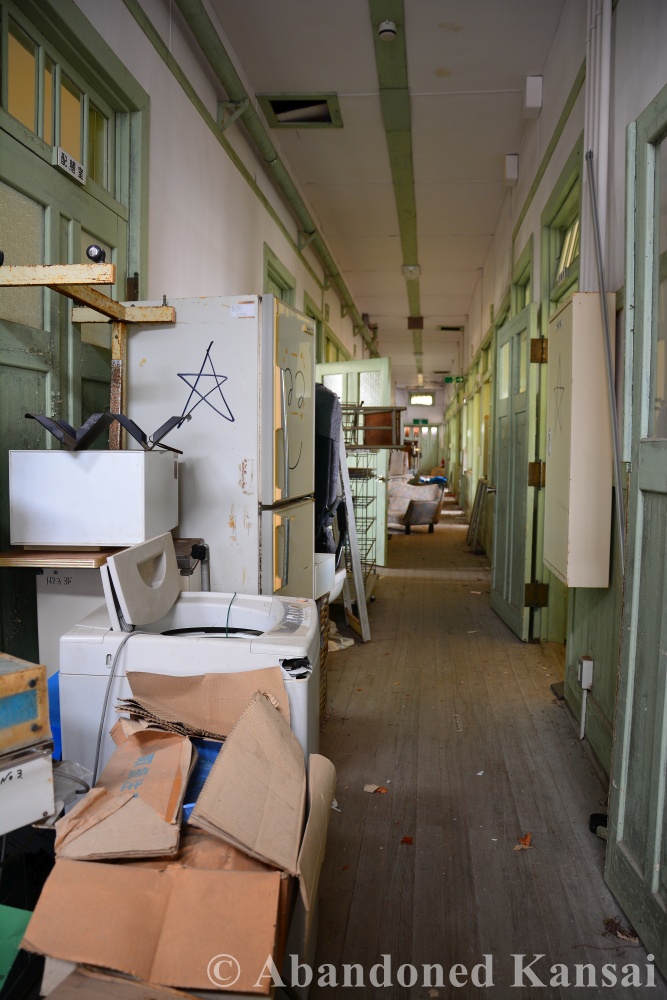
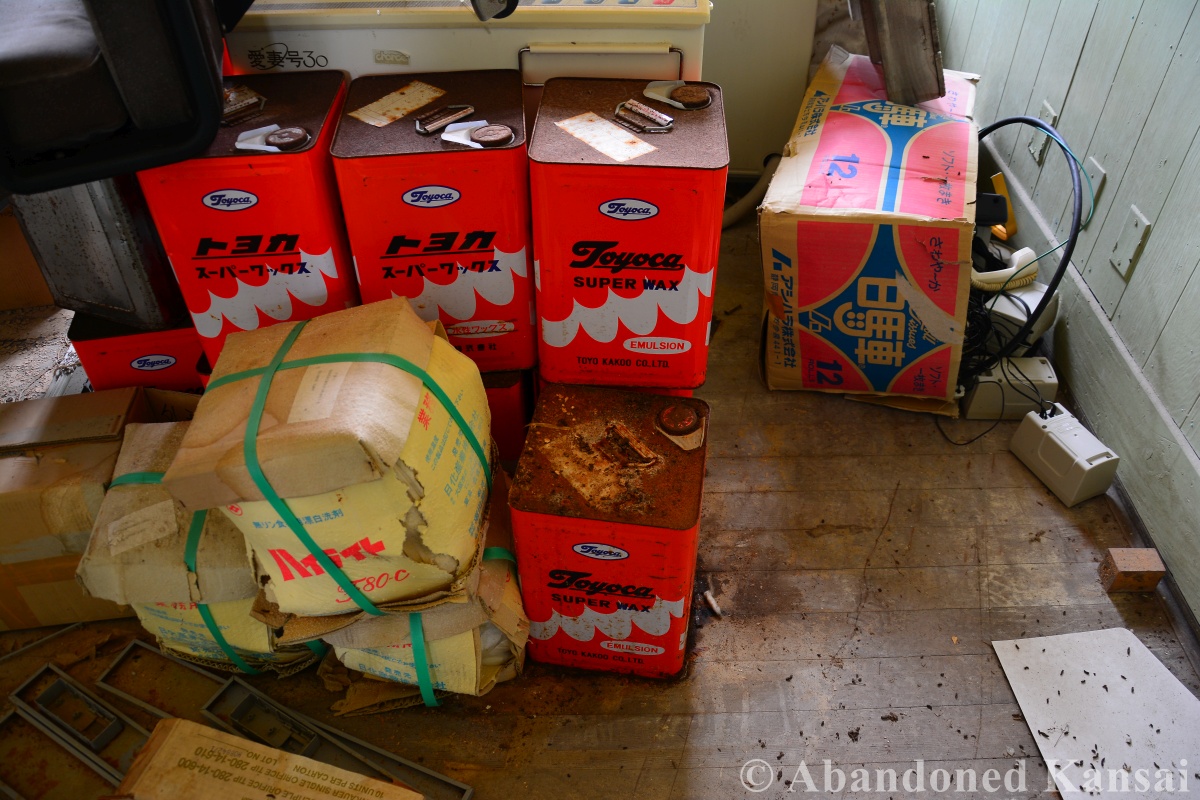
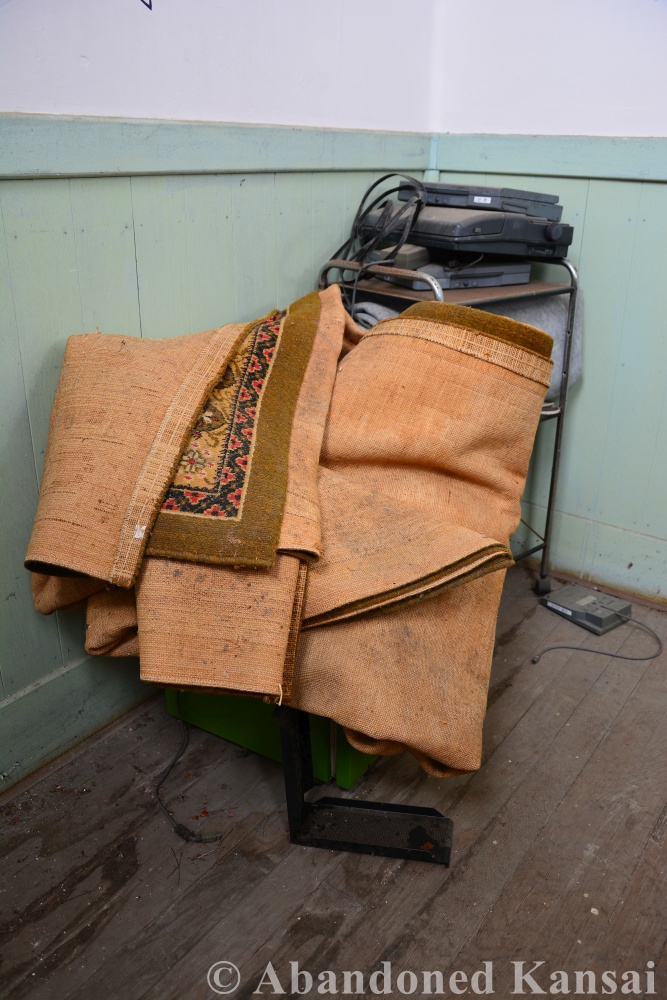
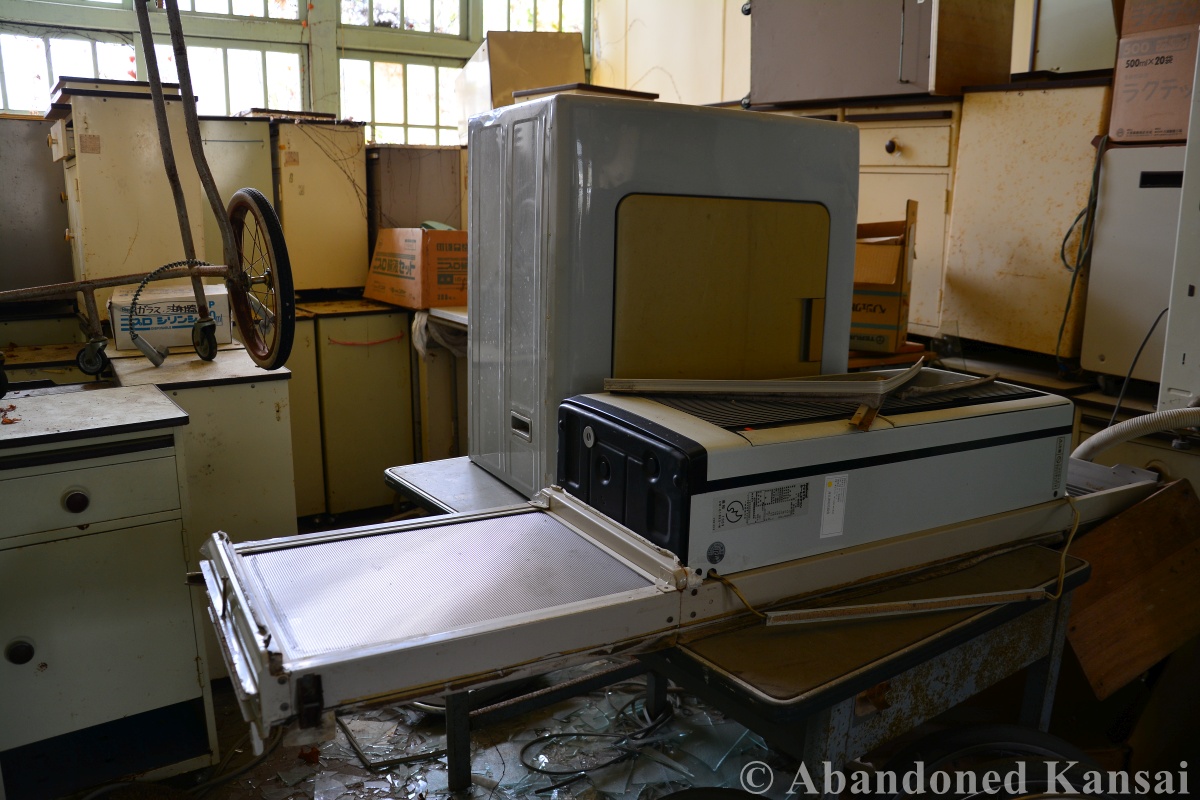
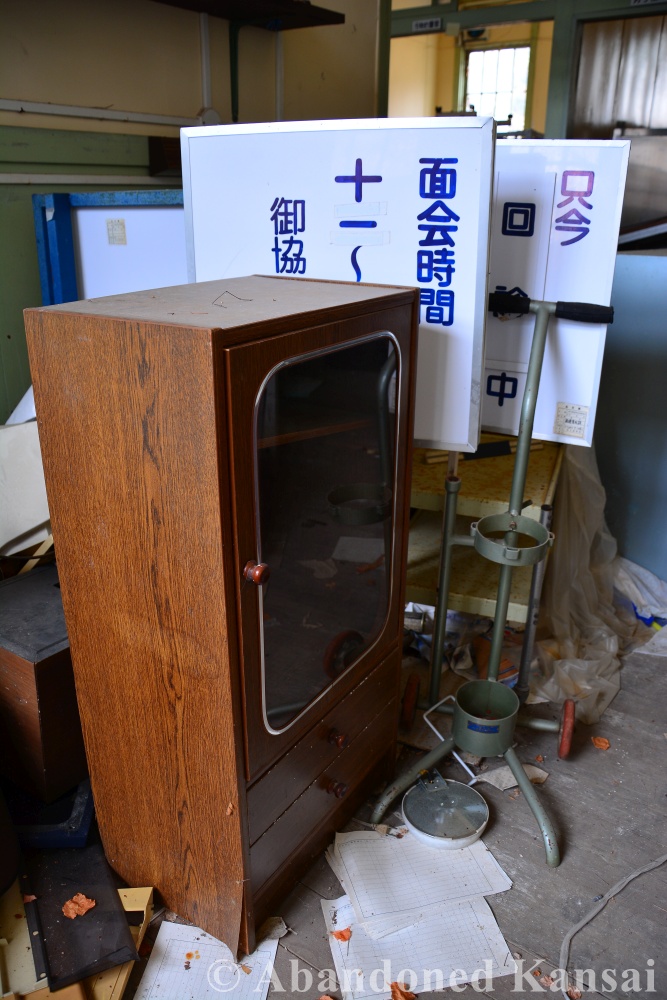
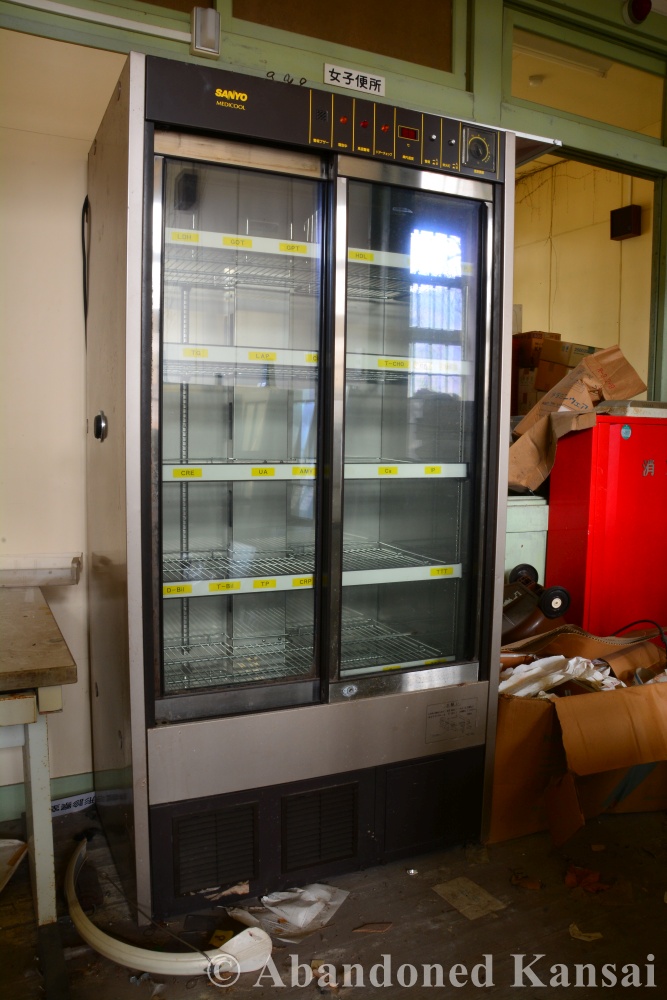
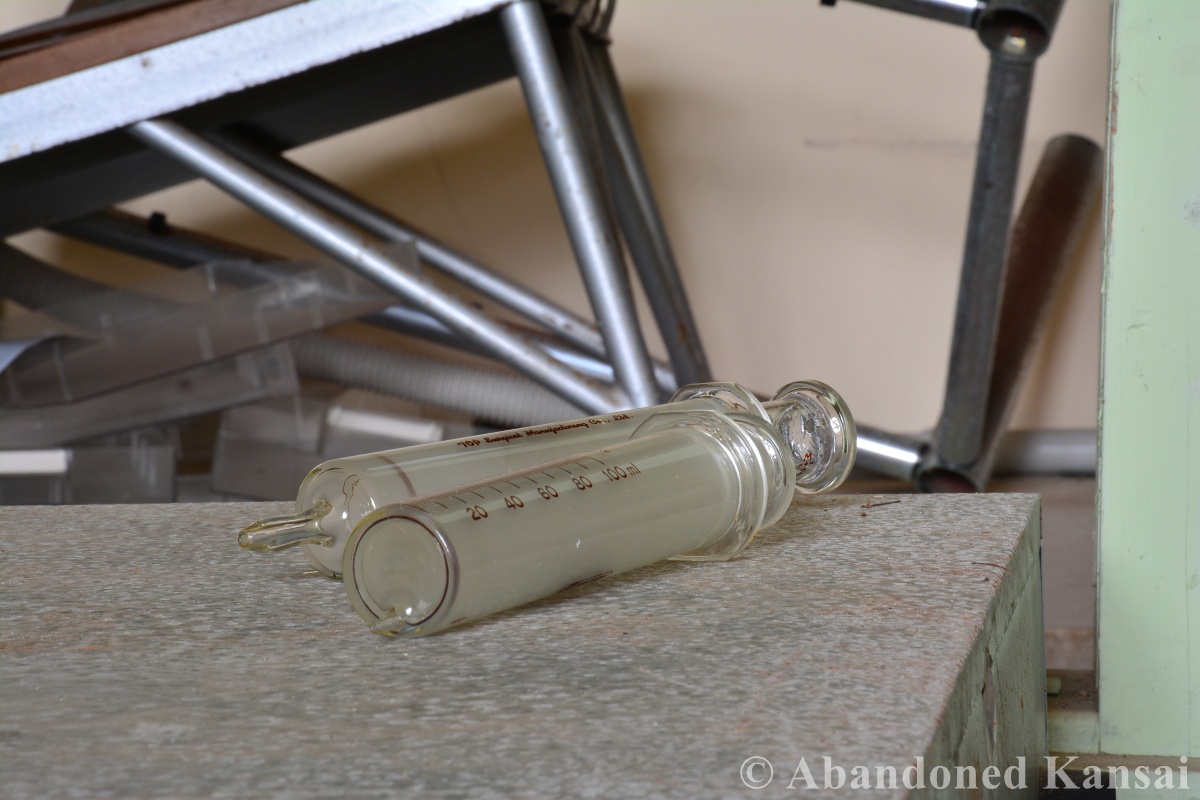
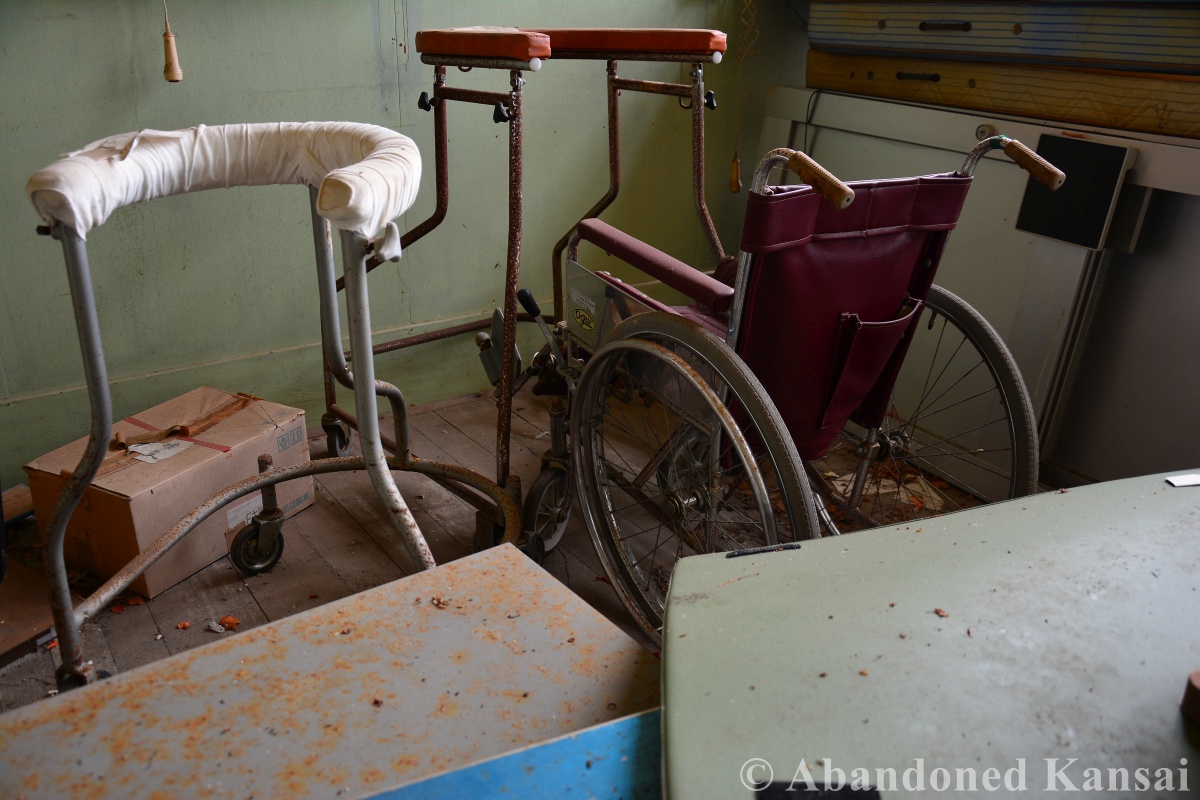
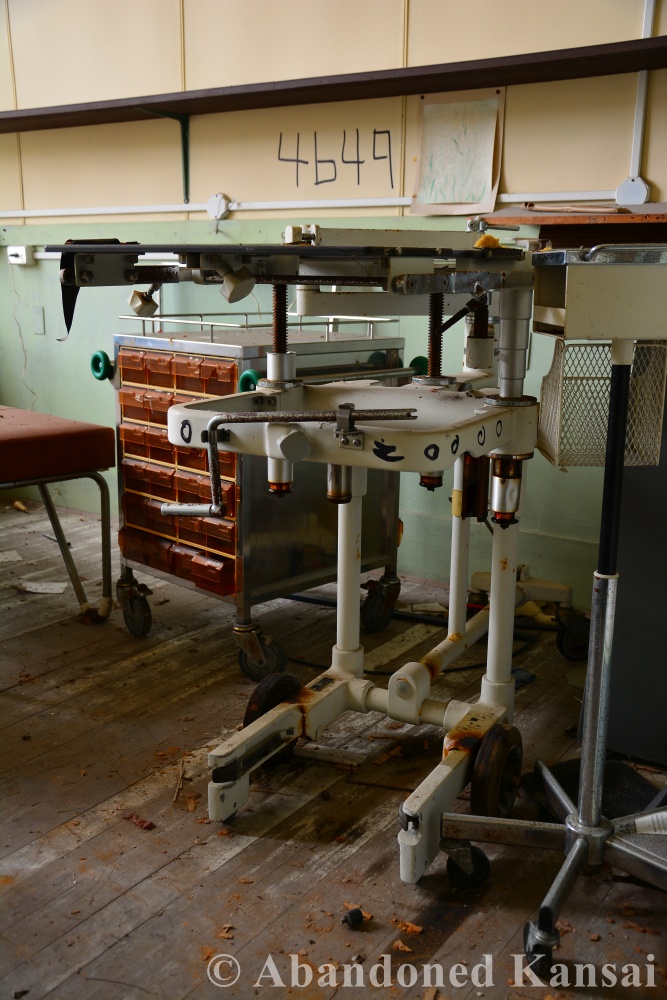
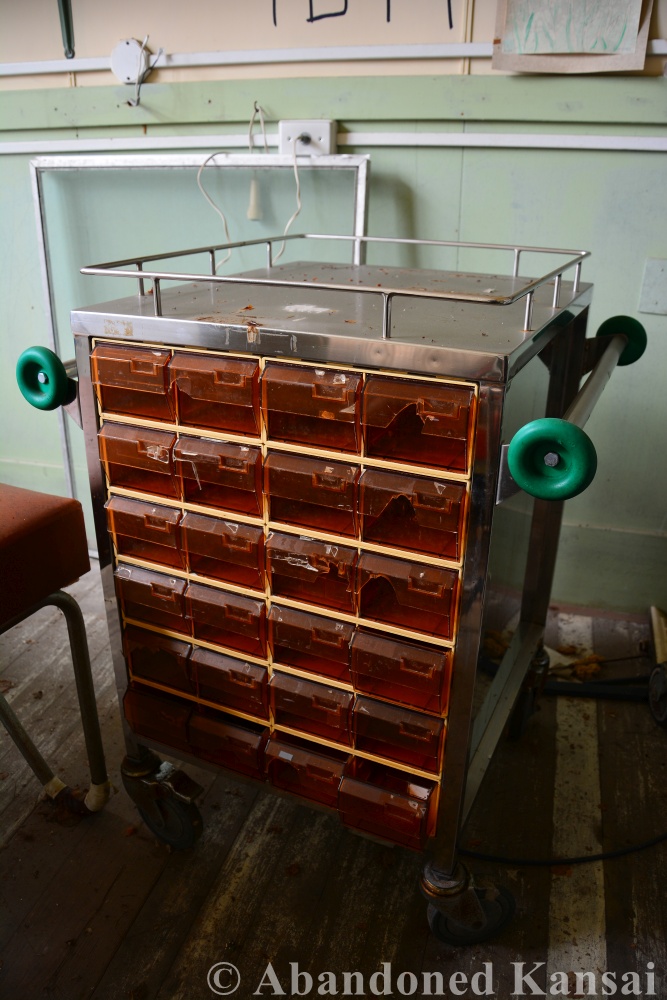
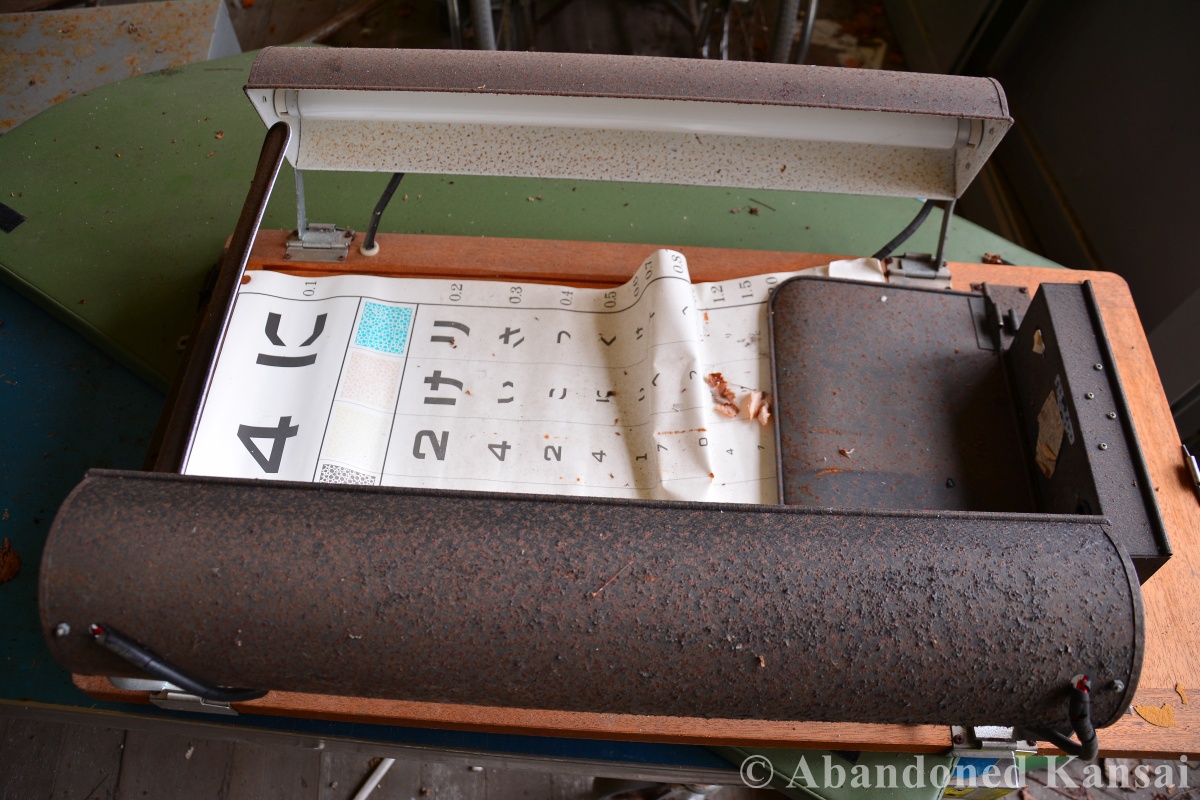
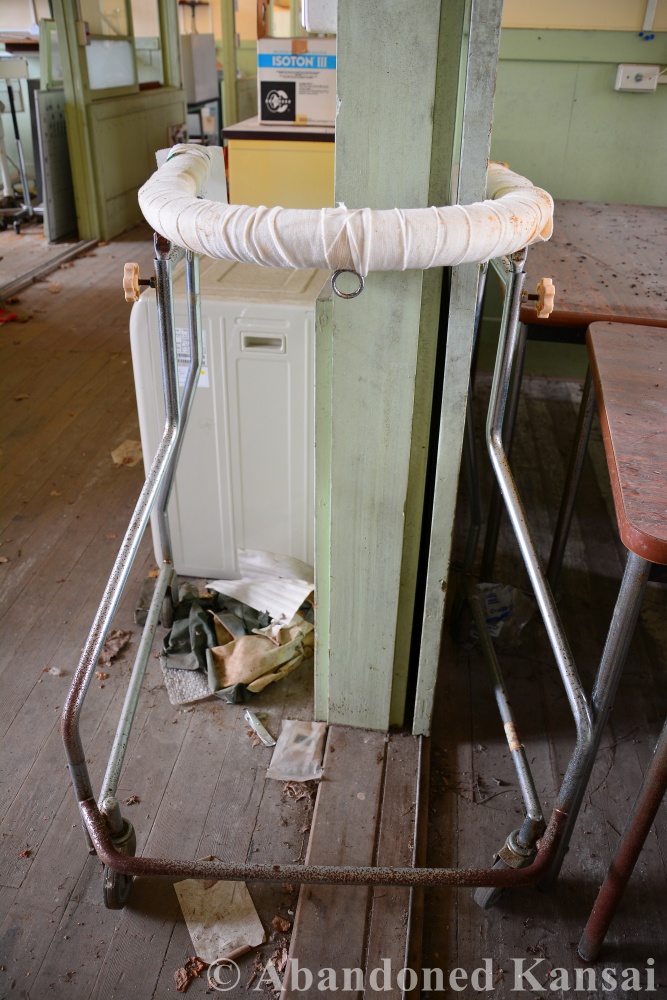
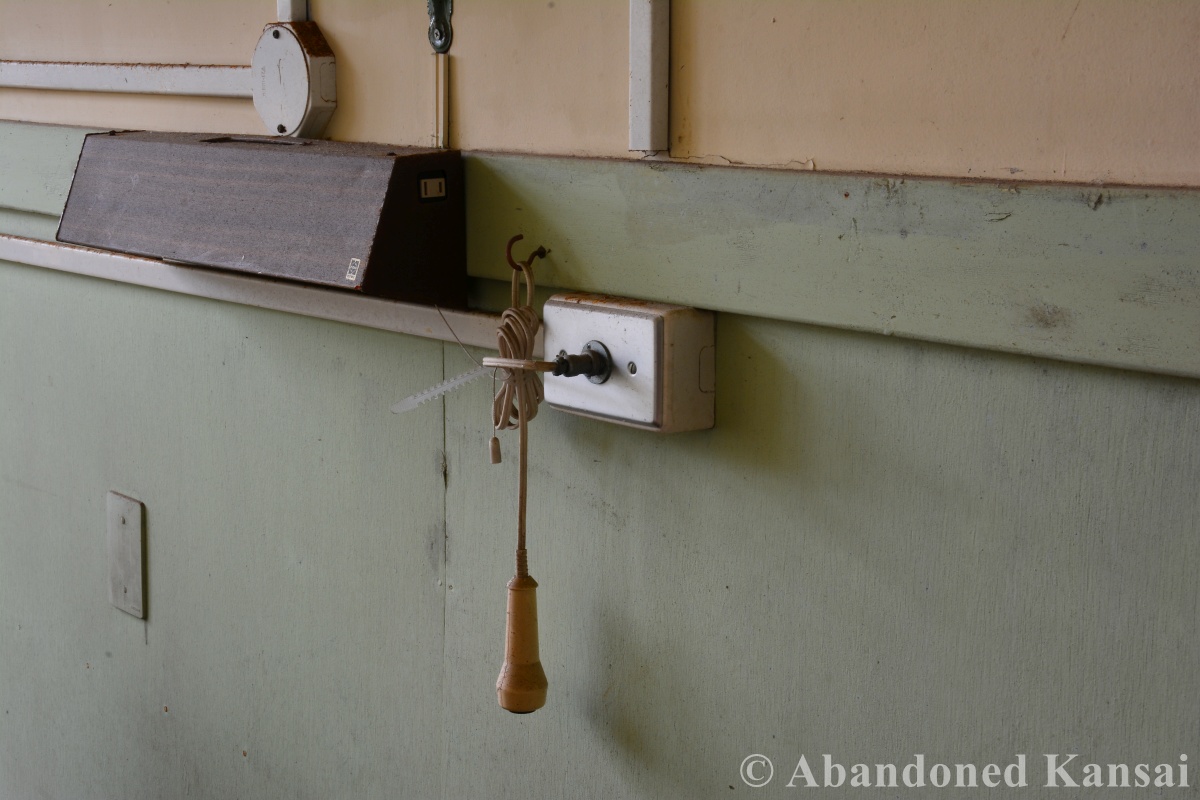
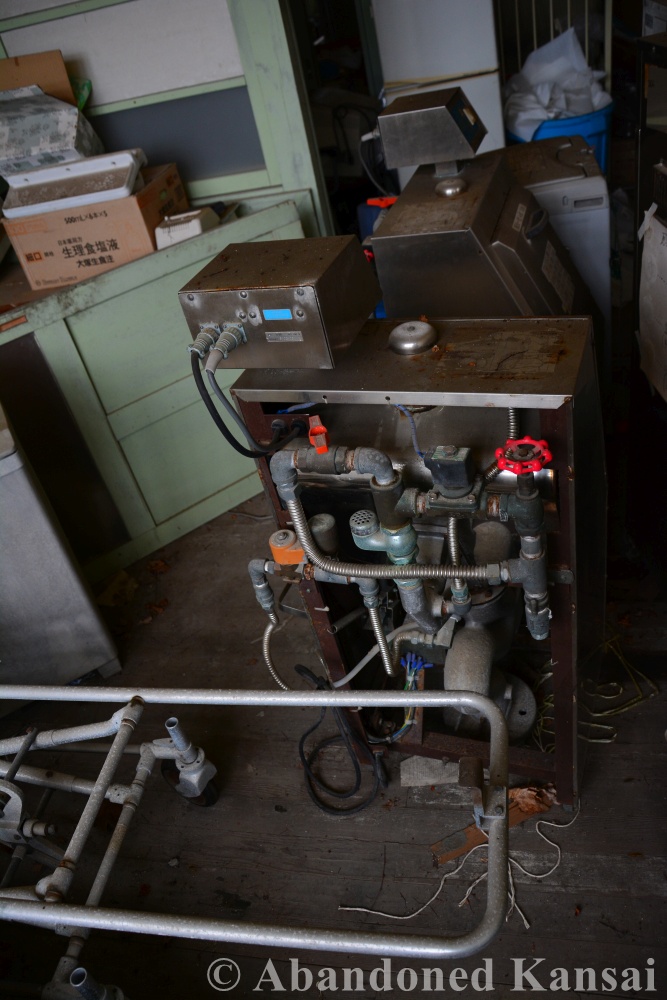
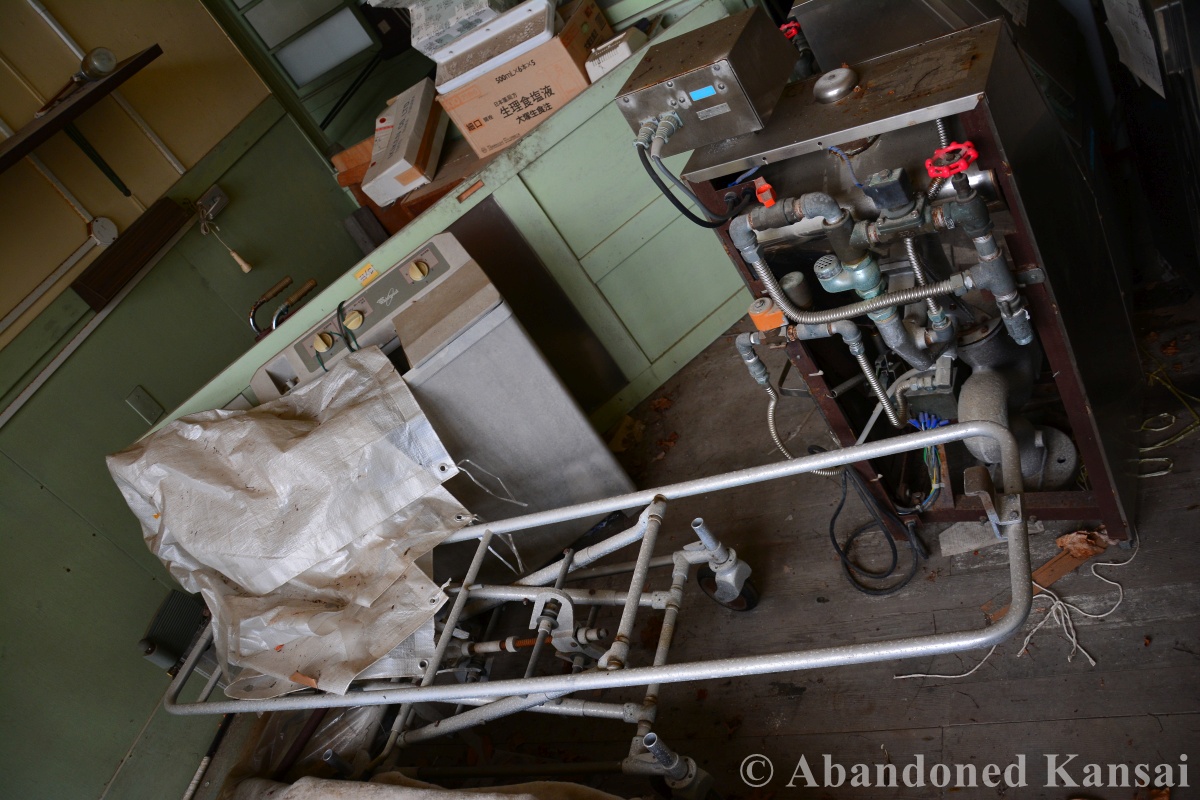
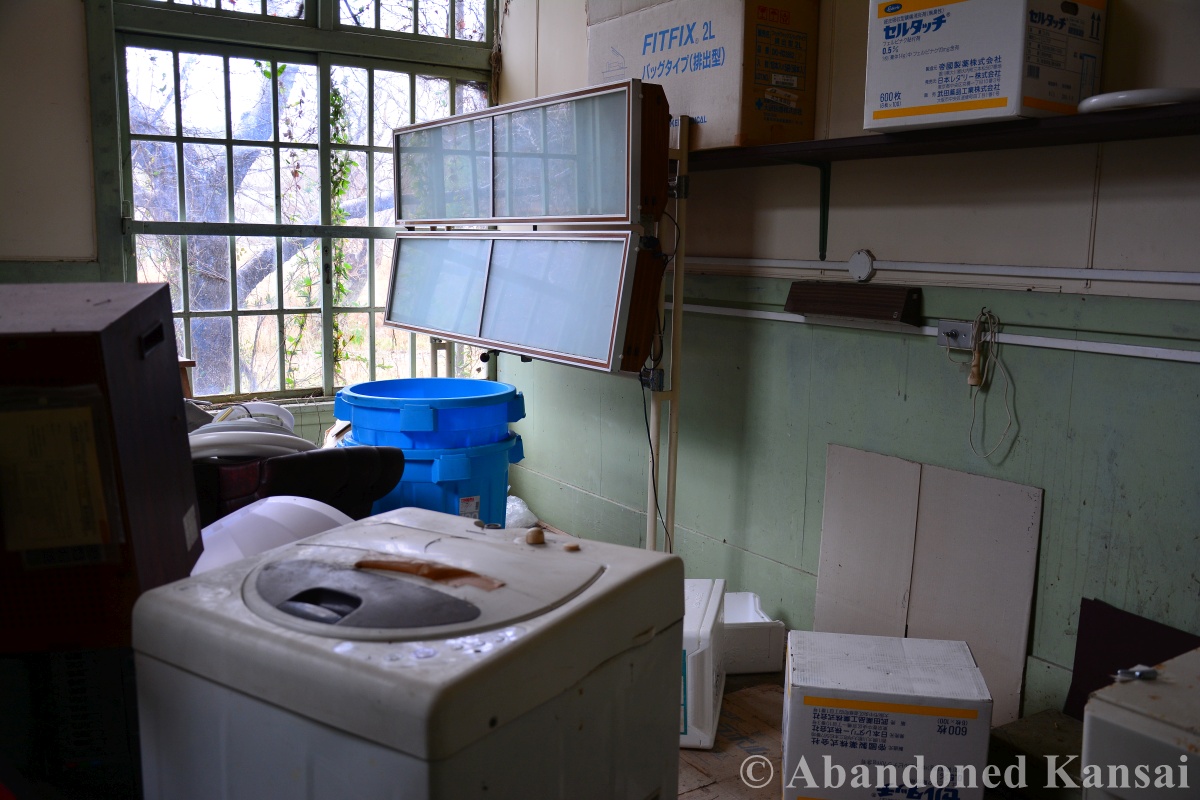
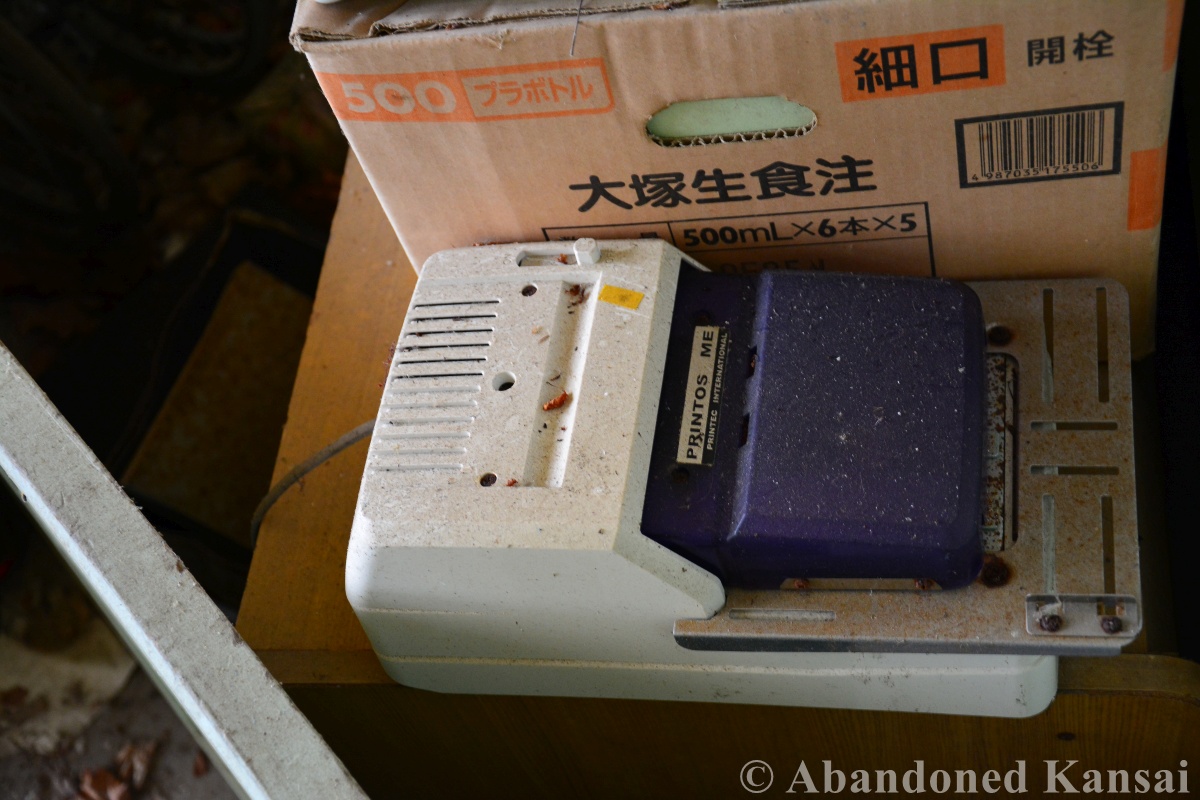
As beautiful as the semi-overgrown wooden structure was from the outside, the interior matched it – despite being rather cluttered, but not really vandalized. It clearly was an abandoned building used as a storage for medical devices and files no longer needed. Room after room there were items to discover and photos to capture – especially since I hadn’t seen any interior pictures before, so I had no idea what to expect. Old equipment, new equipment (some with screens!), and tons of stuff I had no clue what they were used for. After looking at the photos again, I have to admit that the exploration would have been much less exciting if I would have seen the same stuff in a regular abandoned warehouse – but we weren’t in an abandoned warehouse, we were in an abandoned 85 year old military hospital not a lot of people knew about! Upon leaving we made sure to lock the door again – the hole was later covered as I found out in 2023, when I was in the area again to have a look at the semi abandoned modern part of the hospital. Because back in 2015 we ran out of time and had to rush to the *Irozaki Jungle Park*, which was a unique exploration by itself.

(*Like Abandoned Kansai on Facebook* or *follow us on Twitter* if you don’t want to miss the latest articles and exclusive content – and subscribe to the *video channel on Youtube* to receive a message right after a new video is online…)
Read Full Post »

If you are looking for abandoned buildings in Japan, go to an (old) onsen town. There is no guaranty that you’ll find a spectacular ruin, it’s actually rather unlikely – but it’s almost guaranteed that you’ll stumble across a derelict building or two… or two dozen. Snack bars, restaurants, shops, ryokan, barbers, in some cases even museums and strip clubs. Oh, and of course onsen. You can find all these things and more in old onsen towns, even those that are still (rather) successful.
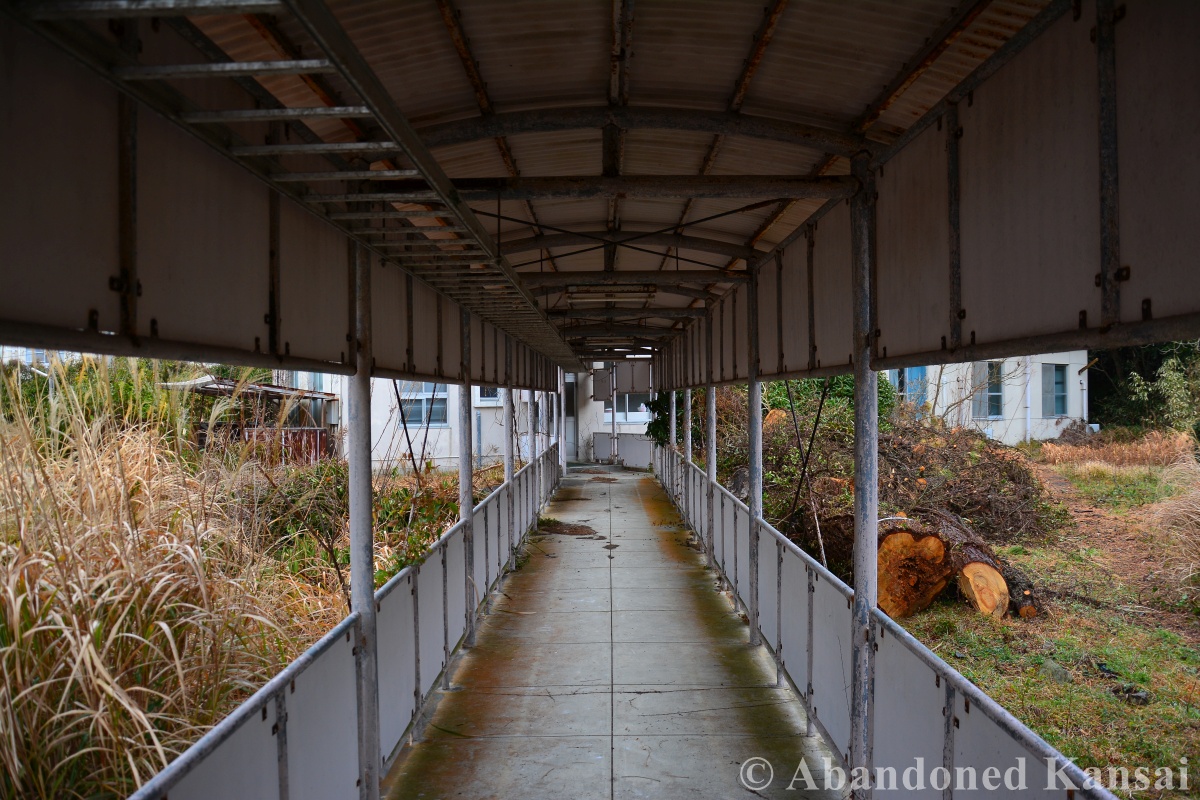
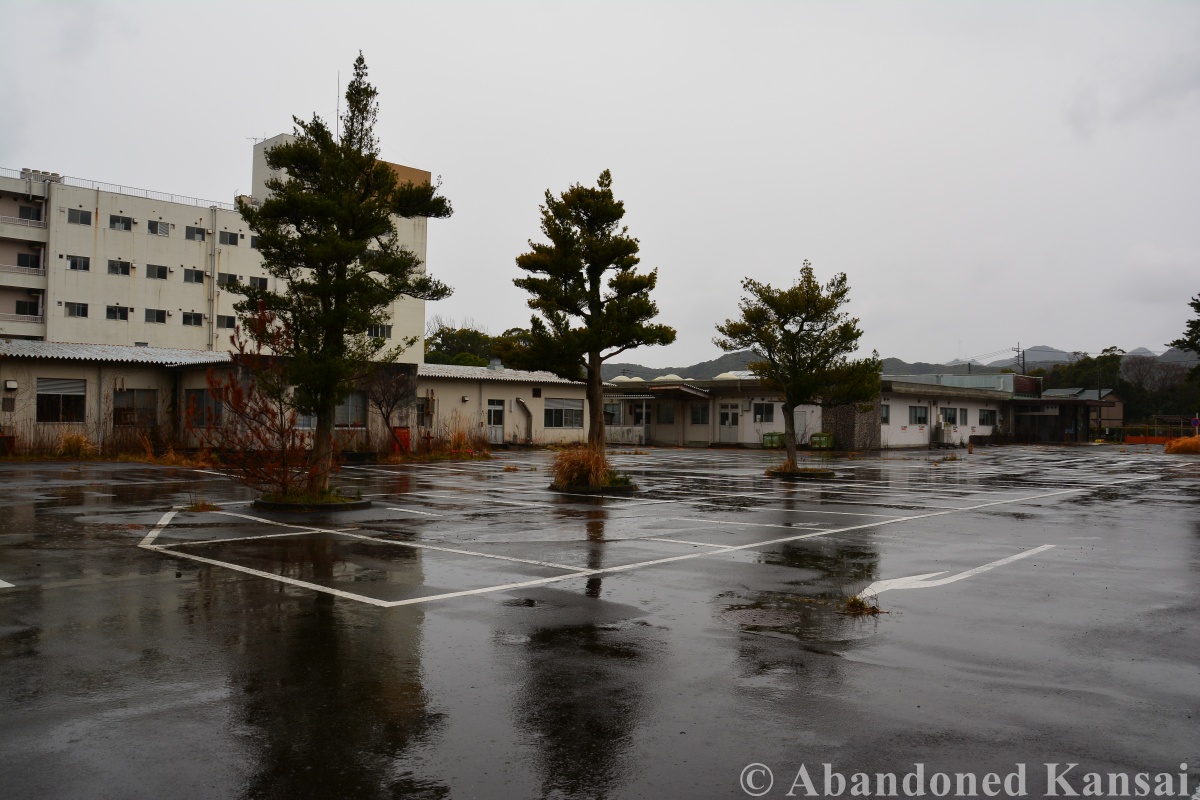
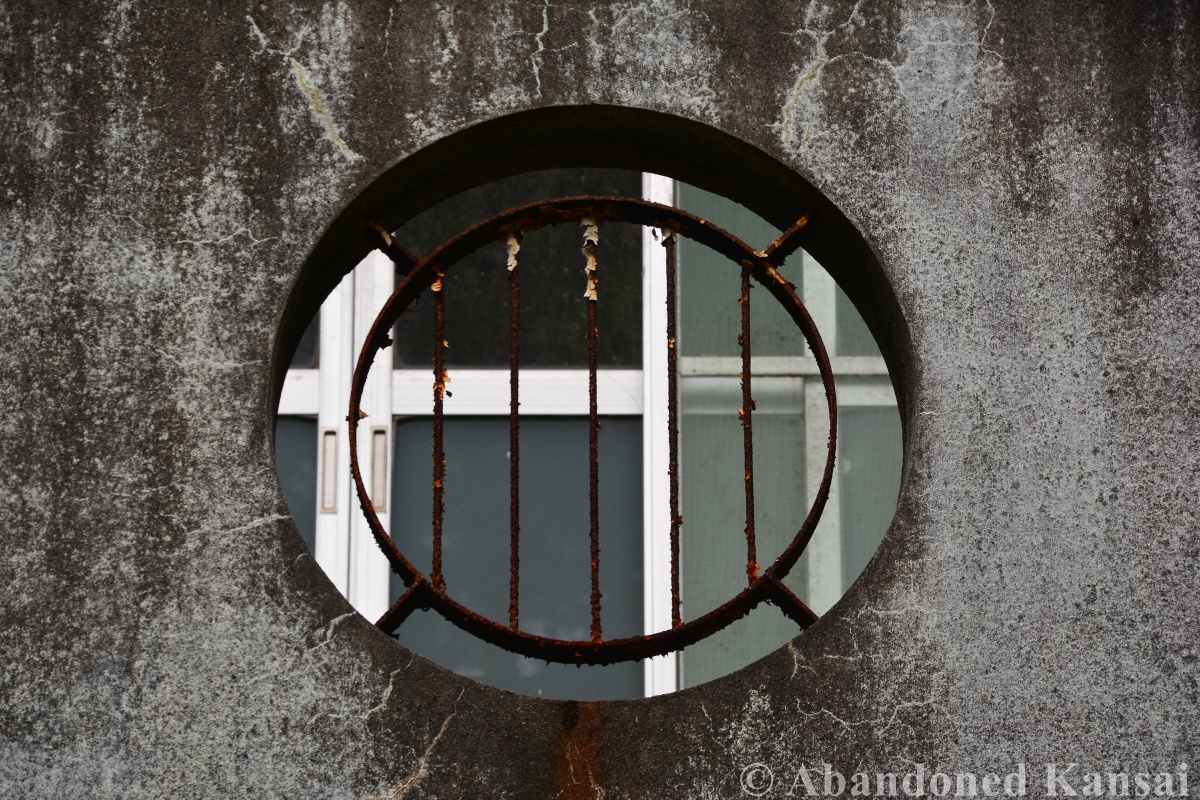
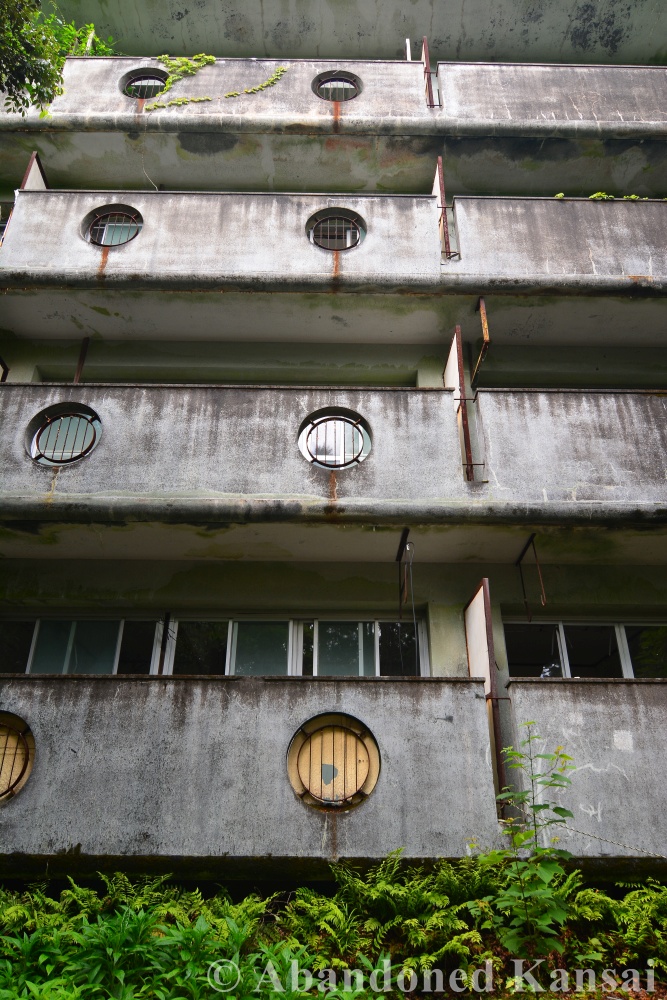
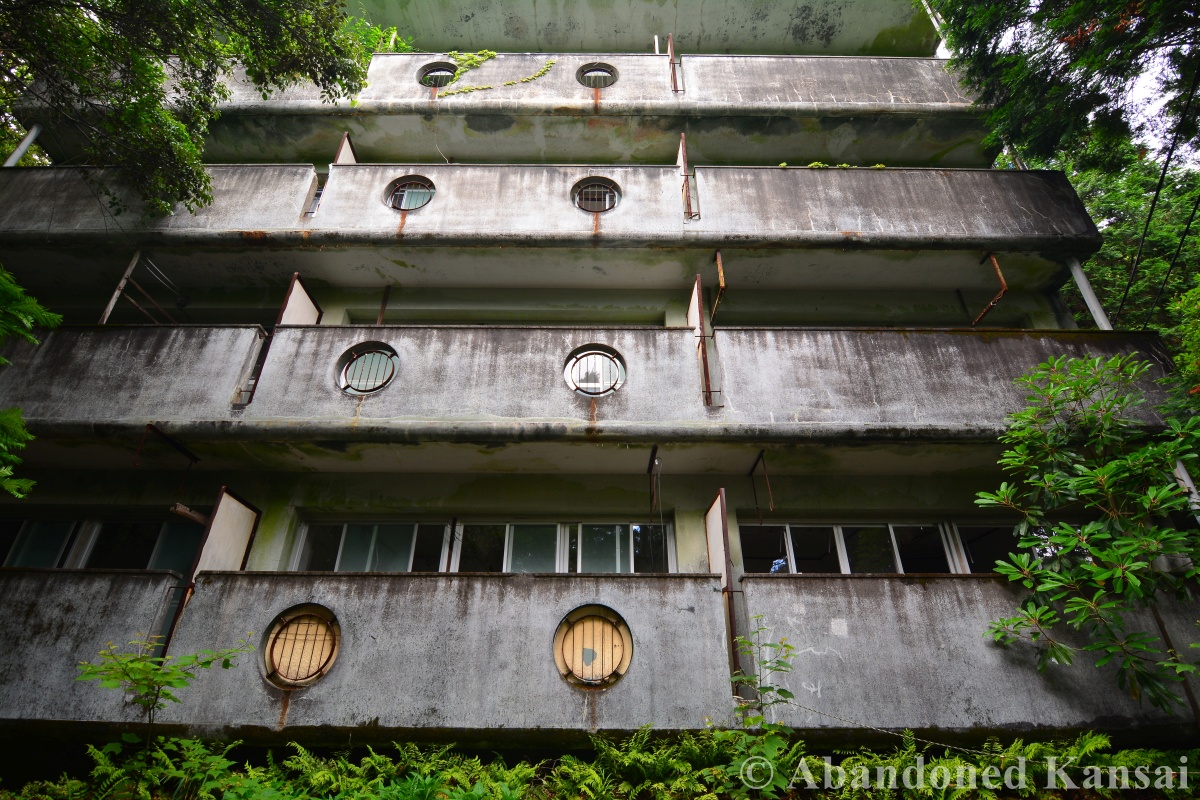
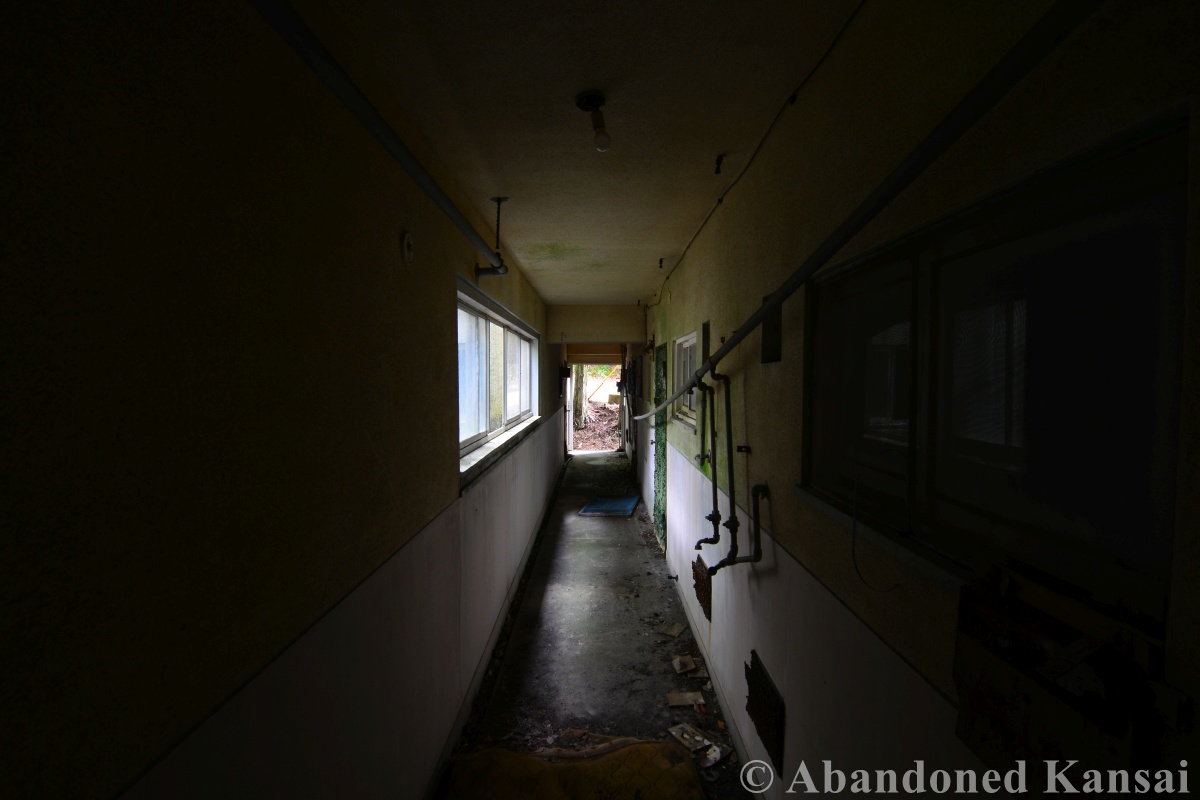
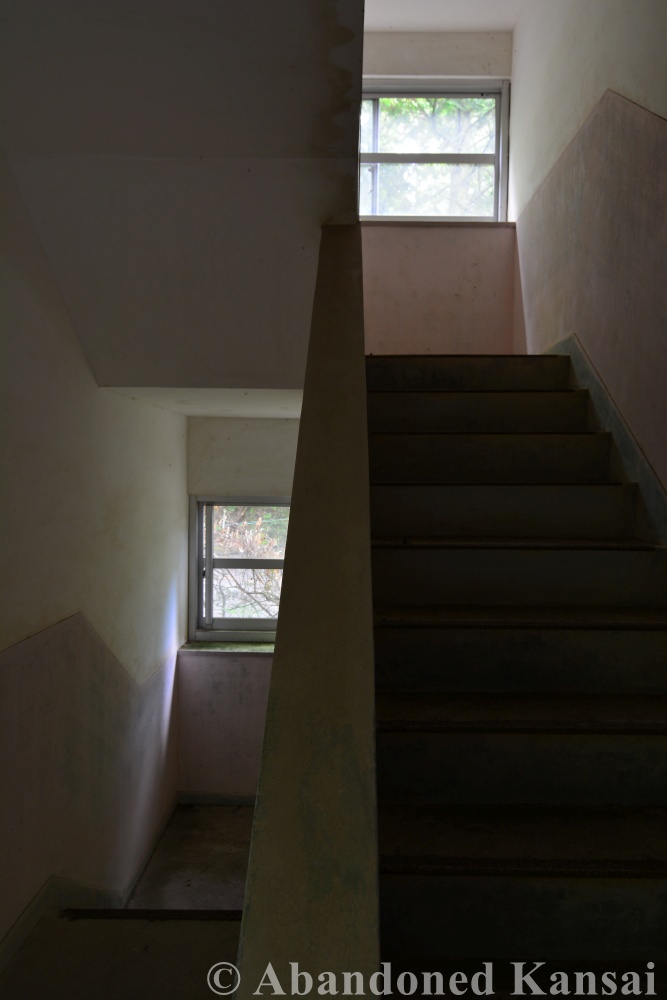
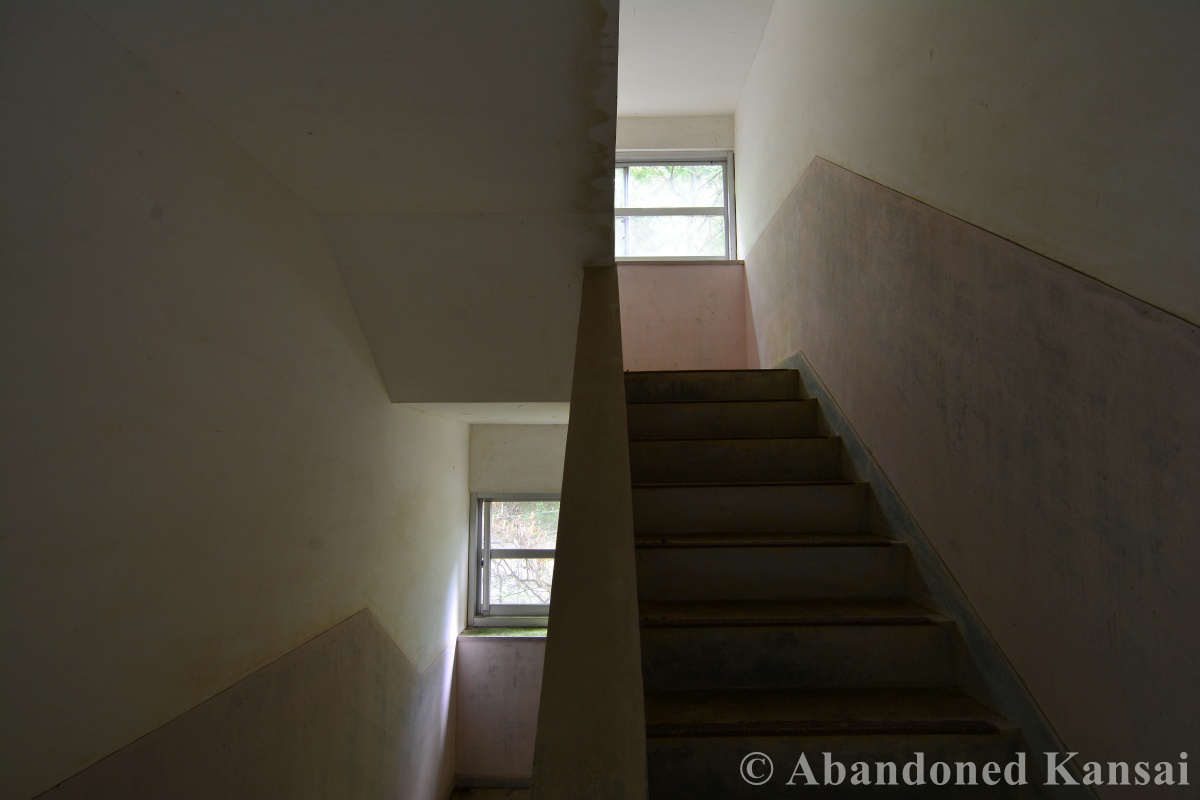
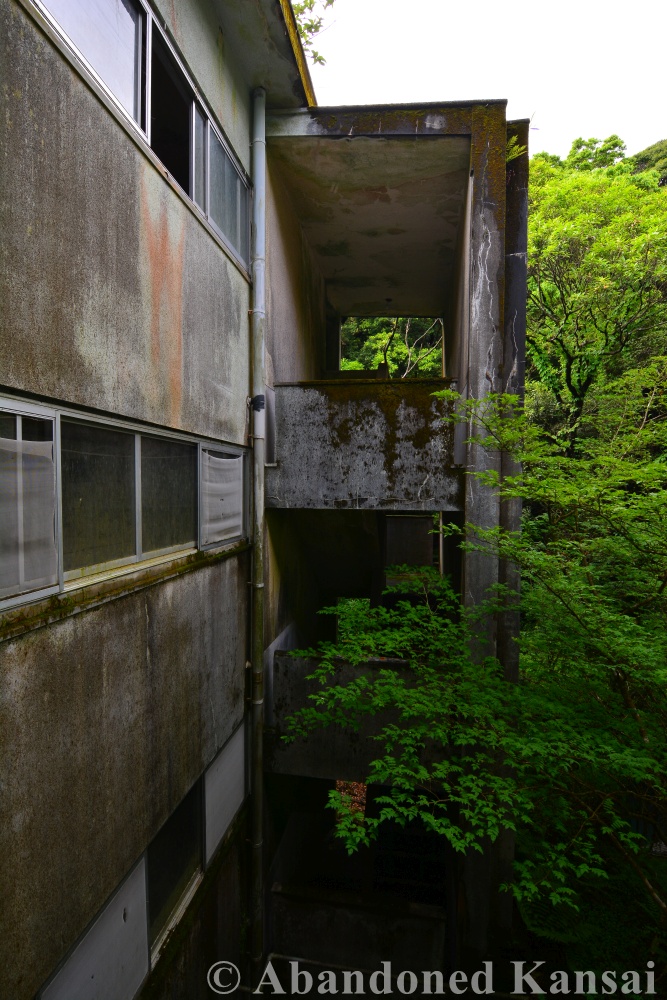
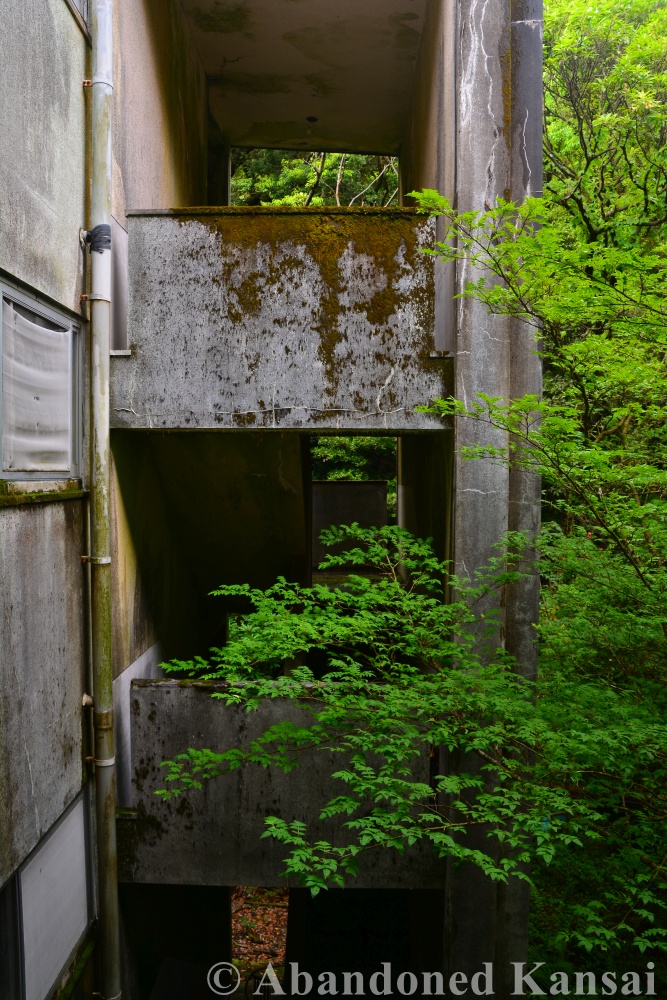
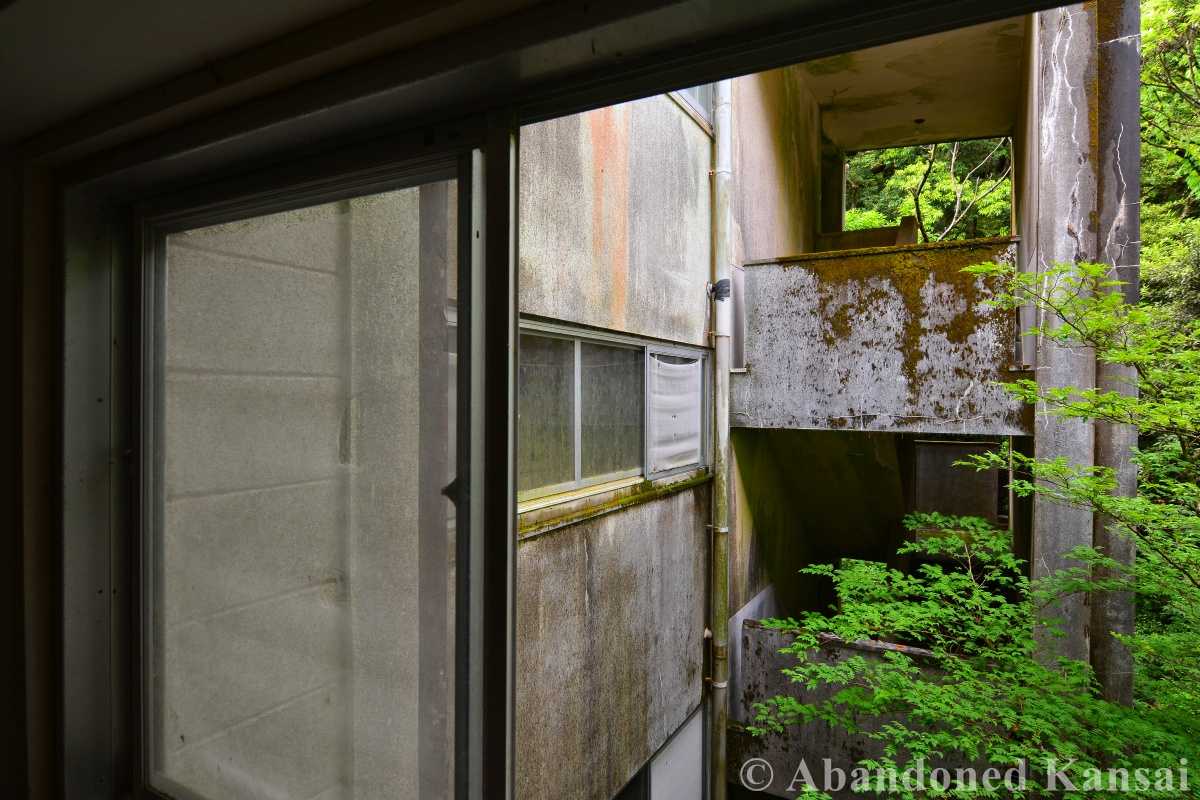
On my many weekend trips across Japan I often end up in one of those towns. Mid-sized, mid-aged, mid-successful – just mid. In this case a planned exploration failed, but when I had a look across the street, I saw a mid-sized building, apparently abandoned, but mostly shielded from prying eyes by a bunch of trees. I came all the way from Kansai, so another 15 meters probably wouldn’t hurt me… quite the opposite! When I reached what once most likely was the building’s parking lot, I got a first view of what turned out to be one of my favorite exteriors of all time. Usually I prefer sunny days for reasons I’ve explained countless times, but in this instance the overcast weather created a perfectly desolate atmosphere. Sunshine would have cast weird shadows of the trees onto the building, making it difficult and most likely ugly to photograph – instead this cooperation of mid created a synergy that made a simple apartment building look spectacular. Well, the back of the building with all the balconies looked spectacular.
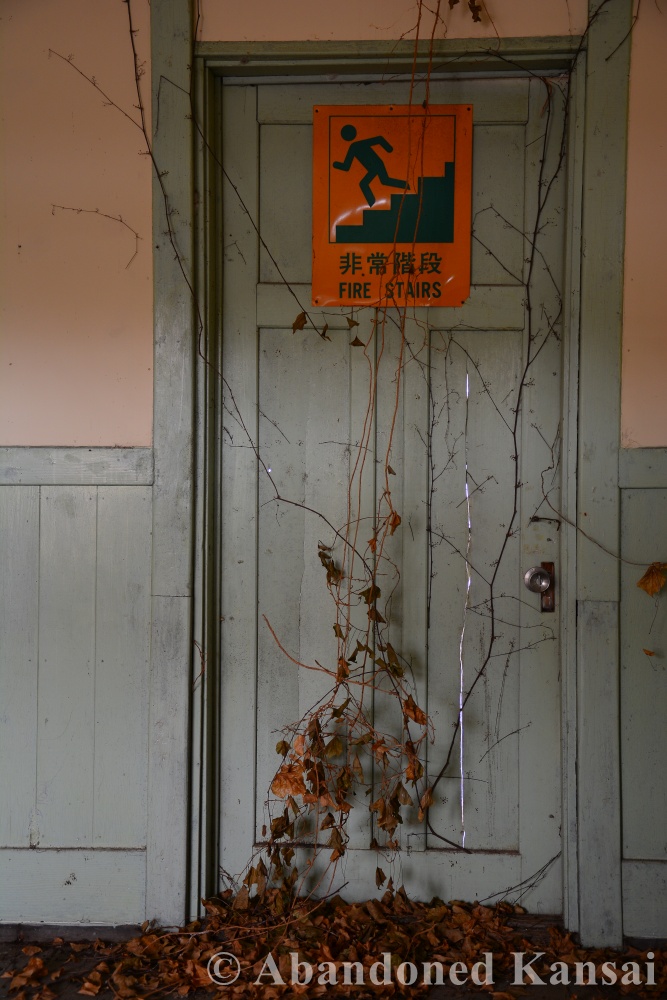
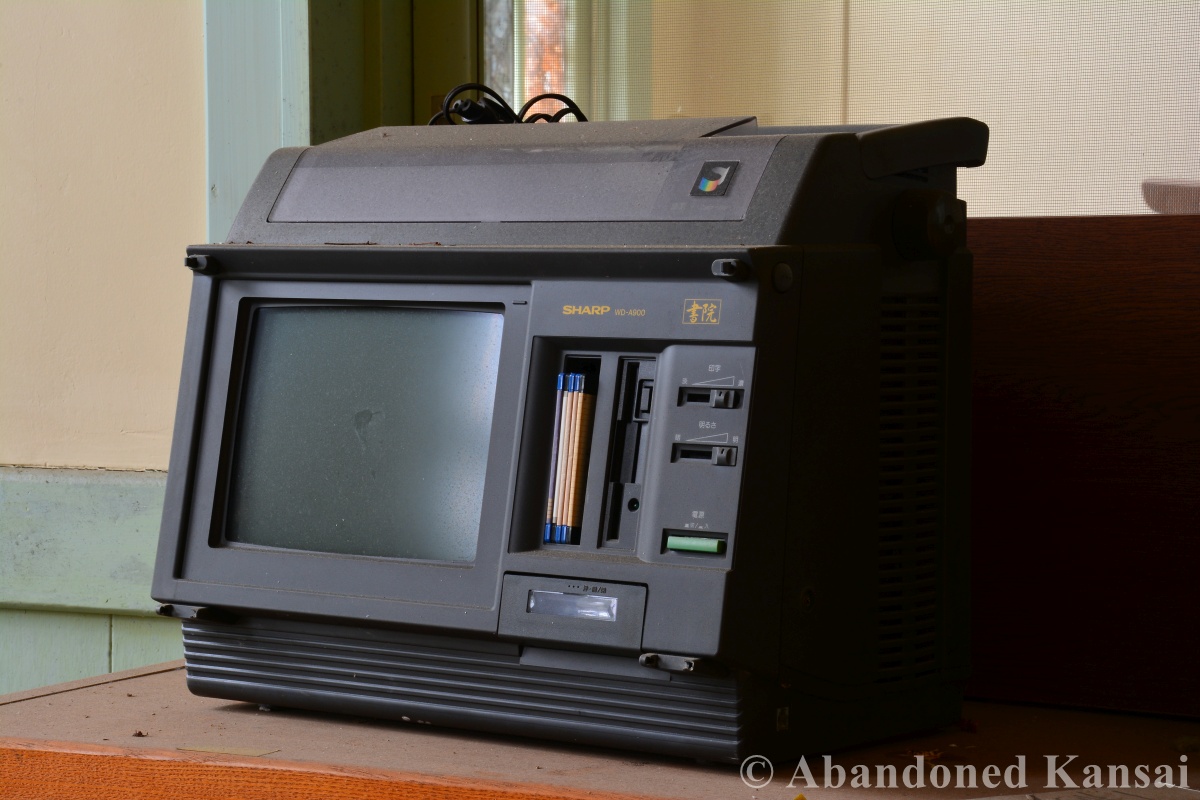
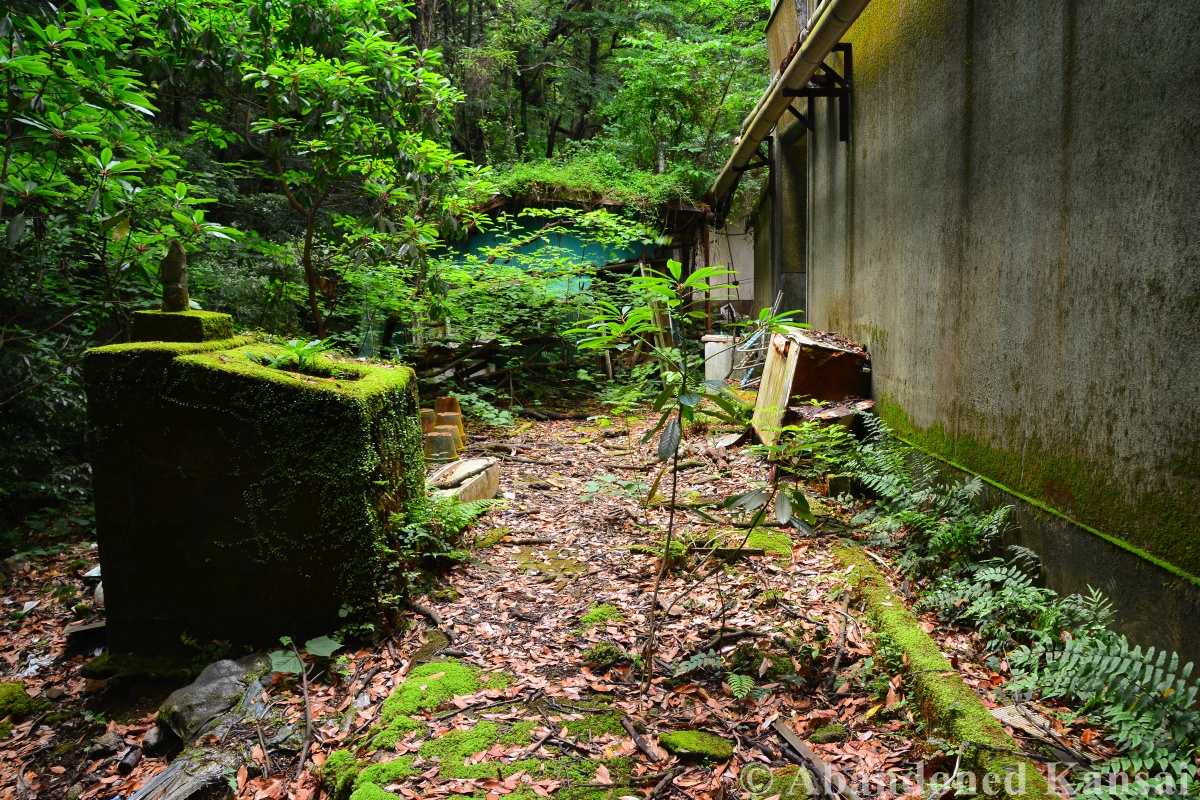
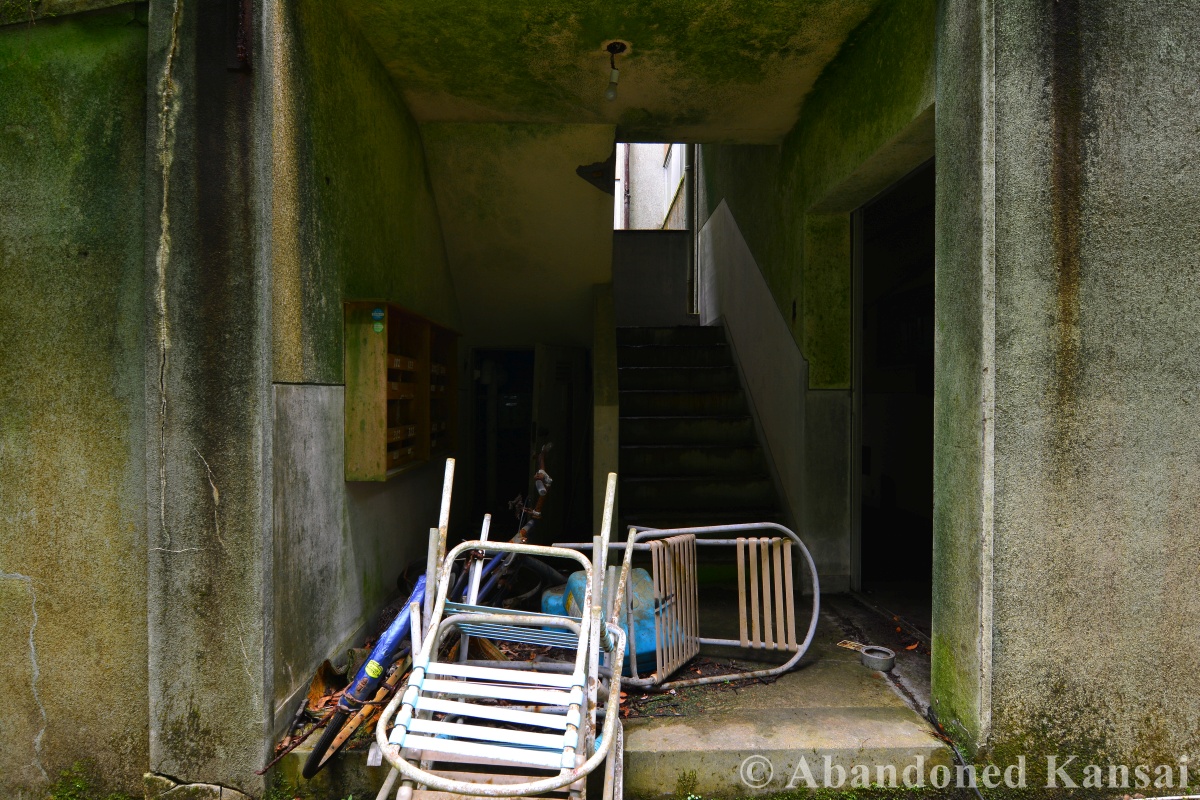
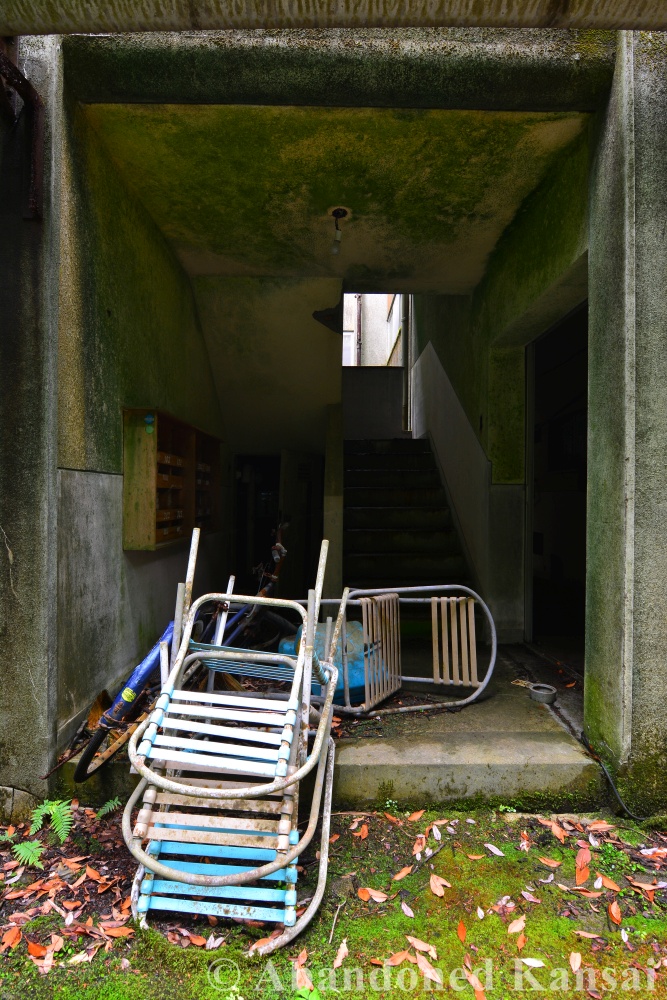
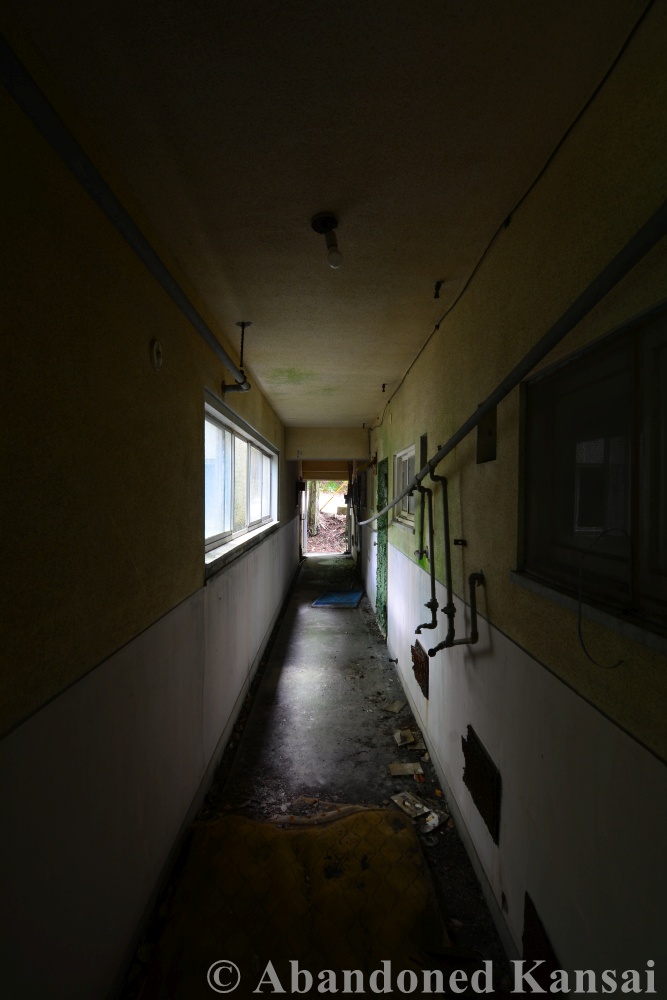
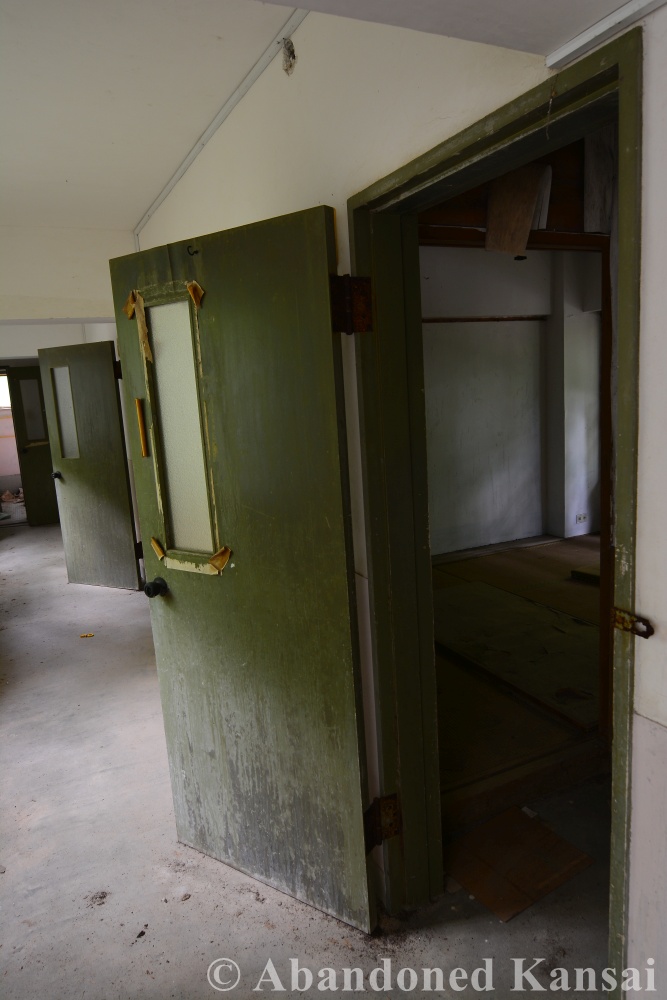
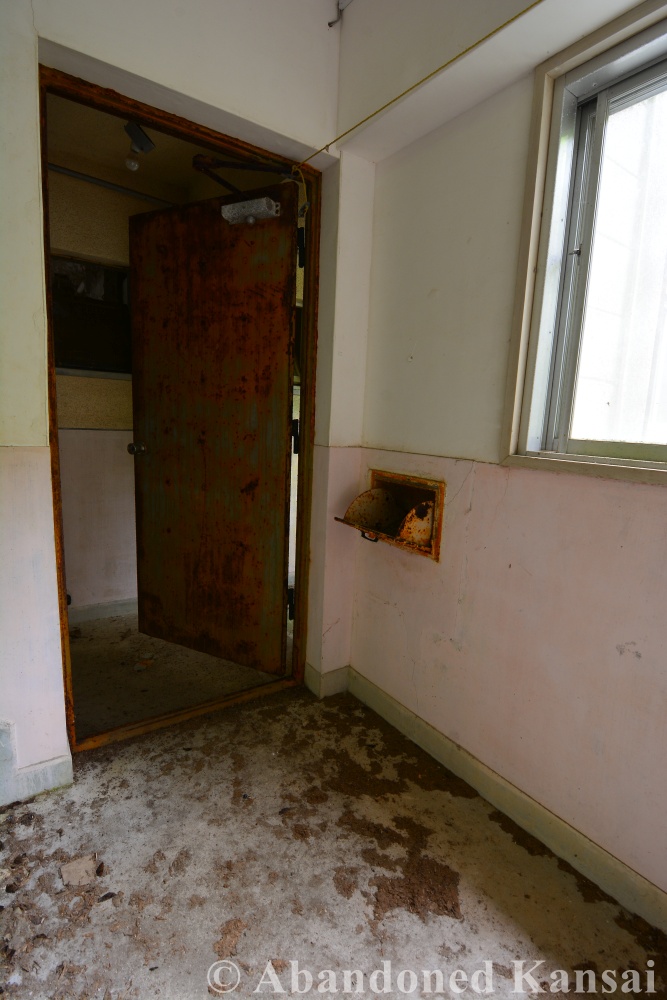
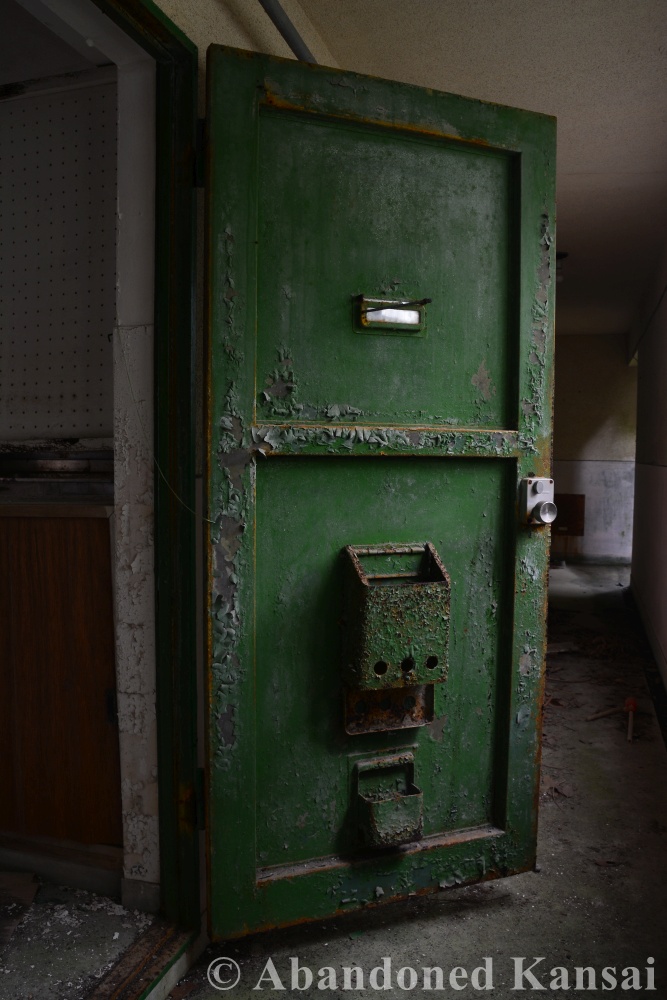
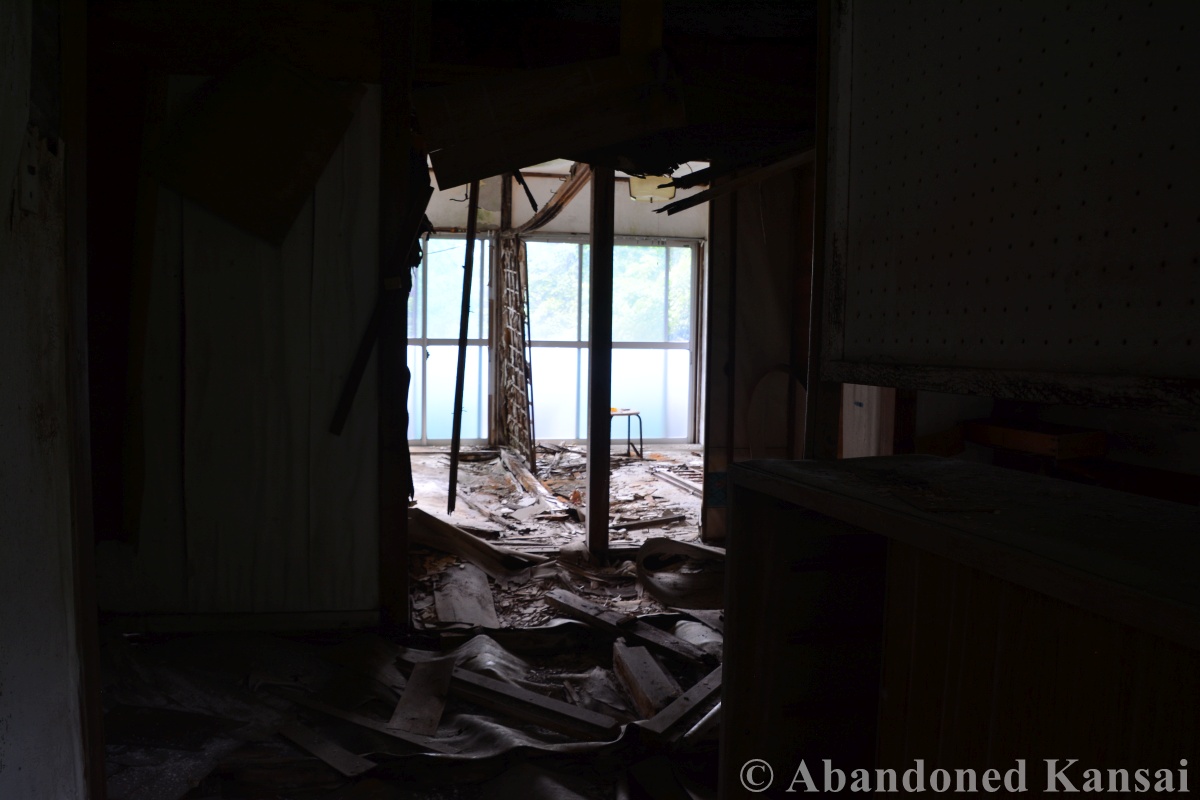
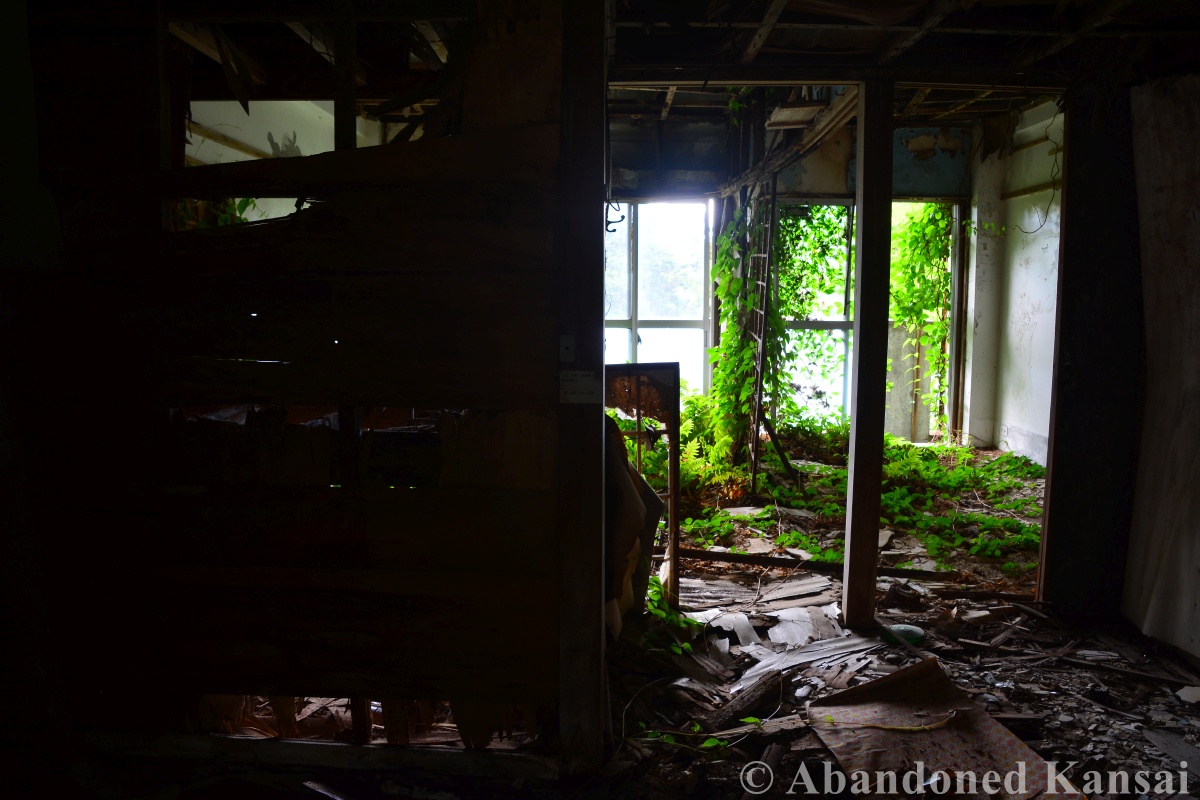
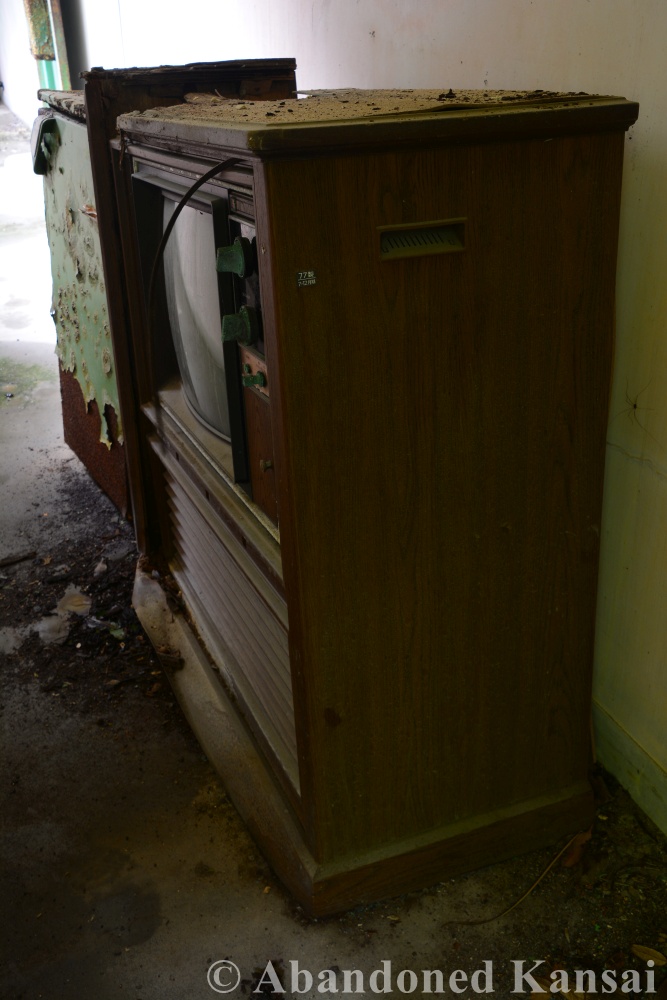
The rest of the building was rather mid… Quite a bit of trash near the back entrance / exit, most apartments either not accessible or empty / rotten. The green door with the paint flaking off was super cool though, so was the abandoned Showa era TV in one of the hallways. And the building itself was rather cool, temperature wise – which was cool with me, given that it was late spring already at the time of my exploration. And late spring is the new early summer in Japan. Just like late autumn is the new early autumn now. And summer is the hellish phase between early June and mid-October. But hey, shoganai, eh? Maybe you can use this nightmarish time to catch up with old articles on Abandoned Kansai?! If you like Japanese apartment buildings, check out *this really old one* and *this modern one* – I’m sure you’ll love them!
(*Like Abandoned Kansai on Facebook* or *follow us on Twitter* if you don’t want to miss the latest articles and exclusive content – and subscribe to the *video channel on Youtube* to receive a message right after a new video is online…)
Read Full Post »

Driving around in the countryside is one of the best ways to find abandoned places in Japan that are not (yet) known in the urbex community – original finds. But you have to be careful or you might end up in somebody’s living room or at their work place…

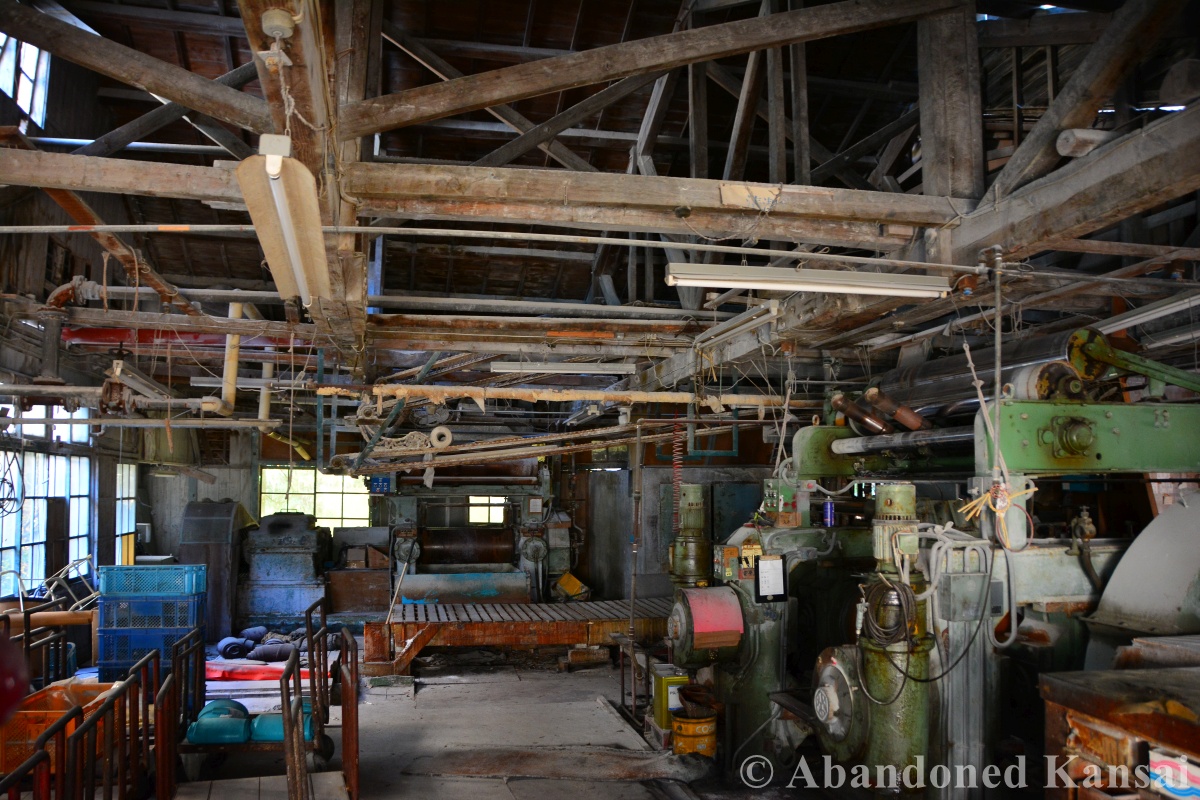
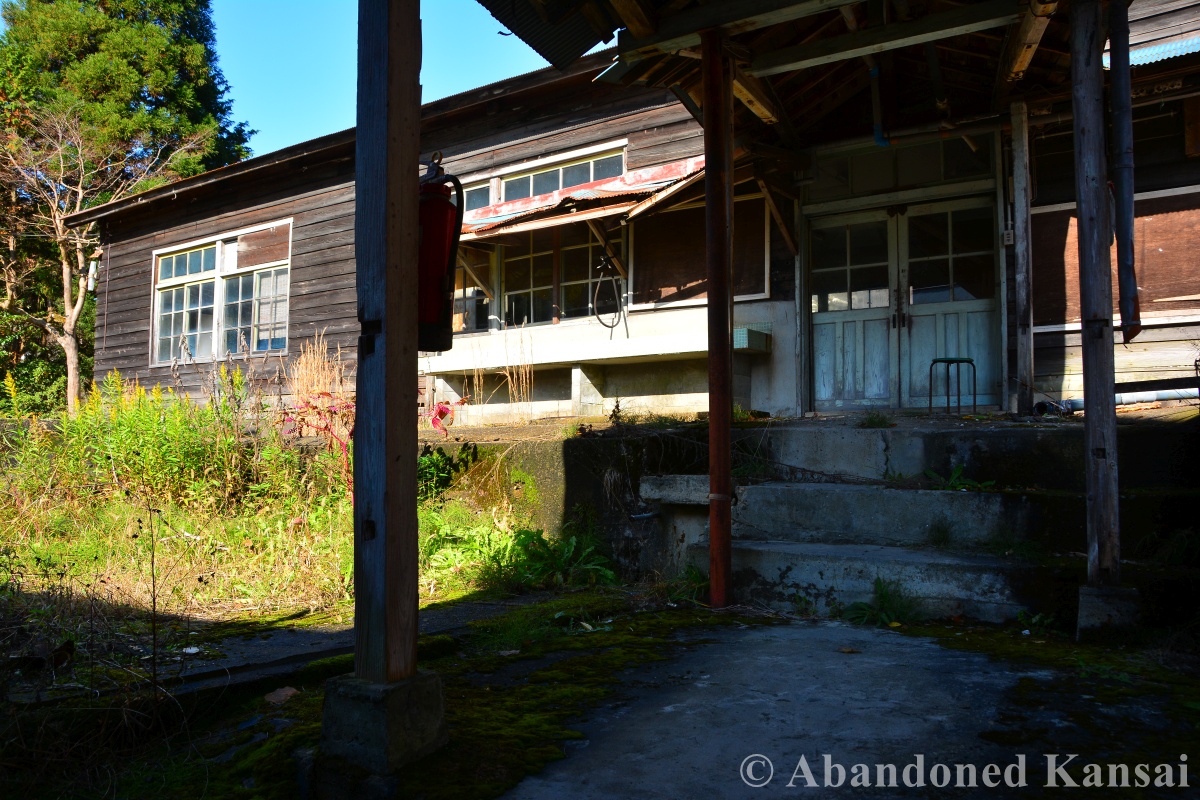
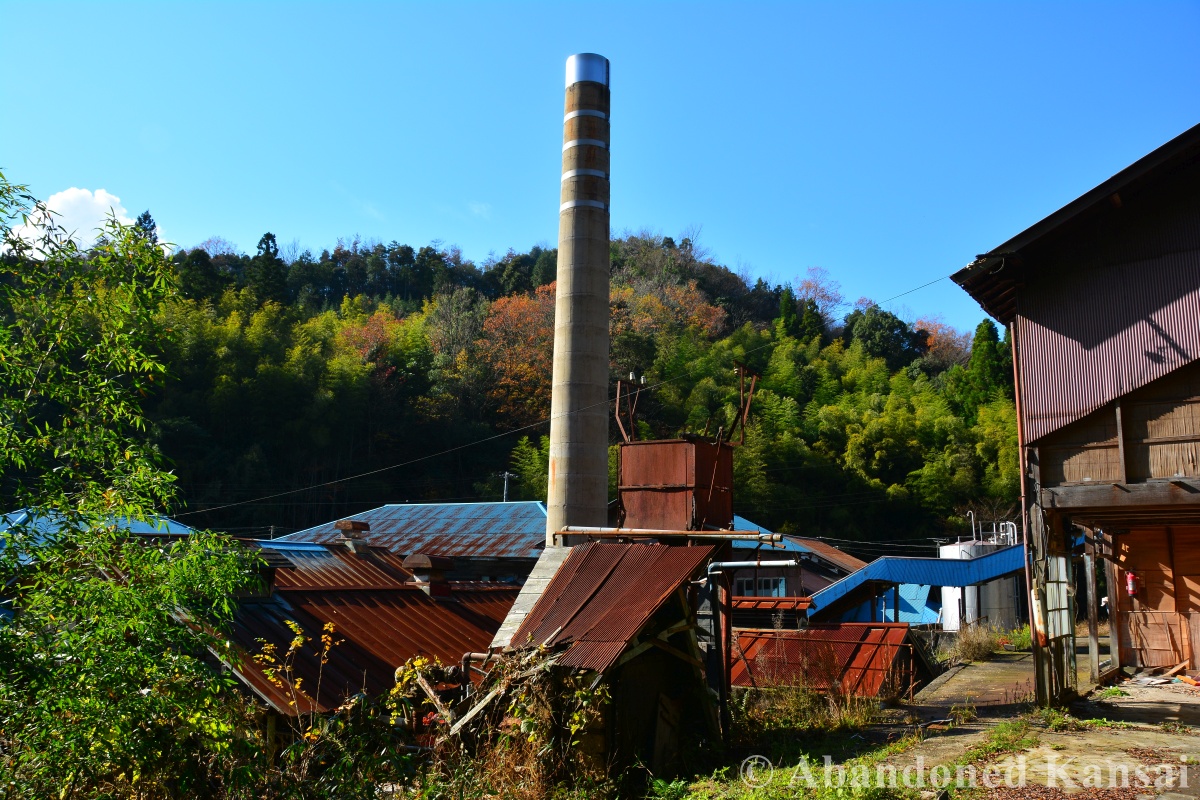
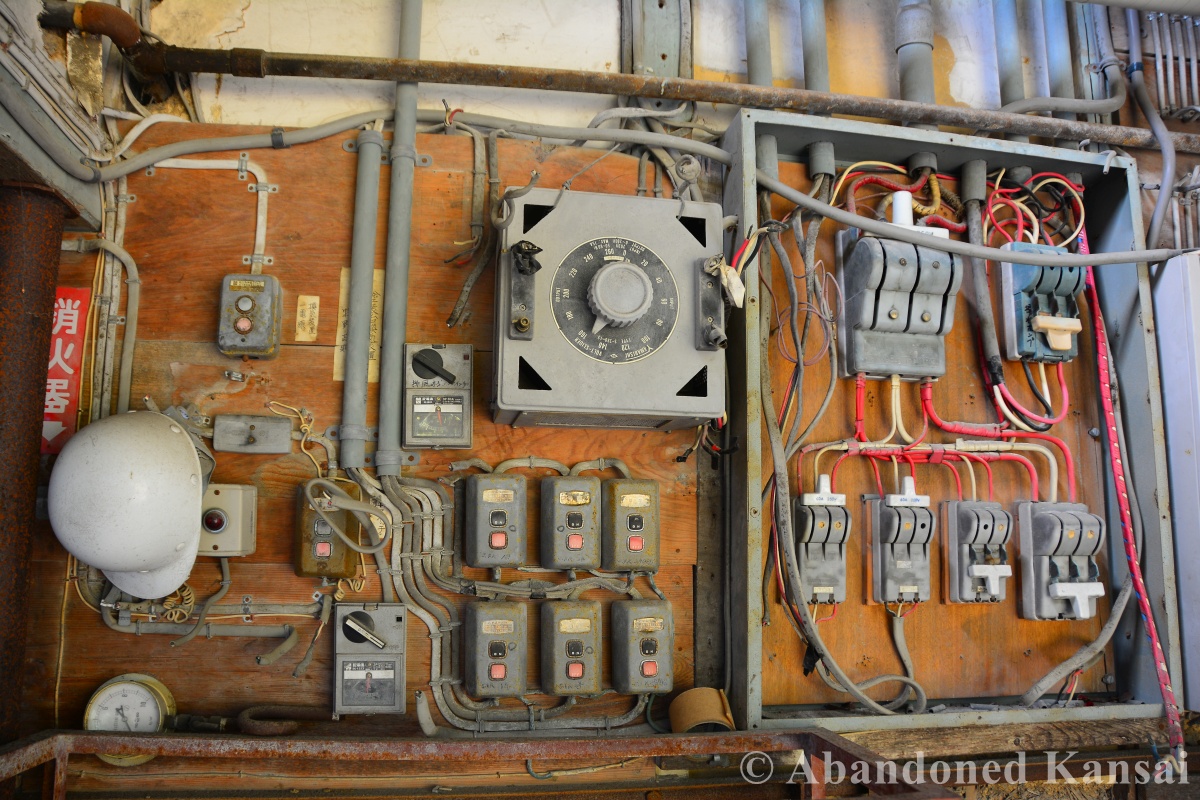
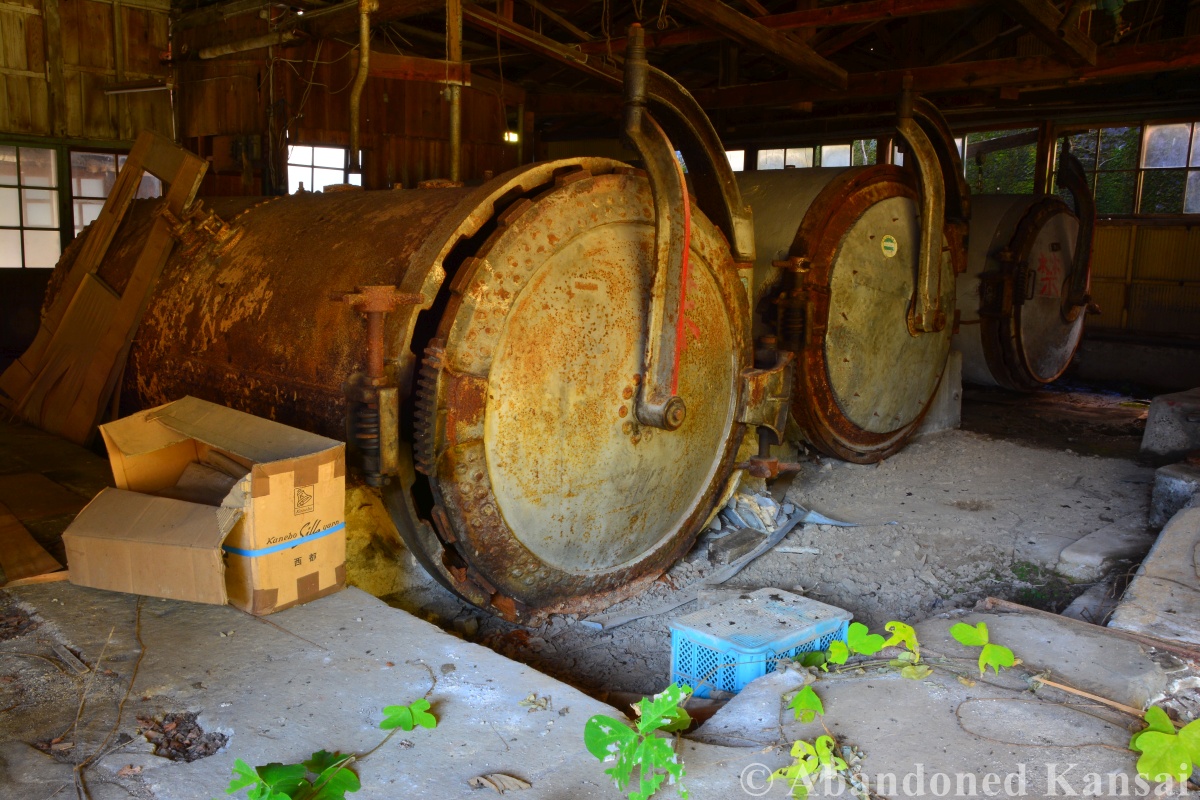
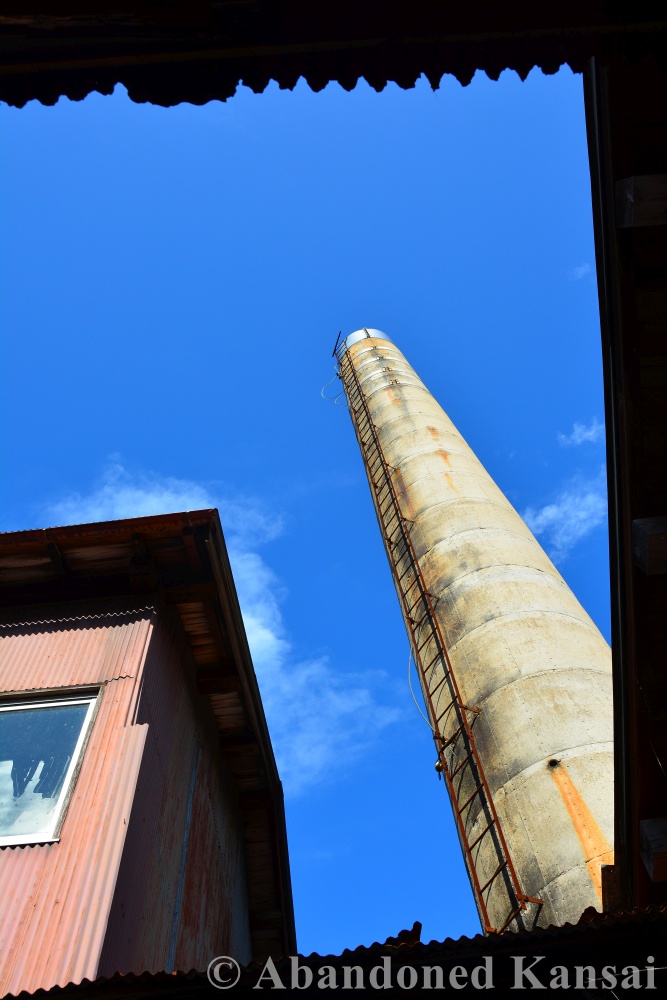
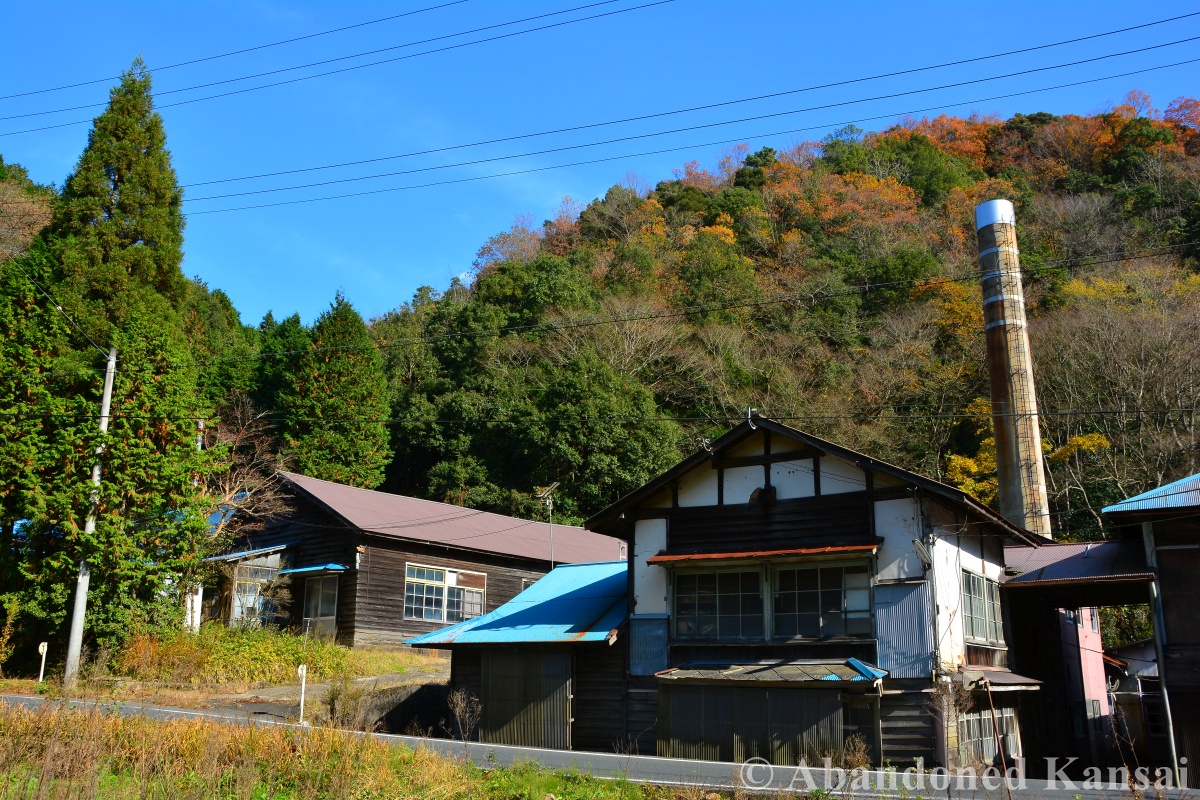
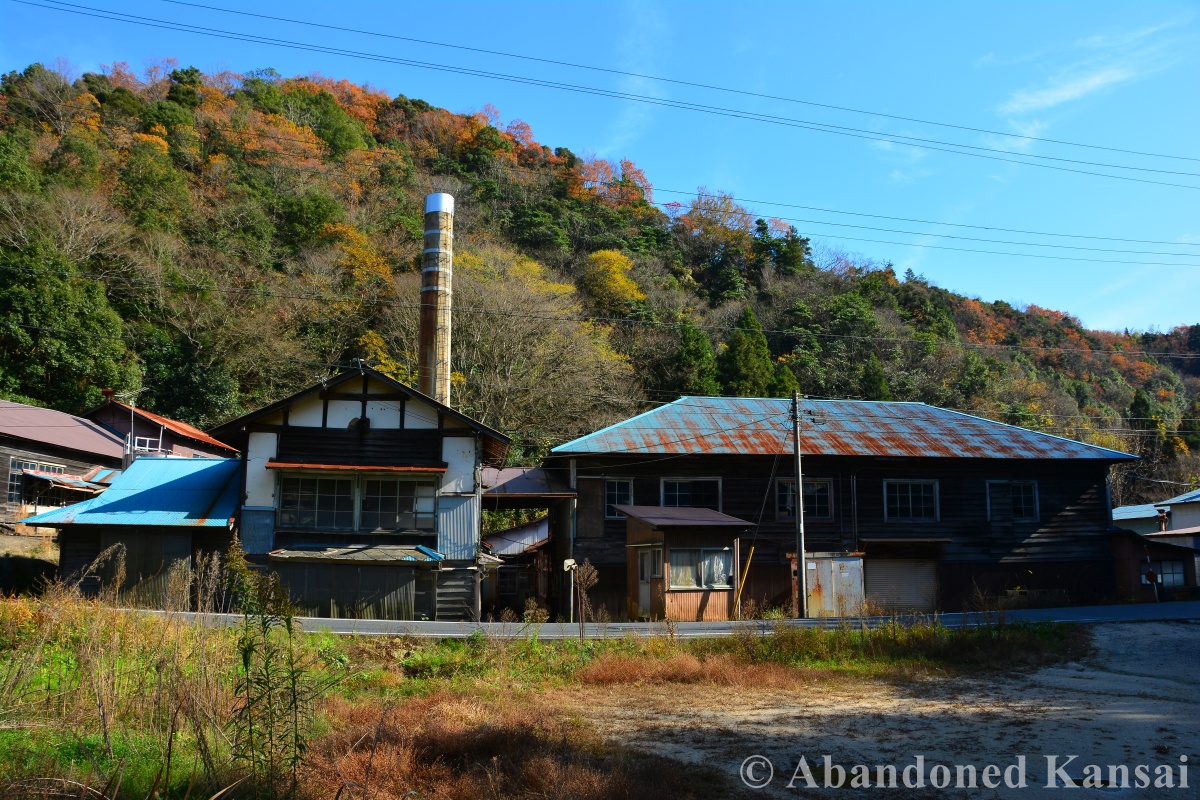
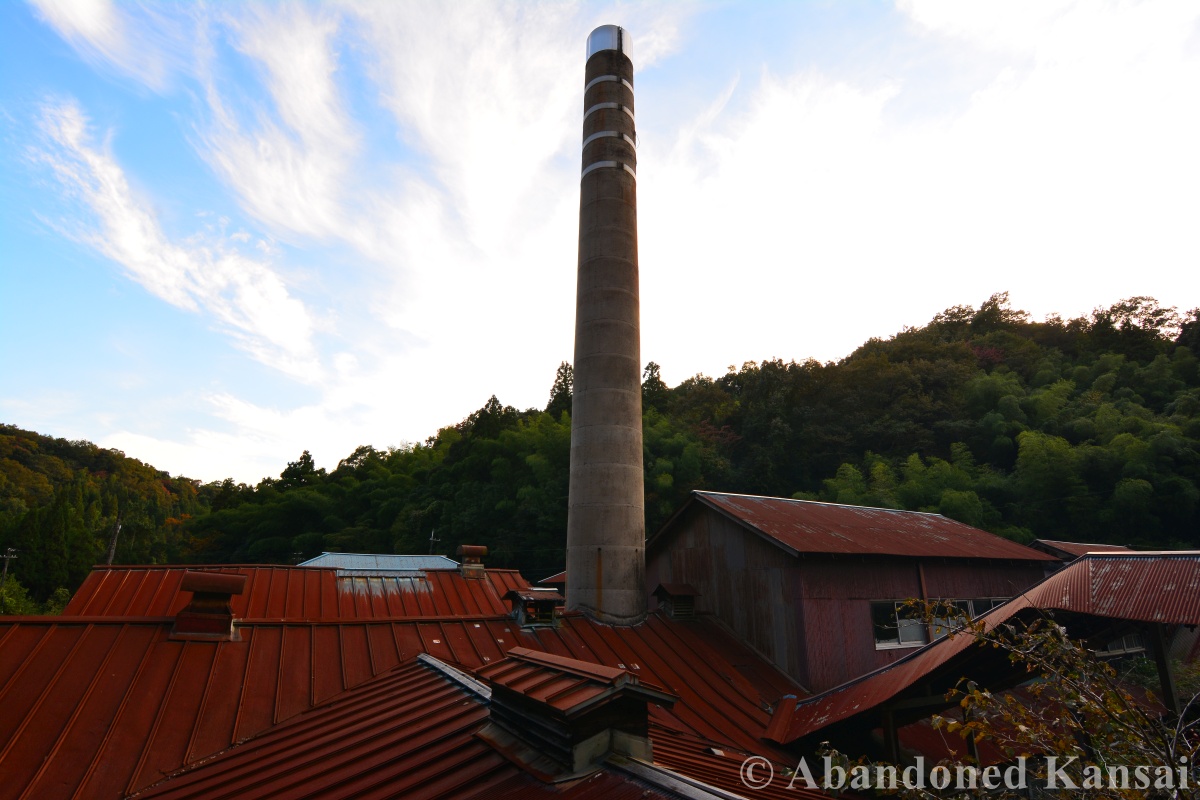
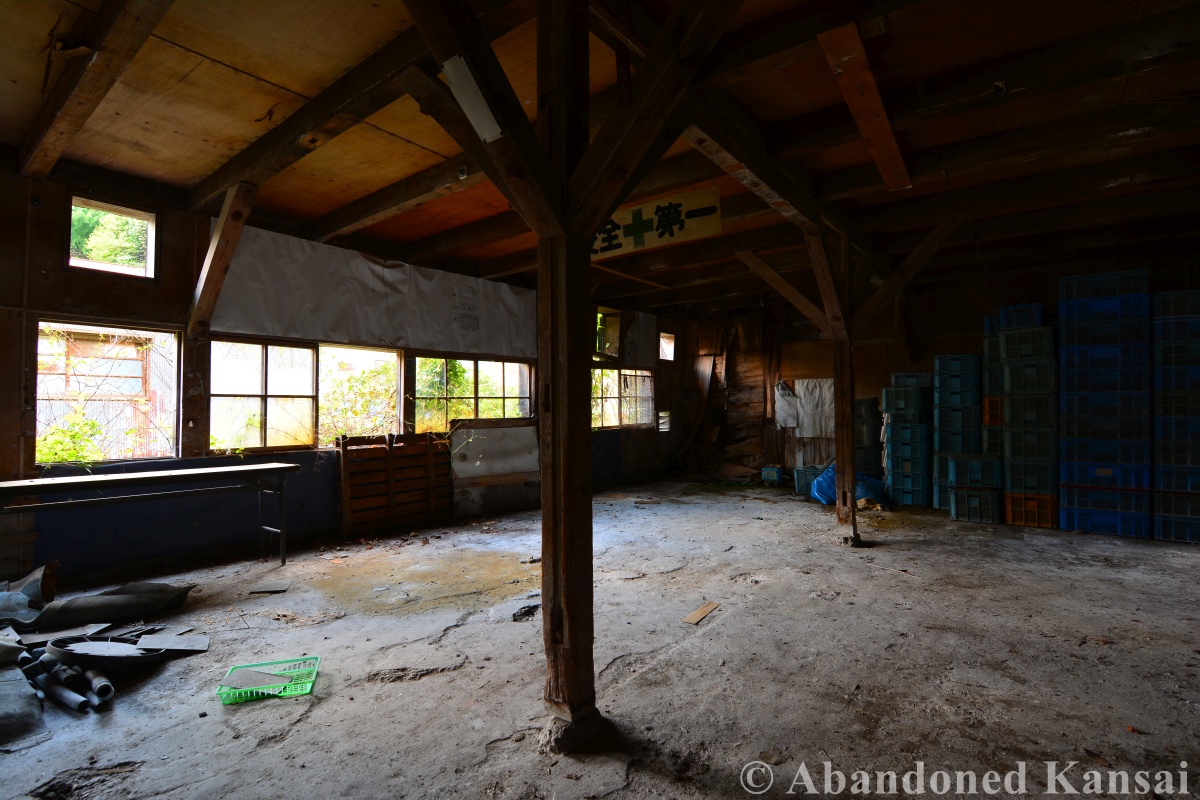
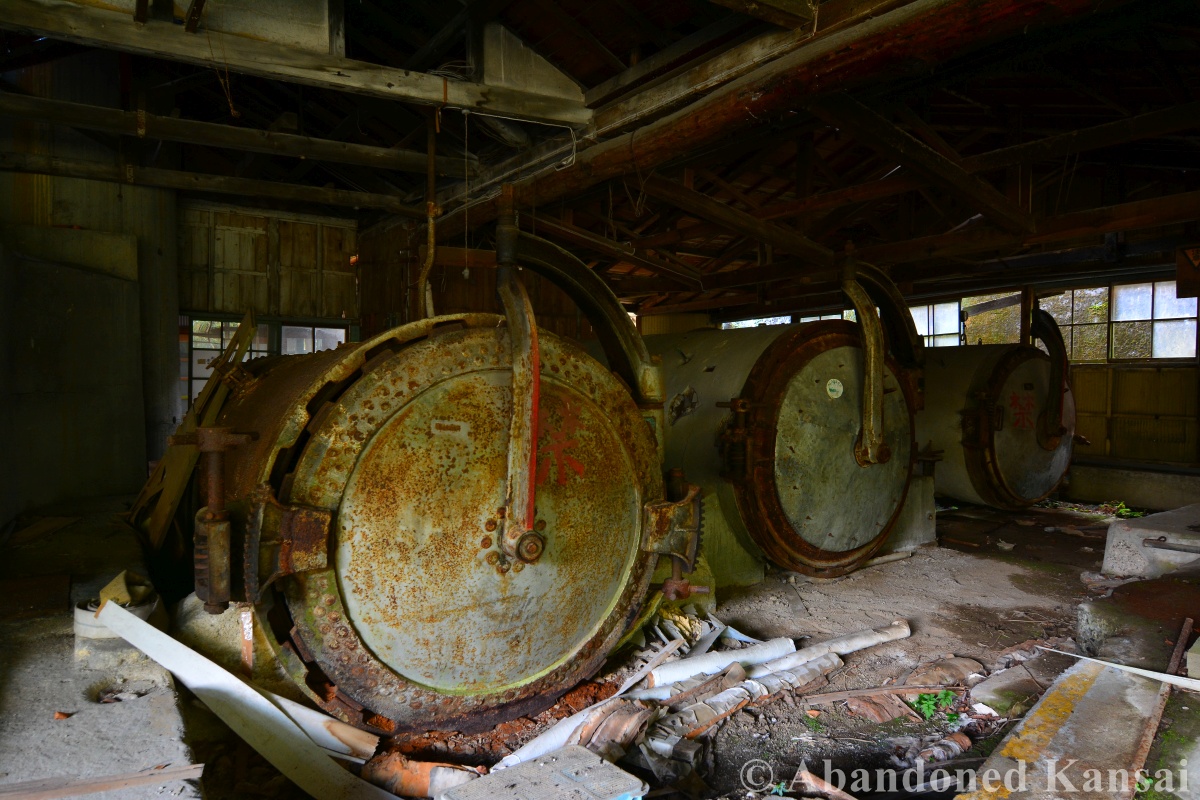
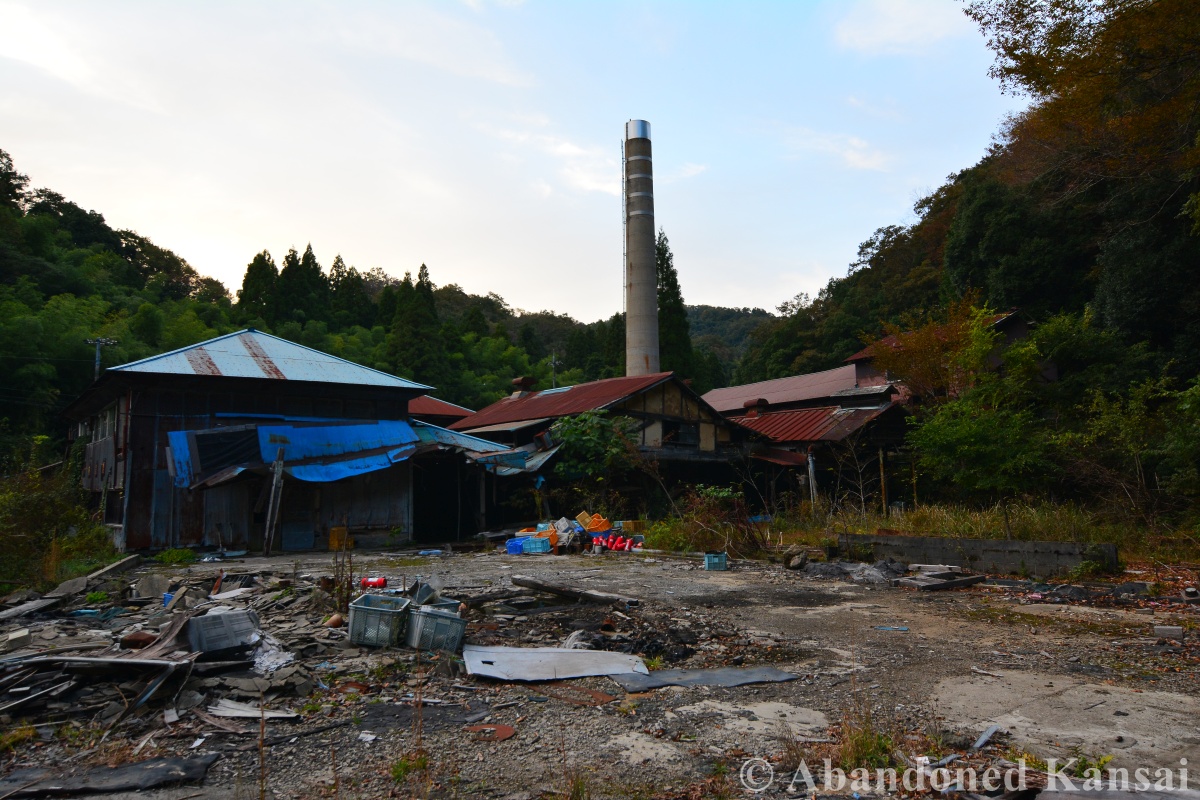
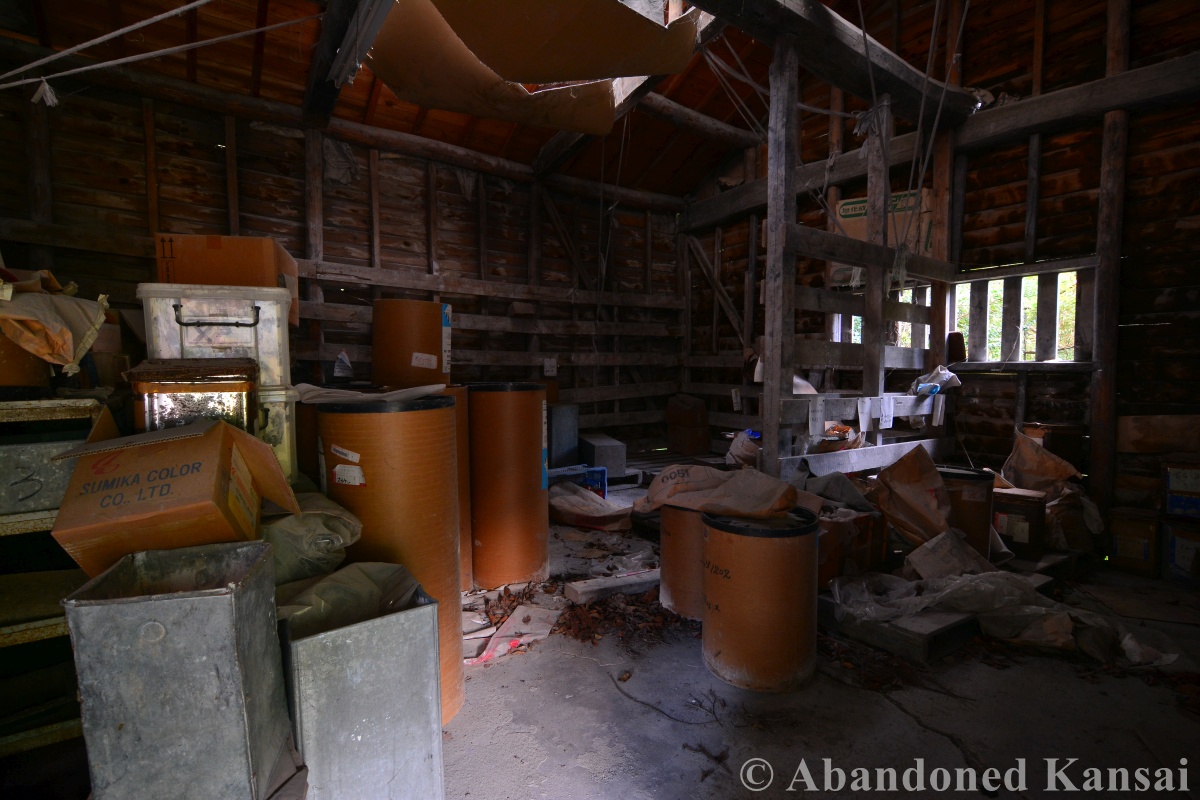
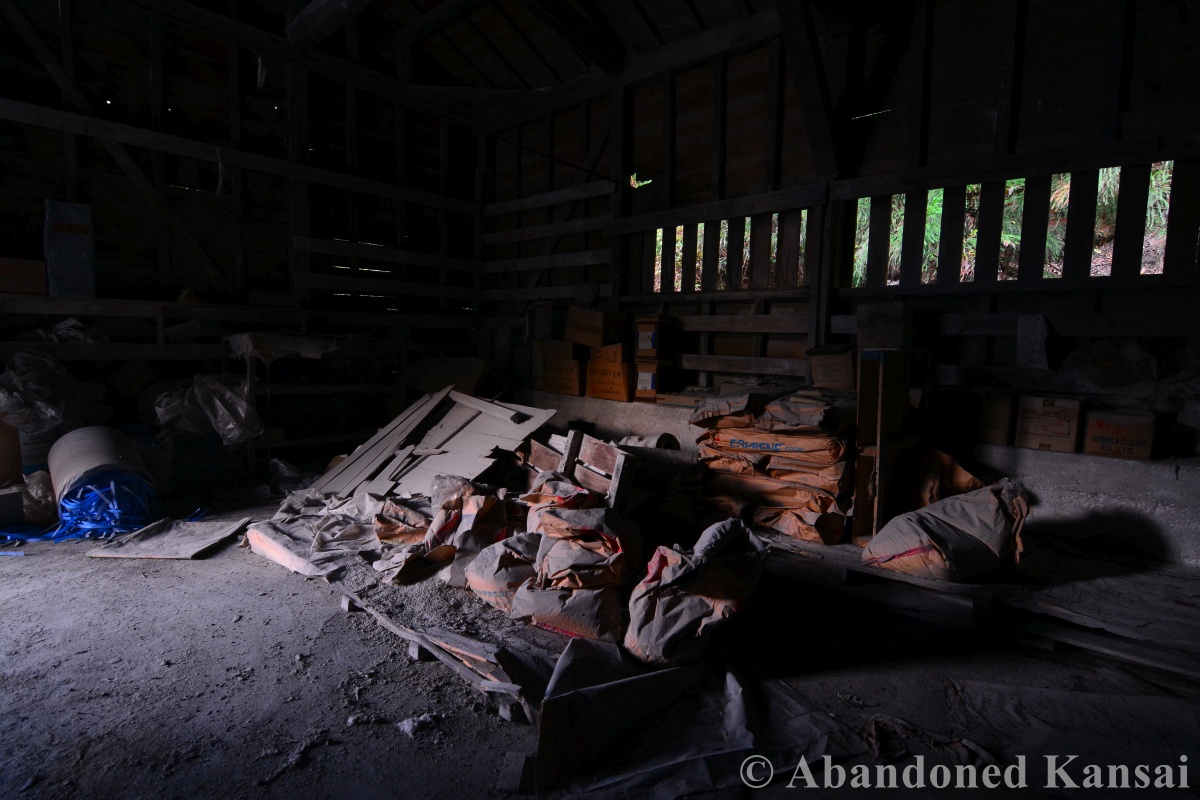
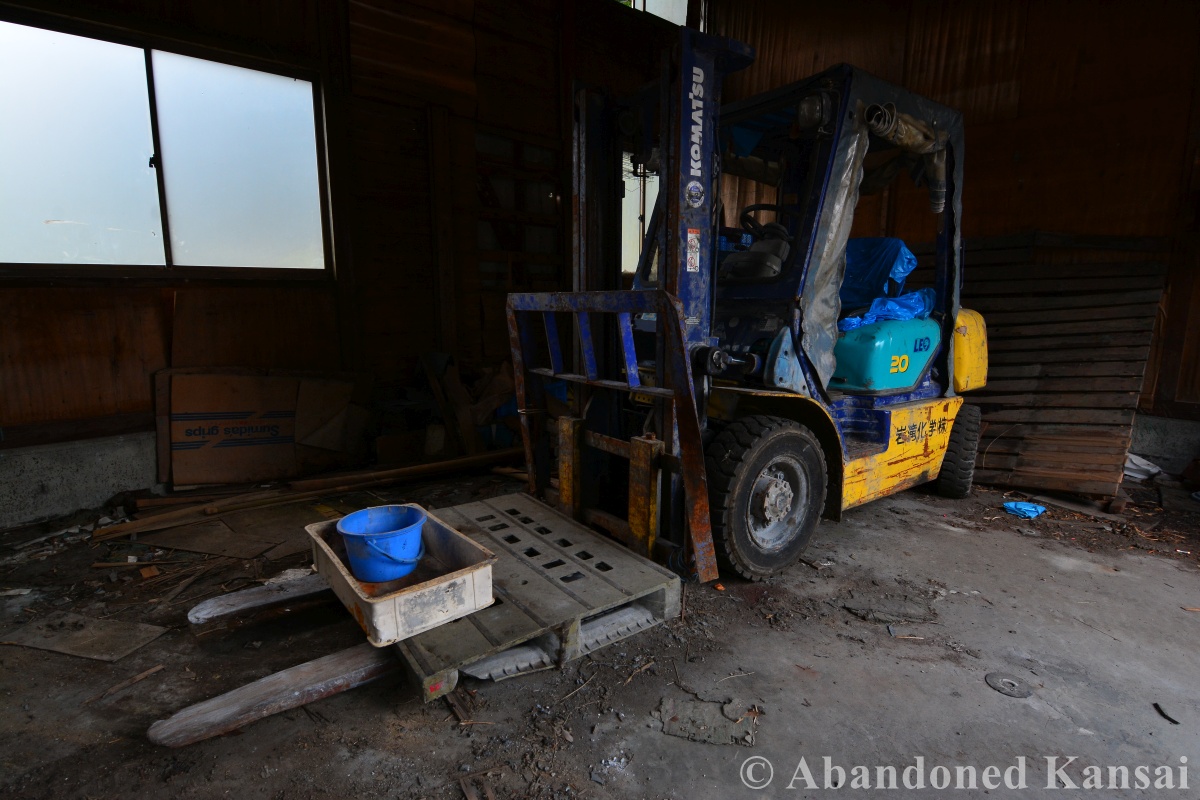
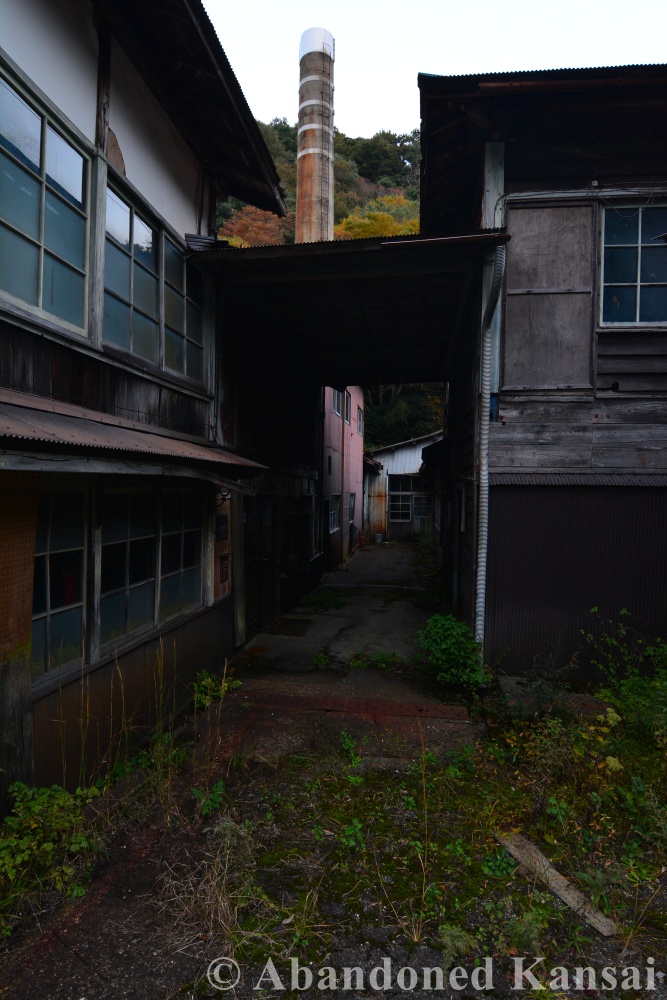
In the mid-2010s I went exploring with two journalists from Scandinavia who did research for a book about abandoned places and industrial decay. On our way to a deserted hotel we drove past this wooden, rundown factory… and turned around to have a closer look. There were some cars with license plates parked on the premises, despite it being Sunday, but nobody was there. The place had a very abandoned look to it, but most buildings were locked and could have still been used, though we had no clue what for, so we took some photos, mostly outdoors, and drove on – breaking and entering isn’t my thing… and original finds are extra risky. I didn’t know until my research for this article that the company wasn’t officially shut down until two years after this exploration!
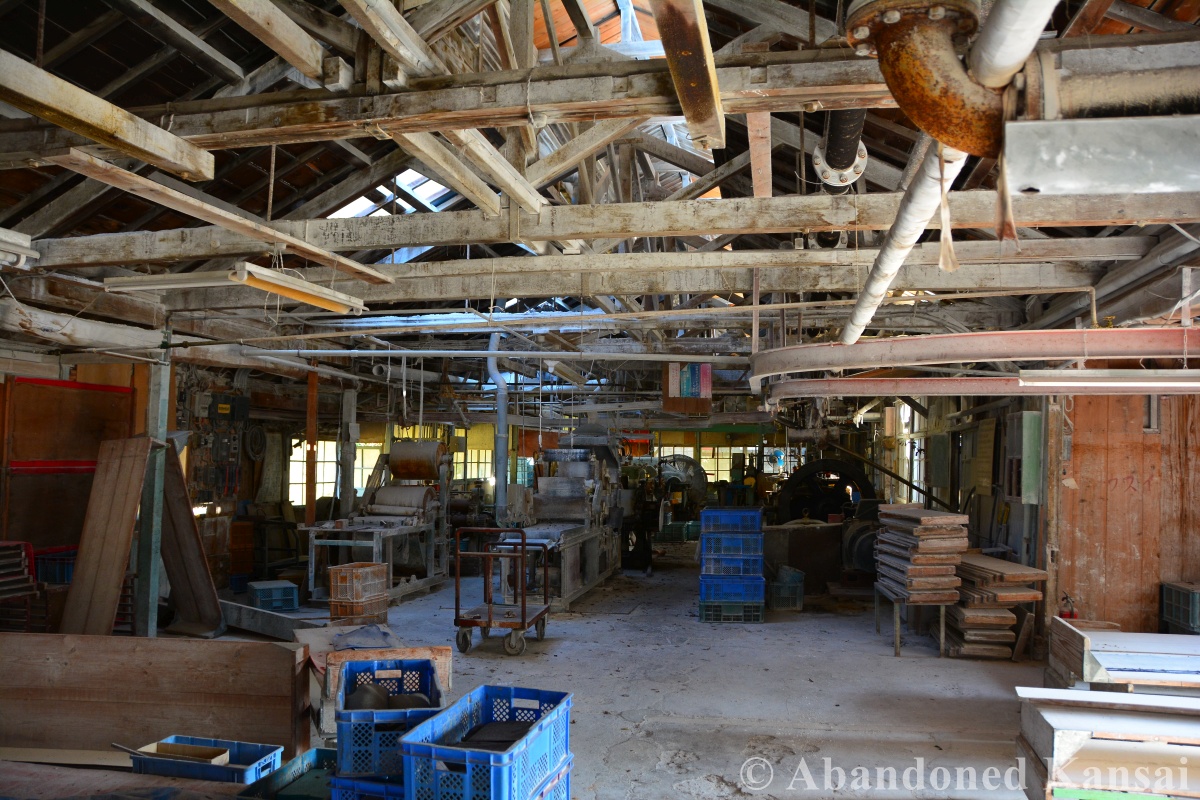
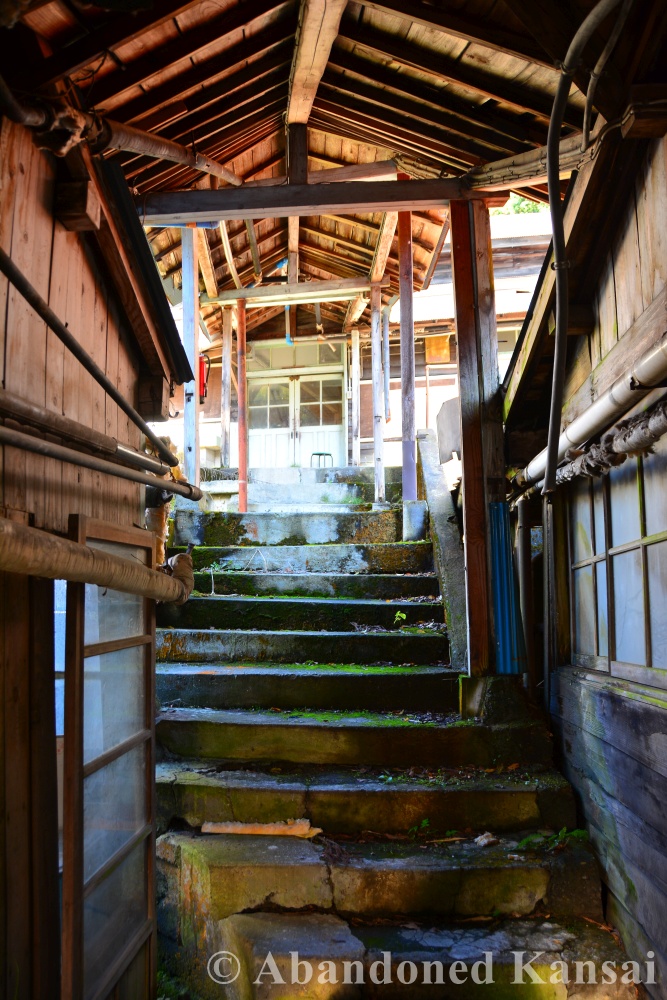
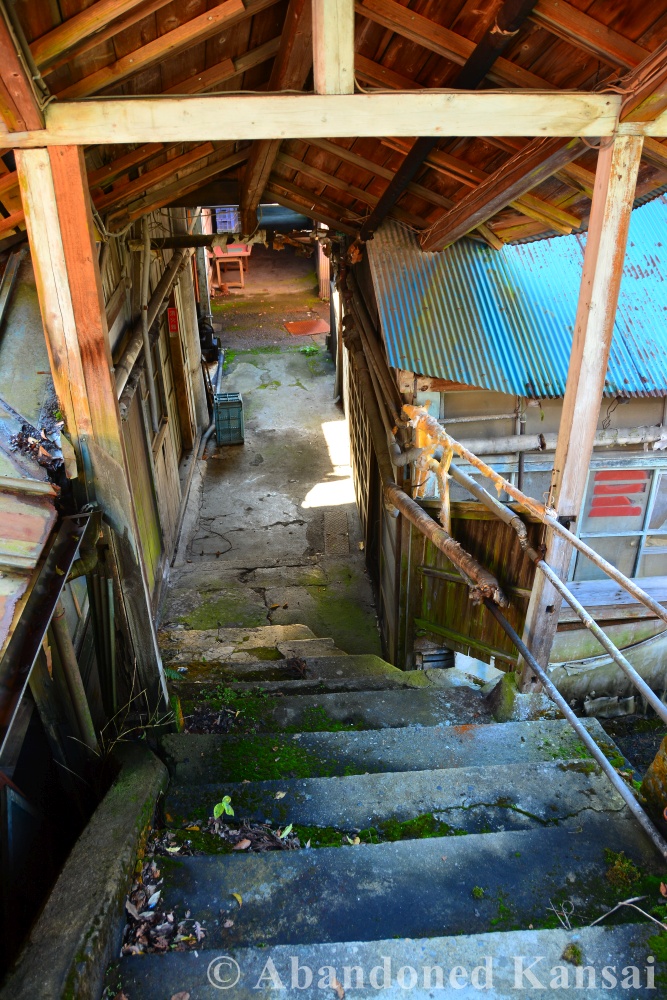
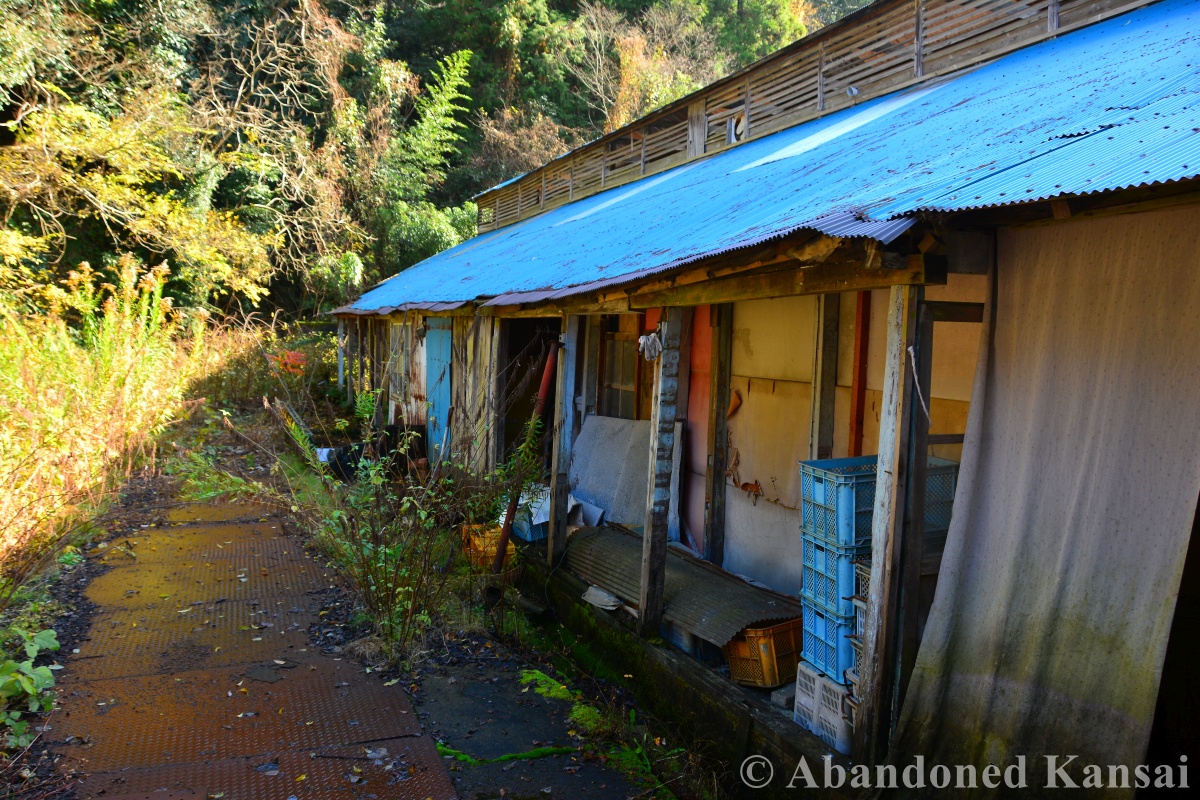
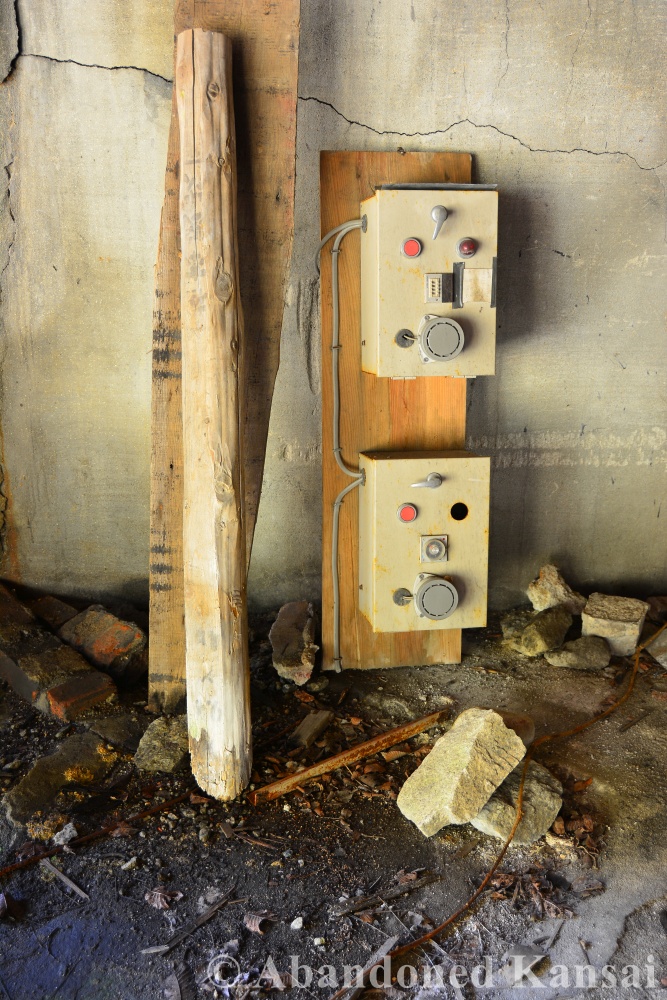
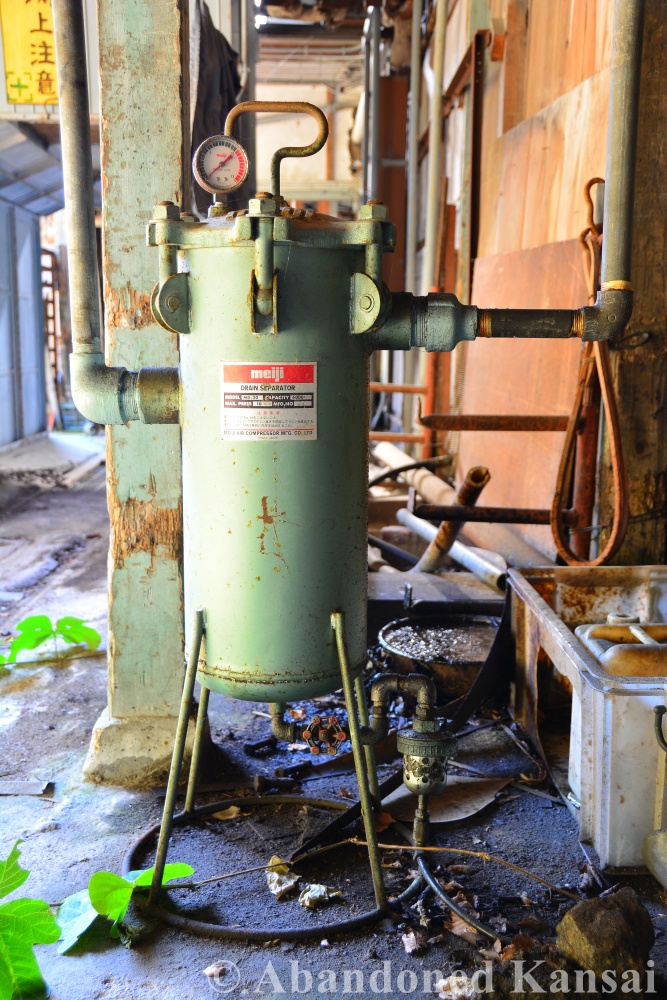
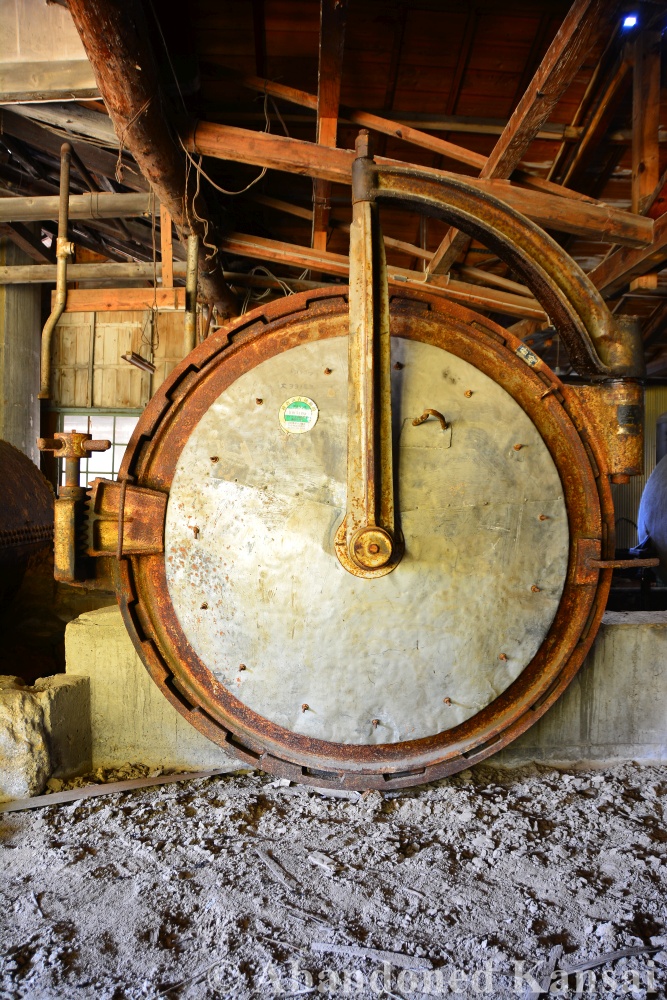
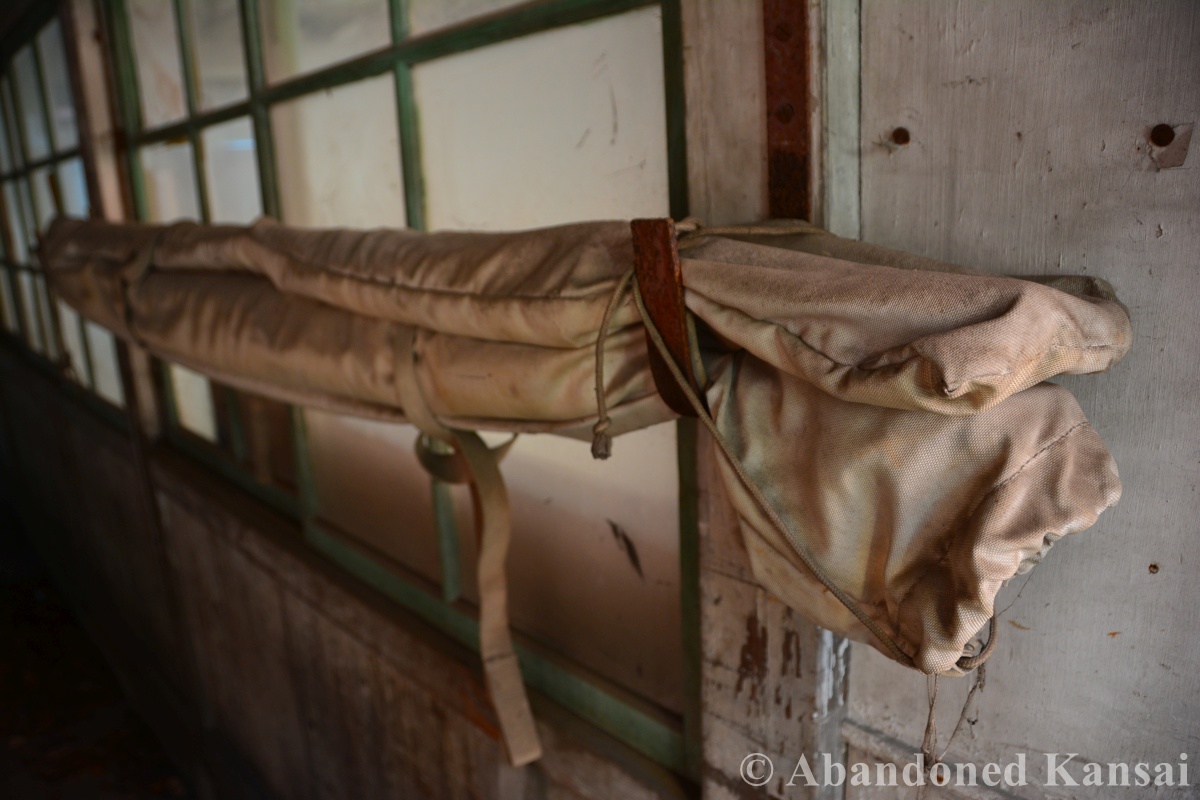
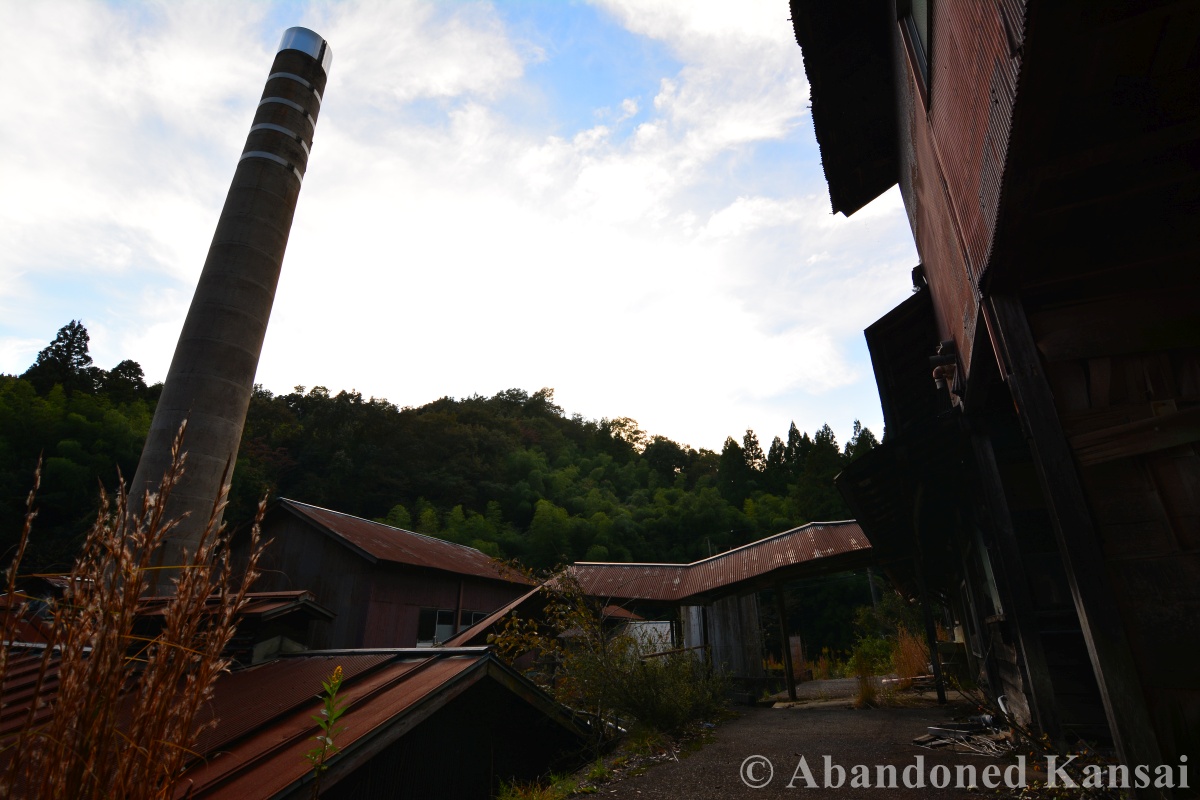
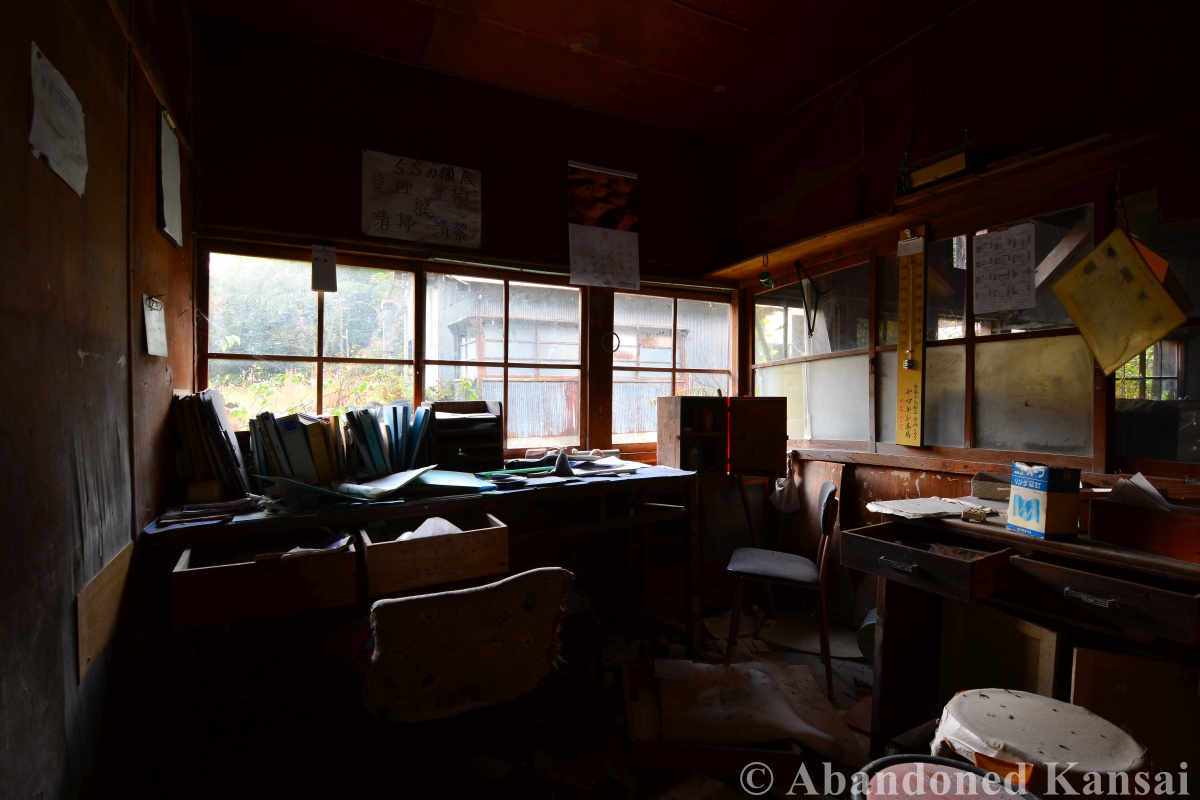
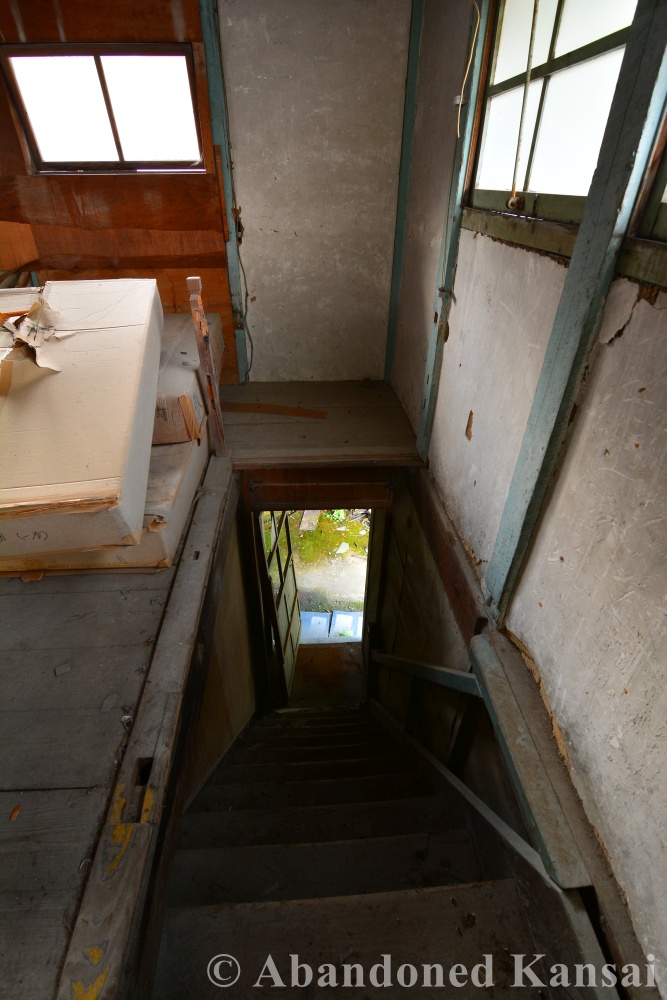
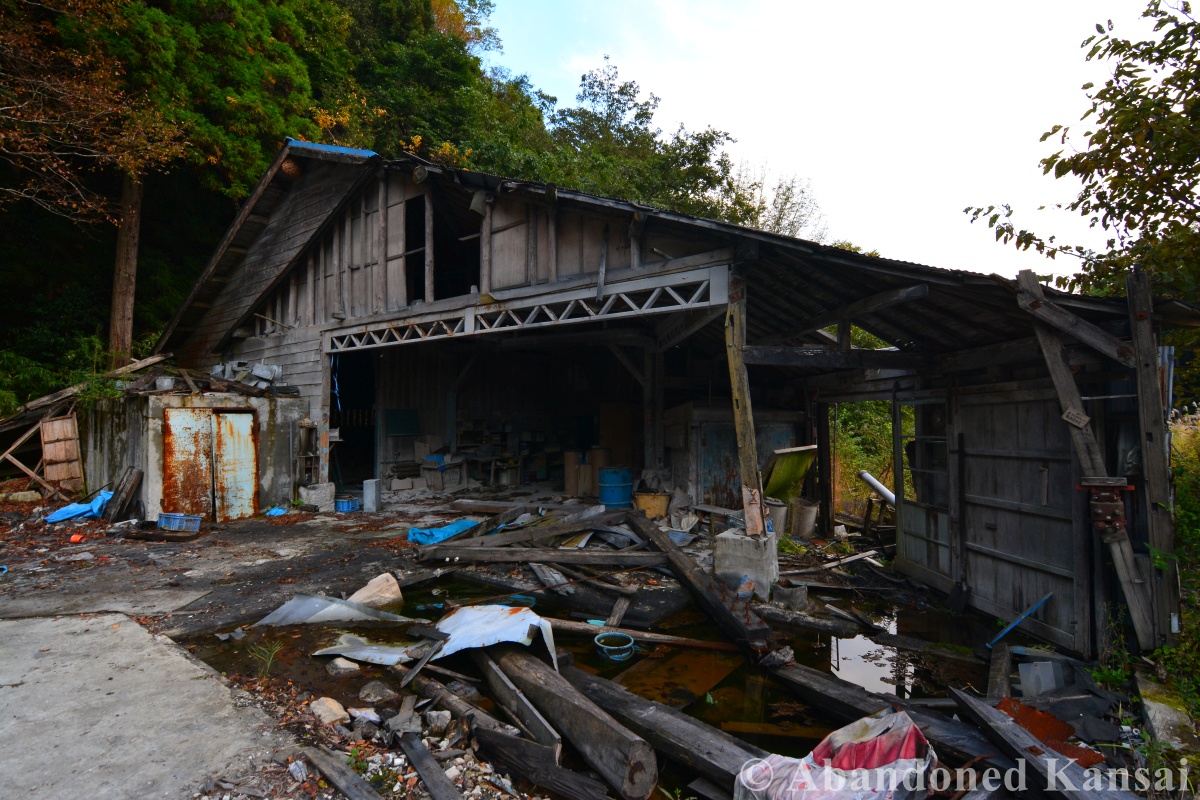
7 years later I was in that part of Kyoto prefecture again with another urbex friend, so we decided to stop by the countryside factory again. And this time it was completely different. All the cars were gone, about one third of the factory had been demolished, the rest was easily accessible through open or unlocked doors. This time we had to rush, because we were running out of daylight, but it was nevertheless a super interesting exploration as the factory looked like it must have been a hundred years old and could collapse at any time when slamming a door shut.

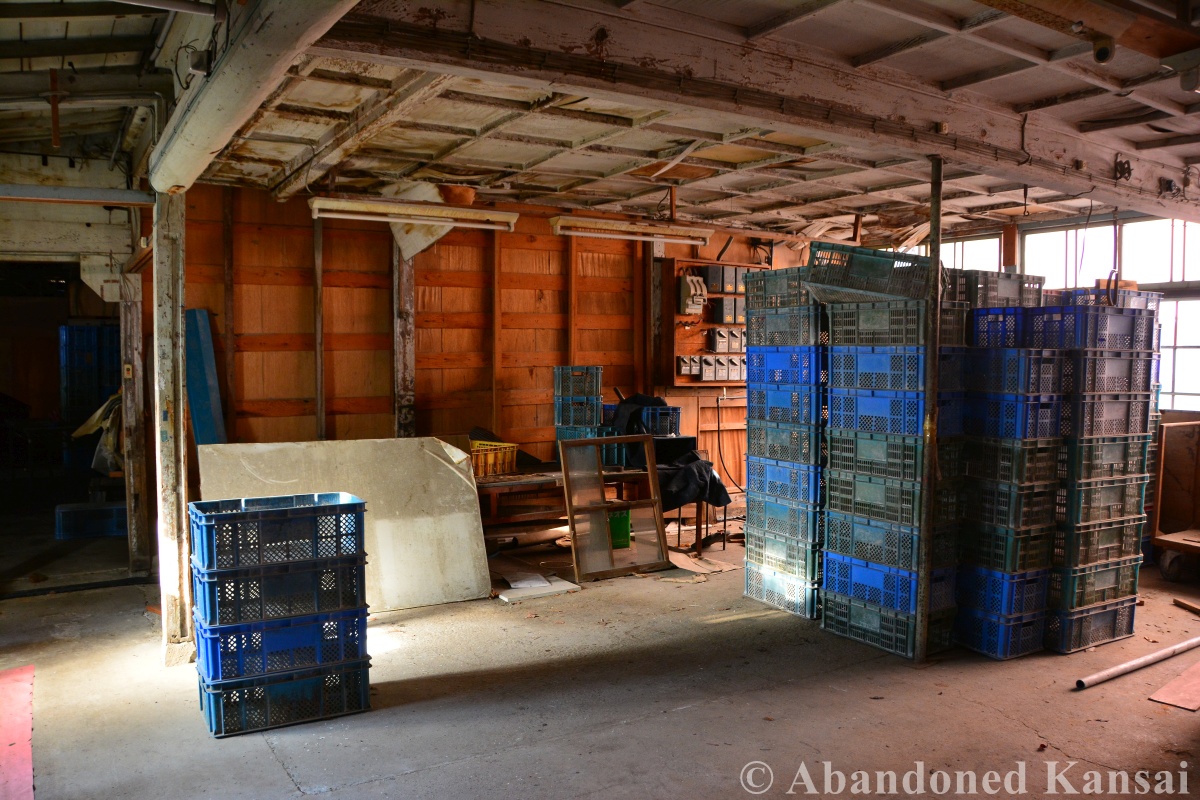
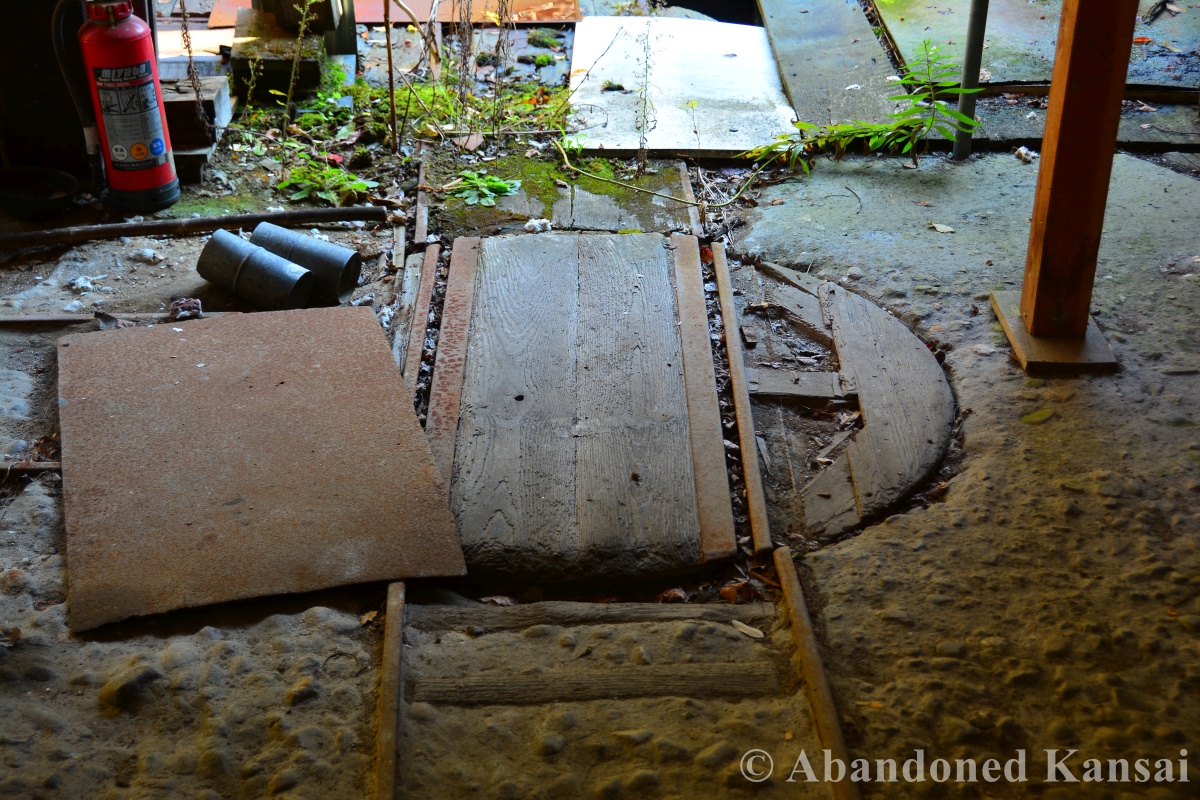
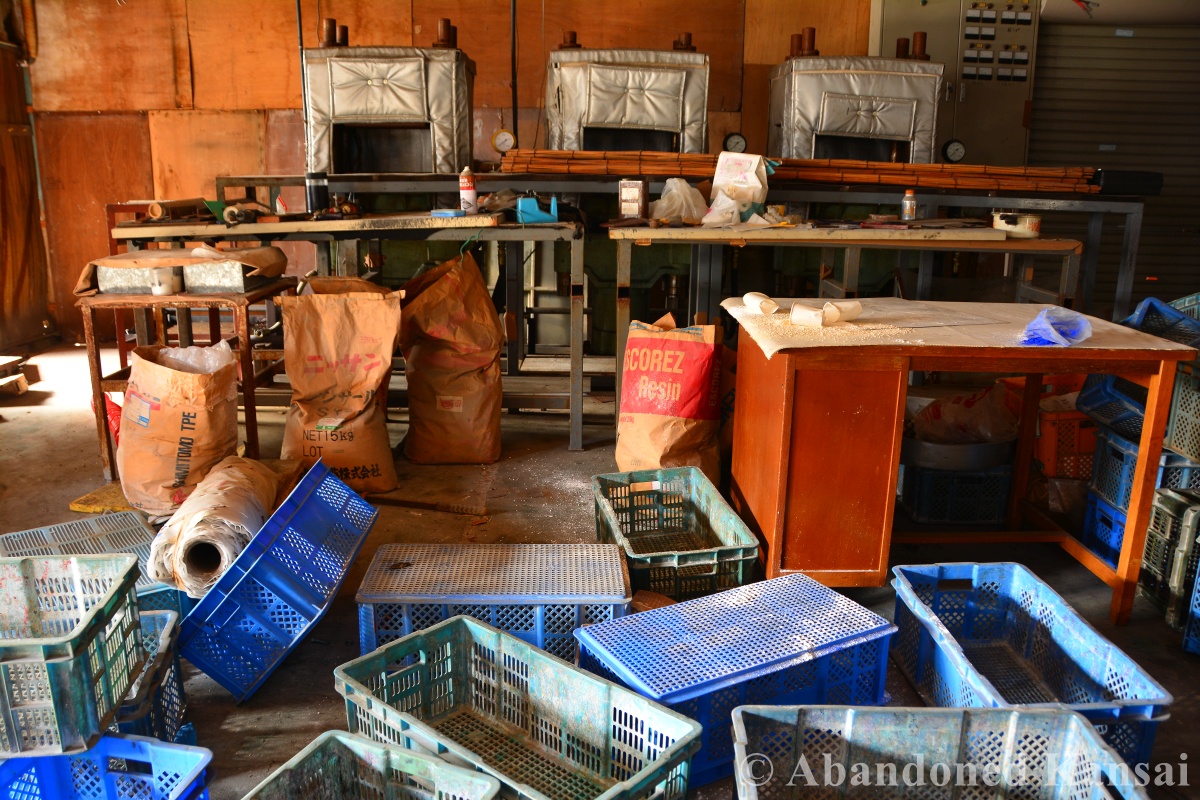
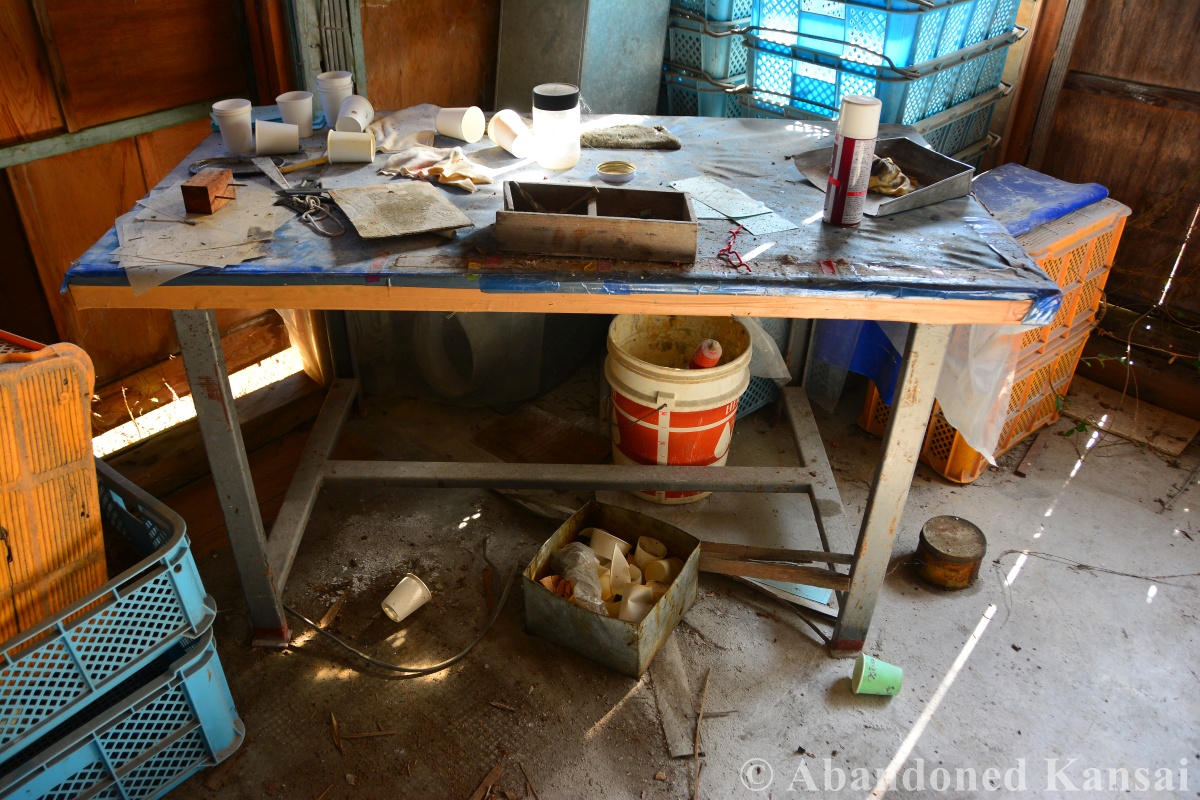
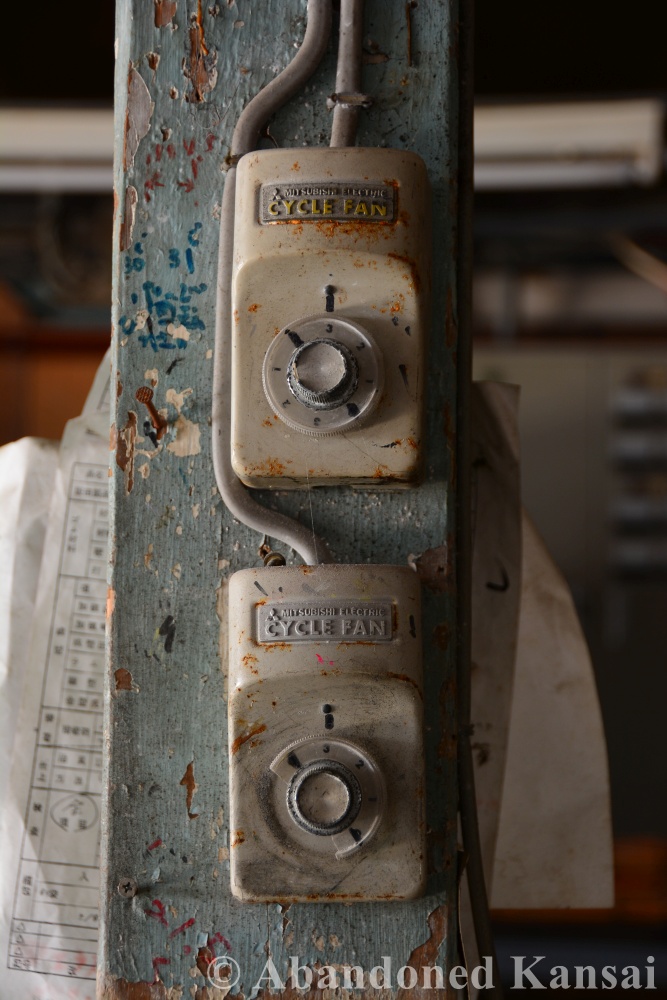
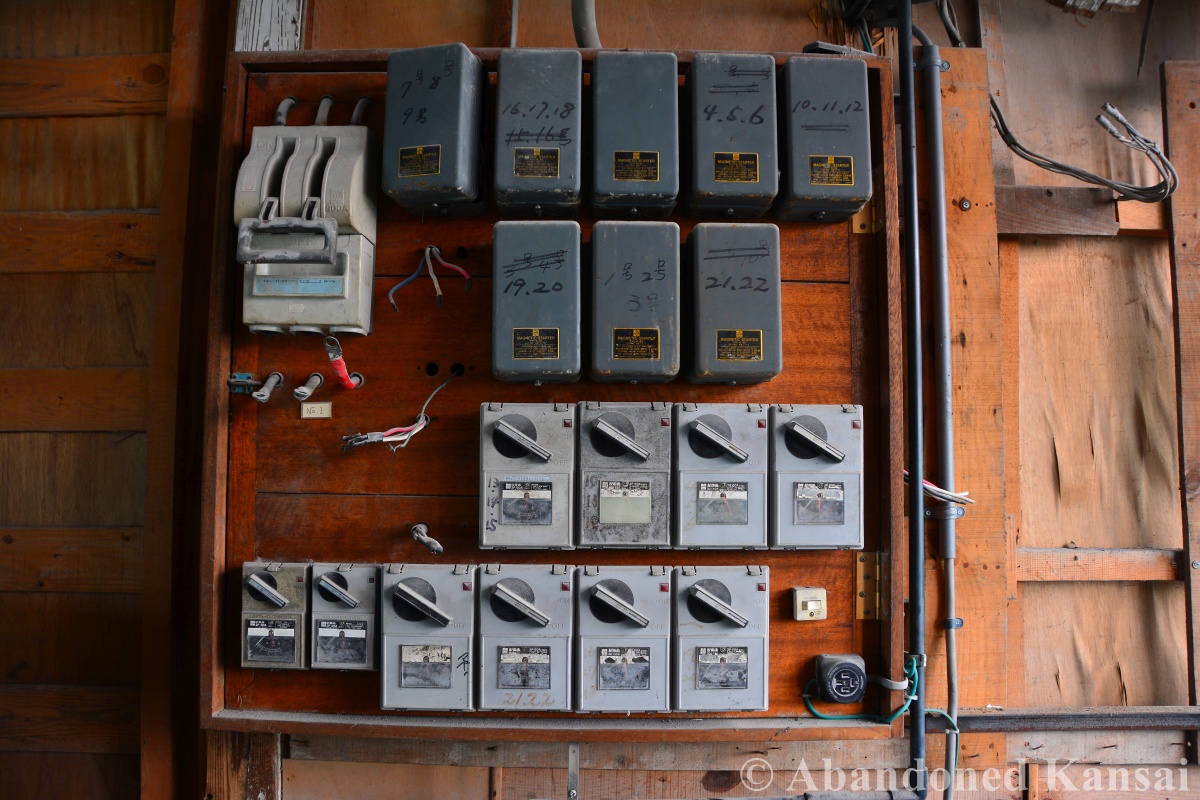
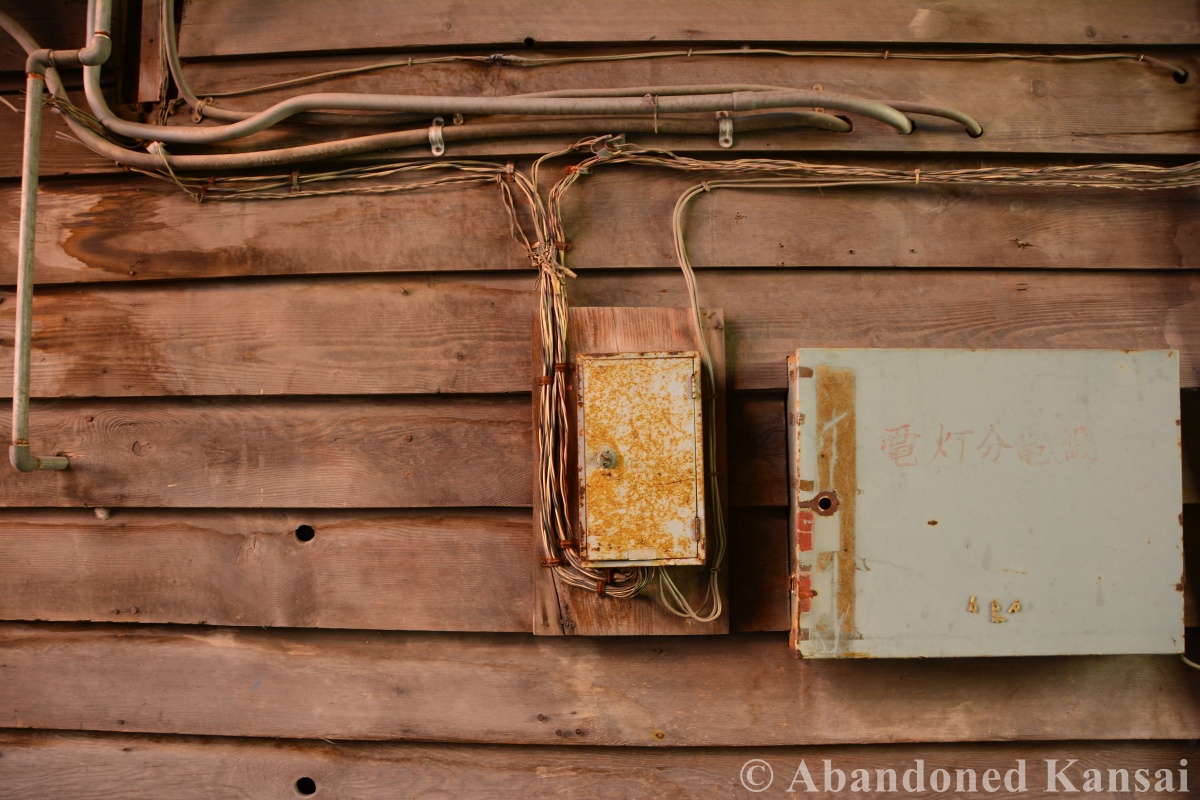
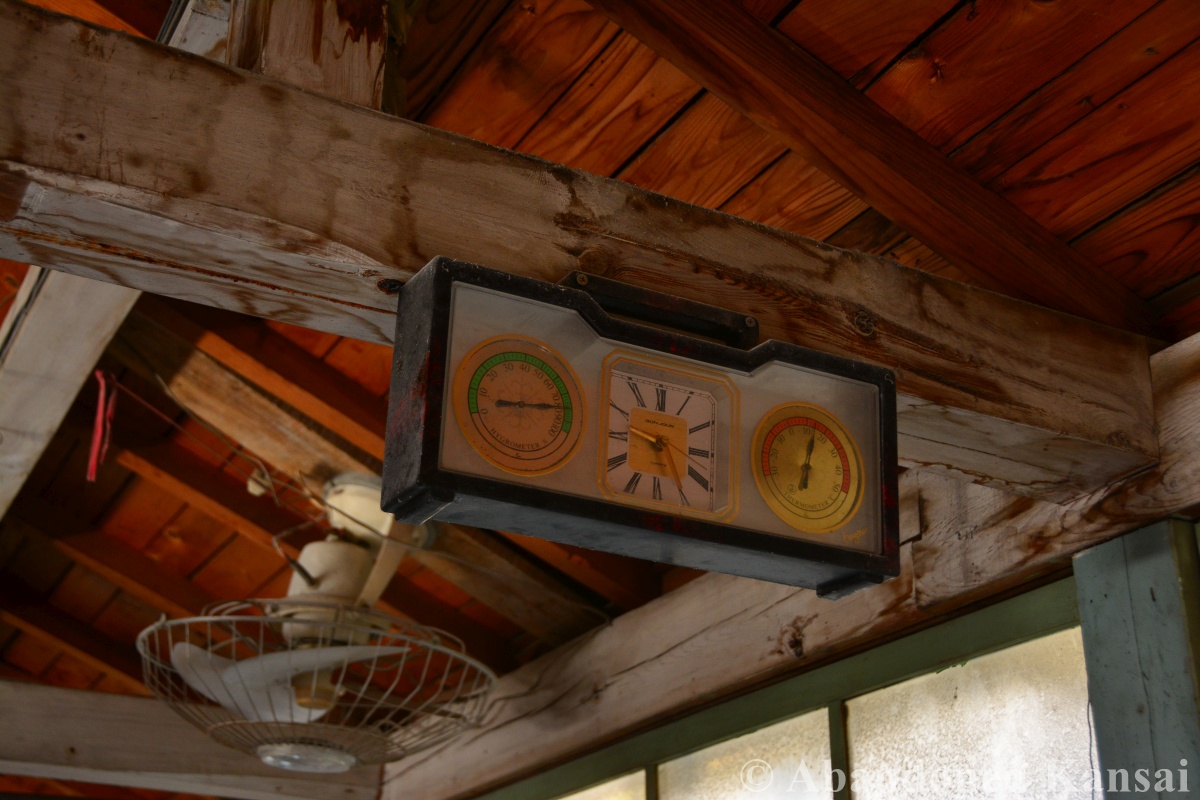
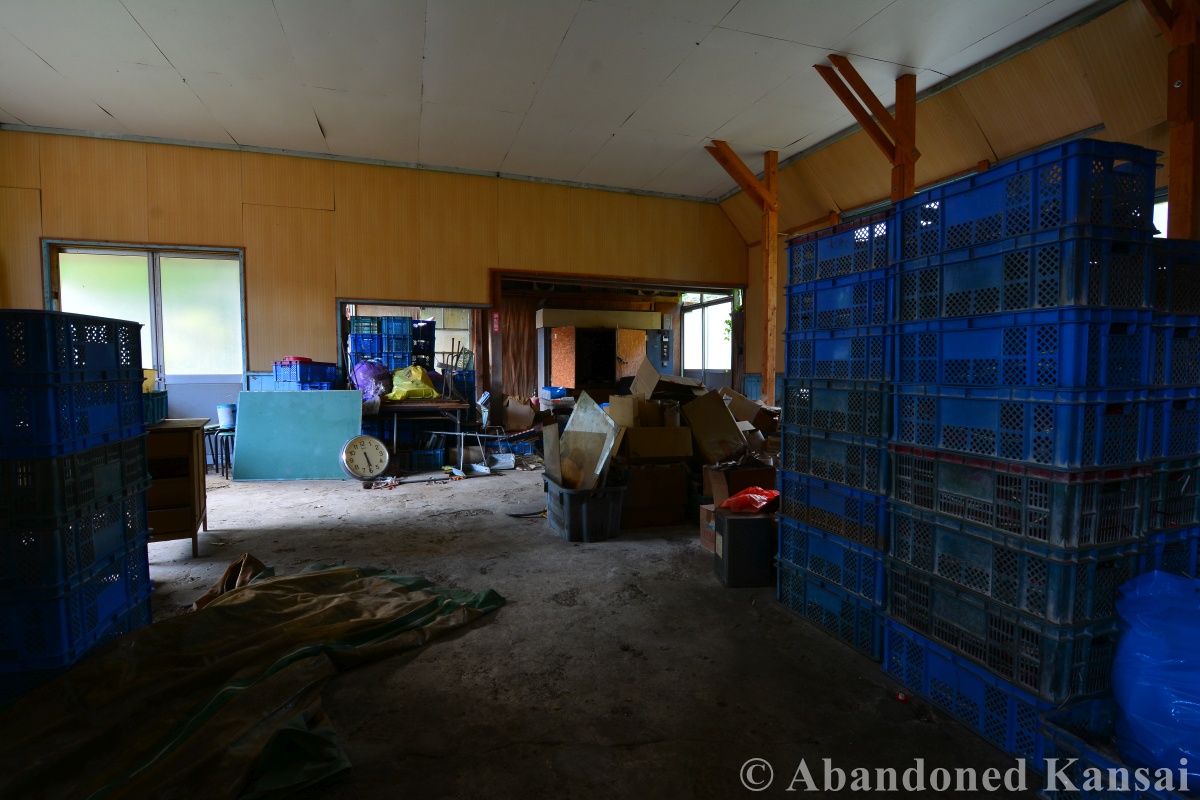
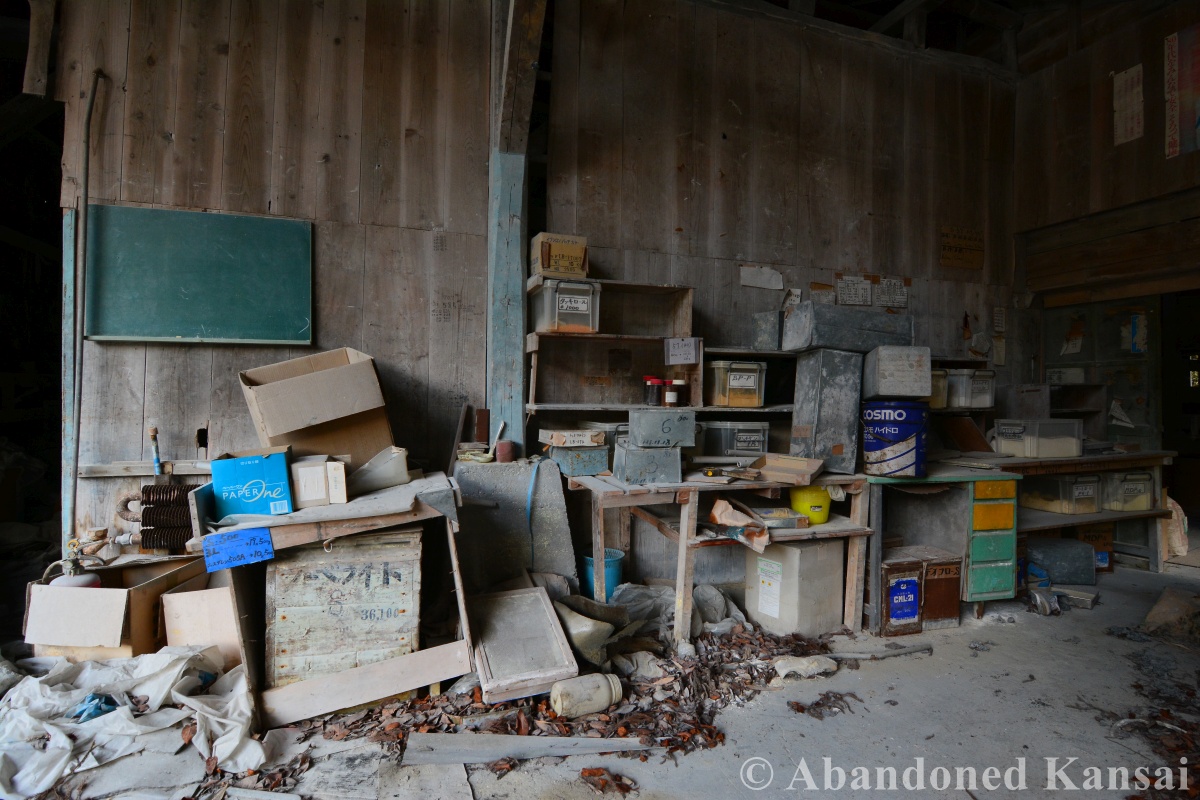
It wasn’t until selecting photos from both sets for this article that I realized how different the factory looked on both visits. During my first exploration I wasn’t sure about the status of the place, but when comparing those photos with the second set, it’s super clear that the factory was still in use during the first visit – electrical wires and other cables hadn’t been cut yet, some tables and areas looked like active workspaces, there was less vegetation… and of course the factory was still complete and not partly demolished.
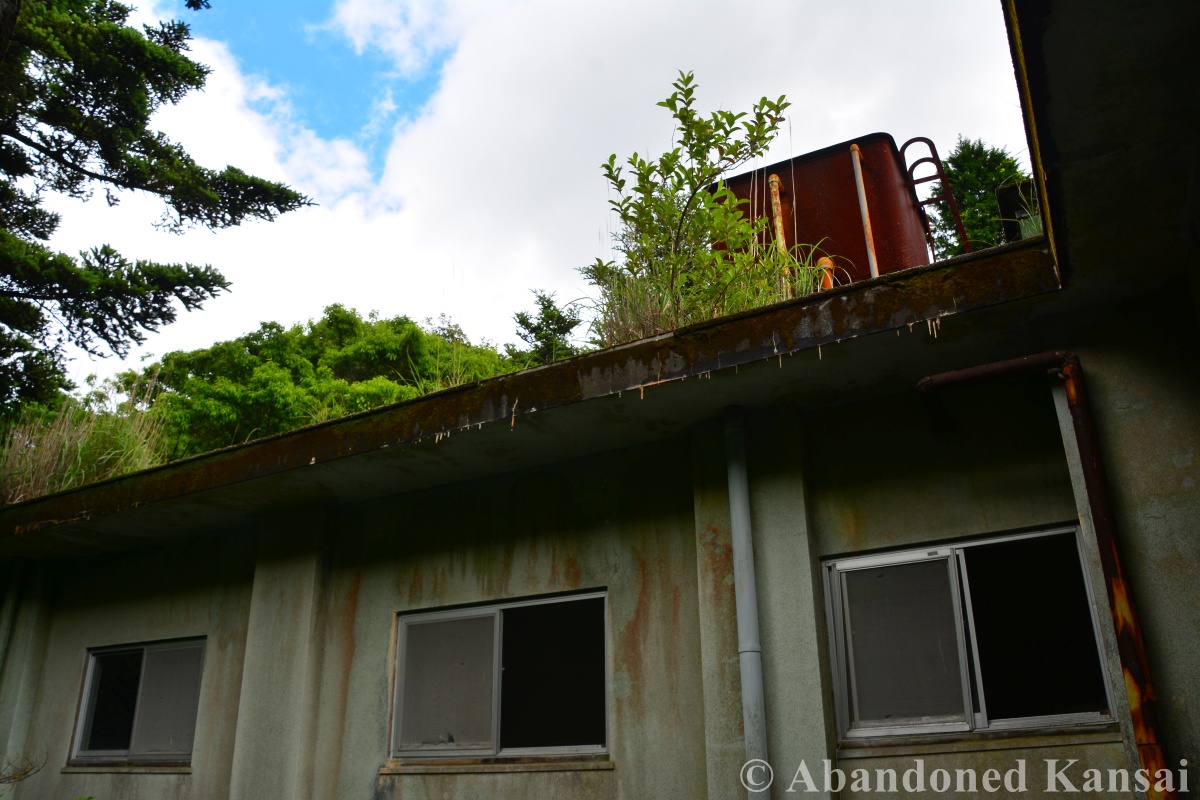
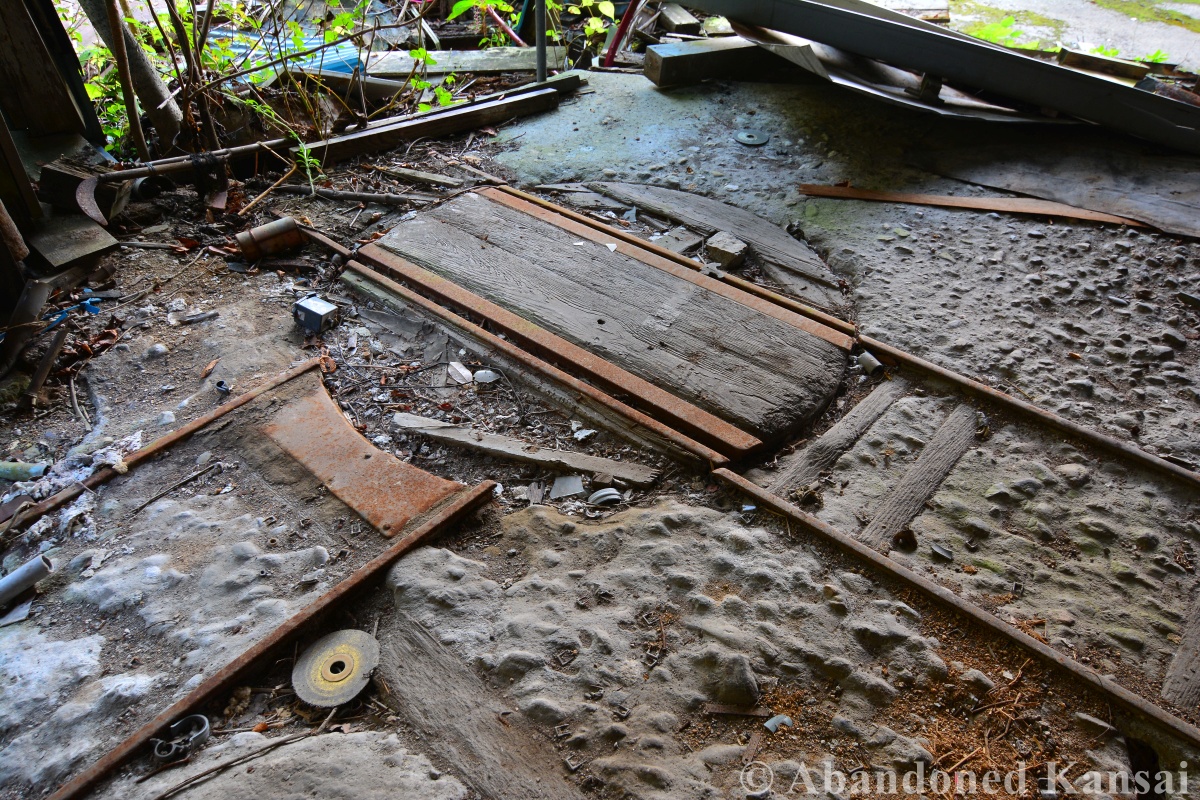
Technically this is not one of the most beautiful photo sets I’ve ever published, but it’s an original find and Showa AF – maybe even Meiji. At the same time parts of the Kyoto Countryside Factory had almost a fantasy vibe, if you were able to ignore the computers and cables and plastic crates… I’ve been to more than my fair share of abandoned wooden structures, but this facility was huge and had hardly any metal elements. Even the small rail system had more wooden elements than metal ones and could have been right out of an 80s fantasy flick. So, yeah, even if the photos are not great, I really enjoyed exploring this place. Which is rare, as I hardly do revisits, despite the fact that this is the second location in a row with a combined gallery of two explorations. So next time I’ll post a one-off again. Which one? I don’t know yet, but you should definitely *check out some older locations*!

(*Like Abandoned Kansai on Facebook* or *follow us on Twitter* if you don’t want to miss the latest articles and exclusive content – and subscribe to the *video channel on Youtube* to receive a message right after a new video is online…)
Read Full Post »

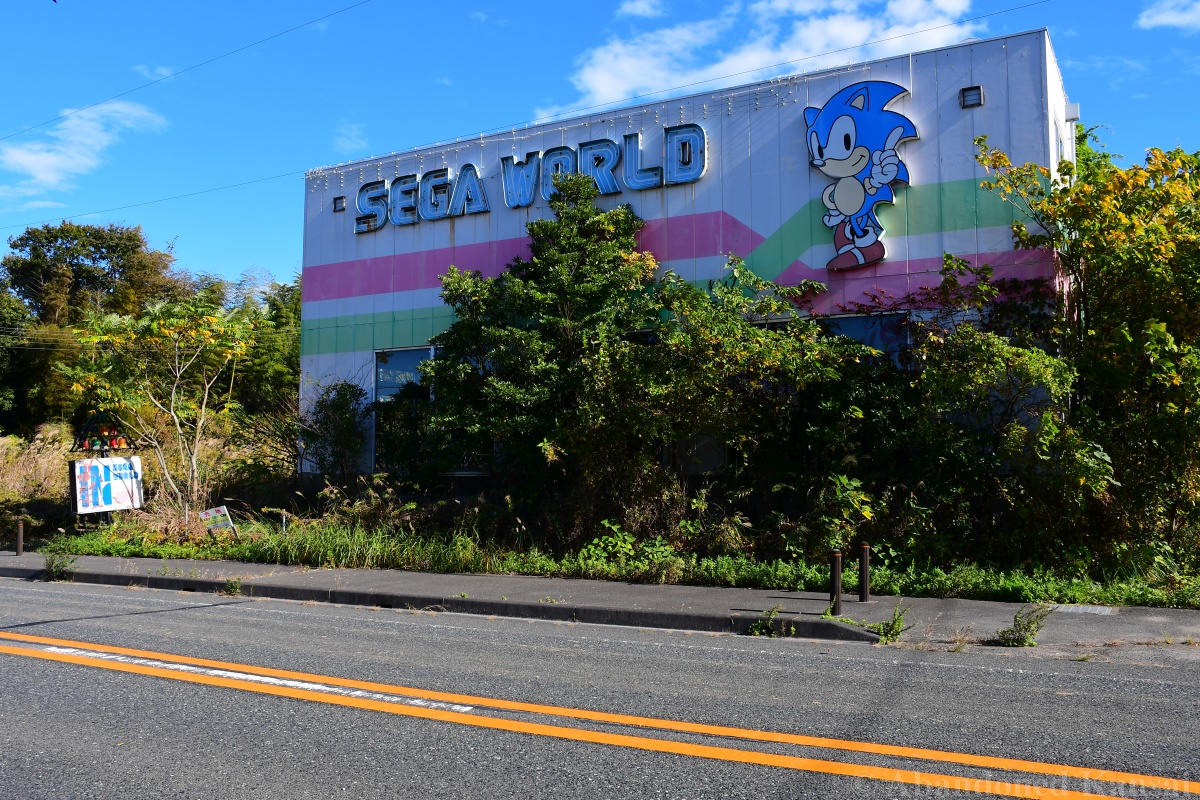
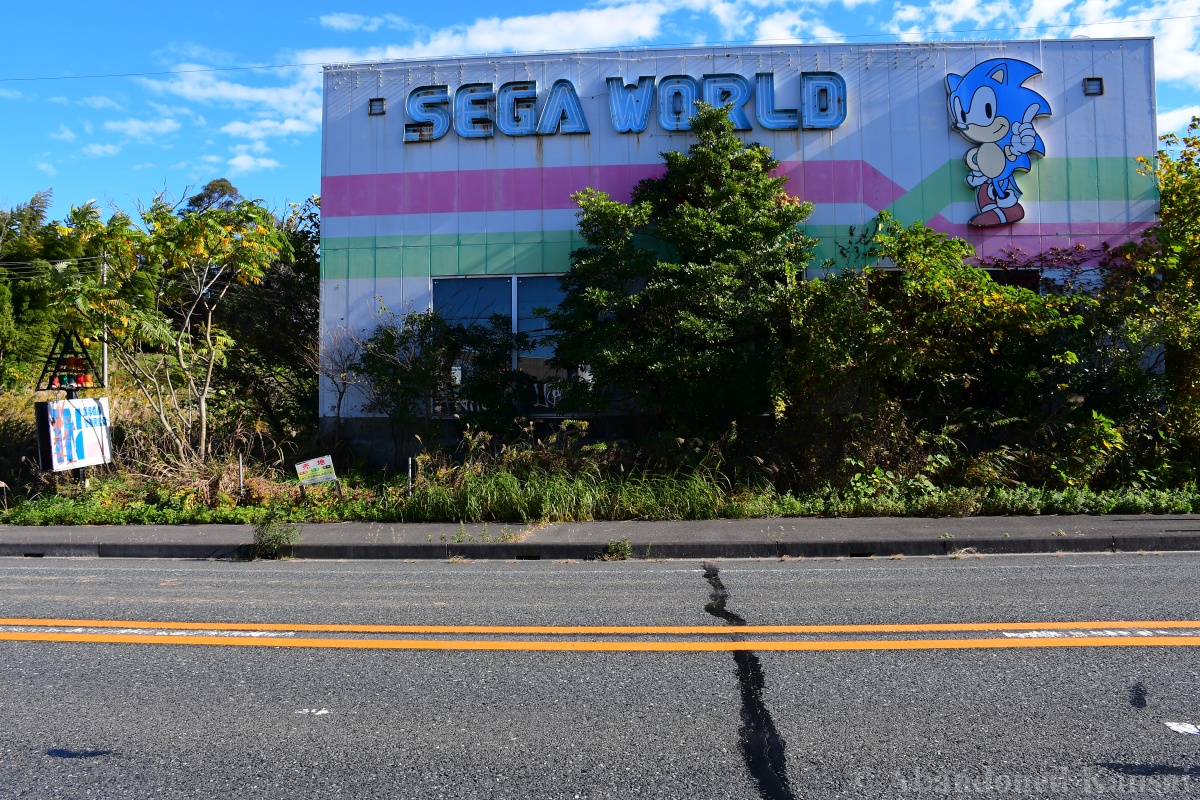
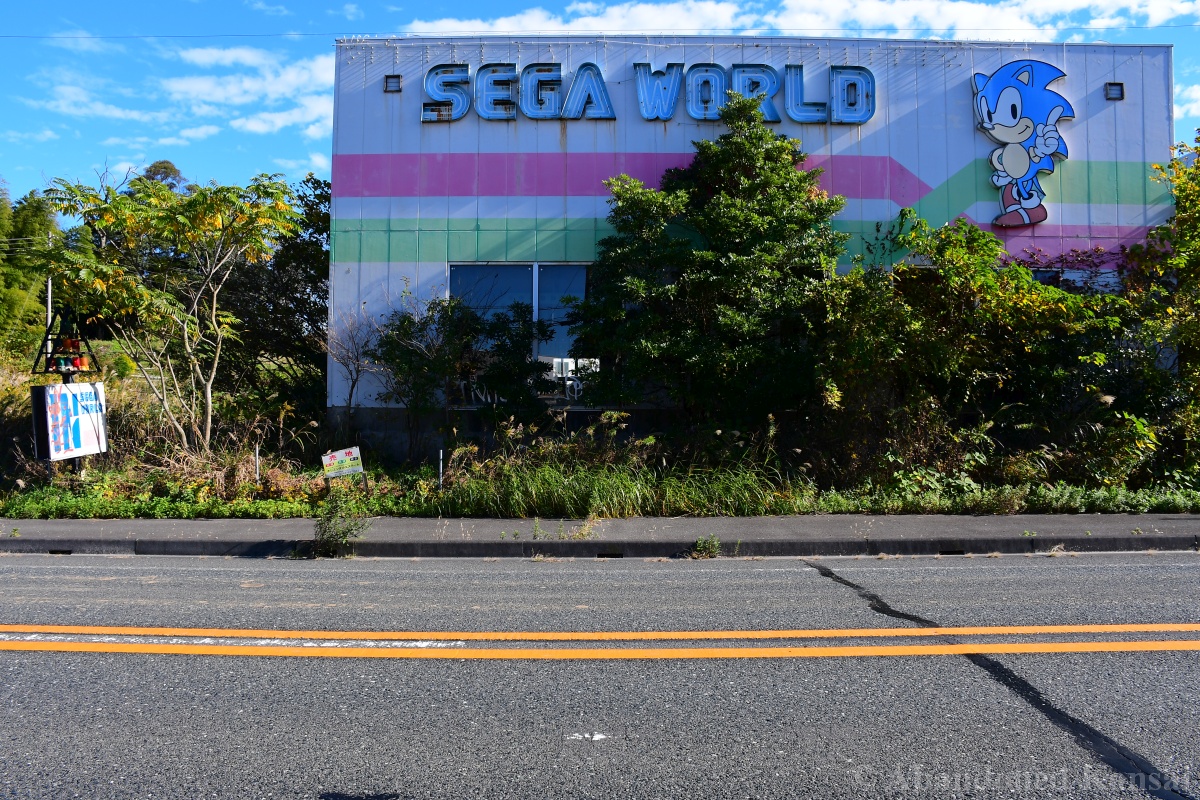
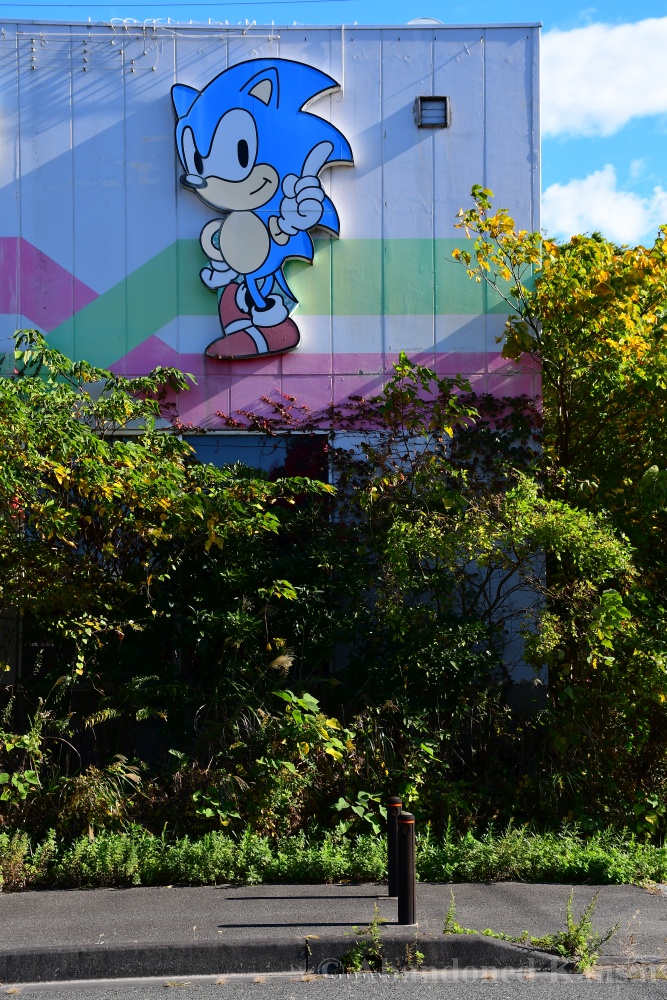
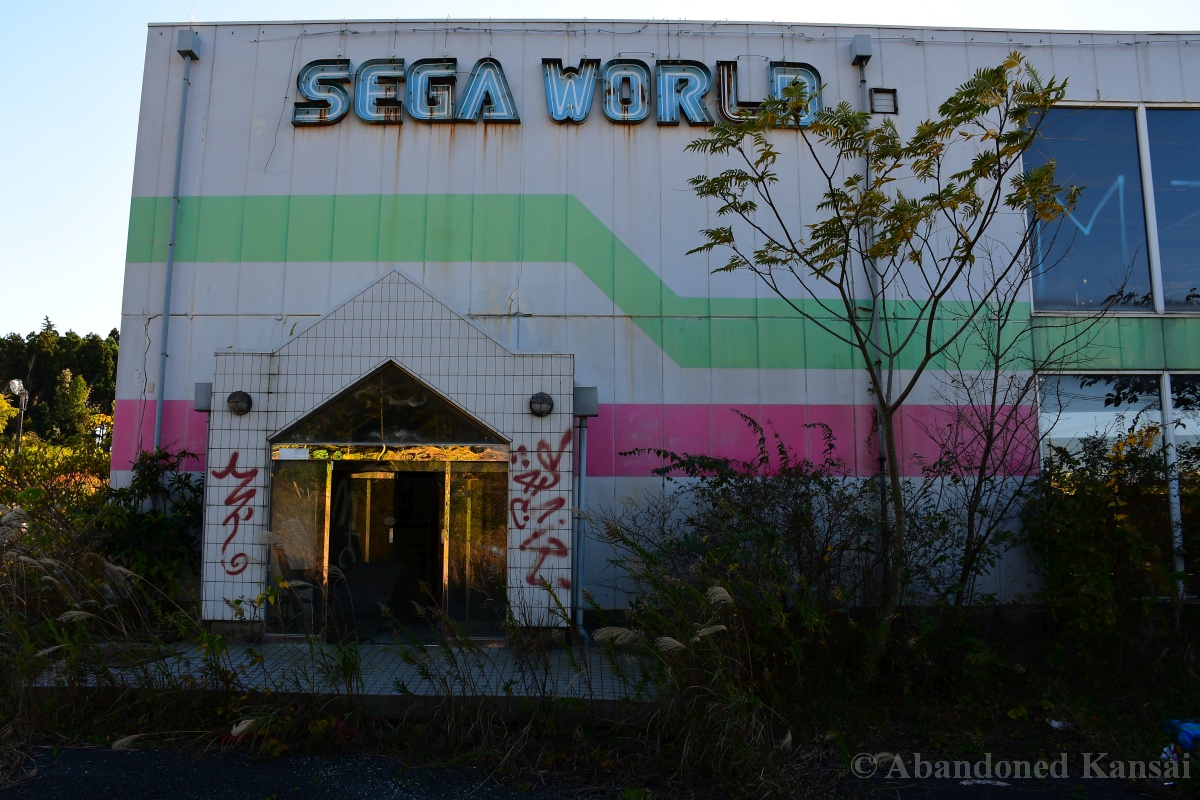
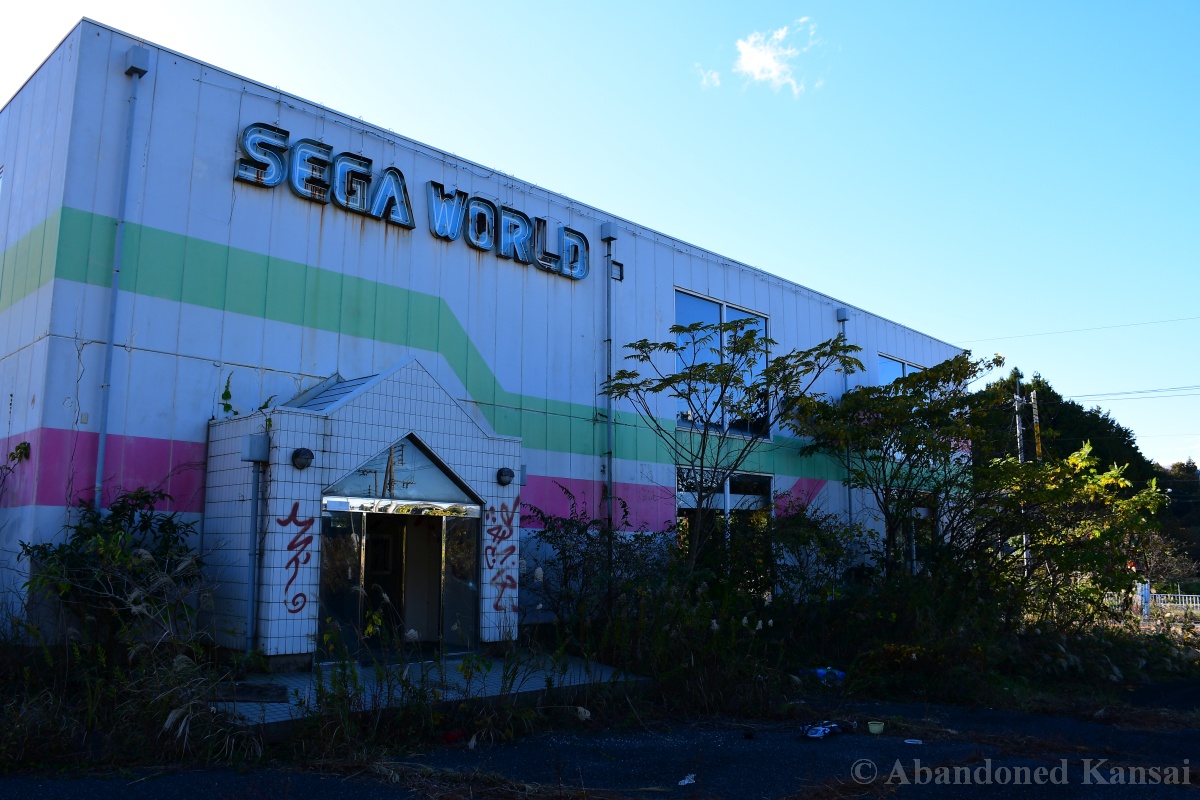
Sega and Sonic are video game icons. Seeing them on the side of an abandoned 90s arcade building in Japan is as good as urban exploration gets!

I’ve been playing video games my whole life. One of my earliest memories is watching my mom playing Pac Man on an Atari VCS2600 in the living room. In the 80s our typical family vacation was spent in the southern part of Lake Garda in Italy – which means that I spent an hour or two every evening at a local amusement arcade (sala giochi), because in Germany arcade video game were usually in the same establishments as slot machines and therefore illegal to enter age 17 and below – mostly watching other people playing… or even the self-running demo mode, but as a child we were easy to entertain back then. My dad was a part-time programmer and full-time musician at the time, and an avid gamer, too, so there were always computers and game consoles at the house. In the early 90s I already bolstered my pocket money by distributing leaflets for local supermarket, so I convinced my dad to go half on a TurboDuo with an adapter for Japanese games – which meant having to buy expensive import games as the system wasn’t released in Germany at all, allowing me to play classics like Bonk’s Adventure, Gate of Thunder and Bomberman ’94 – while my friends at school argued whether Sega or Nintendo was cooler… Amateurs! 🙂
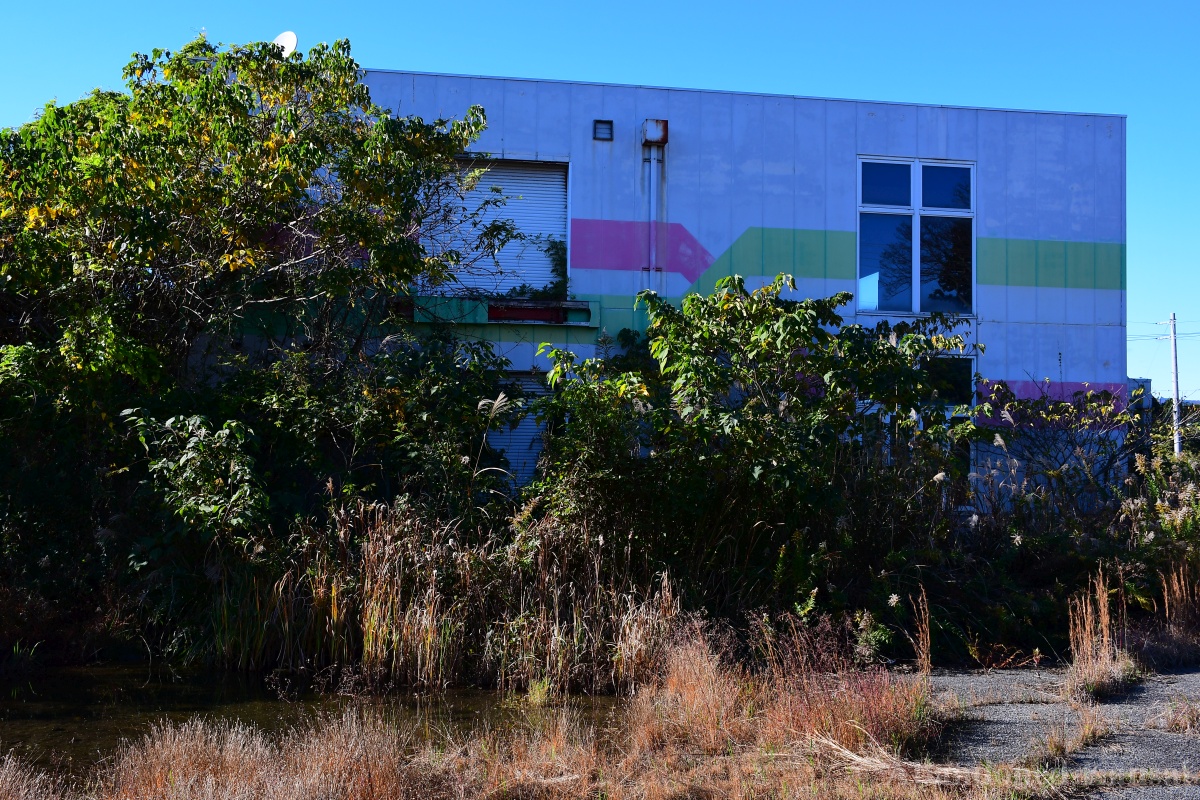
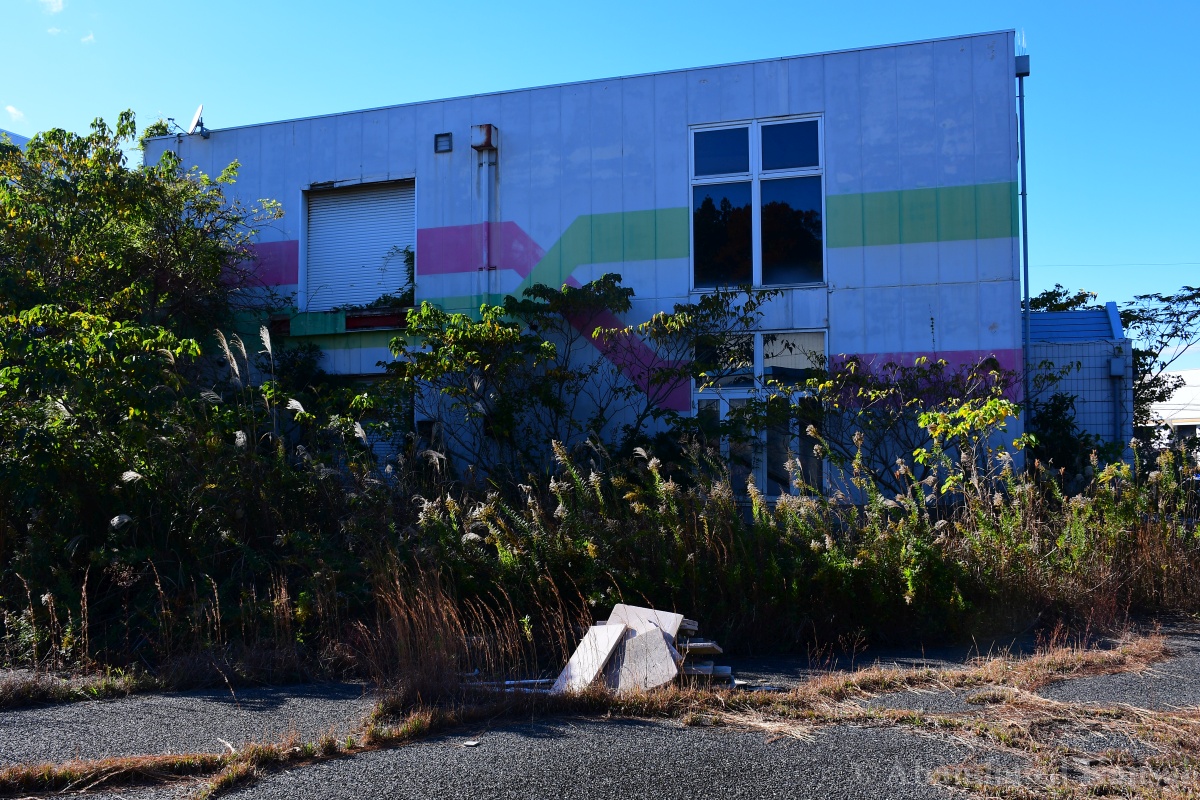
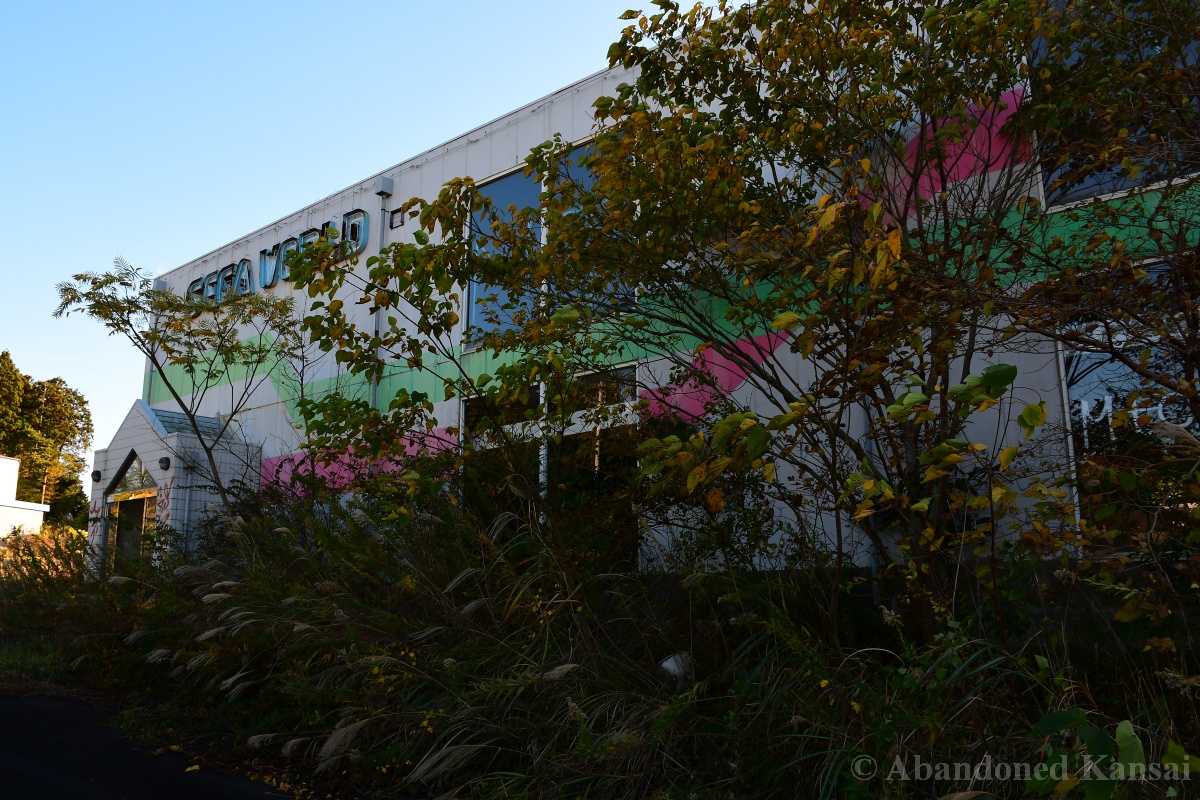
Three decades later I’m still playing video games occasionally, preferably on the Nintendo Switch as it is a portable system (to me, never hooked it up to a display – not once!). As a hobby, I spend much more time on urban exploration though, so you can imagine my excitement when I first heard of this abandoned arcade in the sticks. Not just any generic arcade. A Sega World arcade with the iconic font and a Sonic almost one storey tall! In combination with the pink and bright green stripes on the otherwise white exterior this building oozes quintessential 90s. So cool!

I guess it’s no surprise when I tell you that this Sega World was opened in 1994 – though it might sound unbelievable that is has been closed in 2009! 15 years and hardly any damage, except for some rust and as well as a few graffiti on the large windows.
Now the big two questions…
1) Was I able to get inside?
2) Were there still arcade machines inside?
The answers: Yes and no.
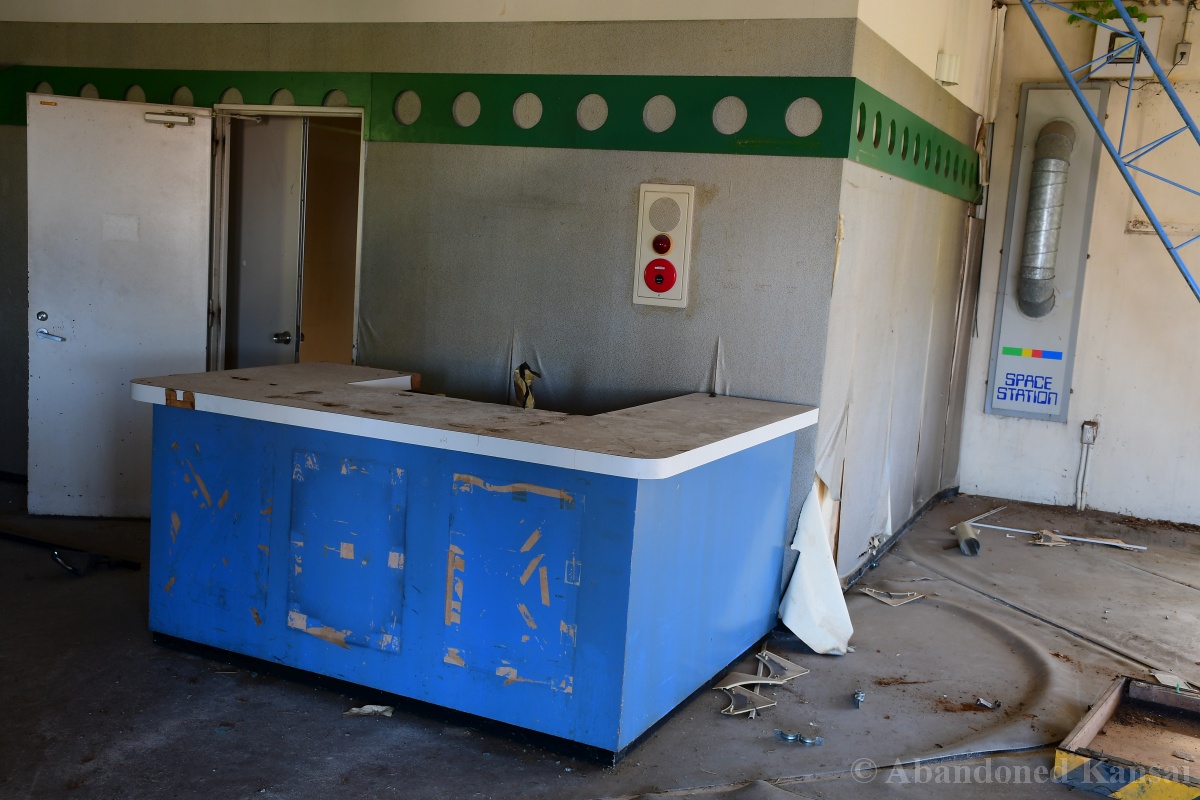
I was able to get inside, but there were no arcade machines or anything else removable of value left behind – my guess is that they moved the games and merchandising to another location when they closed shop. “Able to get inside” sounds like more effort than it actually was. The door was open. Literally. It didn’t even have to open it, it stood open and I was able to walk inside to take a few photos… after removing a large spider web, which tells me that there weren’t any other visitors here recently.
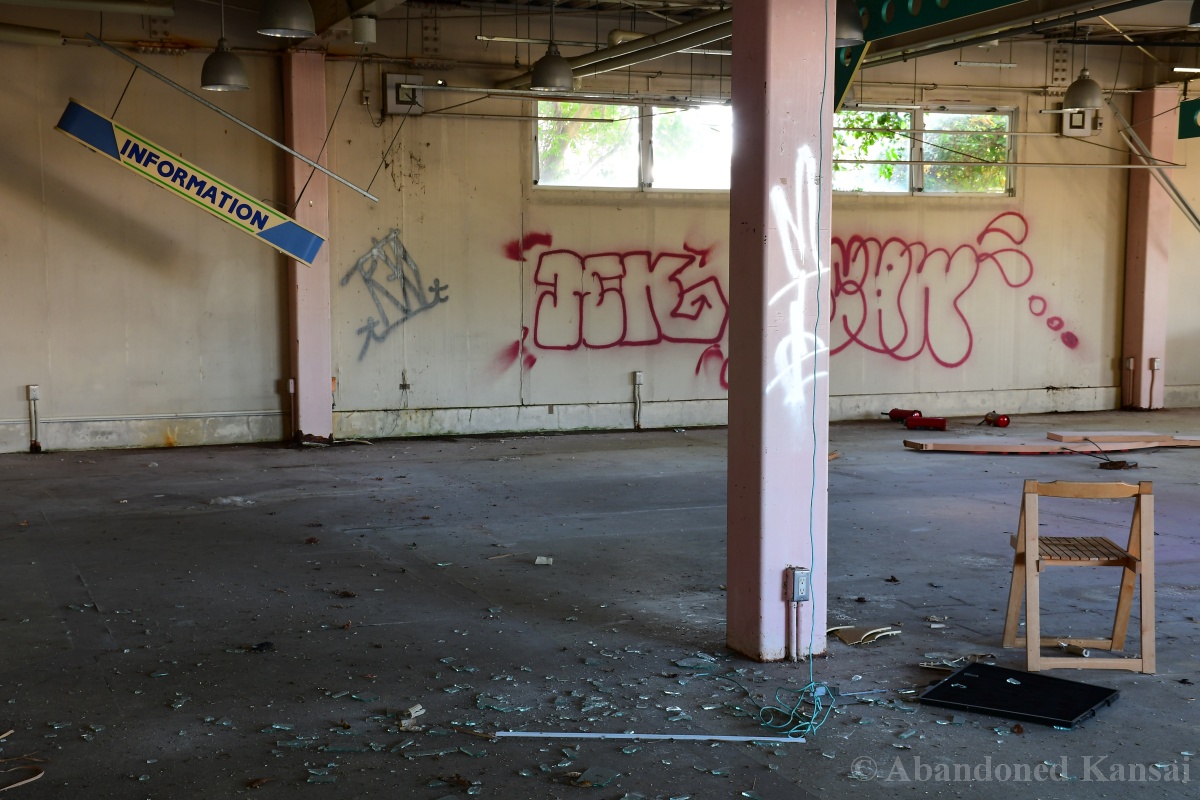
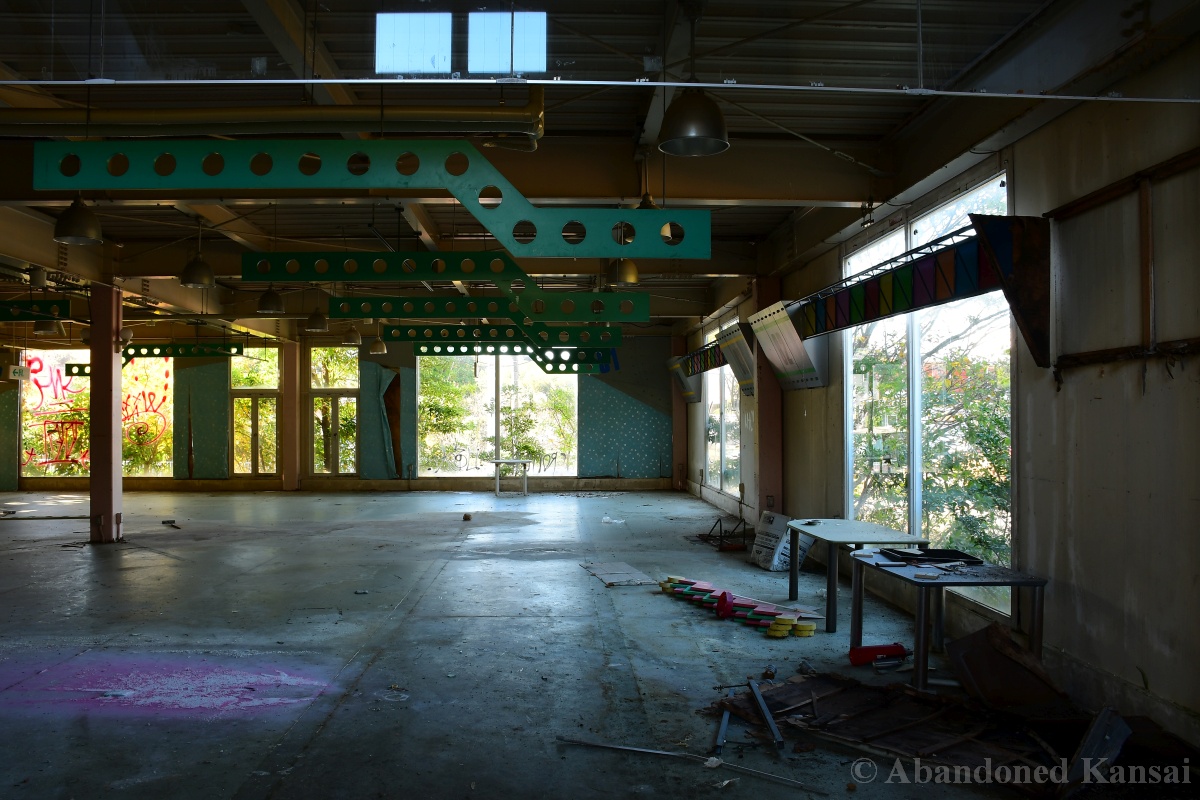
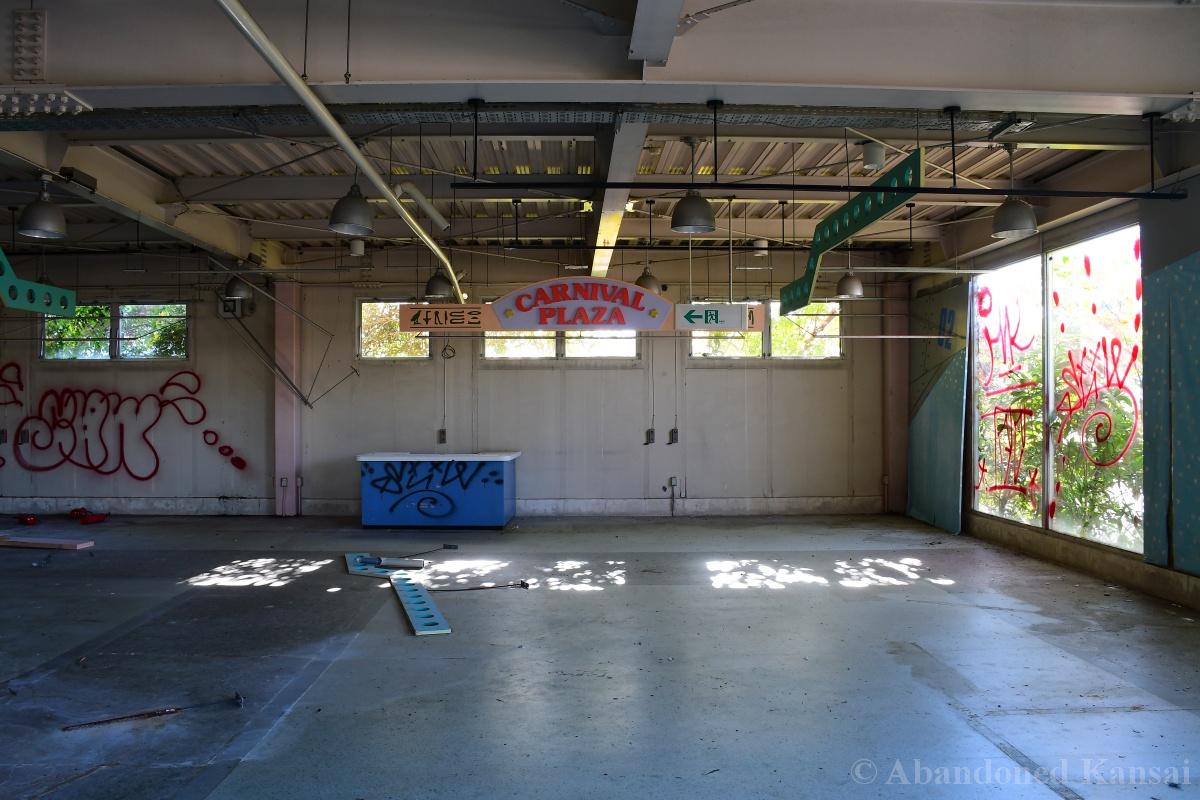
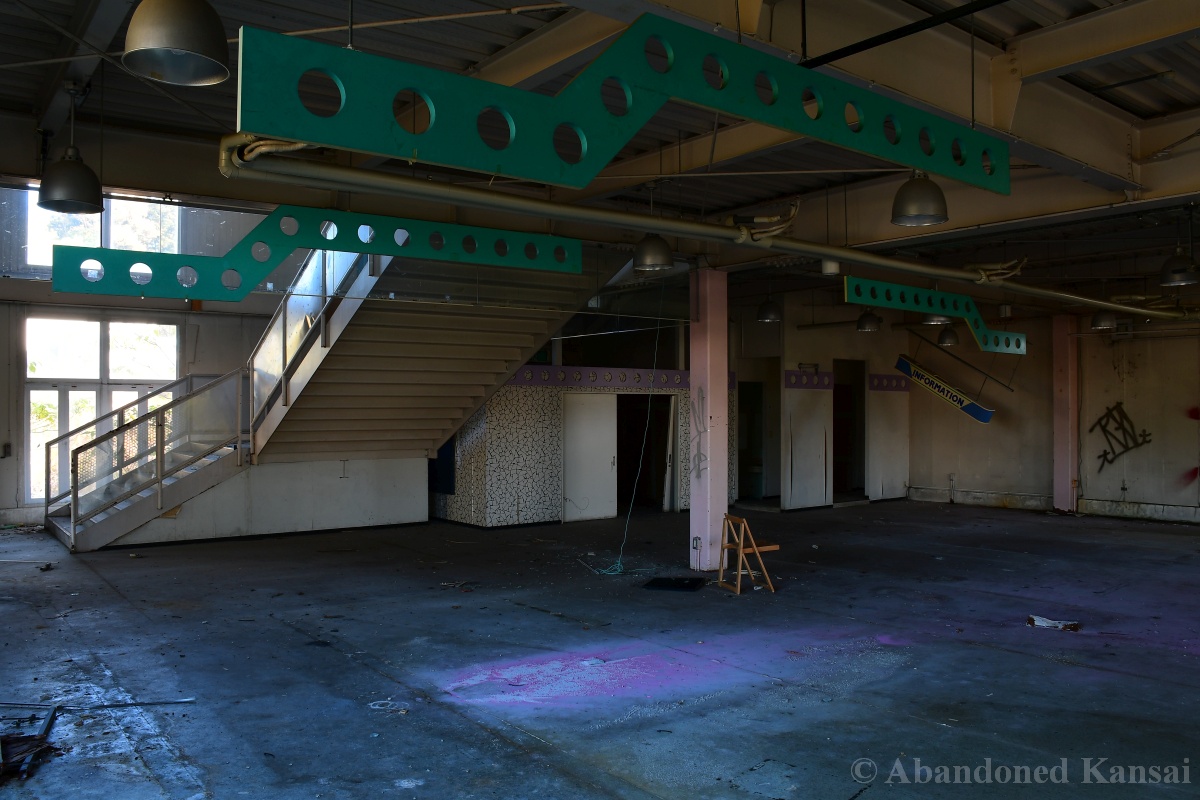
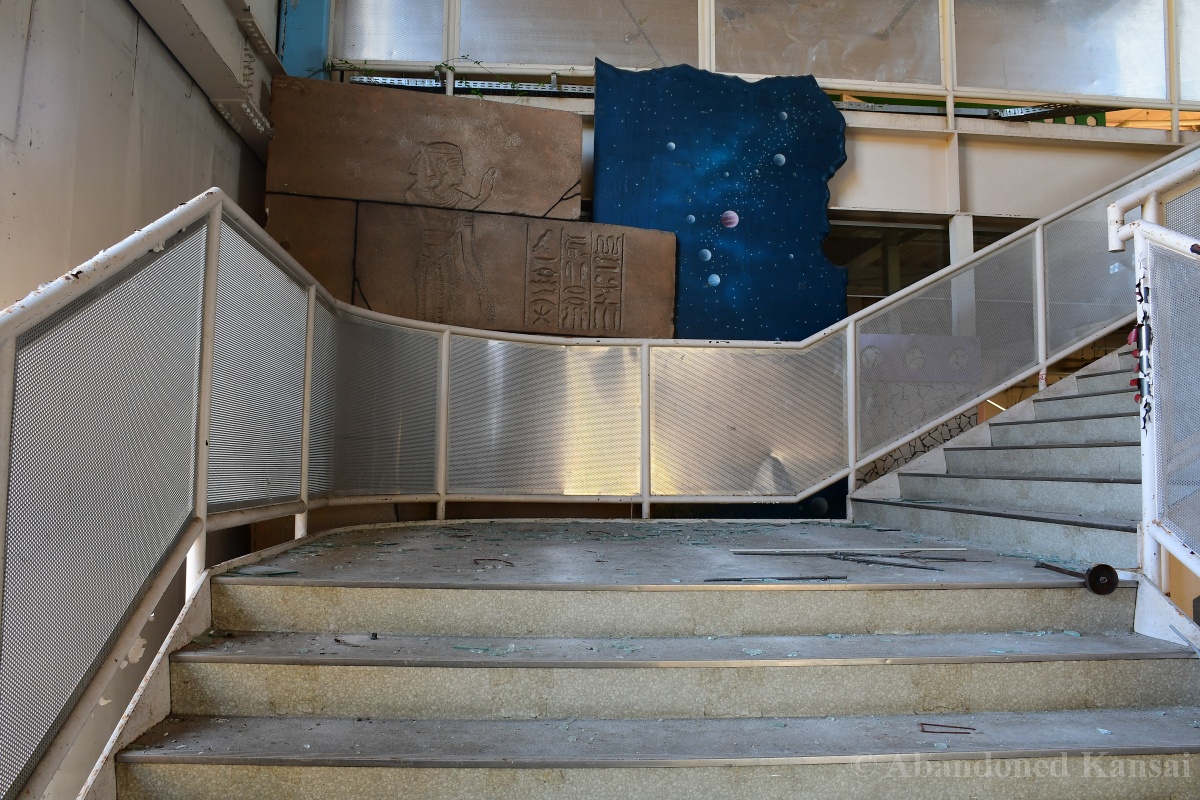
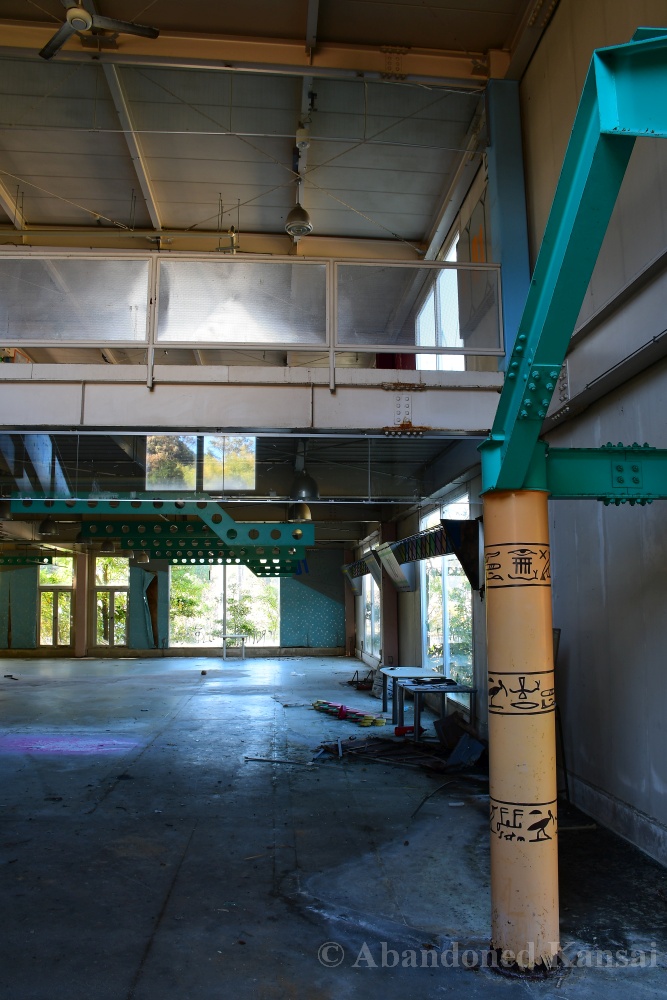
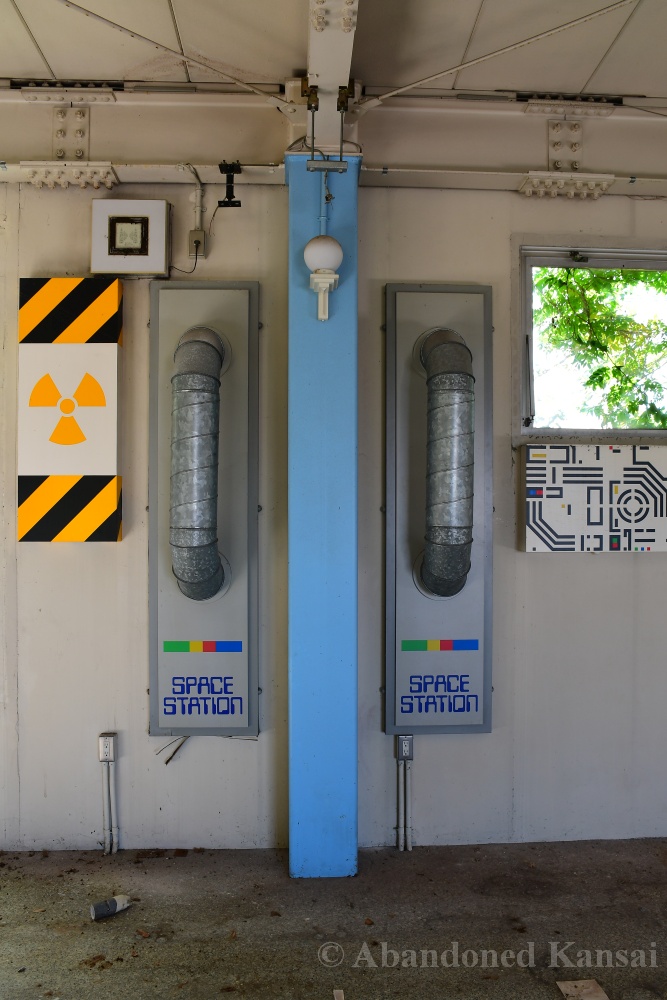
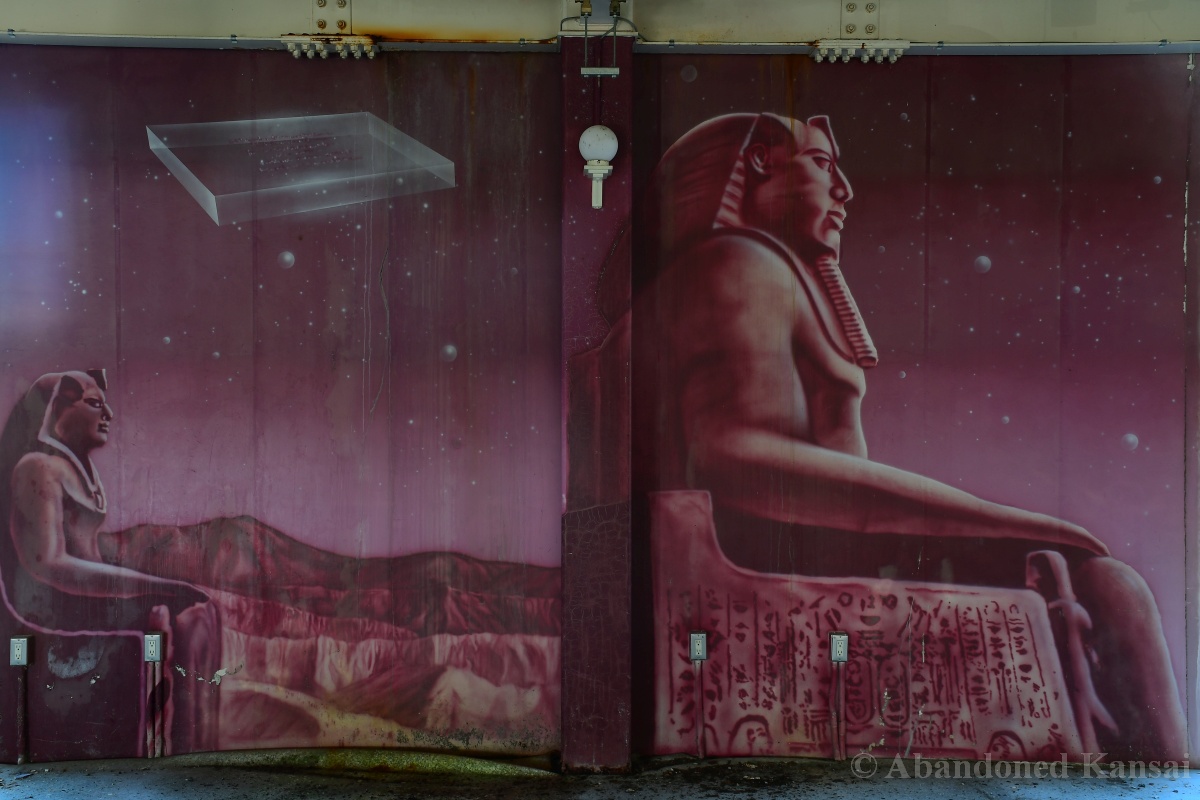
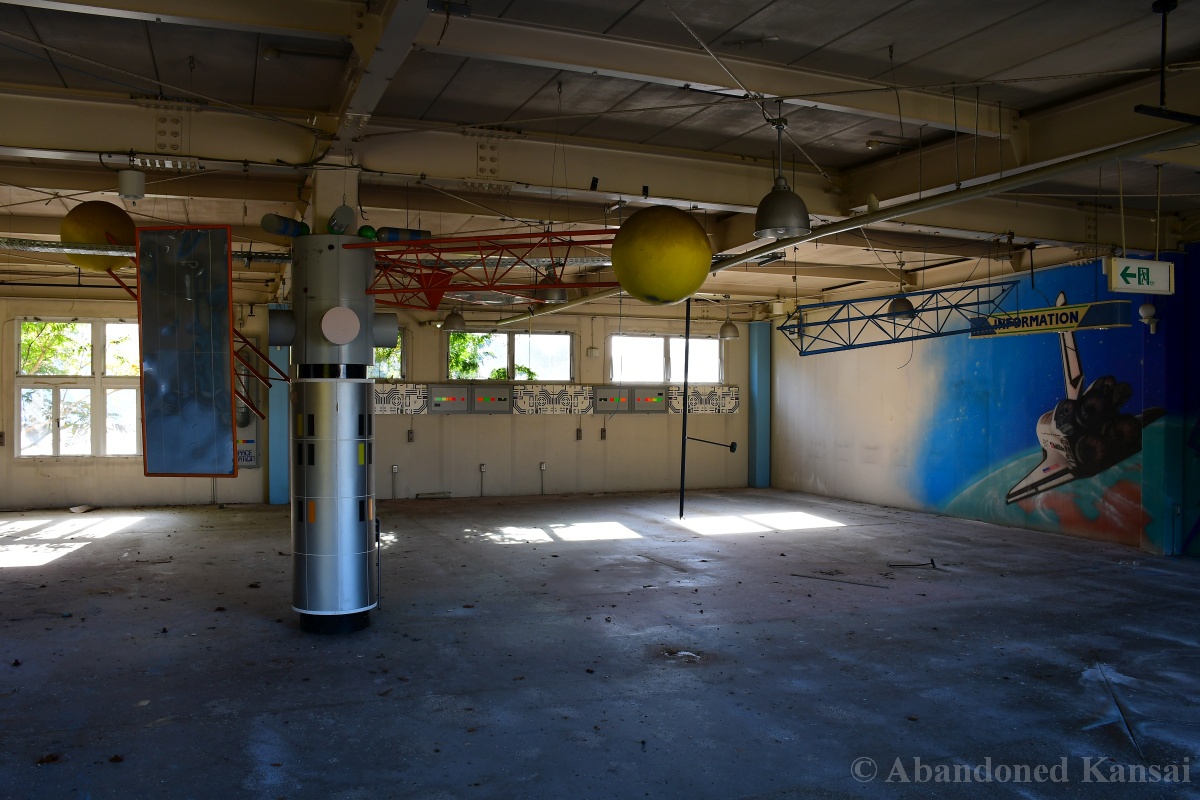
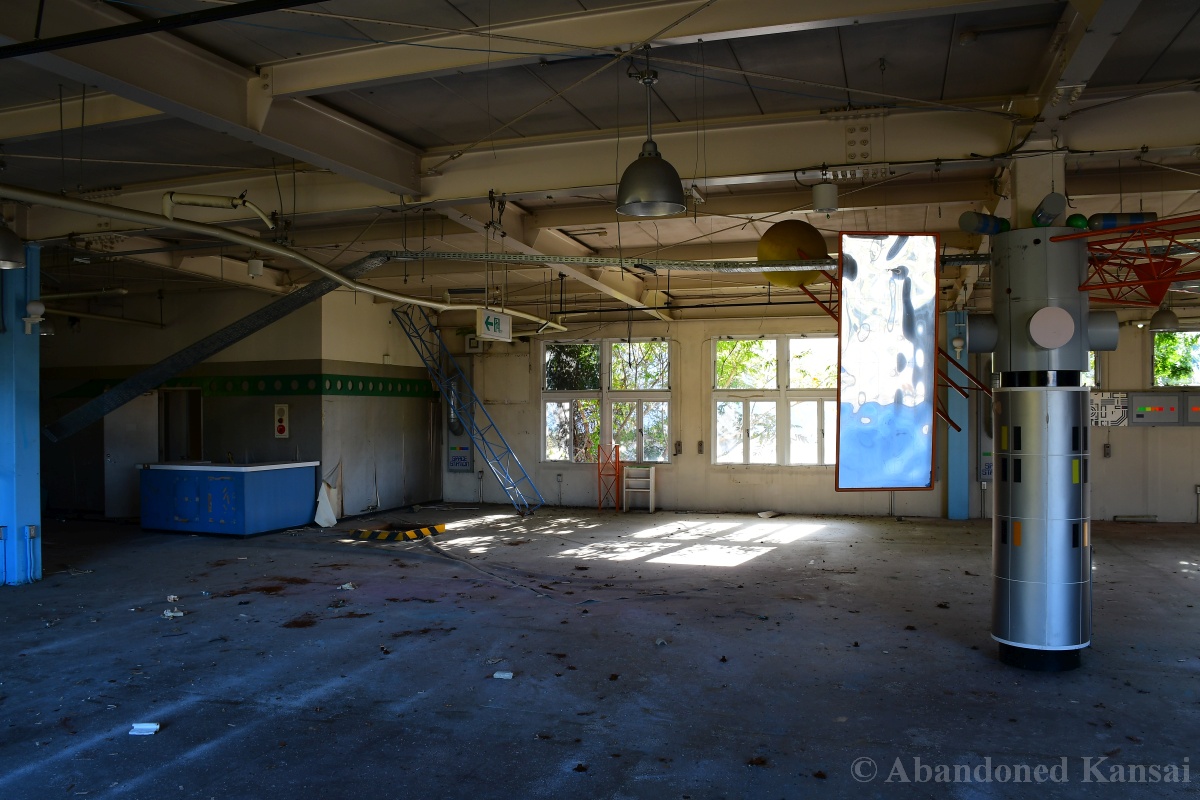
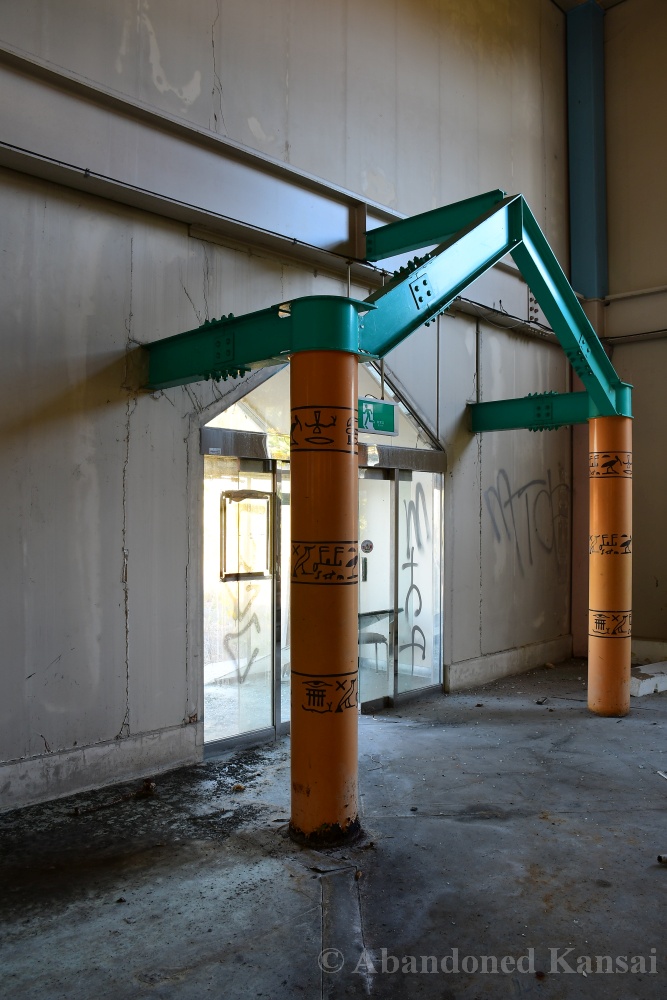
The interior of the building was in as good condition as the exterior. Some natural decay from 15 years without maintenance as well as a few graffiti, but nothing too bad. For the most you could still see the original design of the wall, which was part space, part Egyptian style… which I guess is quite 90s, too? There even was a stylized satellite contraption in the middle of the upper floor and hardly any mold, so as far as explorations go, this was a very relaxed one, despite heavy traffic on the road in front – spectacular outside, mildly interesting inside. Definitely one of my favorite locations of 2024, despite the lack of arcade machines. But if you are into those, who don’t you check out the articles about the *Arcade Machine Hotel* or the *Nishiwaki Health Land Hotel*?

(*Like Abandoned Kansai on Facebook* or *follow us on Twitter* if you don’t want to miss the latest articles and exclusive content – and subscribe to the *video channel on Youtube* to receive a message right after a new video is online…)
Read Full Post »

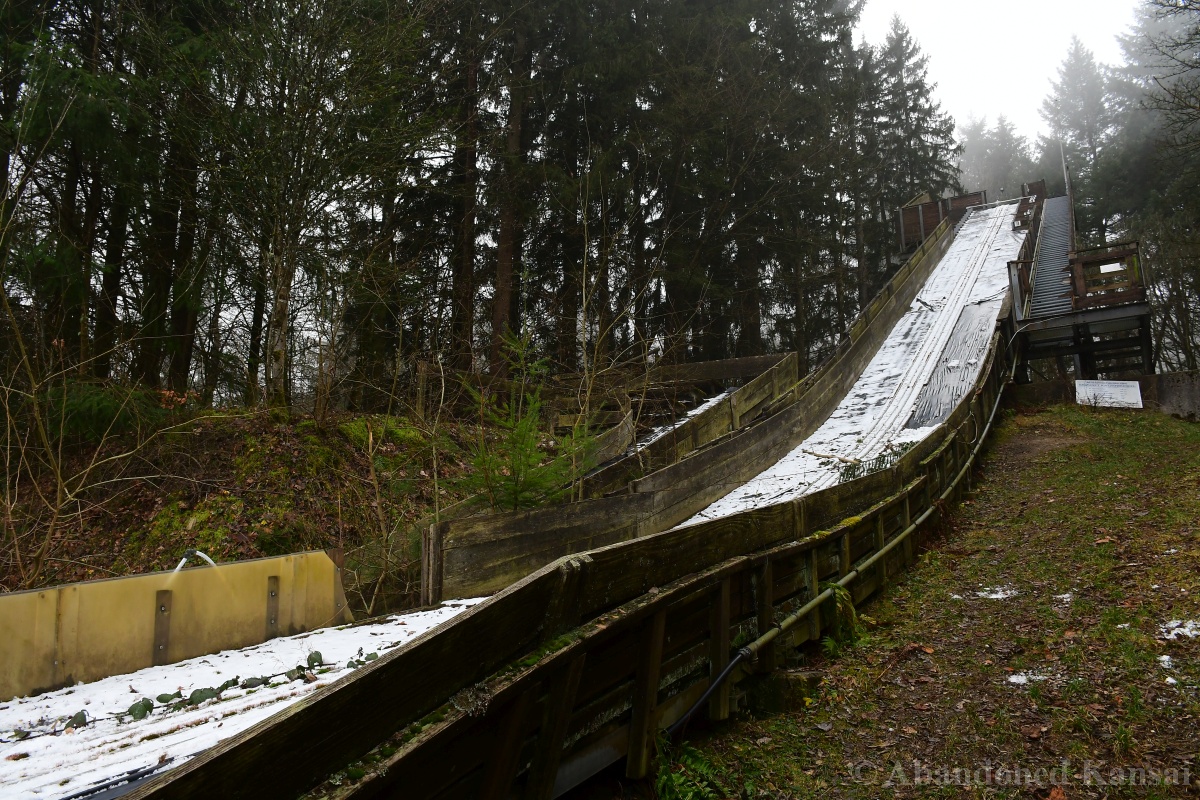
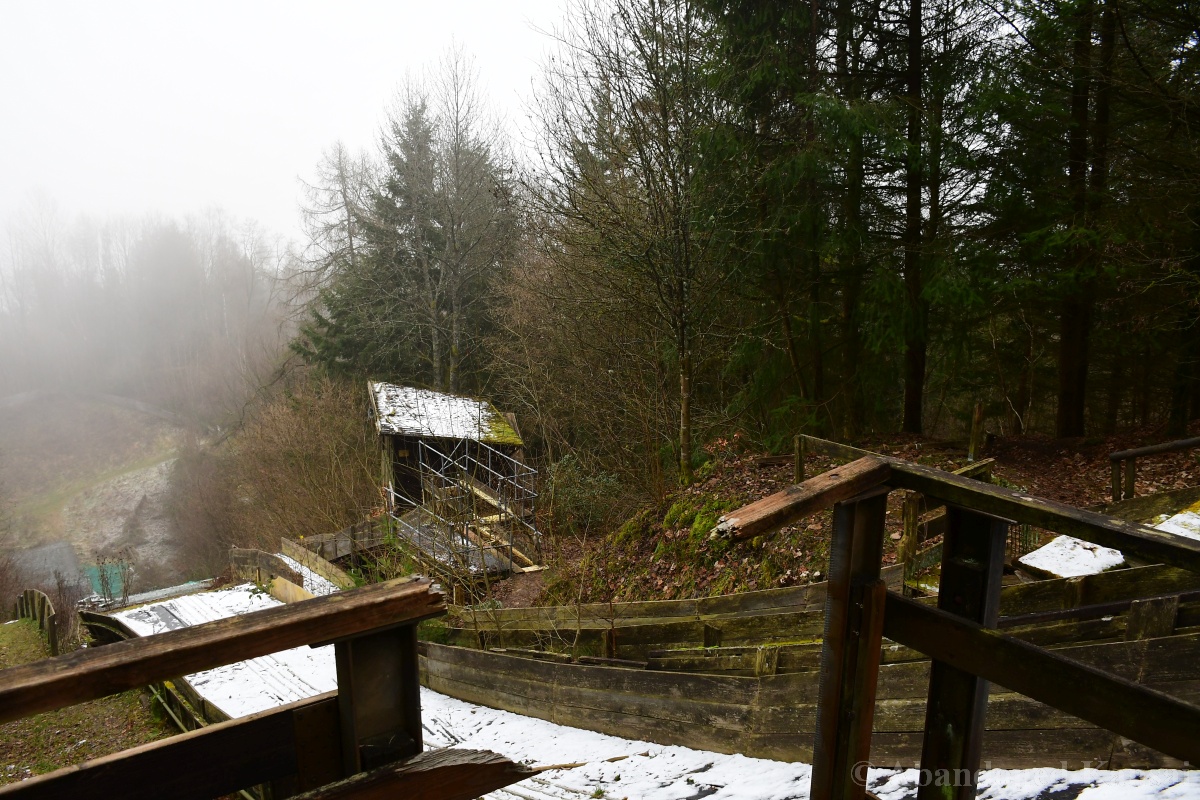
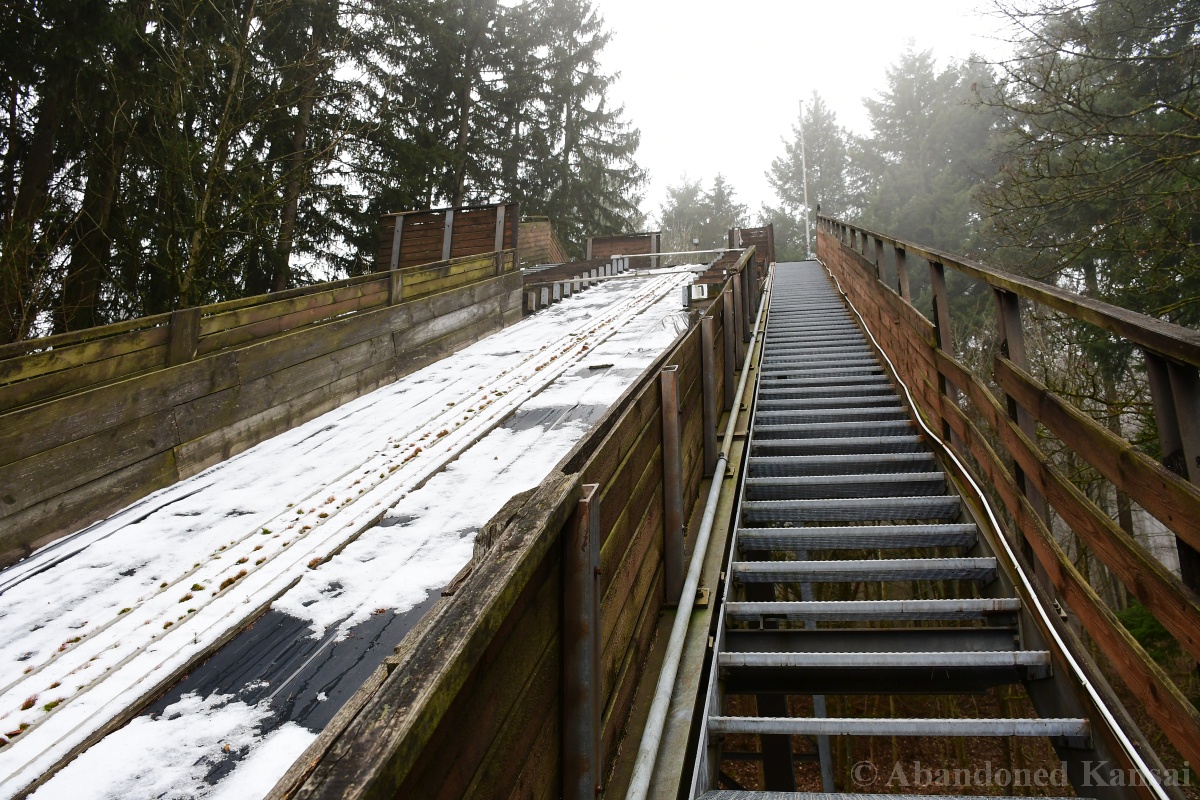
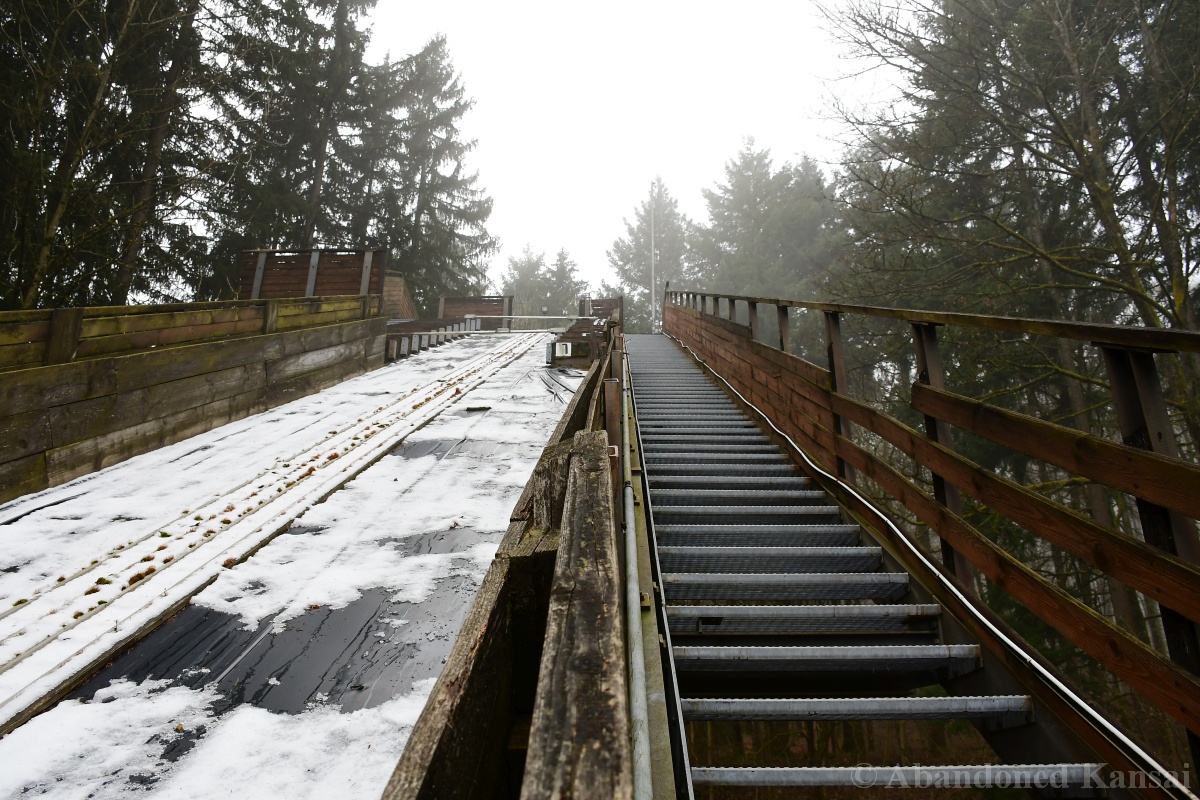
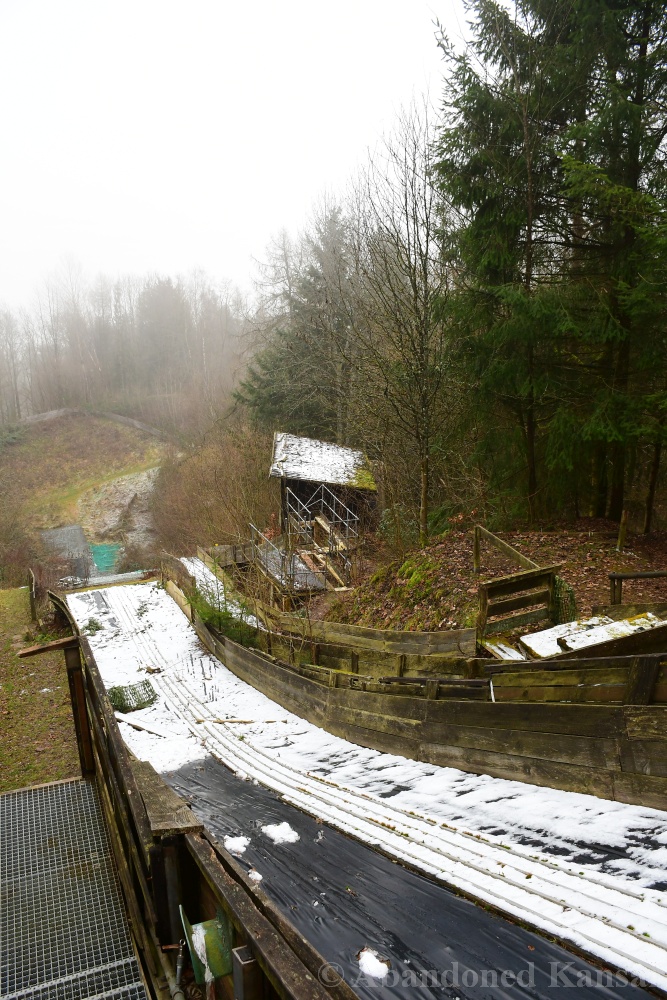
In the 1990s ski jumping was super popular in Germany thanks to successful athletes like Jens Weisflog, Dieter Thoma, Martin Schmitt, and Sven Hannawald – major events were even broadcasted on popular TV stations. Kind of a surprise to me as it is a sport hardly anybody actively does themselves – every kid plays soccer at one point, maybe not in a team, but in school or on the street. But who actually does ski jumping? Only a few thousand people worldwide. In the past 20 years interest went down a bit, despite actives like Severin Freund and Andreas Wellinger continuously being successful. In addition to dwindling interest, climate change is a threat to ski jumping as it has left some ski resorts and ski jumping hill without enough snow to run them with financial success.

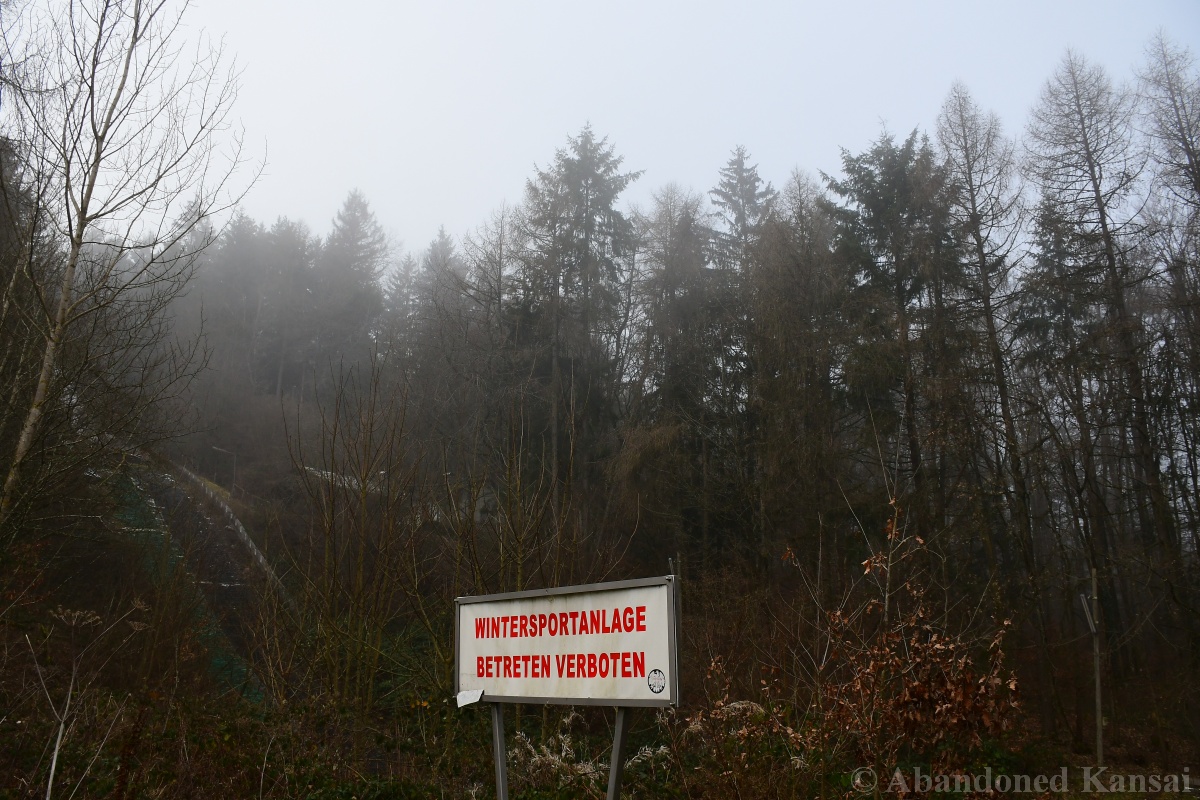
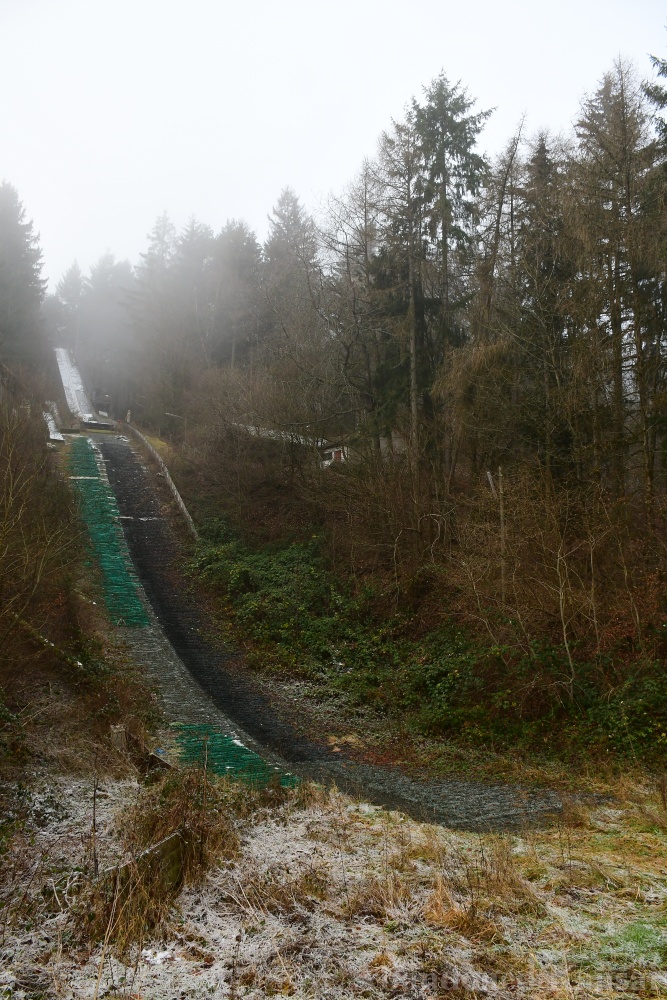
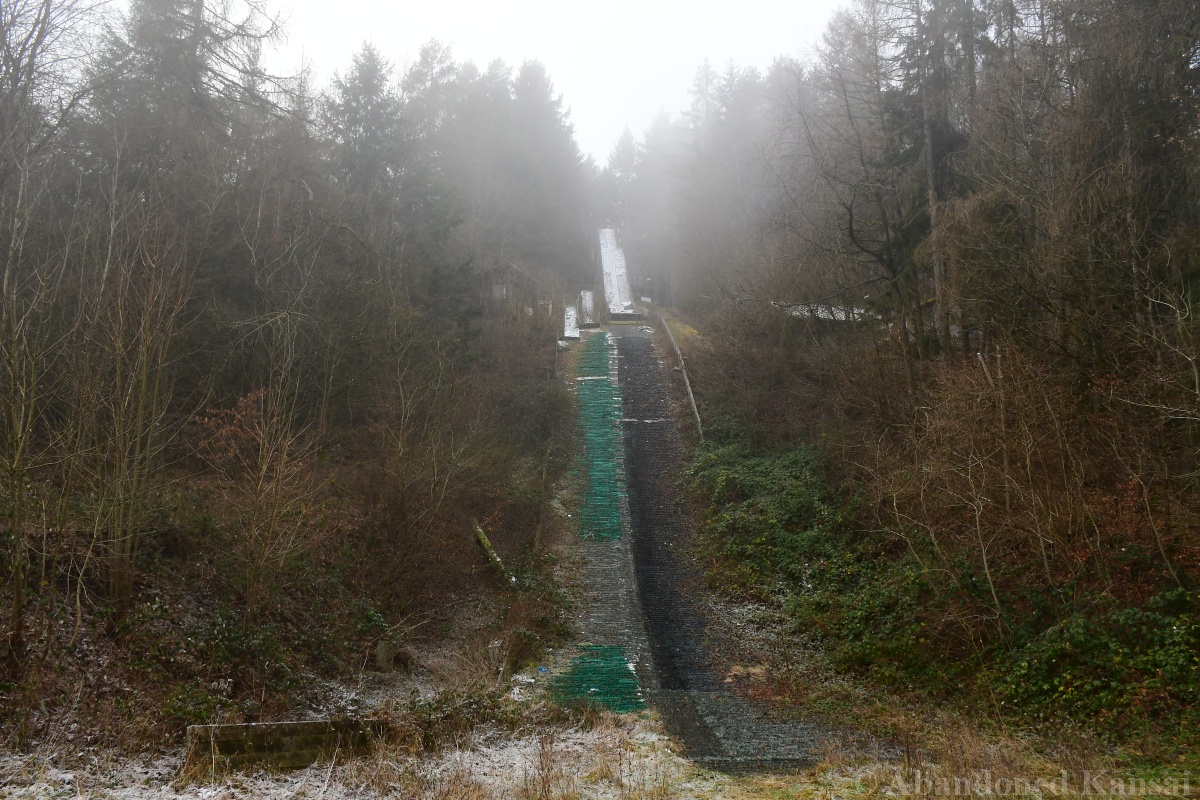
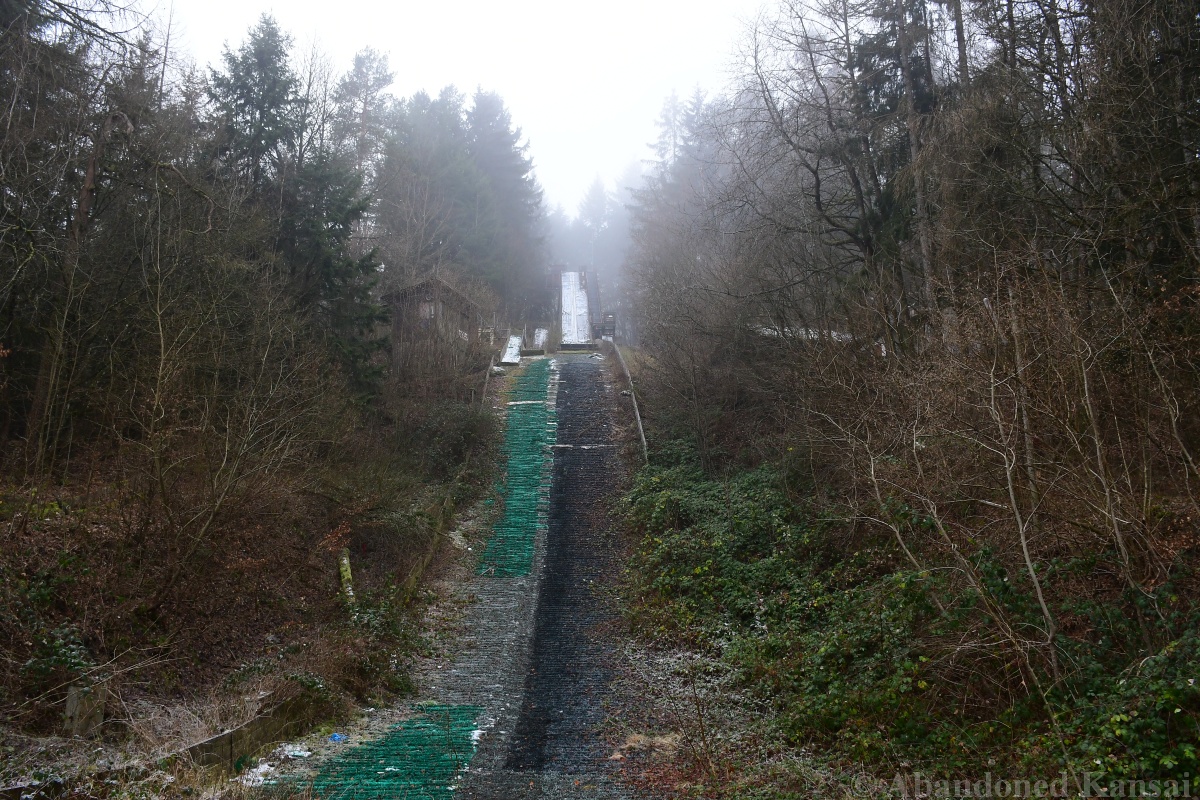
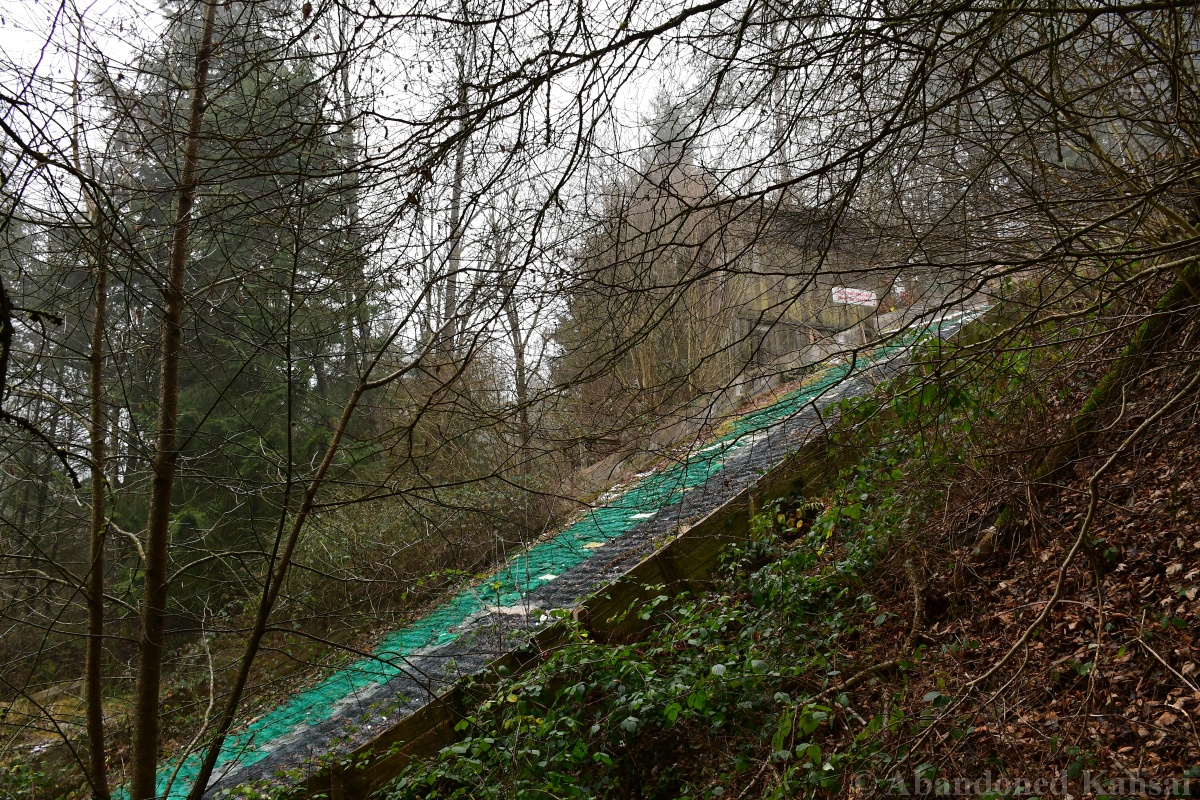
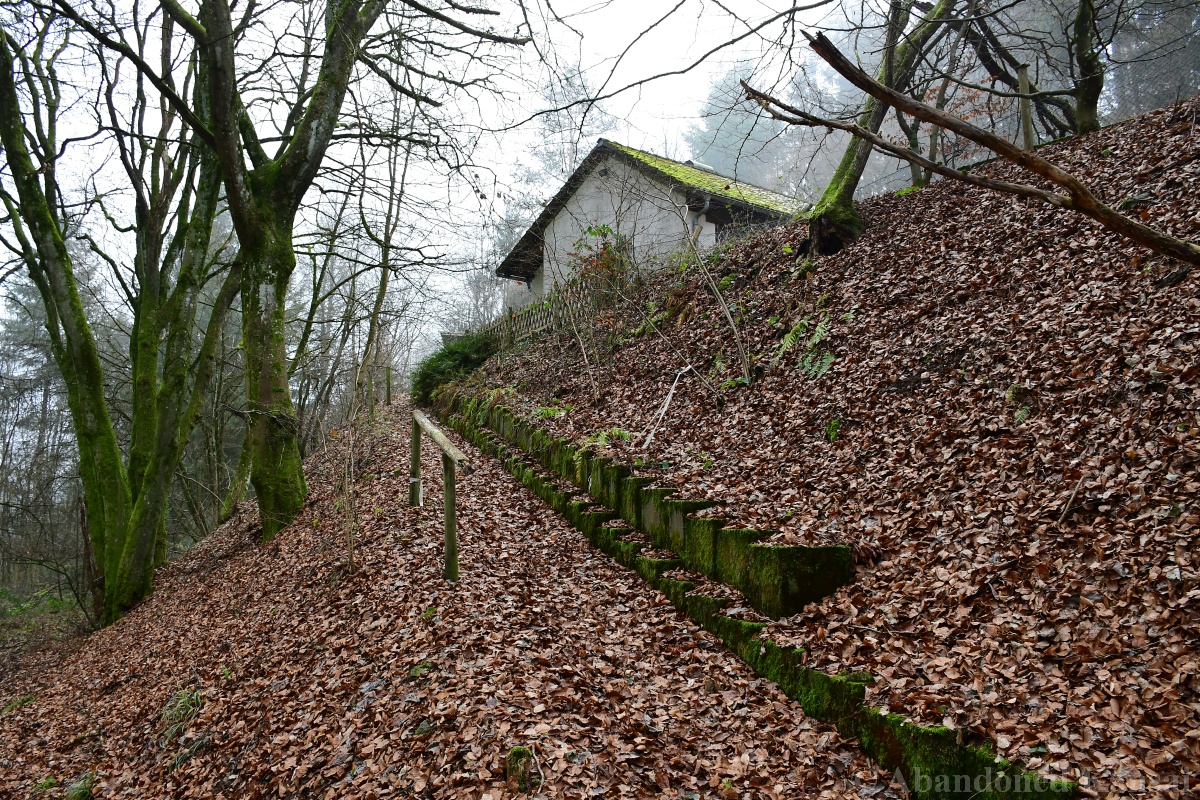
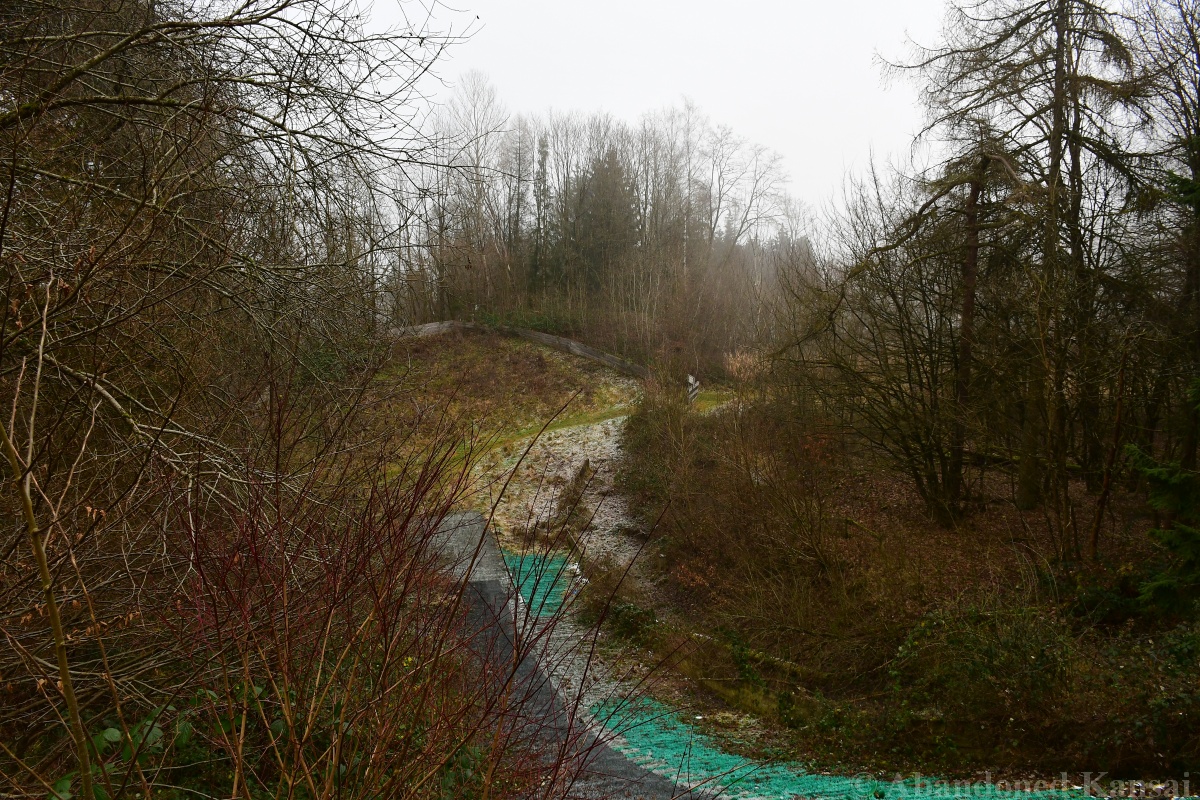
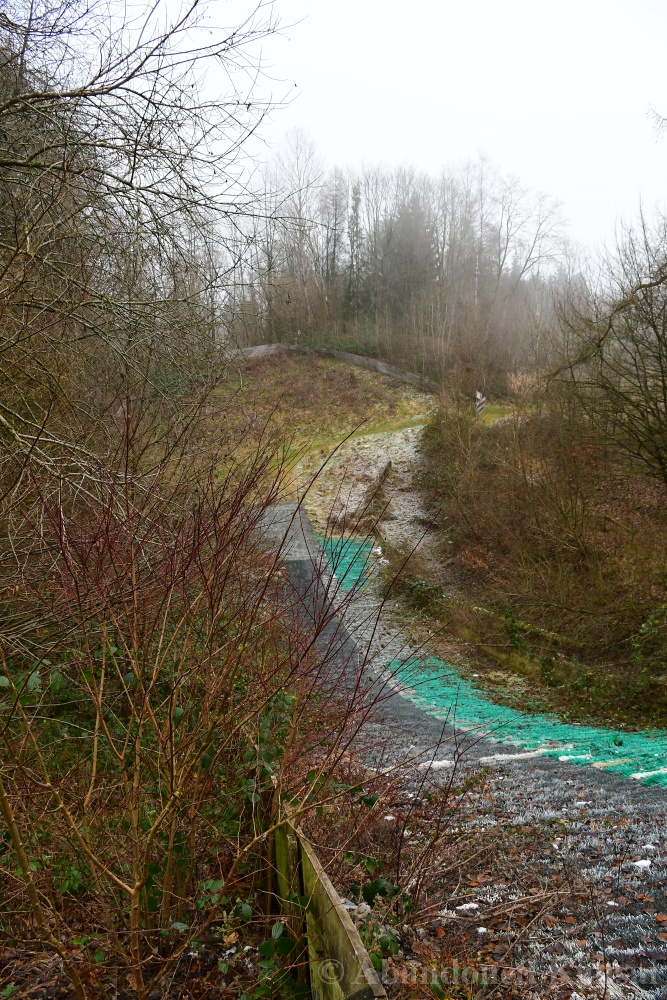
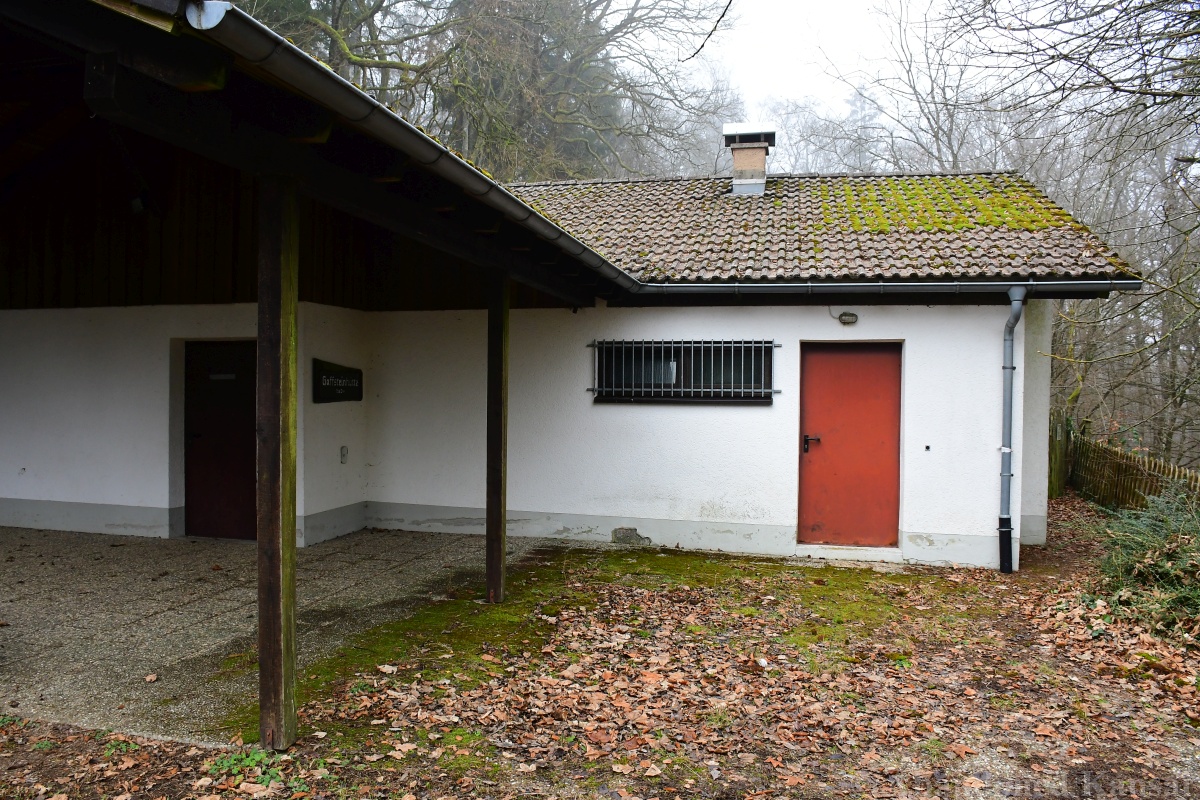
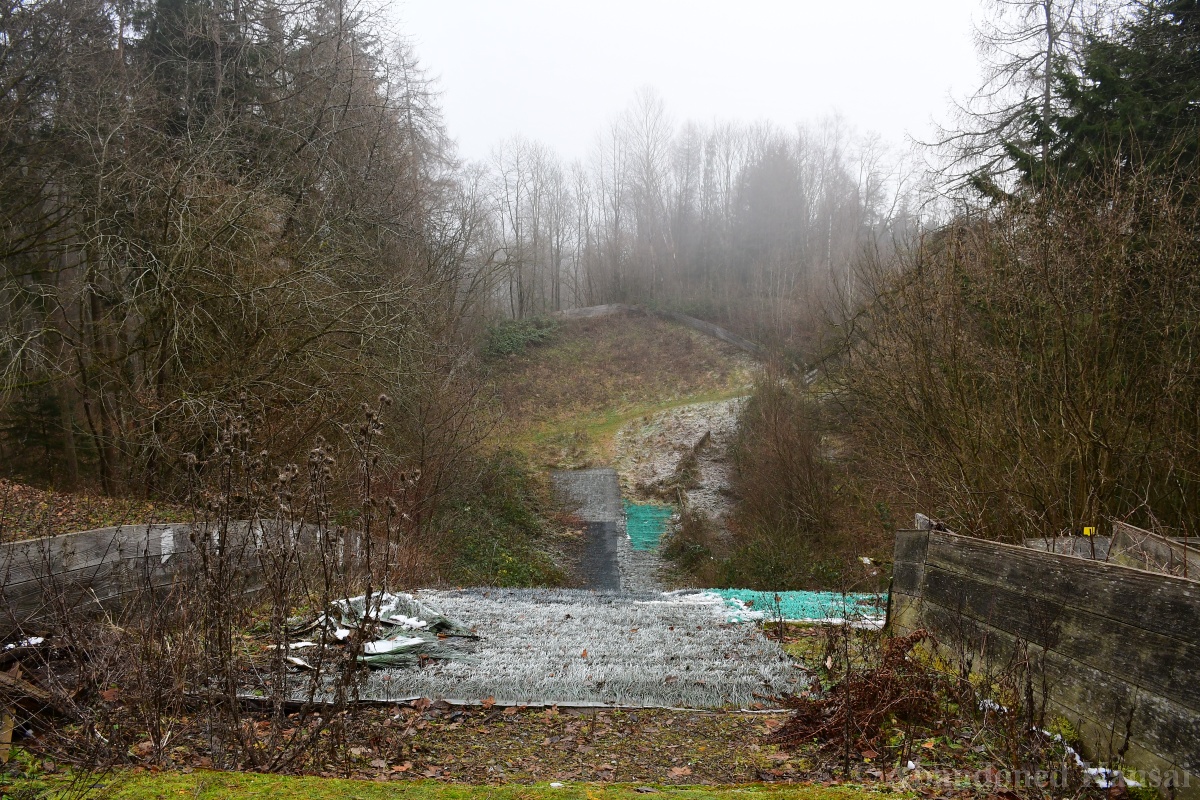
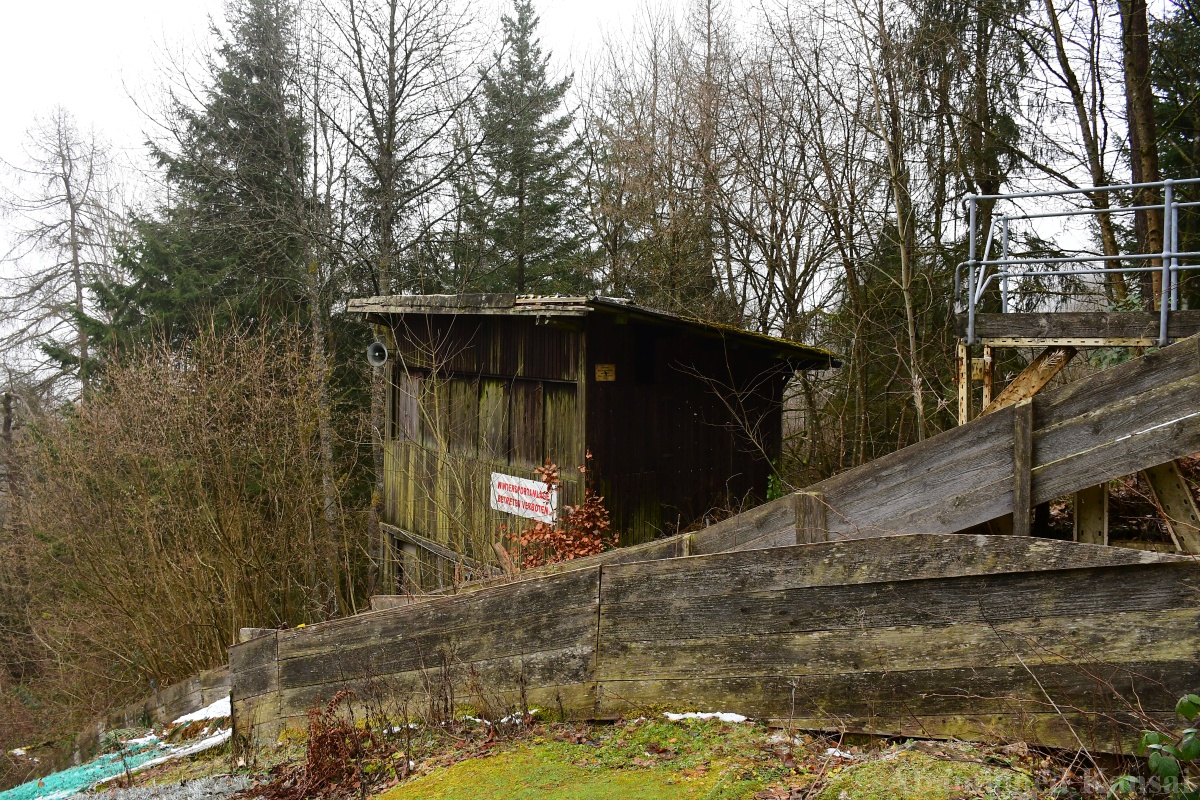
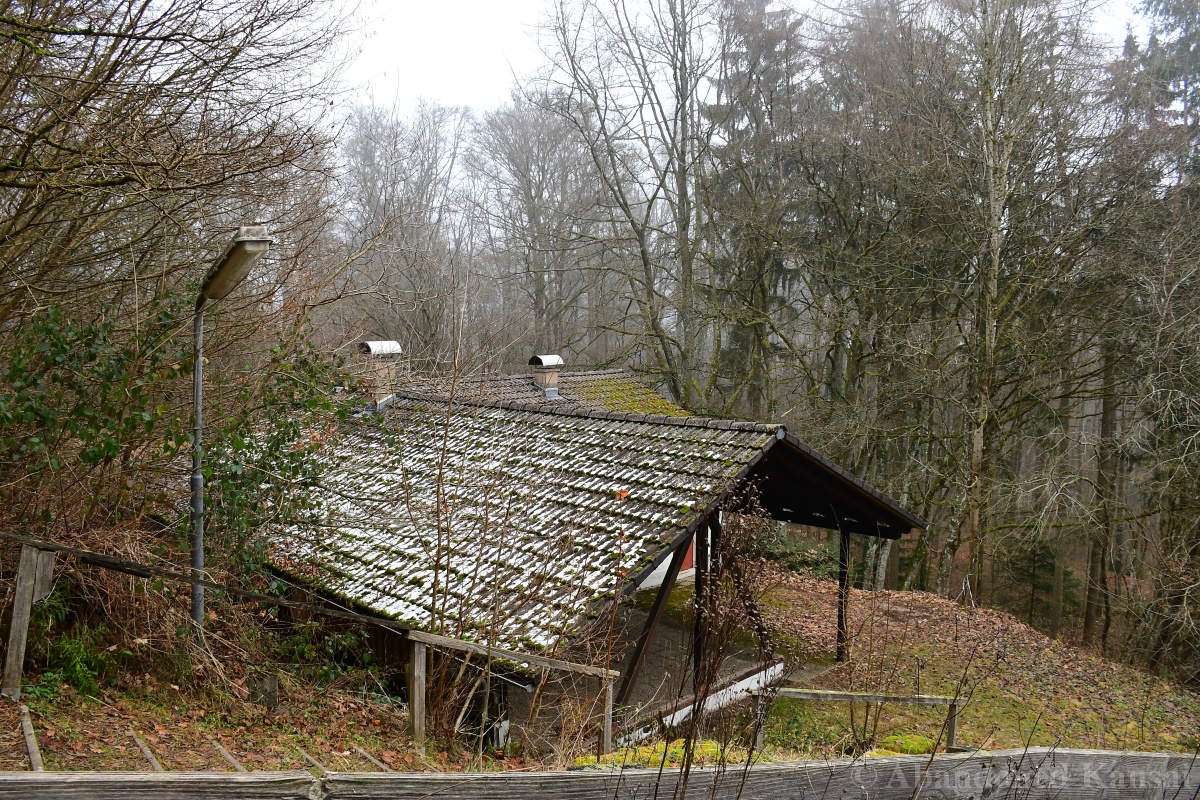
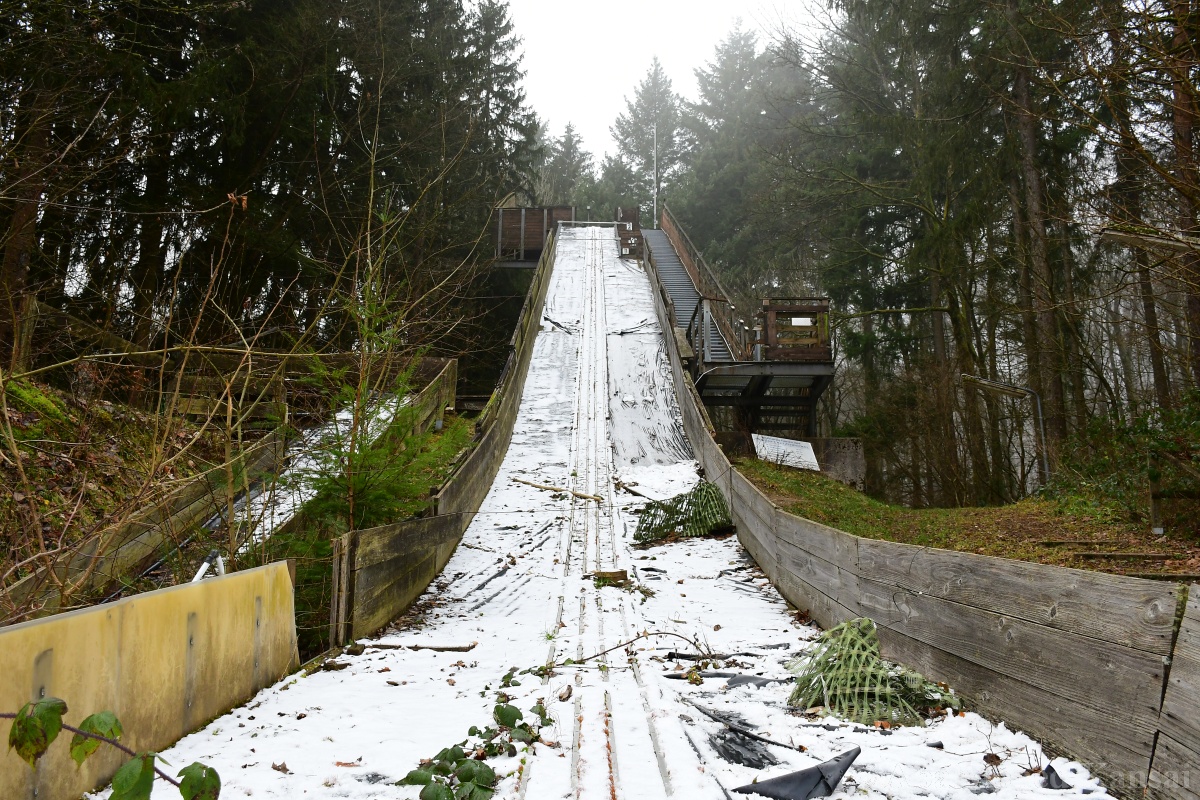
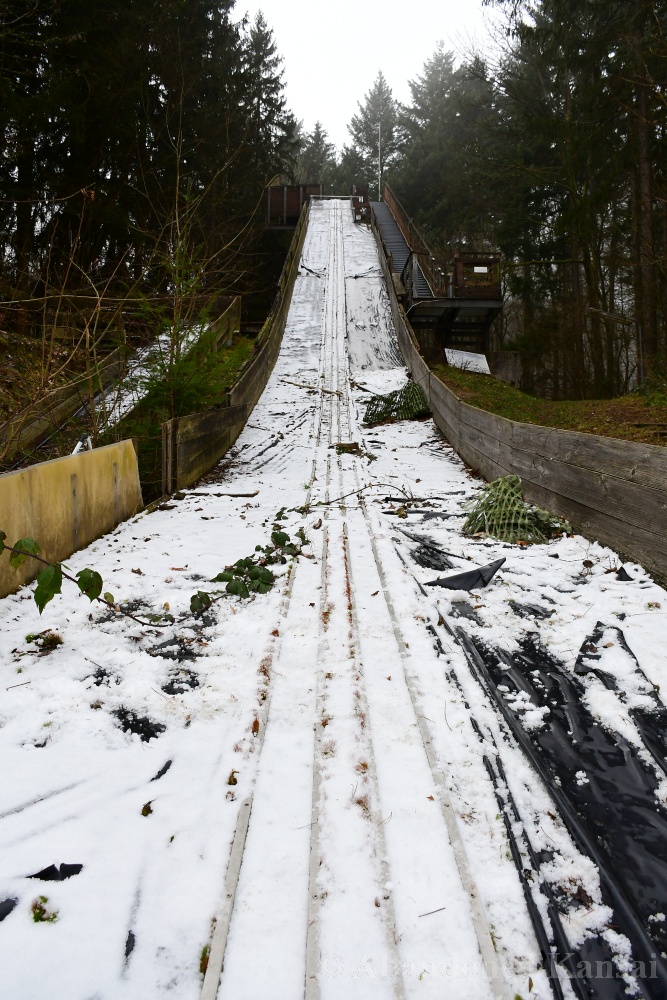
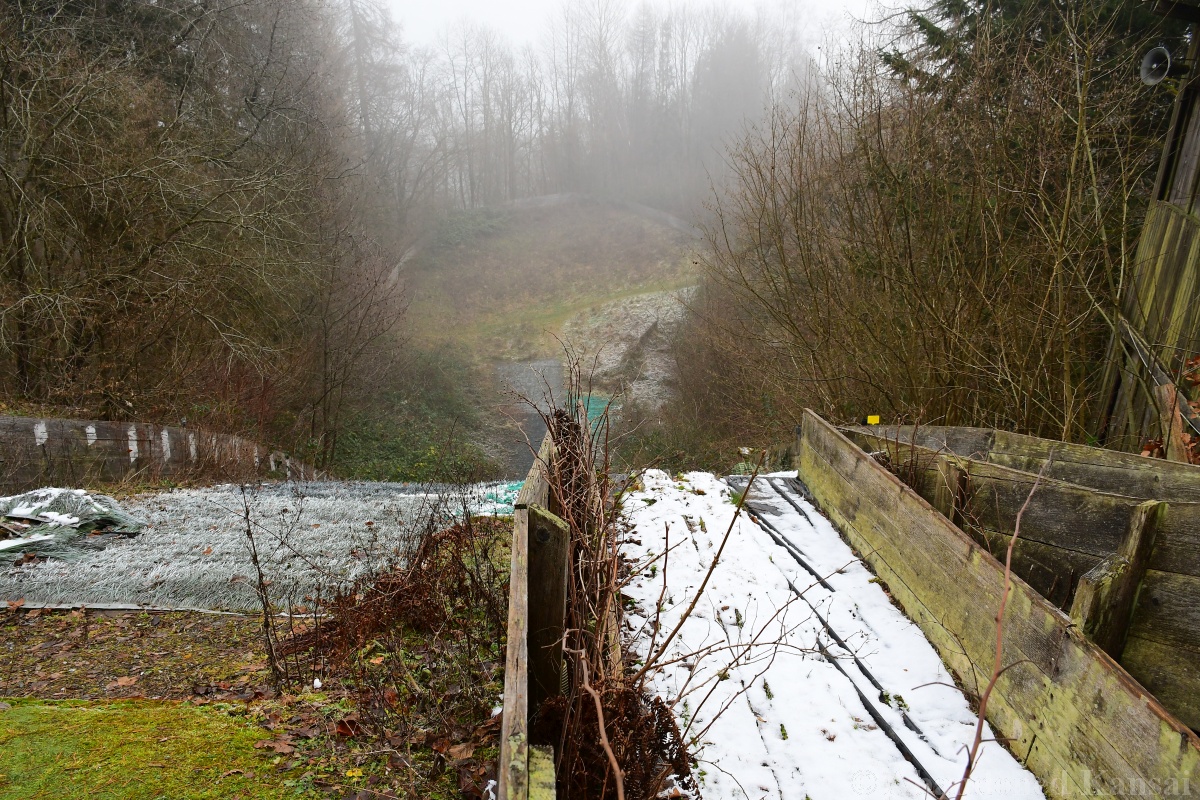
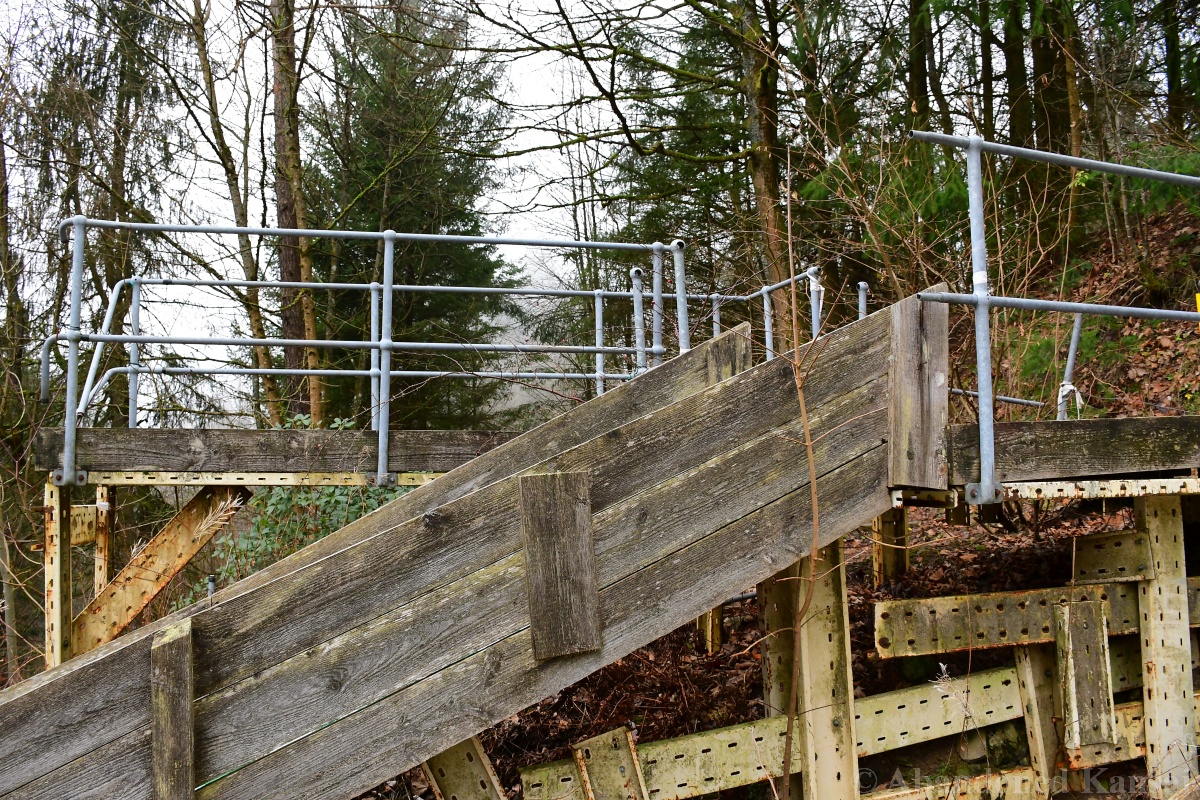
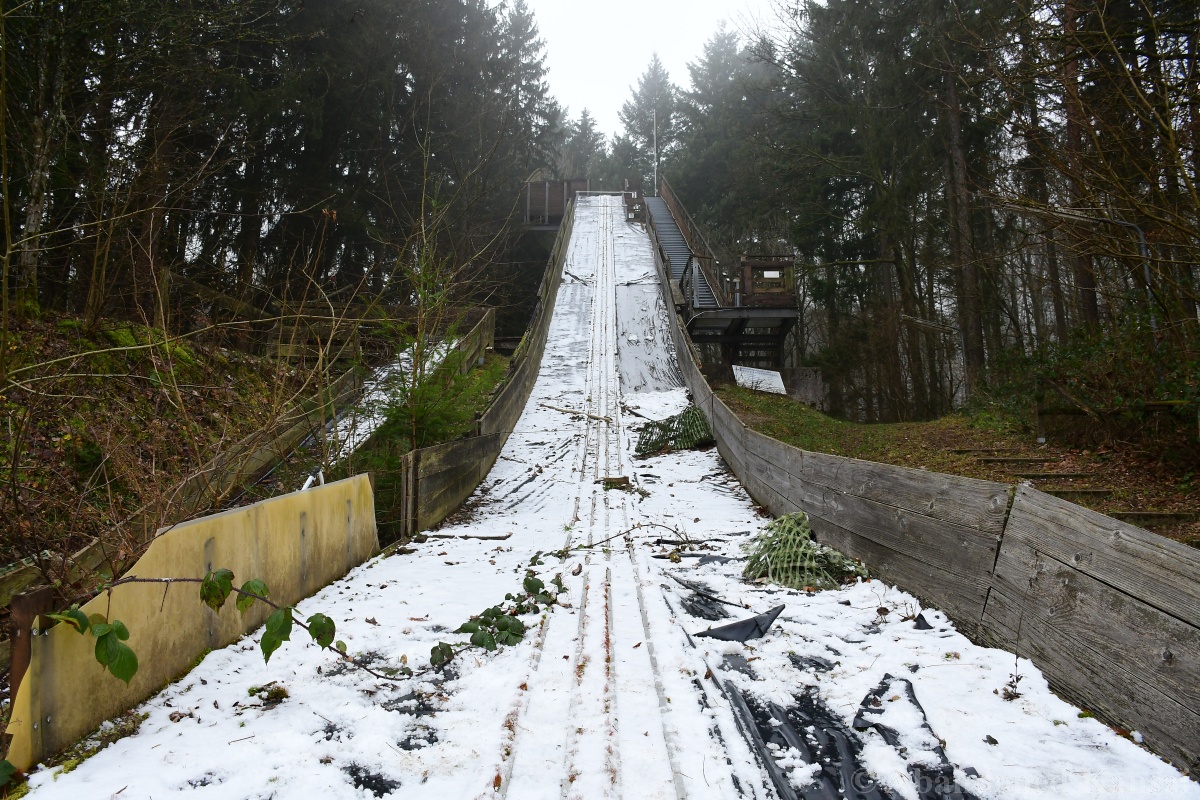
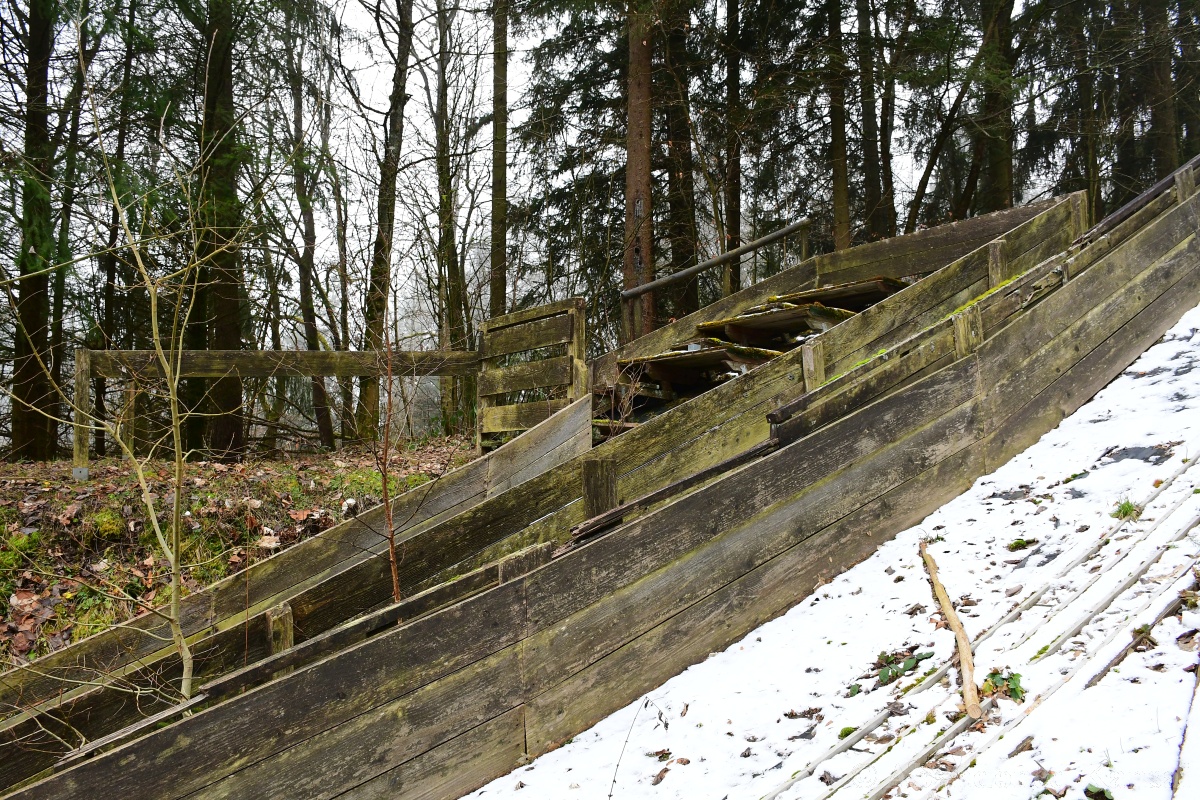
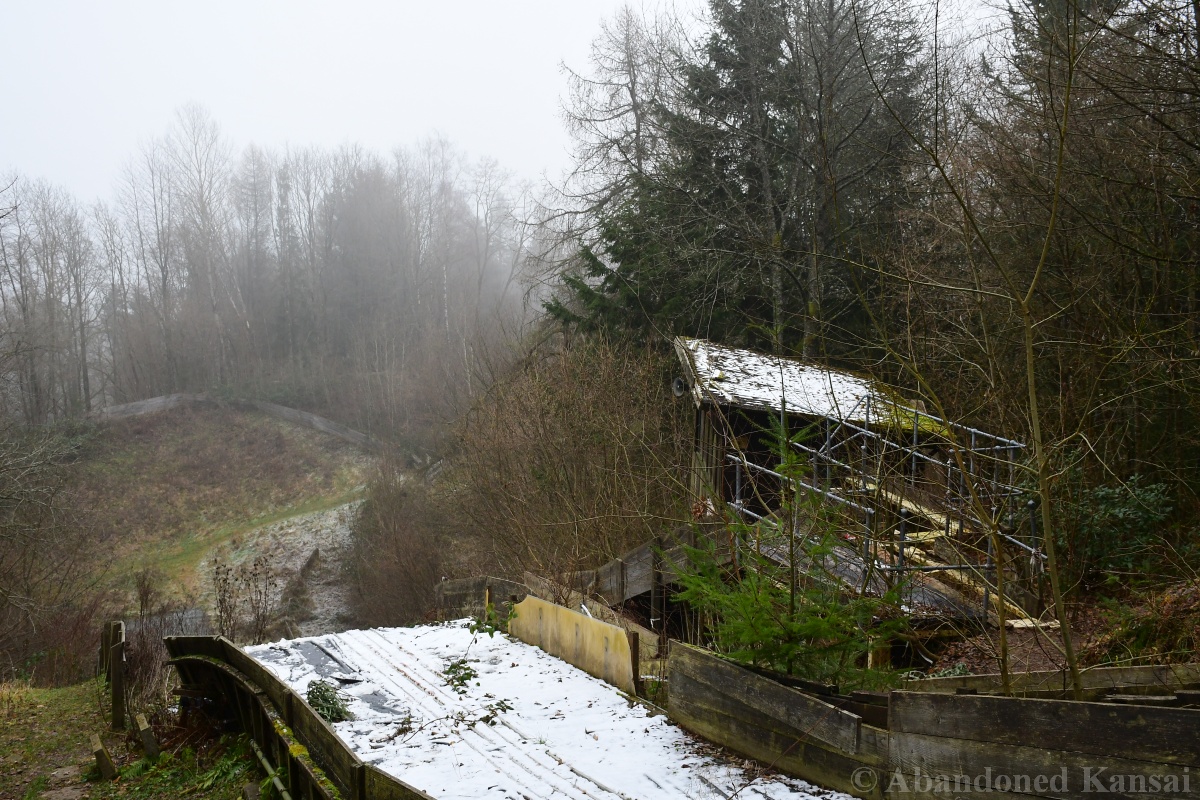
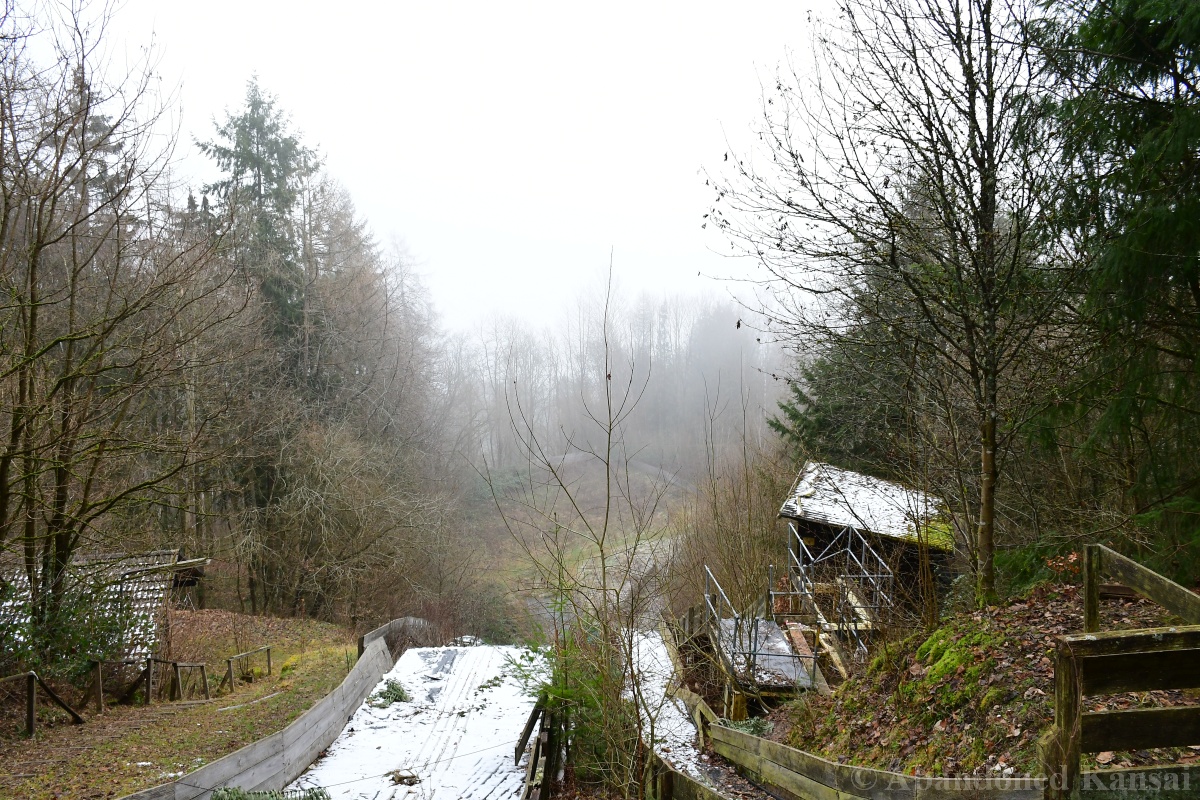
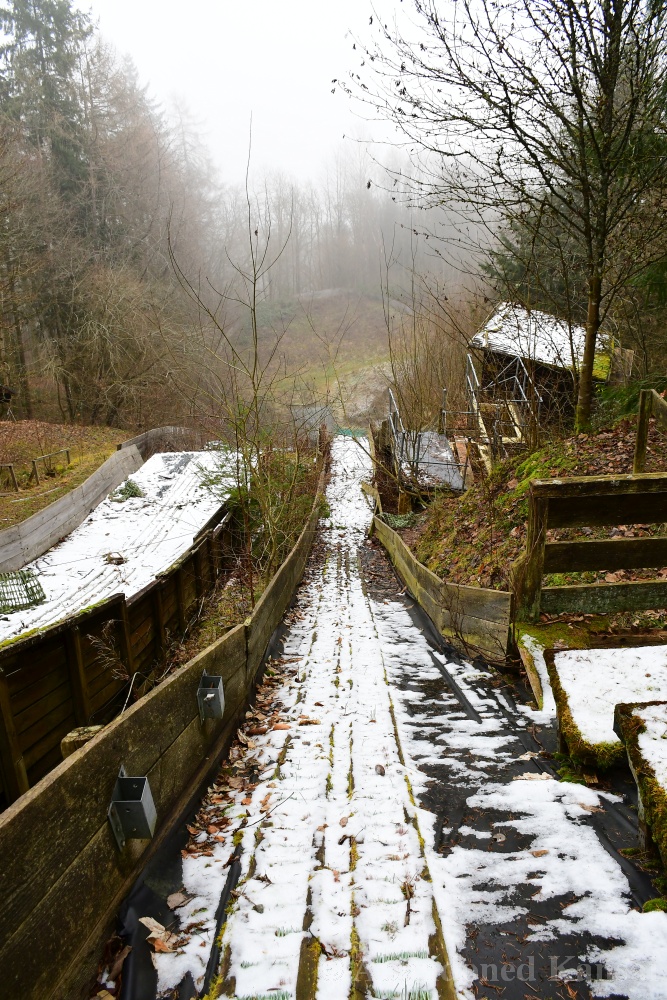
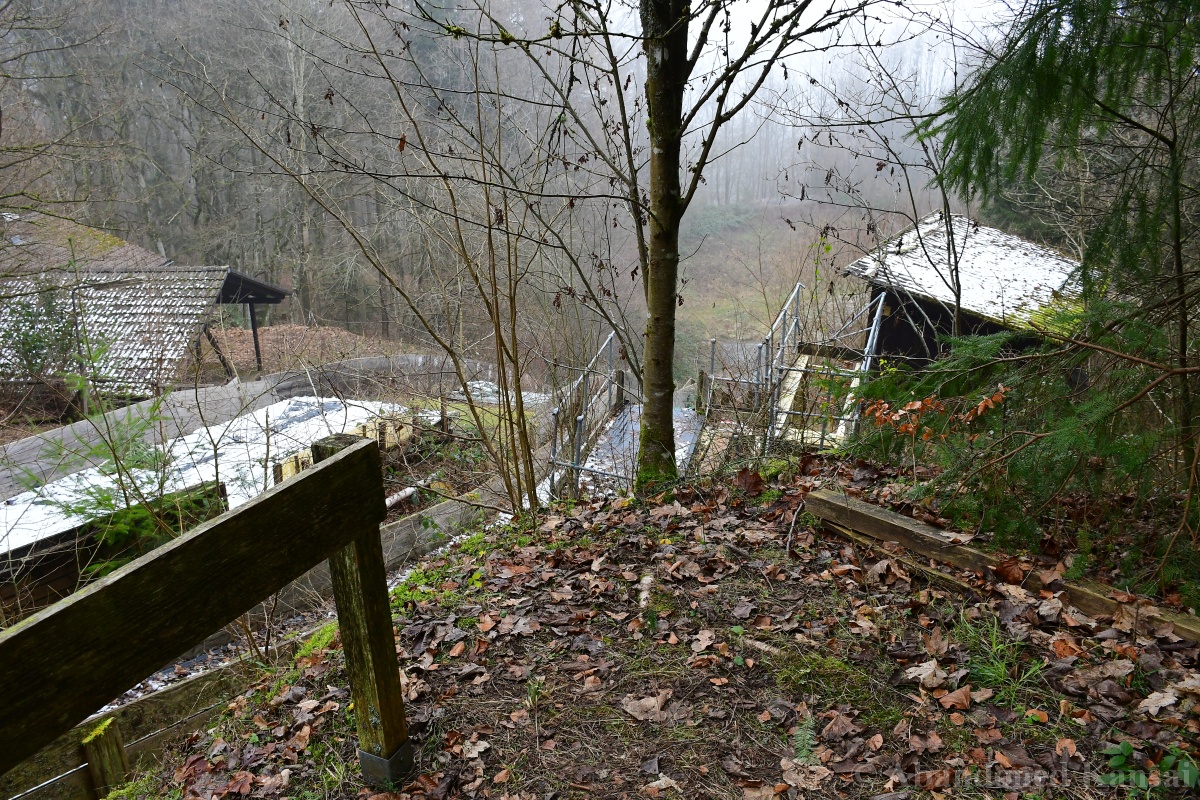
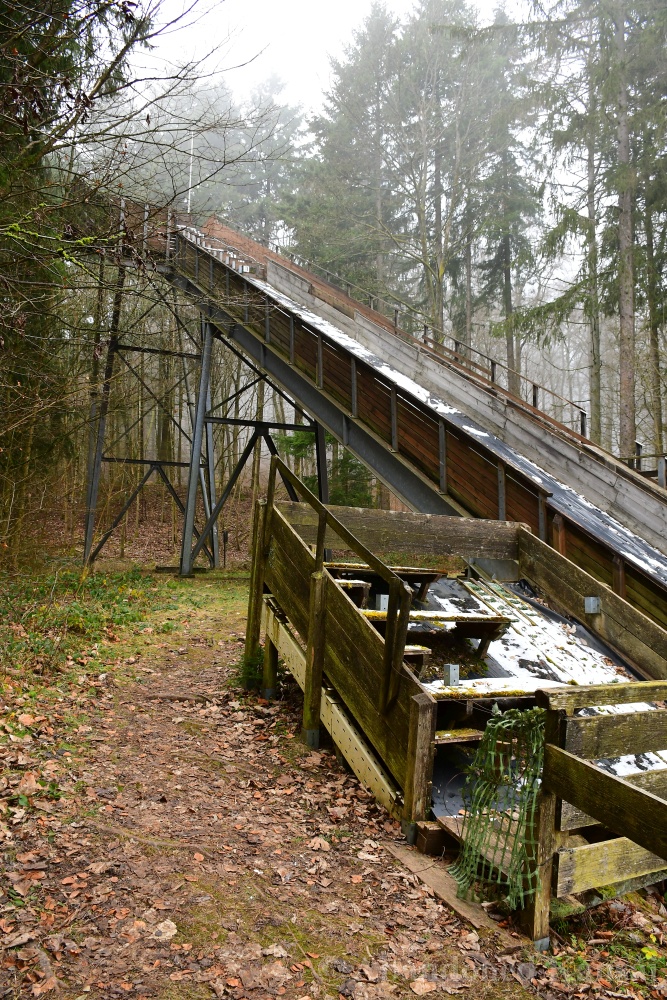
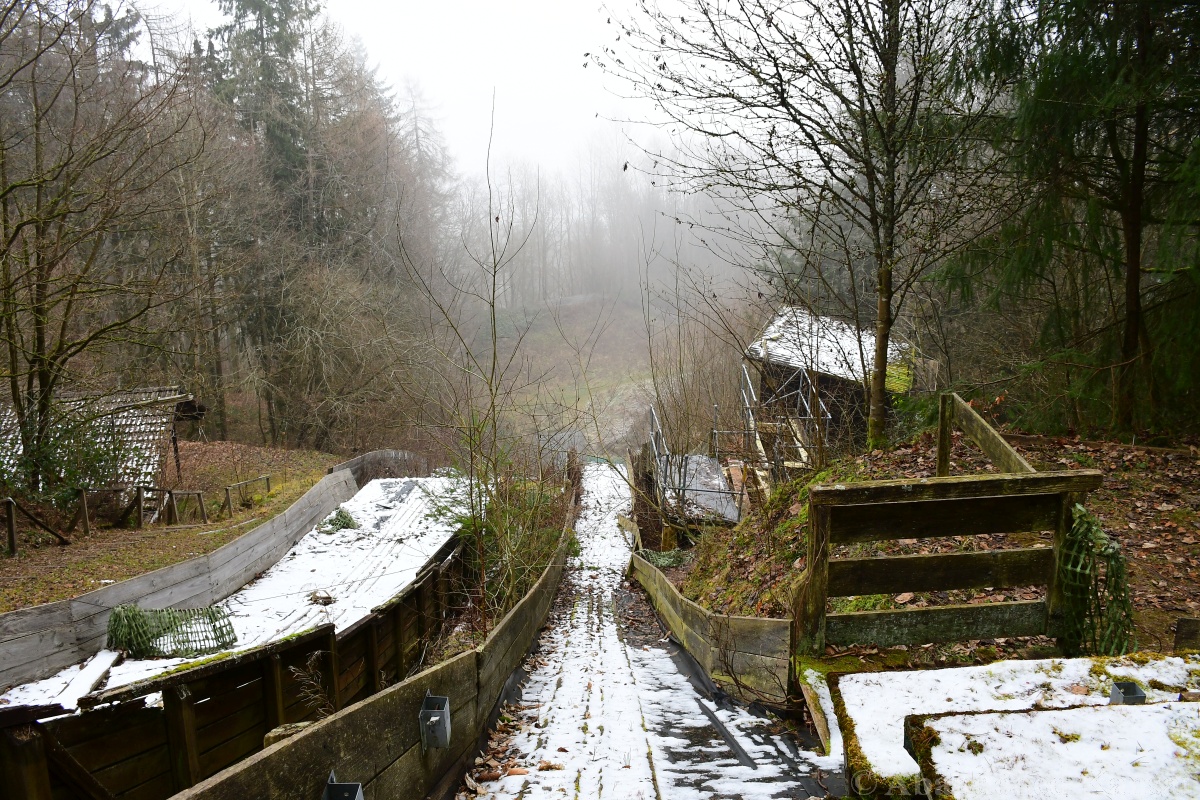
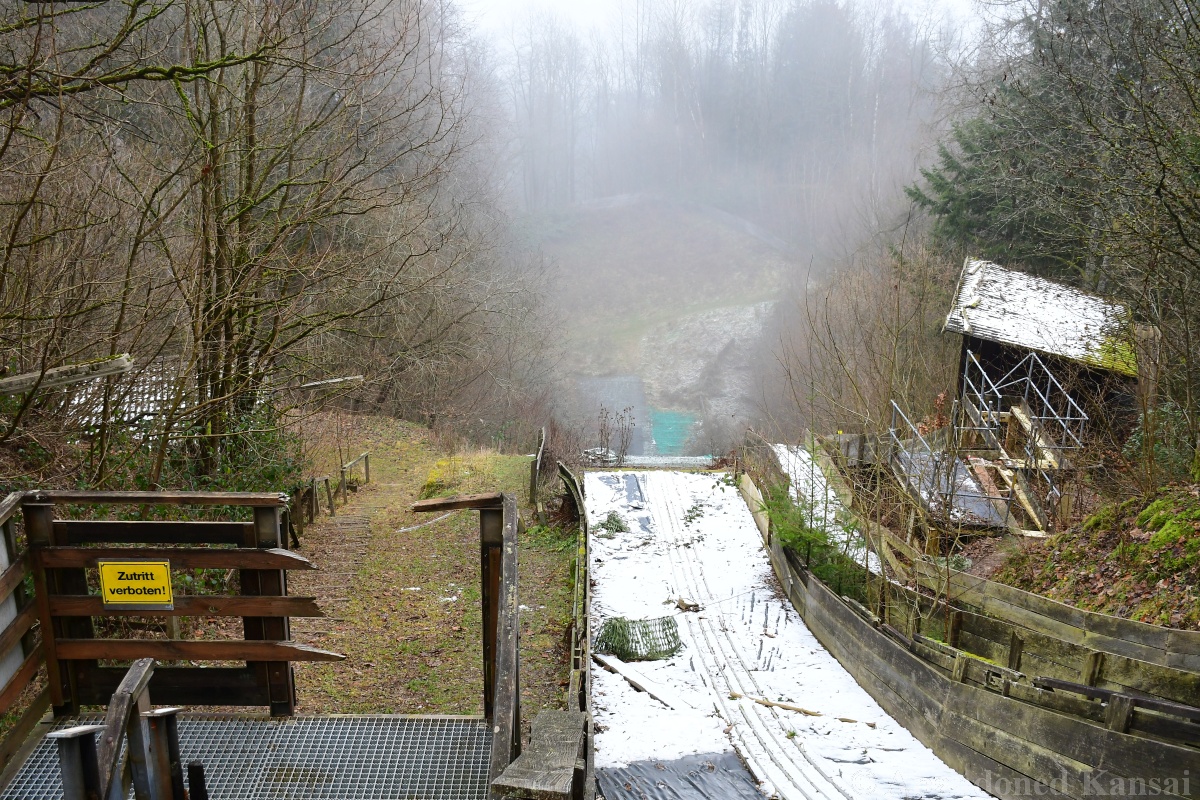
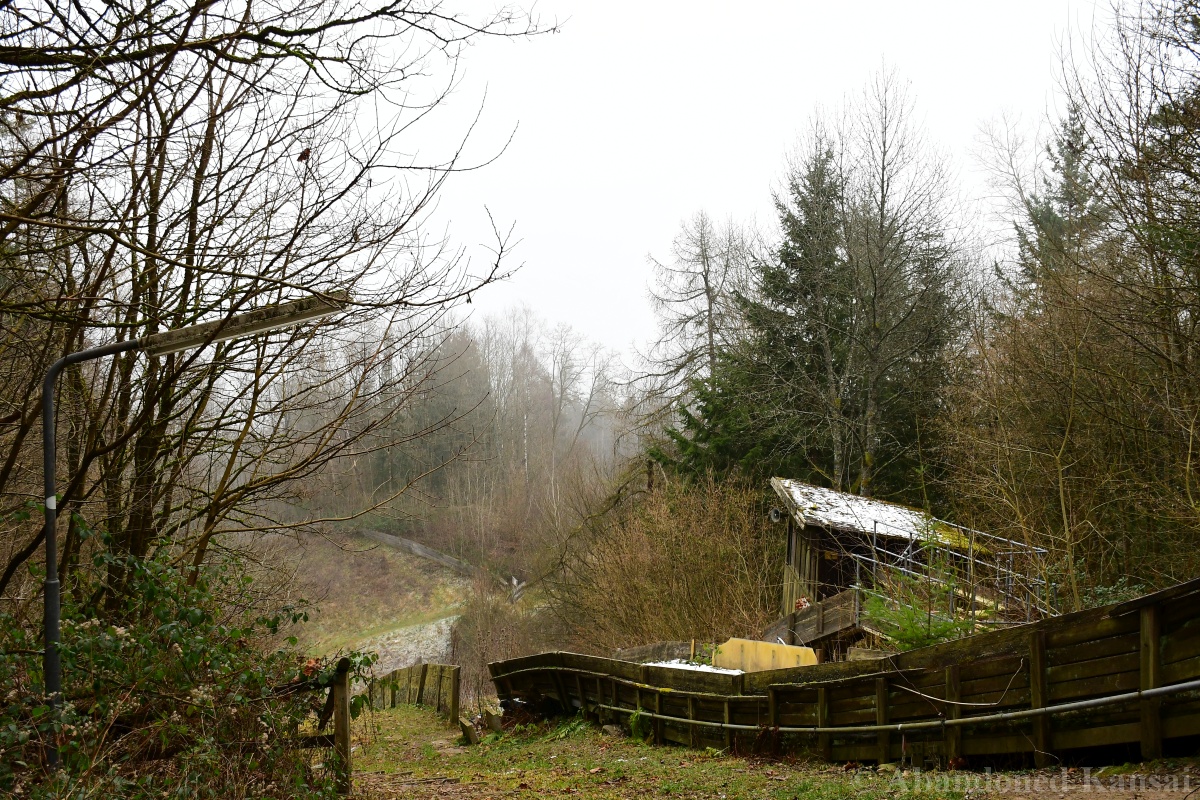
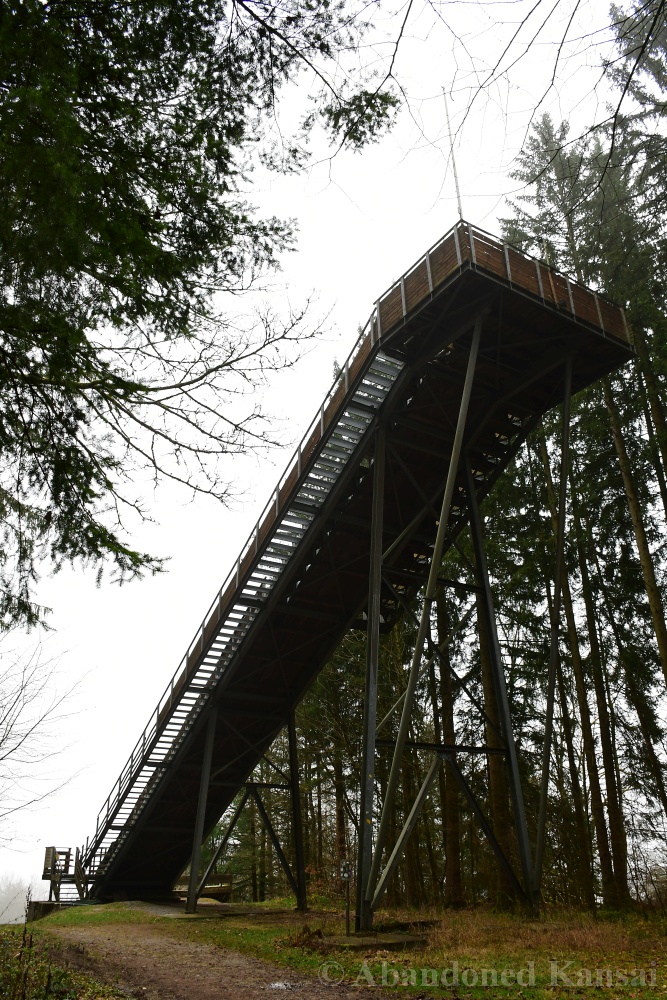
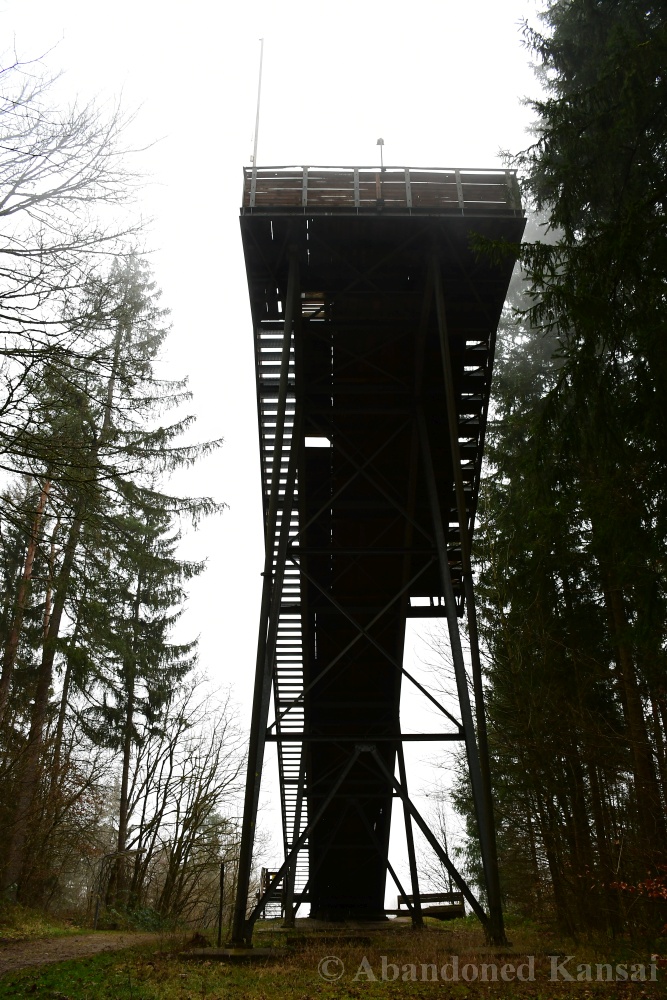
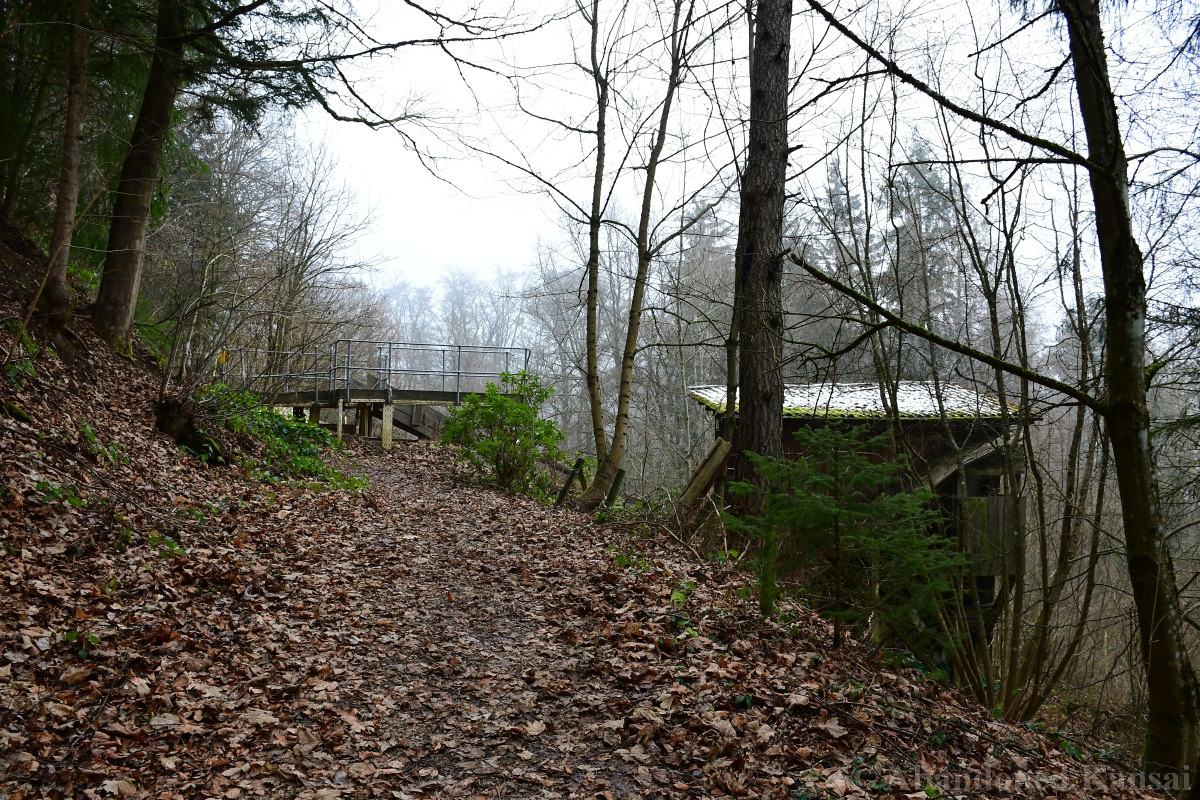
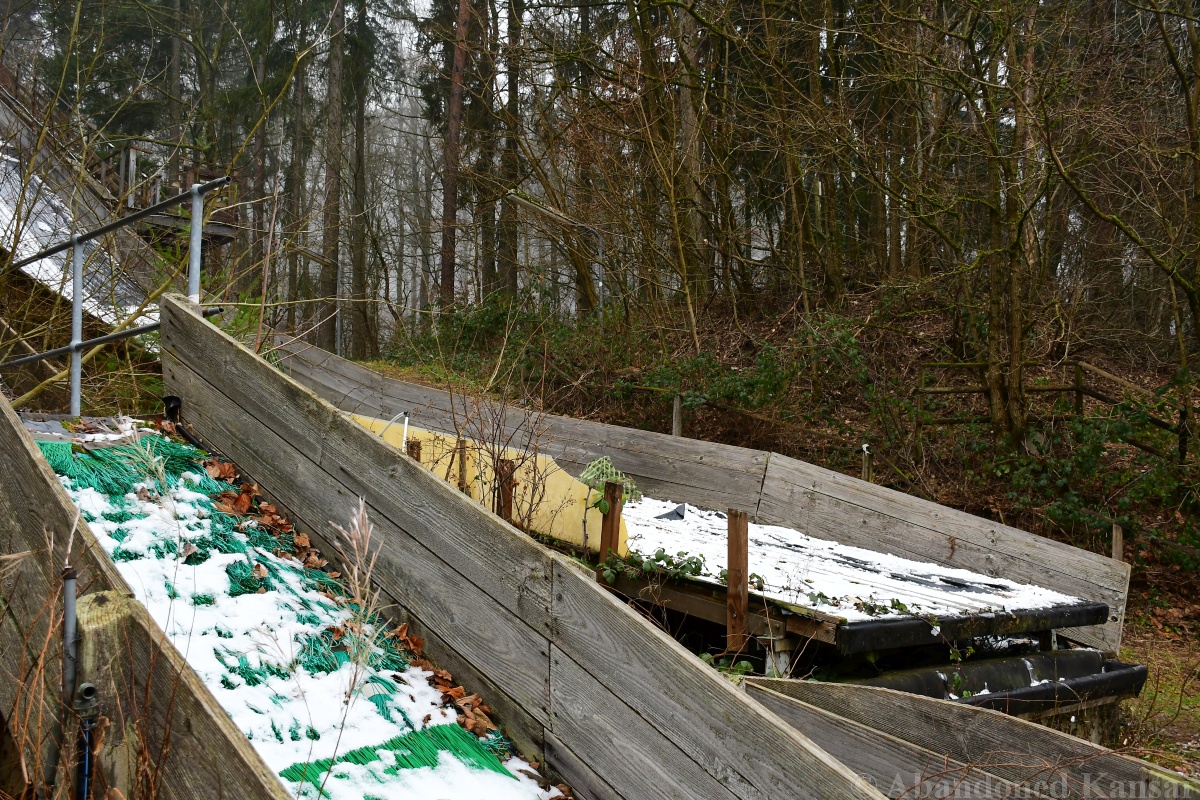
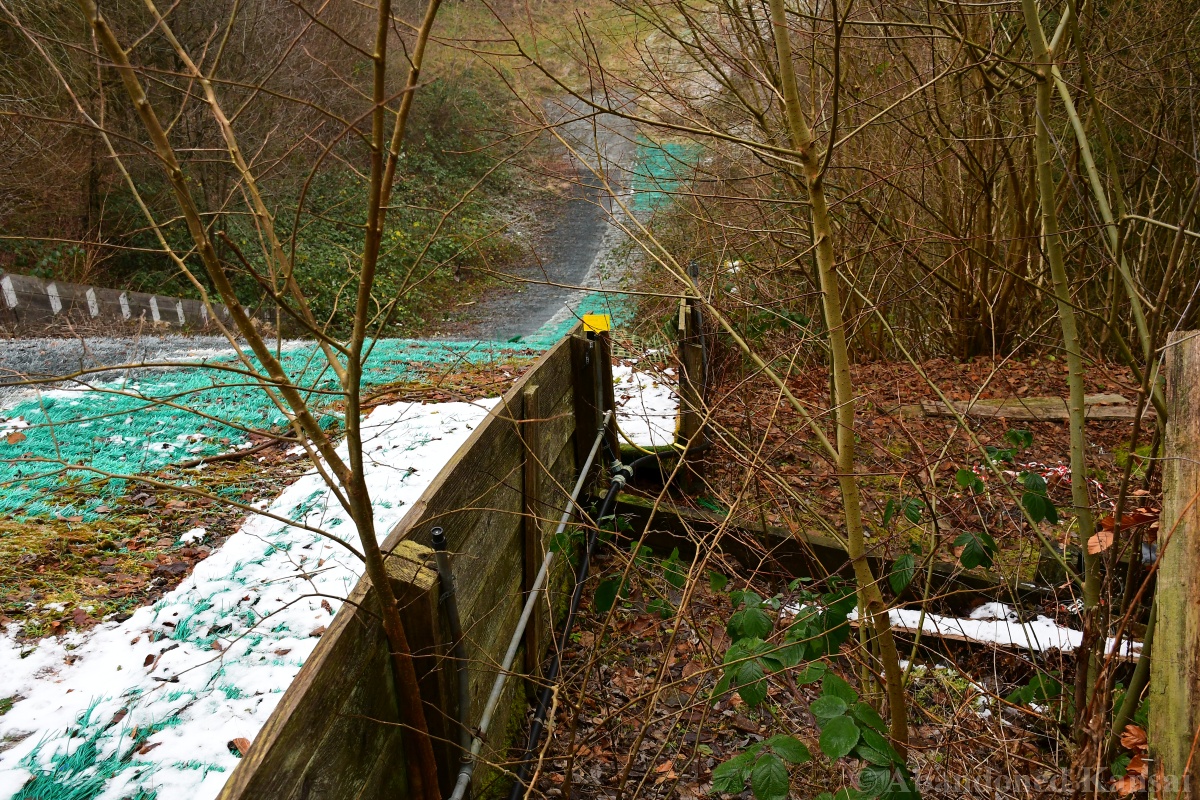
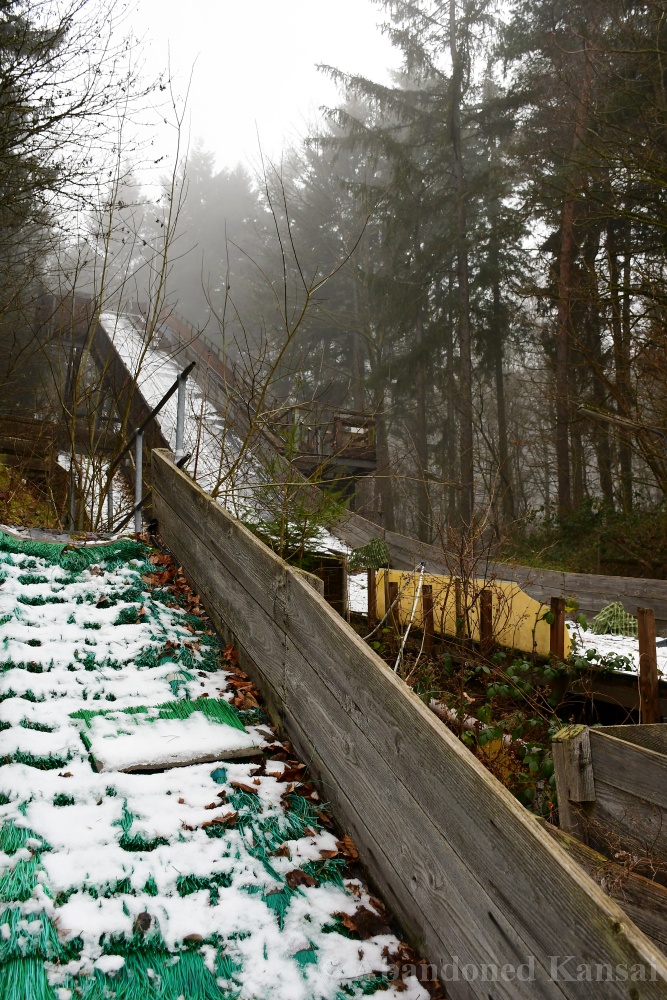
The 624m high Katzenbuckel (which translates to something like cat hump) is the highest peak of a lovely low mountain range full of history called Odenwald, roughly stretching from Darmstadt to Heidelberg (north/south) and to Wertheim in the east. In 1949 the Skizunft Katzenbuckel (skiing guild Katzenbuckel) was founded, a year later the first ski jumping hill was constructed, which allowed jump of up to 15 meters. The hill was steadily enlarged and 10 years the length of the original jumps was more than doubled. In 1976 a brand-new ski jump was built, including a 17-meter-high tower. Fueled by the German jumping success of the 90s a new plastic covered ski jumping hill with a steel tower was inaugurated in 1995 – also featuring two junior hills for young talents. It’s a bit unclear when the Schanze was finally closed – there are several reports from the 00s about activities there, but it seems like they started to fizzle out in the 2010s. If not dead already at the time, Corona definitely killed it as there are plenty of reports about the abandoned Schanze from 2020/21 on, when hiking became a popular activity during the years of social distancing. Those reports mostly were from local hikers, not urban explorers… so depending on which group you are looking at, I was either rather late or perfectly on time to the party, which I am fine with, given that I wasn’t able to go back home to Germany for several years.

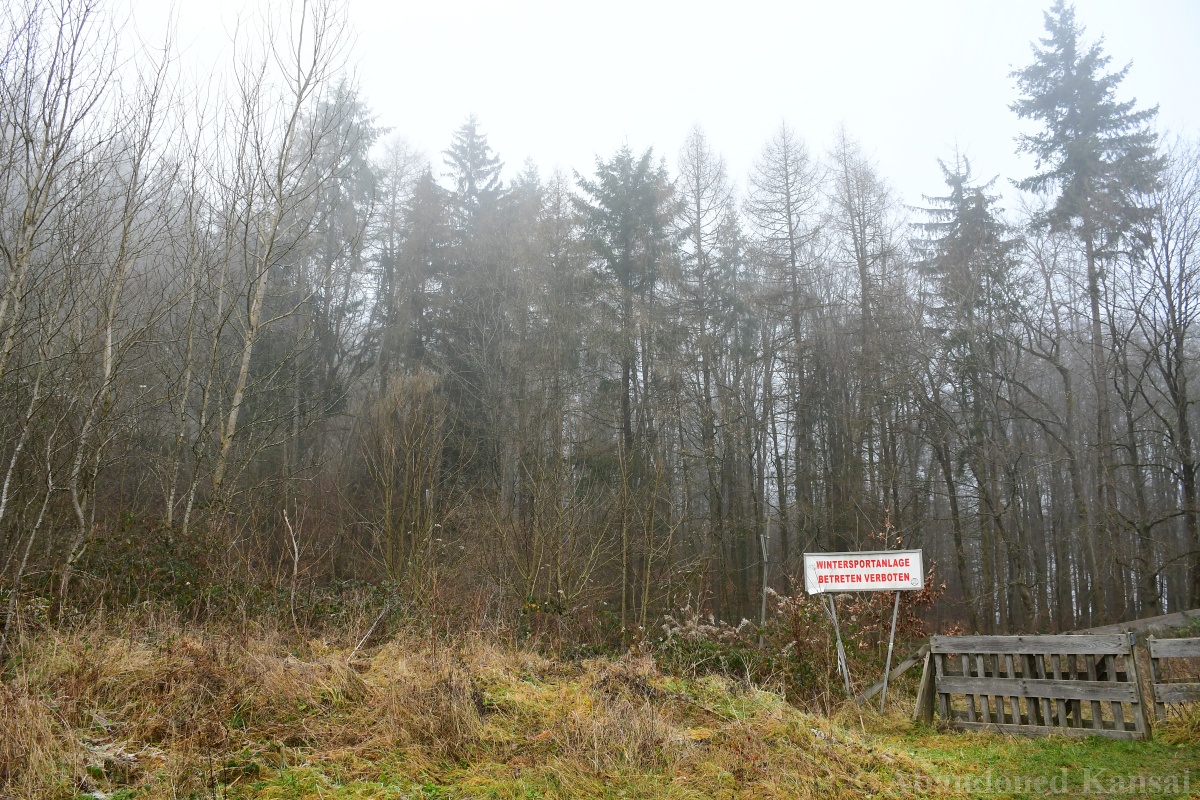
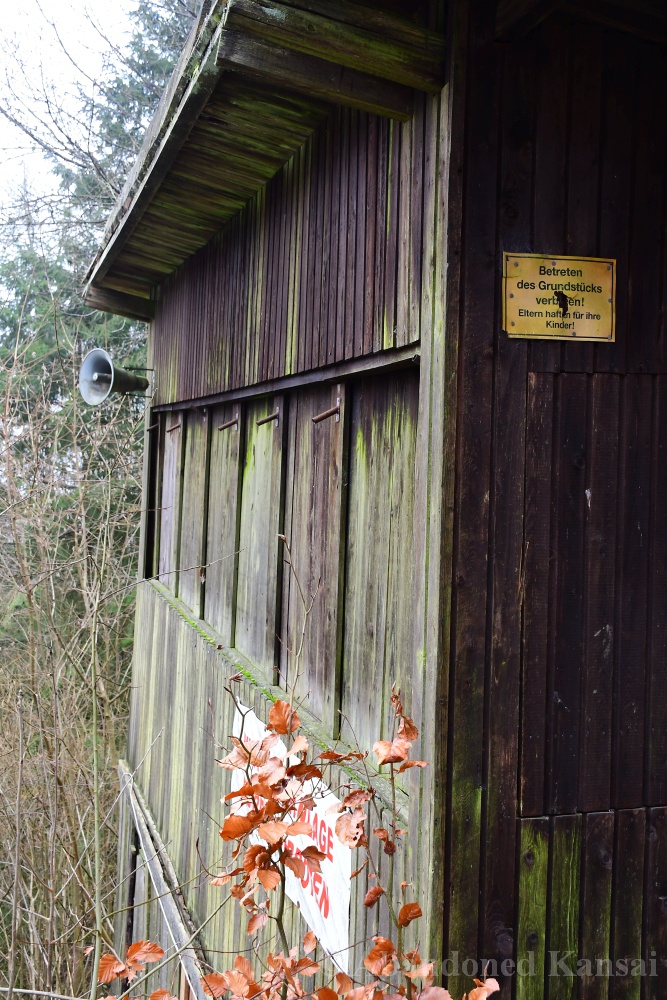
Exploring the Katzenbuckel-Sprungsschanze was super easy and became a little family event. There was a free parking lot for hikers and other nature lovers just a few hundred meters away, which brings me to why I’m rather open with information about the Schanze: It was probably the busiest place I’ve ever explored due to two hiking trails running through – one behind the tower, one through the landing area. Even on a cold and damp winter day there were several dozen people walking past or through, some also had a closer look. Outdoor explorations far away from civilization are among my favorites, so despite the weather I really enjoyed this one… especially after exploring half a dozen ski-jumping hills in Japan, for example the *Overgrown Ski-Jumping Hill* and the spectacular *Hokkaido Ski-Jumping Hill*.

(*Like Abandoned Kansai on Facebook* or *follow us on Twitter* if you don’t want to miss the latest articles and exclusive content – and subscribe to the *video channel on Youtube* to receive a message right after a new video is online…)
Read Full Post »

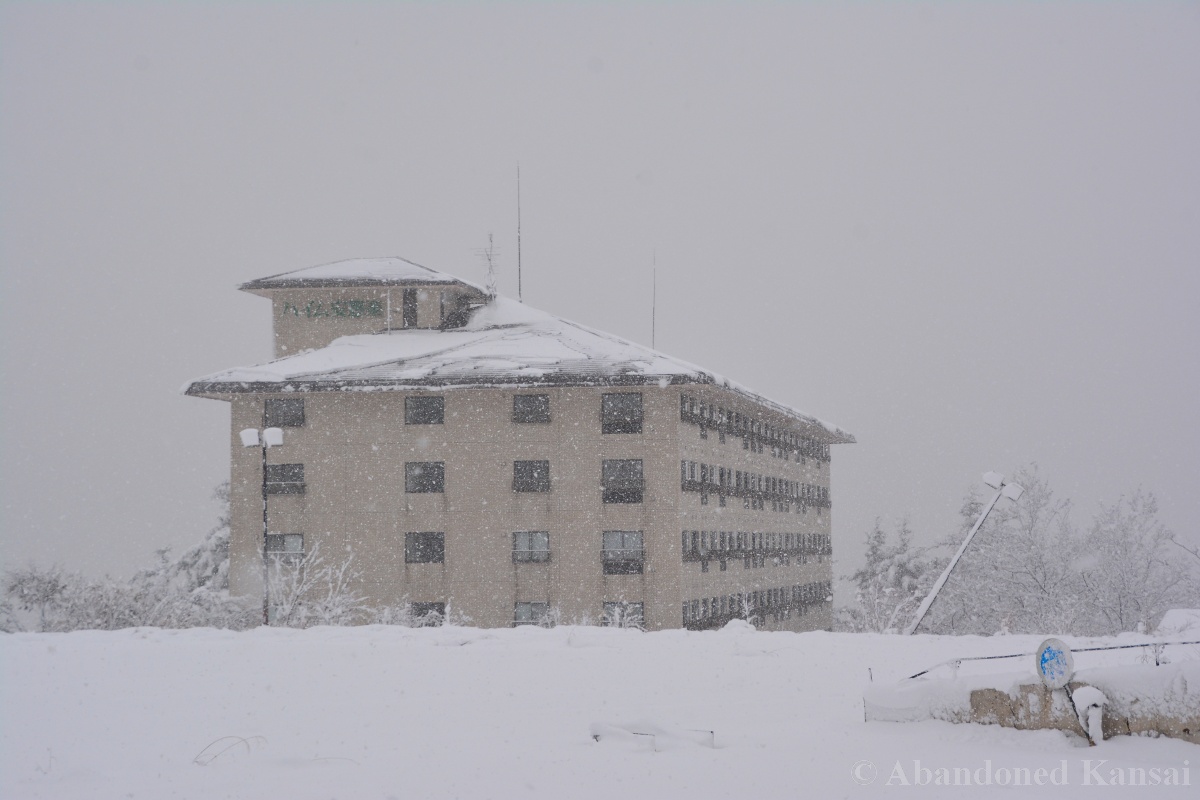
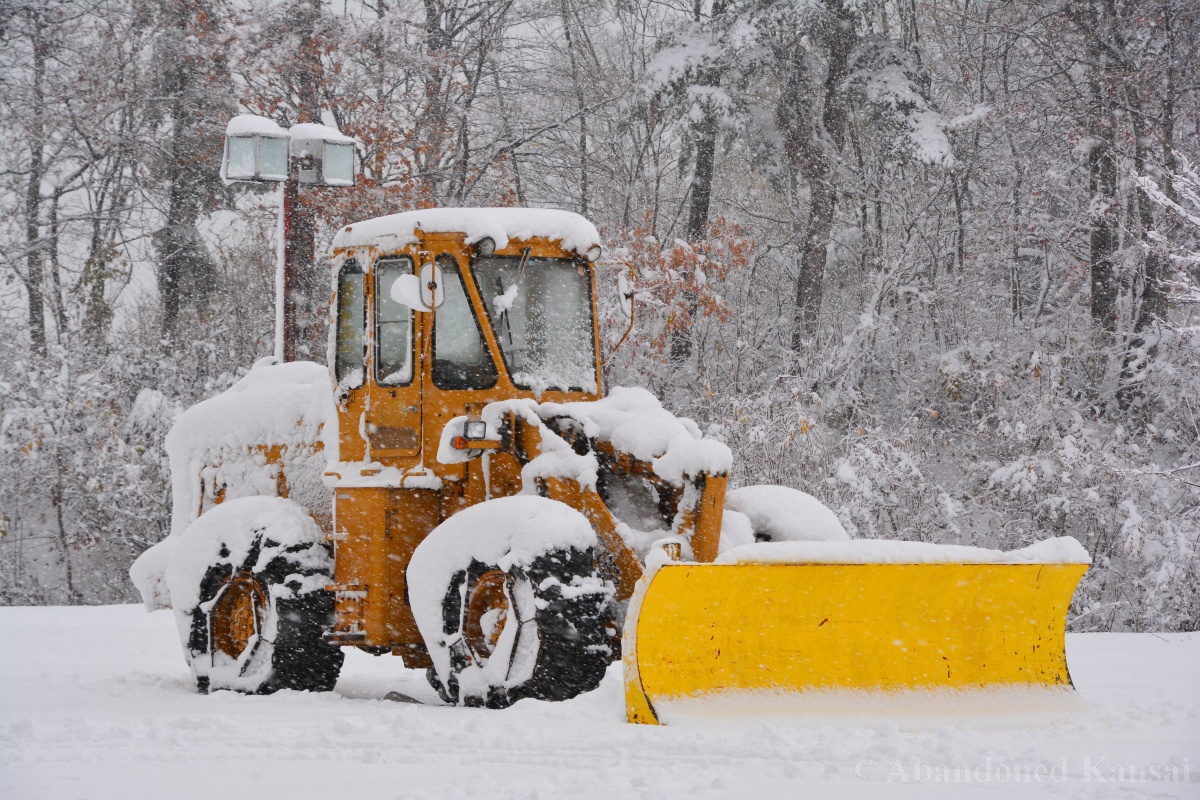
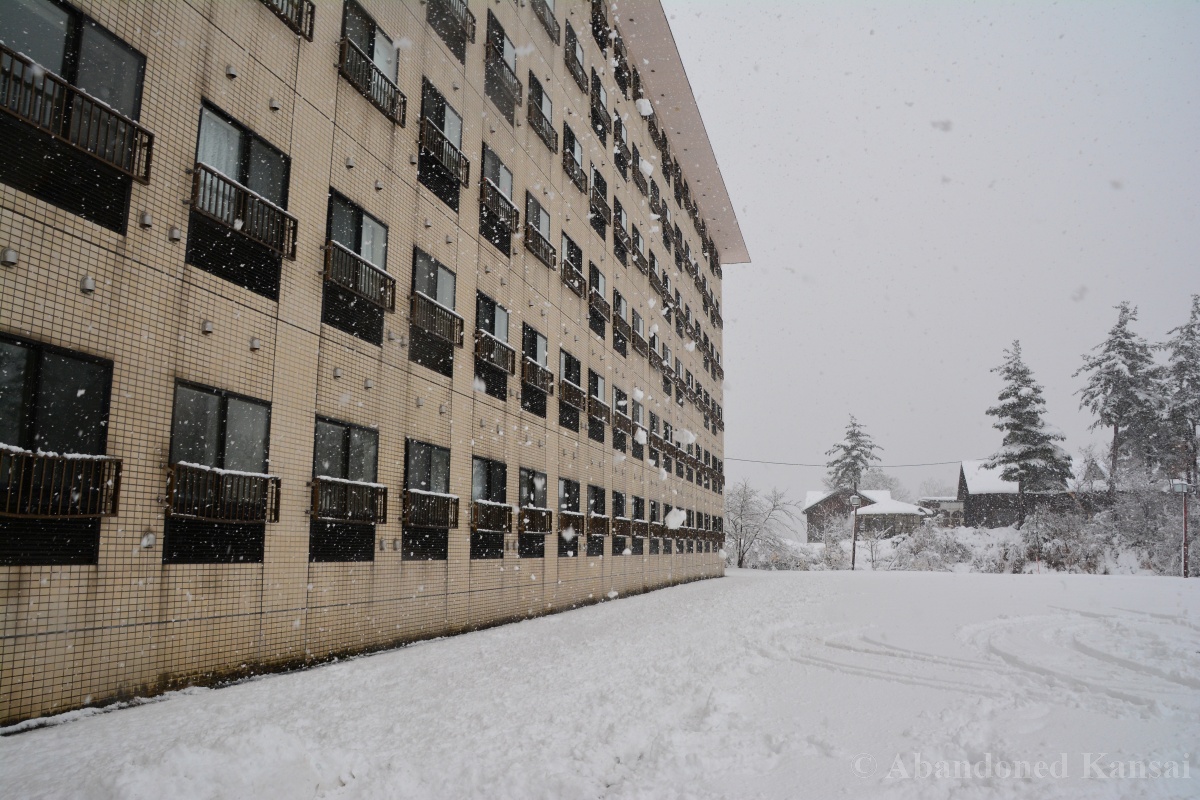
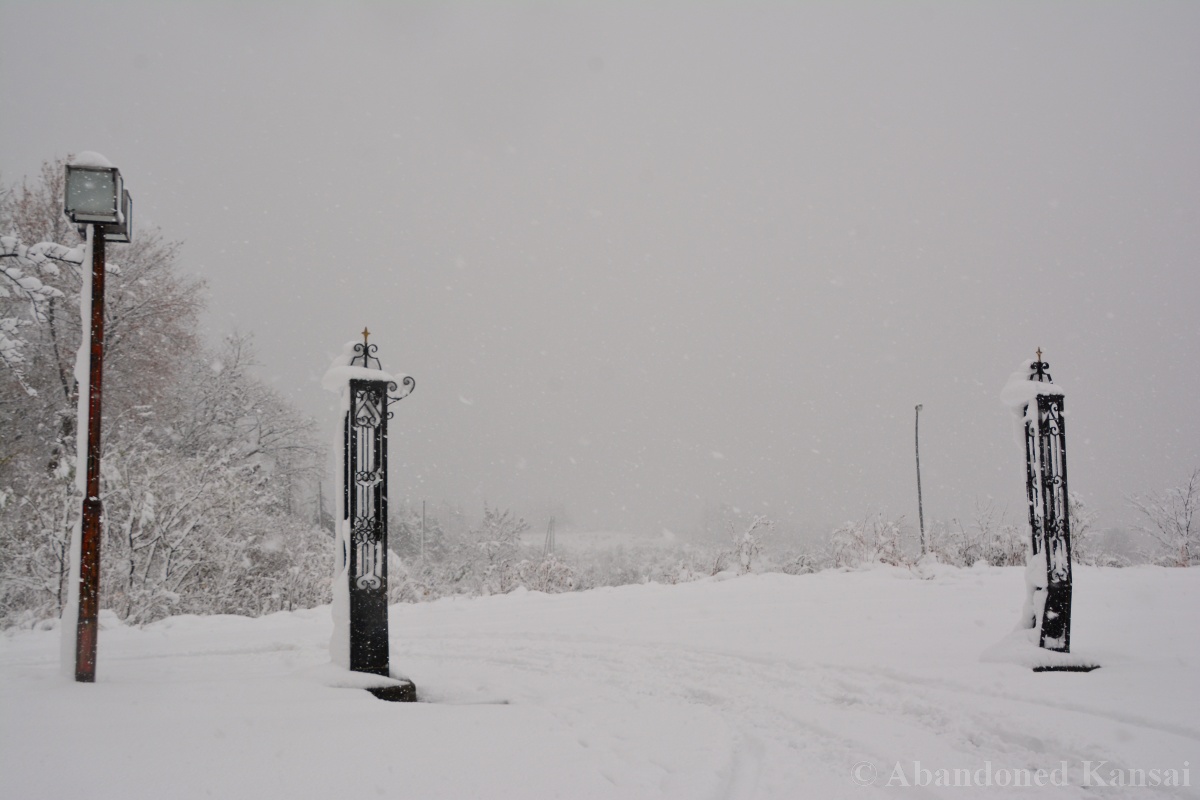
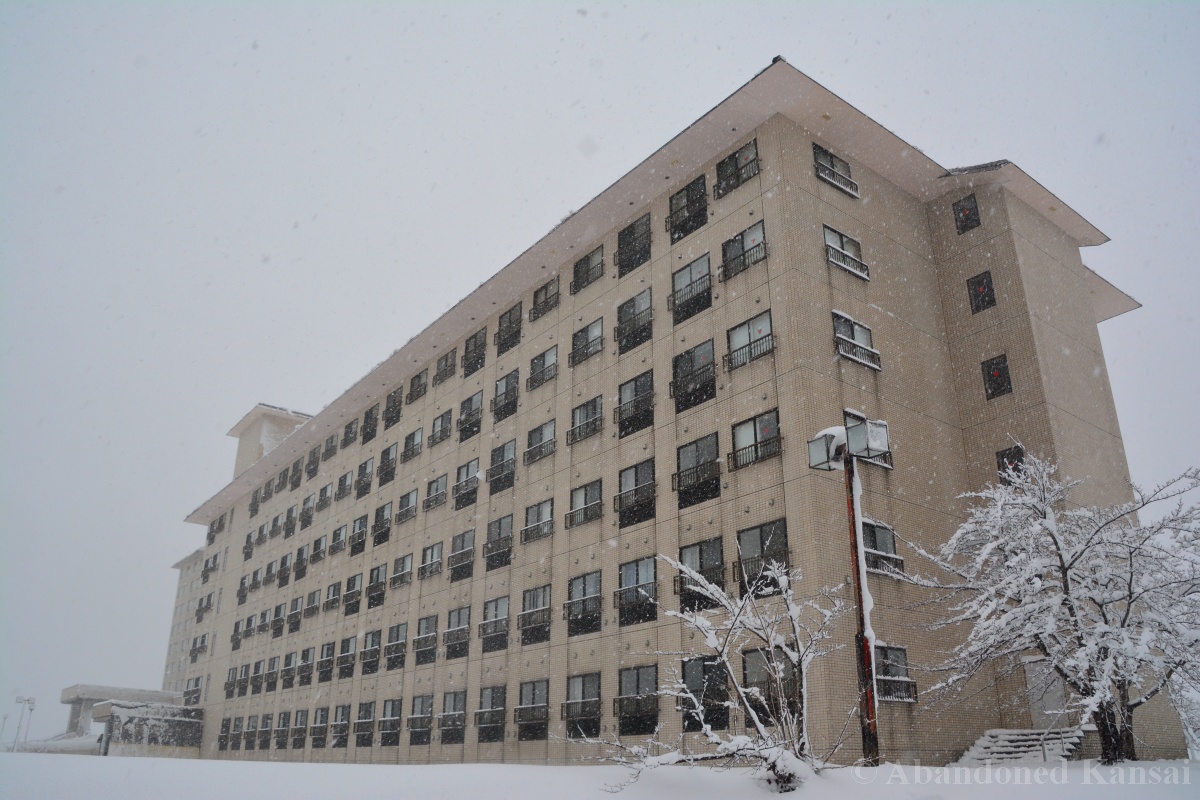
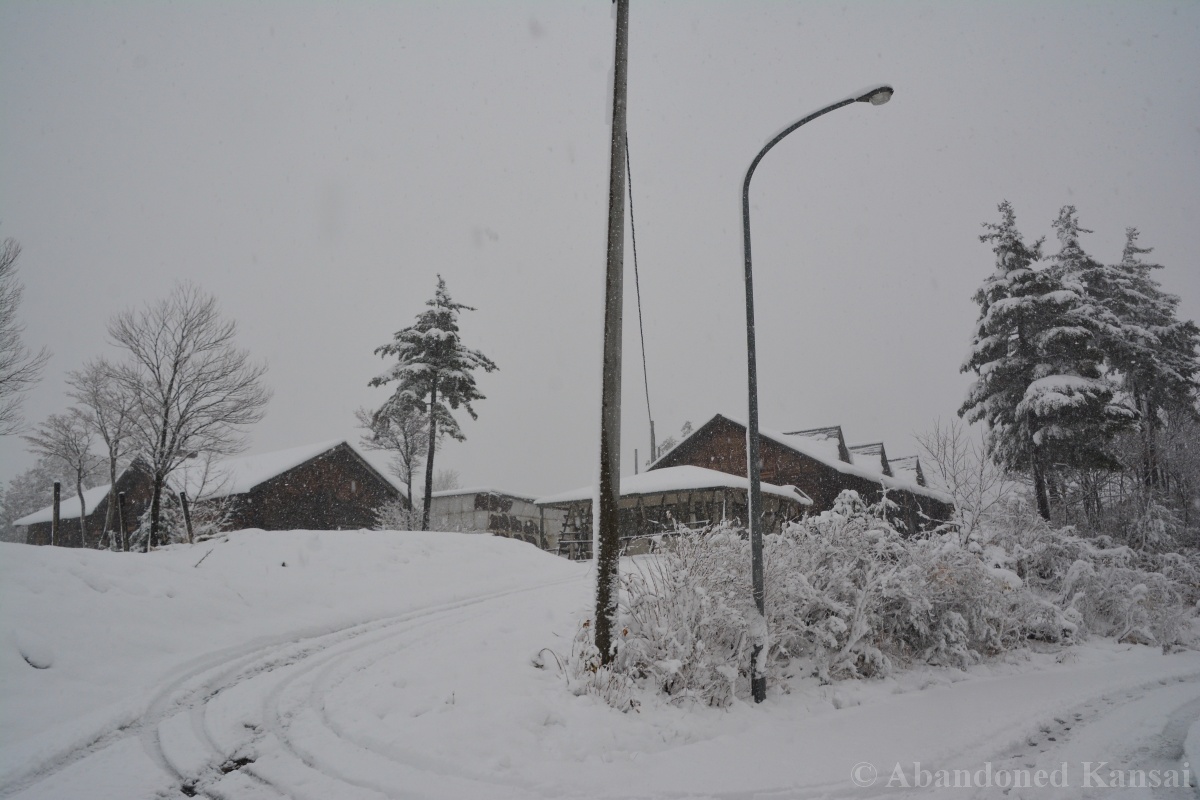
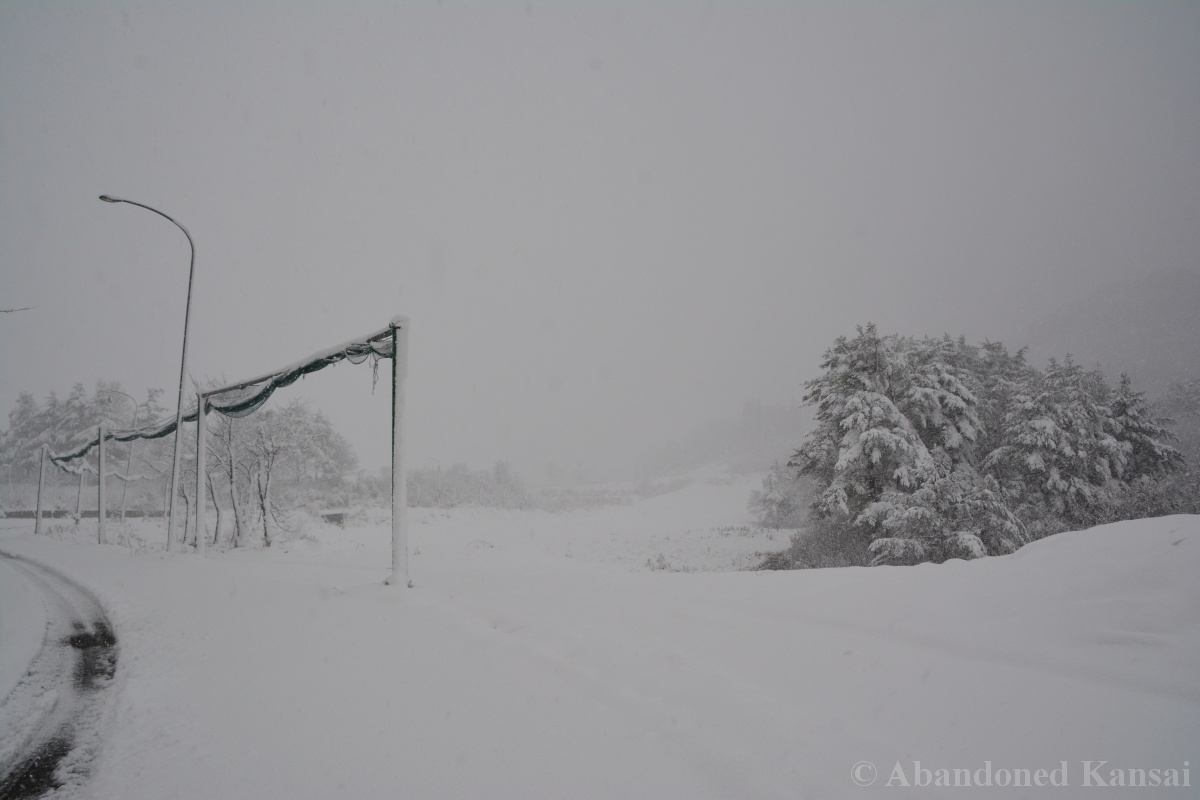
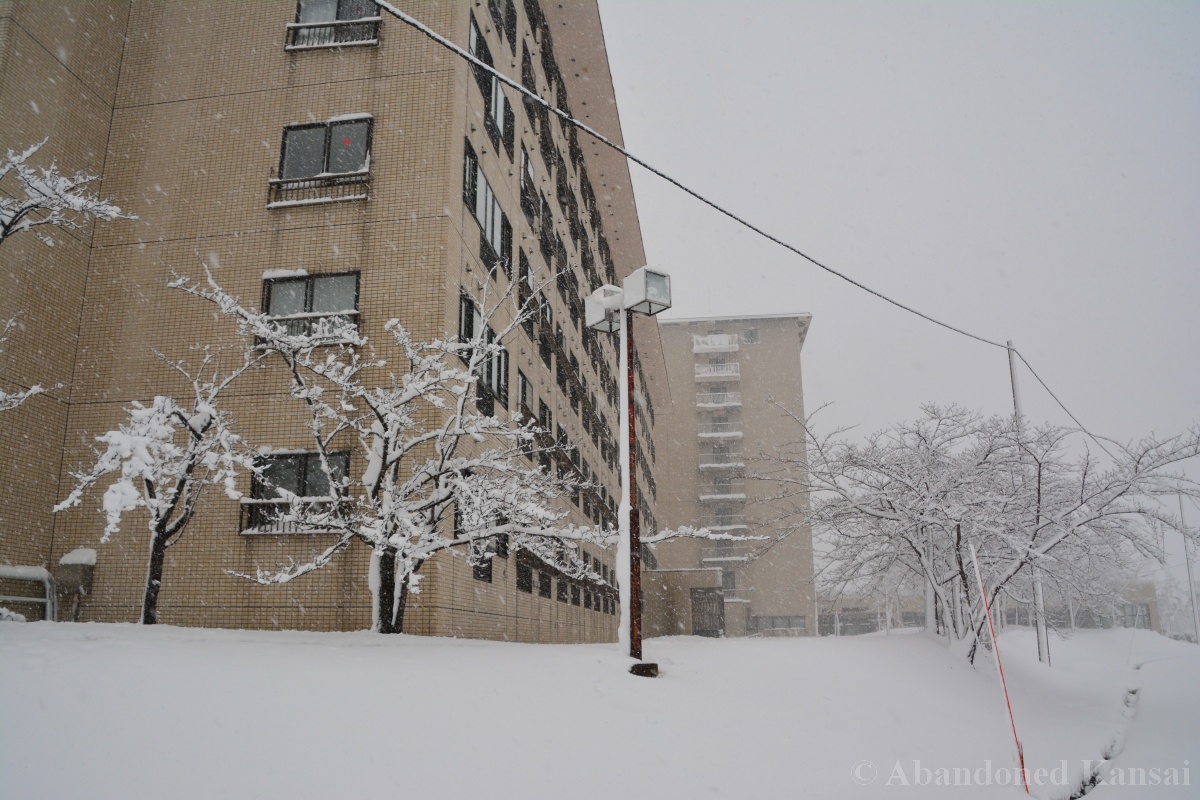
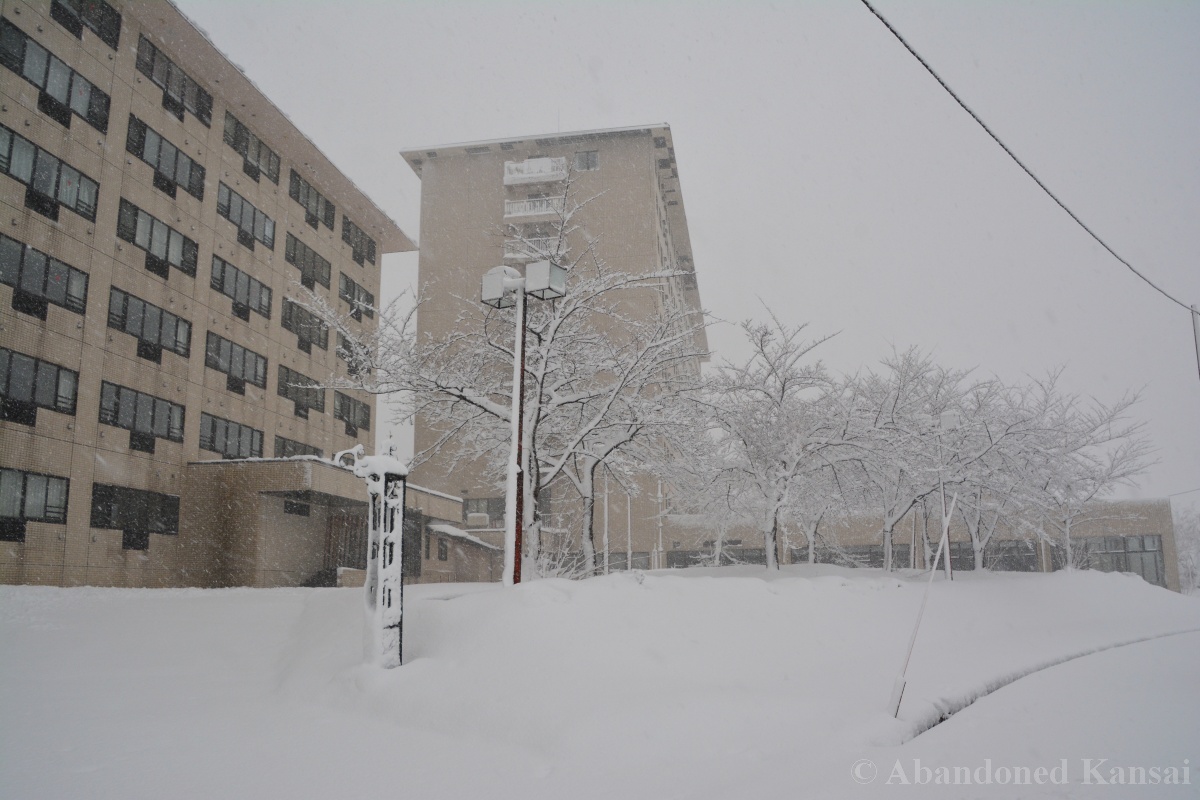
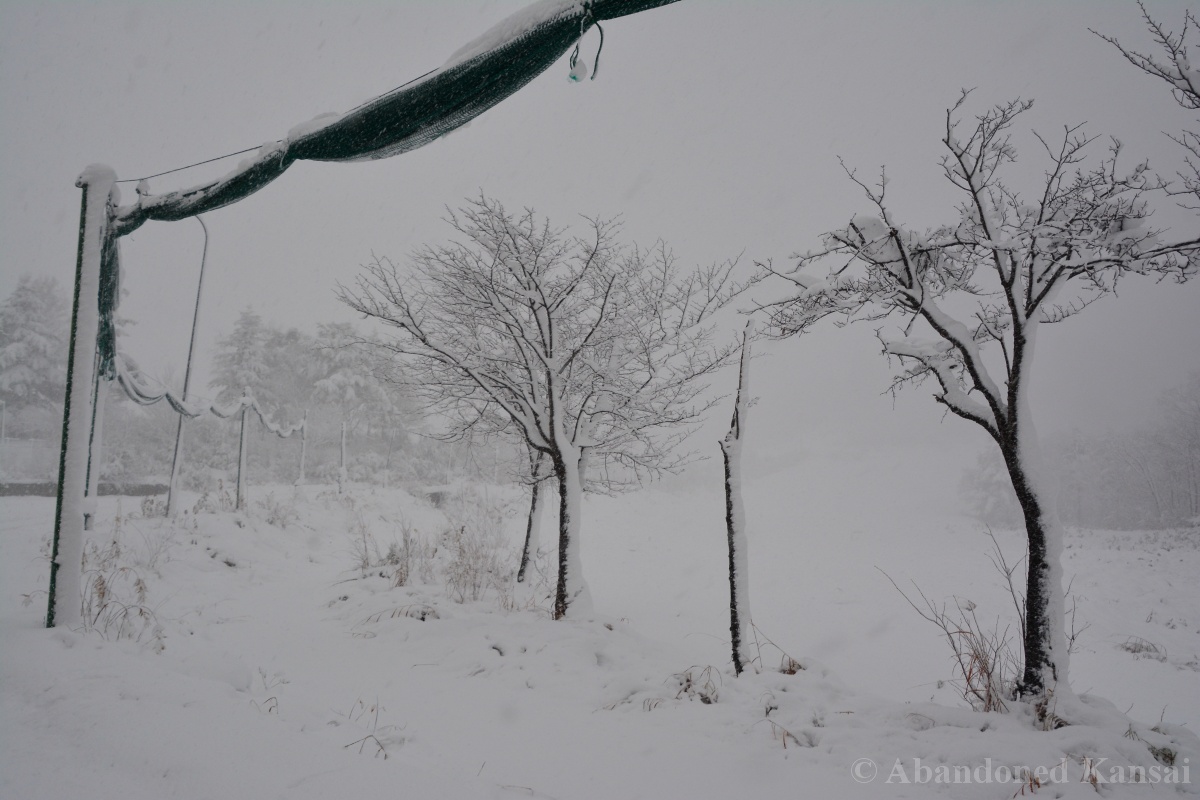
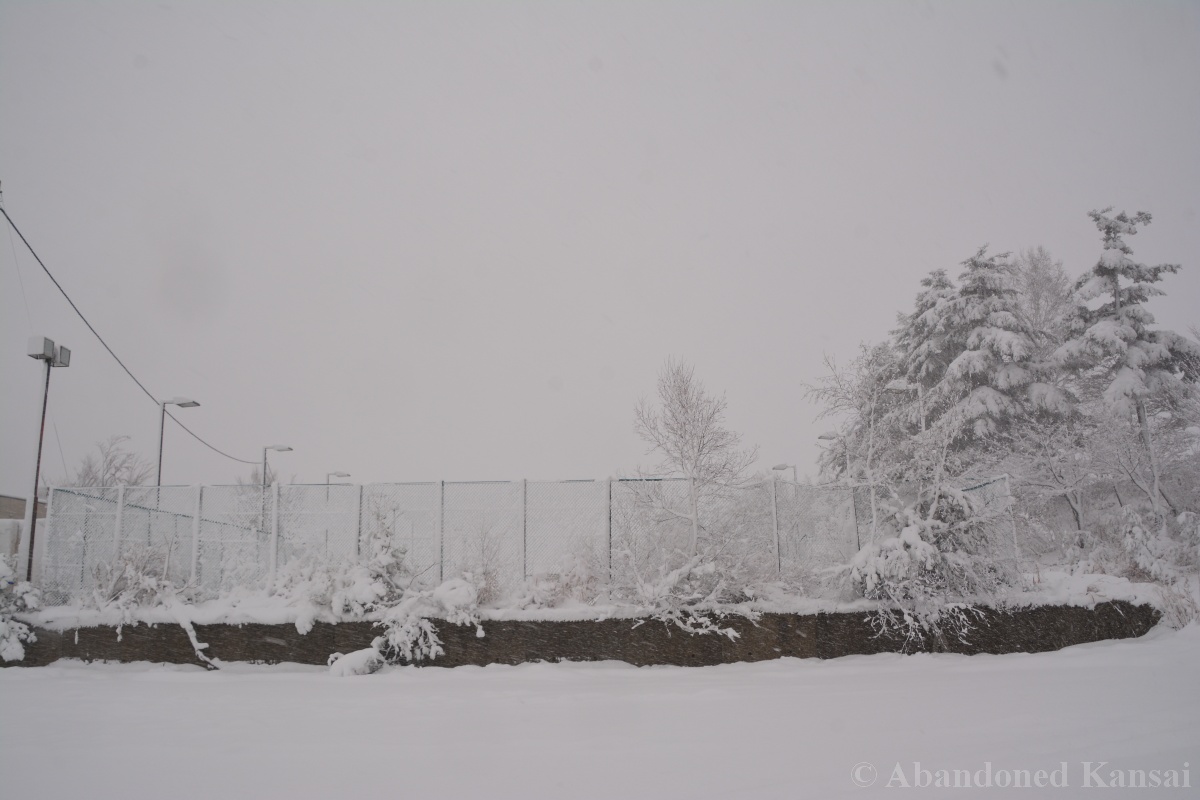
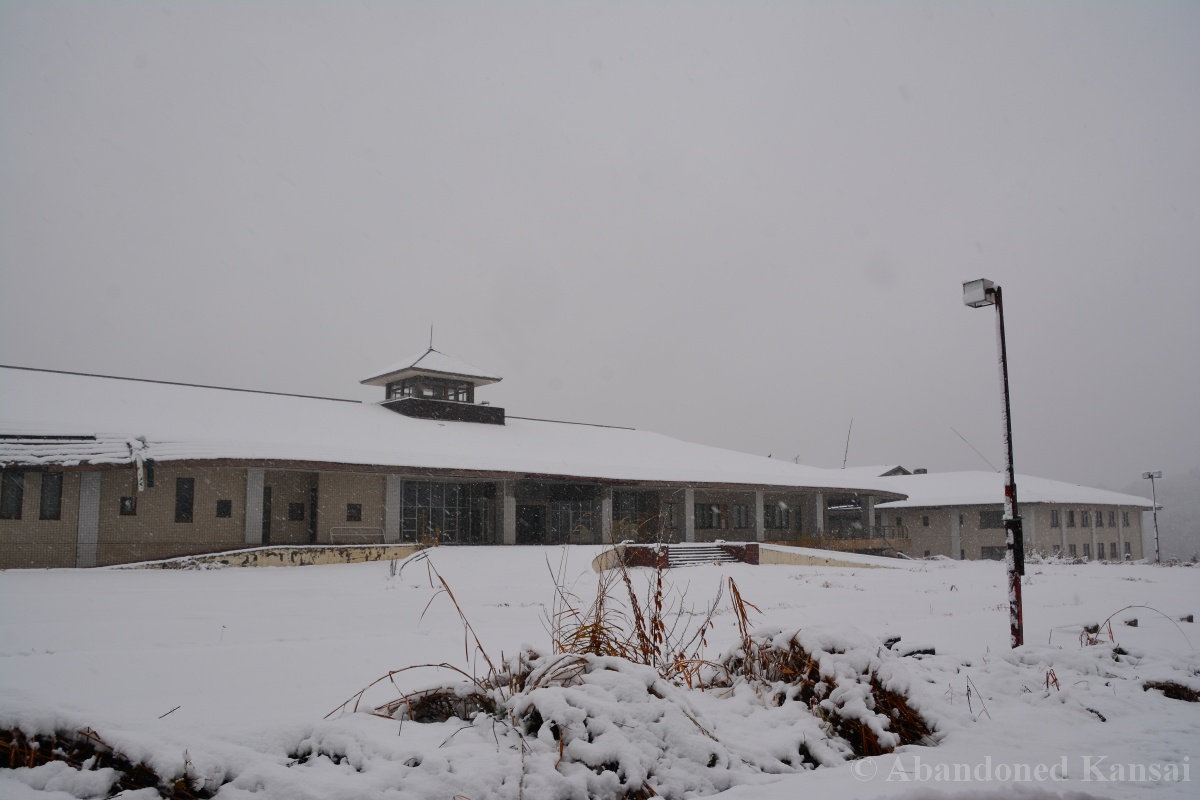
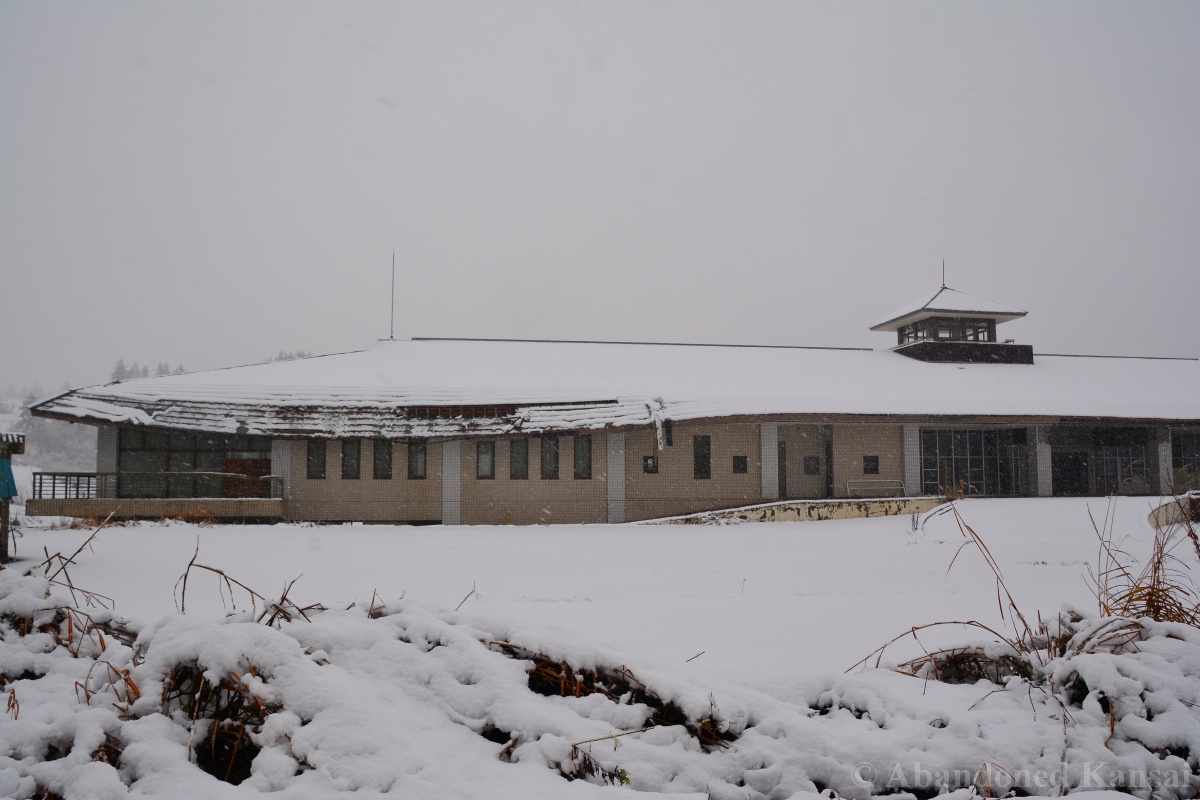
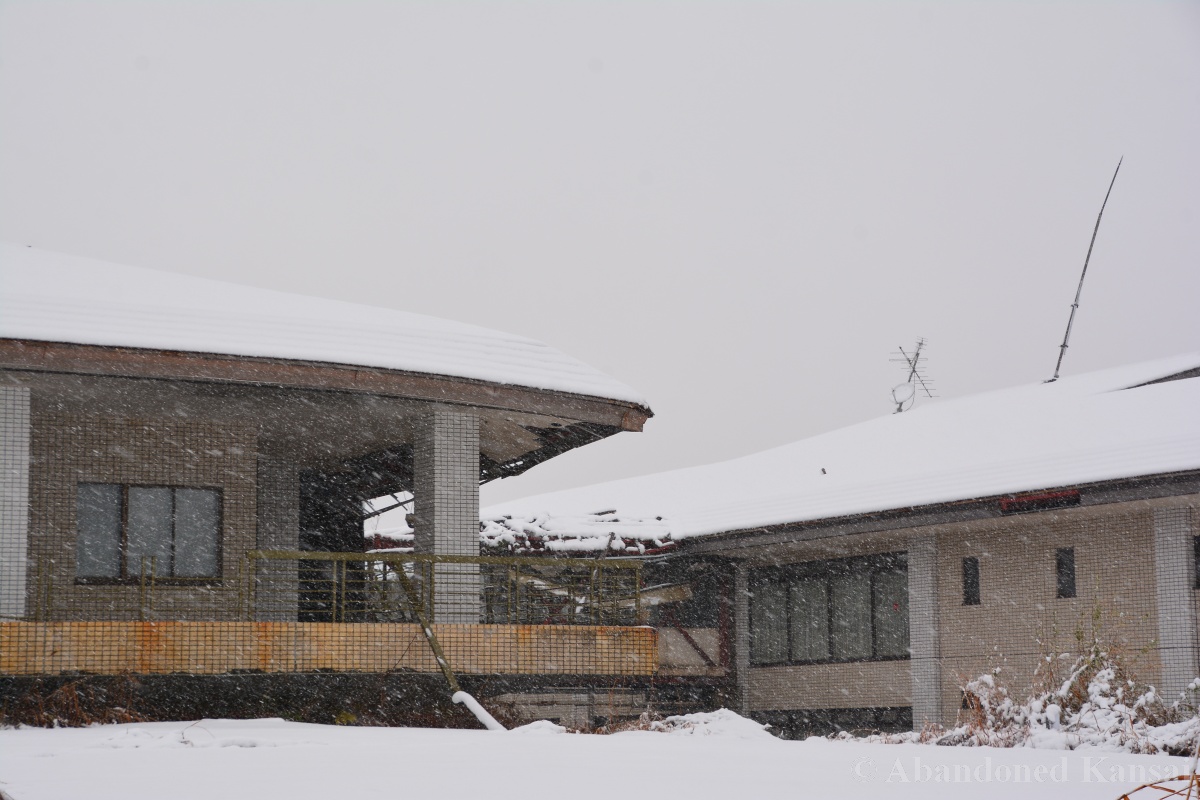
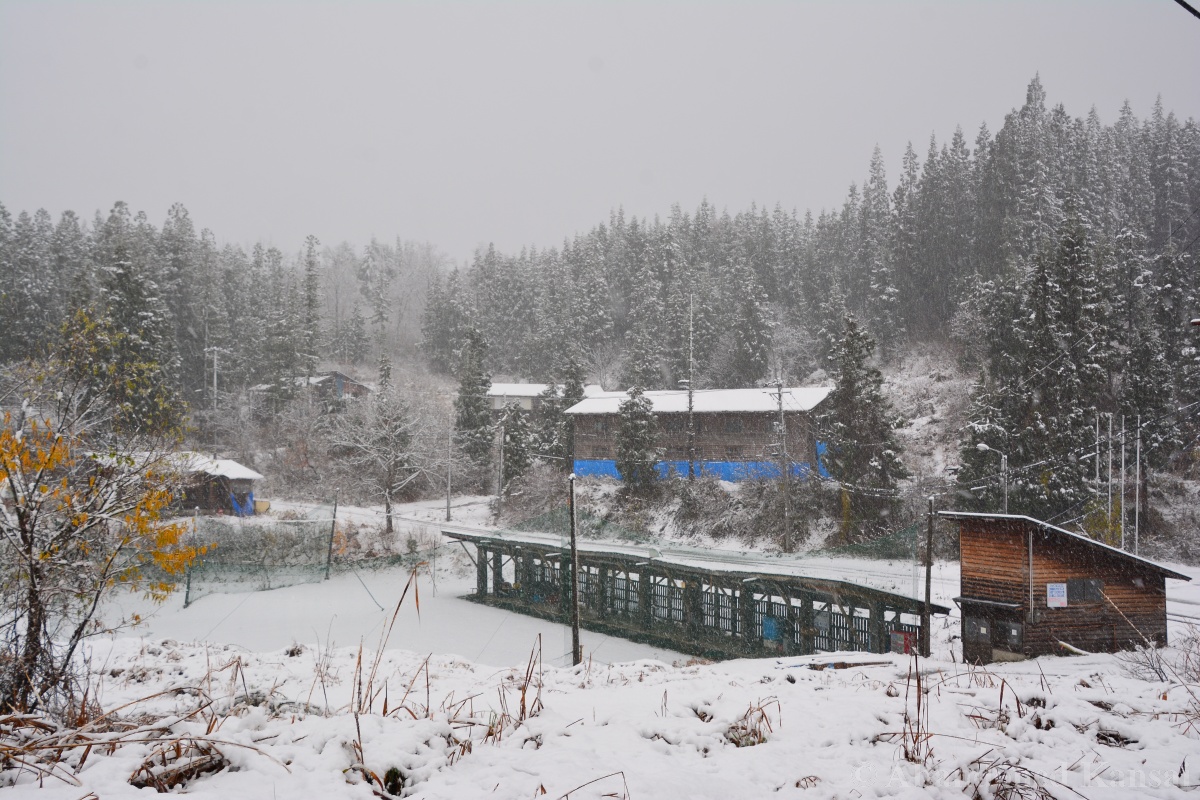
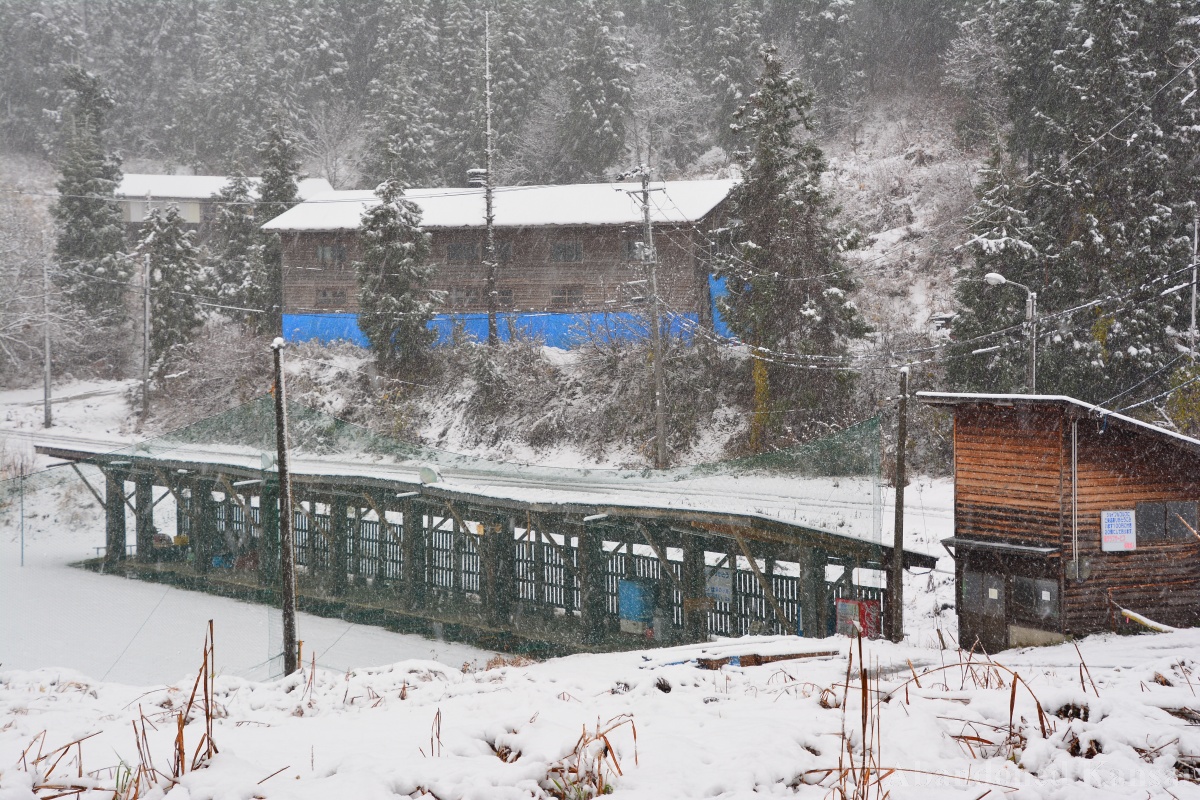
Snow in November isn‘t really common in Japan, especially in southern Tohoku. But sometimes you gotta roll with the punches…

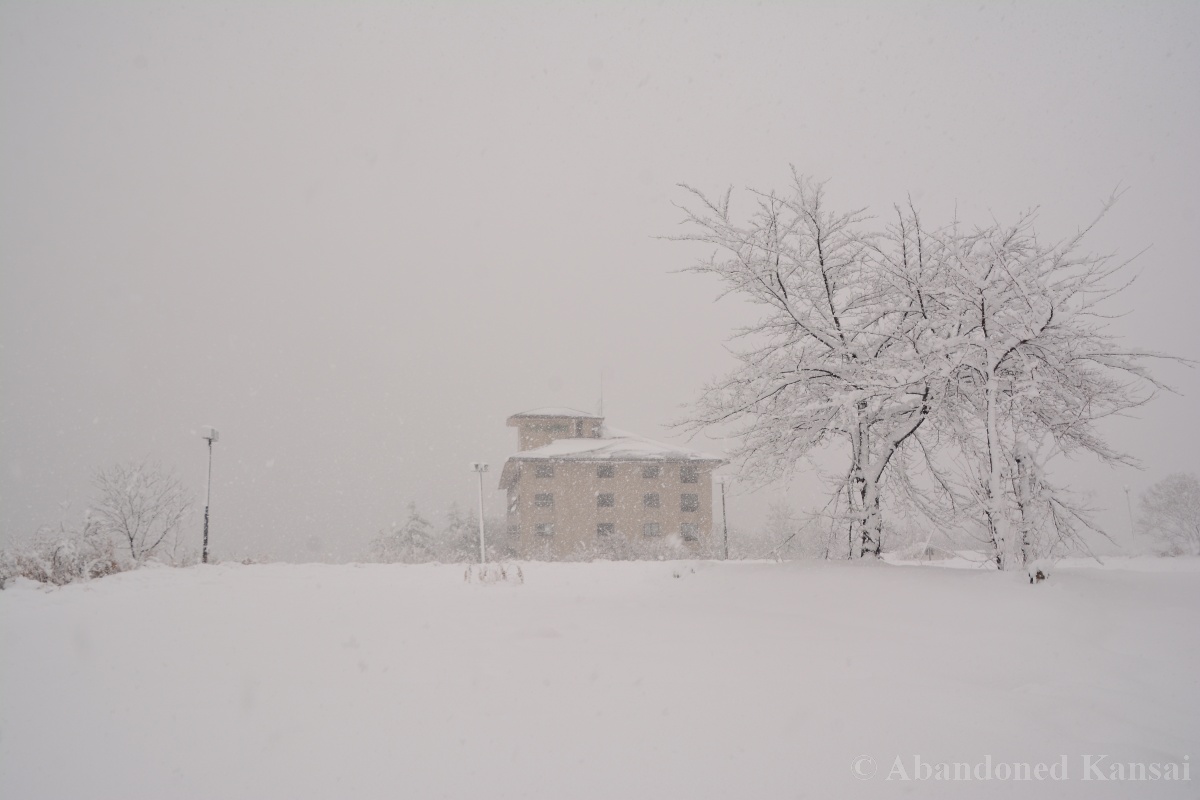
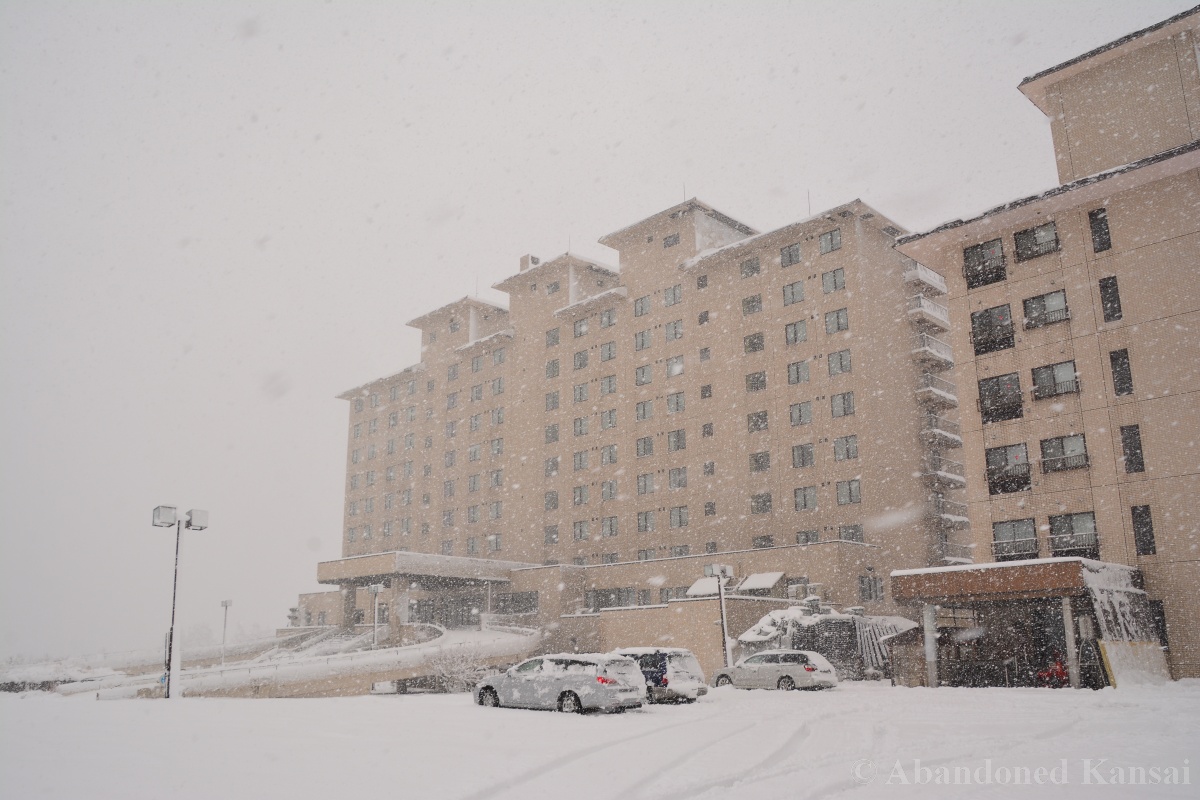
A few years ago I was on an autumn road trip to Tohoku, when I finally saw an opportunity to check out an abandoned country club that I had my eyes on for more than half a decade. Unfortunately it was so remote that I couldn’t explore it by myself due to the lack of transport, so I was really excited when I had the chance to go there. Several club houses, a hotel, a really big golf course, several other buildings – even a ski slope or two, as I found out afterwards. That thing was gigantic, potentially a whole day exploration! We stayed in a hotel about 20 kilometers away, maybe half an hour on countryside roads. It was overcast, maybe 15°C – typical autumn weather. When we left the plain to get into the mountains it suddenly become significantly colder, but who cares? That’s why we wore jackets. We took a final turn up a narrow road to the resort when all of a sudden the weather changed drastically – heavy snowfall, thick flakes. We went from zero snow on the ground to several centimeters in maybe half a minute. Nevertheless we pushed forwards, because you gotta seize opportunities when you have the chance! Unfortunately the resort was really big with lots of roads going all over the place, so we quickly lost track of where we wanted to go. You can look at maps all you want, when you go / drive up to an abandoned place, it usually looks different – it’s like Mike Tyson once said: Everyone has a plan ’till they get punched in the mouth. And the snow hit us hard. As it turned out we made it to the northwestern end of the premises with a large hotel, where half a dozen cars with license plates were parked. I got out of the car while my co-explorer turned around and slowly drove towards the entrance/exit as we both were worried that we might get stuck in the blizzard, given that the roads weren’t in great shape and we didn’t have winter tyres or 4WD. The hotel was properly locked up and the whole area wasn’t really explorable given the weather conditions, so I snapped a few quick shots before we got the hell out of Dodge and went on to greener pastures…

(*Like Abandoned Kansai on Facebook* or *follow us on Twitter* if you don’t want to miss the latest articles and exclusive content – and subscribe to the *video channel on Youtube* to receive a message right after a new video is online…)
Read Full Post »

I love abandoned hospitals! Always have, always will – ever since I walked into the *Tokushima Countryside Clinic* about a year after I started exploring abandoned places. It wasn’t a standalone hospital as we are used to in the West, more like a traditional Japanese mansion with a pharmacy and a study and an examination room. Most of those clinics are basically the doctor’s home with a section for business – and I usually named them clinics here on the blog, while hospitals are standalone buildings with rooms for inpatients. *Hospitals here on Abandoned Kansai* also tend to be rather modern whereas most clinics are from 50s or 60s, some even pre-WW2, like the aforementioned Tokushima Countryside Clinic.
The Boobs Clinic (named after two pictures on a wall in the office, which hopefully were put up after the clinic closed – it wasn’t named that because it was home to a cosmetic surgeon, or any surgeon for that matter) in rural Ehime prefecture looked like any other house in the area, maybe on the larger side. If there had ever been signs that it was a doctor’s office, they had been removed a long time ago. At the time of my visit in late 2020 (exploring during the pandemic was the best!) it was just another house on the main road of a small town.
Since I wasn’t in charge of that trip, I actually had serious doubts when approaching the building, because it could as well still have been inhabited – and you really don’t want to walk into somebody’s home while the people living there are just minding their own business…
To be honest, this wasn’t a very memorable exploration. According to the photo data we were in and out within 45 minutes and the main reason I remember it, is because of the pictures I’ve taken – I actually had already written that I didn’t take any in the rest of the house, but then I checked the set to create a selection for the gallery of this article… and I had to rewrite this paragraph, because apparently I had taken a picture of the not so pretty living room. That being said, the whole building was in bad condition and partly falling apart, with the rest being moldy. A decent location worth stopping for for sure, but nothing spectacular when you have more than 10 years of exploring in Japan under you belt (at the time). In addition it was a very busy day with a total of four locations and hundreds of kilometers of driving, a lot on countryside roads through small towns. I hope you’ll enjoy the gallery, but there really is not much to say about this location as it is virtually unknown and exploring it was a surprise to me, too. My guess is that it was built in the 50s or 60s and provided care for the surrounding villages – handwritten patient files similar to those found in other clinics as well as various medicine and various medical instruments were all over the place, which was probably closed when the doctor running it retired or died. The end. Literally.

(*Like Abandoned Kansai on Facebook* or *follow us on Twitter* if you don’t want to miss the latest articles and exclusive content – and subscribe to the *video channel on Youtube* to receive a message right after a new video is online…)
Read Full Post »

Older Posts »