All abandoned: Chernobyl / Pripyat, Nara Dreamland, Anti-Zombie Fortress, Japanese Sex Museum – and many, many more! Plus: North Korea Special – 2 trips, 16 days / 14 nights! As seen on CNN…
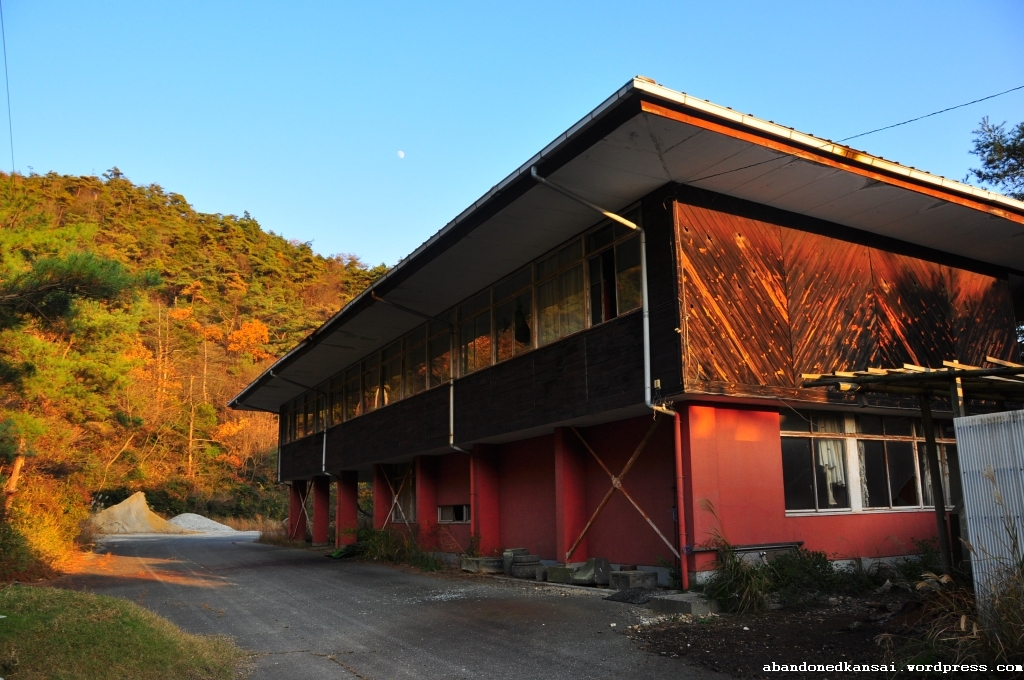
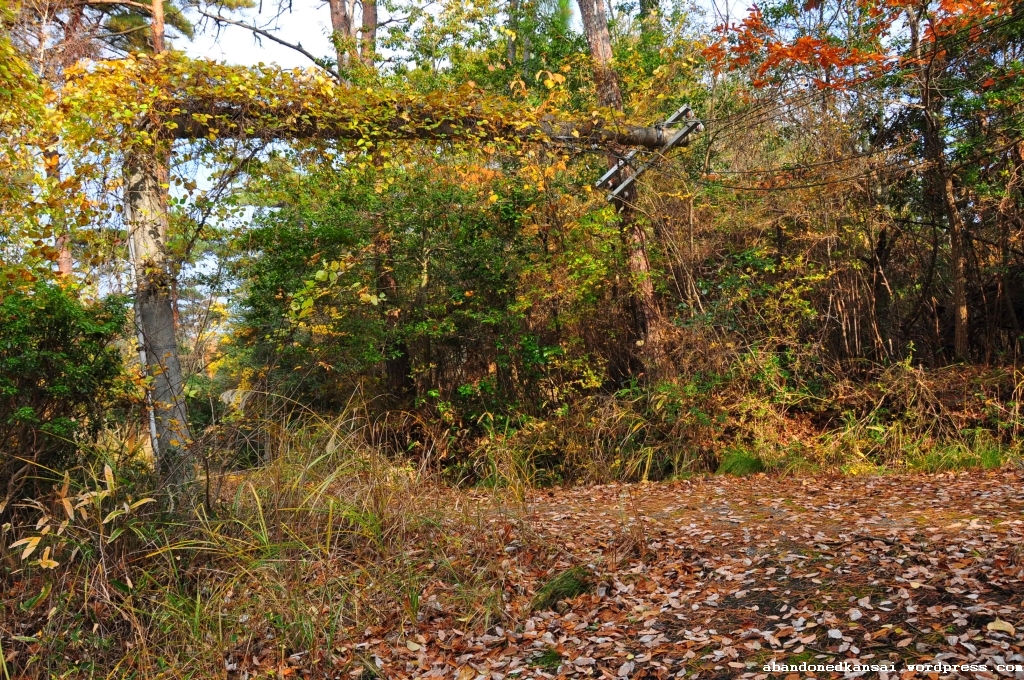
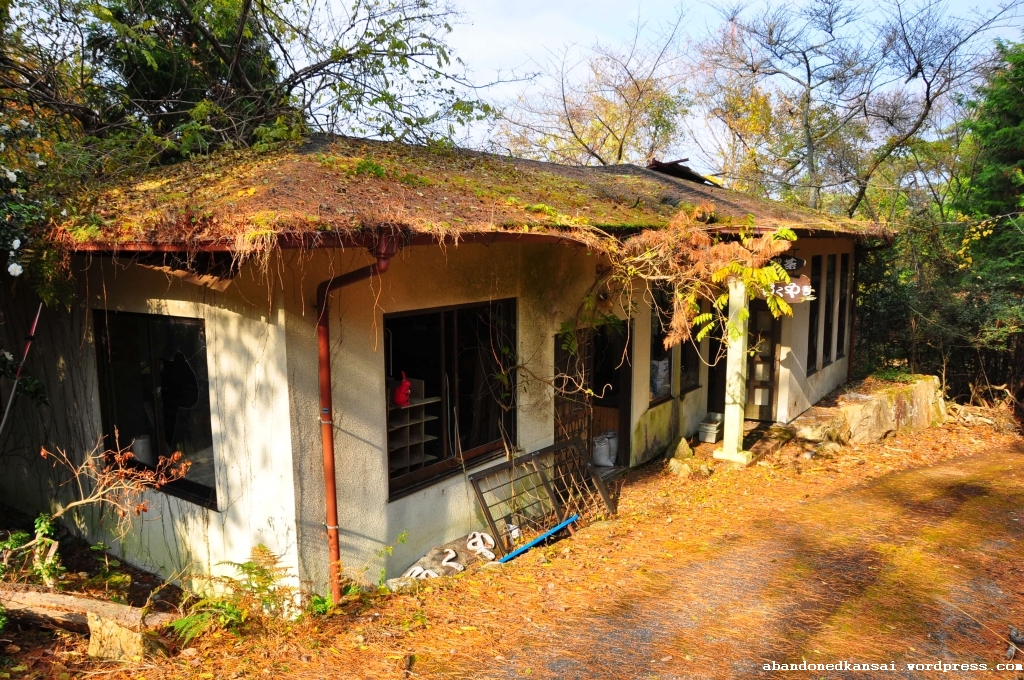
After I finished shooting at the Koga Family Land I walked back along the street that surrounded the Koga Country Club at the eastern side. I knew from a Japanese map I found on the internet that there must have been another haikyo nearby, some kind of club / guest / employee house. Unfortunately the person who marked the map missed the spot, so I had to look around for quite a while – but in the end I was rewarded with a haikyo I only saw a small picture of beforehand since it is widely ignored by the usual crowd visiting Family Land.
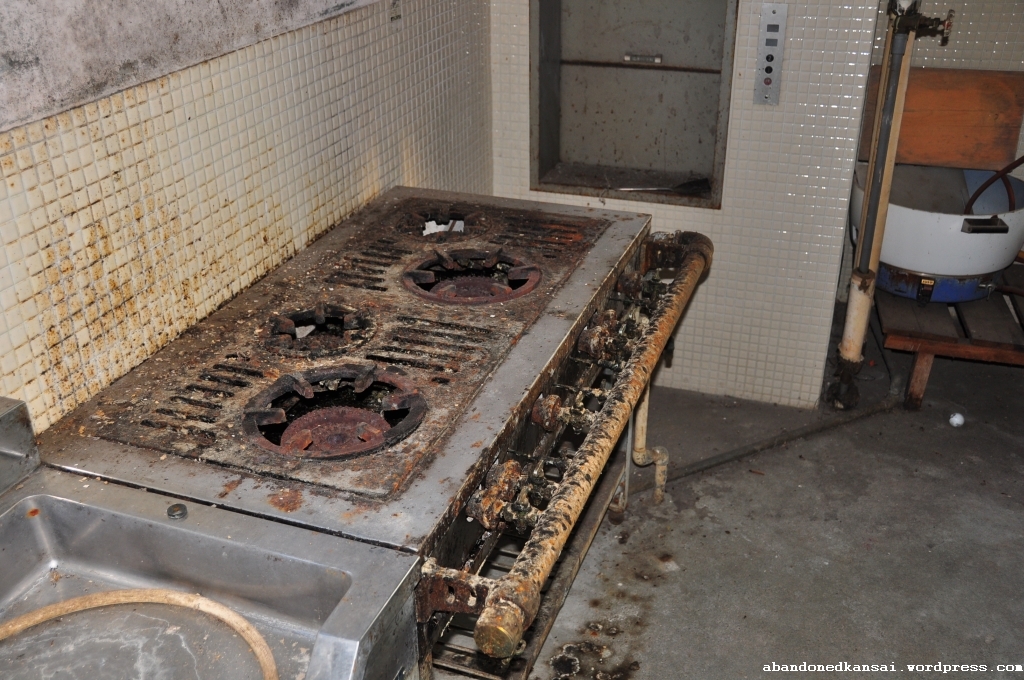
Although I spent almost an hour taking pictures and videos at the place I’m still not 100% sure what the building was used for exactly. Right at the (open) entrance were dozens of shoes lockers and a vending machine. From there I went to a private bed room (maybe the quarter of a caretaker?), a staircase to the second floor, another small antechamber with doors to five (hotel style) rooms, a washing / rest room – and to the left I found a dining room and a kitchen. Going up the stairs there was a pretty big open space, some kind of lounge for the people staying there, now completely empty. To the left was a hallway with about 10 rooms, to the right two more rooms (one of them locked) and another washing / rest room. From the lounge you could go outside on a terrace – now filled with lots and lots of furniture.
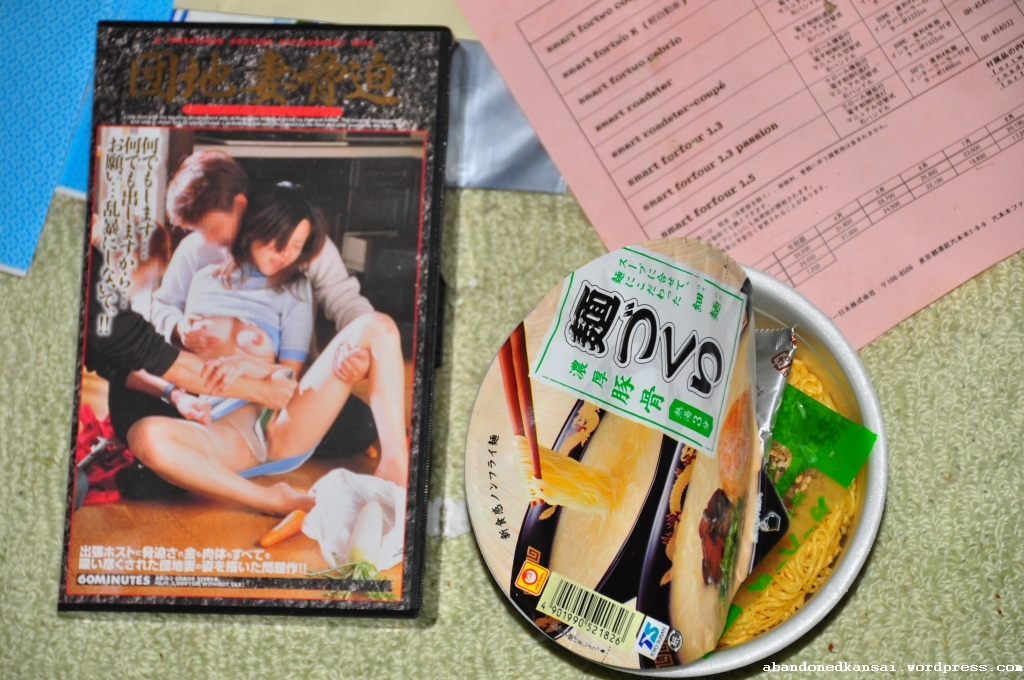
Overall it was an average haikyo, I guess. But I nevertheless liked it since the building wasn’t vandalized at all and in decent condition – and since it’s very close to the mostly demolished Family Land the combo is definitely worth a visit. I just still wonder why there was an open package of instant noodles next to a porn video in one room…
(Addendum 2012-02-06: I just added the video walking tour – I never intended to publish it, so please don’t get your expectations too high. This was one of the first videos I ever took…)
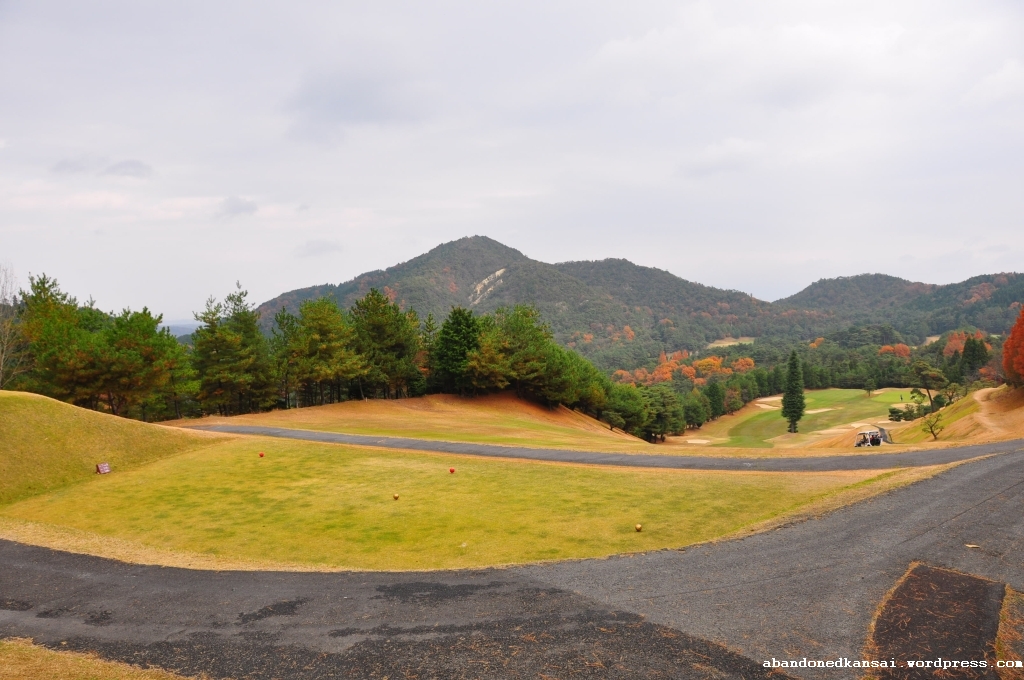
Koga Family Land (thanks to weird transcription of the original Japanese also known as Kouga Family Rand) in Shiga has the reputation of being one of the most impressive and most documented abandoned places in Japan. Well, I guess it’s more correct to say it had that reputation, because of after more than 20 years of quiet decay this once so strangely beautiful place was torn down and ripped apart towards the end of 2008 – there are claims that the owners were worried about the dangers to people visiting the place, but I think they were more worried about the golfers having to deal with people walking on their private property along a street passing by several holes. Yes, the golfers. Koga Family Land is located in the southern part of a country club, surrounded by mountains from all other sides – the only way to get there (without sliding down some hill as described later…) is by passing through the same entrance the pink polo shirts wearing men in their best years are using. No problem while the park was open, big problem now.
So after I hiked along a country road for a few kilometers I reached the country club and walked along the street surrounding the golf course to get to Koga Family Land – or what I hoped was left of it. After about five minutes a friendly young man in a golf kart asked me to leave: Private property. Although my knowledge of Japanese is little of course I understood what he wanted. And even pretending not to, claiming in English that I’m just a hiker that lost his way, didn’t help. He insisted on me leaving. So I went back to the country road and followed it for a few kilometers in hope I could find some kind of back entrance to the KFL – without success. On my way back I heard some golfers and saw a steep slope and a little river separating me from the country club. Well, if you don’t let me in using the front, I have to use the side.
So after a fun but slightly dangerous slide down and finding a ford through the river (okay, it was a small river…) I was finally back on the property of the country club. After hiding from the golfers for quite a while I was like “Screw it!” and walked right across the golf courses – since I lost orientation and only assumed where the remains of the park could be I had to take measures into my own hands. The result was quite a few disturbed faces clearly displaying one question: “Who the f* is that f*ing foreigner and what the f* is he doing here?!” To my surprise no security people showed up and it seemed like the golfers were way too scared of me to approach me. After about 15 minutes I disappeared along an asphalted way to the south – I finally found some signs of the park. Or at least I thought so.
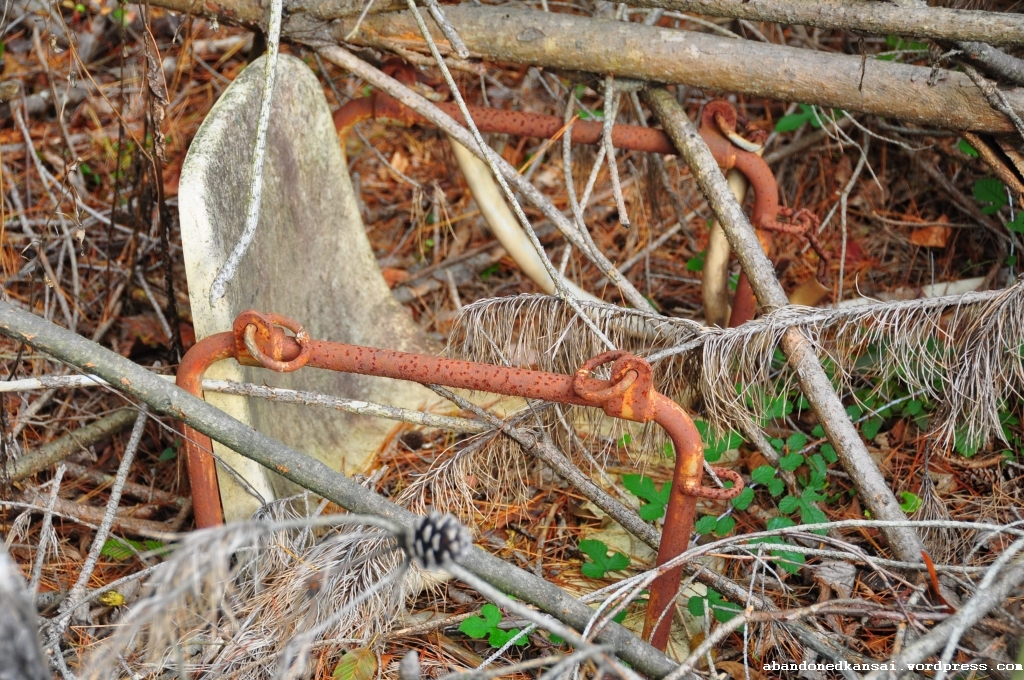
It took me another half an hour to find actual remains of Koga Family Land as the rumors on the internet proved to be right: It was almost completely destroyed. At first I only found some moorings and small piles of garbage (one with the seat of a merry-go-round) – and a confusing maze of ways. No signs, no buildings, no rides. Just nature taking back an area that once was an amusement park. Luckily two of the park’s buildings were not made of the light materials usually used in Japan – they were made of concrete and I guess therefore too expensive to be torn down. And who would come to see two buildings when you know that there was a whole park once? Well… I would!
Sadly enough exploring those two buildings was not nearly as exciting as finding them.
The first one I saw (and entered) was a souvenir shop, the price lists still on the wall. Filled with all kinds of signs from the golf course and the former theme park it was in pretty bad shape – especially the cafe part of it, where the wallpapers were molding and falling off the walls.
The second building seemed to be a restaurant once with quite a big dining room / photo exhibition hall on the first floor and a pretty stuffed second floor – including a kitchen, all kind of furniture, rotting blankets and pictures painted by kids.
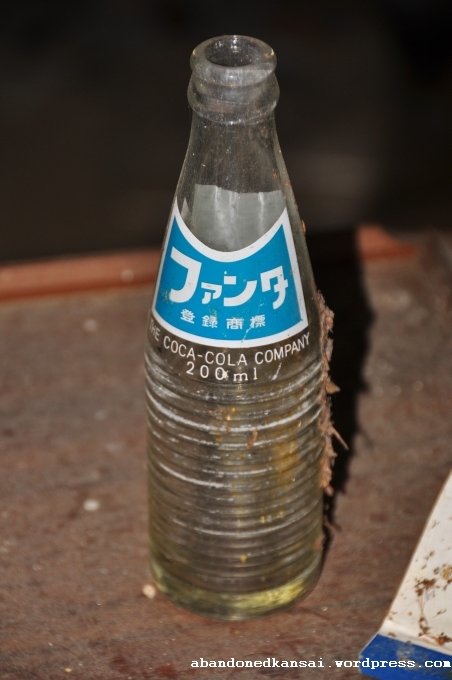
What I love about abandoned places is finding elements of daily life, so I was very happy to take pictures of an empty soda bottle. It’s the little things that make certain visits worth!
After leaving the second building I strolled around in the area with high hopes to find more remains of park, but I was diappointed. So I went back to street surrounding the country club I was hiking along for five minutes some hours ago. This time no guy in a golf cart showed up to give me a ride to the main street. Which turned out to be very good for me as I stumbled across another abandoned building on my way out – belonging to the country club and way more interesting than the KFL buildings. But that, dear reader, is a story for another time…
Urban exploration usually means visiting places that many people have been before – in most cases those ruins are off the beaten tracks and therefore hard to find. Some places are well known on the internet, some are not. But in the end most of them have pictures and maybe even a description online or in a book – and that’s the way most explorers find out about them.
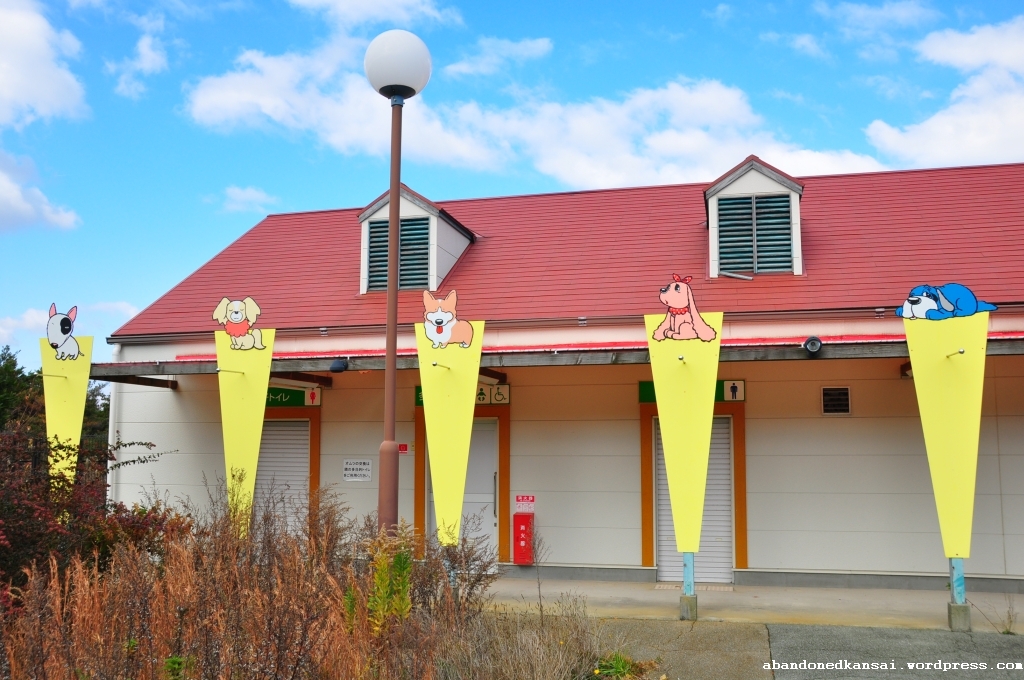
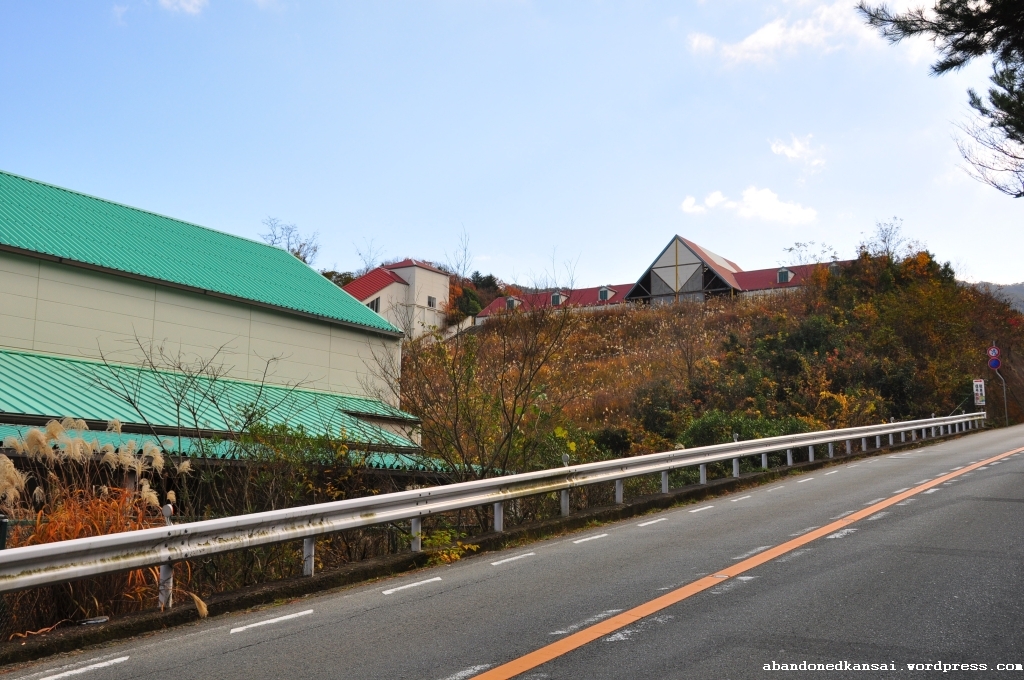
When I did the bulk of my haikyo research in late 2009 I followed all kinds of hints on the internet to find places I could go to. Sometimes I found names, sometimes descriptions. Most of the time pictures, barely ever the whole package. With “Doggy Land” (not the real name) it was even harder. I had barely any information about it, not even what kind of place it was, but thanks to GoogleMaps I had a vague idea of where it was – so I went to the Hyogo countryside to find out. And I guess I was lucky as the place still existed and was nowhere covered with pictures and reports on the internet, neither the English speaking nor the Japanese speaking. Not even from the time when it was still open for business.
Although the next city is a bit away, “Doggy Land” isn’t easy to enter as there are several roads surrounding more than half of the place, all offering a good view at the whole site – and there is a toll road exit not far away, so cars are passing by almost constantly. Right when I finished checking out the surrounding area the police showed up – I literally had to get my hands off the fence I was about to climb over. Luckily they didn’t come for me, but to re-enact a car accident or something. Since there was no end in sight after 20 minutes I gave up and went home – but I’m looking forward to going back there. Until then I’ll share some pictures I took from the outside.
EDIT: For more “Doggy Land” please click here. (Yes, I went back…)
When visiting the Mt. Atago Cable Car you should have a look at the Atago Hotel, too – there’s not much left, but after climbing about 640 meters 20 more won’t kill you.
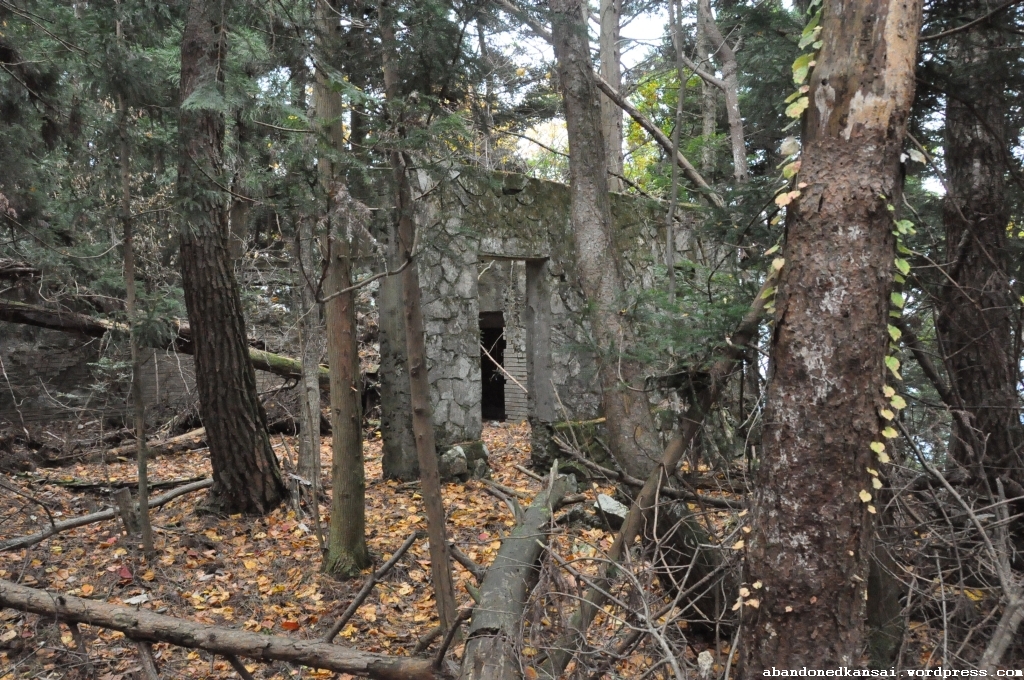
The Atago Hotel was opened on 1930-07-20, shortly after the cable car, and closed down together with it in 1944. Like the top station of the cable car the Atago Hotel is nothing more but a bunch of walls, just in a slightly better condition – but without floors. It seems like the hotel, located at a slope, was built with the entrance at the ground floor and an “open basement”. The ground level is almost completely gone whereas the walls of the basement are still there, or at least some of them are; including openings for windows and doors. If you get to the hotel from the southern side and on a lower level the remaining walls look very massive, almost like an ancient Japanese castle.
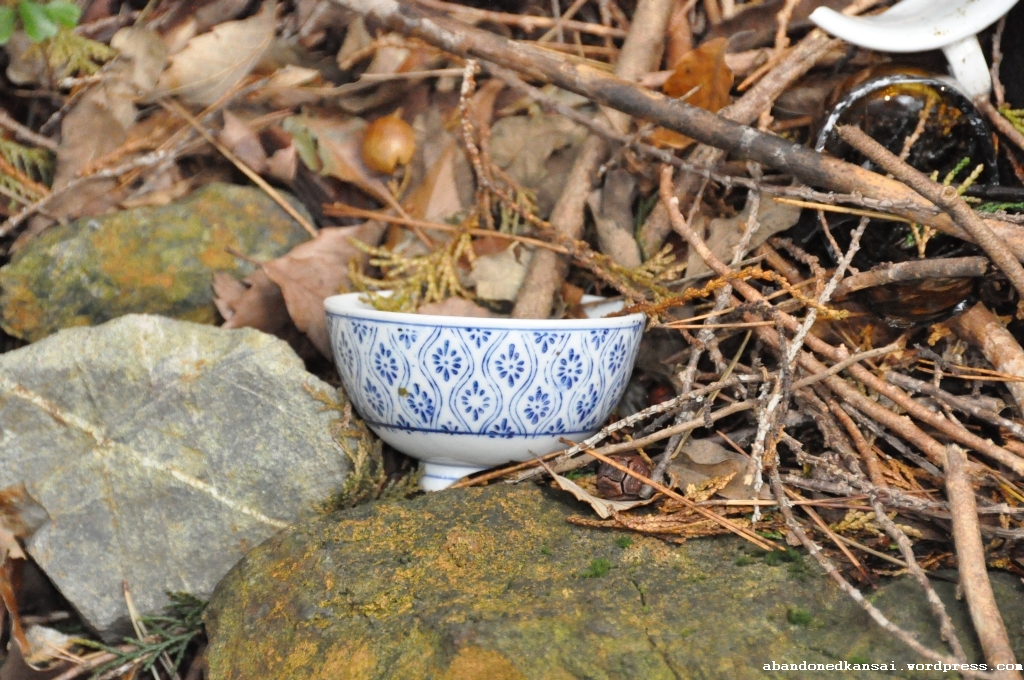
Overall the place is quite unspectacular and only worth going there since the cable car station is so close-by. At one side of the hill is kind of a dump with lots of old cans, cups and plates. I’m not sure if everything there is from the time when the hotel was still open or if later visitors left their garbage there, but it’s nevertheless interesting and offers quite a few items worth taking pictures of – if you are into that kind of stuff.
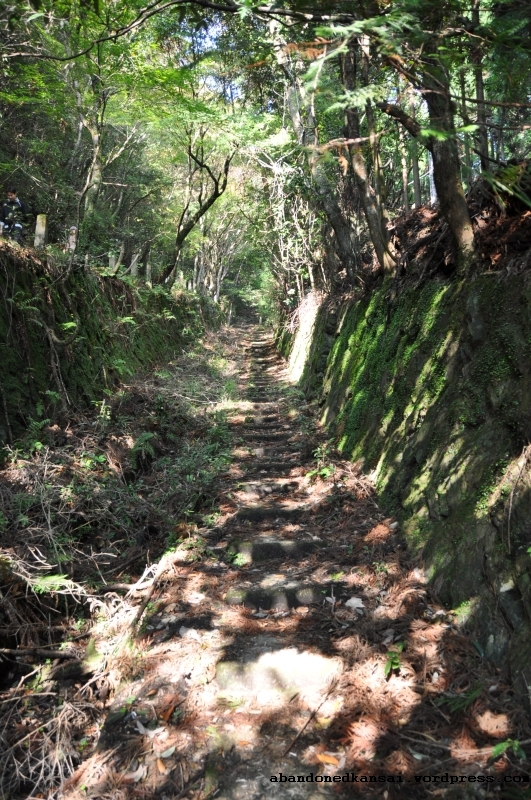
My first real *haikyo* is still one of my favorite as it combines a quite unique type of abandoned place with a scenic hike. Wrapping itself around sacred Mt. Atago in Kyoto from south counterclockwise this abandoned cable car track offers breathtaking views, six tunnels and a great leg workout – steps for about an hour as well as two short but quite steep climbing sessions. If you are not in decent shape you might wanna think about visiting this haikyo… When I started to research abandoned places in Japan on the internet I pretty quickly found the Mt. Atago Cable Car since it is, next to the *Mt. Maya Tourist Hotel*, one of the most covered haikyo in Kansai – and one of the most accessible. Instead of taking the pilgrim’s path to Atago Shrine just take the abandoned track right next to it. You can’t miss it! (If you are able to find out where exactly Mt. Atago in Kyoto is…) There even is a great (Japanese) homepage covering the history of the Mt. Atago Cable Car – built in 1929 it was already abandoned in 1944. If you are interested in the background of the places you go to you should have a look, especially at the old pictures from the time the cable car was still used. (If you are not able to read Japanese just click around and c/p the text into a translation homepage. More people than you might think do it that way…) On the way up there are two challenges – the steep incline (most of it concrete steps) and two collapsed tunnels, forcing you to leave the track and climb the hill by holding on to everything nature offers. Both detours have colorful markers giving you hints which way to get up. But while the one around tunnel 3 will bring you directly back to the track, the one around tunnel 5 will lead to a path close to the already mentioned pilgrim’s way. Without spoiling your search back to the track too much: Just go straight ahead, maybe a bit to the east. A small trail will lead you back to the track. After the sixth tunnel you almost made it to the still existing top station. Just a few minutes before that your breathtaking climb will be rewarded by a breathtaking view not visible from the pilgrim’s path – just after a partly collapsed bridge. More than 65 years after giving up this wonderful piece of transportation history, parts of it are in pretty bad shape. Nothing to worry about, but nevertheless worth mentioning. The top station itself is in pretty bad shape, too, but unlike the completely vanished valley station it is still standing. Basically it’s a bunch of outside walls and floors: no machines, no interior, no internal walls. To me it was nevertheless impressive, maybe because it’s a place with a history. A short one, but still a history, an entertaining one actually since this cable car lead directly to a *tourist hotel* and a ski resort – but that is another story…















 Abandoned Kansai