All abandoned: Chernobyl / Pripyat, Nara Dreamland, Anti-Zombie Fortress, Japanese Sex Museum – and many, many more! Plus: North Korea Special – 2 trips, 16 days / 14 nights! As seen on CNN…
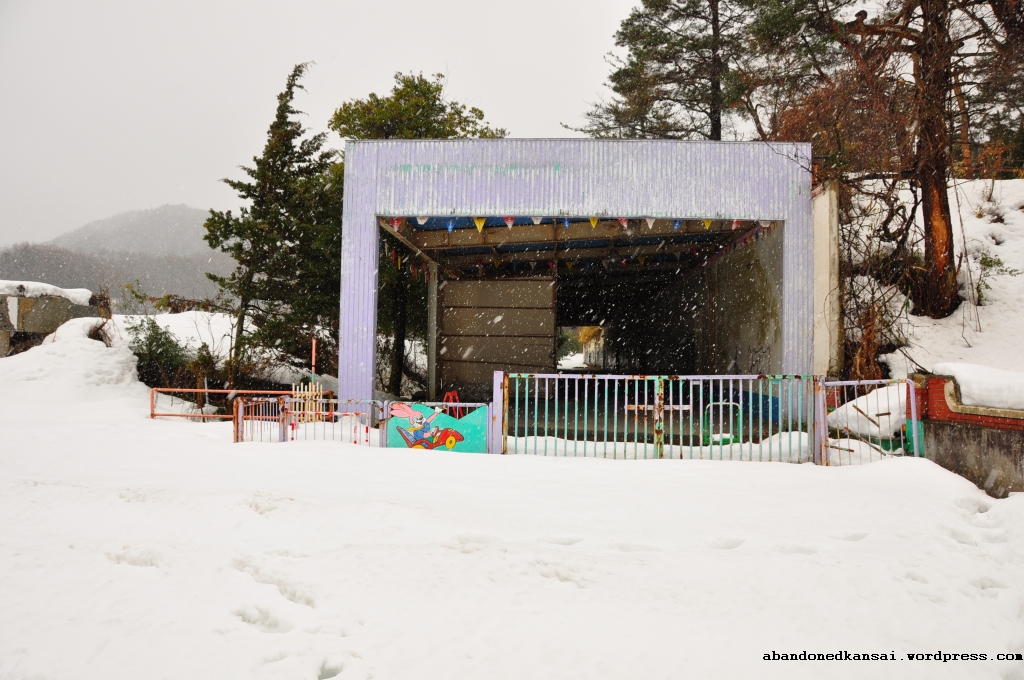
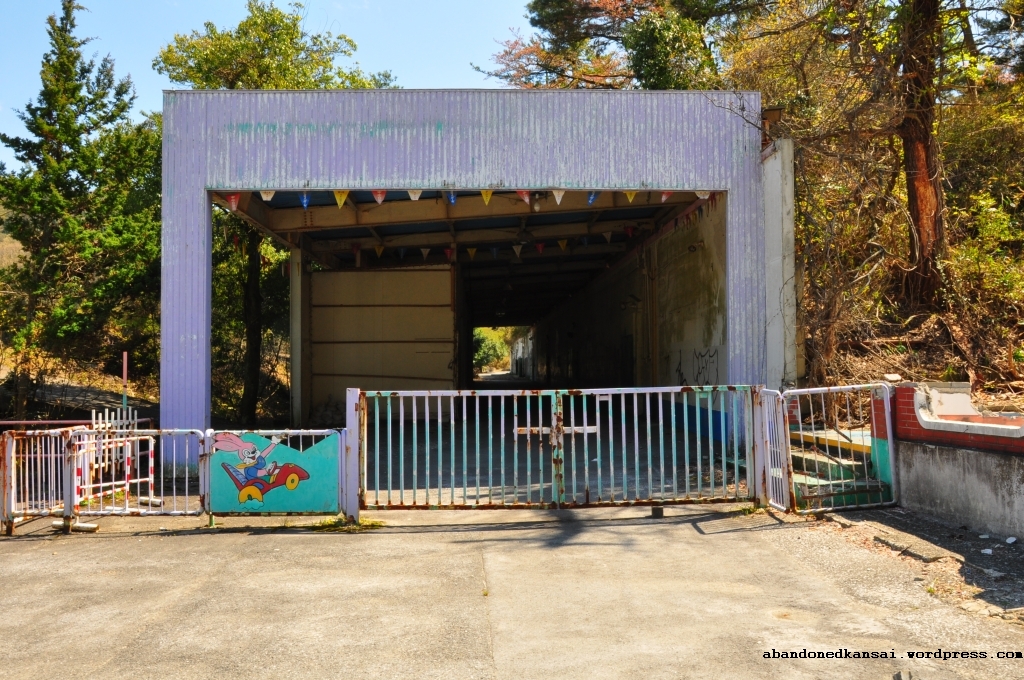
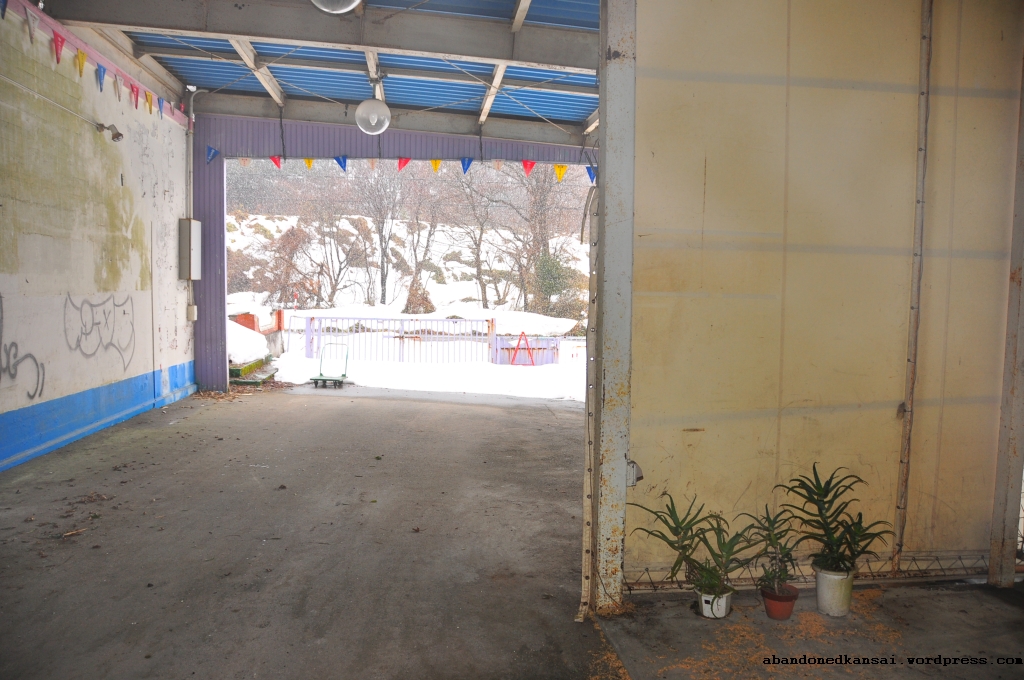
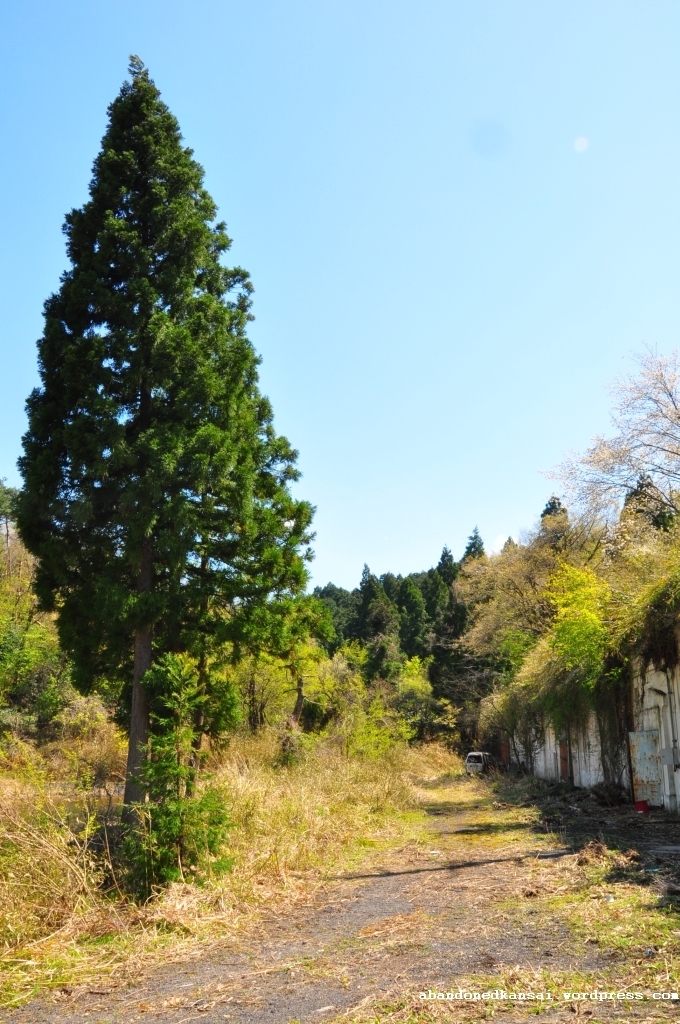
When I went to Sekigahara Menard Land for the first time in January 2010 it was completely covered in snow. When I went there for a second time in April 2010 spring was in the air. But the weather wasn’t the only thing that had changed during those three months. Enjoy the similarities and differences… and sorry again for the weird picture quality of the photos shot in April.
(Next up will be a much more exciting entry about the barely ever mentioned Taga Mine in Shiga followed by Expoland Revisited – just so you know what’s coming in the near future…)
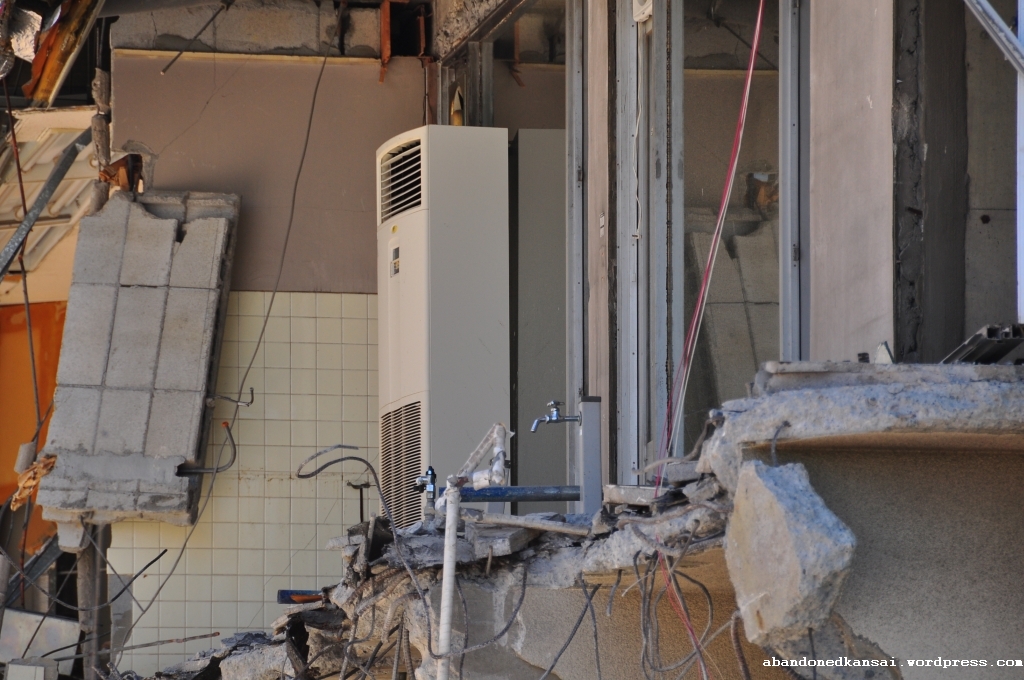
Yes, no joke – one of the most (in)famous buildings in Amagasaki, Hyogo, is called the ‘Hitler’ Surgical Hospital! Well, I guess “was” is the more correct term as they started demolishing the thing in late May of 2010.
I passed by the ‘Hitler’ hospital several times on my way to the only Costco in Kansai, but I never paid much attention to it other than taking a few quick pictures to have proof of this extreme form of ignorance and insensibility – why in the world would anybody name a hospital after the maybe most hated person in human history? (Well, it was the ヒトラ外科病院, not the ヒトラー外科病院 – but although the character indicating a long vowel was missing it is highly unlikely that the naming was a coincidence, especially since you only find the dictator and the hospital when you look for ヒトラ on the internet…)
I actually don’t even know how long the place was really abandoned. In March they still had a (quite run-down looking) sign outside on the main street – and that was gone in April. It was in April, too, that I passed the clinic after shooting a haikyo when it was almost dark outside and there were no lights in the building – but since I carried a lot of groceries and it was on a weekend day anyways I didn’t pay a lot of attention to that fact. Now the hospital with its departments for stomach and intestines, circulatory, surgery, orthopedics, neurosurgery, radiology, and rehabilitation is gone. And I wonder if anybody is really sad about it. (Except for me for the fact that I never made it inside, leaving this one of those unfulfilling “outside haikyo” – I really wish I’d taken more pictures when I had the chance, but I never took my camera when I went grocery shopping at a place where the smallest bag of potato chips weighs 1kg…)
2010-06-04 addendum: Due to the explanation given by Thomas I slightly changed a sentence and put the “Hitler” in apostrophies as I guess we will never find out what the people deciding the name thought when they put up the signs onto the top of the building.
(You can find out where the ‘Hitler’ Surgical Hospital was by clicking here.)
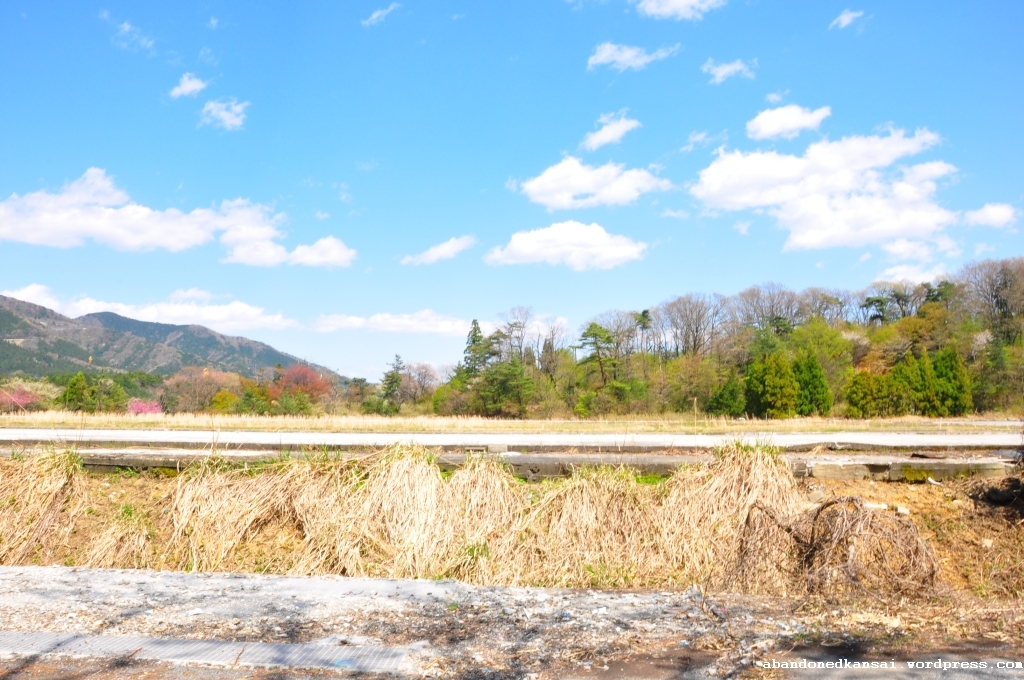
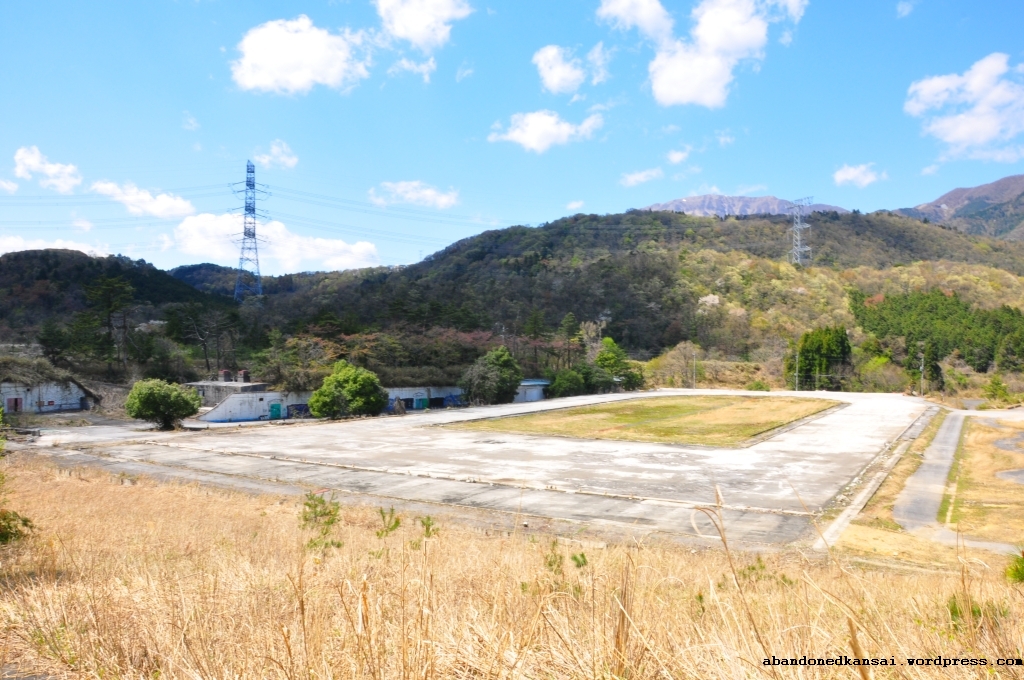
When I went to Sekigahara Menard Land for the first time in January of 2010 I was welcomed by a snowstorm. When I went there again in April of 2010 it turned out that the snowstorm was actually a blessing in disguise: Without the beautiful cold white blanket Sekigahara Menard Land is not much more than a bunch of concrete foundations…
As I walked along the almost familiar road to SML I saw a car parking right in front of the once so popular amusement park. Great, I thought, either security guards or people who have no clue at all about urban exploration. (As common sense should tell you: Never park right in front of the abandoned place you wanna commit trespassing at – especially if it is right along a country road!)
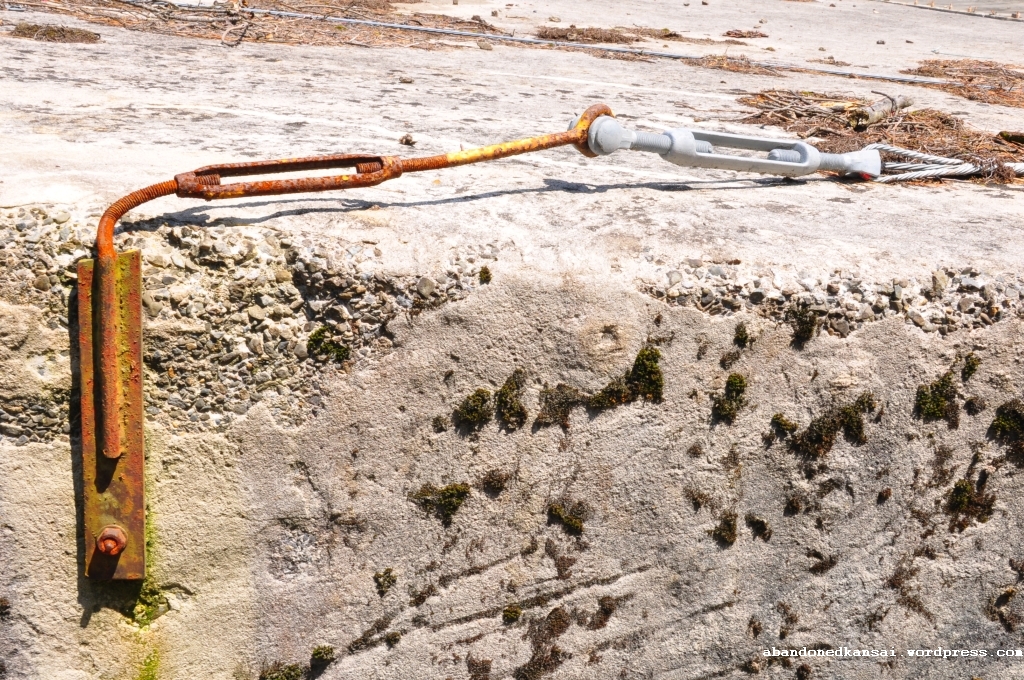
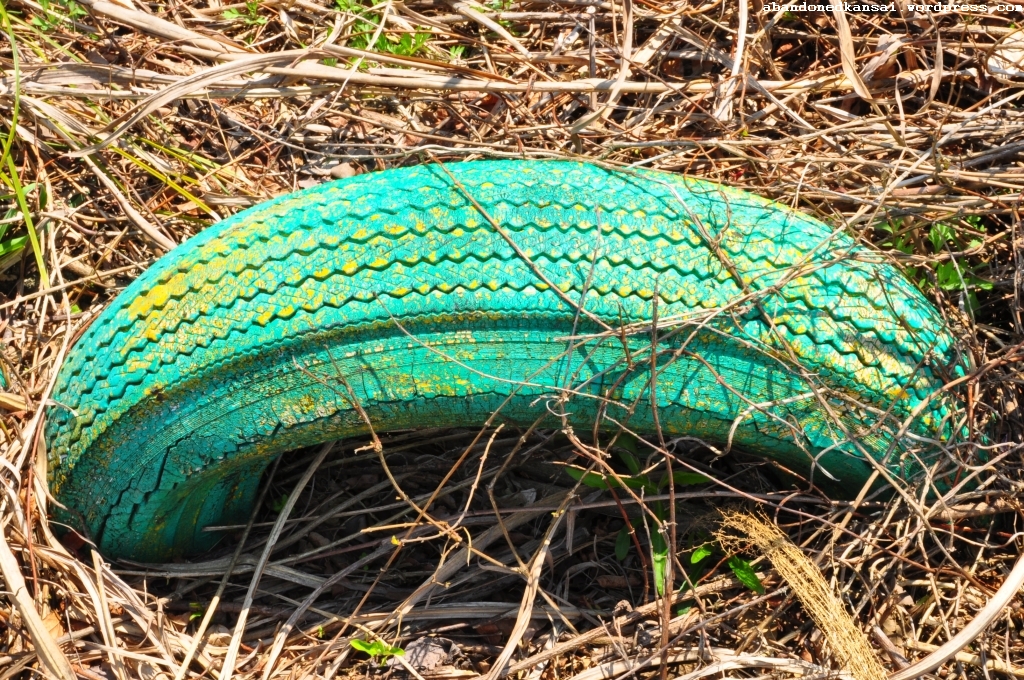
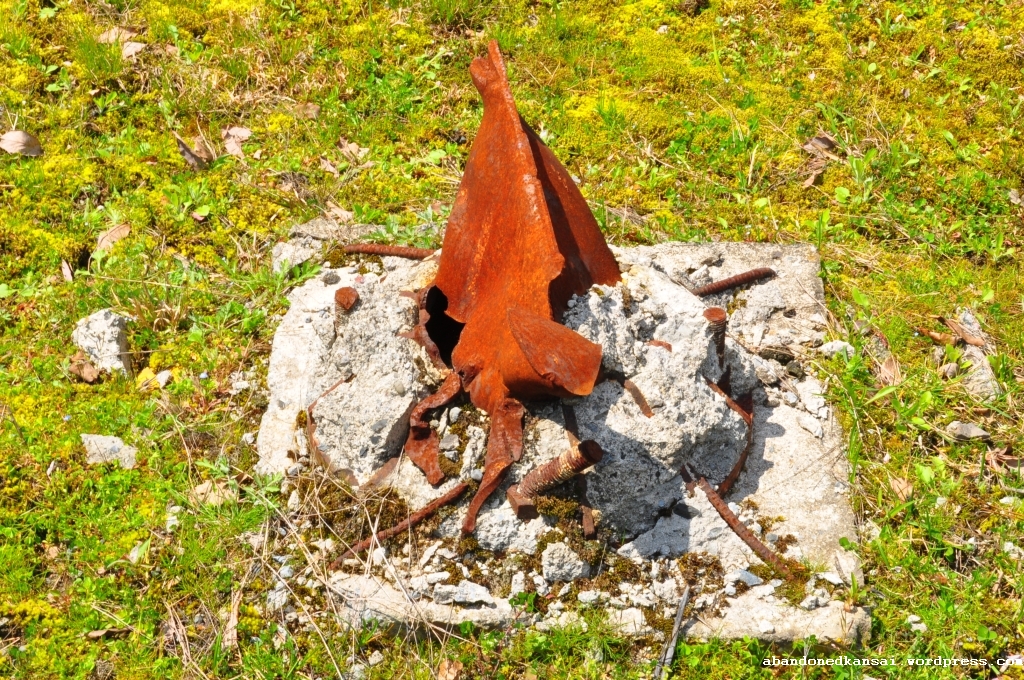
This time I entered SML via the back entrance a bit more down the road that was completely covered by snow last time. And as I assumed three months earlier the main part of the park was indeed inaccessible thanks to the snow masses. Too bad that it really didn’t matter that much since all that was left were concrete foundations. Every building was destroyed, every piece of metal that was cemented into the ground was clipped off and removed – and so was the rubble of the demolished buildings. The only things not broken were a couple of rusty fire extinguishers and two lonely plastic seats way off the main area.
When I got to area I assume once was the parking lot, the part I saw during my first visit, I saw the owners of the car – not security, but four Japanese people in their early 20s. A short, friendly nod and the group went straight to their car and left, leaving me alone to finally really explore what I’ve basically already seen before. This time the “bunkers”, concrete rooms built into the hill, were accessible – no snow and now open doors made it easy to have a look, only to be disappointed once again. Most rooms were empty and the rest was also unspectacular.
Sekigahara Menard Land is gone. Sure, you can still kind of guess a basic layout, but SML isn’t an abandoned or ruined amusement park – it’s a bunch of concrete foundations with a handfull of rusty items lying around. Maybe you will like it if you choose it as your first haikyo ever, but even then I doubt that you would be impressed.
Edit 2010-06-27: When I looked at the two picture sets I found a couple of photos that are quite similar. Time to put up my first comparison posting… to show what kind of a difference three months can make – and here it is: Sekigahara Menard Land – A Comparison.
(Sorry that some of the pictures are terribly bright / not very crisp this time. I shot the whole day with wrong settings without noticing it. At least it perfectly shows how bright of a day it was…)
To be honest: I’m still a bit starstruck and have no idea how to begin this little blog entry. So many things have been written about Gunkanjima’s history – some short, some long, so it would be kind of foolish to be Captain Obvious and write another lengthy article about Gunkanjima’s past, although the ex-student of Japanese History in me is very tempted…
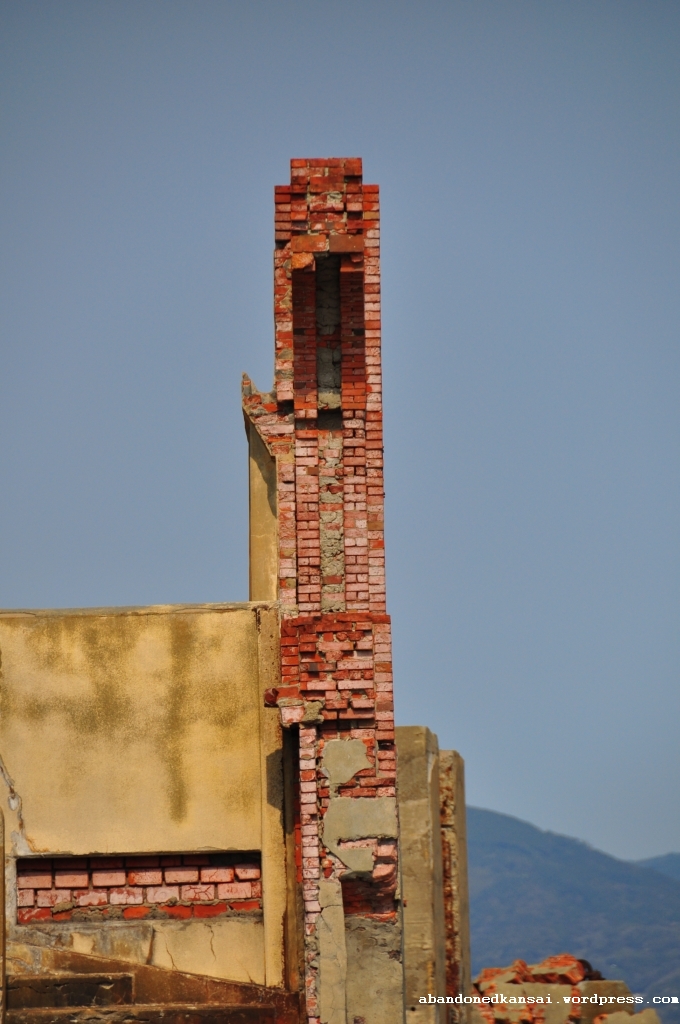
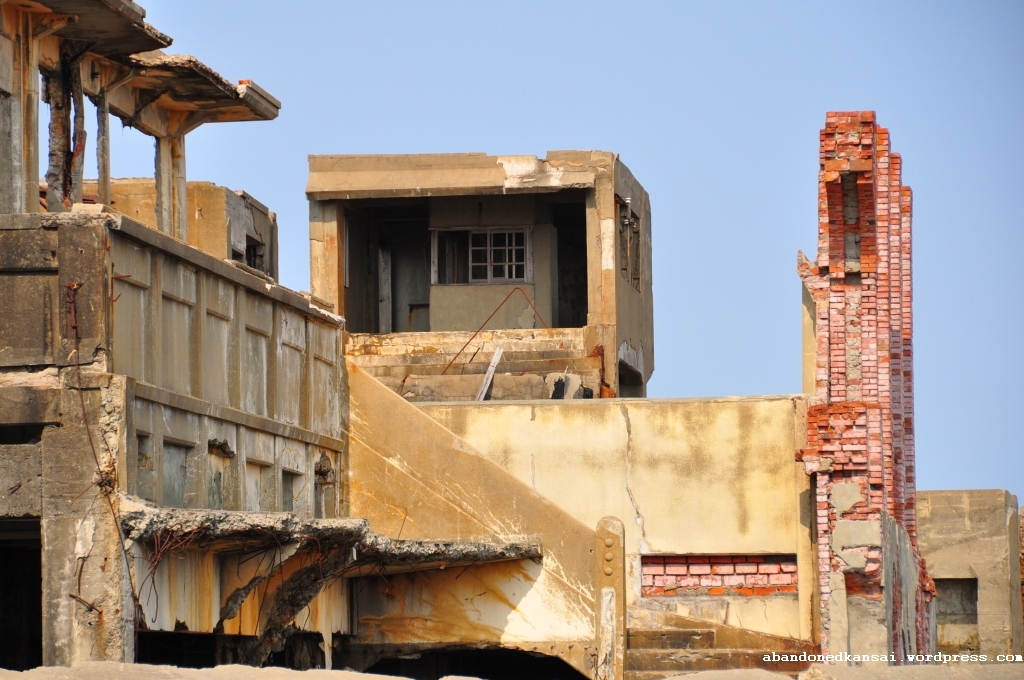
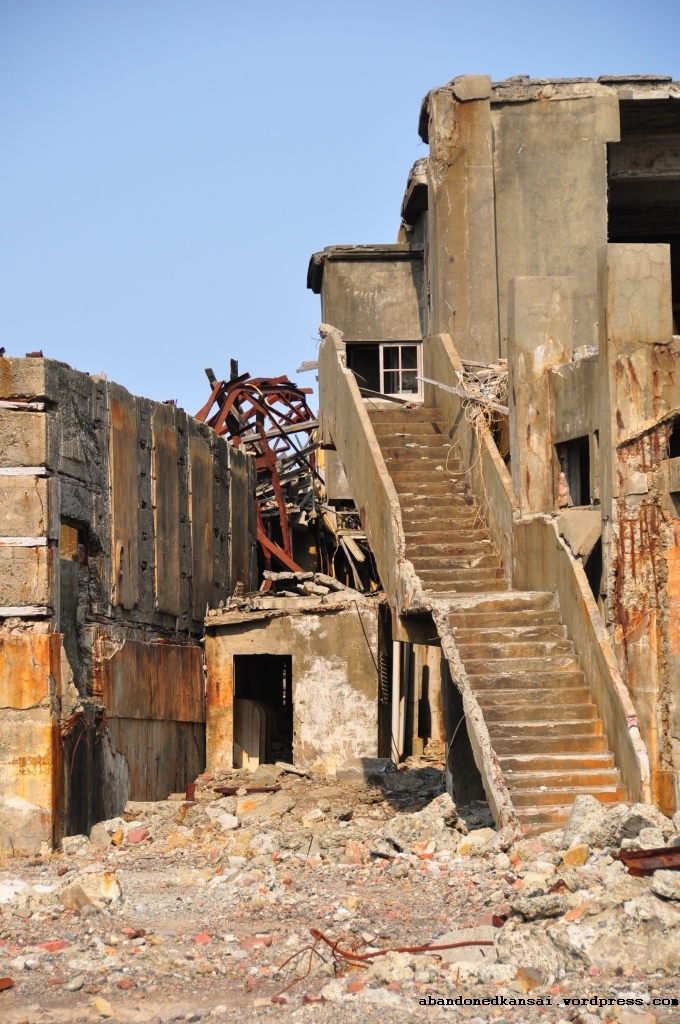
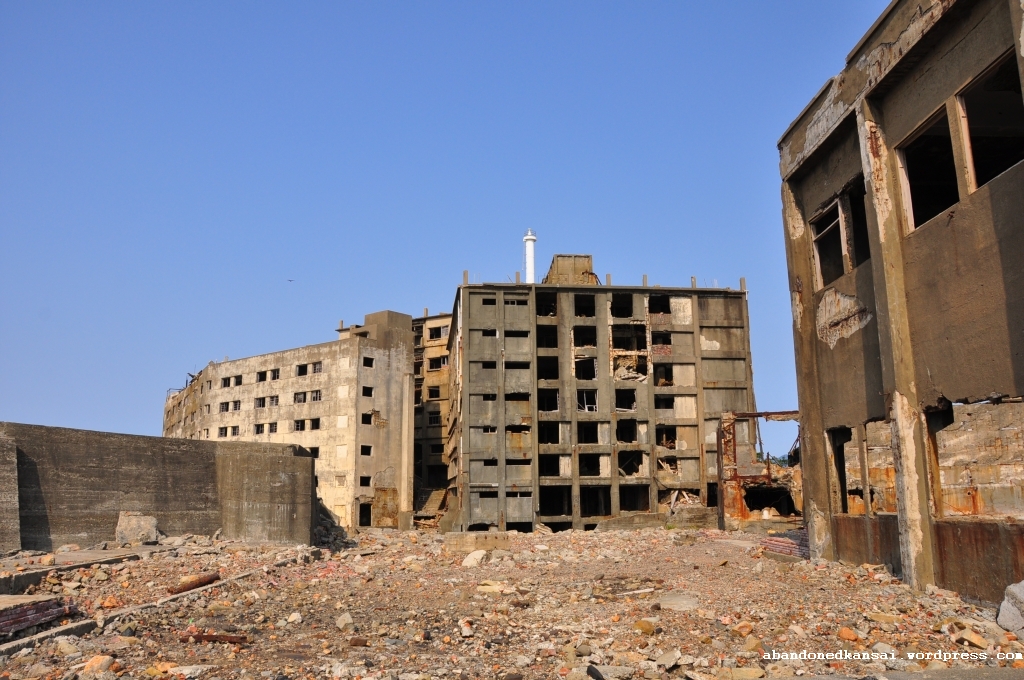
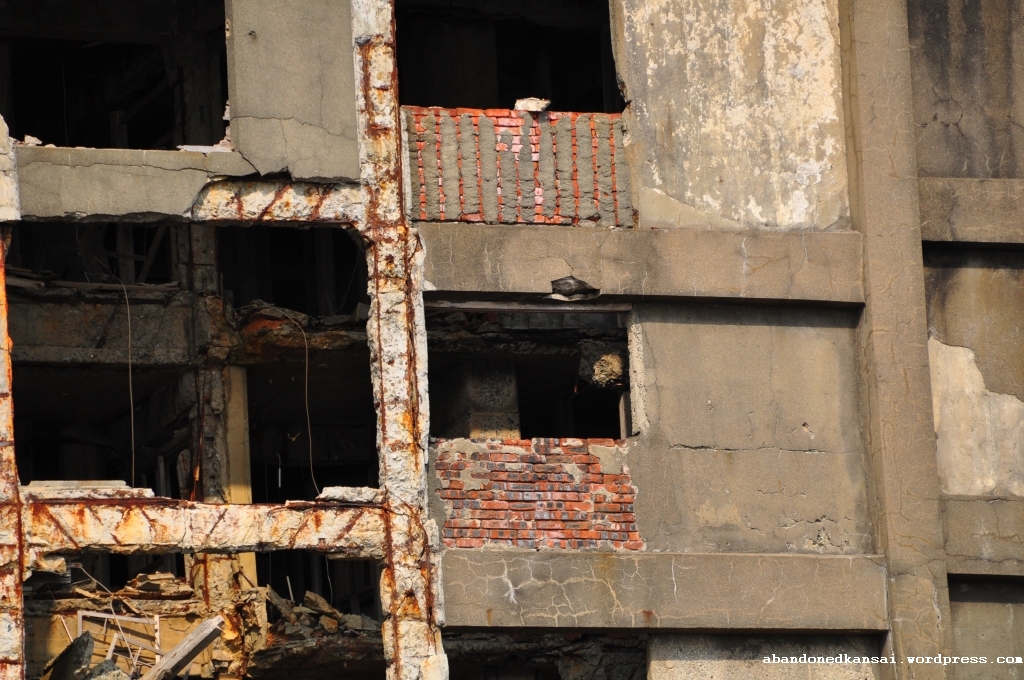
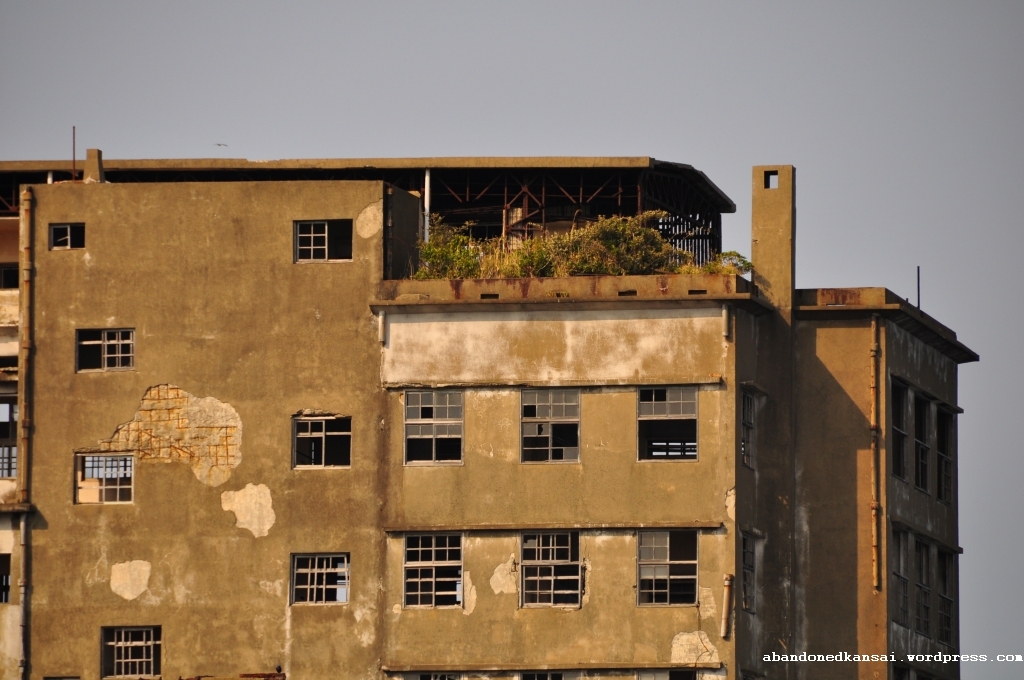
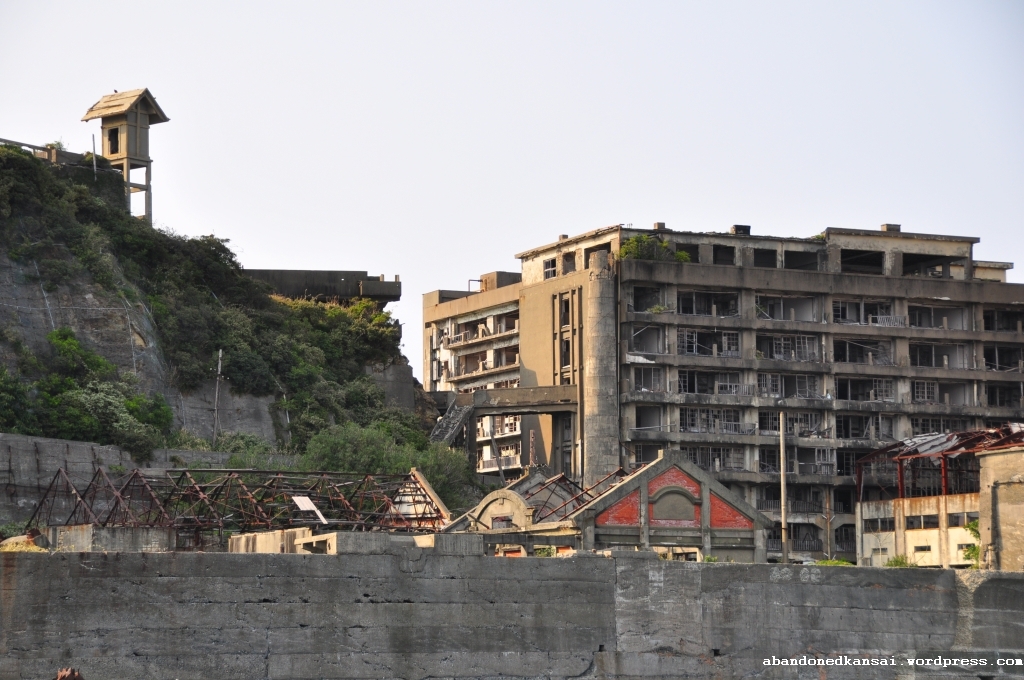
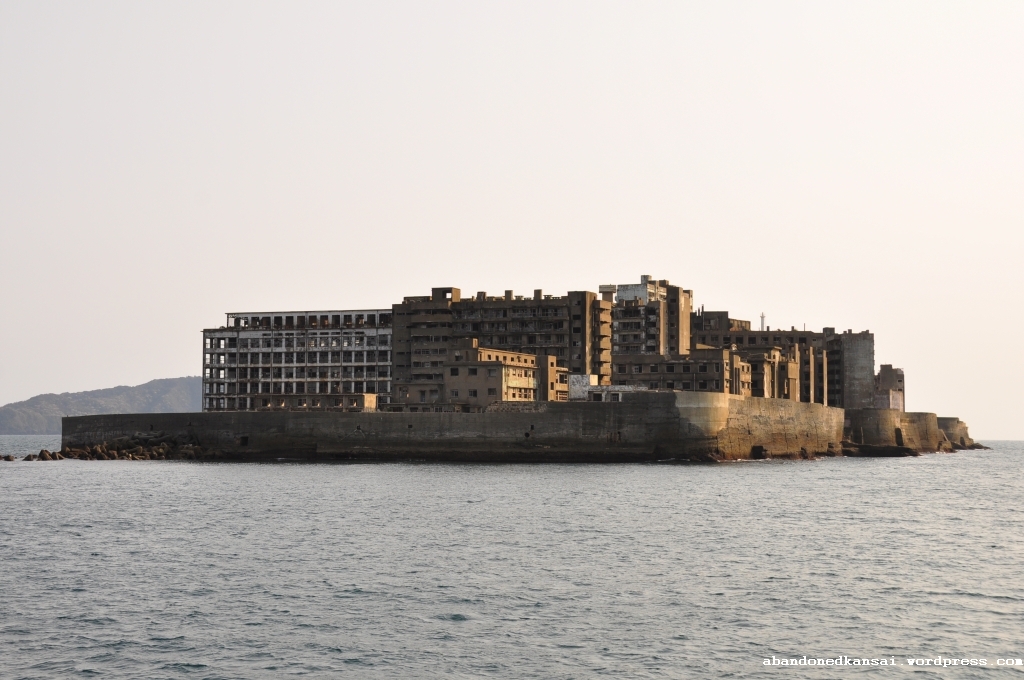
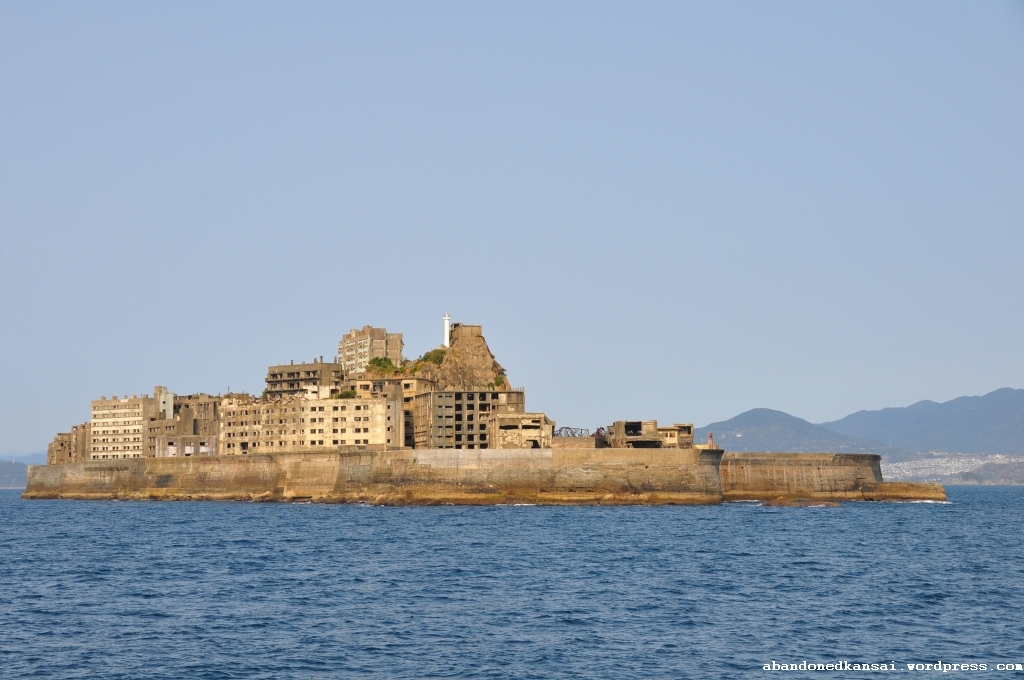
Gunkanjima (“Battleship Island”, thanks to it’s unique silhouette), also known under its original name Hashima and the not so flattering nickname “Ghost Island”, is without a doubt one of the most famous abandoned places in the world (almost on par with locations like Pripyat/Chernobyl) and by far the most well-known haikyo. Although landing on the island was strictly forbidden between 1974 and early 2009 (internet rumors claim that fishermen hired by adventurous people lost their license and foreigners were deported after being sent to jail for 30 days if they were caught – though I didn’t find any proof for those stories) there were exceptions made for film crews (documentary and fiction), professional photographers and scientists. Everybody else had to take a look from the nearby Nagasaki Peninsula or ships passing by Gunkanjima.
On April 22nd 2009 this situation changed – the island was (partly) opened to the public again.
A few years earlier, Mitsubishi (who used Hashima as a coal mine for almost 90 years and constructed all the buildings on the island) donated Gunkanjima to the Japanese state and from 2005 on the city of Nagasaki administered the abandoned island. In the same year the new owner invited journalists to Gunkanjima, bringing it back to the awareness of the public, and announced the reconstruction of a pier and the construction of a visiting zone in the southern part of the island, so tourists can land and have a safe look at the dangerously rotten buildings – entering those is strictly forbidden until this very day.
Although nowadays it is legal and relatively easy to go to Gunkanjima it still isn’t a foolproof thing to do. When Enric and I went to Kyushu in late March of 2010 we made a reservation with the only operator that has permission to land on Hashima, Yamasa Kaiun. For most foreign tourists this is the first hurdle as the homepage is in Japanese only. (The tour itself and the pamphlets they hand out are in Japanese only, too.) When we arrived at the harbor terminal to pick up our tickets we learned that the tour was cancelled. It was a beautiful, sunny day – but they cancelled anyways; the trips surrounding the island (and not landing on it) were also cancelled. You can’t imagine my disappointment as this was the center piece of the whole trip, a boat ride I was looking forward to ever since I’ve heard about Gunkanjima for the first time several years ago. But there was nothing we could do, so we moved on to Sasebo, making a stop at what turned out to be the fascinating Katashima Training School – a blessing in disguise.
The next morning we originally wanted to go to an abandoned coal mine near Sasebo, but Enric convinced me to take a train back to Nagasaki to give it another try; although we didn’t have a reservation and although I knew the tours were completely booked out. We arrived at the harbor terminal just after the first of two boats to Gunkanjima left on a day equally sunny and calm as the one before – and of course they turned us down and tried to send us away. But this time we saw a glimmer of hope and Enric convinced the ticket sales person to give us two spots on the next boat – he claimed (in Japanese) that we had tickets for the day before (which was true) and that I came all the way from Europe to Nagasaki just to see Gunkanjima (which was partly true…) while I put up the saddest face I possibly could – which was never easier although I’m a horrible, horrible actor. They told us to come back two hours later and then indeed gave us tickets: 4000 Yen for the boat ride plus 300 Yen for landing on Gunkanjima. (I followed the updates on the homepage of Yamasa Kaiun: All the tours on the next few days were cancelled. So in the end we were really, really lucky…)
Getting to Gunkanjima takes about 50 minutes by boat and the stay there is strictly organized and supervised. The pier is on the southeast part of the island and from there you pass through a tunnel in the island wall to a long concrete path that includes three gathering areas (the last one on the southwest end of Gunkanjima) where guides tell a bit about the island’s history and you have time to take some pictures. You are not allowed to move freely between the zones (several guards were blocking the path, having an eye on everybody) and of course the path is limited by chest high handrails to prohibit you from leaving the predetermined visiting zone. (Chest high by Japanese standards…) We were lucky to be in the group that started in the gathering area closest to the boat, so on the way back from area No. 3 I was actually able to shoot a video of the whole visiting zone in one shot. (I didn’t include videos so far to this blog, but maybe I’ll put it up in the future…)
If you know Gunkanjima from internet pictures made by illegal or professional photographers be prepared that you won’t be able to take similar shots as you don’t get even near the interesting buildings like housing, school or hospital – so I highly recommend bringing a good zoom for your camera to catch at least some details. The 200mm end of my lens was okay, but sometimes I wished I could get just a tiny bit closer.
The stay on the island takes about an hour and after the boat leaves, it continues to surround Gunkanjima clockwise, offering good views from pretty much every angle before returning back to Nagasaki.
Visiting Gunkanjima was an emotional rollercoaster, but in the end it was totally worth it! If you wanna go there you better be prepared that the tour you have a reservation for might be cancelled; it happens all the time…
Sure, you are limited to a predetermined path far away from the really interesting parts of Gunkanjima – and other haikyo offer similar views, some might even have more spectacular buildings. But not that many on such a small area, not with that kind of historical background. Therefore the atmosphere on Gunkanjima is absolutely unique, you can almost feel how it must have been to live on that crammed rock off the coast of Nagasaki. Unless you have some people doing wacky poses and spazzing around, having no appreciation for the island and its history. But I guess that’s a side effect we all have to live with when you make a tourist attraction out of a place like that, where 1300 laborers died during World War 2 alone – not a few of them forced workers from Korea and China.
The Kamikaze suicide attacks of World War 2 are without a doubt the most famous manifestation of Japanese fanatism. But hardly anybody knows that the Japanese military generally had a thing for self-destructing soldiers – they blew up their own people not only in airplanes, but in mini-submarines, speed boats and as divers with mines on top of a 5 meter long bamboo stick. Maybe the weirdest weapon of the “Japanese Special Attack Units” were the kaiten, a strange mix of submarine and torpedo. And all of those poor souls were trained in small town in the south of Japan.
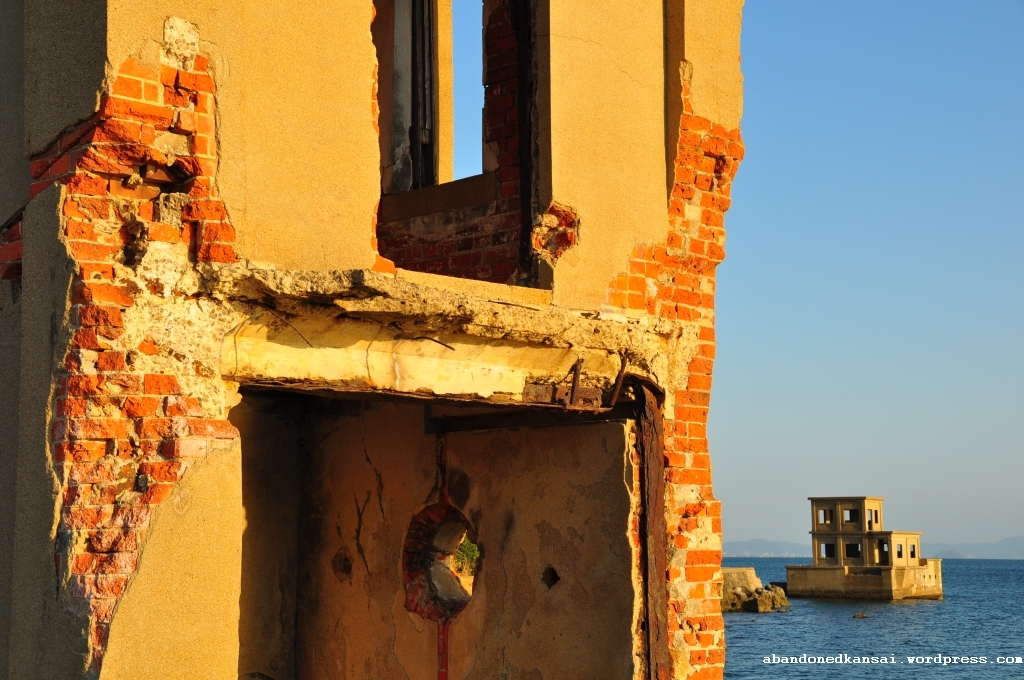
In 1944 the Japanese Navy moved their special training school from Yokosuka (of Shenmue-fame) to the Kyushu countryside – there they set up squadrons for shinyo (“sea quake” – explosive speedboats), kaiten (“change the world” – manned torpedos), koryu (“sea dragon” – mini-submarines) and fukuryu (“crouching dragon” – frogmen). The remains of that training school, including an observation tower and a launching platform for the different vehicles can still be found at a northern shore of Omura Bay.
Arriving at the train station closest to the Training School you would never expect an institution like that in the area – the surrounding is picture book countryside, a great place to go for a summer vacation. Located at the tip of a peninsula you have to walk down a small mountain (well, more like a hill) with some beautiful gardens. Except for the one where the owner took the term “scarecrow” too literal and hung up a dead crow to scare away its fellow species.
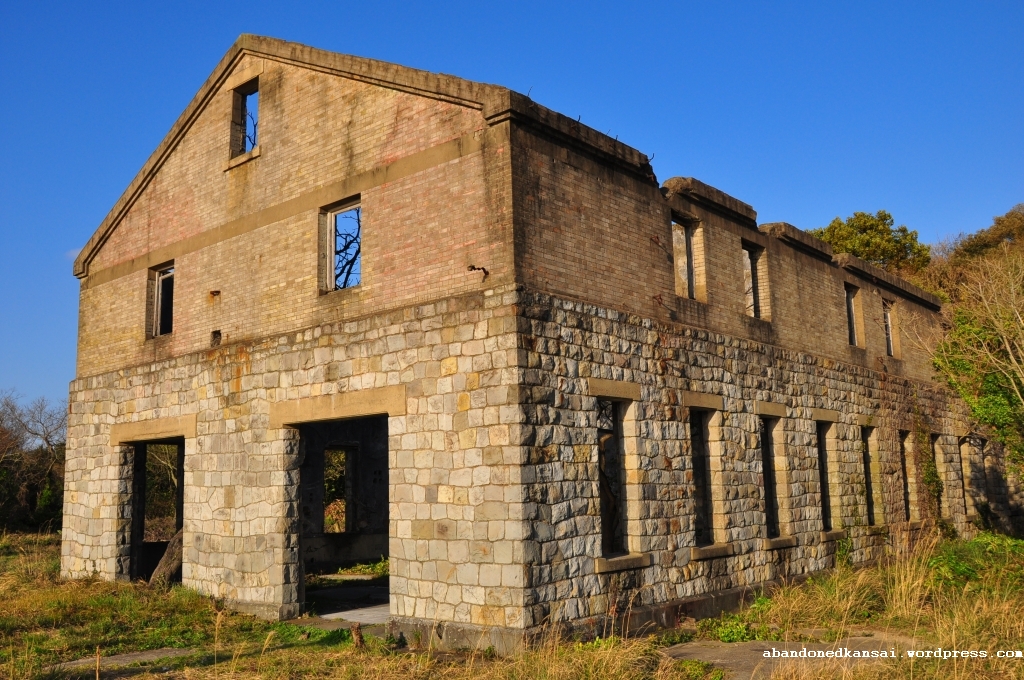
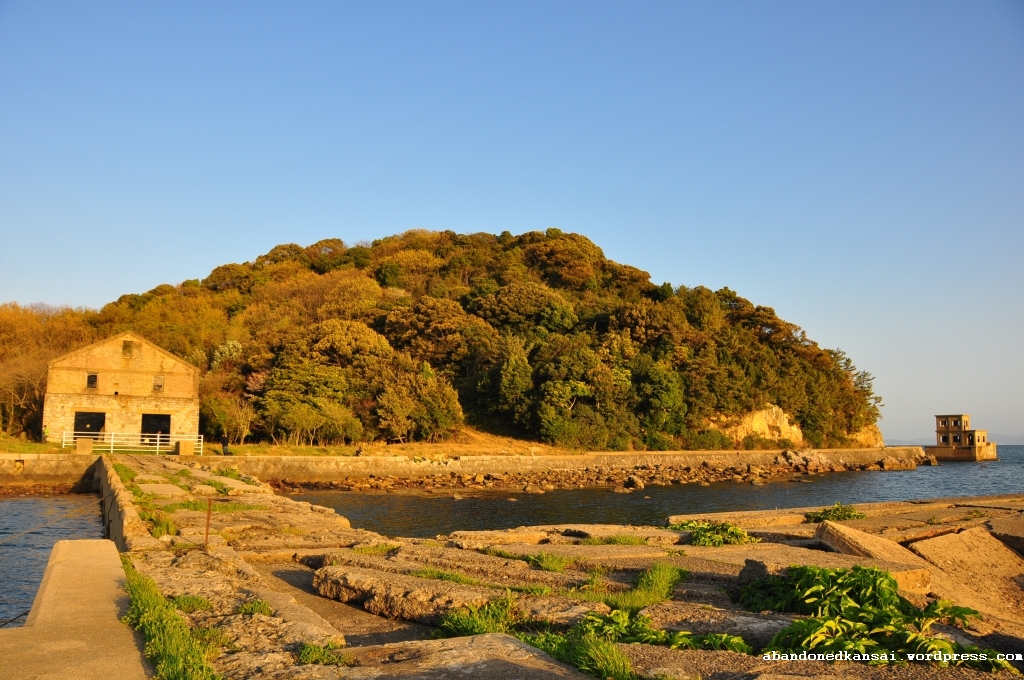
After passing through a small fishing village we (like I mentioned in earlier postings: haikyo trip with Enric) reached the remains of the school – one rather big building without a roof, with a smaller, overgrown one next to it. Right in front of main building the already mentioned bridge lead into the lake to a launching platform for the vehicles that were the school’s main subject. Further along the coast and a few meters into the lake, once connected by a metal bridge, was a still standing observation tower.
Coming closer I realized that we weren’t the only people there: Two (female) cosplayers and a photographer were in the back of the main building, a fellow haikyoist was shooting the front from the outside – later on two or three more haikyoists joined us; seems like the location isn’t really a secret…
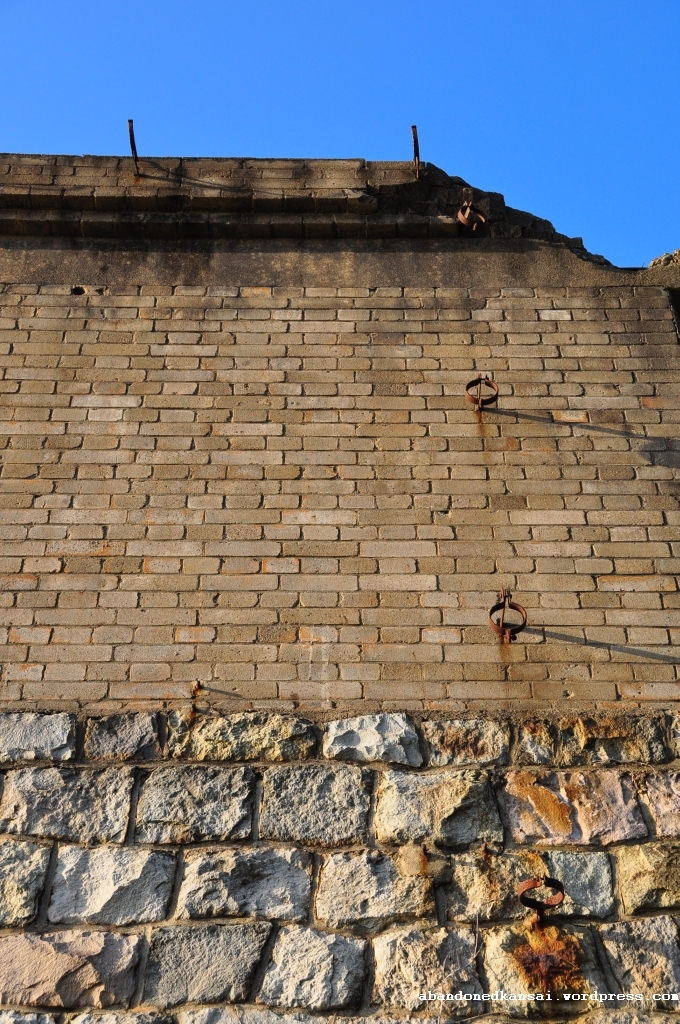
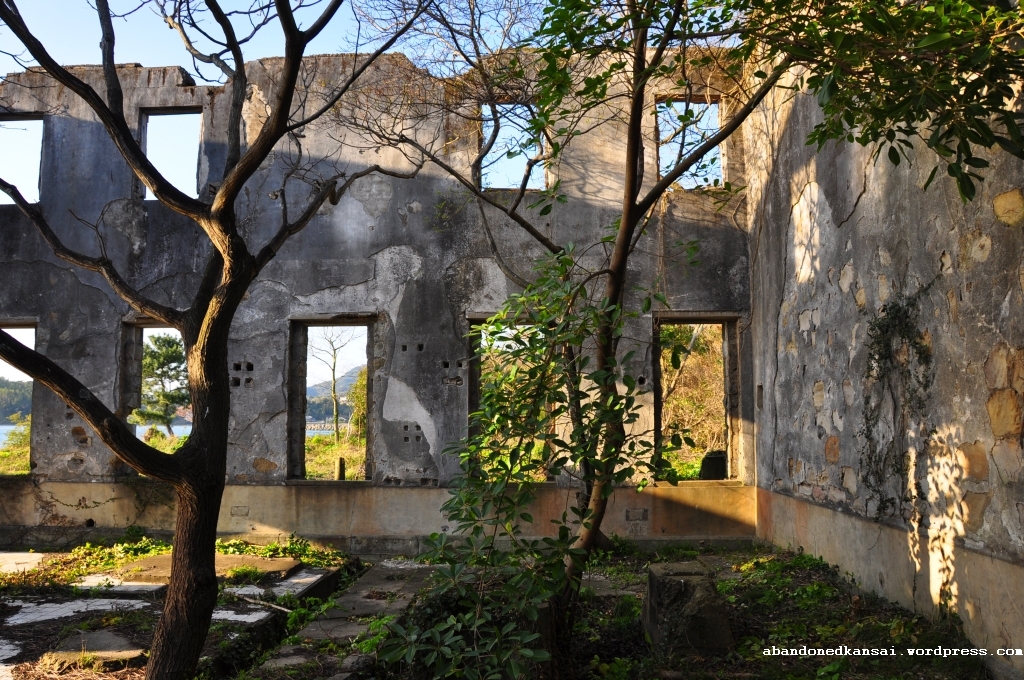
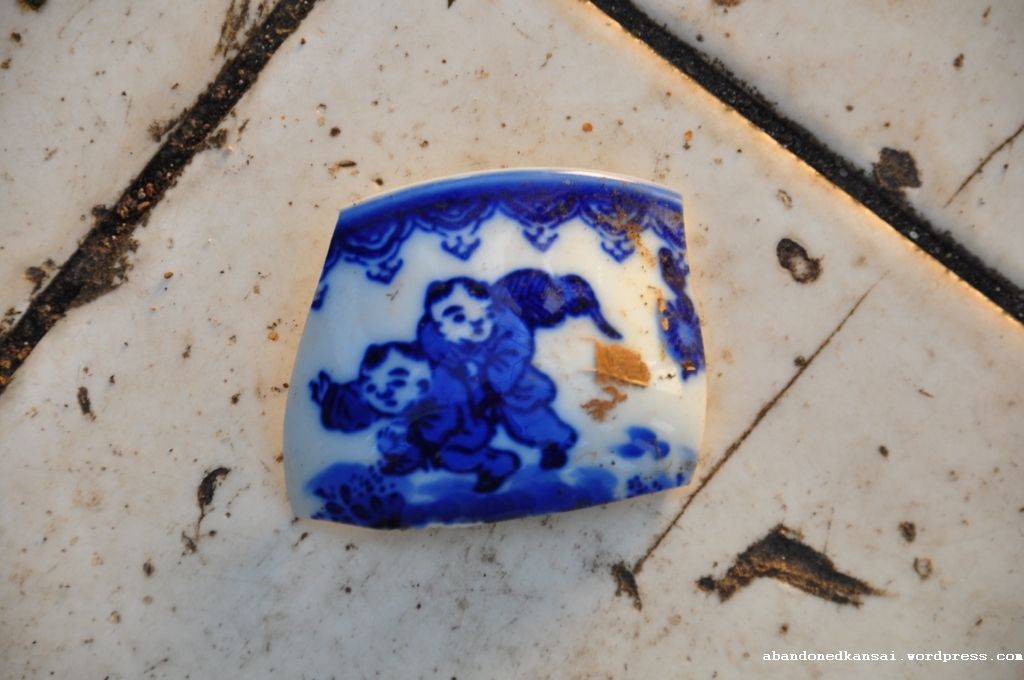
The Training School must have been a lot bigger when opened in 1944 – there were foundations and wall remains on both sides of the main building, indicating a much bigger complex. The remaining building had some pits in the ground and two rather big doors with a track once leading right onto the bridge, so I guess it’s safe to assume that it was used to repair and / or store the different kinds of vehicles. The school itself as well as the accommodations for the staff and soldiers must have been someplace else. Sadly only the walls remained, some of them with leftover fixtures for rainwater gutters and things like that; the same applied for the other remaining structures, too. Enric found a shard somewhere – of course I can’t say for sure that it was from the time the Training School was in use, but I took a picture anyways as I like (broken) items from daily life.
When choosing the Training School as a place to go to I mainly did it because it was located on the way between the two main attractions of the Kyushu trip (one of the two we had to cancel thanks to scheduling conflicts – more about that in the next blog entry…). The pictures I’ve seen on several Japanese sites weren’t that spectacular, but it was on our way, so why not have a quick stop and take a few pictures? Initially we wanted to go there the previous day, but in the end I was glad we didn’t. The weather was nasty that day and I’m sure I would have felt miserable and the pictures would have been quite dull. Instead we went a day later and while the weather still wasn’t good enough to go to Gunkanjima (the boat trip was cancelled – but we made it there the next day, so not much harm was done in the end… you will be able to read all about that in the next blog entry) it was absolutely gorgeous for a photo shoot. A cold, bright, windy day at first the whole place was flooded with warm light when the sun went down…
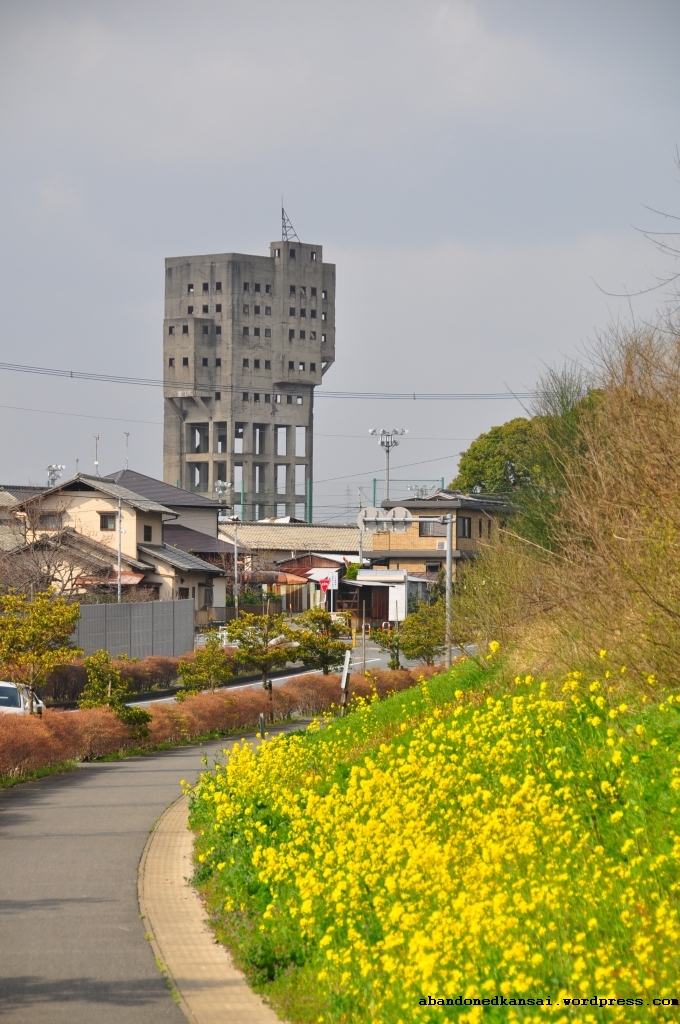
The first *haikyo* stop on *my recent Kyushu trip* is one of the internet favorites: The Vertical Shaft of the Shime Coal Mine.
Easy to spot from long distances this 47.65 meters high tower was finished in 1943 as the center of a coal mine that opened in 1889 and closed in 1964. But that’s not the only reason why the place is on virtually every haikyo homepage: It’s easy to access by public transportation and even easier by car. In fact there is a soccer field and a children’s playground right next to it. But that’s not all: Since December 8th 2009 it is considered an “important cultural property” by the Japanese state – so they fenced it off and put up some lights as if it was a 400 year old cathedral, so you can enjoy the view around the clock; you can even find the address and coordinations of the shaft on the Japanese Wikipedia. Right now they are putting up fences around two or three other remains of the mine and they planted some cherry trees to create a park surrounding. Haikyo for the whole family with no entrance fee – but nothing else either, not even a photography challenge. The construction itself is quite unique, but other than that it feels kind of dull, nothing anybody would (or should) spend more than 15 minutes on…
(EDIT 2011-04-02: To all the visitors coming from Reddit – thanks for stopping by; and thanks to bakerybob for linking this blog! Since you seem to like zombies, please have a look at the *Hospital #126 in Pripyat* and my *Nara Dreamland Special*. Both won’t make good zombie fortresses, but they would be perfect as settings for zombie movies! And there will be more “zombie style” locations soon, so please don’t forget about this blog in the future… maybe by *following me on Twitter* or / and *on Facebook*?
EDIT 2011-04-04: Since the discussion on Reddit turned into a full-grown meme now known as the “Anti-Zombie Fortress” meme I decided to add a short video clip I took when visiting the mine. It’s nothing special at all – I just put it up since so many people are interested in the topic right now… For more interesting videos, all in 720p, *please click here*.
EDIT 2013-09-17: *Yesterday I revisited the Anti-Zombie Fortress…*)
Living in Japan days off are a valuable thing. And long weekends, even if they are only three days long, are a perfect opportunity to go on vacation.
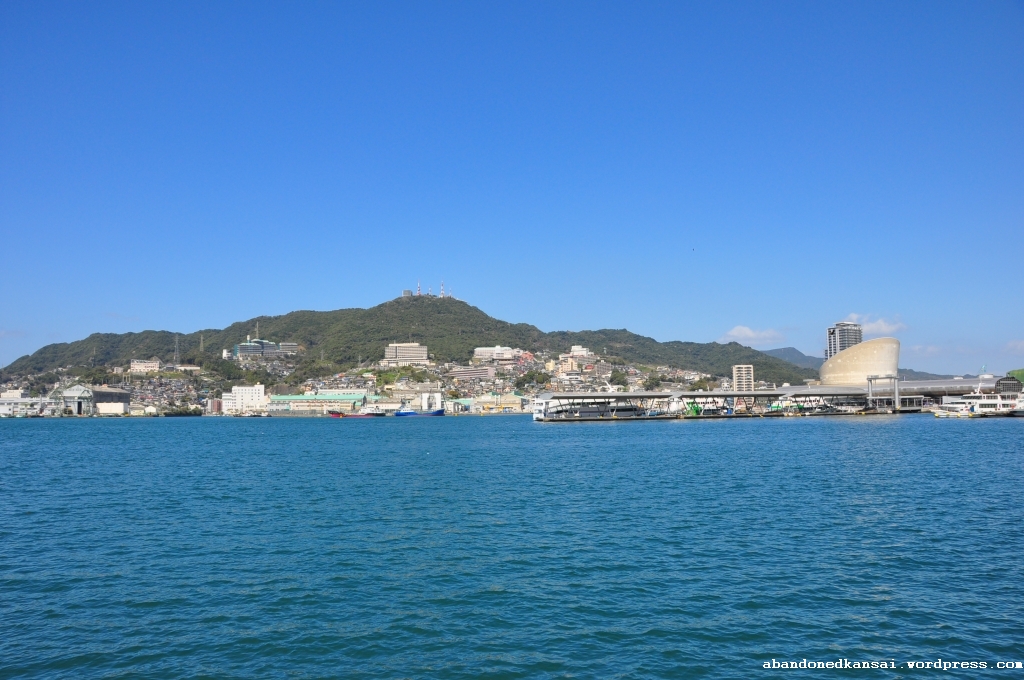
This time my buddy E and I went to Kyushu to enjoy some days of photography, food and haikyo. Fukuoka, Nagasaki, Sasebo. Not everything went according to plan, we had to cut down the haikyo locations from four to three, but in the end the trip turned out to be great. Great food, great locations, great comradeship.
This posting is accompanied by photos that are not necessarily haikyo related – the haikyo locations deserve three postings of their own, so please keep coming back for more. One of them will be about the Shime Coal Mine, one about the Katashima Training School and the last one… well… it will be about Gunkanjima, the most awesome ruin complex in Japan.
Initially I wanted to post another haikyo first, but since it took me quite a while to update this blog I decided to come back with one of my favorite haikyo so far: The Takada Ranch Ruin. Coincidentally it seems to be one of the rarest, too…
Located in a totally different area of the Hyogo countryside than “Doggy Land” the Takada Ranch Ruin was a samurai residence given up quite a long time ago – and that’s pretty much all I know about the place. I don’t even know if it’s the real name or if somebody made it up. But the sheer size of the property (including a huge and completely overgrown park) makes it highly likely that it was once owned by rich and powerful people.
Entering the Takada Ranch Ruin is as easy as it can be – it’s located along a rural road with no direct neighbors and the (former) entrance door is wide open.
The first of several buildings on the premises set me back in time 200 years instantly – a long, not very wide wooden house along the road that looks right out of a samurai movie. Too bad it was partly collapsed and some rooms were filled with plastic trash bags, but it was still quite impressive. From there a path lead deeper onto the estate, with a small house to the left and several buildings to the right. The main quarters were quite big and must have cost a fortune to build. Now partly rotten they created whole movies in my head while I was carefully progressing across the wooden floors. I’m sure the buildings were constructed long before electricity was introduced to Japan as all the installations looked like they were added as an afterthought. There were only a few plugs and light bulbs – and the fridge in the kitchen looked very, very old.
East of this conglomerate of buildings I found a car wreck that was clearly put there long after the estate was abandoned – Japanese people love to dump their unused belongings like that as waste disposal can be quite expensive if done properly. Close to the car were two now completely destroyed buildings, one of them made of stone. While the existing buildings looked like they were vandalized (only by a very few people though and not as nasty as most other places), I’m sure those two constructions were torn down professionally. Why it was handled that way? I have no clue.
But it got even stranger when I progressed further. After I passed through a little forest I found some quite thin concrete surfaces and wall remains. Next to them were some weird metal constructions with the leftovers of a few wooden arbors. This whole area looked like it was destroyed a long time before the buildings in the front were given up with no debris to be found. But again I can only guess when that happened. Or what happened. Maybe the buildings were stables, maybe they were some kind of accommodation?
Although not very outstanding on paper (partly collapsed wooden buildings, all stone buildings demolished) the Takada Ranch Ruin instantly grew on me while I was exploring it – and it continued afterwards. The huge estate boosted my imagination like no other place before with its simplicity and history. To me it’s one of the few hidden haikyo treasures, one that gives you a glimpse at a time long gone; if you are patient enough to find the right spots to look at.
Well, kind of. Sort of. It had to happen sooner or later, but finally I got caught by a pitbull like person during one of my explorations.
First of all I have to say: It was my own fault. You always risk getting caught by somebody when doing urban exploration as it is technically trespassing. (I guess…)
But most places are far from civilization and closed for monetary reasons, so nobody really cares – only a few owners hire security and that’s when it gets risky.
I enjoy urban exploration because I like old things and photography. I’ve studied history and I take pictures to keep the memory about those places alive. I don’t destroy things and I don’t want to hurt anybody’s feelings or property. I just come, take pictures and go – and publish the photos on the internet so other people can enjoy those places, too. If somebody doesn’t like that then just tell me, I delete the memory card of my camera and go home. No problem. I’m not a troublemaker.
Recently (well, very recently…) I went on a haikyo trip and while I was taking pictures minding my own business a guy in a white minitruck almost ran over me. I ignored him making my way towards where I entered (trying to avoid trouble…), but of course he jumped out his car and ran after me. He yelled at me in a strange mix of Japanese and English: What I was doing here, that this was his place and that I should be quiet – and of course he threatened to call the police, like, in every second sentence. Totally puzzled I tried to calm the guy down, but he got right into my face yelling like a mad man. He didn’t get violent, but he clearly was in a big rage. He asked me where I was getting in – I told him that I would show him and slowly went to direction I came in, away from his car, but he stopped me.
He demanded my camera. I didn’t give it to him. Then he wanted my memory card. I didn’t give it to him either, but I apologized (several times at different points in the “conversation”…) and offered to switch the camera to Japanese so he can see that I will delete the pictures. (Which I gladly did since I wasn’t there alone and actually took pictures of a friend – who, to my joy, escaped and with him the pictures he took.) But to my surprise neither the apologies nor deleting the pictures did calm him down. He still wanted my name (surprise, I didn’t tell him), threatened to call the police and demanded that I would go with him in his car. At that point he turned his back to me walking a few steps towards his car – and I ran. I ran like I was never running before in my life. Then I jumped over the next fence (since he was in a car…) to a public street and got away without looking back once.
Like I stated earlier: I shouldn’t have gone to the place I went to and there is no discussion about that. But there are several ways to handle things. One is to be calm and talk to each other like civilized people – or you can go ballistic, yell, threat and treat the other person like shit… Too bad Japan took over two things from Prussia without changing them in 150 years: Medicine and the way to deal with people – to crawl the bigwigs and to bully the underlings. And it seems like trespassing foreigners are kind of the definition of “underlings”…
(BTW: Did you know that “doctor” and “butcher” are the same word in Japanese? Okay… that’s not true, but it could be! Should be…)
Addendum 2010-02-07: Now that I think about it… I actually ran into security twice before. Once at the already posted Koga Family Land, another time at the Osaka Expoland. But I never felt “busted” or even unpleasant, most likely because on both occations there was no yelling or threatening involved. The guy at KFL was nice and I left “his” property according to his wishes to find another way to get to my goal. The other guard I met was actually super nice – and he had every opportunity to not let me leave. I guess overall Japanese security people are not that bad. Nice guys: 2, Pitbulls: 1…
My first visit to the “Doggy Land” in early December was abruptly ended when the police showed up to re-enact a car accident. Seven weeks later I came back to finally have a closer look at that strangely fascinating dog theme park that was opened in the summer of 2001 and closed in the summer of 2008.
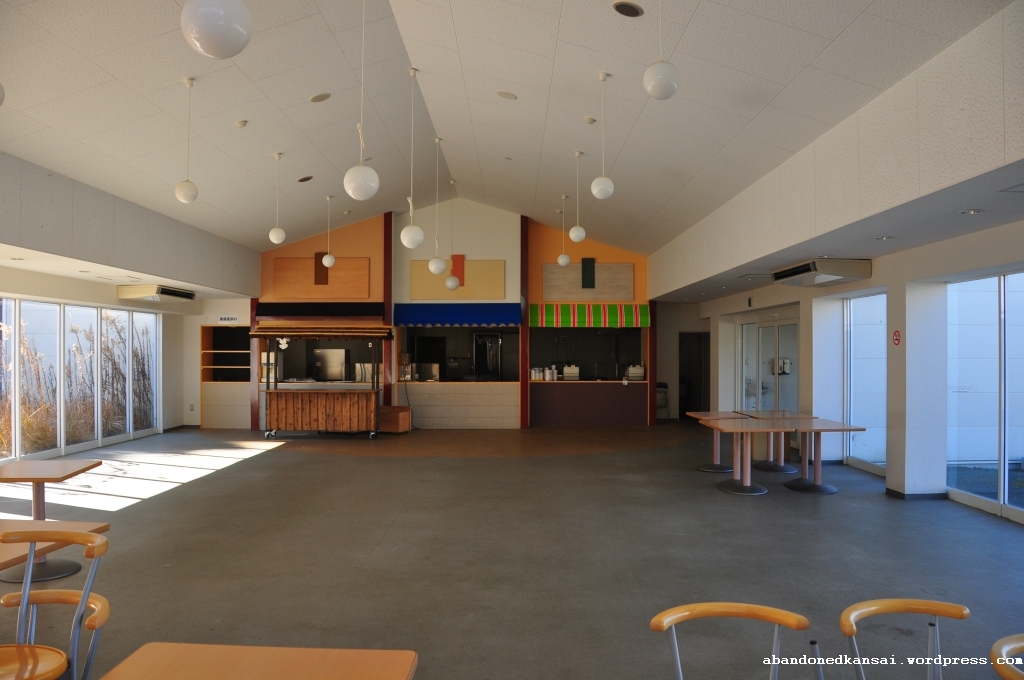
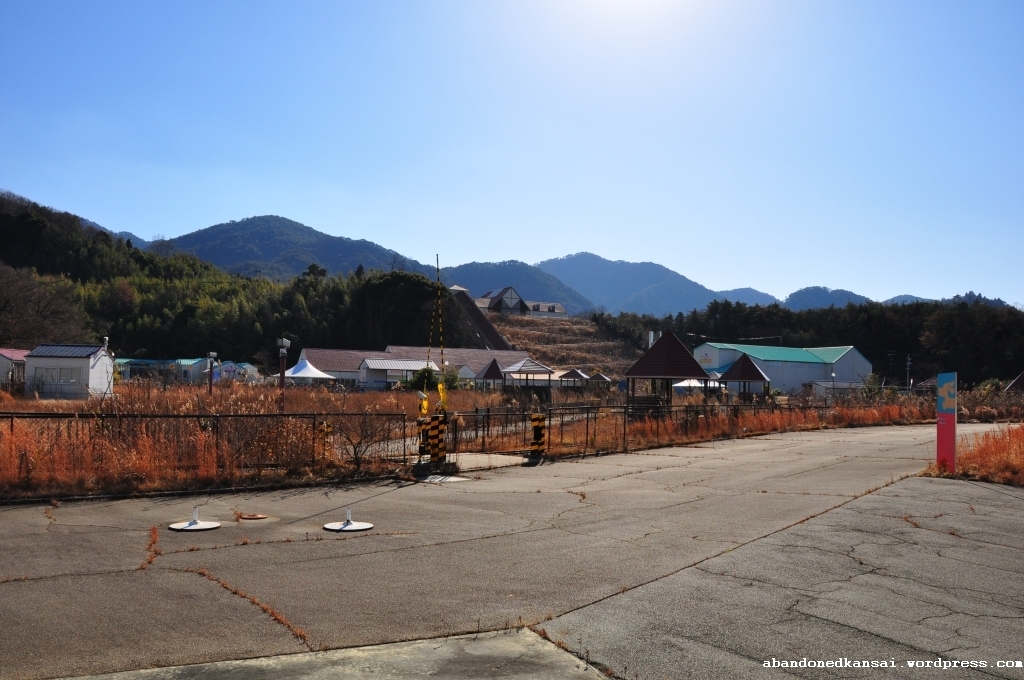
Entering “Doggy Land” is as easy as it can be, at least by theme park standards. Unlike other parks “Doggy Land”‘s fence has no spikes or barb wires, so there are several locations where you can enter easily and out of sight of the surrounding streets. Overall the park is in great condition – no vandalism and only a few rusty spots here in there. Since it’s closed for only about 1.5 years and barely known to the internet there are no graffiti, no broken windows or mirrors.
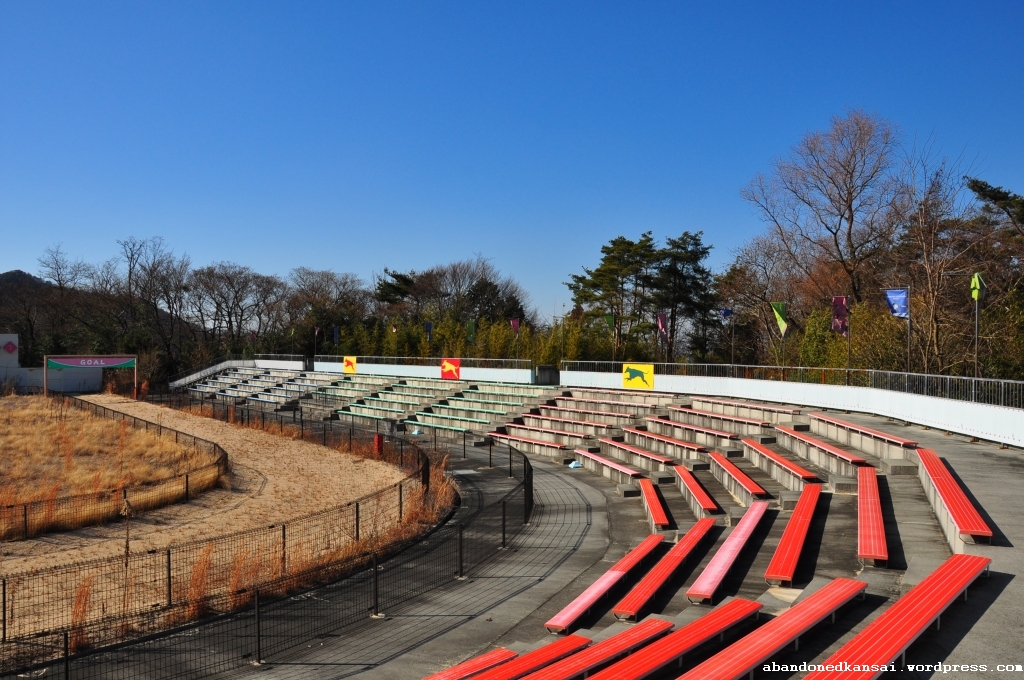
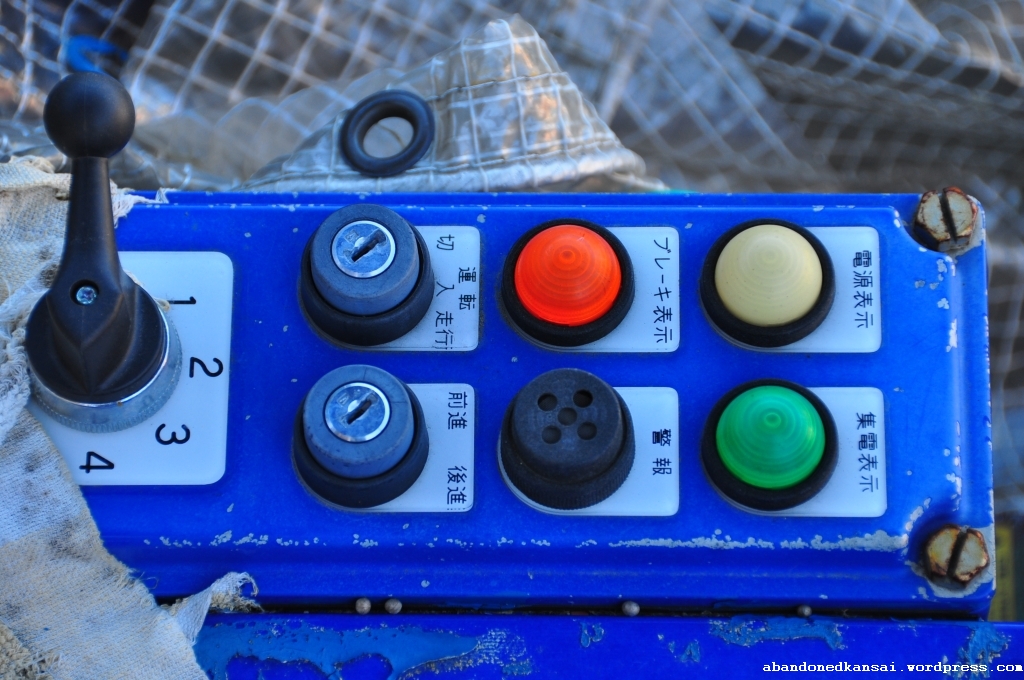
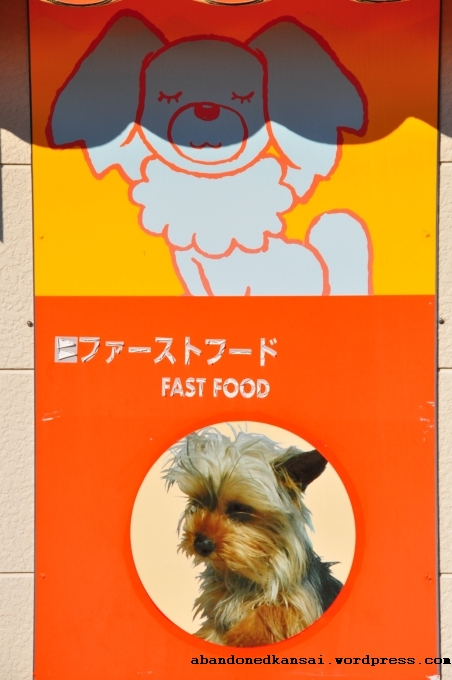
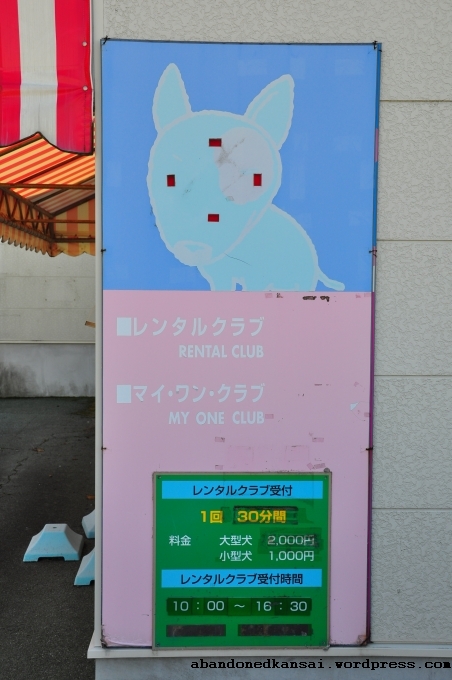
But what is “Doggy Land” exactly? Well, it seemed to be a theme park for people who love dogs. There is a dog cinema, a dog train, a dog racetrack, a restaurant and a snack bar, several educational signs – and even a place where you could rent a dog to take a walk with. I’m not sure if you were allowed to bring your own dog as information about the place is almost nonexistent.
But I seriously wonder what people would do there. Sure, you can rent a dog for 2000 Yen / 30 minutes and go for a walk. Watch a dog race at the awfully small racing track. But what would you do for the rest of the day? If you combine the amounts of eateries and restrooms they almost outnumber the attractions “Doggy Land” had to offer! I guess people thought the same and that’s why the place closed down after only 7 years…














































 Abandoned Kansai