Last week I got an e-mail from Antenne Bayern, Germany’s most popular private radio station, asking for permission to publish some of my Chernobyl pictures on their homepage. After some fruitful negotiations we agreed on eleven pictures and I wrote some captions for them – the rest, including the captions to my Youtube videos, was written by the staff at Antenne Bayern. Please *click here* to have a look at the picture series (the site is in German only).
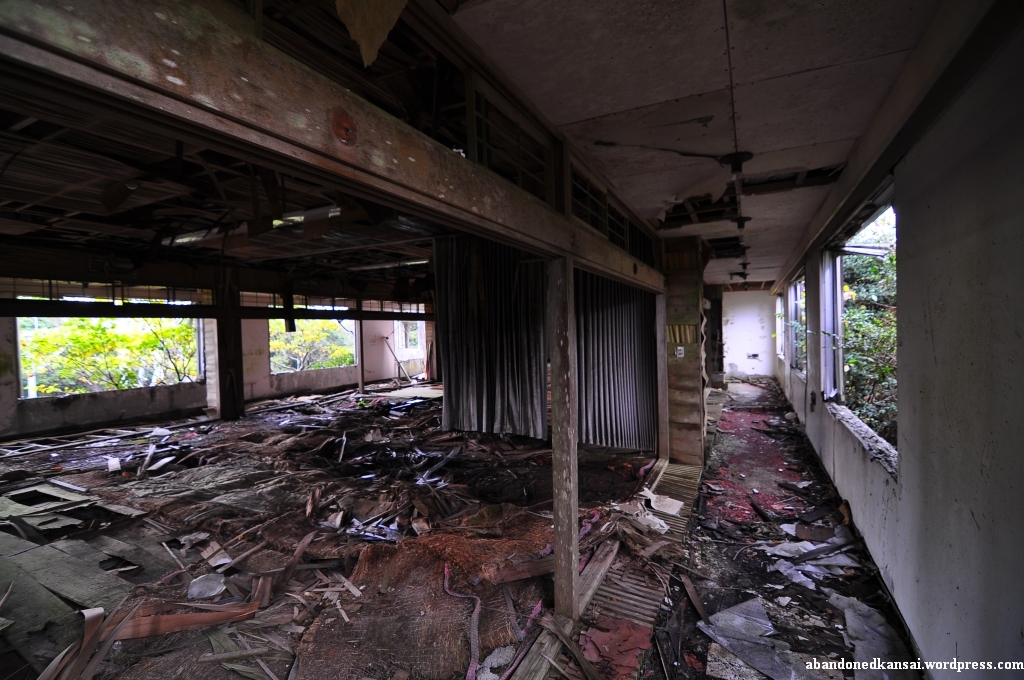
The Sky Rest New Muroto (スカイレストニュー室戸) is a prime example of an abandoned place that suffered severly from too much attention – and by too much attention I mean the book “Nippon No Haikyo” (ニッポンの廃墟), which is pretty useless by now since it became victim of its own popularity. Unlike most books about abandoned places Nippon No Haikyo includes maps. Some of them are completely useless, but others are almost as detailed as if it was a GoogleMaps link. Why is the book useless? Because most of the described locations are demolished by now due to the attention the book drew to the respective places from August 2007 on – *Koga Family Land* for example was abandoned for more than 20 years until it was demolished in December of 2008, same for Nagoya Toyo Ball, Nihon Cement Mojiko and the Inagawa Trap Shooting. Other places once easily accessible were boarded up (Hototogisu Ryokan) or severely vandalized (like the ghost town *Mukainokura*).
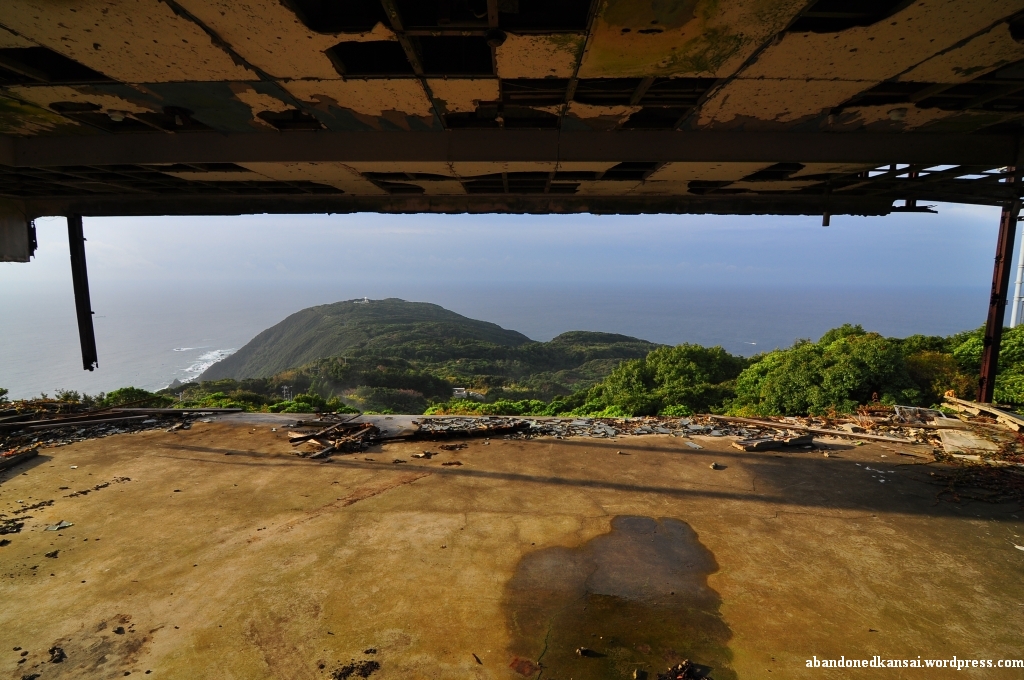
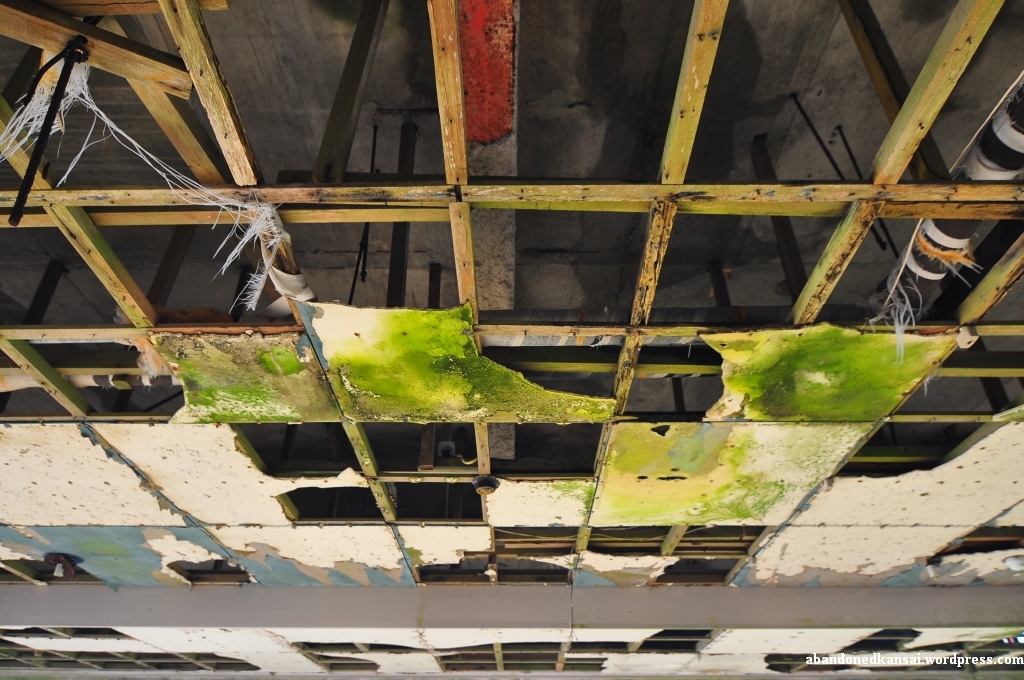
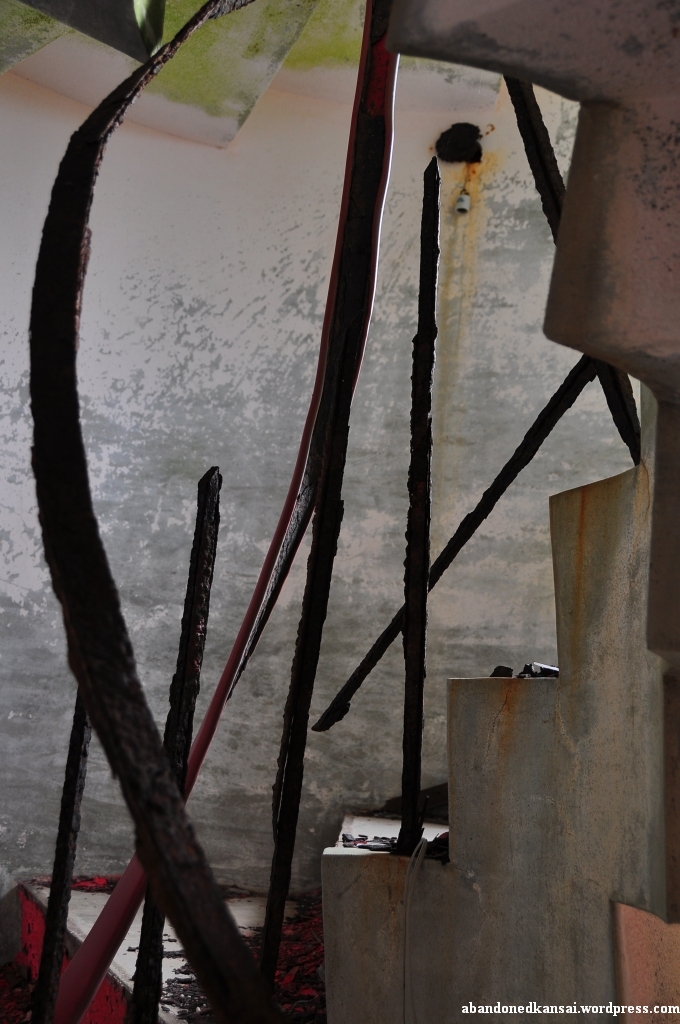
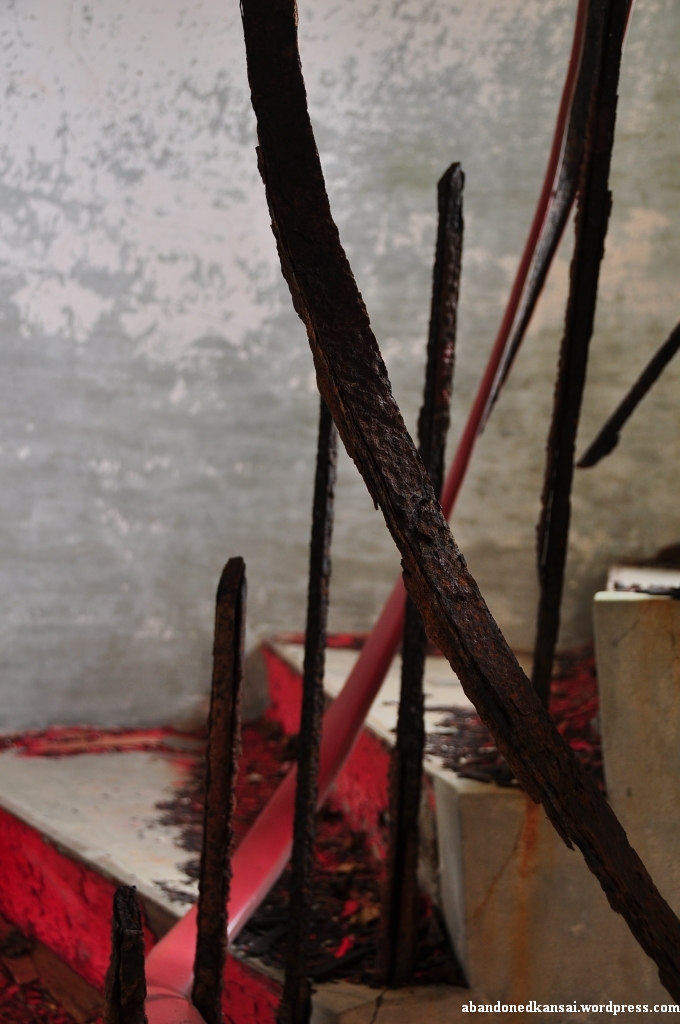
The Sky Rest New Muroto is one of those places that suffered a lot of damage over the past four years. If you are lucky you can find pictures taken before Nippon No Haikyo was published and see a very unique building with lots of intact (rusty and dusty) interior, but since even blogs about food and flowers posted the exact location on maps (something that 95% of urbex blogs would never do!) the Sky Rest became a ravaged shadow of itself. Pretty much all of the interior was ripped out and shredded to pieces – all that’s left is the impressive concrete structure and piles of scrap everywhere. In addition to that the lighting conditions on the day of the shooting were terrible, so especially the early outdoor pictures turned out to be actually pretty horrible – I apologize for that! (I publish them anyways to give you a better impression of the unique architecture; the building looks like a fortress with three canon towers on top. The video coming with this article isn’t outstanding either, but I present it for the same reason, although I never intended to publish it, like all the other videos I took. But some of them, especially the one taken at the *Shime Coal Mine*, turned out to be quite popular…)
Now surrounded by antennas submitting television and communication signals the Sky Rest still towers Cape Muroto and offers a gorgeous view in all directions. Sadly there is barely anything known about the place – old pictures confirm what you can assume from the name, that the Sky Rest once was a restaurant for people enjoying the stunningly beautiful nature of Cape Muroto. In addition to that some pictures show remains of rusty and broken arcade machines, although they must have been very old given the fact that the Sky Rest was closed in 1978…








Posted in Abandoned, Asia, Haikyo, Japan, Kochi, Restaurant, Shikoku, Urbex, Video, Visited in 2010 | 10 Comments »
Bathing is a very important aspect of Japanese culture, deeply rooted in centuries-old traditions. Although most apartments and houses have their own baths nowadays (unlike 30 years ago), public bath houses are still popular even in residential areas of big Japanese cities. Onsen and sentō are gender-separated places of tranquility where people enjoy a relaxing hot bath (usually around 40°C) after a hard day of work or an intense workout. Onsen towns in the middle of nowhere are popular vacation destinations for the Japanese domestic tourism and a must see / do for many foreign visitors.
Waterparks with slides and wave pools on the other hand are not nearly as popular in Japan as they are in the States or Europe. Most of the time they are considered one amongst many attractions of amusement parks (like at Nara Dreamland) – and indoor waterparks are even more rare.
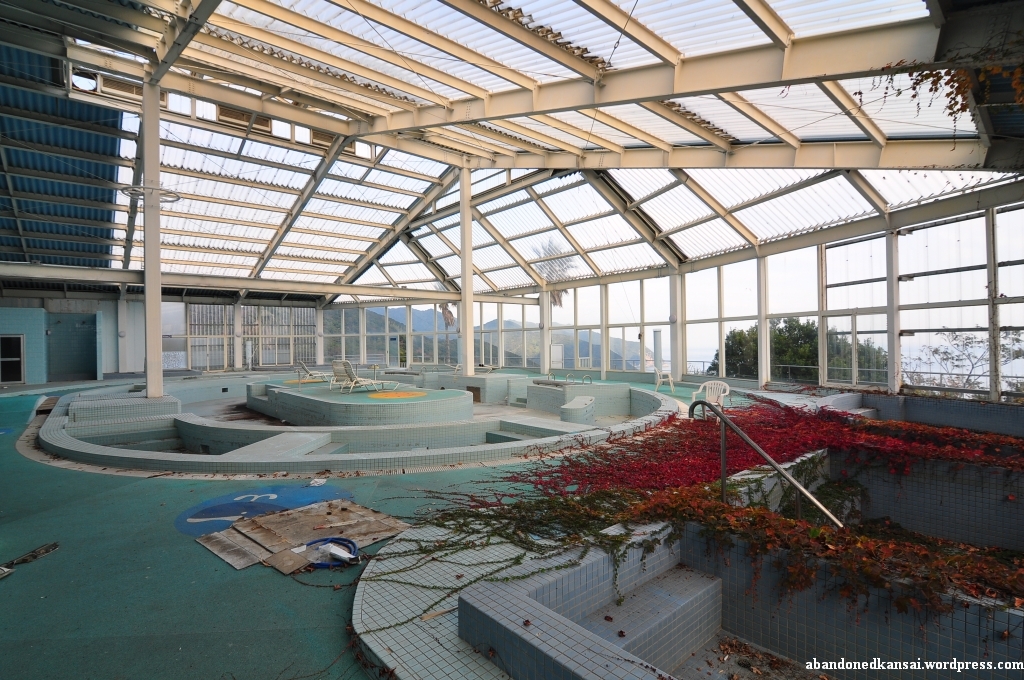
From what I was able to find out the Tokushima Countryside Healthspa (お水荘ヘルスピア), an indoor water park with some hotel rooms, was opened in 1975 (under a different name) to complement a countryside farm, attracting visitors with millions of flowers. It was renovated and expanded in 1994 to be re-opened under its current name – making dance shows and karaoke new selling points. Due to its remote location (35 minutes by bus from the next train station) and the economic crisis the number of guests decreased while the debt piled up to 800 million Yen – and lowering the entry fee from reasonable 1700 Yen per day (10 a.m. to 10 p.m.) with special promotions (Ladies Day on Thursdays for 850 Yen and Friends Day on Fridays for 1000 Yen) didn’t help either – at the end they reportedly sold tickets for as low as 100 Yen… So in 2002, after 27 years, the lights went out at Tokushima Countryside Healthspa.
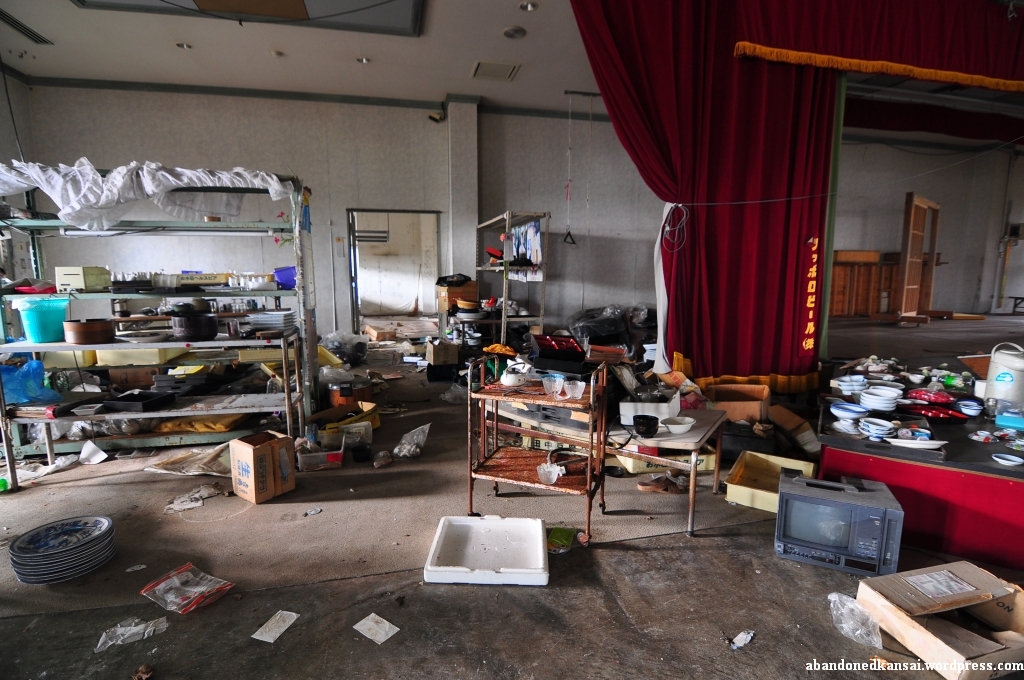
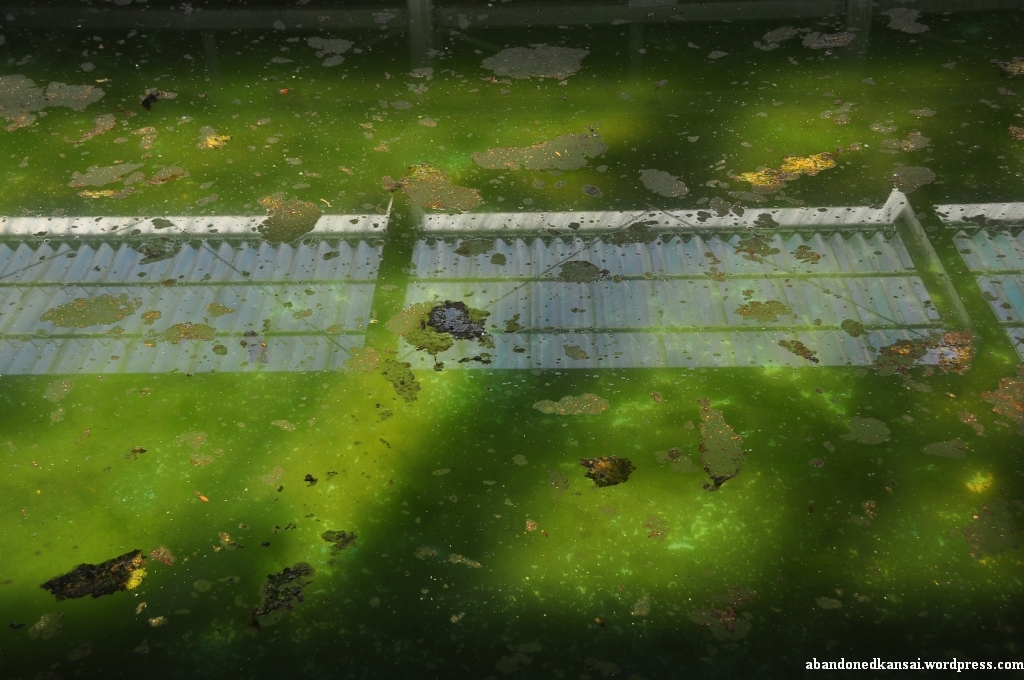
I have to admit: I love indoor waterparks. It’s one of the few leisure activities I really miss living in Japan. Back home in Germany you can find quite a few abandoned public swimming pools, indoor and outdoor, but no abandoned waterparks. So I enjoyed every minute of the two hours I spent there. The hotel part was quite vandalized and rather boring, so I left it rather quickly to go over to the swimming pools and the waterslide. On the way I passed a kitchen and some functional rooms. In two of them quite a few goods and training equipment were lined up, here and there I found price tags scattered all over the place – it seems like the owner tried to sell as much as possible before closing for good. The now empty main pool looked pretty much like a rather local indoor water park in Germany and I loved how red and green leafed plants were growing inside; if there ever was a zombie attack you know where to go to if the Shime Coal Mine is already occupied – if you know what I mean…
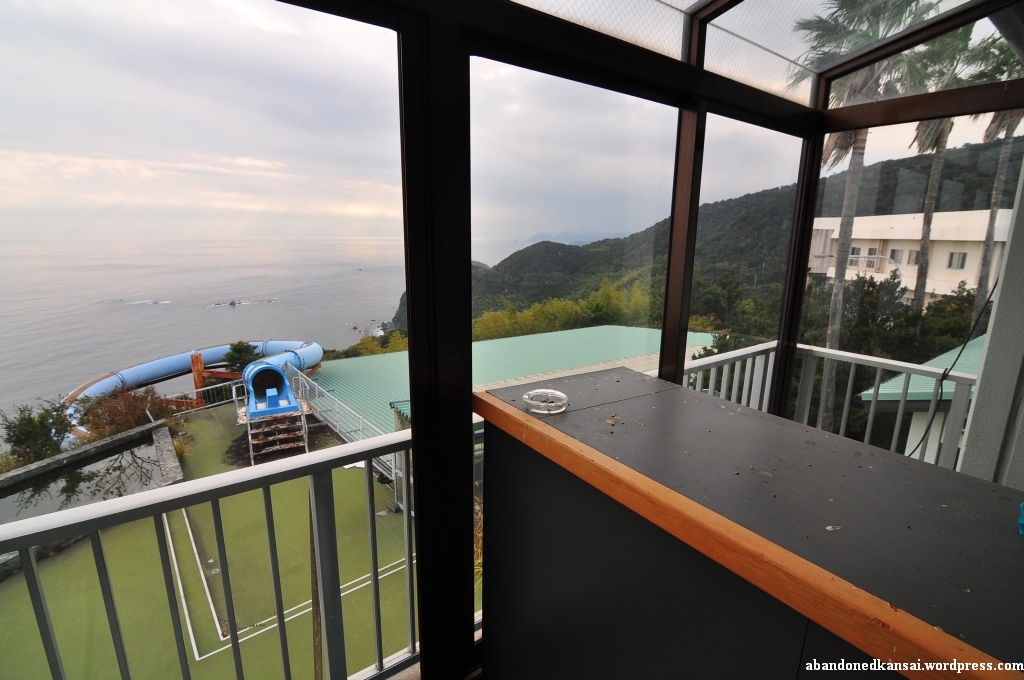
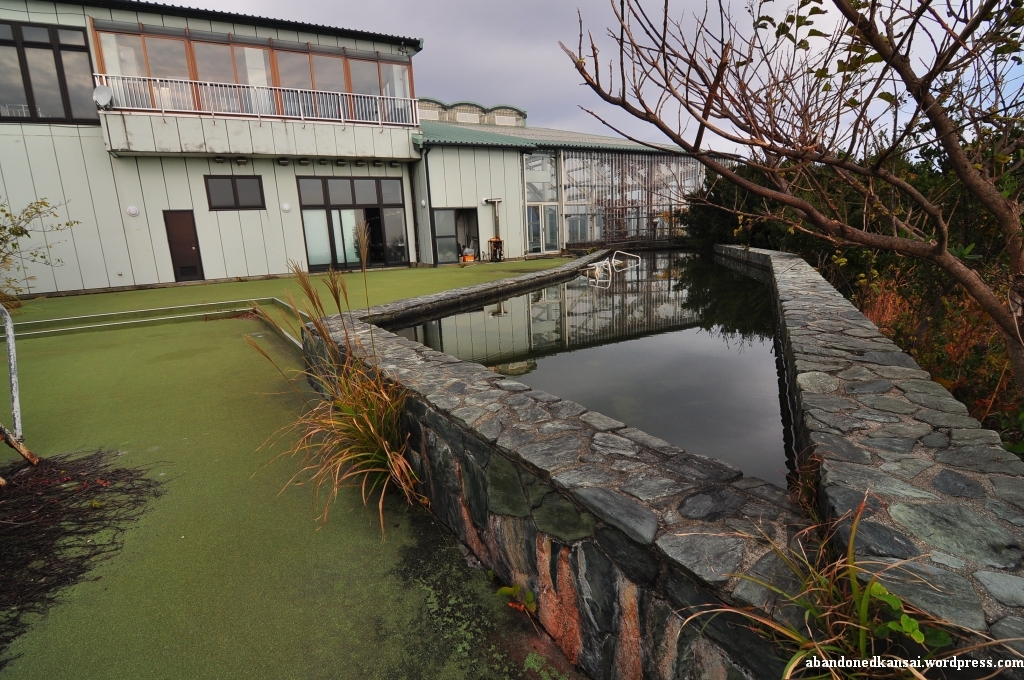
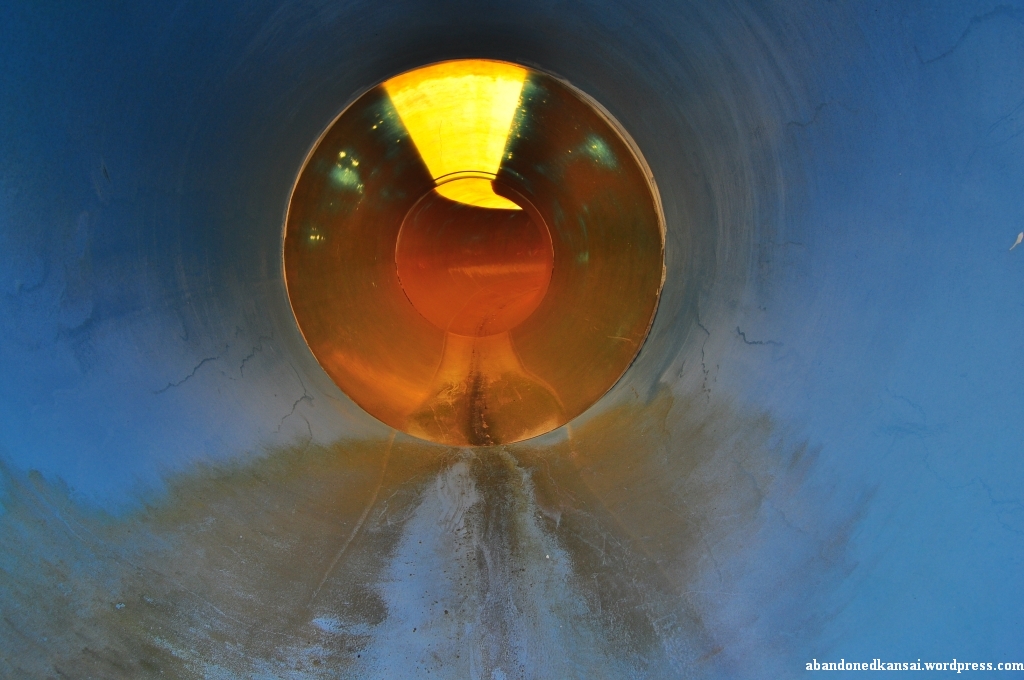
The outside waterslide at the bold cliff looked absolutely amazing, the weather just contributing to the atmosphere, so please have a look at the videos, too. Next to the waterslide was a staircase leading down to a pool, now filled with moldy brackish water, two dead greenish doves lying at the pool edge. Again, amazing atmosphere – kinda spooky, but not dangerous at all; neither physically nor in the form of security or other “guests” thanks to the remote location.
Like pretty much all of the previous and upcoming locations of my Haikyo Road Trip To Shikoku the Tokushima Countryside Healthspa was a unique, relaxed and fascinating place to explore. Shikoku, an urbex heaven!








Posted in Abandoned, Amusement Park, Asia, Haikyo, Hotel / Ryokan, Japan, Shikoku, Spa / Onsen, Sports, Tokushima, Urbex, Video, Visited in 2010, Zombies | 8 Comments »
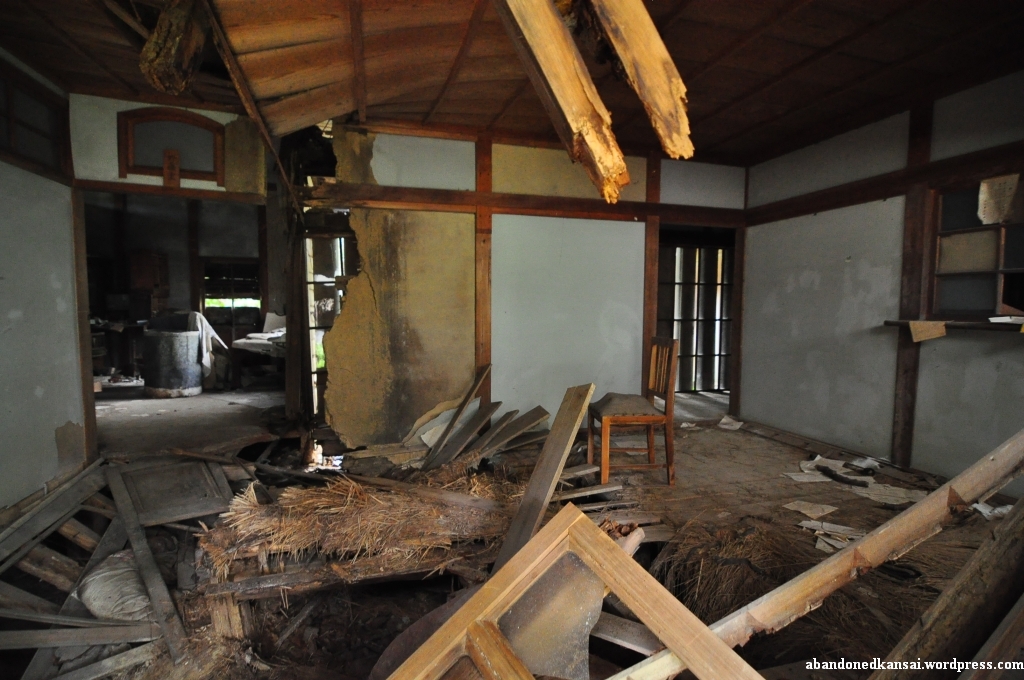
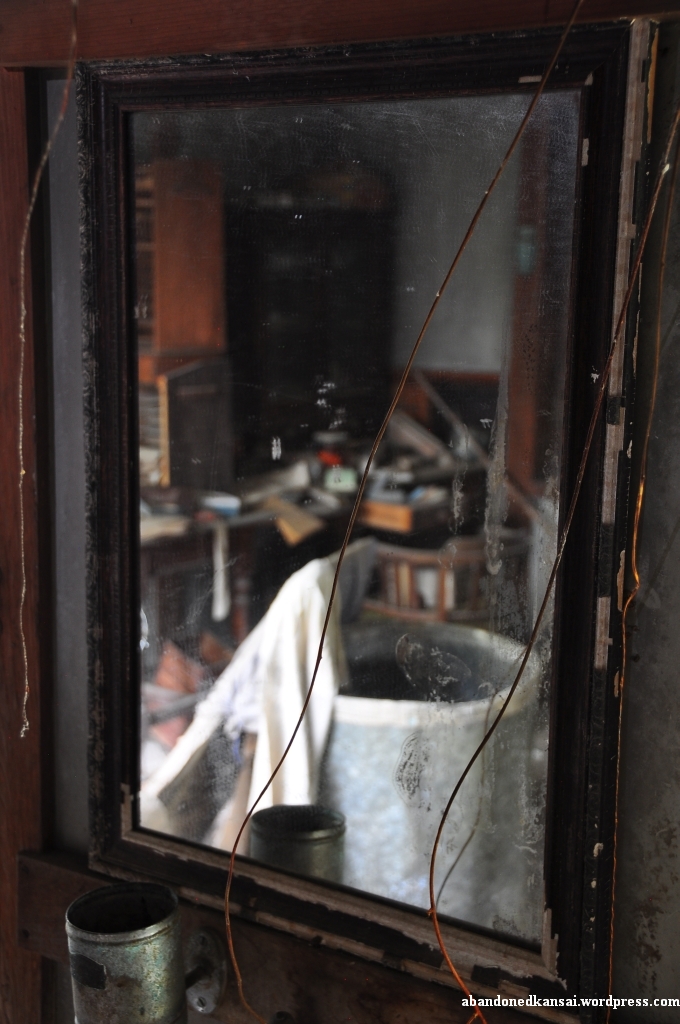
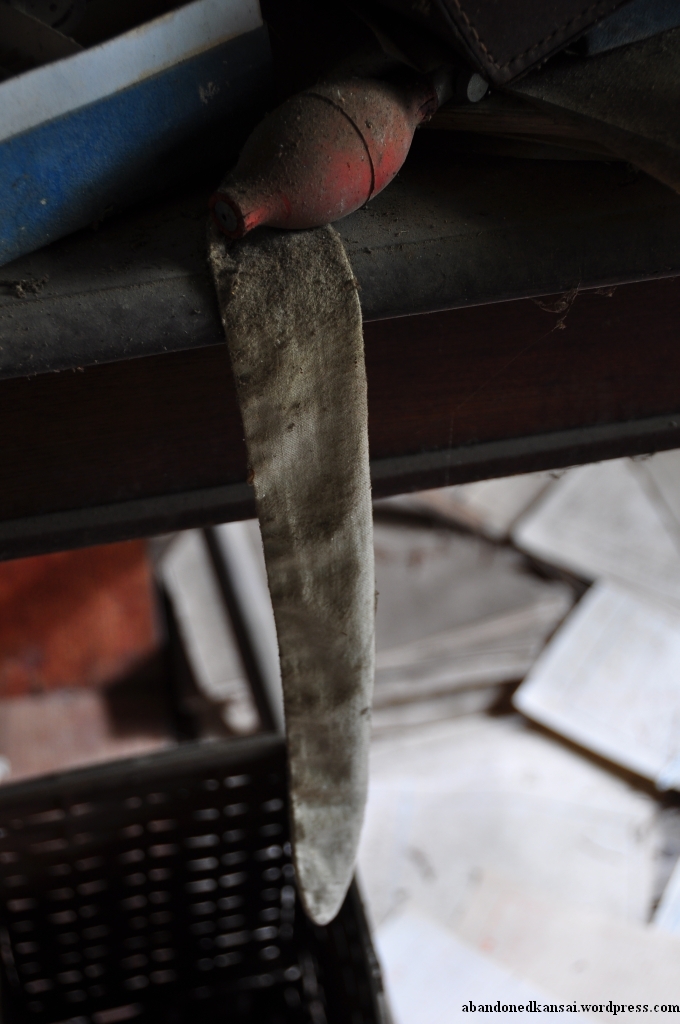
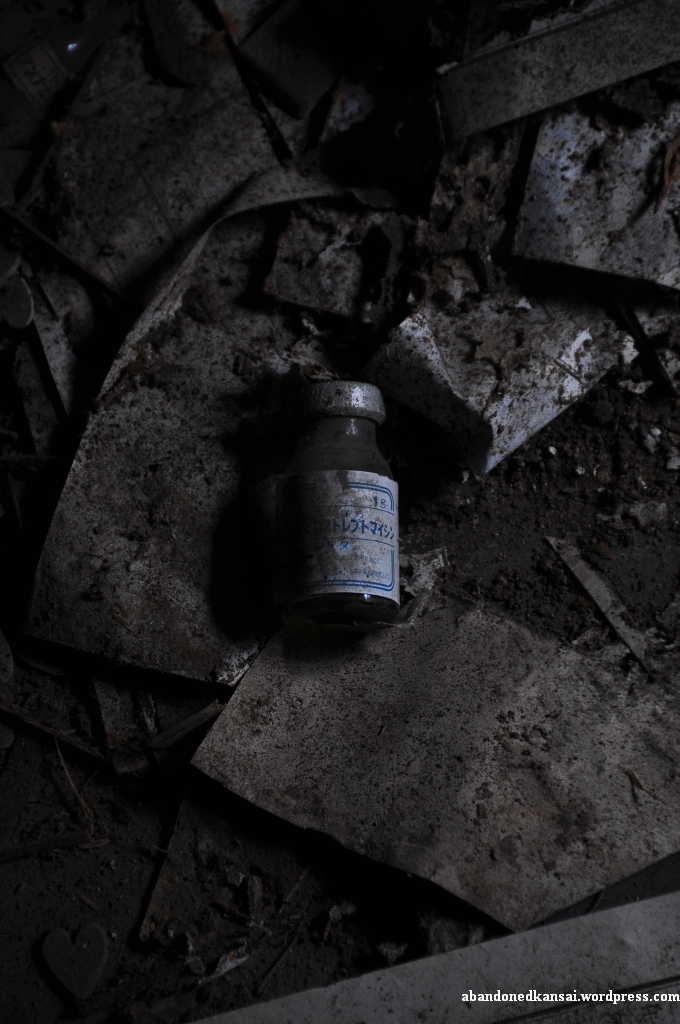
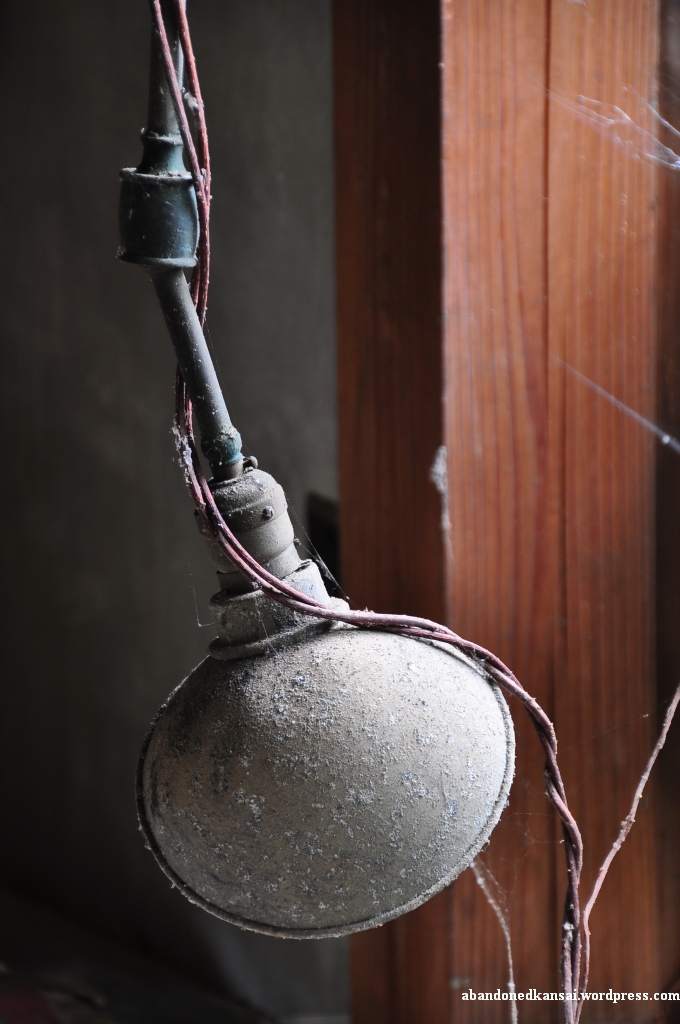
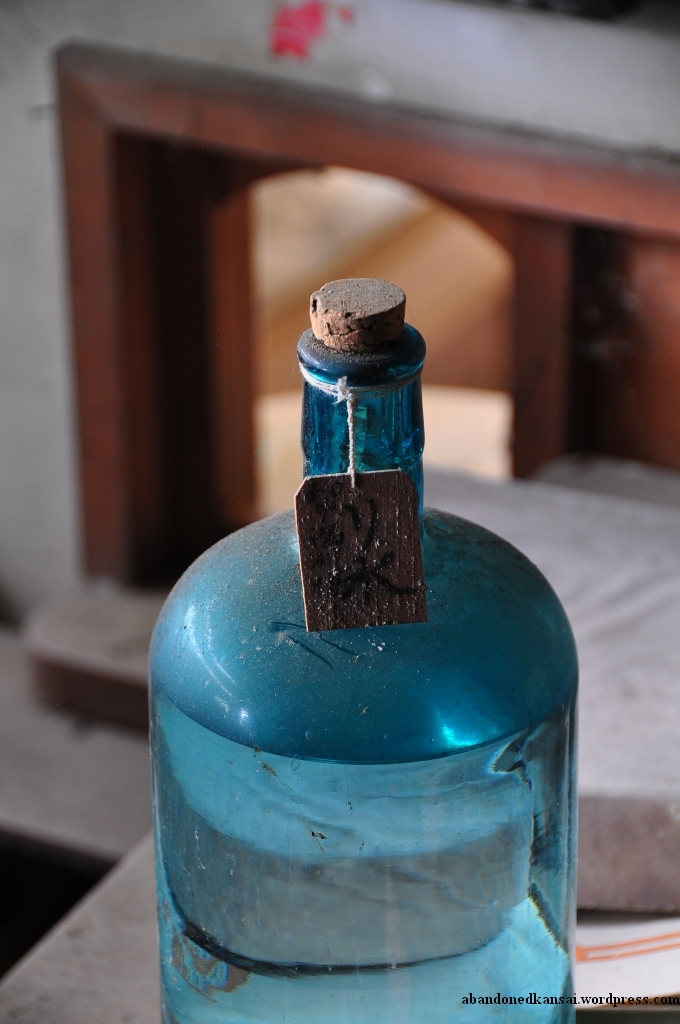
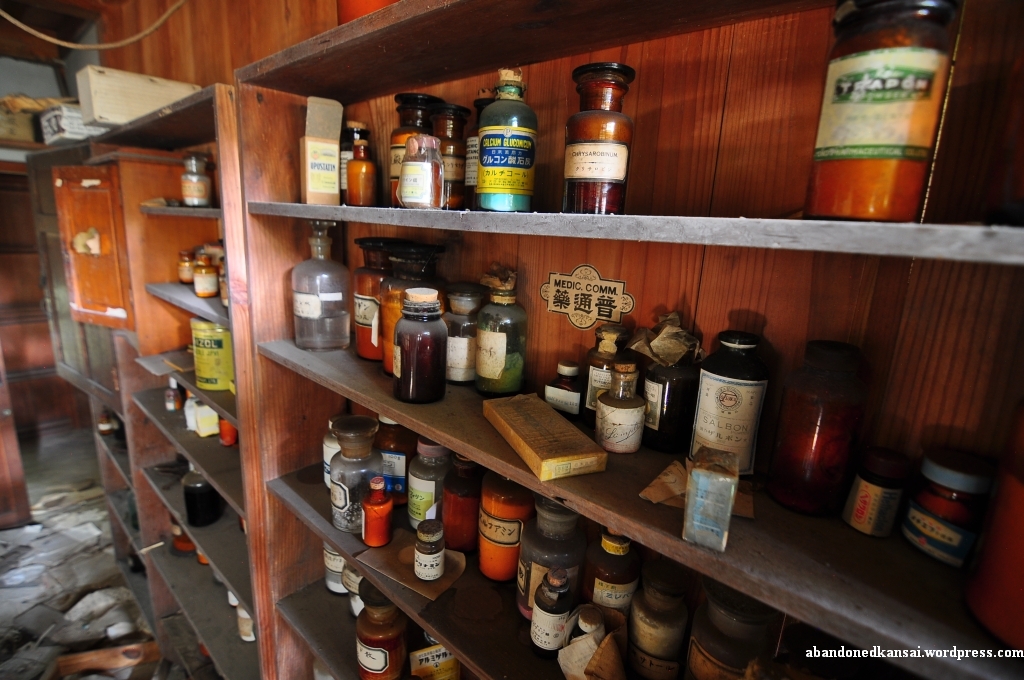
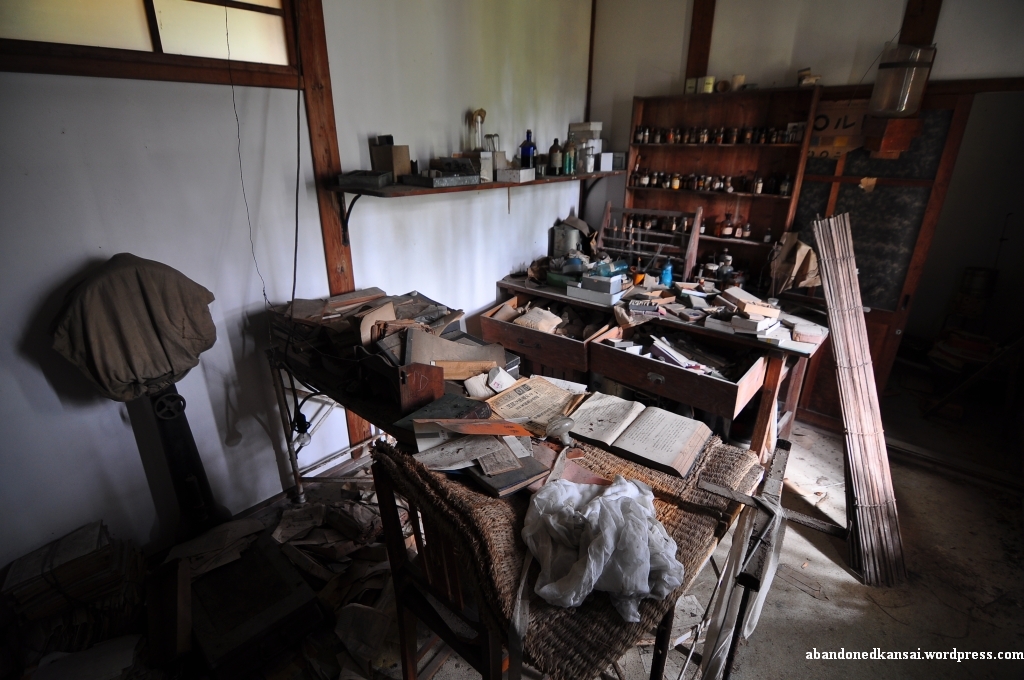
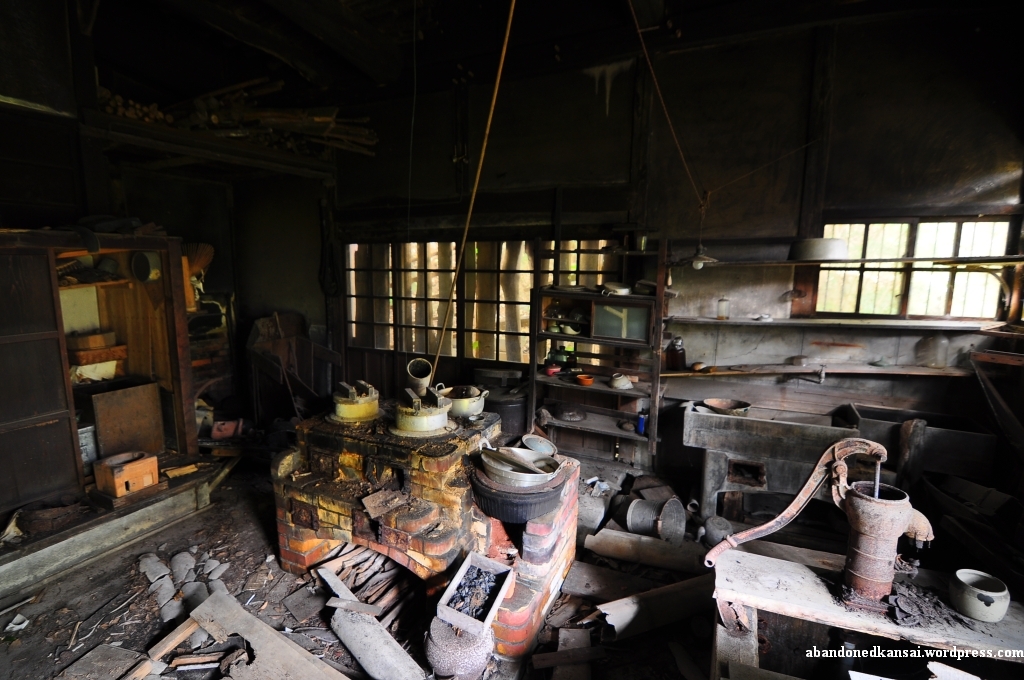
Okay, after quite a few articles about the Zone Of Alienation it’s about time to go back to Japan. I’ll return by posting the previously announced color set of a location I already described before the “Chernobyl & Pripyat” special: The Tokushima Countryside Clinic. I went there in November of 2010 and wrote a long article about it in December. Please *click here to read what I had to say* and enjoy the same pictures as below – just in black and white. (Next week I’ll continue with another location from my Haikyo Road Trip To Shikoku – an abandoned indoor waterpark, which is quite a rarity in Japan!)











Posted in Abandoned, Asia, Haikyo, Hospital, House, Japan, Shikoku, Tokushima, Urbex, Visited in 2010 | Leave a Comment »
Do you like zombies? Are you able to read German? Then maybe you should have a look at “Untot: Dämmerung”, a free novel by the aspiring German author Andreas Stetter. First published in serialized form on his blog “Wissen statt glauben”, Andreas decided to release a PDF version once he wrapped up the story. But of course every decent PDF needs a cover – and that’s when yours truly came into play. Andreas asked me for permission to use one of my photos as the basis for the cover of Untot: Dämmerung – and of course I happily granted it, especially after I saw what his buddy Stefan did with the shot I took at the Hospital #126 in Pripyat. If you don’t like zombies, don’t know German or just hate reading in general… at least have a look at the cover – it’s really nice!
BTW: Do you remember the little article about the second issue of The Gopher Illustrated, an art magazine that will feature some of my pictures, I wrote back in November? Well, Rome wasn’t built in a day either – but you can finally have a sneak peak *here* and pre-order it *here*. (And yes, the sneak peak includes a couple of pictures I took – some very old ones actually.)

Posted in AK In Other Media, Urbex, Zombies | Leave a Comment »
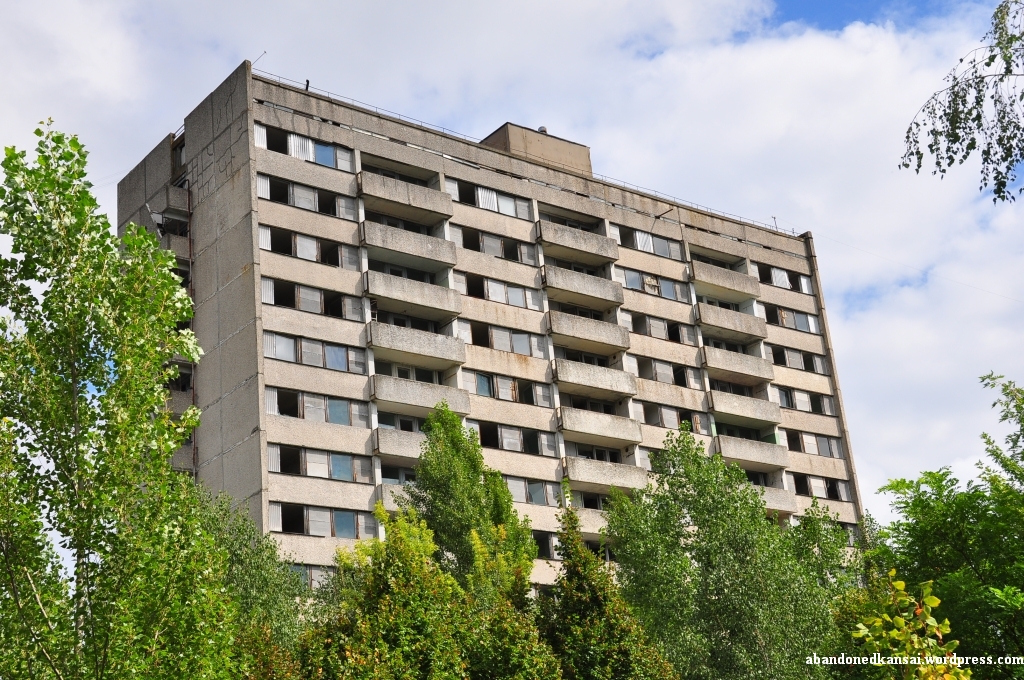
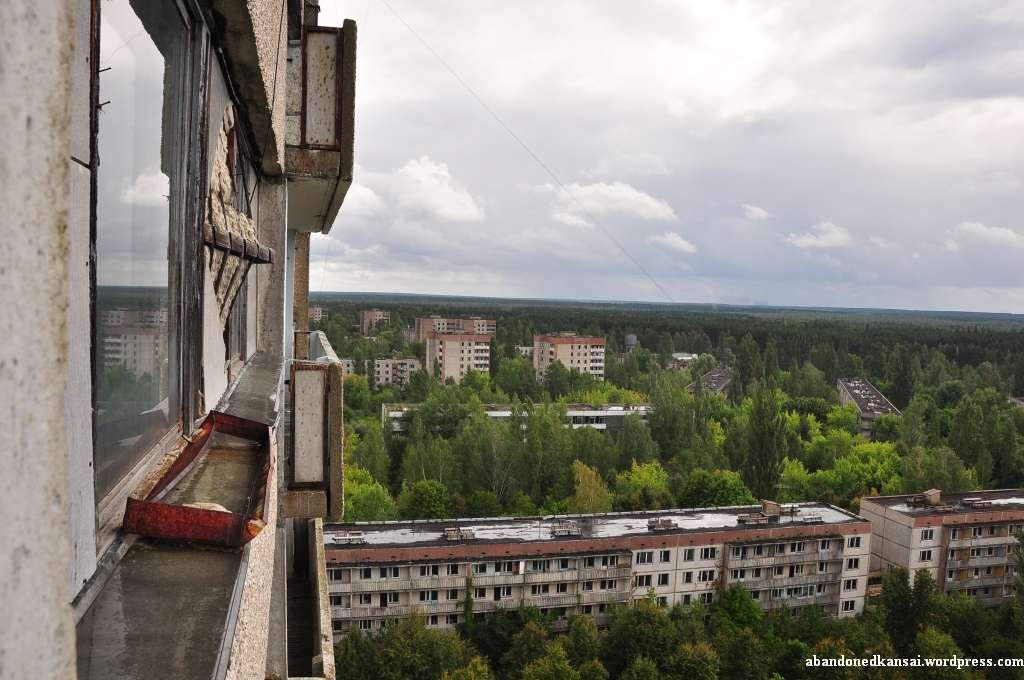
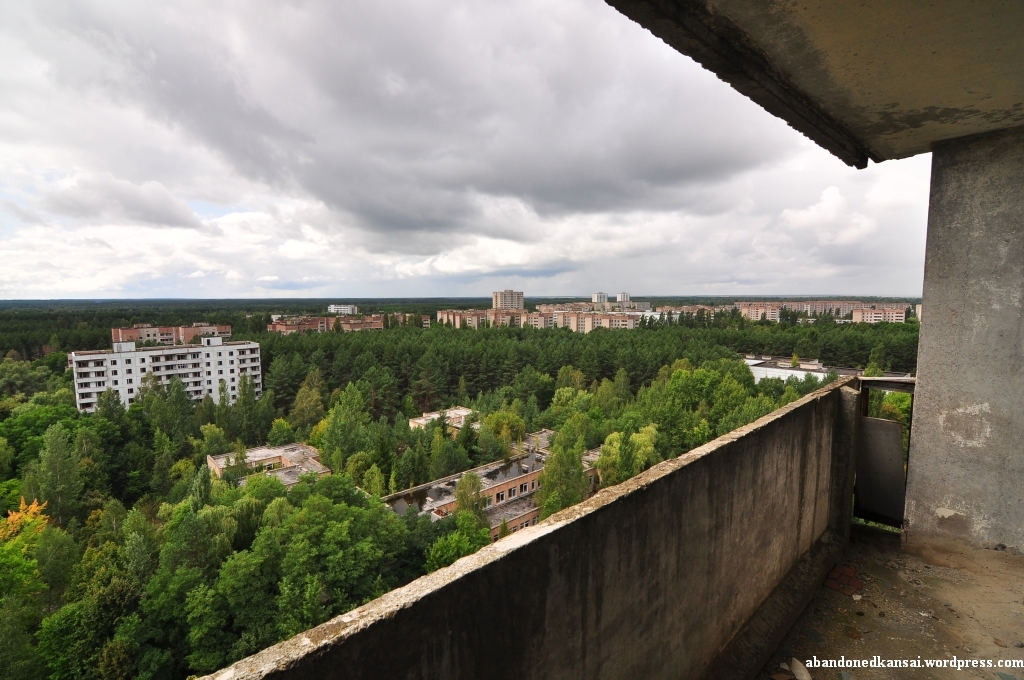
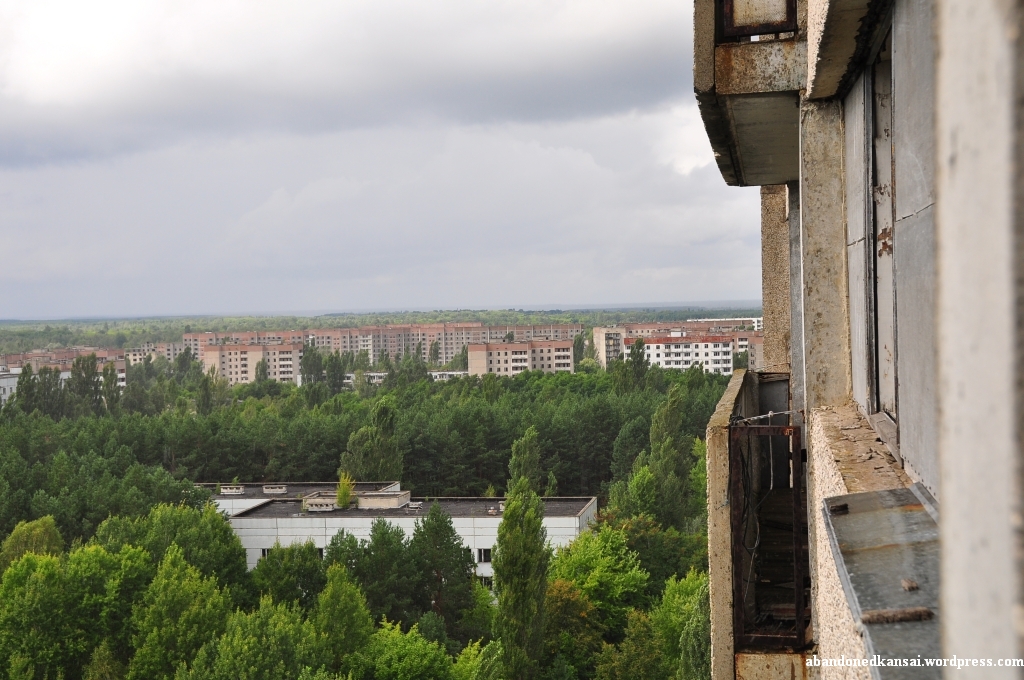
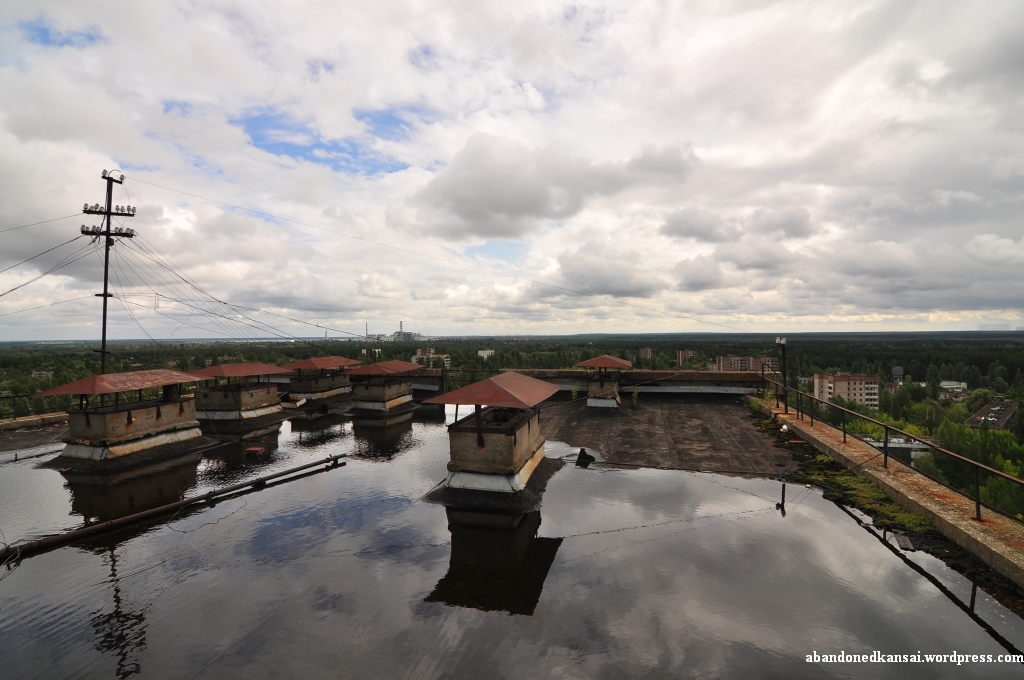
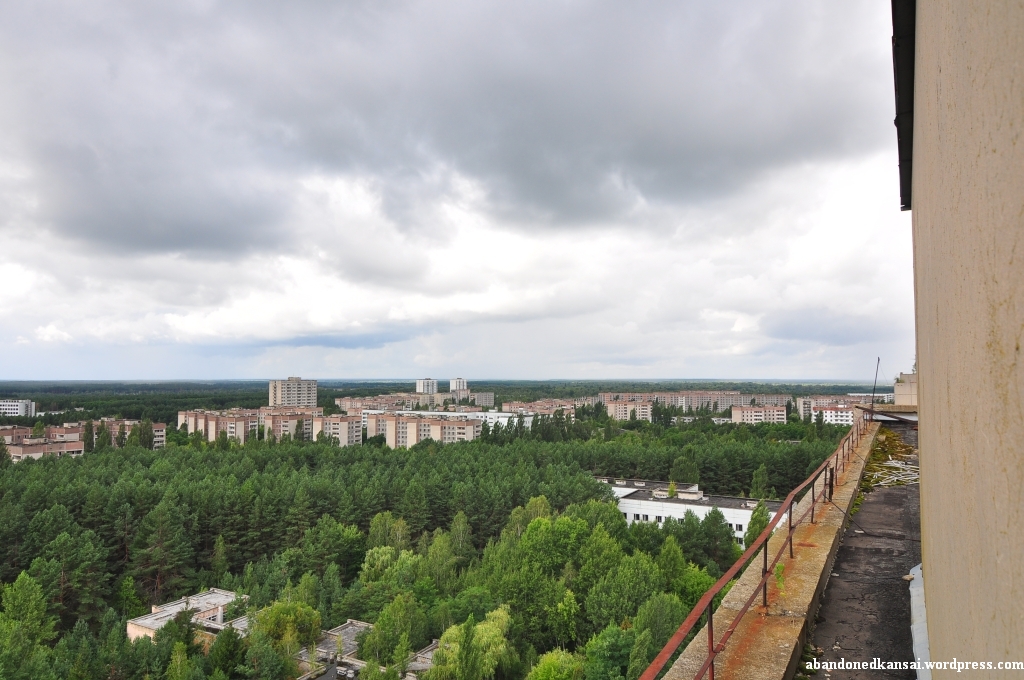
After sunny visits to the Jupiter Factory and the Kindergarten “Golden Key” we had some time left before we had to leave the Zone Of Alienation, so Maxim suggested to go to another rooftop. Of course he had to guard the car again, so Sebi, Michi and I went up on our own.
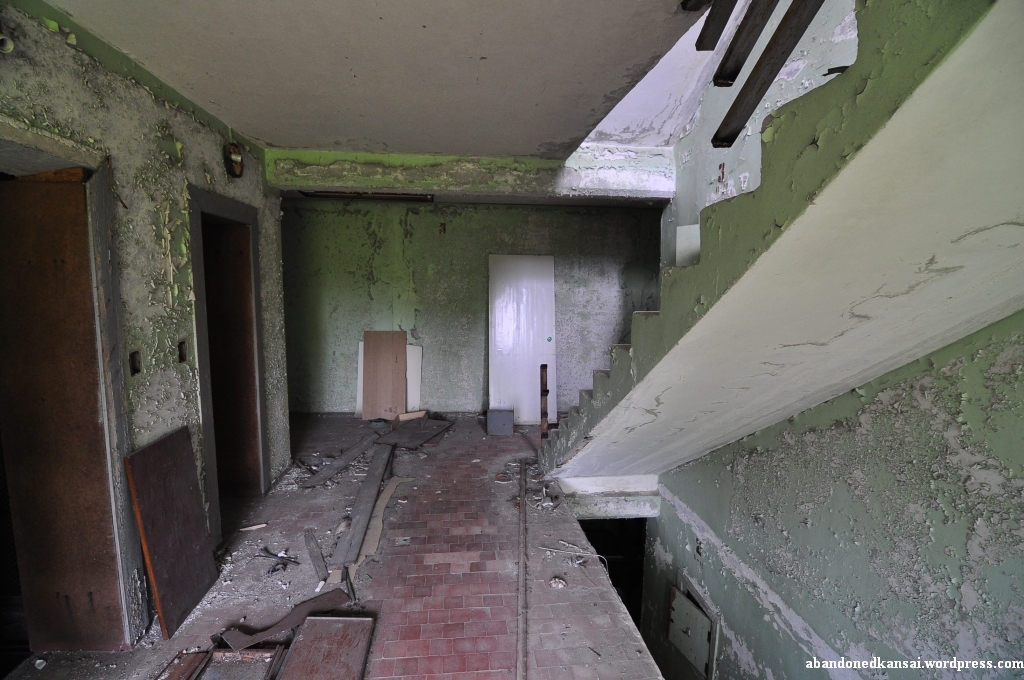
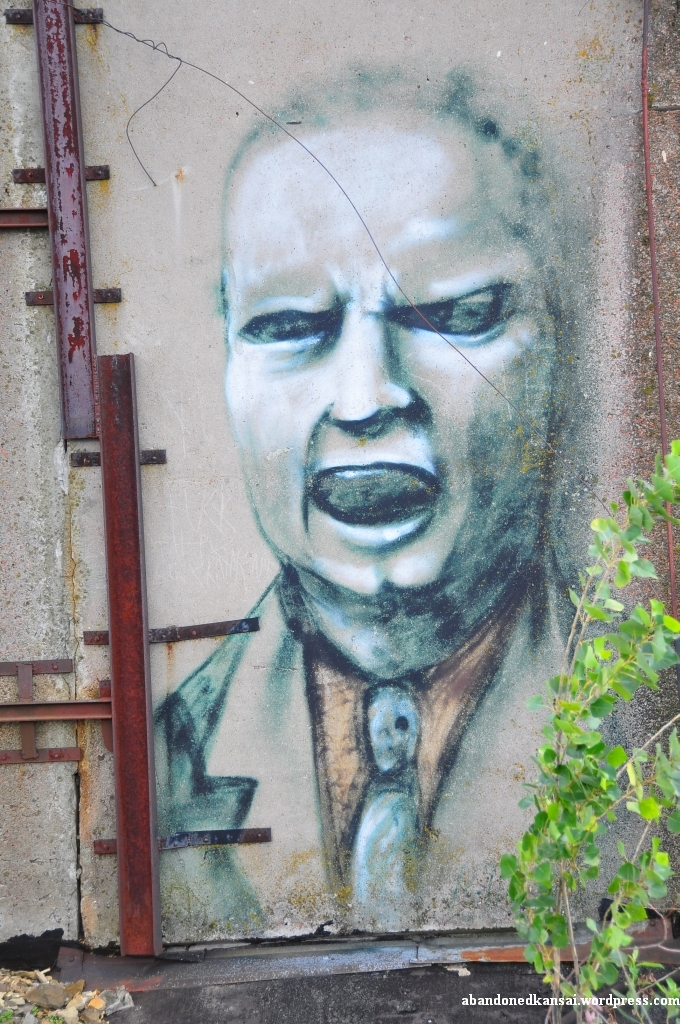
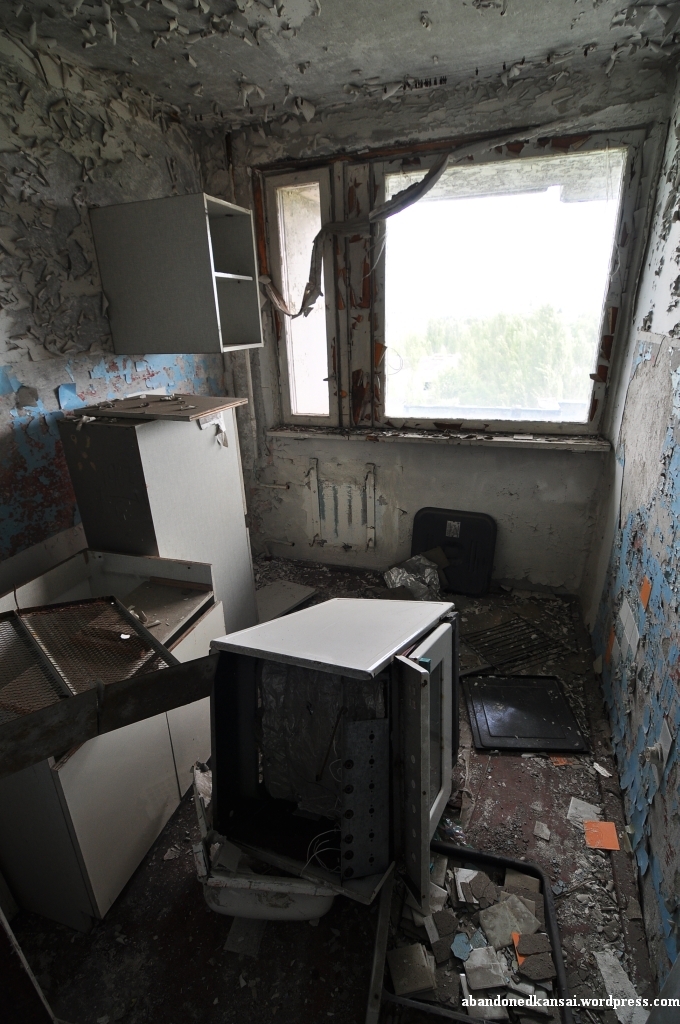
The construction of this building in the city center close to Lenin Square was interesting in that regard that for the first couple of floors the staircase was inside the building, but for the top half we had to go outside on a balcony and then get in again to climb more stairs. Quite weird… and nasty when it was raining, as we experienced on the way down. Furthermore I’m sure sooner or later one of those balconies will crumble (hopefully at a moment when nobody is standing on it) and then the floors above won’t be accessible anymore. Considering the state of the building in hindsight I’m actually not sure if I would go up there again – especially since the roof had huge puddles of water, which I’m sure contribute to the demise of the whole construction. The view was stunning though, no matter in which direction we looked. Seeing how the kindergarten was indeed swallowed by nature was as impressive as seeing the Amusement Park, the Palace Of Culture “Energetik” and Lenin Square at the same time. On the way down I took a quick minute to have another look at some apartments and actually found one with some interior left – in bad shape, but nevertheless interesting. When I left the apartment house at Lazarev Street 1/14 I saw a graffito on a wall at the building next to it – the black show of a girl… and the last photo I took in Pripyat.
Although now as I am writing these lines most nuclear experts agree that what happened in Chernobyl and what’s going on in Fukushima these minutes have barely anything in common, it’s still a weird feeling being only 550 km away from the events that shake the world these days. And I’m actually kind of glad that this is the last entry of my “Chernobyl & Priypat” special. I seriously hope Fukushima will turn to the better and that you, dear reader, will continue to follow this blog when I’m going back to my main topic: abandoned places in Kansai and the rest of Japan.
(If you would like to know more about my trip to the Zone Of Alienation please *click here* to get to the “Chernobyl & Pripyat” special. For a map of the area please *click here*.)






Posted in Abandoned, Europe, House, Kindergarten / Nursery, Map, Pripyat, Ukraine, Urbex, Visited in 2010, Zone Of Alienation | 7 Comments »
It’s a weird situation. Here I am, living in Japan, writing a series about Chernobyl 25 years after the catastrophe – while the nuclear power plant in Fukushima is getting out of control. I actually don’t have anything to add to the discussion as the media and their experts are all over the topic anyways. But since I got many, many messages, not only from family and friends, but also from readers of this blog, I just wanted to say that I wasn’t affected by the quake directly and that my thoughts are with the people suffering from the aftermath of this disaster – especially with everybody involved in trying to save Japan and the rest of the world from another nuclear catastrophe.
Posted in Chernobyl, Japan, Power Station, Pripyat, Ukraine, Uncategorized, Urbex | 12 Comments »
While we were exploring the Jupiter Factory the clouds broke up and the sun came out, changing the atmosphere in Pripyat from gloomy-spooky to “Let’s enjoy a picnic on this wonderful day!”. Sadly none of us brought any food, but I guess there wouldn’t have been time anyways – “Zolotoj Kluchik” (Golden Key), one of Pripyat’s many kindergartens, was waiting for us…
Although quite close to Lenin Square, Golden Key was surrounded by apartment buildings and at the time of our visit, in late August of 2010, mostly overgrown – we even had to push the green aside to get into the building. A building that was in terrible shape.
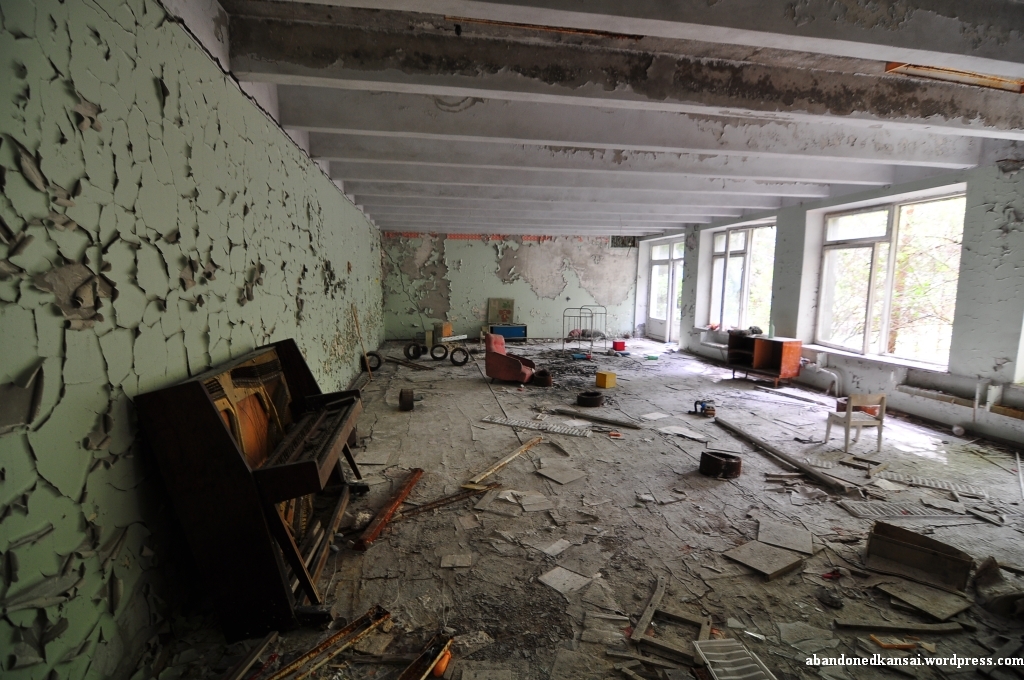
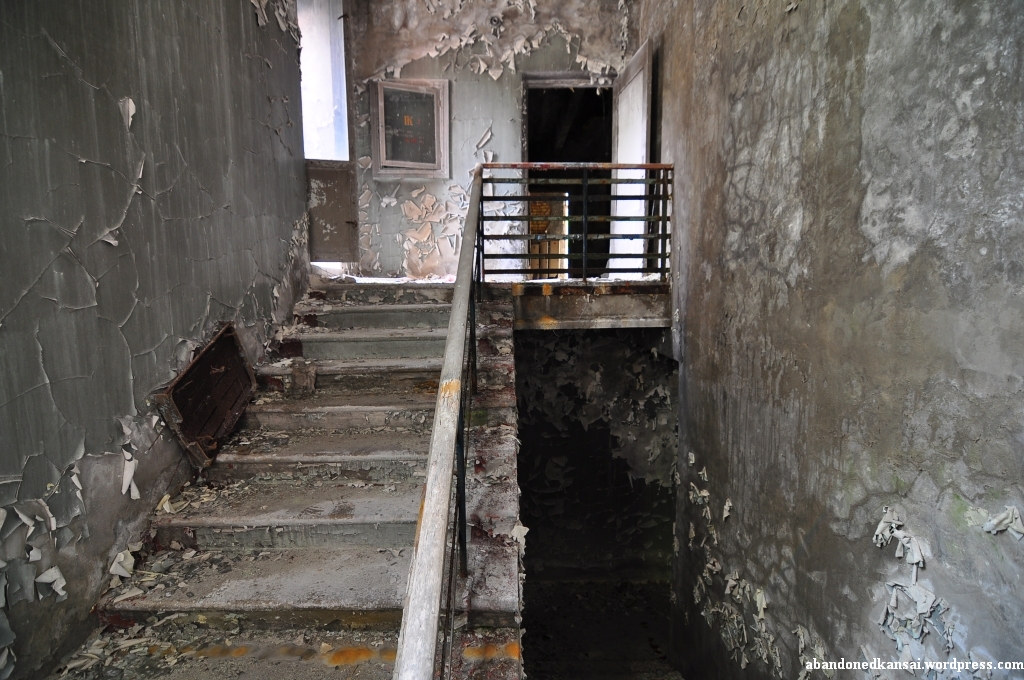
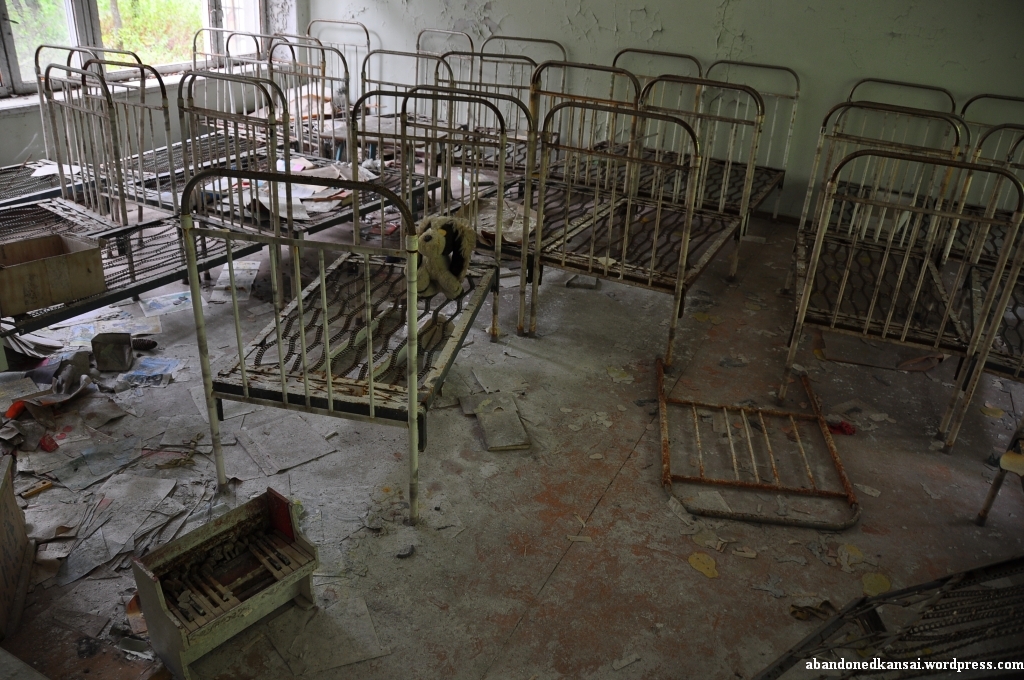
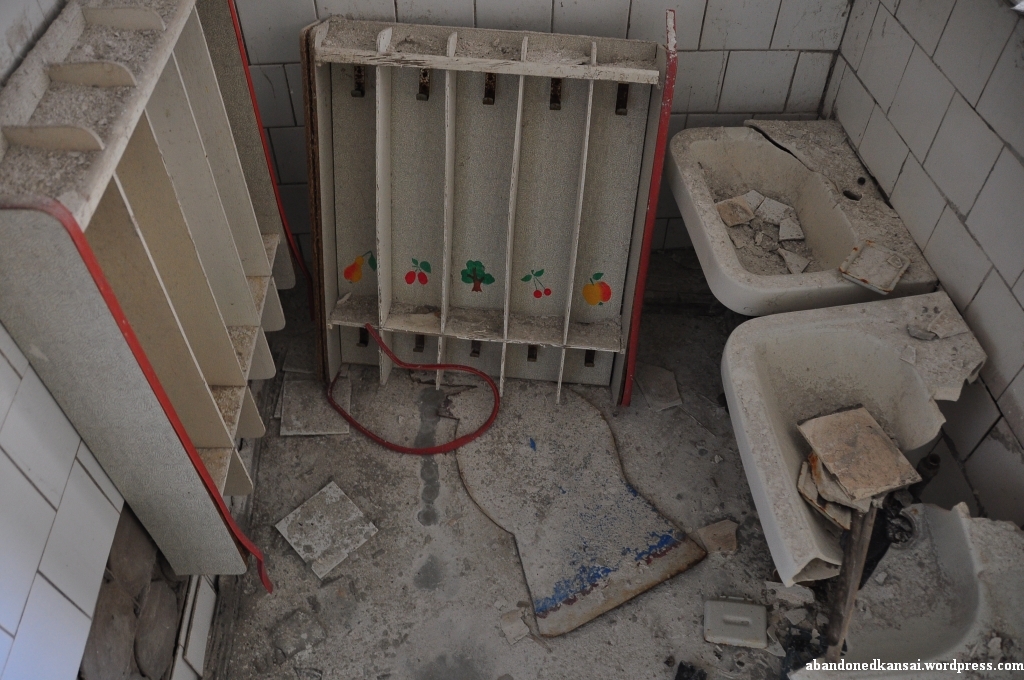
One of the staircases was blocked by… I actually forgot, some kind of construction that once was screwed to the wall. The place was seriously vandalized, dilapidations were visible everywhere and I’m sure the mold does one last thing to make this kindergarten one of the next buildings to collapse. Dripping water was audible in a lot of rooms and I generally had a bad feeling about the Golden Key. Furthermore I was getting pretty tired, so I was slowly moving from room to room, taking pictures rather randomly here and there.
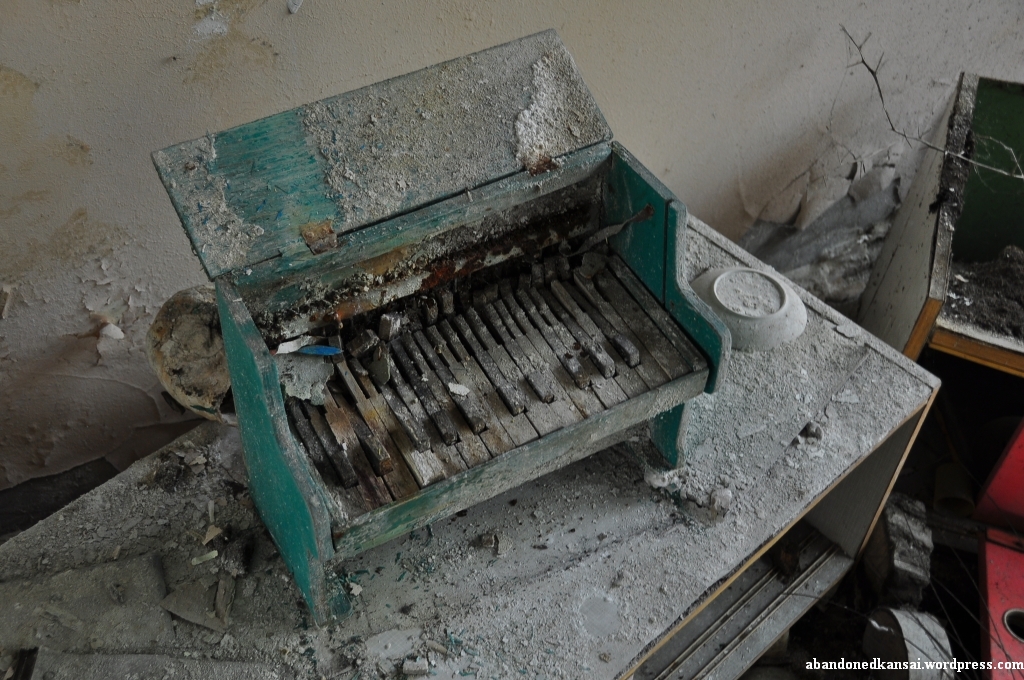
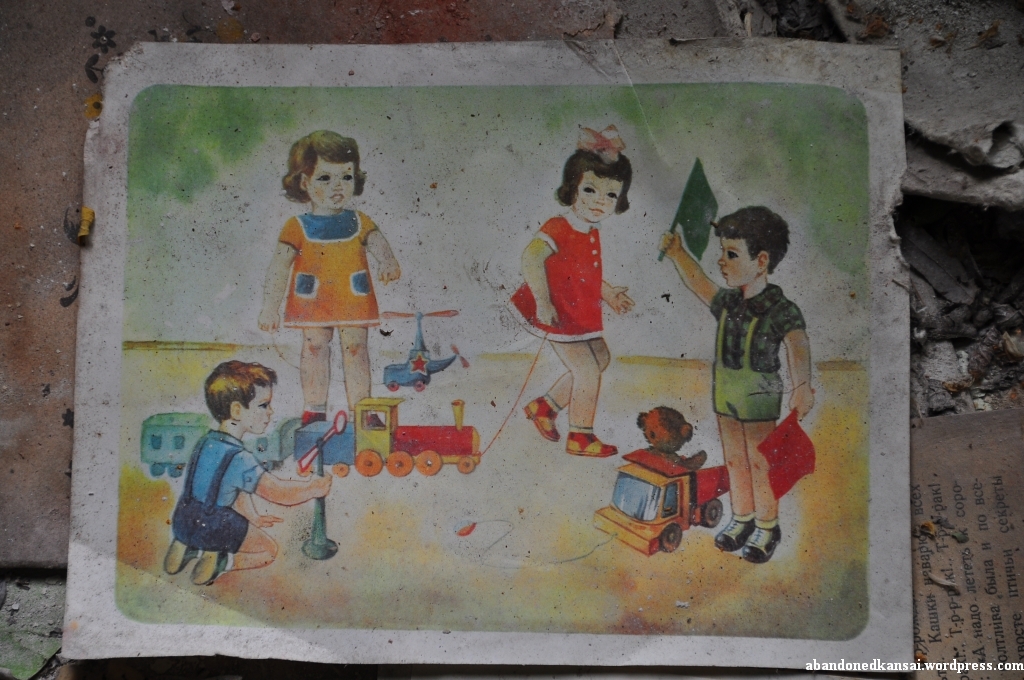
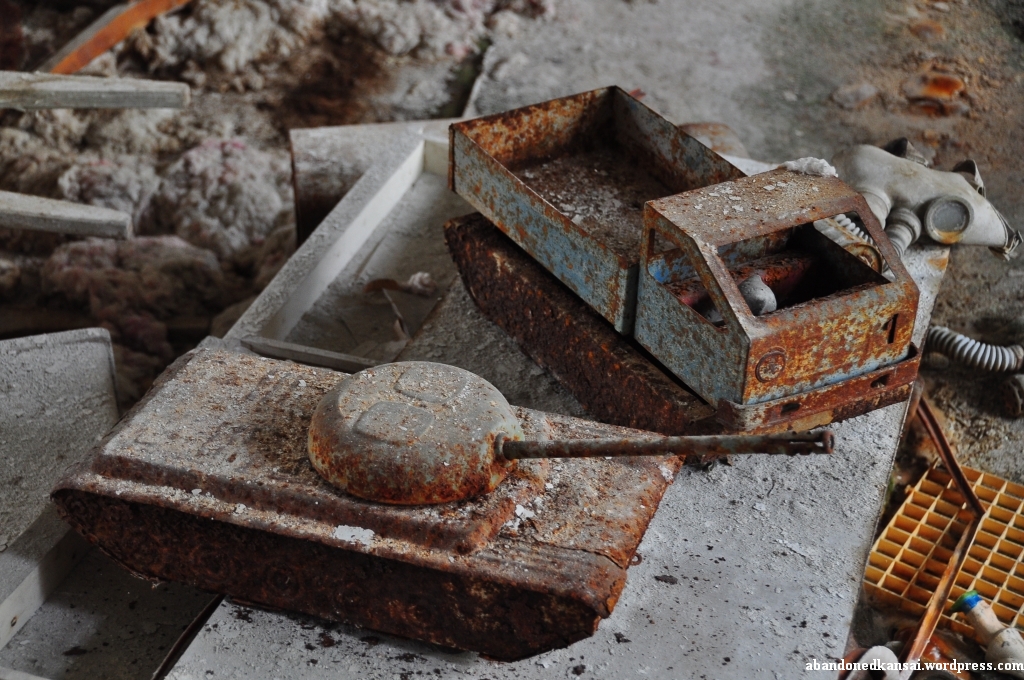
I remember taking the picture of a doll in one of the rooms, but it was not until I saw it on a computer screen that I realized how powerful the subject was: A naked plastic doll with grey hair, the arms connected to the body only by a thread, wearing a gas mask. Obviously set up by some really weird photographer – a week ago, a month ago, a year ago? Who knows… The scene was definitely staged, but not at all shocking – not anymore, not after 1.5 days in the Zone Of Alienation. Same with the tea party and the rotten piano for kids. Just the metal tank and truck… I knew that picture would look good! Although I actually didn’t realize there was a gas mask lying in the background when I pushed the shutter release.
I strongly recommend visiting the kindergarten early on a tour, not in the evening of the second day – it was an awesome location I didn’t fully appreciate when being there and I’m really happy how good the pictures turned out to be. But I didn’t even take a video. So we left the Golden Key after just half an hour – and at that point Sebi and Maxim were sitting on the sunny terrace for 20 minutes already…
(If you would like to know more about my trip to the Zone Of Alienation please *click here* to get to the “Chernobyl & Pripyat” special. For a map of the area please *click here*. You can *like Abandoned Kansai on Facebook* and *follow this blog on Twitter* – and of course there is the *video channel on Youtube*…)




Posted in Abandoned, Europe, Kindergarten / Nursery, Map, Pripyat, Ukraine, Urbex, Visited in 2010, Zone Of Alienation | 3 Comments »
“The next location will be even better!”
Those were the words Maxim used to lure us away from the absolutely amazing Hospital No 126. We hopped into the van and drove to the other end of Pripyat to see… an abandoned factory. Wait. What? A factory? Seriously? A factory? Better than a hospital? No way!
Please don’t get me wrong: The Jupiter Factory was awesome! I’ve never been to an electronics factory that big. But in the end it was just a factory… one of the most common abandoned places in the world. And not even nearly as fascinating to me as Maxim hoped it would be. But I’m not into First Person Shooters whereas a lot of people visiting the Zone Of Alienation are. And for them the Jupiter Factory is one of the highlights since it was a setting in the game “S.T.A.L.K.E.R.: Call of Pripyat” by GSC Game World – one of the most popular FPSs of the last couple of years.
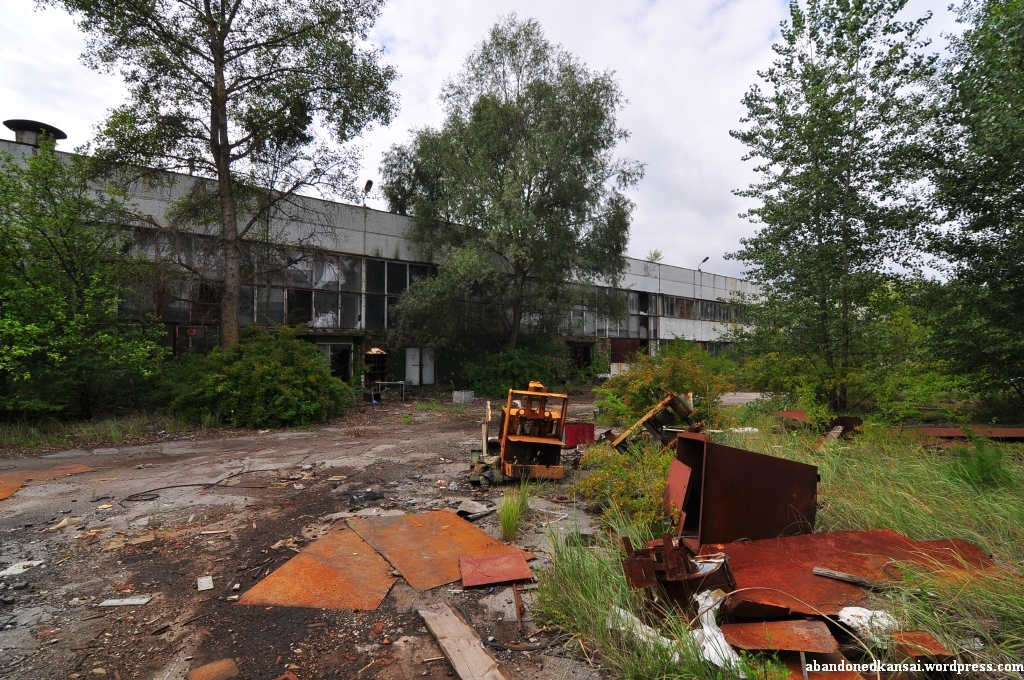
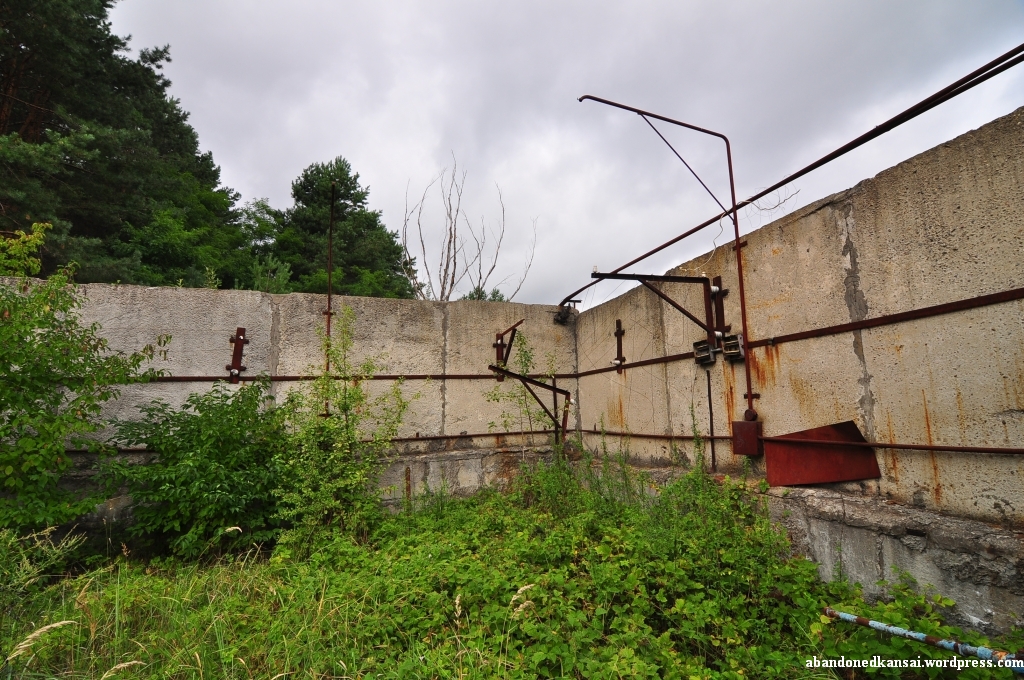
We entered the Jupiter Factory, one of the biggest employers in Pripyat, through the main gate and passed by some administration buildings. Since the site is located at the western city limit of Pripyat nature is taking over the area rather quickly. The streets on the premises were partly overgrown with climbers, some of them even seemed to be some kind of grapes. None of us tried them though, for obvious reasons.
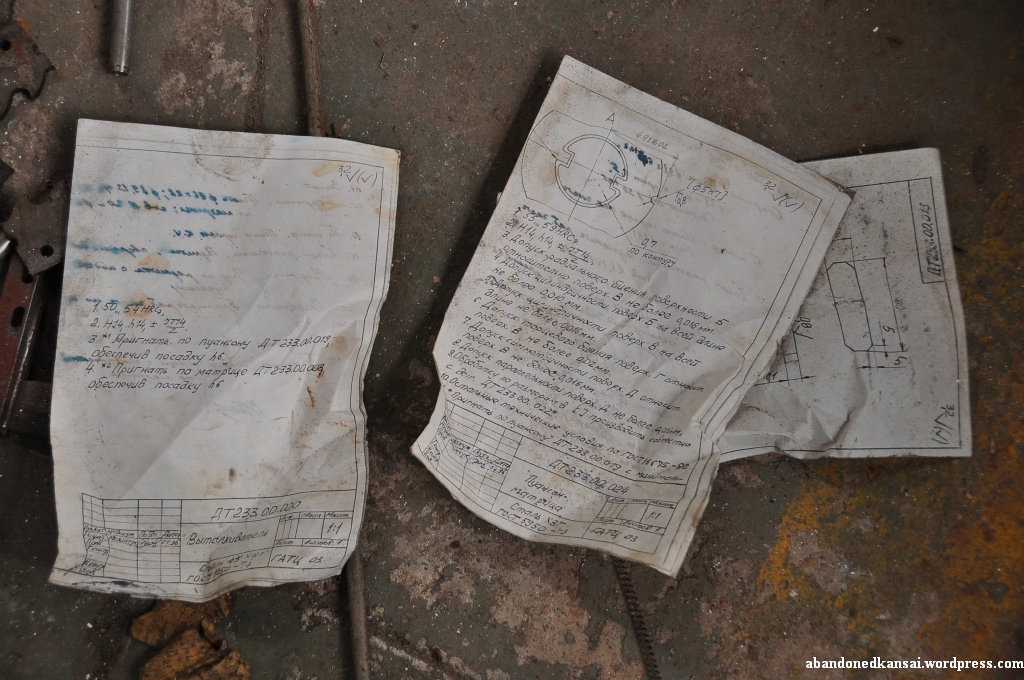
The assembly halls were absolutely impressing – huge constructions with all kinds of machinery still in there. The walls displayed dozens of warning posters and the workbenches were covered with tools and instruction manuals. But like with so many other places in Pripyat there is hardly any reliable information about the Jupiter Factory. It’s known that the plant produced tape-recorders and other consumer products under the label “Mayak”, but of course there are also unconfirmed speculations. Rumors about secret military research and stuff like that in underground laboratories. But since the basement is flooded nowadays it only adds to the mystery…
Which makes me wonder why nobody really tried to write a comprehensive book about Pripyat, at least not in English. Every tiny town in Europe has a local historian that knows every little thing about the surrounding 25 km2 – but Pripyat? It’s surprisingly hard to find reliable information about the city… (I’d love to do it, but with no knowledge of Russian / Ukrainian I don’t think I’d get far.)
Anyways, if the Jupiter Factory would have been my first urbex exploration ever I’m sure I would have been completely blown away and could have spent hours there. Even now that I’m back home I wish I had a place like that nearby. It would be worth to write several postings about it and I could come back at different seasons and during different weather conditions. But when I explored the place I was rather underwhelmed, especially since I had to leave the hospital in a hurry…
(If you would like to know more about my trip to the Zone Of Alienation please *click here* to get to the “Chernobyl & Pripyat” special. For a map of the area please *click here*.)



Posted in Abandoned, Chernobyl, Europe, Factory, Map, Military, Pripyat, Ukraine, Urbex, Video, Visited in 2010, Zone Of Alienation | 9 Comments »
Abandoned hospitals are creepy places. It’s kind of in their nature. Like abandoned amusement parks. Hotels, spas, mines… they don’t really get under my skin. Amusement parks and hospitals do – but none of them even nearly as much as Hospital No 126 in Pripyat!
When Maxim asked us on the first day which places we wanted to see, a hospital appeared on top of my priority list instantly. Hospitals are generally hard to find and even harder to access (since they usually are in easy to reach locations and filled with expensive equipment), so this was a great opportunity to explore one in a more relaxed atmosphere. At least that was my hope… sadly it wasn’t fulfilled. Nevertheless Hospital No 126 turned out to be my favorite location in Pripyat.
Although it was still morning we already “lost” quite some time on the Cooling Towers and the Przewalski’s Horses, so we arrived at the hospital way behind the schedule our dear guide has planned for us. As a result Maxim gave us half an hour since “the next location will be even better”.
So there was the time pressure… and then there was the atmosphere that was everything but relaxing. Of all the real places in Pripyat this one was by far the most real. The basement is actually one of the most contaminated places in the world and holds the suits of the first six firefighters that died within a couple of weeks after the accident. Maxim told us that he went down there once with full protection gear, but had to leave after about 30 seconds – something he never wants to do again.
At that point Maxim knew that Sebi, Michi and I were reasonable and responsible-minded people, so he just quickly entered the hospital with us to guide us to one of the interesting floors and then returned outside to wait with our driver. My fellow Swiss explorers headed their own way and so it took about two minutes until I was all by myself. In the maternity ward of an abandoned hospital. In Pripyat. Almost 25 years after the accident. Without the shadow of a doubt the highlight of this trip. We’ve all seen a horror movie or two, played video games like Resident Evil or Silent Hill. The hospital felt like being the star in one of those works of fiction. On a very irrational basis – because the place was perfectly safe. It just didn’t look and feel like it…
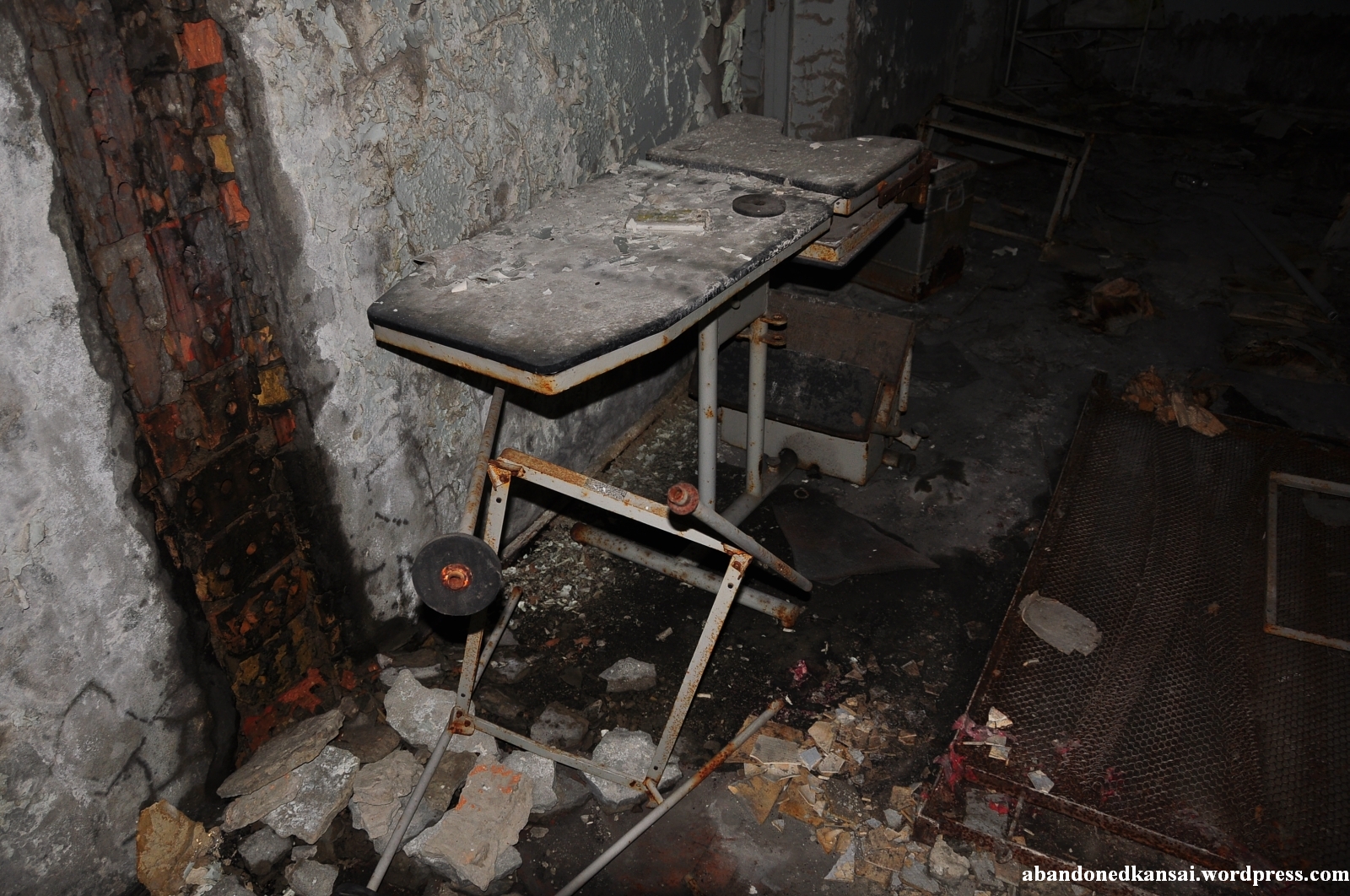
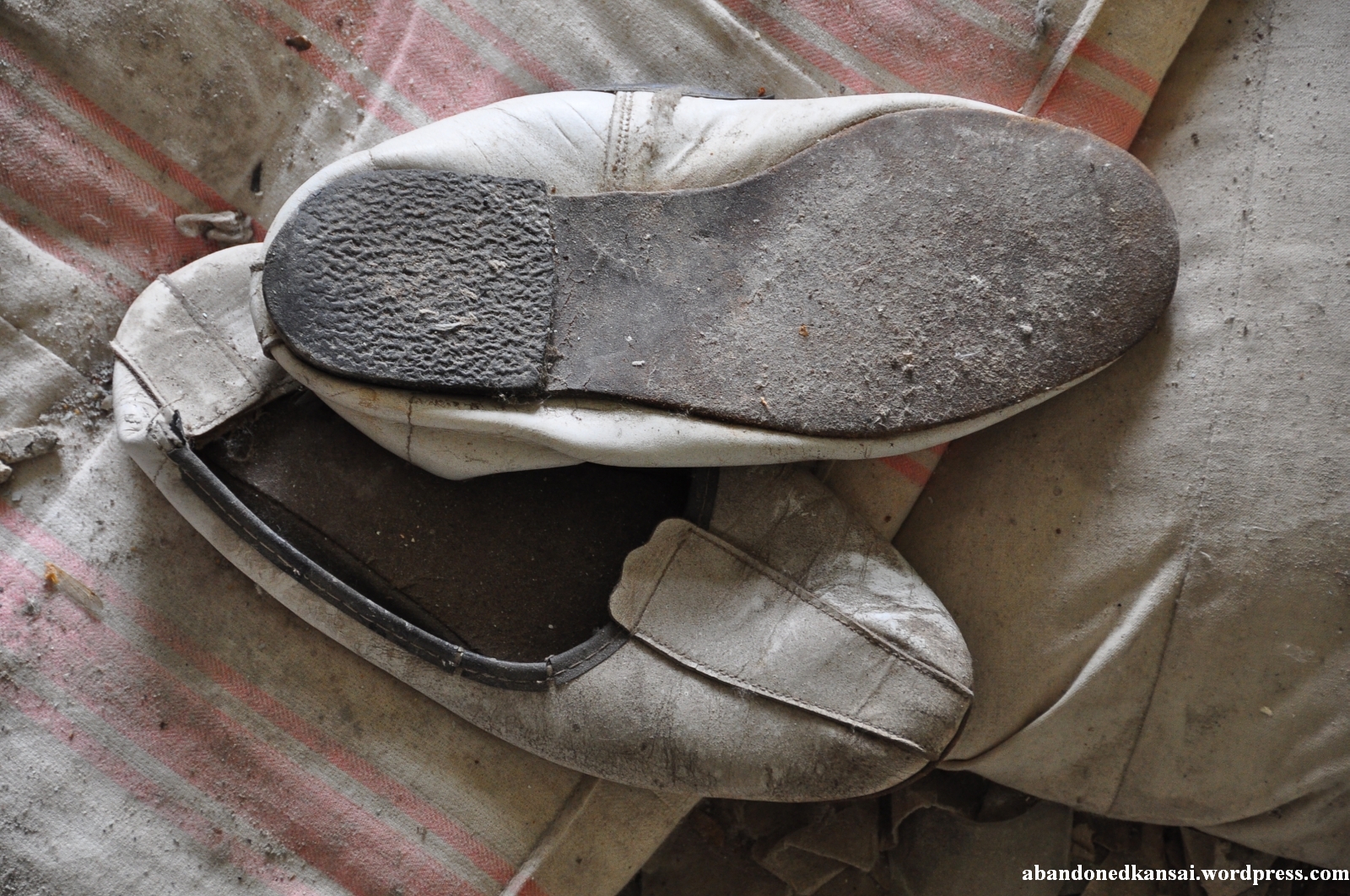
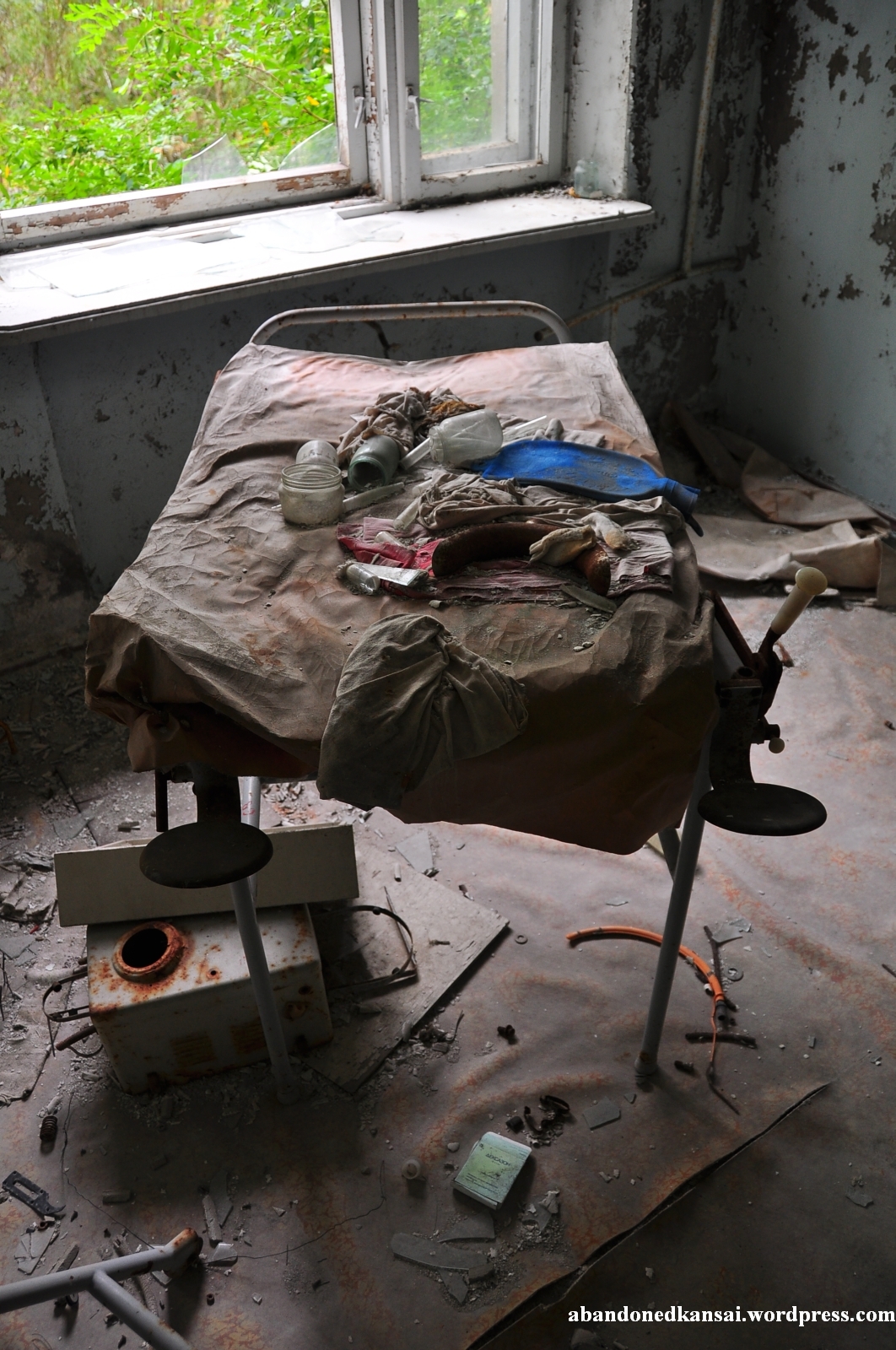
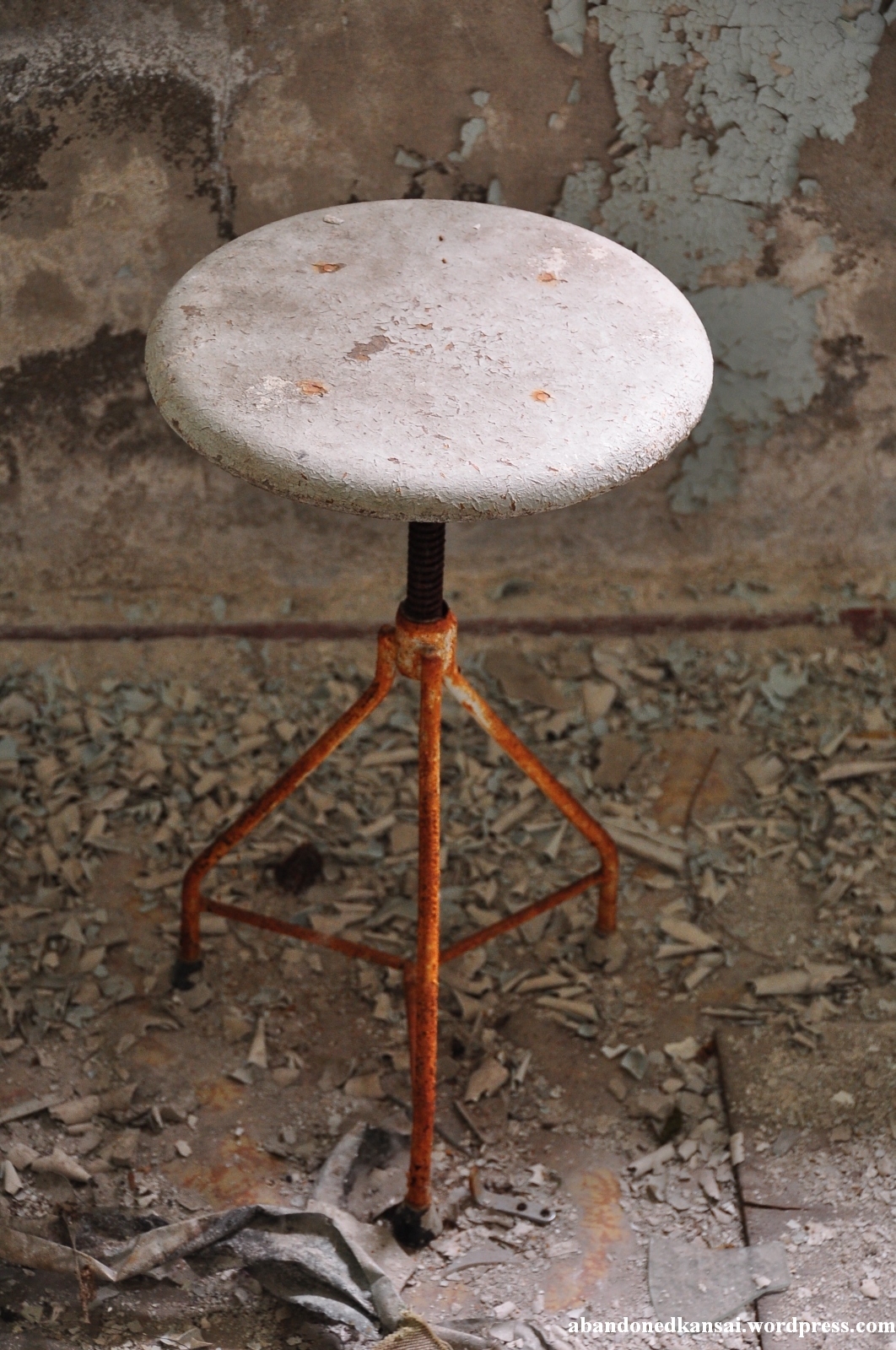
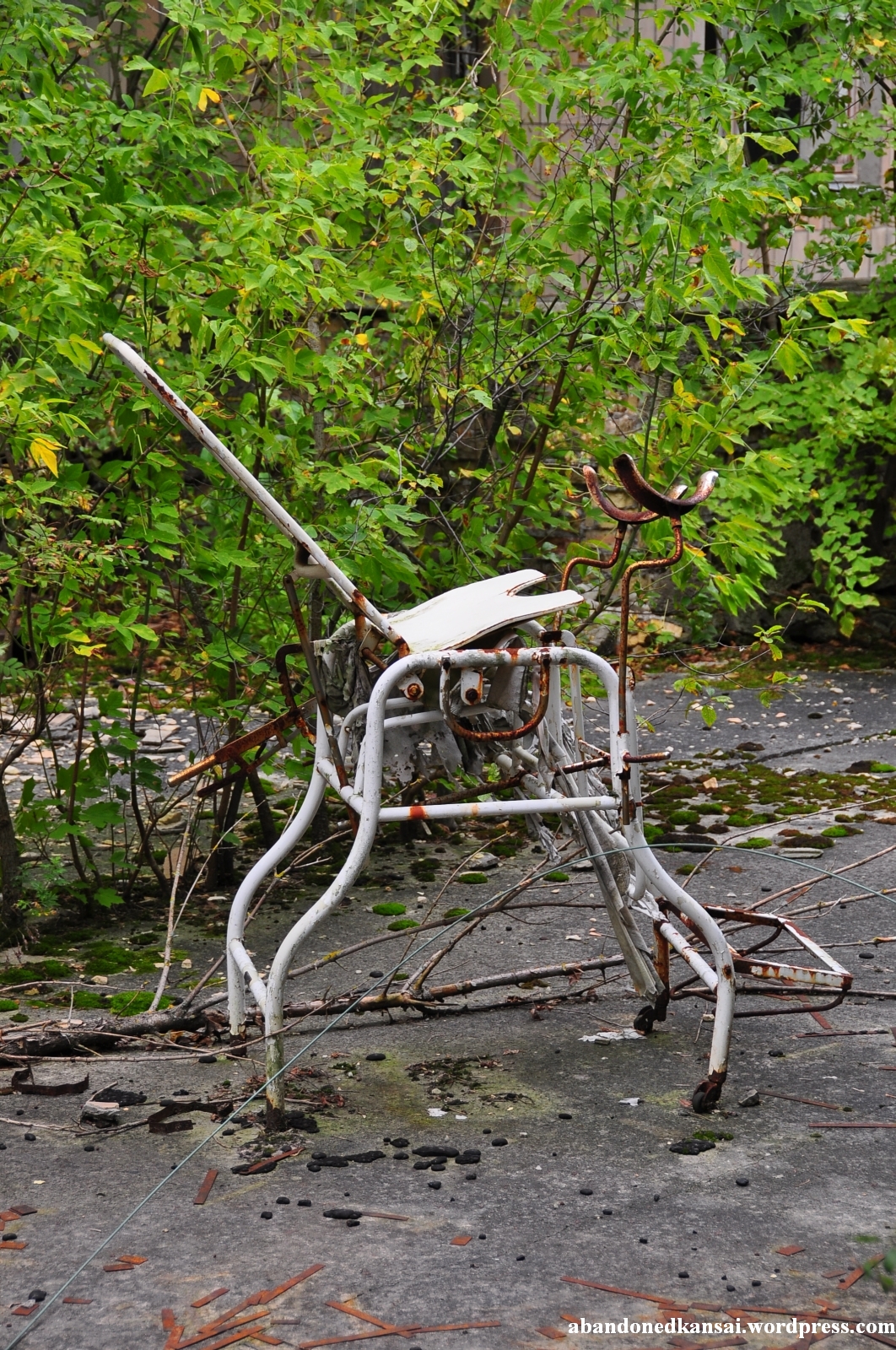
Thanks to the time restraint I was only able to see one of the floors of one of the departments, maybe a tenth of the building, but it was nevertheless amazing. Almost every room, every corner had something interesting to offer. There were surgical instruments, bedpans, gynecological examination chairs, bathtubs, whole boxes of medicine, posters and signs with medical explanations (including explicit pictures) and much, much more. At the end of the hallway were several rooms with rusty baby beds, a really uncomfortable sight. The lighting that day contributed a lot to the atmosphere and made it very difficult to take pictures – never before I wished more that I had a tripod! Since I was in a hurry I cranked up the ISO and took photos while quickly exploring the rooms along the hallway – and on the way back I filmed about two thirds of the floor with my video camera. Sorry that parts of the video turned out to be a bit blurry, but there was no time for re-shooting; just consider it part of the atmosphere…
Looking through the photos from the relaxed comfort of my home, one of them caught my eye and gave me the creeps, although it’s quite unspectacular at a first glance. It shows an opened up register lying on top of other documents. There are lots of handwritten entries and even without speaking any Russian / Ukrainian I guess it’s pretty obvious what it is: Hospital staff logging in for work at 8am and 8pm on April 24th 1986, April 25th 1986, April 26th 1986 – and on April 27th nobody cared to log in at 8pm anymore… (EDIT: Well, obviously I was wrong – Greg let me know in the comments that it’s actually a checklist for people making sure that locked medicine is still where it should be. Thanks again, Greg!)
(If you would like to know more about my trip to the Zone Of Alienation please *click here* to get to the “Chernobyl & Pripyat” special. For a map of the area please *click here*. If you don’t want to miss the latest postings you can *follow Abandoned Kansai on Twitter* and *like this blog on Facebook* – and of course there is the *video channel on Youtube*…)









Posted in Abandoned, Europe, Hospital, Map, Pripyat, Ukraine, Urbex, Video, Visited in 2010, Zone Of Alienation | 36 Comments »
Abandoned Kansai on Facebook
-
Join 5,100 other subscribers
Pages
Archives
Categories
Recent Comments
Gred Cz on Nagano Wedding Church Aulton White on Patton Barracks ETSR on Nagano Wedding Church ETSR on Nagano Wedding Church Gred Cz on Awaji Island Love Hotel ETSR on Awaji Island Love Hotel Charlie on Awaji Island Love Hotel aaah on The Maya Tourist Hotel Juan on Insta360 – How Is That E… Gred Cz on Sakura Spa Hotel


 Abandoned Kansai