All abandoned: Chernobyl / Pripyat, Nara Dreamland, Anti-Zombie Fortress, Japanese Sex Museum – and many, many more! Plus: North Korea Special – 2 trips, 16 days / 14 nights! As seen on CNN…
The Imari Kawaminami Shipyard, also known as the Kawaminami Uranosaki Industrial Shipyard or the shorter version Kawaminami Shipyard, is one of the best documented urban exploration spots (haikyo / 廃虚) in Japan. Pretty much all blogs about the topic cover the shipyard, Japanese as well as those written by foreigners living or visiting Japan, and it’s marked on countless maps. It’s a perfect location for beginners since it’s right next to a major road, parking spots are available close-by and a train station is just a couple of 100 meters away. There are no (real) fences, no security, no nosy neighbours. And the place is buzzing! During my 4 hour stay I met about half a dozen people, both Japanese and a foreigner. A relaxed start into my 4 day trip to Kyushu…
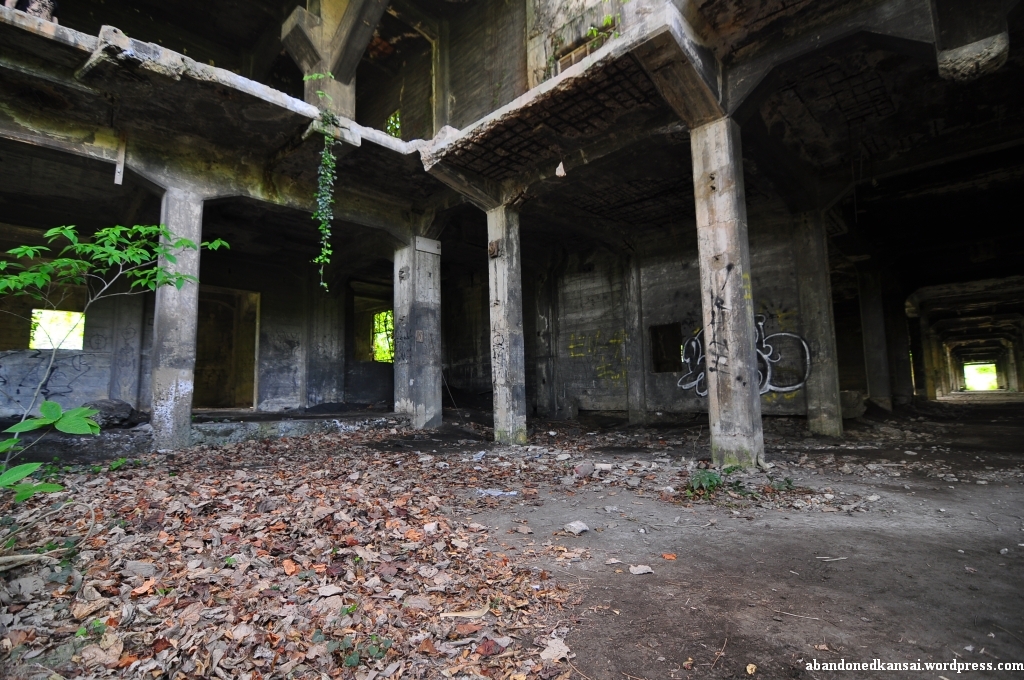
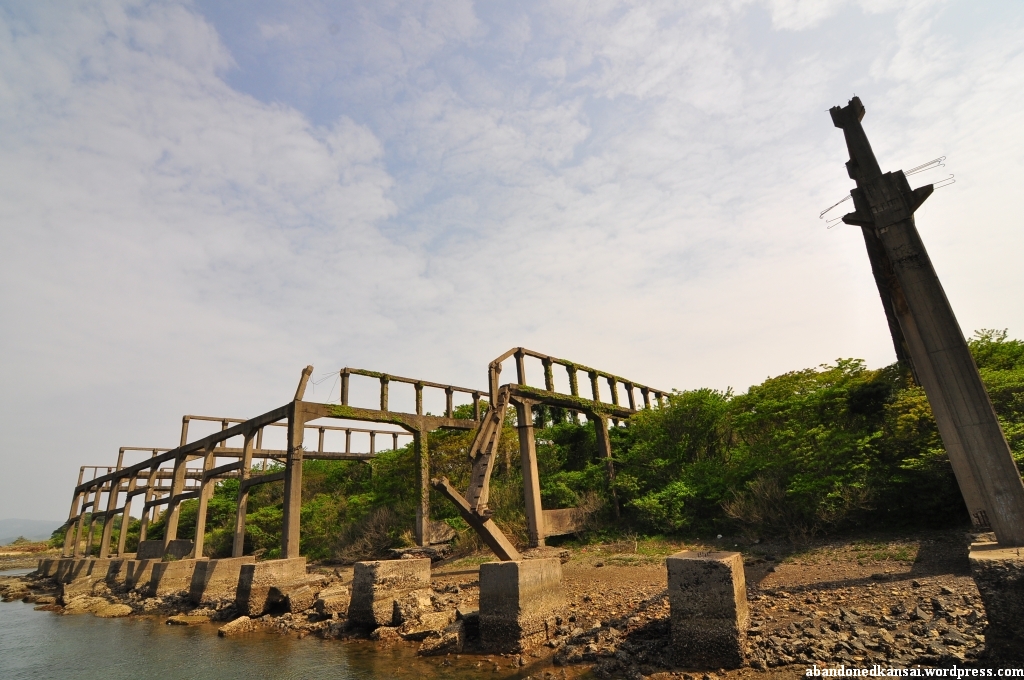
A trip that started at 4.50 a.m. when my alarm clock reminded me that I can rest when I’m dead. I took one of the first Shinkansen high speed trains from Osaka to Hakata / Fukuoka and from there it was another 3 hour train ride to the station mentioned earlier. I finally arrived at the Kawaminami Shipyard at around noon with one of those weird Japanese spring skies that white out most photos as soon as even parts of the sky are visible. After I entered the shipyard I dropped my luggage right at the entrance to have a look around – and I was rather disappointed. The main building is not much more than a concrete skeleton as seen many, many times on all kinds of homepages and blogs. I had a quick look around, taped a walking tour of the building and after I took some pictures for a couple of minutes in the main hall I saw two guys back at the entrance. It’s always a weird feeling when other people show up at abandoned places as you never know if they are fellow explorers, security or some random society outsiders. (The latter kind is rather rare in Japan – I’ve never met druggies, only one homeless guy once.) The guys turned out to be Ben, an English teacher from Otsu in Shiga (close to my current home), and his Japanese friend from Kanto. Extremely nice guys and a welcomed chance acquaintanceship.
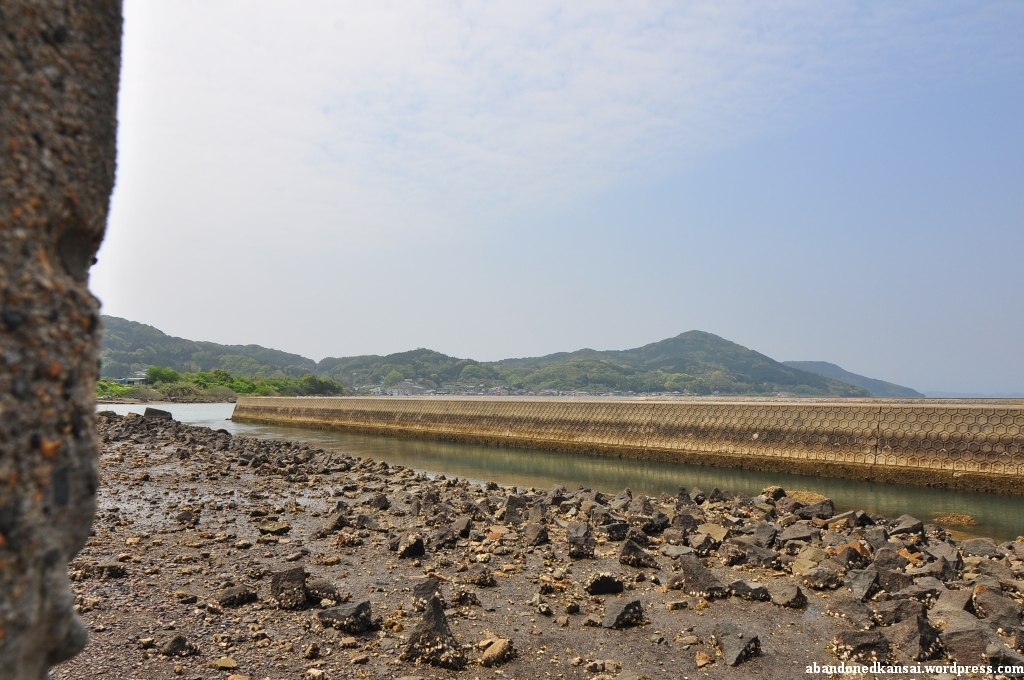
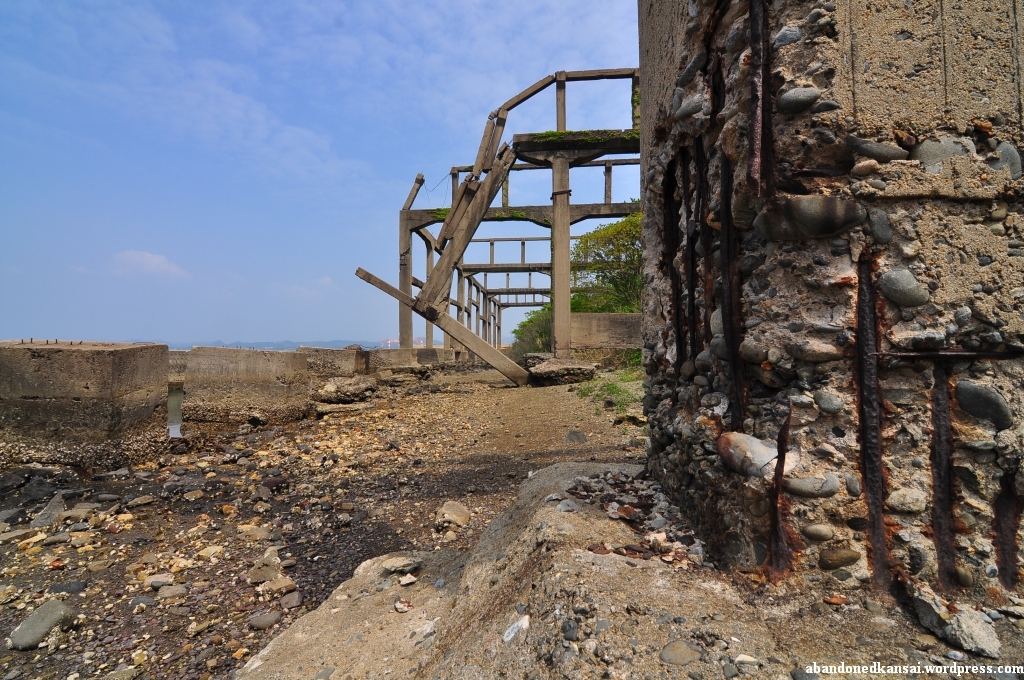
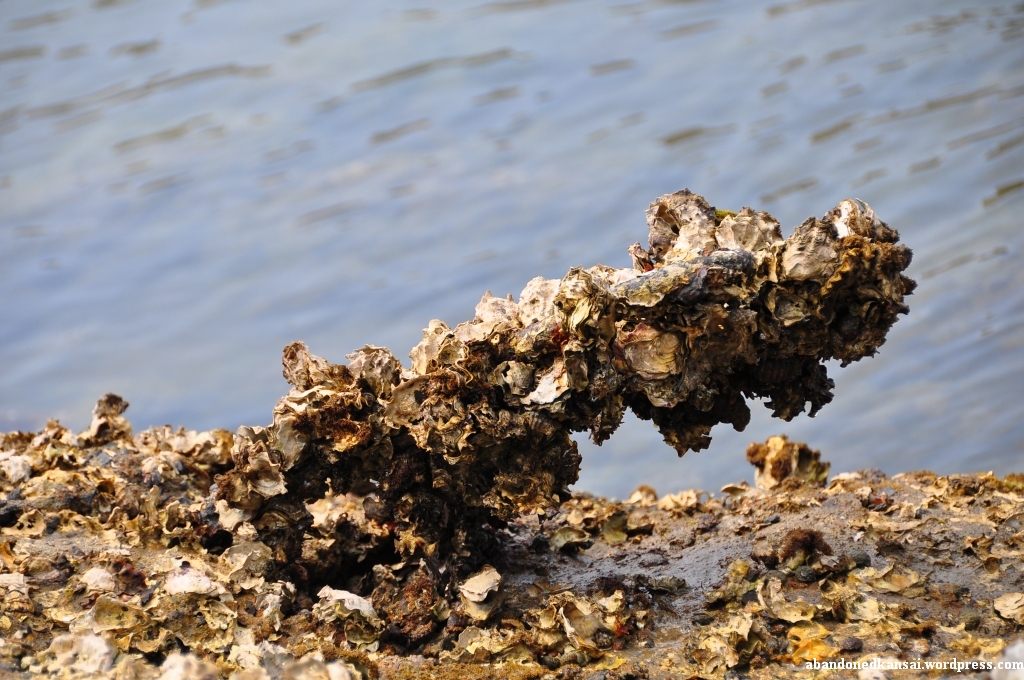
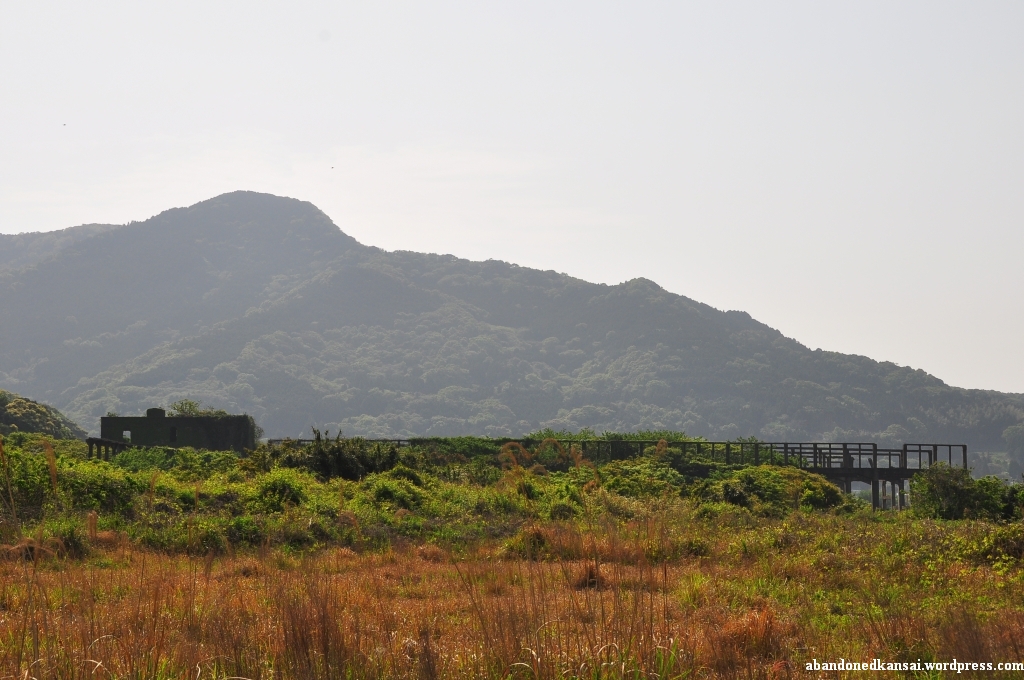
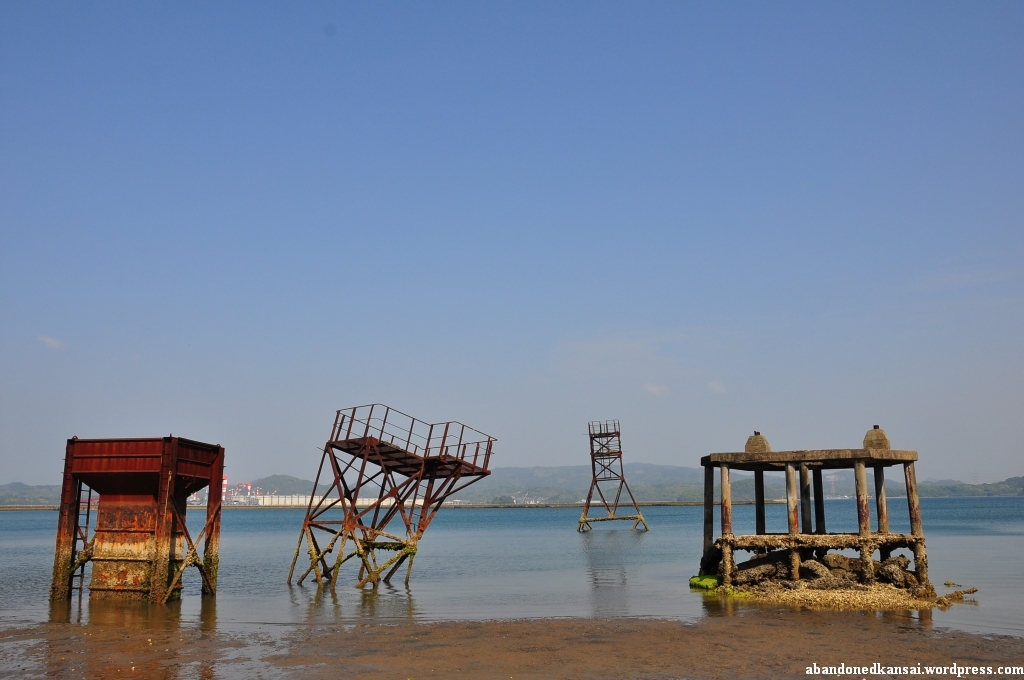
After a while we left the overgrown building to explore the even more overgrown outside part of the shipyard. We followed a narrow trail and after about 3 minutes we reached seaside part of the shipyard which surprisingly many photographers miss. This area I actually enjoyed a lot more. The tide was low, we were free to roam the area and were able to shoot from angles usually covered by water. The sky had almost cleared up by that time and in combination with the nice breeze it created a very relaxed atmosphere.
When we were done shooting that part we made our way onto the dam in front of the shipyard, significantly newer than the abandoned complex. We were down halfway when a guy on a bike came closer. Since there was some construction going on close-by I was worried that the guy might be security, but he turned out to be a senior citizen who enjoys fishing. A chatty senior citizen who was more than happy to give us a little bit of insight on the shipyard. According to him the building we were exploring earlier and that is always referred to as the Kawaminami Shipyard actually wasn’t a shipyard, but a factory for spare parts and the administration building of the company. He claimed that the actual shipyard was further up north, but demolished quite a while ago – which is probably only part of the truth given the shape of the building now abandoned. Since the location is completely gutted and there are some articles available in English my interest in the historical background is actually surprisingly low – but according to the Japanese Wikipedia it was opened in 1936 (to support Japan’s efforts in their wars that started earlier in the 30s) and closed due to bankruptcy in 1955. One of the more curious items built there were the manned “suicide torpedoes” called kaiten (回天), probably to be delivered to the rather nearby Katashima Suicide Training School, a place I visited during my first trip to Kyushu in March of 2010.
Anyway, after the fisherman continued his way Ben and I went to another haikyo east of the shipyard (I’ll describe that one in the next posting) before we finished our circumnavigation of the endangered beauty.
The Kawaminami Shipyard is actually way more impressive from the outside than from the inside and I guess in winter even more so than in late spring. Nevertheless it was a perfect first location on my second trip to Kyushu – one that set the tone for the days to come…
Addendum 2012-1-30: The Imari Kawaminami Shipyard was demolished in late 2011 / early 2012. Now you can find its exact location on my *map of touristy and demolished ruins in Japan*.
About 15 months ago I went on my first multi-day urban exploration trip: 3 days to Kyushu with my buddy Enric. A trip with lots of up and downs, visiting some amazing locations – Gunkanjima, the Katashima Suicide Training School and the winding tower of the Shime Coal Mine, now known to some people as the Anti-Zombie Fortress. But March was kinda cold, last year as well as this year. So when Golden Week came up (late April / early May) and my company forced me to take two of my paid vacation days to install a new AC I took the lemon and made lemonade – it was time to go back to Kyushu!
Since Enric left Japan and returned to Spain a couple of months ago, I went on my own this time. Remembering the best burger I’ve ever had I set up my base in Sasebo after a long day of exploring an abandoned shipyard and the abandoned leftovers of the dock of a mine close to it. The next day I explored one of the most amazing places I’ve ever been to: an almost abandoned island, once the home of several thousand people – and as exciting as that day was as disappointing was the next one when I walked through drizzle for hours without an umbrella to look for remains of a mine and its workers’ housing-estate; but they were gone forever – as research after my return confirmed… Luckily the weather turned around on my last day, so I was able to visit an abandoned amusement park on my way back home. Thank heavens for sunscreen, because without it the harsh Kyushu sun would have burned me crisp within half an hour…
Exploring all day I spent my three evenings in Sasebo at Base Street to enjoy some burgers. While the regular sized ones are good I’ll definitely recommend the so-called “Special Size” – this 15 centimeters in diameter monster is a classic Sasebo style burger that will fill you up with pure deliciousness; if you ever wanna spend 1100 Yen (yep, that’s 9.50 Euros or 13.60 Dollars!) on a single burger without even considering regretting it then this is the place to go! I just hope I’ll find more abandoned places close to Sasebo so I can have a good reason to go back there once more…
(Oh, and greetings to the tourist office in the Sasebo! It sells a variety of souvenirs, but not the awesome huge plush hamburgers that fill half of their display window. To get one of those you have to ride a bus for about half an hour to get to a small store at a shopping mall in the middle of nowhere. And since I had to wait 45 minutes for the next bus they lost a customer who would have happily paid 200 Yen more to avoid the hassle of a 2.5 hour long round trip to get a cute present for his even cuter niece. A no-win situation… and pretty much the worst sales strategy ever!)
I have to admit: After almost five years working for a big company in Japan my view on the country and its people changed quite a bit. Foreigners visiting Japan as tourists and exchange students tend to have a very romanticized image of Japan, even more extreme in the case of people longing to visit Japan for the first time. Actually working in Japan is a totally different thing as the usual struggles at work get multiplied by cultural differences and, yes, sometimes xenophobia – and if you work in an industry that locks you up in rooms without daylight with a lot of “characters” for the major part of the week you tend to generalize certain things. Which is really bad – and the main reason I like to get outside on the weekends and travel to other parts of the Japan to get in contact with people that have nothing to do with my line of work…
After finding the shangri-la and the Big Mountain Pachinko Parlor on our way from the Sky Rest New Muroto to our next haikyo we finally entered the mountainous part of Shikoku. The roads were getting smaller and the weather got worse. When we reached the area we suspected the F# Elementary School was (we only had vague hints…) it was pouring and the road was so narrow it was only wide enough for one car, villages so small they were not more but an accumulation of a few buildings. And none of them looked like a school. We were driving up and down a road and its backstreets while the time was ticking away – in only a few hours we had to return the car…
Doing urban exploration you don’t want to attract a lot of attention as you never know what people might think of you and your undertaking. After about half an hour we decided we had nothing to lose and when we saw a guy from a well-known telecommunications company having a break in his car Jordy insisted asking him about the school. The guy knew where the school was and told us that it was abandoned in the 1960s, but that it was under construction now. Just down the road, we couldn’t miss it (well, we did before…). Very nice guy – and we were so happy that we finally got some directions. We followed the road for about five minutes, parked our car and then something happened I never thought would happen, especially after being surrounded by dopey and to some extent ignorant people for the bigger part of the year: The guy showed up, not only making sure that we found the school, but also talking to the construction workers, telling them the same story we told him (that we were photographers from France and Germany taking pictures of abandoned places), allowing us to enter the school and taking pictures for as long as we wanted. There it was, the personification of the positive image most people have of Japan – and it blew me away. To all the expats in Japan getting frustrated, and I know there are a lot: Go on weekend trips, re-connect with the Japan you once loved so much. Working crazy hours and having only a few paid days off a year it’s easy and dangerous to generalize, especially when gathering with other foreigners who are frustrated, too…
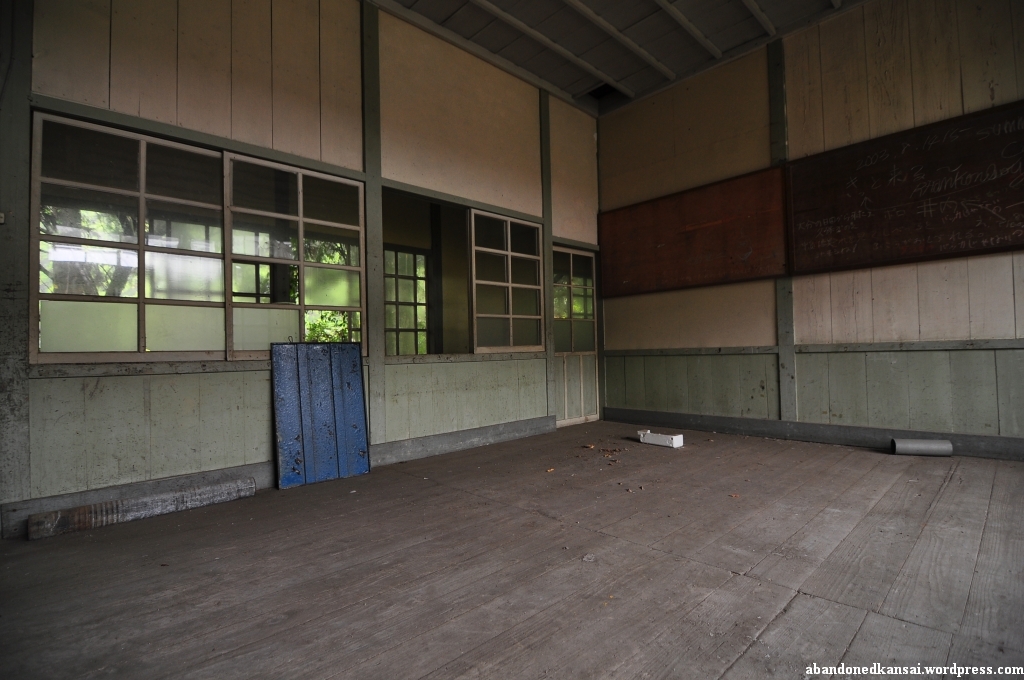
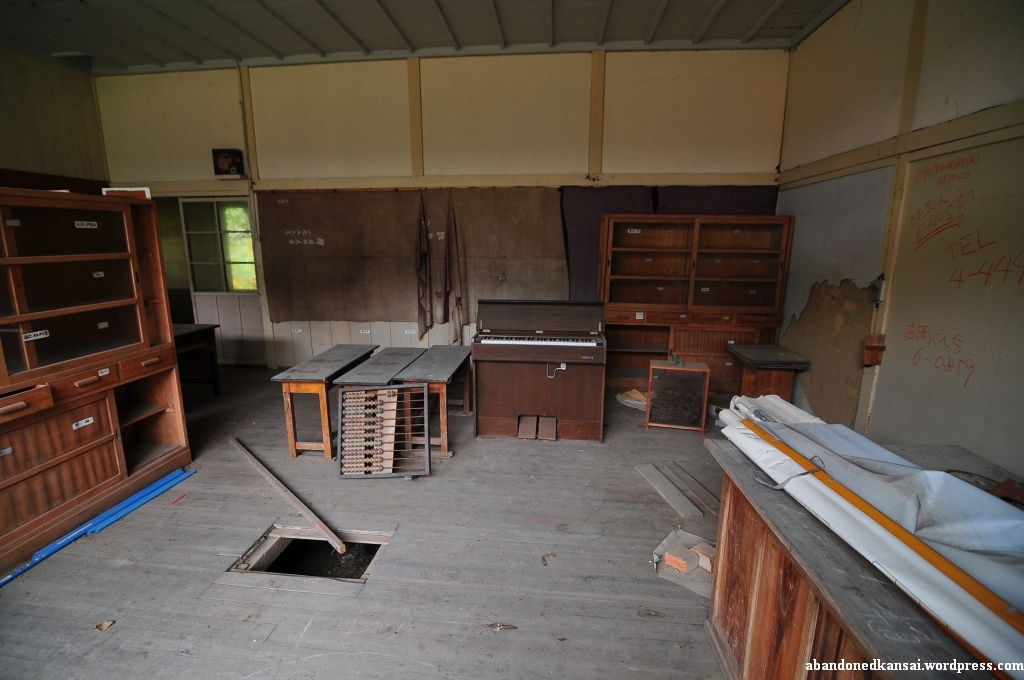
That being said I can finally write a few words about the school itself, although I know barely anything about it. Closed in the 1960s this wooden construction was withstanding decay for several decades until somebody decided not to tear it down, but to renovate it. Construction started about a month prior to our visit (= end of October 2010) and was supposed to finish March 10th 2011. Luckily they spent most of the time building ramps for trucks and machinery as well as taking care of a side building, so the main building of the school was barely touched – giving us the opportunity to take unique pictures as I’m sure the building looks completely different now…
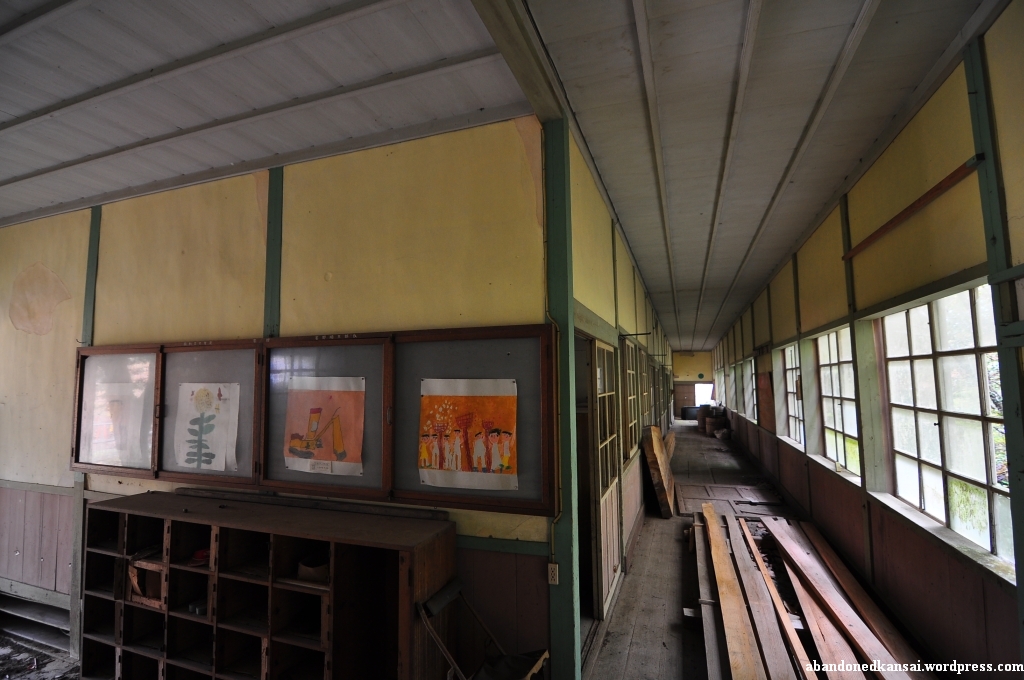
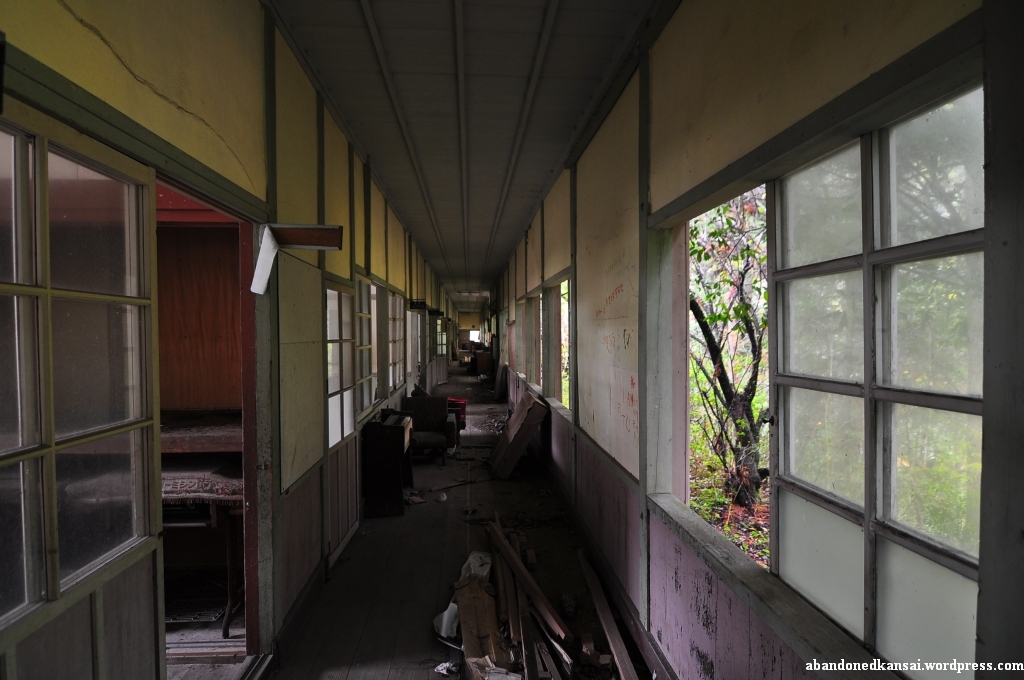
The F# Elementary School was a typical Japanese school of its time: A rather narrow wooden building with a long hallway, classrooms (and other rooms) only to one side. While we entered through a side entrance the main entrance with some lockers and paintings created by students was located in the middle of the building – restrooms being outside on the back side of the school. Most of the rooms were empty, but others were full of all kinds of items: furniture, educational materials, pianos. Yes, pianos. Like the Middle School #3 in Pripyat this school was also stuffed with pianos – I saw at least half a dozen. Another kind of item I didn’t expect were a couple of sewing machines made by Brother, nowadays more famous for printers than for their original core business.
Since this was my first (and so far only) abandoned Japanese school it was an amazing experience to explore it – especially since it was about to be reconstructed and even more so given the story leading to the exploration. The perfect final location of my (first) Haikyo Trip To Shikoku!
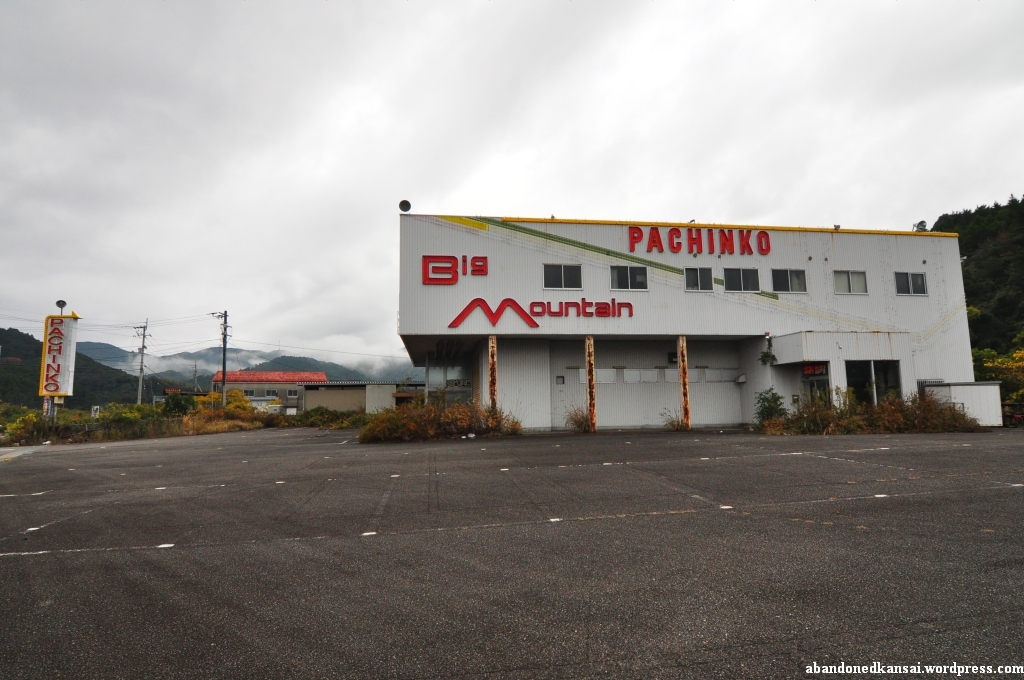
While I am happily taking credit for finding the hotel shangri-la it was thanks to my fellow explorer that we entered the Big Mountain (or Big Mountein… as they misspelled their own name occasionally) pachinko parlor. We were on the road again to finally get to that abandoned school in the middle of the mountains when we saw said abandoned place of amusement. We turned around, parked the car and actually found an easy way in.
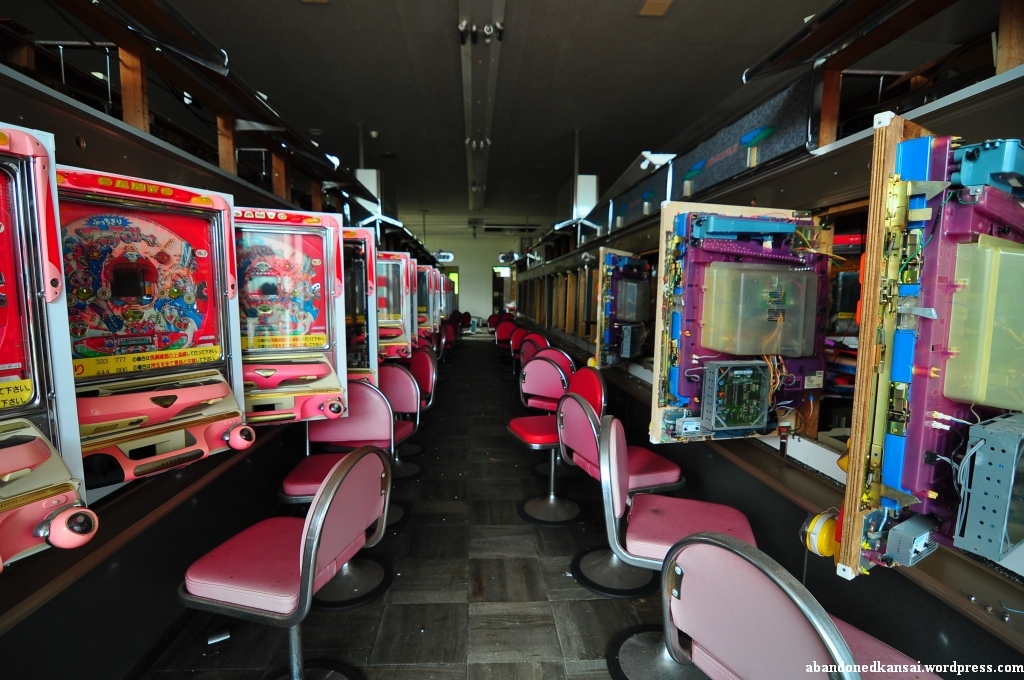
There are plenty of abandoned pachinko parlors in Japan, it’s maybe the most common kind of haikyo overall. But usually they are either boarded up or completely gutted. The Big Mountain on the other hand was in pretty decent shape. Most of the machines were opened, but only a few were missing. Since new pachinko parlors are opened all the time a lot of the equipment gets recycled, but in this case most of it was still there (machines, stools, balls, containers for the balls, signs, …) and in decent condition – especially considering that the most recent calendar sheets we found were from 1996.
Since gambling is strictly controlled by the Japanese state there are only a few possibilities to actually win money – with lotteries and betting. Playing pachinko (パチンコ) you can only win prizes by exchanging the pachinko balls you’ve won for prizes worth less than 10.000 Yen each (82 Euros / 117 Dollars). Popular items are perfumes, expensive lighters and tiny gold bars. Conveniently most pachinko parlors have a “pawn shop” close-by where you can get rid of your prizes; of course 10 to 30% under value! 16 million Japanese play pachinko on a regular basis, about 34.000 play for a living – yes, professional pachinko players…
What most people don’t know, especially in the West, is that the majority of pachinko parlors in Japan are run by the so-called Zainichi Koreans, the biggest ethnic minority in Japan. Of the estimated 16.000 parlors about 50% are run by South Koreans, 30 to 40% by *North Koreans* and the rest by Chinese and Japanese; most of the latter ones associated with the Yakuza, the “Japanese Mafia”. The parlors run by North Koreans usually are under the control of the Chongryon (Ch’ongryŏn / 총련 / 總聯 / 朝鮮総連), the “General Association of Korean Residents in Japan” which has close ties to North Korea. According to an article in the Japan Times up to 200 billion Yen a year are flowing to North Korea that way – currently that’s about 1.7 billion Euros or 2.4 billion Dollars…
Sadly we were running out of time and we still wanted to go to that school, so we left the Big Mountain Pachinko Parlor after about 30 minutes. We even forgot to go upstairs, where you usually can find a couple of sleeping rooms, a kitchen, and a security room with surveillance monitors and a safe. Luckily I explored another pachinko parlor a few months later, this time in Shiga – but that’s *a story for another time*…
After visiting the Sky Rest New Muroto in the southern part of Shikoku Jordy and I got back on the road to find an abandoned school in the middle of nowhere about 50 kilometers away. While the most popular way of finding places to explore seems to be (mostly useless) books like Nippon No Haikyo and doing research on the internet the most effective way to do it actually is to rent a car and hit the road. In our case we stumbled across two amazing abandoned places (or haikyo (廃墟), ruins, as they are known in Japan) on our way to the school: an abandoned hotel and an abandoned Pachinko parlor in amazing condition.
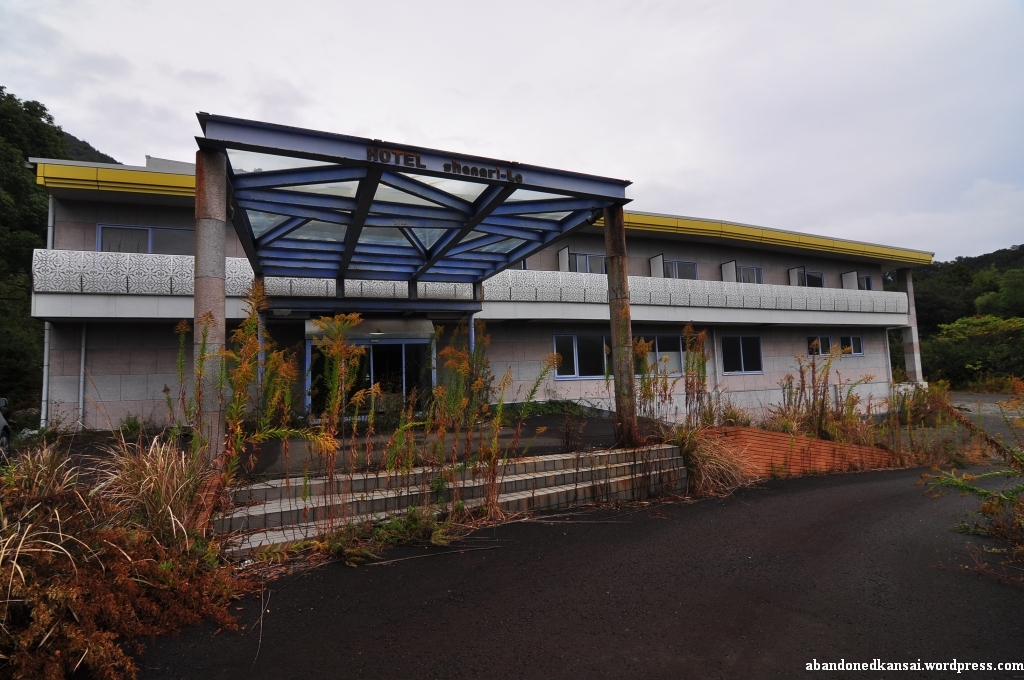
After about half an hour on the road I saw a huge sign advertising a hotel – and the sign looked like it wasn’t taken care of for at least a decade. I told Jordy about it and we decided to turn around. Driving up a hill for only a short distance there it was, the shangri-la (yes, lower case spelling…). Very unspectacular from the outside Jordy cracked some jokes about how the place doesn’t live up to its name, but we were disabused soon…
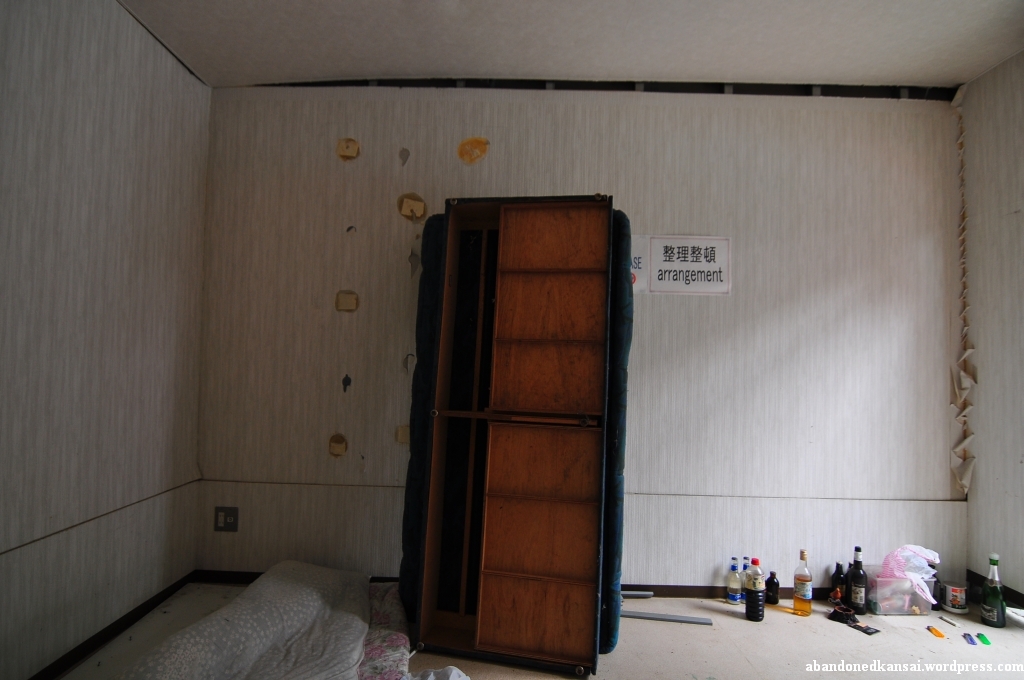
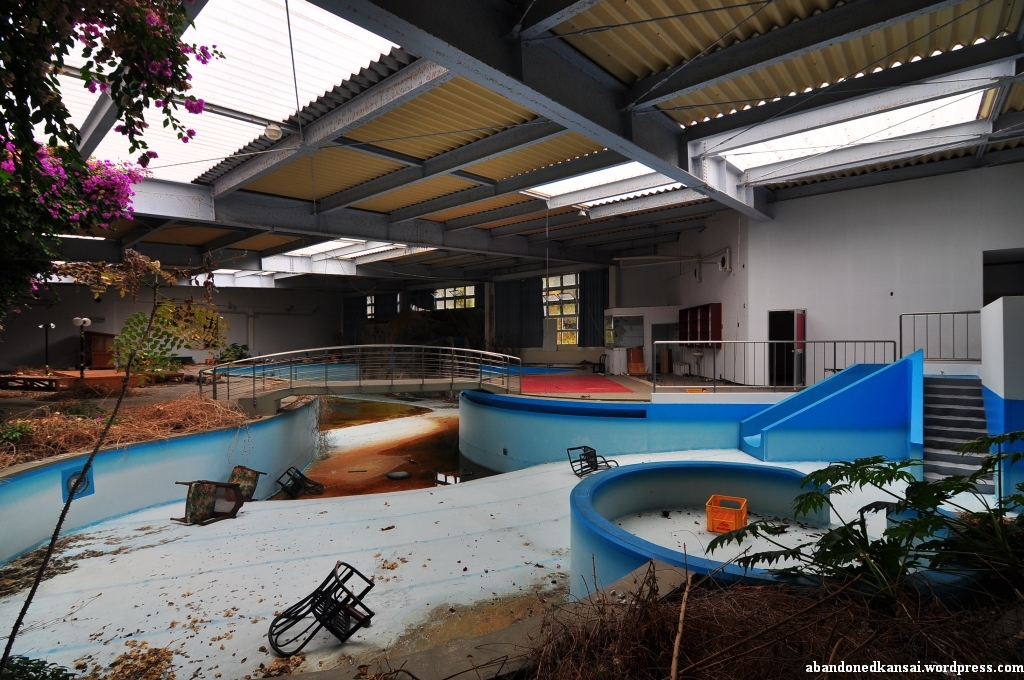
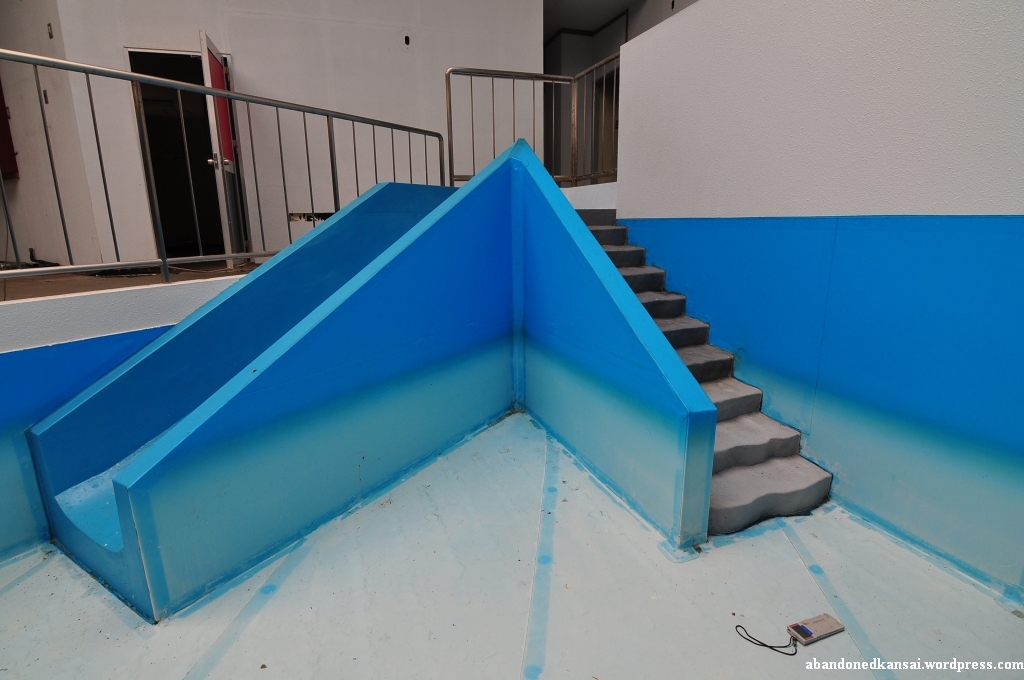
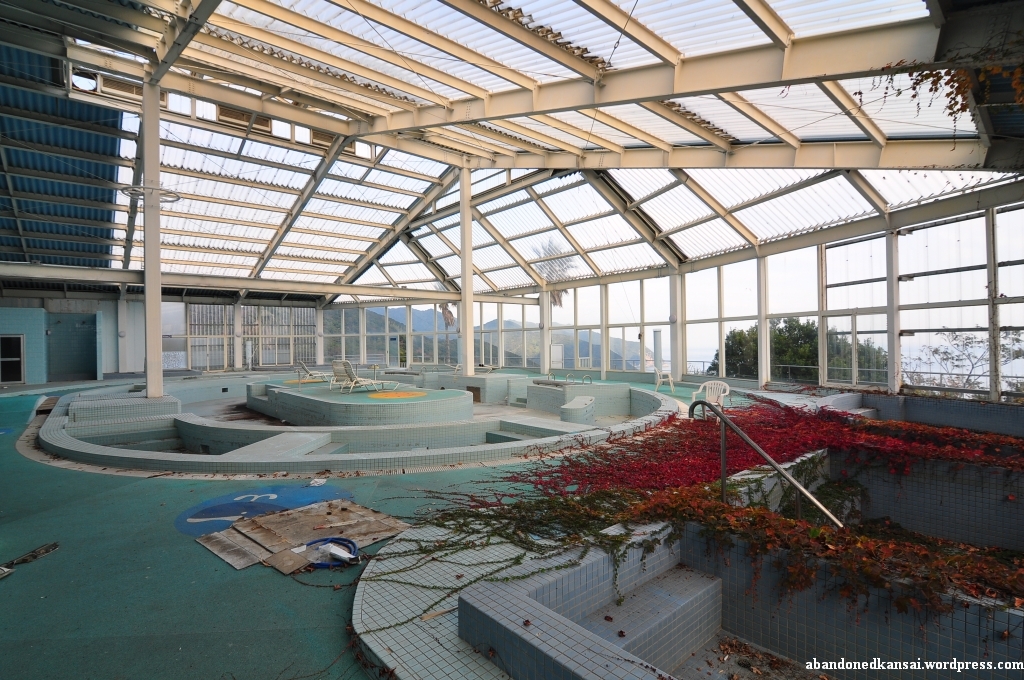
With the front desk gone and the kid’s play area and gift shop almost empty, the shangri-la became interesting when I entered the office behind the front desk. Amongst the mess of documents and office items like ink cartridges scattered all over the floor I found a photo album with wedding pictures. Was the shangri-la maybe more than it appeared from the outside? It was. Right around the corner was a rental counter for towels and other bathing equipment and from there I could already see the indoor water park – huge by Japanese standards, well below average being used to European facilities like that. Nevertheless fascinating, especially since the pool was quite complex with several small water slides and a bridge across to where I assume once a bar was.
The rest of the ground floor was occupied by a kitchen, another bar and a small recreational area outside. The hotel part of the shangri-la was on the second floor. All rooms were empty by the time of my visit, but one of them was labeled “CHAPEL”, so I guess it’s easy to say that the shangri-la was a wedding hotel.
No Japanese hotel is complete without two shared baths (one for men, one for women) and the ones here were quite nice, including a rather spacious sauna considering the size of the shangri-la.
Jordy and I weren’t the first visitors to the shangri-la in the 10 years since it was closed (judging by the ad for a marathon in November of 2000), but to my surprise I’ve never seen it on the internet before. There was a bit of chaos here and there, but almost none of the typical signs of vandalism ruining the more famous… ruins. No arson, hardly any smashed interior, no broken windows – hardly any mold, well-lit, secluded. A truly great place to explore!
Last week I got an e-mail from Antenne Bayern, Germany’s most popular private radio station, asking for permission to publish some of my Chernobyl pictures on their homepage. After some fruitful negotiations we agreed on eleven pictures and I wrote some captions for them – the rest, including the captions to my Youtube videos, was written by the staff at Antenne Bayern. Please *click here* to have a look at the picture series (the site is in German only).
The Sky Rest New Muroto (スカイレストニュー室戸) is a prime example of an abandoned place that suffered severly from too much attention – and by too much attention I mean the book “Nippon No Haikyo” (ニッポンの廃墟), which is pretty useless by now since it became victim of its own popularity. Unlike most books about abandoned places Nippon No Haikyo includes maps. Some of them are completely useless, but others are almost as detailed as if it was a GoogleMaps link. Why is the book useless? Because most of the described locations are demolished by now due to the attention the book drew to the respective places from August 2007 on – *Koga Family Land* for example was abandoned for more than 20 years until it was demolished in December of 2008, same for Nagoya Toyo Ball, Nihon Cement Mojiko and the Inagawa Trap Shooting. Other places once easily accessible were boarded up (Hototogisu Ryokan) or severely vandalized (like the ghost town *Mukainokura*).
The Sky Rest New Muroto is one of those places that suffered a lot of damage over the past four years. If you are lucky you can find pictures taken before Nippon No Haikyo was published and see a very unique building with lots of intact (rusty and dusty) interior, but since even blogs about food and flowers posted the exact location on maps (something that 95% of urbex blogs would never do!) the Sky Rest became a ravaged shadow of itself. Pretty much all of the interior was ripped out and shredded to pieces – all that’s left is the impressive concrete structure and piles of scrap everywhere. In addition to that the lighting conditions on the day of the shooting were terrible, so especially the early outdoor pictures turned out to be actually pretty horrible – I apologize for that! (I publish them anyways to give you a better impression of the unique architecture; the building looks like a fortress with three canon towers on top. The video coming with this article isn’t outstanding either, but I present it for the same reason, although I never intended to publish it, like all the other videos I took. But some of them, especially the one taken at the *Shime Coal Mine*, turned out to be quite popular…)
Now surrounded by antennas submitting television and communication signals the Sky Rest still towers Cape Muroto and offers a gorgeous view in all directions. Sadly there is barely anything known about the place – old pictures confirm what you can assume from the name, that the Sky Rest once was a restaurant for people enjoying the stunningly beautiful nature of Cape Muroto. In addition to that some pictures show remains of rusty and broken arcade machines, although they must have been very old given the fact that the Sky Rest was closed in 1978…
Bathing is a very important aspect of Japanese culture, deeply rooted in centuries-old traditions. Although most apartments and houses have their own baths nowadays (unlike 30 years ago), public bath houses are still popular even in residential areas of big Japanese cities. Onsen and sentō are gender-separated places of tranquility where people enjoy a relaxing hot bath (usually around 40°C) after a hard day of work or an intense workout. Onsen towns in the middle of nowhere are popular vacation destinations for the Japanese domestic tourism and a must see / do for many foreign visitors.
Waterparks with slides and wave pools on the other hand are not nearly as popular in Japan as they are in the States or Europe. Most of the time they are considered one amongst many attractions of amusement parks (like at Nara Dreamland) – and indoor waterparks are even more rare.
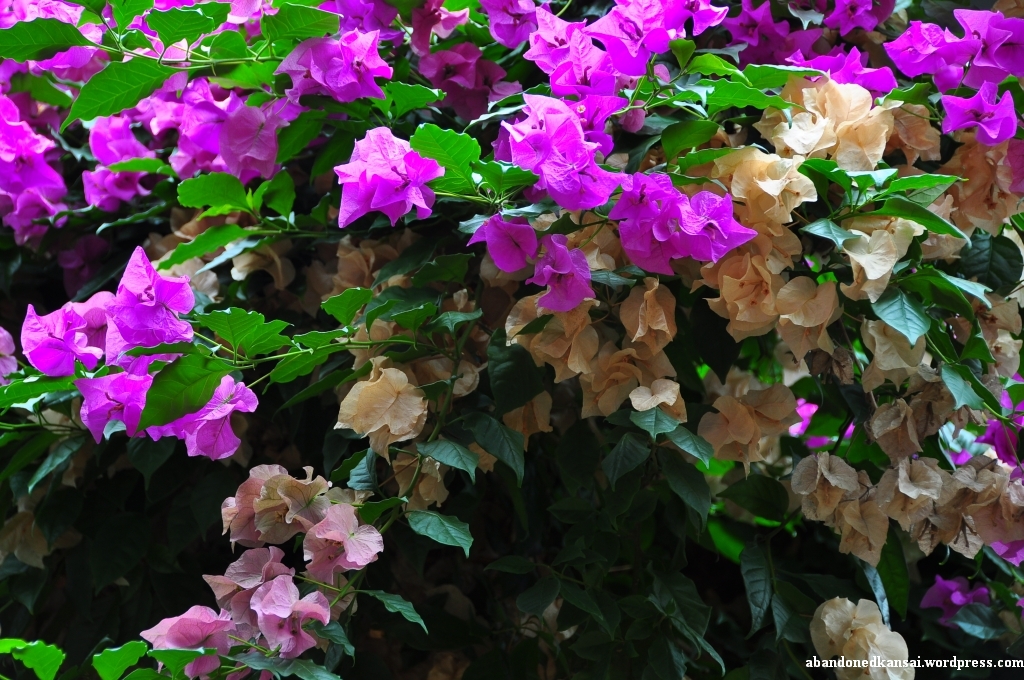
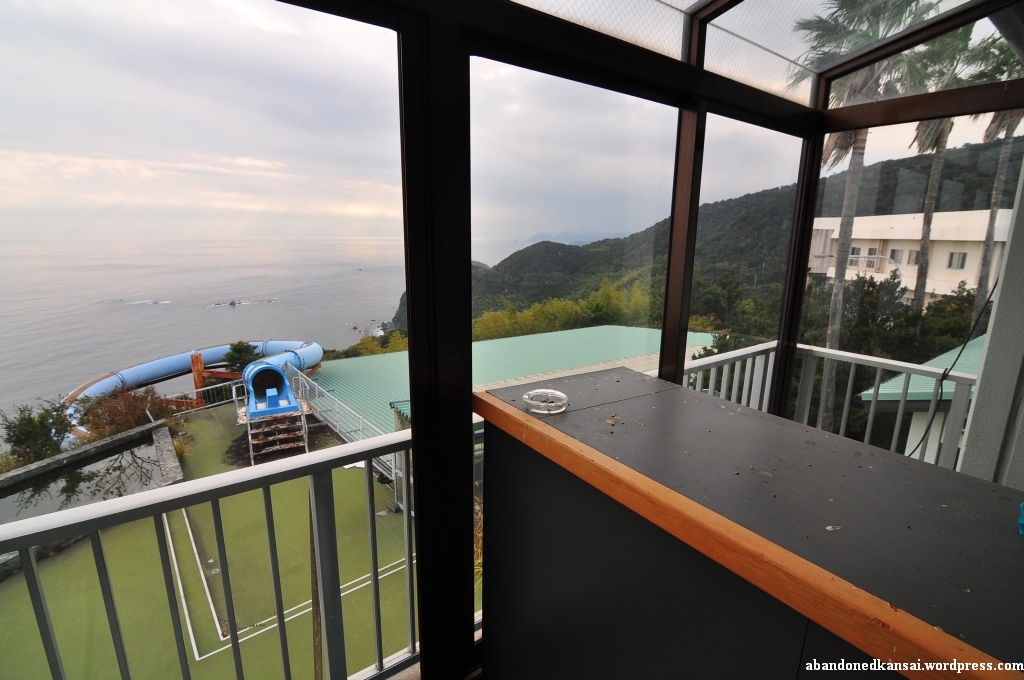
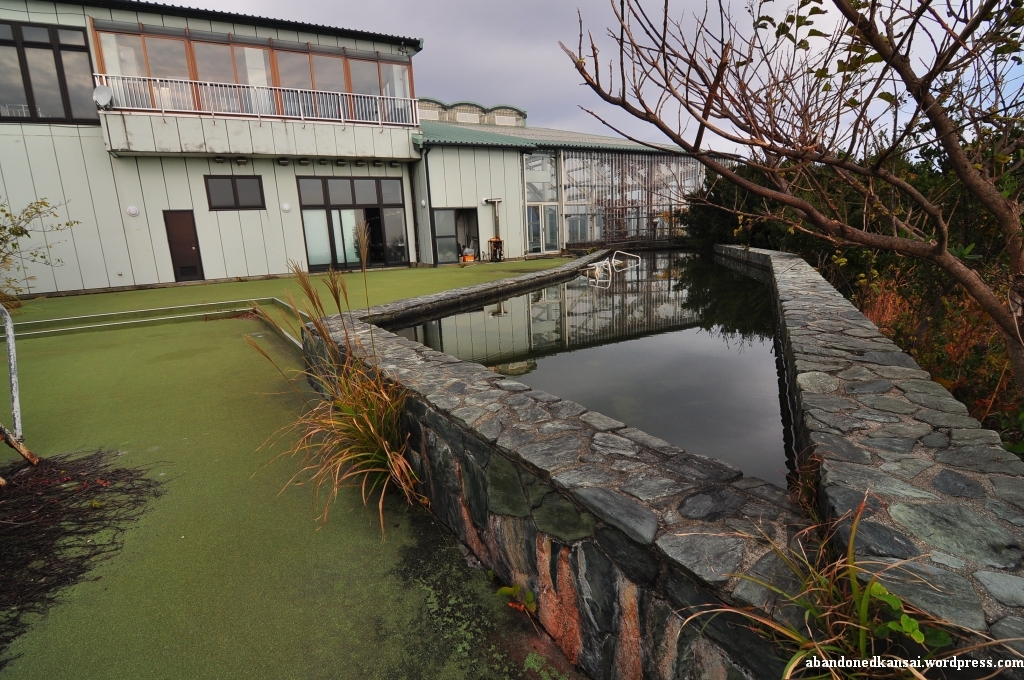
From what I was able to find out the Tokushima Countryside Healthspa (お水荘ヘルスピア), an indoor water park with some hotel rooms, was opened in 1975 (under a different name) to complement a countryside farm, attracting visitors with millions of flowers. It was renovated and expanded in 1994 to be re-opened under its current name – making dance shows and karaoke new selling points. Due to its remote location (35 minutes by bus from the next train station) and the economic crisis the number of guests decreased while the debt piled up to 800 million Yen – and lowering the entry fee from reasonable 1700 Yen per day (10 a.m. to 10 p.m.) with special promotions (Ladies Day on Thursdays for 850 Yen and Friends Day on Fridays for 1000 Yen) didn’t help either – at the end they reportedly sold tickets for as low as 100 Yen… So in 2002, after 27 years, the lights went out at Tokushima Countryside Healthspa.
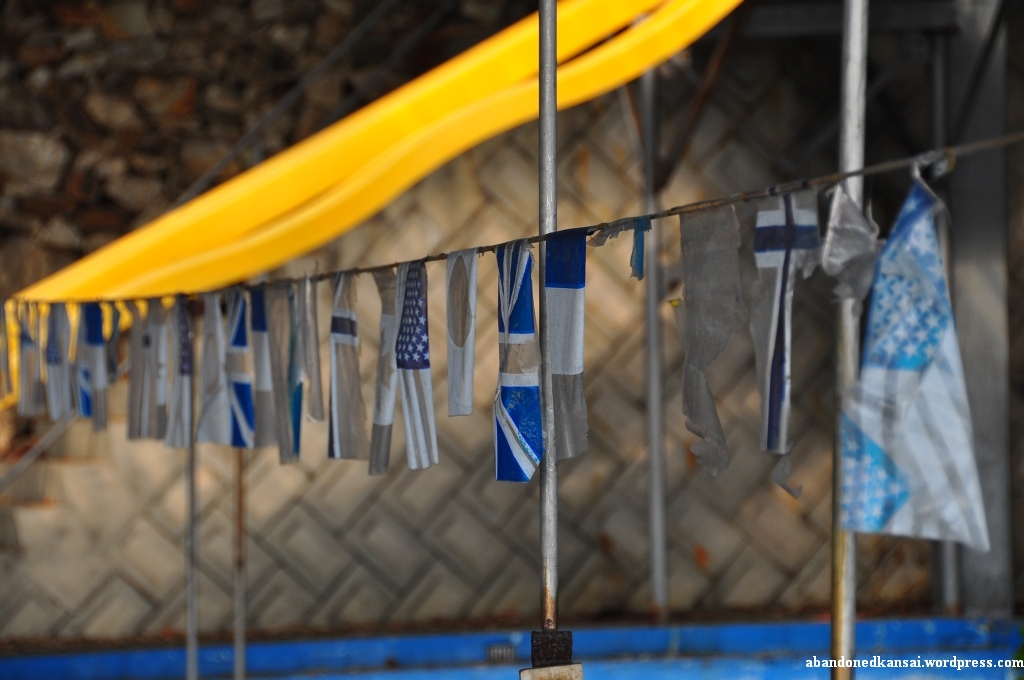
I have to admit: I love indoor waterparks. It’s one of the few leisure activities I really miss living in Japan. Back home in Germany you can find quite a few abandoned public swimming pools, indoor and outdoor, but no abandoned waterparks. So I enjoyed every minute of the two hours I spent there. The hotel part was quite vandalized and rather boring, so I left it rather quickly to go over to the swimming pools and the waterslide. On the way I passed a kitchen and some functional rooms. In two of them quite a few goods and training equipment were lined up, here and there I found price tags scattered all over the place – it seems like the owner tried to sell as much as possible before closing for good. The now empty main pool looked pretty much like a rather local indoor water park in Germany and I loved how red and green leafed plants were growing inside; if there ever was a zombie attack you know where to go to if the Shime Coal Mine is already occupied – if you know what I mean…
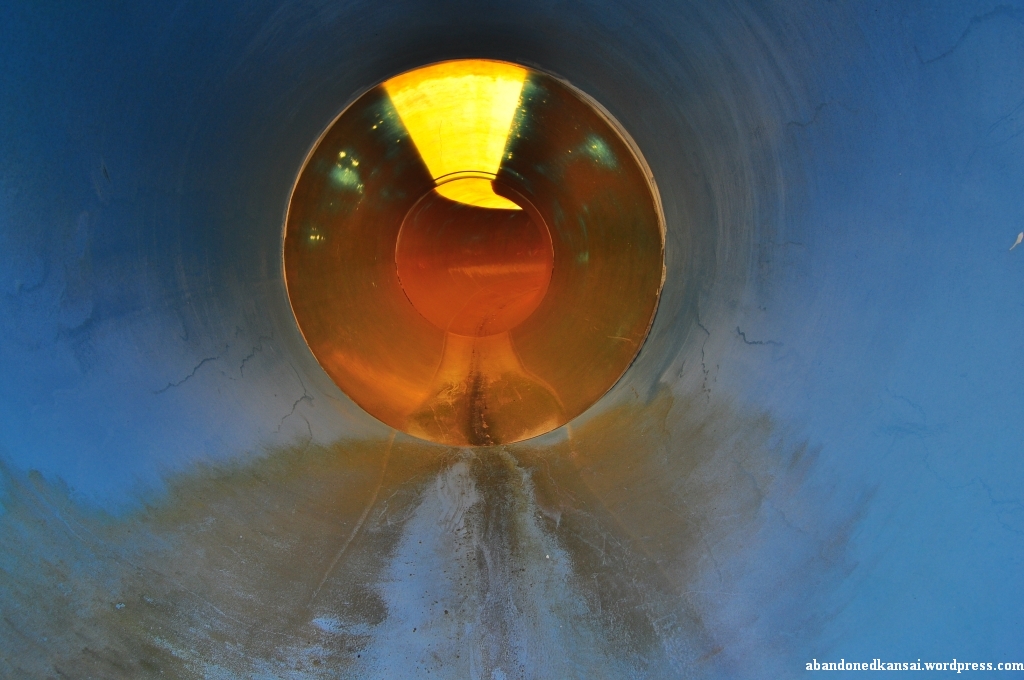
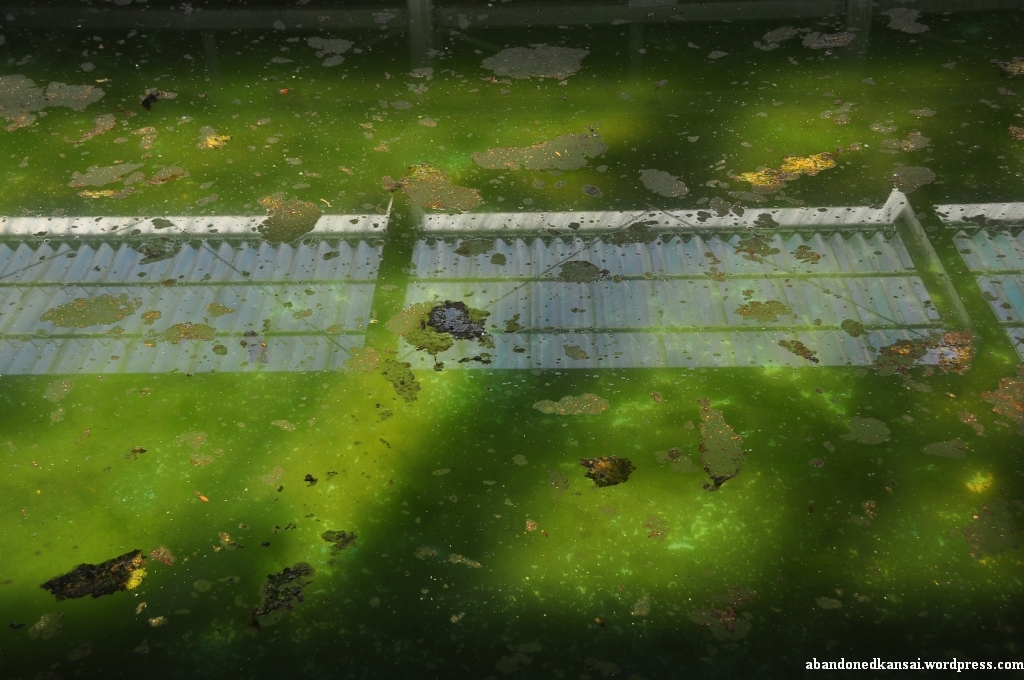
The outside waterslide at the bold cliff looked absolutely amazing, the weather just contributing to the atmosphere, so please have a look at the videos, too. Next to the waterslide was a staircase leading down to a pool, now filled with moldy brackish water, two dead greenish doves lying at the pool edge. Again, amazing atmosphere – kinda spooky, but not dangerous at all; neither physically nor in the form of security or other “guests” thanks to the remote location.
Like pretty much all of the previous and upcoming locations of my Haikyo Road Trip To Shikoku the Tokushima Countryside Healthspa was a unique, relaxed and fascinating place to explore. Shikoku, an urbex heaven!
Do you like zombies? Are you able to read German? Then maybe you should have a look at “Untot: Dämmerung”, a free novel by the aspiring German author Andreas Stetter. First published in serialized form on his blog “Wissen statt glauben”, Andreas decided to release a PDF version once he wrapped up the story. But of course every decent PDF needs a cover – and that’s when yours truly came into play. Andreas asked me for permission to use one of my photos as the basis for the cover of Untot: Dämmerung – and of course I happily granted it, especially after I saw what his buddy Stefan did with the shot I took at the Hospital #126 in Pripyat. If you don’t like zombies, don’t know German or just hate reading in general… at least have a look at the cover – it’s really nice!
BTW: Do you remember the little article about the second issue of The Gopher Illustrated, an art magazine that will feature some of my pictures, I wrote back in November? Well, Rome wasn’t built in a day either – but you can finally have a sneak peak *here* and pre-order it *here*. (And yes, the sneak peak includes a couple of pictures I took – some very old ones actually.)
























































 Abandoned Kansai