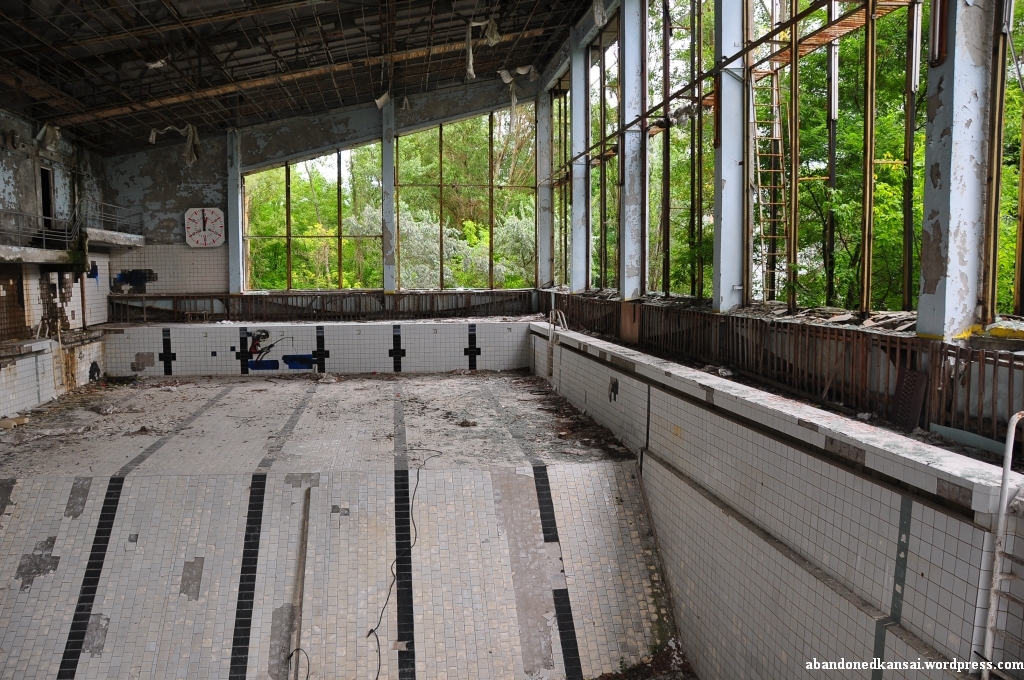
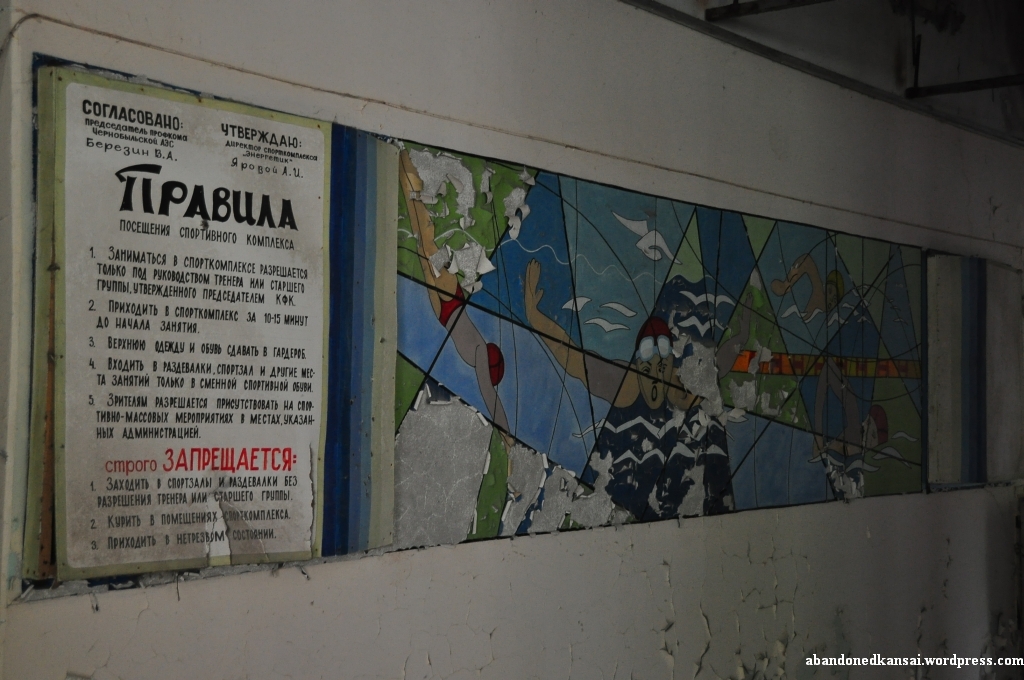
After enjoying the stunning view from the roof top of an apartment building in Pripyat’s north we drove back to the center of the city to visit a classic sightseeing spot pretty much all visitors to the Zone Of Alienation and quite a few fans of video games know very well – the swimming pool “Lazúrnyj” (Azure).
Although being one of actually three indoor swimming pools in Pripyat, Azure is by far the most famous one in town since it was featured as a level in the video game “Call of Duty 4: Modern Warfare” and now is part of the standard program for day groups. Furthermore Azure wasn’t just a swimming pool, it also housed a gymnasium – and it wasn’t abandoned right away with the city according to Maxim. Liquidators and other people working in the Zone Of Alienation used the pool as long as 1997 when it was finally abandoned – sadly there are no photos available anywhere about the that period of time.
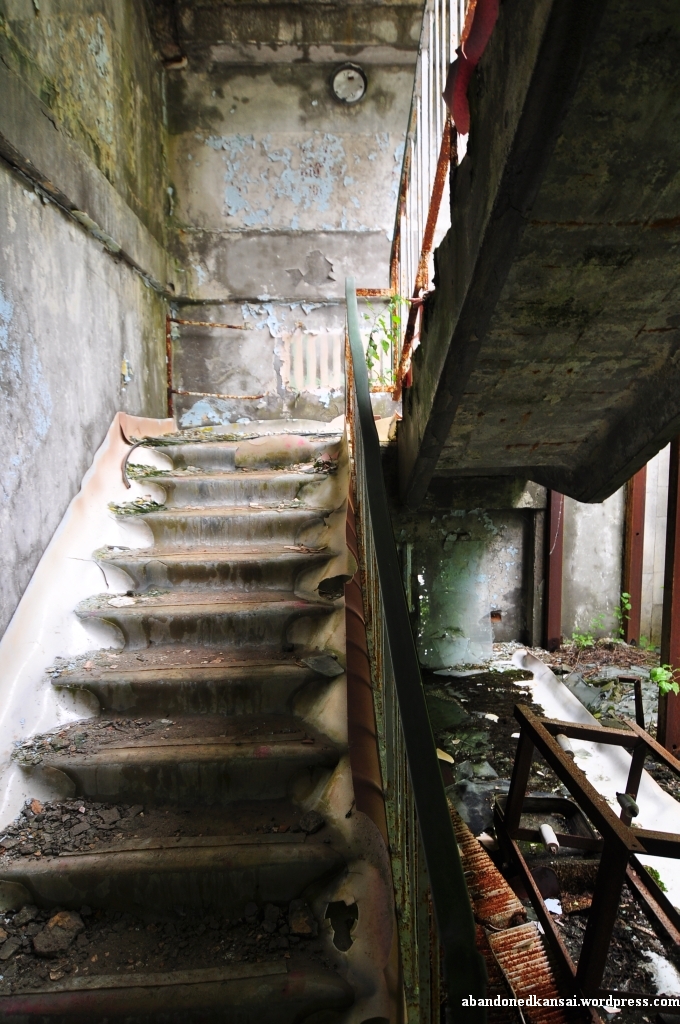
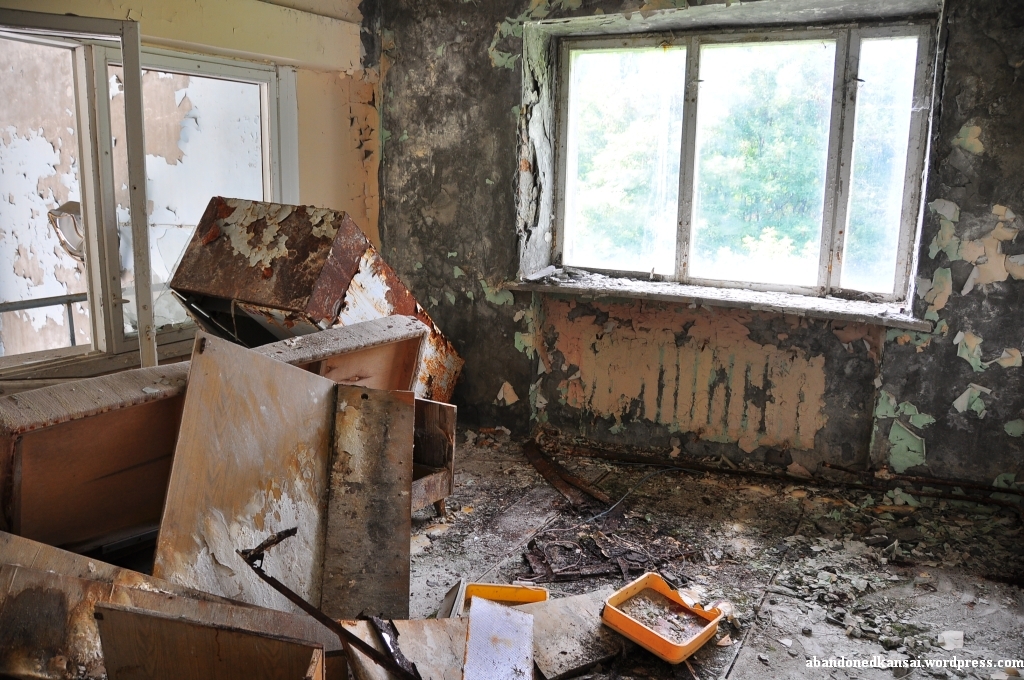
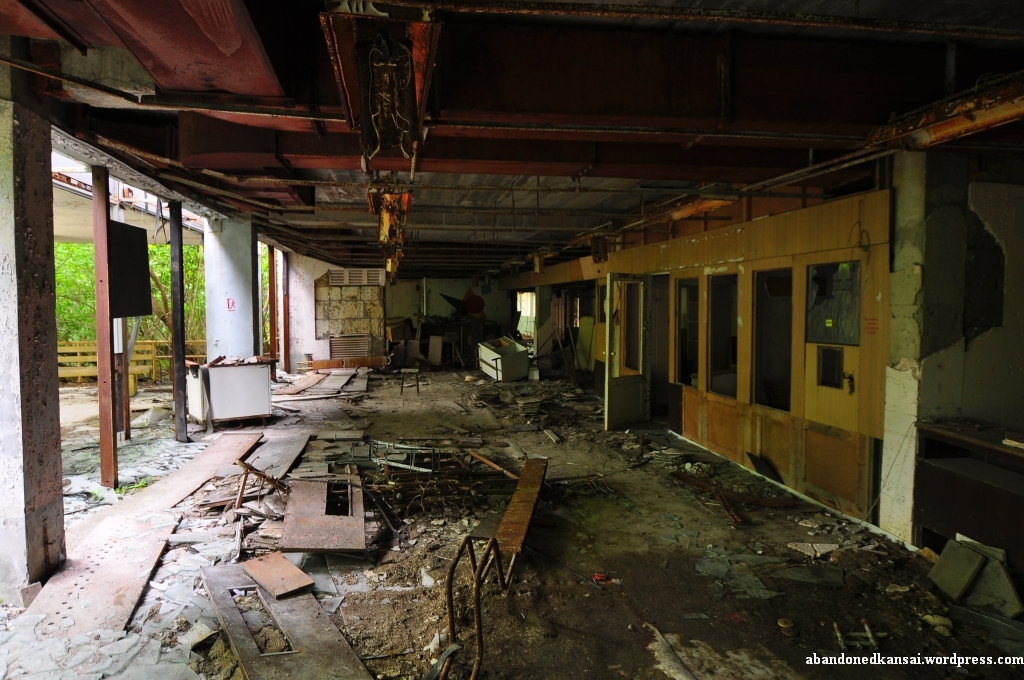
Since I took some outdoor pictures first I lost contact with the other guys even before entering the building. The entrance area looked pretty run-down and vandalized, so I made my way up the first staircase I saw – it was covered in plastic sheeting, now scruffy and cracked. Public baths, especially in Japan where I currently live, are supposed to be spotlessly clean, but of course Azure was in as bad shape as the rest of the city and therefore the building felt even a little bit more depressing. The rather small gymnasium wasn’t nearly as impressive as the huge one with the great view at the Palace of Culture, but the swimming pool itself was quite a sight, even without having played the previously mentioned video game.
(If you would like to know more about my trip to the Zone Of Alienation please *click here* to get to the “Chernobyl & Pripyat” special. For a map of the area please *click here*.)





Posted in Abandoned, Europe, Map, Pripyat, Spa / Onsen, Sports, Ukraine, Urbex, Video, Visited in 2010, Zone Of Alienation | 1 Comment »
Before going to Pripyat there were two things I badly wanted to do: I wanted to take a really good picture of the ferris wheel at the Amusement Park – and I wanted to have a good view over the city from the top of one of the buildings.
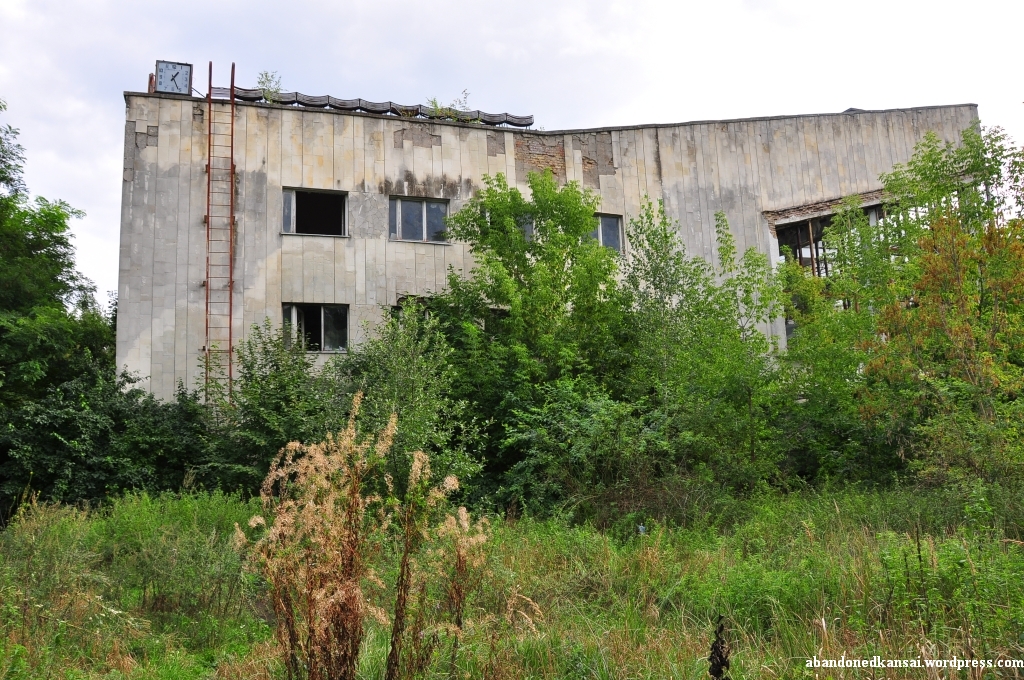
Of course officially it’s way too dangerous to allow people to go on top of any of those buildings, in countries like Germany and Japan they probably wouldn’t even let you inside most of them, but of course nobody really cares about those rules as seen many, many times in magazines, on TV and the internet. So after we left the supermarket we drove through the city for quite a while to get to the northwestern part of Pripyat. There was a 16-story building rather far away from the main attractions and in close proximity of some unfinished buildings. Maxim, who still looked a little bit… well… hungover… told us that he would “guard the car” and asked us to be careful and to stay away from the edges so we won’t be seen by the units policing the area occasionally – and he gave us 30 minutes to get back. (Strangely enough Maxim wasn’t worried that much about 35 minutes later when we running late a bit. We were on our way down and at around the 9th or 10th story we heard a car horn making quite some noise. Being used to unofficial explorations I panicked for about a second or two until I realized that I had no reason to really worry about anything. And neither had Maxim… obviously.)
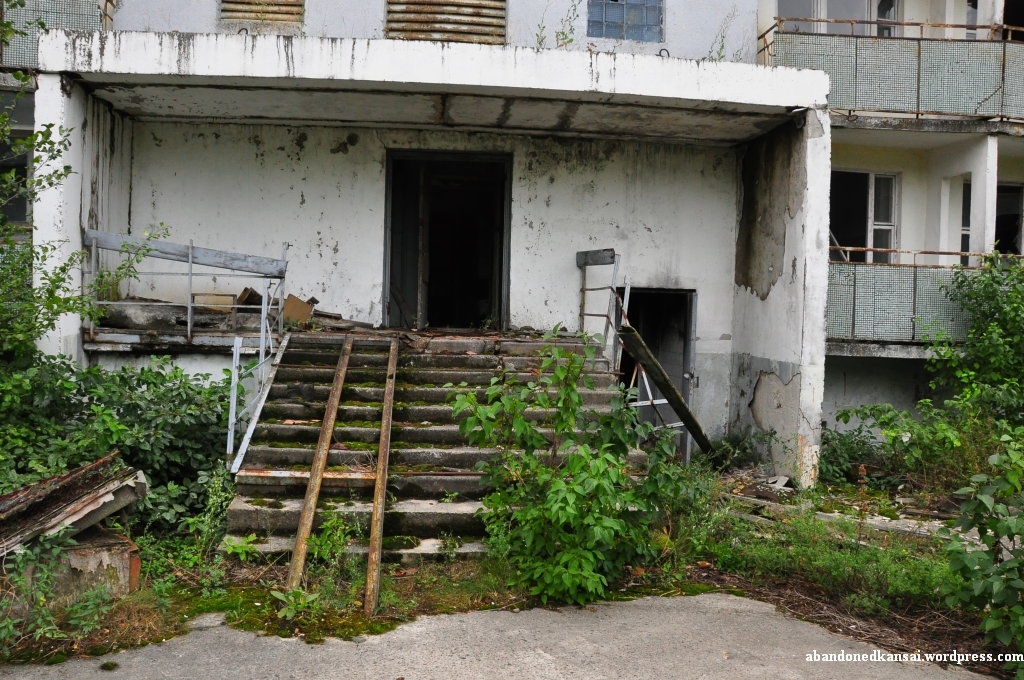
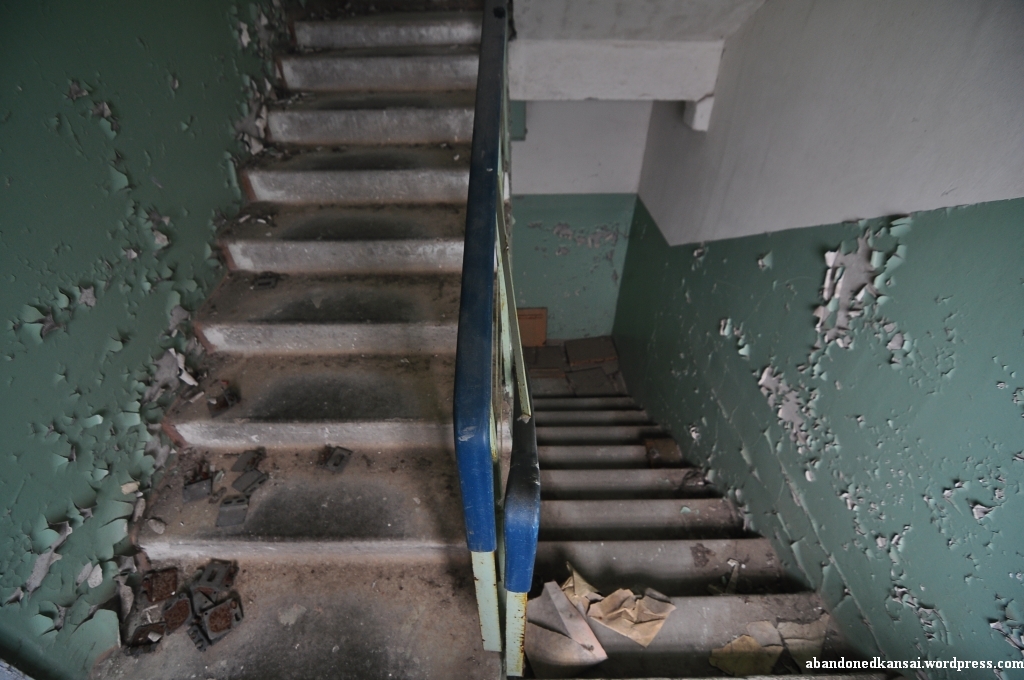
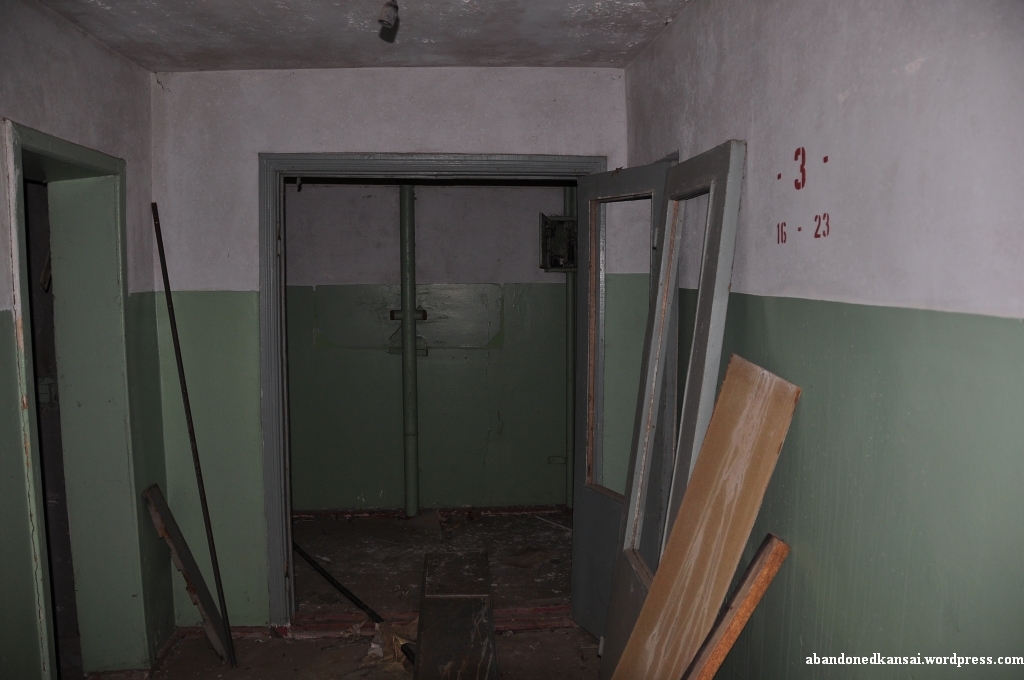
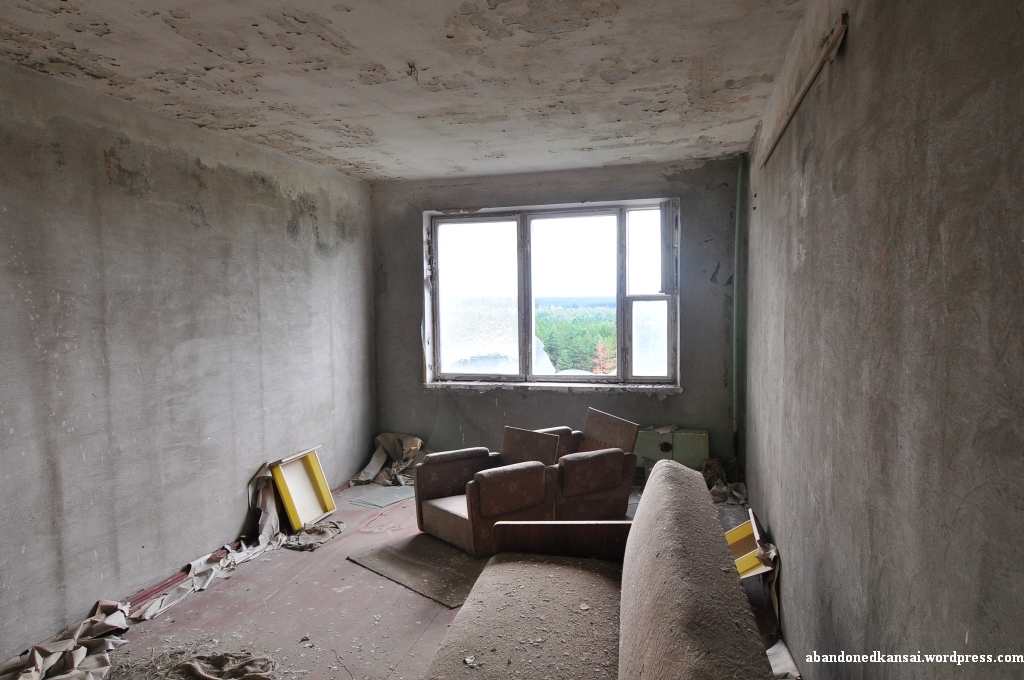
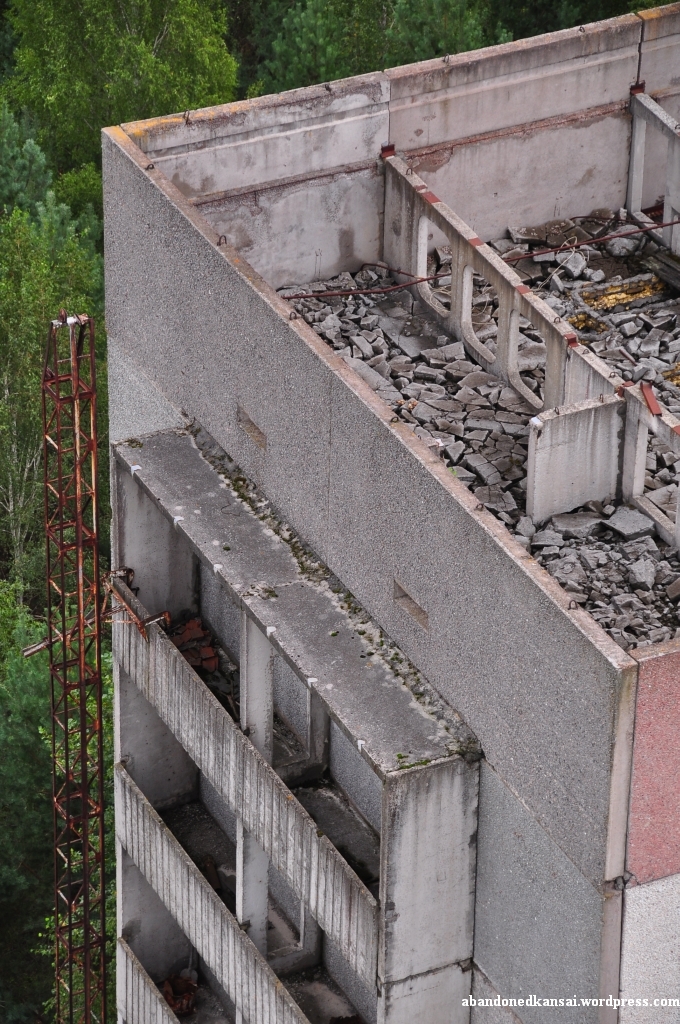
The entrance of the building at Lesya Ukrainka Street 56 didn’t exactly look like a building you really want to enter, let alone stand on top of, but that didn’t cross the mind of either of us – we were eager to experience a view to remember. On the way to the roof I made a quick stop at one of the floors to see with my own eyes how much damage the liquidators and looters did to the apartments. Most of the rooms were indeed empty, electronics were nowhere to be seen and of course both wallpapers and paint were falling off the walls. At the top floor was a machinery room where we had to climb a wooden chair to get to the opening to actually get onto the flat roof. Climbing that chair and looking outside was another magic moment, almost as intense as when I saw the ferris wheel for the first time at the gymnasium of the Palace of Culture – not even two hours earlier, but it seemed like it had been weeks ago.
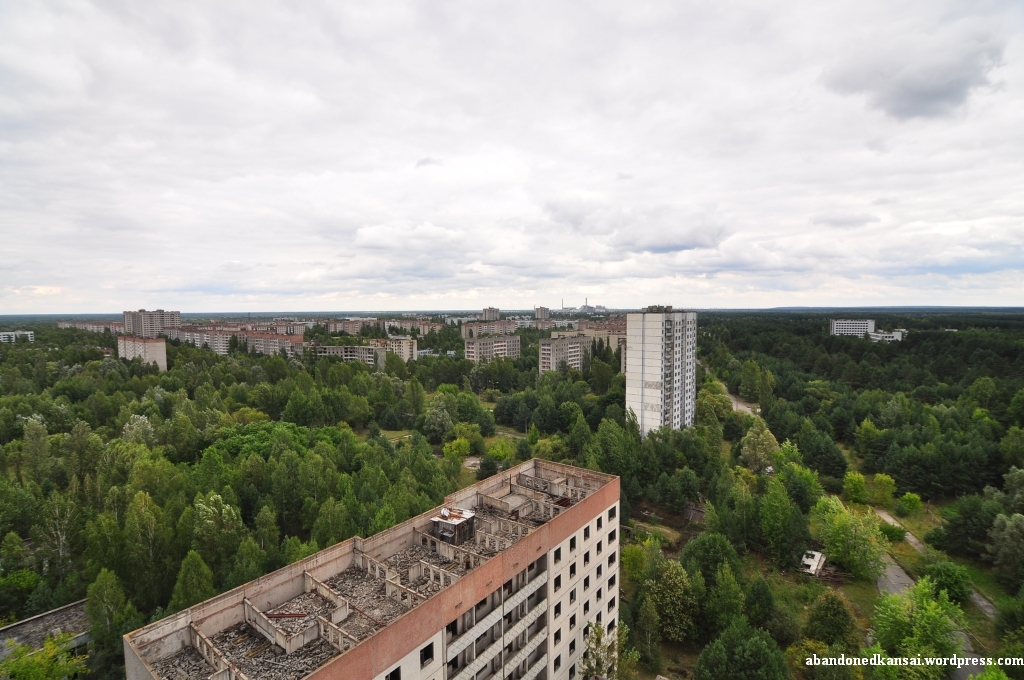
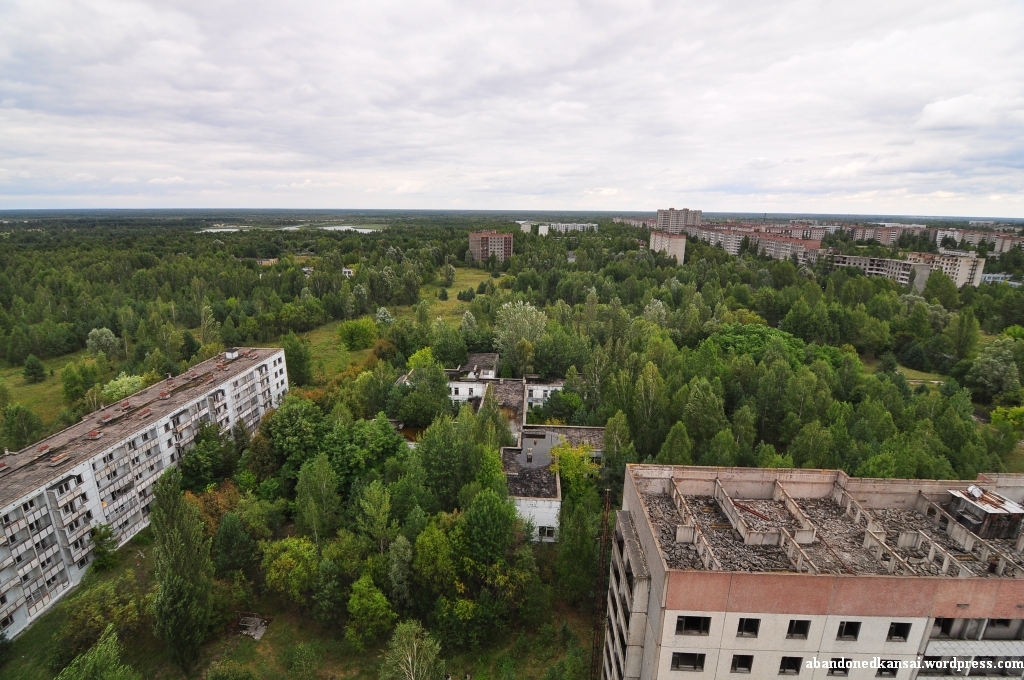
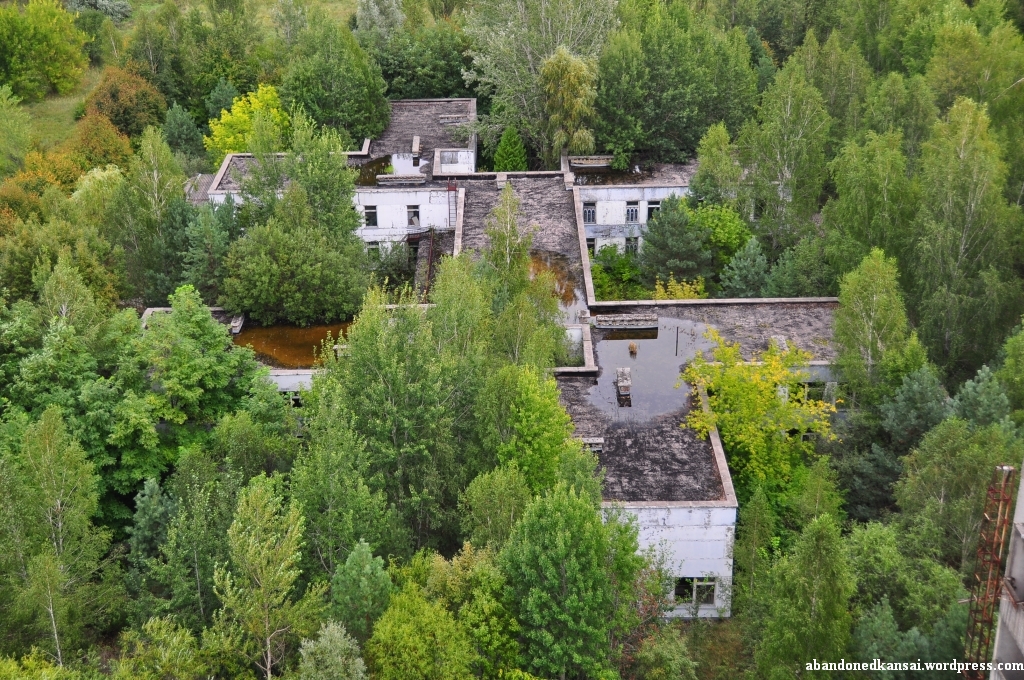
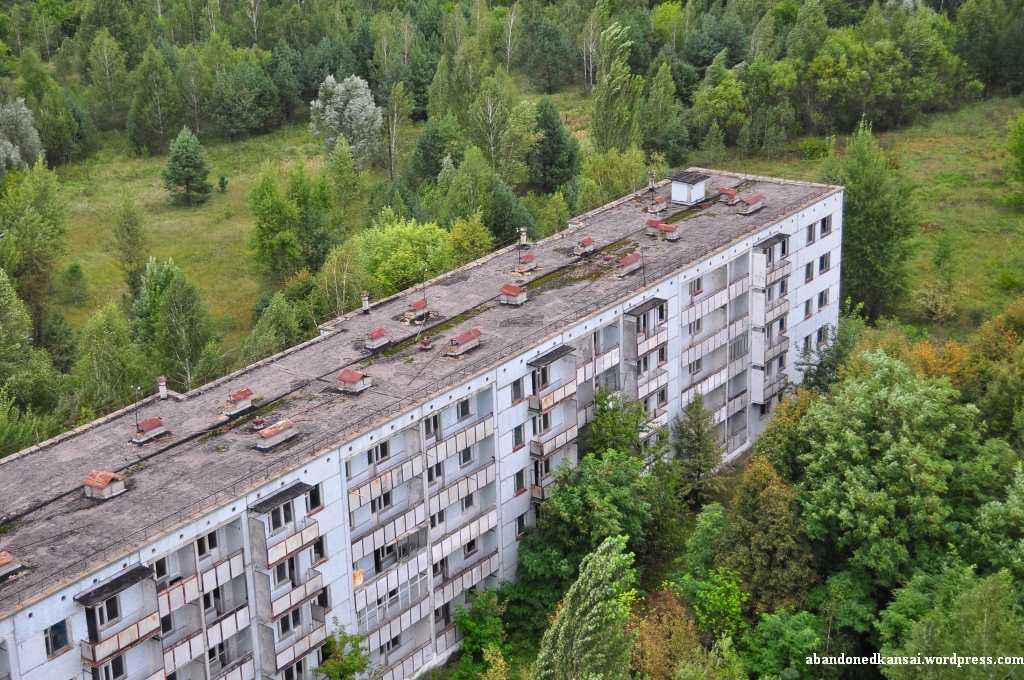
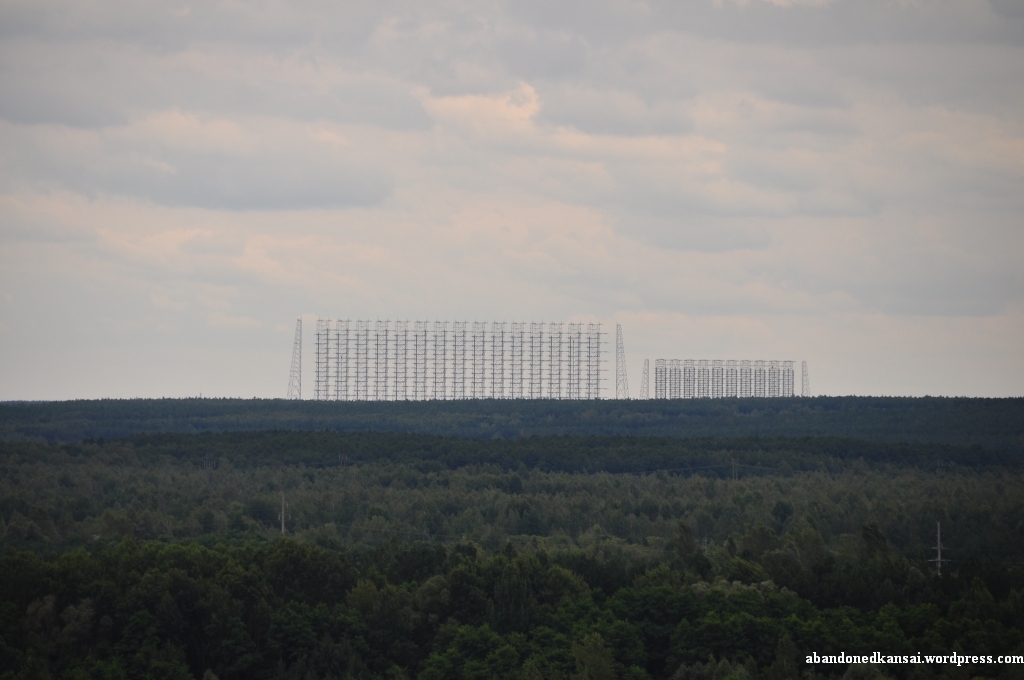
Stepping onto the roof I actually saw just green and grey-ish blue at first – the almost endless forest west of Pripyat and the impressive dramatic sky of that late summer day. The view was breathtaking and seeing Pripyat for the first time from that perspective I realized how big the city really was and how much of it was re-claimed by nature. Lots of the smaller buildings were completely swallowed by the sea of trees and even some of the bigger ones looked like they were drowning. In the south the Jupiter Factory was rising from the forest and at the horizon the remains of the Russian Woodpecker, part of the Soviet Union’s anti-ballistic missile program, were still defying nature. And in the distance in the southeast the Chernobyl Nuclear Power Plant was reminding everybody why the city to our feet was abandoned…
(If you would like to know more about my trip to the Zone Of Alienation please *click here* to get to the “Chernobyl & Pripyat” special. For a map of the area please *click here*.)




Posted in Abandoned, Europe, House, Map, Pripyat, Ukraine, Urbex, Video, Visited in 2010, Zone Of Alienation | 5 Comments »
During our visit to the Zone Of Alienation our guide Maxim asked us several times if there is anything specific we really want to see. After we’ve seen the standard attractions Palace of Culture and the Amusement Park I actually wanted to get an overview of the city and since there are so many well-known pictures people standing on top of buildings I asked Maxim if we could do that, too. Of course officially it is way too dangerous and therefore forbidden, but after a well-timed pause of like 10 seconds, part of the program as the information we got about every location, Maxim told us that he knows a building where we might be able to “risk it”. But first he wanted to show us the supermarket on the way to the car.
Since Pripyat was a city built to house the personnel working at the nearby nuclear power plant a lot of highly educated and well-payed people lived in the town – Pripyat was a privileged city in many, many ways. Maxim illustrated that by mentioning that the supermarket in Pripyat was one of the few places in the Soviet Union that actually sold Chanel Nº 5. In times when every one hit wonder teeny idol sells half a dozen perfumes as merchandising the Chanel thing might not seem to be a big deal, but given the political situation back in 1986 it is actually the perfect example of how high the standard of living in Pripyat really was.
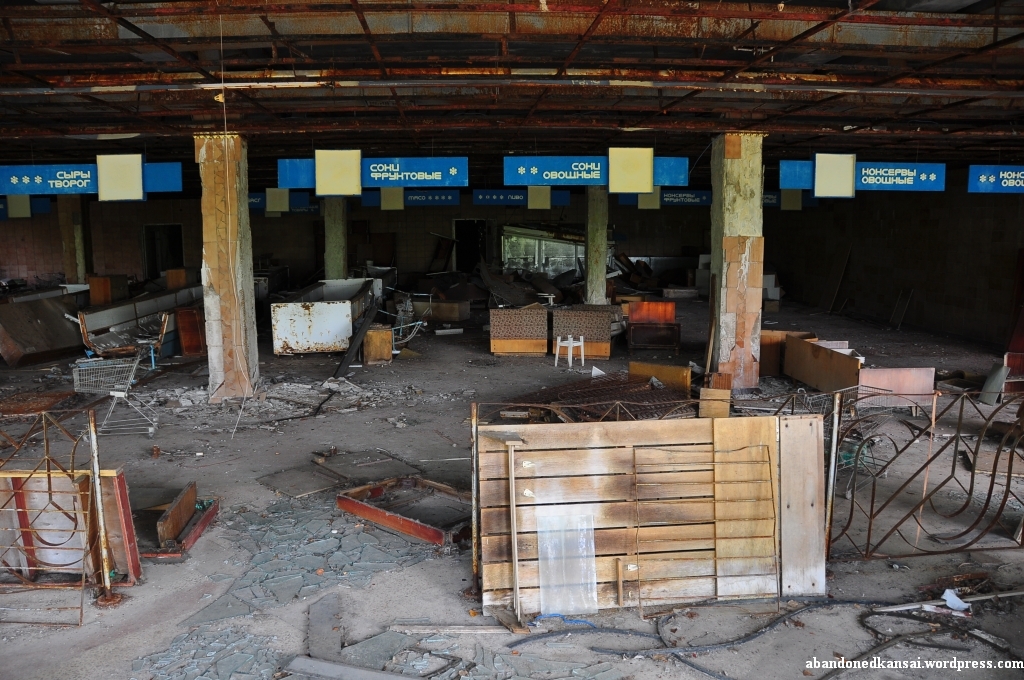
Nowadays the central supermarket, which was part of a small shopping mall, is quite a sad view, but in 1986 it must have been state of the art with a reputation that good that people from the surrounding area took long trips to shop there. The ground floor was mainly for food and the huge freezer cabinets with their isolation containers cracked open made the place look rather creepy. The entire floor was in disarray with shopping carts, shelves and a bunch of broken furniture scattered all over the ground – pretty much the only things unharmed were the signs showing where the aisles once were.
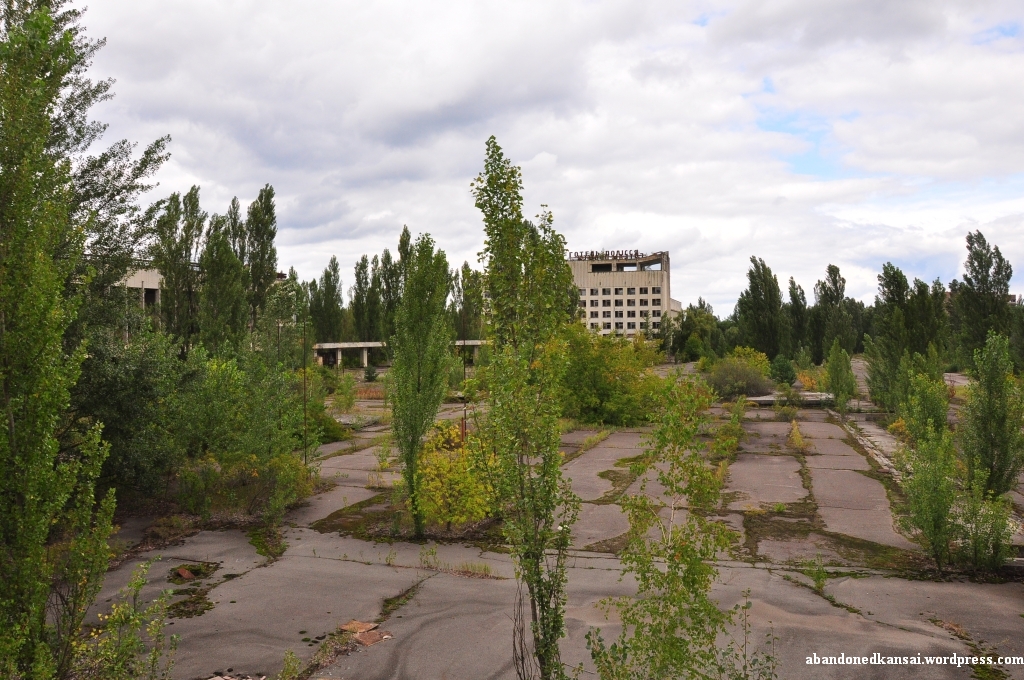
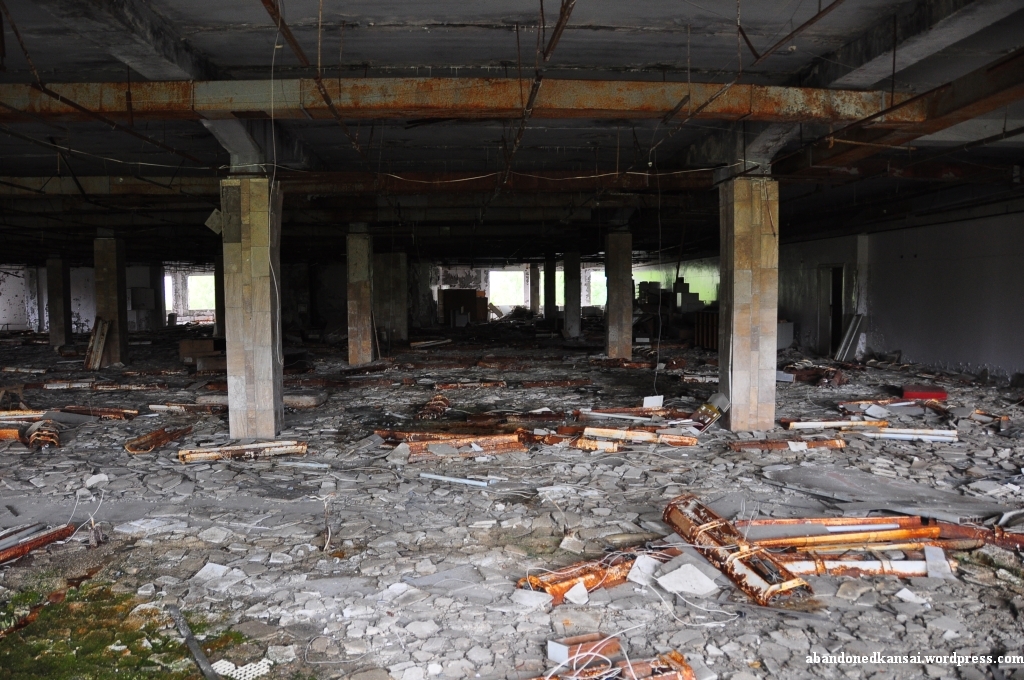
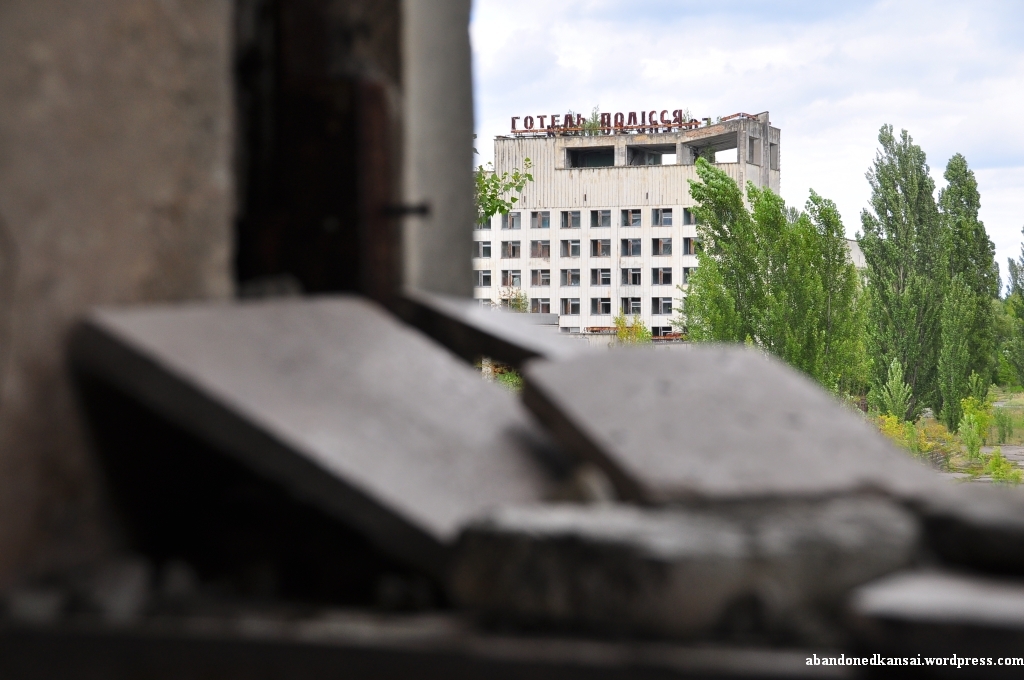
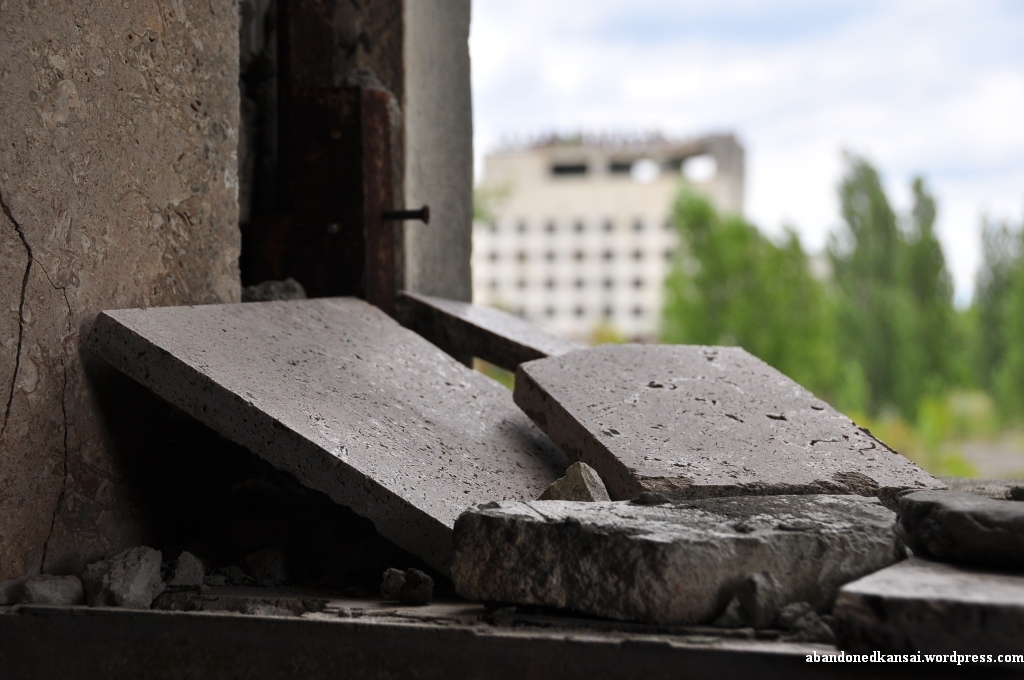
The first floor, reserved for non-food items, was in even worse shape. With all the shelves gone and the ceiling cladding, including all the lamps, crashed to the ground the whole floor made the impression as if it could collapse at any time – that feeling was boosted by the fact that the ceiling remains were softened over the past two decades by the forces of nature; even walking there gave me the creeps. The view across Pripyat’s Lenin Square to the city’s most famous hotel “Polissya” was nice though…
(If you would like to know more about my trip to the Zone Of Alienation please *click here* to get to the “Chernobyl & Pripyat” special. For a map of the area please *click here*.)



Posted in Abandoned, Europe, Map, Pripyat, Supermarket, Ukraine, Urbex, Visited in 2010, Zone Of Alienation | 2 Comments »
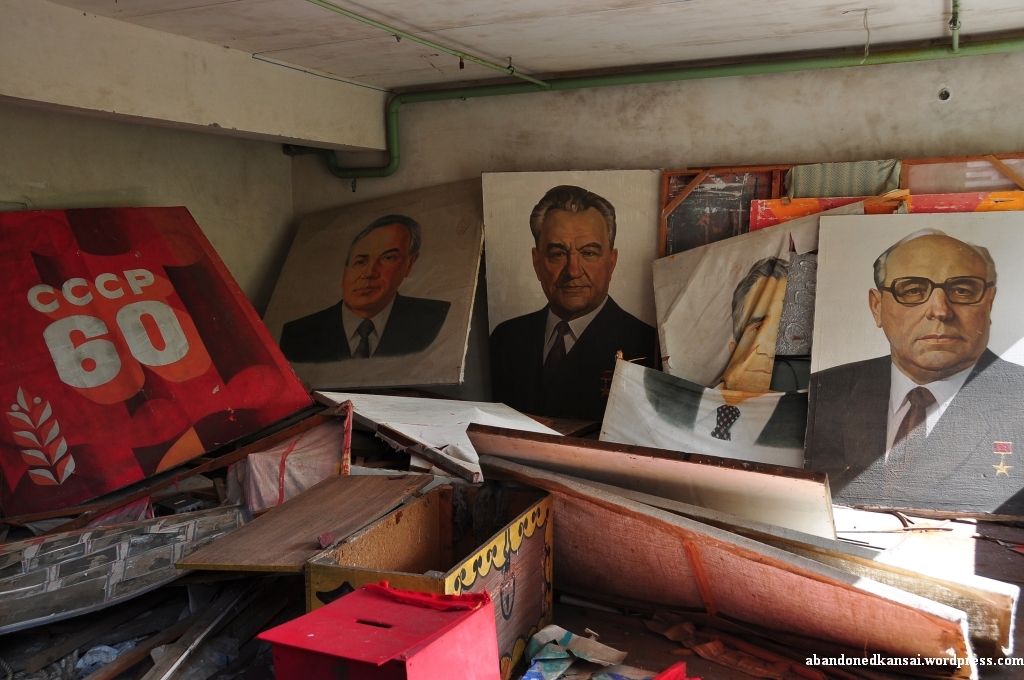
The Propaganda Room is one of the few locations I have barely anything to tell about and I was actually wondering if it’s worth to dedicate it its own posting. But on the other hand it would have been a waste to squeeze it in the general observations about Pripyat, so here we are…
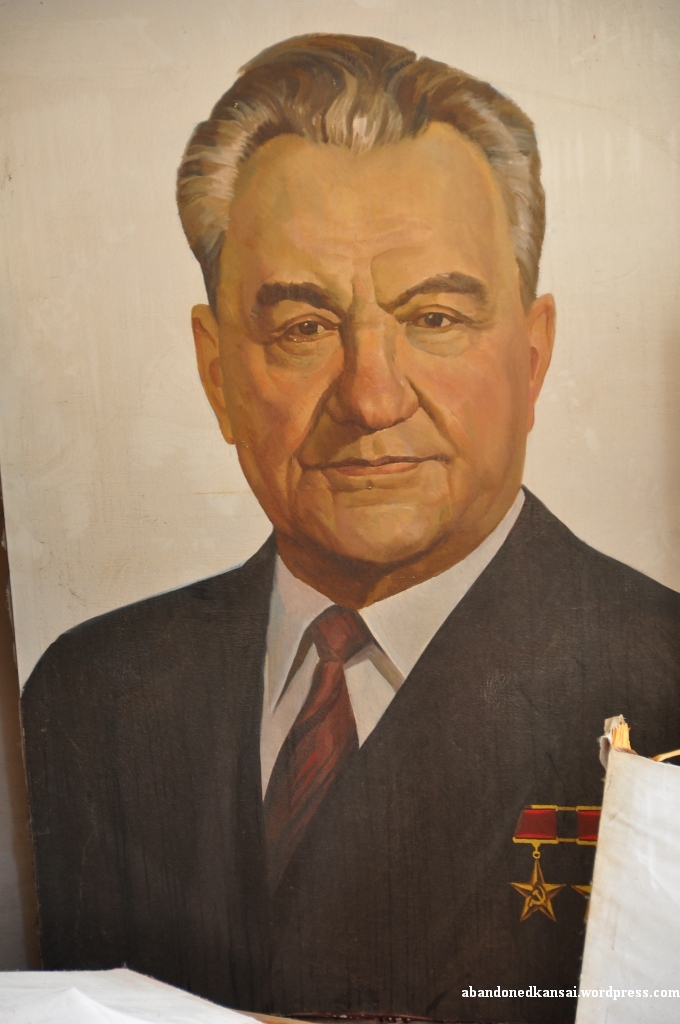
This ground floor location is actually part of the Palace of Culture, though we entered through a separate entrance. Maxim always called it Propaganda Room, so I just go with the name. As you can see on the photos it was filled with large paintings of politicians and symbols as well as props like chests and a throne – so some people on the internet refer to the room as the “prop room”, claiming it was occupied by the local theater group. I guess in the end it might have been a mix of both – there was just not enough material to provide the whole town with propaganda material for May Day. Especially since some of the stuff was rather general (like the painting depicting Lenin) or simply outdated – the “CCCP 60” sign obviously celebrates the 60th anniversary of the Union of Soviet Socialist Republics, which was four years prior to the evacuation of Pripyat.
The Propaganda Room was a nice five minute stop on the way from the Amusement Park to the Supermarket, so expect the next posting here rather soon, too…
(If you would like to know more about my trip to the Zone Of Alienation please *click here* to get to the “Chernobyl & Pripyat” special. For a map of the area please *click here*.)




Posted in Abandoned, Europe, Map, Theater, Ukraine, Urbex, Visited in 2010, Zone Of Alienation | Leave a Comment »
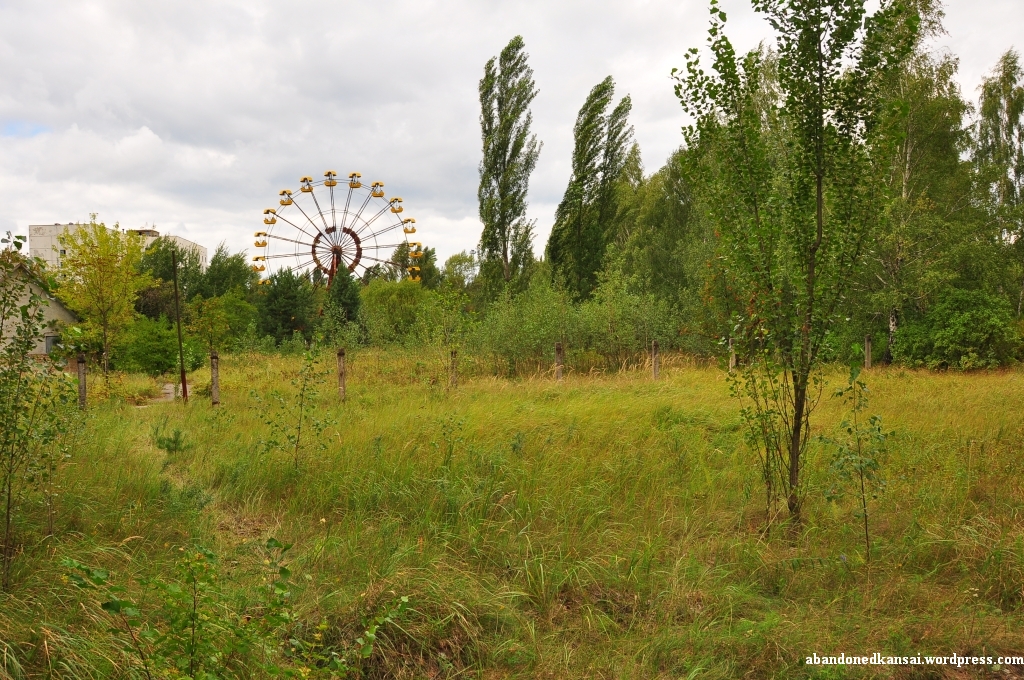
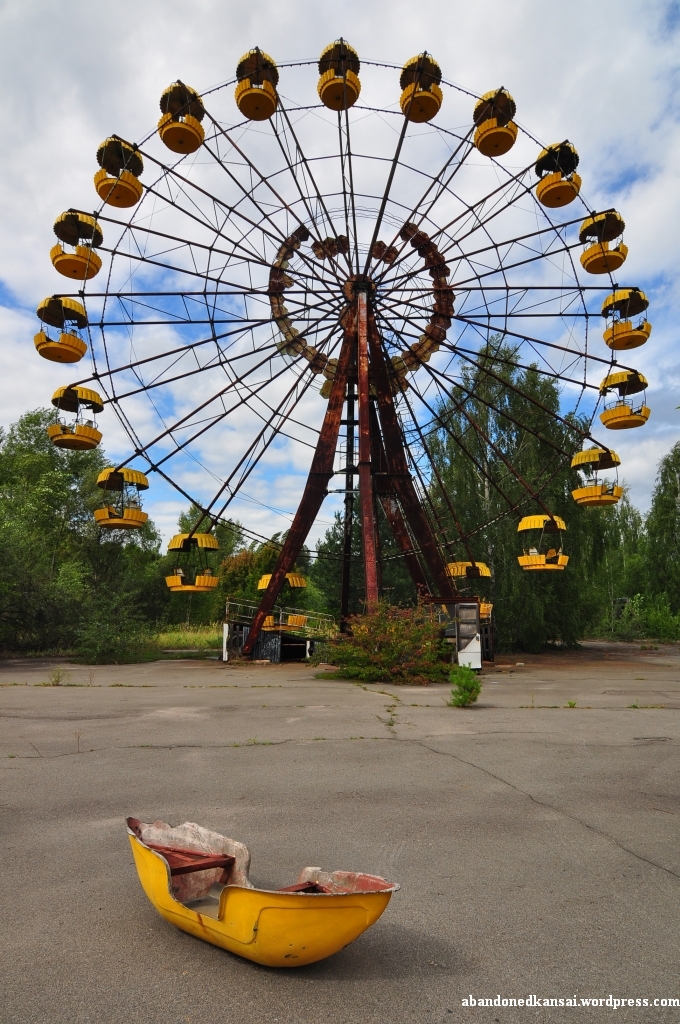
Did you ever wonder why the famous Pripyat amusement park is almost always about the ferris wheel? Well, the answer is simple: There is not a lot more to see.
The amusement park actually barely deserves that title, since it wasn’t a Disneyland or Universal Studios type of theme park, but more like a travelling, temporary kind of old-style amusement park. It was set up in celebration of May Day 1986, but the tragedy happening on April 26th was cause for a change of plans: The park was opened for one day to distract people from what was happening only a few kilometers away at the nuclear power plant. When the city of Pripyat was abandoned on April 27th so was the amusement park. (This is a fact widely unknown – most sources state that the park was never opened, but there are pictures in existence showing people standing in line in front of the rides.)
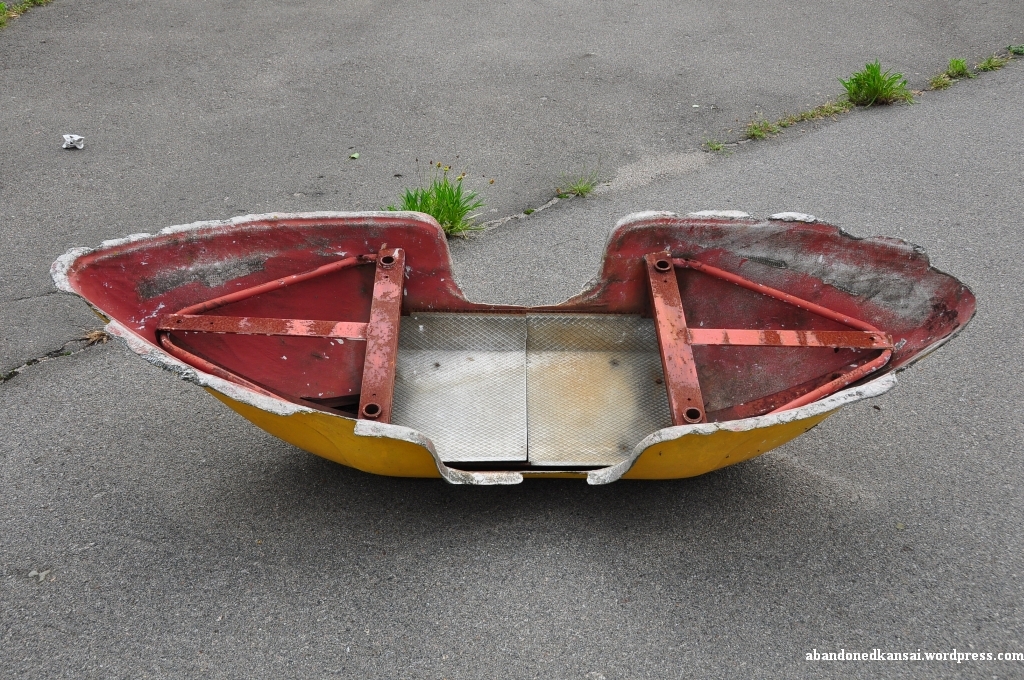
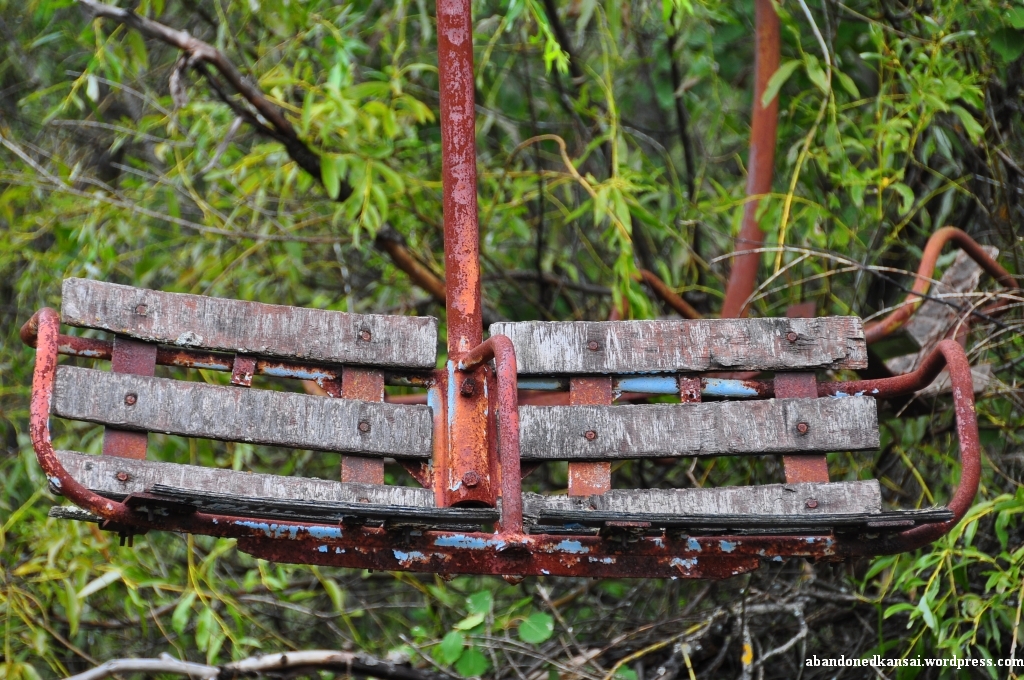
Now the (actually not so big, but nevertheless beautiful) ferris wheels rusts away next to a small and simple merry-go-round, a boat swing and a bumper car – hard to imagine that this small collection of rides was once considered an attraction for 50,000 people…
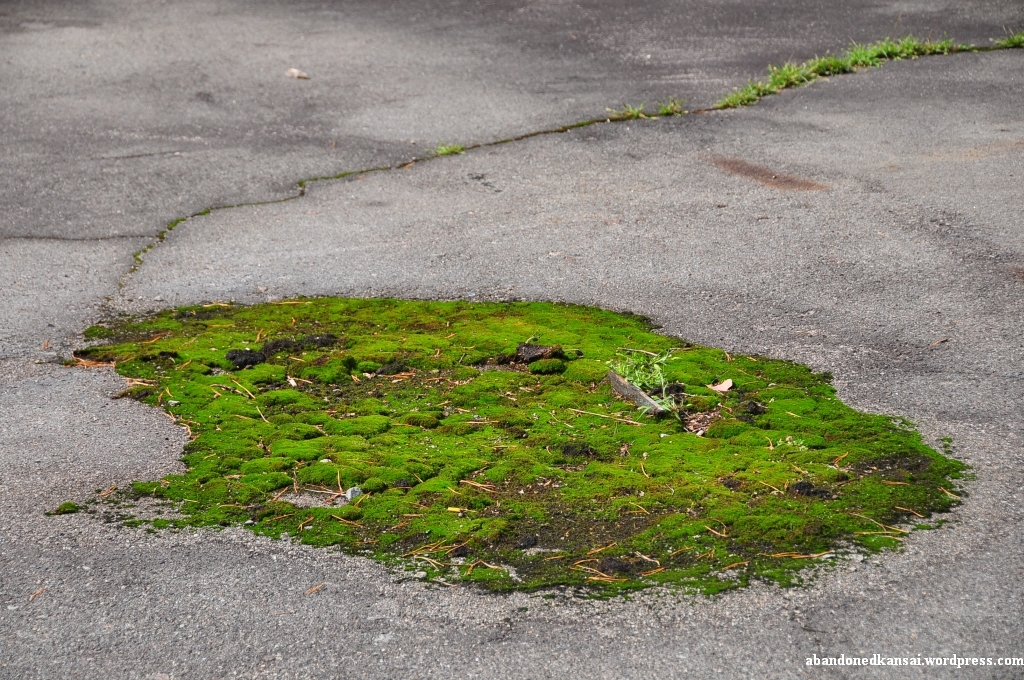
Another fact people usually don’t know about the amusement park: It’s one of the most contaminated areas in Pripyat. Parts of it are perfectly clean, but others are still highly radioactive. While the concrete parts are mostly safe nowadays, the surrounding moss can be as high as 25 µSv/h (microsievert per hour) – the radioactive particles were simply washed into the soil. Walking across such a spot like that won’t harm you instantly, but you don’t wanna build a house there as it is about 400 times the normal terrestrial radiation…
The amusement park is one of the standard locations included in pretty much every Pripyat tour – especially since it gained massive popularity after it was rebuilt in video games like “S.T.A.L.K.E.R.: Shadow of Chernobyl” and “Call of Duty 4: Modern Warfare”.
Before you start looking at the pictures below I hope you will enjoy an Abandoned Kansai first: I uploaded a short video of about 75 seconds to Youtube. Unedited, 720p. I hope it’s a worthy addition to this article…
(If you would like to know more about my trip to the Zone Of Alienation please *click here* to get to the “Chernobyl & Pripyat” special. For a map of the area please *click here*. If you don’t want to miss the latest article you can *like Abandoned Kansai on Facebook* and *follow this blog on Twitter* – and of course there is the *video channel on Youtube*…)








Posted in Abandoned, Amusement Park, Europe, Map, Pripyat, Ukraine, Urbex, Video, Visited in 2010, Zone Of Alienation | 20 Comments »
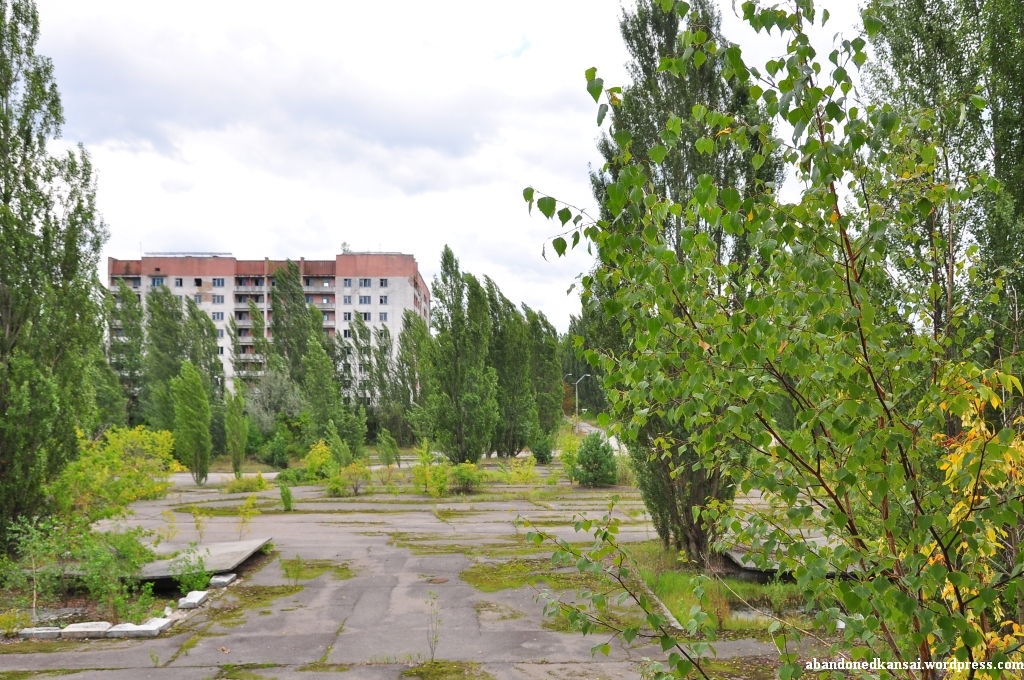
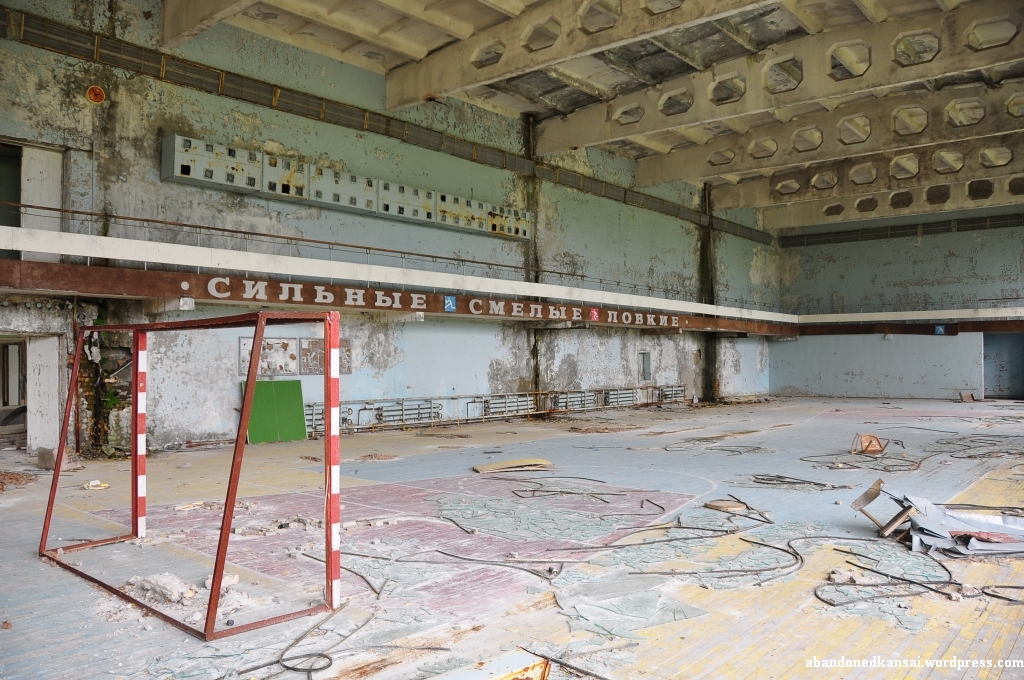
The Palace of Culture was a typical institution of the Eastern bloc. The huge buildings were the meeting point for people to enjoy all kinds of recreational activities like sports and arts – and of course they were used for political indoctrination. The PoC usually included a cinema (some of them with several screens), a concert hall, dance studios, a swimming pool, study halls, a boxing ring, rooms with a variety of instruments, an area with tools for all kinds of do-it-yourself stuff and many, many more things – and of course Pripyat had a Palace of Culture, too, being one of more than 137,000 in the Soviet Union in 1988…
Energetik, the local Palace of Culture, was located directly at Pripyat’s center square, Lenin Square, and nowadays is one of the most visited locations in the world’s most famous abandoned city. One reason is that Energetik is on the way to everybody’s favorite Pripyat motive, the amusement park’s ferris wheel – the other is that the building offers a lot of variety on a relatively small space. Crossing Lenin Square Maxim was raving about how beautiful the place must have been 30 ago, given that the huge open space once was the home of a good part of the previously mentioned 33,000 rose plants.
I, on the other hand, was just fascinated by the unique, sad beauty that makes Pripyat what it is today. Struck by awe I entered the Palace of Culture and didn’t even know where to start taking pictures. Anywhere else in the world exploring this building would have taken at least half a day, but I somehow had the feeling that I would have that much time – in the end I had about 50 minutes…
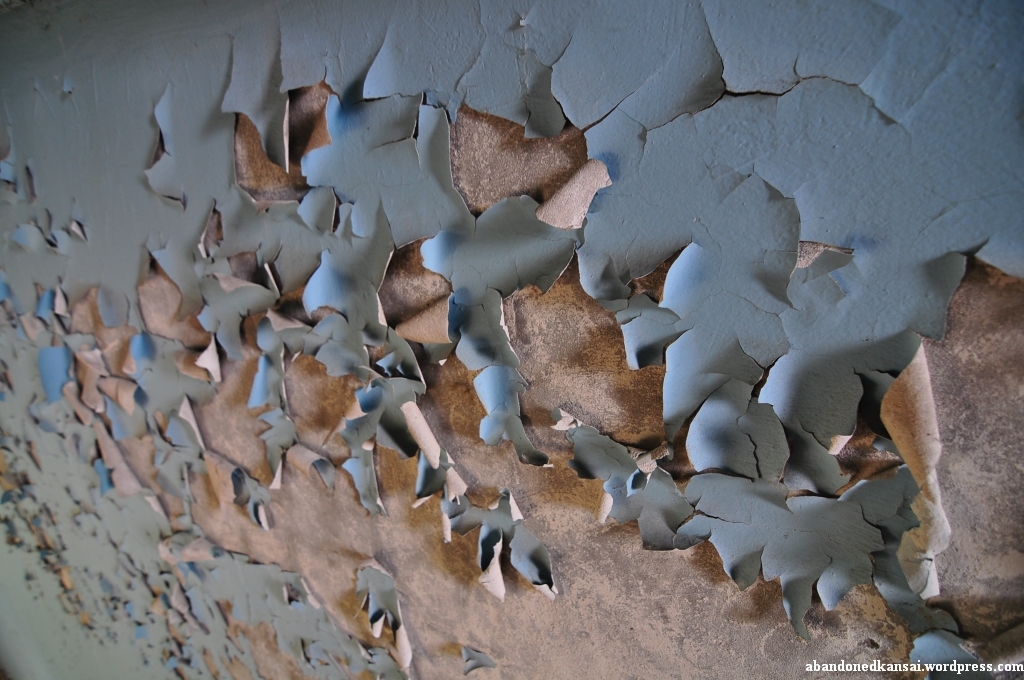
Pripyat’s Palace of Culture is actually in pretty bad shape. Like most other buildings in the zone there isn’t a single window still intact, so the forces of nature – up to 40 degrees Celsius in summer, down to minus 20 in winter – did quite some damage in the past; and having tourists visiting the place every other day doesn’t help much either I guess. Most of the rooms were severely vandalized (a long time ago though!), the cinema barely recognizable. Bushes and little trees were growing inside of some rooms and many of the mural paintings were crumbling away…
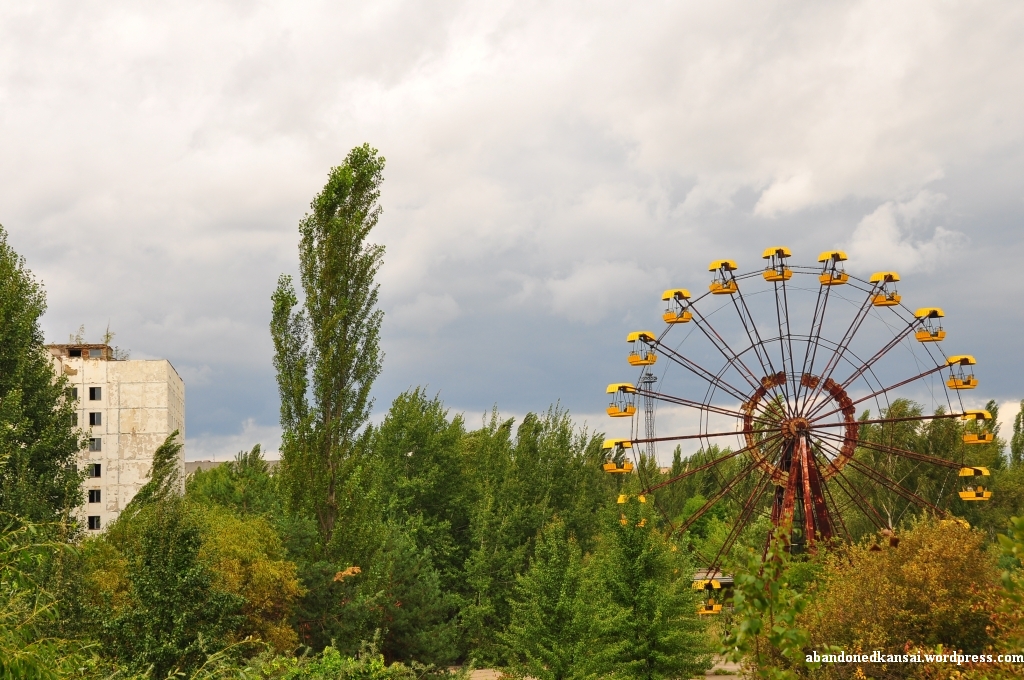
Exploring the different kinds of rooms was an amazing experience, but one moment stuck with me in a special way. It happened when I walked through a hallway towards what I assumed was the main gymnasium in the building. As I entered the huge room I looked outside the gigantic front of window frames and saw the famous ferris wheel 100 meters away in the background. Unexpected and absolutely mind-blowing… still gives me goose-bumps when I think back now.
Sadly only a couple of minutes later Maxim made us hurry-up for the first time – the amusement park was waiting just for us…
(If you would like to know more about my trip to the Zone Of Alienation please *click here* to get to the “Chernobyl & Pripyat” special. For a map of the area please *click here*.)







Posted in Abandoned, Europe, Map, Museum, Pripyat, School, Spa / Onsen, Sports, Ukraine, Urbex, Visited in 2010, Zone Of Alienation | 2 Comments »
When people talk about the ruins of the Zone Of Alienation they usually say Chernobyl, but mean in fact Pripyat. As I already described, Chernobyl appears to be a rather normal countryside town, except for the fact that it’s populated just temporarily by its inhabitants.
The real ghost town in the area is called Pripyat, named after the local river that provided the nearby nuclear power plan with water. Founded in 1970 it was planned and built with the purpose of housing the people working at the V.I. Lenin Nuclear Power Station, now known as the Chernobyl Nuclear Power Plant. Prior to the disaster it was the home to almost 50,000 people with an average age of just 26 years in more than 13,400 apartments in 160 buildings. The city had 15 primary schools, 5 secondary schools and 1 professional school, a hospital for 410 patients, 25 stores, 27 eateries, 10 gyms, 3 indoor swimming-pools , 2 stadiums and 35 playgrounds. At that time Pripyat was famous for its 33,000 rose plants and almost 250,000 shrubs – a green paradise about 100km north of Kiev. It was a city for privileged people with high incomes; the local police station nevertheless looks scary to this very day…
While the town of Chernobyl benefited from the east wind on the time of the disaster Pripyat got hit directly. To get to Pripyat you have to pass a bridge across train tracks, now called the “Bridge of Death” – a couple of children watched the spectacular lights during the accident standing on the bridge while the wind blew the radiation in their direction; they were amongst the first people to die… It nevertheless took authorities 36 hours to start the evacuation of Pripyat. To speed it up they told the population they should bring only necessary things as they would be back after three days – Pripyat is a ghost town ever since.
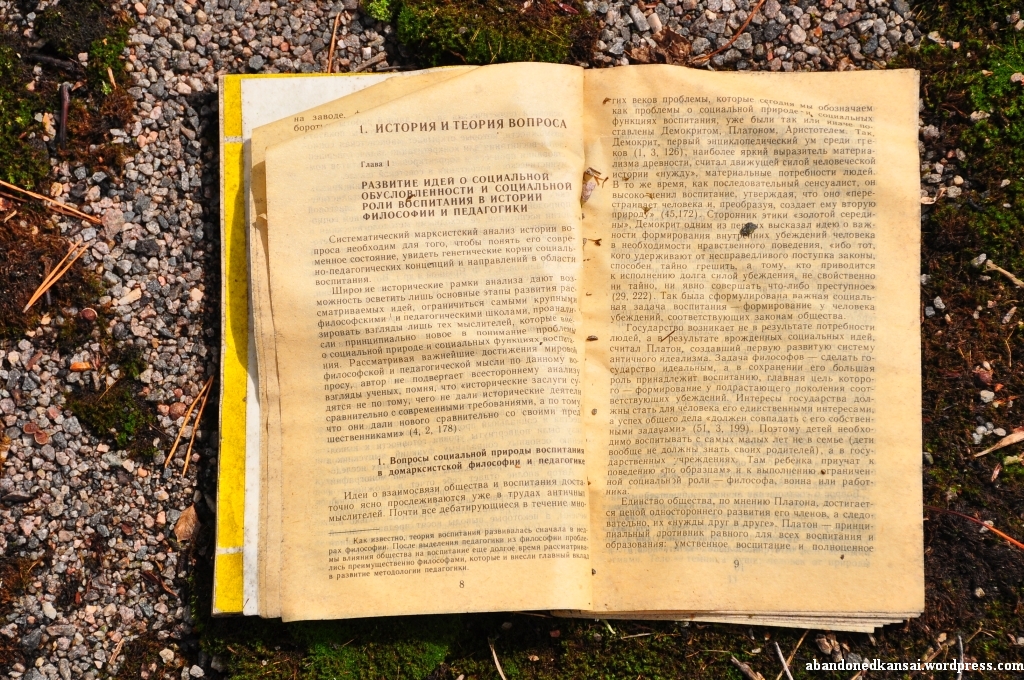
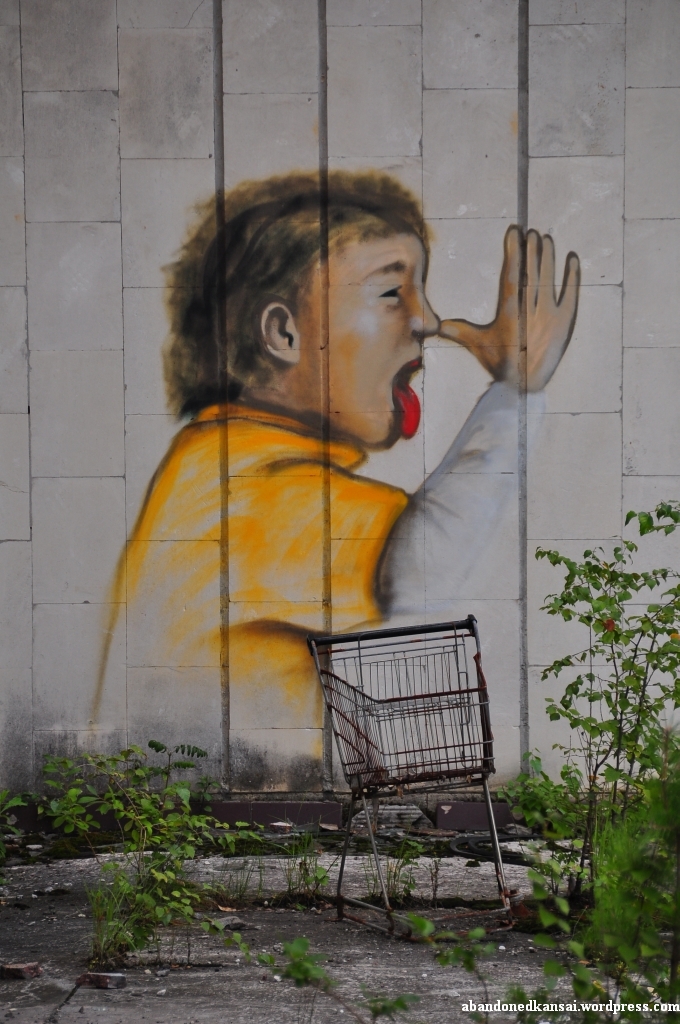
Nowadays, after almost 25 years (the anniversary of the disaster will be in April) it is relatively safe to enter Pripyat. Since the isotopes released during the accident were rather short-lived (and due to the work of 800,000 so-called “liquidators”) the radition in Pripyat barely ever exceeds one microsievert per hour – one exception would be the basement of the hospital were were strongly advised not to enter. Aside from natural decay the already mentioned liquidators were the main cause of destruction / vandalism in Pripyat. When new buildings in the not so severely contaminated Chernobyl were constructed, the planners weren’t able to provide enough furniture, so the liquidators took it from Pripyat since it wasn’t needed there anymore. So while most buildings in Pripyat are still standing a lot of them are actually quite empty, some vandalised by frustrated workers – other than that you can find a couple of graffiti all over the town, done by a French guy a couple of years ago. Other than that it’s 25 years of natural decay…
On our 15 minute ride from Chernobyl to Pripyat Maxim, the guide, asked us what we wanted to see first and since we had no specific plans we asked for a “Best Of” tour with spontaneous adjustments once in a while. We made a quick stop at the Pripyat City Sign right outside of the city where we could also have a look at some trees that died from the intense radiation at the time of the disaster (the so-calld Red Forest) – right next to them an abandoned building of the forest authority.
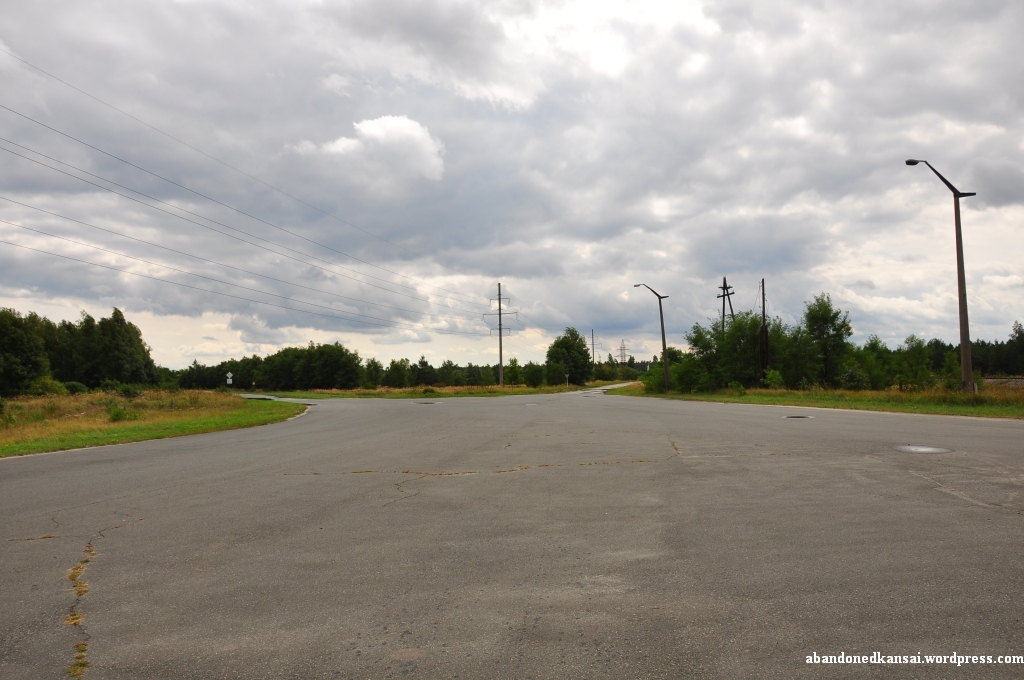
Pripyat itself, fenced off and guarded by another post who, once more, checked our permission papers, is pretty much reclaimed by nature. The streets are free since there are almost daily tours to the city, but they are in horrible condition – no road builders in Pripyat for 25 years… Most buildings are completely surrounded by trees and bushes, some of them are not even visible anymore from the streets.
The atmosphere in Pripyat is truly unique – very quiet, very sad, you can almost hear your own thoughts. Since we had our private guide and driver we were able to visit places to our liking. Luckily Maxim was a very relaxed guy who gave us enough freedom to roam; actually I spent at least half of the time by myself, although Maxim was always in sight or at least in calling distance. From an urban exploration perspective Pripyat is the ultimate location. In every other place of the world each building would be a one day exploration on its own. But Pripyat is so much more. It’s not just abandoned buildings, it’s history. It’s not an investor running out of money, it’s not a movie set – it’s the real thing. Catastrophic events happened there 25 years ago and pretty much everybody, even unborn at the time, knows what you are talking about when you mention “Chernobyl”…
Okay, this was the last wordy posting with few pictures about the Zone Of Alienation. From now on it’ll be all about the locations I’ve visited during the two days in the zone, in the same order I’ve actually visited them – with lots of spectacular photos.
(If you would like to know more about my trip to the Zone Of Alienation please *click here* to get to the “Chernobyl & Pripyat” special. For a map of the area please *click here*.)



Posted in Abandoned, Europe, Map, Pripyat, Ukraine, Urbex, Visited in 2010, Zone Of Alienation | 5 Comments »
After half a day of sightseeing in Kiev (most of it while rain was pouring) my second day in Ukraine started the main event: The trip to the Zone Of Alienation.
Meeting point was a hotel in the city center and my contact person was easy to find since a rather large group of about 25 people gathered on that sunny Saturday morning. Luckily I didn’t have to join the day trippers since I booked a 2 day tour, joining two guys from Switzerland, Sebi and Michi. If you do the day tour for about 160 US-$ you get the standard program: Transport by bus to Chernobyl, quick introduction about the history of the place and a lection about how to behave in the zone and then the well-known locations Sarcophacus, Amusement Park, Swimming Pool – maybe one or two more, like the Palace Of Culture or a School; always with the group (= always somebody in your way when trying to take a picture) and no time to improvise. A 2 day trip (about 500 bucks, depending on the group size – it can be considerably more if you travel alone) is way more relaxed and in-depth. You basically have your own guide plus a driver, transportation is by mini van, you can choose where you want to go and if you want to stay longer at a place it’s usually not a problem. Also included are an overnight stay at the hotel in Chernobyl and several meals.
We were supposed to see a documentary about the Zone Of Alienation during the two hour drive from Kiev, but since the mini van was lacking the necessary equipment Maxim, the guide, told us to get some rest since the day will be packed with information and places to see – but to me the drive from the big city to the middle of nowhere was interesting since of course it showed quite a different side of Ukraine. Even 20 minutes outside of Kiev the country is rural. Really rural…
The Zone Of Alienation begins 30km away from the Chernobyl Nuclear Power Plant with a road block guarded by special units of the MVS (Ministry of Internal Affairs) and therefore the area is partly excluded from the regular civil rule – which is kind of scary considering that even normal MVS units have a dubious reputation according to Wikipedia, though you don’t need to have a look at Wikipedia to know that you don’t wanna mess with anybody inside of the zone.
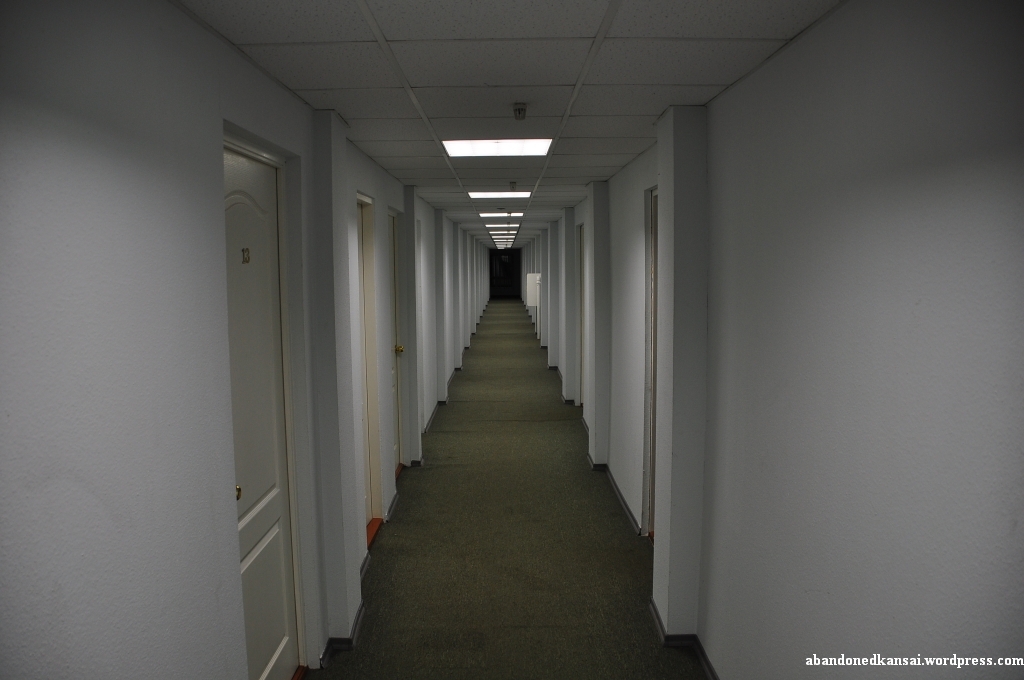
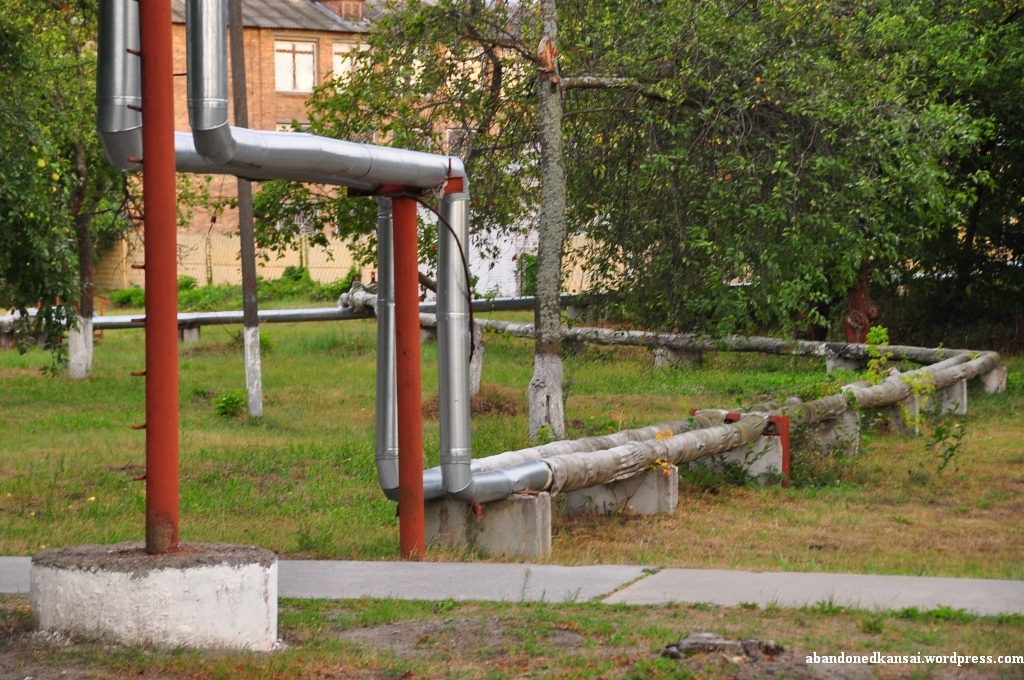
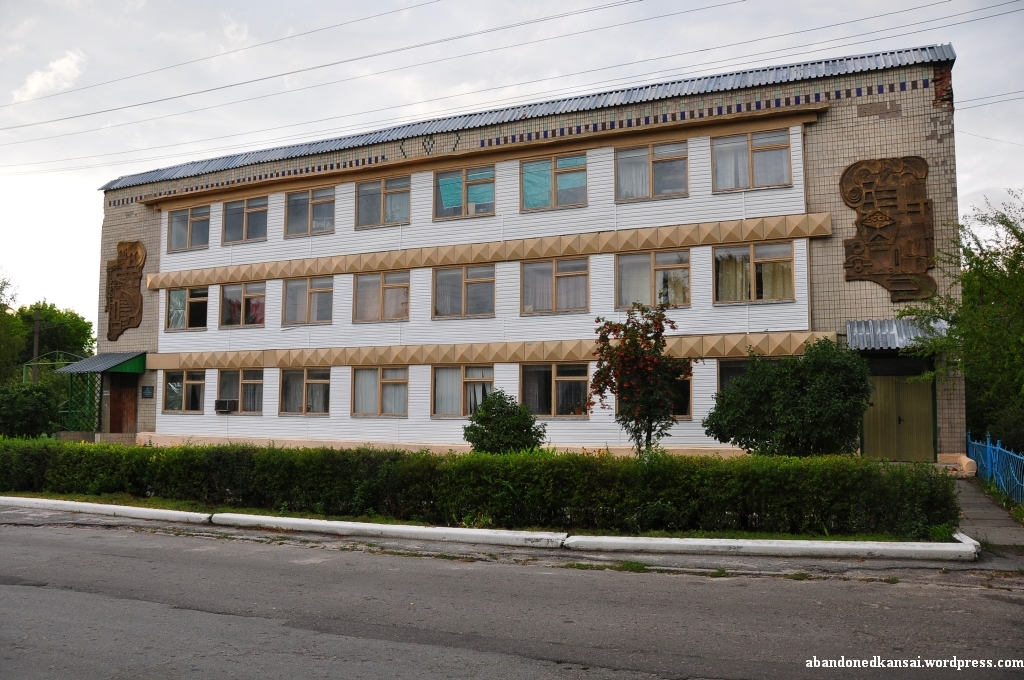
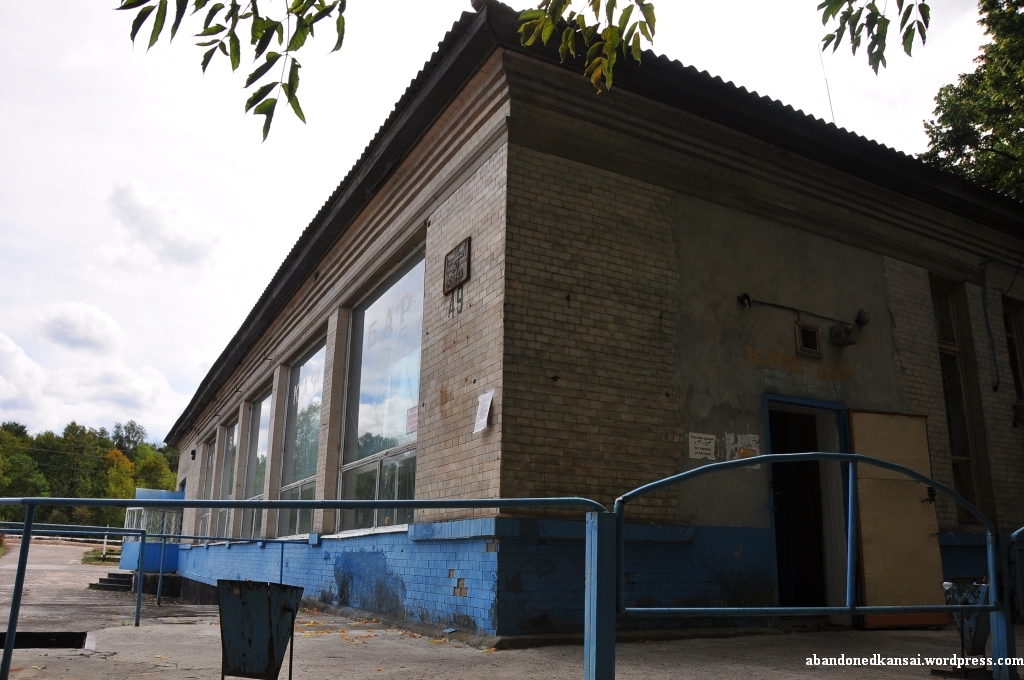
Chernobyl itself is actually quite unspectacular – a small, wide-spread town with rather low buildings (two or three stories) that once housed the people cleaning up after the nuclear disaster; even before the catastrophe Chernobyl was actually quite a small town (14,000 inhabitants) since most of the employees of the power plant lived in the newly constructed city of Pripyat (50,000 inhabitants) – closer to their place of work and way more modern. Pictures of abandoned, rotting buildings taken in the ZOA are almost always taken in Pripyat, not Chernobyl – but since people associate the name Chernobyl with the power plant, they naturally assume that Chernobyl must be the decaying city. The most interesting fact about Chernobyl is that all the piping is actually above ground since the old water pipes were unusable after the disaster and the new ones had to be easily accessible. Nowadays only 500 people live in Chernobyl. Almost none of them permanently, most of them guarding or guiding – or supporting the guards and guides, like the hotel and kitchen staff or the people running the two supermarkets in Chernobyl.
Arriving in Chernobyl we went directly to the hotel to check in (i.e. dropping our bags in a room of the container building) and then met up with the day tourists for the introduction meeting. Maxim later told us that in 2009 10,000 people visited the zone, by July of 2010 it was already 8,000 for that year. About 1,000 scientists and journalists, the rest all kinds of people; from teenage game freaks in camouflage outfits to senior citizens who can finally visit the former “Evil Empire”. While the tour was organized by a private company, our guide was actually a state employee with the State Enterprise Agency of Information, Internal Co-operation and Development “Chornobylinterinform Agency”, which is part of The Ministry of Ukraine of Emergencies and Affairs of Population Protection from the Consequences of Chornobyl Catastrophe – gotta love the old fashioned way of naming institutions!
After the introduction meeting we were told that we would have lunch first to get some strength for the things to come. We were guided to a room next to the kitchen and it felt a bit like what you can read about the guided tours to North Korea – the mid-sized room was filled with tables covered with lots of food, but us three were the only ones eating; Maxim and the driver were nowhere to be seen. So we sat down and dug into the great salad, sausages and bread. A hearty meal, and being used to Japanese portion size a pretty filling one, too. But then a waitress came in and brought us some borscht – the salad actually was just the salad, not the whole meal… and of course the borscht was just the soup, not the main dish – that was some meat and mashed potatoes! So after having our 3,000 calories lunch we finally made it back to the van to start our trip exploring Pripyat and Chernobyl – the meal, prepared on location from produce delivered from outside of the zone, was great by the way and one more reason to book a 2 day trip instead of going with the 1 day option.
(If you would like to know more about my trip to the Zone Of Alienation please *click here* to get to the “Chernobyl & Pripyat” special. For a map of the area please *click here*.)
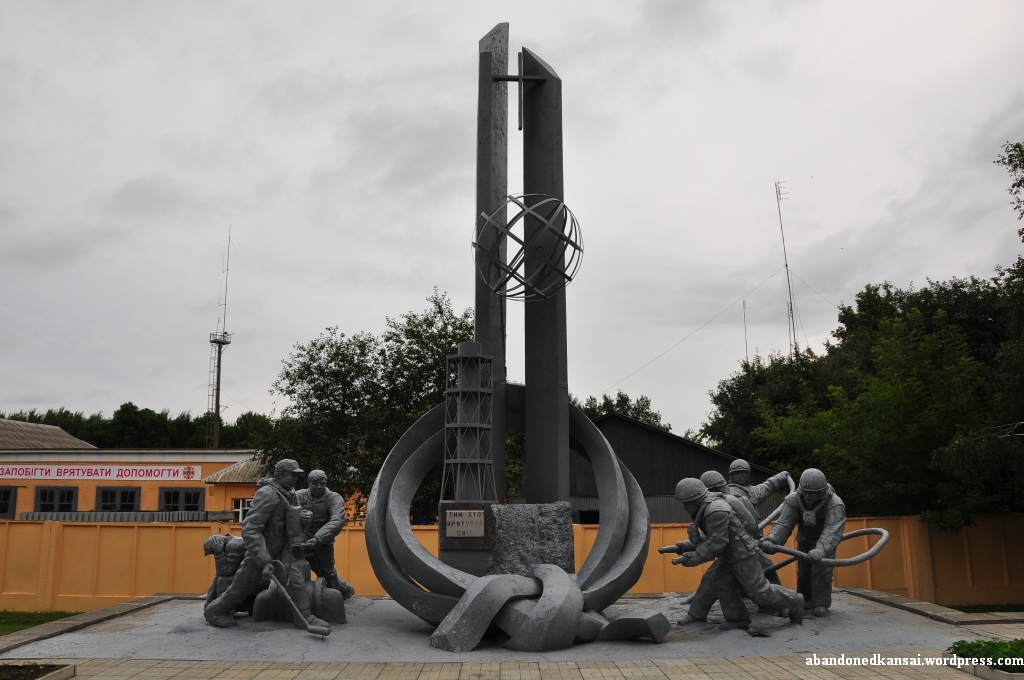
Addendum 2012-12-19: The Chernobyl Hotel mentioned in this article is NOT the the Countryside Cottage Chernobyl Hotel just outside of the Zone Of Alienation in Orane! When I was visiting Pripyat and Chernobyl I was able to stay overnight at a container hotel in Chernobyl…






Posted in Chernobyl, Europe, Map, Ukraine, Urbex, Visited in 2010, Zone Of Alienation | 6 Comments »
“Which location will be next?”
That’s the question you always deal with when doing urban exploration – what’s next? Living in Japan offers a variety of gorgeous abandoned places as you can see on this blog and others – but when I planned my yearly summer trip back home to Germany it opened a whole new continent to be explored. Well, kind of, since urbex takes quite some time and the purpose of my summer vacations is to catch-up with family and friends. Nevertheless I was looking into some explorable locations, but with the exception of a daytrip I soon realized I had to go on a vacation while on vacation – maybe Berlin and its relics from the Cold War? I looked into possible dates and prices and I soon came to the conclusion that I could go big… should go big. Gunkanjima is without a doubt the most famous abandoned place in Japan – but on a global scale there is nothing even close the Zone Of Alienation, including Pripyat and Chernobyl, famous for and created as a consequence of one of the worst catastrophes in the history of mankind: the nuclear disaster of 1986.
I’ve seen reports on TV about the Zone Of Alienation before and a little research on the internet brought to daylight that you can book tours to Chernobyl via an agency called TourKiev / SoloEast – it’s even easier than booking a flight… All you need to do is select a date, give them your birthday as well as your passport number and pay cash on the morning of the tour. Couldn’t be easier.
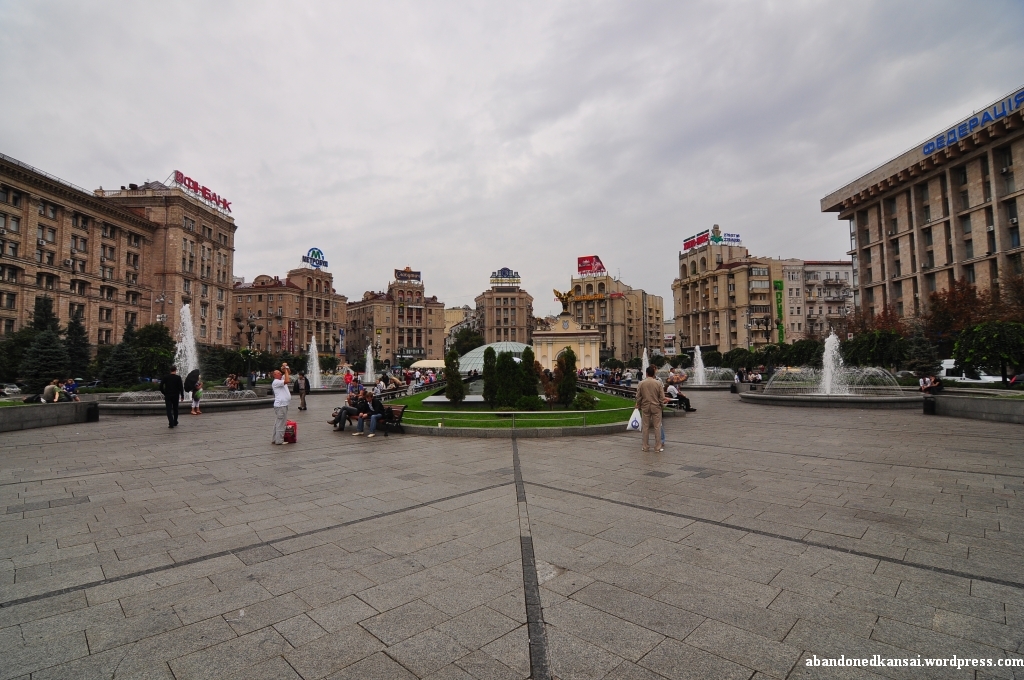
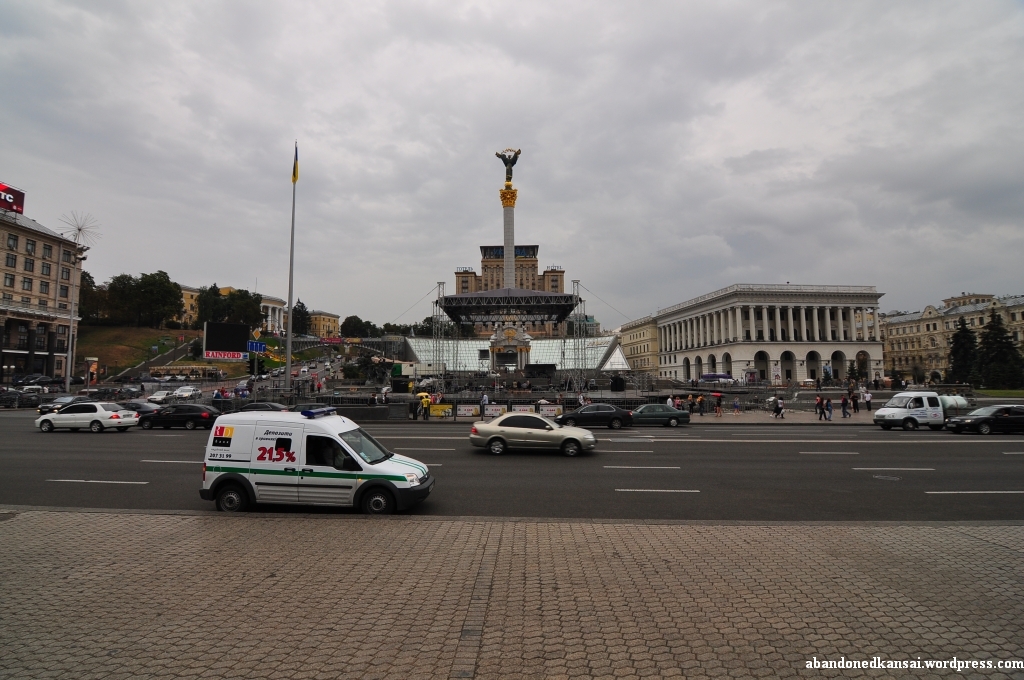
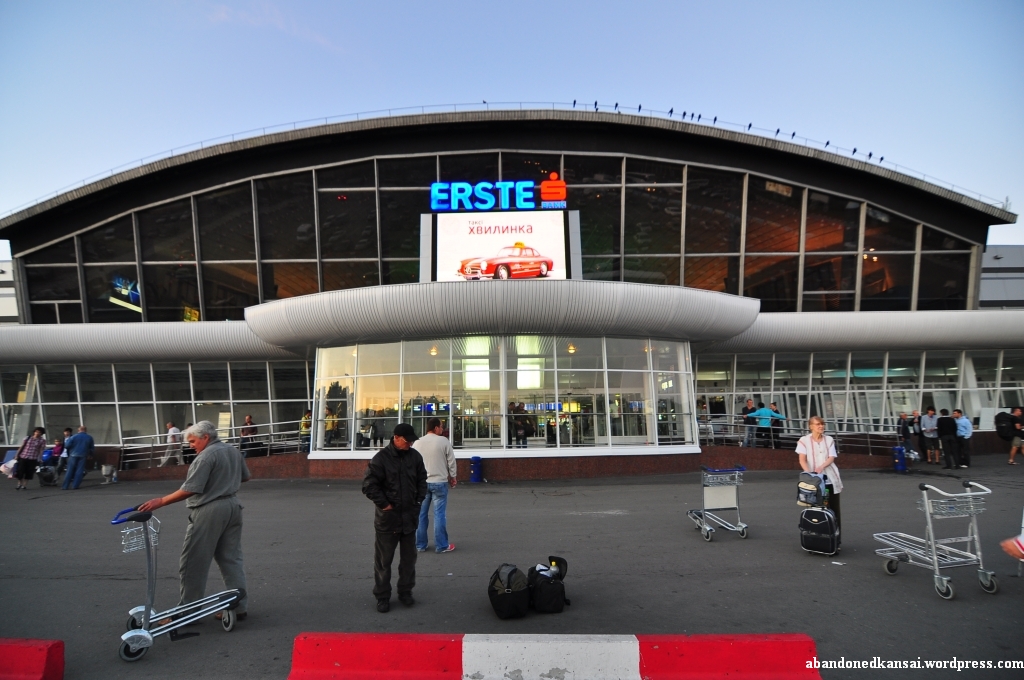
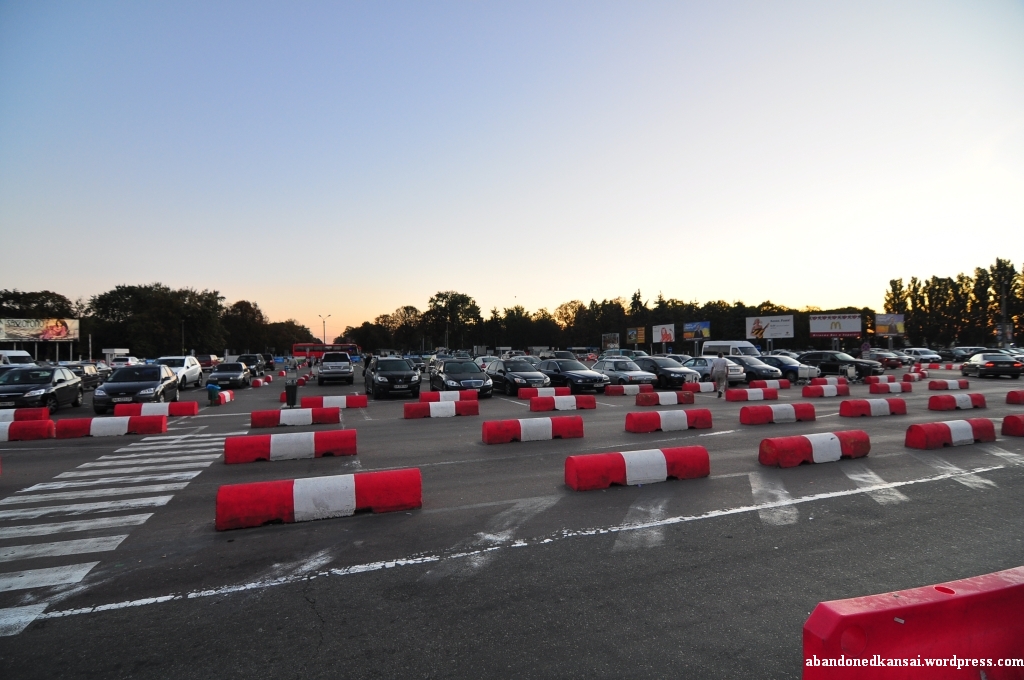
Exactly four weeks later I arrived in Kiev on a flight from Frankfurt with Ukraine International Airlines – one of the worst flights I ever had, it felt like straight from the communist 80s… Kiev Airport on the other hand felt like a European version of Africa. I have to admit that before my trip to Ukraine I mainly traveled in Western countries, so after growing up in Germany and living in Japan for four years it was kind of a cultural shock to me. Luckily I booked a taxi via the hostel I stayed at, so at least I had somebody waiting to bring me to the city center of Kiev after it took me more than an hour to go through customs. But while the hostel’s homepage stated that I can pay the taxi driver either directly or via the hostel, in Euro or in the local currency hryvnia of course the driver, who didn’t understand a word of English, didn’t know about that – he wanted hryvnia cash, which I didn’t have. Arriving at the hostel the young lady running the place reluctantly paid the driver and then right away yelled at me for not having any hrynia with me… “Welcome to Ukraine” I thought. (After that rough start we actually had some nice conversations, especially since I unexpectedly ended up at the hostel after I came back from Chernobyl.)
The trip to the Zone Of Alienation went very smoothly and will be the topic of more than a dozen postings in the near future, so I will skip that part for now.
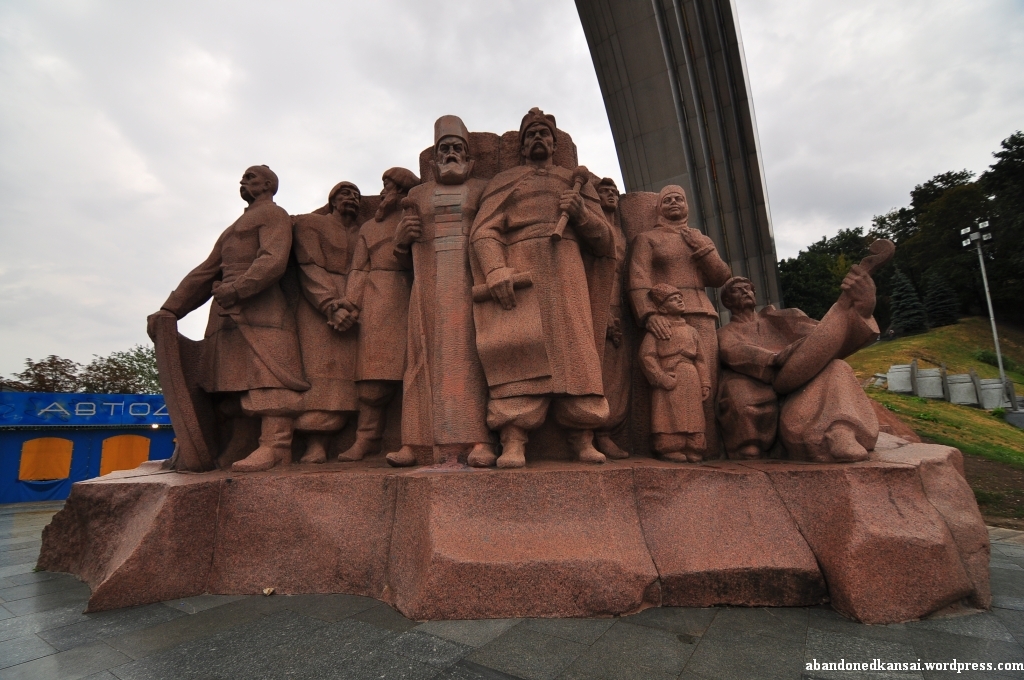
Coming back to Kiev I had to learn that there was no tourist information in Ukraine’s capital, neither in the city center nor at the main train and bus terminal, so my plan to spontaneously get a reasonably priced hotel, maybe even the airport hotel, fell flat. The fact that hardly anybody spoke English didn’t help either (and I thought Japan was bad in that regard…), so I ended up spending another night at the hostel, enjoying a warm summer evening in the city center (where an open air techno party was going on all day) and taking a taxi to the airport at 5am.
Visiting the Zone Of Alienation was by far the most interesting vacation I had in the last ten years and I guess only my first visit to Japan in 1998 had a bigger impression on me. Not a trip I can recommend to everybody, but to me it was just fantastic!
(If you would like to know more about my trip to the Zone Of Alienation please *click here* to get to the “Chernobyl & Pripyat” special. For a map of the area please *click here*.)



Posted in Europe, Map, Ukraine, Urbex, Visited in 2010, Zone Of Alienation | 3 Comments »
Doing urban exploration it’s hard not step into the trap of chasing only after the famous locations like Gunkanjima or Nara Dreamland – everybody has them (for good reasons), so you kind of gotta have them, too. But it’s important to stay open minded and not just look for the big ones when doing research. Because if you are really dedicated and incredibly lucky every once in a while you will stumble across a hidden gem that will blow your mind unexpectedly. Ladies and gentlemen: The Tokushima Countryside Clinic…
I saw the Tokushima Countryside Clinic (徳島田舎診療所) on a small Japanese travel blog about half a year ago. Although its location is quite remote I was able to pin it down. Jordy knew about the place, too, and was even more eager than myself to see the place (I was actually only moderately excited about it beforehand), so we decided to go there first thing on the second day of our road trip to Shikoku – abandoned hospitals are hard to find, but Japanese countryside clinics are almost unknown. Up till now the secret Doctor’s Shack was the benchmark for that type of haikyo, but over the last couple of years it lost quite a bit of its former attraction as it’s not that secret anymore and suffered a lot from vandalism. With the discovery of the Tokushima Countryside Clinic I’m sure its reputation will go down in no time…
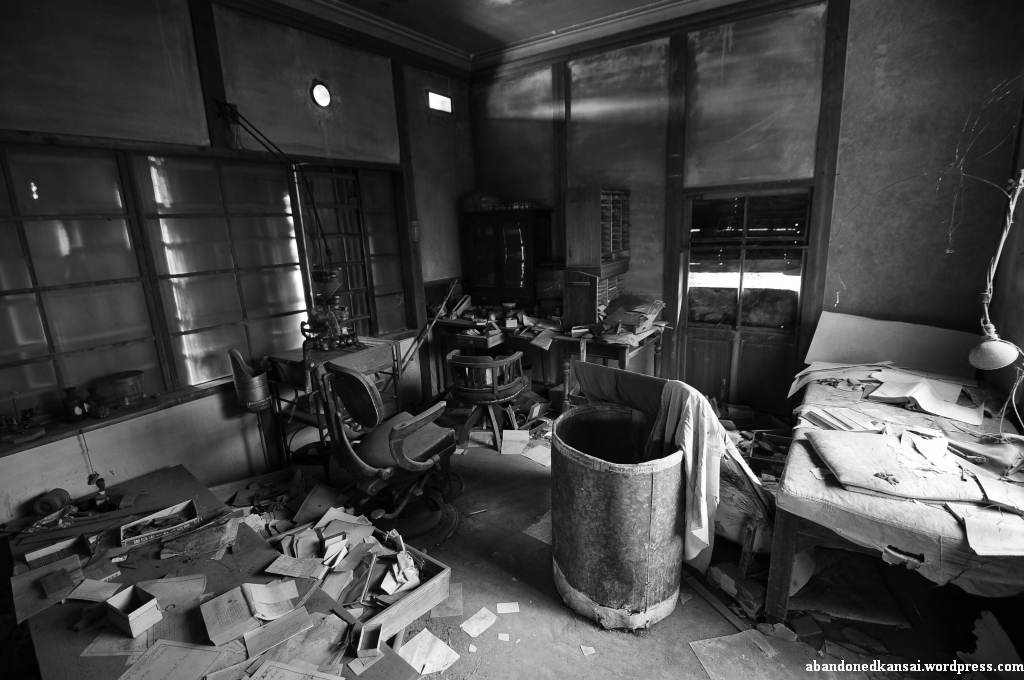
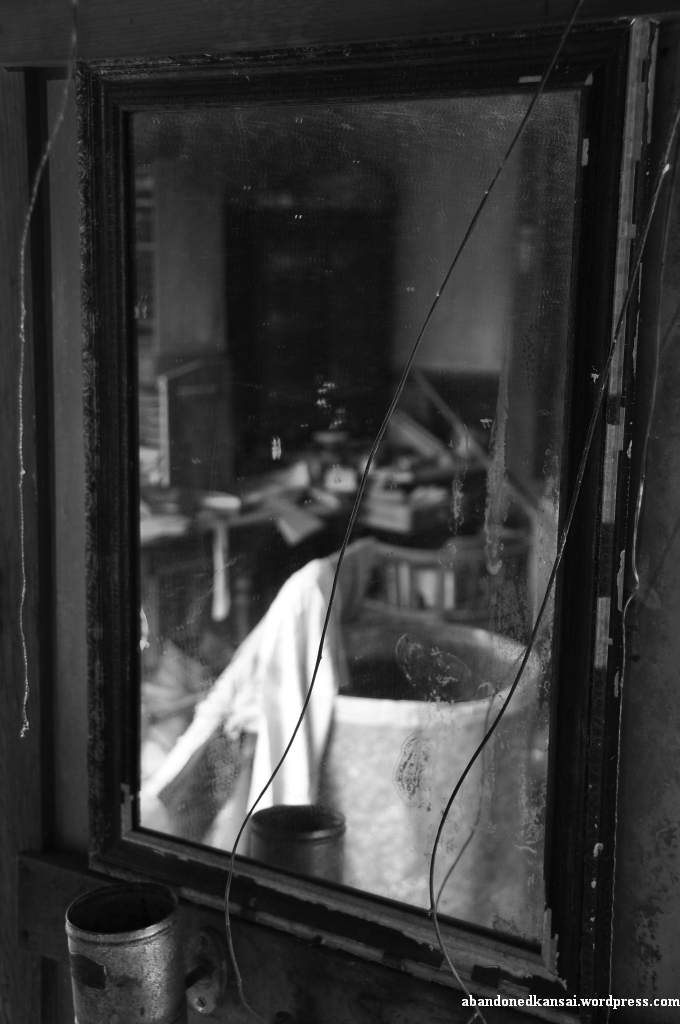
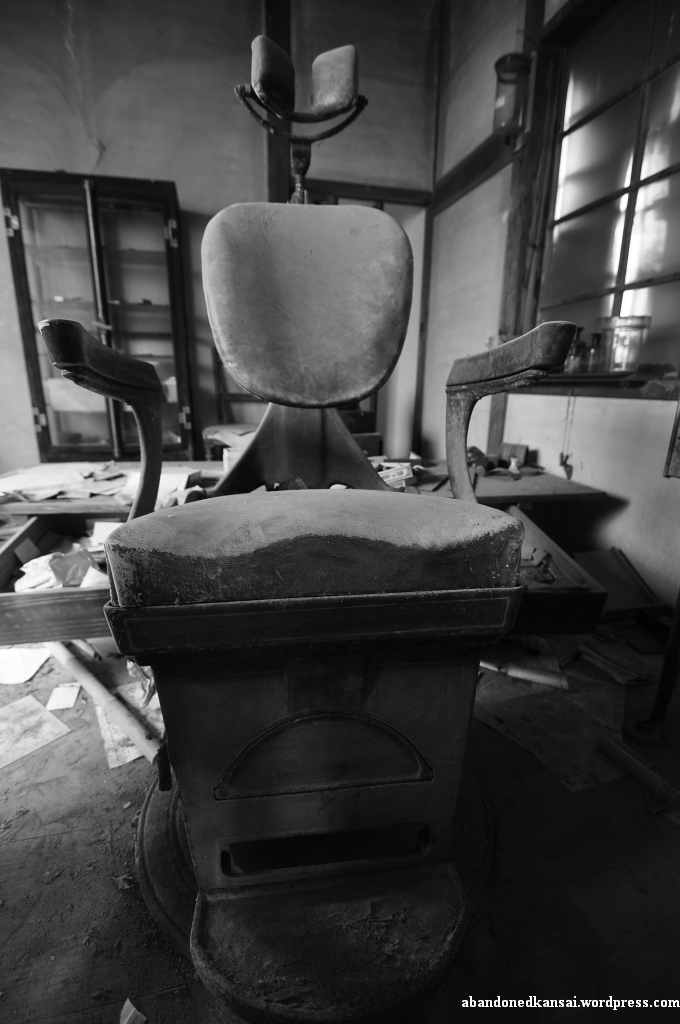
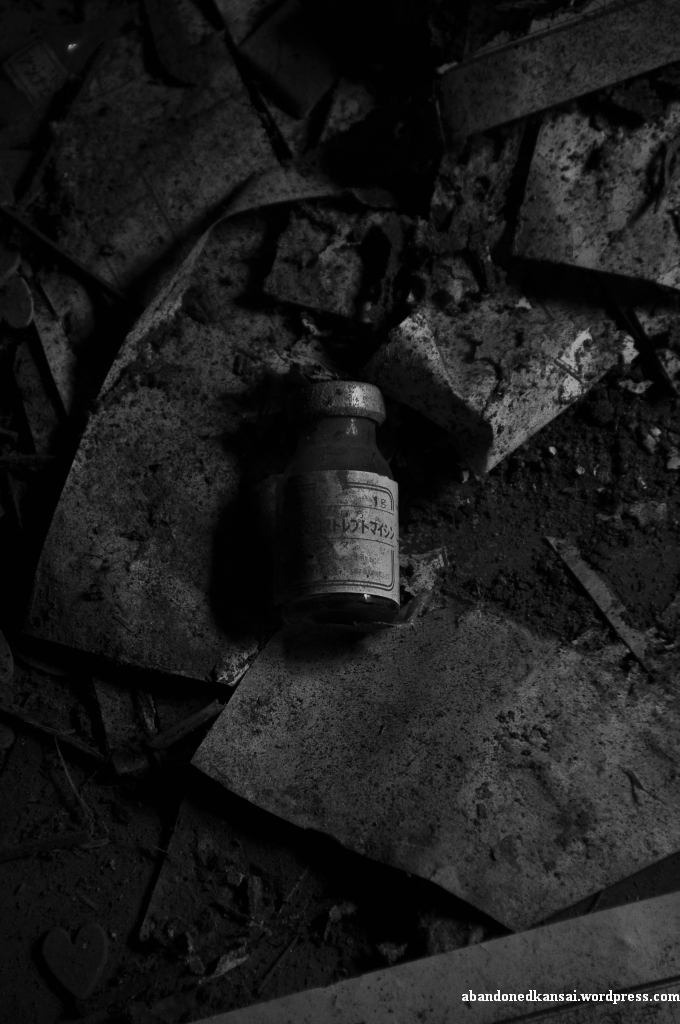
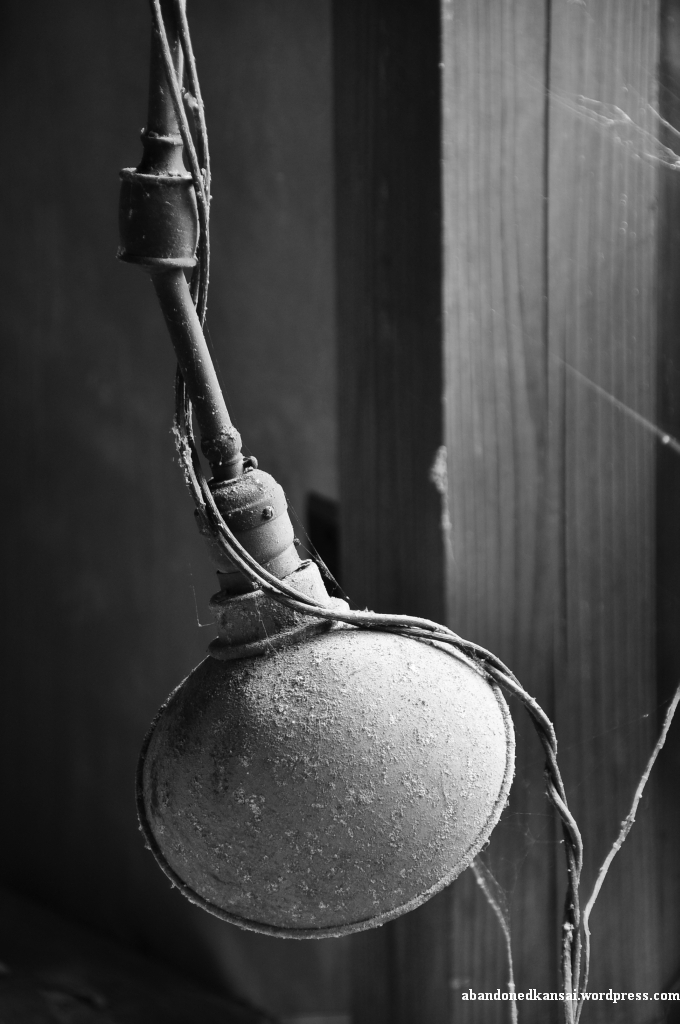
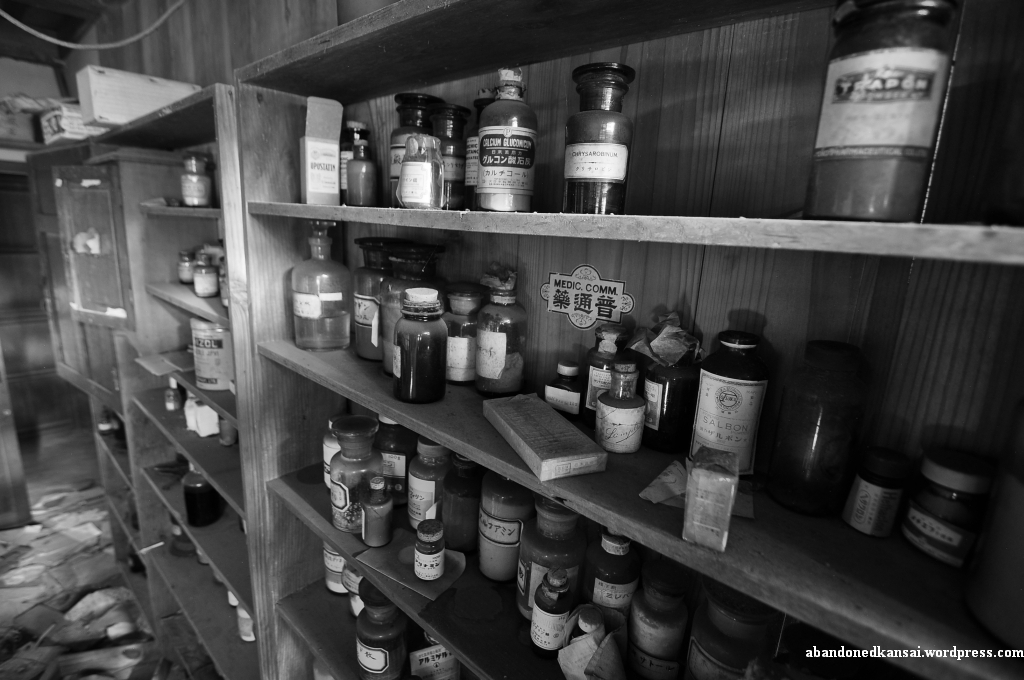
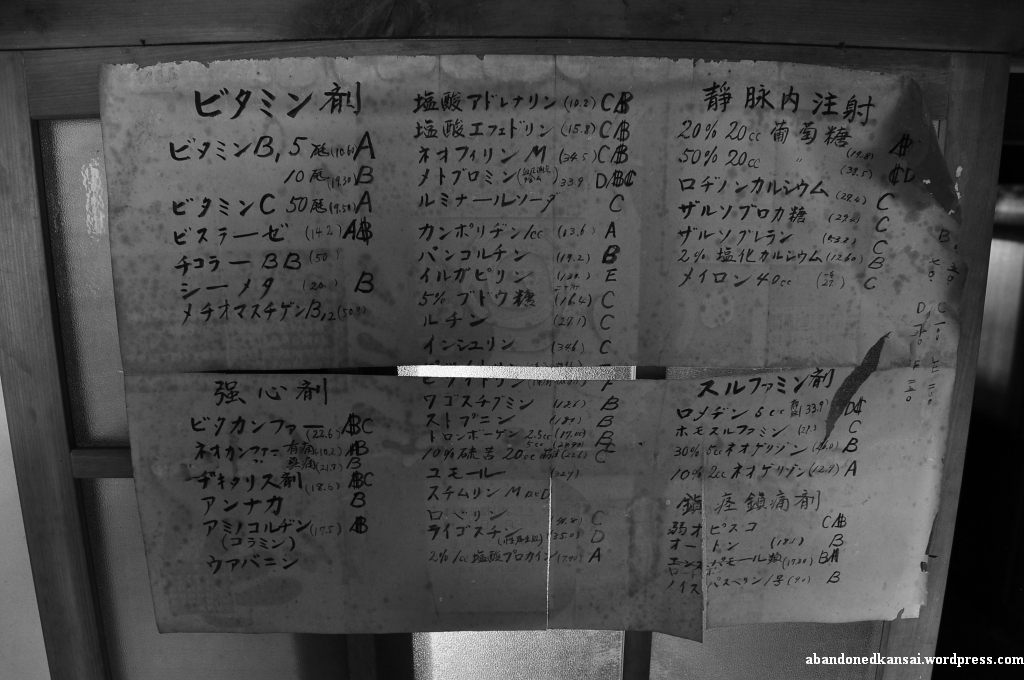
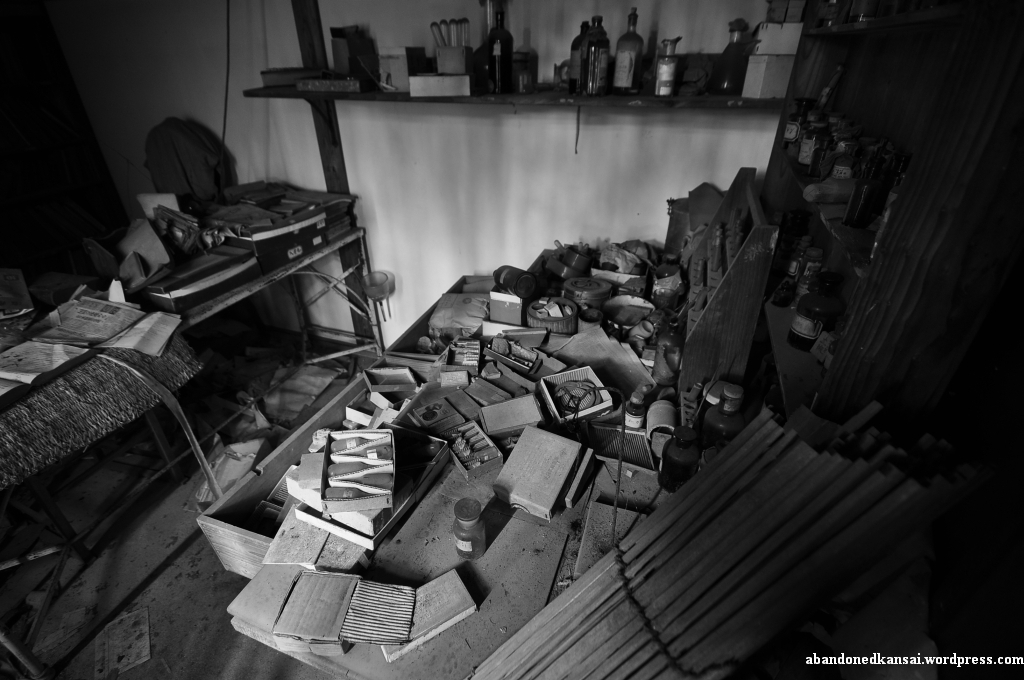
I’ve been to several famous locations in Japan and I enjoyed most of them, but this really unknown find came with almost no expectations and therefore captured my heart in no time. Big but quite unremarkable from the outside I entered the TCC through the only room of the building partly collapsed, the former front desk. While Jordy instinctively went to the pharmacy part to the right (which had a sign that straight-up said “If you want medicine you have to pay cash!”) I had a look around on the first floor and finally settled in the treatment room. Abandoned about 32 years ago (as Jordy found out later talking to some locals) the TCC offered an almost endless amount of items and angles. There was so much to see it didn’t get boring for a second, from syringes and rusty needles over patient files to medical books and instruments – and since the partly boarded-up place had hardly any visitors during the last few decades the atmosphere there was just amazing.
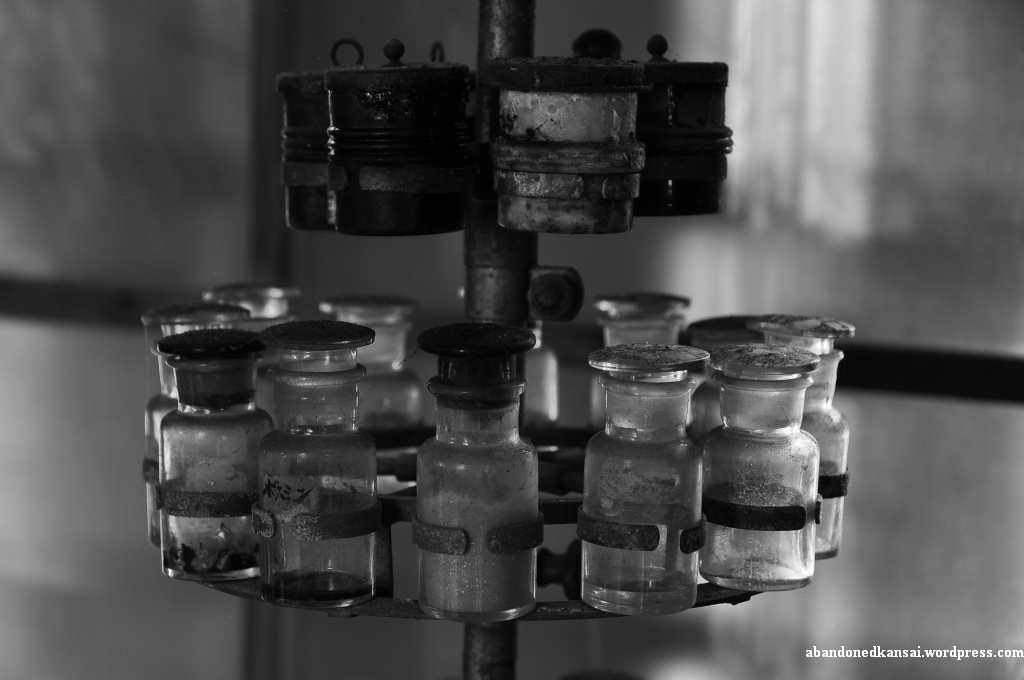
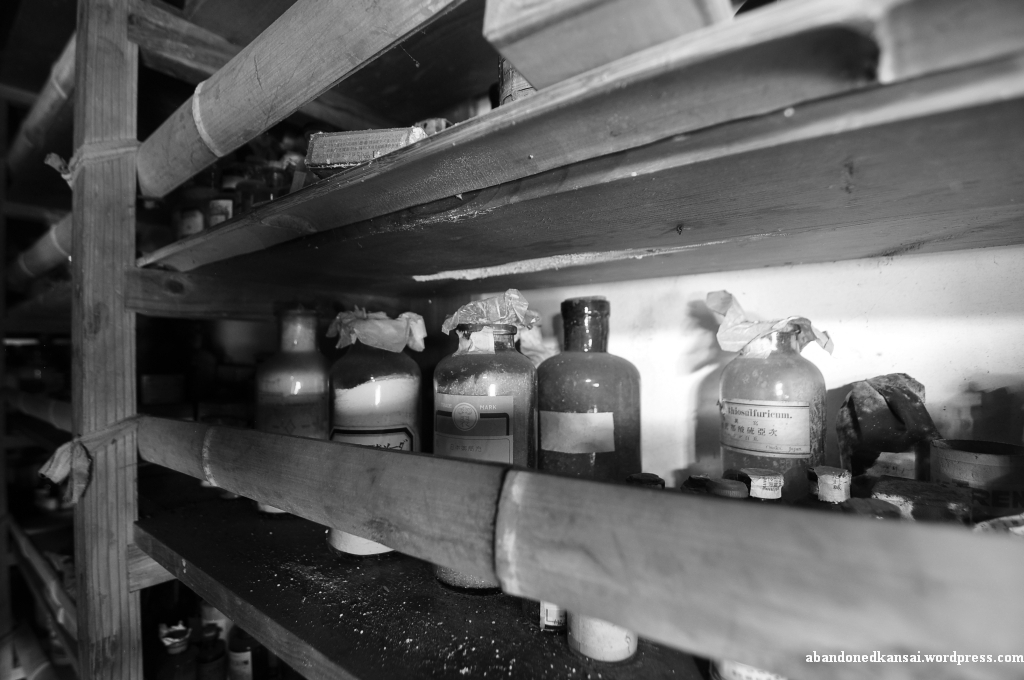
I thought maybe 20 minutes had passed when Jordy suggested after 1.5 hours (!) that we should switch rooms. So I went over to the pharmacy, wondering if it was really a good idea to take pictures in a room filled with all kinds of odors. I was setting up my tripod in the narrow pharmacy, but it took me another 10 minutes or so to realize that there was another tiny room behind it, filled with hundreds of bottles, flasks and cardboard boxes full of more medicine and chemicals. Whenever I thought I’ve seen everything there was more. Like when Jordy asked me half an hour later if I had seen the study room behind the examination room – of course I hadn’t! I shot in that room for more than one and a half hours and didn’t even realize there was another (opened) door… So I made my way over to the study room and took some more pictures of books, test tubes and other stuff.
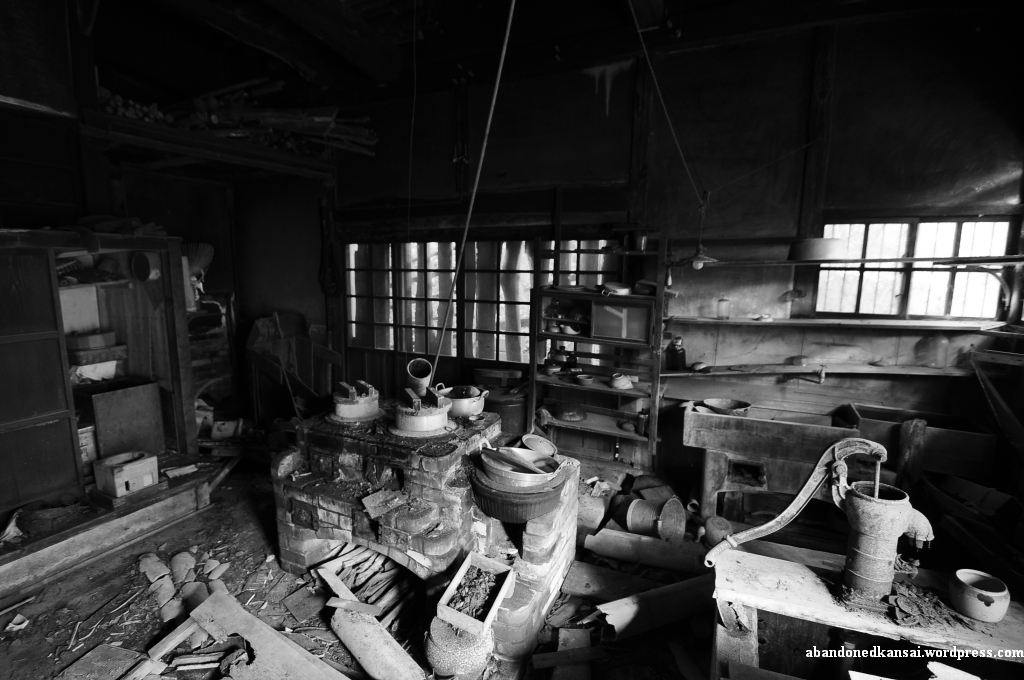
The rest of the TCC was a mansion-like estate with a beautiful huge living room set in complete darkness (harboring a gorgeous house shrine) and a spacious kitchen including a brick-built oven. The sleeping rooms must have been on the second floor and in another building that was also used as a storage.
Overall the Tokushima Countryside Clinic is a haikyoist’s dream and I have to admit it totally blew my mind – it’s unique, it’s in great condition, it’s virtually unknown and I had almost no expectations when going there. I spent about four hours shooting (due to the difficult but interesting lighting conditions exposure times went as high as 30 seconds) and I guess I could have spent another four if there wouldn’t have been other locations on the schedule for that day. The TCC is without a doubt my favorite location in Japan so far and I guess it’s the perfect opportunity to finally present you my favorite location worldwide – so next week I’ll finally start the long overdue series about Pripyat and Chernobyl…
I decided to publish the photo set of this location in black and white to stress its unique atmosphere; finally a simple form of post-production – *please have a look at the color version here*.
(*Like Abandoned Kansai on Facebook* if you don’t want to miss the latest articles and exclusive content – and subscribe to the *video channel on Youtube* to receive a message right after a new video is online…)









Posted in Abandoned, Asia, Haikyo, Hospital, House, Japan, Shikoku, Tokushima, Urbex, Visited in 2010 | 12 Comments »
Abandoned Kansai on Facebook
-
Join 5,100 other subscribers
Pages
Archives
Categories
Recent Comments
Gred Cz on Sakura Car Shop Sue on Sakura Car Shop Gred Cz on Mie Minshuku Matauia vainetutai M… on Nara Dreamland – Frequen… Emily on Mie Minshuku Gred Cz on Kitakitsune Farm (Non-Urbex) Seyeon Park on North Korea Revisited: Ep… Florian / Abandoned… on Green Plaza Akakura Florian / Abandoned… on Green Plaza Akakura Gred Cz on Green Plaza Akakura


 Abandoned Kansai
