All abandoned: Chernobyl / Pripyat, Nara Dreamland, Anti-Zombie Fortress, Japanese Sex Museum – and many, many more! Plus: North Korea Special – 2 trips, 16 days / 14 nights! As seen on CNN…
Initially I wanted to post another haikyo first, but since it took me quite a while to update this blog I decided to come back with one of my favorite haikyo so far: The Takada Ranch Ruin. Coincidentally it seems to be one of the rarest, too…
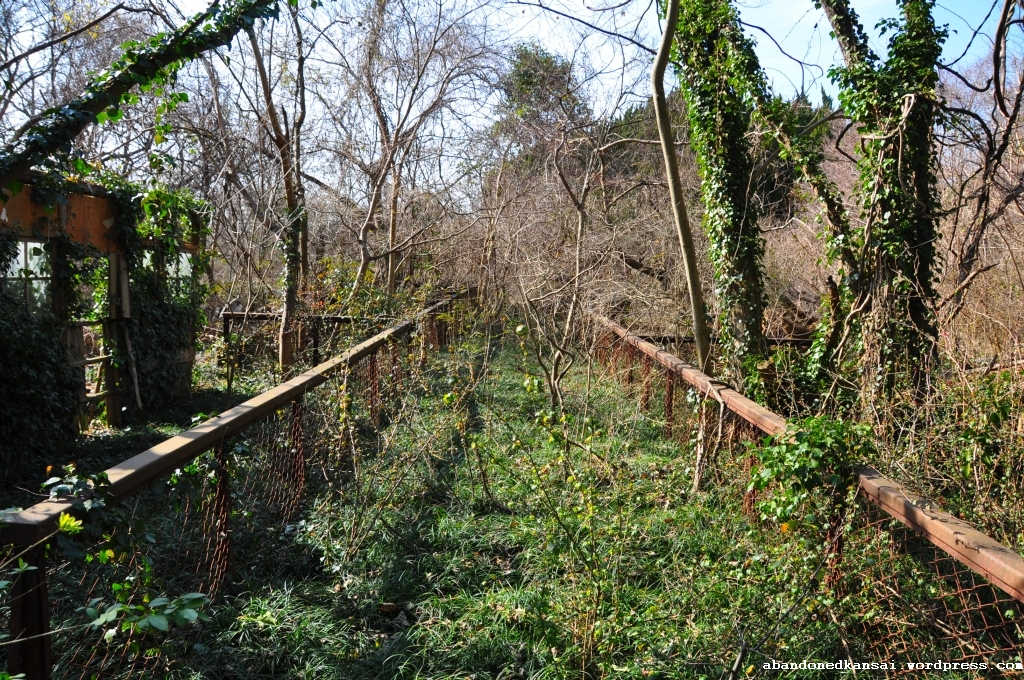
Located in a totally different area of the Hyogo countryside than “Doggy Land” the Takada Ranch Ruin was a samurai residence given up quite a long time ago – and that’s pretty much all I know about the place. I don’t even know if it’s the real name or if somebody made it up. But the sheer size of the property (including a huge and completely overgrown park) makes it highly likely that it was once owned by rich and powerful people.
Entering the Takada Ranch Ruin is as easy as it can be – it’s located along a rural road with no direct neighbors and the (former) entrance door is wide open.
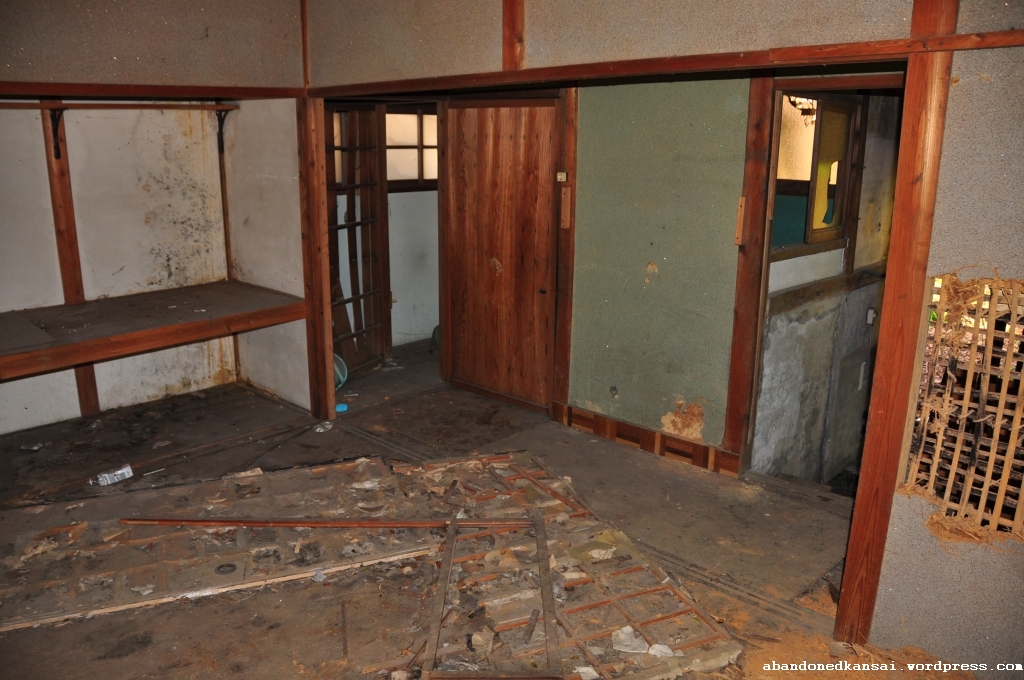
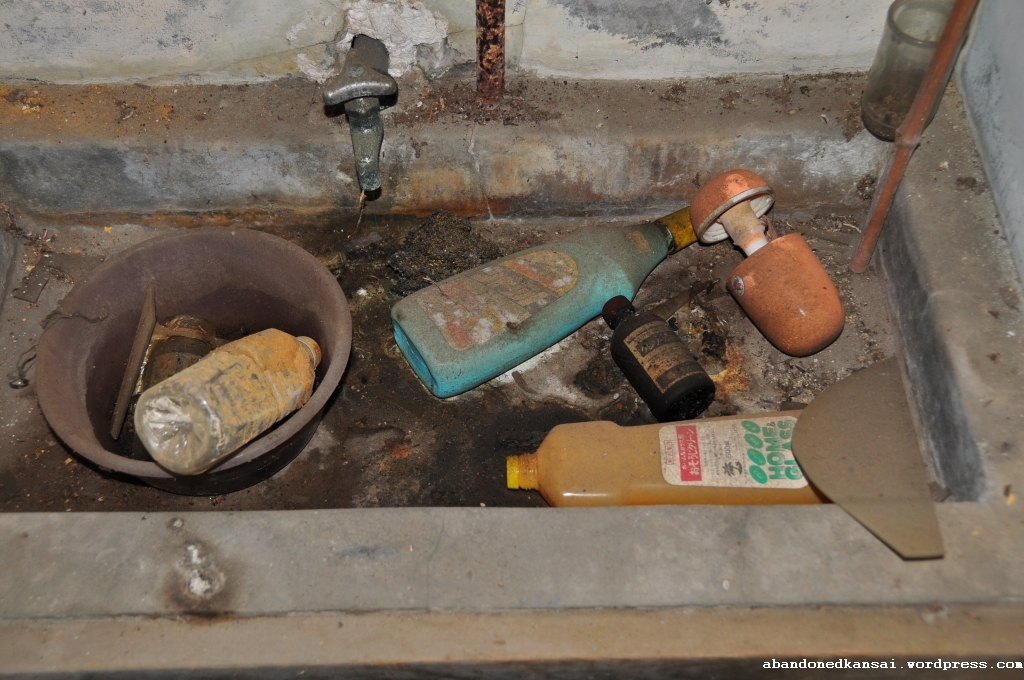
The first of several buildings on the premises set me back in time 200 years instantly – a long, not very wide wooden house along the road that looks right out of a samurai movie. Too bad it was partly collapsed and some rooms were filled with plastic trash bags, but it was still quite impressive. From there a path lead deeper onto the estate, with a small house to the left and several buildings to the right. The main quarters were quite big and must have cost a fortune to build. Now partly rotten they created whole movies in my head while I was carefully progressing across the wooden floors. I’m sure the buildings were constructed long before electricity was introduced to Japan as all the installations looked like they were added as an afterthought. There were only a few plugs and light bulbs – and the fridge in the kitchen looked very, very old.
East of this conglomerate of buildings I found a car wreck that was clearly put there long after the estate was abandoned – Japanese people love to dump their unused belongings like that as waste disposal can be quite expensive if done properly. Close to the car were two now completely destroyed buildings, one of them made of stone. While the existing buildings looked like they were vandalized (only by a very few people though and not as nasty as most other places), I’m sure those two constructions were torn down professionally. Why it was handled that way? I have no clue.
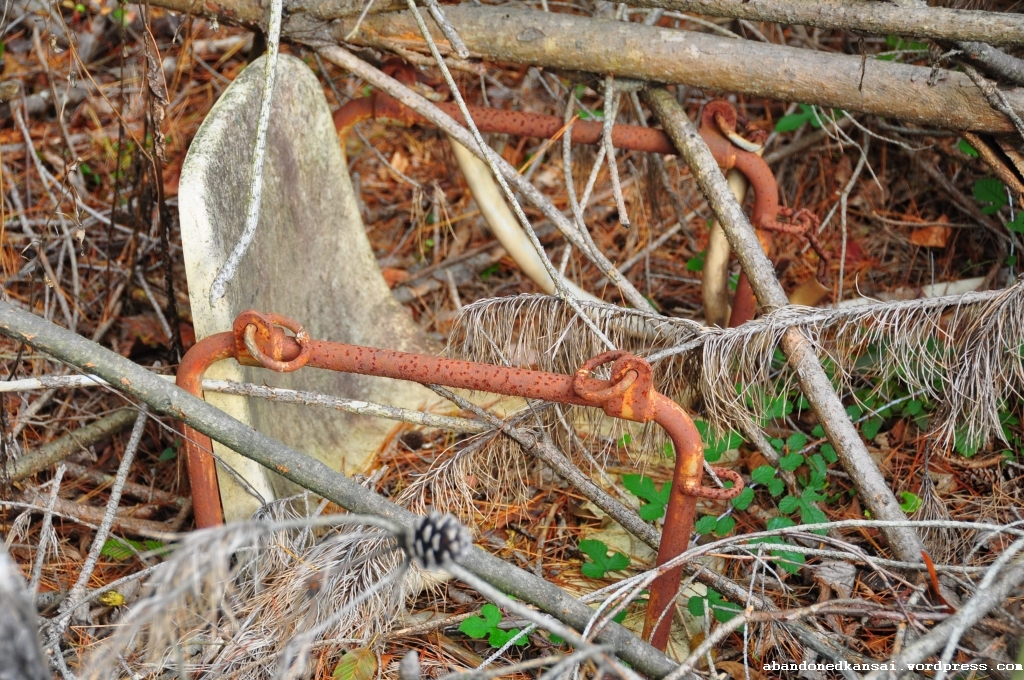
But it got even stranger when I progressed further. After I passed through a little forest I found some quite thin concrete surfaces and wall remains. Next to them were some weird metal constructions with the leftovers of a few wooden arbors. This whole area looked like it was destroyed a long time before the buildings in the front were given up with no debris to be found. But again I can only guess when that happened. Or what happened. Maybe the buildings were stables, maybe they were some kind of accommodation?
Although not very outstanding on paper (partly collapsed wooden buildings, all stone buildings demolished) the Takada Ranch Ruin instantly grew on me while I was exploring it – and it continued afterwards. The huge estate boosted my imagination like no other place before with its simplicity and history. To me it’s one of the few hidden haikyo treasures, one that gives you a glimpse at a time long gone; if you are patient enough to find the right spots to look at.
After about a dozen *haikyo* trips all on my own I took a dear friend and colleague to the Iimori Mine in Wakayama. Doing urban exploration on your own or going with somebody are completely different experiences with both advantages and disadvantages, so I was a bit sceptical at first – but now I have to admit that I prefer to go with company. Especially since Enric and I complement each other very well.
When we arrived at the Iimori Mine we were surprised to see that our destination was located in a beautiful mountainous area with lots of orange groves. Yes, orange groves. In the middle of the mountains. In Japan. In December! Stunned by the gorgeous nature we walked around for a while exploring the groves and looking for alternative ways to get to the mine: The straightforward entrance was blocked by a company and closed off by a barbwire fence to a water canal – at least we thought so…
We went up a hill and after an adventurous climb along a steep slope we made it to the second highest level of the mine ruins. There it turned out how good it is to have a partner who complements you. While I’m more of a planner who hasn’t climbed over a fence or even wall in about 20 years, Enric was totally fearless finding a way through the forest up the hill. I guided Enric to the mine, he guided me in.
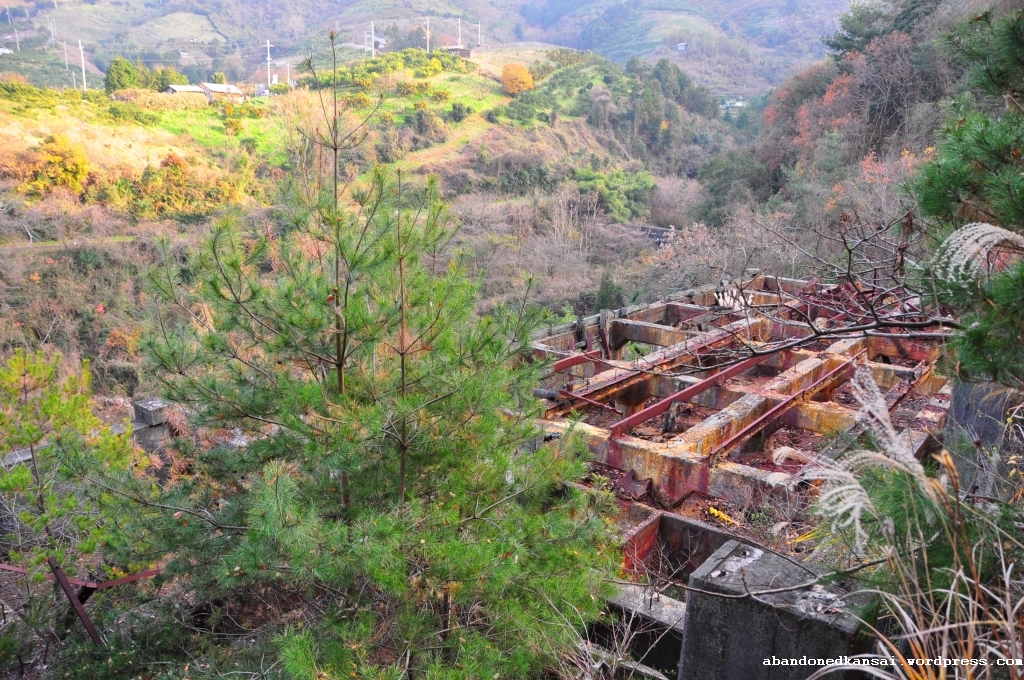
If you like taking pictures of rust and concrete Iimori Mine is the place to go! The amount of great subjects is almost endless and shooting took us quite a while. On the way back we had to get further up again and that’s how we made it to the top part which offered a stunning view down the valley. By that time it was already afternoon and since the sun goes down rather early in Japan we decided to call it a day.
But the fence bothered me… Since we only reached the upper parts of the mine I wanted to have at least a quick look at the barbed wire fence – which turned out to be a good idea since the fence not only had a gate without barbwire, but it ended 30cm before it reached the water canal – so you can easily walk around it! Another example of great Japanese planning… For once not being afflicted by it, we took our chances and entered the lower part of the mine although the sun was already setting.
While the upper part was all about concrete and rust, the lower part was more about concrete and jungle. The vegetation there was pretty thick even in the middle of winter and at a certain point I had to give up to advance further – partly because of the climbers and trees, partly because it was actually getting dark.
When I looked for historical information about the Iimori Mine on the internet I was disappointed to find barely anything. No longer texts, no pictures. All I know is that it was an iron sulphide mine opened in 1878, bought by Furukawa Mining in 1918 and closed down in 1970.
Overall the Iimori Mine is a great urbex destination. Beautiful location, completely different looks depending on the way you approach it and an endless amount of pictures to be taken. On the downside there are no real buildings left – just a wild construction of concrete, metal / rust and (partly burned) wood. (Even vandals spare the place since there is barely anything left to be destroyed without a serious amount of dynamite.)
In case you are an urbex newbie going on your own, I would recommend to gain some experience first – the Iimori Mine is a dangerous place and should be approached with respect. Especially in summer, when it seems to be infested with snakes…
It’s obvious that I post my urban exploration experiences not in chronological order and this time I will jump back to the very early days: My first indoor haikyo. The One Dragon Hotel is another internet favorite located in the southern part of Osaka. There are not a lot of known facts about the place – nobody seems to know when it was opened up or closed down. But there are the usual rumors of financial problems and the owner committing suicide. A classic you can hear about pretty much every closed hotel in Japan.
Since the One Dragon Hotel is built partly over a lake and the sides are blocked by fences protecting private property the only way to easily enter the place is by sneaking in through the back via a park. And although I went there on a very sunny day the place was pretty scary. The common way is to enter through the basement into a rather dark corridor, only lit by a few windows to the north. Like I said, this was my first indoor exploration, so every step was a new experience. Since I went alone and had neither an experienced guide nor an equally unexperienced friend at my side horror was lurking behind every corner; at least in my mind. It’s funny to look at the pictures now, remembering how I felt when I took them.
The One Dragon Hotel must have been shut down about 25 years ago and its location so close to a lake left it with lots of rotten components. Furthermore it was mentioned in “the book” (Nippon No Haikyo, one of the few books that include more or less detailed maps), so its location is known to a lot of people, even those who don’t consider haikyo a regular hobby. It’s not surprising that the place attracted a lot of vandals – most floors and ceilings are ripped apart, a few rooms were set on fire and the hallway to the shared bath collapsed. Maybe I was overly cautious back then, but I remember the One Dragon Hotel being in pretty bad shape.
I’m sorry to say that the pictures quality isn’t that good this time – my camera was brand new and I had barely any clue how to use it… so this is a real rookie posting. The next one will be more exciting, I promise!
(Most search engines referring to this blog usually end up up here, although the main article about Nara Dreamland is considered the *Nara Dreamland Special* by now. For a look at the area around Nara Dreamland on GoogleMaps, including some fancy icons linking to articles on Abandoned Kansai and videos on YouTube, please *click here*.)
Initially I planned to do a three part series about the Nara Dreamland without giving away too much about its location since it’s considered something like the last holy haikyo cow. But due to events that may or may not be related to a recent blog post I decided to not do that. I’ve heard that the owner(s) of Nara Dreamland don’t want to have pictures taken by trespassers a.k.a. urban explorers to avoid attention on the internet. Something I totally understand and basically respect. But respect is a mutual thing and that’s why this blog entry will be a bit different than usual. Nara Dreamland is really one of a kind – the place as well as this blog post. (Don’t expect something similar here too soon…)
But what is Nara Dreamland? Some would describe it as an extremely cheap copy of Disneyland. More or less successful for the first years of its existence it was annihilated by Universal Studios Japan in Osaka and closed in 2006. It seems like people hated the place and considered it abandoned even before it actually was – these guys say “it’s an ugly, disgusting, abandoned looking theme park ” and even call it “a total dump”: http://www.themeparkreview.com/japan2004/nara1.htm
Since it closed down Nara Dreamland actually became more and more popular – as an abandoned place on the internet. Since I would never enter this huge abandoned and apparently untouched amusement park I can only show you what other people found when they went there: http://tw.silk.to/am/dreamland/dreamland__20060610/index.php (Oops, this set of pictures was taken when the park was still open – but who can see the difference anyways…?)
(If this material was created by illegally entering Nara Dreamland I totally distance myself from it as they obviously disrespect the owner’s wishes! But I guess those people asked for permission in advance…)
If you want to go to Nara Dreamland please go ahead. But be aware that people say that the security there is tight. The whole park is surrounded by fences, most of them with nasty spikes and rusty barbed wire. There are talks about guards patrolling the area and there are motion detectors yelling automatic messages at you – scared me half to death when I was walking along a public street (!) around the northern part of the park, just minding my own business. I don’t know if those installations are inside the park, too, since it is so obvious that people are not wanted there… now even less than when the park was still open for business.
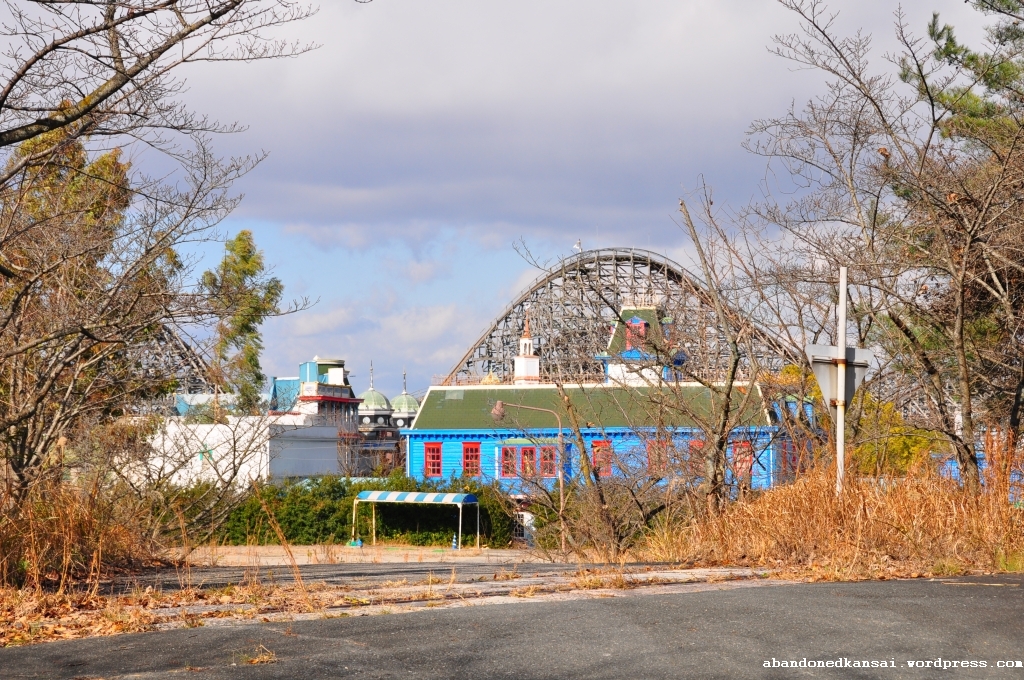
Oh, and at the eastern parking lot there are the main entrance and several buildings. The area has no fences, only some ropes preventing people from entering. Since it’s still private property of course I didn’t cross the ropes, but the northern building looks interesting and like a place worth checking out. Especially the observation tower part is very tempting and must offer a great view. I would never enter the building since the owner doesn’t want to draw attention to it. And by it I mean Nara Dreamland in Nara city, Nara prefecture, Japan.
To bring this joyful entry to an end I’ll present you some pictures I’ve taken back in December – all of them were taken from public roads; there was no trespassing or any other illegal activities involved! Enjoy… And if you go to Nara Dreamland, the most fascinating abandoned place in Japan, remember one thing: It’s all about respect!
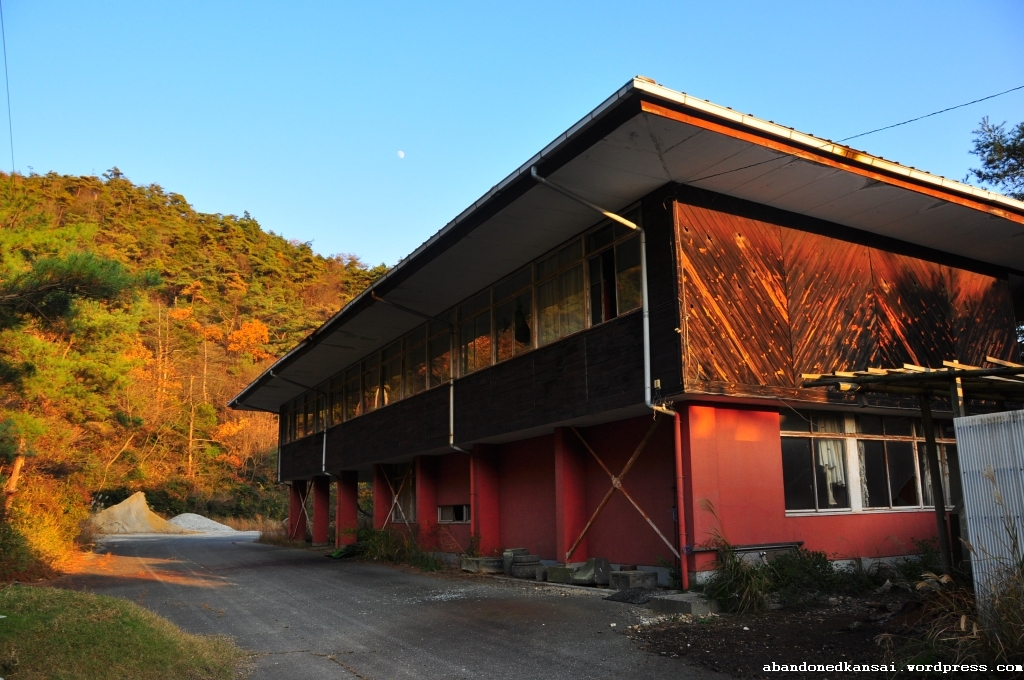
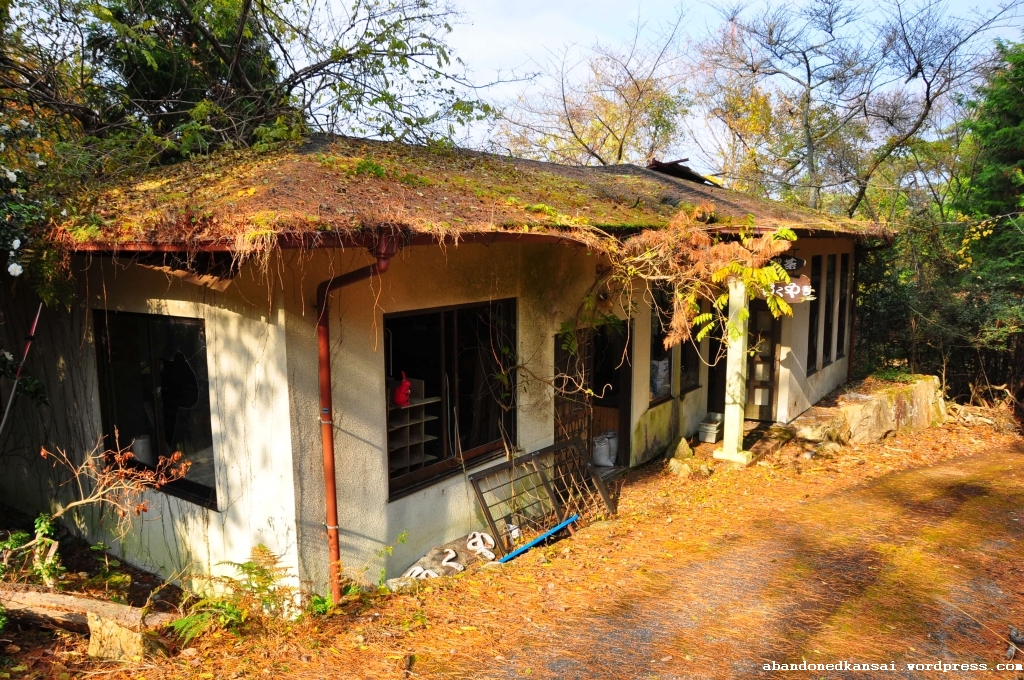
After I finished shooting at the Koga Family Land I walked back along the street that surrounded the Koga Country Club at the eastern side. I knew from a Japanese map I found on the internet that there must have been another haikyo nearby, some kind of club / guest / employee house. Unfortunately the person who marked the map missed the spot, so I had to look around for quite a while – but in the end I was rewarded with a haikyo I only saw a small picture of beforehand since it is widely ignored by the usual crowd visiting Family Land.
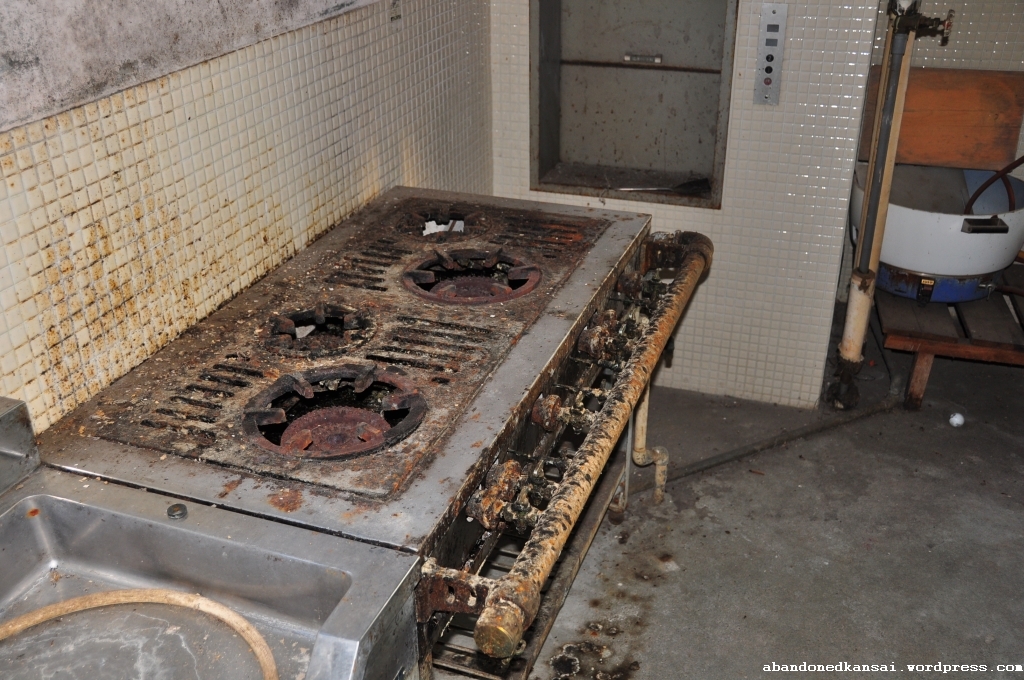
Although I spent almost an hour taking pictures and videos at the place I’m still not 100% sure what the building was used for exactly. Right at the (open) entrance were dozens of shoes lockers and a vending machine. From there I went to a private bed room (maybe the quarter of a caretaker?), a staircase to the second floor, another small antechamber with doors to five (hotel style) rooms, a washing / rest room – and to the left I found a dining room and a kitchen. Going up the stairs there was a pretty big open space, some kind of lounge for the people staying there, now completely empty. To the left was a hallway with about 10 rooms, to the right two more rooms (one of them locked) and another washing / rest room. From the lounge you could go outside on a terrace – now filled with lots and lots of furniture.
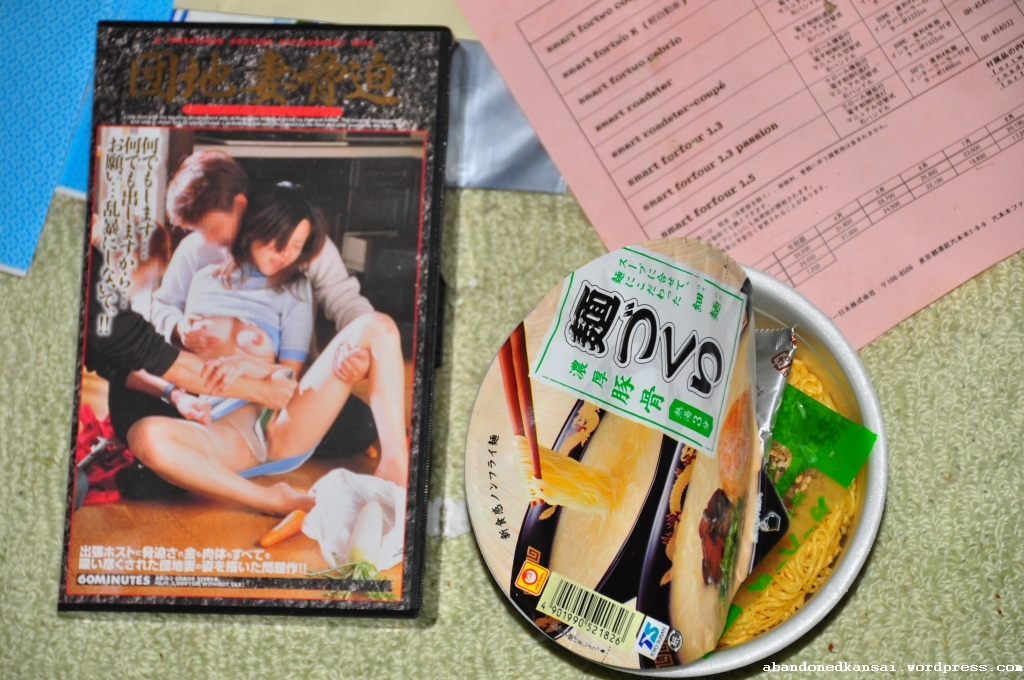
Overall it was an average haikyo, I guess. But I nevertheless liked it since the building wasn’t vandalized at all and in decent condition – and since it’s very close to the mostly demolished Family Land the combo is definitely worth a visit. I just still wonder why there was an open package of instant noodles next to a porn video in one room…
(Addendum 2012-02-06: I just added the video walking tour – I never intended to publish it, so please don’t get your expectations too high. This was one of the first videos I ever took…)
Well, kind of. Sort of. It had to happen sooner or later, but finally I got caught by a pitbull like person during one of my explorations.
First of all I have to say: It was my own fault. You always risk getting caught by somebody when doing urban exploration as it is technically trespassing. (I guess…)
But most places are far from civilization and closed for monetary reasons, so nobody really cares – only a few owners hire security and that’s when it gets risky.
I enjoy urban exploration because I like old things and photography. I’ve studied history and I take pictures to keep the memory about those places alive. I don’t destroy things and I don’t want to hurt anybody’s feelings or property. I just come, take pictures and go – and publish the photos on the internet so other people can enjoy those places, too. If somebody doesn’t like that then just tell me, I delete the memory card of my camera and go home. No problem. I’m not a troublemaker.
Recently (well, very recently…) I went on a haikyo trip and while I was taking pictures minding my own business a guy in a white minitruck almost ran over me. I ignored him making my way towards where I entered (trying to avoid trouble…), but of course he jumped out his car and ran after me. He yelled at me in a strange mix of Japanese and English: What I was doing here, that this was his place and that I should be quiet – and of course he threatened to call the police, like, in every second sentence. Totally puzzled I tried to calm the guy down, but he got right into my face yelling like a mad man. He didn’t get violent, but he clearly was in a big rage. He asked me where I was getting in – I told him that I would show him and slowly went to direction I came in, away from his car, but he stopped me.
He demanded my camera. I didn’t give it to him. Then he wanted my memory card. I didn’t give it to him either, but I apologized (several times at different points in the “conversation”…) and offered to switch the camera to Japanese so he can see that I will delete the pictures. (Which I gladly did since I wasn’t there alone and actually took pictures of a friend – who, to my joy, escaped and with him the pictures he took.) But to my surprise neither the apologies nor deleting the pictures did calm him down. He still wanted my name (surprise, I didn’t tell him), threatened to call the police and demanded that I would go with him in his car. At that point he turned his back to me walking a few steps towards his car – and I ran. I ran like I was never running before in my life. Then I jumped over the next fence (since he was in a car…) to a public street and got away without looking back once.
Like I stated earlier: I shouldn’t have gone to the place I went to and there is no discussion about that. But there are several ways to handle things. One is to be calm and talk to each other like civilized people – or you can go ballistic, yell, threat and treat the other person like shit… Too bad Japan took over two things from Prussia without changing them in 150 years: Medicine and the way to deal with people – to crawl the bigwigs and to bully the underlings. And it seems like trespassing foreigners are kind of the definition of “underlings”…
(BTW: Did you know that “doctor” and “butcher” are the same word in Japanese? Okay… that’s not true, but it could be! Should be…)
Addendum 2010-02-07: Now that I think about it… I actually ran into security twice before. Once at the already posted Koga Family Land, another time at the Osaka Expoland. But I never felt “busted” or even unpleasant, most likely because on both occations there was no yelling or threatening involved. The guy at KFL was nice and I left “his” property according to his wishes to find another way to get to my goal. The other guard I met was actually super nice – and he had every opportunity to not let me leave. I guess overall Japanese security people are not that bad. Nice guys: 2, Pitbulls: 1…
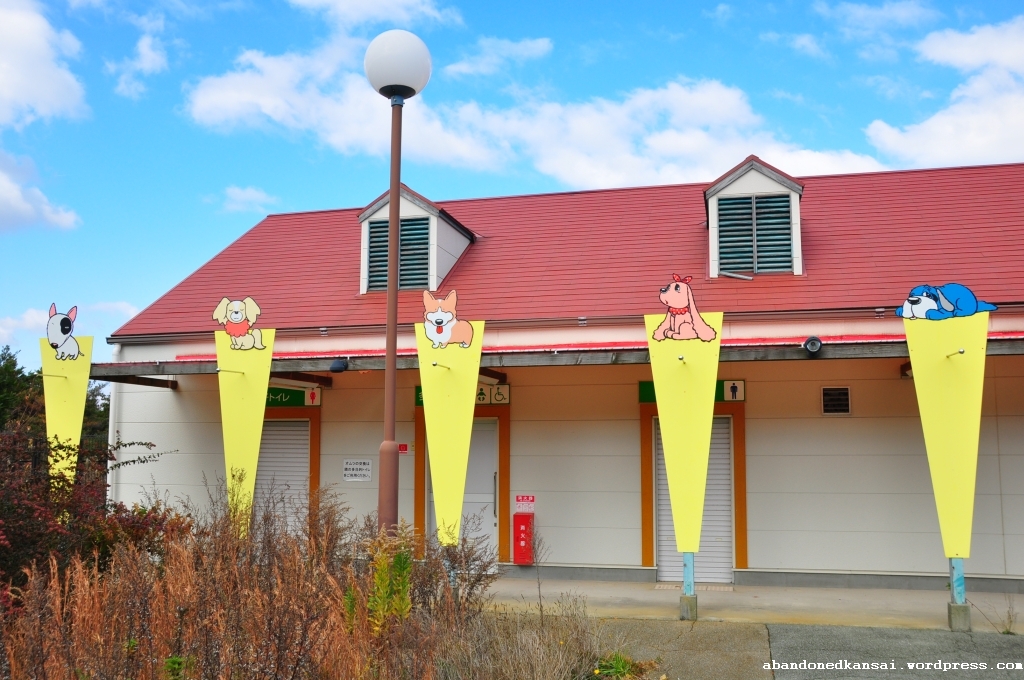
My first visit to the “Doggy Land” in early December was abruptly ended when the police showed up to re-enact a car accident. Seven weeks later I came back to finally have a closer look at that strangely fascinating dog theme park that was opened in the summer of 2001 and closed in the summer of 2008.
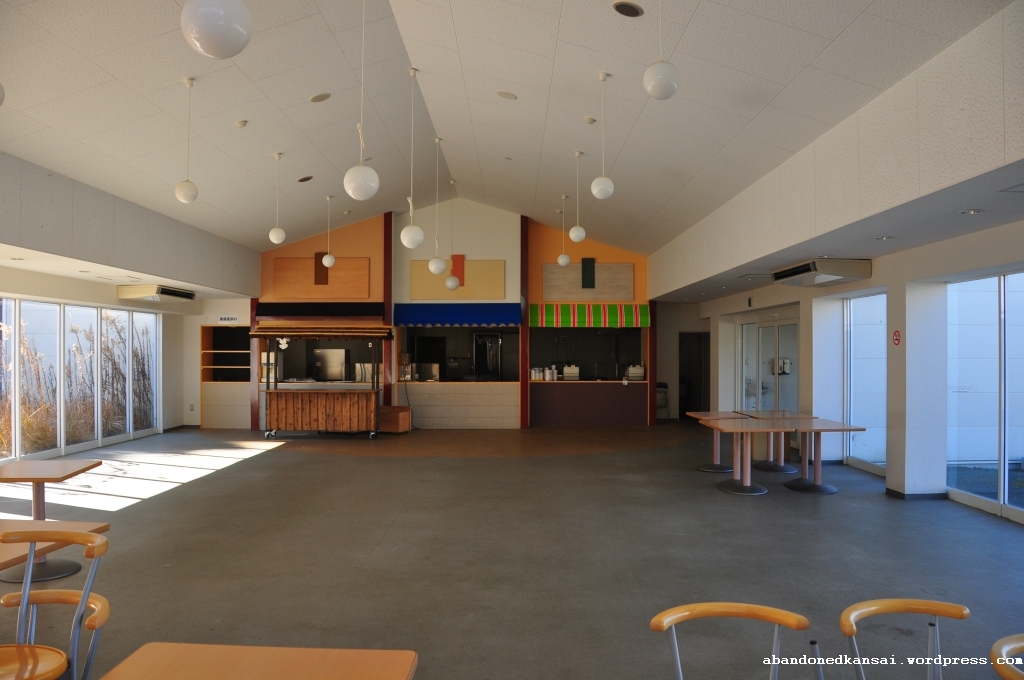
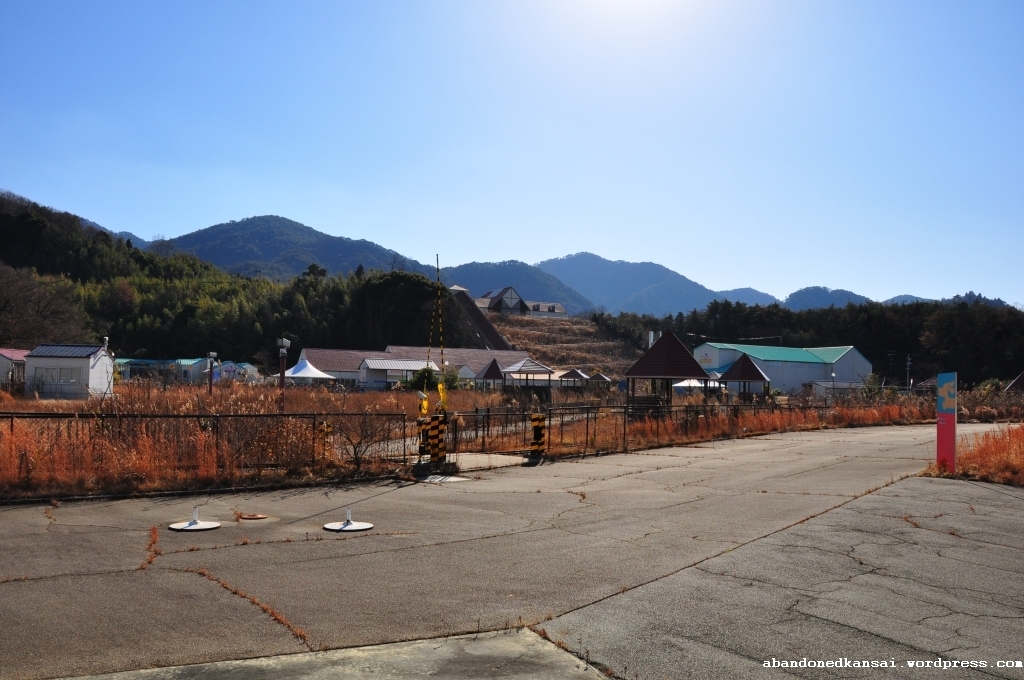
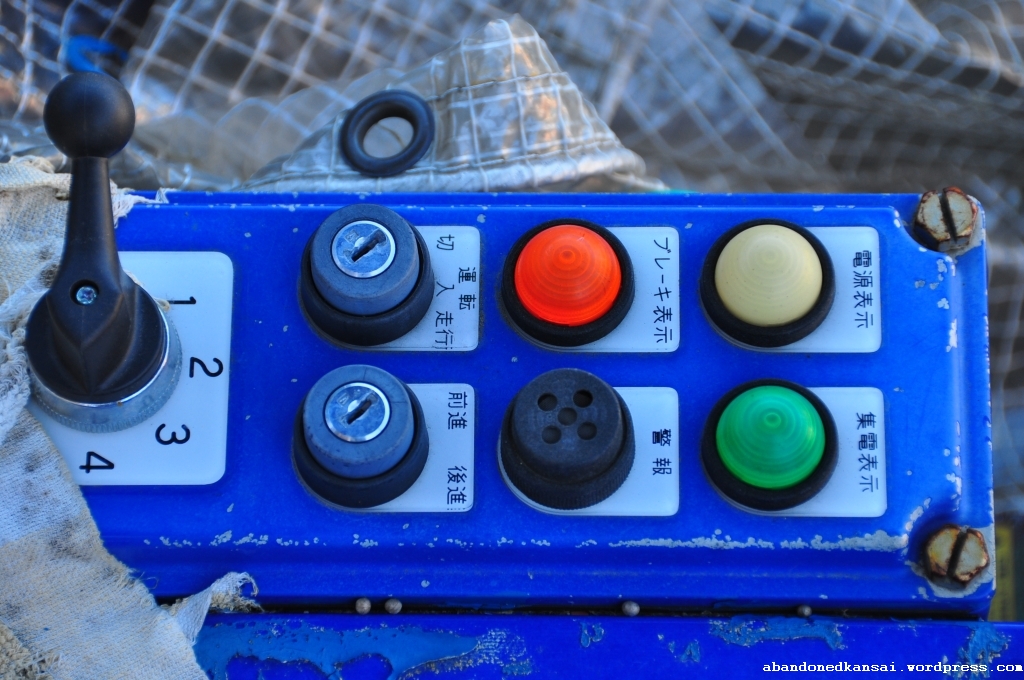
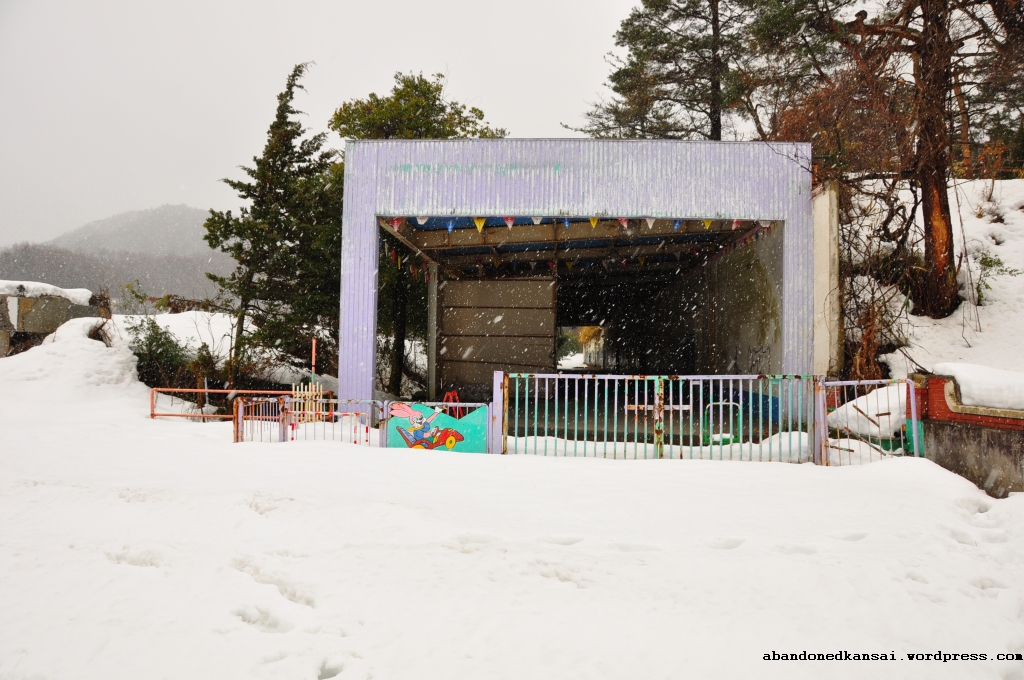
Entering “Doggy Land” is as easy as it can be, at least by theme park standards. Unlike other parks “Doggy Land”‘s fence has no spikes or barb wires, so there are several locations where you can enter easily and out of sight of the surrounding streets. Overall the park is in great condition – no vandalism and only a few rusty spots here in there. Since it’s closed for only about 1.5 years and barely known to the internet there are no graffiti, no broken windows or mirrors.
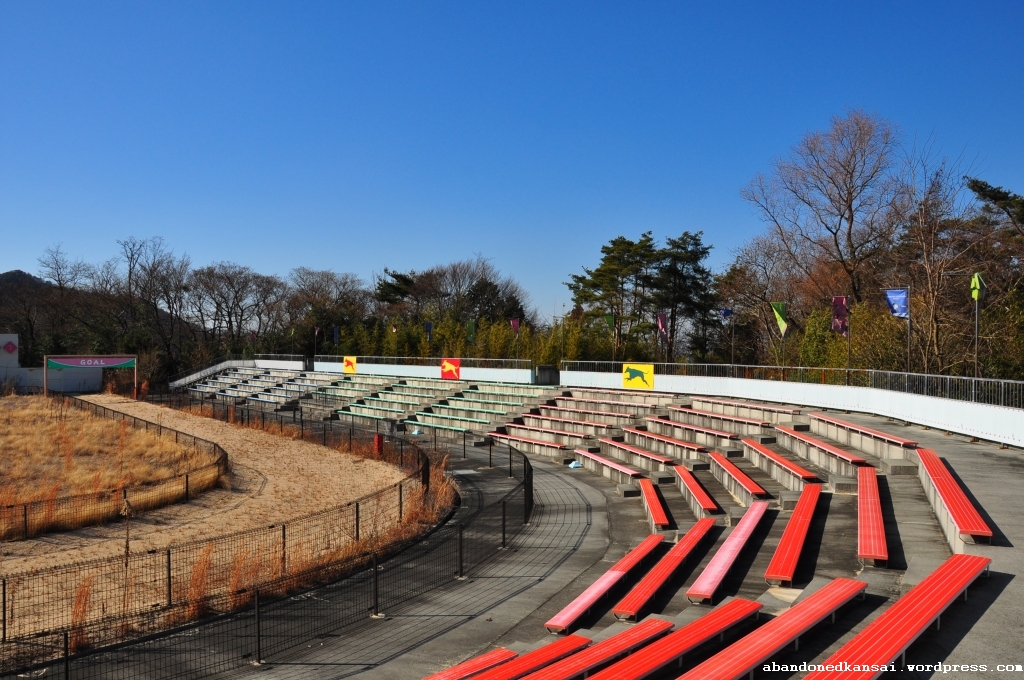
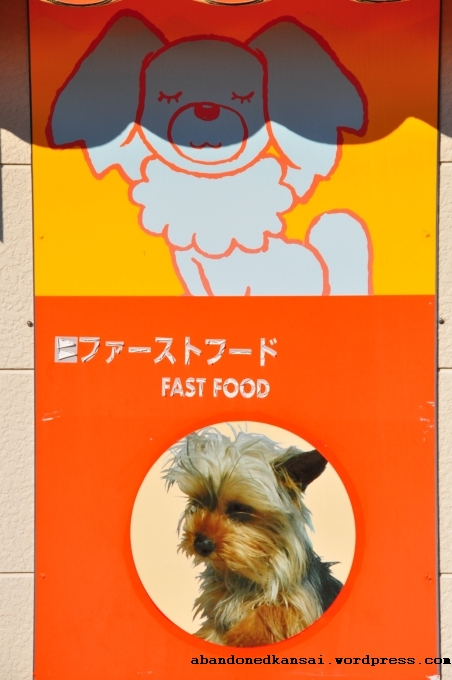
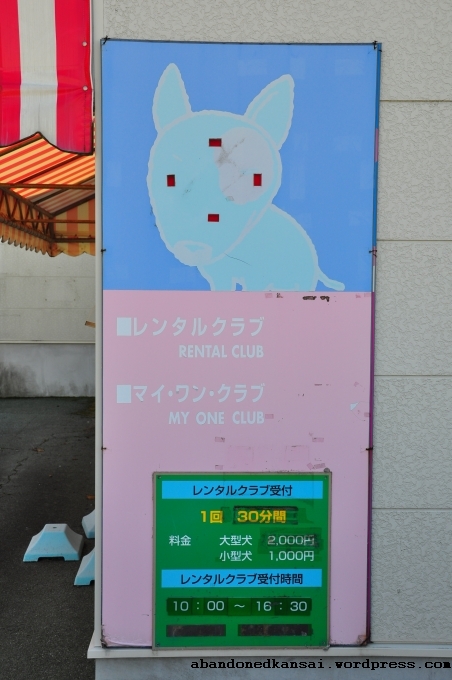
But what is “Doggy Land” exactly? Well, it seemed to be a theme park for people who love dogs. There is a dog cinema, a dog train, a dog racetrack, a restaurant and a snack bar, several educational signs – and even a place where you could rent a dog to take a walk with. I’m not sure if you were allowed to bring your own dog as information about the place is almost nonexistent.
But I seriously wonder what people would do there. Sure, you can rent a dog for 2000 Yen / 30 minutes and go for a walk. Watch a dog race at the awfully small racing track. But what would you do for the rest of the day? If you combine the amounts of eateries and restrooms they almost outnumber the attractions “Doggy Land” had to offer! I guess people thought the same and that’s why the place closed down after only 7 years…
I recently stumbled across Sekigahara Menard Land again after seeing pictures a while ago; it opened in 1972 and was closed in 2000 – at first under the pretext of renovating it; 3 months later it was closed for good. This time the pictures came with a map, so finally I had the exact location and although I’ve read it was destroyed I thought: “Great! 2 hour train ride, 1 hour hike – nice and easy Saturday trip!” Man, was I wrong…
Living in the Osaka area snow becomes little more than a memory. It snows on maybe two or three days a year, but it hardly ever sticks to the ground. 5° Celsius is considered “really cold” by the locals and overall Osaka winters don’t deserve to be called winters.
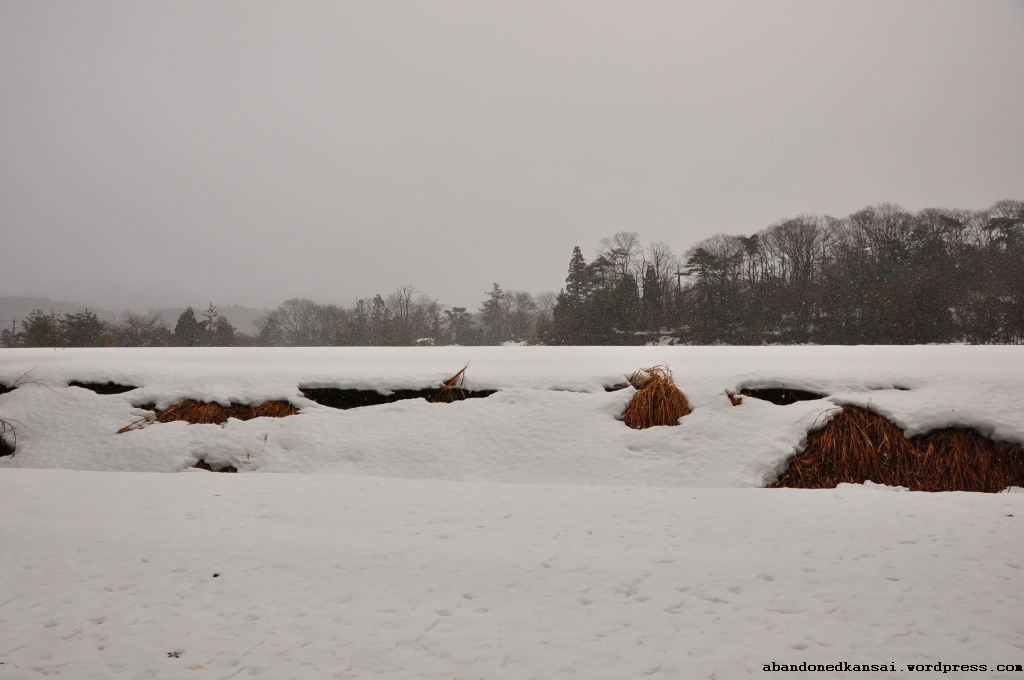
When I started my little Gifu vacation it was about 10° Celsius and sunny outside, perfect for the usual T-shirt and leather jacket combination. Reaching Lake Biwa the sky became cloudy and when I started to head east patches of snow were lying on the ground. When I arrived in Sekigahara I was welcomed by the iciest snow storm I experienced in years – horrible weather. After about an hour of walking along country streets I finally reached Menard Land, freezing like hardly ever before…
Entering was as easy as it can be, if you ignore the fact that the snow was about 20cm high even right along the street leading to SML; I was never that glad to wear hiking boots on my explorations. The few remaining fences can be passed on the side, but there was not a lot to see – except for lots and lots of snow. The entrance was quite disappointing, even the buildings I saw on the satellite pictures were gone. I followed a former maintenance road / hall and a way uphill to the right where I assumed was the main part of the park. That turned out to be a dead end: After I sank about 50cm into deep snow several times I gave up since I had no clue what was under the snow, if the way I assumed underneath would lead somewhere, and what was left of SML anways – especially after the entrance was very discouraging.
3 hours to get there, 10 minutes of taking pictures… great.
But it got worse. Completely wet from the snowstorm (it came down almost horizontally!) and sinking knee-deep into the snow I decided to go to another station just so I didn’t have to walk the same way back – not a smart decision since that other station was further away and made me walk along a highway. When I reached the other station more than 1.5 hours later my umbrella was destroyed, I was soaking wet and my hands were stiff from the ice cold wind. Of course the waiting room at the station was closed so I had to wait another 25 minutes in the chilly weather for the train to come. And it was no surprise that only 2 stations later the sun was shining and the weather was great…
Hiking in the snow was kinda fun, except for the fact that I wasn’t prepared for it at all. But overall the whole trip was a total disaster – especially in winter Sekigahara Menard Land is a total dud! (I might come back in summer though to find out if there is still something left behind the little hill that was covered by half a meter of snow… maybe with a quick sightseeing stop in Hikone.)
Oh, and by the way: Technically this haikyo is in the Chūbu area of Japan, but from Osaka it’s way easier to reach than certain places in Wakayama or the northern parts of Hyogo and Kyoto prefectures…
Addendum: In spring of 2010 I went back to Sekigahara Menard Land – you can read about it here.)
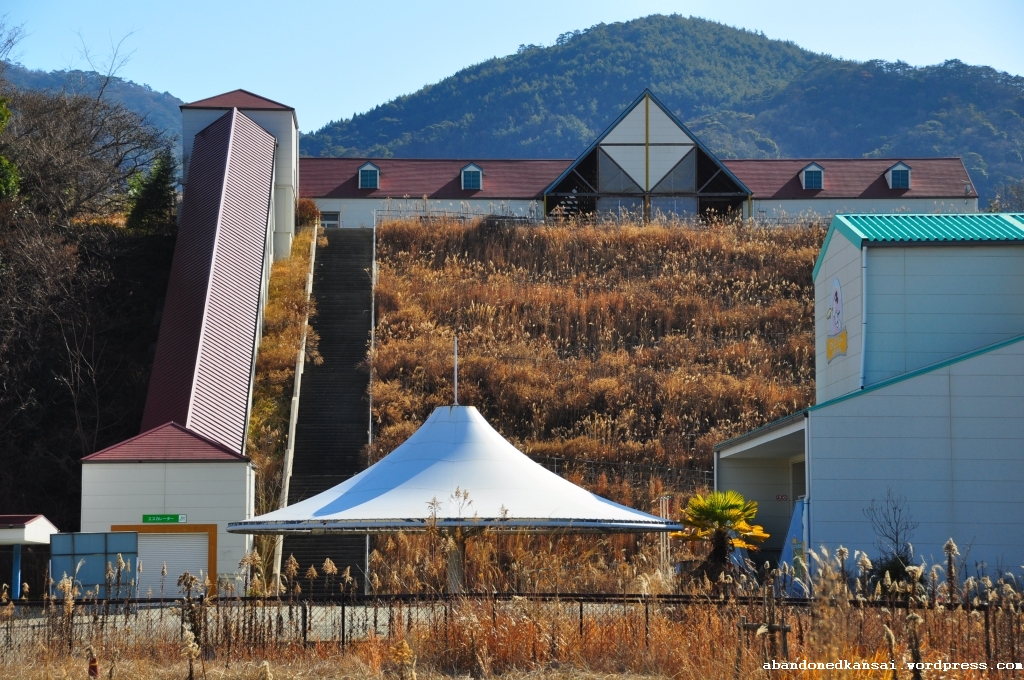
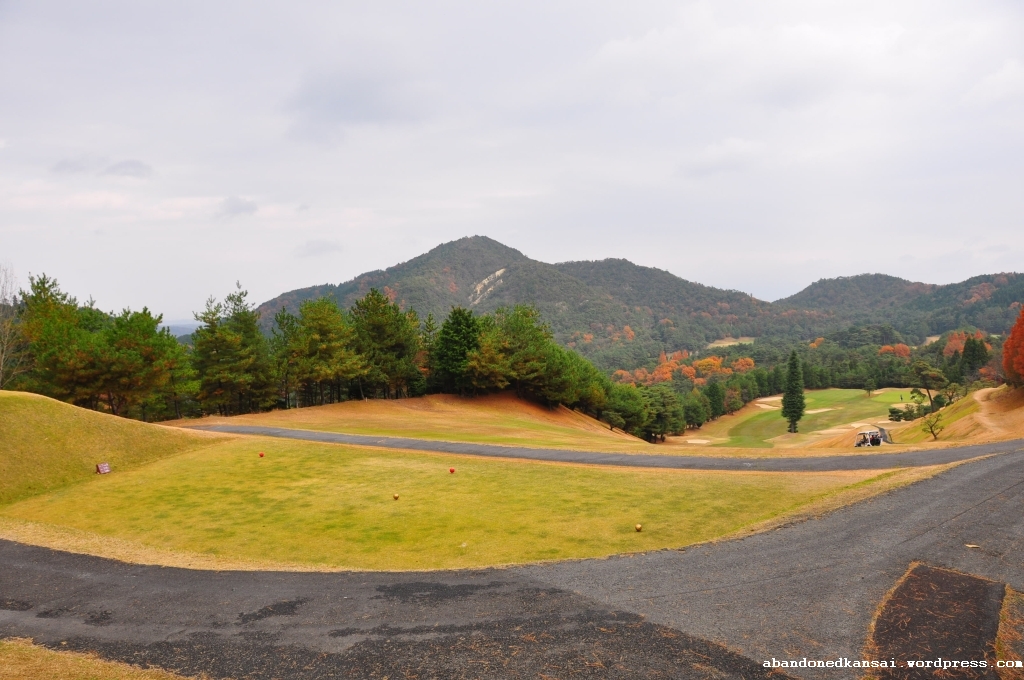
Koga Family Land (thanks to weird transcription of the original Japanese also known as Kouga Family Rand) in Shiga has the reputation of being one of the most impressive and most documented abandoned places in Japan. Well, I guess it’s more correct to say it had that reputation, because of after more than 20 years of quiet decay this once so strangely beautiful place was torn down and ripped apart towards the end of 2008 – there are claims that the owners were worried about the dangers to people visiting the place, but I think they were more worried about the golfers having to deal with people walking on their private property along a street passing by several holes. Yes, the golfers. Koga Family Land is located in the southern part of a country club, surrounded by mountains from all other sides – the only way to get there (without sliding down some hill as described later…) is by passing through the same entrance the pink polo shirts wearing men in their best years are using. No problem while the park was open, big problem now.
So after I hiked along a country road for a few kilometers I reached the country club and walked along the street surrounding the golf course to get to Koga Family Land – or what I hoped was left of it. After about five minutes a friendly young man in a golf kart asked me to leave: Private property. Although my knowledge of Japanese is little of course I understood what he wanted. And even pretending not to, claiming in English that I’m just a hiker that lost his way, didn’t help. He insisted on me leaving. So I went back to the country road and followed it for a few kilometers in hope I could find some kind of back entrance to the KFL – without success. On my way back I heard some golfers and saw a steep slope and a little river separating me from the country club. Well, if you don’t let me in using the front, I have to use the side.
So after a fun but slightly dangerous slide down and finding a ford through the river (okay, it was a small river…) I was finally back on the property of the country club. After hiding from the golfers for quite a while I was like “Screw it!” and walked right across the golf courses – since I lost orientation and only assumed where the remains of the park could be I had to take measures into my own hands. The result was quite a few disturbed faces clearly displaying one question: “Who the f* is that f*ing foreigner and what the f* is he doing here?!” To my surprise no security people showed up and it seemed like the golfers were way too scared of me to approach me. After about 15 minutes I disappeared along an asphalted way to the south – I finally found some signs of the park. Or at least I thought so.
It took me another half an hour to find actual remains of Koga Family Land as the rumors on the internet proved to be right: It was almost completely destroyed. At first I only found some moorings and small piles of garbage (one with the seat of a merry-go-round) – and a confusing maze of ways. No signs, no buildings, no rides. Just nature taking back an area that once was an amusement park. Luckily two of the park’s buildings were not made of the light materials usually used in Japan – they were made of concrete and I guess therefore too expensive to be torn down. And who would come to see two buildings when you know that there was a whole park once? Well… I would!
Sadly enough exploring those two buildings was not nearly as exciting as finding them.
The first one I saw (and entered) was a souvenir shop, the price lists still on the wall. Filled with all kinds of signs from the golf course and the former theme park it was in pretty bad shape – especially the cafe part of it, where the wallpapers were molding and falling off the walls.
The second building seemed to be a restaurant once with quite a big dining room / photo exhibition hall on the first floor and a pretty stuffed second floor – including a kitchen, all kind of furniture, rotting blankets and pictures painted by kids.
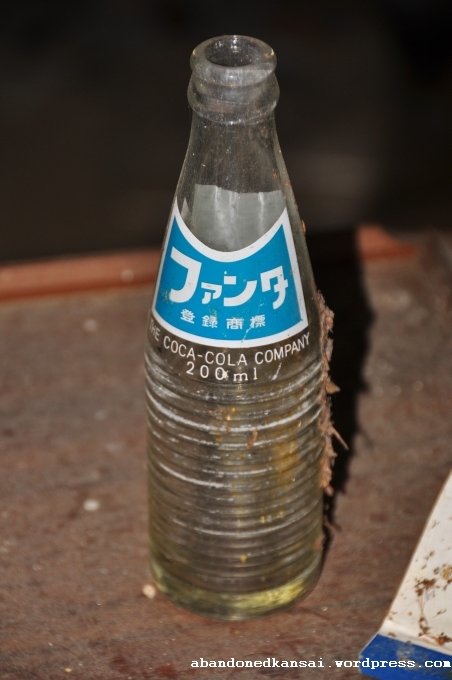
What I love about abandoned places is finding elements of daily life, so I was very happy to take pictures of an empty soda bottle. It’s the little things that make certain visits worth!
After leaving the second building I strolled around in the area with high hopes to find more remains of park, but I was diappointed. So I went back to street surrounding the country club I was hiking along for five minutes some hours ago. This time no guy in a golf cart showed up to give me a ride to the main street. Which turned out to be very good for me as I stumbled across another abandoned building on my way out – belonging to the country club and way more interesting than the KFL buildings. But that, dear reader, is a story for another time…
Urban exploration usually means visiting places that many people have been before – in most cases those ruins are off the beaten tracks and therefore hard to find. Some places are well known on the internet, some are not. But in the end most of them have pictures and maybe even a description online or in a book – and that’s the way most explorers find out about them.
When I did the bulk of my haikyo research in late 2009 I followed all kinds of hints on the internet to find places I could go to. Sometimes I found names, sometimes descriptions. Most of the time pictures, barely ever the whole package. With “Doggy Land” (not the real name) it was even harder. I had barely any information about it, not even what kind of place it was, but thanks to GoogleMaps I had a vague idea of where it was – so I went to the Hyogo countryside to find out. And I guess I was lucky as the place still existed and was nowhere covered with pictures and reports on the internet, neither the English speaking nor the Japanese speaking. Not even from the time when it was still open for business.
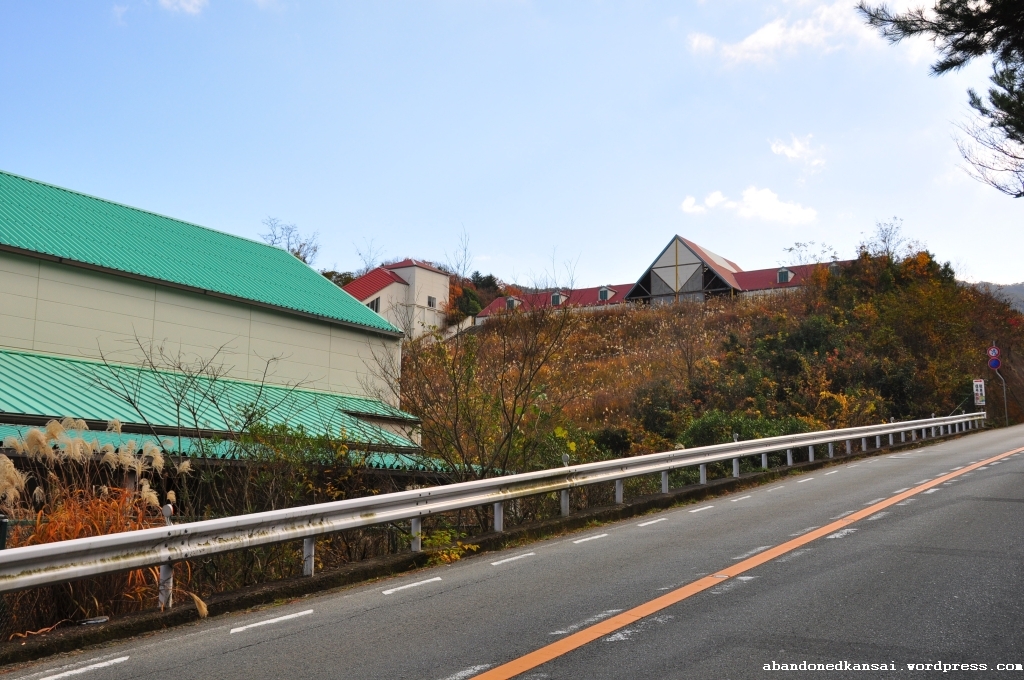
Although the next city is a bit away, “Doggy Land” isn’t easy to enter as there are several roads surrounding more than half of the place, all offering a good view at the whole site – and there is a toll road exit not far away, so cars are passing by almost constantly. Right when I finished checking out the surrounding area the police showed up – I literally had to get my hands off the fence I was about to climb over. Luckily they didn’t come for me, but to re-enact a car accident or something. Since there was no end in sight after 20 minutes I gave up and went home – but I’m looking forward to going back there. Until then I’ll share some pictures I took from the outside.
EDIT: For more “Doggy Land” please click here. (Yes, I went back…)


































 Abandoned Kansai