Feeds:
Posts
Comments

Archive for the ‘Amusement Park’ Category

I have been to North Korea!
Not a lot of people can say that – probably not a lot of people want to say that. I am actually pretty sure that I scared away a couple of dozen readers just with the headline; and I probably will again during this upcoming series of articles about my recent trip to North Korea from April 27th to May 4th – most likely including the few North Koreans with internet access. I know I already pissed them off by continuously referring to the Democratic People’s Republic of Korea (DPRK) as North Korea, a term not much liked in North Korea… North Korea, North Korea, North Korea – Jehova… Jehova… Jehova…

Growing up in a divided Germany I’ve been interested in Korea as long as I can think, and that curiosity continued to grow step by step. Reading George Orwell’s Nineteen Eighty-Four and Aldous Huxley’s Brave New World, going to *Pripyat & Chernobyl*, exploring an *abandoned North Korean School* in Gifu prefecture. Nevertheless I was hesitant going there for years, mainly because of two reasons:
1.) I didn’t want to support the system with foreign currencies.
2.) I didn’t want to travel a country struck by famines.

North Korea Countryside DPRK Countryside

The economic situation in the DPRK is rather dull due to lack of useable land (most of Korea is rather mountainous), skilled labor, energy and means of transportation – and of course the international sanctions don’t help at all… Even if the government is able to scoop up some oil they have to pay in advance in US Dollars, so the country is desperate for foreign currencies – and I was hesitant to support the system with mine. Which only makes sense if you don’t think much about it, because tourism doesn’t keep the country running. About 3500 Westerners a year visit North Korea, but even if each one of them ends up spending 1000 Euros (which is way too high as some tours don’t even cost that much!) it would mean that the DPRK would have a tourism revenue of 3.5 million a year; minus their costs. Most ski villages in the Alps make more money than that! I highly doubt that you’ll be able to finance 1.2 million soldiers and a nuclear weapons program with that amount of money – with the *200 billion Yen Japanese pachinko players transfer indirectly every year* on the other hand though… (That’s 2 billion US Dollars or 1.5 billion Euros!)
The food situation though was harder to dismiss and I still kind of have a bad feeling about it. According to international statistics the food supply situation in the DPRK improved massively since the mid-90s when hundreds of thousands of North Koreans died due to famines, but the country is still depending on food imports (so is Japan, which is lucky to be able to pay for the high quality deliveries and doesn’t have to rely on handouts). I don’t know exactly where the food we were given came from, but I hope it was specifically imported with the money we paid for the trip, *like the meals that I had in Chernobyl*. But even if not 3500 tourists a year won’t make much of a difference – the amount of food thrown away in restaurants in Dandong right across the border between China and North Korea (and all over the industrialized world for that matter…) actually disgusts and worries me much more by now.

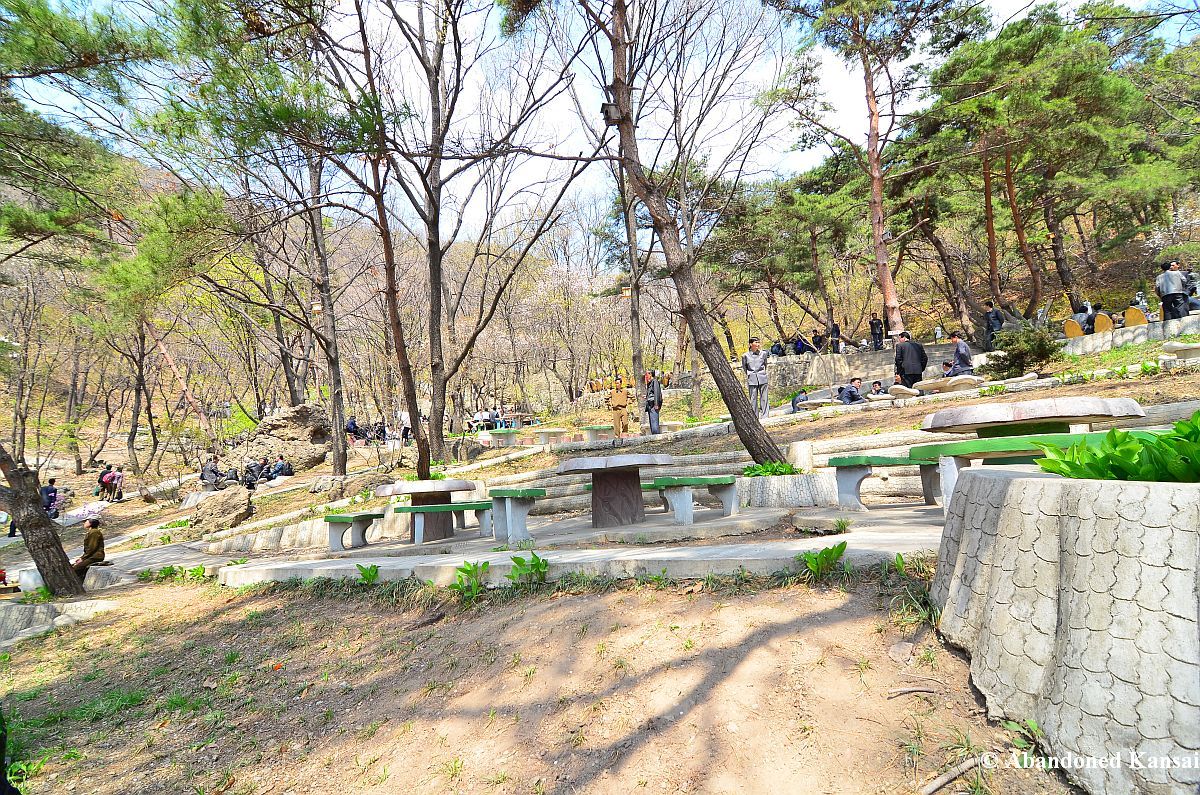
Sales Stand In A Park North Korean BBQ Park

Western media paint a pretty clear and consistent picture of the Democratic People’s Republic of Korea – and it’s not a positive one, so I had certain expectations before travelling the country. I expected the Korean tour guides to be party principle hardasses, I expected to be spied on all the time, I expected to be not allowed to take many photos / hardly any video, I expected to have no contact with the locals at all – and I expected the tour to be one big scripted event. To my surprise hardly any of this came true…

I booked the “May Day Long Tour” of *Koryo Tours* like any other vacation via the internet, barely 4 weeks before departure; easy as booking a flight. On April 26th there was a pre-meeting at the Koryo office in Beijing to receive last minute instructions and get any open questions answered, on April 27th we met early in the morning to go to Beijing Capital International Airport to catch our *Air Koryo* plane to Pyongyang. The group consisted of 11 people from all over the world plus Sarah, our guide from Britain; all of them very well-traveled and highly educated – the DPRK isn’t exactly a destination for all-inclusive beach tourists…
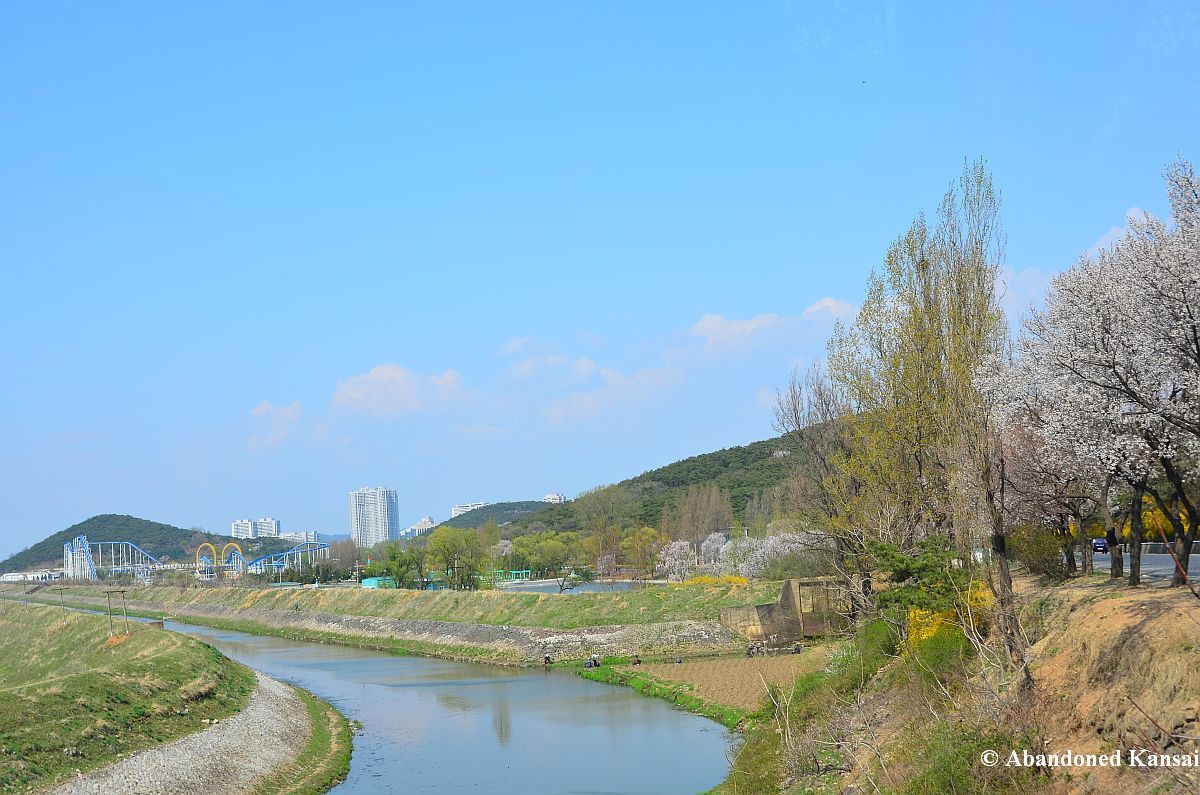
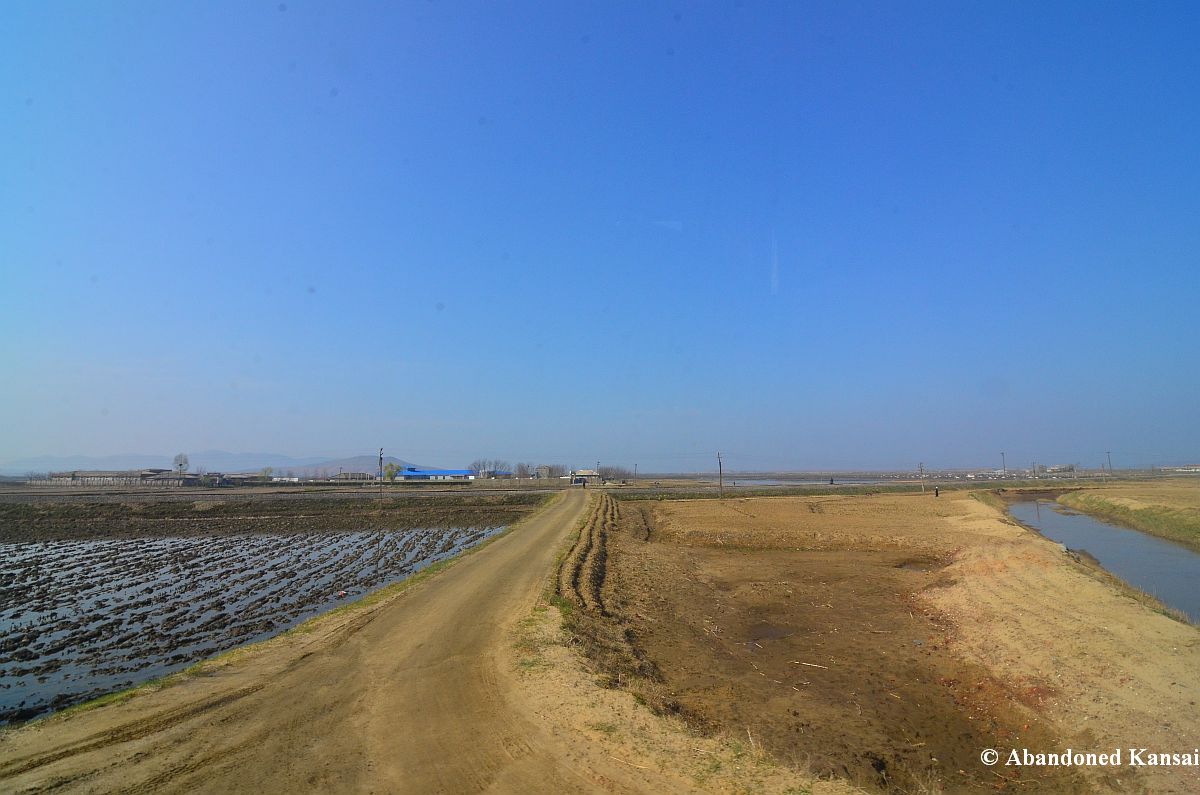
North Korean Theme Park North Korea - Shot From The Bus

Upon arrival in Pyongyang we were welcomed by two of our three Korean guides, Mr. Yu and Mr. Kim, who were joined by Ms. Pak the next day, a 21 year old tourism student in her 4th year at university. A friend of mine who has been to Korea three times told me that the first 24 hours are crucial for the relationship with the guides – and he was right. A bit stiff at the beginning of the tour our Korean guides clearly loosened up after we behaved commendably at the *Arch of Triumph* the same night, dressed up with shirt and tie as requested the next morning and paid our respect by bowing according to local customs when *visiting the mausoleum of Kim Il-sung and Kim Jong-il*. We showed the guides that we came to Korea out of genuine interest and they instantly rewarded us with their trust. Don’t get me wrong, all of them were convinced socialists and wouldn’t even think of criticizing the system – but they didn’t try to impose their views on us and they were very interested in what we had to say; about politics, history, technology, pop-culture… everything. Their English was astonishingly articulate, especially considering them not being able to travel abroad, and their kind of humor was surprisingly compatible with the groups’; something I miss at times here in Japan… Overall all three of them were just fun and easy to talk to. (Mr. Yu actually appears in the recent “undercover” BBC documentary with the sappy and overly dramatic music (John Sweeny is not only good at reporting about manipulations, he is also a great manipulator himself…), where he is portrayed as a guard, not a guide – my experience with the man was completely different, and he never told me not to take photos. Whenever I asked in case of doubt I was given permission by him – though I saw people being refused by the staff of Air Koryo and shops; which I find perfectly normal as I wouldn’t want to be photographed without permission either…)
The guides were not only easy to talk to, they were also easy on us. At the meeting in Beijing we were asked not to take photos of random people, not to take photos of construction or poverty. None of that was enforced on us by the local guides. We even got permission to take photos / videos from the bus – not just in Pyongyang, but also in Nampo and Kaesong as well as on the overland drives between cities; a privilege not given to another Koryo Tours group arriving with us on the same day. Different guides and different behavior by the group results in different rules… Off limit for everybody: military, except at the DMZ.)
Of course there were certain restrictions though. In Nampo we were not allowed to leave the hotel, in Kaesong we were not allowed to leave bungalow resort and in Pyongyang we were only allowed to roam freely half of the island the *Yanggakdo Hotel* was on (which is half an island more than most reports on North Korea state…). One night I told Mr. Kim that I wanted to go to the tip of the island to take some night shots and he was totally fine with that. I found my way through the darkness outside with a flashlight and enjoyed the breathtaking view – when I did the same thing on the same route the next night without telling anybody beforehand I triggered an alarm twice, on the way there and on the way back; sound, light and a guard with a flashlight who saw me, but ignored me. I’m still not sure if that was a coincidence or not – because the rest of the time I didn’t feel spied on at all.
Despite those limitations we had several opportunities to make contact with the locals; in my case thanks to group member Jeff, who was fluent in Korean. When we visited the Pyongyang subway we were on the platform for several trains arriving and leaving – and when we finally entered one our group split spontaneously to board different wagons. At no point we were kept from making contact, sometimes a brave Korean kid even made use of an English word or two they learned at school.

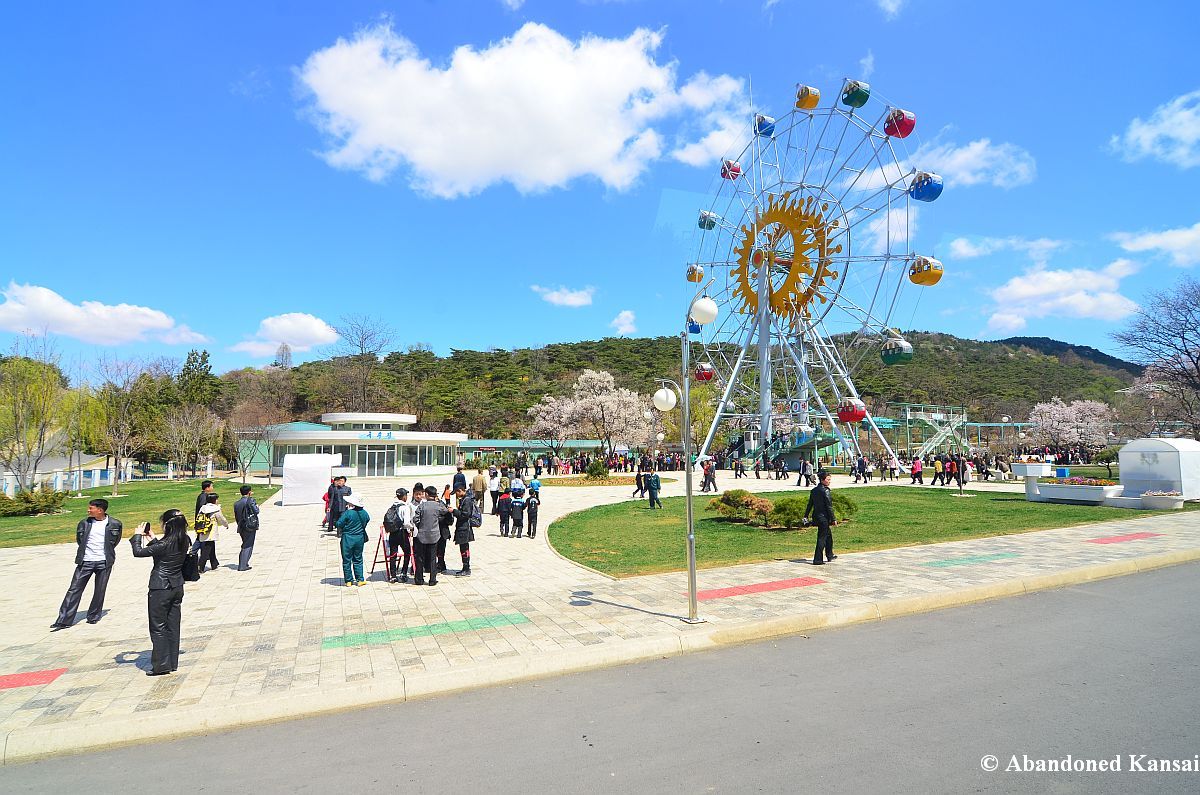
Pyongyang Fun Run Taesongsan Park
On May 1st I participated in the Fun Run, the first charity run in North Korea (for an orphanage in Nampo). Basically a 5k along Taedong River up to Kim Il-sung Square in the city center of Pyongyang. While some participants were taking the run rather seriously I decided to use the opportunity to make it a relaxed photo walk with a snapshot camera (for weight reasons, others brought their DSLRs). There were track marshals every couple of hundred meters to show us the way, but other than that we were on our own – since my Korean is basically non-existent I wasn’t able to talk to anybody, but I could have if I wanted to.
My favorite stop of the tour was at the Taesongsan park and fun fair in the outskirts of Pyongyang. It was right before lunch time when we had a little bit more than an hour to roam freely, an opportunity we put to use extensively. I will go into more detail with the help of a separate article later this month, but the trip’s absolute highlight without the shadow of a doubt was when Jeff randomly approached one of countless families sitting on blankets, having a BBQ under cherry trees – a regular hanami party Japan is famous for. They invited not only the big guy without hesitation, but also the three foreigners in his tow. So we sat down and enjoyed some regular local food and alcohol, which was absolutely delicious. When more people of our group passed by and saw us, our temporary Korean hosts invited them, too. We were chatting (with gestures and Jeff translating), laughing, sharing photos and just had a great time – 3 generations of Koreans and foreigners from the States, Canada, Great Britain, Austria and Germany. I’ve never felt more welcome anywhere in my life! (And of course we contributed some bottles of local alcohol and snacks we brought from home, too – it was just a regular BBQ in a park…)

Believe me, I am very well aware that throughout the tour we were in a privileged position and that North Korea has more than its share of problems. It’s an incredibly poor country, the political situation is more than dubious and the human rights situation is atrocious. Every information given had to be taken with a grain of salt (our guides definitely got some numbers wrong…) and sometimes they clearly put on a show (like at the Pyongyang Schoolchildren’s Palace where they showed us some young kids drawing – though they were clearly not; more about that later, too).
BUT: That applies for every source of information, also and especially for Western mass media. The Democratic People’s Republic of Korea is definitely not a great place to live in and how conflicted it is shows by its name – as the country is everything but democratic. But the situation, judging by the superficial observations I was able to make spending 8 days / 7 nights in the country, is not nearly as bad as we are made believe by the sensationalistic mass media business where stories sell better the more dramatic they are. I was able to talk to North Koreans without having to rely on indoctrinated guides, I was able to see locals in three different cities and on hours of overland drives – and to be honest, I didn’t get the impression that they were overly fanatic or unbelievably unhappy, especially given that North Korea is one of the poorest countries in the world, a fact they seem to be very well aware of. Of course they are trying to masquerade that by showing flagship factories and stores to foreign visitors – but at the same time it’s more than obvious that most of the farming is done without any modern equipment, that some roads are in abysmal condition and that people are comparatively small and skinny due the sharp supply situation that is having a grip on the country for decades.
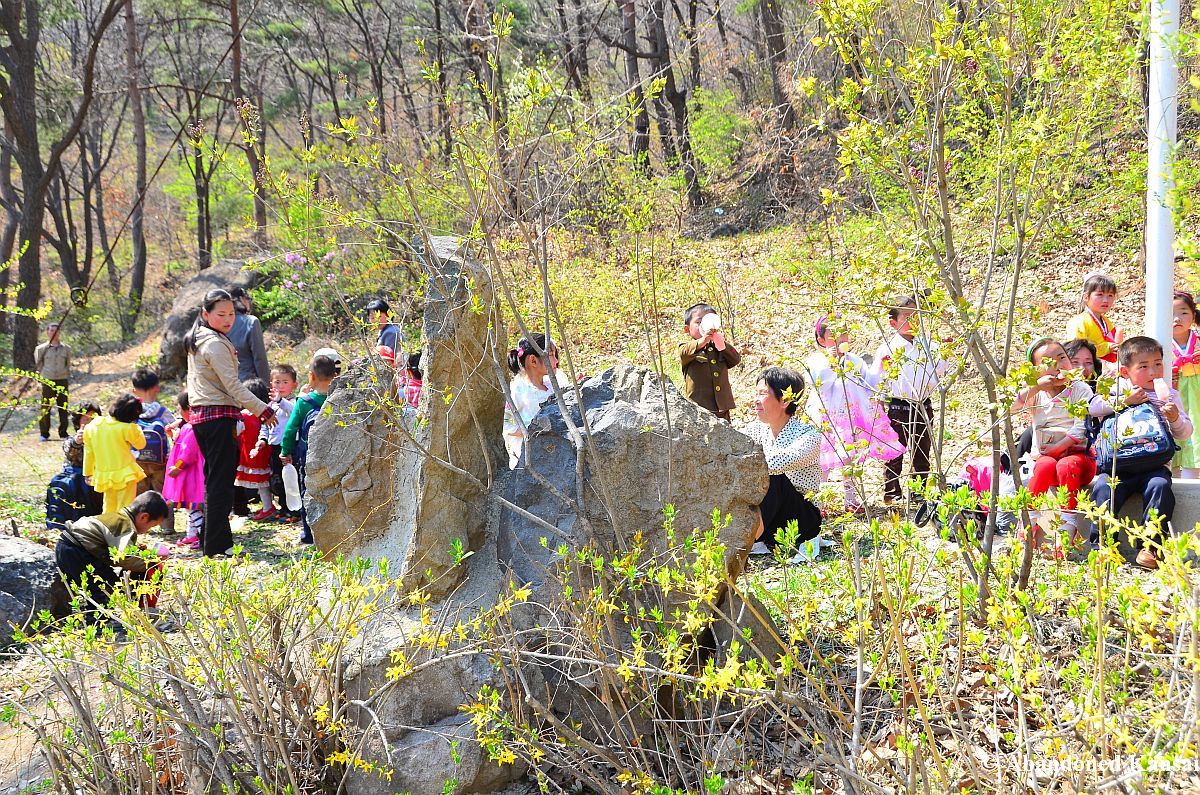
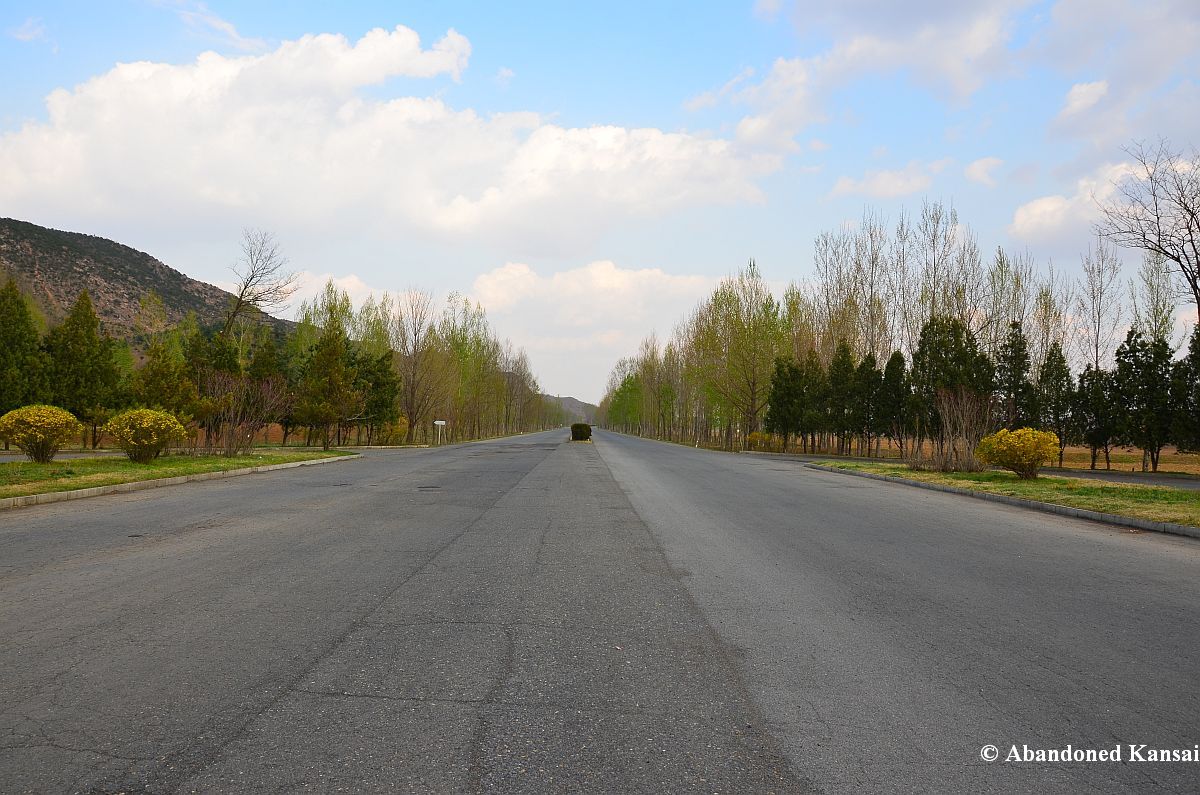
Kindergarten Kids In North Korea Poor People Washing Clothes In A River Empty Road Between Pyongyang And Kaesong

While in North Korea I was engaged in countless conversations with my fellow travelers about the country’s situation, especially since we went there in times of rather high political tensions. It became obvious pretty quickly that there is no easy solution for this incredibly complex struggle. As you know I am not a journalist and I don’t have a political or economical agenda, so I am basically writing this article to show you what I experienced and to make you aware that the situation isn’t black and white, but very, very grey. When I hear voices saying that North Korea should be leveled and that the Americans should just bomb the shit out of the country it makes me sick to the stomach, because I was able to get a glimpse at the unstaged, human side of North Korea. Or maybe I am just a gullible idiot and I fell for the greatest show that was ever put up, involving thousands of extras…

In the following days and weeks I’ll write a couple more articles about my trip to the DPRK to go into further details and to show you plenty of additional photos and videos – *you can find an overview here*. Until then please have a look at my *GoogleMap about tourist spots in North Korea* and enjoy the media published with this article.

(If you don’t want to miss the latest article you can *follow Abandoned Kansai on Twitter* and *like this blog on Facebook* – and of course there is the*video channel on Youtube*…)

Addendum 2013-11-19: I just posted a general article about my second trip to North Korea in October 2013 – quite a different experiece. *Please click here to read all about it!*)

Read Full Post »

Japan is a linguistically and culturally extremely homogenous country. Of its 127 million inhabitants about 98.5% are ethnic Japanese, 0.5% are Korean and 0.4 are Chinese – leaving a whopping 0.6% others; including yours truly. Those 0.6% “others” include about 210.000 Filipinos, mostly of Japanese descent, and 210.000 Brazilians, also mostly of Japanese descent – which means that only about 0.3% of Japan’s population are neither Japanese, Chinese, Korean, Filipino-Japanese nor Brazilian-Japanese.
I’m sure you’ve heard the term gaijin before (外 gai = outside, 人 jin = person), a short version of the term gaikokujin (外国gaikoku = foreign country, 人 jin = person). People are still arguing if it’s pejorative term, but personally I don’t like it very much, because it’s such a simple term, pushing everybody who is not Japanese to the outside – which is a precarious thing in a country where a group is still so much more important than an individual.

Integration?

Becoming a foreigner in Japan is actually an achievement by itself. Japan isn’t eager to let many people in and therefore the requirements to get a long-term visa are rather high – usually you have to have either a Bachelor’s degree or several years of work experience; in both cases an employer has to vouch for you. Other possibilities are investor visas or some kind of artist visa, but there quite a bit of cash is involved; and so is with the spousal visa… 😉
Once in the country the Japanese government couldn’t care less about you as long as you renew your visa when it expires and pay your taxes – and those are usually handled by the company you work for anyway. While there are long and public discussions about integration in European countries there is zip in Japan. Language classes and tests? Bah, humbug! On the other hand you shouldn’t expect anybody to be able to speak English anywhere, despite the huge English school industry in Japan; especially at the immigration office, where you can address the staff in English as much as you want – they’ll always reply in Japanese, even though most of the time they obviously understood what you’ve said…
But Japan in general isn’t set up for integration, probably because of the educational system. You have your childhood friends, you have your high school friends, you have your university friends and you have your work friends – usually four different groups that keep you busy for the rest of your life; with no need to make additional friends at any point; or many opportunities for that matter, like community colleges or sports clubs, both extremely popular in Germany, especially after moving to a new area. (With the result that many foreigners in Japan stick with each other, too – I don’t think I know any foreigner here who has more Japanese than foreign friends; and by that I mean friends, not Facebook acquaintances…)

Xenophobia?

With that few foreigners in the country and that strong of a national identity I am still not sure if Japan is an above average racist country or not. People are definitely more polite in general than let’s say in my home country Germany (sorry guys, but certain things really are better in Zipangu…), especially in everyday service situations like shopping, but I experienced some of the weirdest behavior here, probably because hardly any Japanese school kid has foreign co-pupils, while I went to school with people of Italian, Austrian, Indian, Pakistani, Turkish, Japanese, British, Polish and Bavarian descent – and because the average Japanese person doesn’t think that you can understand what they say.
Sometimes they most likely mean no evil (like that one time when I had a dinner date with a Japanese girl at an Indian restaurant and all of a sudden all the tables around us talked about their oversea vacations, their foreign alibi friends and how great it would be to be able to be fluent in English…), sometimes I’m not sure (remember me *not getting a hotel room after the clerk found out that I’m a foreigner*?) – and sometimes they actually do mean harm. For example that young Japanese couple and their two friends who have beaten a Nepali restaurant owner to death in January 2012; one of them were quoted afterwards “I thought the foreigner had shoved me, so I got angry and kicked him many times.” (Note the use of “foreigner”? I’m sure it was “gaijin” in the original… Not “the man”, or “the Nepali” – “the foreigner”…)

Discrimination

It’s just a completely different mindset regarding foreigners and discrimination in general – and most people don’t even question it, because to them it’s normal. Like most countries Japan has a long history of discrimination. It even went through a time when a social class system with all its downsides was officially established; during the Edo period (1603 to 1868). Back then the burakumin (a.k.a. eta, “an abundance of filth”) were the outcasts and usually connected to jobs dealing with public sanitation or death (butchers, tanners, …), but when the class system was abolished the discrimination didn’t end. More than 100 years later, in 1975, there was a huge scandal when an anti-discrimination organization found out that a company in Osaka sold copies of a handwritten 330-page book listing names and locations of former burakumin settlements. Companies bought that book to compare the listed locations with the addresses of applicants – to prevent them from hiring descendants of burakumin; some famous firms like Daihatsu, Honda, Nissan and Toyota were among those companies… Two generations later the issue finally is no more, instead the average Japanese “discriminist“ focuses on foreigners – and I am so tired of and annoyed by comments about “those dog eating Koreans” or “those Chinese comfort women who try to screw the Japanese state”… (“Comfort women” is a Japanese euphemism for the sex slaves of the Imperial Japanese military in World War 2. While some (Japanese) historians like Ikuhiko Hata claim that there were 20.000 volunteer prostitutes, others found that up to 400.000 women were hired under false pretenses or even kidnapped into “comfort stations” all over Asia; but even the “few” volunteers made a bad choice as about 75% of the comfort women died during the war due to mistreatment and diseases. Shinzo Abe, the current Japanese prime minister, claimed during his first term in 2007 that the Japanese military didn’t keep sex slaves during WW2, although the government admitted to the fact in 1993 after decades of denial!)

New Zealand Village

Despite their share of xenophobia the average Japanese seems to love to travel and is actually interested in experiencing foreign countries; especially non-Asian countries… They barely ever jump all in, backpacking all by themselves – more like group vacations with Japanese speaking travel guides. Or an even safer version: themed parks in Japan! Recently I wrote a vastly popular article about the *Chinese themed park Tenkaen*, but in spring I was able to visit the rather unknown *New Zealand Farm in Hiroshima* and the *New Zealand Village in Yamaguchi*. Even less known, and after more than a thousand words of introduction we finally get to it, is the Shikoku New Zealand Village. It was actually the first of the three I visited, but due to certain circumstances I never got to write about it. (If you missed the articles about the other two New Zealand parks I recommend reading them first for background information…)
I don’t remember how I found out about the Shikoku New Zealand Village, but I’m sure it wasn’t an urbex article, because to the best of my knowledge till that very day nobody has ever written about the place. I remember seeing a photo of the entrance to the parking lot though, with heavy machinery in the background. That was on a Thursday – worried that the place was in the process of being demolished I went there two days later, despite the facts that the weather forecast wasn’t favorable and it took me about 4 hours to get there. And except for the photo and the name I didn’t know anything about the park – not what it was, not when it was closed, not if there was security, not how to get in. You know, the risky kind of exploration…
I saw the first surprise when walking up to the parking lot – there was a rather big house right next to it, with wet laundry in the garden. The parking lot was blocked by barricades, entering via a muddy road to the side was difficult due to rusty barbed wire and lots of vegetation. After getting a decent grasp of the situation I decided to jump the blockade at the parking lot and walk right in, my heart pounding like mad. At the time I had more than 150 explorations under my belt, nevertheless I was and still am nervous exploring new and unchartered territory. As soon as I entered the place I heard motor noises… Not a big car motor, probably some gardening tool? Well, after a couple of seconds I realized that it was a model aircraft – and as soon as one landed another one started for almost all of the two and a half hours I spent at the Shikoku New Zealand Village.
Now that you’ve already seen the Tenkaen and the other two New Zealand villages the Shikoku one might not seem that exciting or spectacular, but to me it was the first themed park I ever visited, and I was all by myself, so to me it was extremely adventurous. Cautiously I progressed – first the sheep race track and the archery station, then a barn I wasn’t able to enter. From there I reached a bike race track before I walked back to the main street leading to the Oakland House; basically a restaurant and a souvenir shop. When I walked around the corner I stumbled across surprise number 2: the road in front of me was gone – a landslide washed it away! Now that’s something you don’t see every day… The rest of the park was less spectacular though. Two more barns, a long slide on a slope, a pond, a bakery and a BBQ area.
What was absolutely fantastic about the Shikoku New Zealand Village was the almost complete lack of vandalism. No broken windows, no kicked in doors, no graffiti. Sure, I wasn’t able to enter all the buildings, but that didn’t matter to me, because nothing was bolted up or destroyed – unlike at *Nara Dreamland* for example. Natural decay at its best…

(If you don’t want to miss the latest article you can *follow Abandoned Kansai on Twitter* and *like this blog on Facebook* – and of course there is the *video channel on Youtube*…)

Addendum 2016-01-13: A while after my first exploration of the Shikoku New Zealand Village I revisited this awesome location. *Here is what happened since then.*

Read Full Post »

Canadian World (current full name: Canadian World Park) was the third location I visited with my haikyo buddy Michael Gakuran on the first day of our *haikyo trip to Hokkaido*. It was an unsual exploration for many reasons… One could even say it’s a zombie park!

First of all: Unlike most of the locations I visit Canadian World wasn’t really abandoned. Not because it was guarded by security, but because it was more like on a winter hiatus. Located in a beautiful mountain landscape in the center of Hokkaido the Canadian themed park was snowed in completely in late November already, hence the rather short season from early April to mid October and the equally short opening hours from 10 a.m. till 5.30 p.m. – not much time to make some money. And not the best location either since bigger cities are about an hour away and even the closest train station requires a 20 minute long car ride… To make things even worse: Unlike the already closed or abandoned *Tenkaen*, *Hiroshima New Zealand Farm* and *Yamaguchi New Zealand Village* Canadian World actually doesn’t charge an entrance fee!
So how does the Canadian zombie park survive? And why do I keep calling it a zombie park? Well, because Canadian World Park originally was a privately run themed park called Canadian World. It was (and still is…) based on the book Anne of Green Gables by Canadian author Lucy Maud Montgomery and in private hand until its bankruptcy in 1997, including typical themed park attractions like restaurants, an art museum, BBQ areas and a mini train; there even is a “Anne in Canadian World” logo… When Canadian World went bust the city of Ashibetsu took over and gave new life to the dead park, basically making it a zombie park. Or a Frankenstein park. Just without zombies or Frankenstein monsters. Still kind of spooky though, especially in winter. But this explains the lack of an entrance fee and the rather short service time – Canadian World Park is publicly funded and run! (With the co-operation of locals, supporting the park on volunteer days once or twice a year…) Luckily the staff there is really polite, even when you show up at a time when you shouldn’t be there…

Michael and I arrived at Canadian World Park rather late in the day. The sun was already going down, so we stopped for a quick couple of shots at the parking lot and entrance area before we followed a mostly snow free road down the valley and deep into the park – most likely not for public use, but the gate was open and Michael was in an adventurous mood… so down the hill we went. Just to find two park employees at some kind of green house at the end of the road. Michael talked to them for a while and they seemed to be fine with us taking a couple of photos, so we drove back up halfway to get as close to the central plaza as possible. We parked the car in a small lay-by and waded through the shin-deep snow deep into the Canadian World Park, only to find all the buildings boarded up. We didn’t intend to enter any of them anyway, but we wondered if it was a winter closing security measure or if it was permanently, because let’s be honest – it’s only a matter of time till Canadian World will be closed again and this time there will be nobody in line to step in! For the time being the atmosphere there is magical though, especially when covered by snow and no chatterboxes there. The sunset was beautiful and the air was ice cold and crisp. After dark it was the coldest I have ever been in Japan and I don’t feel cold easily. First Michael mentioned that his fingers felt tingly, then my ears felt like popsicles – which reduced the usual old “just one more photo” banter from about 30 minutes to an estimated 5 minutes; plus another 5 for the way back cross country to the car. Not all shortcuts are a good idea, but in the end we made it back to warmth without suffering permanent damage, though a change of our soaked socks was in order…

(If you don’t want to miss the latest article you can *follow Abandoned Kansai on Twitter* and *like this blog on Facebook* – and of course there is the *video channel on Youtube*…)

Read Full Post »

The Tenkaen, literally Flower Garden of Heaven (but also known as China Park of Heaven), was probably the biggest location *Michael* and I visited on our *haikyo trip to Hokkaido*. Opened in 1992 and closed in 1999 this deserted China themed park now is longer abandoned than it was in business – and it showed…

Japan and China have a long common history full of complications – and the recent election of the Japanese House of Representatives most likely won’t change the situation, especially regarding the Senkaku Islands. Nevertheless Japanese people seem to love themed parks that are not necessarily theme parks. Unlike famous theme parks like Disneyland or Universal Studios the dozens of themed parks all over Japan don’t have fast and expensive rides. They really are just themed parks that offer a more or less authentic look at the theme they chose – usually other countries like Germany (Doitsu no Mura Kronenberg), Spain (Spain Mura / Parque Espana), the Netherlands (Huis Ten Bosch) or New Zealand (Tohoku New Zealand Mura). Most of them were build during the real estate bubble in the late 1980s/90s and a lot of them were already closed (like the *Hiroshima New Zealand Farm* and the *Yamaguchi New Zealand Village*) or even leveled.

The Tenkaen is not much different in that regard. Opened in 1992 as one of four big theme(d) parks in Noboribetsu (the other being the Noboribetsu Bear Park (opened in 1958), the Noboribetsu Marine Park Nixe (opened in 1990), and the Noboribetsu Date Jidaimura – a Edo era themed park opened in 1992), the Tenkaen was modeled after a garden court from the Qing Dynasty (1644 to 1912) and in addition included a 5-storey pagoda with a height of 40 meters and a bell donated by China to commemorate 20 years of rather friendly diplomatic relations. Sadly the Tenkaen didn’t last nearly as long, probably due the steep entrance fee of 1,900 Yen (1,100 Yen for senior citizens and elementary school students). In the first business year (1992/1993) only 270,000 people visited the 40,000 square meter site – and it went only downhill from there. In 1995 the attendance numbers were down to half in comparison to the first record year and in 1998 the opening days were reduced and a winter closing was introduced – on October 31st 1999, only seven and a half years after the grand opening, the Tenkaen was closed for good and now is one of the most famous abandoned places in Hokkaido.

Michael and I arrived at a reasonable time in the morning at the Tenkaen, expecting a rather long day of shooting there, but we had no idea what the layout of the location would really be since this China themed park is located in a rural area where even GoogleMaps isn’t much of a help. The weather was sunny, but nevertheless strangely gloomy, offering lighting conditions I have never seen before at an abandoned place. The whole area was dusted with a thin layer of snow, so we chose our ways carefully not to leave to many visible footprints. After we spent about half an hour at the garden palace area the sun began hiding behind some clouds and we were hit by a snowstorm. The atmosphere changed completely and the photos we took looked like they were taken at a different day. The storm lasted for about half an hour and ended abruptly when the sun came back with a vengeance, melting the freshly fallen snow along with the one we found at our arrival – so much for walking carefully not to leave footprint.

But that wasn’t the last time the weather would change. It seemed like the Tenkaen wanted to live up to its name – there weren’t a lot of flowers, but heaven changed about every 30 minutes, switching between gorgeous sunlight and almost blizzard like snowstorms. Which was great for us *haikyoists*, because whatever part of the Tenkaen we explored, we always had a variety of weather conditions to take pictures of. Altogether we spent 4.5 hours at the Tenkaen, and if it wouldn’t have been for a long list of other locations to be visited on the same day (and the ice cold wind, especially on the higher floors of the pagoda!) we probably would have stayed much longer…

Personally I loved the Tenkaen – it was my kind of abandoned place: in the middle of nowhere, open space, nice weather, interesting location, not that much vandalism, lots of natural decay, unique theme. The two major streets with dozens of cars passing by were a little bit annoying at times, especially when exploring the floors of the pagoda, but overall it was a great experience, not least because of the constantly changing weather conditions. I would love to come back one day in a warmer season of the year, to see some more green and maybe to take some night shots!

(If you don’t want to miss the latest article you can *follow Abandoned Kansai on Twitter* and *like this blog on Facebook* – and of course there is the *video channel on Youtube*…)

Read Full Post »

Abandoned Kansai in Hokkaido… Who would have thought that? Up till now I never made it further east than the center of Japan’s main island Honshu. I limited myself to the western half of Japan, because that was the reason I started this blog. Heck, initially I wanted to limit myself to the Kansai region; hence “Abandoned Kansai”, not “Abandoned Japan” or “Abandoned West Japan”. But then the “once in a while” hobby urban exploration turned into a regular thing and only weeks later I went to different regions, then to different islands – and in spring of 2012 I did a *haikyo trip to Okinawa* together with my urbex buddy *Michael Gakuran*. “What’s next?” was the big question, and the answer was found quickly – we already explored Japan’s most western prefecture, so we kind of had to explore Japan’s most eastern prefecture, Hokkaido!

Usually I plan my urbex trips on short notice. One time I brought my urbex equipment to work on Friday to see how I feel during the day, booked a hotel in the afternoon and left for a weekend trip right after work. Flexibility like that is impossible when partnering up for a long distance trip, so Michael and I booked plane tickets weeks ahead – and according to the weather forecast we ended up with a rainy weekend; a long weekend even, to which we added some days. Luckily the forecast was as reliable as always in Japan and so 4 out of my 5 days in Hokkaido were sunny and slightly snowy, only the last one came with 8° Celsius and rain.

Since I arrived almost a day earlier than Michael the original plan for me was to do some sightseeing in Sapporo. To my surprise the weather was sunny to cloudy, no rain at all, so instead of visiting indoor classics like the Sapporo Clock Tower, the Ishiya Chocolate Factory or the Sapporo Beer Museum I opted for a little hike to Mount Teine, once home to some of the sports events at the 1972 Winter Olympics in Sapporo. One day of good weather? I had to take advantage of that! Then it turned out that the next three days were pretty nice, too – which is a big advantage when doing urban exploration as you spend a lot of time outdoors…
On the last day Michael and I split – while he drove for hours to infiltrate a location he asked me to keep secret for now, I went on to do some really touristy stuff, like visiting the old harbor town of Otaru and taking a glass blowing lesson. My favorite touristic place though was the Sapporo night view from the freshly renovated observation platform on top of Mount Moiwa – stunningly beautiful! It was soooooo cold up there, but the view was absolutely amazing! I went there on the first day before visiting the Sapporo White Illumination and I strongly recommend to pay Mt. Moiwa a visit – I would love to shoot a time-lapse video from up there…
Overall the trip to Hokkaido was a great mix of urbex and tourist stuff. Five days I really enjoyed, probably more than any five consecutive days I spent in Osaka this year… So this is a list of the abandoned places I ended up visiting:
Advantest Research Institute
Bibai Bio Center
Canadian World Park
Hokkaido House Of Hidden Treasures
Horonai Coal Mine Substation
Mt. Teine Ski Lift
National Sanatorium Sapporo
Olympic Ruins Of Sapporo 1972
Sankei Hospital
Sapporo Art Village
Showa-Shinzan Tropical Plant Garden
Tenkaen – Japan’s Lost China Theme Park

(If you don’t want to miss the latest article you can *follow Abandoned Kansai on Twitter* and *like this blog on Facebook* – and of course there is the *video channel on Youtube*…)

Read Full Post »

If you are a regular reader of this blog you might remember my *rant about Golden Week* a while ago. To refresh your memory: I went to Kyushu for some urban exploration – my plan was to stay for four days, but I had to return to Kansai the same day, because I couldn’t find a hotel room; partly because I’m Caucasian, probably because my Japanese skills are limited.

Between the devastating news from the Sasebo Tourist Information Center (their staff was great though!) and me returning home I visited the abandoned Saikaibashi Public Aquarium, a location that gained quite a bit of popularity on Japanese *haikyo* blogs recently.

Sadly only a couple of urban exploration blogs, Western as well as Japanese, really care about the history of the places they present – a fact that sometimes makes it tough for yours truly to give you proper facts about the places I showcase on Abandoned Kansai. I’ve seen a really old photo of the aquarium taken in summer of 1965, so it’s pretty safe to say that it was in business already back then. The oldest photos of the abandoned aquarium dated as far back as 1996 – and on those photos the place already looked like nobody took care of it for a decade or two. The small floating platform in front of the aquarium did not have the wood and barbed wire installation yet, and the handrail on the waterfront was still there, but the concrete holding it up was already severely damaged.

I can’t remember the last time I’ve been to a public aquarium still in business, but passing by the ones on *Mount Yashima* and the Kaiyukan in Osaka (which is one of the biggest aquariums in the world) I was under the impression that those installations are pretty big. The Saikaibashi Public Aquarium wasn’t big at all. Probably 6 or 7 meters by 35 meters, 2 floors (steps, no elevator). There was one huge tank combining both floors and several smaller ones on each floor. None of them were filled with water, hardly any had intact windows. The amount of vandalism was severe – no graffiti, but most of the smashable items were destroyed. The building being exposed to the elements didn’t help either – even on the upper level the massive concrete floor felt kind of unsteady due to the damages done in the past decades. And outside it was more than clearly visible how fragile concrete can be: the bridge leading to the aquarium collapsed at two different segments and I really hope nobody was walking there when it happened. Which is rather likely since I’ve seen photos of the intact bridge that weren’t that old – maybe 1.5 or 2 years. The chance that a fellow explorer took an involuntary bath is rather high…

What really surprised me, not to say shock me, was a fact I found out about only after I visited the Saikaibashi Public Aquarium. As small as the aquarium was, it seems like the main attraction of the place was a dolphin show! The now broken bridge, fitted with metal grids, limited an area known as the “Dolphin’s Cove” (イルカの池), show time was at 10:00, 12:00, 14:00 as well as at 16:00 on normal weekdays and at 10:30, 12:00, 13:30, 15:00 and at 16:30 on weekends, public holidays and during the six week long school summer break that to the best of my knowledge usually starts in July when the weather becomes too hot and humid to spend time in a building without AC, which applies for most Japanese schools.

Though small and vandalized, the one hour I had to explore and document the Saikaibashi Public Aquarium felt a bit short. How often do you have the chance to visit an abandoned aquarium? But at that point I was still hoping to get a hotel room in Fukuoka, so I had to leave prematurely and hurry to save my third Kyushu trip…

(If you don’t want to miss the latest article you can *follow Abandoned Kansai on Twitter* and *like this blog on Facebook* – and of course there is the *video channel on Youtube*…)

Read Full Post »

When *Michael* and I drove to the Himeyuri Park we had no idea what to expect. Would we be able to find it? Would it be really abandoned? Would there be security? Would we be able to get in? Or was demolished already? And was it really a cactus park, so close to the cemetery-turned cactus park *Okinawa Seimeinooka Park*?

A huge sign at the entrance still welcomed potential visitors, but the road to the parking lot was blocked, so we tried to find some kind of back entrance. On the way there we were impressed by the massive walls surrounding the place – as I found out later is was 2.5 kilometers long, up to 10 meters high and made of 150.000 tons of Okinawan limestone! Our efforts were fruitless – and we didn’t have a chance to look at the entrance, so we turned around and walked straight up to the place. Who knows, maybe a gigantic security guard was waiting for innocent urban explorers like us with a whole selection of deadly weapons?

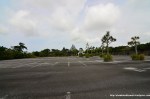
Well, there was no gigantic security guard. Not even a skinnyfat one. Just an empty parking lot for 240 cars. (I didn’t count – whenever I throw in facts I know about the Himeyuri Park it’s thanks to research I did after I returned to Kansai; we had zero information about the park when exploring it!) Right in front of the parking lot we found a couple of gigantic shade-giving metal cowboy hats, so called ten gallon hats – those were actually big enough to easily hold 10 gallons / 40 liters, not just three liters like the real hats. Well, they could have hold that much liquid if they wouldn’t have been in rather bad shape and even lost most of their shade-giving properties; giving no protection to the stacks of pamphlets and merchandise on the tables underneath the hats.

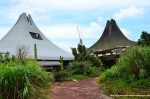
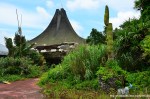
After we checked out the rest of the surroundings we found a way into the park that was clearly divided into two parts, represented in this article by two videos. Right at the entrance was a big building with a huge gift shop and a restaurant (the kitchen interior being completely removed), the tall pointy roofs visible from quite a distance. In the back Michael and I found several office rooms and a locker room for the employees – all areas have been pretty much completely vandalized, although this clearly abandoned cactus amusement park never popped up on any Japanese or Western haikyo blog, at least not to my knowledge. The place was damaged so badly that I had to find out afterwards that the Himeyuri Park was actually a Wild West themed cactus park – hence the enormous cowboy hats at the entrance. But all the other signs, like prairie schooners and similar stuff, were long gone. I found a totem pole in the second main part, the actual cactus park, but I didn’t think much about it since Japanese theme parks tend to take elements from all kinds of places and create a strange mix.

The restaurant and gift shop building was in a dilapidated state, especially since both pointy roofs were severely damaged and offered no protection against the elements anymore. Everything was wet and moldy, not really a nice place to be at. It seems like they sold all kinds of souvenirs there, like Disney merchandise, photos and the previously mentioned Okinawan shirts called kariyushi shirts. (They started out as a marketing tool in the 1970s to attract tourist, which means that they were introduced to Okinawa 40 years after Ellery Chun invented the modern Aloha shirt! Those were made of leftover kimono fabric and so the circle is complete…) Of course there also was cactus-related stuff, like cactus ice cream. Also worth mentioning are the weird coconut shaped lamps hanging from the ceiling – I didn’t know why, but their tackiness caught my attention several times.
The office part of the building wasn’t as wet, but not less vandalized. Things were scattered all over the floors in most of the rooms and there is not much to say about it since it was just another vandalized office area you can see at an estimated 75% of all abandoned places. One room was kind of interesting since it looked like a 70s living room with carpeted floor and some more or less comfy looking chairs. It also contained some documents and a stack of business cards belonging to a person working for the Taiwan Pineapple Corporation – and this is where the story gets messed up and rather interesting. For example the small fact that the address given on the business card isn’t in Okinawa… it’s in Ryukyu, Okinawa’s old name…

As for the park’s unusual history: Himeyuri Park was opened in 1983 (earlier than the Mexico Cactus Park Sarabanda!) as a subsidiary of the Tohnan Botanical Garden (東南植物楽園, Southeast Bontanical Gardens) and closed due to poor business performance in 2005 (later than the Mexico Cactus Park Sarabanda…). But before that happened it was bought by the Taiwan Pineapple Corporation, a subsidiary of the Typhone Group, one of Taiwan’s most powerful companies. But this investment wasn’t just a business decision, it was mostly political. At the time Taiwan tried to expand its influence in Japan, especially Okinawa – not a surprise given the fact that the Okinawan Islands are rather close to Taiwan. It actually seems like the Kuomintang, the Chinese Nationalist Party, was behind the deal, trying to negotiate a no visa entrance to Japan for all Taiwanese tourists and businessmen in return for an investment of up to 1 billion dollars. Lee Teng-hui, Taiwan’s president and chairman of the Kuomintang from 1988 till 2000, was friends with the father of Ohbayashi Yukino, the director of the Tohnan Botanical Garden – who also was from Taiwan. At one point Lee met the Okinawan governor at Tohnan and repeated the claim that the Senkaku Islands in fact belong to Taiwan. (The Senkaku Islands are five uninhabited islands and three barren rocks in the East China Sea. They are administered by Japan and claimed by the People’s Republic of China as well as by Taiwan (the Republic of China) for territorial reasons.) Despite that statement Lee’s efforts weren’t ill-willed with the intent to undermine or infiltrate Okinawa, they were supposed to bring both countries closer together as Lee grew up at a time when Taiwan was occupied (and to some degree modernized) by Japan.
But business at Himeyuri Park was bad and after Lee’s influence vanished the Taiwan Pineapple Corporation sold the management rights in 2003 to a company called Yakushido (short for Yakushi-do Seiyaku Kako (薬師堂製薬化工, Hall of the Medicine Buddha Pharmaceutical Chemical Industry / Yakushi Hall Pharmaceutical Chemical Industry – the company is known so little I couldn’t even find out what they do exactly or if they still exist). And now it gets really complicated as Himeyuri Park was closed shortly afterwards and then reopened in 2004, just to be closed again in 2005. On October 20th 2005 the Ryukyu Shimpo (Ryukyu News(paper)) reported online that the Himeyuri Park was closed one day prior after the entrance to the parking lot was blocked on October 18th. It seems like in February of 2005 the owners of Himeyuri Park (most likely the Taiwan Pineapple Corporation) started to receive payments from Yakushido after settling some rental contract issues in front of Naha’s summary court (probably dating back to 2003). The total sum was 40 million Yen and Yakushido paid some installments, but something wasn’t working out – so operations were shut down. The newspaper article was rather vague and so the end of Himeyuri Park lies… well, not in the dark, but somewhat in the shadows…
(This whole section about Himeyuri Park’s history was a gigantic puzzle with lots of endlessly long Japanese sentences – it would be missing almost completely if it wouldn’t have been for the generous and extensive help of my incredibly smart and dedicated friend Mayuko; thanks a lot!)
Oh – in September of 2010 there was a sign in front of the park stating in Japanese “For sale – 28.000 tsubo” (about 80.000 square meters) and a phone number. The sign was gone (if I remember correctly…) when Michael and I explored the place in May of 2012, so the park either has a new owner or the real estate company in charge (based in Naha) stopped caring…
But now back to the exploration!

Separated from main building by one of those gigantic limestone walls was the actual park part of the park. According to several tourist and advertising sites the Himeyuri Park had 100.000 cacti and other plants, amongst them 4000 banyan; fig trees from the Himalaya. Highlights of the park were of course the 450 different kinds of cacti, up to 10 meters tall and up to 1000 years old. Every year there was a special event called Flower Aquarium where large displays depicted ocean animals composed by 275.000 flowers in vases. Opening hours were from 8.30 a.m. to 6 p.m. (9 a.m. to 5.30 p.m. from October to March) and the entrance fee was 850 Yen for adults (430 Yen for ages 3 to middle school) when the park closed, in 1994 it was 720 Yen for adults and 360 Yen discounted.
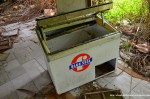
The huge maze like area is mostly overgrown now, making it hard to navigate and even harder to spot most of the abandoned cacti. In the center of the park was a rest house, pretty unspectacular, though it had a rusty freezer with a Blue Seal logo on it. (Blue Seal is the most popular ice cream brand in Okinawa, going back to 1948 when it was founded as Foremost Co.)

If it wouldn’t have been for the cactus theme Himeyuri Park would have been quite an uninteresting exploration – moldy, vandalized, overgrown. But how often do you get the chance to explore an abandoned cactus park? One that to this very day doesn’t appear on any Japanese urbex blogs, and I was actually looking for articles! So overall it was an exciting 3 hours from driving to the park to leaving it. Nothing worth *flying to Okinawa* for, but most definitely a nice chance from the usual vandalized and moldy hotels you can find everywhere…

(If you don’t want to miss the latest article you can *follow Abandoned Kansai on Twitter* and *like this blog on Facebook* – and of course there is the *video channel on Youtube*…)

Read Full Post »

A place known to the net simply as Okinawa Cactus Park was one of the haikyo I really wanted to see when *Michael Gakuran* and I went to Okinawa earlier this year. The official name of the park was Mexico Cactus Park Sarabanda. It was opened in 1993 and closed in September of 1999, its big Mayan style head becoming an Okinawa urbex icon. The park wasn’t a super spectacular place (although there were 150.000 plants of more than 800 kinds) or a very popular one, but it was unique. I’ve never been to a cactus park before and for sure not to an abandoned one.

When Michael and I drove up to the place I had a very bad feeling – the road and the parking lot were in way too good condition and not blocked at all. As soon as we saw the main building it was pretty clear that we were either at the wrong location or the place had been refurbished / converted. Luckily Michael is a chatty guy fluent in Japanese, so he walked up to the next best person and found out that we were at the right spot at the wrong time. The cactus park, abandoned for more than 10 years, had been reconverted about 1.5 years prior to our visit, unnoticed by the Japanese urbex scene (where I borrowed the term haikyo (ruin) from, just in case you are a rather new reader).

“Cactus Park – Rest in Peace” would have been a more appropriate headline for this article than you might have expected, because the former theme park was actually converted into a graveyard. A gorgeous graveyard I might add. Located at the southern coast of Okinawa the whole area is just beautiful (I marked it on my *Map of Demolished Places in Japan*). And instead of leveling the whole cactus park the architectural office responsible for the new design did a great job using existing structures. All the old roads and paths of the former cactus park were still there, so was the main building at the entrance and a smaller building close to the cliffs, offering a stunning view and a place to rest. The cacti were all removed, except for maybe a dozen on a big rock close to the entrance – traces of the former theme park were there, but we had to look closely to find them.

The new name of the huge area is Okinawa Seimeinooka Park (沖縄清明の丘公園) and it’s a non-profit cemetery not only for all confessions, but for all religions. The barrier-free area has the size of 68830 square meters and offers space for a total of 1.740 graves which strangely correlates to the parking lot with 174 spaces (I assume those 1.740 graves include the spaces of the “joint enshrinement grave”). Each grave has a size between 2 and 15 square meters and costs 140.000 Yen per square meter (one-off) plus 10.000 Yen per year.

Michael and I were both a bit disappointed not to be able to explore an abandoned cactus park, but we agreed that they did a wonderful job converting it. We didn’t spend too much time on the premises, but before we left Michael talked to one of the employees at the beautiful Roman style main building. To my total surprise he found out that there were two cactus parks in the area in the late 90s. This one, the Mexiko Cactus Park Sarabanda, and another one called Himeyuri Park – not to be confused with the Peace Memorial Park and the Himeyuri no To monument. The Himeyuri Park was also closed and abandoned, but not destroyed and reconverted. So off we went to our next adventure on our *trip to Okinawa*

(If you don’t want to miss the latest article you can *follow Abandoned Kansai on Twitter* and *like this blog on Facebook* – and of course there is the *video channel on Youtube*…)

Read Full Post »

Urban exploration in Okinawa? Not exactly my first association when I think of the former kingdom of Ryukyu. For me it would be more like sun, beaches and… Karate Kid 2 – a movie I’ve never seen, or at least I can’t remember seeing it, but in Germany it had the tagline “Entscheidung in Okinawa” (something like “Decision in Okinawa”) and I guess that stuck with me ever since. Okinawa = Karate Kid – but I always thought it was the third one, not the second one…

When my haikyo buddy *Michael Gakuranman* and I went on a *road trip to southern Honshu* earlier this year we were talking about future expeditions. Michael mentioned that he went to Okinawa just a couple of months prior and that he explored a huge hotel he really wanted to re-visit. So he suggested a haikyo trip to Okinawa. And I was skeptical. Going to Okinawa to revisit a hotel? I knew right away which hotel Michael was talking about since it is one of the few famous abandoned places in Okinawa (Okinawa really isn’t famous for urban decay, not even amongst urban explorers), but him saying that he wants to stay a whole day there didn’t exactly seal the deal. But I am currently re-discovering Japan as a tourist (I travelled a lot in spring!) and the chances to go to Okinawa are limited, so what the heck. Let’s go to Okinawa and do some urbex! It would surely beat the beaten tracks of urbex in Kanto!

A couple of years ago the concept of budget airlines finally reached Japan and if you book early you can get really good deals. To make sure that we both arrive and departure at around the same time and we both would get reasonable rates Michael was kind enough to take care of the booking – 10.800 Yen for the roundtrip Osaka-Naha-Osaka; booyah! A Shinkansen train ticket Osaka to Hiroshima costs about the same – one way…

Late May isn’t exactly the best time to go to Okinawa since May and June are two out of three most rainy months down there, but again… why not? It’s Okinawa and I’ve never been there. The places we planned to explore sounded kind of okayish on paper, but I was more interested in Okinawa itself. The local atmosphere, the local architecture, the local food. Biggest surprise: shikuwasa (pronounced something like sheek-wasa), a Okinawan citrus fruit and the basis for all kinds of food and drinks – juice, cake, wine, mochi, sodas, chiffon cake, syrup (for kakigori), fruits chews, … In the humid pre-summer heat the most refreshing taste I ever had the pleasure to enjoy. Another popular local fruit is the pineapple. Close to the city of Nago are actually two pineapple theme parks close to each other – separated by the Okinawa Fruits Land. Michael and I visited the Nago Pineapple Park on one of the three days we spent in Okinawa. Not much of a park it features one of the tackiest rides possible – automatically driven carts through a pineapple field, telling you everything you (never) wanted to know about pineapples in horrendously pronounced English. And that was it for the park part – we basically paid 600 Yen to enter a gift shop. One of the most awesome gift shops ever though. Here you could buy (and sample!) all kinds of pineapple and (some) shikuwasa related products. Wine, cookies, chocolates, prize-winning cakes, dried fruits, different kinds of fresh pineapples, pineapple charcoal soap (!) and of course the usual gift shop stuff like plush dolls, key chains and whatnot. Awesome place, expensive though – I nevertheless loved it.

Over the course of our visit Michael and I managed to enjoy a good mix of urban exploration and tourist stuff, although Okinawa isn’t exactly famous for urban exploration. Luckily the urbex locations turned out to be way more interesting than they looked on paper, including an original find – one location freaked me out so much that I got fed up and left, one of the worst urbex experiences I ever had. So in the end we saw three abandoned hotels, two abandoned cactus parks and one abandoned restaurant island on the course of three days. As for touristy locations we visited the already mentioned Nago Pineapple Park, Shuri Castle (awesome!), Nakagusku Castle, the Underground Naval Headquarters of WW2 (overrated – it almost always makes me cringe a little seeing Japan presenting WW2…) and of course Kokusai Dori, the main tourist / night life street in Naha, Okinawa’s capital.

I didn’t plan to write about this trip so quickly, but last weekend opened up out of nothing and the East Asian rainy season (tsuyu) hitting Japan basically rendered it useless for outdoor activities – and overall I loved the trip, so it was the next best thing to get this series of articles started. The weather was constantly changing, but sunny most of the time. The food was awesome (I’m still not a fan of goya though…) and the places we visited were interesting. Life in Okinawa seems to be much more relaxed that in mainland Japan. For example: Taxi drivers in Osaka wear suits and white gloves, taxi drivers in Okinawa wear kariyushi – basically the Okinawan version of the Hawaiian shirt. And what’s not to love about an island that has strong reservations about Americans and Japanese alike? 😉

And finally here’s an alphabetical list of the upcoming articles about this haikyo trip to Okinawa:
Dolphin Restaurant Island
Himeyuri Park
Lequio Resort Hotel
Nakagusku Hotel Ruin – The Background Story
Nakagusku Hotel Ruin – The Exploration
Okinawa Cactus Park / Okinawa Seimeinooka Park
Sunset View Inn Shah Bay

(If you don’t want to miss the latest article you can *follow Abandoned Kansai on Twitter* and *like this blog on Facebook* – and of course there is the *video channel on Youtube*…)

Read Full Post »

When you think of Japan which other country comes to mind?
Probably Korea since it’s a neighboring country and both countries share an inglorious common history. China, of course, a major influence for centuries – from city planning to food. Most likely the United States as no other country had more impact on Japan in the past 70 years. Maybe Germany due to 150 years of more or less intense friendship and a similar post-war history.
Japan and New Zealand? A rather odd combination. Surprisingly *Michael* and I visited not only one, but two New Zealand themed amusement parks while on a *road trip in southern Honshu*. A couple of weeks ago I wrote about the *Hiroshima New Zealand Farm*, a closed but not abandoned theme park in Hiroshima prefecture. This time I’ll present you the clearly abandoned Yamaguchi New Zealand Village – same concept, same company, but without the shadow of a doubt a “lost place”; BTW: I really dislike the term Lost Place, which is used for urban exploration locations in Germany – not as bad “Handy”, which is used for mobile phones (!), but nevertheless a term that makes me cringe.

Arriving at the huge deserted parking lot of the New Zealand Village, it was pretty clear that we wouldn’t run into gardeners or other caretakers. The wooden handrail leading up to the entrance area was getting brittle and all kinds of plants grew without any attempt to tame them. Opened in July of 1990 after spending 1.8 billion Yen (currently about 16.5 million Euros or 21.7 million Dollars) the park’s attendance figures peaked in 1991 at 428.000 – in the following years the numbers dropped to about one third of that per annum before Farm Co. Ltd. put an end to it in 2005 by closing the park. Initially the 30 ha (300,000 m2) large New Zealand Village was put on hiatus for up to three years with the intent of re-opening it again one day, but that never happened. I don’t know if somebody took care of it for a while like they do at the New Zealand Farm (which is in its fourth year of closing), but nowadays the New Zealand Village is clearly abandoned…
(Just for comparison: *Nara Dreamland* peaked at 1.6 million visitors a year and closed when the number was as low as 400.000 – Universal Studios Japan in Osaka welcomes about 8 million guests a year.)

Exploring the New Zealand Village couldn’t have been more relaxed. Located in the middle of nowhere Michael and I enjoyed a wonderful sunny day on the copious premises.
The entrance area was dominated by a gift shop called カンタベリー (Canterbury), vandalized, but still stocked with quite a few examples of fake food Japan is so famous for – in this case all kinds of sweets. We found replicas of mini cakes, both Western and Japanese (mochi), all made of plastic and therefore still nice to look at.
In close proximity was the Jersey Factory that produced and sold homemade bronzer… sorry… handmade butter! And pretty much next to this place with a name that has no connection to New Zealand was a huge building that had New Zealand all over the place: Restaurant Rotorua, Newzealand Farm, Kiwi Country. Why give it one name when you can give it three? Or four, since all to the left it said “Main Bazaar”.

This food dominated commercial zone of the New Zealand Village, which overall had way less of a village feeling than the New Zealand Farm, was followed by the wide, open landscape I knew from other versions of the nature themed parks. And I loved it! I usually don’t feel very comfortable in abandoned buildings, but open areas like mining towns and amusement parks I really enjoy (if they are really abandoned), especially on sunny spring days!

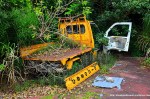
What made the New Zealand Village in Yamaguchi different from those in Hiroshima and Shikoku was the variety of strange pedal-powered vehicles. Cars, bikes and really unique constructions – they were scattered all over the park, a plethora of rental… thingies. I took photos of many of them and maybe one day in the future I will publish a special picture set about them.
Another thing that made this installment of the New Zealand parks special (but not in a good way!) was the already mentioned presence of vandalism. It wasn’t “ZOMGWTFBBQ!?” bad, but since vandalism is always uncalled for it was nevertheless sad to see. Call me old-fashioned and naïve, but I like my abandoned places easy to access and naturally decayed. Luckily the amount of vandalism decreased the further we got away from the entrance, so by the time we reached the stables and Sheep House with its museum of 19th century farm equipment and a couple of taxidermy items in the making, vandalism was nothing but a bad memory.

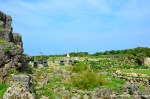
What really bugged me about exploring the Yamaguchi New Zealand Village was the time pressure. Like I already mentioned, this was part of a road trip to the south of Honshu and the schedule was kind of tight. A place like this deserves a whole day of exploring and taking pictures, probably with some hours after sunset for some special photos – a luxury not available to us. So when Michael and I left after 3 hours (which is generous for most places – *Sekigahara Menard Land* I left after about 20 minutes…) it was with a bittersweet aftertaste, amplified by a bunch of beatniks who entered the parking lots just before we left. Us driving away was accompanied by the sound of burnouts in the distance…

(If you don’t want to miss the latest article you can *like Abandoned Kansai on Facebook* – and of course there is the *video channel on Youtube*…)

Addendum 2014-07-11: According to a friend of mine all the buildings have been demolished – R.I.P.!

Read Full Post »

« Newer Posts - Older Posts »