Feeds:
Posts
Comments

Archive for the ‘Hotel / Ryokan’ Category

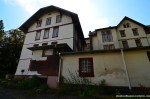
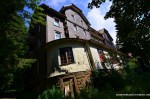
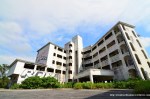
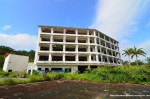
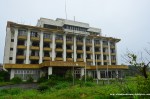
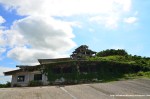
Urban exploration is a dangerous hobby. How dangerous it really is I found out at the Daieikaku, a rather big abandoned ryokan south of Osaka. I was literally and figuratively one step away from my demise…

The Daieigaku was the first location Damon and I went to together back in 2010. Later we continued to explore the *Gion Love Hotel*, the Ferris wheel *Igosu 108*, the *K-1 Pachinko Parlor*, the *Tsuchikura Mine* as well as the *Kasuga Mine A* and *Kasuga Mine B* – but first the Daieikaku, a hotel that turned out to be quite hard to get to.
Back then I had done all my explorations using trains, but the Daieikaku was too far away from the closest station to walk to, so we had to take a bus. Which is a hassle in pretty much every country, especially if your command of the local language is… sub-par. Sometimes it’s close to impossible to figure out schedules and stops. When I wanted to get to a place near a university campus in Hokkaido last year it took the local tourist information at JR Sapporo Station 15 minutes to figure out which bus to take – and I knew the name of the bus stop I wanted to go to! Figuring out which bus to take to the Daieikaku wasn’t easy, but it wasn’t the only problem: The Daieikaku was located at a slope on the other side of a river, but the bridge leading to the ryokan was completely overgrown. Even in autumn with weakened flora we weren’t able to get to the other side, especially without being seen by locals and day visitors. So we crossed the river via another bridge, climbed up the slope and got to the back of the Daieikaku at the level of the third floor. Instead of taking some steps down to the ground floor we entered through a smashed in window right where we were. Starting up there was as good as anywhere else we thought…

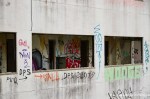
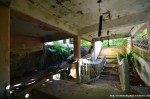
Big mistake! The first room was one of those tatami party rooms you have in pretty much every hotel in Japan. Thanks to open doors and windows everywhere in the Daieigaku the place was in rather bad condition with leaves all over the place. I went to the side of the building, looking for a staircase. Found it, passed it and opened a door… a restroom. I went inside to have a closer look, but although the floor looked a lot more solid than the one in the tatami room it didn’t feel like it. Halfway into the room I had a very, very bad feeling, so I went back to the hallway, down one floor via the staircase, opened the door to the restroom below the one I just entered and… it was gone! There was no friggin restroom! Only one wall with some urinals hanging mid-air! And the bathroom I was in basically was attached to the rest of the building by its walls. I guess I don’t have to mention that the floors below were gone, too, so if I would have walked further into the restroom two minutes earlier (or probably just would have stayed where I was) there would have been a good chance that I would have crashed through a thin layer of tiles and wood three floors down to my death. After I recovered from that realization I went straight to Damon to warn him about the death trap on the third floor. Luckily he didn’t put himself in danger, so we continued our exploration without further incidents, although we continued to take risks every once in a while – especially Damon, who was exploring the hotel like a honey badger. Through tiny broken windows with shards left, up and down rotting wooden stairs, … Which lead us down to the onsen part of the ryokan, a part of the hotel I probably wouldn’t have gotten to if I would have gone there on my own, especially after that little shock right at the beginning. There we saw some major cracks in the ceiling and the wall, which didn’t exactly help to ease my mind – parts of the Daieigaku already collapsed, so being in the middle of the building with unstable floors above and below wasn’t exactly the place I wanted to be in. But the former lobby didn’t look any better. We first saw it from 2F and looked down – staircases gone, walls caved in… The whole building was in worse than dilapidated condition and I guess every single step could have been our last!

Looking back at the exploration of the Daieikaku I have to say that we were terribly naïve and really lucky. The term “Daieikaku” means big glorious building and it is often used for restaurants serving a charcoal grilled meat dish called yakiniku – and while the ryokan Daieikaku was indeed a big building it was everything but glorious. It was a deathtrap and by far the most dangerous location I have ever explored. It also was rather unspectacular overall, that’s probably the reason why I never wrote about it, almost forgot about. Back then I just did a pre-selection of my photos, deleting only the worst, so I had to go through almost 150 of them to make a final selection for this article – and it actually makes me wanna go back there. Three years ago I shot without a tripod and the Daieikaku was pretty dark in some places, though it was a bright and sunny autumn day. Furthermore several earthquakes hit Kansai since then, including the Tohoku Earthquake that caused the Fukushima Incident and a recent one that struck Awaji Island. Plus Mother Nature had 30 months to do additional damage… Well, we’ll see – if time allows I’ll stop by there again to give you an update on what happened to the Daieikaku. For now I hope you’ll enjoy the photos I took during my visit. I’m sure you are eager to see what the collapsed bathroom looked like… 🙂

(If you don’t want to miss the latest article you can *follow Abandoned Kansai on Twitter* and *like this blog on Facebook* – and of course there is the *video channel on Youtube*…)

Read Full Post »

The Kuroshio Lodge is one of the oldest and most famous abandoned places in Japan – even pioneer *haikyo* blogs who haven’t been updated in years feature this almost completely trashed hotel with the iconic bar; a beautiful photo opportunity thanks to its rusty stools and bright orange and yellow lamps. Nevertheless I struggled for about a year to find out where the Kuroshio Lodge was… and then another six months to find a ride as it is close to impossible to get to the place by public transportation – luckily it was *on the way to Shikoku* for Gianluigi and I, so we made a stop to stretch our legs and to take some photos.
Kuroshio means “black tide” and is also the name of a northeast-flowing ocean current stretching from Taiwan past Japan to the North Pacific Current – hence the nicknames Black Stream and Japanese Current, deriving from the deep blue of its waters and the country it flows by.
It’s pretty safe to say that the Kuroshio Lodge was named after the current – despite the fact that the Kuroshio (current) isn’t visible from where the lodge is located. The lodge on the other hand isn’t visible from the beautiful coastline of Awaji Island. You can get as close as 100 meters (beeline) on a busy street, look up a hill and see nothing but trees. At the same time you have a gorgeous view at the mountains of Awaji Island and the stunning Seto Inland Sea from the rooftop of the lodge… It’s all a matter of location!

At first and third sight the Kuroshio Lodge is a big disappointment. After huffing and puffing up a rather steep mountain road on foot, Gianluigi and I reached the back of the mid-size grey building. After years without maintenance the outside walls looked dirty, but that was nothing in comparison to what we saw when peeking through some open windows – the exposed rooms were filled with rotting vandalized futons and other interior. Not exactly a great start.
In close proximity of the abandoned hotel we found a couple of small houses at the slope; hut-sized, most likely the former living quarters of employees. We entered one of them, but the lighting in there was horrible and neither of us brought a tripod. There was not much to see anyway – I didn’t even bother to take a video.

Back up the slope we finally entered the Kuroshio Lodge – and were positively surprised by the lobby area with its famous turquoise chairs and the bar with its even more famous lamps and stools. You could take 100 interesting photos there and still won’t be bored!
Sadly disappointment stroke again right behind the counter. The kitchen next to the lobby / bar was completely vandalized and rotten, so we made our way up to 2F (first floor in Europe, second in Japan). No wonder that you barely ever see other rooms than the lobby when people post about the Kuroshio Lodge. The whole rest of the place was either vandalized and rotten or completely boring. I took a couple of snapshots here and there (like the lamp and the bath, although they were not really exciting subjects…) and then called it a day, taking the obligatory video on the way back to the lobby.

Since I visited the Kuroshio Lodge almost two years ago I found several Japanese articles about the hotel claiming that the area is overrun by wild dogs from a former dog breeder close to the hotel. They also claim that those dogs were involved in some rituals… whatever that means. Luckily I didn’t run into any mad dogs, crazy cultists or bloodthirsty sadists – although I remember seeing some kind of triangular sign on a metal plate in the boiler room (the one at the beginning of the video below, I just missed to catch the symbol on film… sorry for that, I didn’t think it was on any significance). The whole thing sounds a little bit like an exaggerated version of the usual ghost story surrounding basically every abandoned hotel in Japan. A lot of Japanese people are surprisingly superstitious, so whenever a place is abandoned you get some variation of the “owner committed suicide” story. Stories that are virtually impossible to verify. Nevertheless I thought I better mention the wild dogs. You know, just in case you walk up to the Kuroshio Lodge one day, get surrounded by them and think “Florian never mentioned those damn dogs!”…

To me the Kuroshio Lodge was a rather disappointing location. I loved the entrance area, but the rest of the building gave me a “been there, done that” kind of vibe – which is not what I was hoping for after putting so much time and effort into finding the place. But hey, what can you do? At least the bar and the lobby didn’t fail to deliver. And sometimes one room is all you need to make a visit worthwhile…

(If you don’t want to miss the latest article you can *follow Abandoned Kansai on Twitter* and *like this blog on Facebook* – and of course there is the *video channel on Youtube*…)

Read Full Post »

One of my favorite things about urban exploration is travelling. Most of the time I do day trips within Kansai, but every couple of months I go on mini vacations to other regions. *Okinawa*, *Kyushu*, *Hokkaido*, *Shikoku* … and a couple of more that will be revealed in the future.
I lived in Japan for several years before I started to visit abandoned places – and in those first years I barely travelled within Japan. Kansai has plenty of castles, temples and shrines, some of the most famous in all of Japan. More than enough to get templed out, shrined out and castled out, so I didn’t feel the urge to spend hundreds of bucks on train tickets – and then a similar amount on hotels. Only to see more castles, temples and shrines that look similar to what I can see down the street. Abandoned places on the other hand are unique – and some of them are actually worth spending a couple of hundred bucks, at least to me.
The spring of 2011 saw my second overnight trip to Shikoku. *During the first one* my favorite location on Japan’s least populated main island was the spectacular *Tokushima Countryside Clinic*, a small town doctor’s house, barely harmed by vandals and the ravages of time. My friend Gianluigi, an avid photographer for almost two decades, loved the photos I took at the clinic, so I convinced him to go on a road trip – I would show him that wonderfully spooky gem if we would stop on other abandoned places along the way…
If you are a regular reader of Abandoned Kansai you might remember two articles I wrote about really unique haikyo about half a year ago – the abandoned Japanese spa *Shimizu Onsen Center* and the giant Buddha statue / viewing platform *World Peace Giant Kannon*; both of them were actually part of this second trip to Shikoku.
So here is a complete list of all the locations:
Amano Hospital
Daiwa Pottery
Kuroshio Lodge
Shimizu Onsen Center
Tokushima Countryside Clinic Revisited
World Peace Giant Kannon

One of these places has been demolished since I visited it two years ago – you’ll find out soon which one… and then I’ll add it to my *GoogleMap of Demolished Haikyo*.

(If you don’t want to miss the latest article you can *follow Abandoned Kansai on Twitter* and *like this blog on Facebook* – and of course there is the *video channel on Youtube*…)

Read Full Post »

Usually I write a full-blown article when revisiting a location, sometimes weeks or years later. I did that in the past with *Sekigahara Menard Land* and *Sekigahara Menard Land Revisited*, *Exploland* and *Expoland Revisited* and of course *Doggy Land* and *Doggy Land Revisited* – and I already know that there will be more articles like that in the future. When I revisited the *Kasagi Hotel* almost two years after I fully explored it, the whole thing ended quickly; hence just a short update with a couple of photos. I wasn’t even able to take a video…

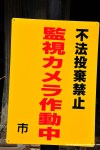
Revisiting the Kasagi Hotel was to round off a day of explorations with two friends from England, Adam and Klara. The sun was already setting when we arrived by car, so we hurried towards the entrance… only to find the barricade completely reconstructed. And that wasn’t all: The thing was plastered with warning signs! Not only did they warn you that the place was secured by cameras now (usually a hoax…), but they also announced that 16 people have been arrested by the police at the Kasagi Hotel on October 10th 2011! And that’s… unusual. You get “No trespassing!” and “Call the police when you see something suspicious!” signs everywhere, but announcements of arrests I had only seen on the internet to keep people from exploring the abandoned German themed park Glucks Kingdom (or Glücks-Königreich, kingdom of fortune, as the name really was…).

Like I said, the sun was already setting anyway, so we just had a quick look from the street along the hotel. I’m sure there would have been ways to get in, but since we were running out of time and cameras / silent alarms were a possibility, we decided not to risk getting caught and called it a day. 16 people arrested… Jeebus, that’s quite a number for such a rundown place! Cute drawing though…

Read Full Post »

“Flash? I don’t use flash! Most photos look ugly when using flash!”
In February of 2010 I had no clue what my dear friend *Enric* was talking about. I had my first DSLR for 3 months and I had no clue about photography either. But when I was using the flash of my D90 in the darker corners of the Kasagi Sightseeing Hotel my now truly missed buddy got really upset. I didn’t think much about it, to be honest. I just picked up urban exploration and photography as a hobby, and I was happy about every decent shot I was able to take. Flash or not…
Who cares? Just let the crazy Spaniard talk! — Gosh, was I ignorant. But I really had no clue what I was doing. Couldn’t have known a good photo from a bad one even if Ansel Adams would have hit me in the face with a picture book! I continued the learning by doing process and half a year later I bought an ultra-wide angle lens and a tripod – and I guess my photos improved massively since then, probably because I barely ever used flash again. But whenever I do, I remember Enric’s words at the Kasagi Tourist Hotel…

I don’t know why it took me more than 3 years to write about the Kasagi Hotel; this is actually one of the oldest unpublished locations I had on my hard-drive – and the other ones are way less interesting! It’s probably because of the name… or its rather convenient location in walking distance of a train station… Guess which one! Although I have to admit “convenient” and “walking distance” is relative. It’s convenient and in walking distance for urban explorers. If you arrived as guests with suitcases you better took a taxi!
Although one of the most popular abandoned places in Japan for many, many years there is not much information floating around about the Kasagi Hotel. It’s widely known as a ghost spot, since rumors have it that the owner committed suicide by arson – half of the Japanese blogs writing about the place admit that they didn’t dare to enter. Or care to find out more about the hotel’s history. So here’s some information I got from reading a dented sign near the entrance and that is nowhere to be found on any Japanese blog: It seems like the Kasagi Hotel was famous for its onsen. The hot spring was fed by a spring 1200 meters below the hotel, rich in sodium and alkali. Staying at the hotel for one night including two meals was 6500 Yen, onsen only was 1000 Yen, onsen and one meal 2000 Yen.
Enric and I didn’t mind those suicide stories to scare away children and walked straight in, past the barricade that once prevented nosy people from entering; but of course it was ripped apart by some vandals by the time of our arrival. We mostly ignored the smaller storage buildings to the right and headed straight for the hotel, squeezing past another barricade made of conjugated iron, a lot more solid, but nevertheless wide open even for foreigners.
The ground floor was a pitiable sight. Half destroyed by arson and littered by bent and rusted iron it offered a sample of the general condition of the Kasagi Hotel. I guess that’s the downside of the hotel’s fame and location: It was vandalized like hardly any place I’ve been to before or after – graffiti, arson and ripped apart walls, floors, ceilings… you name it. Even two staircases were completely ripped apart, although it looked like that was done professionally and with heavy machinery; especially since there was barely any rubble left. The whole floor was dark and gloomy, with holes in the wooden floor spared by the fire. The hotel kitchen also became the victim of flames, underlining the spooky first impression.
A concrete and graffiti stained staircase in the back lead to the upper floors, but the door to the second one was blocked by a huge welded metal plate. Somebody built an improvised metal ladder from 1F to 2F, but I preferred not to climb it – especially since 2F suffered as much damage from vandals as all the other floors. Except for the ground floor and the top floor all the floors looked pretty much the same with different kinds of destructions: On one floor the toilets were completely intact, on other floors you could still see parts of the wallpaper, while on another floor the intact walls gave a good impression how big the rooms really were – the whole building was one big puzzle.

The Kasagi Hotel was one of the first 20 explorations I did and therefore everything was extremely exciting. Looking back years later it was one of the more unspectacular locations I visited; except for the view. The view was fantastic, especially from the terrace on the roof top and from the corner baths, which allowed free sight on the Kizu River ten meters below the ground floor of the hotel.
One word of warning though to all the people planning trips there to have a look themselves: I wouldn’t do it! About a year ago I went there again for a quick revisit. More about that trip later this week or early next week…

(If you don’t want to miss the latest article you can *follow Abandoned Kansai on Twitter* and *like this blog on Facebook* – and of course there is the *video channel on Youtube*…)

Read Full Post »

The Restaurant Kent, on Japanese haikyo blogs mostly known as the Good Omen Garden, is one of the staples of urban exploration in Japan. Located on quite a long country road connecting Osaka with Miyazu (home of the famous sandbar Amanohashidate, one of Japan’s three scenic views) the Restaurant Kent was one of the most popular local haikyo when I started doing urban exploration three years ago. Nowadays it lost quite a bit of its popularity, probably because it was photographed to death over the years – or maybe because there are a couple of signs announcing camera surveillance… which I totally respect if it’s true.
In this case the claim was complete bullshit, which annoys the heck out of me as it just cost me time and nerves. The signs looked rather new, so maybe they were put up before the local city administration set up the cameras (government involvement, even on the lowest level, is always a bad thing since it usually means serious business – private companies might hire some slackers, but you don’t want to mess with bureaucrats, especially in a country like Japan…), but when I visited the Restaurant Kent in March of 2011 there were no cameras or other forms of security; a topic I usually leave out, but if somebody lies to me blatantly I have to set the record straight!

Sadly there is not much else to report about the Restaurant Kent, since nobody seems to know a lot of facts about the place. I don’t even know if it was named after the county of Kent in South East England – or after the hugely popular cigarette brand “Kent”, which famously used carcinogenic blue asbestos in their filters from 1952 till 1956 (I guess at least British American Tobacco made cigarettes healthier after all…). The restaurant area itself seemed to be quite small, but neat. Previous explorers set up some tableware in front of a chair with armrests, but other than that there was not much to see.
The Good Omen Garden seemed to be much bigger – one of those festivity locations Japan so desperately needs when you want to be loud and / or with some friends. My buddy Dan and I found several party rooms of various sizes (Western Style and Japanese style, i.e. either carpet floor and tables or tatami floor and furniture that is long gone now…) equipped with all kinds of electronics including laser disc karaoke machines, beamers, microphones (not for karaoke as they were installed to the ceiling…) and mountings for camera and / or additional lighting. One room even featured a disco ball, although it was quite severely damaged – and so was the fake wedding cake one floor down outside. At the first look the Good Omen Garden didn’t seem that big, but then it turned out that there was a second building behind the first one, connected by a kitchen on the upper floor. There were more rooms, including some guest rooms for overnight stays and the usual array of baths for men and women.
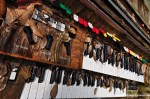
My favorite item though wasn’t in the building, it was outside in the backyard – a wooden electronic organ, beyond repair thanks to years of abuse from vandals and weather; nevertheless an unusual and strangely beautiful sight.

Since the Kent Restaurant / Good Omen Garden was along a busy road, but not within a city, town or even village, there were almost always cars parked outside. But nobody had the intention to bother us, I guess the camera warning signs outside worked. When Dan and I were about to leave though, a pickup-truck with a small crane parked next to the building. We “escaped” through the front entrance while two or three men entered the building through the restaurant. On official order or to loot? We’ll never find out. Dan and I were kind of in a hurry anyway, since on the way to the Kent Restaurant we spotted a location I’ve never seen anywhere else before. But that’s a story for another time. Probably Christmas time…

(If you don’t want to miss the latest article you can *follow Abandoned Kansai on Twitter* and *like this blog on Facebook* – and of course there is the *video channel on Youtube*…)

Read Full Post »

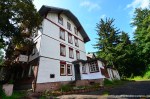
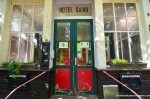
Since I’ve been terribly busy recently both at work and with several urbex projects / explorations it sadly has to be a short article this week; a location that took me just a couple of minutes to shoot, actually – the Kurhaus Sand (or Hotel Sand).

When I went on vacation to Germany in summer this year I met up with a kindergarten friend of mine, Nina. She became a regular reader of this blog and was eager to explore with me, so I planned a daytrip to the Schwarzwald (Black Forest) area of Germany. I had several leads there and thanks to an early start we managed to visit 7 (!) different locations on one day – possible only because some of them weren’t accessible; one of them being the Kurhaus Sand. Strangely enough a name that works both in English and German, but since kurhaus isn’t nearly as common as kindergarten let me give you a quick translation: health resort.

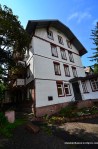
And that’s basically what the Kurhaus Sand was – a health resort in one of Germany’s most beautiful regions, the Black Forest. Not much more than a couple of houses in the middle of nowhere, Sand isn’t even a village. Its origin though is the now abandoned kurhaus. Around 1845 a mountain shelter was build on sandy soil (hence the name Sand, which means sand… Captain Obvious strikes again!) as a refugee for forestry workers. A couple of years later somebody started to sell beverages, with little success (the hut was subsidized by the city…), but after some state investments in 1874 the hut was turned into an inn under the direction of the retired country constable Josef Martin Weis at the age of 57. The place became more and more popular amongst hikers and in 1884 the previous head chef August Maier became the new tenant. In the early 1890s Maier bought, enlarged and enhanced the inn and re-opened it as the Kurhaus Sand in the presence of Frederick II, Grand Duke of Baden – the last Grand Duke of Baden. The area continued to thrive, so around 1920 a gas station was added, in 1930 a post office opened and in 1936 a police station started its service. During those days the ownership of the Kurhaus Sand changed several times, but I’ll spare you the details.

Nowadays all of these installations are closed. Only the 1949 opened Bergwaldhütte (Mountain Forest Hut), a convalescent home for children and later for policemen, is still in business – offering food and drinks for all travelers coming through on the popular Schwarzwaldhochstraße (Black Forest High Street).

When Nina and I drove up to the Kurhaus Sand we were forced to stay inside the car for a couple of minutes as a cloudburst made it impossible to start our exploration right away. When we were finally able to get close we were still not sure if the Kurhaus Sand was really abandoned or not as the place isn’t really popular amongst German urban explorers. The building was in pretty good condition, but since there was no activity during a time that is considered the busiest vacation time in Germany it must have been abandoned… We were able to walk around the building clockwise once – no signs of anybody, no signs of vandalism, but also no way to enter the building…

It wasn’t until my return to Japan that I found out that a family named Wiedemann were the owners of the Kurhaus Sand from the 1930s on. In 1977 Günter Milz took over and turned the place into a popular destination for day trippers – he modernized the hotel part (baths, elevator, …) and his restaurant became famous for the cuisine of Baden; like Flädlesuppe, Käsespätzle, Maultaschen and Schupfnudeln. Milz retired in 1994, but I couldn’t find any information about the almost 20 years since then. Given the decent condition the Kurhaus Sand is still in it must have been opened for business for another couple of years, but who knows? Thanks to its remote condition hardly anybody would go there just to vandalize it… Luckily there are many local historians in Germany – maybe one of them finds this article and can add some information?

Read Full Post »

The Lequio Resort Okinawa, to the net usually known as the Rekio Hotel thanks to the usual katakana transcription problems, is one of those countless hotel ruins you can find all over Japan and that most urban explorers only visit because nobody has torn them down yet. The most interesting thing I can say about the place is the fact that it was built in the 1970s during the Okinawan hotel boom and right in time for the Okinawan Ocean Expo in 1975 – like the *Nakagusuku Hotel Ruin*, the most amazing unfinished hotel I’ve ever seen. Unlike the Nakagusku Hotel the Lequio Resort was actually finished and opened, at least for a while. Nowadays it’s completely vandalized and gutted, almost as bare Okinawa’s all outshining haikyo further down south. Bare except for the impressive amount of graffiti – almost as plenty, but barely ever as good as at the *La Rainbow Hotel* in Okayama. Built halfway up a mountain overlooking a gorgeous bay the Rekio Hotel offered some stunning views and visitors should be very careful where their steps lead them, because the place is a death trap with barely any safety barriers. The elevator shaft was cracked open on every floor and the balconies had no railings, except for some low hanging ropes on some of them. The vandalized state and the exposed position of the hotel make it and everybody inside susceptible for the always present winds, so seriously: Be careful when you go there. If you go there, because there is really not much to see. My favourite part was the glasses shaped pool, now green, moldy and pretty disgusting. But overall *Michael* and I spent just about an hour at the Lequio Resort – which is a ridiculously short amount of time for a hotel of that size, considering that it took me more than 12 minutes to shoot a walking tour there. If the Rekio Hotel would have been one of my first explorations I’m sure it would have been an exciting adventure, but after seeing so many abandoned hotels it turned out to be barely more than a footnote in my (imaginary) haikyo book…

(Addendum 2012-07-19: It seems like “Lequio” was the Portuguese name for Okinawa when it was still the kingdom of Ryukyu – thanks to my dear colleague and regular reader Mayuko for that information!)

(If you don’t want to miss the latest article you can *follow Abandoned Kansai on Twitter* and *like this blog on Facebook* – and of course there is the *video channel on Youtube*…)

Read Full Post »

Exploring the Sunset View Inn Shah Bay (combining two dozen cottages and the Shah Bay hotel) was one of the worst urbex experiences I ever had – so bad that I cut it short and left after about half an hour. I could have easily faked an interesting article about a smooth exploration since I took enough photos and even a short video, but what’s the point? Not all urbex trips go as planned and not all explorations are successful. Here’s one that turned out to be a nerve-wrecking waste of time.

The Sunset View Inn is (or better: was) a resort complex in the northern part of Okinawa on top of a mountain with a gorgeous view, but pretty much in the middle of nowhere even by Okinawan standards. When *Michael* and I drove up there using narrow countryside roads and half-overgrown streets of decent size I already was kind of aware that we were slipping into a disaster. Tired from the previous day we arrived on the mountain top with no food, drinks or umbrellas at the nearby scenic outpost when it just started to drizzle again. Michael opted for a bathroom break (yes, there was a maintained concrete restroom at an abandoned scenic outpost…) while I walked down the road for a couple of dozen meters as I thought I saw an abandoned concrete building behind a wall of green – I was right. Sadly I didn’t bring my camera, but it was unspectacular anyway; just a vandalized one floor concrete building, probably a restaurant. Of course the rain got stronger, so I had to wait for about ten minutes before I could reunite with Michael. It still drizzled heavily when my haikyo buddy told me that he saw house with some activity and a sign that says that the police will be called if somebody gets close to the hotel. Great. Could it get any worse? Yes: When we climbed over a road block on the way to the hotel Michael made me aware of another sign informing potential visitors about security patrolling the area. And of course the rain was pouring heavily again. Hot, humid, hungry, tired, potential security, heavy rain, no umbrella – a nightmare scenario. After about 150 meters the road split. Right cottages, left the Shah Bay hotel. We decided to have a look at the cottages first, but even their slightly vandalized state didn’t make me more confident. I felt uneasy and would have probably left at that point if I would have been alone. The road lining up the cottages lead back to the entrance area where Michael told me the occupied house with the warning sign was… Was the street leading there? Could security get to us by car? (The way we entered was blocked for vehicles.) Or even worse: silently on foot? I mentioned it before in other articles – I’m tired of vandalized hotels, and those abandoned cottages looked all the same, were all moldy, had all the typical look, feel and smell of abandoned Japanese accommodations. Michael didn’t seem to be that excited either, so after about ten minutes we decided to turn around and go to the hotel. Hot, wet, sweaty, nervous, tired and bored we approached the big deserted building when all of a sudden Michael yelled whisperingly “There’s a car coming, there’s a car coming!” (or something like that) – so we sprinted and dug into the wet bushed while the rain continued to get stronger. Of course there was no car coming, but now we were completely wet and at least I was a nervous wreck and getting seriously paranoid. As I mentioned twice recently (*here* and *here*) I am not into infiltration, I have explored way too many haikyo (especially hotels) and I am just too old for this shit! But the situation got worse. We entered the empty lobby of the hotel with a beautiful, untouched area straight out of a museum to the left when all of a sudden I thought I heard footsteps. We ran again, this time hiding in the close-by former gift shop. While my knees were screaming in pain I still heard footsteps – irregularly, louder and quieter. After two or three minutes I had enough. I already told Michael at the cottages that I didn’t like the current situation and while hiding at the gift shop I finally draw the line – this far and not a single step further. So I left. Michael decided to stay and joined me at the car about an hour later. It turned out that the footsteps were a mix of dripping water and an unspecified animal making noises – we couldn’t get in contact because the phone reception up there was close to non-existent. I couldn’t have gotten back in anyways since tourists in cars were coming up constantly to pay a visit to the abandoned observation point. So I took a couple of photos there and in passing found out that the first warning sign wasn’t at the house where people lived, but at an derelict kiosk a couple of meters away, outside of the premises – small details…

I know this article doesn’t fit the self-publicizing image of urban explorers hiding from the police, dodging security and doing all kinds of “cool” things. But that’s not me anyways. I’m just a regular guy who likes to take pictures of urban decay. This exploration turned into a small disaster for many reasons and I’m actually still shocked that Michael and I, two of the most experienced foreign urban explorers in Japan, stumbled into this adventure the way we did. But then again… Isn’t the only currency in this bankrupt world what we share with someone else when we are uncool?
Would I go back to the Sunset View Inn Shah Bay with sufficient supplies on a sunny day? Most likely yes. The area looked awesome and the map close to the abandoned viewpoint showed that the resort had more to offer than the cottages and the hotel – there was also a stone garden, a huge fountain, an area for band practice, a gateball course, tennis courts, a sports club house, a BBQ area, some kind of race track and two pools. I had seen the pools on a satellite photo and it really hurt that I missed them. Luckily I was able to take abandoned hotel pool shots later that day when we visited another one of those concrete giants that obviously never get demolished in Japan.
Chances that the Sunset View Inn Shah Bay will get demolished are rather slim, too. Opened in 1986 in the structurally weak north of Okinawa by a successful businessman from Naha (sounds familiar, eh?) the resort went bankrupt and closed in 1995, less than 10 years after the hopeful opening. So no Persian investor as the name might have implied. Shah is actually an old Okinawan / Ryukyuan word, meaning salt – the owner of the resort named the Shah Bay hotek after he saw the term on a map in Matthew Perry’s “The Japan Expedition”. (Matthew Perry as in “the guy who forced Japan to open its ports for foreign ships”, not the “Friends” goofball!) Shah Bay once was the name of the bight at the feet of the hotel, the one that made the sunset view so remarkable, the one that people still try to see from the once so wonderful vantage point…

(If you don’t want to miss the latest article you can *follow Abandoned Kansai on Twitter* and *like this blog on Facebook* – and of course there is the *video channel on Youtube*…)

Read Full Post »

When *Michael* and I approached the Nakagusuku Hotel Ruin I knew we were in for a treat. I’ve explored enough ruins (about 200 so far…) to recognize a triple A, a five star, a first class abandoned place. But in this case I had no clue about the epic glory that was waiting for us. I actually didn’t find out until 5 hours into our exploration. At that point I was lying on the hot concrete roof of the hotel in the merciless Okinawan sun, hiding from a group of tourists visiting the Nakagusuku Castle, when a gigantic Lockheed C-130 Hercules (Edit: Thanks to La Mian World I now know that it was a C17 Globemaster! Which replaced the Hercules…) was heading towards me as if it was trying to bomb both the castle and the hotel…

“But how did it come to this?”, I hear ya say. Well, it’s a long story. Come closer, and I’ll tell ya. It all started… earlier that day. And what a day that was. It’s what I call… an excellent exploration day. (To everybody not admiring Conker’s Bad Fur Day: Sorry for this silly paragraph, I just had to do it. And if by any chance Robin Beanland and / or Chris Seavor read this: Thanks for creating one of the best platformers ever, a true masterpiece!)

If I would have judged Nakagusuku Hotel Ruin after the first two hours I would have been disappointed. Yes, it was big. Yes, it was made of concrete. Yes, it was abandoned. Yes, it was overgrown. But entering the place and following the beaten paths countless urban explorers and by-chance-visitors have walked along for more than 30 years was actually quite disillusioning. The hotel looked awesome from the distance, but the entrance area was rather dull. It even had a burned-out area, though there was hardly anything to burn. I didn’t want to stray too far away from Michael since last time he visited the place he saw a white pick-up truck driving by and I read in one report that there was security. So at one point, probably two hours into our little adventure, I walked up to Michael and told him that I was bored – after he spent about half an hour taking pictures of a column of ants at the wall of a small room. My highlight up to that point? Taking photos of a singing bird sitting at one of the smaller roofs outside…

We continued to the north across a little covered bridge over a small road (leading up the hill to the top part of the hotel) – and there things started to become interesting. While the architecture at the entrance area was quite quirky (wide aisles, small rooms and corners that didn’t have a clear purpose) all of a sudden it became downright weird. The annex wasn’t properly connected to the main building, it was about a meter too low. And there were no stairs, not even a ladder. But it got stranger… and stranger… and stranger. (You can see all of that in the video I published with *the first article about the Nakagusuku Hotel Ruin*.) The staircase in the annex… it wasn’t high enough for an adult to walk upright and it was freakishly narrow. Nevertheless that’s where we headed next. If we were incautious Michael and I could have been seen from the castle, but we had a great view at the overgrown lower parts of the hotel and at the landmark top of it. Michael wasn’t happy with the cloud situation, so while he killed some time on the roof I took the long video I published with the last article – we agreed to meet in the burned out main hall later. From there we walked up the mountain and entered the annex complex again. Basically the area you can see in the first half of the third video. Michael and I left the building to take some photos when all of a sudden we heard voices. We ducked down, being as quiet as possible. The voices came closer… two female, one male – obviously American tourists who saw the hotel ruin when visiting the castle ruin. They passed by us without noticing us when Michael realized that the cloud was finally gone, so we went back to the little tower of the annex building. While still on a lower floor the family came back and we decided to scare them a little bit. Sadly we were quite indecisive about it, so by the time Michael yelled at them in Japanese with a low aggressive voice right out of a classic samurai movie they were already too far down the road for us to see their reaction. Well, it wasn’t that funny anyway…

So up the annex building and taking more photos outside. That’s when Michael realized that he could walk across the roof of the covered bridge to reach the roof of the main building. I’m sure it was perfectly safe, but since I saw another way to reach the main building’s roof I made my way through the main building when I received a phone call from Michael – he was pinned down on the roof thanks to a bunch of tourists at the castle. So I went back to get his tripod and finally made it to the upper part of the main building to get onto the roof myself. Five minutes later I was lying there with the C-130 Hercules flying over my head… and I couldn’t get a close-up since I had my ultra wide-angle lens mounted and not a snowball’s chance in hell to switch it in time. (Edit: Thanks to La Mian World I now know that it was a C17 Globemaster, not a Hercules…)

After having seen most of the Nakagusuku Hotel Ruin Michael and I were willing to take more risks and finally walked up the hill to the exposed skeleton part of the hotel ruin. On the ground floor there we made an unexpected discovery – a completely burned out and rusted car INSIDE the building. It definitely was a car, but in absolutely abysmal condition, so I have no idea which manufacturer or model it was. Then we went to the top of the building and enjoyed a spectacular view – the hotel, the castle, the small cities and of course the Pacific Ocean and the East Chinese Sea. A slight breeze and the gorgeous view almost made us forget that we were completely exposed.

On the way back to the exit I shot the second and the third video, both published with this article. Although the exploration was great I was kind of eager to get out of the deserted hotel after seven hours when Michael found a building we hadn’t been to yet. Which lead to a lower floor, which lead to a balcony, which lead to a whole new world. The annex building we explored 4 hours earlier was actually the gateway to an area mostly overgrown and lower than the rest of the construction, reminding me of Mayan or Aztec temple in the middle of the jungle. The sun was already setting (it was past 5 p.m. which basically prefaces the end of the day in Japanese spring time…) and bathed the area in warm light. As much as I wanted to get out of there, this part of the hotel was just way too gorgeous to be left behind without us having seen it. So we went deeper and deeper, up and down staircases, through walls of green and past all kinds of weird and sometimes dangerous architecture (one photo shows a flight of stairs separated by a massive concrete handrail – if you would have walked up the right side you would have banged your head unless you are smaller than 30cm…). I really wonder if there was no construction supervision agency in Japan back in the 70s… or what they did all day. Or what the architect was paid for. If there was an architect. Why nobody on the construction site said “If we do it like that people won’t be able to use it properly…”. But whatever, for people with a predilection for the surreal it’s a mind-blowing place to see, although some things don’t make sense at first. Like when Michael jumped into the now empty pool and had no clue where he was, because things just didn’t made sense at first sight. From the pool we had an awesome view looking up to the hotel complex, some overgrown concrete water slides in the background. At that point we were in such a hurry that we didn’t even set up our tripods for good photos – snapshots, snapshots, snapshots. When we finally left the lost civilization area we did it via a part of the building that was home to the cage like installations you can see at the end of the last video where my camera ran out of memory space. It seems like the hotel had a rather decently sized half-underground zoo, although I’m pretty sure that no animal ever lived there. The main area there was composed of a maze of stairs, most of them basically unusable thanks to the ubiquitous misplanning – I loved it, though I’m about 1.90 meters tall. It’s hard to believe that a place like that exists, especially when coming from a country where the state’s building control department is such a powerful institution.

After about eight hours Michael and I finally left the Nakagusuku Hotel Ruin, exhausted but happy.
When Michael told me about the hotel *two months prior to our visit* I was skeptical. When I saw it that morning I was excited. After two hours I was slightly disappointed – and from that point on it grew on me. And it actually kind of still does. The Nakagusku Hotel Ruin is one of the most amazing places I ever had to the pleasure to explore. The location was gorgeous, the fact that most of it was never finished lessened the effect of the always present vandalism, the warm and sunny spring day and a couple of singing birds following us up the mountain was heartwarming, no security present was a pleasant surprise, the size of the site was enormous (I think it would take about an hour of straight ambling without stopping to look at details to see the whole complex) – but what really separated the Nakagusuku Hotel Ruin from most other places was the constant flow of surprises. The architecture of the place was mind-blowing in so many ways, and items like the wrecked car made it such a unique exploration. It actually made it an exploration. At so many other urbex spots you get what you expect and once you’ve seen one floor you’ve basically seen 90% of the site. The Nakagusuku Hotel Ruin put exploration back in urban exploration – I never knew what to expect behind the next corner, on the next floor, below the next overgrown flight of stairs. And although I spent about eight hours on the premises the Nakagusku Hotel Ruin became one of the few places I really want to revisit, if possible in late winter (whatever that means in Okinawa…) when there is a little less vegetation – without the shadow of a doubt the best abandoned hotel I’ve ever been to, probably the most amazing urbex hotel in the world!

(If you don’t want to miss the latest article you can *follow Abandoned Kansai on Twitter* and *like this blog on Facebook* – and of course there is the *video channel on Youtube*…)

ADDENDUM 2013-2-12: On February 9th user stuzbob left a comment on one of the videos, shedding some light on the car remains: “The engine appears to be a Nissan J-series and the remains of the leaf springs and solid frame at the back lead me to conclude that it was, at one time, a Nissan 520 or 521 pickup.” Thanks a lot stuzbob, much appreciated!


Read Full Post »

« Newer Posts - Older Posts »