Today I had a look at some rather old videos shot at locations I already wrote articles about. None of them were intended to be published, so the camera work might be a bit rushed occasionally, but I decided to upload them anyways as I think there might be some interest in them out there in the world wide web. While some of my videos only get a couple of dozen views quite a few of them were watched by thousands of people – *this one* will actually reach 30.000 views soon. Please enjoy!
*Nara Dreamland – Aska Rollercoaster*
Archive for the ‘Hyogo’ Category
New (Old) Videos!
Posted in Abandoned, Amusement Park, Asia, Haikyo, Hotel / Ryokan, House, Hyogo, Japan, Kansai, Museum, Nara, Restaurant, Shiga, Urbex, Video, Visited in 2009, Visited in 2010 on 2011/09/03| 2 Comments »
The Ohmi Lodge (大見山荘)
Posted in Abandoned, Asia, Haikyo, Hotel / Ryokan, Hyogo, Japan, Kansai, Urbex, Visited in 2010 on 2010/12/17| Leave a Comment »
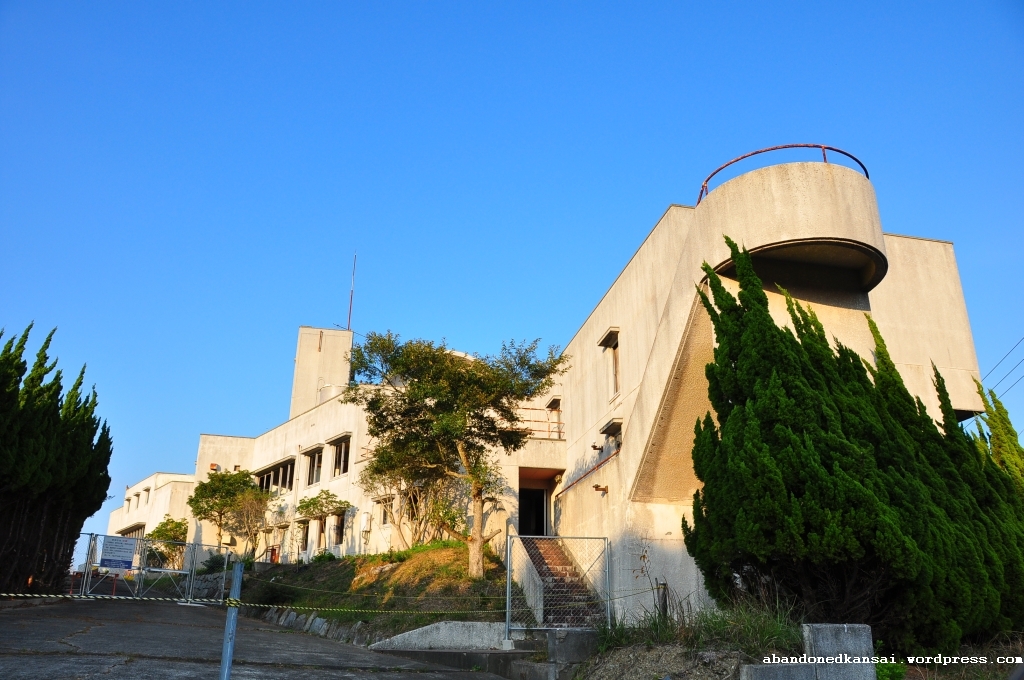
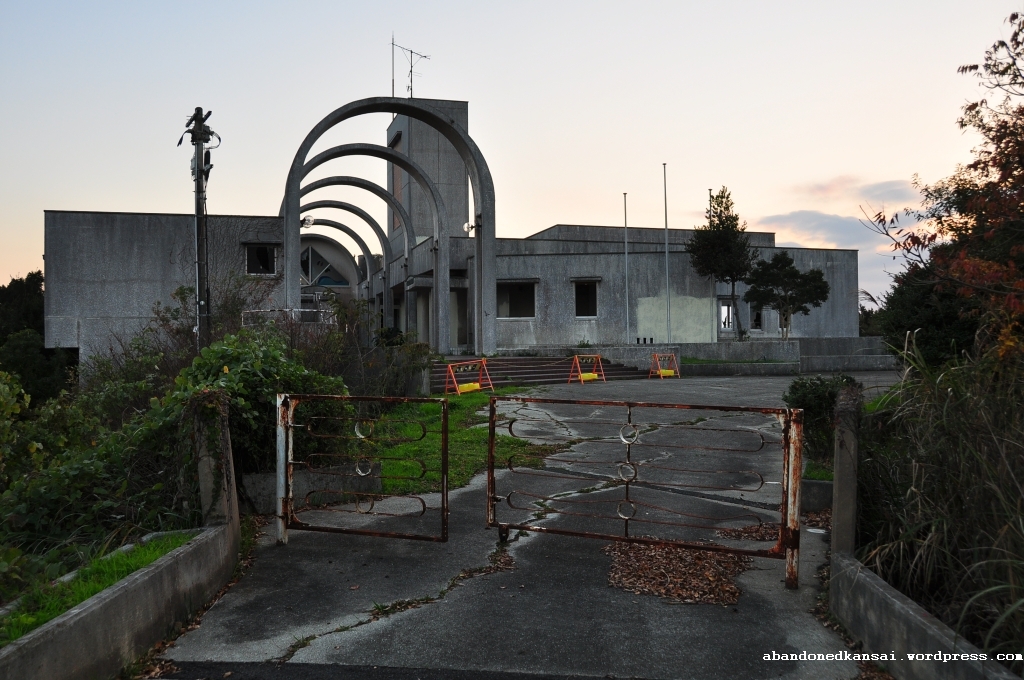
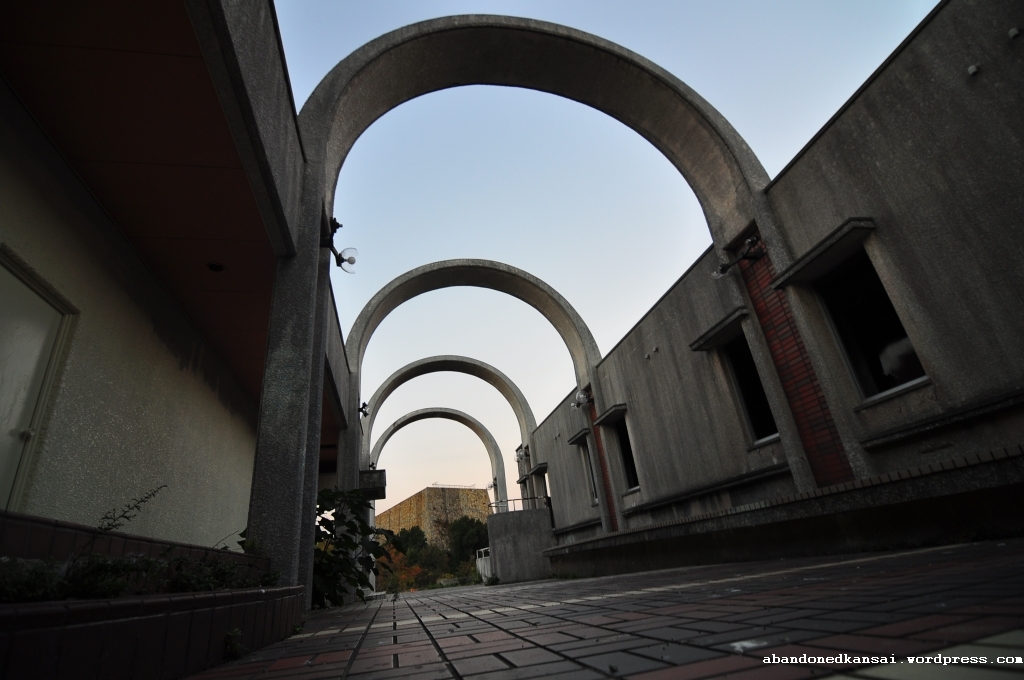
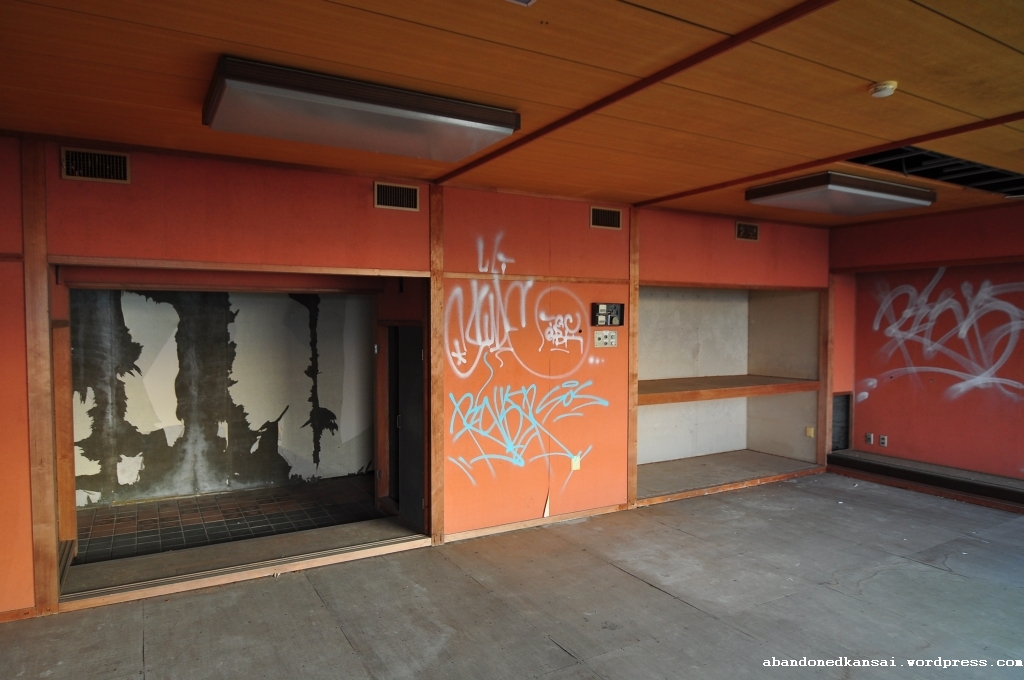
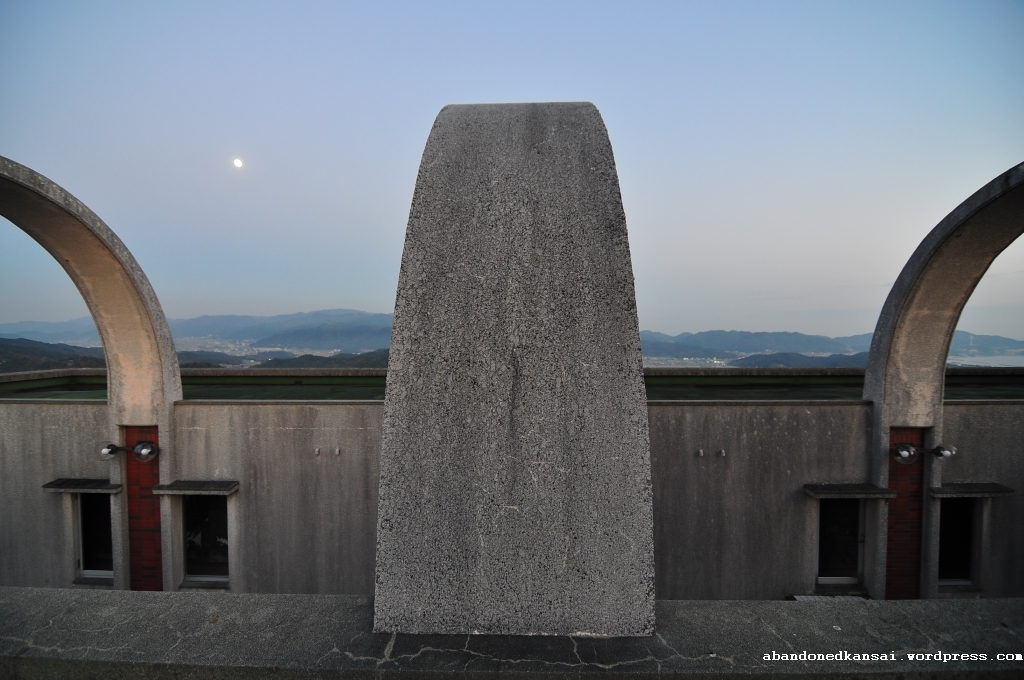
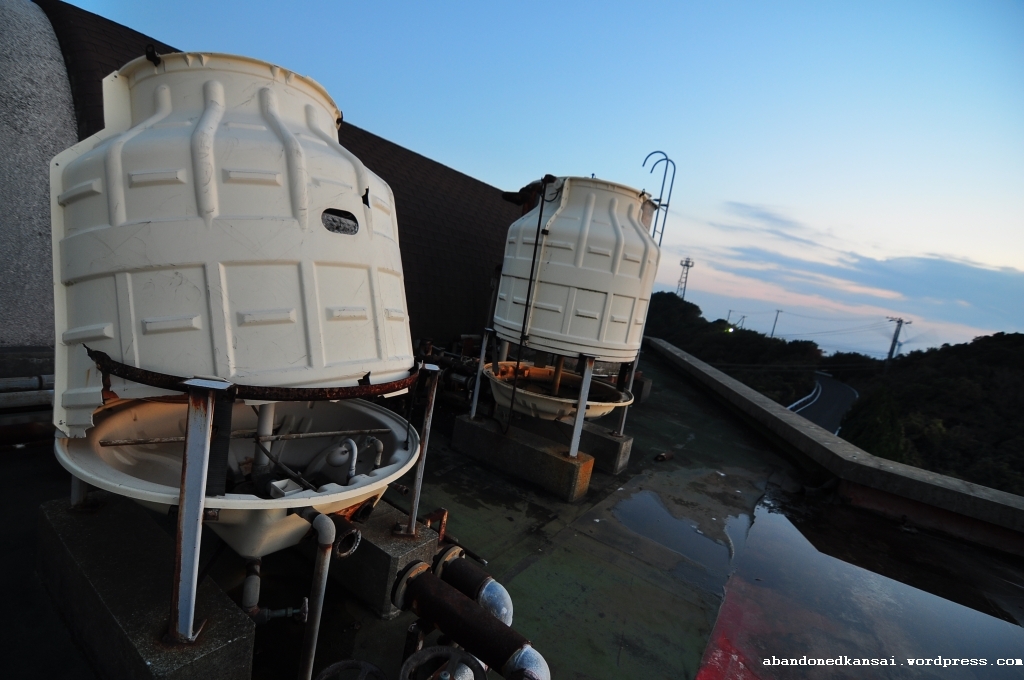
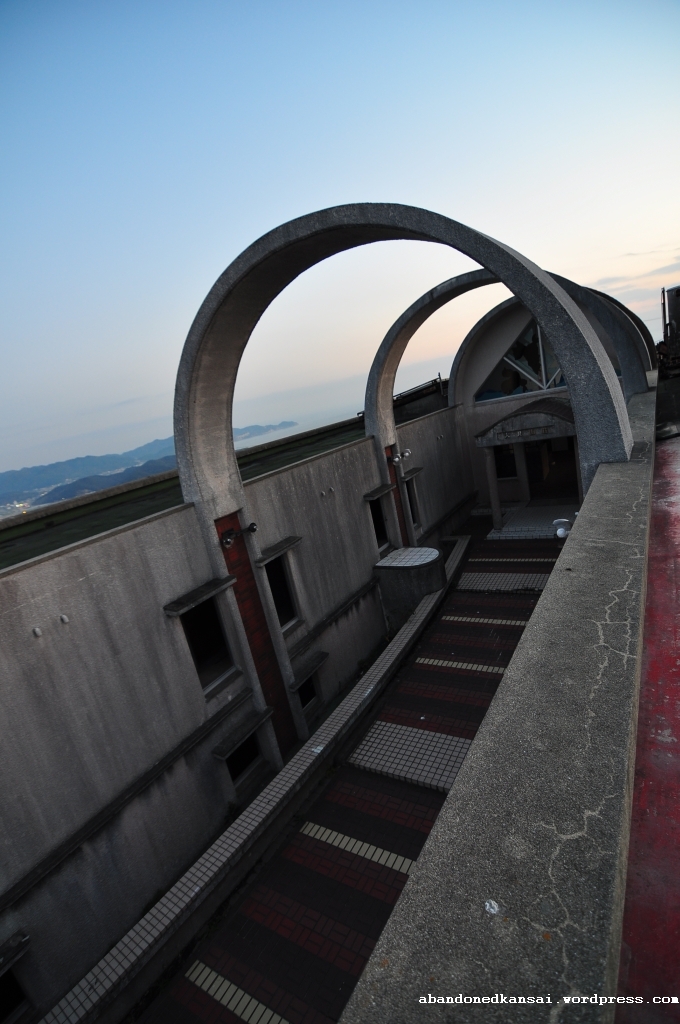
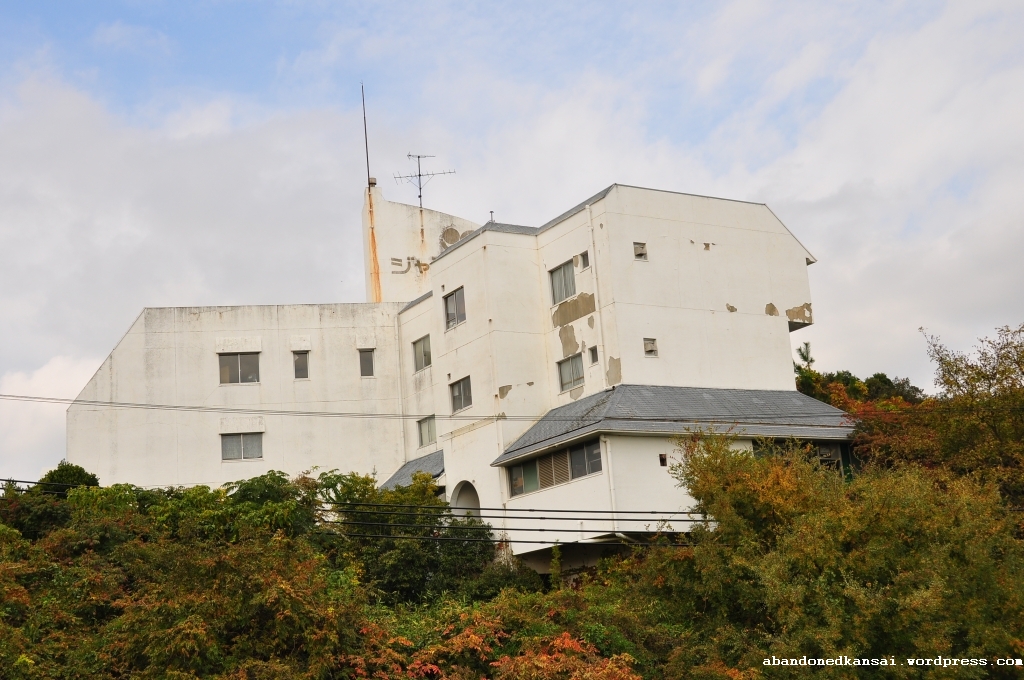
Right next to the Young People’s Plaza and Museum was a building named 大見山荘 according to the kanji above the entrance – the ‘Ohmi Lodge’ or ‘Big View Mountain Villa’. Sadly there is hardly any information about the place available, but it’s safe to say that it was opened and closed along with the close-by monument and museum, providing accommodationto people who wanted to stay in the area overnight while avoiding the costs of the luxury hotel a couple of hundred meters down the road. With about 20 guest rooms, a conference room and a restaurant room the Ohmi Lodge must have been perfect for school trips – nowadays the abandoned building is almost completely empty, tagged with graffiti and without a single undamaged door or window. Luckily the architecture was quite interesting, so I decided to dedicate the Ohmi Lodge its own posting on this blog…



The Young People’s Plaza & Museum
Posted in Abandoned, Asia, Haikyo, Hyogo, Japan, Kansai, Monument, Museum, Urbex, Visited in 2010 on 2010/12/09| 5 Comments »
Growing up in Germany education about history is almost omnipresent, both in school and on TV. Most people know about the proud events and people of the past – Arminius defeating the Romans, Charlemagne unifying Europe, Ludwig van Beethoven becoming one of the greatest composers of all time, the German Revolution of 1848, … there are too many to name. But people also learn about the darkest time of German history – the years 1933 to 1945; those 12 and a half years out of thousands of years of German history actually make up for about a third of the school’s history classes, most of the rest being used to educate students to be good democrats: the ancient Greeks, the Age of Enlightenment, the French Revolution and similar events are all taught with a purpose.
After studying Japanese history and living in Japan for a couple of years it strikes me that Japanese schools handle history a bit differently. It’s all about the proud samurai past, World War II takes up only a couple of pages in history school books, downplaying events like those in Nanking 1937 by calling them incidents – while the rest of the world uses terms like “massacre” or “rape”. Popular places to remember World War II in Japan nowadays are Hiroshima and the Yasukuni Shrine… remembering losses Japan had to suffer, not so much remembering the misery Japan spread all over Asia from 1931 to 1945.
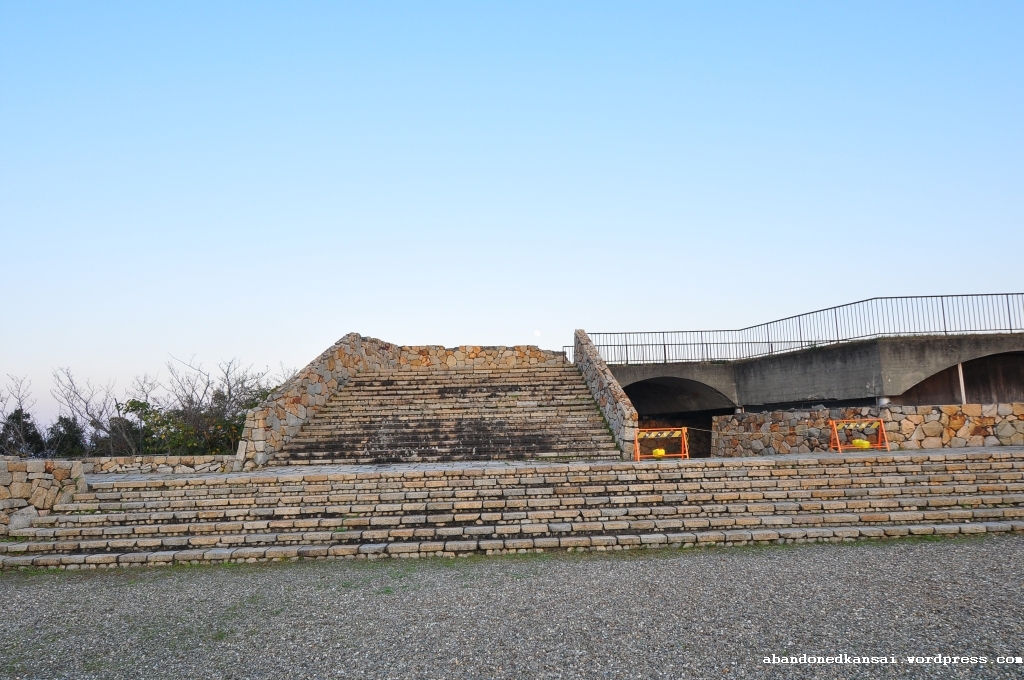
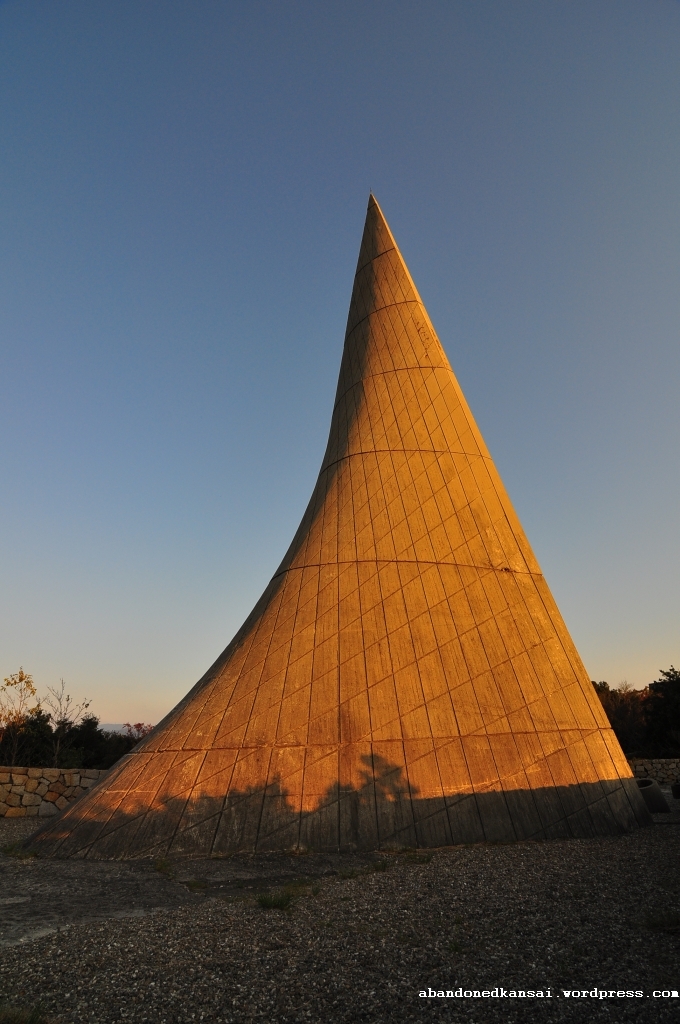
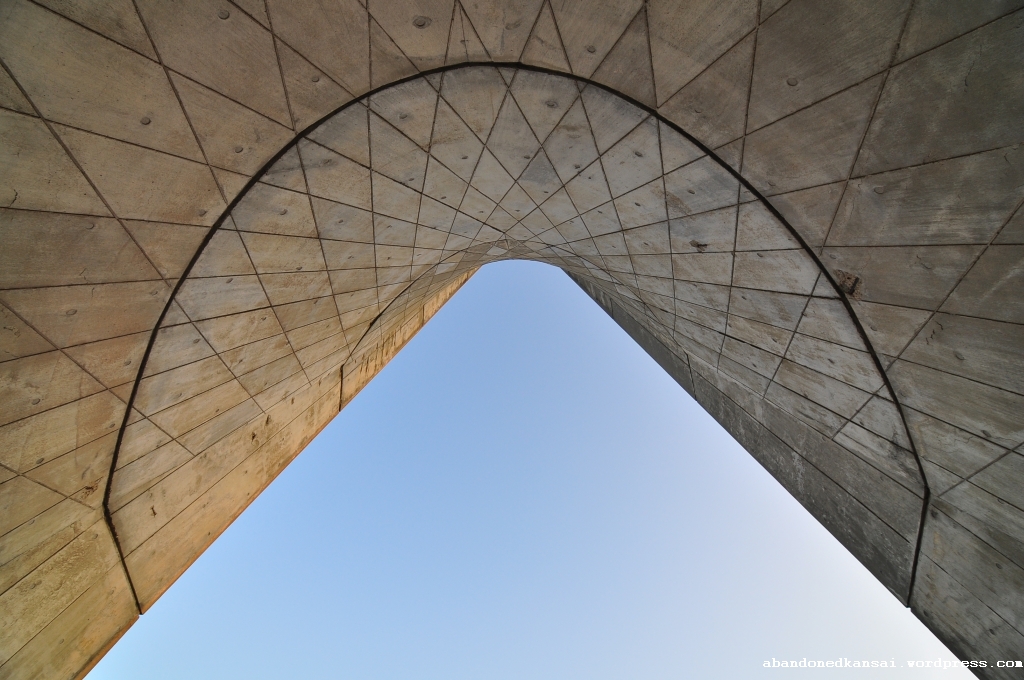
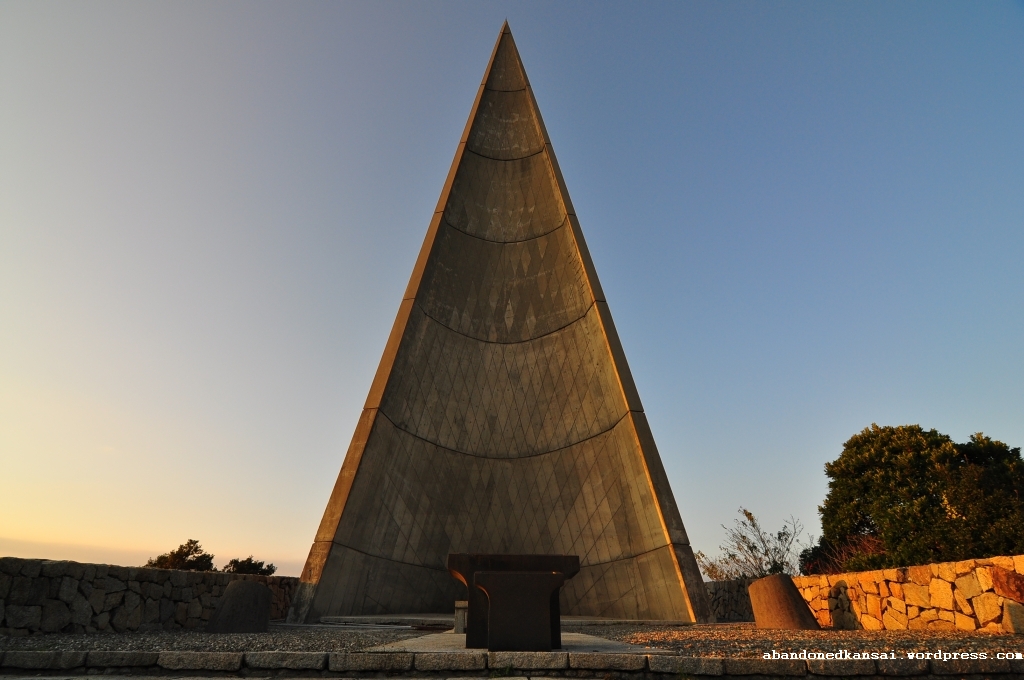
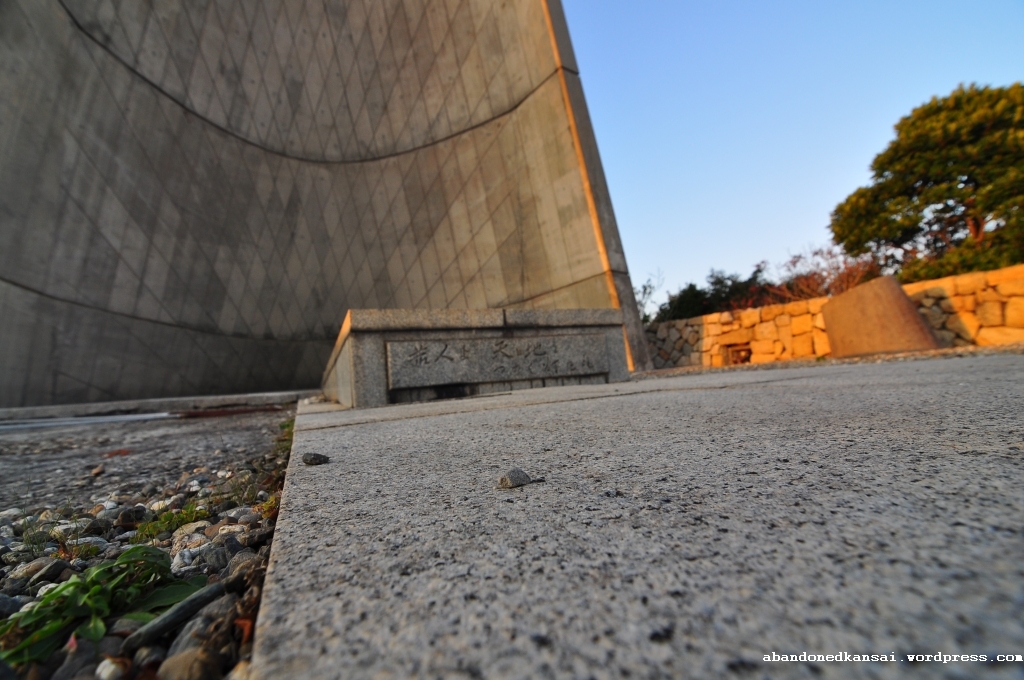
Until a couple of years ago there was another rather huge memorial accessible to the public: The Young People’s Plaza (若人の広場), dedicated to the young people who lost their lives in World War II. Designed by the famous architect Kenzo Tange in 1966 and opened in 1967 this impressive monument with an appendant museum is towering 25 meters high over the once so strategically important straight between Shikoku and Awaji Island. In 1995 the Young People’s Plaza was closed down due to dwindling visitor numbers and irreparable damage caused by the Great Hanshin Earthquake earlier that year. An important part of the centerpiece, an eternal flame placed right at the concrete sculpture once protecting it, was removed since then.
The museum, beautifully embedded into the breathtaking landscape and located on the way to the monument, was once filled with items left behind by the students who went to war, countless pictures and information boards telling their stories. It seems like the museum was boarded up in 1995, but as with all locations like that you will always have people trying to make their way in. Worried about the exhibits all 2000 items of historical value were donated to the Kyoto Museum for World Peace, which is part of the Ritsumeikan University, in 2004. Nowadays the museum is almost completely empty and a rather spooky place…







Jumbo Club Awaji Island
Posted in Abandoned, Asia, Haikyo, Hotel / Ryokan, Hyogo, Japan, Kansai, Urbex, Visited in 2010 on 2010/12/03| Leave a Comment »
The information I had about the first destination of my little road trip was little – but at least I knew what it was beforehand and I’ve seen a picture. The second destination was just a grey building on a map. No picture, no information about it, not even the certainty that it was really abandoned. But it was on our way to some other locations, so we thought it couldn’t hurt to have a quick look. The quick look turned into a 2 hour long shooting of a hotel once called “Jumbo Club Awaji Island”. I tried to do some research on the place after I came back, but I couldn’t find anything (neither with the Romaji nor with the Japanese name), so I have no problems calling the hotel by its real name. If the calendar hanging in the kitchen is any indication on when the hotel was abandoned then it’s save to say that it happened in 1996 – just before the internet boom.
Once boarded up and fenced off the Jumbo Club hotel now is an easy walk in location if you don’t get spotted by neighbours and close-by companies. Nevertheless we didn’t rush into the place but approached it carefully since there was an intense stench clearly noticeable from the outside. We entered cautiously and my fellow explorer, who foolishly spearheaded the exploration with audacity, froze in shock right after he entered the lobby – never before was a harmless poster of a beautiful woman more scary. But that didn’t slow down his drive at all and just minutes later he found the reason for the stench – it seems like the Jumbo Club Awaji Island is now very popular amongst cats, one panicking in the first room he tried to enter. My fellow explorer closed the door to let the fury furry fella calm down and we explored the rest of the building. Which wasn’t nearly as exciting as those first few minutes…
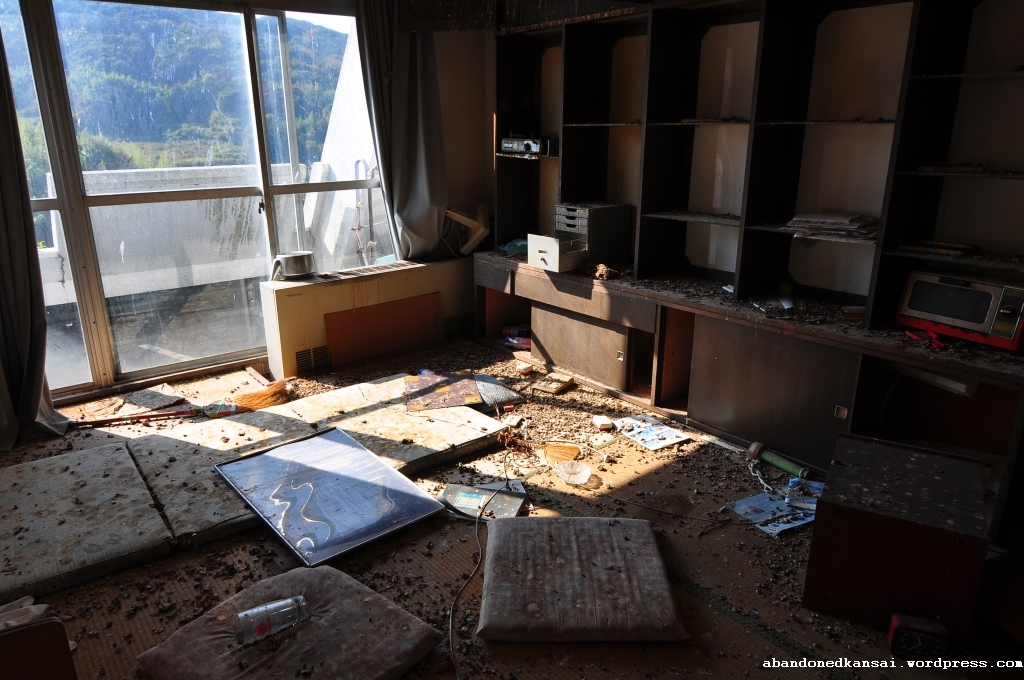
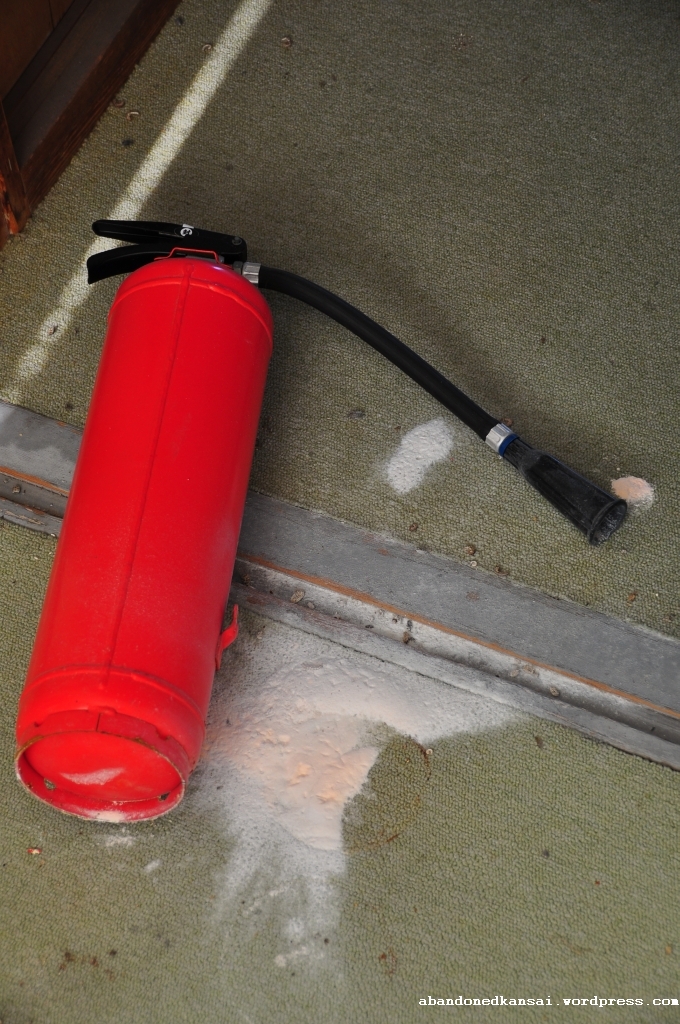
The Jumbo Club Awaji Island turned out to be a normal tourist hotel with Japanese style rooms, Western style restrooms and some nice public bathrooms with a great view. Although the holes in the barricades outside made us expect a totally trashed place the hotel was in fact barely touched. An emptied fire-extinguisher here and some… no, actually no “some” – pretty much all the other damage could have been a result of 15 years of natural decay. All the rooms I’ve entered looked extremely clean, as if you could move in right away – except for the two or three that were inhabited by some birds for a while and therefore were covered with feces. The main kitchen on the first floor didn’t make a trustworthy impression, but who wants to clean up after the last dinner when nobody will ever use the kitchen again anyways? Other than that there was no vandalism: No trashed rooms, no ripped out fixtures, no signs of arson, no broken china scattered all over the place.
Overall the Jumbo Club hotel was an unspectacular but pleasant surprise. I’ve never been to an abandoned hotel in that remarkable condition and the beautiful weather outside made it a relaxed exploration. Oh, and just in case you wonder: Before we left my fellow explorer opened the door of the first room again, but the cat already found its way out…



N# Nursery School
Posted in Abandoned, Asia, Haikyo, Hyogo, Japan, Kindergarten / Nursery, Urbex, Visited in 2010 on 2010/11/26| 4 Comments »
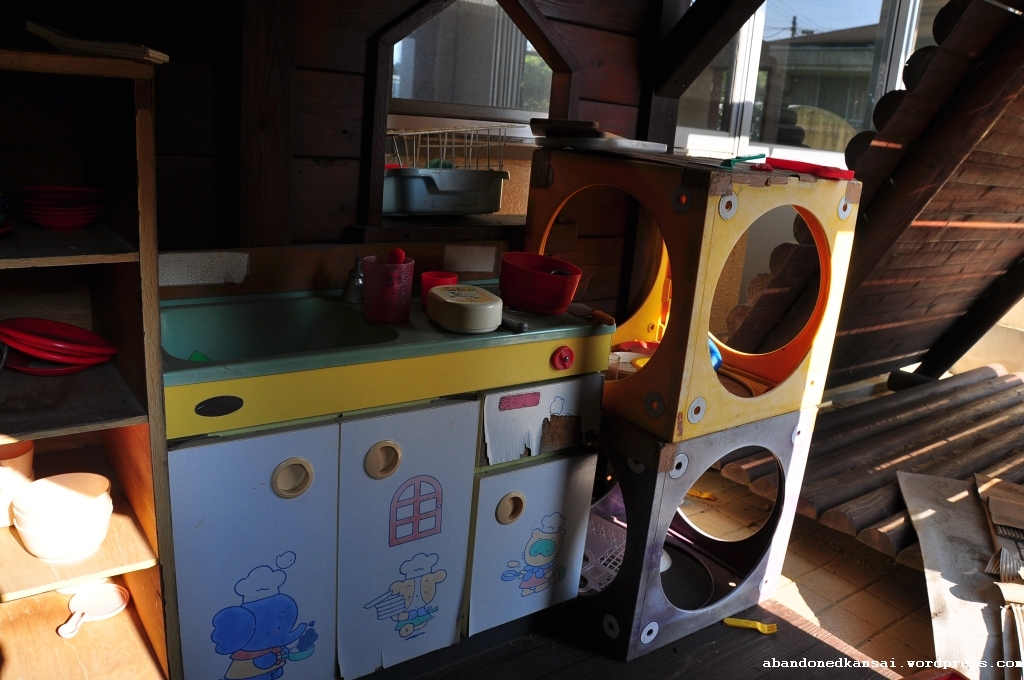
Okay, let’s kick off the travel series with a rare, but unspectacular location: The N# Nursery School. (Sorry for bleeping the name. This haikyo isn’t well-known at all and I don’t wanna be the guy who reveals too much about this untouched place.) I saw it only once on the net so far – luckily it came with a map, so it was easy to find…
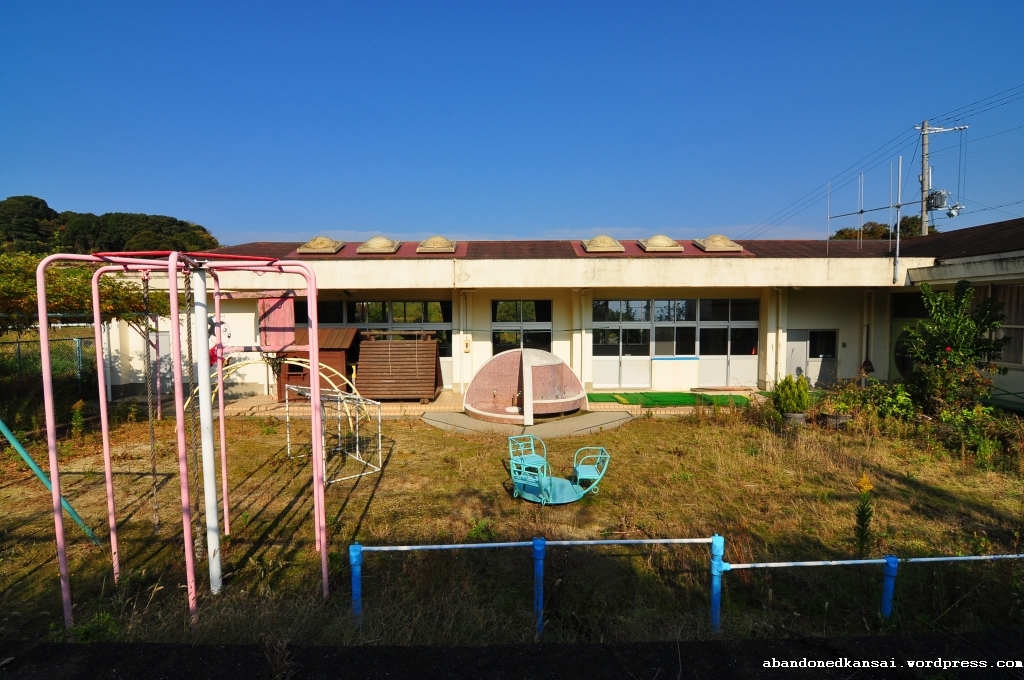
Sadly the map didn’t come with any information. So all I can tell you is that the 1983 built nursery school is located in a very remote area within a beautiful landscape that was in full bloom even in late November; and that all the doors and windows were locked, so I was only able to take some outside pictures. Which wasn’t too much of a loss since the rooms seemed to be empty anyways, judging by looking through the windows. Luckily the N# Nursery School came with a small playground and the weather was very pleasant too (sunny 20 degrees Celsius), so shooting the location was a nice relaxed warm up for the things to come…




Haikyo Road Trip To Shikoku
Posted in Abandoned, Asia, Haikyo, Hospital, Hotel / Ryokan, Hyogo, Japan, Kansai, Kindergarten / Nursery, Kochi, Pachinko, School, Shikoku, Spa / Onsen, Tokushima, Urbex, Visited in 2010 on 2010/11/24| 16 Comments »
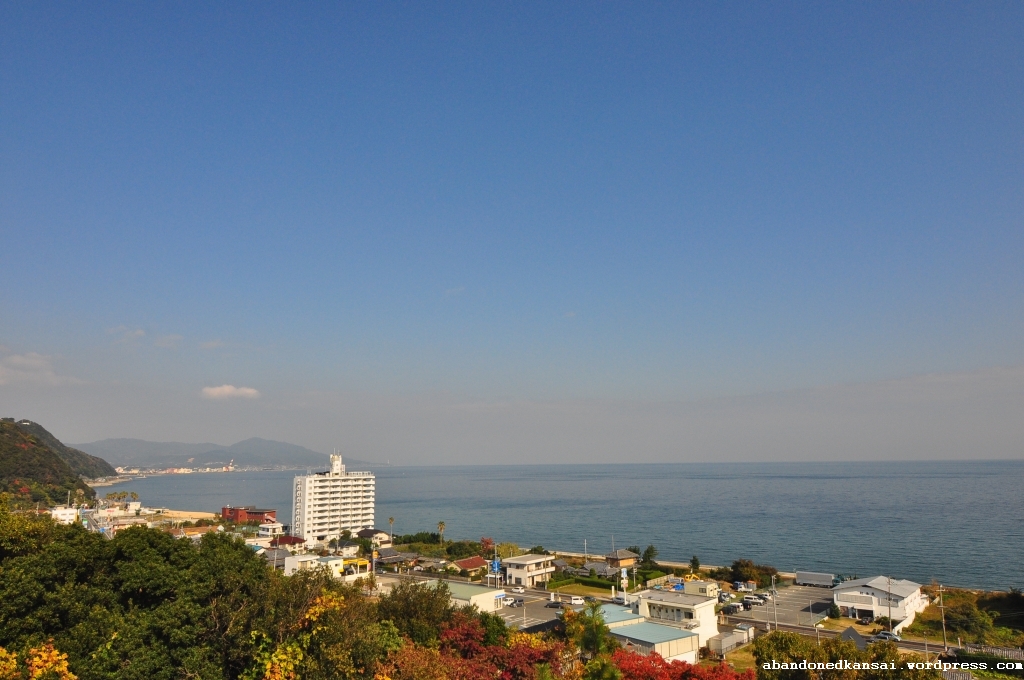
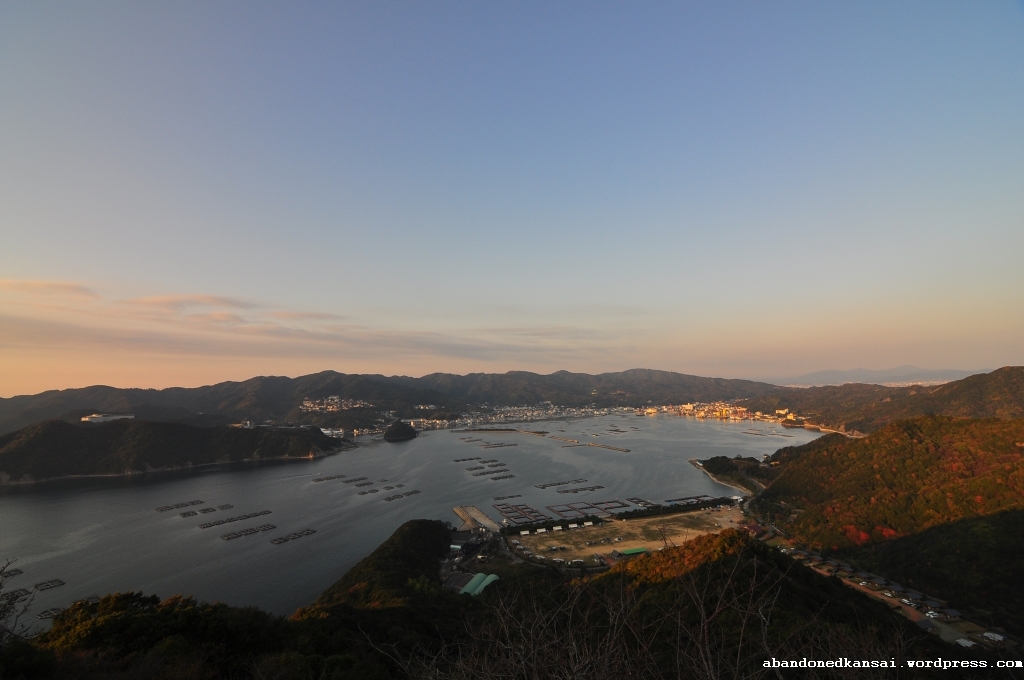
Recently I went on a three day road trip to Awaji Island and Shikoku. Fellow urban explorer Jordy came down to Kobe, we rented a car and off we went. Since Jordy likes to drive and I like to do research we combined our powers to go to some places off the beaten tracks. Pretty much all of the locations will be English speaking firsts, some of them are even barely known to the Japanese haikyo community – including two original finds: A pachinko parlor with all the machines and a hotel called shangri-la. In addition to that we went to an abandoned monument (with a museum right next to it), another hotel, a nursery school, a restaurant with a spectacular view, an abandoned and very countryside elementary school, a spa built on a cliff and, most important of all, an abandoned doctor’s house that makes the previously posted Doctor’s Shack look like… well… a shack.
Please enjoy the preview pictures below – a series of articles about the trip will start ASAP, most likely by the end of this week.



-
- F# Elementary School
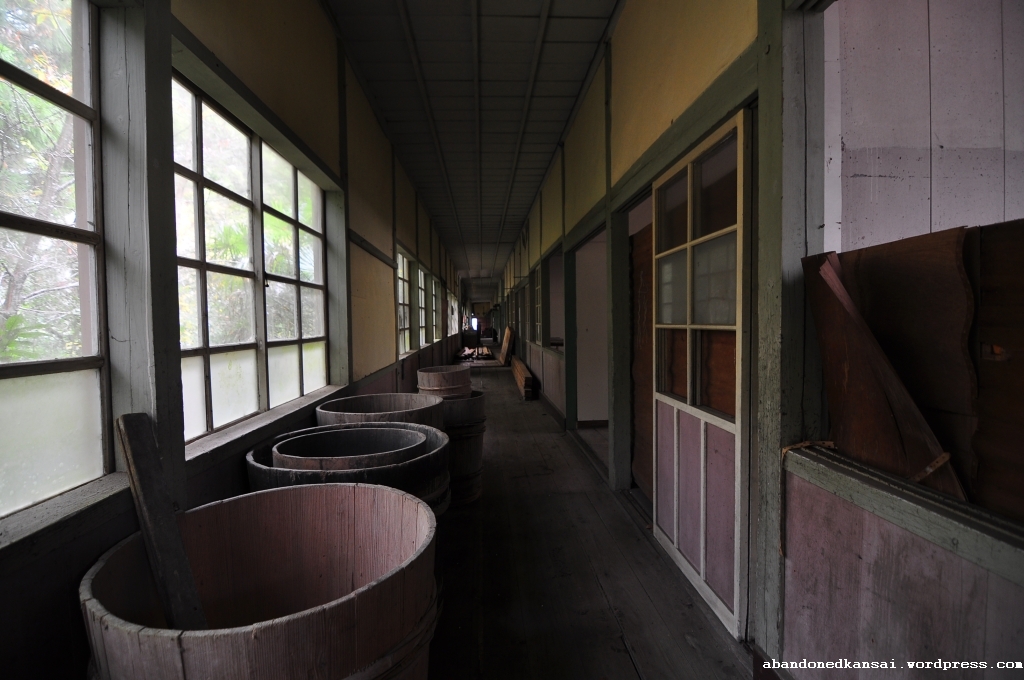

Location Teaser 2
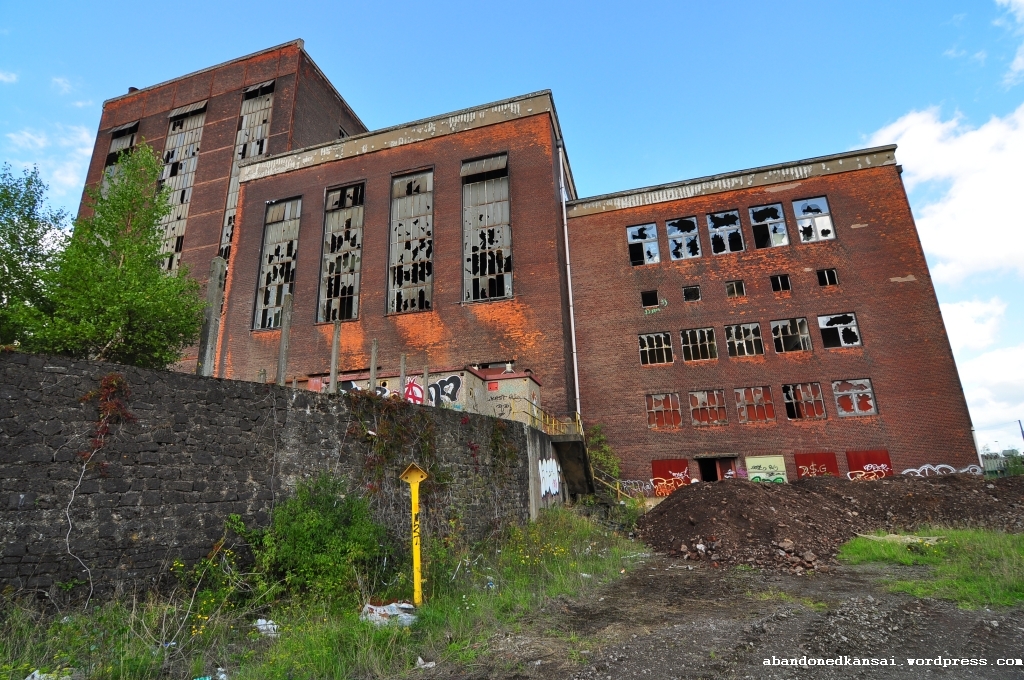
Posted in Abandoned, Amusement Park, Asia, Chūbu, Europe, Factory, Gifu, Haikyo, Hospital, Hotel / Ryokan, House, Hyogo, Japan, Kansai, Luxembourg, Map, Nara, Pripyat, Ukraine, Urbex, Visited in 2010, Zone Of Alienation on 2010/09/28| 4 Comments »
Looking at my urban exploration log I realized that I had a pretty good run lately.
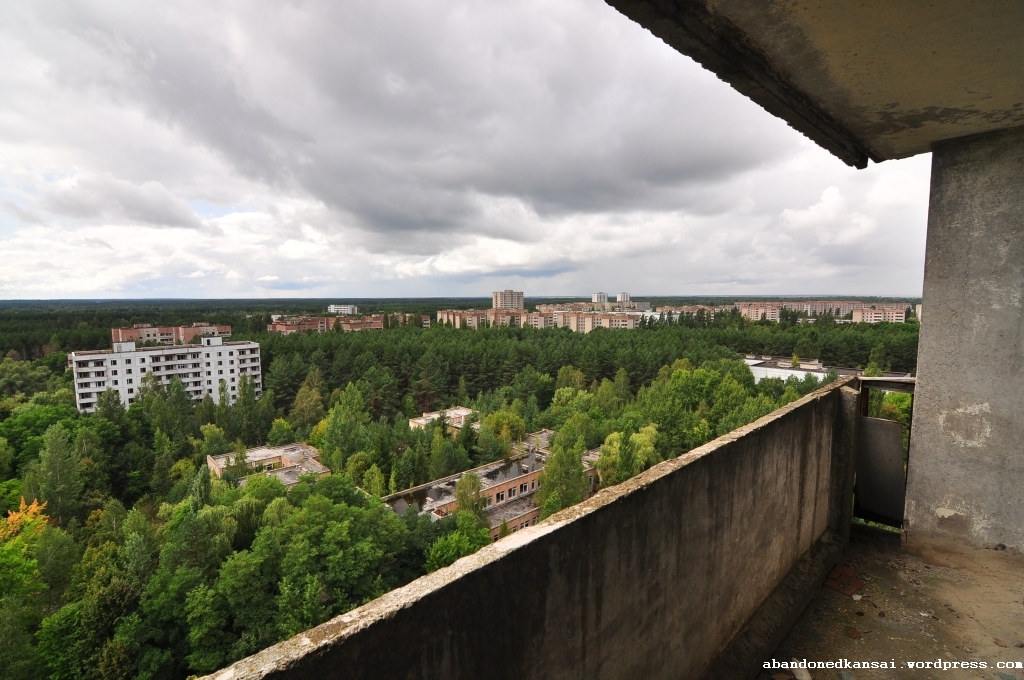
It all started when I met Michael of Gakuranman fame in late July – he was in Kansai and suggested to take on the famous Maya Hotel together. Since I already scouted the surrounding, but never went in, it was a fun exploration of an impressive location; followed by a revisit of the Takada Ranch Ruin. Two weeks later I started my summer vacation to Europe which included a side trip to the Zone of Alienation with its famous cities Chernobyl and Pripyat. Back to Germany I went to Luxembourg for two more explorations with a kindergarden friend of mine.
Soon after I got back to Japan I received an e-mail from Michael John Grist who planned to come to Kansai to tackle my haikyo nemesis, Nara Dreamland. I wanted to meet the guy more than I wanted to avoid the Dreamland, so we went there on a warm late summer night and for the first time I got in and out without spotting security… And finally I went on a little trip myself again to visit the Gakuranman in the Nagoya area to take pictures of the mysterious Doctor’s Shack, one of the few haikyo that are kept a real secret in Japan – even if it appears somewhere on the net or in a book there are barely any hints about its location and I’m really grateful Michael took me there; another awesome exploration, punished with about 30 mosquito bites!
Maya Hotel, Pripyat, Luxembourg, Nara Dreamland and the Doctor’s Shack in a row… it’s hard to do better than that! Now it’s time to write up the stories and show you some really, really interesting pictures!
(You can find all the articles related to Chernobyl and Pripyat by *clicking here* – the picture was taken *here*.)
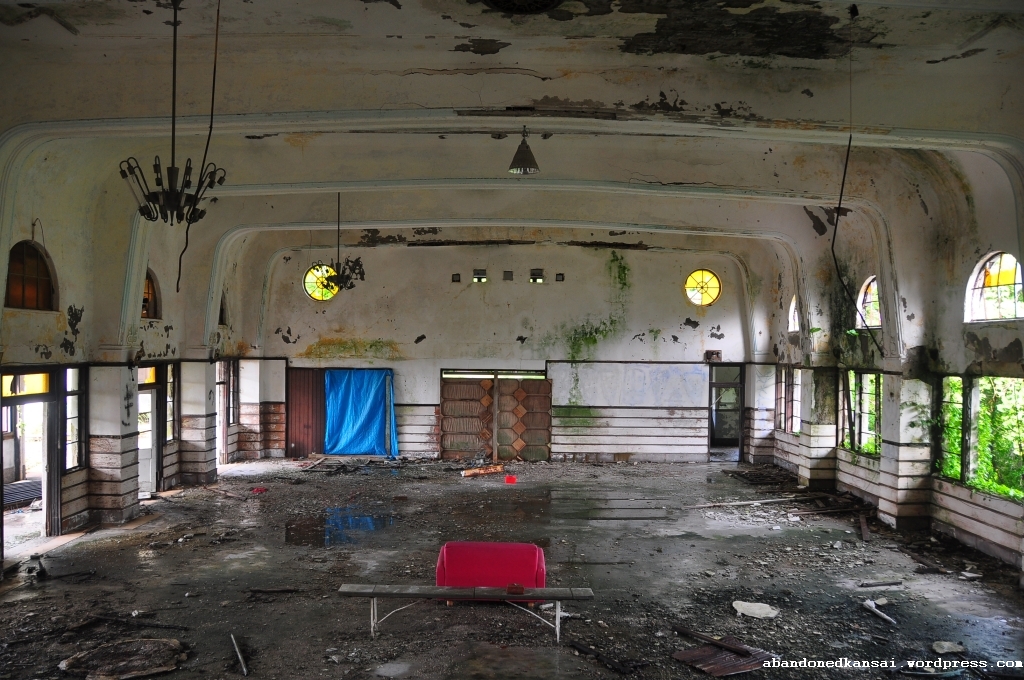


Rokko Ropeway
Posted in Abandoned, Asia, Haikyo, Hiking, Hyogo, Japan, Kansai, Transportation, Urbex, Visited in 2010 on 2010/07/21| Leave a Comment »
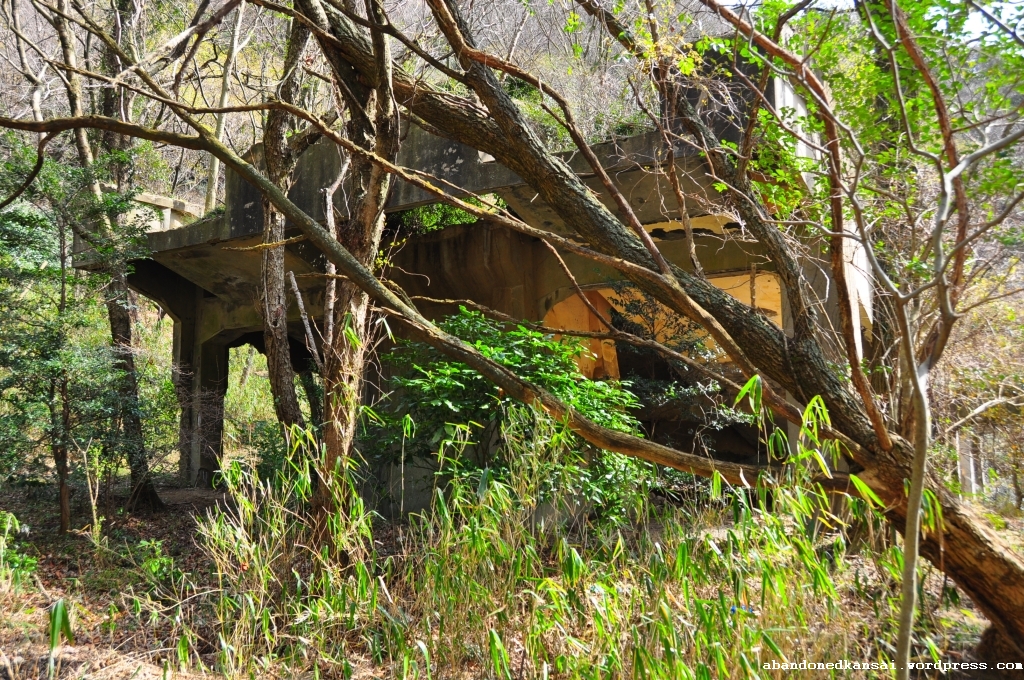
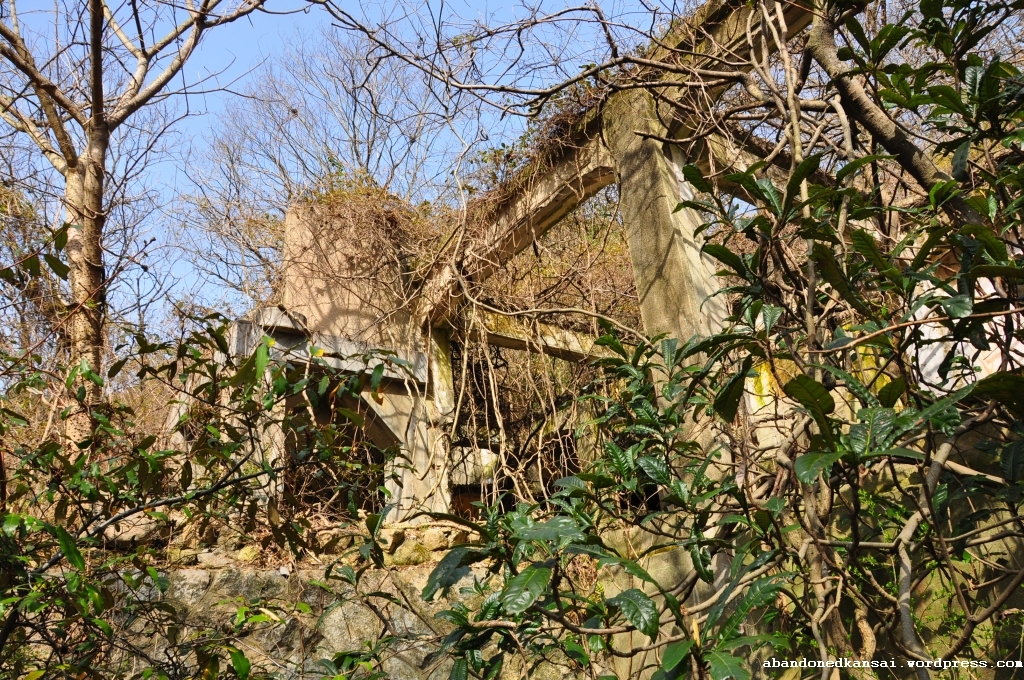
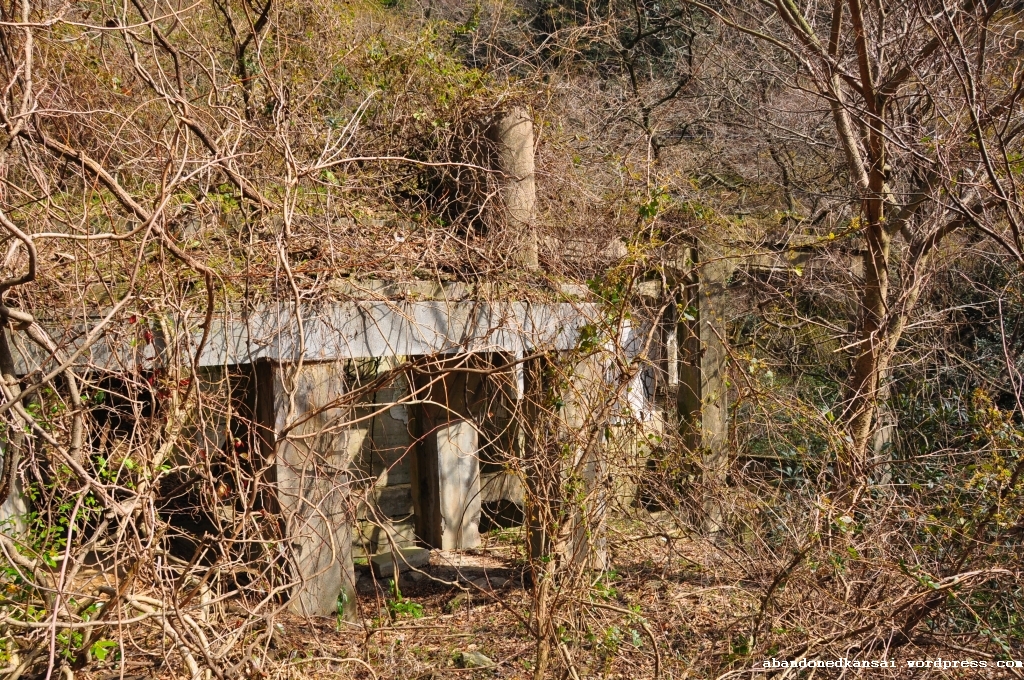
One quite unspectacular but rather rarely covered *haikyo* in Kansai is the Rokko Ropeway. While the Maya Ropeway and the Rokko Cable Car are still in use, the now forgotten Rokko Ropeway was abandoned and mostly destroyed in 1944 after a mere 13 years of business.
Since I only found Japanese sources about this haikyo some of the following information might have been mixed up in translation, but from what I understood the Rokko Ropeway was built by Hankyu Dentetsu in close neighbourhood to the still operating Rokko Cable Car (run by their competitor Hanshin Electric Railway – which is part of Hankyu since 2006…) in 1931 – resulting in fierce competition for customers; Rokko Ropeway’s big advantage: excellent bento boxes! In 1943 both companies were ordered to shut down their lines as the military was in need of metal. The Rokko Ropeway was closed for good on 1944-01-11 and the demolition process began. Since it wasn’t completed before World War 2 ended there were thoughts to rebuilt the ropeway, but those plans never came through.
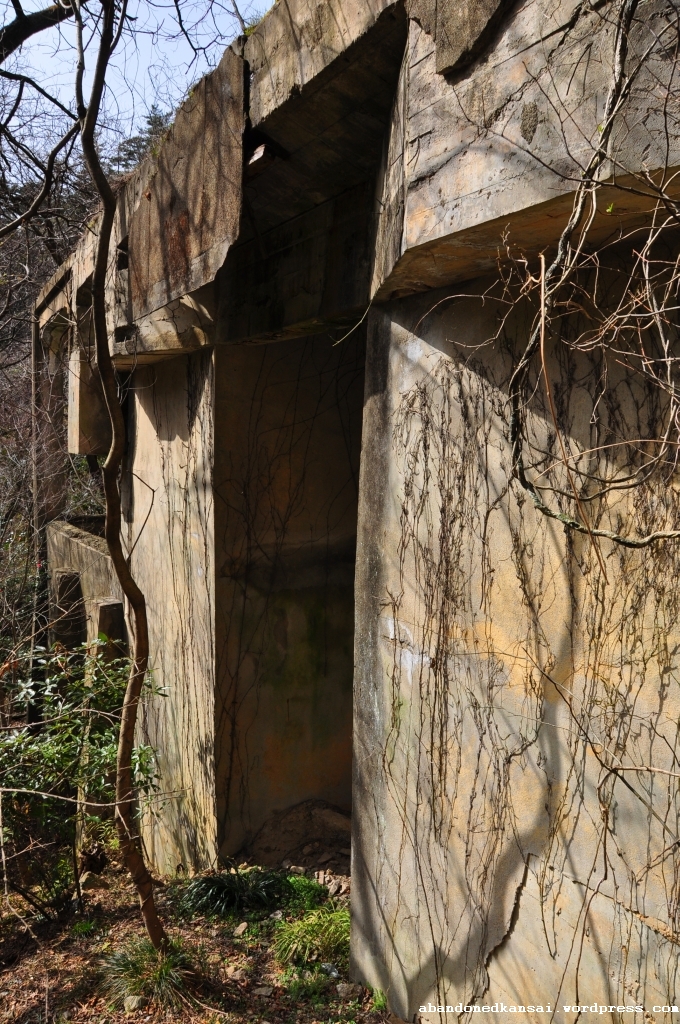
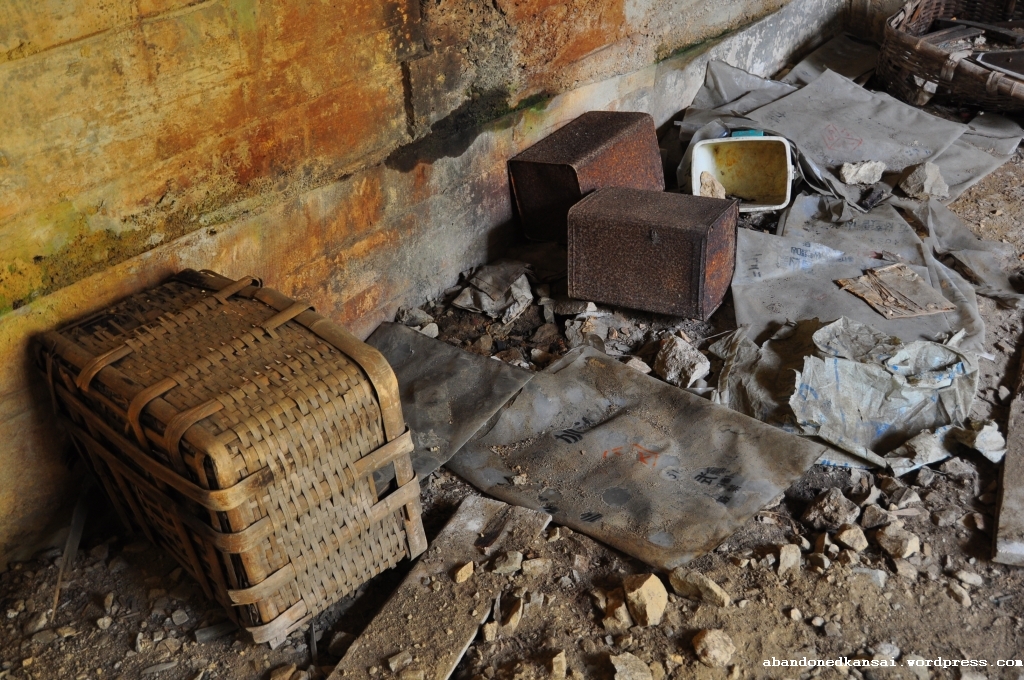
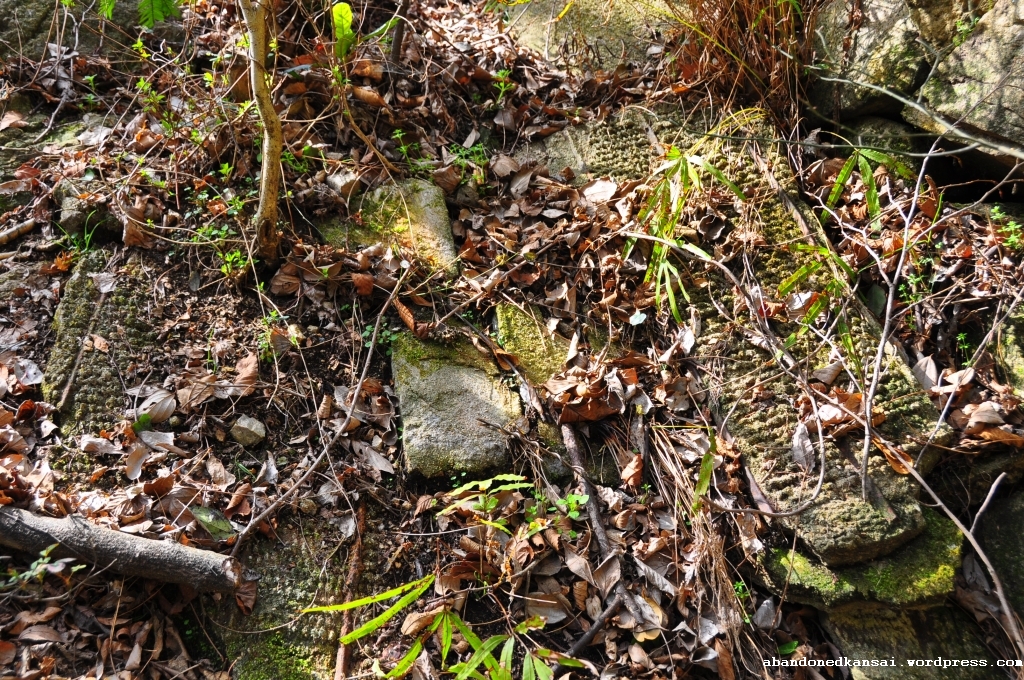
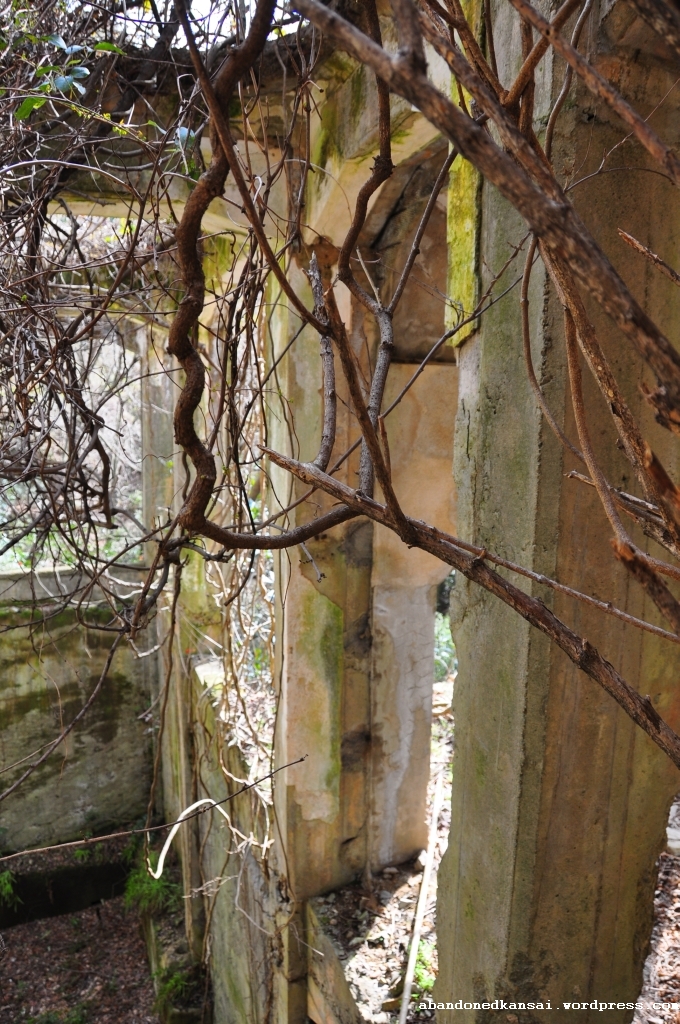
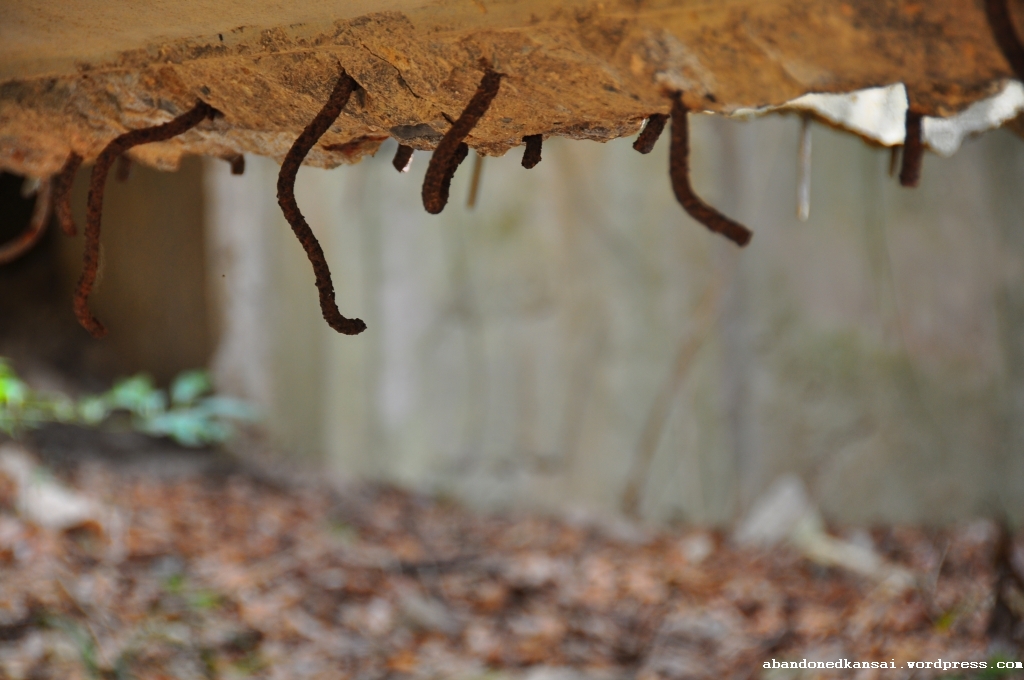
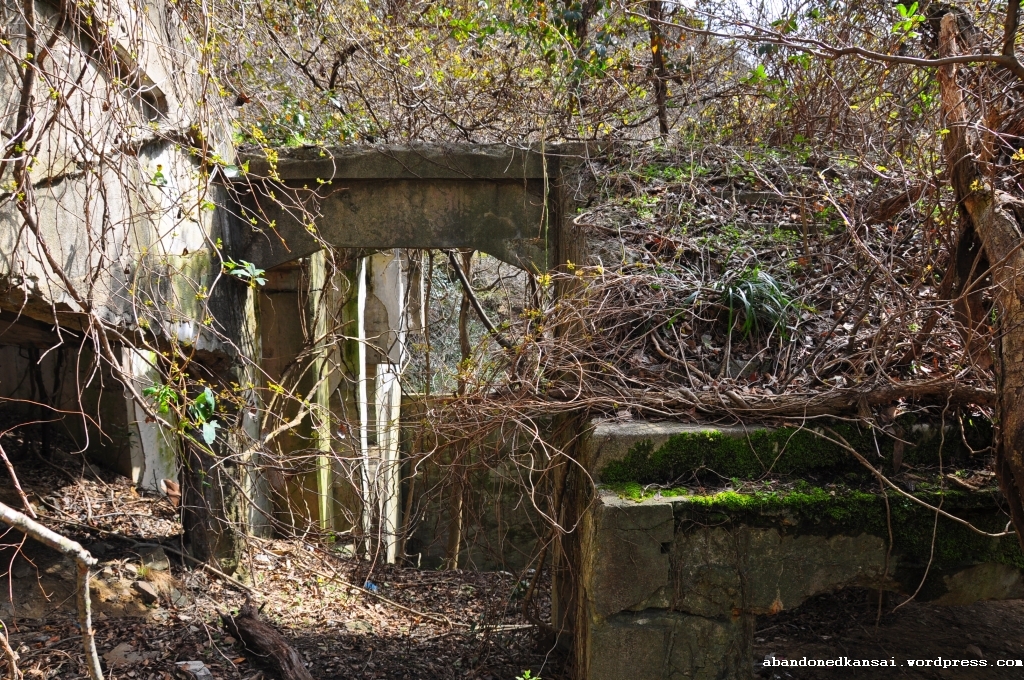
Today the skeleton of the valley station marks the beginning of a hiking trail up to the Rokko Mountains. Sadly there is barely anything to see and I guess in summer a lot of hikers even pass by the remains without noticing them as they are almost completely overgrown. When I went there in March of 2010 on one of the first warm days of the year the Rokko Ropeway was kind of a sad sight with only a few items left in an opening at the back side of the construction – the rest is basically steel and concrete unspectacularly rotting for more than 60 years… And since the location is in the middle of nowhere, there is not even an interesting story I can tell about exploring the place.
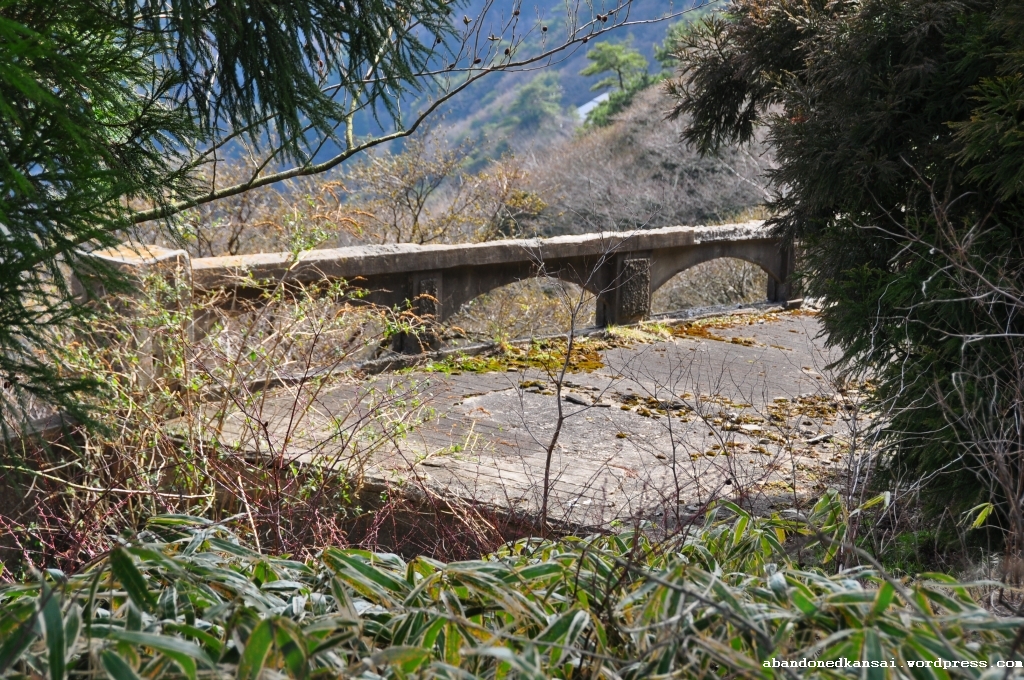
But the valley station still has it better than the top station, which I never saw on the internet and only once on a map – it’s supposed to be close to the Rokko Post Office and the Mount Rokko Hotel, but the only thing left is a concrete footbridge mostly shielded by trees and private property – not a building close-by, but at least I could snatch two shots of the thing. (The hike from the valley station to the top station is nice though. About 400 meters height difference with some scenic views.)
Here is a click through gallery, zoomable versions of the photos follow below:


‘Hitler’ Surgical Hospital
Posted in Abandoned, Asia, Demolished, Haikyo, Hospital, Hyogo, Japan, Kansai, Map, Urbex, Visited in 2010 on 2010/06/02| 5 Comments »
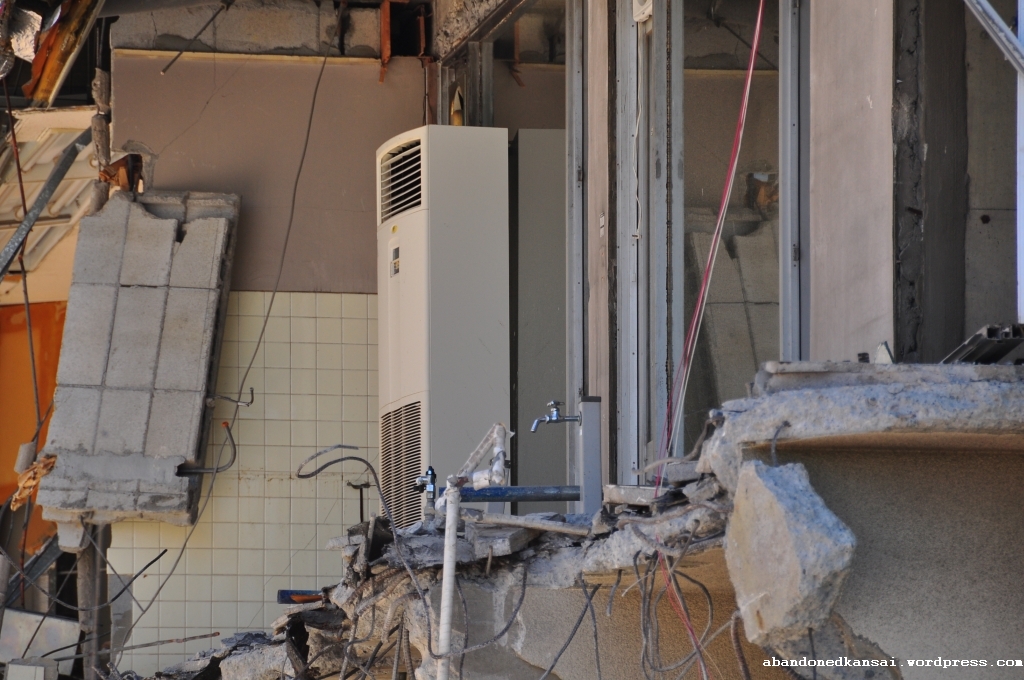
Yes, no joke – one of the most (in)famous buildings in Amagasaki, Hyogo, is called the ‘Hitler’ Surgical Hospital! Well, I guess “was” is the more correct term as they started demolishing the thing in late May of 2010.
I passed by the ‘Hitler’ hospital several times on my way to the only Costco in Kansai, but I never paid much attention to it other than taking a few quick pictures to have proof of this extreme form of ignorance and insensibility – why in the world would anybody name a hospital after the maybe most hated person in human history? (Well, it was the ヒトラ外科病院, not the ヒトラー外科病院 – but although the character indicating a long vowel was missing it is highly unlikely that the naming was a coincidence, especially since you only find the dictator and the hospital when you look for ヒトラ on the internet…)
I actually don’t even know how long the place was really abandoned. In March they still had a (quite run-down looking) sign outside on the main street – and that was gone in April. It was in April, too, that I passed the clinic after shooting a haikyo when it was almost dark outside and there were no lights in the building – but since I carried a lot of groceries and it was on a weekend day anyways I didn’t pay a lot of attention to that fact. Now the hospital with its departments for stomach and intestines, circulatory, surgery, orthopedics, neurosurgery, radiology, and rehabilitation is gone. And I wonder if anybody is really sad about it. (Except for me for the fact that I never made it inside, leaving this one of those unfulfilling “outside haikyo” – I really wish I’d taken more pictures when I had the chance, but I never took my camera when I went grocery shopping at a place where the smallest bag of potato chips weighs 1kg…)
2010-06-04 addendum: Due to the explanation given by Thomas I slightly changed a sentence and put the “Hitler” in apostrophies as I guess we will never find out what the people deciding the name thought when they put up the signs onto the top of the building.
(You can find out where the ‘Hitler’ Surgical Hospital was by clicking here.)



Takada Ranch Ruin
Posted in Abandoned, Asia, Haikyo, House, Hyogo, Japan, Kansai, Urbex, Visited in 2010 on 2010/03/12| 10 Comments »
Initially I wanted to post another haikyo first, but since it took me quite a while to update this blog I decided to come back with one of my favorite haikyo so far: The Takada Ranch Ruin. Coincidentally it seems to be one of the rarest, too…
Located in a totally different area of the Hyogo countryside than “Doggy Land” the Takada Ranch Ruin was a samurai residence given up quite a long time ago – and that’s pretty much all I know about the place. I don’t even know if it’s the real name or if somebody made it up. But the sheer size of the property (including a huge and completely overgrown park) makes it highly likely that it was once owned by rich and powerful people.
Entering the Takada Ranch Ruin is as easy as it can be – it’s located along a rural road with no direct neighbors and the (former) entrance door is wide open.
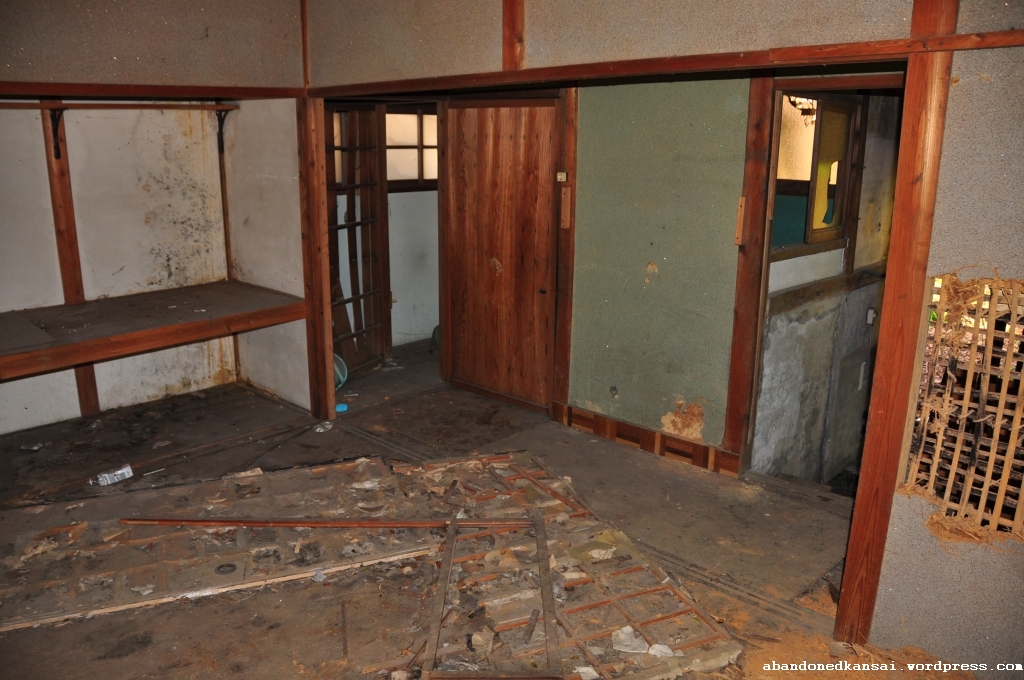
The first of several buildings on the premises set me back in time 200 years instantly – a long, not very wide wooden house along the road that looks right out of a samurai movie. Too bad it was partly collapsed and some rooms were filled with plastic trash bags, but it was still quite impressive. From there a path lead deeper onto the estate, with a small house to the left and several buildings to the right. The main quarters were quite big and must have cost a fortune to build. Now partly rotten they created whole movies in my head while I was carefully progressing across the wooden floors. I’m sure the buildings were constructed long before electricity was introduced to Japan as all the installations looked like they were added as an afterthought. There were only a few plugs and light bulbs – and the fridge in the kitchen looked very, very old.
East of this conglomerate of buildings I found a car wreck that was clearly put there long after the estate was abandoned – Japanese people love to dump their unused belongings like that as waste disposal can be quite expensive if done properly. Close to the car were two now completely destroyed buildings, one of them made of stone. While the existing buildings looked like they were vandalized (only by a very few people though and not as nasty as most other places), I’m sure those two constructions were torn down professionally. Why it was handled that way? I have no clue.
But it got even stranger when I progressed further. After I passed through a little forest I found some quite thin concrete surfaces and wall remains. Next to them were some weird metal constructions with the leftovers of a few wooden arbors. This whole area looked like it was destroyed a long time before the buildings in the front were given up with no debris to be found. But again I can only guess when that happened. Or what happened. Maybe the buildings were stables, maybe they were some kind of accommodation?
Although not very outstanding on paper (partly collapsed wooden buildings, all stone buildings demolished) the Takada Ranch Ruin instantly grew on me while I was exploring it – and it continued afterwards. The huge estate boosted my imagination like no other place before with its simplicity and history. To me it’s one of the few hidden haikyo treasures, one that gives you a glimpse at a time long gone; if you are patient enough to find the right spots to look at.




Abandoned Kansai on Facebook
-
Join 5,100 other subscribers
Pages
Archives
Categories
Recent Comments
Ja Ni on Hahn Air Base (Flughafen … Gred Cz on Sakura Car Shop Sue on Sakura Car Shop Gred Cz on Mie Minshuku Matauia vainetutai M… on Nara Dreamland – Frequen… Emily on Mie Minshuku Gred Cz on Kitakitsune Farm (Non-Urbex) Seyeon Park on North Korea Revisited: Ep… Florian / Abandoned… on Green Plaza Akakura Florian / Abandoned… on Green Plaza Akakura


 Abandoned Kansai