Today I had a look at some rather old videos shot at locations I already wrote articles about. None of them were intended to be published, so the camera work might be a bit rushed occasionally, but I decided to upload them anyways as I think there might be some interest in them out there in the world wide web. While some of my videos only get a couple of dozen views quite a few of them were watched by thousands of people – *this one* will actually reach 30.000 views soon. Please enjoy!
*Nara Dreamland – Aska Rollercoaster*
Archive for the ‘Restaurant’ Category
New (Old) Videos!
Posted in Abandoned, Amusement Park, Asia, Haikyo, Hotel / Ryokan, House, Hyogo, Japan, Kansai, Museum, Nara, Restaurant, Shiga, Urbex, Video, Visited in 2009, Visited in 2010 on 2011/09/03| 2 Comments »
Navelland
Posted in Abandoned, Amusement Park, Asia, Demolished, Fukuoka, Haikyo, Japan, Kyushu, Map, Restaurant, Urbex, Video, Visited in 2011 on 2011/08/19| 4 Comments »
There’s nothing like abandoned theme parks. Everybody seems to love them, including yours truly. No matter if just recently closed (*Doggy Land*), closed a while ago (*Nara Dreamland*), mostly demolished (*Koga Family Land*), completely demolished (*Sekigahara Menard Land*), under deconstruction (*Expoland*) or left behind after a nuclear catastrophe (*Pripyat Amusement Park*) – each and every one of them has a unique, absolutely stunning atmosphere; even if they were just waterparks (*Tokushima Countryside Healthspa* / *Kyoto Waterland*). “New” abandoned amusement parks barely every show up – it’s more likely that well-known ones get demolished. Here’s an exception to the rule: Navelland. (ネイブルランド)
You would think that Navelland (or Navel Land), a science themed amusement park with an aquarium and a greenhouse that welcomes its guests with a huge half-“diving” whale in front of the entrance, most likely should have been called Navalland (or Naval Land) – but you would think wrong. The Japanese investors and creators chose the name on purpose, at least to some degree. Initially it was supposed to be called GeoBio World in the “BioCity” (or “Bio-City”) Omuta – but the name of the executing company was called Navel Land for three reasons, all related to its location in Omuta, Kyushu: GeoBio World was considered the “belly button project” (heso jigyo, 臍事業) of Omuta’s revitalization efforts with several other projects being based on it, Omuta’s history is strongly connected to coal (mined from the “belly” of the earth…) and Omuta is located in the center of Kyushu (or so the makers thought – to me it looks more like the “nipple of Kyushu”). At which stage of developement did GeoBio World become Navelland? I don’t know. But I guess a lot of things wrent wrong planning and executing the project, so the naming issue was just one of many, considering that Navelland was open to the public for less than two years…
Omuta’s economy was intertwined with coal for more than five centuries, for the longest time it was actually based on it. In 1467 a local farmer named Denzaemon found coal when making a bonfire in the hills of his home – like many Japanese cities Omuta is spread from the sea to the mountains. Mining on a larger scale didn’t begin until 1721 when Ono Harunobu (most likely not related to the producer of the series of “Street Fighter” games) was granted coal mining rights. When the age of industrialization finally reached Japan after the Meiji restauration the number of mines in the area was increased. In 1872 the Meiji nationalized the mines, most of them in the township of Miike (三池), nowadays part of Omuta. Towards the end of the 19th century the Japanese state privatized a lot of their model companies und sold them way under value. Mitsui, for centuries successful in finance and trade, got into heavy industries just a couple of decades prior when they aquired a mine as collateral for a loan they gave, bought the mine cheaply and turned it into the Mitsui Miike Coal Mine (三井三池炭鉱) in 1899.
The mine’s history is similar to most coal mines – a huge success in the early 20th century it became less and less profitable thanks to the fact that coal was replaced by oil as the most important natural resource in highly industrialized countries. So when the local politicians realized that the industry that provided the area with both jobs and wealth for centuries would be gone soon they looked for alternatives and came up with several ideas – one of them being Navelland, which ironically closed in 1998, only one year after the Mitsui Miike Coal Mine. (A rather interesting fact that shouldn’t be swept under the rug: The Mitsui Miike Coal Mine was also home of Fukuoka 17, a Japanese prisoner of war camp, mostly for Americans, Australians, British and Dutch – soldiers of the latter three nationalities survived the construction of the Burma Railway in Thailand; nowadays still famous thanks to a movie based on a book by the French author Pierre Boulle, The Bridge over the River Kwai. The camp was opened on August 7th 1943 and help up to 1735 prisoners. It was liberated on September 2nd 1945, almost a month after the atomic bombing of Hiroshima. The camp’s commandant, Asao Fukuhara, was later executed for war crimes.)
In 1988 it was more than obvious that coal wouldn’t be Omuta’s future. Mining it just wasn’t profitable enough anymore. At that time amusement parks were the current money makers, biotechnology the future ones. So why not combine both? Throw in some history and you’d get GeoBio World – split up into Geo Zone to remember Omuta’s coal history and Bio Zone to celebrate Omuta’s biotechnological future at the Ariake Sea. An amusement park with affiliated research labs and a mining museum. Turning Omuta from a dirty coal city into “BioCity”. In Kitakyushu, another former center of heavy industries only 1.5 hours away by car, a similar concept called “Spaceworld” was about to open, so the planners in Omuta spared neither trouble nor expense with about 82 million dollars to spend and about four years to plan and execute.
Navel Land (not the park, the company behind it) was finally established in September 1989 with the sole purpose of constructing and managing GeoBio World – to get the idea off the ground they even sponsored a large bio symposium in Omuta in November 1989. But four rejected concepts, one of them being presented by Futurist Light and Show who worked on Tokyo Disneyland, and more than two years later, Navel Land decided to come up with a concept by themselves, since none of the previous ones could convince the Japan Development Bank – the main backer of the project.
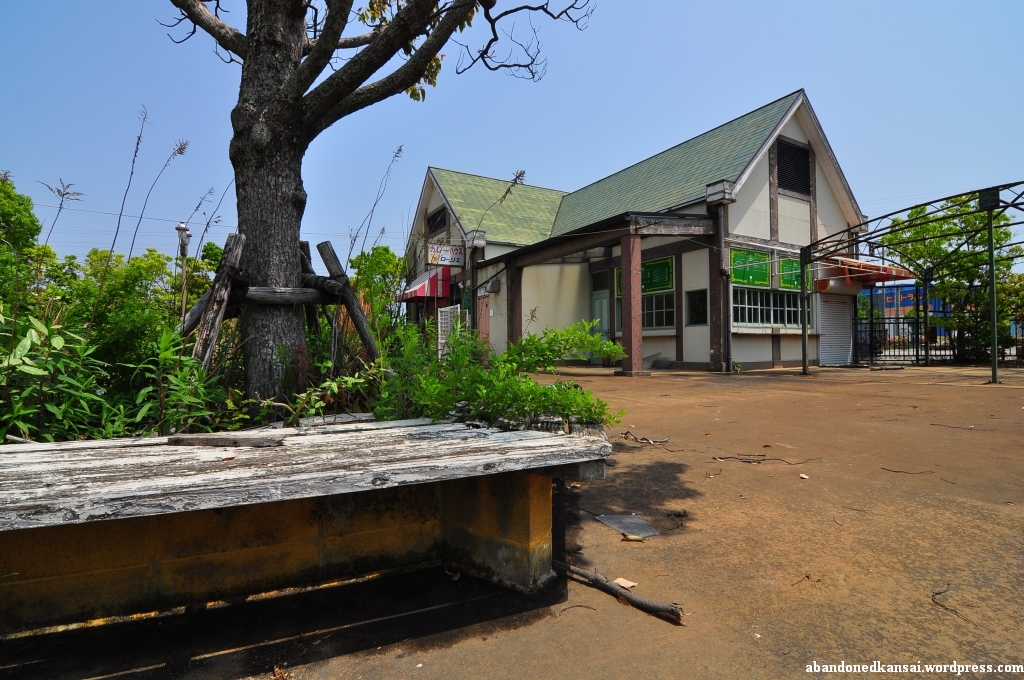
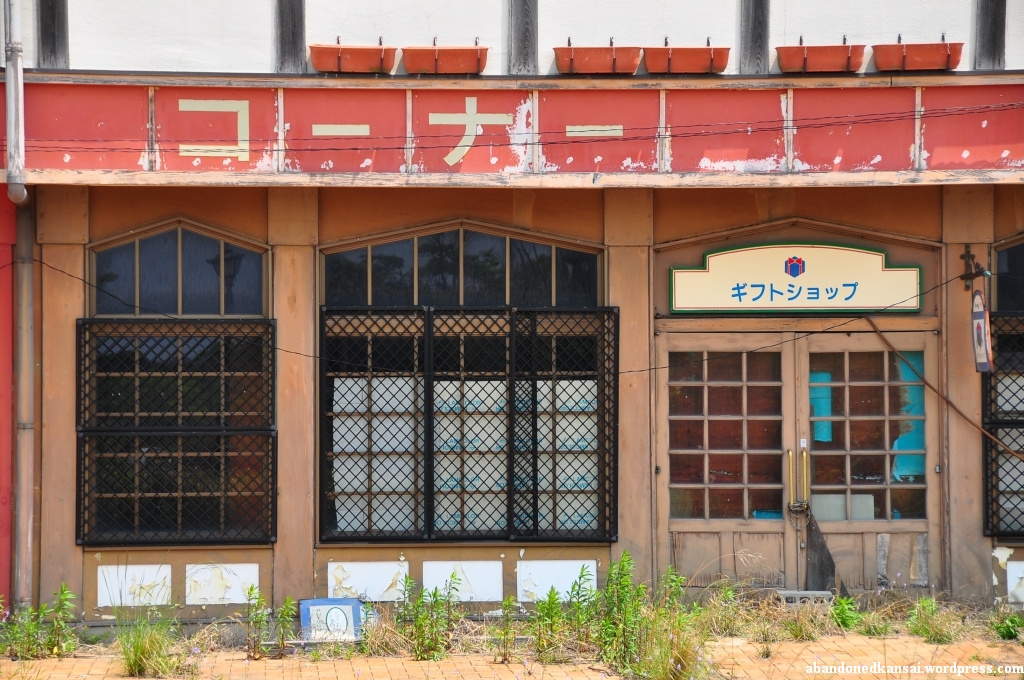
At this point information about GeoBio World and Navel Land becomes vague. While it’s a fact that the park finally opened under the name “Navelland” it seems like everybody agrees that it was closed down on December 25th 1998. What happened to GeoBio World and the biotechnology concept between the early 90s and 1998? I have no idea. All I know is that by the time Navelland closed its costs went way over budget (between 100 million and 200 million US-$ – or up to 160$ od debt for each Omuta resident) and that the visitor numbers never came close to the projected 600,000 per year. One of my sources said Navelland was opened in July of 1995, another one stated that it closed after less than two years – all three agreed it closed in late 1998. Maybe we will all find out more about Navelland soon since it is becoming more and more popular as a haikyo, a Japanese ruin, recently. Until then I’ll leave you with some photos and a quick video walking tour. The “House of Coal” exists as well as an aquarium and a greenhouse, so I guess the main concept was realized and not yet demolished. The amusement part of Navelland is mostly gone by now – both rollercoasters can only be seen on maps and the one thing that’s left of Kiddie Land is the entrance…
Addendum 2012-1-30: Navelland was demolished in late 2011 / early 2012. Now you can find its exact location on my *map of touristy and demolished ruins in Japan*.
(If you don’t want to miss the latest postings you can *follow Abandoned Kansai on Twitter* and *like this blog on Facebook* – and of course there is the *video channel on Youtube*…)




Sky Rest New Muroto (スカイレストニュー室戸)
Posted in Abandoned, Asia, Haikyo, Japan, Kochi, Restaurant, Shikoku, Urbex, Video, Visited in 2010 on 2011/04/19| 10 Comments »
The Sky Rest New Muroto (スカイレストニュー室戸) is a prime example of an abandoned place that suffered severly from too much attention – and by too much attention I mean the book “Nippon No Haikyo” (ニッポンの廃墟), which is pretty useless by now since it became victim of its own popularity. Unlike most books about abandoned places Nippon No Haikyo includes maps. Some of them are completely useless, but others are almost as detailed as if it was a GoogleMaps link. Why is the book useless? Because most of the described locations are demolished by now due to the attention the book drew to the respective places from August 2007 on – *Koga Family Land* for example was abandoned for more than 20 years until it was demolished in December of 2008, same for Nagoya Toyo Ball, Nihon Cement Mojiko and the Inagawa Trap Shooting. Other places once easily accessible were boarded up (Hototogisu Ryokan) or severely vandalized (like the ghost town *Mukainokura*).
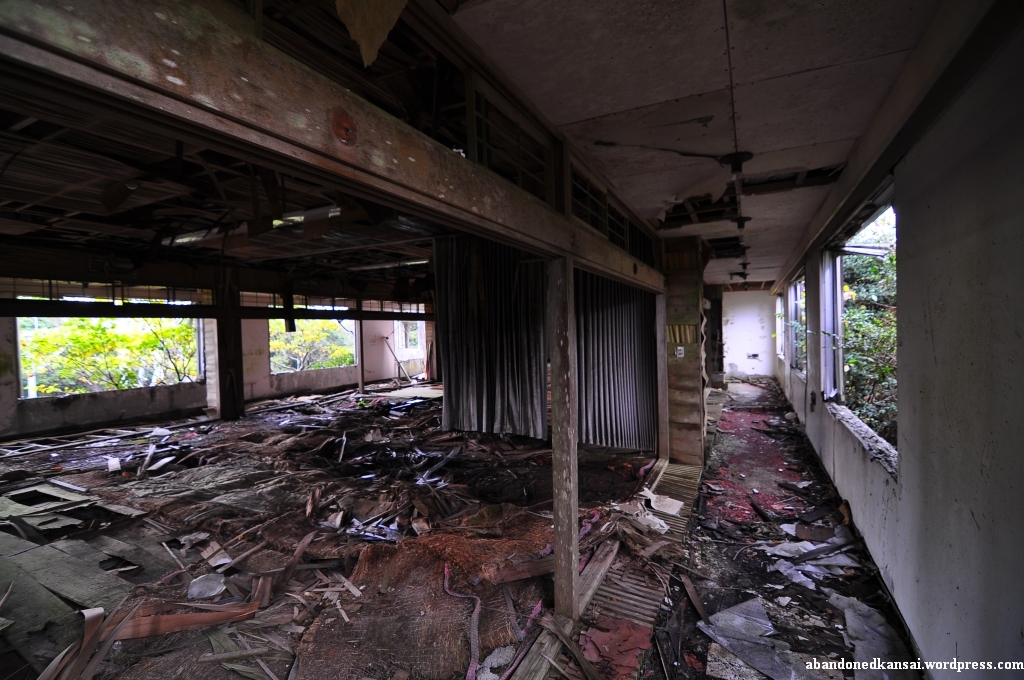
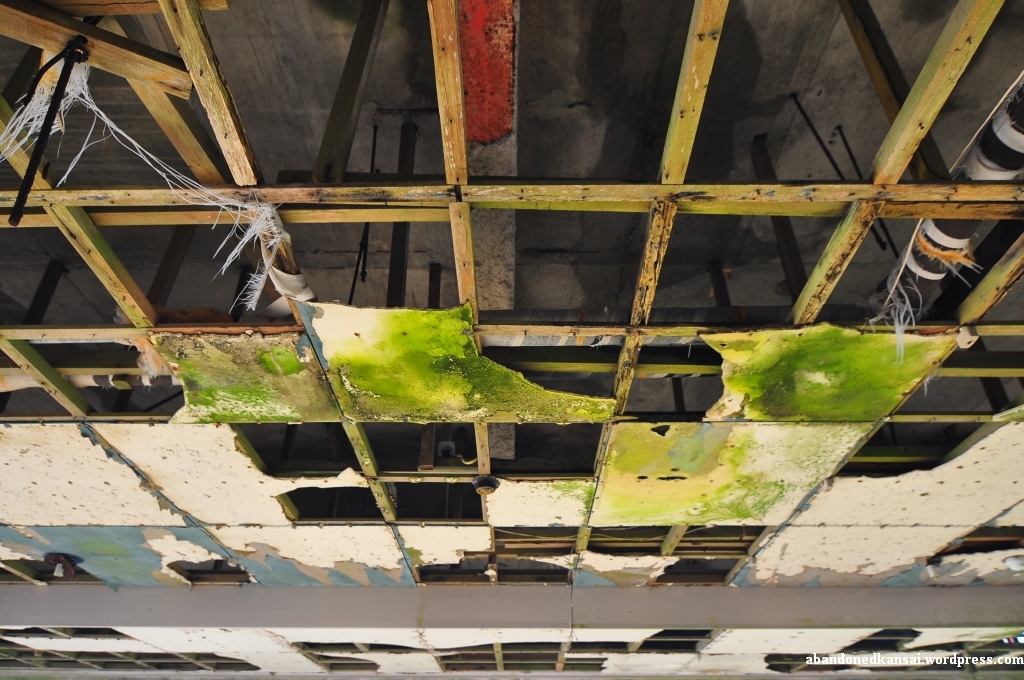
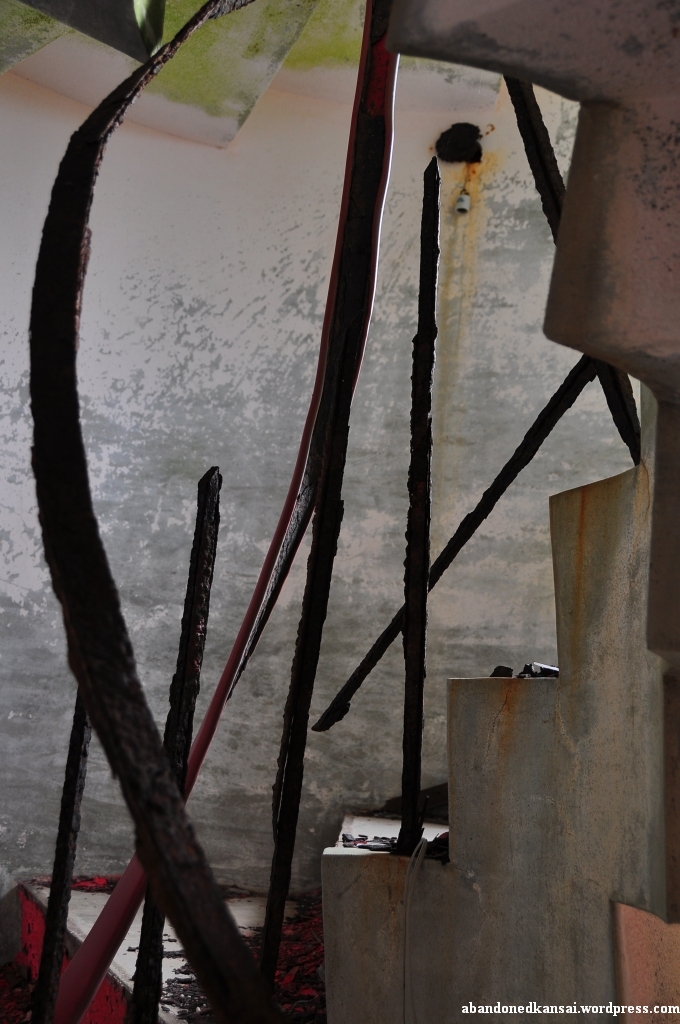
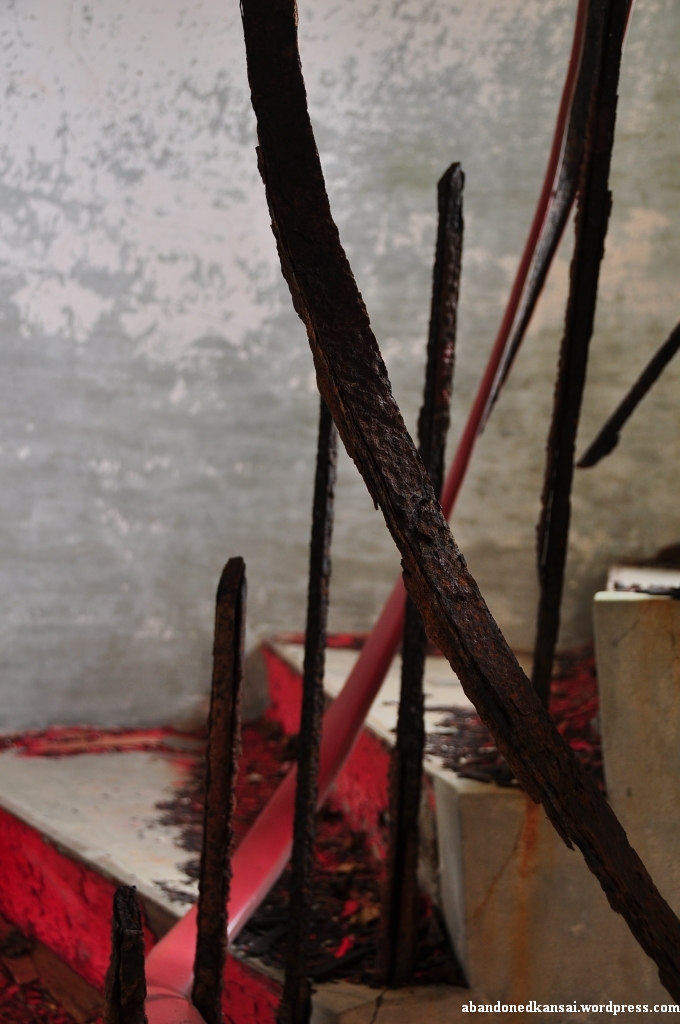
The Sky Rest New Muroto is one of those places that suffered a lot of damage over the past four years. If you are lucky you can find pictures taken before Nippon No Haikyo was published and see a very unique building with lots of intact (rusty and dusty) interior, but since even blogs about food and flowers posted the exact location on maps (something that 95% of urbex blogs would never do!) the Sky Rest became a ravaged shadow of itself. Pretty much all of the interior was ripped out and shredded to pieces – all that’s left is the impressive concrete structure and piles of scrap everywhere. In addition to that the lighting conditions on the day of the shooting were terrible, so especially the early outdoor pictures turned out to be actually pretty horrible – I apologize for that! (I publish them anyways to give you a better impression of the unique architecture; the building looks like a fortress with three canon towers on top. The video coming with this article isn’t outstanding either, but I present it for the same reason, although I never intended to publish it, like all the other videos I took. But some of them, especially the one taken at the *Shime Coal Mine*, turned out to be quite popular…)
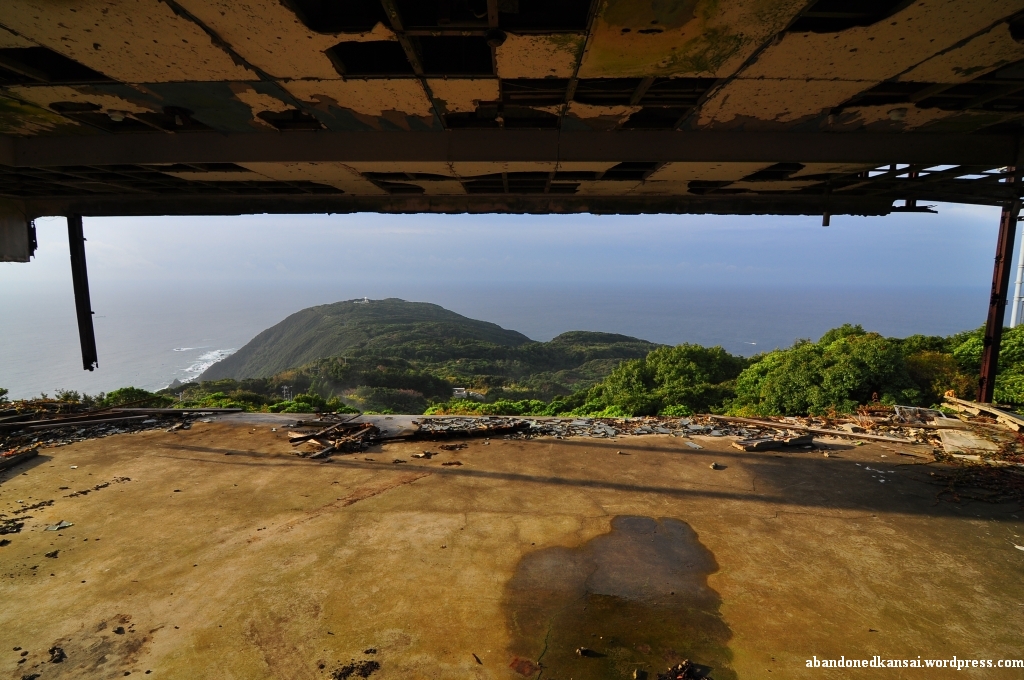
Now surrounded by antennas submitting television and communication signals the Sky Rest still towers Cape Muroto and offers a gorgeous view in all directions. Sadly there is barely anything known about the place – old pictures confirm what you can assume from the name, that the Sky Rest once was a restaurant for people enjoying the stunningly beautiful nature of Cape Muroto. In addition to that some pictures show remains of rusty and broken arcade machines, although they must have been very old given the fact that the Sky Rest was closed in 1978…








Abandoned Kansai on Facebook
-
Join 5,098 other subscribers
Pages
Archives
Categories
Recent Comments
Gred Cz on Sakura Car Shop Sue on Sakura Car Shop Gred Cz on Mie Minshuku Matauia vainetutai M… on Nara Dreamland – Frequen… Emily on Mie Minshuku Gred Cz on Kitakitsune Farm (Non-Urbex) Seyeon Park on North Korea Revisited: Ep… Florian / Abandoned… on Green Plaza Akakura Florian / Abandoned… on Green Plaza Akakura Gred Cz on Green Plaza Akakura


 Abandoned Kansai