Feeds:
Posts
Comments

Archive for the ‘Video’ Category

The best way of getting in contact with the locals on Ikeshima seems to be leaving camera equipment on the side of a street. It worked in front of the apartment complex and it worked again about an hour later just down the road next to the school. I left my belongings behind to take a video of the apartment buildings next to the abandoned baseball field. When I came back I saw a guy in his mid-30s and of course I said “Hi!”. His English was actually pretty good, so we started talking about the school and he told me that it still has 9 students – and as many teachers (although this number might include other staff like secretaries). I asked him if he was born on Ikeshima, but he wasn’t. A Kyushu native he studied in Nagasaki and then was sent to Ikeshima by his company – and he didn’t seem to be very happy about it.
For all of you not familiar with big Japanese corporations: In Japan you usually don’t apply for a specific position within a company after graduation (from senior high school or college), you apply at a company in general and then the company decides what to do with you. Commonly this includes intense training from several months to several years, depending on the company you got into. Of course your classes at university kind of give that education a direction, but it’s not unusual that somebody with a degree in mathematics or French literature ends up in marketing or HR – getting into a university in Japan tends to be a lot tougher than actually graduating, so companies tend to start from scratch after 3 years of drinking, sports and art clubs. And just because you are fluent in a second (or third!) language doesn’t mean the company makes proper use of that. (But if you are female and good looking chances are great you won’t have to clean ashtrays for two years – instead you most likely will become some supremo’s secretary.) The same applies for your place of work. Just because your company has its HQ in Tokyo doesn’t mean you won’t end up in a subsidiary somewhere remote. Like on an island off the coast of Nagasaki prefecture…
After the guy told me that he worked for a recycling company on Ikeshima we split since he had to get back to work – and I was eager to continue my exploration.
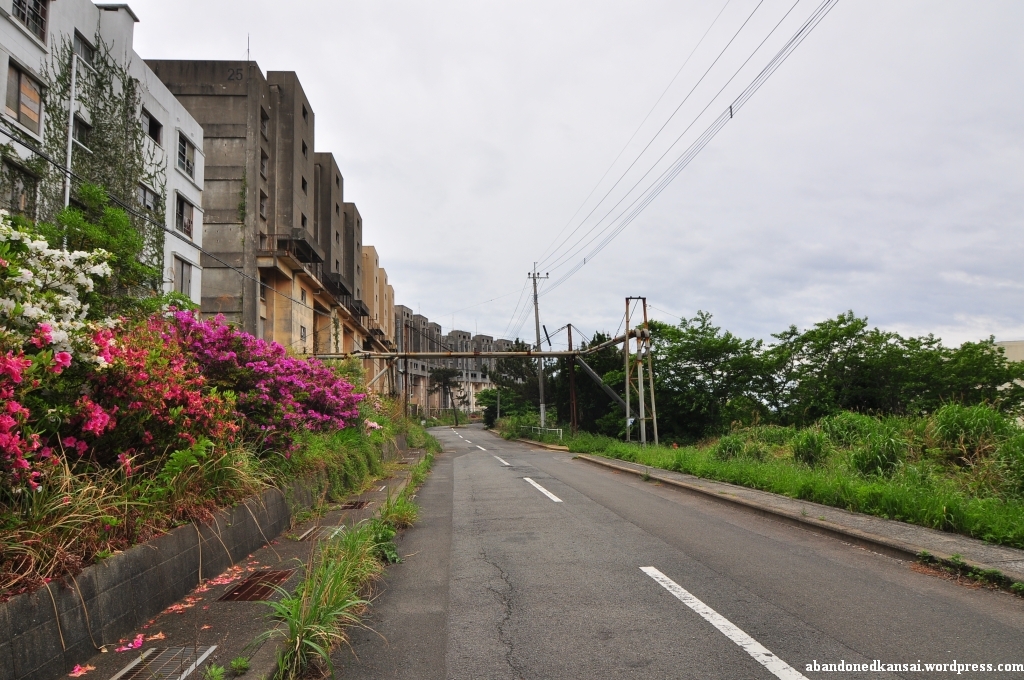
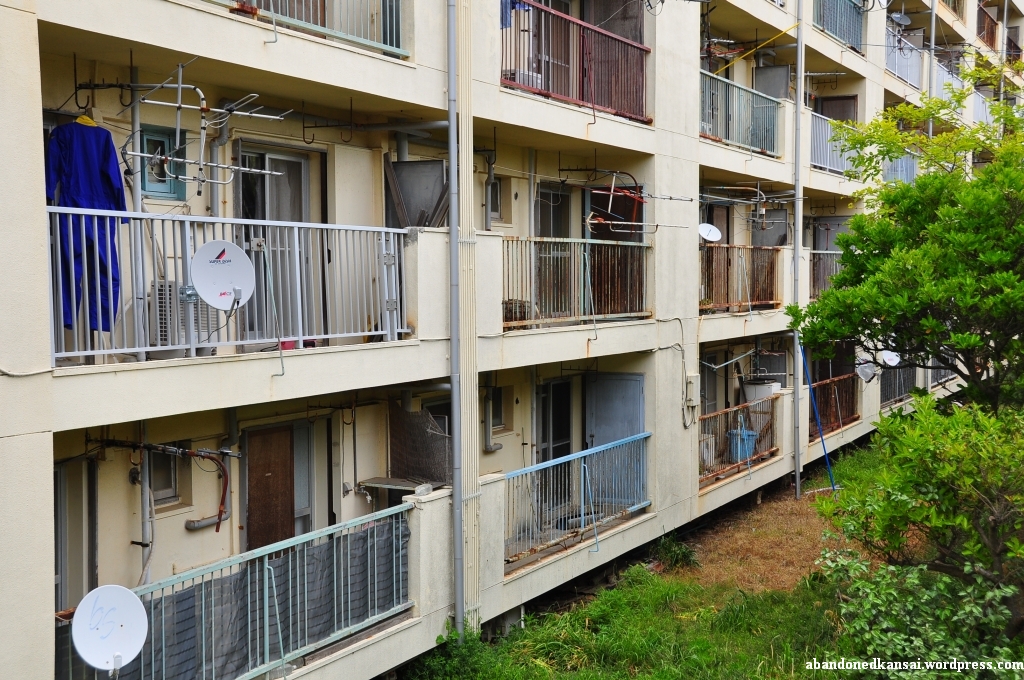
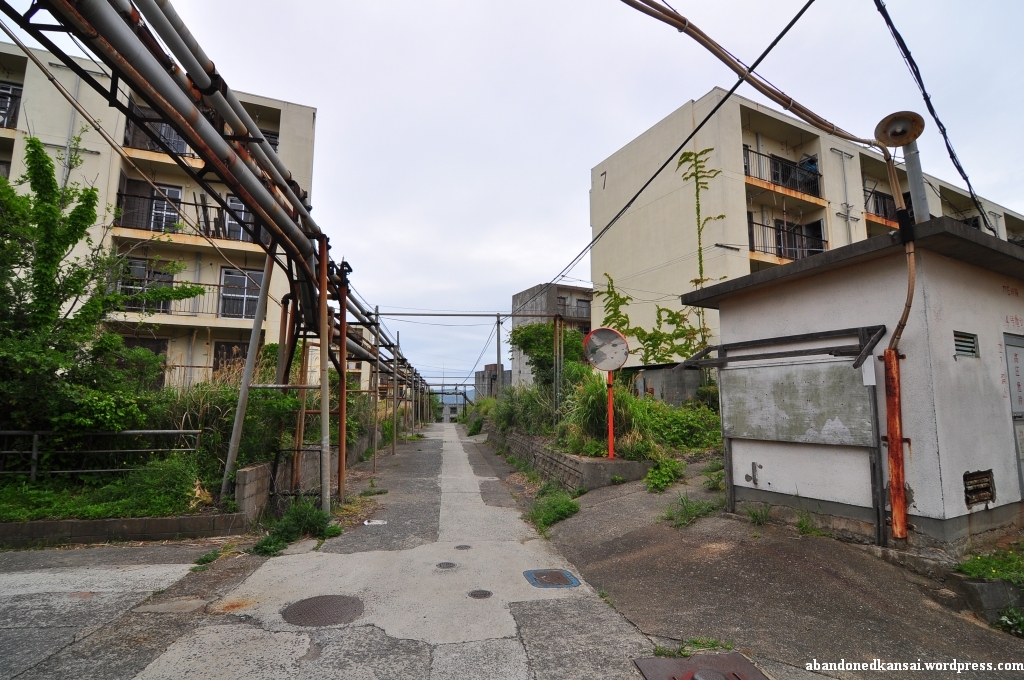
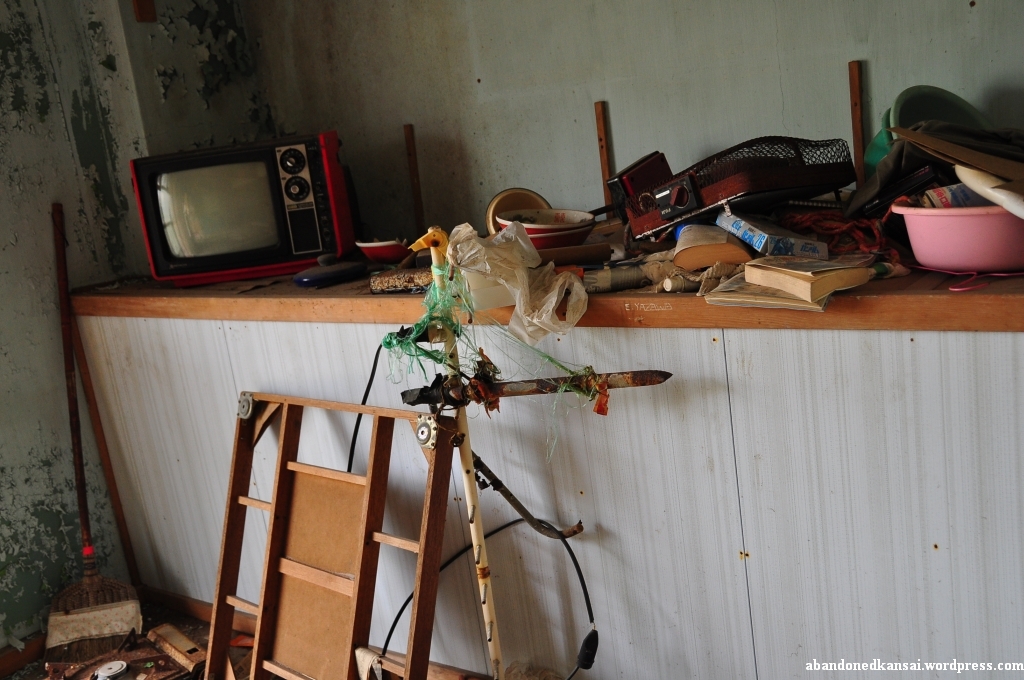
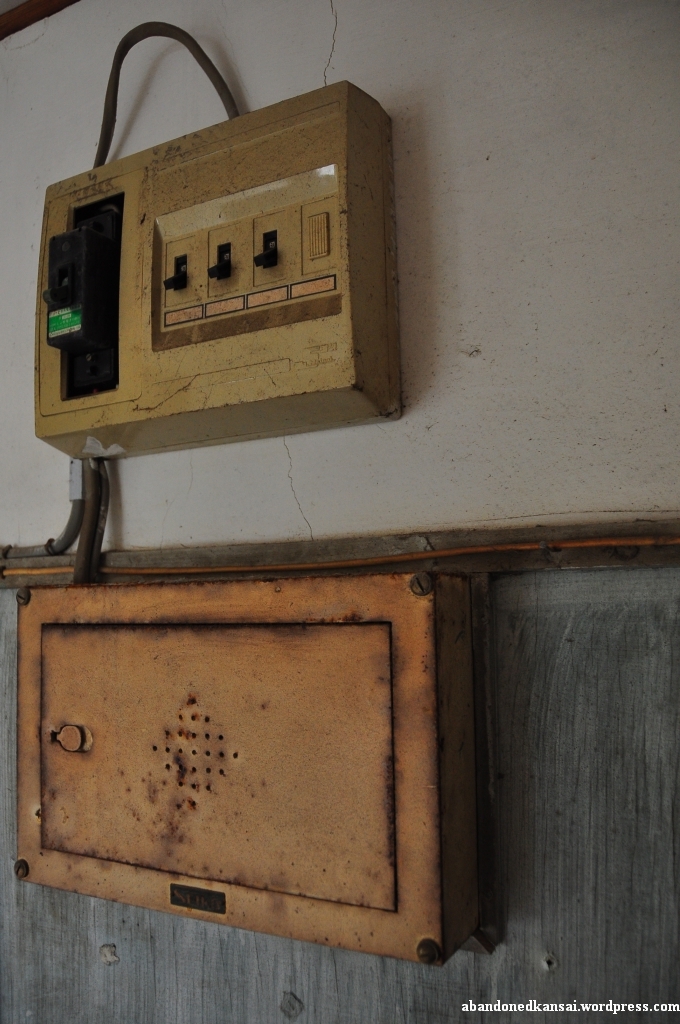
I was actually starting to run out of time, so I went back to the apartment building area I shot in the morning, this time more to the east. Some of the buildings had new plumbing outside and people were actually living there. At this point everybody I saw gave me a short nod, which I interpreted as a sign of “Yeah, you are welcome here.” – it felt really good. At an abandoned house the window next to the entrance door was broken, so I took a few pictures of the bike, cleaning tools and mailboxes that were still there. When I got back to the main street, route 216, I actually found a house that was open for visitors (I guess… it was unlocked, clean and had a sign in Japanese outside saying something about a room on the 4th floor). All the doors were locked and the staircase kinda smelled funny, but on the 4th floor I was indeed able to look inside an apartment that was arranged like a museum room.
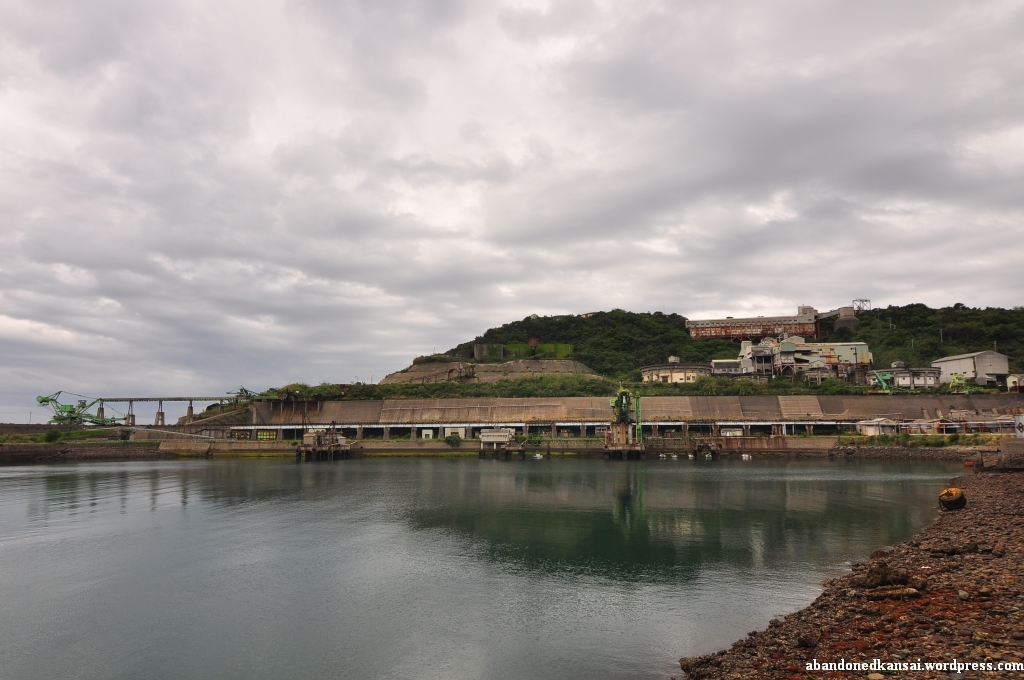
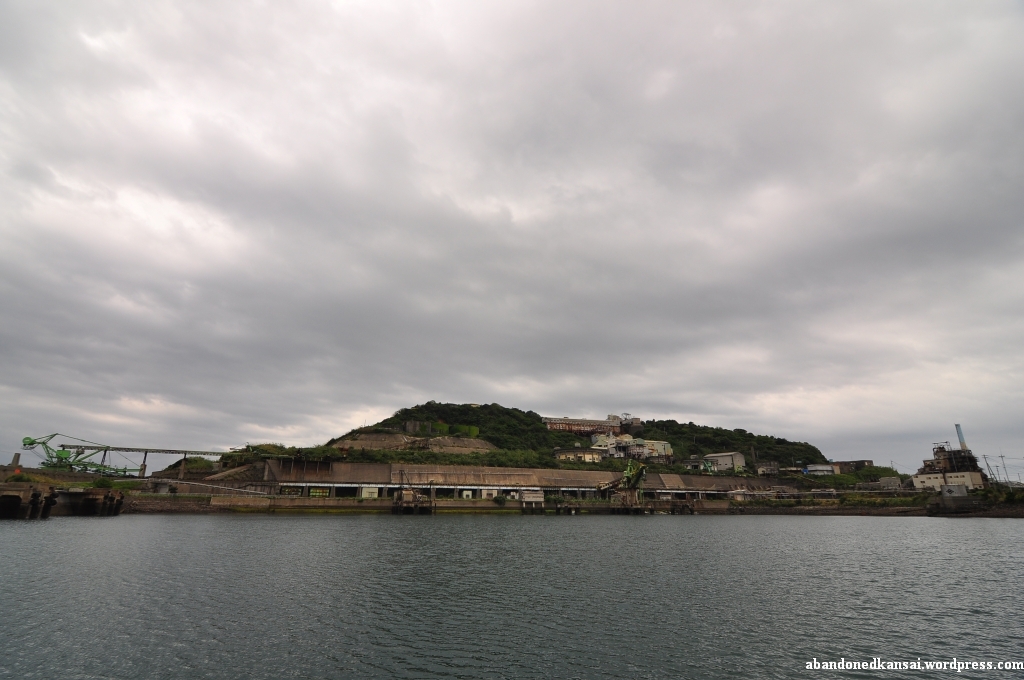
Outside again I followed route 216 to finish my circumnavigation of Ikeshima. I passed by the noisy Ikeshima Urban Mine Co., Ltd. and several apartment buildings before reaching the old loading plant. On the southern side of the harbor entrance was a scrapyard where a single worker was moving rusty stuff around. In continued following route 216, taking some pictures here and there, before I reached the apartments at the harbor again, where my explorations started about seven and a half hours earlier, making my visit to Ikeshima one of the longest photo shoots I ever did. But it wasn’t over yet…
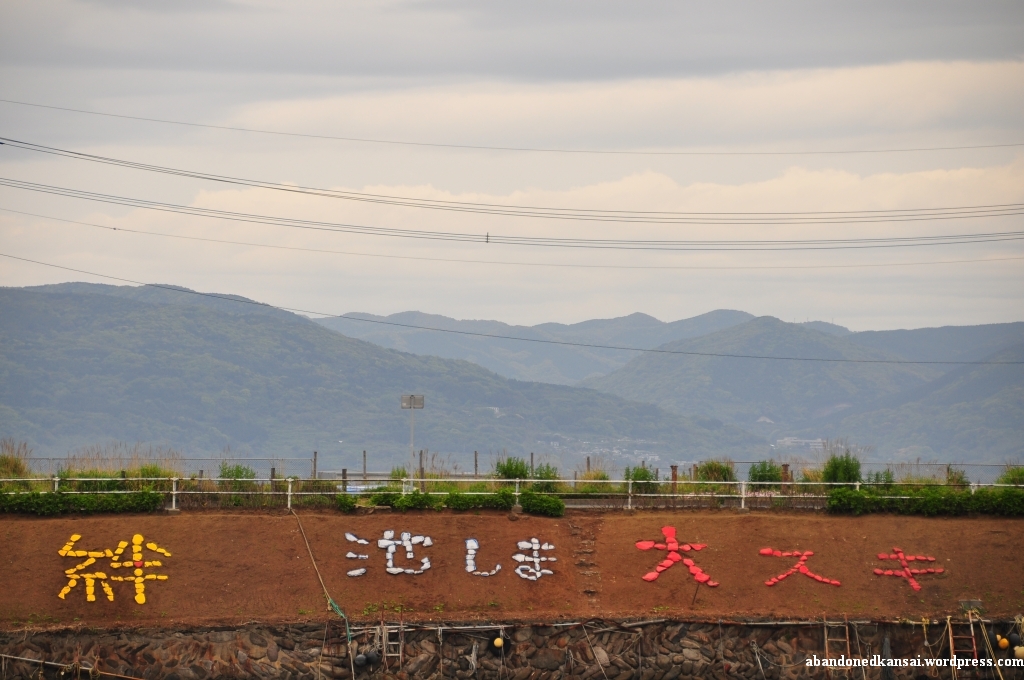
Figuring out the ferry / boat schedule when planning the trip wasn’t exactly easy since all the information was in Japanese and not really clear. I got some help from friends who are Japanese natives and confirmed the schedule with the hotel staff in Sasebo – everybody told me the boat (it actually was a boat, not a ferry, also in the morning – sorry for that!) would leave at 4.09 p.m., so when my ride entered the harbor at around 3.55 p.m. I continued to take some photos and videos. But something felt wrong watching the activities on the boat, so I decided to hurry to the terminal – and of course the boat left right when I arrived, shortly after 4 p.m.; thank you very much, guys! The people arriving on Ikeshima of course saw what happened and told me that there was another boat leaving for Sasebo today, but they couldn’t tell me when. So I waited and thought about the day – my rocky start and how I didn’t even enter any of the huge industrial ruins at the harbor. 10 minutes passed, 20 minutes… Then some senior citizens arrived at the terminal and I felt a bit of relief – I wasn’t the only one wanting to leave Ikeshima. At around 4.35 p.m. the boat to Sasebo arrived. As I took a seat while the ship left the harbor I had a last look at the huge characters in the sand of the breakwater and I couldn’t have agreed more: „絆 池しま 大スキ“ – „Kizuna Ikeshima daisuki“ – „I / We like Ikeshima a lot“
(Since the inhabitants of Ikeshima consider their island a tourist attraction I added it to the *Map Of Demolished Places And Tourist Spots* and created *a new map just for Ikeshima*. If you don’t want to miss the latest postings you can *follow Abandoned Kansai on Twitter* and *like this blog on Facebook* – and of course there is the *video channel on Youtube*…)


Read Full Post »

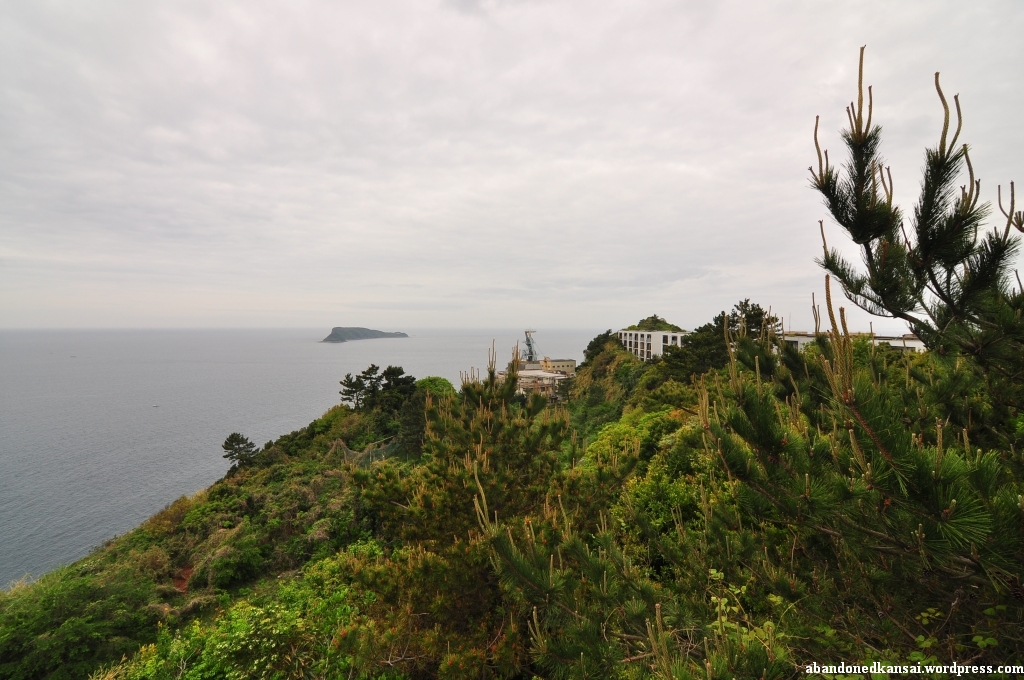
After I left the apartment building and shot the first video I was looking for a new approach to Ikeshima. So I left the area with three-storey buildings and headed towards a bunch of row bungalows with little garden. Some of them were still inhabited and it seemed like the people living there took care of their former neighbors’ gardens. I continued to walk uphill and reached a small park with an observation platform – the highest point of the island. Although the stairs leading up were really rusty and maybe should have been off-limits I went up and had a look around. What a nice view!

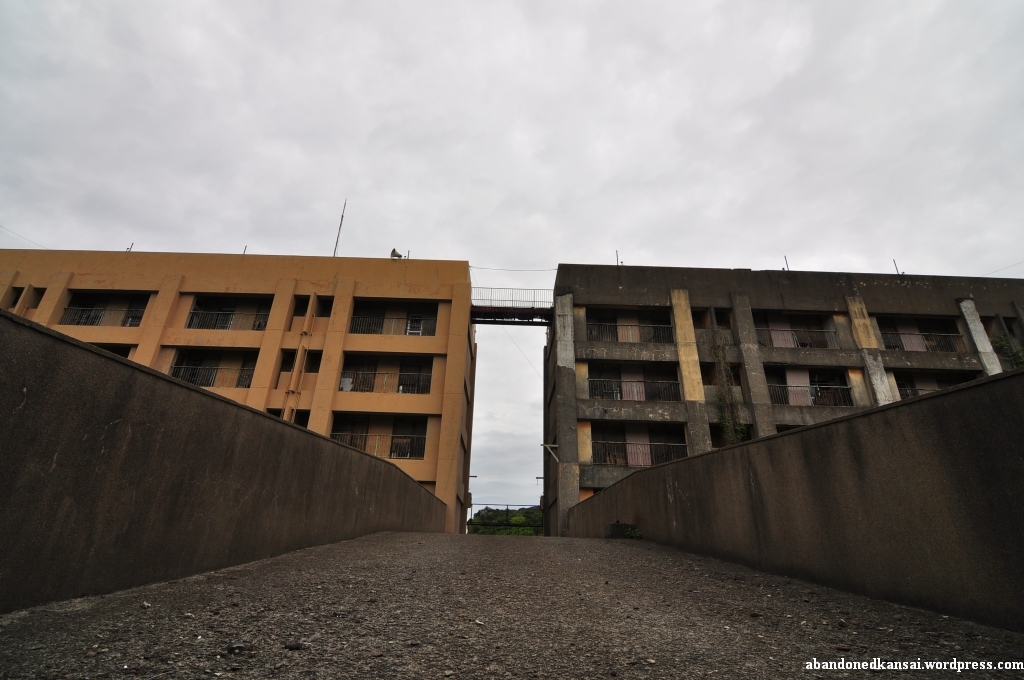
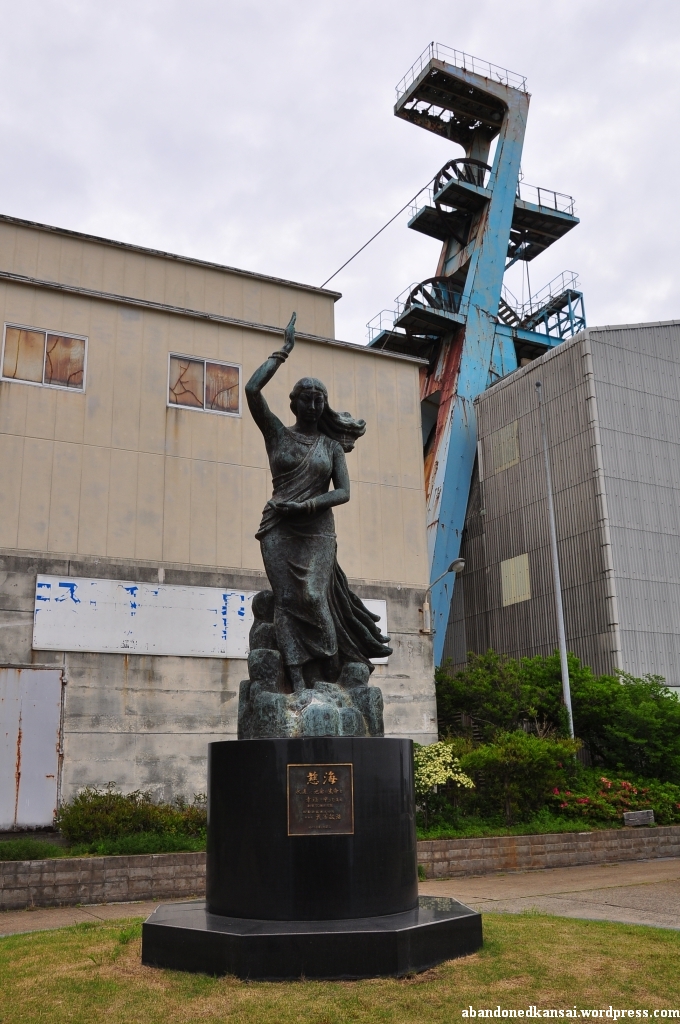
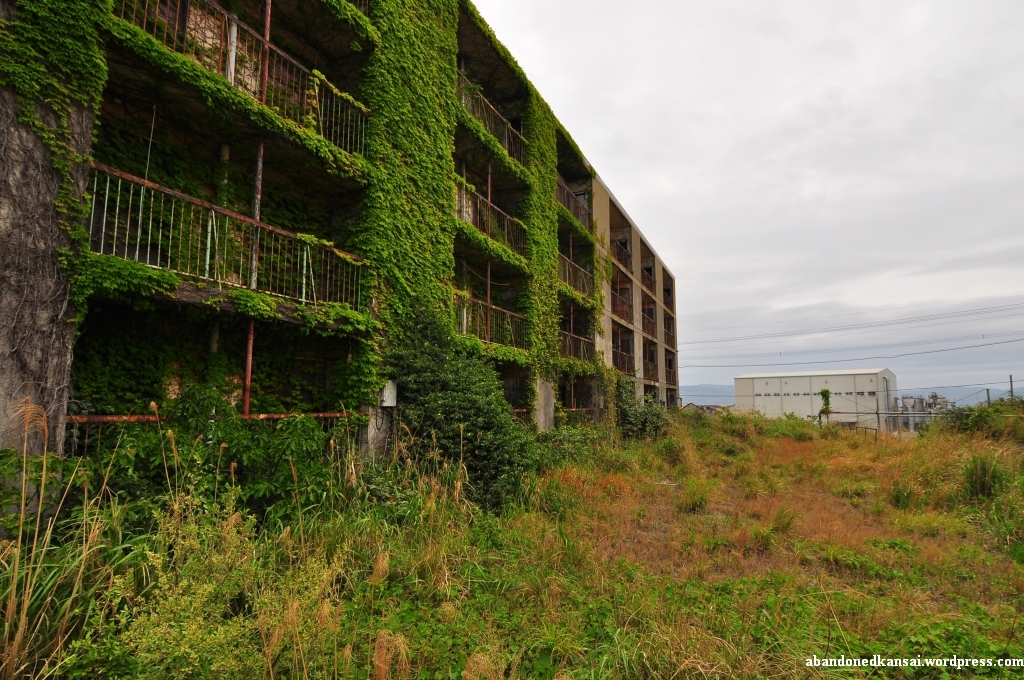
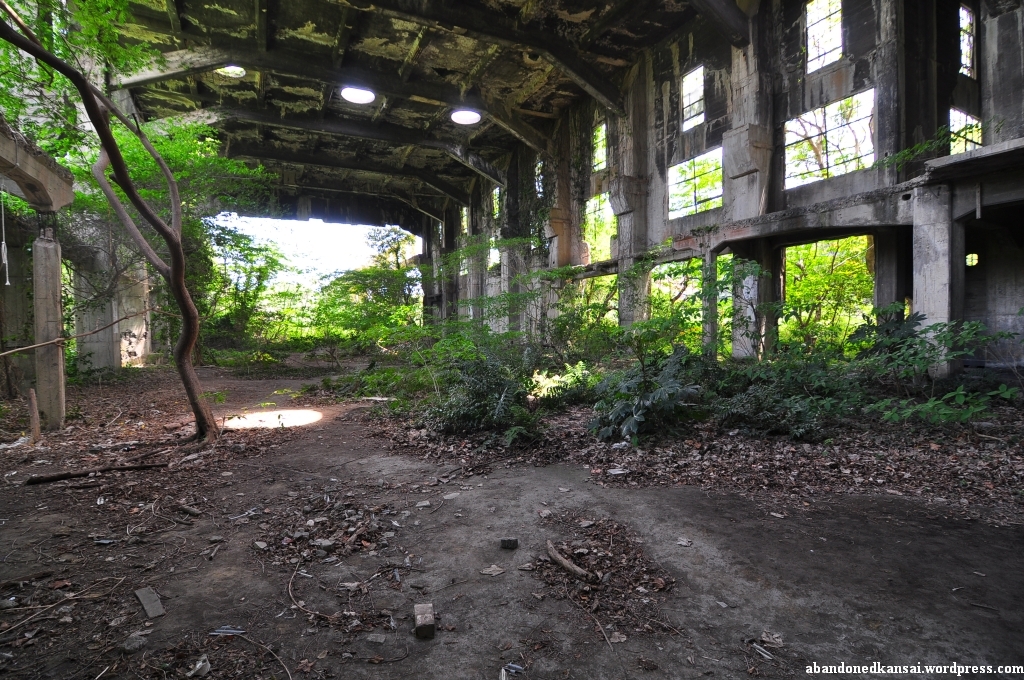
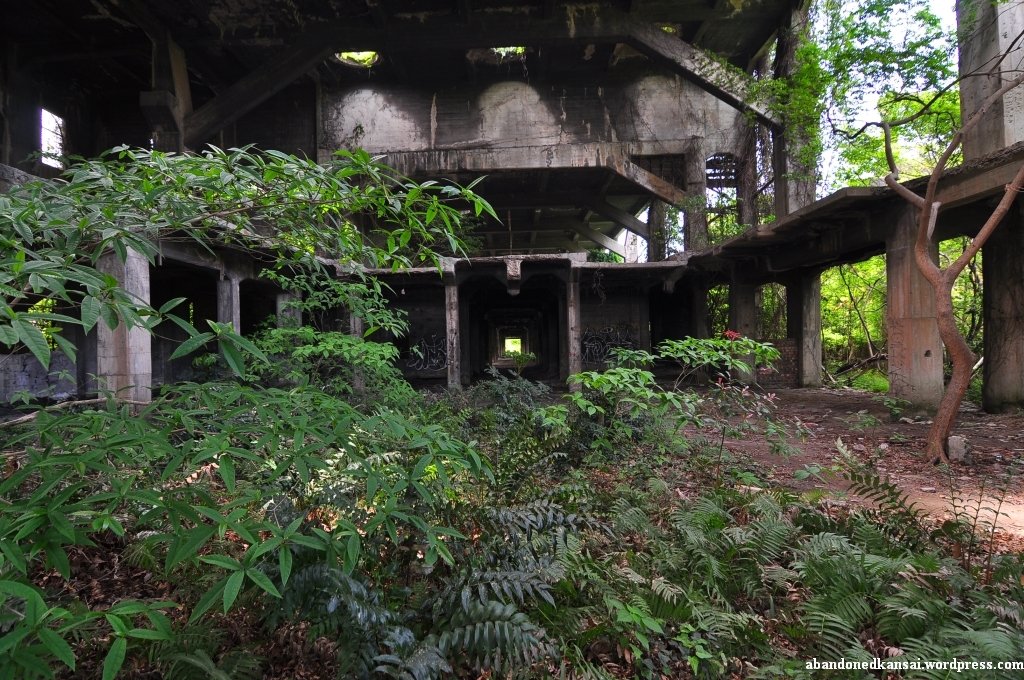
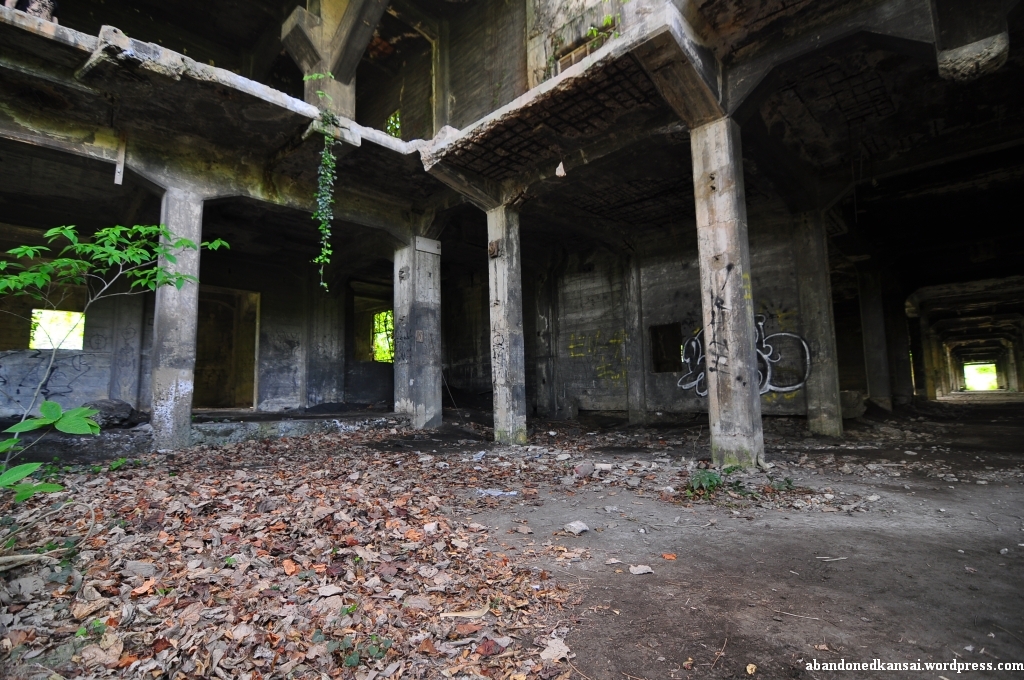
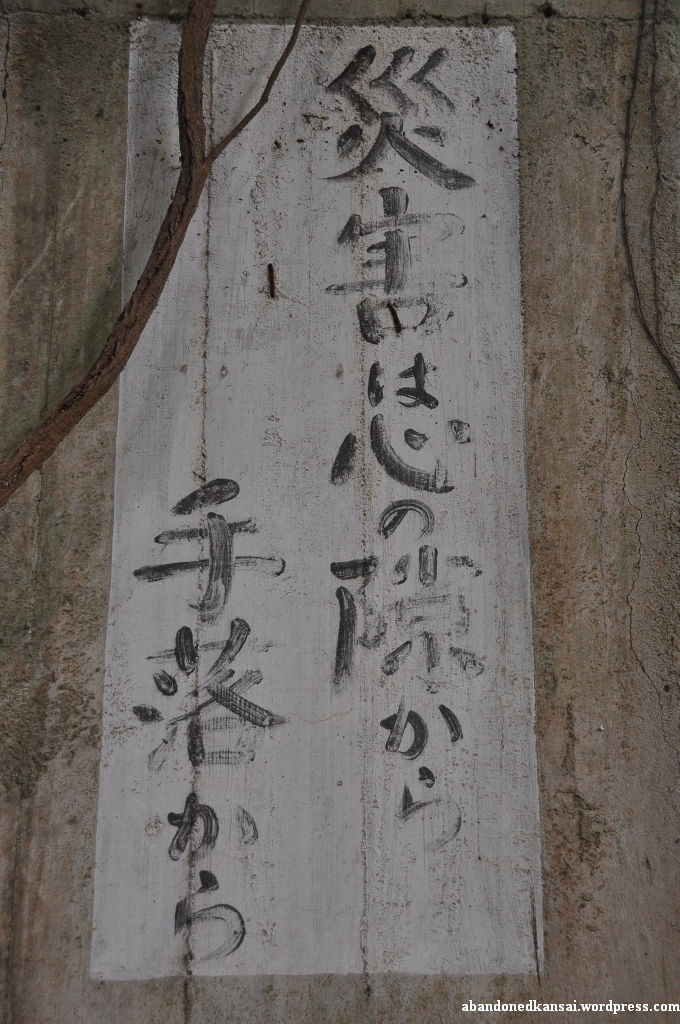
A building with a headframe caught my eye, so I carefully went down again and walked toward the coop – which is sometimes mistaken for a hospital due to some “Safety first” signs. On my way I came across what turned out to be one of the most fascinating building complex I’ve ever seen, totally reminding me of my trip to *Chernobyl and Pripyat*. Its foundation was on the lower end of a slope, with bridges connecting the upper floors with the street I was walking along. A really fascinating construction, even more beautiful from its base as I found out later. But for now the headframe was more important, so I walked down some concrete steps with a severely damaged handrail to the backside of the coop. The rear entrance was actually open, but I refrained from entering. A sign displayed some kind of opening hours of the Mitsui Matsushima Resources Company (三井松島リソーシス株式会社), the subsidiary of Mitsui Matsushima responsible for taking care of the trainee program that ended in 2007. The front entrance had the same or a similar sign. So I took some photos from the outside of the building and walked up the street towards the apartment complex.
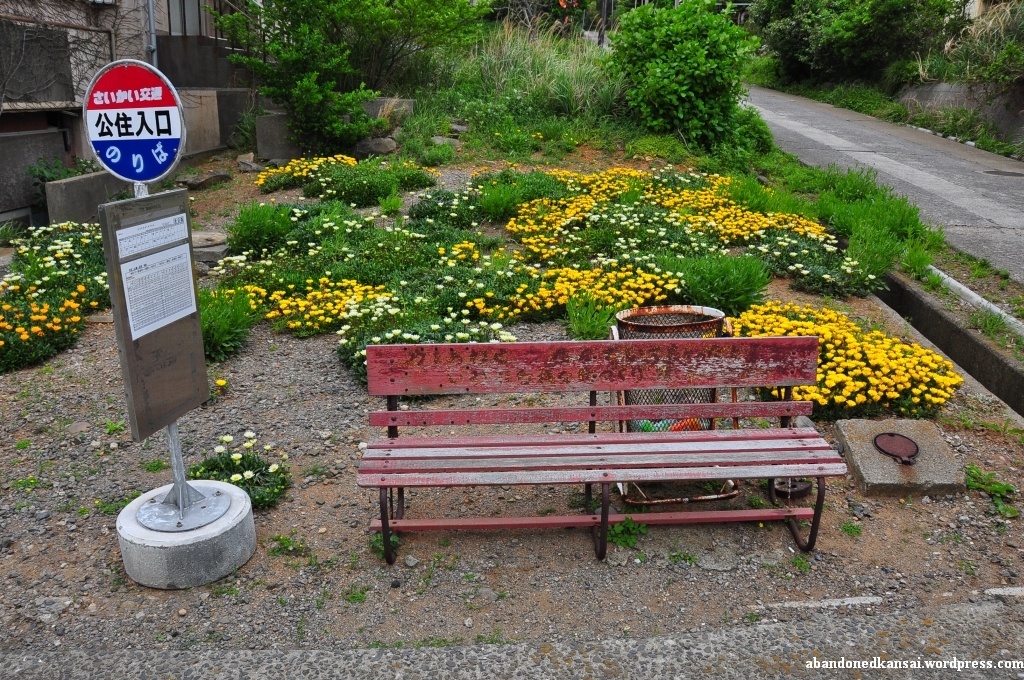
To get a better grasp of the whole complex I put down my tripod (including the camera) and my backpack on the side of the road and headed for the bus stop right in front of it. There was some kind of roundabout and the moment I wasn’t visible from the street a small pickup truck (actually a kei truck or Japanese mini truck) passed by and stopped next to my belongings. “Great… trouble!”, I thought and made myself visible. Two guys in their 50s or 60s got out of the truck and when I came closer they addressed me in a mix of Japanese and English – and I answered the same way.
What I was doing here?
Just taking some photos…
Interested in history?
Yep, a lot!
From America?
No, Germany.
At this point their faces lit up a bit and we switched from 75% Japanese to 75% English. Then they asked me if I wanted to see their offices. Wait, what? Yeah, they were working at the coop building with the headframe, they told me. So I picked up my belongings and jumped on the truck bed. Knowing that there wouldn’t be any oncoming traffic the driver sped up quite a bit and hurried down the mountain, but somehow I managed to take some slightly blurry photos without falling off the truck.
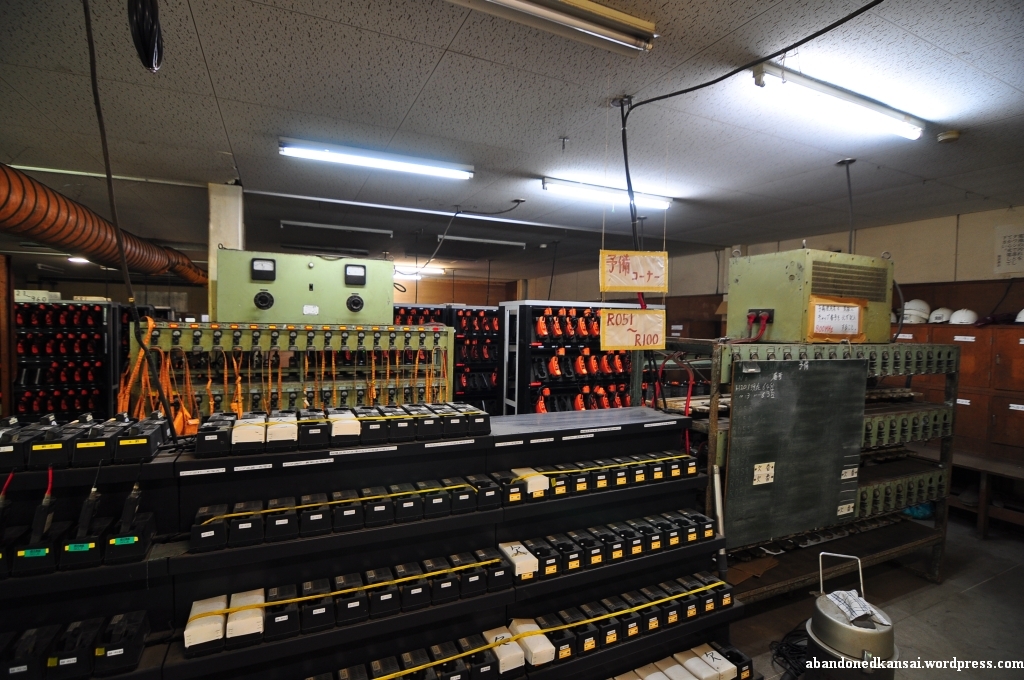
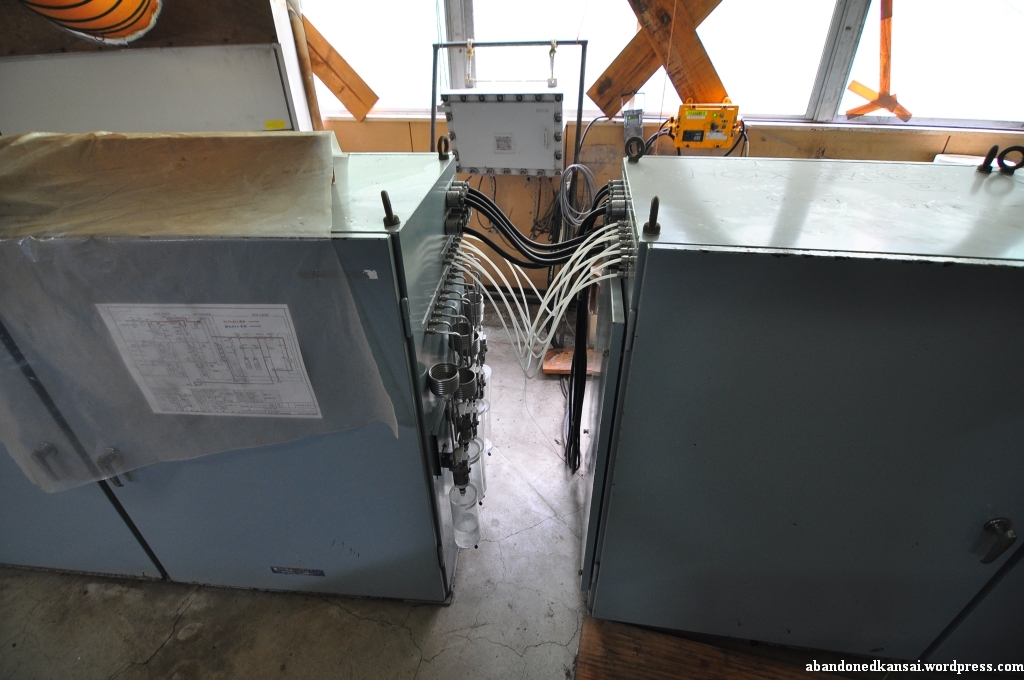
The front door of the building was also unlocked and the guys guided me to the second floor. There were several offices and the entrance to the mine shaft. Lighting was horrible and the guided tour was so quick that most pictures turned out to be blurry. I snatched some shots of the room where the mobile radios as well as other equipment were stored (and charged), then we went through some more offices and by the time I realized what I was doing I was outside again and said goodbye to my guide – I barely spent ten minutes inside the coop, but I was able to take some rare photos. What a great opportunity!

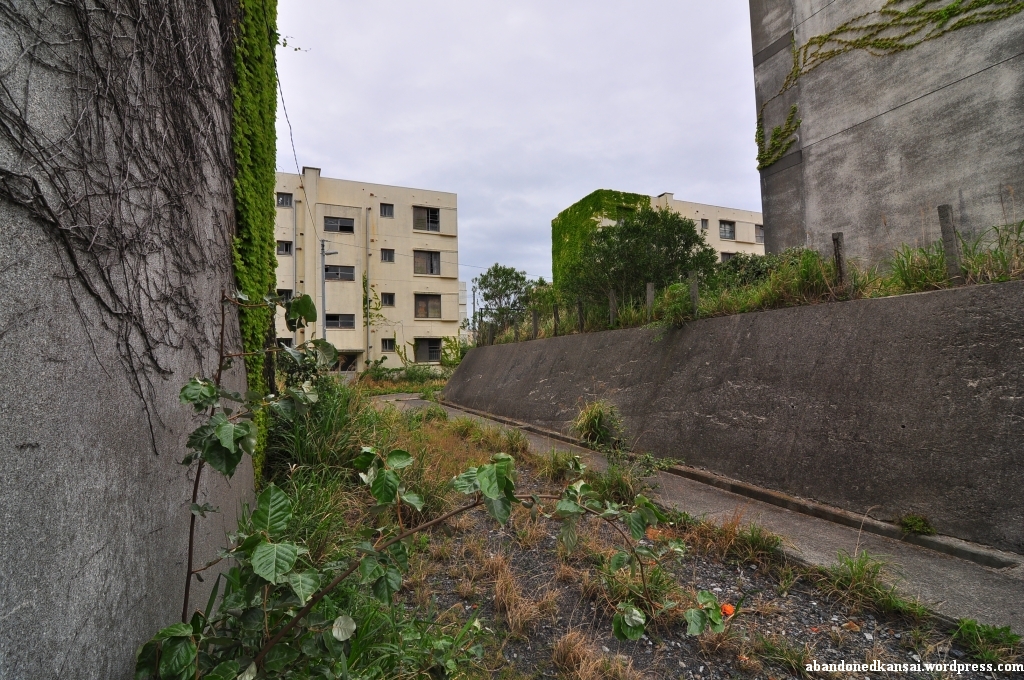
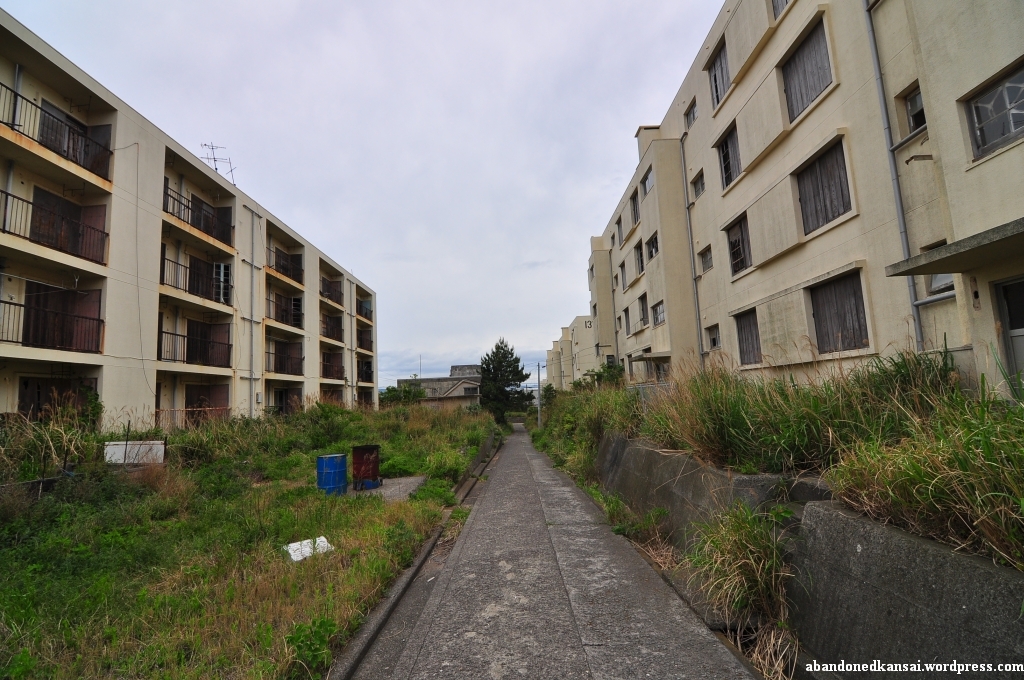
Since the guys gave me a one way ride I walked up the street again and back to the apartment complex. This time I put down my belongings where they weren’t visible from the street and started to take pictures and videos. The weather seemed to brighten up a bit and just looking at the amazing apartment complex put a smile on my face. Such a great building, such a nice atmosphere… I felt at ease and my worries about living up to the uniqueness of Ikeshima were gone. Now that I’m writing these lines I’m again not sure if the pictures and videos can really put you there, but looking at the material for the first time in a couple weeks makes me daydream a bit. As far as I could see all entrances were boarded up or even bricked up, there was quite a bit of barbed wire and the previously mentioned bridges looked very dilapidated from below – but I didn’t even have the urge to enter the complex. It was just nice being there. With the apartment complex, more apartment buildings further down the slope, and an overgrown children’s playground on an additional level between the two housing sections. A couple of minutes before I continued my exploration of Ikeshima the van parked in front of the bus stop continued its tour after quite a long break (the driver must have taken a rest in the little hut next to it) and I felt good. Really good.
Half of my time on Ikeshima was over and I was curious *what the afternoon would bring* – it didn’t disappoint…
(Since the inhabitants of Ikeshima consider their island a tourist attraction I added it to the *Map Of Demolished Places And Tourist Spots* and created *a new map just for Ikeshima*. If you don’t want to miss the latest postings you can *follow Abandoned Kansai on Twitter* and *like this blog on Facebook* – and of course there is the *video channel on Youtube*…)


Read Full Post »

„絆 池しま 大スキ“ – „Kizuna Ikeshima daisuki“ – „I / We like Ikeshima a lot“
That’s what’s written with huge, colorful characters in the sand of the breakwater at the Ikeshima harbor. A last pledge of allegiance from about 300 remaining inhabitants of an island once the home to several thousand people – miners and their families, shop owners, restaurateurs, …
When I arrived on Ikeshima I can’t say I agreed with the bold statement at the harbor. The weather changed from sunny to overcast with a serious risk of rain and the humidity rose to levels you usually experience during the long, excruciating Japanese summers. Though the previous day was pretty long, exploring the *Imari Kawaminami Shipyard* and the *Mukaiyama Mine*, I had to get up again before 6 a.m. to make it to the ferry on time and my landlubber slugabed stomach wasn’t a big fan of the early morning breakfast, although the ferry ride itself was really enjoyable.
In addition to that I felt a pressure right from the beginning I hadn’t felt in years. Back in my days as a journalist in Germany (10+ years ago) I was writing about all kinds of topics. Most of the stuff was trivial and routine, but once in a while I dealt with a project close to my heart – and in those cases of course I wanted to rise to the occasion and write an article that did justice to the topic.
So while I tried to calm down my slightly upset stomach I was worried if I would be able to take pictures that represent Ikeshima properly, if I could come up with interesting stories to write about – if I was able to experience this island that is on its way to become an urbex legend; some people already call it Gunkanjima’s little brother (although Ikeshima is way bigger…). And since Ikeshima is in way better shape and way easier to access than *Gunkanjima* it is actually on its way to become more popular amongst urban explorers – a trend that seems to be appreciated and supported by the remaining inhabitants of the island, at least to some degree.
The first thing I saw getting off the ferry were two maps of the Ikeshima right at the pier – one being an aerial shot of the island from 1982, highlighting 9 points of interest; the other being a typically Japanese manga tourist map with a hiking guide, pointing out restrooms, bus stops, areas off-limit and buildings you shouldn’t miss. Sadly (for for the locals) Ikeshima wasn’t a tourist attraction (yet), at least not during Golden Week 2011: I was not only the sole foreigner on board, I was also the only person carrying photography equipment. The other half a dozen passengers were elderly Japanese guys looking for a relaxing day of fishing.
I took a few quick photos at the harbor to calm my stomach, get used to the humidity and make sure that the settings of my camera were how they should be – and somehow I got the feeling that the few locals I met weren’t really happy about it. As a rather big, tall non-Asian foreigner in Japan I’m used to being stared at, but maybe I was overly sensitive because of the uncomfortable situation I felt I was in, so I didn’t like Ikeshima a lot at that point…
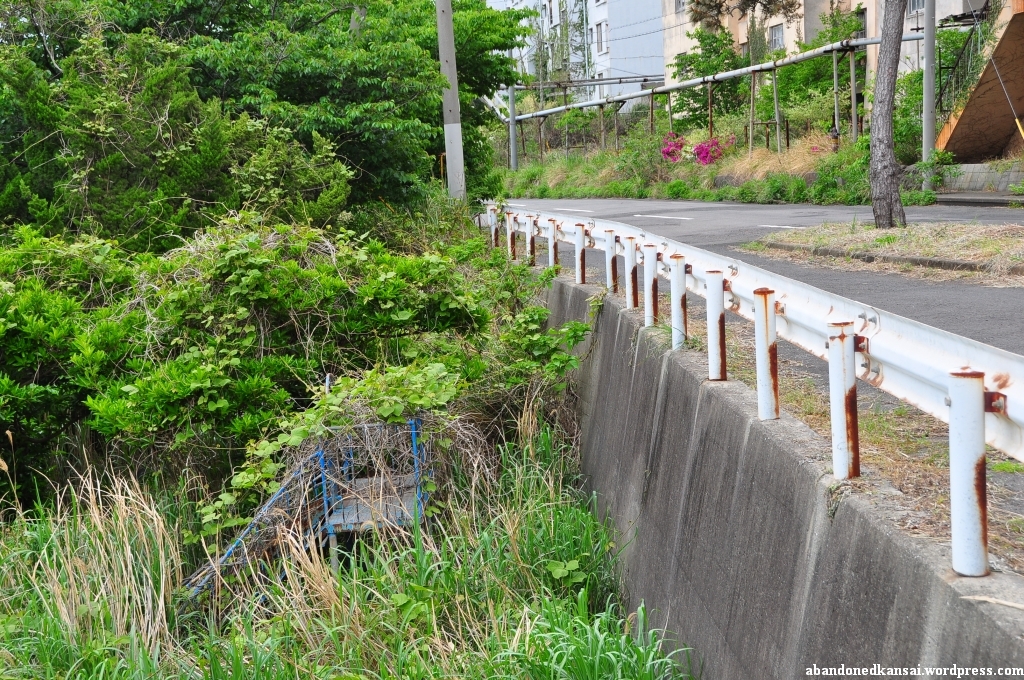
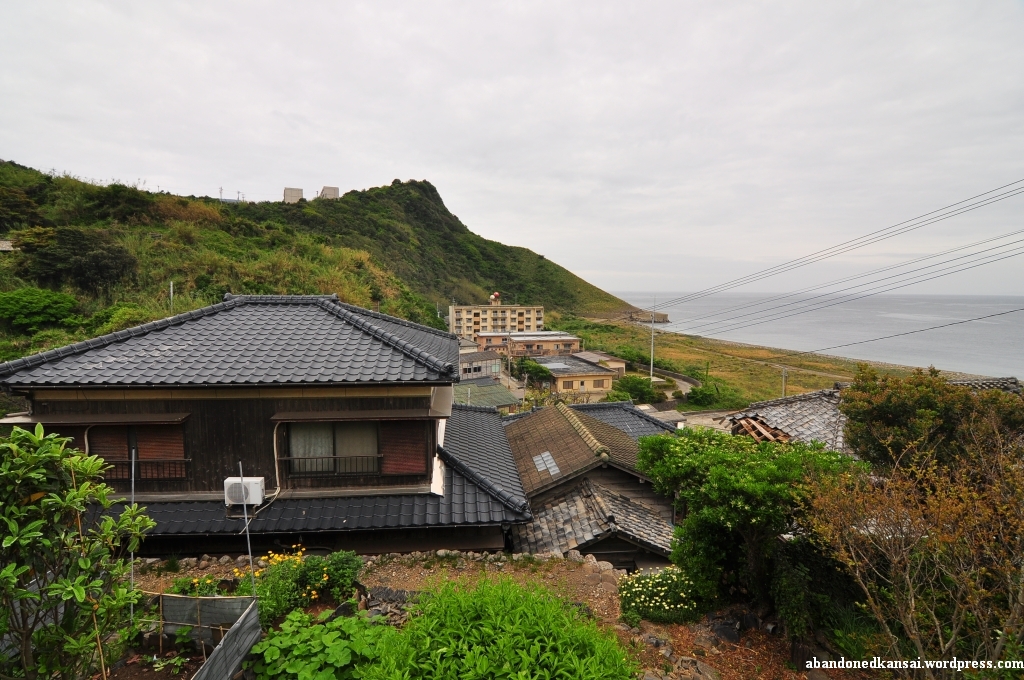
I passed by four of five people trying to get one of the omnipresent cats from an electricity pole and left the harbor area to follow the street uphill. Down to the right was a little settlement, several dozen houses, once the homes of the non-mining population on Ikeshima. I saw some big apartment buildings on the top of the hill, so I decided to follow the street and maybe have a look down there later.
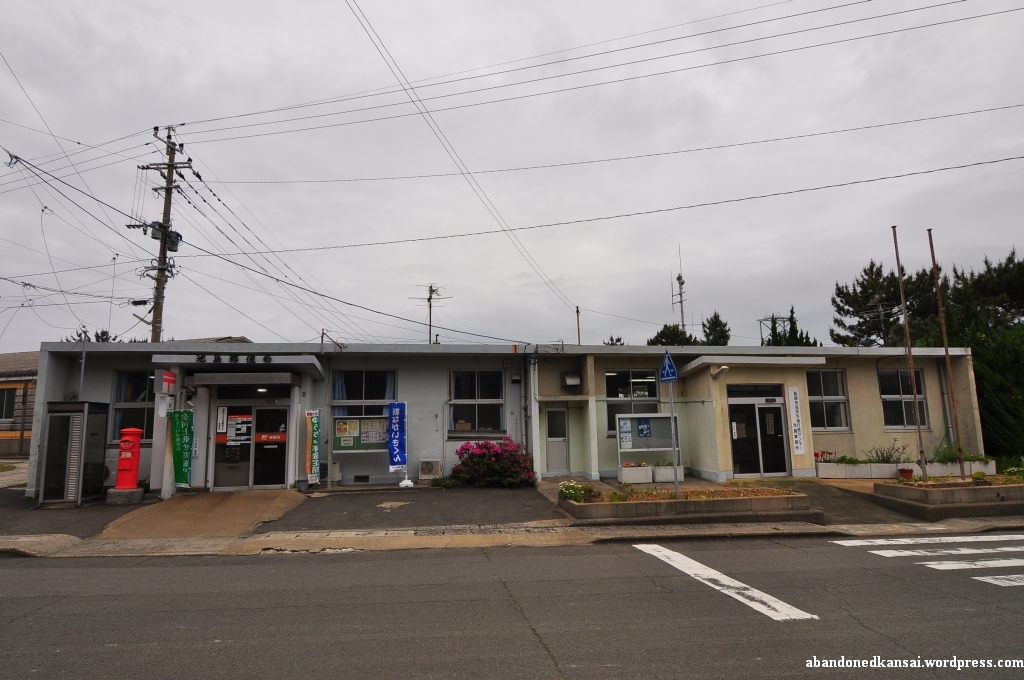
Reaching the top I passed by the post office which, to my surprise, actually had one or two customers while I was looking around that area. Although nowadays most people seemed to live down by the harbor the uphill apartment section was surprisingly busy. Within the first hour I spent there I saw maybe two dozen pedestrians and at least half a dozen cars, including the local shuttle bus which seemed to pass by me every 5 minutes – and in the background a recycling company caused quite some noise.
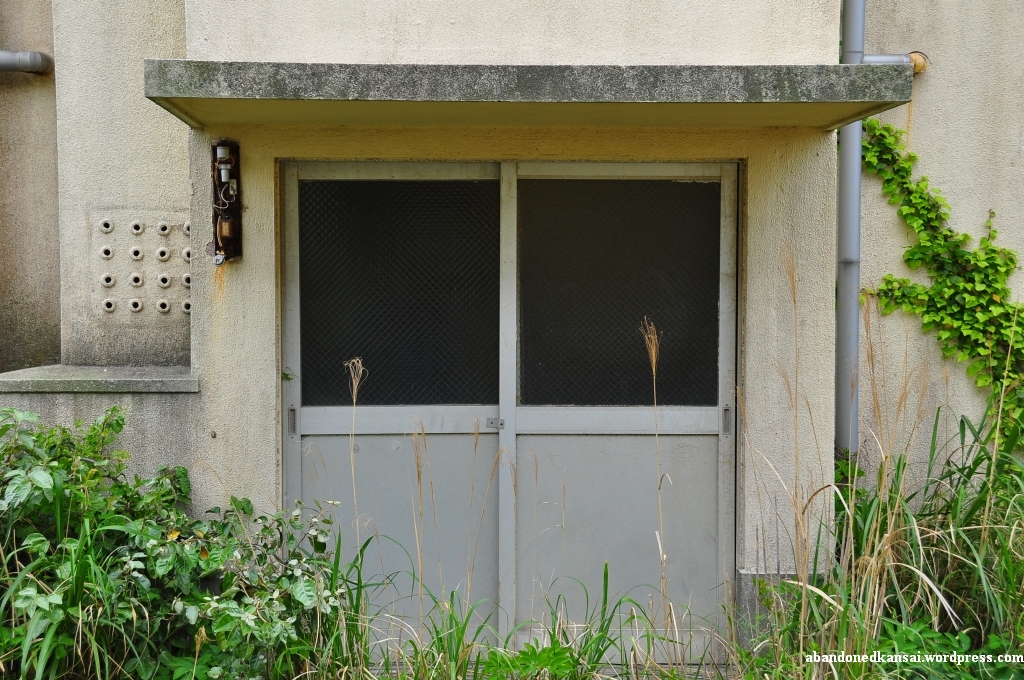
At that point I felt like a kid in a candy store – extremely excited, looking at dozens of opportunities, each one of them usually worth a day-trip on its own, and no idea where to start. But this was Ikeshima, Little Gunkanjima, so I had to take some spectacular shots! Just how? Especially since all buildings seemed to be boarded up, the doors bolted or welded. And the industrial areas were all off-limits, “No Trespassing!” signs everywhere in Japanese (kanji) and Bahasa Indonesia (Latin alphabet and katakana). Still under irrational pressure I felt like I had to make a move – and when I saw an open balcony door I jumped the railing and got inside. Finally what I was looking for? Not at all! I felt more uncomfortable than ever. I’m into urban exploration for the unique esthetics, for the quiet time in the middle of nowhere, for interesting angles and the amazing atmosphere really spectacular places provide. I’m not doing it for the thrill of being in buildings I’m not supposed to be. Quite the opposite in fact, I really dislike that aspect. So I took a few quick shots while hearing cars and voices everywhere outside – I could have gotten to the staircase and maybe to other apartments from there, but instead I decided to leave the building. Seconds later another car passed by, followed by two senior citizens, greeting me with a smile. Maybe it was about time to change my approach. So I put down my tripod and my backpack at one of the crossroads, grabbed my video camera and started to tape a walking tour of the housing area, wondering what the people I met were still doing on Ikeshima.
It was not until World War II that coal was discovered under Ikeshima. At that time about 300 people lived on the island while the huge corporate conglomerate (keiretsu, 系列) Mitsui Matsushima (三井松島) started to buy large parts. The development of the coal deposits started in 1952 and in 1959 mining finally began – the last colliery to open in Japan. In 1970 about 8,000 people lived on the island (although one source throws out a number as high as 20,000…), but like in all Western industrialized countries coal became less and less important; oil was the new coal. In summer of 1999, long after most Japanese coal mines were closed for good, a technology transfer program was proposed and as if it was a sign that the days of the Ikeshima Coal Mine (池島炭鉱) were numbered a fire broke out in the mine in February of 2000. On November 28th of 2001 the last shift left the Ikeshima Coal Mine, about 3000 people living on the island at that time – making Ikeshima the second to last Japanese coal mine to be closed. On April 18th of 2002 the technology transfer program started, training students from Indonesia about mining – hence the multi-language warning signs all over the island. The trainee program ran out by the end of March 2007, a year after 77 miners won a lawsuit against Mitsui Matsushima; suing them for negligence, related to coal worker’s pneumoconiosis. Around that time the number of people living on Ikeshima dropped to about 300 – as it was before coal was discovered. (The name Ikeshima means “pond island”, because until the 1950s a large pond was the main feature of the island – it was turned into the harbor by Mitsui Matsushima… Please *click here* to be taken to a Japanese homepage with before and after shots next to each other.)
Did the two old ladies know any of those 77 miners? Were they maybe even sons or husbands? And why were they still living on Ikeshima? I never found out. But I talked to several other people on the island later that day – so don’t miss *part 2* and *part 3* of my Ikeshima exploration…
(Since the inhabitants of Ikeshima consider their island a tourist attraction I added it to the *Map Of Demolished Places And Tourist Spots* and created *a new map just for Ikeshima*. If you don’t want to miss the latest postings you can *follow Abandoned Kansai on Twitter* and *like this blog on Facebook* – and of course there is the *video channel on Youtube*…)


Read Full Post »

Just a couple of hundred meters down the road from the *Imari Kawaminami Shipyard* is another haikyo – visible from both the street and the train tracks the place is nevertheless often overlooked. After we finished shooting the seaside part of the shipyard Yasu was heading back to the main building while Ben and I headed to the remains I saw a couple of times on Japanese blogs without even exactly knowing what to expect – the pictures I saw were labeled “向山炭鉱“ (Mukaiyama Tankou, tankou being the Japanese word for mine), but a mine so close to the sea? Could that be?
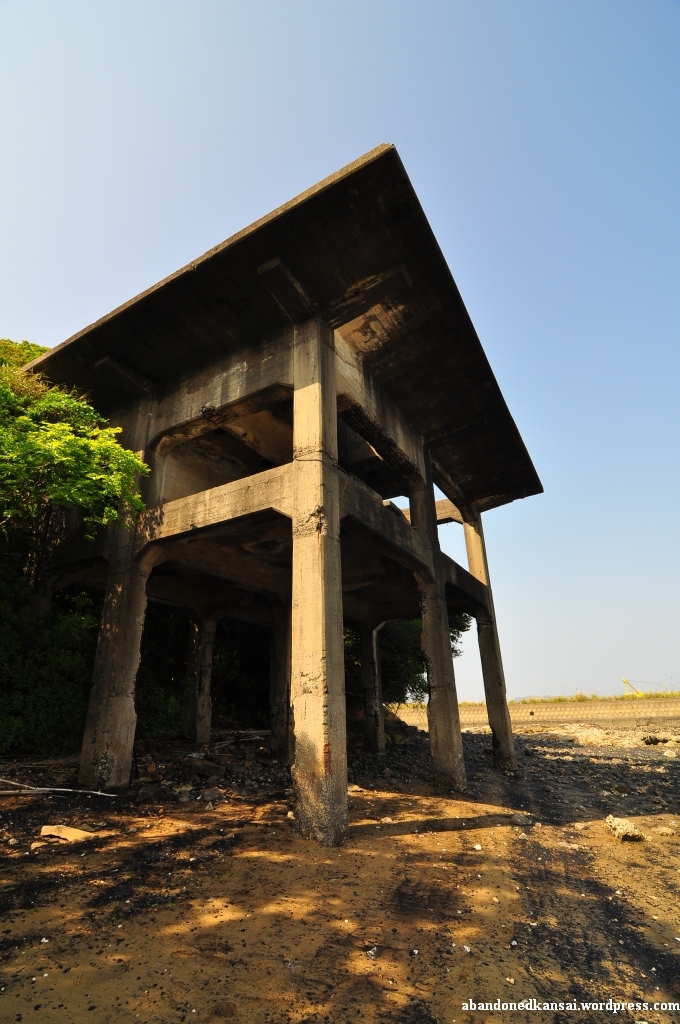
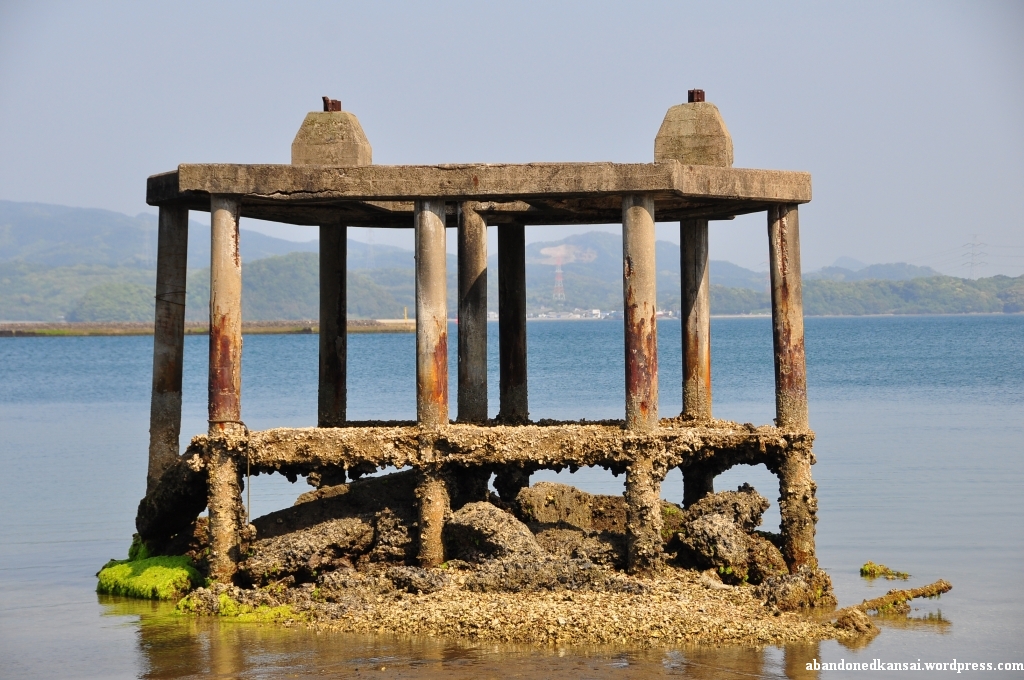
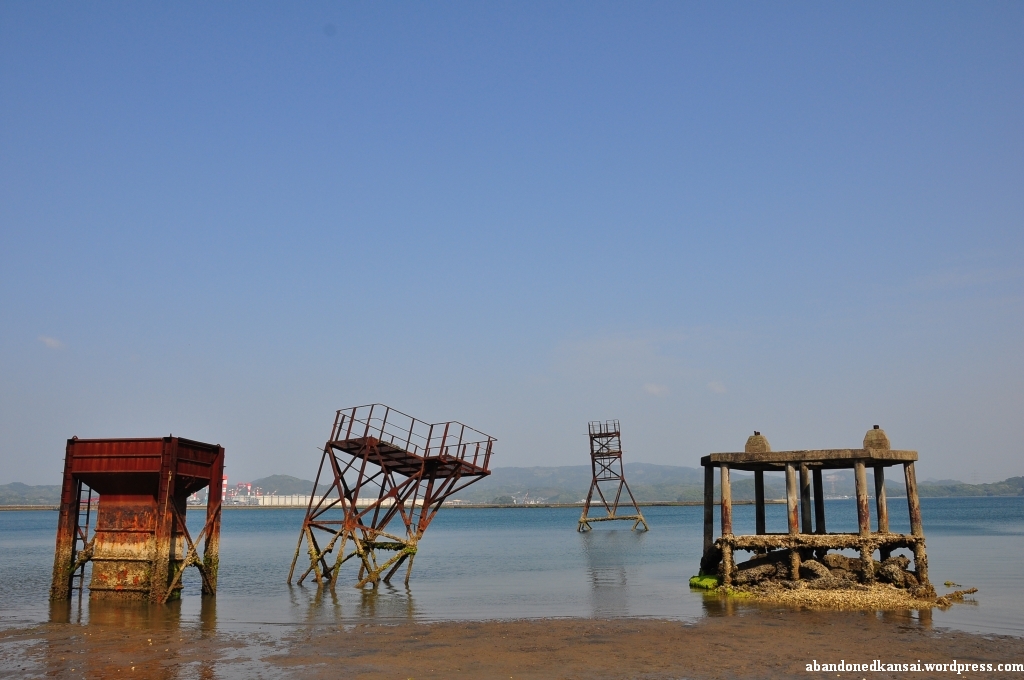
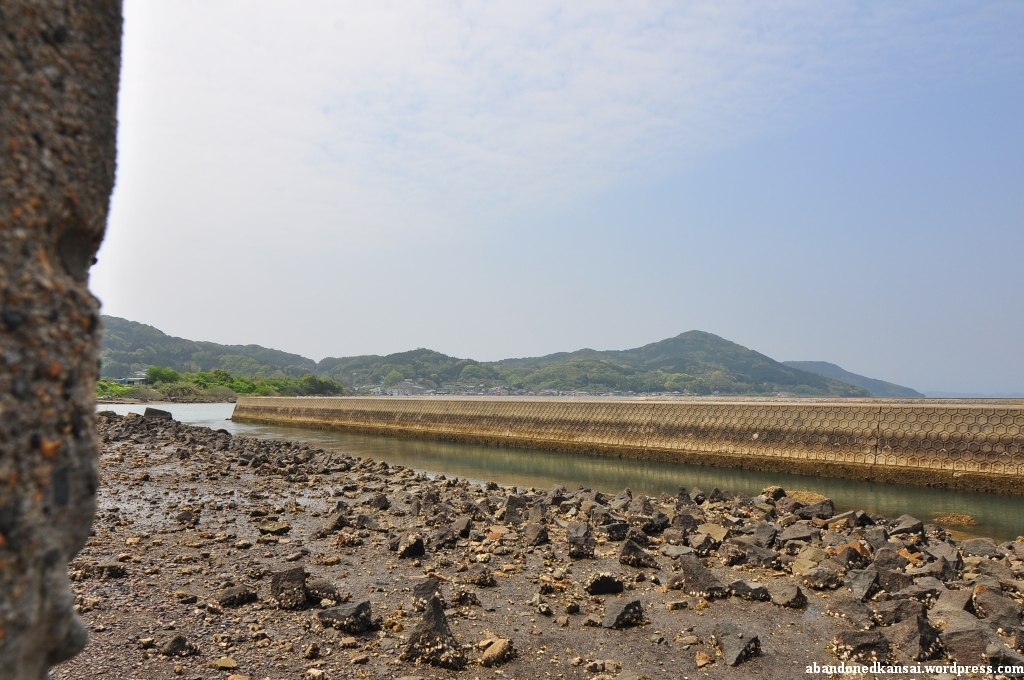
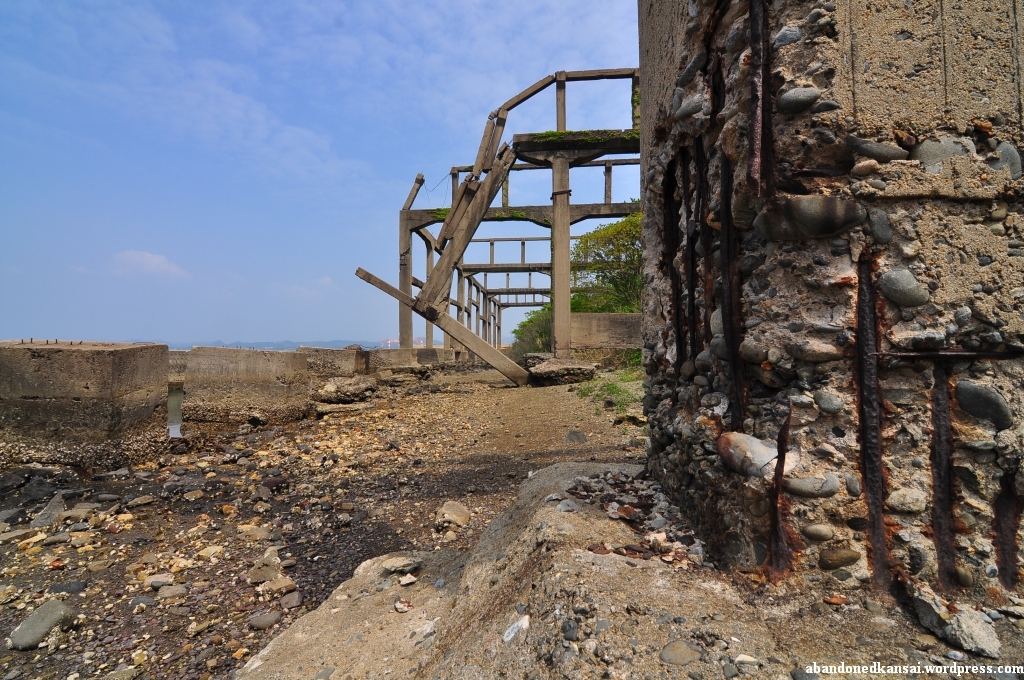
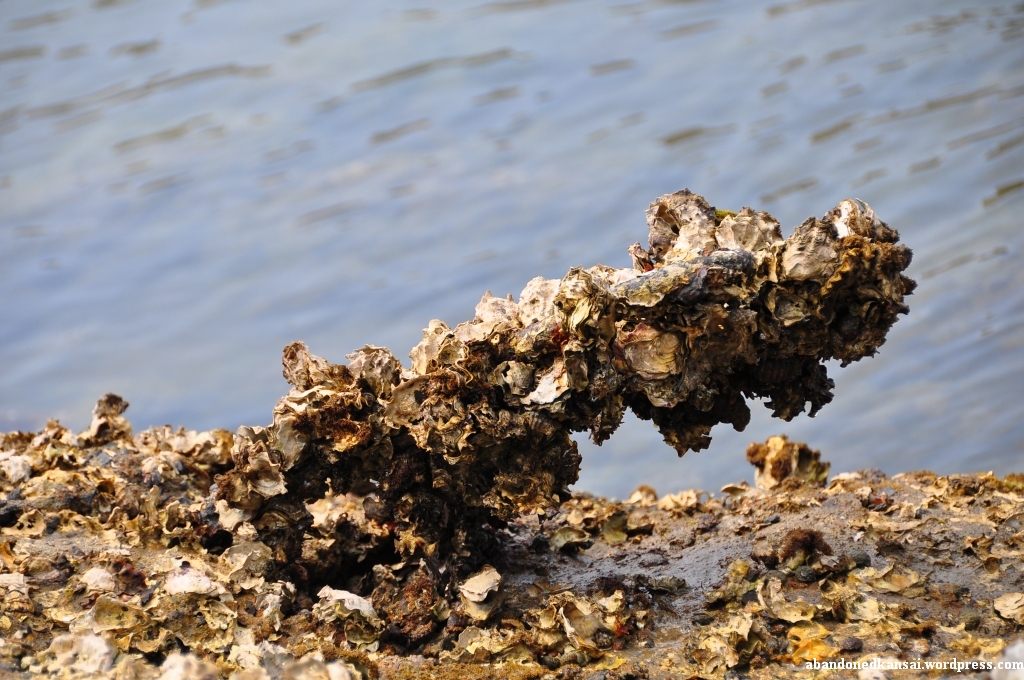
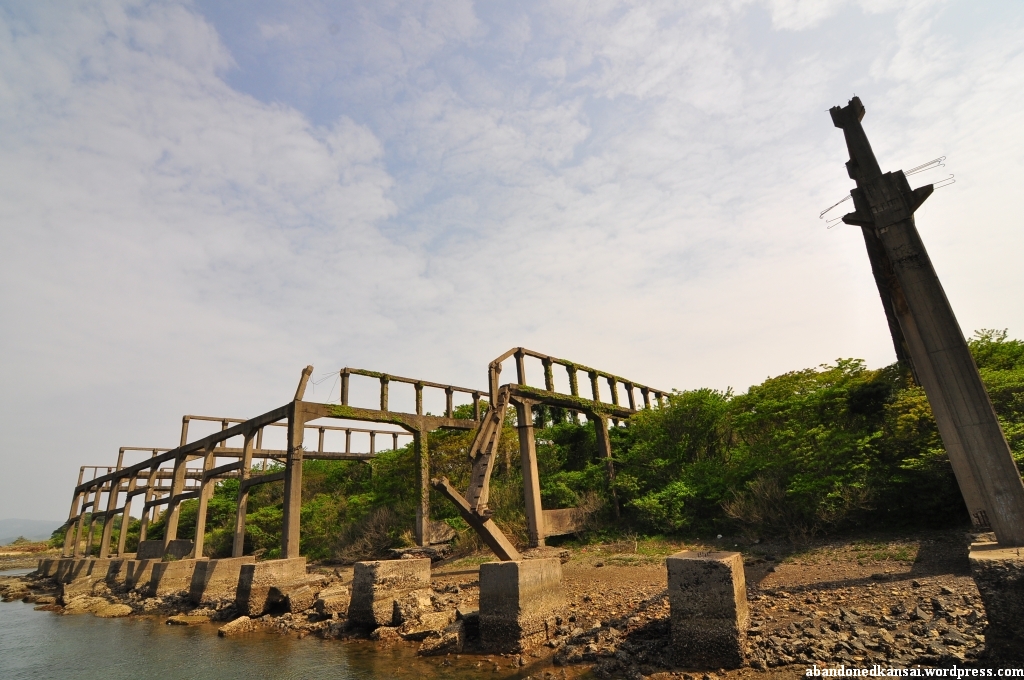
When Ben and I arrived on the other waterfront we saw three elderly Japanese people skimming through the part of the beach that was now accessible thanks to the low tide. Since Ben’s Japanese was way better than mine he talked to them and found out that they were looking for Asari (also known as Manila clam or Venerupis philippinarum), a popular ingredient in miso soup. Like the fisherman from the dam the clam searchers were quite chatty and told us a bit about the abandoned place we were visiting. As I assumed the concrete and rusty steel remains weren’t part of a mine, but part of the sea terminal of the mine – the mine itself was somewhere in the nearby mountains and demolished centuries ago. Speaking of mountains: I didn’t realize it until Ben told me what he heard from our new Japanese friends, but the surrounding hills near the beach weren’t natural. They were also remains of the sea terminal, in this case the parts of the deliveries from the mine that didn’t get onto the ships as there weren’t coal, but worthless rocks not even good enough to be used for construction. Like everywhere else in the world that stuff  was piled to create spoil-tips (or botayama, ボタ山, in Japanese).
There is actually not a lot of general information I found about the Mukaiyama Mine. Coal extraction at the place started during the Meiji era under different names and different owners. Until 1909 23 miners mined about 750 tons of coal, in 1910 15 miners brought 298 tons to daylight. 1911 brought a new owner with headquarters in Matsuura and new deposits were found. In 1912 the mine was renamed once more to now known “Mukaiyama Mine” and 100 miners were employed to mine about 800 tons of coal a year. At the same time 15 houses were constructed for the miners – if you want to see pictures from that era please have a *look here*, but please be aware that the site is in Japanese; nevertheless I didn’t want to steal their photos to put them up here… In 1937 the mine was taken over by Kawaminami Industries Ltd. who increased production again in 1939 – probably to support their *soon to be demolished shipyard*. In 1946 the Mukaiyama Colliery Labor Union was formed, raising the daily wage from 35 to 50 Yen and prohibiting underground work of women and minors. (Minors, not miners!)
In 1951, when the *Kawaminami Shipyard* was struggling, a railroad connection to the sea was built. Although new coal deposits were developed in 1957 and 1960 the Mukaiyama Mine was shut down in 1963 – and with it the sea terminal. Okay, so much for the history lesson…
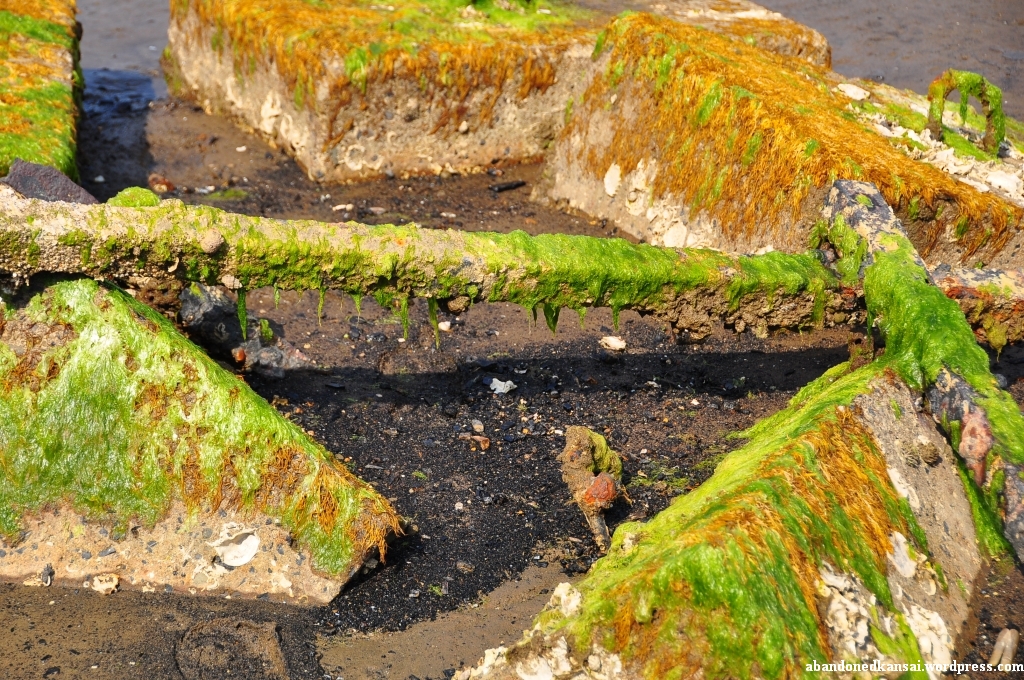
As I mentioned several times before: I was extremely lucky that the tide was low during my visit. On most pictures I saw on the internet the beach was covered with water, the remains of the sea terminal barely sticking out of the sea. Not during my visit. Thanks to that the remnants were almost completely visible, exposing their more decayed parts with vibrant colors.

(*Like Abandoned Kansai on Facebook* if you don’t want to miss the latest articles and exclusive content – and subscribe to the *video channel on Youtube* to receive a message right after a new video is online…)


Read Full Post »

Darn, me and my timing again… In my previous posting I referred to Gakuranman’s article about the Imari Kawaminami Shipyard – he mentioned a discussion in 2010 about demolishing the place; and I expressed how happy I was it didn’t happen between his visit and mine. Well, it seems like things are moving forward. The Japanese newspaper “Yomiuri” reported on June 24th (almost a week after I published my exploration experience) that the Yamashiro City Zoning Committee decided on June 9th that the Imari Kawaminami Shipyard is a safety hazard and not worth to be preserved as a historical landmark – they will demolish the place, only saving some of the pillars with the safety warnings (as seen on the photos below). And it took them only 50 years to realize that…
I guess the real reason for demolishing the place is the land reclamation project going on behind the seaside part of the shipyard which the dam mentioned in the previous posting is part of. Getting rid of the ruin will create a huge piece of land if both properties are combined – with access to both sea and the main road of the area.
I was quite shocked when I heard about the news today – it’s always a sad thing when abandoned buildings disappear, especially famous and unique ones like this. A place that grew on me a lot after I explored it, especially since there seemed to be a connection to the Katashima Suicide Training School.
Japan is quite weird when it comes to timing. Sometimes things drag forever and maybe the shipyard won’t be destroyed after all, although the committee made the decision to demolish the place. But sometimes things move extremely fast, so maybe the shipyard is already gone by the time I write these lines. Urbex is becoming more and more popular in Kyushu recently – if I hear any news I’ll make sure to keep you updated.
(To make this posting more colorful I chose six previously unpublished photos and uploaded them together with a video I forgot last time…)
Addendum 2012-1-30: The Imari Kawaminami Shipyard was demolished in late 2011 / early 2012. Now you can find its exact location on my *map of touristy and demolished ruins in Japan*.


Read Full Post »

The Imari Kawaminami Shipyard, also known as the Kawaminami Uranosaki Industrial Shipyard or the shorter version Kawaminami Shipyard, is one of the best documented urban exploration spots (haikyo / 廃虚) in Japan. Pretty much all blogs about the topic cover the shipyard, Japanese as well as those written by foreigners living or visiting Japan, and it’s marked on countless maps. It’s a perfect location for beginners since it’s right next to a major road, parking spots are available close-by and a train station is just a couple of 100 meters away. There are no (real) fences, no security, no nosy neighbours. And the place is buzzing! During my 4 hour stay I met about half a dozen people, both Japanese and a foreigner. A relaxed start into my 4 day trip to Kyushu…
A trip that started at 4.50 a.m. when my alarm clock reminded me that I can rest when I’m dead. I took one of the first Shinkansen high speed trains from Osaka to Hakata / Fukuoka and from there it was another 3 hour train ride to the station mentioned earlier. I finally arrived at the Kawaminami Shipyard at around noon with one of those weird Japanese spring skies that white out most photos as soon as even parts of the sky are visible. After I entered the shipyard I dropped my luggage right at the entrance to have a look around – and I was rather disappointed. The main building is not much more than a concrete skeleton as seen many, many times on all kinds of homepages and blogs. I had a quick look around, taped a walking tour of the building and after I took some pictures for a couple of minutes in the main hall I saw two guys back at the entrance. It’s always a weird feeling when other people show up at abandoned places as you never know if they are fellow explorers, security or some random society outsiders. (The latter kind is rather rare in Japan – I’ve never met druggies, only one homeless guy once.) The guys turned out to be Ben, an English teacher from Otsu in Shiga (close to my current home), and his Japanese friend from Kanto. Extremely nice guys and a welcomed chance acquaintanceship.
After a while we left the overgrown building to explore the even more overgrown outside part of the shipyard. We followed a narrow trail and after about 3 minutes we reached seaside part of the shipyard which surprisingly many photographers miss. This area I actually enjoyed a lot more. The tide was low, we were free to roam the area and were able to shoot from angles usually covered by water. The sky had almost cleared up by that time and in combination with the nice breeze it created a very relaxed atmosphere.
When we were done shooting that part we made our way onto the dam in front of the shipyard, significantly newer than the abandoned complex. We were down halfway when a guy on a bike came closer. Since there was some construction going on close-by I was worried that the guy might be security, but he turned out to be a senior citizen who enjoys fishing. A chatty senior citizen who was more than happy to give us a little bit of insight on the shipyard. According to him the building we were exploring earlier and that is always referred to as the Kawaminami Shipyard actually wasn’t a shipyard, but a factory for spare parts and the administration building of the company. He claimed that the actual shipyard was further up north, but demolished quite a while ago – which is probably only part of the truth given the shape of the building now abandoned. Since the location is completely gutted and there are some articles available in English my interest in the historical background is actually surprisingly low – but according to the Japanese Wikipedia it was opened in 1936 (to support Japan’s efforts in their wars that started earlier in the 30s) and closed due to bankruptcy in 1955. One of the more curious items built there were the manned “suicide torpedoes” called kaiten (回天), probably to be delivered to the rather nearby Katashima Suicide Training School, a place I visited during my first trip to Kyushu in March of 2010.
Anyway, after the fisherman continued his way Ben and I went to another haikyo east of the shipyard (I’ll describe that one in the next posting) before we finished our circumnavigation of the endangered beauty.
The Kawaminami Shipyard is actually way more impressive from the outside than from the inside and I guess in winter even more so than in late spring. Nevertheless it was a perfect first location on my second trip to Kyushu – one that set the tone for the days to come…
Addendum 2012-1-30: The Imari Kawaminami Shipyard was demolished in late 2011 / early 2012. Now you can find its exact location on my *map of touristy and demolished ruins in Japan*.


Read Full Post »

The Sky Rest New Muroto (スカイレストニュー室戸) is a prime example of an abandoned place that suffered severly from too much attention – and by too much attention I mean the book “Nippon No Haikyo” (ニッポンの廃墟), which is pretty useless by now since it became victim of its own popularity. Unlike most books about abandoned places Nippon No Haikyo includes maps. Some of them are completely useless, but others are almost as detailed as if it was a GoogleMaps link. Why is the book useless? Because most of the described locations are demolished by now due to the attention the book drew to the respective places from August 2007 on – *Koga Family Land* for example was abandoned for more than 20 years until it was demolished in December of 2008, same for Nagoya Toyo Ball, Nihon Cement Mojiko and the Inagawa Trap Shooting. Other places once easily accessible were boarded up (Hototogisu Ryokan) or severely vandalized (like the ghost town *Mukainokura*).
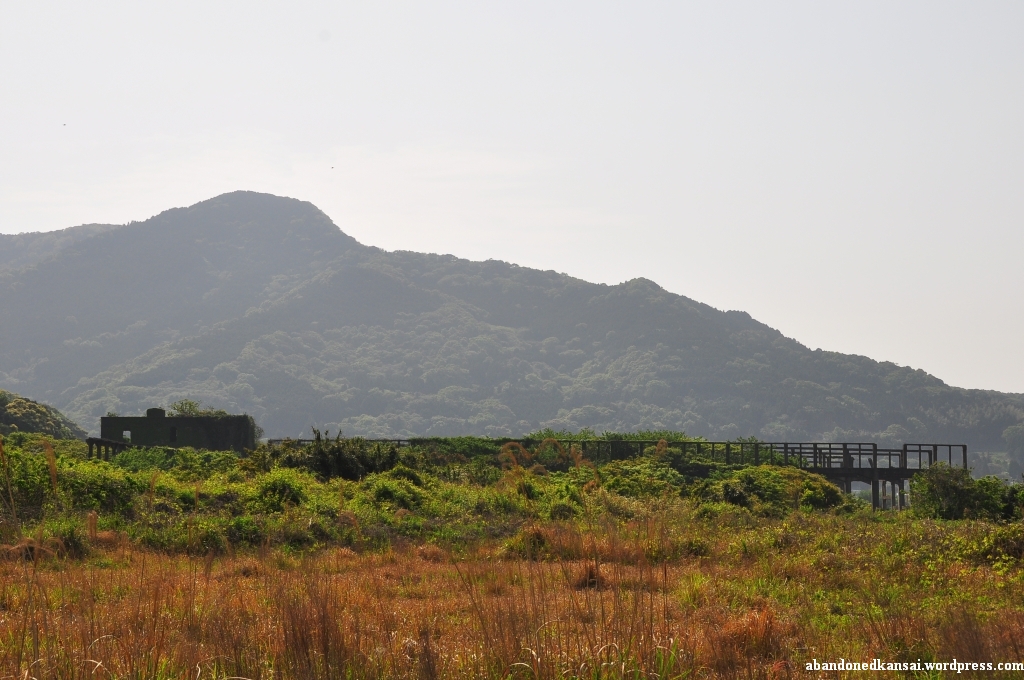
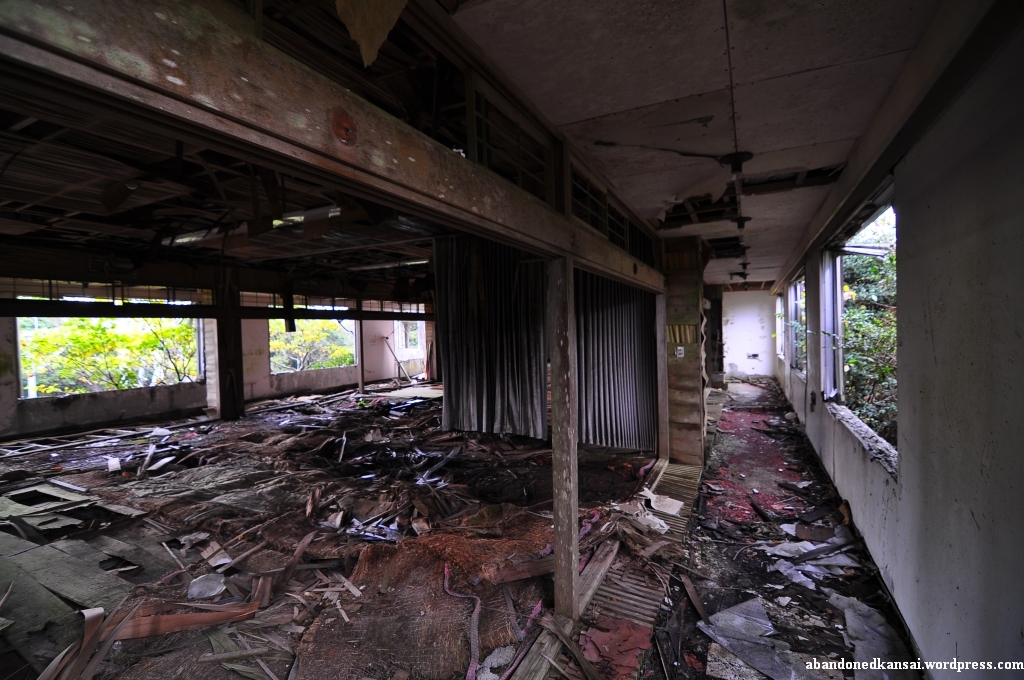
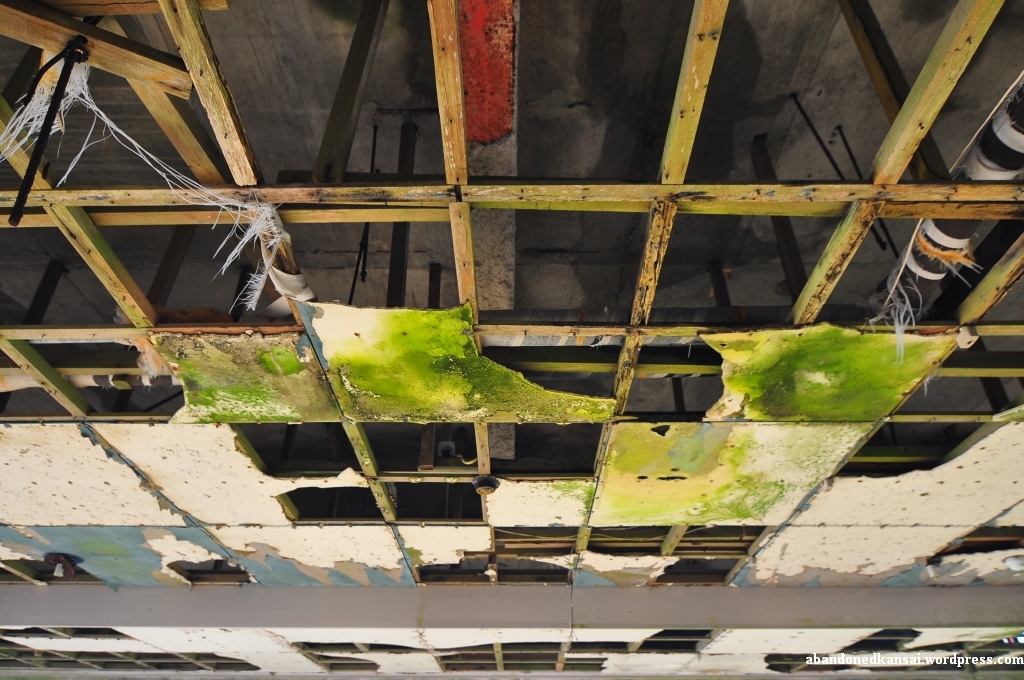
The Sky Rest New Muroto is one of those places that suffered a lot of damage over the past four years. If you are lucky you can find pictures taken before Nippon No Haikyo was published and see a very unique building with lots of intact (rusty and dusty) interior, but since even blogs about food and flowers posted the exact location on maps (something that 95% of urbex blogs would never do!) the Sky Rest became a ravaged shadow of itself. Pretty much all of the interior was ripped out and shredded to pieces – all that’s left is the impressive concrete structure and piles of scrap everywhere. In addition to that the lighting conditions on the day of the shooting were terrible, so especially the early outdoor pictures turned out to be actually pretty horrible – I apologize for that! (I publish them anyways to give you a better impression of the unique architecture; the building looks like a fortress with three canon towers on top. The video coming with this article isn’t outstanding either, but I present it for the same reason, although I never intended to publish it, like all the other videos I took. But some of them, especially the one taken at the *Shime Coal Mine*, turned out to be quite popular…)
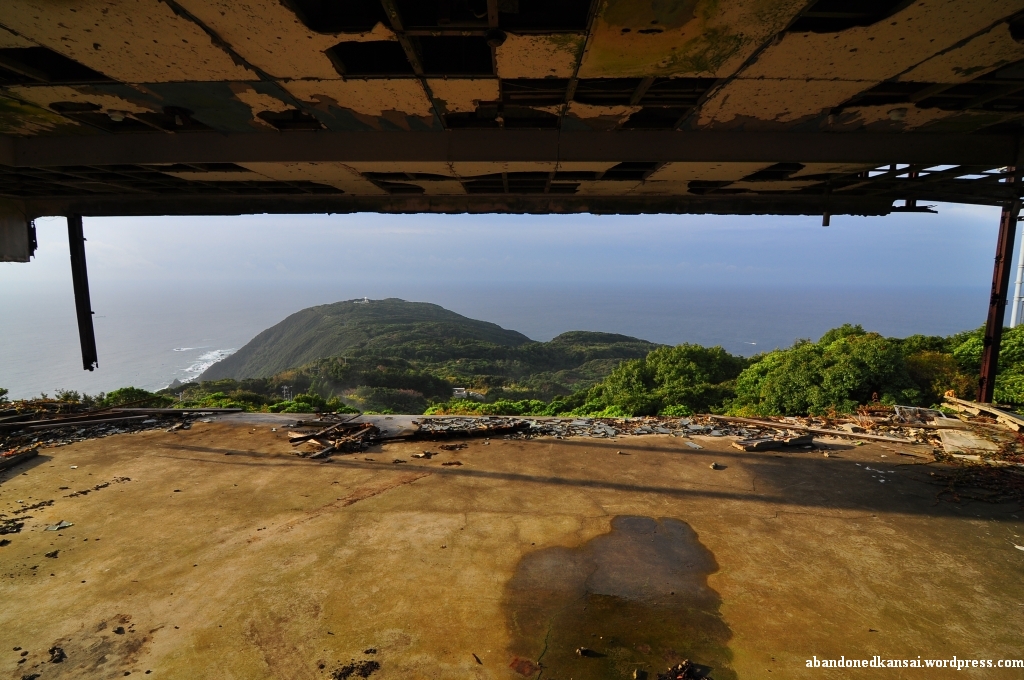
Now surrounded by antennas submitting television and communication signals the Sky Rest still towers Cape Muroto and offers a gorgeous view in all directions. Sadly there is barely anything known about the place – old pictures confirm what you can assume from the name, that the Sky Rest once was a restaurant for people enjoying the stunningly beautiful nature of Cape Muroto. In addition to that some pictures show remains of rusty and broken arcade machines, although they must have been very old given the fact that the Sky Rest was closed in 1978…


Read Full Post »

Bathing is a very important aspect of Japanese culture, deeply rooted in centuries-old traditions. Although most apartments and houses have their own baths nowadays (unlike 30 years ago), public bath houses are still popular even in residential areas of big Japanese cities. Onsen and sentō are gender-separated places of tranquility where people enjoy a relaxing hot bath (usually around 40°C) after a hard day of work or an intense workout. Onsen towns in the middle of nowhere are popular vacation destinations for the Japanese domestic tourism and a must see / do for many foreign visitors.
Waterparks with slides and wave pools on the other hand are not nearly as popular in Japan as they are in the States or Europe. Most of the time they are considered one amongst many attractions of amusement parks (like at Nara Dreamland) – and indoor waterparks are even more rare.
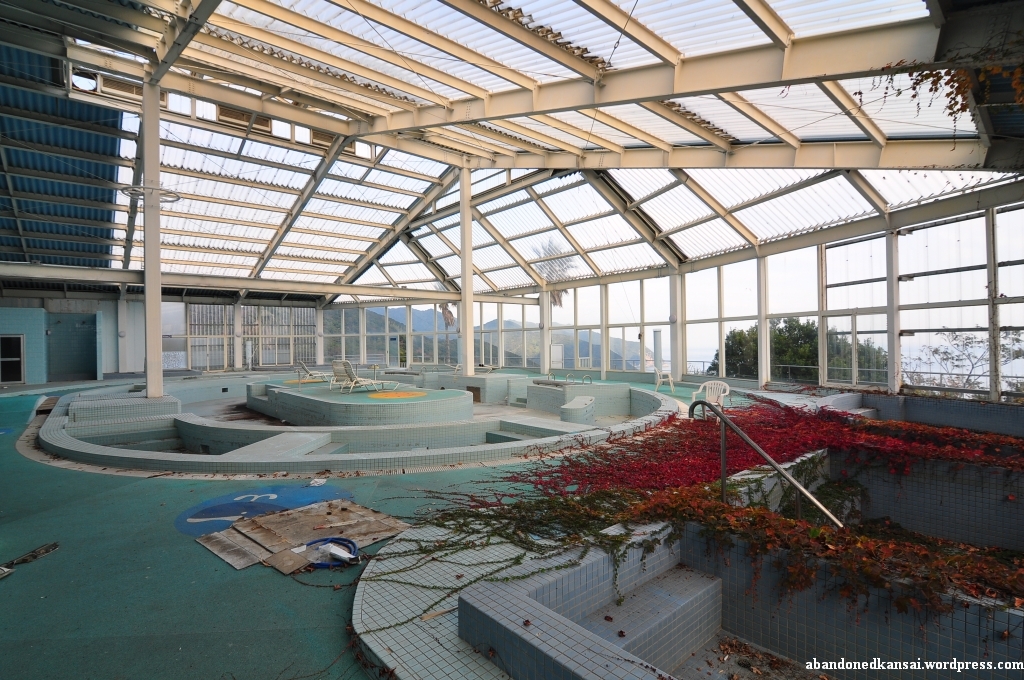
From what I was able to find out the Tokushima Countryside Healthspa (お水荘ヘルスピア), an indoor water park with some hotel rooms, was opened in 1975 (under a different name) to complement a countryside farm, attracting visitors with millions of flowers. It was renovated and expanded in 1994 to be re-opened under its current name – making dance shows and karaoke new selling points. Due to its remote location (35 minutes by bus from the next train station) and the economic crisis the number of guests decreased while the debt piled up to 800 million Yen – and lowering the entry fee from reasonable 1700 Yen per day (10 a.m. to 10 p.m.) with special promotions (Ladies Day on Thursdays for 850 Yen and Friends Day on Fridays for 1000 Yen) didn’t help either – at the end they reportedly sold tickets for as low as 100 Yen… So in 2002, after 27 years, the lights went out at Tokushima Countryside Healthspa.
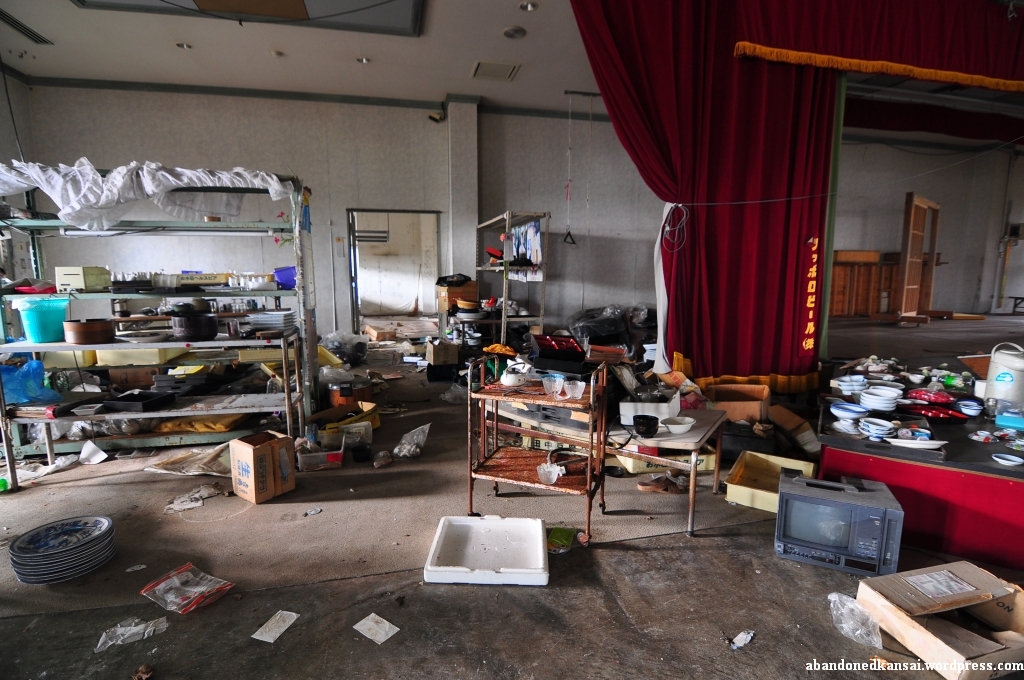
I have to admit: I love indoor waterparks. It’s one of the few leisure activities I really miss living in Japan. Back home in Germany you can find quite a few abandoned public swimming pools, indoor and outdoor, but no abandoned waterparks. So I enjoyed every minute of the two hours I spent there. The hotel part was quite vandalized and rather boring, so I left it rather quickly to go over to the swimming pools and the waterslide. On the way I passed a kitchen and some functional rooms. In two of them quite a few goods and training equipment were lined up, here and there I found price tags scattered all over the place – it seems like the owner tried to sell as much as possible before closing for good. The now empty main pool looked pretty much like a rather local indoor water park in Germany and I loved how red and green leafed plants were growing inside; if there ever was a zombie attack you know where to go to if the Shime Coal Mine is already occupied – if you know what I mean…
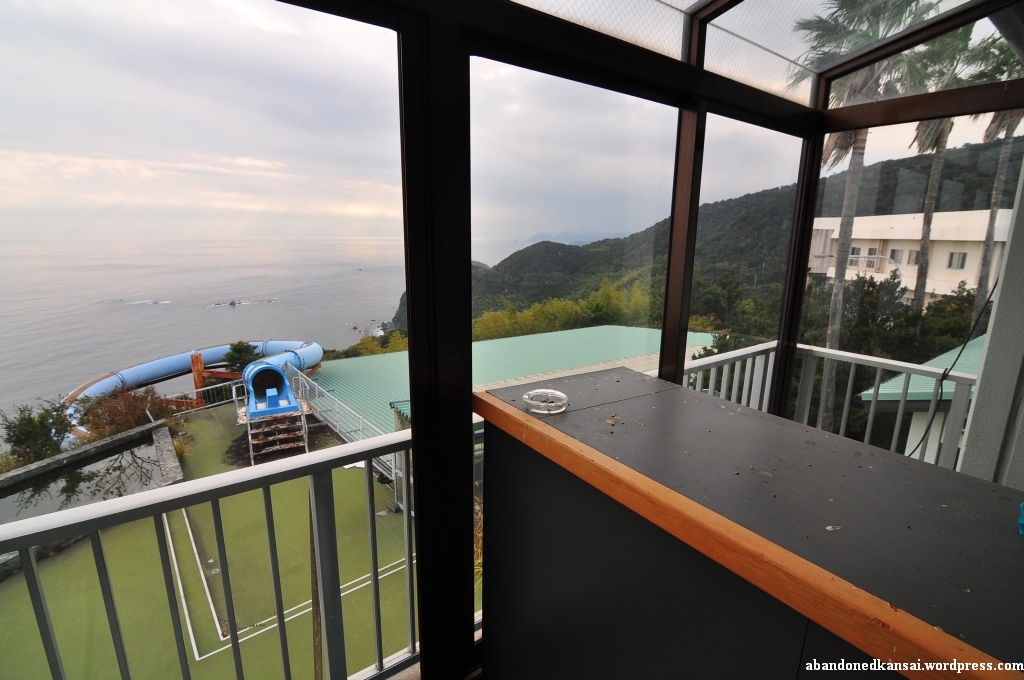
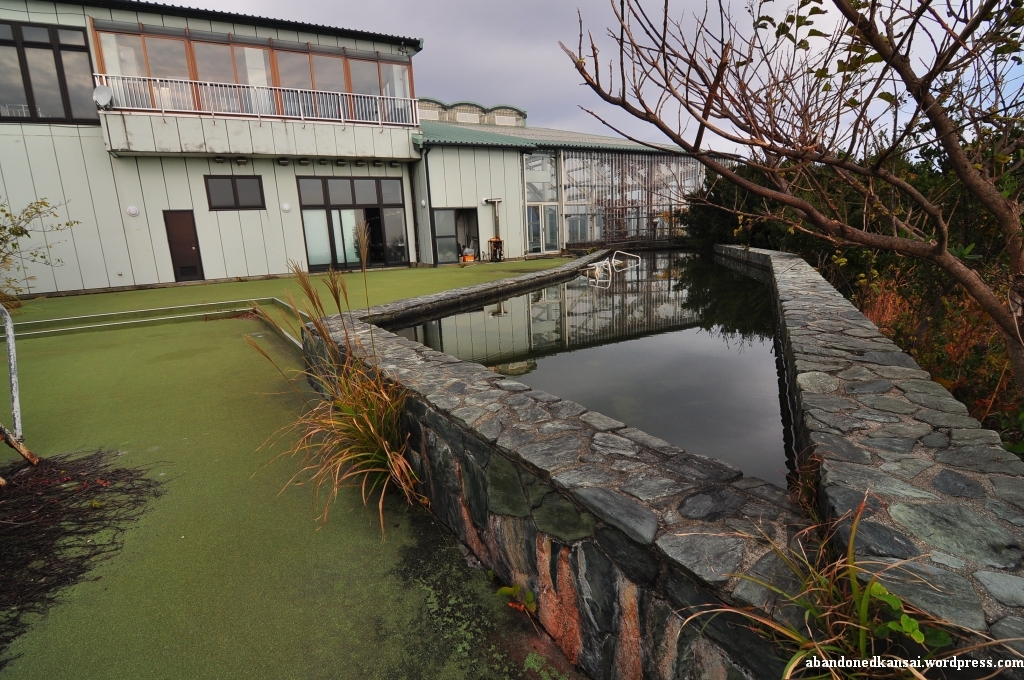
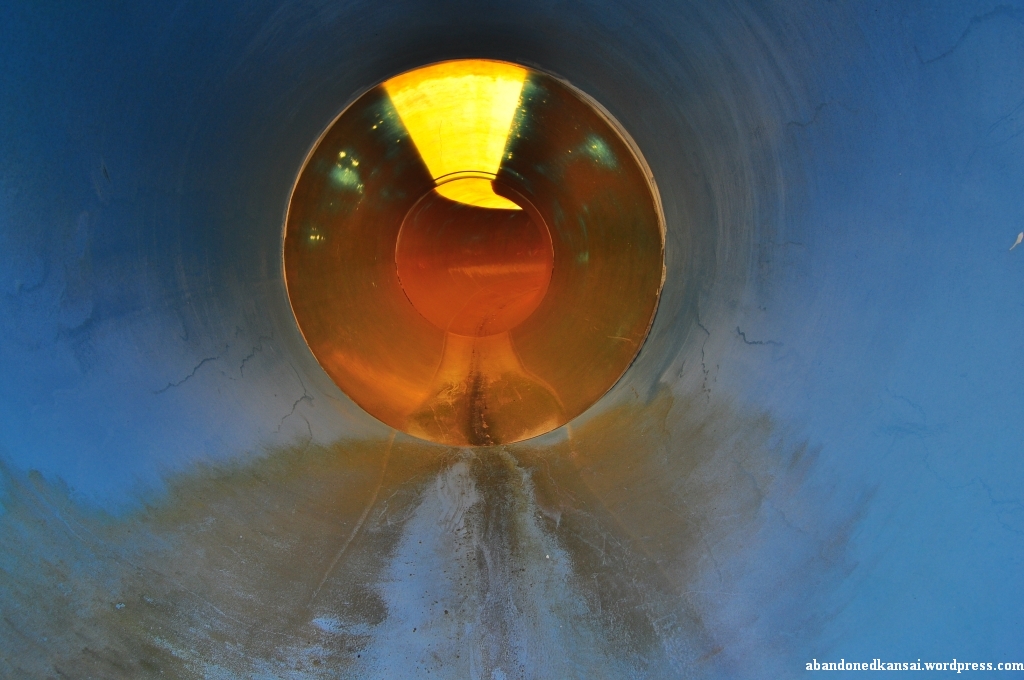
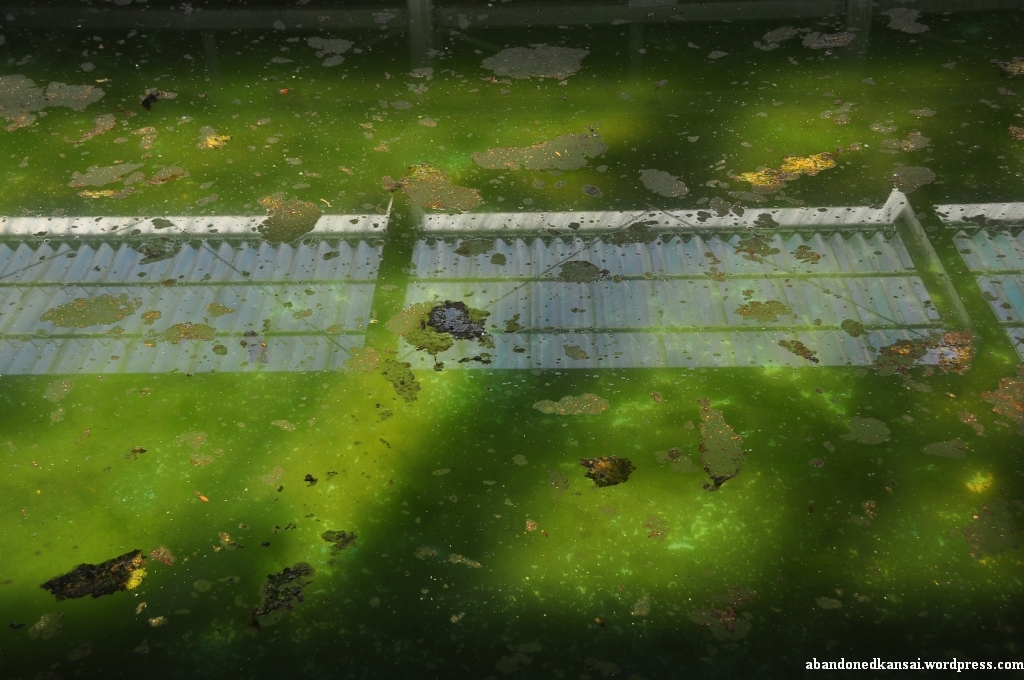
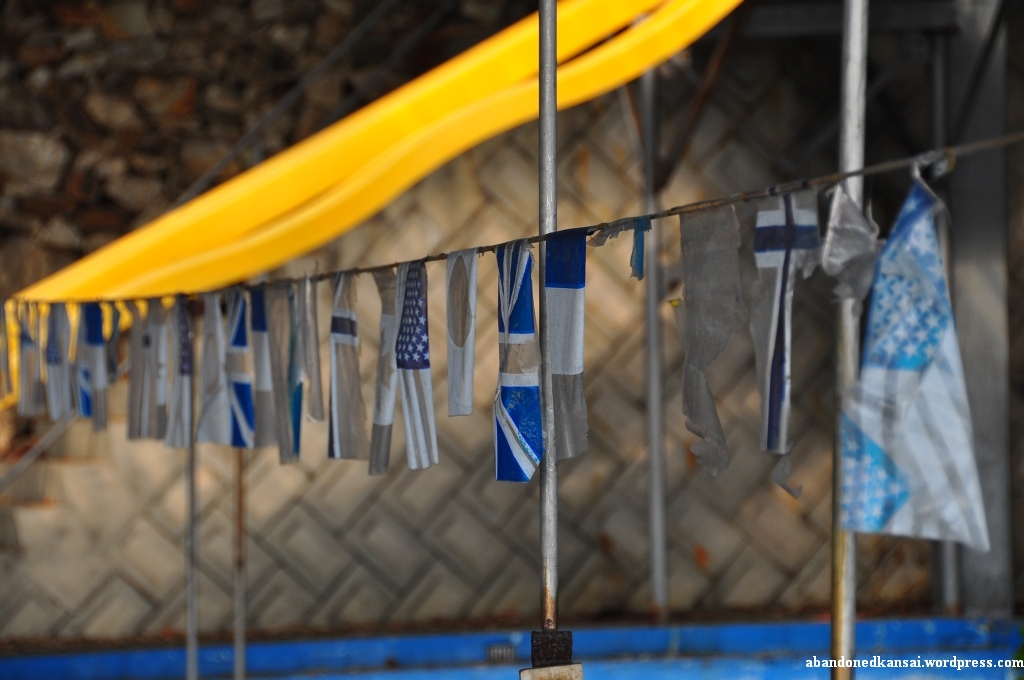
The outside waterslide at the bold cliff looked absolutely amazing, the weather just contributing to the atmosphere, so please have a look at the videos, too. Next to the waterslide was a staircase leading down to a pool, now filled with moldy brackish water, two dead greenish doves lying at the pool edge. Again, amazing atmosphere – kinda spooky, but not dangerous at all; neither physically nor in the form of security or other “guests” thanks to the remote location.
Like pretty much all of the previous and upcoming locations of my Haikyo Road Trip To Shikoku the Tokushima Countryside Healthspa was a unique, relaxed and fascinating place to explore. Shikoku, an urbex heaven!


Read Full Post »

“The next location will be even better!”
Those were the words Maxim used to lure us away from the absolutely amazing Hospital No 126. We hopped into the van and drove to the other end of Pripyat to see… an abandoned factory. Wait. What? A factory? Seriously? A factory? Better than a hospital? No way!
Please don’t get me wrong: The Jupiter Factory was awesome! I’ve never been to an electronics factory that big. But in the end it was just a factory… one of the most common abandoned places in the world. And not even nearly as fascinating to me as Maxim hoped it would be. But I’m not into First Person Shooters whereas a lot of people visiting the Zone Of Alienation are. And for them the Jupiter Factory is one of the highlights since it was a setting in the game “S.T.A.L.K.E.R.: Call of Pripyat” by GSC Game World – one of the most popular FPSs of the last couple of years.
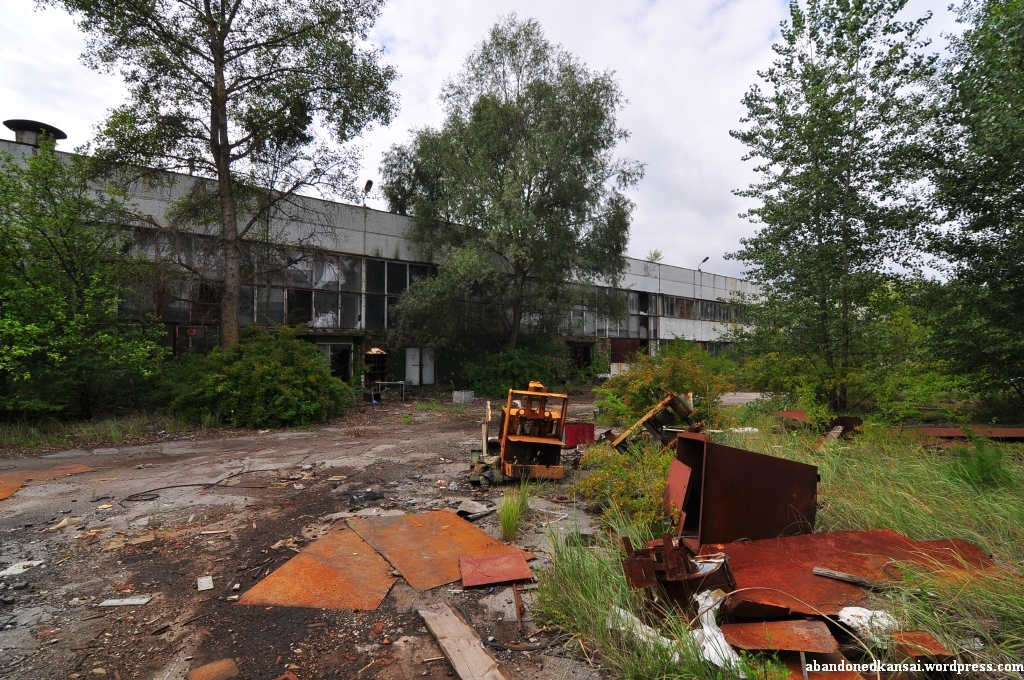
We entered the Jupiter Factory, one of the biggest employers in Pripyat, through the main gate and passed by some administration buildings. Since the site is located at the western city limit of Pripyat nature is taking over the area rather quickly. The streets on the premises were partly overgrown with climbers, some of them even seemed to be some kind of grapes. None of us tried them though, for obvious reasons.
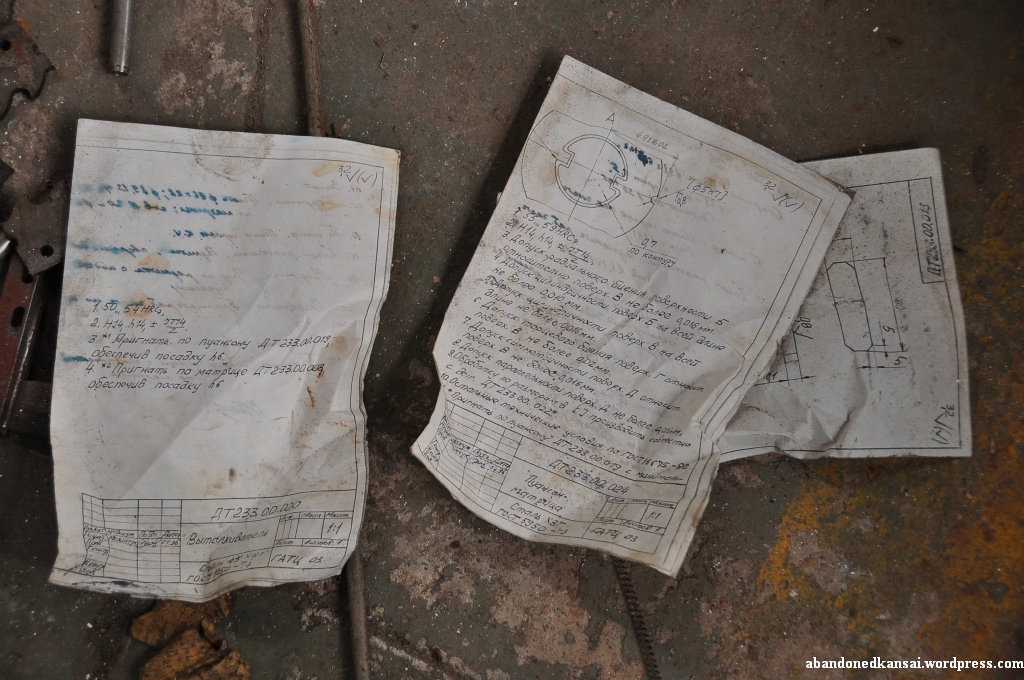
The assembly halls were absolutely impressing – huge constructions with all kinds of machinery still in there. The walls displayed dozens of warning posters and the workbenches were covered with tools and instruction manuals. But like with so many other places in Pripyat there is hardly any reliable information about the Jupiter Factory. It’s known that the plant produced tape-recorders and other consumer products under the label “Mayak”, but of course there are also unconfirmed speculations. Rumors about secret military research and stuff like that in underground laboratories. But since the basement is flooded nowadays it only adds to the mystery…
Which makes me wonder why nobody really tried to write a comprehensive book about Pripyat, at least not in English. Every tiny town in Europe has a local historian that knows every little thing about the surrounding 25 km2 – but Pripyat? It’s surprisingly hard to find reliable information about the city… (I’d love to do it, but with no knowledge of Russian / Ukrainian I don’t think I’d get far.)
Anyways, if the Jupiter Factory would have been my first urbex exploration ever I’m sure I would have been completely blown away and could have spent hours there. Even now that I’m back home I wish I had a place like that nearby. It would be worth to write several postings about it and I could come back at different seasons and during different weather conditions. But when I explored the place I was rather underwhelmed, especially since I had to leave the hospital in a hurry…
(If you would like to know more about my trip to the Zone Of Alienation please *click here* to get to the “Chernobyl & Pripyat” special. For a map of the area please *click here*.)


Read Full Post »

Abandoned hospitals are creepy places. It’s kind of in their nature. Like abandoned amusement parks. Hotels, spas, mines… they don’t really get under my skin. Amusement parks and hospitals do – but none of them even nearly as much as Hospital No 126 in Pripyat!
When Maxim asked us on the first day which places we wanted to see, a hospital appeared on top of my priority list instantly. Hospitals are generally hard to find and even harder to access (since they usually are in easy to reach locations and filled with expensive equipment), so this was a great opportunity to explore one in a more relaxed atmosphere. At least that was my hope… sadly it wasn’t fulfilled. Nevertheless Hospital No 126 turned out to be my favorite location in Pripyat.
Although it was still morning we already “lost” quite some time on the Cooling Towers and the Przewalski’s Horses, so we arrived at the hospital way behind the schedule our dear guide has planned for us. As a result Maxim gave us half an hour since “the next location will be even better”.
So there was the time pressure… and then there was the atmosphere that was everything but relaxing. Of all the real places in Pripyat this one was by far the most real. The basement is actually one of the most contaminated places in the world and holds the suits of the first six firefighters that died within a couple of weeks after the accident. Maxim told us that he went down there once with full protection gear, but had to leave after about 30 seconds – something he never wants to do again.
At that point Maxim knew that Sebi, Michi and I were reasonable and responsible-minded people, so he just quickly entered the hospital with us to guide us to one of the interesting floors and then returned outside to wait with our driver. My fellow Swiss explorers headed their own way and so it took about two minutes until I was all by myself. In the maternity ward of an abandoned hospital. In Pripyat. Almost 25 years after the accident. Without the shadow of a doubt the highlight of this trip. We’ve all seen a horror movie or two, played video games like Resident Evil or Silent Hill. The hospital felt like being the star in one of those works of fiction. On a very irrational basis – because the place was perfectly safe. It just didn’t look and feel like it…
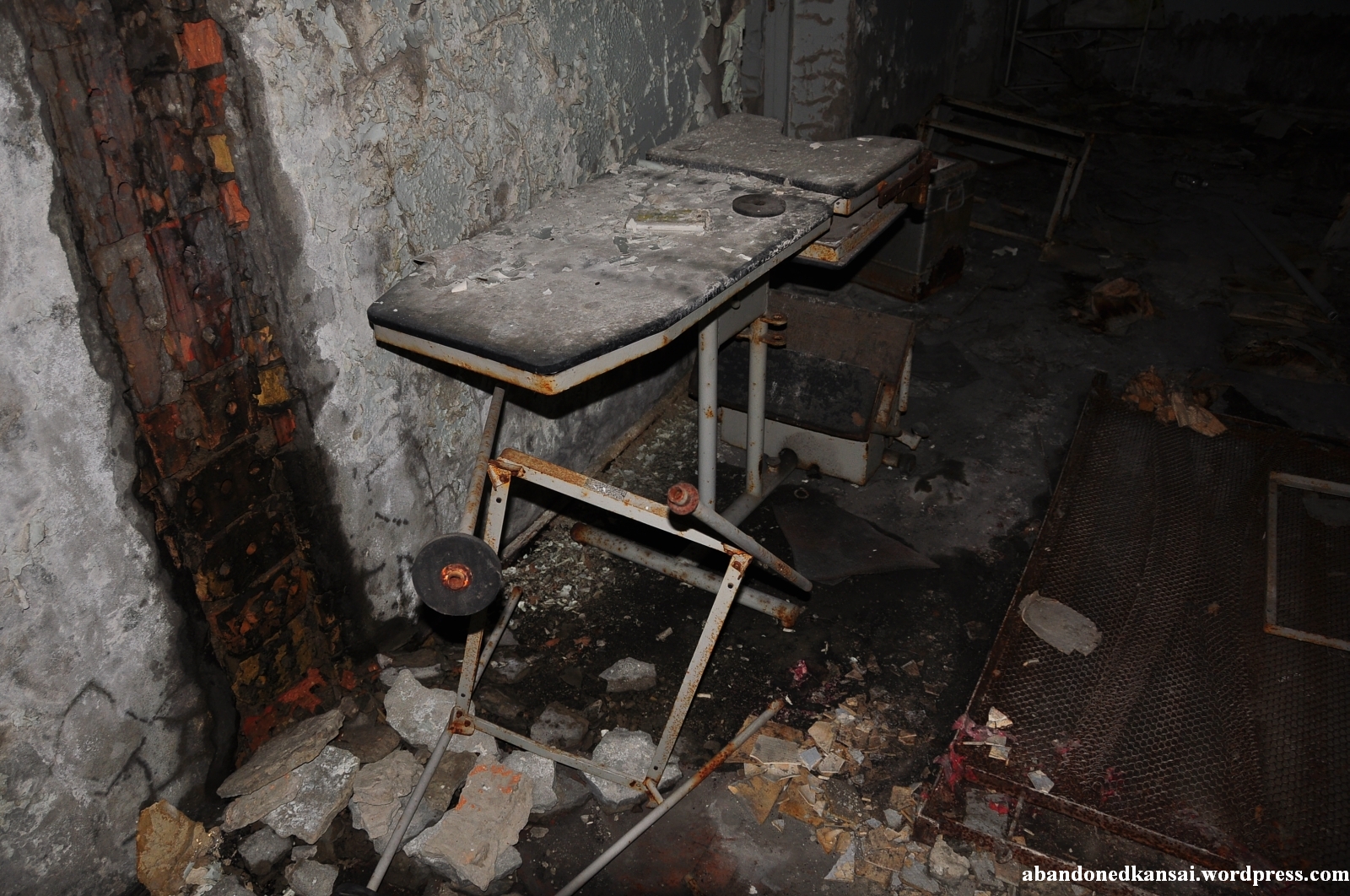
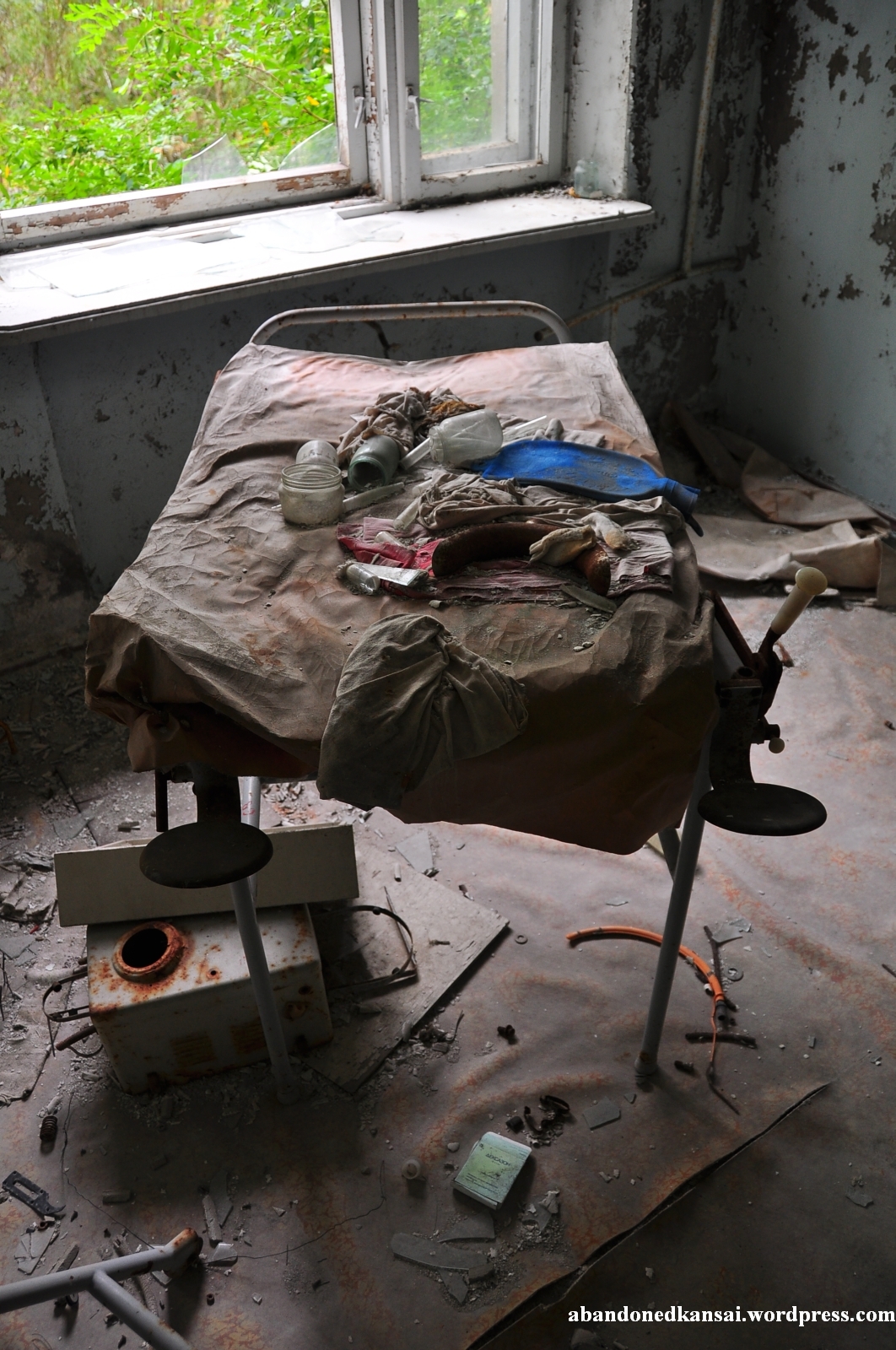
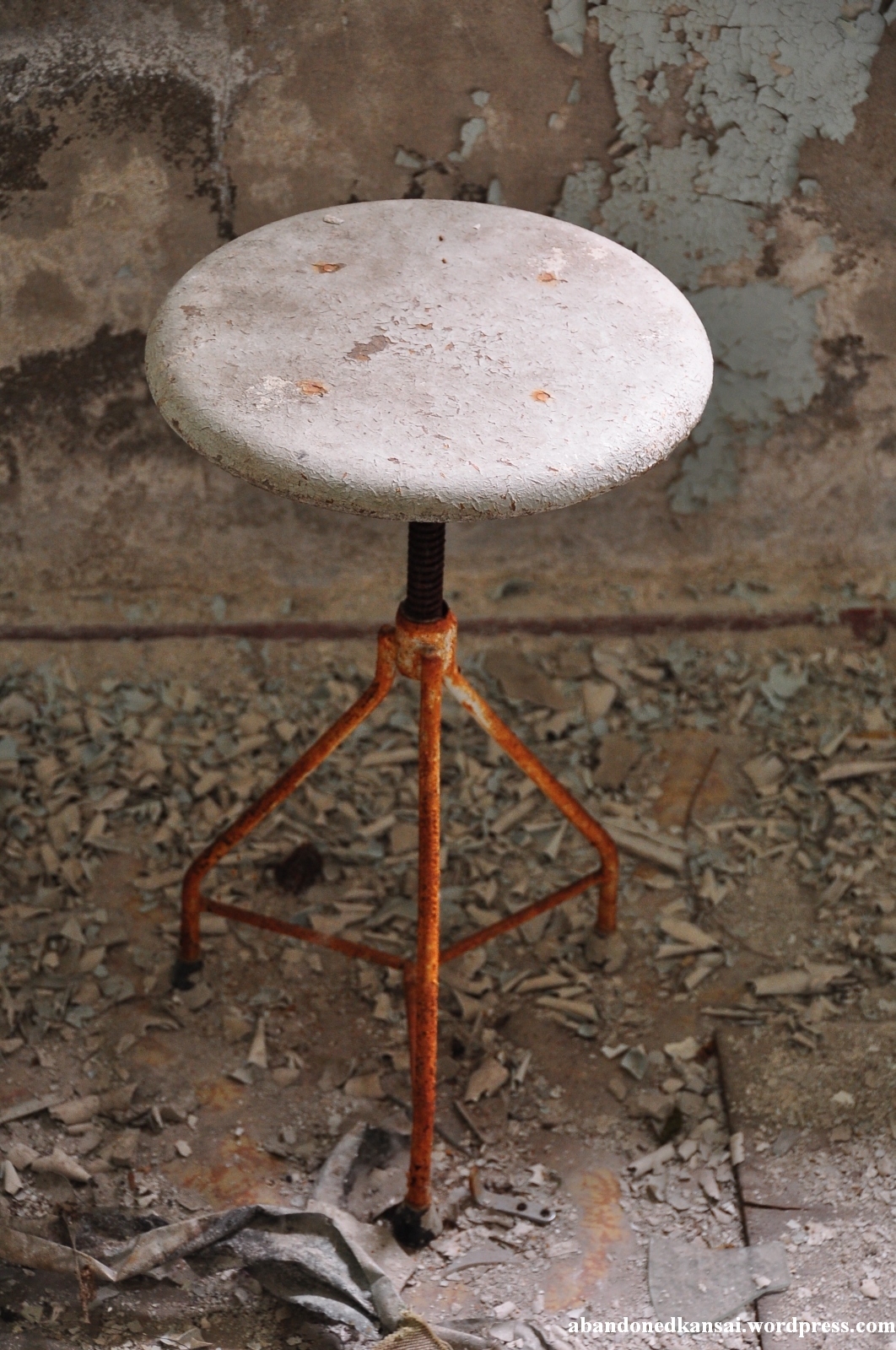
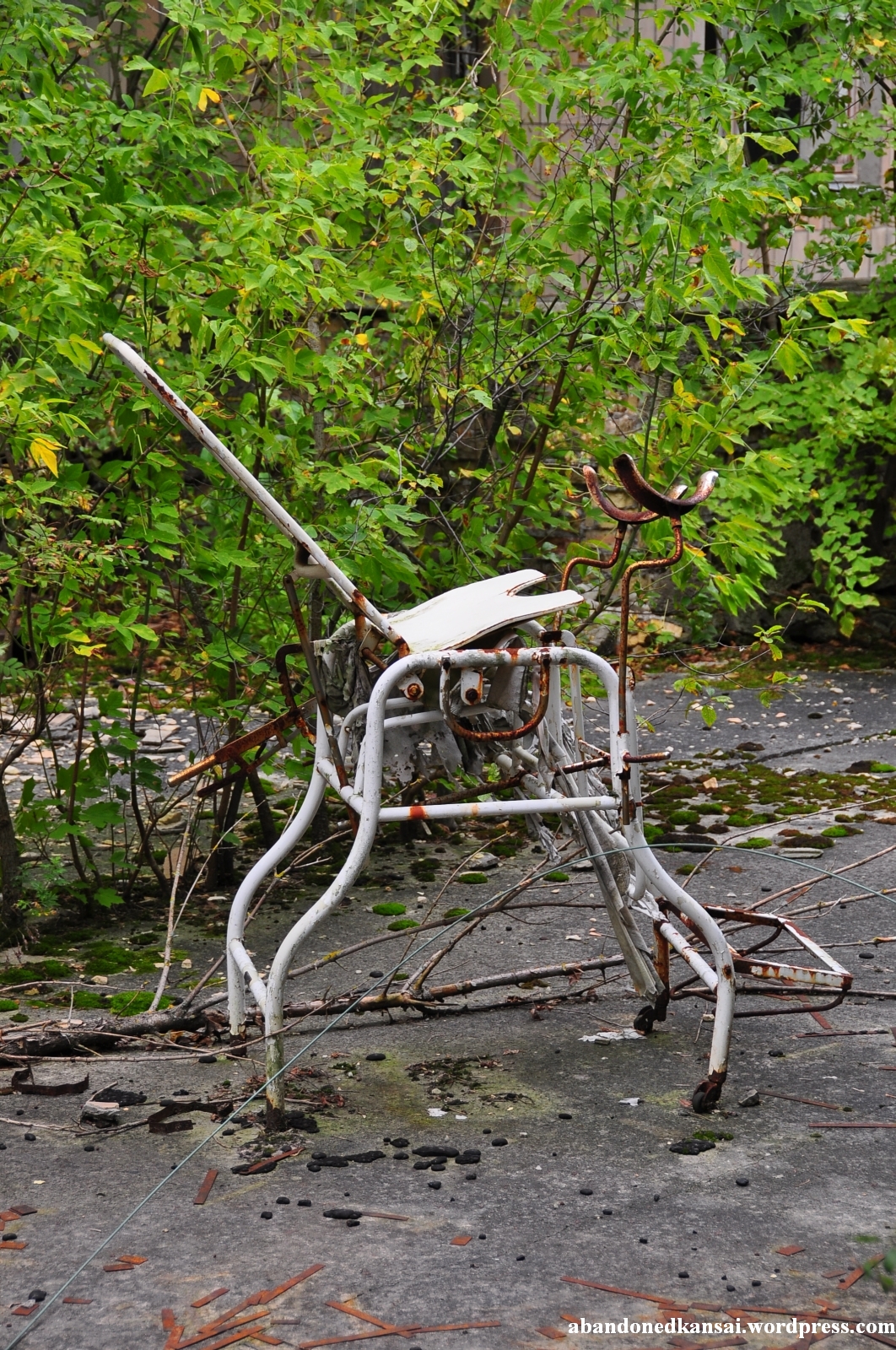
Thanks to the time restraint I was only able to see one of the floors of one of the departments, maybe a tenth of the building, but it was nevertheless amazing. Almost every room, every corner had something interesting to offer. There were surgical instruments, bedpans, gynecological examination chairs, bathtubs, whole boxes of medicine, posters and signs with medical explanations (including explicit pictures) and much, much more. At the end of the hallway were several rooms with rusty baby beds, a really uncomfortable sight. The lighting that day contributed a lot to the atmosphere and made it very difficult to take pictures – never before I wished more that I had a tripod! Since I was in a hurry I cranked up the ISO and took photos while quickly exploring the rooms along the hallway – and on the way back I filmed about two thirds of the floor with my video camera. Sorry that parts of the video turned out to be a bit blurry, but there was no time for re-shooting; just consider it part of the atmosphere…
Looking through the photos from the relaxed comfort of my home, one of them caught my eye and gave me the creeps, although it’s quite unspectacular at a first glance. It shows an opened up register lying on top of other documents. There are lots of handwritten entries and even without speaking any Russian / Ukrainian I guess it’s pretty obvious what it is: Hospital staff logging in for work at 8am and 8pm on April 24th 1986, April 25th 1986, April 26th 1986 – and on April 27th nobody cared to log in at 8pm anymore… (EDIT: Well, obviously I was wrong – Greg let me know in the comments that it’s actually a checklist for people making sure that locked medicine is still where it should be. Thanks again, Greg!)
(If you would like to know more about my trip to the Zone Of Alienation please *click here* to get to the “Chernobyl & Pripyat” special. For a map of the area please *click here*. If you don’t want to miss the latest postings you can *follow Abandoned Kansai on Twitter* and *like this blog on Facebook* – and of course there is the *video channel on Youtube*…)


Read Full Post »

« Newer Posts - Older Posts »