All abandoned: Chernobyl / Pripyat, Nara Dreamland, Anti-Zombie Fortress, Japanese Sex Museum – and many, many more! Plus: North Korea Special – 2 trips, 16 days / 14 nights! As seen on CNN…
The Arch of Triumph (개선문) in Pyongyang is the world’s tallest triumphal arch. Inaugurated in 1982 to commemorate the 70th birthday of the Great Leader Kim Il-sung and his achievements during the National Liberation War it is modeled after the Arc de Triomphe in Paris, just a little bit taller (60 meters vs 50 meters) and wider (50 meters vs 45 meters) than the original. An impressive monument in the neighborhood of the Kaeson Fun Fair (a.k.a. Kaseon Youth Park), the Kim Il-sung Stadium and the Kaeson Metro Station it stands on the foot of Moran Hill, where Kim Il-sung gave a public speech after returning from exile in 1945 to address his people and to celebrate the country’s liberation from Japanese occupation.
Important design elements are the year dates 1925 and 1945 – the first one marking the beginning of Kim Il-sung’s fight against the Japanese oppressors (according to North Korean historians…), the latter one marking the end of Korea’s occupation by Imperial Japan. Below both numbers are sculptures of soldiers and workers, both male and female, celebrating and looking forward to a brighter future. Above the archways you can find a depiction of Mount Baekdu (sometimes spelled Paektu), in Korea considered a holy mountain involved in the legendary foundation of the country, as well as the first two verses of the “Song of General Kim Il-sung”, a marching song praising the DPRK’s Eternal President.
I’ve been to both the Arc de Triomphe and the Arch of Triumph – and although the latter one is just 10 to 15% bigger it’s way more impressive. The Arch of Triumph was our first destination upon entering Pyongyang from the airport and I guess it’s safe to say that the whole tourist group was in awe! Our bus parked on the south-west part of the area and we were able to walk around a bit, first east towards Kim Il-sung Stadium and then north towards the Kaeson Fun Fair. There hundreds of people were practicing for the Arirang Mass Games – but unlike BBC “undercover journalist” John Sweeny we were allowed to take photos and videos of the practicing group. I think one of the guides asked us not to single out people by zoom, but in my opinion that’s common courtesy anyway. (Fun fact: Officially you are not allowed to bring lenses larger than 150mm to North Korea – my usual standard lens is 18-200mm, but nobody bothered me about that at any point of the trip!)
The sun was setting, the sky was blue without the hint of a cloud, the cherry trees were still in full bloom… it was such a peaceful, almost tranquil moment. Was this really the same country the media in Japan, the States and Europe were panicking about for months? It was hard to believe – and I was curious what the upcoming days would bring…
Air Koryo is the state owned and government run airline of North Korea, based at Pyongyang’s Sunan International Airport. It was founded under the name SOKAO in 1950 as a joint venture between North Korea and Soviet Russia, but had to suspend business shortly after due to the Korean War. A successor was established in 1954 under the name of Choson Minhang and started operations in late September of 1955 before being renamed Air Koryo in 1993. Air Koryo from the beginning was placed under the control of the Civil Aviation Administration, a part of the North Korean Airforce – which means that all pilots are military officers. Due to North Koreas close affiliation with the soviets all airplanes in the fleet of Air Koryo are Russian models. Antonovs, Ilyushins, Tupolevs. During the Cold War Air Koryo flew to more than three dozen destinations within Korea and all over the world – nowadays there are only three regular international connections (Beijing three times a week, Shenyang twice a week and Vladivostok once a week) plus a couple of charter flights. In Europe Air Koryo is blacklisted since March 2006, though that ban was lifted four years later for two newly acquired Tupolev Tu-204s.
It was on board of one of those two machines that my fellow travelers and I started our trip to Pyongyang in Beijing. Some websites still recommend using Air China (or the 24 hour train…) to get to North Korea’s capital, but I would have chosen Air Koryo anyway if I would have been asked to choose. How often do you have the opportunity to fly Air Koryo?!
Interestingly enough our predominantly white Air Koryo plane was parked right next to a predominantly blue plane by Korean Air – the flag carrier and largest airline of South Korea. Since the Korean Air machine took off before we even boarded I had the great opportunity to take a photo of both machines at the same time when the Seoul bound machine was on its way to the runway. Two planes, one photo. It didn’t cross my mind at the time, but I am sure North Koreans would have loved the picture, them being all about one united Korea. (And so would have the dozen Christians wearing “A United Korea 4 The World” sweatshirts that boarded the plane with us. I seriously hope they were able to leave the country without running into trouble – they might love Korea, but (North) Korea doesn’t love missionaries. And those guys looked like they were on a mission from God…)
Air Koryo actually was the first positive surprise of my *trip to the DPRK*. After using *Ukraine International Airlines to Kiev* three years prior, my expectations on (former) communist airlines were as low as they can get; but the Tupolev Tu-204 was a perfectly fine modern plane with the usual seat spacing, the flight attendants were as friendly as they were beautiful (and they were gorgeous!) and the food was living up to international standards, too.
When checking in I was asking for a seat away from the wings to be able to look outside and maybe take a quick video secretly. At that point the photography situation was a bit up in the air (no pun intended…) – we were told that it’s okay to take photos on board, but not of the stewardesses; and nobody asked about video or footage through the windows. So I took a few quick snapshots until one of the other foreign travelers was shut down when he violated the instructions we got and took photos of a flight attendant… Even worse: After we all settled in and were ready to take off about a dozen Koreans boarded the plane and occupied seats all over the aircraft cabin. Just a coincidence? Or a way to keep an eye on the foreigners at a time when the official guides were still waiting for our arrival in Pyongyang? I felt a bit uneasy, but decided to give the rather young fella sitting next to me the benefit of the doubt. Which turned out to be right about an hour later. Lunch was just served and I was wondering if it was okay to take a photo of the meal – as we all know from Western media: Taking pictures most likely is a crime… So I slowly unwrapped all the small containers and before I could even start to eat my meal the guy in the neighboring seat pulled out his smart phone and took a photo himself. Easy going! The same situation a couple of minutes later. While I was wondering whether it was okay to take some photos of the landscape passing by (there could have been airports or train stations or military camps – or worse!) we were informed that we just entered Korean airspace – and all of a sudden everybody took photos, including our late arriving Koreans. Lesson learned: Don’t shove a lens into somebody’s face and you can take photos of pretty much everything you want…
Air Koryo’s home airport Pyongyang Sunan International Airport is as small as you think it is – two landing strips, one of them closed permanently. There are 10 regular international flights a week at Sunan (7 by Air Koryo, 3 by Air China), plus charter flights and some cargo flights – that’s it! There are no official statistics about flight movements within the DPRK, but I doubt that there are many, given the rather high cost of air transport and the regime’s problem to get fuel.
On the positive side: Immigration is a piece of cake. You show your filled out forms, your passport and your visa – and then you are in. No bag checks, no other bullshit. When you want to enter Japan on the other hand you get treated like a criminal as they take your finger prints and a photo. Every… friggin… time! I’m on my third Japanese long-term visa, I never ran into trouble, I always pay my taxes – nevertheless I get treated like a murder suspect every time I come back from an overseas trip… Welcome home! (Of course this treatment only applies to foreigners, Japanese people just waltz in…)
I grew up in Germany, a country that was divided for 45 years. When the wall came down I was 12 years old – and not interested in politics whatsoever, but of course I understood that this was big news, like *Chernobyl* three years prior. My family didn’t have relatives in East Germany, so I didn’t have a personal relationship to the German Democratic Republic, as the neighboring country was officially called. I learned about the situation in school, but like most kids that age it was stuff I learned because I had to, not because I wanted to – my interest in history started to bloom a couple of years later…
You can’t fully understand the history of Japan without knowing at least a little bit about the history of China and Korea, so after I enrolled at university to dedicate my next few years to Japanese Studies I also took seminars and lectures about China, Korea and Taiwan. At that point Germany’s reunification was history for more than a decade, but Korea was still divided; still is to this very day. Like most people I grew up “knowing” about the Democratic People’s Republic of Korea (isn’t it interesting how most states using the term “democratic” are everything but?), nevertheless I actually didn’t know much about it, so the university studies sparked my interest.
History lessons in German schools are not necessarily set up to teach you about history in general, they are conceptualized to educate you to be a good democrat, a person who cherishes freedom and despises dictatorships. You usually start with the Old Greeks, to learn about how democracy was invented. Then you jump to the French Revolution, to learn about how modern democracy came to Europe. Next you jump to the year 1848, to learn about the revolutions in the German States – and after you know how the good things started you learn about the opposites, World War 1 and World War 2; especially World War 2. It seems like 50% of German history lessons are about World War 2 – which is good and bad at the same time…
At university I finally understood that history is so much more than just Greeks, French and World War 2 – and that you have learn about history in general to fully understand how everything is connected, though you only learn pieces at school.
In 2006 I moved to Japan, and my attitude towards visiting North Korea was still ambiguous. On the one hand there was this attraction of evil and the many similarities to East Germany’s history – on the other hand it was morally totally out of question that I would ever go there, supporting the system of supervision, nepotism and torture with hard currency.
That attitude changed gradually while living in Japan – mainly because of two factors:
1.) Japan’s obsession with pachinko that rolls 200 billion Yen a year into North Korea. (Again, that’s 2 billion US Dollars or 1.5 billion Euros currently!)
2.) Japan’s concept of honne and tatemae.
As I mentioned in the previous article, it wasn’t until I explored an *abandoned Pachinko parlor* in Shikoku that I realized that the money I would spend on a trip to North Korea wouldn’t change the course of the world. Those trips are not cheap, but even if the DPRK would earn a couple of hundred bucks it would be nothing in comparison to the billions the Japanese transfer indirectly and probably partly unknowingly every year.
A friend of mine back in Germany once told me that I was “too honest”, so understanding und living with honne and tatemae for years helped me to deal with certain expectations the local guides in Korea would have on me. “Honne” (本音) describes a person’s true thinking, their feelings and desires. “Tatemae” (建前), literally façade, stands for how a person acts in public – often in contrast to their “honne”. 10 years ago I wouldn’t have bowed in front of bronze statues of a dictator, but sometimes you gotta be a two-faced bastard and go against your own principles for the sake of peace and harmony… which Japan is all about.
In late March I finally booked a tour to the DPRK, basically last minute and on the height of the 2013 tensions. German media outlets were all over the topic, even reporting that tours to South Korea had to be cancelled due to German Angst, but Beijing based *Koryo Tours* offered a “May Day Long Tour” from April 27th to May 4th – which coincided with a series of national holidays in Japan, generally known as Golden Week. So I took 5 of my 15 paid days off (no Statuatory Sick Pay in Japan…) and went on vacation from April 25th to May 7th, adding a couple of days in China before and after the main event. I had to be there on the 26th anyway, because technically the trip to the DPRK started with a briefing at the Koryo Tours office – the next morning we met to go to the airport to catch our plane to Pyongyang (more about that in the upcoming *Air Koryo* article…). From that point on it was a group tour till we left Pyongyang by train via Sinuiju / Dandong – which I used for a 24 layover in Dandong with some fellow DPRK travelers before returning to Osaka via Beijing.
Contrary to the widespread opinion that there is no visa needed when travelling to the DPRK you actually have to have one. Depending on where the travel agency is located you might not get your passport stamped though. Visas issued by travel agencies based in Beijing for example are a separate piece of paper you barely ever see; and Koryo Tours does all the paperwork anyway. (If you look at the highly censored scan (censored by myself obviously…) please note the mythical winged horse Chollima and that the dates are given according to the Juche calendar, based on Kim Il-sung’s birthday.)
The visa for China on the other hand I had to organize myself – I was able to get in and out the first time on a 72 hour transit visa, but that is only available when entering / leaving through Beijing Airport (or Shanghai Airport), so for entering by train at Dandong I needed a regular visa. Which turned out to be a much bigger problem than I thought, given that I am a German citizen living in Japan. The German consulate in Osaka referred me to the Chinese consulate in Osaka – and they told me to go to a Japanese travel agency, which had no idea what to do, because Japanese people can enter China for 15 days without a visa. And what Japanese person has the time to do that? So Japanese people usually don’t apply for Chinese visas, which means that Japanese travel agencies don’t know how to get Chinese visas. After half a dozen agencies, including the big players that have offices all over Japan, I gave up and got in contact with Koryo Tours. Luckily they were able to help: 2 passport photos and 60 Euros would get me a Chinese visa issued in Pyongyang. I wasn’t happy with the solution as I would have preferred to get things done before starting the trip, but sometimes you gotta roll with the punches. So on April 28th I met a guy from the Chinese embassy in Pyongyang and a couple of days later I had my visa to enter China by train. To make a long story short:
It is easier to get a Chinese visa in Pyongyang than it is in Osaka!
I have been to North Korea!
Not a lot of people can say that – probably not a lot of people want to say that. I am actually pretty sure that I scared away a couple of dozen readers just with the headline; and I probably will again during this upcoming series of articles about my recent trip to North Korea from April 27th to May 4th – most likely including the few North Koreans with internet access. I know I already pissed them off by continuously referring to the Democratic People’s Republic of Korea (DPRK) as North Korea, a term not much liked in North Korea… North Korea, North Korea, North Korea – Jehova… Jehova… Jehova…
Growing up in a divided Germany I’ve been interested in Korea as long as I can think, and that curiosity continued to grow step by step. Reading George Orwell’s Nineteen Eighty-Four and Aldous Huxley’s Brave New World, going to *Pripyat & Chernobyl*, exploring an *abandoned North Korean School* in Gifu prefecture. Nevertheless I was hesitant going there for years, mainly because of two reasons:
1.) I didn’t want to support the system with foreign currencies.
2.) I didn’t want to travel a country struck by famines.
The economic situation in the DPRK is rather dull due to lack of useable land (most of Korea is rather mountainous), skilled labor, energy and means of transportation – and of course the international sanctions don’t help at all… Even if the government is able to scoop up some oil they have to pay in advance in US Dollars, so the country is desperate for foreign currencies – and I was hesitant to support the system with mine. Which only makes sense if you don’t think much about it, because tourism doesn’t keep the country running. About 3500 Westerners a year visit North Korea, but even if each one of them ends up spending 1000 Euros (which is way too high as some tours don’t even cost that much!) it would mean that the DPRK would have a tourism revenue of 3.5 million a year; minus their costs. Most ski villages in the Alps make more money than that! I highly doubt that you’ll be able to finance 1.2 million soldiers and a nuclear weapons program with that amount of money – with the *200 billion Yen Japanese pachinko players transfer indirectly every year* on the other hand though… (That’s 2 billion US Dollars or 1.5 billion Euros!)
The food situation though was harder to dismiss and I still kind of have a bad feeling about it. According to international statistics the food supply situation in the DPRK improved massively since the mid-90s when hundreds of thousands of North Koreans died due to famines, but the country is still depending on food imports (so is Japan, which is lucky to be able to pay for the high quality deliveries and doesn’t have to rely on handouts). I don’t know exactly where the food we were given came from, but I hope it was specifically imported with the money we paid for the trip, *like the meals that I had in Chernobyl*. But even if not 3500 tourists a year won’t make much of a difference – the amount of food thrown away in restaurants in Dandong right across the border between China and North Korea (and all over the industrialized world for that matter…) actually disgusts and worries me much more by now.
Western media paint a pretty clear and consistent picture of the Democratic People’s Republic of Korea – and it’s not a positive one, so I had certain expectations before travelling the country. I expected the Korean tour guides to be party principle hardasses, I expected to be spied on all the time, I expected to be not allowed to take many photos / hardly any video, I expected to have no contact with the locals at all – and I expected the tour to be one big scripted event. To my surprise hardly any of this came true…
I booked the “May Day Long Tour” of *Koryo Tours* like any other vacation via the internet, barely 4 weeks before departure; easy as booking a flight. On April 26th there was a pre-meeting at the Koryo office in Beijing to receive last minute instructions and get any open questions answered, on April 27th we met early in the morning to go to Beijing Capital International Airport to catch our *Air Koryo* plane to Pyongyang. The group consisted of 11 people from all over the world plus Sarah, our guide from Britain; all of them very well-traveled and highly educated – the DPRK isn’t exactly a destination for all-inclusive beach tourists…
Upon arrival in Pyongyang we were welcomed by two of our three Korean guides, Mr. Yu and Mr. Kim, who were joined by Ms. Pak the next day, a 21 year old tourism student in her 4th year at university. A friend of mine who has been to Korea three times told me that the first 24 hours are crucial for the relationship with the guides – and he was right. A bit stiff at the beginning of the tour our Korean guides clearly loosened up after we behaved commendably at the *Arch of Triumph* the same night, dressed up with shirt and tie as requested the next morning and paid our respect by bowing according to local customs when *visiting the mausoleum of Kim Il-sung and Kim Jong-il*. We showed the guides that we came to Korea out of genuine interest and they instantly rewarded us with their trust. Don’t get me wrong, all of them were convinced socialists and wouldn’t even think of criticizing the system – but they didn’t try to impose their views on us and they were very interested in what we had to say; about politics, history, technology, pop-culture… everything. Their English was astonishingly articulate, especially considering them not being able to travel abroad, and their kind of humor was surprisingly compatible with the groups’; something I miss at times here in Japan… Overall all three of them were just fun and easy to talk to. (Mr. Yu actually appears in the recent “undercover” BBC documentary with the sappy and overly dramatic music (John Sweeny is not only good at reporting about manipulations, he is also a great manipulator himself…), where he is portrayed as a guard, not a guide – my experience with the man was completely different, and he never told me not to take photos. Whenever I asked in case of doubt I was given permission by him – though I saw people being refused by the staff of Air Koryo and shops; which I find perfectly normal as I wouldn’t want to be photographed without permission either…)
The guides were not only easy to talk to, they were also easy on us. At the meeting in Beijing we were asked not to take photos of random people, not to take photos of construction or poverty. None of that was enforced on us by the local guides. We even got permission to take photos / videos from the bus – not just in Pyongyang, but also in Nampo and Kaesong as well as on the overland drives between cities; a privilege not given to another Koryo Tours group arriving with us on the same day. Different guides and different behavior by the group results in different rules… Off limit for everybody: military, except at the DMZ.)
Of course there were certain restrictions though. In Nampo we were not allowed to leave the hotel, in Kaesong we were not allowed to leave bungalow resort and in Pyongyang we were only allowed to roam freely half of the island the *Yanggakdo Hotel* was on (which is half an island more than most reports on North Korea state…). One night I told Mr. Kim that I wanted to go to the tip of the island to take some night shots and he was totally fine with that. I found my way through the darkness outside with a flashlight and enjoyed the breathtaking view – when I did the same thing on the same route the next night without telling anybody beforehand I triggered an alarm twice, on the way there and on the way back; sound, light and a guard with a flashlight who saw me, but ignored me. I’m still not sure if that was a coincidence or not – because the rest of the time I didn’t feel spied on at all.
Despite those limitations we had several opportunities to make contact with the locals; in my case thanks to group member Jeff, who was fluent in Korean. When we visited the Pyongyang subway we were on the platform for several trains arriving and leaving – and when we finally entered one our group split spontaneously to board different wagons. At no point we were kept from making contact, sometimes a brave Korean kid even made use of an English word or two they learned at school.
On May 1st I participated in the Fun Run, the first charity run in North Korea (for an orphanage in Nampo). Basically a 5k along Taedong River up to Kim Il-sung Square in the city center of Pyongyang. While some participants were taking the run rather seriously I decided to use the opportunity to make it a relaxed photo walk with a snapshot camera (for weight reasons, others brought their DSLRs). There were track marshals every couple of hundred meters to show us the way, but other than that we were on our own – since my Korean is basically non-existent I wasn’t able to talk to anybody, but I could have if I wanted to.
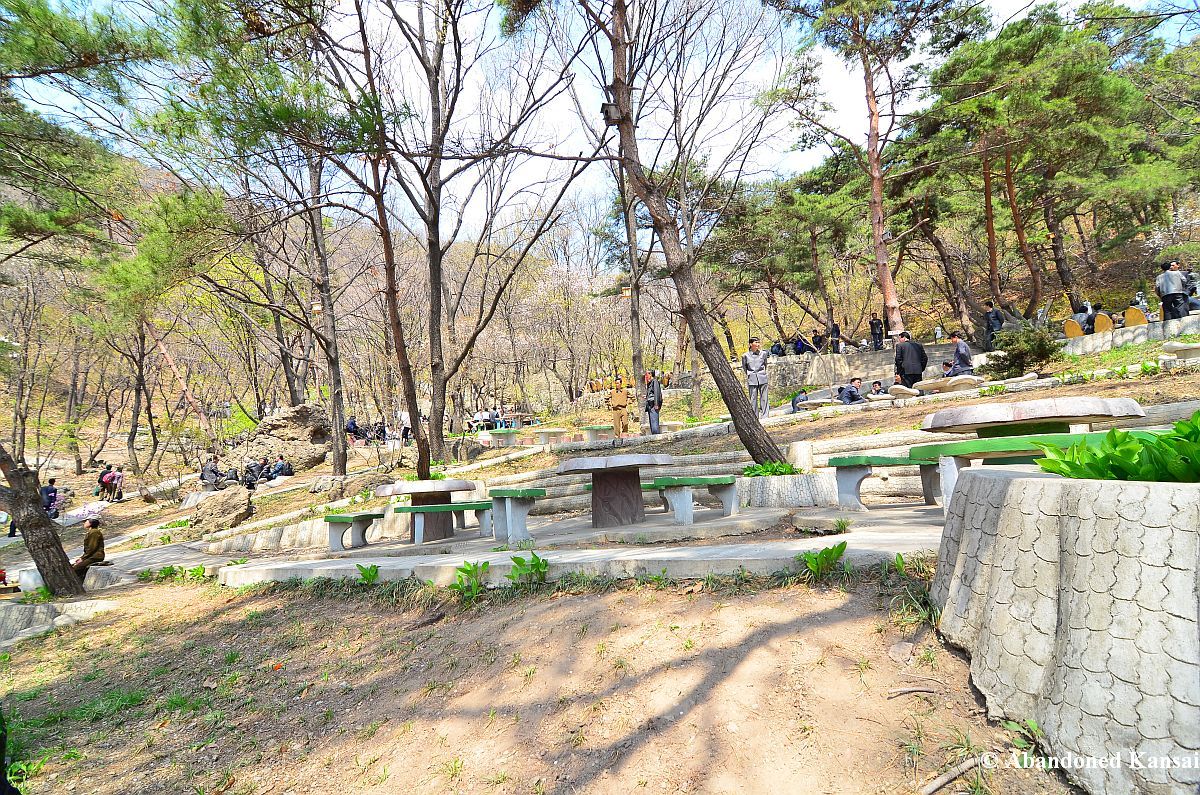
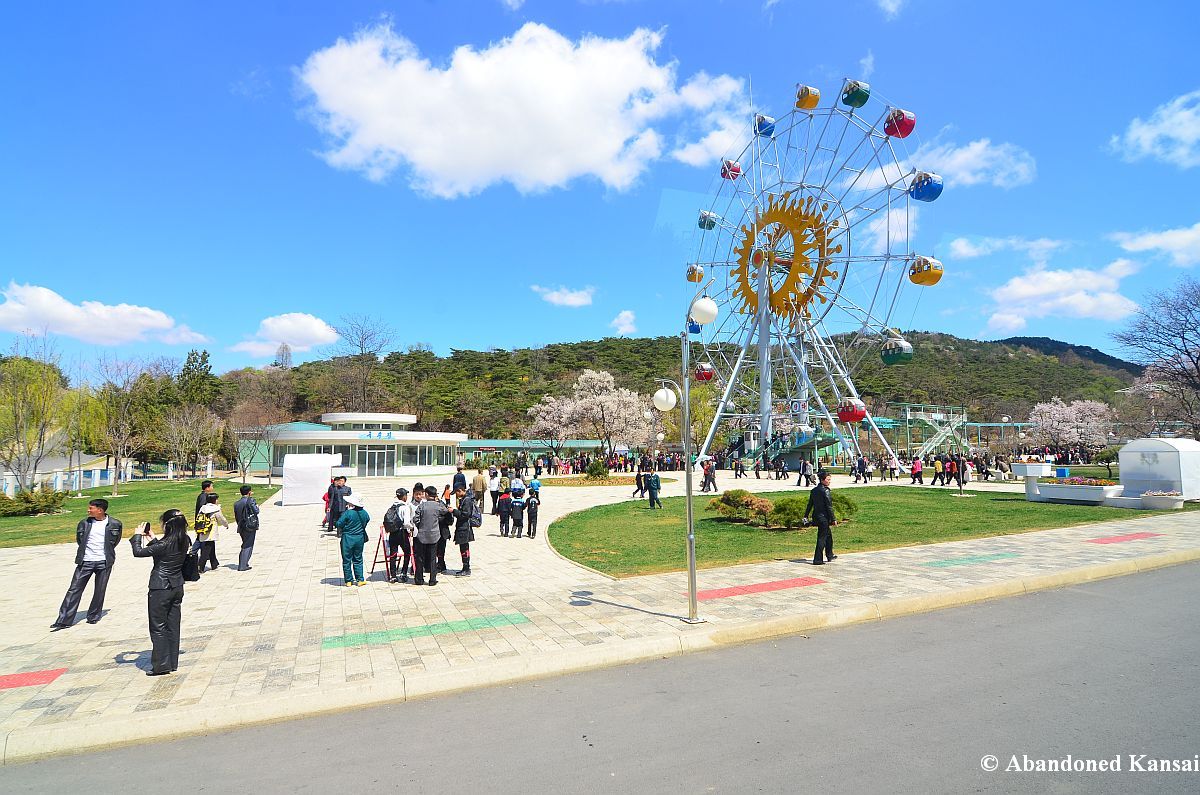
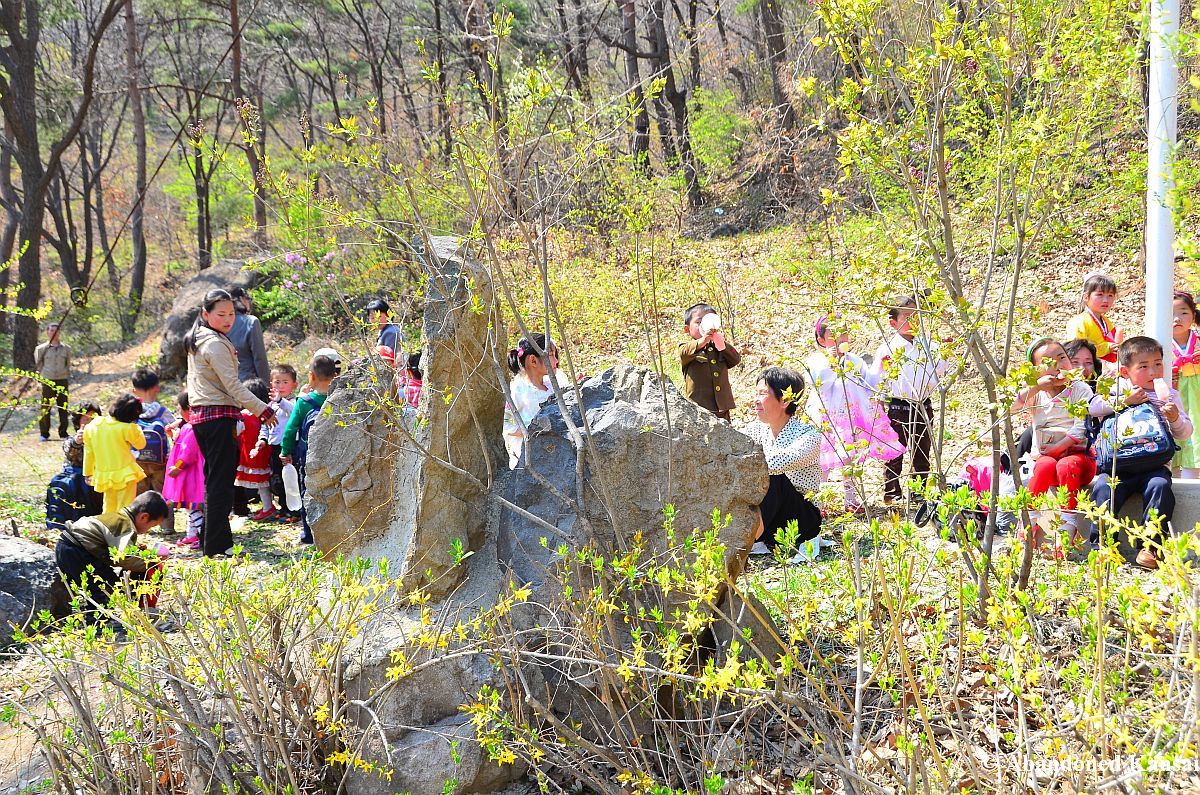
My favorite stop of the tour was at the Taesongsan park and fun fair in the outskirts of Pyongyang. It was right before lunch time when we had a little bit more than an hour to roam freely, an opportunity we put to use extensively. I will go into more detail with the help of a separate article later this month, but the trip’s absolute highlight without the shadow of a doubt was when Jeff randomly approached one of countless families sitting on blankets, having a BBQ under cherry trees – a regular hanami party Japan is famous for. They invited not only the big guy without hesitation, but also the three foreigners in his tow. So we sat down and enjoyed some regular local food and alcohol, which was absolutely delicious. When more people of our group passed by and saw us, our temporary Korean hosts invited them, too. We were chatting (with gestures and Jeff translating), laughing, sharing photos and just had a great time – 3 generations of Koreans and foreigners from the States, Canada, Great Britain, Austria and Germany. I’ve never felt more welcome anywhere in my life! (And of course we contributed some bottles of local alcohol and snacks we brought from home, too – it was just a regular BBQ in a park…)
Believe me, I am very well aware that throughout the tour we were in a privileged position and that North Korea has more than its share of problems. It’s an incredibly poor country, the political situation is more than dubious and the human rights situation is atrocious. Every information given had to be taken with a grain of salt (our guides definitely got some numbers wrong…) and sometimes they clearly put on a show (like at the Pyongyang Schoolchildren’s Palace where they showed us some young kids drawing – though they were clearly not; more about that later, too).
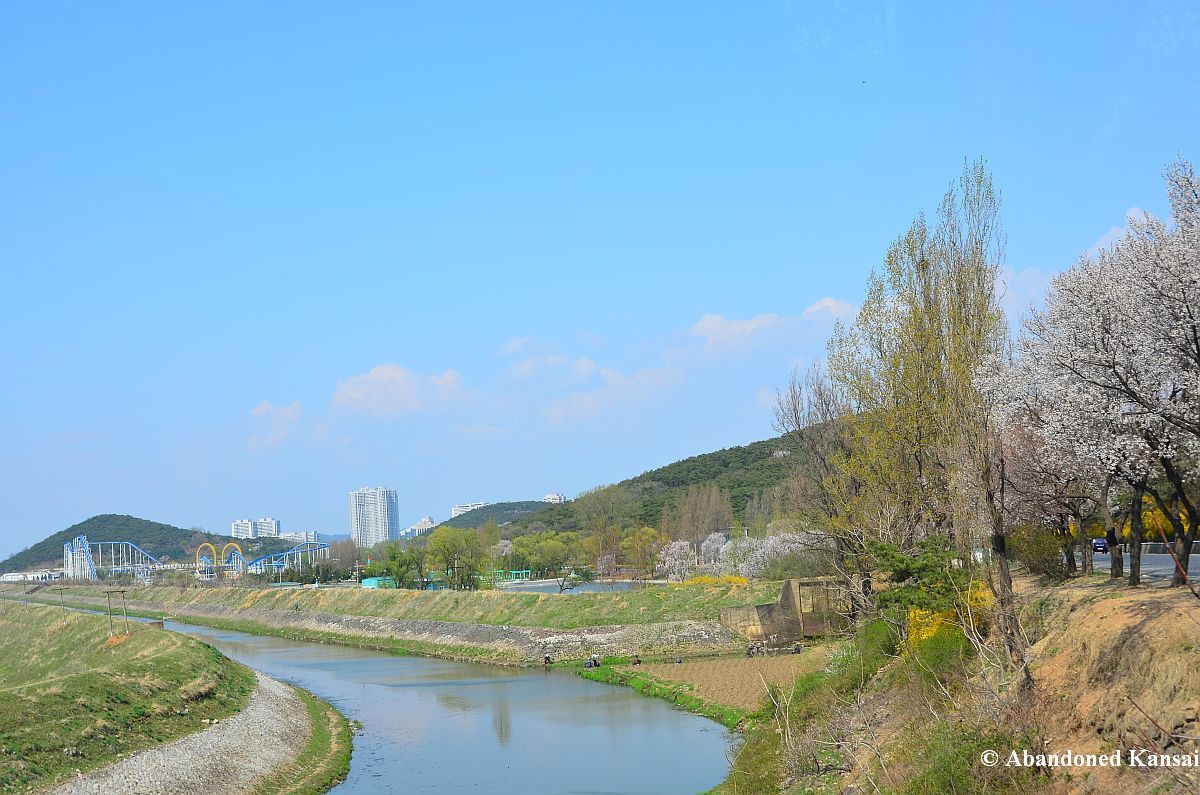
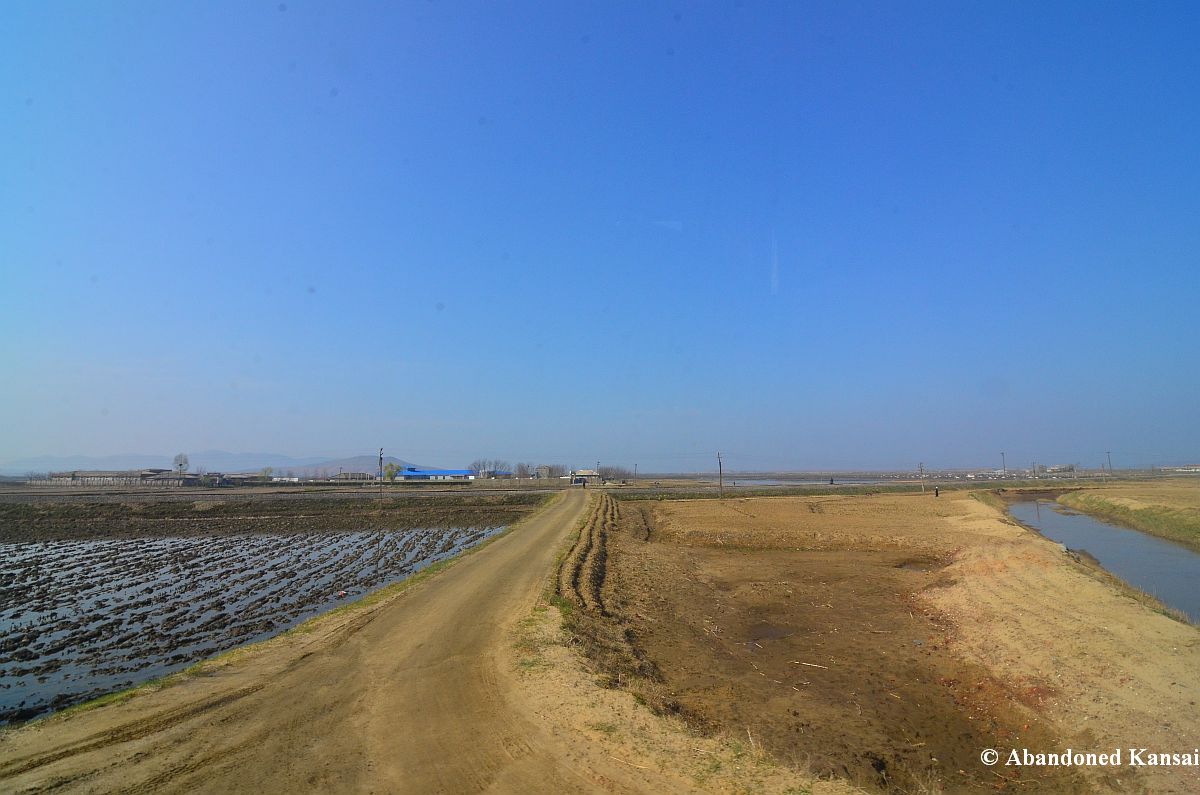
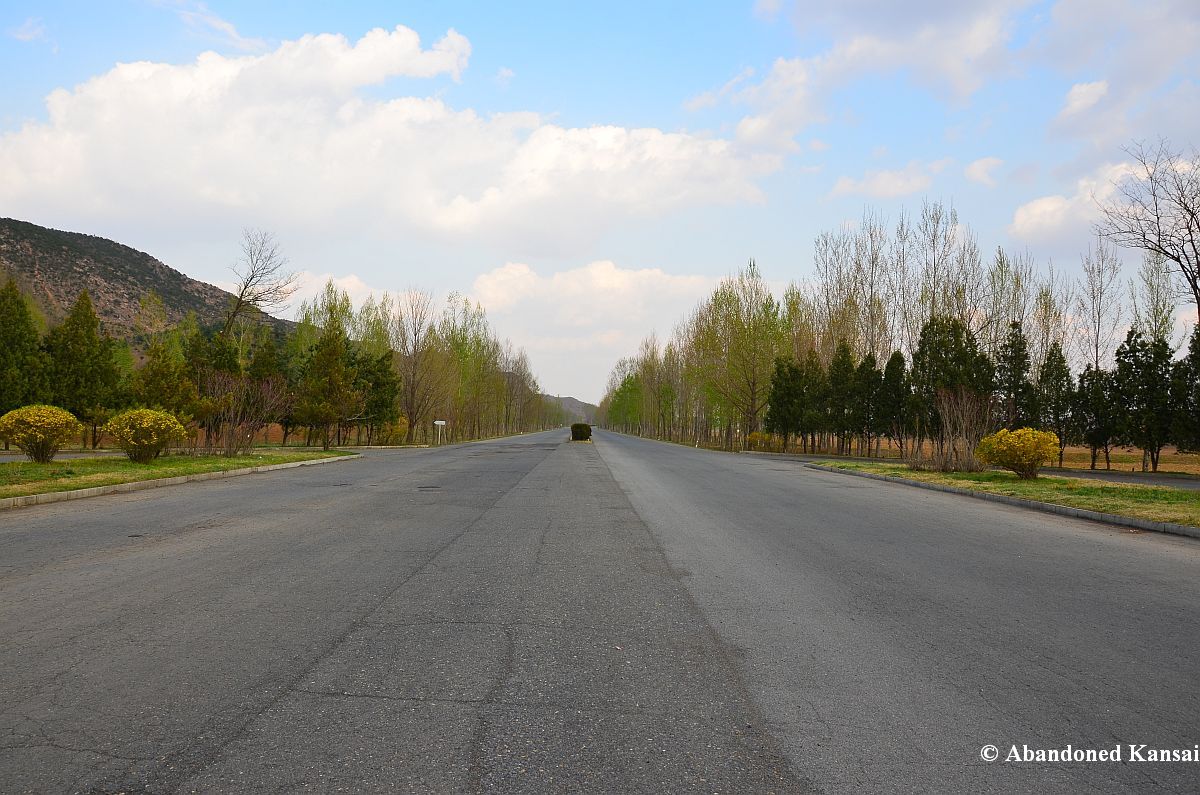
BUT: That applies for every source of information, also and especially for Western mass media. The Democratic People’s Republic of Korea is definitely not a great place to live in and how conflicted it is shows by its name – as the country is everything but democratic. But the situation, judging by the superficial observations I was able to make spending 8 days / 7 nights in the country, is not nearly as bad as we are made believe by the sensationalistic mass media business where stories sell better the more dramatic they are. I was able to talk to North Koreans without having to rely on indoctrinated guides, I was able to see locals in three different cities and on hours of overland drives – and to be honest, I didn’t get the impression that they were overly fanatic or unbelievably unhappy, especially given that North Korea is one of the poorest countries in the world, a fact they seem to be very well aware of. Of course they are trying to masquerade that by showing flagship factories and stores to foreign visitors – but at the same time it’s more than obvious that most of the farming is done without any modern equipment, that some roads are in abysmal condition and that people are comparatively small and skinny due the sharp supply situation that is having a grip on the country for decades.
While in North Korea I was engaged in countless conversations with my fellow travelers about the country’s situation, especially since we went there in times of rather high political tensions. It became obvious pretty quickly that there is no easy solution for this incredibly complex struggle. As you know I am not a journalist and I don’t have a political or economical agenda, so I am basically writing this article to show you what I experienced and to make you aware that the situation isn’t black and white, but very, very grey. When I hear voices saying that North Korea should be leveled and that the Americans should just bomb the shit out of the country it makes me sick to the stomach, because I was able to get a glimpse at the unstaged, human side of North Korea. Or maybe I am just a gullible idiot and I fell for the greatest show that was ever put up, involving thousands of extras…
In the following days and weeks I’ll write a couple more articles about my trip to the DPRK to go into further details and to show you plenty of additional photos and videos – *you can find an overview here*. Until then please have a look at my *GoogleMap about tourist spots in North Korea* and enjoy the media published with this article.
Addendum 2013-11-19: I just posted a general article about my second trip to North Korea in October 2013 – quite a different experiece. *Please click here to read all about it!*)
The previous article and the upcoming one couldn’t be more different. To the left you can see an abandoned Japanese sex museum – to the right is a travel report about North Korea, a country that prohibits the import of pornographic material and that has a long and painful history with Japan… The reason why I write this intermission is to get a little bit of a distance between to two articles, just a few clicks or a couple of lines to scroll. I am very well aware of the fact that I might offend some people with the rather explicit photos of the previous post – and probably as many with the political dimension of the next one. Nevertheless I hope that at least 99.9% of the Abandoned Kansai readers are open-minded and worldly enough to appreciate both topics. Enjoy! 🙂
I visited the *Japanese Sex Museum* for the first time in March of 2012 – it was not only a very unique exploration, it was also a very long one, me spending about 4 hours in the pitch-black exhibition rooms.
About 2 months later *I went to Kyushu and failed miserably* when I was unable to find a hotel room due to Japan’s wanderlust during Golden Week. I can be quite persistent, so I went back down south a week or two later to explore the northern Kyushu locations I was eager to visit for quite a while. This time everything went according to plan, so my tour ended in Yamaguchi prefecture with half a day to spare. So I jumped on a train and went back to the Japanese Sex Museum.
A ton of people watched the walking tour video I shot there, but while the feedback was generally positive, some viewers thought that it was way too short, being only 6 minutes long. Open for constructive criticism my idea was to go back to the museum, shoot a longer video and maybe take some additional photos. In and out in an hour, two tops – I had been there just recently, how much could have changed in less than 2 months? Well… I left after four hours to catch my last train back to Osaka!
Interestingly enough not a lot changed. The place looked almost the same, except for one minor difference – somebody opened two doors, emergency exits, allowing not only some foliage to enter, but also a few rays of light. Not much, but enough to use natural light with the help of a tripod and long exposure times for almost every single photo. During my first visit I had to illuminate about 80% of the photos manually and individually with a flashlight since it was completely dark in most of the rooms. On my second visit the process was almost as time-consuming as before, but the photos looked completely different, even when I took pictures of the same objects. And so one hour turned into two turned into three turned into four…
This is actually more or less a photo and video update since I already wrote about the sex museum’s history in my previous article – and since nothing happened while I revisited the place, here is the new material for your viewing pleasure without further ado. Enjoy!
The Saikaibashi Corazon Hotel Monorail is one of those surprise locations you stumble upon every once in a while. *A year ago during Golden Week* I was on my way to the *Saikaibashi Public Aquarium* and went down some steps minding my own business when all of a sudden I saw something overgrown through the bushes. At first I thought it was the entrance of the aquarium, but getting closer it was pretty clear that this was some abandoned transportation device. A red cabin with very dirty greenish windows. So my second idea (which lasted for the rest of the trip) was that this monorail granted access to the aquarium and therefore was somehow connected to it.
Well, I was wrong, in more than one way. First of all the Saikaibashi Corazon Hotel Monorail technically isn’t really a monorail, at least not in the modern way – it’s more like a slope car (スロープカー/ surōpukā), kind of a sub-category of modern monorails. At least the Japanese term is a brand name of Kaho Manufacturing, so it might not be the proper word to use either, but I guess we’ll go with it from now on.
Since I didn’t know what a slope car was I better give an explanation in case you don’t either. A slope car is a small automated monorail that provides accessibility for handicapped or elderly people, usually transporting them between entrance gates / parking lots / buildings by avoiding stairs at steep slopes. In 1966 Yoneyama Industry invented a fright-only monorail system to be used in mikan orchards (mikan are very delicious seedless and easy-peeling tangerines). A system to transport construction workers and lumberjacks was developed later, but it wasn’t until the 1990s when the system became popular for the general public when Kaho Manufacturing entered the market with great success in Japan and Korea, installing 80 slope cars of their Slope Car brand alone.
I don’t know when the Saikaibashi Corazon Hotel Monorail opened or closed, but I guess it was after 1990. In 1996 it was still operating as I found a report in Japanese written by a guest of the hotel. He was using the slope car at the Corazon Hotel not to reach the Saikaibashi Aquarium, which was already abandoned at the time, but to get to the waterfront below the hotel. From there guests of the Corazon Hotel were able to board a boat once or twice a day to get to the nearby and then quite popular Huis Ten Bosch amusement park, a Netherlands themed park; Nagasaki and the Netherland have a close common history of more than 400 years, sadly the theme park never lived up to that history and is in danger of becoming an abandoned place for about 10 years now – half its existence. I guess at one point in time after 1996 the boat connected to Huis Ten Bosch was cancelled and with that there was no use for the slope car (capacity: 12 people) since the aquarium was already close a long time ago…
Urban exploration is a dangerous hobby. How dangerous it really is I found out at the Daieikaku, a rather big abandoned ryokan south of Osaka. I was literally and figuratively one step away from my demise…
The Daieigaku was the first location Damon and I went to together back in 2010. Later we continued to explore the *Gion Love Hotel*, the Ferris wheel *Igosu 108*, the *K-1 Pachinko Parlor*, the *Tsuchikura Mine* as well as the *Kasuga Mine A* and *Kasuga Mine B* – but first the Daieikaku, a hotel that turned out to be quite hard to get to.
Back then I had done all my explorations using trains, but the Daieikaku was too far away from the closest station to walk to, so we had to take a bus. Which is a hassle in pretty much every country, especially if your command of the local language is… sub-par. Sometimes it’s close to impossible to figure out schedules and stops. When I wanted to get to a place near a university campus in Hokkaido last year it took the local tourist information at JR Sapporo Station 15 minutes to figure out which bus to take – and I knew the name of the bus stop I wanted to go to! Figuring out which bus to take to the Daieikaku wasn’t easy, but it wasn’t the only problem: The Daieikaku was located at a slope on the other side of a river, but the bridge leading to the ryokan was completely overgrown. Even in autumn with weakened flora we weren’t able to get to the other side, especially without being seen by locals and day visitors. So we crossed the river via another bridge, climbed up the slope and got to the back of the Daieikaku at the level of the third floor. Instead of taking some steps down to the ground floor we entered through a smashed in window right where we were. Starting up there was as good as anywhere else we thought…
Big mistake! The first room was one of those tatami party rooms you have in pretty much every hotel in Japan. Thanks to open doors and windows everywhere in the Daieigaku the place was in rather bad condition with leaves all over the place. I went to the side of the building, looking for a staircase. Found it, passed it and opened a door… a restroom. I went inside to have a closer look, but although the floor looked a lot more solid than the one in the tatami room it didn’t feel like it. Halfway into the room I had a very, very bad feeling, so I went back to the hallway, down one floor via the staircase, opened the door to the restroom below the one I just entered and… it was gone! There was no friggin restroom! Only one wall with some urinals hanging mid-air! And the bathroom I was in basically was attached to the rest of the building by its walls. I guess I don’t have to mention that the floors below were gone, too, so if I would have walked further into the restroom two minutes earlier (or probably just would have stayed where I was) there would have been a good chance that I would have crashed through a thin layer of tiles and wood three floors down to my death. After I recovered from that realization I went straight to Damon to warn him about the death trap on the third floor. Luckily he didn’t put himself in danger, so we continued our exploration without further incidents, although we continued to take risks every once in a while – especially Damon, who was exploring the hotel like a honey badger. Through tiny broken windows with shards left, up and down rotting wooden stairs, … Which lead us down to the onsen part of the ryokan, a part of the hotel I probably wouldn’t have gotten to if I would have gone there on my own, especially after that little shock right at the beginning. There we saw some major cracks in the ceiling and the wall, which didn’t exactly help to ease my mind – parts of the Daieigaku already collapsed, so being in the middle of the building with unstable floors above and below wasn’t exactly the place I wanted to be in. But the former lobby didn’t look any better. We first saw it from 2F and looked down – staircases gone, walls caved in… The whole building was in worse than dilapidated condition and I guess every single step could have been our last!
Looking back at the exploration of the Daieikaku I have to say that we were terribly naïve and really lucky. The term “Daieikaku” means big glorious building and it is often used for restaurants serving a charcoal grilled meat dish called yakiniku – and while the ryokan Daieikaku was indeed a big building it was everything but glorious. It was a deathtrap and by far the most dangerous location I have ever explored. It also was rather unspectacular overall, that’s probably the reason why I never wrote about it, almost forgot about. Back then I just did a pre-selection of my photos, deleting only the worst, so I had to go through almost 150 of them to make a final selection for this article – and it actually makes me wanna go back there. Three years ago I shot without a tripod and the Daieikaku was pretty dark in some places, though it was a bright and sunny autumn day. Furthermore several earthquakes hit Kansai since then, including the Tohoku Earthquake that caused the Fukushima Incident and a recent one that struck Awaji Island. Plus Mother Nature had 30 months to do additional damage… Well, we’ll see – if time allows I’ll stop by there again to give you an update on what happened to the Daieikaku. For now I hope you’ll enjoy the photos I took during my visit. I’m sure you are eager to see what the collapsed bathroom looked like… 🙂
Finding abandoned places can be a pain in the ass. Nowadays it’s either impossible to find places (because people don’t reveal names anymore, let alone prefectures or cities) – or you look at a map. Yes, there are more and more blogs with maps, revealing the exact locations of some of the best abandoned places in the world. I don’t like either approach very much as the first one is friggin’ teasing and the latter one contributes to the littering and vandalizing of once beautiful spots. Only a handful of serious people go through the time-consuming shenanigans of piecing information together, but that’s the way I prefer to do it…
Finding the Amano Clinic was a pain in the ass. I did some research on it more than 3 years ago and it took me ages to even pin down the area where the damn thing could have been. It was a famous ghost spot, so quite a few people wrote about the place (in Japanese…) – and everybody dropped another piece of the puzzle. After a couple of hours I concluded that the Amano Clinic must have been in a suburb of Yoshinogawa in Tokushima prefecture, a couple of hundred meters away from JR Awakawashima Station. Easy as pie from that point on, right? Wrong!
When Gianluigi and I arrived in Yoshinogawa (we thought) we knew the area the hospital was in and we (definitely) knew what the place looked like from the inside – but we had no idea what the hospital would look like from the outside! (Or if we really were in the right area…) So we parked the car and had a walk through the rural neighborhood. Up a hill we found an abandoned building… but it was just a barn with an office, not interesting at all. Heck, it was so uninteresting I didn’t even take photos.
So we kept on searching:
Cars? Not abandoned…
People? Not abandoned…
Neat gardens? Not abandoned…
Toys? Not abandoned…
Trimmed hedges? Not abandoned…
Laundry? Not abandoned…
After a while we found a house that probably was abandoned – we opened the door and Gianluigi fired the whole set phrase barrage about “Sorry, anybody home?”, which is an estimated 20 times longer in Japanese. Nobody was home and inside the place looked kind of abandoned, but we weren’t sure (not all houses in Japan are locked…). All we were sure of was that it didn’t look like a hospital or clinic, so we left quickly. In another part of the area we found some old-style storage buildings – raising our confidence that we were getting closer. A house close-by looked abandoned, too, but it was locked-up. So Gianluigi asked the neighbors who came back from grocery shopping and they gave us the final hint where the abandoned hospital was. Hallelujah, we didn’t waste valuable time hunting a ghost…
Like the *Tokushima Countryside Clinic* the premises were huge and overgrown. A bamboo forest turned out to be impenetrable, so we followed a surrounding path till we finally found a fence with a hole in it. We slipped through, made our way through a beautiful (and abandoned) Japanese garden and arrived at the back of a wooden house, abandoned for sure, but with an open door. Before we entered we cleared the surroundings and Gianluigi confirmed that we were at the right place when he saw the name written to the side of the building in gigantic but fading letters – Amano Hospital! Old style – in kanji, from right to left; which is quite unusual as nowadays Japanese texts are either written left to right or top to bottom.
Driving to the Amano Clinic took us several hours, finding it after parking the car took us about 60 minutes – exploring it and taking photos took us less than 20 minutes…
Since most of the windows were nailed up it was almost dark inside and the rotting floors / vandalized interior didn’t help either. The building might have had a history as a local doctor’s residence, but there was nothing left for us to see – it looked just like another abandoned Japanese countryside building, the most common and most boring *haikyo* there is.
A couple of months after exploring the Amano Hospital I read on a Japanese ghost spot blog that the clinic had been demolished. I tried to verify that statement for this article and found my old source again. This time I had a closer look at the text and it said that it is unknown when the Amano Clinic was demolished, but it was before the night porter’s house was torn down, which happened in late 2003. The problem is: Gianluigi and I visited the Amano Clinic in early 2011.
That can mean three things:
1.) The guy wanted to write 2011, but wrote 2003.
2.) The guy found another demolished building and thought it was the Amano Clinic.
3.) The Amano Clinic was demolished before 2004 and somebody nailed its sign to a regular old house – the one Gianluigi and I explored…
My guess would be #2, but I don’t know for sure, so contrary to my announcement in the *Second Road Trip To Shikoku* article I won’t add the Amano Clinic to my *map of demolished abandoned places in Japan* – just in case it’s still there… Sorry for that!
And with that you’ve seen all the locations Gian and I visited on our trip to Shikoku. Next week you’ll find out how I almost died while exploring an abandoned ryokan in Osaka prefecture…
The Kuroshio Lodge is one of the oldest and most famous abandoned places in Japan – even pioneer *haikyo* blogs who haven’t been updated in years feature this almost completely trashed hotel with the iconic bar; a beautiful photo opportunity thanks to its rusty stools and bright orange and yellow lamps. Nevertheless I struggled for about a year to find out where the Kuroshio Lodge was… and then another six months to find a ride as it is close to impossible to get to the place by public transportation – luckily it was *on the way to Shikoku* for Gianluigi and I, so we made a stop to stretch our legs and to take some photos.
Kuroshio means “black tide” and is also the name of a northeast-flowing ocean current stretching from Taiwan past Japan to the North Pacific Current – hence the nicknames Black Stream and Japanese Current, deriving from the deep blue of its waters and the country it flows by.
It’s pretty safe to say that the Kuroshio Lodge was named after the current – despite the fact that the Kuroshio (current) isn’t visible from where the lodge is located. The lodge on the other hand isn’t visible from the beautiful coastline of Awaji Island. You can get as close as 100 meters (beeline) on a busy street, look up a hill and see nothing but trees. At the same time you have a gorgeous view at the mountains of Awaji Island and the stunning Seto Inland Sea from the rooftop of the lodge… It’s all a matter of location!
At first and third sight the Kuroshio Lodge is a big disappointment. After huffing and puffing up a rather steep mountain road on foot, Gianluigi and I reached the back of the mid-size grey building. After years without maintenance the outside walls looked dirty, but that was nothing in comparison to what we saw when peeking through some open windows – the exposed rooms were filled with rotting vandalized futons and other interior. Not exactly a great start.
In close proximity of the abandoned hotel we found a couple of small houses at the slope; hut-sized, most likely the former living quarters of employees. We entered one of them, but the lighting in there was horrible and neither of us brought a tripod. There was not much to see anyway – I didn’t even bother to take a video.
Back up the slope we finally entered the Kuroshio Lodge – and were positively surprised by the lobby area with its famous turquoise chairs and the bar with its even more famous lamps and stools. You could take 100 interesting photos there and still won’t be bored!
Sadly disappointment stroke again right behind the counter. The kitchen next to the lobby / bar was completely vandalized and rotten, so we made our way up to 2F (first floor in Europe, second in Japan). No wonder that you barely ever see other rooms than the lobby when people post about the Kuroshio Lodge. The whole rest of the place was either vandalized and rotten or completely boring. I took a couple of snapshots here and there (like the lamp and the bath, although they were not really exciting subjects…) and then called it a day, taking the obligatory video on the way back to the lobby.
Since I visited the Kuroshio Lodge almost two years ago I found several Japanese articles about the hotel claiming that the area is overrun by wild dogs from a former dog breeder close to the hotel. They also claim that those dogs were involved in some rituals… whatever that means. Luckily I didn’t run into any mad dogs, crazy cultists or bloodthirsty sadists – although I remember seeing some kind of triangular sign on a metal plate in the boiler room (the one at the beginning of the video below, I just missed to catch the symbol on film… sorry for that, I didn’t think it was on any significance). The whole thing sounds a little bit like an exaggerated version of the usual ghost story surrounding basically every abandoned hotel in Japan. A lot of Japanese people are surprisingly superstitious, so whenever a place is abandoned you get some variation of the “owner committed suicide” story. Stories that are virtually impossible to verify. Nevertheless I thought I better mention the wild dogs. You know, just in case you walk up to the Kuroshio Lodge one day, get surrounded by them and think “Florian never mentioned those damn dogs!”…
To me the Kuroshio Lodge was a rather disappointing location. I loved the entrance area, but the rest of the building gave me a “been there, done that” kind of vibe – which is not what I was hoping for after putting so much time and effort into finding the place. But hey, what can you do? At least the bar and the lobby didn’t fail to deliver. And sometimes one room is all you need to make a visit worthwhile…






 Abandoned Kansai