All abandoned: Chernobyl / Pripyat, Nara Dreamland, Anti-Zombie Fortress, Japanese Sex Museum – and many, many more! Plus: North Korea Special – 2 trips, 16 days / 14 nights! As seen on CNN…
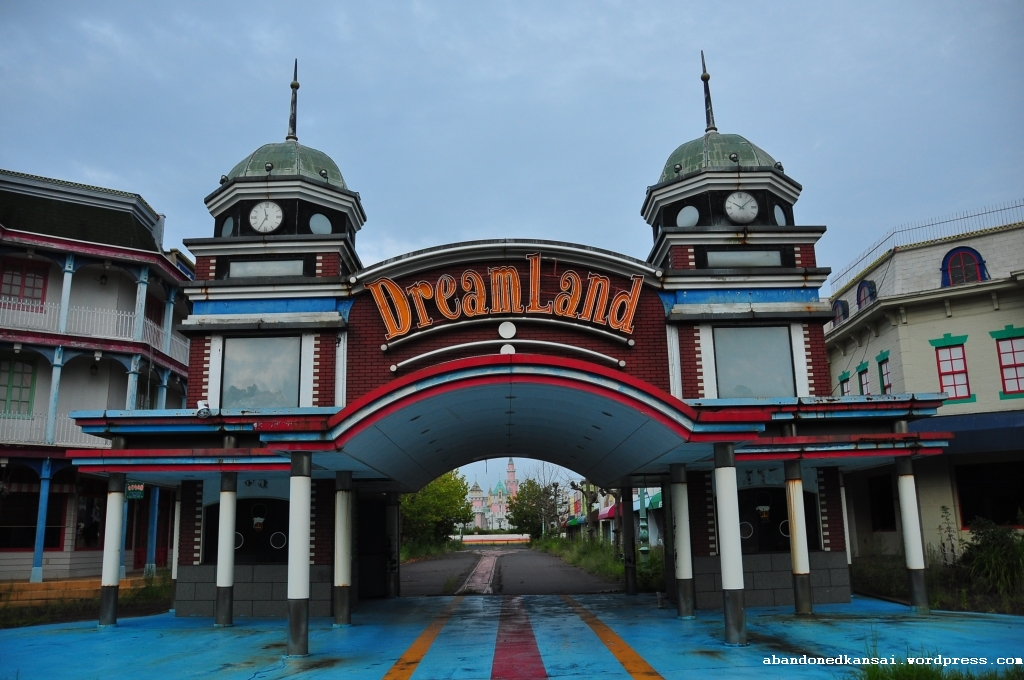
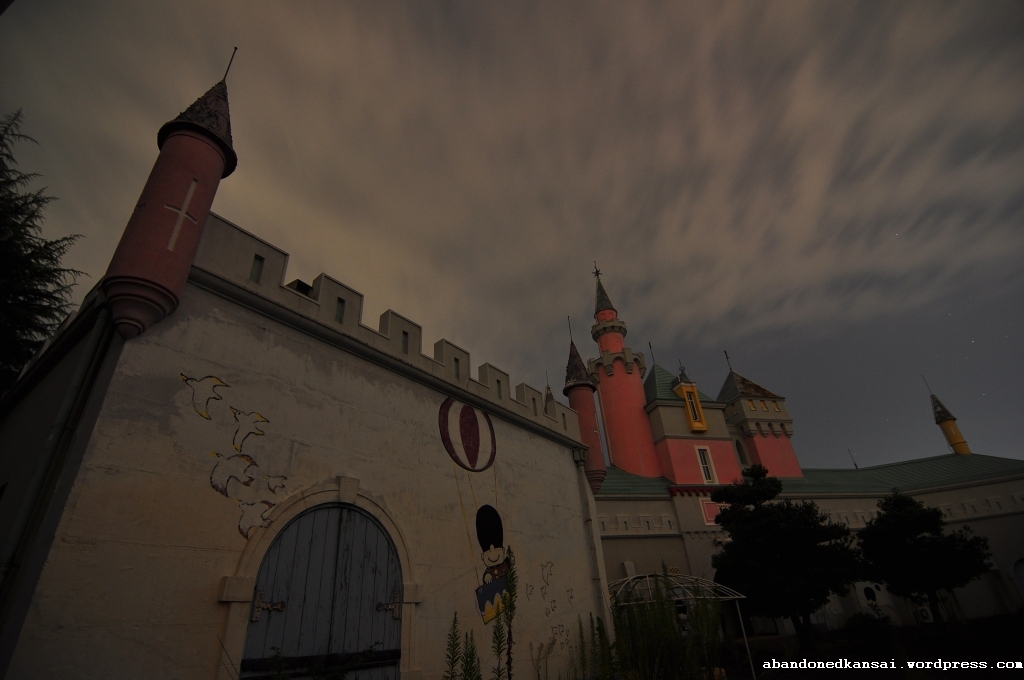
After spending a whole night at Nara Dreamland it dawned at around 5.30am, so Mike and I went straight to the entrance area near the Dreamstation to begin our second round through the park. The atmosphere at Dreamland early in the morning is almost creepier than it is at night. The light was kind of blue-ish, the sky slowly turned to overcast and we could finally have a closer look at the state of this huge abandoned amusement park – it looks horrible! The main street is so fake it would make an Ed Wood movie look cheap(er) and the amount of vandalism and decay is almost shocking considering the place was closed down for good only four years ago. If you want to see pictures of an undamaged Dreamland you’ll have to find some that are at least one or two years old. Pretty much all the windows in the park are smashed in, most of them just for the sake of destroying them – and that’s why places like Doggy Land or the Doctor’s Shack don’t get published with their real names or hints on how to find them… Too late for Dreamland though, the damage is done and I think it will get worse every month. And I totally understand now why the security guard was quite aggressive when he caught me taking pictures in February since it’s impossible to know who’s a vandal and who’s a harmless urban explorer. It would seriously piss me off and I guess even scare me when I’d come to work in the morning only to see doors and windows smashed in!
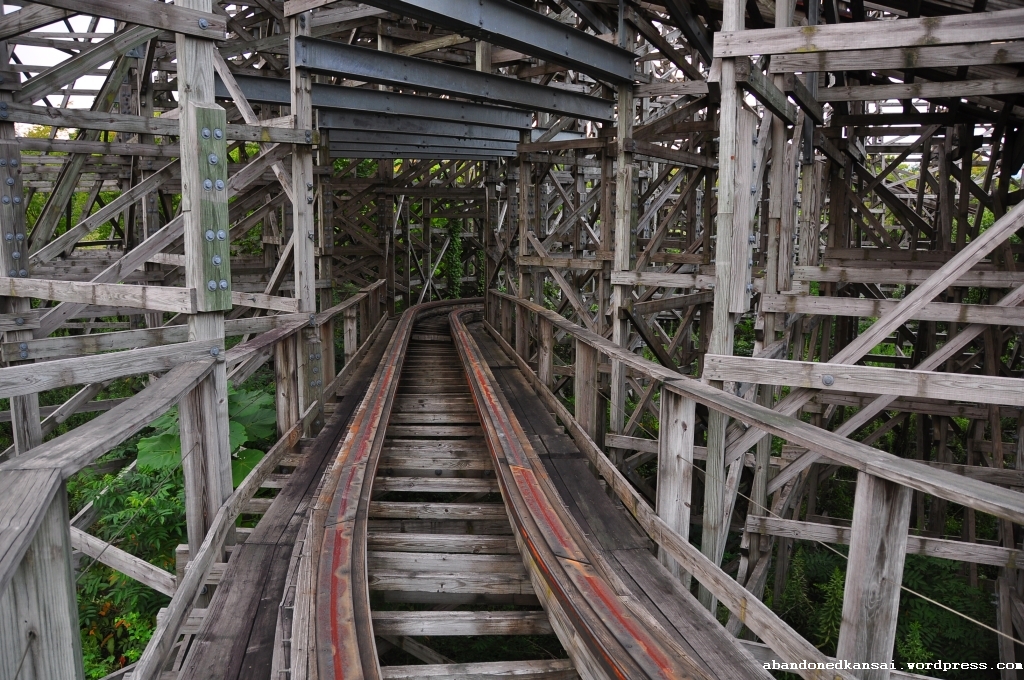
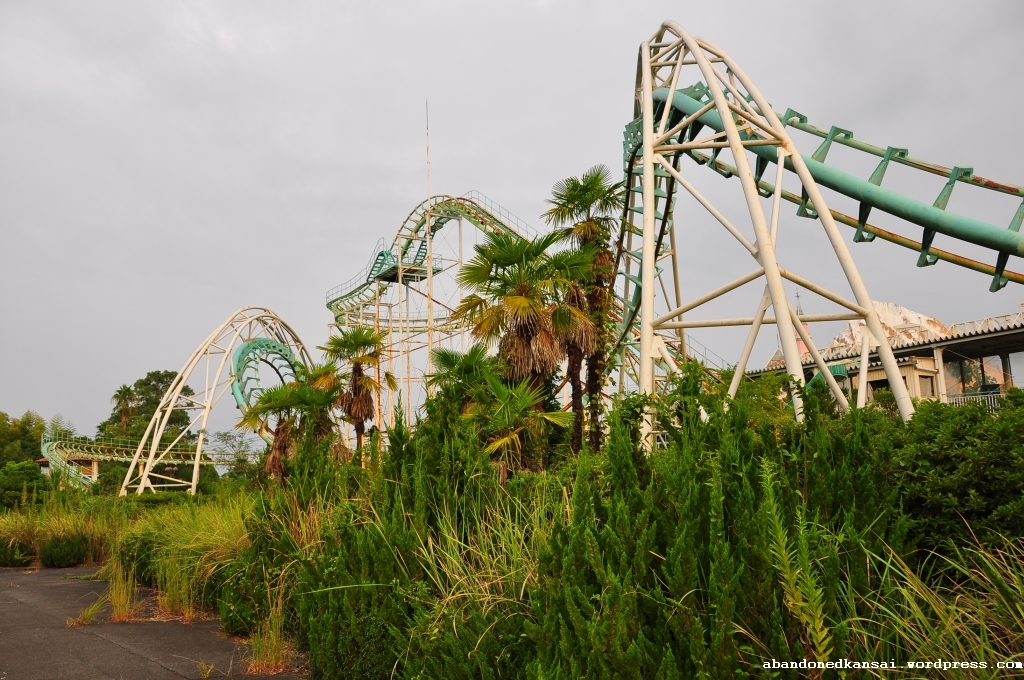
Mike and I, of course, just minded our own business and took a few pictures here and there – but to be fully honest, I was a little bit disappointed. Maybe it was because at that point we already spent four and a half hours there and of course we were tired and worried that security will show up at any minute, but Nara Dreamland (at daylight) is just a miserable place to be. It’s widespread, it’s run-down, it’s ugly and it’s full of weird items. Like the statue of Abraham Lincoln in front of the castle, that doesn’t make sense at all. (Maybe it does – if you know an explanation please drop me a line!) The really shocking part about it is that the place most likely felt weird even when it was still open. I can see the Aska rollercoaster being fun, maybe the water park with the pools and slides, too. But the rest looks like a real embarrassment for everybody involved. Again, love and hate at the same time: It’s a huge amusement park with all the attractions still standing – but at the same time it feels like one of the cheap weird reality shows on TV you don’t really want to watch, but you do it anyways and feel a bit guilty for doing so. So I guess it was no surprise that Mike left after about an hour to wait for me outside and I followed maybe ten minutes later. For some reason the daytime version of Nara Dreamland wasn’t nearly as captivating as I hoped it would be – I defeated my haikyo nemesis, but it was a bitter-sweet victory to find out that “the enemy” didn’t live up to the expectations…
Overall my (most likely) last visit to Nara Dreamland was an ambiguous experience. It was great to hang out with Mike and being at an abandoned amusement park at night is an awesome experience – it just wasn’t nearly as fulfilling as my explorations of other places like the Taga Mine, the Takada Ranch Ruin or the mostly demolished Expoland.
And don’t even get me started on the Zone of Alienation, including Chernobyl and Pripyat! Oh… well… now that I think about it: Maybe it’s time to write up a couple of stories about radioactivity, gas masks and some of the most amazing places I’ve ever been to!
If you are a regular reader of this blog then you know that I have a love-hate relationship with Nara Dreamland. Abandoned amusement parks are quite rare, especially those without any destroyed or sold attractions. Sadly both times I went there I spotted a security guard. Once he spotted me, too – a very, very unpleasant experience. To me the chapter “Nara Dreamland” was closed. I wasn’t able to post pictures taken inside of Dreamland on this blog (since I had to delete the ones I took), but I’ve seen quite a bit of it and that is what is important to me. But when Michael John Grist wrote me a message that he would be in Kansai soon and asked me if I was interested in tackling Nara Dreamland again of course I couldn’t resist. Learning from previous explorations I suggested to meet in Nara late to do a shooting at night and get out of Dreamland before the guard(s) even show up. Mike agreed and so that’s what we did…
We met at JR Nara Station at around 0.30am and made our way to the park. Since I’ve been there twice before I knew exactly where to go and how to get in, but there were some changes since I last came to Dreamland. For example all the “If you see somebody entering Nara Dreamland: Call the police!” signs were replaced by new “If you get caught we’ll fine you 100,000 Yen” signs. Which I thought was interesting in two ways:
1.) It kind of seems like the police in Nara isn’t really interested in trespassers.
2.) Why 100,000 Yen (currently about 900 Euro / 1150 Dollars) and not 50,000 / 200,000 / 1,000,000 Yen? The number seems so random…
Anyways, it would really surprise me if the new signs keep anybody from entering. (“I don’t care about being sued for trespassing, but 1000 bucks scare me back to where I came from!”)
After entering Nara Dreamland the next difference was obvious: If you lift your car over the fence you won’t be able to drive into the park anymore as the road is now blocked by a fence of maybe 50cm height! If you are on foot you just step over it or use the non-blocked pedestrian walkway – which is perfect for all you urban explorers on bikes, motorcycles and unicycles, too! Seriously, WTF? I can understand why you want to keep people from entering Nara Dreamland, but if your effort ends with knee high fences you deserve to be ridiculed! I would have laughed out loud, but I guess my mean spirit was punished right away when a car passed the road under the bridge while we were walking across – in the middle of the night, in the middle of nowhere. Small sins get punished right away…
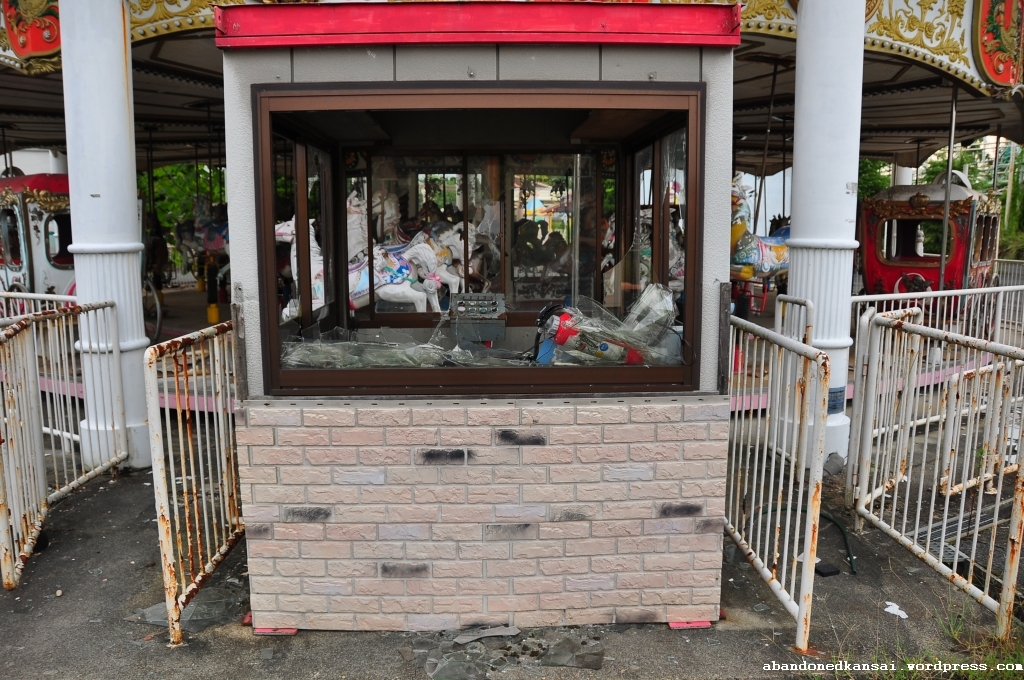
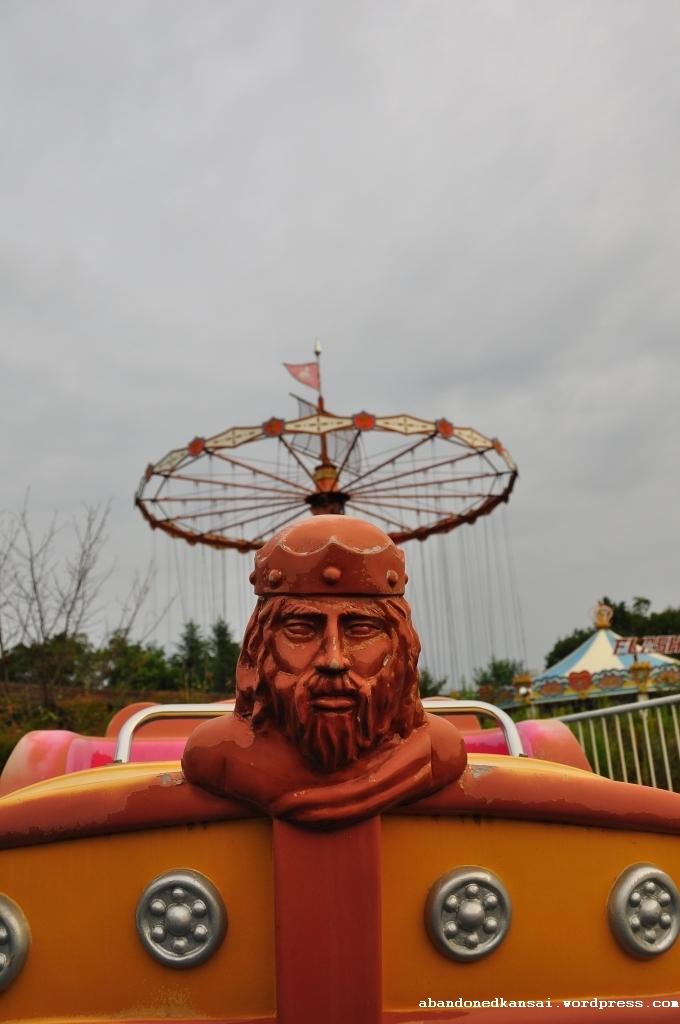
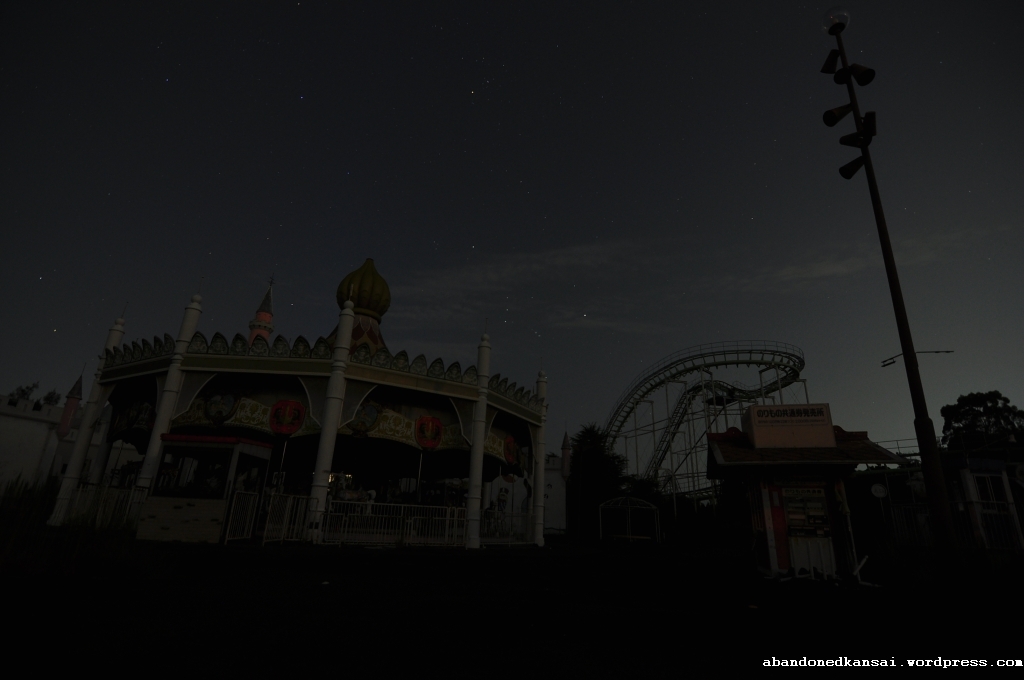
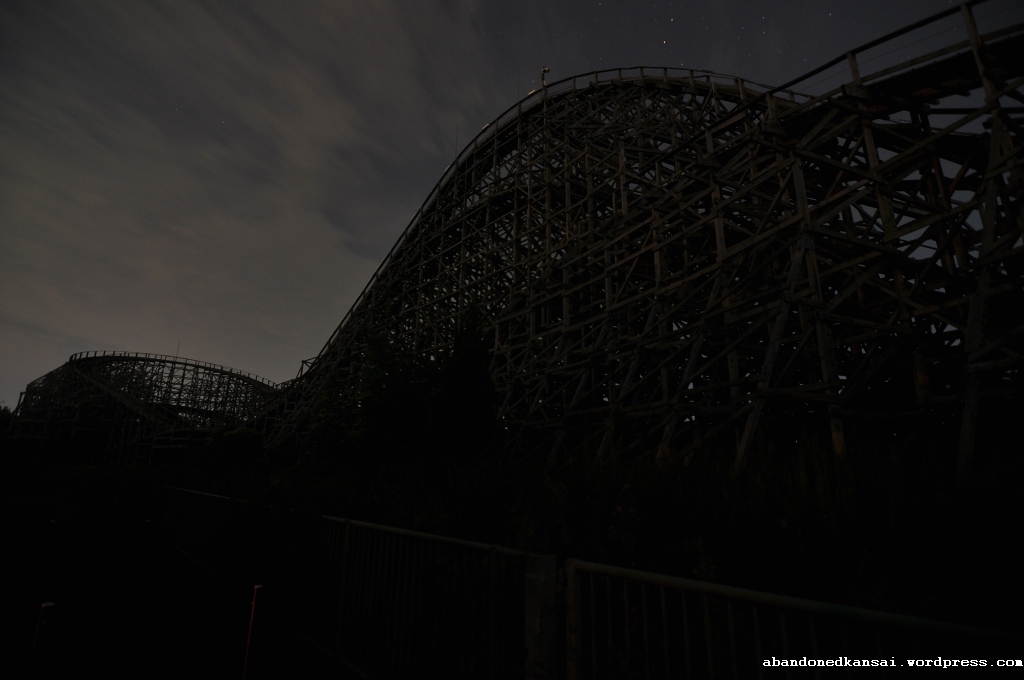
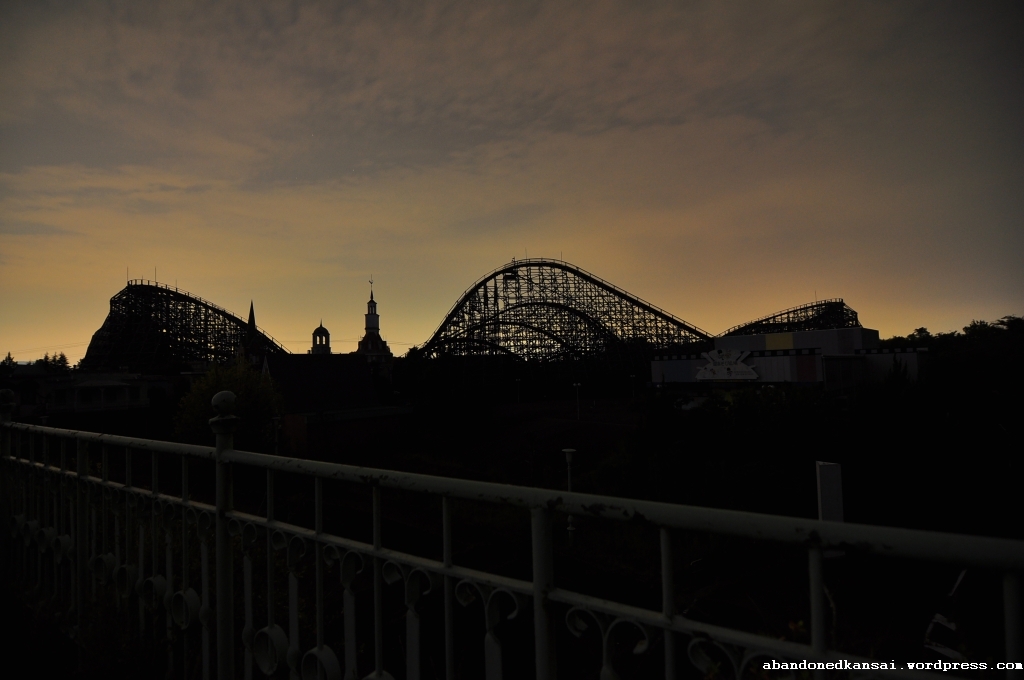
It was a strange feeling to enter Nara Dreamland that way since last time I was there I was running from a security guard. Shortly after the bridge we came across the merry-go-rounds and finally reached the mirror maze called “Mirror-Puzzle” where the yellfest happened in February. I would like to say that I felt more comfortable the longer we stayed at the park, but I didn’t. Not after one hour, not after two, not till we left. But at least this time I was able to see the whole park. We took at few pictures near the Mirror-Puzzle, passed through the castle and then went on to pay a visit to the park’s main attraction: the gigantic wooden roller-coaster named Aska. From there we went back to the castle and down the main road to the main entrance / train station. After that we returned to the area filled by merry-go-rounds to have a little rest and wait for the sun to come up.
The safety of exploring Nara Dreamland at night came with the price of a way more demanding shooting: Neither Mike nor I had shot any haikyo at night before, so we spent quite a while at each attraction. Basically learning by doing. It wasn’t pitch black dark and the sky was slightly lit in some parts due to light pollution, so most of the pictures turned out to be blurry or terribly lit, but could there be a better place to figure out stuff like that than an abandoned amusement park? The answer is “YES!”, but hey, some things just don’t work out as planned…
Exploring an abandoned amusement park on a warm night in late summer is nothing but an amazing adventure – and I guess it is even more so if you can suppress the uneasy feeling of not being wanted there. I can’t say that I really enjoyed shooting Nara Dreamland at night, but I nevertheless cherish it as an exciting and educational experience.
“Wait a minute!”, you might say at this point. “If you felt uneasy all the time, why did you even wait for the sun to come up?” Well, the answer is simple: Since the sun rises at about 5.30am in Japan even in late September we though we could kill two birds with one stone and do a second round through the park, shooting it under way easier lighting conditions – and that’s what we did. So come back soon and don’t miss the second part of Nara Dreamland Revisited!
(*Like Abandoned Kansai on Facebook* if you don’t want to miss the latest articles and exclusive content – or subscribe to the *video channel on Youtube* to receive a message right after a new video is online…
For all your Nara Dreamland needs please have a look at the Nara Dreamland Special. For a look at the area around Nara Dreamland on GoogleMaps, including some fancy icons linking to articles on Abandoned Kansai and videos on YouTube, please *click here*.)
Looking at my urban exploration log I realized that I had a pretty good run lately.
It all started when I met Michael of Gakuranman fame in late July – he was in Kansai and suggested to take on the famous Maya Hotel together. Since I already scouted the surrounding, but never went in, it was a fun exploration of an impressive location; followed by a revisit of the Takada Ranch Ruin. Two weeks later I started my summer vacation to Europe which included a side trip to the Zone of Alienation with its famous cities Chernobyl and Pripyat. Back to Germany I went to Luxembourg for two more explorations with a kindergarden friend of mine.
Soon after I got back to Japan I received an e-mail from Michael John Grist who planned to come to Kansai to tackle my haikyo nemesis, Nara Dreamland. I wanted to meet the guy more than I wanted to avoid the Dreamland, so we went there on a warm late summer night and for the first time I got in and out without spotting security… And finally I went on a little trip myself again to visit the Gakuranman in the Nagoya area to take pictures of the mysterious Doctor’s Shack, one of the few haikyo that are kept a real secret in Japan – even if it appears somewhere on the net or in a book there are barely any hints about its location and I’m really grateful Michael took me there; another awesome exploration, punished with about 30 mosquito bites!
Maya Hotel, Pripyat, Luxembourg, Nara Dreamland and the Doctor’s Shack in a row… it’s hard to do better than that! Now it’s time to write up the stories and show you some really, really interesting pictures!
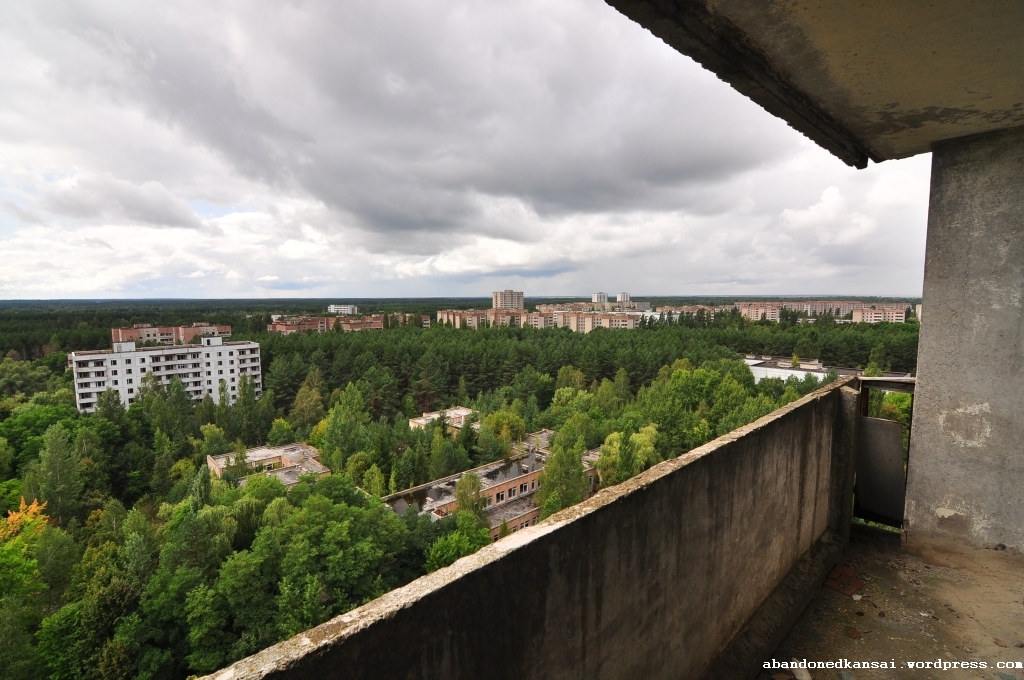
(You can find all the articles related to Chernobyl and Pripyat by *clicking here* – the picture was taken *here*.)
I’m terribly sorry that it took me a while to publish this article, but I finally finished to write the sequel to the blog entry about Osaka Expoland I announced quite a long time ago.
On my way back from my second trip to Sekigaraha Menard Land I thought it would be a good idea to pay Expoland (エキスポランド) another visit. It had been a couple of months since I explored it for the first time and I just wanted to have a short look again – to find out what happened to the Caribbean Resort and the other remaining buildings. Like with my first trip there I expected it to be a quick stop, maybe even without taking pictures. But again I was wrong…
I rode the Monorail from Minami Ibaraki to Banpaku-Kinen-Koen and pressed my camera against the window to get some elevated shots of the park. Since I accidentally changed the settings of my camera right before I reached Sekigahara Menard Land the pictures turned out to be very blurry and while I was wondering about that I realized that there were people in the park! In a park that was closed down for good more than two years earlier and that was being demolished during my first visit in December of 2009 – what an intriguing surprise! (I’m sorry for the picture quality of this posting again – it wasn’t my day…)
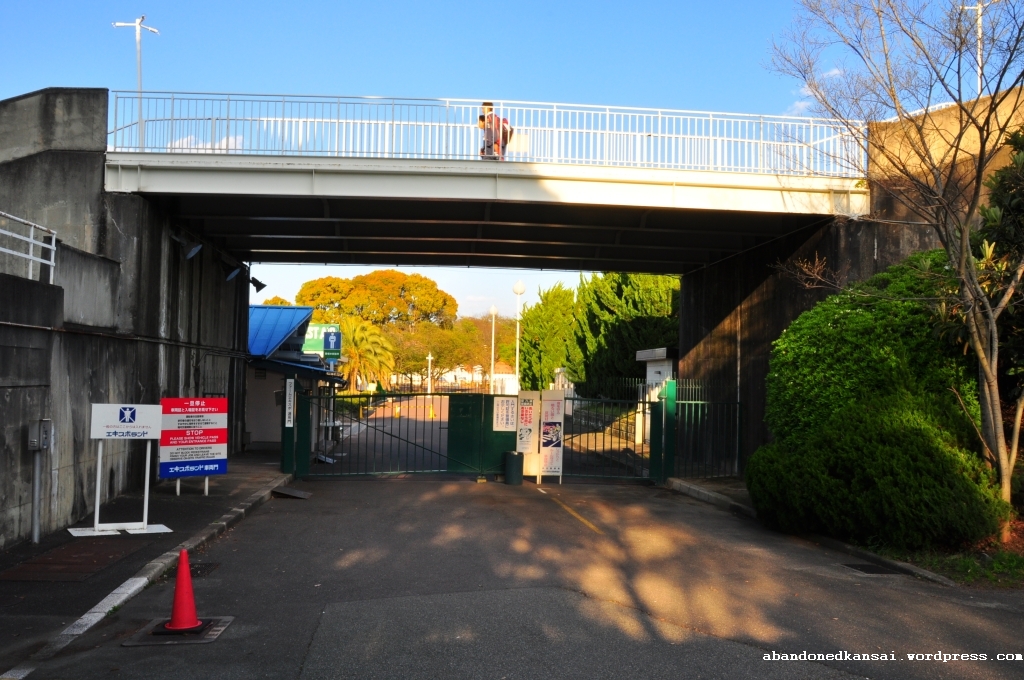
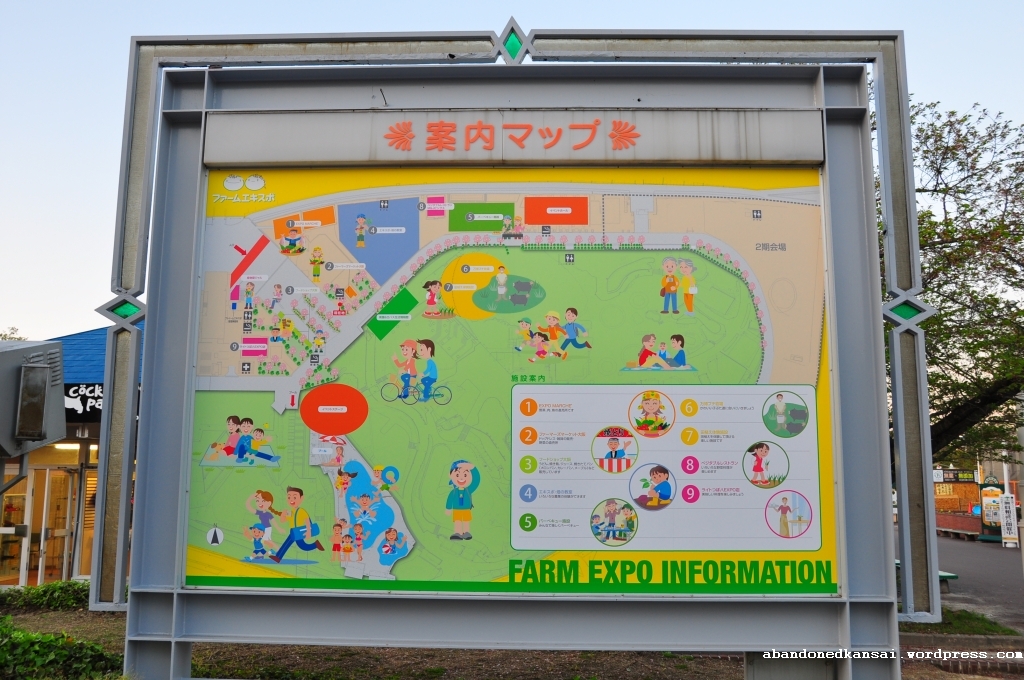
This time the main gate to the park was wide open. On top there was a sign that informed all people passing by about the newly installed Farm Expo. So what they did was cutting off about 20% of the park with typical Japanese site fences, revamped the existing buildings in the area into shops, painted and reopened the restaurant and heaped up some soil to use as a planting area. One of the former water rides was converted into a stable for pigs and halfway between that stable and the organic food stands were a couple of chickens in a cage for children to pet. The former clown house was converted into a farmer’s market, selling all kinds of herbs and produce.
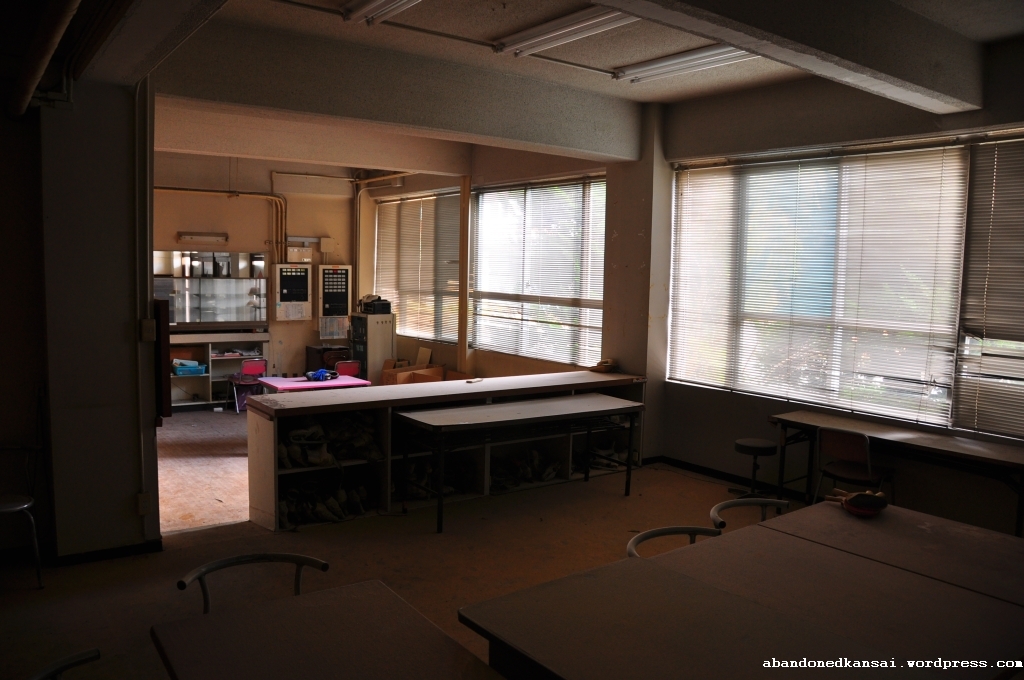
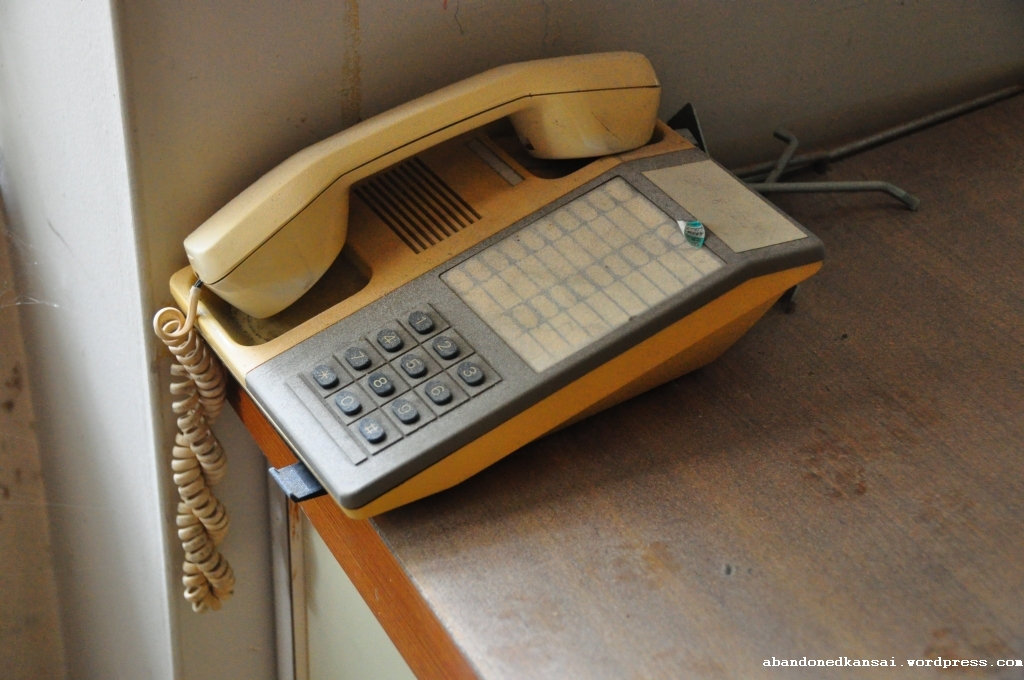
The first time I went to Osaka Expoland the sky was overcast (later it started to rain) and the place was empty except for a few construction workers and a guard – quite a depressing sight. During my second visit the whole area was flooded by warm light and crowded by happy families enjoying a nice spring day. The atmosphere couldn’t have been more different and I was kind of glad that they actually made good use of this really nice location as I thought they would tear down the whole place to build more apartment buildings and a shopping mall. It’s the first time I’ve seen a formerly abandoned place being reconverted and at least in this case it was a really good decision – although it means that I’ll have to go back there one day to find out what the future holds for Osaka Expoland.
Oh, and in case you are wondering what happened to the Caribbean Resort: It wasn’t demolished, but fenced off and therefore not accessible during my second visit in April.
(You can find out where Expoland was by clicking here.)
Recently I’ve been on a trip to Europe and of course I couldn’t resist to do some urban exploration outside of Japan for the first time. This posting is just a teaser, but there will be more pictures soon. Lots of them. Maybe you can guess where I went?
(Or you can find out where the picture was taken by *clicking here*.)
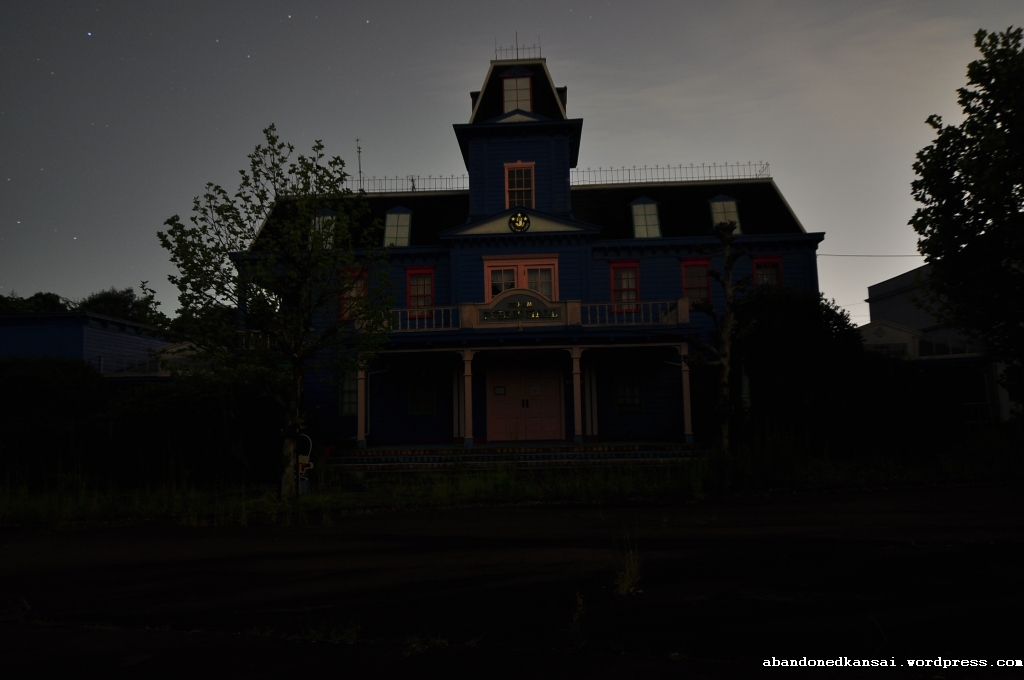
I don’t know why, but people exploring Nara Dreamland seem to be so drawn to the roller-coasters and merry-go-rounds that they totally ignore the not so hidden gem that is dominating the northern part of the Eastern Parking Lot: I’m talking about the building with the strange observation tower. And a strange building it was… A hotel, according to a Japanese hompage. But I found out about that fact weeks after I explored the building as I still was a bit unsure about its purpose.
Although the Nara Dreamland Hotel looks like a fortress (with its broken and boarded-up windows) there are actually at least two ways to get in. Mine was a quite surprising one: Through an unlocked door I closed behind me – a slightly stupid move at first sight, but it might have saved me from getting arrested as I should experience a few hours later.
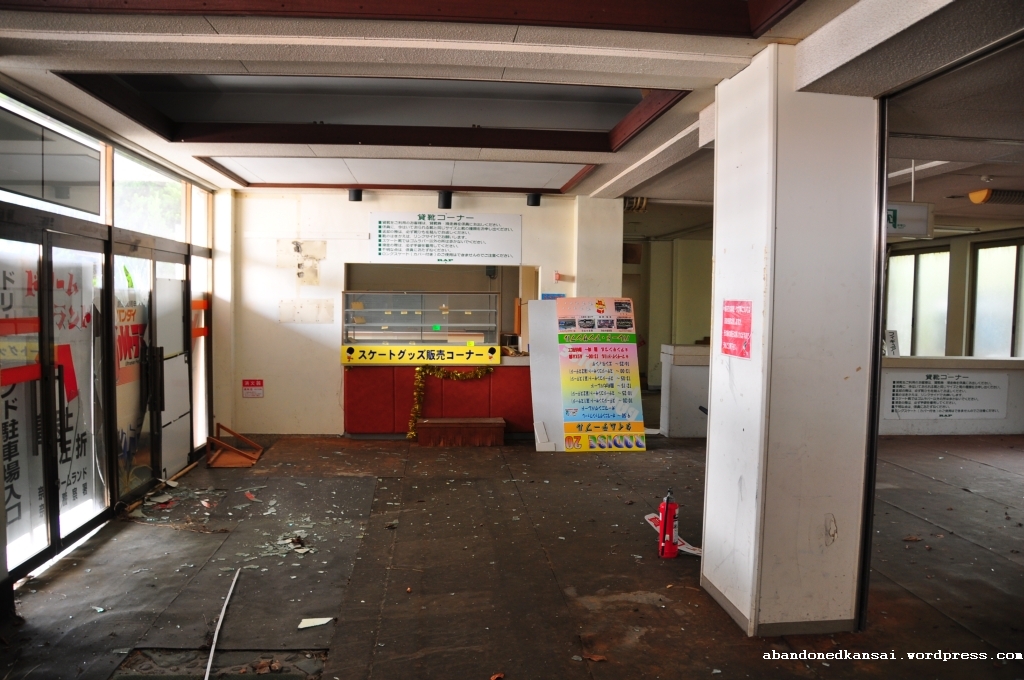
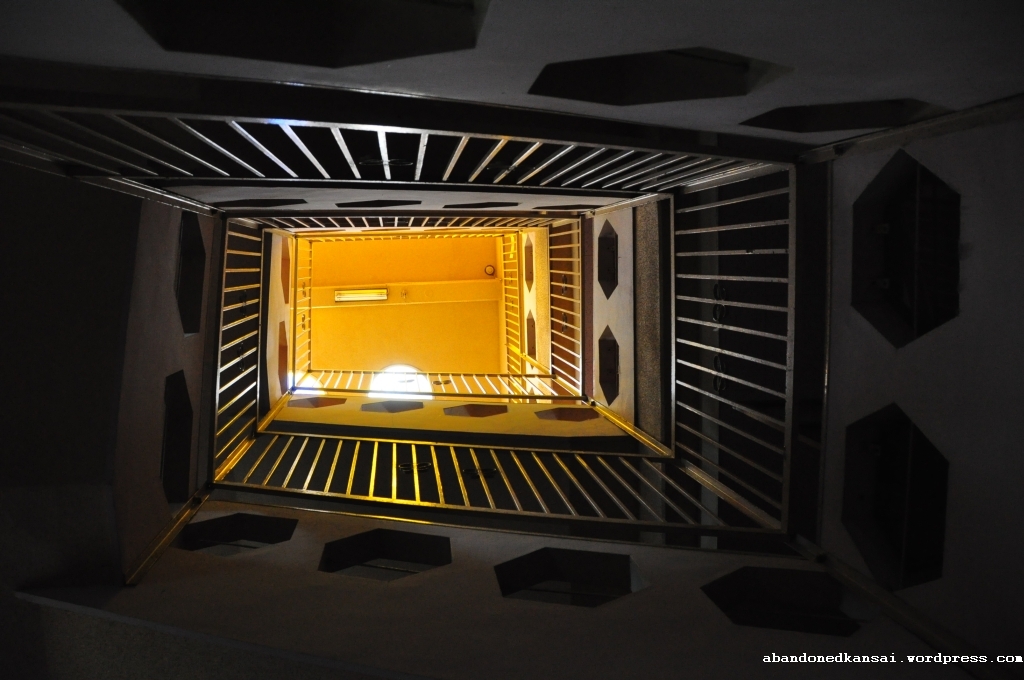
The first room I entered must have been a meeting room once, followed by a service counter for ice skate rentals and probably other things. Next to it was one of two former main entrances to the building and a quite impressive staircase leading up to the other floors.
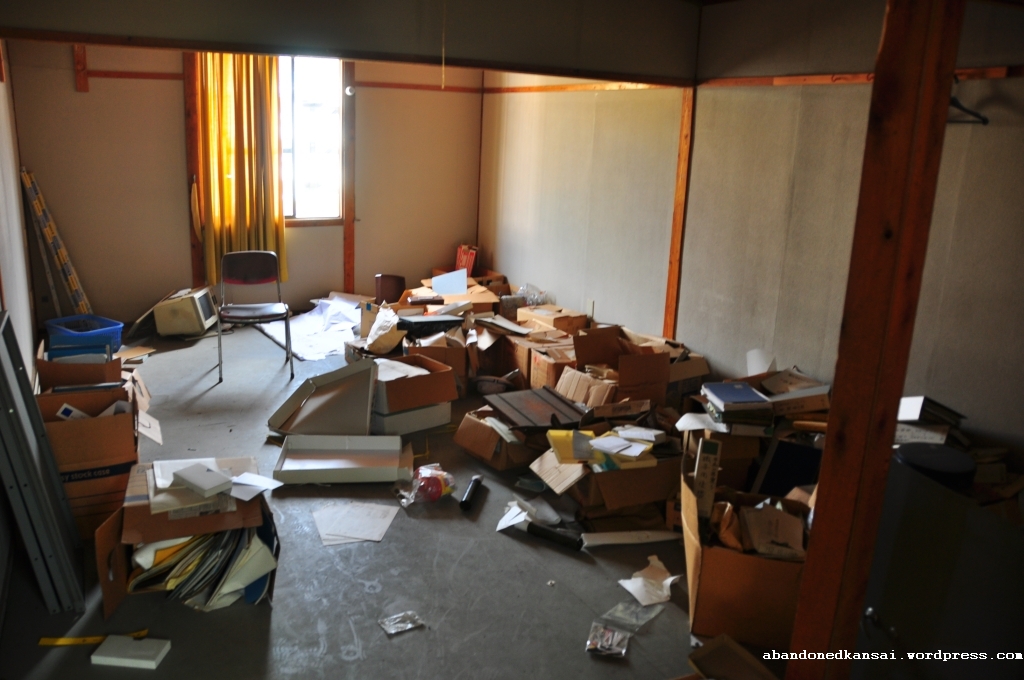
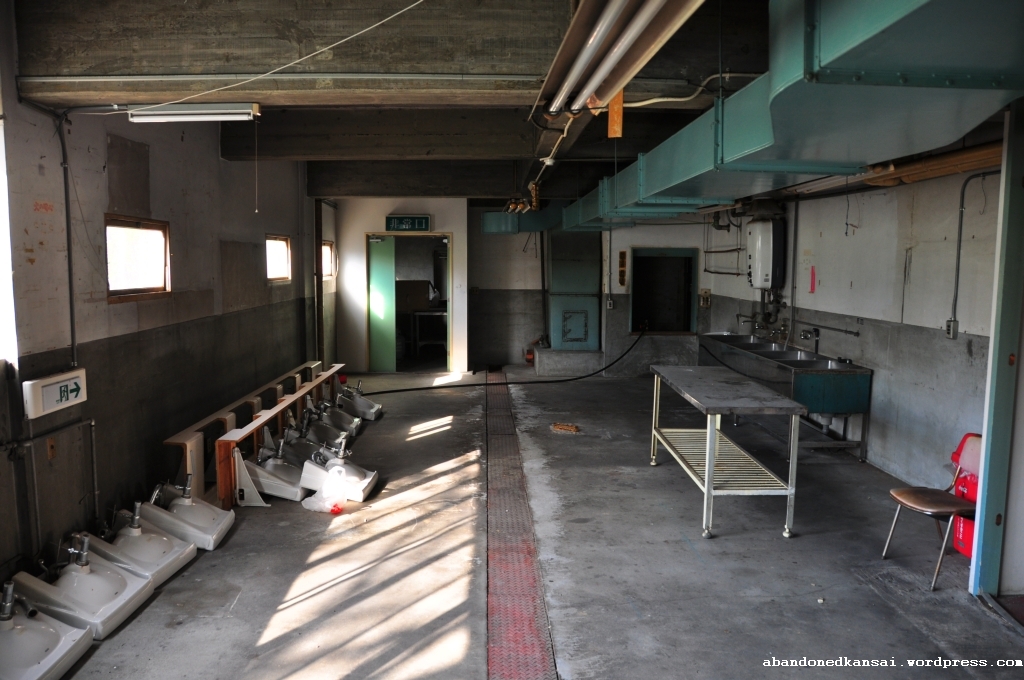
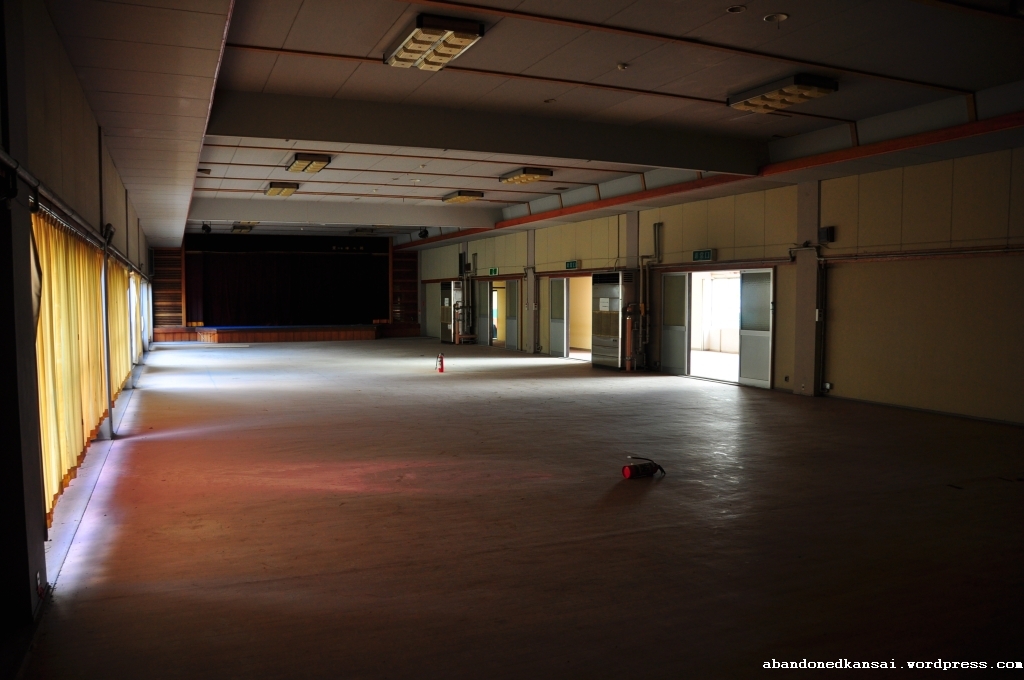
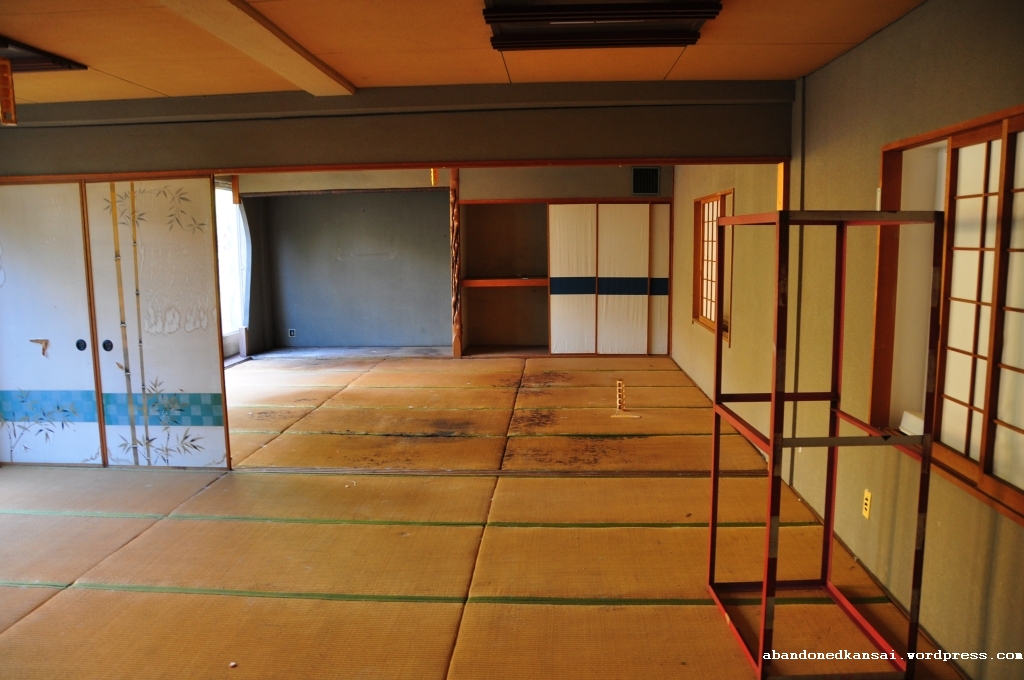
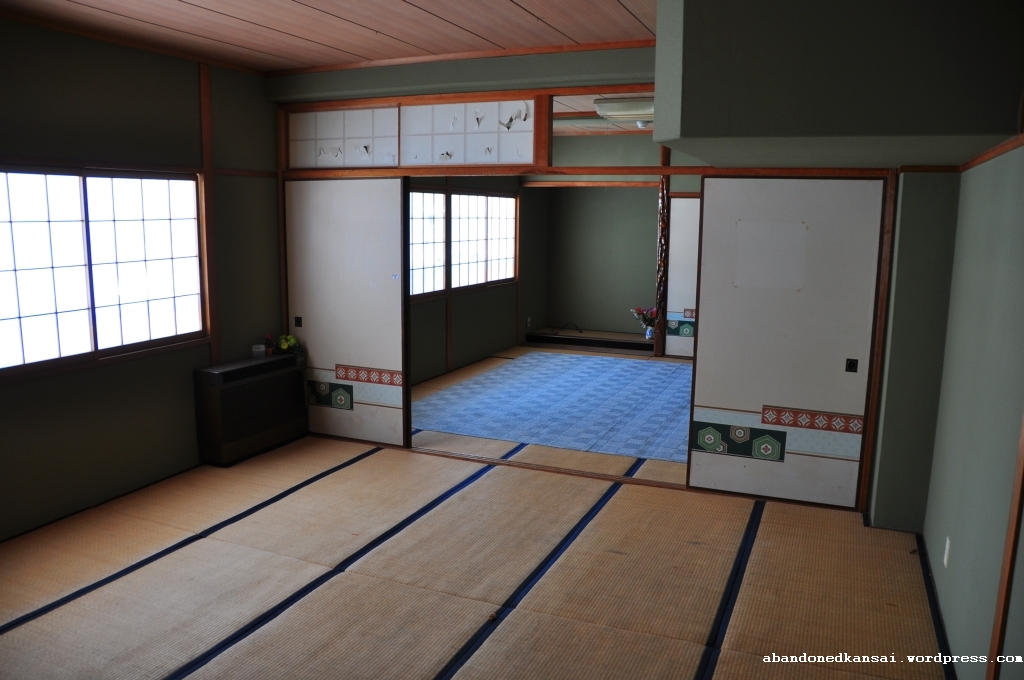
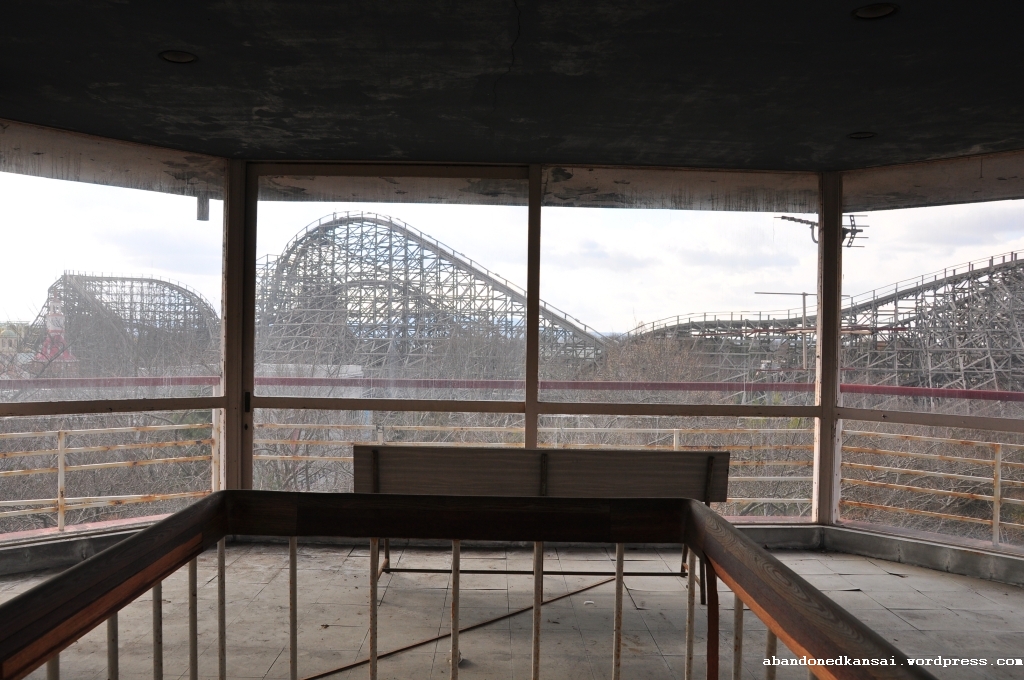
Roaming through the three floors I found a strange mix of all kinds of places: Offices, meeting rooms, private rooms, bath rooms, dormitory rooms, small and huge kitchens (several ones actually!), washing rooms, storage rooms, staircases, dark hallways, machinery rooms – a few of them locked, most of them accessible. Probably the most surprising room was a huge auditorium with a stage on the third floor. My most favorite floor of course was the observation tower. The view up there was absolutely stunning – luckily it didn’t paralyze me, because as I was enjoying the great view I saw a security guard on a scooter driving onto the parking lot! I found cover on the stairs leading down, giving me a good look at what was happening: The guard parked in front of the parking garage and went inside for a couples of minutes. After that he got back on his scooter again and drove the 30 meters right towards me to the hotel building. Now ten very, very long minutes began… until I saw the guy again, leaving. Luckily. I’m pretty sure he would have searched the building way more thoroughly if I had left the door on the ground floor open. Luckily he didn’t lock it when he left either, so I escaped with nothing more than a fright. That was in December of 2009 – a couple of weeks later I wasn’t that lucky when I entered the park itself and got caught by the guard only half an hour after I started taking pictures…
The Nara Dreamland Hotel is a massive haikyo that offers lots of diversity. It took me about 3 hours to explore and shoot the building and due to the arrival of the guard I got way more excitement than I was hoping for. As far as hotels go it was definitely one of the most interesting ones, way better than the One Dragon Hotel, the Koga CC House and the Kasagi Tourist Hotel – the lack of history was compensated by the relative absence of vandalism and the amount of items present. I have very, very fond memories of this exploration…
(For all your Nara Dreamland needs please have a look at the Nara Dreamland Special. For a look at the area around Nara Dreamland on GoogleMaps, including some fancy icons linking to articles on Abandoned Kansai and videos on YouTube, please *click here*. *Like Abandoned Kansai on Facebook* if you don’t want to miss the latest articles and exclusive content – and subscribe to the *video channel on Youtube* to receive a message right after a new video is online…)
Stumbling across “new” (to the internet) haikyo is always a special pleasure.
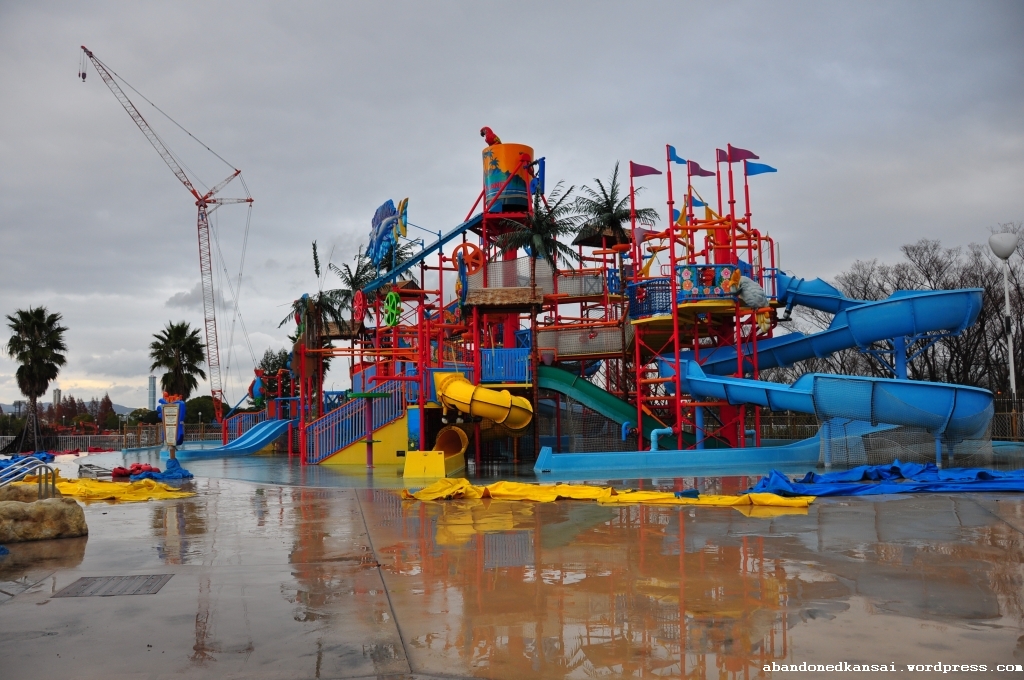
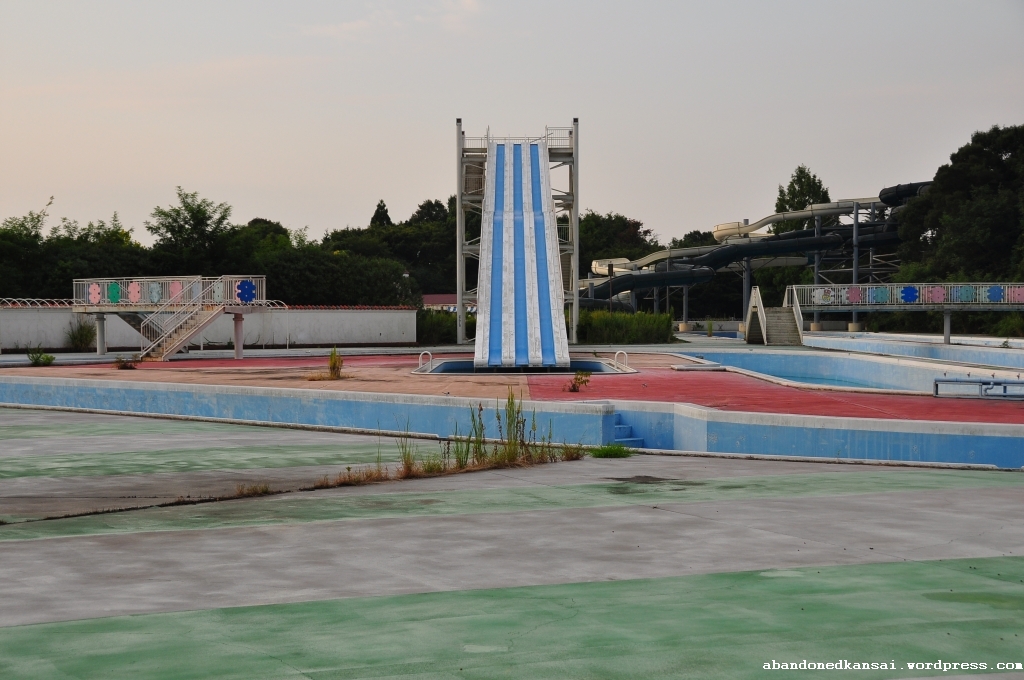
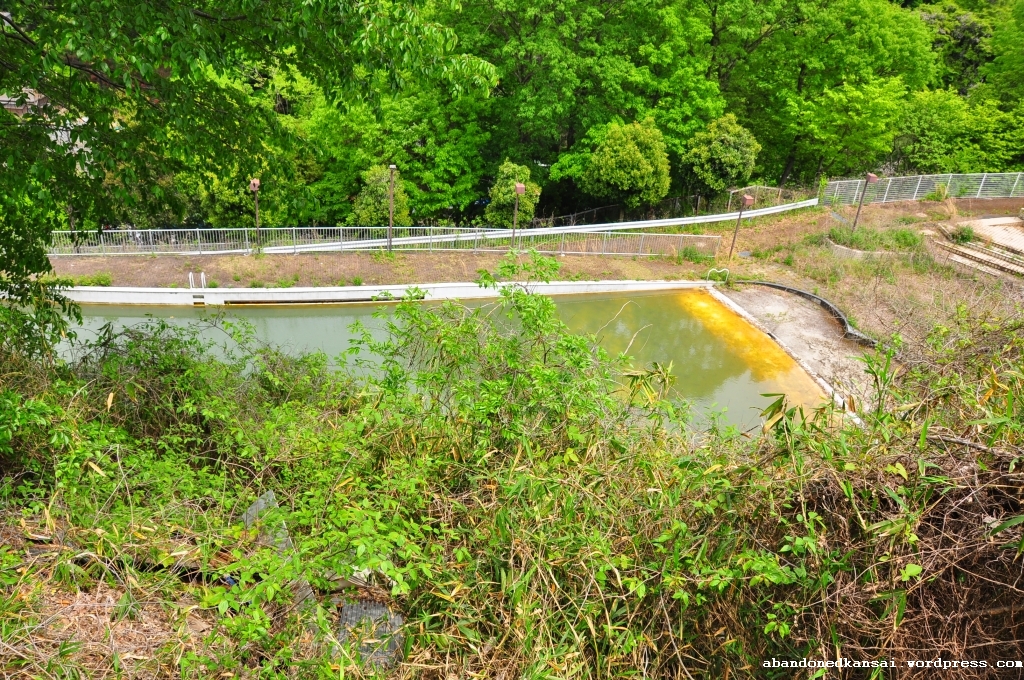
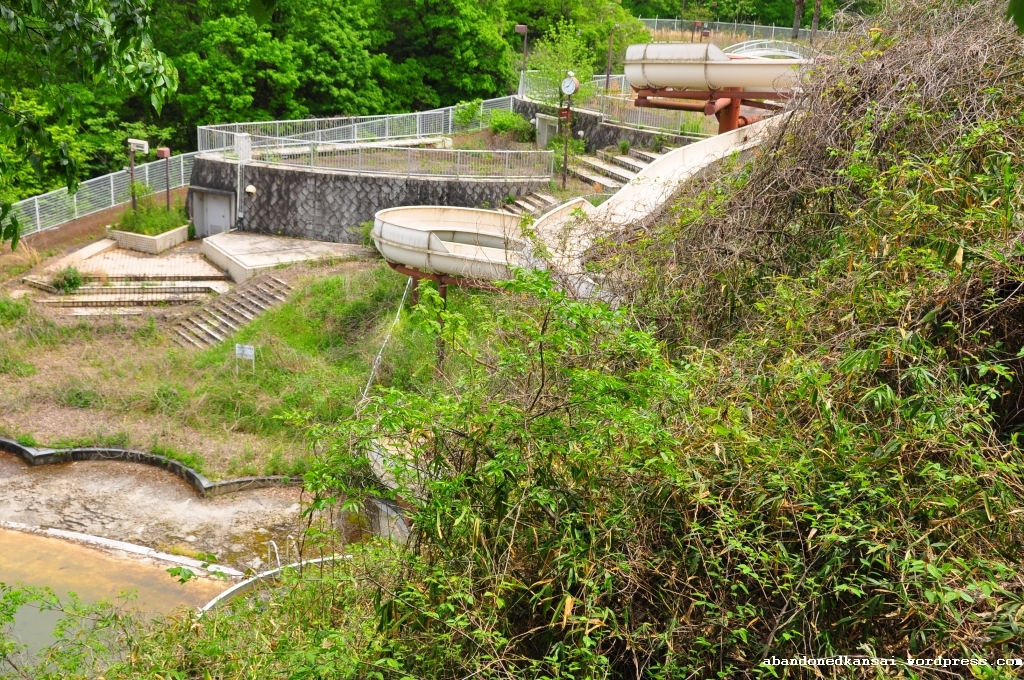
In mid-May, right after Golden Week, I was walking around Kyoto to find an abandoned art museum (which I found and will write about in the weeks to come) when a big waterslide caught my eye. I got closer and, to my surprise, found the place abandoned. Since it was the sixth haikyo I went to in just eight days I was pretty exhausted and not at all in the mood to enter the place, although I think it is possible to do so without taking too much effort. Instead I circled it and took some nice pictures from the outside.
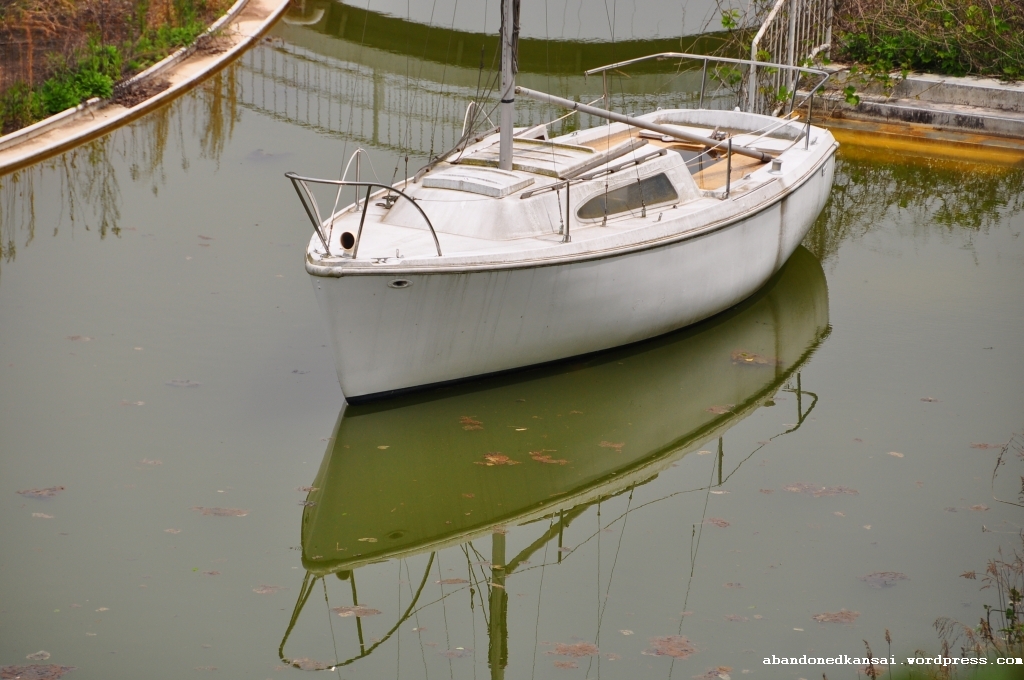
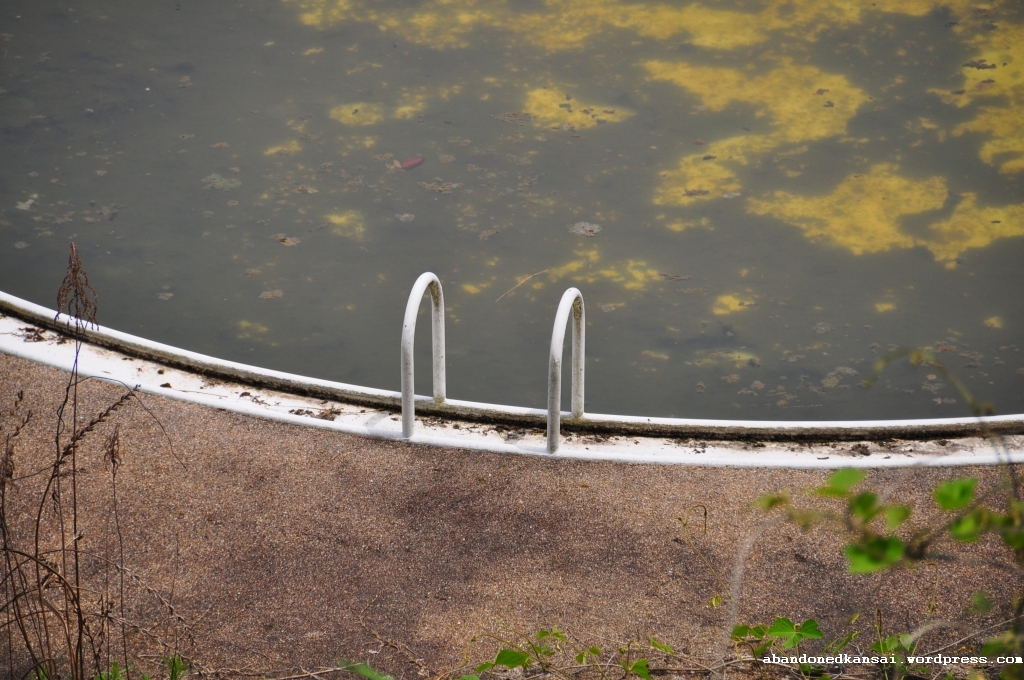
“Waterland” wasn’t that big, only the pretty decent water slide and three pools, but it nevertheless looked like a nice place to hang out at on a hot, humid summer day – judging by the disgusting water colors it seems the place was closed down quite a while ago and nobody even took an effort to leave it in a clean state. On the bright side: At least from the distance there weren’t any signs of vandalism, making it a place worth going back to. So don’t be surprised to see “Kyoto Waterland Revisited” in a few months…
(For people who prefer to have a look at the pictures in sequence: Please click here!)
It seems like Nara Dreamland is quite popular lately. The statistics on WordPress indicate that most of the visitors I get from search engines looked for information about Dreamland. Well, since the once so vivid memories of a crazy Japanese dude yelling like a madman and threatening me with calling the police to get me arrested slowly fades I guess it’s about time to give people what they want: Two more postings about the Dreamland with leftover pictures I took in December. I still wouldn’t recommend going there, and I doubt that I ever will again, but should already taken pictures been wasted?
This posting will be all about the Eastern Parking Lot and the Parking Garage, the next one will show some interior shots of the building with the observation tower.
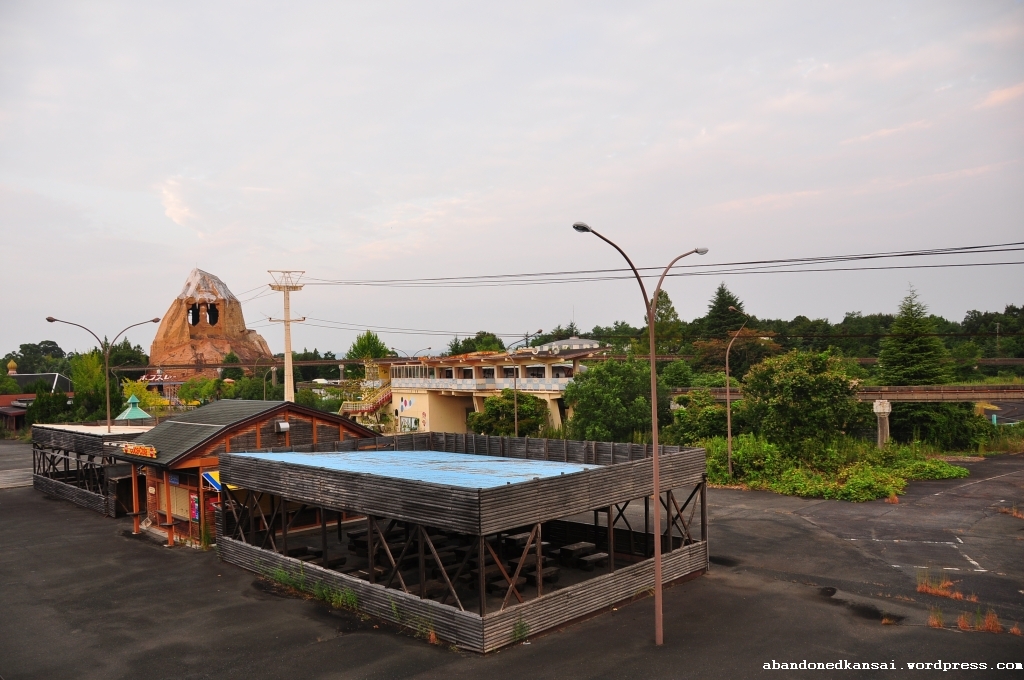
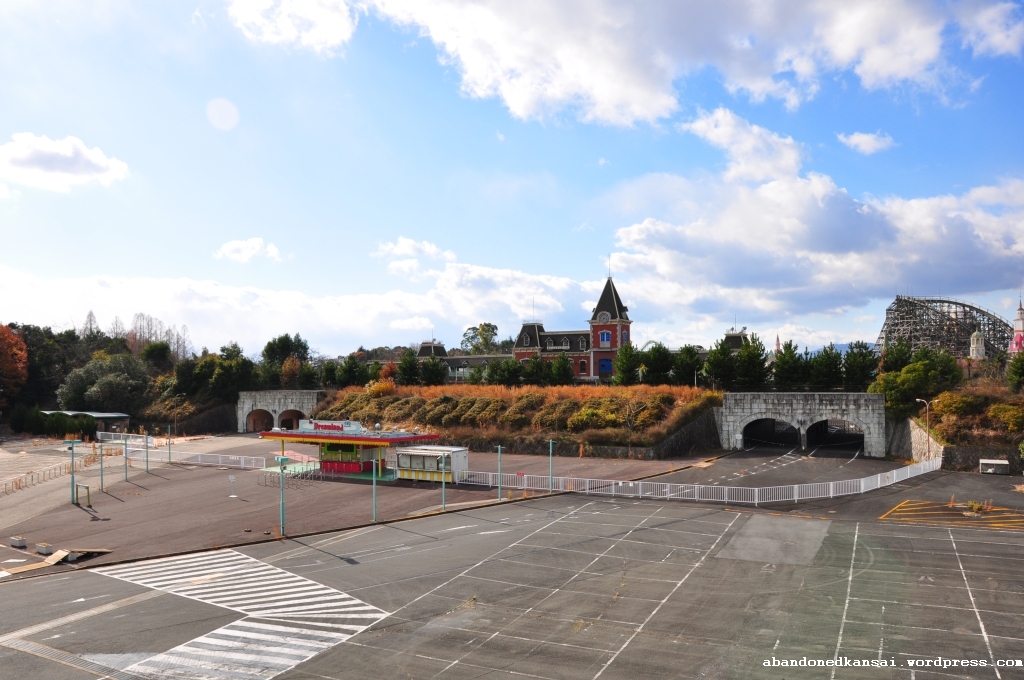
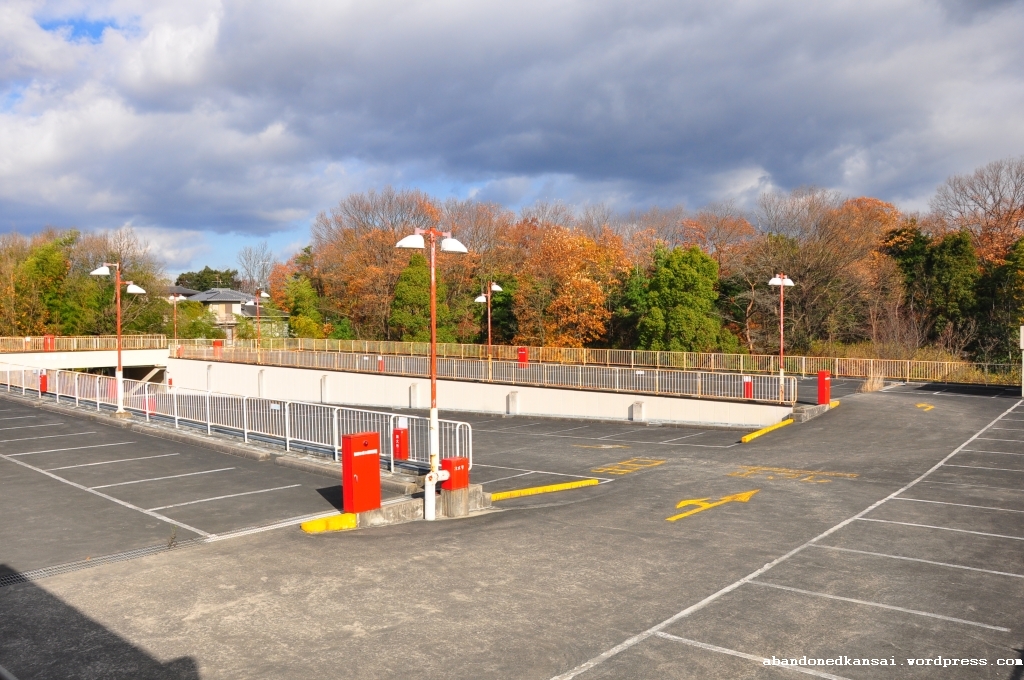
The Eastern Parking Lot is easy to find as it is part of the main entrance – most of the people entering Nara Dreamland when it was still open passed through here. There are two ways to enter the area and both involve just stepping over a rope; no fence, no gate, no nothing; but a guard showing up once in a while on a scooter. Coming from the east you’ll see the former pay booths for the parking lot, with the phones and stools still in place. The main entrance is now right in front of you and to your right there is a white building with shutters down (it seems like it was closed down even before the rest of the park was, judging by the pictures I saw on the net) and a the Parking Garage – opposite of that building complex are a small building with windows, I guess it was a souvenir shop once, and a huge building that will be the topic of the next blog entry…
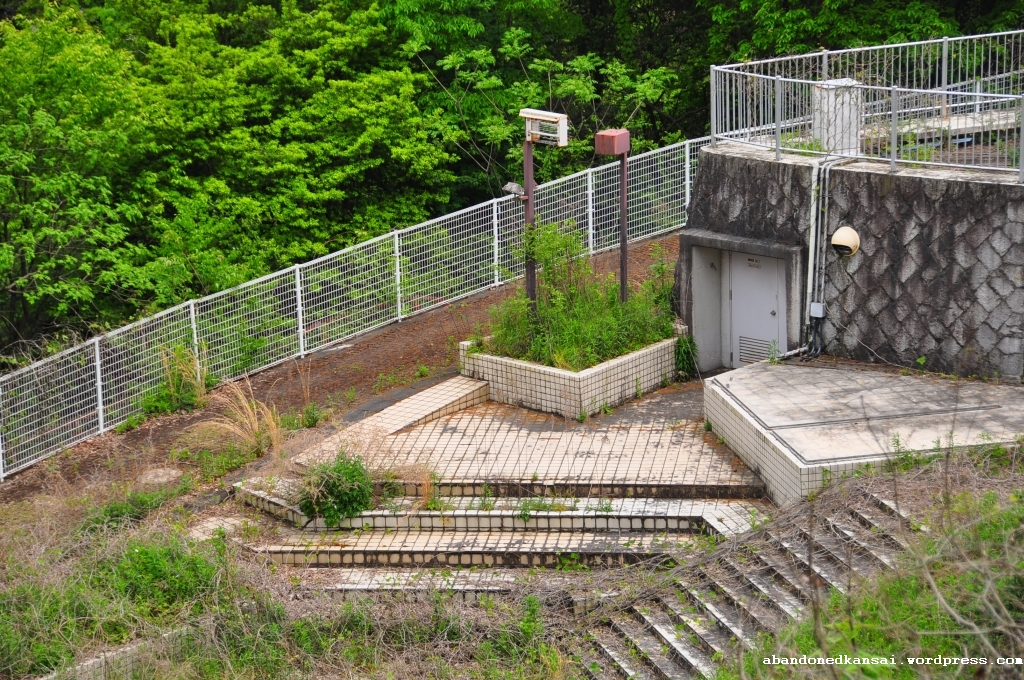
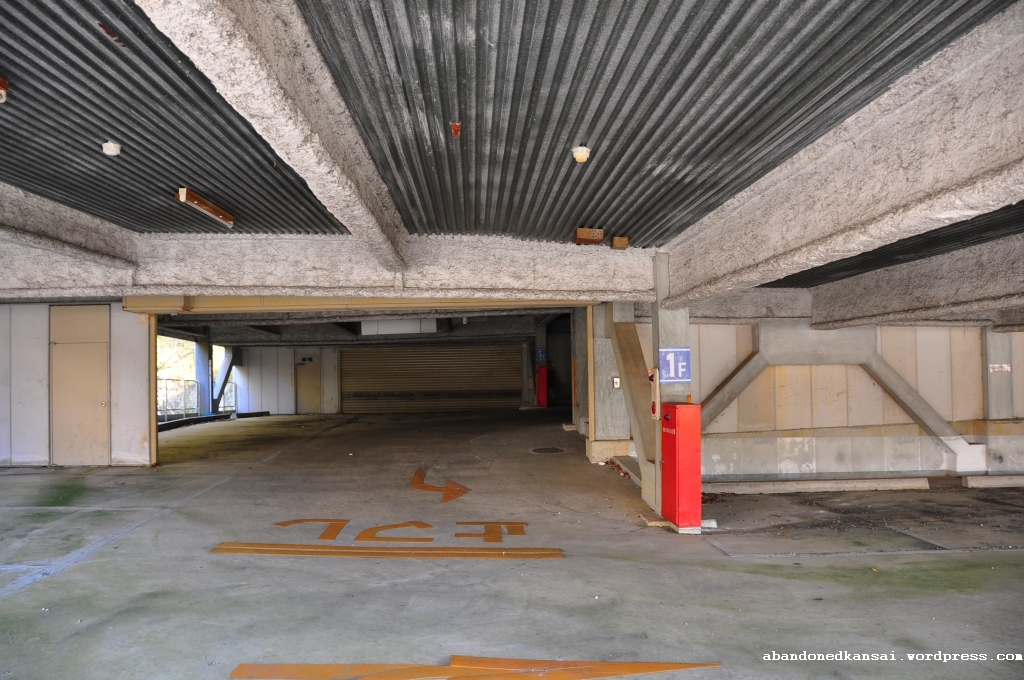
The Parking Garage is 4 floors high (including the ground floor) and the different floors are sealed by massive shutters. Next to the (locked) gaterkeeper’s office is a defunct elevator and next to that is a staircase without a door. Going up there you’ll realize that all the doors to the floors are locked – but to my total surprise the last door at the top isn’t. Behind it you’ll find a small room with some machinery and a great view on the top of the Parking Garage.
Overall the Eastern Parking Lot and the Parking Garage are not that spectacular – but writing about them offers me a good opportunity to post some more pictures and it gives me a great lead-in for the next posting that will deal with the exploration of the former hotel and its observation tower. And phew… that is quite an amazing haikyo on its own!
(For all your Nara Dreamland needs please have a look at the Nara Dreamland Special. For a look at the area around Nara Dreamland on GoogleMaps, including some fancy icons linking to articles on Abandoned Kansai and videos on YouTube, please *click here*.)
One quite unspectacular but rather rarely covered *haikyo* in Kansai is the Rokko Ropeway. While the Maya Ropeway and the Rokko Cable Car are still in use, the now forgotten Rokko Ropeway was abandoned and mostly destroyed in 1944 after a mere 13 years of business.
Since I only found Japanese sources about this haikyo some of the following information might have been mixed up in translation, but from what I understood the Rokko Ropeway was built by Hankyu Dentetsu in close neighbourhood to the still operating Rokko Cable Car (run by their competitor Hanshin Electric Railway – which is part of Hankyu since 2006…) in 1931 – resulting in fierce competition for customers; Rokko Ropeway’s big advantage: excellent bento boxes! In 1943 both companies were ordered to shut down their lines as the military was in need of metal. The Rokko Ropeway was closed for good on 1944-01-11 and the demolition process began. Since it wasn’t completed before World War 2 ended there were thoughts to rebuilt the ropeway, but those plans never came through.
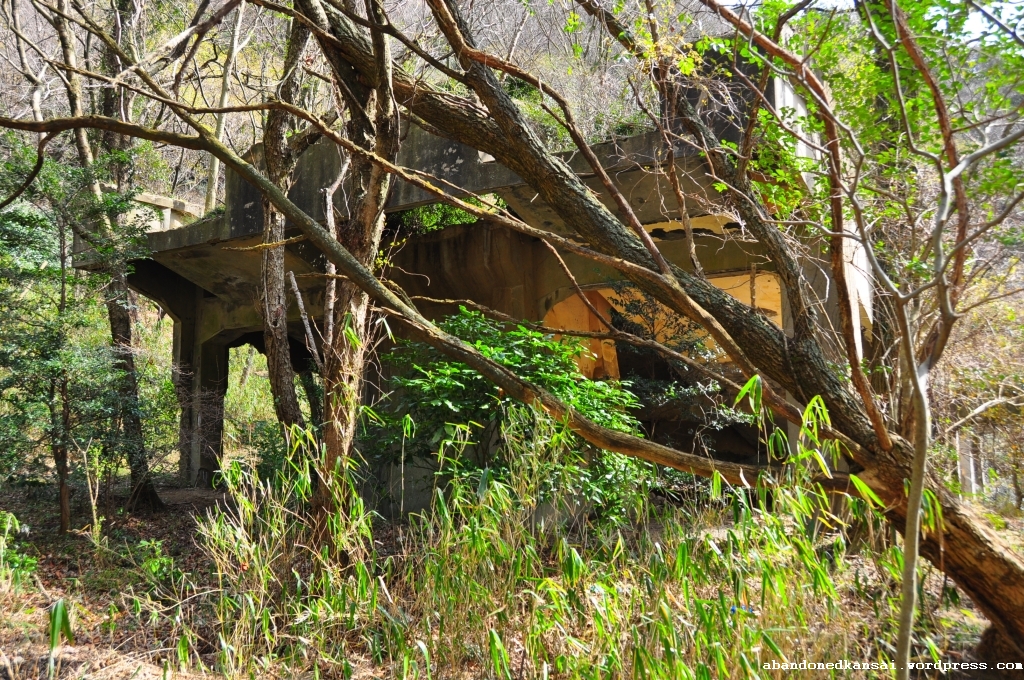
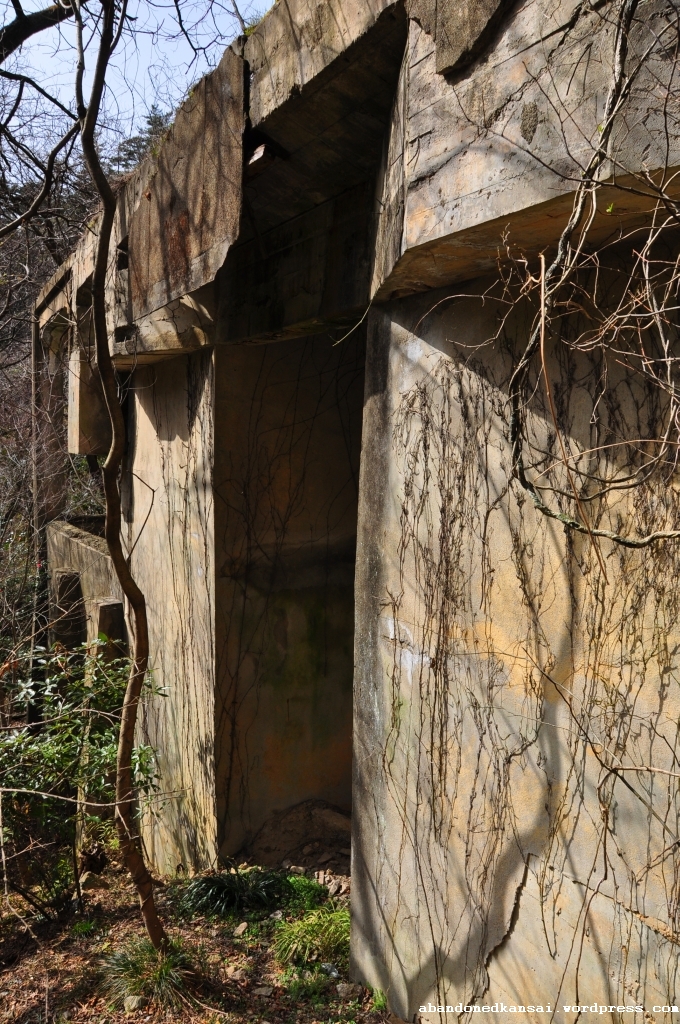
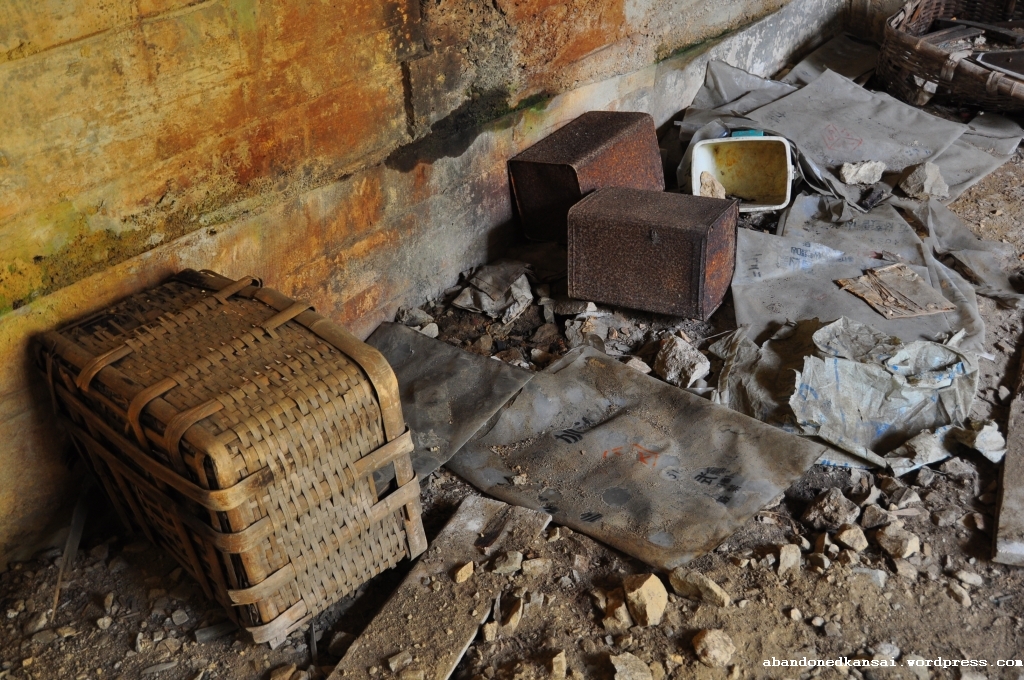
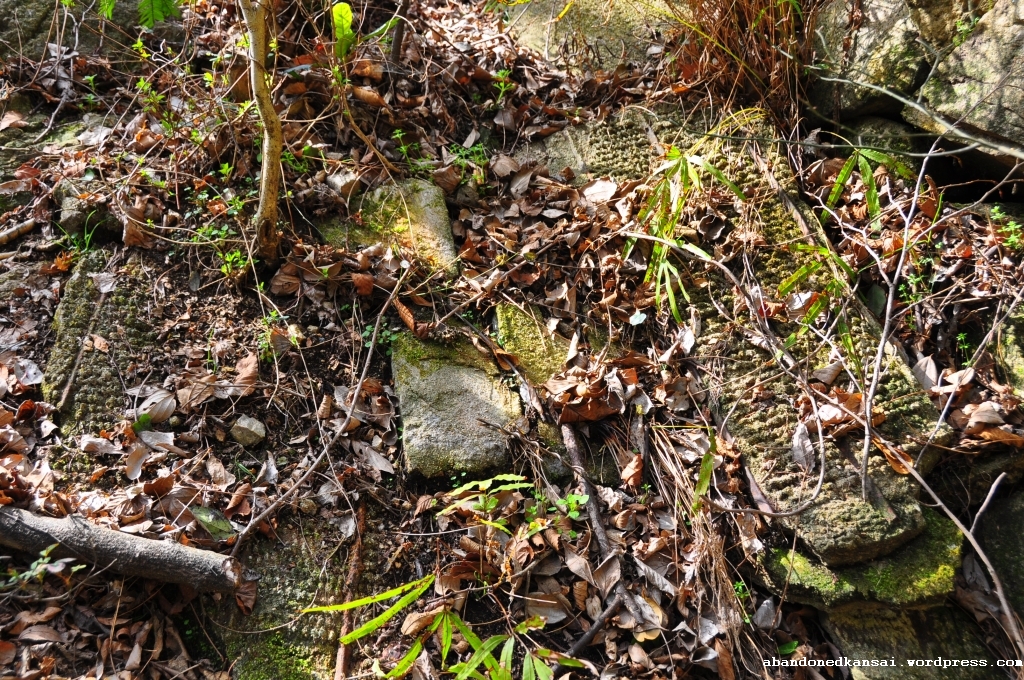
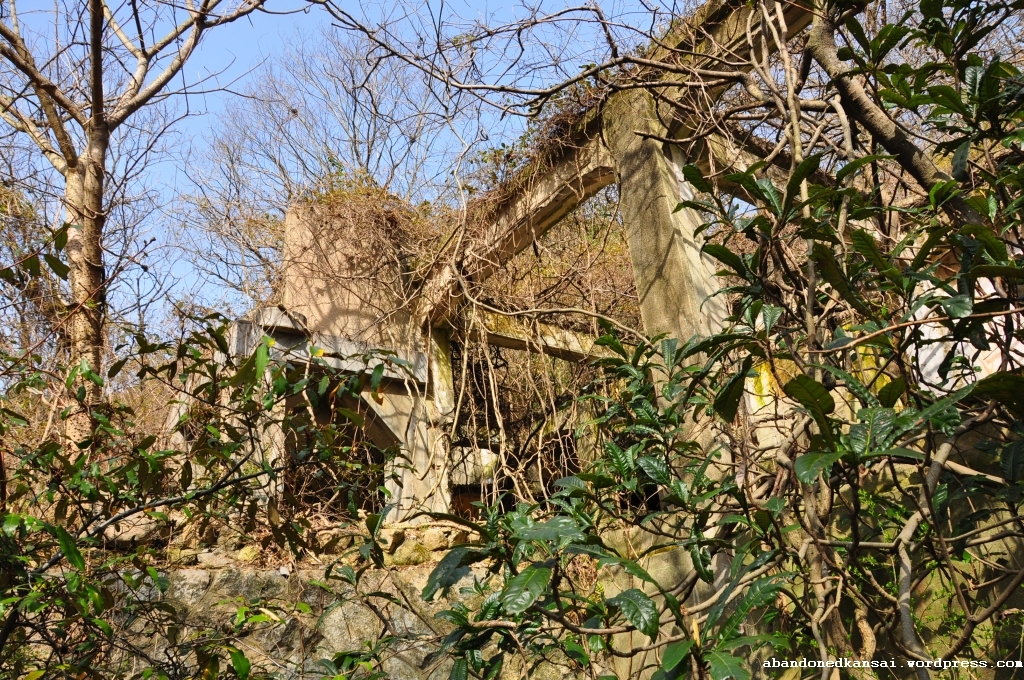
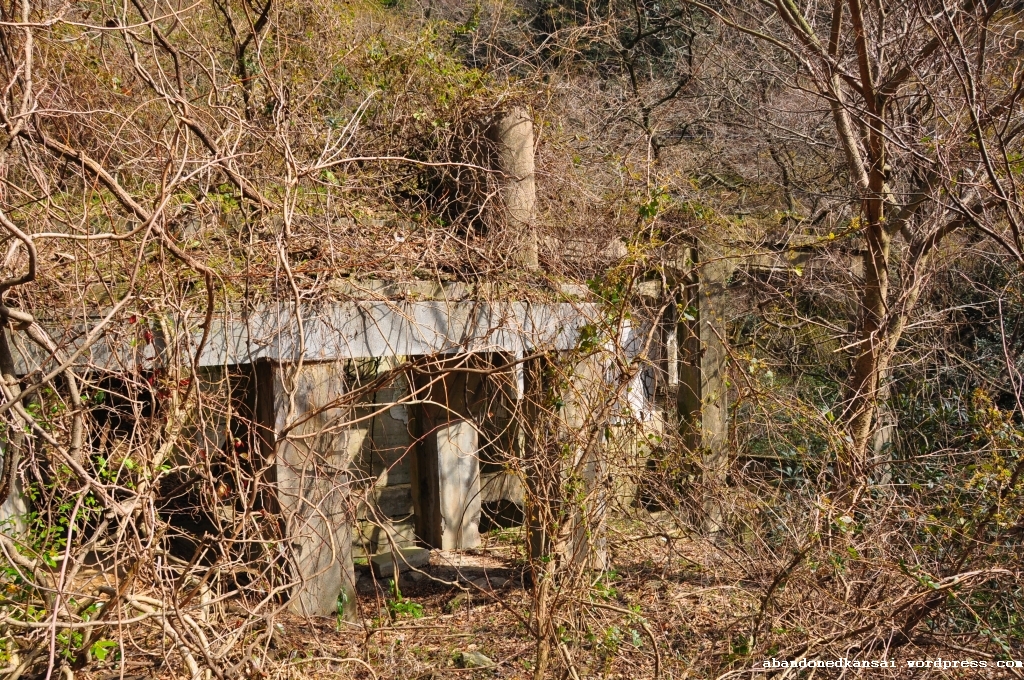
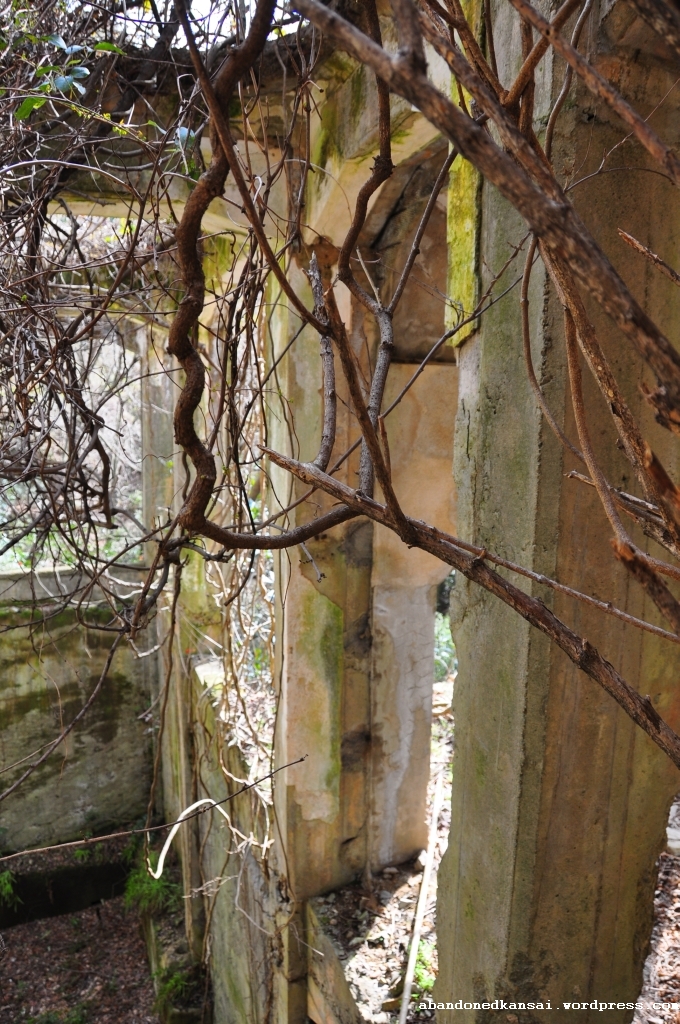
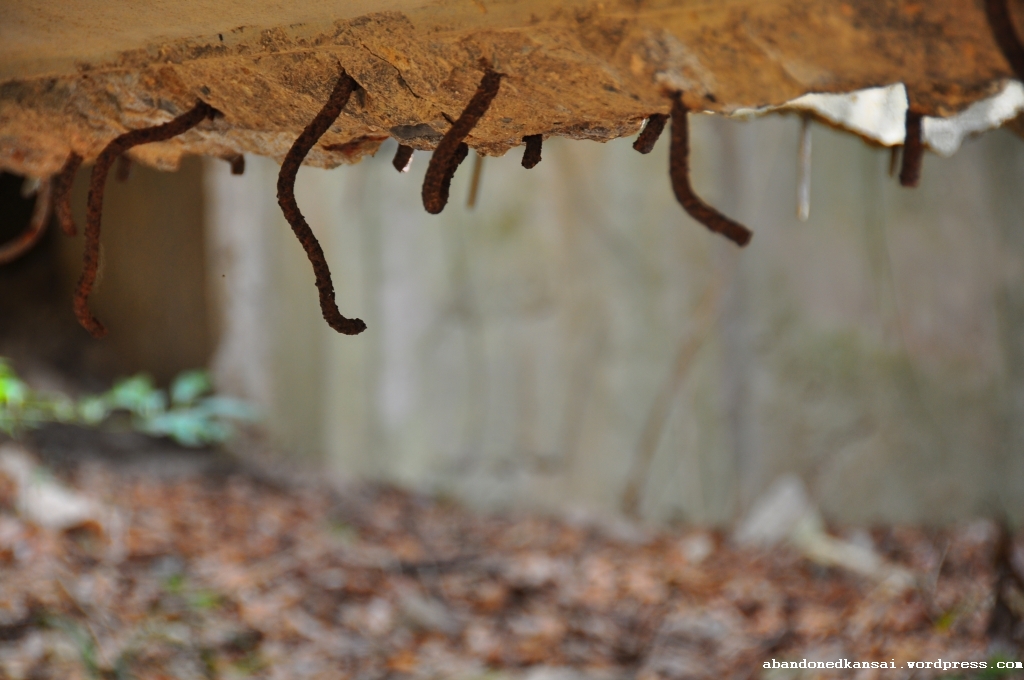
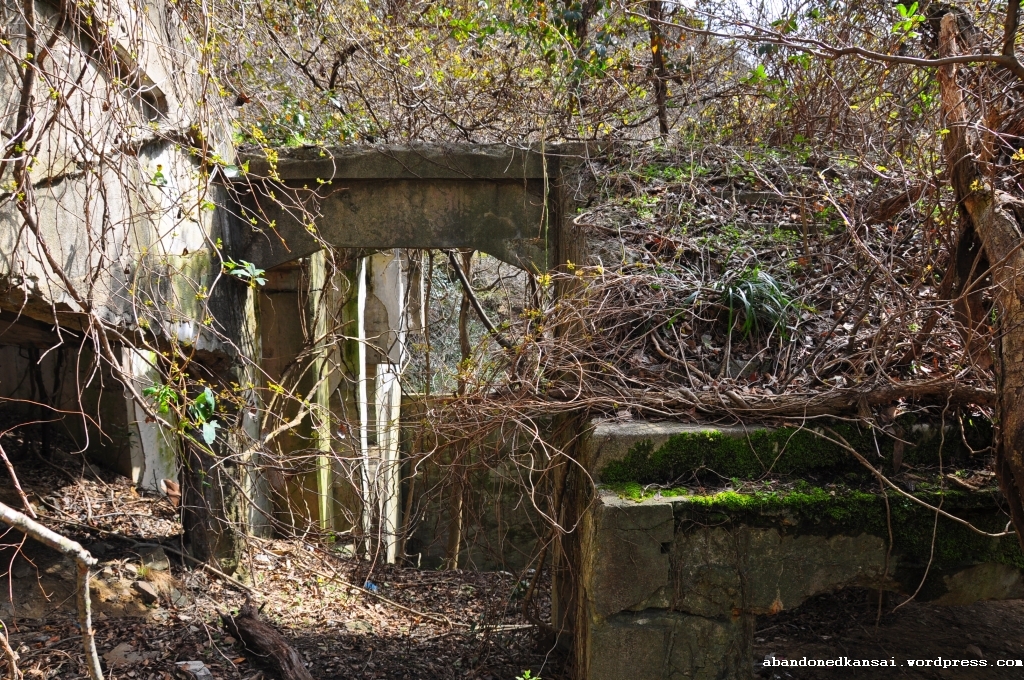
Today the skeleton of the valley station marks the beginning of a hiking trail up to the Rokko Mountains. Sadly there is barely anything to see and I guess in summer a lot of hikers even pass by the remains without noticing them as they are almost completely overgrown. When I went there in March of 2010 on one of the first warm days of the year the Rokko Ropeway was kind of a sad sight with only a few items left in an opening at the back side of the construction – the rest is basically steel and concrete unspectacularly rotting for more than 60 years… And since the location is in the middle of nowhere, there is not even an interesting story I can tell about exploring the place.
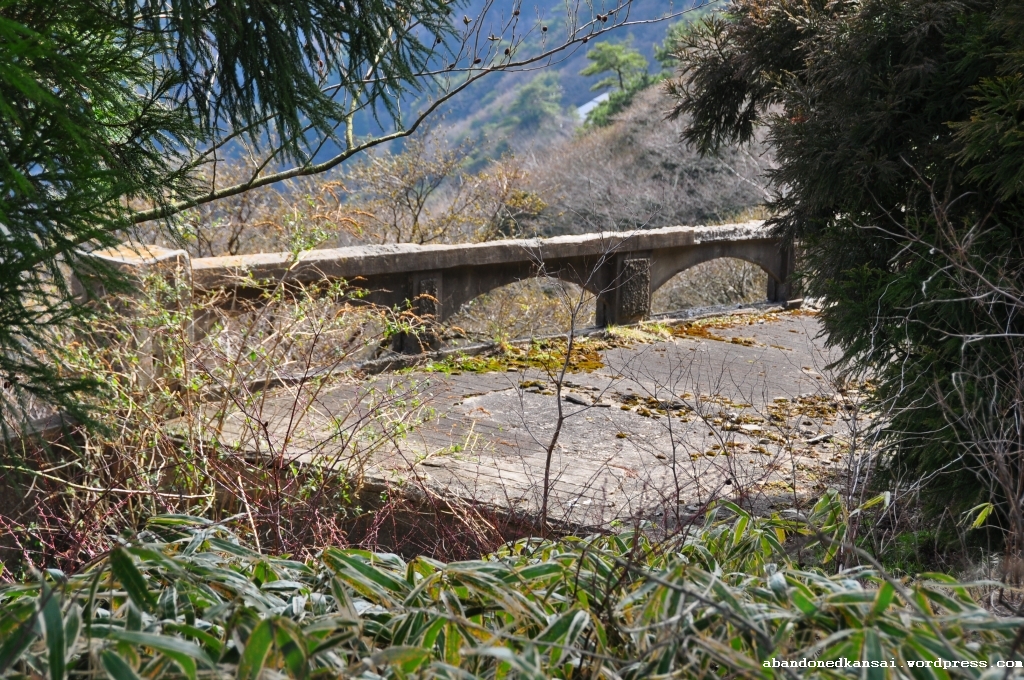
But the valley station still has it better than the top station, which I never saw on the internet and only once on a map – it’s supposed to be close to the Rokko Post Office and the Mount Rokko Hotel, but the only thing left is a concrete footbridge mostly shielded by trees and private property – not a building close-by, but at least I could snatch two shots of the thing. (The hike from the valley station to the top station is nice though. About 400 meters height difference with some scenic views.)





































 Abandoned Kansai