Feeds:
Posts
Comments

Archive for the ‘Closed’ Category

Abandoned Kansai in Hokkaido… Who would have thought that? Up till now I never made it further east than the center of Japan’s main island Honshu. I limited myself to the western half of Japan, because that was the reason I started this blog. Heck, initially I wanted to limit myself to the Kansai region; hence “Abandoned Kansai”, not “Abandoned Japan” or “Abandoned West Japan”. But then the “once in a while” hobby urban exploration turned into a regular thing and only weeks later I went to different regions, then to different islands – and in spring of 2012 I did a *haikyo trip to Okinawa* together with my urbex buddy *Michael Gakuran*. “What’s next?” was the big question, and the answer was found quickly – we already explored Japan’s most western prefecture, so we kind of had to explore Japan’s most eastern prefecture, Hokkaido!

Usually I plan my urbex trips on short notice. One time I brought my urbex equipment to work on Friday to see how I feel during the day, booked a hotel in the afternoon and left for a weekend trip right after work. Flexibility like that is impossible when partnering up for a long distance trip, so Michael and I booked plane tickets weeks ahead – and according to the weather forecast we ended up with a rainy weekend; a long weekend even, to which we added some days. Luckily the forecast was as reliable as always in Japan and so 4 out of my 5 days in Hokkaido were sunny and slightly snowy, only the last one came with 8° Celsius and rain.

Since I arrived almost a day earlier than Michael the original plan for me was to do some sightseeing in Sapporo. To my surprise the weather was sunny to cloudy, no rain at all, so instead of visiting indoor classics like the Sapporo Clock Tower, the Ishiya Chocolate Factory or the Sapporo Beer Museum I opted for a little hike to Mount Teine, once home to some of the sports events at the 1972 Winter Olympics in Sapporo. One day of good weather? I had to take advantage of that! Then it turned out that the next three days were pretty nice, too – which is a big advantage when doing urban exploration as you spend a lot of time outdoors…
On the last day Michael and I split – while he drove for hours to infiltrate a location he asked me to keep secret for now, I went on to do some really touristy stuff, like visiting the old harbor town of Otaru and taking a glass blowing lesson. My favorite touristic place though was the Sapporo night view from the freshly renovated observation platform on top of Mount Moiwa – stunningly beautiful! It was soooooo cold up there, but the view was absolutely amazing! I went there on the first day before visiting the Sapporo White Illumination and I strongly recommend to pay Mt. Moiwa a visit – I would love to shoot a time-lapse video from up there…
Overall the trip to Hokkaido was a great mix of urbex and tourist stuff. Five days I really enjoyed, probably more than any five consecutive days I spent in Osaka this year… So this is a list of the abandoned places I ended up visiting:
Advantest Research Institute
Bibai Bio Center
Canadian World Park
Hokkaido House Of Hidden Treasures
Horonai Coal Mine Substation
Mt. Teine Ski Lift
National Sanatorium Sapporo
Olympic Ruins Of Sapporo 1972
Sankei Hospital
Sapporo Art Village
Showa-Shinzan Tropical Plant Garden
Tenkaen – Japan’s Lost China Theme Park

(If you don’t want to miss the latest article you can *follow Abandoned Kansai on Twitter* and *like this blog on Facebook* – and of course there is the *video channel on Youtube*…)

Read Full Post »

Abandoned or not abandoned? That was the question when my haikyo buddy *Michael* and I arrived at the New Zealand Farm in Hiroshima (a.k.a. the Rainbow Farm). It clearly wasn’t demolished, which is always a big relief when finally reaching a location to explore, but getting close to the place it was clear that we would be in for a ride at this supposedly abandoned theme park…

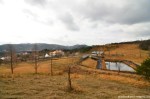
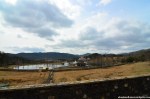
Entering the meticulously clean parking lot by getting around a knee-high road block things didn’t look very abandoned. Nevertheless a sign there confirmed what I knew from my long hours of research on the internet: The New Zealand Farm was closed more than three years ago on 2008-08-31. But to our surprise the entrance area looked very preppy. The hedges and trees were well-trimmed, with freshly cut branches waiting to be removed at some parts. Things just didn’t add up – causing a bad feeling in my stomach. Michael was all excited and ready to jump a fence or disappear into the bushes, but I was very hesitant. So we agreed on having a look from the outside first before doing something that might get us into trouble. Which was good thing in this case, because a couple of minutes later, still on the huge parking lot, we ran into a security guard and several maintenance workers. (On the other hand: Later during the *road trip* Michael’s great gallantry would get us to a place we didn’t even expect to reach.) Since Michael’s Japanese is way better than mine and since he’s the more voluble person anyway I stayed in the background while he was talking to the main guy. From where I stood I wasn’t able to hear their conversation, so I’m still not sure which language they were talking in (Japanese, English or a more universal one…), but after a couple of minutes a smiling Michael came up to me and pointed ahead – we had one hour to explore the Hiroshima New Zealand Farm! (We were probably the first people ever to do so since this location never appeared on any Japanese or any other haikyo blogs – and most likely never will given the circumstances.)

What I already knew about the Hiroshima New Zealand Farm was that it was opened in July of 1990 and closed on August 31st 2008. This agricultural theme park was run by a company called Farm Co., Ltd. that owns farm parks all over Japan. Four of them were New Zealand branded, but only the one in Tohoku (where the earthquake and the tsunami struck last year…) is still up and running – the other three were closed in the late 00s. The remaining dozen parks are served by about 700 employees and have all kinds of themes: Austrian, German, Japanese countryside, … The concept is basically always the same: Giving children and their families the opportunity to spend a day amidst tamed nature. The parks are usually pretty big and feature attractions like a petting zoo, an animal race track (sheep… yes, a sheep race track!), kid friendly rides like a hill slide, horse / pony riding, miniature golf, go-kart races or a kids train, paddleboats, exhibitions and different shops (like a bakery or a milk processing facility) where you can witness or even participate in making fresh bread, yoghurt and butter – and of course there is the usual array of restaurants, BBQ areas and snack shops. Buildings are named according to the theme, so in this case we saw the “Hamilton Restaurant” and the “Kiwi Museum”. Everything merges beautifully in hilly landscapes. High-tech attractions like at Universal Studios Japan (USJ) are nowhere to be seen – those kinds of amusement parks have a rather different target audience. Unlike USJ and its major competitors the farm themed parks are pay-as-you-go amusement parks – which means that you can enter for little money (in this case 600 Yen, children and senior citizens only 300 Yen), but then you have to pay additionally for every single attraction; usually between 400 and 600 Yen – which can add up quite a bit over the course of a whole day.

What I didn’t know about the Hiroshima New Zealand Farm was that it was just closed, but not abandoned – unlike its *sister parks in Yamaguchi* and Shikoku. About half a dozen maintenance workers make sure to keep vandals and other nosy good-for-nothings out and take care of the vast meadows and countless big and small buildings – it seems like the destiny of this New Zealand park is still uncertain and that Farm Co., Ltd. has yet to decide what to do with it. Until then some long-serving employees keep their jobs.

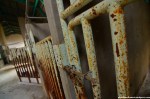
I’ve been to *several abandoned theme parks before (and after…)*, but never to one that was only closed. Which made this experience unique and eerie at the same time. With the slowly decaying buildings in the outskirts of the premises it felt like an abandoned theme park, but overall it was in way too good condition – it was actually kind of confusing to see no signs of vandalism whatsoever. Nothing. Not even a broken window. At the same time climbing frames were getting rusty, colors were losing their intensity and wooden panels were getting brittle. We were actually told to not cross a certain bridge as it wasn’t considered safe anymore.

Exploring the closed by not abandoned Hiroshima New Zealand Farm was an absolutely fantastic experience, though rushed in parts. There was so much to see, so many attractions to go to. So many little things to discover, like the small road between the buildings at the village square, or the bunny welcoming visitors big and small to the petting zoo halfway up the main hill – and even further up was a kart track of decent size. It was almost a little bit like Shigeru Miyamoto described his childhood neighborhood explorations in David Sheff’s book “Game Over” – you never knew what to expect behind the next corner, behind the next hummock…

(If you don’t want to miss the latest article you can *follow Abandoned Kansai on Twitter* and *like this blog on Facebook* – and of course there is the*video channel on Youtube*…)

Addendum 2014-07-15: The Hiroshima New Zealand Farm has been turned into a solar park recently – R.I.P.!

Read Full Post »

« Newer Posts