Feeds:
Posts
Comments

Archive for the ‘Hiking’ Category

When exploring abandoned places you are barely ever the first to visit, mainly because you have to find out about them somehow, which means that somebody had to write or tell you about them – so pretty much the best case scenario is that you haven’t seen too many photos and videos about a location before visiting it. That applied for most spots on my *haikyo trip to Hokkaido*, which is quite unusual, but Hokkaido isn’t exactly popular amongst foreign urban explorers (or Japanese haikyoists…) since it is rather off the beaten tracks. Those barely spoiled locations are especially exciting to explore, since there is only little known about them – how to get in, condition, size, dangerous parts, security…
Whether that’s a good thing or not lies in the eye of the beholder. I like my explorations with as little surprises as possible, to be honest with you, but at the same time I favor locations that haven’t been photographed to death; preferably places that are in the middle of nowhere with not a soul within a couple of kilometers. About 75% of the locations I visited in Hokkaido I knew little more about than their names and a handful of photos before exploring them myself – but the Mount Teine Ski Lift was special and stood out of even that group. Before walking up to the *Olympic Ruins Of Sapporo 1972* I had a look at the surroundings via GoogleMaps and saw a ski lift with two photos of abandoned constructions – but they weren’t named properly and I didn’t even know if they were just misplaced and in fact part of the Olympic Ruins. It turned out that they were a separate location, but although I know its name now researching it wasn’t exactly easy.

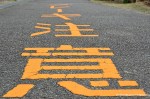
When I was walking up to the Mount Teine Ski Lift (which most likely was part of the still active Sapporo Teine Resort) I saw an old bus stop sign of the JR Hokkaido Bus line, although the staff at the JR Teine Station told me there were no busses running; maybe an old sign that was never removed… Not worthless though, as the sign had the name of the stop written on it: 千尺. The first kanji is common – sen, one thousand. But the second I couldn’t read, so I took a photo to find out later. Now I know that it means shaku, which is a traditional unit of measure in Asia, not in daily use anymore in Japan; about 303 mm or almost one foot. So the place was basically called “303 Meters”, although the slope was actually much longer; about 2 kilometers to be more specific. To get to the top you had to use two different lifts and it turned out that the mountain station of the second left was in proximity of the former start of the Olympic Bobsleigh track before it was dismantled, while the *Olympic Ruins Of Sapporo 1972* were the goal – it’s all connected…
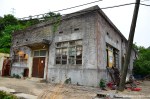
If you google the term you’ll end up with links to the Gosenshaku Hotel, a rather high end accommodation in the Japanese Alps, about 1000 km away from the Senshaku ski lift. If you do some more googling in Japanese you might stumble across two year old photos on which the rest house is in way better shape. Now almost completely collapsed it was in decent condition just 24 months prior to my visit – and several (now unreadable) signs revealed more information; sadly the Japanese guys hosting those photos didn’t care to write anything about the place. It seems like the full name was “Teine Olympia Senshaku Highland”. Unlike the bobsleigh ruins, this ski lift didn’t show off the Olympic Rings, so it’s safe to say that it wasn’t part of the official venues; even more so since according to the Japanese Wikipedia the Olympia Highland was established in 1974 and opened in 1976, four years after the games were held. Instead it was a skiing slope for the general public – with lockers, rental gear, food and arcade machines. The chartered shuttle bus service was stopped in August of 2001 and 15 months later Kamori Kanko bought the place (they also own Noboribetsu Bear Park and Noboribetsu Marine Park Nixe near the *Tenkaen, Japan’s Lost China Theme Park*). And at that point I got lost a bit as I found contradictive information about combining two skiing areas, about places getting closed that still have active homepages, about areas that look the same, but have different names… Long story short: I still have no idea when Senshaku was closed!

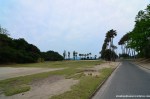
All I know is that it was exciting walking up to the Senshaku area as I had little to no idea what to expect. While Sapporo itself was still basically snow free the 150 meters of additional elevation and not being in the city anymore made a difference of about 5 to 10 cm – just enough to be fun without being annoying. Of course a car was parked in front of the entrance upon my approach, but I decided to ignore the guy and just walked straight up the hill. I also ignored the mostly collapsed building to the left and had a quick look at the dilapidated ski lift to the right – being all by myself and already rather cold I refrained from climbing that death trap and made my way up the mountain to take some photos of the towers and to take some ultra-wide angle shots of the whole place. Up there I found a big cart with several ropes connected to it, probably used to transport goods up the mountain, though I didn’t find any information about it, even during the research I did for this article. While taking photos of the wagon I heard some wild noises that didn’t sound too friendly. I didn’t see any animals, but I wasn’t exactly eager to have any confrontation, so I grabbed my video camera and walked back down the hill. The video ended abruptly when I turned down the camera as soon as I saw a man standing between the lift and the rest house – preemptive obedience, Japan’s unofficial motto. It turned out that the guy didn’t mean no harm and just had a look himself, but it was good to stop anyway since him walking through the video several times or even talking to me wouldn’t have been good either. Obviously he wasn’t eager to talk to me… and left before I was done taking more photos of the ski lift.
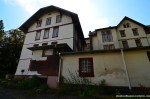
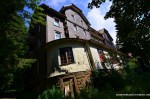
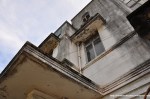
The former rest house was in horrible condition and I only spent a couple of minutes exploring it – because it looked more dangerous than interesting, and because the sun was already setting behind Mount Teine and I still had to walk up the mountain to see the *Olympic Ruins of Sapporo 1972*

(If you don’t want to miss the latest article you can *follow Abandoned Kansai on Twitter* and *like this blog on Facebook* – and of course there is the *video channel on Youtube*…)

Read Full Post »

More often than not I barely have any information about the places I visit in advance. Sometimes I only saw a photo and have a general idea where to look for the location. It was like that when visiting the *Bibai Bio Center* – and the Horonai Substation was not much different. A red brick building somewhere in the middle of nowhere – and a road leading there. That was it. I didn’t expect a spectacular location… and I didn’t find one. Nevertheless it was a good exploration with an interesting history, the first one on my *haikyo trip to Hokkaido*. *Michael* thought so, too – although he almost paid a steep price for making a snow angel…

History

The Horonai Mine has an incredibly and unusually long history, dating back to the early years of the Meiji Era (1868-1912). Back then it was a time of new departures and Hokkaido still was kind of unknown territory. Japan recently opened itself to the world after more than two and a half centuries of information and immigration control, relying heavily on foreign experts to accomplish in a couple of decades what Europe and the States took about a century – industrialization. Just a decade prior Hokkaido was still known as Ezochi and for its renitent inhabitants, but the new government in the newly appointed capital Tokyo pushed for the development of Japan’s most northern prefecture… and population rose from 58.000 to 240.000 in the mere ten years of the 1870s. Agriculture and mining became the prefecture’s most important industries – and while agriculture is still important (especially wheat, potatoes, pumpkins, corn, raw milk, and beef), mining isn’t. The amount of abandoned mines in Hokkaido is incredible, but since most of them are in extremely rural areas, often hours away from bigger cities, we decided to visit the Horonai Coal Mine as an example – because it wasn’t completely out of the way, came with an electrical substation and, to our surprise, with the Horonai Shrine.
It wasn’t until writing this article though that I found out that the Horonai Mine was actually Hokkaido’s oldest modern mine and that Hokkaido’s first railroad, the Horonai Railway, was built to establish and operate the Horonai Mine. It’s said that in 1868 a local resident discovered coal in Horonai, but it wasn’t until 1872 that the village received any attention, leading to a survey in 1873. Expecting massive amounts of high quality coal in Horonai plans were made concrete in 1877 and money was raised through industrial bonds in 1878 after important statesmen like Ito Hirobumi and Yamagata Aritomo visited the area in previous years and campaigned to establish a mine. Further surveys were conducted in May of 1878 and the mine was opened on December 18th 1878, reaching full production almost four years later in June of 1882.
Plans for the Horonai Railway, necessary to transport the coal mined in Horonai to places where it could be used, were finalized in December of 1879, so construction of the railway began in January of 1880, installation began in July of the same year – technology and knowledge was imported from the United States by J.U. Crawford, who oversaw the railway construction project for the Japanese government; the line was officially opened on September 13th 1883 and was used for the transportation of passengers as well as coal.
In 1889 both the mine and the railroad were privatized, probably for little money, as both of them were not profitable at all. This happened a lot in the late 19th century in Japan, strengthening the so-called zaibatsu (gigantic family controlled holding companies, amongst them still famous corporations like Mitsubishi, Mitsui, Sumitomo and Kawasaki), but also countless mid-sized companies (although sometimes even profitable companies were given away for a fraction of what they were worth…). Business continued for another 100 years and ended in 1989, when most of the buildings were demolished for security reasons – and because back then industrial heritage wasn’t considered worthy of preservation. (The Völklingen Ironworks in Völklingen, Germany, and the Zollverein Coal Mine Industrial Complex in Essen, Germany, were actually spearheading the idea of maintaining old industrial buildings, becoming UNESCO World Heritage Sites in 1994 and 2001 respectively.)
A not so fun “fun fact”: Like many other mines in Hokkaido, Horonai was taking advantage of prison labor. Not only during times of war, but in the early years, both before and after privatization. In 1883 250 prisoners worked next to 228 general laborers. In 1890 there were 1.043 prisoners and 183 normal workers “employed”, the forced labor accounting for more than 80% of the work force, extraction and transportation almost exclusively relying on prison labor! (It was actually thanks to the prison laborers that the Horonai Mine survived the first couple of years. From 1882 to 1888 the mine was deep in the red with only one profitable year and couldn’t even afford to implement mechanized coal transport – that actually happened only after it was privatized and exploited prisoners as cheap labor for years. And after the extraction costs per ton of coal were cut down to one sixth over the course of six years till privatization in 1889.)
The Horonai Mine also gathered some local fame in Japan when it was used as the setting of the second Season of Survivor (サバイバー) in 2002 – after Palau, but before the Philippines and North Mariana. Probably the most original setting ever and by now much more exotic than all those islands in the Pacific Ocean; they look all the same to me anyway! (I usually don’t link to other people’s Youtube videos, but *here is the intro to that season* in 240p. Don’t miss the *video I took at mine in late November* in 720p!)

Exploration

When we arrived on location the initial situation wasn’t promising. Several hundred meters before we reached the substation we had to park the car as the road was completely snowed in. Luckily there were tire tracks (we were able to walk in) from a more suitable vehicle, but the road itself wasn’t accessible with the small car we rented. As we got ready to walk up the hill we saw a guy and his dog coming back to their car. Nothing unusual, until we saw that the guy was carrying a rifle. Not the usual BB guns you have everywhere in Japan. A real friggin rifle! Even if he wasn’t shooting trespassers we were wondering what he was hunting in the forest ahead of us… and if his prey might want to get a shot at hunting us…
Nevertheless we followed the previously mentioned tire tracks deeper into the valley. To the right we saw several concrete ruins of the Horonai Mine, abandoned in 1989, when the mine was closed after 110 years. Everywhere along the road we found information signs (Japanese only…) and it seems like the area was converted into a “coal mine scene park” in 2005. It turned out that the first abandoned place on our trip wasn’t actually that abandoned, more like a tourist attraction – like the *Shime Coal Mine*, a.k.a. the *Anti-Zombie Fortress*. Of course there were no tourists seen anywhere, so I guess the place is only of interest in the snow-free summer months… and basically inaccessible the rest of the year. Michael of course was eager to head over to concrete remains, but given the deep snow and the unknown terrain I was able to convince him to look for the substation first – especially since the grey leftovers didn’t look like they contained anything interesting.

It took us about half an hour to walk from the parking lot to the substation and the tire tracks ended a couple of dozen meters before reaching our destination thanks to a collapsed tree on the road – from that point on we had to walk through the snow which was about 30 centimeters deep.
The Horonai Substation, a two-storey brick-clad concrete building, was built in the 1920s, more than 40 years after the mine was opened, and received its electricity from a coal fired power plant in Shimizusawa. That plant, which was fuelled by coal from the Yubari Mine, not the Horonai Mine, is still in existence and closed in 1991, but was not visited by yours truly as the roads leading there would have required a separate day trip.
Sadly there wasn’t that much to see: The metal constructions of the transformers and the brick covered building – locked by a solid chain, but luckily Michael found another way in. The building clearly was in use during summer months, featuring some kind of exhibition with lots of exhibits and huge control panels from the good old days.
More interesting was the Horonai Shrine, which obviously was completely covered by snow, too, and probably as half-abandoned as the Horonai Substation. Located right next to the substation on a small plateau up a slope, the shrine offered a nice view at the remains below. At that point it started to snow and I don’t know why, but there is an amazing peacefulness about deserted snow-covered shrines. Michael was still down at the substation, so all I heard was snow falling – perfect tranquility.
Overall the Horonai location wasn’t spectacular, but at that point I hadn’t explored many snow covered (more or less) abandoned places, so it was a good start into the trip!

Snow Angel

Oh, after all those paragraphs about the mine’s history I almost forgot about the snow angel! It seems like either Michael or I have a serious amount of bad luck when exploring together. In spring I broke my D90 on our *haikyo trip to southern Honshu* – and I already mentioned Michael’s misstep at the *Hokkaido Sex Museum*. His bad luck started earlier though, when he insisted on making a snow angel on the way back to the car. I thought it was a bad idea in the first place as it was cold and he was jumping spine first onto unknown ground (concrete, rocks, metal, …), but everything went fine until the point when Michael first took off his glasses and then stood up shortly after, realizing that his glasses were gone. In a comedy movie kind of situation he asked me to watch my steps – the last words barely left his mouth when he moved one of his legs and we both heard a crushing sound. The spectacle frame under his boot wasn’t only bent, but broken. Well, bent and broken. Michael, the designated driver on this tour since my license isn’t valid in Japan, had some contact lenses with him, but they would have only last for two or three days – shorter than the trip. So on the way to our second hotel we were looking for a glasses store. 5 minutes to 8 p.m. (i.e. closing time) on a national holiday (!) I spotted one. Not only were they able to fix Michael’s glasses in a miracle operation taking almost half an hour, they did it for free and also give mine a new polish. Quite a few people complain about the (lack of post-buy) service in Japan (and I admit that sometimes it can drive you nuts!), but the glasses shops here are amazing and saved not only the day, but kind of the whole trip…

(If you don’t want to miss the latest article you can *follow Abandoned Kansai on Twitter* and *like this blog on Facebook* – and of course there is the *video channel on Youtube*…)

Read Full Post »

Some locations just have a sound to them that is irresistible, places you want to visit purely based on their names. Like the *Abandoned Japanese Sex Museum*, *Nara Dreamland* or the *Zone of Alienation* – names that create images even without knowing anything about them. When I heard about the Olympic Ruins Of Sapporo I knew I had to see them at one point or the other. There have been only 21 Olympic Winter Games so far and although the ones in Sapporo were held 40 years ago I was stunned to hear that some of the locations were abandoned – which, admittedly, is kind of naïve given the fact that even some event locations of the Olympic Summer Games in Athens (2004!) are already abandoned!

Since my first day in Sapporo was surprisingly sunny and I had some time to kill till my fellow explorer would arrive, I took the opportunity to not wait for a second trip to Hokkaido and have a look at the Olympic ruins right away. Sadly the whole thing sounded a lot better in theory than it ended up to be…
First of all: The skiing season in Hokkaido starts in early December, but I was in Sapporo in late November – so there were no buses running, only taxis. When I told the (female) train station staff that I will walk instead I was taken away by a prime example of a typical wave of Japanese surprise and disbelief. Still hilarious even after six years…

5 kilometers, 400 meters altitude difference and 1.5 hours later (I took my time…) I finally reached the Olympic Ruins Of Sapporo 1972. In the 1972 Winter Olympics this area was the bobsleigh goal house – the track was constructed from reinforced concrete between October 1969 and January 1972 for 433 million Yen and highlighted by 127 lamps for night runs. After Nagano was rewarded the 1998 Winter Olympics the bobsleigh track in Sapporo (1563 meters long, 132 meters vertical drop, 14 turns) was dismantled in 1991, but the goal house wasn’t.
Since I was stopping by at another location first it was already getting dark by the time I arrived halfway up Mount Teine. The area around the bobsleigh goal house was covered by snow completely, making it difficult to approach safely and impossible to reach the back area and the green shack halfway up a slope. I was able to enter the basement though, where all kinds of crap and some heavy machines were rotting and rusting. Sadly I forgot my flashlight at the hotel, so I wasn’t able to enter the ground floor or the first floor, both in a quite dilapidated state anyway. It also made me hurry quite a bit so I would get back to civilization at daylight to limit the risk of breaking some body part due to black ice or getting run over by one of the few cars speeding up and down the mountain. Furthermore I am a jeans and T-shirt guy all year round, not well prepared for winters since there are no winters in Osaka… and it got pretty friggin cold up there after a while, especially after the sun was hiding from about 3 p.m. on!
So in the end it was a quick look at an unspectacular location, but I was able to take some photos of an abandoned building with the Olympic rings on it – and that made me feel like a winner!

(If you don’t want to miss the latest article you can *follow Abandoned Kansai on Twitter* and *like this blog on Facebook* – and of course there is the *video channel on Youtube*…)

Read Full Post »

Abandoned Kansai in Hokkaido… Who would have thought that? Up till now I never made it further east than the center of Japan’s main island Honshu. I limited myself to the western half of Japan, because that was the reason I started this blog. Heck, initially I wanted to limit myself to the Kansai region; hence “Abandoned Kansai”, not “Abandoned Japan” or “Abandoned West Japan”. But then the “once in a while” hobby urban exploration turned into a regular thing and only weeks later I went to different regions, then to different islands – and in spring of 2012 I did a *haikyo trip to Okinawa* together with my urbex buddy *Michael Gakuran*. “What’s next?” was the big question, and the answer was found quickly – we already explored Japan’s most western prefecture, so we kind of had to explore Japan’s most eastern prefecture, Hokkaido!

Usually I plan my urbex trips on short notice. One time I brought my urbex equipment to work on Friday to see how I feel during the day, booked a hotel in the afternoon and left for a weekend trip right after work. Flexibility like that is impossible when partnering up for a long distance trip, so Michael and I booked plane tickets weeks ahead – and according to the weather forecast we ended up with a rainy weekend; a long weekend even, to which we added some days. Luckily the forecast was as reliable as always in Japan and so 4 out of my 5 days in Hokkaido were sunny and slightly snowy, only the last one came with 8° Celsius and rain.

Since I arrived almost a day earlier than Michael the original plan for me was to do some sightseeing in Sapporo. To my surprise the weather was sunny to cloudy, no rain at all, so instead of visiting indoor classics like the Sapporo Clock Tower, the Ishiya Chocolate Factory or the Sapporo Beer Museum I opted for a little hike to Mount Teine, once home to some of the sports events at the 1972 Winter Olympics in Sapporo. One day of good weather? I had to take advantage of that! Then it turned out that the next three days were pretty nice, too – which is a big advantage when doing urban exploration as you spend a lot of time outdoors…
On the last day Michael and I split – while he drove for hours to infiltrate a location he asked me to keep secret for now, I went on to do some really touristy stuff, like visiting the old harbor town of Otaru and taking a glass blowing lesson. My favorite touristic place though was the Sapporo night view from the freshly renovated observation platform on top of Mount Moiwa – stunningly beautiful! It was soooooo cold up there, but the view was absolutely amazing! I went there on the first day before visiting the Sapporo White Illumination and I strongly recommend to pay Mt. Moiwa a visit – I would love to shoot a time-lapse video from up there…
Overall the trip to Hokkaido was a great mix of urbex and tourist stuff. Five days I really enjoyed, probably more than any five consecutive days I spent in Osaka this year… So this is a list of the abandoned places I ended up visiting:
Advantest Research Institute
Bibai Bio Center
Canadian World Park
Hokkaido House Of Hidden Treasures
Horonai Coal Mine Substation
Mt. Teine Ski Lift
National Sanatorium Sapporo
Olympic Ruins Of Sapporo 1972
Sankei Hospital
Sapporo Art Village
Showa-Shinzan Tropical Plant Garden
Tenkaen – Japan’s Lost China Theme Park

(If you don’t want to miss the latest article you can *follow Abandoned Kansai on Twitter* and *like this blog on Facebook* – and of course there is the *video channel on Youtube*…)

Read Full Post »

Momijigari (紅葉狩, red leaves / maple leaves hunting) is almost as popular in Japan as the worldwide way more famous hanami (花見, flower viewing). In spring even the biggest couch potato leaves the house to view first the plum and then the cherry blossoms, in autumn they go to different spots to have a look at the autumn leaves. Of course every bigger city has special spots for both, but some countryside towns are pretty much dead for 50 weeks a year and completely swamped on two or three weekends. In Kansai prime examples would be Yoshino (hanami) and Minoh (momijigari). Why? Because those two spots are considered the best – or at least amongst the best. Surprisingly many Japanese people pursue the best of everything – the best food, the best company as an employer, the best spots to view nature. Or at least they pursue what the majority considers the best. With the result that some food is insanely expensive, employers with famous names exploit their employees (because they can!) and the best spots to view nature are so overrun that it’s not really fun anymore going there – you stand in crowded trains for hours just to be pushed past gorgeous trees and through crowded streets with souvenir shops.
So while half of Kansai “enjoyed” autumn leaves in Minoh and Kyoto (just to put up photos on Mixi and Facebook to let everybody know where they went for momijigari…) I made my way to the Hyogo countryside in late November of 2011. My goal was to climb a small mountain with an abandoned temple on top. 15 months prior I was able to explore an abandoned shrine (*you can your all about it here*), so I guess it was only natural to follow an abandoned Shinto site with an abandoned Buddhist site. (I know that there are plenty of abandoned churches – but how about mosques? Has anybody ever heard of an abandoned mosque?)

The Shuuhen Temple popped up on two or three Japanese haikyo blogs before, but it was surprisingly hard to locate. Even more surprisingly since the place is still marked on GoogleMaps, and when you are rather close you can find guide signs – which left me rather puzzled for a couple of minutes about how abandoned the place really was. I guess now it’s more abandoned than ever, because in September of 2011 the street up the mountain was closed. Halfway up the mountain a landslide flushed away the small asphalt road on a length of about 5 or 6 meters – even tiny cars could barely pass here anymore safely.
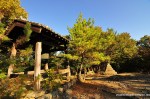
When I reached the mountain top I must have been one of the happiest people in all of Kansai: A stunning view, gorgeous autumn leaves and a temple all for myself. Sure, I couldn’t tweet “I’m in Arashiyama! (Be jealous!)”, but I wasn’t bothered by souvenir shops and crowded locations. Quite the opposite. When I was walking around I had to be careful not to run into one of many one square-meter large spider webs with a nasty middle finger long black and yellow spider in it. The abandoned temple itself was rather unspectacular. All buildings were closed, in rather good condition, and I didn’t even have a closer look if there was a way to open them. I’m not very religious myself, but I respect the beliefs of others and try to be respectful. (Which doesn’t keep me from making fun of them if it’s getting too ridiculous – you know, thetans, magic underwear and stuff like that…)

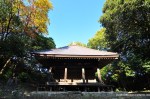
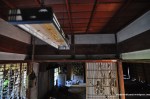
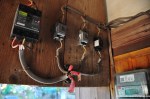
Open and rather interesting was the house of the monk that lived near the Shuuhen Temple. It’s hard to tell when it was abandoned. Some buildings in Japan fade away in no time, others withstand the ravages of time as if they couldn’t care less. It looked like it was built in the 60s or 70s, given the black and white photos of the bell and the belle; judging by the wiring maybe even earlier. The decay there was clearly natural, because thanks to the temple’s location the average bored youth vandal spares the place. Strangely enough the digital display of the power meter still worked…

The temple itself seems to have quite a long history. According to the homepage of the city it is located in, the Shuuhen Temple dated back to Emperor Kotoku’s days (596 – 654) and was first built in 651. In 1578 it was burnt to the ground and stayed a ruin for more than a century until 1682, when it was revived again. Not much information, but way more than one could get for most other temples and shrines in Japan… Now it is famous not so much amongst urban explorers, but more amongst Japanese fans of ghost spots (心霊スポット). I guess it makes sense to look for paranormal activity where people traditionally believe(d) in spirits.

Exploring the Shuuhen Temple was one of those nice, mellow urbex experiences. Sleeping in, taking some local trains, a nice and sunny autumn day, some hiking, some solitude, cold temperatures, but warm sun, beautiful countryside. A relaxed Japanese Indian Summer day…

(*Like Abandoned Kansai on Facebook* if you don’t want to miss the latest articles and exclusive content – and subscribe to the *video channel on Youtube* to receive a message right after a new video is online…)

Read Full Post »

Mukainokura is probably the most famous ghost town in all of Japan as it was featured in many books and by many websites. It is also quite easily accessible by ghost village standards – it’s less than 10 kilometers away from the next train station (more like 6 km actually) and you can drive right up to it if you have a car. And since it’s on top of a hill in the mountains of Shiga prefecture, there are millions of potential visitors from all over Kansai.

Mukainokura was the first ghost town I ever visited, back in the spring of 2010 – and the last location I ever visited with my colleague and dear friend *Enric*, since only weeks later his fugue kicked in and he left the company we both worked for back then.

Spending a sunny spring day hiking with a friend in the Japanese countryside is as good as a day can get in my book. And so Enric and I passed several beautiful temples, shrines and rice fields on our way to the mountains. Back then there was way less information about Mukainokura on the internet, including GoogleMaps, so of course we overshot the side road taking us to the deserted town by a couple of kilometers. After walking back on the beautiful valley road along a small river we finally hiked up the mountain. Almost 200 meters height difference on a length of about 700 or 800 meters – I can see why that village was abandoned! The location was beautiful, but going up and down that slope on a daily basis must have been a pain… Which applies to a lot of villages in the area, about a dozen, all abandoned. Mukainokura is just the most famous one.

Mukainokura was founded halfway through Japan’s most famous era, the Edo Period (or Tokugawa Period), in the early 18th century. Back then people were living off agriculture and by producing charcoal. Growing slowly for one and a half centuries Mukainokura was home to 95 people in 1880, living in about 20 houses. Although in the 1920s the production of ogatan, Japanese charcoal briquettes made from sawdust, brought a more advanced source of income to Mukainokura, the number of inhabitants decreased quickly when gas, oil and electricity replaced charcoal everywhere in Japan after World War 2 – and younger people moved from mountain towns to the big cities in the plains. Mukainokura had:
52 inhabitants in 1960
43 inhabitants in 1965 (12 households – 17 male, 26 female)
10 inhabitants in 1970 (3 households – 5 male, 5 female)
3 inhabitants in 1975 (2 households – 2 male, 1 female)
2 inhabitants in 1980 (2 households – 1 male, 1 female)
0 inhabitants in 1985

After more than 25 years of abandonment there was not much left of Mukainokura. About a dozen wooden houses (half of them completely collapsed, the other half partly), scattered across an area of several hundred square meters, connected by tiny paths, short staircases and terraces. More than two dozen winters with heavy snowfalls left the remaining houses in a dilapidated state – beyond repair actually. Nevertheless a couple of houses were still accessible and full of everyday items like magazines, china, photos, bottles, boxes and cans.

I guess in 2010 Mukainokura had more visitors than in 1980. During our two hour long visit Enric and I ran into four different groups having a look at the abandoned town. From a elderly couple that might have been born here to an early twen couple wearing designer clothes – the guy behind the wheel of the sports car showing his trophy girlfriend the spooky dark side of their home country… All of them were driving up the paved road, not walking, like us and for centuries the inhabitants of Mukainokura did.

The two most vivid memories I have of Mukainokura involved nature though. When Enric and I strolled through the ghostly remains of the village Enric spotted a wild monkey in the forest. It was ignoring us completely, minding its own business – sadly I wasn’t able to get a photo of the furry fella. Right before we were leaving Mukainokura we were following signs to the Ido Jinja, the “Well Shrine” (井戸神社). Turns out that this shrine near Mukainokura’s well is quite famous till this very day, featuring signs that were clearly put up after Mukainokura was abandoned (one was dated, 1991, others looked even newer). The shrine was (and is) accompanied by a Katsura tree 39 meters tall and 11.6 meters in girth, according to the sign 400 years old. A wonderfully tranquil place and the perfect location to stop by before heading home…

(If you don’t want to miss the latest article you can *follow Abandoned Kansai on Twitter* and *like this blog on Facebook* – and of course there is the *video channel on Youtube*…)

Read Full Post »

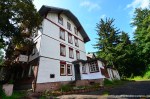
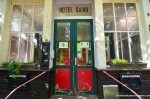
Since I’ve been terribly busy recently both at work and with several urbex projects / explorations it sadly has to be a short article this week; a location that took me just a couple of minutes to shoot, actually – the Kurhaus Sand (or Hotel Sand).

When I went on vacation to Germany in summer this year I met up with a kindergarten friend of mine, Nina. She became a regular reader of this blog and was eager to explore with me, so I planned a daytrip to the Schwarzwald (Black Forest) area of Germany. I had several leads there and thanks to an early start we managed to visit 7 (!) different locations on one day – possible only because some of them weren’t accessible; one of them being the Kurhaus Sand. Strangely enough a name that works both in English and German, but since kurhaus isn’t nearly as common as kindergarten let me give you a quick translation: health resort.

And that’s basically what the Kurhaus Sand was – a health resort in one of Germany’s most beautiful regions, the Black Forest. Not much more than a couple of houses in the middle of nowhere, Sand isn’t even a village. Its origin though is the now abandoned kurhaus. Around 1845 a mountain shelter was build on sandy soil (hence the name Sand, which means sand… Captain Obvious strikes again!) as a refugee for forestry workers. A couple of years later somebody started to sell beverages, with little success (the hut was subsidized by the city…), but after some state investments in 1874 the hut was turned into an inn under the direction of the retired country constable Josef Martin Weis at the age of 57. The place became more and more popular amongst hikers and in 1884 the previous head chef August Maier became the new tenant. In the early 1890s Maier bought, enlarged and enhanced the inn and re-opened it as the Kurhaus Sand in the presence of Frederick II, Grand Duke of Baden – the last Grand Duke of Baden. The area continued to thrive, so around 1920 a gas station was added, in 1930 a post office opened and in 1936 a police station started its service. During those days the ownership of the Kurhaus Sand changed several times, but I’ll spare you the details.

Nowadays all of these installations are closed. Only the 1949 opened Bergwaldhütte (Mountain Forest Hut), a convalescent home for children and later for policemen, is still in business – offering food and drinks for all travelers coming through on the popular Schwarzwaldhochstraße (Black Forest High Street).

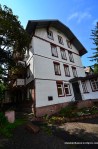
When Nina and I drove up to the Kurhaus Sand we were forced to stay inside the car for a couple of minutes as a cloudburst made it impossible to start our exploration right away. When we were finally able to get close we were still not sure if the Kurhaus Sand was really abandoned or not as the place isn’t really popular amongst German urban explorers. The building was in pretty good condition, but since there was no activity during a time that is considered the busiest vacation time in Germany it must have been abandoned… We were able to walk around the building clockwise once – no signs of anybody, no signs of vandalism, but also no way to enter the building…

It wasn’t until my return to Japan that I found out that a family named Wiedemann were the owners of the Kurhaus Sand from the 1930s on. In 1977 Günter Milz took over and turned the place into a popular destination for day trippers – he modernized the hotel part (baths, elevator, …) and his restaurant became famous for the cuisine of Baden; like Flädlesuppe, Käsespätzle, Maultaschen and Schupfnudeln. Milz retired in 1994, but I couldn’t find any information about the almost 20 years since then. Given the decent condition the Kurhaus Sand is still in it must have been opened for business for another couple of years, but who knows? Thanks to its remote condition hardly anybody would go there just to vandalize it… Luckily there are many local historians in Germany – maybe one of them finds this article and can add some information?

Read Full Post »

Okunoshima is urban exploration for beginners. Actually it’s more like a vacation day than urbex – with an inglorious past, probably one of the darkest chapters in Japan’s history. And it’s an island with many names. In Japan Okunoshima (大久野島) is famous as usagi shima (ウサギ島), Rabbit Island. People with a more twisted look at life call it Poison Gas Island, though the Japanese term doku gas shima (毒ガス島) is way less common – but I doubt that this is the result of a more positive Japanese mindset…

Located in the Seto Inland Sea about 50 kilometers east of Hiroshima Okunoshima disappeared before if became famous. Back in the 1920s Japan signed the Geneva Protocol of 1925 that banned the use of chemical and biological weapons – but it didn’t say anything about development, production, storage or transfer. At the time being up to no good and started making trouble in the neighborhood, Japan immediately began to take advantage of that loophole. And with that Japan became the only country to use chemical weapons  in World War II, killing an estimated 80.000 Chinese soldiers and civilians according to historian Chi Hsueh-jen! (Not only with the knowledge, but with the permission of Emperor Hirohito… which probably should have lead to his prosecution as a war criminal. Sadly, hard evidence was found only decades later by Yoshiaki Yoshimi, a professor of modern Japanese history at the prestigious Chuo University and a founding member of the “Center for Research and Documentation on Japan’s War Responsibility”. My deep respect for the man, I’m sure his research made him more enemies than friends…)
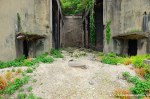
The location of choice was the small and barely known island of Okunoshima, off the beaten tracks in case of a major accident, but still close enough to the important military city Hiroshima. From 1927 to 1929 an existing fish cannery on Okunoshima was “modernized” with a desalination plant, a refrigeration system and a power plant – and at the same time all foxes, martens, cats and rats were systematically eradicated. Okunoshima was erased from maps and Japan did everything to keep its existence a secret. Shipping routes were changed and trains along the coast had to close their window shutters, so did ferries passing the island. Plain-clothed members of the infamous Japanese military police kempeitai made sure everybody followed those rules and didn’t dare to sneak a peek. To avoid any activity on Okunoshima being seen from mainland Japan the old fish cannery was blown up, keeping the new installations intact – and the old pier in the west was replaced by a new one further south, closer to the research and production facilities. Huge storages for gigantic tanks were carved into the mountain and the soil was used to create ramparts as visual covers. In 1929 production began with high secrecy and under horrible conditions.

Since most of Japan’s leading scientists were under the supervision of western secret services they couldn’t be involved directly in the top secret base on Okunoshima. Production had to be executed by educated amateurs. Most of them were Korean forced laborers who worked in the production of medicine or soap before, locals looking for a good salary – and later on the military pressured more than 1000 local high school students into working on Okunoshima; at first only those with good grades in natural sciences, in the final years of WWII pretty much everybody available. The workers were given protective suits that weren’t really protective because the aggressive chemicals made the PVC brittle – thousands were injured because of that and during accidents, many died of their injuries because there were no doctors on the island and nobody was allowed to seek medical help on the Japanese mainland for the reason of secrecy. The production halls were cold in winter and smoldering in summer. Imagine wearing a plastic suit in a climate that sometimes makes it hard to breathe even when in shorts and T-shirt…

About 6.600 tons of mustard gas (Yperite), lewisite, phosgene and other poison gases were produced and stored temporarily on Okunoshima between 1929 and 1944 before being put to use by the Japanese military. While the gases were tested on rabbits on Okunoshima the scientists there worked together with the infamous *Unit 731* on at least two occasions in 1940 and 1943 – they tested mustard gas on Chinese prisoners. (In case you don’t know Unit 731: Have a look at Wikipedia and make sure you don’t wanna eat soon. Their initiator and commanding officer *Shiro Ishii* was one of the most despicable people to ever walk on this planet, the Japanese Josef Mengele, maybe even worse – but thanks to some Americans, especially from Fort Detrick, the weasel was never prosecuted, although he should have been executed for his war crimes. Ishii didn’t even have to flee Japan since he was able to negotiate immunity for himself and his closest allies. Instead he lived a peaceful life with his family until is death in 1959 at age 67.)

After World War II ended in 1945 the remaining poison gas was dumped in the ocean, buried or burned – the factories were blown up or used as housing or storage (e.g. for ammunition during the Korean War). This was done by Japanese contractors under the supervision of the Americans, but what happened to the rabbits used as laboratory animals is rather unclear. Some say they were released by workers after the Japanese military left the island – others claim that they were all killed by the American military and the current rabbits on Okunoshima are descendants of a dozen pets released by a Japanese school class in 1972. One thing is for sure: Since all natural enemies of the rodents were killed in the late 1920s they don’t have to fear any predators and so they breed like… well… rabbits.

Okunoshima stayed a forgotten island for a few decades until in 1988 something unusual happened, at least by Japanese standards: A poison gas museum opened on the Poison Gas Island. Of course emphasizing the harsh conditions for the workers in the factory, because as everybody knows, at least everybody educated by the Japanese school system: Japan was the victim of WWII. Well, sadly that is the common self-awareness, which explains South Park episodes like Whale Whores (and Chinpokomon…) – episodes that show an understanding of Japan most people, including Japanese, don’t have. And so all the photos of poison gas inflicted wounds in the 2 room museum are not from WWII, but from the Iran-Iraq War of 1980-1988. And while most ruins on Okunoshima have signs in Japanese and English (which is quite commendable since it’s unusual for any location that far off the beaten tracks!) the ones at the museum are mostly in Japanese only. (Which reminds me of the Peace Center in Osaka, where most of the surprisingly critical exhibits are labeled in Japanese only while all the others are bilingual, Japanese and English – shamed be he who thinks evil of it…)

Nowadays Okunoshima is a popular tourist spot, visited by about 100.000 people a year, many of them staying overnight at the hotel or the camping ground on the island. Not so much because of the poison gas factory ruins or the museum, but because of the rabbits. Like I said, no predators, so 100s of them are roaming freely, probably making Okunoshima the world’s largest petting zoo. Usually when I am on my way to an abandoned place and there is some noise in the bushes close-by it’s a snake. Or a boar. Or a monkey. Maybe even a bear. On Okunoshima it’s a rabbit. Or a bunch of them. Charging at any person that is passing by, hoping for some food. And they are so adorable! I came for the ruins, but I stayed for the rabbits. Seriously, I spent much more time taking photos of rabbits than taking photos of ruins – when I found out that there were remains of a Meiji era fort from the Russo-Japanese War of 1904/05 I almost considered it a burden, not another photo opportunity…

Pretty much all rabbits on Okunoshima are hand-tame. The ones near the ferry terminals and the hotel are by far the biggest ones. I’m sure they get fed 24/7! If you like your rabbits smaller and a little bit more shy I recommend going off the beaten tracks – to the tennis courts (de-facto abandoned, at least some of them), to the former gunpowder storage or any trail up the mountain. Don’t worry, even there you don’t have to look for rabbits… they will find you! (And you don’t have to worry about snakes, boars, monkeys or bears – you are not even allowed to bring cats or dogs to the island.)

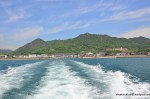
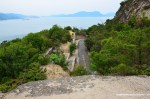
As for my day on Okunoshima: I did a full circle, starting at ferry terminal 2 and ending at ferry terminal 1, since I left on the second to last boat departing from the island; you can *have a look at GoogleMaps* as Okunoshima is a tourist attraction. And I refrained from renting a bike, because I wanted to take my time and enjoy the relaxing atmosphere on the island. The weather started out sunny and ended overcast, poison for photography, but surprisingly I didn’t mind. All of a sudden I didn’t care that much for the gas factory ruins. Many of them were fenced off by ridiculously low bars, but for once I did respect those barriers that were more symbolic than effective. After learning about the place’s history all those chunks of concrete blackened with soot weren’t that important anymore. Okunoshima’s history was just overwhelming. Why disrespect a place that saw and caused so much pain and suffering? When at the same time you can spend a relaxing day at the beach and play with cute little bunnies!

Going to Okunoshima was a wonderful experience and I kind of left with a heavy heart – I visited in spring on a warm day, probably still a little bit too cold to go swimming, and I had plans for the next day. But if you ever have the chance to go to Okunoshima from late spring to early autumn make sure to bring a loved one (as well as your kids, if you have some) and stay overnight at the hotel – just make sure to make a reservation months ahead as the hotel is very busy. Unless you are afraid of ghosts and fear that hordes of Chinese war victims, Japanese workers and laboratory rabbits will haunt you…

(If you don’t want to miss the latest article you can *follow Abandoned Kansai on Twitter* and *like this blog on Facebook* – and of course there is the *video channel on Youtube*…)

Oh, before I forget: A shortened German version of this article, “Die Insel der Versuchskaninchen / Okunoshima – Zwischen Giftgas und Kaninchen” (The Island of Guinea Pigs / Okunoshima – Between Poison Gas and Rabbits), was published on Spiegel Online / einestages on Monday – you can *read it here*.

Read Full Post »

Quite a while ago I wrote about my experiences exploring the *lower terminus of the Yashima Cable Car* – and after I was done I took the bus up the mountain. Usually I would have taken the hiking trail up there (or would have walked along the abandoned track like I did several times at the *Mount Atago Cable Car*), but since I lost quite some time in the morning thanks to a Shinkansen standstill (thanks, JR – the extra fee for the bullet train was really worth the money… grumble…) I took the easy way up. It was also a good way to check out the cable car’s competition, which made me wonder if the bus was already running when the cable car was still operating. Sure, the trip took about 10 minutes instead of 5, but it ended right next to Yashima Shrine (not a kilometer away) and the price was ridiculously low in comparison: 100 Yen each way!
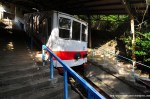
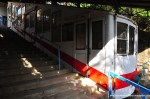
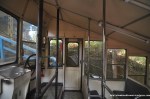
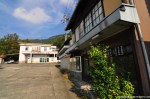
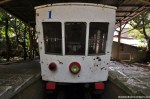
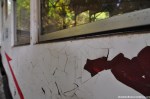
The upper terminus of the Yashima Cable Car (屋島山上駅, yashima sanjo eki, Yashima Mountaintop Station) was as locked up and untouched as the lower terminus – but the building itself was much more beautiful. Rather small, like most cable car stations, it totally reminded me of the *Maya Hotel* in Kobe. I think I’m a sucker for that art deco style of the 1920s and 30s. At the time of my visit the area was used by construction workers of the nearby Yashima Castle reconstruction site – there were parked cars everywhere and their container office almost blocked the access to the cable car track. Luckily none of the workers were in sight when I arrived, so I was able to sneak to the back and took some pictures: car #2 was already waiting for me as I expected, sadly slightly vandalized by some spray paint on the windows of the right side. Similar to the lower terminus the amount of decay was just perfect – the car, the handrails, the building itself. A perfect abandoned beauty, worthy the cover of a book or a magazine.

Read Full Post »

Being a mountainous country Japan has lots of cable cars and ropeways. And it seems like every single one of them was built in the late 1920s / early 1930s. A lot of them were demolished after just a couple of years in the 1940s to support the war efforts of Imperial Japan (every piece of metal counted…) – amongst others the *Mount Atago Cable Car* and the *Rokko Ropeway*. The Yashima Cable Car (YCC) had a bit more luck. Opened on April 21st 1929 it too was suspended as a nonessential line on February 11th 1944. But although some material was taken away (I’m not sure what exactly though…) it didn’t mean the end of the YCC: On April 16th 1950 the Yashima Cable Car opened again for business. And business was good thanks to the famous Yashima Shrine on top of Mount Yashima, about a kilometer away from the YCC terminal. I guess it got even better when some businessmen decided to make Mount Yashima a full-blown tourist attraction (*you can read all about it here*), but when the plan fell through the Yashima Cable Car was in trouble, too. On October 16th 2004 operations were suspended again, but it took almost a year (August 31st 2005) until the line was officially closed and abandoned.
According to a tourist guide book first published in the 1980s the cable car ran from 7 a.m. to 7 p.m., charging 1160 Yen for the roundtrip. It seems like prices went up and service hours were cut down, so in 1999 the cable car ran every 20 minutes from 8 a.m. to 5.40 p.m., charging 700 Yen one way and 1300 Yen for a roundtrip.
At the time of my visit the lower terminus of the Yashima Cable Car (屋島登山口駅, yashima tozanguchi eki – Yashima Trailhead Station) stood locked-up and abandoned on the foot of Mount Yashima near the trailhead up the mountain. The road leading there was almost as abandoned – I could vividly imagine how good business must have been 20, 30 years ago for the now closed restaurants and souvenir shops. Right next to the station were a taxi stand and a metalworking company, making some noise and keeping an eye on the inaccessible station building. The 858 meter long cable car track was accessible though, with car #1 parked right at the platform. And it was beautiful! On the one hand it was hard to believe that the place had been abandoned just six years ago, on the other hand there were no signs of vandalism and everything had just the right amount of decay – and the beautiful weather on the day of my visit didn’t hurt the atmosphere either…

Read Full Post »

« Newer Posts - Older Posts »