Feeds:
Posts
Comments

Archive for the ‘House’ Category

Timing is everything, at least in the world of urban exploration. If you come too early a place is still in use, if you come too late it’s demolished. If it has security you need a special kind of timing, but even regular explorations need some planning. Some locations are only good at certain seasons – a lot of mines in Hokkaido are inaccessible in winter due to snow, other mines in Kansai are inaccessible in summer since they are completely overgrown. And don’t even mention mosquitos, snakes and spiders!
The Tatsuyama Mine falls in the “inaccessible in summer” category. Luckily I, my buddy Dan and two of his friends went there in spring, when the green hell was nothing more than a brownish limbo. Nevertheless our timing wasn’t perfect – basically because we were running out of time. The Tatsuyama Mine (literally: Dragon Mountain Mine!) was the last stop on a looooong daytrip and we really had to rush to make it to the mountainous Okayama countryside after visiting the abandoned *Japanese Strip Club* and before the sun went down. The sun sets early in Japan, especially in spring, especially in the mountains, but Lady Fortune was on our side – the valley the mine was in opened to the west, allowing us to make the most of the little daylight that was left. On the long drive there I almost gave up hope that we would arrive on time, but in the end we had about an hour… little compared to what we could have used for a proper exploration (3 to 4 hours!), but still better than nothing.

The Tatsuyama Mine is one of those locations everybody seems to know about, but hardly anybody writes about. Photos pop up here and there, but little is known about this abandoned copper mine – except that it was closed in 1961. Yes, 1961. A solid 50 years before me and my friends had a look… Deserted before most other locations presented on Abandoned Kansai were even built!

Unsure what to expect we parked the car on the “main street” and rushed on foot down into the valley, passing shacks we probably would have ignored even if we would not have been in a rush. The mine was built on a slope right in front of us, and then I saw a rather big wooden house appear to the left. While my friends continued straight ahead I quickly entered the building for a short look. There was not much interior left and the staircase to the upper floor was falling apart, so I continued to the mine itself – after a bat let me know that it was its house, not mine. Realizing that soon it would be too dark for a decent video I went back and shot a walking tour for my memories and your viewing pleasure before climbing the slope, partly inside, partly outside of the concrete and wooden structure that once was probably was the sifting plant of the Tatsuyama copper mine. At that point I was really happy to be there in early spring, not in summer – no poisonous animals, no plants blocking progress and light.
The concrete parts still seemed to be in solid condition, but the wooden parts were fading away; not really a surprise after 50 years. With barely any time left I didn’t have to make tough decisions though if it was worth risking a broken leg (or neck…) entering certain parts – I just wanted to get to the top and down again before it was getting dark. With advice from my friends (“Go that way to reach a higher level!”) I actually accomplished that, even finding the entrance to the mine near the top of the plant – now blocked by a small dam (i.e. earth and stones…) and completely filled with water.

I am a huge fan of abandoned mines! The aesthetics of brittle wood, rusty metal and concrete structures just don’t get old to me (no pun intended…), so I enjoyed every second exploring the Tatsuyama Mine, although I wish there would have been more time. Well, maybe a revisit is in order, though it’s unlikely given that the mine is in the middle of nowhere, about 2.5 hours by car from where I live…

(If you don’t want to miss the latest article you can *follow Abandoned Kansai on Twitter* and *like this blog on Facebook* – and of course there is the *video channel on Youtube*…)

Read Full Post »

Every once in a while you come across words in English that are actually German. Some of them you might know, like kindergarten or rucksack, others are not that well-known, like schadenfreude (malicious joy). Given that Great Britain is the home of modern rail transportation I didn’t expect to find a German term that doesn’t have an equivalent in English, but here we are: Ausbesserungswerk (composed of Ausbesserung = repair / correction and Werk = plant / facory). I never found a spelling with a lower case A, so I guess unlike the previous examples Ausbesserungswerk never became officially an English term, but there is an English Wikipedia entry, so that’s good enough for me…
So, what’s an Ausbesserungswerk? Well, an Ausbesserungswerk is a repair and upgrade shop for railway vehicles and their components. While the so-called Bahnbetriebswerke (train yard / depot / engine terminal – you get the idea…) take care of maintenance, small repairs and cleaning, the Ausbesserungswerke are responsible for bigger repairs, general inspections and modernization. Originally there were 84 Ausbesserungswerke all over Germany, but today there are only 18 left.

One of the closed, abandoned and partly demolished one is / was in the lovely town of Schwetzingen, famous for its palace Schloss Schwetzingen.
On October 14th 1912 the citizen’s committee of Schwetzingen unanimously decided to build an Ausbesserungswerk northeast of the train station. Construction began in 1913 and was finished in 1917 to be opened in 1918. Perfect timing, because due to World War I there was a huge demand for the repair of railroad vehicles and from its opening on the Ausbesserungswerk was the biggest employer in the Schwetzingen area for decades to come, with about 1100 people in 1920.
During World War II the Ausbesserungswerk was fortified with bunkers, some of them are still in existence today. Armored observation towers against air raids were installed on the top of some buildings and in late 1943 a shooting range was built on the business premises – resulting in air raids by the Royal Air Force on March 19th 1945, damaging the buildings and killing 22 employees.
From the 1960s on the Ausbesserungswerk Schwetzingen was in decline. The German post-war economic miracle was in full bloom and a lot of employees switched to more lucrative jobs. At first they were replaced by guest workers, but when there was less and less work the amount of employees was continuously reduced from 1974 with the objective to close the Ausbesserungswerk; against the will of the staff council and the works management. But resistance was futile and on October 11th 1983 the Federal Minister of Transportation signed a document to close the Ausbesserungswerk Schwetzingen. In April of 1987 some employees were relocated to the Ausbesserungswerk in Karlsruhe (closed in 1997, mostly demolished by now) and on December 31st 1989 more than 70 years of railroad history ended in Schwetzingen…
In the following years some of the buildings were used as a half-way house for ethnic German immigrants and applicants for asylum, but most of them were just left to decay and rot – kind of insane, since a couple of buildings of the Ausbesserungswerk were put under monumental protection, which means that they can’t be torn down just like that. That came into effect when in Mai of 2011 all the other buildings were demolished, to make room for a logistics center of the manufacturer of sports equipment, Decathlon, scheduled to be opened in April of 2013. The protected buildings were handed over to the city of Schwetzingen for free, shifting the responsibility (and cost…) to the general public. The federal state of Baden-Württemberg granted 1.5 million Euros in 2010 to redevelop the protected area in the southern part of the Ausbesserungswerk and the city of Schwetzingen is deciding these days what to do with the money and the buildings – most likely a mixed use for both residential and commercial purposes. Those plans might have been affected by a case of arson committed by an 18 year old homeless guy on March 21st 2012, causing damages to the amount of 100.000 Euros, but I’m not sure how or if at all.

The Ausbesserungswerk Schwetzingen was the first urbex location in Germany I ever visited. My trip back home in 2011 was rather rainy and disappointing in general, so when there finally was a sunny day I took my chance and had a look. It was a weird feeling though, since everything felt a bit “more real”. In Japan I can always pretend to not being able to read signs, that I got lost, that I don’t understand a word. In Germany those excuses are a lot harder to make, especially since I am not a good bullshitter in the first place. (On the other hand some things are a lot easier – on later explorations I was able to ask people passing by about the history of places and even ask for permission to take photos, both rather impossible for me to do in Japan…)
Sadly there wasn’t much to see anymore. Most buildings were either in really bad condition or completely bolted up with metal plates. There was an abandoned TV, some instructions signs on walls and a rule book regarding laundry and other aspects of daily life living in the half-way house, but that’s pretty much it. A nice stroll, 1.5 to 2 hours, the most interesting part probably the small playground for children in the back of the half-way house – nothing spectacular, but far from being a disappointment…

(If you don’t want to miss the latest article you can *follow Abandoned Kansai on Twitter* and *like this blog on Facebook* – and of course there is the *video channel on Youtube*…)

Read Full Post »

All I knew about the Bibai Bio Center when I added it to the itinerary of the *haikyo trip to Hokkaido* was its name and a photo similar to the first one I published myself – just without the snow. I was intrigued by the strange looking tower and the ripped upper floor of what seemed to be the main building. At that time the GoogleMaps satellite image was so blurry that it was basically useless. So when *Michael Gakuran* and I drove up to the place we had no idea what to expect – or how to get in…

Blessing and curse of visiting Hokkaido in late November is the fact that most of the huge island is already covered by snow; which is nice to look at, but limits the accessibility of certain areas and buildings. The Bibai Bio Center, way bigger than expected (about 100 meters by 200 meters!), was one of those areas / buildings. Well, there was an easy way in, but luck wasn’t on our side as we found a whole crew of workers repairing the street and / or lamp posts right in front of the bio center! So we had to find another way in, which turned out to be surprisingly difficult as there were several houses and companies nearby, the surroundings of the buildings were completely overgrown with all kinds of plants – and the whole area was covered by 20 to 30 centimeters of snow. At this point I was actually willing to call it a day and move on to the next location. It was cold, we had to deal with unknown terrain, the building looked rubbish and we were in constant danger of being spotted by workers, local residents or even cars passing by. Michael on the other insisted on getting in somehow, clearing the way from the backyard of a private home like a minesweeper, using his tripod to find possibly dangerous spots under the snow – which worked out surprisingly well, except for one or two missteps… and the fact that we gained about two meters of ground per minute.

Once inside the Bibai Bio Center my impression of the place changed completely! Sure, it was run down and there was not much to see, at least not much you could describe as spectacular or even unusual, but for some reason I totally fell in love with the level of decay, the little things here and there, and especially the colors. The colors were amazing! Most of the rooms had a wooden floor and were severely damaged, moss and mold had taken over, so it was basically impossible to step inside. The more interesting and challenging were the shots I was able to take from the hallway. I fondly remember a ceiling lamp lying on the ground, surrounded by moss and mushrooms. Or a stack of tatami mats rotting away at different levels of decay – the side on the hallway was still intact, the middle was black and the window side was already green thanks to growing moss… and all of that in late November in Hokkaido!
Usually I am the one who finishes shooting a place first, but this time it was Michael who got bored and made me hurry a bit. I shot a quick video at the first building, which seemed to be kind of a dormitory or a school (or maybe both?), and then we moved on to other parts of the vast area.
Through a corridor we reached a lower building connected to the first one. Here we found several offices with stacks of scientific magazines from the 1980s about plants. Since most ceilings in that part of the building must have collapsed years ago the offices were in horrible condition, but one of them had a calendar on the wall, dating back to 1992.

Sadly there are not many sources anywhere revealing information about the Bibai Bio Center – and I won’t go down the slippery Resident Evil, T-virus, Umbrella Corporation road…
Its full name must have been “Fuji Foods Bibai Bio Center Co., Ltd.” and it looks like it was a company that produced processed food and perishable goods, like enokitake – enoki mushrooms, a key ingredient in Japanese, Chinese and Korean cuisine. Originally the land was used by a company called White Birch Wooden Yarn (白樺毛糸) before Fujishokuhin (= Fuji Foods) took over and added quite a few buildings and machinery.
Those buildings Michael and I were exploring after leaving the office area, but first we had a quick look at the shiny silver sphere on top of a tall pillar that caught my eyes months earlier and was basically the main reason for me to go to the Bibai Bio Center. I am still not sure what it was exactly, I guess a water tower, but there was some strange antenna attached to one side… maybe a lightning rod?
On the way there we found a vandalized and tagged abandoned car partly covered by snow. I guess no abandoned place is complete without an abandoned car!
The factory buildings with all kinds of tanks, boilers and containers attached to their sides weren’t in good condition either. Some of them were damaged by fires, other must have been collapsed thanks to the masses of snow they had to deal with for 20 Hokkaido winters. One of the huge halls, featuring wooden tiles on the floor, was filled with dozens of huge trash bags (the white boxes on that photo I took were supposed to be filled with enoki mushrooms according to their labeling), another one was basically empty. There weren’t a lot of shelves or production machinery, so I guess a lot of the interior was sold – either to other companies or for scrap. Or maybe we missed some stuff as we were rushing through the gigantic area way too big to squeeze it into a three location per day exploration schedule. Places like a growth chamber I was only able to see from the corner of my eye. Definitely a place to come back to if I ever get the opportunity to travel to Hokkaido again!

As leaving the Bibai Bio Center the way we came in (or just waltzing outside the front gate since the workers were gone at that point…) would have been way too easy, Michael decided to explore new territory… again. Attached to the huge halls were some kinds of metal covered supply tunnels. We saw a collapsed one from the outside, so when Michael saw a small opening in a wall from the inside to explore an intact one of course he was gone before I had the opportunity to yell “Objection!”. Being about 50% older, taller and heavier than Michael I don’t like narrow spaces and maybe I should have just left via a more secure way, but of course I acted against my conscience and followed him. Big mistake. The supply tunnel ended in a collapsed part from where we had to jump down back into the snow. From there we had to climb through a window into another building and from there we went outside again, back to the area we came in – but about 150 meters to the east. Walking along another one of those snow covered supply tunnels (outside this time…) we got miserably cold and wet within minutes and I almost poked an eye out thanks to the resilient plants. And as if being cold and wet and wearing snow filled hiking boots wasn’t bad enough I slipped down a tiny slope at the final drainage and landed straight on my behind, filling my jeans with snow from the top, too. The fun of urban exploration in winter! At that point I thought I couldn’t get any colder – little did I know that the *Canadian World* an hour later would easily top that…

(If you don’t want to miss the latest article you can *follow Abandoned Kansai on Twitter* and *like this blog on Facebook* – and of course there is the *video channel on Youtube*…)

Read Full Post »

Canadian World (current full name: Canadian World Park) was the third location I visited with my haikyo buddy Michael Gakuran on the first day of our *haikyo trip to Hokkaido*. It was an unsual exploration for many reasons… One could even say it’s a zombie park!

First of all: Unlike most of the locations I visit Canadian World wasn’t really abandoned. Not because it was guarded by security, but because it was more like on a winter hiatus. Located in a beautiful mountain landscape in the center of Hokkaido the Canadian themed park was snowed in completely in late November already, hence the rather short season from early April to mid October and the equally short opening hours from 10 a.m. till 5.30 p.m. – not much time to make some money. And not the best location either since bigger cities are about an hour away and even the closest train station requires a 20 minute long car ride… To make things even worse: Unlike the already closed or abandoned *Tenkaen*, *Hiroshima New Zealand Farm* and *Yamaguchi New Zealand Village* Canadian World actually doesn’t charge an entrance fee!
So how does the Canadian zombie park survive? And why do I keep calling it a zombie park? Well, because Canadian World Park originally was a privately run themed park called Canadian World. It was (and still is…) based on the book Anne of Green Gables by Canadian author Lucy Maud Montgomery and in private hand until its bankruptcy in 1997, including typical themed park attractions like restaurants, an art museum, BBQ areas and a mini train; there even is a “Anne in Canadian World” logo… When Canadian World went bust the city of Ashibetsu took over and gave new life to the dead park, basically making it a zombie park. Or a Frankenstein park. Just without zombies or Frankenstein monsters. Still kind of spooky though, especially in winter. But this explains the lack of an entrance fee and the rather short service time – Canadian World Park is publicly funded and run! (With the co-operation of locals, supporting the park on volunteer days once or twice a year…) Luckily the staff there is really polite, even when you show up at a time when you shouldn’t be there…

Michael and I arrived at Canadian World Park rather late in the day. The sun was already going down, so we stopped for a quick couple of shots at the parking lot and entrance area before we followed a mostly snow free road down the valley and deep into the park – most likely not for public use, but the gate was open and Michael was in an adventurous mood… so down the hill we went. Just to find two park employees at some kind of green house at the end of the road. Michael talked to them for a while and they seemed to be fine with us taking a couple of photos, so we drove back up halfway to get as close to the central plaza as possible. We parked the car in a small lay-by and waded through the shin-deep snow deep into the Canadian World Park, only to find all the buildings boarded up. We didn’t intend to enter any of them anyway, but we wondered if it was a winter closing security measure or if it was permanently, because let’s be honest – it’s only a matter of time till Canadian World will be closed again and this time there will be nobody in line to step in! For the time being the atmosphere there is magical though, especially when covered by snow and no chatterboxes there. The sunset was beautiful and the air was ice cold and crisp. After dark it was the coldest I have ever been in Japan and I don’t feel cold easily. First Michael mentioned that his fingers felt tingly, then my ears felt like popsicles – which reduced the usual old “just one more photo” banter from about 30 minutes to an estimated 5 minutes; plus another 5 for the way back cross country to the car. Not all shortcuts are a good idea, but in the end we made it back to warmth without suffering permanent damage, though a change of our soaked socks was in order…

(If you don’t want to miss the latest article you can *follow Abandoned Kansai on Twitter* and *like this blog on Facebook* – and of course there is the *video channel on Youtube*…)

Read Full Post »

The Tenkaen, literally Flower Garden of Heaven (but also known as China Park of Heaven), was probably the biggest location *Michael* and I visited on our *haikyo trip to Hokkaido*. Opened in 1992 and closed in 1999 this deserted China themed park now is longer abandoned than it was in business – and it showed…

Japan and China have a long common history full of complications – and the recent election of the Japanese House of Representatives most likely won’t change the situation, especially regarding the Senkaku Islands. Nevertheless Japanese people seem to love themed parks that are not necessarily theme parks. Unlike famous theme parks like Disneyland or Universal Studios the dozens of themed parks all over Japan don’t have fast and expensive rides. They really are just themed parks that offer a more or less authentic look at the theme they chose – usually other countries like Germany (Doitsu no Mura Kronenberg), Spain (Spain Mura / Parque Espana), the Netherlands (Huis Ten Bosch) or New Zealand (Tohoku New Zealand Mura). Most of them were build during the real estate bubble in the late 1980s/90s and a lot of them were already closed (like the *Hiroshima New Zealand Farm* and the *Yamaguchi New Zealand Village*) or even leveled.

The Tenkaen is not much different in that regard. Opened in 1992 as one of four big theme(d) parks in Noboribetsu (the other being the Noboribetsu Bear Park (opened in 1958), the Noboribetsu Marine Park Nixe (opened in 1990), and the Noboribetsu Date Jidaimura – a Edo era themed park opened in 1992), the Tenkaen was modeled after a garden court from the Qing Dynasty (1644 to 1912) and in addition included a 5-storey pagoda with a height of 40 meters and a bell donated by China to commemorate 20 years of rather friendly diplomatic relations. Sadly the Tenkaen didn’t last nearly as long, probably due the steep entrance fee of 1,900 Yen (1,100 Yen for senior citizens and elementary school students). In the first business year (1992/1993) only 270,000 people visited the 40,000 square meter site – and it went only downhill from there. In 1995 the attendance numbers were down to half in comparison to the first record year and in 1998 the opening days were reduced and a winter closing was introduced – on October 31st 1999, only seven and a half years after the grand opening, the Tenkaen was closed for good and now is one of the most famous abandoned places in Hokkaido.

Michael and I arrived at a reasonable time in the morning at the Tenkaen, expecting a rather long day of shooting there, but we had no idea what the layout of the location would really be since this China themed park is located in a rural area where even GoogleMaps isn’t much of a help. The weather was sunny, but nevertheless strangely gloomy, offering lighting conditions I have never seen before at an abandoned place. The whole area was dusted with a thin layer of snow, so we chose our ways carefully not to leave to many visible footprints. After we spent about half an hour at the garden palace area the sun began hiding behind some clouds and we were hit by a snowstorm. The atmosphere changed completely and the photos we took looked like they were taken at a different day. The storm lasted for about half an hour and ended abruptly when the sun came back with a vengeance, melting the freshly fallen snow along with the one we found at our arrival – so much for walking carefully not to leave footprint.

But that wasn’t the last time the weather would change. It seemed like the Tenkaen wanted to live up to its name – there weren’t a lot of flowers, but heaven changed about every 30 minutes, switching between gorgeous sunlight and almost blizzard like snowstorms. Which was great for us *haikyoists*, because whatever part of the Tenkaen we explored, we always had a variety of weather conditions to take pictures of. Altogether we spent 4.5 hours at the Tenkaen, and if it wouldn’t have been for a long list of other locations to be visited on the same day (and the ice cold wind, especially on the higher floors of the pagoda!) we probably would have stayed much longer…

Personally I loved the Tenkaen – it was my kind of abandoned place: in the middle of nowhere, open space, nice weather, interesting location, not that much vandalism, lots of natural decay, unique theme. The two major streets with dozens of cars passing by were a little bit annoying at times, especially when exploring the floors of the pagoda, but overall it was a great experience, not least because of the constantly changing weather conditions. I would love to come back one day in a warmer season of the year, to see some more green and maybe to take some night shots!

(If you don’t want to miss the latest article you can *follow Abandoned Kansai on Twitter* and *like this blog on Facebook* – and of course there is the *video channel on Youtube*…)

Read Full Post »

Abandoned Kansai in Hokkaido… Who would have thought that? Up till now I never made it further east than the center of Japan’s main island Honshu. I limited myself to the western half of Japan, because that was the reason I started this blog. Heck, initially I wanted to limit myself to the Kansai region; hence “Abandoned Kansai”, not “Abandoned Japan” or “Abandoned West Japan”. But then the “once in a while” hobby urban exploration turned into a regular thing and only weeks later I went to different regions, then to different islands – and in spring of 2012 I did a *haikyo trip to Okinawa* together with my urbex buddy *Michael Gakuran*. “What’s next?” was the big question, and the answer was found quickly – we already explored Japan’s most western prefecture, so we kind of had to explore Japan’s most eastern prefecture, Hokkaido!

Usually I plan my urbex trips on short notice. One time I brought my urbex equipment to work on Friday to see how I feel during the day, booked a hotel in the afternoon and left for a weekend trip right after work. Flexibility like that is impossible when partnering up for a long distance trip, so Michael and I booked plane tickets weeks ahead – and according to the weather forecast we ended up with a rainy weekend; a long weekend even, to which we added some days. Luckily the forecast was as reliable as always in Japan and so 4 out of my 5 days in Hokkaido were sunny and slightly snowy, only the last one came with 8° Celsius and rain.

Since I arrived almost a day earlier than Michael the original plan for me was to do some sightseeing in Sapporo. To my surprise the weather was sunny to cloudy, no rain at all, so instead of visiting indoor classics like the Sapporo Clock Tower, the Ishiya Chocolate Factory or the Sapporo Beer Museum I opted for a little hike to Mount Teine, once home to some of the sports events at the 1972 Winter Olympics in Sapporo. One day of good weather? I had to take advantage of that! Then it turned out that the next three days were pretty nice, too – which is a big advantage when doing urban exploration as you spend a lot of time outdoors…
On the last day Michael and I split – while he drove for hours to infiltrate a location he asked me to keep secret for now, I went on to do some really touristy stuff, like visiting the old harbor town of Otaru and taking a glass blowing lesson. My favorite touristic place though was the Sapporo night view from the freshly renovated observation platform on top of Mount Moiwa – stunningly beautiful! It was soooooo cold up there, but the view was absolutely amazing! I went there on the first day before visiting the Sapporo White Illumination and I strongly recommend to pay Mt. Moiwa a visit – I would love to shoot a time-lapse video from up there…
Overall the trip to Hokkaido was a great mix of urbex and tourist stuff. Five days I really enjoyed, probably more than any five consecutive days I spent in Osaka this year… So this is a list of the abandoned places I ended up visiting:
Advantest Research Institute
Bibai Bio Center
Canadian World Park
Hokkaido House Of Hidden Treasures
Horonai Coal Mine Substation
Mt. Teine Ski Lift
National Sanatorium Sapporo
Olympic Ruins Of Sapporo 1972
Sankei Hospital
Sapporo Art Village
Showa-Shinzan Tropical Plant Garden
Tenkaen – Japan’s Lost China Theme Park

(If you don’t want to miss the latest article you can *follow Abandoned Kansai on Twitter* and *like this blog on Facebook* – and of course there is the *video channel on Youtube*…)

Read Full Post »

When I wrote about the *Abandoned Japanese Sex Museum* in spring a lot of people seemed to enjoy my article – on Sunday I had the chance to visit the Hokkaido House Of Hidden Treasures, Japan’s other abandoned sex museum. It wasn’t bigger, but it was less artsy and a lot more explicit! This haikyo gave the term “ruins porn” a way deeper meaning…

“House of hidden treasures” – a Japanese euphemism to describe sex museums. In the 1960s pretty much every of the 47 prefectures in Japan had a sex museum, usually located in a small spa town somewhere in the mountains. Video did not only kill the radio star, it also made pornography widely available and started the decline of many sex museums – the internet finished the job 20 years later. Nowadays there are only a handful of sex museums in Japan (although you can barely call them museums as most of them are bizarre collections of art and what some weird people think art is…) and they are fighting for survival. The Hokkaido House Of Hidden Treasures (HHOHT) was no exception in that regard. Opened at a time when other sex museums started to close (1980), the HHOHT was equipped with the latest technology of the time (including a huge 3D pussy, created by a plastic, a gigantic lens and a mirror), but ran into financial trouble in the new millennium – closing was considered in 2007 (after lowering the entrance fee by 1000 Yen to 1500 Yen), but it seems like it was kept open for business until March of 2010, when thieves stole a Marilyn Monroe wax figure, a female wax figure with a snake around her neck, a belly dance doll and two travelers’ guardian deities. While most other sex museums get rid of their exhibits (by throwing them away or selling them) and then become another parking lot, the Hokkaido House Of Hidden Treasures became the haikyo Hokkaido House of Hidden Treasures – one of two known abandoned sex museums in Japan.

Much to my surprise the HHOHD was quite different from the *Abandoned Japanese Sex Museum* in Japan’s south. Instead of featuring dozens of wooden and stone statues the Hokkaido House of Hidden Treasures was stuffed with taxidermy animals – most of them copulating: Horses, elks, zebras, boars, lions, monkeys, all kinds of birds… I’ve never seen that many stuffed animals anywhere. And while most of the sculptures at this museum didn’t even seem to be made from real stone, all the taxidermy animals were real and in pretty good condition – if not for the sex part the museum should have been famous for its stuffed animals. But of course there was so much more to see: paintings, drawings, animatronics, a shooting game called “French Ponpon” (5 shots with a gun: 100 Yen), a huge vibrating penis to sit on, sculptures, shrines (dedicated to birth or equipped with penis shaped statues), and wax figures in a bizarre forest scene – starring a big red demon (with a surprisingly small dick) and a naked woman, being watched by horny, peeping or even mating animals. The most strange thing though was found on the basement floor – it appeared to be another shooting game. This time participants had to shoot “water” from a huge golden penis at a naked female doll. I’m sure when the Hokkaido House of Hidden Treasures was still in business it was all fun and games, but this time there was a victim. My haikyo buddy *Michael Gakuran* wanted to have a closer look at the naked woman and stepped into what seemed to be a concrete pool – except that the surface wasn’t concrete, but gypsum floating on top of the still intact pool; resulting in a mild shock and lots of wet clothes. In hindsight the water in the shooting game must have been colored white for a more “realistic” approach; a closer look at the female doll confirmed that assumption. (Luckily Michael’s equipment wasn’t damaged thanks to a water-proof camera!) Instead of going back to the car and changing clothes Michael dried himself and his stuff up as good as possible and continued shooting for 45 minutes with one bare foot! What a trooper, especially since the place was literally freezing cold. Most of the rooms had dripping water, and on the lower floor the water froze to icicles or drops on the ground! It was so cold I could see my own breath and after a while my fingers started to hurt – I can only imagine how Michael must have felt; who even refused to leave right away when we both heard some noise from the upper floor, followed by footsteps – because he hadn’t shot a pitch black room in the back yet…

The Hokkaido House Of Hidden Treasure was a massive location and a real photography challenge thanks to lots of dark areas, massive amounts of glass and really weird setups; not challenging but weird BTW was the sukiyaki and ramen restaurant above the museum – I left that part out completely as it wasn’t nearly as interesting as the sex museum itself. All in all Michael and I spent almost 5 hours at the HHOHT – more time than at any other place before except for the *Nakagusuku Hotel* in *Okinawa*. And it was well worth it – I barely ever shot as many interesting and unique photos before. I also recommend watching the walking tour I shot as it shows the setup of the museum much better than I could describe it with words and photos. Speaking of which – here they are…

(If you don’t want to miss the latest article you can *follow Abandoned Kansai on Twitter* and *like this blog on Facebook* – and of course there is the *video channel on Youtube*…)

Addendum 2014-07-11: According friends of mine the museum has been severely vandalized since I visited it – R.I.P.!
Addendum 2015-08-18: I revisited the sex museum in late 2014 and wrote an article about it – Hokkaido House Of Hidden Treasures Revisited (The Rape And Death Of An Abandoned Sex Museum)

Read Full Post »

The Papierfabrik Knoeckel, Schmidt & Cie. (Papierfabrik = paper mill) was without the shadow of a doubt the urbex highlight of my vacation to Germany in 2011. Ever since I moved to Japan in 2006 I spend a couple of weeks in summer back home in Germany, visiting family and friends. As much as I love Japan – I really hate the summers there. It’s hot, it’s humid and it’s dark at 8 p.m. the latest. German summers are less hot, way less humid and you can have a BBQ outside till 10 p.m. or even later. There’s actually stuff you can do after work, not just crawling under the next air-condition – which most likely is set to a smoldering 28° Celsius anyway since Japan pretends to save energy ever since Fukushima happened. (Ironically the ACs are set to 28°C in winter, too – heating is no problem, but if you wanna have some cool air you are considered the devil…) I started with urban exploration in late 2009 and when I came back to Germany in 2010 I visited *Pripyat and Chernobyl* as well as two locations in Luxembourg I yet have to write about. No urbex in Germany in 2010 for me. 2011 on the other hand saw me visiting places like the *Clubhotel Messel* and the *Cambrai-Fritsch Kaserne* – and the latter one almost prevented me from actually entering the Papierfabrik Knoeckel as I ran into some security trouble at the CFK the day before I visited the paper mill with my old friend *Gil*.

Located on both sides of a valley in the Palatinate region of Germany the Papierfabrik Knoeckel is virtually impossible to miss – if you found the right valley you are golden. The downside of that fact is the traffic ahead and behind you. Getting a parking spot is not the problem – entering the factory without being seen is. Like I said, I ran into some trouble the day before (on a former military basis, to make things worse), so I wasn’t exactly eager to jump a fence and run while being watched by potentially dozens of people. The backside of the factory seemed to be a bit quieter, so we walked along a forest road up a slope… only to run into a house where a dog started to bark and didn’t stop for at least an hour! We followed another road leading down to the factory, the damn dog still barking. Now we were separated from the factory by a small river (maybe three meters wide), once a fundamental element of every paper mill as water ran machines. Two bridges and a building span across that river, but our options were limited soon – one bridge was fenced off and the other was equipped with a modern security camera. Caught the day before, dog barking in the background, an active security system. My urge to enter the factory went down to zero and in the end it became another key moment regarding my dislike of infiltration. Not nearly as bad as the experiences at the *Noga Hotel* or the *Sunset View Inn Shah Bay Resort*, but another stepstone…
To make a long story short: We entered somehow, it was an amazing location, and it took us four hours to leave. Four overly cautious, nerve-wrecking hours that weren’t really fun at all – in hindsight it’s always easy to say that it was totally worth it since nothing went wrong, but the potential for disaster was there…
In the end I took some really neat photos at the Papierfabrik Knoeckel. Photos that work very well in both monochrome and color – which makes it one of my favorite locations in Germany, at least now that I am sitting in front of my PC. The reasons why the photos turned out that way, is because the Papierfabrik has a lot of history and grew organically. Old buildings weren’t demolished, they were reused and new buildings were constructed in addition. Some buildings still had large ciphers fitted to their walls – 1914 and 1952 I remember vividly. But the paper mill was older. Much older. 1888 saw the founding of the Knoeckel, Schmidt & Cie. GmbH (GmbH = Gesellschaft mit beschränkter Haftung, which equals a modern Limited = company with limited liability) which turned into the Knoeckel, Schmidt & Cie. Papierfabriken AG on January 29th of 1923. (Papierfabriken means paper factories, AG = Aktiengesellschaft = joint-stock company) In 1945/46 production was partially stopped due to a shortage of raw materials and coal – the company survived World War 2 without any damages. Which is even more surprising since the factory had its own railway siding. The reason for that is the fact that paper is incredibly heavy and larger amounts are easier and more cheaply transported by trains. At one point the rival Robert Cordier AG (which produces paper since 1836!) bought 99.78 percent of the Knoeckel, Schmidt & Cie. shares (which was turned back into a GmbH in 1995 after a loss of 1.4 million Deutschmarks (0.7 million Euros) within half a year), but on August 18th of 2000 the Robert Cordier AG filed for bankruptcy. Knoeckel, producing glassine, translucent vellum paper and special papers for technical applications, wasn’t making money anymore after 112 years…
On May 30th of 2006 a conflagration that took 9 hours to extinguish destroyed several disused production sheds, making the abandoned buildings even more dangerous due to a higher risk of collapse.
Today the Papierfabrik Knoeckel shares the fate of many abandoned buildings – potential private investors, local politicians and citizens’ groups are arguing what to do with the 55.000 square meter area, but can’t agree on anything. And so the paper mill continues to decay, attracting more and more urban explorers, graffiti sprayers and vandals…

This is the *second time* I decided to publish a photo set in monochrome. I actually converted all photos and selected two sets – one in color, one in monochrome. There were hardly any overlaps, so I might publish a color set in the future, maybe along with an update on the state of the paper mill. I even converted the videos to monochrome, just for the sake of atmosphere. Exploring this location I felt like being transferred back in time to the 40s, 50s or 60s; decades most of us associate with monochrome photography. I hope you welcome this decision…

(If you don’t want to miss the latest article you can *follow Abandoned Kansai on Twitter* and *like this blog on Facebook* – and of course there is the *video channel on Youtube*…)

Read Full Post »

Momijigari (紅葉狩, red leaves / maple leaves hunting) is almost as popular in Japan as the worldwide way more famous hanami (花見, flower viewing). In spring even the biggest couch potato leaves the house to view first the plum and then the cherry blossoms, in autumn they go to different spots to have a look at the autumn leaves. Of course every bigger city has special spots for both, but some countryside towns are pretty much dead for 50 weeks a year and completely swamped on two or three weekends. In Kansai prime examples would be Yoshino (hanami) and Minoh (momijigari). Why? Because those two spots are considered the best – or at least amongst the best. Surprisingly many Japanese people pursue the best of everything – the best food, the best company as an employer, the best spots to view nature. Or at least they pursue what the majority considers the best. With the result that some food is insanely expensive, employers with famous names exploit their employees (because they can!) and the best spots to view nature are so overrun that it’s not really fun anymore going there – you stand in crowded trains for hours just to be pushed past gorgeous trees and through crowded streets with souvenir shops.
So while half of Kansai “enjoyed” autumn leaves in Minoh and Kyoto (just to put up photos on Mixi and Facebook to let everybody know where they went for momijigari…) I made my way to the Hyogo countryside in late November of 2011. My goal was to climb a small mountain with an abandoned temple on top. 15 months prior I was able to explore an abandoned shrine (*you can your all about it here*), so I guess it was only natural to follow an abandoned Shinto site with an abandoned Buddhist site. (I know that there are plenty of abandoned churches – but how about mosques? Has anybody ever heard of an abandoned mosque?)

The Shuuhen Temple popped up on two or three Japanese haikyo blogs before, but it was surprisingly hard to locate. Even more surprisingly since the place is still marked on GoogleMaps, and when you are rather close you can find guide signs – which left me rather puzzled for a couple of minutes about how abandoned the place really was. I guess now it’s more abandoned than ever, because in September of 2011 the street up the mountain was closed. Halfway up the mountain a landslide flushed away the small asphalt road on a length of about 5 or 6 meters – even tiny cars could barely pass here anymore safely.
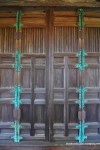
When I reached the mountain top I must have been one of the happiest people in all of Kansai: A stunning view, gorgeous autumn leaves and a temple all for myself. Sure, I couldn’t tweet “I’m in Arashiyama! (Be jealous!)”, but I wasn’t bothered by souvenir shops and crowded locations. Quite the opposite. When I was walking around I had to be careful not to run into one of many one square-meter large spider webs with a nasty middle finger long black and yellow spider in it. The abandoned temple itself was rather unspectacular. All buildings were closed, in rather good condition, and I didn’t even have a closer look if there was a way to open them. I’m not very religious myself, but I respect the beliefs of others and try to be respectful. (Which doesn’t keep me from making fun of them if it’s getting too ridiculous – you know, thetans, magic underwear and stuff like that…)

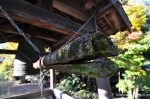
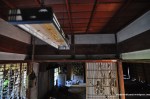
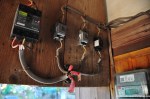
Open and rather interesting was the house of the monk that lived near the Shuuhen Temple. It’s hard to tell when it was abandoned. Some buildings in Japan fade away in no time, others withstand the ravages of time as if they couldn’t care less. It looked like it was built in the 60s or 70s, given the black and white photos of the bell and the belle; judging by the wiring maybe even earlier. The decay there was clearly natural, because thanks to the temple’s location the average bored youth vandal spares the place. Strangely enough the digital display of the power meter still worked…

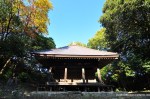
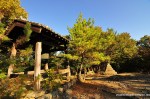
The temple itself seems to have quite a long history. According to the homepage of the city it is located in, the Shuuhen Temple dated back to Emperor Kotoku’s days (596 – 654) and was first built in 651. In 1578 it was burnt to the ground and stayed a ruin for more than a century until 1682, when it was revived again. Not much information, but way more than one could get for most other temples and shrines in Japan… Now it is famous not so much amongst urban explorers, but more amongst Japanese fans of ghost spots (心霊スポット). I guess it makes sense to look for paranormal activity where people traditionally believe(d) in spirits.

Exploring the Shuuhen Temple was one of those nice, mellow urbex experiences. Sleeping in, taking some local trains, a nice and sunny autumn day, some hiking, some solitude, cold temperatures, but warm sun, beautiful countryside. A relaxed Japanese Indian Summer day…

(*Like Abandoned Kansai on Facebook* if you don’t want to miss the latest articles and exclusive content – and subscribe to the *video channel on Youtube* to receive a message right after a new video is online…)

Read Full Post »

Mukainokura is probably the most famous ghost town in all of Japan as it was featured in many books and by many websites. It is also quite easily accessible by ghost village standards – it’s less than 10 kilometers away from the next train station (more like 6 km actually) and you can drive right up to it if you have a car. And since it’s on top of a hill in the mountains of Shiga prefecture, there are millions of potential visitors from all over Kansai.

Mukainokura was the first ghost town I ever visited, back in the spring of 2010 – and the last location I ever visited with my colleague and dear friend *Enric*, since only weeks later his fugue kicked in and he left the company we both worked for back then.

Spending a sunny spring day hiking with a friend in the Japanese countryside is as good as a day can get in my book. And so Enric and I passed several beautiful temples, shrines and rice fields on our way to the mountains. Back then there was way less information about Mukainokura on the internet, including GoogleMaps, so of course we overshot the side road taking us to the deserted town by a couple of kilometers. After walking back on the beautiful valley road along a small river we finally hiked up the mountain. Almost 200 meters height difference on a length of about 700 or 800 meters – I can see why that village was abandoned! The location was beautiful, but going up and down that slope on a daily basis must have been a pain… Which applies to a lot of villages in the area, about a dozen, all abandoned. Mukainokura is just the most famous one.

Mukainokura was founded halfway through Japan’s most famous era, the Edo Period (or Tokugawa Period), in the early 18th century. Back then people were living off agriculture and by producing charcoal. Growing slowly for one and a half centuries Mukainokura was home to 95 people in 1880, living in about 20 houses. Although in the 1920s the production of ogatan, Japanese charcoal briquettes made from sawdust, brought a more advanced source of income to Mukainokura, the number of inhabitants decreased quickly when gas, oil and electricity replaced charcoal everywhere in Japan after World War 2 – and younger people moved from mountain towns to the big cities in the plains. Mukainokura had:
52 inhabitants in 1960
43 inhabitants in 1965 (12 households – 17 male, 26 female)
10 inhabitants in 1970 (3 households – 5 male, 5 female)
3 inhabitants in 1975 (2 households – 2 male, 1 female)
2 inhabitants in 1980 (2 households – 1 male, 1 female)
0 inhabitants in 1985

After more than 25 years of abandonment there was not much left of Mukainokura. About a dozen wooden houses (half of them completely collapsed, the other half partly), scattered across an area of several hundred square meters, connected by tiny paths, short staircases and terraces. More than two dozen winters with heavy snowfalls left the remaining houses in a dilapidated state – beyond repair actually. Nevertheless a couple of houses were still accessible and full of everyday items like magazines, china, photos, bottles, boxes and cans.

I guess in 2010 Mukainokura had more visitors than in 1980. During our two hour long visit Enric and I ran into four different groups having a look at the abandoned town. From a elderly couple that might have been born here to an early twen couple wearing designer clothes – the guy behind the wheel of the sports car showing his trophy girlfriend the spooky dark side of their home country… All of them were driving up the paved road, not walking, like us and for centuries the inhabitants of Mukainokura did.

The two most vivid memories I have of Mukainokura involved nature though. When Enric and I strolled through the ghostly remains of the village Enric spotted a wild monkey in the forest. It was ignoring us completely, minding its own business – sadly I wasn’t able to get a photo of the furry fella. Right before we were leaving Mukainokura we were following signs to the Ido Jinja, the “Well Shrine” (井戸神社). Turns out that this shrine near Mukainokura’s well is quite famous till this very day, featuring signs that were clearly put up after Mukainokura was abandoned (one was dated, 1991, others looked even newer). The shrine was (and is) accompanied by a Katsura tree 39 meters tall and 11.6 meters in girth, according to the sign 400 years old. A wonderfully tranquil place and the perfect location to stop by before heading home…

(If you don’t want to miss the latest article you can *follow Abandoned Kansai on Twitter* and *like this blog on Facebook* – and of course there is the *video channel on Youtube*…)

Read Full Post »

« Newer Posts - Older Posts »