Feeds:
Posts
Comments

Archive for the ‘Okayama’ Category

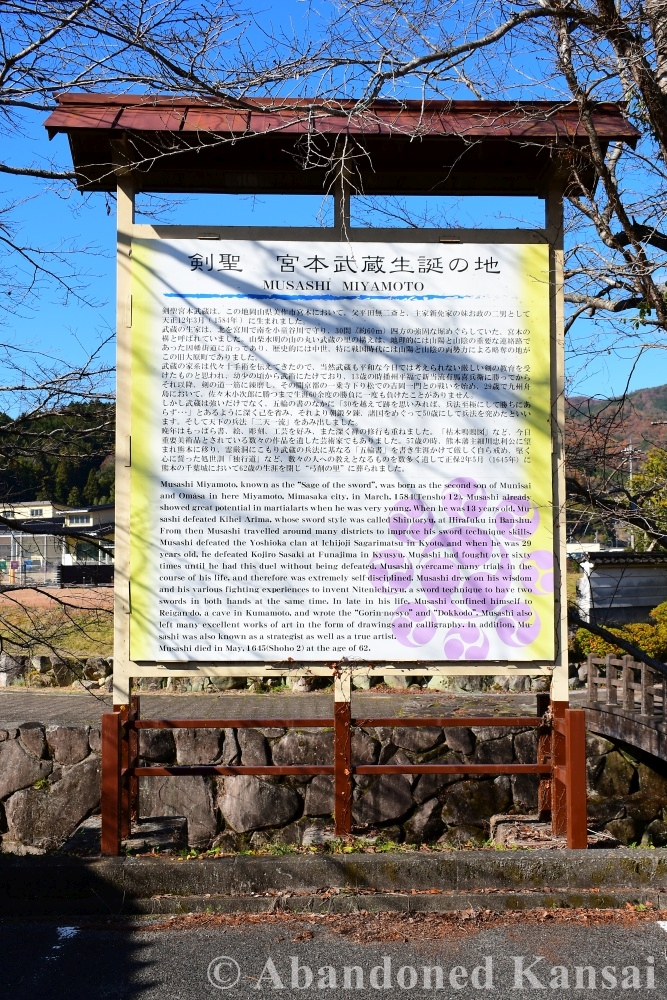
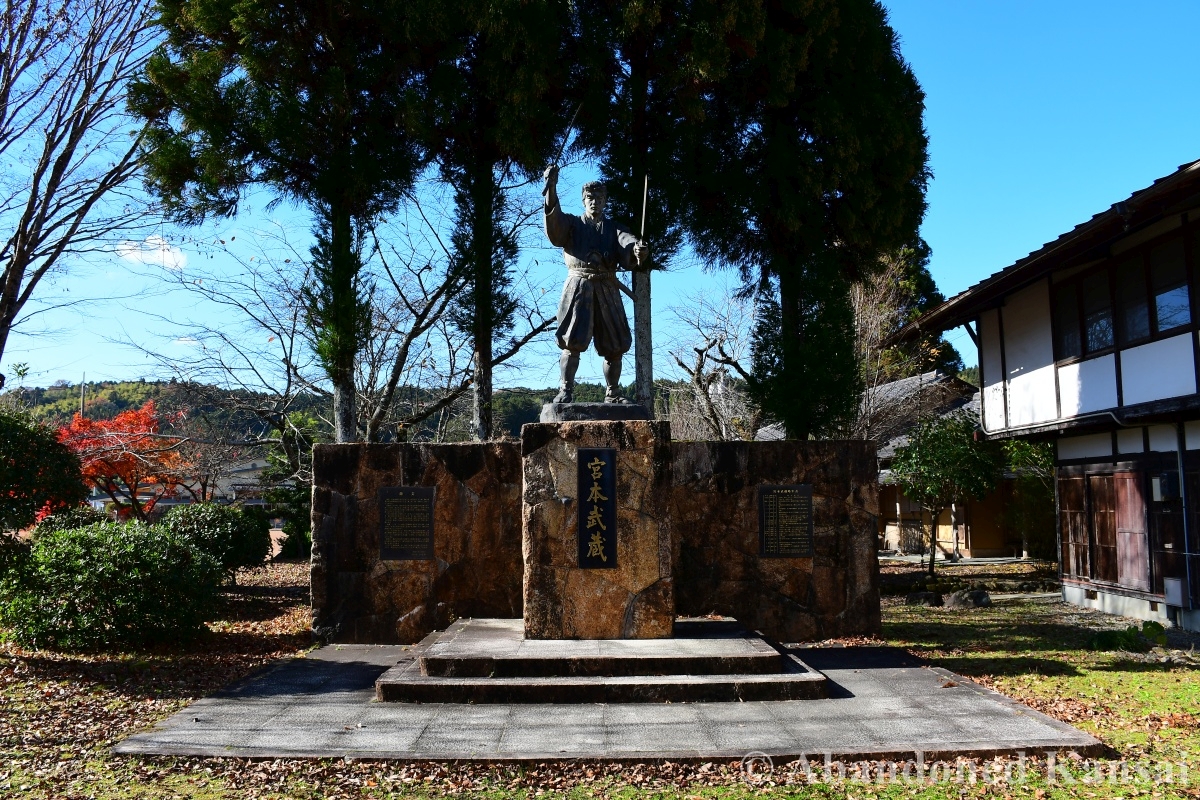
Musashi Miyamoto was one of the most famous sword fighters in the history of Japan and has been depicted in countless works of art – novels, movies, video games. In real life he fought in famous battles, for example in Sekigahara, and almost equally famous duels, like against Kojiro Sasaki. Later in life he became an artist and writer, penning The Book of Five Rings about strategy and martial arts. Since Musashi Miyamoto is part of pretty much every school curriculum, virtually every person educated in Japan knows about him – and yet even the most significant places of his life are still hidden gems.

I’ve been interested in Japanese history ever since I watched the original Shogun mini-series in the early 80s with my dad. As a teenager I read the book, in my early 20s I traveled to Japan for the first time, later I studied Japanese history at university, and in my late 20s I moved to Japan. I think I had the book Musashi by Eiji Yoshikawa as a teenager, though I don’t think I got far into it… I always struggled with Japanese authors. Kenzaburo Oe, Haruki Murakami, even Soseki Natsume – though I love the beginning of “I Am a Cat”, one of the few books I can quote: “Gestatten, ich bin ein Kater! Unbenamst bislang.” (The other language versions I had to look up: “I am a cat; but as yet I have no name.” / “吾輩は猫である。名前はまだ無い。And German sounds so much more poetic than English in this case!)
Anyway, in late autumn of 2025 I decided to finally visit the birthplace of Miyamoto Musashi – which was in day trip range of where I live, meaning it’s in day trip range of about 90% of the overseas tourists visiting Japan; none of them to be seen there even on a gorgeous Saturday with fantastic weather!

Miyamoto, Okayama
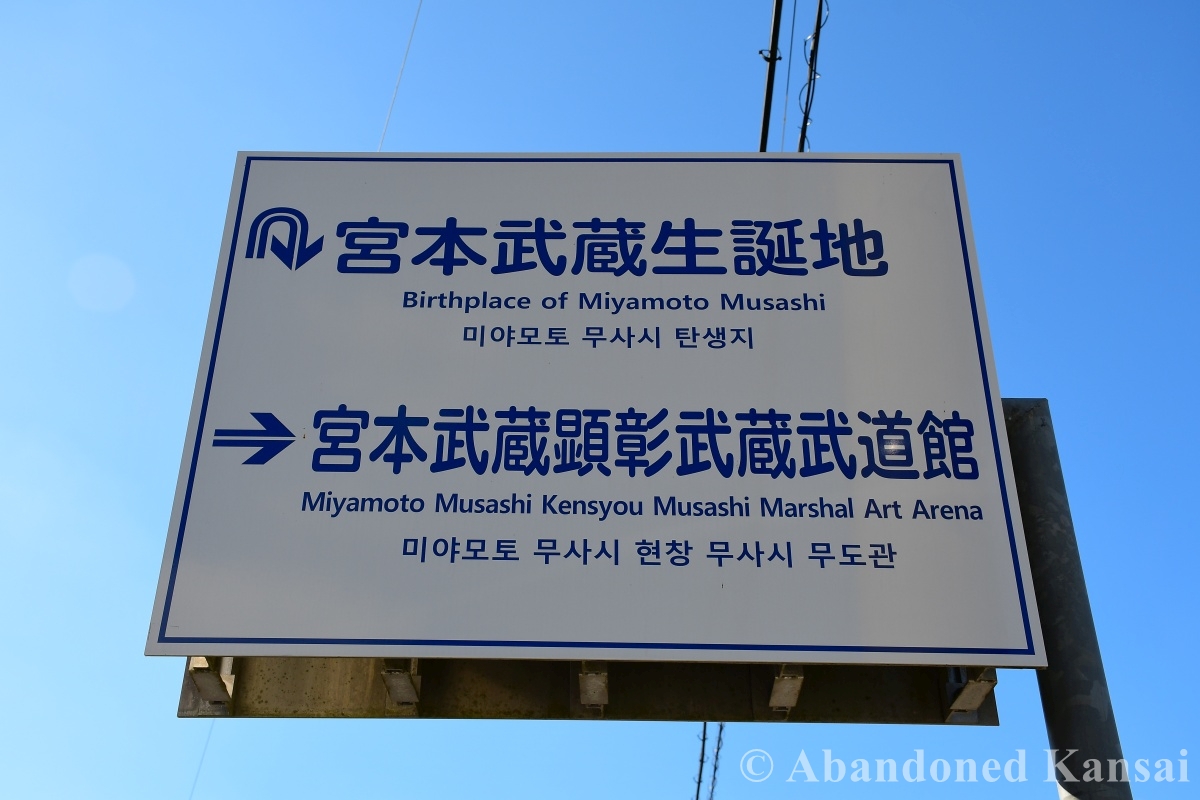
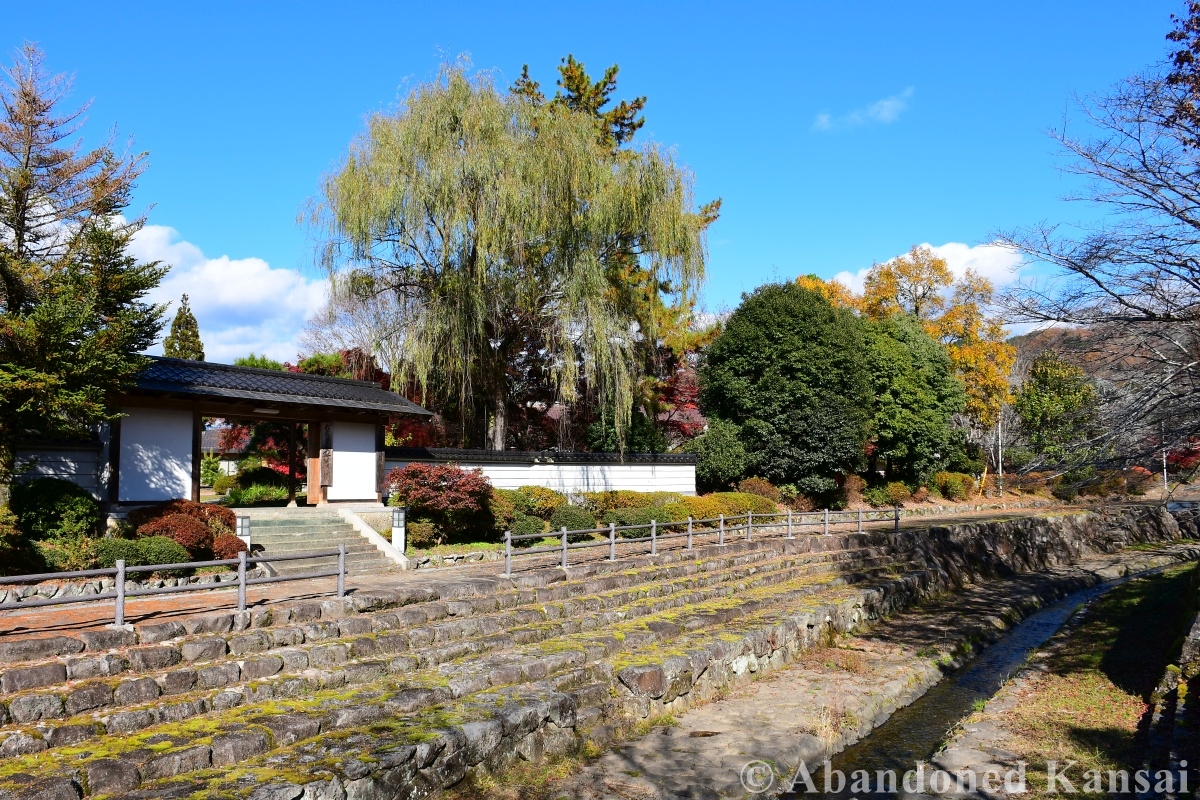
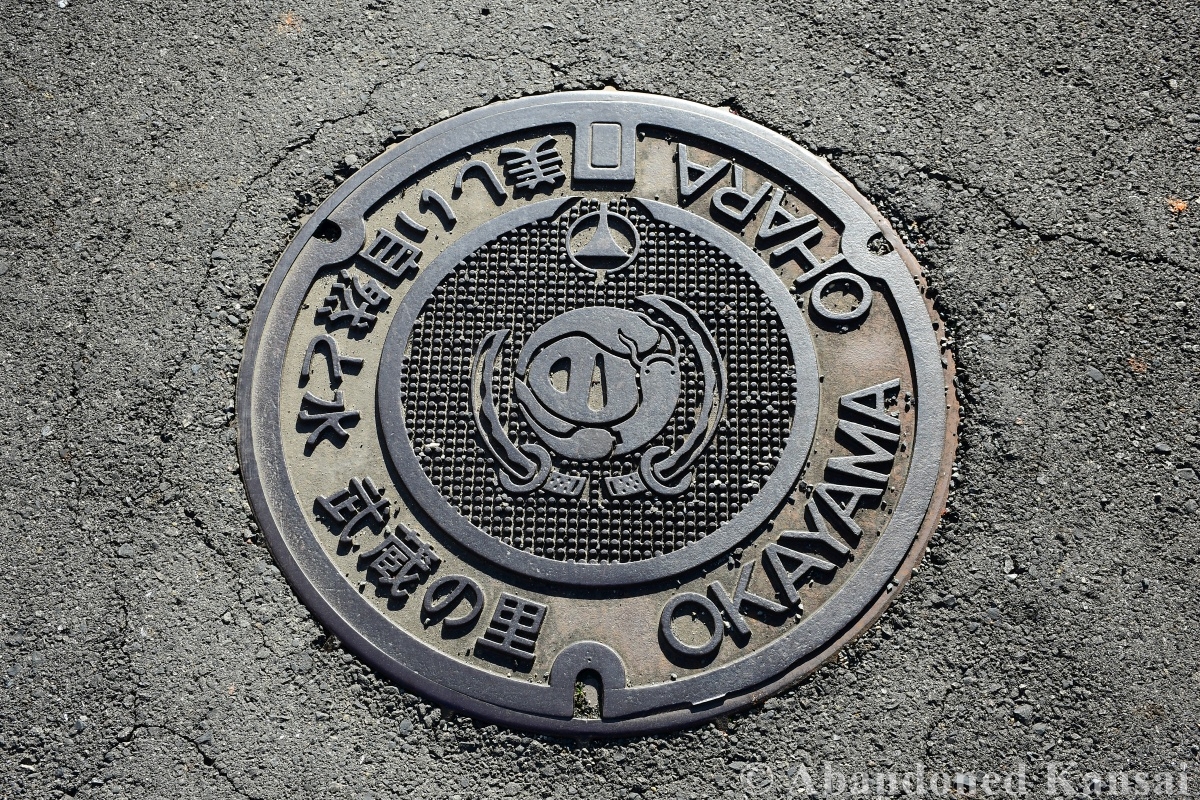
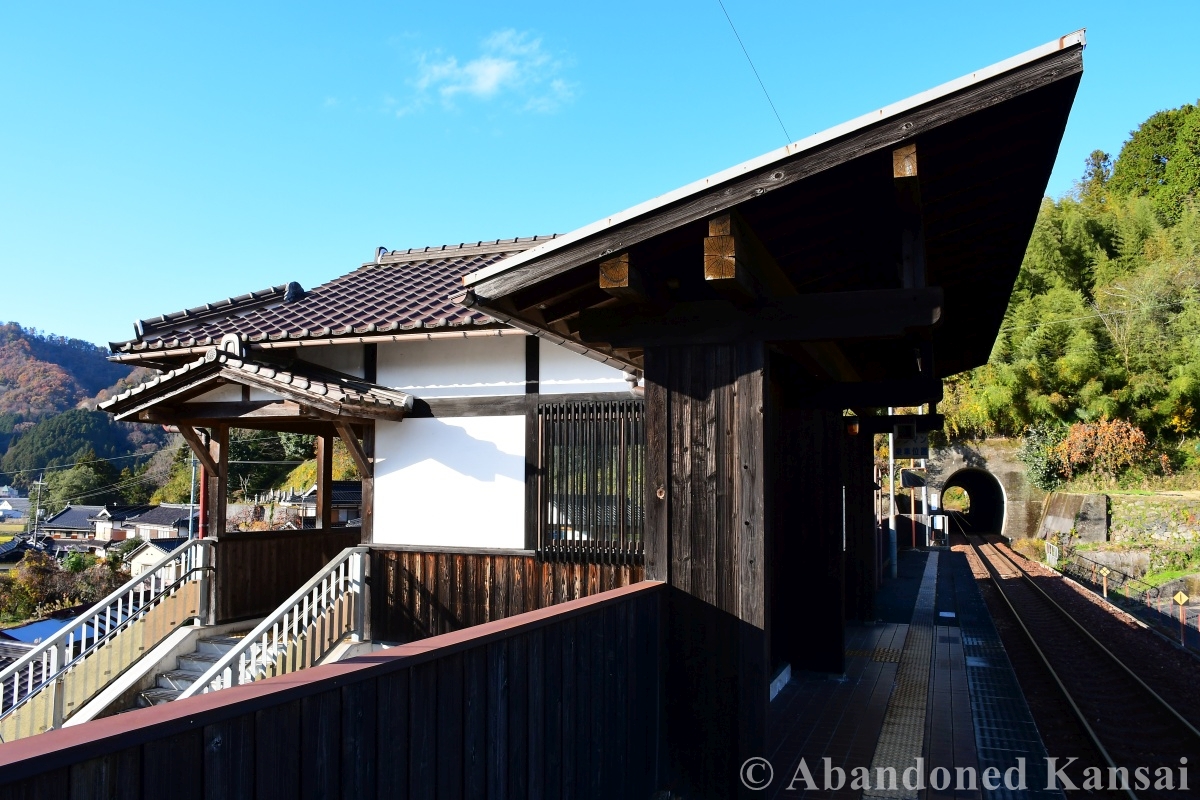
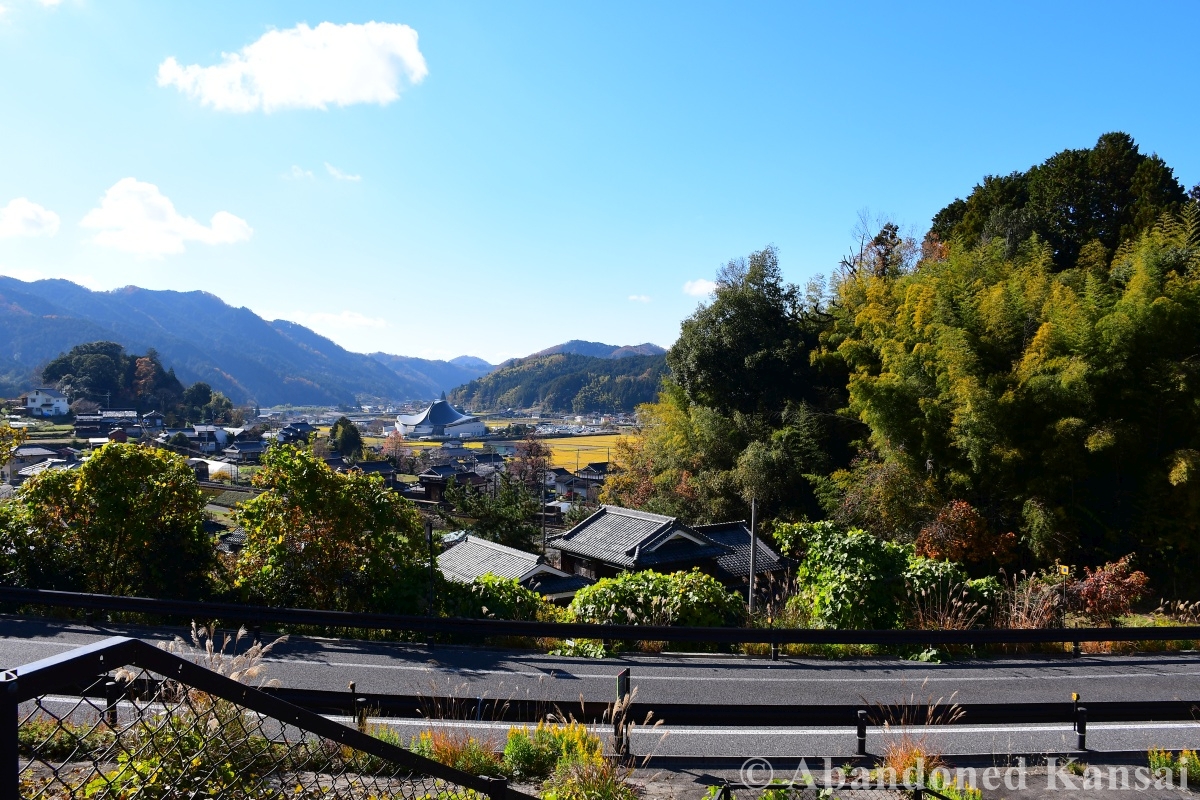
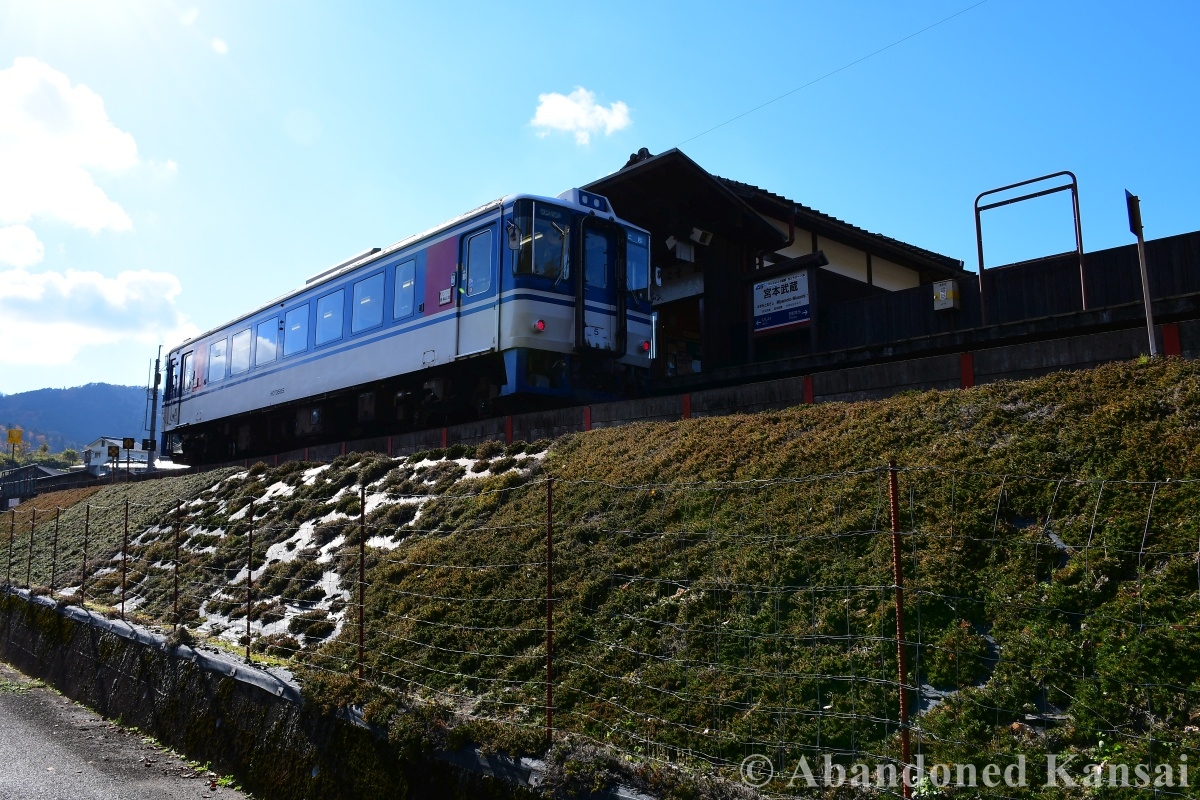
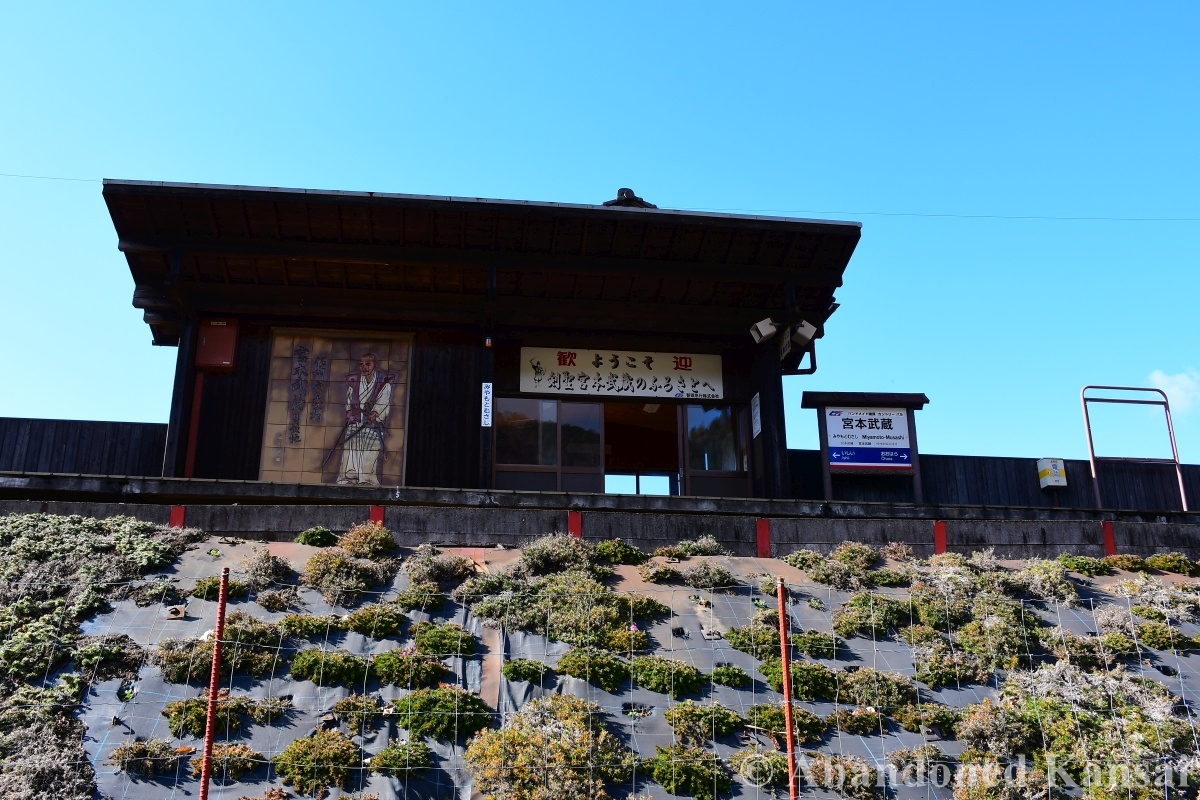
Musashi Miyamoto, unlike Shigeru Miyamoto, was (most likely) born in Miyamoto, Okayama prefecture – halfway between Himeji and Tottori, right at the border to Hyogo prefecture; an area usually described as “deep in the mountains of Japan”. The easiest way to get there? By highway bus, despite a train station in nearby Imaoka (which all are part of a city called Mimasaka) named after the most famous guy from the area. Yeah, I had no idea either. Took me 19 years of living in Japan to find out that there is a train station called Miyamoto-Musashi Station! It’s a small one with only about 15 connections in each direction per day, about once an hour in average, hence the highway bus from Himeji – it’s easy, cheap, and doesn’t require several vehicle changes. (As of early September 2026: 10:30, bus stop 11 at Himeji Station, get off at Ohara Inter, 1900 Yen.) Getting back to Himeji, you can either take the bus from Ohara Inter at 16:13 or the 17:20 train from Miyamoto-Musashi Station via Kamigori Station.
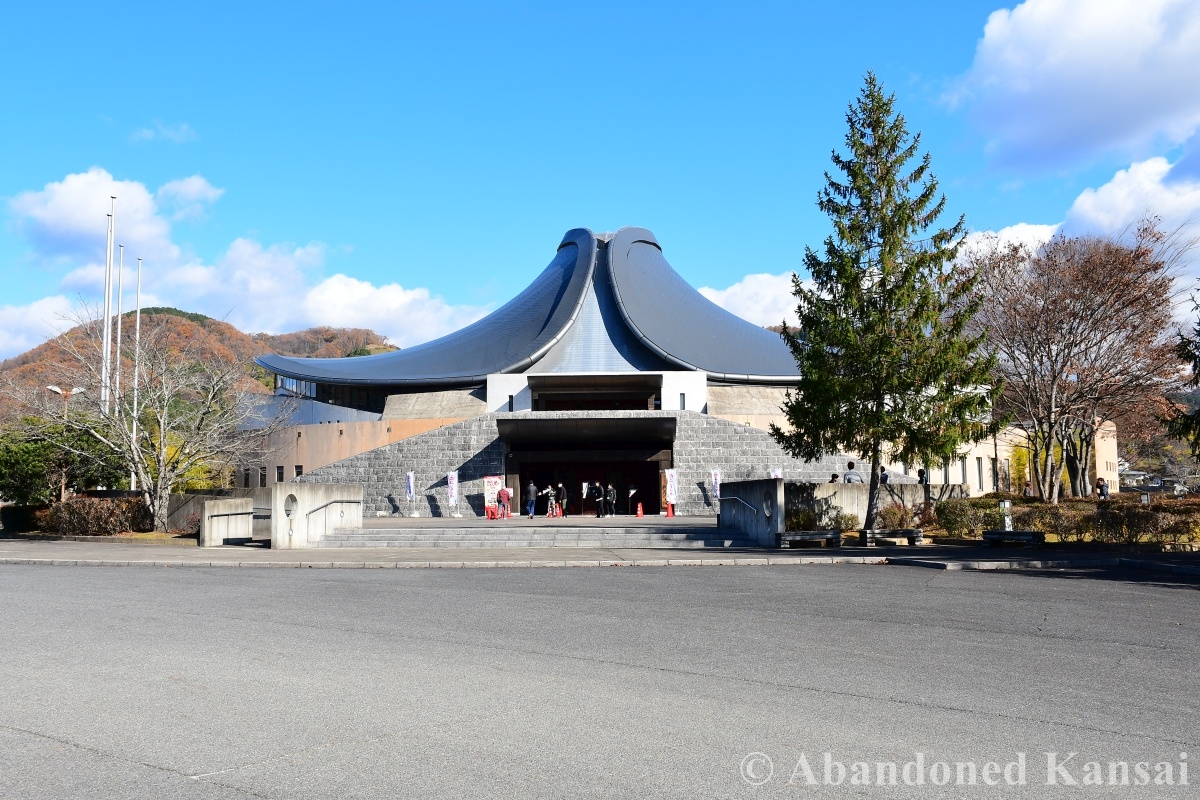
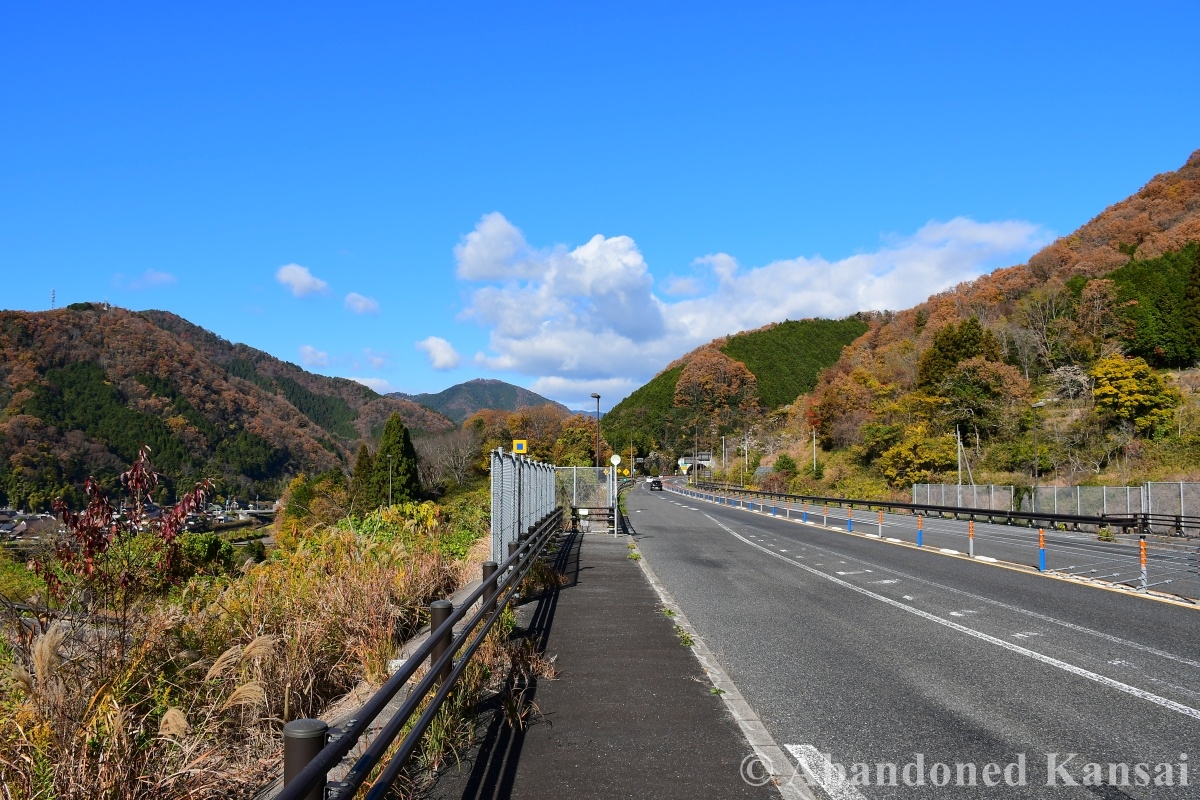
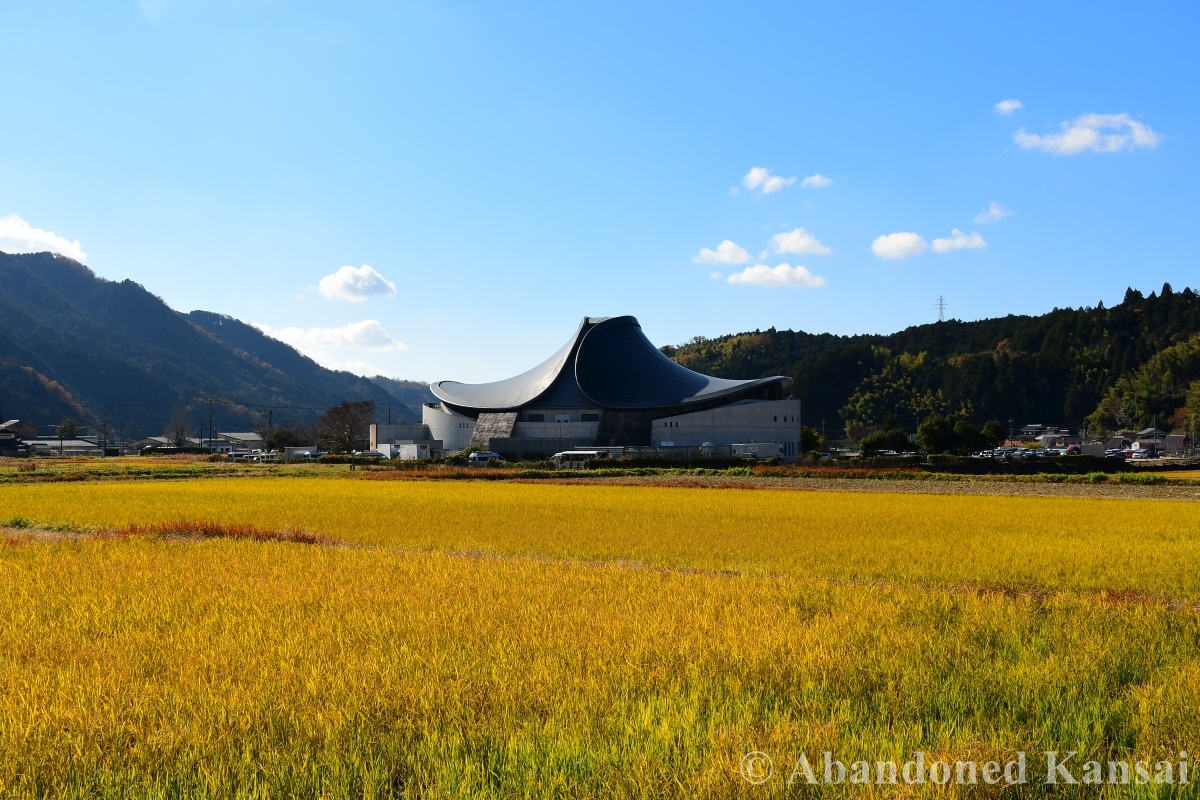
I arrived at Ohara Inter to beautiful weather on a gorgeous Saturday in late November. The highway is a bit elevated, so you can see the train station in the foreground and the Miyamoto Musashi Budokan in the back – a large modern multi-purpose venue dedicated to martial arts, designed after a tsuba (sword guard) crafted by Miyamoto Musashi (I was told that on location, Wikipedia claims that a samurai helmet called kabuto was the inspiration, so… who knows?).
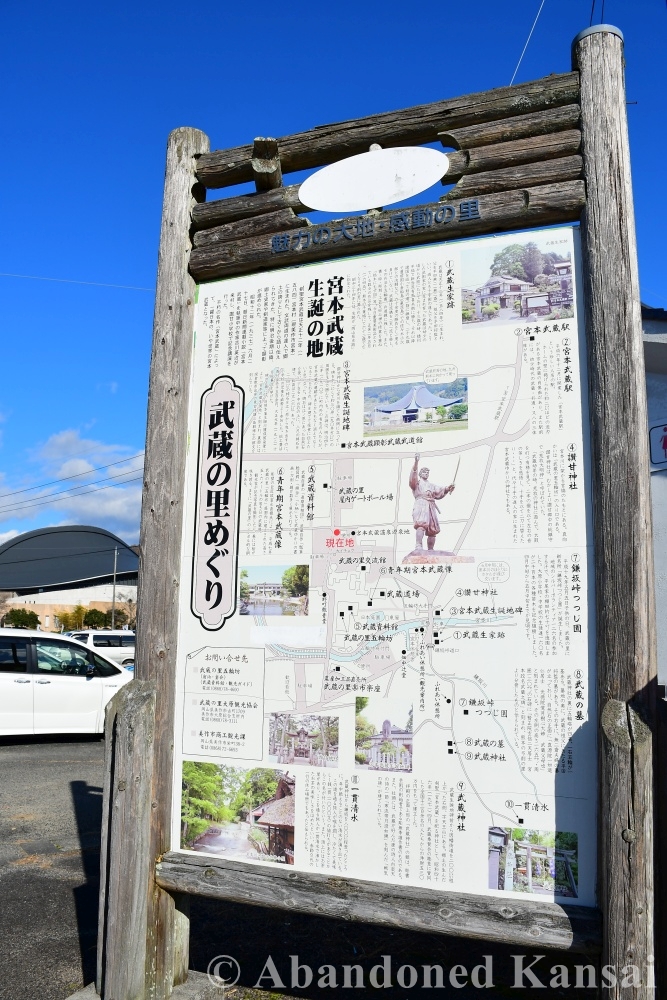
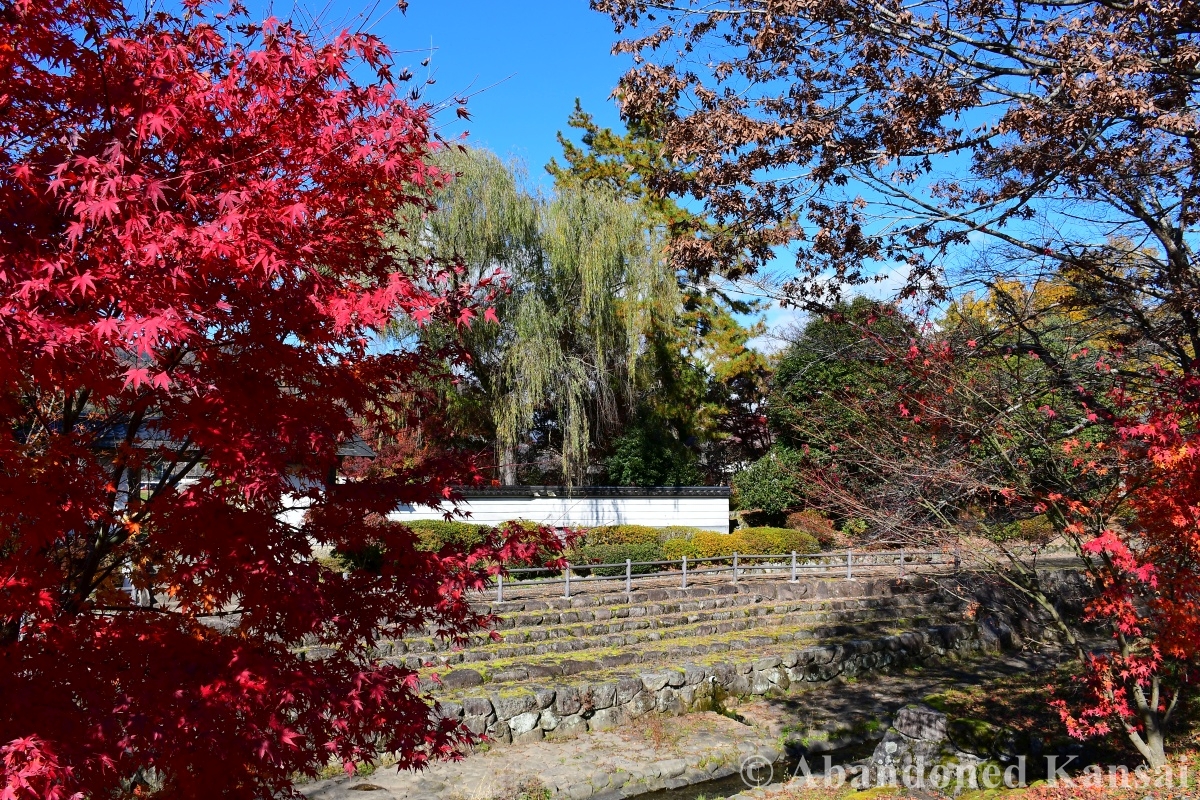
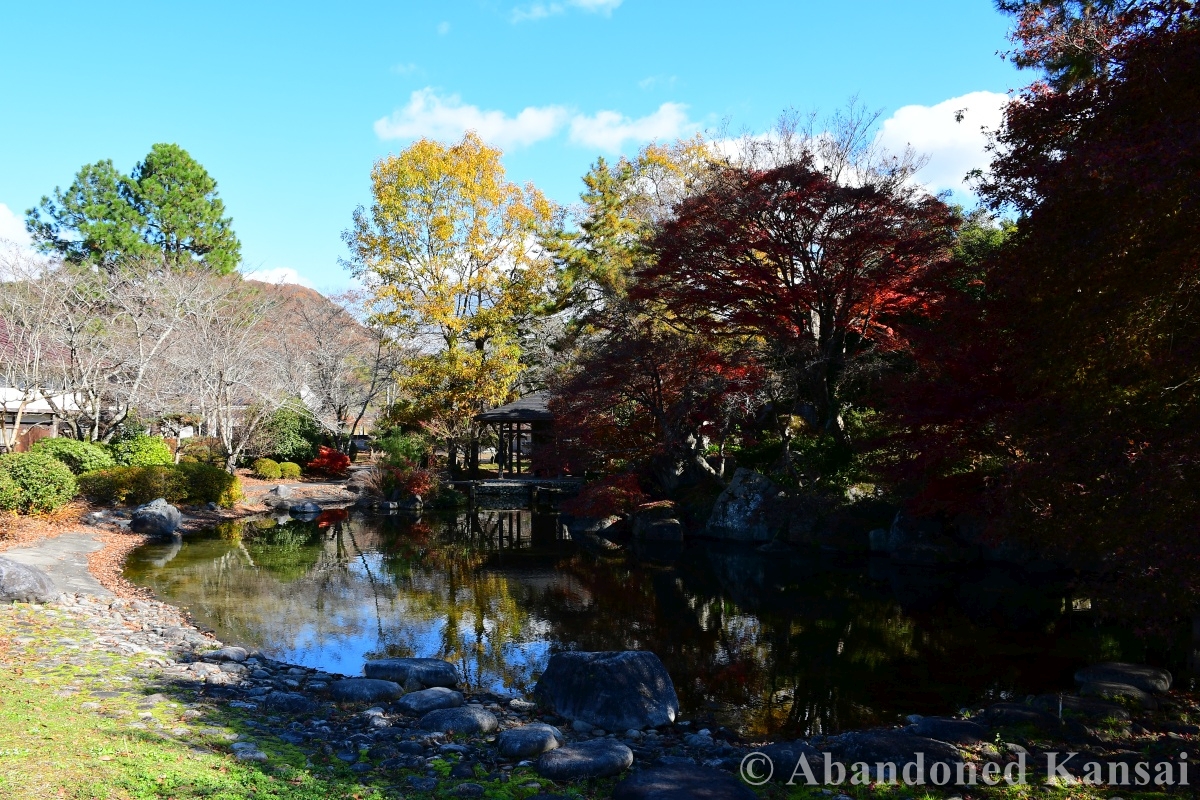
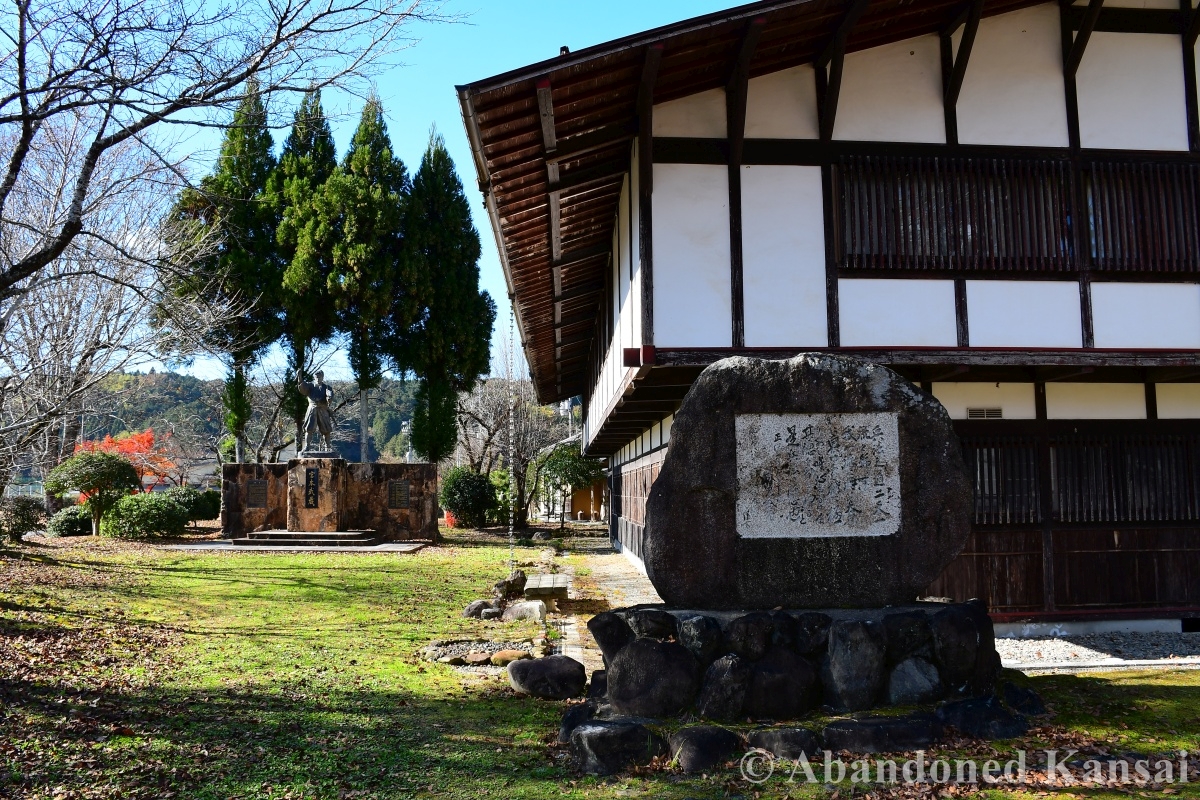
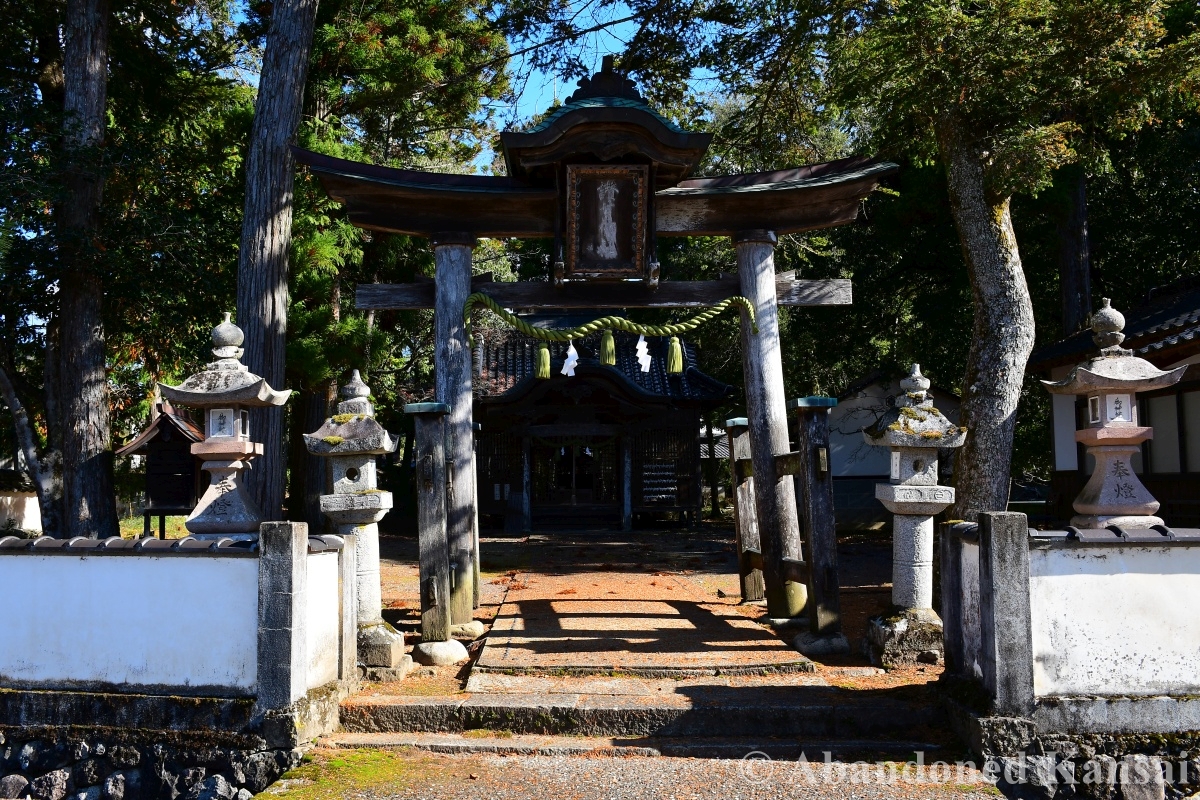
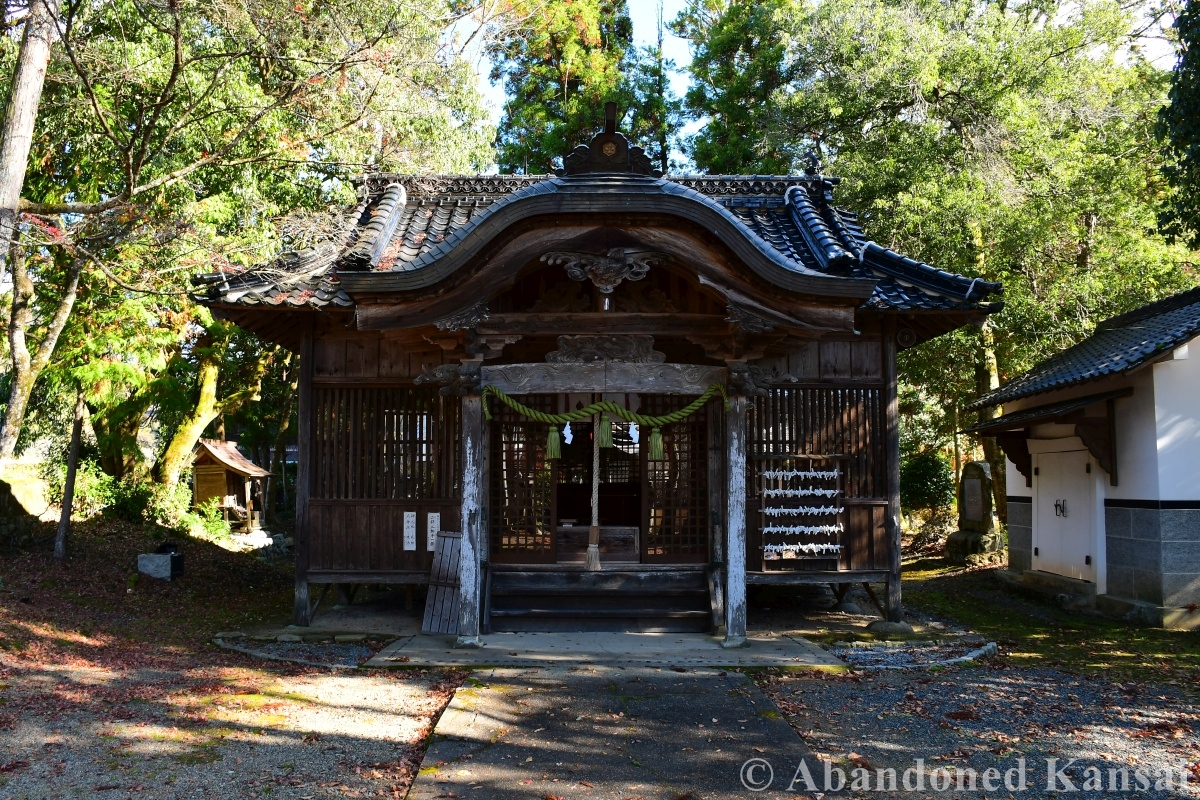
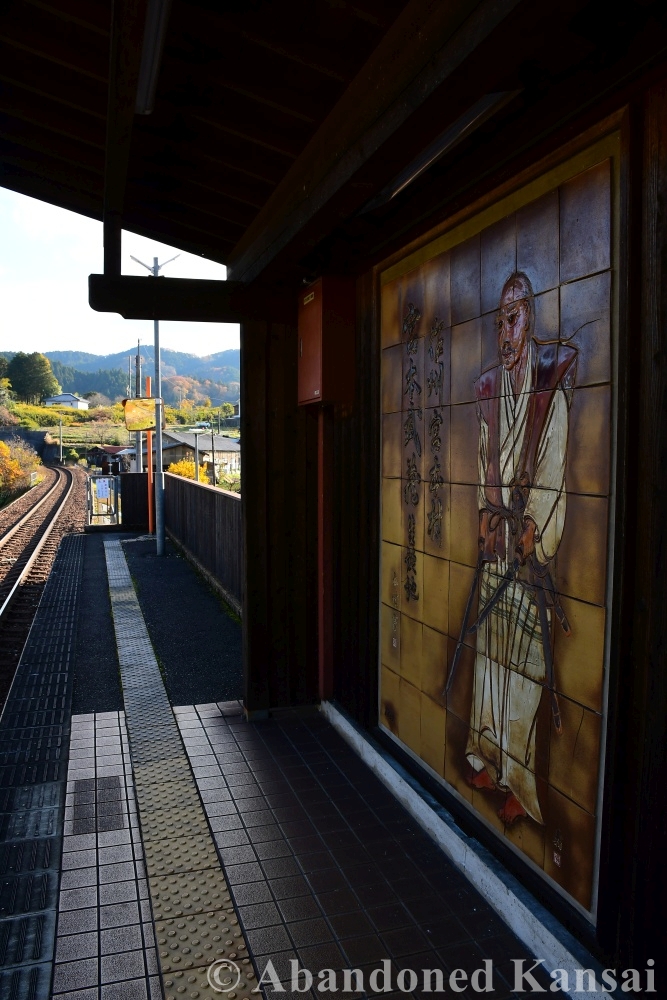
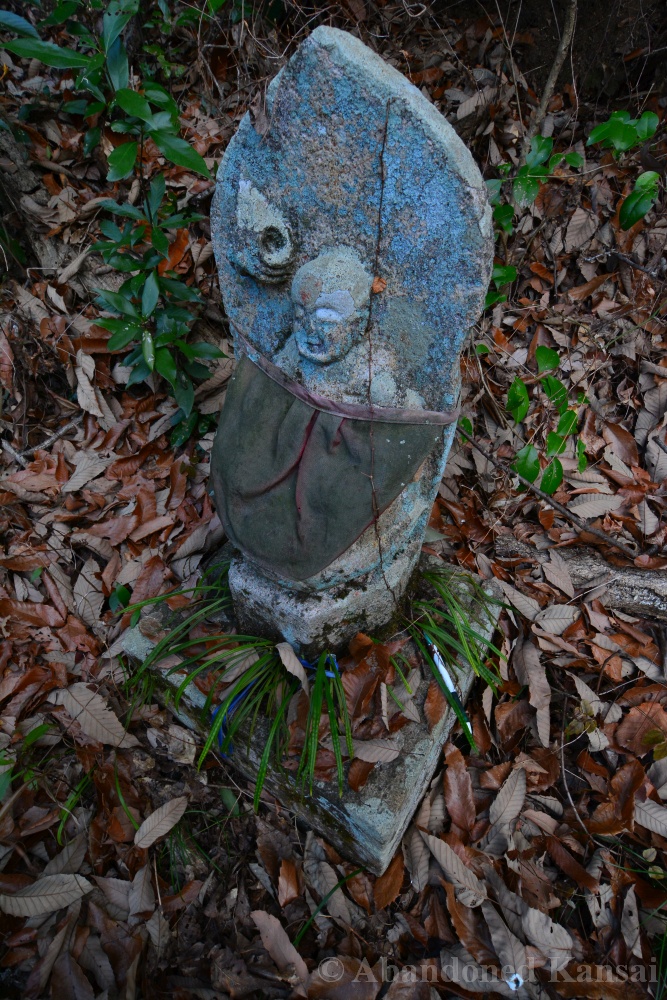
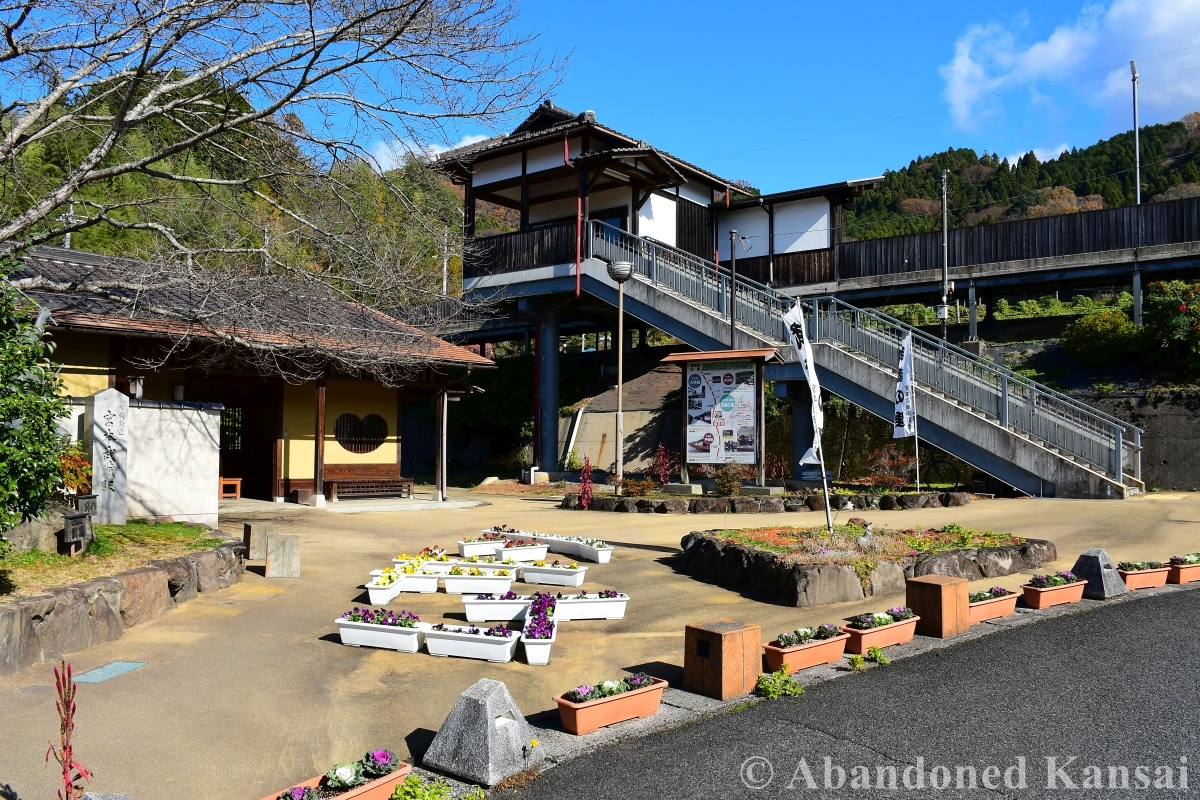
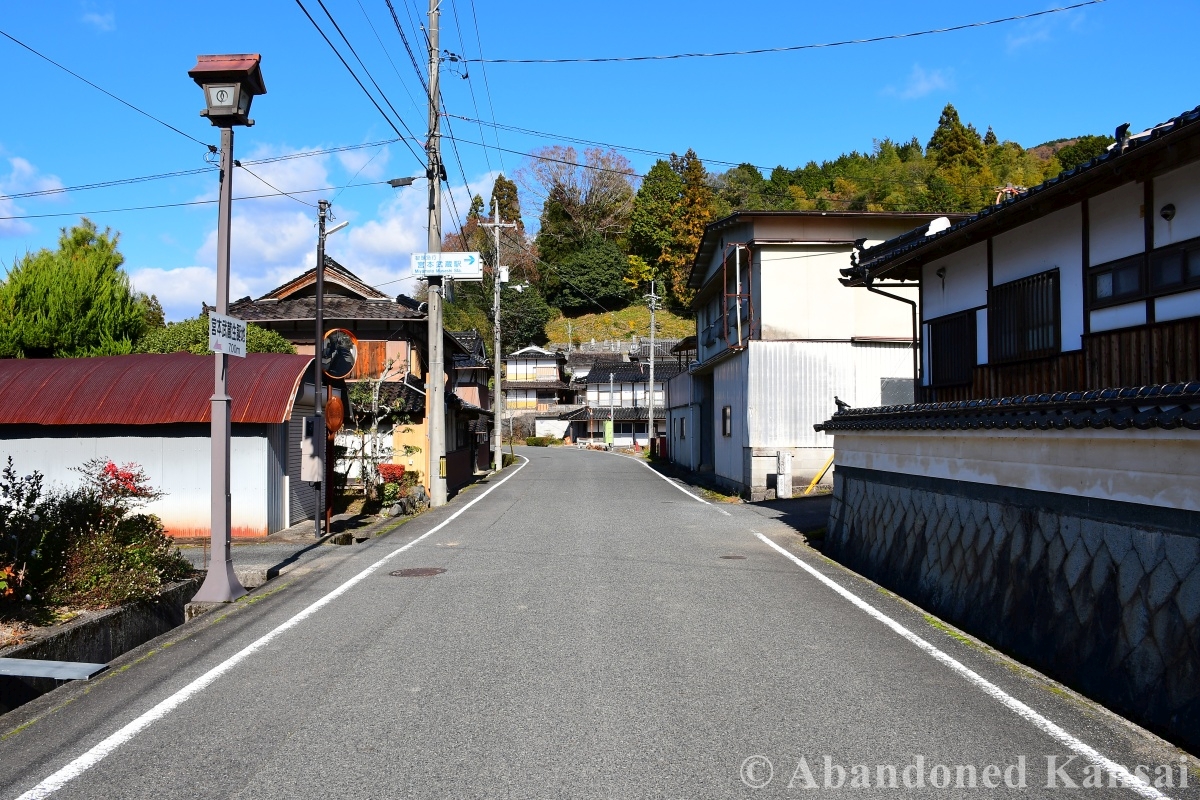
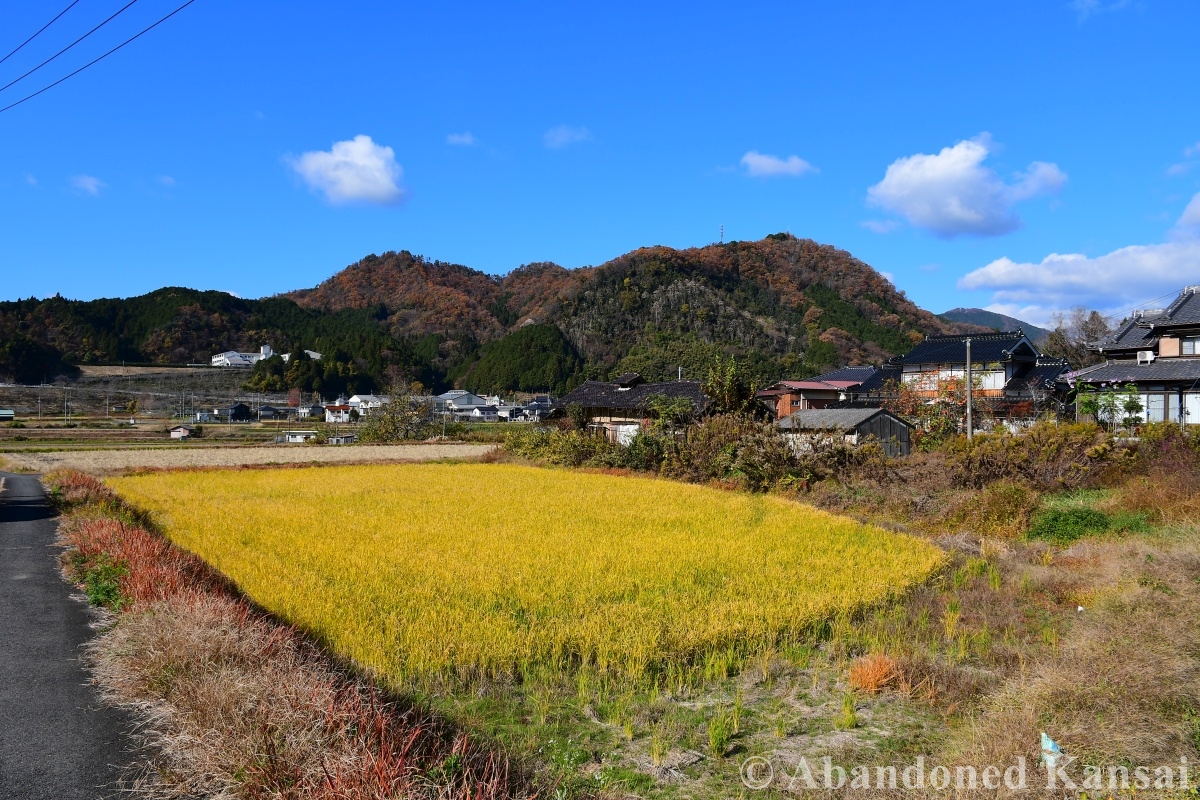
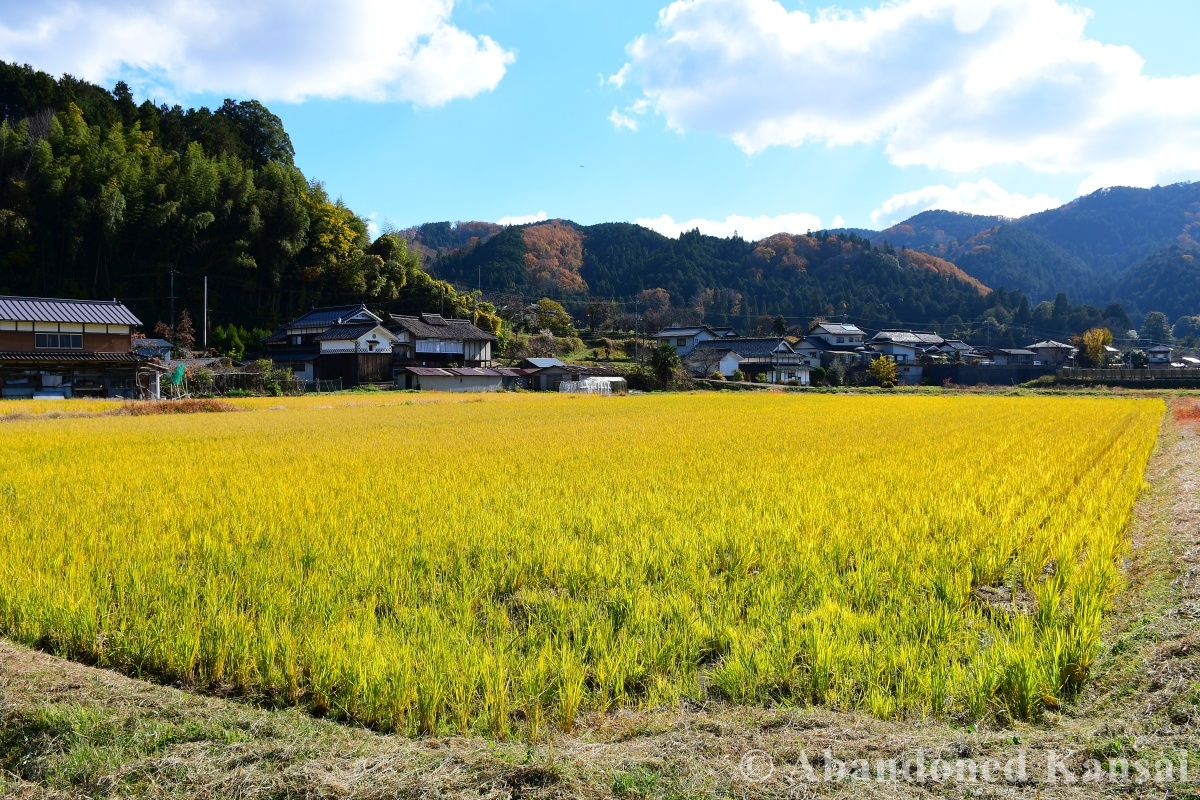
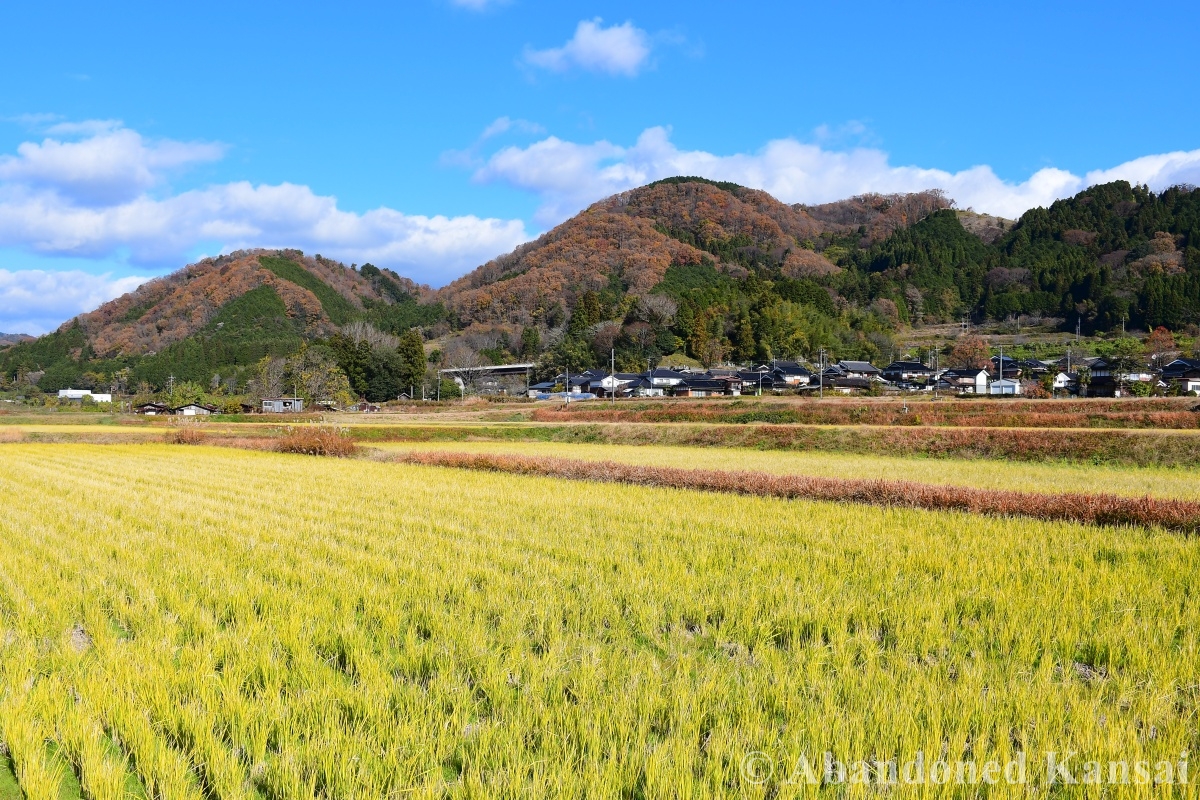
Upon arrival in the really, really lovely small town, surrounded by rice fields and dotted with kaki trees, there is so much to see – first there is the train station, which featured several statues, area guides and even some stamps, if that’s your kind of thing. From there I went over to the Budokan, which was surprisingly busy due to a singing contest held by NHK. Interestingly enough, that had no influence on all the other sightseeing spots in town. The Musashi Memorial Park, the Sanomo Shrine, Musashi’s birthplace, the Musashi Shrine, the family grave… all void of people.
There’s a small sightseeing center in the tiny center of the town, so I went there in search of some souvenirs. And they actually had quite a nice collection of non-perishable items like wallets, T-shirts, coasters, … Probably not enough customers for senbei or manju. Which is a shame, because Miyamoto is a super nice small town, absolutely gorgeous. The guy running the shop / tourist center was extremely friendly and closed the place for almost an hour to give me a guided tour of the birthplace area, including the Musashi Shrine; which he apparently does regularly, according to reviews on GoogleMaps. He even opened the Musashi Miyamoto Museum for me, which was closed during Covid and never reopened, so I could have a look.
Overall one of the best day trips ever, doable from pretty much everywhere between Kyoto and Okayama. Unlike Otaru or Hakone, this is really a hidden gem off the beaten tracks!

Ganryu-jima
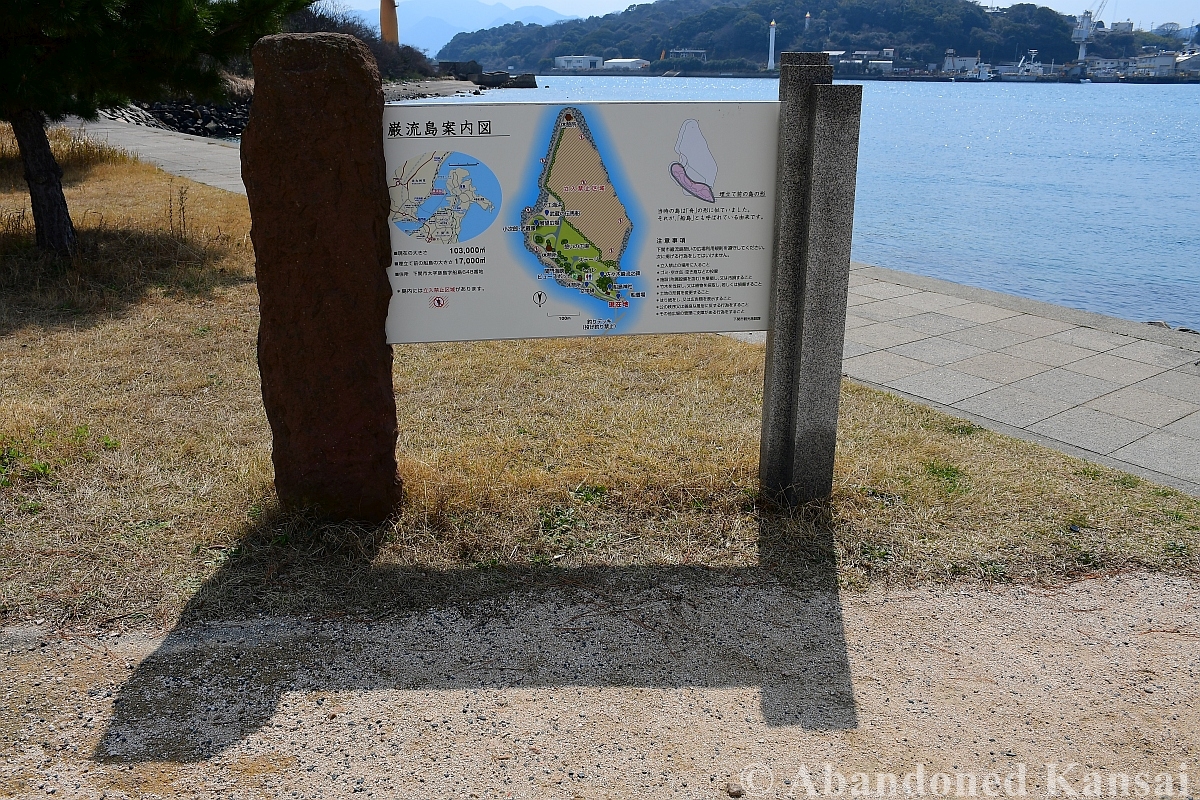
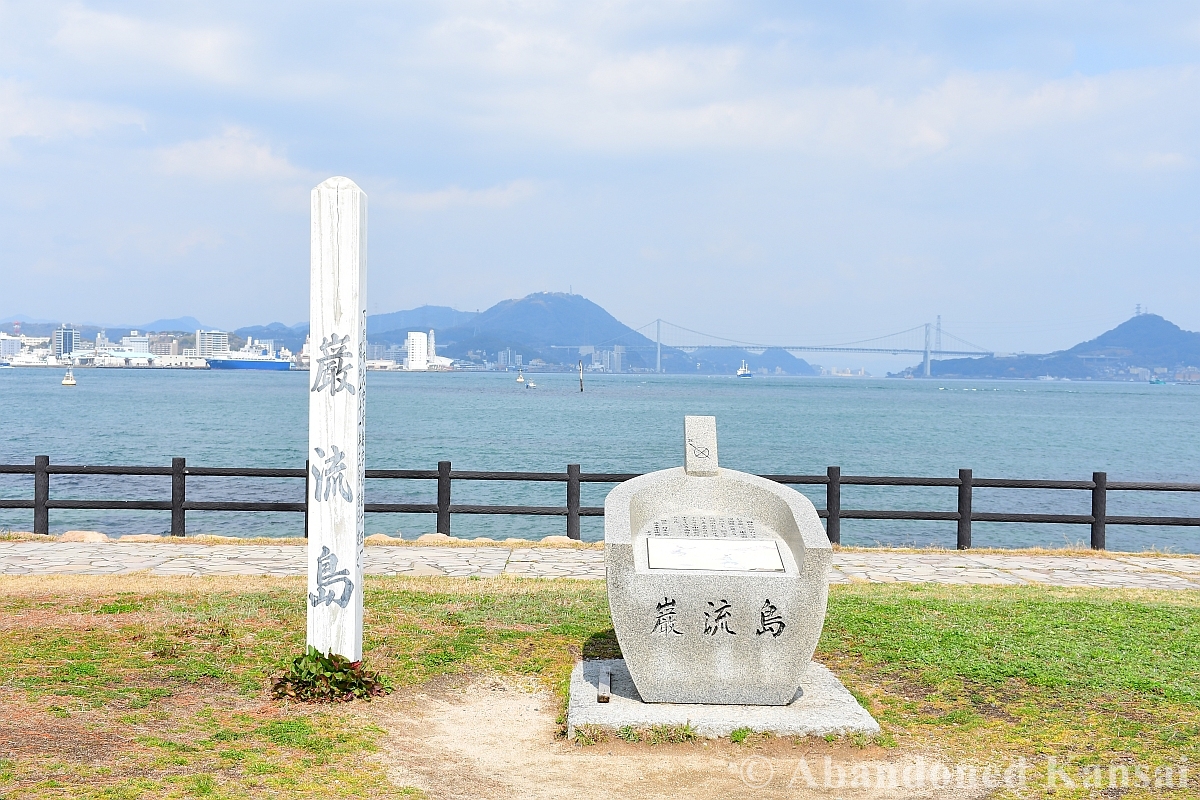
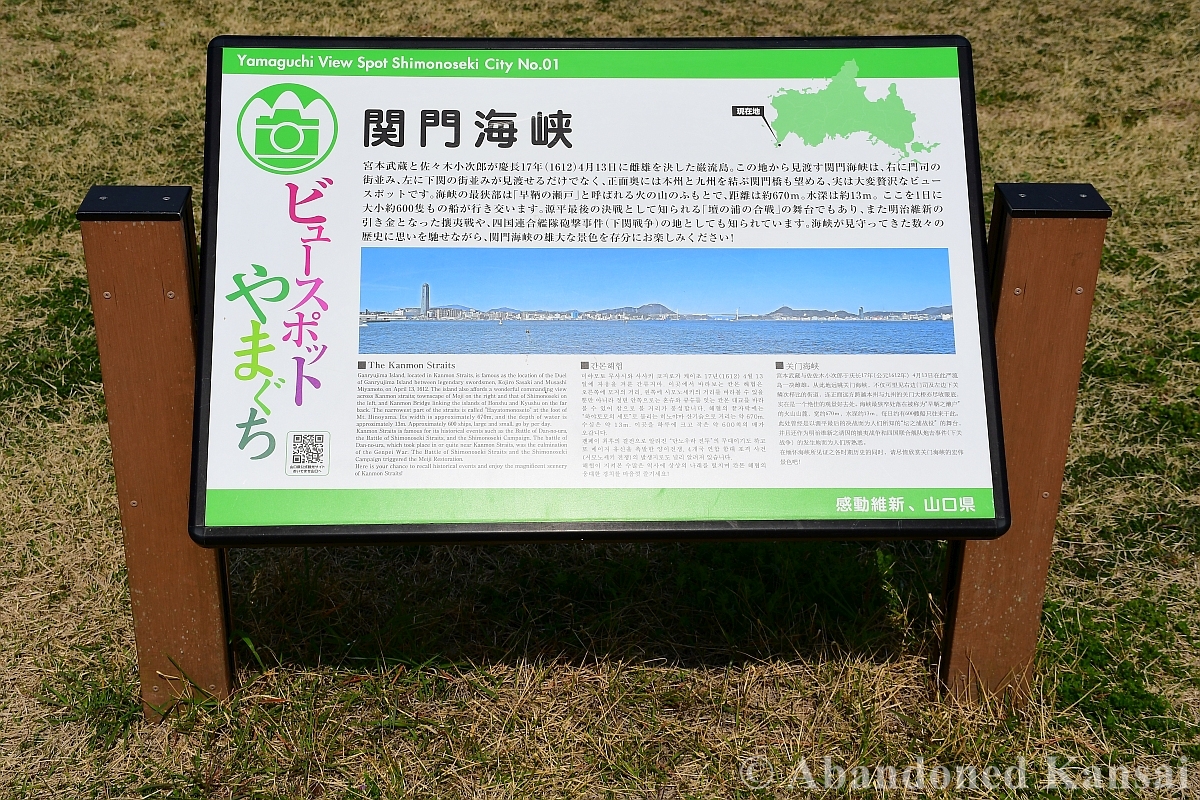
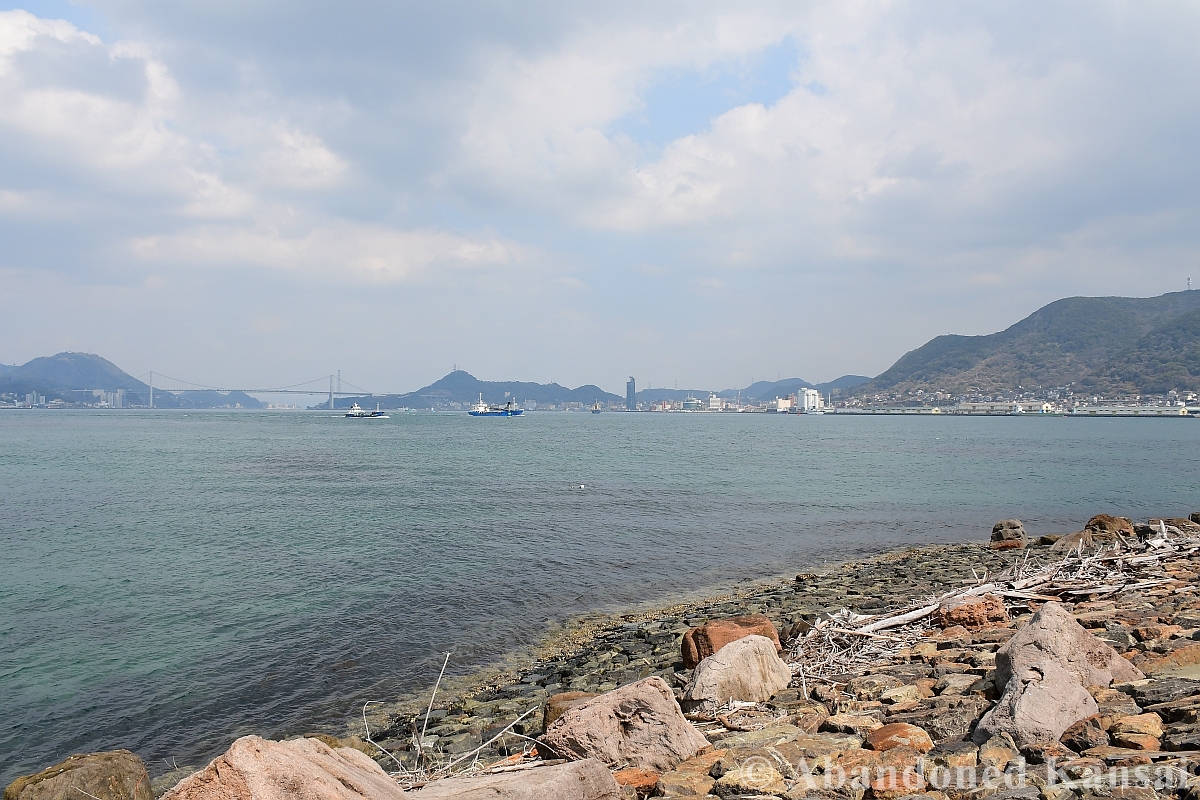
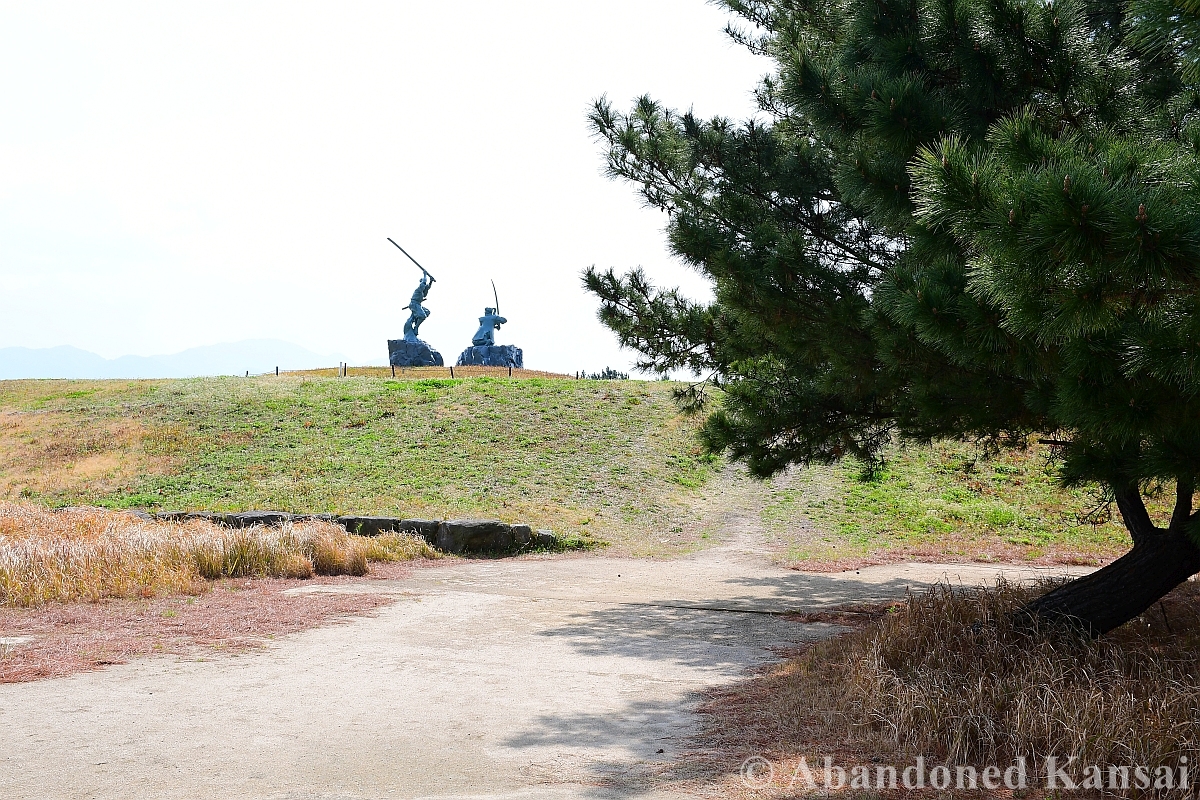
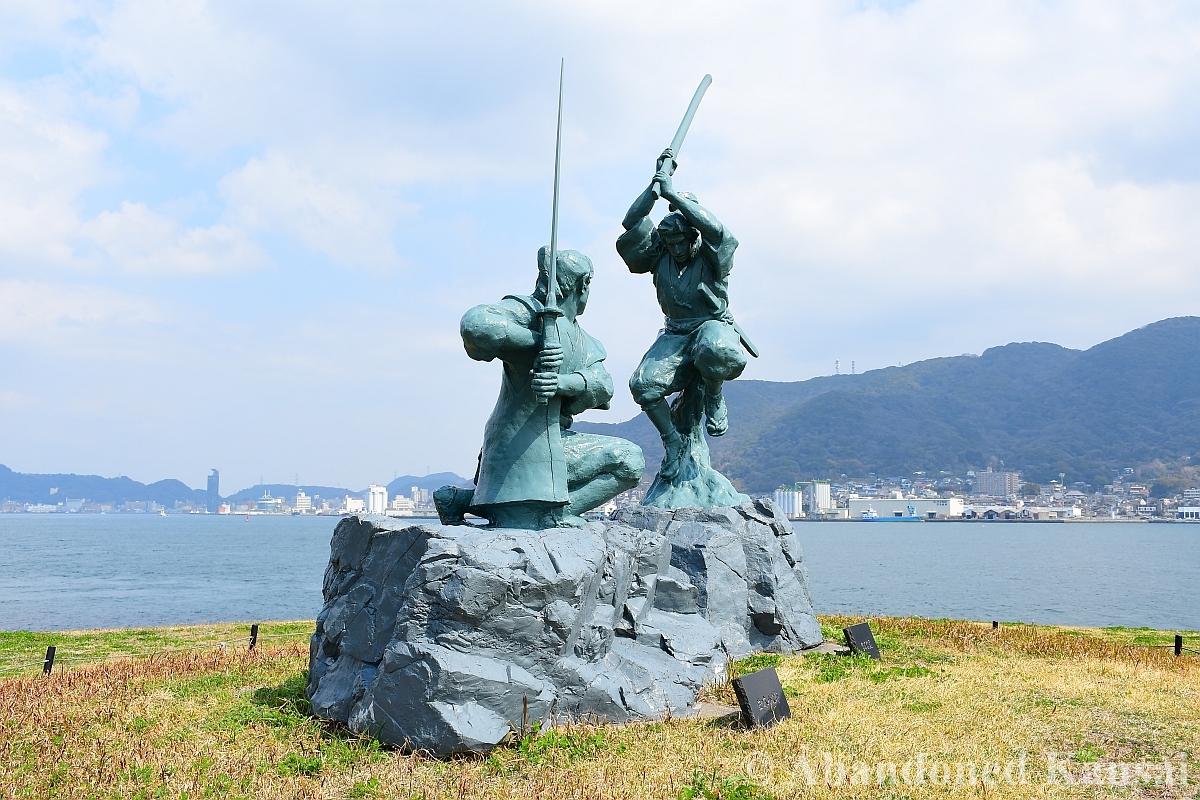
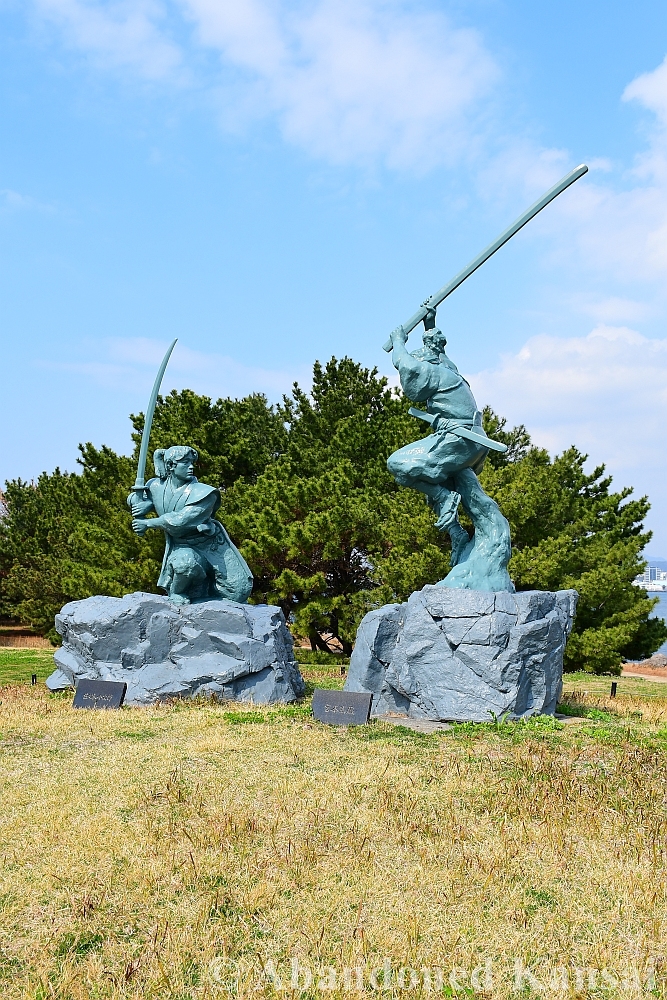
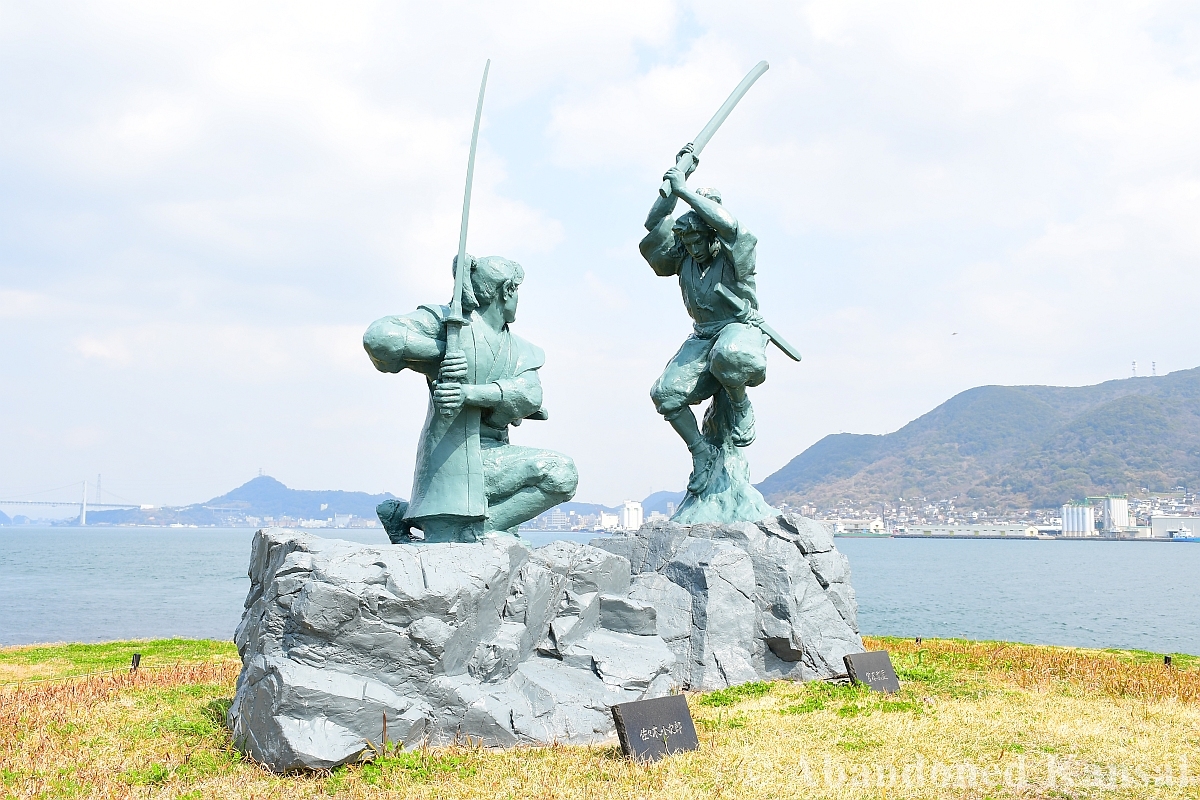
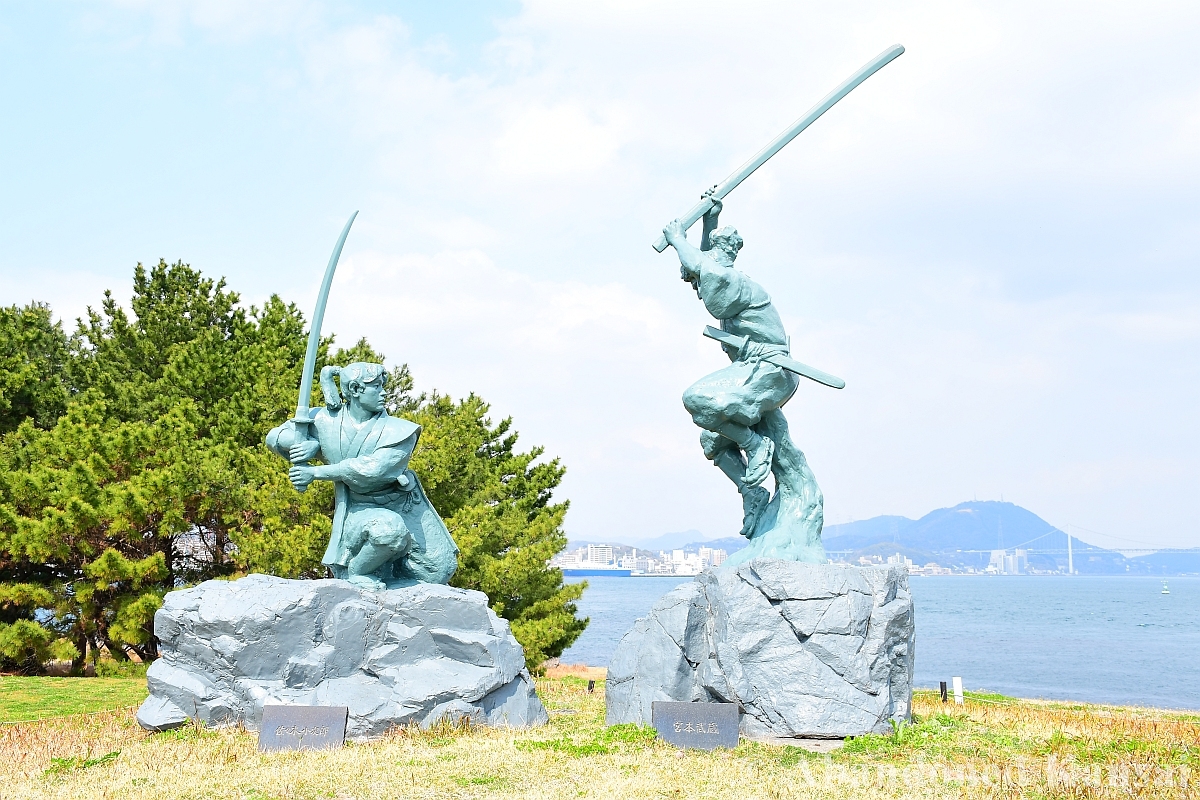
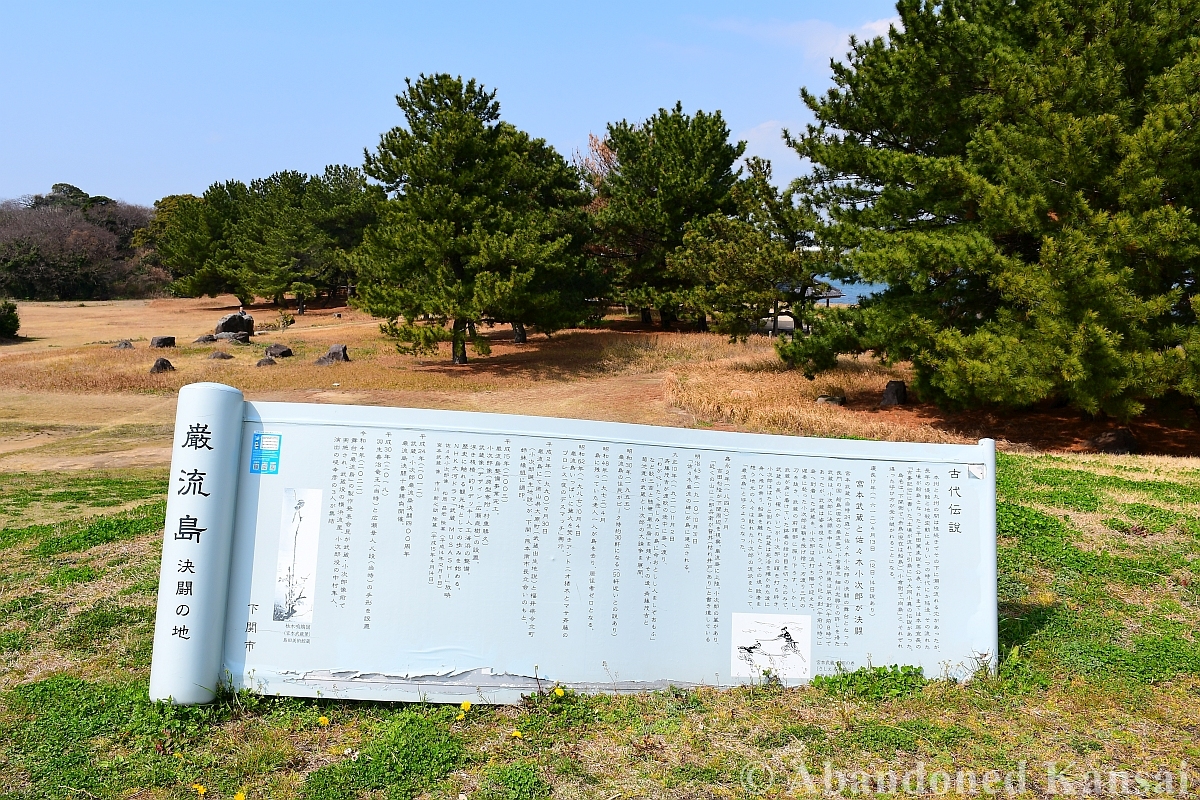
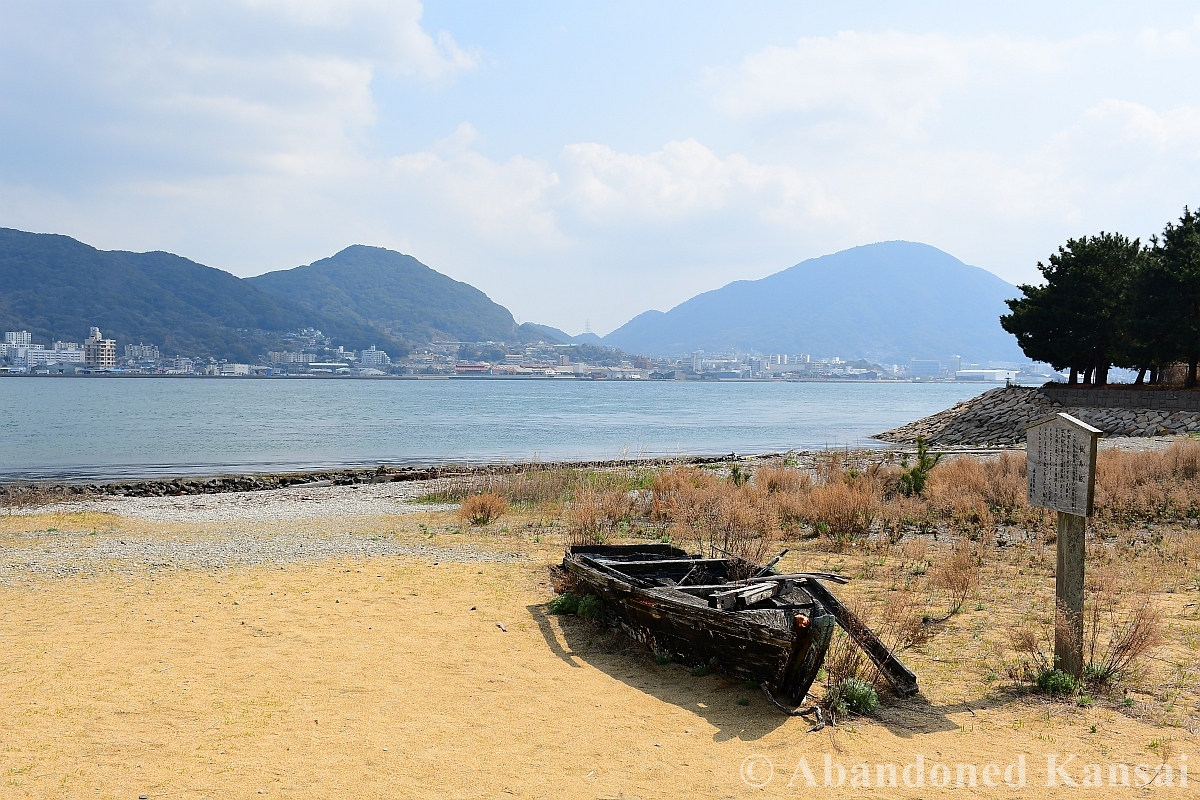
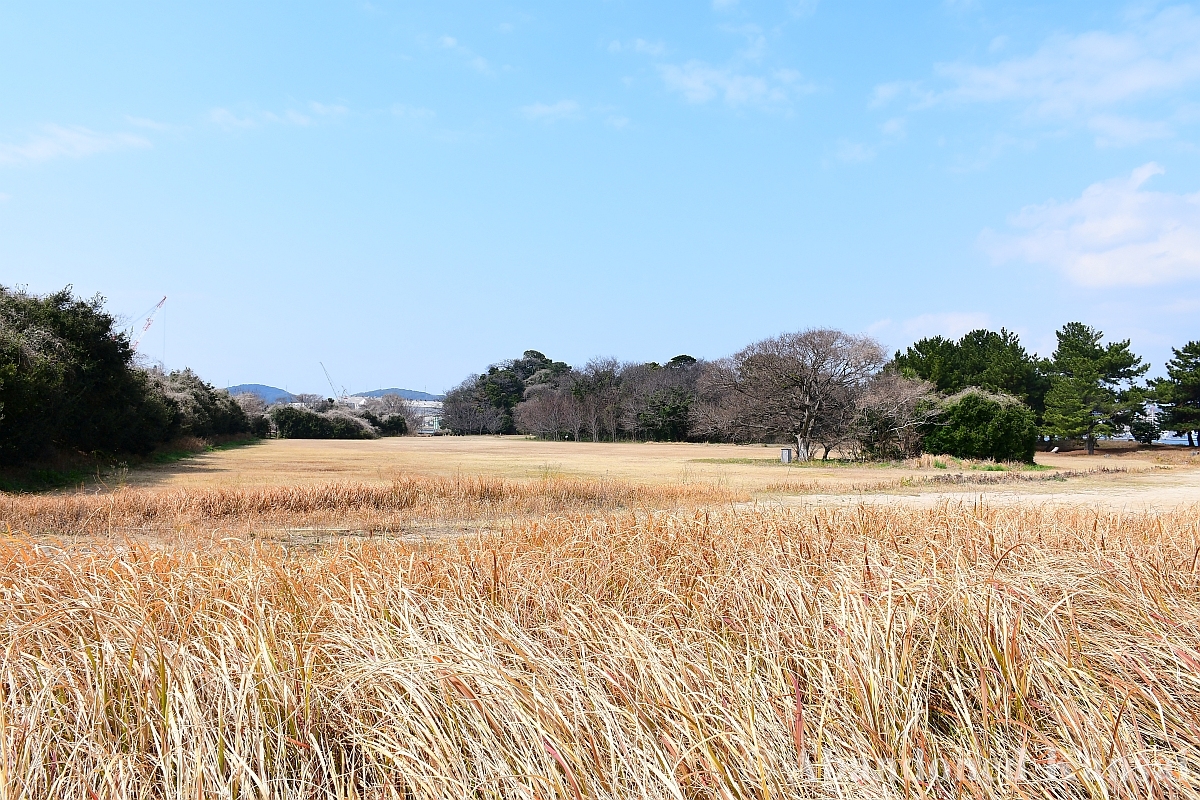
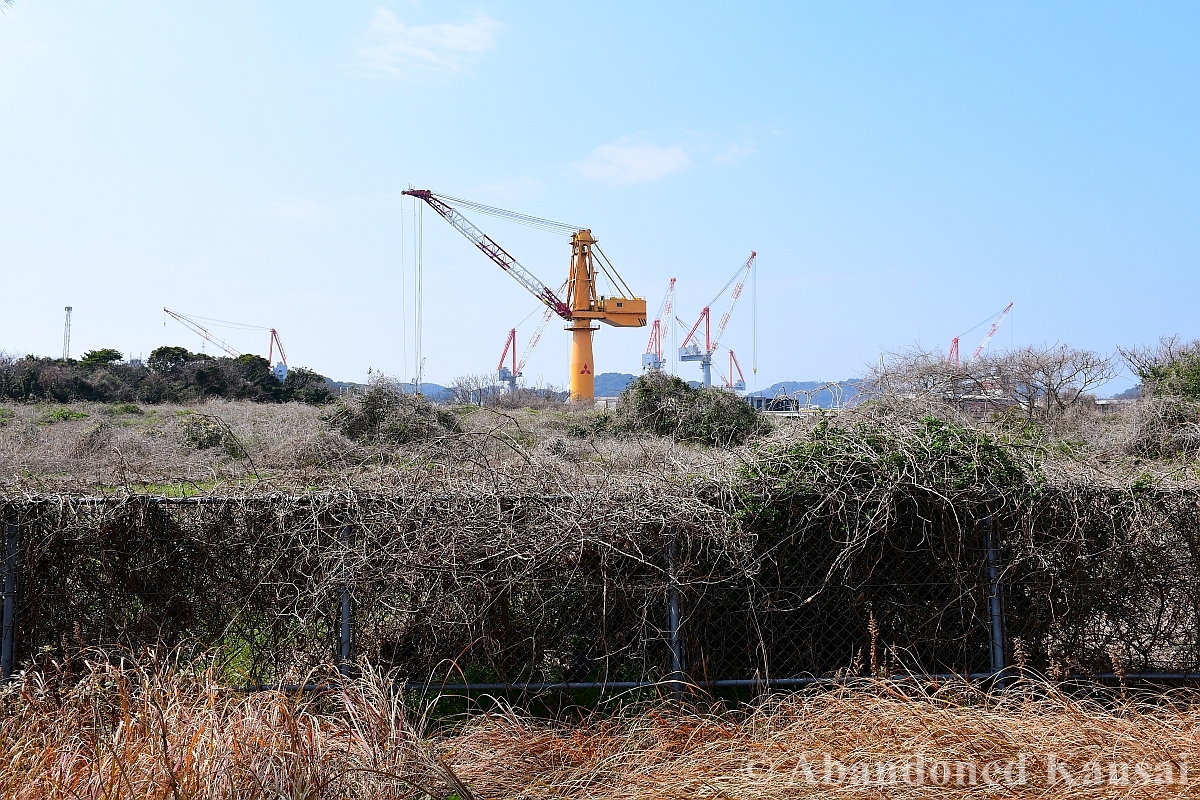
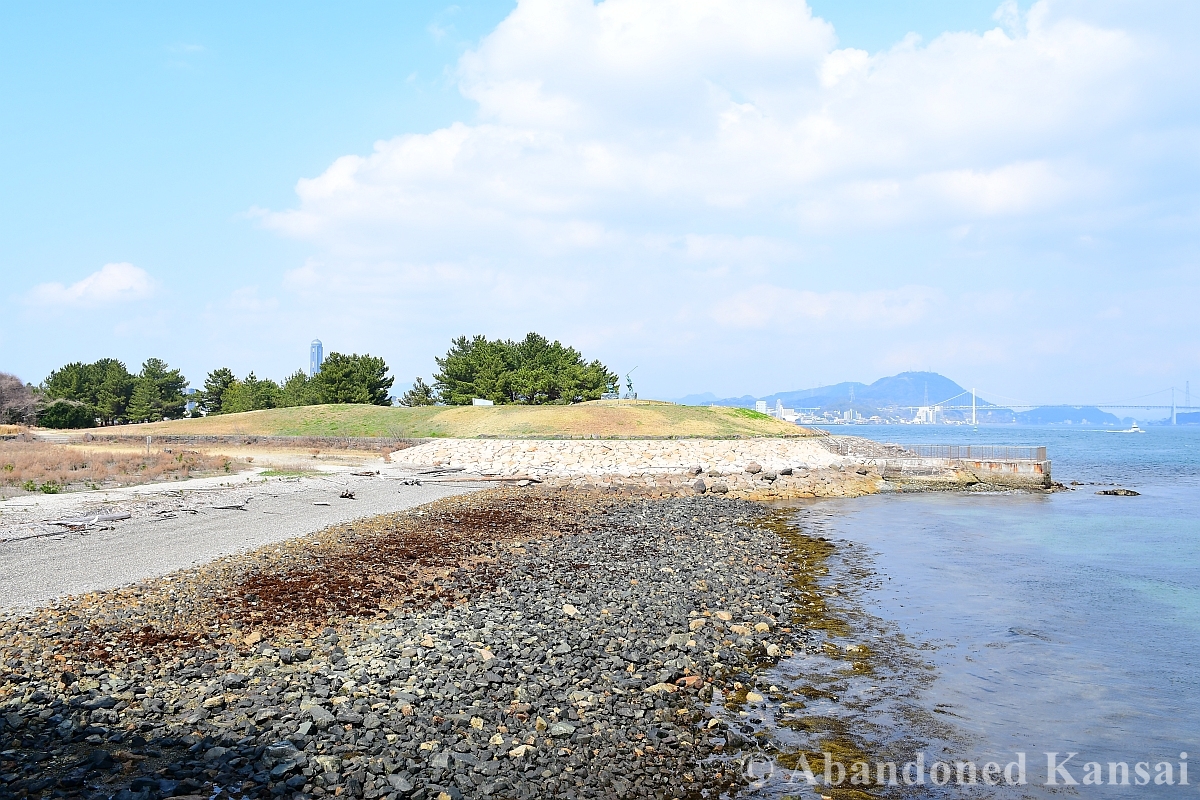
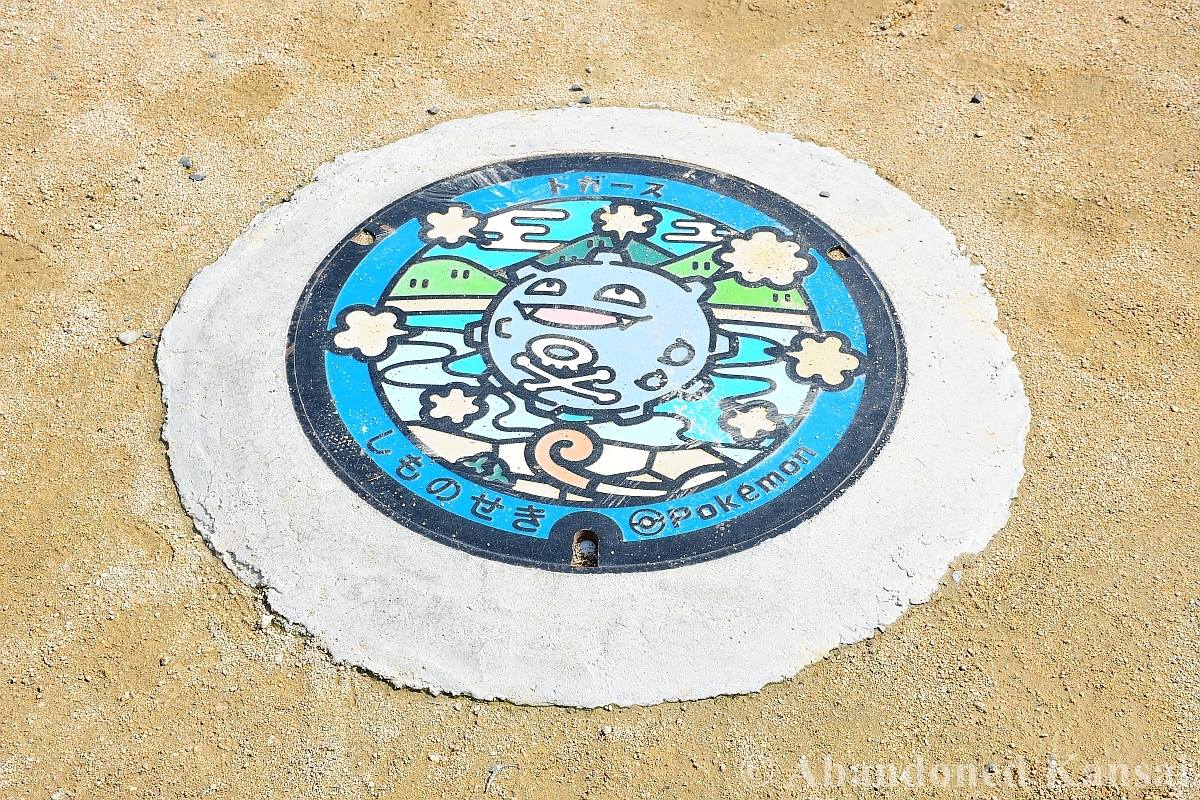
Ganryu-jima or Ganryujima is a small island in the Kanmon Straight between Honshu and Kyushu. Known at the time as Funa-jima, because it was shaped like a boat, it’s now famous for the duel between Musashi Miyamoto and Kojiro Sasaki – who ran a sword fighting school named Ganryu and apparently used the term as his nom de guerre, hence the new island name. Both Miyamoto and Sasaki were successful and ambitious swordfighters at the time, and rivals from afar – so they had a duel arranged by daimyo Tadaoki Hosokawa on April 13, 1612. The two had never met before, but Miyamoto, being a bit of a prick that he was, arrived hours late to unsettle Ganryu… and to whittle a spare oar into a heavy wooden training sword on the way to the island. Upon arrival Sasaki lost his shit and Miyamoto cracked his head open with the whittled oar. The end. In August 1917 Mitsubishi Heavy Industries started to expand the island from 17k square meters to more than 103k square meters in 1980 for their shipbuilding business. They owned the vast majority of the now uninhibited island until 2003, when they transferred about a third of it to the city of Shimonoseki… so I guess they still own the majority, but now allow visitors to the public park, which has been turned into a tourist attraction and memorial of the famous fight.
Access is rather easy – just take a bus from Shimonoseki Station or Shin-Shimonoseki Station to Karato bus stop, and then a boat from the nearby wharf to Ganryu-jima. There is not much to see or do on the island, so you’ll probably leave after an hour or so, but the Shimonoseki / Moji area is also surprisingly nice, so check out the Kaikyo Yume Tower, the Moji harbor area, and / or walk through the Kanmon Tunnel underneath the straight from Kyushu to Honshu. A really lovely way to spend a day, which I did in March of 2026.

(*Like Abandoned Kansai on Facebook* or *follow us on Twitter* if you don’t want to miss the latest articles and exclusive content – and subscribe to the *video channel on Youtube* to receive a message right after a new video is online…)
Read Full Post »

Most neighbourhood playgrounds / parks in Japan are a disgrace! Some compacted dirt ground, possibly a small patch of gras, with good fortune a tree or two, maybe a swing and a climbing frame – on the compacted ground, not the gras! In most of Europe they would probably be considered a health hazard and closed for good. Of course there are plenty of good ones, too, usually as part of rest stops or sightseeing spots. But the vast majority of them are shite and not even worth going to for reading a book! Once a fee is charged, they can be downright spectacular though!

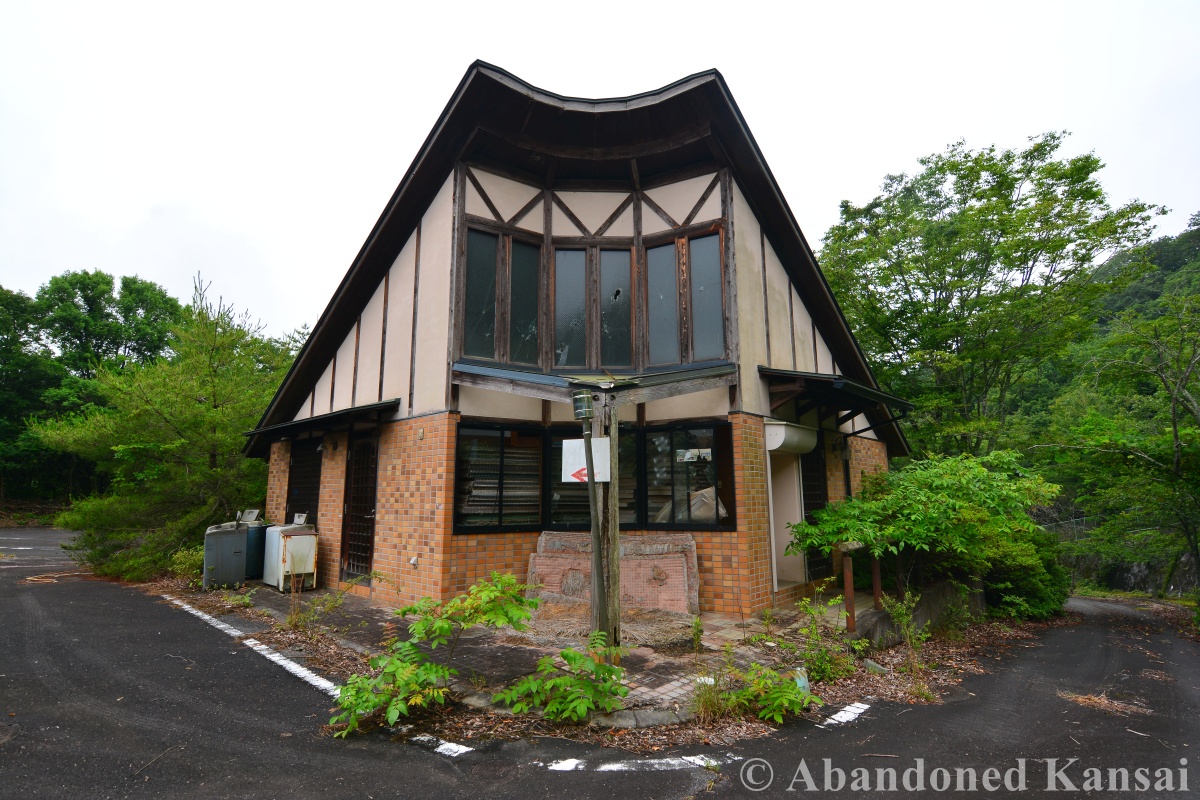
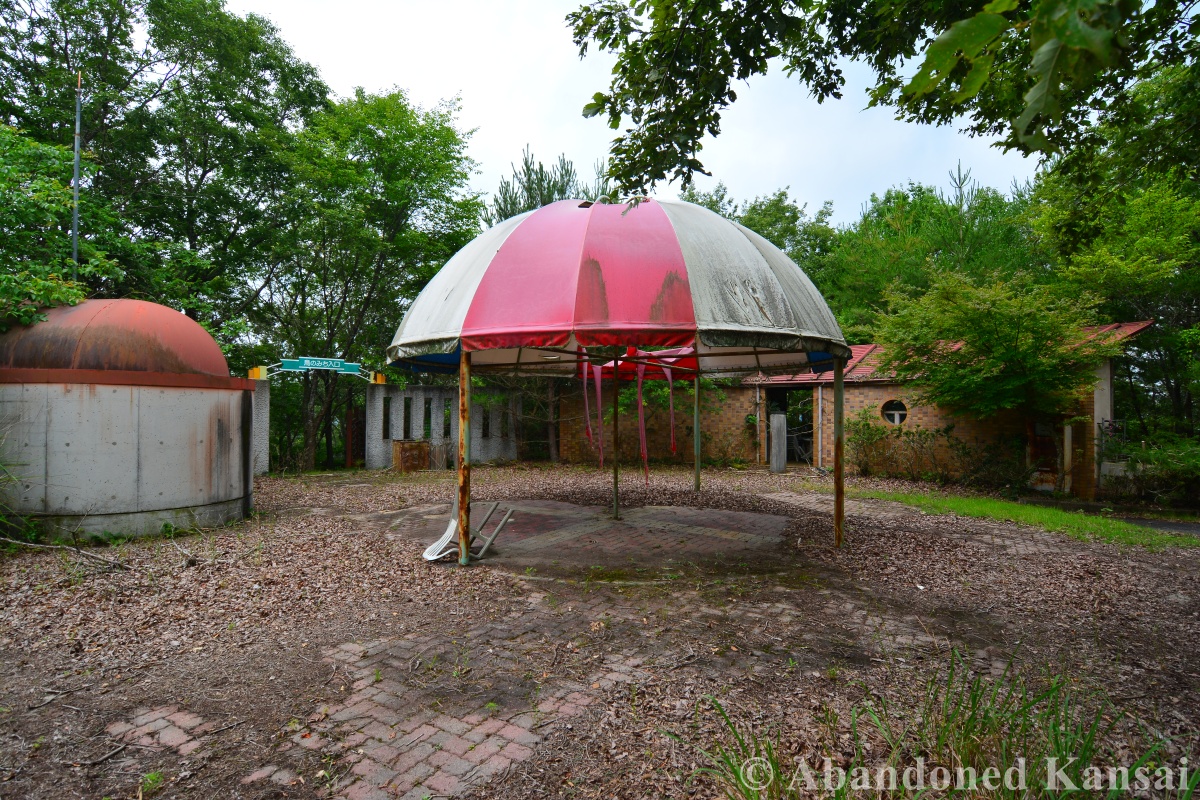
The Forest Playground was part of the latter category, though I’m not sure if it was a direct or an indirect fee. I had seen the park on social media once or twice and thought it looked interesting, so whenever I randomly looked at GoogleMaps, I kept looking for what could be an abandoned outdoor playground on a forested slope. The thing is: Japan is a large country that mostly consists of forested slopes. The needle in a haystack comparison is a joke when put next to my chances of finding that playground! But… abandoned places in Japan seem to have the wonderful ability to find me, so after a few sessions on GoogleMaps a small miracle happened and I spotted what looked like a large playground on a forested slope. It was in the outskirts of a resort consisting of a hotel, a dozen holiday houses of various sizes for rent, an indoor sports center, a gateball hall, an athletic field, some tennis courts, a town hall, and three museums – all tied together by a large park. And the best of all: It was in day trip range!
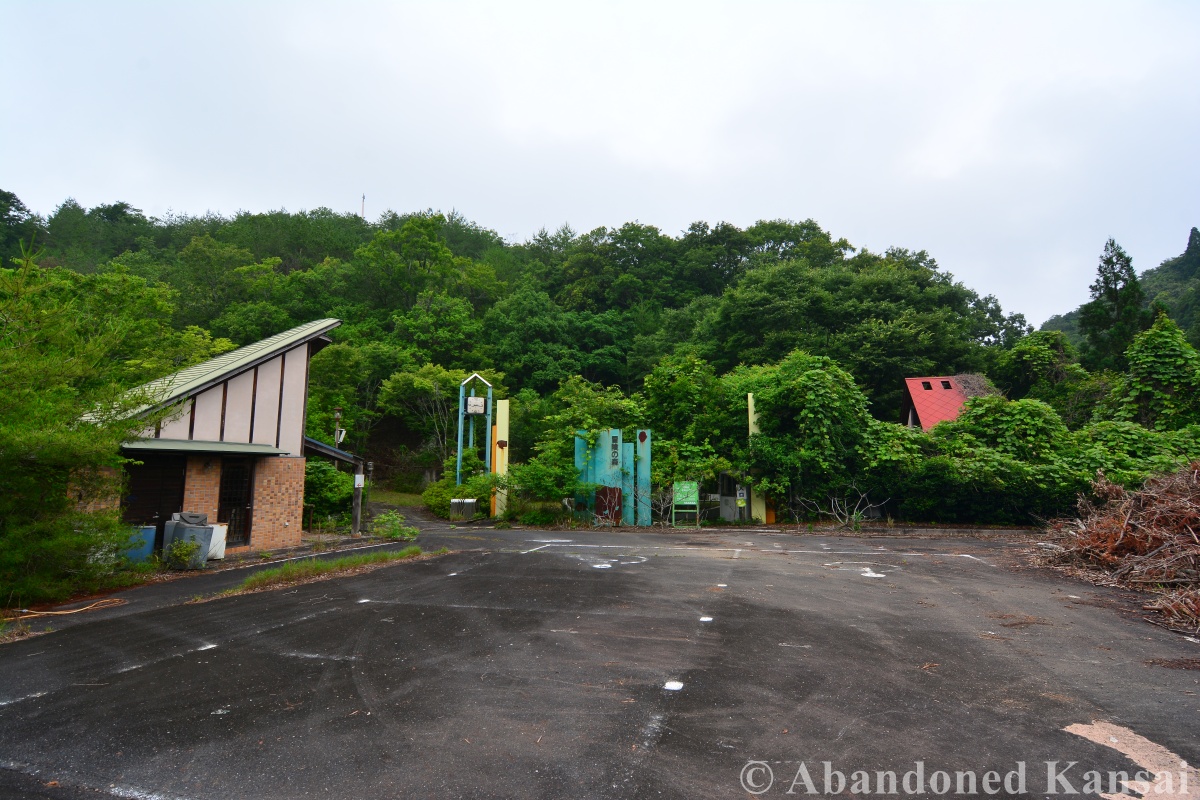
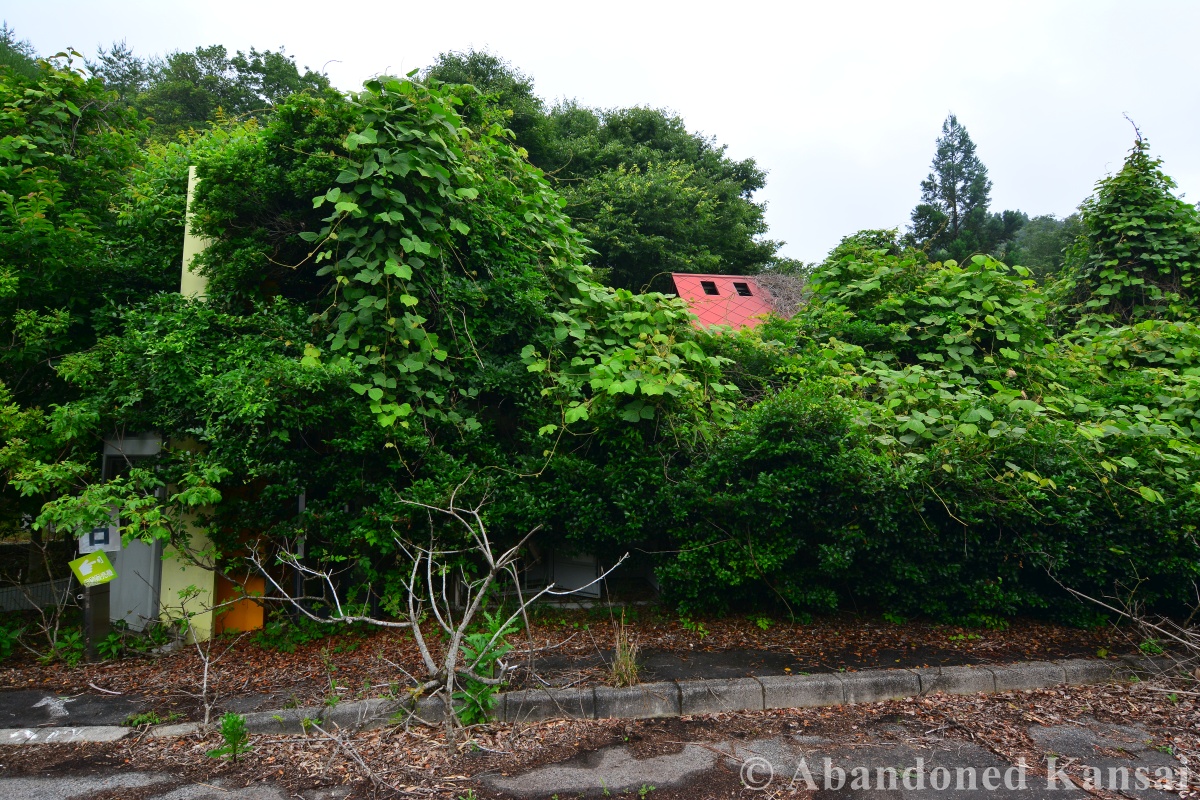
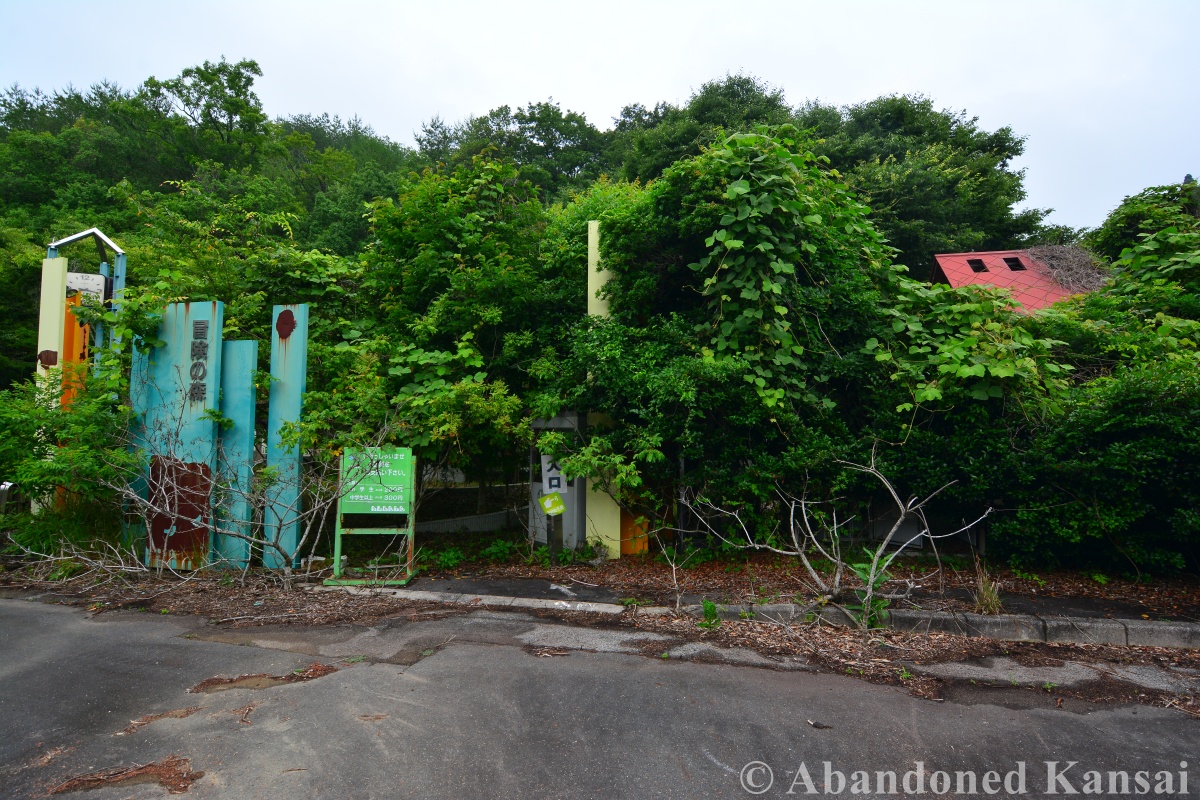
The road leading up to the parking lot of the Forest Playground was blocked off by one of those accordion gates, a really low one, but there was plenty of parking in the vicinity. And most of the playground parking lot was actually covered with tree debris – looked like somebody was cleaning up the surrounding and probably stopped due to Covid. The whole thing was actually much larger than expected (since I’ve only seen a few photos of one small area), so we spent more than 3 hours exploring and documenting the place.
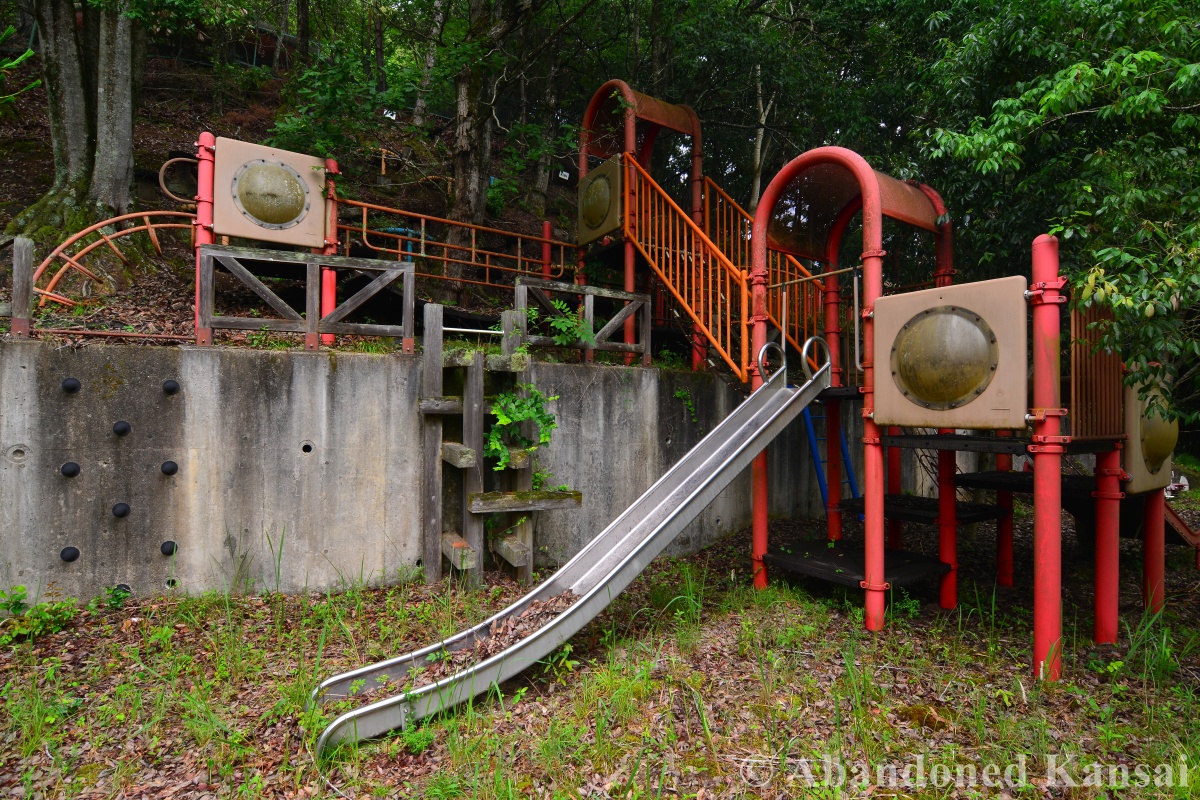
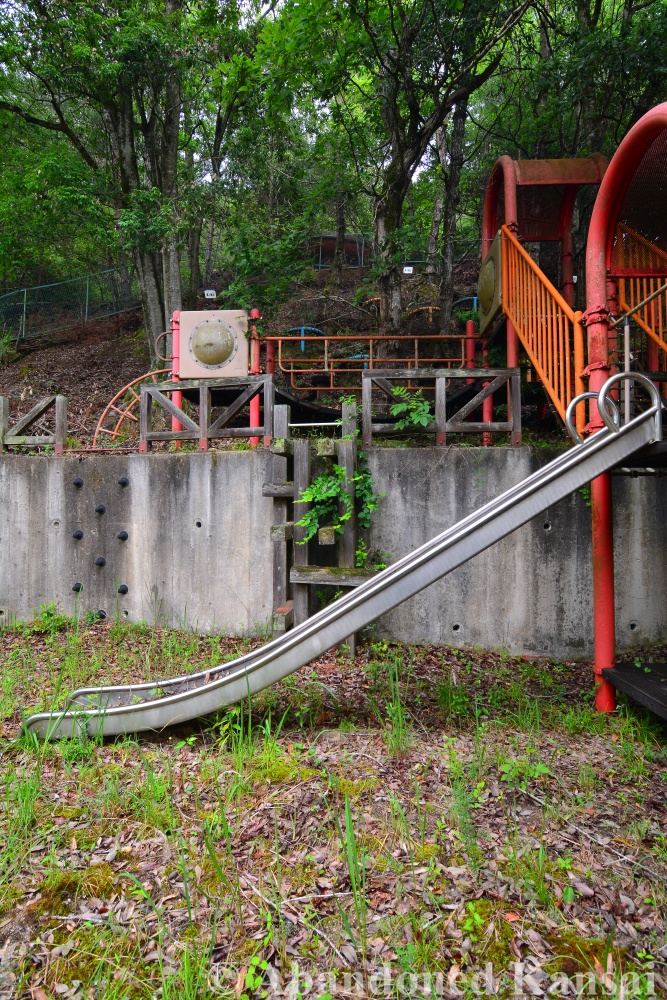
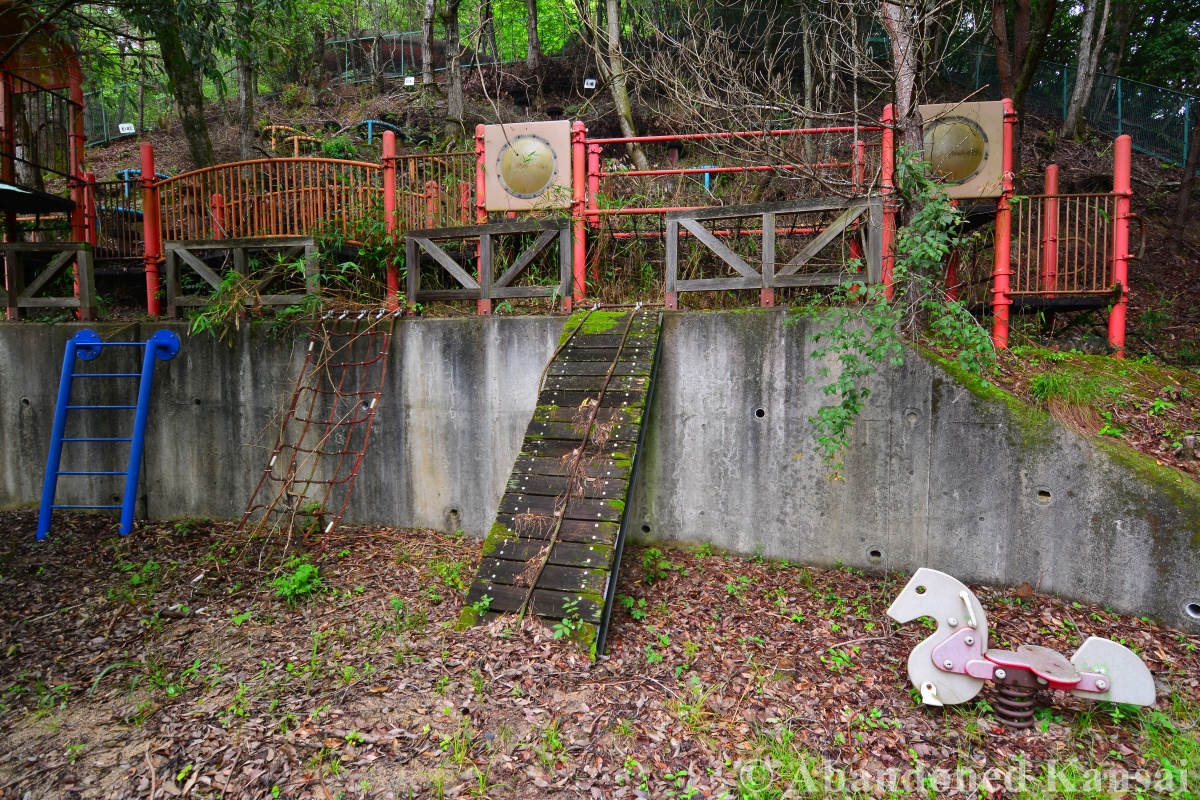
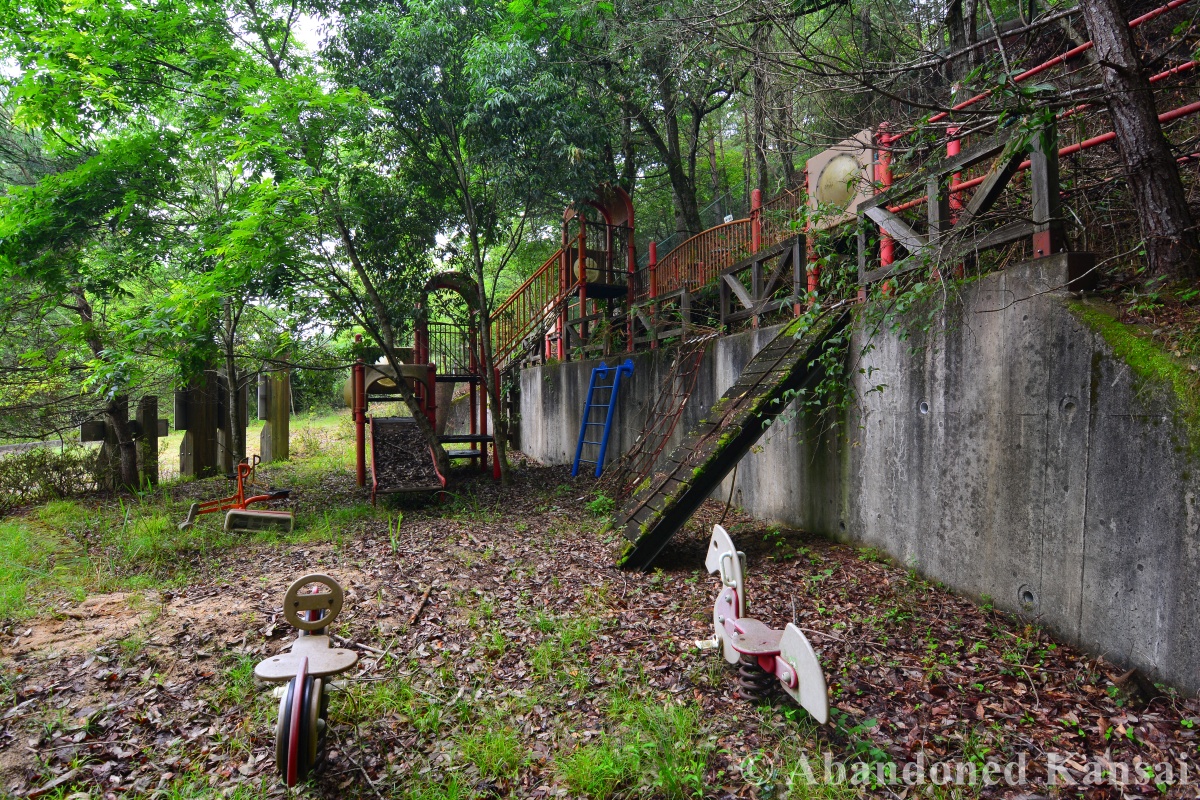
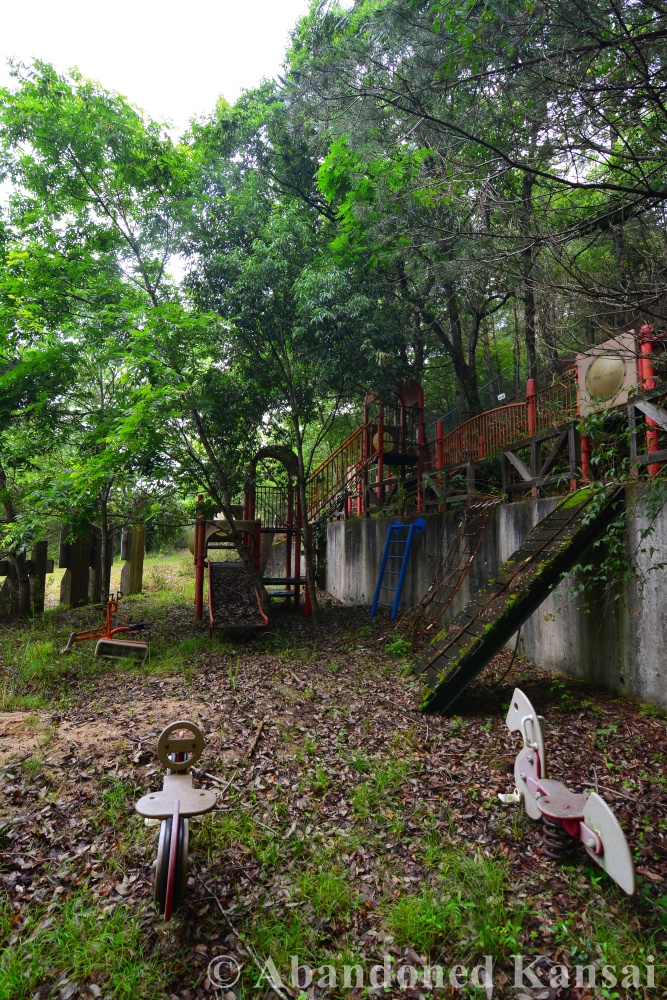
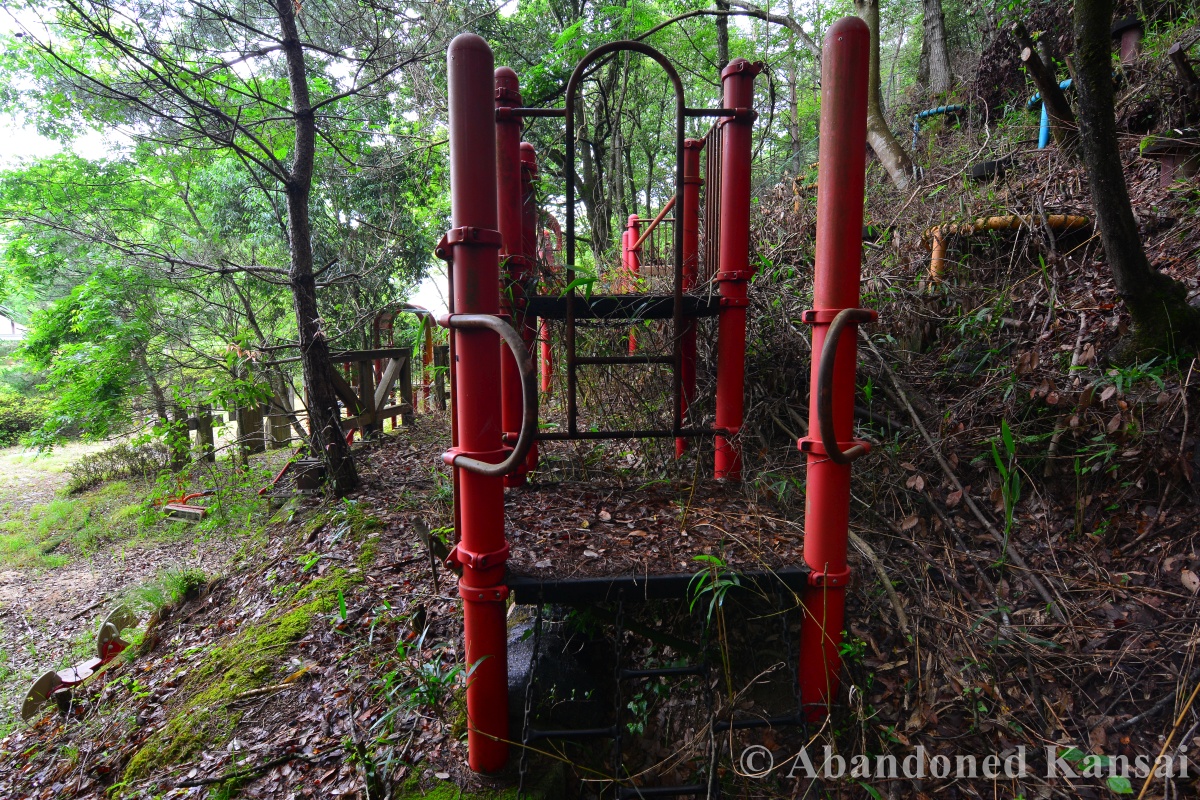
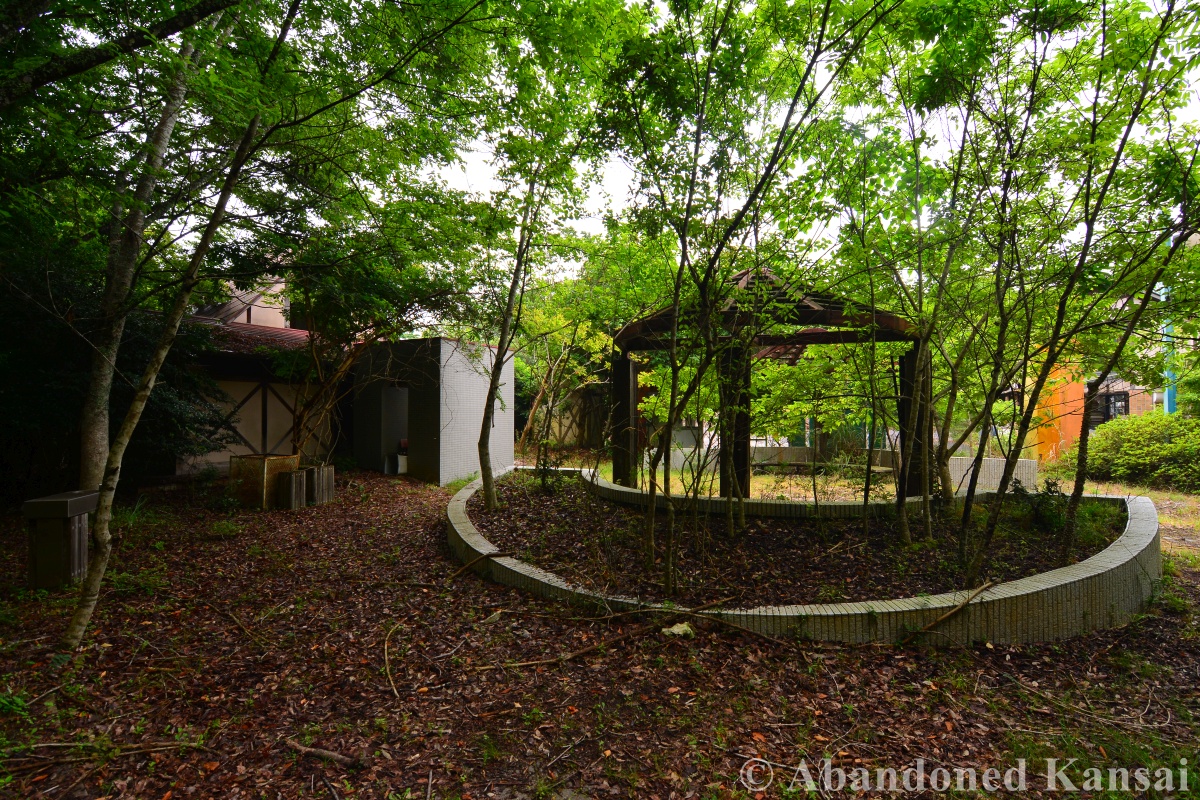
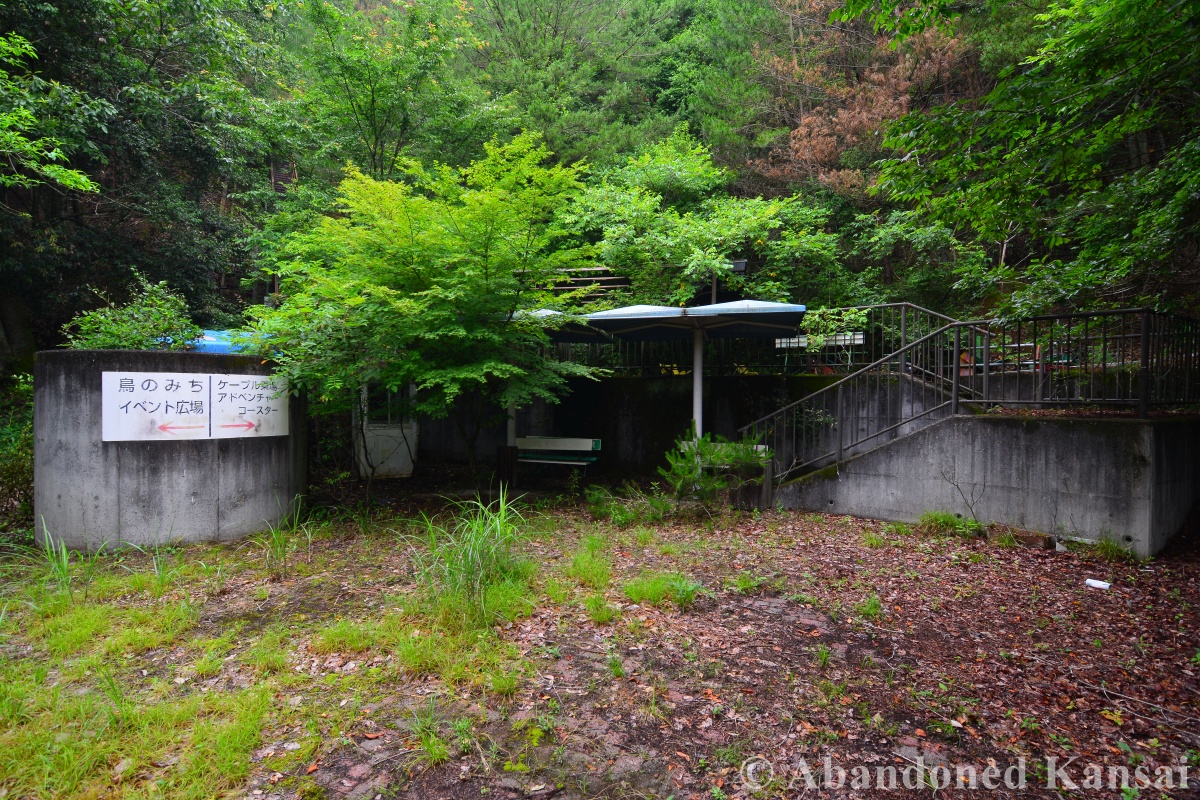
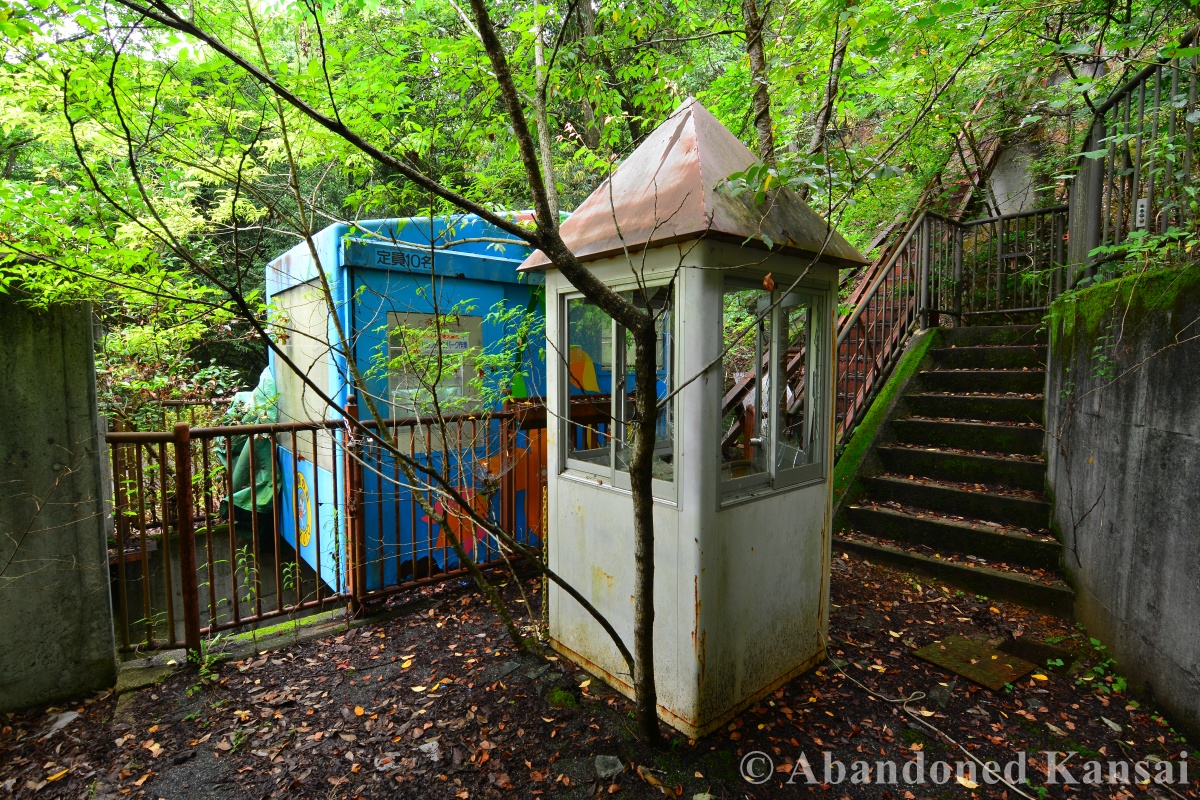
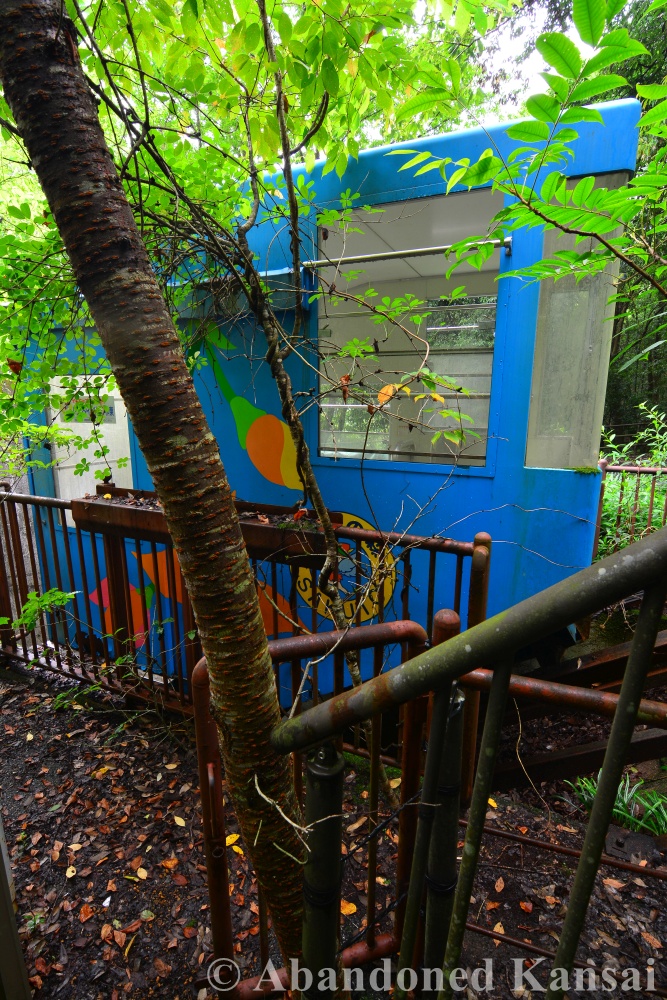
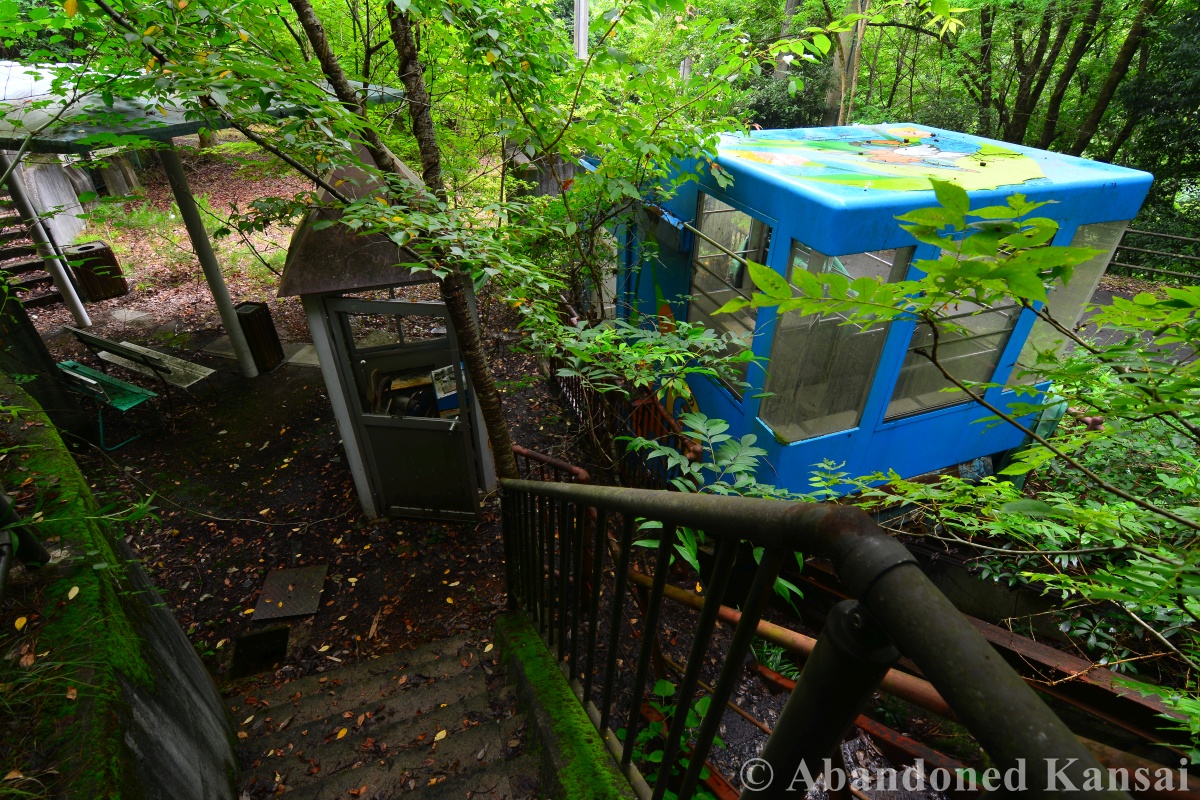
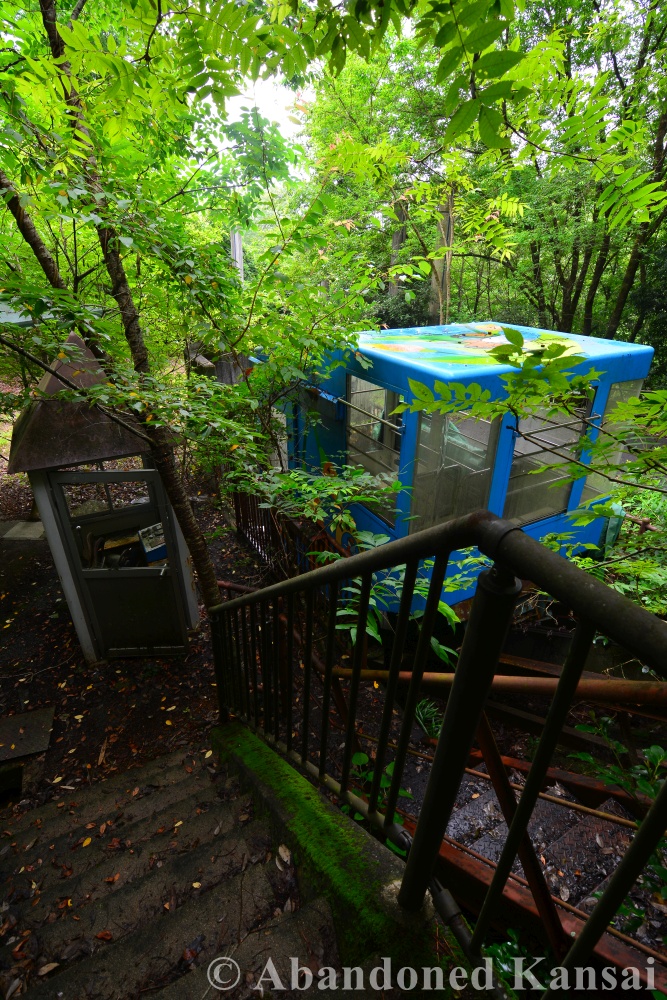
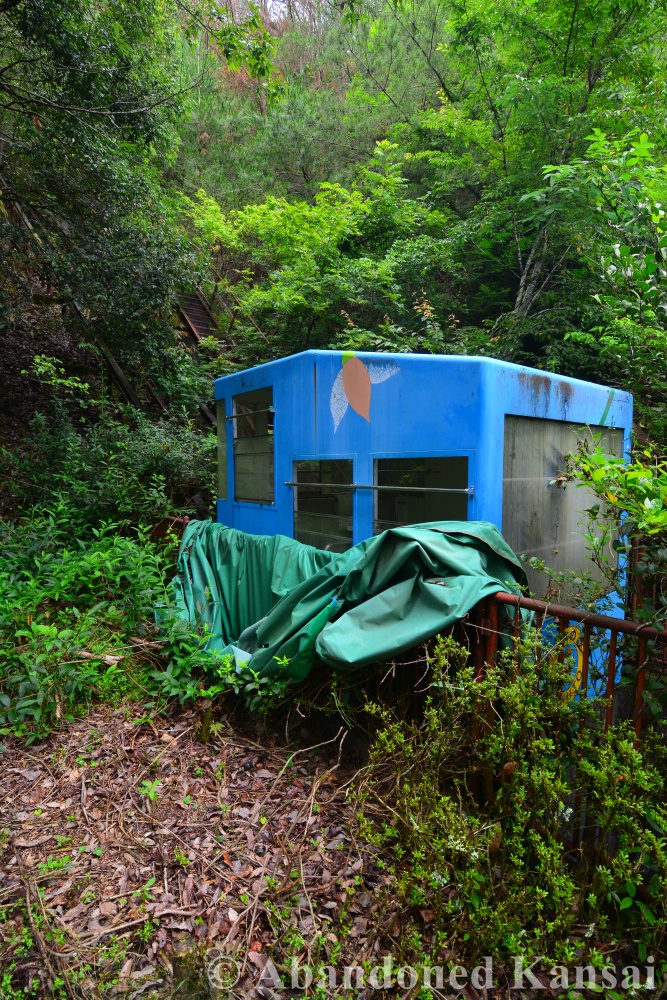
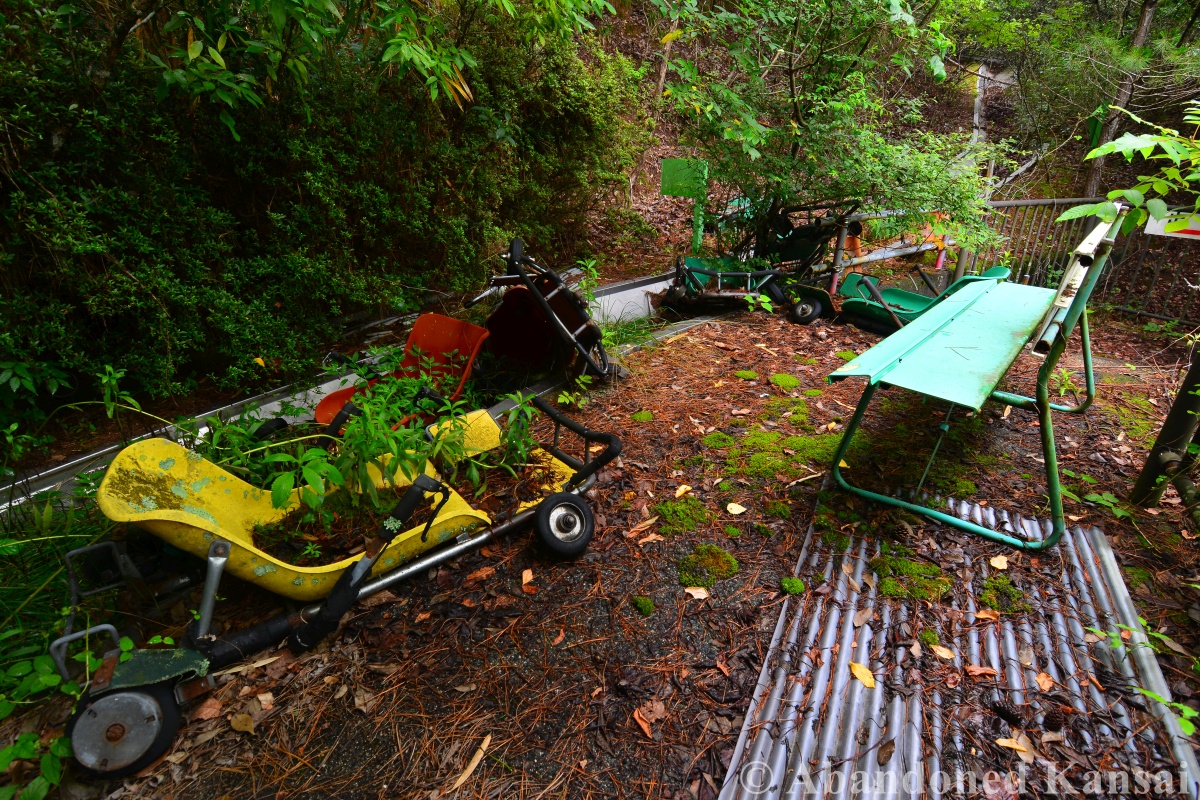
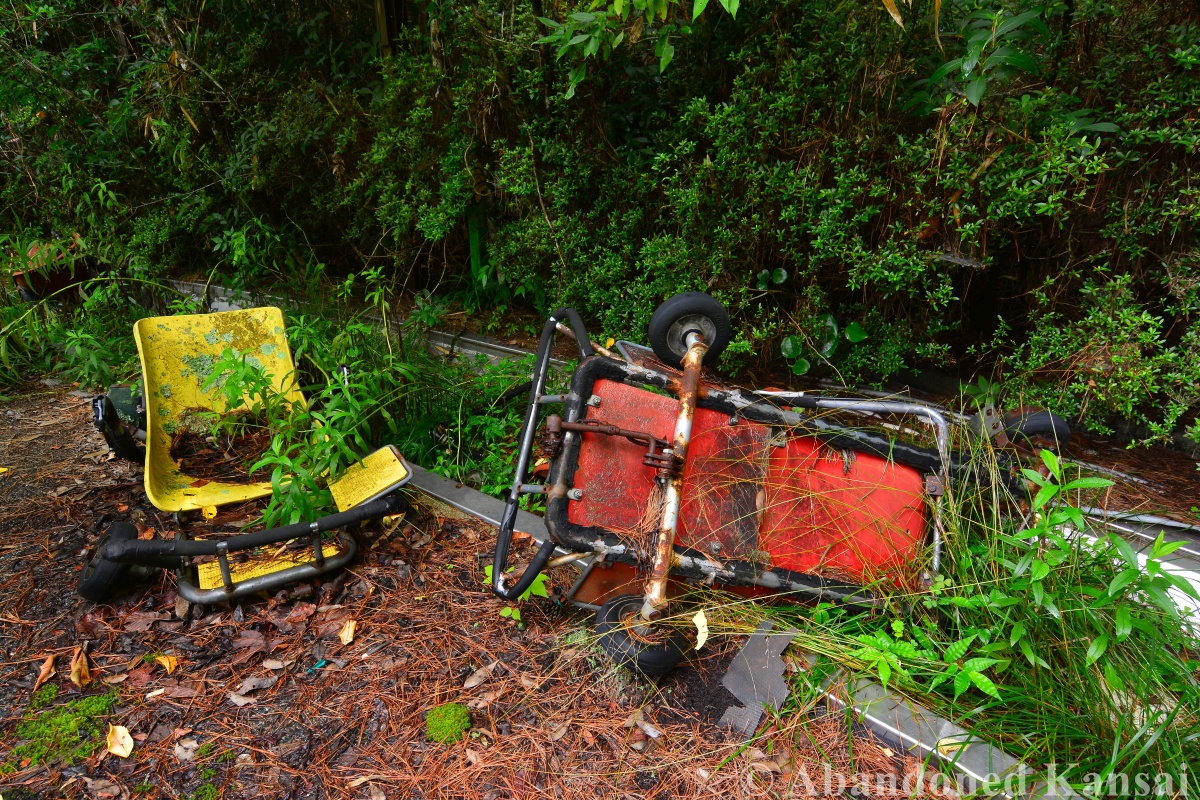
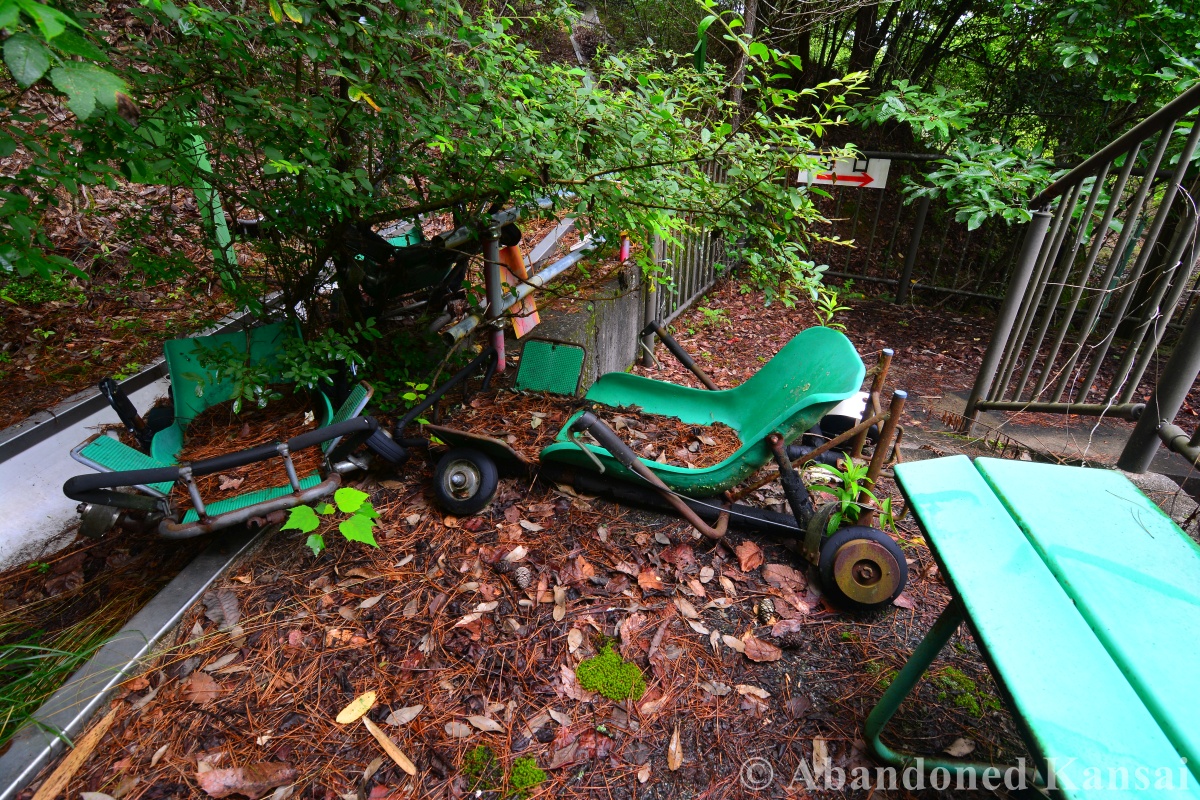
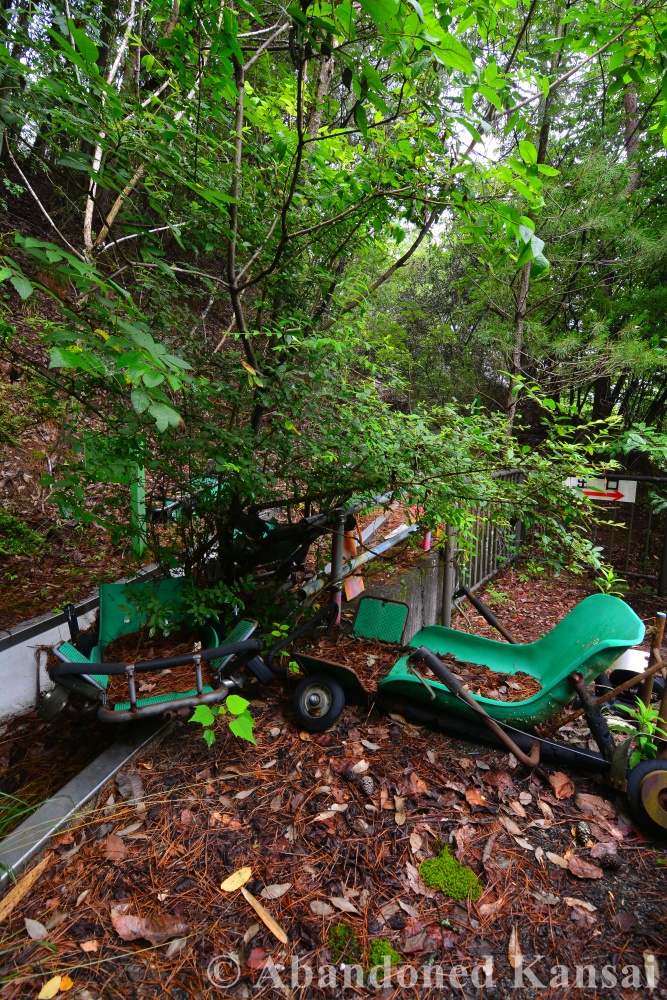
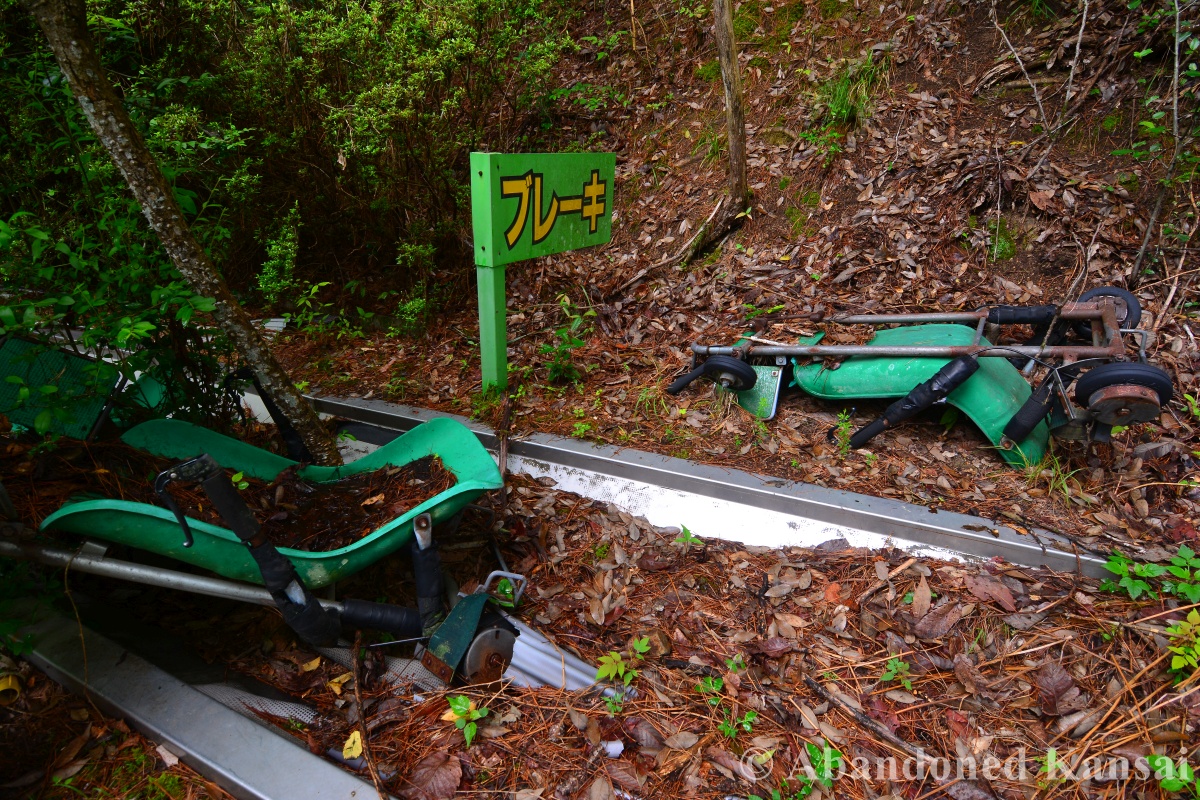
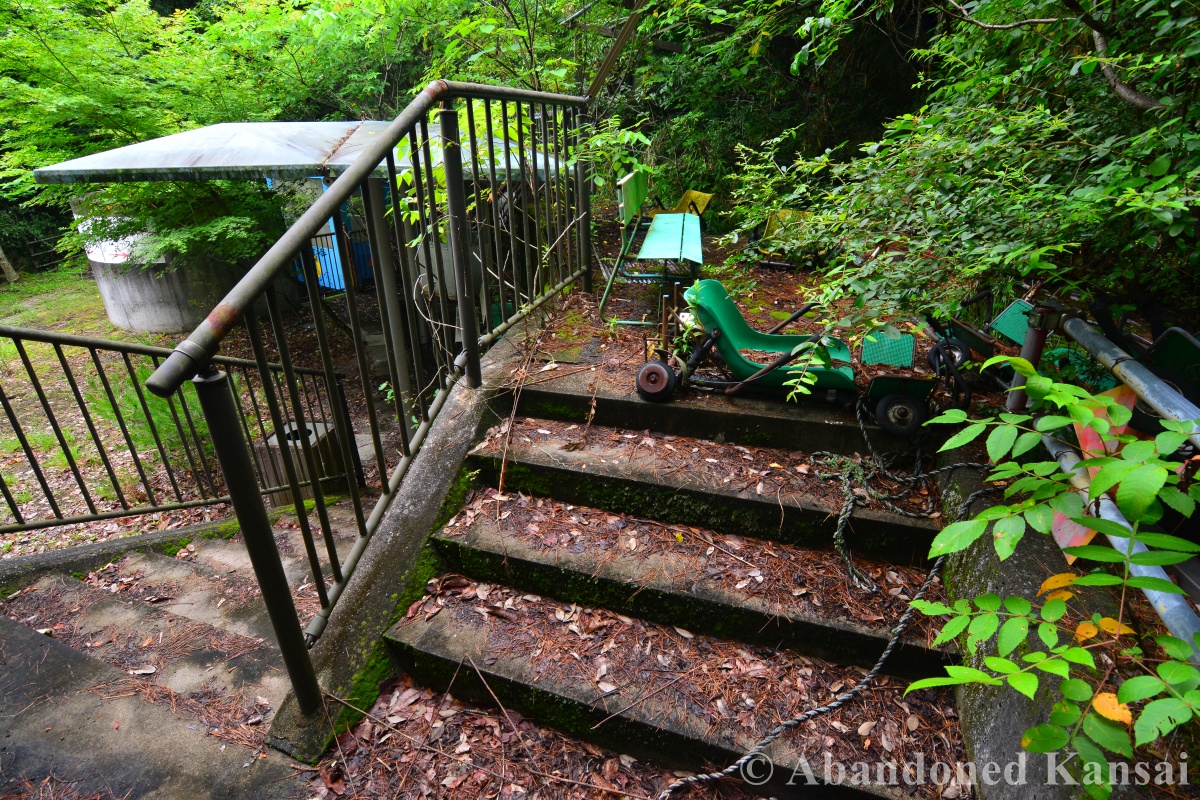
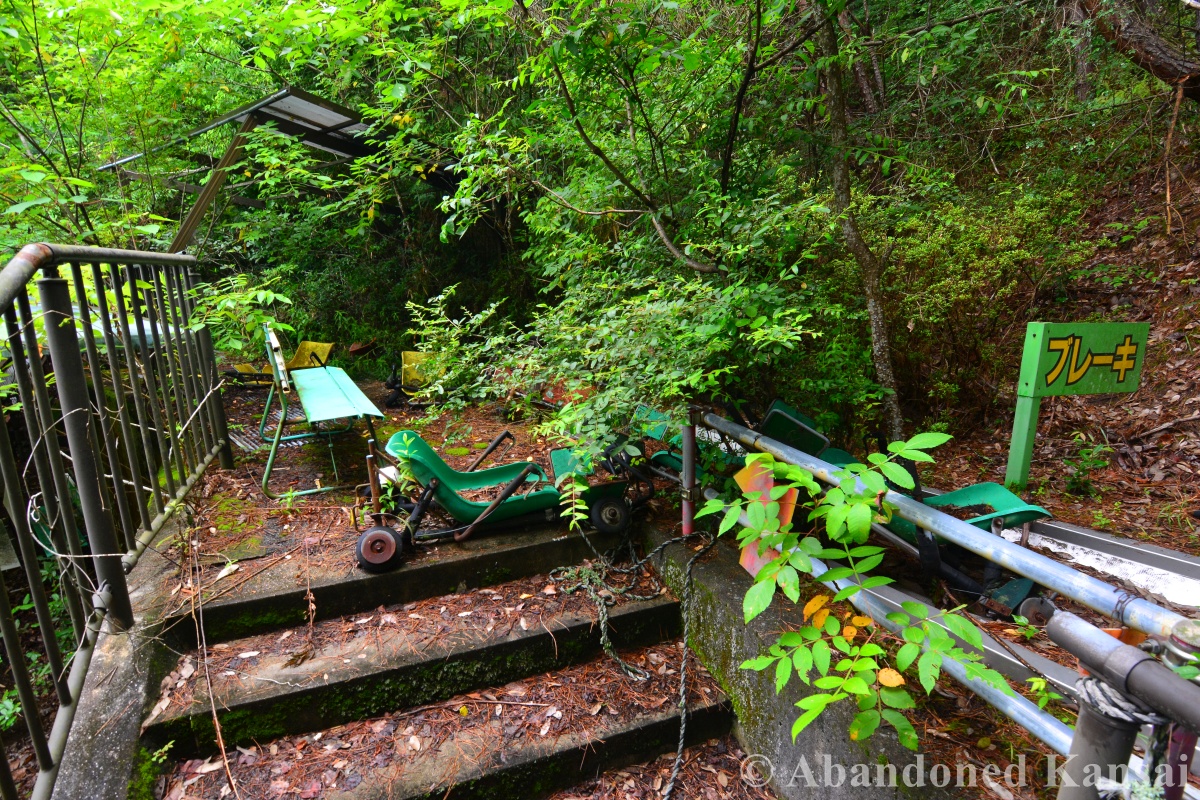
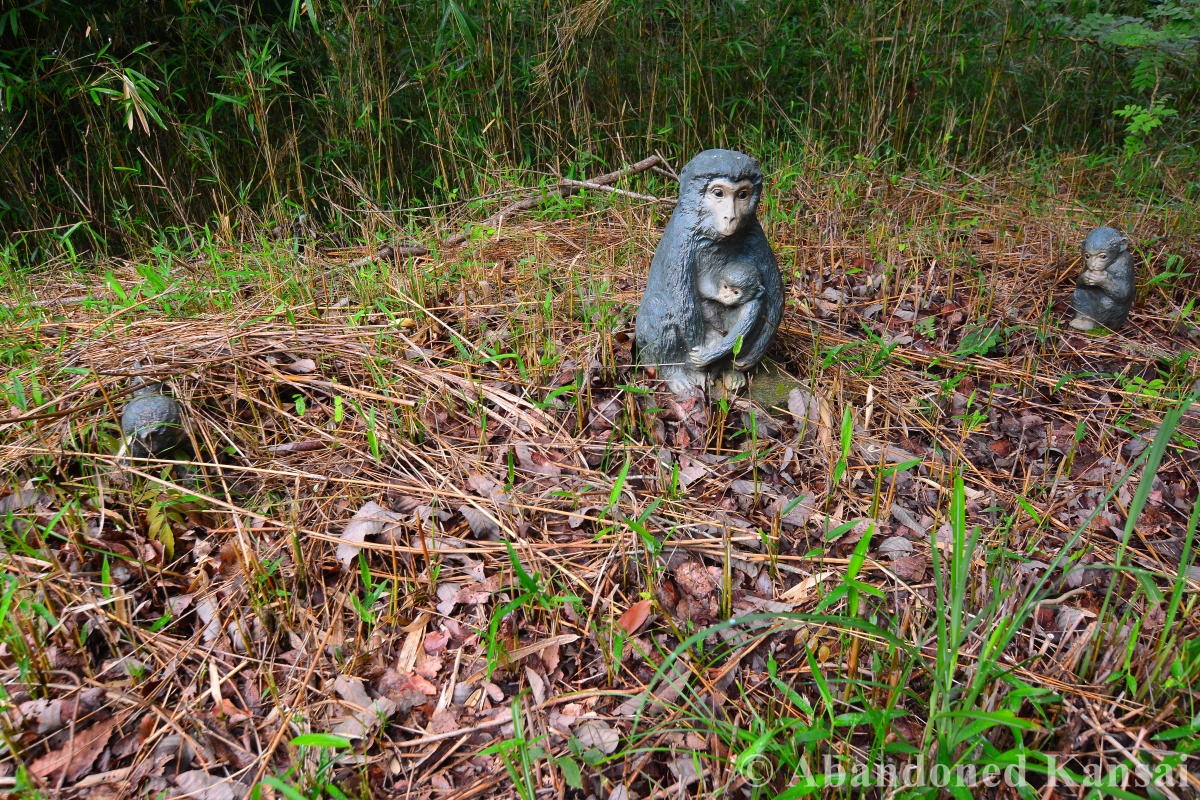
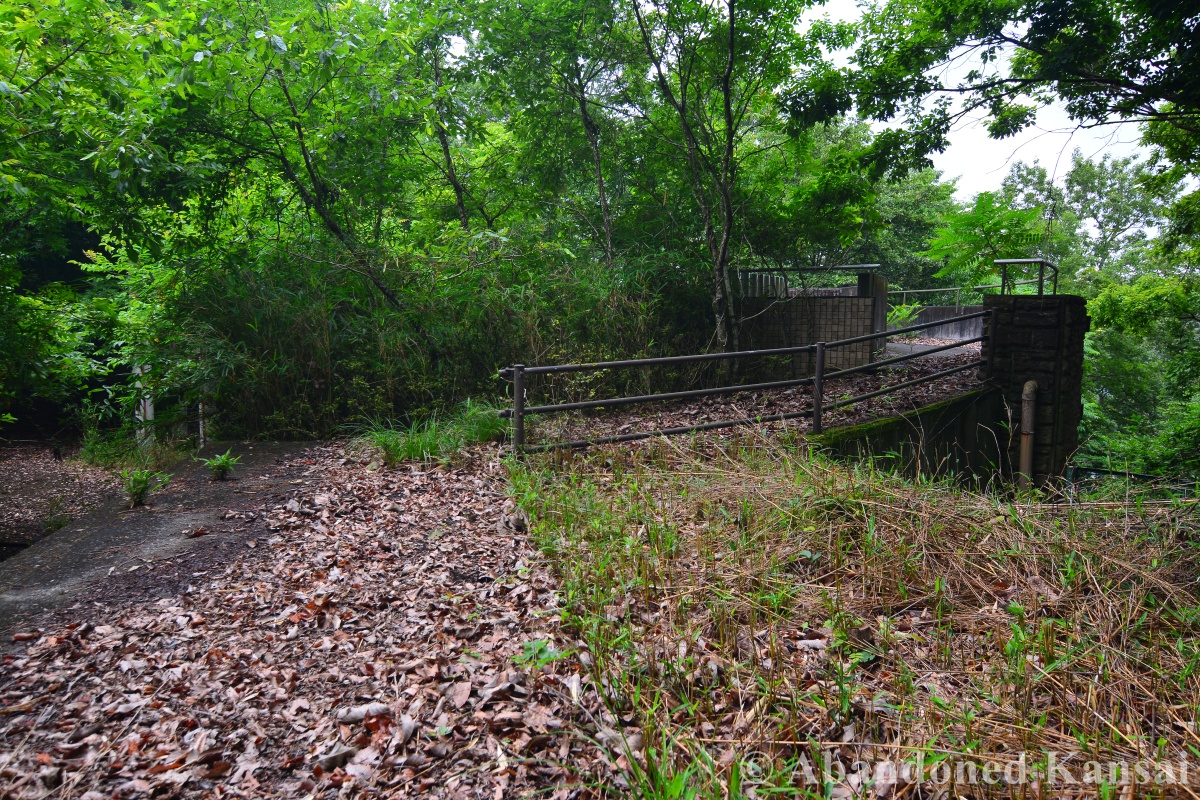
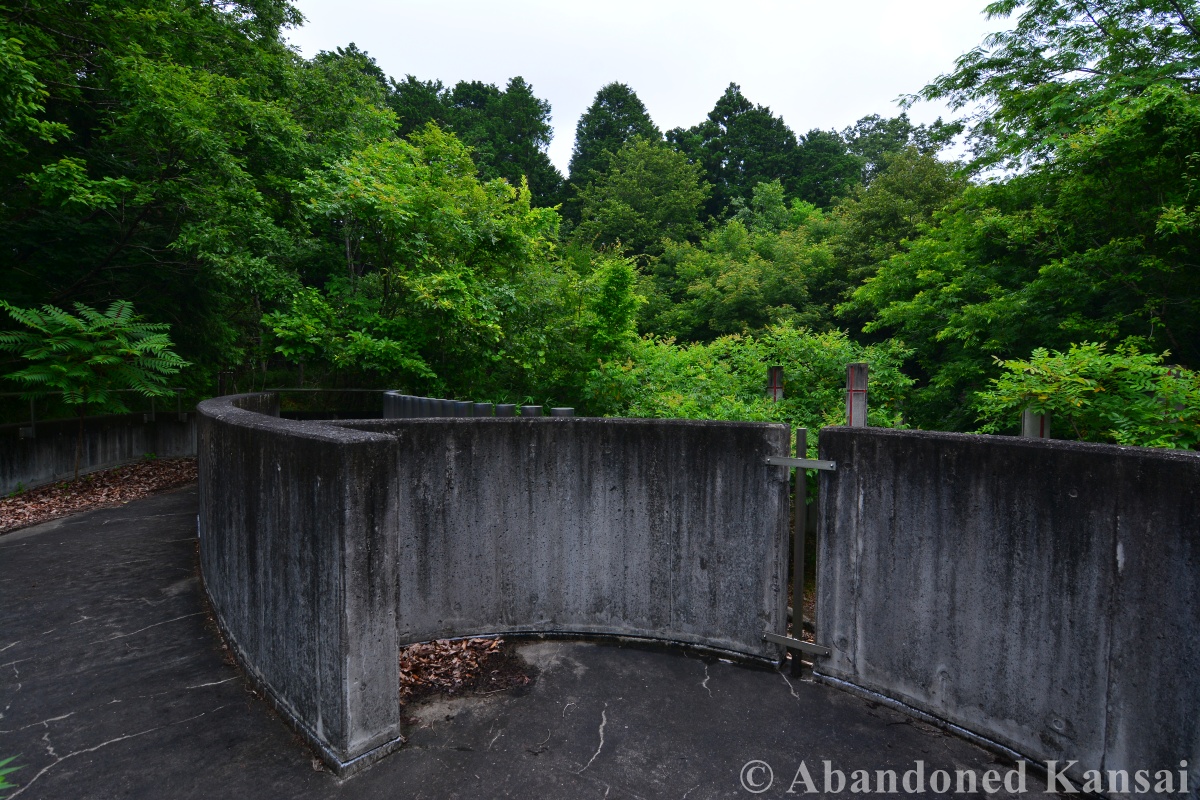
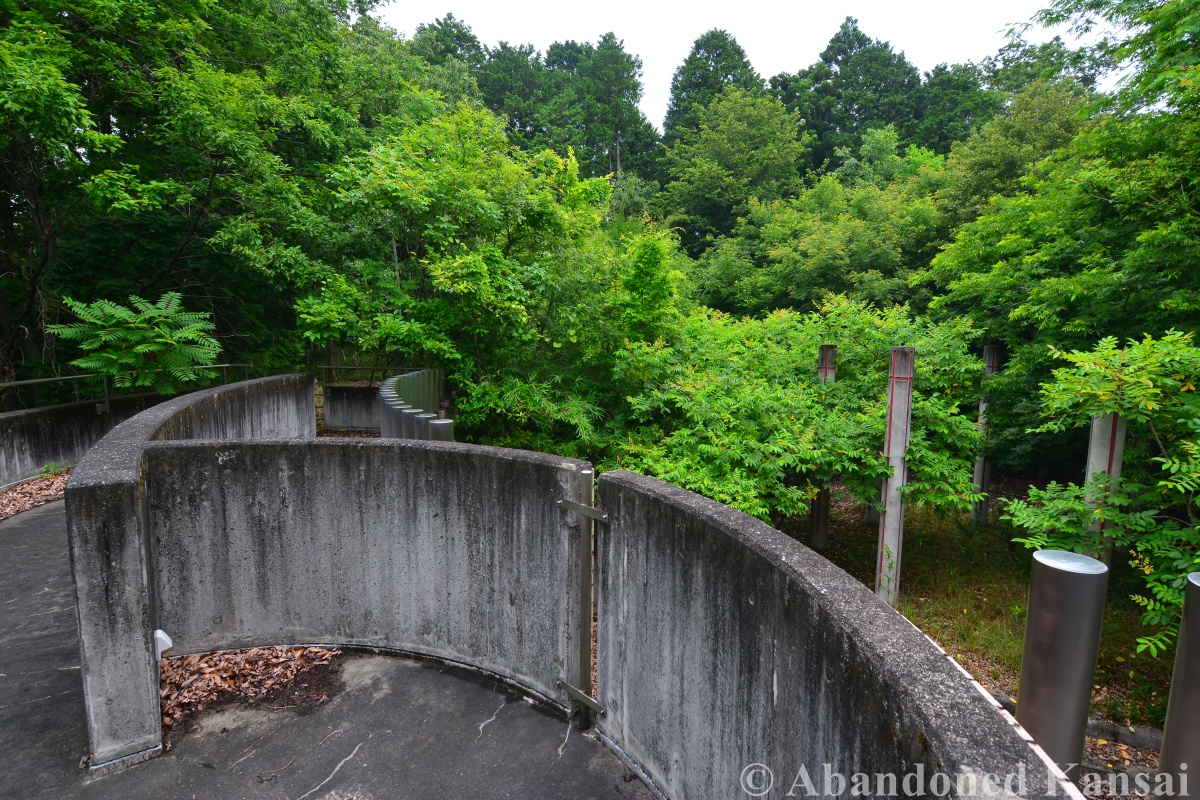
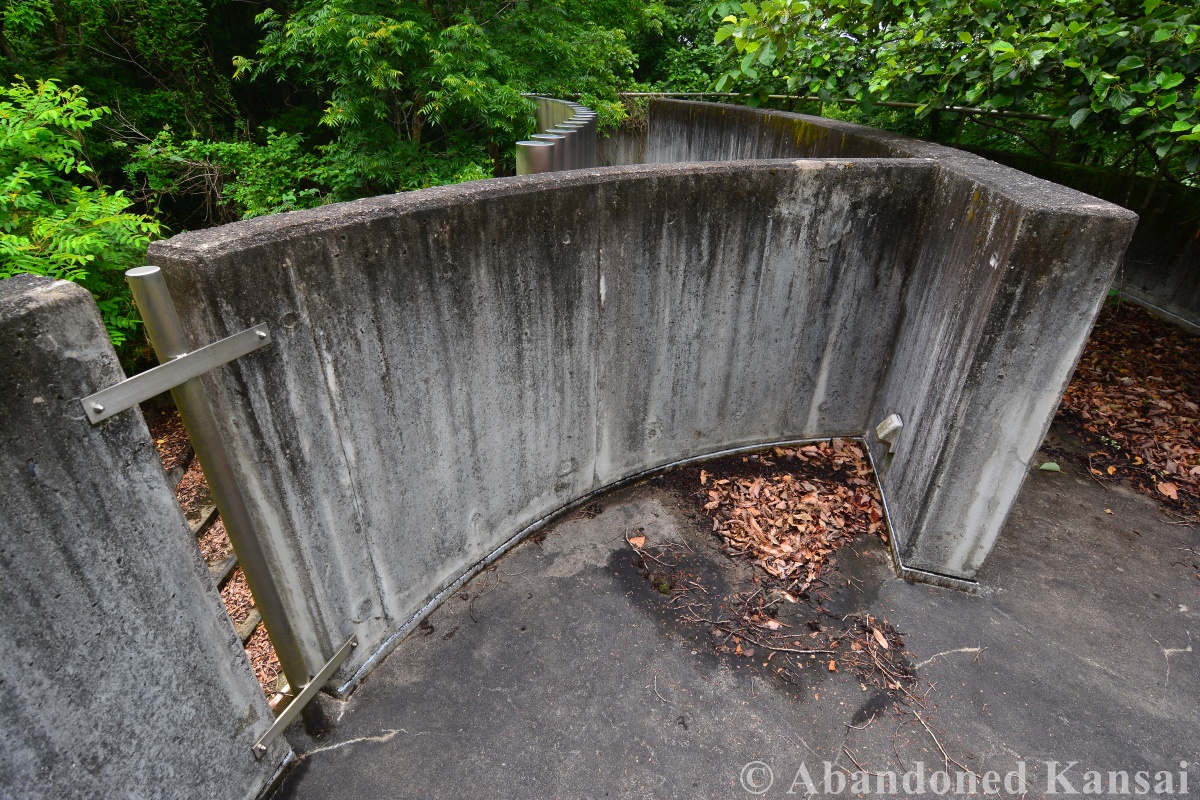
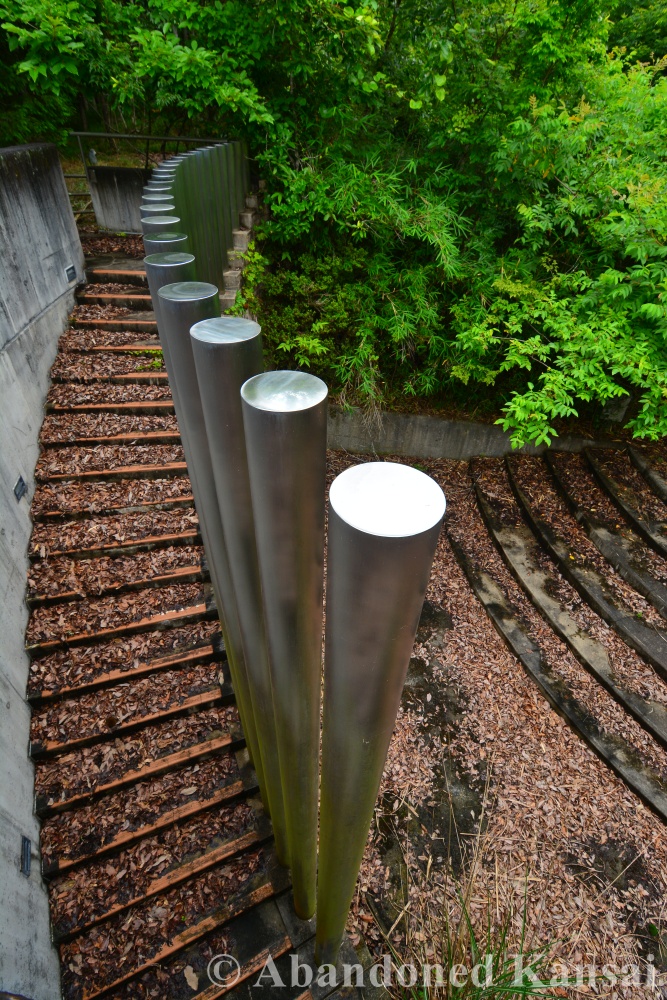
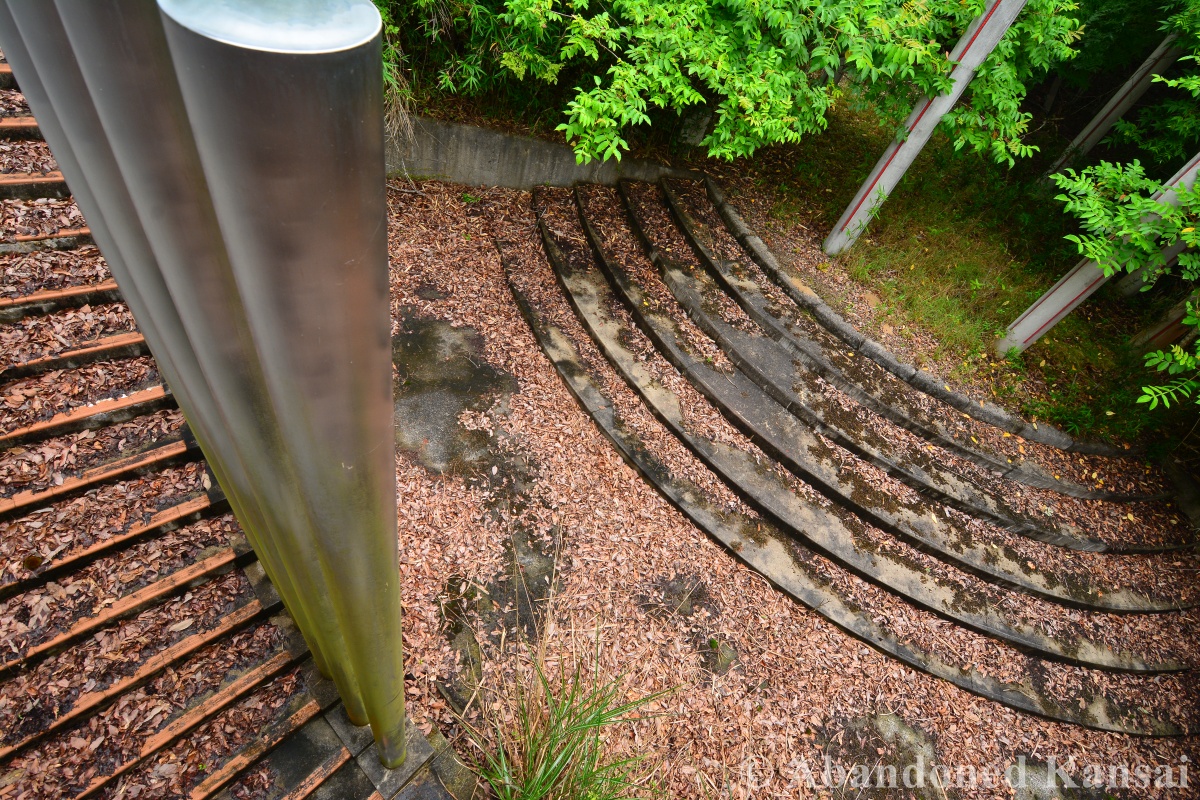
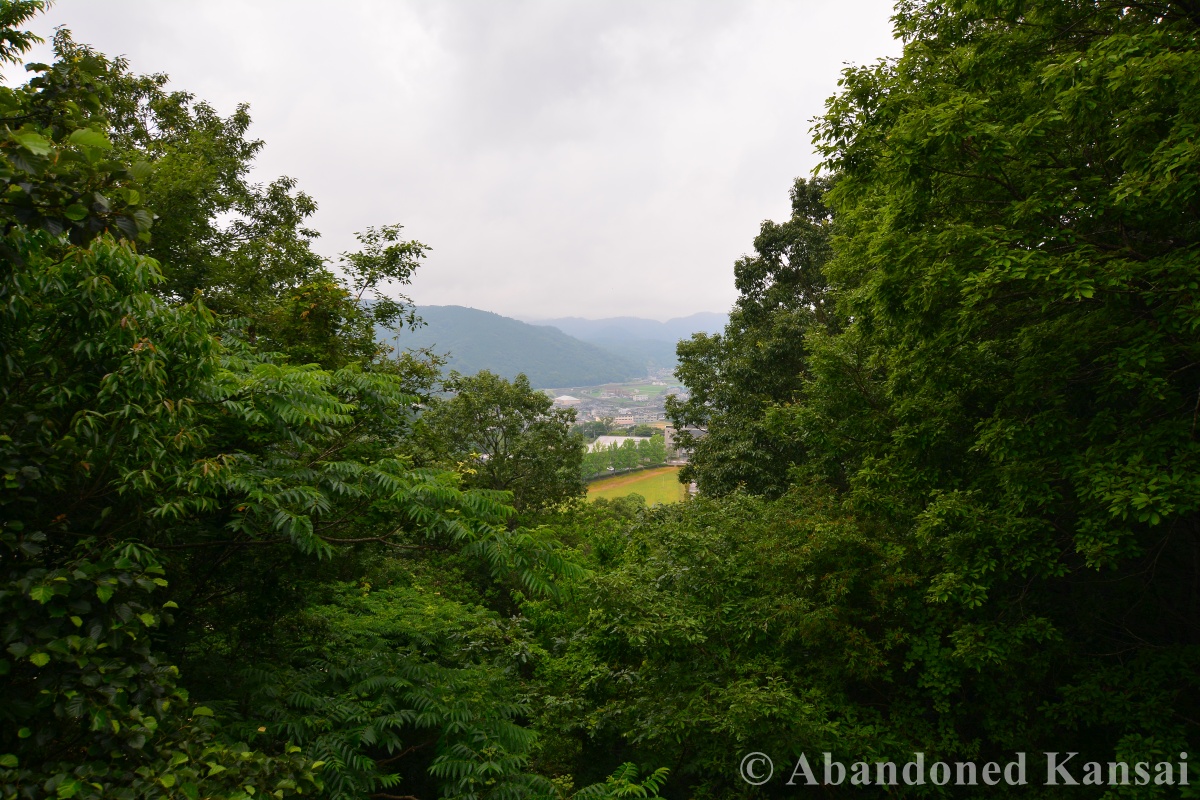
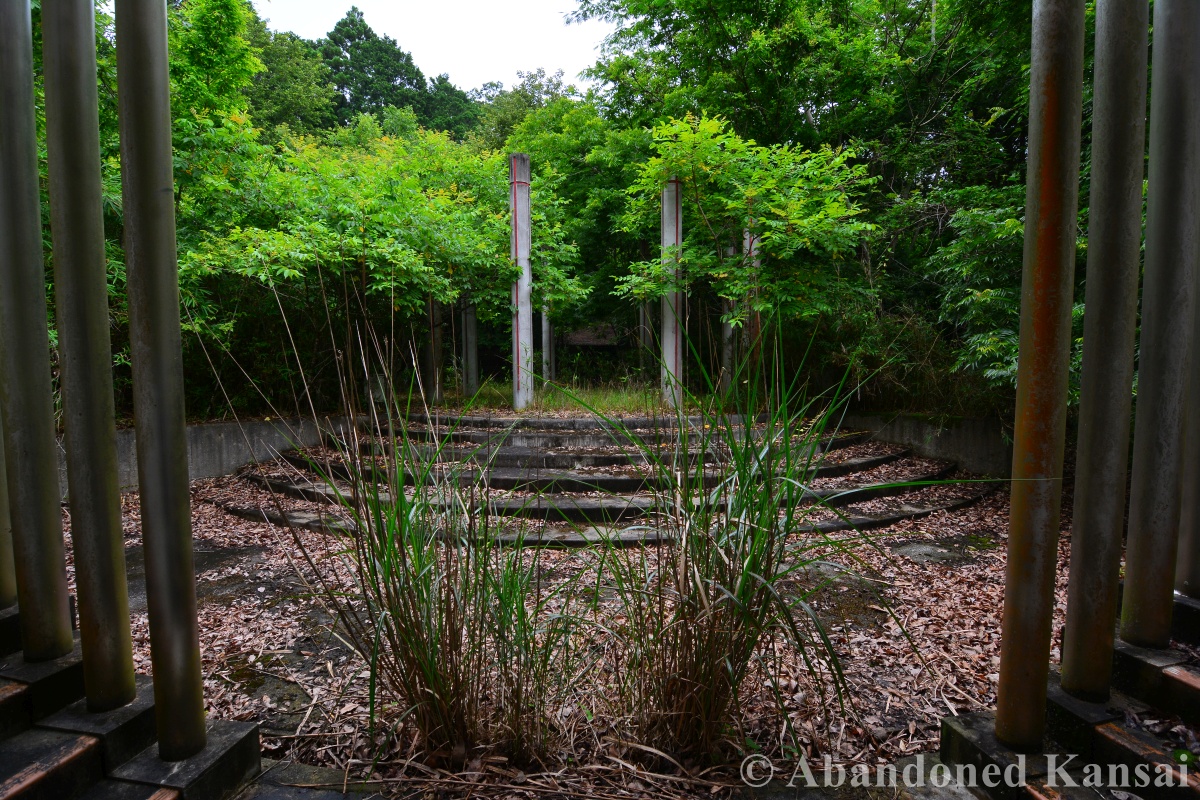
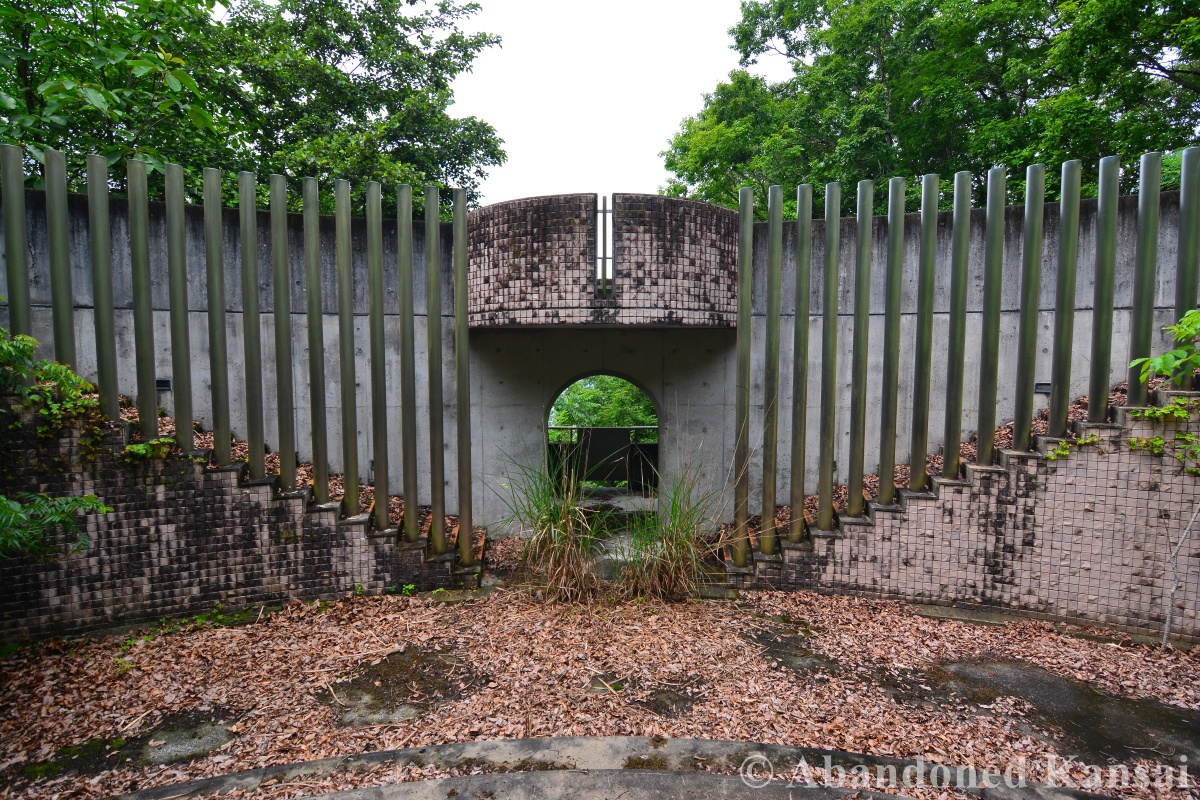
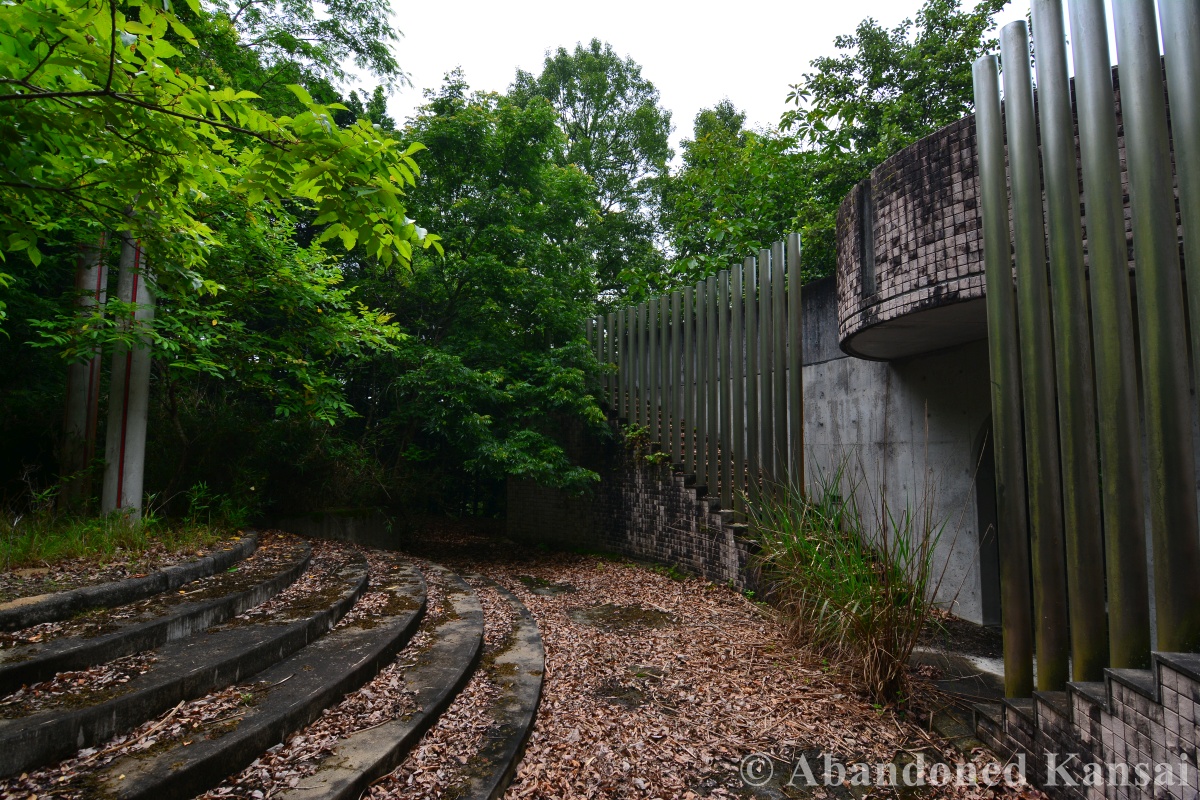
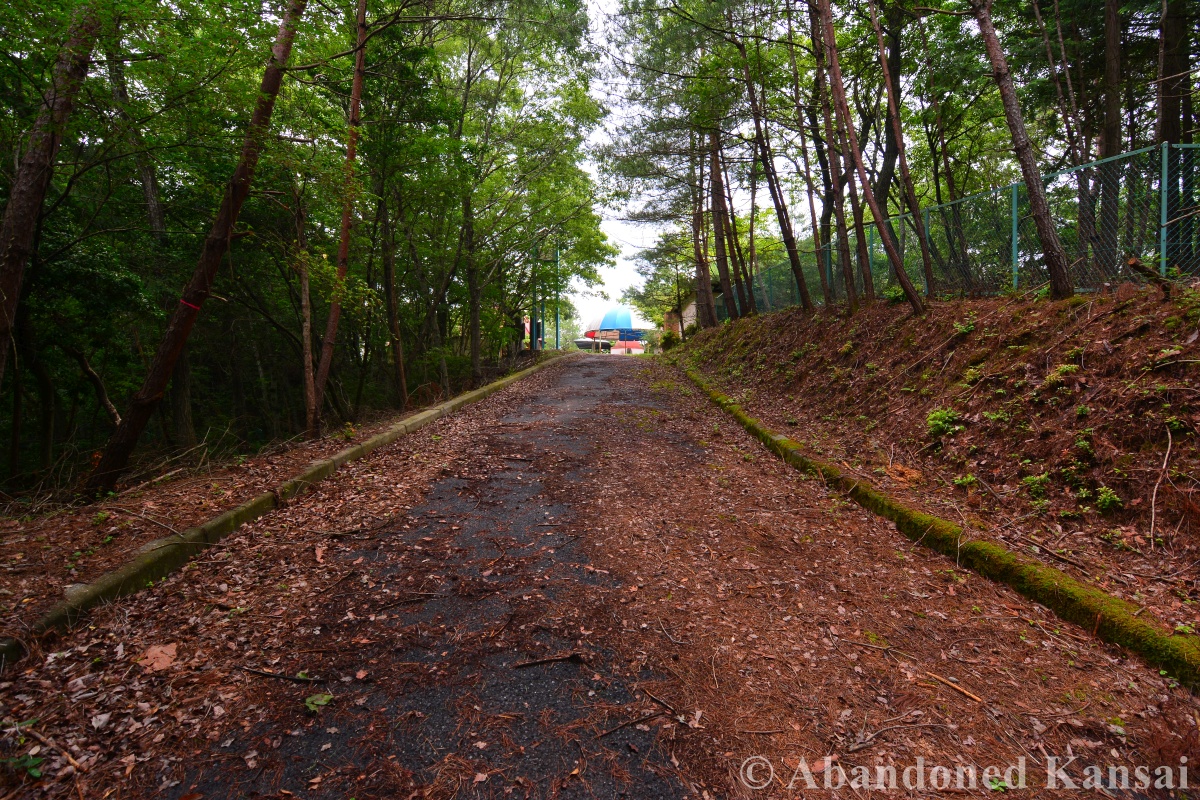
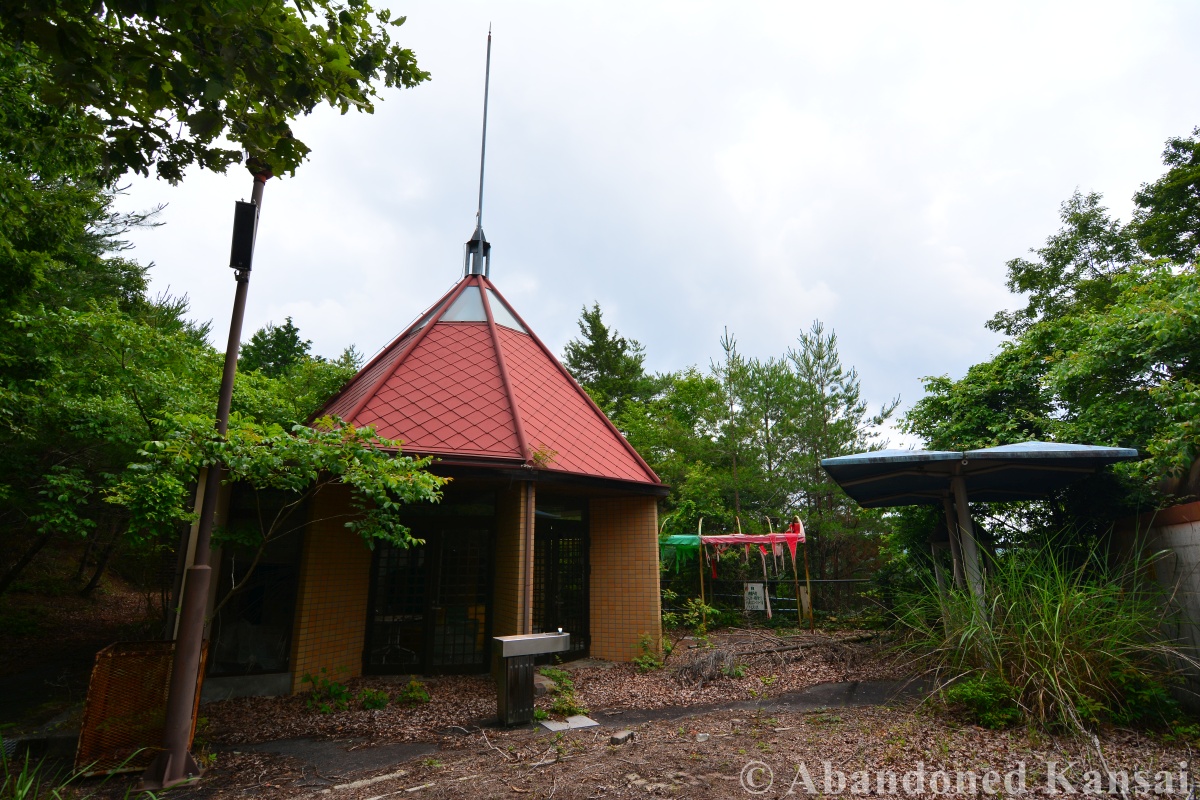
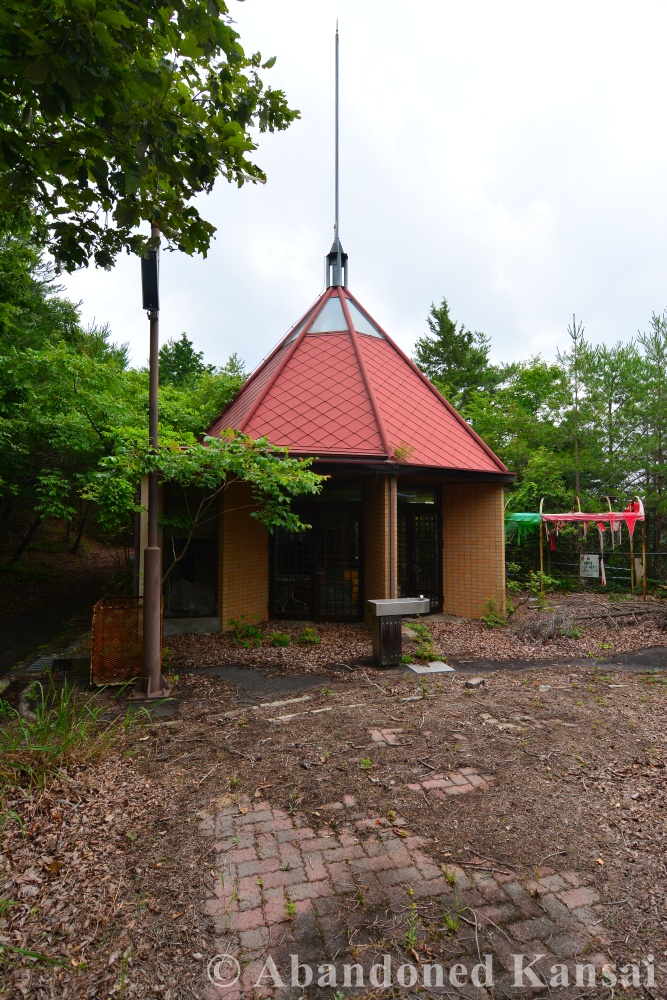
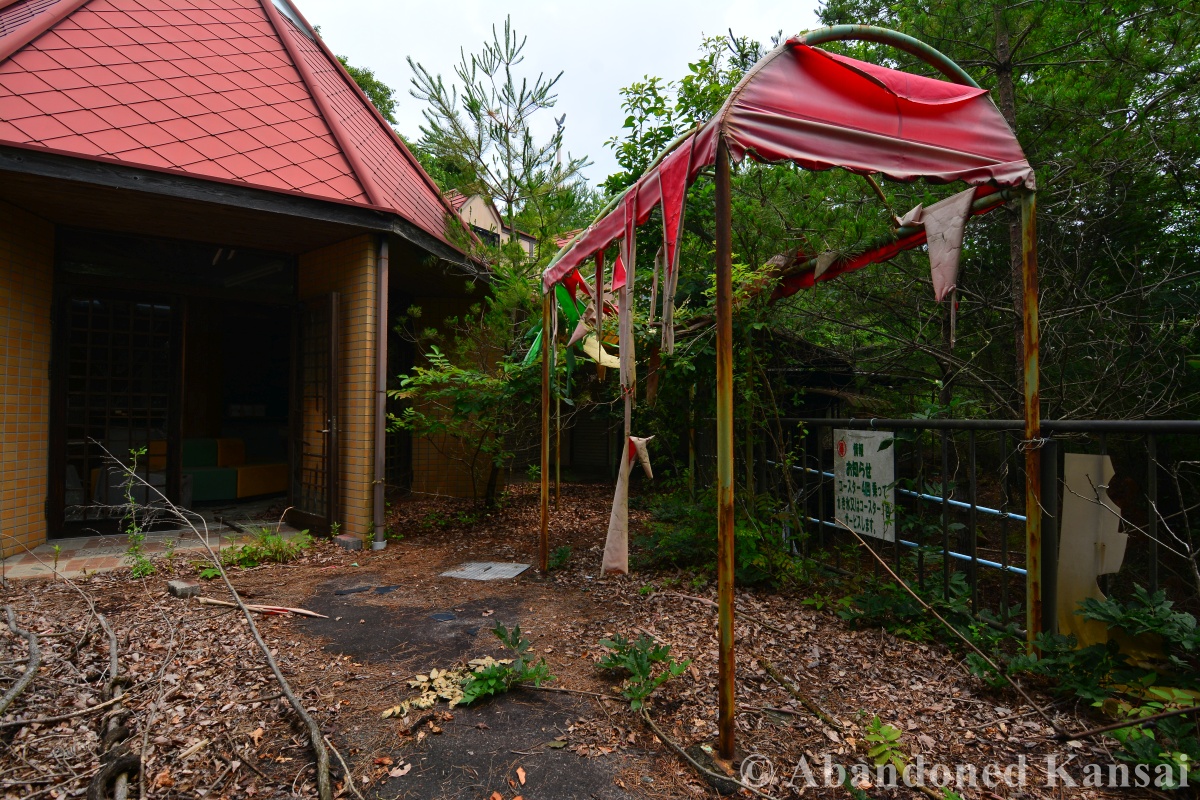
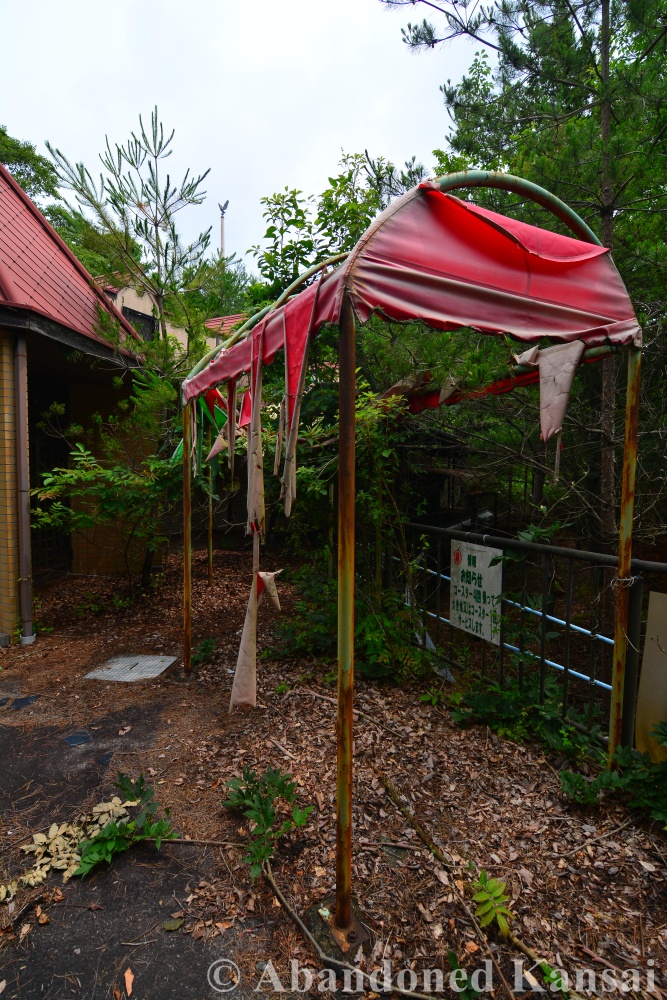
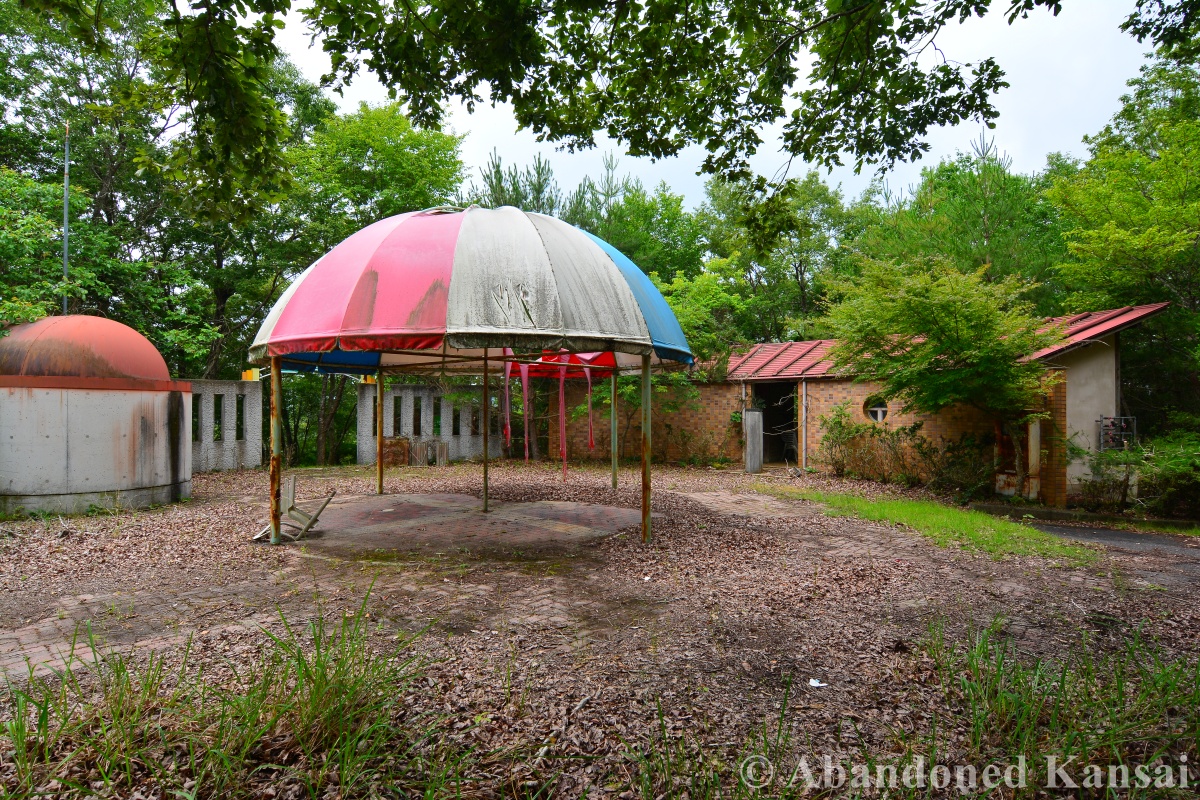
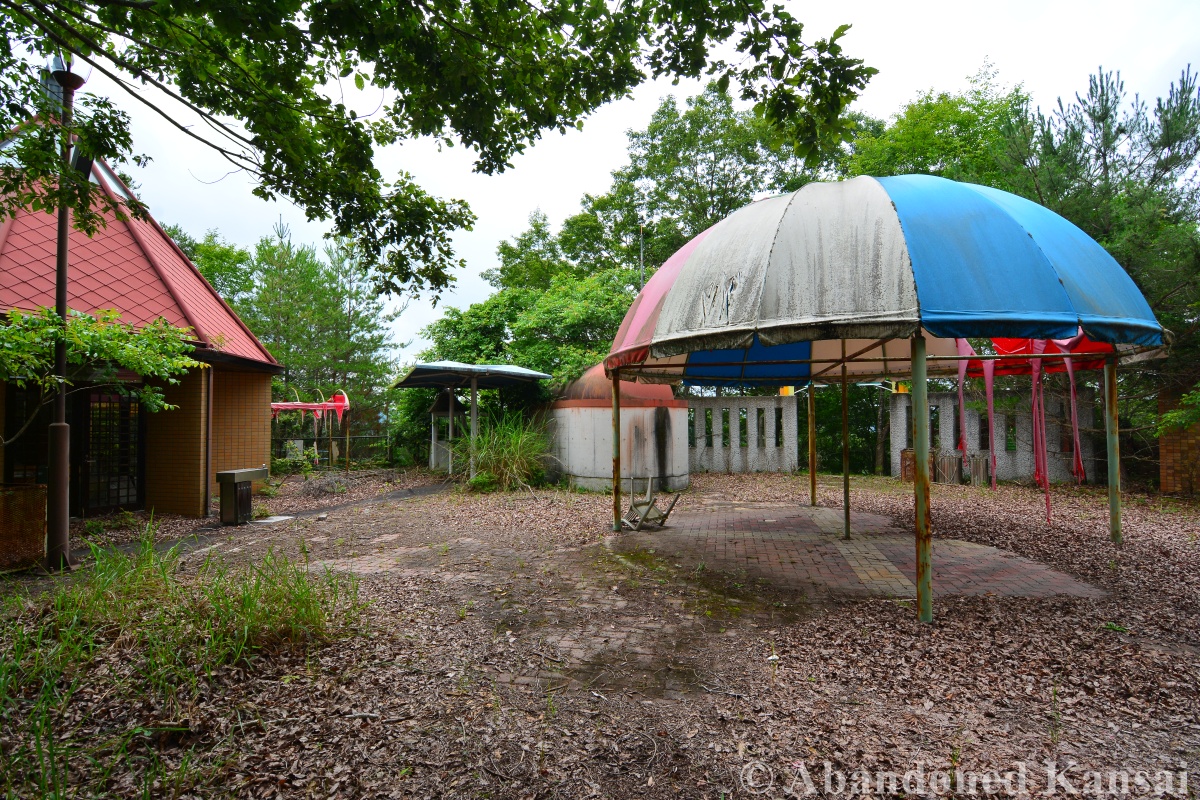
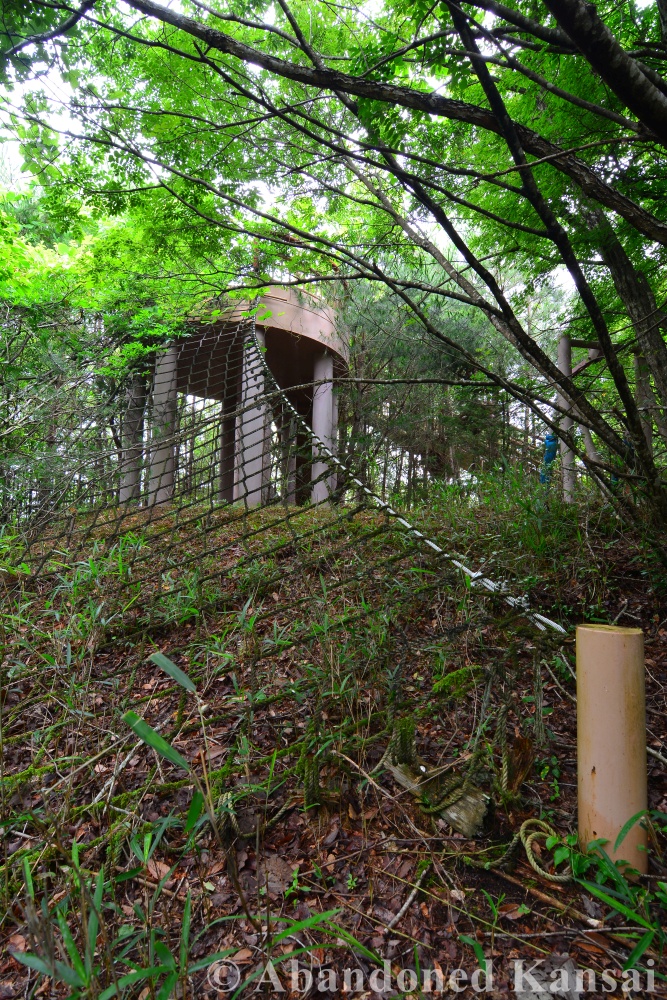
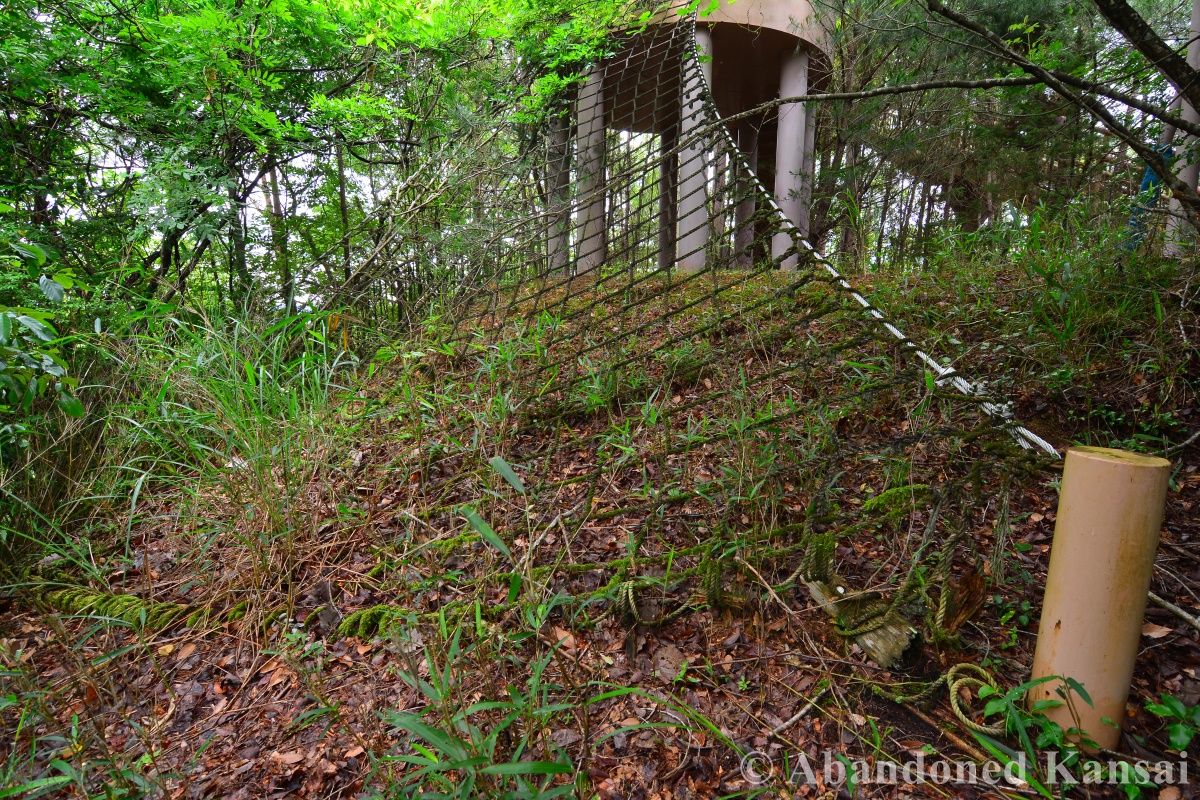
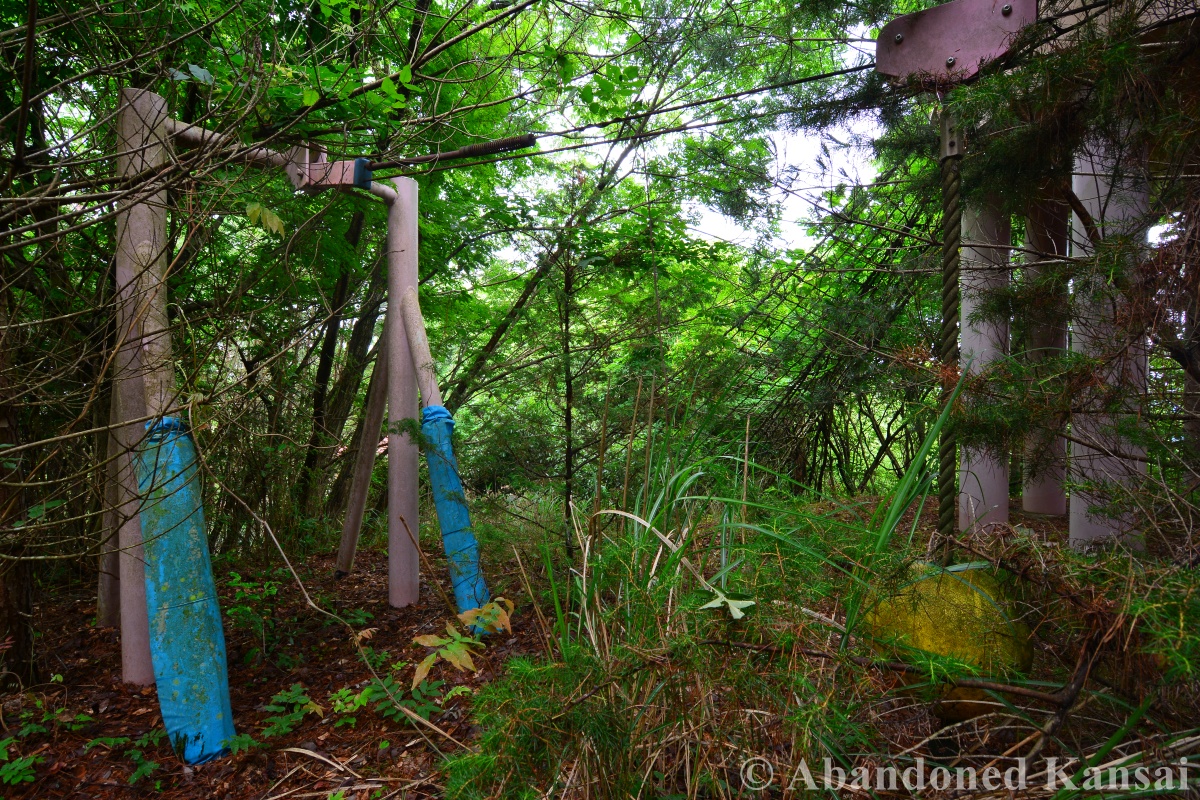
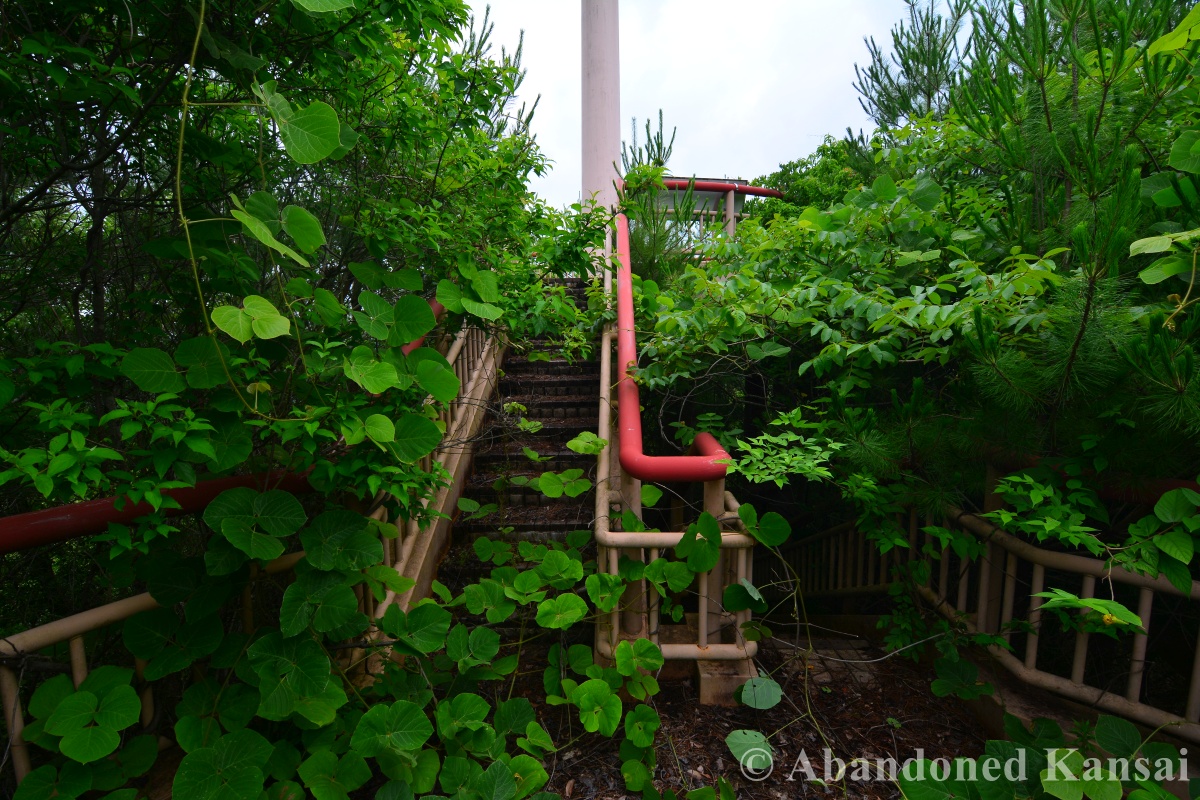
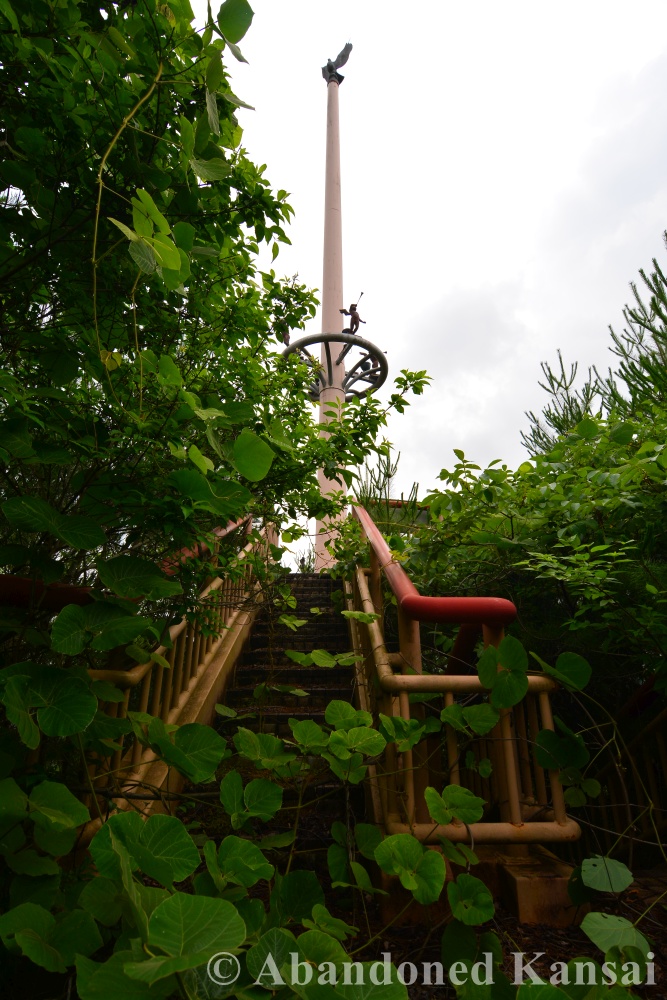
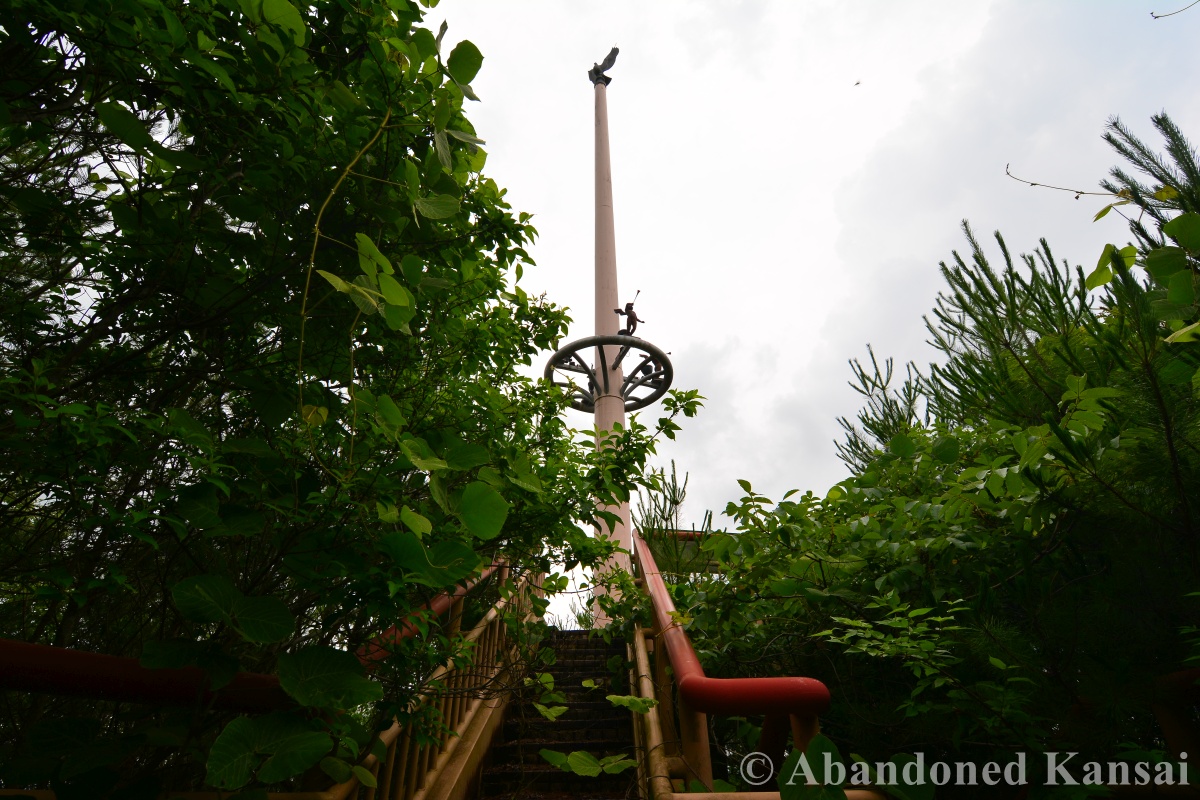
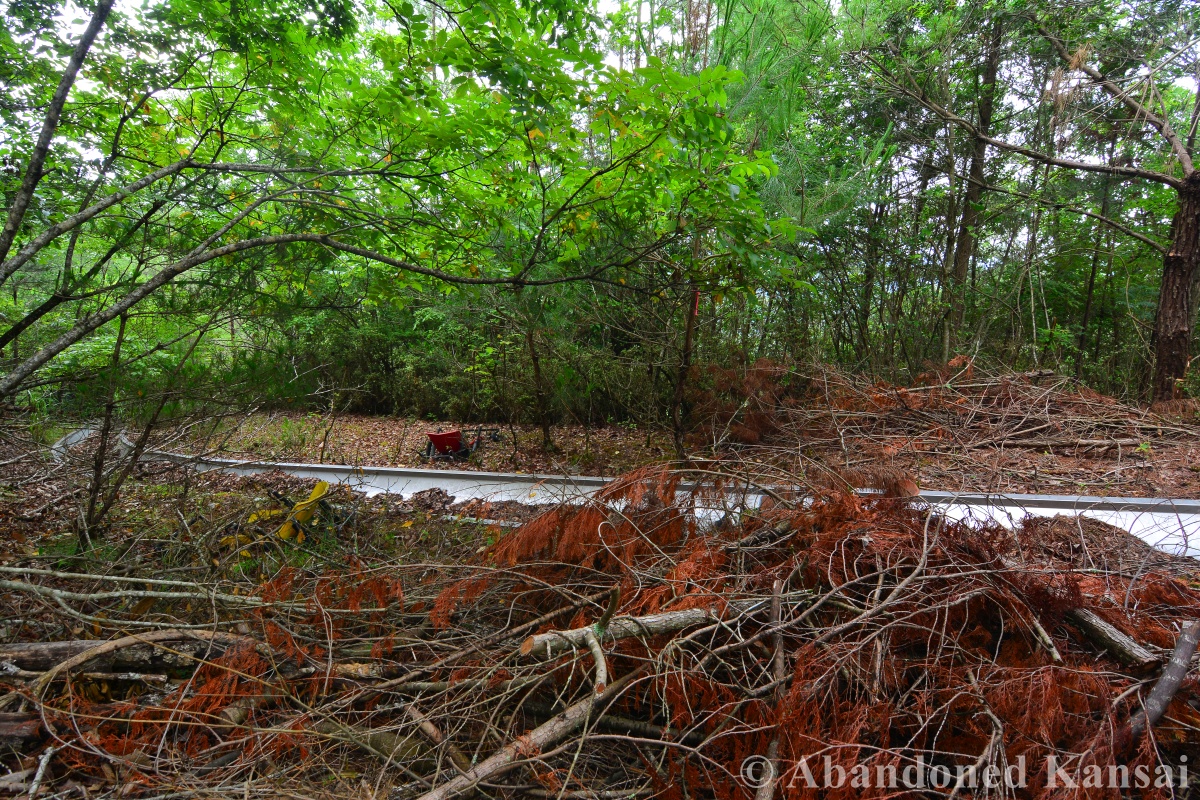
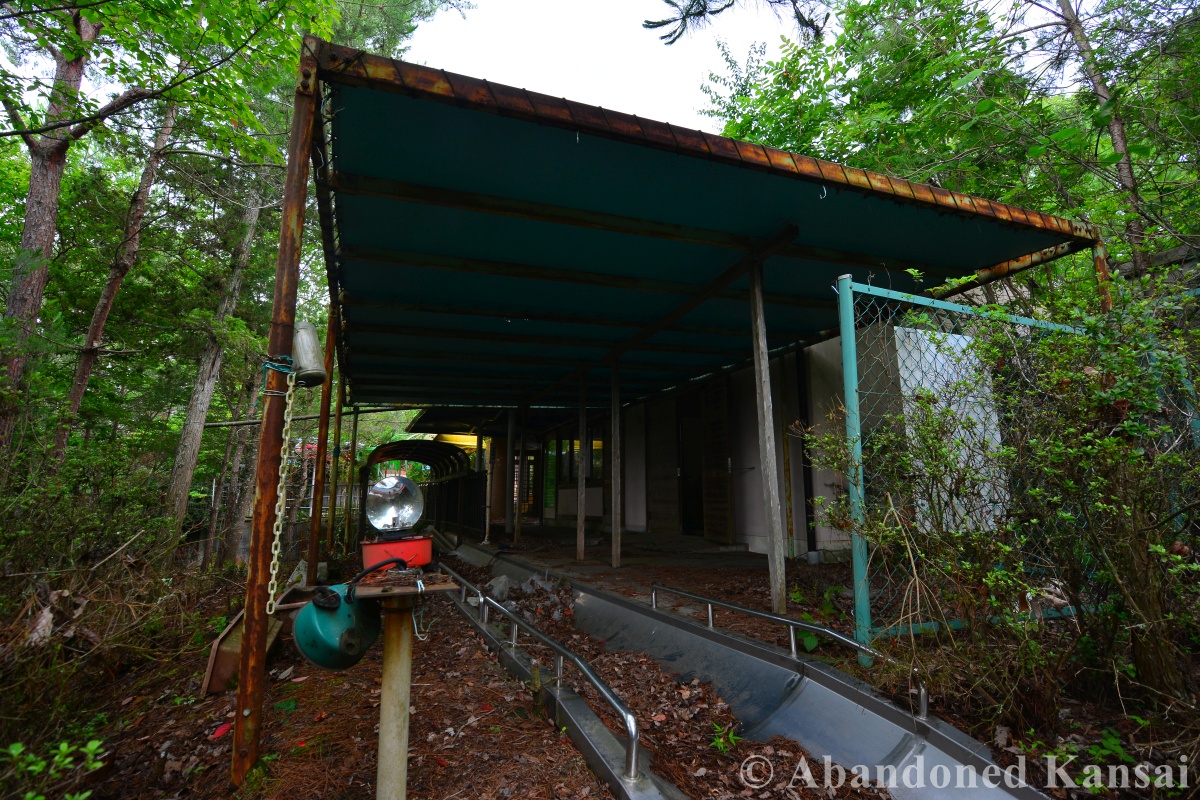
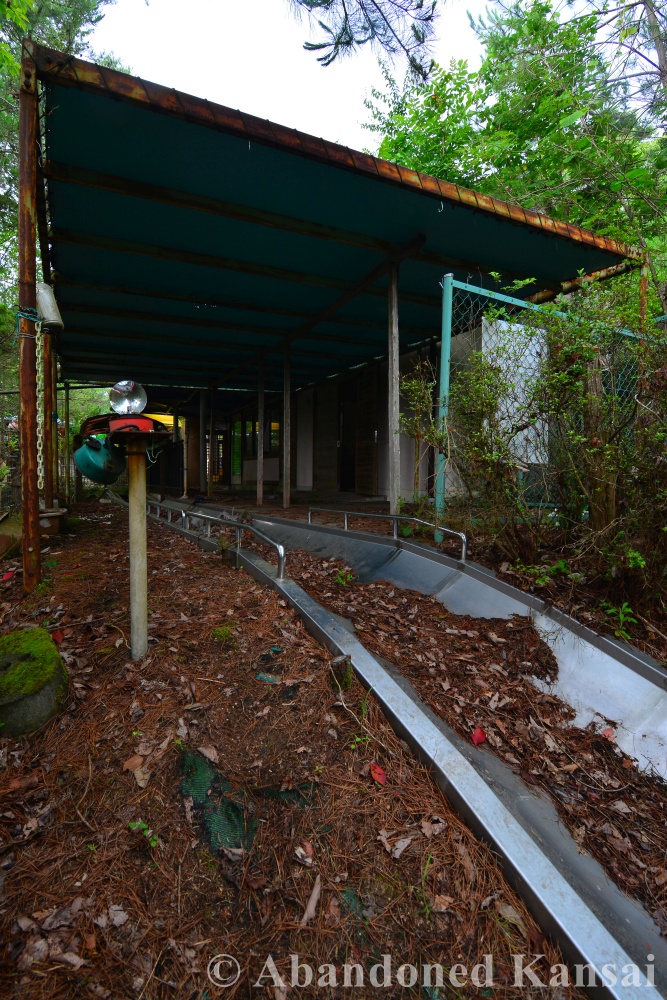
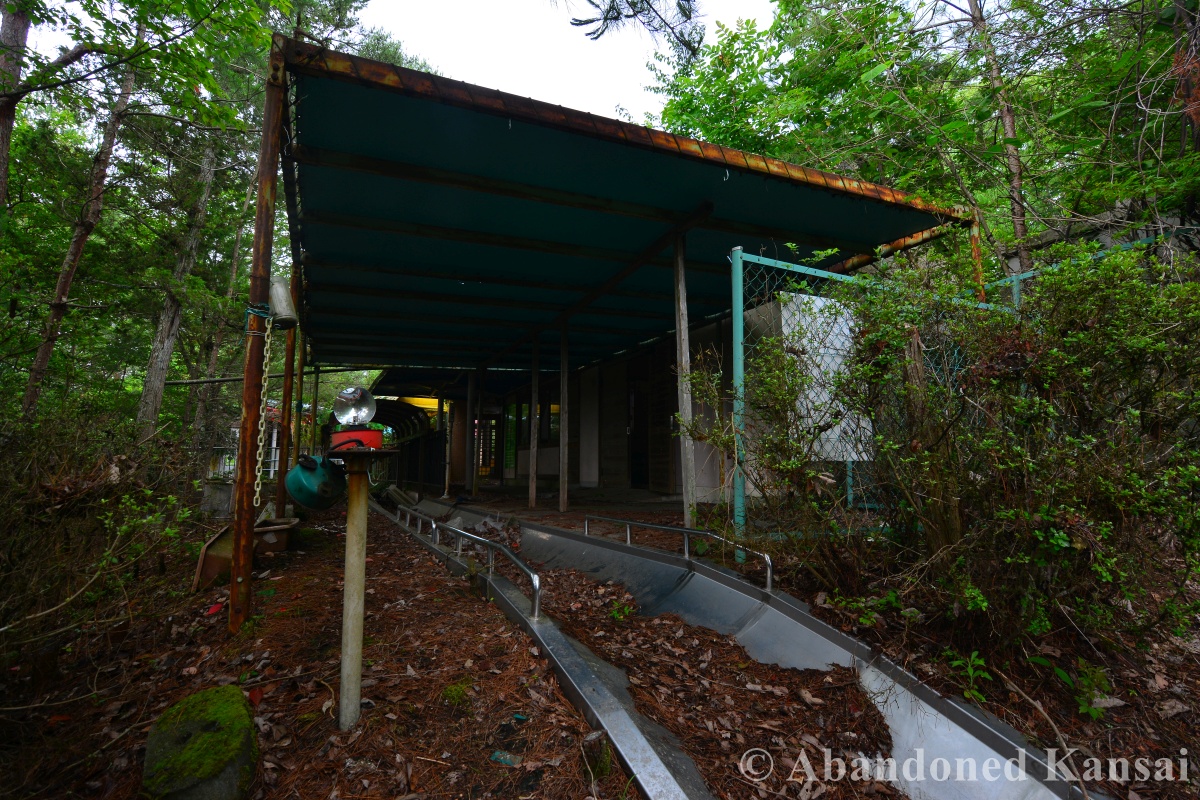
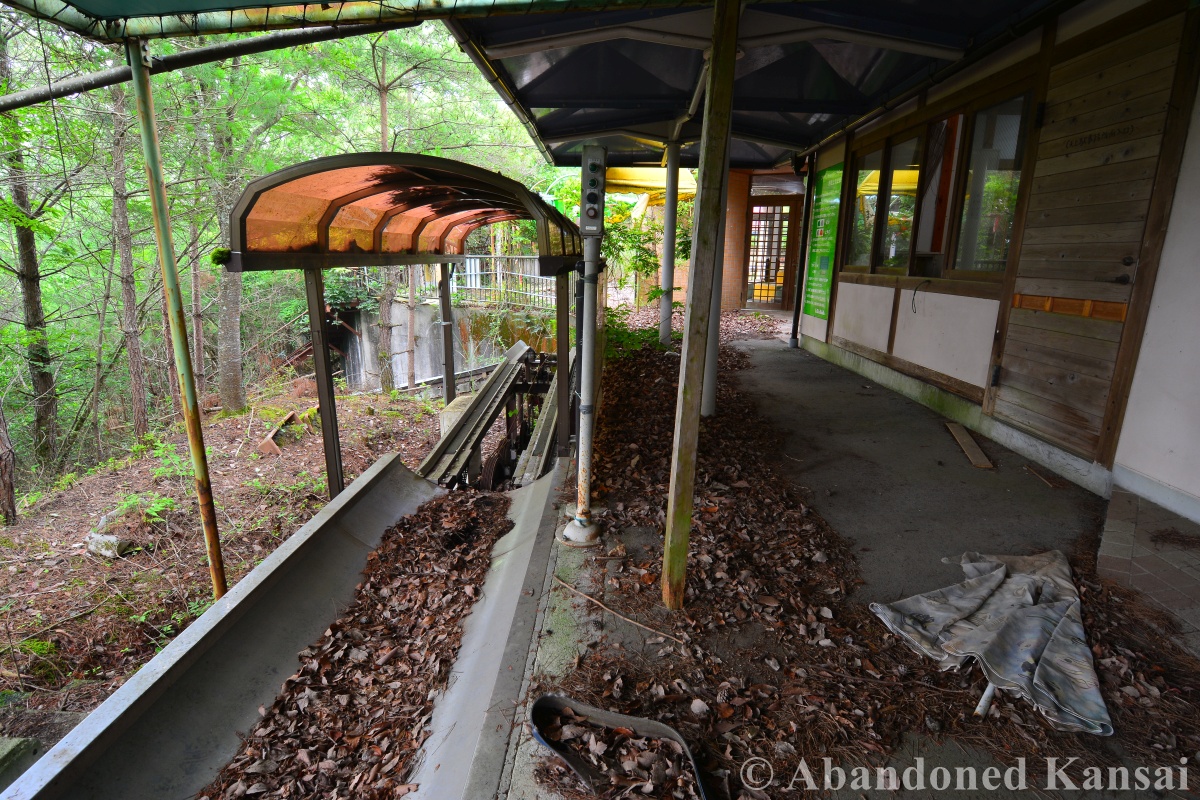
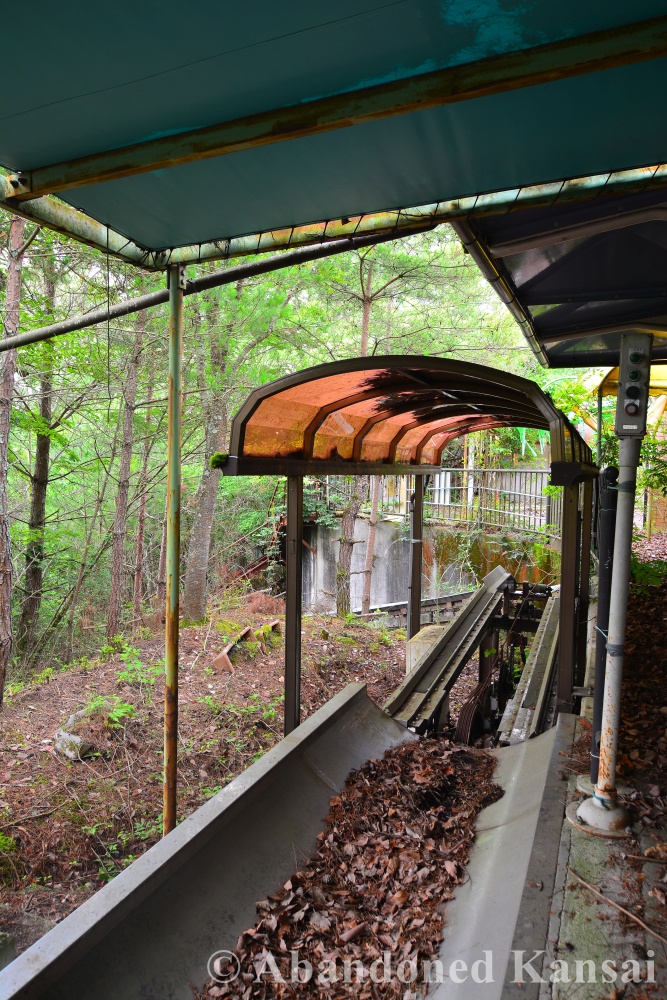
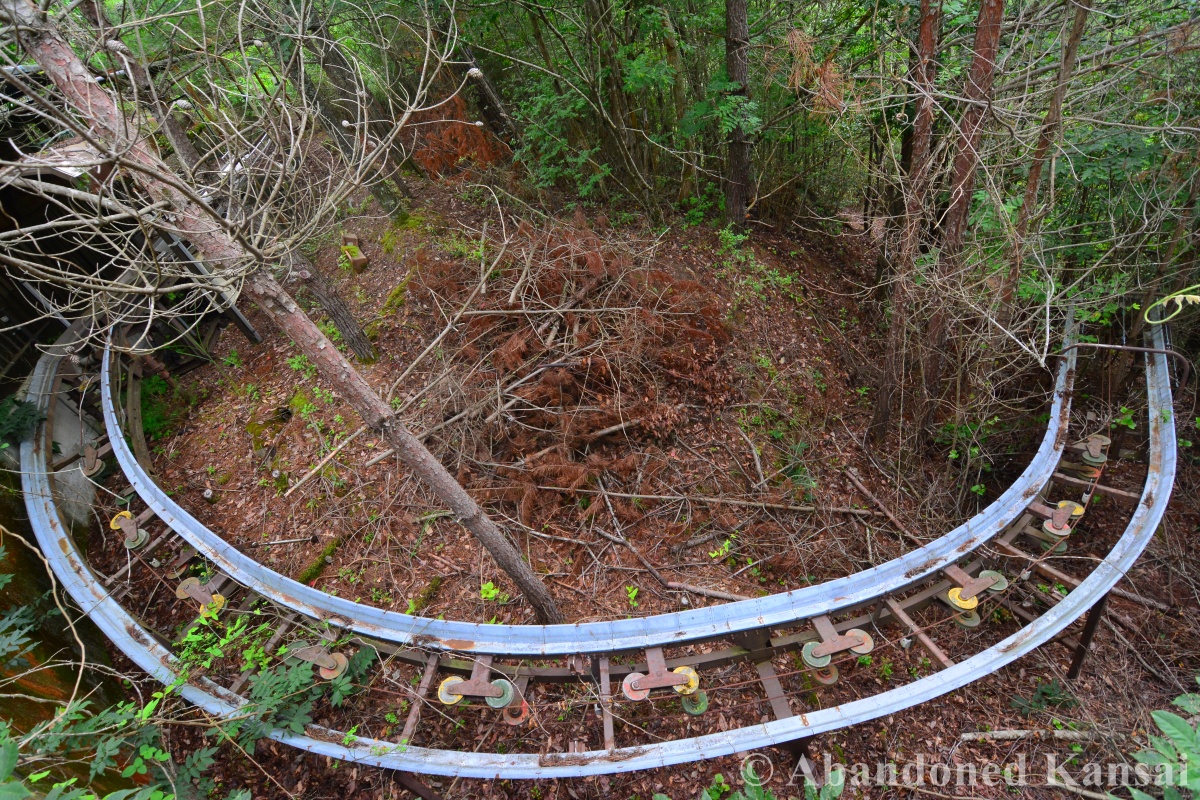
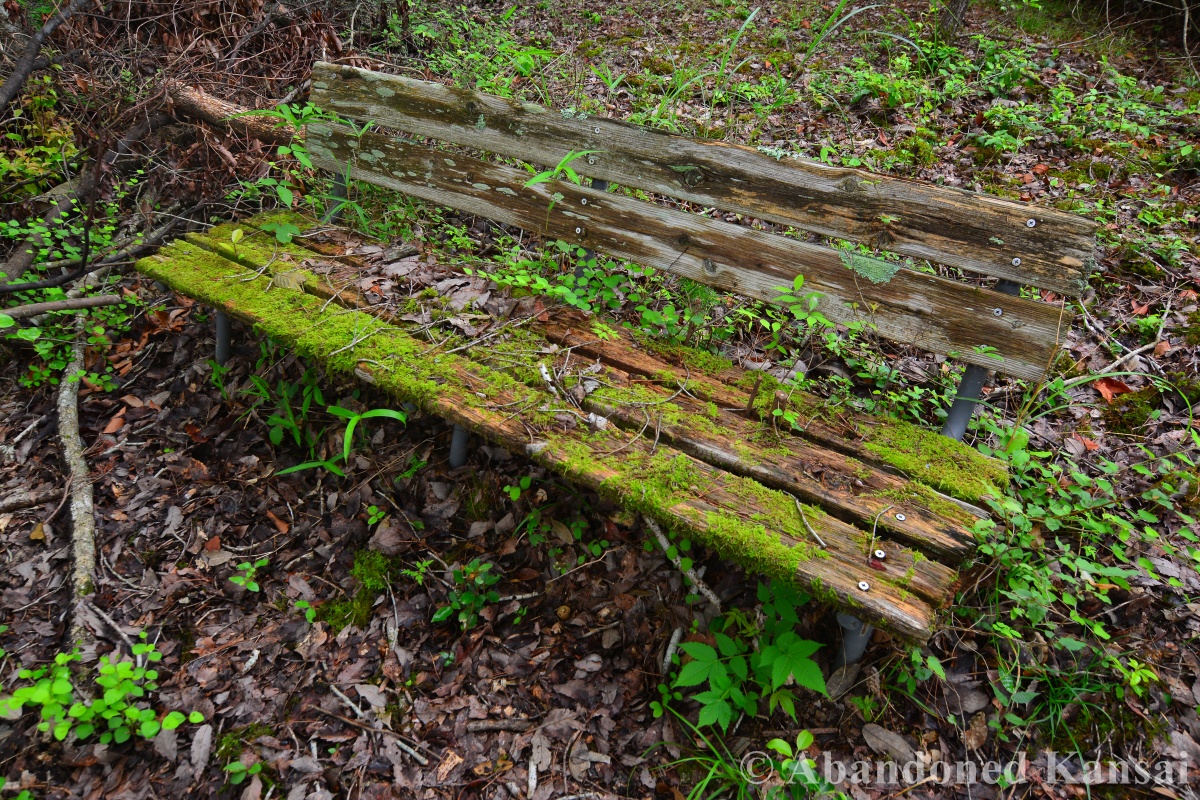
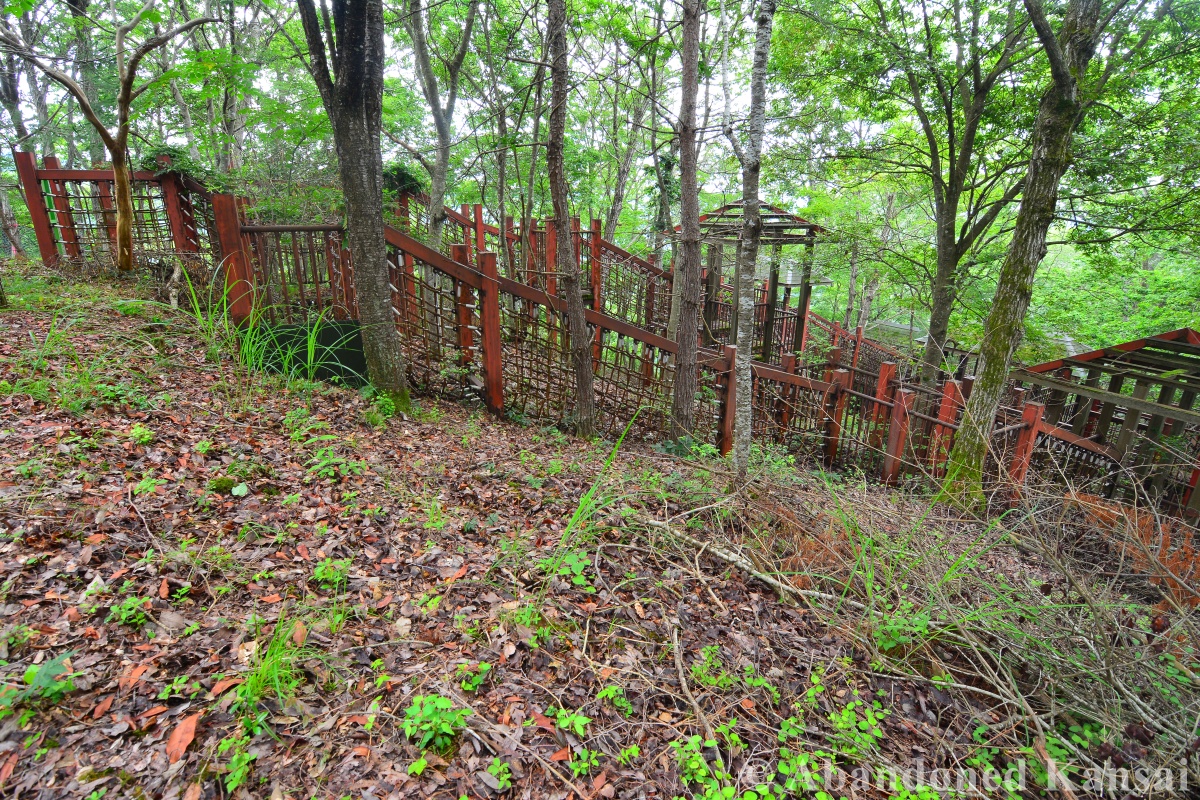
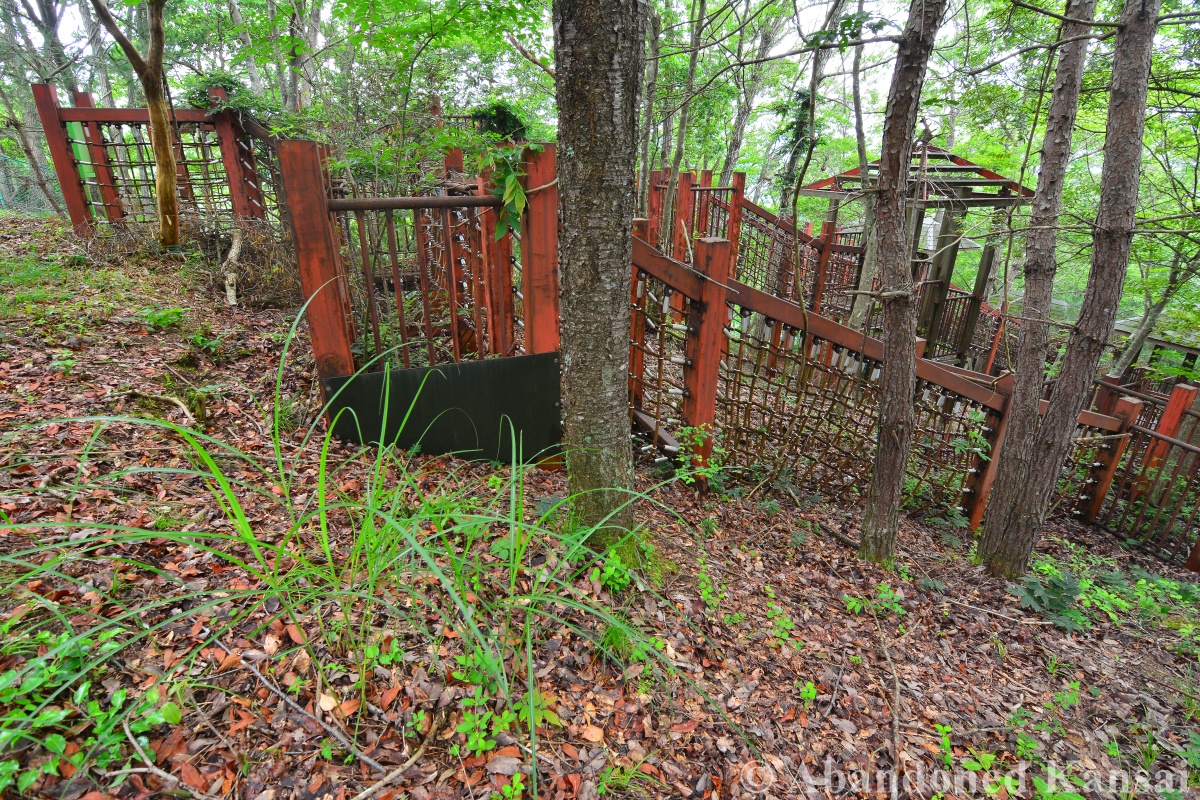
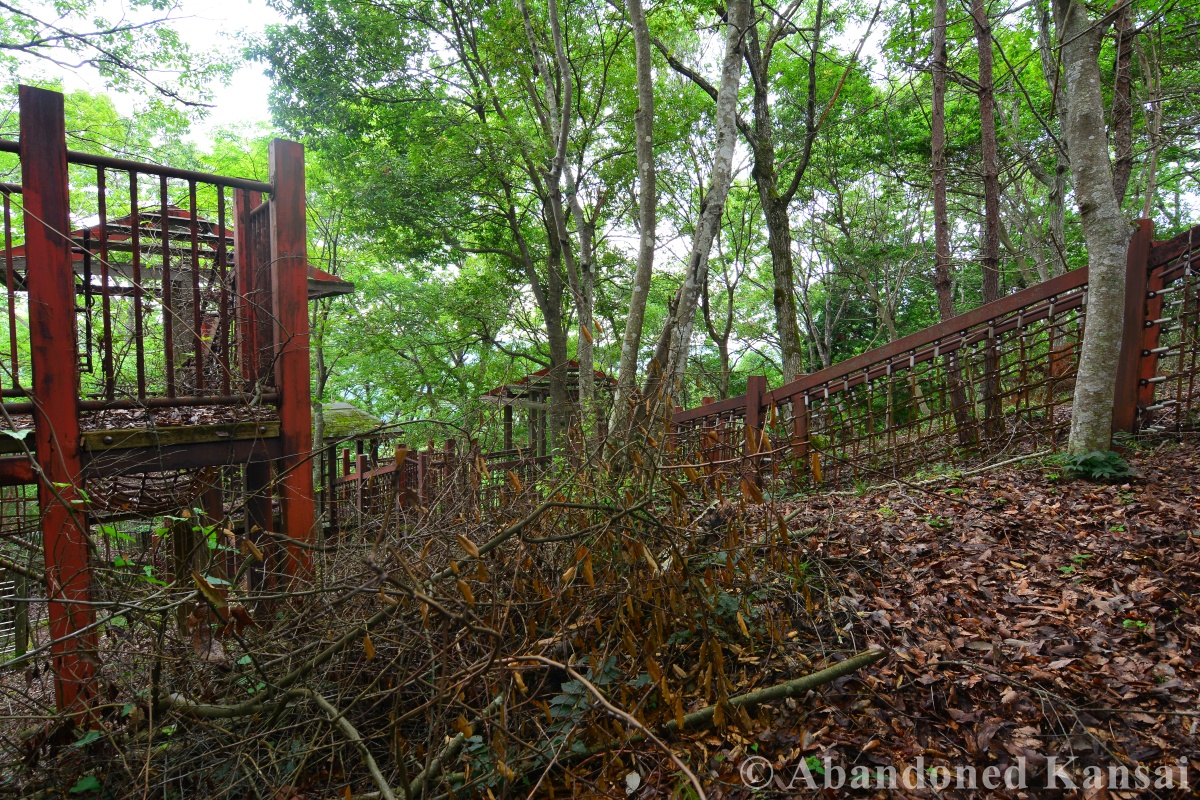
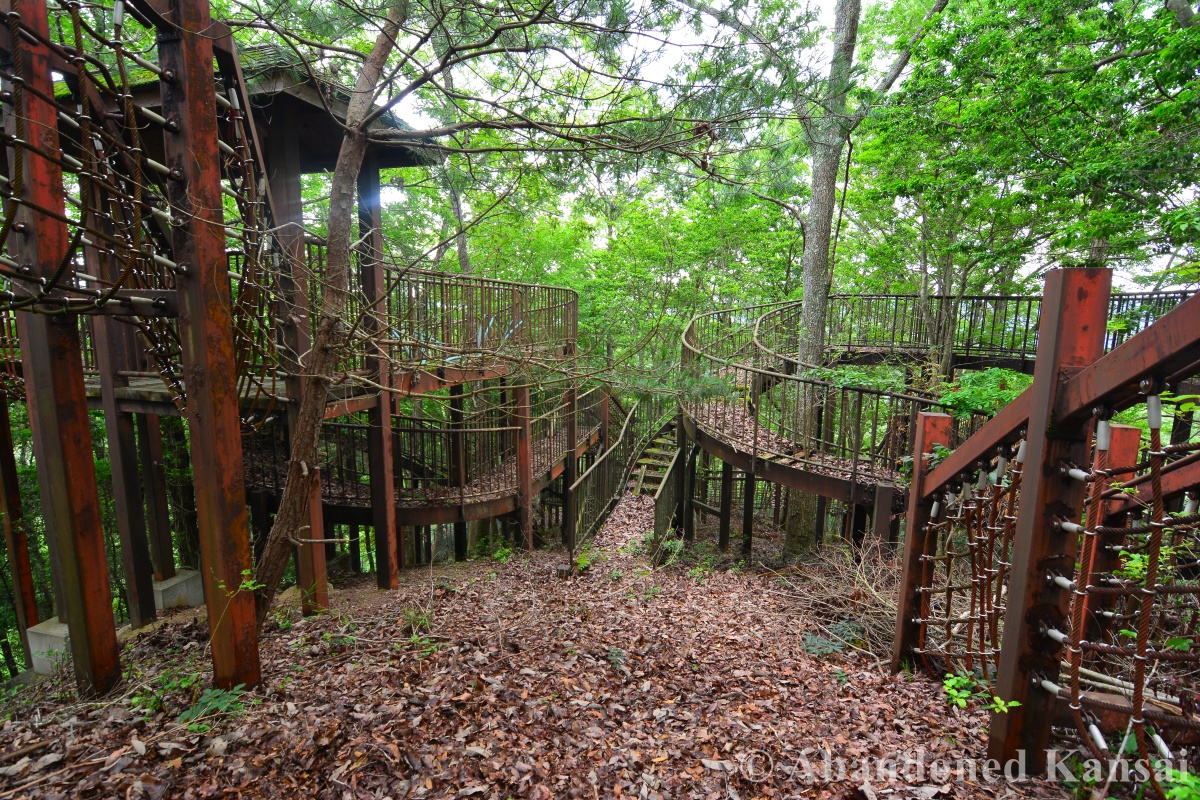
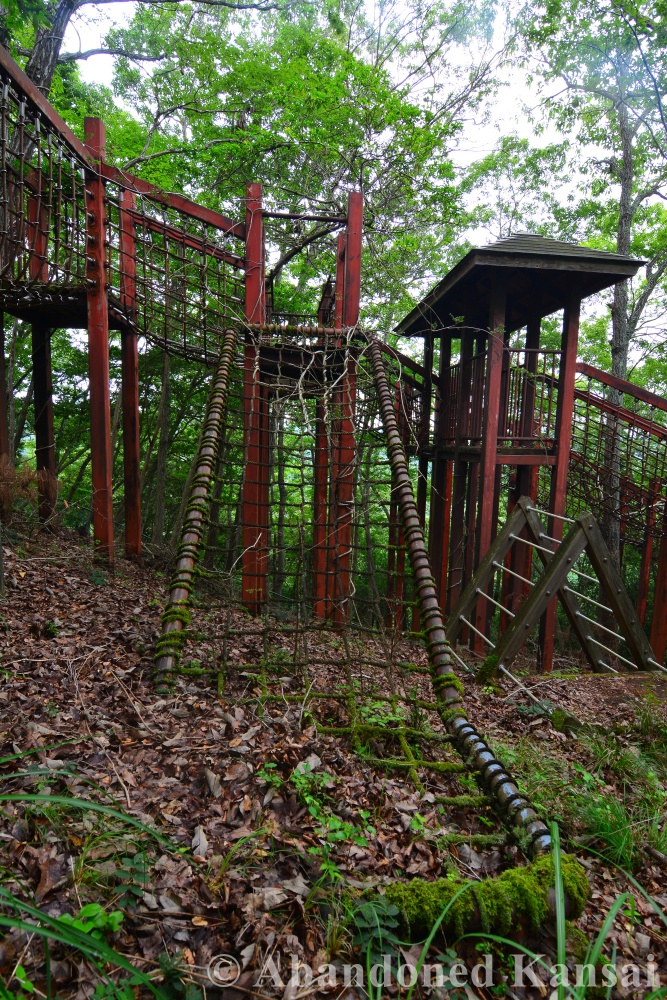
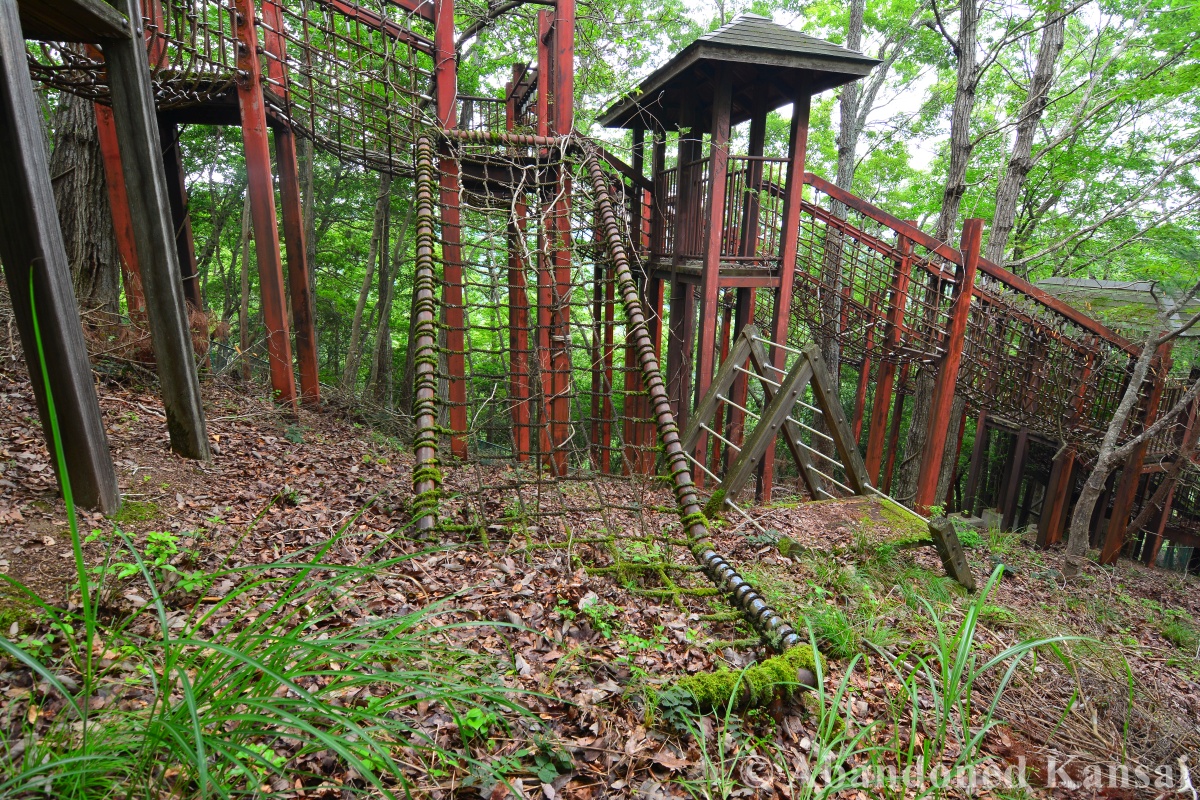
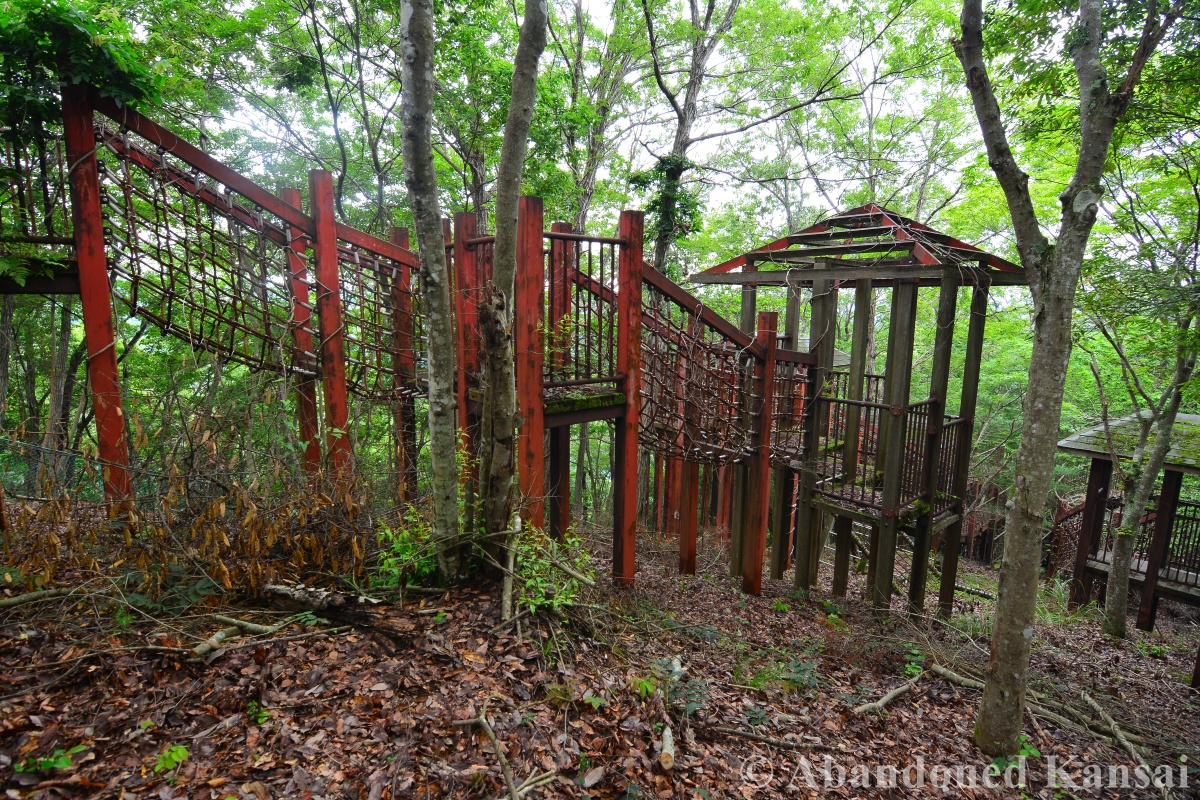
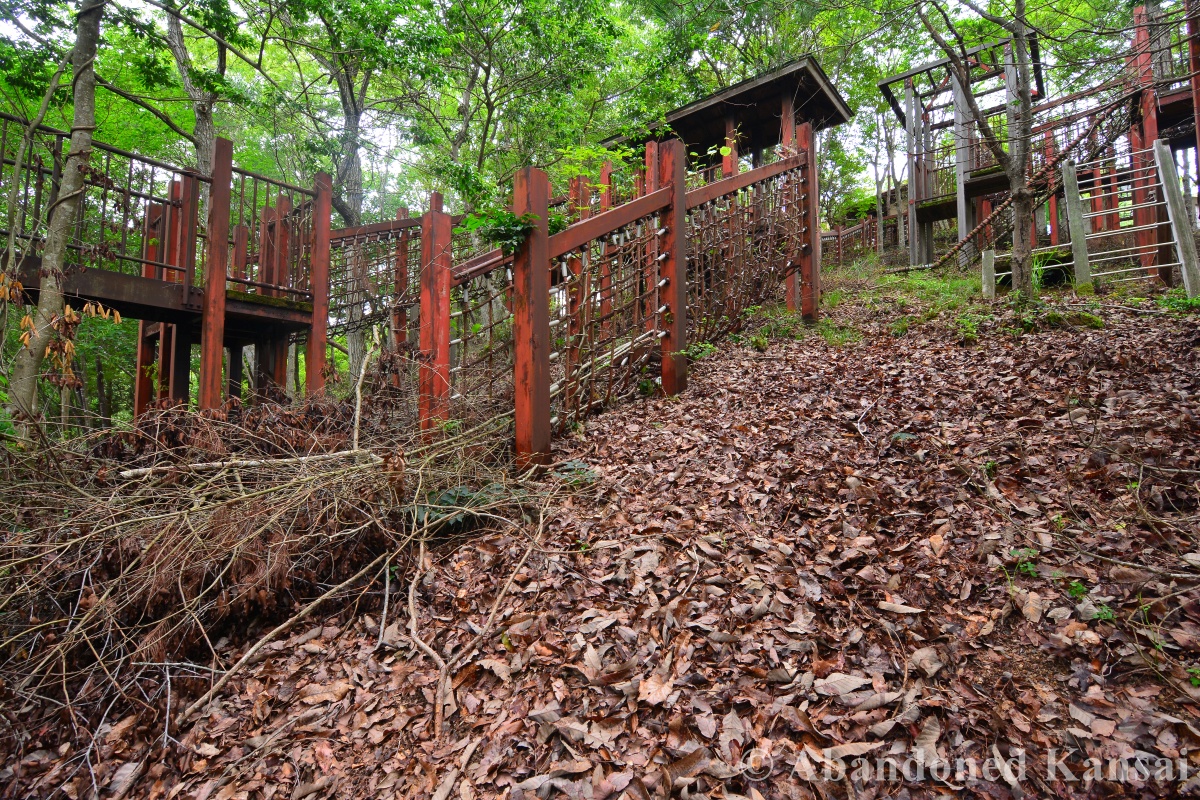
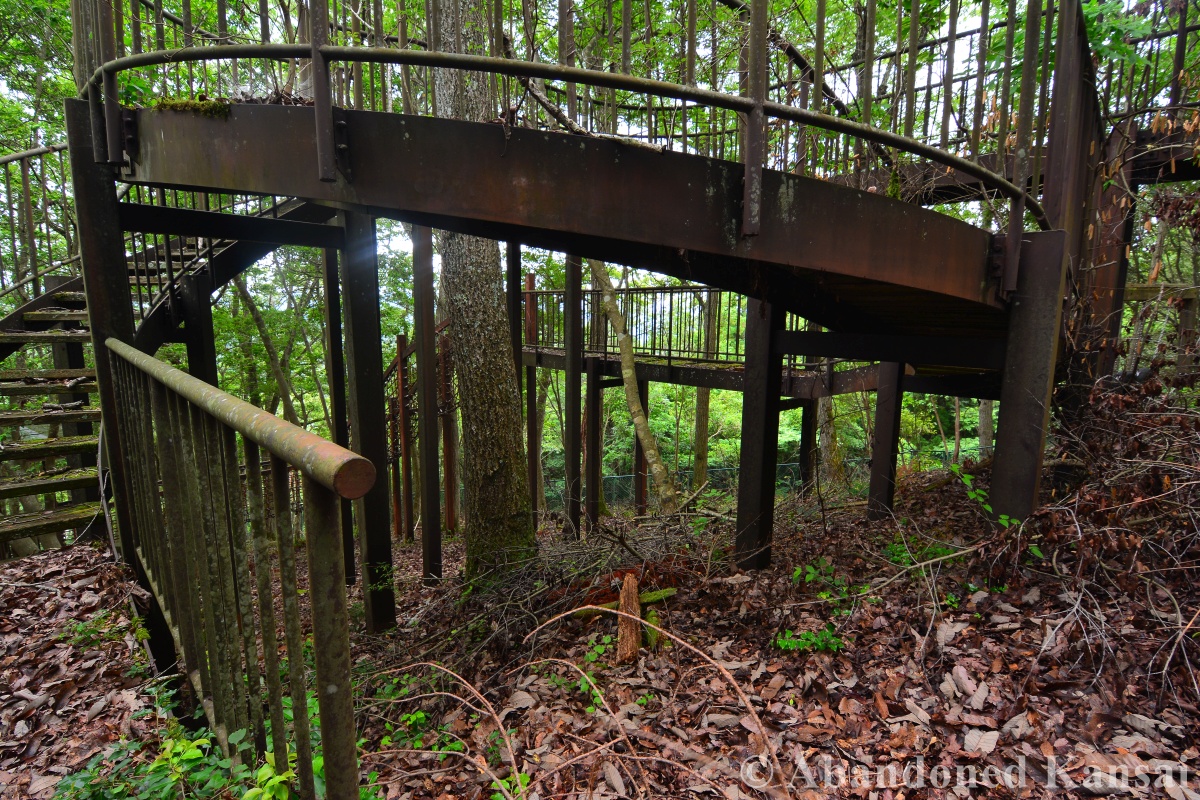
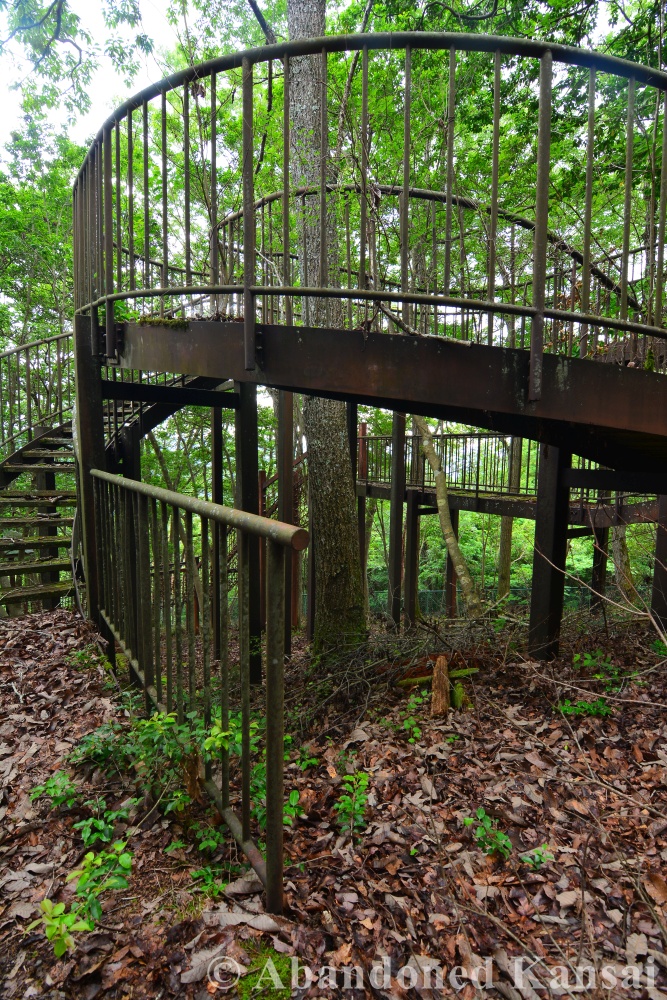
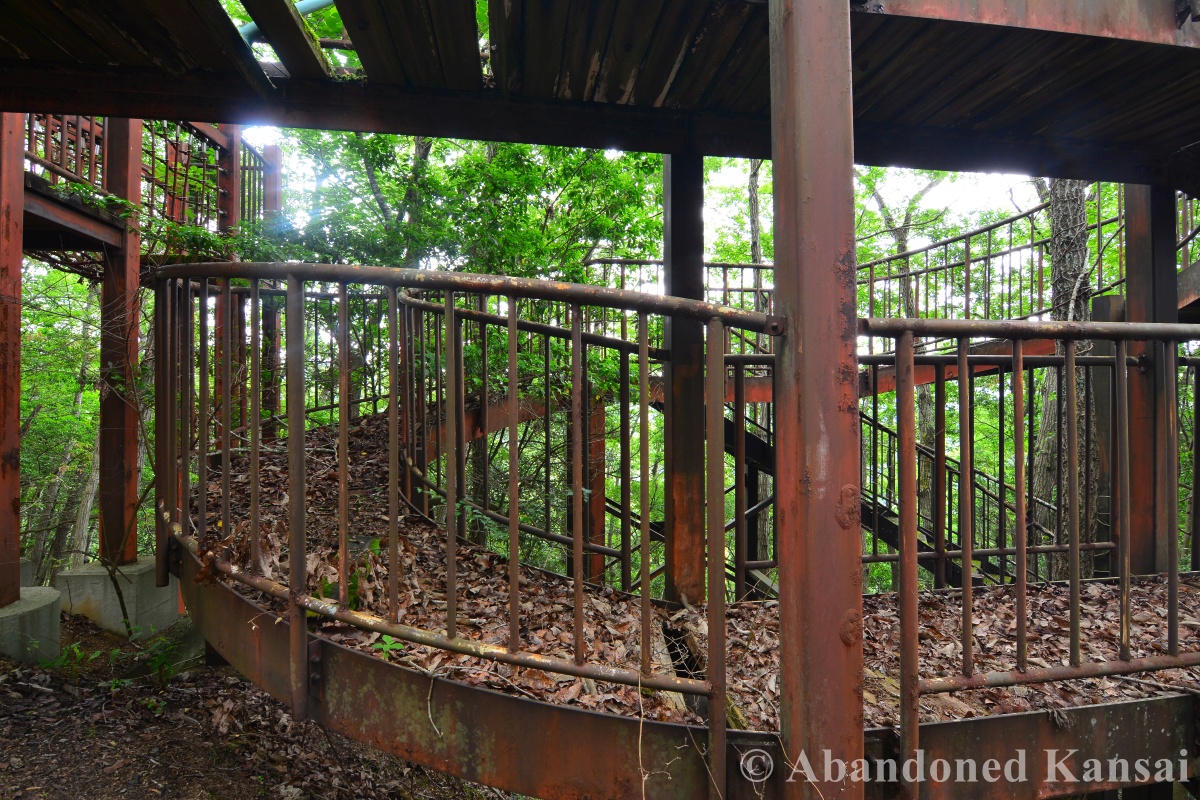
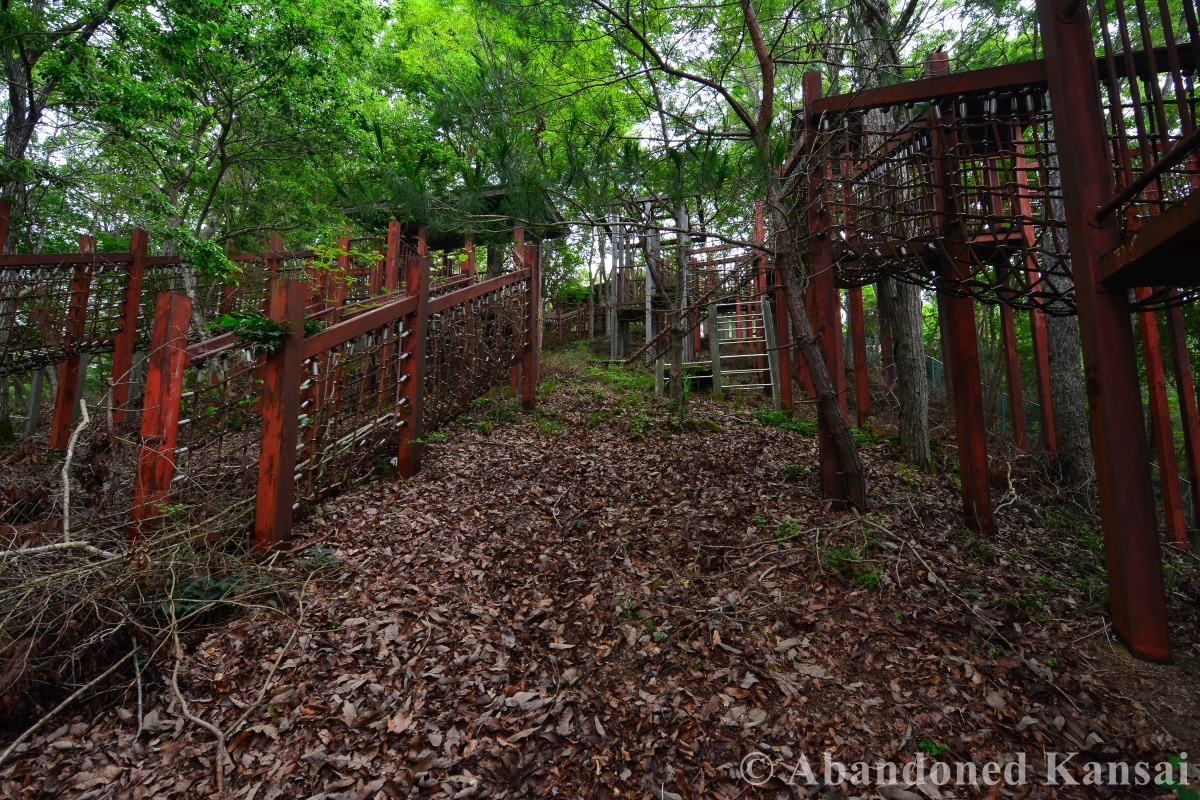
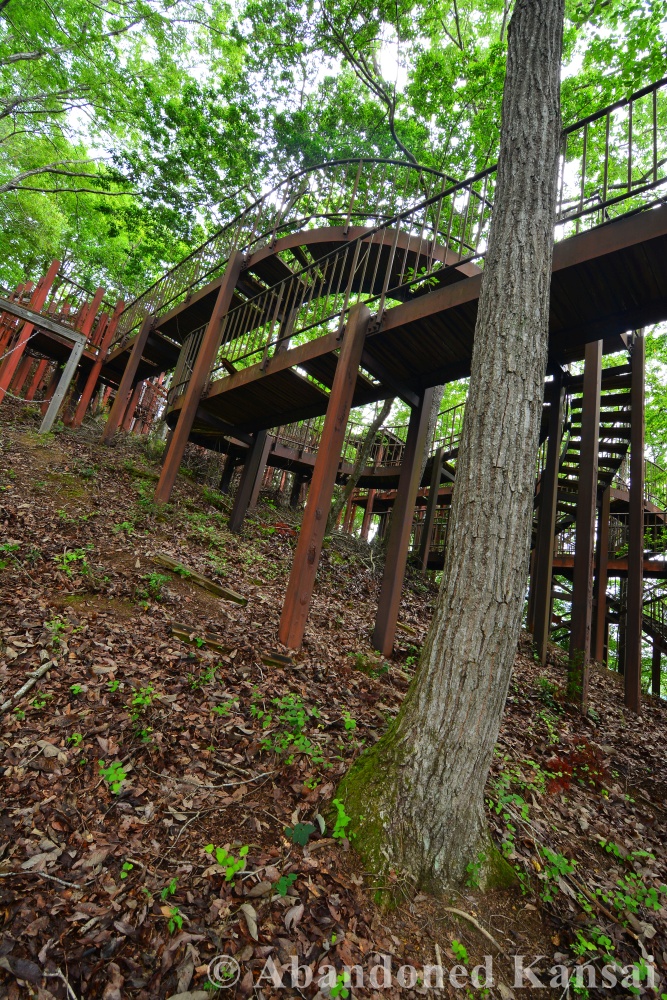
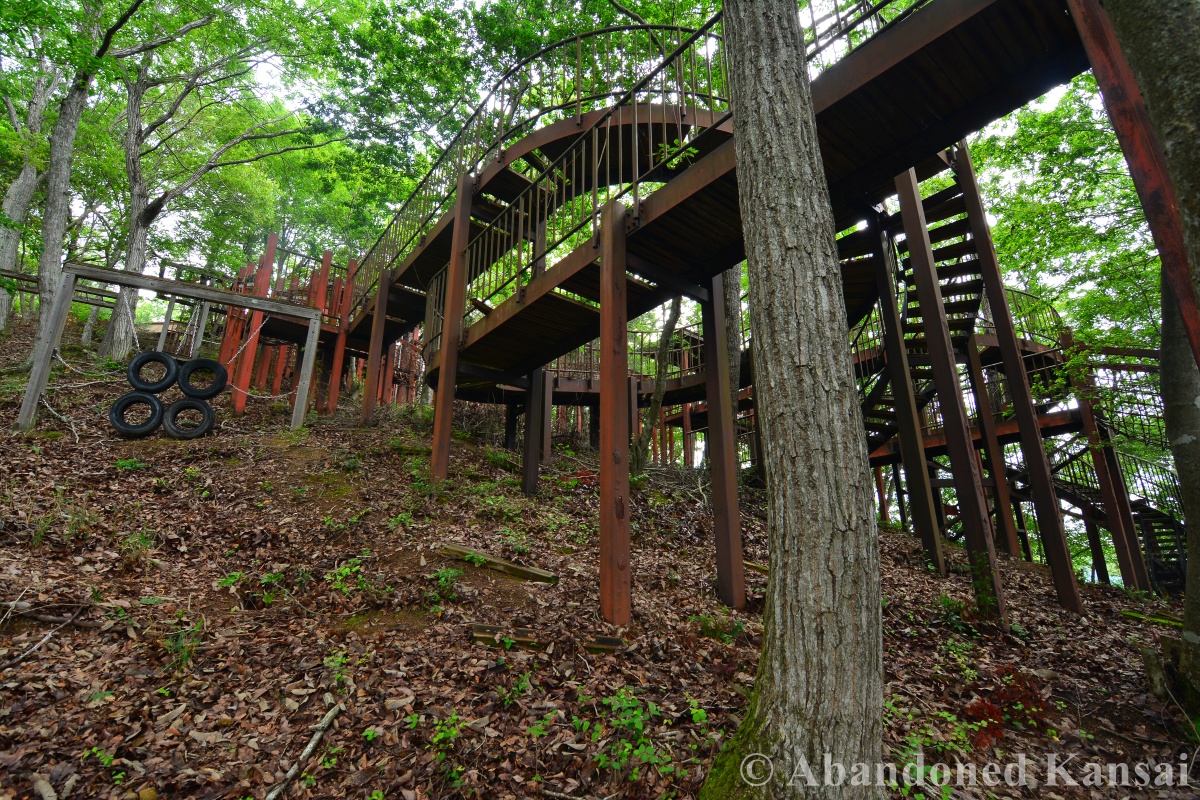
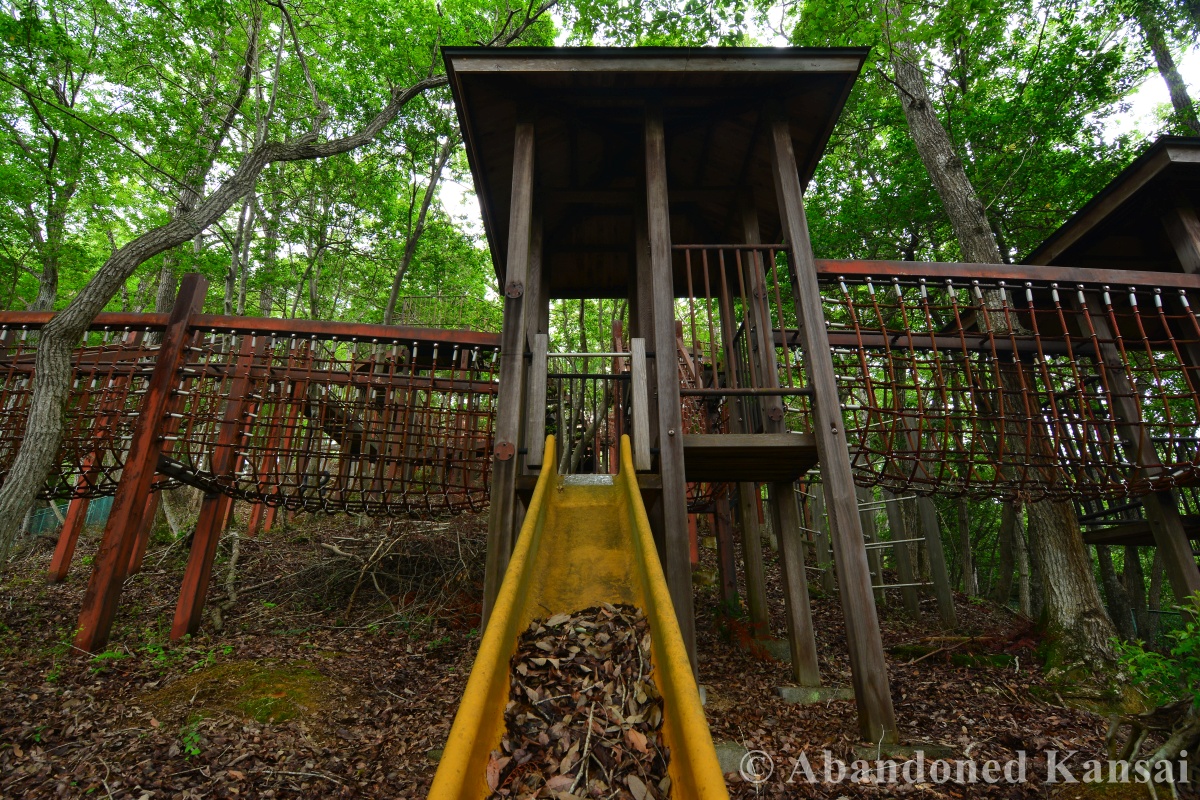
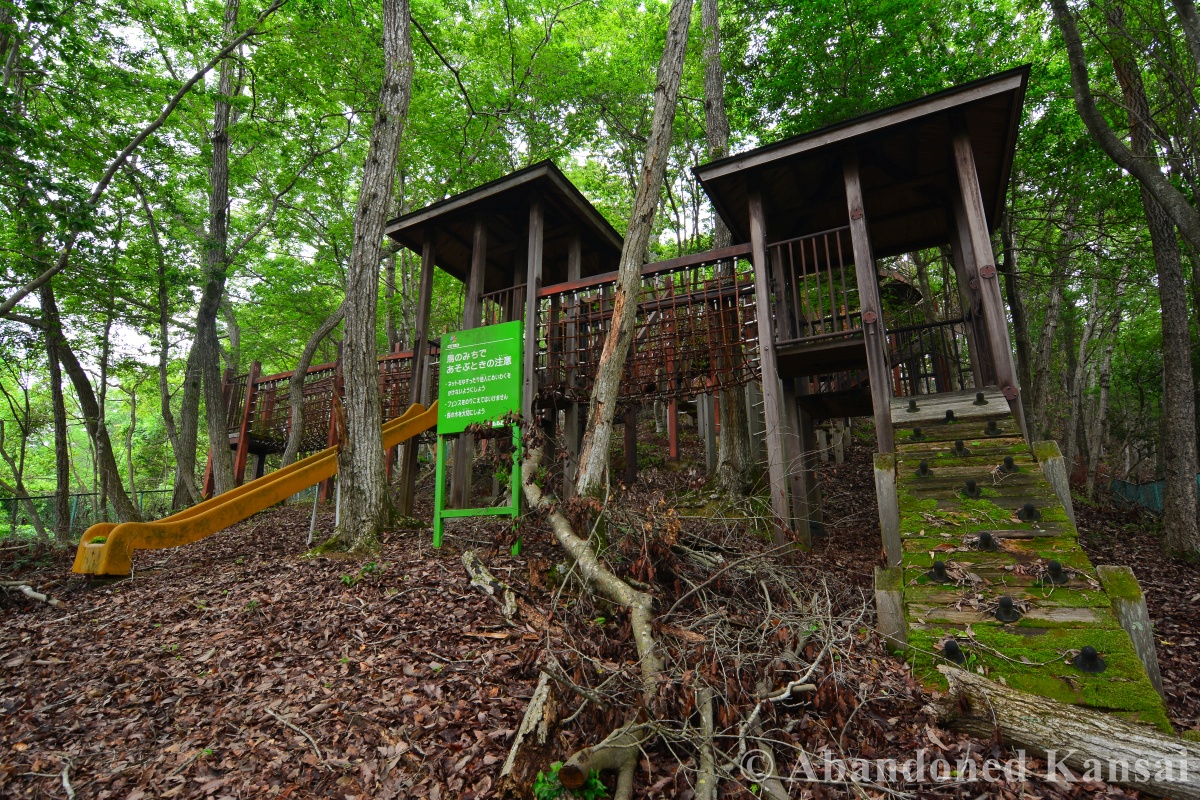
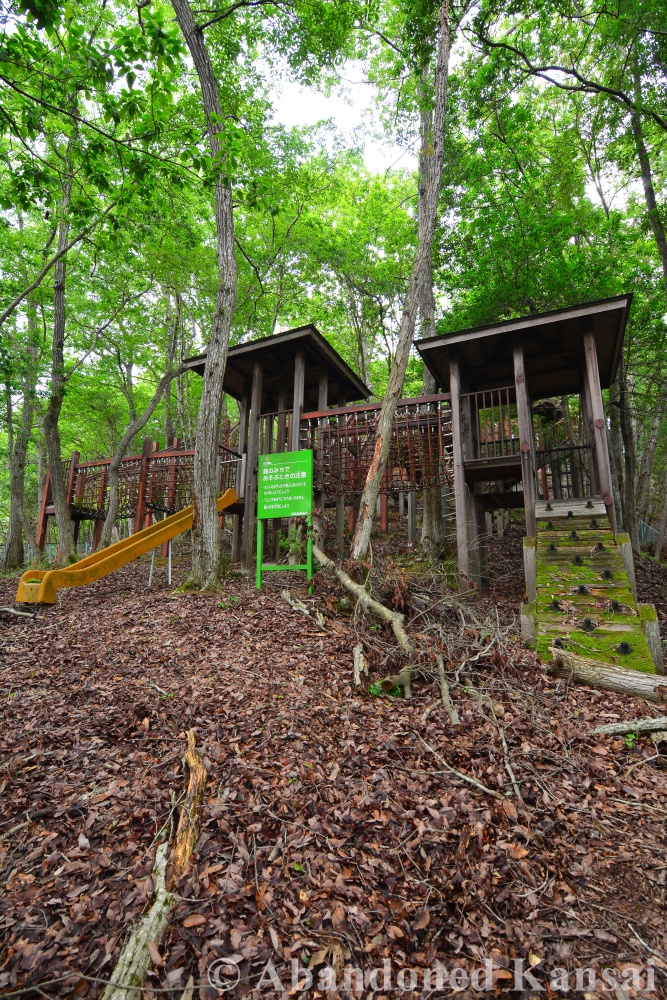
Next stop after the parking lot was the lower playground – a really nice, rather big playground at the bottom of the forested slope. From there were followed a nice path up to the goal of the Adventure Coaster… which wasn’t a (roller) coaster at all, but a dry toboggan run – or Sommerrodelbahn, as we say in German, a summer luge track. Right next to it: A small cable car for those too lazy to walk up the slope to the mountaintop area. Well, mountaintop… The height difference was maybe 60 meters. And we didn’t have a choice anyway, for obvious reasons. So we continued to follow the regular path, sometimes cobbled, sometimes asphalted. Next stop was the event square or rather event area, because nothing there was square – the area was actually a really nice and rather flowy brutalist outdoor… place, apparently for events, and with a nice view down into the “valley”. I love structures like that, so I very much enjoyed that part, despite the brutal humidity and rising heat of an overcast early summer / late rainy season day. Then we finally reached the mountaintop area with the start of the toboggan run, the upper cable car station, a rest house selling snacks at ridiculously low prices by today’s standards (softcream for 200 Yen, kakigori for 300 Yen, chicken pilaf for 400 Yen). Looks like the park was opened in the early 1990s and closed in 2003 – almost 20 years before I took some photos there. Well… some. I actually liked the place so much and it is that rare that I decided to publish a gallery consisting of 75 photos. By far the largest ever in Abandoned Kansai history – but history has shown that nobody cares about second parts and hardly anybody cares about revisits, so I can as well publish them all at once. Which brings us to the final part: The descent along the gigantic climbing contraption on the slope. Hardly ever was I that heartbroken to see something abandoned, because that thing was a work of art! As a kid I would have gone crazy, but even as an adult and despite its condition after 20 years without maintenance, I tremendously enjoyed the careful descent back to the entrance area.
The Forest Playground is without the shadow of a doubt one of my all-time favorite locations. Rare, unique, natural decay, great company, outdoors. It doesn’t get much better than that. Basically the *Viewpoint Playground* on steroids… but in a good way! 🙂


(*Like Abandoned Kansai on Facebook* or *follow us on Twitter* if you don’t want to miss the latest articles and exclusive content – and subscribe to the *video channel on Youtube* to receive a message right after a new video is online…)
Read Full Post »

It’s summer and I can’t explore, so this month I’ll throw in a bonus location. It’s not a spectacular one, but they can’t all be…

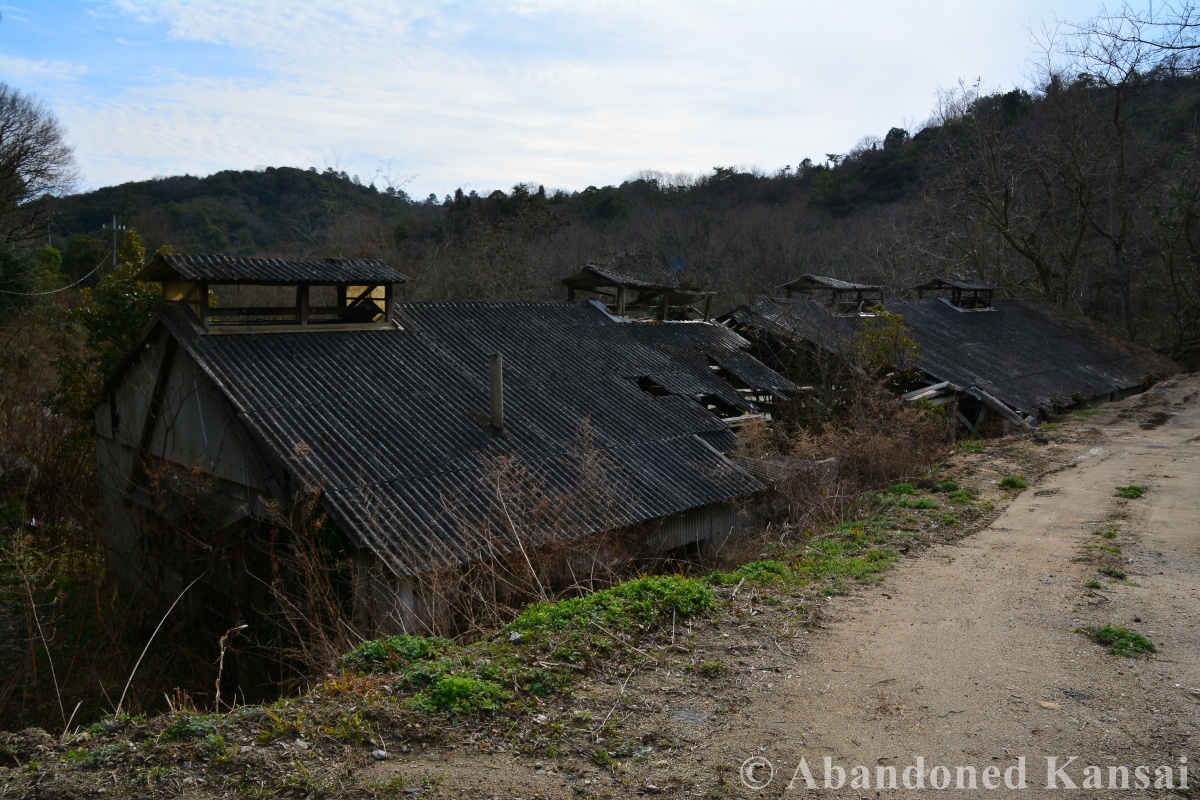
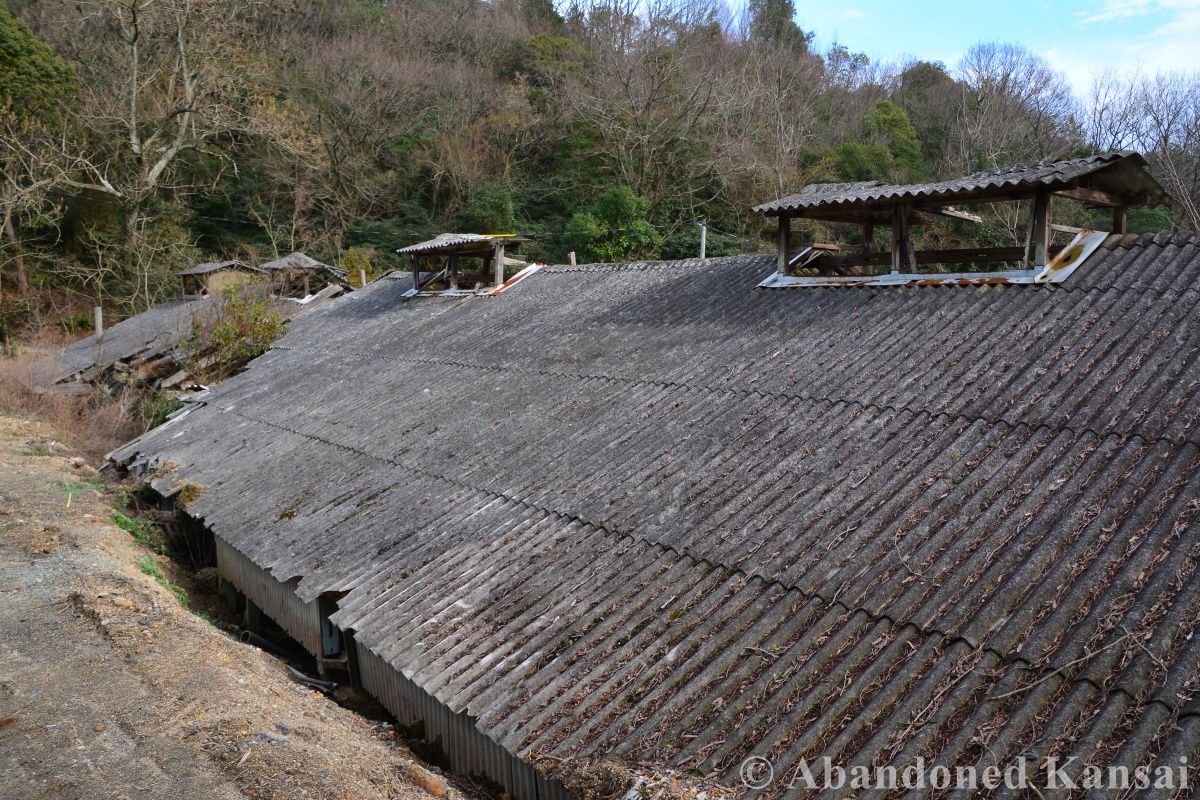
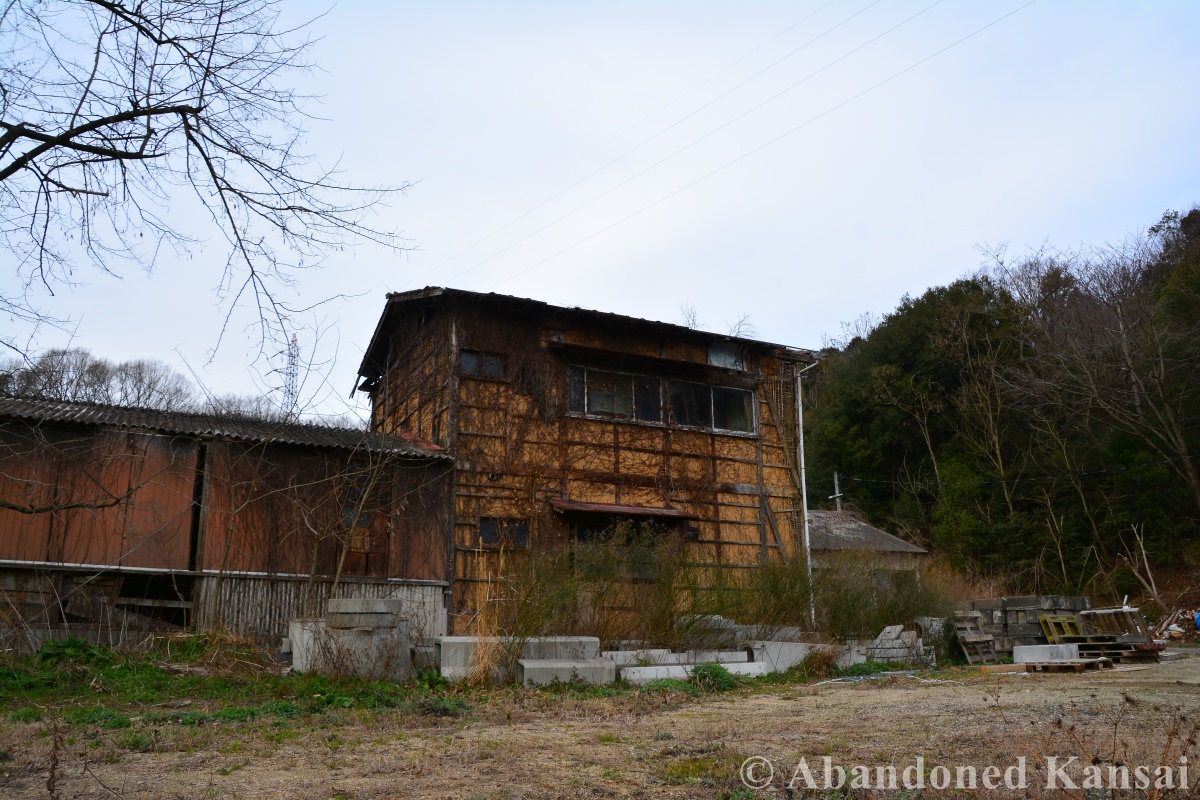
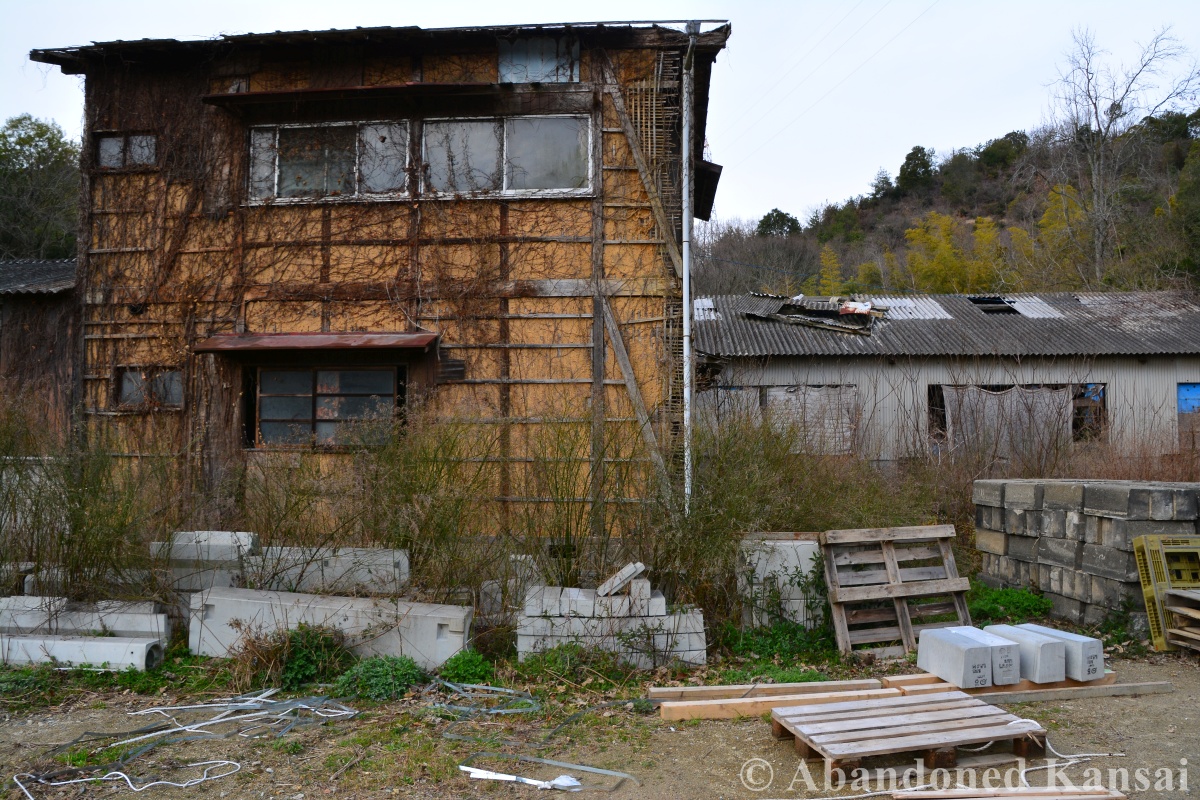
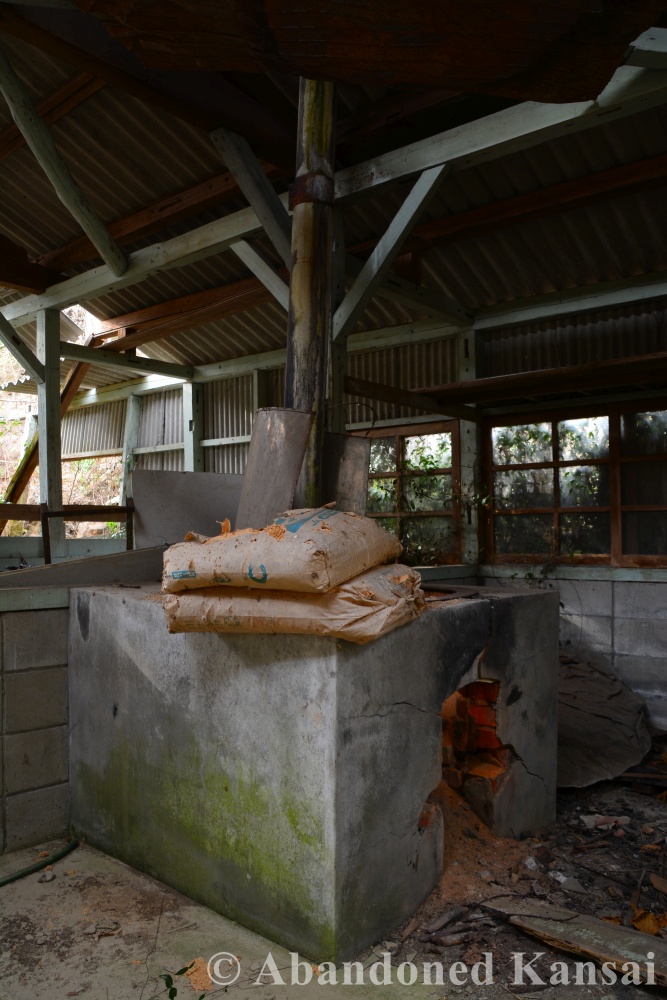
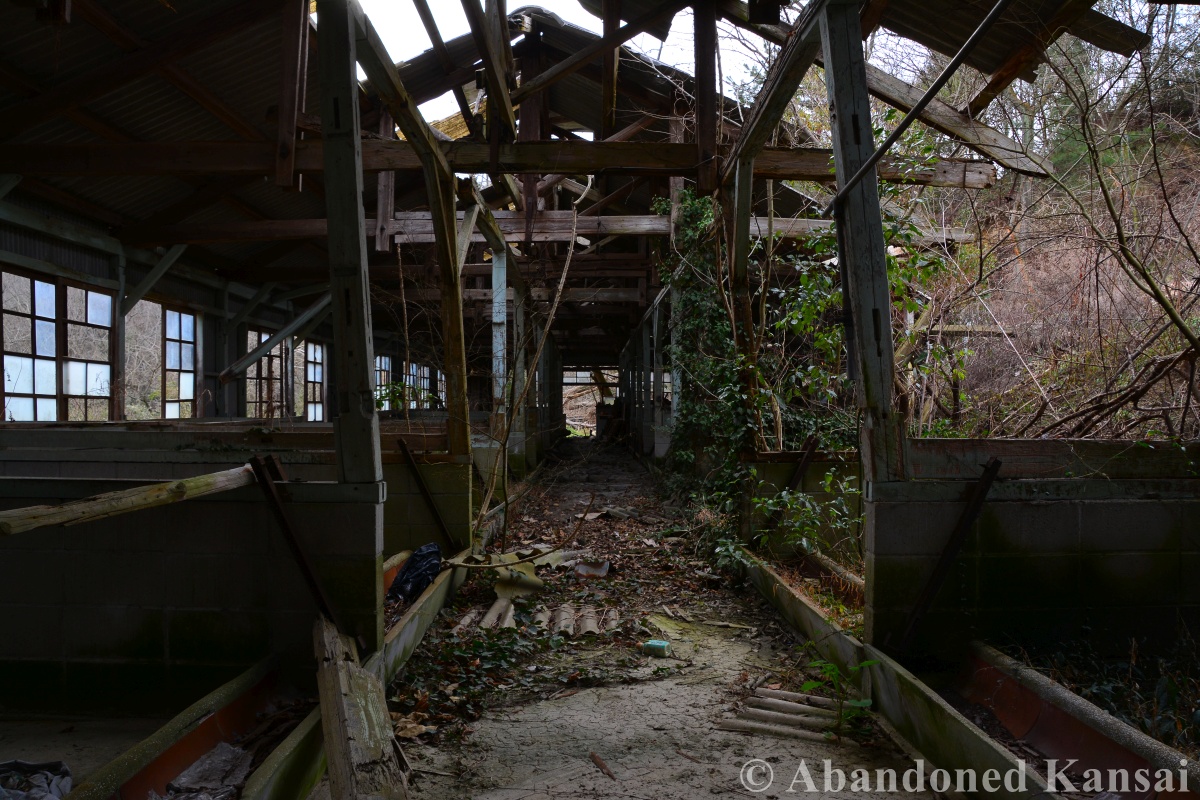
Animal farms reek – even more so than Osaka, which smells pretty bad, especially in summer, especially after a shower of rain. But not as bad as cattle or chicken farms, which is why people live in Osaka and animal farms are banned to the countryside. Not even the regular small town countryside. Remote places halfway up a hill – out of sight, sound and smell of the local yokels who have to work there since the Japanese countryside is dying faster than poultry during an outbreak of the bird flu. I grew up in a pretty agricultural small town in Germany, I have relatives with a farm and restaurant in the Black Forest – despite living in the big bad city for the past 25 years I know what livestock smells like. But it’s nothing in comparison to the chicken farms I passed by in Japan. Holy crap, those things smell like sewage plants. Maybe worse. I guess it depends on the part of the sewage plant. Anyway, what I am trying to say is: Japan has tons of animal farms, you just never see them since they are tucked away in the countryside, far away from the noses of locals and tourists alike. Quite a few of those farms are abandoned – and this is one of them!
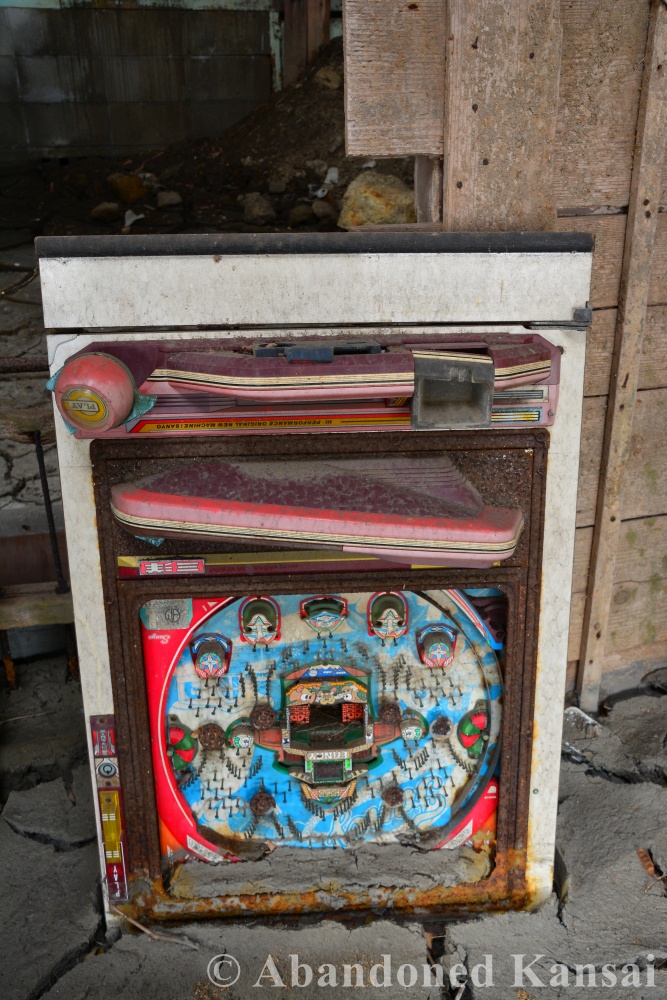
When I found the Pachinko Animal Farm it was nothing more than a rather random smudge on GoogleMaps, a blurry greyish-green blob indicating a couple of buildings in the middle of nowhere on the way to a rather famous abandoned hotel. I was on a no risk exploration day trip with three generations of Americans, age about 7 months to 70 years; obviously none of them were my family, but I’ve been exploring with my parents in Japan before, so I knew what kind of places to select. After a day of nice locations and surprisingly good beach hut pizza, we were about to check out said famous hotel to have a look from the outside when I realized that the Pachinko Animal Farm was basically on the way there, so we made a stop to have a look around. And what can I say? It wasn’t exactly the *Billionaire’s Villa*, but it wasn’t that bad either. Since it was an original find, it was first and foremost exciting, especially for my co-explorers. Okay, maybe not for the 7 months old, but the other ones! (And before some of you turn a lump of coal into a diamond with your butt cheeks: The baby never entered a building all day – no risk, fresh air. It was even fed outside… No child was harmed during any of my explorations ever!)
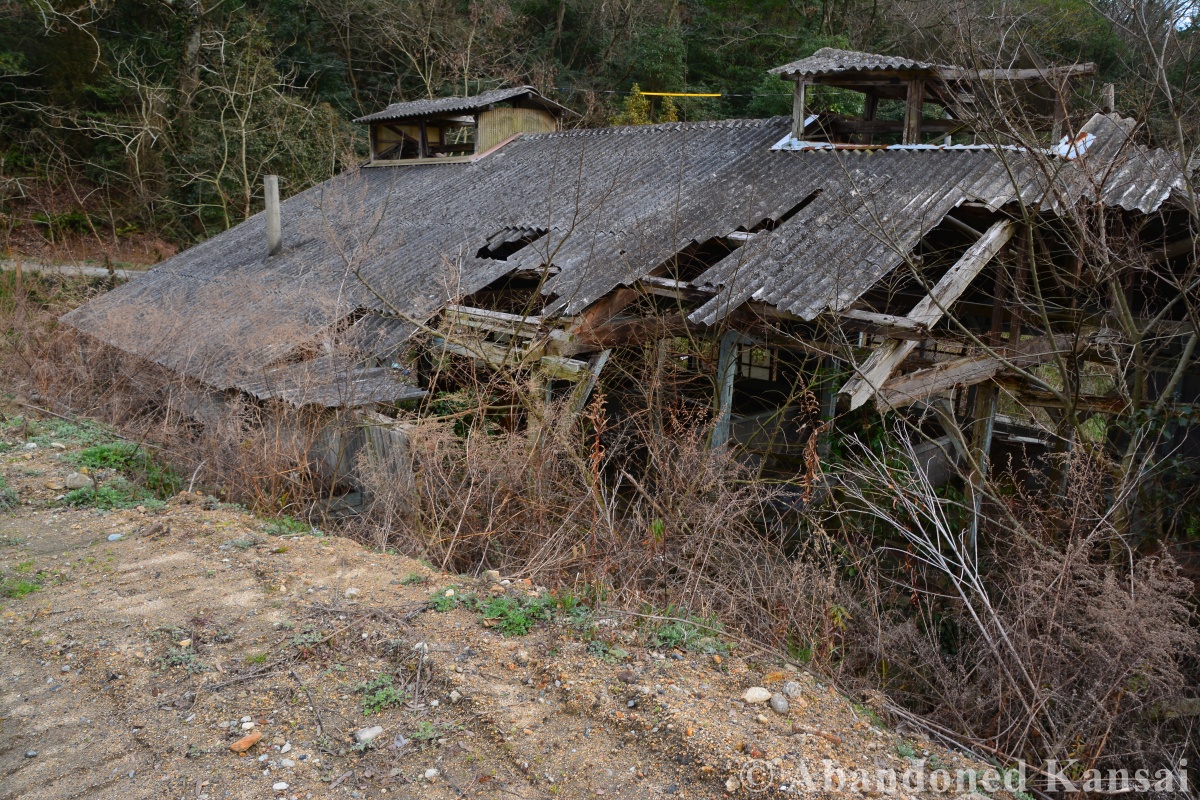
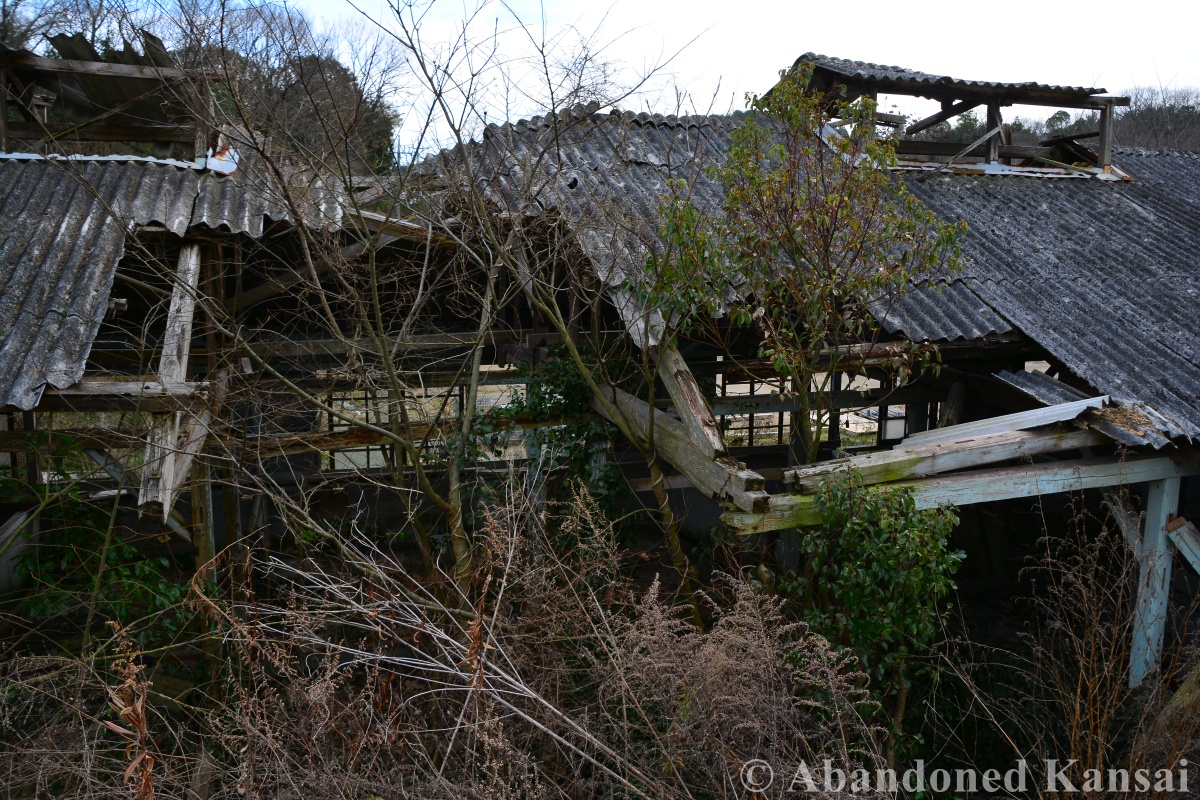
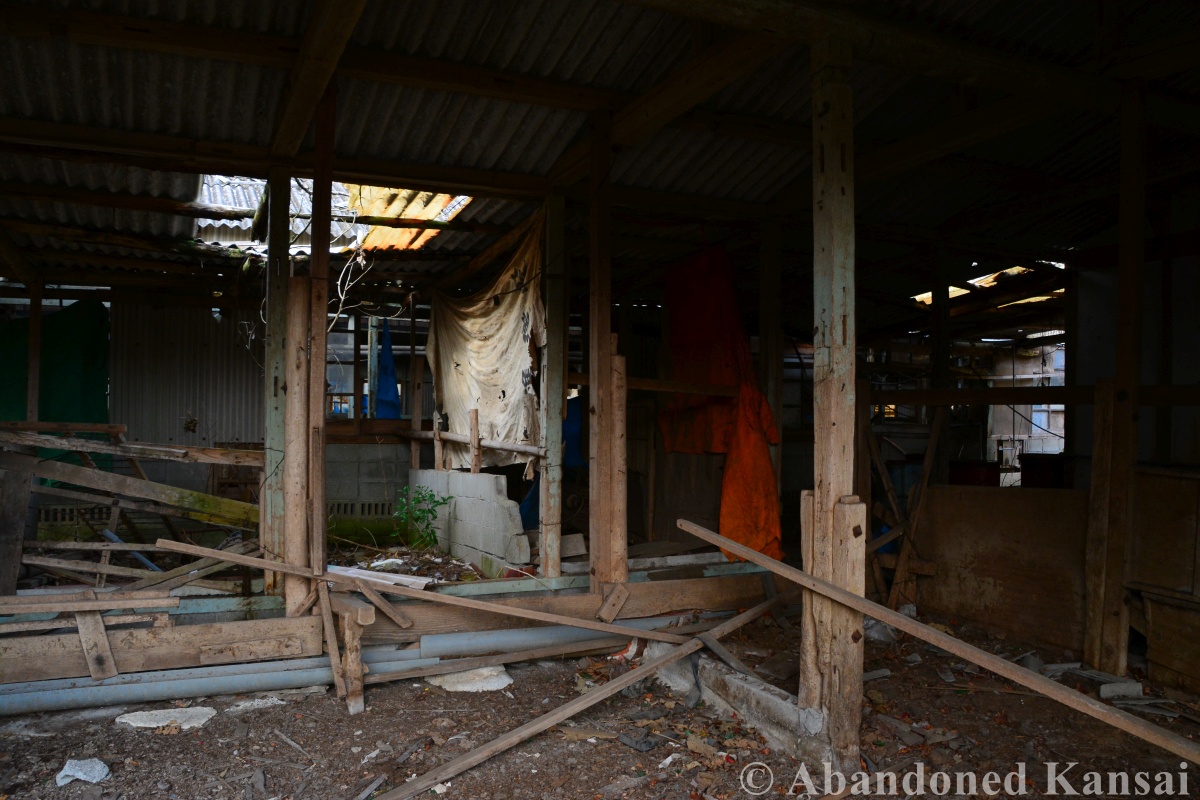
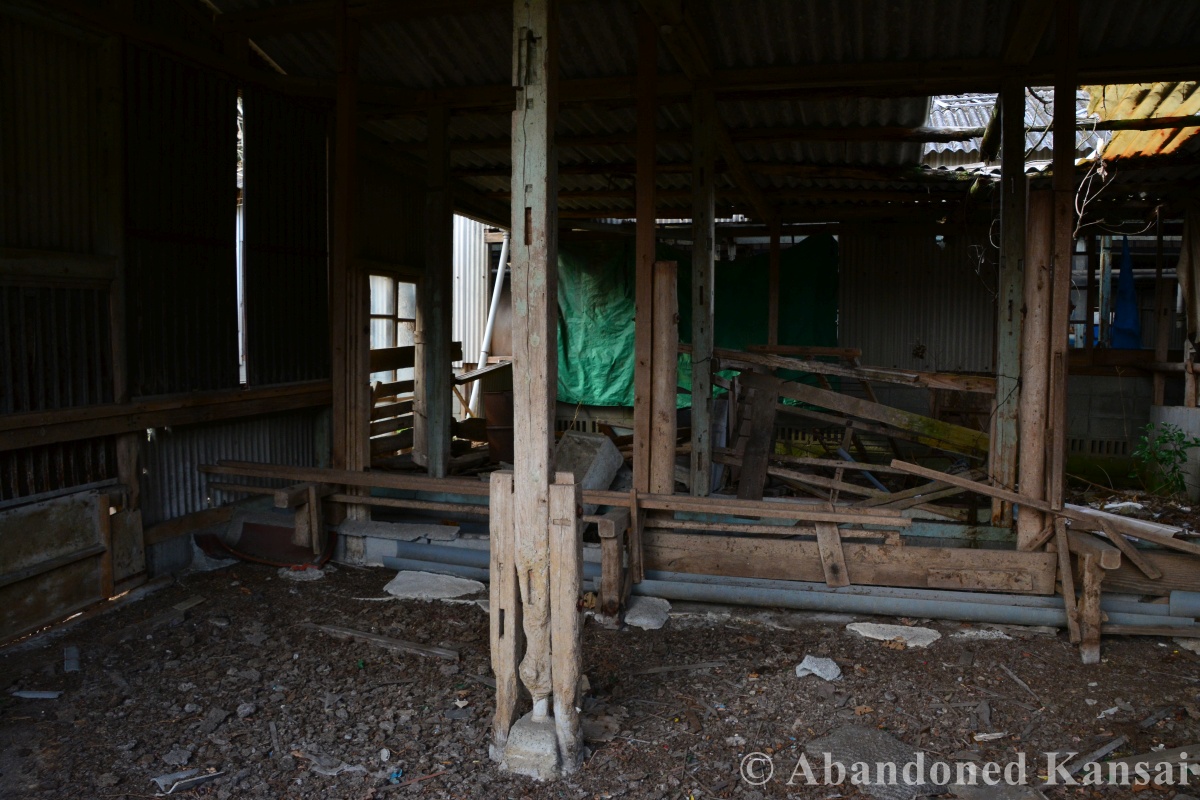
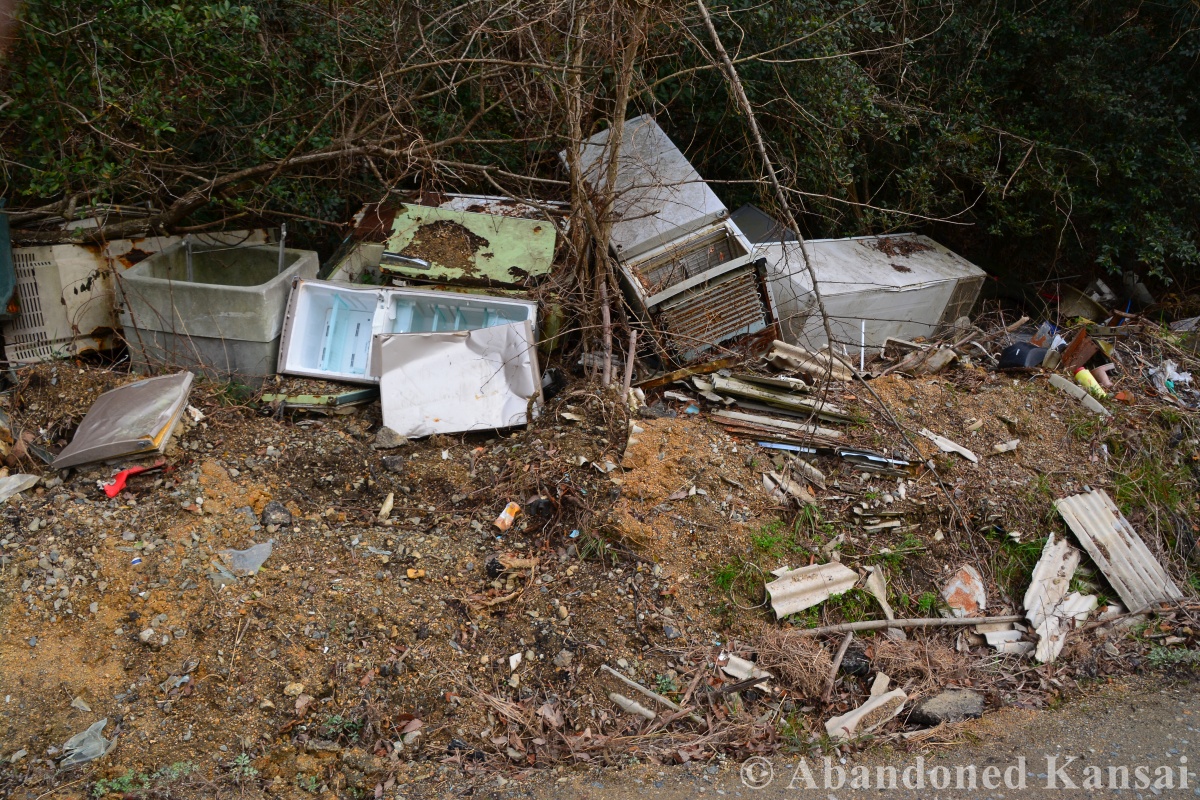
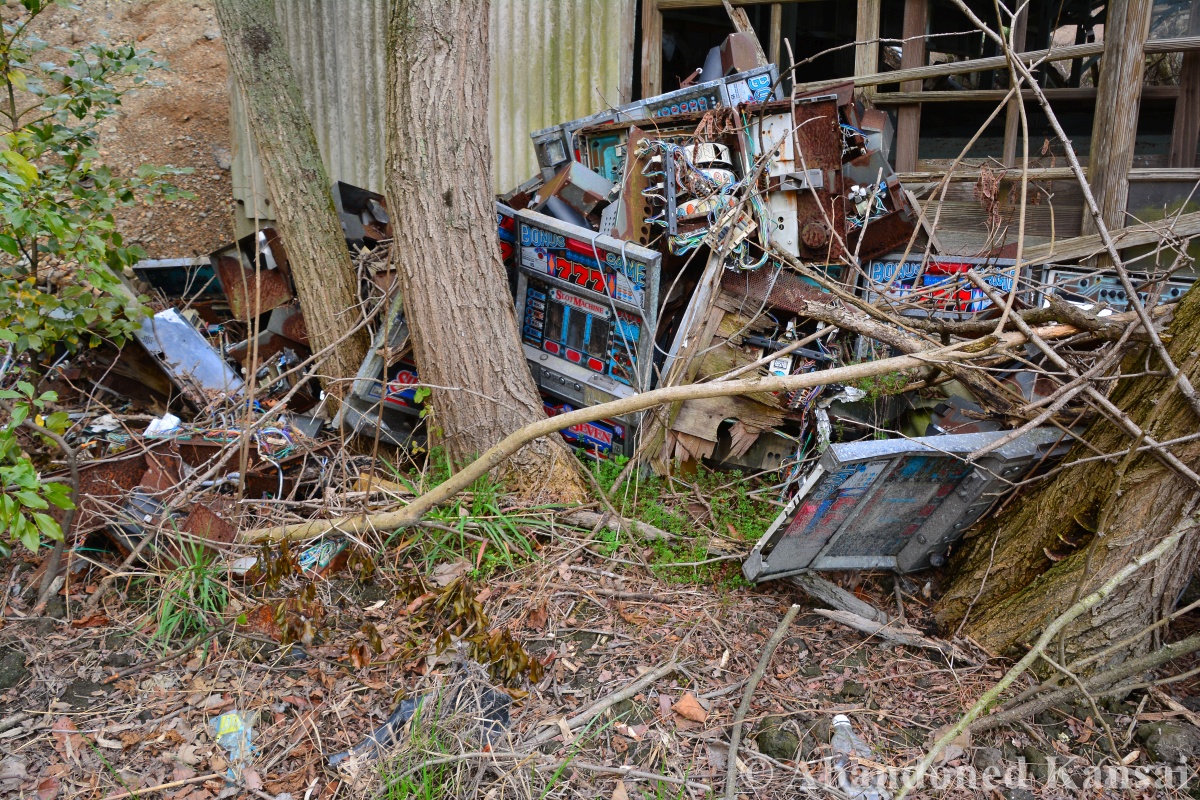
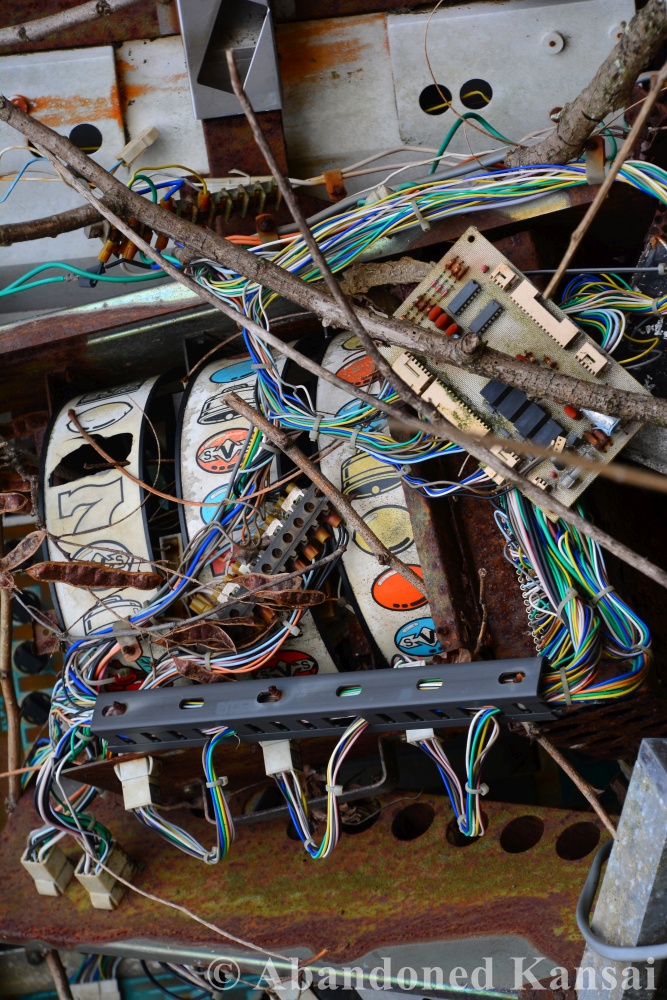
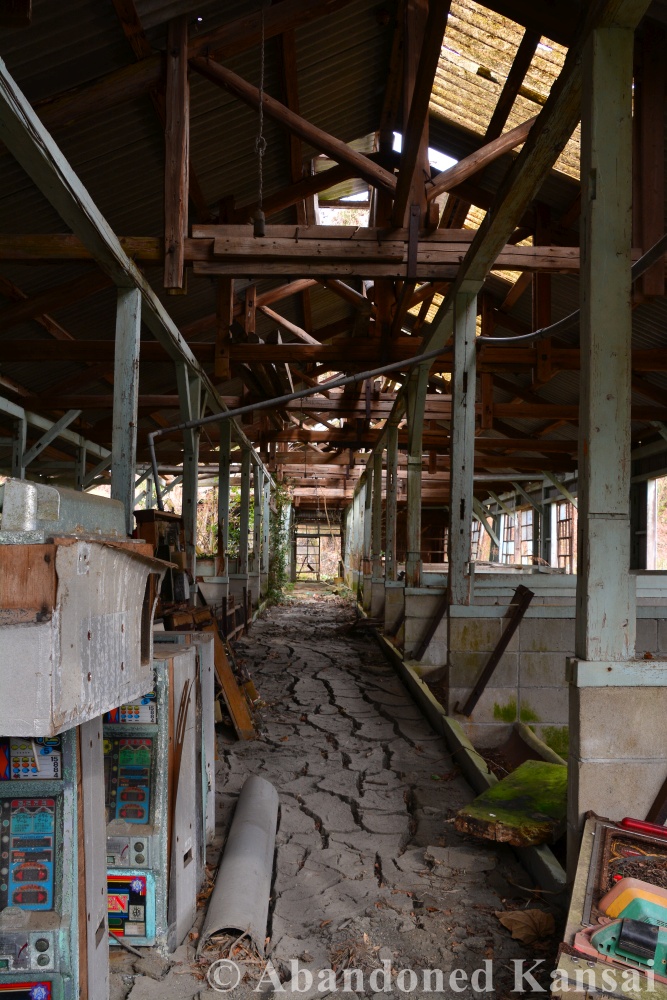
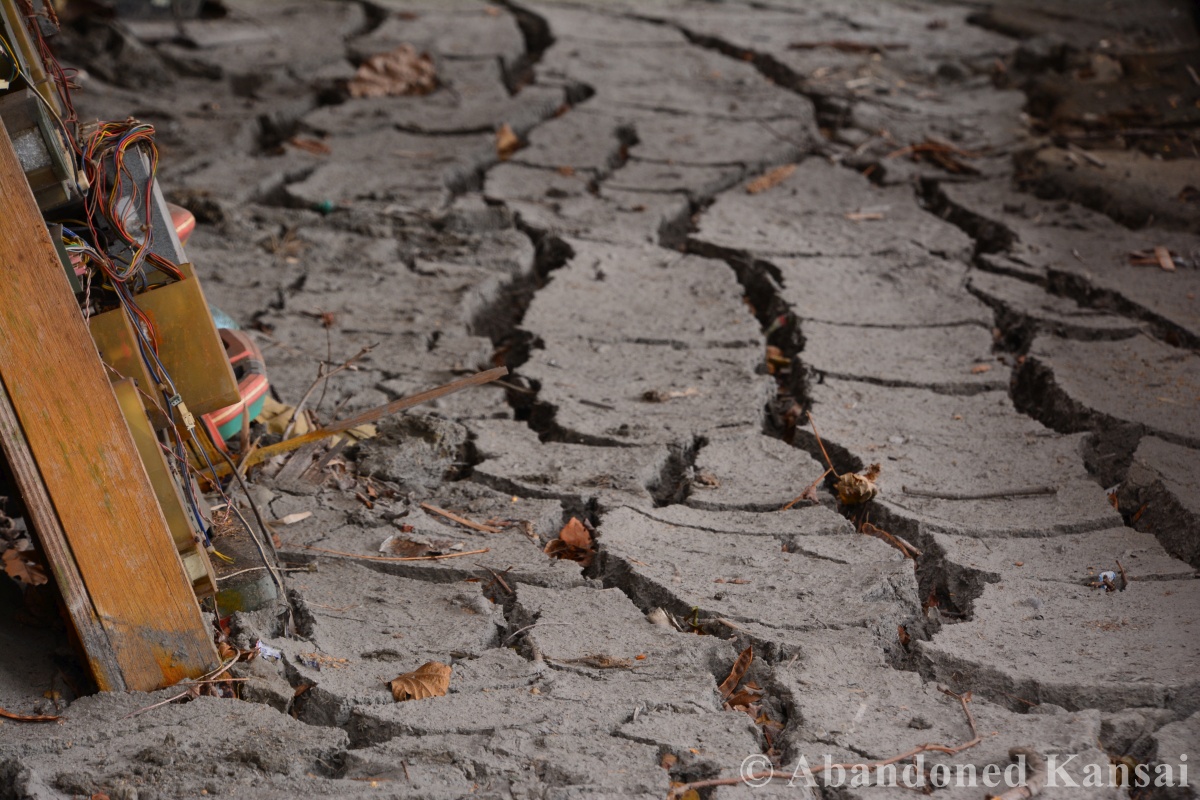
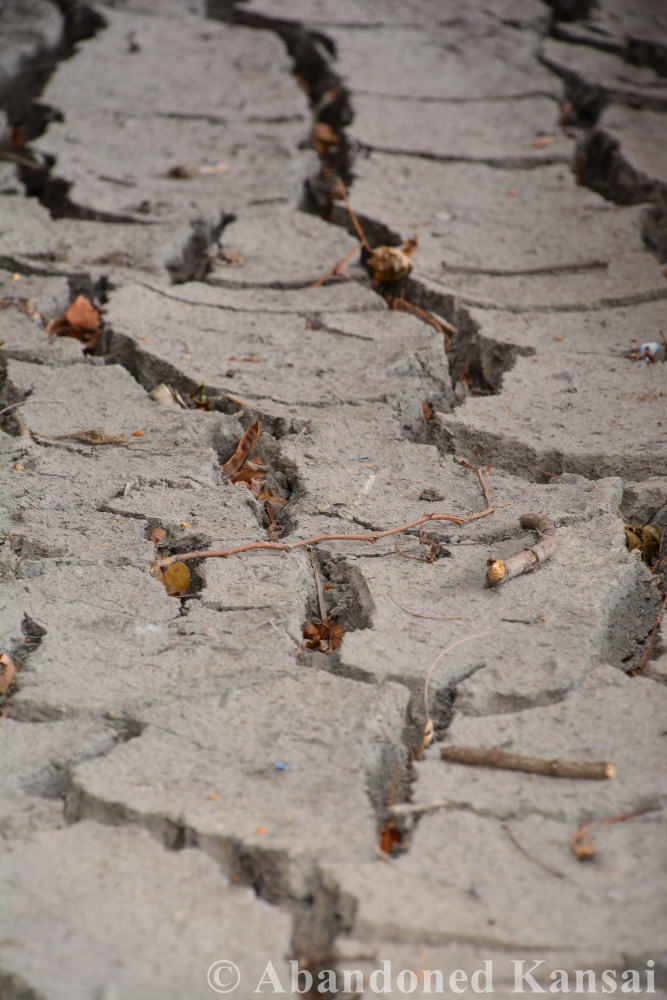
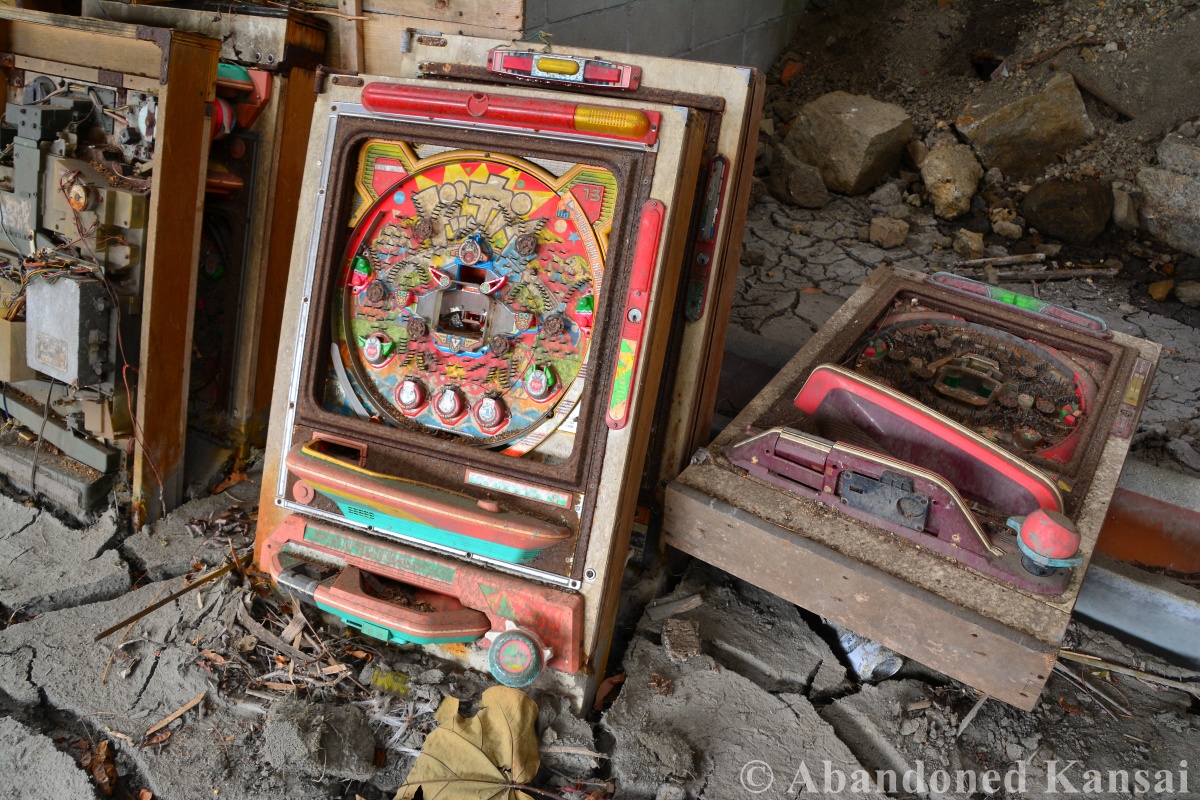
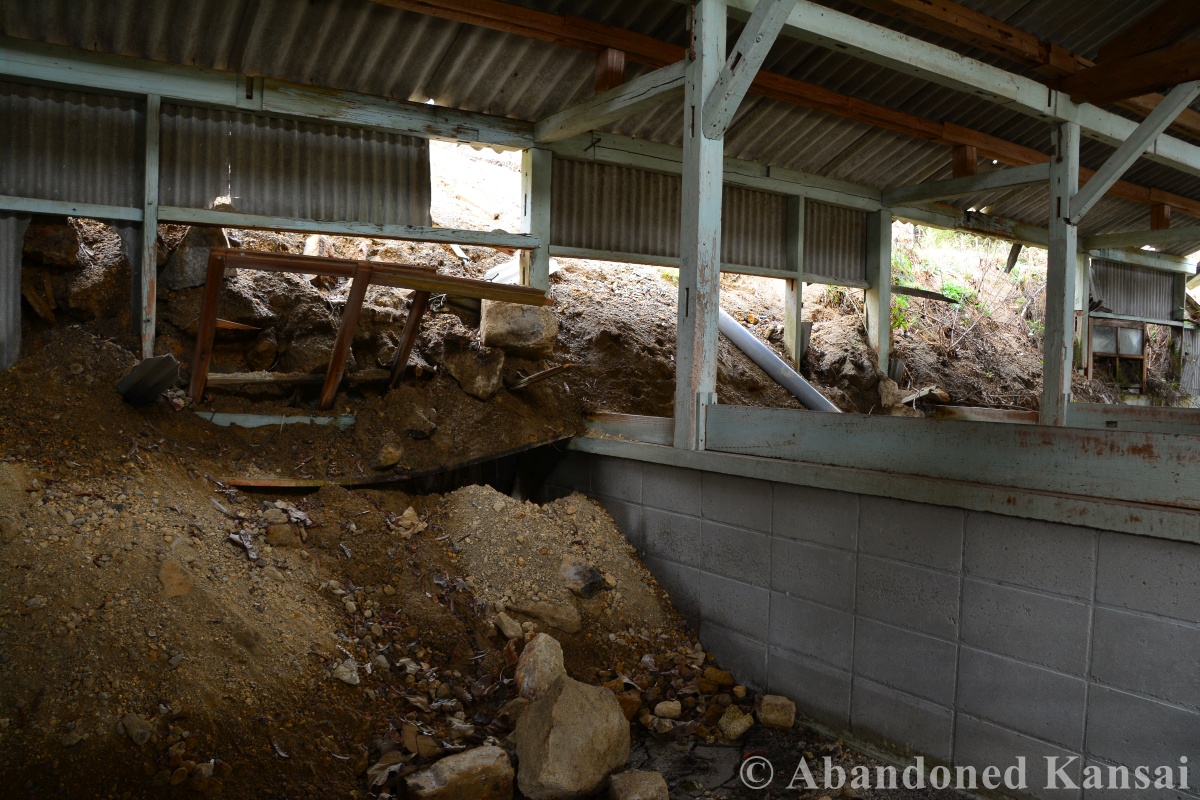
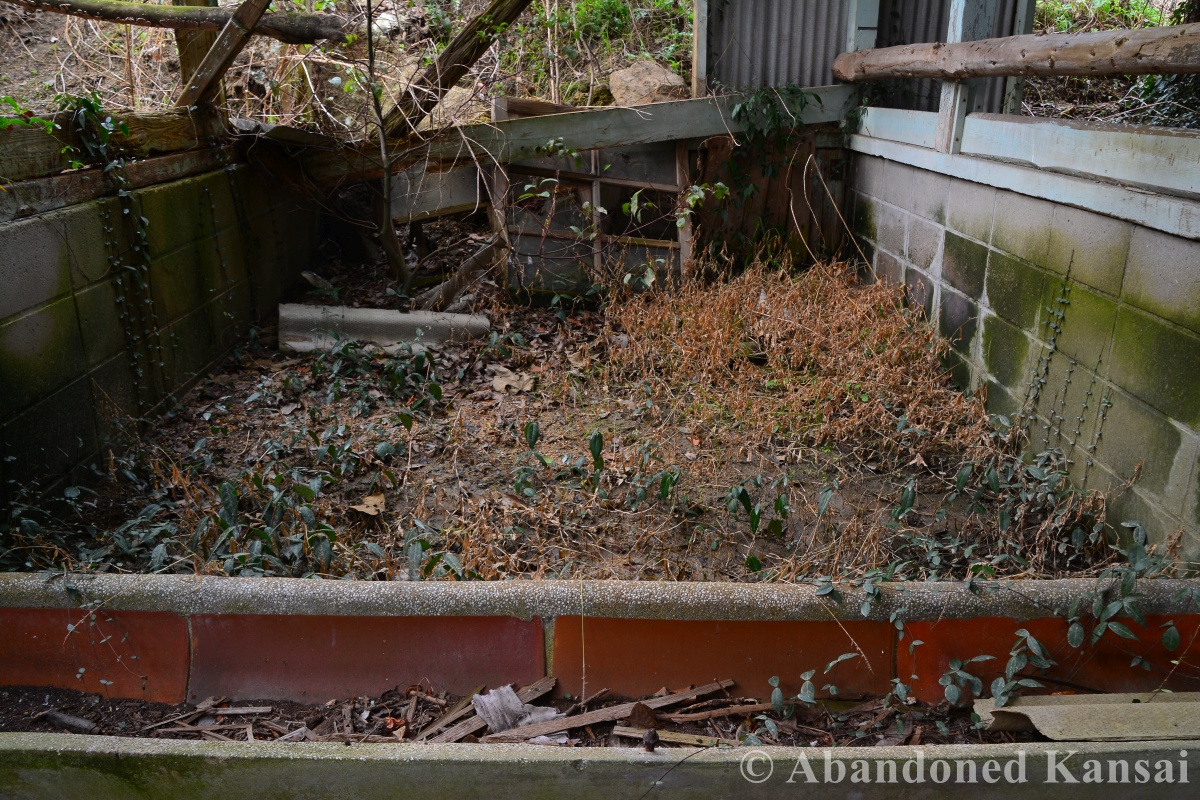
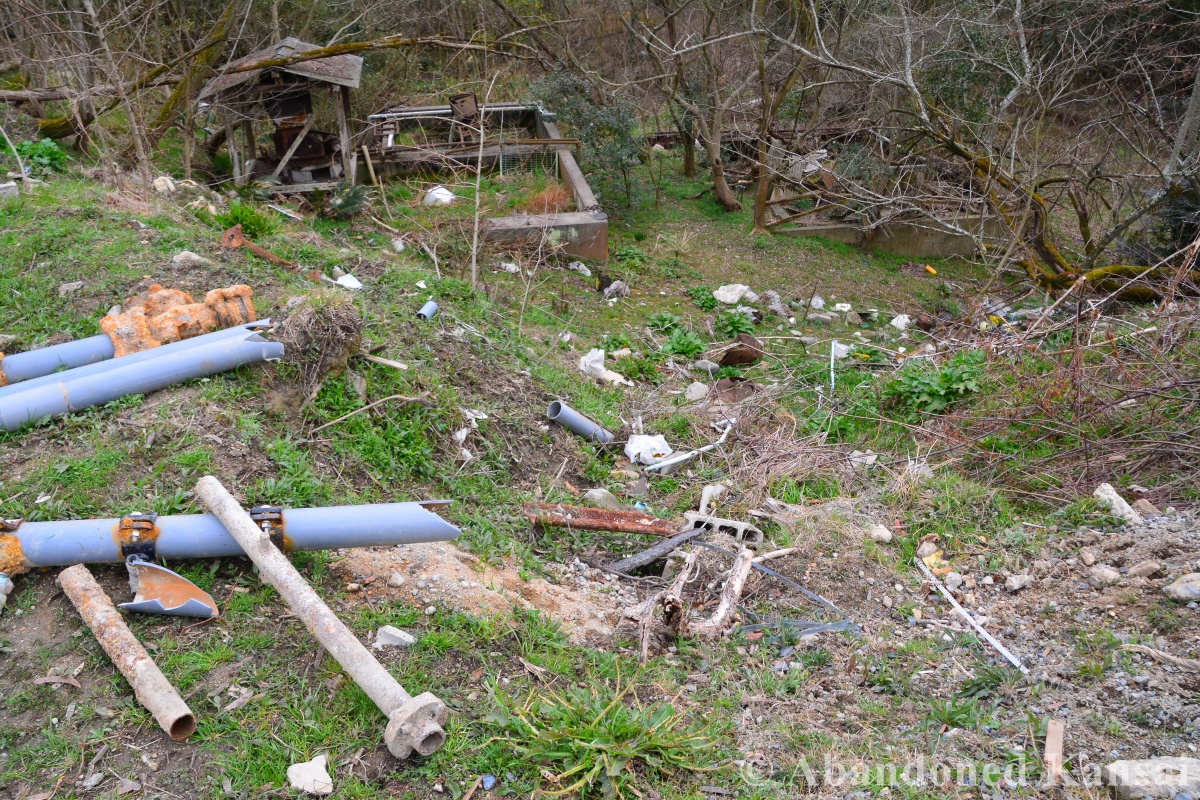
It looked like a mudslide damaged the stables, though it’s hard to say if that happened before or after abandonment. Probably after, given the cracked floors that reminded me of *an abandoned school that I’ve explored years prior*. Also completely unexpected: The dozen or so abandoned pachinko machines, most of them broken. They looked rather old, maybe from the 70s, and were probably just dumped there. I’ve never heard of a combined poultry/pachinko business before… So, yeah, a decent place to explore, nothing spectacular at all, but still better than nothing. Next week though… Boy, oh, boy… Next week’s location will be one of my favorite unpublished places. I’m looking forward to it. I hope you do, too!

(*Like Abandoned Kansai on Facebook* or *follow us on Twitter* if you don’t want to miss the latest articles and exclusive content – and subscribe to the *video channel on Youtube* to receive a message right after a new video is online…)
Read Full Post »

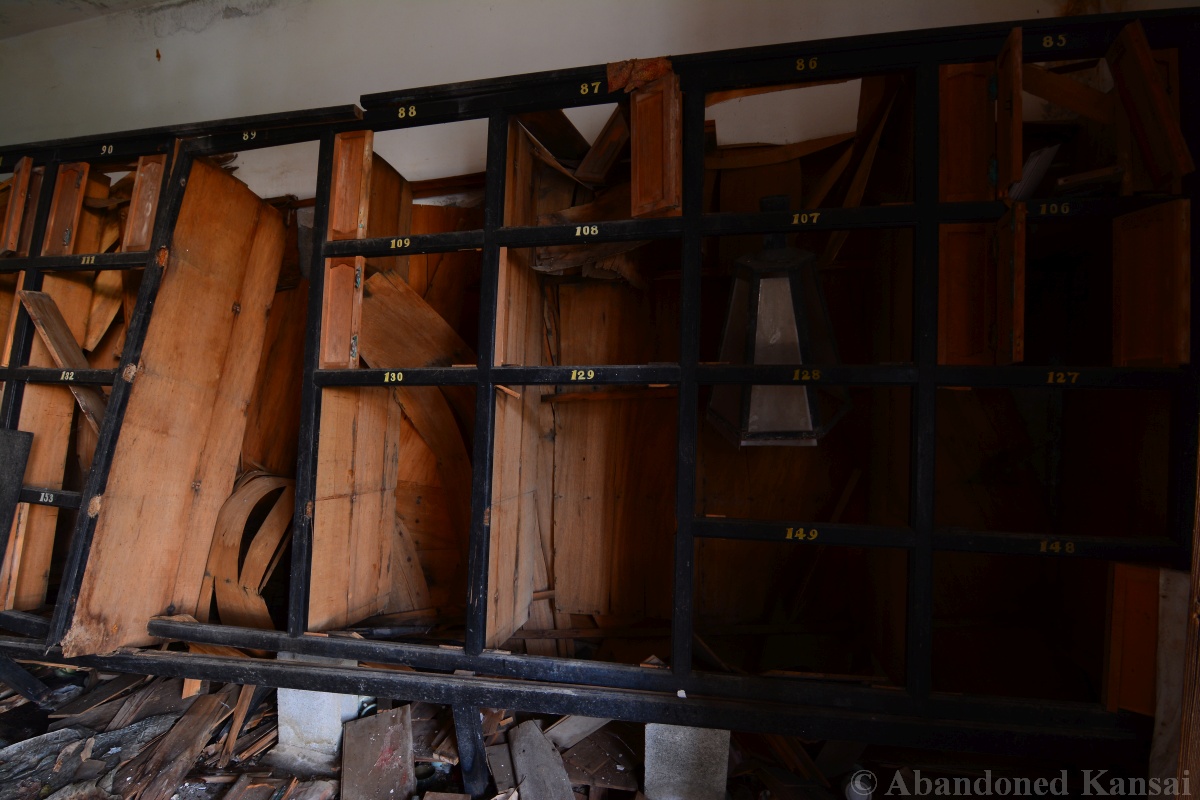
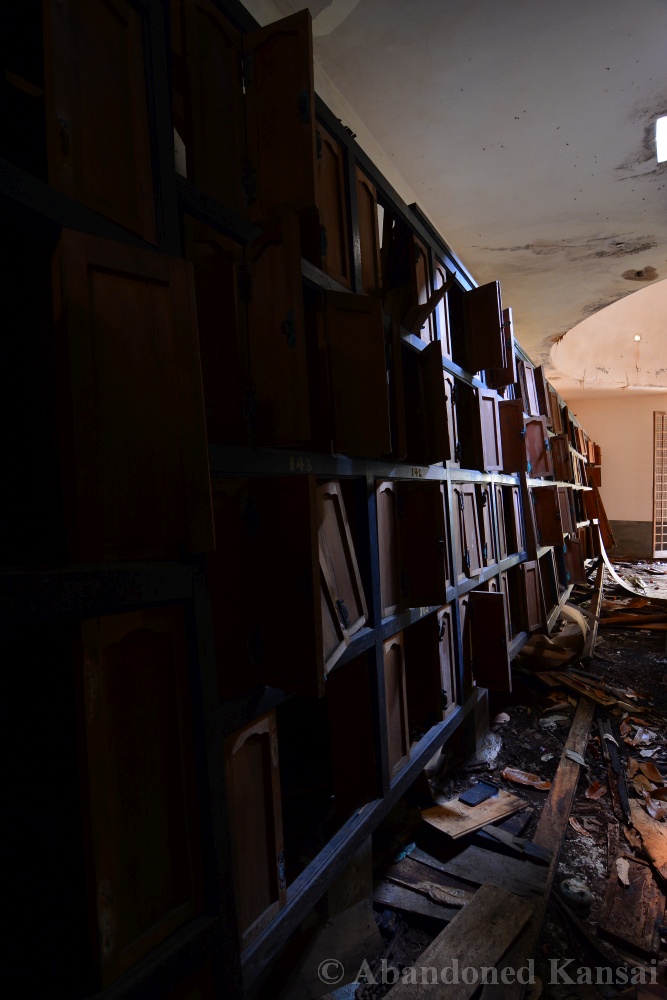
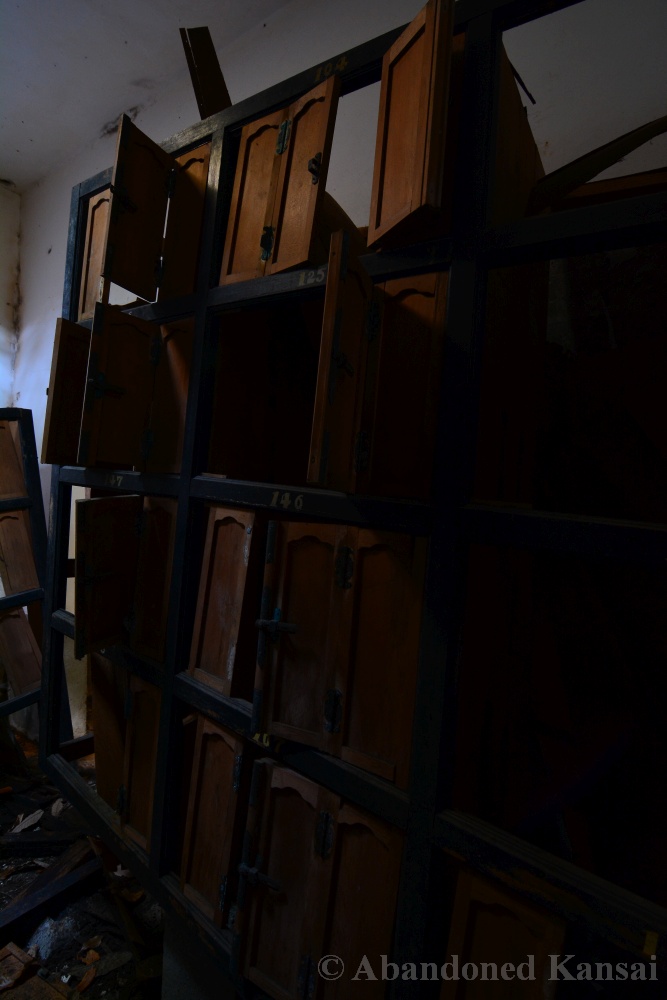
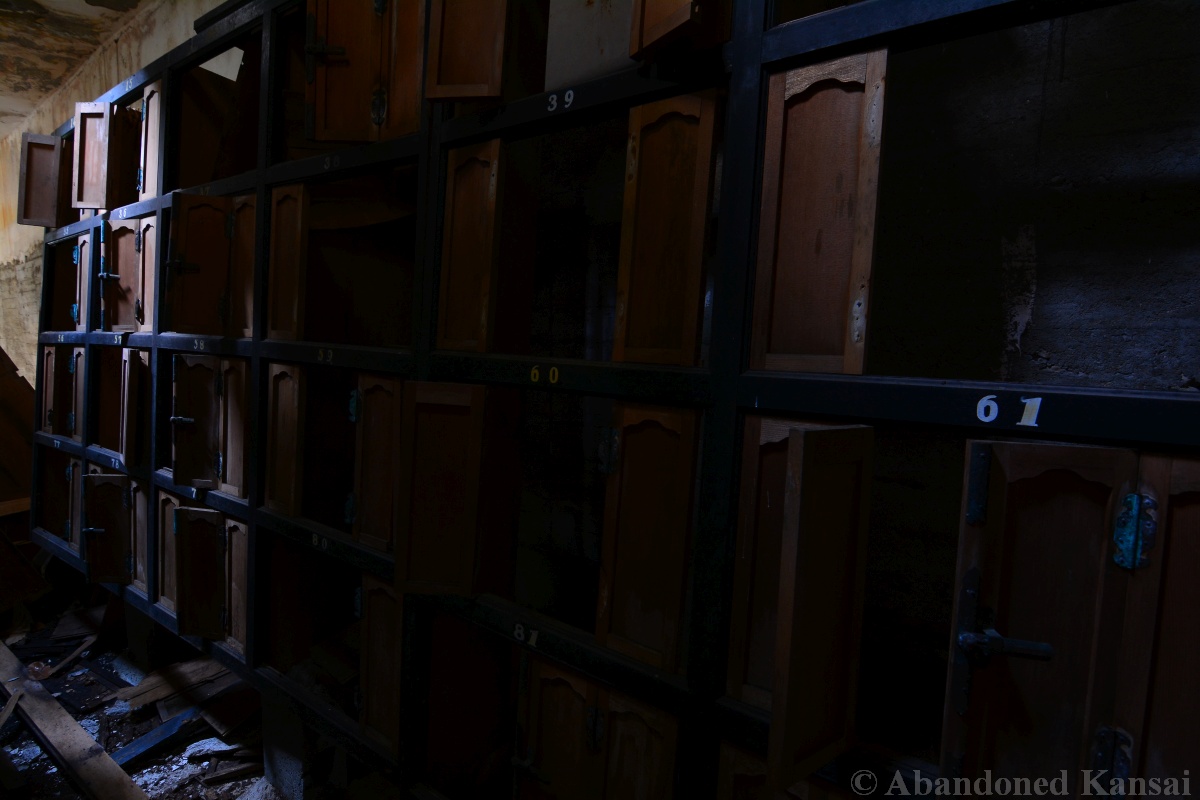
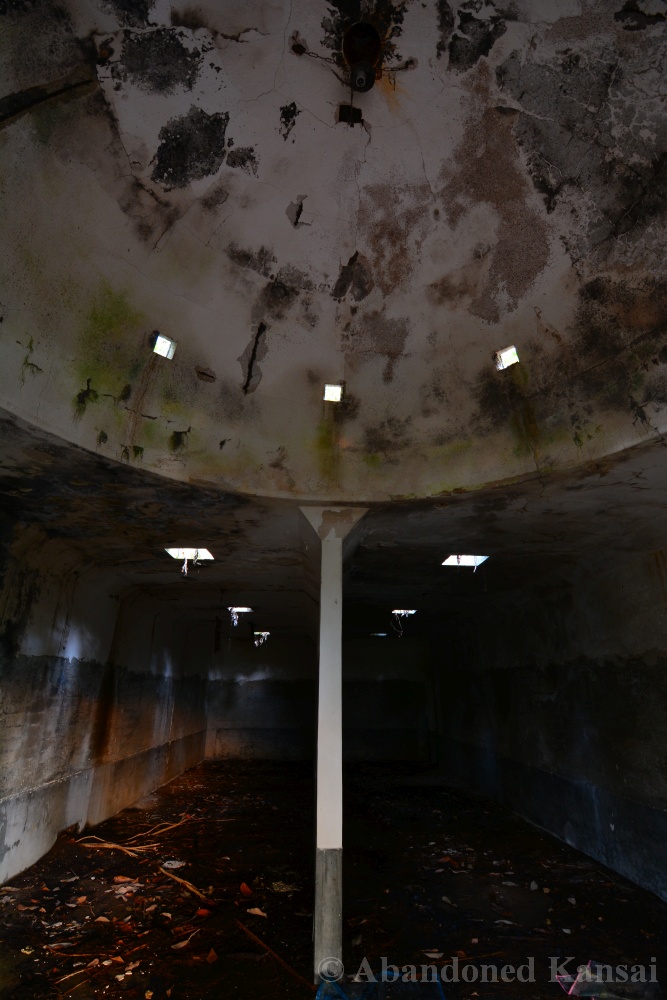
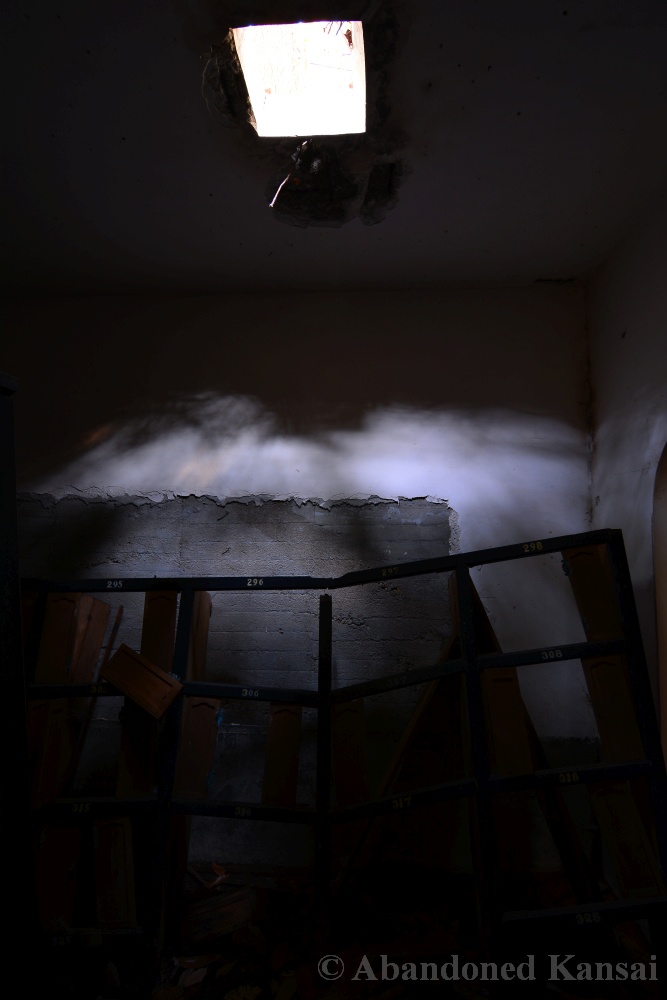
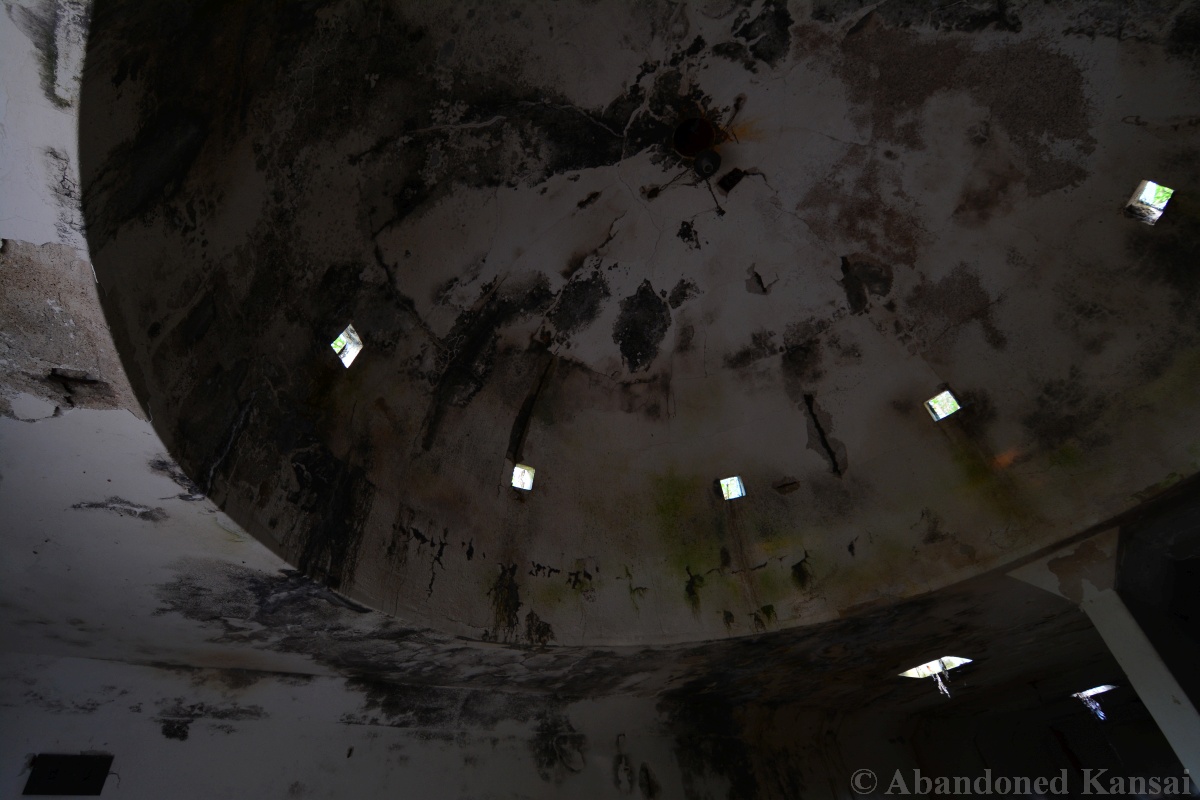
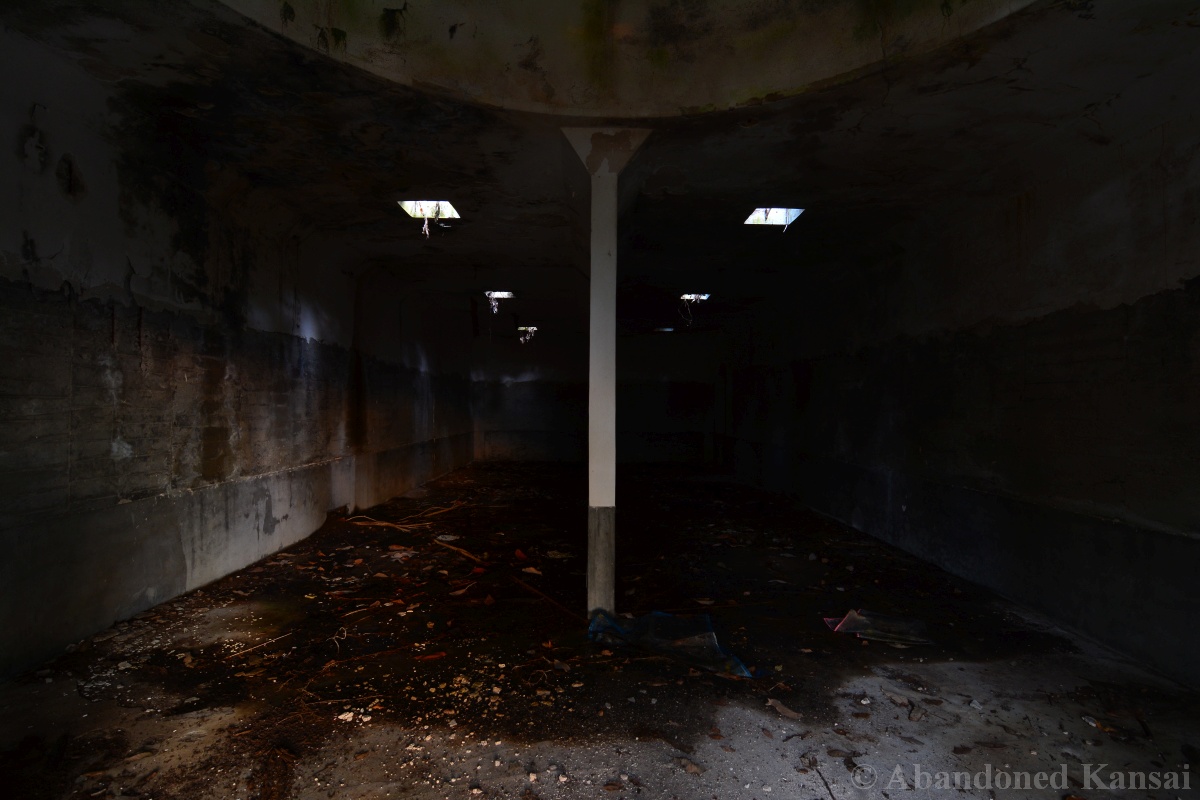
An abandoned ossuary / columbarium / cinerarium? Now that’s something you don’t see every day!

If you’ve been reading this blog for a while, you probably realized that I am not religious at all. I grew up Roman-Catholic and was dragged to church by my grandma every Sunday for years, quickly realizing that it wasn’t for me and just a great waste of time – so I started to play video games with a friend every Sunday morning and left the house while everybody was still sleeping, just to have a decent excuse for not going to church anymore. Now I care about religion so little that I’m not even sure if I consider myself an atheist or agnostic. I mention this, because today’s abandoned place is quite unusual and a far cry from the regular abandoned shrine I usually post as the first location of the year in the spirit of hatsumode. So if I confuse terminology (you know, like all rosaries are prayer beads, but not all prayer beads are rosaries), please forgive me – which should be in the spirit of your made-up invisible friend / ruler anyway. (And if you are upset with me for not being a believer: There are about 10000 religions in the world. You don’t believe in 9999 of them. For me it’s just 1 more…) A while ago I went exploring with a couple of Japanese friends, which usually means that I have no say in which locations we’ll check out that day – and that is kind of a gamble, because sometimes I waste hours at places I’ve already been to, whereas sometimes they drag my sorry ass to ruins I didn’t even know existed.
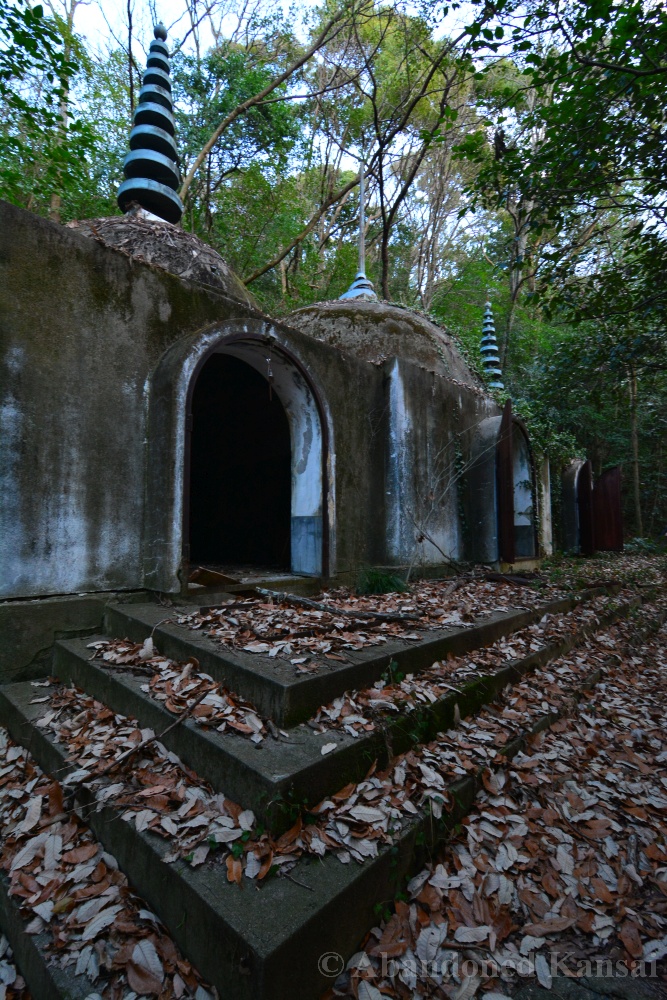
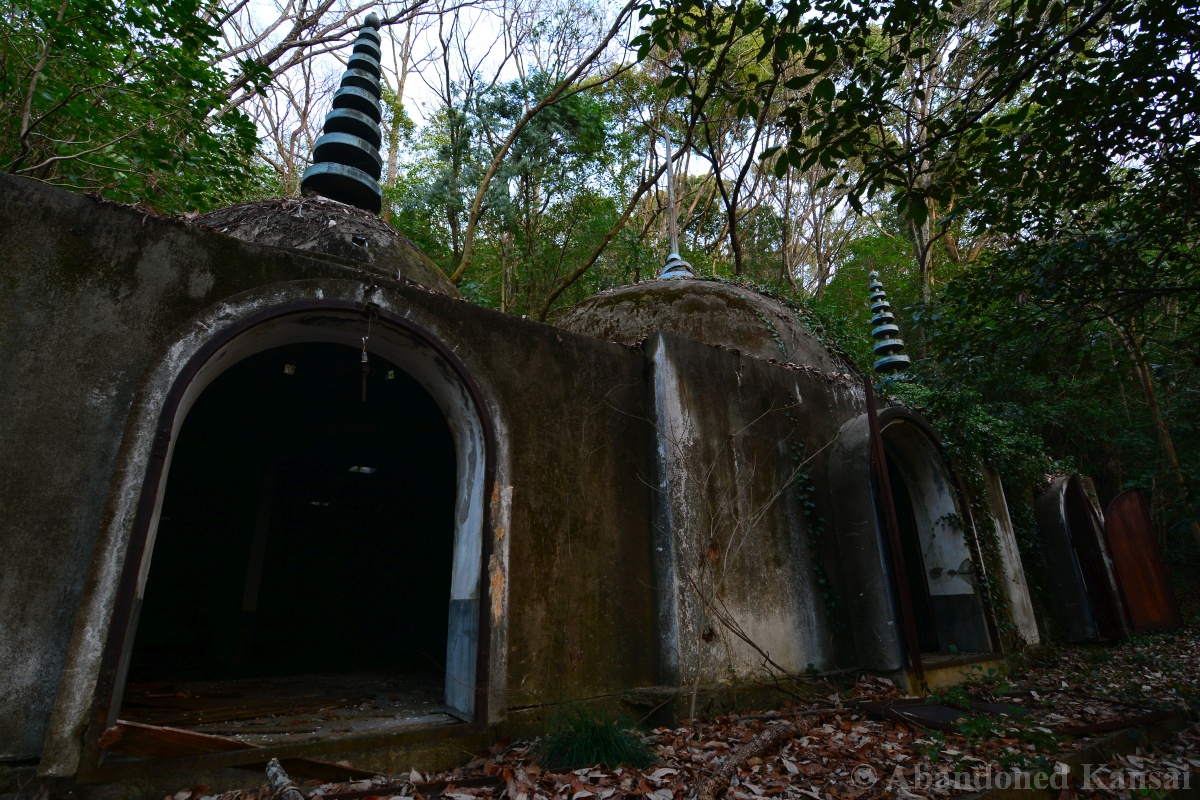
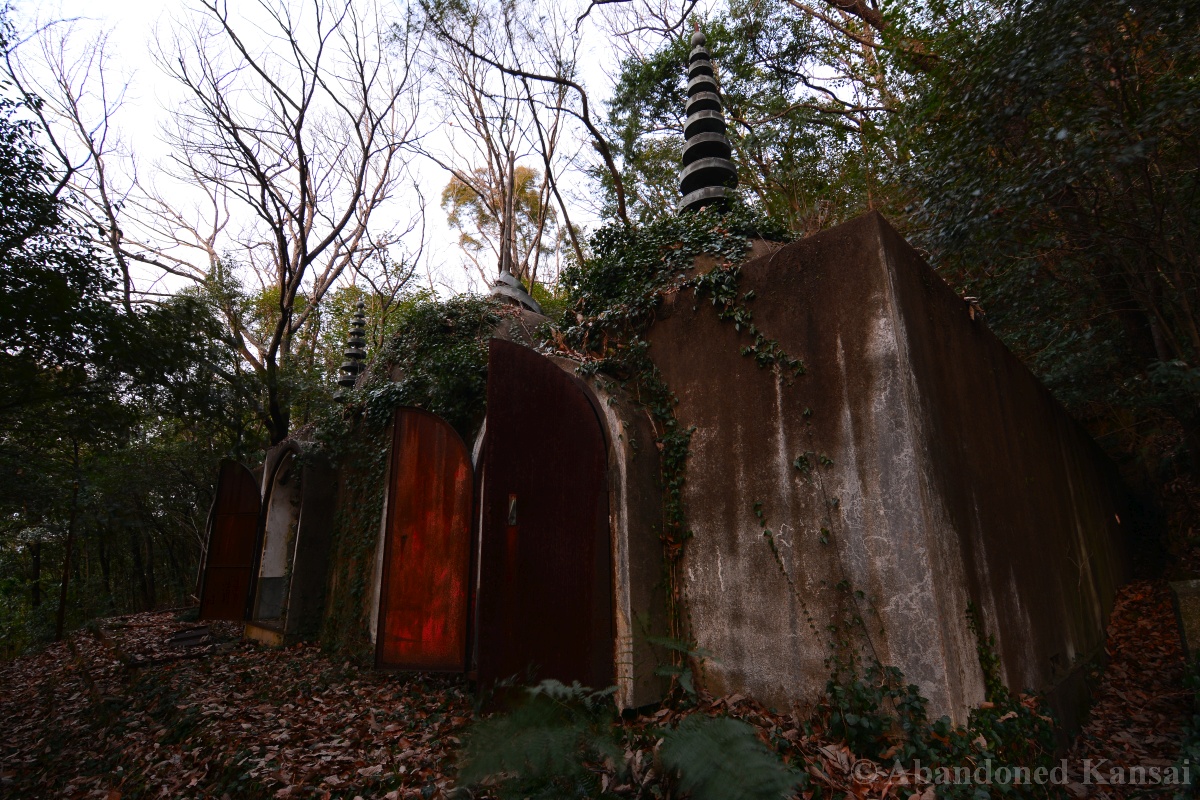
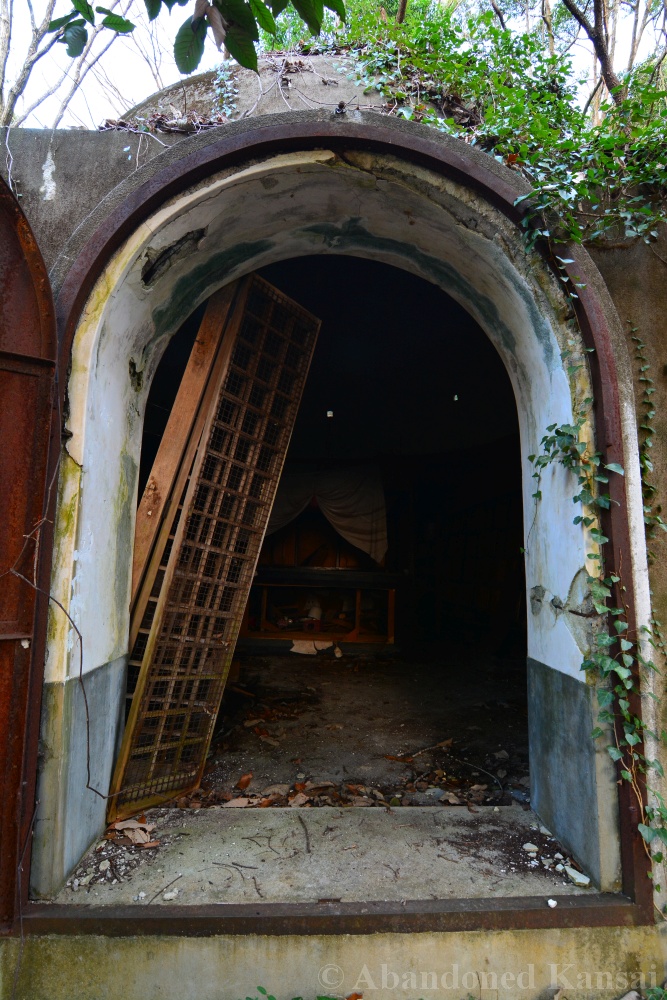
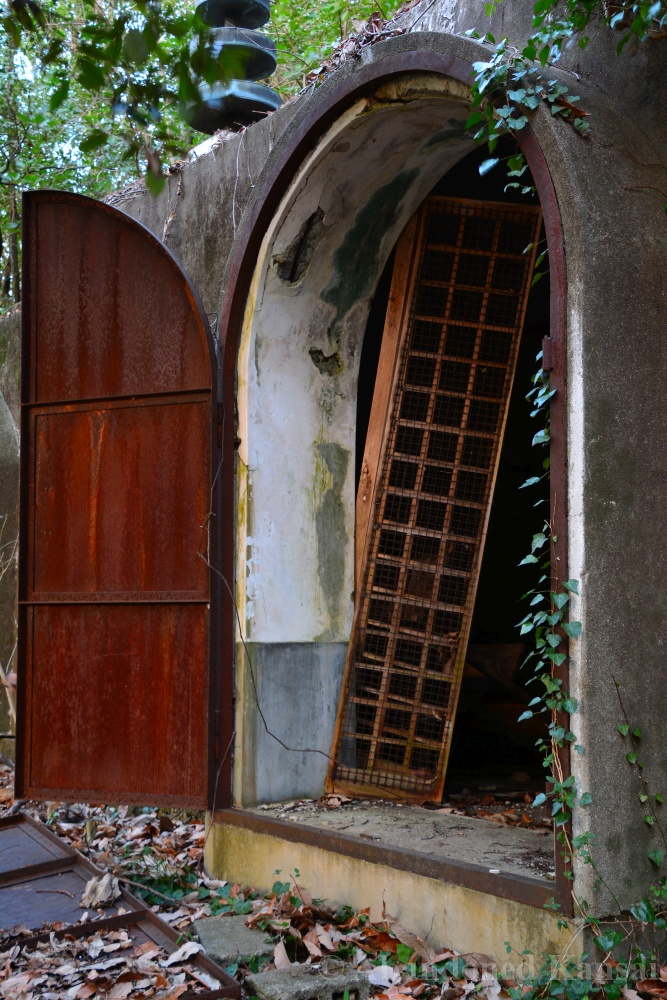
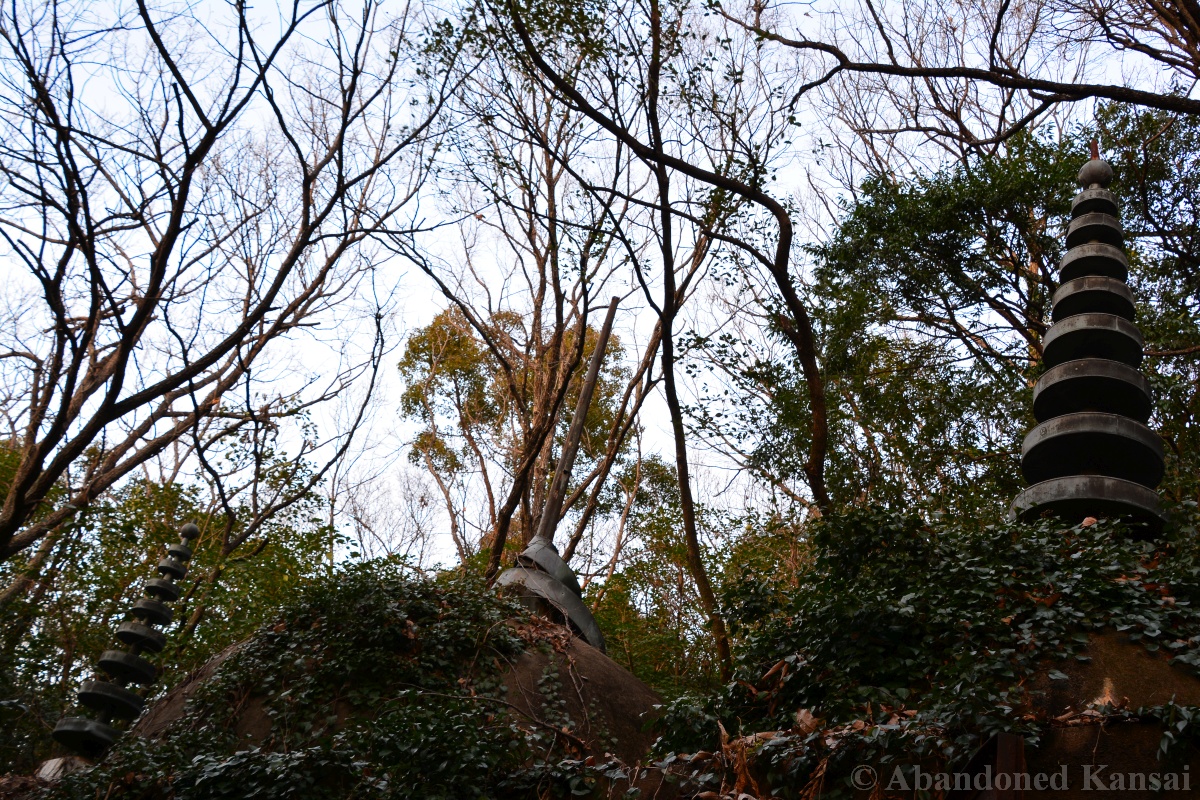
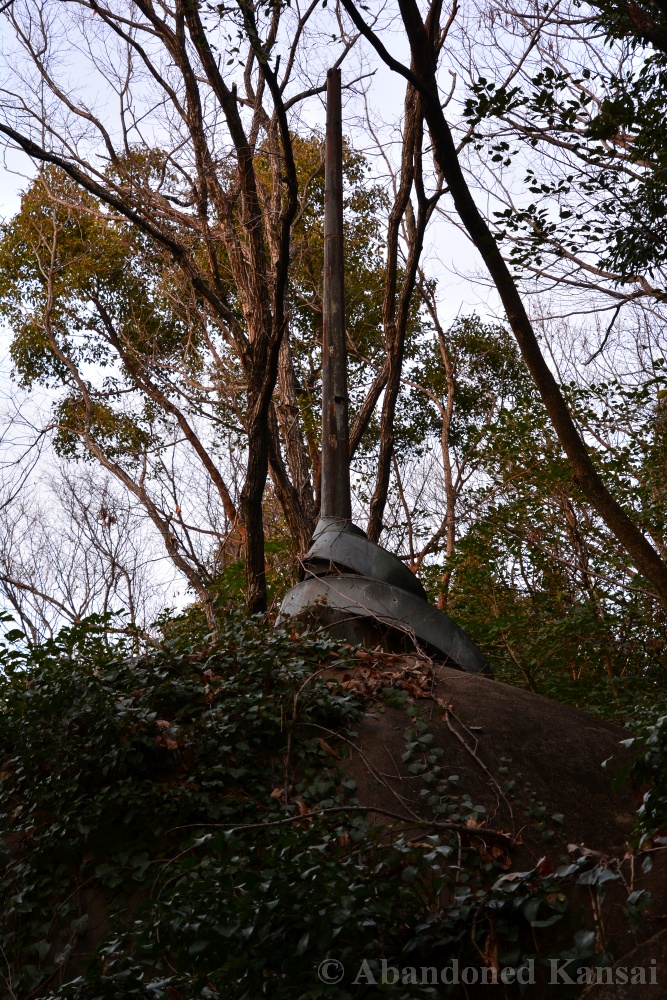
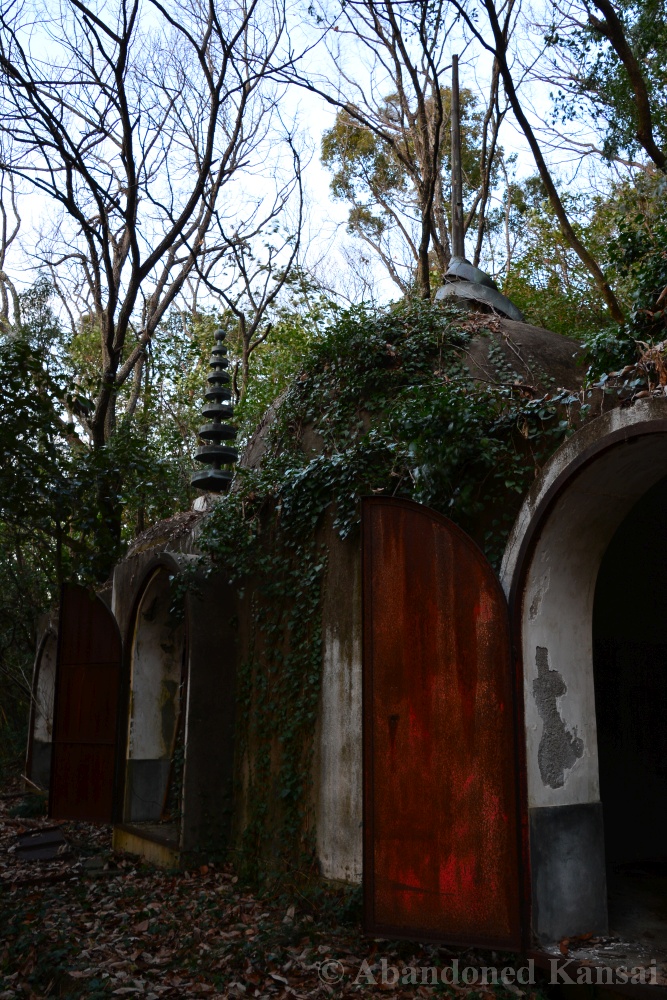
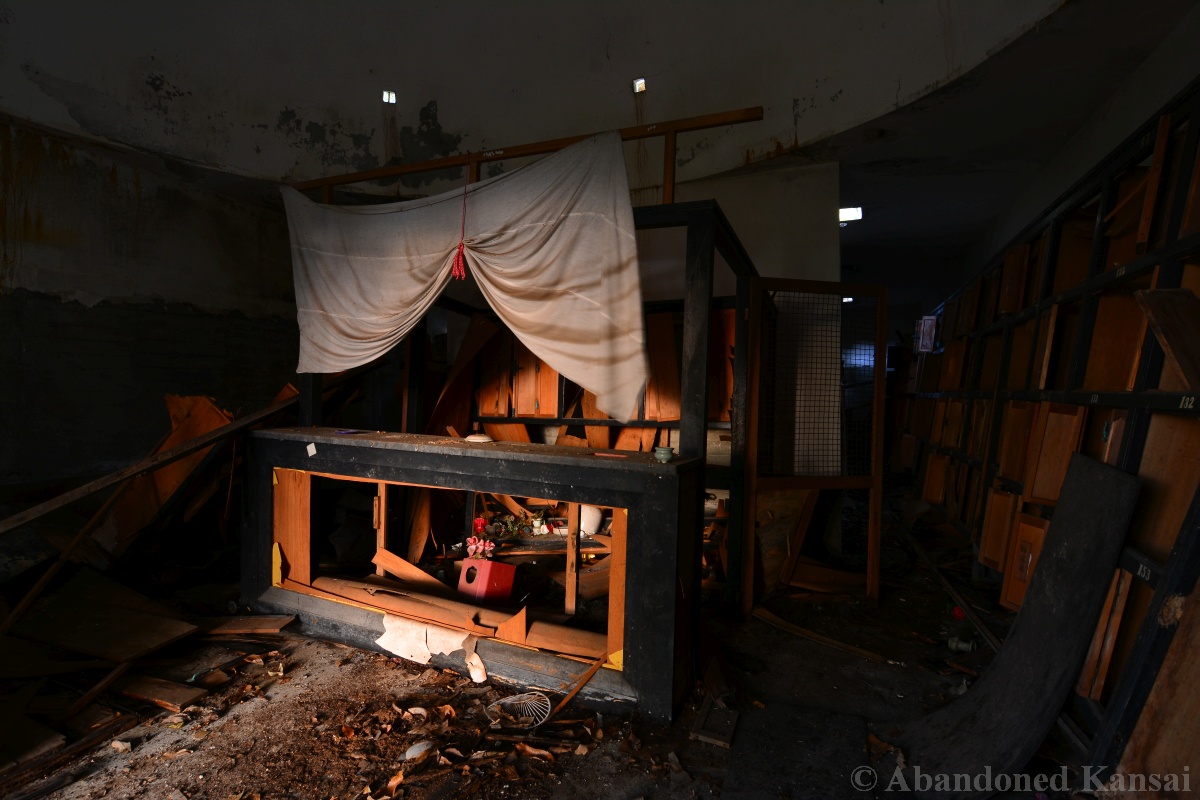
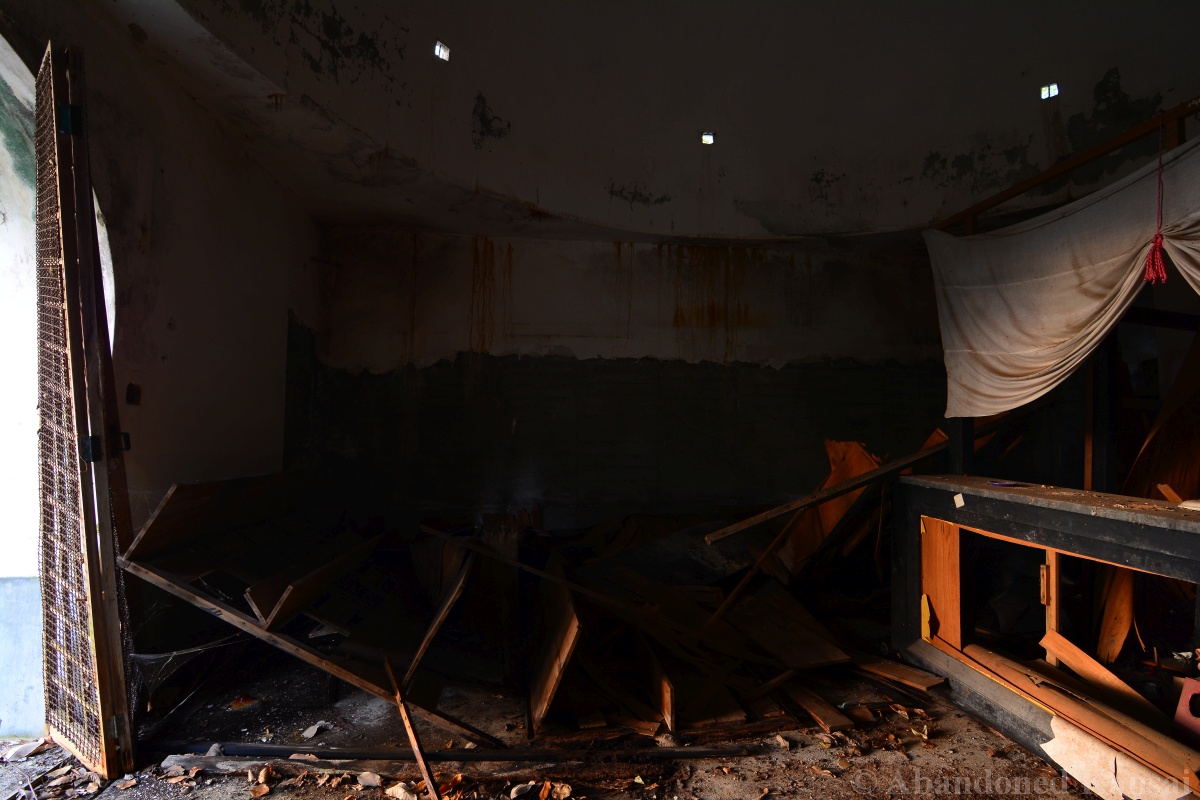
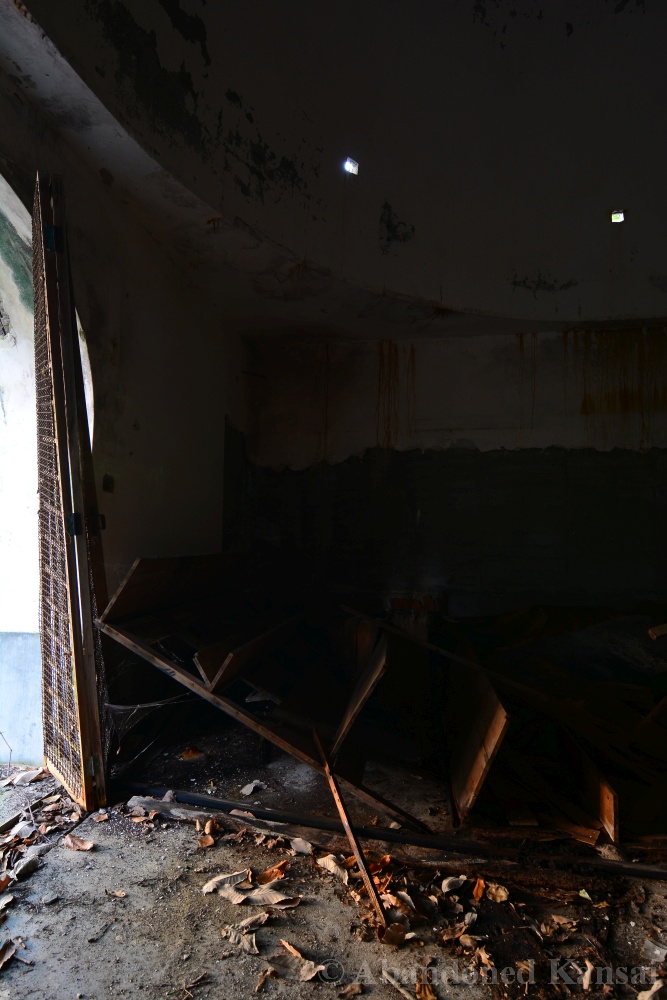
After spending quite some time on a late lunch we stopped next to a regular temple of a quiet neighborhood in the outskirts of Okayama. Parking was sparse, but we found a spot and walked past the temple and up a gentle forested slope. The path was completely covered by years’ worth of dried foliage (clearly nobody was raking and cleaning there, so I guess it’s a miracle that there never was a wildfire…) – and I still had no clue where we were going to (fortunately I wasn’t murdered and burnt beyond recognition that day, though it would have fitted the location, as it turned out…). Two or three switchbacks later we finally stood in front of the strangest structure I had seen in a long time – a long one storey tall concrete structure with three entrances and a spikey ornament on top of each room. It kind of reminded me of the *now famous stupa in an abandoned religious park*, but I really didn’t know what to make of it. Unfortunately were running out of time as it has been overcast all day and we were on a forested slope. We were four people, which meant everybody was shooting in one of the rooms, plus one person outside. A rather rushed exploration, but fun in an eerie way. Later I did some research and found out that the place was an ossuary built in the 1970s and used for about 30 years. A really interesting location that would have been even better if it would have been located closer to the abandoned *Japanese Crematorium* I explored a few years earlier.

(*Like Abandoned Kansai on Facebook* or *follow us on Twitter* if you don’t want to miss the latest articles and exclusive content – and subscribe to the *video channel on Youtube* to receive a message right after a new video is online…)
Read Full Post »

I’ve been urbexing for almost 15 years. During that time I’ve never written any articles about equipment, despite being very happy with three different Nikon DSLRs, two Manfrotto tripods, and a Sanyo video camera – which broke in 2019 after almost 15 years of recording countless hours at hundreds of locations as well as places like Chernobyl and North Korea. Videos I always considered a bonus anyway… and I’m still having a hard time thinking of myself as a photographer, given that I have no formal education in that field and only do it as a hobby. A really time-consuming hobby, but nevertheless just a hobby. I also don’t have a background in technology, so what’s the point of reviewing camera equipment when I just have an opinion based on learning by doing? Well, that doesn’t keep countless “influencers” and Youtubers from churning out incompetent nonsense, but I wouldn’t want to be found dead with either label on me! And like my favorite professor at university once said in regards to papers we had to hand in: “Don’t claim anything you can’t proof!”

Fortunately there is no need to be technical or scientific about this Insta360 X4 article, because unfortunately we never got that far…
Like I said, I always considered video walkthroughs of the locations I explore a bonus. I started them pretty much right away, but at first I didn’t even publish them, because I only took them for myself. And even when I published them, I didn’t edit them. No cuts, no voice overs. Just me walking around breathing heavily into the silence. That all came to a sudden halt when my Sanyo stopped working after exploring the abandoned *Trump Hotel*, also wiping out the recordings of the whole day. At that point I was tired of doing the videos anyway – and my co-explorers were increasingly annoyed, because I added 10 to 30 minutes at the end of every exploration for the walkthrough. So I stopped doing them.
For the past 18 months I’ve been exploring solo again (don’t ask, it’s complicated and often quite frustrating, to be honest), but a few weeks ago a colleague of mine showed me an older model Insta360 video camera that a visiting cousin from the States forgot at his place in Japan. I was fascinated by the easy to use 360 photos and videos, so I did some research and decided to get one. I’ve read reviews, I’ve read product pages – I did my best to make an informed decision, because at first I considered buying the X2 or X3 as older models often are cheaper with only slightly fewer / worse features. The X2 was out of the race when I read in a review that it required a smartphone to be activated – something I didn’t read anywhere about the X3 and X4. I guess because it’s an idea that is so stupid that it probably was a one-time mistake by Insta360, facing so much backlash that they removed the requirement from following models. The price difference between the X3 and X4 wasn’t very big and since the latter was only four weeks old at the time, the price on Amazon and in brick and mortar stores was the same, so I decided to get it at my local Yodobashi Camera (street block sized electronics stores with hundreds of employees each, in case you are not familiar with the chain), where I’ve been a customer for almost 18 years – ever since I moved to Japan.
BIG MISTAKE!

Yodobashi Camera was extremely stingy, giving only 1% points on the video camera, despite a promotional campaign of giving 13% points for purchases over amount X – except for (small print)… But when you shell out 80k Yen on a new video camera you are looking forward to use, store points are the last thing you worry about anyway. Fortunately I still had some of those points, which I used to get a seriously overpriced MicroSD card, because without it the video camera would be useless and I wanted to try it out on the weekend before an upcoming urbex trip. 83500 Yen poorer, but with a big smile on my face I left Yodobashi Camera on a Friday evening after an otherwise pretty horrible week.

Saturday was supposed to be a great day, though it started with a rude awakening / realization…
After sleeping in and having a delicious breakfast, I enjoyed a nice unboxing. The first slight disappointment was when I realized that the included battery was dead. Well, not dead dead, but completely empty. Whatever, an hour or two wouldn’t make a difference. It would not dent my great mood for sure. That came a few hours later when the battery was fully charged. I booted the small brick for the first time, its screen came to life, asking me to choose a language – and then the screen showed what the camera was seeing… for about a second or so. Then some text popped up and my heart sank. You gotta be kidding me! What I was looking at was a screen telling me to download an app by Insta360 to a smartphone, iOS or Android, to unlock the video camera. What. The. Heck? I literally felt it in my fingers how my blood-pressure exploded, because unlike pretty much every person on the planet above the age of 6 years I don’t own a smartphone. Never have. In the late 90s I had a black and white Nokia for work (yes, I’m not the youngest anymore, though I started working full-time in my early 20s). When I moved to Japan I had a flip phone or two, but for the past 15 years or so I didn’t have any mobile phone at all, smart or not, because I don’t like them as they turn way too many people into dumb zombies. So here I had a brand-new, quite expensive video camera… that forced me to make it usable by using another device with cameras? Who comes up with stupid ideas like that?!
Certainly not Nikon! Their D7500 DSLR I bought just weeks prior worked with a partly charged battery and regular SD cards straight out of the box 5 minutes after purchase – without any charging or unlocking BS!
So I started to do some research… and didn’t find much. Like I said, I couldn’t care less about smartphones, apps and all that stuff, so I tried to find a solution to unlock the darn X4 via PC or MicroSD card. Of course I couldn’t find anything about that either, so I contacted Insta360 directly – who apparently didn’t read my message and instead sent me a standard reply. So I got back to them, apologized for not describing my problem properly (I’ve been in Japan too long…), and this time got an answer that at least implied that they understood the situation I was in – without being able to help, because though it seems to be nowhere stated on the box, the promo material or even on the X4 website (at least back in mid / late May, maybe they changed it by now)… you really need a smartphone and the Insta360 app to use a newly bought X4 video camera, that seems to work perfectly fine, but is made not usable on purpose by the manufacturer. Which absolutely blows my mind!
How is that even legal?
How can a company force you to use a completely unrelated piece of expensive technology that actually partly does the job of the product you just bought, to make your purchase usable? Without mentioning that essential detail with big warnings before purchase! And in addition, forces you to use an app, which does who knows what in the background without one knowing?
What’s next? You need an electric bike with WiFi to unlock your newly bought car? And if you don’t… sucks to be you, it’s completely useless!

Yodobashi Camera – (The Lack Of) Customer Service In Japan!
After some back and forth it was Monday and I came to the conclusion that I won’t be able to use the Insta360 X4, because it really needs a smartphone to unlock, which wasn’t properly communicated. So after work I went back to Yodobashi Camera, my go-to electronics store for the past almost 18 years. Never had a problem with them, because all the products I bought worked as intended right out of the box. So I went back to the cashier counter where I bought the video camera… and already ran into the first minor bump in the road – apparently I hadn’t paid for it in the camera department, but a neighboring one, which wasn’t a problem on Friday evening, but very well on Monday evening. So I went 20 meters over to the camera department and told them about my unfortunate situation: That I had bought this video camera three days prior, but couldn’t use it, because it doesn’t work without a smartphone, which wasn’t properly communicated by Insta360 or Yodobashi Camera. But I was very careful with everything, I didn’t even remove the protective film from either of the lenses. Some air through the teeth sucking, some going back behind the counter to talk to a superior and then something like the following conversation – it’s in quotation marks, but they are not really quotes, you know… just something like that, from memory:
“I can’t sell this anymore, you opened the box. You can’t return it.”
“But I can’t use the video camera.”
“I can’t sell this anymore, you opened the box. You can’t return it.”
“I don’t have a smartphone. The X4 is useless to me.”
“I can’t sell this anymore, you opened the box. You can’t return it.”
“I did proper research and I only found out about this after I opened the box and tried to use the X4.”
“I can’t sell this anymore, you opened the box. You can’t return it.”
“I bought a D7500 last month, it worked out of the box…”
“I can’t sell this anymore, you opened the box. You can’t return it.”
“Then take it back and ask Insta360 to exchange the X4 – you have dozens of them here, you probably have to return one once in a while anyway.”
“I can’t sell this anymore, you opened the box. You can’t return it.”
“Are you serious? I’ve been a customer here for almost 18 years, spent millions at your store and other ones in the building that has your name. Never had a problem – and the first time I have, you are stonewalling me?”
“I can’t sell this anymore, you opened the box. You can’t return it.”
“Really?”
“I can’t sell this anymore, you opened the box. You can’t return it.”

At this point I gave up and exchanged a few more e-mails with Insta360 (“You should try to return the X4 where you bought it!” No kidding…), but their responses quickly became as useless and repetitive as the one of the guy at Yodobashi Camera – who is just a small cog in a big machine, so I don’t blame him; he’s punished enough with the lighting in the store and the uniform he has to wear all day.
So here we are, after me falling for the usual misconception about (customer) service in Japan, because I rarely ever had a real problem anywhere. It’s great as long as everything is within procedures – if somebody has planned for it, it most likely will go smoothly. Service is great. When service becomes customer service though, i.e. an individual customer needs help that requires improvisation outside of the planned service… you’re basically on your own. The only thing flexible in Japan is bamboo.

Nevertheless I still have moments when I wonder: AITAH?
I’m a huge believer in personal responsibility. If I make a mistake, I stand by it. I find behavior like ordering 20 items of clothes in different sizes and colors with the intention of sending 18 of them back despicable. In fact I’ve never sent anything back that I’ve ordered online, except for two USB-HDDs – and only because they didn’t work. I don’t do fast fashion, I don’t buy garbage from questionable sites like Shein oder Temu, I don’t replace electronics unless they are broken. (RIP, Nikon D7100!) I did due diligence before buying the Insta360 X4 and to this day everything in that (opened…) box is in mint condition. If I would have known about the smartphone requirement, I wouldn’t have bought the X4. It’s the reason why I didn’t buy the X2.
This is actually only the second time that I tell this story to anybody, because part of me is a bit ashamed that this series of unfortunate events happened – despite all the research before buying. But spending more than 80k on a useless brick of tech isn’t exactly something to be proud of. I don’t regret much in my life, but buying the Insta360 X4 I regret. And buying it at Yodobashi Camera is something I regret, too. Maybe Amazon would have been more accommodating with returns…
But I guess it is what it is – only money in the end. And no videos for Abandoned Kansai in the future. Heck, even if I would get the currently useless X4 to work, I would always be reminded of this story. Screw video cameras! Never was a fan, now I dislike them almost as much as smartphones. Which kind of closes the circle. But I’ll make sure to never ever even consider buying anything from Insta360 again – I still don’t understand how it’s even legal that they can do this. What’s next to unlock their cameras? Having to send them a voice message, swearing loyalty to Winnie the Xi(thead)? Apparently they can do anything without people questioning it…
I went back to Yodobashi Camera once more though, two days ago. I spent the remaining shop points I had on presents for my nephews without having to pay a single sen – my goal was it to hit +/- 20 points/Yen, but going to exactly 0 was priceless – and so I left the Yodobashi Camera building one last time with a big smile on my face. Upon arriving back home I cut up my loyalty card after almost 18 years. It probably doesn’t mean much to a large store chain like that. But it meant a lot to me!

Thank you for reading till the end and… What has your worst experience with Japanese (customer) service been? Write it in the comments!

(*Like Abandoned Kansai on Facebook* or *follow us on Twitter* if you don’t want to miss the latest articles and exclusive content – and subscribe to the *video channel on Youtube* to receive a message right after a new video is online…)
Read Full Post »

An old wooden abandoned school well hidden deep in the mountains of Okayama – and the burning question: Where did the children come from who once visited this now deserted building?

It’s no secret that Japan’s countryside is dying, especially the traditionally sparsely populated mountainous areas. Along tiny, barely maintained roads you can find countless abandoned houses and small settlements often kilometers away from each other – no shops, no public buildings, no nothing anywhere close. Over the years I’ve explored abandoned schools in the most remote areas… in tiny villages and on mountain ridges. On the way I always passed at least a dozen houses, so even the smallest schools made kind of sense, but the Okayama Elementary School appeared out of nowhere on the left side of the road, almost swallowed by the surrounding forest… Not a single house in sight or sound, and I couldn’t remember the last time I saw one. Where did the children come from that visited this school? Did they live in hamlet that are completely gone now? I don’t know and I’ll probably never find out…
Since I was exploring with Japanese friends, my time at the Okayama Elementary School was limited to less than an hour – and though the school was rather small even by abandoned countryside school standards, there were quite a few items left behind, which made this an interesting exploration. In addition to the fact that this is one terribly hard to find school. I didn’t even know about it before that day and only recognized it once since then on another post that was published before my visit in 2016. The typical “Oh, they took that picture THERE…” realization that puts a knowing smile on your face. Unfortunately I don’t know much else about this school. A calendar sheet with tropical fish pinned to one wall was from March / April 1973, which makes sense as the new school year in Japan starts in early April. That would mean that the school was closed years before I was even born – and from the looks of it, that’s not an unreasonable conclusion…

(*Like Abandoned Kansai on Facebook* or *follow us on Twitter* if you don’t want to miss the latest articles and exclusive content – and subscribe to the *video channel on Youtube* to receive a message right after a new video is online…)
Read Full Post »

One way to find abandoned places is to keep your eyes open and to check out locations that look suspicious – so when my friend Rory saw a dodgy looking sign from the highway, we took the next exit to check out the area behind the rusty metal construction…

Ten years ago we probably wouldn’t have found a way to the place Rory saw, but thanks to modern technology it was rather easy to navigate some small back roads to what turned out to be an abandoned love hotel under demolition. The entrance of property was blocked by heavy machinery, probably to prevent metal thieves from driving right in and loading their trucks. To the right was a regular countryside house, western style – further down the road we saw the actual hotel, already ripped half apart.
Exploring the Japanese home felt kinda strange – the (previous?) owners took most of their belongings, but there were some pieces of furniture and some electronics left behind, plus a couple of random items, like omamori; Japanese charms usually sold at shrines during hatsumode, the first shrine visit of the year (which is also used to dispose of old omamori to avoid bad luck – you see the genius business model!). Overall the house wasn’t in bad condition, so it was kind of a waste to get rid of it, but I guess that’s the way the cookie crumbles sometimes…
The far more interesting part was the hotel down the driveway. It had the typical love motel layout with garages on the ground floor and small staircases leading up to the rooms, but a box of matches labelled it as a “car hotel inn” named Regent Hotel – obviously not part of the famous Regent International Hotels chain of luxury accommodations. Although the place once had been a solid ferroconcrete structure, the ongoing demolition made parts of it rather sketchy. Nevertheless we had a closer look to find out what it really was. Thanks to a calendar in the family home we knew that it was most likely abandoned in 2008, six years prior to our visit, and a look at some of the remaining doors proved that it had been a love hotel indeed – the room rates were still written on them. Other than that not much left behind. A gutted and rather disgusting kitchen, a bed frame here and there, one bathtub in a bathroom and trash in the yard; both piled and scattered. There we found more indicators for our love hotel theory, but you gotta see for yourself in the gallery.

Exploring this half-demolished love hotel surely wasn’t a highlight in my urbex career, but it was nevertheless an interesting experience as it literally and figuratively gave us some insight into this strangely fascinating world – and it was a neat addition to regular love hotel explorations, like the one in *Furuichi*. It also was a good start into this urbex day as later on we explored the famous *White School* and the amazing *Japanese Art School*; two legendary locations and true classics in the Japanese urbex world.

(*Like Abandoned Kansai on Facebook* if you don’t want to miss the latest articles and exclusive content – and subscribe to the *video channel on Youtube* to receive a message right after a new video is online…)
Read Full Post »

A couple of weeks ago I wrote about exploring the abandoned *Lower Terminus of the Yubara Onsen Ropeway* (if you are interested in the history of the place, please read that article first as I don’t plan to reiterate it). It was quite easy to find, quite easy to access, quite easy to explore.
The upper terminus was a little less known and a little harder to find (or at least it was three years ago, when GoogleMaps wasn’t nearly as detailled in the countryside as it is now), but obviously a worthwile destination to be combined with the lower terminus, if for nothing else but convenience – like most people we got to Yubara Onsen by car, so the difference in elevation wasn’t much of a problem. Finding the half-overgrown building though was a bit of a challenge as it was behind a corner after several left or right decisions walking up a slope from the road below.
Arriving at the upper terminus, we were rewarded by a stunning view of the surrounding mountains, including a massive storage reservoir. Half a dozen coin-operated binocular were once lined up here, but only the Nikon labelled poles were still there. The building itself was much more vandalized and delapidated than the valley station, which didn’t give us a boost of confidence, given that it was forming a platform over the slope – when that thing goes down the mountain, you don’t want to be on there for the ride! It looked like a typical ropeway building, with a small restaurant at the entrance and the platform and machinery room at the far end of the construction. Sadly there wasn’t much left, except for a rusty cash register, a broken wooden chair and some machinery on the ground floor. The metal stairs leading up to the control room were very rusty, a couple of footholds actually missing; and I really hope that nobody got hurt when that happened. Being a rather big guy myself I took it as a warning and refrained from climbing up there, hoping that one day I would be able to explore a less risky ropeway control room. (My patience was rewarded just a couple of weeks later during a solo exploration trip to Tottori prefecture at a virtually unknown station there. Stay tuned, it’s one of many great stories yet to come!)
Overall the upper terminus of the Yubara Onsen Ropeway was an easy, rather unspectacular exploration on a sunny spring day – nothing too exciting, rather relaxed actually; a pleasant, yet not very memorable experience, but one I’d repeat at any time, if for nothing else than spending an hour with friends in the countryside.

(*Like Abandoned Kansai on Facebook* if you don’t want to miss the latest articles and exclusive content – and subscribe to the *video channel on Youtube* to receive a message right after a new video is online…)
Read Full Post »

The Japanese Art School in the mountains of Okayama was one of those mysterious and legendary places I wanted to visit for years, but wasn’t able to find… and in the end I barely made it!

In spring of 2014 I was exploring the *White School* with my urbex buddy Rory when… Darn, I actually forgot the details of the story. We finished exploring the school and somehow we talked about the art school, though it wasn’t even on our schedule for the day. I think Rory’s wife, who helped me out finding the *Japanese Gold Cult*, pinned down the general area of the Japanese Art School the day before and we had to decide whether wanted to head to a mediocre *haikyo* I located exactly… or if we wanted to roll the dice and go for the unknown. So we headed north, deeper into the mountains. We knew that the school was near a very countryside train station (5 connections per day in each direction!), but that almost turned out to be a dead end. Rory tried to call his wife for more details while we spent about an hour or two on foot and by car looking for the art school. Running out of time we dared a most desperate move: We just stopped at a house near the train station and asked the people living there if they knew about the school. Not only did they in fact do, the lady of the house was even willing to escort us there! A kilometer can be near, but it also can be very, very far… especially when you have to turn half a dozen times and don’t know where.

The sun already started to set when we arrived at the school and I knew that time was of the essence. Access was surprisingly easy, though navigating was rather tough due to serious damage to the wooden floors. While I am still not 100% sure what the Japanese Art School really was, it turned out that at the end of its use it had been a private company – originally it was a local elementary school, closed in 1975. Japanese urbex blogs always portrayed it as an art school, but upon arrival (and based on what our lady guide told us) it was pretty clear that there was more to it. We entered through a massive hole in the wall and stumbled into some kind of warehouse I was never aware of. 40 years prior it must have been the main auditorium of the school, but now it was filled with boxes and crates full with all kinds of art supplies: colored pencils, oil colors, engraving knives, watercolors, little bottles and flasks and even models of pagodas and horses. Dozends, hundreds, thousands – depending on the item and its size. A lot more stuff than an art school could make use of in decades! One of the former class rooms was equipped with a heavy machine to help casting busts and masks, bolted to the wooden ground; the room next to it was a storage of those busts. The second main building was stuffed with all kinds of art equipment, too, including a room focusing on sewing. And one thing was pretty clear: There wasn’t enough space to house a full-blown art school, even if you would limit it to painting and sewing. The whole thing looked more like an art supplies company that manufactured busts and masks (some of which I had seen before at the amazing *Shizuoka Countryside School* and other places!) and probably offered hobby arts and craft lessons to the locals.

For a little under two hours I felt like a kid in a candy store… or a nerdy kid in an art supply store. There was so much to see, so much to discover! The auditorium alone would have deserved two hours, but I had to rush to see everything – I wouldn’t have had time to open boxes or drawers even if I would have wanted to. Interestingly enough this forced me to be creative with angles, focal lengths and exposure times. Overwhelming and challenging, the Japanese Art School was all I hoped for. And it left me yearning for more, which is one of the best things in life; having a great experience that makes you desperately wanting more… like a fantastic first date!
Sadly my heart was broken just half a year later, in September, before I was able to see the Japanese Art School again – it was cleaned out and most likely demolished…

(*Like Abandoned Kansai on Facebook* if you don’t want to miss the latest articles and exclusive content – and subscribe to the *video channel on Youtube* to receive a message right after a new video is online…)
Read Full Post »

The Jonan Junior High School a.k.a. the White School is one of those abandoned places that are spectacular in very subtle ways.
Japan’s countryside is full of old schools, ranging from barely open for business to closed and preserved to closed and locked up to just abandoned to collapsed. But one thing all of them have in common – they are brown wooden buildings, inside and outside; at best they have a protecting frontage to prevent or at least slow down decay. (*A prime example for such a school you can see here.*)

At first sight the Jonan Junior High School was just one more of those schools somewhere in the Japanese mountains. From the distance it didn’t even look abandoned. Closed at best / worst. But upon closer look it became quickly evident that *Rory* and I found the right place. Fenced off by a rusty barbed wire metal construction, the back of the school revealed a partly collapsed wooden restroom building. After we found a way on the premises we were lucky to find a way in – a couple of boarded-up window were proof that somebody had taken care of the school for a while, and that vandalism is a problem even in countryside towns.
At first the White School is amazing – a large wooden hallway, almost looking endless through an ultra wide-angle lens. Whoever closed the school decided to take out the interior walls that made up the classrooms, so the wooden two-storey building basically consisted of two long hallways, two gigantic rooms with support logs and two staircases, plus smaller rooms on the upper floor. All painted white! But after about 15 minutes of excitement one quickly realizes that there is not much else. A photo on the wall on the lower floor, some rather random items left behind in one of the small rooms on the upper floor, that’s i t. And that’s usually all you get to see when the White School appears on the internet.
Luckily there was more to see. Several more buildings actually, but none of them were painted white, so I guess nobody gives them much attention. First there was the apartment of the caretaker. The kitchen was still in decent condition, but the floor of the living room collapsed and it was rather dark inside. And then there were three smaller school buildings, looking similar from the outside, but brown inside. And indeed, after being flashed by the white empty main building the common brown areas looked rather boring, almost dull.

Nevertheless it was a great experience to finally explore the White School. It came to my attention quite a while ago and due to circumstances out of my control it took me a while to finally have a look myself – and I enjoyed it as it is such a unique place to see. Not worth to spend a day trip on, but perfect when on the way to an even better location, borderline mind-blowing, to be honest… But that’s a story for another time! 🙂

(*Like Abandoned Kansai on Facebook* if you don’t want to miss the latest articles and exclusive content – or subscribe to the *video channel on Youtube* to receive a message right after a new video is online…)
Read Full Post »

Older Posts »