Feeds:
Posts
Comments

Archive for the ‘Japan’ Category

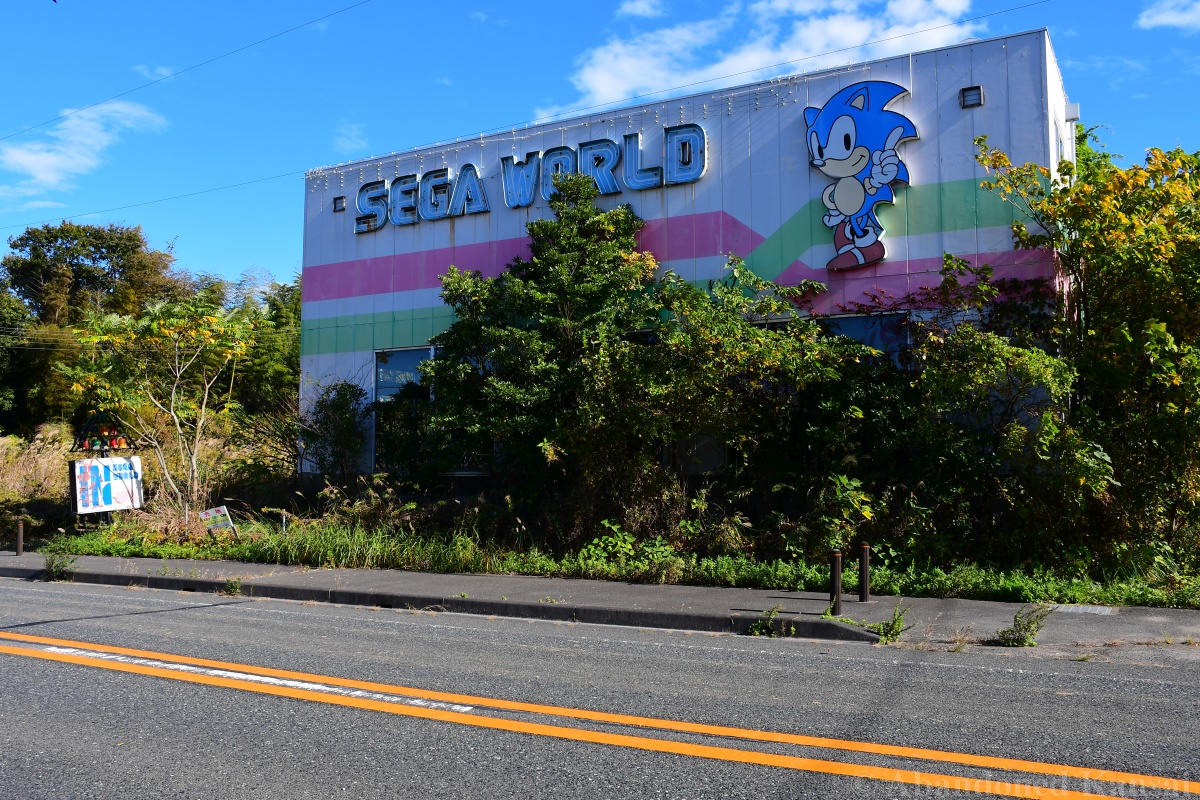
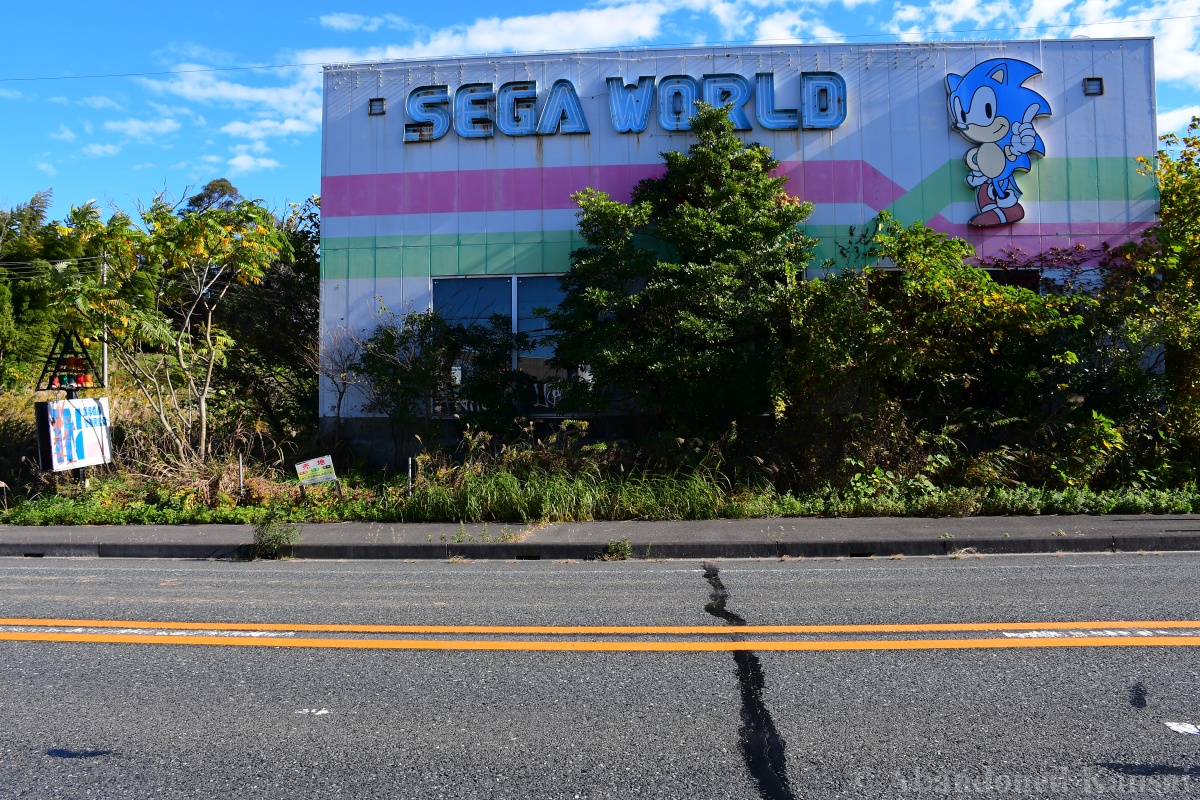
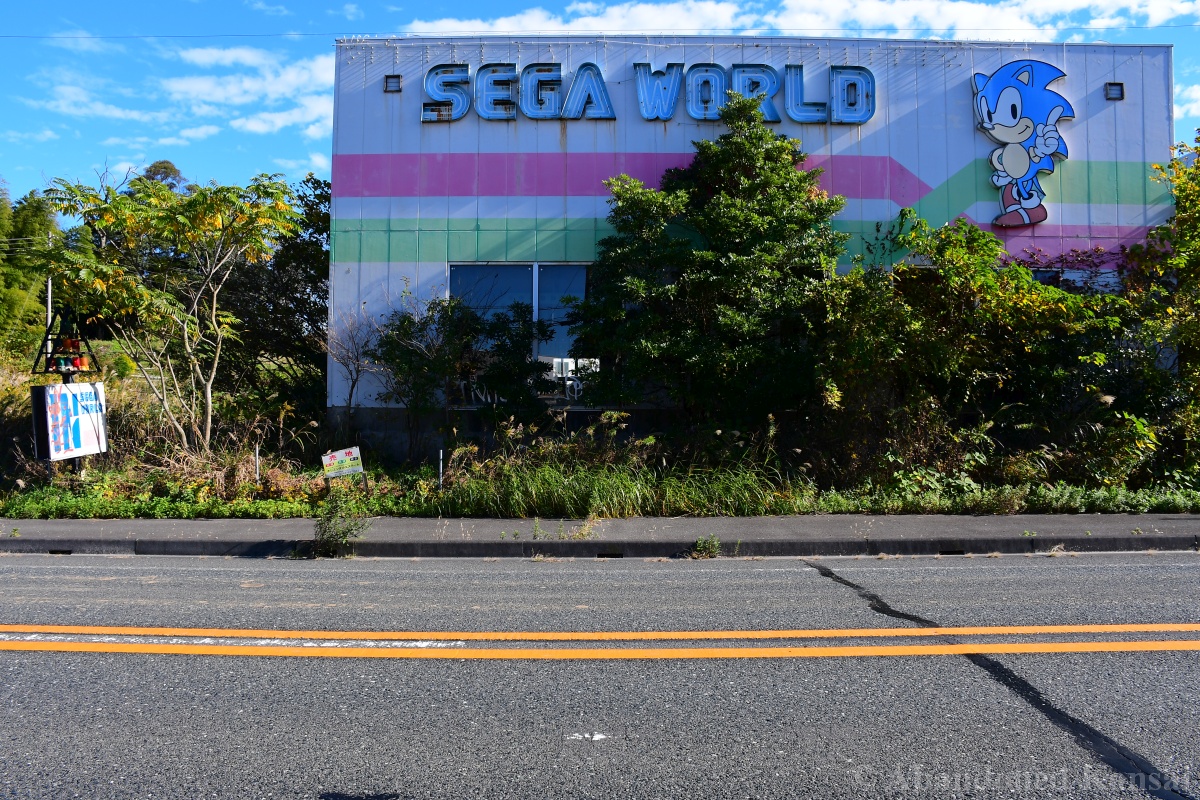
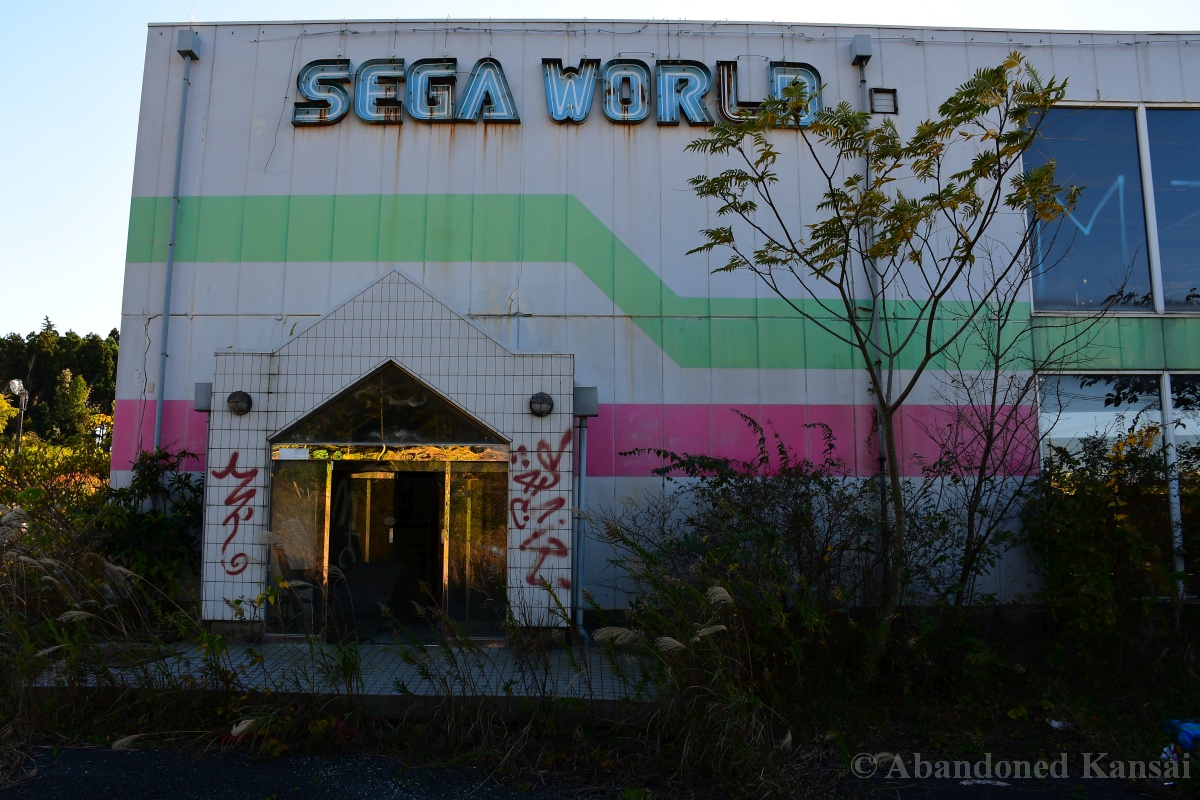
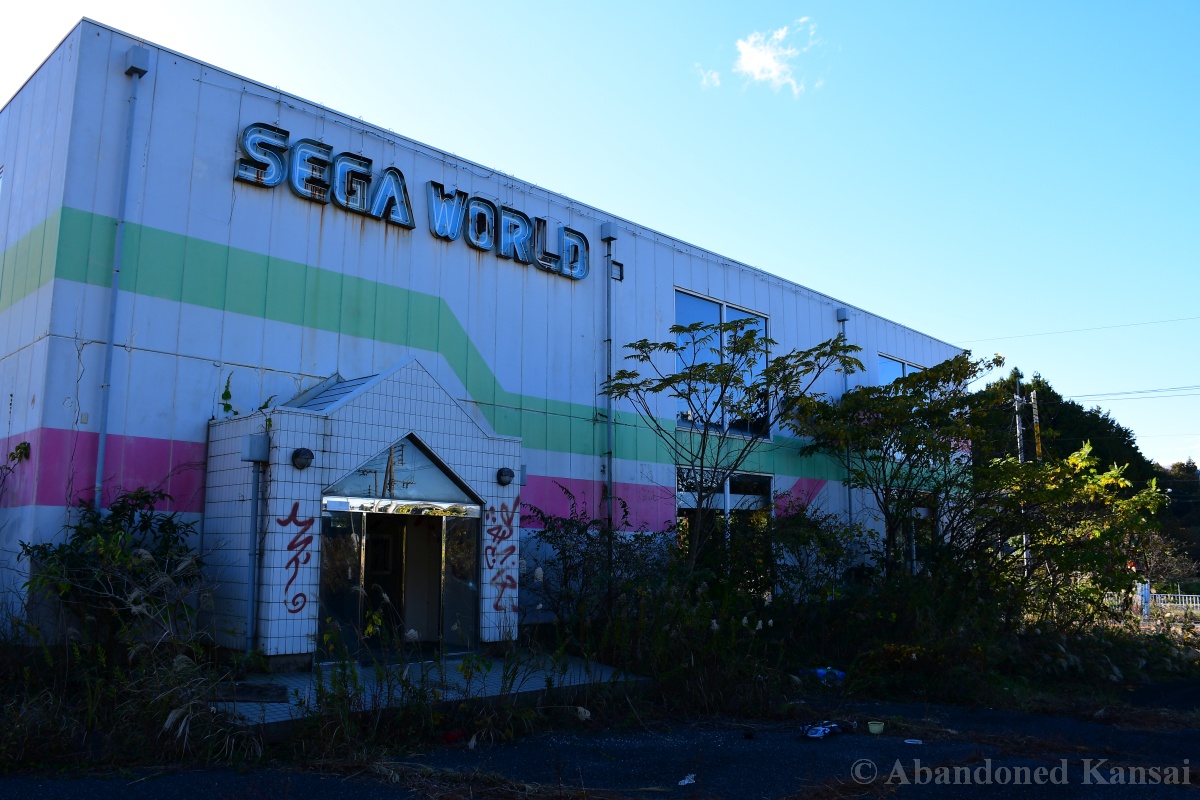
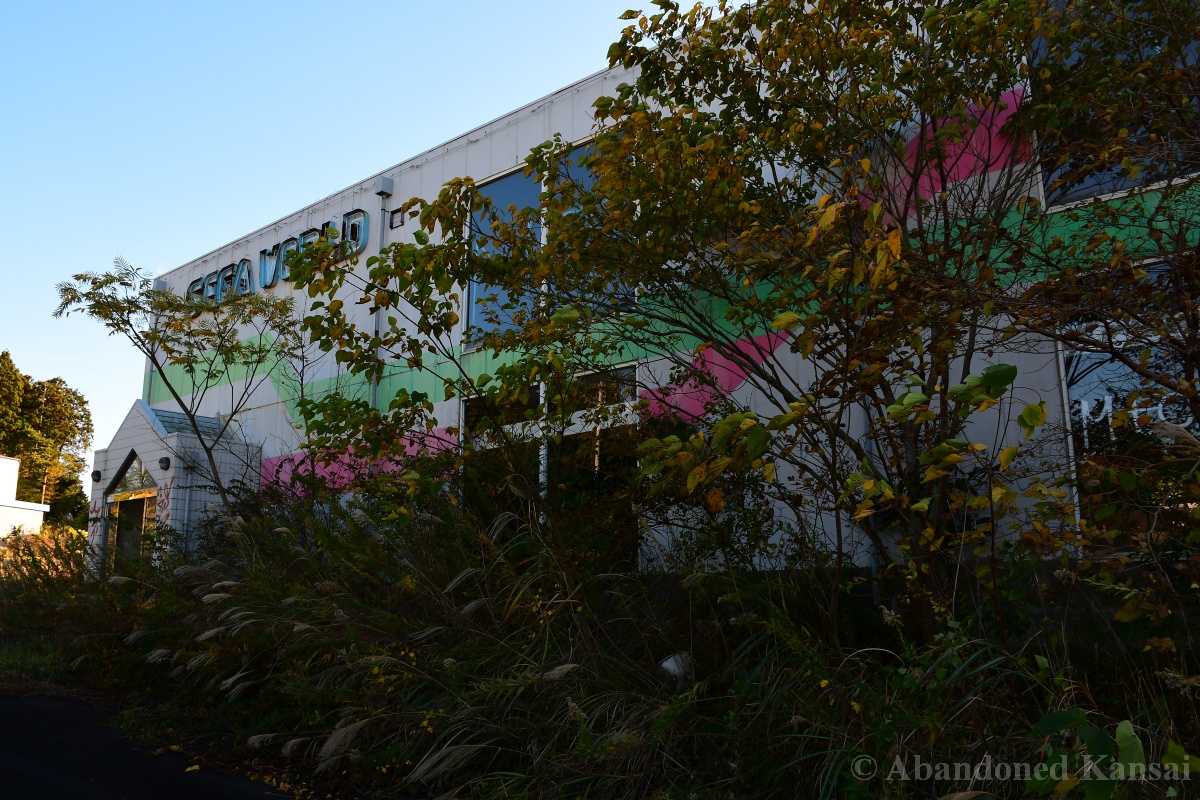
Sega and Sonic are video game icons. Seeing them on the side of an abandoned 90s arcade building in Japan is as good as urban exploration gets!

I’ve been playing video games my whole life. One of my earliest memories is watching my mom playing Pac Man on an Atari VCS2600 in the living room. In the 80s our typical family vacation was spent in the southern part of Lake Garda in Italy – which means that I spent an hour or two every evening at a local amusement arcade (sala giochi), because in Germany arcade video game were usually in the same establishments as slot machines and therefore illegal to enter age 17 and below – mostly watching other people playing… or even the self-running demo mode, but as a child we were easy to entertain back then. My dad was a part-time programmer and full-time musician at the time, and an avid gamer, too, so there were always computers and game consoles at the house. In the early 90s I already bolstered my pocket money by distributing leaflets for local supermarket, so I convinced my dad to go half on a TurboDuo with an adapter for Japanese games – which meant having to buy expensive import games as the system wasn’t released in Germany at all, allowing me to play classics like Bonk’s Adventure, Gate of Thunder and Bomberman ’94 – while my friends at school argued whether Sega or Nintendo was cooler… Amateurs! 🙂
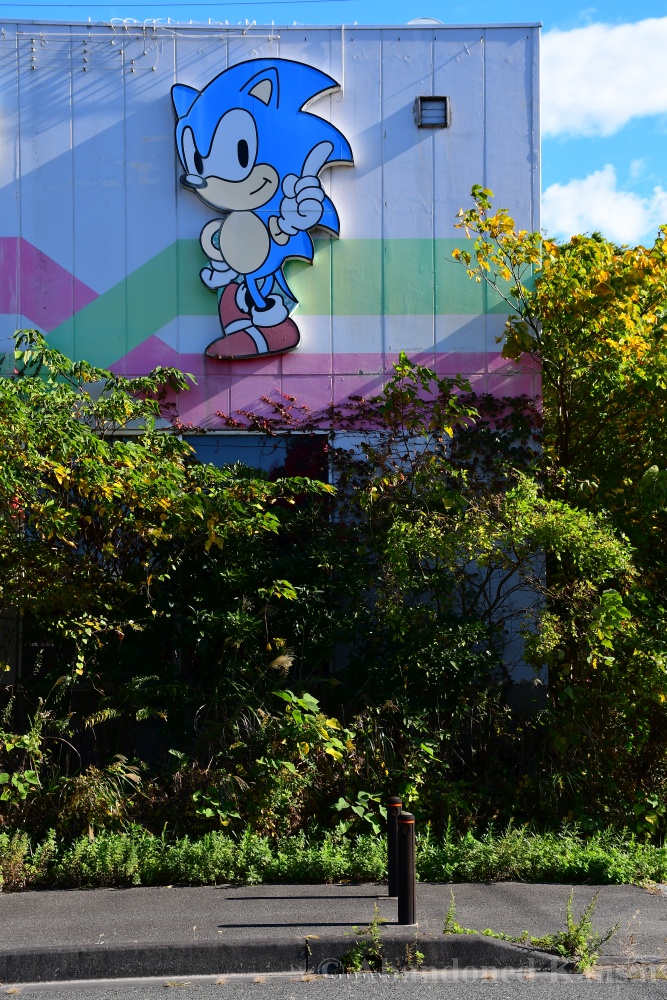
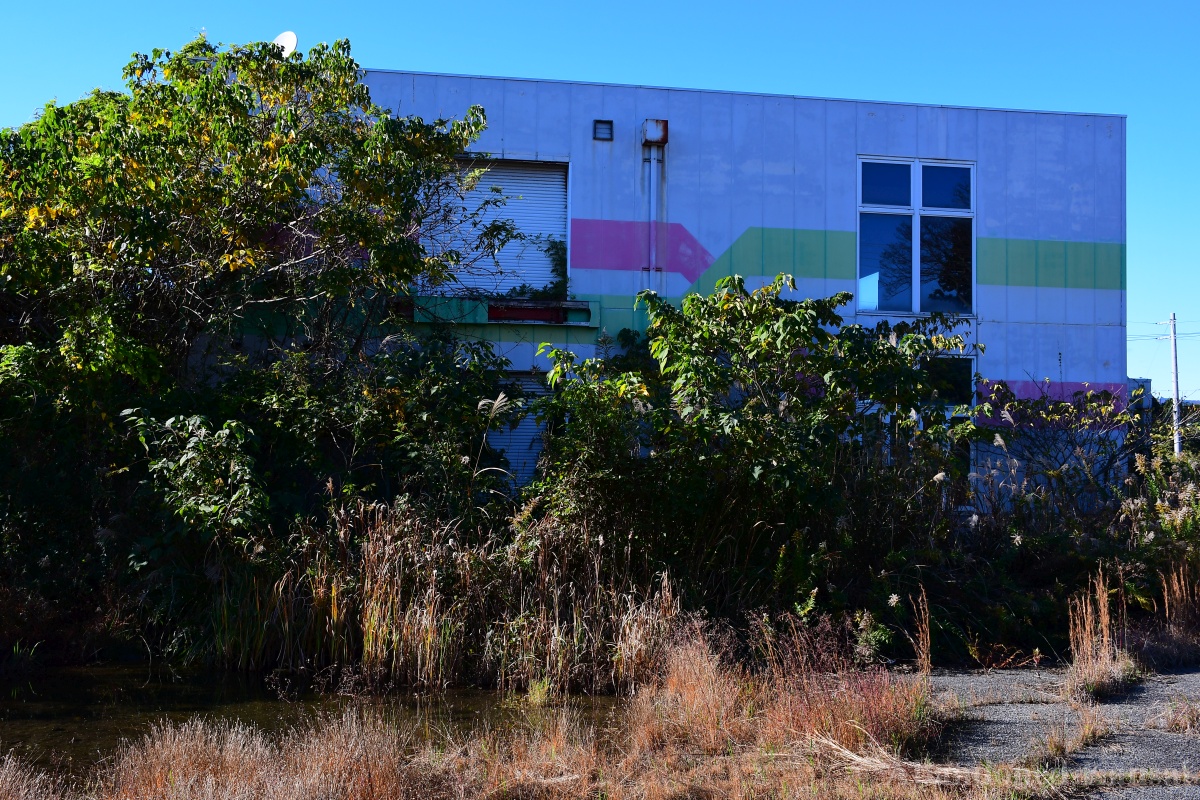
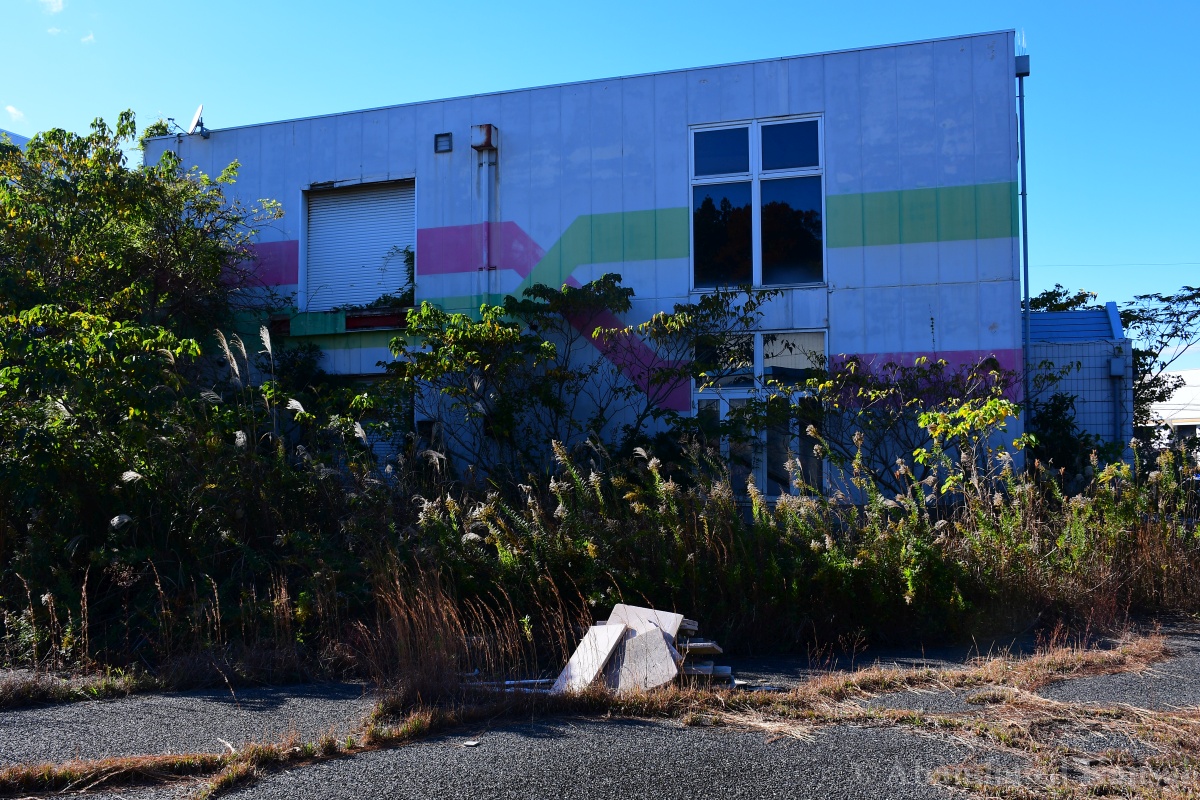
Three decades later I’m still playing video games occasionally, preferably on the Nintendo Switch as it is a portable system (to me, never hooked it up to a display – not once!). As a hobby, I spend much more time on urban exploration though, so you can imagine my excitement when I first heard of this abandoned arcade in the sticks. Not just any generic arcade. A Sega World arcade with the iconic font and a Sonic almost one storey tall! In combination with the pink and bright green stripes on the otherwise white exterior this building oozes quintessential 90s. So cool!

I guess it’s no surprise when I tell you that this Sega World was opened in 1994 – though it might sound unbelievable that is has been closed in 2009! 15 years and hardly any damage, except for some rust and as well as a few graffiti on the large windows.
Now the big two questions…
1) Was I able to get inside?
2) Were there still arcade machines inside?
The answers: Yes and no.
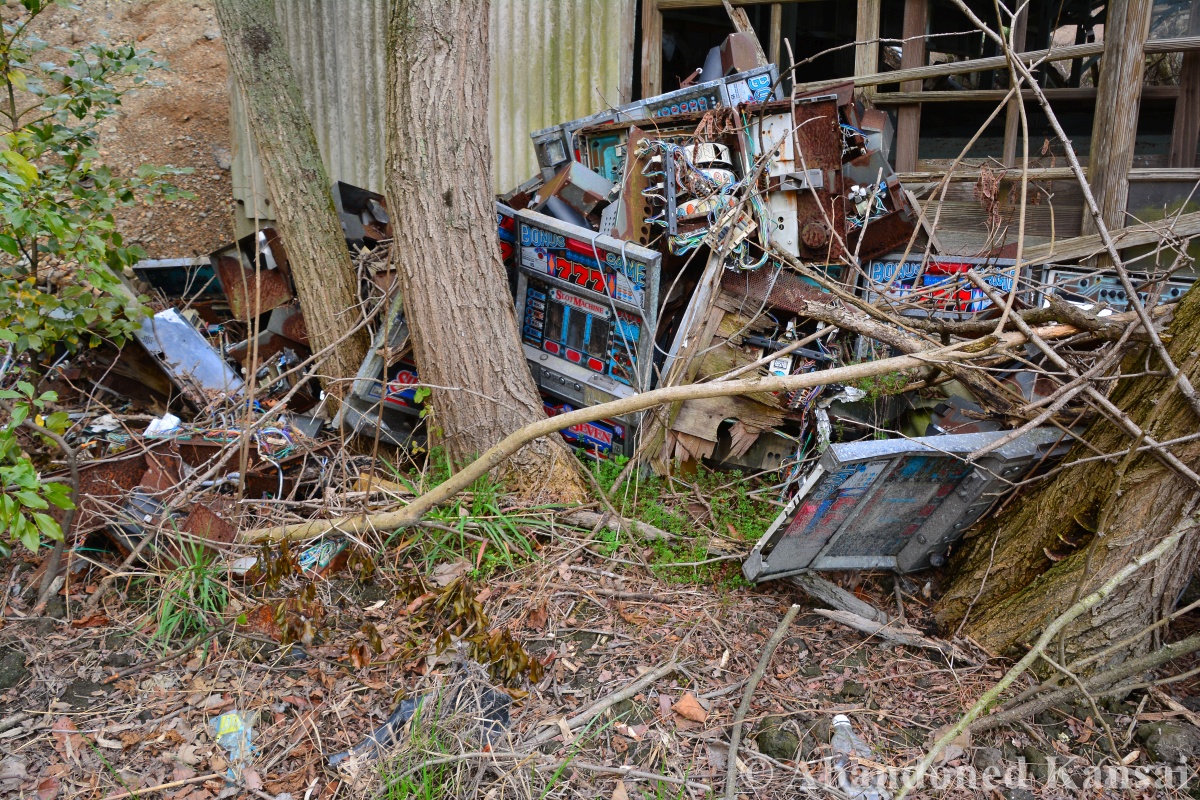
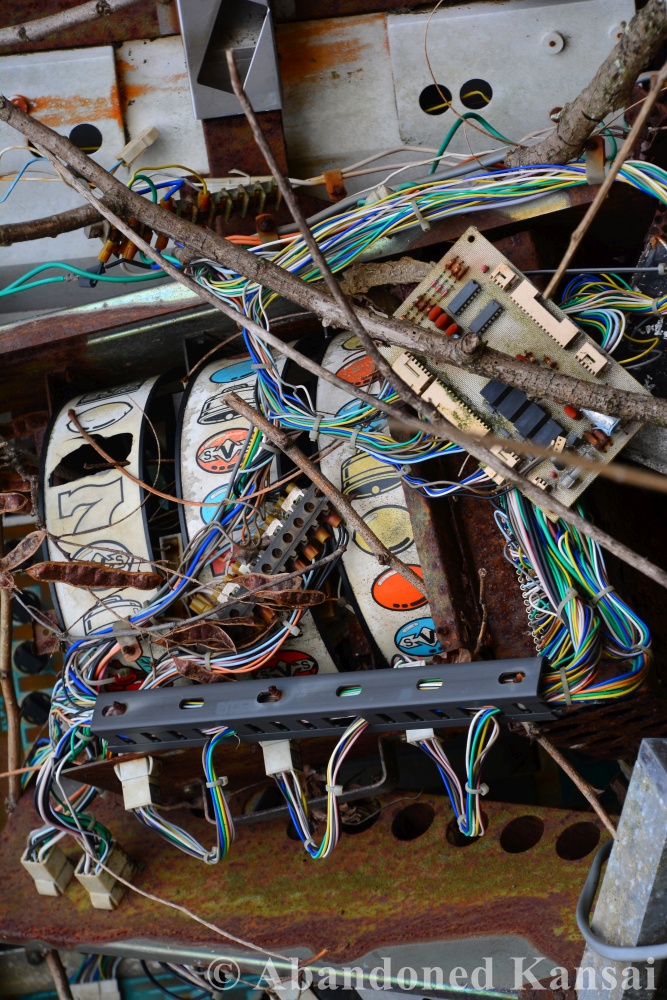
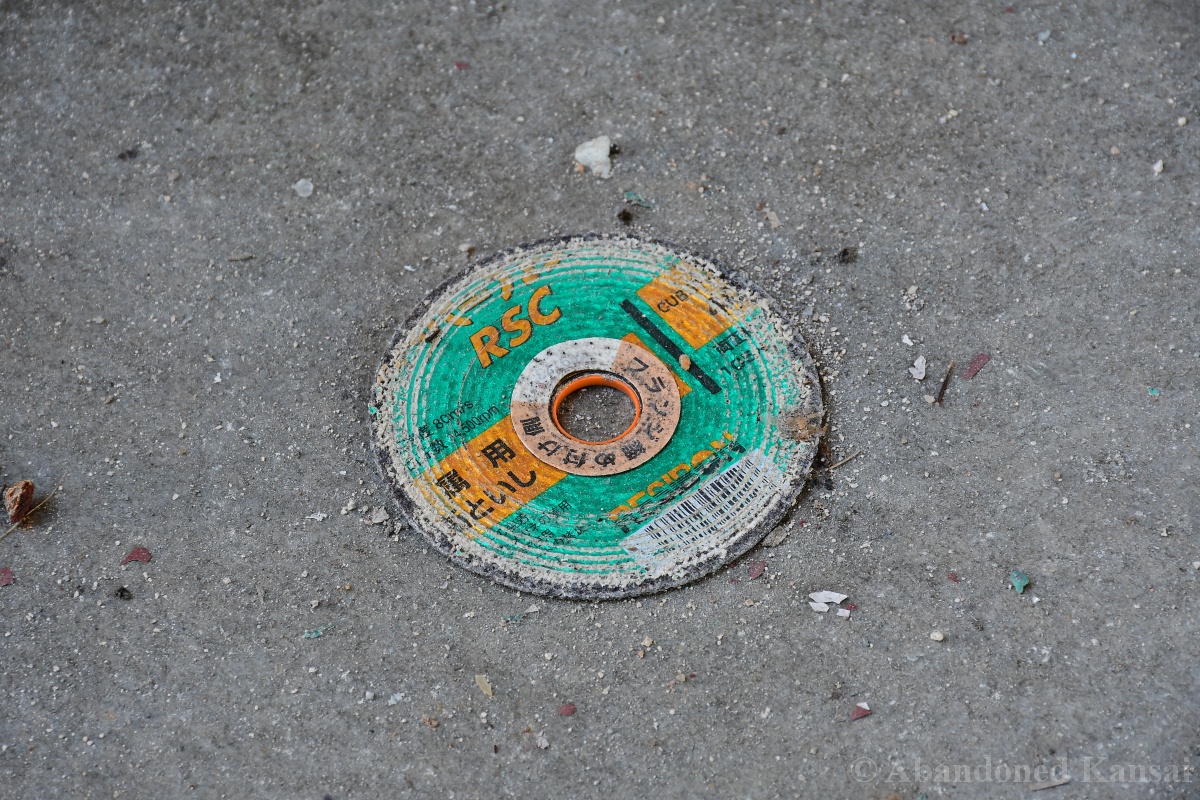
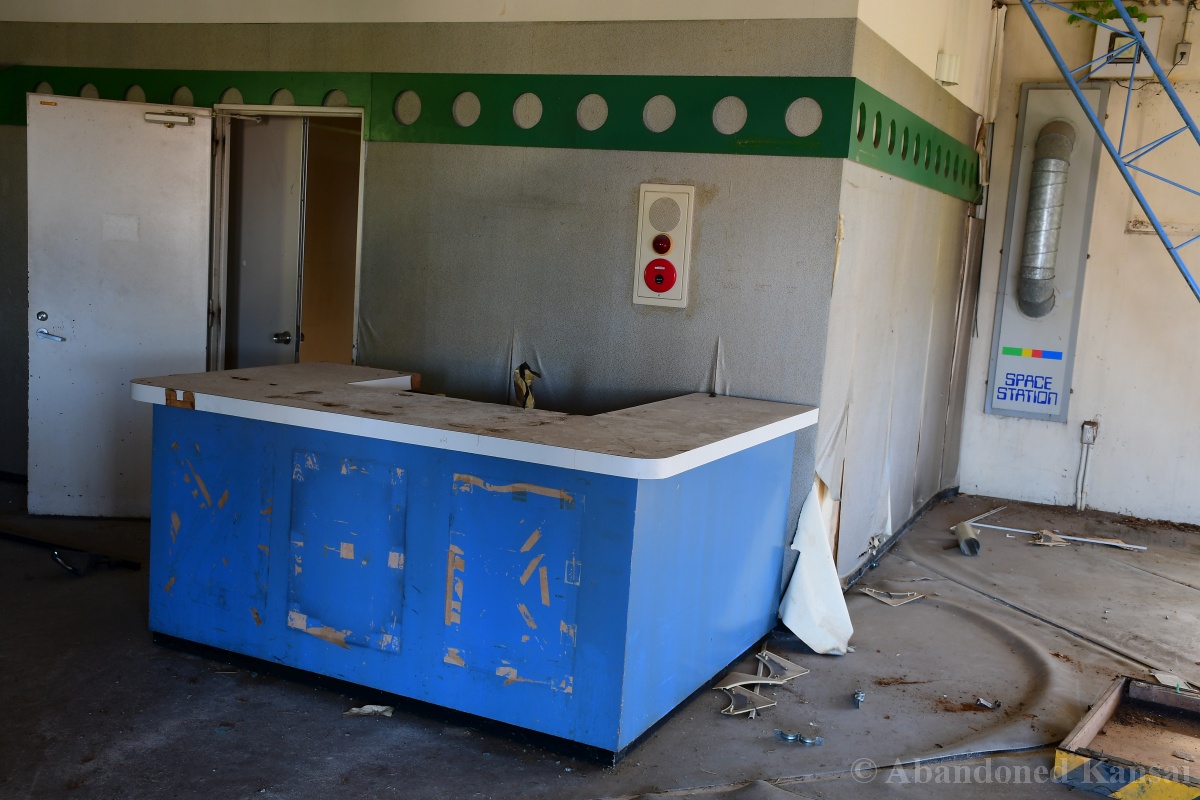
I was able to get inside, but there were no arcade machines or anything else removable of value left behind – my guess is that they moved the games and merchandising to another location when they closed shop. “Able to get inside” sounds like more effort than it actually was. The door was open. Literally. It didn’t even have to open it, it stood open and I was able to walk inside to take a few photos… after removing a large spider web, which tells me that there weren’t any other visitors here recently.
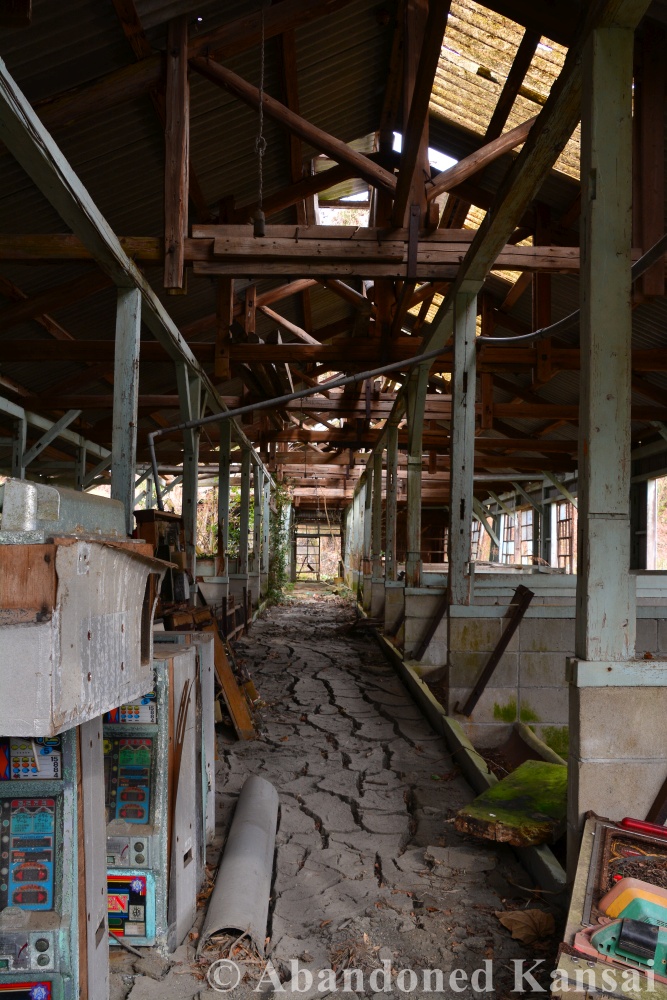
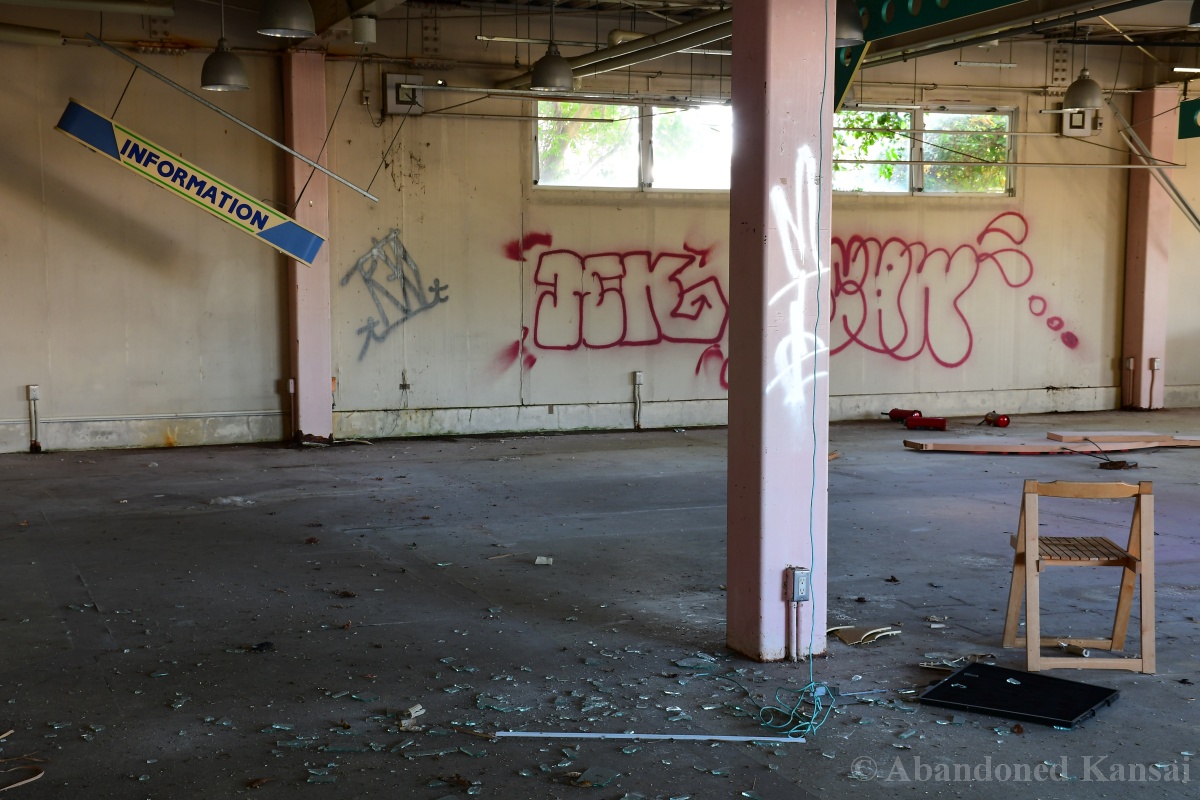
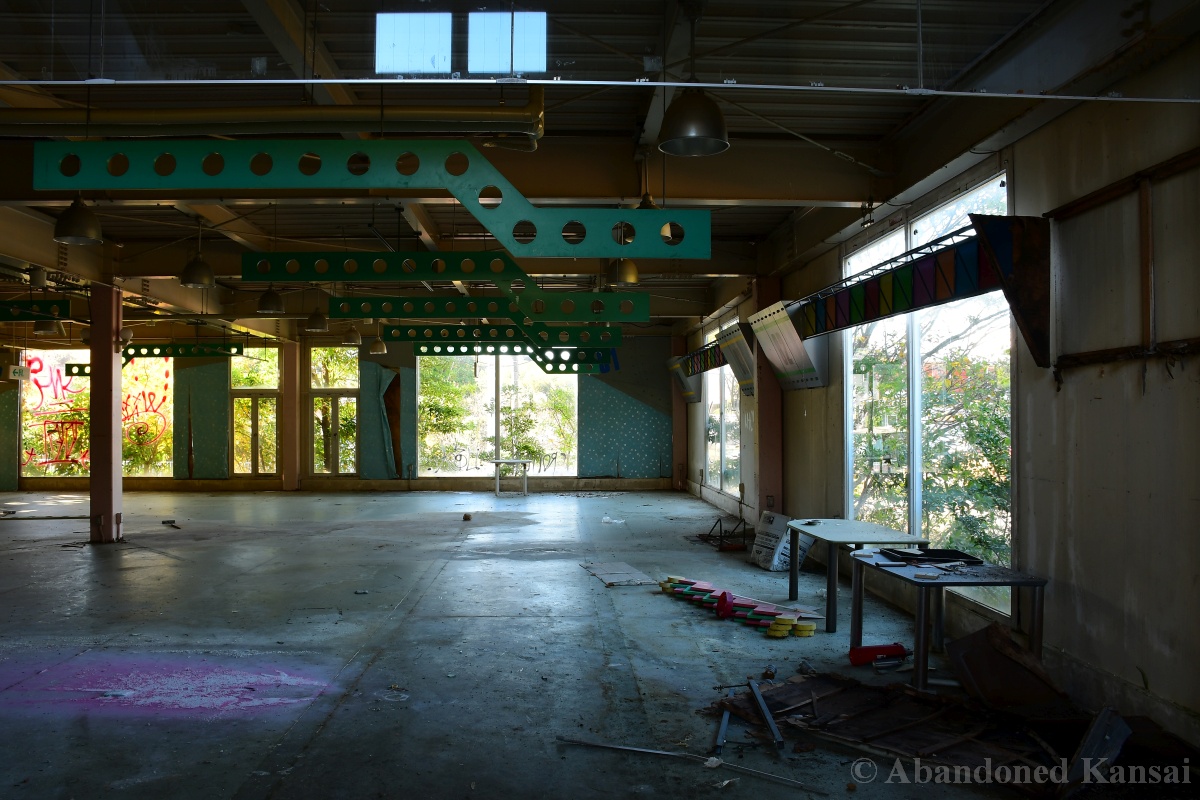
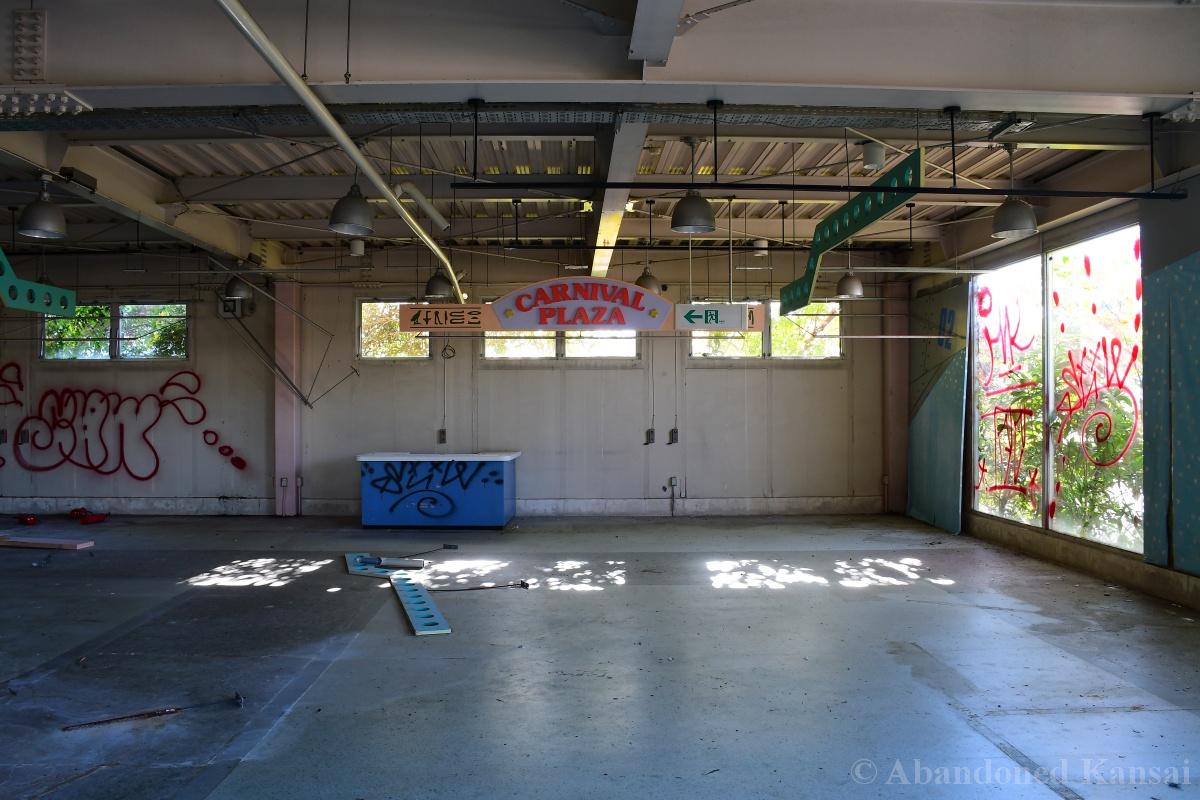
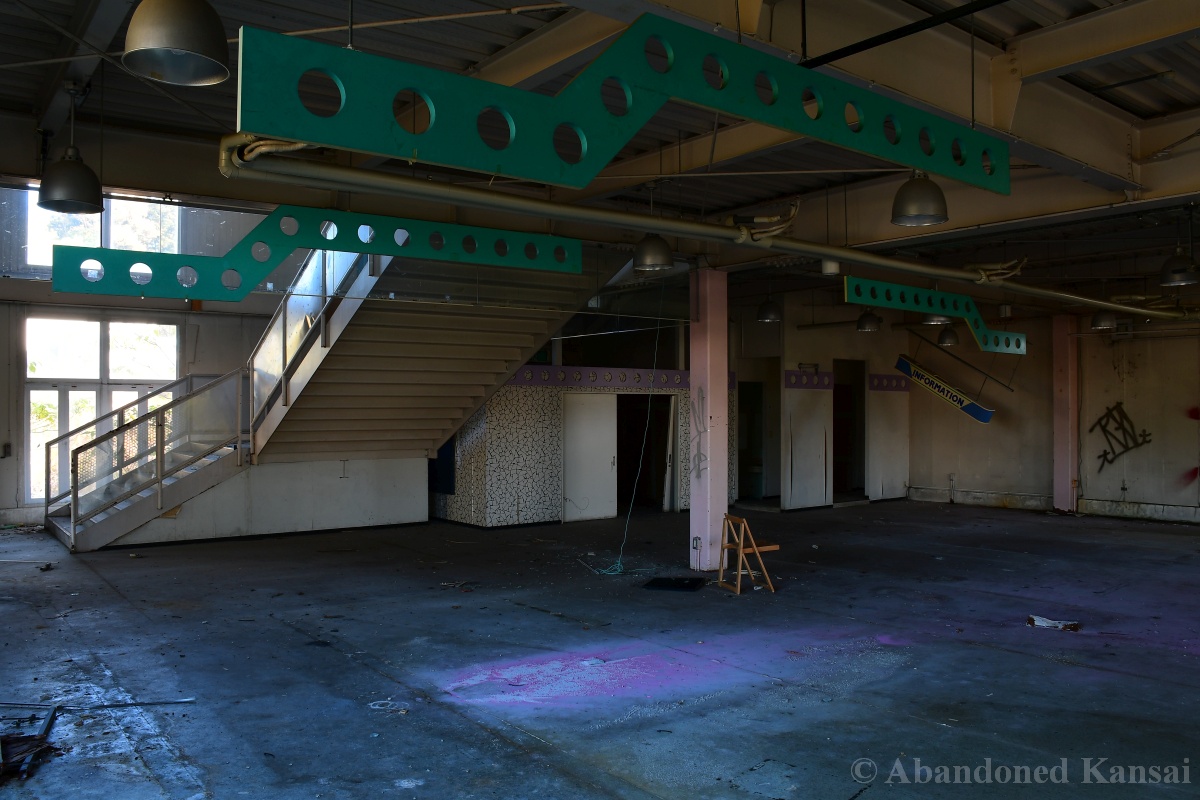
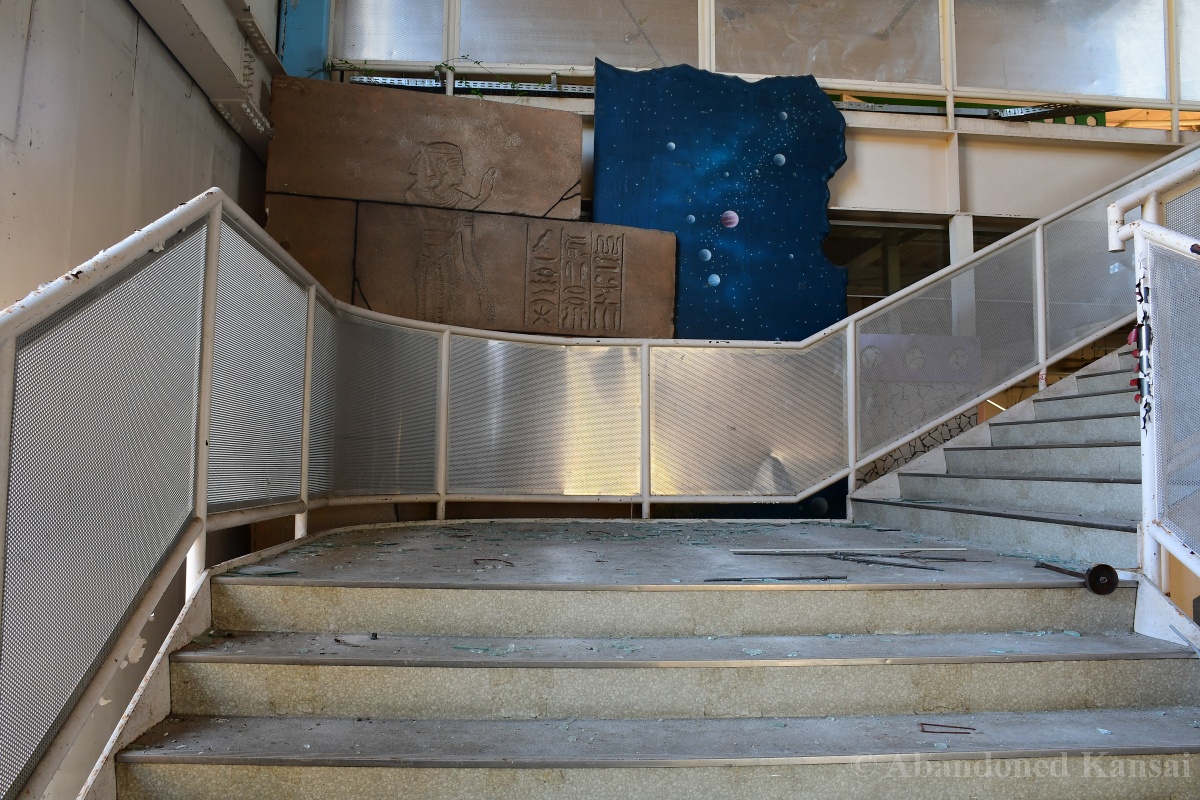
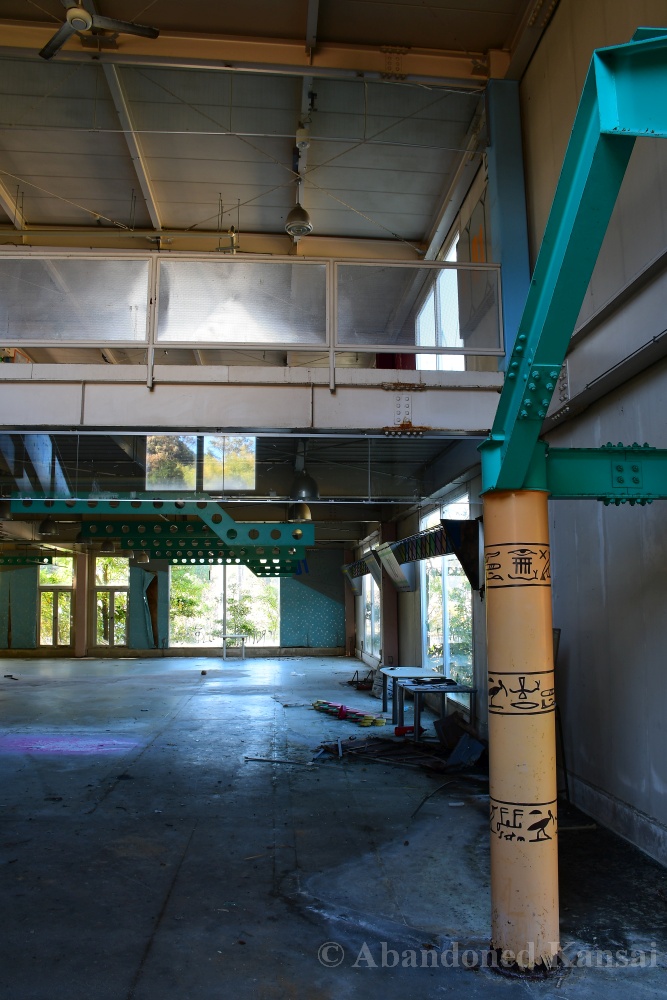
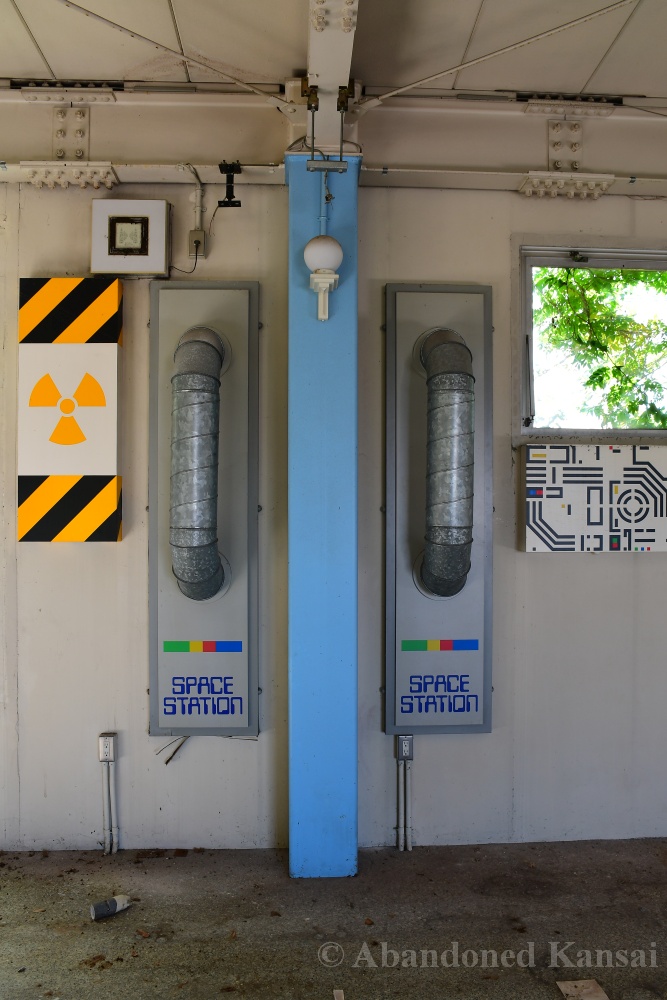
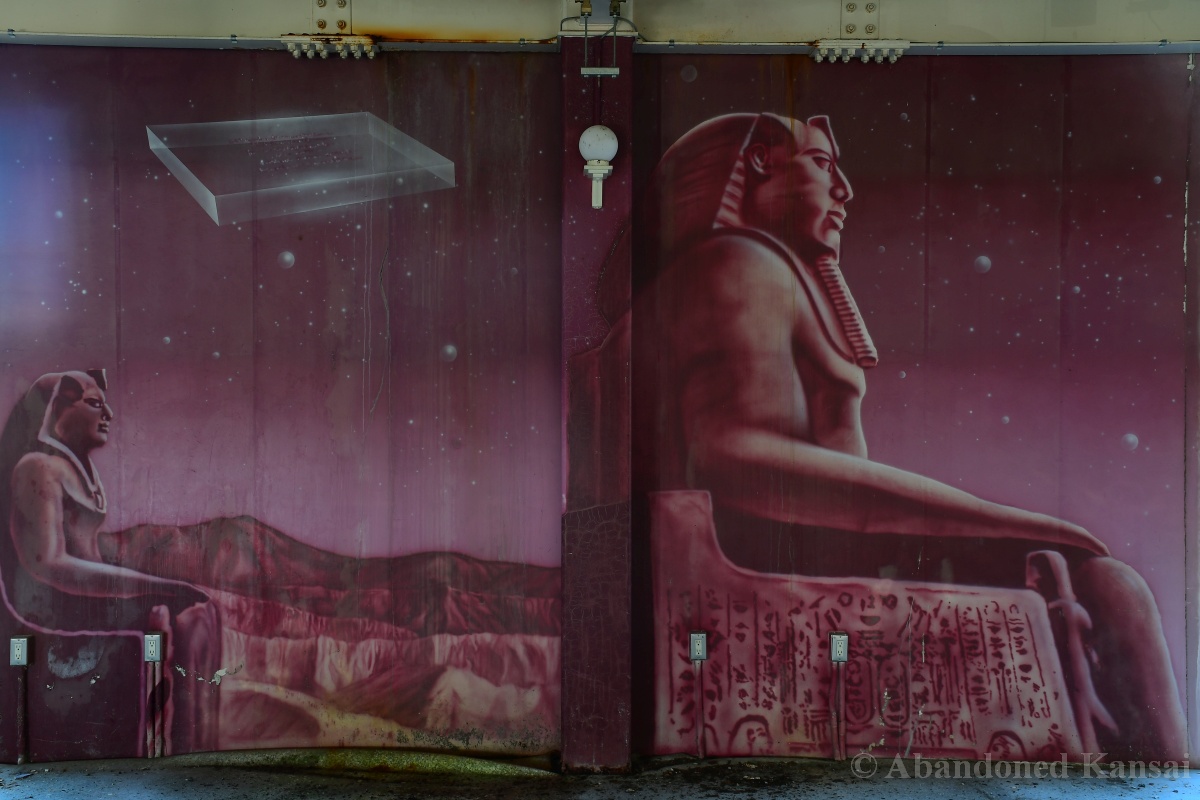
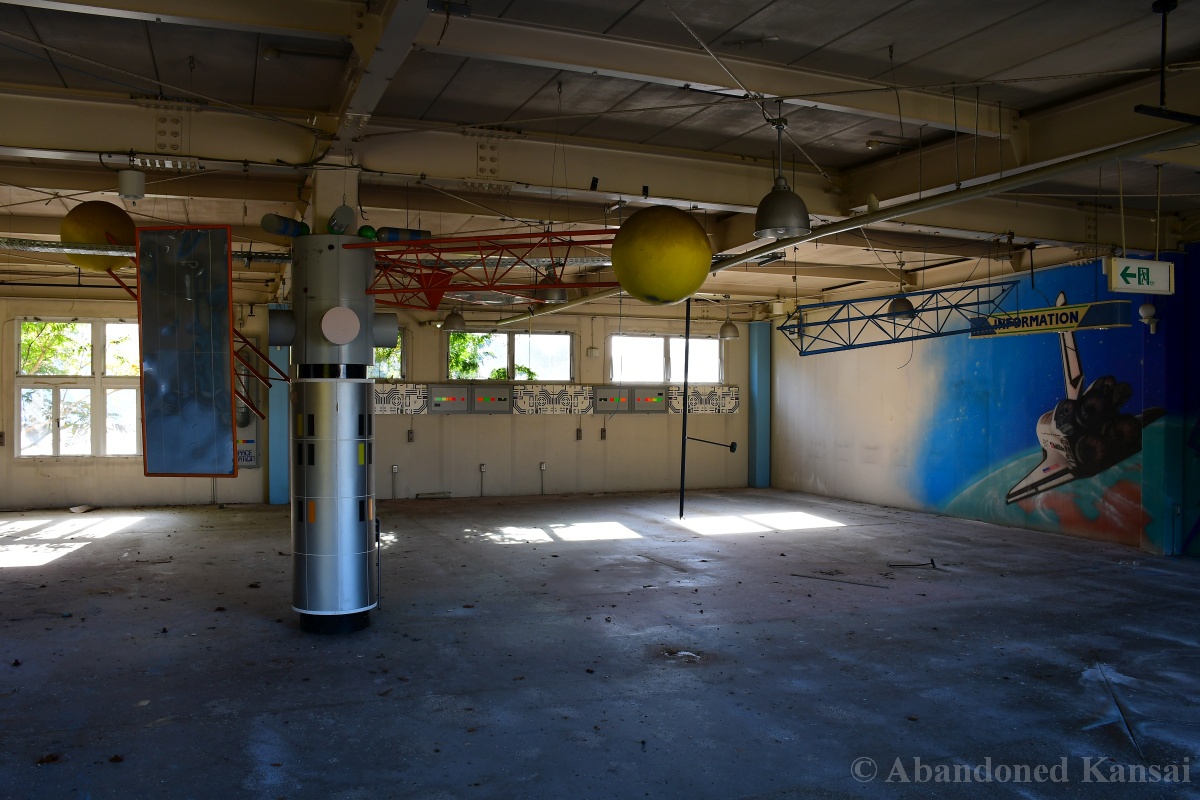
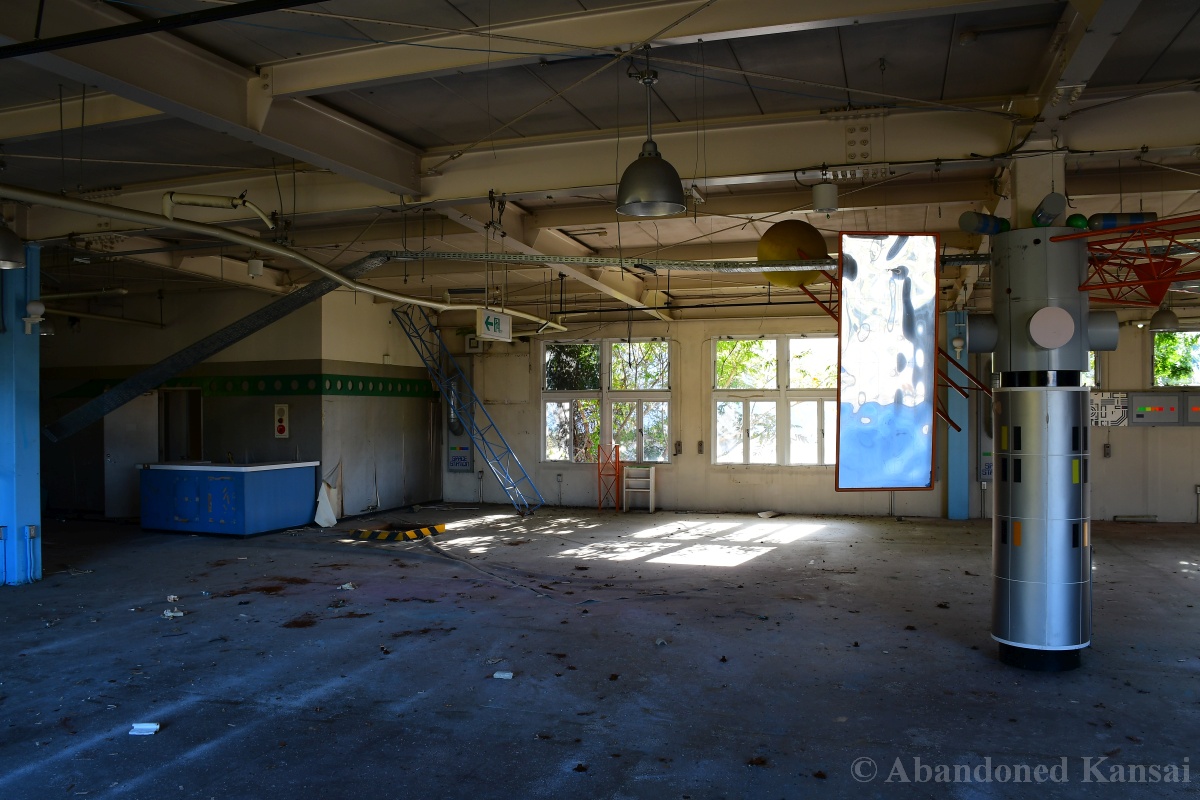
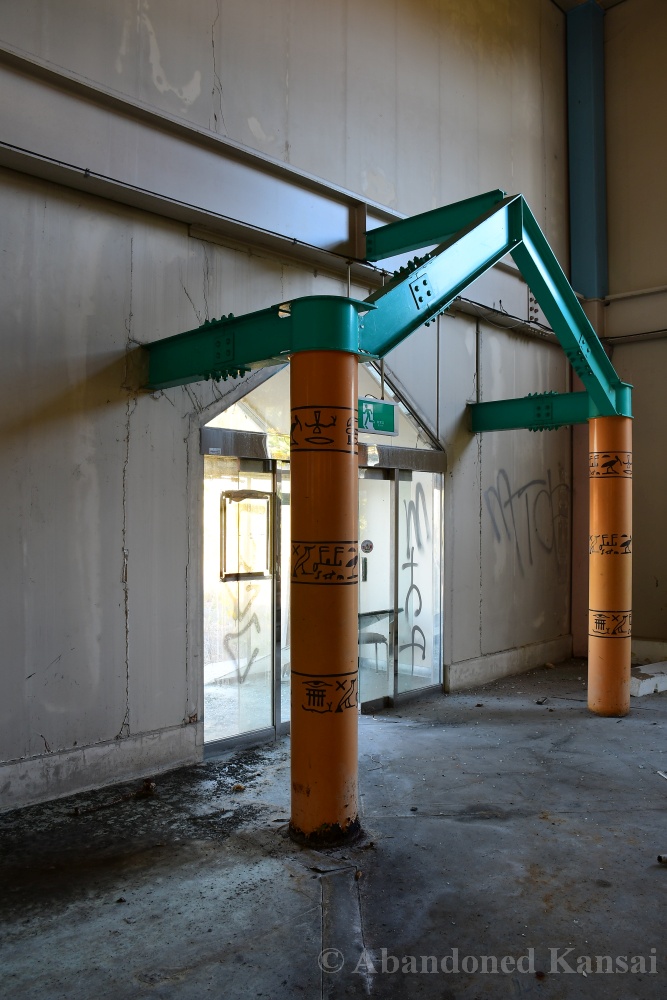
The interior of the building was in as good condition as the exterior. Some natural decay from 15 years without maintenance as well as a few graffiti, but nothing too bad. For the most you could still see the original design of the wall, which was part space, part Egyptian style… which I guess is quite 90s, too? There even was a stylized satellite contraption in the middle of the upper floor and hardly any mold, so as far as explorations go, this was a very relaxed one, despite heavy traffic on the road in front – spectacular outside, mildly interesting inside. Definitely one of my favorite locations of 2024, despite the lack of arcade machines. But if you are into those, who don’t you check out the articles about the *Arcade Machine Hotel* or the *Nishiwaki Health Land Hotel*?

(*Like Abandoned Kansai on Facebook* or *follow us on Twitter* if you don’t want to miss the latest articles and exclusive content – and subscribe to the *video channel on Youtube* to receive a message right after a new video is online…)

Read Full Post »
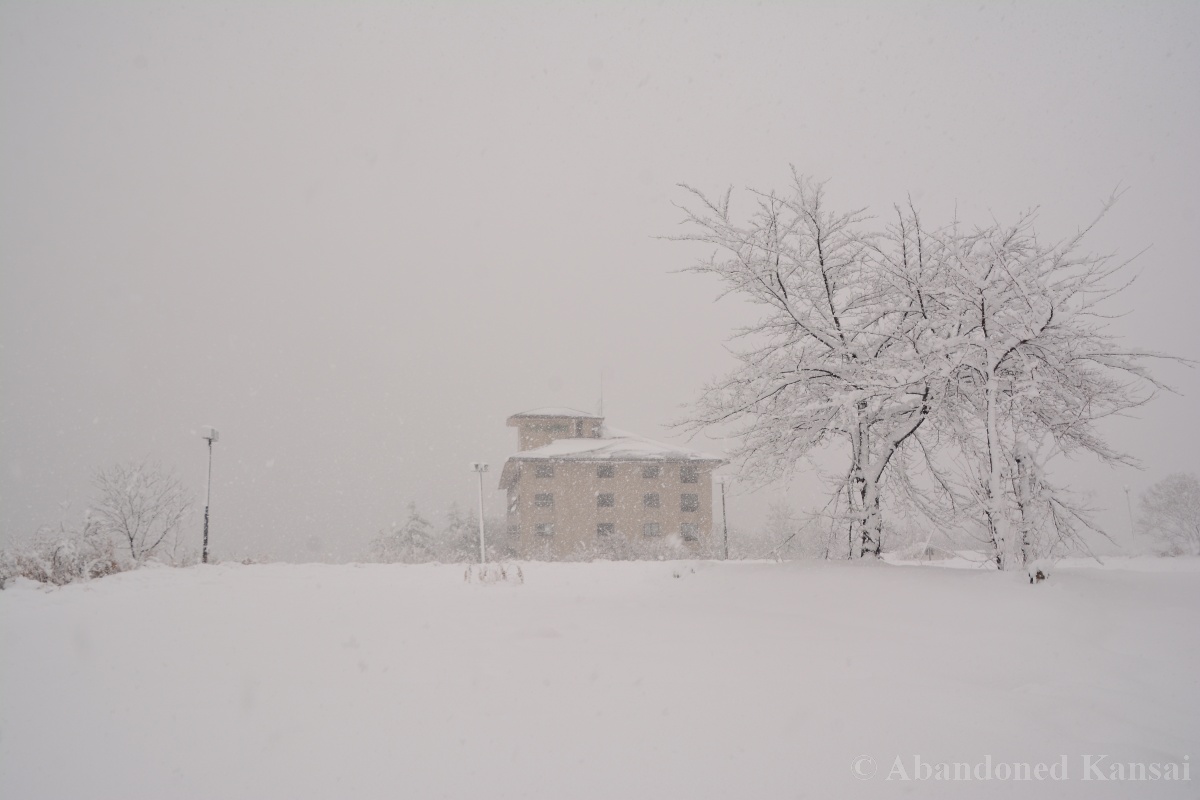
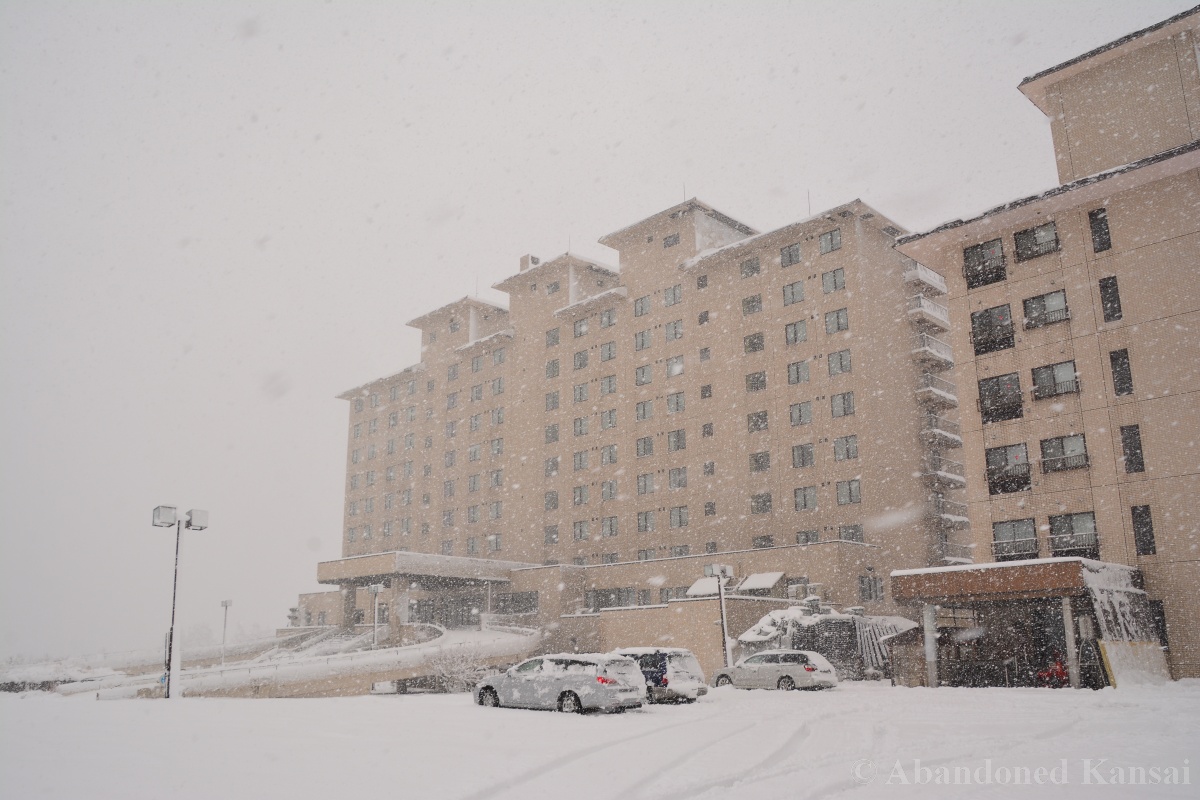
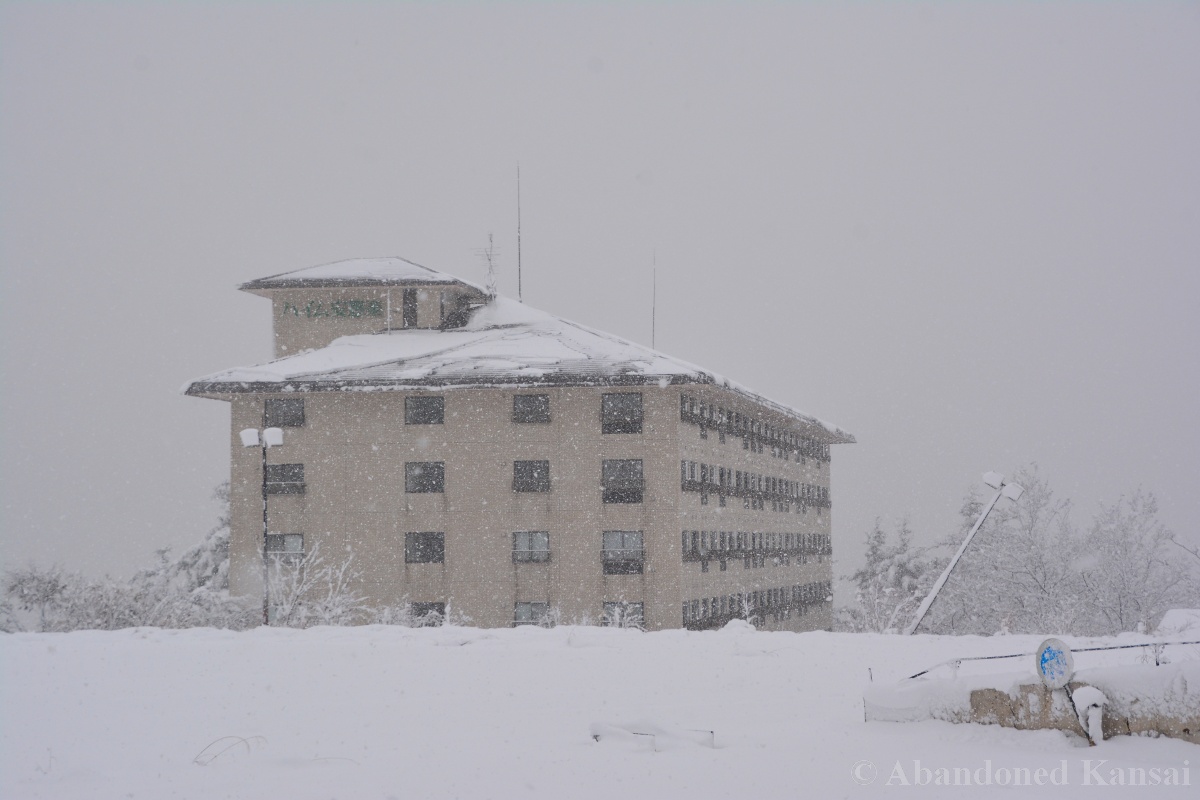
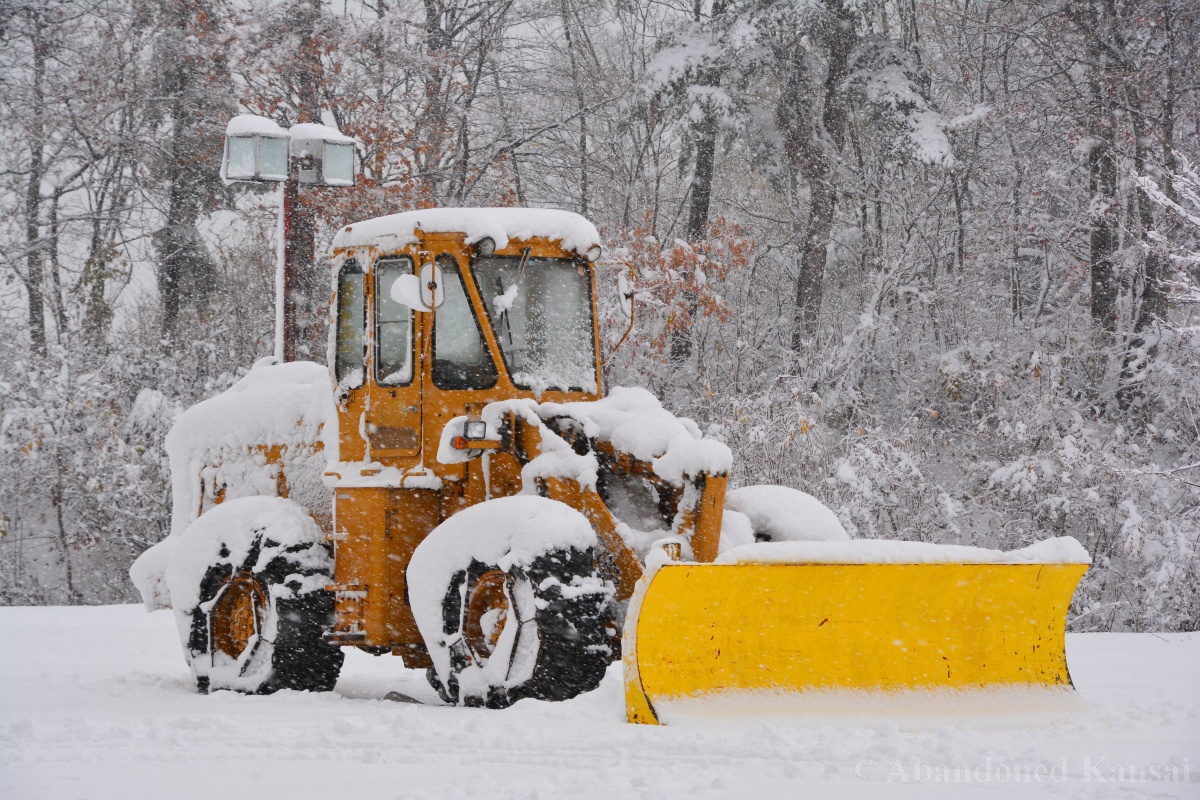
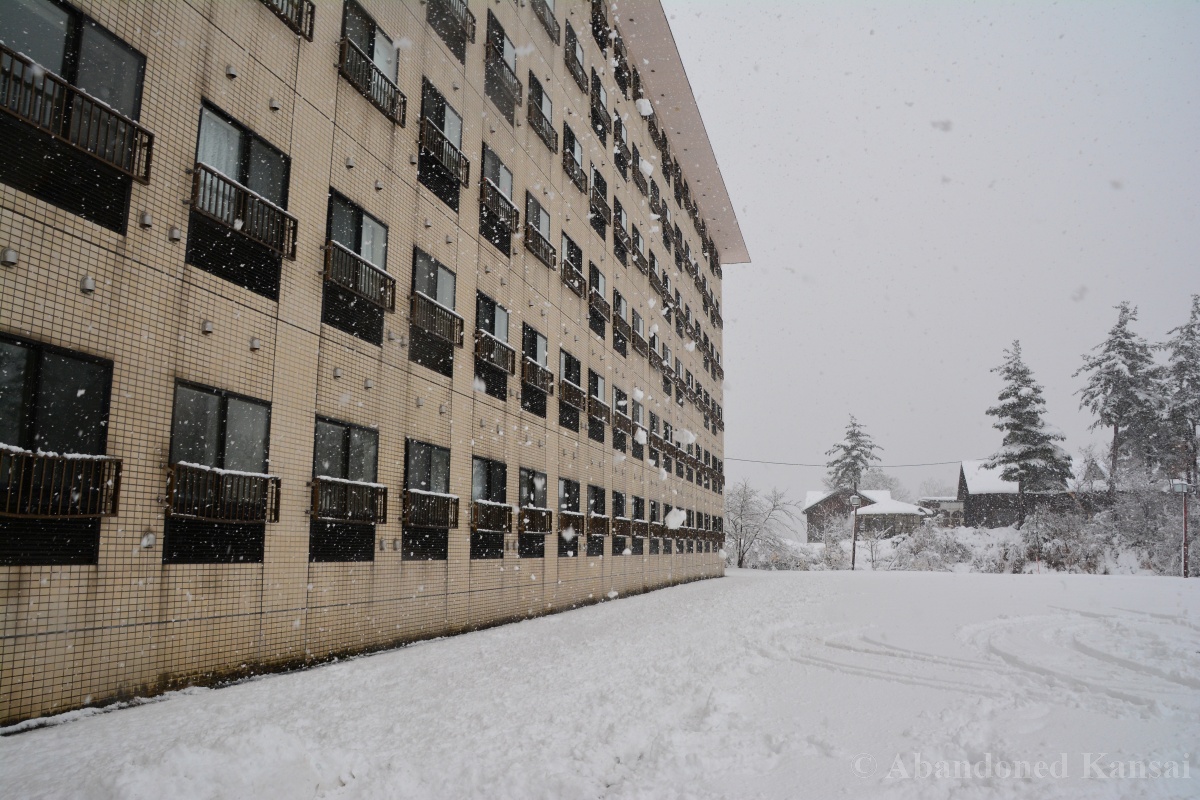
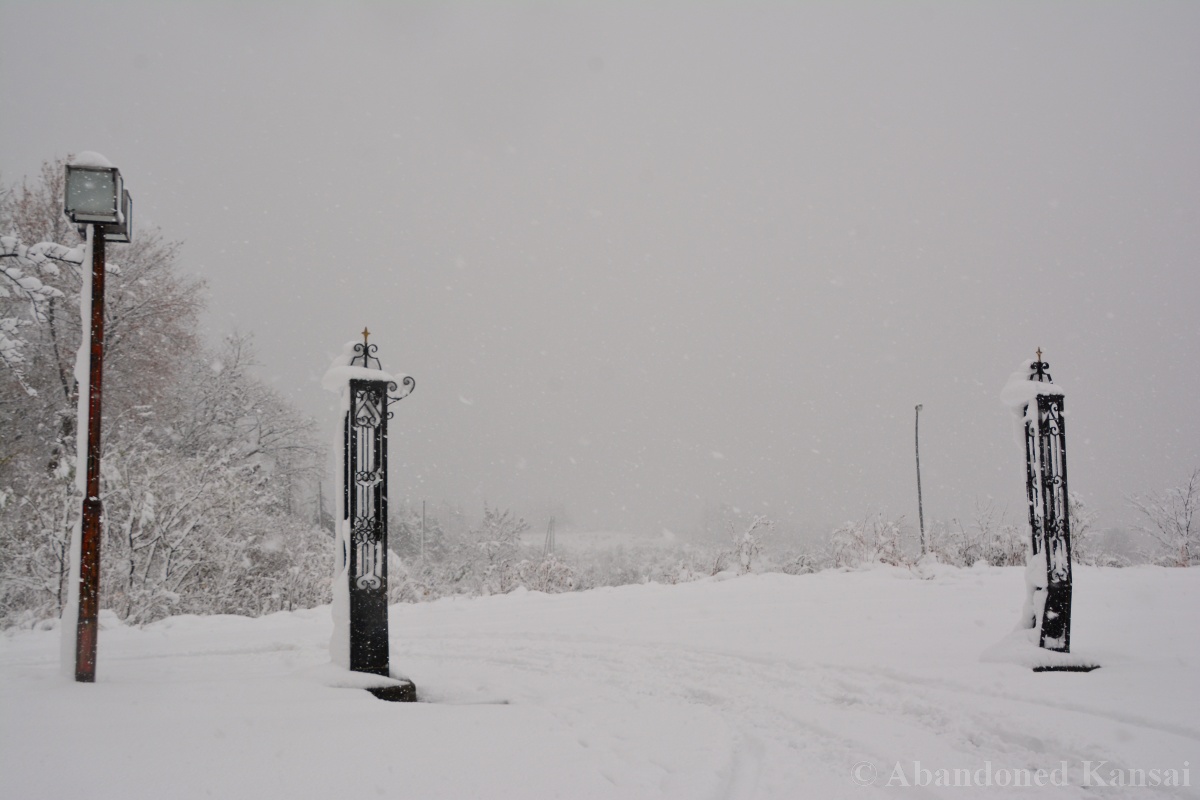
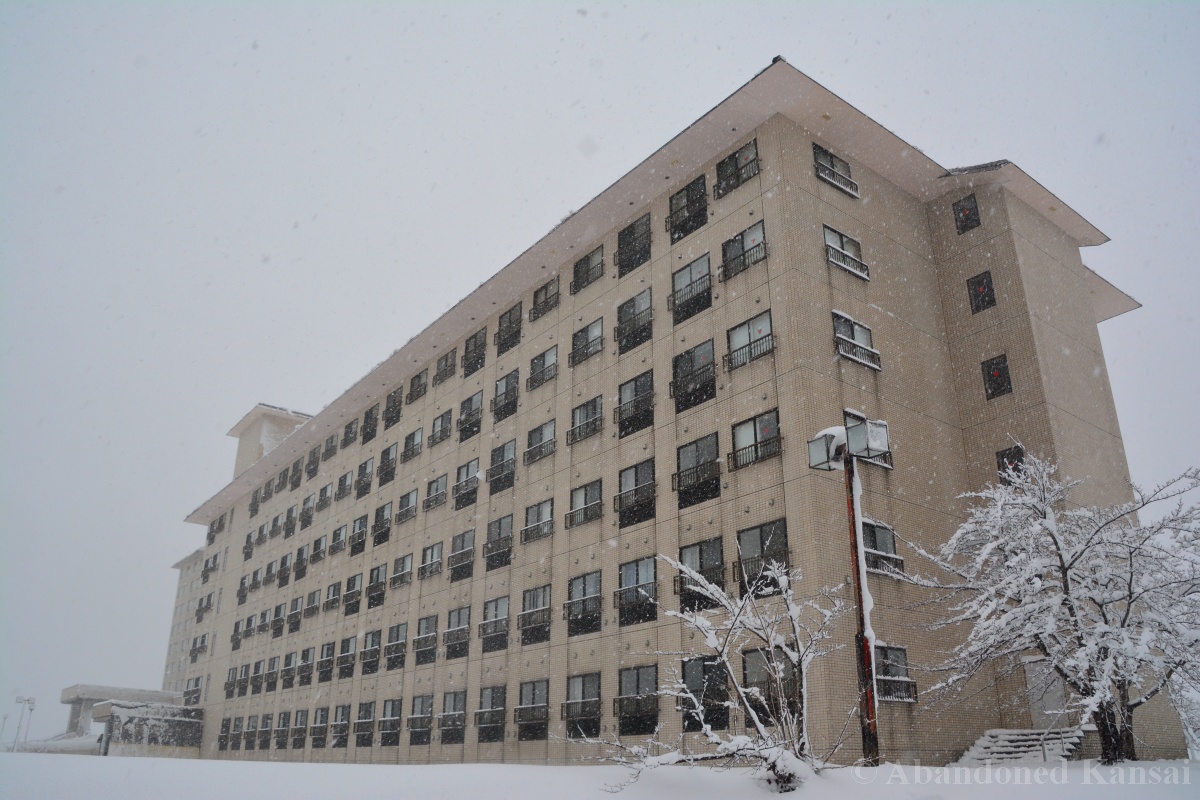
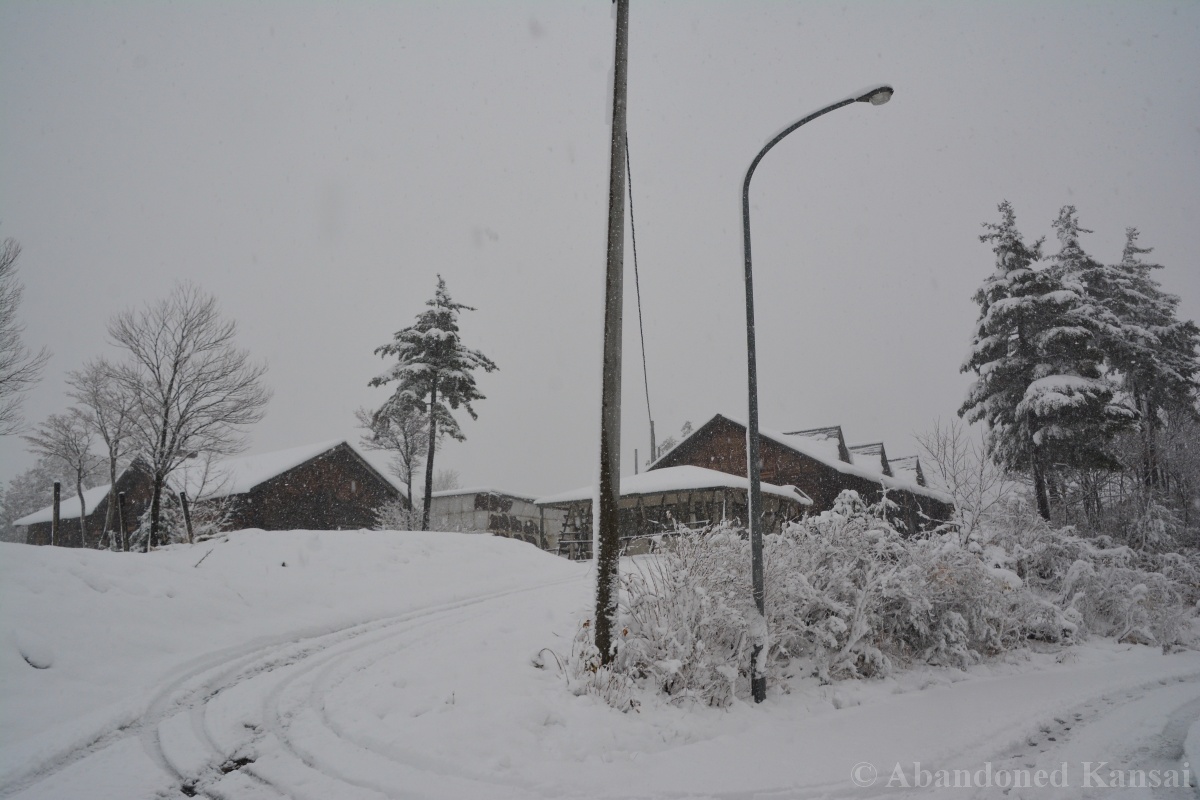
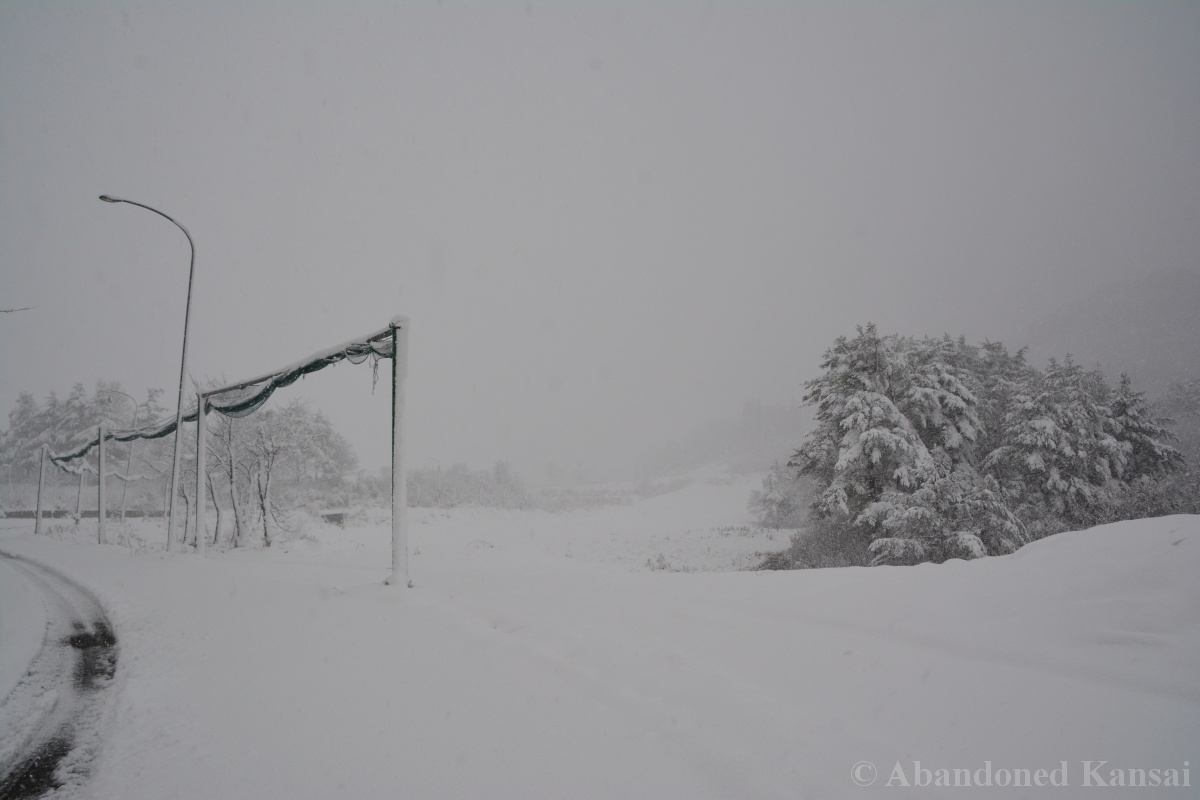
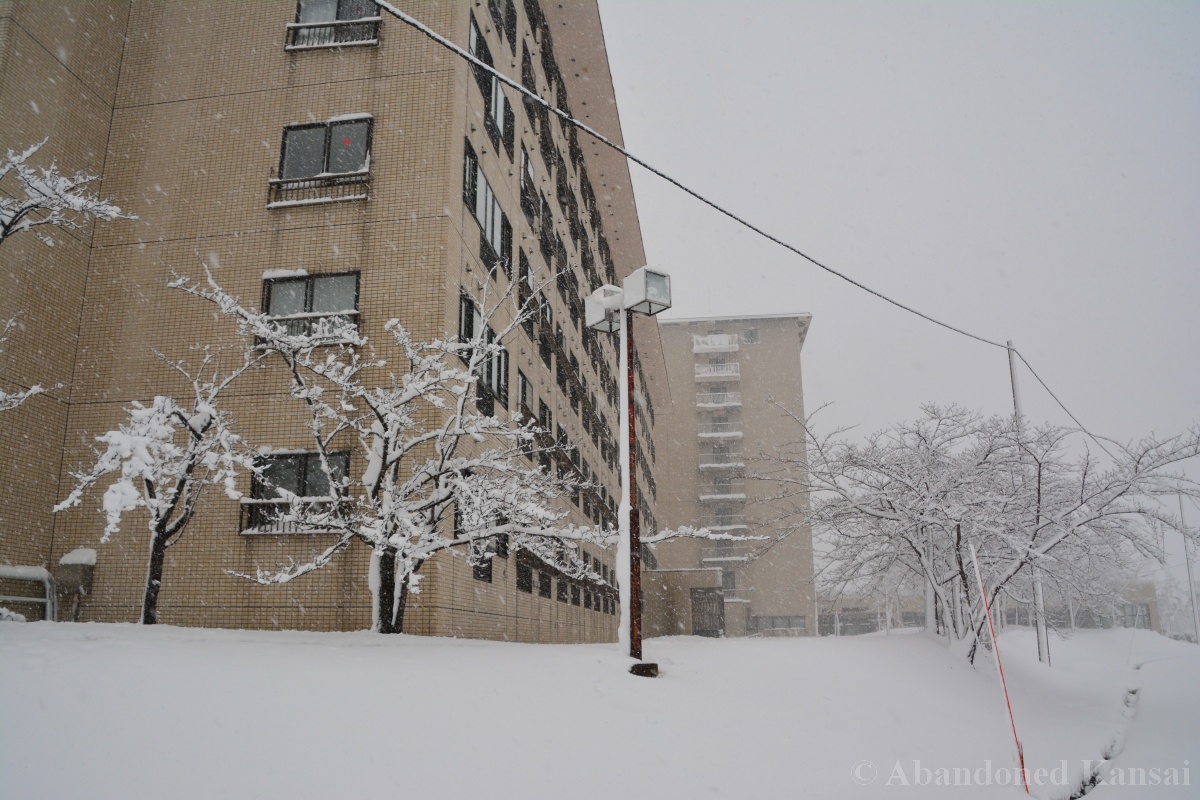
Snow in November isn‘t really common in Japan, especially in southern Tohoku. But sometimes you gotta roll with the punches…

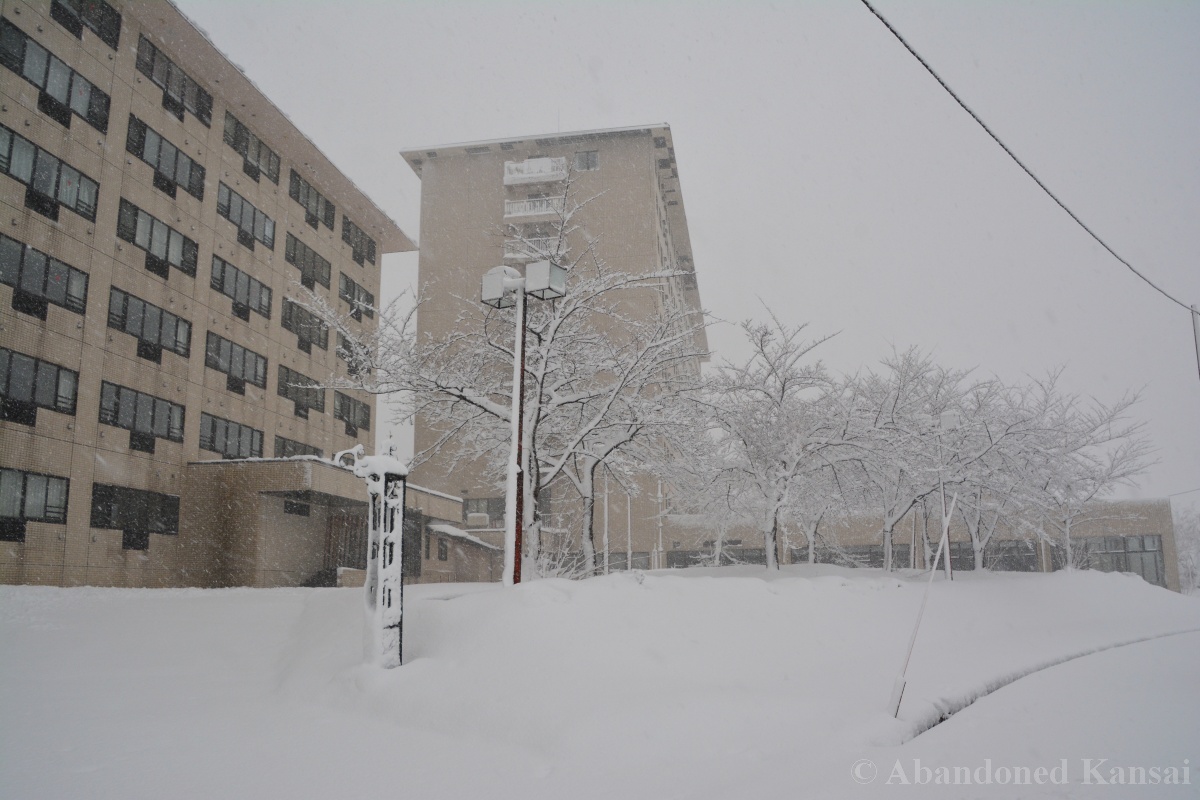
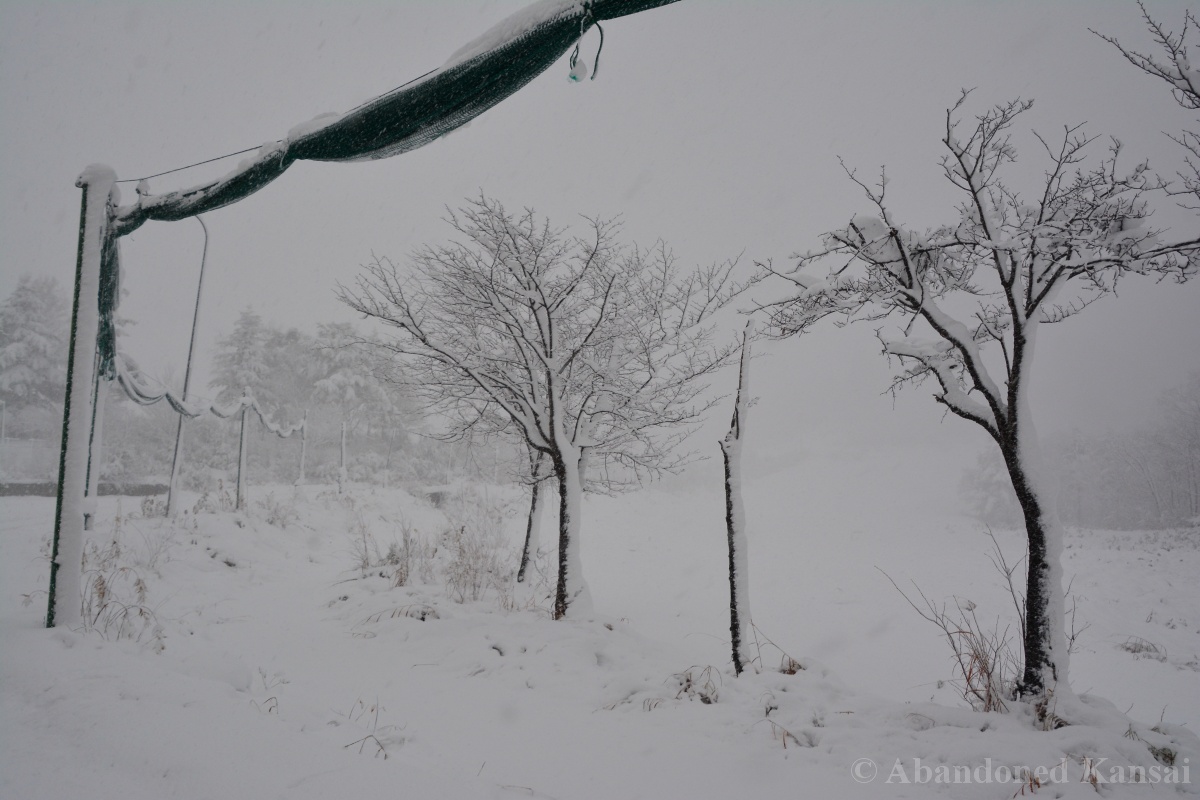
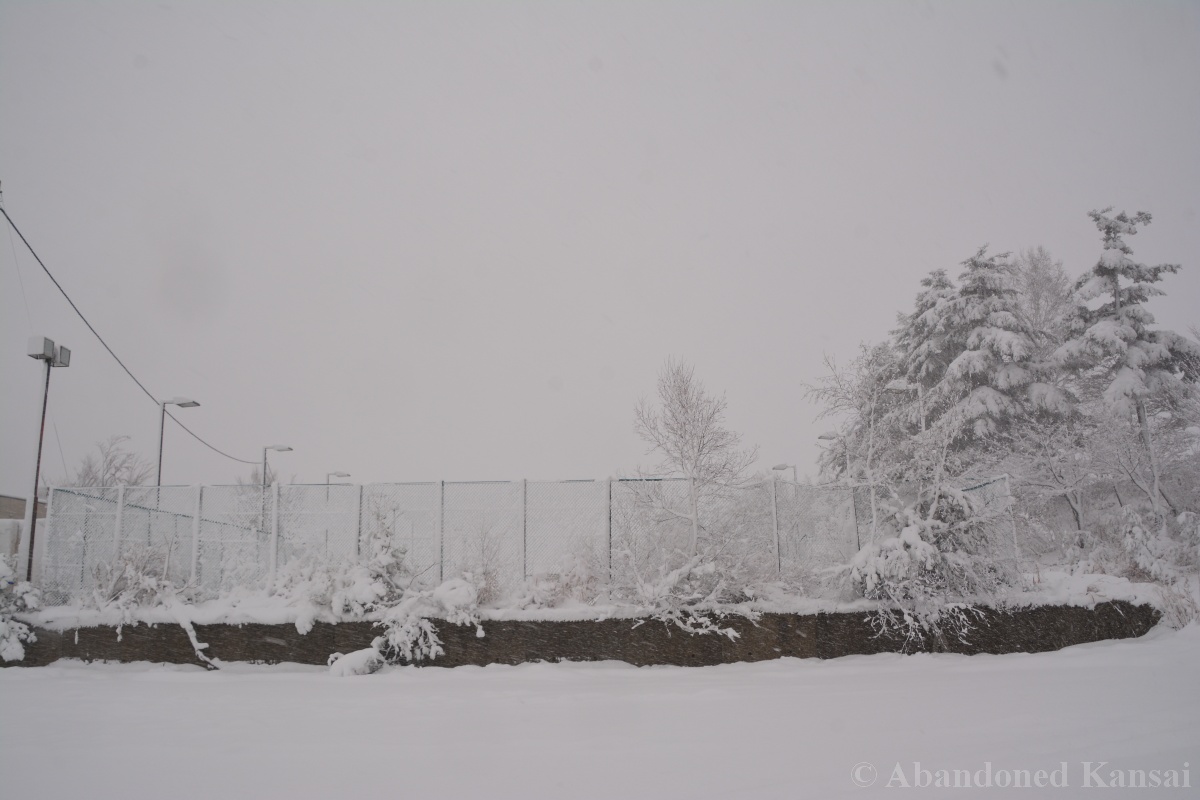
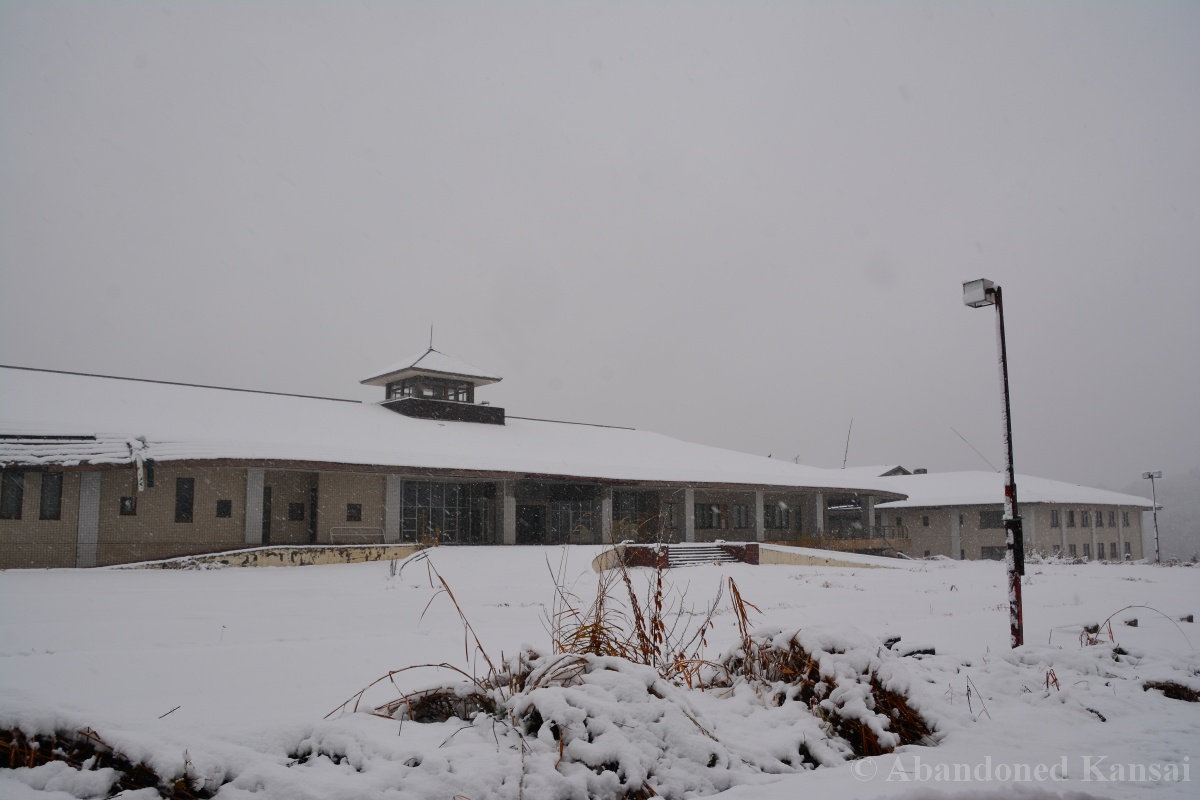
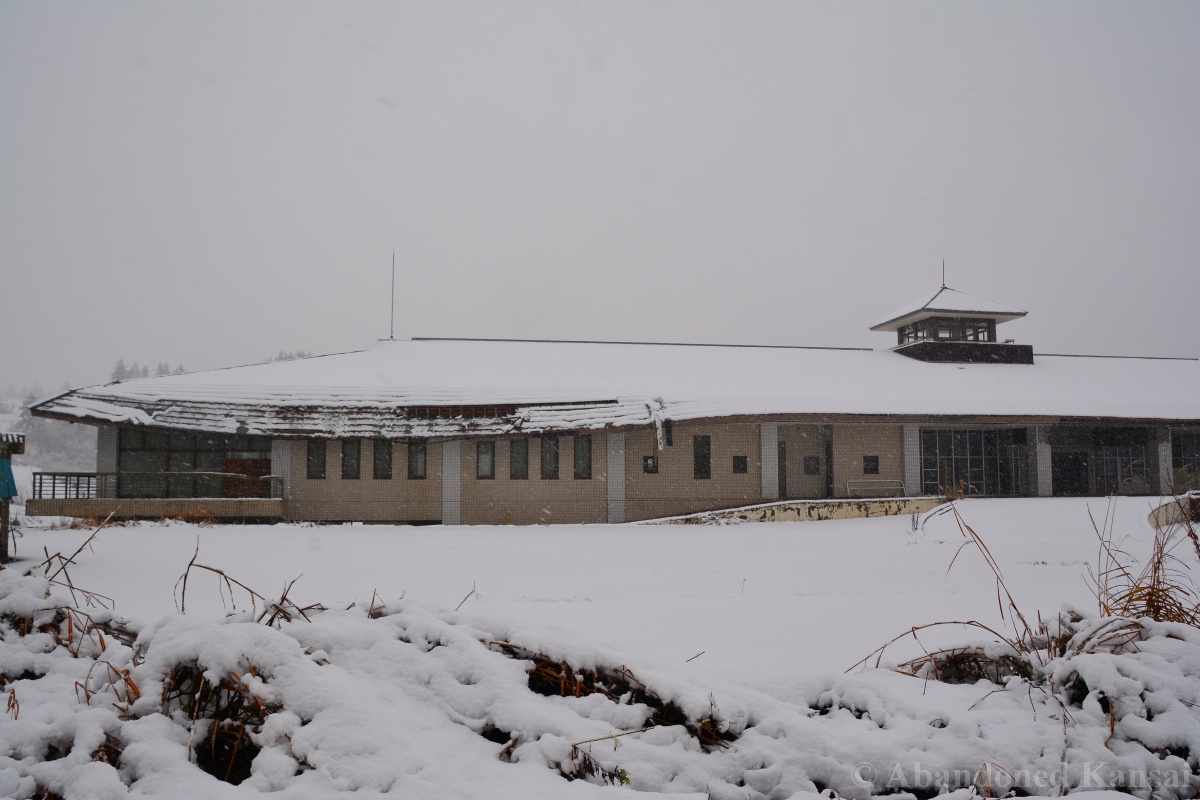
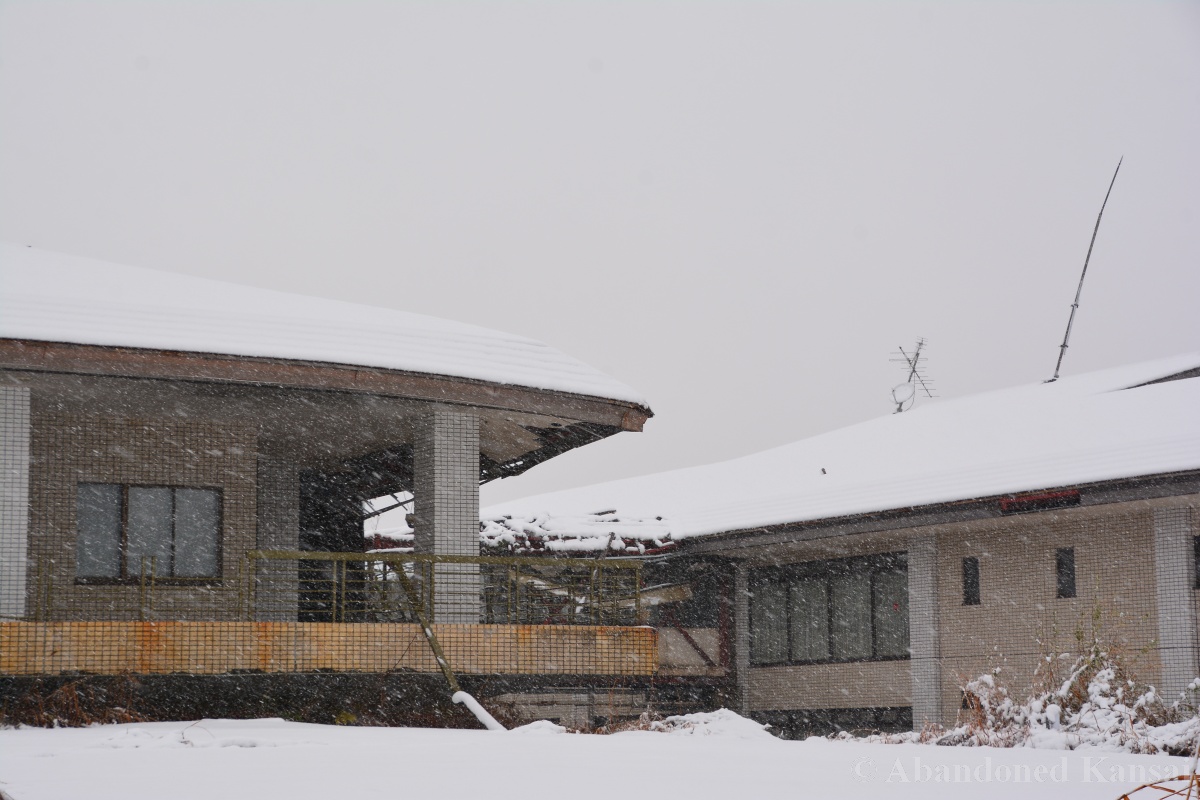
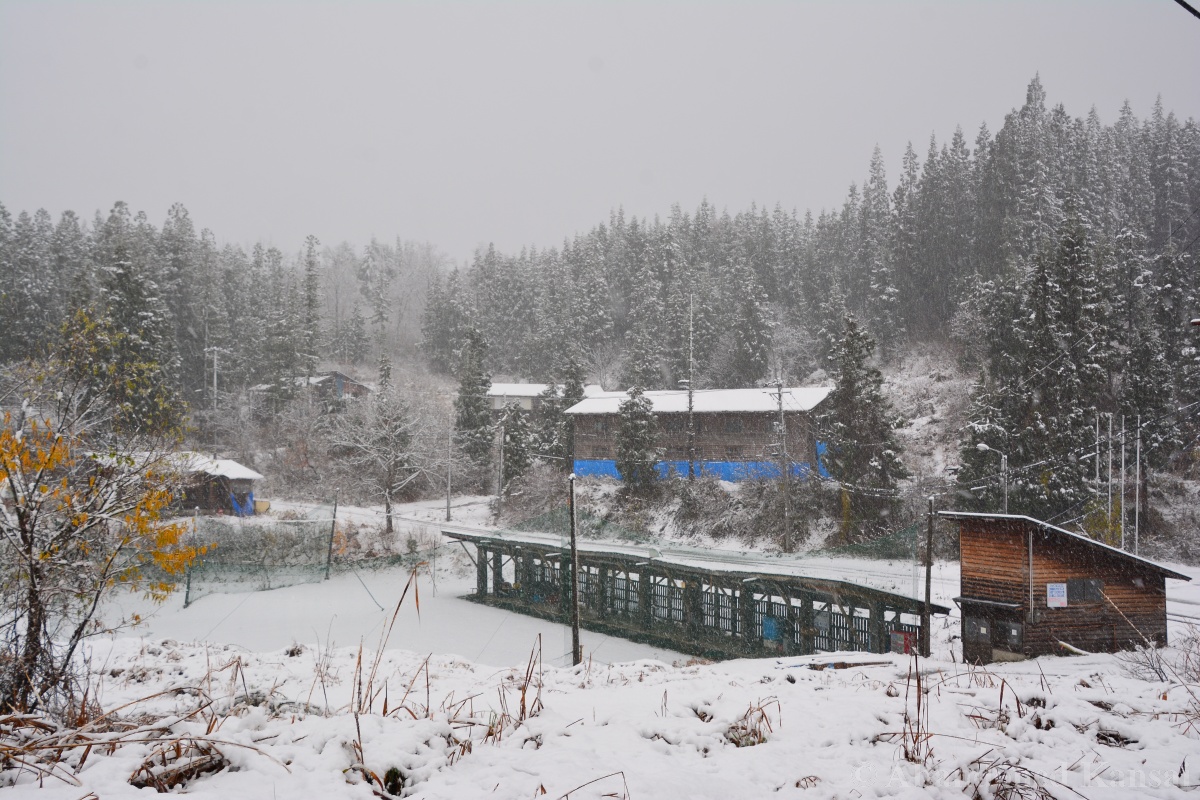
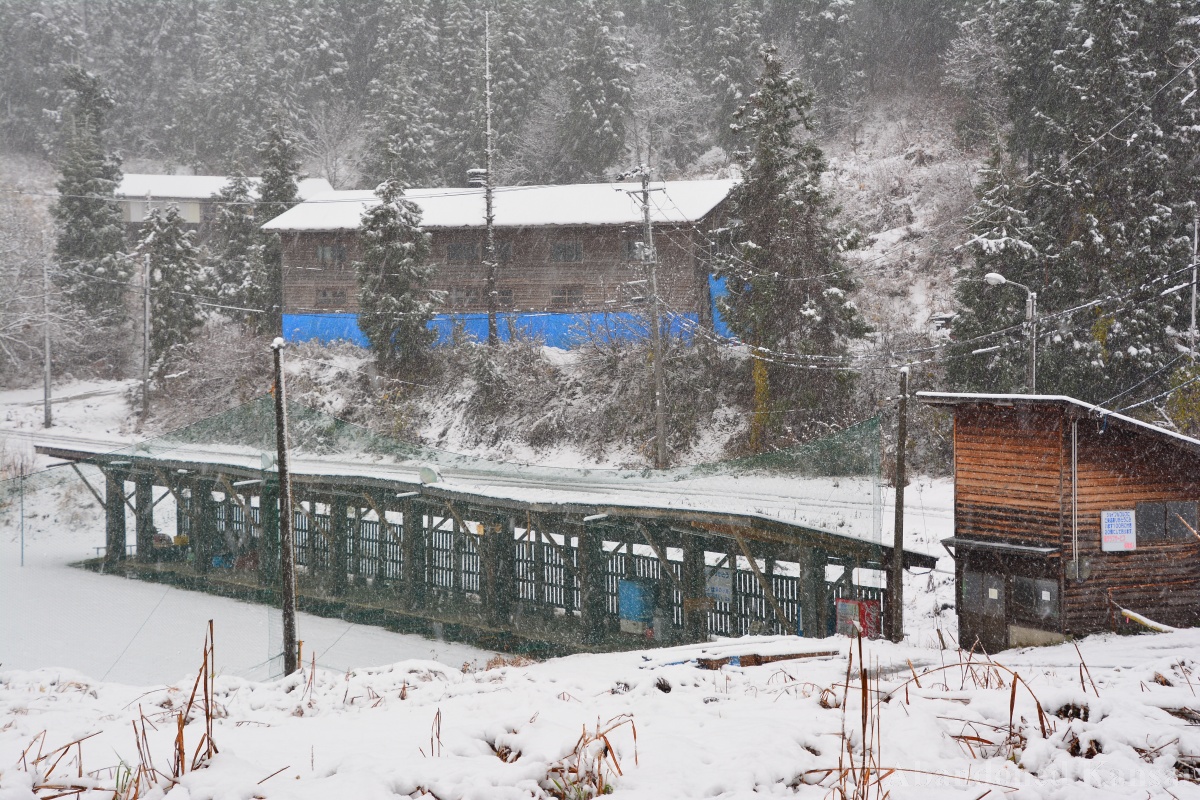
A few years ago I was on an autumn road trip to Tohoku, when I finally saw an opportunity to check out an abandoned country club that I had my eyes on for more than half a decade. Unfortunately it was so remote that I couldn’t explore it by myself due to the lack of transport, so I was really excited when I had the chance to go there. Several club houses, a hotel, a really big golf course, several other buildings – even a ski slope or two, as I found out afterwards. That thing was gigantic, potentially a whole day exploration! We stayed in a hotel about 20 kilometers away, maybe half an hour on countryside roads. It was overcast, maybe 15°C – typical autumn weather. When we left the plain to get into the mountains it suddenly become significantly colder, but who cares? That’s why we wore jackets. We took a final turn up a narrow road to the resort when all of a sudden the weather changed drastically – heavy snowfall, thick flakes. We went from zero snow on the ground to several centimeters in maybe half a minute. Nevertheless we pushed forwards, because you gotta seize opportunities when you have the chance! Unfortunately the resort was really big with lots of roads going all over the place, so we quickly lost track of where we wanted to go. You can look at maps all you want, when you go / drive up to an abandoned place, it usually looks different – it’s like Mike Tyson once said: Everyone has a plan ’till they get punched in the mouth. And the snow hit us hard. As it turned out we made it to the northwestern end of the premises with a large hotel, where half a dozen cars with license plates were parked. I got out of the car while my co-explorer turned around and slowly drove towards the entrance/exit as we both were worried that we might get stuck in the blizzard, given that the roads weren’t in great shape and we didn’t have winter tyres or 4WD. The hotel was properly locked up and the whole area wasn’t really explorable given the weather conditions, so I snapped a few quick shots before we got the hell out of Dodge and went on to greener pastures…

(*Like Abandoned Kansai on Facebook* or *follow us on Twitter* if you don’t want to miss the latest articles and exclusive content – and subscribe to the *video channel on Youtube* to receive a message right after a new video is online…)

Read Full Post »
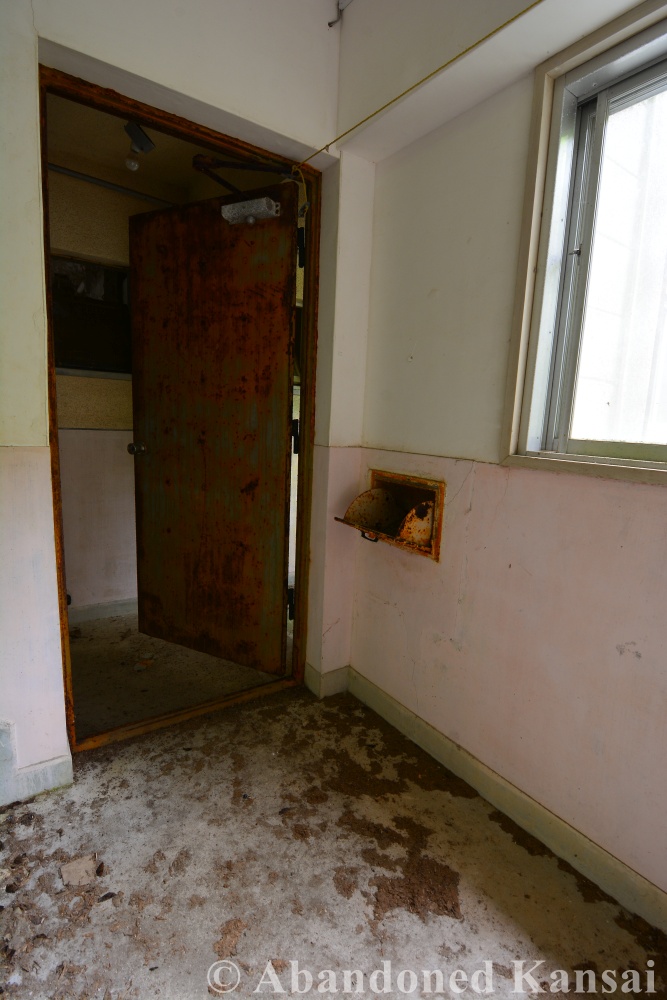
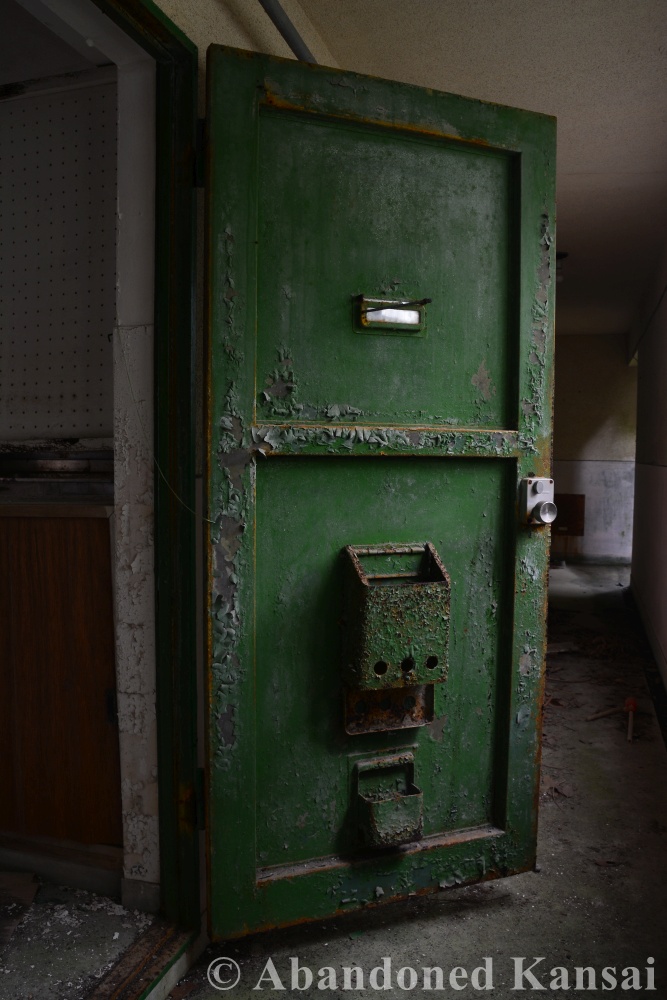
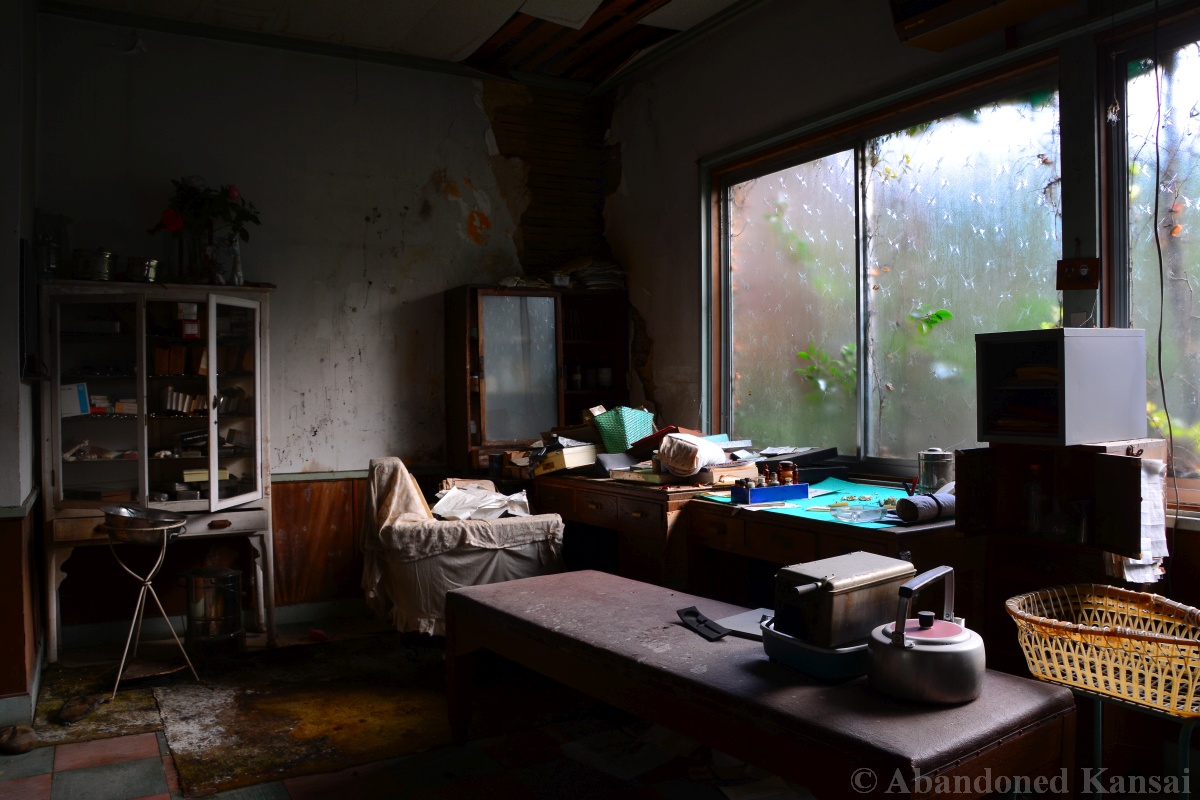
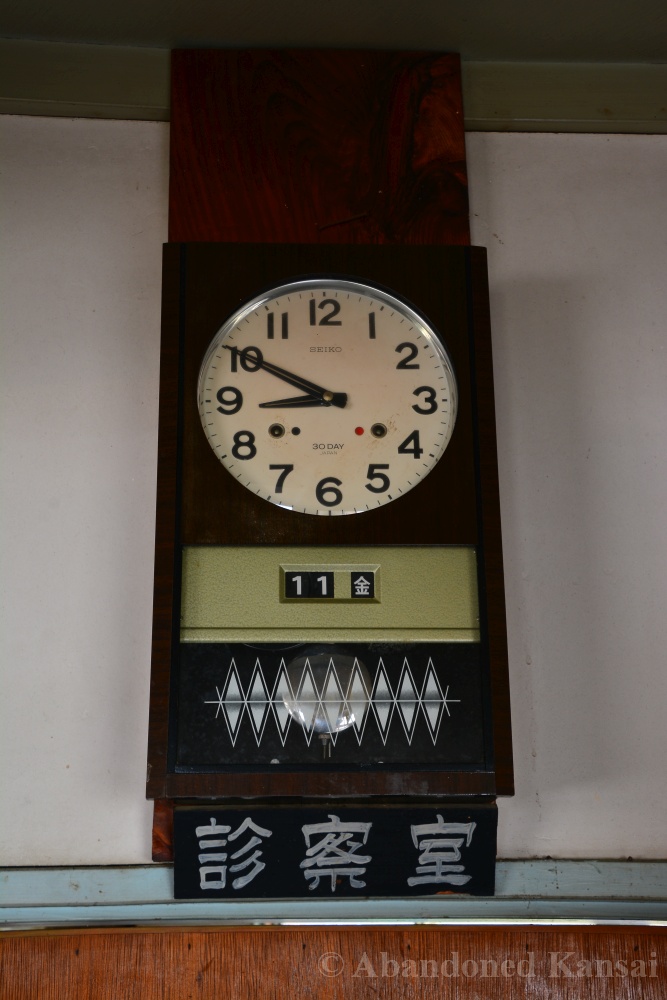
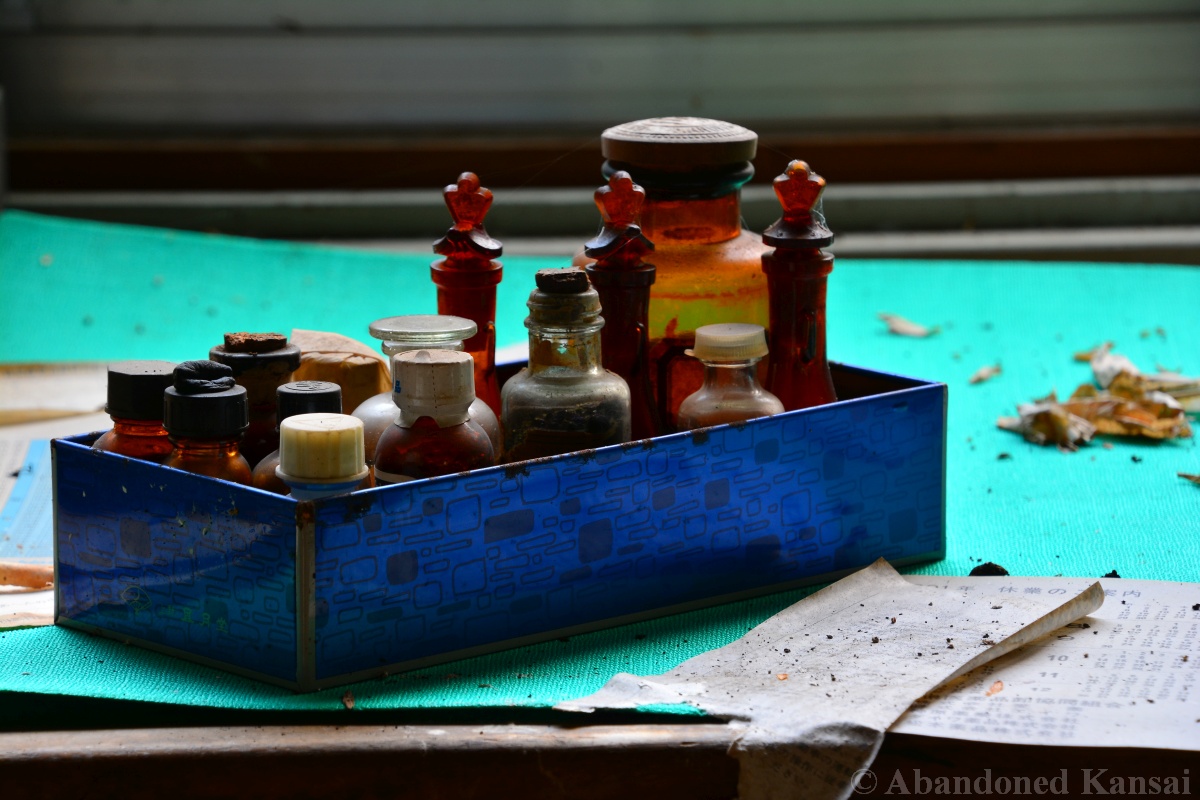
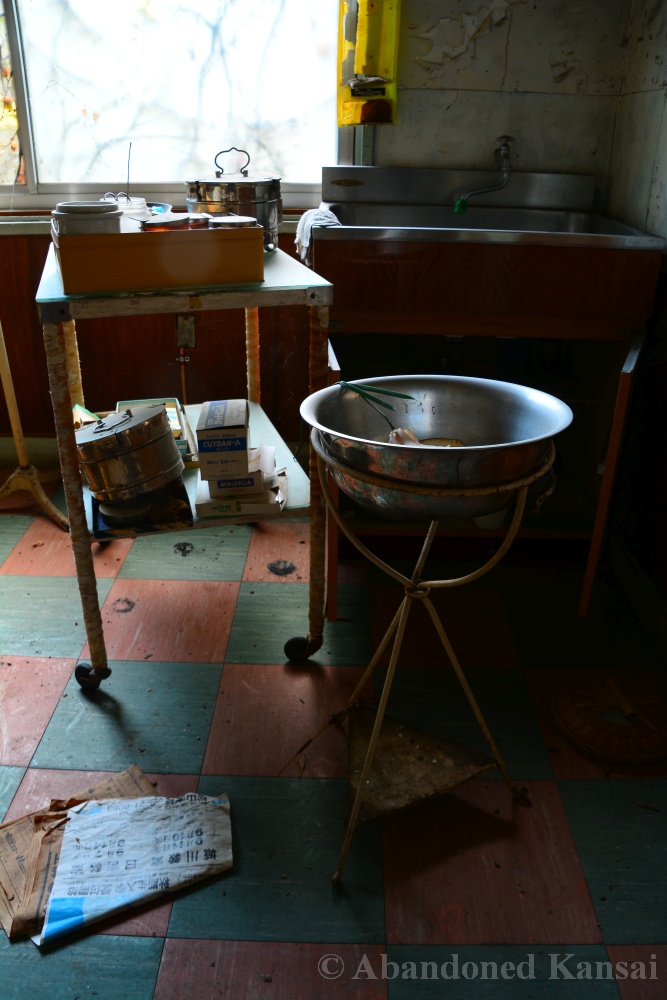
I love abandoned hospitals! Always have, always will – ever since I walked into the *Tokushima Countryside Clinic* about a year after I started exploring abandoned places. It wasn’t a standalone hospital as we are used to in the West, more like a traditional Japanese mansion with a pharmacy and a study and an examination room. Most of those clinics are basically the doctor’s home with a section for business – and I usually named them clinics here on the blog, while hospitals are standalone buildings with rooms for inpatients. *Hospitals here on Abandoned Kansai* also tend to be rather modern whereas most clinics are from 50s or 60s, some even pre-WW2, like the aforementioned Tokushima Countryside Clinic.
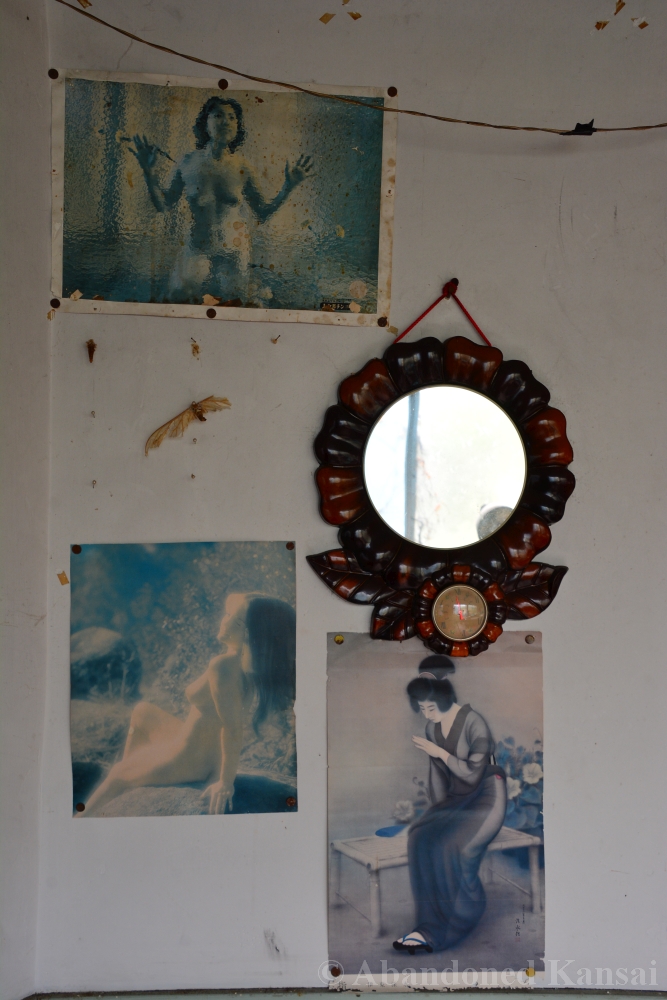
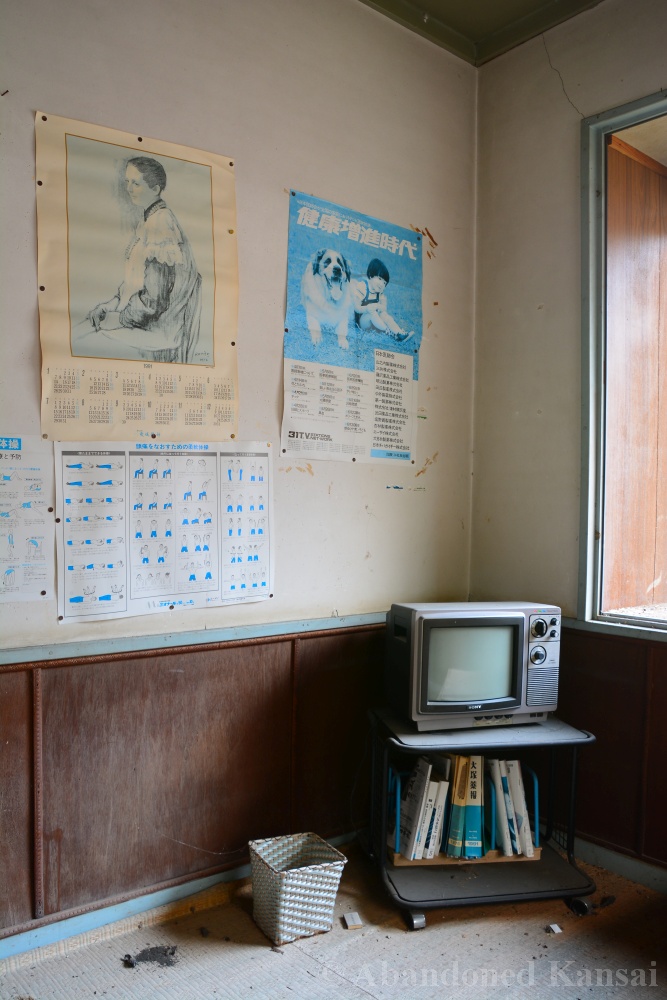
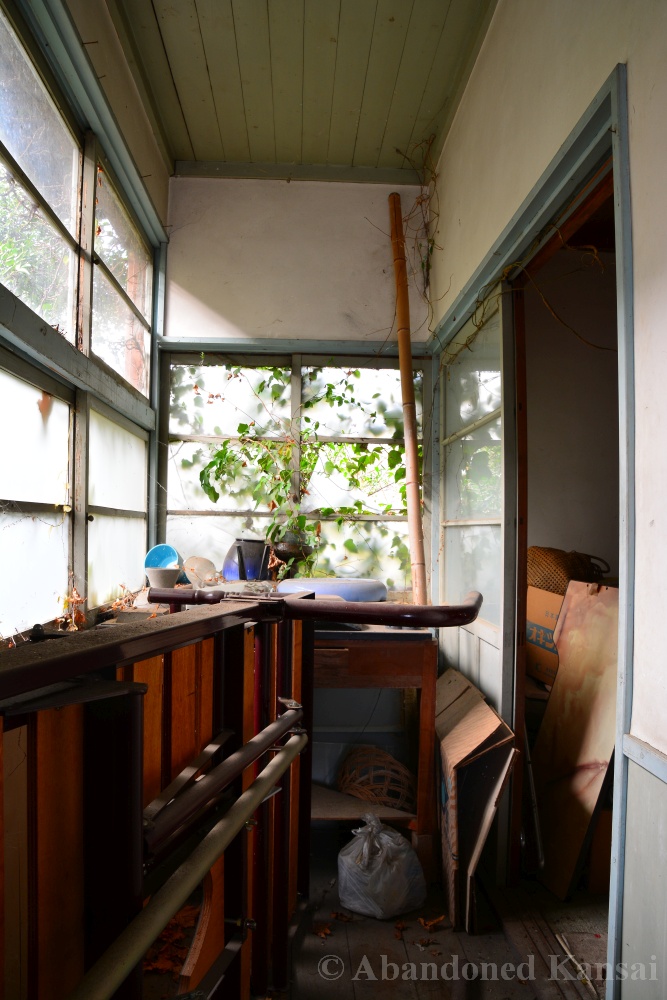
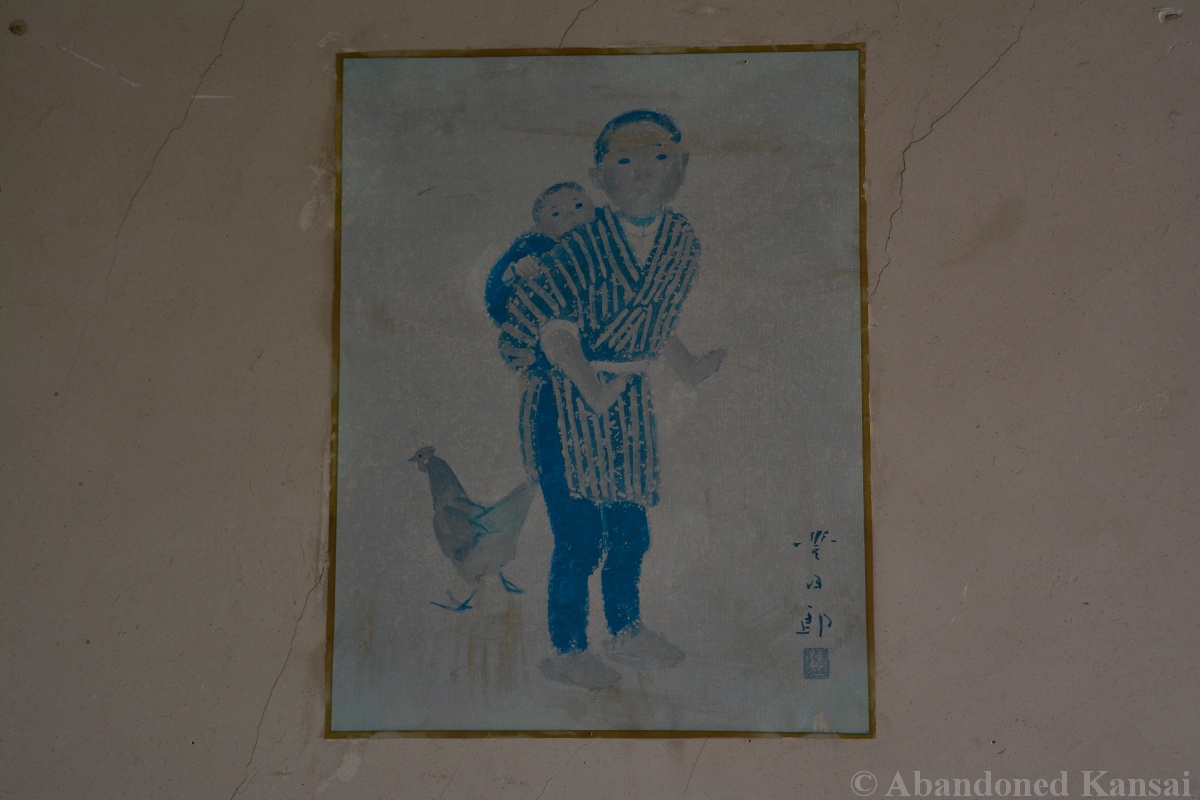
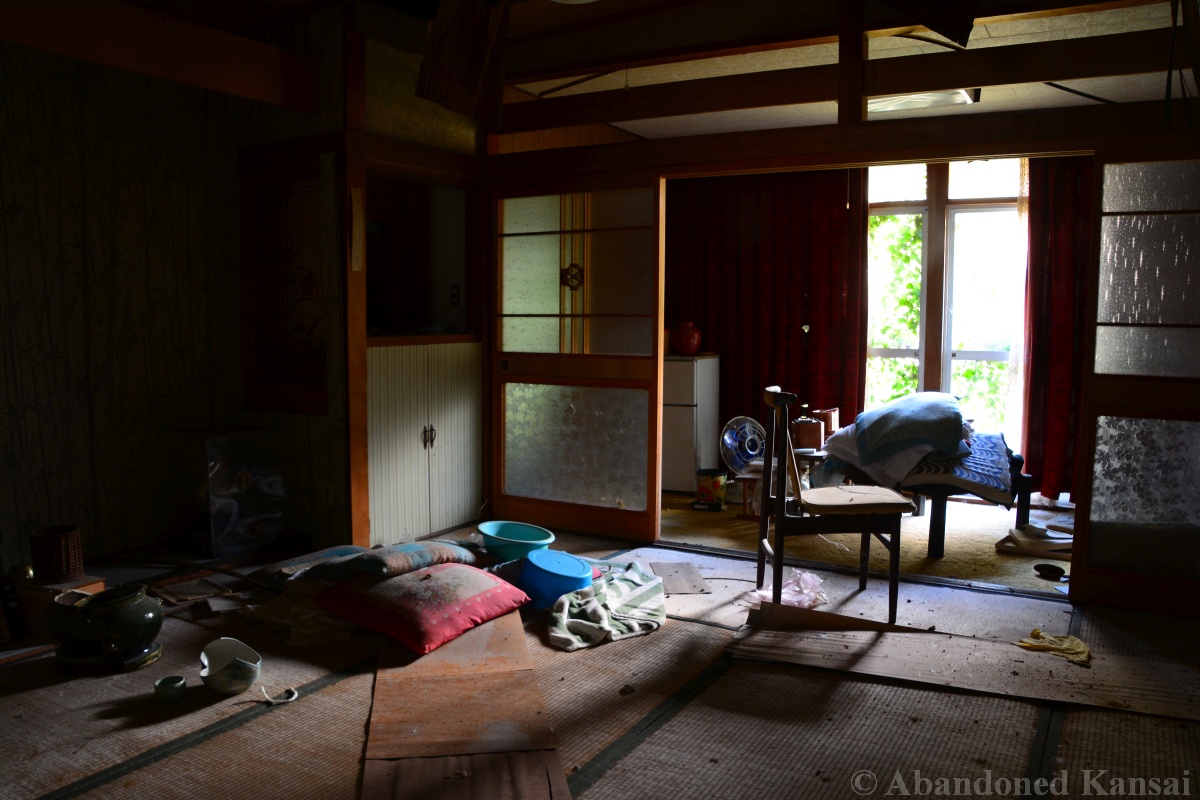
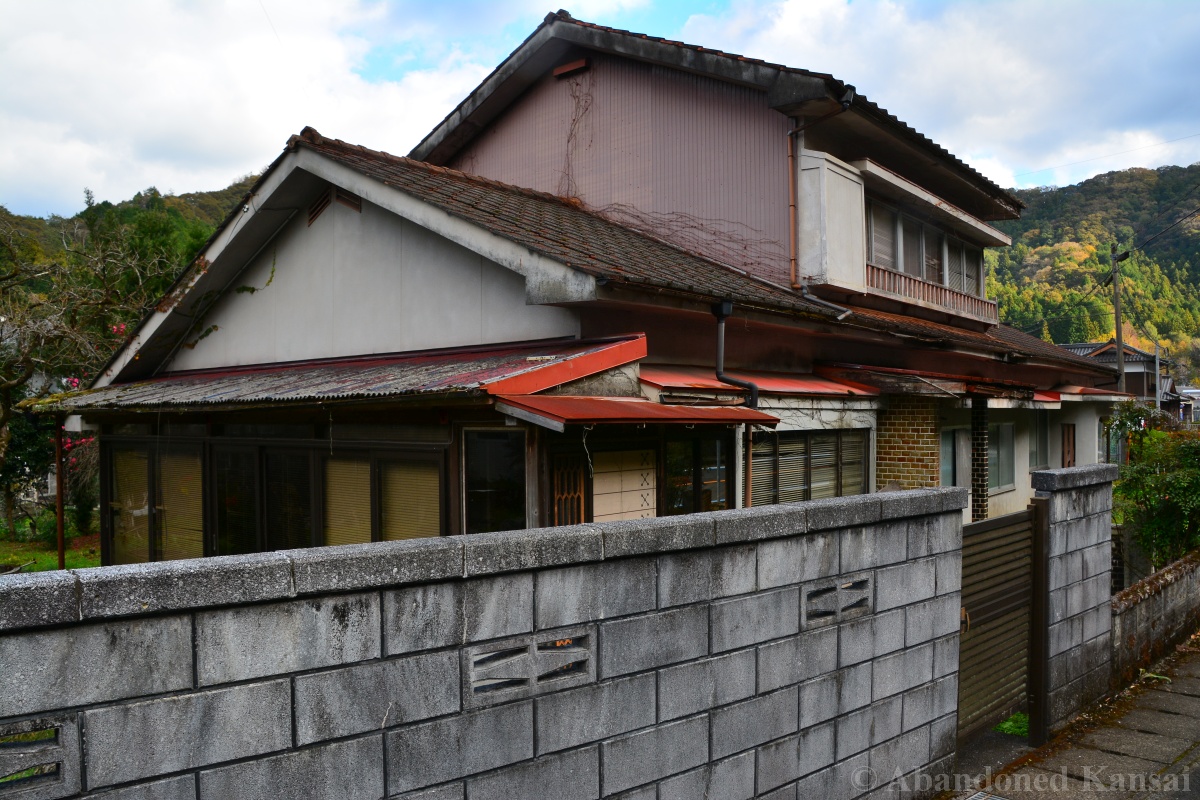
The Boobs Clinic (named after two pictures on a wall in the office, which hopefully were put up after the clinic closed – it wasn’t named that because it was home to a cosmetic surgeon, or any surgeon for that matter) in rural Ehime prefecture looked like any other house in the area, maybe on the larger side. If there had ever been signs that it was a doctor’s office, they had been removed a long time ago. At the time of my visit in late 2020 (exploring during the pandemic was the best!) it was just another house on the main road of a small town.
Since I wasn’t in charge of that trip, I actually had serious doubts when approaching the building, because it could as well still have been inhabited – and you really don’t want to walk into somebody’s home while the people living there are just minding their own business…
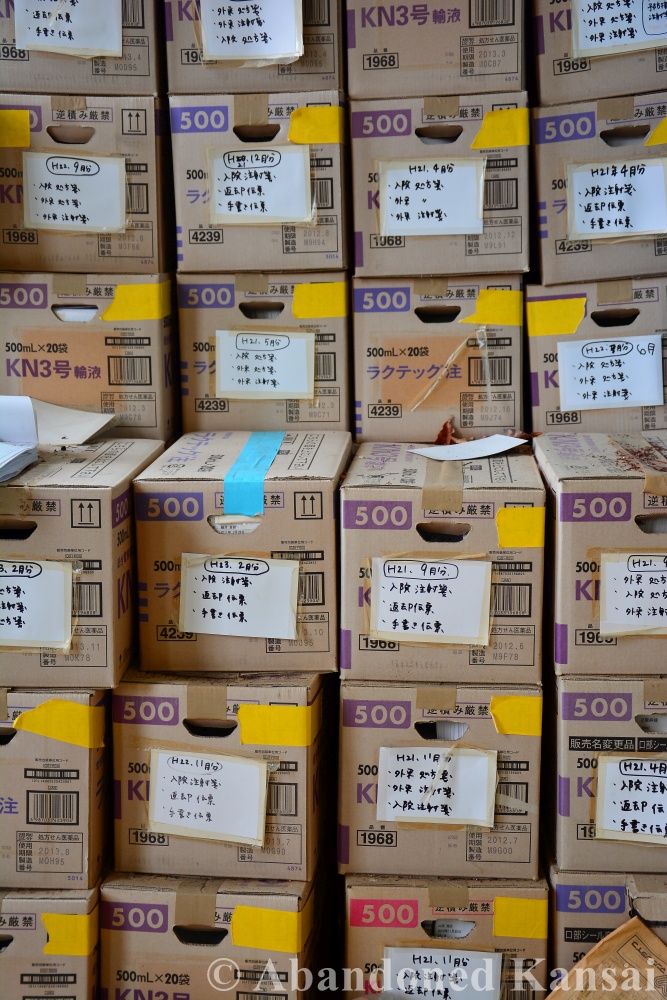
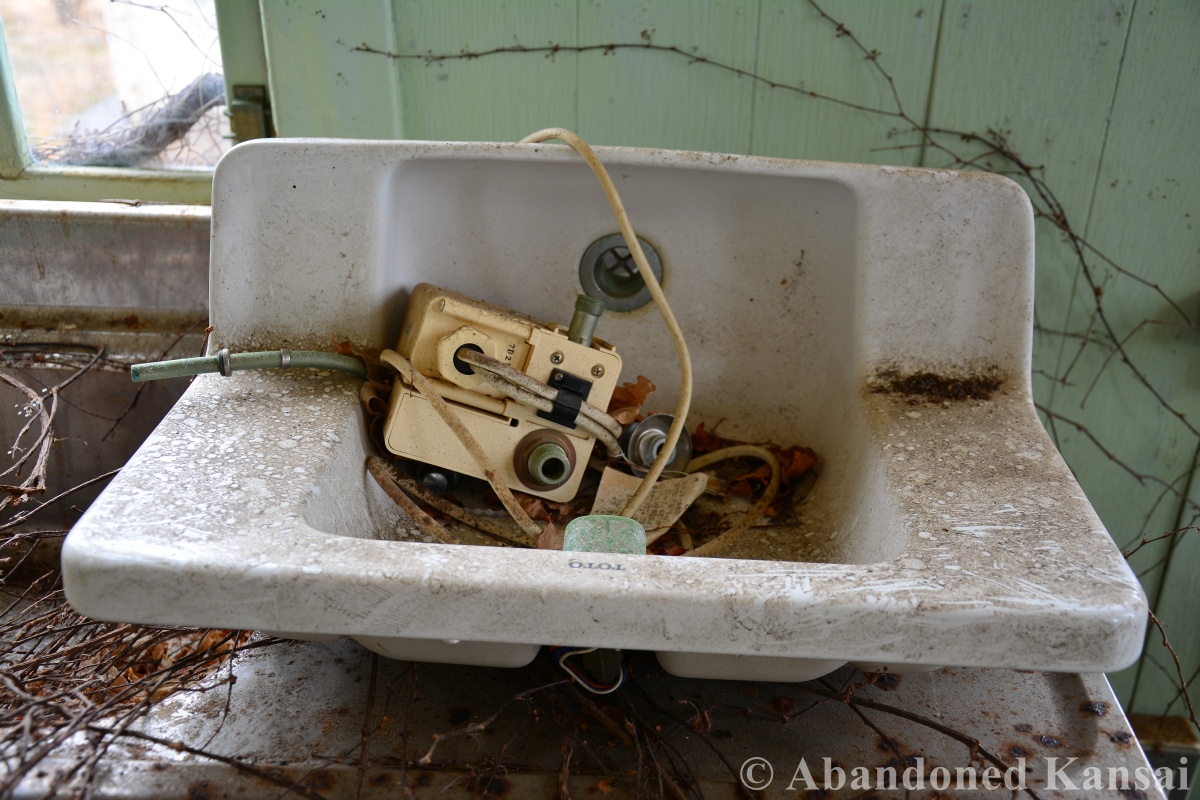
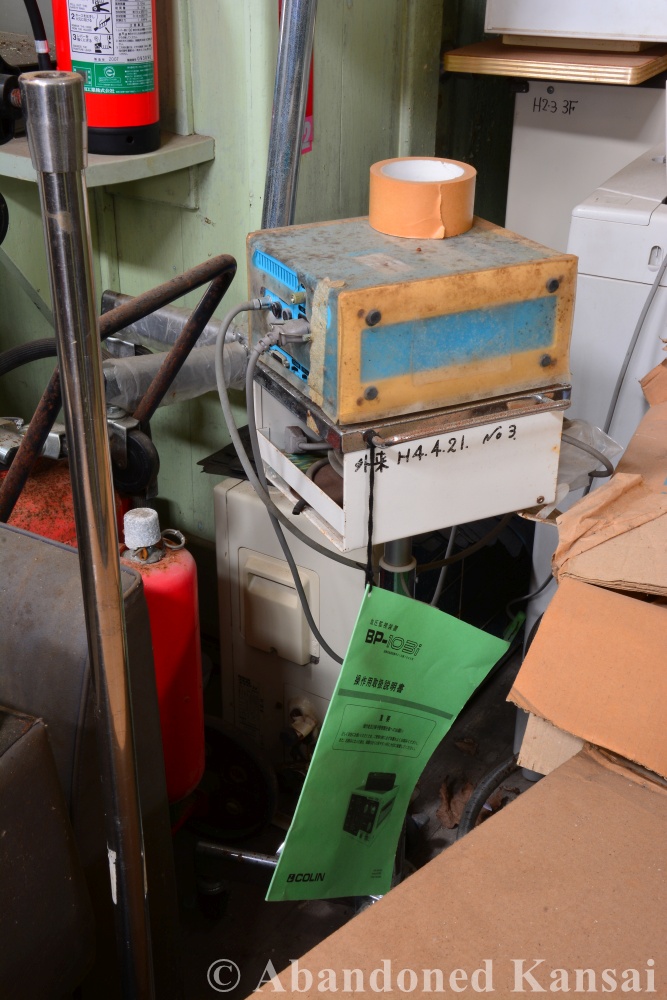
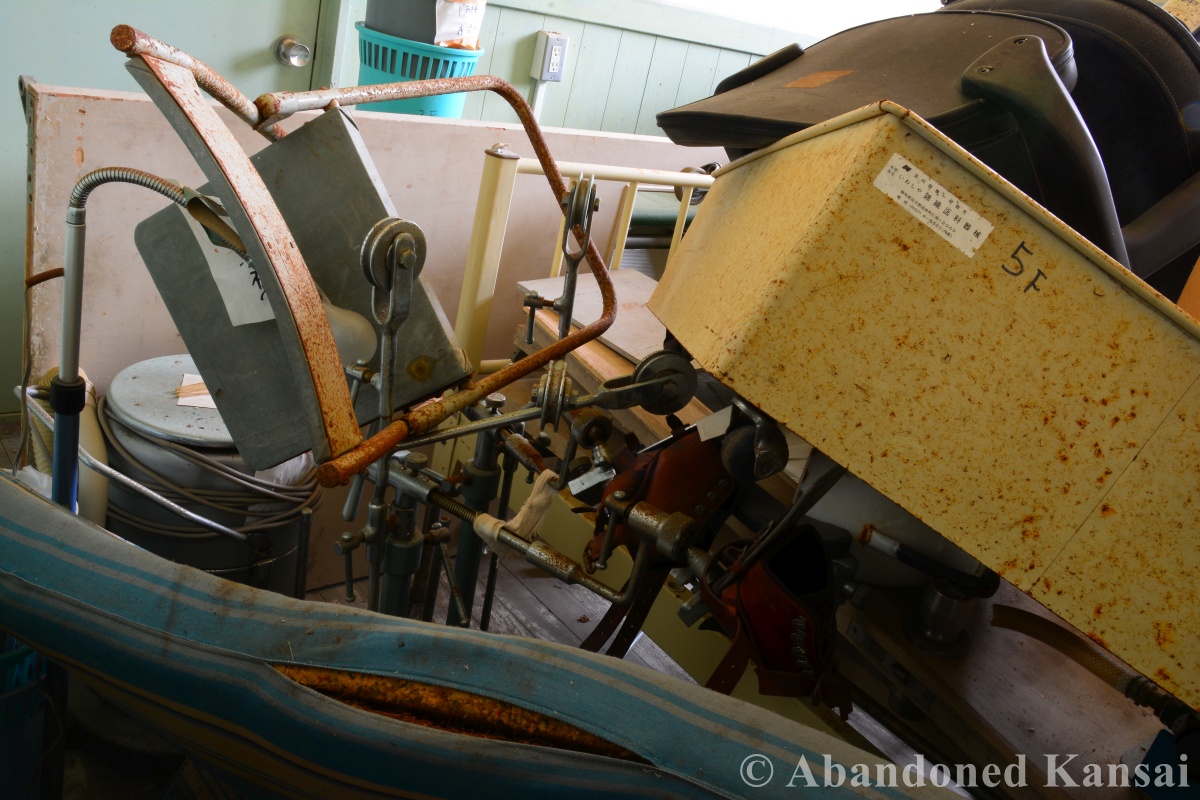
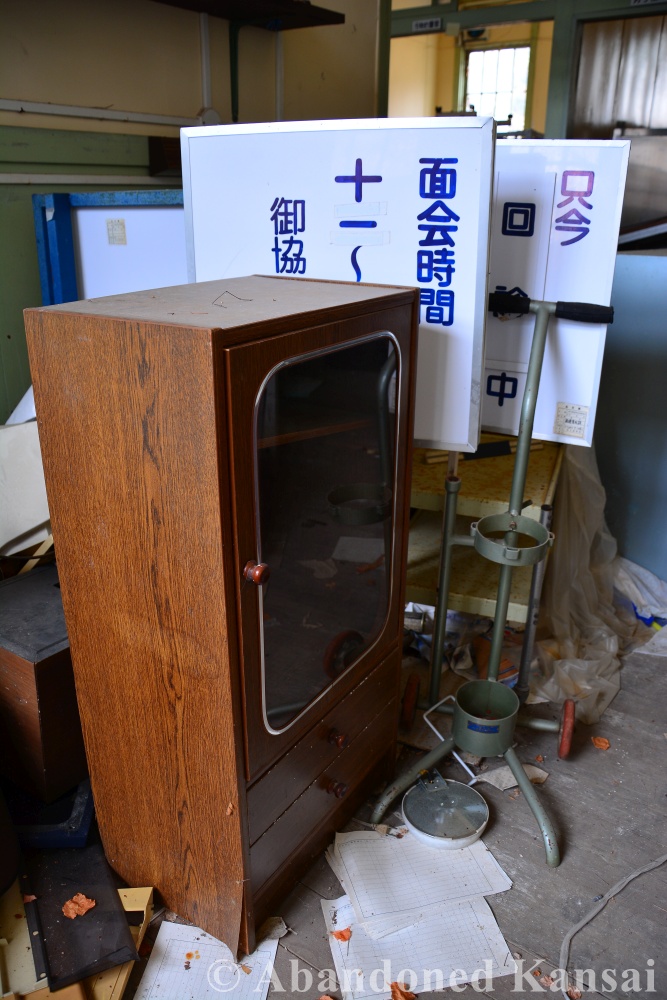
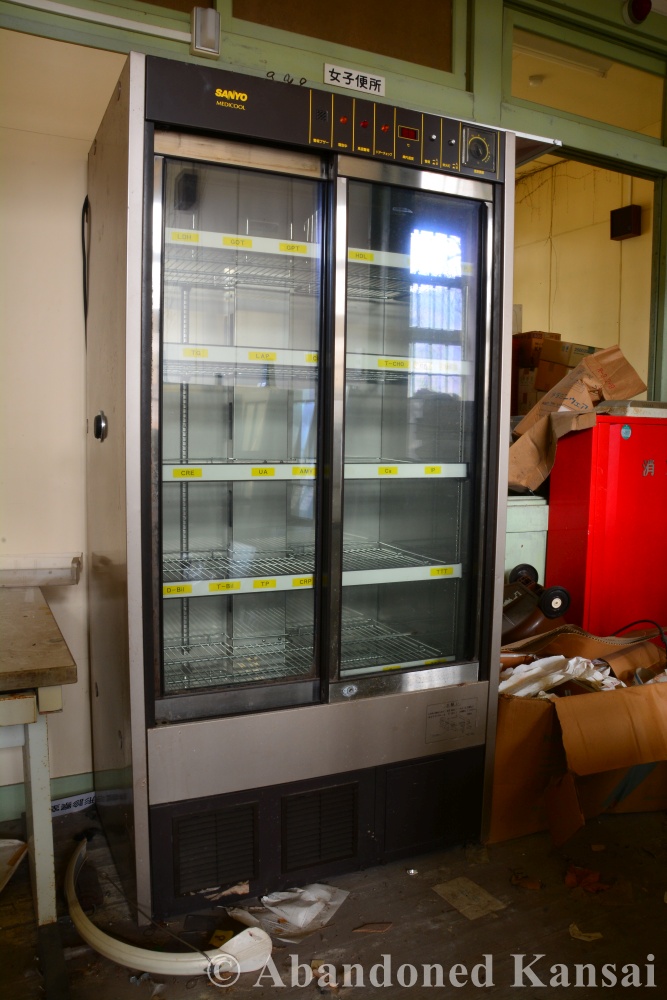
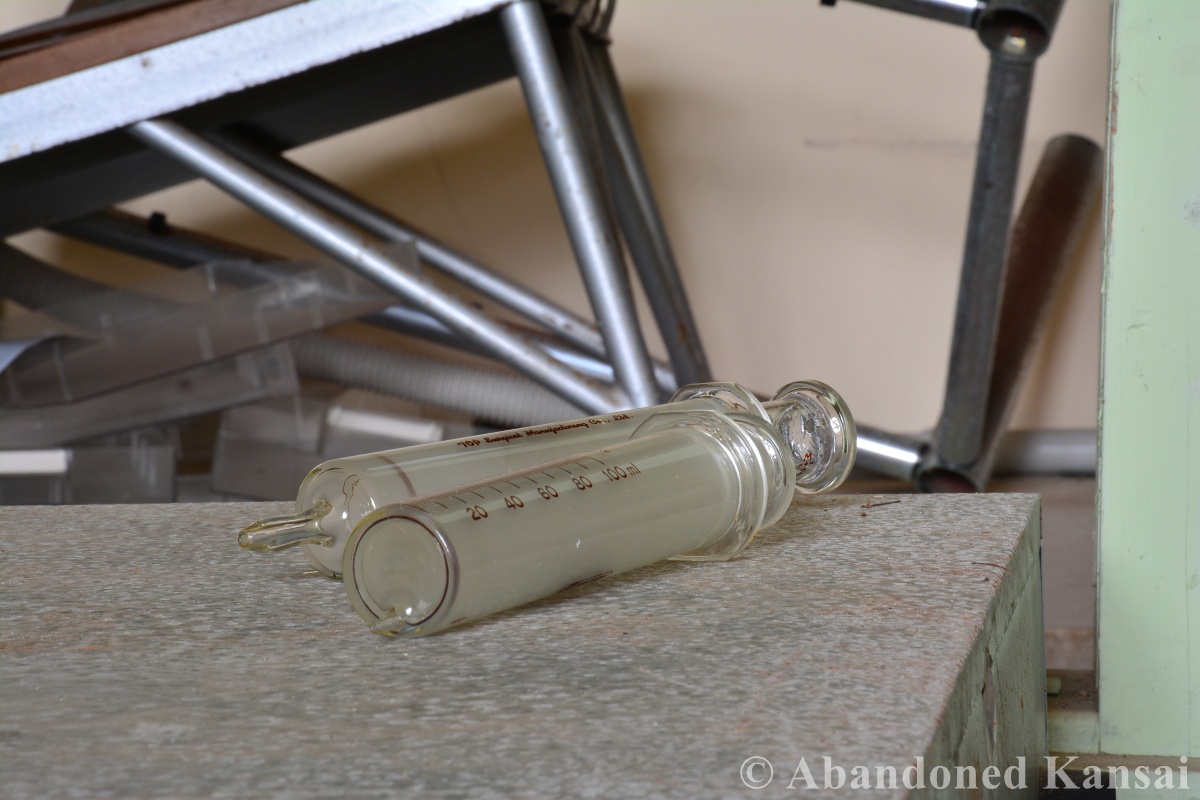
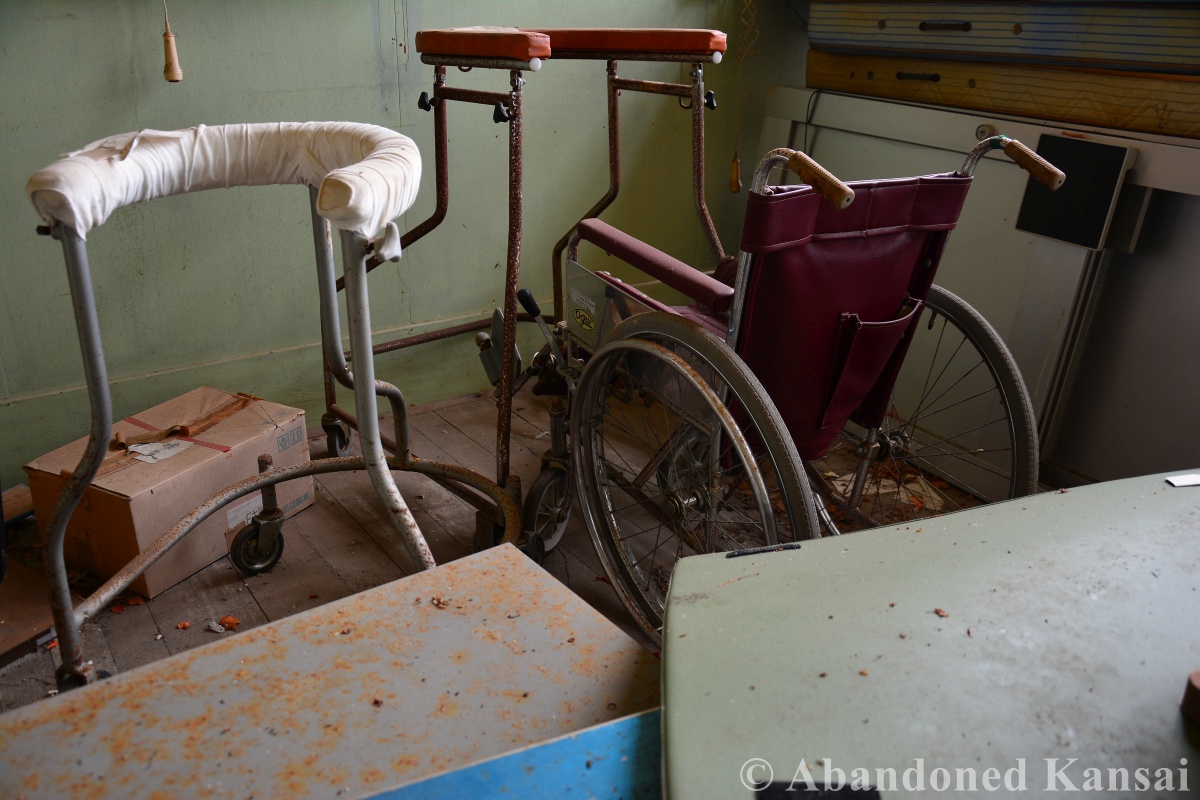
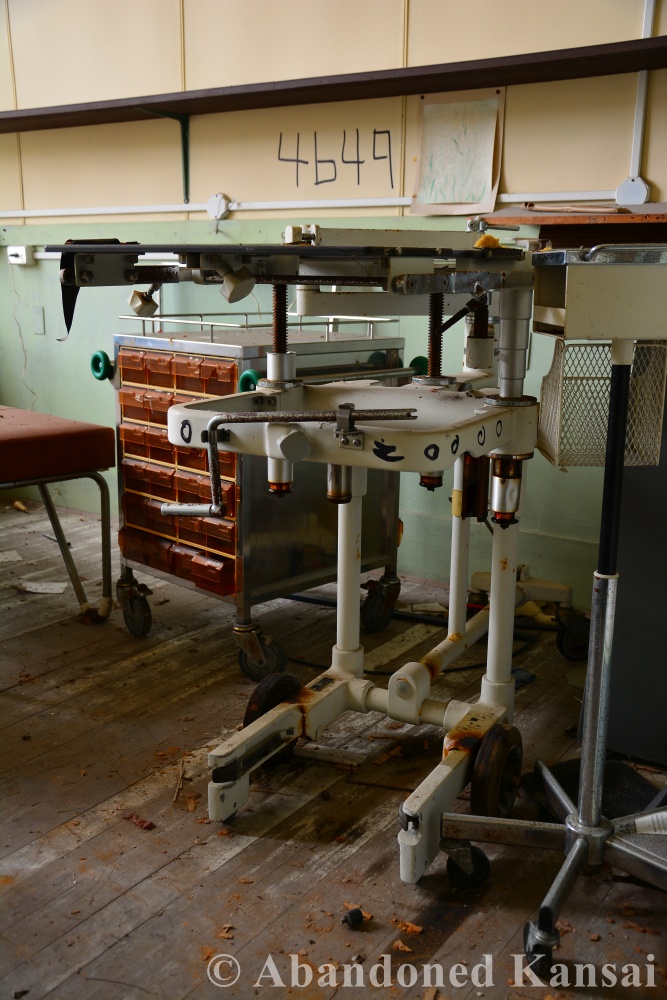
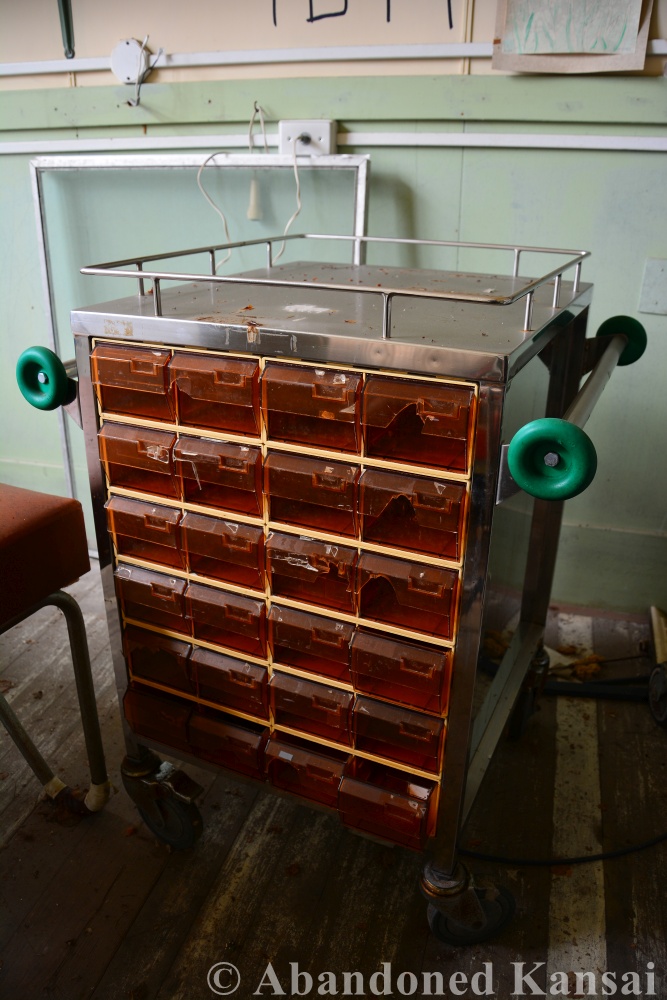
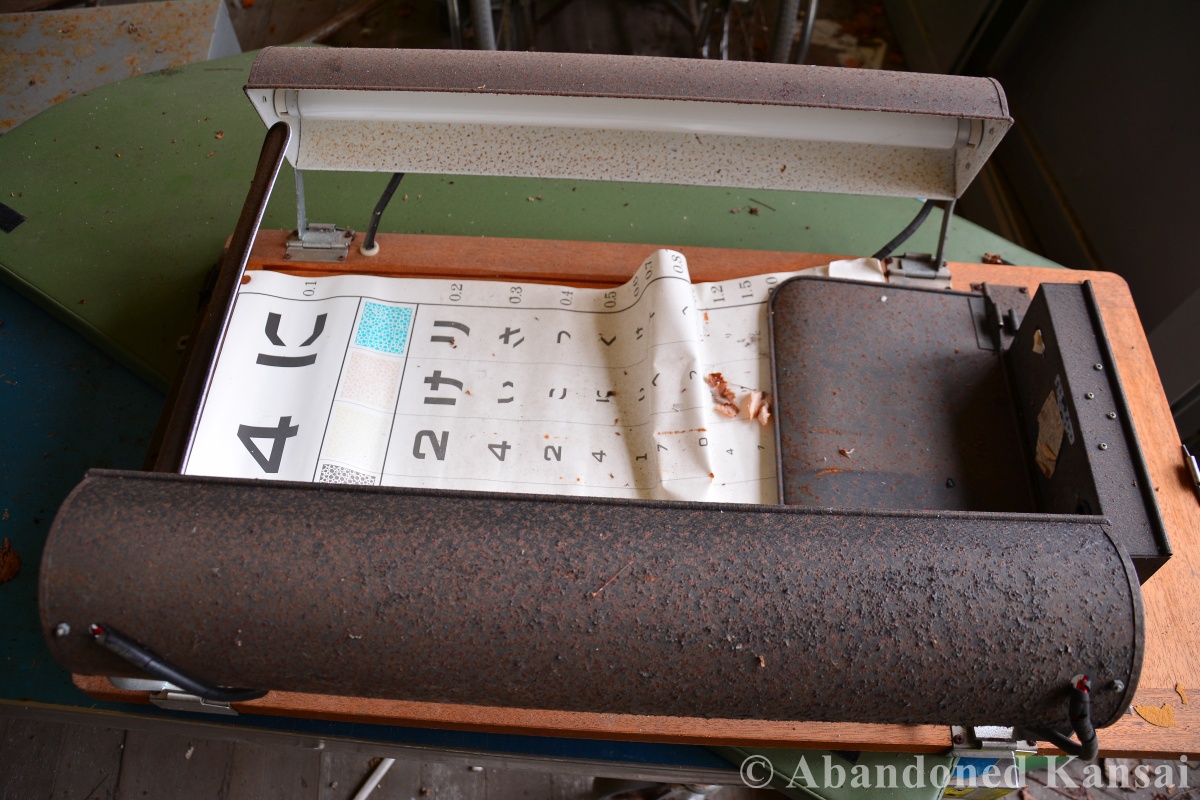
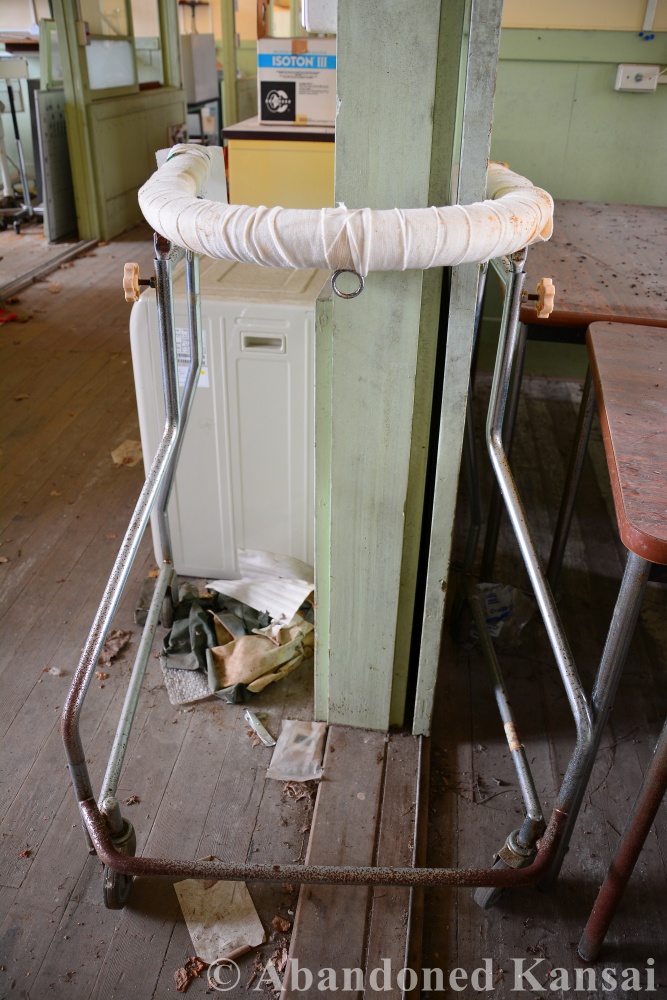
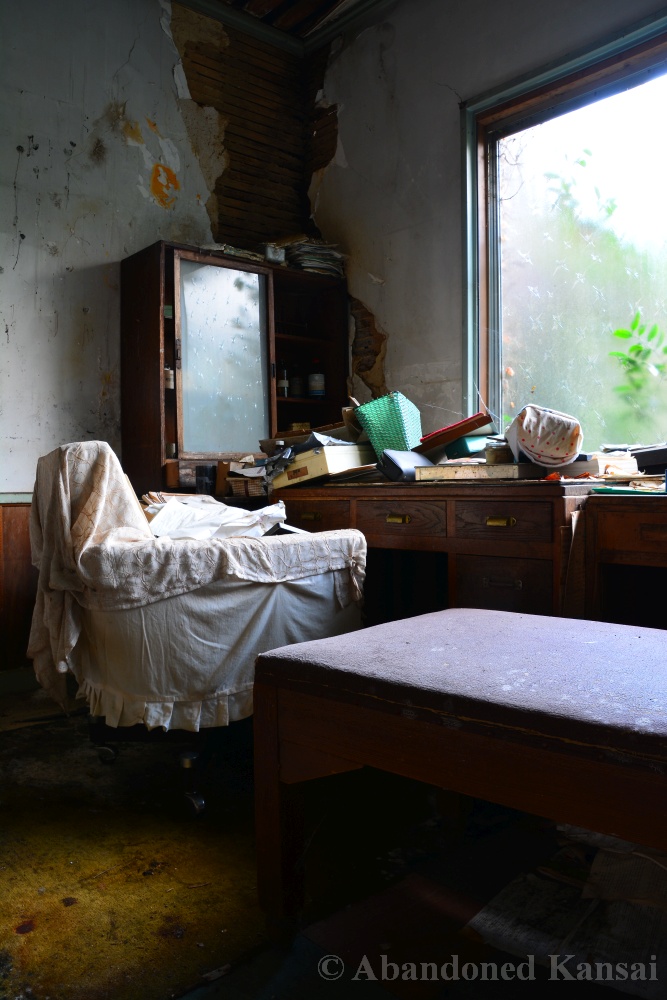
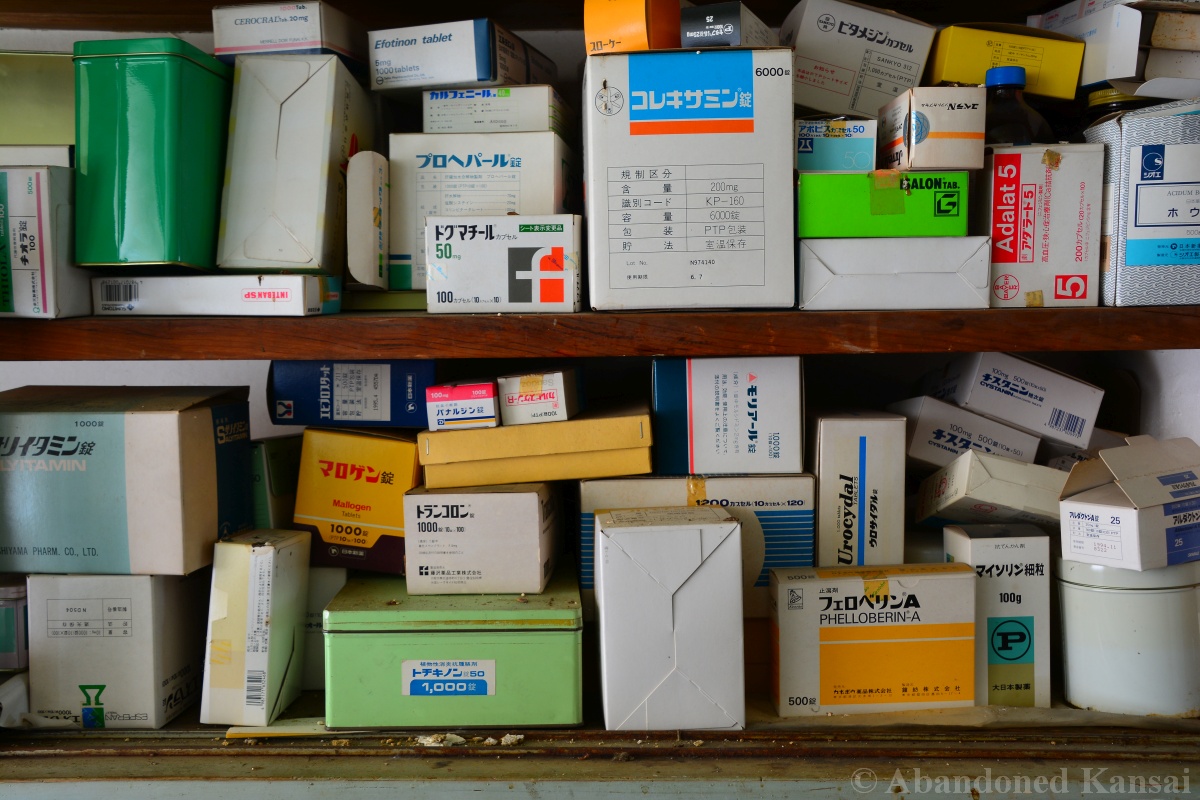
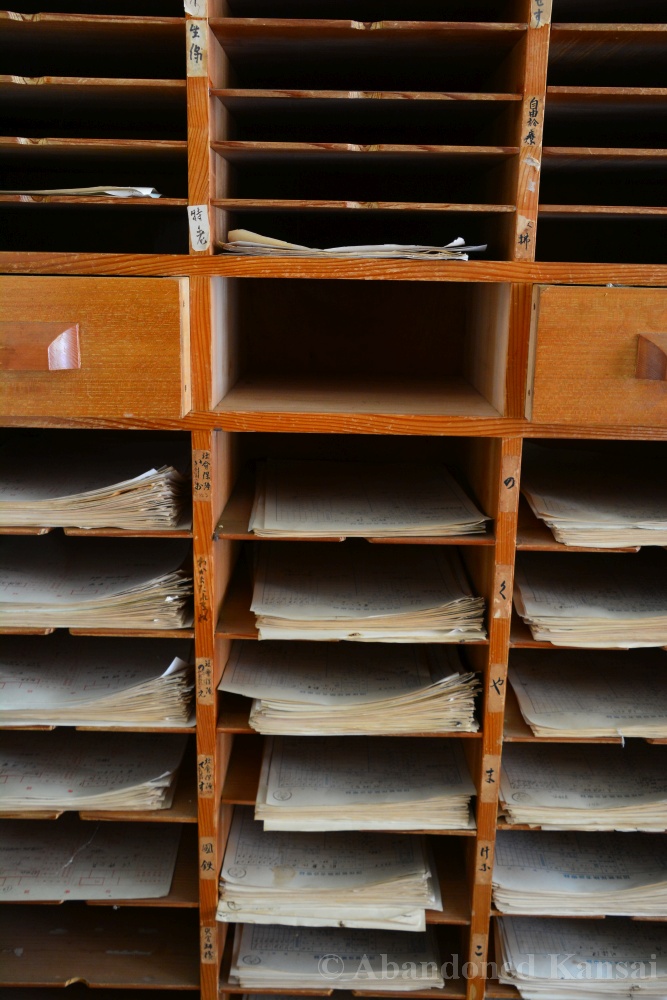
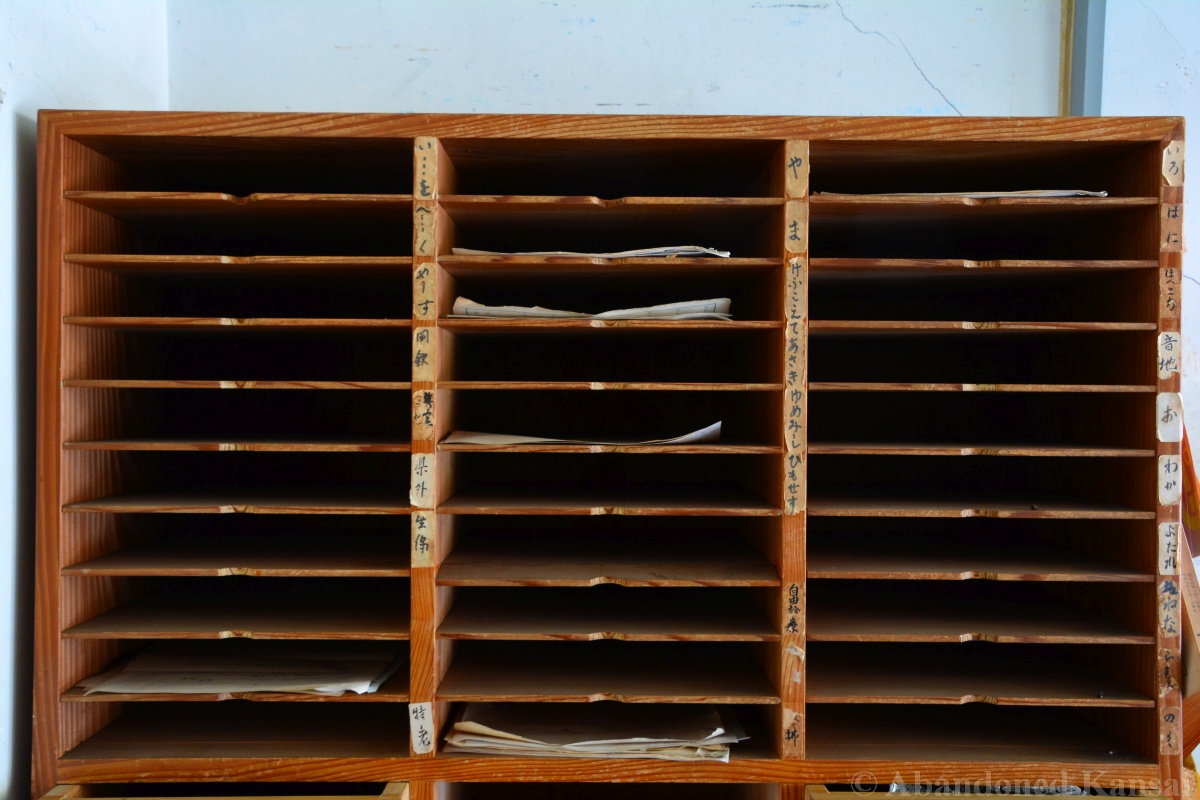
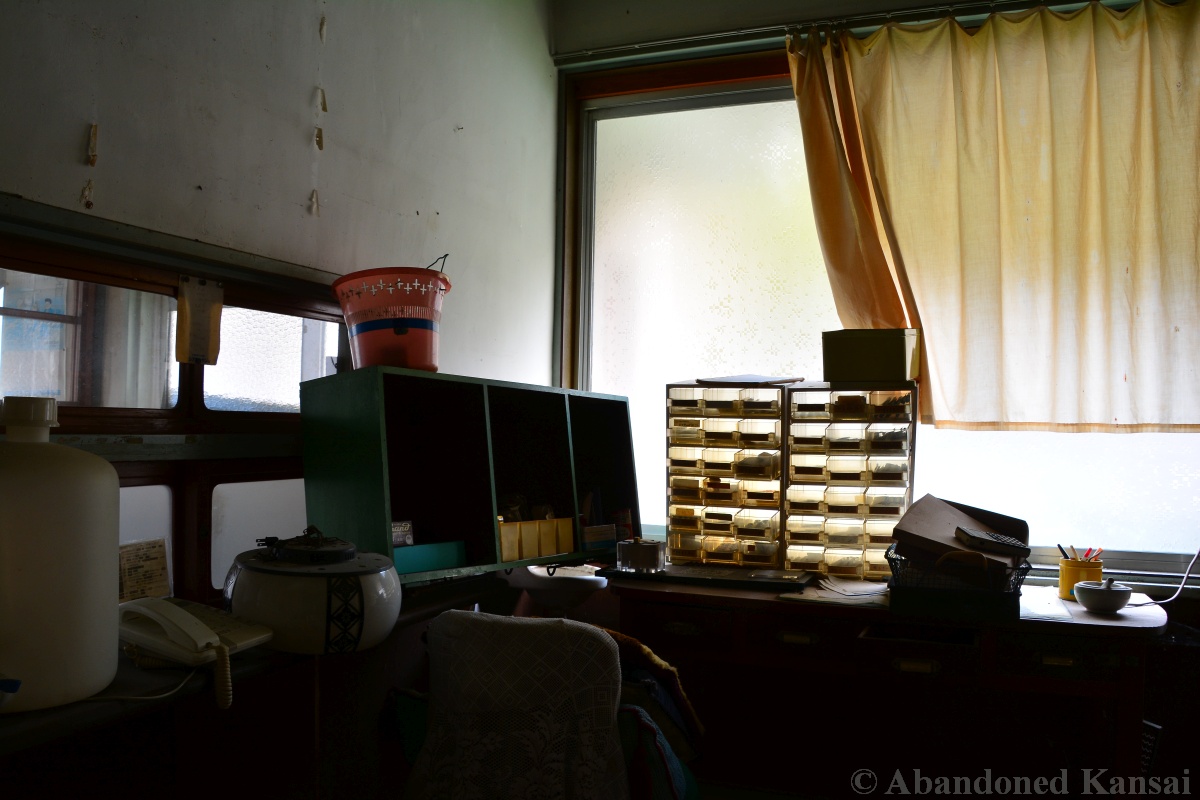
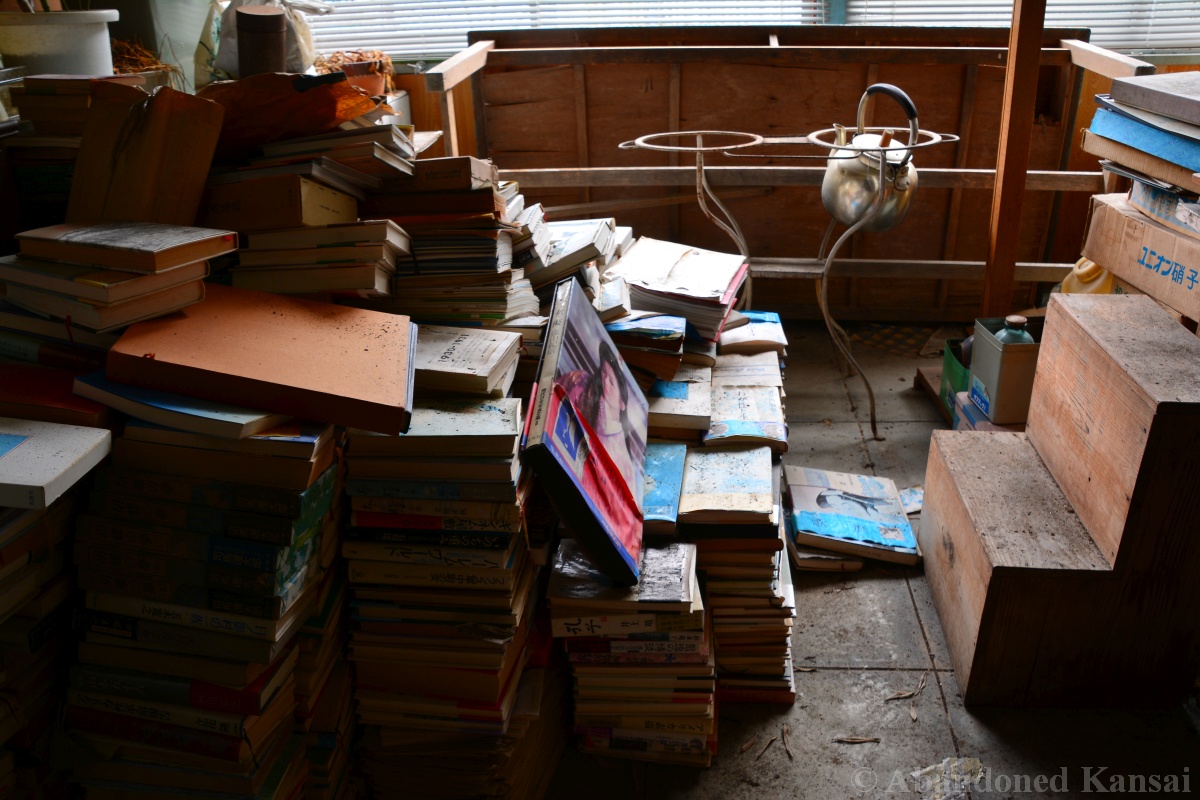
To be honest, this wasn’t a very memorable exploration. According to the photo data we were in and out within 45 minutes and the main reason I remember it, is because of the pictures I’ve taken – I actually had already written that I didn’t take any in the rest of the house, but then I checked the set to create a selection for the gallery of this article… and I had to rewrite this paragraph, because apparently I had taken a picture of the not so pretty living room. That being said, the whole building was in bad condition and partly falling apart, with the rest being moldy. A decent location worth stopping for for sure, but nothing spectacular when you have more than 10 years of exploring in Japan under you belt (at the time). In addition it was a very busy day with a total of four locations and hundreds of kilometers of driving, a lot on countryside roads through small towns. I hope you’ll enjoy the gallery, but there really is not much to say about this location as it is virtually unknown and exploring it was a surprise to me, too. My guess is that it was built in the 50s or 60s and provided care for the surrounding villages – handwritten patient files similar to those found in other clinics as well as various medicine and various medical instruments were all over the place, which was probably closed when the doctor running it retired or died. The end. Literally.

(*Like Abandoned Kansai on Facebook* or *follow us on Twitter* if you don’t want to miss the latest articles and exclusive content – and subscribe to the *video channel on Youtube* to receive a message right after a new video is online…)

Read Full Post »
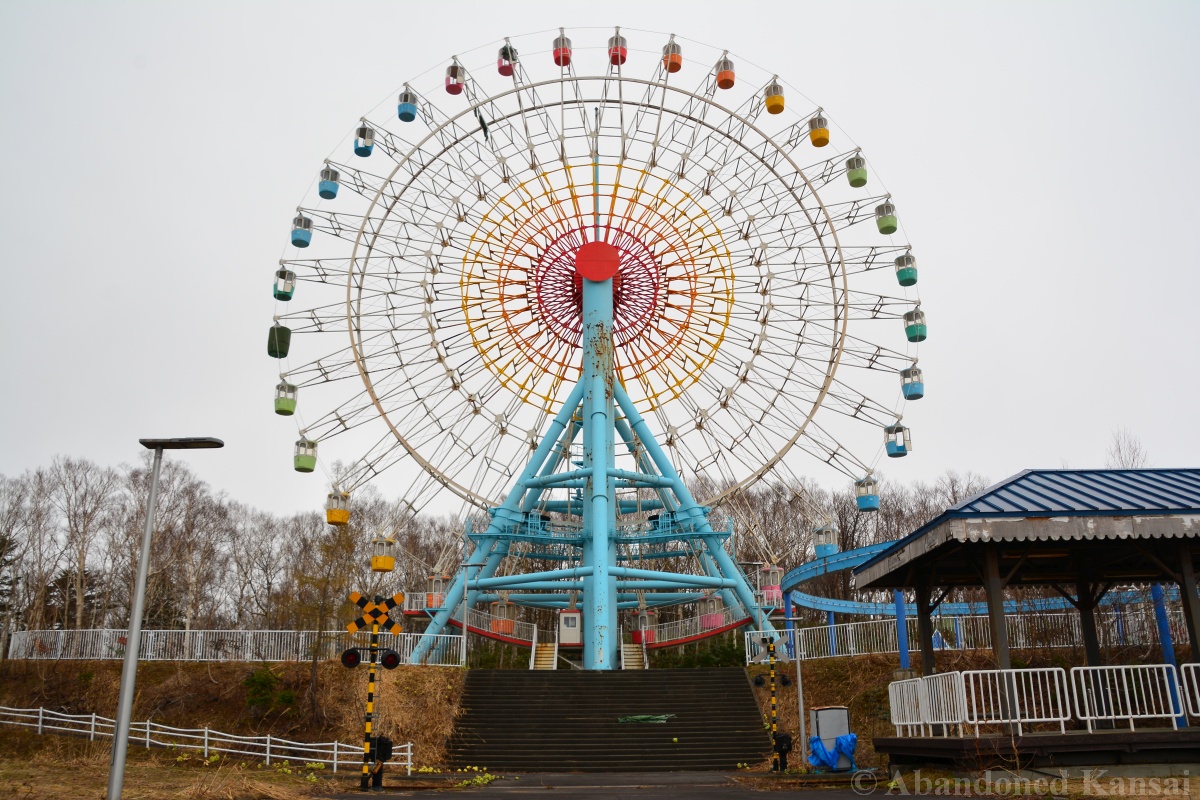
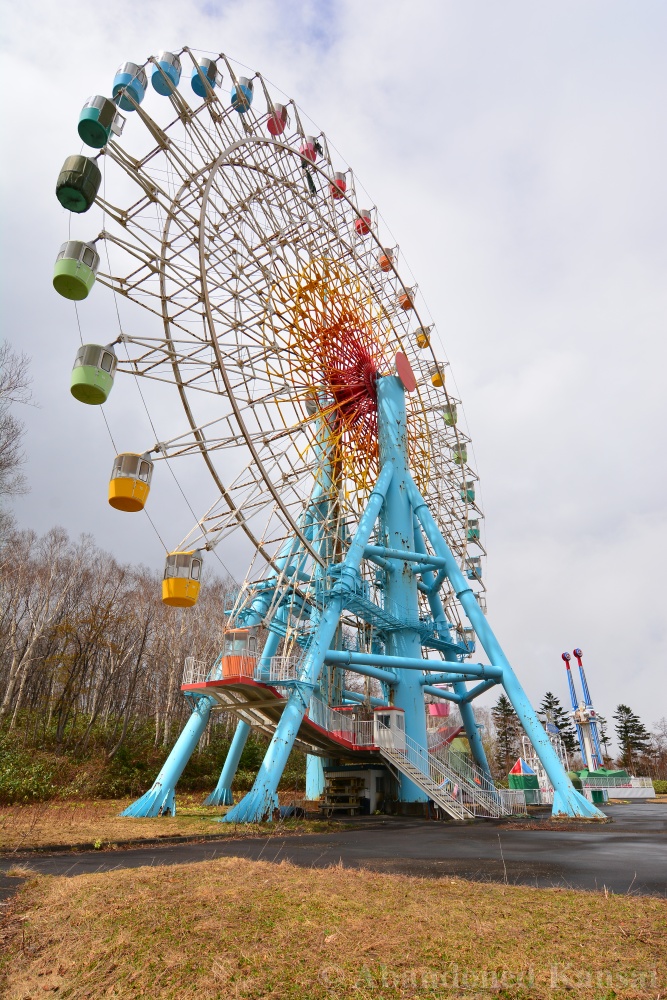
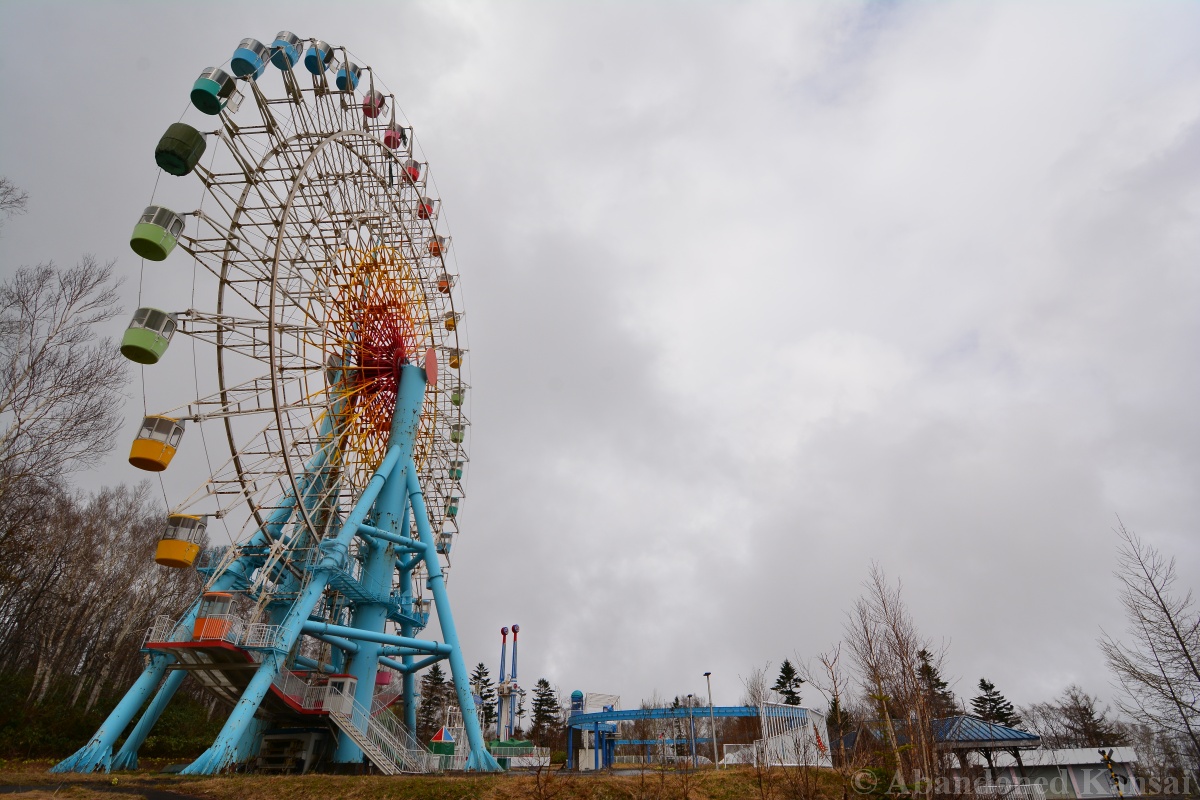
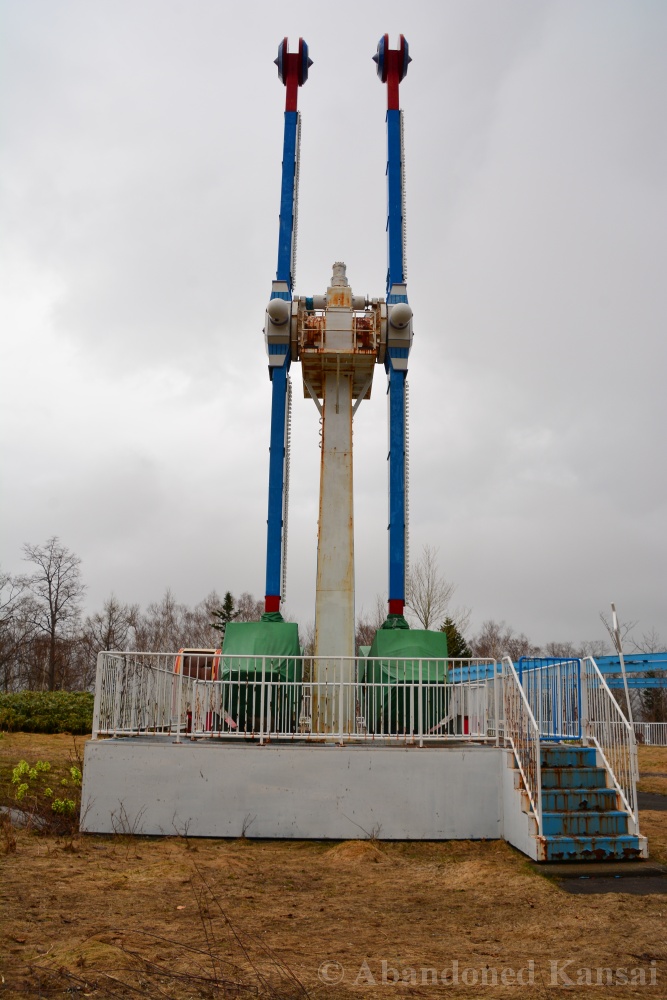
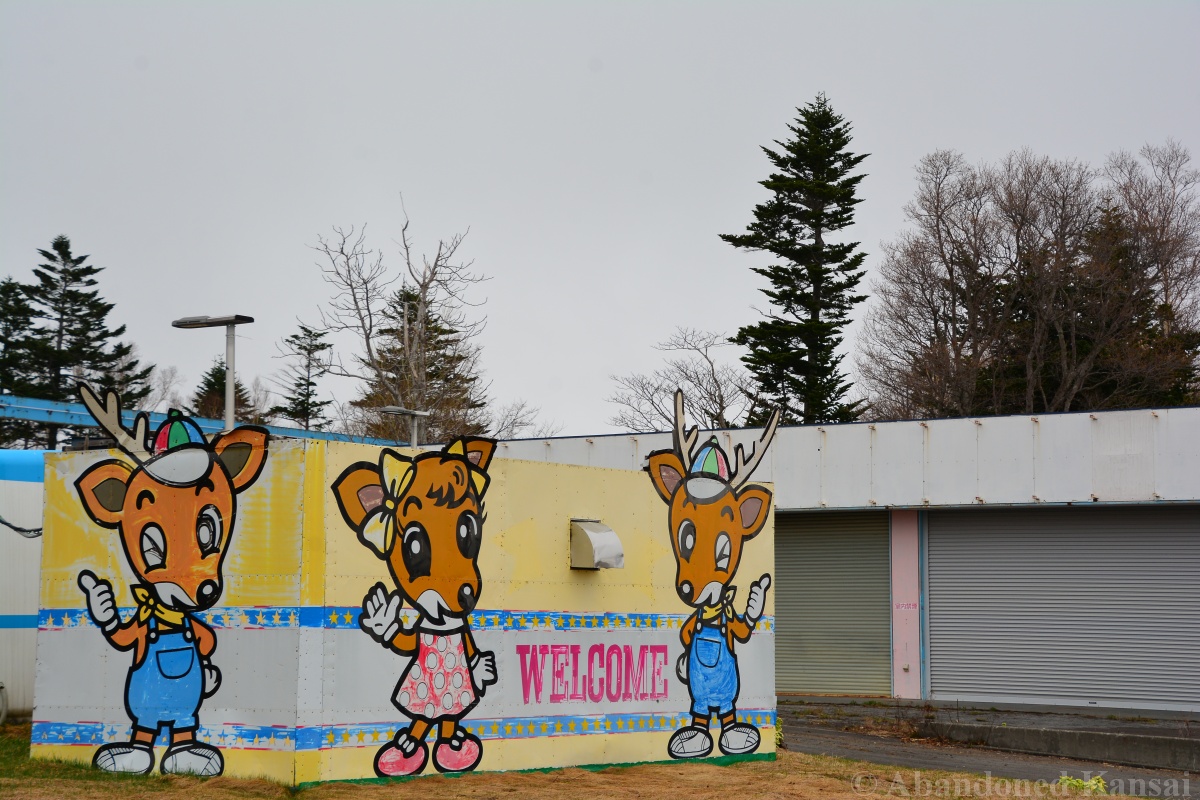
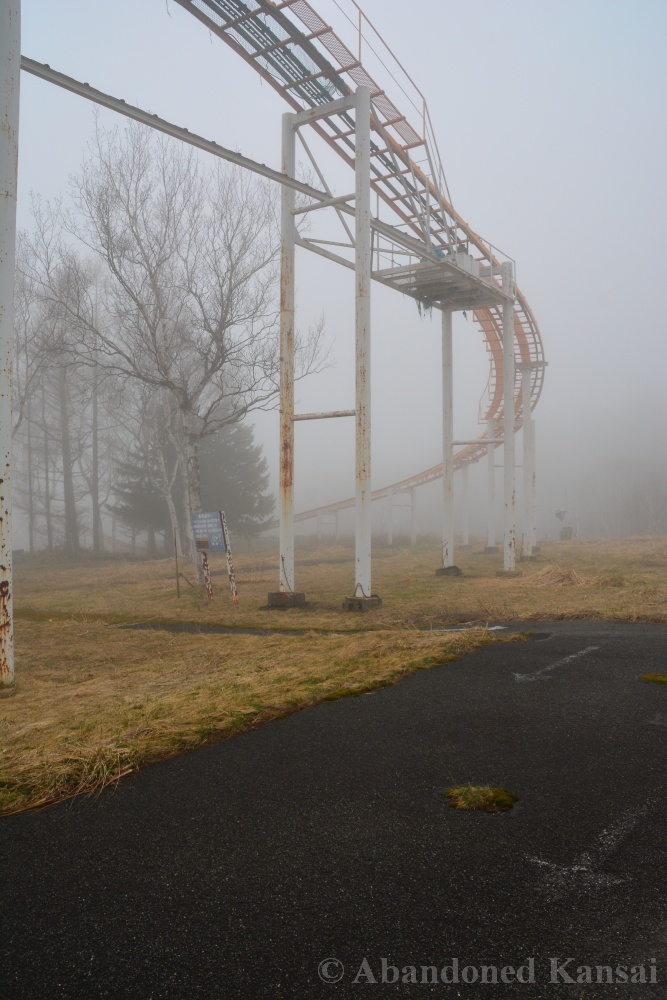
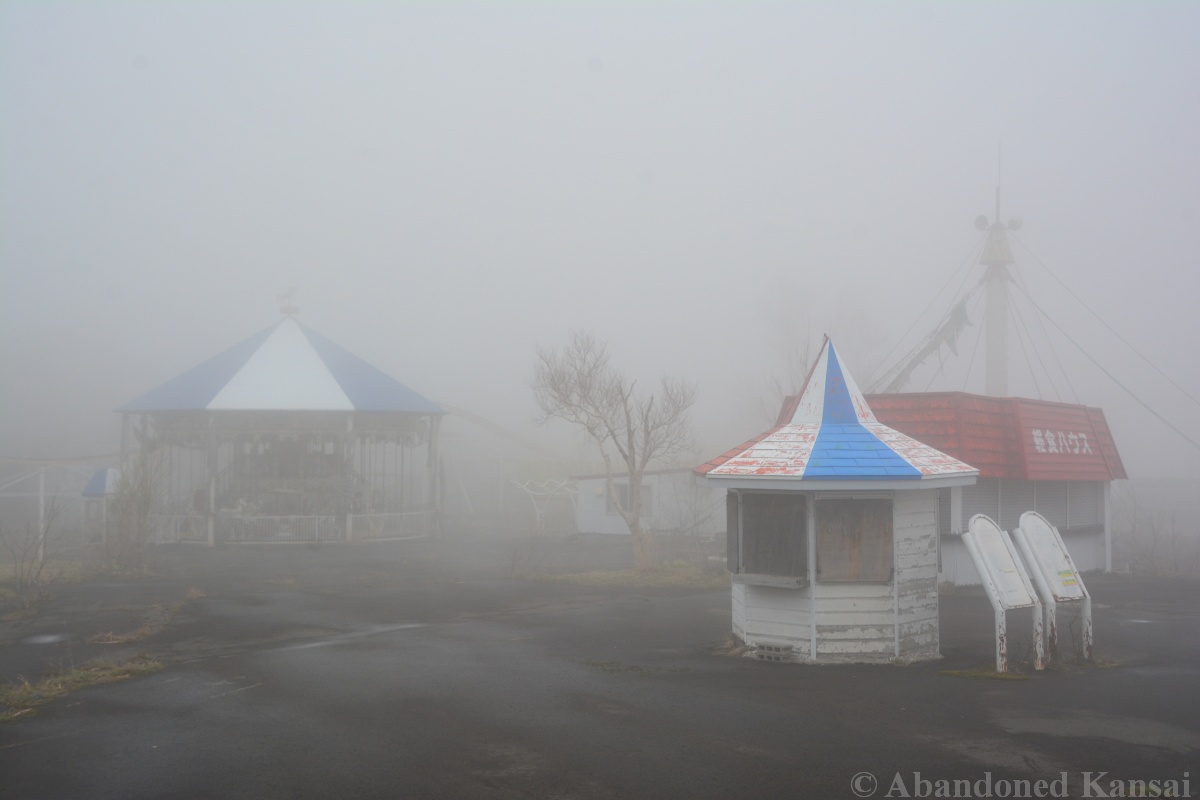
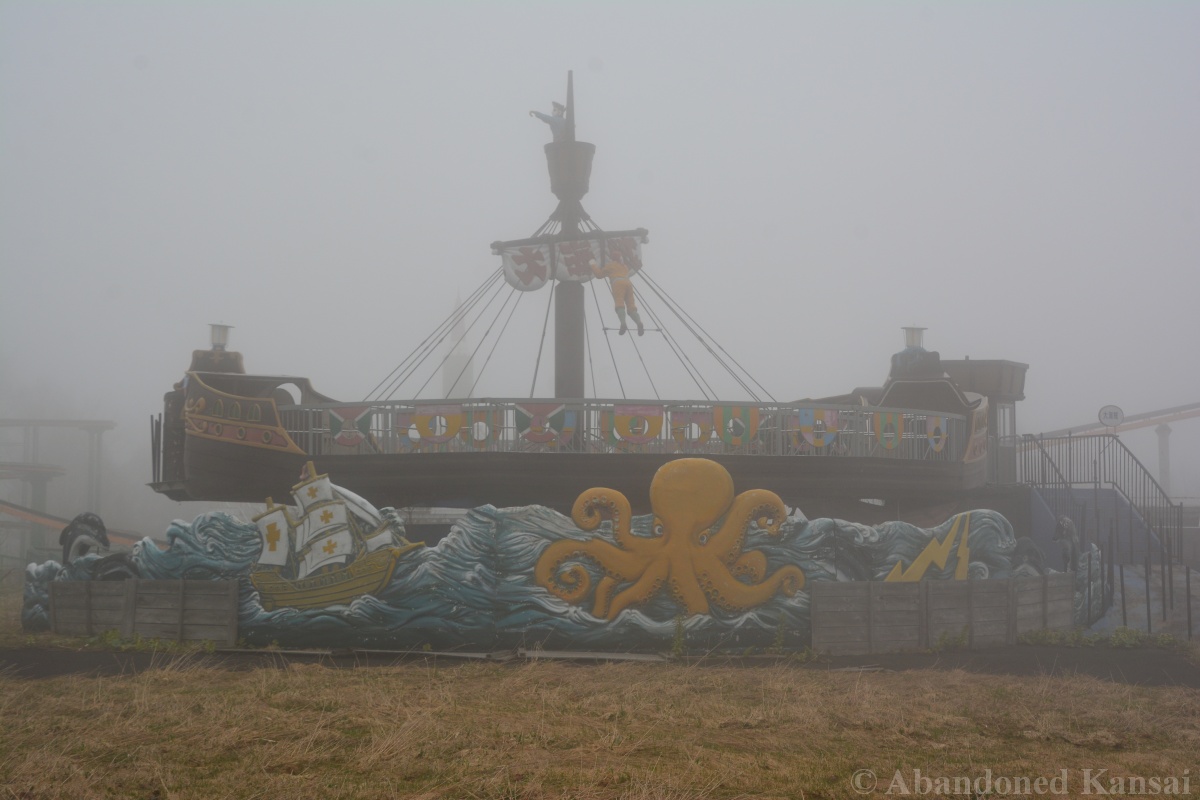
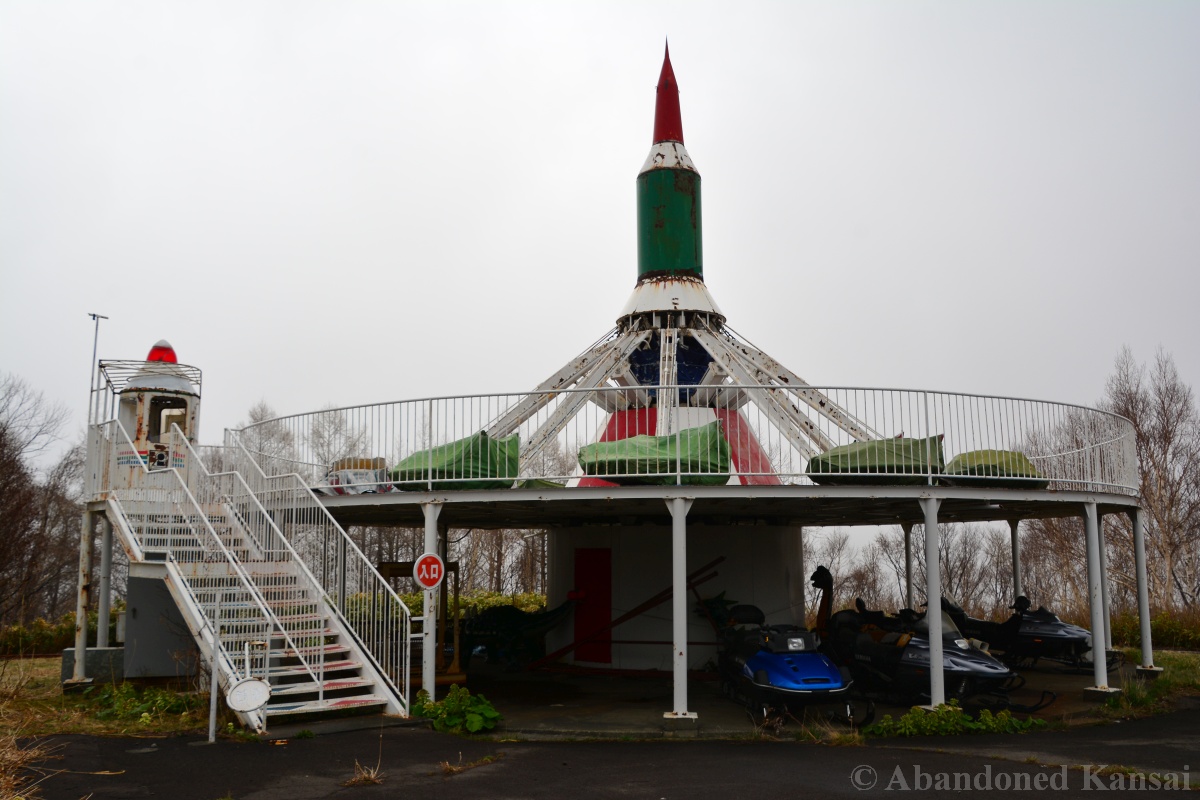
The demolition of Nara Dreamland in late 2016 / early 2017 was devastating, especially for explorers living in Kansai. Since then I explored several other abandoned theme parks, usually to leave disappointed. But now it’s time to introduce you to the Teine Olympic Amusement Park – or as I like to call it: Sapporo Dreamland!

To make one thing clear: Sapporo Dreamland has nothing to do with Nara Dreamland or its actual sister park, the 2002 closed and 2003 demolished Yokohama Dreamland. The term is just snappier and more memorable than the rather clunky official name Teine Olympic Amusement Park. And as much as I hate revealing too much about locations, this one is so big and so unique, you could probably find it via GoogleLens or some smartass on Reddit anyway. Needless to say that I also wouldn’t be able to write anything about the park’s history, little as is known anyway. So… let’s get to it.

I first went to Mount Teine in 2012, when I arrived in Sapporo a day earlier than my co-explorer for a *Haikyo in Hokkaido* road trip – to kill time I went to check out the *Mt. Teine Ski Lift* and *The Olympic Ruins Of Sapporo 1972* solo. On my way to the latter I actually must have seen the iconic blue Ferris wheel of the already abandoned Mount Teine Olympic Amusement Park, but I guess I was so focused on the task at hand that I didn’t pay attention to it. Or maybe I thought it was still active. Who knows? In any case, more than a decade ago I wrote freely about the previously mentioned locations and apparently neither me nor anybody else was like: But what else is nearby? Some time in the second half of the 2010s I heard that the bobsleigh goal of the Olympic Ruins was demolished in early 2017, so I had a look at Mount Teine again and made a note of that strange blurry blob of unmarked something nearby – and forgot about it again… until I saw some amazing photos of an abandoned theme park posted by a friend on Twitter. Now, I could have gone down the easy path and asked for the location, but I seriously HATE IT when strangers do that to me, so I hardly ever do it to my friends; maybe a handful of times in 15 years. Finding locations is part of the urbex experience, and exploring a location earned is so much more fulfilling than just going there like it was a tourist attraction on GoogleMaps. So I had a closer look at my map of unexplored potential abandoned places… and to my surprise the photos fit exactly to the former blurry blob of unmarked something, which was now displayed in much higher resolution! The goddamn thing had been right in front of my eyes for more than half a decade!

Now, Hokkaido isn’t really in day trip range from Kansai (though technically it is…), so it took me a while to get back up there, just in time before Covid hit. Not that it really mattered, because unlike most countries, there were hardly any travel restriction within Japan – getting in or out was a nightmare, but early 2020 till late 2022 was the golden age of domestic tourism in Japan. It was AWESOME! *I even wrote an article about it back in 2022.* (The only negative experience I made during that time was getting denied entry to the Pear Museum in Kurashiki early during the pandemic, long before the vaccine, as they restricted access to Tottori prefecture residents.) Anyway, a total of 7 years passed between my first and my second visit to Mount Teine… but it was really worth the wait as the abandoned Teine Olympic Amusement Park turned out to be Nara Dreamland 2. Maybe even better than Nara Dreamland 2, thanks to the park’s most iconic ride – a gigantic blue Ferris wheel at Plaza II!

At the time of being closed for good after the 2009 season, the entry fee to Sapporo Dreamland was 2500 Yen (an extra 300 Yen around Golden Week!). Due to cold weather at “best” and tons of snow at “worst” the park was only open from Golden Week till late September / early October, which is a very short season to make money. (Ski season on the same mountain is usually from late November / early December till late April, but you had to add a few more weeks to make the rides winter-proof / ready for operation.) It surely didn’t help that even during that time, the park was only open on Saturdays, Sundays, and national holidays – with the exception of summer school holidays, when the Teine Olympic Amusement Park was open every day. The place also had a reputation for being rather run-down and having occasional accidents, so it was probably good that they shut it down before something really bad happened, like at *Expoland*, where a student died due to a rollercoaster accident.

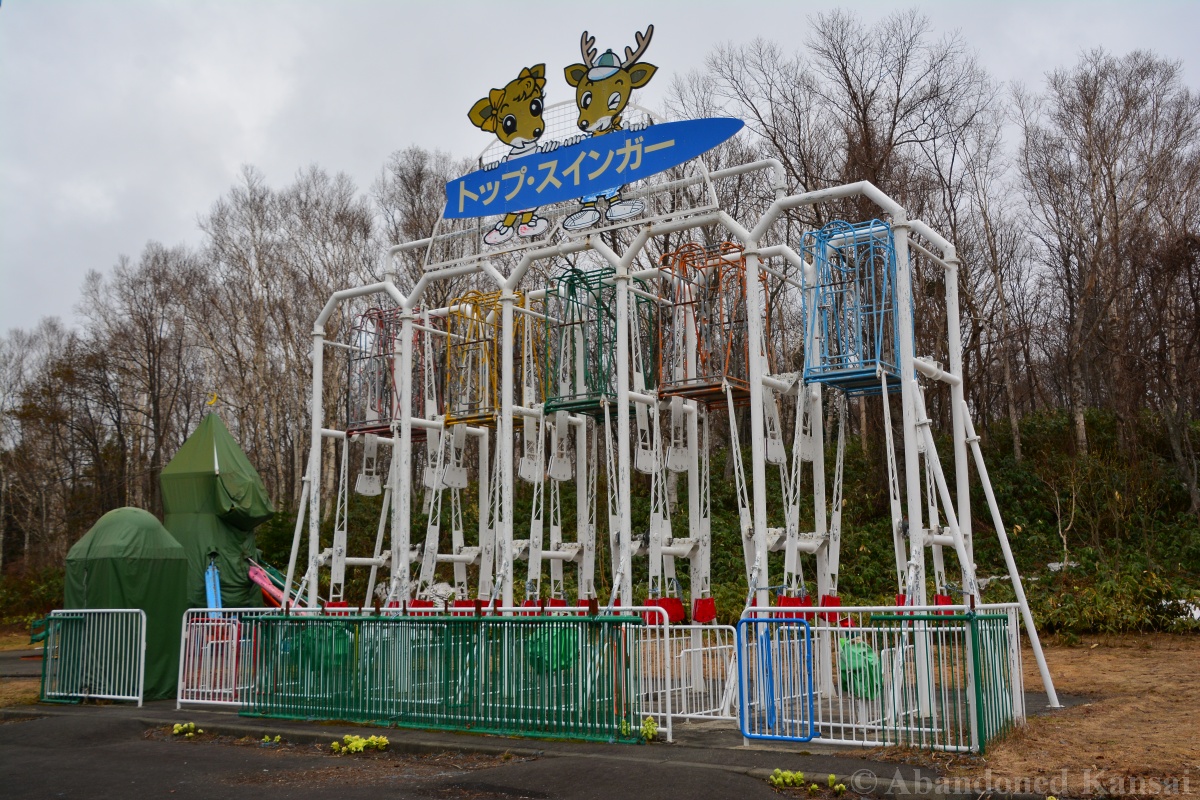
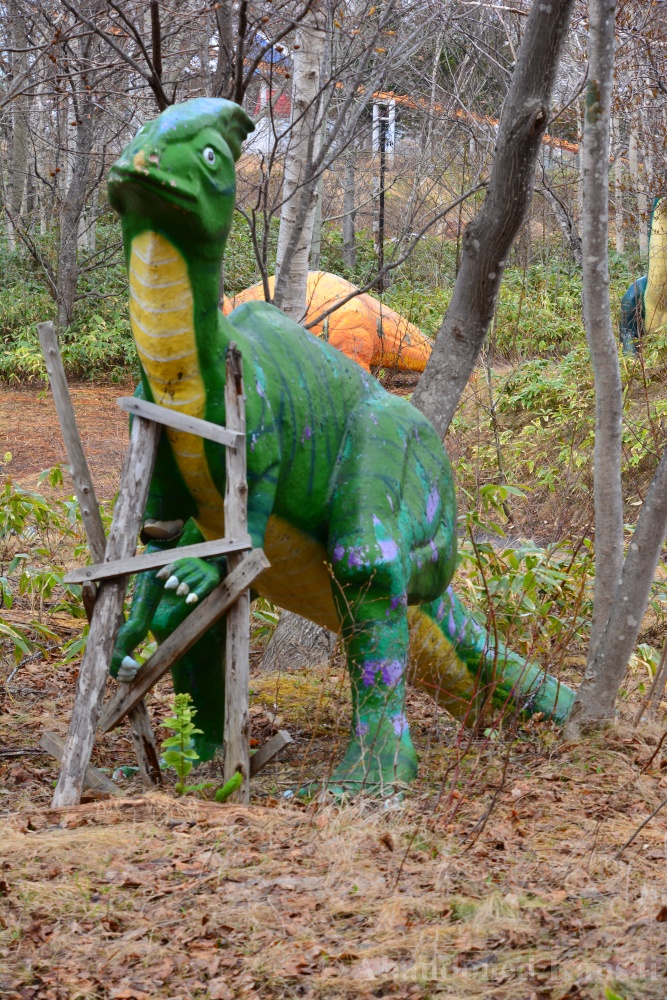
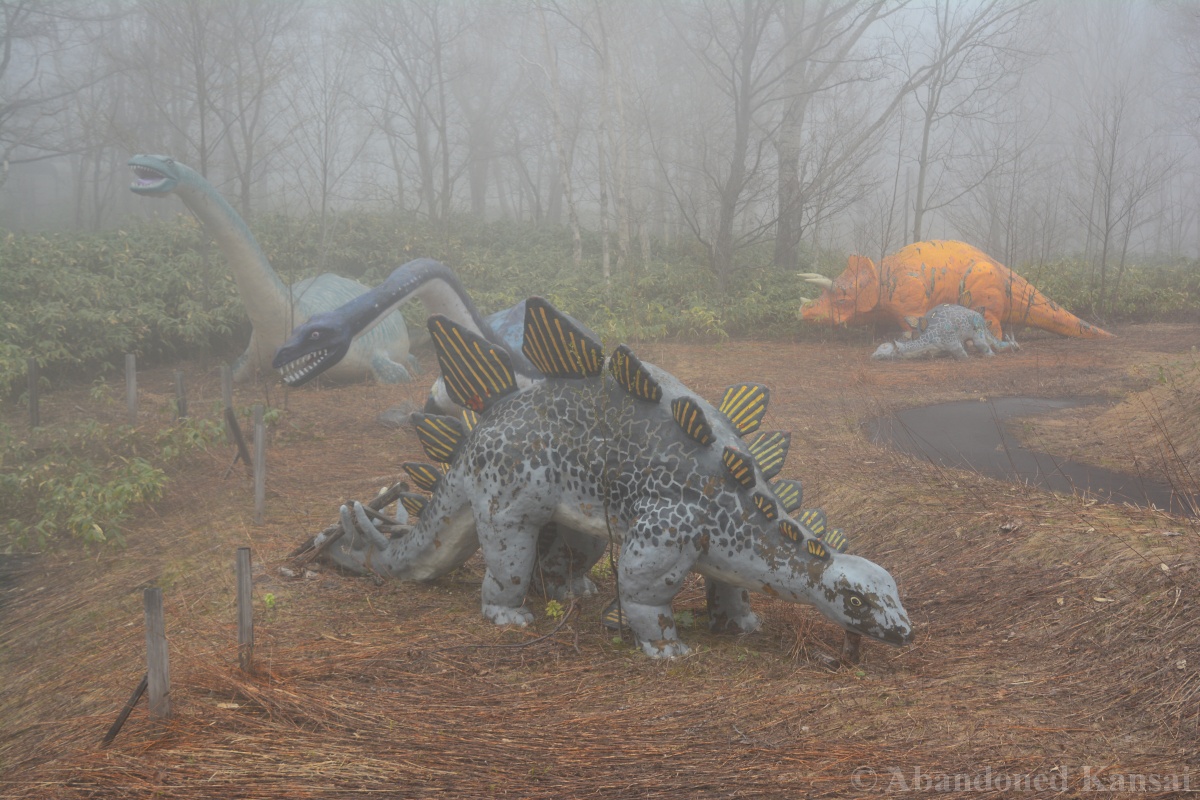
Speaking of rollercoasters – the park had two of them, though neither was modern, like the ones you might know from USJ or Fuji-Q Highland. In total there were 26 attractions, the latest being an area called Exciting Dinosaur Land (Wakuwaku Kyōryū Rando), constructed in 2004 – two or three dozen dinosaurs on about 500 square meters (sorry, I have no idea what’s that in Fahrenheit…) with some of them being parts of rides or slides. The dinosaur playground was located right between Plaza I and Plaza II, the two main areas of Teine Olympic Amusement Park, which were connected by a short path through the surrounding forest. The origins of the park date back to 1966, when Sapporo won the bid for the Olympic Games – six years before the actual event. The city was actually one of the few that really benefited from the Games as it managed to make a profit and also opened the first section of its newly built subway system, now consisting of three lines. Hence the nostalgia and bids for future games, despite the fact that those most likely will turn into a disaster, similar to Osaka and the Expo (1970 / 2025).

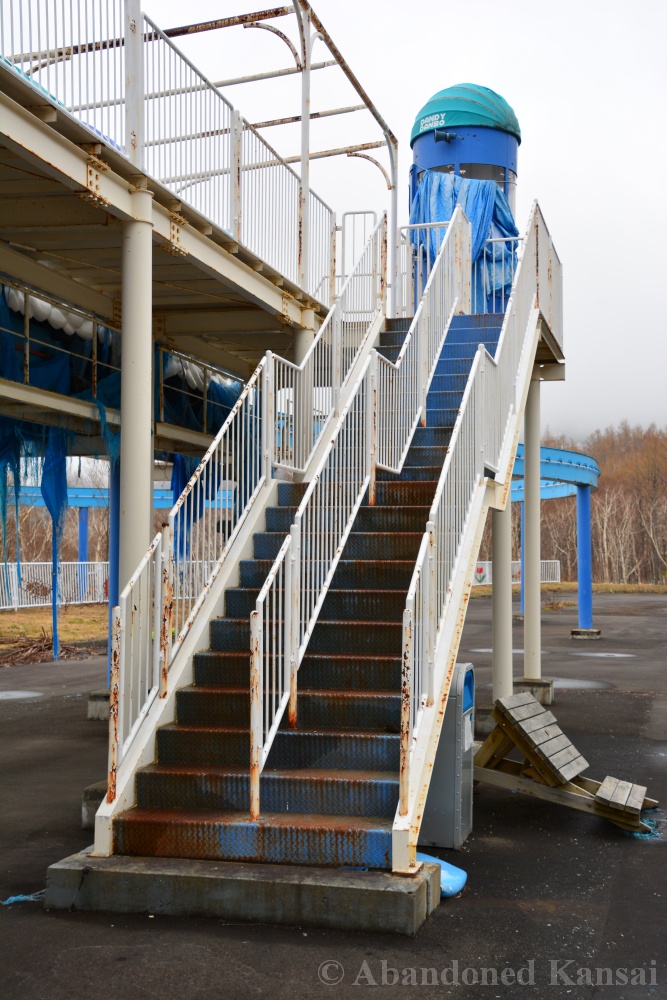
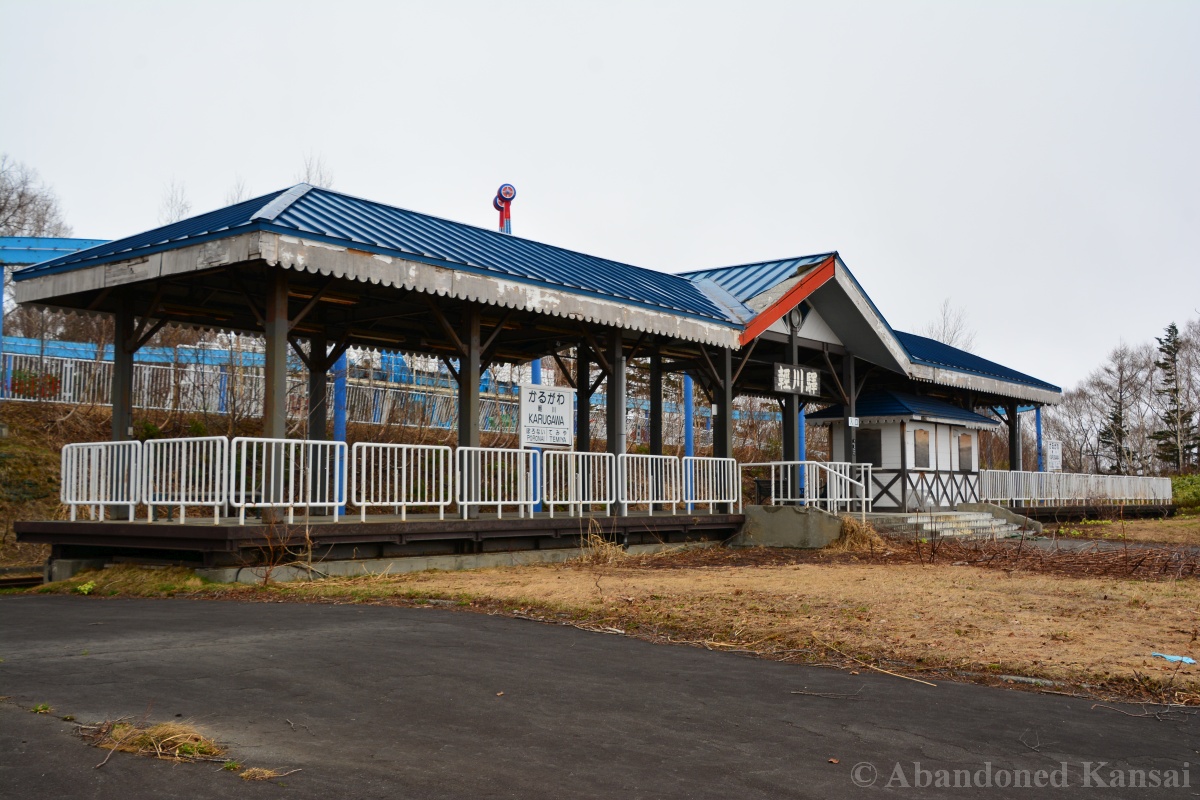
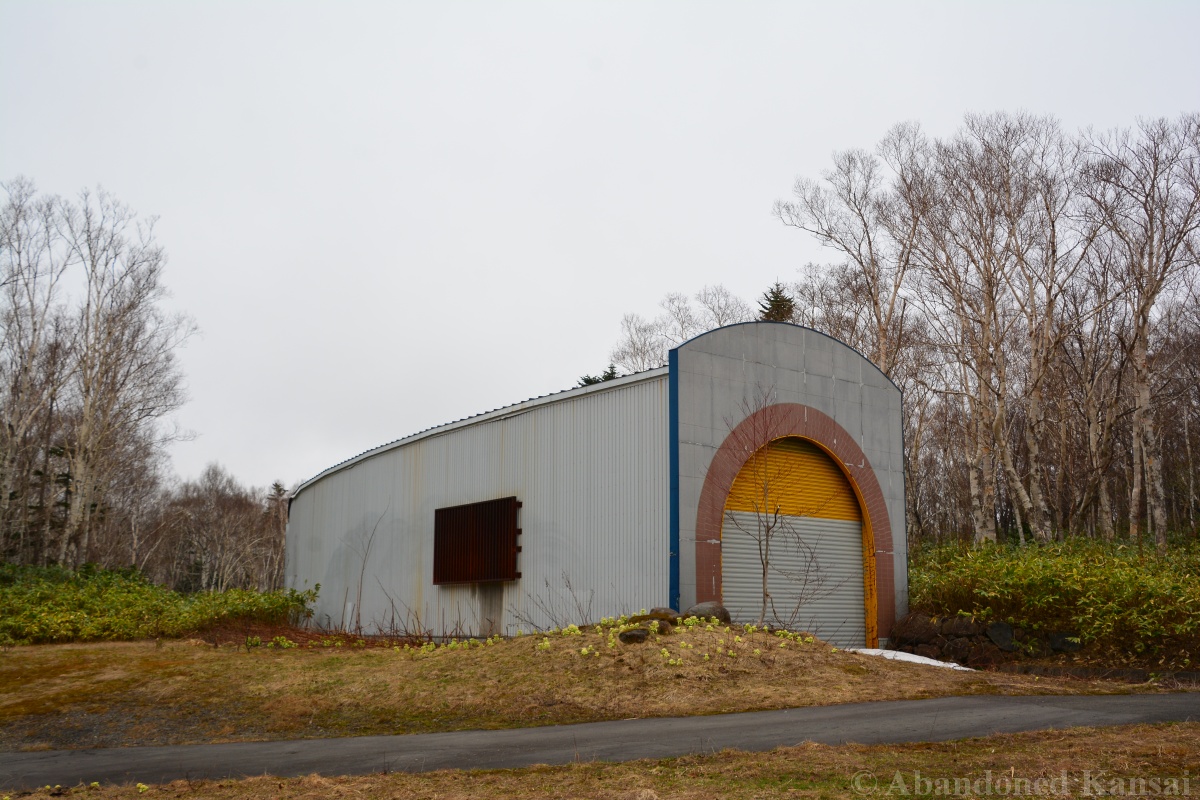
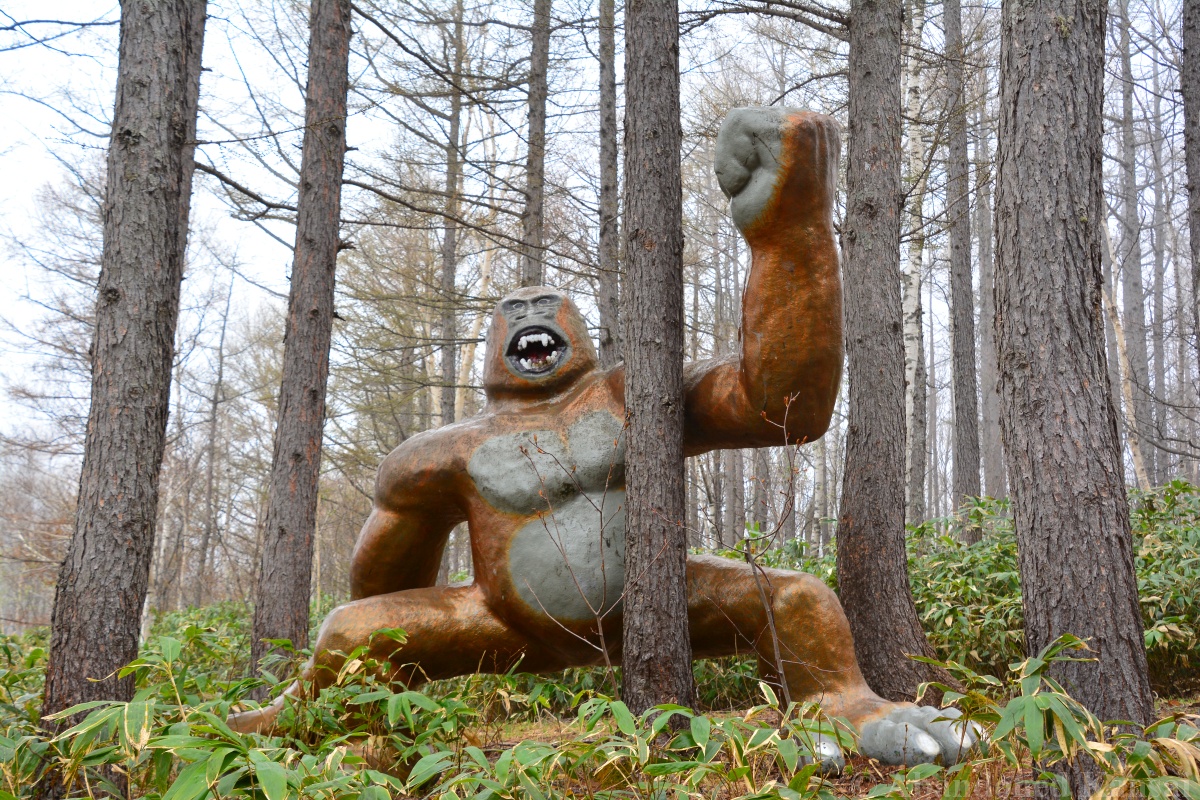
The first time I explored Sapporo Dreamland was back in 2019 on a rather unpleasant spring day – not only can you see patches of snow on some photos, but the weather was a bit windy and constantly changing between foggy, drizzly, and overcast. All the photos in the gallery below are from that visit, which took me about 2.5 hours – admittedly a bit rushed, but while I was in the Dinosaur Land, I got an excitement boost when seeing somebody driving around in a car, which brought back terrible memories from when I first explored Nara Dreamland almost a decade prior. Fortunately I was able to hide in the fog, but as soon as the car was gone I moved on to Plaza I, where I took only a few quick shots before leaving. The atmosphere there was mind-blowing though, especially when exploring solo and not knowing exactly what to expect. It is absolutely beyond me, why this location is not more popular and all over the internet. Even among Japanese urbexers it’s not even close to being Top 20 in my guesstimation, probably not even Top 50, despite being rather easily accessible. Nara Dreamland on the other hand was all over the web back in the mid-2010s, a few years after I started writing about it. I met more tourists at Nara Dreamland than Sapporo Dreamland most likely had explorers in total. Let’s see if that changes after this article. I kept my mouth shut for almost six years, but I wanted to celebrate the 15th Anniversary of Abandoned Kansai with a spectacular location – and on this day 15 years ago I published my (partly failed) exploration of the *Mount Atago Cable Car*, the first real article. Who would have thought that 15 years later I would still be exploring and writing about it? My first exploration of Sapporo Dreamland wasn’t my last, of course. Since then I’ve been back twice – once on a sunny late spring afternoon and once on a rainy autumn day. So if one or more of the international urbex tourists picks up on Sapporo Dreamland later this year, I’ll be ready with another article… and another article. And then I have another large, abandoned amusement park on hold – one I haven’t seen anywhere on any urbex site, not even Japanese ones. Not to mention all the other spectacular places I’ve been exploring. I kept quiet about Sapporo Dreamland for more than five years… Imagine what and how many other locations you don’t know about yet! 15 years into it and the best is still to come!

(*Like Abandoned Kansai on Facebook* or *follow us on Twitter* if you don’t want to miss the latest articles and exclusive content – and subscribe to the *video channel on Youtube* to receive a message right after a new video is online…)

Read Full Post »
Love Hotel. Tiara. Snow. Abandoned. Vandalized. Yada, yada, yada…
Merry XXX-Mas everyone!
*More abandoned love hotels.*

(*Like Abandoned Kansai on Facebook* or *follow us on Twitter* if you don’t want to miss the latest articles and exclusive content – and subscribe to the *video channel on Youtube* to receive a message right after a new video is online…)

Read Full Post »
In spring I visited the *Ashizuri Underwater Aquarium* on Shikoku and it blew my mind. One of the greatest day trips ever. When all of a sudden something occurred to me that I never thought of before: What if… there are similar structures in Japan? I did some research… and here we go: The Katsuura Marine Park Underwater Observation Tower in Chiba prefecture, a fun day trip from Tokyo!

The Katsuura Marine Park Underwater Observation Tower is located in walking distance of Ubara Station, about two hours by train (or car…) from Tokyo Station – an area popular with surfers even in November, but not exactly a destination for tourists from overseas… or any other tourists. I have been in the area before about a decade ago to check out some abandoned places, but of course at the time I didn’t know about B-Spots like this hidden gem.
Arriving at Ubara Station on an unexpectedly sunny Saturday morning in autumn I was surprised that I was the only person to get off the train. Not the only non-Asian person, that happens a lot at places I go to – the only person in total! The Japanese countryside is dying, that’s no secret, but come on! The only person on their way to a lovely seaside town with a beach, cliffs, a museum and an underwater aquarium? And then people wonder why train lines and bus stops get abandoned constantly, accelerating the death of rural areas. And that’s something you can’t blame on overseas tourists alone – they follow the beaten Instagram path promoted by the JNTO. Japanese people need to go out there! It’s bad enough that they stop living in smaller towns… at least support them and the declining public transport system by heading out there instead of hiding from fresh air and human interactions in anonymous housing blocks, surrounded by millions of people, yet not speaking a single word all weekend!
Where was I? Oh, yeah, the lovely Japanese countryside, Chiba coastline, to be more specific. The Katsuura Marine Park was created in June of 1974 and consists of the underwater observation tower, a restaurant, a museum and several other facilities as well as some of the surrounding nature. The tower was opened on November 1st 1980, almost a decade after the one in Kochi. Its total height is 24.4 meters – the above sea level entrance and viewing platform is about 8 meters above water, the underwater main area with 24 windows is about 8 meters below sea level. Which leaves… 8 meters for the structure on the platform? Seems a bit much, maybe the numbers don’t really add up. Details, I guess. Fact is: The entrance fee is 980 Yen, slightly more expensive than the Kochi one – and the bridge to the tower is a bit more scary as it is longer and maybe a bit more rusty. A small viewing platform on the way is even roped off currently as the railings have rusted away! Visually I found the Kochi tower quite a bit more appealing, though an accidentally underexposed shot made the Chiba one look like from a post-apocalyptic world – it would perfectly fit the Apple TV+ show Silo. The concept of both towers is the same though: You have to walk down a staircase to the bottom of the sea to observe a variety of fish in their natural habitat, the Katsuura one though features small cushioned rest areas on the way up and on the way down. No photos of the underwater platform as the underwater aquarium was surprisingly crowded, despite my rant earlier. I guess Tokyo people have more cars than I thought. And more kids. Tons of kids, actually. Or maybe they were all Chiba countryside locals who desperately need a car, because like I said: public transport in Japan is dying, despite what the “L@@K AT THE HOKURIKU-SHINKANSEN!!!” propaganda is trying to sell.
To make up for it, I added a photo of an abandoned boat I found on the way to the marine park… and a few more of what looked like the hideout of a 1980s action movie villain. The concrete structure is just off the coast in the ocean, connected by a bridge similar to the one leading to the tower. It’s not marked as anything on the map, but it might have been used as a facility / headquarter during the construction of the underwater aquarium. In any case, it looked really cool, but to my surprise wasn’t abandoned. On the third photo you can see a white car – and when I was heading back to land, I saw some guys handling oxygen tanks, so maybe it’s a diving center now?
Anyway, I hope you enjoyed this… and if you did, please check out the *Ashizuri Underwater Aquarium* again for comparison.

(*Like Abandoned Kansai on Facebook* or *follow us on Twitter* if you don’t want to miss the latest articles and exclusive content – and subscribe to the *video channel on Youtube* to receive a message right after a new video is online…)

Read Full Post »
You’d think that (almost) flat land in the mountainous center of Japan is so rare and valuable that every bit of it is used for housing and farming… but I guess there is always enough space for yet another country club!

Abandoned country clubs / *golf courses* are among the trickiest places to explore. They tend to consist of large areas of well-kept, rather flat ground, which means for the first few years of abandonment they tend to not look very abandoned as it takes some time for nature to take over – and usually real estate companies are rather quick to snatch up the land and sell it to some solar farm. I’ve been to several dozen closed / abandoned places like that all over Japan – 60% of the time they have been fenced off and turned into something useful (the Japanese government loves to play the a$$hole and officially sticks with nuclear power in one of the most earthquake and tsunami prone areas of the world, but in reality there are gigantic solar parks everywhere from Okinawa to Hokkaido!), but 30% of the golf courses still looked too new. The hedges were still in shape, the holes still recognizable, the club house still inaccessible. Maybe 10% were actually fun to explore, the remaining 90% not so much… a mixed bag at best, but often just a waste of time.

The Japanese Alps Country Club was definitely in the latter group of 90%, but within that group among the better locations. Pretty much all buildings on the premises had already been demolished, but the construction of the solar park hadn’t begun yet – machinery and some material was already there though. So I had a look around, enjoyed the beautiful views on this gorgeous spring day during sakura season, took some photos… and even found a few (inaccessible) bungalows on a slope, probably for guest golfers on vacation from far away. A relaxed exploration of a slightly disappointing location, nevertheless not a waste of time at all. Being in the middle of nowhere in Japan on a sunny day is always a win in my book.
And if you want to see an abandoned country club with golf karts (on a rainy day) I recommend checking out the *Countryside Golf Course*. It’s been a while since I published that one…

(*Like Abandoned Kansai on Facebook* or *follow us on Twitter* if you don’t want to miss the latest articles and exclusive content – and subscribe to the *video channel on Youtube* to receive a message right after a new video is online…)

Read Full Post »
“Welcome to the jungle, it gets worse here every day. You learn to live like an animal in the jungle where we play. If you got a hunger for what you see, you’ll take it eventually. You can have anything you want, but you better not take it from me.”
And people say hotel explorations are not exciting…

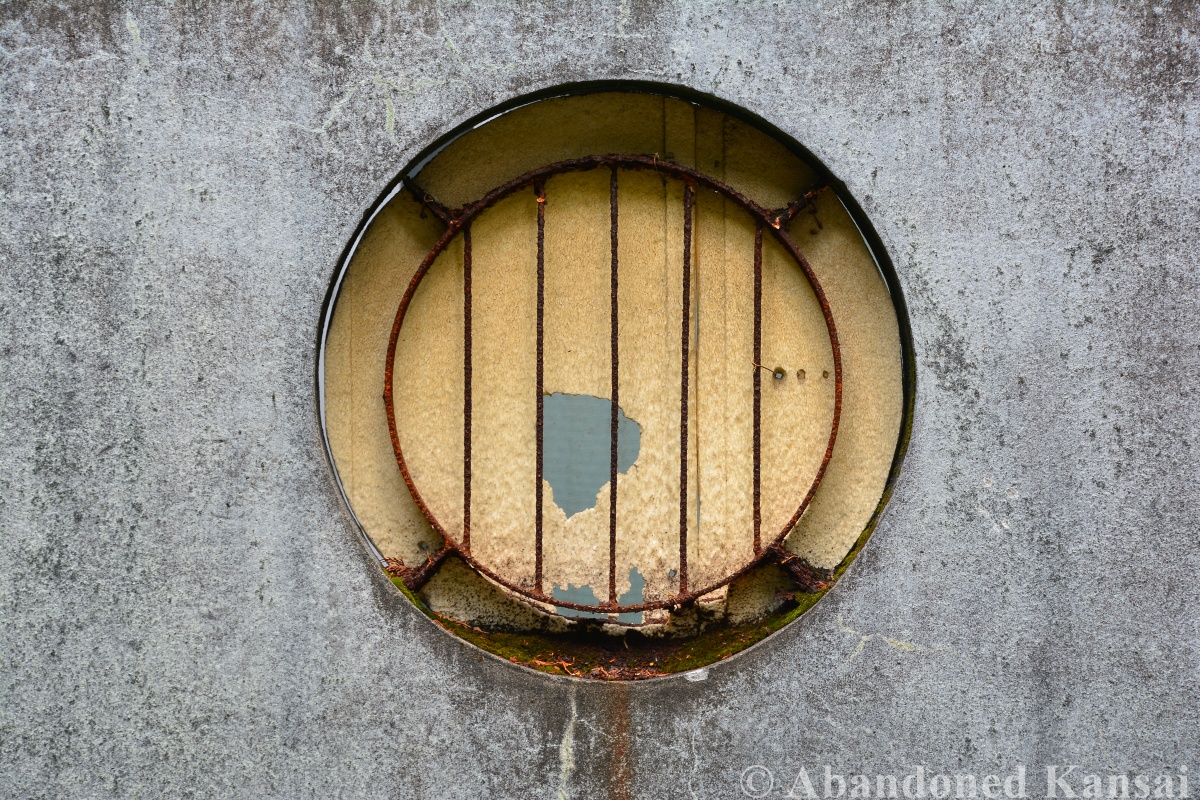
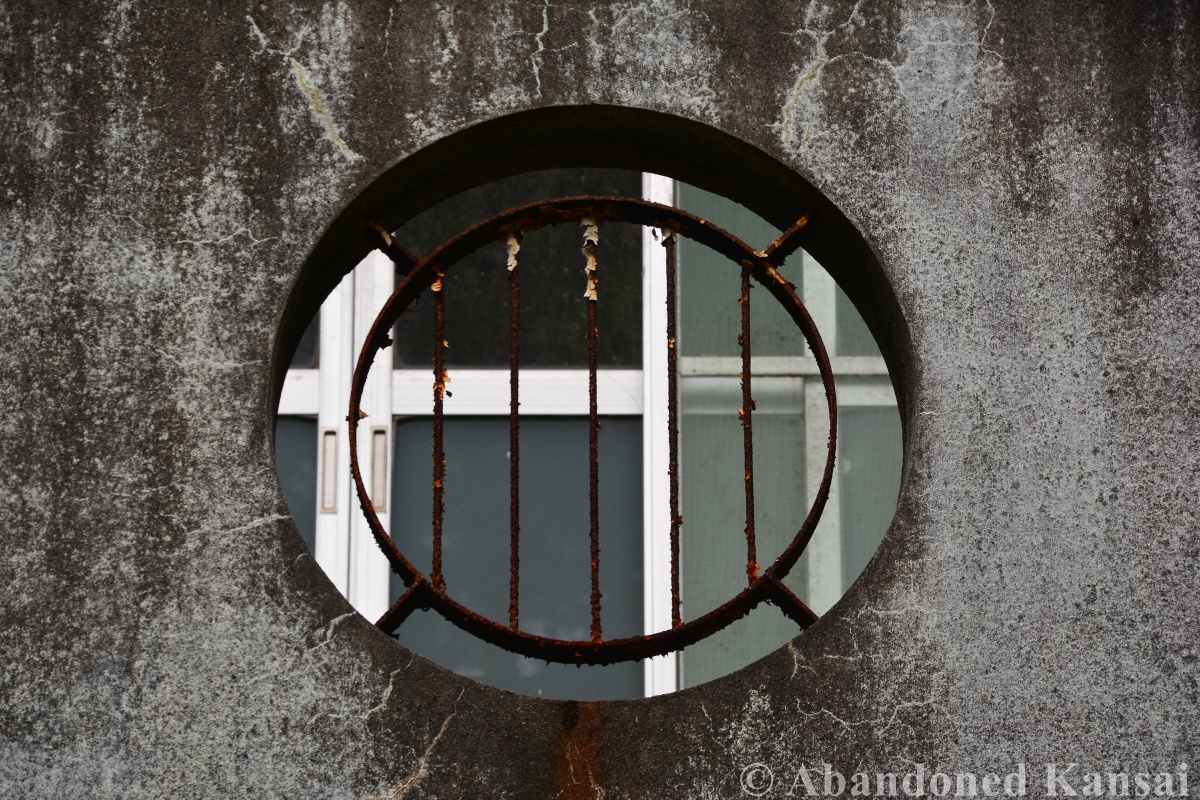
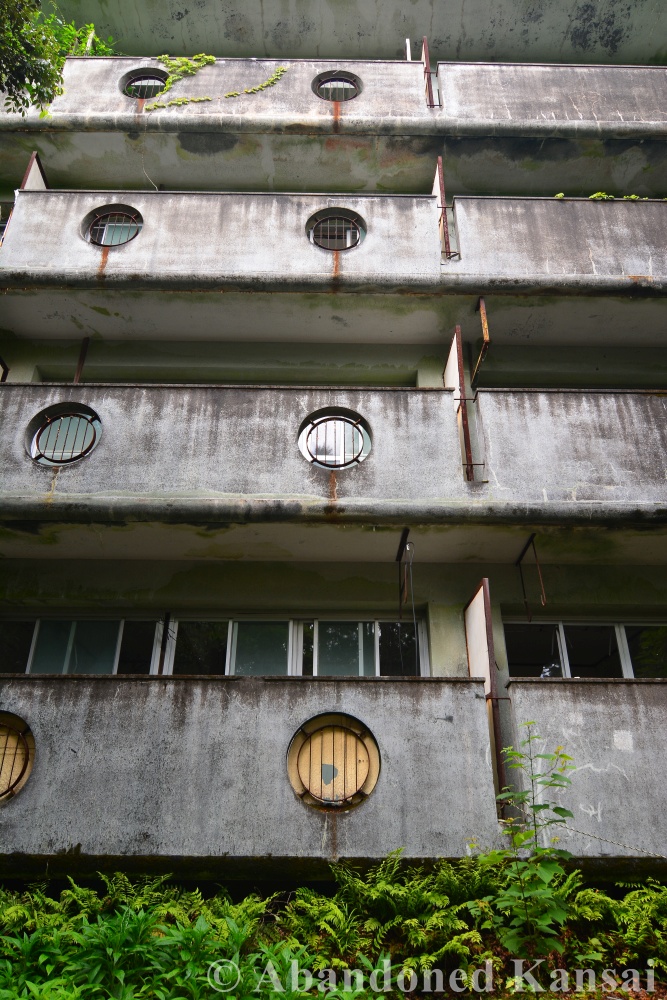
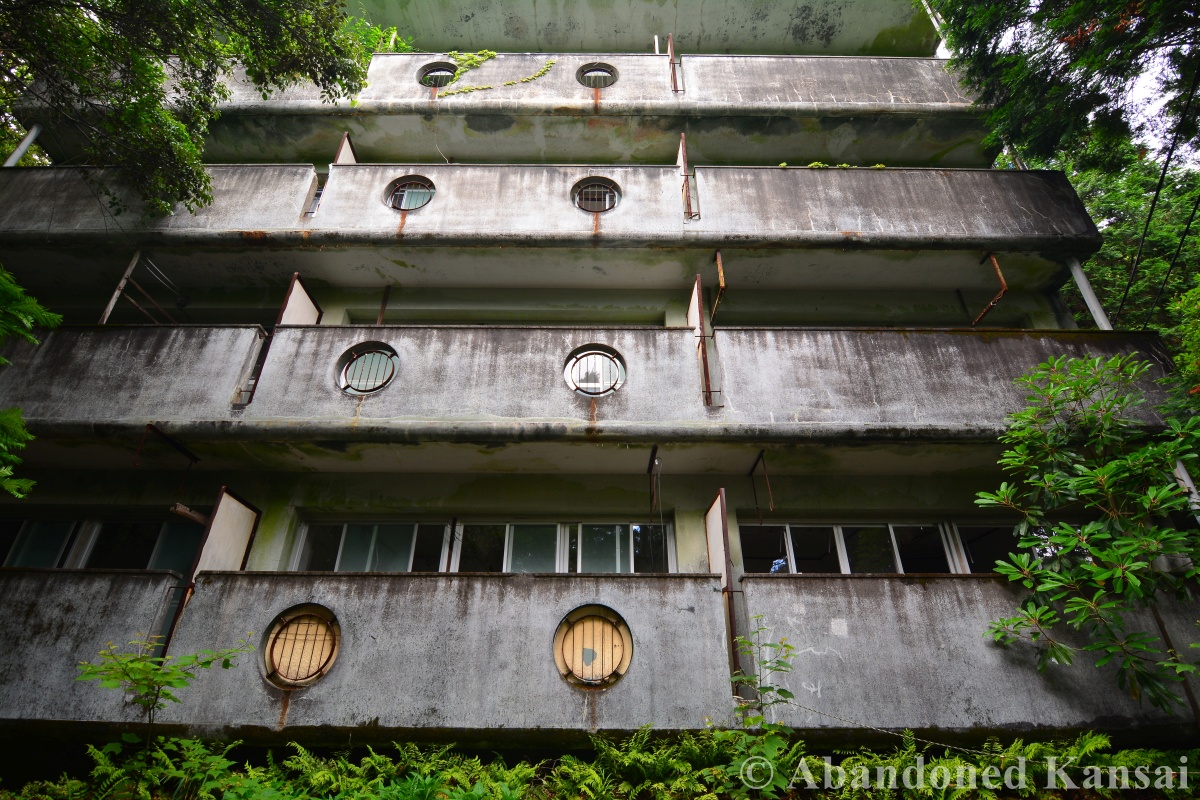
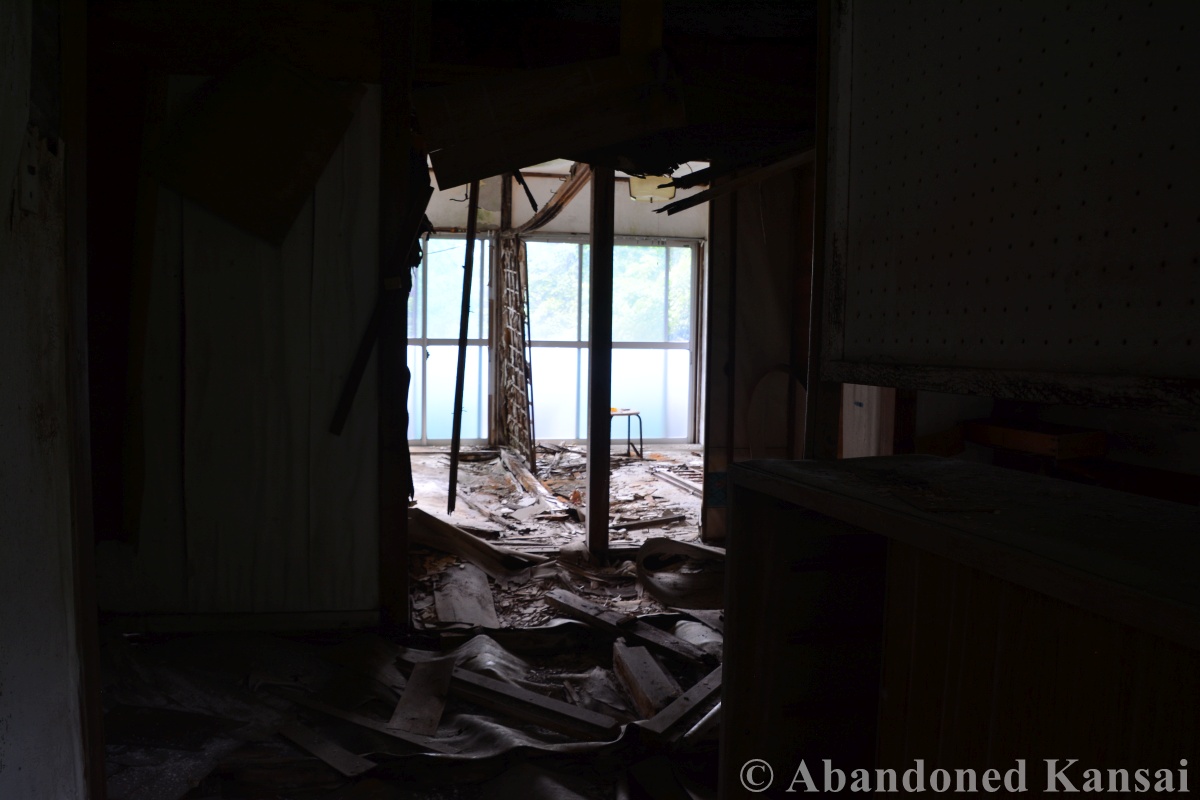
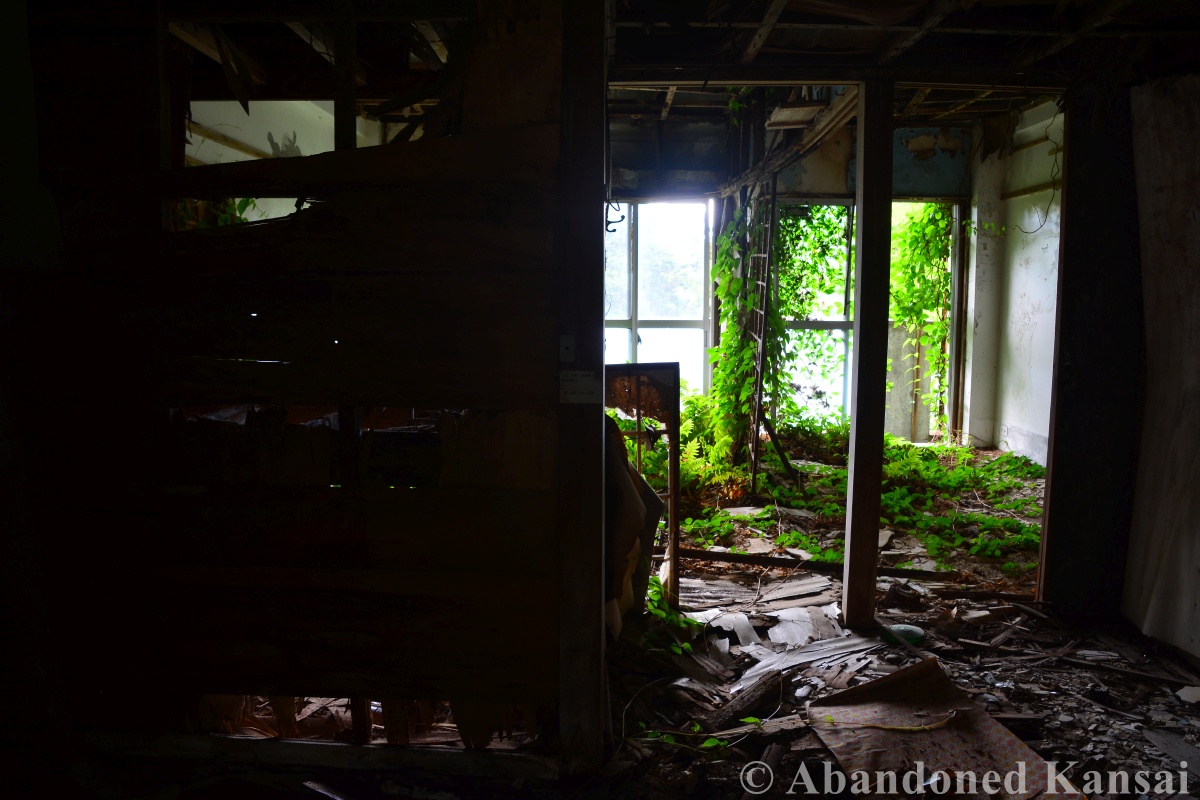
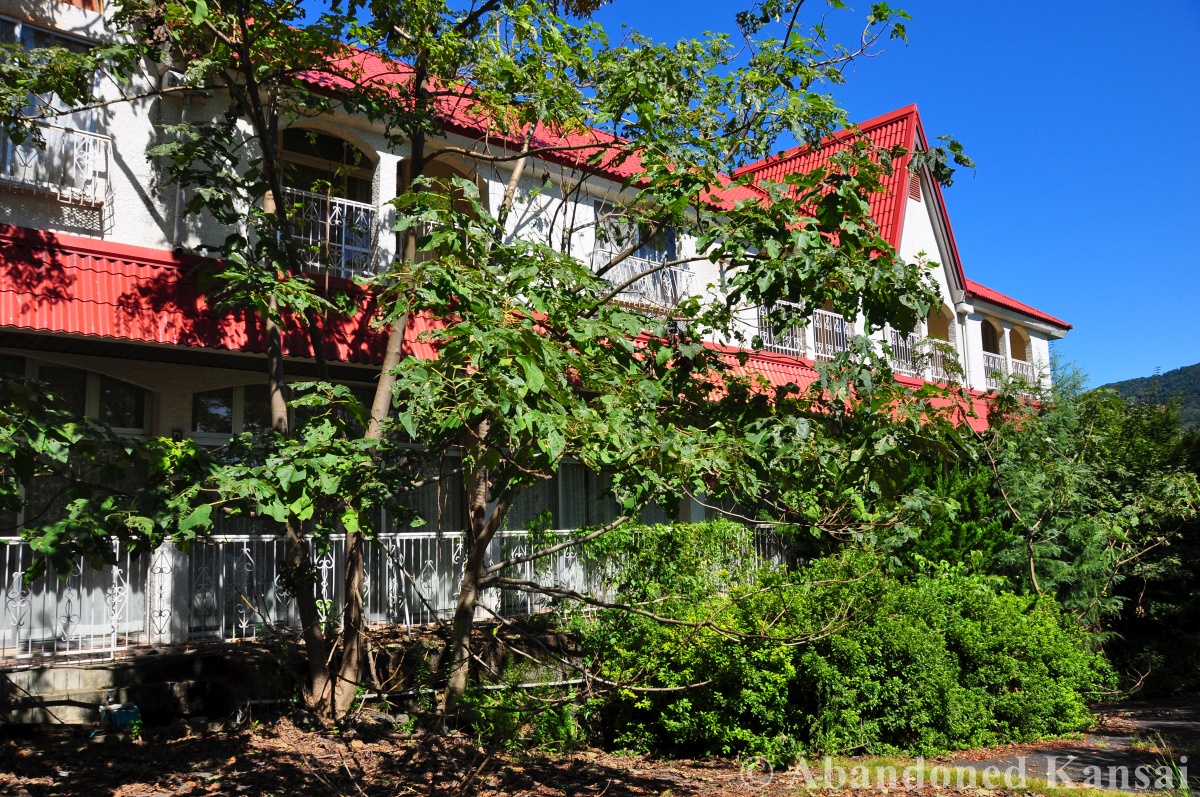
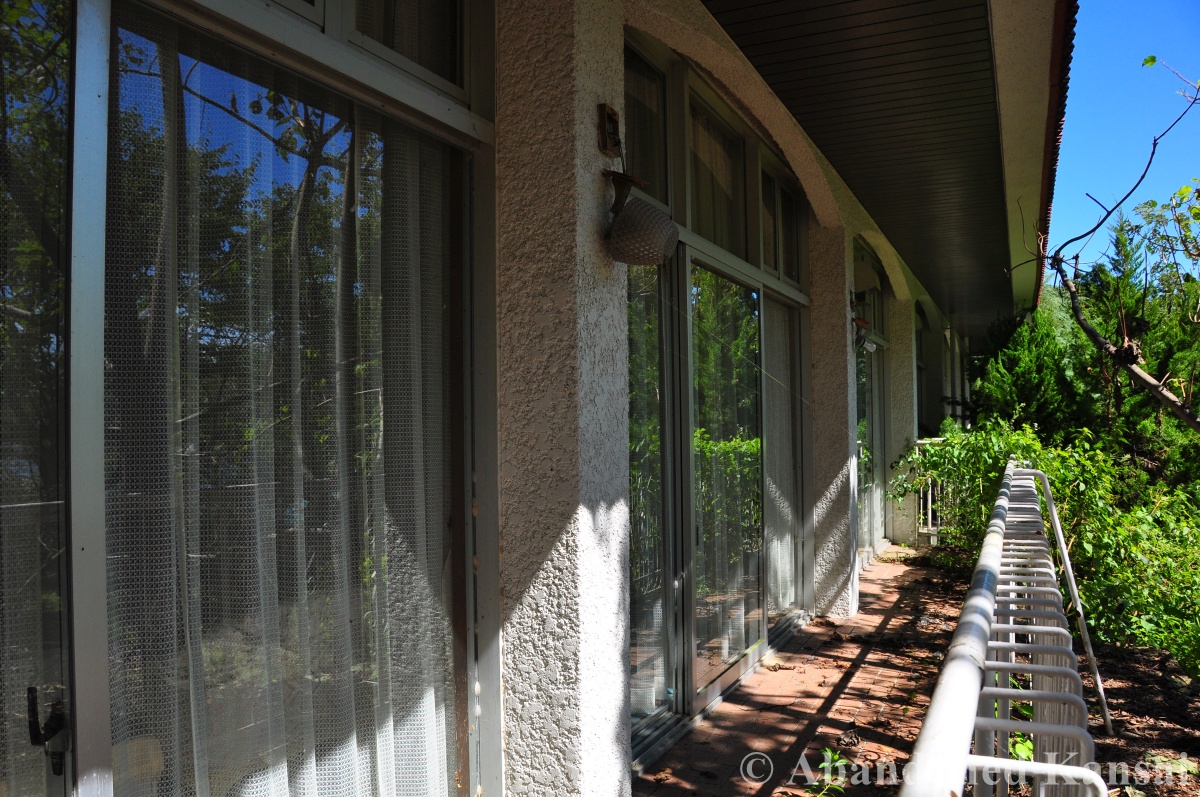
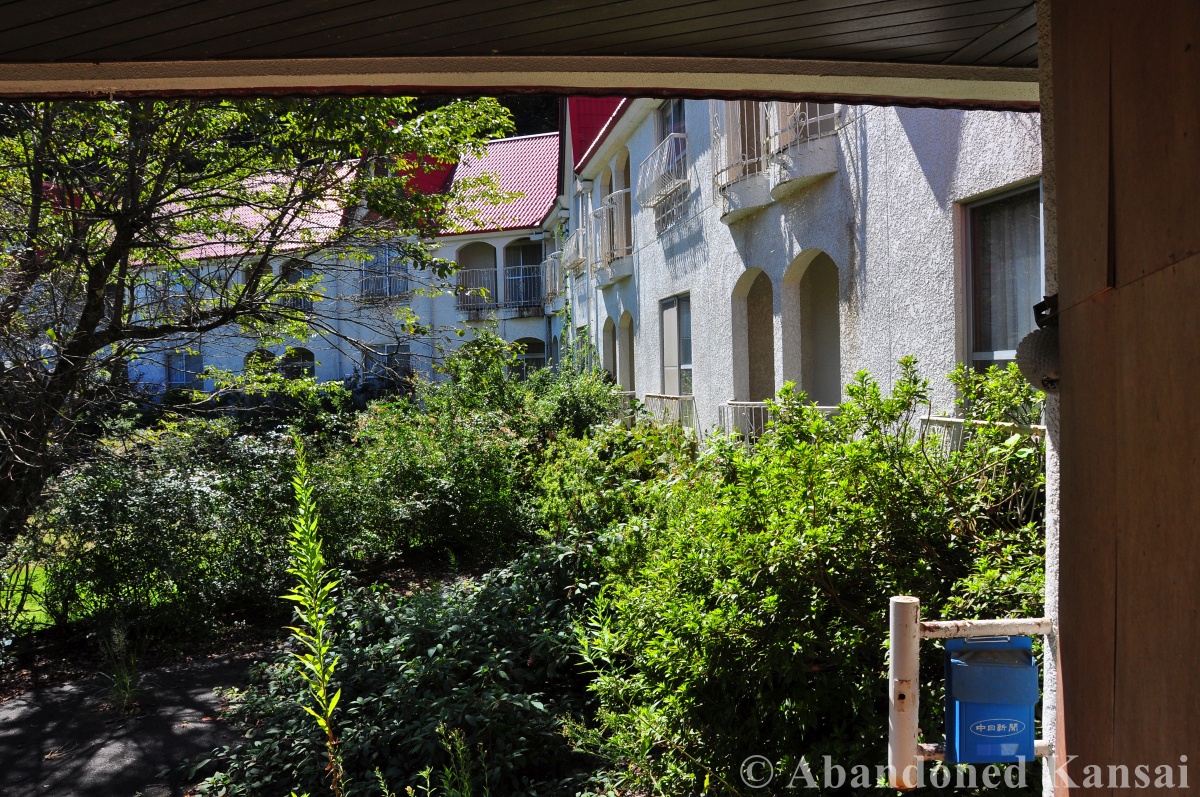
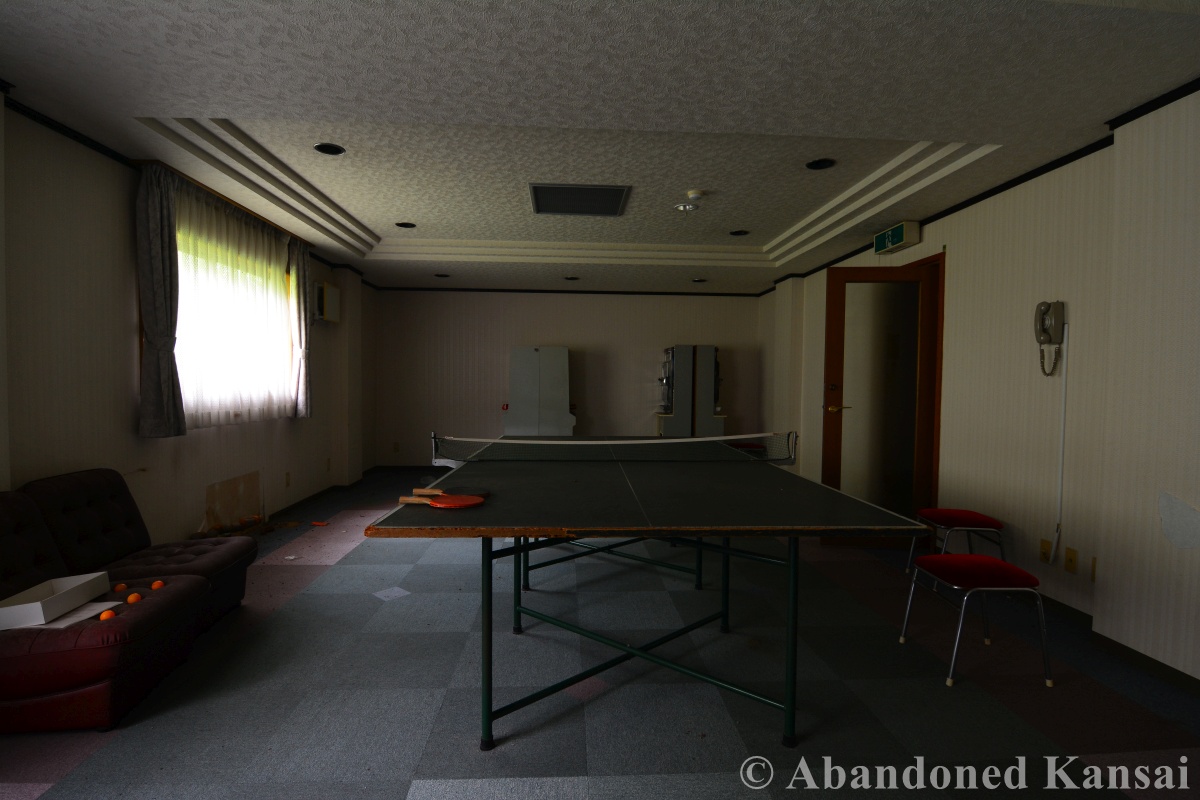
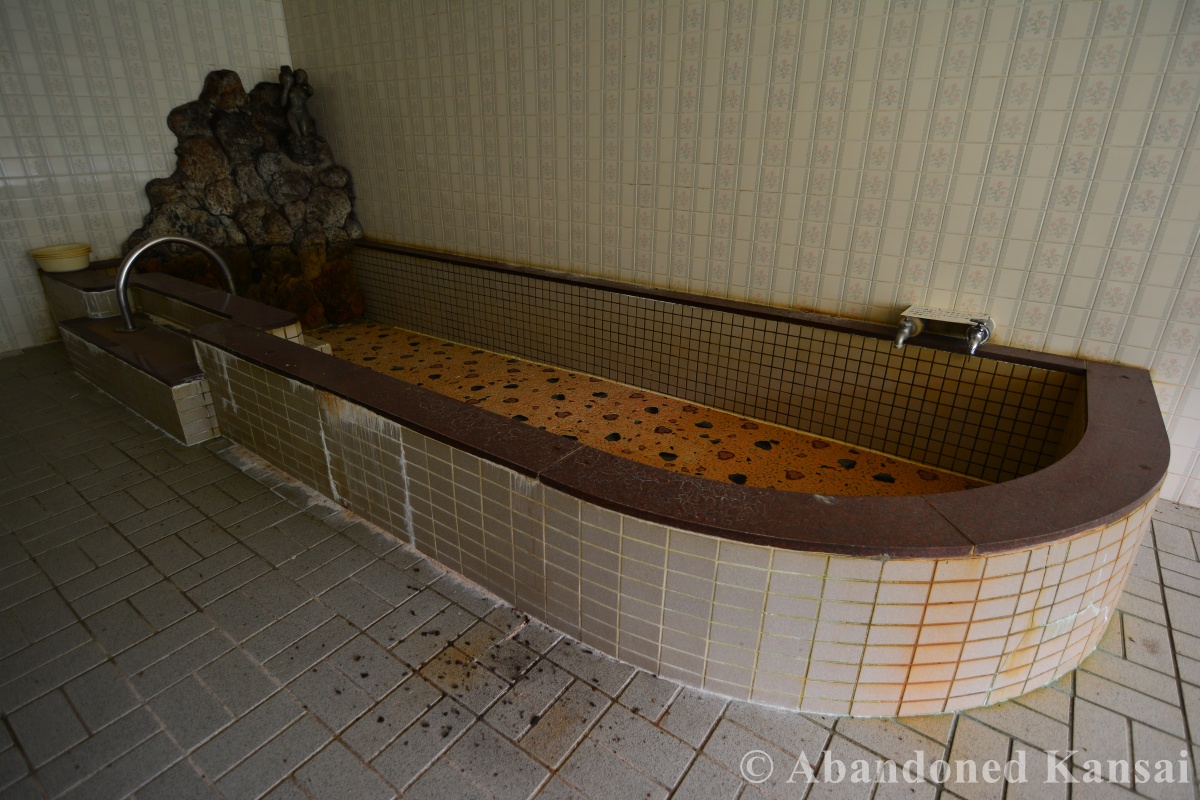
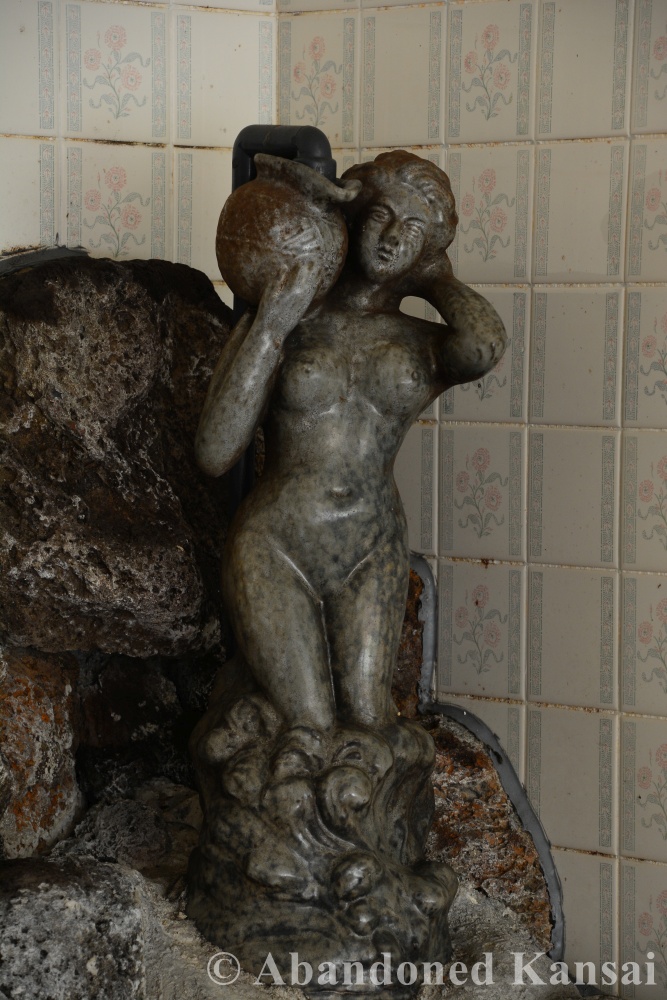
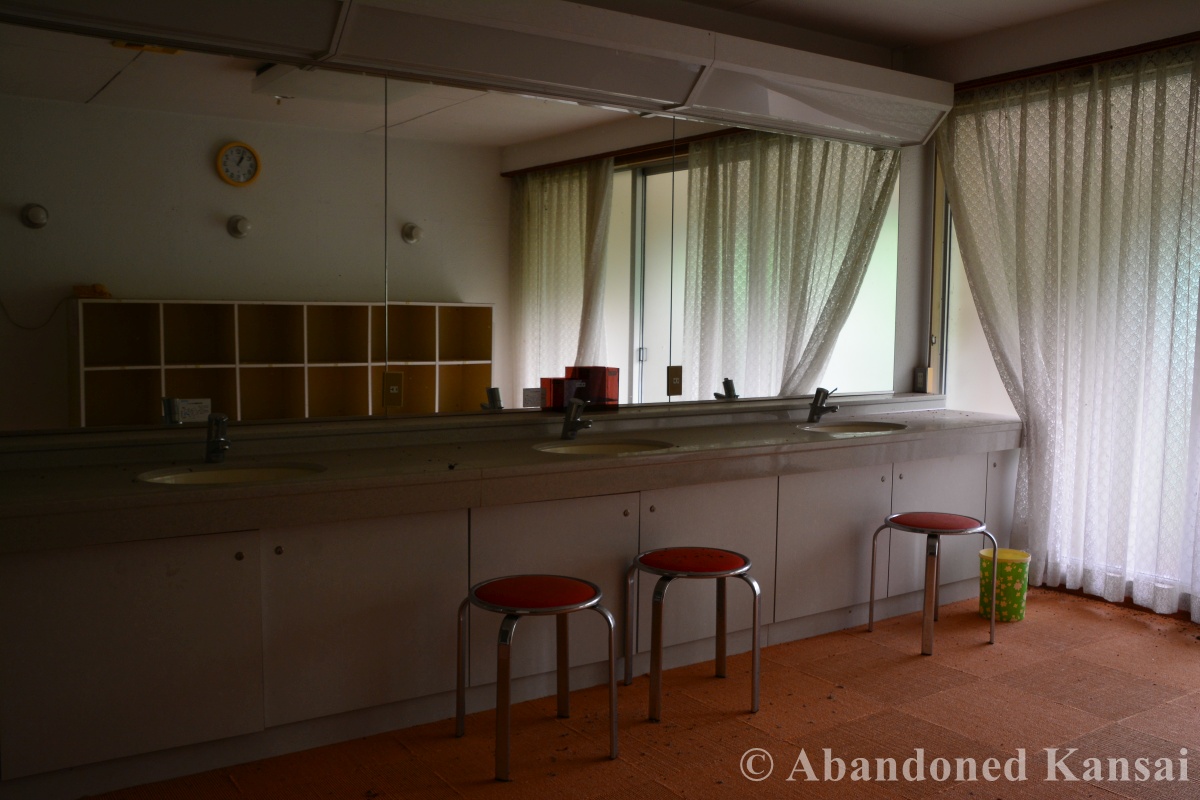
Okay, one of those people is me, but the Fern Hotel was really quite interesting! Not because of the plethora of plaques at the entrance, not because of the dull rooms… and especially not because of the rundown baths. 95% of the place was just another smelly, run of the mill abandoned hotel. But all it takes is one special room and a forgettable location becomes special. In this case it was literally ferns growing in the hallway between some party rooms! I guess the metal thieves left a window open, the carpet got drenched repeatedly during rainy season(s), mould and moss started to grow… and then bigger plants followed. A few years later I arrived in late spring / early summer and found a little jungle inside this otherwise totally average abandoned hotel. Okay, the rusty scale looked kinda cool, too. And they had the program of a Japanese adult movie channel from January 2000. Don’t worry, no sexy photos included, not even with the usual mosaic. Other than that… not much. But the fern area was really cool – so please enjoy the photo gallery!

(*Like Abandoned Kansai on Facebook* or *follow us on Twitter* if you don’t want to miss the latest articles and exclusive content – and subscribe to the *video channel on Youtube* to receive a message right after a new video is online…)

Read Full Post »
Three months ago I posted an *abandoned blue bus* – today it’s a white, yellow, orange, and red one… but with completely different interior! 🙂

My apologies, the last few months have been hot, humid, and extremely busy. For a while it looked like as if I could go back to posting at least biweekly again, now I’m rushing to get one done before the month ends. Once more another quick one because of it, but I hope that I’ll be able to publish some meatier yet vegan friendly locations soon.
For now there we have another bus on the side of the road. I almost walked by it, but then I looked down a dirt road leading up a slope and saw this fine specimen parked there, partly overgrown already. Upon approach I sunk ankle deep into the slightly swampy ground. Fortunately it was only late spring on a cloudy day, not summer already, or the situation most likely would have been a lot worse. Nevertheless not really a fun experience wearing new sneakers. (I was on vacation and didn’t really gear up with boots and protectors…)
It looks like the bus belonged to a (now defunct) construction company, so I guess this one was used to transport employees to work sites. Not much to say about it. Standard interior, just a nice little roadside find. Nobody around, decent decay – less than half an hour total. Enjoy!

(*Like Abandoned Kansai on Facebook* or *follow us on Twitter* if you don’t want to miss the latest articles and exclusive content – and subscribe to the *video channel on Youtube* to receive a message right after a new video is online…)

Read Full Post »
A few days from now the 2024 Summer Olympic Games in Paris will begin. A spectacle that costs about €9 billion – and probably will leave some abandoned places behind… like in Japan!

Japan’s history as a host of the Olympic Games dates back to 1964, when Tokyo was home of the Summer Games. Sapporo 1972 and Nagano 1998 followed with Winter Games, before the disastrous Tokyo Summer Games 2020 were held in 2021. Sapporo (who had won the bid for 1940, but couldn’t follow through for obvious reasons) remembers the 1972 games so fondly that there was a large campaign to get the games in 2030 – an effort that became rather unpopular quickly in the aftermath of Tokyo 2020. 2034 is still in talks, but extremely unlikely… Some politicians seem to cling to it, but that’s pretty much it.

Since I avoid Tokyo like the plague (or Corona… still no infection!) I don’t know what the status of their Olympic ruins is, but both Nagano and Sapporo still have some installations left. The Olympic bobsleigh track in Nagano called Spiral is a tourist attraction now (coordinates: 36.71088, 138.1578), the other remaining venues that have been abandoned are mostly forgotten now – some have been demolished after my visit, for example the bobsleigh goal house in Sapporo and that gymnasium used by athletes to change and prepare right before their competitions. I compiled a little gallery with some interesting photos at the end of this blog entry, but here is a list of links to the full articles I’ve written in the past, in case you want to see (and read?) more:
*Sapporo 1972 (1)*
*Sapporo 1972 (2)*
*Nagano 1998 (1)*

(*Like Abandoned Kansai on Facebook* or *follow us on Twitter* if you don’t want to miss the latest articles and exclusive content – and subscribe to the *video channel on Youtube* to receive a message right after a new video is online…)

Read Full Post »
« Newer Posts - Older Posts »