# What is Nara Dreamland?
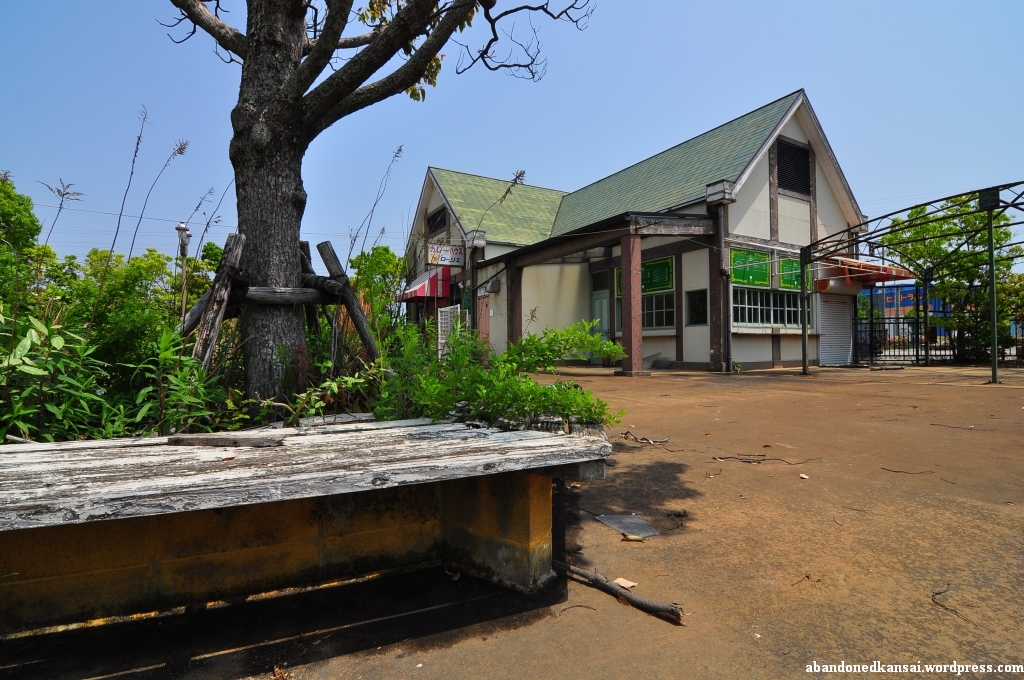
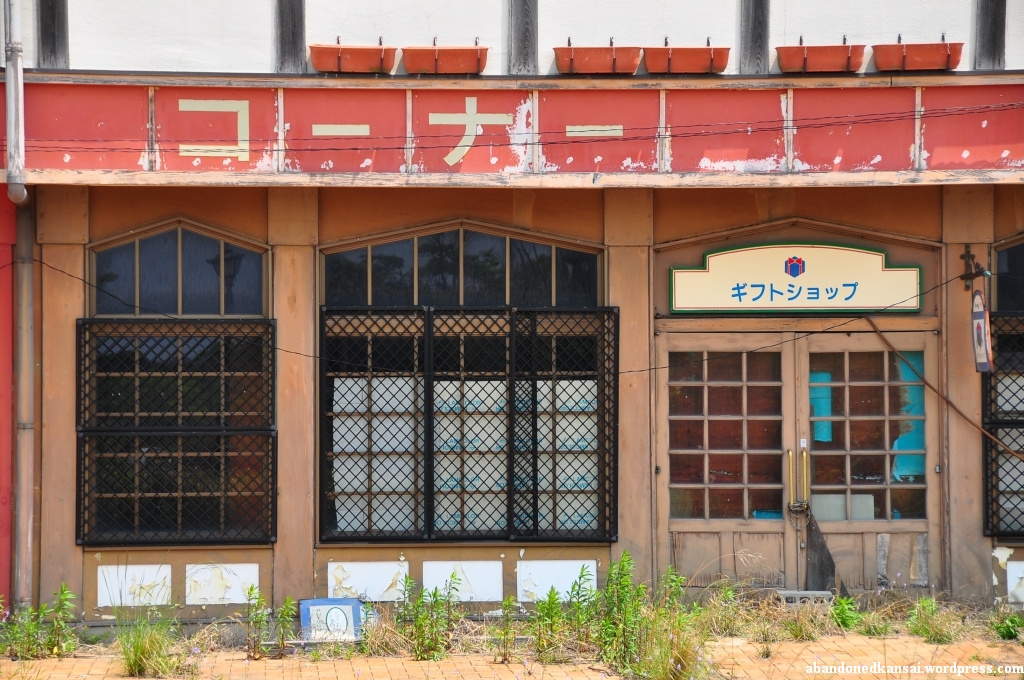
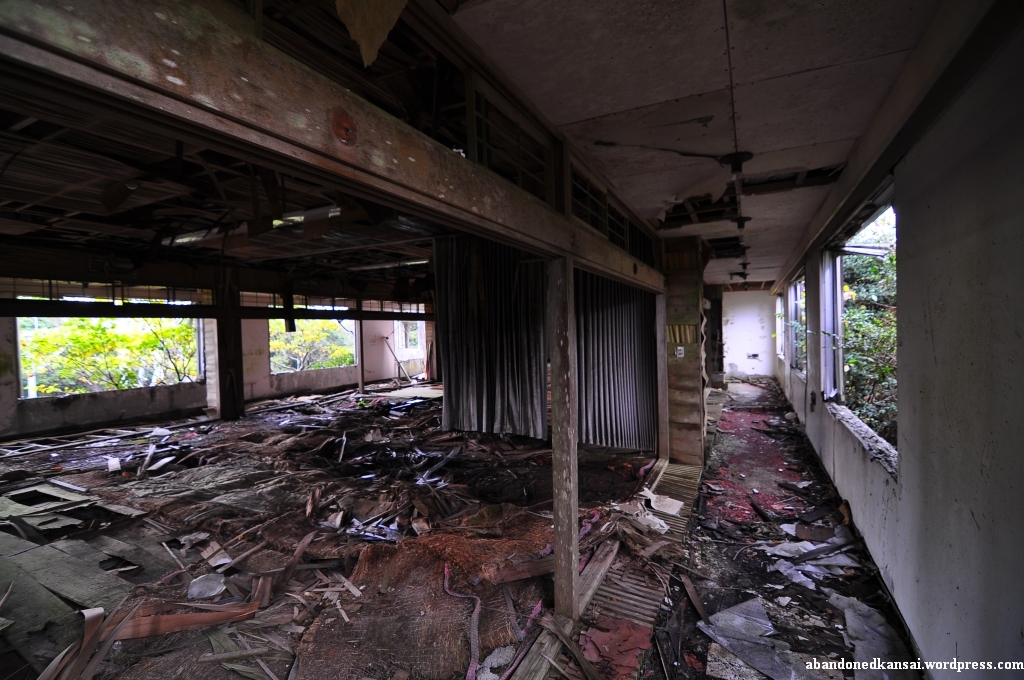
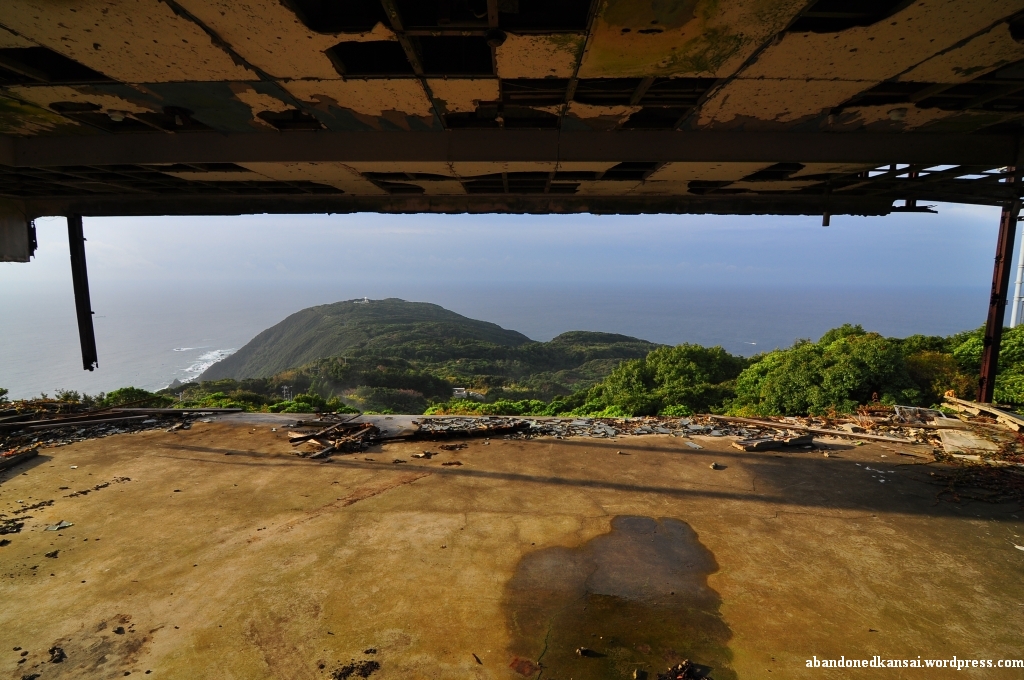
– Nara Dreamland is an abandoned amusement park in Nara, Japan. It was closed in 2006 and abandoned without getting demolished – which makes it quite a unique urbex location since all the roller coasters, merry-go-rounds, souvenir shops, arcades and other attractions are still there. (Although it’s up for discussion if the place is really abandoned. It’s closed, that’s for sure, but the owner of the park obviously still cares about it to some degree…)
# Where is Nara Dreamland?
– That’s the kind of questions I usually don’t answer. But since NDL has entries in four language versions of Wikipedia, three of them giving away the exact location of Nara Dreamland, I can as well link to *my own map at GoogleMaps*. The address was / is:
Nara Dreamland
1900 Horen-cho
630-8113 Nara
But just because you know where it is I wouldn’t recommend going there. You might wanna read the next question(s) before rushing out…
# Does Nara Dreamland have security?
– YES! Some people got lucky and didn’t run into security at Nara Dreamland, I got away with plugged feathers – others got roasted and served to the police. The whole park is surrounded by fences, most parts with spikes and / or barbed wire. Warning signs once asked people to call the police if they see somebody suspicious, now the latest signs I saw announced a fine of 100.000 Yen, about 950 Euros / 1300 Dollars! Furthermore there were reports that the guy patrolling there tries to blame caught trespassers for vandalism to get more money out of them. And vandalism becomes more and more of a problem…
# Is there any vandalism at Nara Dreamland?
– Sadly yes. Lots of it. When I explored Nara Dreamland for the first time in December of 2009 there were barely any signs of vandalism. Almost two years later there are graffiti at the former pachinko parlor at the Eastern Parking Lot. The Parking Garage’s staircase is completely sealed now and the Hotel is boarded up again. Inside the park you can see how people smashed the control station of a merry-go-round – the fire extinguisher still on top of broken glass. The Main Street USA clone with all the souvenir shops has barely any undamaged windows and several doors were kicked in, even of buildings that were clearly just a false front. It’s actually pretty sad how fast the place goes down the drain – especially since the graffiti people took over; and not the good ones…
# I’ve heard Nara Dreamland is a rip-off of Disneyland in Anaheim. Is that true?
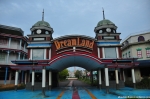
– Definitely. Disneyland was opened in 1955, Nara Dreamland followed in 1961. You have copies of the Sleeping Beauty Castle, Adventureland, Main Street USA, Autopia, Skyway, Tea Party Cup Ride, Submarine Voyage, Flying Saucers, the monorail, the fire station, a pirate ship, double decker omnibusses, vintage cars, and a train station (called DreamStation). Even the entrance looked the same! Of course the layout of the park was very similar – aerial shots make them look like twins. And of course there is the story of Kunizo Matsuo, the man behind Nara Dreamland.
# Can you tell me more about the history of Nara Dreamland?
– Sure. After World War II Japan’s industry was booming. People worked hard and needed some places to relax. The United States were not only occupiers, but also the helping hands for the reconstruction of the country – and the new role models. In the second half of the 1950s a Japanese businessman called Kunizu Matsuo, president of the Matsuo Entertainment Company, visited the States and the brand-new amusement park Disneyland in Anaheim near Los Angeles – and was quite impressed. Something like that would be perfect for Japan, he decided. He became a mediator for the Japanese Dream Sightseeing Company (JDSC) and had direct contact with Walt Disney. The plan was to bring Disneyland to Japan – not to Tokyo, but to the old capital Nara (710 – 794), the cradle of Japanese culture. Matsuo also was in direct contact with Disney’s engineers to create the Japanese version of Disneyland. But Nara Disneyland never came true. Towards the end of the construction phase JDSC and Disney couldn’t agree on license fees for all the famous Disney characters like Mickey Mouse, Pluto, Donald Duck and Goofy – so the Japanese side created their own mascots and abandoned the idea of Nara Disneyland. I have no idea how JDSC and Disney settled in the end (I’m sure JDSC had to pay quite a bit of money for Disney’s “help” even without getting the permission to use Cinderella & Co.), but while Nara Dreamland opened in 1961 it took Disney another 20 years to finally open Tokyo Disneyland on April 15th of 1983. Coincidentally (?) this year marked the beginning of the downfall for Nara Dreamland – the number of visitors began to decrease and JDSC including Nara Dreamland was bought by the supermarket chain Daiei in 1993. Eight years later, in 2001, Universal Studios Japan (USJ) opened in Osaka, just about 40 kilometers away. USJ annihilated Nara Dreamland and the once so glamorous place was forced to shut its doors on August 31st of 2006.
# What were the names of the mascots at Nara Dreamland? And are there famous non-Disney characters present at Nara Dreamland?
I’m sorry, but I have no idea about the mascots. All I know is that there are two of them, a male one and a female one. I don’t even know if they had names…
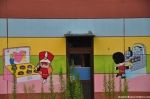
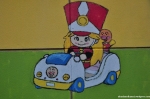
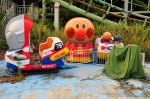
As for other characters: There are no specially themed rides, but Anpanman is pretty visible at Nara Dreamland. (In case you don’t know Anpanman: He’s the most popular fictional character amongst Japanese age 0 – 12 for 10 consecutive years. Anpanman was created by Takashi Yanase in 1968 as a manga character, but spread to other media quickly (including movies, animated shorts, a TV show and dozens of video games). Nowadays Anpanman is everywhere – imagine Hello Kitty, but popular with girls and boys…)
# Why was Nara Dreamland closed?
– A declining amount of visitors for many, many years – and most of all Universal Studios Japan. By the time USJ opened in 2001 Nara Dreamland already was a rundown theme park decades after its prime. Universal Studios Japan on the other hand was brand-new and high-tech, probably the most modern amusement park of its time. Tokyo Disneyland started the struggle (yes, even though 400km away TDL was direct competition for NDL!) and Universal Studios knocked it down – Nara Dreamland didn’t have a snowball’s chance in hell… (Surprisingly enough *Expoland* in Osaka wasn’t affected that much by USJ and closed mainly because of bad press after a 19 year old university student from Shiga prefecture died on a roller coaster in 2007 – and Hirakata Park (also known as HiraPa – ひらかたパーク / ひらパー) between Osaka and Kyoto still doesn’t show any signs of giving up…)
At the height of its success Nara Dreamland welcomed 1.6 million visitors per year, when it closed the number was as low as 400k. Universal Studios Japan on the other hand had 11 million visitors (!) in its first year of operation…
# What was Nara Dreamland’s main attraction?
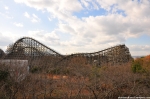
– Nara Dreamland’s main attraction was (and still is!) the Aska roller coaster (木製コースターASKA, Mokusei kōsutā ASKA), a wooden coaster built by Intamin and opened in 1998. The track was 1081 meters long and reached a height of 30 meters. The trains consisted of seven waggons for four guests each (two rows with two seats). They reached a speed of 80 km/h (almost 50 mp/h) and accelerated with up to 2.8g. Aska is named after Asuka, a city close to Nara – from 538 to 710 it was the capital of Yamato, one of the earliest states on Japanese ground, and the location of many imperial palaces as well as important temples and shrines, some of them still in existence today.
I took a video walking along parts of the abandoned Aska roller coaster – you can check it out on *Youtube*.
# Was it expensive to visit Nara Dreamland?
– The signs at the abandoned Nara Dreamland indicate that it was a pay-as-you-go amusement park (as was Disneyland when it opened in 1955!) – which means that you had to pay a low entrance fee, but then additionally for every single ride. So basically it was up to you how much you spent there. Sadly I never paid much attention to the prices, so let me have a look at some photos and see what I can come up with… Parking was 200 Yen for bikes, 1.200 Yen for cars and 2.000 Yen for busses. Bobsleigh (ボブスレー), the steel roller coaster modeled after Disney’s Matterhorn Bobsleds, was 600 Yen and a haunted witch cave put a hole of 300 Yen in your pocket. As for food: A beer was 500 Yen, chuhai was 400 Yen, takoyaki were 300 Yen, yakisoba was 400 Yen and the Family BBQ Set was 3.200 Yen. I don’t know how much the entrance fee was, but if you get caught by security now it costs you a whopping 100.000 Yen!
# I’ve heard there is a Yokohama Dreamland. Is it related?
– Well, there was a Yokohama Dreamland – it operated from October 1st 1964 to February 17th 2002 and closed, not really surprisingly, because of financial issues. It was located in the Totsuka ward of Yokohama. Unlike Nara Dreamland it was completely demolished – and replaced by a prison. And to finally answer the question: Yes, it was the sister park of Nara Dreamland with a similar layout, similar attractions and the same branding.
# Is there an official homepage?
– There was: http://www.nara-dreamland.co.jp/ (I didn’t make it clickable as it doesn’t work anymore anyways – save your time…)
You can find a copy *here*. (2003, Japanese only)
# How often have you been to Nara Dreamland?
– Never when it was still open and 5 times since it was closed.
# Do you have any plans to go back?
– Concrete, solid plans? No. Security there is the main reason for me not to go anymore. I know people visited the place without getting caught, but I made my own experiences and they were not all pleasant…
# Have you written more articles about Nara Dreamland than the one I’ve just read?
– Well, I summed up my experiences in the *Nara Dreamland Special*, but the articles I wrote about Nara Dreamland are in chronological order:
Getting Caught By Security
Nara Dreamland
Eastern Parking Lot And Parking Garage
Nara Dreamland Hotel
Nara Dreamland Revisited – Nighttime
Nara Dreamland Revisited – Daytime
Nara Dreamland – Nara Snowland
Nara Dreamland – Third Time Lucky
Nara Dreamland 2015
Nara Dreamland 2016
Nara Dreamland – 10th Anniversary
Nara Dreamland – Demolition
If you are less into facts about Nara Dreamland and you rather want to more about what it’s like to explore this abandoned theme park I recommend reading the articles I’ve just mentioned.
# Do you have material for more articles about Nara Dreamland?
– Yes! As of August 2014 I have material for about half a dozen articles, including some very unique photos…
# Is there a place even creepier than Nara Dreamland?
– Yes! It’s a half-abandoned amusement park called *People’s Park* – thanks to the constant music in the background and its nude statues it’s creepy as heck!
# What about that killer robot called Mascot 6-22? Is it really roaming Nara Dreamland?
– Killer robots at Nara Dreamland?! No, this is not another *April Fool’s joke*, this is the internet!
Nara Dreamland has been kind of my backyard for the past five years and I thought I’ve heard pretty much all stories about it… until one of Abandoned Kansai’s regular readers, Justin, asked me about the fully animatronic Mascot 6-22 in a private message via *Facebook* – and I had no idea what he was talking about. I did some research and there seems to be a theory out there in the depth of the internet, that Disney created Nara Dreamland to find out whether the fake park would be popular enough to justify the construction of an official Disneyland; which happened more than 20 years later. As if that wouldn’t be ridiculous enough, somebody claimed that the official new mascots were not poor students in poorly tailored costumes, but in fact robots – and that series 6, unit 22 was so special, that they didn’t turn it off, but let it roam freely in the park after it closed in 2006, defending a solar power station and giving everybody who tries to deactivate him an electric shock. But that’s not all! Some people actually seem to believe that the Japanese military asked Disney if they should take out “Mascot 6-22”, but they declined as the thing was showing interesting program adaptations.
Seriously, what the heck? The whole story is so ridiculous I won’t even spend the time to point out all the things that are wrong with it! Yes, I know, both the origin and the end of Nara Dreamland are somewhat in the dark, but come on, people… that’s a bit much, don’t ya think?
# I’ve heard that Nara Dreamland has been sold in late 2015. Is that true?
– Yes, that’s true. It seems like the previous owner owed the city of Nara 650 million Yen in ground tax, so the city foreclosed Dreamland and sold it to the only bidder for 730 million Yen – a real estate company called SK Housing. What plans they have is unclear though, because there are strict limitations on how the land Nara Dreamland is on can be used in the future…
# What are those strange noises I can hear at Nara Dreamland?
– If the noises are not coming from one of the nearby sports arenas, they are most likely caused by ushigaeru (ウシガエル) a.k.a. American bullfrogs. They freaked me out the first time I heard them in 2010, because they sounded like somebody opening a heavy metal door / gate…
If you have any unanswered questions about Nara Dreamland please let me know – I might update this posting every once in while. A lot of the information given here was only available in Japanese so far, some stuff I came up with by actually going to NDL – so if you use material for your own articles please be so kind and mention / link to this FAQ. Thanks a lot!
All of the following photos were taken in 2009 and 2010, most of them previously unpublished. The photos I took later will be published in two separate articles at some point in the future.
(If you don’t want to miss the latest article you can *like Abandoned Kansai on Facebook* and *follow this blog on Twitter* – and of course there is the *video channel on Youtube*…)