Feeds:
Posts
Comments

Archive for the ‘Shiga’ Category

Usually I stay away from exploring regular Japanese houses. It happened way too often that I thought “Oh, this house / apartment building looks abandoned!” and upon closer look it actually was not. Japan has an unbelievable amount of rundown yet inhabited buildings, especially in the countryside and the outskirts of bigger cities – and I don’t want to get in trouble!

When *Rory* and I drove through the countryside on one of our exploration trips, my fellow explorer tried to point my attention to a slightly dilapidated concrete building to the left – and even without looking at it I dismissed the idea, because “there are cars parked”. Well, last time I saw the building half a year prior there were cars parked, but this time I jumped the gun. Rory was indeed right: the cars were gone, leaving behind a building that looked abandoned… and so we stopped.
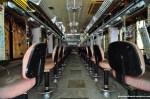
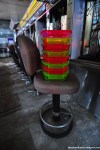
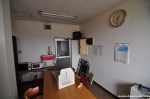
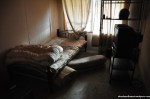
Still not 100% convinced that the building was really abandoned I left the lead to Rory and had a look at the surroundings – a couple of storage shacks inhabited by half a dozen cats, some garden plots with Napa cabbage (the key ingredient of kimchi…), a few open windows; no real proof that this simple, ugly building was really abandoned. Access of course was easy – two staircases in the back lead to four floors with two apartments each. (The video shows one staircase, the photos I selected are from apartments on both staircases.)
While all apartments basically had the same layout, their interior was like a box of chocolates – we never knew what we were gonna get! Some apartments looked like you could move it in right away if you had low standards, others were completely moldy and a serious health hazard, while the third kind was covered by spider webs. Some were packed with brand-new boxed items, the strangest being the ones labelled “Glycerin Enema Mune 60”, others were filled with all kinds of trashed. Some showed signs of families with children, others most likely were bachelor pads. In one apartment was a calendar – showing last month’s date; which would explain why there were cars parks at the building half a year prior to our visit.
Since the apartment building was just outside of a small town, Rory and I went for a walk after we were done exploring. It was getting dark anyway, so we thought it would be nice to enjoy a countryside sunset. Countryside people in Japan tend to be much friendlier than city folks according to my experience, so it didn’t surprise me at all when a local woman started a conversation with Rory when he took a picture of a cat with an improvised Elizabethan collar – and she confirmed that the apartment building was abandoned just two months prior to our visit after it fell into disrepair.

When approaching and exploring the apartment building I didn’t think it was a good idea being there, but in retrospect it was quite an interesting experience. I still wouldn’t drive hours to get there, but it wasn’t a bad location as far as original finds go!

(If you don’t want to miss the latest articles and exclusive content you can *like Abandoned Kansai on Facebook* – or subscribe to the *video channel on Youtube* to receive a message right after a new video is online…)

Read Full Post »

Abandoned Japanese towns must be the most common type of *haikyo*. For decades people have been moving from the countryside to the cities… and the trend continues: Almost 70% of Japan’s population live on 3.3% of the land – it’s a mountainous country, and the further you drive into the valleys, the more half-abandoned villages you’ll see; some are deserted completely, especially those so remote that they are almost completely cut off from the outside world in winter. (And that’s the main reason why ghost towns don’t show up at urbex blogs so much – only a few, like *Mukainokura*, are easily accessible; for most of them you need to have a car or a motorcycle…)

Across one of those hamlets my buddy Rory and I stumbled on our way to an off the beaten tracks location somewhere in the mountains of the Shiga / Mie / Gifu triangle. We thought it would be a good idea taking a direct way along a narrow one lane road stretching up and down several mountains instead of using the ridiculously expensive highways in Japan. It was a sunny day in March not only in Osaka (where there is no winter…), but also in Shiga. So we drove up one mountain in beautiful weather and started to descent on the other side… when all of a sudden we saw snow on the side of the road. We descended further and further, snow slowly creeping closer until we started driving on it. When we saw said hamlet, we made a quick stop to take a picture or two and continued driving… until we hit a dead end. The snow was getting too high and there was no way we were able to continue. So we turned around – and got stuck in the snow right in the middle of the hamlet (GoggleMaps doesn’t have a name for it, so I just simply call it Japanese Ghost Town). So I got out of the car and started pushing, successfully. Until we got stuck again a couple of hundred meters down the road, up the mountain. This time I needed the help of some boards that were conveniently placed right next to the road (coincidence?), but to both of our great relief we got grip right away and returned to the weather divide, this time without further incidents. Down the mountain on the Shiga side we found out that the only regular road nearby was still closed for winter, so we made our way back to Osaka as we were running out of time anyway.
Half a year later, November 2013, on our way to the remote haikyo Rory and I wanted to explore in spring – this time the first location of the day, not the third. Beaten by that darn valley six months prior and dangerously close to winter we decided to give the narrow mountain road another try. When we reached the hamlet this time there was no snow in sight, so we got out of the car and considered the place an original find. What started as “a quick look” turned into an hour long full exploration of about a dozen houses, most of them partly collapsed. All the buildings were Japanese style, which means mostly wood, so even the rather undamaged buildings were quite brittle once we found a way inside (without using force, of course) – half a dozen more winters with heavy snow and they will be flattened, too. To make the houses more stable and more durable, some outside walls were clad with thin metal plates. One of the houses still had an active digital (!) wattmeter above the entrance door and where we parked the car we found a laminated sheet of paper with information about an on demand taxi as a replacement for a regular bus service. My favorite item though was an abandoned bike, clearly an older model, maybe from the 50s or 60s. A really lovely piece of rust!

After we left the hamlet, we continued beyond the point where were forced to turn around half a year prior – and then we got lost in the mountains and reached dead ends… several times… losing massive amounts of time. The car’s navi more or less useless, we finally found a real road that lead us back to civilization, so we headed for the main road that was closed in March because of snow. This time we passed this point, too, only to get stopped in front of a tunnel – mudslides had severely damaged the road on the other side more than a year prior, so the tunnel was closed indefinitely, yet the road was open for hikers to reach a popular trailhead in spring, summer and autumn.
Running out of time again, Rory and I made our way back to Osaka, hoping to reach Location X on a third attempt. Or by finally trying a different route…

(If you don’t want to miss the latest article you can *like Abandoned Kansai on Facebook* or subscribe to the *video channel on Youtube*…)

Read Full Post »

I love the Toyoko Inn hotel chain in Japan. Their prices are fair, they are located right next to bigger train and subway stations, they offer free breakfast from 7 till 9.30 and free WiFi / internet 24/7, their staff usually speaks at least a little bit of English, they have a discount and point system for members – and you can make online reservations via their English homepage.

One reason I was hesitating to go on a trip *as mention in the previous blog post* was the fact that I was in-between credit cards for a couple of weeks. (In my experience it’s close to impossible for foreigners to get a credit card in Japan – but I am looking forward to the comments of every expat who got one… I know people who were rejected more than half a dozen times, I tried it once or twice and then got one in Germany…) But you need a credit card to make an online reservation at a Toyoko Inn – or so I thought.
When it was clear that I would spend the first night of my trip in Nagoya I stopped worrying. Last weekend wasn’t a typical time to travel in Japan (unlike *Golden Week*) and Toyoko Inn has six hotels in Nagoya, eight if you count the ones close to the airport – I was sure I would get a room somewhere. So the plan was to show up at one of them and ask the staff to make a reservation for me for the second night, which I planned to spend in Matsusaka – a town famous for its high quality beef, which turned out to be more dead then the cows it is famous for.

Luckily my plan was a good one, so I checked in at the hotel of my choice in Nagoya and asked the staff to call their sister hotel in Matsusaka to get me a reservation for the following night since I didn’t have a credit card. The friendly lady at the counter pointed to the opposite wall across the lobby and asked me to use the internet to make the reservation myself. I repeated that I didn’t have a credit card and therefore couldn’t make the online reservation. The answer was “You don’t need a credit card to make an online reservation.” – so I told her that I needed one when I tried to make one the night before. Since the hotel receptionist insisted that I wouldn’t need a card and was eager to show me that she was right we started the procedure on their English homepage – as usual. Another guest arrived so I filled out the form, scrolled down and… there it was, the section for the credit card information. I left it blank, tried to continue and of course it didn’t work and I got an error message. When the receptionist showed up again she seemed to be very surprised, switched the language settings of the homepage to Japanese and… finished the reservation without having to enter credit card information! She didn’t even have to log out / start the procedure from the beginning, she just switched the language settings and pressed a button to finalize the reservation.

I totally understand that hotels need some kind of security when people make online reservations and that’s the reason I never had a problem entering my credit card information when making an online reservation at a Toyoko Inn, 15 times for trips in 2012 alone. In fact they don’t charge your credit card and you can pay cash upon arrival, it’s just a security measure for no-shows, which I completely understand. Nevertheless I am kind of irritated by the fact that you have to put in your credit card information when you make the reservation in English, but not when you make it in Japanese – to me it implies that Toyoko Inn considers people who prefer to make reservations in Japanese more reliable than people who make reservations in English; which could be considered borderline racist. Again, I understand that (most) online hotel reservations require credit card information. But either it’s a general requirement for Toyoko Inn or not – doing it on the basis of the language chosen on the homepage feels wrong to me, as it means that not all customers are treated equally.

What do you think? „WTF?“ or “WTF!”?

(To end this posting on a lighter note I’ll add some non-urbex photos and videos I took during my three day trip. Inuyama Castle, Tagata Shrine Festival, Mount Gozaisho, Yunoyama Onsen, Toba, Iruka Island, Ise Shrine, … If anybody is familiar with dolphins please have a look at the video and let me know what you think – to me it looks like the poor creature was desperate to get away as it repeated the same motion at the “prison gates” to the ocean over and over again; I didn’t watch any shows on the island and didn’t spend any money there – Iruka Island (iruka = dolphin) was an optional stop on a harbor cruise I took in Toba.)

Read Full Post »

Mukainokura is probably the most famous ghost town in all of Japan as it was featured in many books and by many websites. It is also quite easily accessible by ghost village standards – it’s less than 10 kilometers away from the next train station (more like 6 km actually) and you can drive right up to it if you have a car. And since it’s on top of a hill in the mountains of Shiga prefecture, there are millions of potential visitors from all over Kansai.

Mukainokura was the first ghost town I ever visited, back in the spring of 2010 – and the last location I ever visited with my colleague and dear friend *Enric*, since only weeks later his fugue kicked in and he left the company we both worked for back then.

Spending a sunny spring day hiking with a friend in the Japanese countryside is as good as a day can get in my book. And so Enric and I passed several beautiful temples, shrines and rice fields on our way to the mountains. Back then there was way less information about Mukainokura on the internet, including GoogleMaps, so of course we overshot the side road taking us to the deserted town by a couple of kilometers. After walking back on the beautiful valley road along a small river we finally hiked up the mountain. Almost 200 meters height difference on a length of about 700 or 800 meters – I can see why that village was abandoned! The location was beautiful, but going up and down that slope on a daily basis must have been a pain… Which applies to a lot of villages in the area, about a dozen, all abandoned. Mukainokura is just the most famous one.

Mukainokura was founded halfway through Japan’s most famous era, the Edo Period (or Tokugawa Period), in the early 18th century. Back then people were living off agriculture and by producing charcoal. Growing slowly for one and a half centuries Mukainokura was home to 95 people in 1880, living in about 20 houses. Although in the 1920s the production of ogatan, Japanese charcoal briquettes made from sawdust, brought a more advanced source of income to Mukainokura, the number of inhabitants decreased quickly when gas, oil and electricity replaced charcoal everywhere in Japan after World War 2 – and younger people moved from mountain towns to the big cities in the plains. Mukainokura had:
52 inhabitants in 1960
43 inhabitants in 1965 (12 households – 17 male, 26 female)
10 inhabitants in 1970 (3 households – 5 male, 5 female)
3 inhabitants in 1975 (2 households – 2 male, 1 female)
2 inhabitants in 1980 (2 households – 1 male, 1 female)
0 inhabitants in 1985

After more than 25 years of abandonment there was not much left of Mukainokura. About a dozen wooden houses (half of them completely collapsed, the other half partly), scattered across an area of several hundred square meters, connected by tiny paths, short staircases and terraces. More than two dozen winters with heavy snowfalls left the remaining houses in a dilapidated state – beyond repair actually. Nevertheless a couple of houses were still accessible and full of everyday items like magazines, china, photos, bottles, boxes and cans.

I guess in 2010 Mukainokura had more visitors than in 1980. During our two hour long visit Enric and I ran into four different groups having a look at the abandoned town. From a elderly couple that might have been born here to an early twen couple wearing designer clothes – the guy behind the wheel of the sports car showing his trophy girlfriend the spooky dark side of their home country… All of them were driving up the paved road, not walking, like us and for centuries the inhabitants of Mukainokura did.

The two most vivid memories I have of Mukainokura involved nature though. When Enric and I strolled through the ghostly remains of the village Enric spotted a wild monkey in the forest. It was ignoring us completely, minding its own business – sadly I wasn’t able to get a photo of the furry fella. Right before we were leaving Mukainokura we were following signs to the Ido Jinja, the “Well Shrine” (井戸神社). Turns out that this shrine near Mukainokura’s well is quite famous till this very day, featuring signs that were clearly put up after Mukainokura was abandoned (one was dated, 1991, others looked even newer). The shrine was (and is) accompanied by a Katsura tree 39 meters tall and 11.6 meters in girth, according to the sign 400 years old. A wonderfully tranquil place and the perfect location to stop by before heading home…

(If you don’t want to miss the latest article you can *follow Abandoned Kansai on Twitter* and *like this blog on Facebook* – and of course there is the *video channel on Youtube*…)

Read Full Post »

The Mt. Hiei Artificial Ski Slope is an abandoned ski resort near the top of Mount Hiei on the border between Kyoto prefecture and Shiga prefecture. Famous for its Enryaku Tempel and the Kokuhoden Museum this holy mountain was once thought to be the home of gods and demons in the Shinto belief system. Interestingly enough the predominantly religion on Mt. Hiei has always been Buddhism. The monk Saicho founded the Enryaku-ji in 788 as the first outpost of the Tiantai / Tendai sect and it remained the Tendai headquarters till this very day, although it was famously destroyed by Oda Nobunaga in 1571 to vanish the rising power of the local warrior monks, killing about 20,000 people (including civilians) in the area. The temple was rebuilt soon after and is one of the main tourist attractions in Shiga prefecture today, accessible via two cable car lines, several beautiful hiking trails and a toll road for cars, motorcycles and busses.

Along the “Kitayama East Course” lies the Mt. Hiei Artificial Ski Slope, probably the most visited haikyo in all of Japan. On an average day during the hiking seasons in spring and autumn you’ll never be alone in the area as people are constantly passing by – about half a dozen hiking trails meet here and a close-by cable car station, serving the longest funicular line in Japan, attracts hundreds of people a day. Most hikers barely notice the abandoned ski lift and ski slope, hardly anybody peeks through the broken windows of the gear rental store or has a look at the undamaged closed restaurant. Why wasting a thought on that ugly stain when the surrounding nature is of such beauty? Because beauty lies in the eye of the beholder and though the ski resort on Mount Hiei was rather small it nevertheless offers a few neat angles now that it is abandoned.

Wanna know some facts about the resort? Okay, this is what I was able to find out: The Mt. Hiei Artificial Ski Slope was opened in 1964 and on November 1st of 2002 the newspaper Kyoto Shimbun reported that the ski resort was closed for good after a hot summer in 2000 and a way too warm winter in 2001 – followed by a year of temporary closing; which explains why both the restaurant and the rental store are still stocked with all kinds of items. In the almost 40 years of operation the already mentioned facilities welcomed customers for both a summer and a winter season. In winter a combination of natural and artificial snow (provided by a snow gun) offered fun for the whole family, in summer grass skiing was the business of choice. A lift transported guest for a distance of 170 meters so they could enjoy the pretty short slope of up to 200 meters with a vertical drop of 38 meters.

Oh, before I forget: The nearby “Garden Musem Hiei”, a flower park, once was an amusement park with a haunted house, a small Ferris wheel and a viewing platform, but I guess it was converted quickly enough to never been considered abandoned.

And that’s it for now from Mount Hiei. For now, because the ski resort was actually my second urbex trip there and my fourth or fifth overall – I really like Mount Hiei! Next time I’ll take you there I’ll either show you an abandoned rest house on a steep slope or a mysterious construction I’ve never seen anywhere else on the internet…

(If you don’t want to miss the latest article you can *follow Abandoned Kansai on Twitter* and *like this blog on Facebook* – and of course there is the*video channel on Youtube*…)

Read Full Post »

Exploring the Tsuchikura Mine (a.k.a. the Pawnbroker Mine) caused quite a bit of trouble. Unlike most of my other explorations it is not easily accessible by public transportation and therefore a challenge in general. As described last time I met with my urbex buddies Andrew and Damon to drive to the Tsuchikura Mine in the Shiga mountainside. After we were distracted by the *K-1 Pachinko Parlor* we finally made our way to the east. At Lake Biwa the weather was already rather cold and it snowed a little bit, but the streets were just wet, that’s it. The country road leading to the mountain though was soon covered with the white slippery beauty and each tunnel we went through seemed to add 5 centimeters of snow to the fields and forests we were passing. When we finally reached the old side road to the mine we had to abort our approach: The street was completely covered by snow, at least 50 cm were piling up and looking down the way ahead of us it looked like it was getting worse – we had to wait till spring.
4 months later, April. Japan’s cherry blossoms were in full bloom when Damon, Andrew and I decided to try the Tsuchikura Mine again. With the snow (mostly) gone access was as easy as it could be. No fences, no barbed wire, no secret entrances – no wonder the place is one of the haikyo favorites everybody seems to know about.
The Tsuchikura Mine was opened in 1907 (Meiji 40) by a company called Tanaka Mining and produced mainly copper and iron sulfide as well as some gold and silver and small amounts of lead. In 1934 (Showa 9) the Nitchitsu Mining Corporation bought and modernized the mine, but a series of accidents caused by heavy snowfalls in the area (no kidding, huh?) cost quite few lives:
1934: 4
1936: 6
1939: 10
1940: 10
In 1942 most of the mine was moved two kilometers to the south, to the present location, where a sifting plant with a capacity of 100 tons per month was built. In 1957 the sifting plant was expanded to 200 tons per month, but around six years later the plant stopped to be profitable due to cheap ore from overseas when trade liberations kicked in – the unexpectedly low quality of the ore at the new deposit didn’t help either and so the mine closed in 1965.
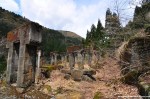
At its zenith about 1,500 people worked at the Tsuchikura Mine, sadly there is nothing left of the mining town surrounding it. All there is to see today is a couple of concrete constructions on a steep slope and a roofless house towards the top of it – probably the previously mentioned sifting plant, once wainscoted by wooden buildings. (If you are interested in some old photos please *click here* – the text there is in Japanese as this is the first time somebody writes a bit more about the Tsuchikura Mine in English on the internet.)
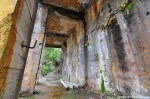
Exploring the abandoned leftovers of the Tsuchikura Mine was pretty easy thanks to its popularity. The place consisted of several “floors” with concrete fluid reservoirs and brackets for conveyer belts which looked a bit like Stonehenge. Since quite a lot of people seek to get up there nice explorers installed ladders and lots of ropes. People in decent shape and free from giddiness should have no problems to make it up the slope and enjoy a nice view down on the remains and the rather narrow valley. In comparison to the *White Stone Mine* and even the *Iimori Mine* the Tsuchikura Mine was rather boring, but it offered some nice angles and interesting views to take pictures of – and if you are lucky you will meet a photographer and their cosplay models… (Abandoned mines are popular amongst certain niche photographers. You know, production value!)
(If you don’t want to miss the latest article you can *follow Abandoned Kansai on Twitter* and *like this blog on Facebook* – and of course there is the*video channel on Youtube*…)

Read Full Post »

Pretty much a year ago, a couple of weeks after we explored the *Love Hotel Gion* and the *Biwako Tower & Igosu 108* together, I met up again with my haikyo buddies Andrew and Damon. Our goal was a mine in the mountains on the border between Shiga and Gifu, but we got distracted pretty quickly.
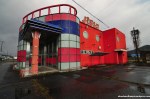
Andrew was driving along the highway when Damon spotted a big red building that looked abandoned. We turned around only to find out that the place was not only abandoned, but a pachinko parlor. 2 months prior, while on the road with Jordy, I was able to explore an example of this oh so typically Japanese kind of entertainment location in Shikoku called *Big Mountain Pachinko Parlor* – this time we stumbled across the abandoned K-1 Pachinko Parlor.
While entering Big Mountain was a piece of cake it took us a while longer to enter K-1, but after a couple of minutes we found a way in. Against all odds and to our total surprise K-1 was in similar good shape as Big Mountain. Usually abandoned pachinko parlors are boarded up and / or looted and / or vandalized. K-1 showed some signs of all three factors, but none of them to a point where it hurt the atmosphere severely. When I wrote about Big Mountain I wrote quite a bit about pachinko in Japan in general (and its importance for North Korea), so if you are interested in that kind of background information then *please look here*.
While Jordy and I were in quite a hurry and squeezed Big Mountain between the hotel *shangri-la* and the *F# Elementary School* Andrew, Damon and I were able to took our time – this time we were even able to explore the upper floor Jordy and I missed in Tokushima. Coming up the stairs I found something that made me laugh out loud: Next to a page from a Japanese porn magazine lied a gripper – you gotta love the local humor! (Or was it North Korean humor? Who knows…)
The first room we entered upstairs was the main office / surveillance room. Three big monitors once hooked up to security cameras were still in place, and so was the big safe. Business cards, prizes, furniture and other stuff were scattered all over the floor, making the room quite a mess. The kitchen across the hallway on the other side was in pretty immaculate condition and looked like it was just left the other day. I’m not exactly sure when the K-1 Pachinko Parlor was closed, but judging by the calendars and train schedules on the walls it must have been around summer 2003. (Outside on the building was still a big sign from a real estate company trying to sell the thing – if you want me to make contact for you let me know!)
The hallway itself was pretty cluttered, too. We found some pretty big shoes and lots of porn, magazines as well as videos, in one of cabinets. What is it with porn in abandoned buildings? There seems to be a mysterious connection…
Most of the other rooms on the upper floor were actually living rooms / bed rooms. Some of them looked like they were ready to use, others not so much. One of them was stuffed with countless pachinko machines and spare parts. Also worth mentioning was the relaxing area out on the flat roof. There we found a couch, a table and a TV outside. Since it was snowing I’m sure all items were useless at that point, but I could clearly imagine some exhausted pachinko parlor employees far away from home sitting outside after a tough day of work, chilling with a chilled beer, enjoying their off-hours on a nice spring or autumn evening; you know, living the life!
Before we left heading for the mine we explored a small building across the parking lot of the K-1 Pachinko Parlor. In my article about Big Mountain I explained how the pachinko balls people win are exchanged for prizes since gambling is rather strictly regulated in Japan. Those prizes usually are getting off at “pawn shops” near the pachinko parlor – and the building on the parking lot most likely was one of those pawn shops. It was accessible, but completely gutted and therefore totally unspectacular. Nevertheless it was nice to have seen one of those shops, just to make the experience complete…

(*Like Abandoned Kansai on Facebook* if you don’t want to miss the latest articles and exclusive content – or subscribe to the *video channel on Youtube* to receive a message right after a new video is online…)

Read Full Post »

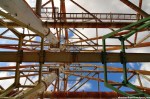
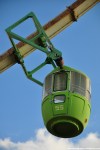
Abandoned ferris wheels usually come with abandoned theme parks. But when I visited *Expoland* in Osaka the ferris wheel was just demolished. And so were the giant wheels in all the other *abandoned amusement parks* I visited – except for the *big wheel in Pripyat* – which was actually pretty small… So usually the ferris wheel is one of the first things to be demolished when an amusement park closes – to be re-built at another park or to be sold for scrap metal. Not in the case of Igosu 108…
You might have seen photos of this abandoned ferris wheel at other blogs and you might ask yourself “Why is Florian calling the ferris wheel ‘Igosu 108’ – it says びわ湖タワー (Biwako Tower) in huge letters right in the middle of the thing and everybody calls it that way when writing about it?!”. Well, my Japanese might not be the best, but just because something is written somewhere doesn’t mean it’s the name of the place. And in this case it isn’t. The name of the ferris wheel is Igosu 108 – the name of the surrounding amusement park, now mostly gone, was Biwako Tower. To be more precise: The name of an observation tower, now gone, was Biwako Tower. This tower was 63.5 meters high and had a rotating observation platform that went up and down to give visitors a spectacular view across Lake Biwa, the largest freshwater lake in Japan. Biwako Tower was built in 1965 and extended to an amusement park in 1967. In addition to the observation platform there was a small ferris wheel, a rollercoaster, a pachinko parlor, water bumper car and several other small rides. But that’s not all! Biwako Tower also included an onsen (hot spring / spa) and a wedding hall – plus the usual array of restaurants, shops and stuff like that. Thanks to free parking and no entrance fee Biwako Tower was hugely successful and attracted up to 50.000 people a day!
In 1992 the last attraction was built – now the last one standing: Igosu 108 (イーゴス108). I can’t say for sure, but I guess the name is a combination of sugoi (すごい, meaning “great”) backward and 108 – the height of the ferris wheel, at the time the largest ferris wheel in the world. It was soon considered a landmark of Shiga prefecture and Lake Biwa, but couldn’t stop the downfall of Biwako Tower. Speaking of which: Since the ferris wheel was higher than the name-giving attraction Biwako Tower was transformer into a bungee jumping platform.
On August 31st of 2001 Biwako Tower finally closed its doors – just half a year after Universal Studios Japan opened in Osaka. Most of Biwako Tower was demolished in late 2003 / early 2004 with the exception of Igosu 108. Some small attractions survived partly (like a fortune teller booth, Fantasy Land and Bumper Boat), but the rest was transformed into big supermarkets and other stores, their parking lot replacing the pachinko parlor. Two sources claim that Igosu 108 still has an owner who announced in 2007 that the ferris wheel will re-open in 2008, but that never happened. According to them an operator puts Igosu 108 into motion once a month to make sure that everything is still working.
Having visited what’s left of Biwako Tower in December of 2010 (together with Damon and Andrew right after leaving the *Love Hotel Gion*) I kinda doubt that claim. While the outer part is easy to access Igosu 108 is protected by a typical Japanese orange site fence. The noisy kind that doesn’t have a door to let people in and out easily. I didn’t have a closer look at the controls of the ferris wheel, but the whole place looked quite rusty and run-down. To reactivate Igosu 108 you would need way more than just a bucket of paint and a “Reopened!” sign…
(If you don’t want to miss the latest postings you can *follow Abandoned Kansai on Twitter* and *like this blog on Facebook* – and of course there is the*video channel on Youtube*…)

Addendum 2013-11-28: Igosu 108 was dismantled in autumn of 2013…

Read Full Post »

Love hotels always fascinated me. From the first time I heard about them and even more so after the first time I visited one. So of course an abandoned love hotel was always quite high on my “Places I want to go to” list, but while Kanto is swamped with that type of haikyo there seem to be barely any in Kansai. It took me more than a year to find the love hotel Gion, and technically I guess it’s more like a love motel…
Since I guess not everybody reading this blog is familiar with that kind of “popular Japanese subculture”. So, what is a love hotel? First of all – the love hotel industry is not a subculture at all, it’s one of the biggest money makers in Japan! A love hotel (also known as fashion hotel, amusement hotel, boutique hotel, couples hotel, romance hotel or leisure hotel) is a hotel where you can get rooms not only for a whole night, but also by the hour. They originated in the Edo period in Edo (nowadays Tokyo) and Kyoto, the then-capital – appearing to be tea rooms or normal inns, used by both prostitutes and normal couples. When prostitution was abolished in 1958 love hotels (then known as “bring-along inns”) started to boom – litte known fact: Even Nintendo ran a love hotel in 1963, just about 10 years before they started entering and revolutionizing the video games industry. The modern term “love hotel” derives from the “Hotel Love”, which was built in 1968 and attracted customers with a rotating sign. While some love hotels are basically more or less normal hotels without windows (if you see a hotel without windows in Japan you can be sure it’s a love hotel…) and an extremely discrete front desk other love hotels have very creative theme rooms for almost every taste – from princess bedrooms to BDSM stuff, from train compartments to whatever cliché fantasy you can imagine. The furnishing and equipment of those rooms vary heavily on the price – in addition to the standard stuff you have in a normal hotel room (TV, free tea, hairdryer, …) you usually get a games console, a karaoke machine and some condoms; some hotels have vending machines with sex toys in the hallway or the lobby. If you are willing to pay more there are basically no limits – insanely huge HDTVs, jacuzzis, massage chairs, private balconies on the top floor to enjoy the night sky and in some cases even a private swimming pool. While “rests” are about 2000 to 4000 Yen an hour “stays” cost about 8000 to 16000 Yen per room per night (usually from 10 or 11 p.m. on for 10 or 12 hours, depending on the hotel) – super luxurious rooms can cost up to 60.000 Yen per night in cities like Kyoto or Tokyo. (1000 Yen = 9 Euros / 13 US-$)
Nowadays the turnover of the love hotel industry in Japan is a whopping 4 trillion Yen per year, equivalent to about 36,000,000,000 Euros or 52,000,000,000 US-$ as of September 2011 – generated by 500 million visits to 37,000 love hotels all over the country. Love hotels are considered a whacky underground thing by many foreigners, while in fact they are part of daily life, turning over double of what the anime industry does.
Why are love hotels so successful in Japan? Because Japanese walls are thin and a lot of even not so young Japanese people are still living with their parents; the so-called parasite singles (パラサイトシングル, parasaito shinguru) enjoy the carefree and comfortable life of living at home up till their early 30s when even the late bloomers are getting married. If they want to have some passionate hours with their girlfriends, boyfriends or club acquaintances they go to a love hotel (and so do most adulterers…). It’s clean, it’s anonymous (most lovel hotel visitors don’t see any staff person!) and it’s affordable, especially if you have a job and still live with your parents. And the novelty factor of the rooms is a big plus, too!
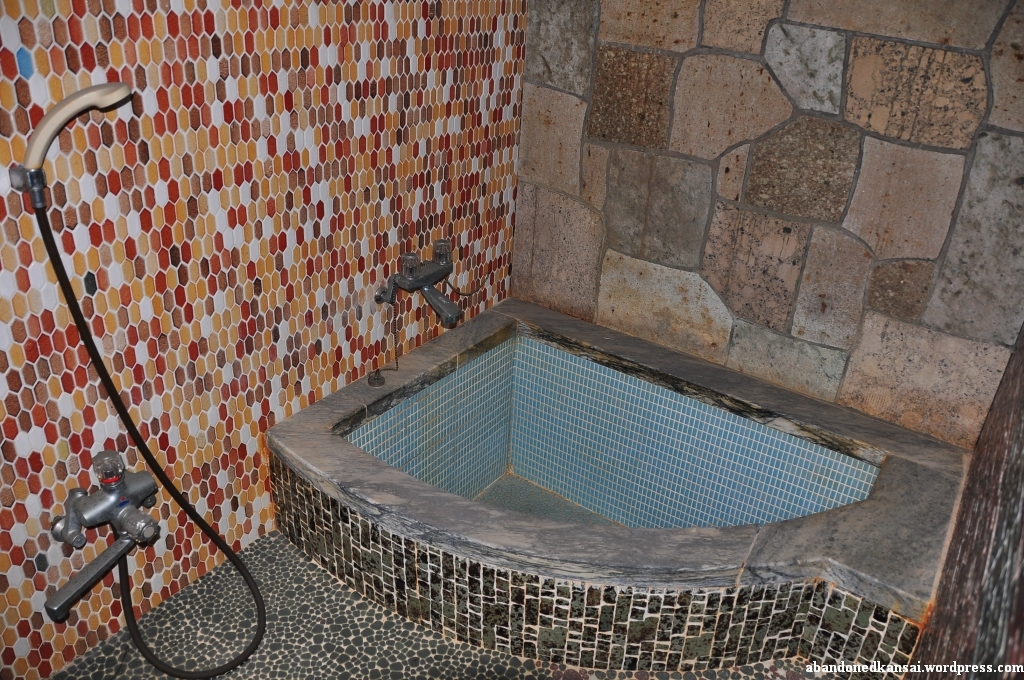
So one day in November I met up with Damon and Andrew at a small train station somewhere in Shiga – all three of us were eager to finally explore an abandoned love hotel; especially Damon, who seems to find secret porn stashes at pretty much every location he goes to. Sadly the haikyo Love Hotel Gion didn’t have any of the (fake) glamour and sexiness you experience at a fashion hotel that’s still in business. It wasn’t even a real hotel, more like a motel – 8 row bungalows with rather deep open garages in front of them to prohibit people from getting an easy look at the license plates of the parked cars. The lot in front was quite big, so I guess another row bungalow or two were already demolished. And the one still standing was in pretty bad shape overall. Some of the “rooms” I didn’t fully explore, because the floors and roofs were falling apart, but one or two were barely touched. The downside of that was that it was pitch-black in there – luckily I brought my tripod. The layout of the bungalow sections was pretty much the same for all of them. A little lobby at the entrance, a windowless bath including a tiled tub to the left and then a bedroom straight ahead. Most of the bedrooms were covered by landscape wallpapers while the rest of the rooms had crimson wallpapers. Very, very 70s porn! (Or how an innocent young man like myself imagines something filthy like that!) Sadly most of the rooms were empty except for fixtures and solid bed frames. In one of the mini apartments we found a jukebox in questionable condition, but the most interesting detail was the wall mosaic in one of the bathrooms – it depicted two nude women in front of a horse, of one of them you could see the pubic area. Shaved, with just a little bit of hair left; except for the final stone – that one was red…
(If you don’t want to miss the latest postings you can *follow Abandoned Kansai on Twitter* and *like this blog on Facebook* – and of course there is the *video channel on Youtube*…)

Read Full Post »

Today I had a look at some rather old videos shot at locations I already wrote articles about. None of them were intended to be published, so the camera work might be a bit rushed occasionally, but I decided to upload them anyways as I think there might be some interest in them out there in the world wide web. While some of my videos only get a couple of dozen views quite a few of them were watched by thousands of people – *this one* will actually reach 30.000 views soon. Please enjoy!
*Nara Dreamland – Aska Rollercoaster*

*Koga Family Land*

*Jumbo Club Awaji Island*

*Ohmi Lodge*

*Young People’s Plaza & Museum*

*Takada Ranch Ruin*

Read Full Post »

« Newer Posts - Older Posts »