Feeds:
Posts
Comments

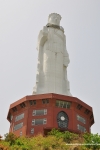
Ruins in Japan are often in such good condition that they are not recognizable as ruins at first sight. One example would be the World Peace Giant Kannon on Awaji Island, Hyogo prefecture – Kannon not being a spelling mistake, but the Japanese name for the bodhisattva associated with compassion, Guanyin. Other spellings include Kan’on, Kanzeon and Kwannon with the latter being the name giver for Canon, which was founded as Kwanon in 1934 and had the bodhisattva in its logo. I guess a World Peace Giant Cannon only exists in the minds of some really crazy people…

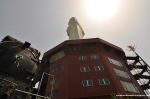
In 2010 I actually drove past the 80 meters tall World Peace Giant Kannon on its 20 meters tall socket building. Sure, it looked interesting, but the bright white statue seemed to be rather new in the warm sunlight of that day, so I didn’t even consider stopping. When I got back home and looked up what the statue really was I found out that most important of all it was abandoned… (It’s the 4th tallest statue in Japan and the 13th tallest in the world. Including the socket it ranks 3 and 10.)

The World Peace Giant Kannon is actually part of the Heiwa Kannon Temple (heiwa meaning peace…), which was founded and funded by Toyokichi Okunai, a realtor who became rich dealing with office buildings, private apartments and business hotels in Osaka. The basis is a 5 storey building, 20 meters tall. The first floor was home to all kinds of religious exhibits as well as well as information about the famous Shikoku Pilgrimage (consisting of 88 temples along a 1200 kilometers long hiking course which usually takes between 30 and 60 days to complete). The other floors were stuffed with Mr. Okunai’s private collections – transportation, watches, china, art, armors. The fourth floor was home to a sightseeing restaurant, a banquet hall and a souvenir shop. If you look up the 80 meters tall statue on top of the building you can see some kind of a “collar” right below the statue’s head – that turned out to be an observation platform.

Although attracting up to 2000 visitors per day it seems like a lot of people were appalled by this mix of religion and commerce, some even accused Mr. Okunai of heresy. When Mr. Okunai died in 1988 his wife took over the management of the World Peace Giant Kannon until her death in February of 2006. After her death the Okunais’ real estate company closed the place right away and the Heiwa Kannon Temple started to fall in disrepair quickly, probably due to the lack of management of Mrs. Okunai during her final years. The Lehman Brothers took over, but they failed badly themselves at the time. Put to auction several times in 2007 and 2008 by the Kobe District Court nobody bid any money (which reminds me of the *Former Iranian Consulate* in Kobe…), so the temple was shifted to a separate company in September 2008. Since the World Peace Giant Kannon was liable to collapse (its exterior is molded of gypsum and resulted in the statue’s nickname Whiplash Kannon”) a committee was established in May 2009 by the local government, which took measures against the further deterioration of both the World Peace Giant Kannon and the nearby 10-storey pagoda in September of 2011. Just a couple of months after my buddy Gianluigi and I explored the place…

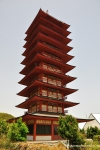
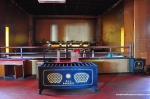
Walking up to the Heiwa Kannon Temple is actually quite impressive. The huge pagoda is right next to a parking lot and a closed restaurant. From there we had to walk up a hill to the back of the socket building. There we found all kinds of statues and items that didn’t go together very well, including a miniature version of the Statue of Liberty and an original Class D51 steam locomotive, the D51 828. We circled the socket building quickly and found an easy entry. The first floor was almost empty as most religious exhibits were gone. A quick look at the office on that floor didn’t give us much insight, so we headed up one of two staircases (one in the north, one in the south) that connected the floors. Some of them were locked, but we gained access to the restaurant on the fourth floor and the tatami room on the fifth floor. Approaching the fifth floor we heard voices, so we talked loudly to make ourselves heard. A minute or two later a young couple in their early 20s rushed past us, the guy holding a photo camera and the girl’s clothes not really being in order – your guess here is as good as mine…

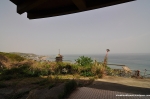
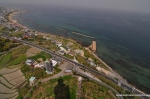
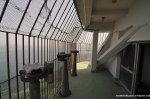
The tatami room once held the Mr. Okunai’s armor, but nowadays well armored soldiers of another kind were all over the floor: suzumebachi, Japanese Giant Hornets, 5 centimeters long killer machines. Luckily they were dead and it wasn’t summer yet, so Gian and I concentrated on the task at hand. In one of the hallways leading to the staircases we found an elevator – and nearby a mysterious claustrophobically narrow und pitch-black staircase that began to wind upwards. After spending a couple of minutes on the rooftop of the socket building admiring the beautiful gigantic Kannon statue we headed back inside and up the staircase. It was dark, the air was bad and some door-like openings revealed unpleasant views at the inside of the statue – even without knowing that people were discussing repairing the Kannon it was pretty clear that investments were necessary. After climbing stairs for about 10 minutes (it felt much longer…) we finally reached the observation platform, which offered both stunning and scary views. The location of the World Peace Giant Kannon between the coast of Awaji Island and the gentle hills was breathtaking – and so were the cracks in the gypsum everywhere. Buildings in Japan are barely constructed for eternity, but this one definitely has seen better days!

And so Gian and I walked down stairs for about 85 meters and left after spending surprisingly much time at this obviously quite popular abandoned statue – passing the also abandoned pagoda a group of about half a dozen Japanese twens was walking up the hill to have a look themselves. And I am sure they weren’t the last visitors as the maintenance work at the Heiwa Kannon Temple started not earlier than four months later…

(If you don’t want to miss the latest article you can *follow Abandoned Kansai on Twitter* and *like this blog on Facebook* – and of course there is the *video channel on Youtube*…)

The Shimizu Onsen Center was the last stop on a road trip to Shikoku my buddy Gianluigi and I did in the spring of 2011. Usually I write a short road trip summary in advance, but these days I’m a bit busy, so maybe I’ll make up leeway some day in the future – after all it was quite a busy road trip with six locations in two days.

Onsen is the Japanese term for hot spring, but usually it is more about the hotel / restaurant that is making use of the water. The Shimizu Onsen Center is one of those hidden gems of the beaten tracks deep in the mountains of Shikoku – and the name is just perfect, because shimizu actually means “pure water”. Pure water that won’t be soiled by many visitors, because the Shimizu Onsen Center closed a couple of years ago. If you try to find some information about it yourself, make sure to not confuse it with several other towns named Shimizu all over Japan (like in Fukui, Hokkaido, Kochi, Shizuoka, and Wakayama). You can imagine that the name is quite popular…

When Gian and I drove onto the already slightly overgrown parking lot we had no idea at all what expect – I had never seen photos of the Shimizu Onsen Center and I’ve never seen any since I’ve been there, so please consider it an original find that hasn’t appeared on any blog about Japanese ruins, neither in English nor in Japanese. As we got out of the car it just started to rain and we were pretty tired after a series of exciting but energy-sapping explorations. Nevertheless we closed in quickly, but carefully, just in case the low buildings nearby were home to some curious spectators. But we were lucky and able to enter the Shimizu Onsen Center without trouble of any kind. Not only that, but there was a note taped to the entry glass door of the spa, explaining a little bit about the place’s history. According to this it was opened in 1981 and operated for 14 years before it was sold to a new owner. Financial trouble began in 2003 and in late November of 2007 the place closed with 160 million Yen of debt – just three and a half years before Gian and I visited.

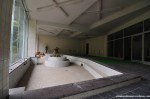
The Shimizu Onsen Center was fed by a sodium hydrogen carbonate spring with a temperature of 17 degrees Celsius, helpful to treat rheumatism, neuralgia, diabetes, and skin diseases. It targeted mainly day-trippers and tourists who booked accommodations nearby. Opening hours were from 9 a.m. till 9 p.m. (closed every 1st and 3rd Thursday of each month) and the entrance fee was 600 Yen. In the northern part I found a couple of Japanese style guest rooms with tatami mats and small TVs, but I’m not sure if they were used for overnight stays or just to relax between two baths.

Gian and I entered through the normal entrance on the second floor and went straight downstairs to the first floor, where the baths were. Both the one for males as well as the ones for females were equipped with a sauna and featured several frog statues. The Japanese word for frog is “kaeru”, which can also mean “to return”, and that made them good luck charms / symbols for money and coming back safely. This floor also featured the already mentioned guest rooms, which could be reached through a very, very dark hallway. The whole floor and all the items there looked a bit old and run down (like the massage chairs in the hallway and vending machine for razors), but there were no signs of vandalism or theft.

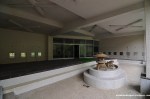
That also applied for the second floor with the front desk and a huge tatami room with a stage – a typical Japanese party room for long karaoke sessions with dozens of attendees. The tiny coop next to the stage even still had all the music equipment including countless tapes. No vandalism, no theft. In the entrance area we found a bin stuffed with umbrellas, slippers were still lined up and the front desk was neat and tidy.

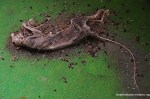
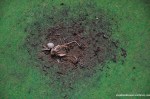
The rather small third floor was exciting and disappointing at the same time. On the one hand the former bar was removed and so were the arcade machines that one day must have been there. On the other hand I finally found some dead animals, in amazingly good condition actually. Two skeletonized birds and a rat with some of the skin left, surrounded and partly covered by dead maggots. One of the bird skeletons was on the stairs on the way up, but the other one was just a couple of centimeters away from the rat – it looked like hunter and prey died at the same time at the same place. And that rat was huge! Maybe 30 centimeters long, and by that I mean the body alone. Since it was grey outside and I had to bring my tripod for the interior shots anyway I set up my little equipment to a comfortable height and zoomed to get a decent picture, being the lazy photographer I am sometimes. I was aware that the exposure time was rather long (a quarter of a second), but I didn’t realize that I zoomed to a point where gravity took over and the lens continued to zoom on its own – and so I accidentally created one of my favorite photos ever, one that still makes me a bit dizzy to this very day. Excited by this new discovery (commonly known as radial blur) I took some additional similar shots with both the rat skeleton and the bird skeleton next to it before we finally ran out of time – we were in the middle of nowhere in Shikoku on a rainy day and had less than 3.5 hours to get the car back to the rental company. Which really reminded me of my *first trip to Shikoku*, but this time the car rental was in Osaka, not in Kobe – and due to Golden Week the roads were a lot busier…

(If you don’t want to miss the latest article you can *follow Abandoned Kansai on Twitter* and *like this blog on Facebook* – and of course there is the *video channel on Youtube*…)
Okunoshima is urban exploration for beginners. Actually it’s more like a vacation day than urbex – with an inglorious past, probably one of the darkest chapters in Japan’s history. And it’s an island with many names. In Japan Okunoshima (大久野島) is famous as usagi shima (ウサギ島), Rabbit Island. People with a more twisted look at life call it Poison Gas Island, though the Japanese term doku gas shima (毒ガス島) is way less common – but I doubt that this is the result of a more positive Japanese mindset…

Located in the Seto Inland Sea about 50 kilometers east of Hiroshima Okunoshima disappeared before if became famous. Back in the 1920s Japan signed the Geneva Protocol of 1925 that banned the use of chemical and biological weapons – but it didn’t say anything about development, production, storage or transfer. At the time being up to no good and started making trouble in the neighborhood, Japan immediately began to take advantage of that loophole. And with that Japan became the only country to use chemical weapons  in World War II, killing an estimated 80.000 Chinese soldiers and civilians according to historian Chi Hsueh-jen! (Not only with the knowledge, but with the permission of Emperor Hirohito… which probably should have lead to his prosecution as a war criminal. Sadly, hard evidence was found only decades later by Yoshiaki Yoshimi, a professor of modern Japanese history at the prestigious Chuo University and a founding member of the “Center for Research and Documentation on Japan’s War Responsibility”. My deep respect for the man, I’m sure his research made him more enemies than friends…)
The location of choice was the small and barely known island of Okunoshima, off the beaten tracks in case of a major accident, but still close enough to the important military city Hiroshima. From 1927 to 1929 an existing fish cannery on Okunoshima was “modernized” with a desalination plant, a refrigeration system and a power plant – and at the same time all foxes, martens, cats and rats were systematically eradicated. Okunoshima was erased from maps and Japan did everything to keep its existence a secret. Shipping routes were changed and trains along the coast had to close their window shutters, so did ferries passing the island. Plain-clothed members of the infamous Japanese military police kempeitai made sure everybody followed those rules and didn’t dare to sneak a peek. To avoid any activity on Okunoshima being seen from mainland Japan the old fish cannery was blown up, keeping the new installations intact – and the old pier in the west was replaced by a new one further south, closer to the research and production facilities. Huge storages for gigantic tanks were carved into the mountain and the soil was used to create ramparts as visual covers. In 1929 production began with high secrecy and under horrible conditions.

Since most of Japan’s leading scientists were under the supervision of western secret services they couldn’t be involved directly in the top secret base on Okunoshima. Production had to be executed by educated amateurs. Most of them were Korean forced laborers who worked in the production of medicine or soap before, locals looking for a good salary – and later on the military pressured more than 1000 local high school students into working on Okunoshima; at first only those with good grades in natural sciences, in the final years of WWII pretty much everybody available. The workers were given protective suits that weren’t really protective because the aggressive chemicals made the PVC brittle – thousands were injured because of that and during accidents, many died of their injuries because there were no doctors on the island and nobody was allowed to seek medical help on the Japanese mainland for the reason of secrecy. The production halls were cold in winter and smoldering in summer. Imagine wearing a plastic suit in a climate that sometimes makes it hard to breathe even when in shorts and T-shirt…

About 6.600 tons of mustard gas (Yperite), lewisite, phosgene and other poison gases were produced and stored temporarily on Okunoshima between 1929 and 1944 before being put to use by the Japanese military. While the gases were tested on rabbits on Okunoshima the scientists there worked together with the infamous *Unit 731* on at least two occasions in 1940 and 1943 – they tested mustard gas on Chinese prisoners. (In case you don’t know Unit 731: Have a look at Wikipedia and make sure you don’t wanna eat soon. Their initiator and commanding officer *Shiro Ishii* was one of the most despicable people to ever walk on this planet, the Japanese Josef Mengele, maybe even worse – but thanks to some Americans, especially from Fort Detrick, the weasel was never prosecuted, although he should have been executed for his war crimes. Ishii didn’t even have to flee Japan since he was able to negotiate immunity for himself and his closest allies. Instead he lived a peaceful life with his family until is death in 1959 at age 67.)

After World War II ended in 1945 the remaining poison gas was dumped in the ocean, buried or burned – the factories were blown up or used as housing or storage (e.g. for ammunition during the Korean War). This was done by Japanese contractors under the supervision of the Americans, but what happened to the rabbits used as laboratory animals is rather unclear. Some say they were released by workers after the Japanese military left the island – others claim that they were all killed by the American military and the current rabbits on Okunoshima are descendants of a dozen pets released by a Japanese school class in 1972. One thing is for sure: Since all natural enemies of the rodents were killed in the late 1920s they don’t have to fear any predators and so they breed like… well… rabbits.

Okunoshima stayed a forgotten island for a few decades until in 1988 something unusual happened, at least by Japanese standards: A poison gas museum opened on the Poison Gas Island. Of course emphasizing the harsh conditions for the workers in the factory, because as everybody knows, at least everybody educated by the Japanese school system: Japan was the victim of WWII. Well, sadly that is the common self-awareness, which explains South Park episodes like Whale Whores (and Chinpokomon…) – episodes that show an understanding of Japan most people, including Japanese, don’t have. And so all the photos of poison gas inflicted wounds in the 2 room museum are not from WWII, but from the Iran-Iraq War of 1980-1988. And while most ruins on Okunoshima have signs in Japanese and English (which is quite commendable since it’s unusual for any location that far off the beaten tracks!) the ones at the museum are mostly in Japanese only. (Which reminds me of the Peace Center in Osaka, where most of the surprisingly critical exhibits are labeled in Japanese only while all the others are bilingual, Japanese and English – shamed be he who thinks evil of it…)

Nowadays Okunoshima is a popular tourist spot, visited by about 100.000 people a year, many of them staying overnight at the hotel or the camping ground on the island. Not so much because of the poison gas factory ruins or the museum, but because of the rabbits. Like I said, no predators, so 100s of them are roaming freely, probably making Okunoshima the world’s largest petting zoo. Usually when I am on my way to an abandoned place and there is some noise in the bushes close-by it’s a snake. Or a boar. Or a monkey. Maybe even a bear. On Okunoshima it’s a rabbit. Or a bunch of them. Charging at any person that is passing by, hoping for some food. And they are so adorable! I came for the ruins, but I stayed for the rabbits. Seriously, I spent much more time taking photos of rabbits than taking photos of ruins – when I found out that there were remains of a Meiji era fort from the Russo-Japanese War of 1904/05 I almost considered it a burden, not another photo opportunity…

Pretty much all rabbits on Okunoshima are hand-tame. The ones near the ferry terminals and the hotel are by far the biggest ones. I’m sure they get fed 24/7! If you like your rabbits smaller and a little bit more shy I recommend going off the beaten tracks – to the tennis courts (de-facto abandoned, at least some of them), to the former gunpowder storage or any trail up the mountain. Don’t worry, even there you don’t have to look for rabbits… they will find you! (And you don’t have to worry about snakes, boars, monkeys or bears – you are not even allowed to bring cats or dogs to the island.)

As for my day on Okunoshima: I did a full circle, starting at ferry terminal 2 and ending at ferry terminal 1, since I left on the second to last boat departing from the island; you can *have a look at GoogleMaps* as Okunoshima is a tourist attraction. And I refrained from renting a bike, because I wanted to take my time and enjoy the relaxing atmosphere on the island. The weather started out sunny and ended overcast, poison for photography, but surprisingly I didn’t mind. All of a sudden I didn’t care that much for the gas factory ruins. Many of them were fenced off by ridiculously low bars, but for once I did respect those barriers that were more symbolic than effective. After learning about the place’s history all those chunks of concrete blackened with soot weren’t that important anymore. Okunoshima’s history was just overwhelming. Why disrespect a place that saw and caused so much pain and suffering? When at the same time you can spend a relaxing day at the beach and play with cute little bunnies!

Going to Okunoshima was a wonderful experience and I kind of left with a heavy heart – I visited in spring on a warm day, probably still a little bit too cold to go swimming, and I had plans for the next day. But if you ever have the chance to go to Okunoshima from late spring to early autumn make sure to bring a loved one (as well as your kids, if you have some) and stay overnight at the hotel – just make sure to make a reservation months ahead as the hotel is very busy. Unless you are afraid of ghosts and fear that hordes of Chinese war victims, Japanese workers and laboratory rabbits will haunt you…

(If you don’t want to miss the latest article you can *follow Abandoned Kansai on Twitter* and *like this blog on Facebook* – and of course there is the *video channel on Youtube*…)
Oh, before I forget: A shortened German version of this article, “Die Insel der Versuchskaninchen / Okunoshima – Zwischen Giftgas und Kaninchen” (The Island of Guinea Pigs / Okunoshima – Between Poison Gas and Rabbits), was published on Spiegel Online / einestages on Monday – you can *read it here*.

Strip clubs in Japan are a mystery to most foreigners. Most likely because of the language barrier – I guess the average tourist isn’t wiling to risk spending unknown amounts of money for drinks and other services; especially if they don’t know what services are available or if they are even welcome. Reports about foreigners not being allowed to enter onsen, brothels or strip clubs are almost as old as reports about foreigners being allowed to enter Japan again (i.e. 160 years…). I guess most foreigners, especially tourists, don’t even know where to find strip clubs in Japan. For that reason the two abandoned and gutted by fire strip clubs in the outskirts of Nagoya and Tokyo might be the most famous ones. But the one I want to present you today might be the new frontrunner…

Sex sells, even urban exploration. My article about the abandoned *Japanese Sex Museum* half a year ago was a pleasant success and it wouldn’t surprise me if some other websites would pick up on this little countryside gem, too – this abandoned Japanese strip club is in amazing condition, hardly known to the net and barely known even amongst Japanese urban explorers.

Like the Japanese Sex Museum I’ve seen the Japanese Strip Club maybe three or four times in three years on Japanese haikyo blogs. That’s it. Usually photos taken from the outside, at the entrance area and at a small stage. Because of that my expectations were rather low when I hit the road with my local urbex buddy Dan and two of his friends to go to a small onsen town in the mountains of Okayama. Luckily one of the Japanese blogs didn’t hesitate to throw out all kinds of information about the location of the strip club, so it was easy to find. Sadly it didn’t give any hard facts about the place, so I can’t tell you much about its history.

The official name of the strip club was a euphemism, like so often when it comes to the sex industry in Japanese spa towns. The sex museum was called “House of Hidden Treasures” – and this strip club was a “Sightseeing Theater”. I’m sure the sights to see were pretty awesome, but the name was kind of misleading as it implied fun for the whole family…

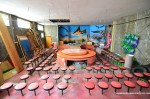
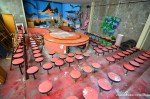
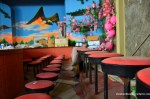
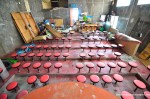
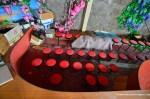
Well, at least our group had fun, although I have to admit that I never really “got” the place, never connected with it. I felt like a creep creeping around this creepy place. It was an interesting exploration though, because the photos I had seen of the place made up for maybe half of its size. Walking up the staircase covered by plastic sheets we quickly reached the entrance, out of sight from the busy street and a nosy neighbor, who had a good look at our little group when we approached the “sightseeing theater”. It seems like the entrance fee was 3000 Yen – and since the door was locked we looked for alternative ways to get in. To the right was a side entrance that lead directly to the oh so known strip room with its orange stage and the countless tine stool bolted to the ground. Well, countless, I guess there were about 150 of them, sometimes as little as maybe 15 centimeters between them. Thinking that in the probably not so distant past they were occupied by cigarette smoking sweaty horny men staring at naked women was quite surreal in the light of day. While I was taking photos of the room my companions went backstage and stayed there surprisingly long. It turned out that although we’ve already seen everything I’ve seen on the internet didn’t mean that we’ve seen everything there was. Behind the stage was a small room with a bed and from there a dark, narrow hallway with an uncomfortably soft floor lead to another part of the building, a part that was actually even closer to the locked main entrance. When I got out of the dark I stepped directly… onto a stage. A stage way bigger in a room way bigger than I just left. While the first location was a little bit shabby and tacky with plastic flowers everywhere and gigantic eagles painted on the wall the second room was… actually pretty similar; just bigger, more spacious and in better condition, probably thanks to the wallpaper that was missing in the other room. Close to the stage were the same tiny little stools bolted to the ground, but with a little bit more distance between them. The last three rows reminded me of old cinema seats – of way better quality than the horrible stools, but still not really comfortable and clearly installed before McDonald’s supersized the average Japanese from tiny to small. Bow chicka wow wow. This room was so cliché 70s porn it was tough to wrap my mind around it. The cheap pink plastic decoration was so horrible I felt a little bit embarrassed just looking at it, but I guess when it was dark and you focused on the stage it didn’t matter. Sadly it wasn’t completely dark in there. Just almost, with bright light coming in from a door leading outside.

I still didn’t like the location, but I continued exploring and taking photos. Before I headed upstairs (yes, this part of the building had a second floor) I checked the entrance area, but it just offered more tacky decoration, an upset vending machine and a huge list of phone numbers of local accommodations…

The second floor (with a sign “Men please keep out!”) was so vandalized and boring that I decided to not take photos there and just include it in the video tour, especially since we were running out of time anyway. I’m sure some fellow explorers would have loved to go through the personal belongings left behind for hours, but I’m getting tired of those moldy, smelly kitchens, bathrooms and tiny private apartments. The only really interesting room up there was almost completely dark and contained the controls for the lights and sound in the big strip stage room. Looking down almost made me expect some pig-cops – the whole setup really reminded me of the first episode of Duke Nukem 3D.
Oh, and in case you wonder: The big trophy you can see in the video was for a karaoke competition…

Leaving the abandoned Japanese Strip Club I felt a little bit like leaving *Nara Dreamland* – my head knew that I was exploring an amazing unique location, but my heart didn’t feel it. Nevertheless I hope you enjoyed this article and come back soon for more. Japan is an urbex paradise and there are dozens, maybe hundreds of locations to come…

(If you don’t want to miss the latest article you can *like Abandoned Kansai on Facebook* and *follow this blog on Twitter* – and of course there is the *video channel on Youtube*…)

Addendum 2012-11-27: I just posted an article about another abandoned Japanese sex museum: *Hokkaido House Of Hidden Treasures*

After leaving the first location of the Kasuga Mine (*Kasuga Mine A*) *Damon*, Andrew and I continued to the second site – much easier to find, much easier to enter, much more popular on the internet. Not so much amongst foreign urban explorers in Japan, the more so amongst Japanese. Nevertheless hardly anybody is willing or able to share some hard data about the Kasuga Mine (not to be confused with the still active Kasuga Gold Mine in Kyushu!). One of the things I found out is that the Kasuga Mine was a dolomite mine. Dolomite is used in the production of magnesium (as a source of magnesium oxide) and as a concrete aggregate – sometimes it’s used as an ornamental stone, but its physical properties (hardness, cleavage) doesn’t make it very popular for that use; it was one of the materials though the *reactor at the Chernobyl Nuclear Power Plant* was filled up with after the catastrophe, so 25 years ago it probably saved mankind…

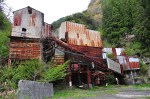
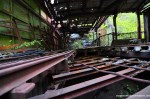
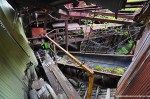
When we arrived at the second mine in Kasuga the sun was already pretty low and time was running out. The area was dominated by a huge complex made of steel and wood in rather questionable condition – this place was definitely abandoned. While I was cautiously taking photos Damon was fearlessly all over the place. At one point he was climbing through a collapsed building, not knowing if there was solid ground under the debris or not. He made it to the other side alive and found the entrance to a very old-style mine, so I was like “Screw it!” and followed him. Luckily I brought my flashlight, because it was dark in there – darker than a black steer’s tookus on a moonless prairie night. And luckily I was wearing hiking boots, because the water pipes in there were leaking. I know for sure, because I was able to take a photo of one of the leaks. Without a tripod. Modern digital cameras are wonderful!

What we found was indeed a very old style mine shaft. Surprisingly spacious as I was able to walk upright for most of the time, nevertheless claustrophobic, especially the parts where the wooden support logs were rotting away and already collapsed. If you liked the video I took at the *abandoned Japanese Sex Museum* you will love the one I took at the Kasuga Mine. It felt like straight out of a survival horror game. And since the mine could have collapsed at any time I guess it really was like straight out of a survival horror game – we actually saw dead ends where it already happened. The absolute highlight was… Well, if you really want to know then watch the video, I won’t spoil it for you here. But what I saw made the Kasuga Mine a very memorable exploration! (That’s the reason why the videos are first this time – the photos will spoil the third video…)

Nevertheless I was very happy to leave this abandoned mine shaft. It just didn’t feel right. Back at the main building we didn’t want to overuse our luck and it was almost dark already anyway. And this is how the exploration of three abandoned mines on a single day ended – on a high note!

I love abandoned mines. Love them. And I can’t even say why. Maybe it’s the combination of brittle wood and rusty iron. Maybe it’s because I first got really interested in urban exploration when I was a university student and participated in a seminar that took place every two weeks at the Zeche Zollverein (in English known as the Zollverein Coal Mine Industrial Complex), which became a UNESCO World Heritage Site in December 2001. It’s probably because most of them are in the middle of nowhere, so nobody cares about them anymore. Or maybe it’s because they put the exploration in urban exploration…

After *Damon*, Andrew and I explored the *Tsuchikura Mine* in spring last year we continued to drive on countryside roads to go to another mine way less known than the rather famous Tsuchikura Mine – the Kasuga Mine.

“Kasuga Mine” is actually a collective term for several mines in the immediate vicinity of the small town of Kasuga, a former village in Gifu hardly anybody has heard of. This cluster of small houses and huts was so countryside that most roads were wide enough for only one car and so remote that GoogleMaps was completely useless locating any of those mines – luckily I was able to locate two of them otherwise.

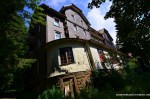
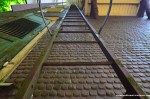
The first mine we went to, I call it “Kasuga Mine A” for the sake of distinguishing it from the other one, still seemed to be active in parts, although we didn’t know that when we started exploring it. We found a clearly abandoned loading terminal halfway up the mountain. A gigantic conveyor belt on a steep slope indicated that there was more further up the hill. We climbed the slope and found the belt being fed by a metal construction at a wall at least three or four meters high. Why I’m more the cautious type loaded with photography equipment Damon is a honey badger with a pocket camera. Before I was even able to suggest finding another way up that climbing the ladderless metal construction he had already climbed it, Andrew (quiet and without a camera) right behind him. Slightly frustrated being left behind I made my way down over the overgrown stone steps back to the terminal. From there I continued walking up the mountain and, after ignoring a warning sign about poisonous snakes, I found the upper part of the metal construction and the entrance to a dangerously decaying mine – my fellow explorers nowhere to be seen. While I was still taking photos of the area Damon and Andrew came back and told me that this entrance is connected to complex of tunnels most likely still in use. They heard noises and turned around to avoid being caught. Not eager to run into trouble myself we decided to return to the main street (“main street”… funny… more like “dangerously narrow road in decent condition”) and to follow it on foot for a while. After a couple of 100 meters the road split – to the right was a chained off tunnel clearly still in use, to the left the road continued after warning signs letting people know that only authorized personnel is permitted hereafter. And at that moment a mini truck passed by going up the mountain. So we called it a day at this location and decided to continue to the other one. The sun was going down already anyway and we were running out of time…

The Taylor Barracks in Mannheim-Vogelstang are one of those locations that are not really abandoned, but have the looks and feel of a deserted place. Cleared by the US Army on August 30th 2011 the Taylor Barracks are now under the administration of the BImA (Bundesanstalt für Immobilienaufgaben / Institute for Federal Real Estate), which has to decide what will happen to this former military base.

The Taylor Barracks, named after Private 1st Class Cecil V. Taylor who died in the last days of World War II and who posthumously received a Silver Star for courage in the face of the enemy, were built in 1939/40 by Nazi Germany’s Wehrmacht as Scheinwerfer-Kaserne (Searchlight Barracks) – most likely because it was home to the Flakscheinwerfer-Abteilung 299 (299th Anti-aircraft Searchlight Detachment) to defend Mannheim from bombings. From April 1948 on many, many US Army units were stationed at the Taylor Barracks; way too many to name them all. In the early years most of them were Ordnance Companies and Engineer Companies, later on a lot of supply and service battalions found their homes in Mannheim-Vogelstang.

(Fun fact: When I told my dad, a musician basically all of his life, that I had a look at the Taylor Barracks he told me that he played there on the opening night of a military club. When he asked for a whiskey coke the bartender handed him half a gallon of Jim Beam! The 70s must have been an interesting time…)

In the summer of 2012 the Taylor Barracks stood there waiting for a new purpose. Most of the buildings were in pristine condition, only some metal started to rust here and there. Also in pristine condition was the fence around the 46ha big premises – about 2.5 meters high and secured by barbed wire there was no way to enter the closed base. In areas considered a special security risk, like fence sections with streetlights, additional rolls of razor tape were installed on top of the fence and / or on the ground. And so the exploration I hoped for turned into nothing more than just quite a long walk…

Addendum 2013-09-09: It turns out that the good people at the BImA are great sports – instead of going after me for taking photos they link to Abandoned Kansai on their official page about the Taylor Barracks! 🙂 They also link to newspapers, the official homepage of the city of Mannheim and several others… but Abandoned Kansai is first! You can *have a look here*, but be aware that their website is in German…)

(If you don’t want to miss the latest article you can *follow Abandoned Kansai on Twitter* and *like this blog on Facebook* – and of course there is the *video channel on Youtube*…)

Quite a while ago I wrote about my experiences exploring the *lower terminus of the Yashima Cable Car* – and after I was done I took the bus up the mountain. Usually I would have taken the hiking trail up there (or would have walked along the abandoned track like I did several times at the *Mount Atago Cable Car*), but since I lost quite some time in the morning thanks to a Shinkansen standstill (thanks, JR – the extra fee for the bullet train was really worth the money… grumble…) I took the easy way up. It was also a good way to check out the cable car’s competition, which made me wonder if the bus was already running when the cable car was still operating. Sure, the trip took about 10 minutes instead of 5, but it ended right next to Yashima Shrine (not a kilometer away) and the price was ridiculously low in comparison: 100 Yen each way!
The upper terminus of the Yashima Cable Car (屋島山上駅, yashima sanjo eki, Yashima Mountaintop Station) was as locked up and untouched as the lower terminus – but the building itself was much more beautiful. Rather small, like most cable car stations, it totally reminded me of the *Maya Hotel* in Kobe. I think I’m a sucker for that art deco style of the 1920s and 30s. At the time of my visit the area was used by construction workers of the nearby Yashima Castle reconstruction site – there were parked cars everywhere and their container office almost blocked the access to the cable car track. Luckily none of the workers were in sight when I arrived, so I was able to sneak to the back and took some pictures: car #2 was already waiting for me as I expected, sadly slightly vandalized by some spray paint on the windows of the right side. Similar to the lower terminus the amount of decay was just perfect – the car, the handrails, the building itself. A perfect abandoned beauty, worthy the cover of a book or a magazine.

When *Michael* and I drove to the Himeyuri Park we had no idea what to expect. Would we be able to find it? Would it be really abandoned? Would there be security? Would we be able to get in? Or was demolished already? And was it really a cactus park, so close to the cemetery-turned cactus park *Okinawa Seimeinooka Park*?

A huge sign at the entrance still welcomed potential visitors, but the road to the parking lot was blocked, so we tried to find some kind of back entrance. On the way there we were impressed by the massive walls surrounding the place – as I found out later is was 2.5 kilometers long, up to 10 meters high and made of 150.000 tons of Okinawan limestone! Our efforts were fruitless – and we didn’t have a chance to look at the entrance, so we turned around and walked straight up to the place. Who knows, maybe a gigantic security guard was waiting for innocent urban explorers like us with a whole selection of deadly weapons?

Well, there was no gigantic security guard. Not even a skinnyfat one. Just an empty parking lot for 240 cars. (I didn’t count – whenever I throw in facts I know about the Himeyuri Park it’s thanks to research I did after I returned to Kansai; we had zero information about the park when exploring it!) Right in front of the parking lot we found a couple of gigantic shade-giving metal cowboy hats, so called ten gallon hats – those were actually big enough to easily hold 10 gallons / 40 liters, not just three liters like the real hats. Well, they could have hold that much liquid if they wouldn’t have been in rather bad shape and even lost most of their shade-giving properties; giving no protection to the stacks of pamphlets and merchandise on the tables underneath the hats.

After we checked out the rest of the surroundings we found a way into the park that was clearly divided into two parts, represented in this article by two videos. Right at the entrance was a big building with a huge gift shop and a restaurant (the kitchen interior being completely removed), the tall pointy roofs visible from quite a distance. In the back Michael and I found several office rooms and a locker room for the employees – all areas have been pretty much completely vandalized, although this clearly abandoned cactus amusement park never popped up on any Japanese or Western haikyo blog, at least not to my knowledge. The place was damaged so badly that I had to find out afterwards that the Himeyuri Park was actually a Wild West themed cactus park – hence the enormous cowboy hats at the entrance. But all the other signs, like prairie schooners and similar stuff, were long gone. I found a totem pole in the second main part, the actual cactus park, but I didn’t think much about it since Japanese theme parks tend to take elements from all kinds of places and create a strange mix.

The restaurant and gift shop building was in a dilapidated state, especially since both pointy roofs were severely damaged and offered no protection against the elements anymore. Everything was wet and moldy, not really a nice place to be at. It seems like they sold all kinds of souvenirs there, like Disney merchandise, photos and the previously mentioned Okinawan shirts called kariyushi shirts. (They started out as a marketing tool in the 1970s to attract tourist, which means that they were introduced to Okinawa 40 years after Ellery Chun invented the modern Aloha shirt! Those were made of leftover kimono fabric and so the circle is complete…) Of course there also was cactus-related stuff, like cactus ice cream. Also worth mentioning are the weird coconut shaped lamps hanging from the ceiling – I didn’t know why, but their tackiness caught my attention several times.
The office part of the building wasn’t as wet, but not less vandalized. Things were scattered all over the floors in most of the rooms and there is not much to say about it since it was just another vandalized office area you can see at an estimated 75% of all abandoned places. One room was kind of interesting since it looked like a 70s living room with carpeted floor and some more or less comfy looking chairs. It also contained some documents and a stack of business cards belonging to a person working for the Taiwan Pineapple Corporation – and this is where the story gets messed up and rather interesting. For example the small fact that the address given on the business card isn’t in Okinawa… it’s in Ryukyu, Okinawa’s old name…

As for the park’s unusual history: Himeyuri Park was opened in 1983 (earlier than the Mexico Cactus Park Sarabanda!) as a subsidiary of the Tohnan Botanical Garden (東南植物楽園, Southeast Bontanical Gardens) and closed due to poor business performance in 2005 (later than the Mexico Cactus Park Sarabanda…). But before that happened it was bought by the Taiwan Pineapple Corporation, a subsidiary of the Typhone Group, one of Taiwan’s most powerful companies. But this investment wasn’t just a business decision, it was mostly political. At the time Taiwan tried to expand its influence in Japan, especially Okinawa – not a surprise given the fact that the Okinawan Islands are rather close to Taiwan. It actually seems like the Kuomintang, the Chinese Nationalist Party, was behind the deal, trying to negotiate a no visa entrance to Japan for all Taiwanese tourists and businessmen in return for an investment of up to 1 billion dollars. Lee Teng-hui, Taiwan’s president and chairman of the Kuomintang from 1988 till 2000, was friends with the father of Ohbayashi Yukino, the director of the Tohnan Botanical Garden – who also was from Taiwan. At one point Lee met the Okinawan governor at Tohnan and repeated the claim that the Senkaku Islands in fact belong to Taiwan. (The Senkaku Islands are five uninhabited islands and three barren rocks in the East China Sea. They are administered by Japan and claimed by the People’s Republic of China as well as by Taiwan (the Republic of China) for territorial reasons.) Despite that statement Lee’s efforts weren’t ill-willed with the intent to undermine or infiltrate Okinawa, they were supposed to bring both countries closer together as Lee grew up at a time when Taiwan was occupied (and to some degree modernized) by Japan.
But business at Himeyuri Park was bad and after Lee’s influence vanished the Taiwan Pineapple Corporation sold the management rights in 2003 to a company called Yakushido (short for Yakushi-do Seiyaku Kako (薬師堂製薬化工, Hall of the Medicine Buddha Pharmaceutical Chemical Industry / Yakushi Hall Pharmaceutical Chemical Industry – the company is known so little I couldn’t even find out what they do exactly or if they still exist). And now it gets really complicated as Himeyuri Park was closed shortly afterwards and then reopened in 2004, just to be closed again in 2005. On October 20th 2005 the Ryukyu Shimpo (Ryukyu News(paper)) reported online that the Himeyuri Park was closed one day prior after the entrance to the parking lot was blocked on October 18th. It seems like in February of 2005 the owners of Himeyuri Park (most likely the Taiwan Pineapple Corporation) started to receive payments from Yakushido after settling some rental contract issues in front of Naha’s summary court (probably dating back to 2003). The total sum was 40 million Yen and Yakushido paid some installments, but something wasn’t working out – so operations were shut down. The newspaper article was rather vague and so the end of Himeyuri Park lies… well, not in the dark, but somewhat in the shadows…
(This whole section about Himeyuri Park’s history was a gigantic puzzle with lots of endlessly long Japanese sentences – it would be missing almost completely if it wouldn’t have been for the generous and extensive help of my incredibly smart and dedicated friend Mayuko; thanks a lot!)
Oh – in September of 2010 there was a sign in front of the park stating in Japanese “For sale – 28.000 tsubo” (about 80.000 square meters) and a phone number. The sign was gone (if I remember correctly…) when Michael and I explored the place in May of 2012, so the park either has a new owner or the real estate company in charge (based in Naha) stopped caring…
But now back to the exploration!

Separated from main building by one of those gigantic limestone walls was the actual park part of the park. According to several tourist and advertising sites the Himeyuri Park had 100.000 cacti and other plants, amongst them 4000 banyan; fig trees from the Himalaya. Highlights of the park were of course the 450 different kinds of cacti, up to 10 meters tall and up to 1000 years old. Every year there was a special event called Flower Aquarium where large displays depicted ocean animals composed by 275.000 flowers in vases. Opening hours were from 8.30 a.m. to 6 p.m. (9 a.m. to 5.30 p.m. from October to March) and the entrance fee was 850 Yen for adults (430 Yen for ages 3 to middle school) when the park closed, in 1994 it was 720 Yen for adults and 360 Yen discounted.
The huge maze like area is mostly overgrown now, making it hard to navigate and even harder to spot most of the abandoned cacti. In the center of the park was a rest house, pretty unspectacular, though it had a rusty freezer with a Blue Seal logo on it. (Blue Seal is the most popular ice cream brand in Okinawa, going back to 1948 when it was founded as Foremost Co.)

If it wouldn’t have been for the cactus theme Himeyuri Park would have been quite an uninteresting exploration – moldy, vandalized, overgrown. But how often do you get the chance to explore an abandoned cactus park? One that to this very day doesn’t appear on any Japanese urbex blogs, and I was actually looking for articles! So overall it was an exciting 3 hours from driving to the park to leaving it. Nothing worth *flying to Okinawa* for, but most definitely a nice chance from the usual vandalized and moldy hotels you can find everywhere…

(If you don’t want to miss the latest article you can *follow Abandoned Kansai on Twitter* and *like this blog on Facebook* – and of course there is the *video channel on Youtube*…)

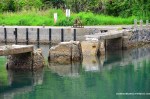
The Dolphin Island Restaurant is one of those weird, unique places I love Japan for – and it’s one of the few urbex insider tips in Okinawa. It is also one of the toughest places to access. Not because of security, but because of timing. Nowadays located just a stone’s throw away from the Okinawan coast the Dolphin Island Restaurant can be reached by wading through the water if the timing is right and the tide is low…

After a day of exploration *Michael* was kind enough to revisit one of the places he explored when *he went to Okinawa in 2011*. The Dolphin Island Restaurant is a gorgeous little island, sadly there is little to nothing known about its history. Massive concrete and wooden electricity posts let me come to the conclusion that the current supply came from the mainland about 300 meters to the east and that it was constructed in the 1950s or 60s. Nowadays you can almost walk up to the place from the north, getting as close as maybe 10 meters, but I doubt the area looked like that when the restaurant island was still open for business. Judging by the shape of the close-by warehouse area / harbor I’m pretty sure that this part of Okinawa is artificial land, one of the many reclamation projects Japan did in the past couple of decades – this one was limited by the Dolphin Island, but it got as close as possible…
I can imagine that business was though back in the days, because without access via a bridge all the visitors must have gotten to the island by boat – and that most likely meant no business on stormy days and that it took quite some effort by potential guests to reach the restaurant.
It’s said that the Dolphin Island Restaurant was not only a restaurant, but also hosted an aquarium – hence the name “Dolphin Island” or “Hiituu Island” in Okinawan dialect.
Since it was getting late that day and the tide was already rising I refrained from wading through the water and stayed on dry land. With proper equipment like airtight bags to get my camera to the island safely I might have taken a swim, but given the situation that day I decided to just take some photos and a video. Later on Michael and I went to the original coast line and took some pictures from the beach, waiting for the sun to set – not our lucky day, because the sky got cloudy for the few couple of minutes we were hoping for a spectacular horizon…

And with that the Dolphin Island Restaurant became the third location on Okinawa (after the *Nakagusuku Hotel Ruin* and the *Sunset View Inn Shah Bay*) I would like to revisit one day… Well, at least the last location on Michael’s and my *trip to Okinawa* was a great success – somewhat of an original find and a really unique location with an exciting and unusual history! Up next on Abandoned Kansai…
(If you don’t want to miss the latest article you can *follow Abandoned Kansai on Twitter* and *like this blog on Facebook* – and of course there is the *video channel on Youtube*…)