Feeds:
Posts
Comments

Archive for the ‘Abandoned’ Category

In spring I visited the *Ashizuri Underwater Aquarium* on Shikoku and it blew my mind. One of the greatest day trips ever. When all of a sudden something occurred to me that I never thought of before: What if… there are similar structures in Japan? I did some research… and here we go: The Katsuura Marine Park Underwater Observation Tower in Chiba prefecture, a fun day trip from Tokyo!

The Katsuura Marine Park Underwater Observation Tower is located in walking distance of Ubara Station, about two hours by train (or car…) from Tokyo Station – an area popular with surfers even in November, but not exactly a destination for tourists from overseas… or any other tourists. I have been in the area before about a decade ago to check out some abandoned places, but of course at the time I didn’t know about B-Spots like this hidden gem.
Arriving at Ubara Station on an unexpectedly sunny Saturday morning in autumn I was surprised that I was the only person to get off the train. Not the only non-Asian person, that happens a lot at places I go to – the only person in total! The Japanese countryside is dying, that’s no secret, but come on! The only person on their way to a lovely seaside town with a beach, cliffs, a museum and an underwater aquarium? And then people wonder why train lines and bus stops get abandoned constantly, accelerating the death of rural areas. And that’s something you can’t blame on overseas tourists alone – they follow the beaten Instagram path promoted by the JNTO. Japanese people need to go out there! It’s bad enough that they stop living in smaller towns… at least support them and the declining public transport system by heading out there instead of hiding from fresh air and human interactions in anonymous housing blocks, surrounded by millions of people, yet not speaking a single word all weekend!
Where was I? Oh, yeah, the lovely Japanese countryside, Chiba coastline, to be more specific. The Katsuura Marine Park was created in June of 1974 and consists of the underwater observation tower, a restaurant, a museum and several other facilities as well as some of the surrounding nature. The tower was opened on November 1st 1980, almost a decade after the one in Kochi. Its total height is 24.4 meters – the above sea level entrance and viewing platform is about 8 meters above water, the underwater main area with 24 windows is about 8 meters below sea level. Which leaves… 8 meters for the structure on the platform? Seems a bit much, maybe the numbers don’t really add up. Details, I guess. Fact is: The entrance fee is 980 Yen, slightly more expensive than the Kochi one – and the bridge to the tower is a bit more scary as it is longer and maybe a bit more rusty. A small viewing platform on the way is even roped off currently as the railings have rusted away! Visually I found the Kochi tower quite a bit more appealing, though an accidentally underexposed shot made the Chiba one look like from a post-apocalyptic world – it would perfectly fit the Apple TV+ show Silo. The concept of both towers is the same though: You have to walk down a staircase to the bottom of the sea to observe a variety of fish in their natural habitat, the Katsuura one though features small cushioned rest areas on the way up and on the way down. No photos of the underwater platform as the underwater aquarium was surprisingly crowded, despite my rant earlier. I guess Tokyo people have more cars than I thought. And more kids. Tons of kids, actually. Or maybe they were all Chiba countryside locals who desperately need a car, because like I said: public transport in Japan is dying, despite what the “L@@K AT THE HOKURIKU-SHINKANSEN!!!” propaganda is trying to sell.
To make up for it, I added a photo of an abandoned boat I found on the way to the marine park… and a few more of what looked like the hideout of a 1980s action movie villain. The concrete structure is just off the coast in the ocean, connected by a bridge similar to the one leading to the tower. It’s not marked as anything on the map, but it might have been used as a facility / headquarter during the construction of the underwater aquarium. In any case, it looked really cool, but to my surprise wasn’t abandoned. On the third photo you can see a white car – and when I was heading back to land, I saw some guys handling oxygen tanks, so maybe it’s a diving center now?
Anyway, I hope you enjoyed this… and if you did, please check out the *Ashizuri Underwater Aquarium* again for comparison.

(*Like Abandoned Kansai on Facebook* or *follow us on Twitter* if you don’t want to miss the latest articles and exclusive content – and subscribe to the *video channel on Youtube* to receive a message right after a new video is online…)

Read Full Post »

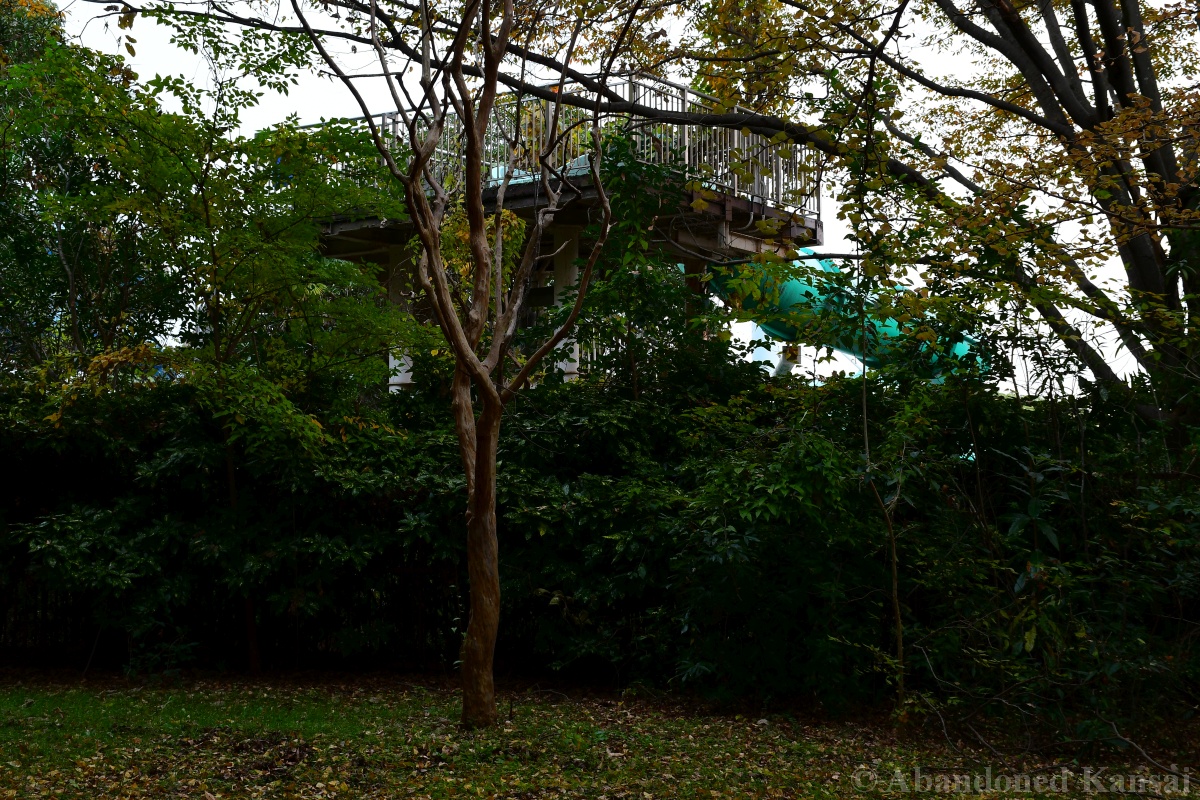
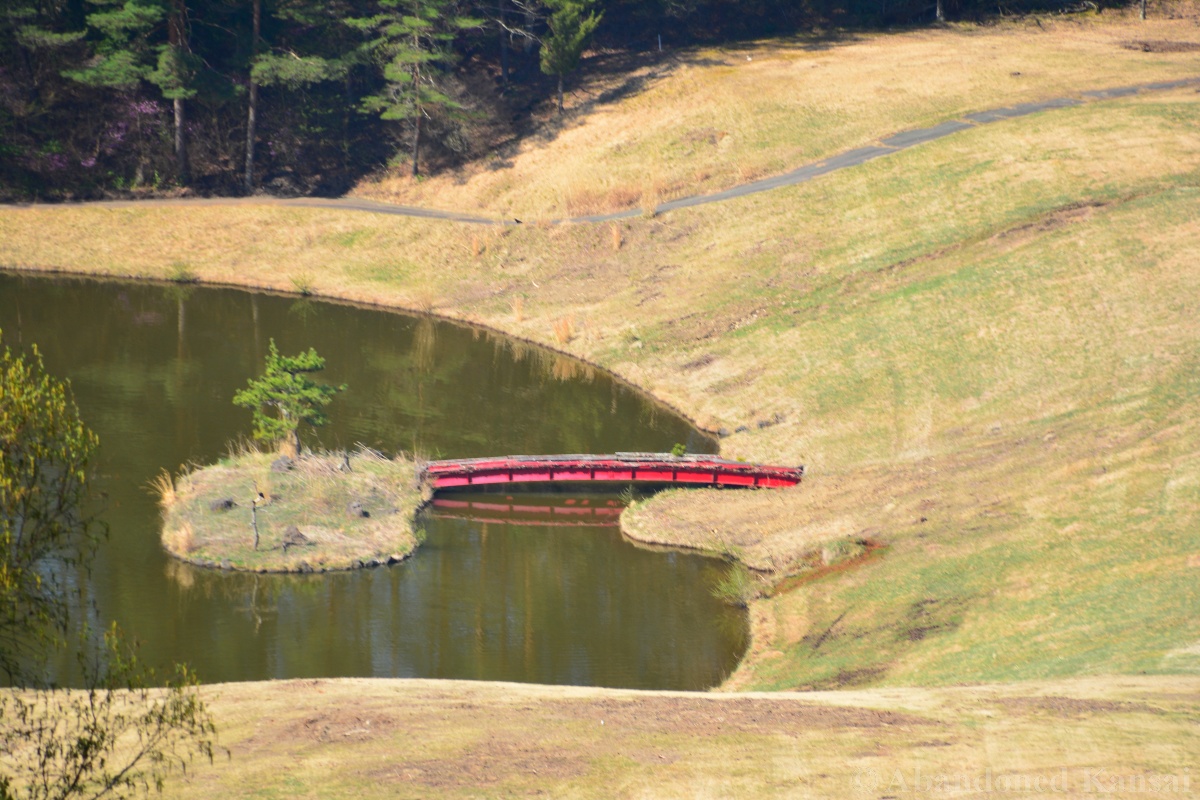
You’d think that (almost) flat land in the mountainous center of Japan is so rare and valuable that every bit of it is used for housing and farming… but I guess there is always enough space for yet another country club!

Abandoned country clubs / *golf courses* are among the trickiest places to explore. They tend to consist of large areas of well-kept, rather flat ground, which means for the first few years of abandonment they tend to not look very abandoned as it takes some time for nature to take over – and usually real estate companies are rather quick to snatch up the land and sell it to some solar farm. I’ve been to several dozen closed / abandoned places like that all over Japan – 60% of the time they have been fenced off and turned into something useful (the Japanese government loves to play the a$$hole and officially sticks with nuclear power in one of the most earthquake and tsunami prone areas of the world, but in reality there are gigantic solar parks everywhere from Okinawa to Hokkaido!), but 30% of the golf courses still looked too new. The hedges were still in shape, the holes still recognizable, the club house still inaccessible. Maybe 10% were actually fun to explore, the remaining 90% not so much… a mixed bag at best, but often just a waste of time.

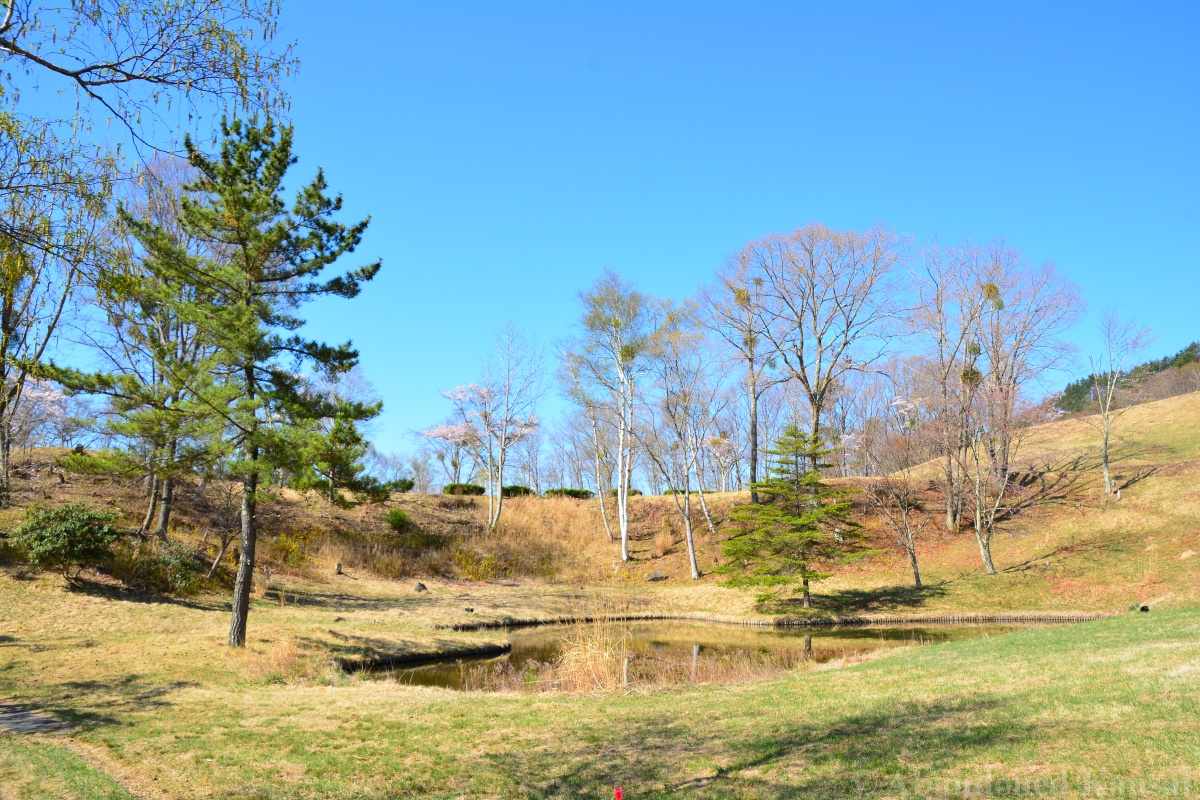
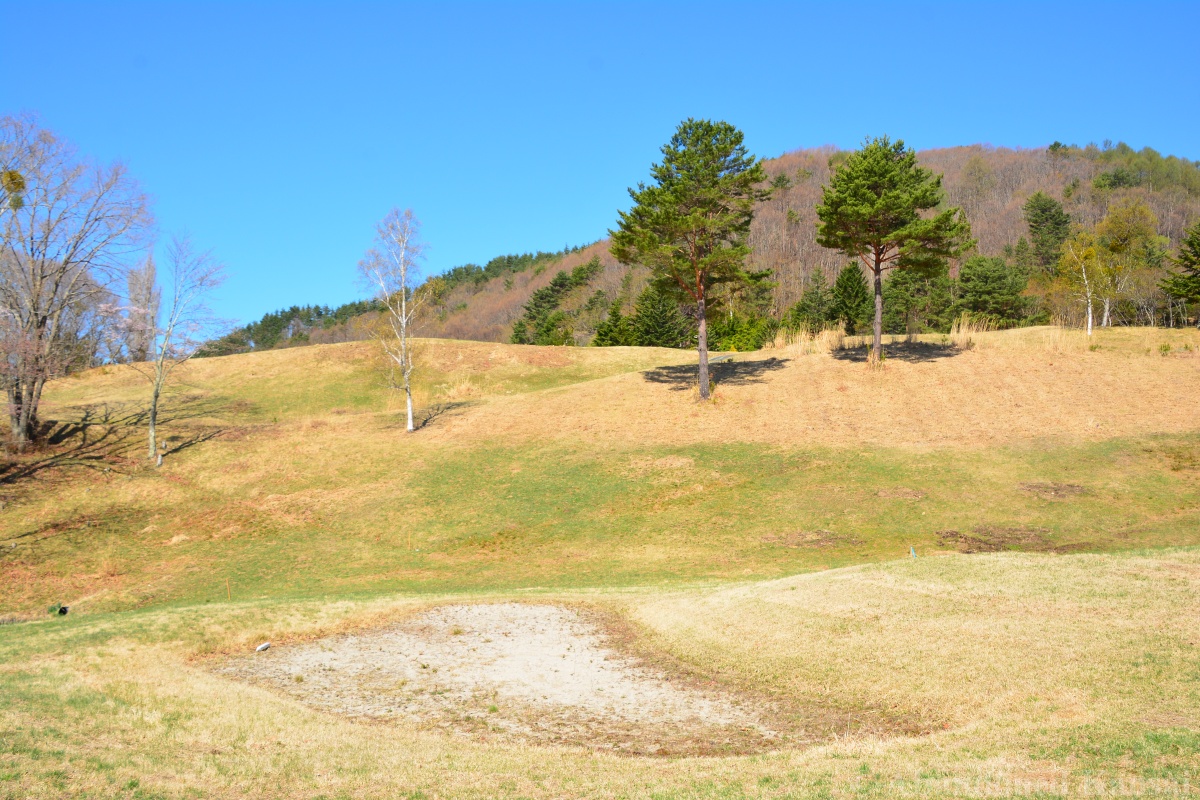
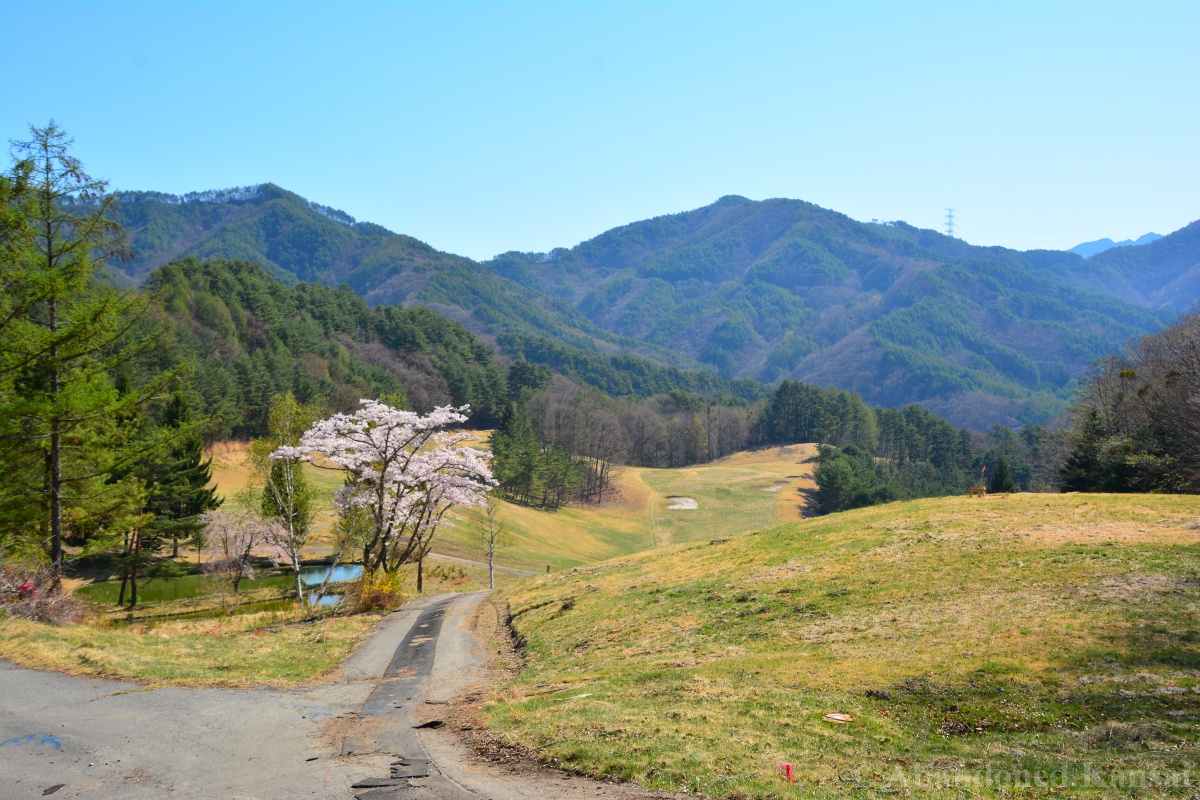
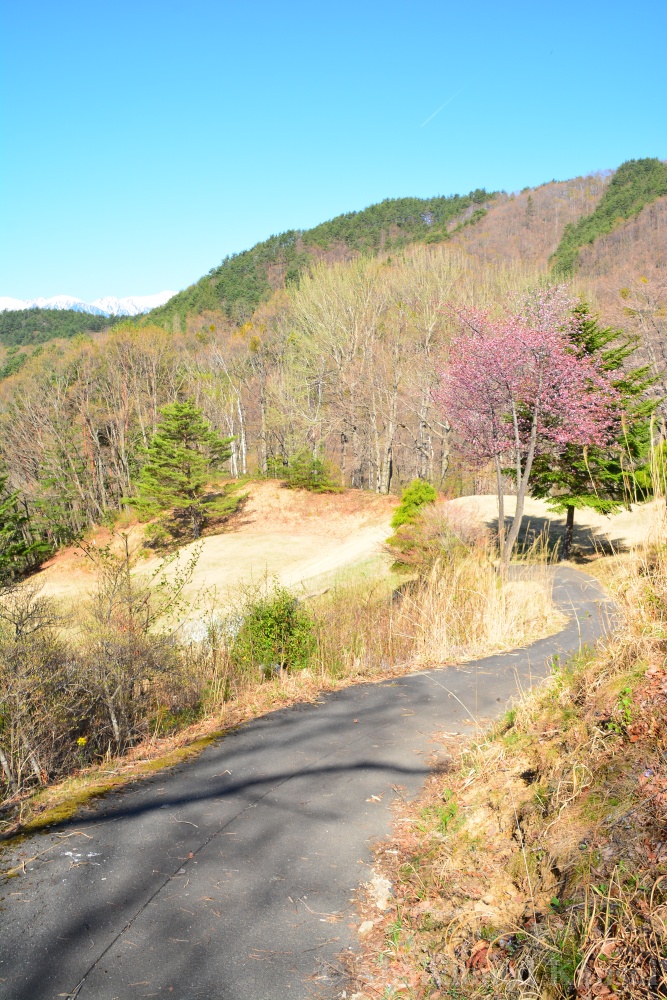
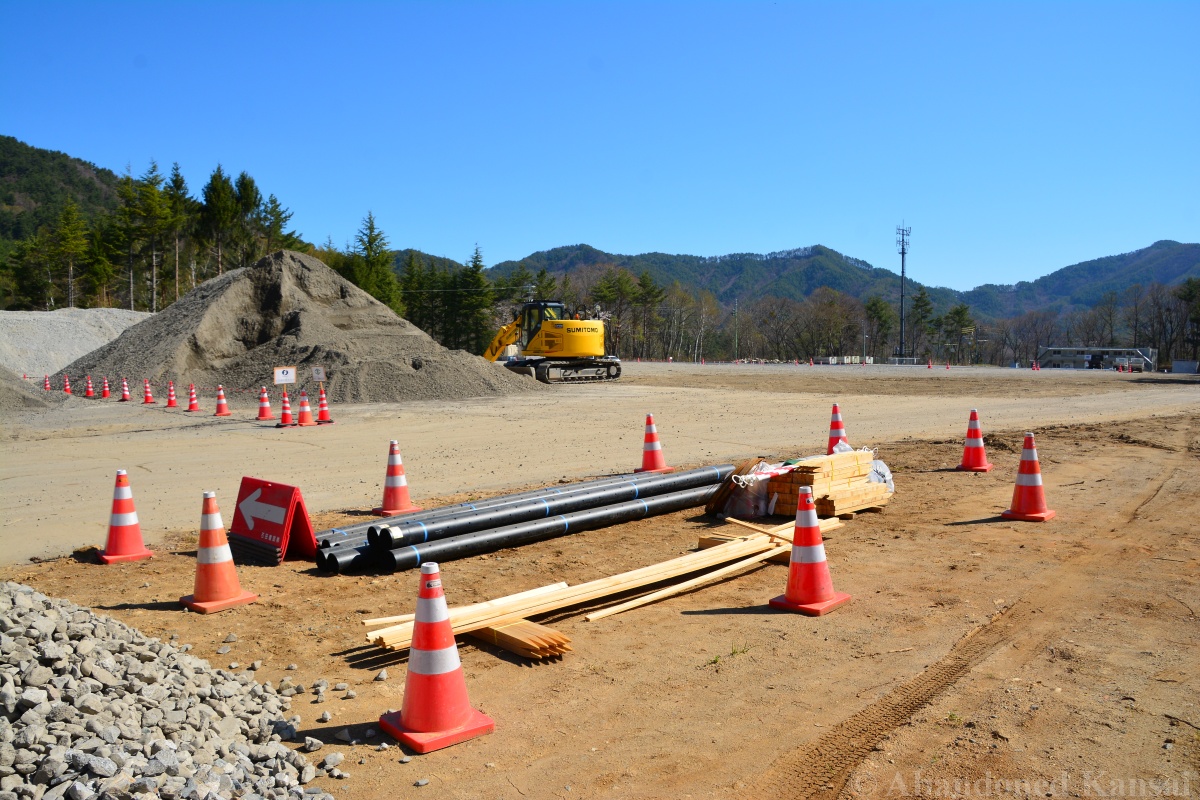
The Japanese Alps Country Club was definitely in the latter group of 90%, but within that group among the better locations. Pretty much all buildings on the premises had already been demolished, but the construction of the solar park hadn’t begun yet – machinery and some material was already there though. So I had a look around, enjoyed the beautiful views on this gorgeous spring day during sakura season, took some photos… and even found a few (inaccessible) bungalows on a slope, probably for guest golfers on vacation from far away. A relaxed exploration of a slightly disappointing location, nevertheless not a waste of time at all. Being in the middle of nowhere in Japan on a sunny day is always a win in my book.
And if you want to see an abandoned country club with golf karts (on a rainy day) I recommend checking out the *Countryside Golf Course*. It’s been a while since I published that one…

(*Like Abandoned Kansai on Facebook* or *follow us on Twitter* if you don’t want to miss the latest articles and exclusive content – and subscribe to the *video channel on Youtube* to receive a message right after a new video is online…)

Read Full Post »

“Welcome to the jungle, it gets worse here every day. You learn to live like an animal in the jungle where we play. If you got a hunger for what you see, you’ll take it eventually. You can have anything you want, but you better not take it from me.”
And people say hotel explorations are not exciting…

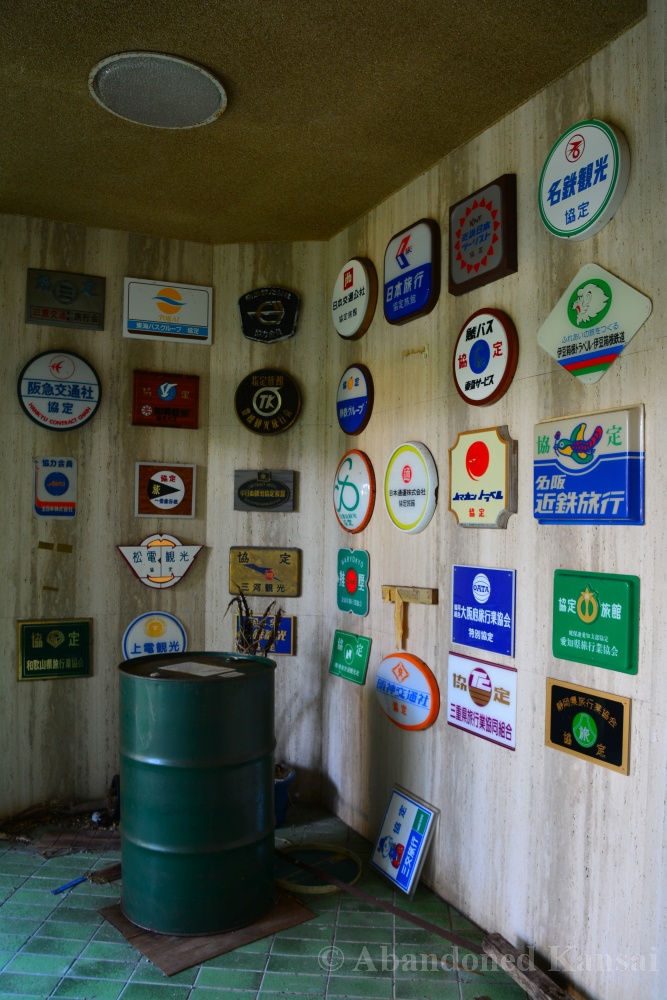
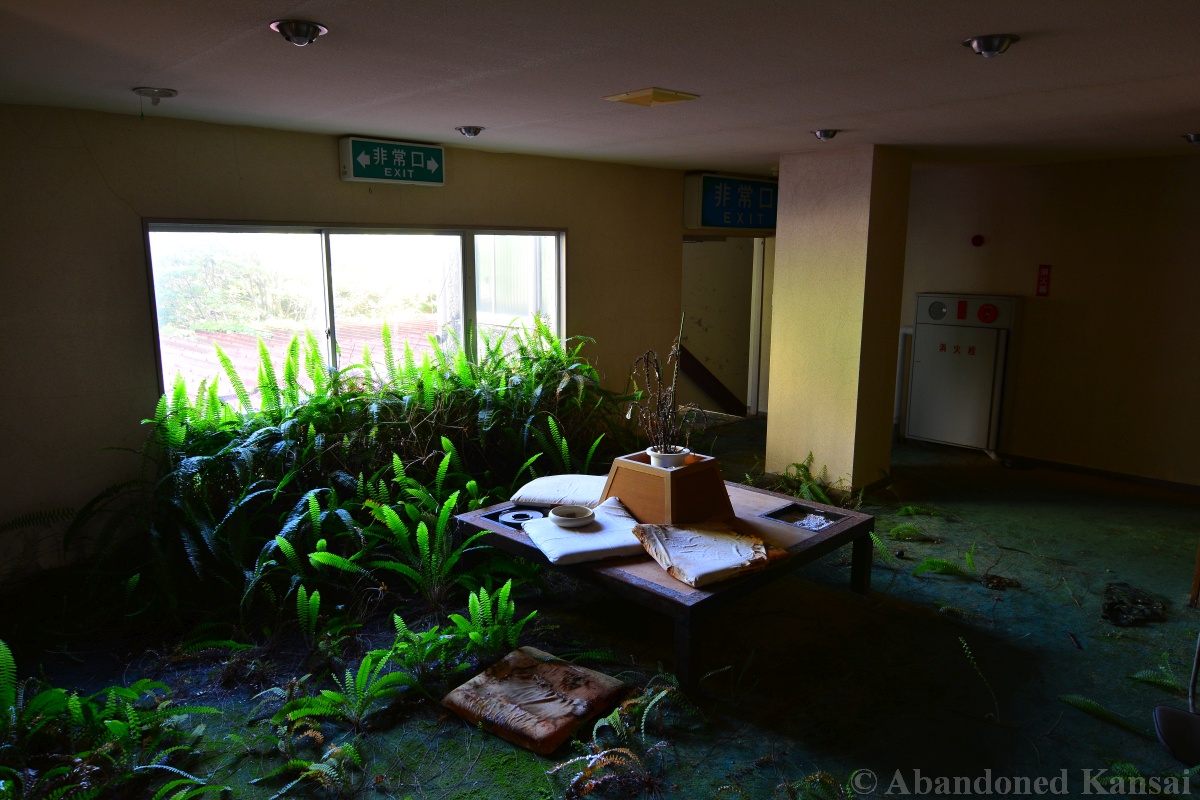
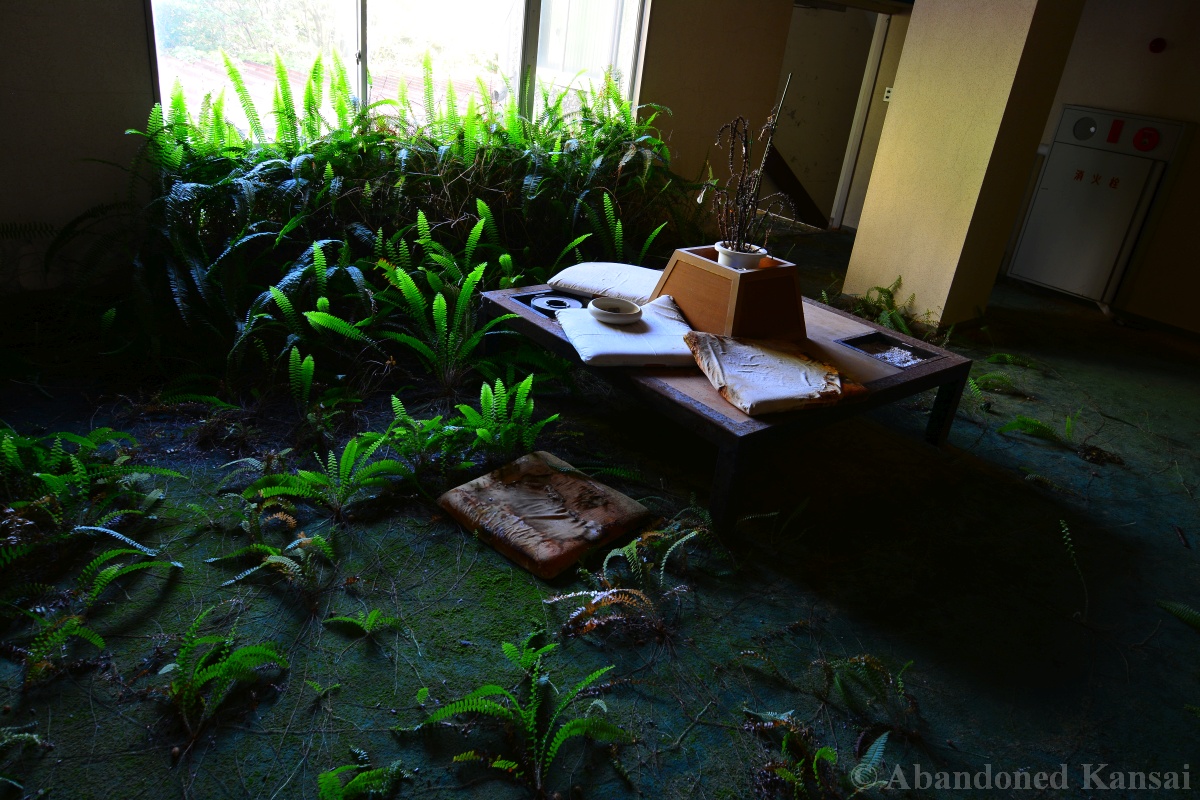
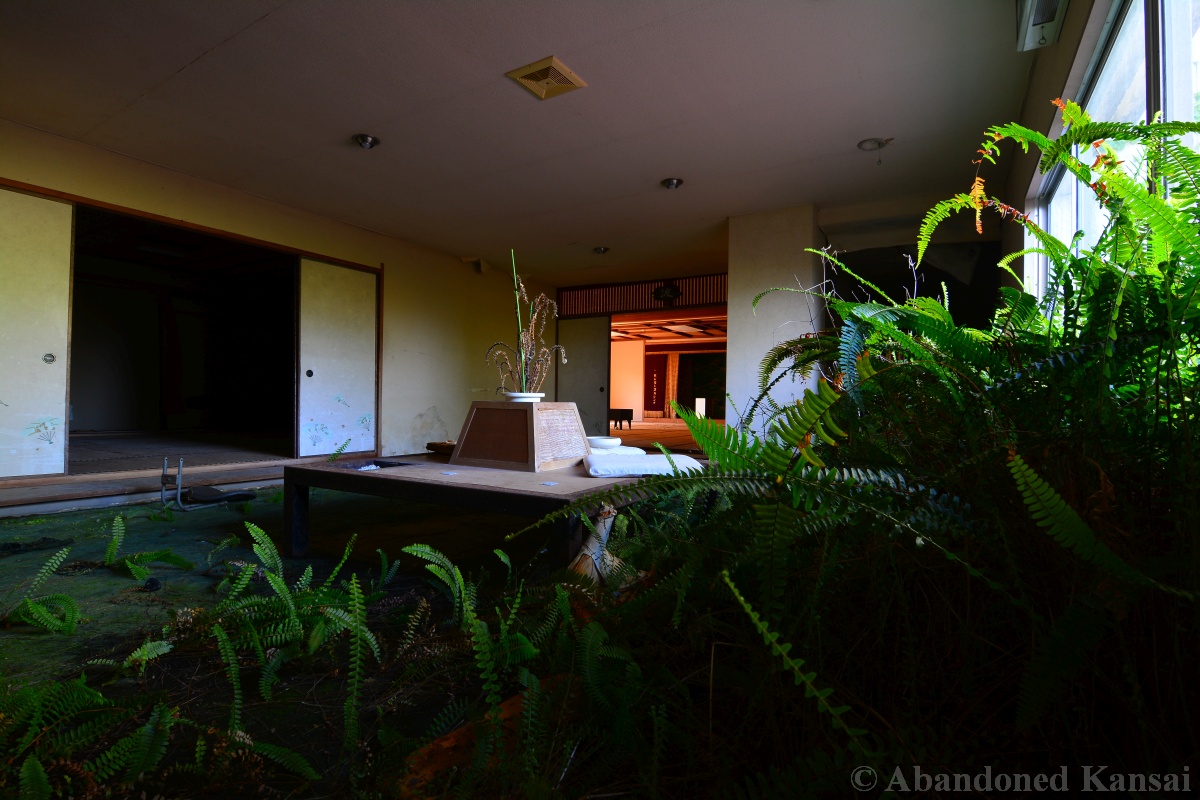
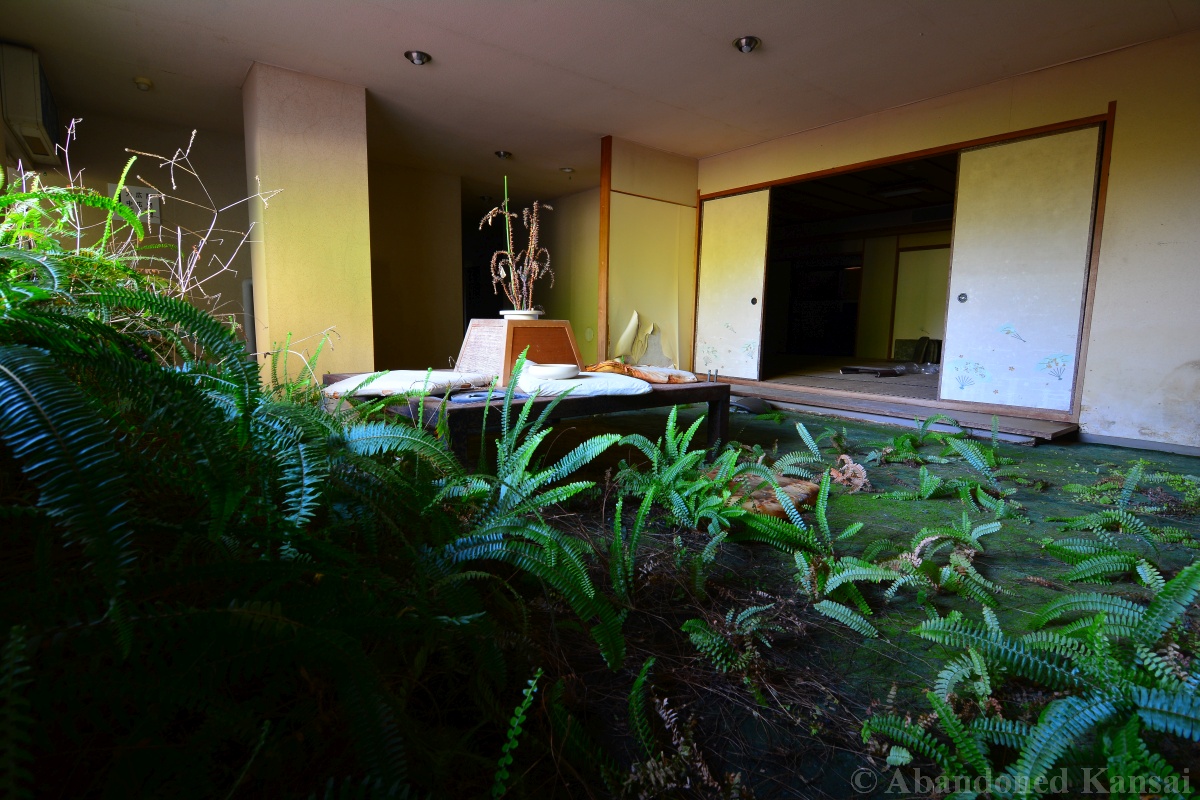
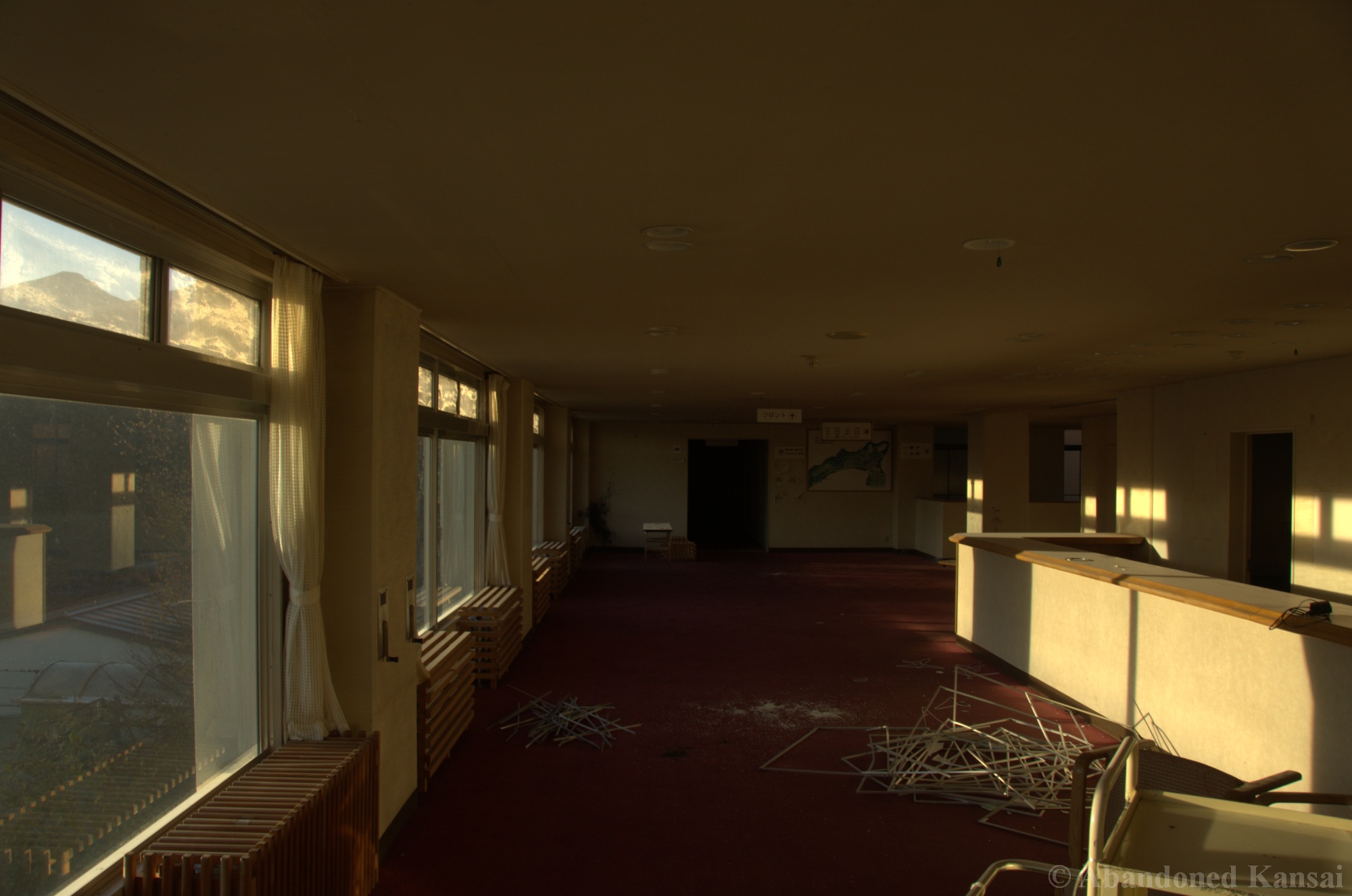
Okay, one of those people is me, but the Fern Hotel was really quite interesting! Not because of the plethora of plaques at the entrance, not because of the dull rooms… and especially not because of the rundown baths. 95% of the place was just another smelly, run of the mill abandoned hotel. But all it takes is one special room and a forgettable location becomes special. In this case it was literally ferns growing in the hallway between some party rooms! I guess the metal thieves left a window open, the carpet got drenched repeatedly during rainy season(s), mould and moss started to grow… and then bigger plants followed. A few years later I arrived in late spring / early summer and found a little jungle inside this otherwise totally average abandoned hotel. Okay, the rusty scale looked kinda cool, too. And they had the program of a Japanese adult movie channel from January 2000. Don’t worry, no sexy photos included, not even with the usual mosaic. Other than that… not much. But the fern area was really cool – so please enjoy the photo gallery!

(*Like Abandoned Kansai on Facebook* or *follow us on Twitter* if you don’t want to miss the latest articles and exclusive content – and subscribe to the *video channel on Youtube* to receive a message right after a new video is online…)

Read Full Post »

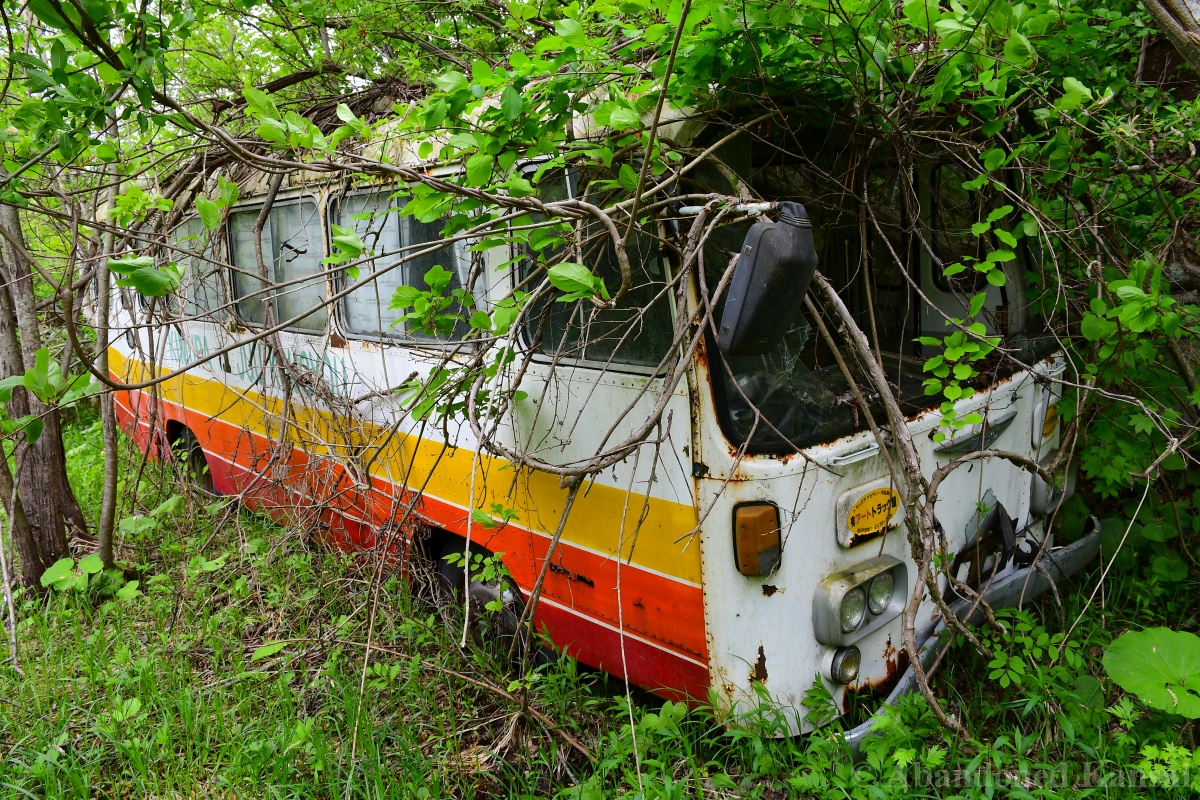
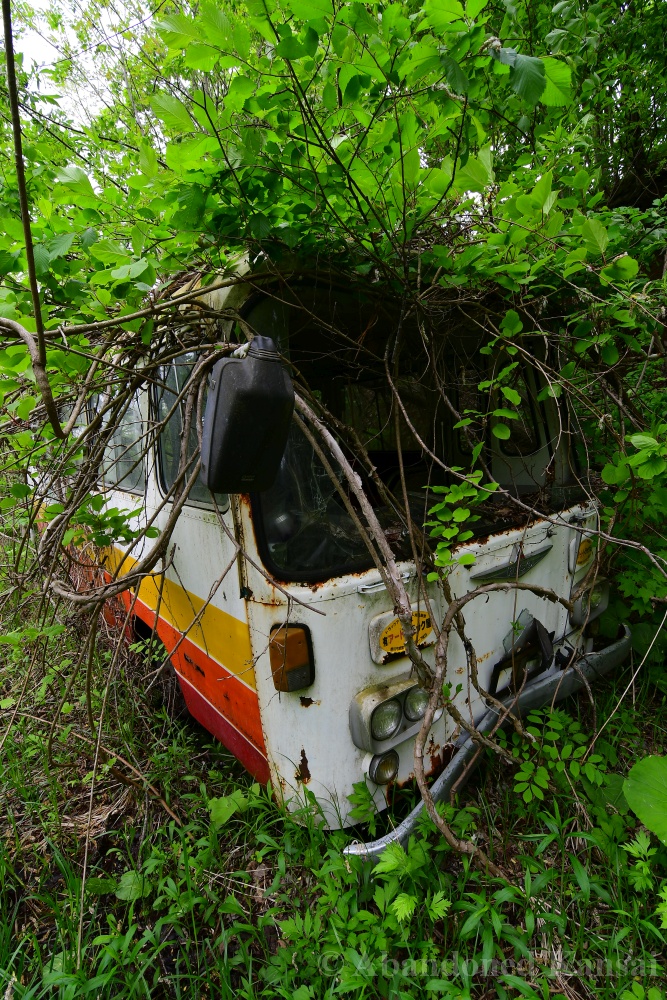
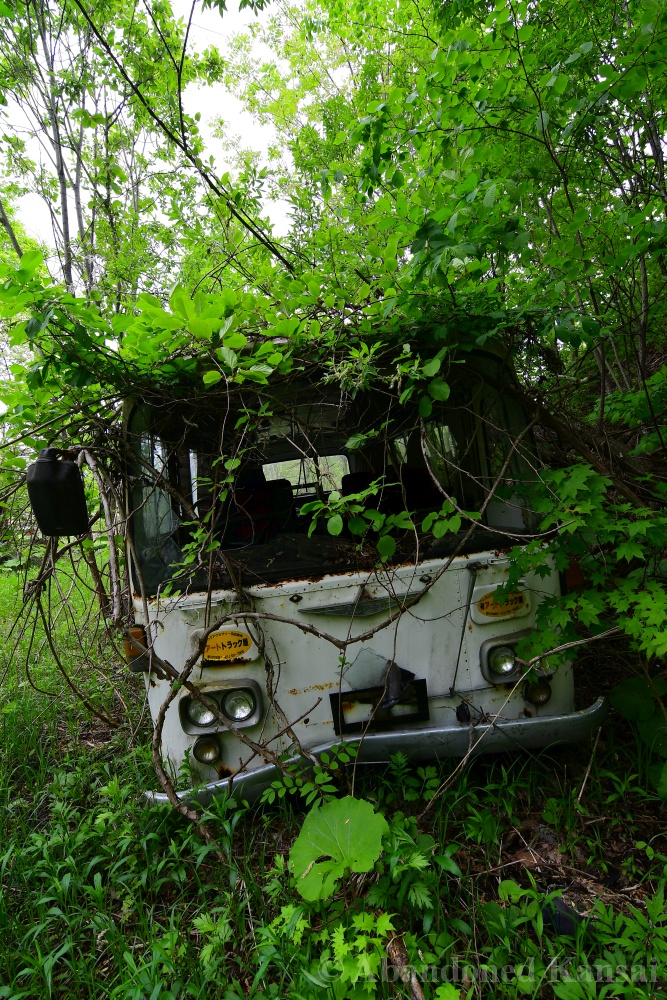
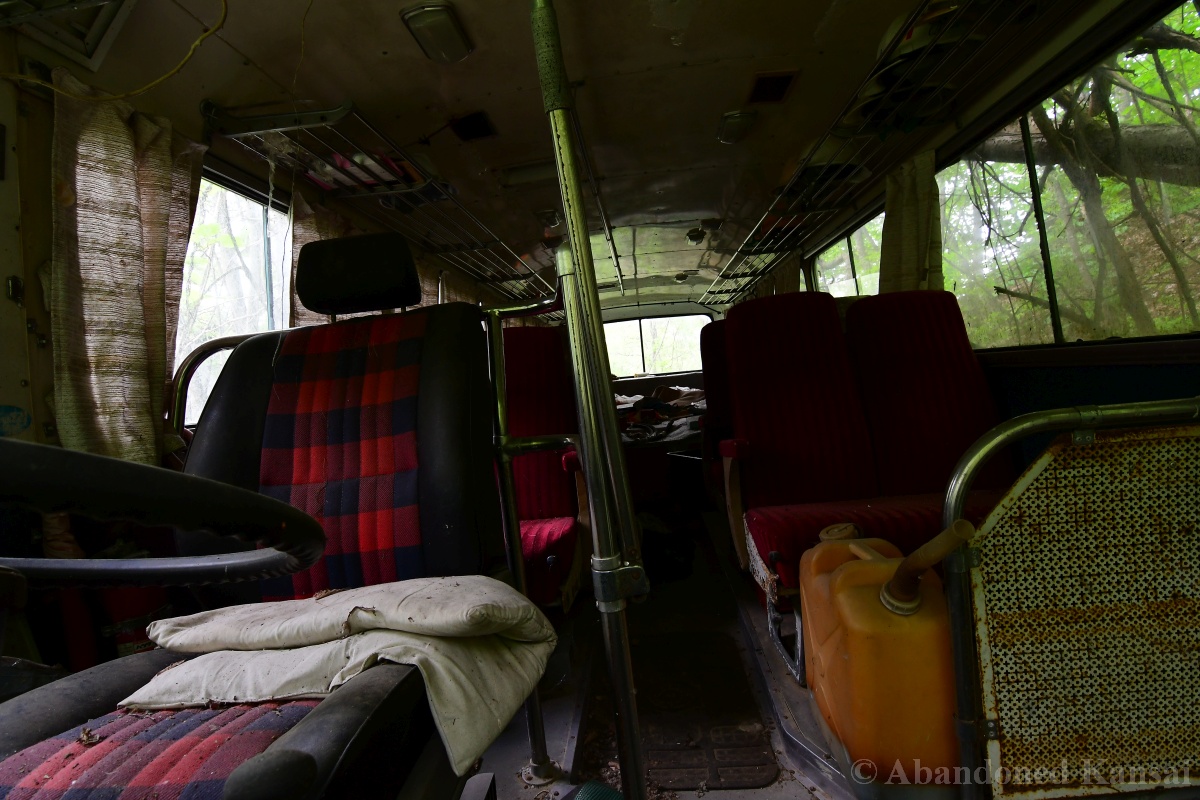
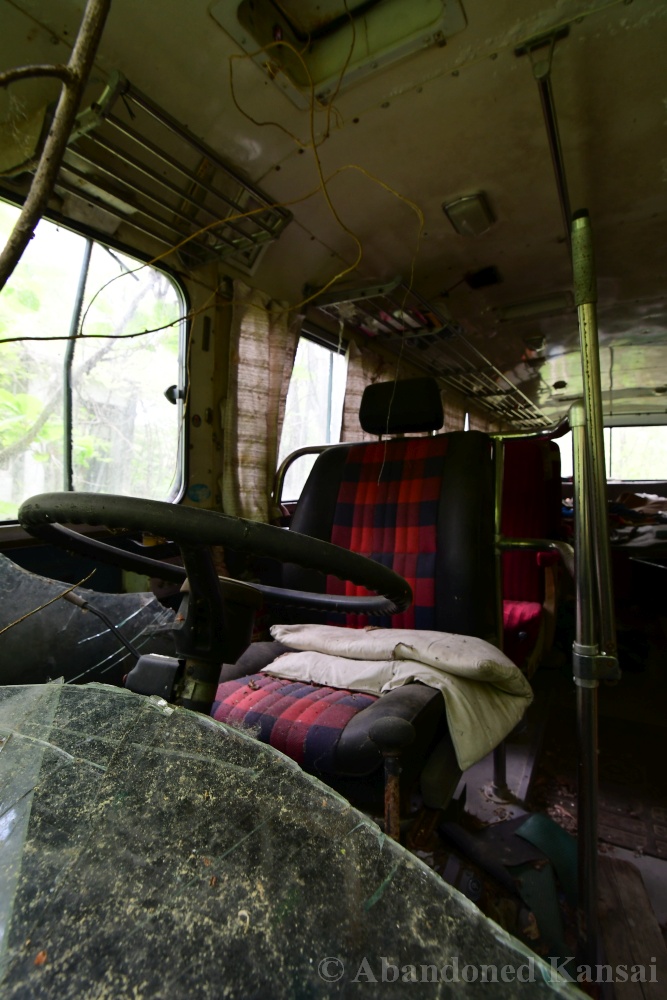
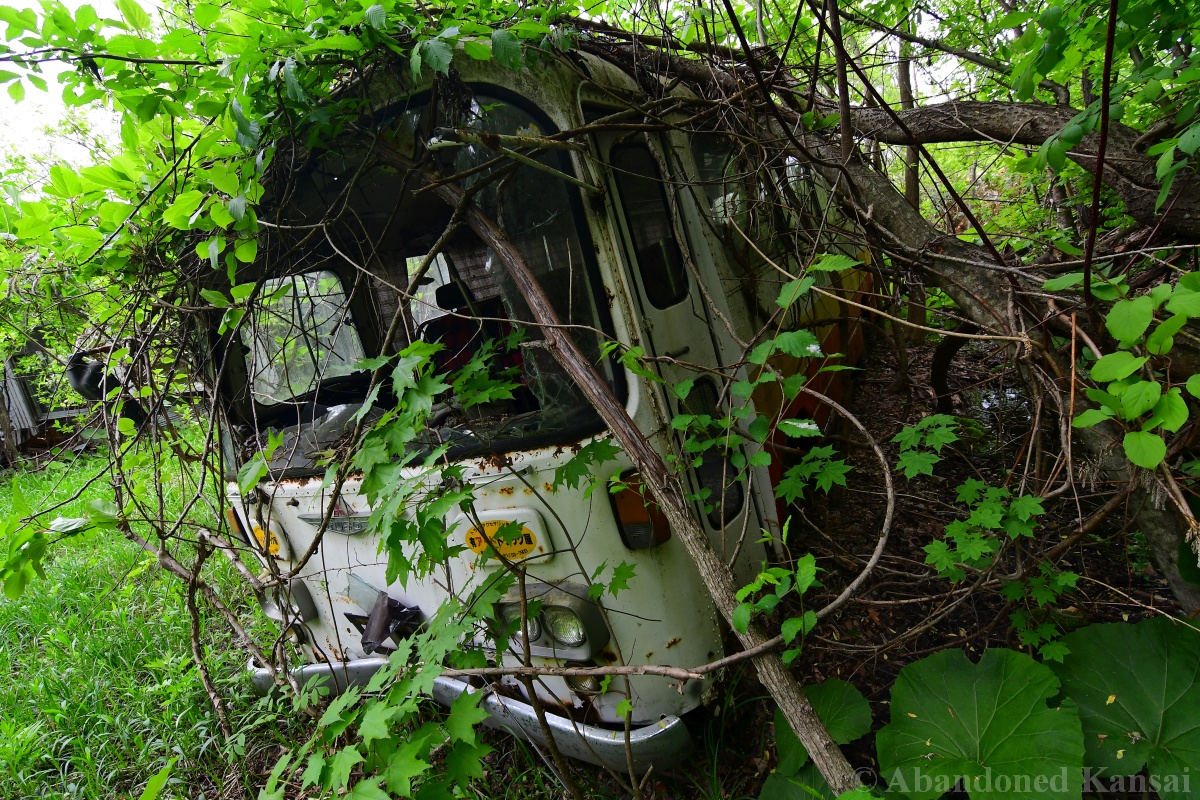
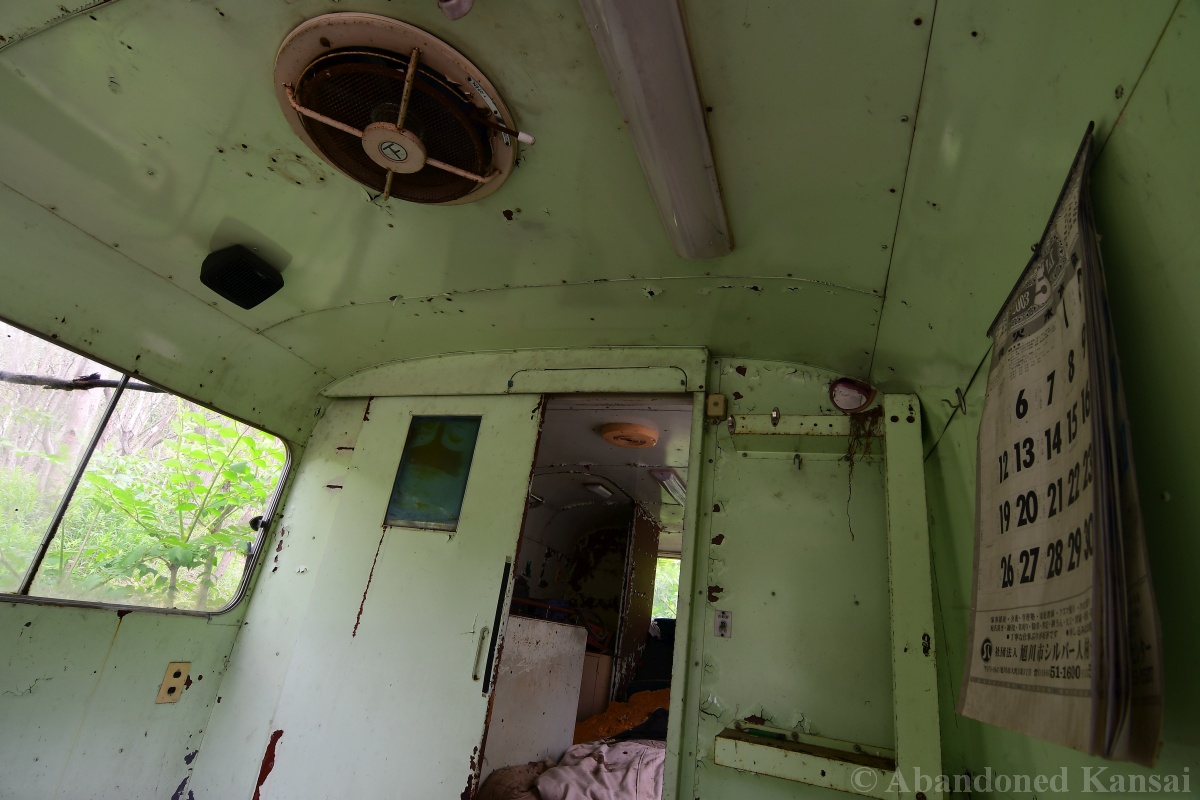
Three months ago I posted an *abandoned blue bus* – today it’s a white, yellow, orange, and red one… but with completely different interior! 🙂

My apologies, the last few months have been hot, humid, and extremely busy. For a while it looked like as if I could go back to posting at least biweekly again, now I’m rushing to get one done before the month ends. Once more another quick one because of it, but I hope that I’ll be able to publish some meatier yet vegan friendly locations soon.
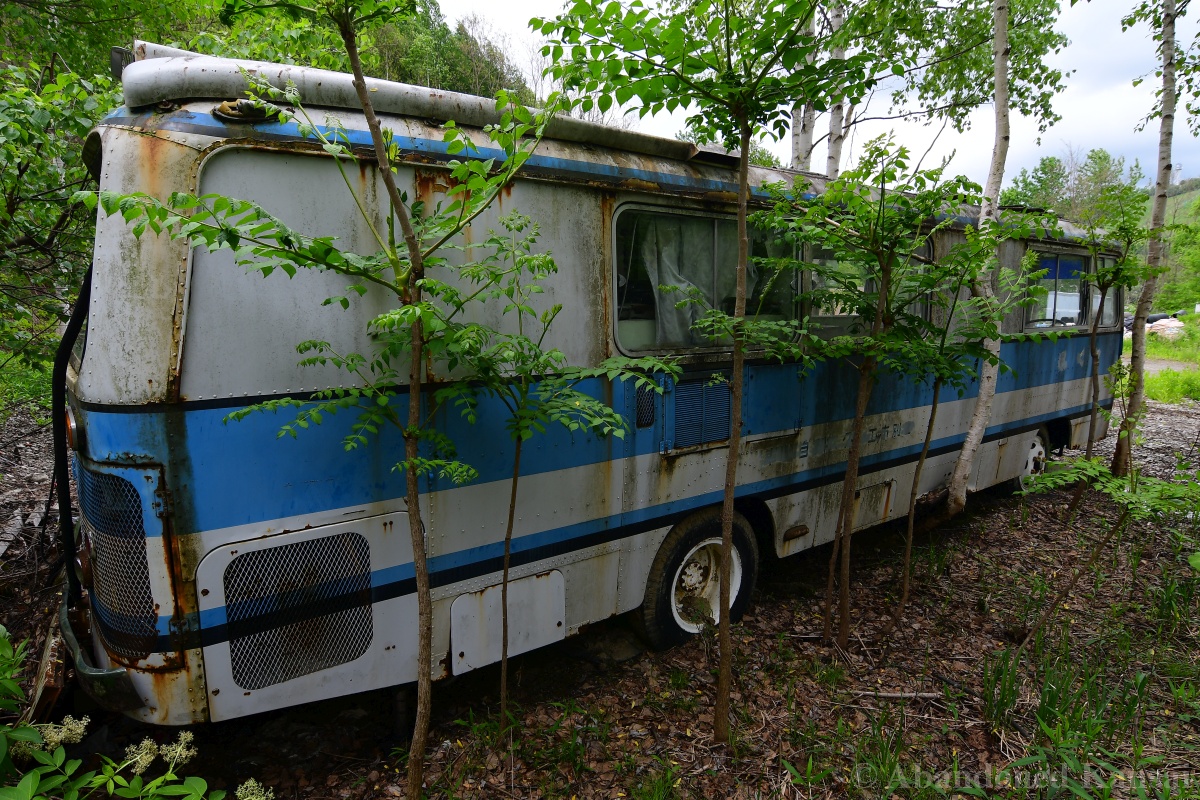
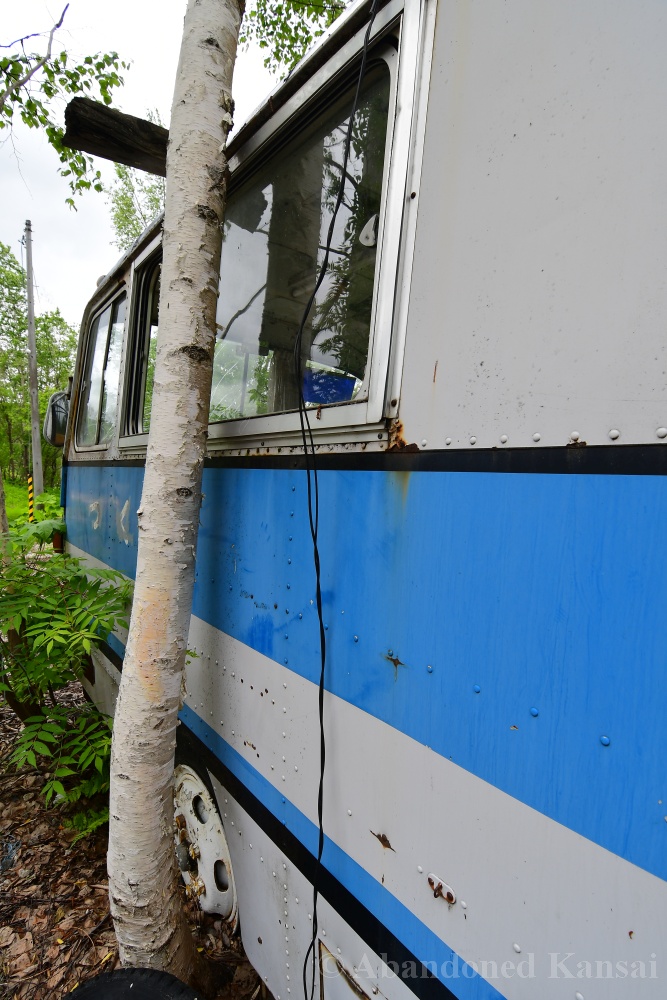
For now there we have another bus on the side of the road. I almost walked by it, but then I looked down a dirt road leading up a slope and saw this fine specimen parked there, partly overgrown already. Upon approach I sunk ankle deep into the slightly swampy ground. Fortunately it was only late spring on a cloudy day, not summer already, or the situation most likely would have been a lot worse. Nevertheless not really a fun experience wearing new sneakers. (I was on vacation and didn’t really gear up with boots and protectors…)
It looks like the bus belonged to a (now defunct) construction company, so I guess this one was used to transport employees to work sites. Not much to say about it. Standard interior, just a nice little roadside find. Nobody around, decent decay – less than half an hour total. Enjoy!

(*Like Abandoned Kansai on Facebook* or *follow us on Twitter* if you don’t want to miss the latest articles and exclusive content – and subscribe to the *video channel on Youtube* to receive a message right after a new video is online…)

Read Full Post »

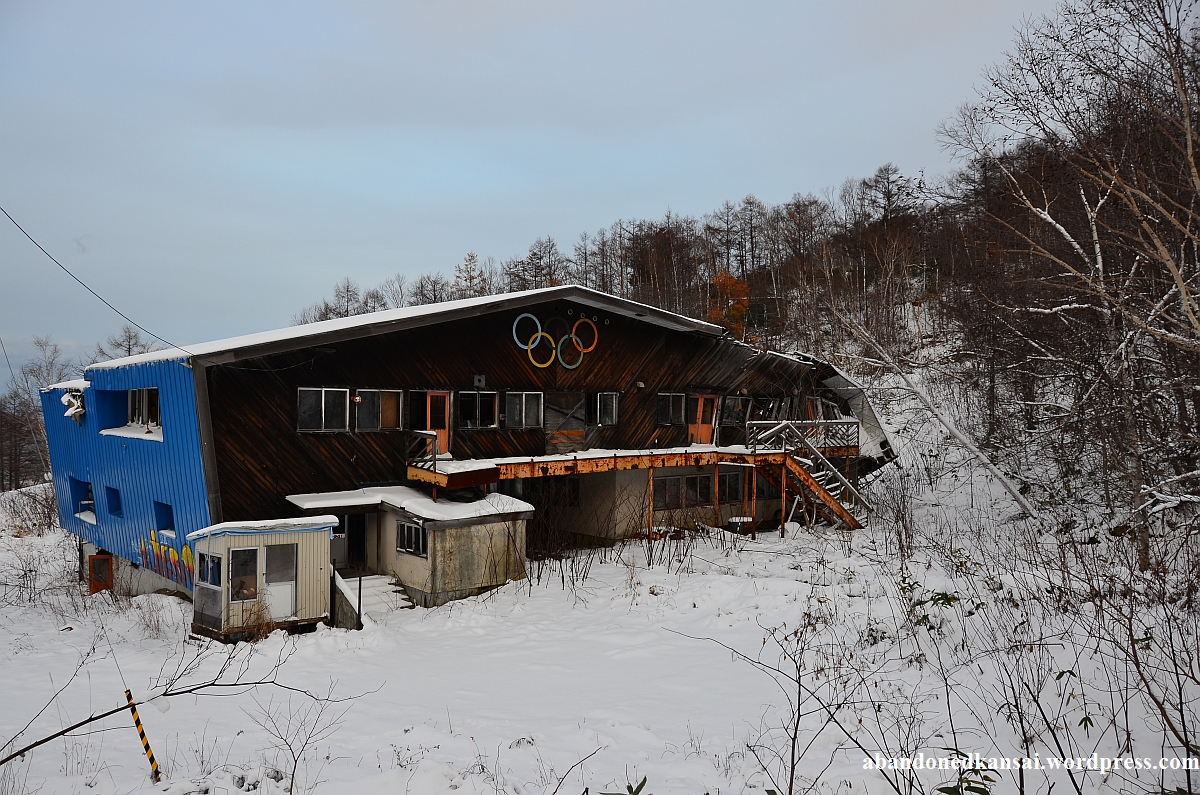
A few days from now the 2024 Summer Olympic Games in Paris will begin. A spectacle that costs about €9 billion – and probably will leave some abandoned places behind… like in Japan!

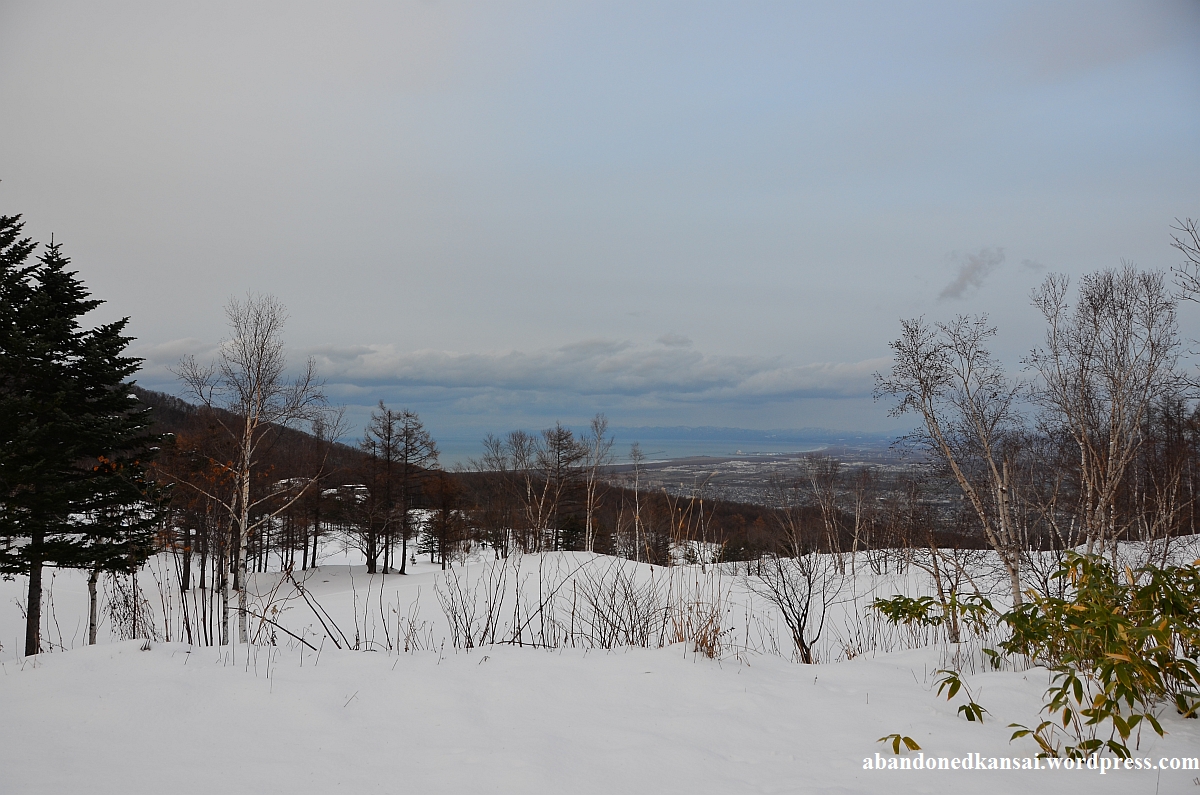
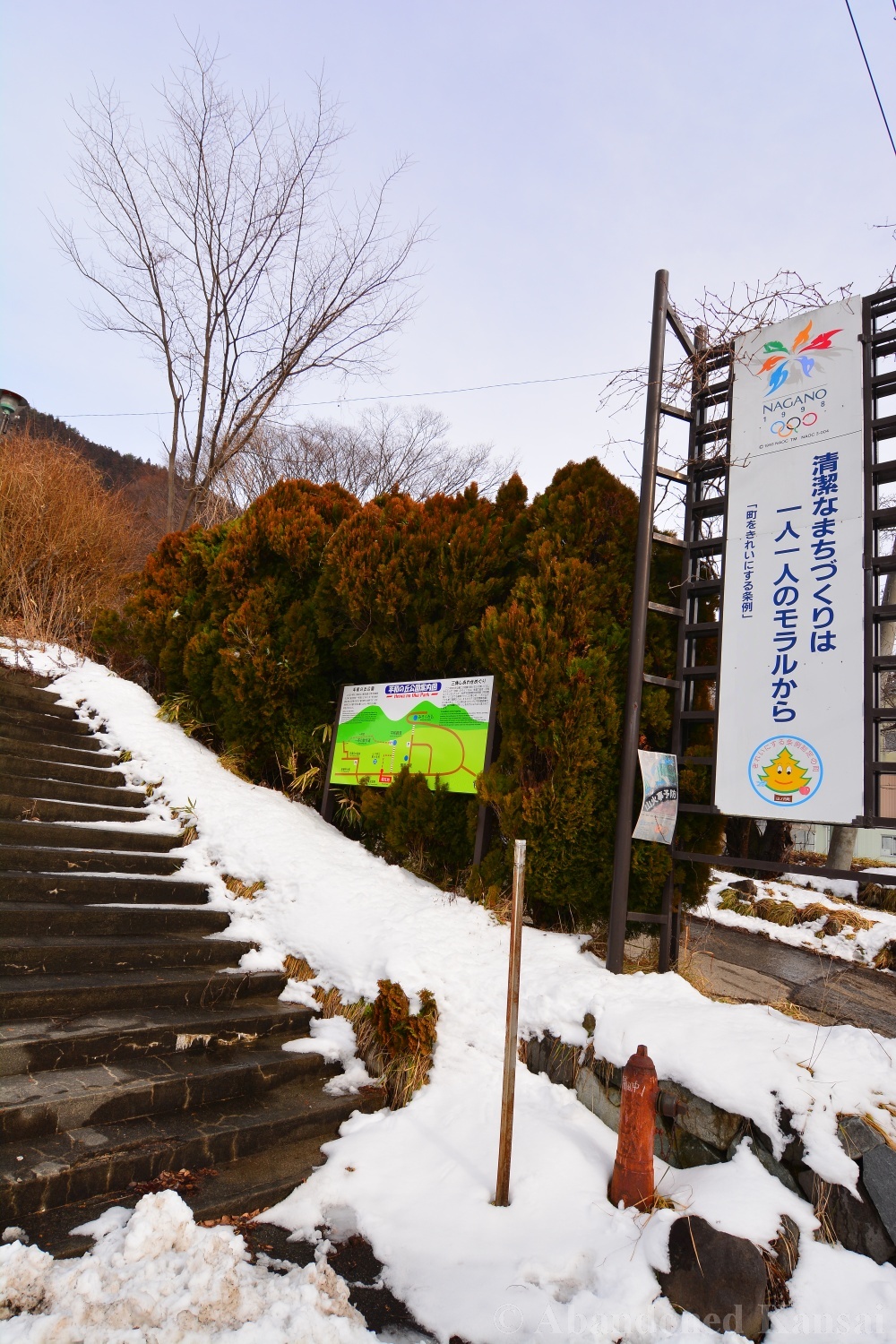
Japan’s history as a host of the Olympic Games dates back to 1964, when Tokyo was home of the Summer Games. Sapporo 1972 and Nagano 1998 followed with Winter Games, before the disastrous Tokyo Summer Games 2020 were held in 2021. Sapporo (who had won the bid for 1940, but couldn’t follow through for obvious reasons) remembers the 1972 games so fondly that there was a large campaign to get the games in 2030 – an effort that became rather unpopular quickly in the aftermath of Tokyo 2020. 2034 is still in talks, but extremely unlikely… Some politicians seem to cling to it, but that’s pretty much it.

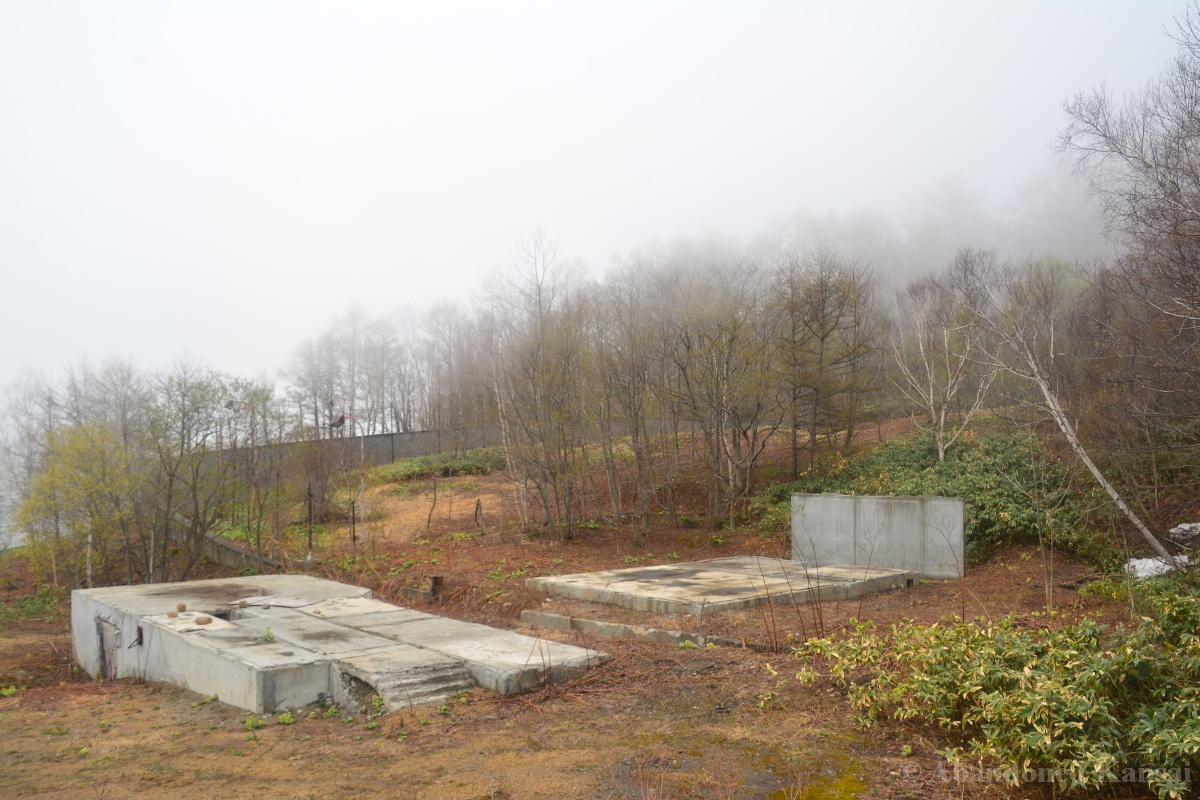
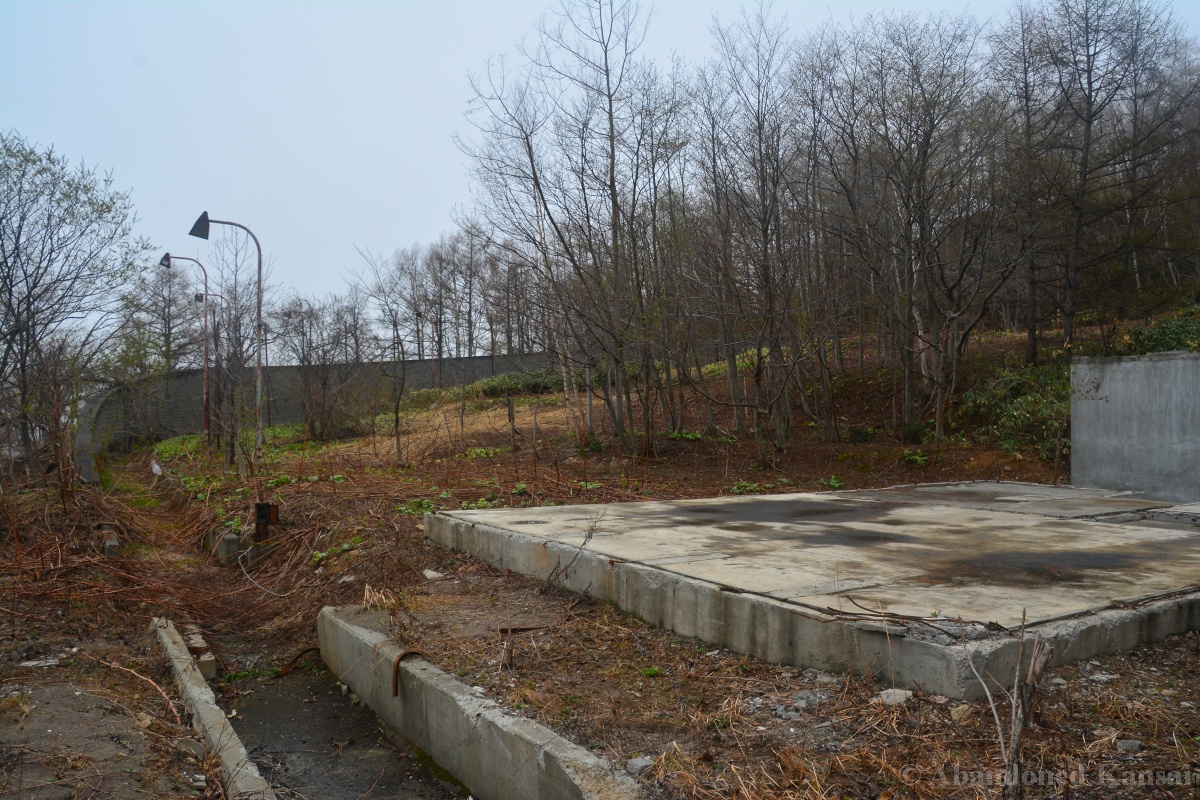
Since I avoid Tokyo like the plague (or Corona… still no infection!) I don’t know what the status of their Olympic ruins is, but both Nagano and Sapporo still have some installations left. The Olympic bobsleigh track in Nagano called Spiral is a tourist attraction now (coordinates: 36.71088, 138.1578), the other remaining venues that have been abandoned are mostly forgotten now – some have been demolished after my visit, for example the bobsleigh goal house in Sapporo and that gymnasium used by athletes to change and prepare right before their competitions. I compiled a little gallery with some interesting photos at the end of this blog entry, but here is a list of links to the full articles I’ve written in the past, in case you want to see (and read?) more:
*Sapporo 1972 (1)*
*Sapporo 1972 (2)*
*Nagano 1998 (1)*

(*Like Abandoned Kansai on Facebook* or *follow us on Twitter* if you don’t want to miss the latest articles and exclusive content – and subscribe to the *video channel on Youtube* to receive a message right after a new video is online…)

Read Full Post »

No joy and excitement greater than finding and exploring an abandoned place without prior information. Please join me on a journey to a remote sanitation center in the far north of Japan!

To me, Google Maps is one of the greatest pieces of software ever written. Without it (or something similar) I probably would have never gotten into urban exploration – and Street View is the icing on that amazing cake. I was always fascinated by maps, from child days on, so even before I picked up urban exploration as a hobby in 2009, I liked Google Maps. In 2009 though I fell in love with it. I saw abandoned places popping up here and there on the internet, back then it was kind of an underground hobby and not nearly as mainstream as it is today – so of course I tried to had a look at them on Google Maps. I started creating my own maps dropping pins…
… And then I went out there exploring. At first most parts of the world map were rather blurry, and Street View wasn’t as widely available. The better the maps and SV got, the more I just had a look randomly. At first nearby, the Kansai area. Later all over Japan. Instead of watching TV I’d rather looked at Google Maps for half an hour. When I needed a break for 5 minutes, I checked out a countryside onsen town or a remote stretch of coastline – hoping to find a place that looked abandoned. I actually still do that several times a week. That’s how I found the Hokkaido Sanitation Center. Just a couple of abandoned looking structures in a remote area of Hokkaido, not a single soul nearby – which made it hard to get to, but easy to access. Fortunately the buildings not only looked abandoned, they actually were abandoned! That could have easily turned into a wasted day instead of a wastewater day.

When I explore in Kansai, I’m basically a good weather explorer. Don’t get me wrong, taking pictures in the rain has its own charm, but despite spending a lot of time outdoors, I’m actually not much of an ourdoorsy person. I like the comfort of a comfy couch and comfort food. I also like nature, but I prefer it tamed… or barbecued! So when it looks like a rainy day in Kansai and I have plans to explore (solo), I tend to postpone those plans to the next weekend. A luxury I don’t have on longer trips, because transportation tickets need to be booked and hotels need to be reserved – so then options on potentially rainy days are not “Now” and “Next week”, the options are “Now” and “Maybe never”. And never is such a sorry word, so I tend to explore in the rain. Which is what I did a while ago when I was in Hokkaido and I had to choose between a day of museums and onsen – and a day of exploring two original finds; places I found by chance on Google Maps.
A few modes of transportation after a delicious breakfast I found myself walking up to the Hokkaido Sanitation Center, about two kilometers away from the closest bus stop. Well, at least back then there was a bus stop. Looks like it disappeared since then, like so many others on Hokkaido, which becomes harder and harder to travel to by public transport – and that is really sad, because once you get away from what I call the Silver Route (Otaru, Sapporo, Noboribetsu Onsen, Hakodate), Hokkaido is probably the greatest prefecture of all!
Anyway, I was walking up to the Hokkaido Sanitation Center, nervous as always when approaching an original find, despite not having seen a single soul or car for like 20 minutes. Fortunately it took another 90 minutes and a hike back to civilization for me to see anybody else. There was a rather small fence around the sanitation center, which I guess is a fancy word for water treatment plant, but there were also some additional buildings, so they might have done some testing and stuff there to justify the name. Like I said, access was easy – I never break anything to enter anyway, but this time I didn’t even have to climb over or into something, there was enough space on the side of the main gate to get onto the premises. The hard part was finding the place and getting to it. I took some outdoor shots of various buildings, when the clouds finally opened and it started to rain. Time to find a way inside, which was equally easy as I hit the sweet spot of being there after curious visitors willing to crack open a (roll-up) door, but before vandals and metal thieves – and definitely before other urban explorers as I had never seen the place on other blogs or social media accounts. Therefore my nervousness quickly turning into having the time of my life leisurely exploring a mid-sized unknown abandoned industrial – it was amazing, despite the rain occasionally ruining a shot or two when I was taking more photos as I switched between buildings.
Speaking of unknown: Of course I know the full name of the Hokkaido Sanitation Center, it was written on a plaque next to the gate at the entrance, nevertheless I couldn’t find anything on the internet about its history. My gut tells me it was built post-war and abandoned in the 1980s, though I could be off by 20 years for both the opening and closing date. But who cares? I enjoyed the exploration and I really hope that you will equally enjoy the gallery below!

(*Like Abandoned Kansai on Facebook* or *follow us on Twitter* if you don’t want to miss the latest articles and exclusive content – and subscribe to the *video channel on Youtube* to receive a message right after a new video is online…)

Read Full Post »

I’ve been urbexing for almost 15 years. During that time I’ve never written any articles about equipment, despite being very happy with three different Nikon DSLRs, two Manfrotto tripods, and a Sanyo video camera – which broke in 2019 after almost 15 years of recording countless hours at hundreds of locations as well as places like Chernobyl and North Korea. Videos I always considered a bonus anyway… and I’m still having a hard time thinking of myself as a photographer, given that I have no formal education in that field and only do it as a hobby. A really time-consuming hobby, but nevertheless just a hobby. I also don’t have a background in technology, so what’s the point of reviewing camera equipment when I just have an opinion based on learning by doing? Well, that doesn’t keep countless “influencers” and Youtubers from churning out incompetent nonsense, but I wouldn’t want to be found dead with either label on me! And like my favorite professor at university once said in regards to papers we had to hand in: “Don’t claim anything you can’t proof!”

Fortunately there is no need to be technical or scientific about this Insta360 X4 article, because unfortunately we never got that far…
Like I said, I always considered video walkthroughs of the locations I explore a bonus. I started them pretty much right away, but at first I didn’t even publish them, because I only took them for myself. And even when I published them, I didn’t edit them. No cuts, no voice overs. Just me walking around breathing heavily into the silence. That all came to a sudden halt when my Sanyo stopped working after exploring the abandoned *Trump Hotel*, also wiping out the recordings of the whole day. At that point I was tired of doing the videos anyway – and my co-explorers were increasingly annoyed, because I added 10 to 30 minutes at the end of every exploration for the walkthrough. So I stopped doing them.
For the past 18 months I’ve been exploring solo again (don’t ask, it’s complicated and often quite frustrating, to be honest), but a few weeks ago a colleague of mine showed me an older model Insta360 video camera that a visiting cousin from the States forgot at his place in Japan. I was fascinated by the easy to use 360 photos and videos, so I did some research and decided to get one. I’ve read reviews, I’ve read product pages – I did my best to make an informed decision, because at first I considered buying the X2 or X3 as older models often are cheaper with only slightly fewer / worse features. The X2 was out of the race when I read in a review that it required a smartphone to be activated – something I didn’t read anywhere about the X3 and X4. I guess because it’s an idea that is so stupid that it probably was a one-time mistake by Insta360, facing so much backlash that they removed the requirement from following models. The price difference between the X3 and X4 wasn’t very big and since the latter was only four weeks old at the time, the price on Amazon and in brick and mortar stores was the same, so I decided to get it at my local Yodobashi Camera (street block sized electronics stores with hundreds of employees each, in case you are not familiar with the chain), where I’ve been a customer for almost 18 years – ever since I moved to Japan.
BIG MISTAKE!

Yodobashi Camera was extremely stingy, giving only 1% points on the video camera, despite a promotional campaign of giving 13% points for purchases over amount X – except for (small print)… But when you shell out 80k Yen on a new video camera you are looking forward to use, store points are the last thing you worry about anyway. Fortunately I still had some of those points, which I used to get a seriously overpriced MicroSD card, because without it the video camera would be useless and I wanted to try it out on the weekend before an upcoming urbex trip. 83500 Yen poorer, but with a big smile on my face I left Yodobashi Camera on a Friday evening after an otherwise pretty horrible week.

Saturday was supposed to be a great day, though it started with a rude awakening / realization…
After sleeping in and having a delicious breakfast, I enjoyed a nice unboxing. The first slight disappointment was when I realized that the included battery was dead. Well, not dead dead, but completely empty. Whatever, an hour or two wouldn’t make a difference. It would not dent my great mood for sure. That came a few hours later when the battery was fully charged. I booted the small brick for the first time, its screen came to life, asking me to choose a language – and then the screen showed what the camera was seeing… for about a second or so. Then some text popped up and my heart sank. You gotta be kidding me! What I was looking at was a screen telling me to download an app by Insta360 to a smartphone, iOS or Android, to unlock the video camera. What. The. Heck? I literally felt it in my fingers how my blood-pressure exploded, because unlike pretty much every person on the planet above the age of 6 years I don’t own a smartphone. Never have. In the late 90s I had a black and white Nokia for work (yes, I’m not the youngest anymore, though I started working full-time in my early 20s). When I moved to Japan I had a flip phone or two, but for the past 15 years or so I didn’t have any mobile phone at all, smart or not, because I don’t like them as they turn way too many people into dumb zombies. So here I had a brand-new, quite expensive video camera… that forced me to make it usable by using another device with cameras? Who comes up with stupid ideas like that?!
Certainly not Nikon! Their D7500 DSLR I bought just weeks prior worked with a partly charged battery and regular SD cards straight out of the box 5 minutes after purchase – without any charging or unlocking BS!
So I started to do some research… and didn’t find much. Like I said, I couldn’t care less about smartphones, apps and all that stuff, so I tried to find a solution to unlock the darn X4 via PC or MicroSD card. Of course I couldn’t find anything about that either, so I contacted Insta360 directly – who apparently didn’t read my message and instead sent me a standard reply. So I got back to them, apologized for not describing my problem properly (I’ve been in Japan too long…), and this time got an answer that at least implied that they understood the situation I was in – without being able to help, because though it seems to be nowhere stated on the box, the promo material or even on the X4 website (at least back in mid / late May, maybe they changed it by now)… you really need a smartphone and the Insta360 app to use a newly bought X4 video camera, that seems to work perfectly fine, but is made not usable on purpose by the manufacturer. Which absolutely blows my mind!
How is that even legal?
How can a company force you to use a completely unrelated piece of expensive technology that actually partly does the job of the product you just bought, to make your purchase usable? Without mentioning that essential detail with big warnings before purchase! And in addition, forces you to use an app, which does who knows what in the background without one knowing?
What’s next? You need an electric bike with WiFi to unlock your newly bought car? And if you don’t… sucks to be you, it’s completely useless!

Yodobashi Camera – (The Lack Of) Customer Service In Japan!
After some back and forth it was Monday and I came to the conclusion that I won’t be able to use the Insta360 X4, because it really needs a smartphone to unlock, which wasn’t properly communicated. So after work I went back to Yodobashi Camera, my go-to electronics store for the past almost 18 years. Never had a problem with them, because all the products I bought worked as intended right out of the box. So I went back to the cashier counter where I bought the video camera… and already ran into the first minor bump in the road – apparently I hadn’t paid for it in the camera department, but a neighboring one, which wasn’t a problem on Friday evening, but very well on Monday evening. So I went 20 meters over to the camera department and told them about my unfortunate situation: That I had bought this video camera three days prior, but couldn’t use it, because it doesn’t work without a smartphone, which wasn’t properly communicated by Insta360 or Yodobashi Camera. But I was very careful with everything, I didn’t even remove the protective film from either of the lenses. Some air through the teeth sucking, some going back behind the counter to talk to a superior and then something like the following conversation – it’s in quotation marks, but they are not really quotes, you know… just something like that, from memory:
“I can’t sell this anymore, you opened the box. You can’t return it.”
“But I can’t use the video camera.”
“I can’t sell this anymore, you opened the box. You can’t return it.”
“I don’t have a smartphone. The X4 is useless to me.”
“I can’t sell this anymore, you opened the box. You can’t return it.”
“I did proper research and I only found out about this after I opened the box and tried to use the X4.”
“I can’t sell this anymore, you opened the box. You can’t return it.”
“I bought a D7500 last month, it worked out of the box…”
“I can’t sell this anymore, you opened the box. You can’t return it.”
“Then take it back and ask Insta360 to exchange the X4 – you have dozens of them here, you probably have to return one once in a while anyway.”
“I can’t sell this anymore, you opened the box. You can’t return it.”
“Are you serious? I’ve been a customer here for almost 18 years, spent millions at your store and other ones in the building that has your name. Never had a problem – and the first time I have, you are stonewalling me?”
“I can’t sell this anymore, you opened the box. You can’t return it.”
“Really?”
“I can’t sell this anymore, you opened the box. You can’t return it.”

At this point I gave up and exchanged a few more e-mails with Insta360 (“You should try to return the X4 where you bought it!” No kidding…), but their responses quickly became as useless and repetitive as the one of the guy at Yodobashi Camera – who is just a small cog in a big machine, so I don’t blame him; he’s punished enough with the lighting in the store and the uniform he has to wear all day.
So here we are, after me falling for the usual misconception about (customer) service in Japan, because I rarely ever had a real problem anywhere. It’s great as long as everything is within procedures – if somebody has planned for it, it most likely will go smoothly. Service is great. When service becomes customer service though, i.e. an individual customer needs help that requires improvisation outside of the planned service… you’re basically on your own. The only thing flexible in Japan is bamboo.

Nevertheless I still have moments when I wonder: AITAH?
I’m a huge believer in personal responsibility. If I make a mistake, I stand by it. I find behavior like ordering 20 items of clothes in different sizes and colors with the intention of sending 18 of them back despicable. In fact I’ve never sent anything back that I’ve ordered online, except for two USB-HDDs – and only because they didn’t work. I don’t do fast fashion, I don’t buy garbage from questionable sites like Shein oder Temu, I don’t replace electronics unless they are broken. (RIP, Nikon D7100!) I did due diligence before buying the Insta360 X4 and to this day everything in that (opened…) box is in mint condition. If I would have known about the smartphone requirement, I wouldn’t have bought the X4. It’s the reason why I didn’t buy the X2.
This is actually only the second time that I tell this story to anybody, because part of me is a bit ashamed that this series of unfortunate events happened – despite all the research before buying. But spending more than 80k on a useless brick of tech isn’t exactly something to be proud of. I don’t regret much in my life, but buying the Insta360 X4 I regret. And buying it at Yodobashi Camera is something I regret, too. Maybe Amazon would have been more accommodating with returns…
But I guess it is what it is – only money in the end. And no videos for Abandoned Kansai in the future. Heck, even if I would get the currently useless X4 to work, I would always be reminded of this story. Screw video cameras! Never was a fan, now I dislike them almost as much as smartphones. Which kind of closes the circle. But I’ll make sure to never ever even consider buying anything from Insta360 again – I still don’t understand how it’s even legal that they can do this. What’s next to unlock their cameras? Having to send them a voice message, swearing loyalty to Winnie the Xi(thead)? Apparently they can do anything without people questioning it…
I went back to Yodobashi Camera once more though, two days ago. I spent the remaining shop points I had on presents for my nephews without having to pay a single sen – my goal was it to hit +/- 20 points/Yen, but going to exactly 0 was priceless – and so I left the Yodobashi Camera building one last time with a big smile on my face. Upon arriving back home I cut up my loyalty card after almost 18 years. It probably doesn’t mean much to a large store chain like that. But it meant a lot to me!

Thank you for reading till the end and… What has your worst experience with Japanese (customer) service been? Write it in the comments!

(*Like Abandoned Kansai on Facebook* or *follow us on Twitter* if you don’t want to miss the latest articles and exclusive content – and subscribe to the *video channel on Youtube* to receive a message right after a new video is online…)

Read Full Post »

The Japanese countryside is riddled with ruins and abandoned things. Most of the stuff isn’t worth a second look, but if you keep your eyes peeled you can find hidden gems small and large – like this blue Mitsubishi Fuso bus.
Driving from abandoned place to abandoned place obviously is the most effective way to explore as many places as possible, but sometimes it can be of advantage to take your time and walk a bit. Not while staring at your smartphone, but while enjoying your surroundings. I recently walked between two locations, when saw an abandoned bus on a small dirt road slightly up the hill. The area was roped off as it was also used as a deposit for construction material, but since it was a Saturday nobody was working and I was able to have a closer look. (Daaa-da-da-da-da-dammm!)
I’m neither a car nor a bus guy. And since this bus was a random find, I obviously know nothing about its history. Only that it was blue and white… and that somebody painted over whatever was written on its side. I don’t even know the model, only that it was manufactured by the Mitsubishi Fuso Truck and Bus Corporation – or Mitsubishi Fuso fir short, as can be guessed from the quite impressive emblem at the front. From the looks of it, it wasn’t just another random commuter bus, but more like an extra-large travel van. In any case, I much enjoyed my 25 minutes taking photos of it – and I hope you’ll equally enjoy the now following gallery.

(*Like Abandoned Kansai on Facebook* or *follow us on Twitter* if you don’t want to miss the latest articles and exclusive content – and subscribe to the *video channel on Youtube* to receive a message right after a new video is online…)

Read Full Post »

Abandon it once, shame on you – abandon it twice, shame on… it? Welcome to Japan’s least loved railway station!

The one thing tourists to Japan can’t stop yapping about is the country’s railway system. It’s so clean, it’s ALWAYS on time, trains run every 5 to 10 minutes, announcements are in four languages, they’ll get you everywhere you want to go (except for Kyoto and it’s nasty, nasty buses!) and you pay a dirt-cheap flat rate! Well, as a long-term resident of Japan I’ll give them 1 out of 6. 1.5 out of 6 at best.
Japanese trains indeed are clean. That doesn’t necessarily apply for the Osaka Subway (they can call it Metro all they want, to me it’ll always be the terribly crowded and quite dirty subway…), but overall and in comparison to other countries Japanese trains indeed are clean. The dirt-cheap flat rate argument you’ll hear much less often since last autumn JR adjusted their passes prices for inflation after something like 40 years, thought there are still some affordable JR Passes and commuter tickets. The claim that trains are running every 5 to 10 minutes can only come from somebody who never left the Shinkansen lines and adjacent built-up areas. Most stations I use while traveling have trains every 60 to 90 minutes, sometimes only three or four connections a day. Miss one and the rest of your plans for the day fall like dominos. Same for announcements in four languages. Sure, in hardcore tourist areas you have pre-recorded announcements in four languages – if something unforeseen happens you are usually down to one. Most regular rural lines have announcements in Japanese and English at best, sometimes Japanese only. And if you are really unlucky, you’ll get voiced announcements only from a croaking speaker, no visuals. Pro-tip: Always make note of scheduled arrival times for reference. Which of course only helps when the trains are actually on schedule. Which is not necessarily always the case. I’ve had more than my fair share of delays (and I mean real delays of up to two hours, not the usual three to five minutes in urban commuter Kansai…) – which is even worse when you rely on the often glorified punctuality of Japanese trains. In Europe you automatically include a 30 minutes buffer, so a 15 minute delay won’t throw you off – when you rely on stuff being on time, five minutes can make a huge difference!
Which brings us to the final myth, that Japanese trains bring you everywhere. They don’t. The Japanese rail network has been shrinking for decades and in November 2016 JR Hokkaido announced that it will “rationalize” up to 50% of it’s network. The remaining part of the Rumoi Main Line has since been closed, the same applies for the Yubari Branch Line, which I had the pleasure to ride while it was still active. More lines in Hokkaido and the rest of Japan will follow – so when you see stuff like the train bridge to Kansai Airport being repaired within two weeks… that happened, sure – but most damaged lines are just quietly abandoned, for example the Hidaka Main Line between Mukawa Station and Samani Station; 116 of 146.5 km gone!

The Twice Abandoned Train Station was first opened in 1929 and the closed in 1975. Three years later the station was converted into a railway museum as an early attempt to keep a memory of once glorious industrial achievements – a rather unusual move in the emerging Information Age, when people moved to white collar jobs and looked down on the era of dirty hard labor. Unfortunately the museum station began to suffer from decreasing visitor numbers and old age, so after a while the station museum was open only on weekends and national holidays before closing for good in 1999.

As the Twice Abandoned Train Station is now 1) abandoned and 2) kind of in the middle of nowhere, public transport to get there wasn’t exactly plentiful. Six connections in one direction and five in the other. Of course those connections didn’t line up very well, so it was either 30 minutes or four hours on location – 30 minutes too short or three hours too long for my taste. Since spending half a day there would have prevented me from checking out another place (like I said, rare countryside connections usually have a domino effect), I decided to rush it… as much as I could, since quite a few people came to see the temple across the street that day, which meant that I had to find in a way through the overgrown back, which was out of sight. The sky being overcast didn’t help either, so I consider the exploration of the Twice Abandoned Train Station a partial success and as good as it gets when you have to plan weeks ahead to get to one of the most remote areas from Kansai by public transport. I hadn’t been to the area before and I haven’t been ever since, so I’m glad that I was able to explore the Twice Abandoned Train Station, because you never know when places like that disappear for good.
Also don’t miss out on my *recent article about some special trains* and *previous transportation related explorations*.

(*Like Abandoned Kansai on Facebook* or *follow us on Twitter* if you don’t want to miss the latest articles and exclusive content – and subscribe to the *video channel on Youtube* to receive a message right after a new video is online…)

Read Full Post »

10 years ago it felt like every second abandoned place in Japan was either a hotel or a school. In recent years it seems like more and more of them are reused as community/art centers, restaurants or accommodations – so I’m glad that I still have some unpublished explorations in my archive.

Ahhhhh, the Japanese countryside! Rice fields as far as the eye can see – which isn’t really that far, to be honest, because… Japan. Mountains everywhere. Unless you are on a plain… with the plain people. Who make the plains less plain by constructing large buildings, limiting both the number of fields as well as how far you can see. So in the end you tend to be better off in the mountains. At least in my opinion. But I’m a bit weird in that regard.

In the good old 2010s there was this one day I went to the countryside with two acquaintances, both long gone now (not dead; they just left Japan after the average 3 to 5 years…). Halfway though the day we found the beautiful old *Japanese Countryside Rest Stop* by chance, but before that we’ve explored the Kansai Countryside School. Unfortunately there is very little to say about it, except that inside photos seem to be rather rare – for some reason even Japanese explorers seem to ignore this abandoned school, probably it looks (or at least looked) rather new from outside, despite being abandoned for a quarter or a century now. I remember it not being a very relaxed exploration, because I didn’t know what to expect – the chicks chickening out and not joining me for the actual exploration didn’t exactly help either, to be honest. What the point of exploring together when I end up exploring solo anyway?

The inside was in near pristine condition, though a lot of the interior had been removed, even the tables with sinks from the science room, which was rather weird. Well, enjoy the photo gallery. And maybe check out some other abandoned schools by *clicking here*.

(*Like Abandoned Kansai on Facebook* or *follow us on Twitter* if you don’t want to miss the latest articles and exclusive content – and subscribe to the *video channel on Youtube* to receive a message right after a new video is online…)

Read Full Post »

« Newer Posts - Older Posts »