Feeds:
Posts
Comments

Archive for the ‘Animals’ Category

It’s summer and I can’t explore, so this month I’ll throw in a bonus location. It’s not a spectacular one, but they can’t all be…

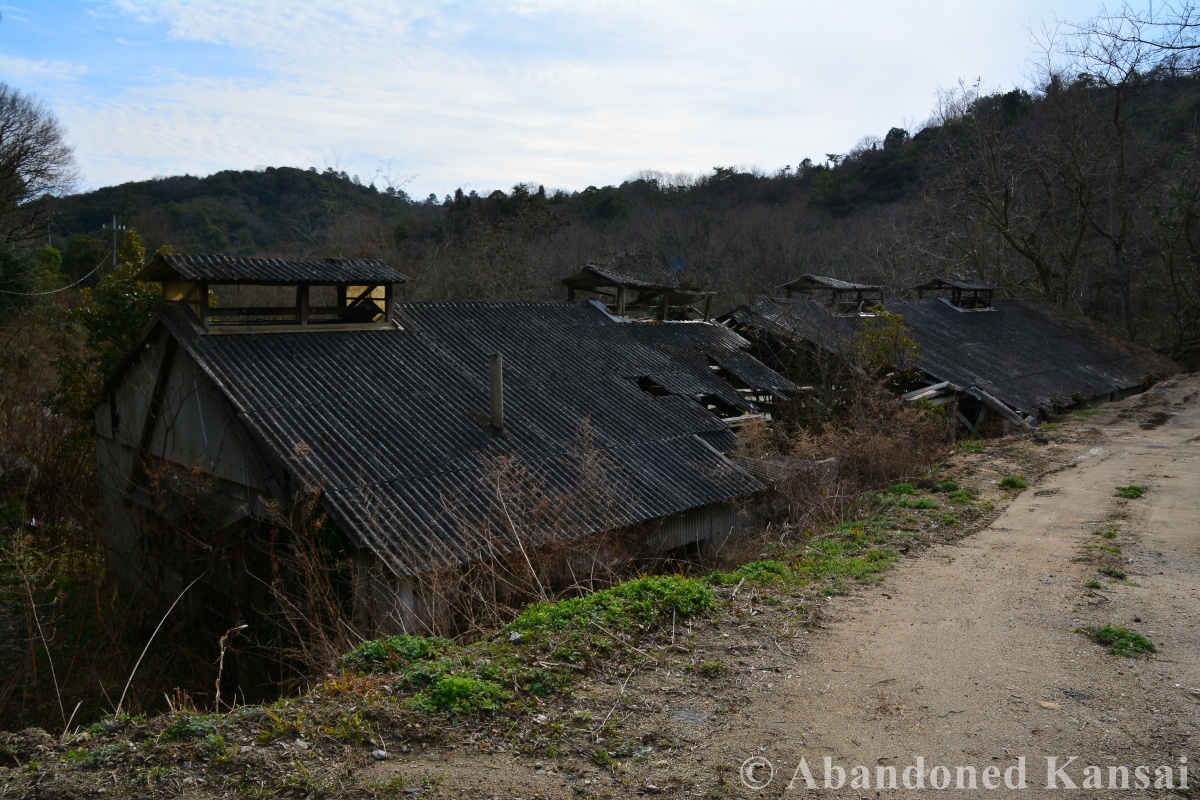
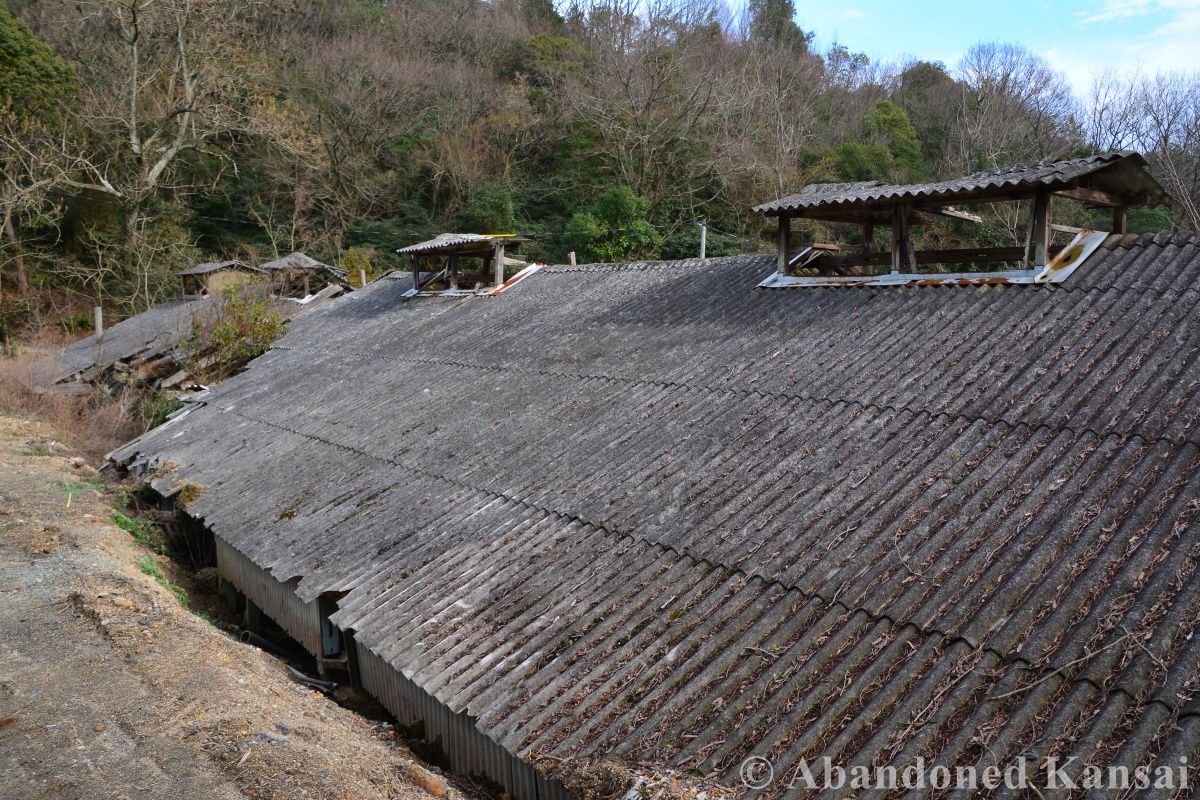
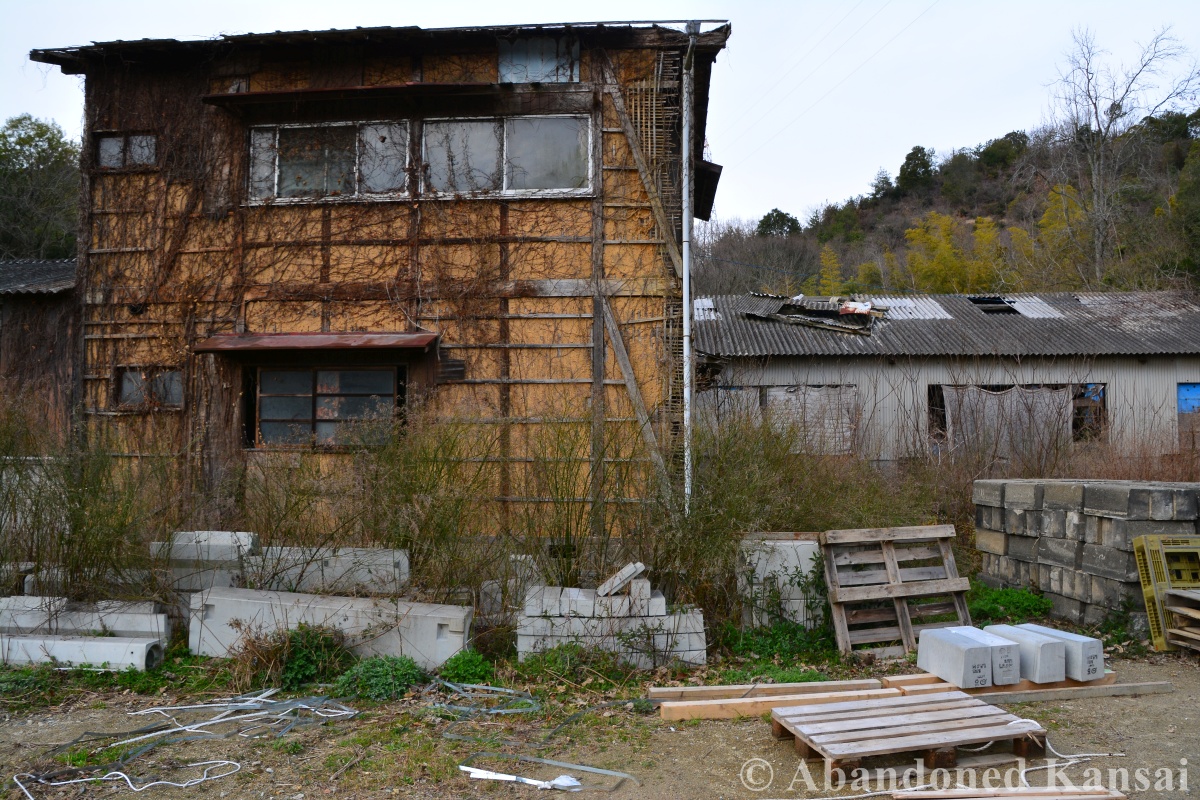
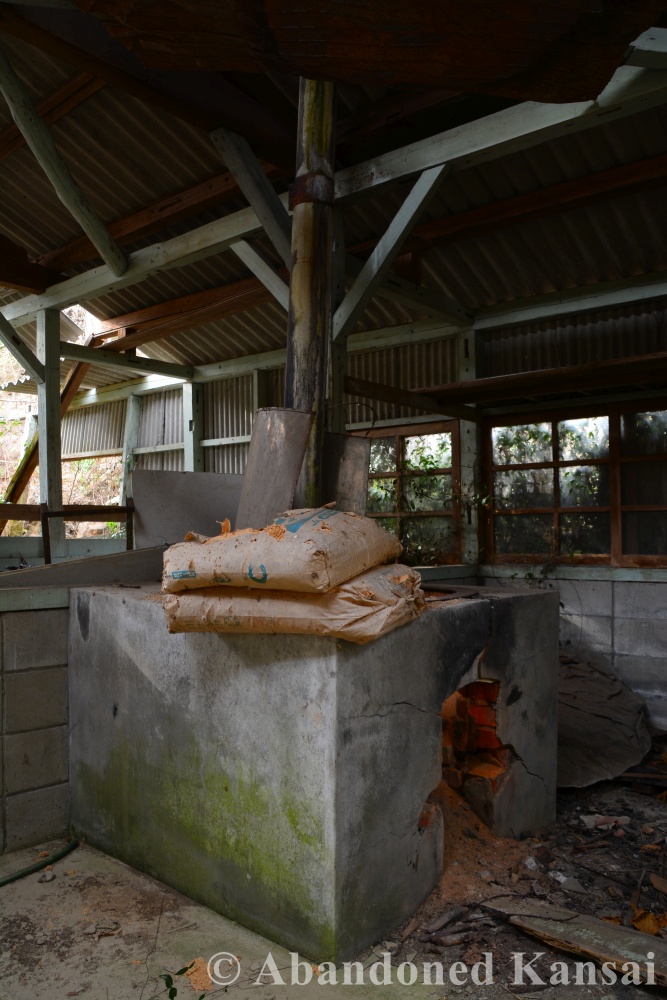
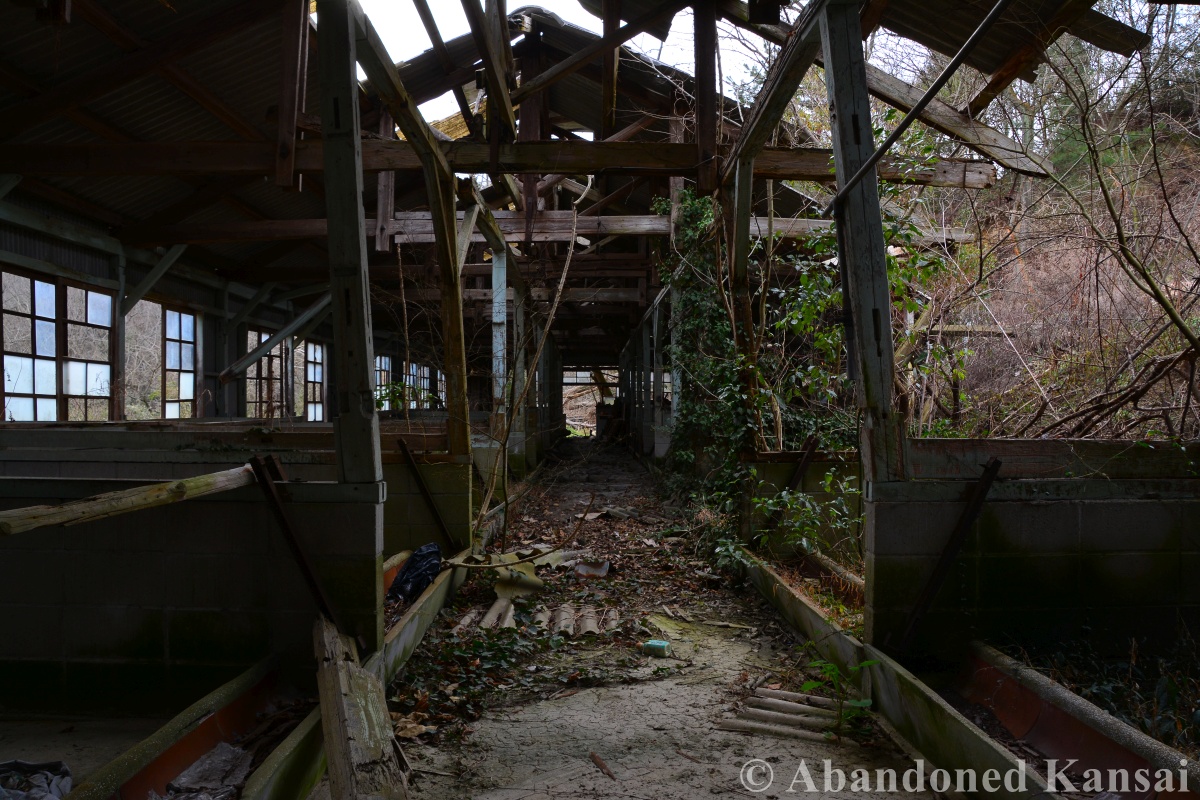
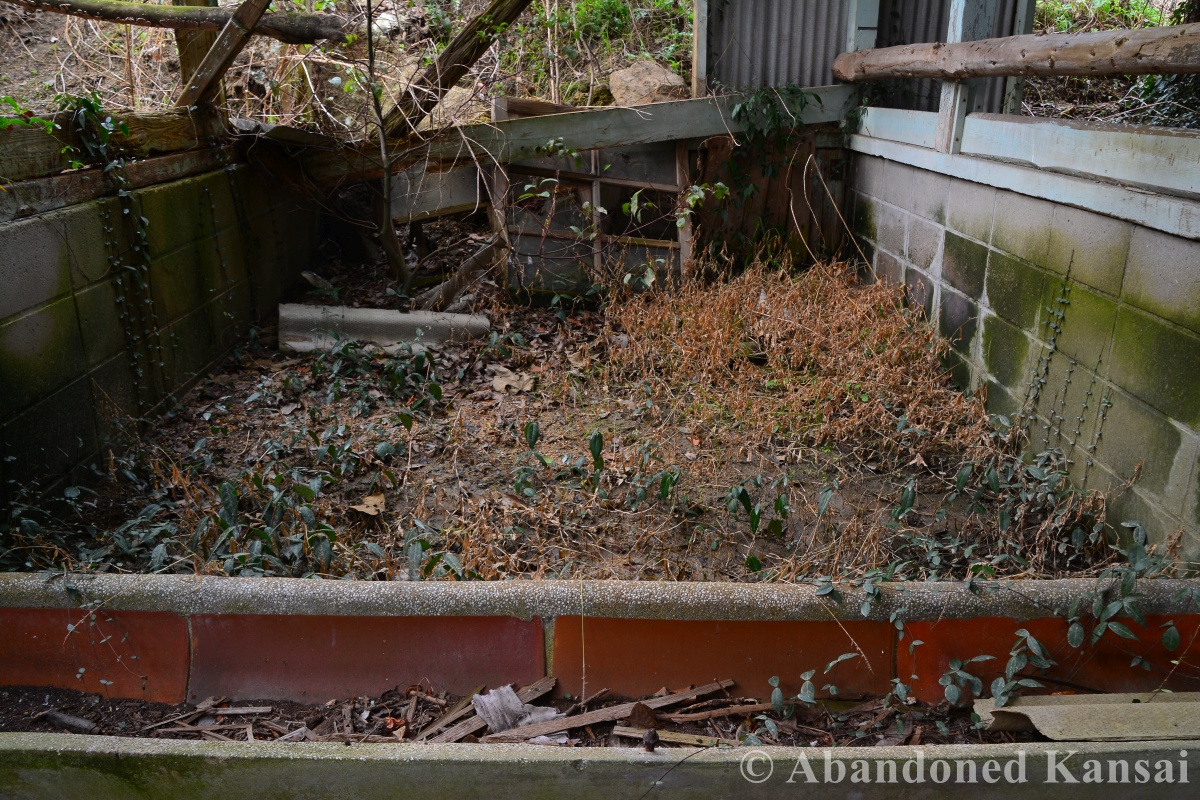
Animal farms reek – even more so than Osaka, which smells pretty bad, especially in summer, especially after a shower of rain. But not as bad as cattle or chicken farms, which is why people live in Osaka and animal farms are banned to the countryside. Not even the regular small town countryside. Remote places halfway up a hill – out of sight, sound and smell of the local yokels who have to work there since the Japanese countryside is dying faster than poultry during an outbreak of the bird flu. I grew up in a pretty agricultural small town in Germany, I have relatives with a farm and restaurant in the Black Forest – despite living in the big bad city for the past 25 years I know what livestock smells like. But it’s nothing in comparison to the chicken farms I passed by in Japan. Holy crap, those things smell like sewage plants. Maybe worse. I guess it depends on the part of the sewage plant. Anyway, what I am trying to say is: Japan has tons of animal farms, you just never see them since they are tucked away in the countryside, far away from the noses of locals and tourists alike. Quite a few of those farms are abandoned – and this is one of them!
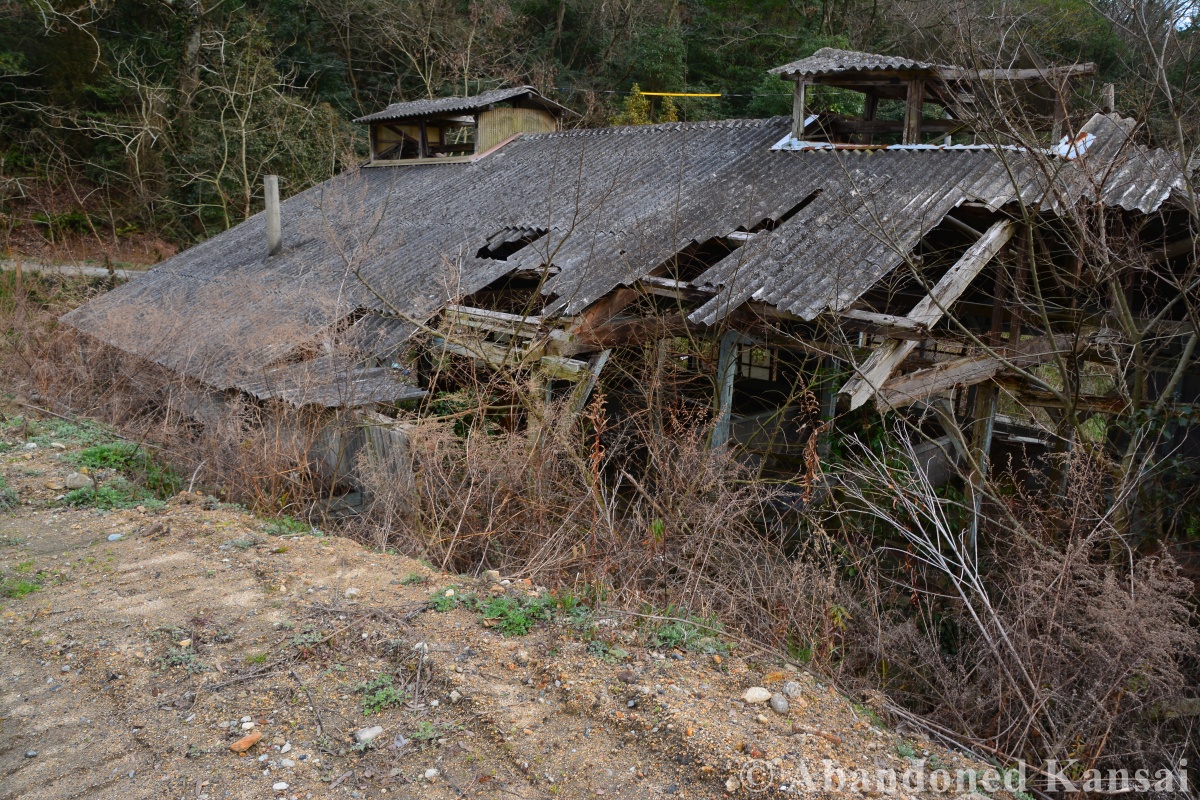
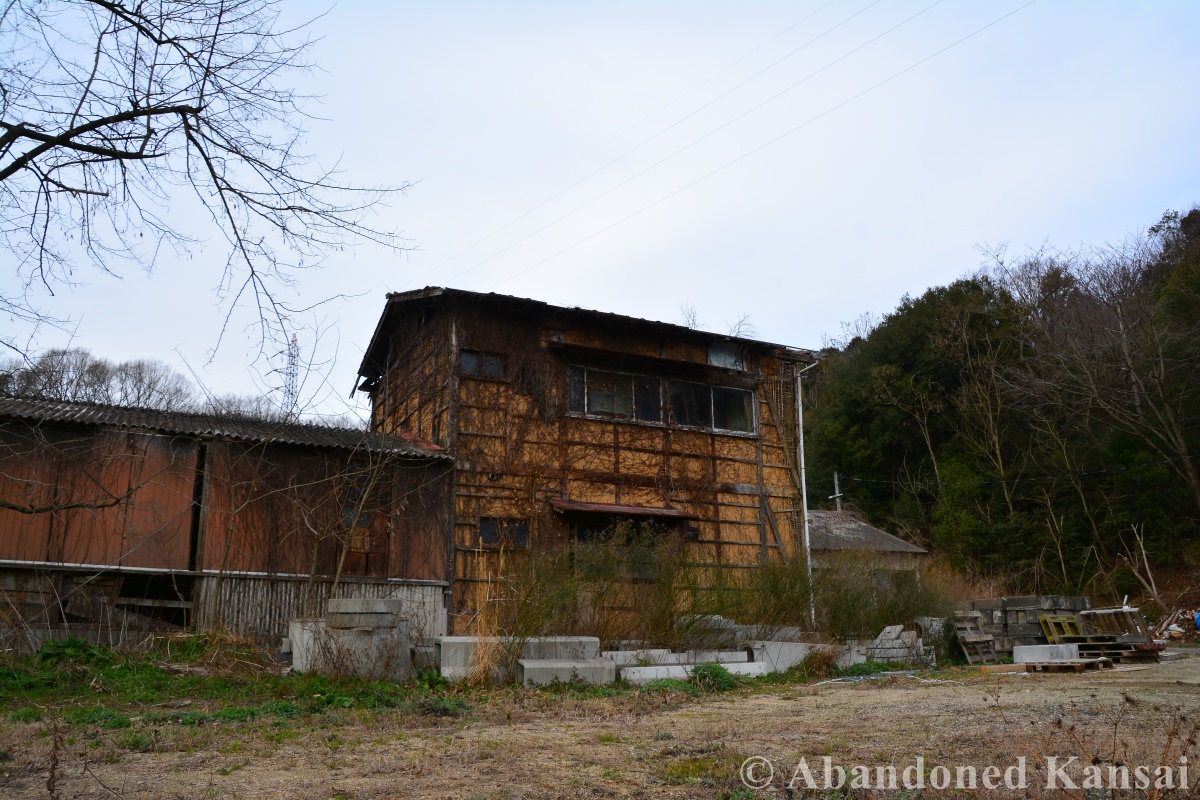
When I found the Pachinko Animal Farm it was nothing more than a rather random smudge on GoogleMaps, a blurry greyish-green blob indicating a couple of buildings in the middle of nowhere on the way to a rather famous abandoned hotel. I was on a no risk exploration day trip with three generations of Americans, age about 7 months to 70 years; obviously none of them were my family, but I’ve been exploring with my parents in Japan before, so I knew what kind of places to select. After a day of nice locations and surprisingly good beach hut pizza, we were about to check out said famous hotel to have a look from the outside when I realized that the Pachinko Animal Farm was basically on the way there, so we made a stop to have a look around. And what can I say? It wasn’t exactly the *Billionaire’s Villa*, but it wasn’t that bad either. Since it was an original find, it was first and foremost exciting, especially for my co-explorers. Okay, maybe not for the 7 months old, but the other ones! (And before some of you turn a lump of coal into a diamond with your butt cheeks: The baby never entered a building all day – no risk, fresh air. It was even fed outside… No child was harmed during any of my explorations ever!)
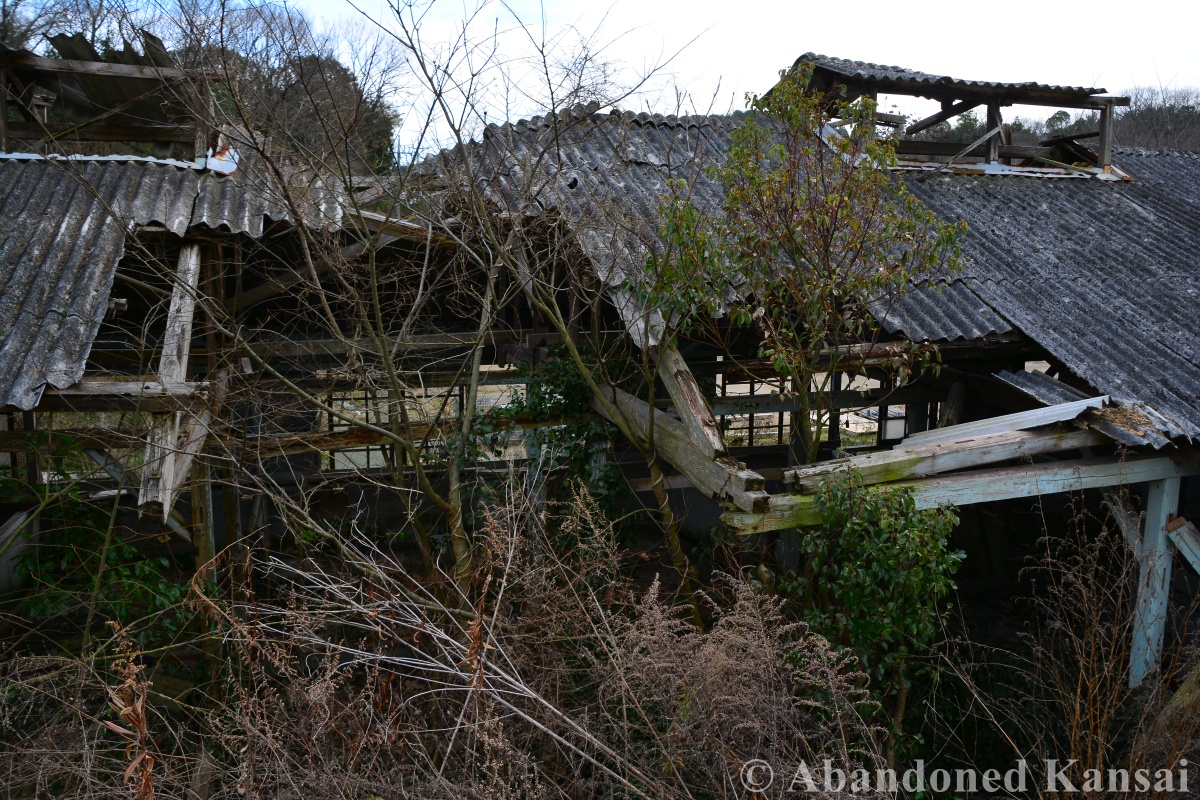
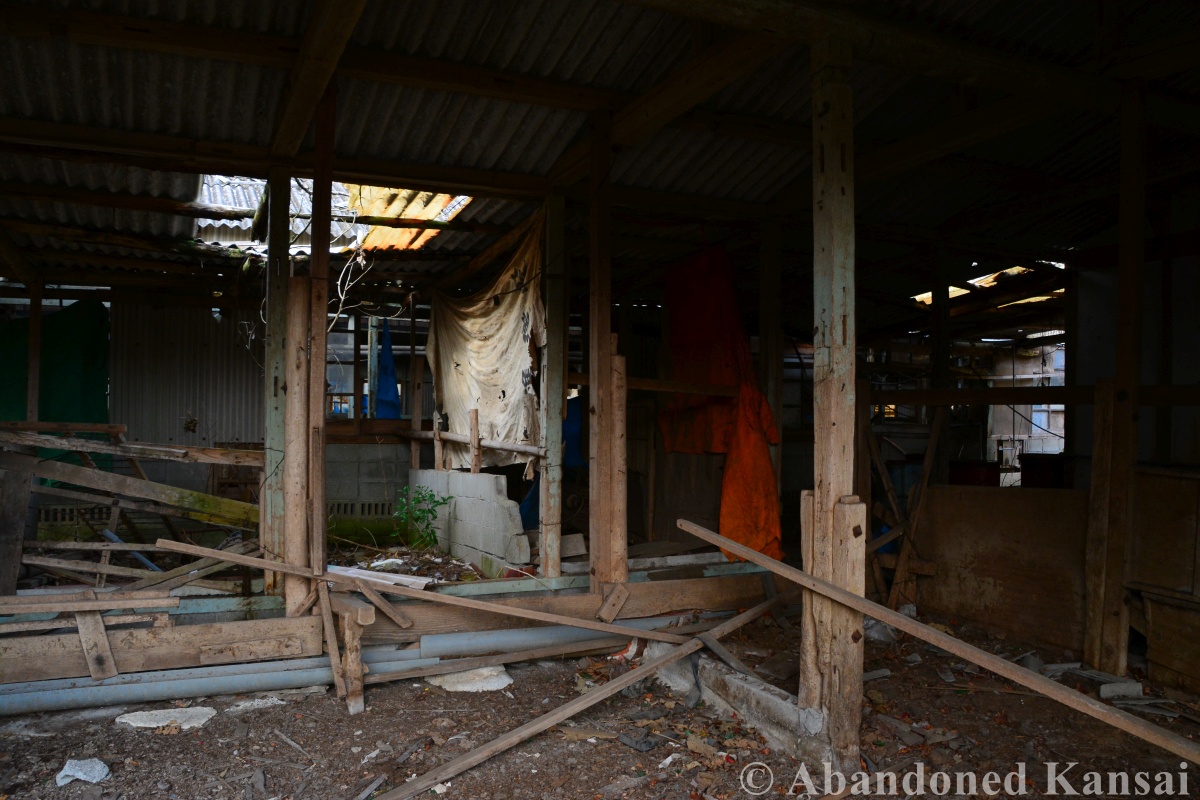
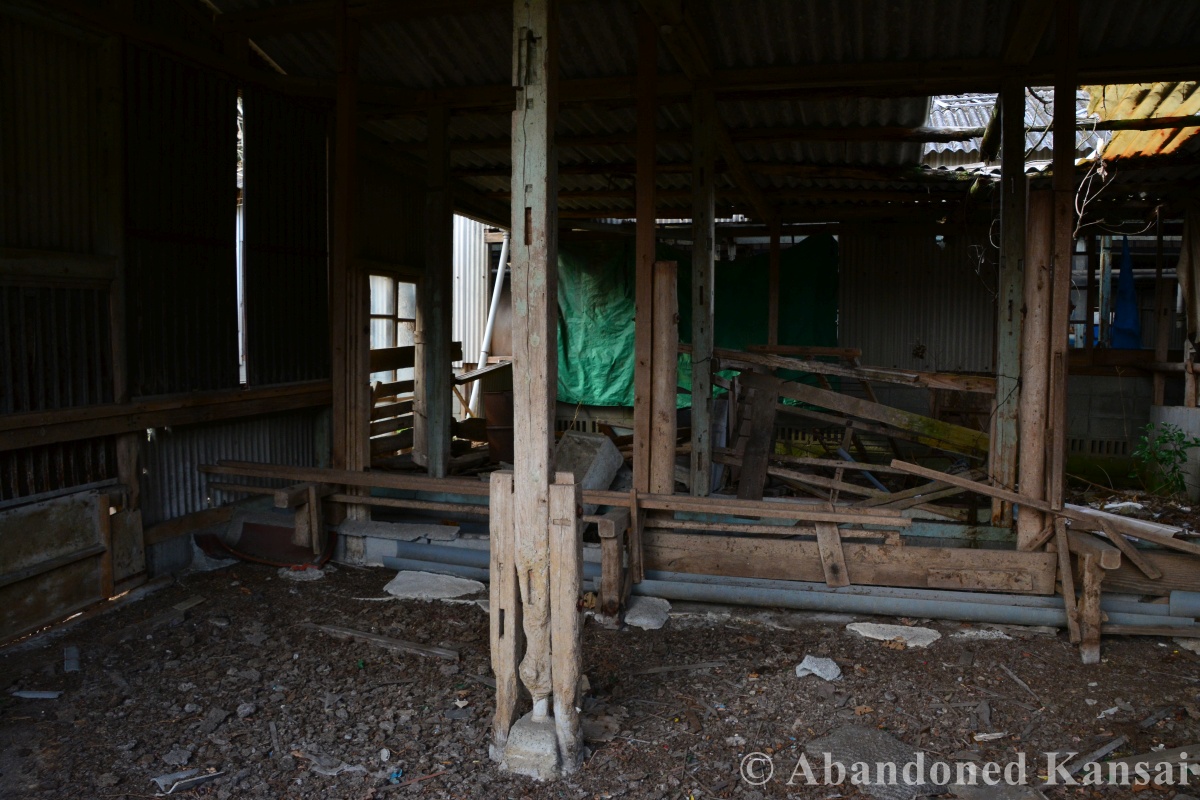
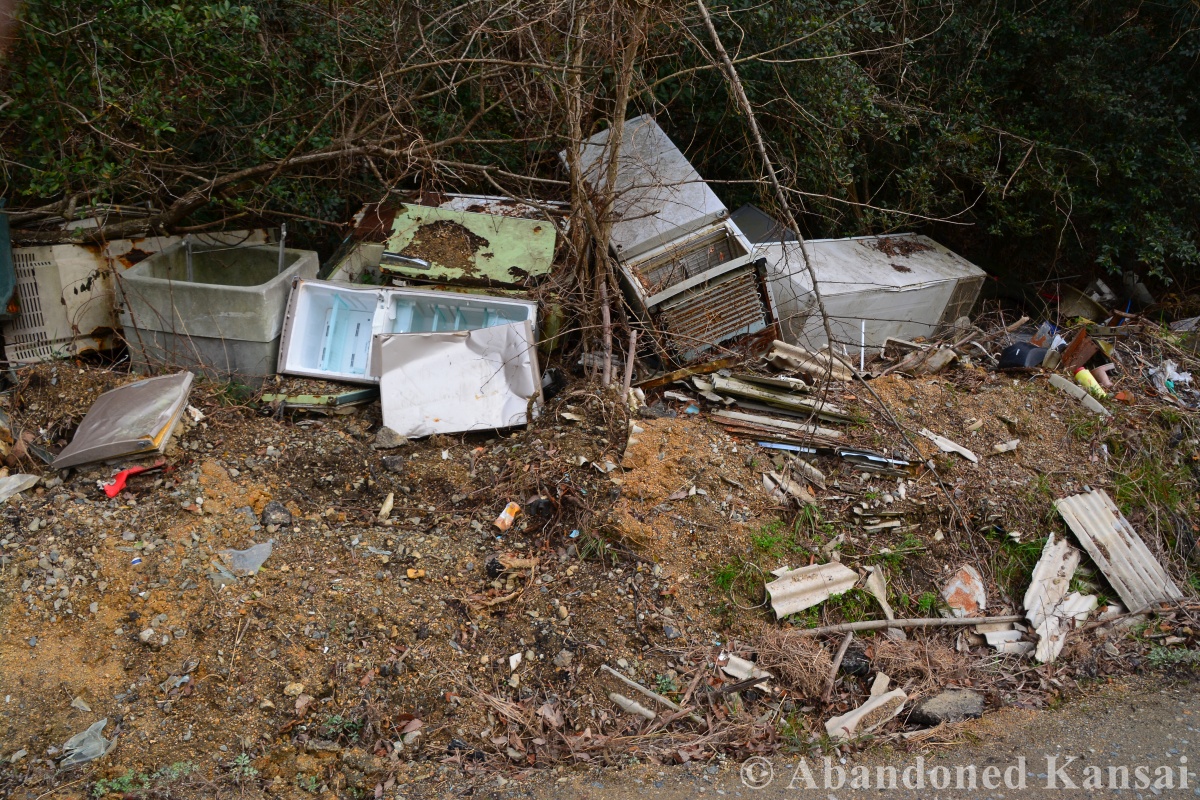
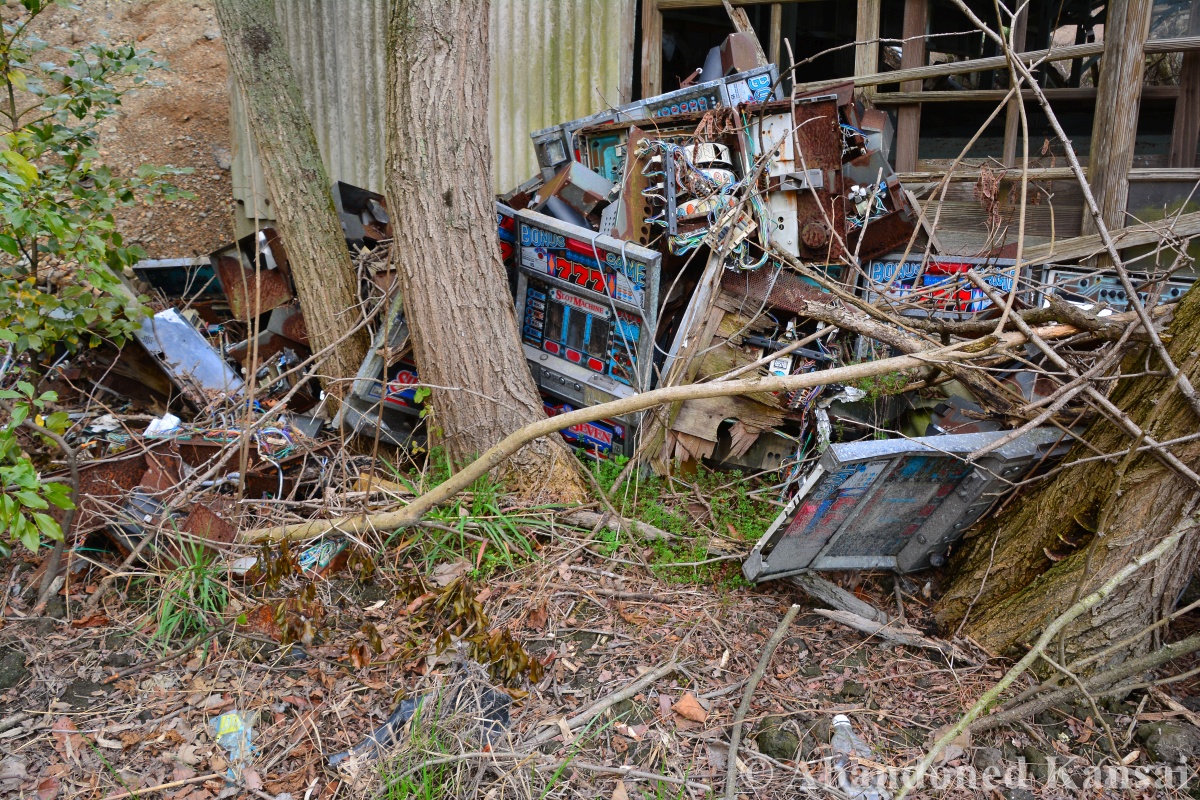
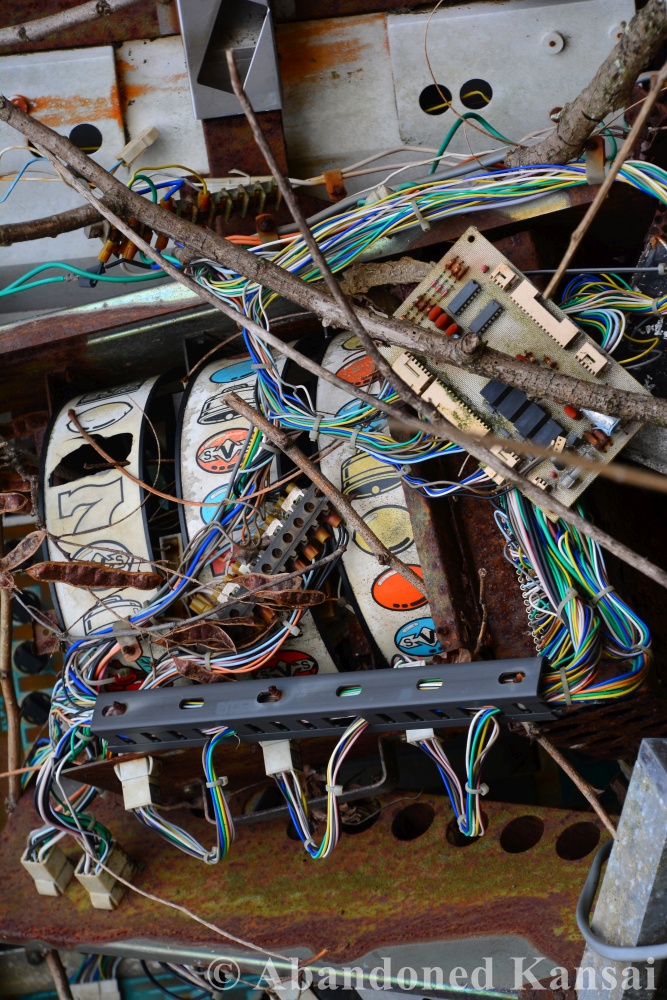
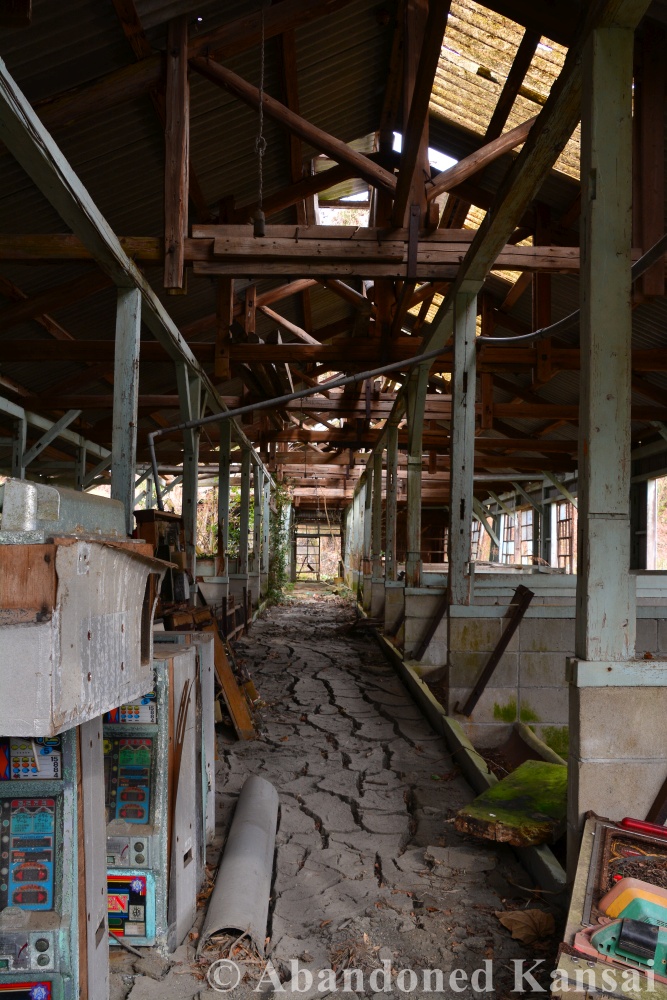
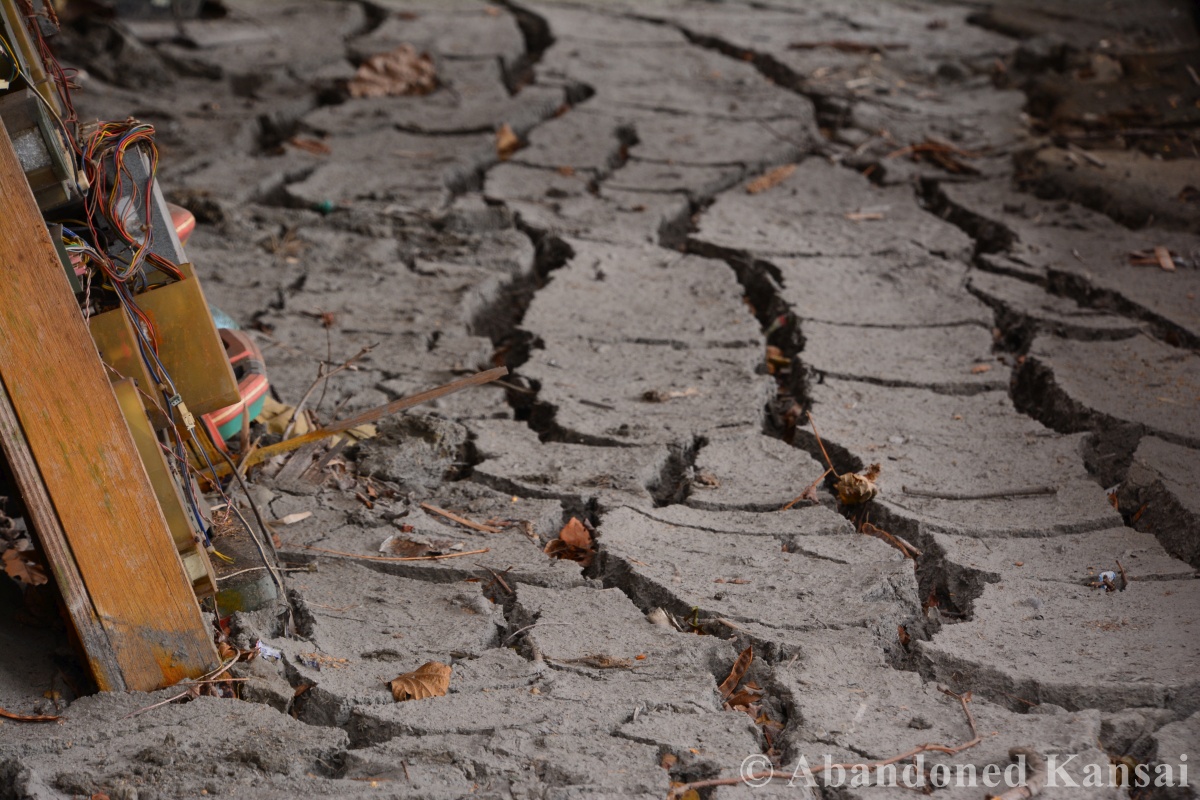
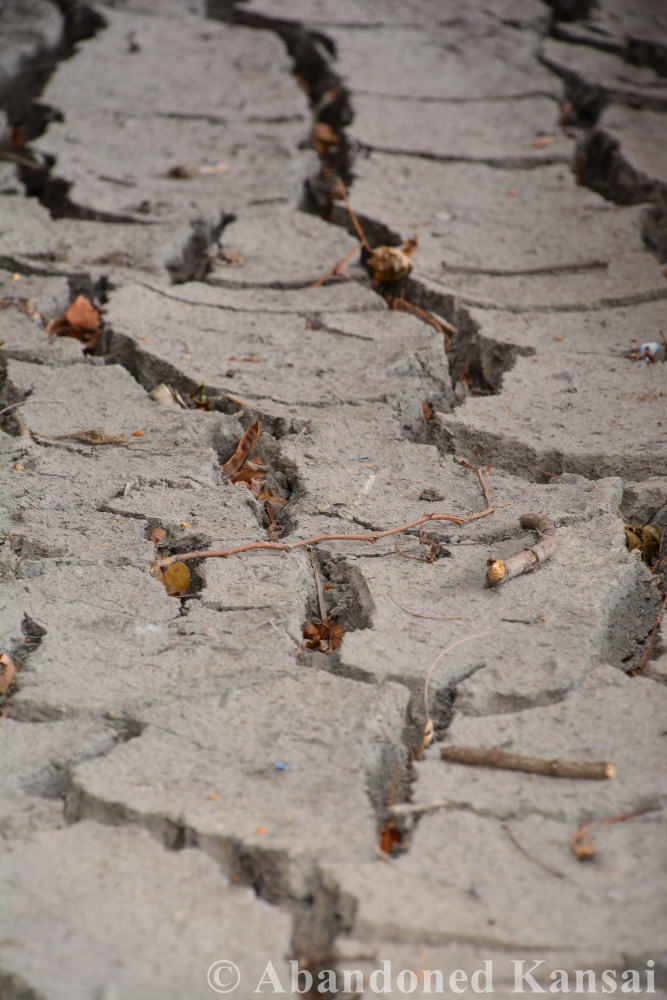
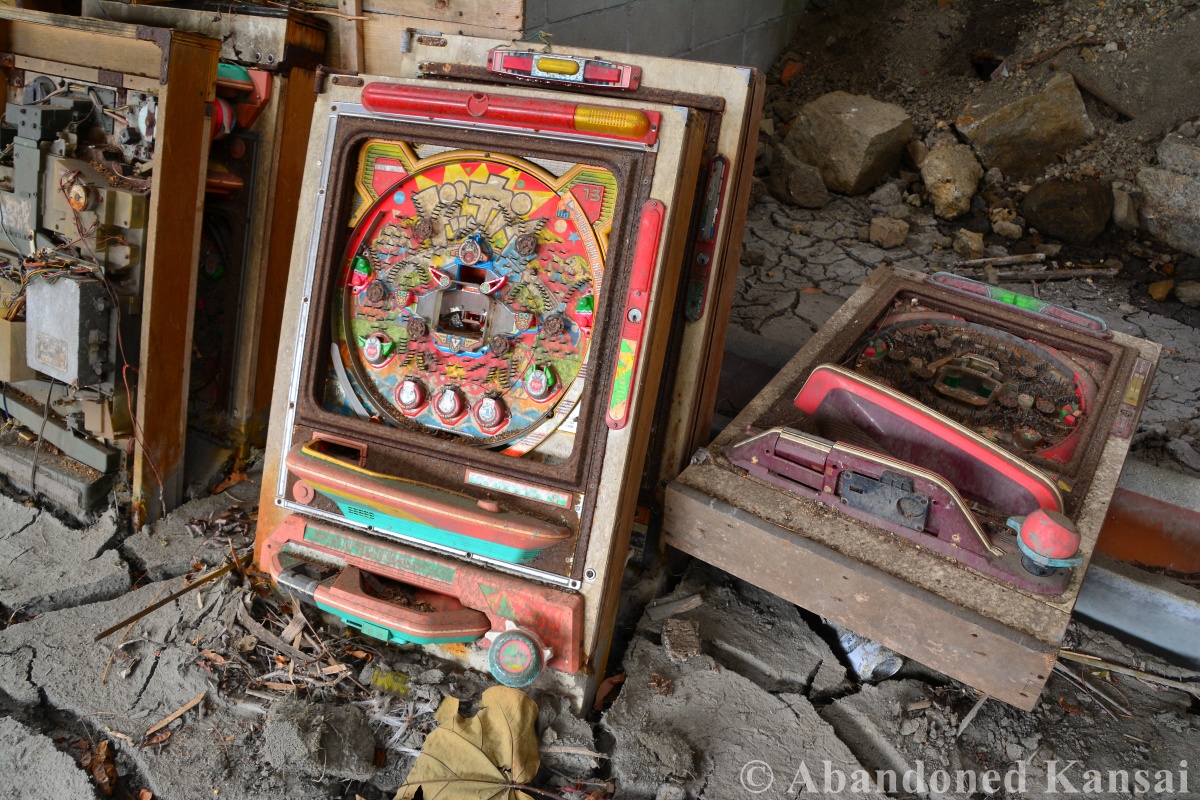
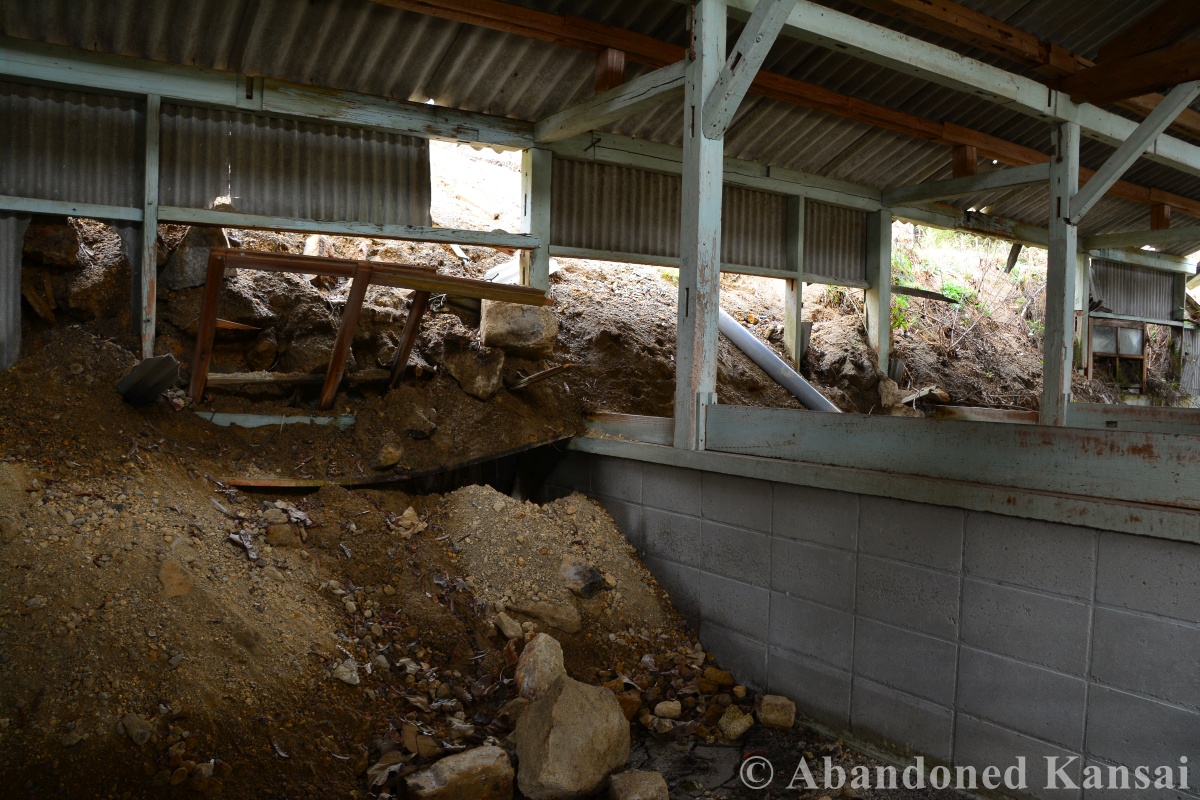
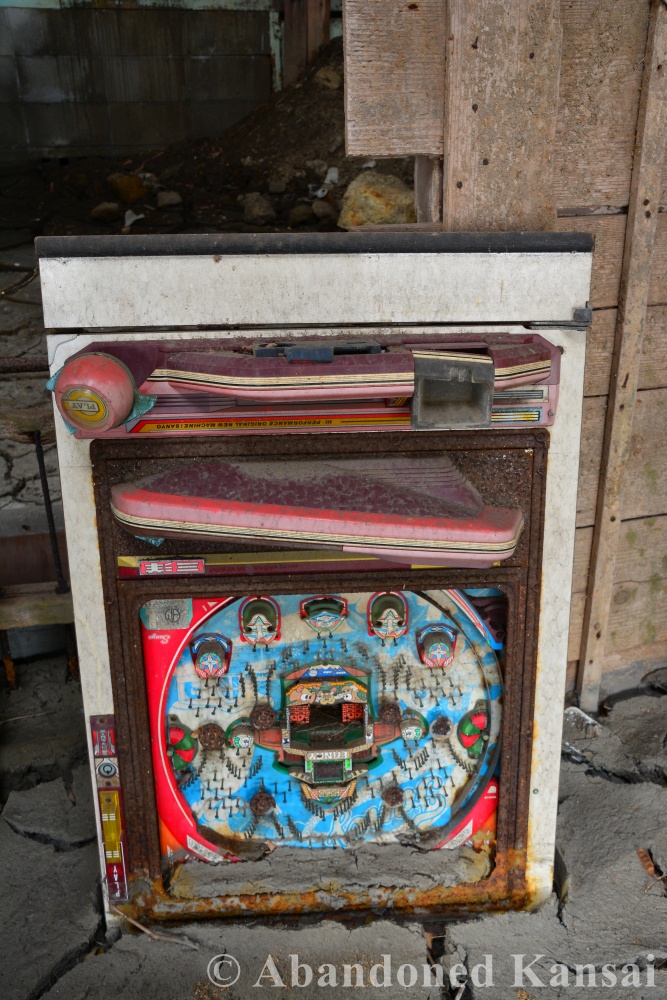
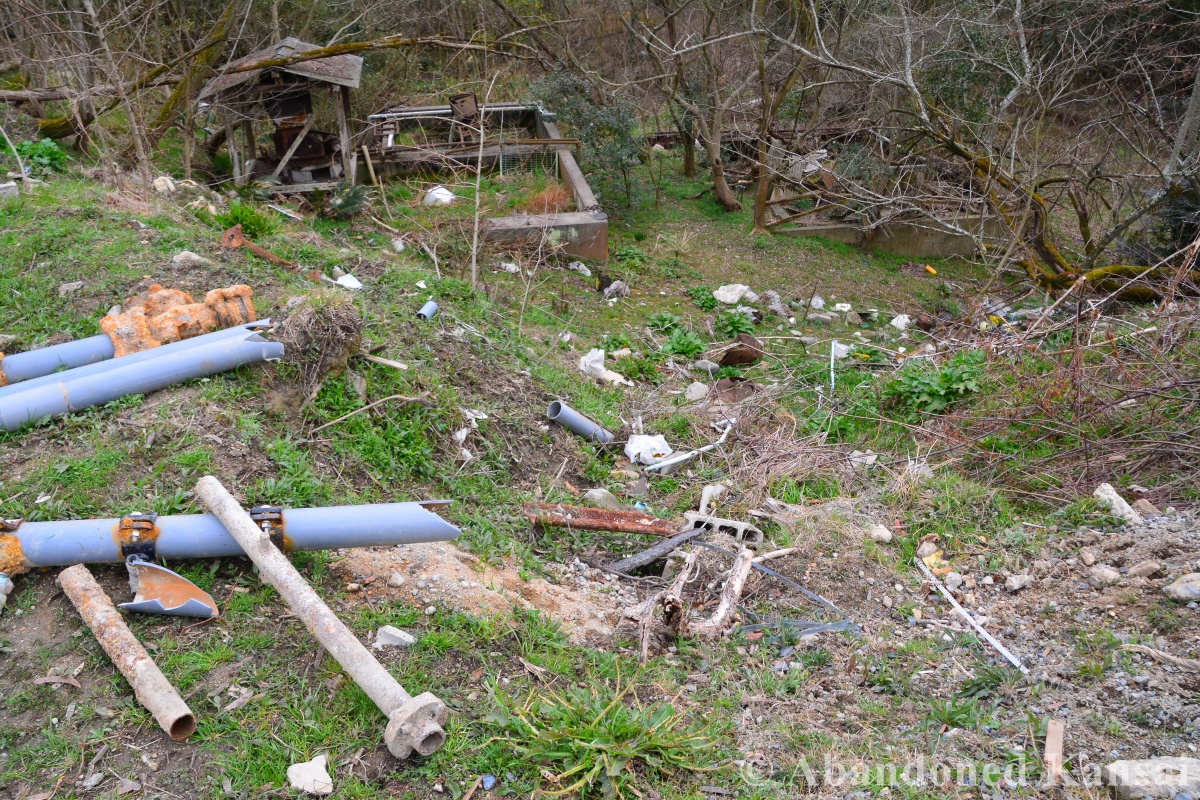
It looked like a mudslide damaged the stables, though it’s hard to say if that happened before or after abandonment. Probably after, given the cracked floors that reminded me of *an abandoned school that I’ve explored years prior*. Also completely unexpected: The dozen or so abandoned pachinko machines, most of them broken. They looked rather old, maybe from the 70s, and were probably just dumped there. I’ve never heard of a combined poultry/pachinko business before… So, yeah, a decent place to explore, nothing spectacular at all, but still better than nothing. Next week though… Boy, oh, boy… Next week’s location will be one of my favorite unpublished places. I’m looking forward to it. I hope you do, too!

(*Like Abandoned Kansai on Facebook* or *follow us on Twitter* if you don’t want to miss the latest articles and exclusive content – and subscribe to the *video channel on Youtube* to receive a message right after a new video is online…)

Read Full Post »
A new video in a long time, just weeks after I said to expect no more. But this one is different…

For most of its existence, Abandoned Kansai featured a video or two with every article, in addition to text and photos. They were pretty much always taken at the end, after I’ve explored the respective location and knew it reasonably well – which was kind of necessary since I didn’t edit them at all. As I mentioned before, I initially took them only for my own reference… and to make use of a Sanyo Xacti I originally intended to be my main camera in Japan, but then I picked up urbex as a hobby and the photo quality was kind of sub-par for that hobby, but the videos were pretty good (for the time), so I switched to Nikon for photos and kept the Xacti for videos. Fast forward something like 10 years and the Sanyo died – at first I was upset since I also lost a days’ worth of walkthroughs, including the amazing *Trump Hotel*, but then I was kinda glad that I had an excuse to not take videos anymore.
Fast forward six or seven years. I had forgotten what a pain in the behind those videos were for me and my co-explorers, so I made the stupid mistake of buying a Insta360 X4 at Yodobashi Camera for an upcoming trip to Hokkaido after being instantly fascinated by the camera’s ability to easily take 360° photos and videos – something I quickly regretted. *Please click here if you missed that story…* Long story short: The experience with Insta360 and Yodosucky Camera was so off-putting that I probably lost interest in video for good.

A few days later I was exploring an original find in the outskirts of a rather remote town in Hokkaido, when I heard some ungodly noise in the distance – as if animals were screaming and somebody was yelling. It really kinda freaked me out, but of course I finishing taking photos. If I would have quit because I was afraid a little bit, I wouldn’t have made it past my first explorations back in 2009. Afterwards I continued up a hill, further away from the town, and entered another abandoned building – and again I heard those bloodcurdling screams, this time a bit closer. I once more finished my exploration, trying to stay calm and then… I walked further up the hill, towards the noise. As you do when you are by yourself on a rainy day exploring what are supposed to be abandoned buildings in the outskirts of a rundown town in Hokkaido. What could possibly go wrong?
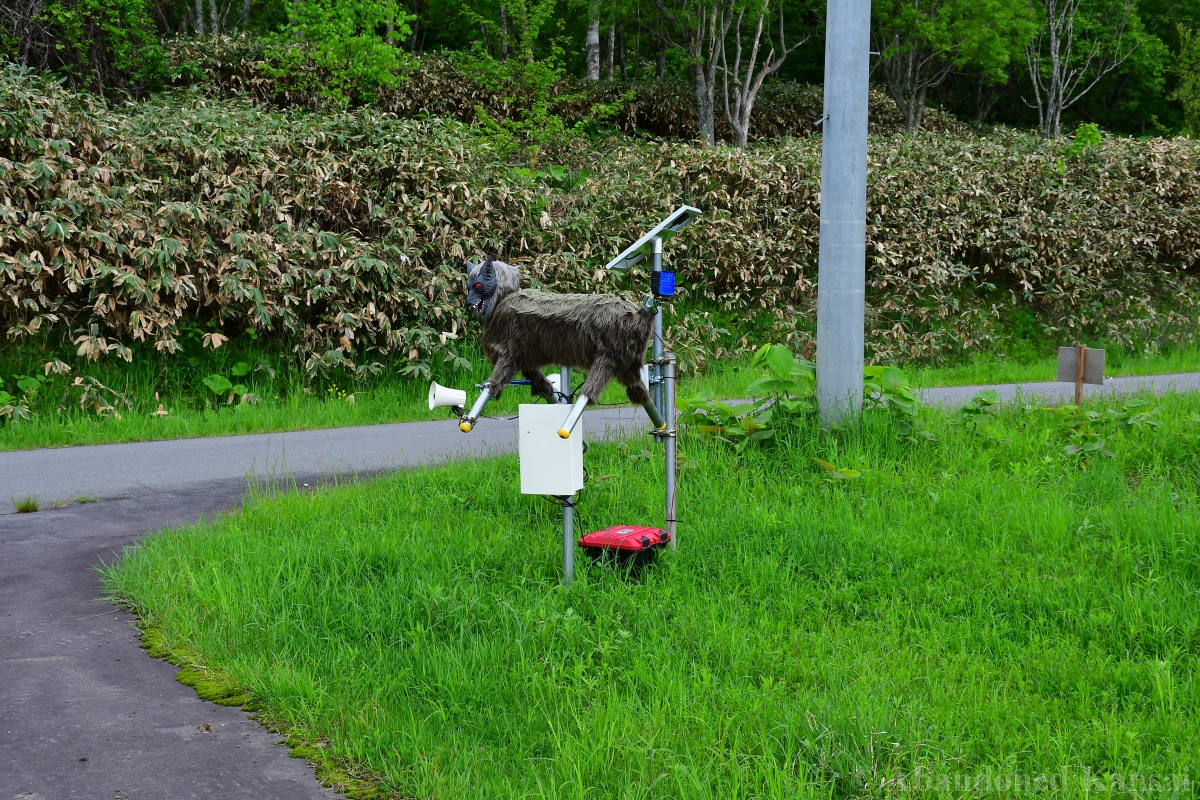
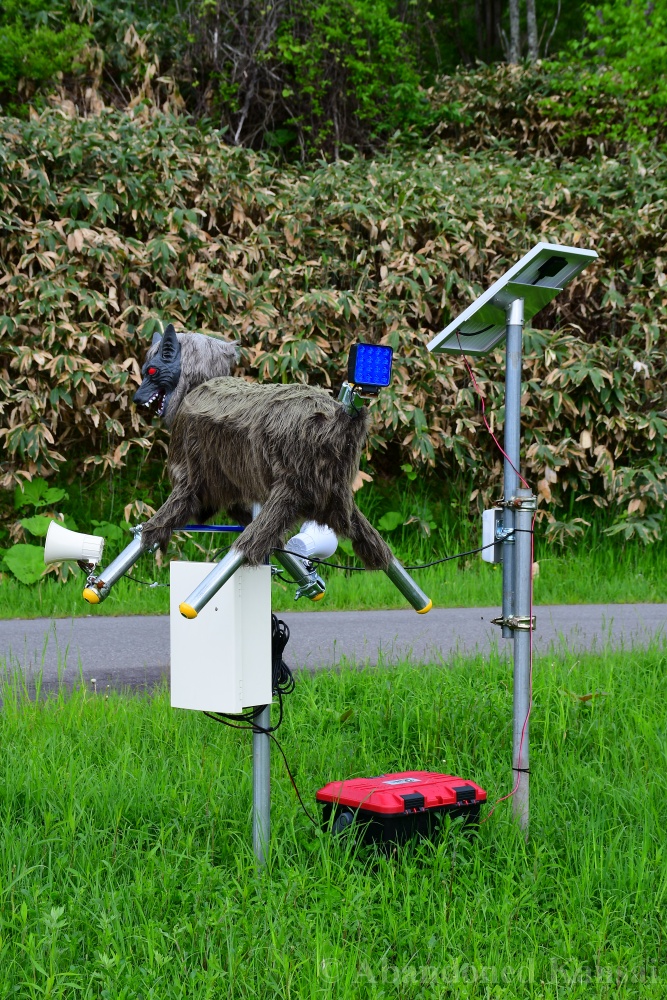
Well, I walked around a corner of a road, when all of a sudden I saw some fur on a metal construction – and seconds later the screams again! My first thought was: a dog on some torture device! Then some kind of head was turning towards me… and I realized that it was a wolf Halloween mask with flickering eyes. Like something from a haunted house. Now, you have to know that I don’t like Halloween or horror… or violence in general; except for Dead Rising – Frank West covered wars, you know! So this thing freaked me out for the third time, but this time really for real! What the heck was this contraption?!
Well, the sound obviously was pre-recorded and came from a speaker, so at least I wouldn’t have to deal with some animal torturing hillbilly. When the most messed up animatronics I have ever seen finally stopped after 20 or 30 seconds I carefully had a closer look. Upon inspection the setup apparently consisted of a solar panel connected to a battery, connected to the screaming furry fella, with a control unit and two speakers underneath. I was intrigued, but nothing happened for a while…
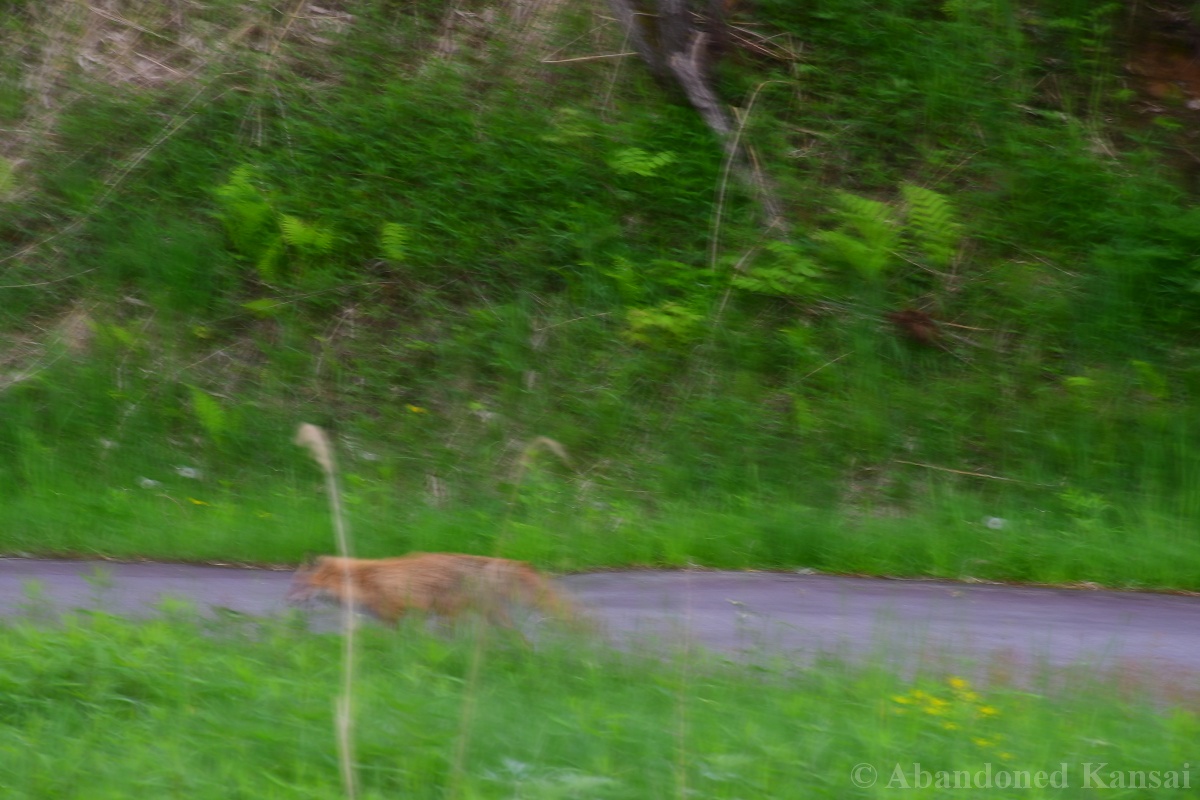
I quickly set up my photo camera, which I hardly ever use for recording videos, but this was too strange to not record. Initially I came from behind and didn’t know what to expect, but for the pictures and videos I decided to use an angle that shows a bit more. Nothing happened for another 15 minutes. I got closer from the road at the left side, trying to trigger the device. Still nothing. Then a friggin fox walked by on the main road, right in front of it! Still nothing. My camera was mounted on a tripod, set to video – and everything happened super fast, so I only got blurry photos of the second furry fella. Fortunately the fox couldn’t care less about me and I was spared an attack as well as a rabies shot. At this point I was running out of time, and when you have to catch one of four buses per day, you make sure to meet their schedule! So I walked a bit down the “main” road, in front of the damn contraption – and finally it triggered! Repeatedly. With different sound samples. So I adjusted the camera in a way that I could trigger the thing without being seen and… well, enjoy! It might not be that scary on video, but in reality it got me pretty good. Both from a distance as well as approaching it for the first time from behind.
I still don’t know what the Horror Wolf was for though. It was located at a T crossing halfway up a hill amidst abandoned / rundown companies in the outskirts of a rather remote town. The next residential buildings were about half a kilometer away, the town center with the bus stops rather 2 kilometers. The purpose most likely was to scare away bears, but I don’t know for sure.

And now please enjoy the first videos I have published in years… and probably the last ones ever. That stuff in a 360° video would have been so cool, but *the unholy alliance of Insta360 and Yodobashi Camera* had to mess up… 😦

(*Like Abandoned Kansai on Facebook* or *follow us on Twitter* if you don’t want to miss the latest articles and exclusive content – and subscribe to the *video channel on Youtube* to receive a message right after a new video is online…)

Read Full Post »
I’ve been urbexing for almost 15 years. During that time I’ve never written any articles about equipment, despite being very happy with three different Nikon DSLRs, two Manfrotto tripods, and a Sanyo video camera – which broke in 2019 after almost 15 years of recording countless hours at hundreds of locations as well as places like Chernobyl and North Korea. Videos I always considered a bonus anyway… and I’m still having a hard time thinking of myself as a photographer, given that I have no formal education in that field and only do it as a hobby. A really time-consuming hobby, but nevertheless just a hobby. I also don’t have a background in technology, so what’s the point of reviewing camera equipment when I just have an opinion based on learning by doing? Well, that doesn’t keep countless “influencers” and Youtubers from churning out incompetent nonsense, but I wouldn’t want to be found dead with either label on me! And like my favorite professor at university once said in regards to papers we had to hand in: “Don’t claim anything you can’t proof!”

Fortunately there is no need to be technical or scientific about this Insta360 X4 article, because unfortunately we never got that far…
Like I said, I always considered video walkthroughs of the locations I explore a bonus. I started them pretty much right away, but at first I didn’t even publish them, because I only took them for myself. And even when I published them, I didn’t edit them. No cuts, no voice overs. Just me walking around breathing heavily into the silence. That all came to a sudden halt when my Sanyo stopped working after exploring the abandoned *Trump Hotel*, also wiping out the recordings of the whole day. At that point I was tired of doing the videos anyway – and my co-explorers were increasingly annoyed, because I added 10 to 30 minutes at the end of every exploration for the walkthrough. So I stopped doing them.
For the past 18 months I’ve been exploring solo again (don’t ask, it’s complicated and often quite frustrating, to be honest), but a few weeks ago a colleague of mine showed me an older model Insta360 video camera that a visiting cousin from the States forgot at his place in Japan. I was fascinated by the easy to use 360 photos and videos, so I did some research and decided to get one. I’ve read reviews, I’ve read product pages – I did my best to make an informed decision, because at first I considered buying the X2 or X3 as older models often are cheaper with only slightly fewer / worse features. The X2 was out of the race when I read in a review that it required a smartphone to be activated – something I didn’t read anywhere about the X3 and X4. I guess because it’s an idea that is so stupid that it probably was a one-time mistake by Insta360, facing so much backlash that they removed the requirement from following models. The price difference between the X3 and X4 wasn’t very big and since the latter was only four weeks old at the time, the price on Amazon and in brick and mortar stores was the same, so I decided to get it at my local Yodobashi Camera (street block sized electronics stores with hundreds of employees each, in case you are not familiar with the chain), where I’ve been a customer for almost 18 years – ever since I moved to Japan.
BIG MISTAKE!

Yodobashi Camera was extremely stingy, giving only 1% points on the video camera, despite a promotional campaign of giving 13% points for purchases over amount X – except for (small print)… But when you shell out 80k Yen on a new video camera you are looking forward to use, store points are the last thing you worry about anyway. Fortunately I still had some of those points, which I used to get a seriously overpriced MicroSD card, because without it the video camera would be useless and I wanted to try it out on the weekend before an upcoming urbex trip. 83500 Yen poorer, but with a big smile on my face I left Yodobashi Camera on a Friday evening after an otherwise pretty horrible week.

Saturday was supposed to be a great day, though it started with a rude awakening / realization…
After sleeping in and having a delicious breakfast, I enjoyed a nice unboxing. The first slight disappointment was when I realized that the included battery was dead. Well, not dead dead, but completely empty. Whatever, an hour or two wouldn’t make a difference. It would not dent my great mood for sure. That came a few hours later when the battery was fully charged. I booted the small brick for the first time, its screen came to life, asking me to choose a language – and then the screen showed what the camera was seeing… for about a second or so. Then some text popped up and my heart sank. You gotta be kidding me! What I was looking at was a screen telling me to download an app by Insta360 to a smartphone, iOS or Android, to unlock the video camera. What. The. Heck? I literally felt it in my fingers how my blood-pressure exploded, because unlike pretty much every person on the planet above the age of 6 years I don’t own a smartphone. Never have. In the late 90s I had a black and white Nokia for work (yes, I’m not the youngest anymore, though I started working full-time in my early 20s). When I moved to Japan I had a flip phone or two, but for the past 15 years or so I didn’t have any mobile phone at all, smart or not, because I don’t like them as they turn way too many people into dumb zombies. So here I had a brand-new, quite expensive video camera… that forced me to make it usable by using another device with cameras? Who comes up with stupid ideas like that?!
Certainly not Nikon! Their D7500 DSLR I bought just weeks prior worked with a partly charged battery and regular SD cards straight out of the box 5 minutes after purchase – without any charging or unlocking BS!
So I started to do some research… and didn’t find much. Like I said, I couldn’t care less about smartphones, apps and all that stuff, so I tried to find a solution to unlock the darn X4 via PC or MicroSD card. Of course I couldn’t find anything about that either, so I contacted Insta360 directly – who apparently didn’t read my message and instead sent me a standard reply. So I got back to them, apologized for not describing my problem properly (I’ve been in Japan too long…), and this time got an answer that at least implied that they understood the situation I was in – without being able to help, because though it seems to be nowhere stated on the box, the promo material or even on the X4 website (at least back in mid / late May, maybe they changed it by now)… you really need a smartphone and the Insta360 app to use a newly bought X4 video camera, that seems to work perfectly fine, but is made not usable on purpose by the manufacturer. Which absolutely blows my mind!
How is that even legal?
How can a company force you to use a completely unrelated piece of expensive technology that actually partly does the job of the product you just bought, to make your purchase usable? Without mentioning that essential detail with big warnings before purchase! And in addition, forces you to use an app, which does who knows what in the background without one knowing?
What’s next? You need an electric bike with WiFi to unlock your newly bought car? And if you don’t… sucks to be you, it’s completely useless!

Yodobashi Camera – (The Lack Of) Customer Service In Japan!
After some back and forth it was Monday and I came to the conclusion that I won’t be able to use the Insta360 X4, because it really needs a smartphone to unlock, which wasn’t properly communicated. So after work I went back to Yodobashi Camera, my go-to electronics store for the past almost 18 years. Never had a problem with them, because all the products I bought worked as intended right out of the box. So I went back to the cashier counter where I bought the video camera… and already ran into the first minor bump in the road – apparently I hadn’t paid for it in the camera department, but a neighboring one, which wasn’t a problem on Friday evening, but very well on Monday evening. So I went 20 meters over to the camera department and told them about my unfortunate situation: That I had bought this video camera three days prior, but couldn’t use it, because it doesn’t work without a smartphone, which wasn’t properly communicated by Insta360 or Yodobashi Camera. But I was very careful with everything, I didn’t even remove the protective film from either of the lenses. Some air through the teeth sucking, some going back behind the counter to talk to a superior and then something like the following conversation – it’s in quotation marks, but they are not really quotes, you know… just something like that, from memory:
“I can’t sell this anymore, you opened the box. You can’t return it.”
“But I can’t use the video camera.”
“I can’t sell this anymore, you opened the box. You can’t return it.”
“I don’t have a smartphone. The X4 is useless to me.”
“I can’t sell this anymore, you opened the box. You can’t return it.”
“I did proper research and I only found out about this after I opened the box and tried to use the X4.”
“I can’t sell this anymore, you opened the box. You can’t return it.”
“I bought a D7500 last month, it worked out of the box…”
“I can’t sell this anymore, you opened the box. You can’t return it.”
“Then take it back and ask Insta360 to exchange the X4 – you have dozens of them here, you probably have to return one once in a while anyway.”
“I can’t sell this anymore, you opened the box. You can’t return it.”
“Are you serious? I’ve been a customer here for almost 18 years, spent millions at your store and other ones in the building that has your name. Never had a problem – and the first time I have, you are stonewalling me?”
“I can’t sell this anymore, you opened the box. You can’t return it.”
“Really?”
“I can’t sell this anymore, you opened the box. You can’t return it.”

At this point I gave up and exchanged a few more e-mails with Insta360 (“You should try to return the X4 where you bought it!” No kidding…), but their responses quickly became as useless and repetitive as the one of the guy at Yodobashi Camera – who is just a small cog in a big machine, so I don’t blame him; he’s punished enough with the lighting in the store and the uniform he has to wear all day.
So here we are, after me falling for the usual misconception about (customer) service in Japan, because I rarely ever had a real problem anywhere. It’s great as long as everything is within procedures – if somebody has planned for it, it most likely will go smoothly. Service is great. When service becomes customer service though, i.e. an individual customer needs help that requires improvisation outside of the planned service… you’re basically on your own. The only thing flexible in Japan is bamboo.

Nevertheless I still have moments when I wonder: AITAH?
I’m a huge believer in personal responsibility. If I make a mistake, I stand by it. I find behavior like ordering 20 items of clothes in different sizes and colors with the intention of sending 18 of them back despicable. In fact I’ve never sent anything back that I’ve ordered online, except for two USB-HDDs – and only because they didn’t work. I don’t do fast fashion, I don’t buy garbage from questionable sites like Shein oder Temu, I don’t replace electronics unless they are broken. (RIP, Nikon D7100!) I did due diligence before buying the Insta360 X4 and to this day everything in that (opened…) box is in mint condition. If I would have known about the smartphone requirement, I wouldn’t have bought the X4. It’s the reason why I didn’t buy the X2.
This is actually only the second time that I tell this story to anybody, because part of me is a bit ashamed that this series of unfortunate events happened – despite all the research before buying. But spending more than 80k on a useless brick of tech isn’t exactly something to be proud of. I don’t regret much in my life, but buying the Insta360 X4 I regret. And buying it at Yodobashi Camera is something I regret, too. Maybe Amazon would have been more accommodating with returns…
But I guess it is what it is – only money in the end. And no videos for Abandoned Kansai in the future. Heck, even if I would get the currently useless X4 to work, I would always be reminded of this story. Screw video cameras! Never was a fan, now I dislike them almost as much as smartphones. Which kind of closes the circle. But I’ll make sure to never ever even consider buying anything from Insta360 again – I still don’t understand how it’s even legal that they can do this. What’s next to unlock their cameras? Having to send them a voice message, swearing loyalty to Winnie the Xi(thead)? Apparently they can do anything without people questioning it…
I went back to Yodobashi Camera once more though, two days ago. I spent the remaining shop points I had on presents for my nephews without having to pay a single sen – my goal was it to hit +/- 20 points/Yen, but going to exactly 0 was priceless – and so I left the Yodobashi Camera building one last time with a big smile on my face. Upon arriving back home I cut up my loyalty card after almost 18 years. It probably doesn’t mean much to a large store chain like that. But it meant a lot to me!

Thank you for reading till the end and… What has your worst experience with Japanese (customer) service been? Write it in the comments!

(*Like Abandoned Kansai on Facebook* or *follow us on Twitter* if you don’t want to miss the latest articles and exclusive content – and subscribe to the *video channel on Youtube* to receive a message right after a new video is online…)

Read Full Post »
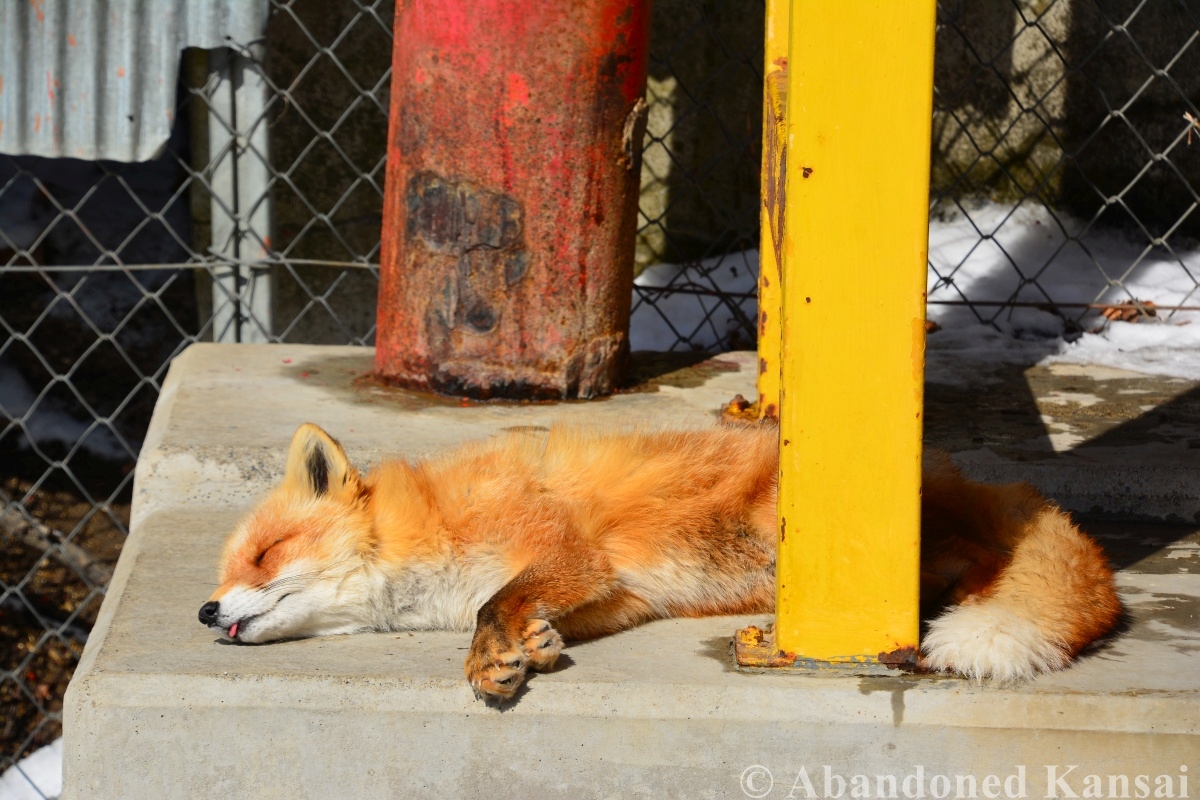
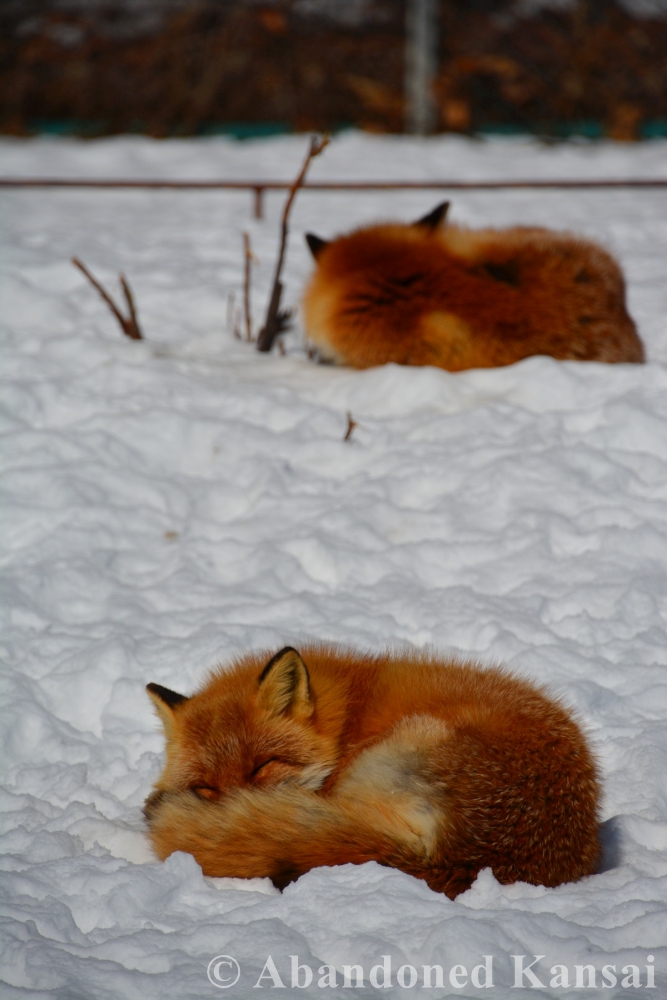
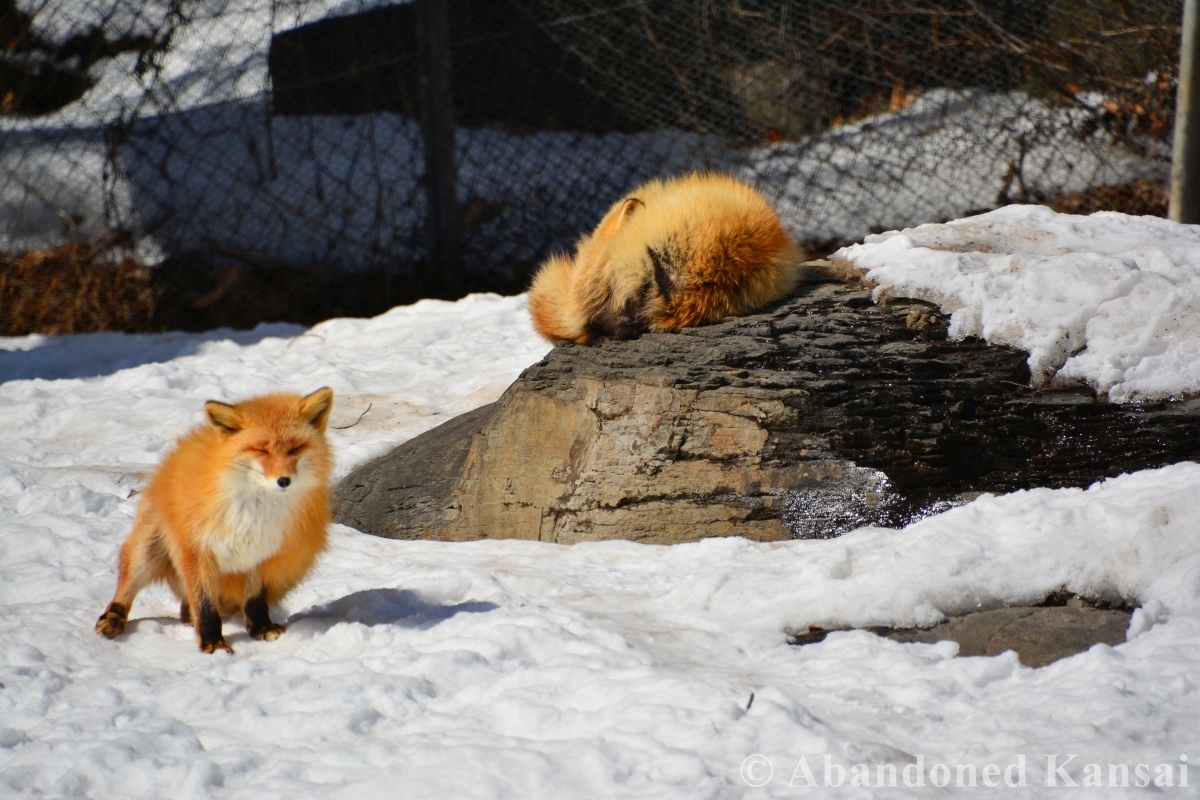
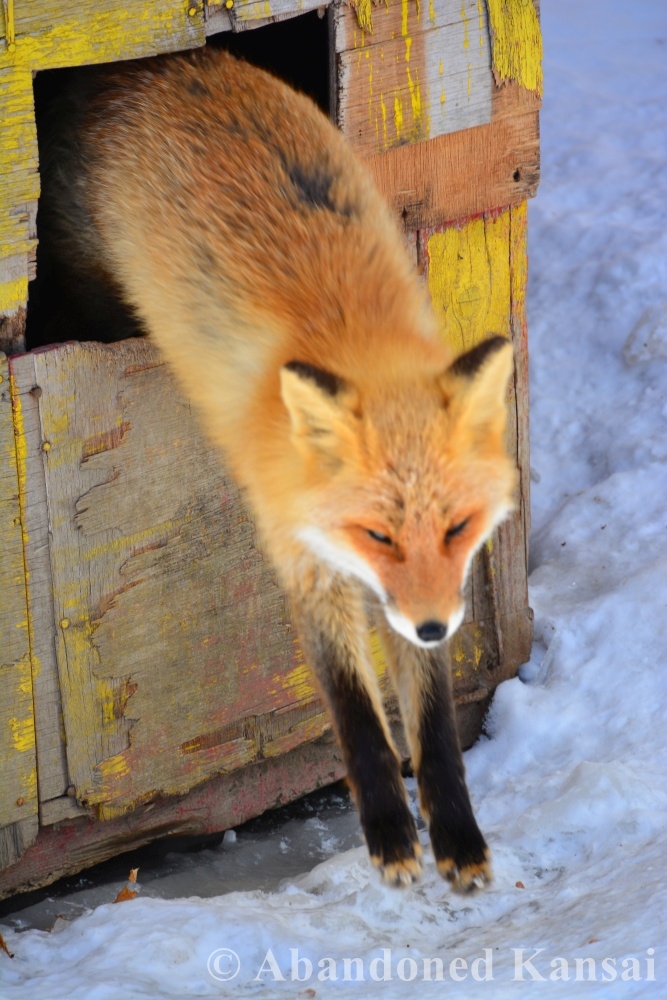
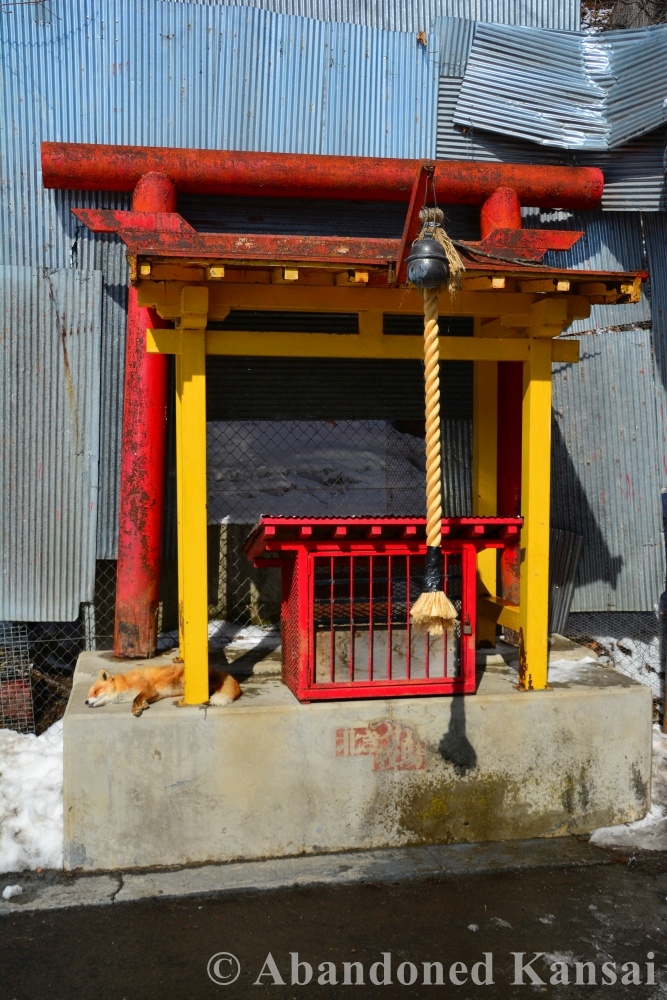
Cat cafés, dog cafès, owl cafés, a rabbit island, several cat islands, the deers of Nara and Itsukushima – not to mention several snake stations, monkey parks and bear villages as well as countless regular zoos and aquariums. Japan is (almost) every animal lover’s dream… and the more adventurous ones are heading for the mountains of Miyagi prefecture to visit the Zao Fox Village!

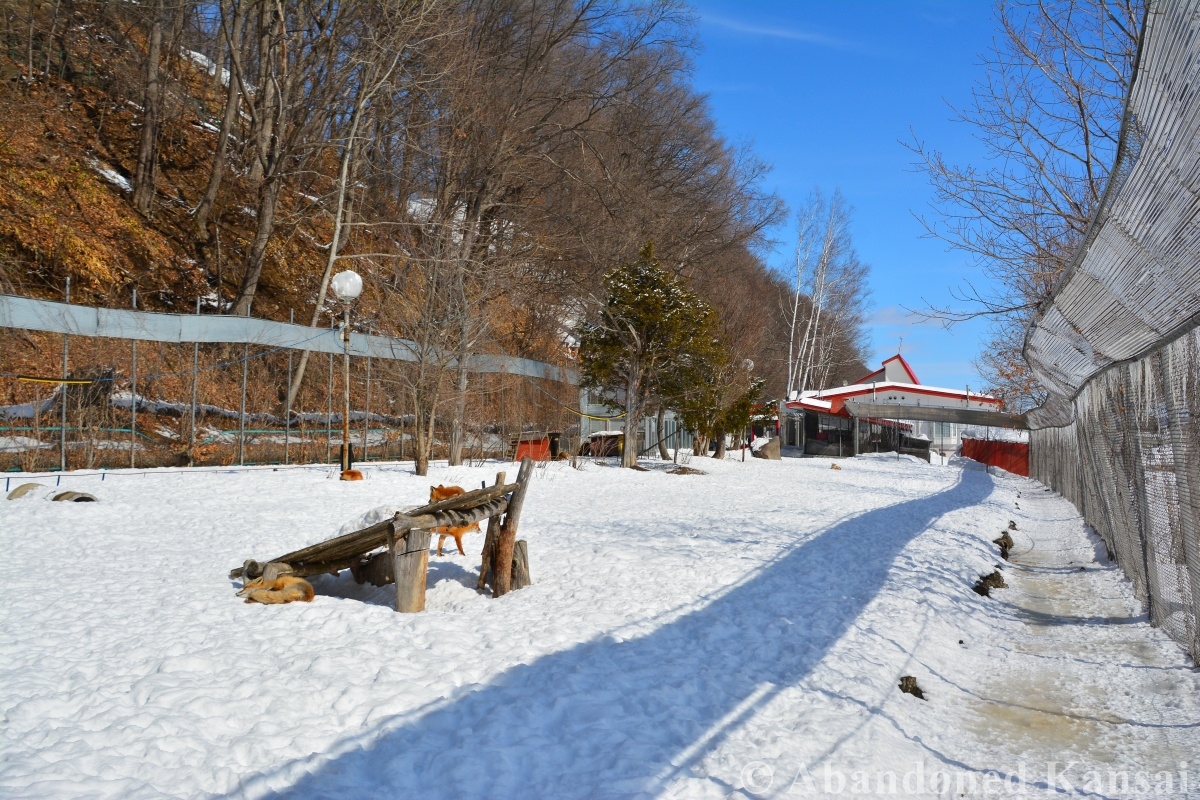
The Miyagi Zao Fox Village (a.k.a. Kitsune Mura, which is Japanese for… well… fox village) is located on the foot of Mount Zao, a large and absolutely gorgeous onsen / skiing / hiking area on the border of Yamanashi and Miyagi prefectures, just an hour outside of Sendai. According to the surprisingly informative and well-made English homepage it features “rare 6 types and over 100 fluffy cute foxes”. Unfortunately public transportation in this area is not running as often as in central Tokyo, so you either go there on a Tuesday or Friday by bus from Shiroishi Station (not Shiro Ishii Station!) at 7:58 a.m. and return to said station with the second bus of the day that leaves nearby Kawarago Dam at 2:32 (which means that you are stuck there for about five and a half hours!) – or you don’t. There are no other connections, except for private means of transportation (a taxi ride takes about 20, 25 minutes according to GoogleMaps and should cost about 4000 Yen), so… welcome to the Japanese countryside!
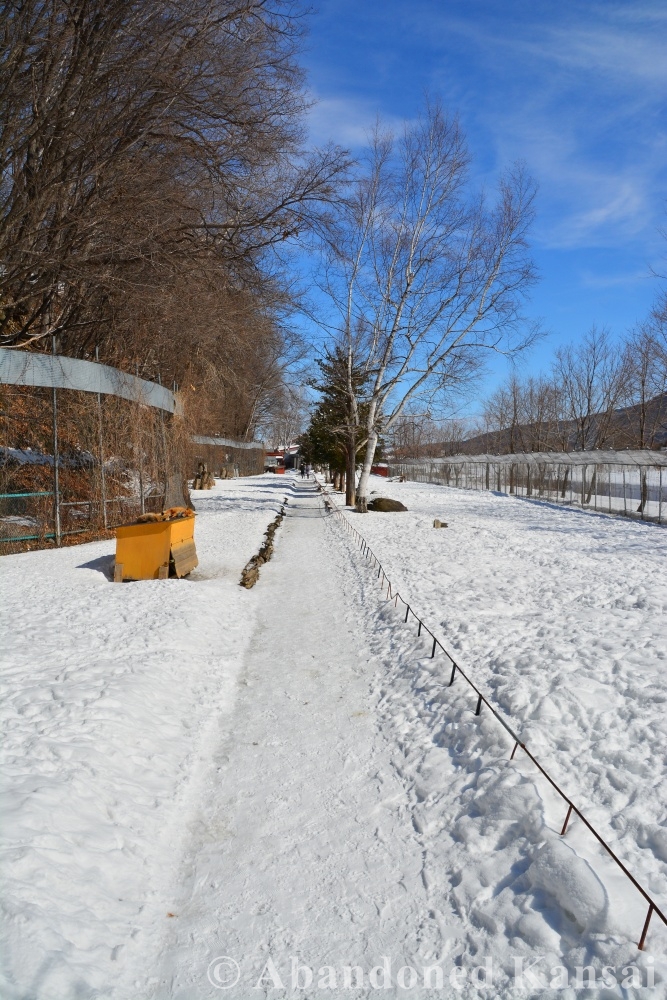
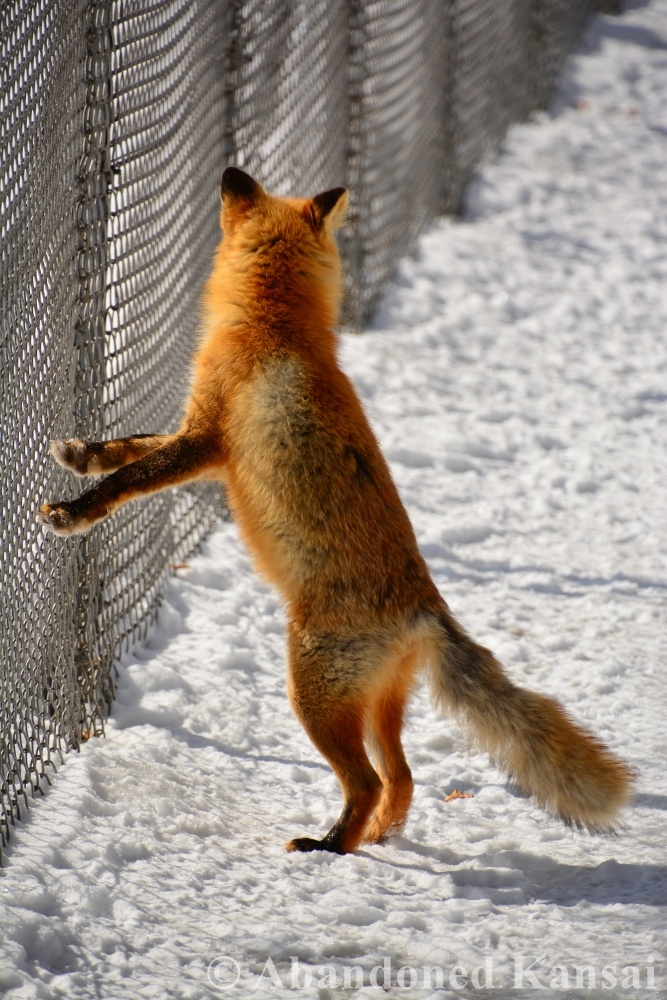
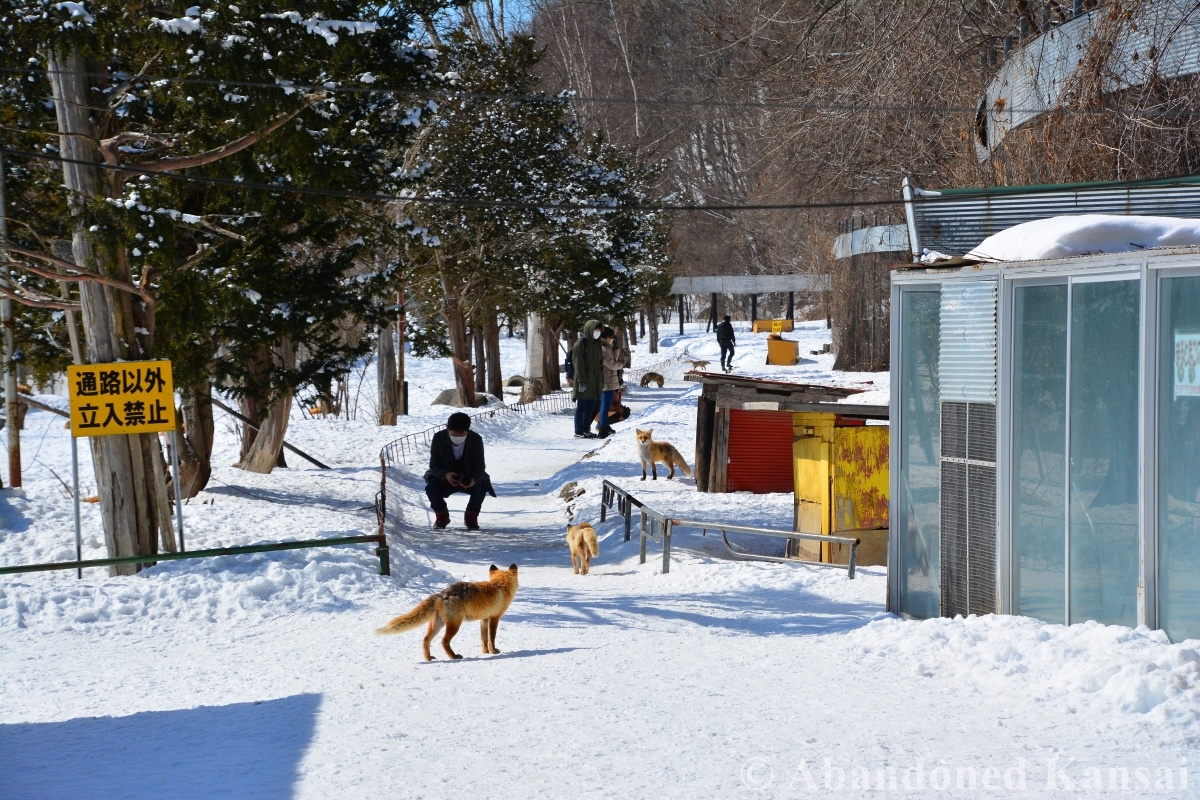
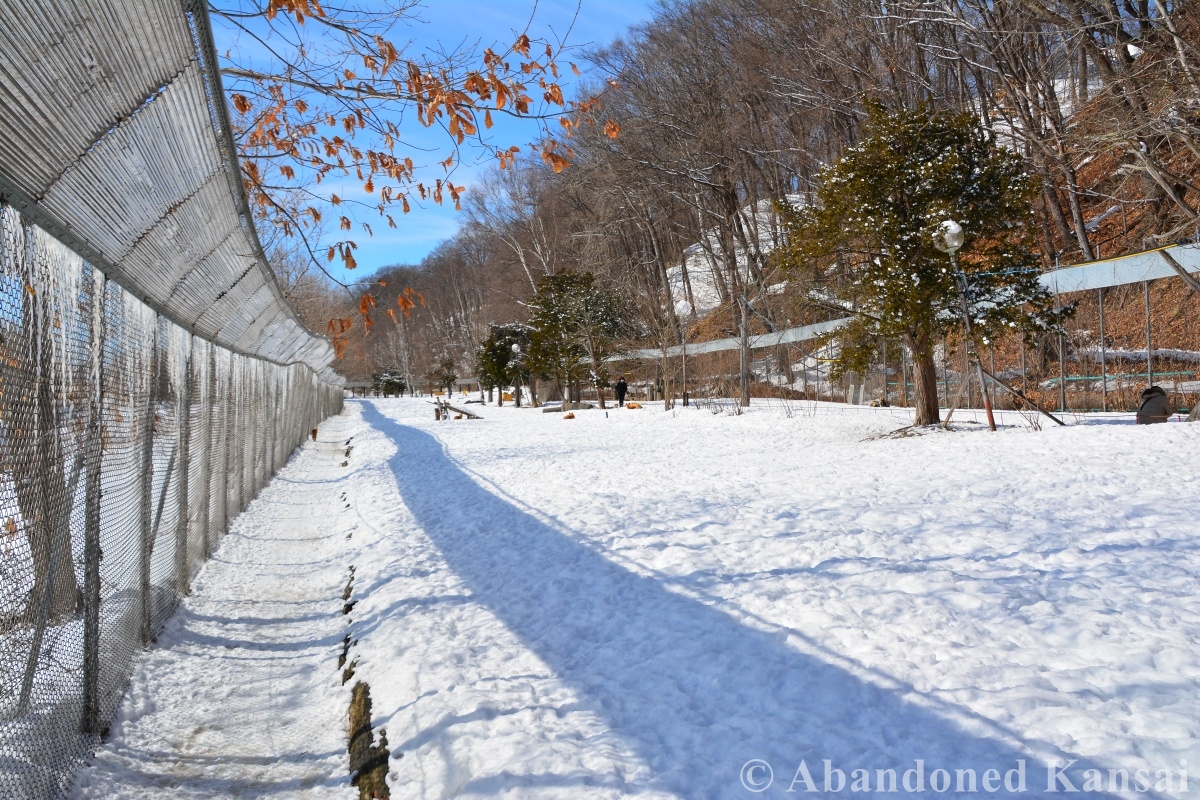
After paying 1000 Yen and agreeing to a couple of rules (not leaving the concrete paths, not squatting down, …) you first reach a tree-housy area on a slope where some of the foxes, the beautiful and especially tame ones, are resting in rather large cages. There’s also a mini (petting) zoo with other animals, and the veterinarian’s office. From there you can reach the main area (where the foxes roam freely and the large breeding cages are) or either exit through the gift shop. This main part is basically an open forest area with concrete paths and some benches as well as installations for the foxes to hide and play – and a big sign reminding you not to squat down or the foxes might bite or pee on you. You are also advised not to pet those foxes… and after being there for a couple of minutes and seeing them (play?) fight, you sure don’t want to anyway – though there is an optional petting experience at certain times with the caged foxes.

As you probably have guessed by now, the Miyagi Zao Fox Village isn’t abandoned – and probably won’t be anytime soon. But as I travel all across Japan I often run into roadside attractions, so-called B-spots, that look quite intriguing… and then we push on, because it’s not abandoned or we don’t have time. I always felt sorry for all the tourist explorers who came all the way to Japan and “explored” the already photographed to death *Western Village* as well as the moldy, rundown spa hotels of Kinugawa Onsen, but didn’t take the time to have a look at the spectacular Toshogu Shrine in nearby Nikko – and yet here I was doing a similar thing on a (much!) smaller scale… so I decided to add some B-spots to the Abandoned Kansai mix. It’s actually nothing new, I’ve done it in the past (for example with my article about *Hachijojima* or the one about the *Okinawan themed parks*. And don’t worry, the vast majority of articles on Abandoned Kansai will still be about abandoned places – throwing a B-spot into the mix every two or three months won’t hurt the flow… and half of them will probably look abandoned anyway… 😉
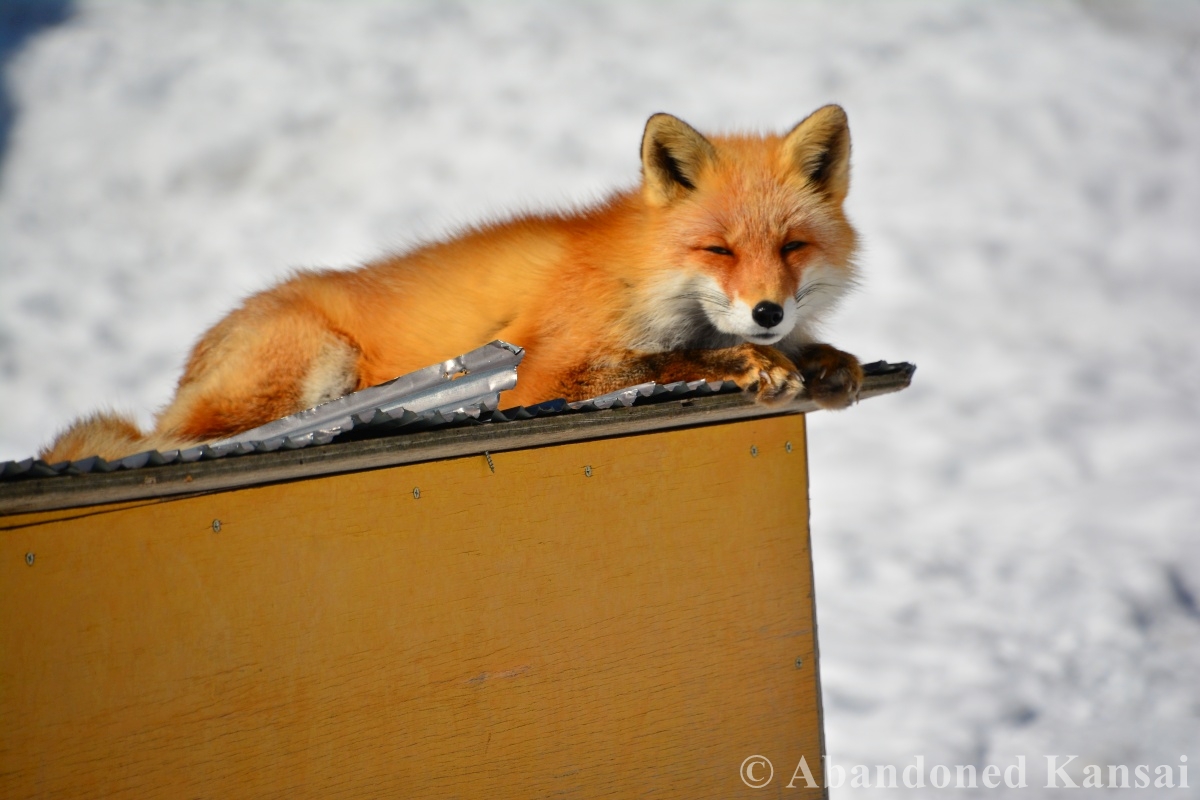
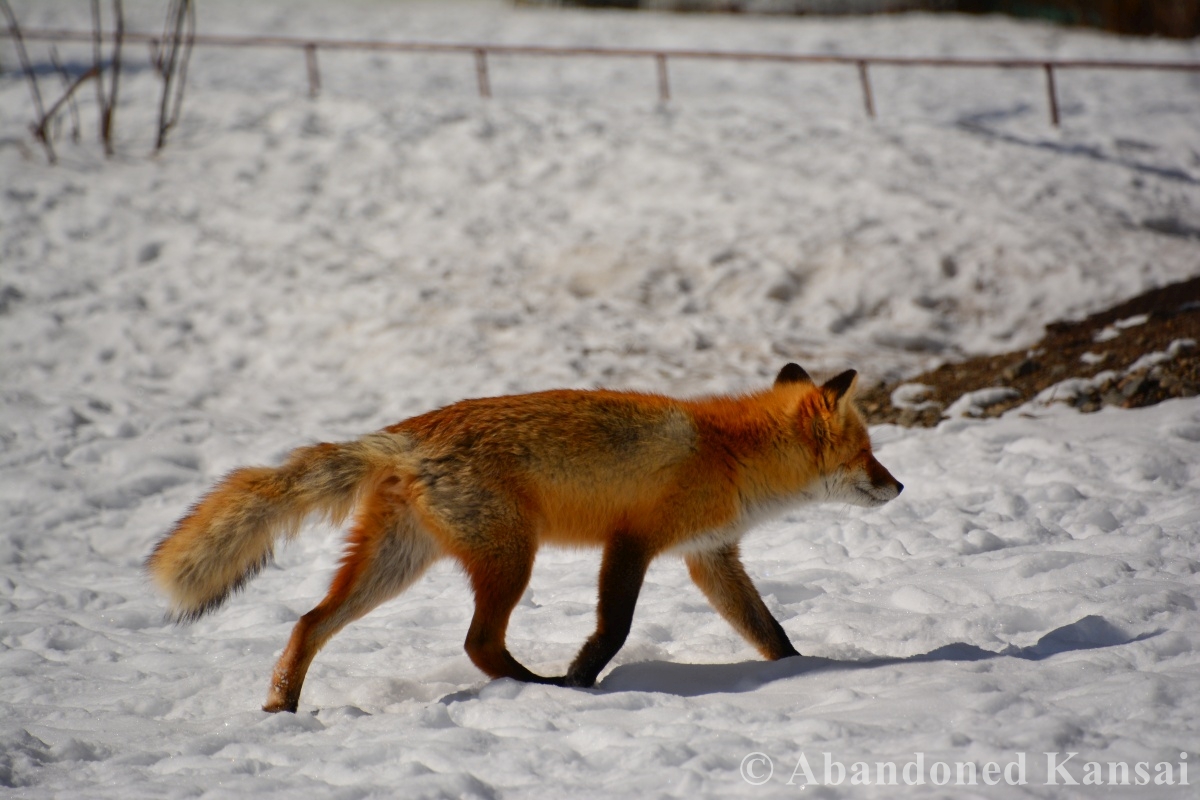
But to wrap up the Zao Fox Village: I’m not a fan of any kind of animal prisons, especially dolphinariums and circuses, but much to my surprise the Zao Fox Village didn’t make a bad impression to me. We arrived there shortly after 3 p.m., two hours before the place closed, but it was a late autumn day, so the sun was already setting in the mountains and we were losing daylight quickly. It also meant that the foxes had been entertaining guests for six hours, so about half of them were already tired and just trying to keep warm by making themselves small in one of the few preferably sunny spots. About three or four dozen foxes though were still roaming around freely. Some of them were fighting occasionally – but only away from the concrete paths humans were not supposed to leave anyway. And while it was a really strange feeling to have one or two getting so close that you could easily touch them (or they could bite you without a warning…), it was also quite exciting to get so close to an animal you usually only can see from afar. Some of the foxes were especially tame, for example the one with the gorgeous white and black fur – that one actually sat down on a bench and patiently had its photo taken. So patiently that it was borderline annoying, because in today’s selfie culture some people seem to have lost awareness of their own selfishness completely. It took three Japanese girls a couple of minutes to take some selfies and group photos, which is totally fine, but then a… tourist from another Asian country… took like 10 minutes to take selfies and have her picture taken by her parents, over and over and over again, while a dozen people lined up to take photos – which was completely ignored by that… BTW, are female foxes called bitches, too? No, I just looked it up, they are called vixens – which is probably what that girl thought of herself, though she wasn’t; she was just narcissistic. Long story short, her photo session ended when even the monochrome fox had enough, got up and left; leaving quite a few disappointed people behind, including yours truly. Luckily the furry model just went for a walk and was back two minutes later, giving me the opportunity to take a couple of quick shots, before yet another line formed.

So… overall visiting the Zao Fox Village wasn’t as bad as I expected it to be. When you go to pages like Tripadvisor especially the English speaking reviews depict a nightmarish place that make South American prisons look like a spa vacation – and I kinda expected to see a rundown facility with a couple of visitors, but in reality they had a couple of parking lots and even close to closing something like 50, 60 visitors at any given time on the premises. In peak seasons like late spring and early autumn this place must be a money making machine. All the animals, not just the foxes, didn’t look like they were mistreated or malnourished. At least not to me, but then again – I’m not an experienced animal prison visitor and I went there in late autumn; what the situation is like at 35°C in summer I don’t know. But I’m pretty sure if those one star reviewers would see me in my small apartment in summer, they’d probably criticize the animal unworthy living situation I exist in, too… 😉 Of course *the rabbit island Okunoshima* is much more relaxed and all animals there are actually free, but if you take the Zao Fox Village for what it is (a commercial roadside attraction, not a wildlife haven for hand-tame predators) it’s a unusual, slightly quirky place to visit – and even some the haters couldn’t resist to take and publish selfies… Probably not worth traveling to, but definitely worth stopping at, if you are in the area anyway; I actually added it to my *map of demolished and touristy places*.

Read Full Post »

Arima Wanda Garden is a place of many names: Japanese people know it as Arima Wanwan Land – and Abandoned Kansai readers as *Doggy Land*. Let’s have a new look at a canine theme park that has gone to the dogs quickly…

When I picked up urban exploration as a hobby eight years ago it was still kind of an underground thing to do. Now you find articles with photo sets on pretty much every mainstream site, but back then it was tough to find any information at all about it (especially in Japan(ese)) as only a few people were familiar with the term… and rather tight-lipped about it. I never had the urge to break into those secret societies as I always had the feeling that the total freedom of exploring abandoned places strongly contradicts those groups, where a few or even a single person often dictates the behavior and knowledge of many – yet I happily followed two basic rules: “Take nothing but pictures, leave nothing but footprints!” and “Do your own research – and if you find a place, don’t reveal its exact location!”
To this very day people send me message like “I envy you that you can explore that many abandoned places. Where I live there aren’t any!” – and I thought the same about Japan in general and especially the area that I live in, Kansai. For three long years I envied people in Kanto and Hokkaido, where the few famous abandoned places in Japan were. And then I started to do research myself. Not only was I able to locate the few already known places (like the incredible *Maya Hotel* and the mostly demolished *Koga Family Land*), I also found several places yet unknown to the internet – like the now super famous *Nara Dreamland*, the demolition in progress *Expoland* and a still underrated theme park named Arima Wanda Garden; all of which I explored in December of 2009 for the first time. By the time I wrote about Expoland it was completely gone – and by the time I wrote about Nara Dreamland I knew that it would be impossible to hide its location and real name; it was too big, the rides were too iconic, it was even visible from one of the most famous tourist attractions in all of Japan, the Todai Temple in Nara. Arima Wanda Garden on the other hand… Arima Wanda Garden was small enough to keep a secret, but interesting enough to present on Abandoned Kansai – so I gave it fake name (*Doggy Land*) and refrained from publishing revealing photos, like those of the entrance (showing the name) or of certain buildings, showing the logo of the park. And of course I withheld certain information, like the Arima part of the name, as it refers to Arima Onsen, where Doggy Land was and is located.
Much to my joy those efforts were rewarded – it took me until 2014 or 2015 till I first saw Doggy Land on other urbex blogs. And apparently it also contributed positively to my reputation within that urbex community I never considered myself part of. It wasn’t until 2016 that I started to have direct contact with Japanese explorers on a regular basis, but I’ve been told by common friends that I enjoy much respect amongst both foreign and Japanese explorers for the way that I treated Doggy Land and many places afterwards, for example the *Abandoned Dynamite Mine*, the *Japanese Sex Museum*, and the *Kyoto Dam*; just to name a few.

Sadly most visitors after me didn’t treat the Doggy Land with the same respect as I did and wrote about it mentioning either the official English or the official Japanese name – with the expected consequences, but that’s a story for another time. Now that the cat is out of the bag I can finally revisit my first two explorations of the Arima Wanda Garden from late December 2009 and early January 2010.
While the Japanese name Arima Wanwan Land makes kind of sense (wan is a Japanese onomatopoeia meaning woof, the barking sound of a dog), I always disliked the English name Arima Wanda Garden. Wanda… woof + is? Wonder? Wander? Probably a mix of all of those, resulting in a horrible, horrible play of words. (Oh, and if you ever expressed gratitude by writing 39: Shoot yourself in the head with a large caliber bullet!)

The story of the Wanwan Land is quickly told: Built as an additional tourist attraction in the outskirts of the traditional hot spring town Arima Onsen, the Wanda Garden opened in August of 2001, saw a drop in visitors from 2006 on, and closed in August of 2008. The concept of the park was a bit strange, even by Japanese standards – it was dog themed. You could ride a little dog themed train, you could rent dogs and take them for a walk (up to 15 bucks for 30 minutes!), you could mingle with other dog walkers, you could pet dogs, watch dog races – or get an education there: the Kobe Pet Academy offered a 2 year specialty course and a 3 year course for high school graduates from 2004 on. Oh, and there was the Wanda Theatre, an indoor stage for trained dog shows – not sure if it was related to the school… Aaaaaand that’s pretty much it. If you don’t count the two or three eateries, but who does? Why people would consider that eclectic collection of… things… a tourist attraction worth spending time and money on is beyond me… and probably beyond a lot of other people, given the place’s (lack of) success.
As horrible of a theme park Arima Wanda Garden must have been, as great was it to explore this original find with my Spanish buddy Enric – darn, it was actually fantastic. Just over a year into the abandonment we actually had to climb tall fences / gates to get inside, and the only signs of vandalism were some plastic balls from a few airsoft matches. Other than that the Wanda Garden was in almost pristine condition – which also meant that none of the buildings were accessible, including the large escalator bringing guests from the main area back to the entrance / parking lots at the top of the slope. Nevertheless a great experience – and with 2.5 hours we probably spent more time there than the average paying visitor.
When I first wrote about the Woofwoof Land back in early 2010 I had to hold back some photos for reasons already explained, so please enjoy the following mix of old and new pictures plus a never before seen walkthrough of the whole park…

(*Like Abandoned Kansai on Facebook* if you don’t want to miss the latest articles and exclusive content – and subscribe to the *video channel on Youtube* to receive a message right after a new video is online…)

Read Full Post »
“Don’t play with your food!”
I wonder if any Japanese mom ever said that to their child before they went swimming at the Dolphin Lair, a now abandoned dolphinarium that apparently allowed its guests to take a dip with the world’s most popular aquatic mammals.

Japan is constantly under fire for how some members of its society treat dolphins and whales – whether it’s hunting the cetaceans or keeping them captive. I actually doubt that the majority of Japanese support the practices of those few, most people are just indifferent and don’t care enough to demand change. Hardly anybody eats whale or dolphin on a regular basis, but when the international community demands changes, a lot of people feel threatened by possible foreign influence, leaving them stranded in some area that can be summed up like this: “I don’t care, but I’ll be damned if somebody else tells me to give up what some of my fellow countrymen consider tradition!” You know, like having an assault rifle at home to protect your 32 inch TV…
As for the “keeping dolphins captive” part, Japan doesn’t differ much from the rest of the world – except that theirs are probably smaller. Not the dolphins, the dolphinariums; which in general have a bad reputation everywhere, even the big ones, the ones everyone knows… and they survive financially, because people still go there – which means that enough people think that keeping dolphins (or other animals) captive is a good idea. If people would stop going to zoos and dolphinariums, the problem would solve itself, except for maybe some few private or state zoos.

The Dolphin Lair was a small dolphinarium along the coast of the Seto Inland Sea in central Japan. The regular entrance fee was 500 Yen for age 3 till elementary school (usually around age 12), 800 Yen for everyone older than that (currently 100 Yen are about 0.80 EUR or 0.85 USD). A 20 minute long “Petting Course” was 2.500 / 3.000 Yen, the 40 minute long “Swimming Course” cost 6.000 Yen for kids who were at least in third grade of elementary school and 8.000 Yen for everyone past elementary school. Dolphin Lair also offered a “Diving Course” for 11.000 Yen, though I am not sure if that involved the dolphins, too.
7 years after being closed in 2008, Dolphin Lair was a surreal sight. Located next to a small marina, the area was more roped-off than fenced-off, the pools mostly below ground, reaching a height of maybe 1.5 meters, to the right a café towering over everything. While the metal parts looked like abandoned decades ago, the wall paintjob was still in amazing condition – most buildings locked, the café probably in use during the summers. At first I had a really hard time connecting with the place, it just looked so… random. Thanks to the setting sun the light was gorgeous, but hardly anything caught my eyes. Exploring a tiny storage at least provided me with some items to take pictures of – swim fins, rubber boots, a stuffed dolphin; not to be confused with a taxidermy dolphin! Outside again I switched to my ultra-wide angle lens and all of a sudden the Dolphin Lair looked much more interesting to me – still not a place I would want to spend a whole afternoon, but enough to take a whole set of decent photos.
Sadly there is not much known about the history of the Dolphin Lair. According to a headstone on the premises a dolphin called Sakura died there on January 25th 2003 – and according to the Phinventory there were four more living there: Hikaru, Kuru, Mahina, and Sola. What happened to them after the dolphinarium closed? Nobody seems to know. But if you know Japan, then you know that the next restaurant is always just a short walk away…

(*Like Abandoned Kansai on Facebook* if you don’t want to miss the latest articles and exclusive content – and subscribe to the *video channel on Youtube* to receive a message right after a new video is online…)

Read Full Post »
“What kind of place did I just leave that entering China feels like gaining freedom?!”
That’s what I was thinking upon leaving North Korea for the second time – because leaving the second time definitely felt different.

When I crossed the border at Dandong a few months prior I felt a bit wistful. Something was dragging me back instantly, I was mesmerized by my experiences. Dandong felt very surreal, like a completely different world. And although I wasn’t 100% serious that I would visit the DPRK again when I promised to do so to my Pyongyang guides, I somehow had a feeling that it wasn’t totally out of question.
When I was leaving North Korea for the second time I was actually glad to get out of there. The trip had been way too interesting to be considered a bad one, but this time was much more intense, I witnessed and found out things that would take me much longer to process than the lifetime worth of experiences I made in Pyongyang.

After Pyongyang I started writing right away. I went there ignorant on purpose, I wanted to enjoy the show and embrace the deception – which is so not me as I hate being lied to, but I figured it would be easier to go with the flow when visiting North Korea. (It’s definitely tough going against it when living in Japan…)
After the Northeastern Adventure I took a lot more time, hoping that I would be able to use it to process and structure my thoughts – to make sense of what I saw, heard, tasted, smelled, felt. In hindsight probably not a good idea as I don’t think it helped much, but I started to forget details. Details that weren’t essential, but details nonetheless. At least it gave me the confidence to write everything as I remembered it, because after my return to Japan (and seeing how messed up in its own way this country here is) it took me less than a week until the urge to go back rose. I wasn’t lying awake night after night trying to find a way to “go back to the island”, but North Korea is a decent size country that is opening up to tourism more and more, which is great for the half dozen travel agencies offering trips, because they can lure customers back easily. “You’ve been to Pyongyang, Kaesong, North Hamgyong and Rason, but… XYZ is open now – and you can be part of the first tourist group to get there!” And that is one of the selling points of North Korea, to boldly go where hardly any man has gone before.

Do I want to go back to North Korea? Heck yeah! I’m a sucker for remote and unusual places that offer photo opportunities, that’s what this blog is all about! Of course I would love to go back to North Korea, despite the fact that I was really angry (and happy to leave!) last time.
Will I go back to North Korea? Most likely not. Not under the current regime.
Why? Because I have the ability to remember. I remember Robocop and how he treated that boy at the market in Rason, I remember how I felt being ratted out by that old woman in Rason, I remember looking at GoogleMaps, realizing how close we came to some of the death camps – which hopefully will be remembered as a stain on the history of humankind once this ridiculous regime dissolves and all Koreans enjoy (relative) freedom.

There are some voices out there on the internet who are convinced that North Korea can be opened little by little if more and more tourists visit the country – sadly most of those voices are actually either fooled Pyongyang tourists or western tour guides to the DPRK. And I am not sure what to think of the idea. North Korea is so full of contradictions, yet the system survived for so long – can a couple of thousand tourists driven around in busses with tinted windows really make a difference? After thousands of tourists before didn’t make a difference?
When visiting Pyongyang you kind of get the image that the DPRK is a misunderstood country which is struggling to survive and doesn’t want no harm to nobody in the world; but that’s the microcosm Pyongyang, where only the elite is allowed to live and where resources from all over the country get concentrated. In North Hamgyong and even in the comparatively rich Rason I felt transported 20 or 30 years back in time – and I started to wonder why North Korea even allows those tourist tours, because like so many things in the country, the tours don’t really make sense. I don’t think it’s about the money, because there are not nearly enough tourists to the DPRK to justify the effort. In Pyongyang I can see it being about changing foreigners’ minds. The regime will never win over the western media, but they can create positive word of mouth. But why allowing western tourists to North Hamgyong and Rason? Korean is not the most common language in the world, but there are always one or two people in each group who are able to speak it – and if not, people know people who know the language. Sure, while at the clothing factory in Rason I didn’t know that one of the slogans on a pillar said “Ideology First”, but it didn’t matter, because I knew a few days later, so congratulations to the factory management, you fooled me for a couple of days! But that didn’t keep me from telling a couple of thousand readers that, while you seem to treat your workers well, you also bombard them with propaganda music and propaganda slogans – and that you use “Made in China” labels. And that’s just the tip of the iceberg as you know, since I mentioned all the little things in the previous eight articles.
So why is North Korea allowing foreign tourists in the country, when it fails to deceive them and continues to indoctrinate its citizens. When things like the electric fence are continuously brought up (or maybe even revealed) by tourists? Why allowing small scale foreign aid that doesn’t get mass media attention, when Juche, Korea’s autarky, is the state’s ideology and most important goal?
The answer is: I don’t know. North Korea is full of contradictions, almost everything there is tied to a contradiction. The more you know about North Korea, the less it makes sense. And I’ve spend a lot of time in 2013 talking about North Korea and actually being there…

That being said I am very glad that I did those two trips. I made a lifetime worth of experiences, good and bad, met some extraordinary people (also good and bad…), saw and did things I wouldn’t have thought of in my wildest dreams. First I went there during the political crisis of 2013 and then again just weeks before Merrill Newman was arrested and Kim Jong-un had his uncle executed – and in-between I could understand very well why some friends and my whole family were worried about my security.
If you are interested in visiting North Korea, I hope my two travel reports were helpful to you. If you are just interesting in North Korea, I hope I was able to show you a different, a neutral side of what it is like to be a tourist there. And if you are mostly interested in urban exploration, I hope you enjoyed both series nonetheless – thanks for sticking with Abandoned Kansai, I promise I will make it up to you on Tuesday with a mind-blowingly amazing deserted hotel! (There will be two or three more articles about North Korea in the future, but none of them will put my urbex articles on hold for weeks…)
Since I came back from my second trip I’ve been asked a lot of times where I will go next, by both friends and strangers. Where can I go next after I went to North Korea? For a while I didn’t have an answer, I was considering Siberia or Alaska, but now I can tell you what the main event this year will be: I will go back home to Germany for almost three weeks (a.k.a. annual leave) to celebrate the wedding of one of my best friends – and I can’t wait to do so!

(Please *click here to get to Abandoned Kansai’s North Korea Special* and *here for a map about the tour at GoogleMaps**Like Abandoned Kansai on Facebook* if you don’t want to miss the latest articles and exclusive content – and subscribe to the *video channel on Youtube* to receive a message right after a new video is online…)

Read Full Post »
My *first trip to North Korea* was a great experience. I went there with a certain amount of ignorance, to “enjoy the show”. And it was a good show, a great show… a fantastic show actually. It was so elaborate, that it was easy to believe most of it. No freedom of movement? Sure, their country, their rules. Regular blackouts outside of Pyongyang? Unfortunate exceptions. Taboo topics? Well, you avoid bringing up politics and religion in most parts of the world. The radio wasn’t working? Who cares, it would have been in Korean anyway – there was barely enough time to watch TV. Not much traffic? Well, it’s a poor country with fuel shortages, but everybody is trying to make the best of the situation. And the guides telling us that walking a lot is healthy anyway? Well, probably just North Korean humor – it’s not like Japanese jokes are much funnier…

North Korea is changing, no doubt about it – opportunities to “enjoy the show” are getting sparse, and now is probably the last chance to get a glimpse at the old regime, the strict, stiff, dictatorial North Korea. If you visit Pyongyang you already get a watered down, rather easy to swallow version. While a couple of years ago visitors had to refer to Kim Il-sung as “Great Leader” and Kim Jong-il as “Dear Leader”, nobody seems to care about the use of honorary titles like that anymore, as it alienates foreign visitors. The guides in Pyongyang speak English quite well and most of them have enough experience with foreigners to know how to handle them and follow the rather strict limitations (forced on them by their bosses) at the same time. It’s easy to get lost in that charade and blame all the evil things happening on America or the people themselves – if they would have followed the rules, they would not have been put in jail. (Which is bullshit, as we all know. In the Early Modern Age countless women were tortured and killed as witches, because their resentful neighbors made a claim and the victim had to proof their innocence. And that’s pretty much how North Korea works today.)

After my return to Japan and the series of articles I wrote about my trip to North Korea, I wanted to see more. I wanted to see a different side. I wanted a rougher version, to see myself whether Pyongyang was just a sample of an aspiring country striving for success – or if it was the exception, a Potemkin village to fool visitors.
In July 2013, while still writing articles for the first series, I decided to go back to North Korea. This time I chose a tour with a completely different itinerary with a route that wouldn’t even get close to any destination I saw on the first tour. The Northeastern Adventure was introduced in spring 2013 and opened the border crossing in Tumen for western tourists. Up till then the few visitors to North Hamgyong province used to fly in from Pyongyang or entered via Rason to visit the famous Mount Chilbo area. With the Northeastern Adventure I had the rare opportunity to see the Wangjaesan Grand Monument and to spend a night in Hoeryong. Next stops were Chonjing, the homestay village near Mount Chilbo and Kyongsong before spending three nights in the Special Economic Zone Rason. (*Click here for a GoogleMap to give you a better idea.*)
Believe it or not – I got what I bargained for. North Hamgyong and Rason were a lot rougher than Pyongyang and the places in the south of North Korea. The guides were rougher (“It’s comrade Kim Il-sung! / “No take photos!”), the conditions were rougher (no running water and no hot water for three consecutive days – which is not unusual in a poor country, but irritating when that poor country always pretends to be on par with the rich ones…), the locals were rougher. The cities were smaller and less colorful, the anti-American propaganda was less subtle, the infrastructure was less developed. While the southern parts were all about the Korean war, the northern parts were all about the Japanese occupation – down to the guide’s countless stories about Japanese atrocities, some of which started with “Sorry Mr. XYZ, but it’s historical fact!” as the Northeastern Adventure was accompanied by two Japanese citizens. (To everybody’s surprise as most Japanese people don’t want to have anything to do with North Korea.)
Speaking of my fellow travelers: This was an extraordinary group to travel with! When signing up for a group tour you never know what you get. While I enjoyed the Pyongyang group for several reasons (hey Jeff!), the Northeastern Adventure group overall was much more relaxed and less stressful – probably because it wasn’t the first trip to North Korea for anybody, with one exception. Everybody knew what to expect, everybody knew how to behave (at least most of the time), there were no “I am so cool because I am traveling to North Korea!” characters, it was just a great group!
Which brings me to related topic: You won’t find a picture of myself on Abandoned Kansai and, like last time, I tried to extent this courtesy to the rest of the group for this article series – which worked with two or three exceptions. If you see yourself on a photo and don’t like it, please drop me a line and I’ll remove the picture right away! As for you, dear reader: This time the group consisted of thirteen people plus one British guide (Amanda) plus three Korean guides during the first leg in Hamgyong province and three different Korean guides during the second leg in Rason, where the group shrunk to twelve people as one of our Japanese group members had been to the Special Economic Zone before and decided to leave early. (A “Special Thanks” goes out to my friend Mayu, who didn’t join me on the trip, but provided valuable translations afterwards. Whenever you see captions to Korean text on photos – those I owe to her.)

For the first trip I decided to write separate articles for each major stop on the tour, which resulted in more than 30 posting over 10 weeks – way too long for a blog that usually is all about urban exploration. So this time it’ll be more like a classic travel report: eight articles, one for each day; plus this introduction and an epilogue with some final thoughts. Some of the articles will be freakishly long (up to 2.500 words…), some of them will contain rants as I won’t stay away from hot topics this time. Nevertheless I hope you’ll enjoy reading what I have to say – my mind was blown several times during the trip and if everything goes according to plan you’ll make a “WTF?” face at least once per article… 🙂

Oh, and for all you hardcore urbex fans out there: The next abandoned place will be posted on February 25th – an amazing original find I explored almost two years ago!

(Please *click here to get to Abandoned Kansai’s North Korea Special* and *here for a map about the tour at GoogleMaps**Like Abandoned Kansai on Facebook* if you don’t want to miss the latest articles and exclusive content – and subscribe to the *video channel on Youtube* to receive a message right after a new video is online…)

P.S.: I almost forgot – welcome, dear readers from North Korea! I know you don’t stop by often and I doubt that you are regular people who surf the internet after a hard day of work in the fields. But, according to the basic statistics WordPress shares with me, I had 12 page views from the DPRK between my first and second trip to North Korea, much to my own surprise. So again – welcome, comrades!

Read Full Post »

Urban exploration in China is something I thought I would never do – and actually only did by chance. In October of 2013 I was on my way to a second trip to North Korea; not *Pyongyang and the southern parts* again, but North Hamgyong province and the Special City Rason in the north of the DPRK. To reach those areas you don’t fly into Pyongyang via Beijing, but you enter and exit by land. Meeting point for those trips is the Chinese city Yanji, an up and coming 400.000 people town quite close to Russia and less than an hour away from the North Korean border. The tour to Korea ended on a Monday evening… and since Korean Air doesn’t offer any flights on Tuesdays I was stuck in Yanji for a whole day. My buddy Nikolai, who spent a couple of months learning Korean in this town without any tourist attractions at all, told me about a half-abandoned amusement park in the city center. “Half-abandoned” sounded like a dying amusement park to me, one with fewer visitors than necessary, one that is supposed to close soon. Little did I know that he meant an amusement park where literally half of the attractions were abandoned. And that’s not even the weirdest thing about it!

The People’s Park (人民公園) in Yanji looks like a normal public park when entering from the south – a big pond full of water plants, a couple of peddlers selling food and plastic toys, some sculptures (including tasteful nudes), a few benches, and senior citizens playing games at tables. After a couple of minutes you’ll reach animal cages and stalls filled with all kind of more or less exotic animals… as the People’s Park features a free public zoo. But that’s not all! Right where the zoo ends is a small dump area with a couple of abandoned seats, small stands and parts of carnival rides – and at first I thought that was what Nikolai meant when talking about the half-abandoned park. Boy, was I wrong!

Within earshot of the rusty remains I spotted small Ferris wheel, blasting some music into the silence of this sunny Tuesday noon. Customers? None. Potential customers? Only a few more.
The (not so) big wheel was surrounded by 15 to 20 other carnival rides. Two or three of them were also open and running, half a dozen others looked more or less well maintained – and the rest of them were actually abandoned, except for the single demolished one; paint flaking off, weeds growing through a mini roller coaster, seats weathering, concrete crumbling.
This place was so friggin weird! It looked like an abandoned pay-as-you-go amusement park, but it wasn’t, because every other minute you would run into some sweethearts looking for entertainment, and there was music playing in the background all the time; some of it being karaoke sung by a few senior citizens further up the hill. It was so creepy and bizarre – and calming yet very exciting at the same time! Usually I have to sneak around and jump some fences, especially when exploring abandoned theme parks… but not this time! Relaxed I made my way from attraction to attraction and took pictures of whatever I wanted at my own speed, not worrying about anything. When I thought it couldn’t get any better (except for being there on a misty day!) I hit the weirdo jackpot!
I’ve seen a haunted house or two in my lifetime, but none with a naked female torso breaking through the wall on the upper floor, a big hand trying to hold her back, partly covering one boob – next to a monstrous mutant face. But that’s not all! To the left and mid-air was a nude couple (male and female) in a grotesque pose, attacked by two gigantic green snakes – the guy’s face full of panic, the girl’s face barely visible, but clearly in agony, one of the snakes biting into her left shoulder and half of the exposed torso.
The back of the abandoned haunted house wasn’t a tiny bit less bizarre and probably my favorite area in the whole park. There I found a couple of concrete or gypsum animals lying on the ground and standing around, the greyish material spalling off in huge chunks, revealing steel wires underneath. Next to a path nearby was a huge Buddha statue rotting away, made of a Styrofoam looking material – accompanied by the concrete statue of a naked Chinese fairy, right in front of a white rabbit with red eyes carrying a gigantic mushroom… which at this point I felt I must have smoked earlier!

The *second abandoned Japanese sex museum* meets *Nara Dreamland*… with no security standards whatsoever. One of the remaining running rides was a monorail through half of the park. It’s height? About two meters – and no protection at all. I was able to touch the rail at any time and even smaller people carelessly stretching could get hurt seriously by one of the monowheel looking cars. Trash, broken glass and mirrors, rusty metal, brittle animal figures – everything was scattered in the woods around the park and nobody seemed to care about it.
The carnival section of the People’s Park in Yanji was one long bizarre exploration and one of my favorite abandoned amusement parks overall. Deserted theme parks are generally creepy, but the fact that this one was only half-abandoned took it to a whole new level!

(If you don’t want to miss the latest article you can *like Abandoned Kansai on Facebook* or subscribe to the *video channel on Youtube*…)

Read Full Post »
Japan is a linguistically and culturally extremely homogenous country. Of its 127 million inhabitants about 98.5% are ethnic Japanese, 0.5% are Korean and 0.4 are Chinese – leaving a whopping 0.6% others; including yours truly. Those 0.6% “others” include about 210.000 Filipinos, mostly of Japanese descent, and 210.000 Brazilians, also mostly of Japanese descent – which means that only about 0.3% of Japan’s population are neither Japanese, Chinese, Korean, Filipino-Japanese nor Brazilian-Japanese.
I’m sure you’ve heard the term gaijin before (外 gai = outside, 人 jin = person), a short version of the term gaikokujin (外国gaikoku = foreign country, 人 jin = person). People are still arguing if it’s pejorative term, but personally I don’t like it very much, because it’s such a simple term, pushing everybody who is not Japanese to the outside – which is a precarious thing in a country where a group is still so much more important than an individual.

Integration?

Becoming a foreigner in Japan is actually an achievement by itself. Japan isn’t eager to let many people in and therefore the requirements to get a long-term visa are rather high – usually you have to have either a Bachelor’s degree or several years of work experience; in both cases an employer has to vouch for you. Other possibilities are investor visas or some kind of artist visa, but there quite a bit of cash is involved; and so is with the spousal visa… 😉
Once in the country the Japanese government couldn’t care less about you as long as you renew your visa when it expires and pay your taxes – and those are usually handled by the company you work for anyway. While there are long and public discussions about integration in European countries there is zip in Japan. Language classes and tests? Bah, humbug! On the other hand you shouldn’t expect anybody to be able to speak English anywhere, despite the huge English school industry in Japan; especially at the immigration office, where you can address the staff in English as much as you want – they’ll always reply in Japanese, even though most of the time they obviously understood what you’ve said…
But Japan in general isn’t set up for integration, probably because of the educational system. You have your childhood friends, you have your high school friends, you have your university friends and you have your work friends – usually four different groups that keep you busy for the rest of your life; with no need to make additional friends at any point; or many opportunities for that matter, like community colleges or sports clubs, both extremely popular in Germany, especially after moving to a new area. (With the result that many foreigners in Japan stick with each other, too – I don’t think I know any foreigner here who has more Japanese than foreign friends; and by that I mean friends, not Facebook acquaintances…)

Xenophobia?

With that few foreigners in the country and that strong of a national identity I am still not sure if Japan is an above average racist country or not. People are definitely more polite in general than let’s say in my home country Germany (sorry guys, but certain things really are better in Zipangu…), especially in everyday service situations like shopping, but I experienced some of the weirdest behavior here, probably because hardly any Japanese school kid has foreign co-pupils, while I went to school with people of Italian, Austrian, Indian, Pakistani, Turkish, Japanese, British, Polish and Bavarian descent – and because the average Japanese person doesn’t think that you can understand what they say.
Sometimes they most likely mean no evil (like that one time when I had a dinner date with a Japanese girl at an Indian restaurant and all of a sudden all the tables around us talked about their oversea vacations, their foreign alibi friends and how great it would be to be able to be fluent in English…), sometimes I’m not sure (remember me *not getting a hotel room after the clerk found out that I’m a foreigner*?) – and sometimes they actually do mean harm. For example that young Japanese couple and their two friends who have beaten a Nepali restaurant owner to death in January 2012; one of them were quoted afterwards “I thought the foreigner had shoved me, so I got angry and kicked him many times.” (Note the use of “foreigner”? I’m sure it was “gaijin” in the original… Not “the man”, or “the Nepali” – “the foreigner”…)

Discrimination

It’s just a completely different mindset regarding foreigners and discrimination in general – and most people don’t even question it, because to them it’s normal. Like most countries Japan has a long history of discrimination. It even went through a time when a social class system with all its downsides was officially established; during the Edo period (1603 to 1868). Back then the burakumin (a.k.a. eta, “an abundance of filth”) were the outcasts and usually connected to jobs dealing with public sanitation or death (butchers, tanners, …), but when the class system was abolished the discrimination didn’t end. More than 100 years later, in 1975, there was a huge scandal when an anti-discrimination organization found out that a company in Osaka sold copies of a handwritten 330-page book listing names and locations of former burakumin settlements. Companies bought that book to compare the listed locations with the addresses of applicants – to prevent them from hiring descendants of burakumin; some famous firms like Daihatsu, Honda, Nissan and Toyota were among those companies… Two generations later the issue finally is no more, instead the average Japanese “discriminist“ focuses on foreigners – and I am so tired of and annoyed by comments about “those dog eating Koreans” or “those Chinese comfort women who try to screw the Japanese state”… (“Comfort women” is a Japanese euphemism for the sex slaves of the Imperial Japanese military in World War 2. While some (Japanese) historians like Ikuhiko Hata claim that there were 20.000 volunteer prostitutes, others found that up to 400.000 women were hired under false pretenses or even kidnapped into “comfort stations” all over Asia; but even the “few” volunteers made a bad choice as about 75% of the comfort women died during the war due to mistreatment and diseases. Shinzo Abe, the current Japanese prime minister, claimed during his first term in 2007 that the Japanese military didn’t keep sex slaves during WW2, although the government admitted to the fact in 1993 after decades of denial!)

New Zealand Village

Despite their share of xenophobia the average Japanese seems to love to travel and is actually interested in experiencing foreign countries; especially non-Asian countries… They barely ever jump all in, backpacking all by themselves – more like group vacations with Japanese speaking travel guides. Or an even safer version: themed parks in Japan! Recently I wrote a vastly popular article about the *Chinese themed park Tenkaen*, but in spring I was able to visit the rather unknown *New Zealand Farm in Hiroshima* and the *New Zealand Village in Yamaguchi*. Even less known, and after more than a thousand words of introduction we finally get to it, is the Shikoku New Zealand Village. It was actually the first of the three I visited, but due to certain circumstances I never got to write about it. (If you missed the articles about the other two New Zealand parks I recommend reading them first for background information…)
I don’t remember how I found out about the Shikoku New Zealand Village, but I’m sure it wasn’t an urbex article, because to the best of my knowledge till that very day nobody has ever written about the place. I remember seeing a photo of the entrance to the parking lot though, with heavy machinery in the background. That was on a Thursday – worried that the place was in the process of being demolished I went there two days later, despite the facts that the weather forecast wasn’t favorable and it took me about 4 hours to get there. And except for the photo and the name I didn’t know anything about the park – not what it was, not when it was closed, not if there was security, not how to get in. You know, the risky kind of exploration…
I saw the first surprise when walking up to the parking lot – there was a rather big house right next to it, with wet laundry in the garden. The parking lot was blocked by barricades, entering via a muddy road to the side was difficult due to rusty barbed wire and lots of vegetation. After getting a decent grasp of the situation I decided to jump the blockade at the parking lot and walk right in, my heart pounding like mad. At the time I had more than 150 explorations under my belt, nevertheless I was and still am nervous exploring new and unchartered territory. As soon as I entered the place I heard motor noises… Not a big car motor, probably some gardening tool? Well, after a couple of seconds I realized that it was a model aircraft – and as soon as one landed another one started for almost all of the two and a half hours I spent at the Shikoku New Zealand Village.
Now that you’ve already seen the Tenkaen and the other two New Zealand villages the Shikoku one might not seem that exciting or spectacular, but to me it was the first themed park I ever visited, and I was all by myself, so to me it was extremely adventurous. Cautiously I progressed – first the sheep race track and the archery station, then a barn I wasn’t able to enter. From there I reached a bike race track before I walked back to the main street leading to the Oakland House; basically a restaurant and a souvenir shop. When I walked around the corner I stumbled across surprise number 2: the road in front of me was gone – a landslide washed it away! Now that’s something you don’t see every day… The rest of the park was less spectacular though. Two more barns, a long slide on a slope, a pond, a bakery and a BBQ area.
What was absolutely fantastic about the Shikoku New Zealand Village was the almost complete lack of vandalism. No broken windows, no kicked in doors, no graffiti. Sure, I wasn’t able to enter all the buildings, but that didn’t matter to me, because nothing was bolted up or destroyed – unlike at *Nara Dreamland* for example. Natural decay at its best…

(If you don’t want to miss the latest article you can *follow Abandoned Kansai on Twitter* and *like this blog on Facebook* – and of course there is the *video channel on Youtube*…)

Addendum 2016-01-13: A while after my first exploration of the Shikoku New Zealand Village I revisited this awesome location. *Here is what happened since then.*

Read Full Post »
Older Posts »