Feeds:
Posts
Comments

Archive for the ‘Asia’ Category

Sometimes you just gotta be lucky. Like I was on February 11th 2011.
Living in central Kansai you kind of forget about winter. Temperatures drop to 5° Celsius and people complain about how cold it is. There are barely ever minus degrees. Sure, if you hop on a train and go to the nearby mountains you can enjoy some snow. But in the Osaka Plain? Not so much. In the first 4.5 years of me being in Japan it happened once that it snowed strong enough for the white beauty to accumulate on the ground – but that was long before I started urban exploration.
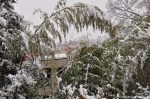
On February 10th I met with some current and former colleagues to have a couple of drinks as the next day was a national holiday – a flip dark chill winter bastard though dry. I remember mentioning how much I missed snow and that there hasn’t been some in three years. Well… When I woke up the next morning at around 9.30 a.m., slightly hung over, I opened the curtains so see… snow! Everywhere! And it was still coming down in beautiful large flakes. I slightly panicked as it was already quite late (for a haikyo trip). Where should I go to? A new place or revisiting one? And which one of them? Would there be snow, too? I always wanted to see *Mt. Atago* covered in snow, but in addition to the train ride I’d need to take a bus… and they were most likely cancelled. My mind spun for a couple of minutes before I came to the conclusion that there was only one place to go. A place I never wanted to go back to: Nara Dreamland!
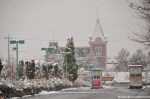
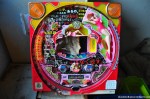
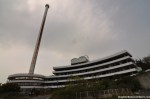
So I took a quick shower, made sure that my equipment was ready and headed to the train station. 80 minutes later I was in Nara, pleased to see that the whole city was covered by a thick layer of snow, too. Reaching the Dreamland it was still snowing heavily and I went straight for the *Eastern Parking Lot* with the parking garage, the hotel and the iconic main entrance. The DreamStation in the background was definitely a welcomed bonus, but most important of all: You can enter without jumping fences or ignoring “No trespassing!” signs; you just have to know where – definitely a plus in case security shows up with the police… About half an hour later it stopped snowing and almost instantly I heard dripping water. Yes, even before the sky turned from dark grey to light grey the snow began melting! I sped up to take some more pictures of this oh so familiar place (noticing unpleasant changes like the ugly graffiti at the former pachinko parlor) and hurried over to the western parking lot, another one of my (rather risk-free) favorites. By the time I was actually ready to enter Nara Dreamland itself half of the snow was already gone. Happy with the pictures I already took and not willing to risk them I decided to call it a day and went back to JR Nara Station – where I found barely any proof that this was a very snowy day…
But I really was lucky that day. Lucky that it snowed. Lucky that it was a national holiday and I didn’t have to work. Lucky that I didn’t oversleep completely. Lucky that I decided to go to Nara Dreamland. While a Japanese blog was quicker than I taking and posting night shots of Nara Dreamland I’m happy to present the first snow photos of Nara Dreamland, although it took me almost a year to post them. Please enjoy and tell your friends!
(For all your Nara Dreamland needs please have a look at the Nara Dreamland Special. For a look at the area around Nara Dreamland on GoogleMaps, including some fancy icons linking to articles on Abandoned Kansai and videos on YouTube, please *click here*. If you don’t want to miss the latest postings you can *follow Abandoned Kansai on Twitter* and *like this blog on Facebook* – and of course there is the*video channel on Youtube*… Oh, and don’t worry: Nara Dreamland is neither Japan’s last abandoned theme park nor is it in immediate danger of being demolished. NDL will make many more appearances on this blog, most likely all of them with unique videos…)

Read Full Post »

2012 didn’t start well for urban exploration in Japan – January has been a sad month for abandoned places in Kyushu. Two of the most famous haikyo in southern Japan were demolished:
The demolition of the *Kawaminami Shipyard* didn’t come as a surprise. It was decided on June 9th 2011 by the Yamashiro City Zoning Committee and executed in mid-January 2012 after all the greens were removed in late 2011. Nevertheless it is a big loss to the urbex community in Japan as it was one of the few locations that aged for decades without being affected much by anything but nature itself.
At the same time (late 2011 / early 2012) an up-and-coming location called *Navelland* was destroyed just 70 kilometers away from the famous deserted shipyard. The former amusement park was turned into a lot to soon become another campus of the Teikyo University. I was lucky enough to visit both places during Golden Week 2011 before they were destroyed and I have fond memories of both visits. You can find out their exact locations on my *map of touristy and demolished ruins in Japan*.
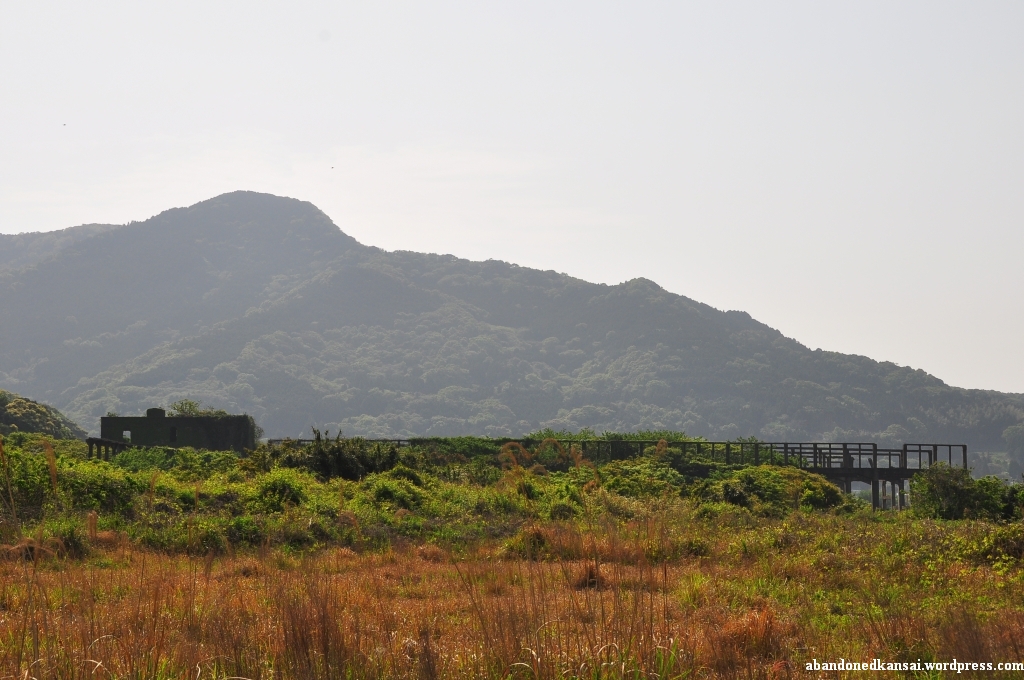
I guess it’s the normal run of things. New abandoned places show up, well-known ones get demolished. Nevertheless it makes me a bit heavy-hearted, especially since I decided a while ago to concentrate on western Japan and leave the east to all the blogs and people who live there. I already missed the famous Sports World in Izu for sure, but even if I change my mind chances are “good” that I might miss *Western Village in Tochigi*, the Russian Village amusement park near Nagano, *Kejonuma Leisure Land* in Tohoku and the Irozaki Jungle Park in Izu. Famous abandoned military installations like the Fuchu Air Base, Camp Drake Army Base or the Tachikawa Air Base. Popular deserted mines like the *Matsuo Ghost Town*, *the Taro Mine*, the Ashio Mine, the Murakashi Mine, *the Osarizawa Mine*, the Seigoshi Mine, the Kamaishi Mine or the *Nichitsu Ghost Town*. Not to forget the quirky remains of the sex industry like the Queen Chateau soapland, the Hotel Royal love hotel, the Fuu# Motel, the Yui Grand Love Hotel, the Akeno Gekijo strip club or the Pearl love hotel – and all the other places like the Royal House, the Small Pox Isolation Ward, the Japan Snake Center, the Okutama Ropeway, the *Heian Wedding Hall*, the many spas and resort hotels of the Yamanaka Lake, the Mount Asama Vulcano Museum, the Okawa Grand Stand or the Gunma Motor Lodge.
I probably forgot some famous spots as the east of Japan has plenty of wonderful abandoned places – but so has the west, and most of them are only described on Japanese urbex blogs until now. So I guess I’ll continue to focus on deserted locations east of Nagano / Nagoya, hoping that I will be able to see as many as possible before they falls victim to jackhammers, wrecking balls and other heavy machinery…


Read Full Post »

I have to admit: Finding and exploring the abandoned poultry farm in Okayama prefecture was one of the most rewarding and exciting experiences since I started urban exploration. It was unusual in many ways and I’m so eager to tell you about it, that this has become the fastest published article in Abandoned Kansai history – the events, photos and videos are just 5 days old…
Gosh, where to start? Pretty much everything about this exploration was unusual. The whole thing started when in 2011 a *red factory* / mine popped up on Japanese blogs several times. Urban exploration usually means going to places where many men (and women) have gone before, so I did some research, but didn’t get more than the information that the red mine was supposed to be in Okayama prefecture. So when I kind of randomly looked at the satellite mode of GoogleMaps I found two places with red roofs in the mountains that might have been abandoned. While I found confirmation about the smaller one that it was really a factory, the larger one I had no lead on. A still quite blurry satellite image, that’s it. No information on other blogs, no marking on a Japanese haikyo map, no Streetview – darn, not even a link to a Panoramio photo nearby. Just a bunch of buildings with red roofs standing rather close to each other, kind of similar to the satellite image when you look at the *White Stone Mine*. I didn’t know what they were or even if they were still there as the satellite photos of GoogleMaps tend to be a couple of years old. Nevertheless I grabbed my equipment and a book (The Hunger Games, which I really enjoyed!) last Saturday early in the morning and boarded a train – and another one, and another one, and…
After I finally reached a small station in the middle of nowhere I left the tiny town it was in quickly and walked along a country road for about half an hour, reaching a small settlement close to where I suspected the red roof shacks to be. I was on my own for this exploration – it’s hard to find people to get up when it’s still dark outside to go to a cold place in the middle of the mountains, especially when you can’t promise a spectacular site; or in this case: anything at all. While I was walking past gorgeous little wooden Japanese houses with the stunning roofing tiles and neat gardens a small pickup truck with two senior citizens passed me and turned left down the road – where I suspected the red roof shacks to be. My heart sank almost as quickly as when Gil and I approached the *Deportation Prison Birkhausen-Zweibrücken* back in Germany. And like half a year ago I was right: Getting passed by a truck near an abandoned place is barely ever a good sign. When I reached the small gravel road that supposed to lead to the red roof shacks I found the street and the whole area fenced off. Not with a sturdy fence that is easy to climb. No, one of those half-ass ones you basically have to trample down to get across – unless you are willing leave and get home. But at that point it wasn’t the decision to be made. Because the previously mentioned senior citizens were there, early on a Saturday morning of all days… inspecting the fence and making sure that it reached about a meter over the little river so nobody can go around it – like *Enric* and I did at the *Iimori Mine* two years ago. Since those guys looked like they came to stay I climbed a nearby small mountain with a cemetery. My hope was to get a glimpse into the valley, to at least confirm that the red roof shacks were still there. But that didn’t work out either. Slightly frustrated I came down the mountain and made my way back to the train station when I realized that I will miss the once per hour train by about five minutes even if I’d run. At that point I became rather frustrated and angry. Why the heck did I get up early on a Saturday winter morning to ride trains for hours to go all by myself to a cold mountain valley where I didn’t know what to expect just to find it fenced off and guarded by two old guys? While I was silently cursing on my way through the settlement outside the little town I heard a small pickup truck behind me. When it passed I saw the two old guys sitting in there and I stopped… I had at least half an hour to kill and even then I would make the next train. Why not getting back to that stupid fence?
So that’s what I did. I hurried back to the fence only to find that Japanese planning never disappoints. Since I couldn’t make it around the fence I just followed it for a while. Up another mountain and another cemetery. And there it was, an opening in the fence, at least a meter wide, probably to allow hikers and mourners to reach the top of the mountain. I followed the fence back (on the other side, of course!), only to find a rather steep slope along a wastewater pipe or something like that. Luckily somebody set up a rope there, so it was quite easy to get up and down, ignoring the fact that I ripped my fingers on the cutting plastic, but well, small sacrifices…
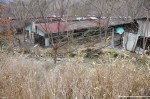
Finally on the other side of the fence at the gravel road I hurried deeper into the valley. The road here was overgrown and barely visible, but to my left I saw a couple of shacks in abysmal condition. I was relieved. A lot! Whatever I saw on the satellite pictures was still here. But the feeling of relief didn’t lower the tension at all. At this point I was still visible from the street and being alone in a fenced off area in the Japanese mountains isn’t the best situation to be in. No need to worry about poisonous snakes in January, but I ran into both wild boars and wild monkeys before… and there are wild bears in Japan, too. I tried to ignore those worries and hurried deeper into the valley on this overcast, hazy winter morning. And there it was – the big red building with the intact roof. And at first sight it was clear: This wasn’t the red mine / factory I hoped it would be… it was better!
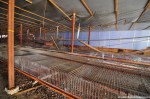
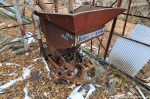
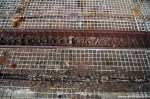
The first thing that caught my eyes was the small silo in front of the open, but rather uninviting building. When I entered I saw cages inside. Dozens, hundreds of them. With the roof still intact the building was pretty dark towards the middle, so I got outside again, circumvented the place and entered from the back. It seemed like nobody had been here in years. And there’s where I found a couple of Lyon Debeaker machines (to „stop losses from picking, cannibalism, fighting, and egg eating”). A silo, cages, debeakers… no need to be a modern Sherlock Holmes to conclude that this was an abandoned poultry farm. An abandoned poultry farm that, to my knowledge, hasn’t been mentioned on any urban exploration / haikyo blog. Ever. Not in Japanese, not in English. So this wasn’t the nth mine to visit – no, this was a unique place. An abandoned poultry farm in Japan!
Finding new places is always exciting to some degree, but in most Japanese prefectures you can’t throw a stone without hitting an abandoned private home or small business, so it isn’t actually that unusual. Finding a yet unknown gigantic abandoned animal farm in the middle of nowhere on the other hand… that’s kind of the urbex definition of “jackpot”. I was truly happy for a short moment, until I realized that I had only a little bit more than an hour to shoot the huge place – I could afford to skip a train, but I would have to catch the next one to make it on time to the second place on my agenda that day. Nevertheless I forced myself into taking my time at the mostly undamaged building. Doing some bracket shots and taking photos with long exposure time in the dark parts of the one room building.
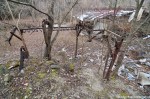
Separating the one intact building from two dozen severely damaged shacks was a small, mostly dried out river. I followed it for a while back towards the fence to find a place where the river bank on both sides was rather low so I could make it on the other side. I had about one third of my time left to cover 80% of the area, so I decided to leave my tripod behind and take some freehand photos, which turned out fine; nevertheless I wish I had an additional hour or two, but there was this other mysterious red roofed building on my schedule. So I hurried a bit making my way through the poultry farm and took a video on my way back to the tripod. I then crossed the tiny river and walked carefully up to the fence, but nobody was in sight. Just to be sure I climbed the mountain again and ripped my fingers just a little bit more. Back down the mountain and through the settlement. This time with a big smile on my face. I had found a huge yet unknown unique abandoned place in the middle of nowhere without any help and explored it all by myself on a cold Saturday morning – the only thing making this experience even sweeter was the fact that I almost failed when the two old guys showed up at the fence at the same time as myself.
What an absolutely awesome adventure!
(If you don’t want to miss the latest article you can *follow Abandoned Kansai on Twitter* and *like this blog on Facebook* – and of course there is the*video channel on Youtube*…)


Read Full Post »

And now to something completely different – an abandoned driving school in Japan. Well, since it’s abandoned and in Japan I guess it’s not that different, but how many abandoned driving schools have you seen? Especially since it’s so much more than just a driving school, at least by what I’m used to.
In Germany a driving school more often than not is a two room “office”. One small real office room and a bigger seminar room where the driving instructor is having his lessons several times a week. Not much more space needed, because German driving schools tend to be small, at least when I got my driver’s license more than 15 years ago. The one to three driving instructors usually are out on the road, because that’s where the real money is for them. Pretty much all driving school cars in Germany are manual / stick-shift cars – probably because there is only one license (no separate automatic-only license!). Most cars in Germany, except for taxis, have manual transmission anyways. A lot of Japanese people are surprised when I tell them about it, even more so when they find out that you don’t have to renew your driver’s license in Germany. It’s lifelong unless you mess up by violating traffic rules too often.
In Japan (and probably your country) the situation is a bit different. First of all: Most cars in Japan have automatic transmission, which kind of makes sense since traffic here can be nerve- and ankle-wrecking. So when you enter a driving school you have the choice between a “general” manual license and a “limited” automatic-only license. And a surprisingly high number of Japanese people actually have a automatic-only license – which feels totally wrong from my German point of view since I would never give up that kind of control over my car; to me shifting gears manually is part of the fun and it (usually…) reduces fuel consumption. Even worse: In Japan you have to renew you license every 3 years, which costs time and money – if you managed to not violate any traffic laws for 5 years you get gold status and have to renew your license only every 5 years. But it gets worse! New drivers have to put a yellow and green sticker to their car denouncing them as beginners. If you are a senior citizen age 75 or above you need a orange-yellow sticker – guess why. (None of that bullshit in the land of the Autobahn!)
The biggest difference between a driving school in Germany and a driving school in Japan is what we would call a “Verkehrsübungsplatz” in German. It seems like there is neither an English nor a Japanese term, but the literal translation would be something like “traffic training location” – a place that has roads and traffic lights and crosswalks, but is on private property, separated from normal traffic; and therefore you are allowed to practice driving there without having a license (if you at least 16 years old, have an experienced co-driver with a regular driver’s license and are able to pay an hourly fee). In Germany those place are separate from driving schools and usually run by automobile clubs. In Japan those traffic training locations are part of the driving school, which is kind of ironic given the fact that Japan has oh so little space… But it gives the students the great opportunity to practice safely in a driving school car. Worst case scenario in Germany: After a couple of theory lessons and a general instruction by the driving instructor you are pushed right into traffic…
About 2 years ago I spent quite a lot of time researching new places. Nowadays you can find at least 50% of the locations popping up on blogs on one map or the other, but 2 years ago that was a dream! (Now it’s actually a nightmare since urban exploration is going to become a victim of its own popularity soon. Maybe not this year or next, but soon…) Japanese blogs have the funny tendency to obscure names by leaving out kanji in the text decriptions, just to show the full name on the photos coming along with blog entry. Happens all the time. In late 2009 I found the blog of a guy showcasing an abandoned driving school, but of course he wasn’t willing to give up the name or even the location. He just said it was a driving school in Hyogo and that the company is bankrupt now, but has a succession company with a similar name. So I did some research with Google and found out about the Daikyo Driving School and its successor. Sadly the original Daikyo school went bust before the internet got popular, so there was no way to find out about the exact locations of the old schools, just the cities they were in. Luckily the same guy was bragging about his GoogleMaps skills – showing different zoom levels of the same place, which turned out to be the driving school. The guy was pretty smart not showing any train stations and other landmarks, but since I narrowed the location of the school to a couple of towns it took me about 20 minutes to compare his screenshots with the current GoogleMaps satellite images and then I knew where it was…
Abandoned driving schools are pretty rare, especially in Japan. Usually they are rather close to train stations since their customers are depending on public transportation. But land close to railroad stations is rather expensive – and driving schools take up a lot of space since they have that huge training area, so I’m sure realtors can’t wait for them to go bust.
The Daikyo Driving School I went to was located in the same distance of 3 train stations, all about 30 to 40 minutes away by foot; forest on one side, surrounded by fields on the other three. Only a few farm houses in sight. And of course the owners of the closest one had to have a big party exactly on the day that I wanted to explore the Daikyo Driving School. Cars were coming almost constantly, parking up to the only entrance of the driving school. So I took my time circling the place, looking for other ways in, but there weren’t any. So after about half an hour I thought “Screw it!” and just went in, not sure if anybody saw me and how they would react if they did. Luckily nobody was able to see or hear me once I was inside since the driving school was slightly elevated with a beautiful view at the surrounding area.
Abandoned places in Japan have a reputation of being mostly undamaged due to the lack of vandalism – which isn’t true. My experience with urbex outside of Japan is limited to Germany and Luxembourg (*Pripyat / Chernobyl* in Ukraine is kind of a special case), but I can’t say modern ruins in Japan are in better condition overall than back home. Some are, some aren’t. The Daikyo Driving School was not. A couple of the inner walls were smashed in, the more solid outer walls were smeared with graffiti. Furniture not bolted to the ground was dragged outside and / or severely damaged, electrical installations were ripped out. Overall the building was in pretty bad shape and I was kind of surprised that the really rusty chairs and tables of the one “modern” lecture room weren’t smashed to pieces. For a rather remote and virtually unknown place abandoned for only about 15 years the school was in pretty bad shape, especially in comparison to other similar locations like the *Jumbo Club Hotel Awaji Island*. It was actually way more beautiful from the outside than the inside. Since it’s getting dark rather early in Japan the training area was equipped with floodlights, now as overgrown as the school building and most other installations on the premises.
Overall the abandoned Daikyo Driving School was a nice and unspectacular exploration, which I appreciate now, two years later, way more than back then – once you’ve realized that a lot of deserted places in Japan are either hotels or mines a unique deserted place like an abandoned driving school is a welcome change.


Read Full Post »

In mid-December of 2011 the North Korean “Dear Leader” Kim Jong-il died coincidentally at around the same time I wrote my article about the abandoned *K-1 Pachinko Parlor* (about 30 to 40 % of Japanese pachinko parlors have ties to North Korea)  – and the whole North Korea thing came back to my mind. You know, my urge to visit North Korea being limited by my unwillingness to support the system by spending money on it.
I’ve been growing up in a divided country myself (Germany) and I’ve been fascinated by dystopian literature and movies as well as the aesthetics of run down architecture for about two decades, so I guess a certain interest in North Korea was only natural – especially when living in a neighboring country, Japan, for more than 5 years now.
Exploring abandoned buildings in North Korea will most likely be off-limits for quite a while; unless you are North Korean, of course, but I guess then you have other and more serious problems…
So what’s the next best thing when exploring abandoned North Korean buildings in North Koreaisn’t an option and pachinko parlors are too obscure? Right, you look for abandoned institutions once run by North Koreans close to where you live. While the Republic of Korea (= South Korea / 대한민국) has one embassy and nine consulates in Japan, the Democratic People’s Republic of Korea (= North Korea / 조선민주주의인민공화국 / 朝鮮民主主義人民共和國) doesn’t have any of those institutions, let alone abandoned ones. But since Koreans are by far the biggest minority in Japan (in 2005 more than 900,000 Koreans lived in Japan, only 285,000 of them naturalized Japanese citizens – most of the rest are Zainichi Koreans, Koreans with a permanent residency) they are pretty well organized to get their interest represented. Of the 610.000 Zainichi Koreans about 65% are members of the Mindan (Korean Residents Union of Japan / 민단) with ties to South Korea, while another 25% are members of the Chongryon (General Association of Korean Residents in Japan / 총련 / 總聯) with strong ties to North Korea. Interestingly enough there is a Japanese group called Zaitokukai (在日特権を許さない市民の会, Citizens against Special Privilege of Zainichi) who opposes both groups – and sometimes even more: On October 31st 2009 some members protested foreigners in Halloween costumes with a sign stating “This is not a white country”. Whenever you thought you’ve seen and heard it all…
But let’s get back to the Chongryon. In addition to offering support and various services to their members (including issuing North Korean passports) the Chongryon not only controls a serious chunk of the Japanese pachinko money, it also runs about 140 schools (朝鮮学校 / 조선학교), kindergartens and a university in Japan. While it is said that all the classes and conversations at those schools are conducted in Korean I am not 100% sure about that since the few leftover books I saw at the abandoned school I visited were (partly) in Japanese. So, yes, some of the North Korean schools in Japan are deserted now. Which isn’t a surprise given the fact that the number of students enrolled in those schools went down from 46,000 in the 1970s to about 15,000 in 2004.
The abandoned North Korean school in Gifu prefecture I visited rather spontaneously in late December of 2011 must have been victim of that loss of interest. Half an hour by foot away from the next train station the school was located on top of a small hill, overseeing the surrounding countryside. With about half a dozen classrooms plus special rooms for sports, physics, chemistry and music it’s quite easy to understand why this Chongryon institution was one of the first candidates to become a modern ruin. Opened in 1975 it closed in 1998 already – its students being transferred to another Chongryon school in the suburbs of Nagoya; 20 minutes away by train, but closer to a railway station.
Exploring a North Korean School on Japanese ground was nothing like I expected. The school looked nothing like I expected. No North Korean flags, no propaganda material, no socialist style architecture. Quite the opposite. The layout of the school was full of nooks and crannies, its level of decay reminded me of *my trip to Pripyat and Chernobyl*. I was actually so fascinated by it that I walked around for maybe half an hour to see every last bit of it without taking a photo – and then I took a 19 minute long video. Usually I try to break up buildings by floors or other units, but this school felt so organic I had to turn into a poor man’s Michael Ballhaus and film the whole abandoned and quite seriously vandalized building in one shot. Always having Sting’s “Russians” in the back of my mind.
Do the North Koreans love their children, too? Having the physical distance of living in Europe, the States or Australia the problem might not sound so serious and North Korea might appear as that wacky little state with its funny looking leaders, but living in a neighboring country there are quite a few people here that are worried about what will happen in the upcoming weeks and months – and given the fact that South Korea and the States placed their troops under high alert I guess there is a serious number of people who are having serious thoughts about that “bonsai Cold War”. Personally I’m not much of a worrier. I actually still like cracking jokes about North Korea being reunited with South Korea and East Korea. (East Korea being Japan, based on a theory that around 300 AD a Korean cavalry army conquered Japan, and therefore the rulers of Japan are actually of Korean descent till this very day. Especially Japanese people don’t think my quirky humor is funny…)
I have no doubts the North Koreans love their children, too – sadly this deserted school was no indicator. I wish there would have been more signs that the school actually was a North Korean school. I found a couple of washed-out pieces of paper showing past school festivities, describing them in Korean, having the cliché level of formality and stiffness you would expect of events like that. In the lobby was a smashed “World Atlas” with several destroyed clocks on top – interestingly enough the people in charge included Moscow, but chose London over (East) Berlin; Pyongyang of course had its own row. Also in the lobby I found several boxes of a sexual stimulant called Samboso. Yes, a sexual stimulant in a school… (Insert clergy joke here!) It seems like the main ingredients were ginseng and honey, but even the crude English text didn’t reveal much information. Neither did the internet. But it gets even stranger: The text on the bottle as well as on the package stated in Roman letters “Pyongyang, Korea”. So here I had a sexual stimulant from North Korea, labeled in English and Korean in a deserted North Korean school in Japan. Finally I have a good answer when somebody asks me “What is the strangest thing you’ve ever seen when exploring abandoned buildings?” – can it get any weirder than that?
(If you don’t want to miss the latest article you can *follow Abandoned Kansai on Twitter* and *like this blog on Facebook* – and of course there is the*video channel on Youtube*…)

Addendum 2014-03-02: Since I wrote this article, I’ve been to the real North Korea twice. Not for urbex, obviously, but those vacations were nevertheless extremely interesting. *You can read all about them here.*

Read Full Post »

Exploring the Tsuchikura Mine (a.k.a. the Pawnbroker Mine) caused quite a bit of trouble. Unlike most of my other explorations it is not easily accessible by public transportation and therefore a challenge in general. As described last time I met with my urbex buddies Andrew and Damon to drive to the Tsuchikura Mine in the Shiga mountainside. After we were distracted by the *K-1 Pachinko Parlor* we finally made our way to the east. At Lake Biwa the weather was already rather cold and it snowed a little bit, but the streets were just wet, that’s it. The country road leading to the mountain though was soon covered with the white slippery beauty and each tunnel we went through seemed to add 5 centimeters of snow to the fields and forests we were passing. When we finally reached the old side road to the mine we had to abort our approach: The street was completely covered by snow, at least 50 cm were piling up and looking down the way ahead of us it looked like it was getting worse – we had to wait till spring.
4 months later, April. Japan’s cherry blossoms were in full bloom when Damon, Andrew and I decided to try the Tsuchikura Mine again. With the snow (mostly) gone access was as easy as it could be. No fences, no barbed wire, no secret entrances – no wonder the place is one of the haikyo favorites everybody seems to know about.
The Tsuchikura Mine was opened in 1907 (Meiji 40) by a company called Tanaka Mining and produced mainly copper and iron sulfide as well as some gold and silver and small amounts of lead. In 1934 (Showa 9) the Nitchitsu Mining Corporation bought and modernized the mine, but a series of accidents caused by heavy snowfalls in the area (no kidding, huh?) cost quite few lives:
1934: 4
1936: 6
1939: 10
1940: 10
In 1942 most of the mine was moved two kilometers to the south, to the present location, where a sifting plant with a capacity of 100 tons per month was built. In 1957 the sifting plant was expanded to 200 tons per month, but around six years later the plant stopped to be profitable due to cheap ore from overseas when trade liberations kicked in – the unexpectedly low quality of the ore at the new deposit didn’t help either and so the mine closed in 1965.
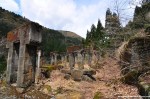
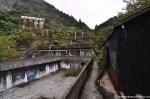
At its zenith about 1,500 people worked at the Tsuchikura Mine, sadly there is nothing left of the mining town surrounding it. All there is to see today is a couple of concrete constructions on a steep slope and a roofless house towards the top of it – probably the previously mentioned sifting plant, once wainscoted by wooden buildings. (If you are interested in some old photos please *click here* – the text there is in Japanese as this is the first time somebody writes a bit more about the Tsuchikura Mine in English on the internet.)
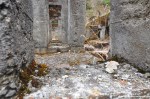
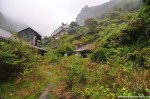
Exploring the abandoned leftovers of the Tsuchikura Mine was pretty easy thanks to its popularity. The place consisted of several “floors” with concrete fluid reservoirs and brackets for conveyer belts which looked a bit like Stonehenge. Since quite a lot of people seek to get up there nice explorers installed ladders and lots of ropes. People in decent shape and free from giddiness should have no problems to make it up the slope and enjoy a nice view down on the remains and the rather narrow valley. In comparison to the *White Stone Mine* and even the *Iimori Mine* the Tsuchikura Mine was rather boring, but it offered some nice angles and interesting views to take pictures of – and if you are lucky you will meet a photographer and their cosplay models… (Abandoned mines are popular amongst certain niche photographers. You know, production value!)
(If you don’t want to miss the latest article you can *follow Abandoned Kansai on Twitter* and *like this blog on Facebook* – and of course there is the*video channel on Youtube*…)


Read Full Post »

Pretty much a year ago, a couple of weeks after we explored the *Love Hotel Gion* and the *Biwako Tower & Igosu 108* together, I met up again with my haikyo buddies Andrew and Damon. Our goal was a mine in the mountains on the border between Shiga and Gifu, but we got distracted pretty quickly.
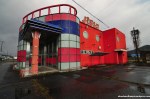
Andrew was driving along the highway when Damon spotted a big red building that looked abandoned. We turned around only to find out that the place was not only abandoned, but a pachinko parlor. 2 months prior, while on the road with Jordy, I was able to explore an example of this oh so typically Japanese kind of entertainment location in Shikoku called *Big Mountain Pachinko Parlor* – this time we stumbled across the abandoned K-1 Pachinko Parlor.
While entering Big Mountain was a piece of cake it took us a while longer to enter K-1, but after a couple of minutes we found a way in. Against all odds and to our total surprise K-1 was in similar good shape as Big Mountain. Usually abandoned pachinko parlors are boarded up and / or looted and / or vandalized. K-1 showed some signs of all three factors, but none of them to a point where it hurt the atmosphere severely. When I wrote about Big Mountain I wrote quite a bit about pachinko in Japan in general (and its importance for North Korea), so if you are interested in that kind of background information then *please look here*.
While Jordy and I were in quite a hurry and squeezed Big Mountain between the hotel *shangri-la* and the *F# Elementary School* Andrew, Damon and I were able to took our time – this time we were even able to explore the upper floor Jordy and I missed in Tokushima. Coming up the stairs I found something that made me laugh out loud: Next to a page from a Japanese porn magazine lied a gripper – you gotta love the local humor! (Or was it North Korean humor? Who knows…)
The first room we entered upstairs was the main office / surveillance room. Three big monitors once hooked up to security cameras were still in place, and so was the big safe. Business cards, prizes, furniture and other stuff were scattered all over the floor, making the room quite a mess. The kitchen across the hallway on the other side was in pretty immaculate condition and looked like it was just left the other day. I’m not exactly sure when the K-1 Pachinko Parlor was closed, but judging by the calendars and train schedules on the walls it must have been around summer 2003. (Outside on the building was still a big sign from a real estate company trying to sell the thing – if you want me to make contact for you let me know!)
The hallway itself was pretty cluttered, too. We found some pretty big shoes and lots of porn, magazines as well as videos, in one of cabinets. What is it with porn in abandoned buildings? There seems to be a mysterious connection…
Most of the other rooms on the upper floor were actually living rooms / bed rooms. Some of them looked like they were ready to use, others not so much. One of them was stuffed with countless pachinko machines and spare parts. Also worth mentioning was the relaxing area out on the flat roof. There we found a couch, a table and a TV outside. Since it was snowing I’m sure all items were useless at that point, but I could clearly imagine some exhausted pachinko parlor employees far away from home sitting outside after a tough day of work, chilling with a chilled beer, enjoying their off-hours on a nice spring or autumn evening; you know, living the life!
Before we left heading for the mine we explored a small building across the parking lot of the K-1 Pachinko Parlor. In my article about Big Mountain I explained how the pachinko balls people win are exchanged for prizes since gambling is rather strictly regulated in Japan. Those prizes usually are getting off at “pawn shops” near the pachinko parlor – and the building on the parking lot most likely was one of those pawn shops. It was accessible, but completely gutted and therefore totally unspectacular. Nevertheless it was nice to have seen one of those shops, just to make the experience complete…

(*Like Abandoned Kansai on Facebook* if you don’t want to miss the latest articles and exclusive content – or subscribe to the *video channel on Youtube* to receive a message right after a new video is online…)


Read Full Post »

The White Stone Mine (also known as the White Limestone Mine, the Fujiwara Mine, and the Shiraishi Mine – I guess it can be read Shiroishi Mine, too…) is one of the most famous abandoned places / haikyo in Japan. For years people seemed to be quite vague about its location, but ever since GoogleMaps offers high-res satellite photos of the area pretty much everyone can confirm the whereabouts after a bit of research – when I first heard about the White Stone Mine 2 years ago all I saw was a greenish brown mush 4 hours away by train, plus another 70 to 80 minutes by foot. Not worth the hassle, especially since I had many 100% confirmed places rather close-by back then. And I was still an urbex noob after all. In autumn of 2010, almost a year after my discovery, Michael Gakuran told me that he wanted to revisit the mine with some friends of his and asked me if I wanted to tag along. Michael and I met twice before for some explorations and it was always great fun, so I didn’t hesitate a second to join the small group.
When I started me trip to the middle of nowhere the weather was great – sunny, 15 degrees Celsius, a nice autumn day. When I arrived at the train station to meet Michael and his friends, a couple of stations before the terminal stop, the weather was still nice. Then we drove towards the mountains and all of a sudden the weather turned. Cloudy… grey clouds… When we finally reached the mine at around 12.30 (traffic can be a trial of patience in Japan…) it started to drizzle – of course I didn’t bring an umbrella. But well, after almost 6 hours I was standing in front of the biggest mine I’ve ever been to and I was looking forward to finally take some photos.
The White Stone Mine is gigantic! Close to three dozen buildings spread across an area of about 500 x 100 meters. Despite its size there is not much known about the Shiraishi Mine. It was founded by two brothers in 1921 and mining ended in 1969, supposedly after severe damage from a typhoon; the last office on the premises shut down in 1974. But the White Stone Mine was not only a limestone mine, it was also a huge chemical plant with facilities to extract calcium carbonate – a very important base substance for the paper industry. I guess in Japan calcium carbonate is mostly used for construction materials (especially cement), but also for the purification of iron in a blast furnace (at least when the White Stone Mine was still in business). Japan’s cement industry is actually huge – Japan still is the #5 consumer, #4 producer and #3 exporter of cement in the world. Japan’s coast line is famous for its sheer endless amount of concrete tripods and when you go hiking you can see surprisingly many concrete roads in the middle of nowhere – it seems like politics and the cement industry are heavily intertwined…
Exploring the White Stone Mine was exciting, sadly we were running out of time quickly. The sun goes down early in Japan, especially on a late October day in the mountains, even more so when it’s raining. Michael was a great experienced guide who was able to point out some of the best and the worst spots of the gigantic area quickly. An area I saw maybe 30% of. Although the mine was abandoned about 40 years ago it seems like there’s still somebody taking care of the premises: Michael pointed out differences to what he saw half a year prior (tarps covering wooden buildings here, new “Keep out!” signs there…) Although we kind of rushed through the lower area of the mine it already got dark by the time we reached the big silos up the slope. When we got back to the car it was already pitch-black outside and raining heavily. Nevertheless it was a great trip and totally worth the long train ride. A train ride I have to do again one day to explore the other 70% of that gorgeous mine… To be honest, I think it will take at least a full day to explore the whole area, maybe two or three days to shoot the whole mine properly. I doubt I’ll have time for that, but the White Stone Mine is definitely one of the few places I would really like to revisit! Even for (half) a day…
(If you don’t want to miss the latest article you can *follow Abandoned Kansai on Twitter* and *like this blog on Facebook* – and of course there is the*video channel on Youtube*…)


Read Full Post »

Haikyo HDR photos or not… that was a big questions two years ago.
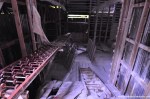
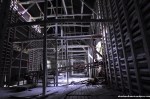
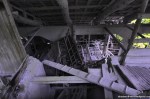
From the start I wanted to keep Abandoned Kansai simple. A blog instead of a homepage, photos directly out of the camera instead of massive post production – resize to 1024*680, URL in the lower right corner. That’s it. No cropping, not filters, no nothing. I actually shoot in JPG, for almost two years not even in the highest resolution. All the photos published on Abandoned Kansai are done that way. After some positive comments I started to take a few photos in NEF, just in case; maybe 2 or 3%, not one of them I ever opened. When I got a tripod, I started to use the bracket function of my D90 at maybe every fifth location – again just in case. After a while I played around with a freeware HDR program, just for fun. While I like the aesthetics of tone-mapped HDR photos I still consider them mostly a gimmick. Nevertheless I decided to publish some of my experiments – below are two samples, *for more haikyo HDR photos please click here*.
(Updates will be announced on *Twitter* and *Facebook*, not on the main page.)

Read Full Post »

# What is Nara Dreamland?
– Nara Dreamland is an abandoned amusement park in Nara, Japan. It was closed in 2006 and abandoned without getting demolished – which makes it quite a unique urbex location since all the roller coasters, merry-go-rounds, souvenir shops, arcades and other attractions are still there. (Although it’s up for discussion if the place is really abandoned. It’s closed, that’s for sure, but the owner of the park obviously still cares about it to some degree…)

# Where is Nara Dreamland?
– That’s the kind of questions I usually don’t answer. But since NDL has entries in four language versions of Wikipedia, three of them giving away the exact location of Nara Dreamland, I can as well link to *my own map at GoogleMaps*. The address was / is:
Nara Dreamland
1900 Horen-cho
630-8113 Nara
But just because you know where it is I wouldn’t recommend going there. You might wanna read the next question(s) before rushing out…

# Does Nara Dreamland have security?
– YES! Some people got lucky and didn’t run into security at Nara Dreamland, I got away with plugged feathers – others got roasted and served to the police. The whole park is surrounded by fences, most parts with spikes and / or barbed wire. Warning signs once asked people to call the police if they see somebody suspicious, now the latest signs I saw announced a fine of 100.000 Yen, about 950 Euros / 1300 Dollars! Furthermore there were reports that the guy patrolling there tries to blame caught trespassers for vandalism to get more money out of them. And vandalism becomes more and more of a problem…

# Is there any vandalism at Nara Dreamland?
– Sadly yes. Lots of it. When I explored Nara Dreamland for the first time in December of 2009 there were barely any signs of vandalism. Almost two years later there are graffiti at the former pachinko parlor at the Eastern Parking Lot. The Parking Garage’s staircase is completely sealed now and the Hotel is boarded up again. Inside the park you can see how people smashed the control station of a merry-go-round – the fire extinguisher still on top of broken glass. The Main Street USA clone with all the souvenir shops has barely any undamaged windows and several doors were kicked in, even of buildings that were clearly just a false front. It’s actually pretty sad how fast the place goes down the drain – especially since the graffiti people took over; and not the good ones…

# I’ve heard Nara Dreamland is a rip-off of Disneyland in Anaheim. Is that true?
– Definitely. Disneyland was opened in 1955, Nara Dreamland followed in 1961. You have copies of the Sleeping Beauty Castle, Adventureland, Main Street USA, Autopia, Skyway, Tea Party Cup Ride, Submarine Voyage, Flying Saucers, the monorail, the fire station, a pirate ship, double decker omnibusses, vintage cars, and a train station (called DreamStation). Even the entrance looked the same! Of course the layout of the park was very similar – aerial shots make them look like twins. And of course there is the story of Kunizo Matsuo, the man behind Nara Dreamland.

# Can you tell me more about the history of Nara Dreamland?
– Sure. After World War II Japan’s industry was booming. People worked hard and needed some places to relax. The United States were not only occupiers, but also the helping hands for the reconstruction of the country – and the new role models. In the second half of the 1950s a Japanese businessman called Kunizu Matsuo, president of the Matsuo Entertainment Company, visited the States and the brand-new amusement park Disneyland in Anaheim near Los Angeles – and was quite impressed. Something like that would be perfect for Japan, he decided. He became a mediator for the Japanese Dream Sightseeing Company (JDSC) and had direct contact with Walt Disney. The plan was to bring Disneyland to Japan – not to Tokyo, but to the old capital Nara (710 – 794), the cradle of Japanese culture. Matsuo also was in direct contact with Disney’s engineers to create the Japanese version of Disneyland. But Nara Disneyland never came true. Towards the end of the construction phase JDSC and Disney couldn’t agree on license fees for all the famous Disney characters like Mickey Mouse, Pluto, Donald Duck and Goofy – so the Japanese side created their own mascots and abandoned the idea of Nara Disneyland. I have no idea how JDSC and Disney settled in the end (I’m sure JDSC had to pay quite a bit of money for Disney’s “help” even without getting the permission to use Cinderella & Co.), but while Nara Dreamland opened in 1961 it took Disney another 20 years to finally open Tokyo Disneyland on April 15th of 1983. Coincidentally (?) this year marked the beginning of the downfall for Nara Dreamland – the number of visitors began to decrease and JDSC including Nara Dreamland was bought by the supermarket chain Daiei in 1993. Eight years later, in 2001, Universal Studios Japan (USJ) opened in Osaka, just about 40 kilometers away. USJ annihilated Nara Dreamland and the once so glamorous place was forced to shut its doors on August 31st of 2006.

# What were the names of the mascots at Nara Dreamland? And are there famous non-Disney characters present at Nara Dreamland?
I’m sorry, but I have no idea about the mascots. All I know is that there are two of them, a male one and a female one. I don’t even know if they had names…
As for other characters: There are no specially themed rides, but Anpanman is pretty visible at Nara Dreamland. (In case you don’t know Anpanman: He’s the most popular fictional character amongst Japanese age 0 – 12 for 10 consecutive years. Anpanman was created by Takashi Yanase in 1968 as a manga character, but spread to other media quickly (including movies, animated shorts, a TV show and dozens of video games). Nowadays Anpanman is everywhere – imagine Hello Kitty, but popular with girls and boys…)

# Why was Nara Dreamland closed?
– A declining amount of visitors for many, many years – and most of all Universal Studios Japan. By the time USJ opened in 2001 Nara Dreamland already was a rundown theme park decades after its prime. Universal Studios Japan on the other hand was brand-new and high-tech, probably the most modern amusement park of its time. Tokyo Disneyland started the struggle (yes, even though 400km away TDL was direct competition for NDL!) and Universal Studios knocked it down – Nara Dreamland didn’t have a snowball’s chance in hell… (Surprisingly enough *Expoland* in Osaka wasn’t affected that much by USJ and closed mainly because of bad press after a 19 year old university student from Shiga prefecture died on a roller coaster in 2007 – and Hirakata Park (also known as HiraPa – ひらかたパーク / ひらパー) between Osaka and Kyoto still doesn’t show any signs of giving up…)
At the height of its success Nara Dreamland welcomed 1.6 million visitors per year, when it closed the number was as low as 400k. Universal Studios Japan on the other hand had 11 million visitors (!) in its first year of operation…

# What was Nara Dreamland’s main attraction?
– Nara Dreamland’s main attraction was (and still is!) the Aska roller coaster (木製コースターASKA, Mokusei kōsutā ASKA), a wooden coaster built by Intamin and opened in 1998. The track was 1081 meters long and reached a height of 30 meters. The trains consisted of seven waggons for four guests each (two rows with two seats). They reached a speed of 80 km/h (almost 50 mp/h) and accelerated with up to 2.8g. Aska is named after Asuka, a city close to Nara – from 538 to 710 it was the capital of Yamato, one of the earliest states on Japanese ground, and the location of many imperial palaces as well as important temples and shrines, some of them still in existence today.
I took a video walking along parts of the abandoned Aska roller coaster – you can check it out on *Youtube*.

# Was it expensive to visit Nara Dreamland?
– The signs at the abandoned Nara Dreamland indicate that it was a pay-as-you-go amusement park (as was Disneyland when it opened in 1955!) – which means that you had to pay a low entrance fee, but then additionally for every single ride. So basically it was up to you how much you spent there. Sadly I never paid much attention to the prices, so let me have a look at some photos and see what I can come up with… Parking was 200 Yen for bikes, 1.200 Yen for cars and 2.000 Yen for busses. Bobsleigh (ボブスレー), the steel roller coaster modeled after Disney’s Matterhorn Bobsleds, was 600 Yen and a haunted witch cave put a hole of 300 Yen in your pocket. As for food: A beer was 500 Yen, chuhai was 400 Yen, takoyaki were 300 Yen, yakisoba was 400 Yen and the Family BBQ Set was 3.200 Yen. I don’t know how much the entrance fee was, but if you get caught by security now it costs you a whopping 100.000 Yen!

# I’ve heard there is a Yokohama Dreamland. Is it related?
– Well, there was a Yokohama Dreamland – it operated from October 1st 1964 to February 17th 2002 and closed, not really surprisingly, because of financial issues. It was located in the Totsuka ward of Yokohama. Unlike Nara Dreamland it was completely demolished – and replaced by a prison. And to finally answer the question: Yes, it was the sister park of Nara Dreamland with a similar layout, similar attractions and the same branding.

# Is there an official homepage?
– There was: http://www.nara-dreamland.co.jp/ (I didn’t make it clickable as it doesn’t work anymore anyways – save your time…)
You can find a copy *here*. (2003, Japanese only)

# How often have you been to Nara Dreamland?
– Never when it was still open and 5 times since it was closed.

# Do you have any plans to go back?
– Concrete, solid plans? No. Security there is the main reason for me not to go anymore. I know people visited the place without getting caught, but I made my own experiences and they were not all pleasant…

# Have you written more articles about Nara Dreamland than the one I’ve just read?
– Well, I summed up my experiences in the *Nara Dreamland Special*, but the articles I wrote about Nara Dreamland are in chronological order:
Getting Caught By Security
Nara Dreamland
Eastern Parking Lot And Parking Garage
Nara Dreamland Hotel
Nara Dreamland Revisited – Nighttime
Nara Dreamland Revisited – Daytime
Nara Dreamland – Nara Snowland
Nara Dreamland – Third Time Lucky
Nara Dreamland 2015
Nara Dreamland 2016
Nara Dreamland – 10th Anniversary
Nara Dreamland – Demolition

If you are less into facts about Nara Dreamland and you rather want to more about what it’s like to explore this abandoned theme park I recommend reading the articles I’ve just mentioned.

# Do you have material for more articles about Nara Dreamland?
– Yes! As of August 2014 I have material for about half a dozen articles, including some very unique photos…

# Is there a place even creepier than Nara Dreamland?
– Yes! It’s a half-abandoned amusement park called *People’s Park* – thanks to the constant music in the background and its nude statues it’s creepy as heck!

# What about that killer robot called Mascot 6-22? Is it really roaming Nara Dreamland?
– Killer robots at Nara Dreamland?! No, this is not another *April Fool’s joke*, this is the internet!
Nara Dreamland has been kind of my backyard for the past five years and I thought I’ve heard pretty much all stories about it… until one of Abandoned Kansai’s regular readers, Justin, asked me about the fully animatronic Mascot 6-22 in a private message via *Facebook* – and I had no idea what he was talking about. I did some research and there seems to be a theory out there in the depth of the internet, that Disney created Nara Dreamland to find out whether the fake park would be popular enough to justify the construction of an official Disneyland; which happened more than 20 years later. As if that wouldn’t be ridiculous enough, somebody claimed that the official new mascots were not poor students in poorly tailored costumes, but in fact robots – and that series 6, unit 22 was so special, that they didn’t turn it off, but let it roam freely in the park after it closed in 2006, defending a solar power station and giving everybody who tries to deactivate him an electric shock. But that’s not all! Some people actually seem to believe that the Japanese military asked Disney if they should take out “Mascot 6-22”, but they declined as the thing was showing interesting program adaptations.
Seriously, what the heck? The whole story is so ridiculous I won’t even spend the time to point out all the things that are wrong with it! Yes, I know, both the origin and the end of Nara Dreamland are somewhat in the dark, but come on, people… that’s a bit much, don’t ya think?

# I’ve heard that Nara Dreamland has been sold in late 2015. Is that true?
– Yes, that’s true. It seems like the previous owner owed the city of Nara 650 million Yen in ground tax, so the city foreclosed Dreamland and sold it to the only bidder for 730 million Yen – a real estate company called SK Housing. What plans they have is unclear though, because there are strict limitations on how the land Nara Dreamland is on can be used in the future…

# What are those strange noises I can hear at Nara Dreamland?
– If the noises are not coming from one of the nearby sports arenas, they are most likely caused by ushigaeru (ウシガエル) a.k.a. American bullfrogs. They freaked me out the first time I heard them in 2010, because they sounded like somebody opening a heavy metal door / gate…

If you have any unanswered questions about Nara Dreamland please let me know – I might update this posting every once in while. A lot of the information given here was only available in Japanese so far, some stuff I came up with by actually going to NDL – so if you use material for your own articles please be so kind and mention / link to this FAQ. Thanks a lot!

All of the following photos were taken in 2009 and 2010, most of them previously unpublished. The photos I took later will be published in two separate articles at some point in the future.
(If you don’t want to miss the latest article you can *like Abandoned Kansai on Facebook* and *follow this blog on Twitter* – and of course there is the *video channel on Youtube*…)
Read Full Post »

« Newer Posts - Older Posts »