Feeds:
Posts
Comments

Archive for the ‘Chūbu’ Category

A lot of Japanese people are very proud of their country’s distinctive four seasons – summer, autumn, winter and spring. Yet a lot of them mention a fifth season, which explains why they are not very proud of their math skills… rainy season. Rainy season is a period that lasts for about two to four weeks, usually starting in early or mid-June, turning most of Japan (especially Honshu, Shikoku and Kyushu) into a humid hellhole for about three months. Personally I don’t think Japan has four seasons as it stretches too much for a general statement like that. Okinawa definitely doesn’t have a winter, and in my personal experience, Osaka has only two seasons: “Kind of nice” and “unbearably hot and humid”.
The period of rather intense rain began early this year, in the first week of June, starting to turn Osaka into a sticky place where you don’t want to wear any long clothes or do anything that requires even the slightest effort. Luckily my friends Dan and Kyoko weren’t eager to stay in Osaka either, so I planned a nice little weekend trip to Shikoku… which I had to re-plan after the weather forecast changed – Chubu instead! (Chubu is one of eight major regions in Japan, basically the central part of the main island Honshu between Nagoya and Mount Fuji)

Three days later I found myself sweating like pig hiking up a mountain in Shizuoka prefecture. A couple of minutes prior we passed through a small village on the slope, located in the middle of nowhere, where only one old lady was living, at least part time – she and her husband were tea farmers, but he passed away a few years ago, so she takes care of what is left; everybody else had died or moved away many years before…
We escaped Osaka’s rain and humidity, but central Japan’s countryside was surprisingly warm for early July. The hiking trail us three were on connected the hamlet with its school, closed in the late 70s and officially abandoned in the early 90s. Why it wasn’t built directly next to the settlement is beyond me, but farm land was probably more valuable than the place for an elementary school; and so the kids had to hike up that mountain every day, an elevation gain of almost 100 meters! Even after 30 years the path was clearly visible, yet partly overgrown and covered by several layers of foliage, making it a rather slippery climb these days. I was taking another break enjoying the beautiful surrounding and silence, when I heard Dan from above: “The school is up here!”

A few minutes later I saw the school near the top of the mountain myself – a surprisingly big wooden building with a living quarter annex; probably for a teacher or two to live in. The main building consisted of two classrooms and an office (all wooden floors), plus a tatami room right next to the office. Outside was a small playground with a slide and leftovers of some swings and a soccer goal. And there was a shrine with a wooden building, empty according to the old lady…
What made the Shizuoka Countryside School quite special was its authenticity. While a lot of “abandoned” schools in Japan are still maintained by the local community (like the *Kyoto Countryside School*), it was pretty clear that this wasn’t the case here – yet there were barely any signs of vandalism, with small exceptions like the pink painted nipples of the female gypsum bust or the smashed wooden metronome. There were signs of visitors though – not only did I find a Sony lens cap in the grass, you could see that certain items were staged for photos and that some explorers crashed through the wooden floors when they were not cautious enough. Most of the rooms had plenty of interesting items left behind, like a chair and table combination, a table tennis plate, books, posters, chalk, and whatever you think should be at an abandoned countryside school – considering that it was basically a two room school I think it was rather well equipped and I really loved some of the tacky items, like the National manufactured red record player. The icing on cake, of course, was the location itself. Near the top of a mountain, with a shrine next to it, on a lovely late spring / early summer day… quite magical. Sadly I had to share one of the rooms with a suzumebachi a.k.a. Giant Asian Hornet. There are a lot of them at abandoned places these days and usually I avoid them, but in this case that would have meant not taking pictures of one third of the school. Half the time it was trying to leave through a window and failed, half the time it was flying around the room, causing me to hastily leave. After a few rounds of hide and seek I got most of the shots I wanted to take and called it a day.

Just getting out of Osaka for another two days was a blessing, exploring an abandoned countryside school in good condition and being able to share that with friends… priceless!

(*Like Abandoned Kansai on Facebook* if you don’t want to miss the latest articles and exclusive content – or subscribe to the *video channel on Youtube* to receive a message right after a new video is online…)

Read Full Post »

Sex sells. Especially in Japan. Well, sex and quirkiness sell in Japan – and the latter one actually a lot more, at least in advertising. But despite having one of the lowest birth rates in the world (220 out of 224 according to the CIA World Factbook), Japan is obsessed with sex. Not at first sight though. At first sight the country is all about temples, shrines, concrete buildings and neon lights. But if you dig deeper and have an eye for details, you’ll understand why Japan is famous all around the globe for bondage, tentacle sex, bukkake, (the not existing) worn underwear vending machines, *love hotels* (that alone is a 50 billion USD business!) and the borderline child pornographic lolicon – not to forget the *quirky sex museums*!
Mostly untouched by puritan Christian morals for centuries (until Japan sucked up to the West during the Meiji Restoration and succumbed to the Allied Forces in 1945) today’s Japan is widely oversexed and underfucked, a prime example being the co-called herbivores; young men with “a non-assertive, indifferent attitude towards desire of flesh” according to freelance writer Maki Fukasawa, who coined the term in 2006. Yet there is this 50 billion dollar love hotel industry… Which makes Japan the North Korea of sex lives – mysterious, full of contradictions and with some serious amount of covered-up pain!

Anyway, let’s focus on the century old traditions for now – one of them being the Hōnen Matsuri (or hounen matsuri, 豊年祭), literally the „prosperous year festival“, celebrating the blessings of a rich harvest and all kinds of prosperity and fertility in general; and for promotional reasons often called penis festival, because… well, sex sells better than harvest and fertility. Who cares that it is actually not the phalli that are worshipped, but the power of the earth to regenerate? Symbolized by penises, because… well, probably nobody would travel for hours to look at a pile of dirt being carried through a small town.
Like the number of sex museums in onsen towns, the number of those fertility festivals is declining, the most famous one being celebrated at the Tagata Shrine in Komaki, a suburb of Nagoya, just a short walk away from Tagata-jinja-mae Station. (There are also similar festivals in Kawasaki on every first Sunday in April (Kanamara Matsuri at the Kanayama Shrine) as well as the slightly less phallic Bonden Matsuri in mid-February in Yokoteand and the Kawatari Bonden Matsuri in mid-May in Tagawa.)
The exact history of the Tagata Shrine and the Honen Matsuri lie in the dark, but it is assumed that shrine is more than 1500, the festival at least 650 years old.

Last year the Honen Matsuri started at around 10 a.m. at the Tagata Shrine with some preparations and celebrations, including the usual array of festival food stands. While chocolate bananas are popular at public festivals all over Japan, you can imagine that they sell especially well at a penis festival – especially at those stands going the extra mile by carving the tip of the banana and adding two marshmallows to the bottom. Sex sells, especially at a phallus festival! And of course 95% of those bananas were used as accessories for photos before being eaten… and so were tons of other penis shaped items for sale, like candy dicks and phalli carved out of wood.
At 1 p.m. celebrations began at the Kumanosha with the blessings of the procession participants as well as the portable shrines (mikoshi, 神輿 or 御輿) and the gigantic wooden penis (280 kg heavy and 2.5 meters long) carved out of a cypress. At 2 p.m. the parade to the Tagata Shrine started there, lead by chanting priests carrying banners and followed by a demon called Tengu; musicians playing traditional gagaku music also join the procession. And if a gigantic wooden penis carried by chanting and dancing men wouldn’t be enough to go nuts, the centerpiece was accompanied by countless helpers handing out free snacks and sake to everybody who wanted a cup… or two! Traditionally clothed women carrying 60 cm long wooden phalluses proved to be extremely popular amongst the watching crowd, altogether thousands of people. All of those women were 36 years old, which is considered an unlucky age that requires spiritual intervention. (The men carrying the giant phallus were all 42 for the same reason.)

The parade was supposed to arrive at the Tagata Shrine at 3.30 p.m. in 2013, but with all those happy people it took a little bit longer, so the who schedule was delayed by about 20 minutes. At around 4 p.m. people came together at a central square of the shrine, where the mochi nage was about to begin; a rice cake throwing ceremony, in which the crowd was showered with special mochi. You might know table lychee sized mochi as small soft sweets, but those at the festival had the consistency of clay and looked more like a big dumpling with the diameter of a CD – nevertheless the crowd went crazy over catching one of them. Sadly I have to say that this was mainly the fault of the countless foreigners attending the festival. While most Japanese attendees kept standing in place just trying to catch one of the dangerously heavy sweets thrown by officials from elevated platforms, a lot of the foreigners kept pushing and shoving; some even starting arguments. It was quite embarrassing to watch, to be honest – just because you’re at a penis festival doesn’t mean you have to act like a dick! (Officials actually asked women, children and elderly several times to leave the area to avoid getting hurt by the impact of the rice cakes or the rest of the crowd!) In the end there were rice cakes for maybe one in four people, yet when the ceremony was over, I saw single foreigners with up to seven of them, some of them carrying them in plastic bags… (It was also very apparent that the amount of foreigners attending the festival was a lot higher than the nationwide average of three percent.)

When the mochi nage ended, so did the festival – most people hurried to the nearby train station, others (like myself) had a last minute snack… or got their injuries treated at one of the ambulances. Most people who were actually there for the serious aspect of the festival, not the spectacle, prayed for successful pregnancies and bought good luck charms in the morning, but the shrine continued to offer those services to the remaining guests, while about two dozen helpers stored the gigantic wooden penis in the main shrine…

But why in the world did I write this report now, after spending several weeks on writing about North Korea? Because the Honen Festival is held every year on March 15th, which means that the next one will be in less than two weeks from now – just in case you are in Japan and interested in joining. Going last year I actually had to take a day off to attend as the 15th was a Friday in 2013, but that also means that the Penis Festival will be held on a Saturday in 2014 and on a Sunday in 2015; which won’t hurt the numbers of people joining for sure!

Finally a word of warning – the following photos and videos will show quite a few phalli, but there is absolutely nothing pornographic about them. Traditional? Yes! Commercial? For sure! Artistic? Definitely! But not pornographic… Enjoy!

(*Like Abandoned Kansai on Facebook* if you don’t want to miss the latest articles and exclusive content – or subscribe to the *video channel on Youtube* to receive a message right after a new video is online…)

Read Full Post »

All of the photos I publish with articles on Abandoned Kansai are without any form of enhancing post-production – I don’t even crop them; they either look good or they don’t. Every once in a while I like to play with an HDR tool or two. I wouldn’t call those photos enhanced or improved, I would barely call them photos anymore. That’s why I created a sub-page for them in the background. Today I added ten more of those little artworks to that page. *Please click here to have a look!*

Read Full Post »

I love the Toyoko Inn hotel chain in Japan. Their prices are fair, they are located right next to bigger train and subway stations, they offer free breakfast from 7 till 9.30 and free WiFi / internet 24/7, their staff usually speaks at least a little bit of English, they have a discount and point system for members – and you can make online reservations via their English homepage.

One reason I was hesitating to go on a trip *as mention in the previous blog post* was the fact that I was in-between credit cards for a couple of weeks. (In my experience it’s close to impossible for foreigners to get a credit card in Japan – but I am looking forward to the comments of every expat who got one… I know people who were rejected more than half a dozen times, I tried it once or twice and then got one in Germany…) But you need a credit card to make an online reservation at a Toyoko Inn – or so I thought.
When it was clear that I would spend the first night of my trip in Nagoya I stopped worrying. Last weekend wasn’t a typical time to travel in Japan (unlike *Golden Week*) and Toyoko Inn has six hotels in Nagoya, eight if you count the ones close to the airport – I was sure I would get a room somewhere. So the plan was to show up at one of them and ask the staff to make a reservation for me for the second night, which I planned to spend in Matsusaka – a town famous for its high quality beef, which turned out to be more dead then the cows it is famous for.

Luckily my plan was a good one, so I checked in at the hotel of my choice in Nagoya and asked the staff to call their sister hotel in Matsusaka to get me a reservation for the following night since I didn’t have a credit card. The friendly lady at the counter pointed to the opposite wall across the lobby and asked me to use the internet to make the reservation myself. I repeated that I didn’t have a credit card and therefore couldn’t make the online reservation. The answer was “You don’t need a credit card to make an online reservation.” – so I told her that I needed one when I tried to make one the night before. Since the hotel receptionist insisted that I wouldn’t need a card and was eager to show me that she was right we started the procedure on their English homepage – as usual. Another guest arrived so I filled out the form, scrolled down and… there it was, the section for the credit card information. I left it blank, tried to continue and of course it didn’t work and I got an error message. When the receptionist showed up again she seemed to be very surprised, switched the language settings of the homepage to Japanese and… finished the reservation without having to enter credit card information! She didn’t even have to log out / start the procedure from the beginning, she just switched the language settings and pressed a button to finalize the reservation.

I totally understand that hotels need some kind of security when people make online reservations and that’s the reason I never had a problem entering my credit card information when making an online reservation at a Toyoko Inn, 15 times for trips in 2012 alone. In fact they don’t charge your credit card and you can pay cash upon arrival, it’s just a security measure for no-shows, which I completely understand. Nevertheless I am kind of irritated by the fact that you have to put in your credit card information when you make the reservation in English, but not when you make it in Japanese – to me it implies that Toyoko Inn considers people who prefer to make reservations in Japanese more reliable than people who make reservations in English; which could be considered borderline racist. Again, I understand that (most) online hotel reservations require credit card information. But either it’s a general requirement for Toyoko Inn or not – doing it on the basis of the language chosen on the homepage feels wrong to me, as it means that not all customers are treated equally.

What do you think? „WTF?“ or “WTF!”?

(To end this posting on a lighter note I’ll add some non-urbex photos and videos I took during my three day trip. Inuyama Castle, Tagata Shrine Festival, Mount Gozaisho, Yunoyama Onsen, Toba, Iruka Island, Ise Shrine, … If anybody is familiar with dolphins please have a look at the video and let me know what you think – to me it looks like the poor creature was desperate to get away as it repeated the same motion at the “prison gates” to the ocean over and over again; I didn’t watch any shows on the island and didn’t spend any money there – Iruka Island (iruka = dolphin) was an optional stop on a harbor cruise I took in Toba.)

Read Full Post »

One thing Japan is famous for all over the world is its bathing culture – which is hard to believe if you ever had to spend some time on a rush hour train…

While surprisingly little of Japan’s vast coastline is used for swimming (due to pollution, rocky shores or cement tetrapods) there are three different main terms to describe Japanese baths:
furo (風呂): usually the polite form “ofuro” is used for this traditional wooden bathtub
onsen (温泉): hot spring, sometimes translated as spa, especially when part of a hotel, ryokan (Japanese inn) or minshuku (Japanese bed and breakfast)
sento (銭湯): communal bath house – onsen and ofuro can be part of a sento

The use of those three terms can be confusing at times. While (o)furo technically describes a bathtub (traditional ones made of wood, modern ones made of plastic) with steep sides of about 60 cm height used for a relaxing soak at 38°C to 42°C after (!) you cleaned yourself, it can also be used for the public bath at a gym – although those baths fit more what is describes by the term sento.
A sento is a communal bath with a locker room and a bathing area – gender separated! You get undressed and lock your clothes before you enter the tiles bathing area with a hand towel. Near the entrance you usually find small stools, buckets and faucets. There you sit down and clean yourself before you enter the bathtub, which can be tiled or wooden – and therefore resemble ofuro. (To see what not to do, watch the movie Mr. Baseball…) Modern sento also include small saunas similar to the ones you know from your home country.
Onsen are hot springs and the most famous part of the Japanese bathing culture. Indoor onsen look much like sento and their number is quite low – the vast majority and well-known to everybody even slightly interested in Japan are outdoor onsen, also known as roten-buro (露天風呂). The behavioral code at an onsen is pretty identical to the one at a sento – the main difference is that onsen are fed by natural hot springs, not by heated tap water; and that they are usually more luxurious and beautiful – dozens of countryside towns all over Japan are famous for their onsen resorts and a lot of places to stay charge several hundred bucks per person and night (including breakfast and dinner).

Personally I am not a big fan of ofuro, sento and onsen – mainly because the water is just way too hot for my taste. I’m sweating enough as it is in Japan thanks to the rather high humidity here. I really don’t need to soak myself in water that is higher than my body temperature. The other reason, to be honest with you, is the fact that you stick out there as a foreigner – and I am really tired of being stared at. It’s bad enough at the subway sometimes, even in a city like Osaka. Imagine you being the only foreigner in a countryside bath then… If I’d be the last man on earth and would show up in my birthday suit at the “World Congress of Nudist Nymphomaniacs” near a naturist beach of your choice – I couldn’t earn more stares that way! I get it, most Japanese men don’t have the opportunity to see a naked foreigner and they have an urge to find out if the cliché is true and everything is smaller in Japan, but come on! It’s really impolite…
(Fun fact: Most Japanese people don’t know that public bathes in Japan were mixed until the Meiji era (1868-1912) when the nation started to open to the west. Germany, especially the eastern part, has a long naturist tradition and when I tell Japanese friends that we have mixed nudist beaches and bathes in Germany they are totally shocked and claim that they would never go there since people must stare at each other all the time, which isn’t the case at all. Fact of the matter is that I get way more stares fully clothed on a train in Japan than naked at a beach in Germany…)

 Exploration

The Meihan Health Land technically was an onsen since it was fed by a natural hot spring, but it lacked most of the idyllic countryside aesthetics that come to mind when hearing the term – it looked more like a western spa trying to copy some Japanese flair. Located right next to one of the few free of charge highways in Japan and at least 30 minutes away by foot from the next train station it was clearly targeting the masses – families and busses full of tourists; a gigantic parking lot of more than 20.000 square meters supports that claim. The building itself, constructed in 1987 during the Japanese asset price bubble, was about 5.700 square meters big – it seems like it was the first “super sento” in Japan (or at least one of the first) and quite a lot followed. The Health Land closed 2 decades later with a renewal open planned for July of 2008 or 2009, but now it is on sale for 430 million Yen (currently about 3.5 million Euros / 4.6 million Dollars) – a sum it might have been worth right after it was closed, but a mere 2 years later, during my visit in November of 2011, it was already in abysmal condition.
The regular entrance fee for adults was 1300 Yen with an additional surcharge of 1050 Yen for guests staying overnight – yes, the Health Land was a 24/7 facility, offering loungers for tired guests. And of course the usual services like restaurants, shops, karaoke, …
Located in the mountains of Mie prefecture the running expenses must have been insanely high (considering that there is much isolation, but hardly any insulation in Japan…) and I am not surprised at all that the Health Land went bankrupt. I am surprised though how fast it fell into disrepair. The few photos I saw before exploring the place myself made me expect a super sento in good condition. What I found when I arrived with my buddy Hamish was a shock. From the outside the building still looked amazing, easy to see from far away thanks to two gigantic Chinese dragons on the top of the roof. The huge red lantern in front of the Health Land had seen better days, but the full amount of damage the place had suffered was only visible after entering.
The yakiniku (grilled meat) restaurant in the same building was smashed to pieces and so was the lobby of the former spa. There the ceiling was high, maybe 5 or 6 meters – nevertheless it looked like it saw an outburst of violence with damage far beyond anything natural decay could do within a year or two. I have no idea what happened there. Some of the damage, especially the water on both 1F and 2F, could have been explained by the holes in the roof – but how did those holes get into the roof in the first place? The place really looked like as if a supernatural force ripped it apart…
Next to the lobby we found a snack bar and deeper into the darkness of the building was a staircase to 2F as well as the separated bathing areas for men and women, both severely vandalized. The steam room of the men’s area featured some neat female nude drawings – drawings that attracted some homeless people, or at least one person. We found some belongings there, including a newspaper barely 2 weeks old..
Sadly the whole area, for both men and women, was smashed beyond recognition. Windows were kicked in, mirrors were broken, metal installations were ripped apart. Carpets and wallpapers were moldy and water was dripping everywhere.
The upper floor was in even worse condition. The restaurant area was only recognizable due to some signs, the former party room with a stage looked like it was vandalized and abandoned a decade ago. Pretty much all interior was either gone or smashed. Water and mold everywhere. Not really a pleasant exploration, but you never know in advance what you’ll find…
Like that taxidermy bull in some kind of concrete storage underneath the Health Land. We were already ready to leave when we found that half-overgrown door that lead into the building again… and there it was, a stuffed bull, covered by what looked from the distance like an Ostfriesennerz (“East Frisian Mink”, a yellow hooded heavy-duty medium-length PVC rain coat – and you thought German terms were long!). Of course it wasn’t the famous German clothing item, just a simple tarp. Nevertheless a neat find that put smiles on our faces, before we walked to the next train station; wondering how the Health Land could get into that kind of state so quickly.

(If you don’t want to miss the latest article you can *follow Abandoned Kansai on Twitter* and *like this blog on Facebook* – and of course there is the *video channel on Youtube*…)

Read Full Post »

After leaving the first location of the Kasuga Mine (*Kasuga Mine A*) *Damon*, Andrew and I continued to the second site – much easier to find, much easier to enter, much more popular on the internet. Not so much amongst foreign urban explorers in Japan, the more so amongst Japanese. Nevertheless hardly anybody is willing or able to share some hard data about the Kasuga Mine (not to be confused with the still active Kasuga Gold Mine in Kyushu!). One of the things I found out is that the Kasuga Mine was a dolomite mine. Dolomite is used in the production of magnesium (as a source of magnesium oxide) and as a concrete aggregate – sometimes it’s used as an ornamental stone, but its physical properties (hardness, cleavage) doesn’t make it very popular for that use; it was one of the materials though the *reactor at the Chernobyl Nuclear Power Plant* was filled up with after the catastrophe, so 25 years ago it probably saved mankind…

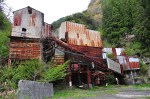
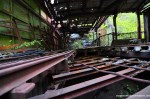
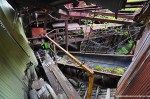
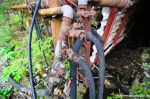
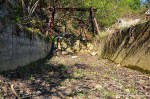
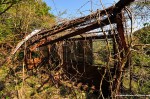
When we arrived at the second mine in Kasuga the sun was already pretty low and time was running out. The area was dominated by a huge complex made of steel and wood in rather questionable condition – this place was definitely abandoned. While I was cautiously taking photos Damon was fearlessly all over the place. At one point he was climbing through a collapsed building, not knowing if there was solid ground under the debris or not. He made it to the other side alive and found the entrance to a very old-style mine, so I was like “Screw it!” and followed him. Luckily I brought my flashlight, because it was dark in there – darker than a black steer’s tookus on a moonless prairie night. And luckily I was wearing hiking boots, because the water pipes in there were leaking. I know for sure, because I was able to take a photo of one of the leaks. Without a tripod. Modern digital cameras are wonderful!

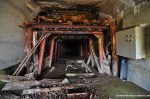
What we found was indeed a very old style mine shaft. Surprisingly spacious as I was able to walk upright for most of the time, nevertheless claustrophobic, especially the parts where the wooden support logs were rotting away and already collapsed. If you liked the video I took at the *abandoned Japanese Sex Museum* you will love the one I took at the Kasuga Mine. It felt like straight out of a survival horror game. And since the mine could have collapsed at any time I guess it really was like straight out of a survival horror game – we actually saw dead ends where it already happened. The absolute highlight was… Well, if you really want to know then watch the video, I won’t spoil it for you here. But what I saw made the Kasuga Mine a very memorable exploration! (That’s the reason why the videos are first this time – the photos will spoil the third video…)

Nevertheless I was very happy to leave this abandoned mine shaft. It just didn’t feel right. Back at the main building we didn’t want to overuse our luck and it was almost dark already anyway. And this is how the exploration of three abandoned mines on a single day ended – on a high note!

Read Full Post »

I love abandoned mines. Love them. And I can’t even say why. Maybe it’s the combination of brittle wood and rusty iron. Maybe it’s because I first got really interested in urban exploration when I was a university student and participated in a seminar that took place every two weeks at the Zeche Zollverein (in English known as the Zollverein Coal Mine Industrial Complex), which became a UNESCO World Heritage Site in December 2001. It’s probably because most of them are in the middle of nowhere, so nobody cares about them anymore. Or maybe it’s because they put the exploration in urban exploration…

After *Damon*, Andrew and I explored the *Tsuchikura Mine* in spring last year we continued to drive on countryside roads to go to another mine way less known than the rather famous Tsuchikura Mine – the Kasuga Mine.

“Kasuga Mine” is actually a collective term for several mines in the immediate vicinity of the small town of Kasuga, a former village in Gifu hardly anybody has heard of. This cluster of small houses and huts was so countryside that most roads were wide enough for only one car and so remote that GoogleMaps was completely useless locating any of those mines – luckily I was able to locate two of them otherwise.

The first mine we went to, I call it “Kasuga Mine A” for the sake of distinguishing it from the other one, still seemed to be active in parts, although we didn’t know that when we started exploring it. We found a clearly abandoned loading terminal halfway up the mountain. A gigantic conveyor belt on a steep slope indicated that there was more further up the hill. We climbed the slope and found the belt being fed by a metal construction at a wall at least three or four meters high. Why I’m more the cautious type loaded with photography equipment Damon is a honey badger with a pocket camera. Before I was even able to suggest finding another way up that climbing the ladderless metal construction he had already climbed it, Andrew (quiet and without a camera) right behind him. Slightly frustrated being left behind I made my way down over the overgrown stone steps back to the terminal. From there I continued walking up the mountain and, after ignoring a warning sign about poisonous snakes, I found the upper part of the metal construction and the entrance to a dangerously decaying mine – my fellow explorers nowhere to be seen. While I was still taking photos of the area Damon and Andrew came back and told me that this entrance is connected to complex of tunnels most likely still in use. They heard noises and turned around to avoid being caught. Not eager to run into trouble myself we decided to return to the main street (“main street”… funny… more like “dangerously narrow road in decent condition”) and to follow it on foot for a while. After a couple of 100 meters the road split – to the right was a chained off tunnel clearly still in use, to the left the road continued after warning signs letting people know that only authorized personnel is permitted hereafter. And at that moment a mini truck passed by going up the mountain. So we called it a day at this location and decided to continue to the other one. The sun was going down already anyway and we were running out of time…

Read Full Post »

In mid-December of 2011 the North Korean “Dear Leader” Kim Jong-il died coincidentally at around the same time I wrote my article about the abandoned *K-1 Pachinko Parlor* (about 30 to 40 % of Japanese pachinko parlors have ties to North Korea)  – and the whole North Korea thing came back to my mind. You know, my urge to visit North Korea being limited by my unwillingness to support the system by spending money on it.
I’ve been growing up in a divided country myself (Germany) and I’ve been fascinated by dystopian literature and movies as well as the aesthetics of run down architecture for about two decades, so I guess a certain interest in North Korea was only natural – especially when living in a neighboring country, Japan, for more than 5 years now.
Exploring abandoned buildings in North Korea will most likely be off-limits for quite a while; unless you are North Korean, of course, but I guess then you have other and more serious problems…
So what’s the next best thing when exploring abandoned North Korean buildings in North Koreaisn’t an option and pachinko parlors are too obscure? Right, you look for abandoned institutions once run by North Koreans close to where you live. While the Republic of Korea (= South Korea / 대한민국) has one embassy and nine consulates in Japan, the Democratic People’s Republic of Korea (= North Korea / 조선민주주의인민공화국 / 朝鮮民主主義人民共和國) doesn’t have any of those institutions, let alone abandoned ones. But since Koreans are by far the biggest minority in Japan (in 2005 more than 900,000 Koreans lived in Japan, only 285,000 of them naturalized Japanese citizens – most of the rest are Zainichi Koreans, Koreans with a permanent residency) they are pretty well organized to get their interest represented. Of the 610.000 Zainichi Koreans about 65% are members of the Mindan (Korean Residents Union of Japan / 민단) with ties to South Korea, while another 25% are members of the Chongryon (General Association of Korean Residents in Japan / 총련 / 總聯) with strong ties to North Korea. Interestingly enough there is a Japanese group called Zaitokukai (在日特権を許さない市民の会, Citizens against Special Privilege of Zainichi) who opposes both groups – and sometimes even more: On October 31st 2009 some members protested foreigners in Halloween costumes with a sign stating “This is not a white country”. Whenever you thought you’ve seen and heard it all…
But let’s get back to the Chongryon. In addition to offering support and various services to their members (including issuing North Korean passports) the Chongryon not only controls a serious chunk of the Japanese pachinko money, it also runs about 140 schools (朝鮮学校 / 조선학교), kindergartens and a university in Japan. While it is said that all the classes and conversations at those schools are conducted in Korean I am not 100% sure about that since the few leftover books I saw at the abandoned school I visited were (partly) in Japanese. So, yes, some of the North Korean schools in Japan are deserted now. Which isn’t a surprise given the fact that the number of students enrolled in those schools went down from 46,000 in the 1970s to about 15,000 in 2004.
The abandoned North Korean school in Gifu prefecture I visited rather spontaneously in late December of 2011 must have been victim of that loss of interest. Half an hour by foot away from the next train station the school was located on top of a small hill, overseeing the surrounding countryside. With about half a dozen classrooms plus special rooms for sports, physics, chemistry and music it’s quite easy to understand why this Chongryon institution was one of the first candidates to become a modern ruin. Opened in 1975 it closed in 1998 already – its students being transferred to another Chongryon school in the suburbs of Nagoya; 20 minutes away by train, but closer to a railway station.
Exploring a North Korean School on Japanese ground was nothing like I expected. The school looked nothing like I expected. No North Korean flags, no propaganda material, no socialist style architecture. Quite the opposite. The layout of the school was full of nooks and crannies, its level of decay reminded me of *my trip to Pripyat and Chernobyl*. I was actually so fascinated by it that I walked around for maybe half an hour to see every last bit of it without taking a photo – and then I took a 19 minute long video. Usually I try to break up buildings by floors or other units, but this school felt so organic I had to turn into a poor man’s Michael Ballhaus and film the whole abandoned and quite seriously vandalized building in one shot. Always having Sting’s “Russians” in the back of my mind.
Do the North Koreans love their children, too? Having the physical distance of living in Europe, the States or Australia the problem might not sound so serious and North Korea might appear as that wacky little state with its funny looking leaders, but living in a neighboring country there are quite a few people here that are worried about what will happen in the upcoming weeks and months – and given the fact that South Korea and the States placed their troops under high alert I guess there is a serious number of people who are having serious thoughts about that “bonsai Cold War”. Personally I’m not much of a worrier. I actually still like cracking jokes about North Korea being reunited with South Korea and East Korea. (East Korea being Japan, based on a theory that around 300 AD a Korean cavalry army conquered Japan, and therefore the rulers of Japan are actually of Korean descent till this very day. Especially Japanese people don’t think my quirky humor is funny…)
I have no doubts the North Koreans love their children, too – sadly this deserted school was no indicator. I wish there would have been more signs that the school actually was a North Korean school. I found a couple of washed-out pieces of paper showing past school festivities, describing them in Korean, having the cliché level of formality and stiffness you would expect of events like that. In the lobby was a smashed “World Atlas” with several destroyed clocks on top – interestingly enough the people in charge included Moscow, but chose London over (East) Berlin; Pyongyang of course had its own row. Also in the lobby I found several boxes of a sexual stimulant called Samboso. Yes, a sexual stimulant in a school… (Insert clergy joke here!) It seems like the main ingredients were ginseng and honey, but even the crude English text didn’t reveal much information. Neither did the internet. But it gets even stranger: The text on the bottle as well as on the package stated in Roman letters “Pyongyang, Korea”. So here I had a sexual stimulant from North Korea, labeled in English and Korean in a deserted North Korean school in Japan. Finally I have a good answer when somebody asks me “What is the strangest thing you’ve ever seen when exploring abandoned buildings?” – can it get any weirder than that?
(If you don’t want to miss the latest article you can *follow Abandoned Kansai on Twitter* and *like this blog on Facebook* – and of course there is the*video channel on Youtube*…)

Addendum 2014-03-02: Since I wrote this article, I’ve been to the real North Korea twice. Not for urbex, obviously, but those vacations were nevertheless extremely interesting. *You can read all about them here.*

Read Full Post »

Exploring the Tsuchikura Mine (a.k.a. the Pawnbroker Mine) caused quite a bit of trouble. Unlike most of my other explorations it is not easily accessible by public transportation and therefore a challenge in general. As described last time I met with my urbex buddies Andrew and Damon to drive to the Tsuchikura Mine in the Shiga mountainside. After we were distracted by the *K-1 Pachinko Parlor* we finally made our way to the east. At Lake Biwa the weather was already rather cold and it snowed a little bit, but the streets were just wet, that’s it. The country road leading to the mountain though was soon covered with the white slippery beauty and each tunnel we went through seemed to add 5 centimeters of snow to the fields and forests we were passing. When we finally reached the old side road to the mine we had to abort our approach: The street was completely covered by snow, at least 50 cm were piling up and looking down the way ahead of us it looked like it was getting worse – we had to wait till spring.
4 months later, April. Japan’s cherry blossoms were in full bloom when Damon, Andrew and I decided to try the Tsuchikura Mine again. With the snow (mostly) gone access was as easy as it could be. No fences, no barbed wire, no secret entrances – no wonder the place is one of the haikyo favorites everybody seems to know about.
The Tsuchikura Mine was opened in 1907 (Meiji 40) by a company called Tanaka Mining and produced mainly copper and iron sulfide as well as some gold and silver and small amounts of lead. In 1934 (Showa 9) the Nitchitsu Mining Corporation bought and modernized the mine, but a series of accidents caused by heavy snowfalls in the area (no kidding, huh?) cost quite few lives:
1934: 4
1936: 6
1939: 10
1940: 10
In 1942 most of the mine was moved two kilometers to the south, to the present location, where a sifting plant with a capacity of 100 tons per month was built. In 1957 the sifting plant was expanded to 200 tons per month, but around six years later the plant stopped to be profitable due to cheap ore from overseas when trade liberations kicked in – the unexpectedly low quality of the ore at the new deposit didn’t help either and so the mine closed in 1965.
At its zenith about 1,500 people worked at the Tsuchikura Mine, sadly there is nothing left of the mining town surrounding it. All there is to see today is a couple of concrete constructions on a steep slope and a roofless house towards the top of it – probably the previously mentioned sifting plant, once wainscoted by wooden buildings. (If you are interested in some old photos please *click here* – the text there is in Japanese as this is the first time somebody writes a bit more about the Tsuchikura Mine in English on the internet.)
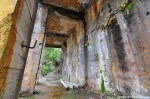
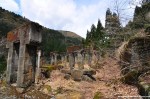
Exploring the abandoned leftovers of the Tsuchikura Mine was pretty easy thanks to its popularity. The place consisted of several “floors” with concrete fluid reservoirs and brackets for conveyer belts which looked a bit like Stonehenge. Since quite a lot of people seek to get up there nice explorers installed ladders and lots of ropes. People in decent shape and free from giddiness should have no problems to make it up the slope and enjoy a nice view down on the remains and the rather narrow valley. In comparison to the *White Stone Mine* and even the *Iimori Mine* the Tsuchikura Mine was rather boring, but it offered some nice angles and interesting views to take pictures of – and if you are lucky you will meet a photographer and their cosplay models… (Abandoned mines are popular amongst certain niche photographers. You know, production value!)
(If you don’t want to miss the latest article you can *follow Abandoned Kansai on Twitter* and *like this blog on Facebook* – and of course there is the*video channel on Youtube*…)


Read Full Post »

After Michael and I finished shooting the Doctor’s Shack we walked about 30 meters along a small, dusty street to get to an abandoned house he found during his first visit to the Doctor’s Shack; Michael ran out of time back then and therefore didn’t have the opportunity to explore it.

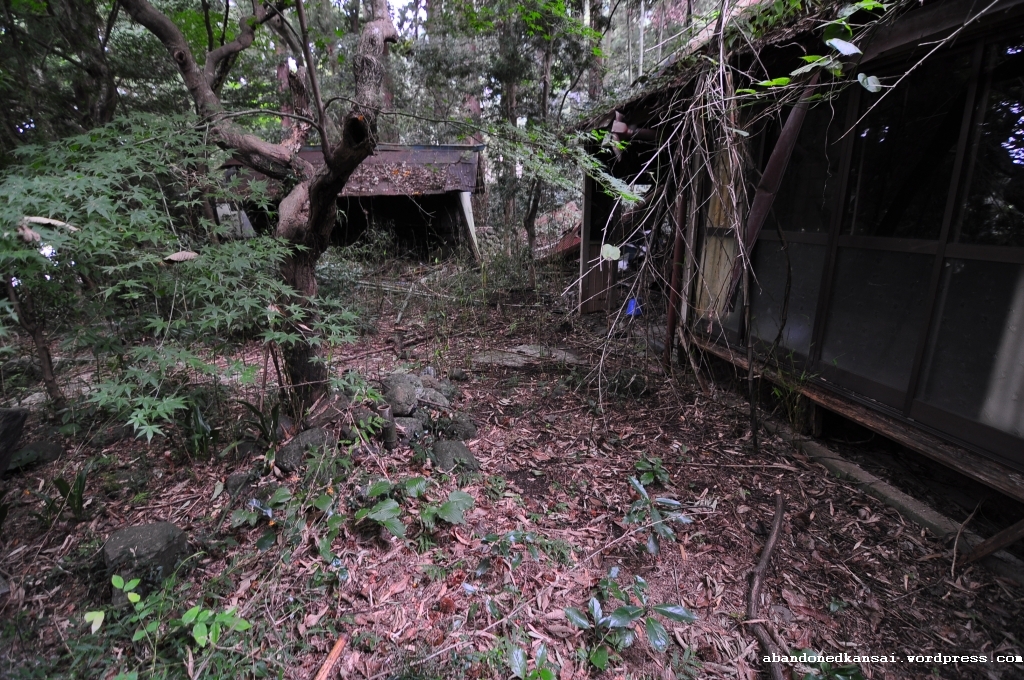
The place looked like a typical Japanese countryside house built maybe in 70s and abandoned in the 90s, although both dates are pure guessing on my side. One floor, no basement, wooden floor and tatami mats, plastic lamps and chandeliers, walls you can punch through with your fist, and most important of all: quite spacious. Judging by how (hardly) known it is on the internet I guess it attracts way less visitors although it’s actually easier to find. But if it isn’t in a book and doesn’t have special things (like many bottles with chemicals in them…) I guess most people consider it uninteresting. And while the house of the doctor’s neighbours really wasn’t a haikyo highlight by any means it was interesting to go through a “normal” abandoned building, especially since it was already getting dark (thanks to an approaching rainstorm) and therefore shooting the place became kind of a challenge since neither of us had a (working) tripod. Luckily there were lots of places to put down the camera and I learned quite a bit about shooting under bad lighting conditions at Nara Dreamland, so I got at least a couple of decent shots. Decent, not spectacular, since it seems like the place was inhabited by normal people – there was nothing special to shoot, although somebody brought over some medicine vials from the Doctor’s Shack.

Next to the main building was a smaller one, most likely used for storage. And while Michael still had the patience to play around with some boxes and his headlight I got the heck out of there trying to finally escape the mosquitos…

(Michael combined both locations into one posting and you can read all about it here.)

Read Full Post »

« Newer Posts - Older Posts »