Feeds:
Posts
Comments

Archive for the ‘Demolished’ Category

I’ve been urbexing for almost 15 years. During that time I’ve never written any articles about equipment, despite being very happy with three different Nikon DSLRs, two Manfrotto tripods, and a Sanyo video camera – which broke in 2019 after almost 15 years of recording countless hours at hundreds of locations as well as places like Chernobyl and North Korea. Videos I always considered a bonus anyway… and I’m still having a hard time thinking of myself as a photographer, given that I have no formal education in that field and only do it as a hobby. A really time-consuming hobby, but nevertheless just a hobby. I also don’t have a background in technology, so what’s the point of reviewing camera equipment when I just have an opinion based on learning by doing? Well, that doesn’t keep countless “influencers” and Youtubers from churning out incompetent nonsense, but I wouldn’t want to be found dead with either label on me! And like my favorite professor at university once said in regards to papers we had to hand in: “Don’t claim anything you can’t proof!”

Fortunately there is no need to be technical or scientific about this Insta360 X4 article, because unfortunately we never got that far…
Like I said, I always considered video walkthroughs of the locations I explore a bonus. I started them pretty much right away, but at first I didn’t even publish them, because I only took them for myself. And even when I published them, I didn’t edit them. No cuts, no voice overs. Just me walking around breathing heavily into the silence. That all came to a sudden halt when my Sanyo stopped working after exploring the abandoned *Trump Hotel*, also wiping out the recordings of the whole day. At that point I was tired of doing the videos anyway – and my co-explorers were increasingly annoyed, because I added 10 to 30 minutes at the end of every exploration for the walkthrough. So I stopped doing them.
For the past 18 months I’ve been exploring solo again (don’t ask, it’s complicated and often quite frustrating, to be honest), but a few weeks ago a colleague of mine showed me an older model Insta360 video camera that a visiting cousin from the States forgot at his place in Japan. I was fascinated by the easy to use 360 photos and videos, so I did some research and decided to get one. I’ve read reviews, I’ve read product pages – I did my best to make an informed decision, because at first I considered buying the X2 or X3 as older models often are cheaper with only slightly fewer / worse features. The X2 was out of the race when I read in a review that it required a smartphone to be activated – something I didn’t read anywhere about the X3 and X4. I guess because it’s an idea that is so stupid that it probably was a one-time mistake by Insta360, facing so much backlash that they removed the requirement from following models. The price difference between the X3 and X4 wasn’t very big and since the latter was only four weeks old at the time, the price on Amazon and in brick and mortar stores was the same, so I decided to get it at my local Yodobashi Camera (street block sized electronics stores with hundreds of employees each, in case you are not familiar with the chain), where I’ve been a customer for almost 18 years – ever since I moved to Japan.
BIG MISTAKE!

Yodobashi Camera was extremely stingy, giving only 1% points on the video camera, despite a promotional campaign of giving 13% points for purchases over amount X – except for (small print)… But when you shell out 80k Yen on a new video camera you are looking forward to use, store points are the last thing you worry about anyway. Fortunately I still had some of those points, which I used to get a seriously overpriced MicroSD card, because without it the video camera would be useless and I wanted to try it out on the weekend before an upcoming urbex trip. 83500 Yen poorer, but with a big smile on my face I left Yodobashi Camera on a Friday evening after an otherwise pretty horrible week.

Saturday was supposed to be a great day, though it started with a rude awakening / realization…
After sleeping in and having a delicious breakfast, I enjoyed a nice unboxing. The first slight disappointment was when I realized that the included battery was dead. Well, not dead dead, but completely empty. Whatever, an hour or two wouldn’t make a difference. It would not dent my great mood for sure. That came a few hours later when the battery was fully charged. I booted the small brick for the first time, its screen came to life, asking me to choose a language – and then the screen showed what the camera was seeing… for about a second or so. Then some text popped up and my heart sank. You gotta be kidding me! What I was looking at was a screen telling me to download an app by Insta360 to a smartphone, iOS or Android, to unlock the video camera. What. The. Heck? I literally felt it in my fingers how my blood-pressure exploded, because unlike pretty much every person on the planet above the age of 6 years I don’t own a smartphone. Never have. In the late 90s I had a black and white Nokia for work (yes, I’m not the youngest anymore, though I started working full-time in my early 20s). When I moved to Japan I had a flip phone or two, but for the past 15 years or so I didn’t have any mobile phone at all, smart or not, because I don’t like them as they turn way too many people into dumb zombies. So here I had a brand-new, quite expensive video camera… that forced me to make it usable by using another device with cameras? Who comes up with stupid ideas like that?!
Certainly not Nikon! Their D7500 DSLR I bought just weeks prior worked with a partly charged battery and regular SD cards straight out of the box 5 minutes after purchase – without any charging or unlocking BS!
So I started to do some research… and didn’t find much. Like I said, I couldn’t care less about smartphones, apps and all that stuff, so I tried to find a solution to unlock the darn X4 via PC or MicroSD card. Of course I couldn’t find anything about that either, so I contacted Insta360 directly – who apparently didn’t read my message and instead sent me a standard reply. So I got back to them, apologized for not describing my problem properly (I’ve been in Japan too long…), and this time got an answer that at least implied that they understood the situation I was in – without being able to help, because though it seems to be nowhere stated on the box, the promo material or even on the X4 website (at least back in mid / late May, maybe they changed it by now)… you really need a smartphone and the Insta360 app to use a newly bought X4 video camera, that seems to work perfectly fine, but is made not usable on purpose by the manufacturer. Which absolutely blows my mind!
How is that even legal?
How can a company force you to use a completely unrelated piece of expensive technology that actually partly does the job of the product you just bought, to make your purchase usable? Without mentioning that essential detail with big warnings before purchase! And in addition, forces you to use an app, which does who knows what in the background without one knowing?
What’s next? You need an electric bike with WiFi to unlock your newly bought car? And if you don’t… sucks to be you, it’s completely useless!

Yodobashi Camera – (The Lack Of) Customer Service In Japan!
After some back and forth it was Monday and I came to the conclusion that I won’t be able to use the Insta360 X4, because it really needs a smartphone to unlock, which wasn’t properly communicated. So after work I went back to Yodobashi Camera, my go-to electronics store for the past almost 18 years. Never had a problem with them, because all the products I bought worked as intended right out of the box. So I went back to the cashier counter where I bought the video camera… and already ran into the first minor bump in the road – apparently I hadn’t paid for it in the camera department, but a neighboring one, which wasn’t a problem on Friday evening, but very well on Monday evening. So I went 20 meters over to the camera department and told them about my unfortunate situation: That I had bought this video camera three days prior, but couldn’t use it, because it doesn’t work without a smartphone, which wasn’t properly communicated by Insta360 or Yodobashi Camera. But I was very careful with everything, I didn’t even remove the protective film from either of the lenses. Some air through the teeth sucking, some going back behind the counter to talk to a superior and then something like the following conversation – it’s in quotation marks, but they are not really quotes, you know… just something like that, from memory:
“I can’t sell this anymore, you opened the box. You can’t return it.”
“But I can’t use the video camera.”
“I can’t sell this anymore, you opened the box. You can’t return it.”
“I don’t have a smartphone. The X4 is useless to me.”
“I can’t sell this anymore, you opened the box. You can’t return it.”
“I did proper research and I only found out about this after I opened the box and tried to use the X4.”
“I can’t sell this anymore, you opened the box. You can’t return it.”
“I bought a D7500 last month, it worked out of the box…”
“I can’t sell this anymore, you opened the box. You can’t return it.”
“Then take it back and ask Insta360 to exchange the X4 – you have dozens of them here, you probably have to return one once in a while anyway.”
“I can’t sell this anymore, you opened the box. You can’t return it.”
“Are you serious? I’ve been a customer here for almost 18 years, spent millions at your store and other ones in the building that has your name. Never had a problem – and the first time I have, you are stonewalling me?”
“I can’t sell this anymore, you opened the box. You can’t return it.”
“Really?”
“I can’t sell this anymore, you opened the box. You can’t return it.”

At this point I gave up and exchanged a few more e-mails with Insta360 (“You should try to return the X4 where you bought it!” No kidding…), but their responses quickly became as useless and repetitive as the one of the guy at Yodobashi Camera – who is just a small cog in a big machine, so I don’t blame him; he’s punished enough with the lighting in the store and the uniform he has to wear all day.
So here we are, after me falling for the usual misconception about (customer) service in Japan, because I rarely ever had a real problem anywhere. It’s great as long as everything is within procedures – if somebody has planned for it, it most likely will go smoothly. Service is great. When service becomes customer service though, i.e. an individual customer needs help that requires improvisation outside of the planned service… you’re basically on your own. The only thing flexible in Japan is bamboo.

Nevertheless I still have moments when I wonder: AITAH?
I’m a huge believer in personal responsibility. If I make a mistake, I stand by it. I find behavior like ordering 20 items of clothes in different sizes and colors with the intention of sending 18 of them back despicable. In fact I’ve never sent anything back that I’ve ordered online, except for two USB-HDDs – and only because they didn’t work. I don’t do fast fashion, I don’t buy garbage from questionable sites like Shein oder Temu, I don’t replace electronics unless they are broken. (RIP, Nikon D7100!) I did due diligence before buying the Insta360 X4 and to this day everything in that (opened…) box is in mint condition. If I would have known about the smartphone requirement, I wouldn’t have bought the X4. It’s the reason why I didn’t buy the X2.
This is actually only the second time that I tell this story to anybody, because part of me is a bit ashamed that this series of unfortunate events happened – despite all the research before buying. But spending more than 80k on a useless brick of tech isn’t exactly something to be proud of. I don’t regret much in my life, but buying the Insta360 X4 I regret. And buying it at Yodobashi Camera is something I regret, too. Maybe Amazon would have been more accommodating with returns…
But I guess it is what it is – only money in the end. And no videos for Abandoned Kansai in the future. Heck, even if I would get the currently useless X4 to work, I would always be reminded of this story. Screw video cameras! Never was a fan, now I dislike them almost as much as smartphones. Which kind of closes the circle. But I’ll make sure to never ever even consider buying anything from Insta360 again – I still don’t understand how it’s even legal that they can do this. What’s next to unlock their cameras? Having to send them a voice message, swearing loyalty to Winnie the Xi(thead)? Apparently they can do anything without people questioning it…
I went back to Yodobashi Camera once more though, two days ago. I spent the remaining shop points I had on presents for my nephews without having to pay a single sen – my goal was it to hit +/- 20 points/Yen, but going to exactly 0 was priceless – and so I left the Yodobashi Camera building one last time with a big smile on my face. Upon arriving back home I cut up my loyalty card after almost 18 years. It probably doesn’t mean much to a large store chain like that. But it meant a lot to me!

Thank you for reading till the end and… What has your worst experience with Japanese (customer) service been? Write it in the comments!

(*Like Abandoned Kansai on Facebook* or *follow us on Twitter* if you don’t want to miss the latest articles and exclusive content – and subscribe to the *video channel on Youtube* to receive a message right after a new video is online…)
Read Full Post »

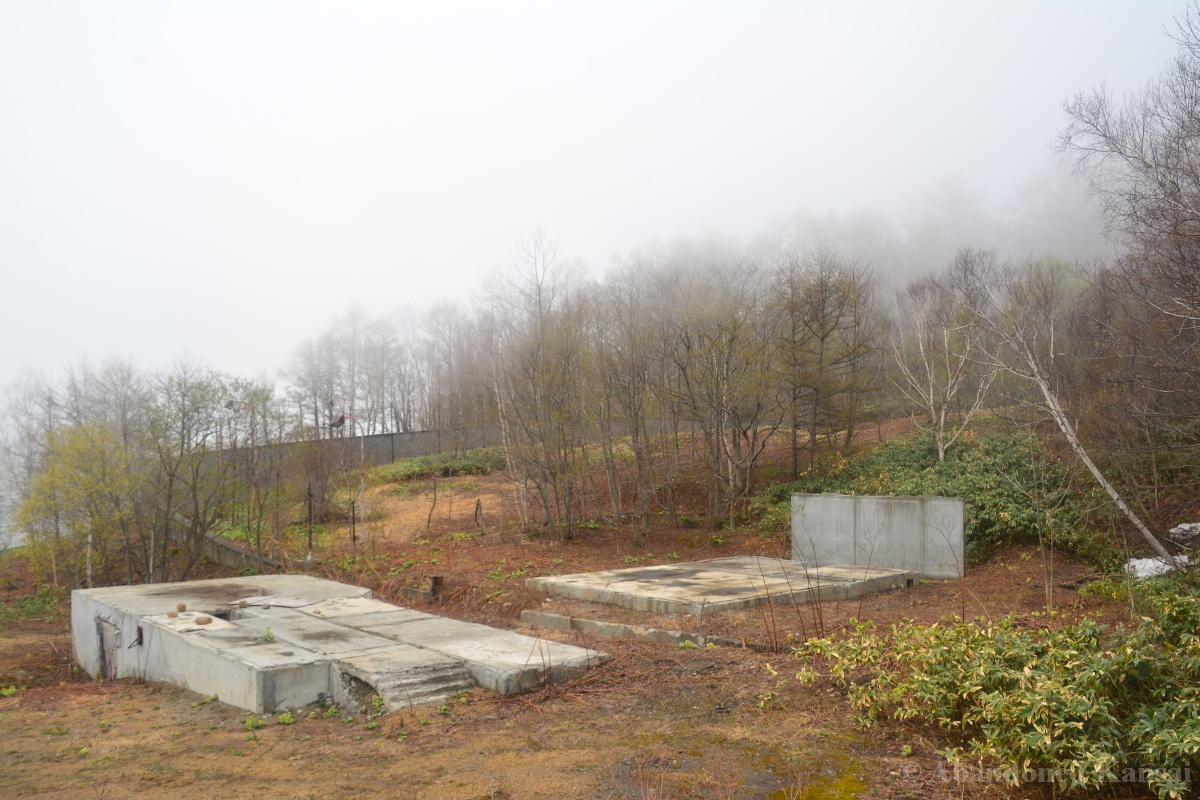
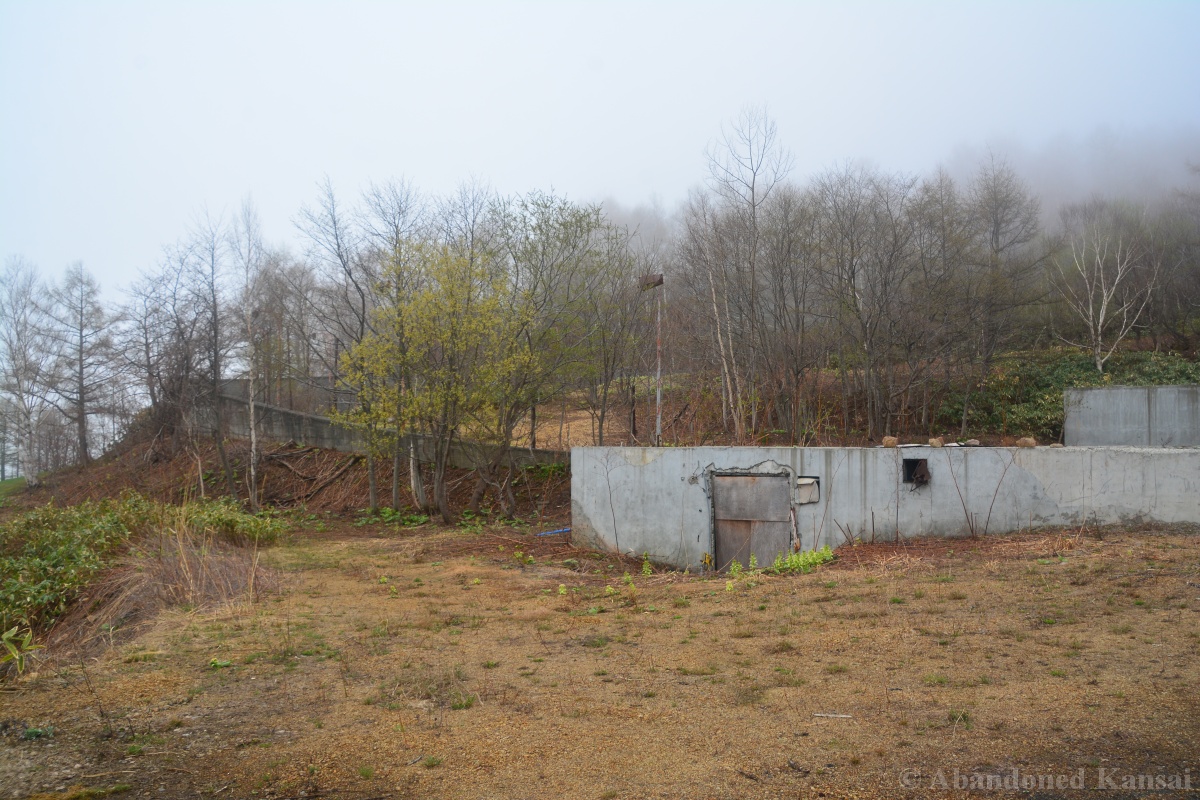
The Olympic Ruins of Beijing 2022 is an article I really want to write, but I’m sure certain Olympic venues in China’s capital will go down faster than opposition members – and Covid making international travel rather complicated I hope some locals will take over. Instead today we’ll focus on the Demolished Olympic Ruins Of Sapporo 1972, a small follow-up on an article I wrote a decade ago!

Happy New Year! Well, most likely not when you are an Uyghur, but more than a billion Chinese people are probably having a jolly good time today and the days to come… Especially Winnie the Xi(thead)! Not only can he stuff his face without regrets due to the holidays, in a few days the years long bribery of IOC members will finally pay off and he can present his home country to the world like the Nazis did Theresienstadt to the Red Cross. By his side: Thomas Bach, who probably would be in jail or dead for acting like he did in the past few years, if he were a Chinese politician and not the president of the International Olympic Committee. Those two must be so proud! Finally Olympic Games again in a country with concentration camps after only 86 years…
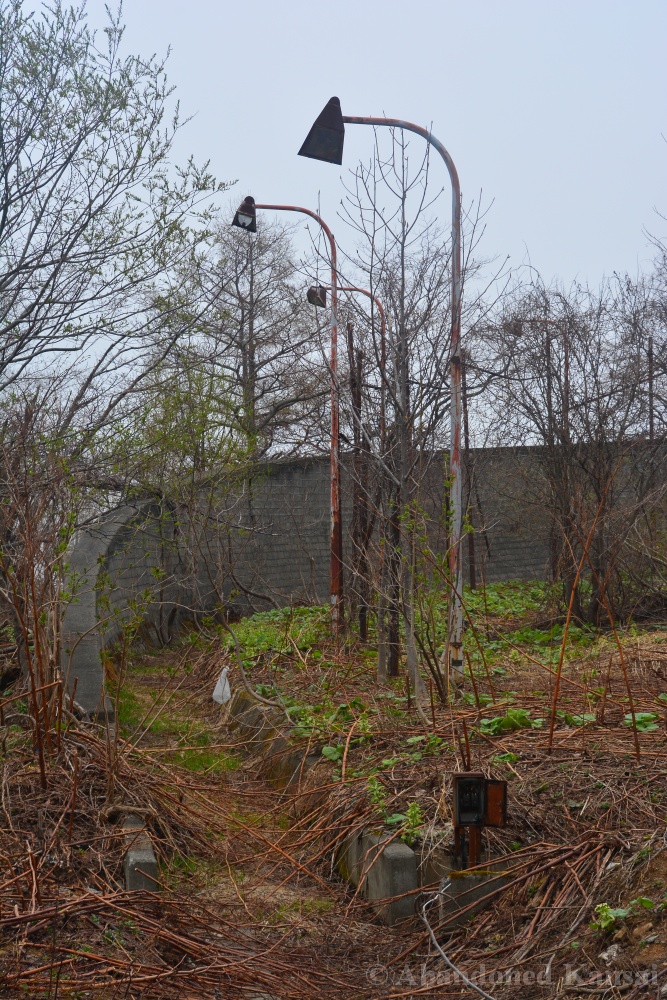
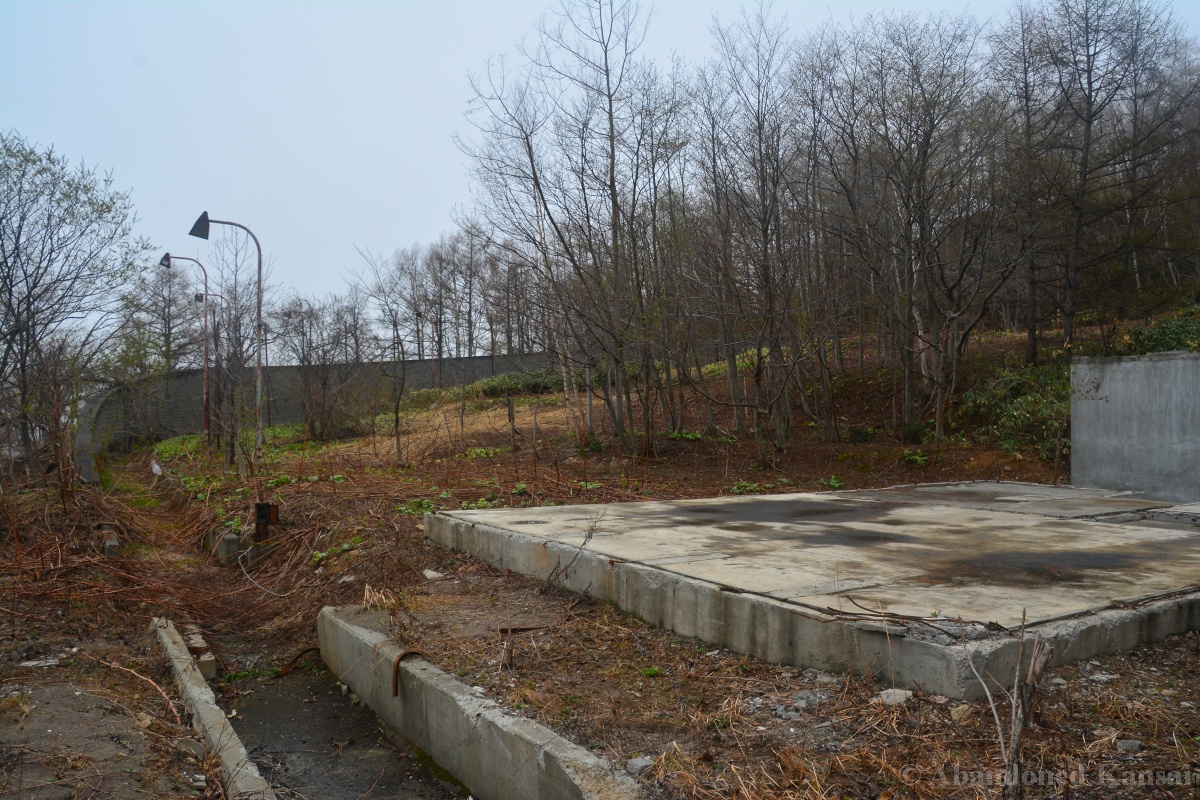
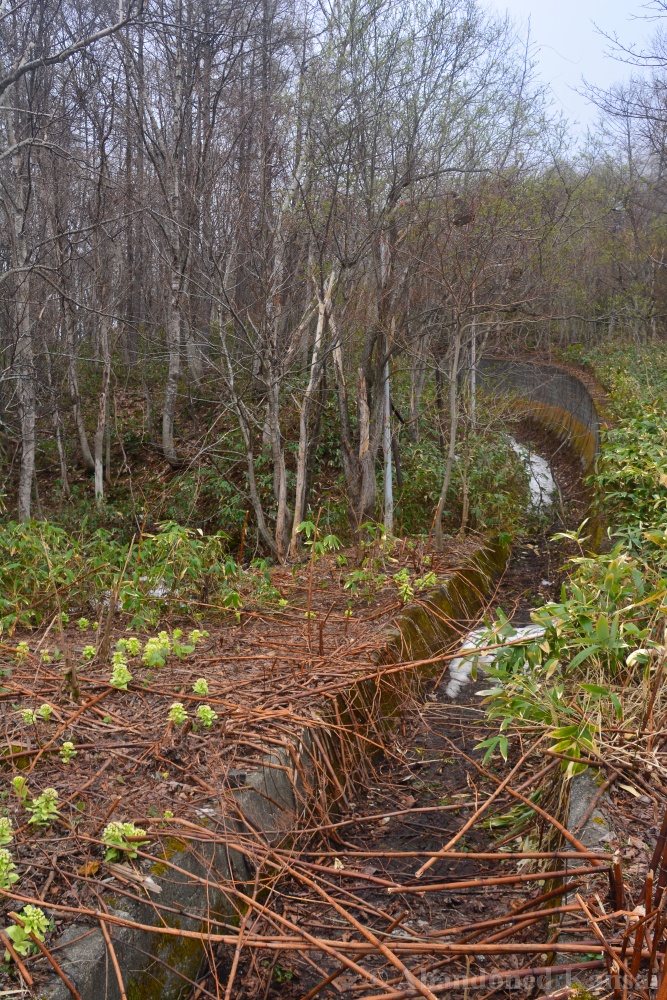
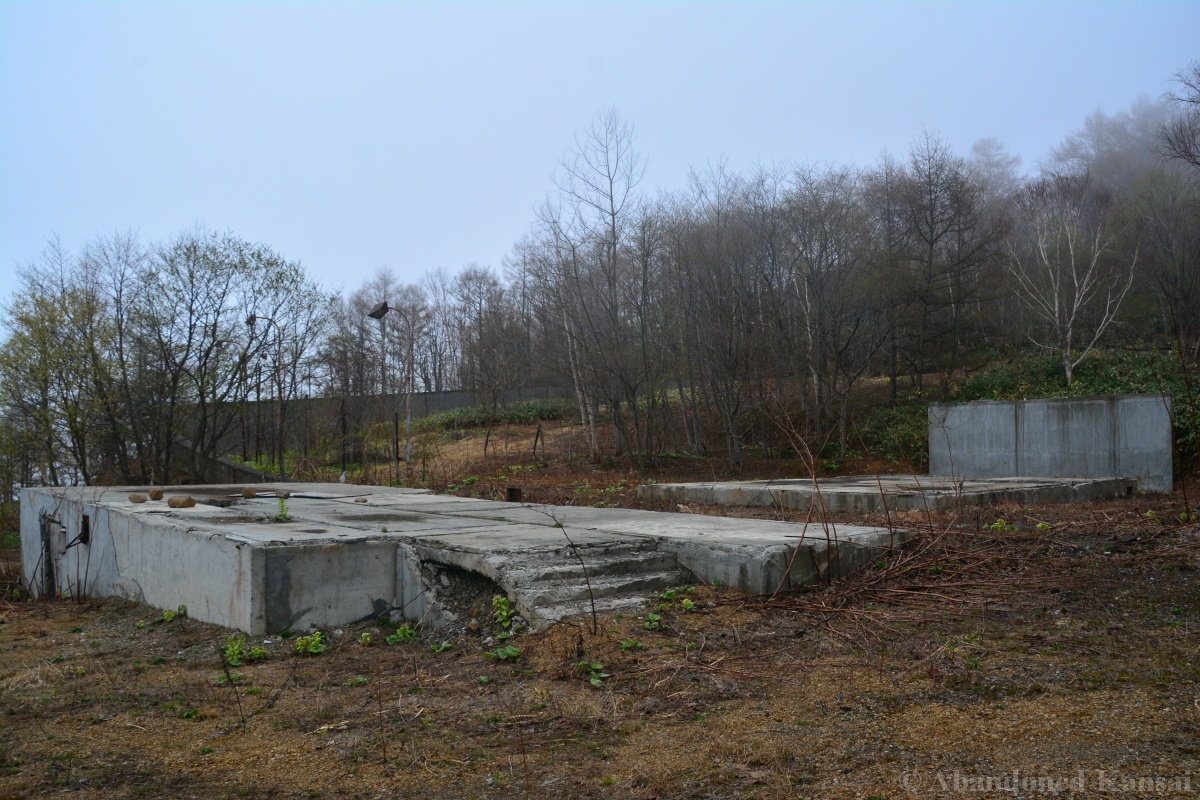
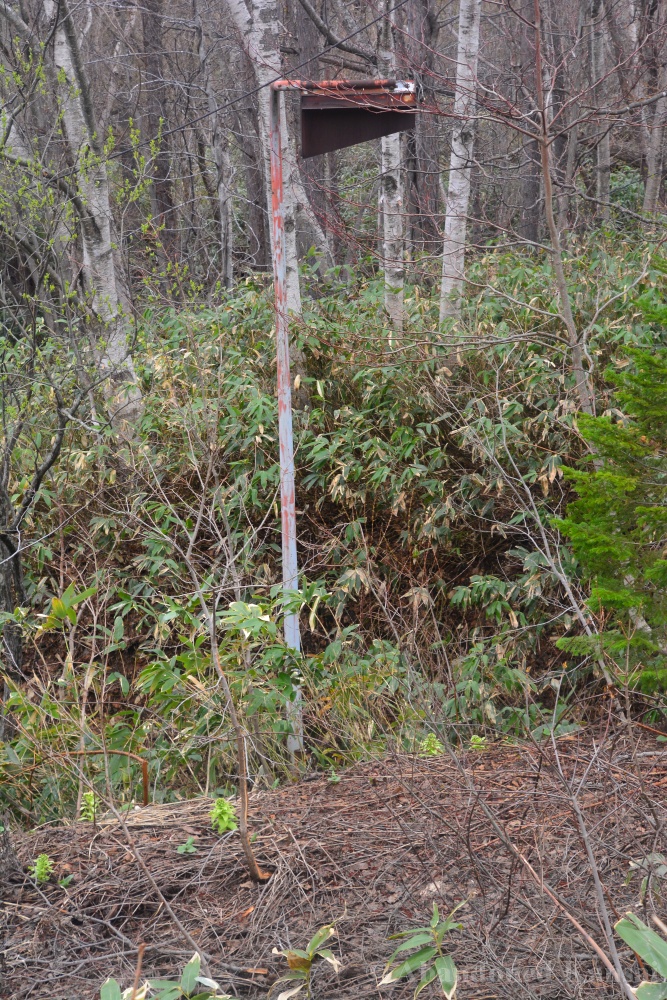
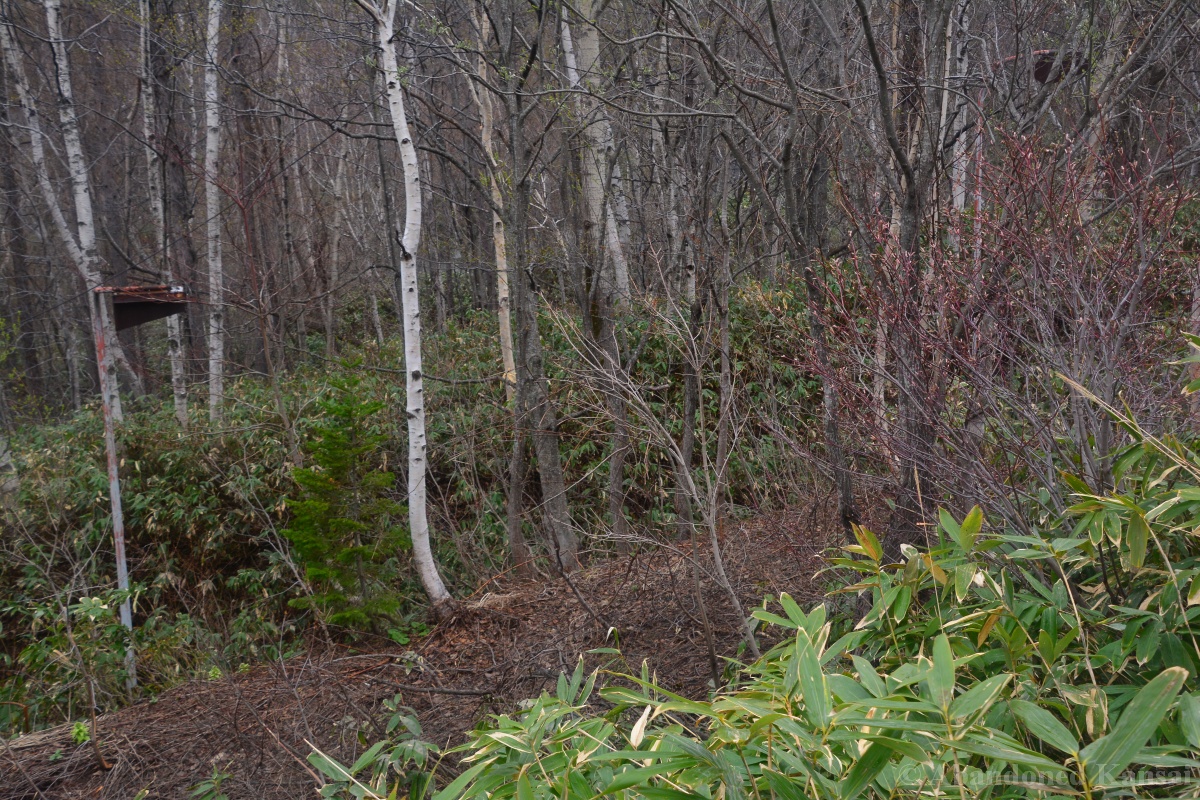
*hrumph* Where was I? Oh, yes, focusing on the demolished ruins of the Sapporo Olympic Games… Usually around the beginning or the end of Olympic games I re-release a photo of the bobsleigh goal house of the 1972 Olympics that I first published in an article called “The Olympic Ruins Of Sapporo 1972” back in 2012. It was one of the few abandoned buildings worldwide with the Olympic Rings still attached, and it was already partly collapsing and covered by snow, so overall a nice photo. That building was demolished in early 2017 and I took some photos of it two years later. Rather unspectacular on a grey, overcast day – pretty miserable actually. Since there was no snow this time you can actually see more of the abandoned bobsleigh track, which was still there at the time of my visit. And I doubt that they will ever demolish that concrete half-tube… Maybe they can refurbish it? Apparently Sapporo is a candidate for the Olympic Winter Games 2030!
And now let’s raise a glass to the Lightning Seeds and their missed opportunity of making a buck remaking their most famous song for the Beijing Olympics: “It’s coming home, it’s coming home, it’s coming…”

(*Like Abandoned Kansai on Facebook* or *follow us on Twitter* if you don’t want to miss the latest articles and exclusive content – and subscribe to the *video channel on Youtube* to receive a message right after a new video is online…)
Read Full Post »

Some things even millions of subscribers and a management that plans your urbex trips / pays feeble-minded sellouts to guide you around can’t buy – like access to the following demolished places. Since the start of Abandoned Kansai ten years ago, dozens of well-known and not so well-known abandoned places in Japan have been demolished. This is my personal Top 10 of now demolished places in alphabetical order. (For more infos, photos and videos please click on the name of the respective location!)

Hokkaido Sex Museum
The “Hokkaido House of Hidden Treasures” was an eclectic collection of copulating taxidermy animals, interactive games, and bizarre displays (like the sexy Disney scene) spread across two floors – while the third one was a Korean BBQ restaurant and also home to the museum’s offices. Located on the main road in the onsen town of Jozankei just outside of Sapporo, the closed sex museum became too famous for its own good and was demolished after several years of increasing vandalism.

Irozaki Jungle Park
The Irozaki Jungle Park was a gigantic indoor flower park near the Irozaki Cape on the southern tip of the Izu Peninsula. Closed in 2003 after being in business for also 35 year the park quickly became an eyesore to the locals – but bureaucracy is as slow in Japan as anywhere else in the world, and so it took more than a decade for it to be demolished and replaced by… no, not a shopping mall… the next best thing – right, a parking lot!

Japanese Art School
The Japanese Art School had been a mystery even amongst explorers in Japan – nobody knew exactly what it had been (a school / art school / art supply shop?), hardly anybody actually knew where it was. One spring day in 2014 I was exploring the equally legendary *White School* with a friend – and his wife figured out while we were exploring that the art school must have been in the area… and gave us the name of a train station further north. After looking for the school on foot and by car for more than an hour we asked a local about it in a final desperate move – and they guided us there, several kilometers away from the station. We explored the location successfully only to find out half a year later that is had been demolished since then.

Nakagusuku Hotel Ruin
The Nakagusuku Hotel Ruin was one of the weirdest abandoned places in all of Japan – construction reportedly began on an old graveyard and without finished construction plan, resulting in several mysterious deaths, some really low ceilings and pathways as well as the owner ending up in a mental hospital (reportedly…). Being located right next to the UNESCO World Heritage site Nakagusuku Castle Ruin, the hotel ruin became too popular for its own good and demolition started in 2019.

Nara Dreamland
At one point probably the best (= most completely and least vandalized) amusement park in the whole world – basically the Disneyland of abandoned theme parks (fans get the reference…). After a few years of relative obscurity Nara Dreamland became one of the most visited abandoned places in 2015/16 after the previous owner had to sell the place by forced tax sale and therefore “security” went from rather tight to non-existent. After the new real-estate investor owner took charge, the theme park was demolished within weeks, removal of the rubble took another several months – and since then it’s a plain lot in prime location waiting to be used… Fun fact: The nearby Nara prison was closed around the same time Nara Dreamland got demolished – but don’t get too excited, it’s just closed, not abandoned! (Probably the location I miss the most since I went there since 2009 and of this list it was the closest to where I live. It’s also the location I explored more often than any other.)

Shikoku New Zealand Village
In the late 80s (rings a bell?) a Japanese company called Farm. Co. started to open up themed parks all over Japan. Yes, themed parks, not theme parks / amusement parks. They were literally country themed parks with a little village and all kinds of outdoorsy pay as you go attractions like rental bikes, hill slides, and all kinds of food related stuff (but no classic rides like rollercoasters). Four of those parks were New Zealand themed, with restaurants named Auckland, animal shows including sheep and exhibitions featuring museum grade 19th century farming equipment and pottery form New Zealand. And while Japanese people love being outdoors and having BBQs, apparently they didn’t love it enough to drive to the middle of nowhere and have at the places Farm Co. intended to – and so most of the parks were shut down in the early 2000s, a few years after the real estate bubble burst. The farm in Shikoku I explored twice… and was surprised to see a landslide fixed, part of the beautiful natural decay most of those parks were victims of. Suprisingly few urbexers and vandals… From the looks of it the park in Yamaguchi had more of those, but not the one in Shikoku. As for the fixed landslide: Turns out that the themed parks were never fully abandoned and always had an owner of some kind. Who fixed the park internal road in preparation of demolishing the whole thing to replace it with yet another solar farm…

Shiraishi Mine
In the early 2010s the Shiraishi Mine (White Stone Mine) was one of the most famous abandoned places in all of Japan – a gigantic abandoned limestone mine slightly off the beaten track that took at least a day to explore, probably even longer. One lucky day in 2010 I had a few hours to explore the mine shotgun style, despite the rumors of rather tight security. Since I ended up seeing only maybe one third of the mine, half at best, I always wanted to come back to explore more – unfortunately the Shiraishi Mine was demolished before I had the opportunity.

Shodoshima Peacock Garden
Despite being rather close to Osaka I’ve been to Shodoshima only once – years ago when I went on a little urbex trip with my Kiwi buddy Chris. Shodoshima was rather high up on my list due to a trip by my German friend Chris, who came across this strange closed peacock park when he was cycling the island for touristy reasons with his girlfriend – one of the few locations I found out about from friends / readers. And a super rare one in addition to that, because back then there weren’t that many urbexers in Japan, so finding a location on an island was usually coincidence. Well, after about a year I finally made it there with sound guy Chris and the place was everything I hoped it would be – a large tropical park, gigantic walk-through bird cage leading into a (now dry) round aquarium, peacocks (taxidermy and statues!), and quite an impressive gift shop that introduced me to olive chocolate (none was left, but the plastic samples were still there). A truly unique location off the beaten tracks, virtually unknow to the internet – and demolished a few years after my visit in 2012…

Tenkaen
The Flower Garden of Heaven was a China based themed park on the way between Noboribetsu (famous for its marine park) and Noboribetsu Onsen (famous for its hot springs and sulphur hell) on Japan’s most northern main island Hokkaido – and definitely ahead of its time. Built in 1992 during the real estate bubble it was more sophisticated than most other country themed parks, but rather high prices and snow for about five months a year caused it to struggle quickly – and so it closed before the millennium ended… The park was modeled after a garden court from the Qing Dynasty and in addition included a 5-storey pagoda with a height of 40 meters as well as a bell donated by China to commemorate 20 years of rather friendly diplomatic relations. I explored this wonderful location after a dozen years of mostly natural decay on a November day that saw weather changes every 20 to 30 minutes: sunny, overcast, cloudy, rainy, snowy – pretty much everything you can imagine, making that one set look like three explorations; spectacular explorations! 🙂

Volcano Onsen Hotel
The most recently published location on this list I explored in late 2017 – StreetView dated June 2019 shows that the building has been fenced off and gutted since then. At this point I’m not sure if the building itself has been torn down or not, but the difference between the nearly pristine closed hotel I experienced and the shown state is much bigger that between the shown state and an empty lot – as far as I am concerned the Volcano Onsen Hotel is dead as a dodo, which is a real shame, because it was a really, really fantastic exploration and I hope the remaining interior was salvaged and put to good use… and not into a landfill. There are not that many spectacular abandoned hotels out there, but this was definitely one of them – and it seems like you’ll only see it on Abandoned Kansai in its abandoned state as it was also one that was overlooked by the urbex community.

Yamaguchi Sex Museum
The abandoned sex museum in the remote onsen town of Yumoto was the first one I ever visited, back in 2012 on one of my first urbex road trips. Located in what looked like a massive Japanese style storage house from the outside was an eclectic, rather artsy collection of exhibits. Tons of stone sculptures (including my favorite – dickface!), but also some blacklight paintings (I assume so, obviously there was no blacklight available anymore…), posters, a portable shrine and some mutilated mannequins as well as some stages for dolls already stolen. A truly unique location truly missed…

“But that’s eleven places, Florian!”, the more attentive people amongst you might say –”And rightfully so!”, I’d answer. If movie history taught us one thing, then that you go to 11 when you need that extra push over the cliff – because when you reached 10, where can you go from there?

(*Like Abandoned Kansai on Facebook* or *follow us on Twitter* if you don’t want to miss the latest articles and exclusive content – and subscribe to the *video channel on Youtube* to receive a message right after a new video is online…)
Read Full Post »

The *Demolition of Nara Dreamland* started almost three years ago, yet there are still some parts of it that are widely unknown to fans of this once amazing abandoned theme park. Today I’ll present another building most explorers walked by, but didn’t get in – the Parking Lot Game Center!

One of the first photos I ever took of Nara Dreamland back in December 2009 showed parts of the eastern parking lot, the parking garage, the ticket booth… and a locked white building with a brown roof. This was before Nara Dreamland became famous on the internet, so it was in very good condition and without any signs of vandalism. Just 14 months later the roller shutters were covered in graffiti, but the unmarked building was still inaccessible.
Fast forward to 2016: 5 years and thousands of urbex tourists later somebody finally took an effort to pry open one of the shutters for about one third – Nara Dreamland had been sold in an auction in late 2015 and the massive amount of scaffolding on the parking lot implied that demolition word would start rather sooner than later; and I guess we all know how much of a motivator running out of time can be! I still didn’t know for sure what the building was exactly, but I think I’ve been told that it was a pachinko parlor that closed several years before Nara Dreamland shut down for good in 2006.
Well, not much of a surprise that it turned out to be a ransacked game center. About 1/3 of the large, dark room was pretty much empty, the rest of it was cluttered with all kinds of equipment – stools, tools, pachinko ball baskets, a statue on a counter… a large counter. The way the stuff was placed was clearly to discourage people who entered through the front from going through all the stuff, kind of a barricade. And whoever did it, was successful in the case of yours truly. After spending half the night and quite a few daytime hours in the park I was tired and exhausted, so I took a few pictures and a quick video… or so I thought. Because unfortunately I couldn’t find any photos of the inside of the Parking Lot Game Center when I dug deep into my archive last weekend. So I guess pictures from the outside, dating from 2009 to 2017, will have to do… and the video, of course!

Finally exploring the inside of the Parking Lot Game Center was exciting and underwhelming at the same time. On the one hand it was little more than a rundown, underequipped pachinko parlor (no signs of the billiard tables advertised on the window signs!), on the other hand I had to wait almost eight years for this moment – and I knew that not a lot of people had seen what I was just seeing. It was a nice, exotic piece of this huge puzzle Nara Dreamland had been. And if you like rare stuff, have a look at *part 1* and *part 2* of this series about places at Nara Dreamland hardly any visitor knew existed.

(*Like Abandoned Kansai on Facebook* or *follow us on Twitter* if you don’t want to miss the latest articles and exclusive content – and subscribe to the *video channel on Youtube* to receive a message right after a new video is online…)
Read Full Post »

Urban exploration is a pretty complex hobby on many levels – and one rather unpredictable factor are demolitions; let’s have a closer look!

When you flick through a few spectacular photos on your phone while waiting for the bus or having lunch with a friend, urbex probably looks like such a wonderful and easy thing to do. And while a lot of abandoned places are quite overrun by now, especially in Central Europe, there are a lot of factors that can be a nuisance. Some are avoidable, some aren’t. Long hours, unreliable people, bad weather, security and alarms, costs (exploring can cost between nothing (walking distance and not figuring in time and photo equipment) and several hundred USD per location!), inaccessibility, traffic / travel time, demolitions. It happened more than once that several factors came together to ruin a day completely – when you traveled 1000 kilometers and your local exploration partner cancels the evening before with no good reason, so you have to get up the next morning at like 5:15 a.m. to go by public transportation in snowy -5°C weather to a location that turns out to be demolished (with no alternative to go to, because the next location is only 20 kilometers away, but not accessible by bus or train), you really question what you are doing and if playing video games on a large screen in a warm room with hot food and cold drinks wouldn’t be a good alternative to spend your precious spare time…
But usually one or two bad factors are enough to ruin your day when doing urban exploration. Demolitions are probably not much of a problem for people who are based in areas where urbex is rather popular, because word about demolitions tends to travel fast from the time preparations on location start. A rather large percentage of the places I check out these days though are virtually unknown to the urbex community; they popped up on Japanese blogs once or twice, are shown to me by friends… or they are original finds from a large variety of sources. About 10% of the 70 to 80 locations I check out per year in average have been demolished, rather more recently due to the rising amount of pachinko parlors and country clubs I try to explore – and I need to check out more than one location per week in average because of… well… obvious reasons.
Usually I don’t even take pictures of demolished places, because most of the time there is little more left than an empty lot, but on a few occasions I took some – especially when the demolition was basically done, but there was still heavy machinery around.

One of the most frustrating cases of demolition I’ve experienced was large hotel complex in the middle of nowhere. A solo exploration by public transportation, it took me about an hour just to figure out how / when to take a bus to the closest stop. Of course I planned to spend the whole day there, especially since there was nothing else around. When I saw that the name of the place was removed from the entrance sign at the side road leading up to the resort my heart sank – but I followed it up anyway only to find a rather large container building of a construction crew behind a corner. Maybe they weren’t done yet? I continued to rush up the road to a large construction fence, slipped through and finally gained certainty that the whole resort was gone – and that I lost a potentially amazing location, a day of exploration and a couple of hundred bucks on train tickets.
Not much different was (not) exploring an abandoned outdoor history museum in Kyushu – just add some drizzle. It was the first and only location of the day, basically a small wooden town with all kinds of shops and workshops. I arrived there alone after spending hours on public transportation and walking, and had a very bad feeling when I couldn’t see any buildings between the trees, but heard some heavy machinery. It turned out that a last container was filled with debris – everything else had been gone over the previous weeks…
Also pretty heartbreaking was the failed attempt to explore an abandoned spa hotel that featured some amazing indoor / outdoor waterslides. It was the first location of a weekend trip with my friends Dan and Kyoko… and all we got to see were a couple of dozers, cars, a container, some flat land, and lots of trash. I guess it’s no surprise that this is another solar farm now.

The last few of months have been rather frustrating to me when it comes to urbex – 40 minutes, one location, a revisit… in four months! That’s all. For various reasons, mostly the weather. First rainy season, then an unbearable Japanese summer… and now that autumn finally has arrived, we are heading from one friggin typhoon to the next here in Kansai. So why not sharing the frustration by revisiting some good old stingers? Just three examples, but three quite memorable ones.
If you think this article sucks – imagine how I felt living through those costly disappointments… Next week will be better, I promise. I have a nicely decayed original find lined up that’s worth finally being published! 🙂

(*Like Abandoned Kansai on Facebook* or *follow us on Twitter* if you don’t want to miss the latest articles and exclusive content – and subscribe to the *video channel on Youtube* to receive a message right after a new video is online…)
Read Full Post »

Truly unique abandoned places are really rare – Japan is no exception from that rule. And sometimes the only way to protect those locations is to keep quiet about them… until they got demolished. Welcome to the Shodoshima Peacock Garden!

The Shodoshima Peacock Garden (SPG) was a 30000 square meter park on Shodoshima, the second largest island in the Seto Inland Sea, famous for its vast olive groves. Opened in 1970 on a small elevation in sight of the harbor in Ikeda it was closed on November 30th 2008 according to the Japanese Wikipedia; strangely enough I found a calendar from October 2009, but who knows who put it there… The SPG featured 3500 peafowls in its heyday during the early 70s, when up to half a million visitors per year were welcomed – a massive achievement, considering that Shodoshima is not connected to any other island by bridge; but due to its size, a motorized vehicle is kind of necessary, so you either need a rental or arrive by a car ferry with your own set of wheels. (Or you bite the bullet, like yours truly, and depend on the few public busses that make it around the island… but not all the way.)
Anyway, the years of plenty didn’t even reach the count of seven as visitor numbers plummeted quickly – by the mid-70s they were already as low as 150000 per year. The hatch rate of the peacocks also took a dive, which was the main reason why the number of peafowls in the park went down to 500 by 2002, when the park closed for one year for maintenance. In 2003 the Shodoshima Peacock Garden opened from April to November, but got rid of a main attraction that was quite popular before the break: 40 peacocks walked up a ramp inside Mount Peacock and then flew the 10 meters down into the park to the excited visitors – but despite 5 meter high nets and peacocks not being good flyers, every once in a while one them escaped, which was probably the main reason why the so-called Flight Show was cancelled; it turned out that the flight show was too much of a flight risk. By 2007 the number of peacocks went up again to 1000, but the number of visitors went down to a mere 50000 for the whole season; not nearly enough to cover the costs, and so the Shodoshima Bus Company, who owned the SPG, decided to close the park for good – especially since the aging facilities would have required additional investments soon. When the park finally closed in 2008, the remaining 200 peacocks were sold to other animal parks, including Shodoshima’s own Choshikei Monkey Park.

I first found out about the Shodoshima Peacock Garden from my German friend Chris a little more than four years ago. He was visiting Japan and traveled around a bit with his girlfriend, before we met at a Torikizoku in Osaka. We talked about this and that, when he mentioned that strange abandoned park he found on Shodoshima… with some taxidermy peacocks in a souvenir shop. I had never heard of that place before and was terribly intrigued… So I went there in September of 2012 with my friend Chris from New Zealand. First we (re)visited the *Shikoku New Zealand Village* and an abandoned transformer station, the next morning we took the ferry from Takamatsu to Ikeda. Approaching the harbor, we could already see the Shodoshima Peacock Garden on an elevation right at the coast. 20 minutes later we stood at the park’s entrance – filled with pure excitement upon entering a place we knew hardly anything about and had never seen pictures of before. This was exploration in its purest form. Don’t tell me that people going to *Nara Dreamland* these days are exploring it! At best they are looking for spots to recreate well-known photos they’ve seen countless times on the internet. But Chris and I, standing there, ready to go in, that was pure exploration spirit!
The entrance building featured a small shop and a ticket booth to the left as well as restrooms to the right – a net stretching above the building in an attempt to prohibit peafowls from fleeing the premises. The net actually surrounded the whole park, followed by a line or two of thick vegetation, predominantly massive palm trees. The former garden was mostly overgrown, but after about 100 meters there was the souvenir shop German Chris mentioned… and to the left was the entrance to Birdpia, basically the main attraction of the park, featuring huge outdoor bird cages as well as a building with a panoramic round aquarium and an egg exhibition. The exit of the building was locked, but it once lead to the monument near the coast line, the area Kiwi Chris and I saw from the ferry – from there you got to the gift shop and then to the exit. The outdoor area mostly overgrown and the indoor area mostly dark, this turned out to be one of the creepiest explorations ever – mostly because I had no idea what to expect. Once you’ve seen photos of a location somewhere, it gives you a certain amount of confidence and reassurance, because every once in a while you recognize things and places you’ve seen before; it’s comforting. Never knowing what’s behind the next corner is friggin nerve-wrecking, especially at an eerie place like that! At the same time it’s super exciting, because you are not walking on beaten paths and you don’t take the same pictures as dozens or hundreds of people before you.
The souvenir shop / restaurant was built above a slope and therefor a bit scary in its own way, despite being really well-lit for most of it. The restaurant featured a great view at the Seto Inland Sea, while the souvenir shop offered a wide variety of olive chocolate products. No kidding! Olive chocolate products! As I mentioned before, Shodoshima is famous for olives. But instead of selling canned olives and olive oil, people decided it would be a good idea to sell olive chocolate, olive chocolate cake and olive chocolate cookies. Since the shop was in overall good condition I kept taking pictures of the fake sample boxes… and since these sweets were so original, I think those photos deserve to be published. At least half of them or so… The rest of the building was far less interesting – a kitchen, some dirty toilets and a storage room on the lower floor. Outside again I took some pictures of Mount Peacock, the monument at the waterfront and of the park in general. It was then when I found a cage construction leading down a slope in the back. I followed it and finally reached the empty and cleaned out peacock stable – and from there I got to the internal ramp leading up Mount Peacock, after passing some really spooky concrete areas. Maybe the last photo of the set gives you a general idea…
When I originally planned the day on Shodoshima, I slated about two hours to explore the Shodoshima Peacock Garden. Because, let’s be honest: How exciting can an abandoned bird park be? Well, apparently very exciting, because Chris and I finally got out of there after about five hours! Which left me pretty much enough time to take a bus to Tonosho, say goodbye to Chris (who was continuing to Okayama), take another bus to Fukuda, and catch a ferry to Himeji – beautiful sunset on the water, a perfect ending for an amazing day.

Now, back home I was a bit of in a predicament. On the one hand I wanted to tell everyone about this amazing exploration I enjoyed so much, but that would have meant to reveal information about the location – and I was worried that the increasing vandalism hurting *Nara Dreamland* could also damage this nearly pristine location. Just the information that the SPG once was a peafowl park (without mentioning the real name or location) would have allowed people with minimal Google skills to get on its track, because there have not been many facilities similar to the Shodoshima Peacock Garden, let alone closed / abandoned ones. A fellow explorer once said that he has no problems revealing real names even of locations in fantastic condition as he is not in the business of protecting abandoned places – which I guess is true, but I am also not in the business of exposing abandoned places. And so I kept quiet, always hoping to come back one day – but I never made it, because new explorations always seemed to be more interesting. Last week Monday, when preparing the Nara Dreamland article, I was revisiting some abandoned places via the satellite view of GoogleMaps… and saw that the souvenir building has received some TLC while Mount Peacock and all other constructions (except for the monument) have been leveled. On the one hand I was terribly sad to see another abandoned place gone, especially a truly unique and amazing one like this, on the other hand I was as full of joy as I have been four years ago standing at the entrance of the Shodoshima Peacock Garden – because I knew I could finally write about it without holding back. And now I hope that you will enjoy looking at the photos and watching the videos as much as I enjoyed exploring this wonderful, wonderful place you’ll probably never see anywhere again…

(*Like Abandoned Kansai on Facebook* if you don’t want to miss the latest articles and exclusive content – and subscribe to the *video channel on Youtube* to receive a message right after a new video is online…)
 

Read Full Post »

The relationship between Japan and Russia has pretty much always been either non-existent or full of conflicts – so whoever thought that building a Russian themed park in Japan would be a good idea… probably was a moron with too much money.

When the Empire of Japan acted like the prototype version of current day *North Korea* from the early 1600s till the 1850/60s, it tried to keep out pretty much all foreigners, with the exception of a few Chinese and Dutch, who were strongly restricted in where they were allowed to go and what they were allowed to do (sounds familiar?). Back then most Russian settlements were too far away from Japan to make contact easily as cities like Khabarovsk (1858), Vladivostok (1860) and Magadan (1930) had yet to be founded – and so it was Yakutsk merchant Pavel Lebedev-Lastoschkin who first tried to establish a Russian-Japanese contact 1778 in Hokkaido. He was told to come back one year, only to be turned away again (sounds familiar?). In the early 19th century the Russians tried again several times without success – this time reacting with brute force when the shogunate stalled again; of course without much success. In 1860 Vladivostok was founded, but since it was not an ice-free port, the Russians were looking for a more convenient location and decided to seize Tsushima, an island under Japanese control, located between Korea and Kyushu. At this point the relationship turned really sour, and after being ignored by the consul Goshkevitch, the Japanese asked the British for help, finally forcing the Russians to leave Tsushima. Over the next few decades, Japan gave up its isolation policy and turned from an agrarian state to an industrialized nation; with the massive help of countries like Prussia, the United States, France, Great Britain and many more, of course. The Japanese-Russian relationships on the other hand didn’t develop for the better though, culminating in the Russo-Japanese War of 1904-05; the first time an Asian country significantly and surprisingly defeated a Western superpower. In World War 2 Japan fought less successful overall – and more than 70 years later, both countries are still arguing over the southern part of Sakhalin and the Kuril chain of islands. According to a 2012 survey, 72% of Japanese people view Russia unfavorably, a number that most likely rose since then, making Japan the country with the biggest anti-Russian sentiments of all participating countries.
So why a Russian themed park in Niigata? Because a banker said so! (Oh… so it was indeed a moron with too much money…)

Niigata Russian Village (1993 – 2003/04) was pretty much the borscht version of the *Tenkaen – Japan’s Lost China Themed Park* (1992 – 1999). Cultural exchange, “exotic” weddings, demonstrations of folk dances, sale of artisan craftwork… and carft beer. Financed with the help of and heavily supported by Ryutaro Omori, then president of the Niigata Chuo Bank, the Niigata Russian Village opened on September 1st 1993 and was heavily expanded in 1994… and then again in 2000 – a year after the financing Niigata Chuo Bank collapsed. The park closed in December 2003 for a winter break and didn’t open again as originally scheduled in April 2004.
The rather remote location of the Niigata Russian Village (6 km away from the next train station, 30 km outside of Niigata, almost 400 km away from Tokyo and therefore out of day trip range) was its downfall twice – first it wasn’t able to attract enough visitors / customers… and then it attracted too many visitors / vandals. Photos from 2008 already showed significant signs of vandalism, in September 2009 the hotel was partly destroyed by fire, and since nobody ever used a fake name for it, the Niigata Russian Village went to hell in a handbasket in record time.

By the time I started exploring in 2009/10 people started rumors about tight security and demolition to prevent bigger masses from trampling through like Siberian mammoths, but at the time I never thought I would ever explore outside of Kansai (hence the blog name, *Abandoned Kansai*) – in addition to that, Niigata is probably the worst area to go to from Kansai as flights are insanely expensive (32500 Yen!) and trains take about 7 hours at a price of 22500 Yen… per direction! 700 bucks for one location? Hell no!
Speaking of hell: As satellite photos more and more confirmed the demolition of the Niigata Russian Village, I more and more regretted that I was never able to take a picture or two of that iconic church that was part of the park; apparently a copy of Cathedral of the Nativity of the Theotokos in Suzdal. Years later, in 2015, I was compiling locations for a three day urbex road trip starting in Tokyo. Of course there are plenty of great abandoned places around Tokyo… but Niigata is in perfect range for a three day trip. Exploring stuff on the way north, heading to the coast after dark, exploring Niigata Russian Village and some stuff on the way south, spending the night in Fukushima or Tochigi, continue exploring on the third day on the way back to Tokyo… Since satellite photos can be rather old and outdated I confirmed that the cathedral was still standing via a quick photo search and added Niigata Russian Village to our schedule – as the first thing on the second day!
Arriving at the Russian Village was exciting and sobering at the same time. The road up to the park was blocked by a massive gate fortified with tons of tree trunks and branches, all held together by barbed wire; signs informing about the start of further demolition work just days prior and the existence of camera surveillance. I traveled 650 km to fail 650 meters away from the church? Hell no! So my buddy *Hamish* and I went on to find an alternative way in, successfully… after a while.
As so often, the reality about the Niigata Russian Village lied between the reports of total demolition and the dozen buildings visible on satellite photos. At the time of our visit the lower area with the village part was pretty much gone already, little more than large piles of rubble and a small monument left behind. The upper area was missing several buildings, too – but the two most famous structures were still there, the church and the hotel. Despite the fact that 80 to 90% of the Niigata Russian Village had been demolished, it was still fun taking pictures there – especially the church was everything I was hoping for… and I don’t think I ever had as much fun in a religious building before or after! Overall for sure not nearly as spectacular as the *Tenkaen* or any of the *New Zealand Villages*, but still worth the detour…

(*Like Abandoned Kansai on Facebook* if you don’t want to miss the latest articles and exclusive content – and subscribe to the *video channel on Youtube* to receive a message right after a new video is online…)
Read Full Post »

Urbex is a dangerous hobby – even more so in Japan, where wildlife can be nasty and deadly earthquakes are a constant threat that can strike anywhere at any time (most recently last weekend in Kumamoto). How to up the ante? By exploring near one of the country’s many active volcanoes…

I always wanted to travel to the mountains of central Japan – not just for urban exploration, but for sightseeing, too: Matsumoto, Nagano, Karuizawa. And while the area is easy to access from Kansai, it’s also a time-consuming endeavor of up to six hours each way (plus one for the bus to Mount Asama). With winter looming, I finally took last trains to Matsumoto on a Friday after work in early November of 2012, and from there I made my way through the valley of the Chikuma River to Karuizawa and Mount Asama, the most active volcano on Japan’s main island Honshu.
Luckily the weather played along on both days, so I had a really good time in the Chubu area, though I made a couple of mistakes that affected this article and some future ones: First of all, I forgot my trusty video camera, so I had to use the video mode of my D7000 – and I wasn’t familiar with it at all. The second, even worse mistake was that I thought it would be a good idea to shoot in NEF and only take some “safety shots” in JPG, despite me never doing any enhancing post-production – as a result it took me 3.5 years to write about this trip for the first time… and only because I took plenty of safety shots at Mount Asama. When will I write about the other half a dozen locations I visited during that weekend? It might take a while. Probably never, as I still have zero interest in photo editing! (Luckily I never repeated this lapse of judgment and from the following weekend on I started to shoot in NEF and JPG simultaneously, using the JPGs and archiving the NEFs just in case I ever need them…)

Arriving at Mount Asama I had a quick look at the new Asama Volcano Museum (opened in 1993 to replace the old Asama (Garden) Observatory and Volcano Museum), but only at the gift store and for a couple of minutes, because my time in the middle of nowhere was limited – I had to catch a certain bus back to Karuizawa to still be able to make it home the same day.
At first I was worried that it would take me a while to find the old, at that point abandoned museum as other people wrote they hiked for like an hour to get there… luckily the old museum was right next to the new one – and both of them were right next to the Onioshidashi Park. Oni-oshi-dashi means something like “demons pushing rocks” and is a huge area of Mount Asama’s northeastern slope covered by volcanic rocks as a result of the Tenmei Eruption in 1783, killing more than 1400 locals and intensifying a famine that lasted several years, causing nearby provinces to under-produce for half a decade. In 1958 a temple dedicated to Kannon, the Buddhist goddess of mercy, was built – and in 1974 a wheelchair-friendly hiking trail with several routes was opened in the oni-oshi-dashi, creating Onioshidashi Park.
Between the temple and the hiking trail, an observatory and museum about the history of Mount Asama and volcanoes in general was built between 1965 and 1967 – and closed / abandoned in 1993, when the new museum opened in the shadow of the old one. Since Mount Asama is an active volcano (with most recent eruptions in 2004, 2008, and 2009) that causes up to +1000 earthquakes per month (!), you can imagine that the exposed concrete observatory / museum had a tough time being hit by rocks and standing on shaky ground. And though the abandoned old museum was easily accessible for many, many years, it wasn’t anymore upon my visit in November of 2012 – the whole damn thing was thoroughly boarded up on all possible levels of entry.
Given the extremely dilapidated condition of the building and its location right next to two (!) tourist attractions I couldn’t blame the people in charge, but I was nevertheless a little bit disappointed. Not for long though, because it was an incredibly beautiful autumn day and I was in a touristy mood anyway, so I enjoyed a wonderful stroll through the Onioshidashi Park… until I wanted to cross the suspension bridge at the end of the course, the one that would get me back to the parking lot / bus stop within 5 minutes. Unfortunately the thing was closed! Whether for maintenance or for good I wasn’t able to find out, but it didn’t matter, because either way I had to rush back to make it home on time…

Despite not being able to enter the old Asama Observatory & Volcano Museum I had a great time out there at Mount Asama. The weather was gorgeous and the area so stunningly beautiful in its very own way. And the old building… was just perfect the way it was, crumbling before my eyes. (It was actually demolished just months later, in June of 2013, and replaced by yet another observation platform.)
The Onioshidashi Park was a treat by itself and it’s definitely a stop you should include on your next off the beaten tracks tour of Japan. (Be aware though that the new museum and the hiking trails are closed between December and March, both included.) Having to pass concrete shelters every couple of dozen meters was a strange feeling! You know that the volcano can erupt at any time, but seeing those shelters makes it a lot more real than just having book knowledge. Having experienced time and again how unnerving earthquakes can be, I really don’t want to be near a volcano when it erupts…

(*Like Abandoned Kansai on Facebook* if you don’t want to miss the latest articles and exclusive content – and subscribe to the *video channel on Youtube* to receive a message right after a new video is online…)
Read Full Post »

One way to find abandoned places is to keep your eyes open and to check out locations that look suspicious – so when my friend Rory saw a dodgy looking sign from the highway, we took the next exit to check out the area behind the rusty metal construction…

Ten years ago we probably wouldn’t have found a way to the place Rory saw, but thanks to modern technology it was rather easy to navigate some small back roads to what turned out to be an abandoned love hotel under demolition. The entrance of property was blocked by heavy machinery, probably to prevent metal thieves from driving right in and loading their trucks. To the right was a regular countryside house, western style – further down the road we saw the actual hotel, already ripped half apart.
Exploring the Japanese home felt kinda strange – the (previous?) owners took most of their belongings, but there were some pieces of furniture and some electronics left behind, plus a couple of random items, like omamori; Japanese charms usually sold at shrines during hatsumode, the first shrine visit of the year (which is also used to dispose of old omamori to avoid bad luck – you see the genius business model!). Overall the house wasn’t in bad condition, so it was kind of a waste to get rid of it, but I guess that’s the way the cookie crumbles sometimes…
The far more interesting part was the hotel down the driveway. It had the typical love motel layout with garages on the ground floor and small staircases leading up to the rooms, but a box of matches labelled it as a “car hotel inn” named Regent Hotel – obviously not part of the famous Regent International Hotels chain of luxury accommodations. Although the place once had been a solid ferroconcrete structure, the ongoing demolition made parts of it rather sketchy. Nevertheless we had a closer look to find out what it really was. Thanks to a calendar in the family home we knew that it was most likely abandoned in 2008, six years prior to our visit, and a look at some of the remaining doors proved that it had been a love hotel indeed – the room rates were still written on them. Other than that not much left behind. A gutted and rather disgusting kitchen, a bed frame here and there, one bathtub in a bathroom and trash in the yard; both piled and scattered. There we found more indicators for our love hotel theory, but you gotta see for yourself in the gallery.

Exploring this half-demolished love hotel surely wasn’t a highlight in my urbex career, but it was nevertheless an interesting experience as it literally and figuratively gave us some insight into this strangely fascinating world – and it was a neat addition to regular love hotel explorations, like the one in *Furuichi*. It also was a good start into this urbex day as later on we explored the famous *White School* and the amazing *Japanese Art School*; two legendary locations and true classics in the Japanese urbex world.

(*Like Abandoned Kansai on Facebook* if you don’t want to miss the latest articles and exclusive content – and subscribe to the *video channel on Youtube* to receive a message right after a new video is online…)

Read Full Post »

The Internationale Baumaschinenfabrik AG (IBAG, „International Construction Machinery Inc.“) in Neustadt, Germany, was a large manufacturer of building site equipment – from rock crushers over transit-truck mixers to revolving tower cranes, the IBAG built it all… until 1997, then they went bankrupt.

For about 1.5 decades the 6 hectare large area wasn’t used at all due to inherited waste, rundown structures and the lack of interest of potential investors – a fact that didn’t keep the state from declaring the old machine hall a cultural monument in 2001; which meant that the main structure had to be preserved and couldn’t be demolished. (It was built in 1910 by Wayss and Freytag, a famous German construction company.) From 2005 on the city started to develop a… development plan, deciding how much of the area could be used commercially and how much had to be residential. Since the former IBAG plant was located right next to a commuter train station (Neustadt-Böbig), an investor was found and rehabilitation work / cleaning up started in 2012 – soon after I explored the area with my sister Sabine in a last chance visit.
Due to the (de)construction activity the area was fortified with barbed wire and high fences, reports about security made the rounds, but nevertheless we found a way in. After just minutes on the premises, we just had left a room with a rusty waggon and went into one of a main halls, a young man ran past by us, completely ignoring us, leaving the site as if chased by the devil himself. Quite rattled by the surreal event we followed the guy outside, but weren’t able to catch him – nor was he followed by security, the police or guard dogs. After a few minutes we went back in, passed through another hall and heard noises again… voices… somebody singing… the radio of a security guard? No, somebody was singing live in the hall next to ours; the IBAG Hall, the one under monumental protection. We finished exploring the massive hall we were in (including a wall with a graffiti, collapsed / brought down after the artist was done with his work) and headed over to the IBAG Hall, the name still in large rusty letters above the half-opened roll-up door. The singing voice belonged to a gorgeous blonde of casting show age, but she and her filming companion were about to wrap up and left soon thereafter – once again leaving us alone on the risky premises on a workday afternoon. The IBAG Hall and its extensions to the side were absolutely beautiful, but thanks to large windows and big gates we were exposed almost all the time despite being inside a building. I addition to that we were running late for an appointment, so we wrapped up ourselves and left – if you are interested in the IBAG Hall, you’ll find more interesting shots in the video than in the gallery; sorry about that.
About a year after Sabine and I explored the Internationale Baumaschinenfabrik AG (in the summer of 2012) all the buildings on the premises were demolished, except for the IBAG Hall. Redevelopment of the area began soon after, including a supermarket, a drug store and 130 residential units; split across detached houses, duplex houses and row houses. The first project, the supermarket, was planned to open in summer 2015…
Sadly I didn’t find out much about the IBAG’s pre-bankruptcy history, probably because the company existed before the age of the internet – and while it was a big one with international ties all over the world, it wasn’t a brand of worldwide recognition; especially in its later years.
Exploring the IBAG was quite an unusual experience. Usually I avoid places with construction activities and security, but in this case I was just too curious – and of course the exploration turned out to be as nerve-wrecking and surreal as feared; from the runner just minutes after our arrival to the singing blonde towards the end. Since there are not many huge abandoned industrial sites in Japan, I was happy to finally explore one, though in the end there was not that much to see. Most rooms were already cleared and the two or three buildings we didn’t enter looked extremely dilapidated; potential death traps. But overall it was an interesting exploration – nothing mind-blowing, like the *Abandoned Dynamite Mine*, but still a good exploration…

(*Like Abandoned Kansai on Facebook* if you don’t want to miss the latest articles and exclusive content – and subscribe to the *video channel on Youtube* to receive a message right after a new video is online…)

Read Full Post »

Older Posts »