Feeds:
Posts
Comments

Archive for the ‘Factory’ Category

Driving around in the countryside is one of the best ways to find abandoned places in Japan that are not (yet) known in the urbex community – original finds. But you have to be careful or you might end up in somebody’s living room or at their work place…

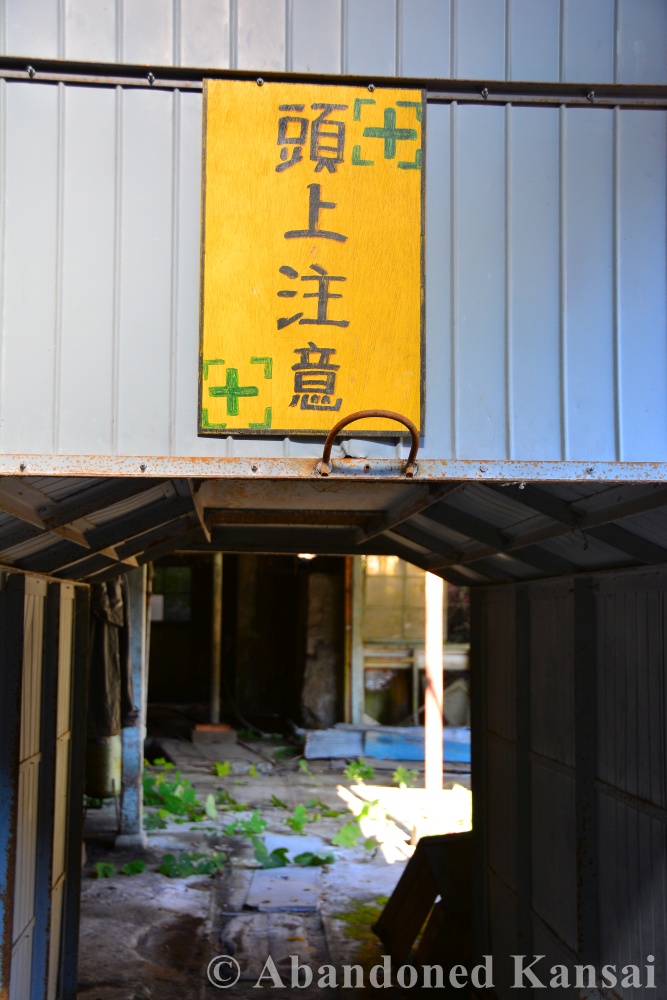
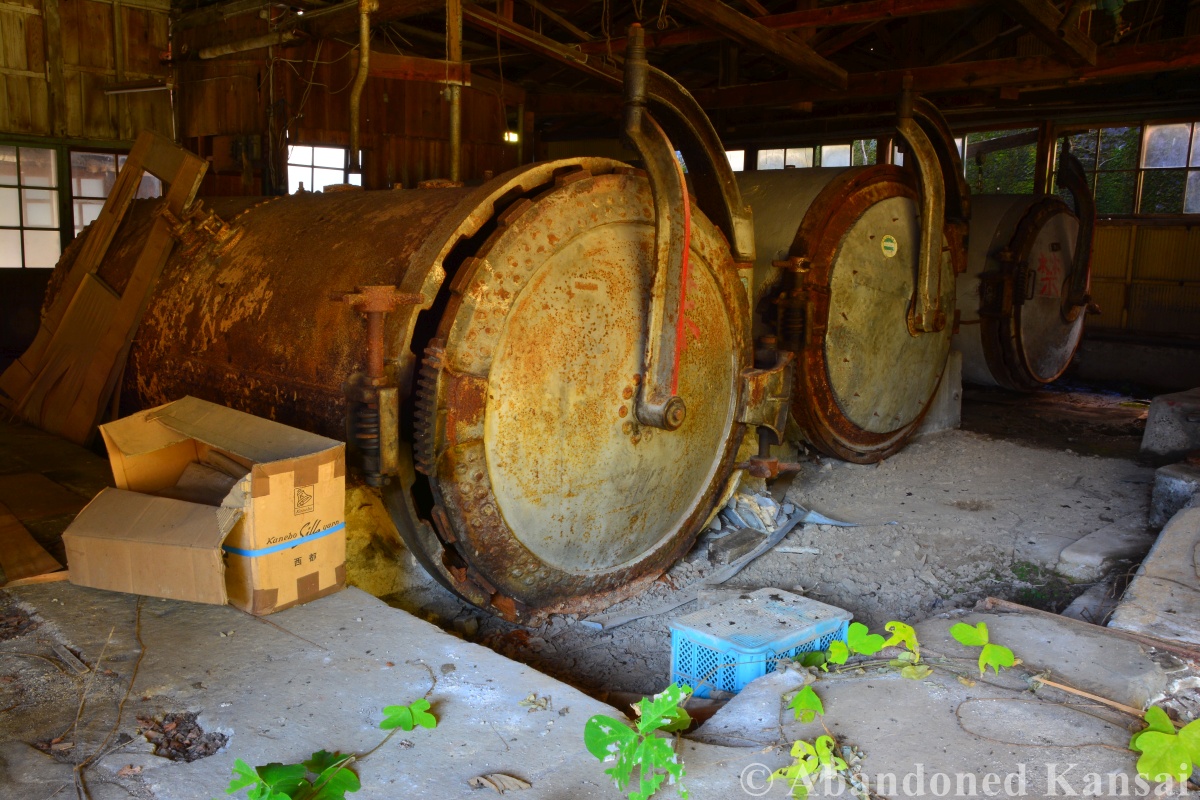
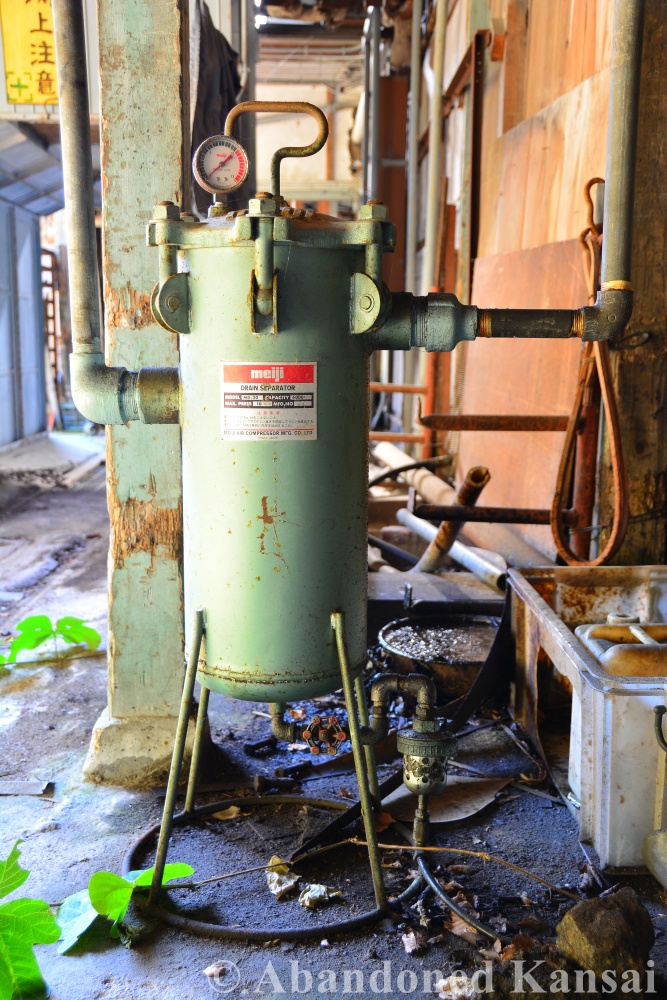
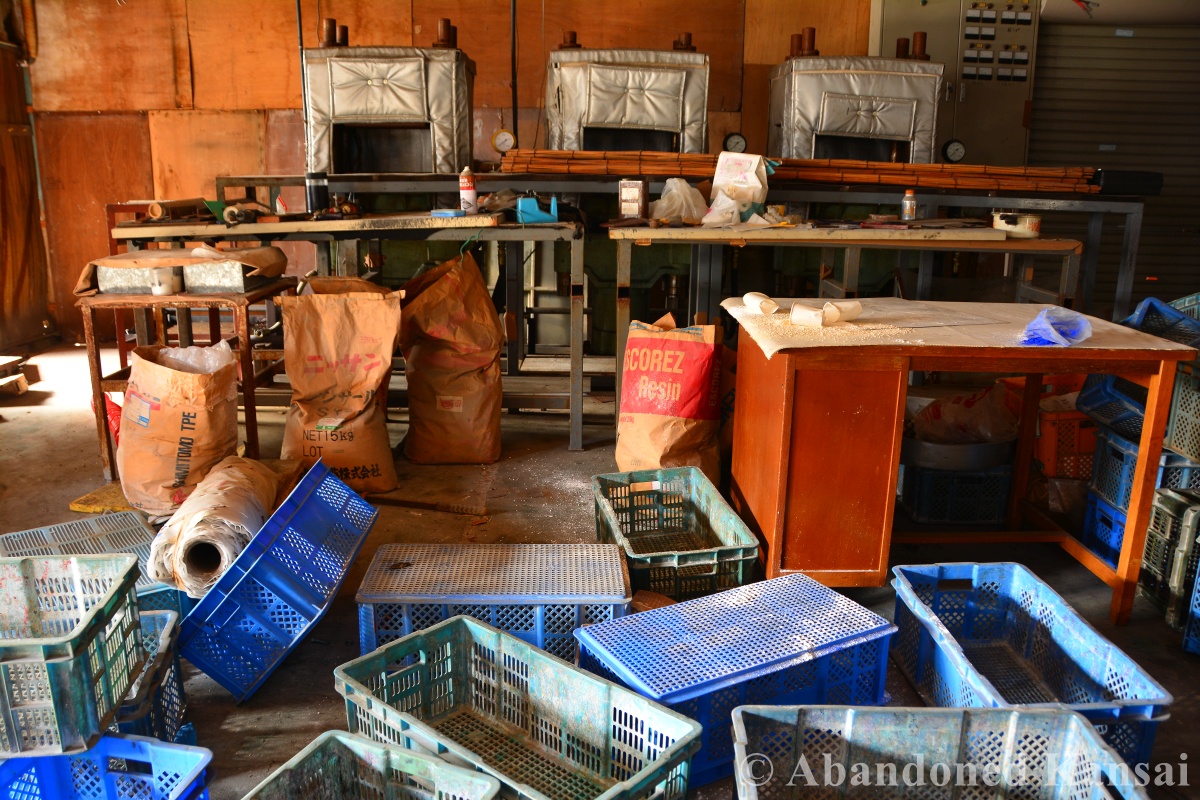
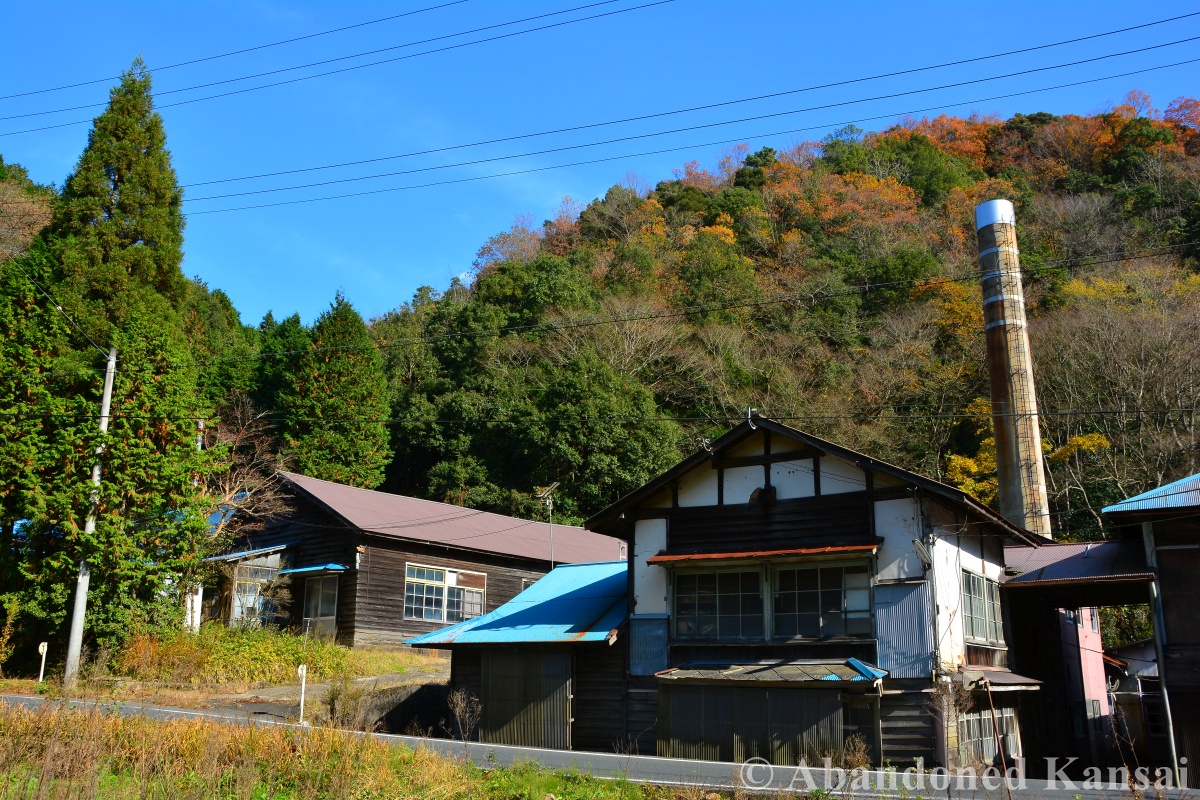
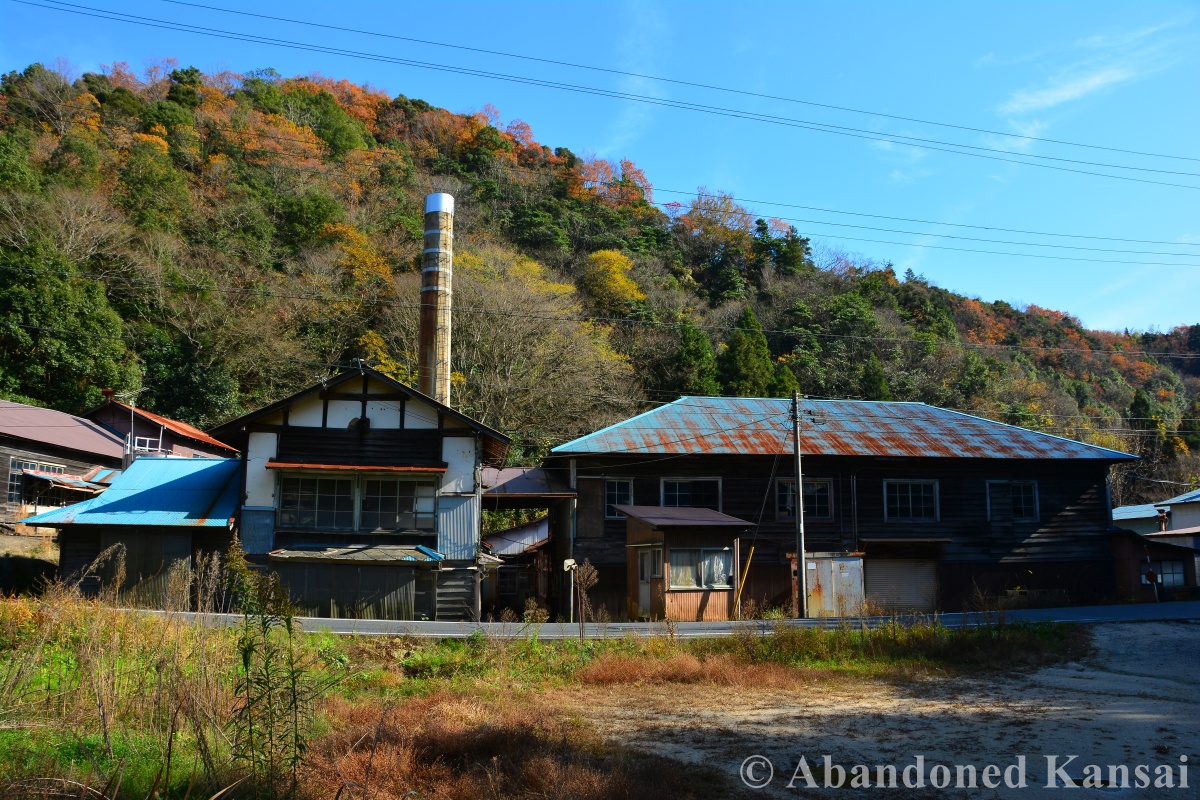
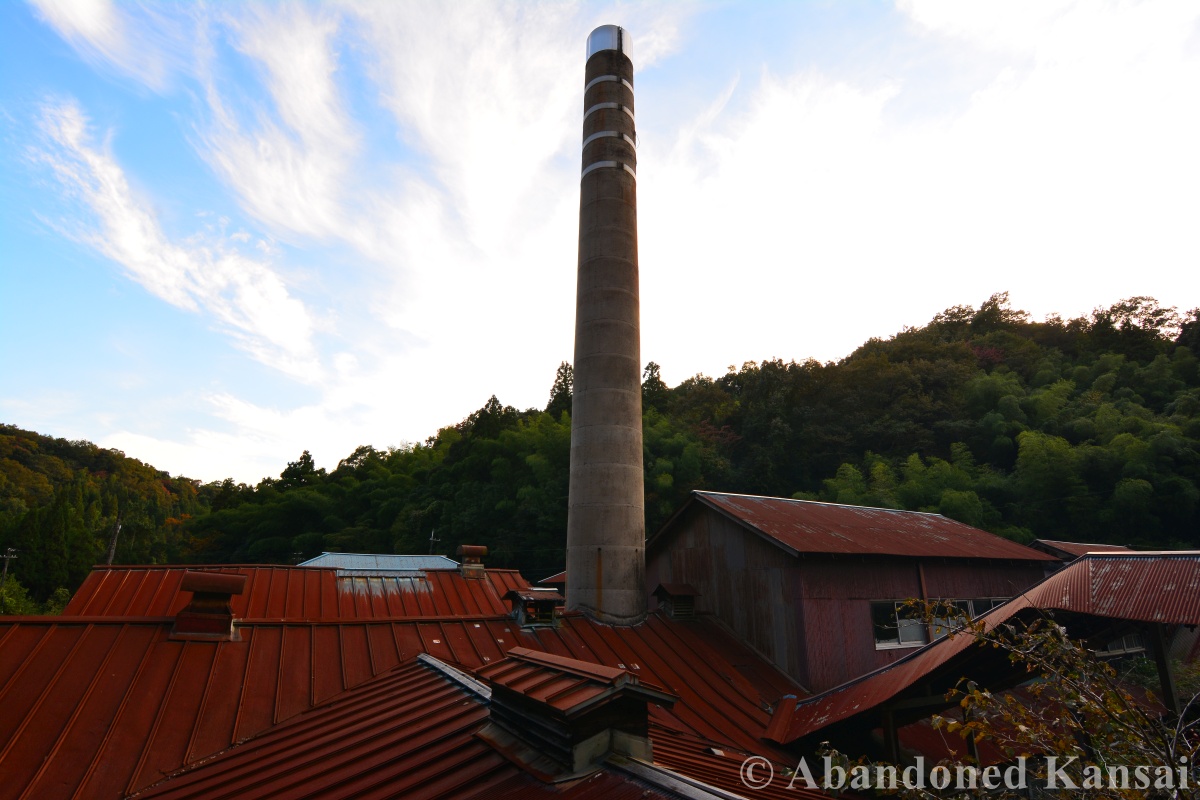
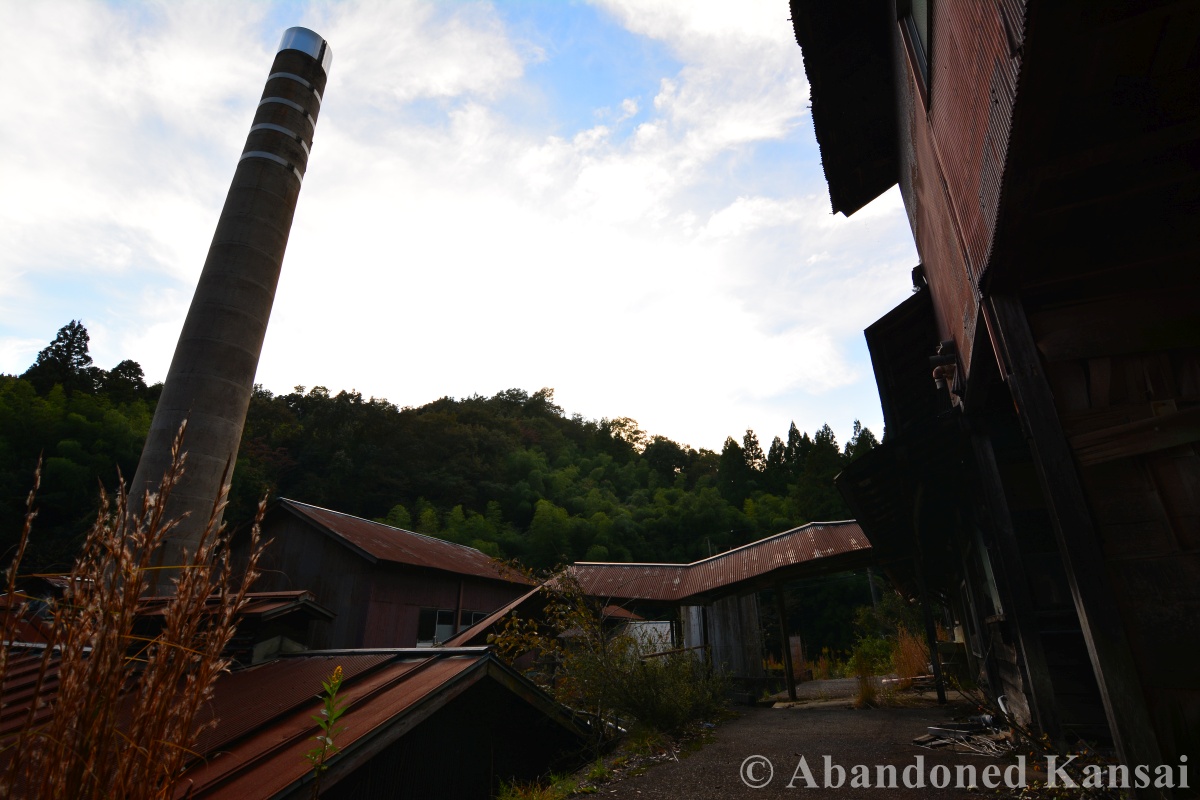
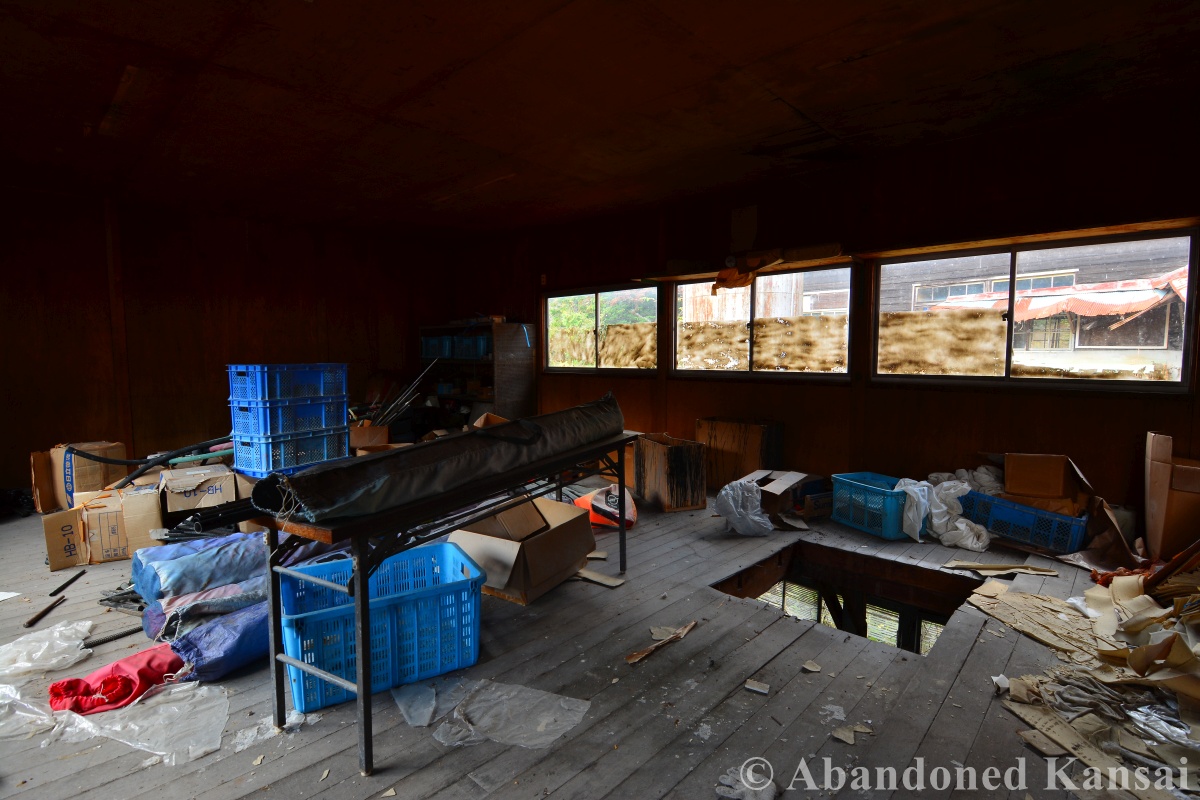
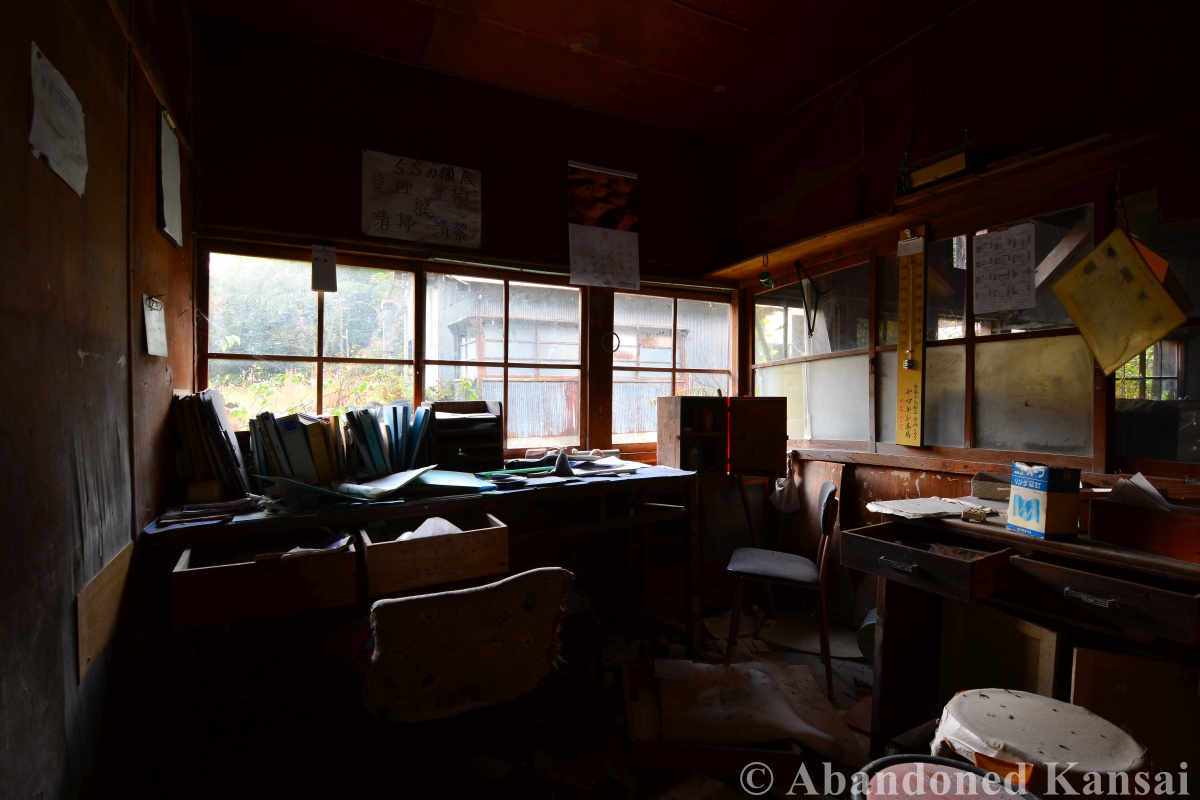
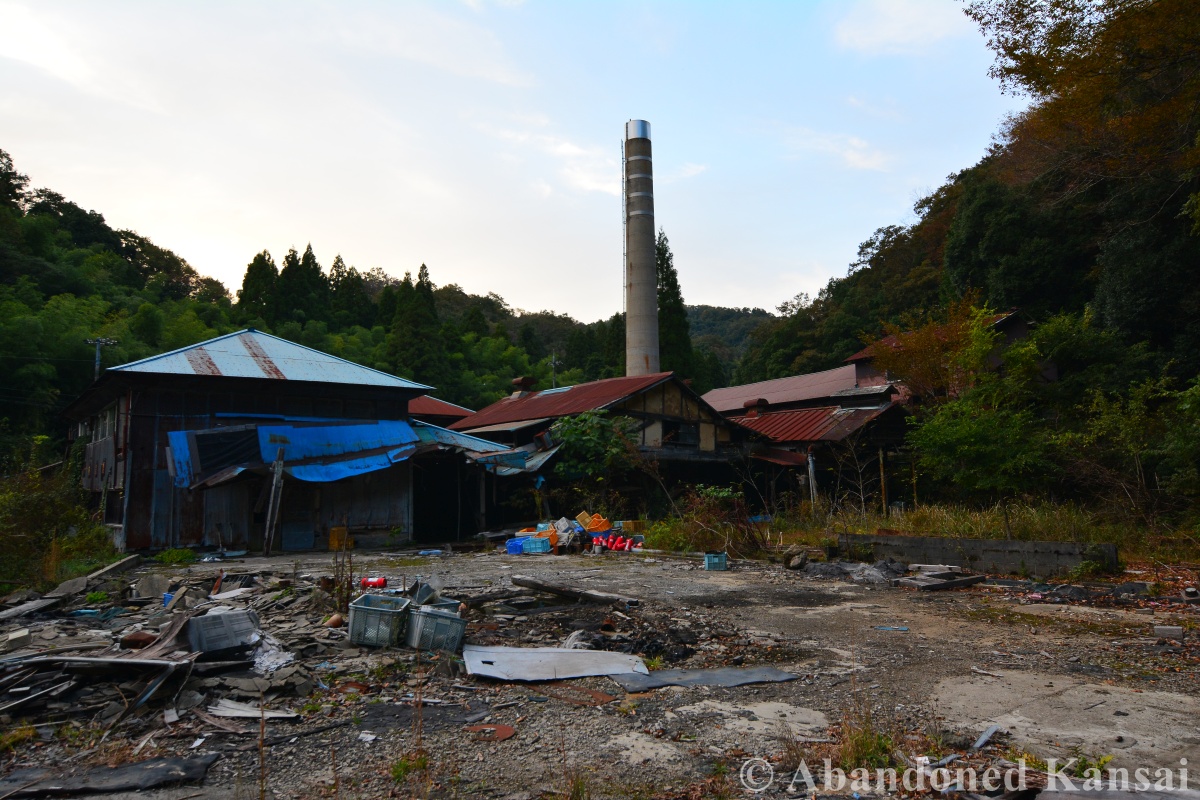
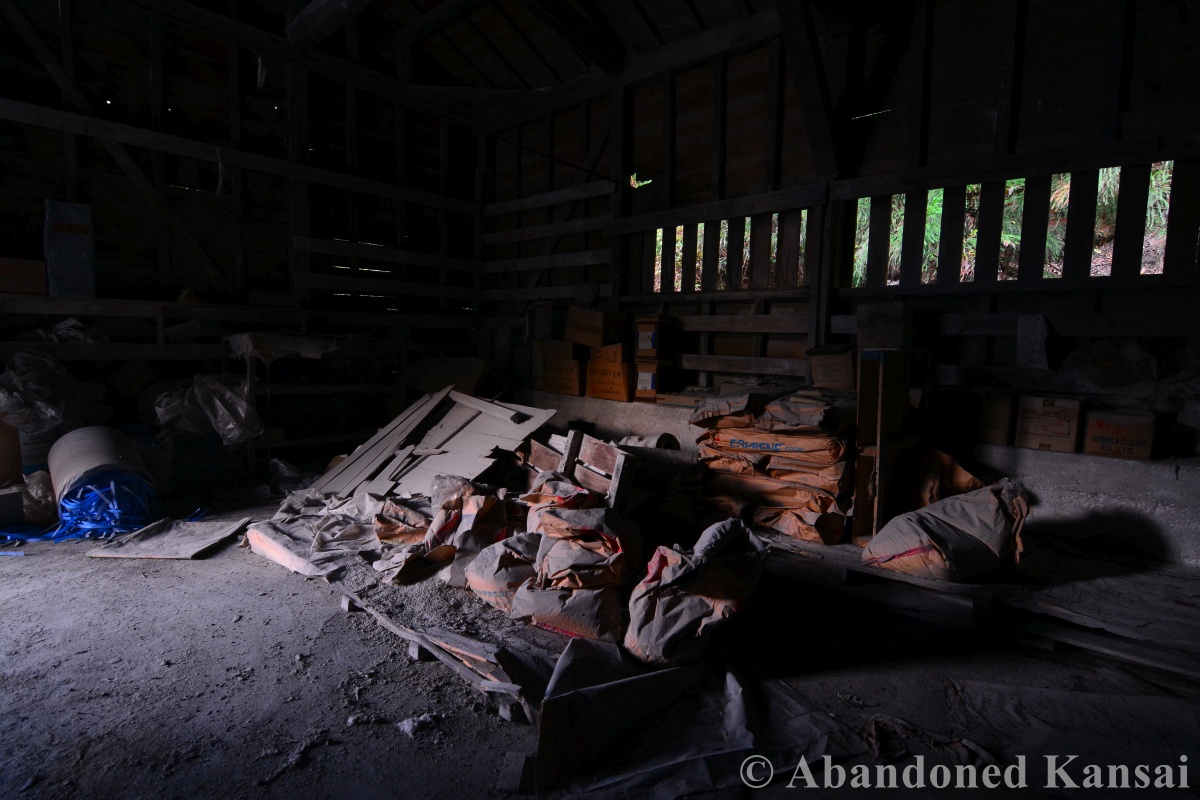
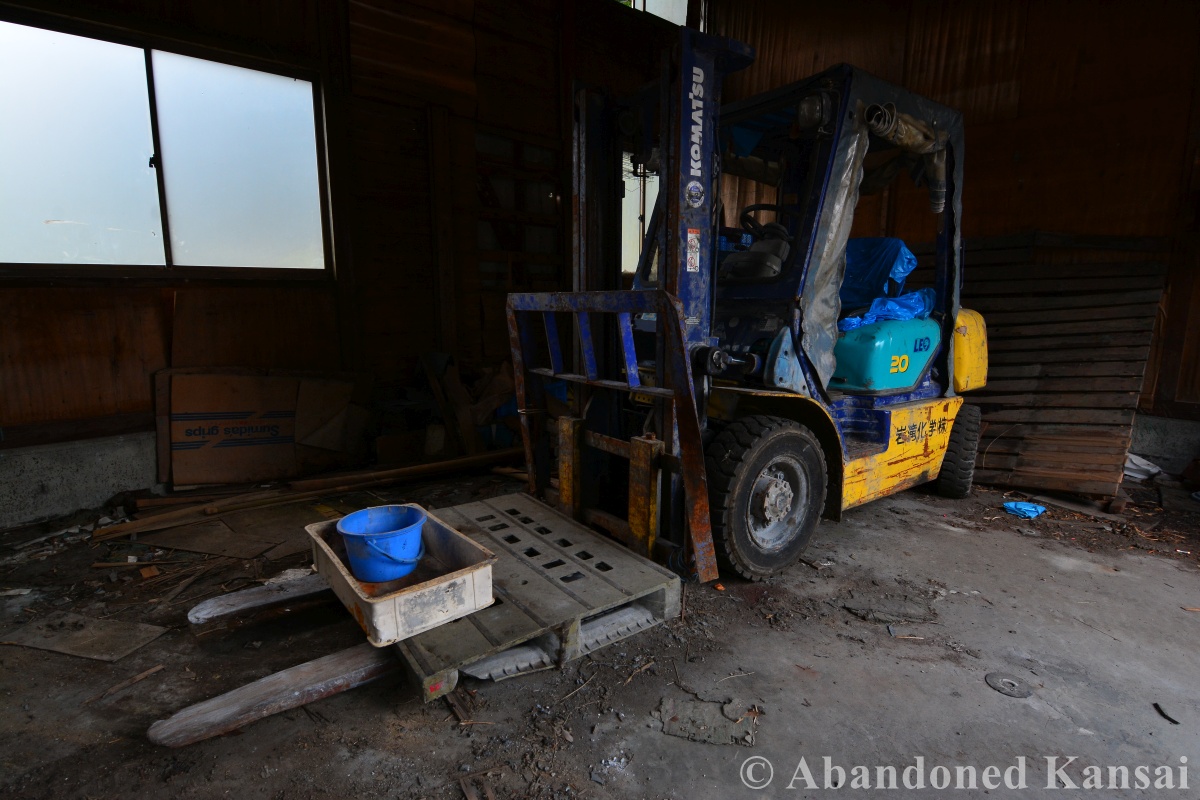
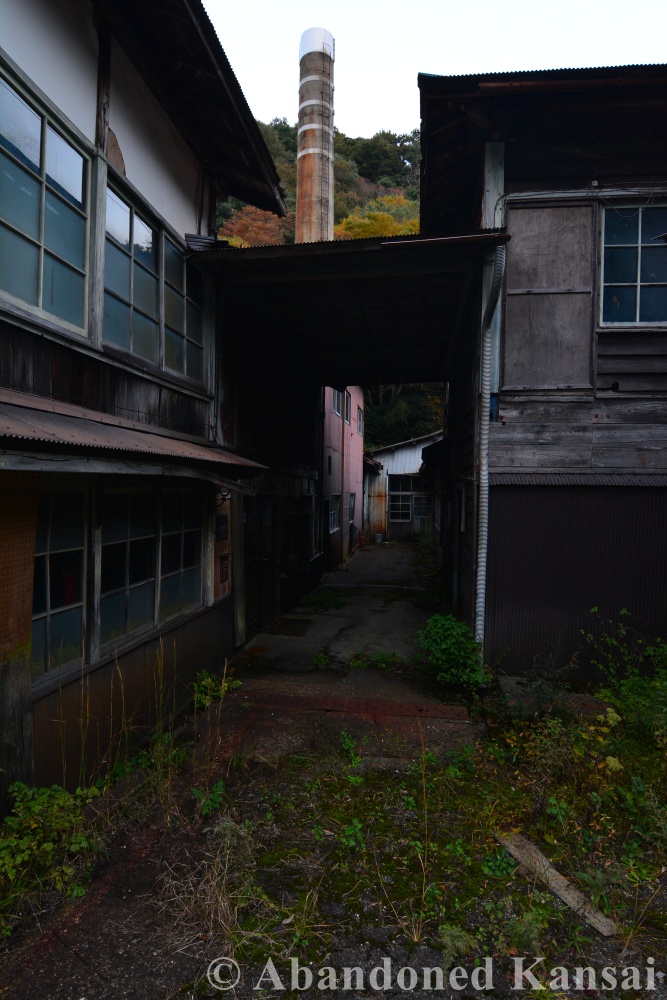
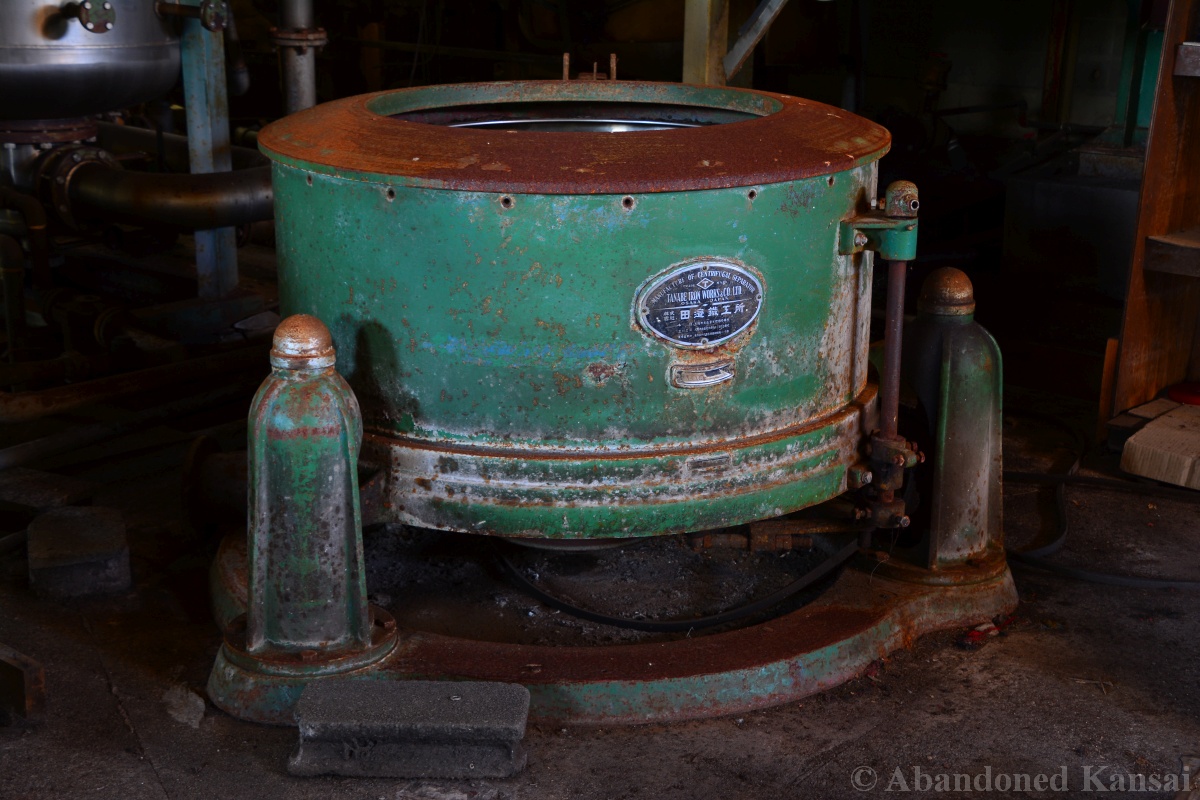
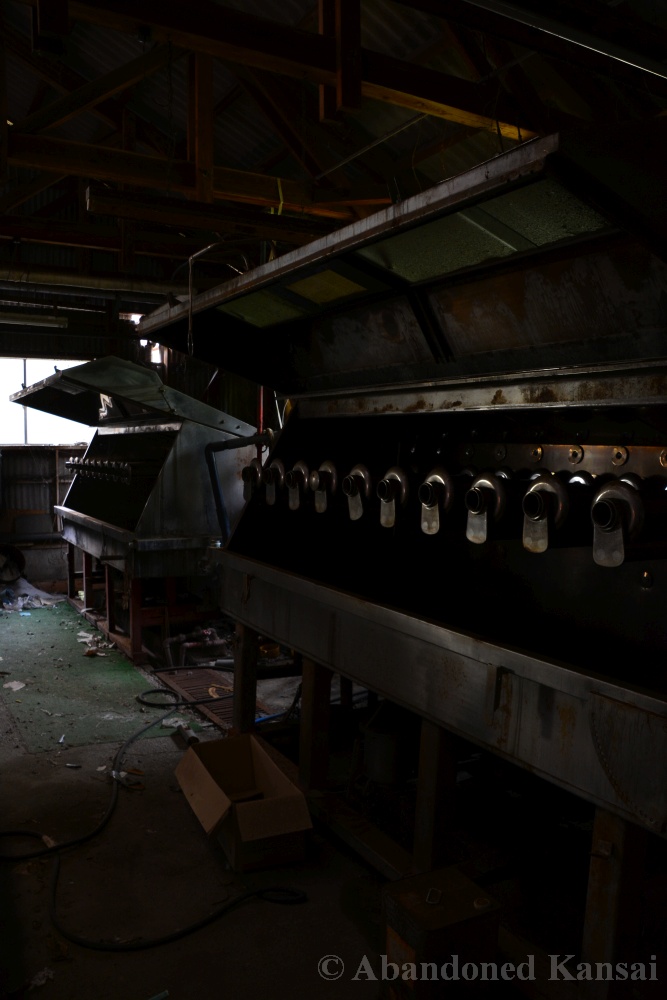
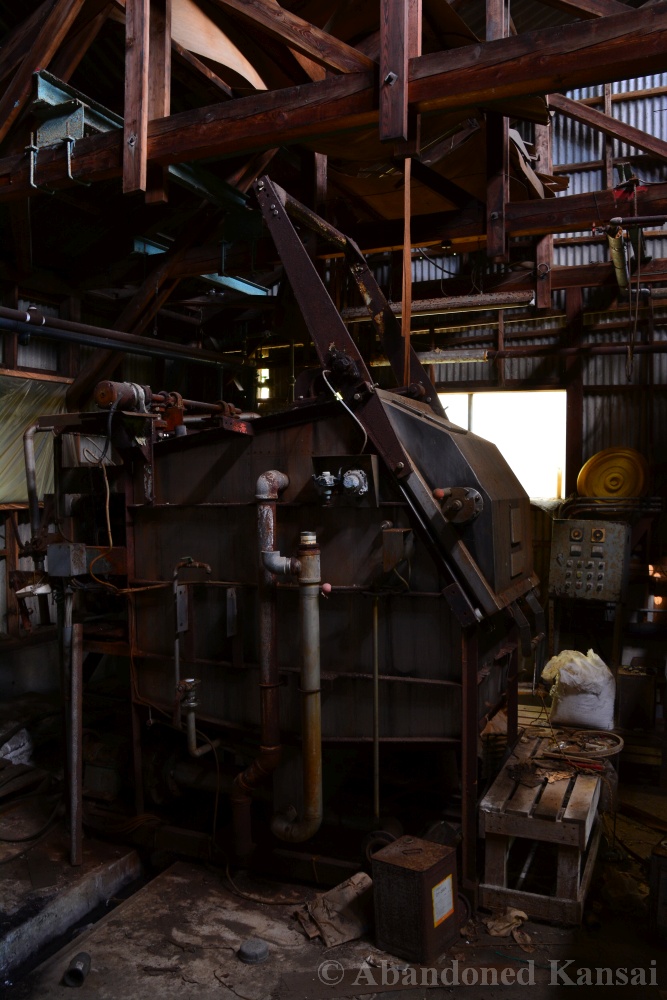
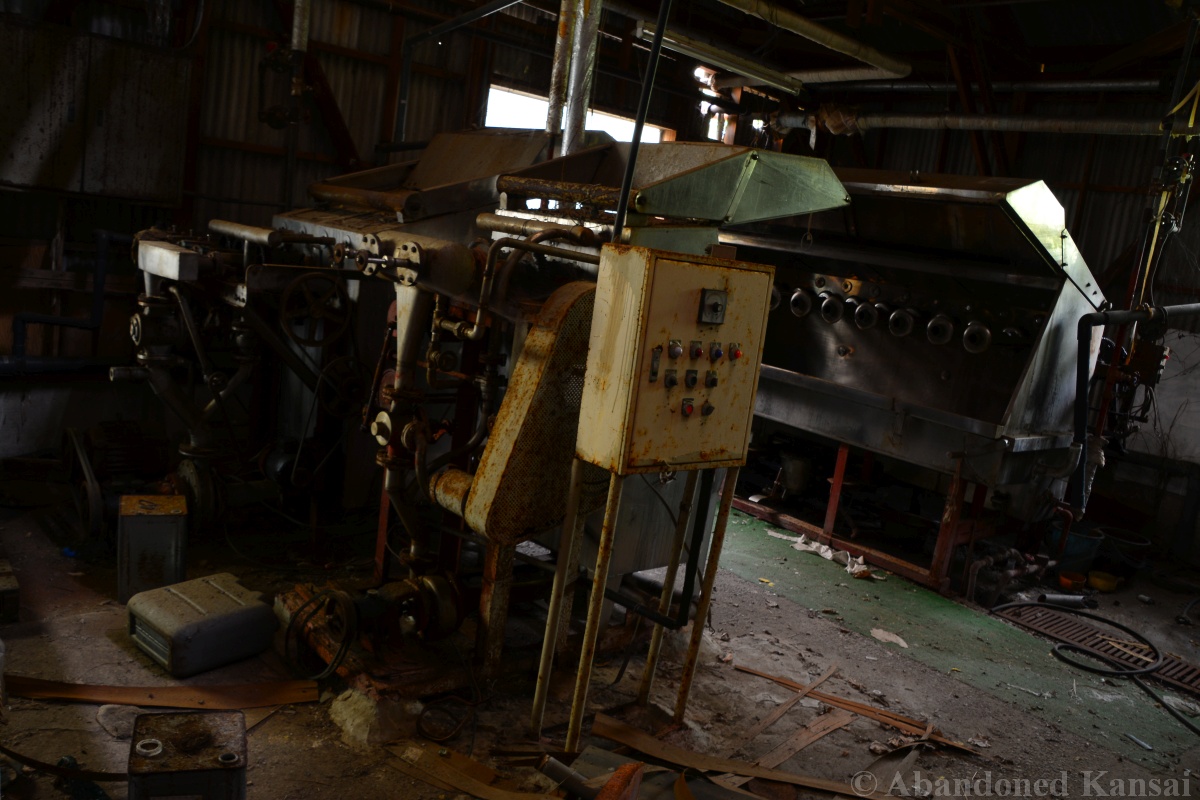
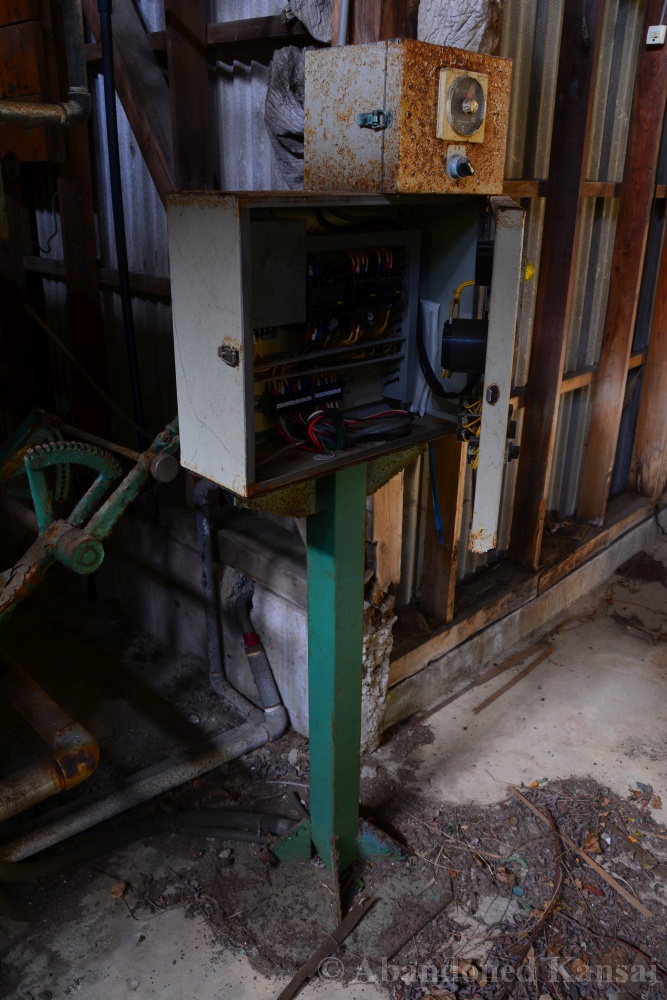
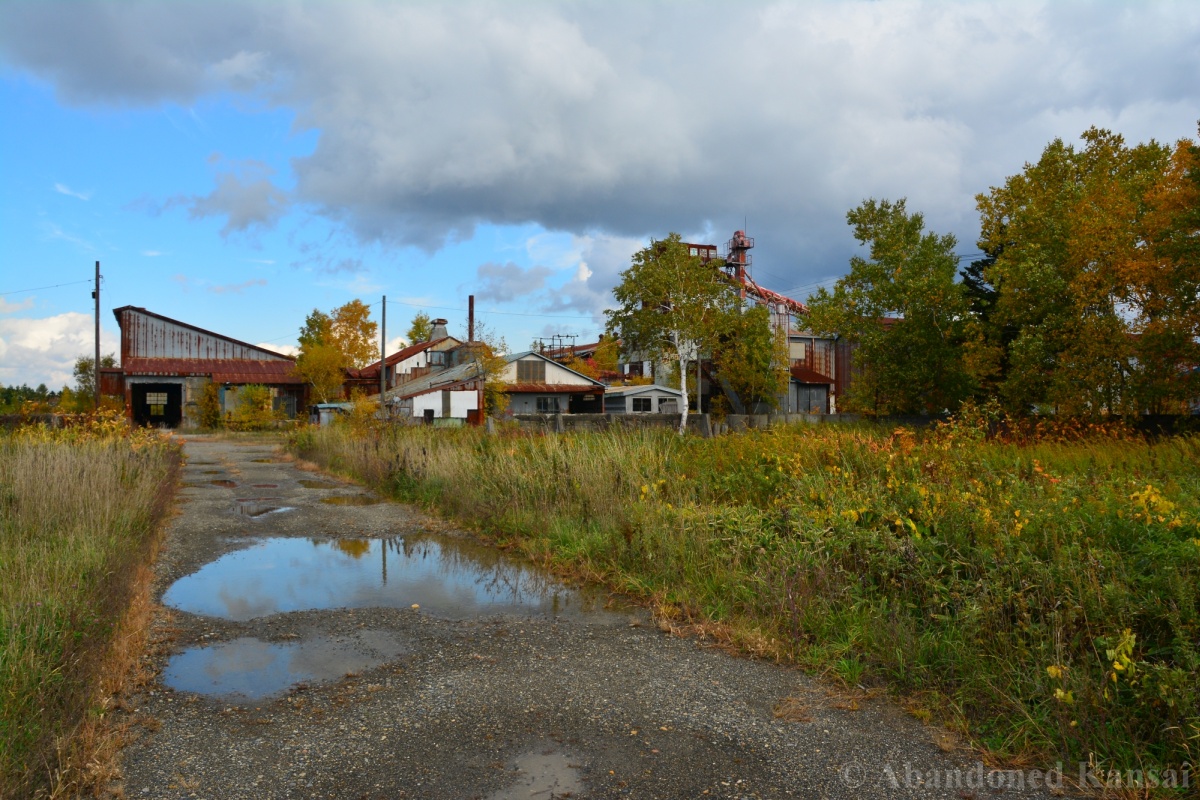
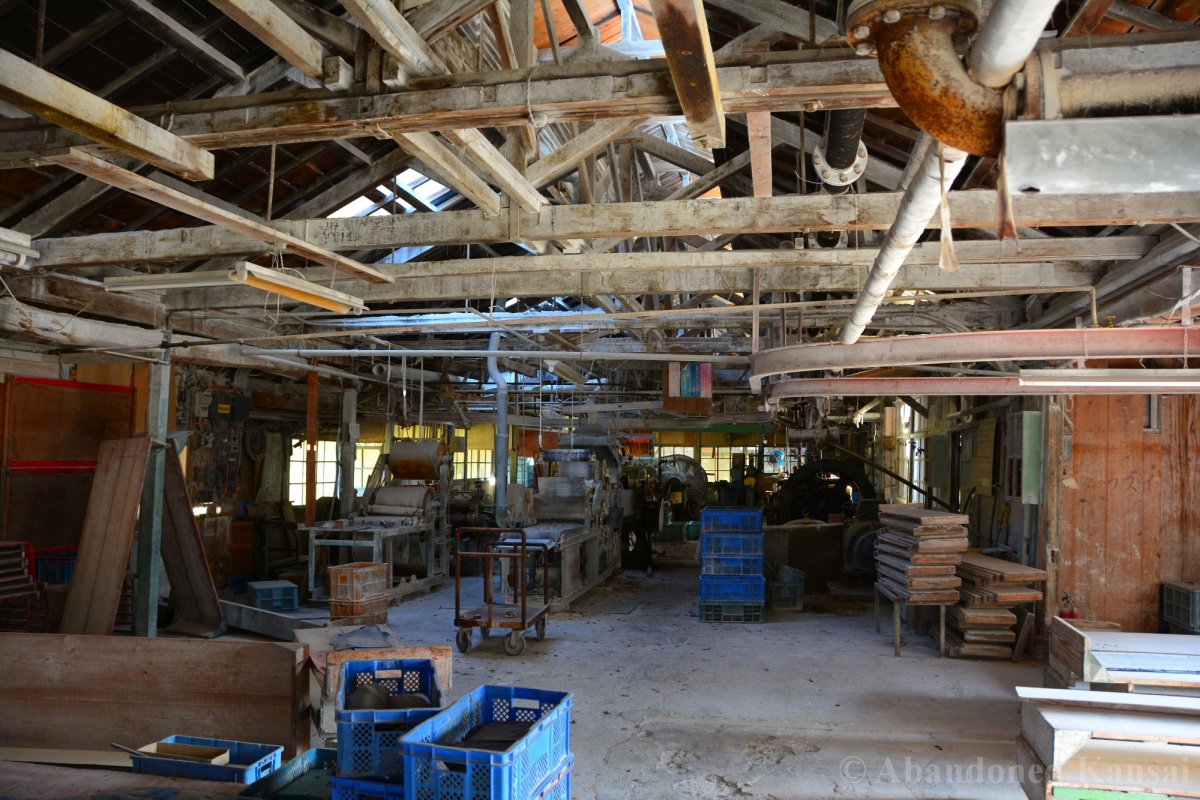
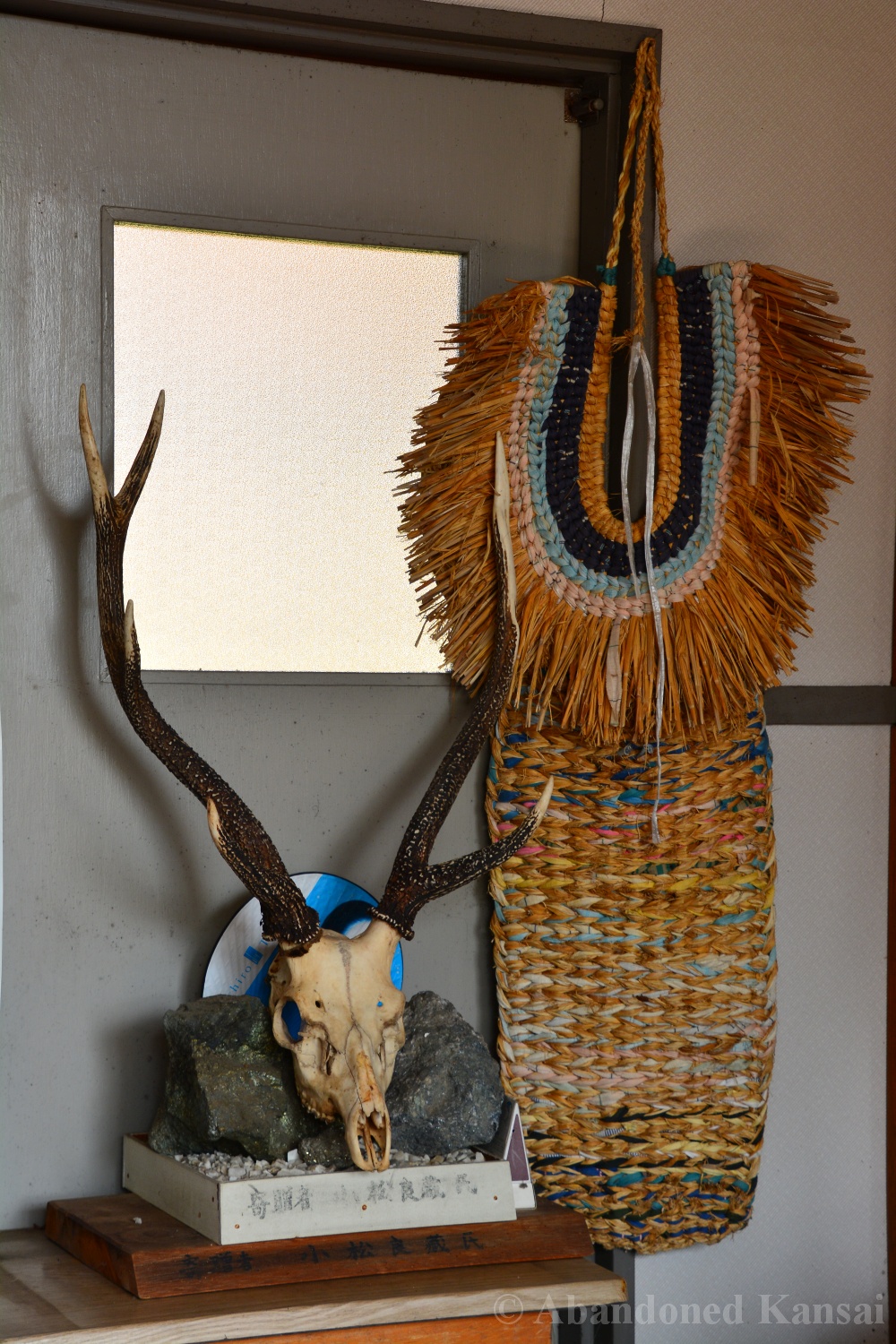
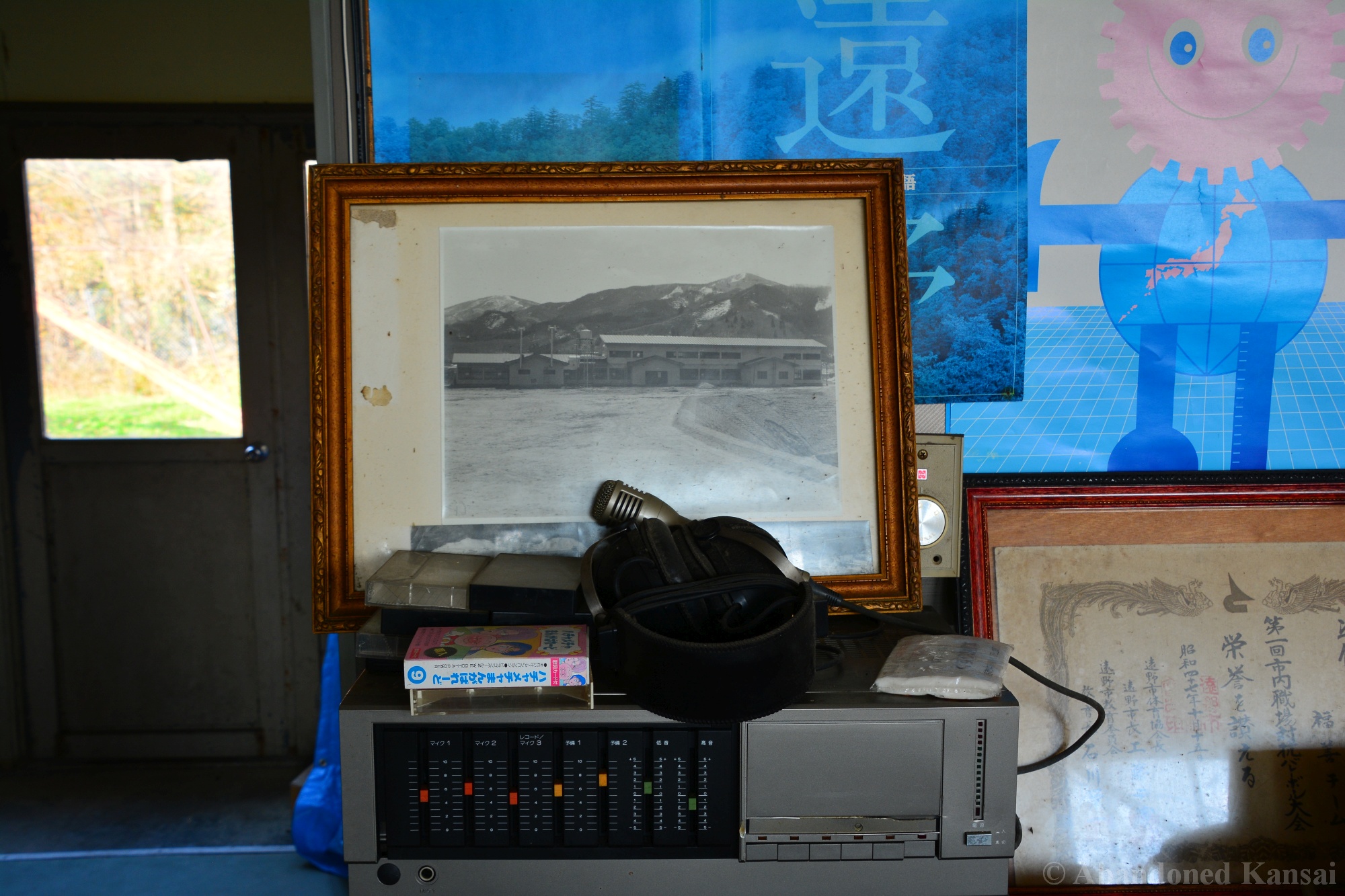
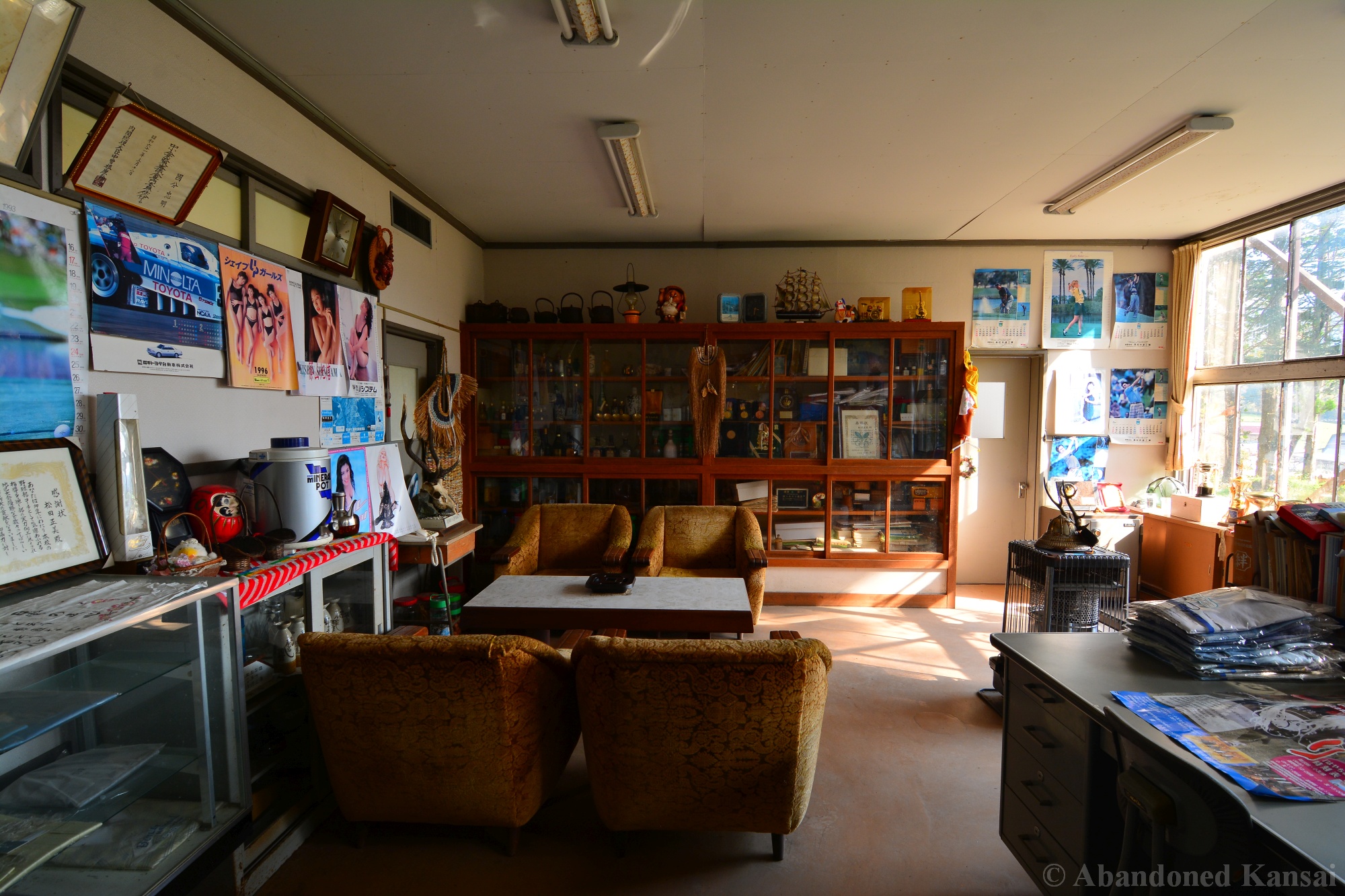
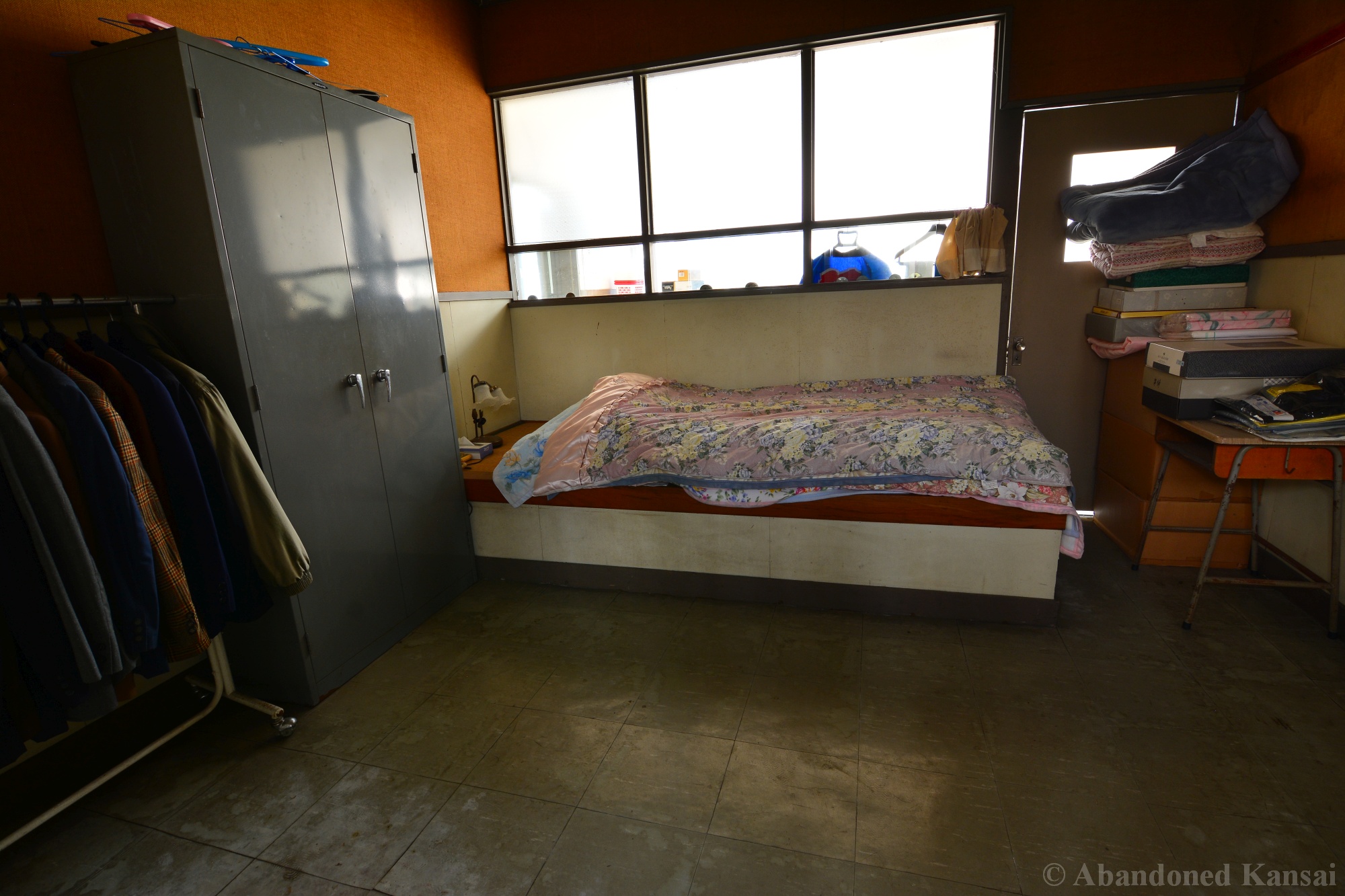
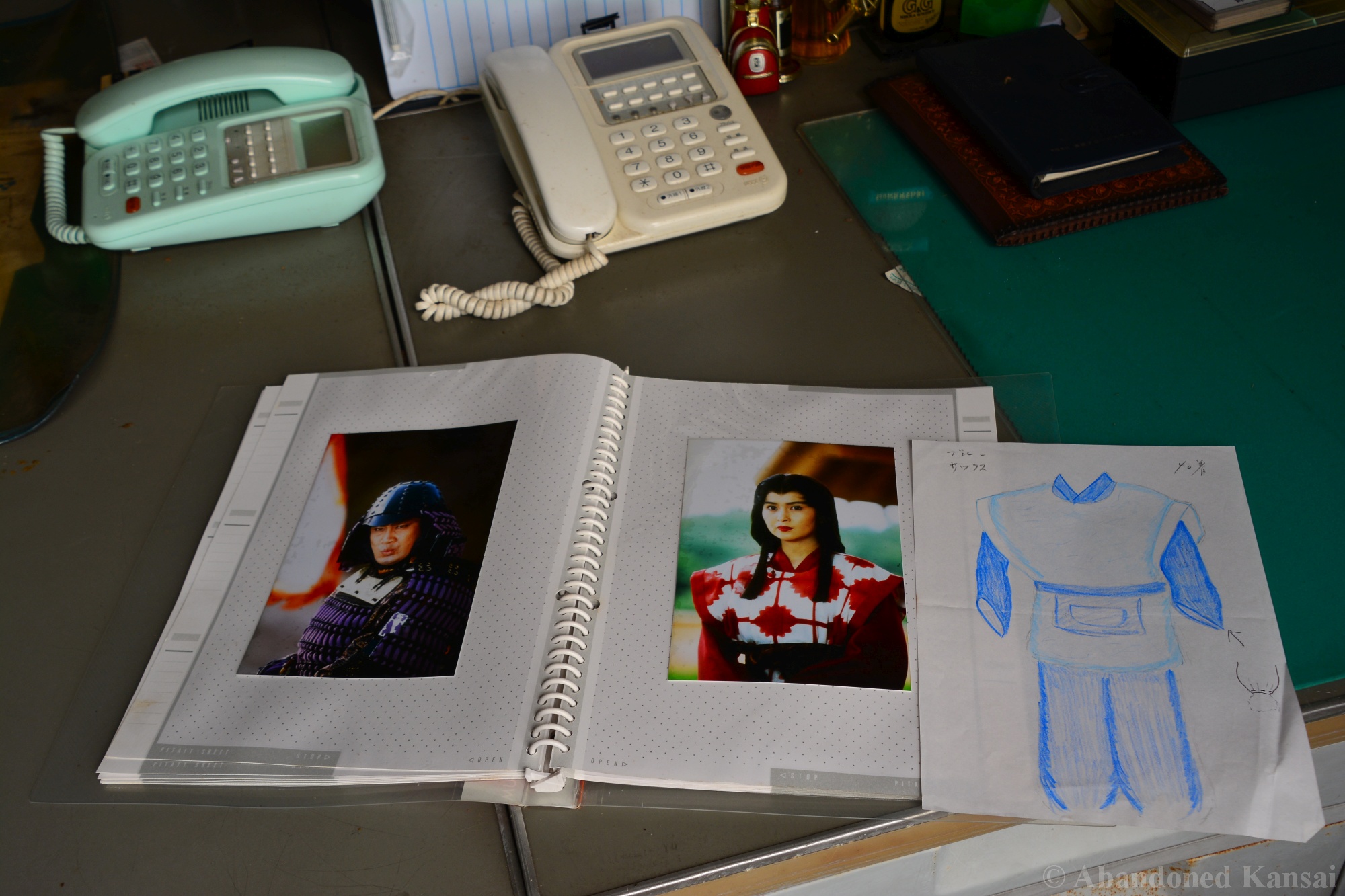
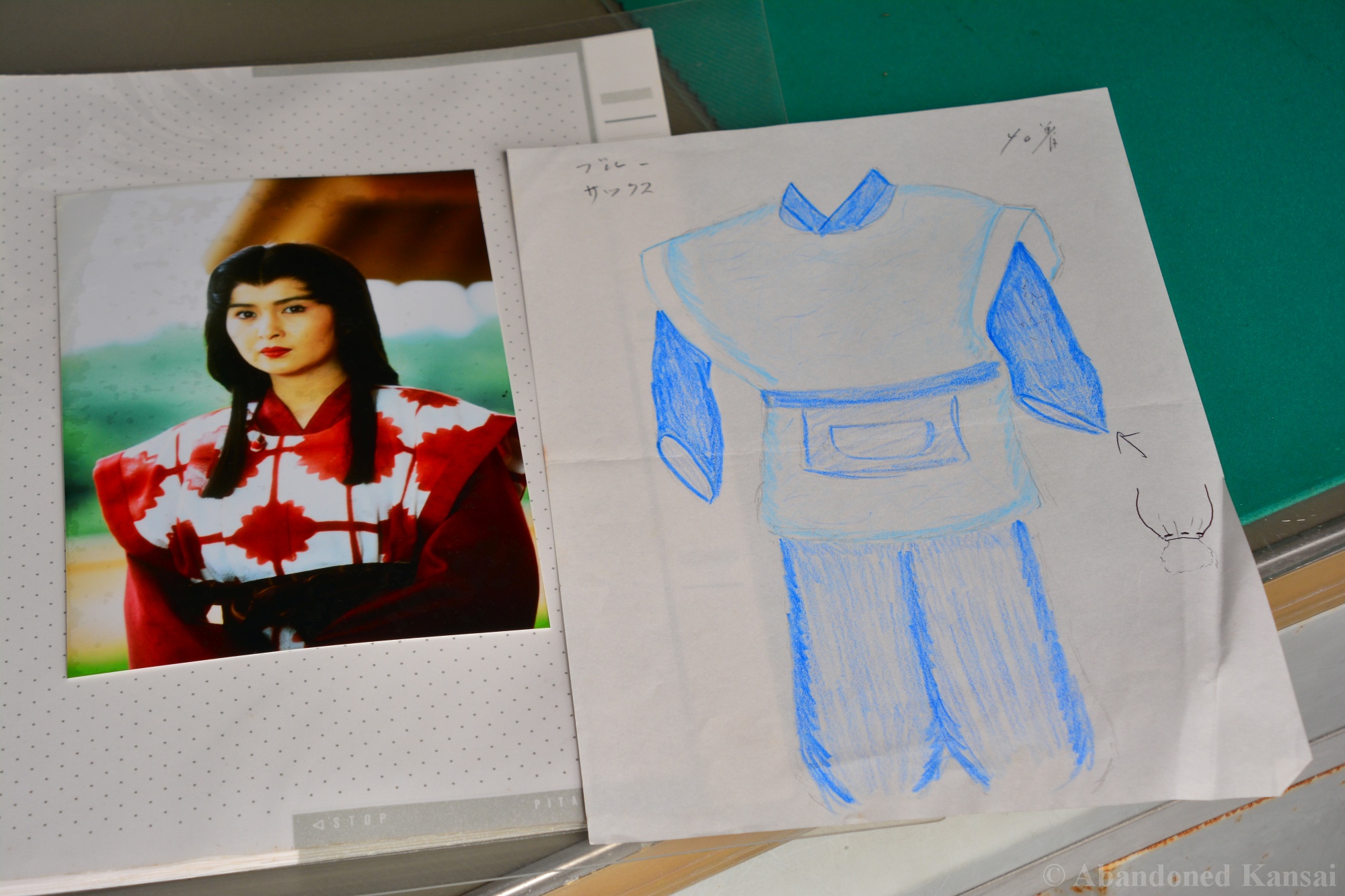
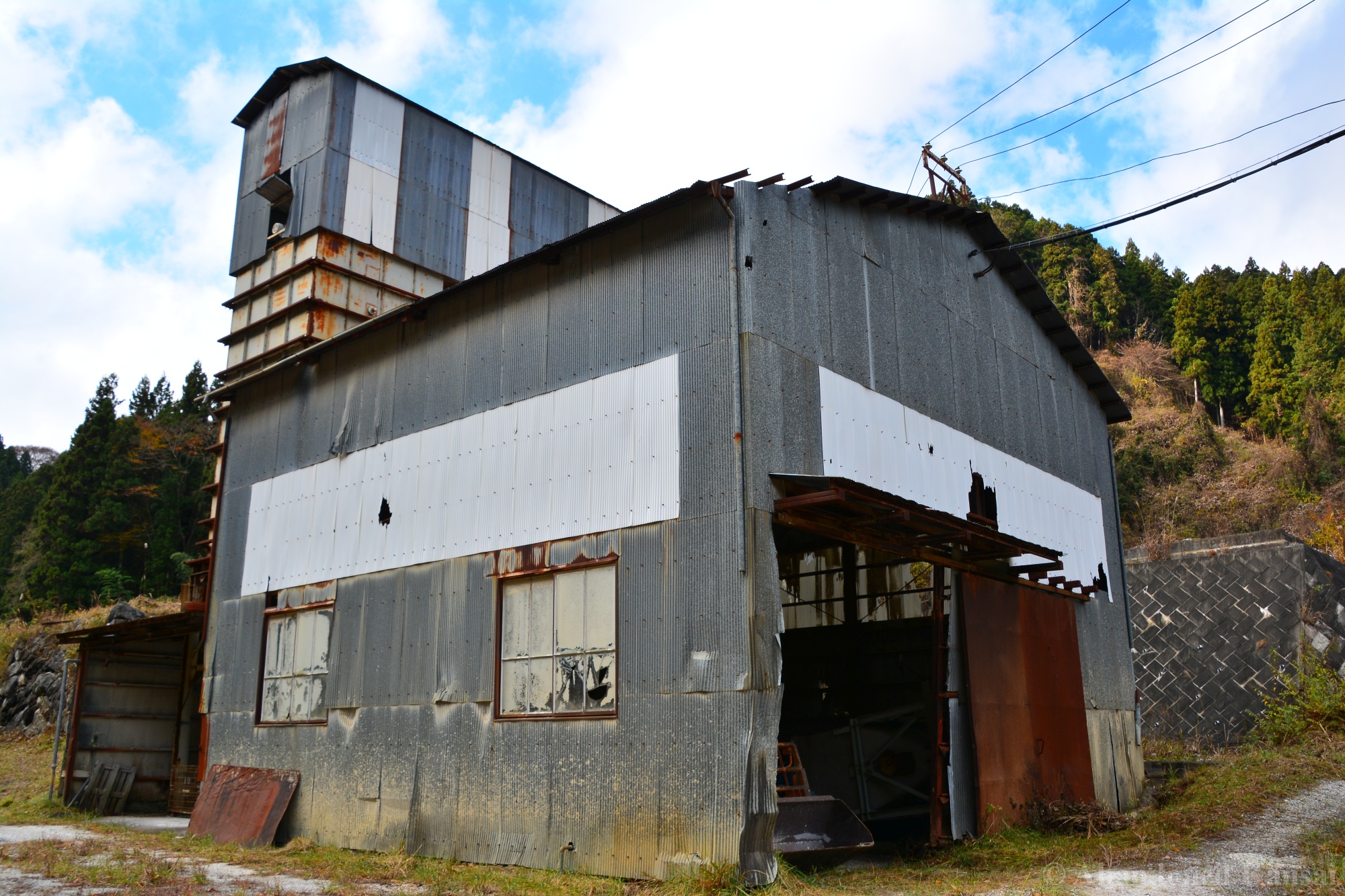
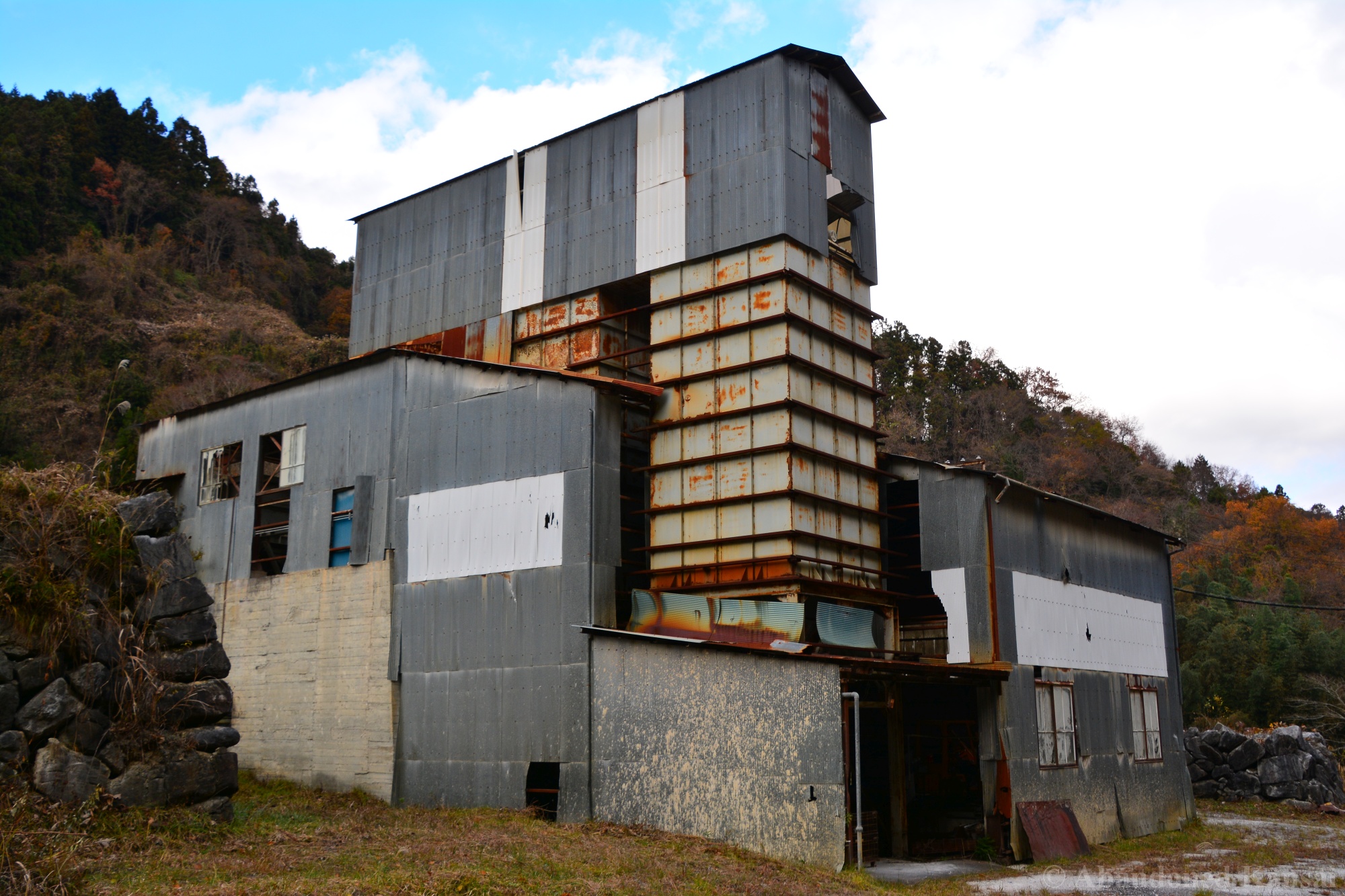
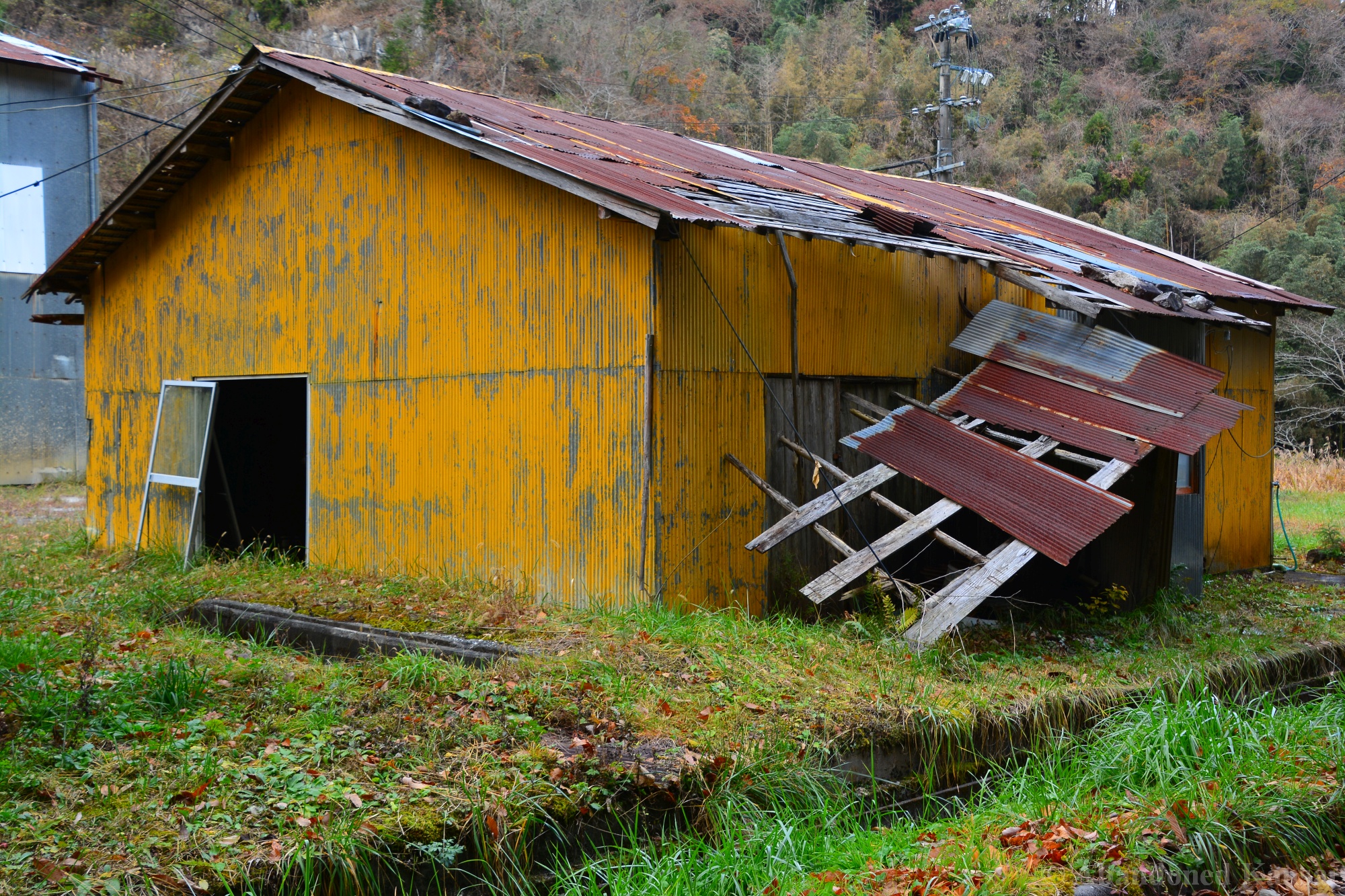
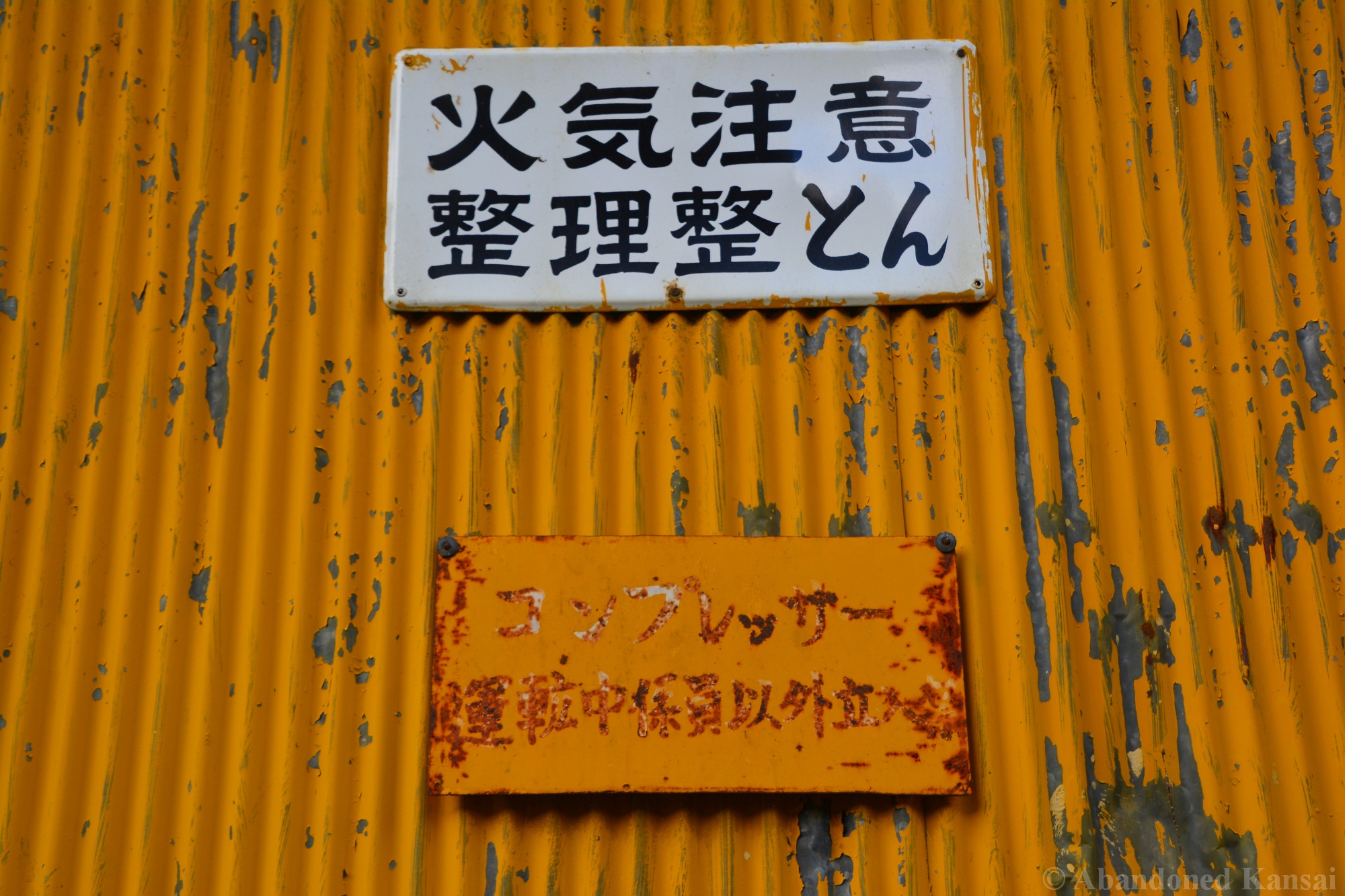
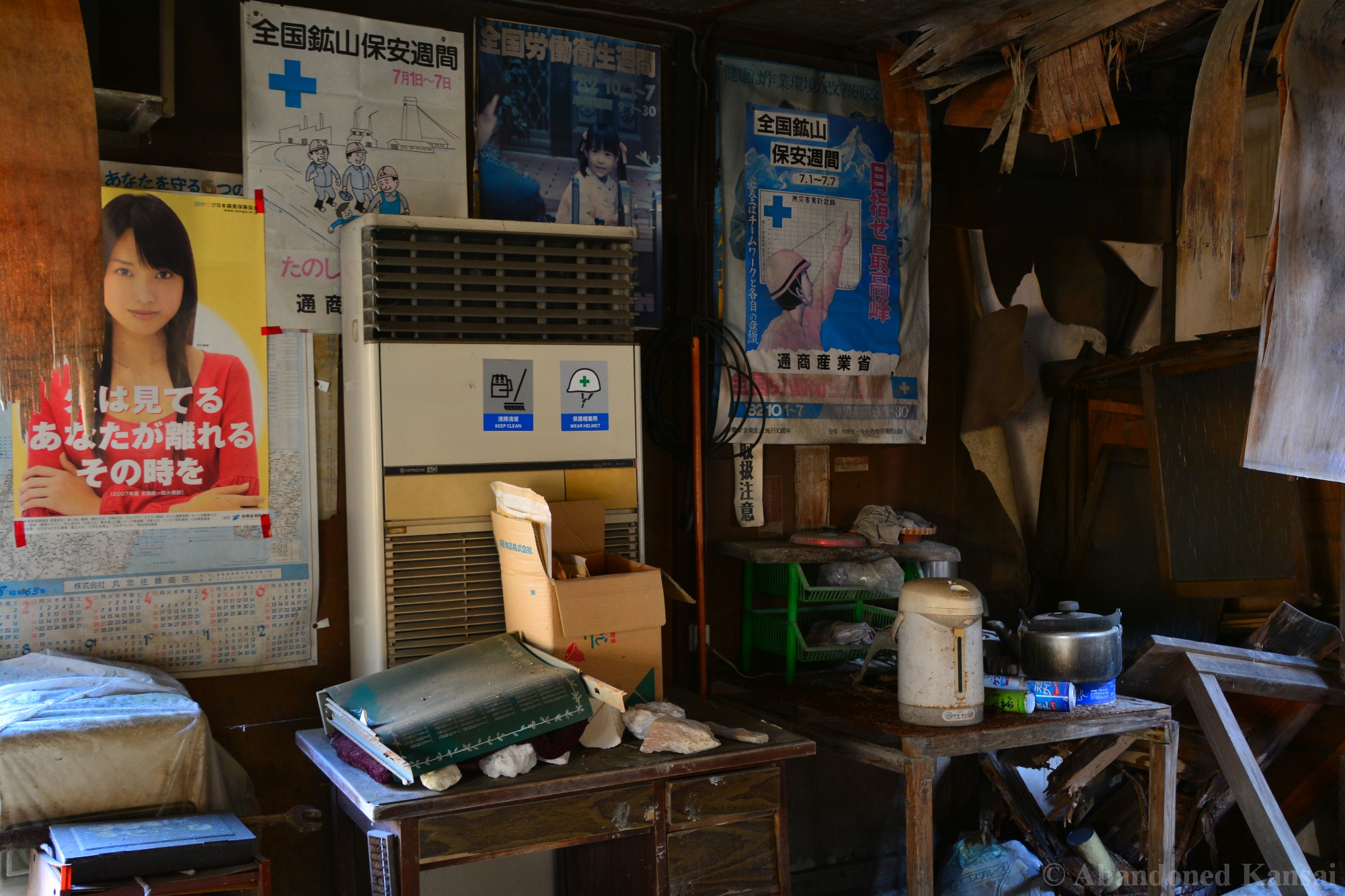
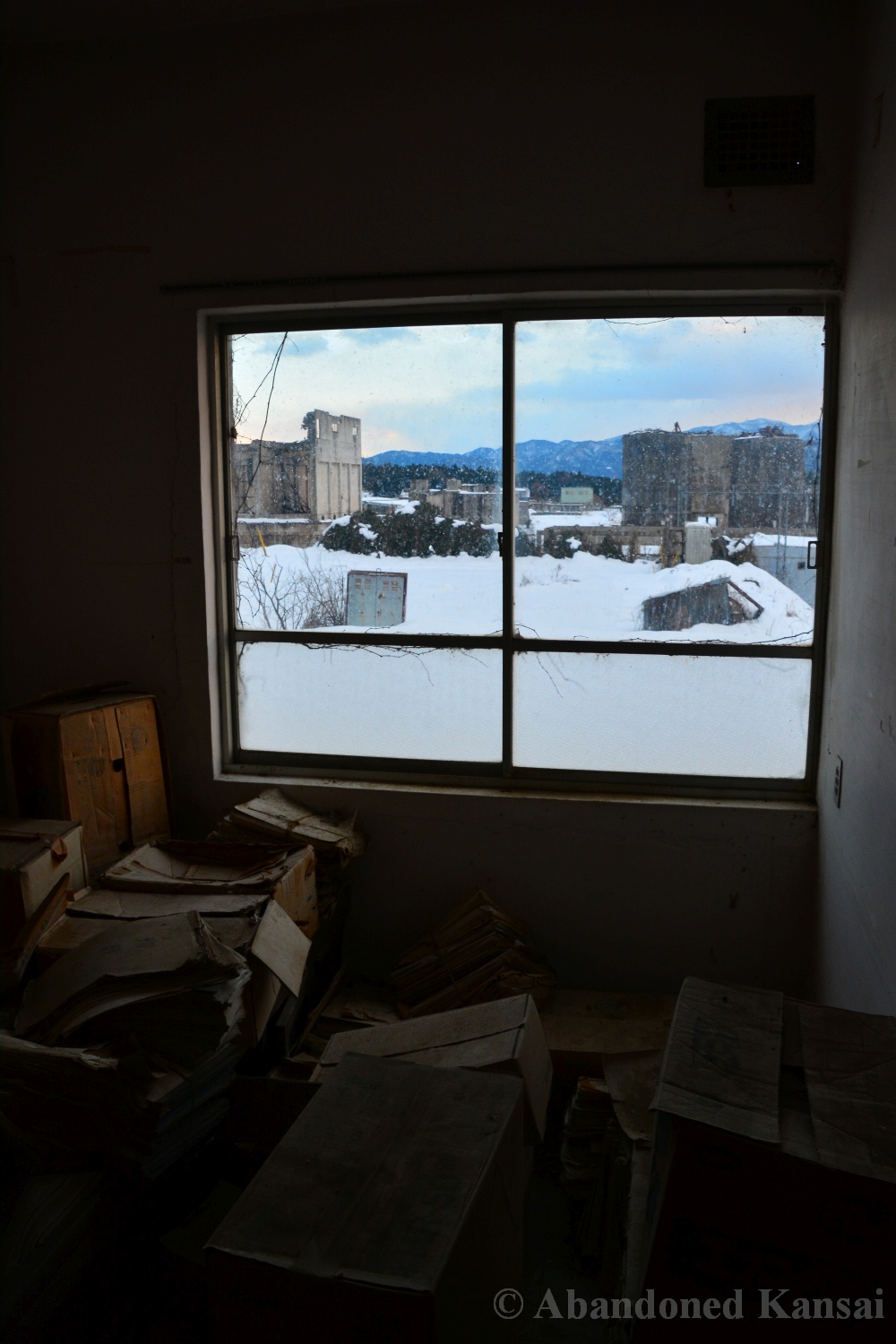
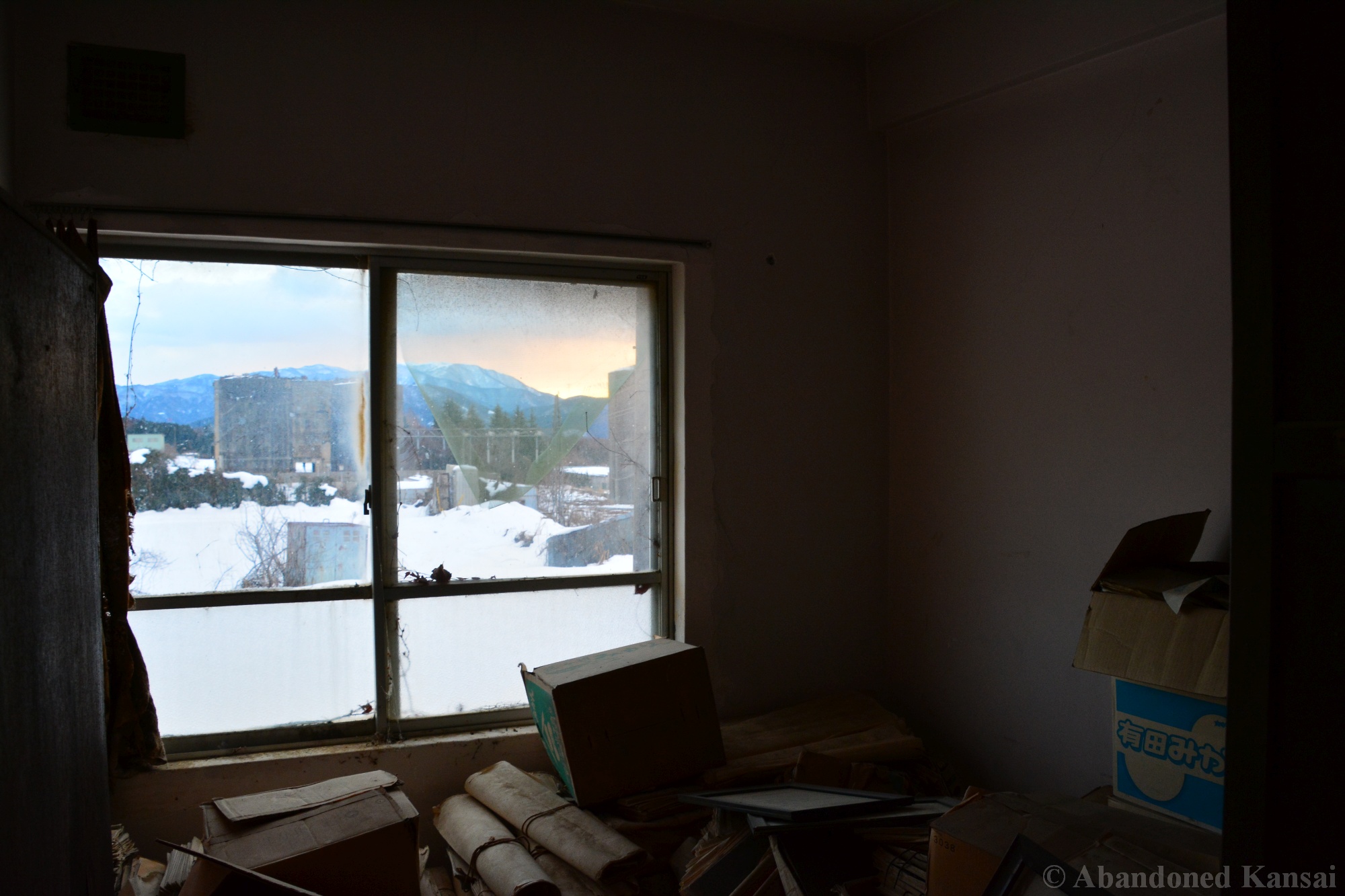
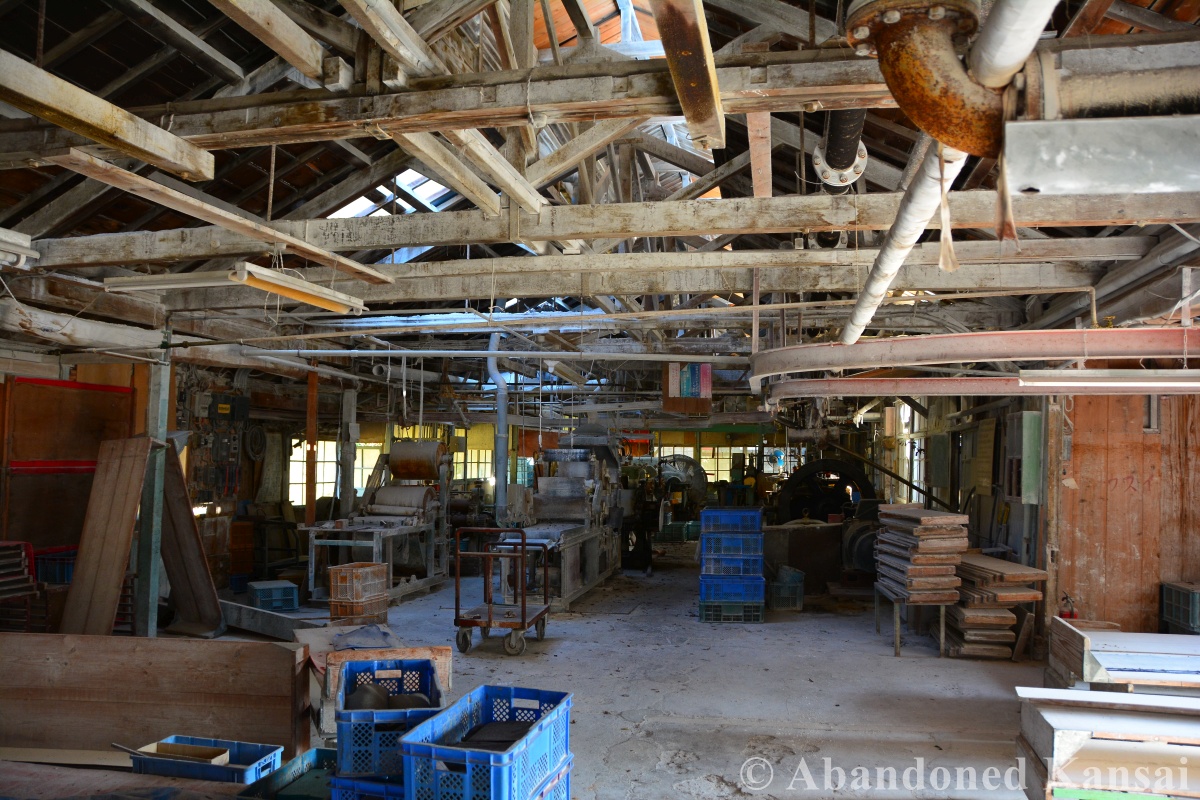
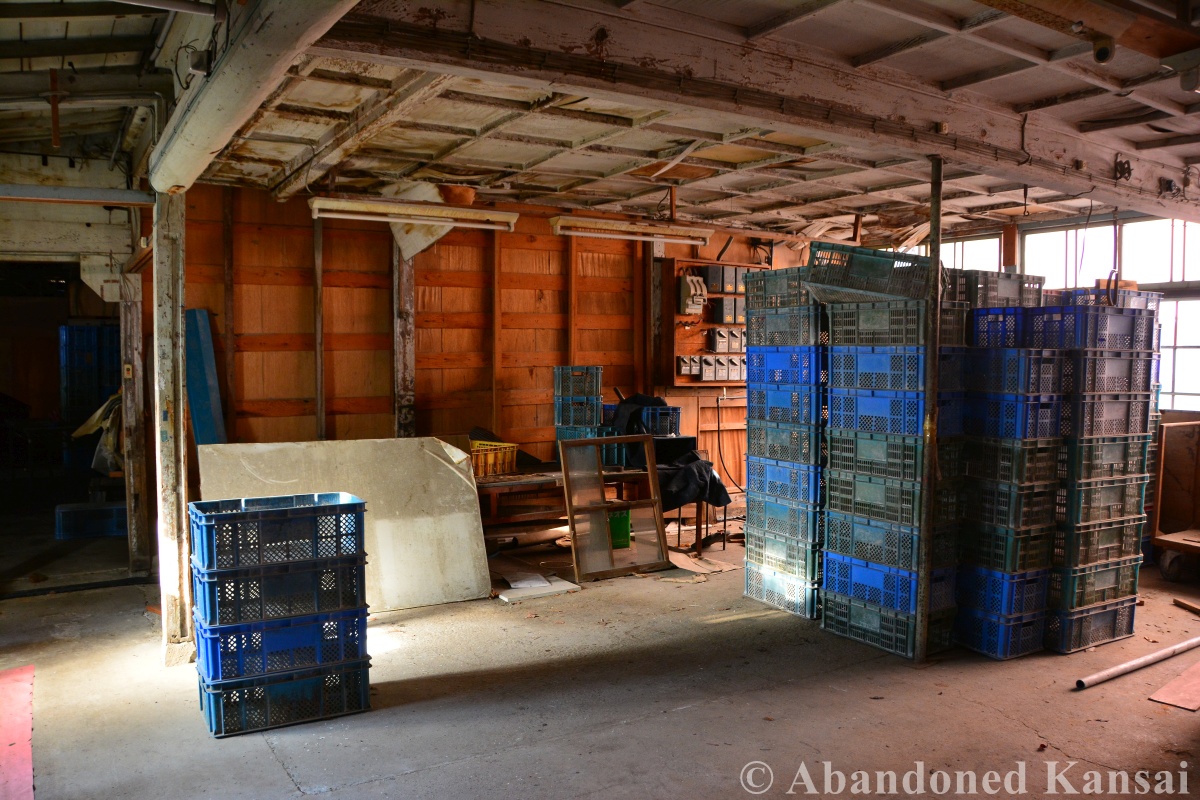
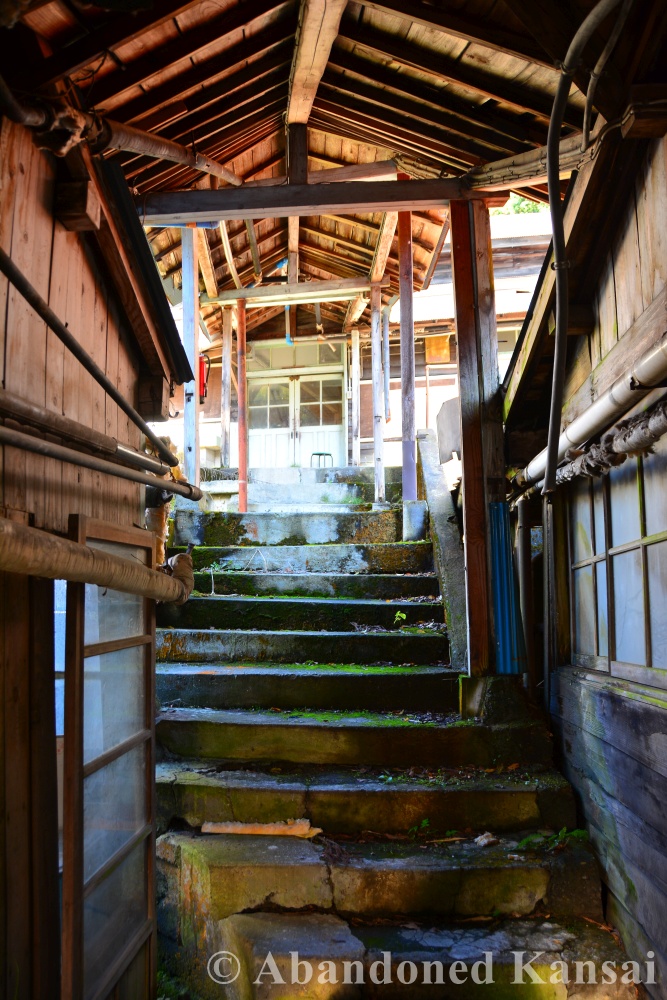
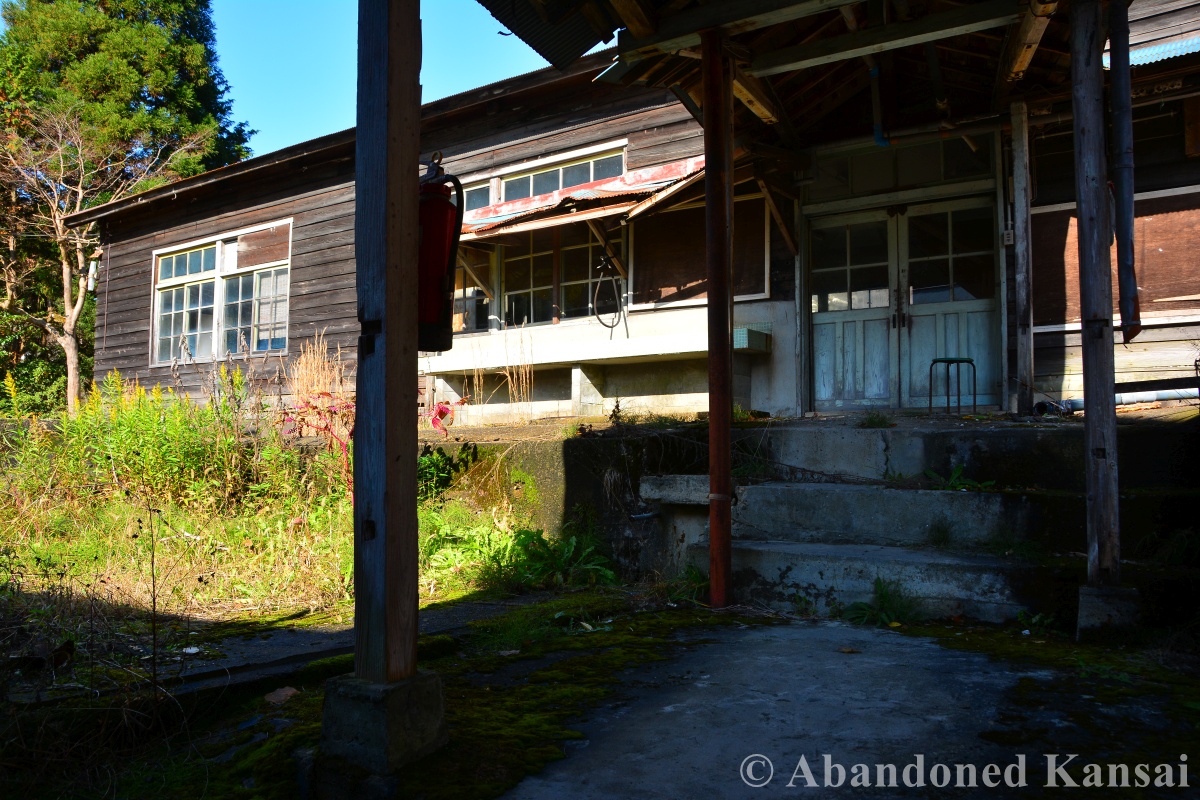
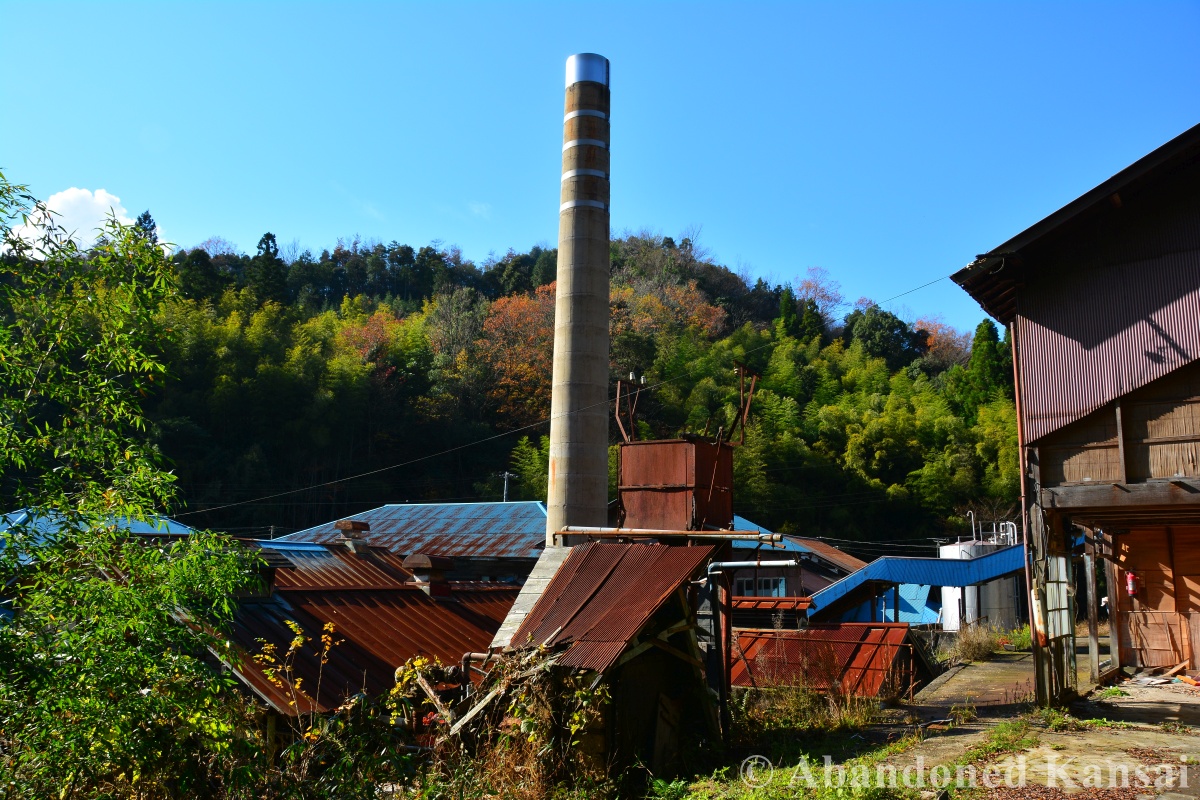
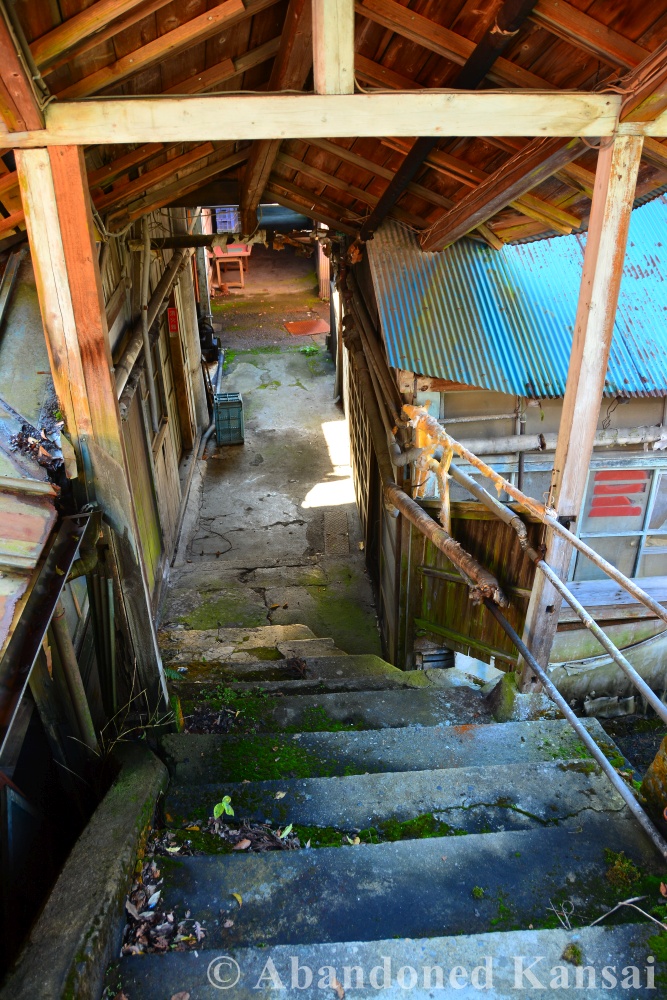
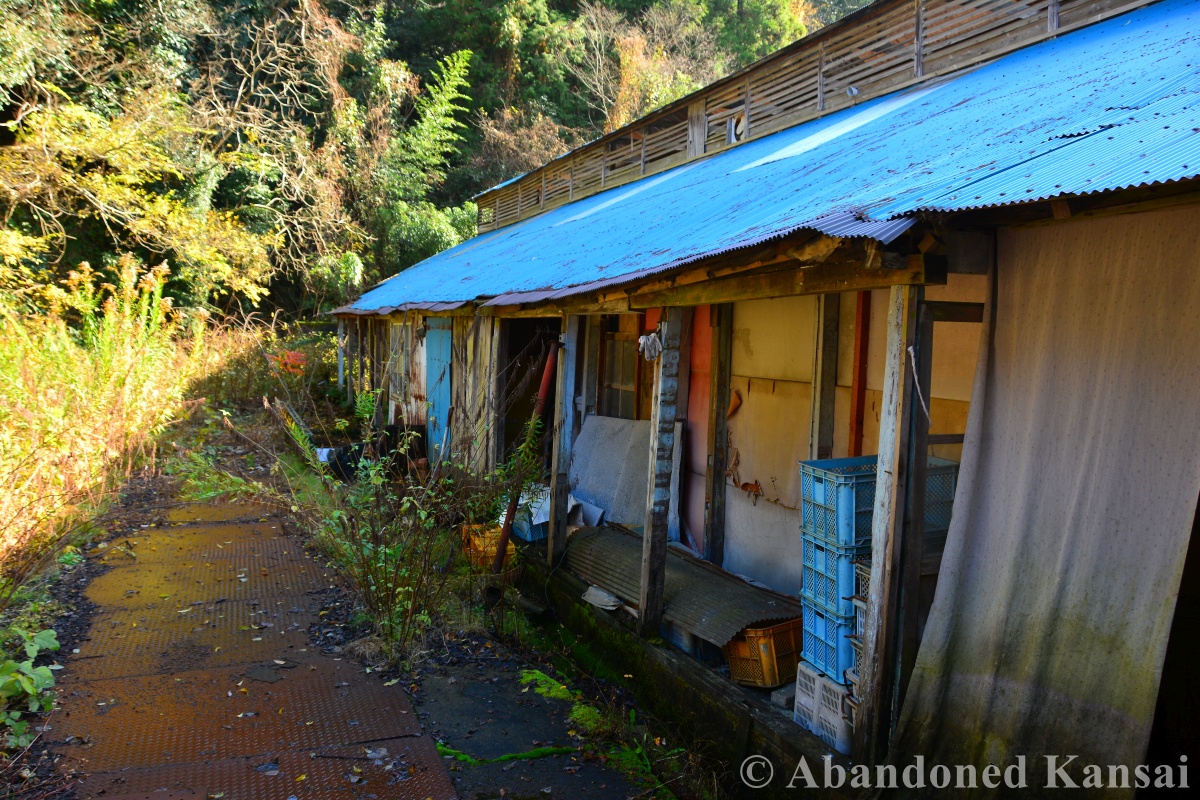
In the mid-2010s I went exploring with two journalists from Scandinavia who did research for a book about abandoned places and industrial decay. On our way to a deserted hotel we drove past this wooden, rundown factory… and turned around to have a closer look. There were some cars with license plates parked on the premises, despite it being Sunday, but nobody was there. The place had a very abandoned look to it, but most buildings were locked and could have still been used, though we had no clue what for, so we took some photos, mostly outdoors, and drove on – breaking and entering isn’t my thing… and original finds are extra risky. I didn’t know until my research for this article that the company wasn’t officially shut down until two years after this exploration!
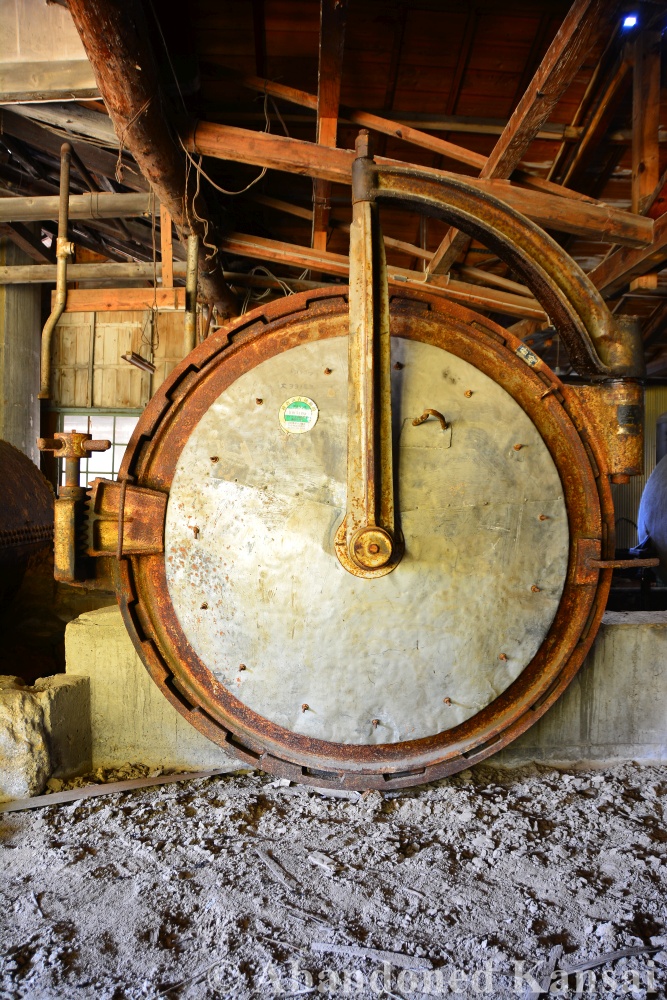
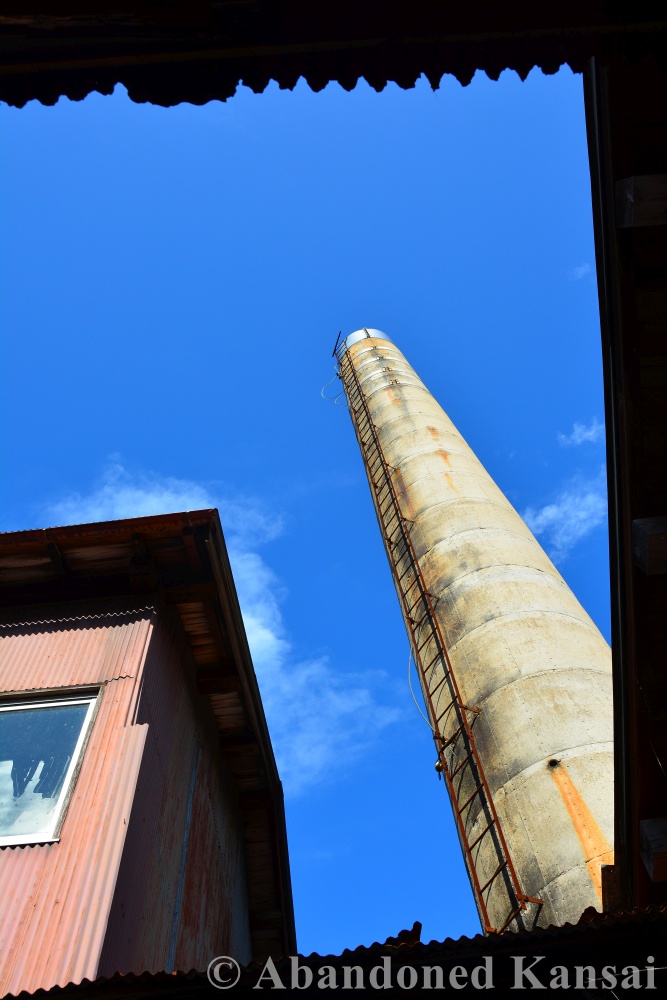
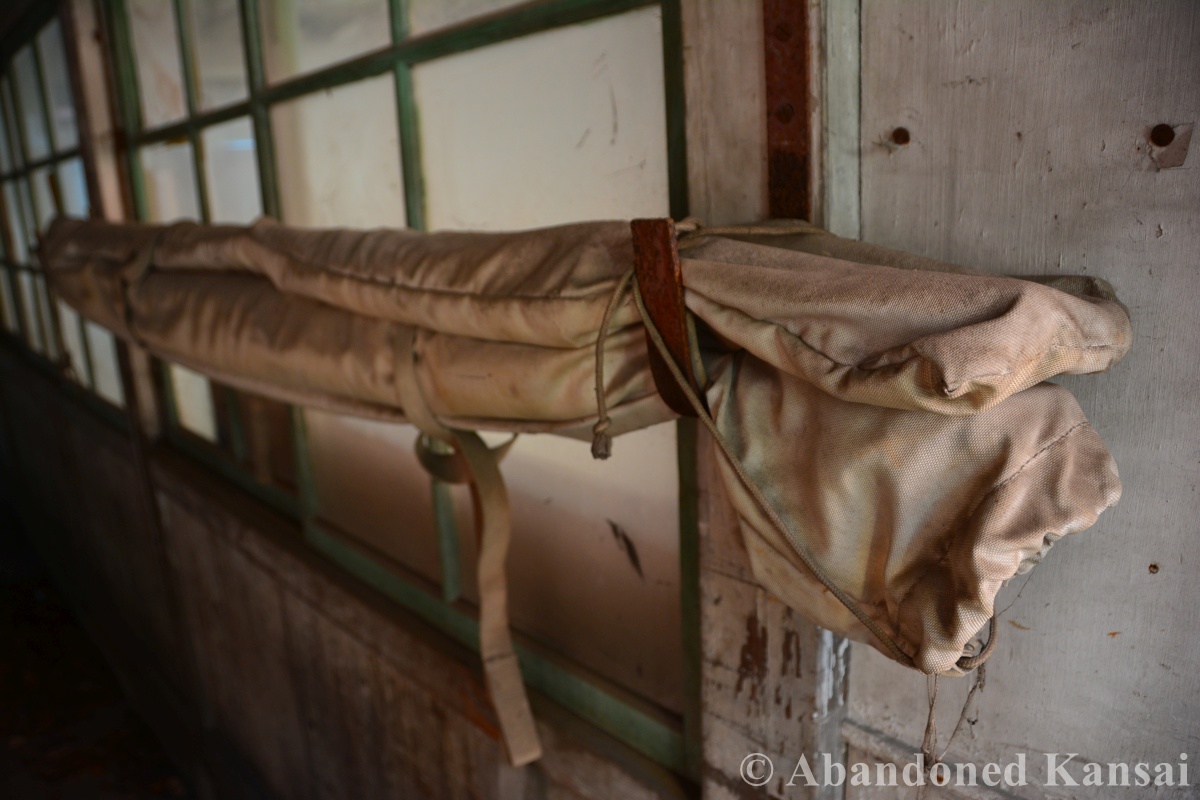
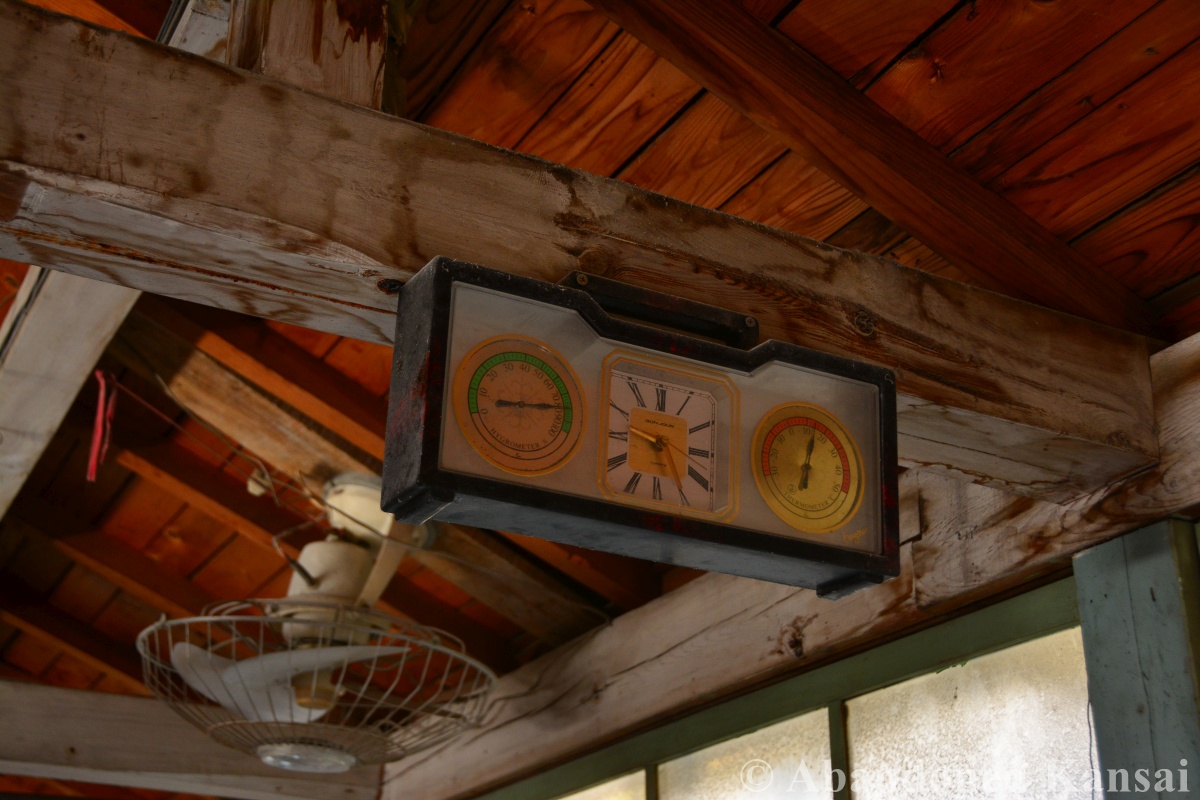
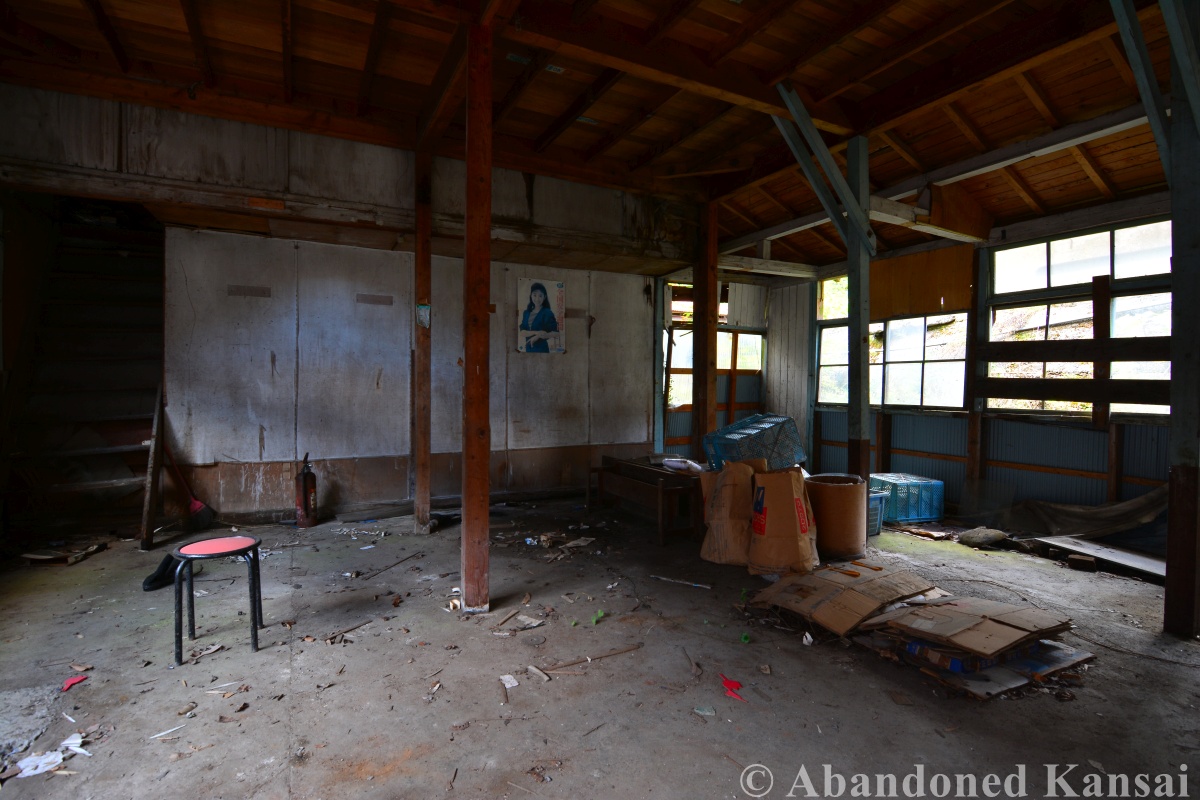
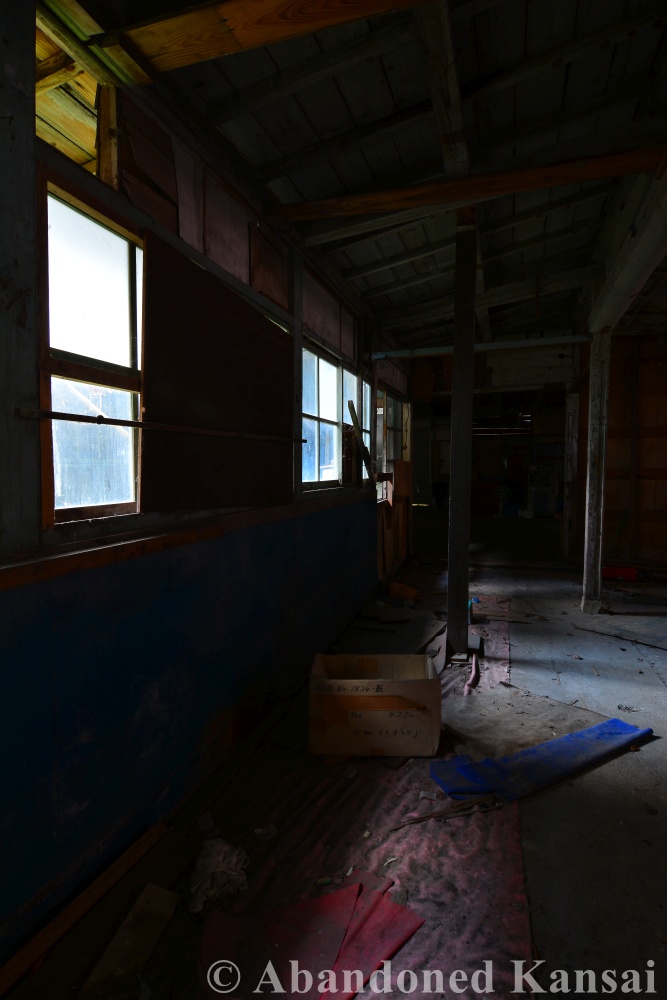
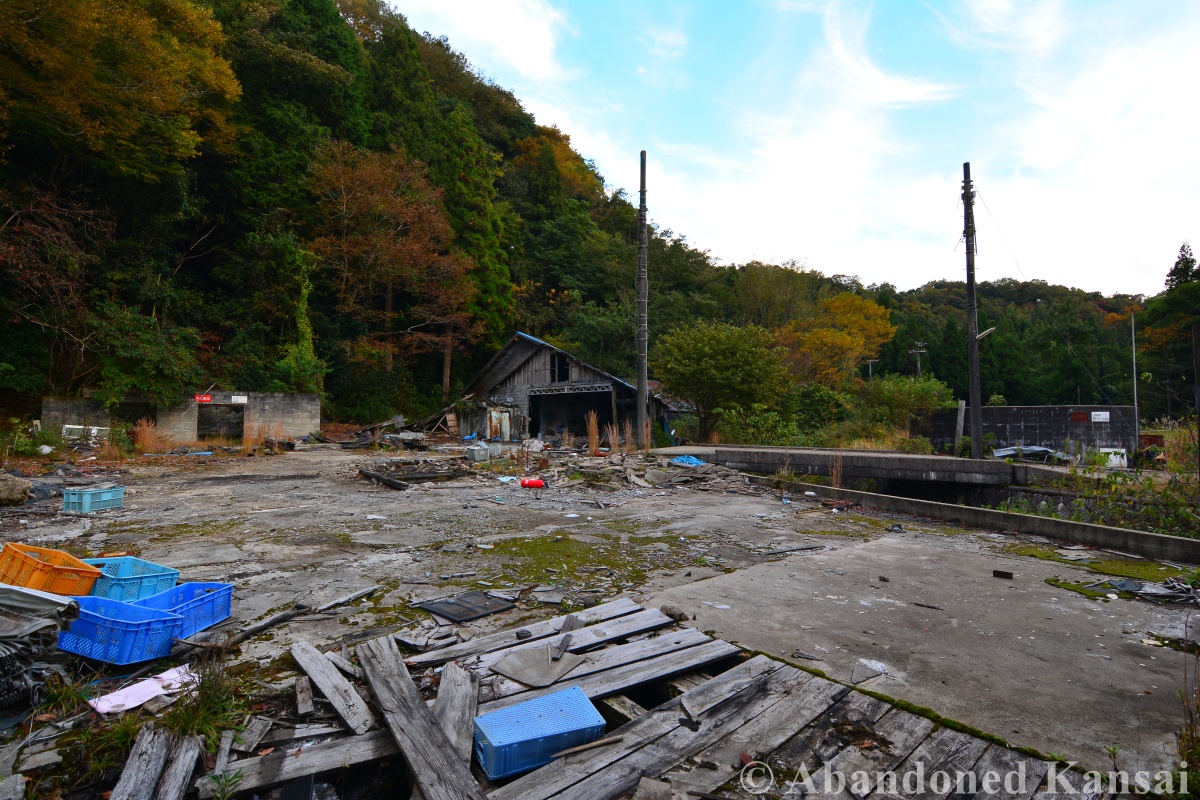
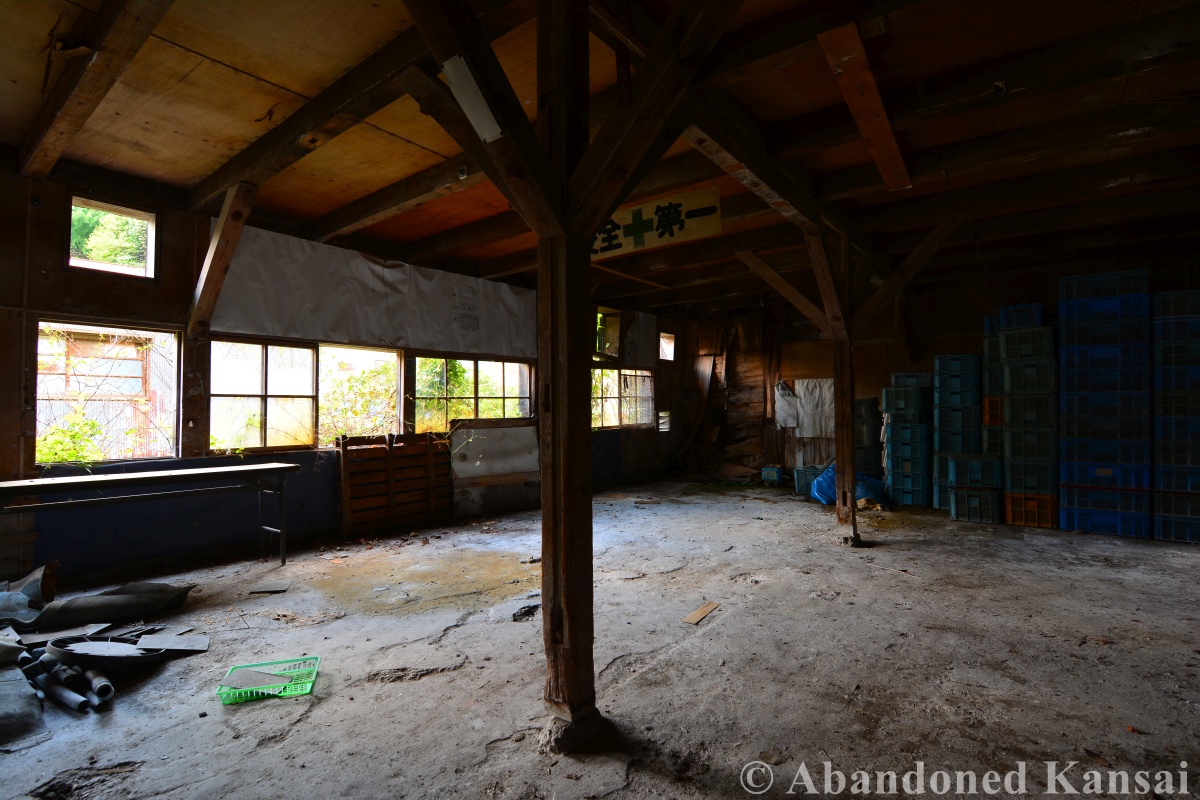
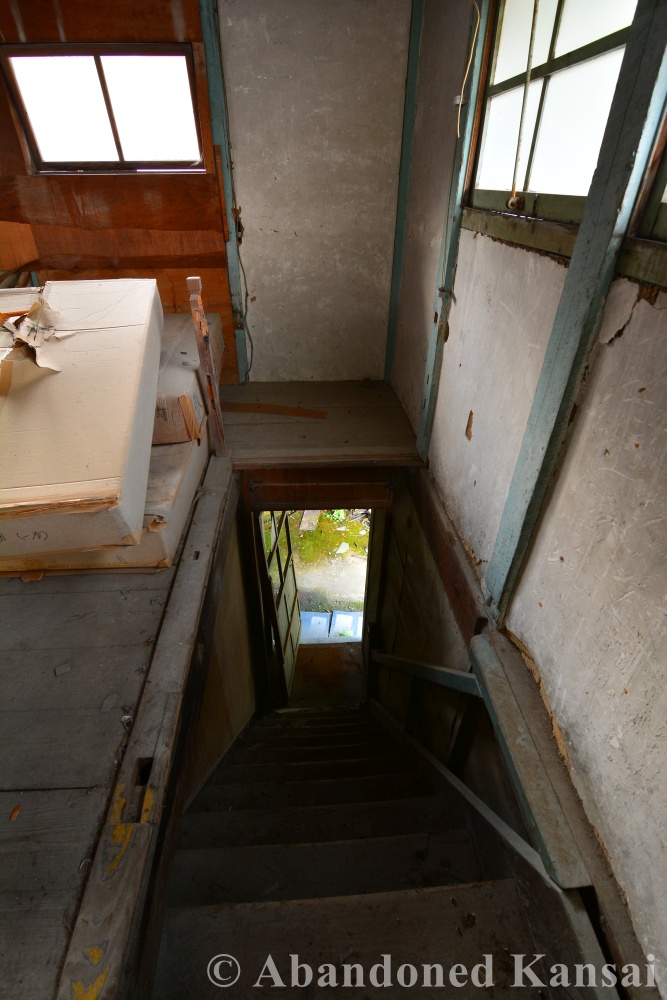
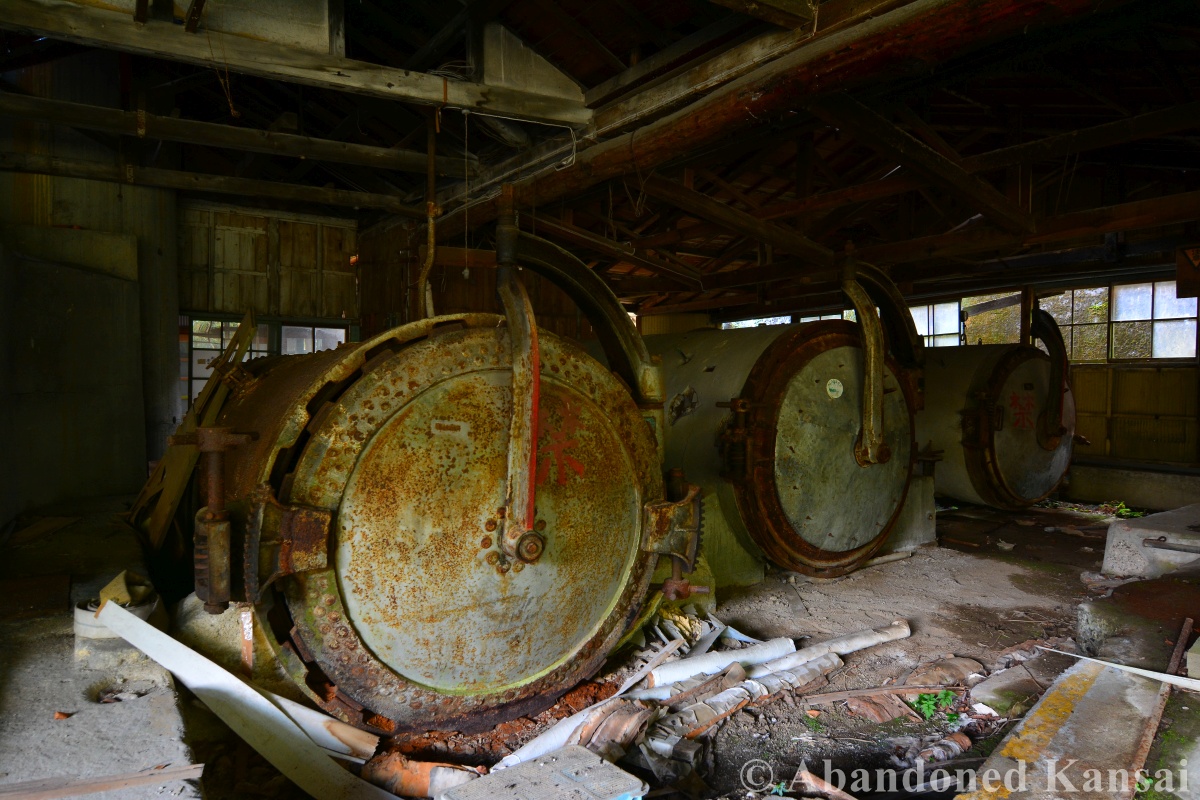
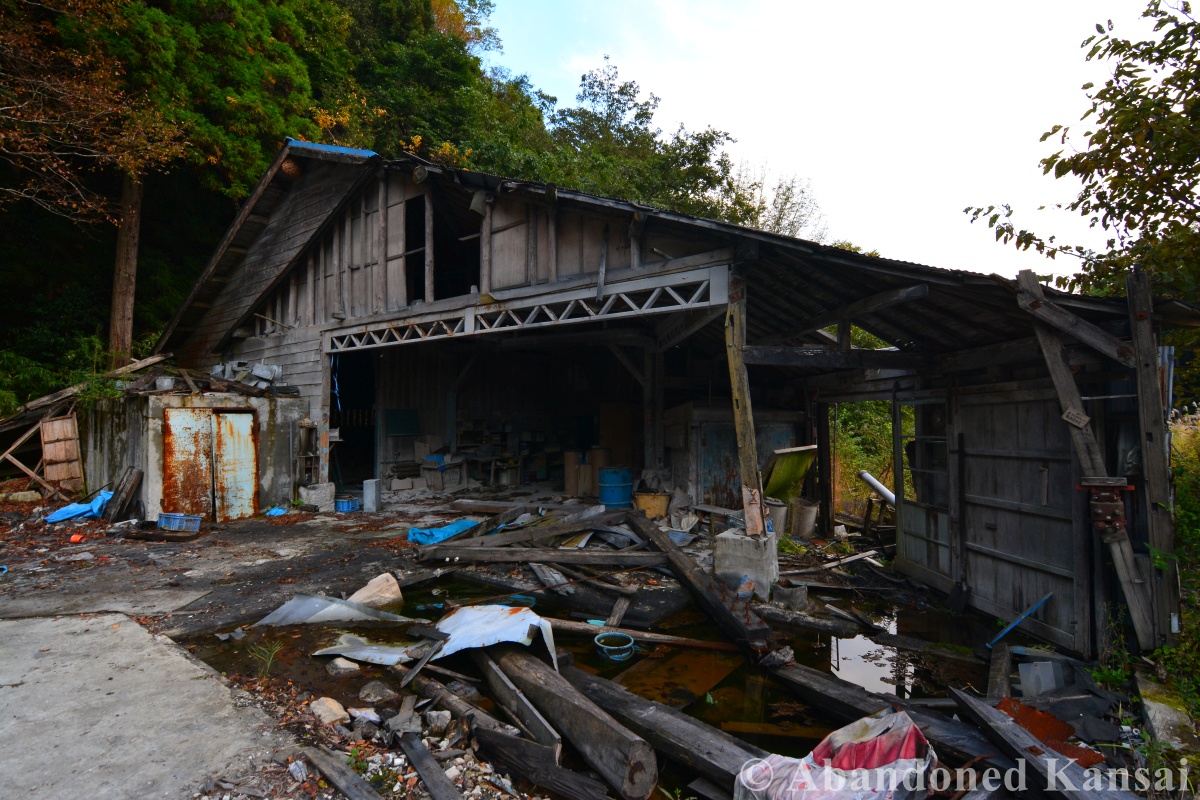
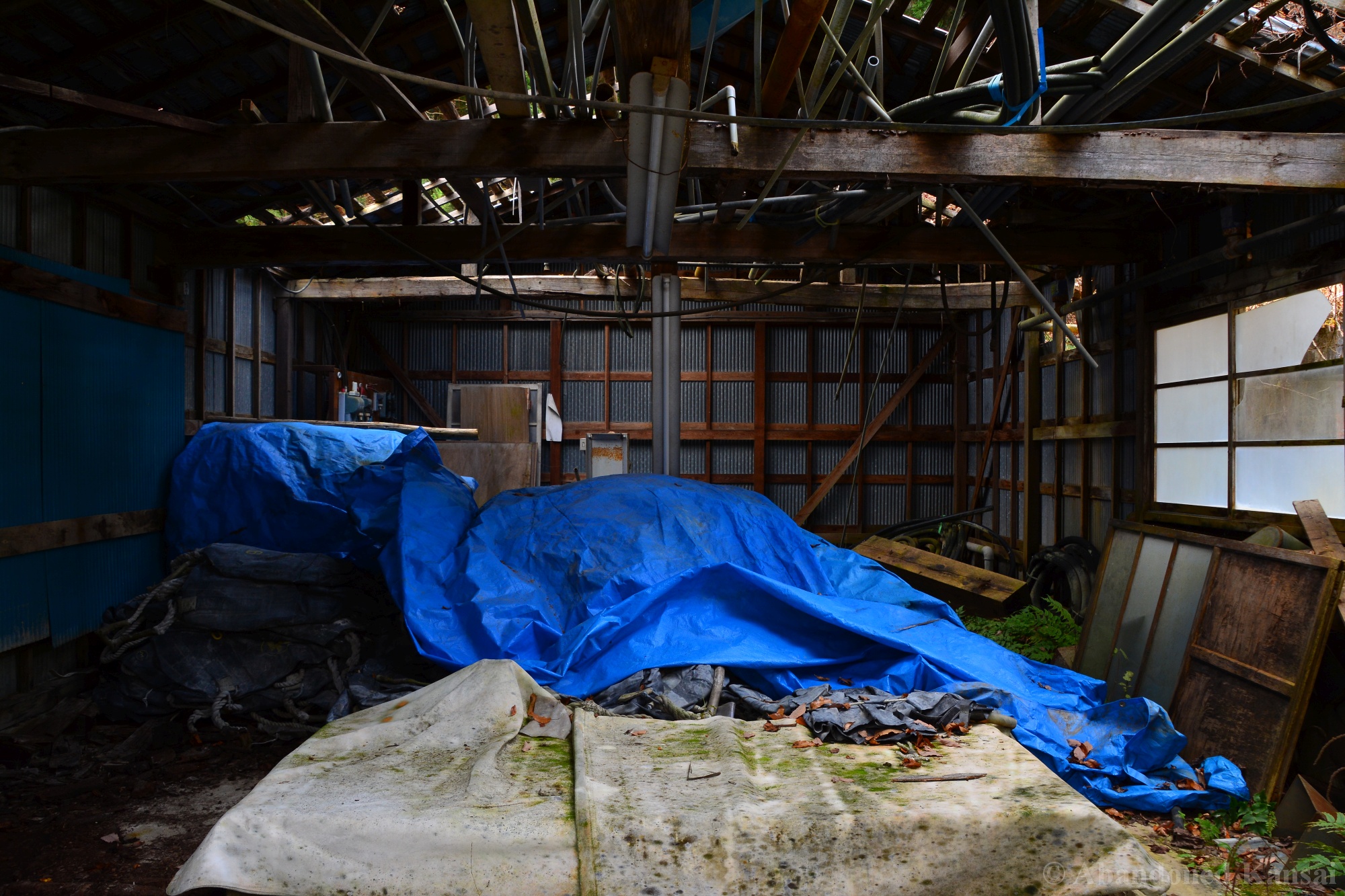
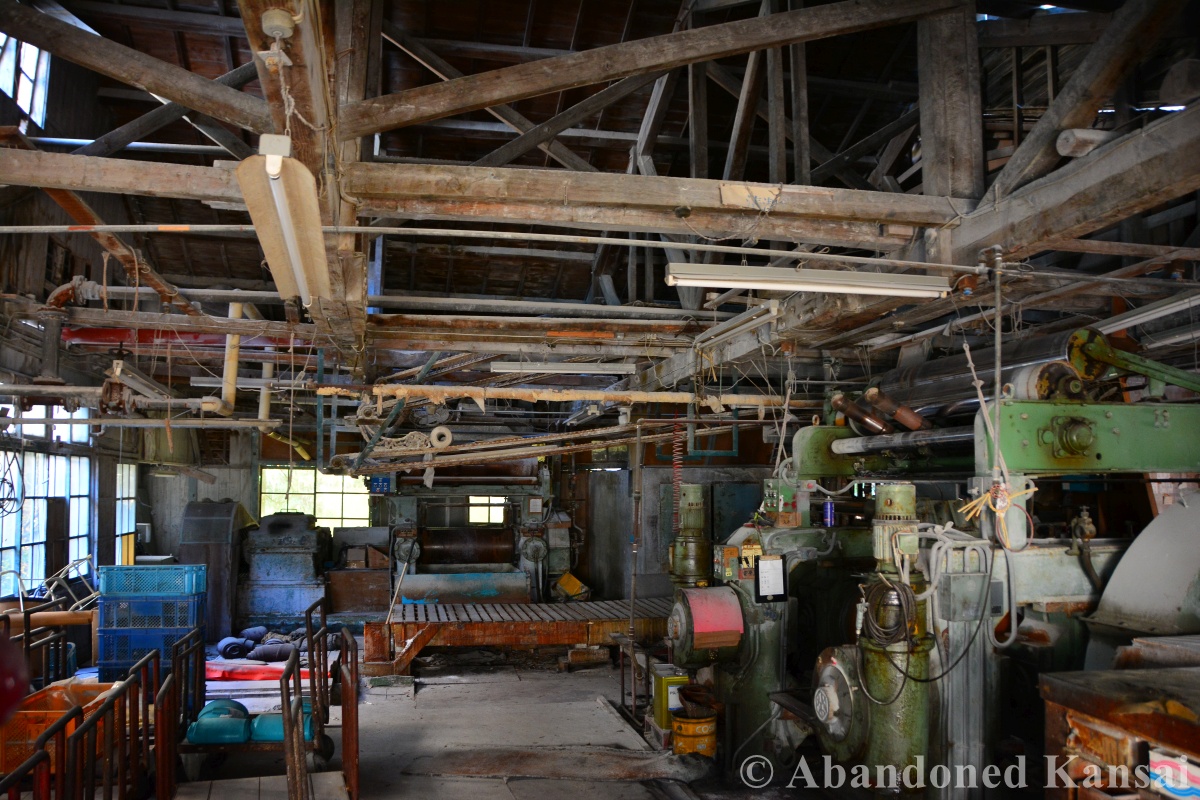
7 years later I was in that part of Kyoto prefecture again with another urbex friend, so we decided to stop by the countryside factory again. And this time it was completely different. All the cars were gone, about one third of the factory had been demolished, the rest was easily accessible through open or unlocked doors. This time we had to rush, because we were running out of daylight, but it was nevertheless a super interesting exploration as the factory looked like it must have been a hundred years old and could collapse at any time when slamming a door shut.

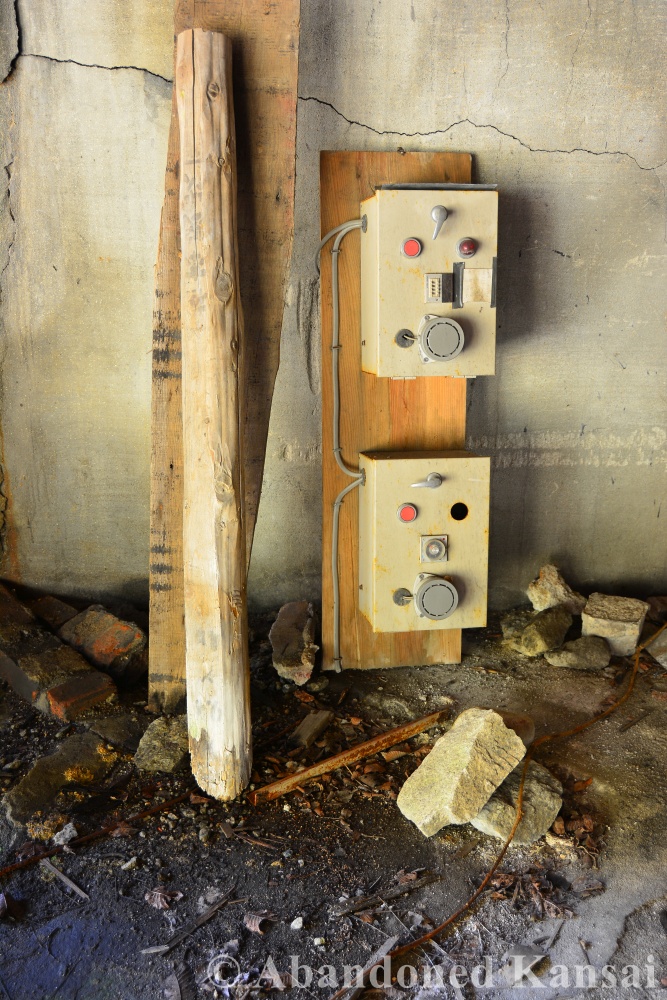
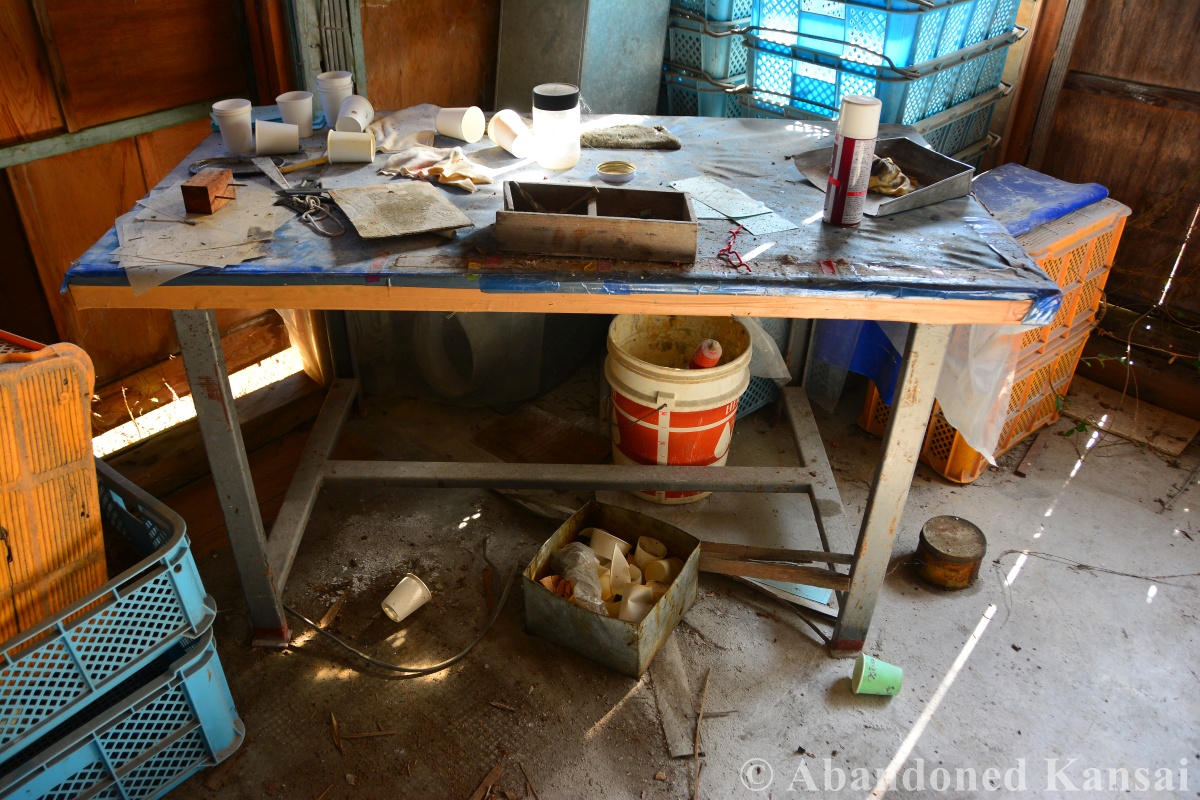
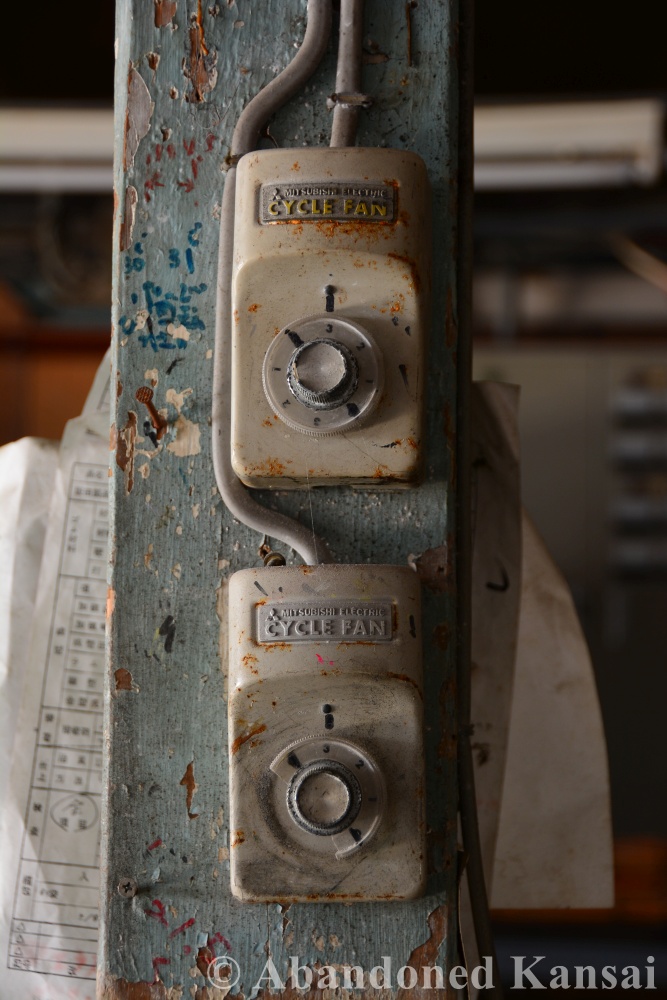
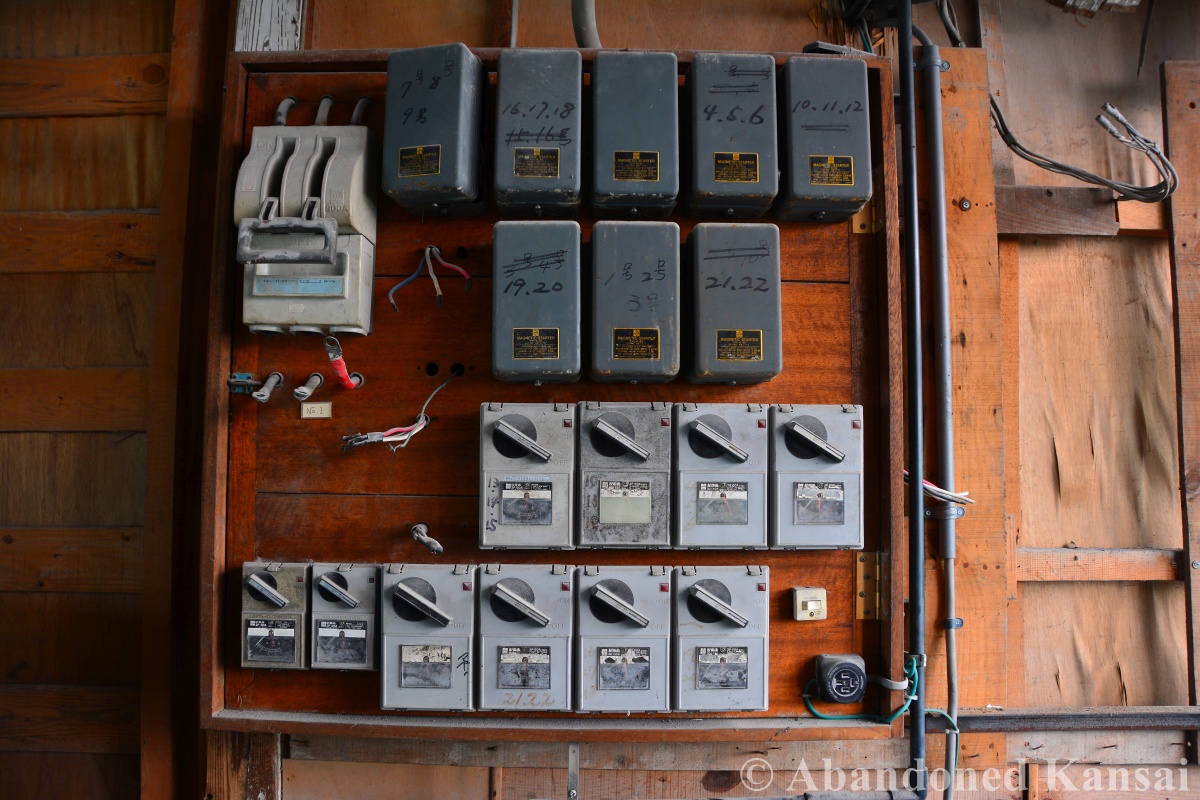
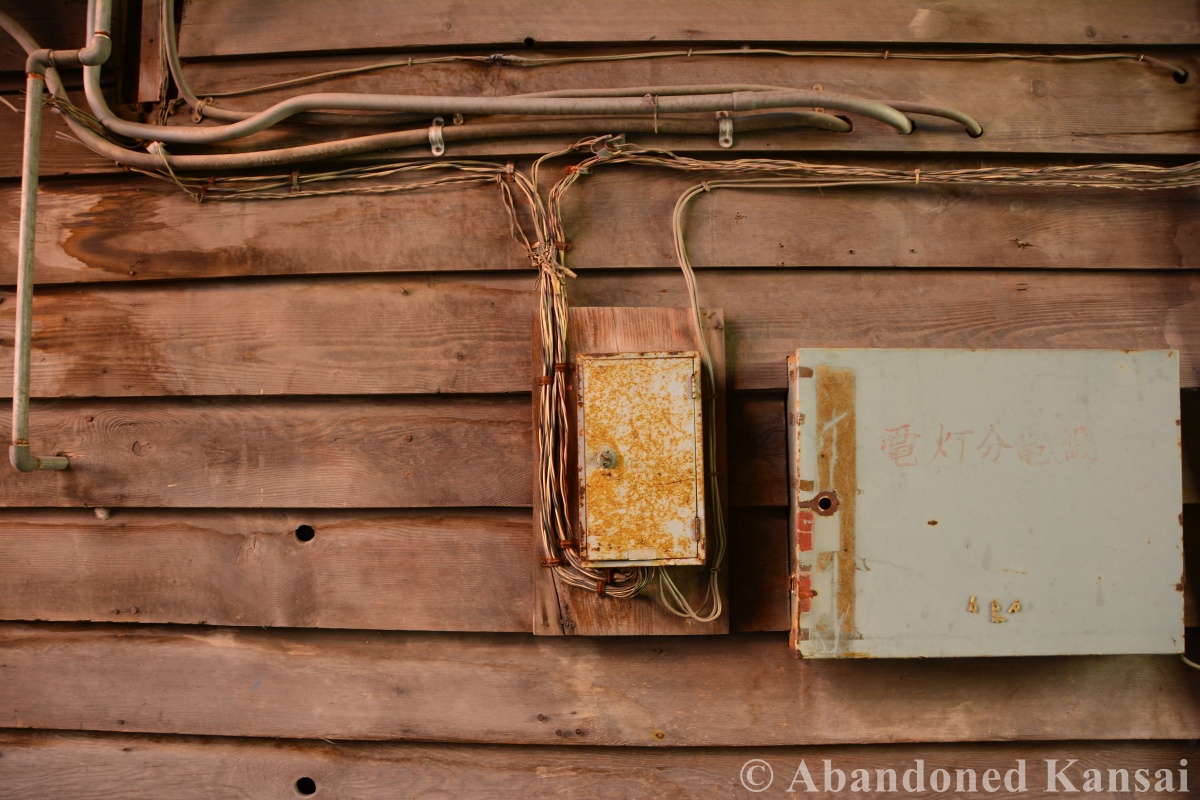
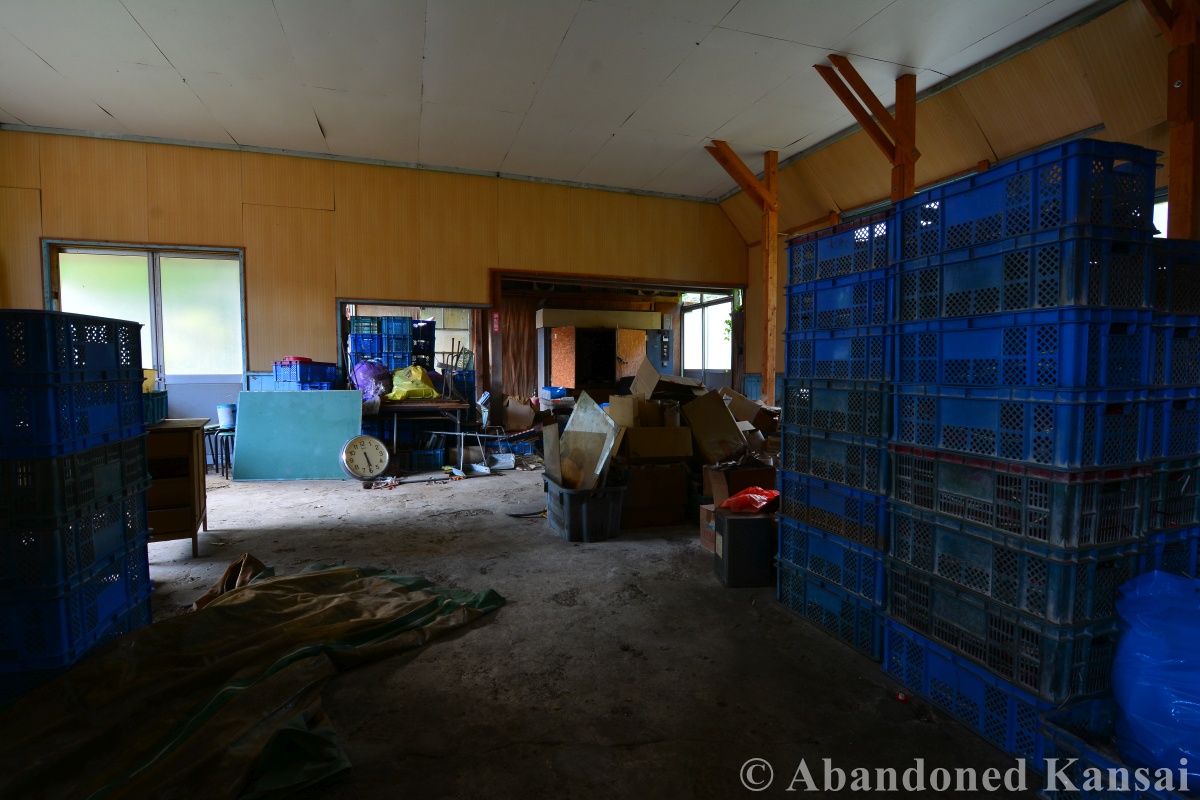
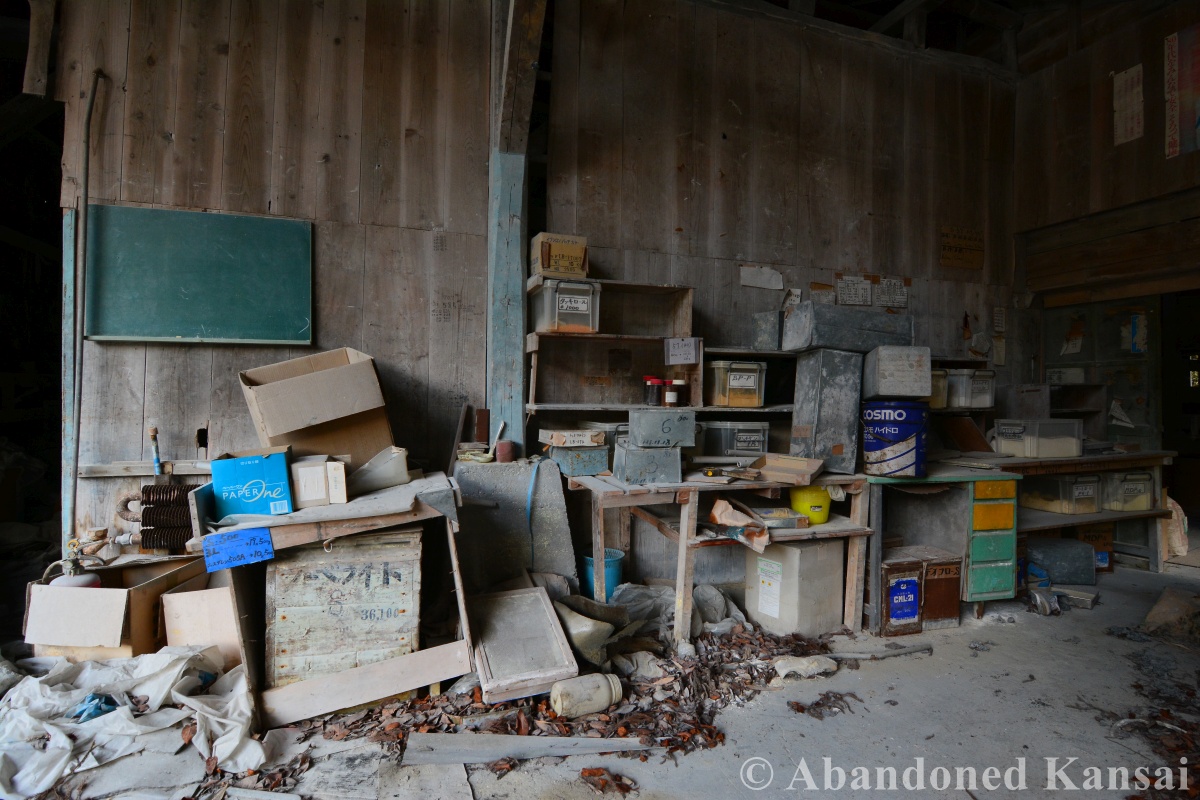
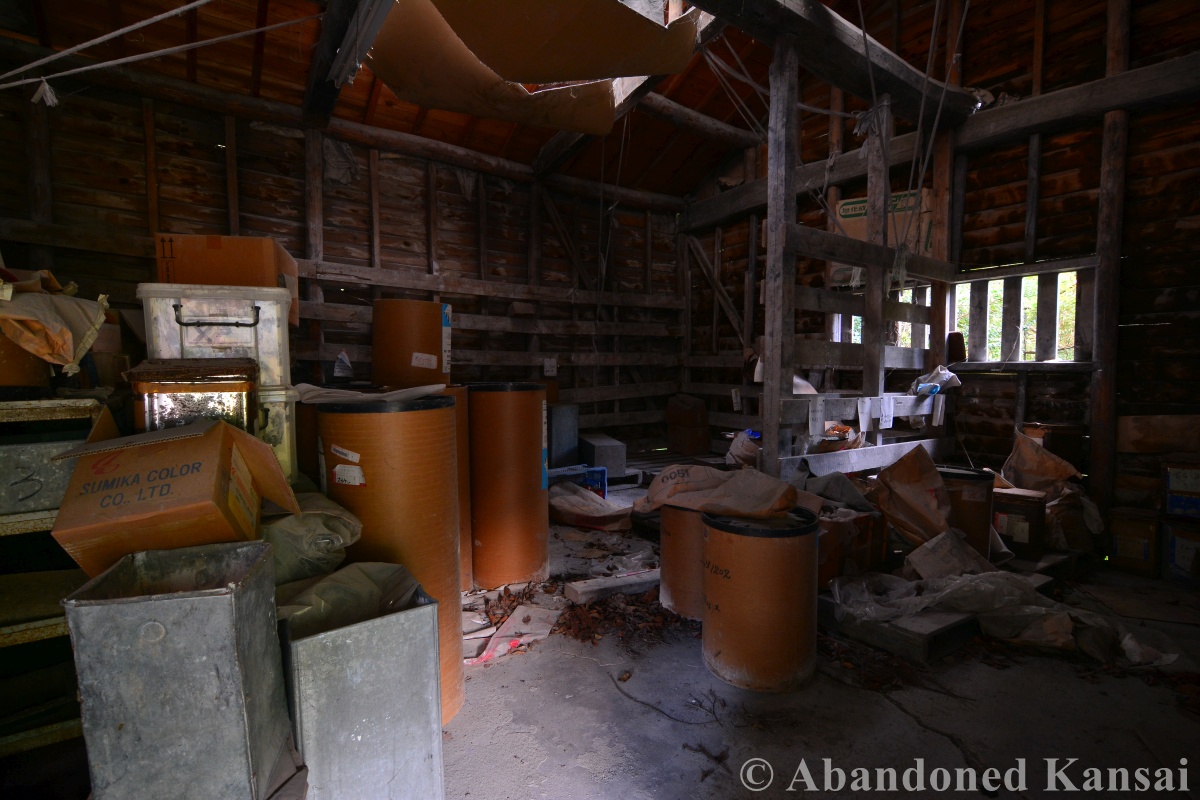
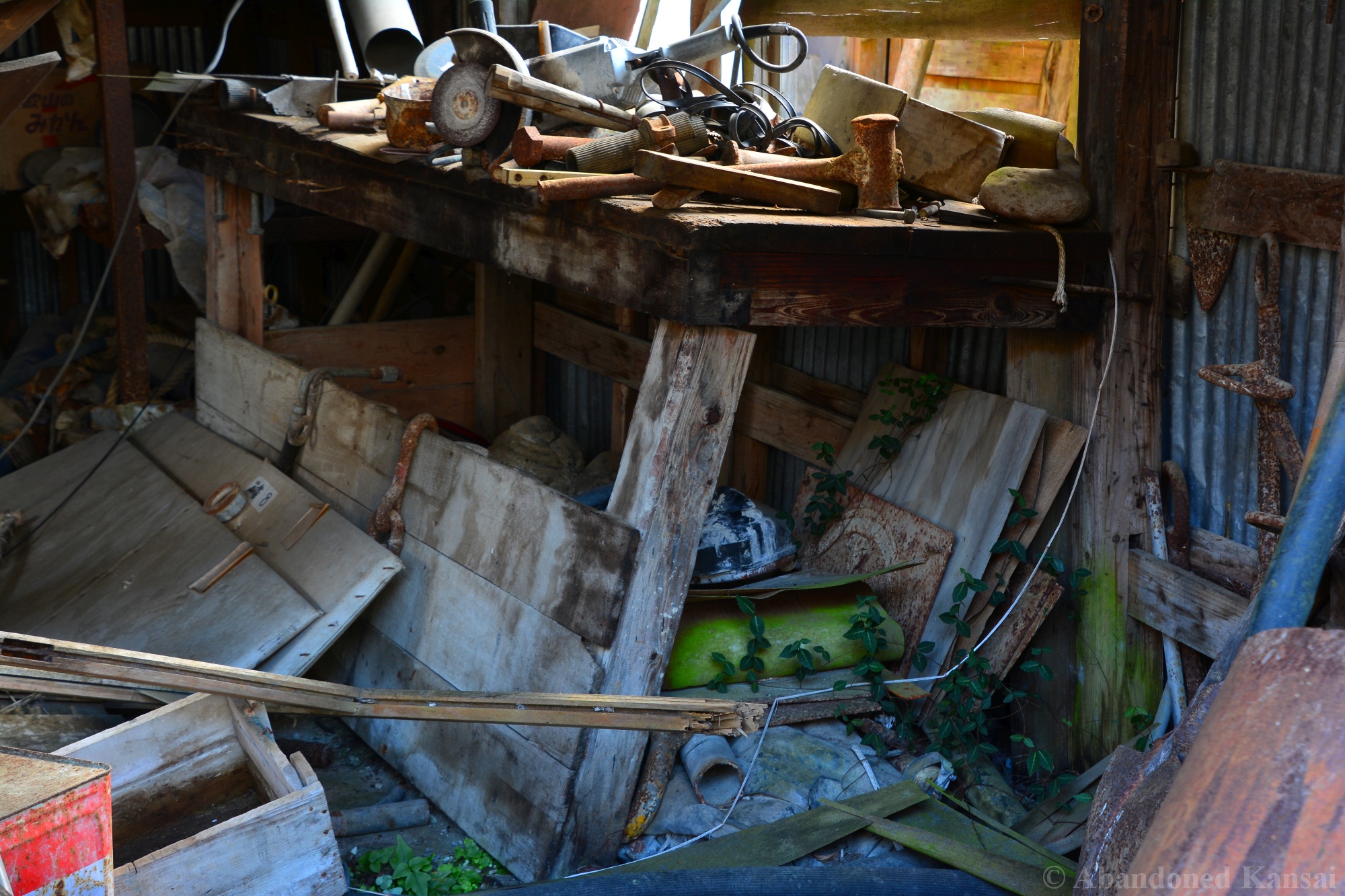
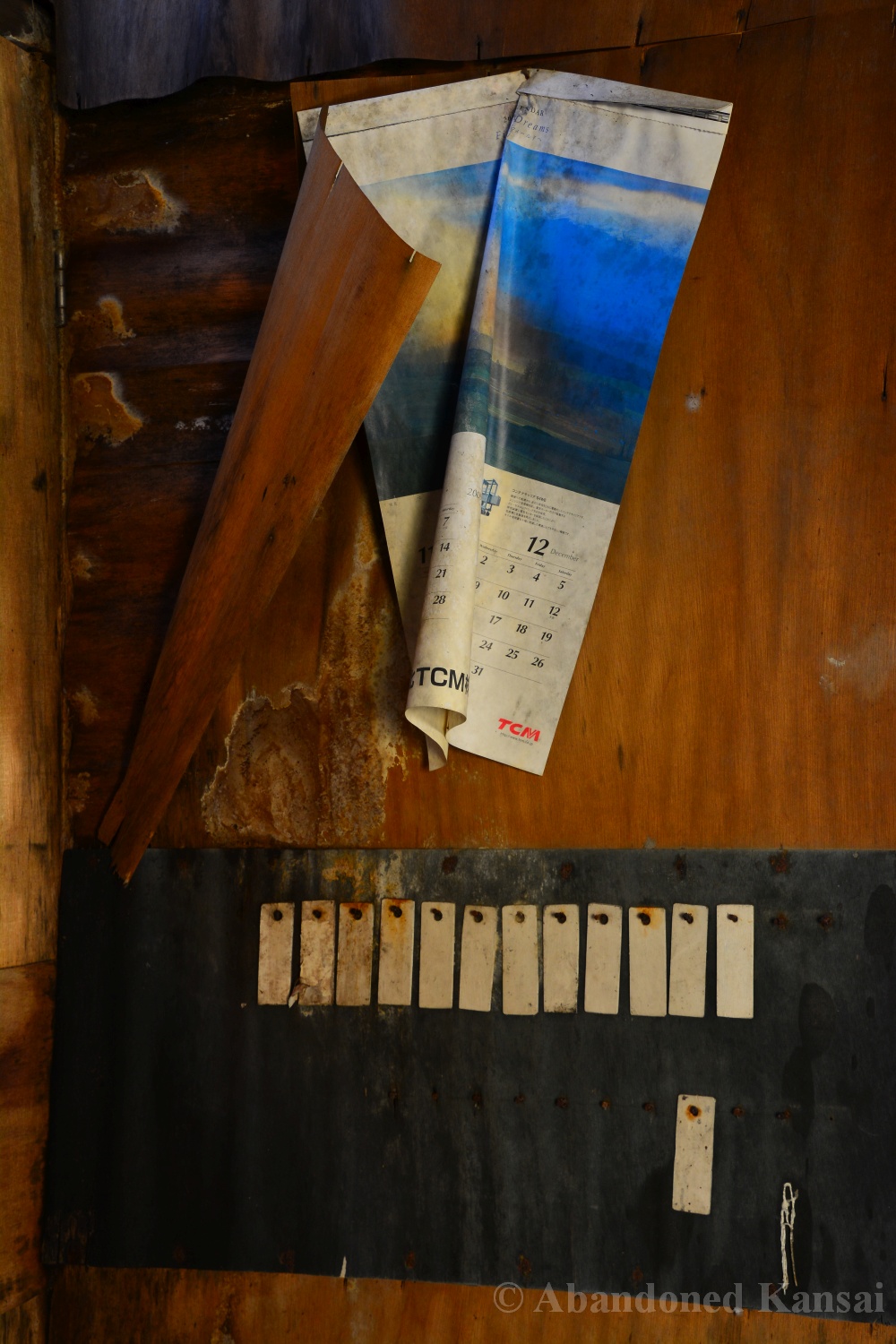
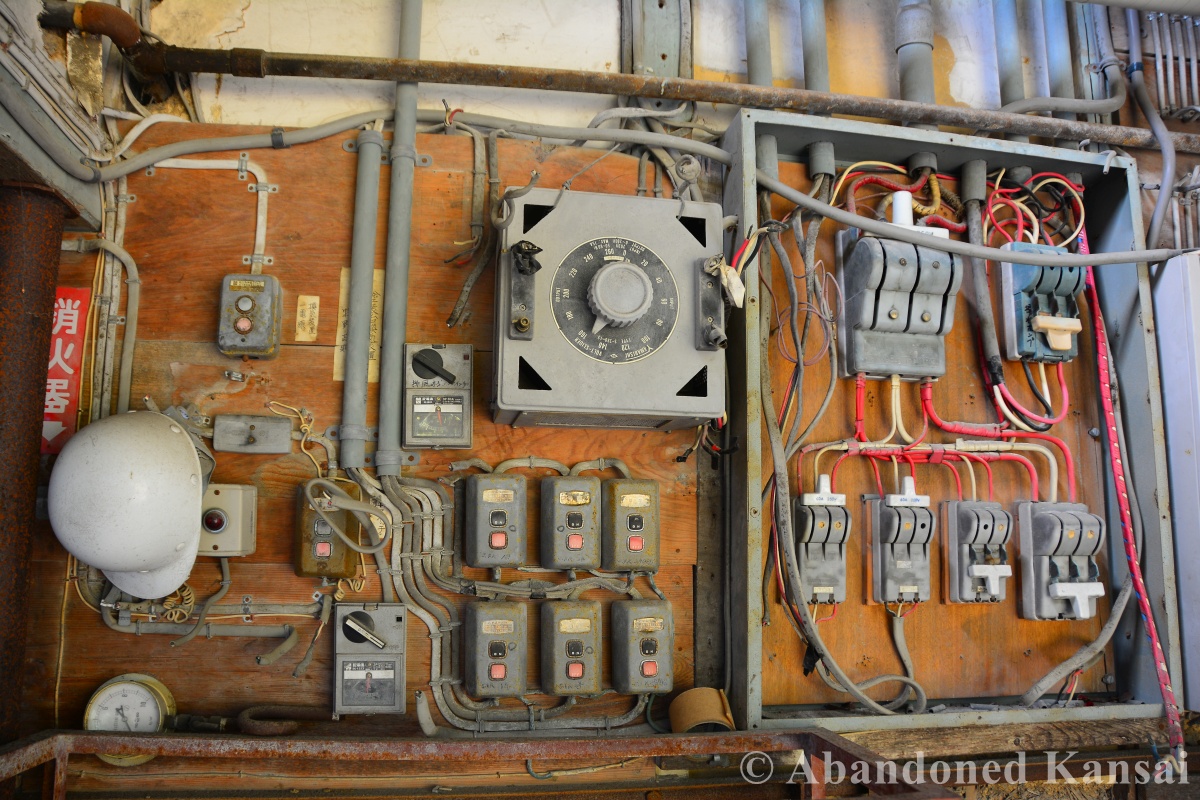
It wasn’t until selecting photos from both sets for this article that I realized how different the factory looked on both visits. During my first exploration I wasn’t sure about the status of the place, but when comparing those photos with the second set, it’s super clear that the factory was still in use during the first visit – electrical wires and other cables hadn’t been cut yet, some tables and areas looked like active workspaces, there was less vegetation… and of course the factory was still complete and not partly demolished.
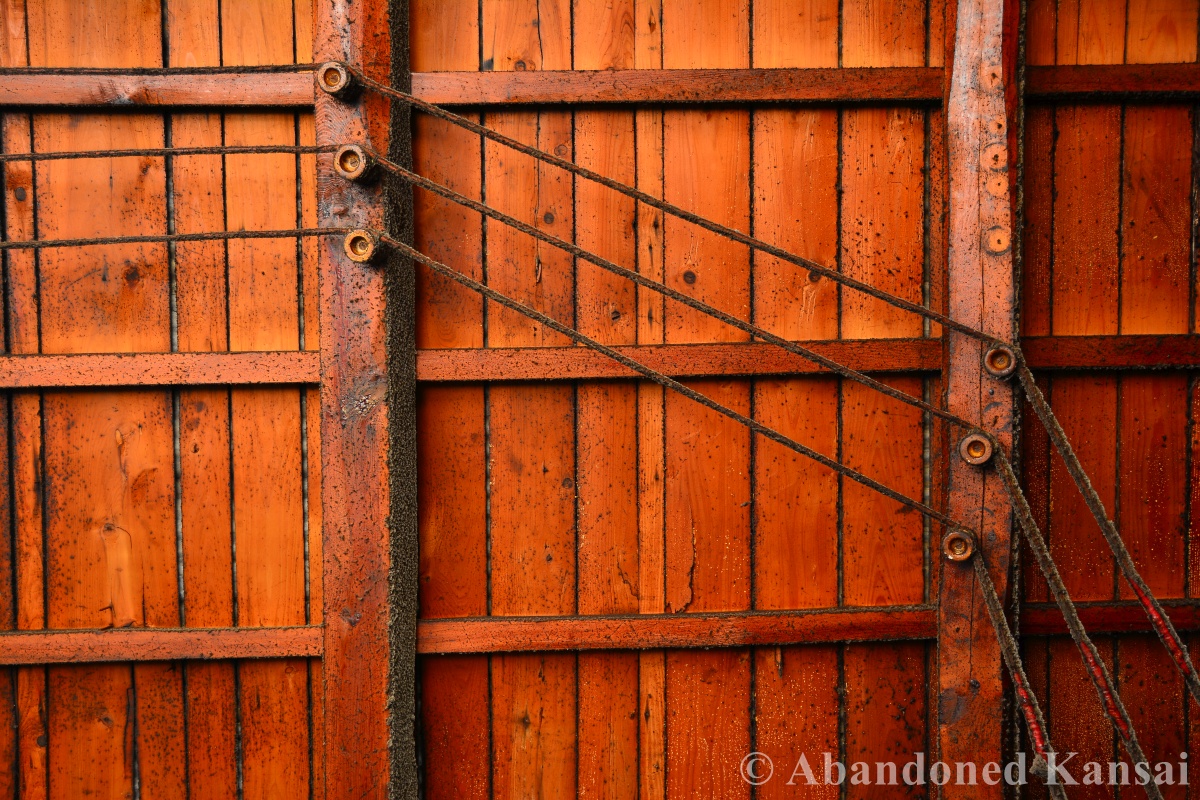
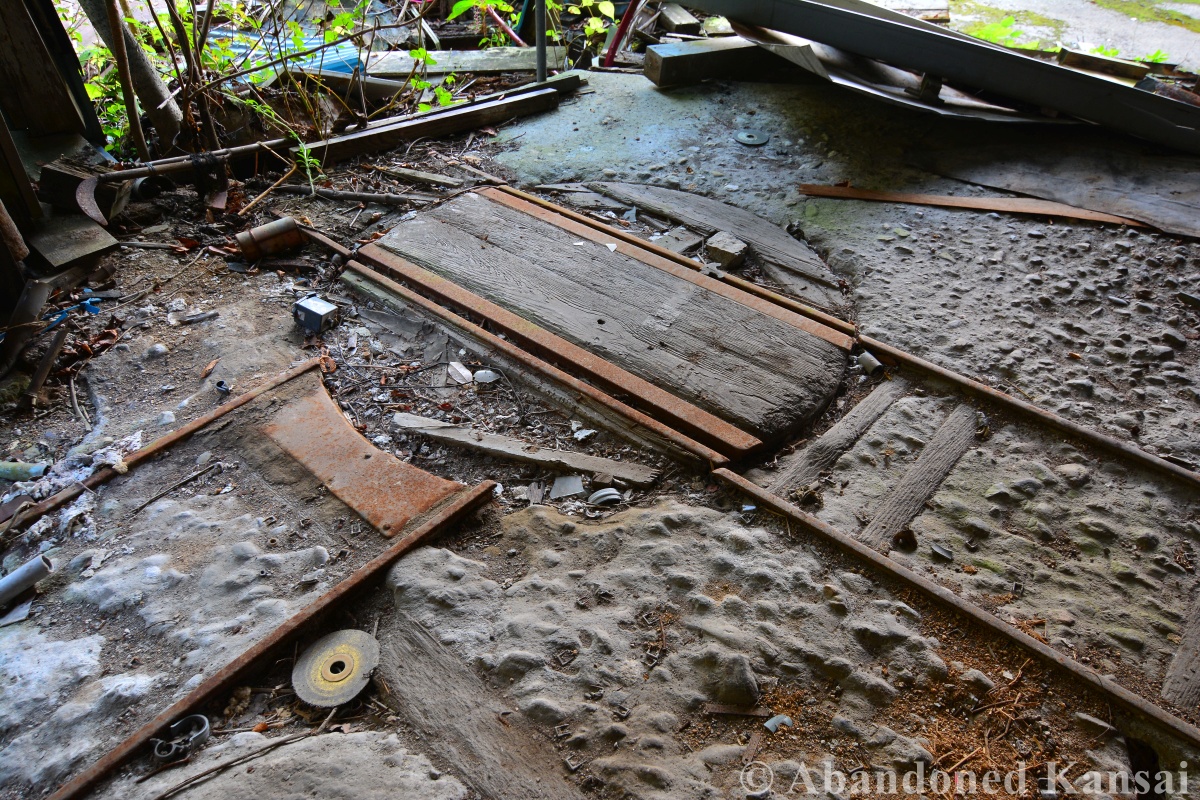
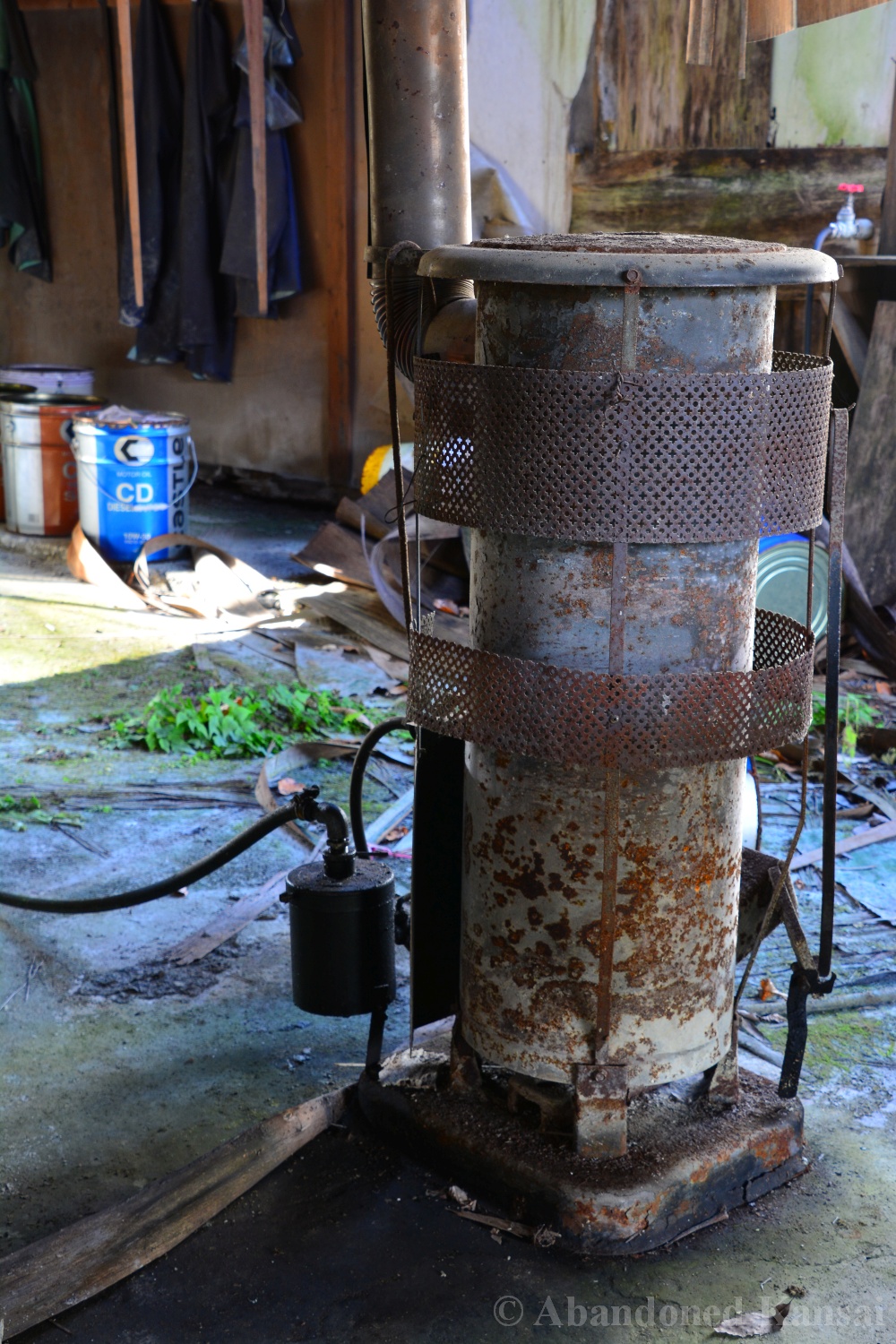
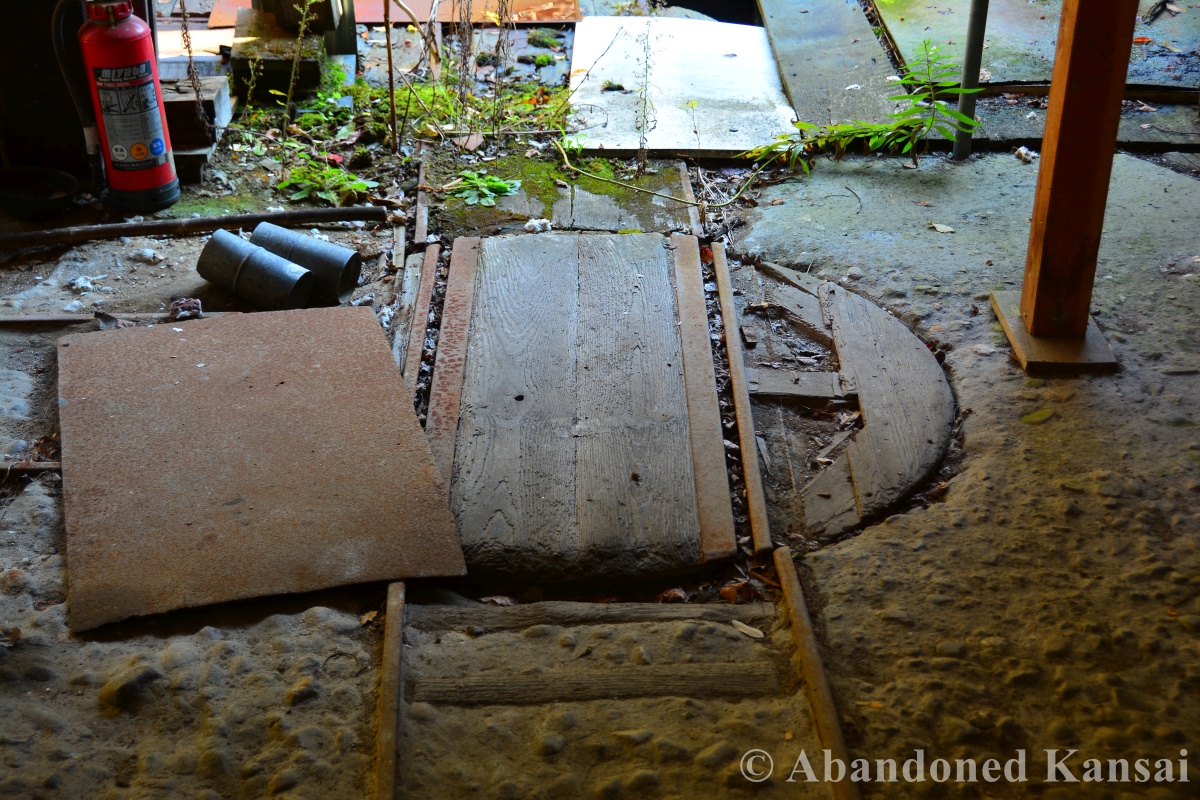
Technically this is not one of the most beautiful photo sets I’ve ever published, but it’s an original find and Showa AF – maybe even Meiji. At the same time parts of the Kyoto Countryside Factory had almost a fantasy vibe, if you were able to ignore the computers and cables and plastic crates… I’ve been to more than my fair share of abandoned wooden structures, but this facility was huge and had hardly any metal elements. Even the small rail system had more wooden elements than metal ones and could have been right out of an 80s fantasy flick. So, yeah, even if the photos are not great, I really enjoyed exploring this place. Which is rare, as I hardly do revisits, despite the fact that this is the second location in a row with a combined gallery of two explorations. So next time I’ll post a one-off again. Which one? I don’t know yet, but you should definitely *check out some older locations*!

(*Like Abandoned Kansai on Facebook* or *follow us on Twitter* if you don’t want to miss the latest articles and exclusive content – and subscribe to the *video channel on Youtube* to receive a message right after a new video is online…)

Read Full Post »
I’ve been urbexing for almost 15 years. During that time I’ve never written any articles about equipment, despite being very happy with three different Nikon DSLRs, two Manfrotto tripods, and a Sanyo video camera – which broke in 2019 after almost 15 years of recording countless hours at hundreds of locations as well as places like Chernobyl and North Korea. Videos I always considered a bonus anyway… and I’m still having a hard time thinking of myself as a photographer, given that I have no formal education in that field and only do it as a hobby. A really time-consuming hobby, but nevertheless just a hobby. I also don’t have a background in technology, so what’s the point of reviewing camera equipment when I just have an opinion based on learning by doing? Well, that doesn’t keep countless “influencers” and Youtubers from churning out incompetent nonsense, but I wouldn’t want to be found dead with either label on me! And like my favorite professor at university once said in regards to papers we had to hand in: “Don’t claim anything you can’t proof!”

Fortunately there is no need to be technical or scientific about this Insta360 X4 article, because unfortunately we never got that far…
Like I said, I always considered video walkthroughs of the locations I explore a bonus. I started them pretty much right away, but at first I didn’t even publish them, because I only took them for myself. And even when I published them, I didn’t edit them. No cuts, no voice overs. Just me walking around breathing heavily into the silence. That all came to a sudden halt when my Sanyo stopped working after exploring the abandoned *Trump Hotel*, also wiping out the recordings of the whole day. At that point I was tired of doing the videos anyway – and my co-explorers were increasingly annoyed, because I added 10 to 30 minutes at the end of every exploration for the walkthrough. So I stopped doing them.
For the past 18 months I’ve been exploring solo again (don’t ask, it’s complicated and often quite frustrating, to be honest), but a few weeks ago a colleague of mine showed me an older model Insta360 video camera that a visiting cousin from the States forgot at his place in Japan. I was fascinated by the easy to use 360 photos and videos, so I did some research and decided to get one. I’ve read reviews, I’ve read product pages – I did my best to make an informed decision, because at first I considered buying the X2 or X3 as older models often are cheaper with only slightly fewer / worse features. The X2 was out of the race when I read in a review that it required a smartphone to be activated – something I didn’t read anywhere about the X3 and X4. I guess because it’s an idea that is so stupid that it probably was a one-time mistake by Insta360, facing so much backlash that they removed the requirement from following models. The price difference between the X3 and X4 wasn’t very big and since the latter was only four weeks old at the time, the price on Amazon and in brick and mortar stores was the same, so I decided to get it at my local Yodobashi Camera (street block sized electronics stores with hundreds of employees each, in case you are not familiar with the chain), where I’ve been a customer for almost 18 years – ever since I moved to Japan.
BIG MISTAKE!

Yodobashi Camera was extremely stingy, giving only 1% points on the video camera, despite a promotional campaign of giving 13% points for purchases over amount X – except for (small print)… But when you shell out 80k Yen on a new video camera you are looking forward to use, store points are the last thing you worry about anyway. Fortunately I still had some of those points, which I used to get a seriously overpriced MicroSD card, because without it the video camera would be useless and I wanted to try it out on the weekend before an upcoming urbex trip. 83500 Yen poorer, but with a big smile on my face I left Yodobashi Camera on a Friday evening after an otherwise pretty horrible week.

Saturday was supposed to be a great day, though it started with a rude awakening / realization…
After sleeping in and having a delicious breakfast, I enjoyed a nice unboxing. The first slight disappointment was when I realized that the included battery was dead. Well, not dead dead, but completely empty. Whatever, an hour or two wouldn’t make a difference. It would not dent my great mood for sure. That came a few hours later when the battery was fully charged. I booted the small brick for the first time, its screen came to life, asking me to choose a language – and then the screen showed what the camera was seeing… for about a second or so. Then some text popped up and my heart sank. You gotta be kidding me! What I was looking at was a screen telling me to download an app by Insta360 to a smartphone, iOS or Android, to unlock the video camera. What. The. Heck? I literally felt it in my fingers how my blood-pressure exploded, because unlike pretty much every person on the planet above the age of 6 years I don’t own a smartphone. Never have. In the late 90s I had a black and white Nokia for work (yes, I’m not the youngest anymore, though I started working full-time in my early 20s). When I moved to Japan I had a flip phone or two, but for the past 15 years or so I didn’t have any mobile phone at all, smart or not, because I don’t like them as they turn way too many people into dumb zombies. So here I had a brand-new, quite expensive video camera… that forced me to make it usable by using another device with cameras? Who comes up with stupid ideas like that?!
Certainly not Nikon! Their D7500 DSLR I bought just weeks prior worked with a partly charged battery and regular SD cards straight out of the box 5 minutes after purchase – without any charging or unlocking BS!
So I started to do some research… and didn’t find much. Like I said, I couldn’t care less about smartphones, apps and all that stuff, so I tried to find a solution to unlock the darn X4 via PC or MicroSD card. Of course I couldn’t find anything about that either, so I contacted Insta360 directly – who apparently didn’t read my message and instead sent me a standard reply. So I got back to them, apologized for not describing my problem properly (I’ve been in Japan too long…), and this time got an answer that at least implied that they understood the situation I was in – without being able to help, because though it seems to be nowhere stated on the box, the promo material or even on the X4 website (at least back in mid / late May, maybe they changed it by now)… you really need a smartphone and the Insta360 app to use a newly bought X4 video camera, that seems to work perfectly fine, but is made not usable on purpose by the manufacturer. Which absolutely blows my mind!
How is that even legal?
How can a company force you to use a completely unrelated piece of expensive technology that actually partly does the job of the product you just bought, to make your purchase usable? Without mentioning that essential detail with big warnings before purchase! And in addition, forces you to use an app, which does who knows what in the background without one knowing?
What’s next? You need an electric bike with WiFi to unlock your newly bought car? And if you don’t… sucks to be you, it’s completely useless!

Yodobashi Camera – (The Lack Of) Customer Service In Japan!
After some back and forth it was Monday and I came to the conclusion that I won’t be able to use the Insta360 X4, because it really needs a smartphone to unlock, which wasn’t properly communicated. So after work I went back to Yodobashi Camera, my go-to electronics store for the past almost 18 years. Never had a problem with them, because all the products I bought worked as intended right out of the box. So I went back to the cashier counter where I bought the video camera… and already ran into the first minor bump in the road – apparently I hadn’t paid for it in the camera department, but a neighboring one, which wasn’t a problem on Friday evening, but very well on Monday evening. So I went 20 meters over to the camera department and told them about my unfortunate situation: That I had bought this video camera three days prior, but couldn’t use it, because it doesn’t work without a smartphone, which wasn’t properly communicated by Insta360 or Yodobashi Camera. But I was very careful with everything, I didn’t even remove the protective film from either of the lenses. Some air through the teeth sucking, some going back behind the counter to talk to a superior and then something like the following conversation – it’s in quotation marks, but they are not really quotes, you know… just something like that, from memory:
“I can’t sell this anymore, you opened the box. You can’t return it.”
“But I can’t use the video camera.”
“I can’t sell this anymore, you opened the box. You can’t return it.”
“I don’t have a smartphone. The X4 is useless to me.”
“I can’t sell this anymore, you opened the box. You can’t return it.”
“I did proper research and I only found out about this after I opened the box and tried to use the X4.”
“I can’t sell this anymore, you opened the box. You can’t return it.”
“I bought a D7500 last month, it worked out of the box…”
“I can’t sell this anymore, you opened the box. You can’t return it.”
“Then take it back and ask Insta360 to exchange the X4 – you have dozens of them here, you probably have to return one once in a while anyway.”
“I can’t sell this anymore, you opened the box. You can’t return it.”
“Are you serious? I’ve been a customer here for almost 18 years, spent millions at your store and other ones in the building that has your name. Never had a problem – and the first time I have, you are stonewalling me?”
“I can’t sell this anymore, you opened the box. You can’t return it.”
“Really?”
“I can’t sell this anymore, you opened the box. You can’t return it.”

At this point I gave up and exchanged a few more e-mails with Insta360 (“You should try to return the X4 where you bought it!” No kidding…), but their responses quickly became as useless and repetitive as the one of the guy at Yodobashi Camera – who is just a small cog in a big machine, so I don’t blame him; he’s punished enough with the lighting in the store and the uniform he has to wear all day.
So here we are, after me falling for the usual misconception about (customer) service in Japan, because I rarely ever had a real problem anywhere. It’s great as long as everything is within procedures – if somebody has planned for it, it most likely will go smoothly. Service is great. When service becomes customer service though, i.e. an individual customer needs help that requires improvisation outside of the planned service… you’re basically on your own. The only thing flexible in Japan is bamboo.

Nevertheless I still have moments when I wonder: AITAH?
I’m a huge believer in personal responsibility. If I make a mistake, I stand by it. I find behavior like ordering 20 items of clothes in different sizes and colors with the intention of sending 18 of them back despicable. In fact I’ve never sent anything back that I’ve ordered online, except for two USB-HDDs – and only because they didn’t work. I don’t do fast fashion, I don’t buy garbage from questionable sites like Shein oder Temu, I don’t replace electronics unless they are broken. (RIP, Nikon D7100!) I did due diligence before buying the Insta360 X4 and to this day everything in that (opened…) box is in mint condition. If I would have known about the smartphone requirement, I wouldn’t have bought the X4. It’s the reason why I didn’t buy the X2.
This is actually only the second time that I tell this story to anybody, because part of me is a bit ashamed that this series of unfortunate events happened – despite all the research before buying. But spending more than 80k on a useless brick of tech isn’t exactly something to be proud of. I don’t regret much in my life, but buying the Insta360 X4 I regret. And buying it at Yodobashi Camera is something I regret, too. Maybe Amazon would have been more accommodating with returns…
But I guess it is what it is – only money in the end. And no videos for Abandoned Kansai in the future. Heck, even if I would get the currently useless X4 to work, I would always be reminded of this story. Screw video cameras! Never was a fan, now I dislike them almost as much as smartphones. Which kind of closes the circle. But I’ll make sure to never ever even consider buying anything from Insta360 again – I still don’t understand how it’s even legal that they can do this. What’s next to unlock their cameras? Having to send them a voice message, swearing loyalty to Winnie the Xi(thead)? Apparently they can do anything without people questioning it…
I went back to Yodobashi Camera once more though, two days ago. I spent the remaining shop points I had on presents for my nephews without having to pay a single sen – my goal was it to hit +/- 20 points/Yen, but going to exactly 0 was priceless – and so I left the Yodobashi Camera building one last time with a big smile on my face. Upon arriving back home I cut up my loyalty card after almost 18 years. It probably doesn’t mean much to a large store chain like that. But it meant a lot to me!

Thank you for reading till the end and… What has your worst experience with Japanese (customer) service been? Write it in the comments!

(*Like Abandoned Kansai on Facebook* or *follow us on Twitter* if you don’t want to miss the latest articles and exclusive content – and subscribe to the *video channel on Youtube* to receive a message right after a new video is online…)

Read Full Post »
A last glimpse at the dying industry of dyeing yarn – far from being a yawn!

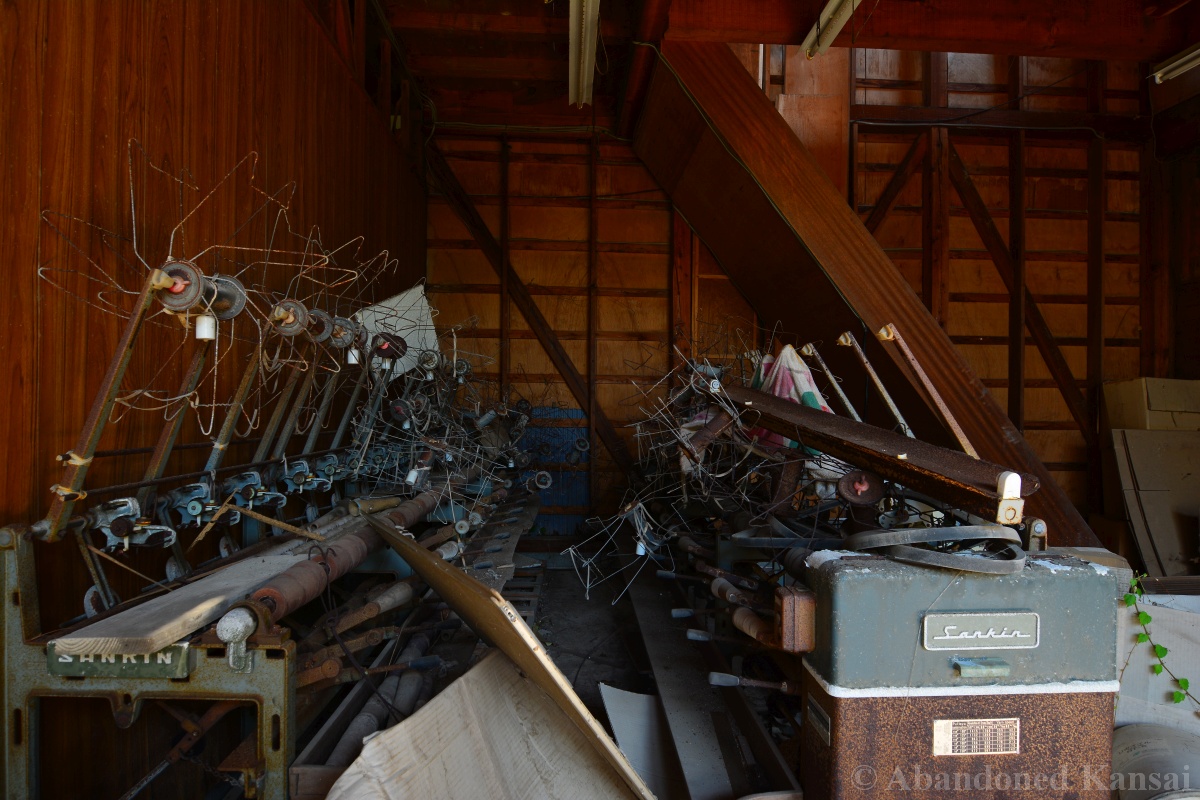
I don’t know much about the Japanese textile industry, despite having been to two or three silk manufacturers and yarn factories at local history museums and open-air museums. It’s pretty safe to say though that overall it’s more of an artisan craft these days, not a mass-market industry – for proud nationals, fashionistas, and tourists on the hunt for a sweat rag not from a sweatshop or a unique bag as a souvenir.

The Ishikawa Yarn Factory was a… yarn factory… on the coast of Ishikawa prefecture… and that’s pretty much all I know about the place. It was a surprise visit with friends, about an hour on location, so I was basically taking as many pictures as I could without being able to explore the whole place or look for company signs, let alone documents. Not only that, it also was the second location of the day on the way back home to Osaka from a long weekend trip with almost a dozen explorations in total, so everybody was hungry and tired.
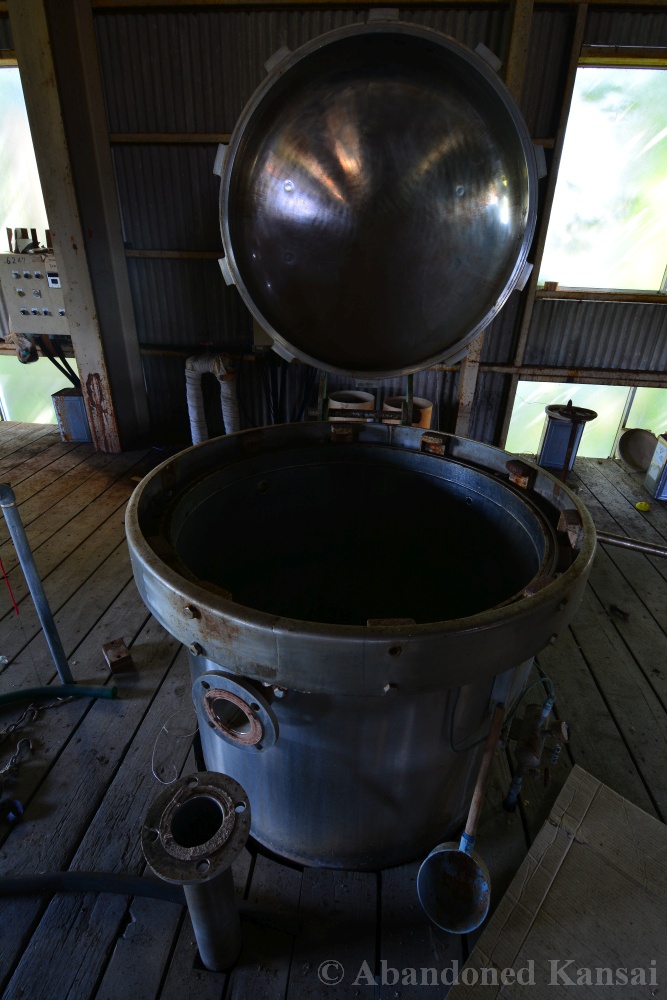
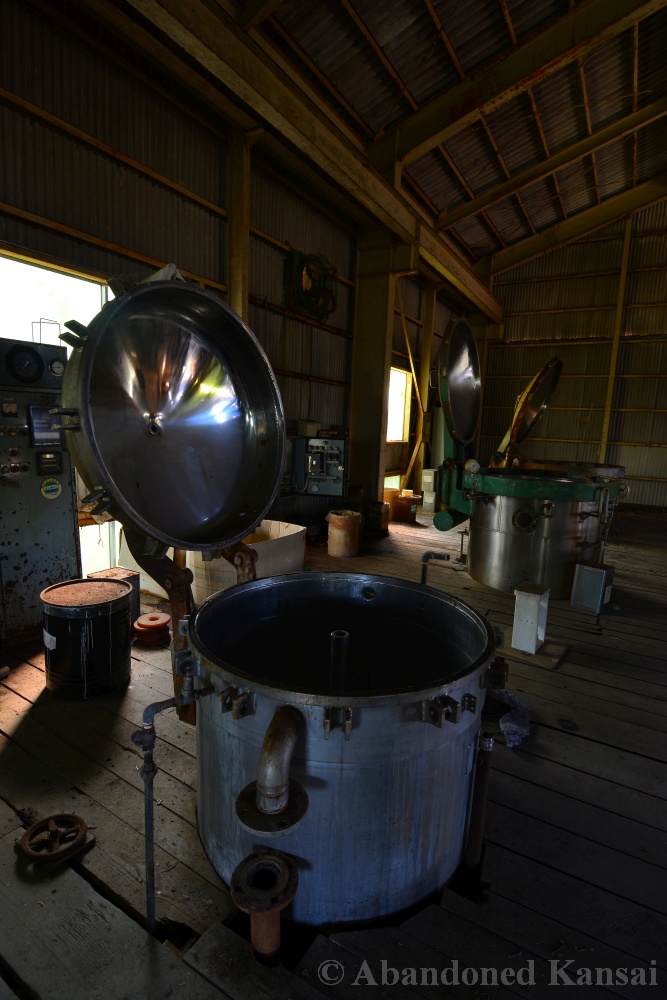
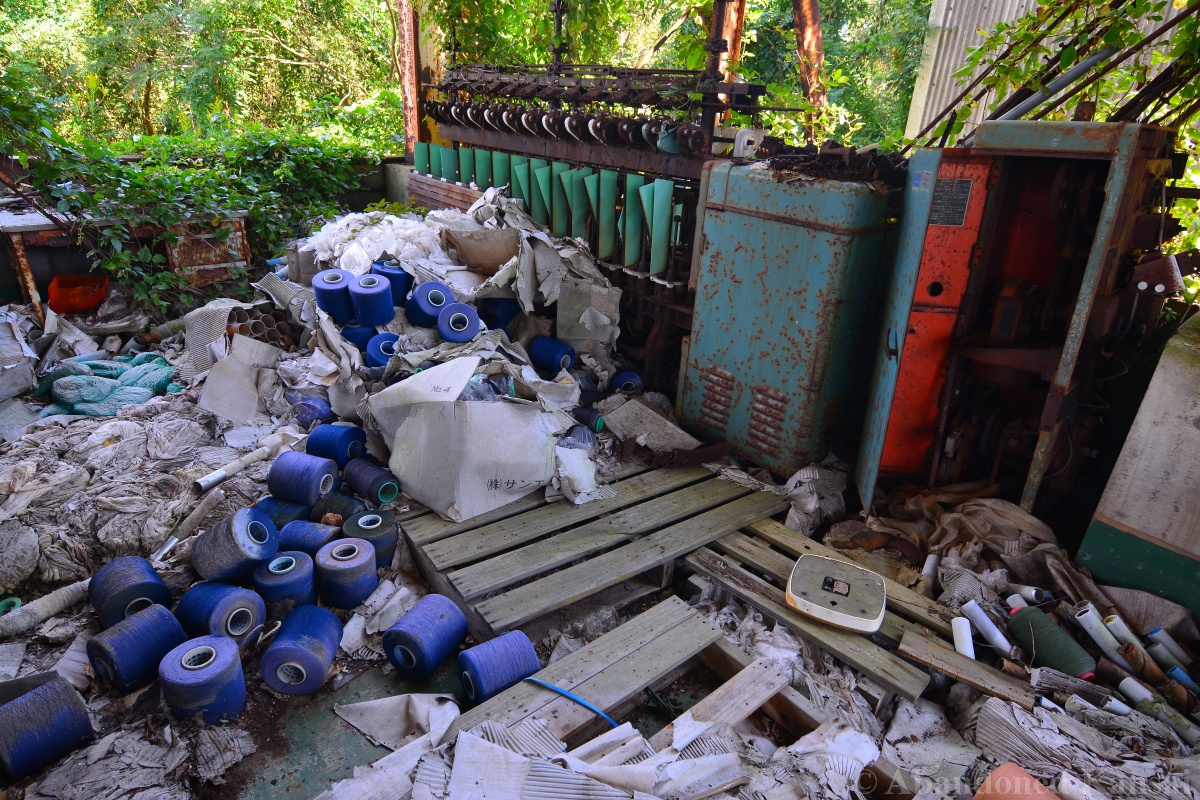
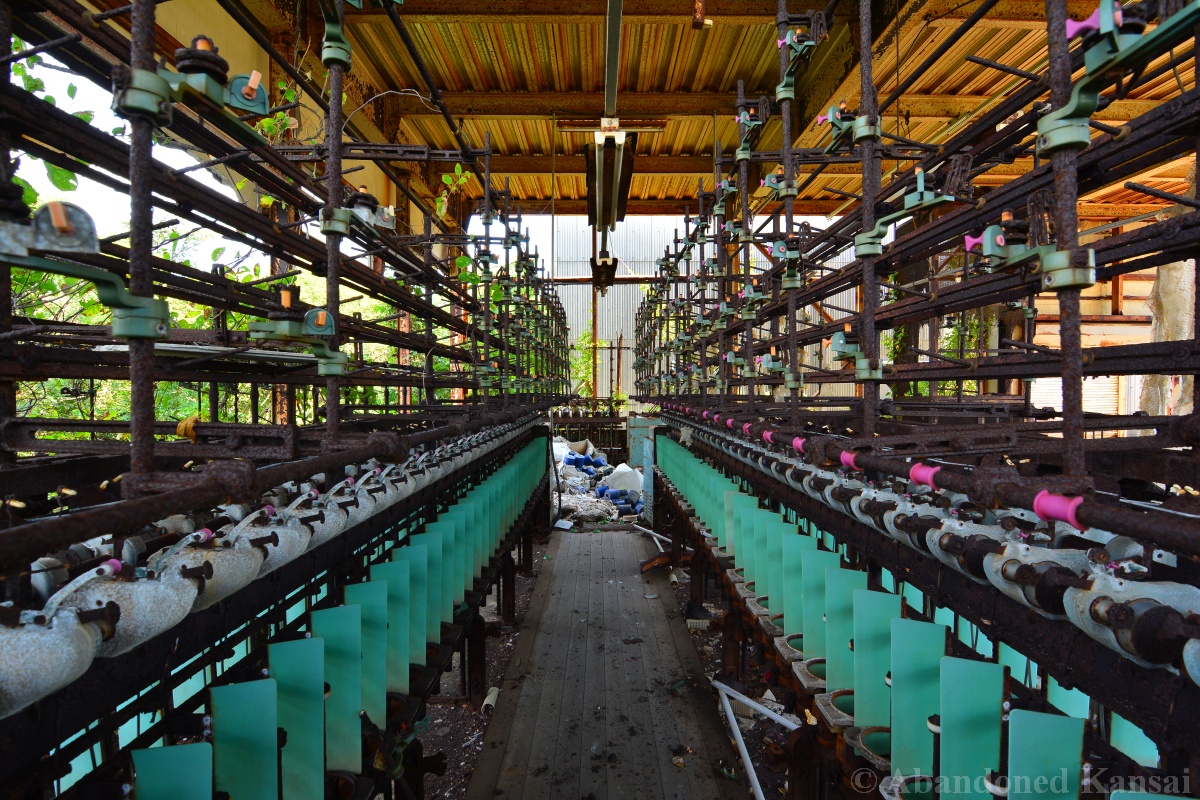
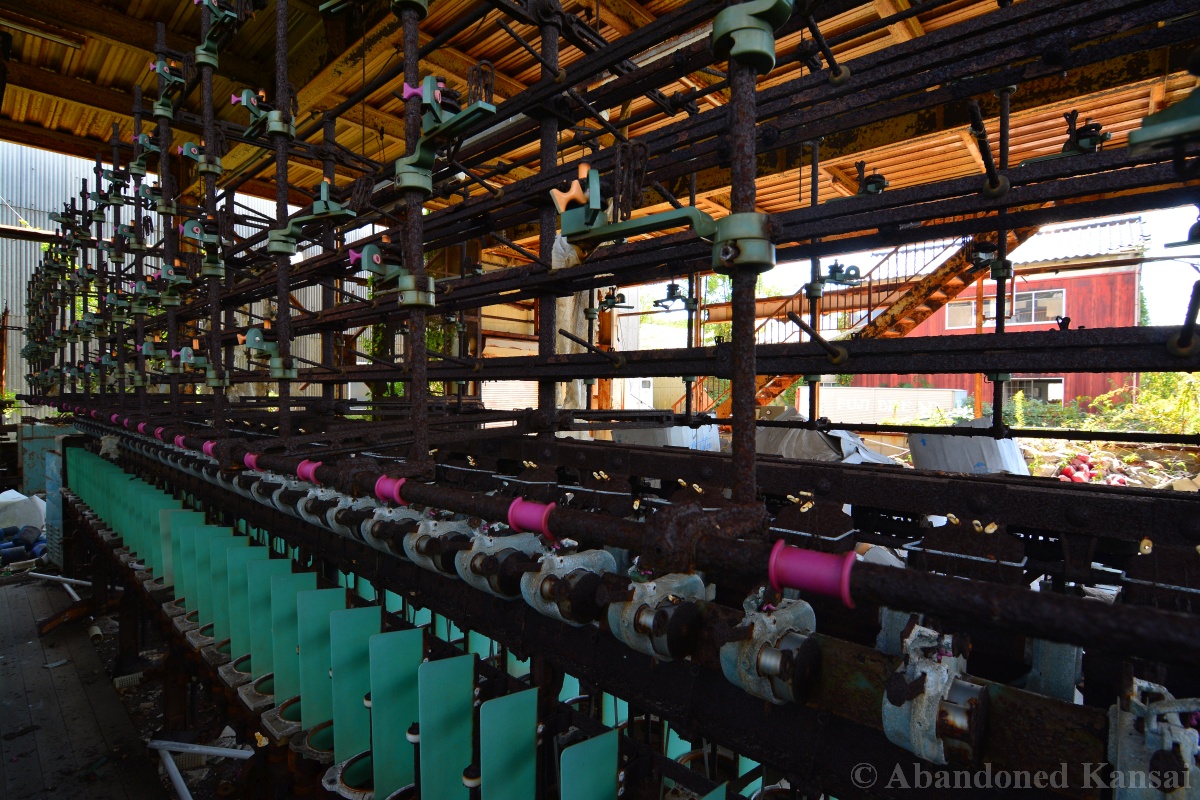
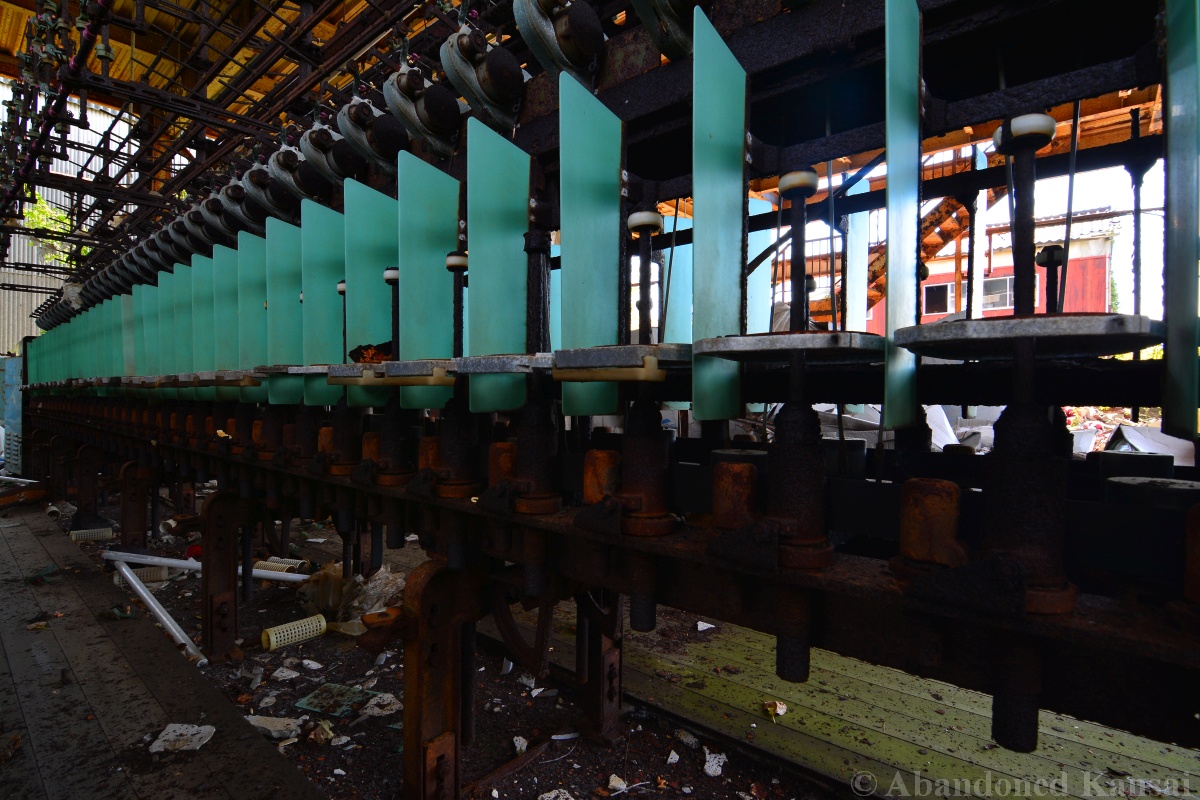
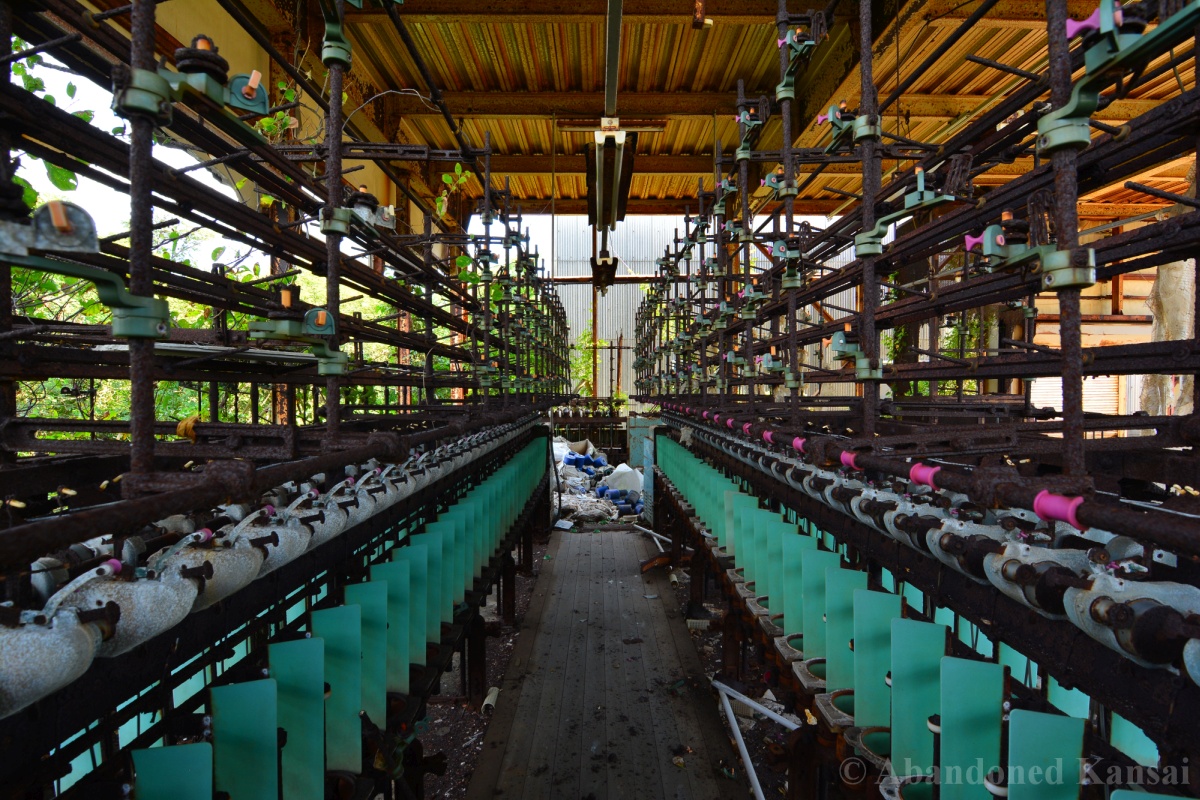
The factory consisted of several buildings, some empty, and some massive metal cylinders outside. I remember walking past them (“I’ll take photos later!” – never happened…) and through some storage facility with countless cardboard boxes to the large dyeing building where I found half a dozen 2-storey containers for the dyeing process – right next to the building where they were yarning raw material to twine. That building was in really bad condition, so my lack of time was a good justification for not even trying to get to the upper floor on a rusty staircase that looked like it could collapse by me staring at it.

And then it was over! Moving on, lunch time… I won’t complain though, an hour at a location I didn’t even know existed is much better than not spending any time there at all – so it was a really nice indoor exploration that felt like an outdoor exploration, out of sight and earshot. Not nearly as stressful as the *Japanese Garment Factory* and far more modern than the *Mountain Textile Factory*, both of which were original finds by yours truly (and still haven’t been found by other people, it seems).

(*Like Abandoned Kansai on Facebook* or *follow us on Twitter* if you don’t want to miss the latest articles and exclusive content – and subscribe to the *video channel on Youtube* to receive a message right after a new video is online…)

Read Full Post »
It’s been almost two months since the last article, the longest time ever in AK history. Heck, even when I traveled to *North Korea* I kept the weekly publishing rhythm by scheduling prewritten stuff. But that was back in 2013 – and a lot has changed since then…
I actually don’t really know where to start or end, but I wanted to write a sneak peek article for quite a while now, so maybe the good news first – at the end of this… rant?… you’ll find a gallery with photos of 30 of my favorite yet unpublished locations. Could have stopped at 20, could have easily gone to 40 or 50, but I thought 30 would be a good number as it is about the average number of photos per article. The photos are between a few days and more than 10 years old. Some I held back on purpose, others I’ve just overlooked and always chose different places to write about for various reasons. Some have become super popular amongst explorers in Japan, others are original finds. Some haven’t changed a bit since I’ve documented them, quite a few have been vandalized, one or two even have been demolished – most of them have been featured on *Facebook* and *Twitter*, but I don’t think any of them made it here, to the blog. So here is a small selection of my favorite unpublished places as a sneak peek, because… well… you never know what’s going to happen to me or Abandoned Kansai. At least this way you get a taste of some of the locations that are close to my heart.

That’s 30 of maybe 200 already documented unpublished abandoned places – if I would stop exploring today I could run Abandoned Kansai for about 4 more years with weekly articles; which is not going to happen for sure. First of all I won’t give up exploring any time soon, as long as I can walk I will go out there, even though 2021 was a mixed bag – some amazing, borderline mind-blowing explorations in all nine regions of Japan, resulting in a surplus since I “only” published 28 articles in 2021; though 2.3 articles per month isn’t a bad average, considering that this is a non-profit one man hobby project. Well, the blog is, the explorations aren’t, which is one of the reasons why the monthly average went down. Due to Covid and (fur) babies, 2021 was the first year in a decade or so that I did more explorations solo than with co-explorers – which is a huge difference in how I experience locations and the hobby in general. Solo explorations are always more nerve-racking, more costly, more exhausting, more secretive. Whenever I explored solo I am much less inclined to talk about the experience – it’s so much more personal, especially when the location/s was / were original finds. In 2021 I explored on maybe a handful of days with friends and those explorations were amazing, especially since they usually included the better lunch breaks! But it also meant that 2021 was a much less social exploration year, which definitely affected my urge to write articles for the blog. The blog… I know the format is outdated now and the chosen layout probably has been from day 1, but I guess that is what happens when somebody who never read blogs starts his own one, even at the heyday of blogging. Nowadays it seems like the attention span has become so short that people are not just overwhelmed by blogs, but if you attach more than two photos on social media. It’s all about bite sized portions – but many of them! Which is kind of frustrating, too. The Abandoned Kansai pages on *Facebook* and *Twitter* are still growing and are much easier to feed as they only require a photo and a sentence per shot – but I’m just irritated by the lack of appreciation that is shown there. I ride four rush hour trains per work day, and the amount of posts people consume on their way to / from work is locust like; they go through dozens of entries on their feeds, barely ever leaving a reaction or even comment, showing hardly any respect for the content creators; especially the small ones. At the same time pretty much all the blogs I started to read after I initiated mine have faltered in the last 4 or 5 years; most of them I removed from my Blogroll already, but even the remaining ones are basically dead. Back in 2013/14/15 some of my articles received up to three digits in WordPress internal Likes and dozens of comments – nowadays the WordPress Like system is almost not existent anymore and articles hardly ever have more than five or six comments (shoutout to long-term readers like beth, Brandon, maclifer, Benjamin, Elias, and especially Gred Cz, who accounts for about 50% of the comments these days :)…). Those comments were a huge motivation, not just because most of them were positive (and I’m not exempt from enjoying reading nice things about what I created!), but because I enjoyed the communication with all kinds of people in general, especially those who actually knew the abandoned place I’ve written about when they were still in use. 90% of that communication has been replaced with silence at best… and unpleasant exchanges at worst, from multi-million USD companies trying to get free photos over rude messages like “Yo dawg, coordinates?” to flat-out insults. Thanks to Amazon, Tripadvisor, Yelp and such EVERYBODY has become a critic – and anonymity turned a surprisingly large number of people into characters I’d rather stay away from… Which isn’t exactly motivating me to publish things on any internet platform.

Add a couple of health scares (no Covid, I’m just getting old…), blog / explorations related personal disappointments (that alone could fill an article…), general Covid restrictions as well as some grown-up responsibilities to the mix and I guess you’ll understand why the time between articles has become longer and longer over the last two or three years…

To wrap this up: What is going to happen to Abandoned Kansai? Your guess is as good as mine! No articles at all is as unlikely as going back to a weekly pace. I’ll probably continue to write articles and publish them when they are done – aiming for at least one per month, but more likely two (or three, if a month has five Tuesdays). And if you see something by Abandoned Kansai on social media, please feel free to show a reaction so I know that I actually reach an audience. Comments are always welcome, especially if you have a “always be kind” policy when commenting; not just at AK, but in general. Abandoned Kansai has been running for more than twelve years now – and if a few dozen of you stay with me, I don’t see a reason why we shouldn’t reach 20 or 25 years! Thank you for reading (till) the end – and please enjoy the gallery!

(*Like Abandoned Kansai on Facebook* or *follow us on Twitter* if you don’t want to miss the latest articles and exclusive content – and subscribe to the *video channel on Youtube* to receive a message right after a new video is online…)

Read Full Post »
Surprise, surprise – this was not your typical wooden abandoned Japanese countryside school…
Old Japanese schools are amazing structures! While most contemporary schools are made from modern materials and pretty much all look the same, the old ones were made from wood and come in all shapes and sizes. The biggest problem of those classics is obviously that they were not made for eternity and maintenance can be very costly (no insulation, damage prone material, …), which is why they are among the first to be closed. Once there is no maintenance it’s only a matter of time until they are damaged beyond repair and either have to be torn down or even collapse on their own. Only a few dozens of them are preserved as museums, restaurants, or art spaces – mainly because they tend to be in the countryside, which makes them even more of a financial risk.
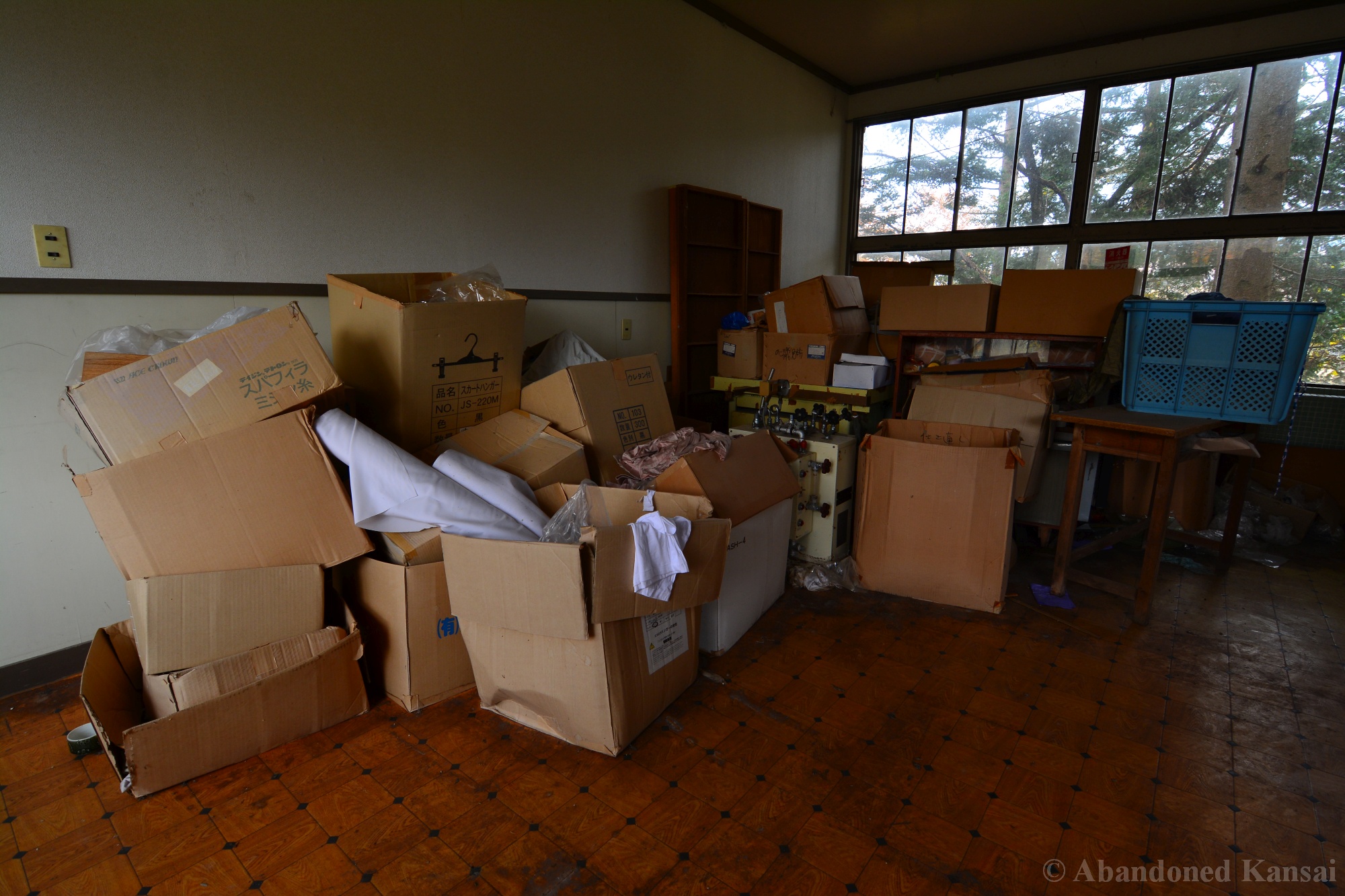
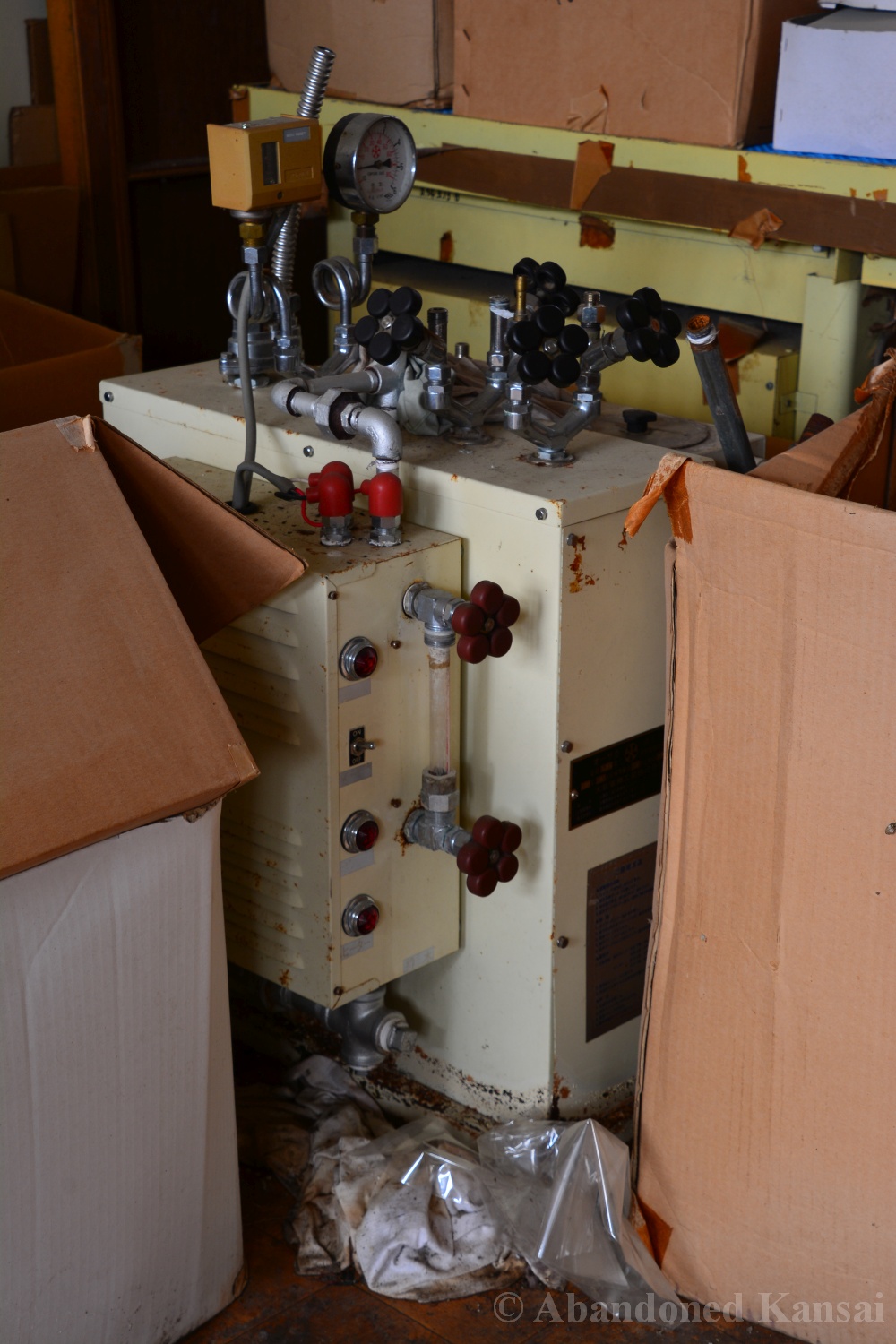
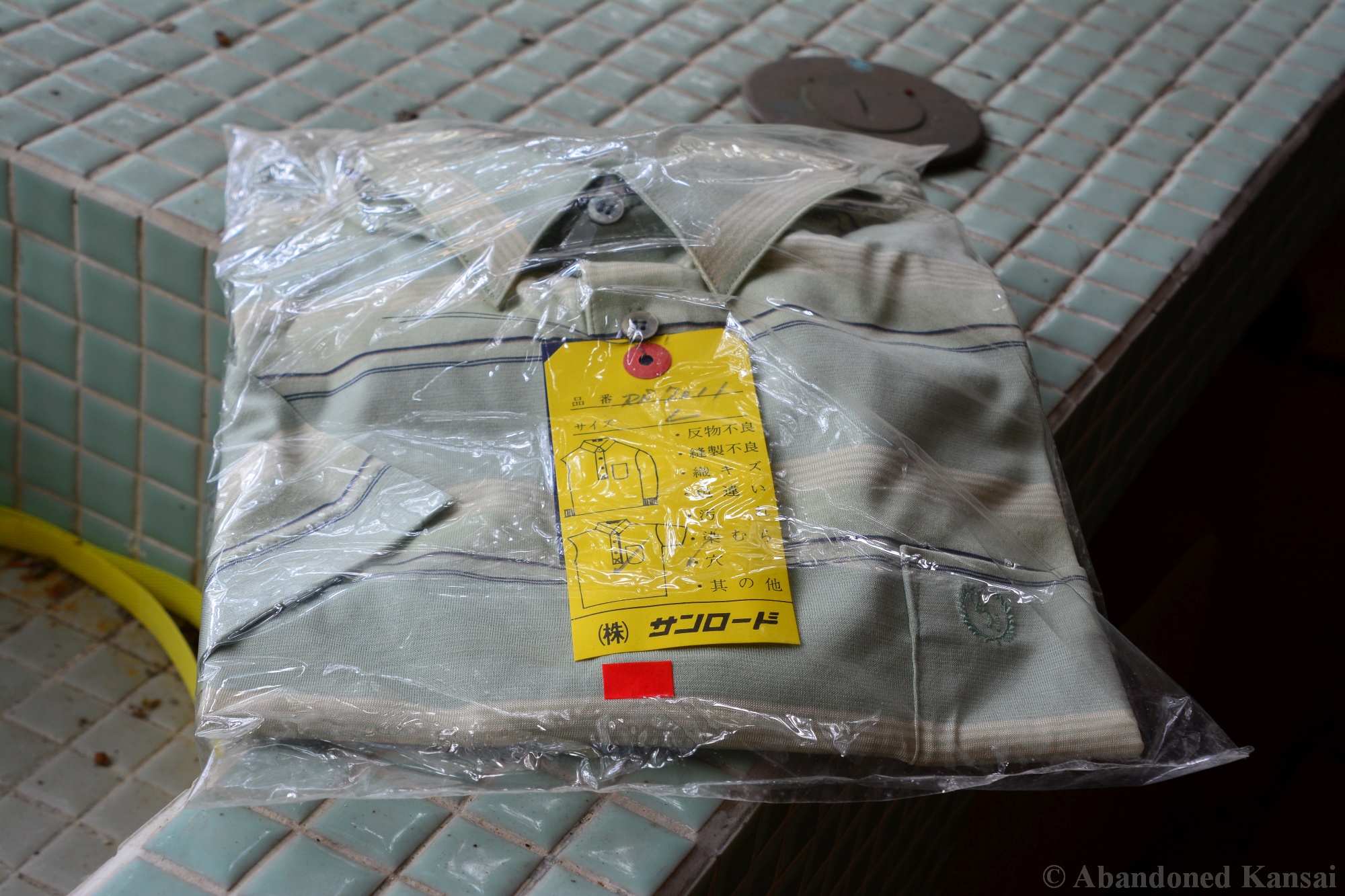
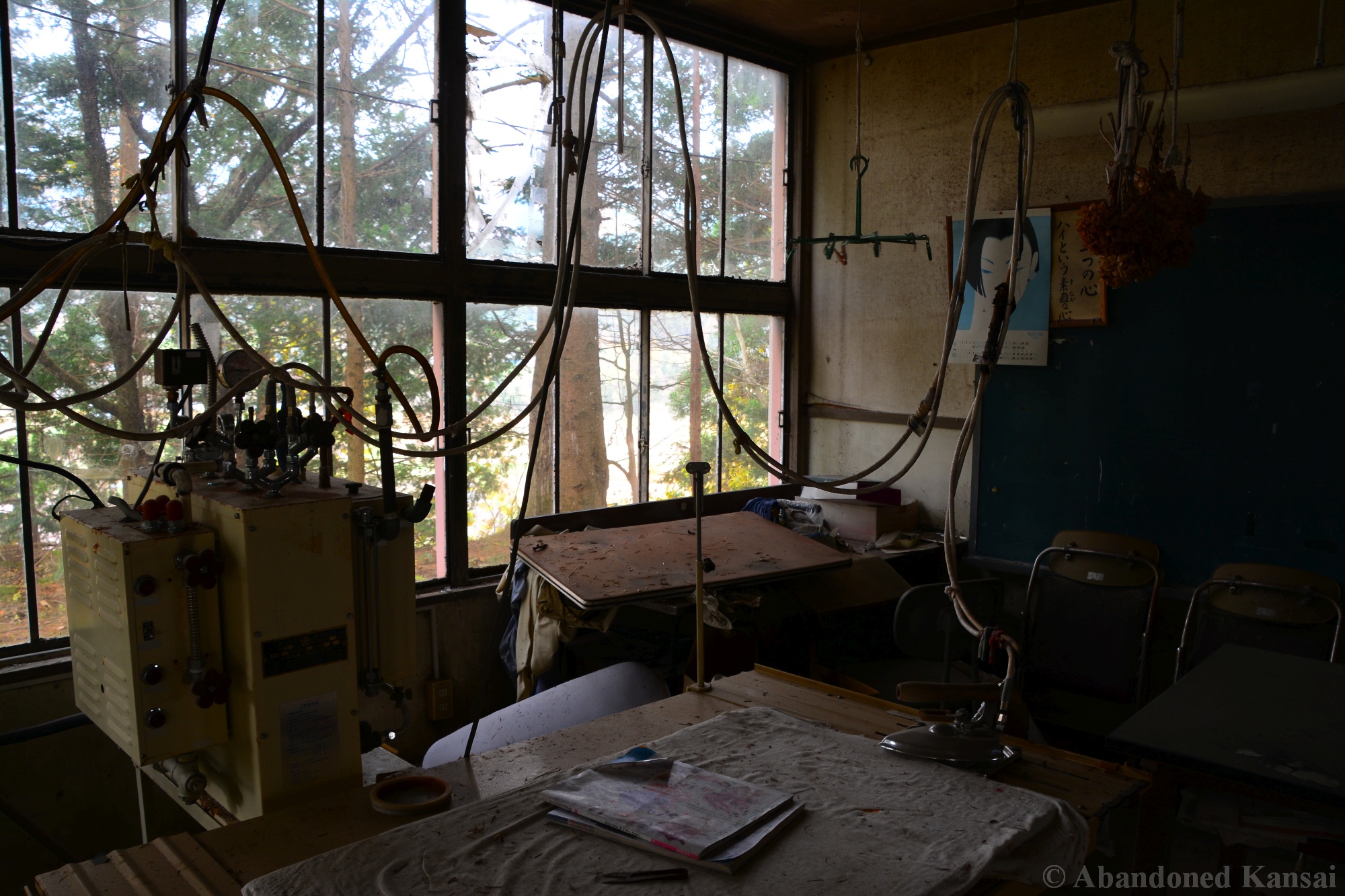
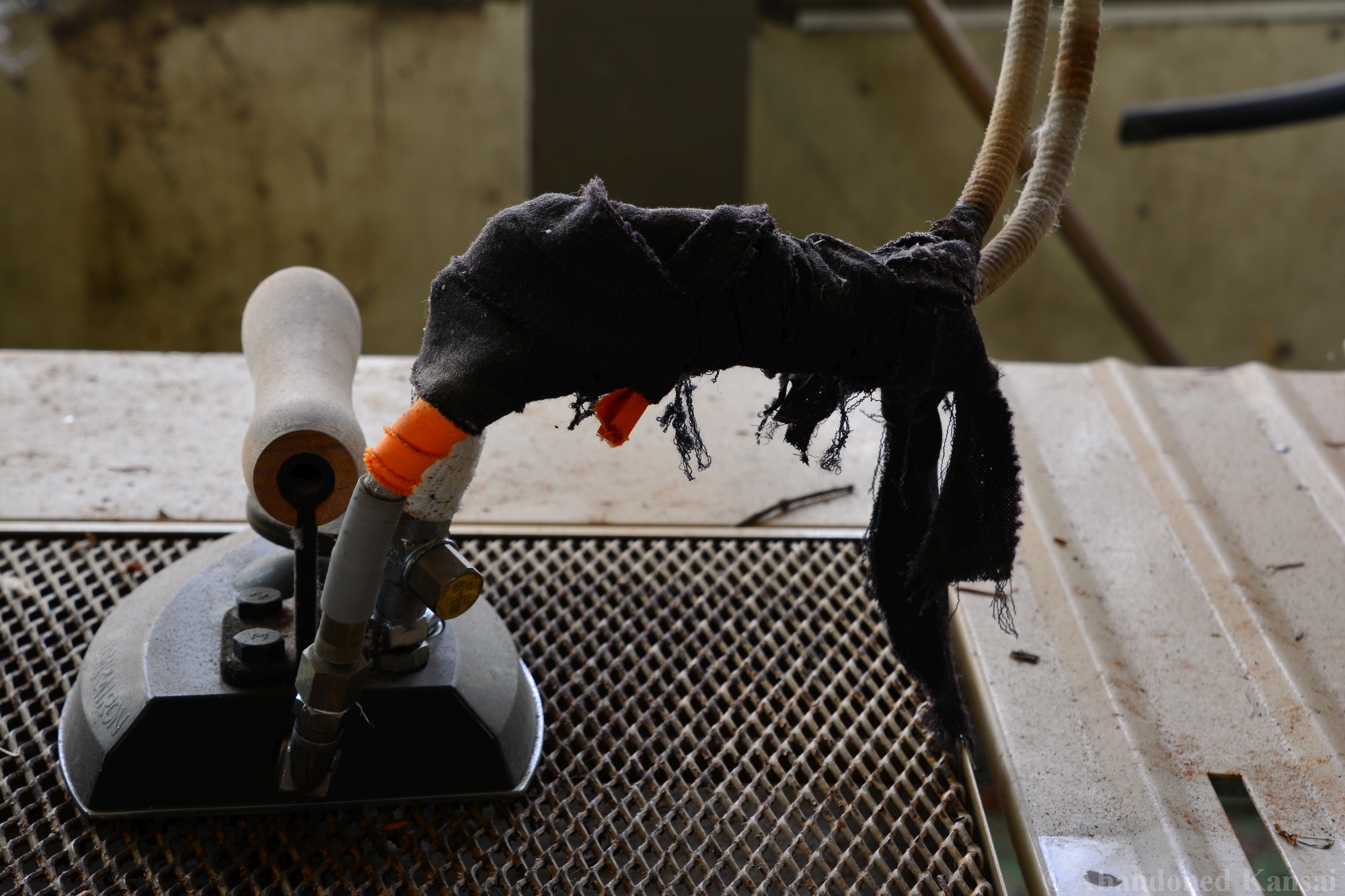
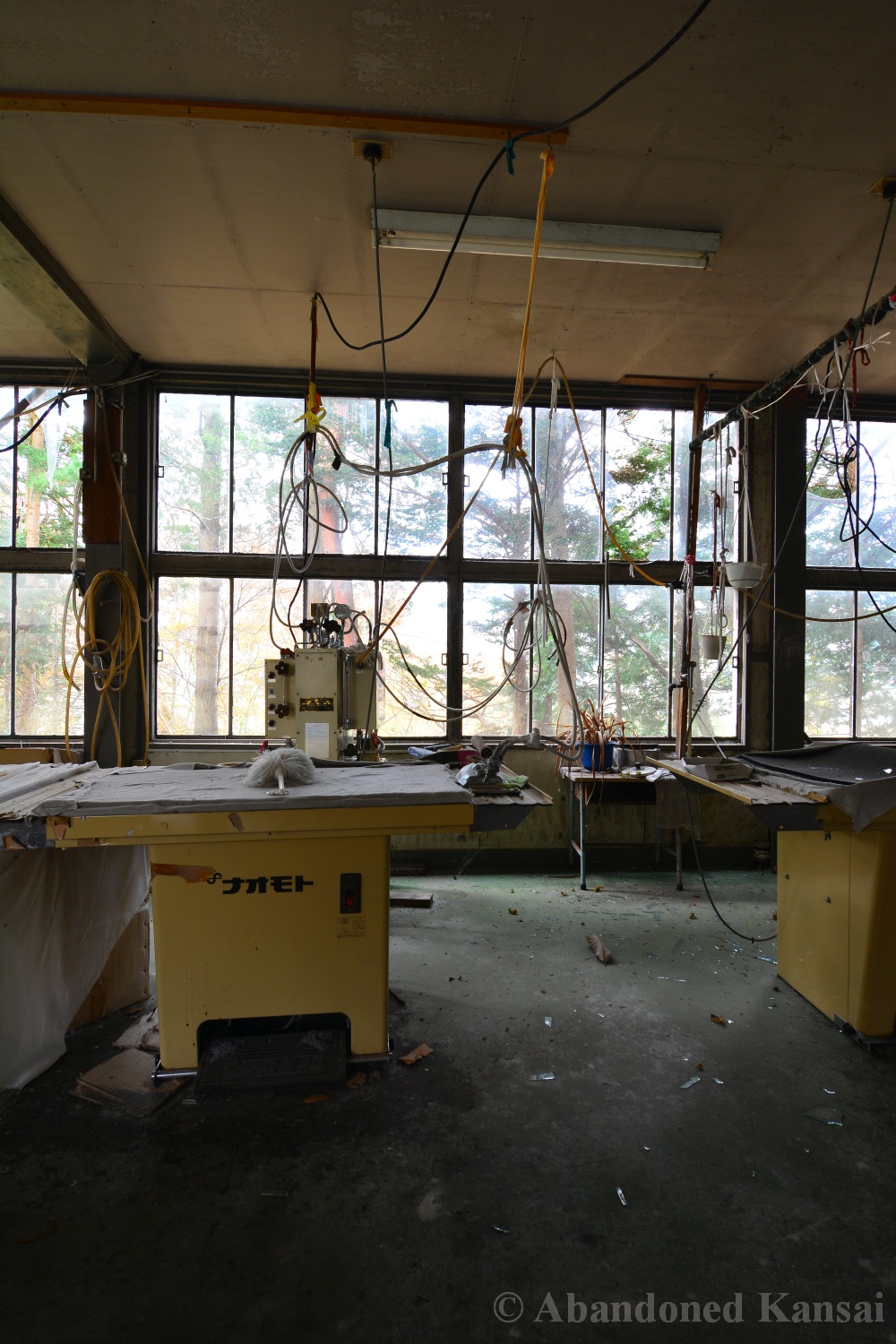
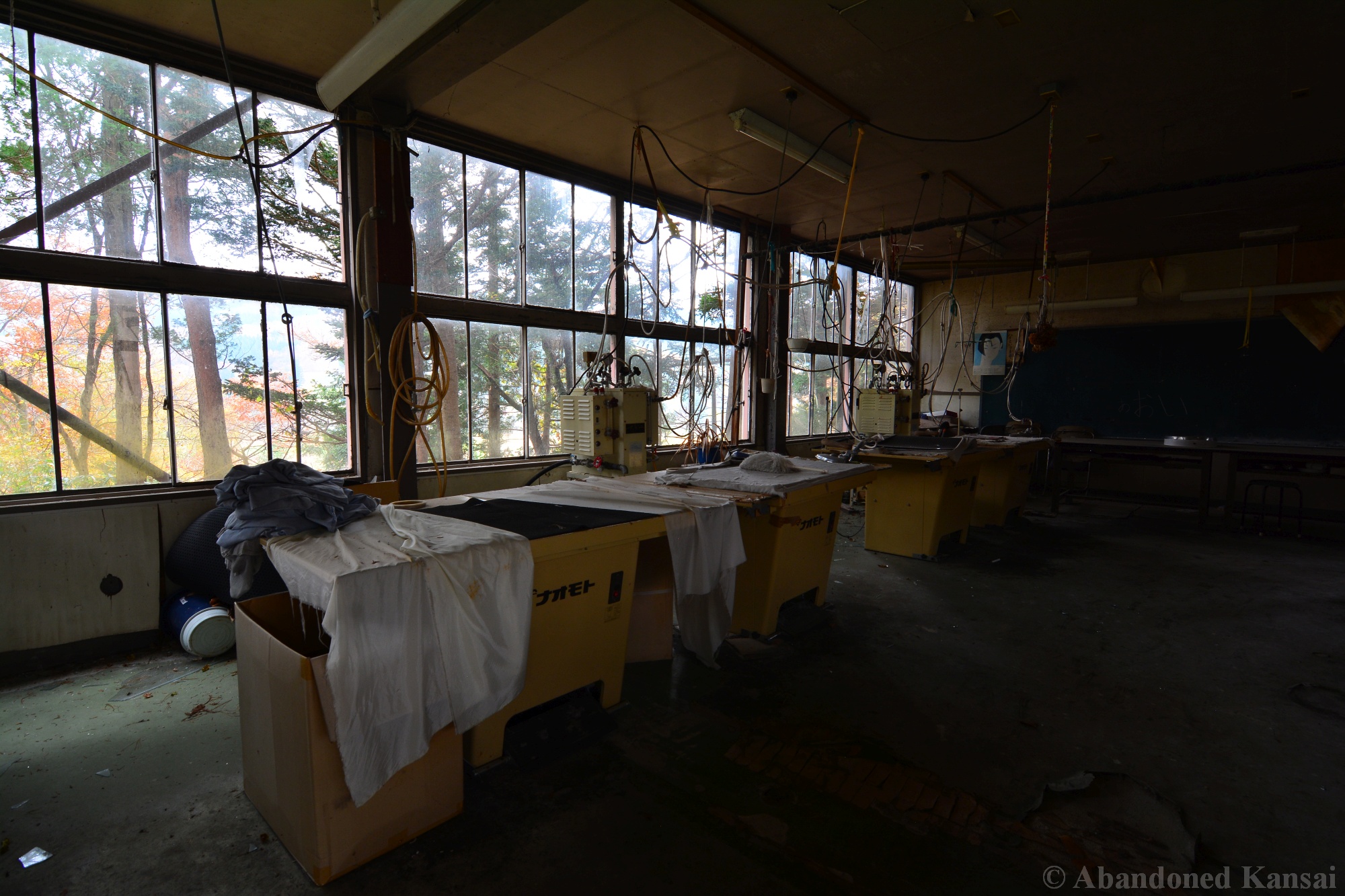
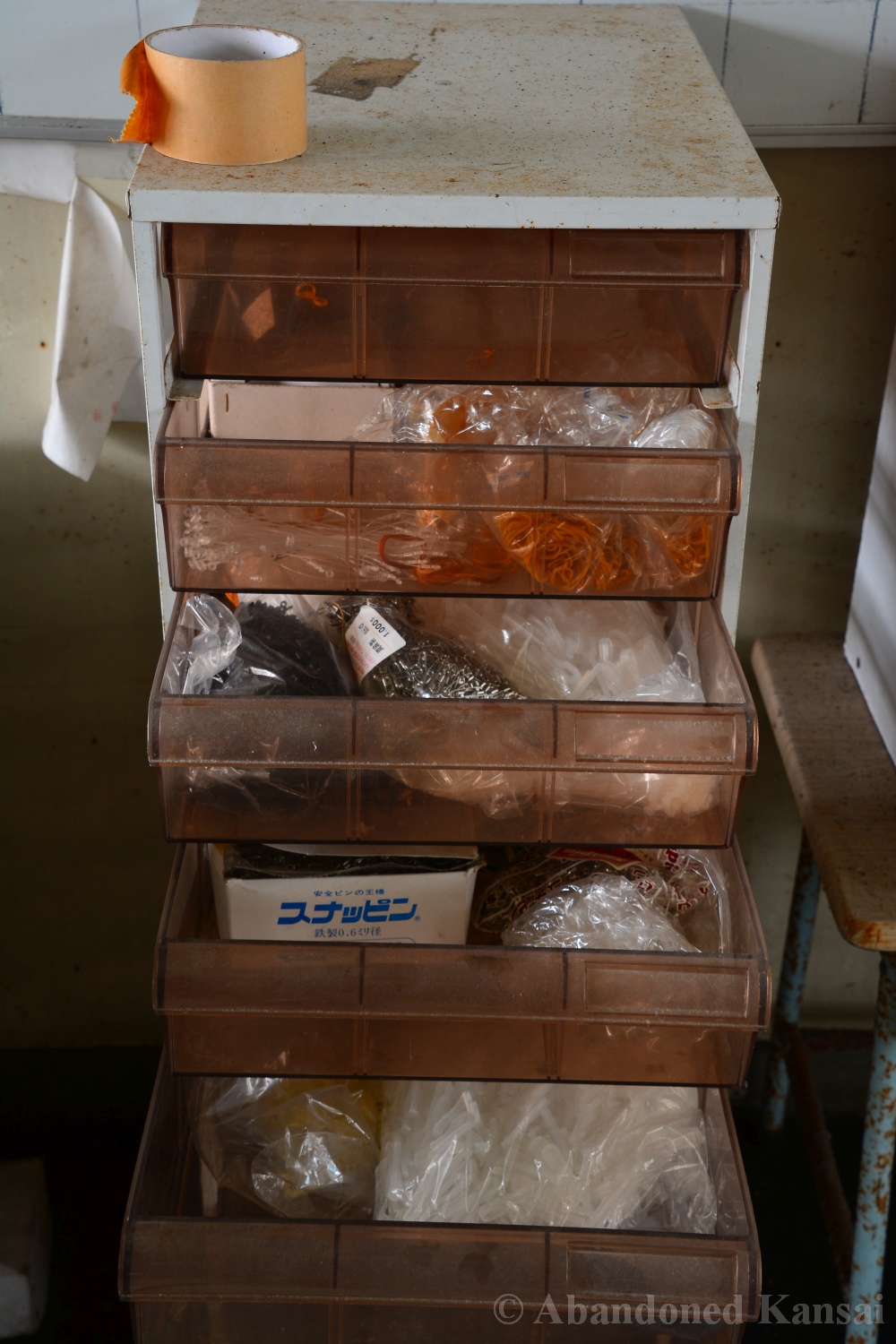
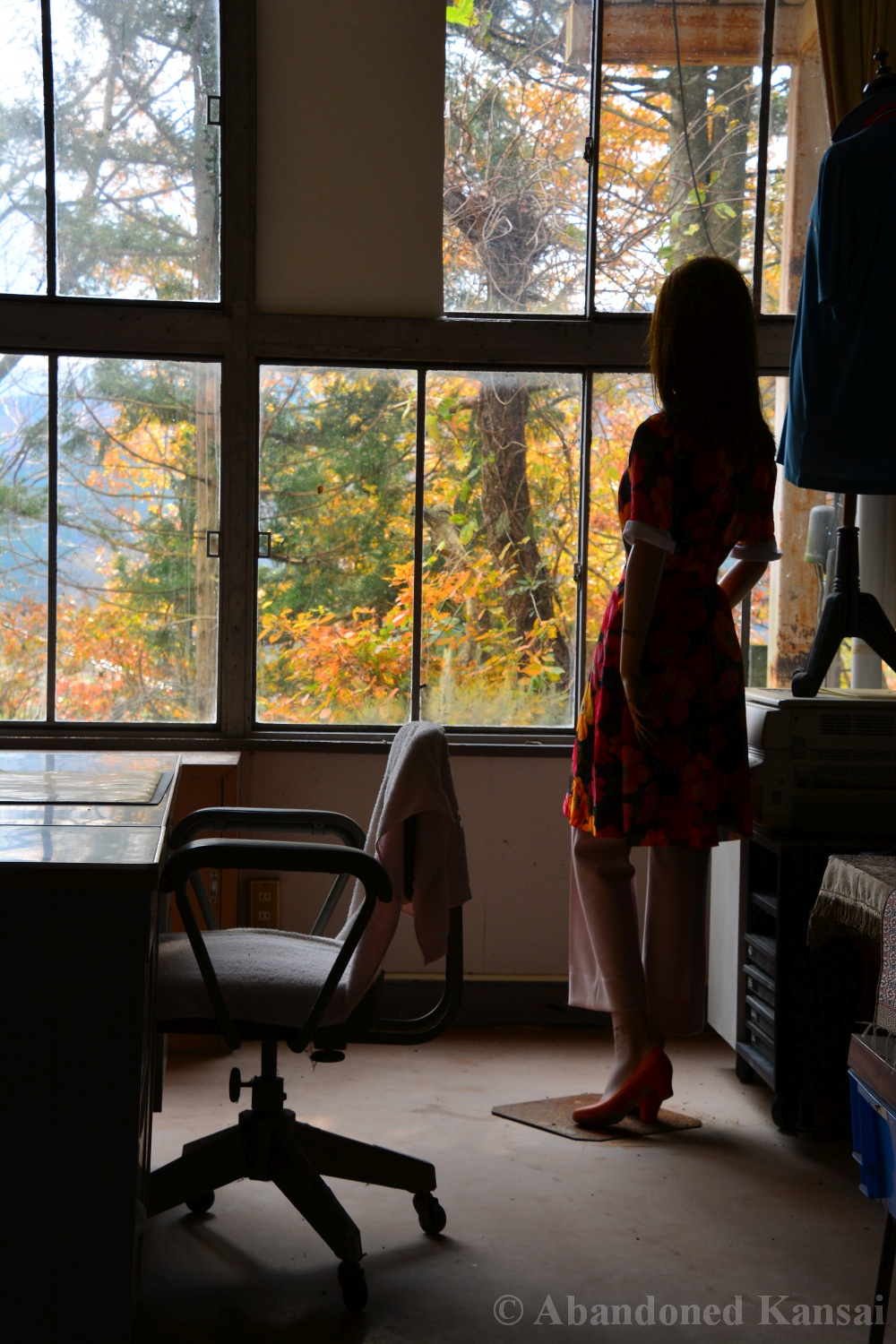
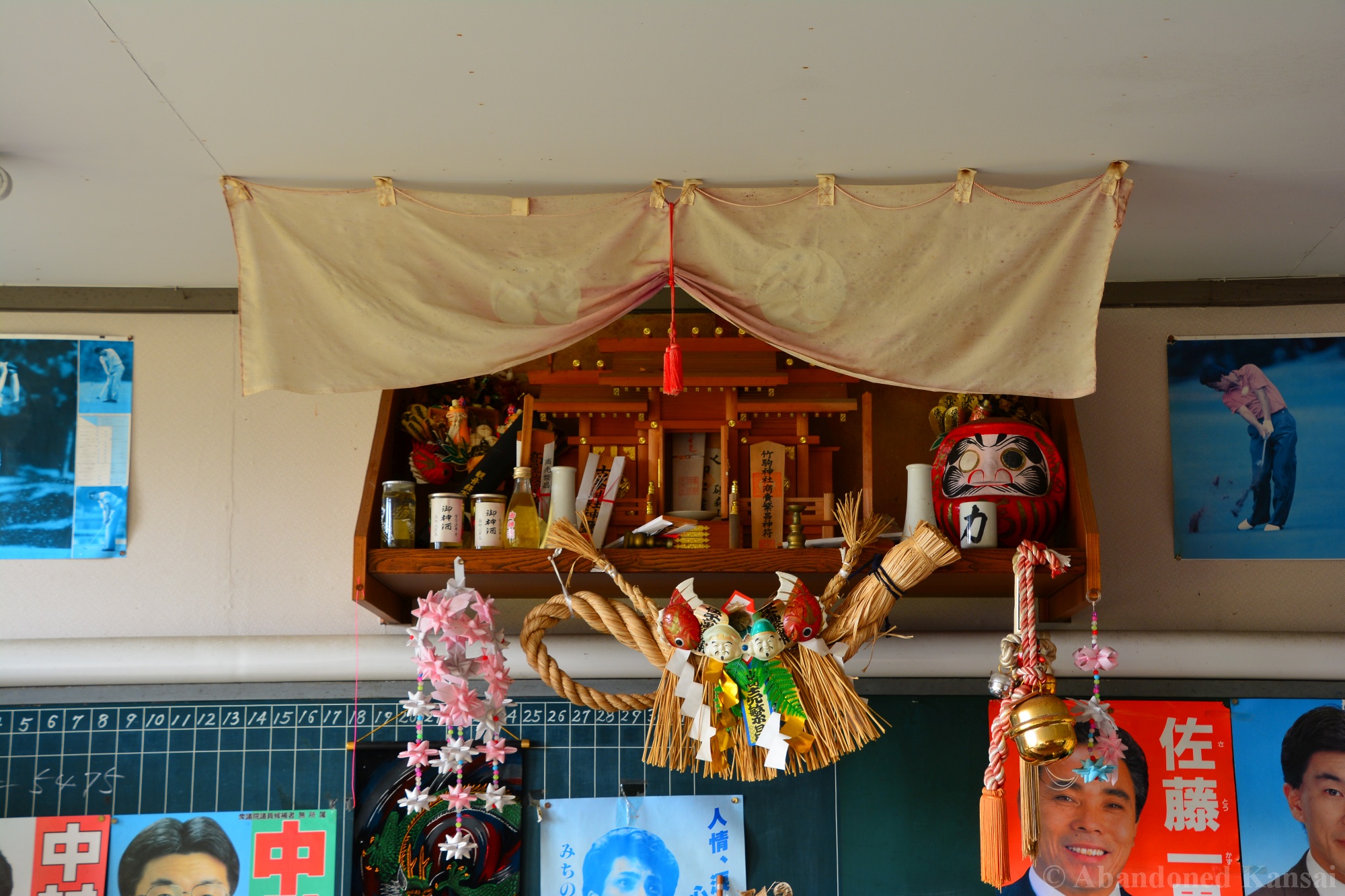
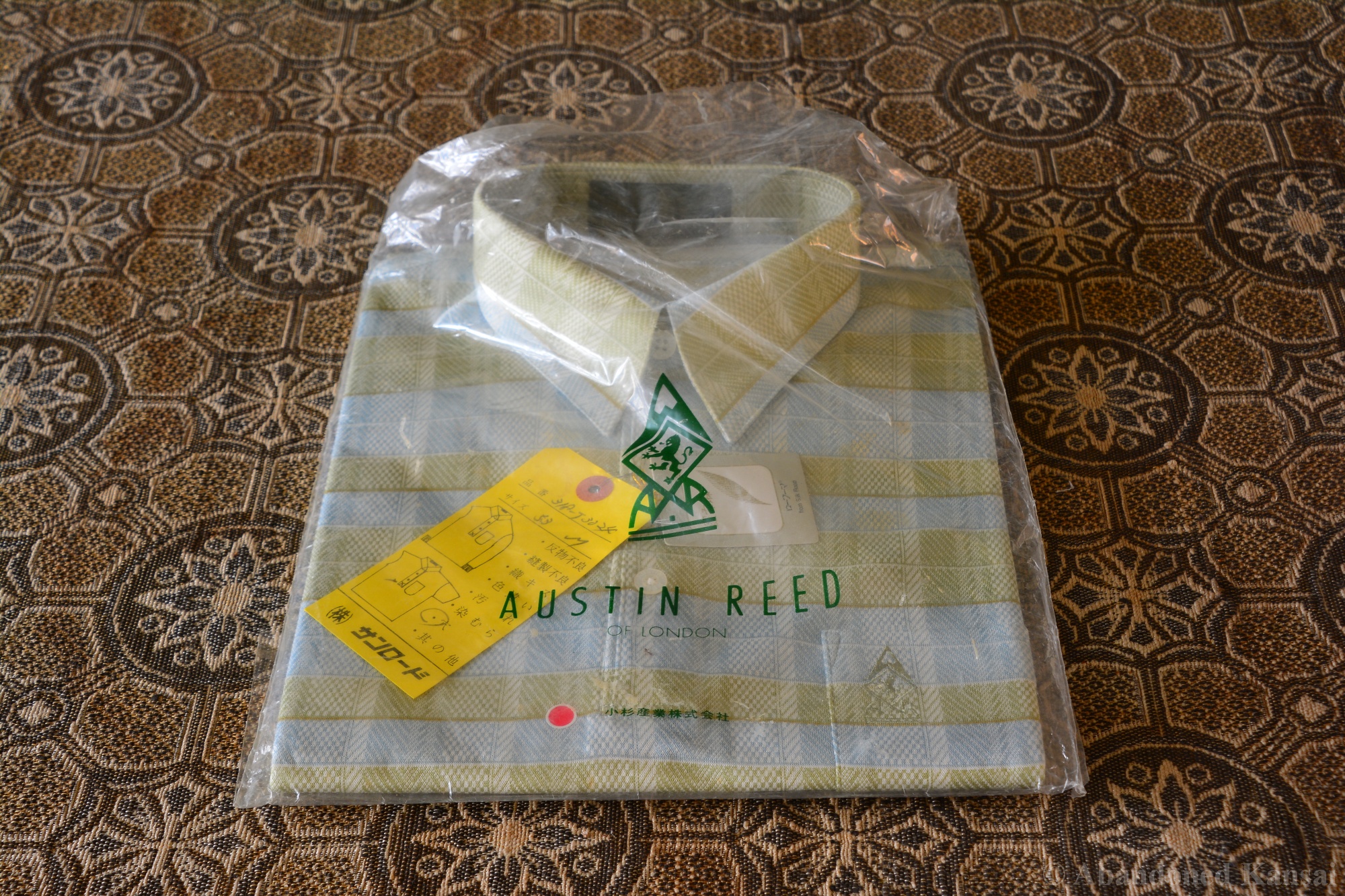
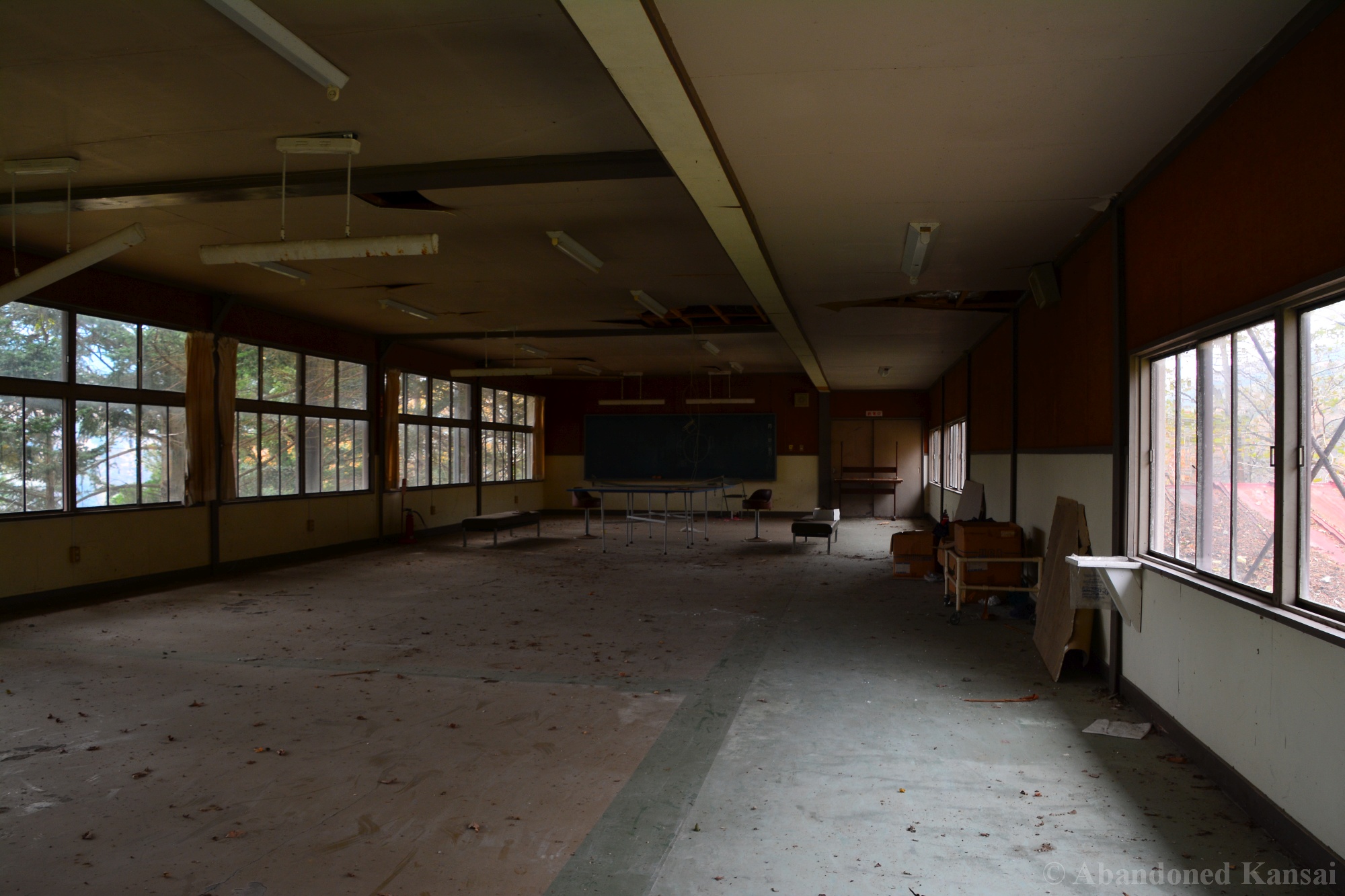
The abandoned Clothing School dates back to the year 1875 and was an elementary school until it’s closure in the early 1980s. During its more than 100 year long history the building was expanded and remodeled several times, making it kind of a hybrid between a wood only and a modern school. After the school was closed it had a second life as an apparel company, which made this exploration so exciting – especially since I explored this place many moons ago and didn’t know much about it at the time. Entering through the back the building looked like a regular abandoned school at first. Then some cardboard boxes with fabric and plastic wrapped shirts caught my eyes. The next room was filled with industrial ironing machines by Naomoto – and down the hallway were several rooms that you usually don’t find in an abandoned school, including a bed room, a living room, a conference room or maybe a room for sales people, a head office for the boss and break room for staff featuring a female mannequin looking out of the window, scaring the living hell out of people not expecting to see it / her there…

I’ve always enjoyed exploring abandoned schools, but this one was truly unique and kind of reminded me of the *Japanese Art School*, which also was home of a business before it was closed for good and eventually got demolished after parts of the building collapsed. A fantastic location I’d revisit in a heartbeat if it wasn’t basically a day trip away from where I live.

(*Like Abandoned Kansai on Facebook* or *follow us on Twitter* if you don’t want to miss the latest articles and exclusive content – and subscribe to the *video channel on Youtube* to receive a message right after a new video is online…)

Read Full Post »
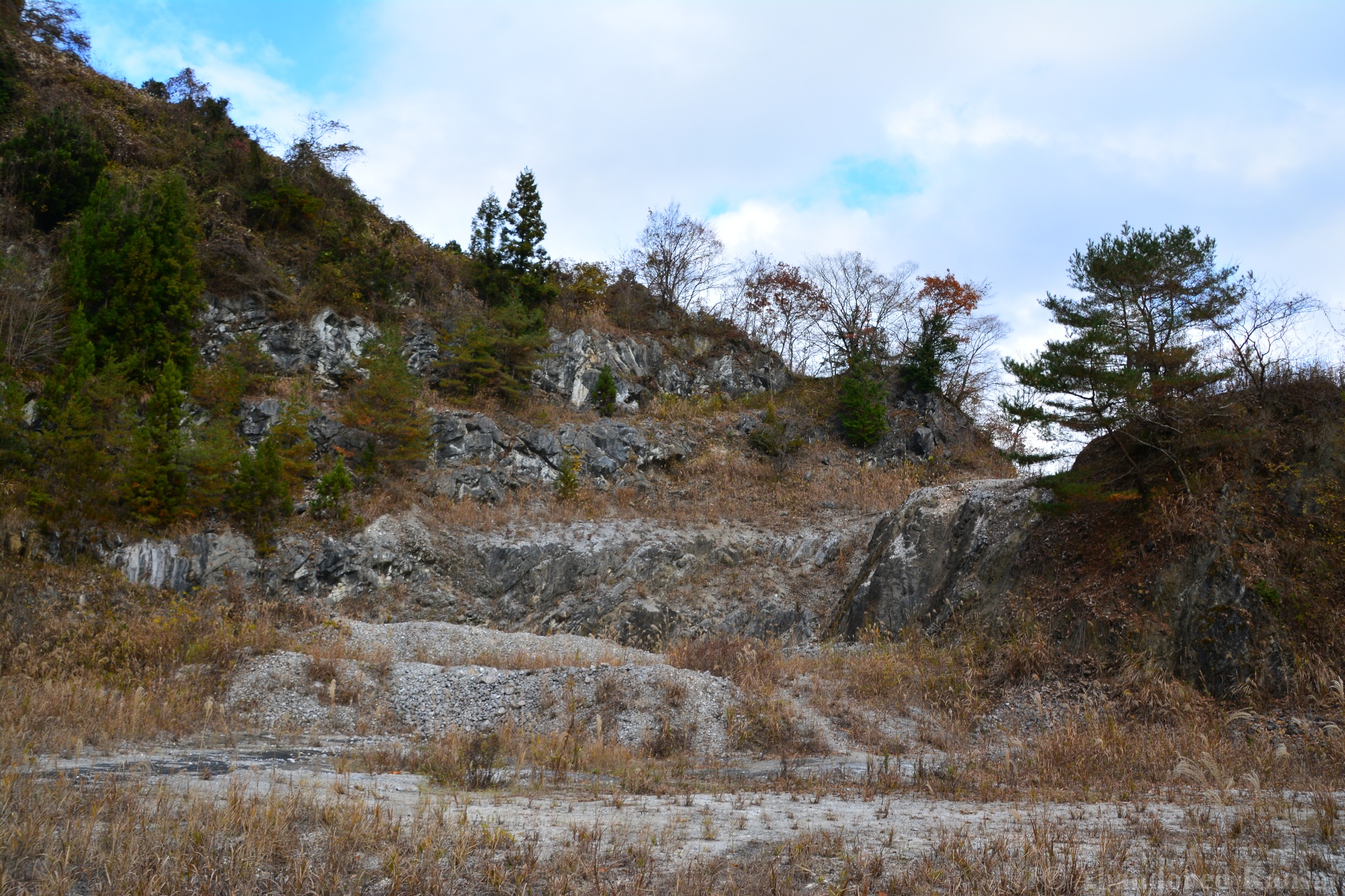
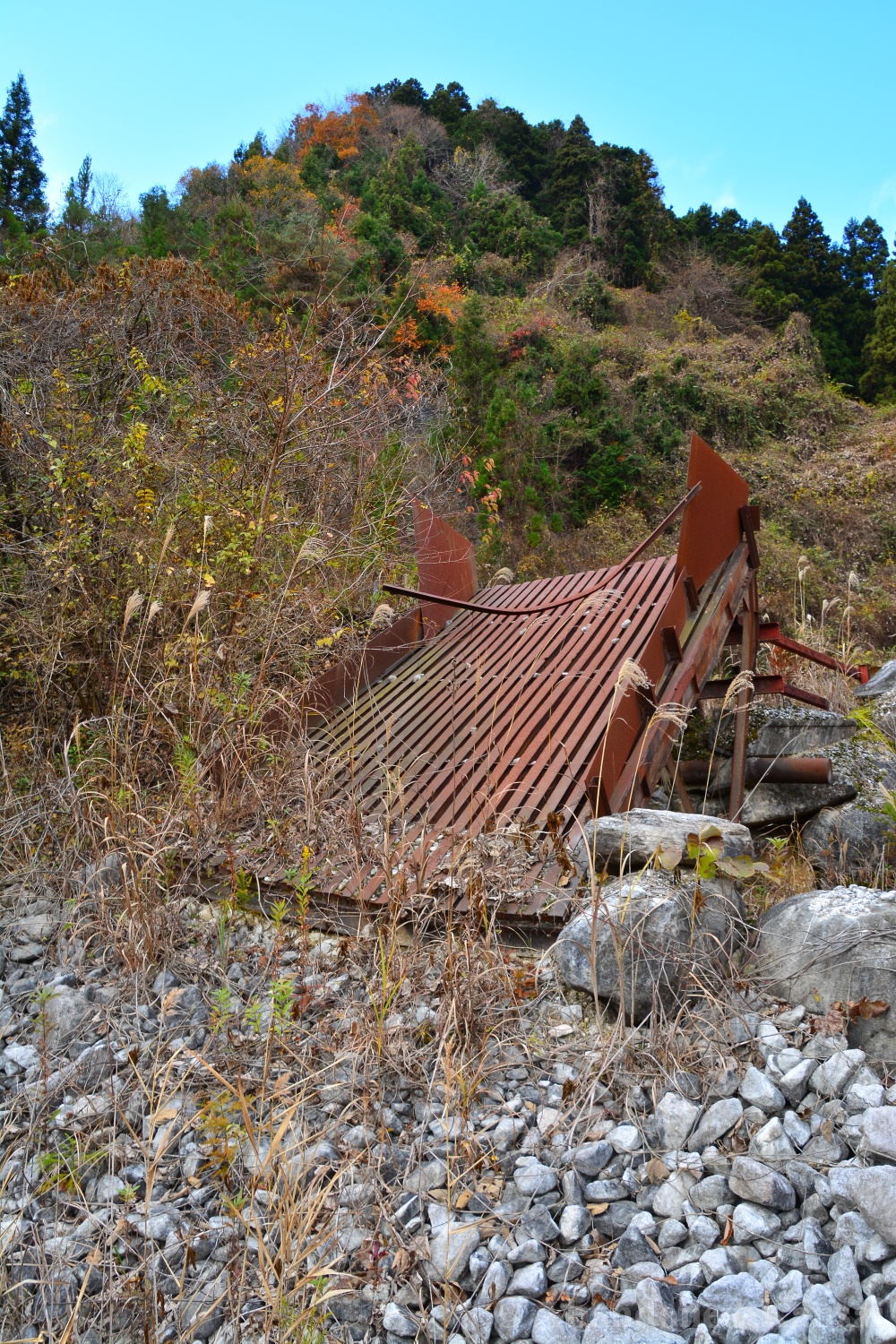
Most abandoned quarries are rather dull since they are usually little more than gaping wounds in the side of a mountain – the Tohoku Quarry though still featured a facility to process the stone material… and it was an original find!

About three years ago I did a Tohoku trip with my buddy *Hamish* – lots of countryside roads off the beaten tracks, often without StreetView support; a blessing in disguise, because the only way to check out locations was to actually go there and check out the locations in person. Of course there was a high failure rate, places were still in use or already demolished, but we were also able to explore some great original finds, including this mid-size quarry in the middle of nowhere. Places that are almost impossible to find and only to be explored by the most dedicated urbexers, which is probably one of the reasons why I still haven’t seen this location anywhere else, neither on blogs nor on social media.

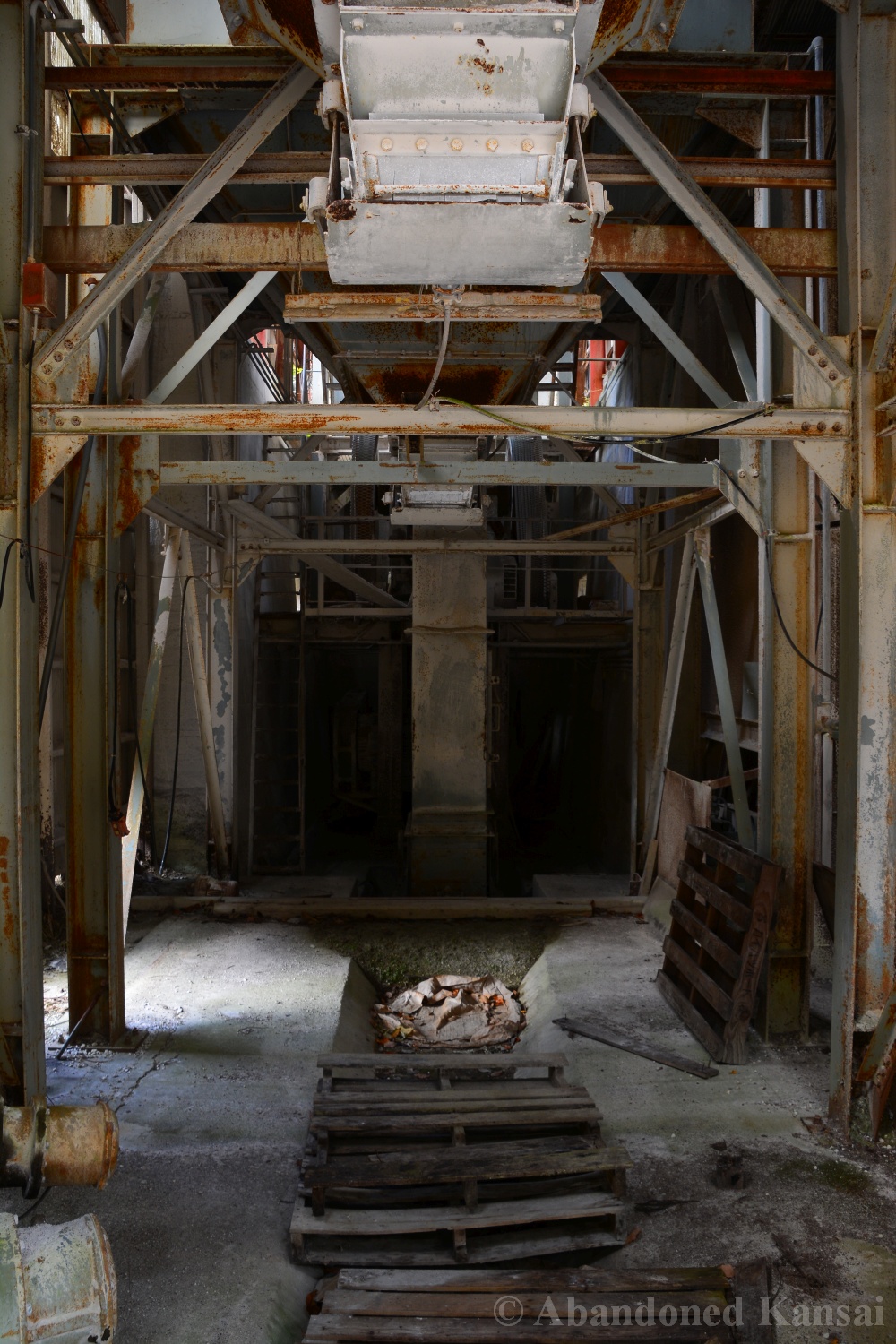
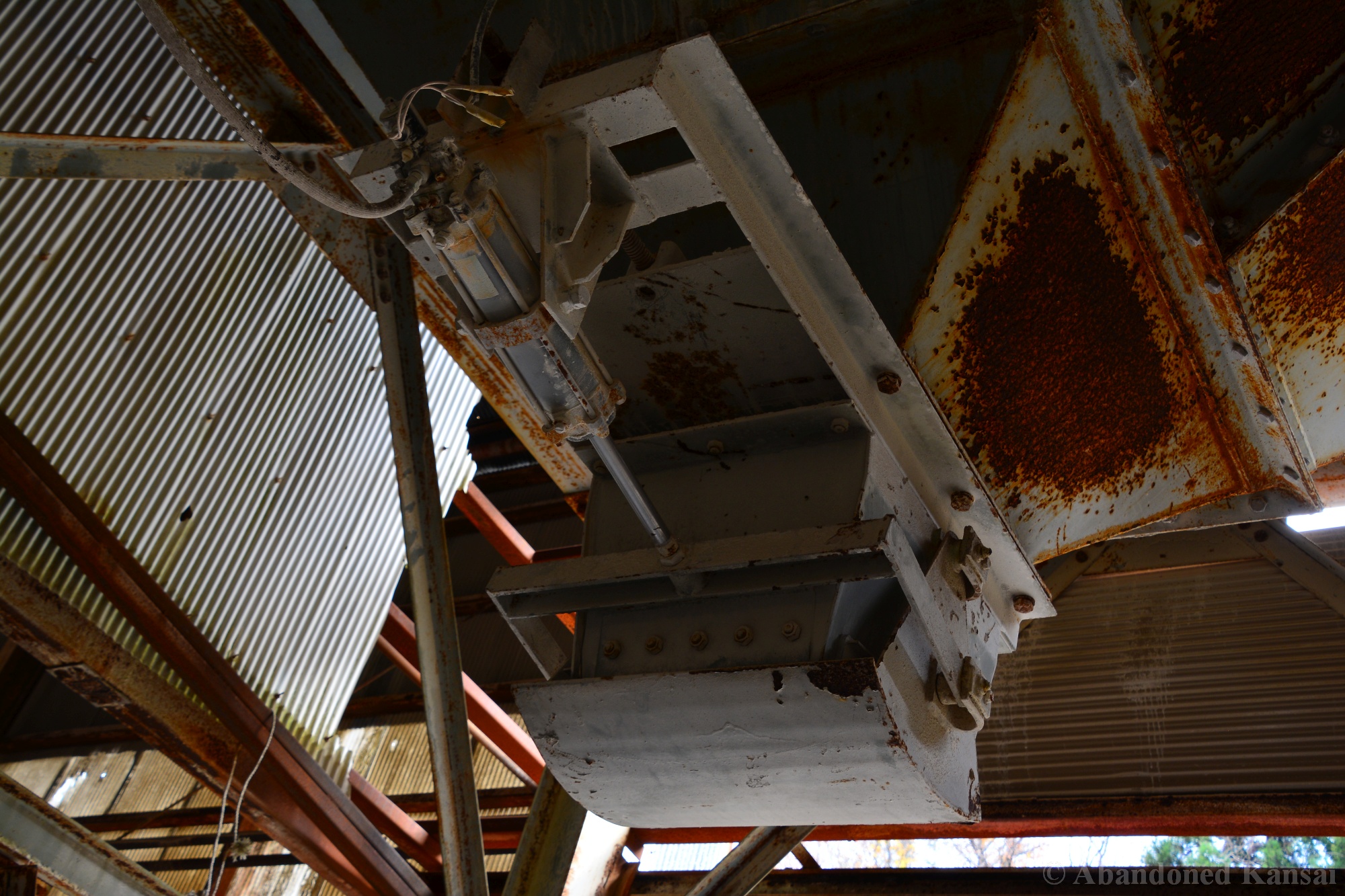
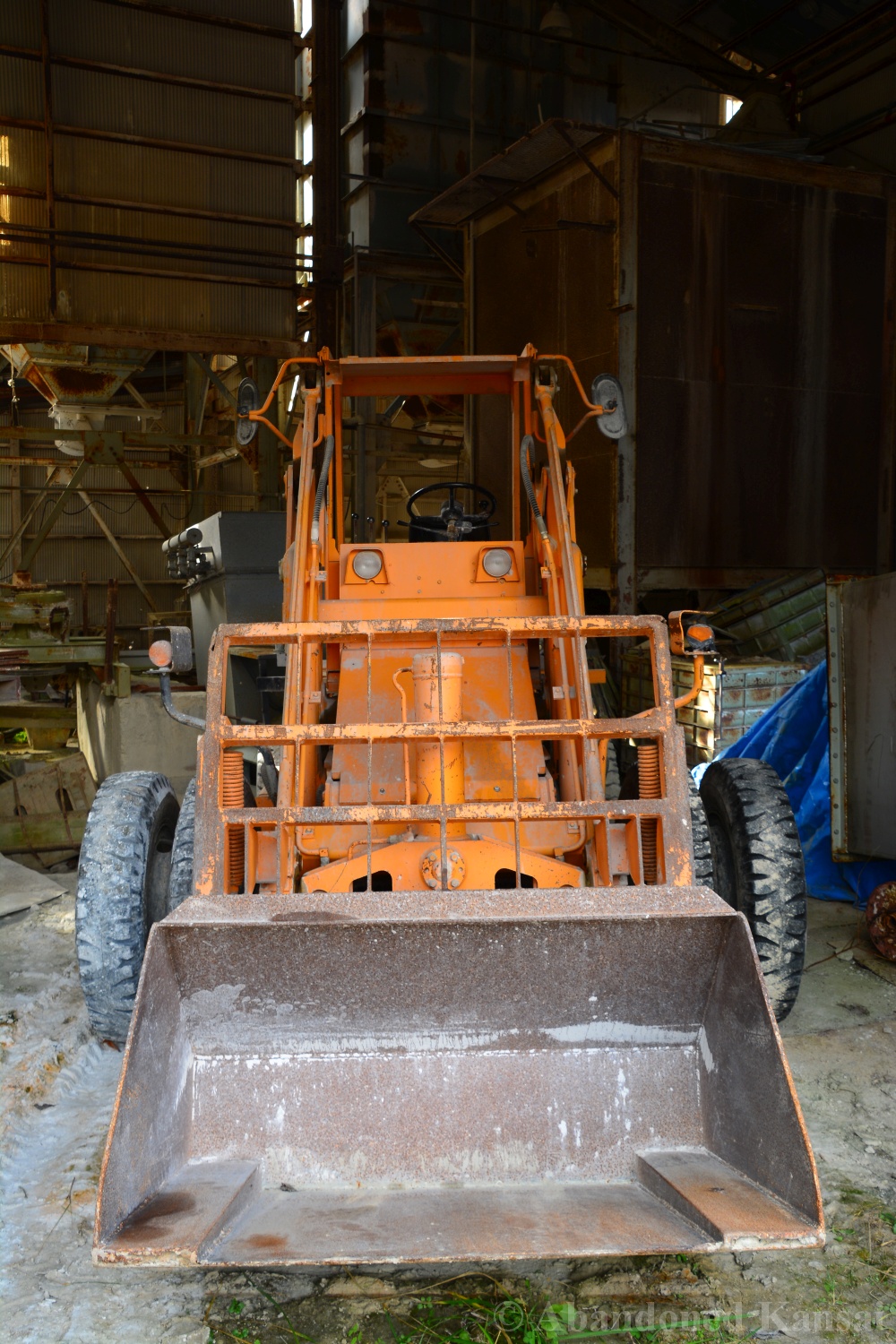
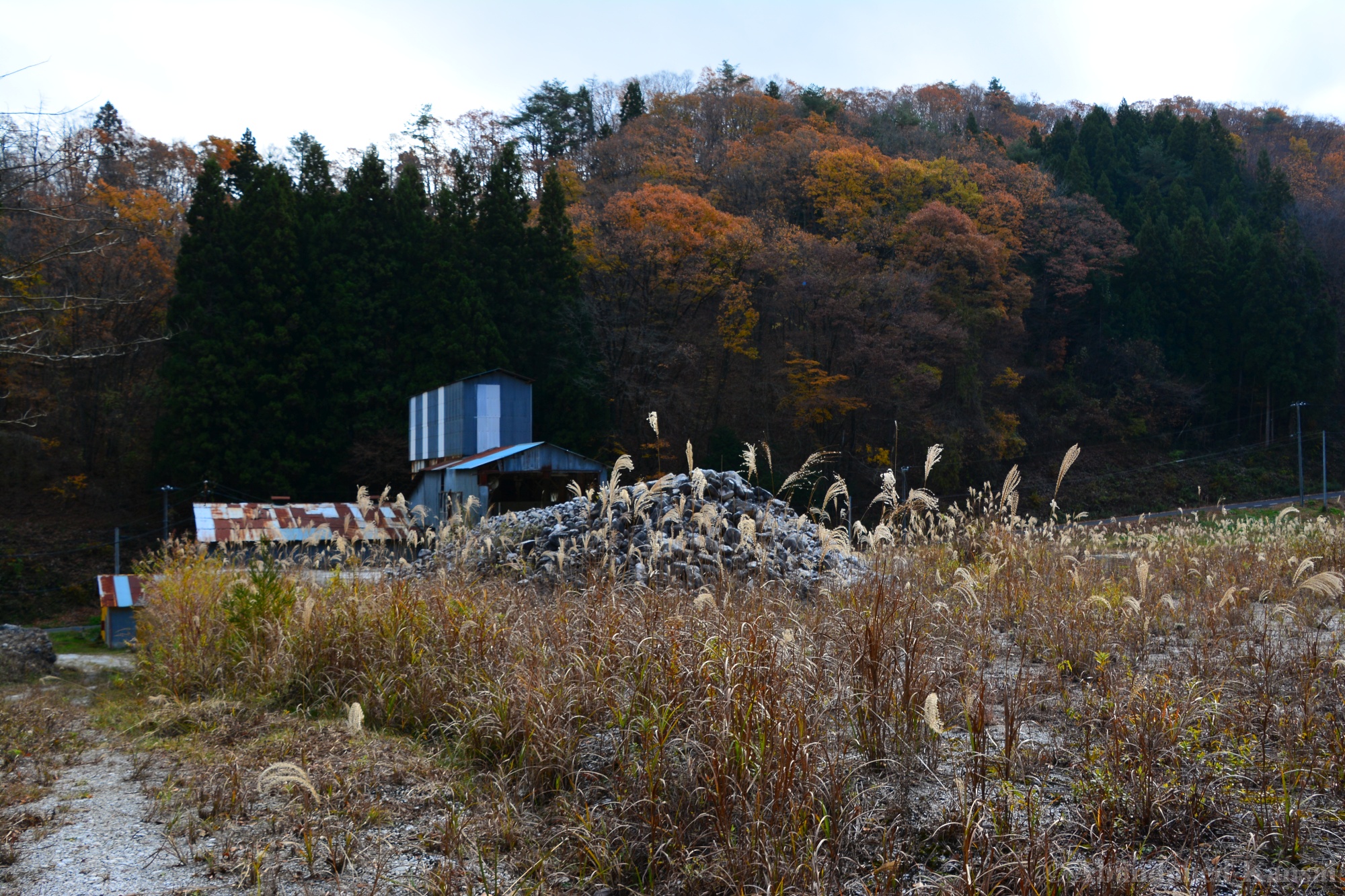
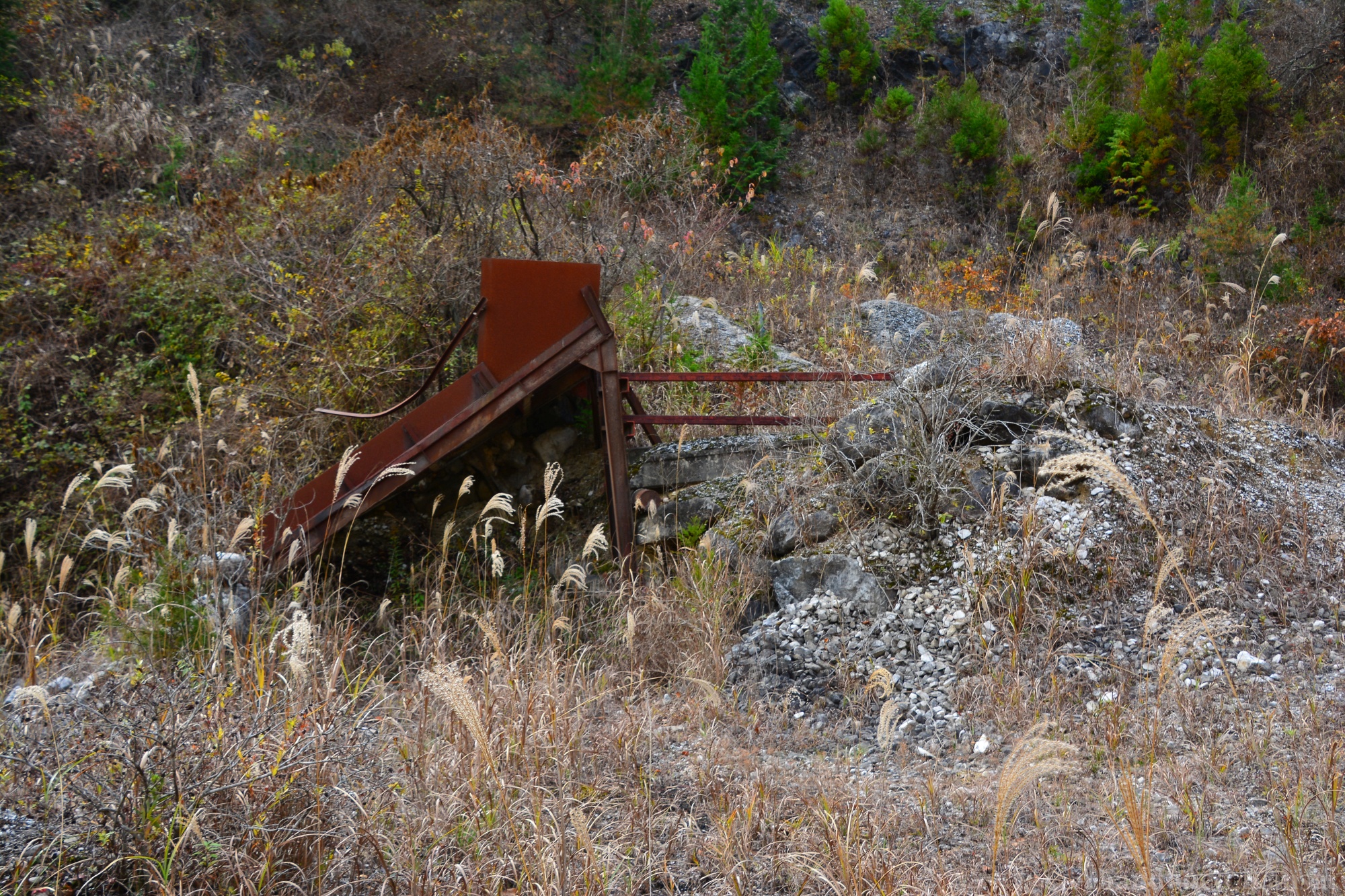
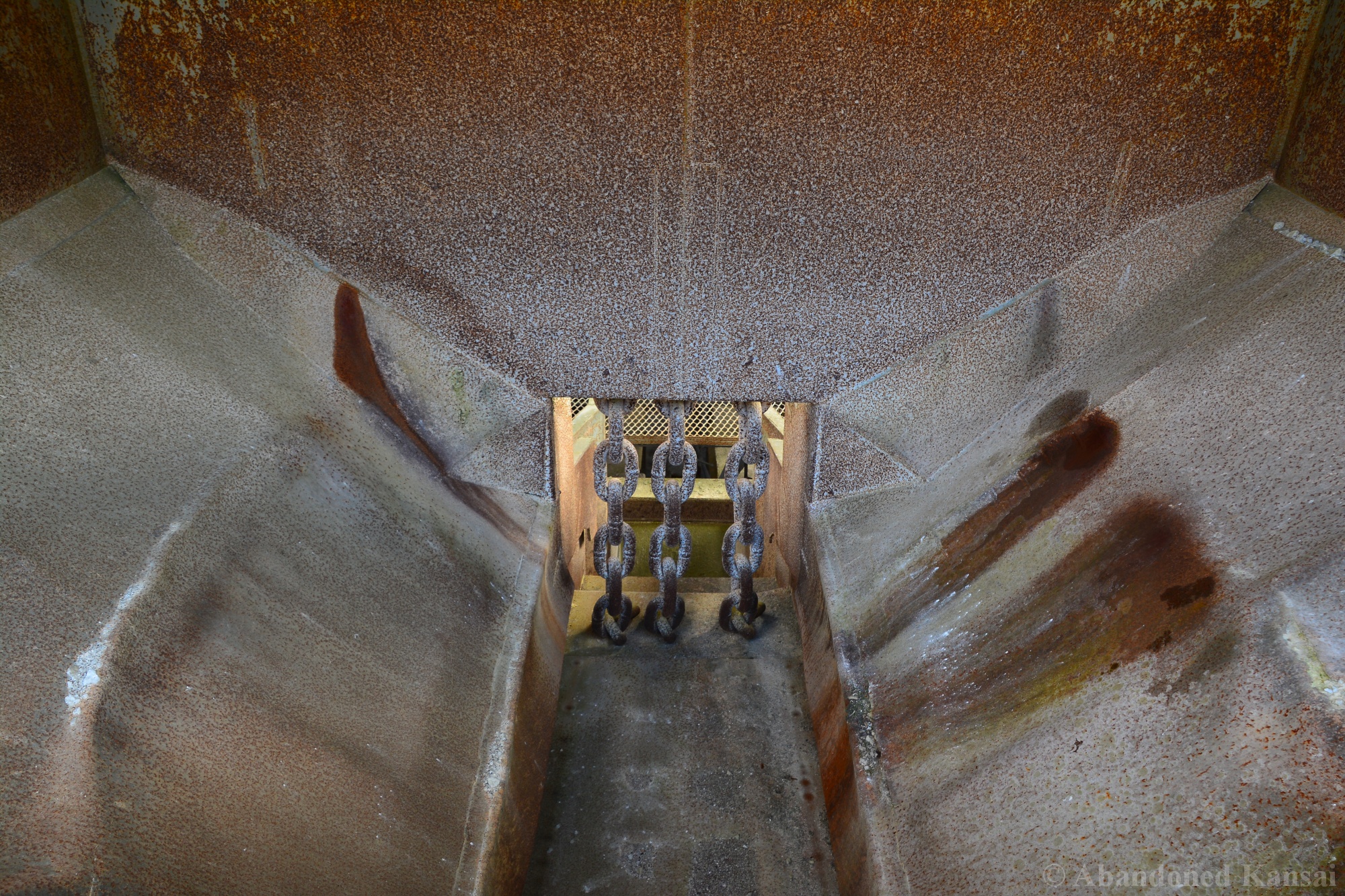
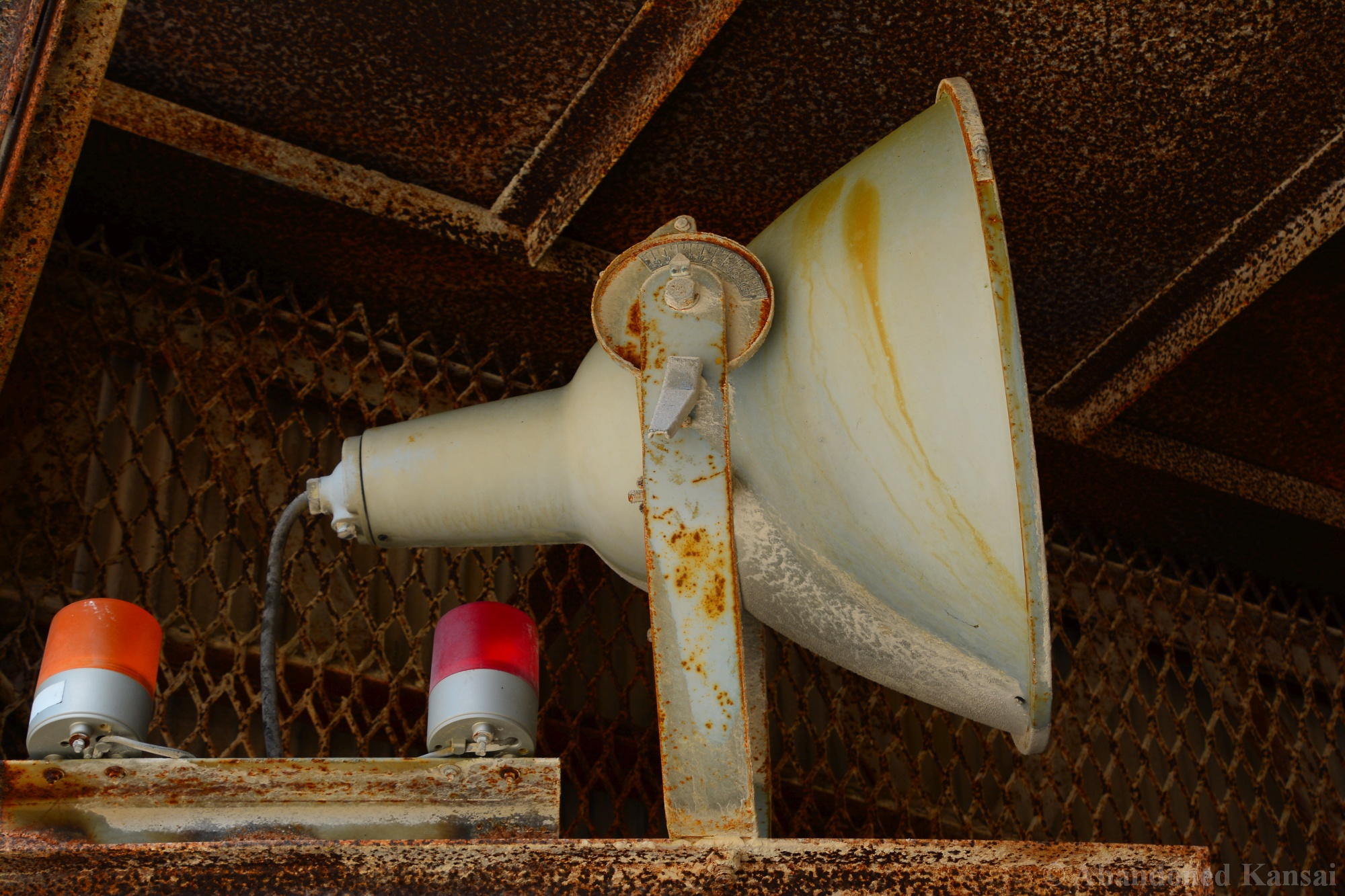
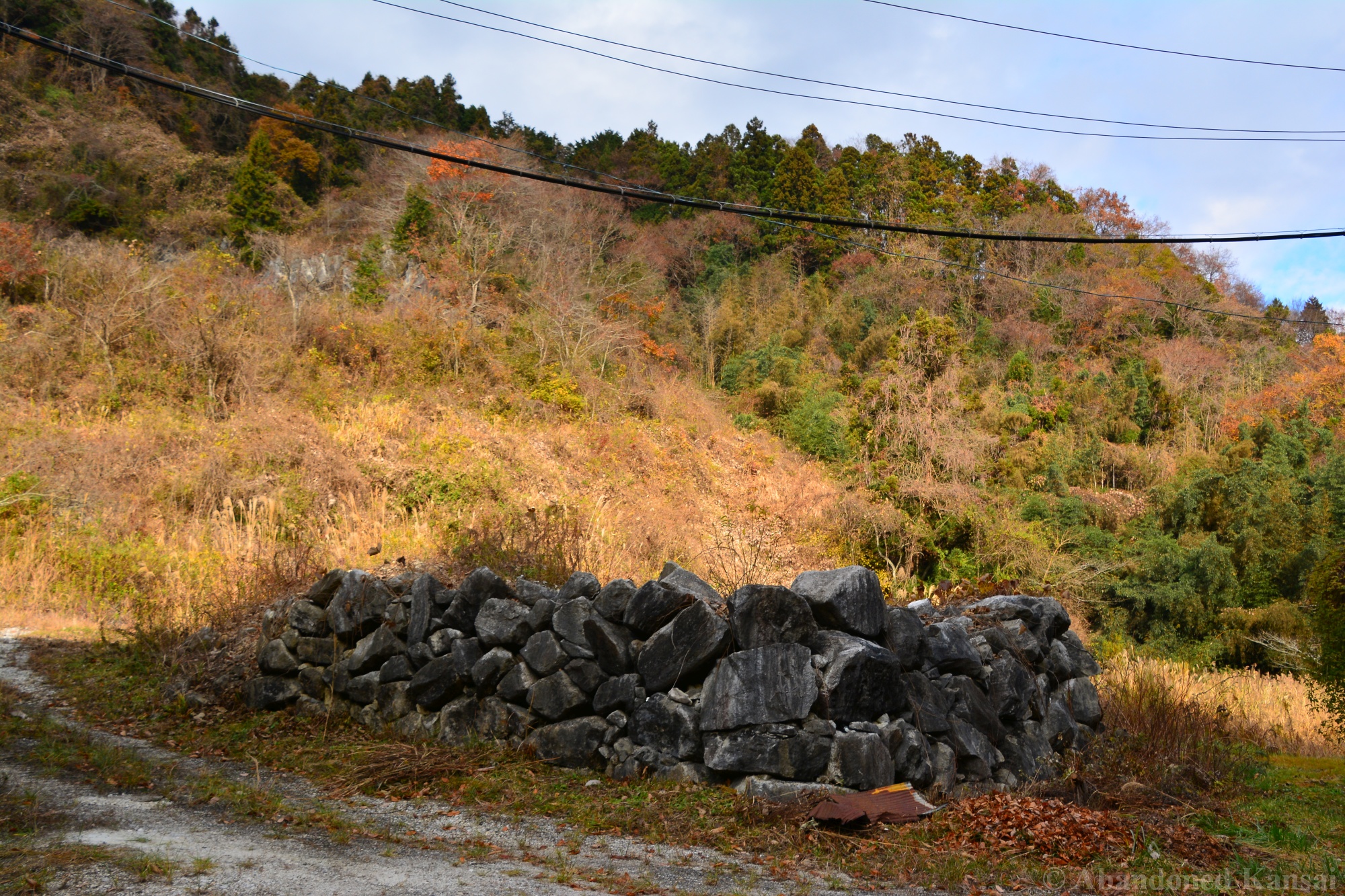
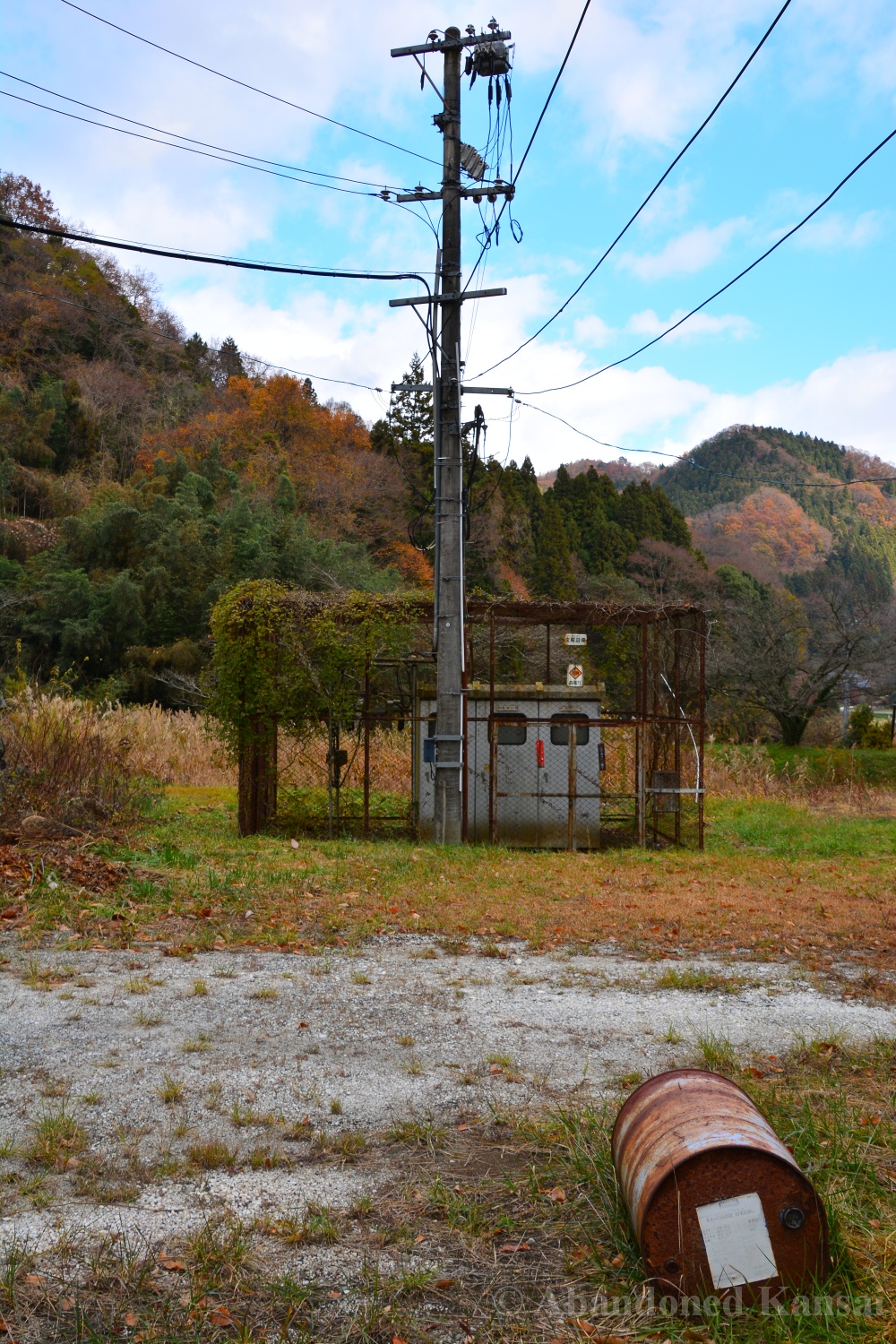
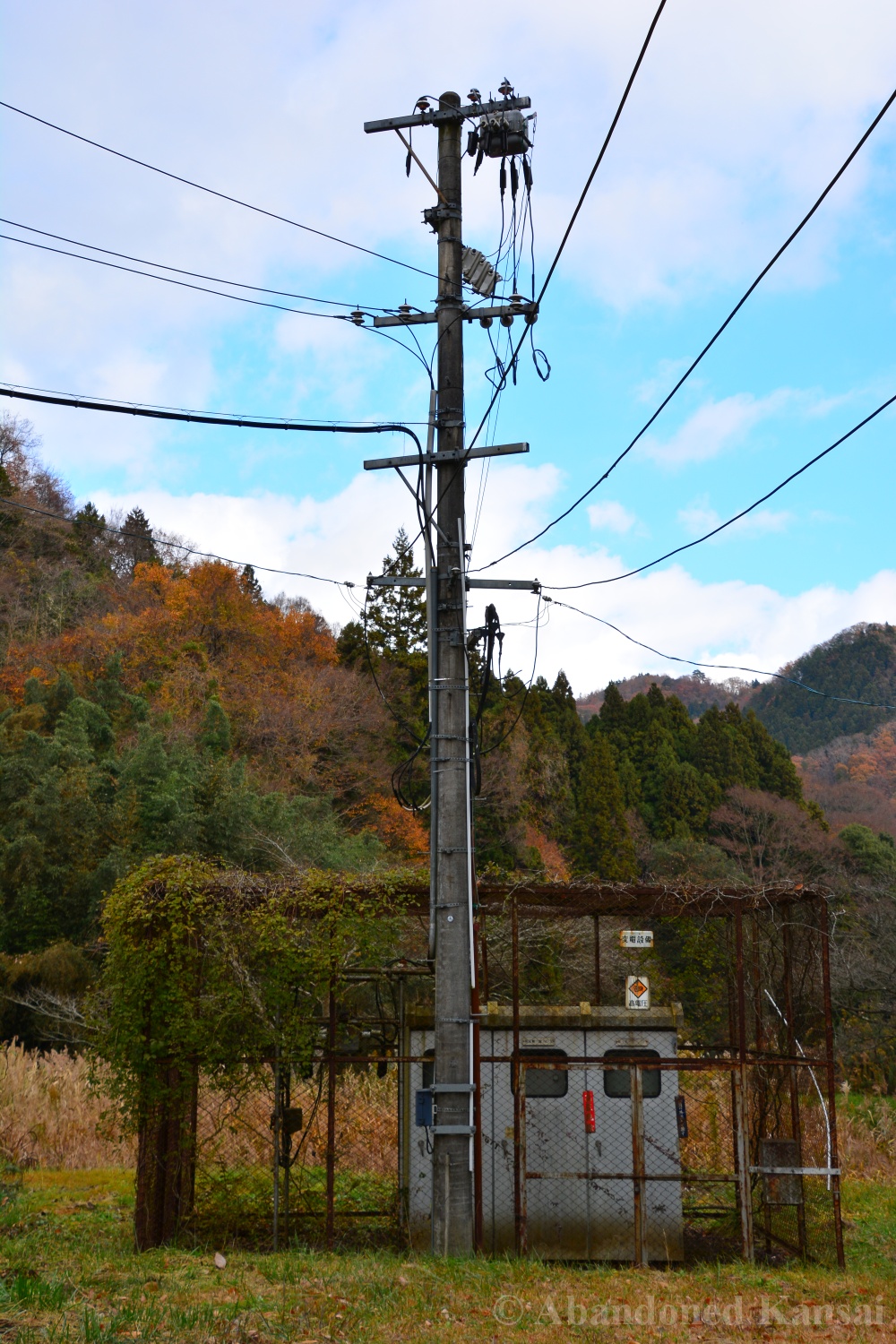
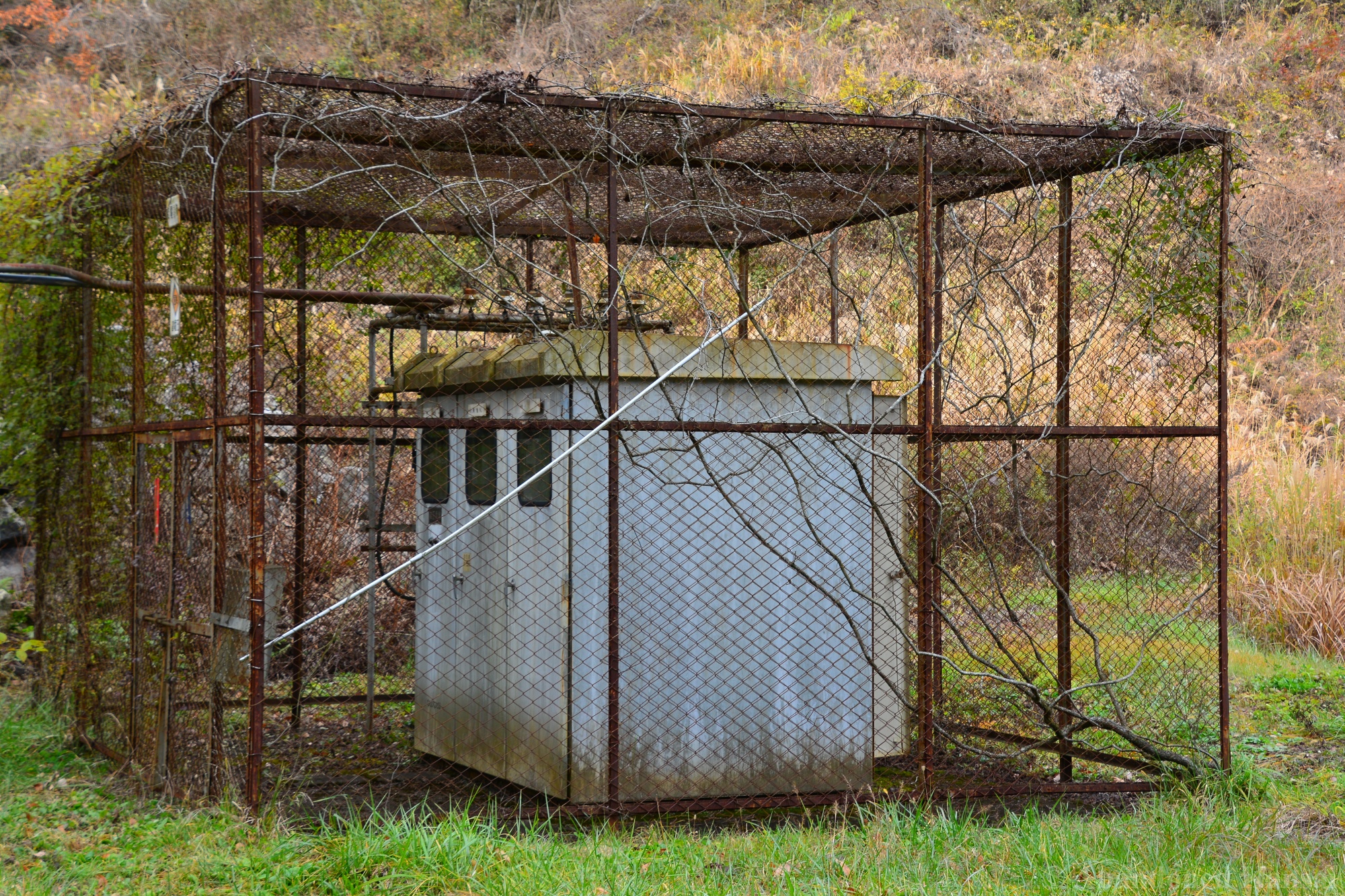
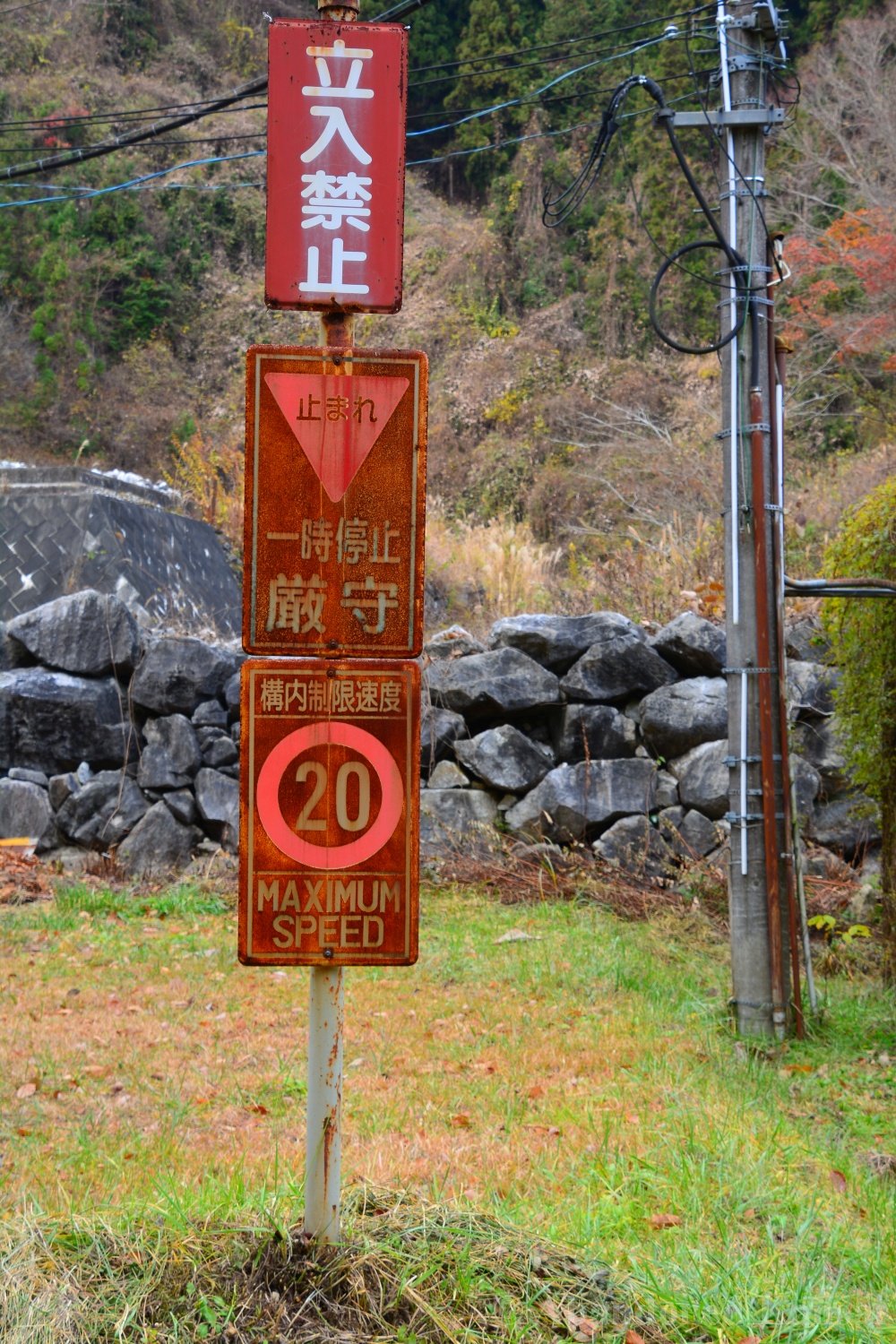
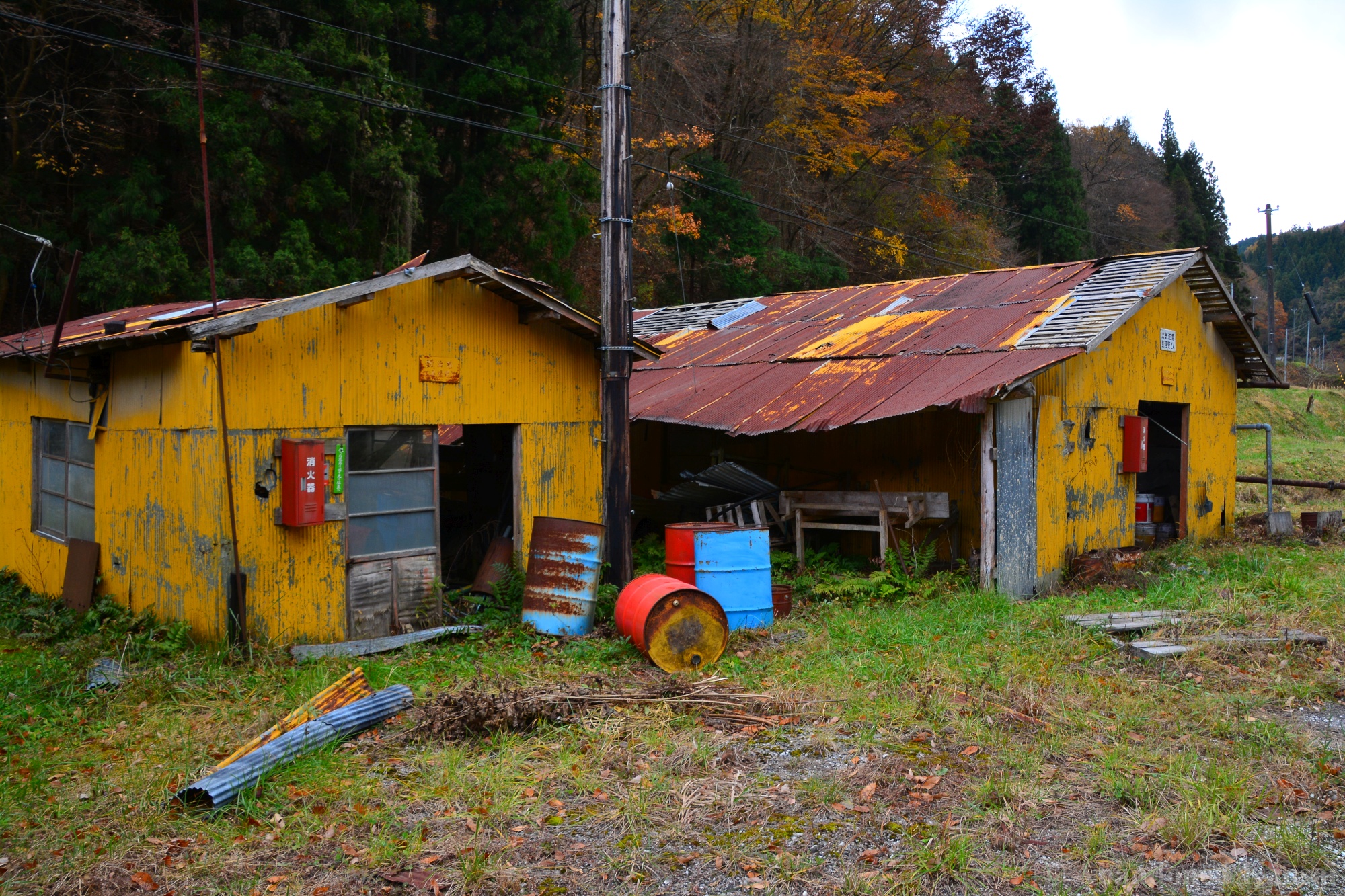
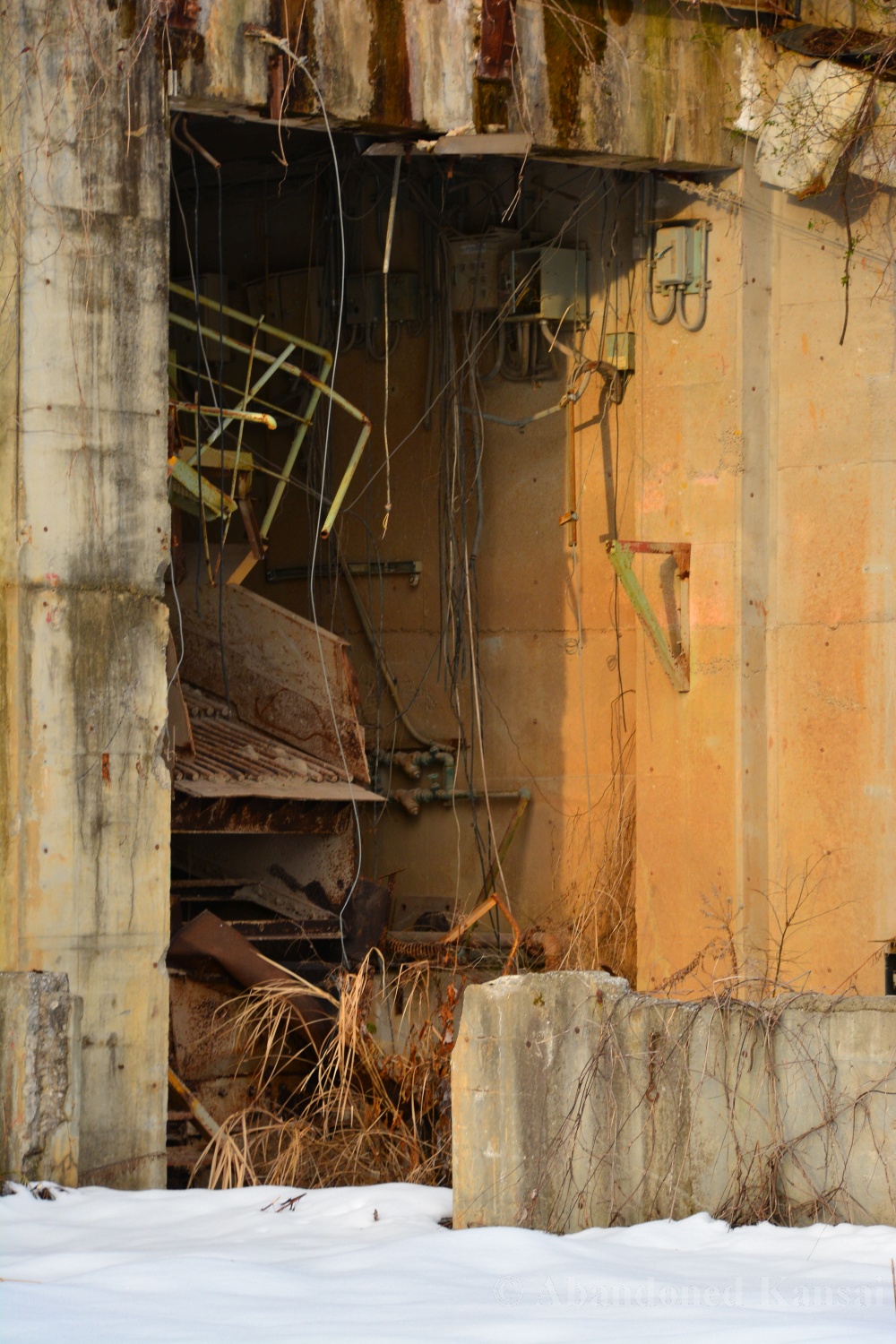
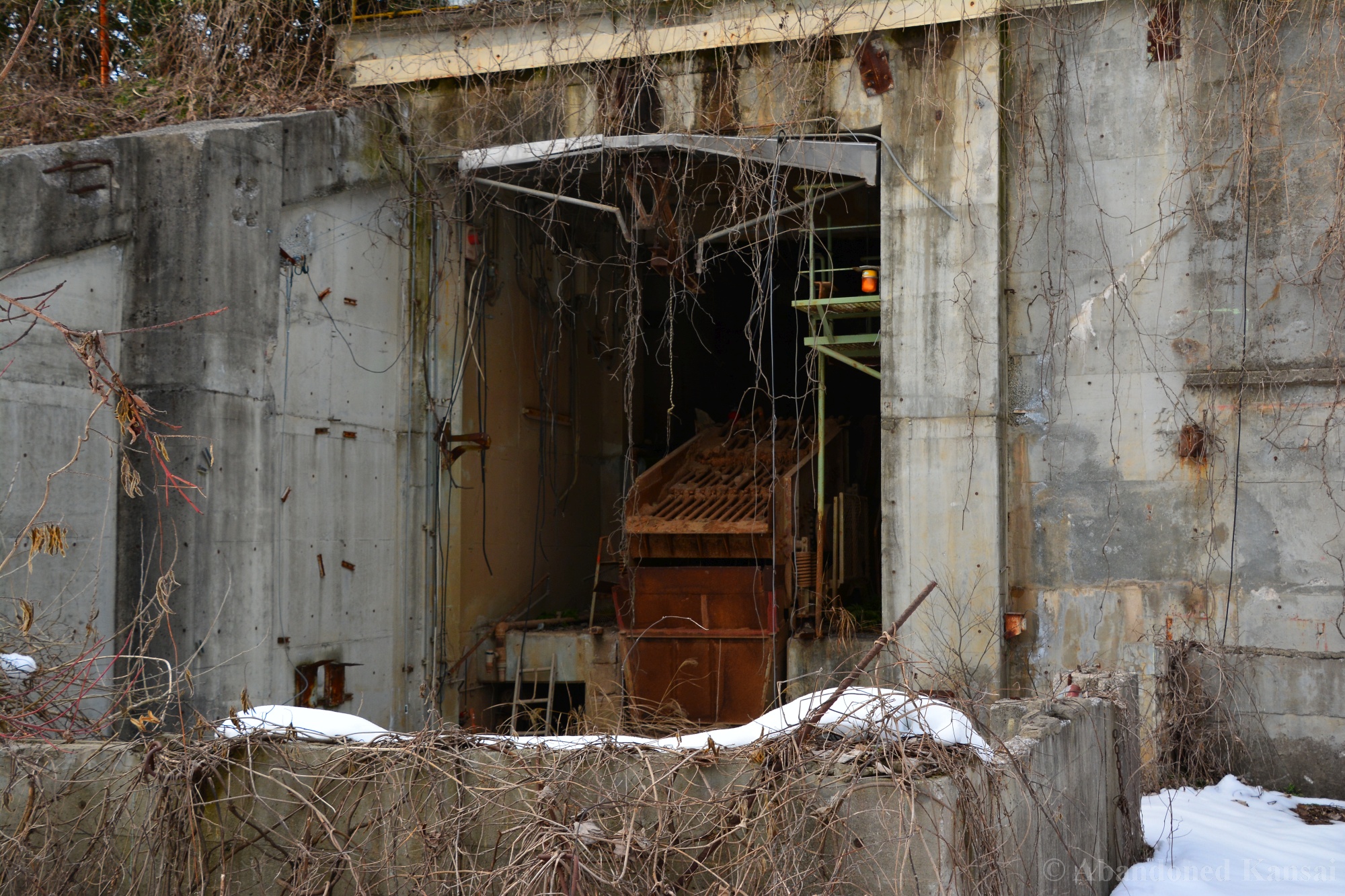
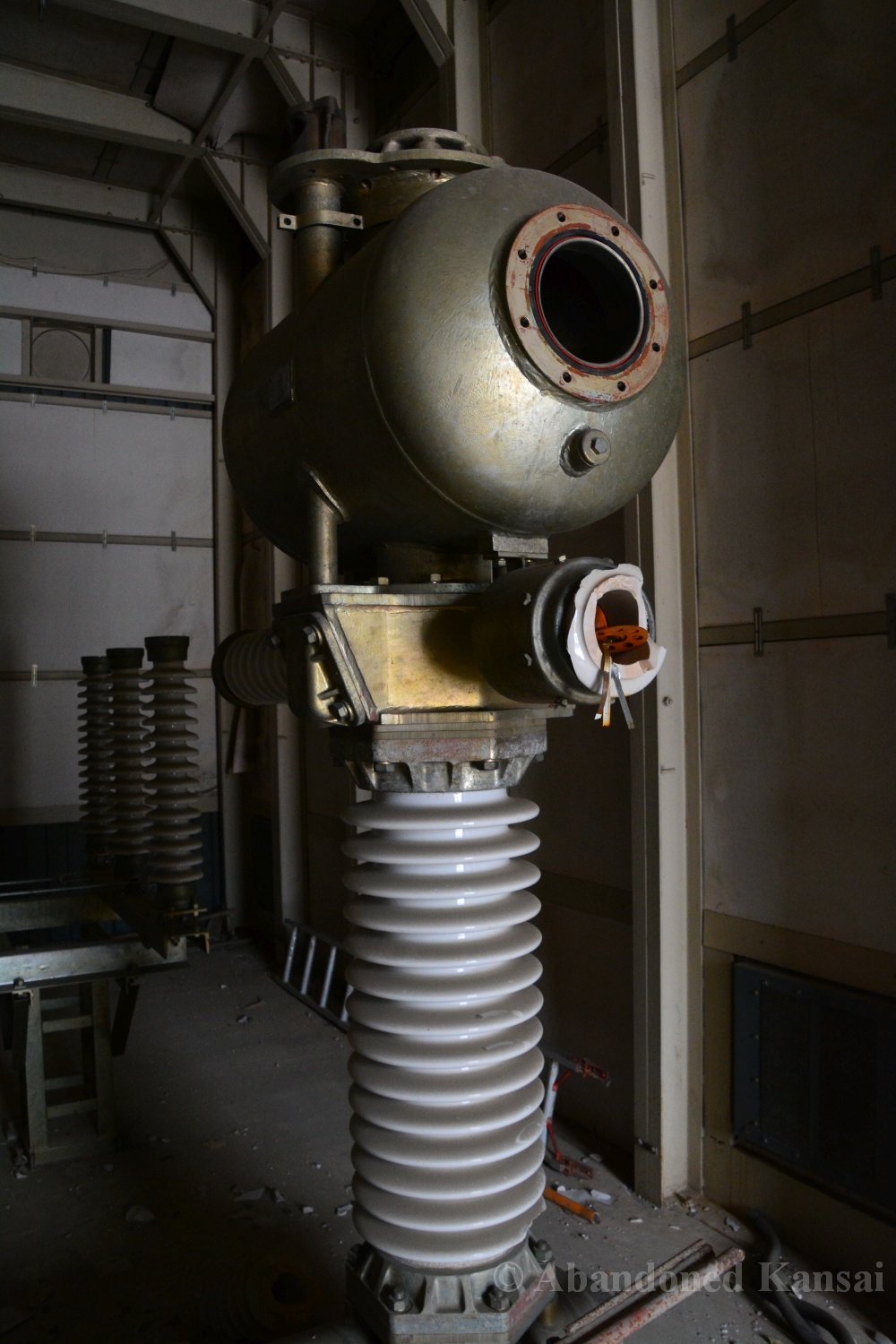
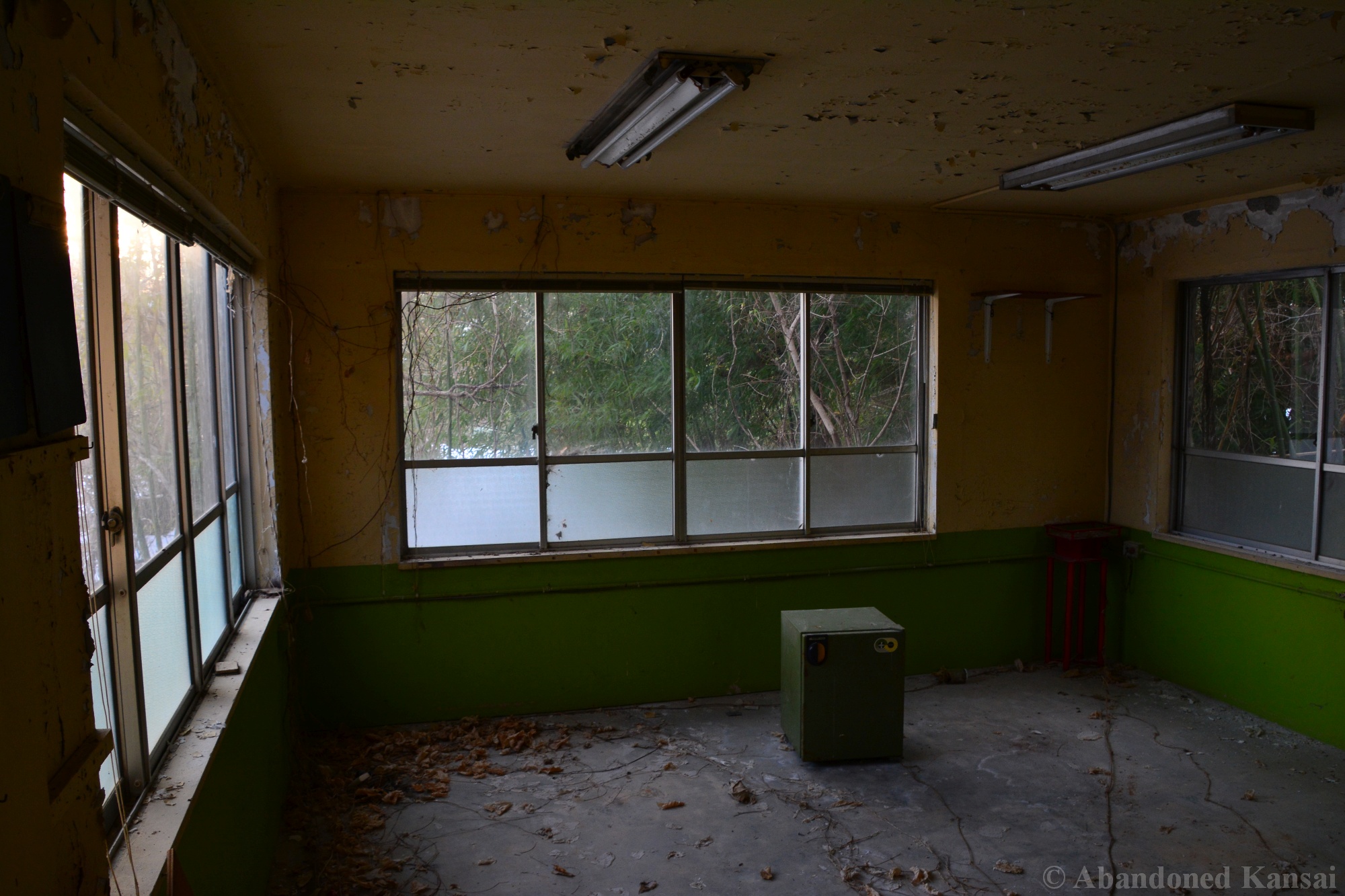
The Tohoku Quarry was a beautiful exploration, but not a very eventful one – we drove up to the place and there were no fences or security, just a rope to prevent vehicles from entering (and dumping large amounts of trash, which is a real problem in the Japanese countryside!). The power supply equipment was protected by a large metal cage, nearby were a couple of huts used for storage and as an office / large break room. A large stone processing plant that was able to load trucks was built into the slope; the quarry itself was at the upper end, of course. It was a beautiful sunny autumn day, and we were exploring mostly outdoors, out of sight and out of sound of civilization – exactly my kind of location. Nothing to worry about, just exploring a naturally decaying industrial site. The place kind of reminded me of the *Takarazuka Macadam Industrial Plant* from almost 10 years ago – a classic site that is not accessible anymore, unfortunately.

(*Like Abandoned Kansai on Facebook* or *follow us on Twitter* if you don’t want to miss the latest articles and exclusive content – and subscribe to the *video channel on Youtube* to receive a message right after a new video is online…)

Read Full Post »
Doing urban exploration in the Democratic Republic of Korea is almost impossible – both in the sense of exploring urban spaces as well as documenting deserted places. When in North Korea your hosts keep you busy, and with about 2.5 to 3 tourists per guide there is always somebody having an eye on. Thanks to hard work and a little bit of luck I was able to do both though… kind of.

If you haven’t yet read my reports about *the May 1st charity run* and *my visit to the Taesongsan Park & Fun Fair, where I had an unsupervised picnic with locals*, I strongly recommend doing so. They are fun stories with some really unique photos – and they kind of cover the exploring urban spaces meaning of urbex.

The more common meaning of exploring and documenting abandoned places is what this article is about. In a poor country pretty much abandoned by the world you have plenty of potentially abandoned places and especially vehicles, like boats and trains. But like everywhere in the world it’s a grey area, and like I’ve said, opportunities are rare… and risky. But more than anything else your mind is busy with not getting yourself and the group into trouble, so the stories and photos of this little piece are a lucky byproduct of my two trips and not the result of strategic planning.

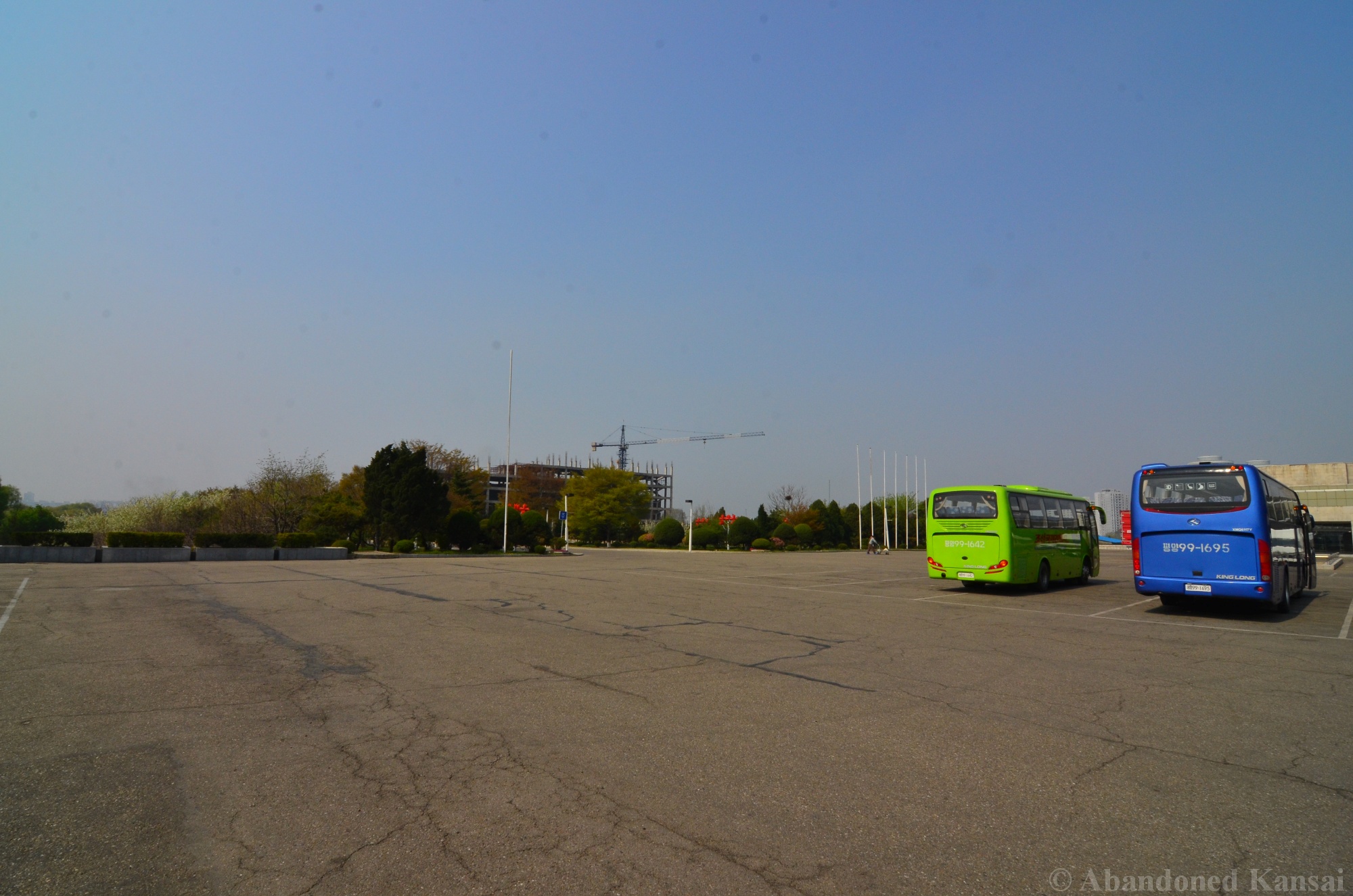
The first location I’ll be talking about is a construction ruin (38.997410, 125.750262) right between two of the most famous places for non-Korean tourist, the *Yanggakdo Hotel* and the Pyongyang International Cinema Hall, home of the Pyongyang International Film Festival. At the time of my visit back in 2013 the place was actually still under construction, at least the heavy machine implied that, so I didn’t pay much attention to what looked like just another hotel – as a result it appears only on two of my photos by chance. You don’t want to get caught by yourself on an active construction site in Japan, let alone in North Korea…
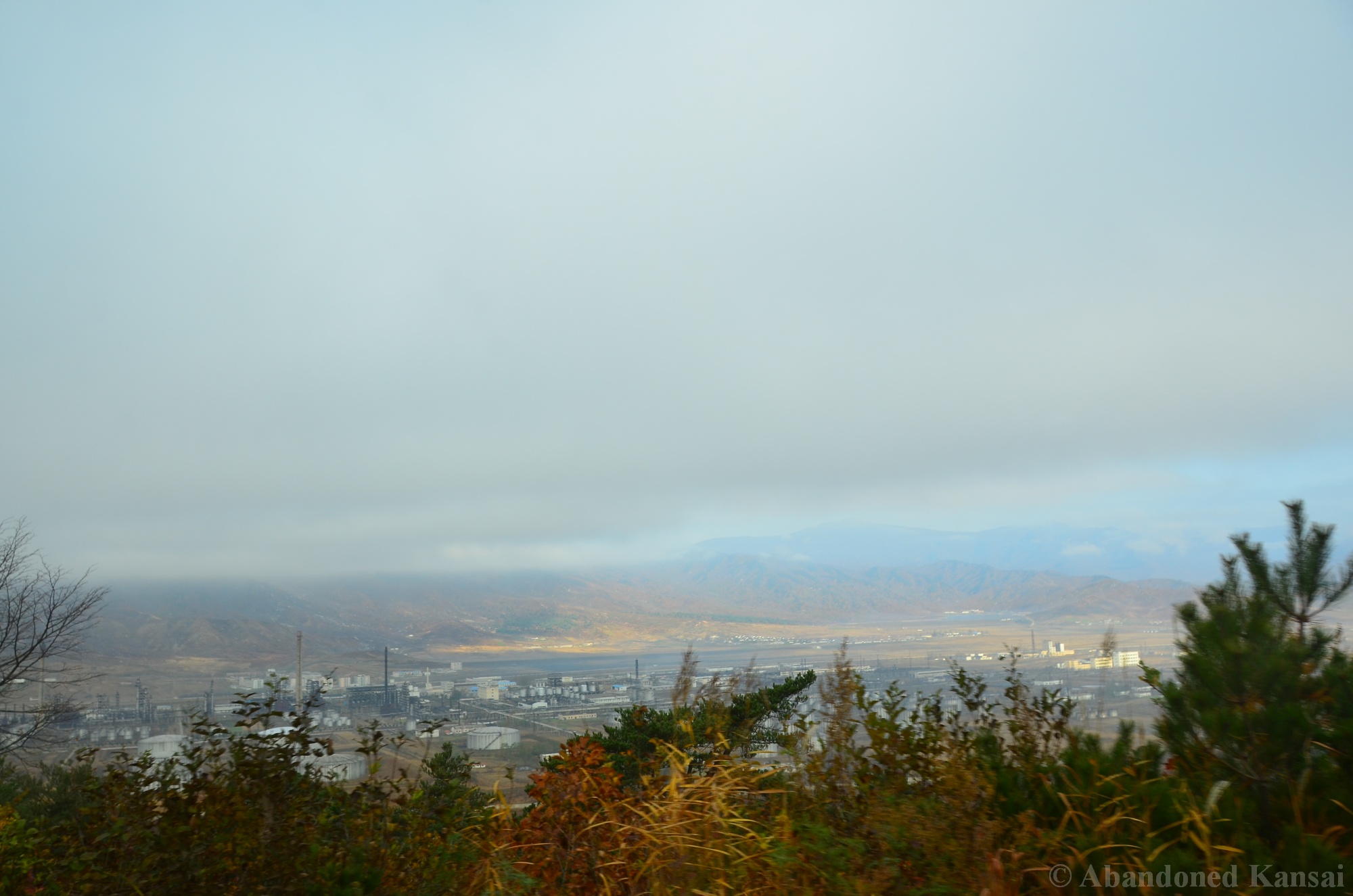
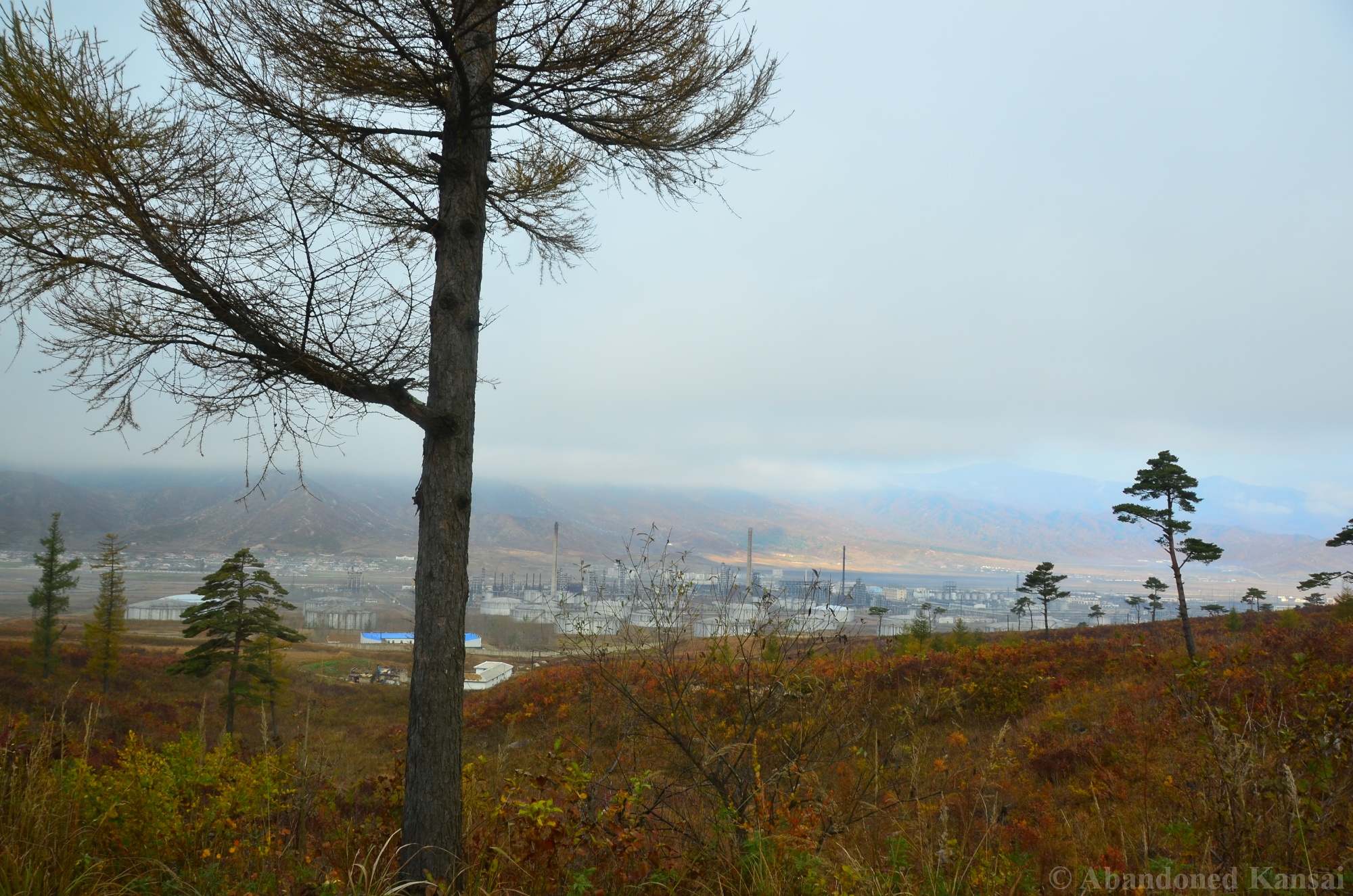
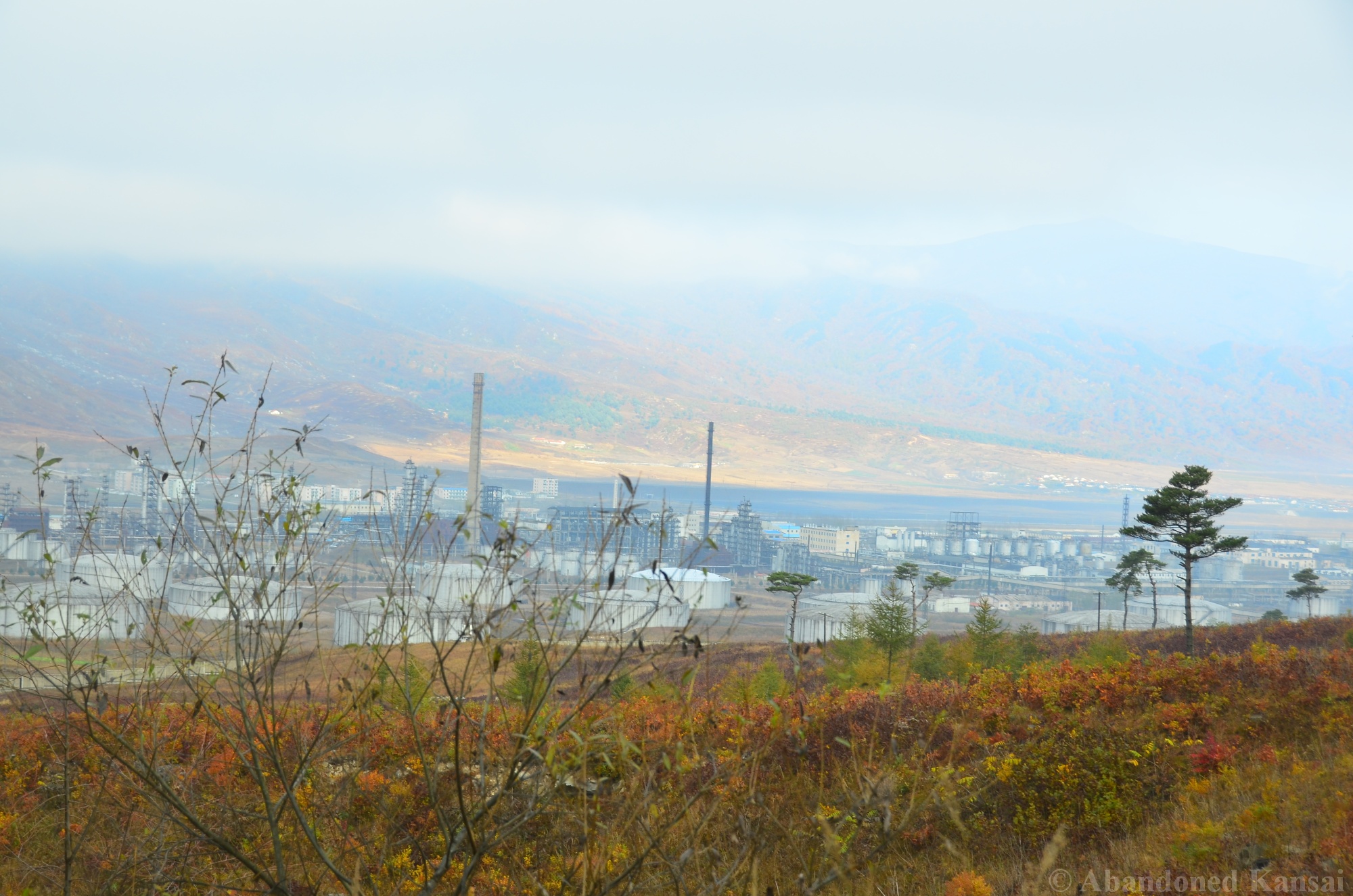
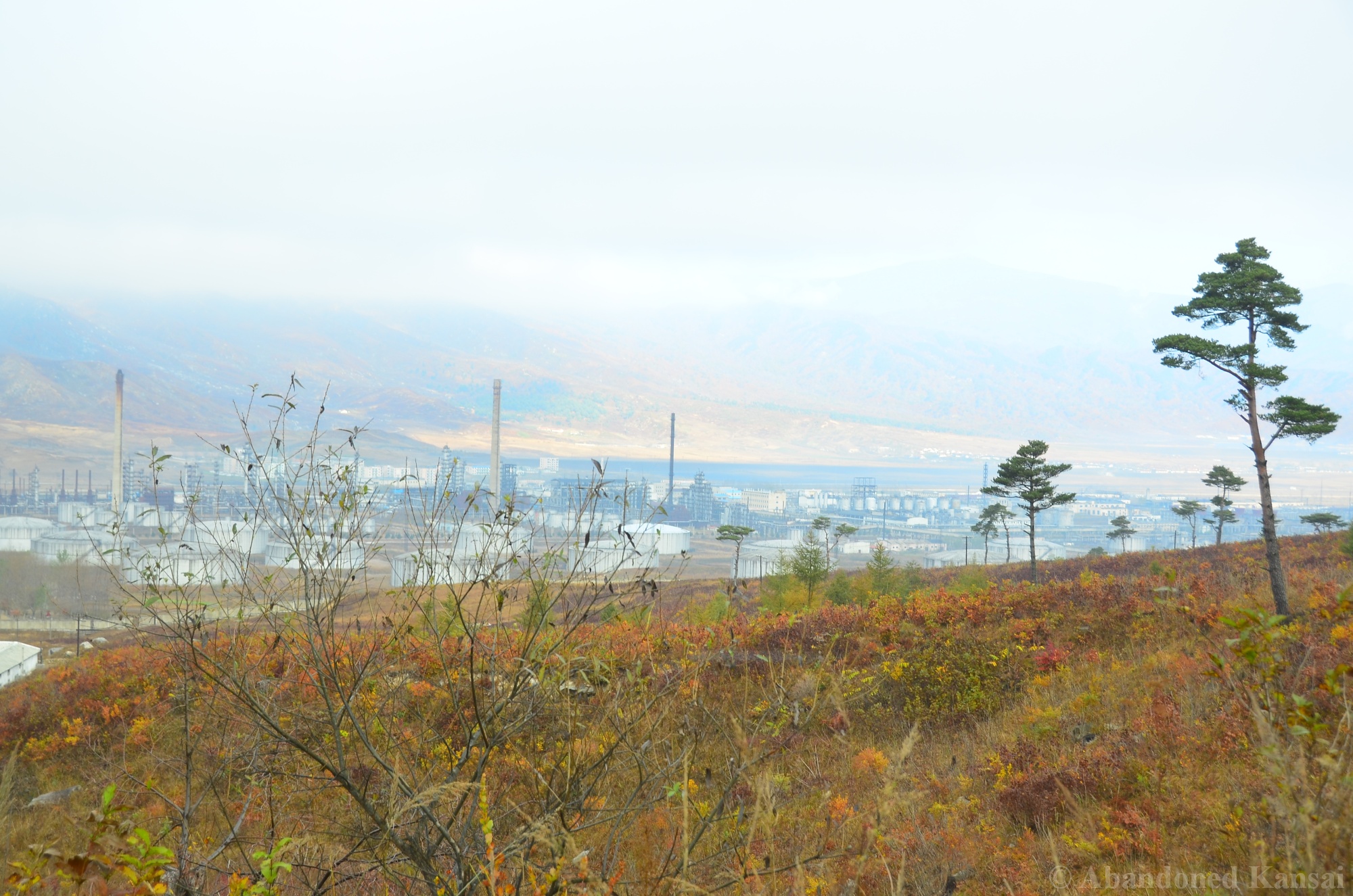
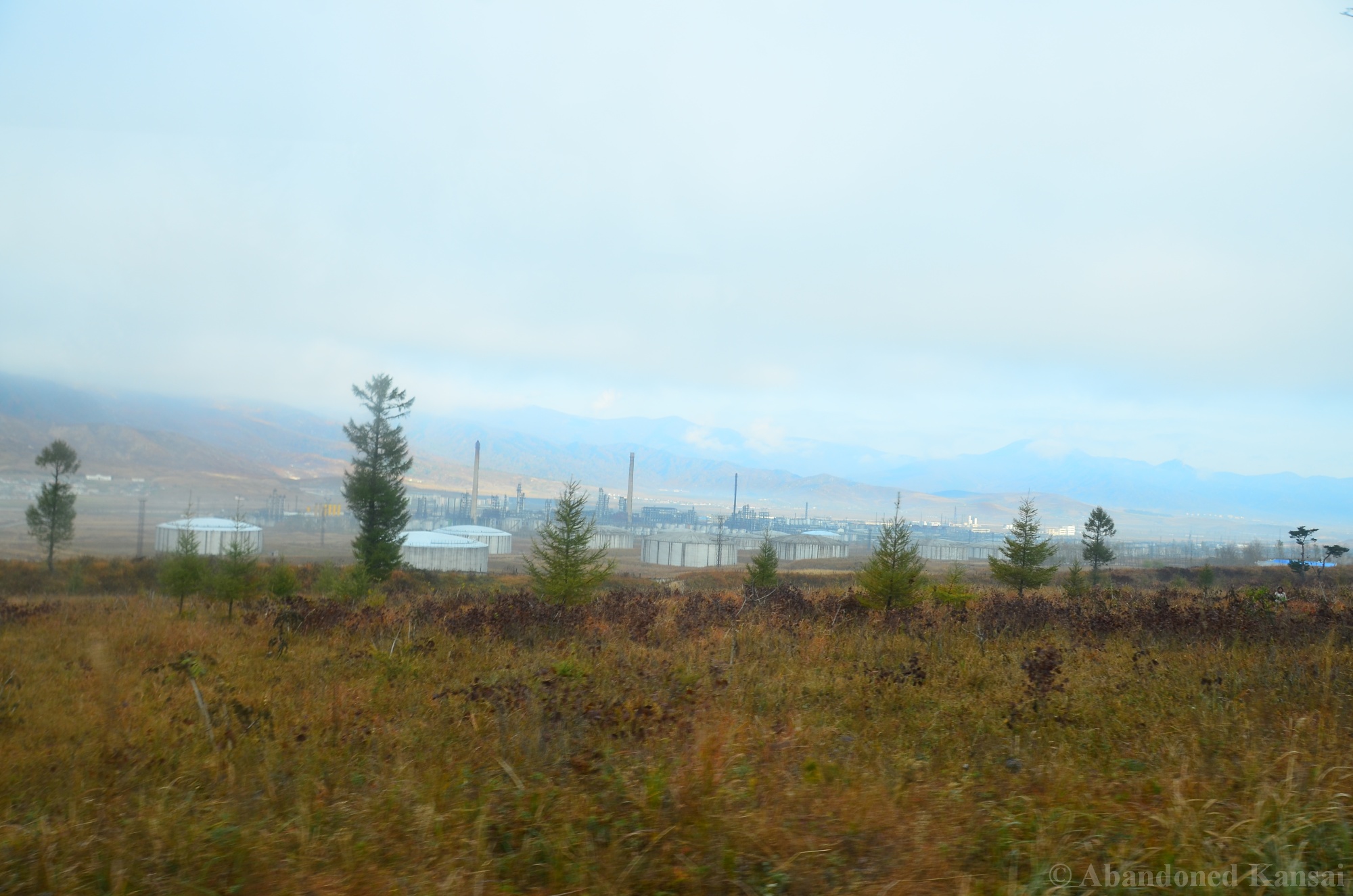
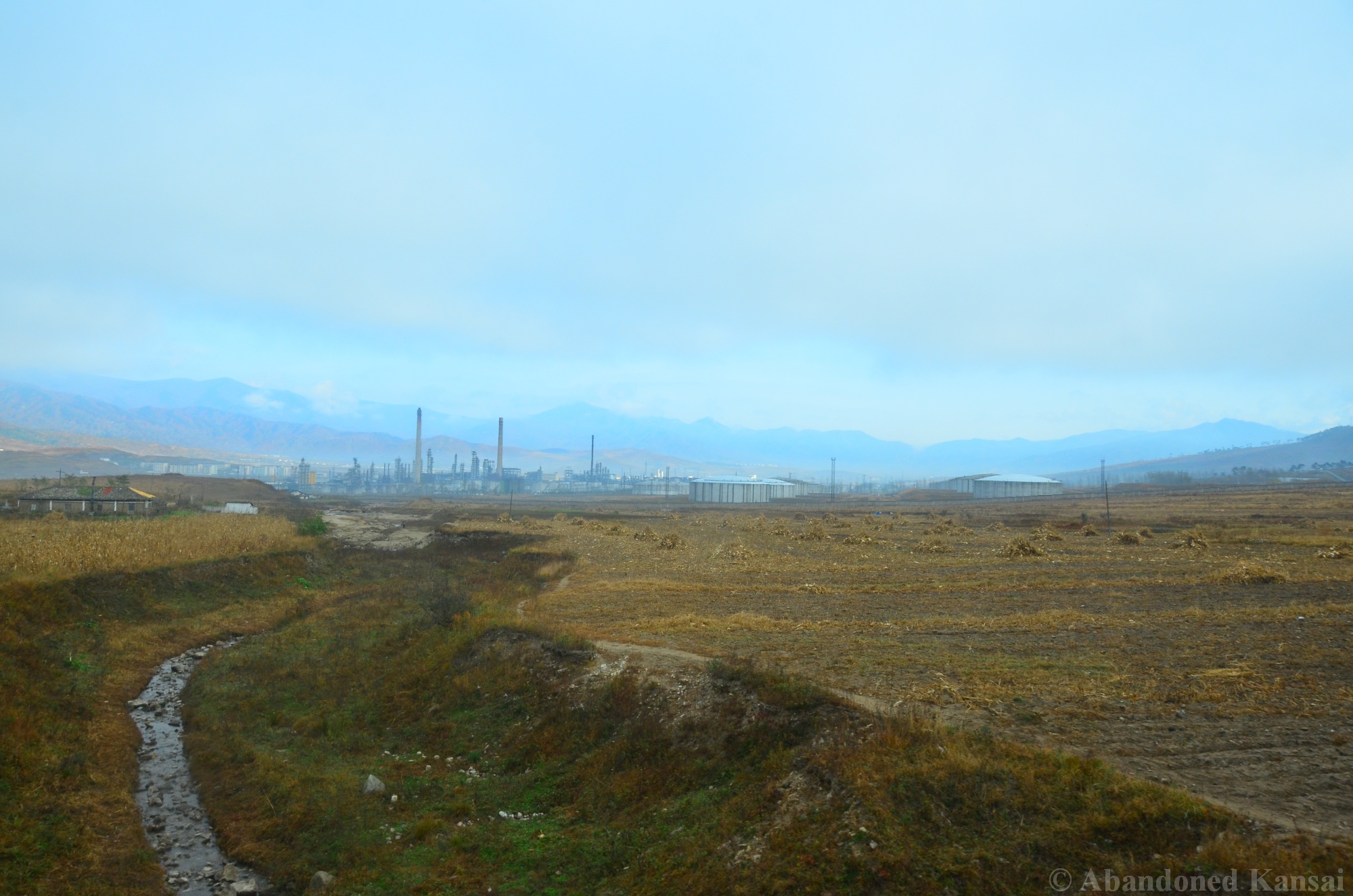
The next couple of photos are of the Seungri Chemical Complex Refinery (승리화학연합기업소; 42.313073, 130.351401), an oil refinery, as you probably guessed correctly when reading the name. I don’t know much about the facility and I had to take the pictures while on a bumpy bus ride, but there are two things worth mentioning: First of all, nothing in North Korea is really abandoned, especially not a large industrial complex like that! (*And let’s not forget about the Komusan Concrete Factory*, built in 1936 during the Japanese occupation and still the biggest concrete factory in the country!) At best things look abandoned, at worst they are really not used anymore. Like the Seungri Refinery, which was definitely closed in 2013 and apparently didn’t open again, despite the fact that back then they had so much hope for the special economic zone Rason… So as soon as the regime vanishes or allows free travel in North Korea, this should be one of the first locations to visit for urban explorers, because even from a distance it looked spectacular in a post-apocalyptic way.
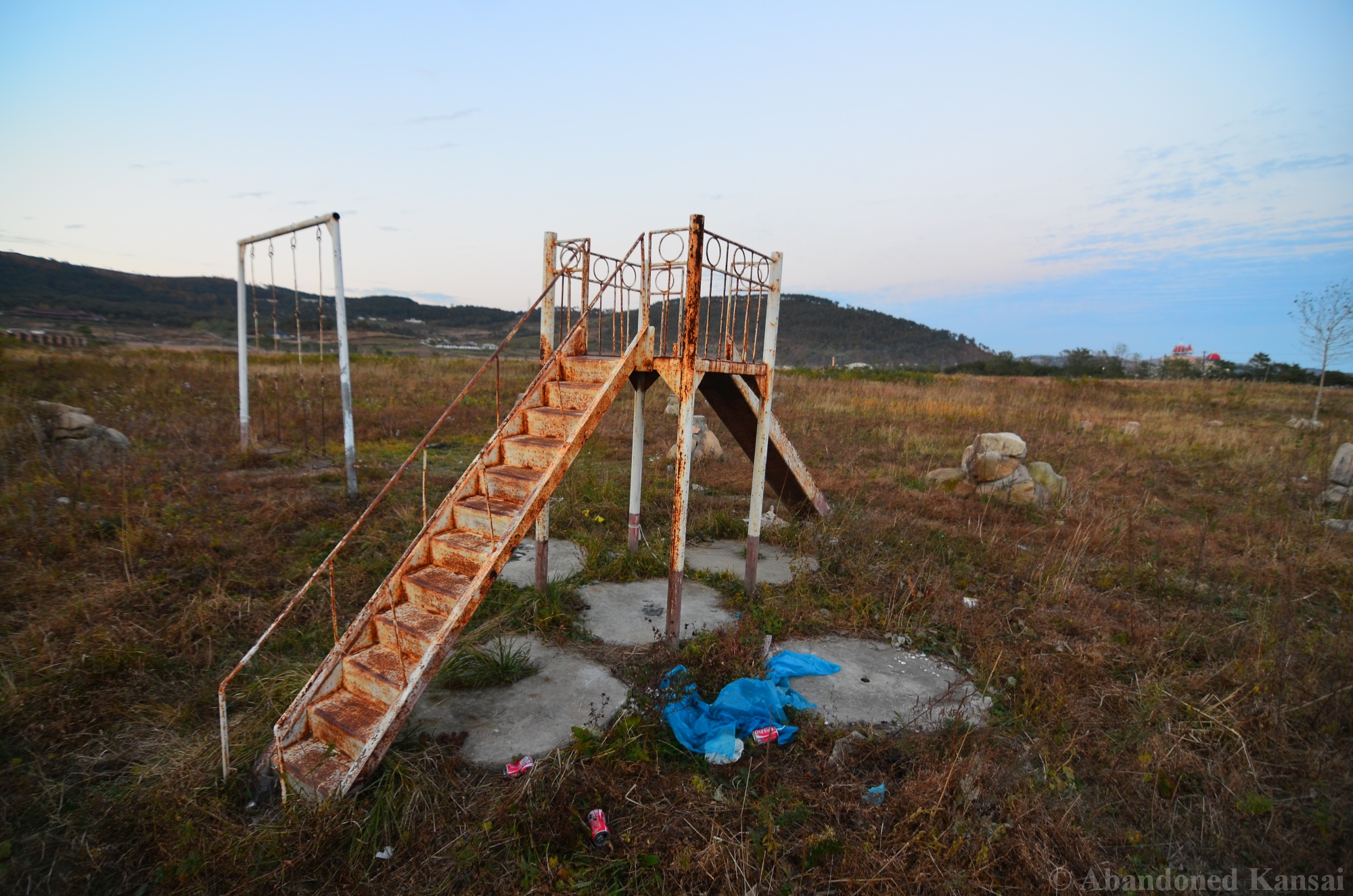
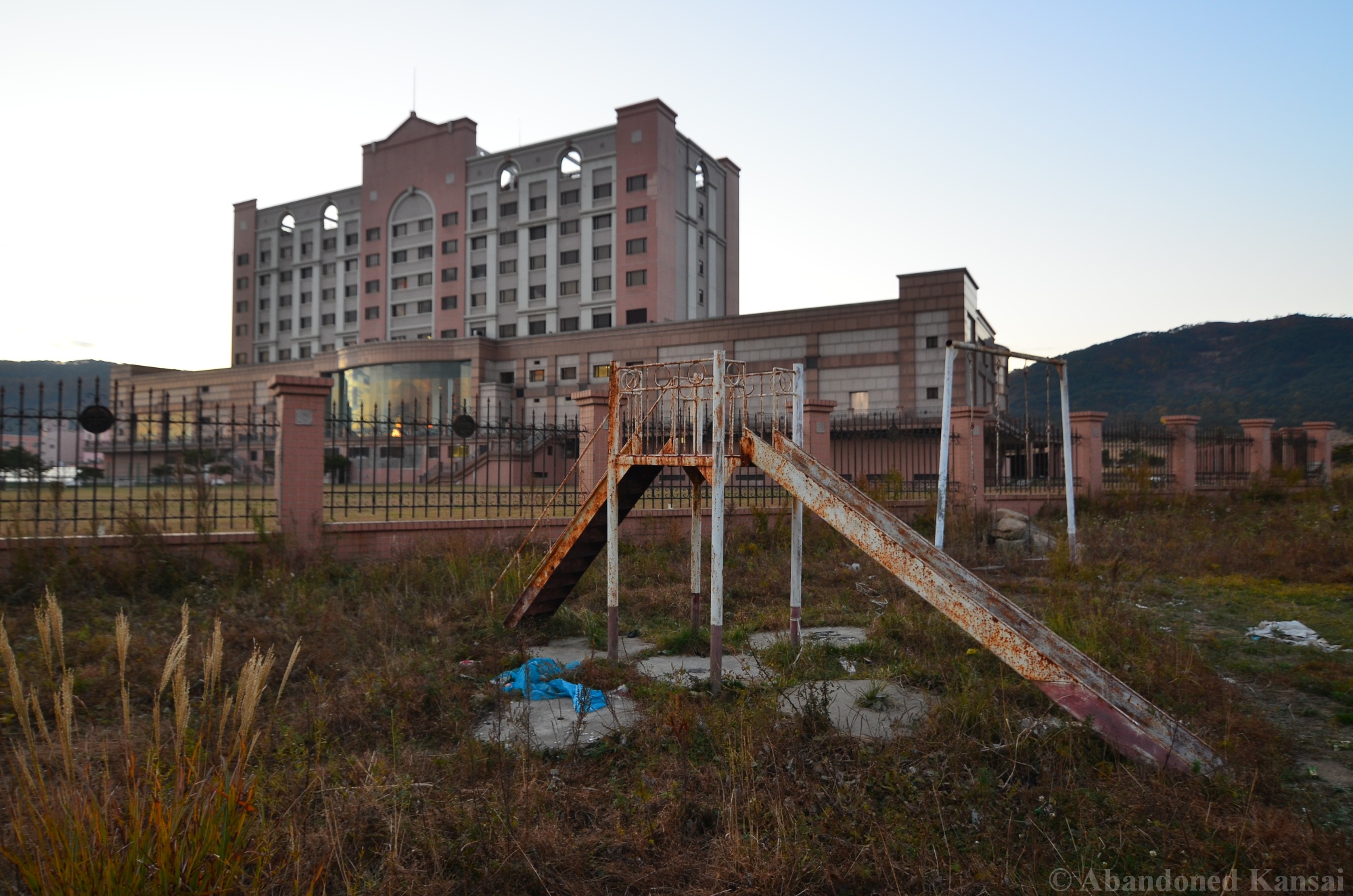
Which brings us to the third and last location, the smallest one, but one with a few close-ups thanks to some of my co-travelers. At our last evening of the trip we were taken to the Emperor Hotel, the DPRK’s only five star hotel with a huge casino. I was bored quickly and headed outside with permission from Mr. Kim, one of the guardguides, but soon was tracked down by Mr. Pak a.k.a. Robocop. *A few minutes later the rest of the group showed up and we headed down to the beach to enjoy the nice sunset – when all of a sudden and without talking to anybody two or three of my fellow travelers bolted down the beach along Changjin Bay towards Pipha Island.* Much to the confusion of all the guideguards, as you can imagine! Two decided to chase after them, one stayed behind – fortunately distracted by the events and the rest of the group, so I snuck away a few dozen meters to take some quick photos of the more or less truly abandoned hotel playground (42.300880, 130.390566), now outside the hotel fence. By no means spectacular photos, but probably the closest to real urban exploration anybody has ever done in North Korea…
*If you like to find out more about my two trips to North Korea please click here!*

(*Like Abandoned Kansai on Facebook* or *follow us on Twitter* if you don’t want to miss the latest articles and exclusive content – and subscribe to the *video channel on Youtube* to receive a message right after a new video is online…)

Read Full Post »
I’ve explored and documented hundreds of abandoned places in Japan, solo and with friends, over the course of more than 10 years – this is this only one that gave me nightmares! (And yes, I mean actual nightmares… for months!)
Japan is a large country with all kinds of weather, from +40°C humid summers to -30°C dry winters with several meters of snow, so depending on where you are when, some abandoned places are only accessible for a few months a year. The Biohazard Facility is accessible all year long, in theory, nevertheless we went there in autumn “because of the unbearable smell in summer”, as a friend told me. The smell? Gosh, how bad could it be? “I brought masks to wear for all of us!” Now, this was about three and a half years ago, at a time when the rest of the world looked with amusement and confusion at those quirky Asians for sometimes wearing masks despite not being in the medical profession – and while used to seeing them being worn, I wasn’t eager to wear one myself, especially while wielding photography equipment for hours in the still hot and humid early autumn weather; sure, technically it wasn’t summer anymore by Japanese standards, but it still kinda was by German standards. At the same time I didn’t want to be rude, so I grabbed one, said Thank You, and put it on – shut up and deal with it, like you do in Japan. My first mask ever and the only one till March 2020, when wearing them became kinda mandatory for obvious reasons. (And phew, was I grateful to have it about half an hour later – lifting it to wipe off some sweat made a big difference as the stench became barely bearable instantly!)

Why? What? Biohazard?!
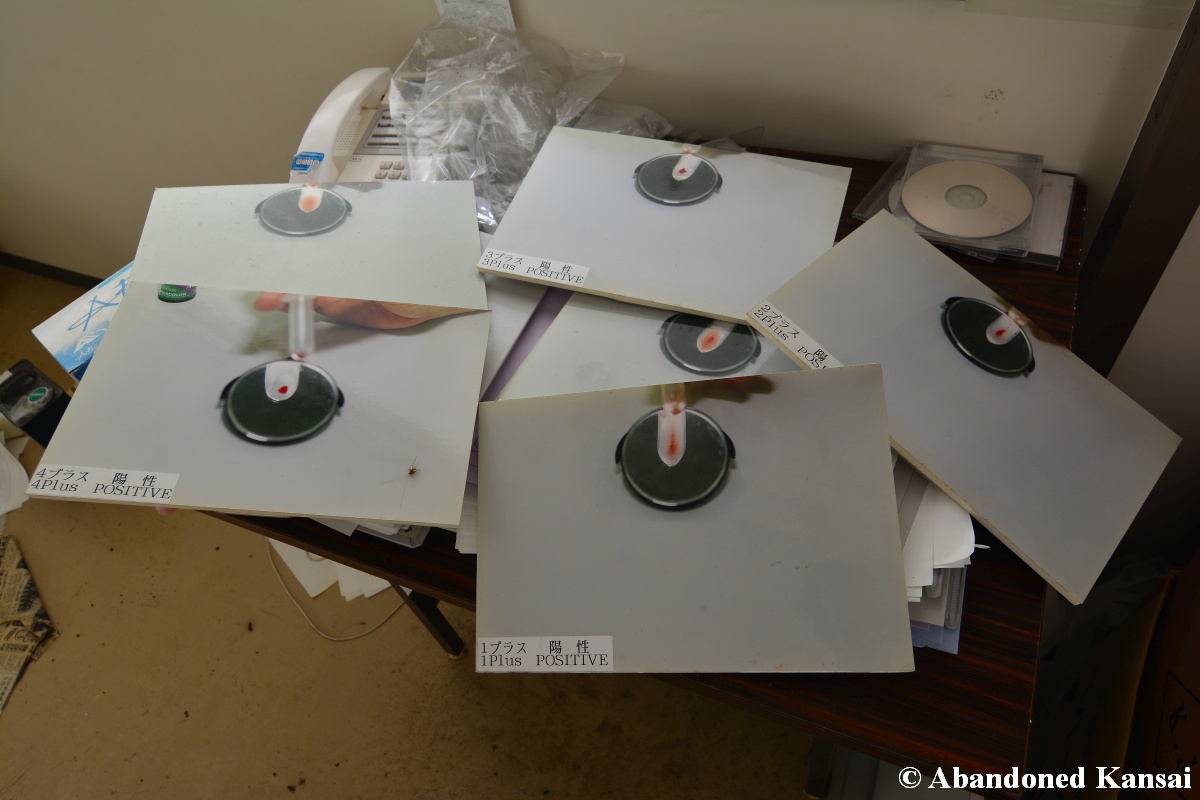
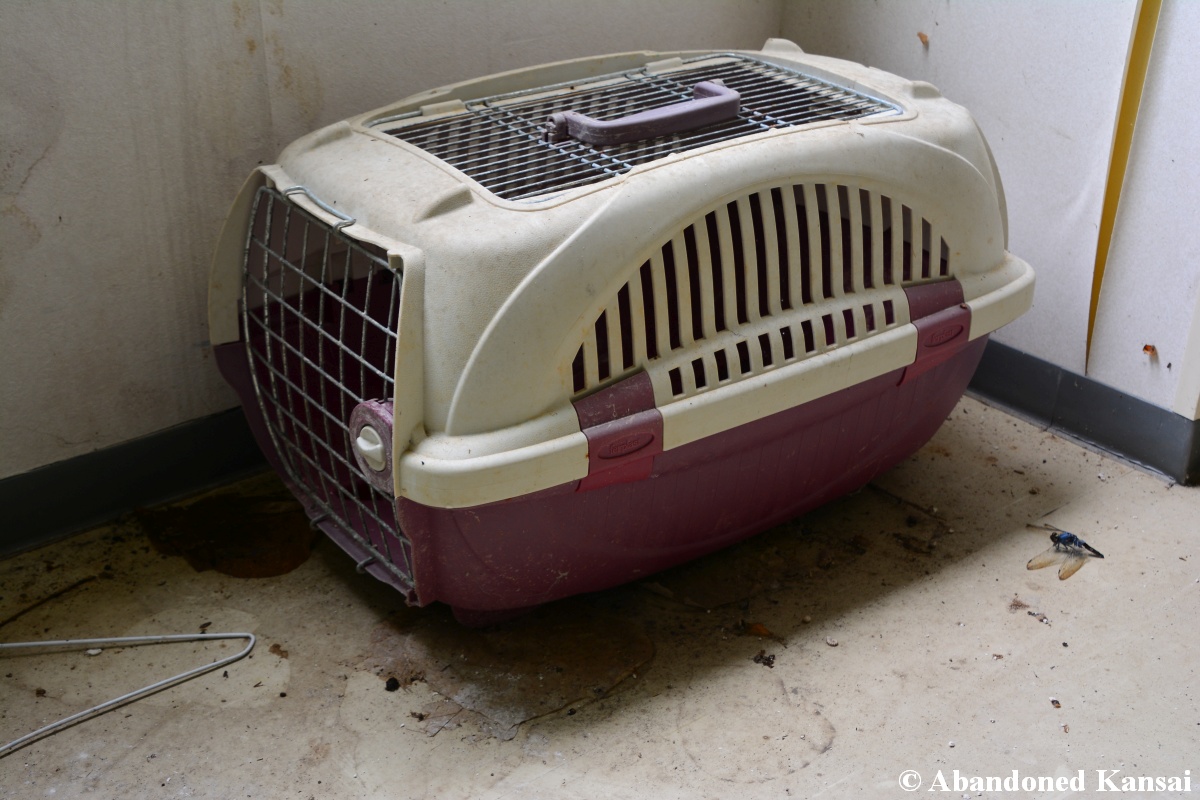
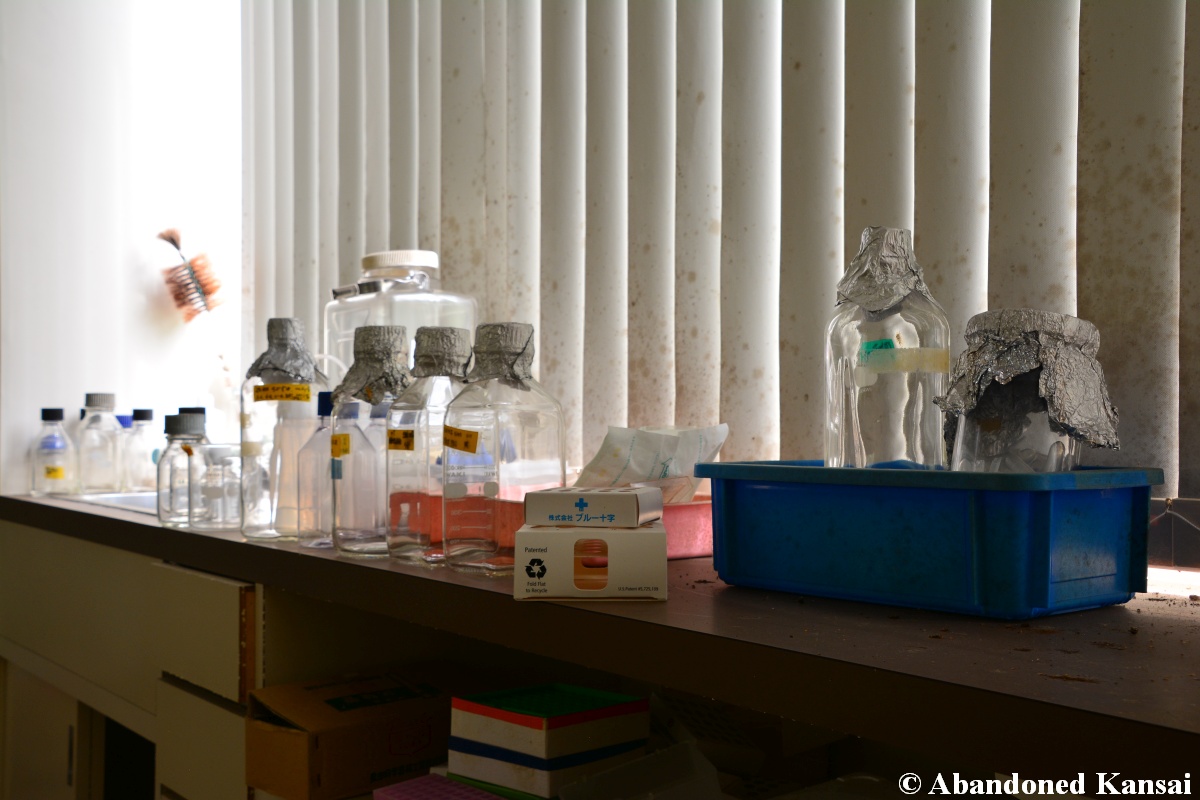
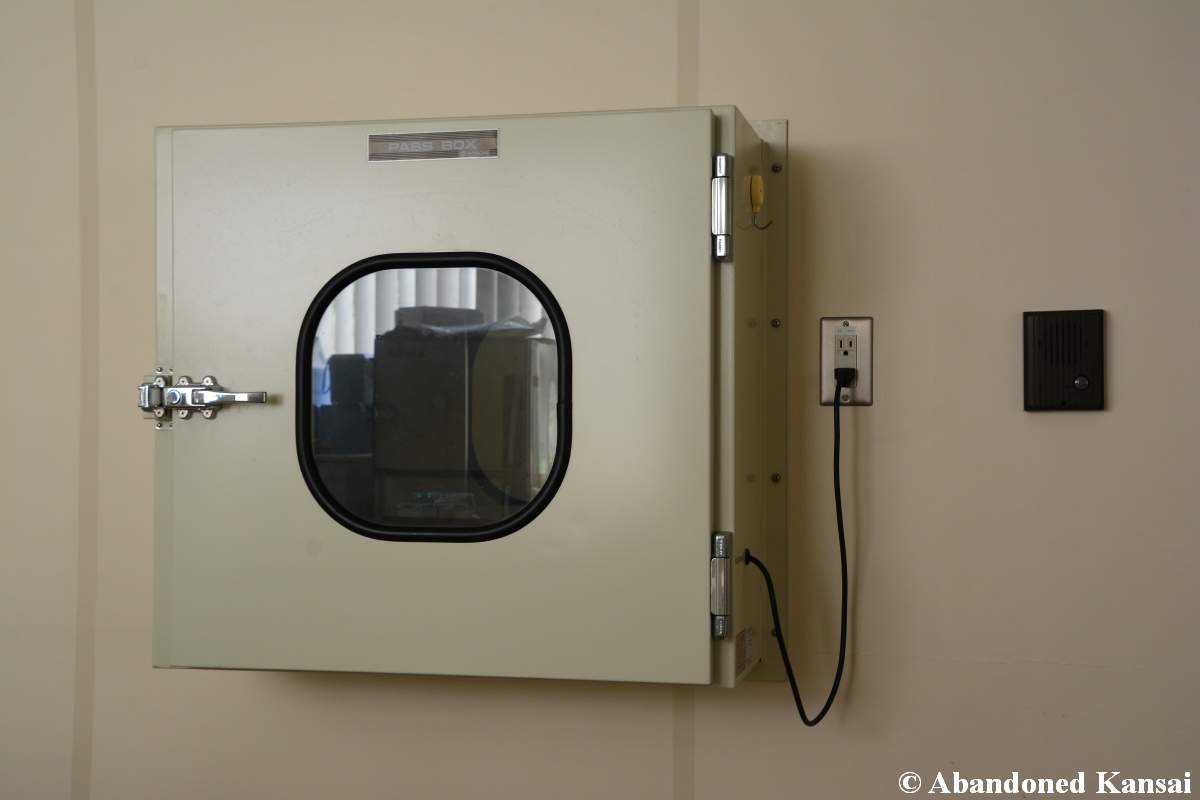
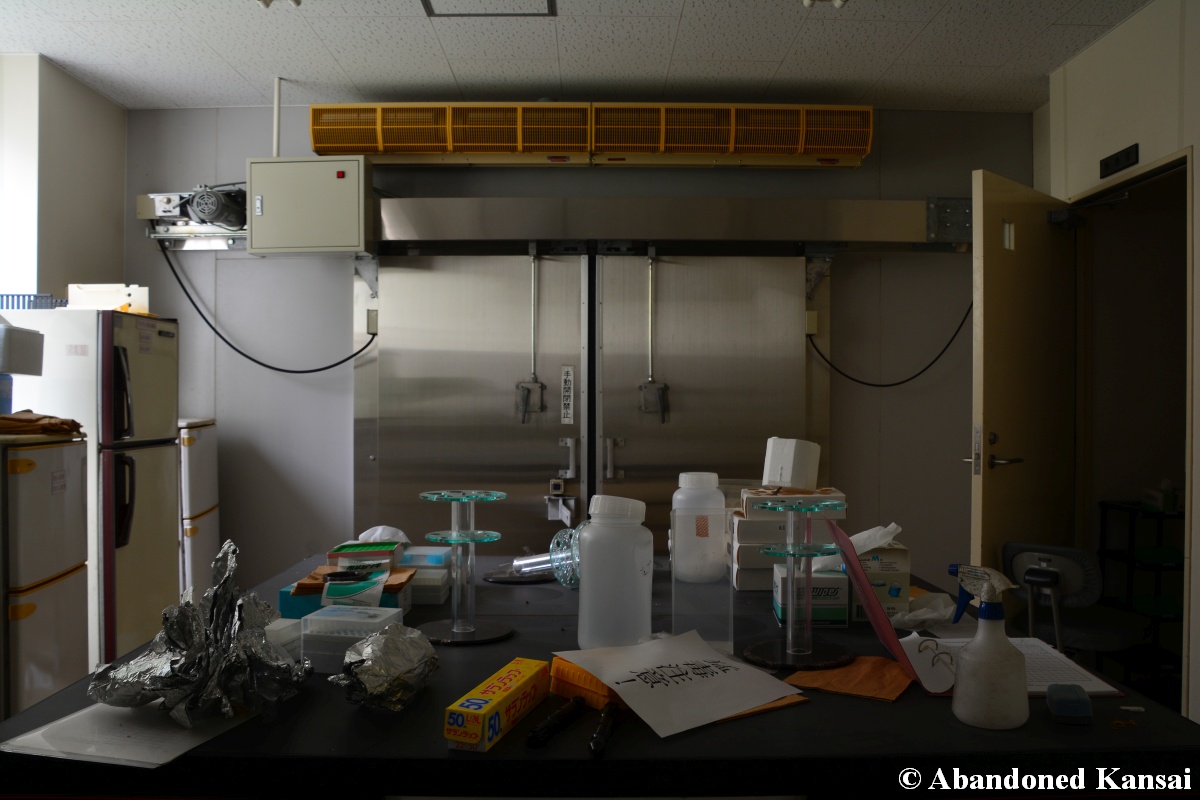
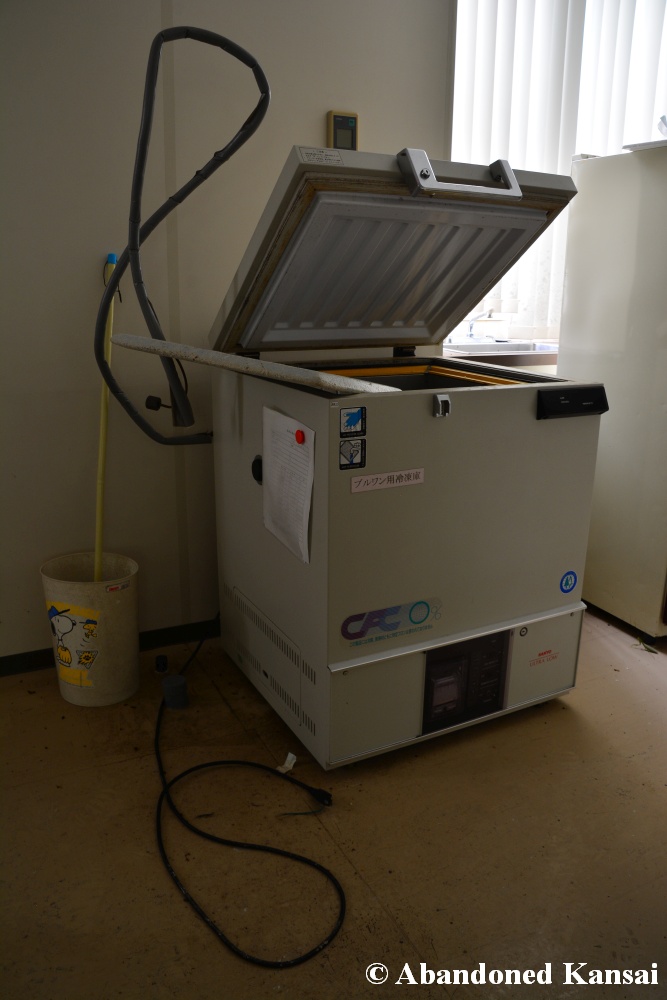
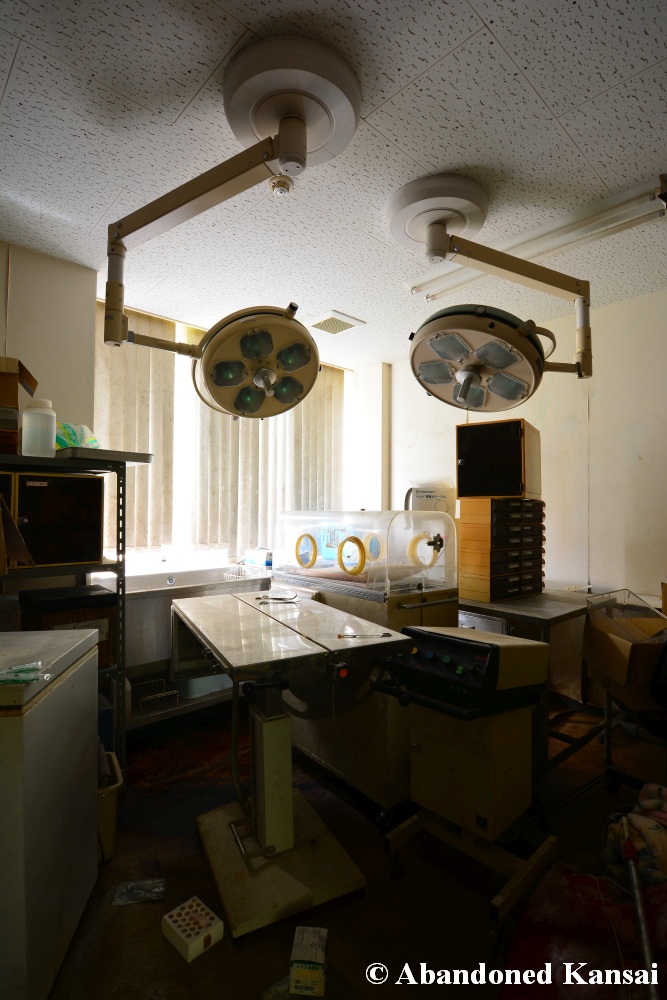
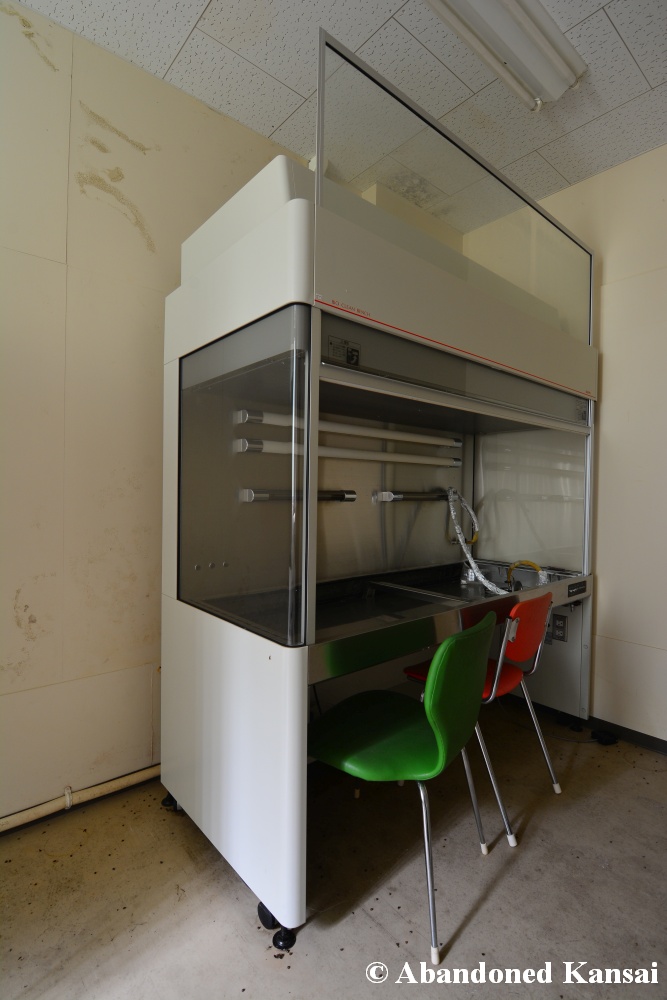
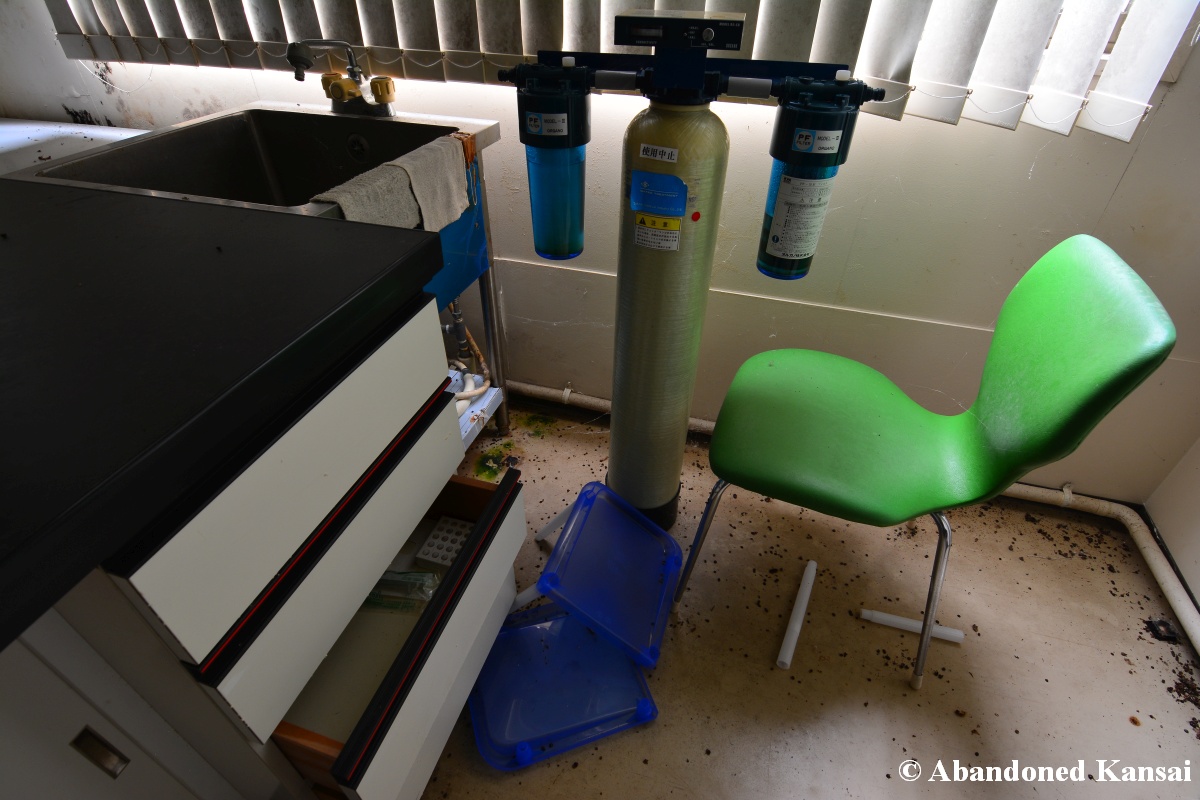
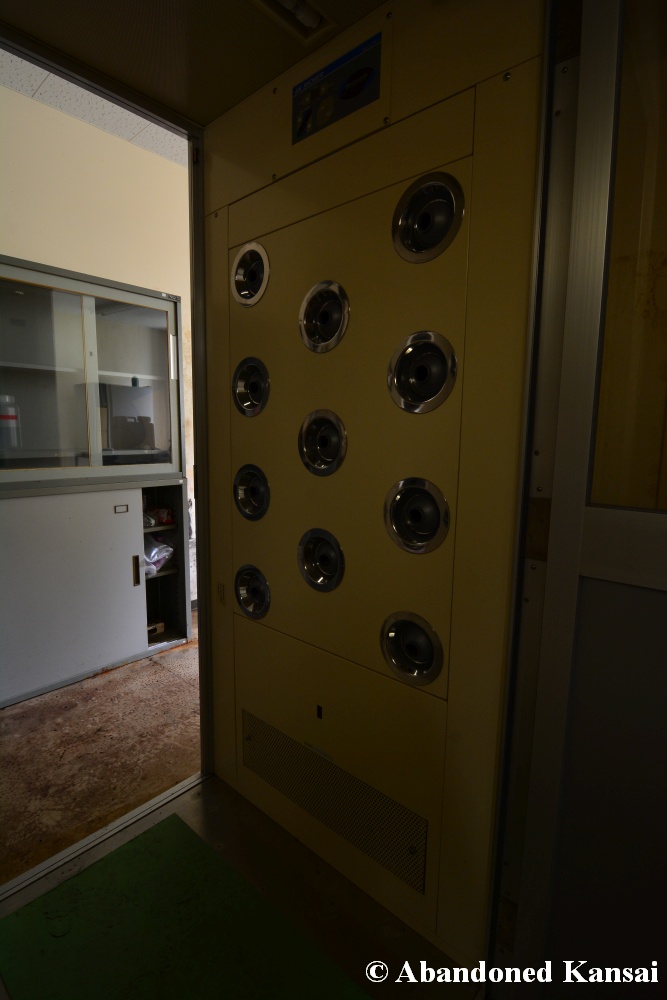
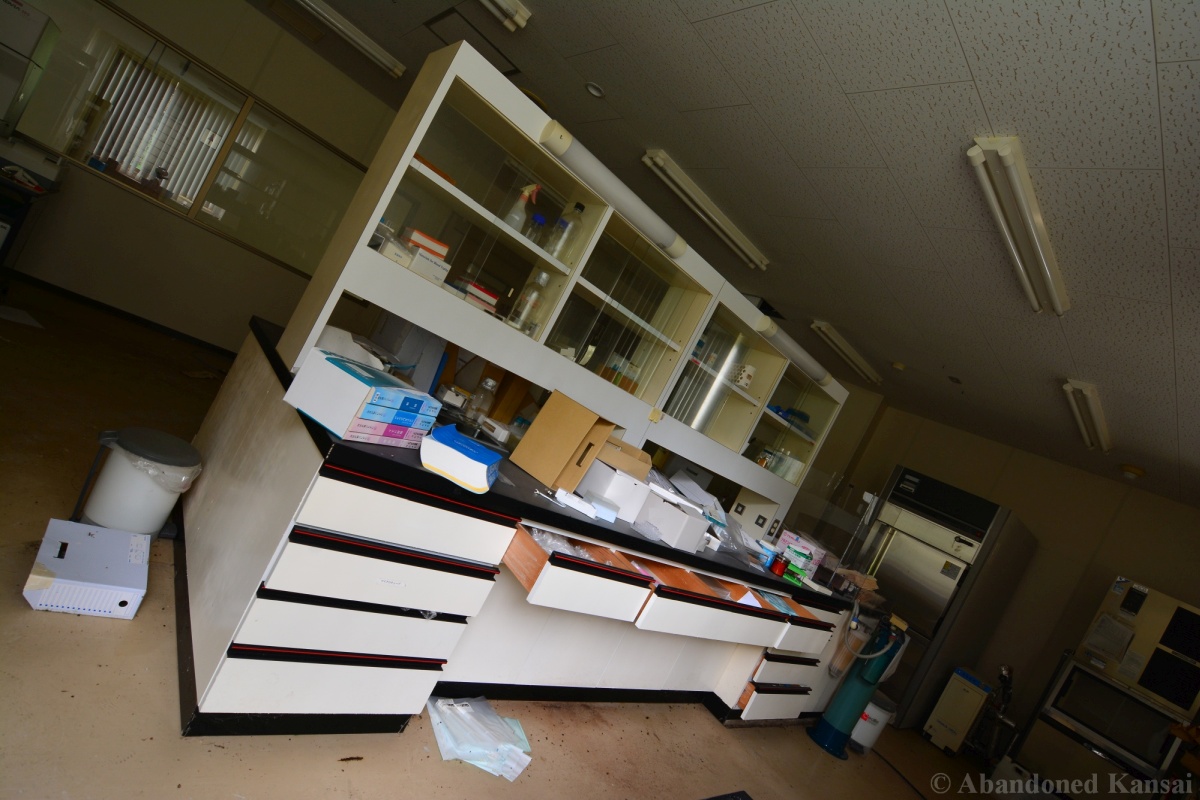
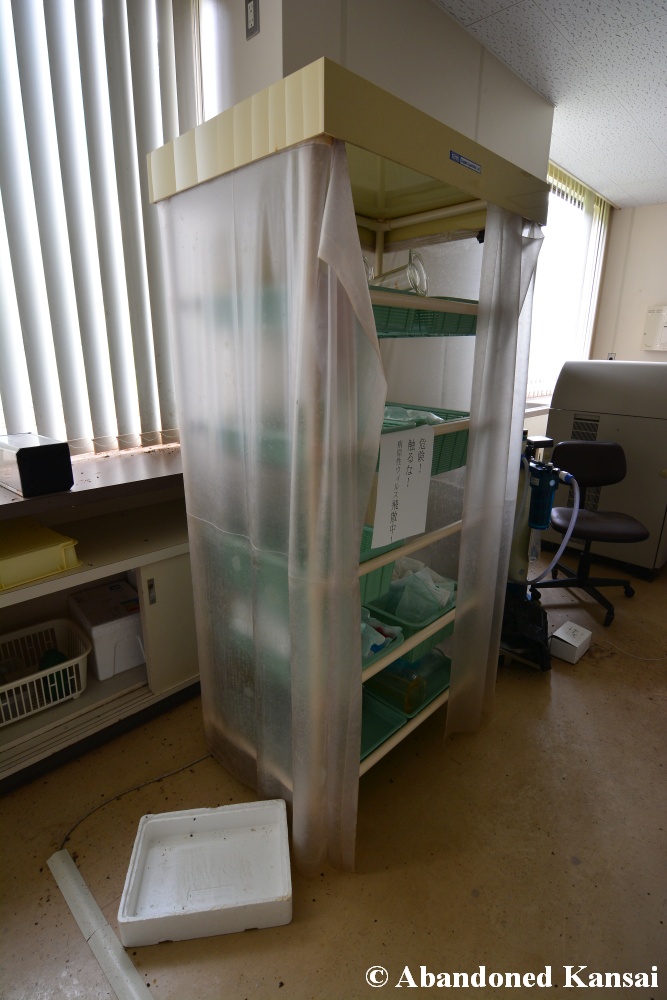
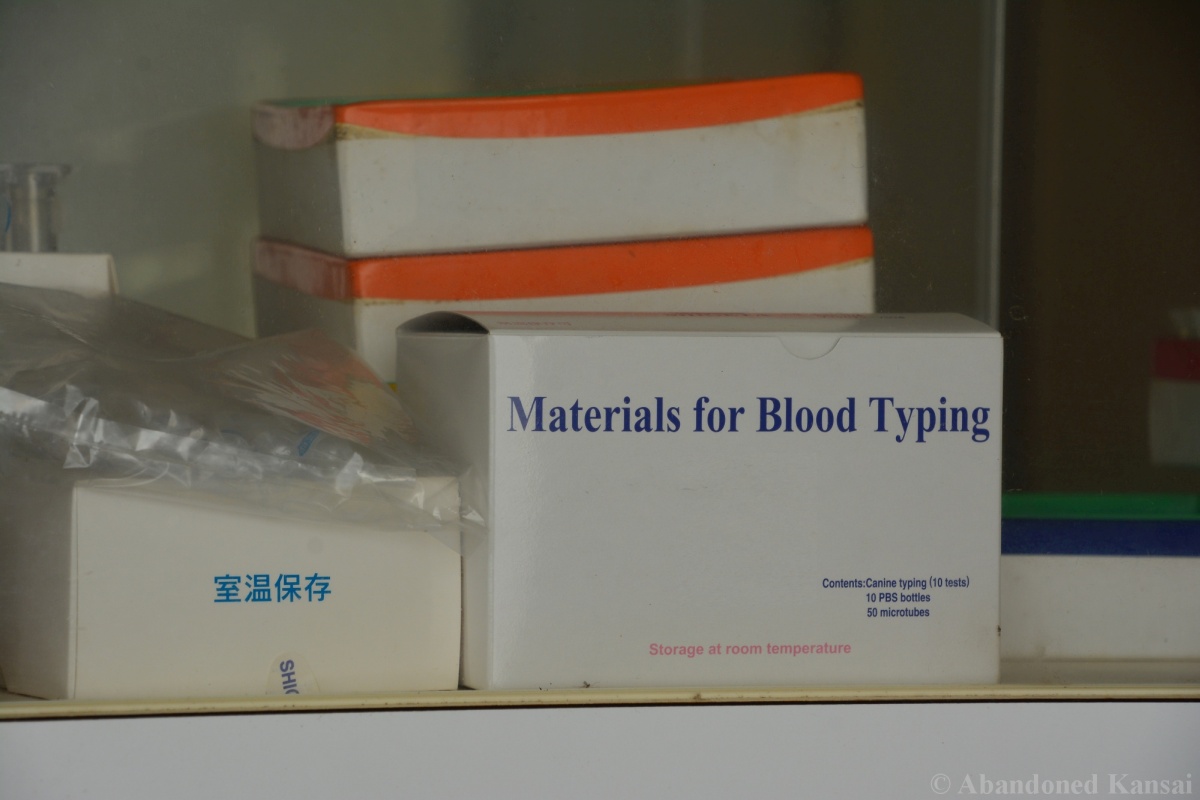
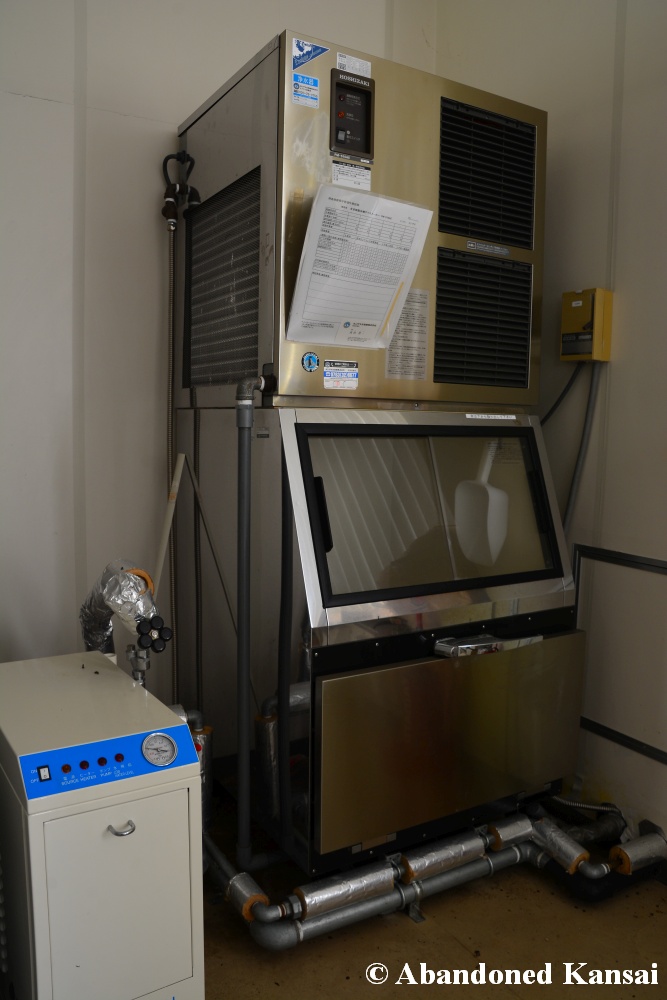
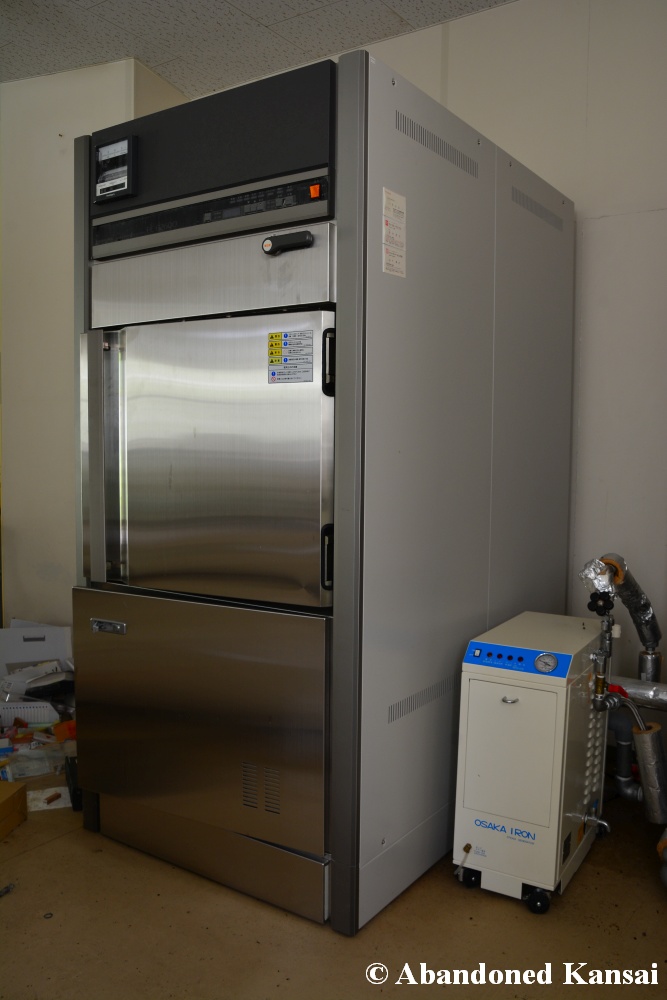
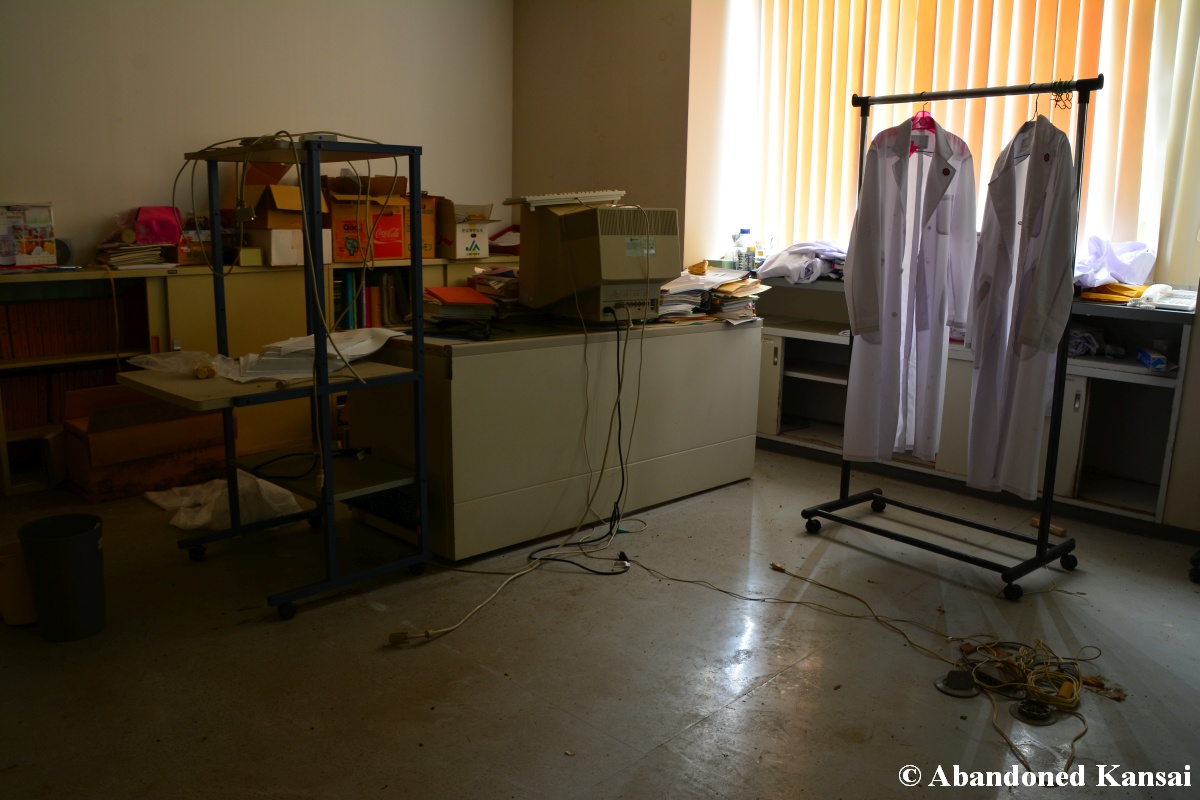
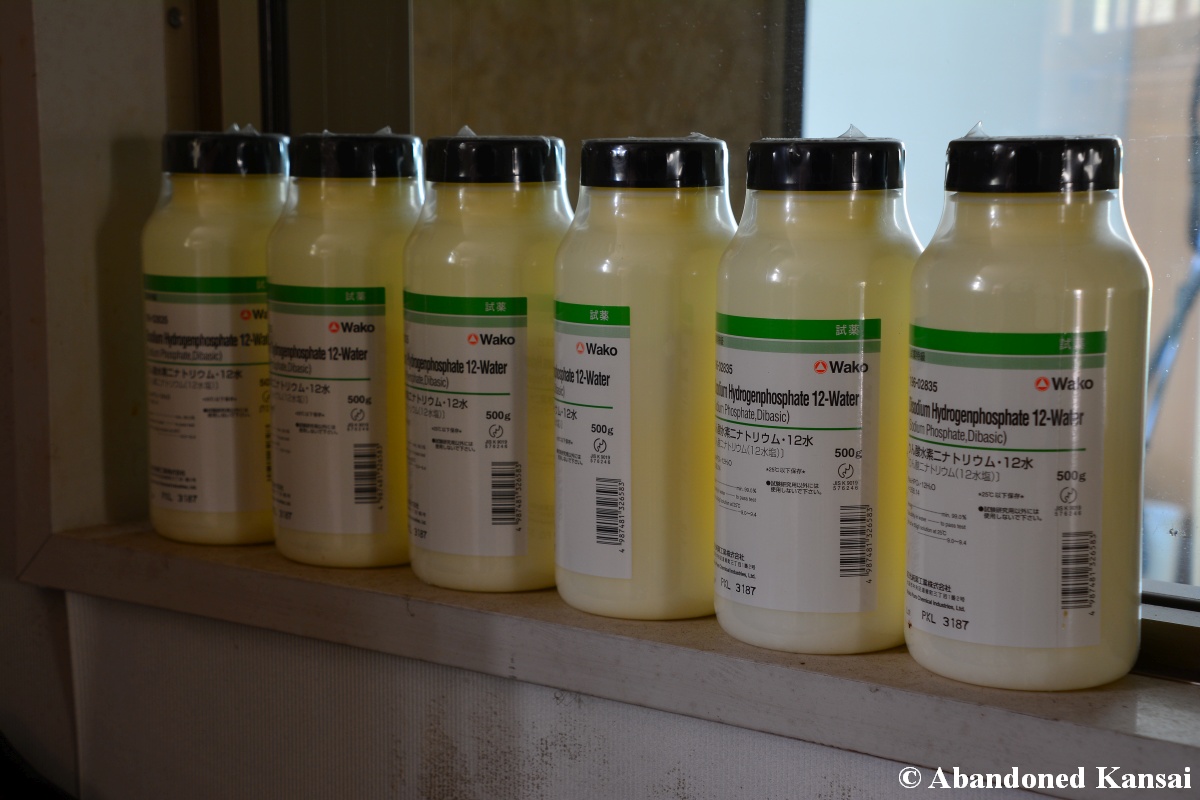
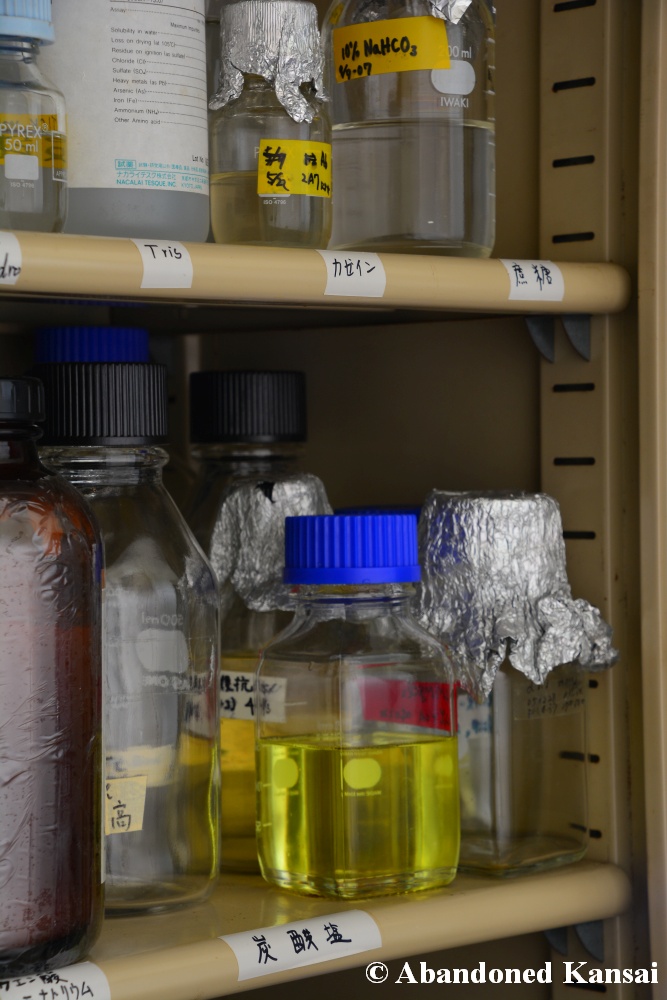
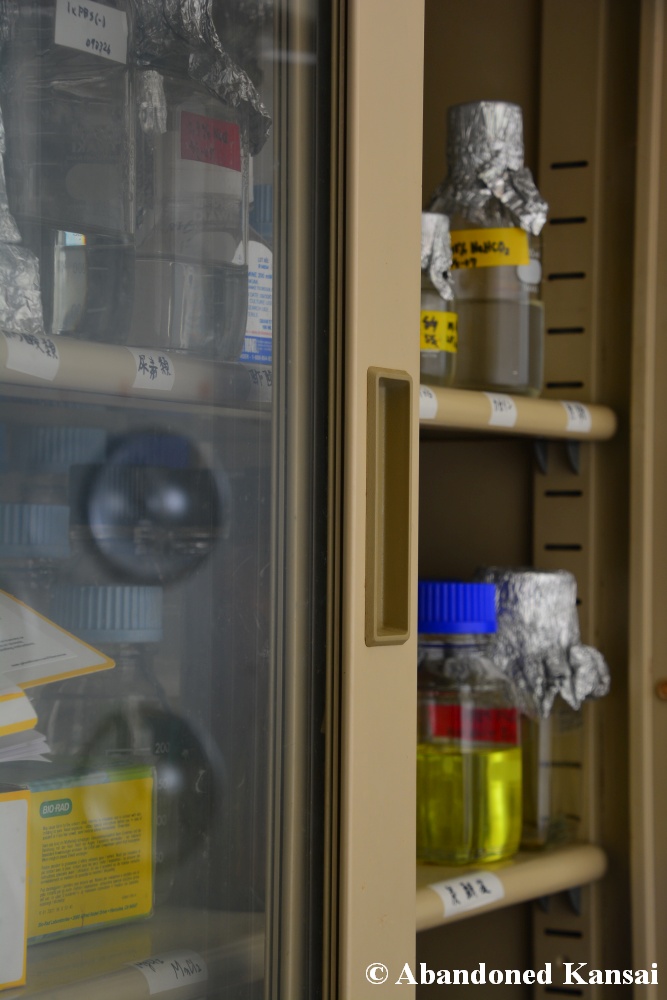
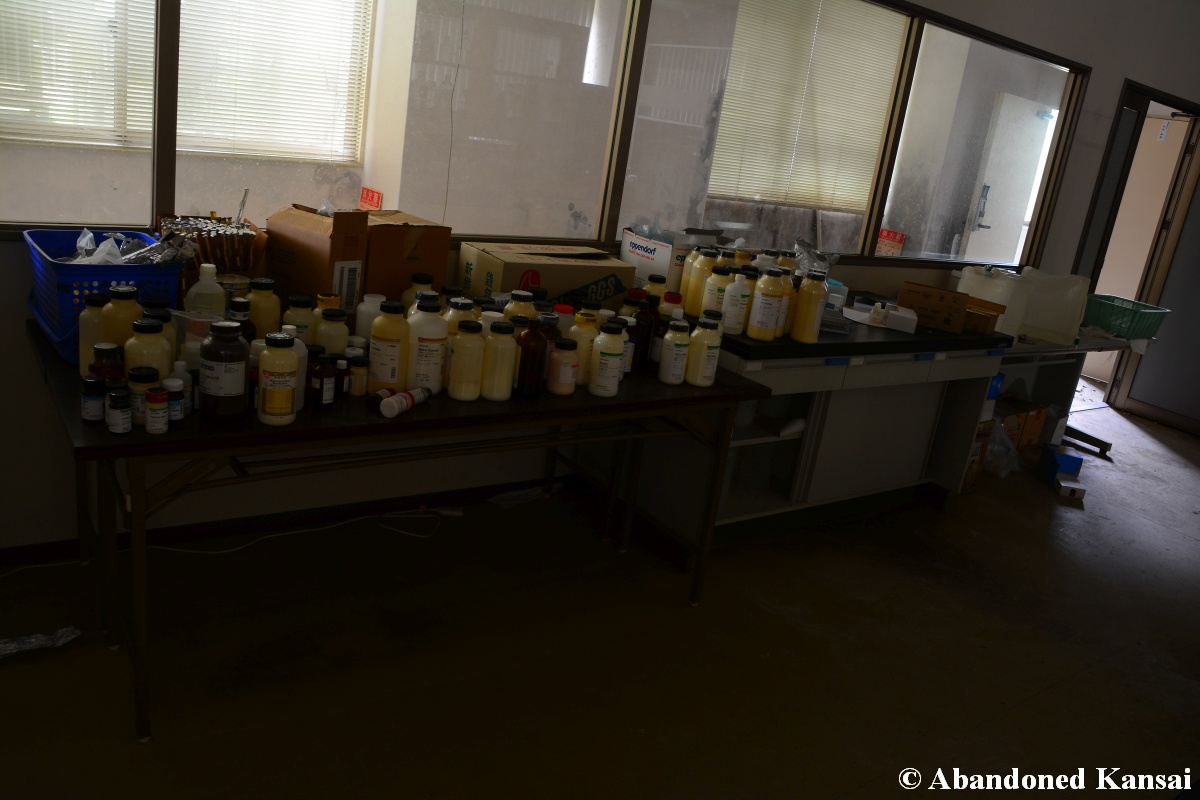
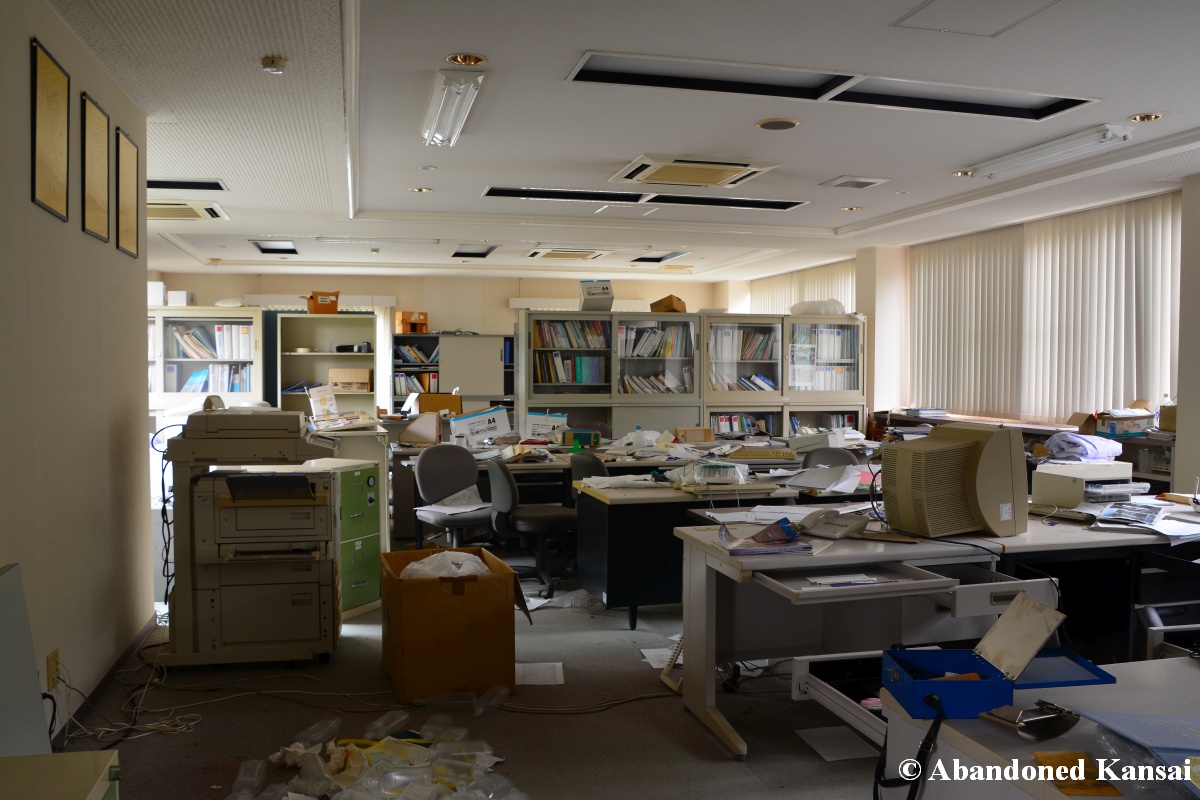
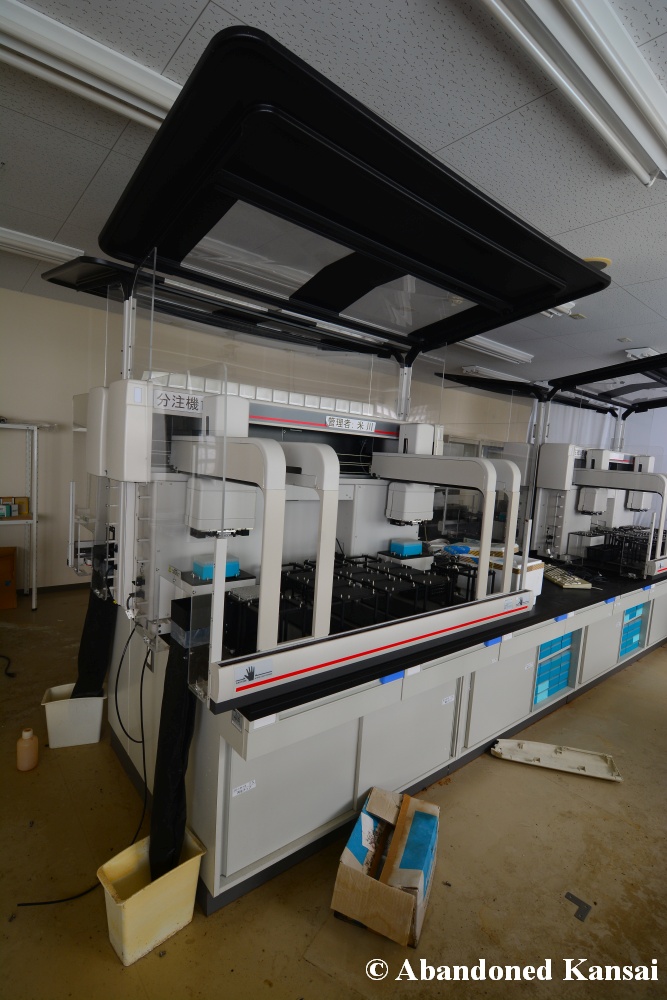
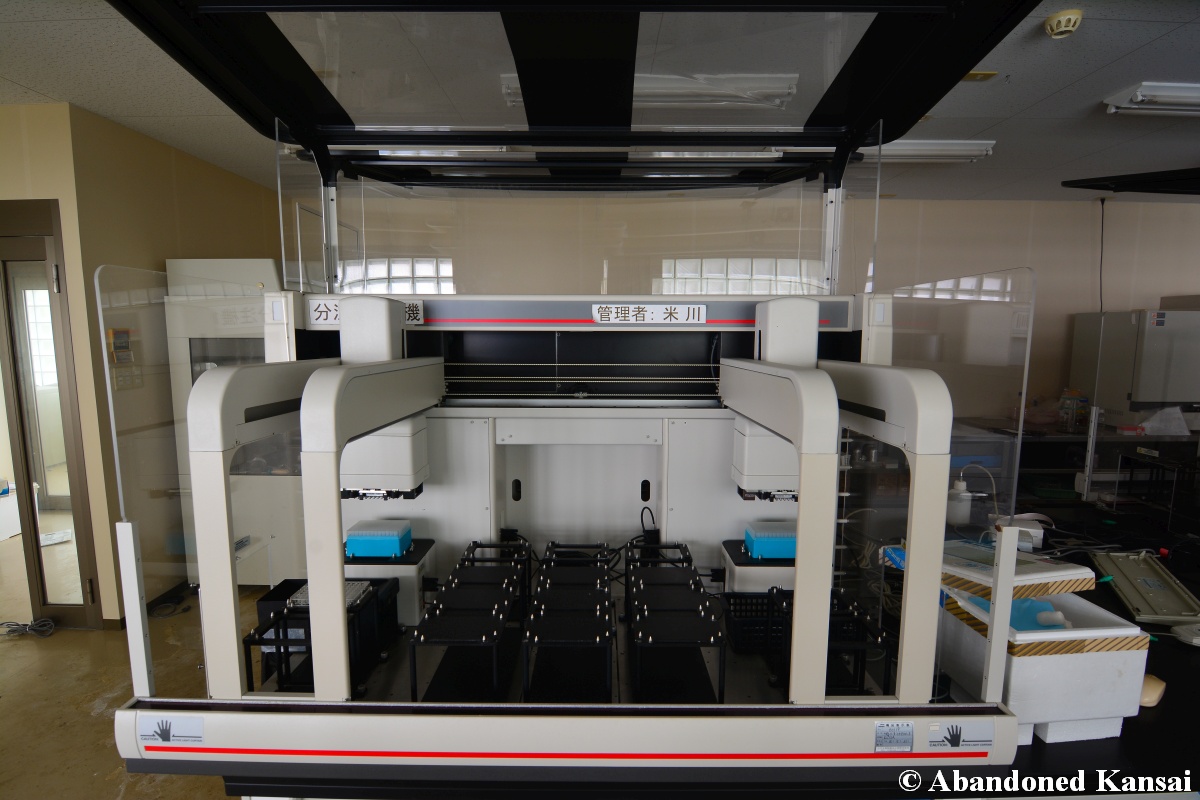
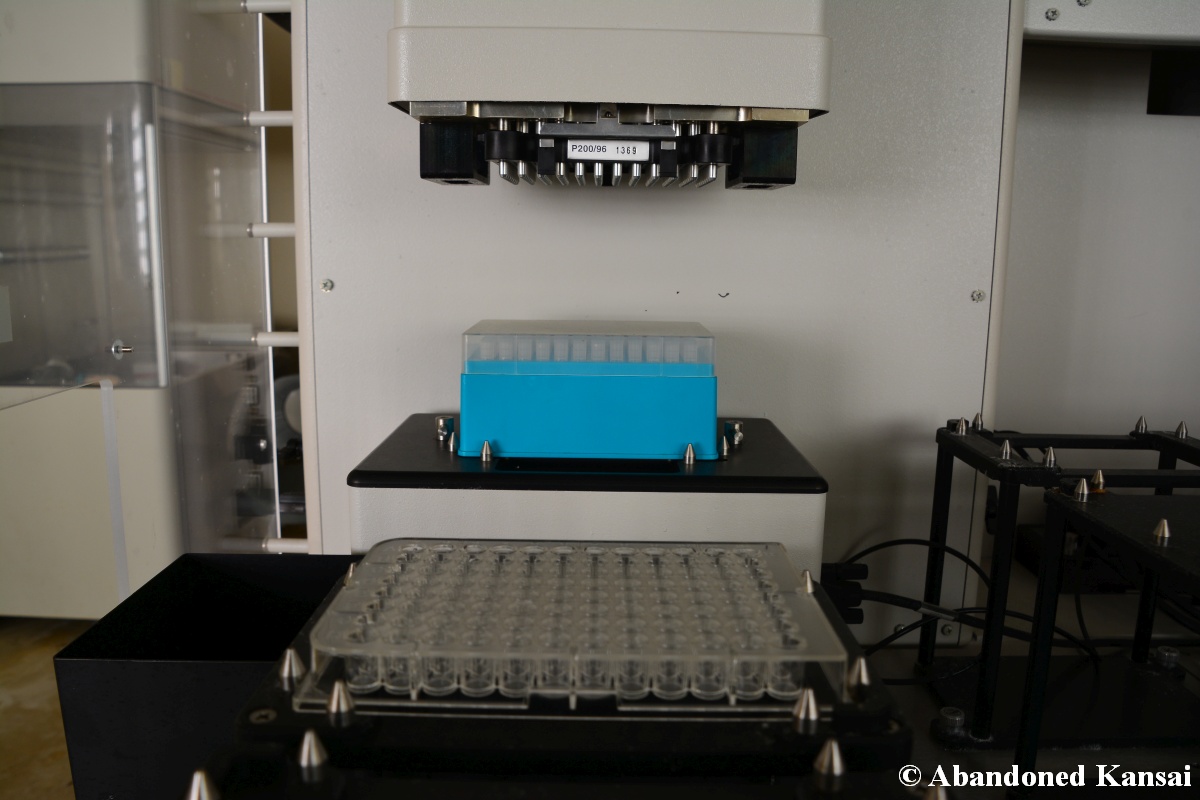
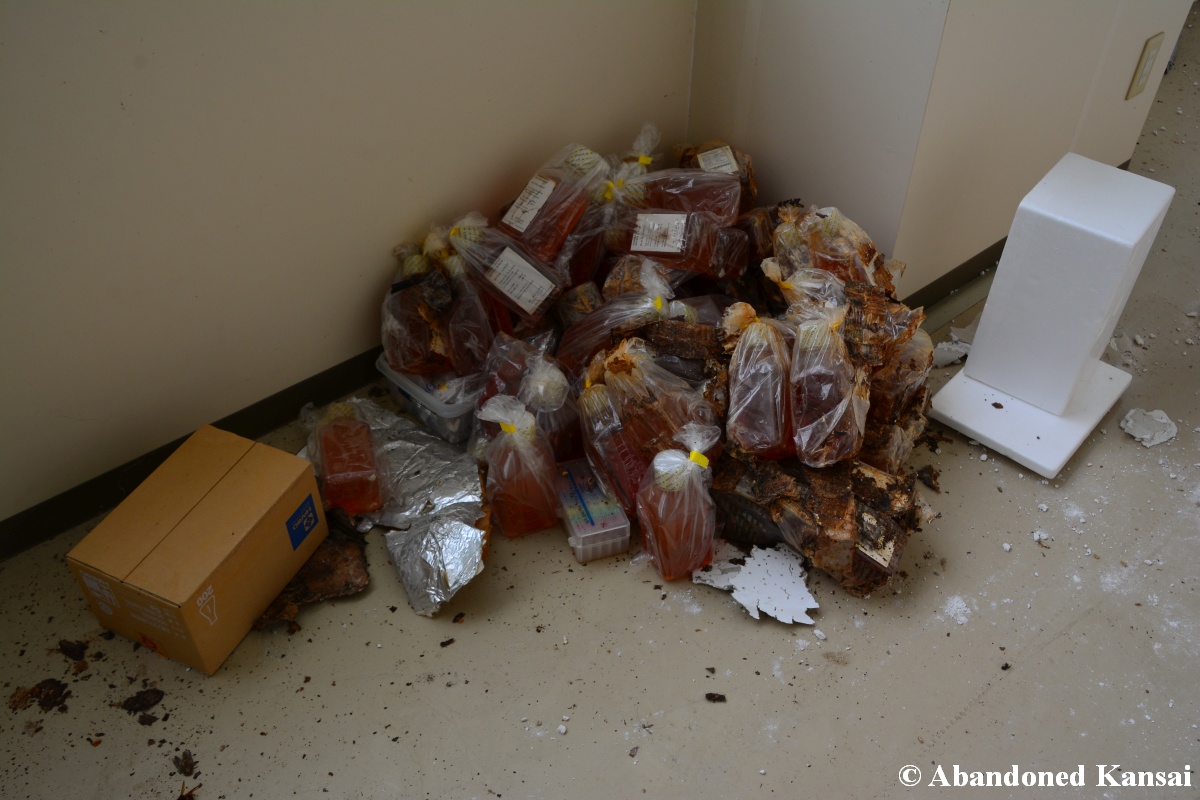
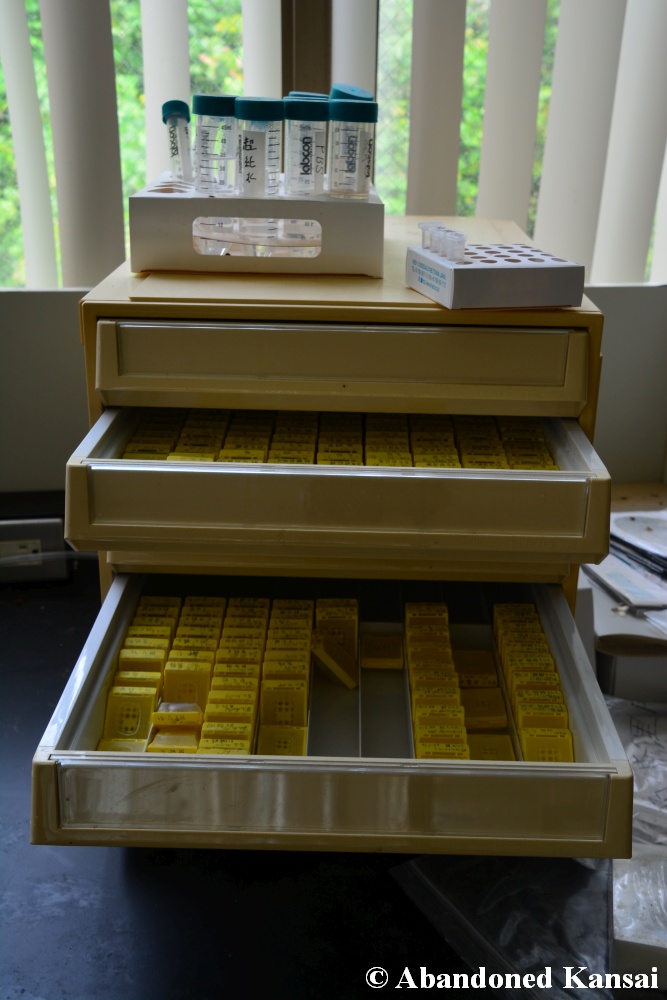
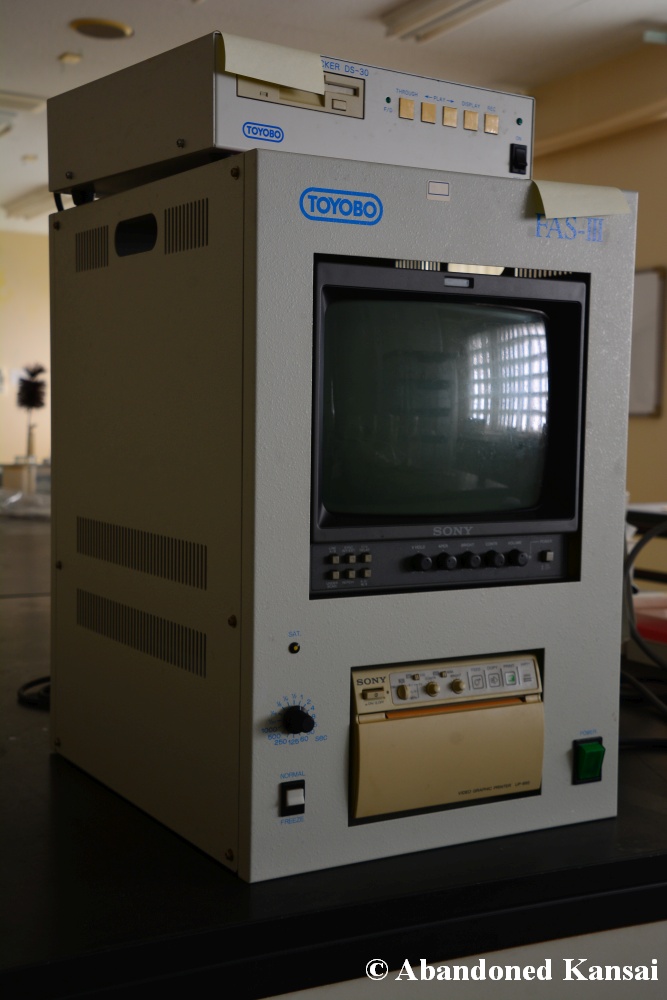
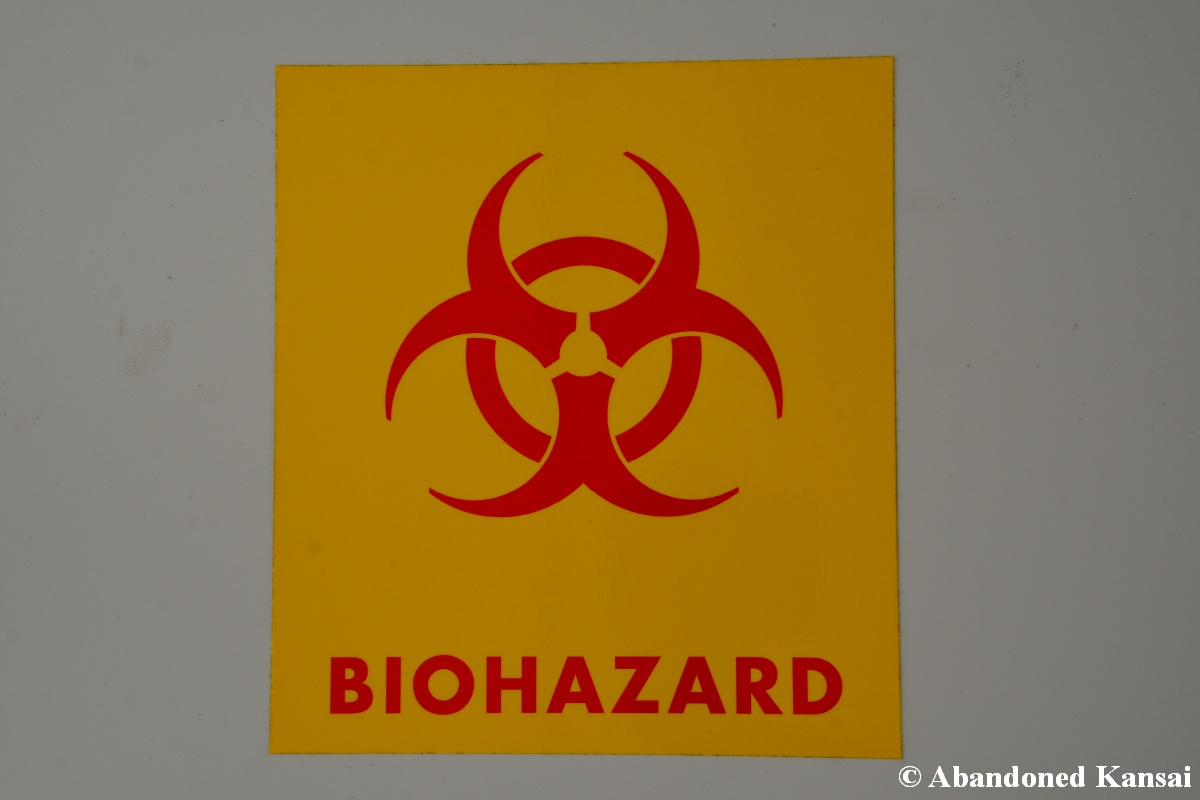
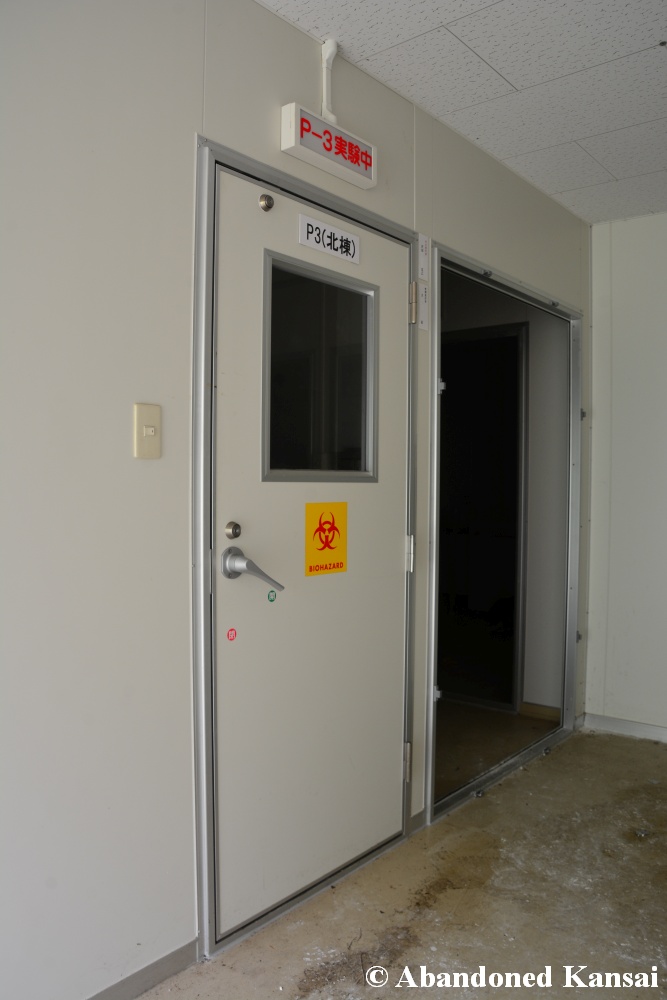
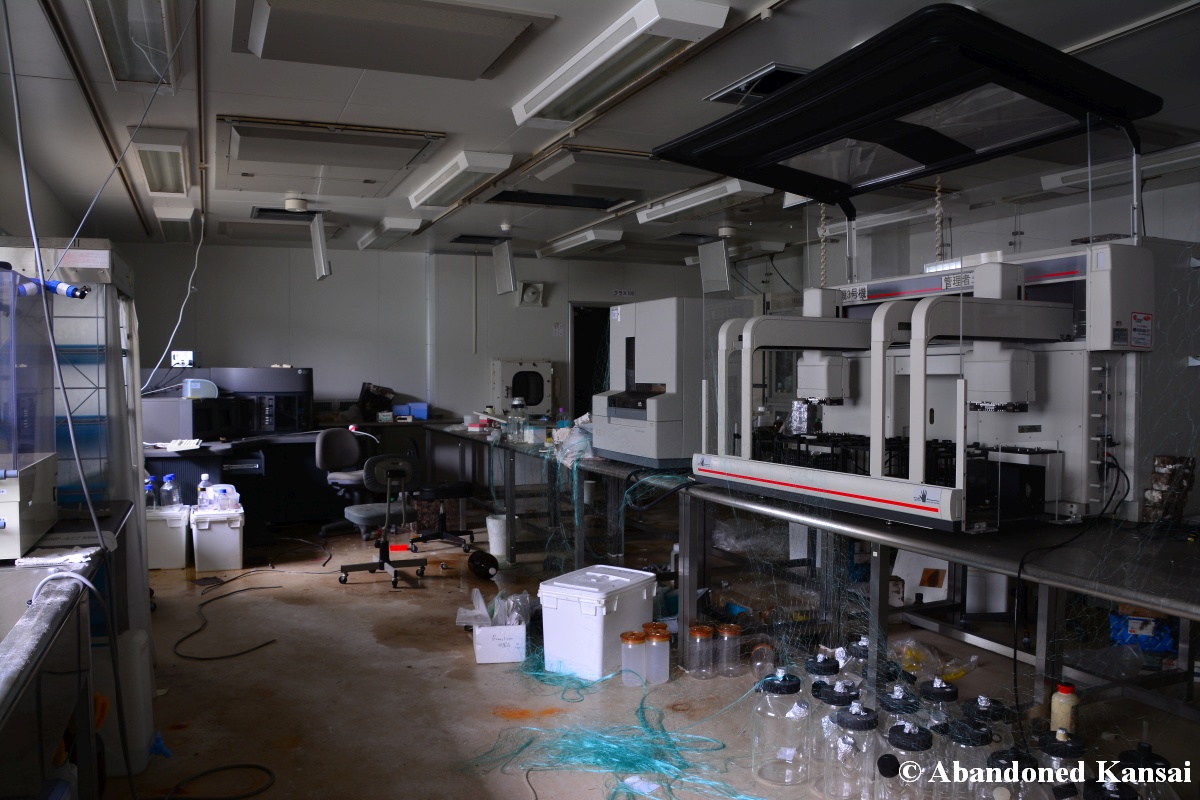
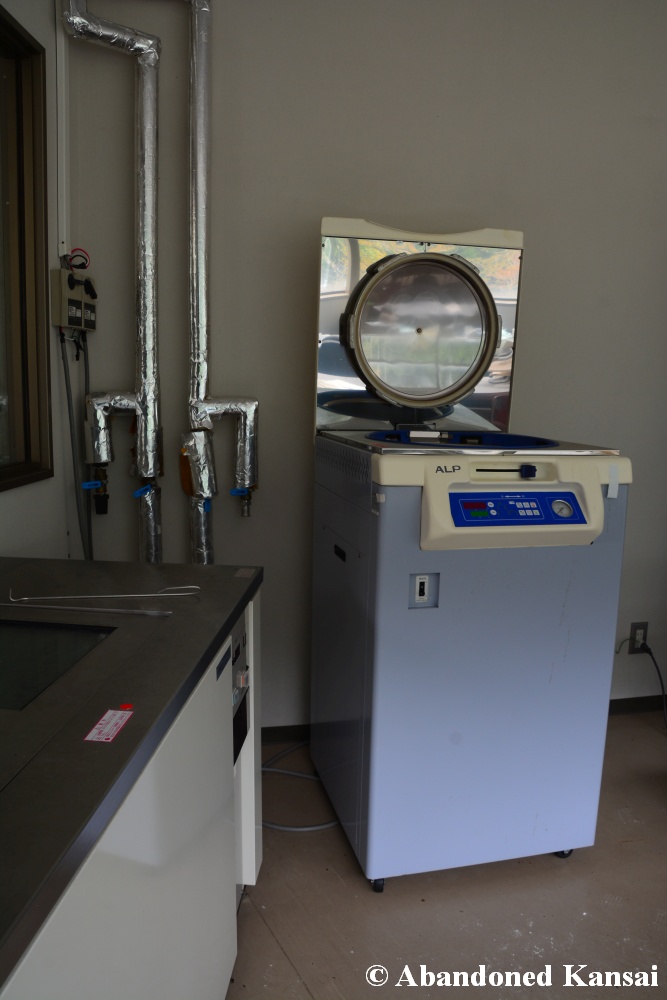
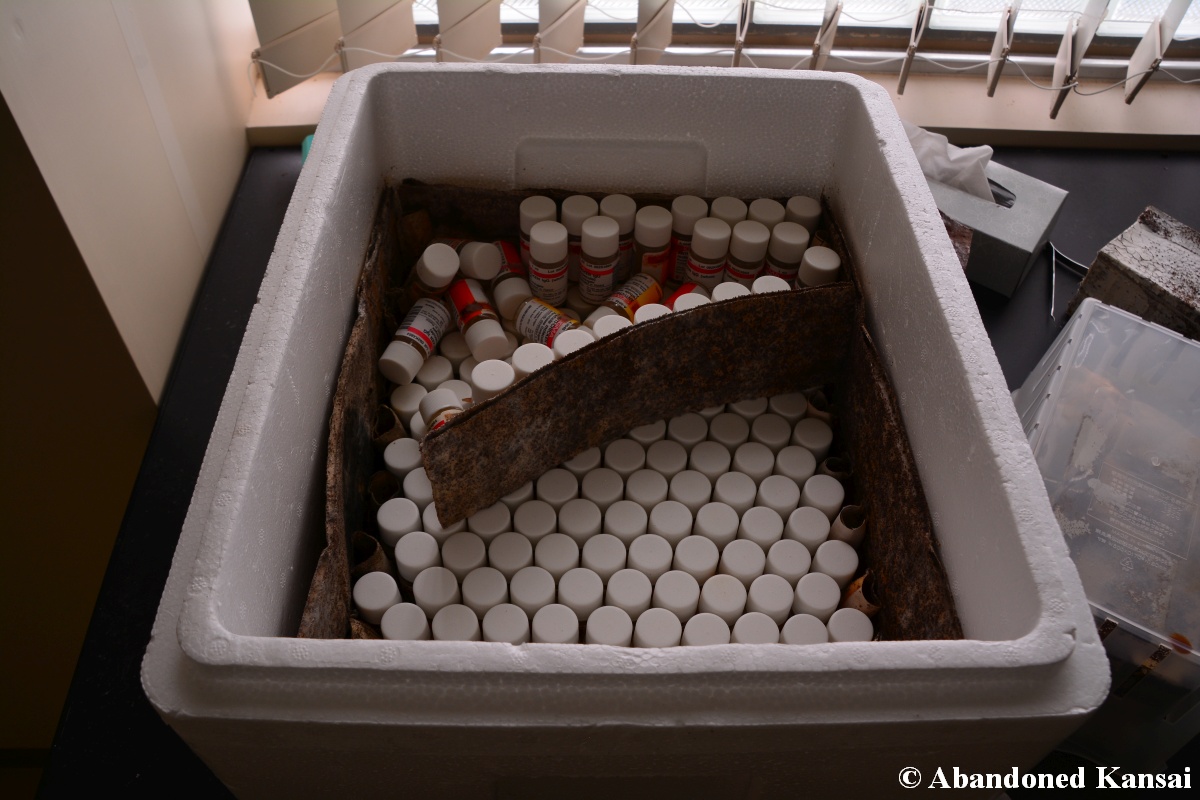
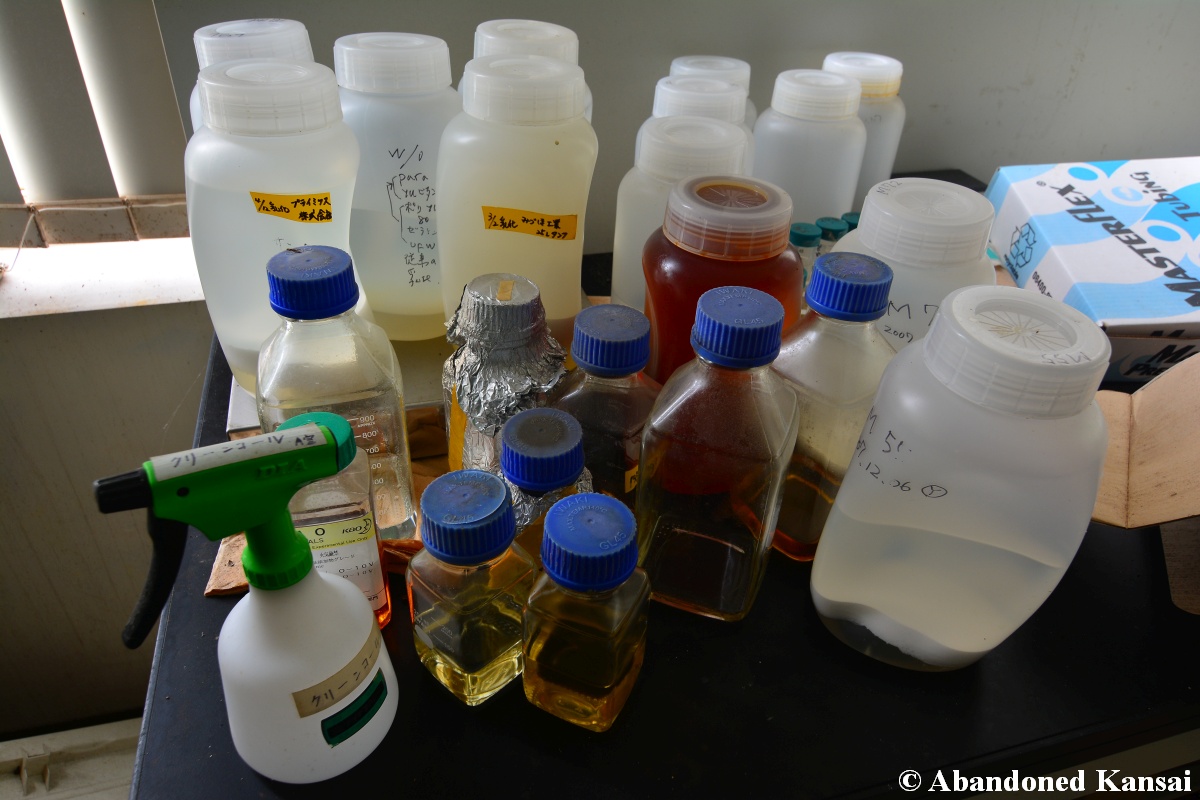
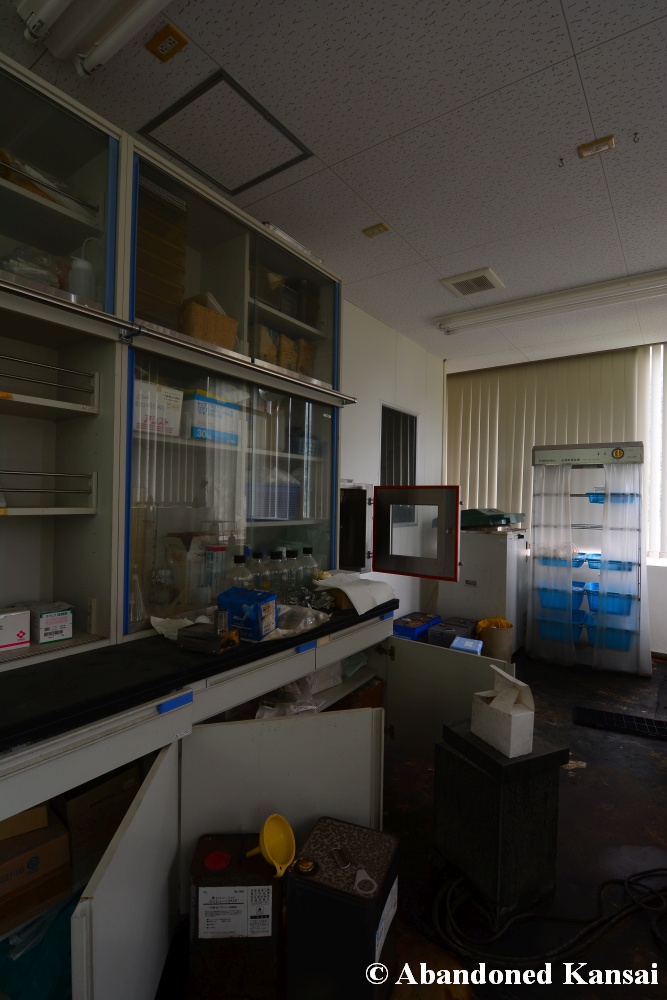
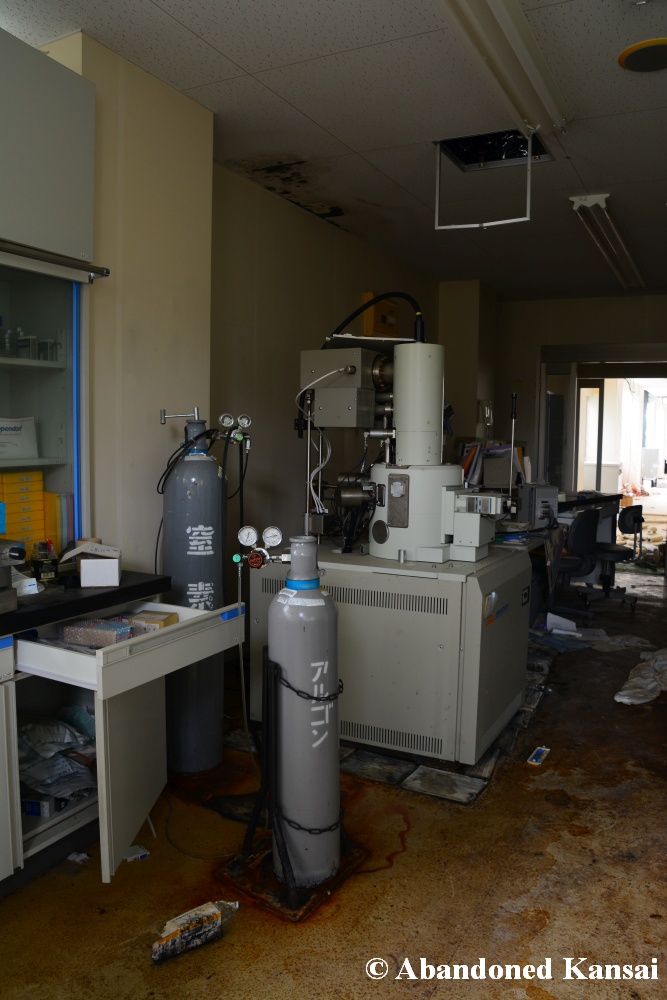
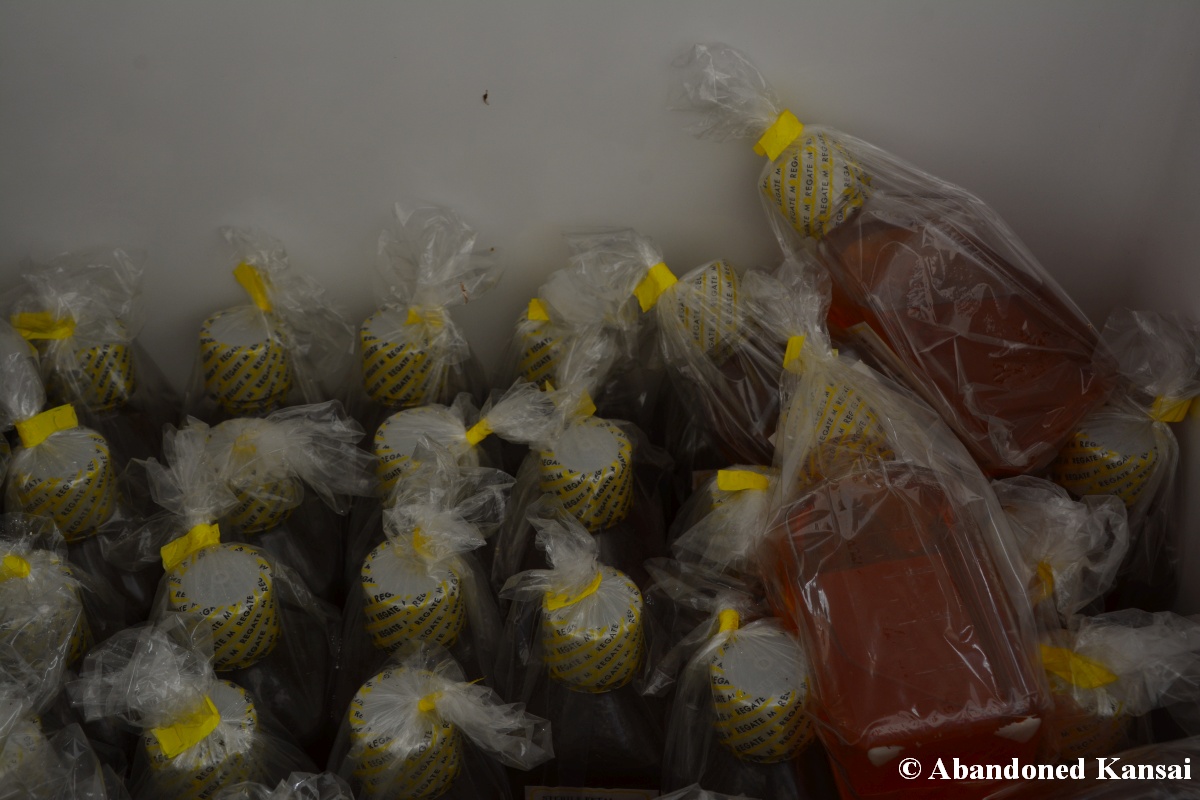
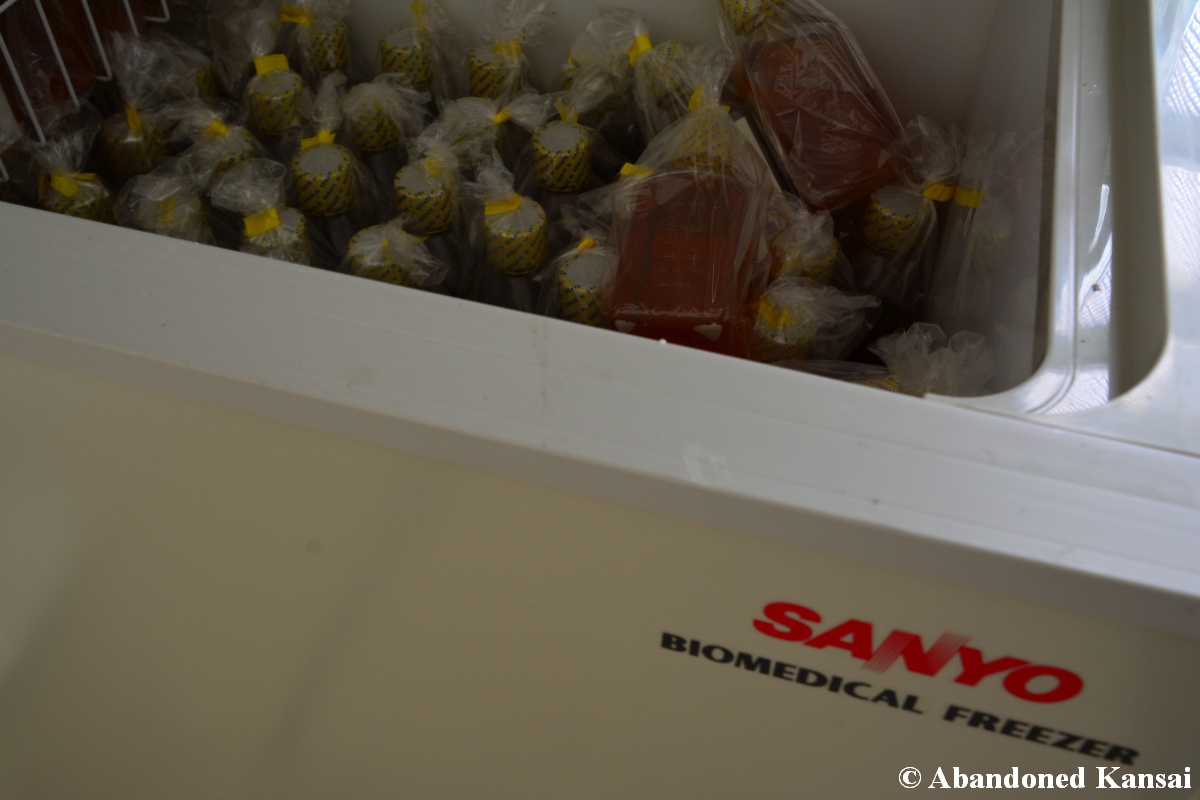
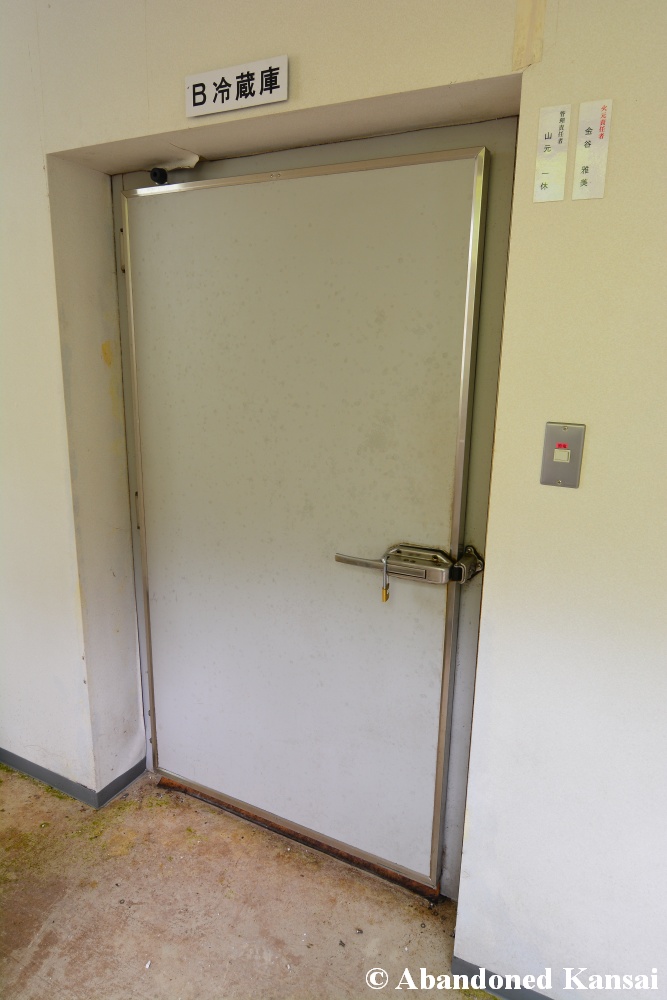
So, what was The Biohazard Facility? Well, at the time the place was still more or less a secret and people didn’t know much about it, but it turned out that it was a research facility that developed blood tests for dogs – the kennel outside was mostly gone / overgrown, but there were still some cages and transport boxes in the main building. Apparently this was the second facility the company had – and much like the first one it was reportedly closed by the authorities after animal mistreatment and health code violations. While most of the building consisted of offices and more or less regular laboratories I remember at least two air showers that lead to what I assumed were cleanrooms. In addition to that there were several doors and windows with biohazard signs – hence the name of the location among urban explorers. Oh, and there were several large freezers with locks… So if you combine all of that (air showers, cleanrooms, lockable chest freezers, biohazard signs everywhere in a building of a company with a history of health code and animal treatment violations) then you basically have the stuff that nightmares are made of.
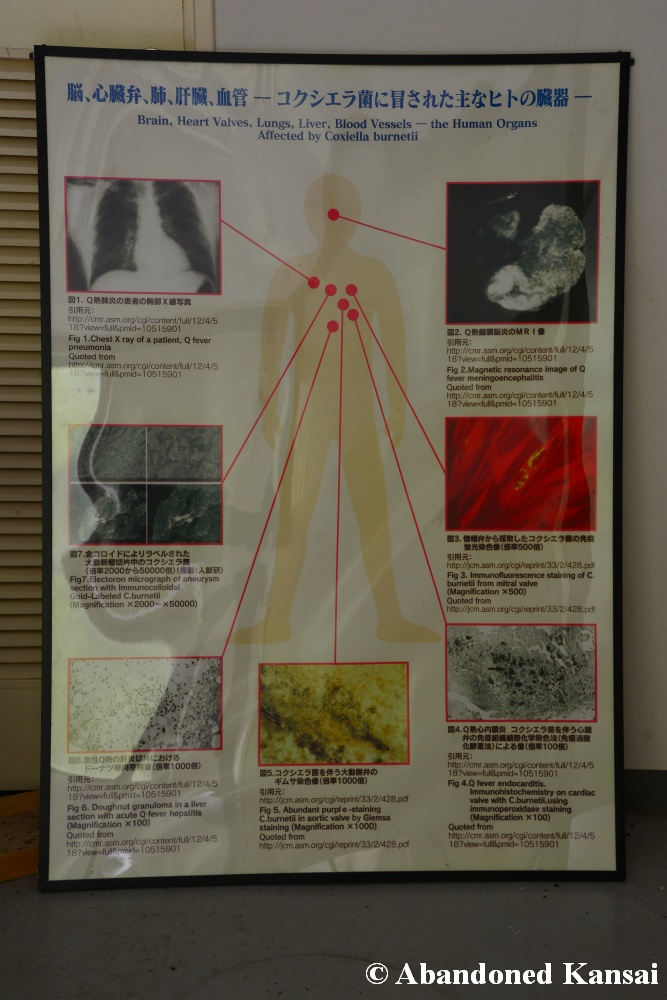
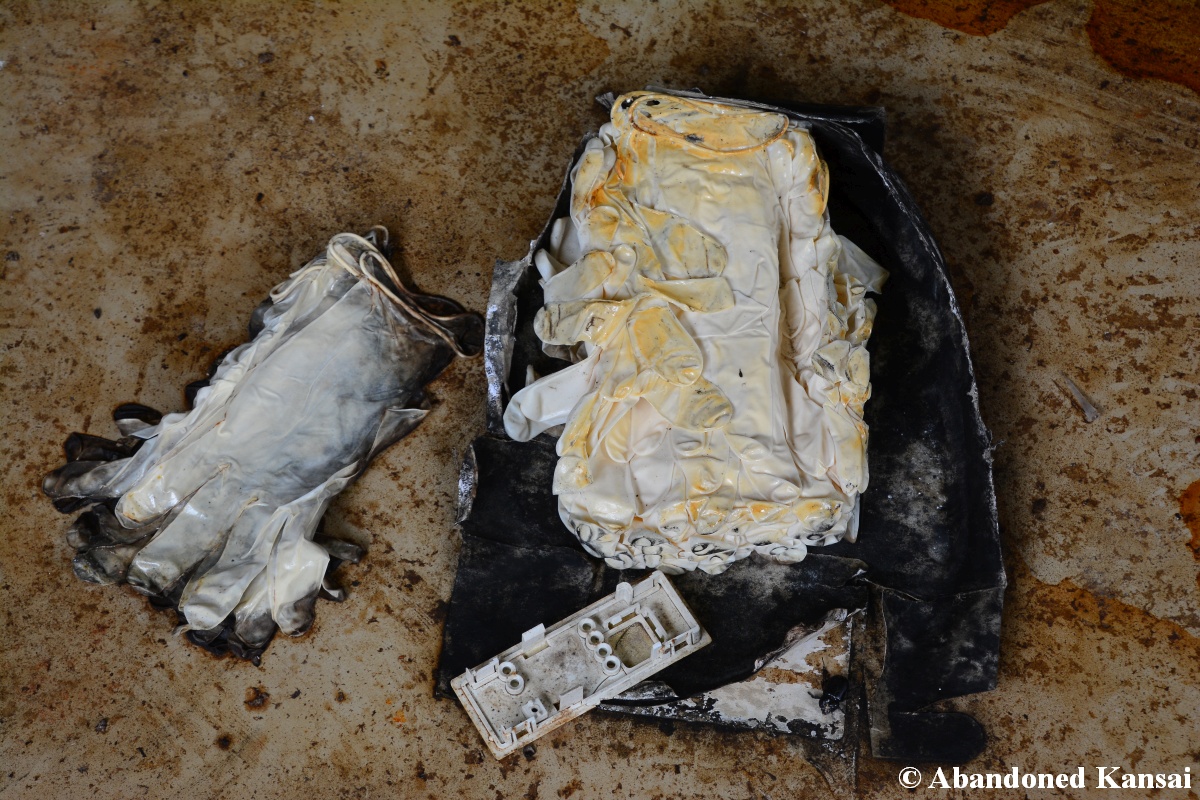
Of course I wasn’t aware of all of that upon entering – to me this was a real exploration, I just knew about the standard laboratories and a few biohazard signs… and that was all I got for the first few minutes. Then I saw one of those freezers with a lock… and it had a laminated piece of paper on top, clearly added long after the facility was abandoned. (How one can abandon or even just close a facility like that without the authorities stepping in is beyond me – but hey, welcome to Japan!) At first I ignored the freezers – I’m not the touchy / moving things around type of explorer anyway and in this case I valued my health and safety even more, so I made my way through the building, at one point losing contact with my co-explorers – which was actually scary, because this place was by far the creepiest I’ve ever been to. That’s the kind of place you explore in a video game while your character is wearing a hazmat suit. I was wearing jeans and a T-shirt and for protection a 200 Yen mask, no gloves. And this place wasn’t digital, it was real. With real dark corners, real chemicals, real danger! I don’t care about how tough you think you are, but when you explore a dusty, slightly vandalized biotech company that was experimenting on / with dogs and you see a poster about how Coxiella Burnetii, a bacterial pathogen, can affect several parts of the human body, I’m sure your heart drops a bit, too! (“Fun” fact: Coxiella Burnetii was one of seven agents of the United States biological warfare program when it ended in 1969!) At one point towards the end the mental pressure became so big that I decided to find my friends first and explore the last part together… where we found molten plastic gloves on the ground. When you look at the pictures later I don’t know what impression you’ll have, but I can only urge you to remember that this was REAL: Not a movie set, not a disaster museum, not a 4k video game – a real biohazard facility. People walked out, locked everything up, and a few years later we were there; entering through the back, thanks to mild vandalism here and there.

Umbrella for real?
Of course you can’t explore a place called “Biohazard Facility” without referencing “Biohazard”, the Japanese name of the (in)famous Resident Evil multimedia franchise based on Capcom’s horror video game series.
My personal relationship with RE dates back right to the beginning 25 years ago, to the original game on PlayStation. It was also the first game I’ve ever reviewed, for my high school paper, which lead to a huge argument with the editor in chief as the game was rated M and in danger of being banned in Germany – so of course most of the students at my school weren’t able to legally buy the game and the guy was really conflicted about that. Something like 10 years later, shortly after I moved to Japan, a good friend of mine was working on an obscure Biohazard flip phone game only to be released in Japan, and asked me if I wanted to do some voice acting for two minor characters. With no experience in this area I was a bit hesitant, but how often in life do you get an opportunity like that, so of course I agreed to do it. What my friend failed to mention (or didn’t know himself when he asked me) was the fact that the voice acting didn’t include actual lines, just damage voices – so I was moaning and groaning for like an hour to record stuff what a pro probably could have done in 5 minutes; and what sounded more like horrible dubbing for amateur porn than for an action game. Fortunately it was really only released in Japan, but it was still an interesting experience.
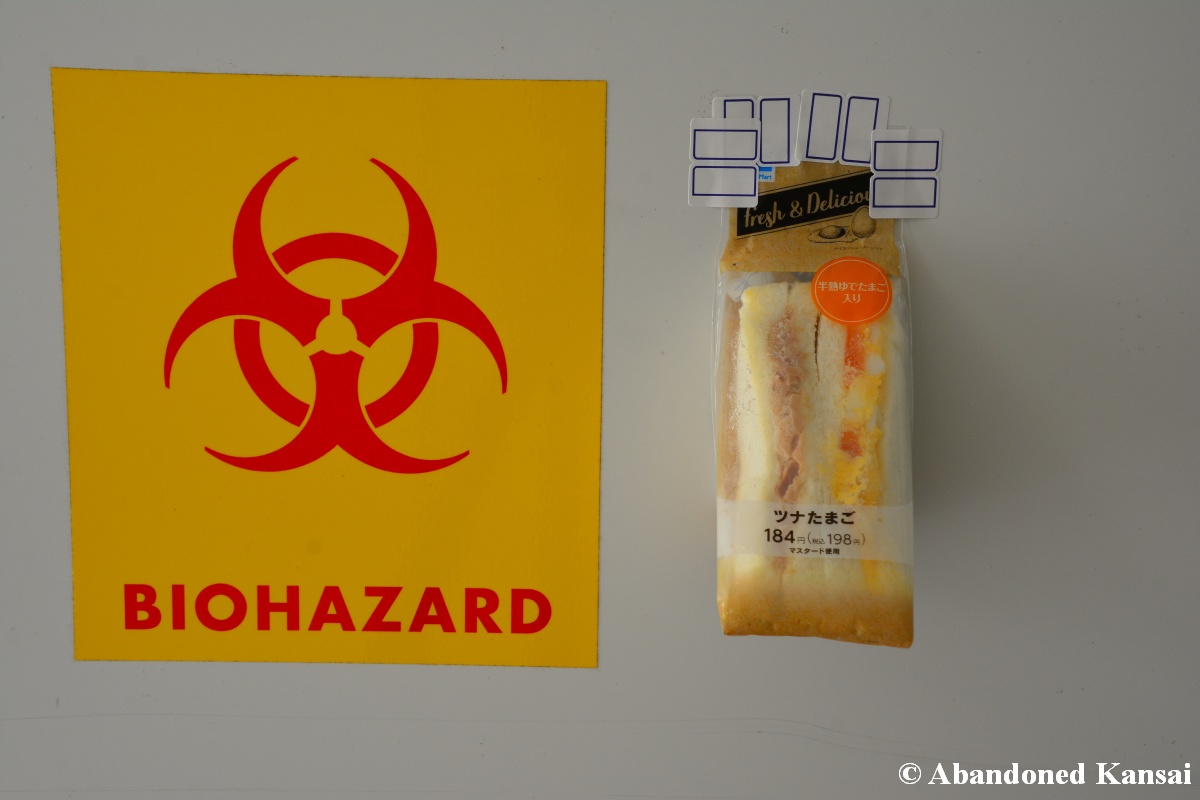
So for my part of referencing Biohazard I brought a prop and created a picture puzzle / rebus which you can find in the gallery. I posted it a while ago on *Facebook* and it took people like 45 seconds to solve, and they didn’t even know the location name and what I was referencing, so don’t expect too much…
My co-explorers on the other hand insisted on recreating CGI artwork from RE6 with several game characters posing. Personally I hate posing for pictures in general, but especially at abandoned places. Urbex should be about locations, not the explorers – at least that’s my take on the topic. But like I said, my friends insisted and I was kinda needed as the fourth person, so they promised to set everything up, so I just had to come in for 30 seconds to be directed in the correct position and take a few shots, just to be on the safe side. And I have to admit, both photos turned out to be very, very cool, especially given the background story of the location. (Unfortunately in hindsight they weren’t be taken by me / with my camera, so I won’t be able to publish them…) During the whole thing we talked about Resident Evil 6 a bit (which in my opinion really didn’t deserve all the hate it received!) and I mentioned the logo. What about the logo, my friends asked. “Well, it looks like somebody fellating a giraffe…” WHAT? “Yeah, it looks like a woman giving a giraffe a blowjob – the game is five years old, you’ve never heard of that?” They hadn’t, but a quick internet search caused gigantic laughter and we left the Biohazard Facility on an extreme high note. (And if you are not a game freak who already knew this, I have a hunch what you just did / will do next… 🙂 )

Best. Urbex. Ever?
So… Exploring the Biohazard Facility… Absolutely amazing! Easily in my Top 20, most likely Top 10, maybe Top 5. We spent about 3.5 hours on location and were absolutely spent afterwards – by far the most exhausting, the most nerve-wrecking half-day exploration of my life! I’ve been to plenty of places where I had the feeling that I wasn’t supposed to be there, I’ve been to plenty of places that were kind of dangerous. But as exciting and somewhat mind-blowing abandoned theme parks and old hospitals are – exploring an abandoned biochemistry lab is not just next level exploring, it’s highest level with a boss enemy around the corner exploring! I wasn’t kidding in the intro, this experience gave me nightmares for months! Not every night, but a series of similar very bad dreams every other week… Nevertheless totally worth the hassle, because that’s the kind of place you normally only see in movies (where you know that it’s fake) or in video games (where it’s virtual) – being there for several hours blew my mind… and probably fried it a bit, too. 🙂

(*Like Abandoned Kansai on Facebook* or *follow us on Twitter* if you don’t want to miss the latest articles and exclusive content – and subscribe to the *video channel on Youtube* to receive a message right after a new video is online…)

Read Full Post »
What do Star Wars and Nicolas Cage have in common? Not much, really – just that his latest movie, Prisoners of the Ghostland, was shot at a location that in winter looks like the snowy battleground of Hoth!

Usually I don’t do revisits. They bore me, they bore you, they don’t do well here on Abandoned Kansai. But there are exploration days when I’m not in charge of the location selection, which sometimes is a good thing (as I get taken to places I didn’t even know existed) and sometimes is a bad thing as I’m stuck at places I don’t like or already have documented extensively. In early 2018 I was on the road with a large group of people (the largest ever, almost a dozen explorers in two large cars) and it was really chaotic as nobody wanted to take the lead (or listen to the only gaijin they apparently considered pretty much dead weight), so there were endless time-consuming consensus discussions, but not much exploring – and of course in the afternoon we ended up at the almost touristy *Sumitomo Osaka Cement Factory, which I had explored about 4 years earlier on a late summer morning*. Seriously annoyed by the inability of the group to make decisions I teeth-gnashingly got out of the warm car and into the mid-winter cold. (While there is no winter in central Osaka, you can definitely get to some snowy areas in day trip range. Not real winter like in Hokkaido, but at least it’s worth putting on a jacket…)
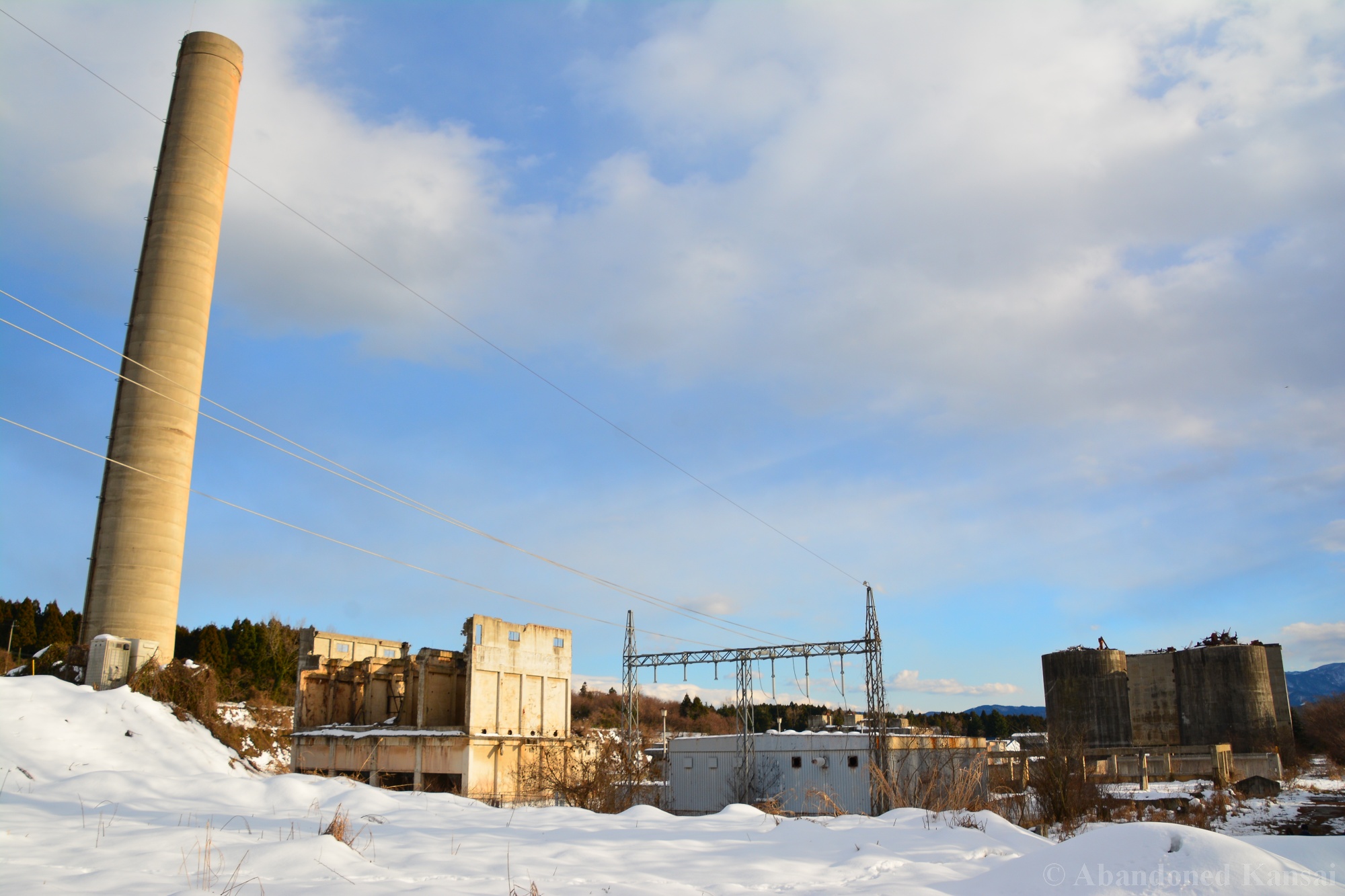
The different time of the day and especially the different season with the completely different weather made this one of the few revisits actually worth my (and your!) time. The outdoor part wasn’t that much fun since the area was completely covered in snow. Not deeply, but enough to make walking around a bit iffy as you never knew what you would step on / in next – and it wasn’t until I got home and looked at the photos that I realized that the area had a very strong Star Wars vibe; like after the battle on the ice planet Hoth. A completely different atmosphere than in early September… and an almost completely overgrown building was all of a sudden accessible again. In summer vines and other plants covered pretty much all of the ground floor windows and especially the doors, so the it was only upon my second visit that I could enter the building – which wasn’t spectacular by any standards, but a nice addition to the exploration and the photo set, despite the rapidly fading light.
The winter / Hoth story would have been enough to justify another article, but fortunately I waited a little bit longer and so it happened that Nicolas fucking Cage, hero in two of the best action movies of all time, shot his currently latest movie at this exact same location in late 2019. Of course I found that out after the fact or otherwise I would have tried to sneak a peek. But hey, it’s still the same location I’ve explored twice extensively. Interestingly enough a young Japanese woman called Riko Shibata somehow got access to the venue or at least the film crew – Cage met her in Shiga when she was 24 and he was 55, about one and a half years later they got married in early March of 2021; her first, his fifth marriage. Oh, and the movie is called Prisoners of the Ghostland, directed by Sion Sono and probably way too violent for my fragile little mind. So I hope one day I’ll be able to skip through a Blu-Ray or a stream and watch the scenes shot at the *Sumitomo Osaka Cement Factory*.

(*Like Abandoned Kansai on Facebook* or *follow us on Twitter* if you don’t want to miss the latest articles and exclusive content – and subscribe to the *video channel on Youtube* to receive a message right after a new video is online…)

Read Full Post »
Abandoned food factories are rather are in Japan, so I was quite excited when I found this one by chance…

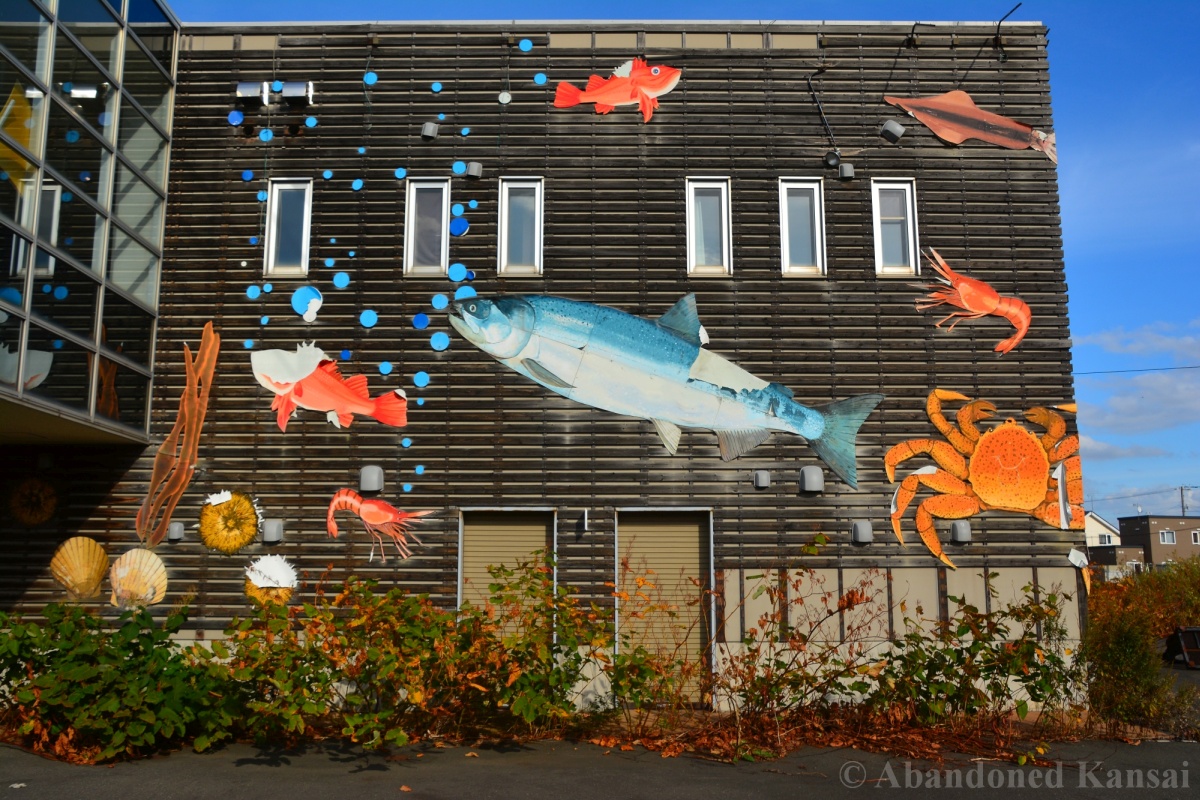
About four years ago I spotted on GoogleMaps what looked like an abandoned warehouse in the outskirts of the residential area of a rather big city in Japan. A few months later I had the opportunity to check out the place with my buddy Rory. To both of our surprise the fading sign at the entrance gate said Yamato Food Factory, so my excitement rose significantly as I have fond memories of exploring an abandoned food factory in Hokkaido years prior. Fortunately the gate was open and roped off… and a bit out of sight, so getting on and off the premises turned out to be surprisingly easy. There were three or four different structures, all of them accessible, unfortunately all of them more or less empty. So in the end this actually was kind of an abandoned (empty) warehouse. I also wasn’t able to find out more about the company „Yamato Food Factory“ on the internet, so it’ll probably stay a mystery what kind of food was produced here.

Overall not a bad exploration though. It’s always great to check out original finds (I haven’t seen this location anywhere before or after my exploration), the weather was great… and so was lunch afterwards. Of course the Yamato Food Factory couldn’t hold a candle to the spectacular *Fuji Foods Bibai Bio Center* in any aspect, nevertheless it was a nice little autumn exploration.

(*Like Abandoned Kansai on Facebook* or *follow us on Twitter* if you don’t want to miss the latest articles and exclusive content – and subscribe to the *video channel on Youtube* to receive a message right after a new video is online…)

Read Full Post »
Older Posts »