Feeds:
Posts
Comments

Archive for the ‘Kyoto’ Category

Driving around in the countryside is one of the best ways to find abandoned places in Japan that are not (yet) known in the urbex community – original finds. But you have to be careful or you might end up in somebody’s living room or at their work place…

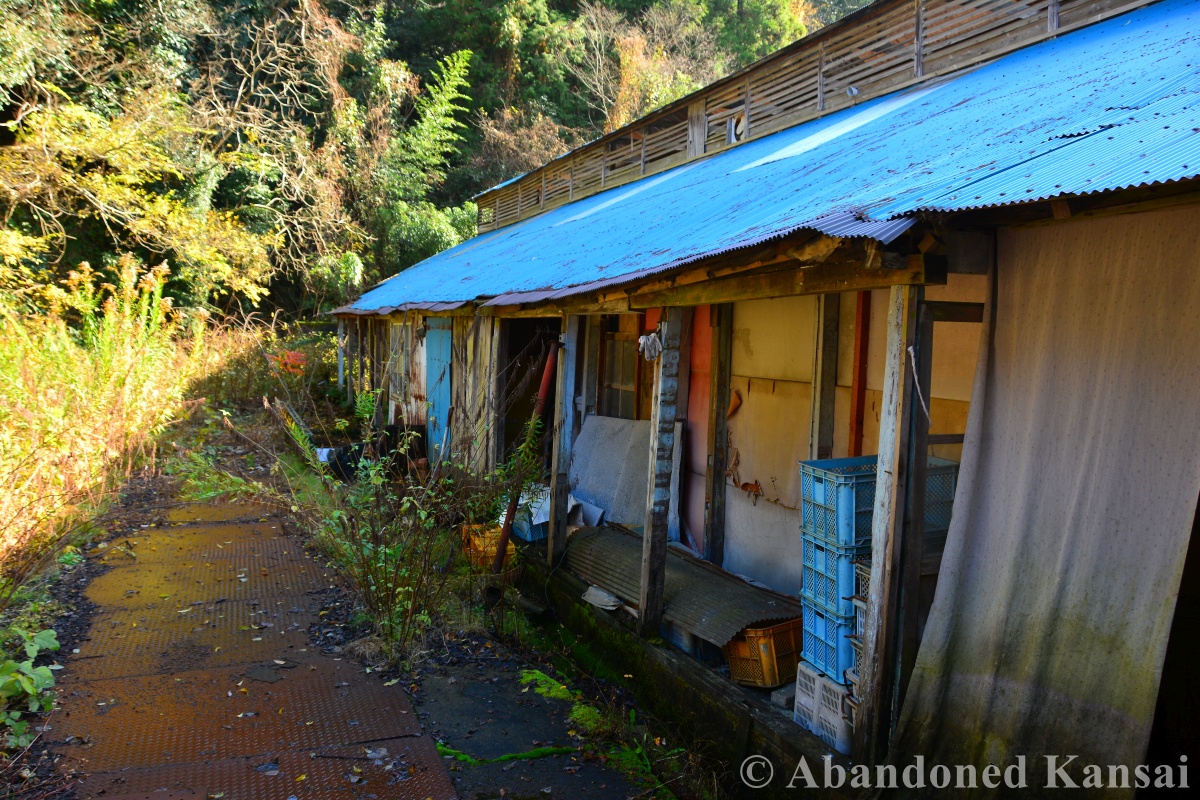
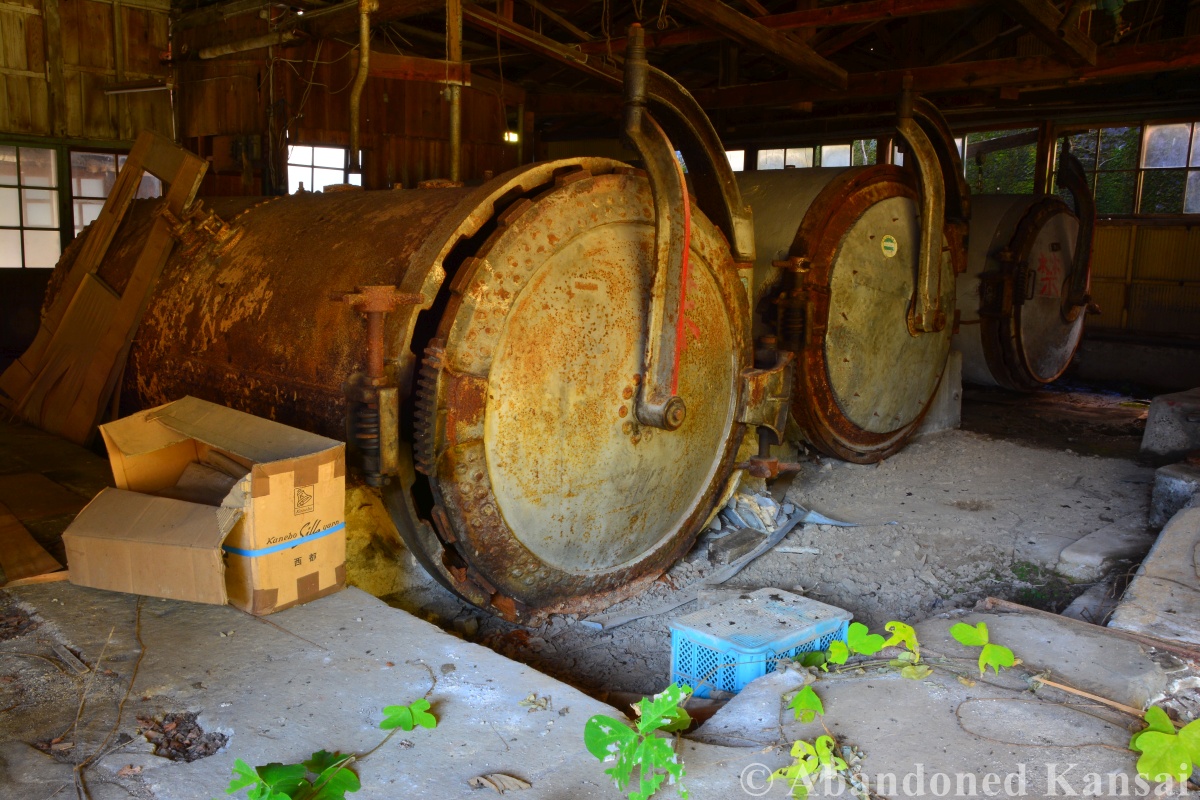
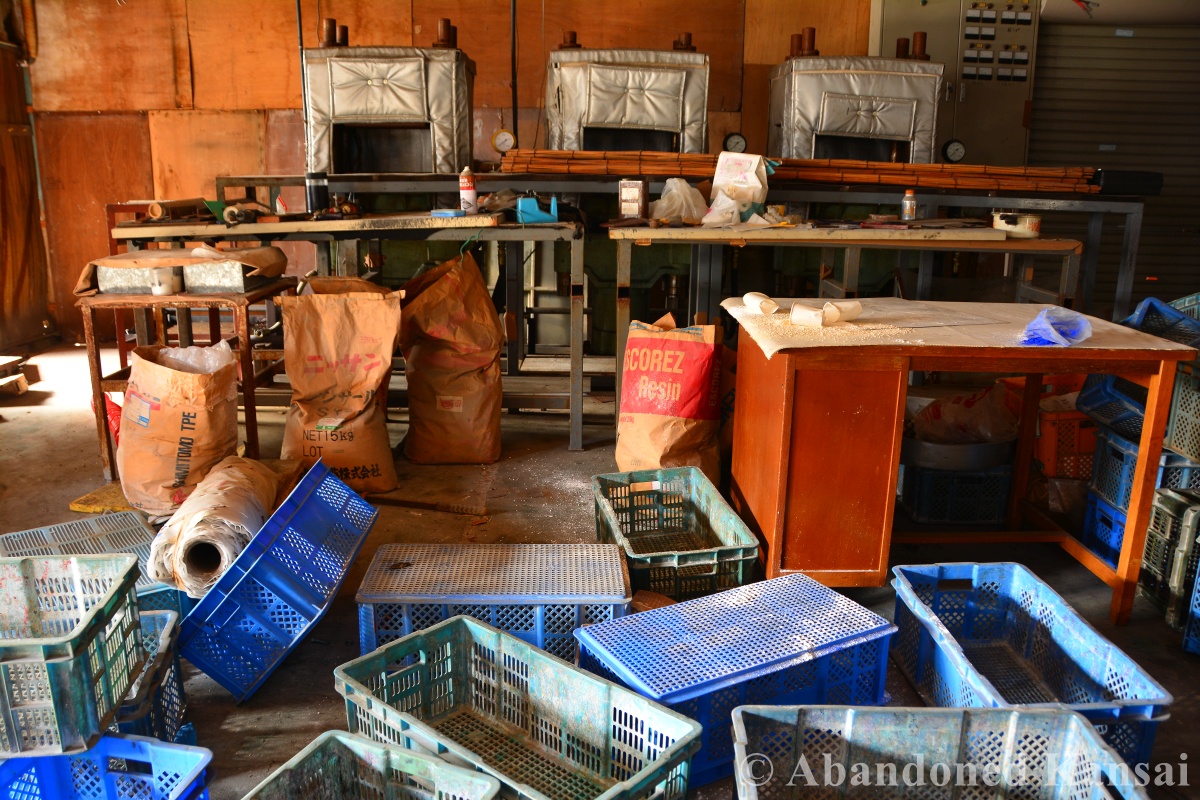
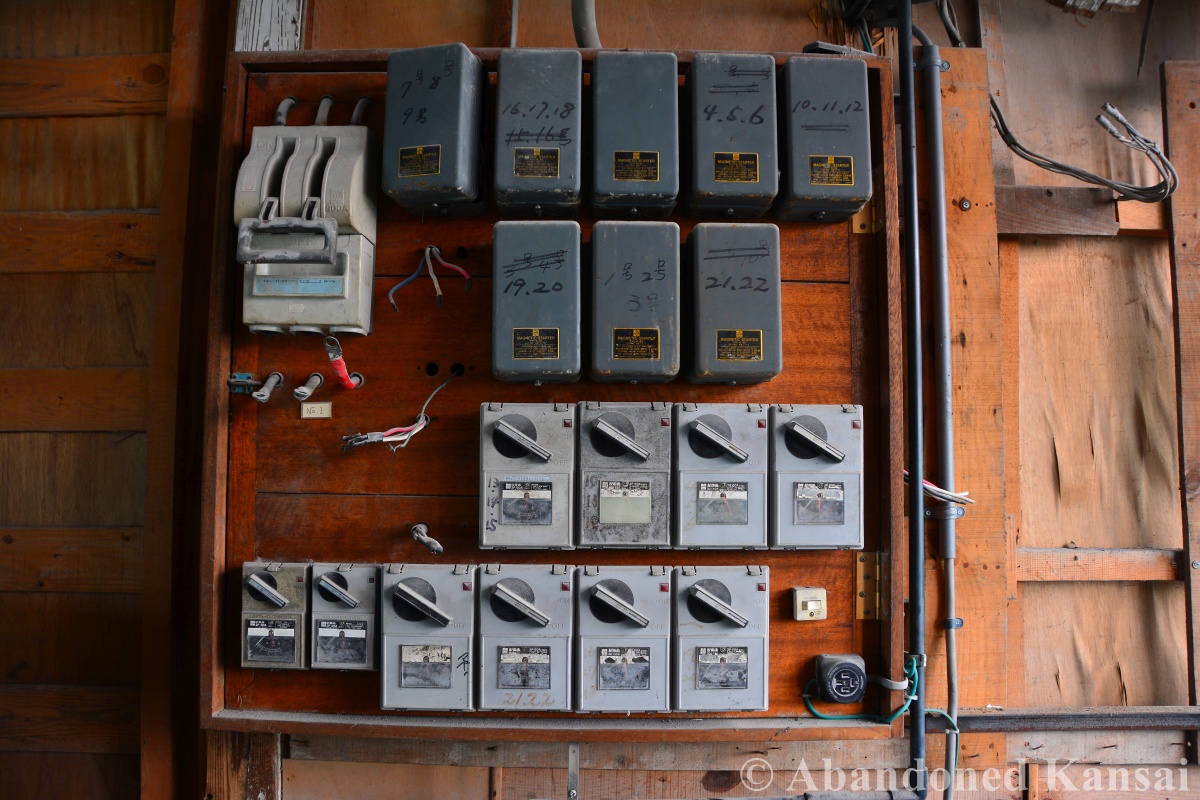
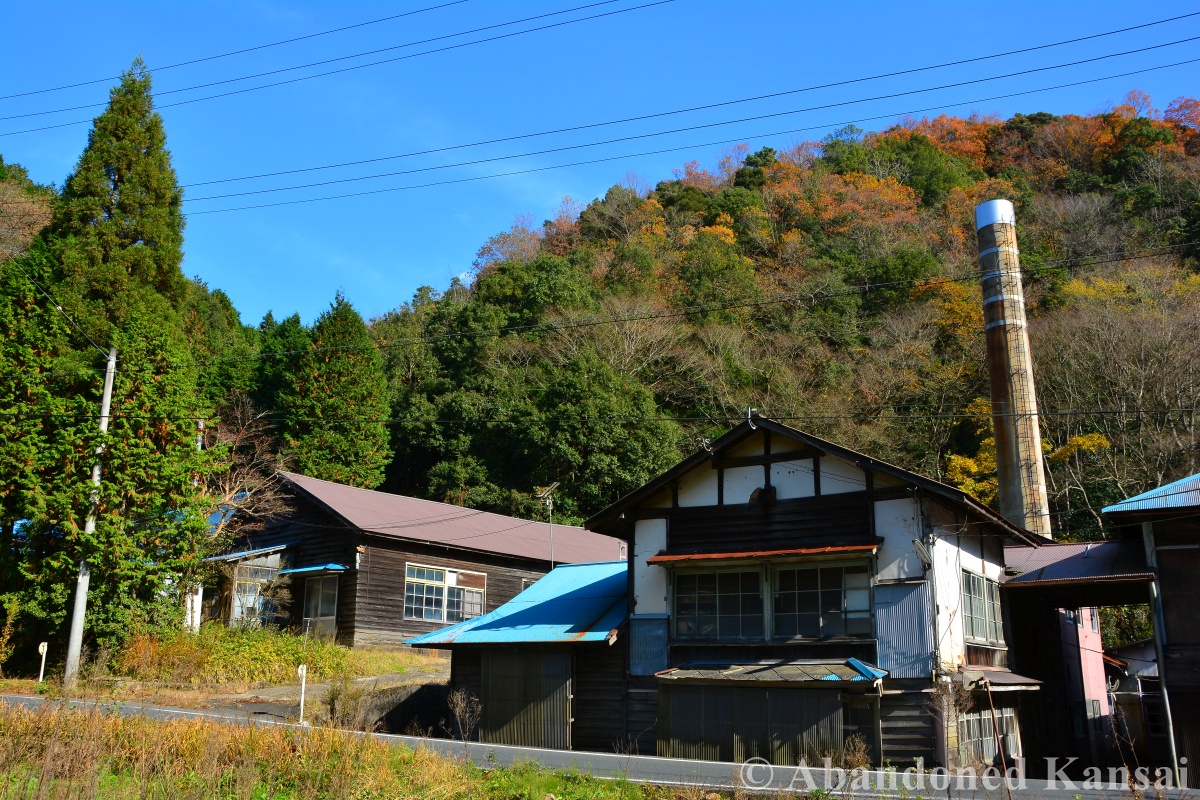
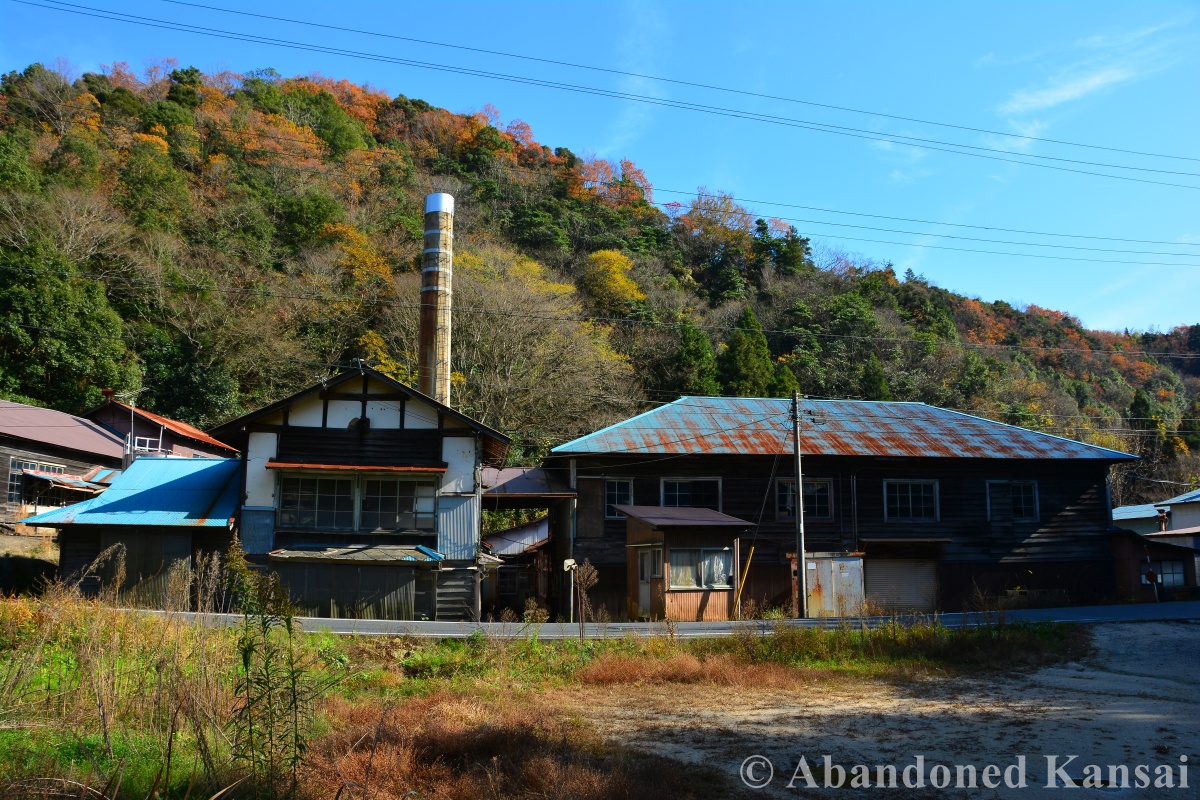
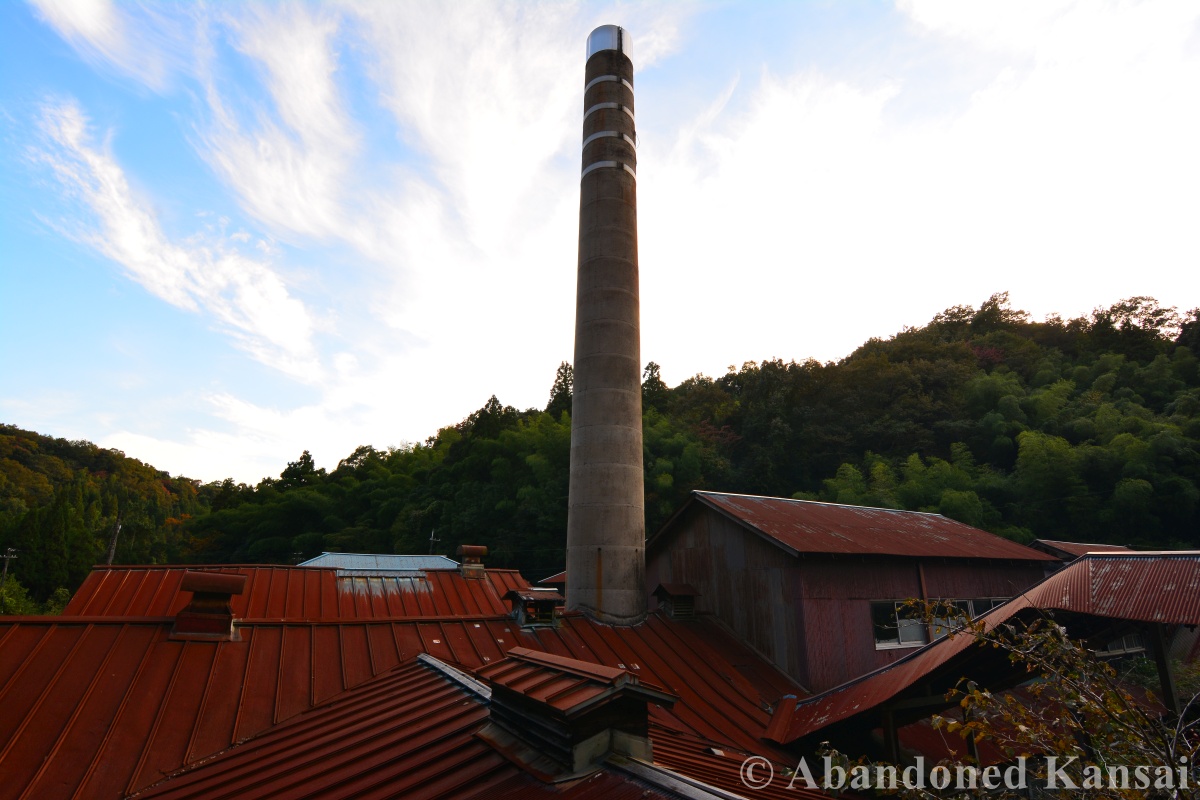
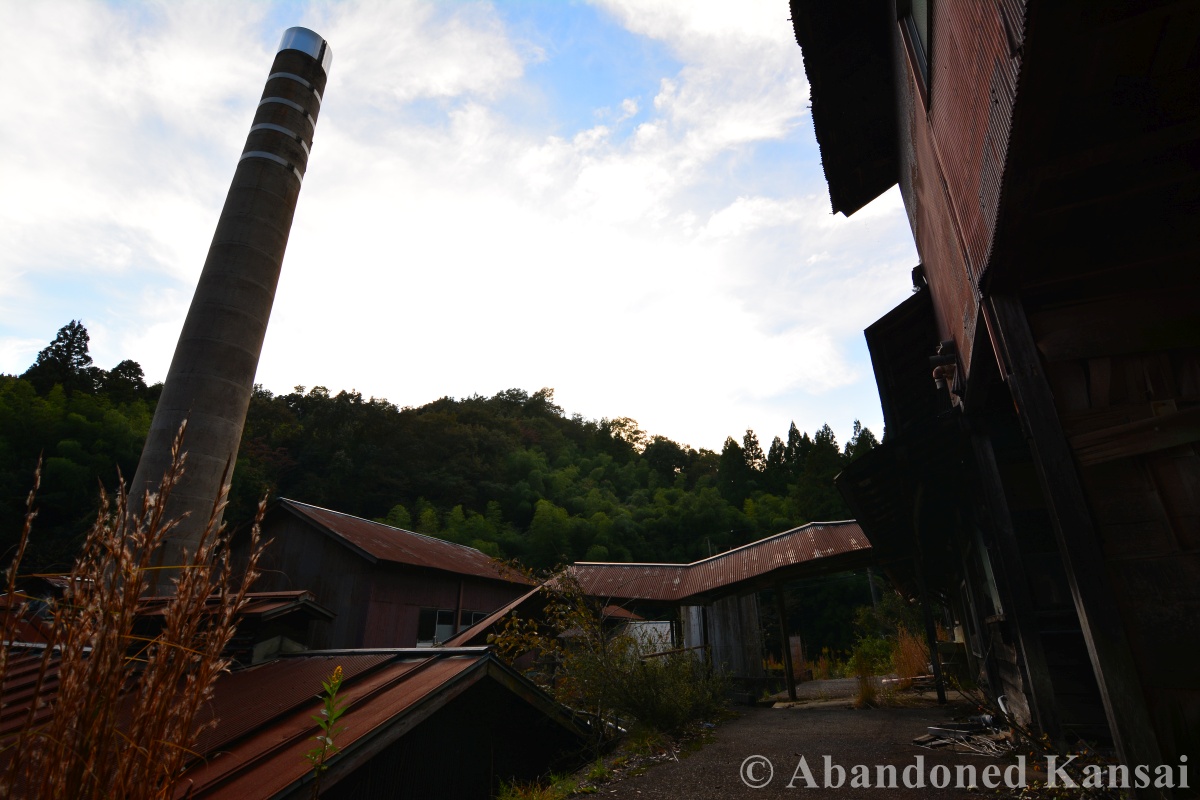
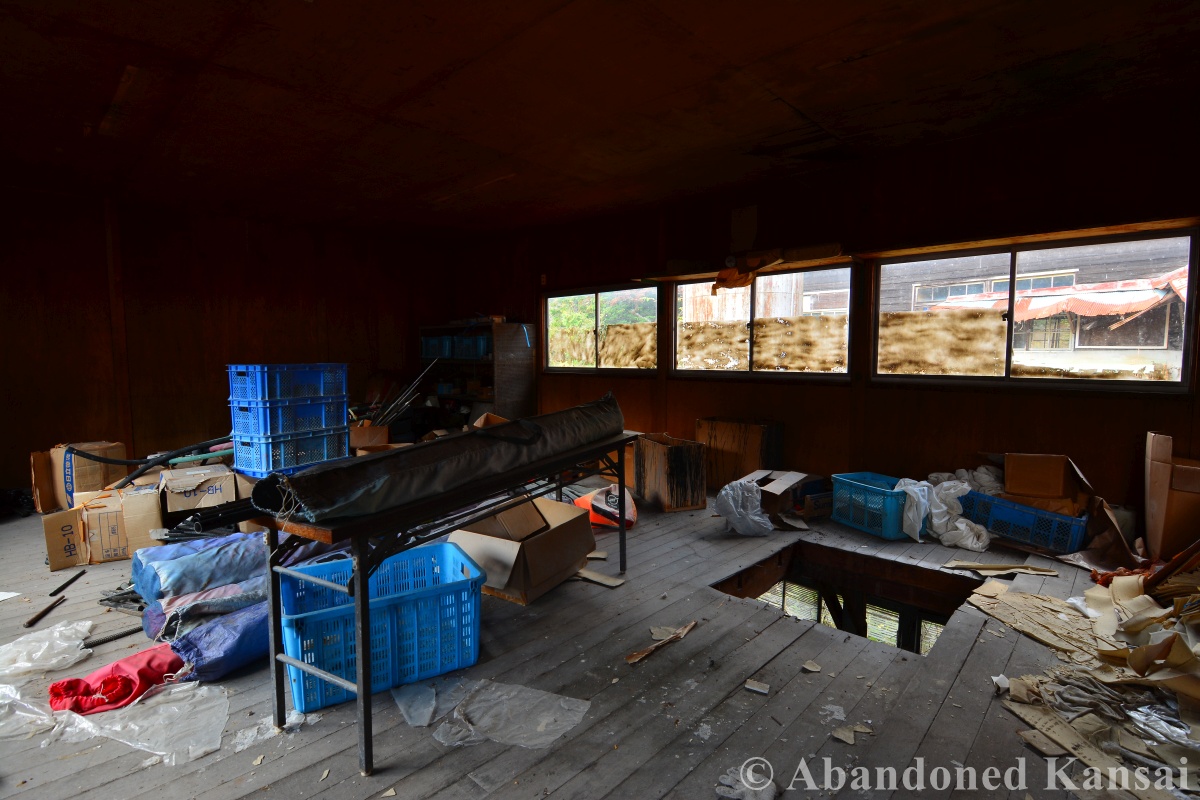
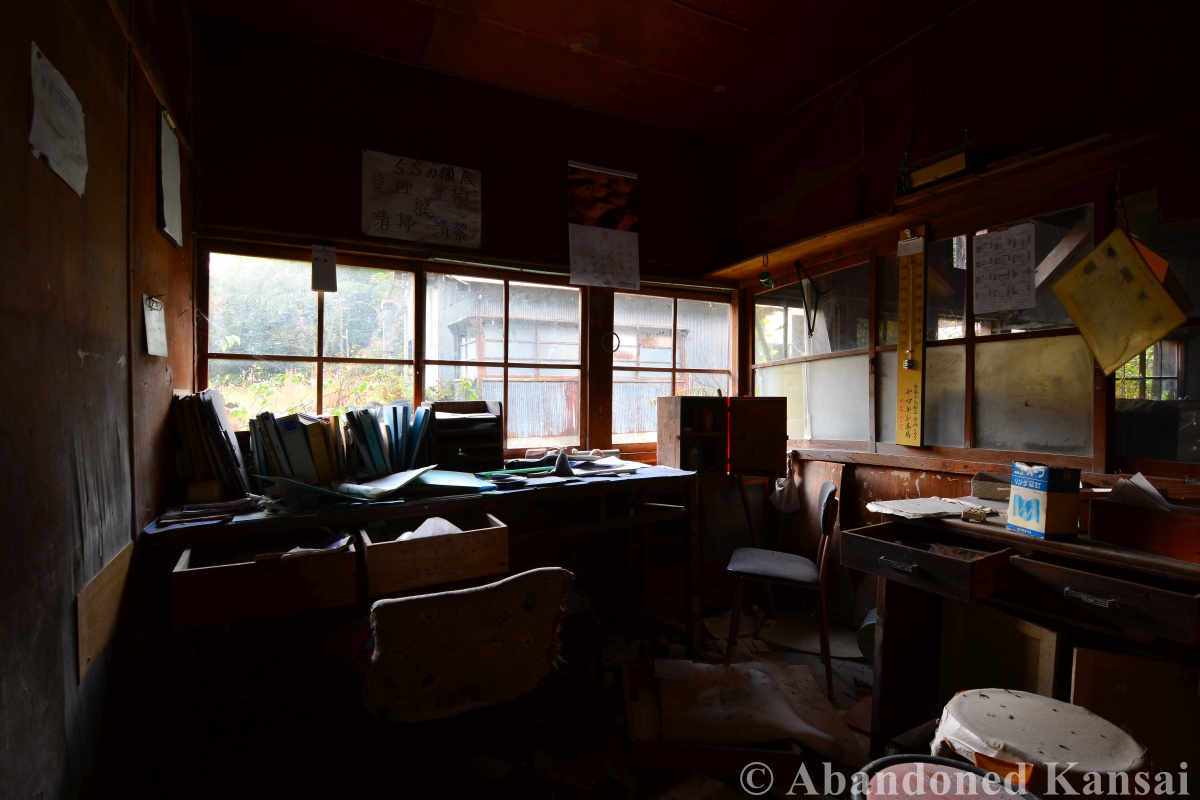
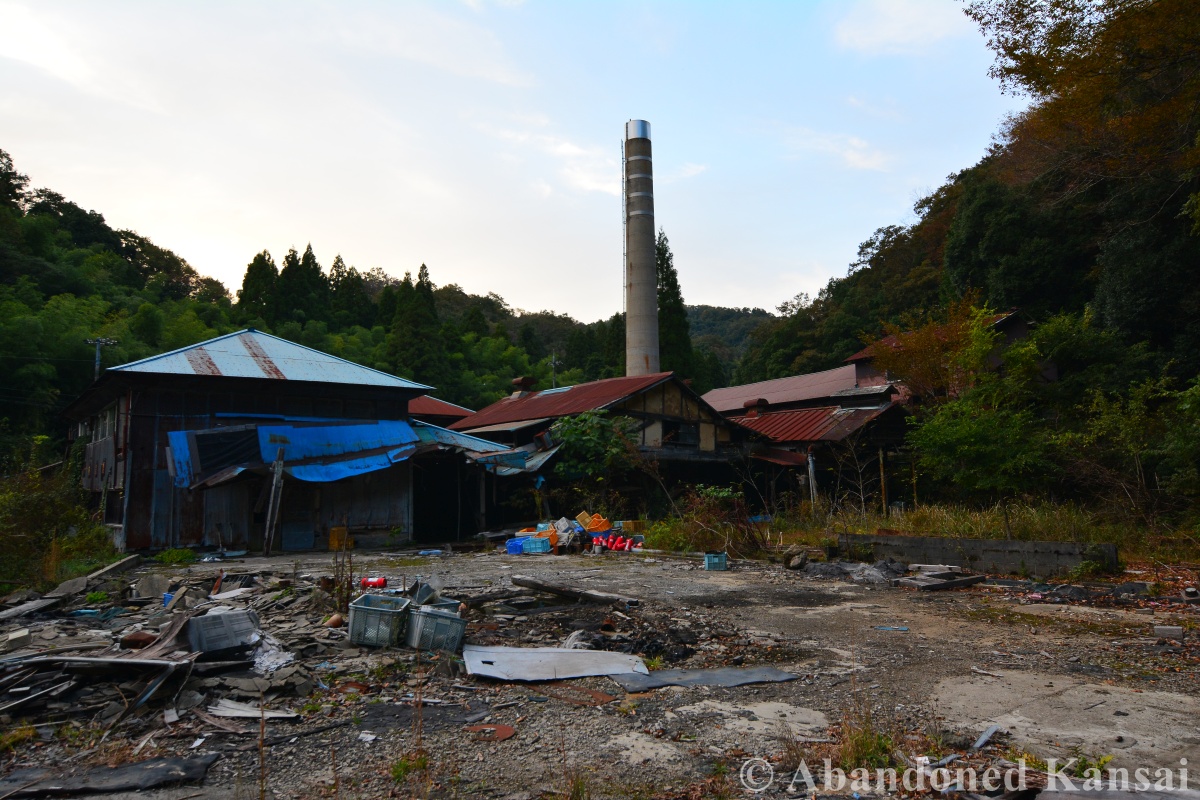
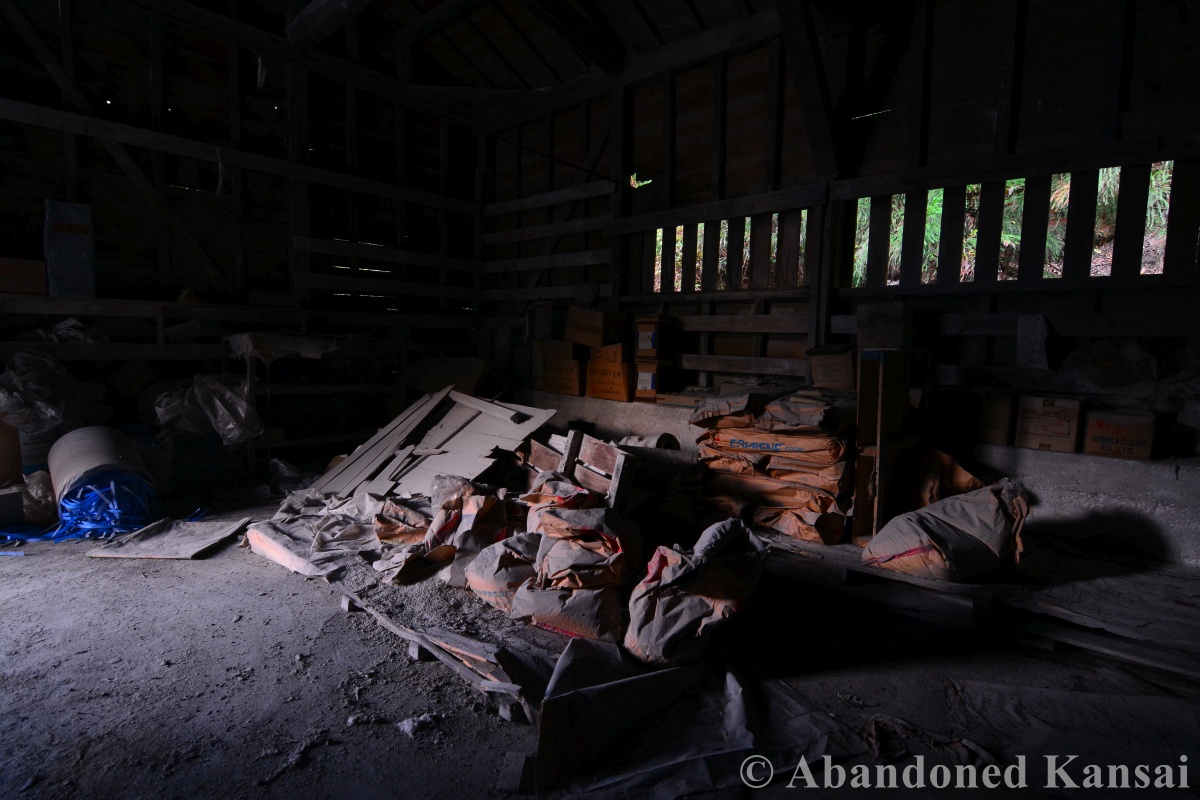
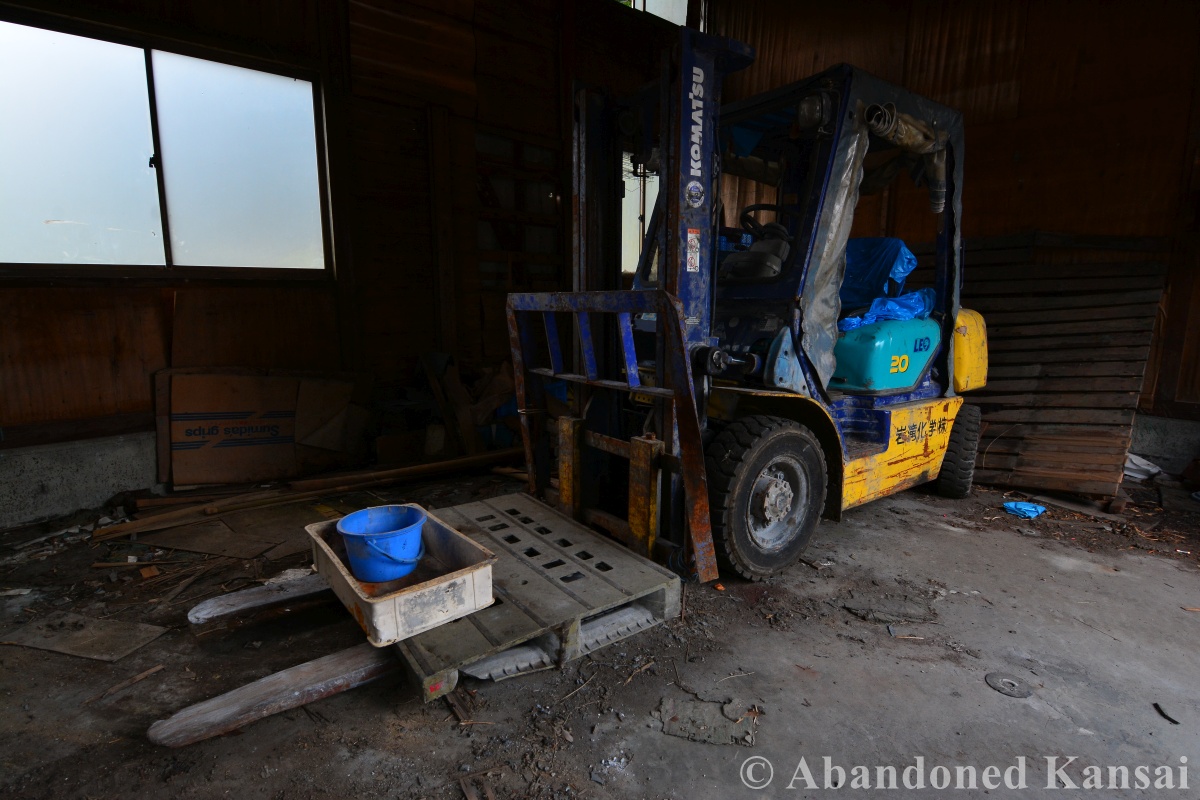
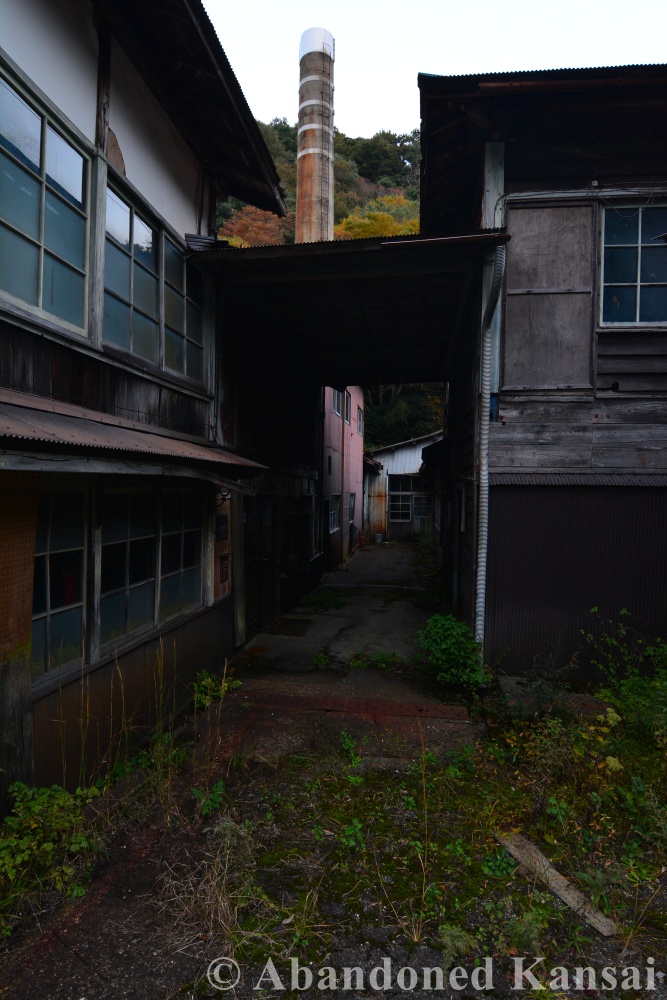
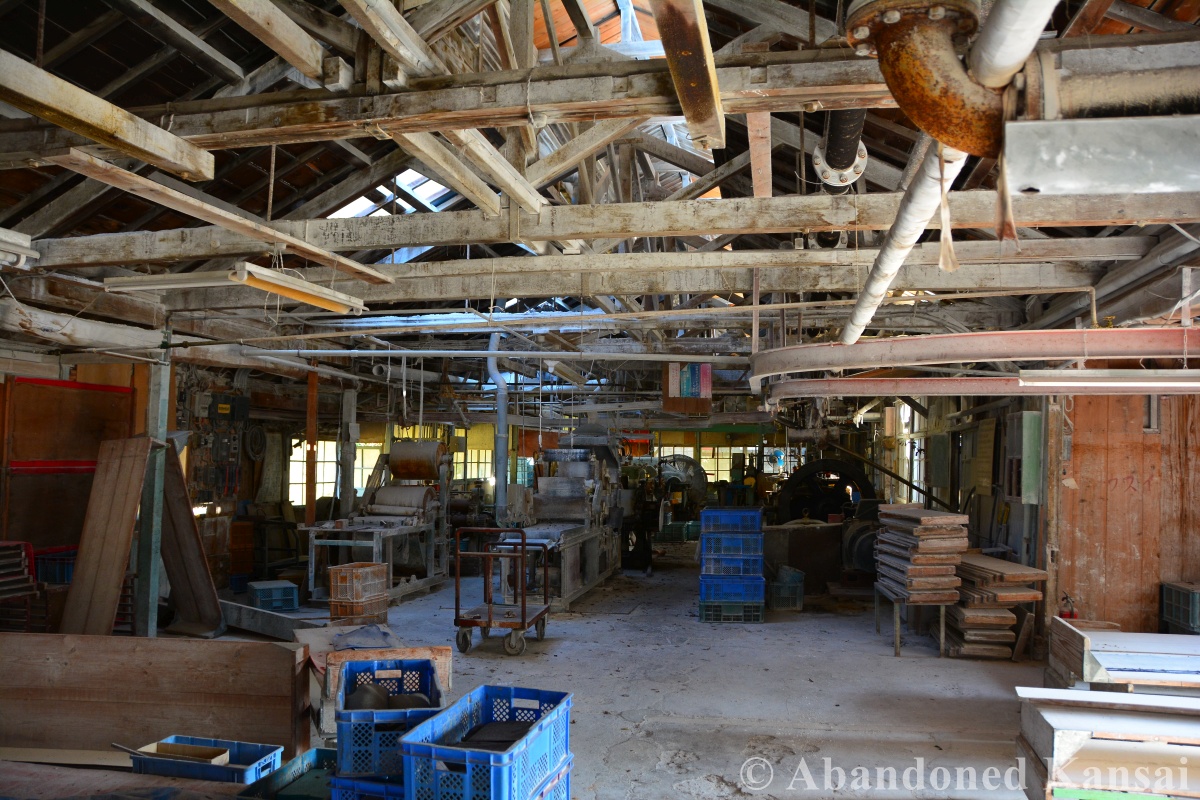
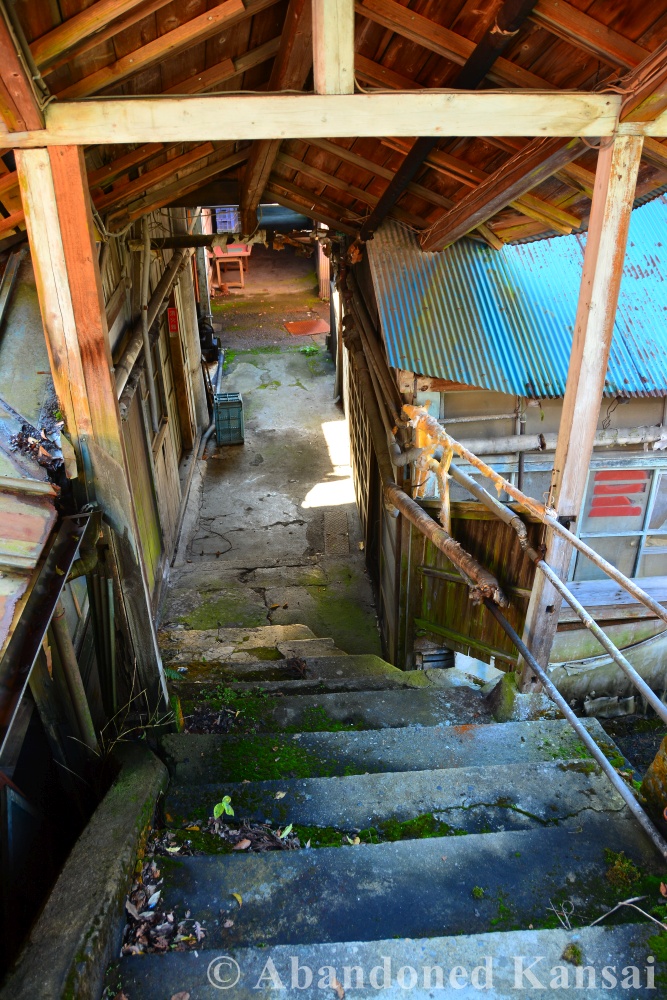
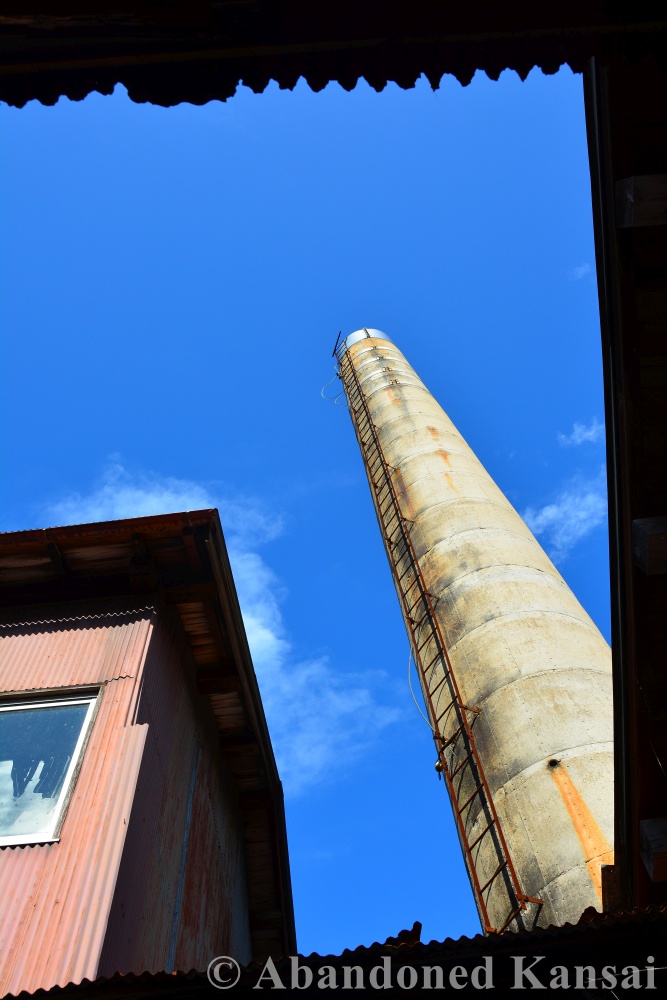
In the mid-2010s I went exploring with two journalists from Scandinavia who did research for a book about abandoned places and industrial decay. On our way to a deserted hotel we drove past this wooden, rundown factory… and turned around to have a closer look. There were some cars with license plates parked on the premises, despite it being Sunday, but nobody was there. The place had a very abandoned look to it, but most buildings were locked and could have still been used, though we had no clue what for, so we took some photos, mostly outdoors, and drove on – breaking and entering isn’t my thing… and original finds are extra risky. I didn’t know until my research for this article that the company wasn’t officially shut down until two years after this exploration!
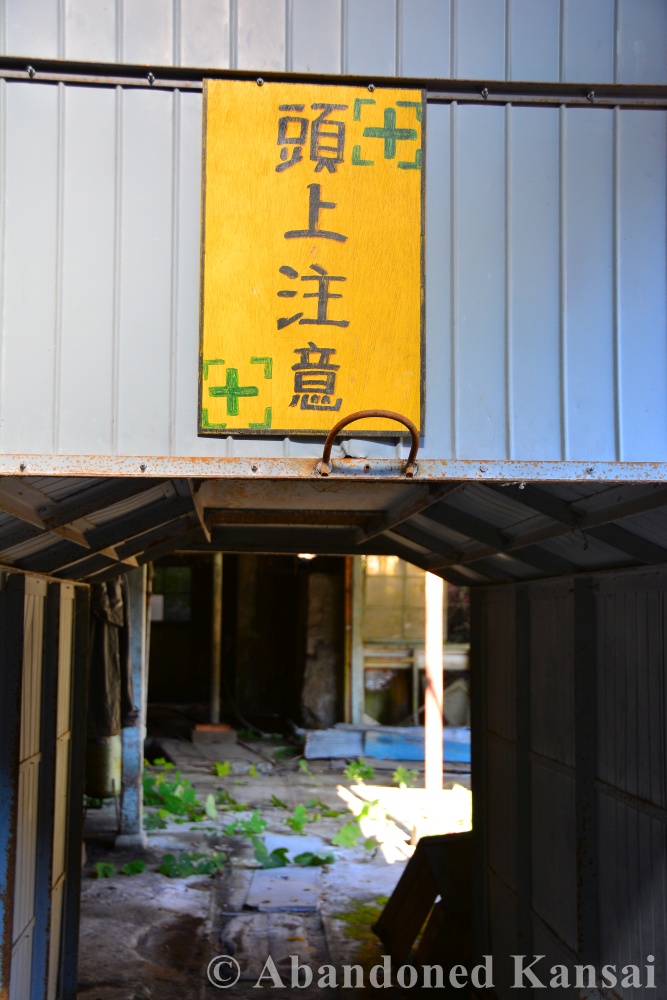
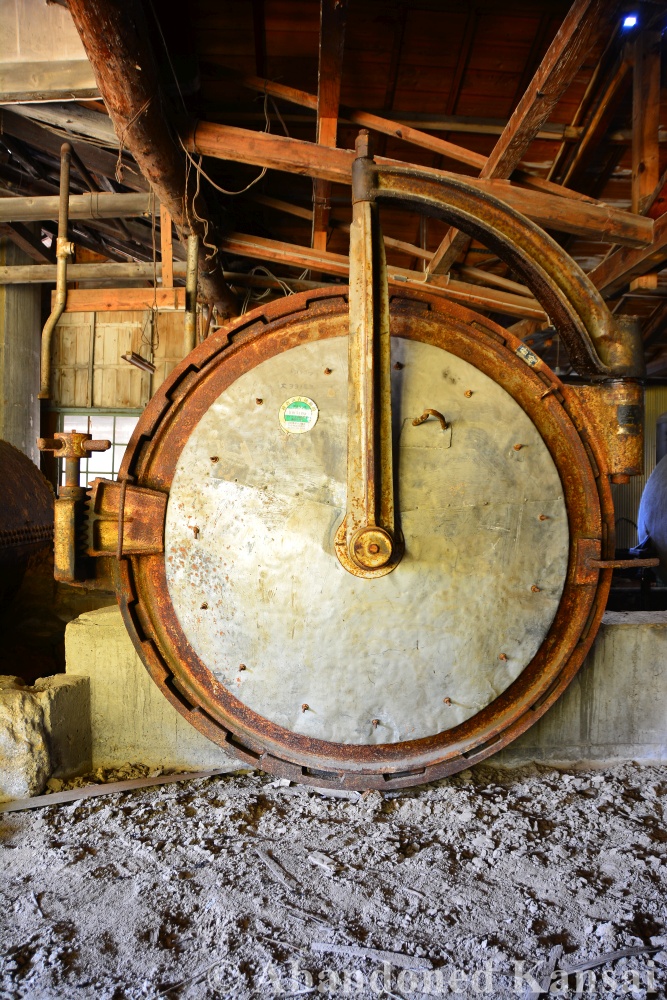
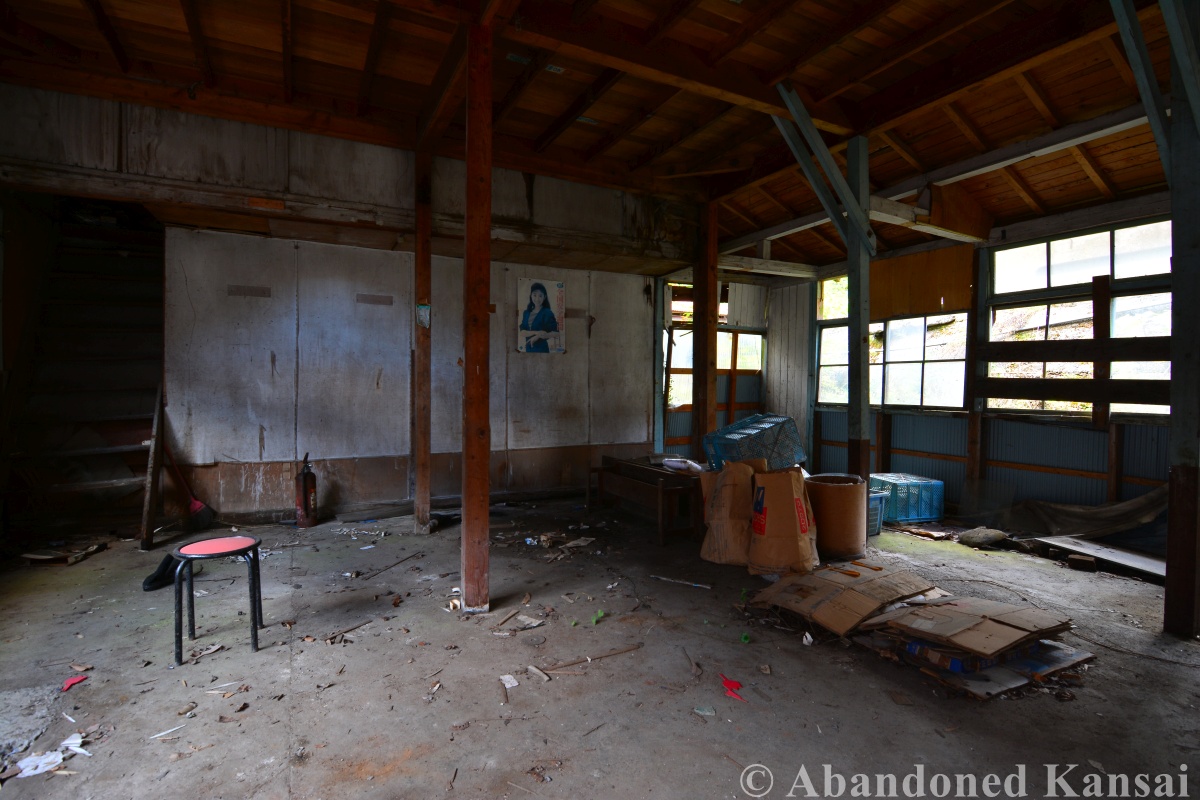
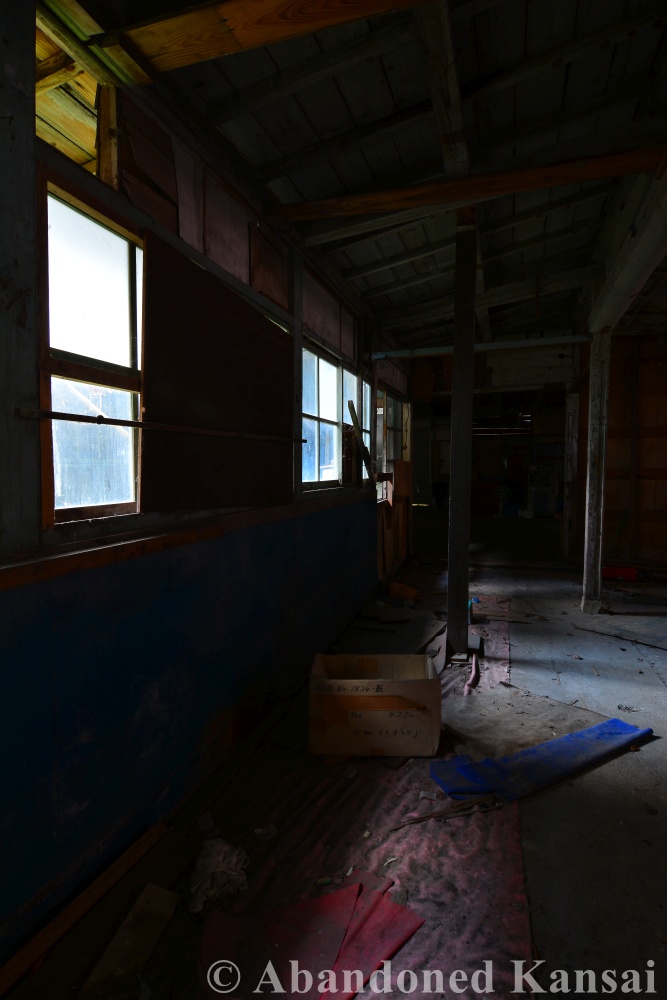
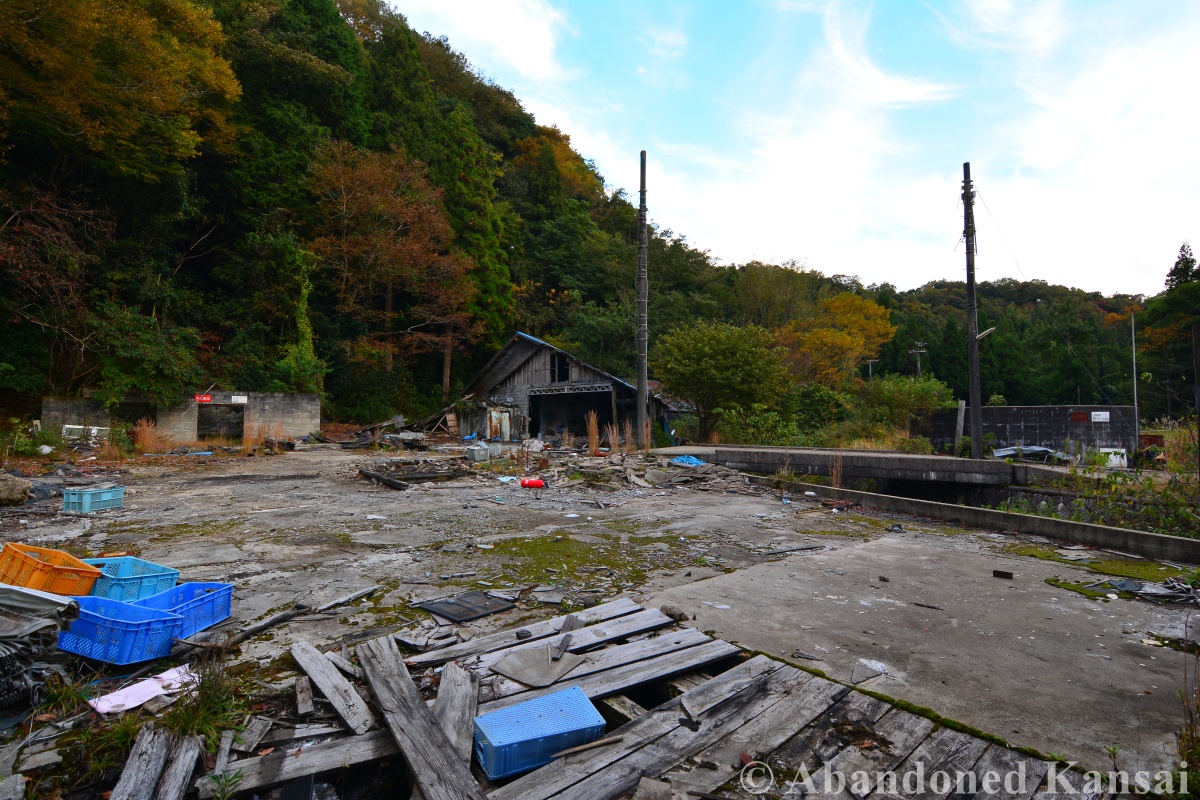
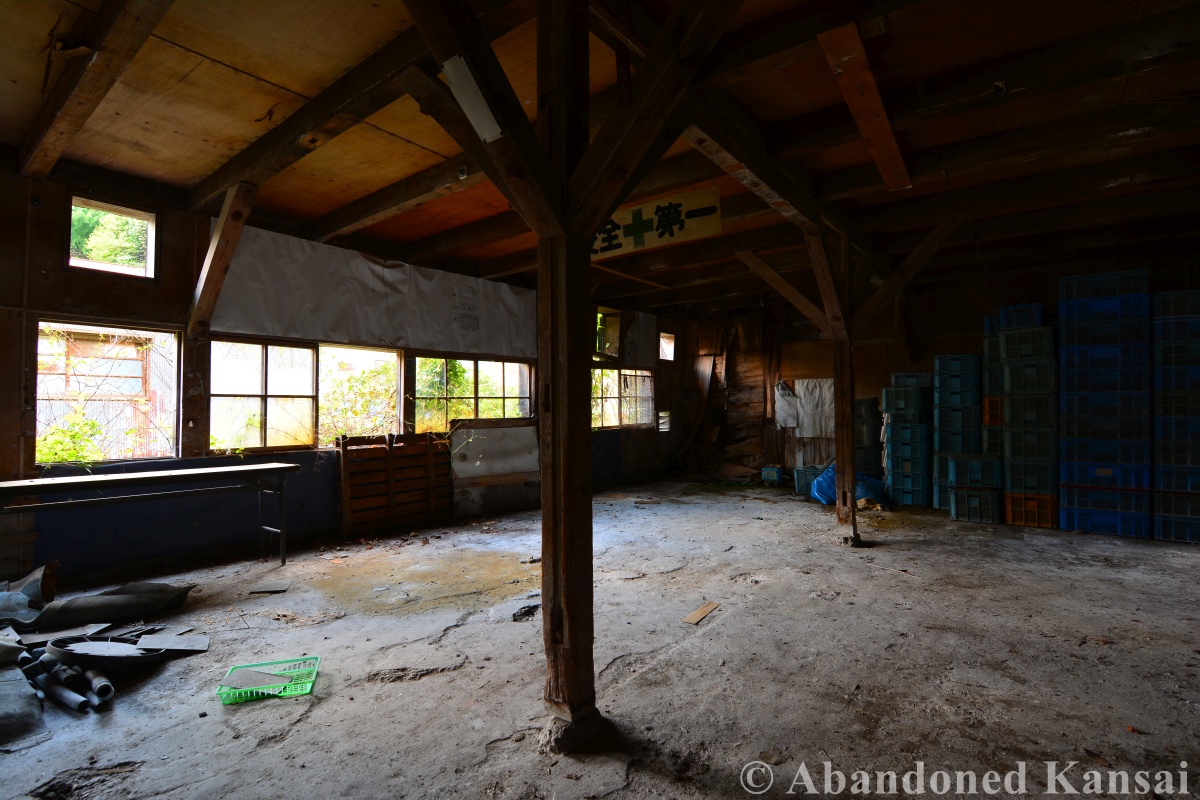
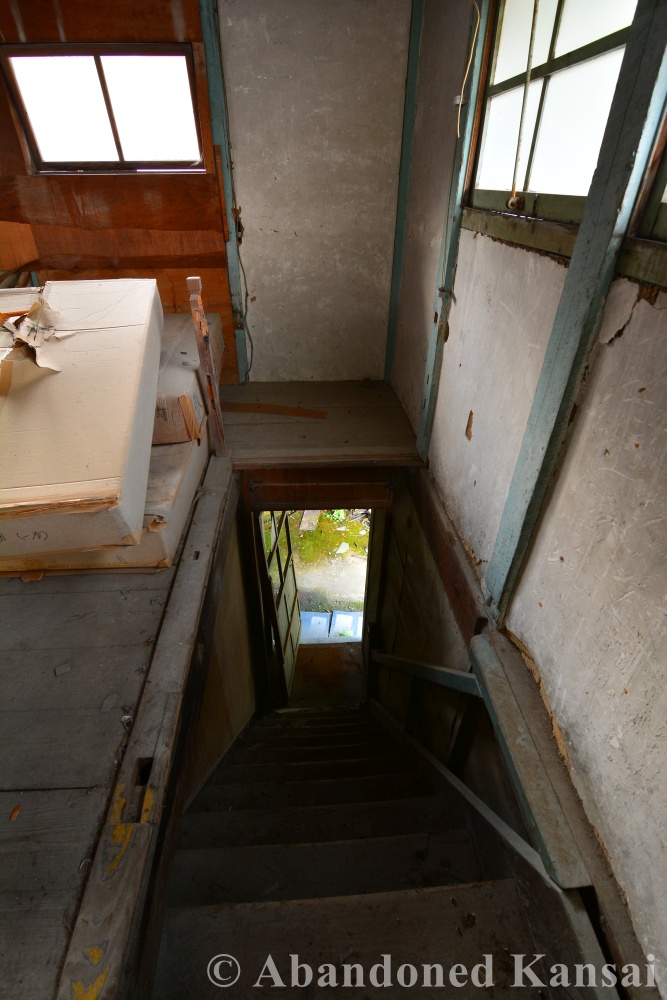
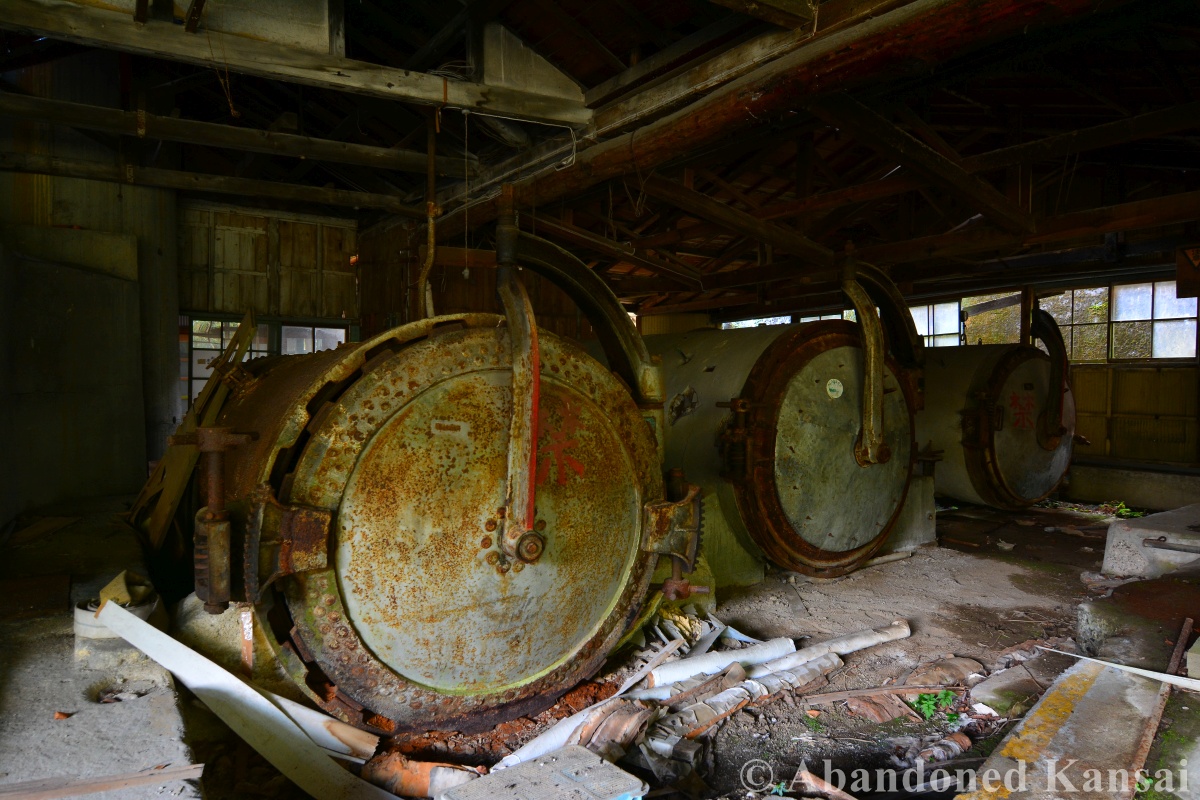
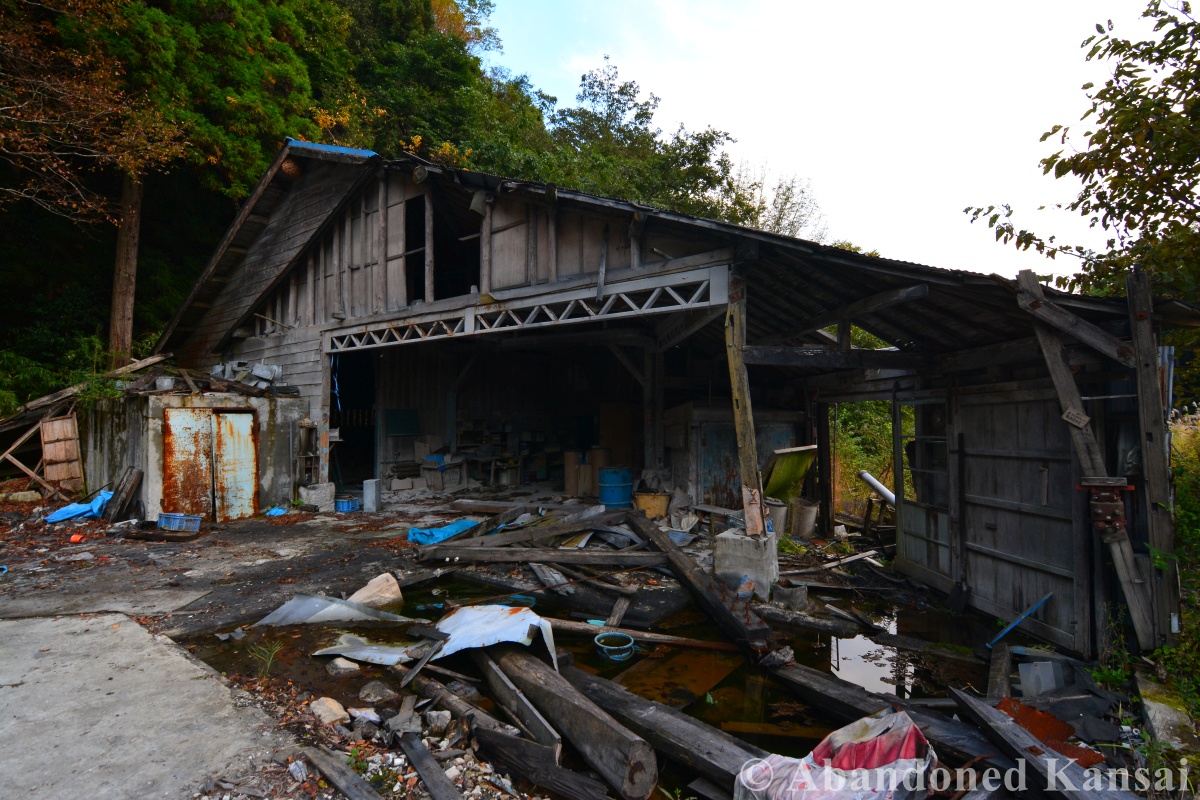
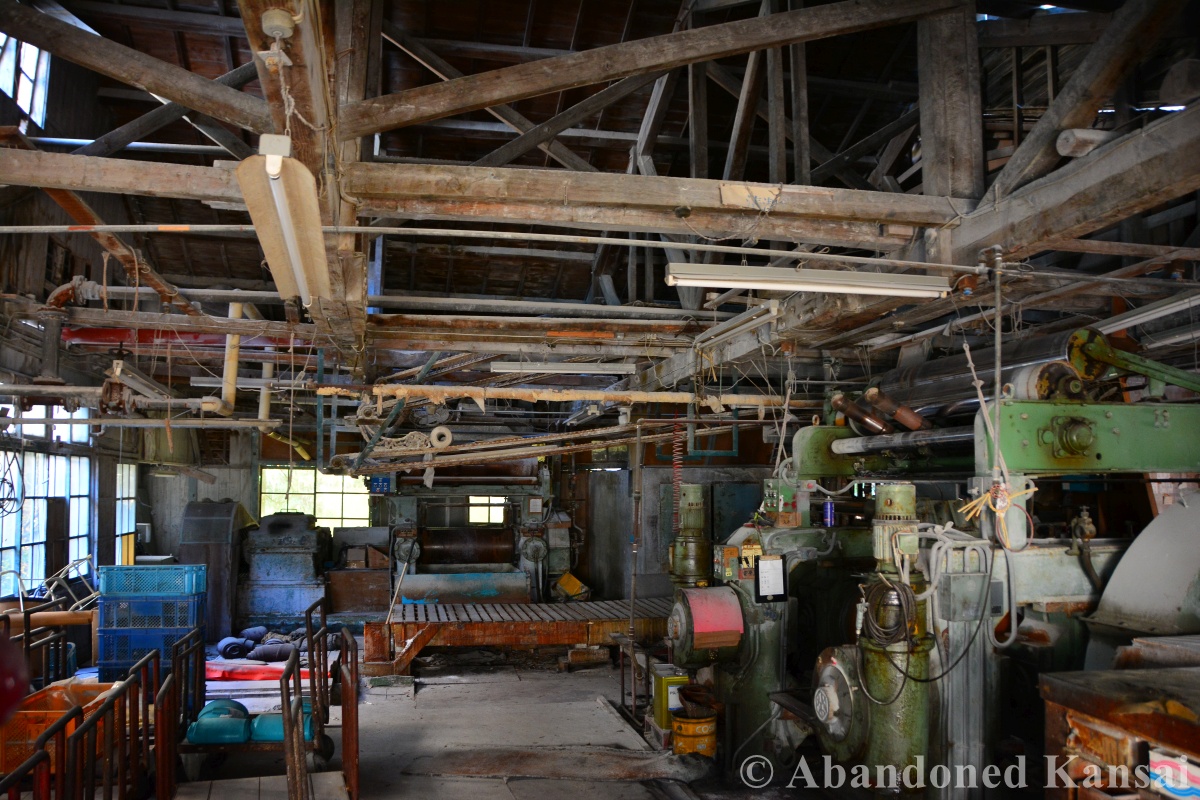
7 years later I was in that part of Kyoto prefecture again with another urbex friend, so we decided to stop by the countryside factory again. And this time it was completely different. All the cars were gone, about one third of the factory had been demolished, the rest was easily accessible through open or unlocked doors. This time we had to rush, because we were running out of daylight, but it was nevertheless a super interesting exploration as the factory looked like it must have been a hundred years old and could collapse at any time when slamming a door shut.

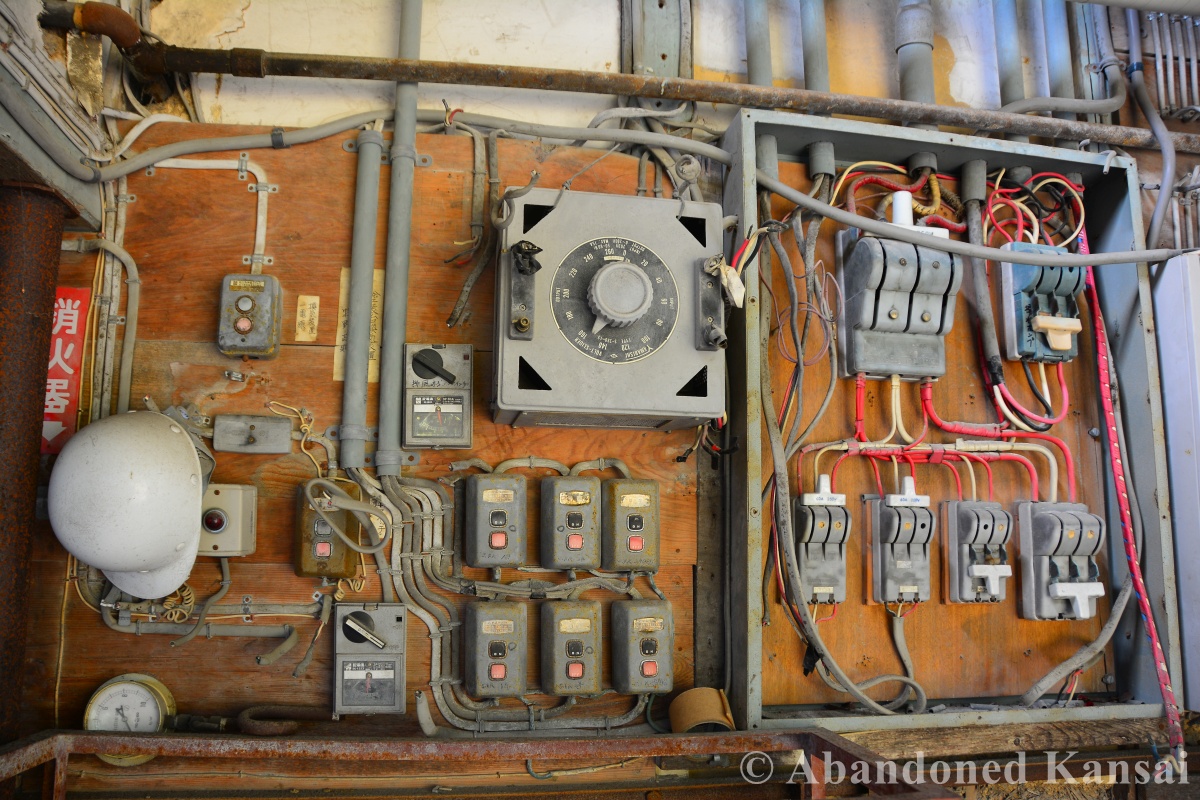
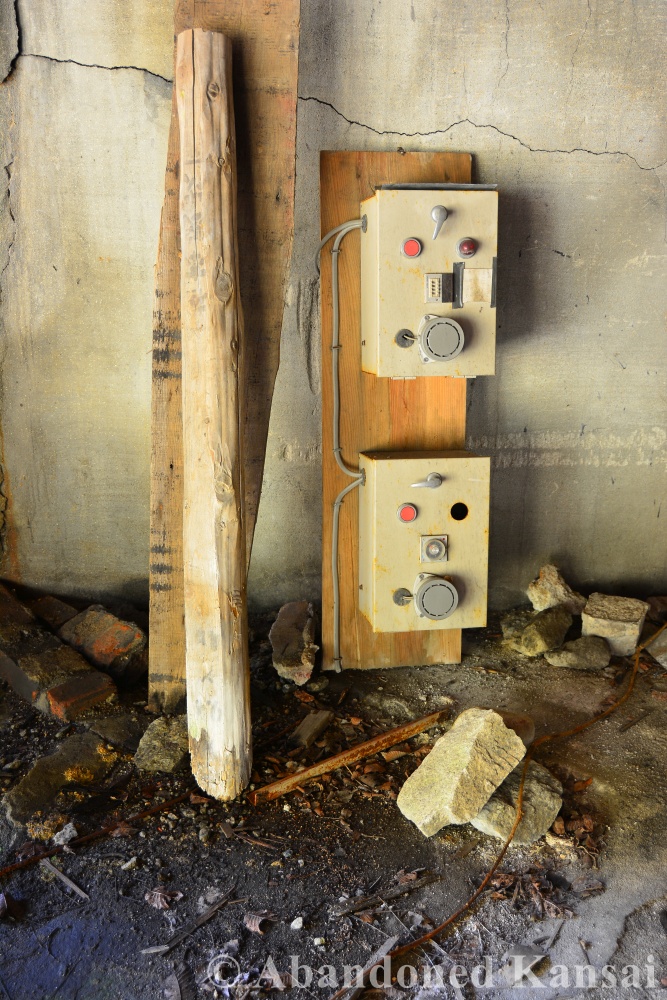
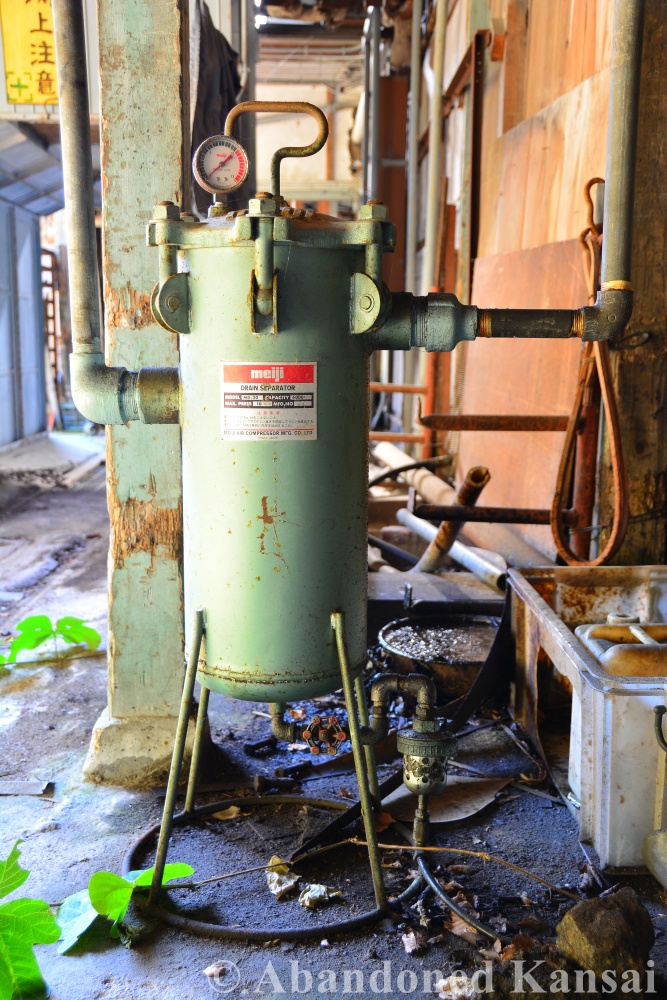
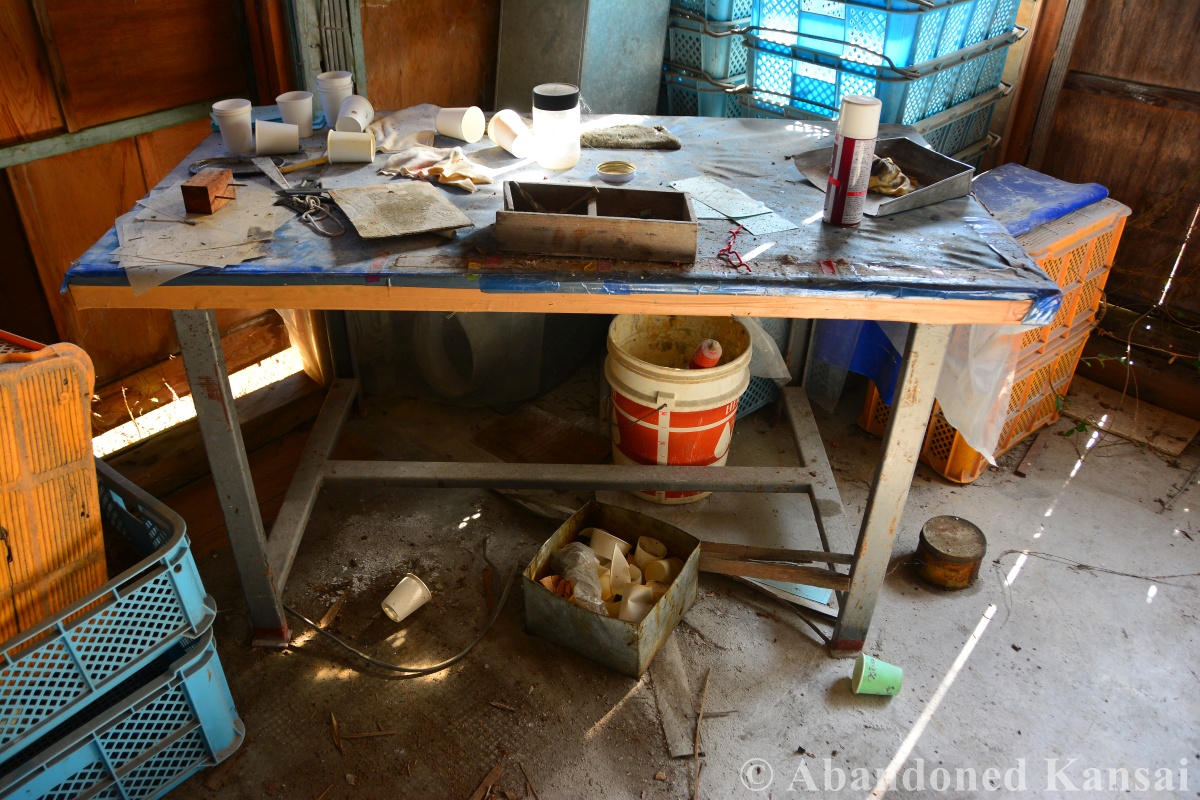
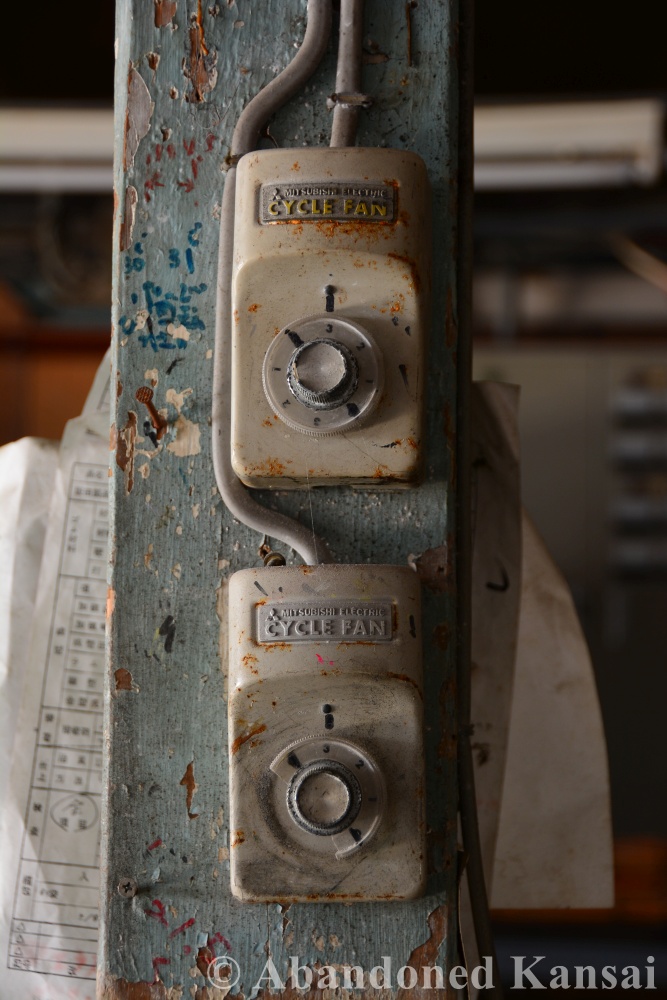
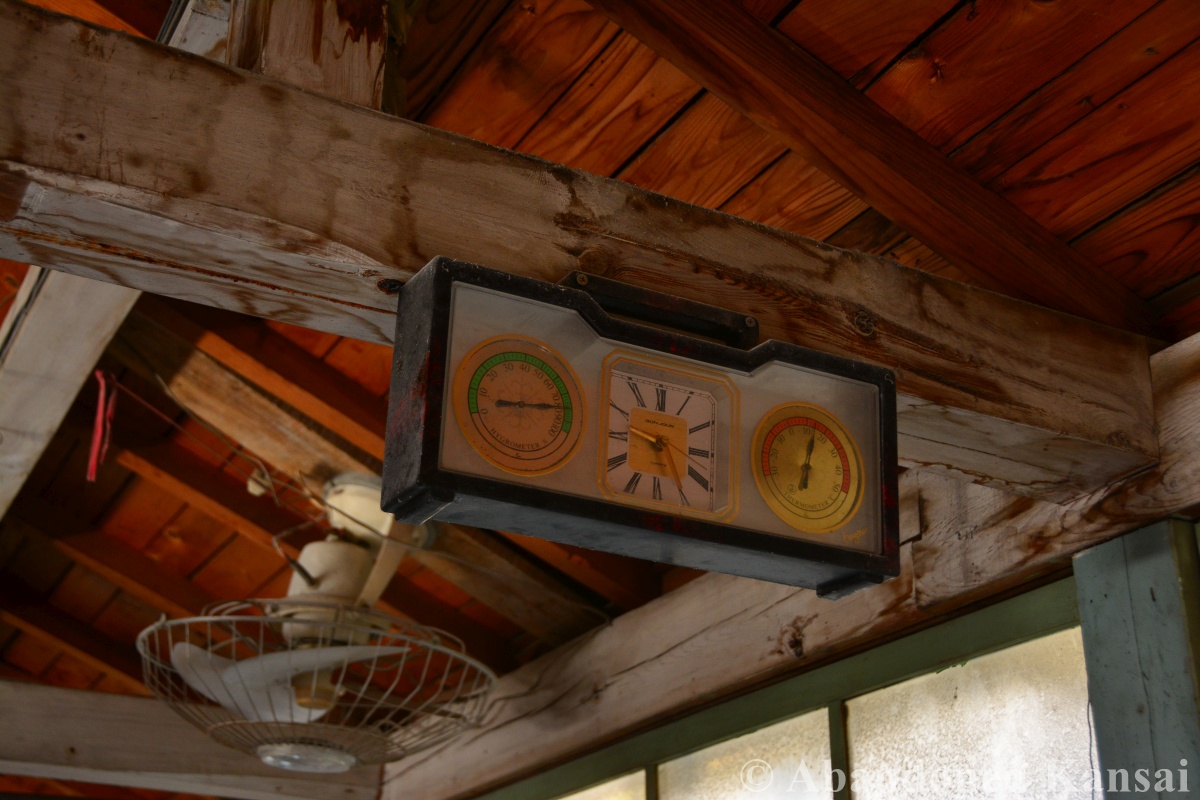
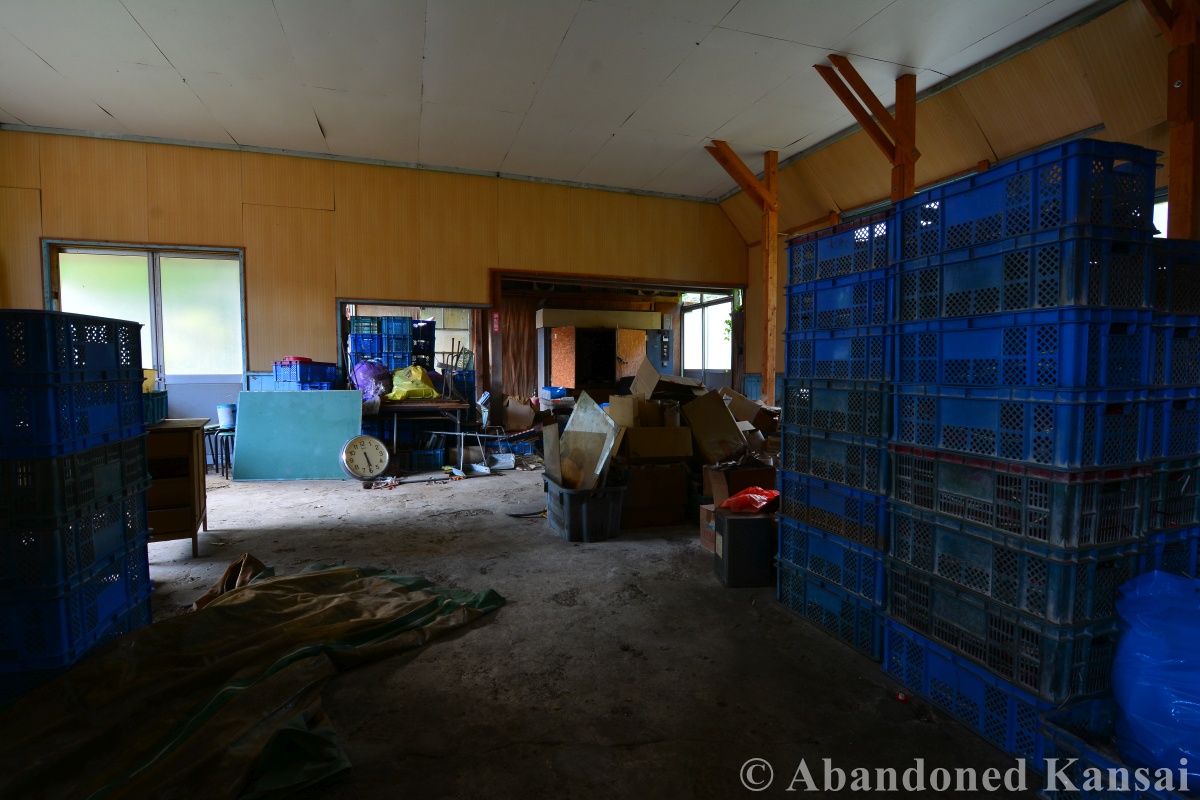
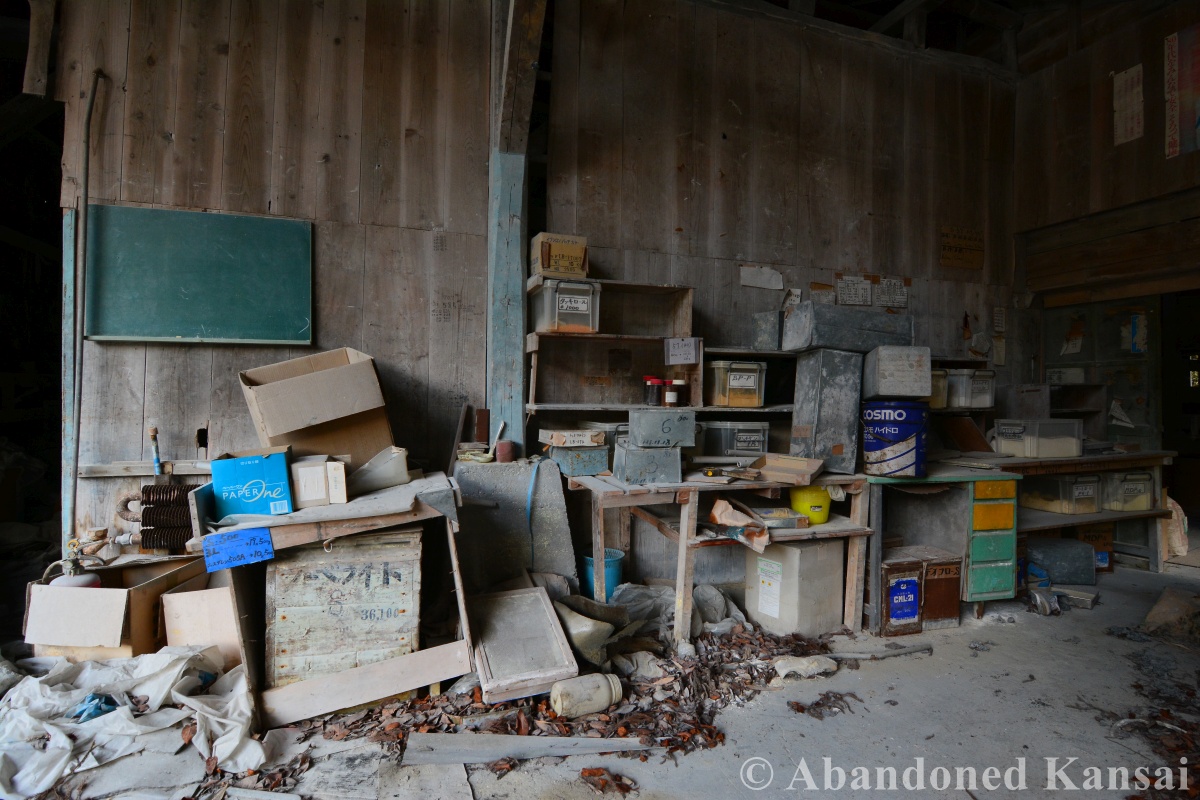
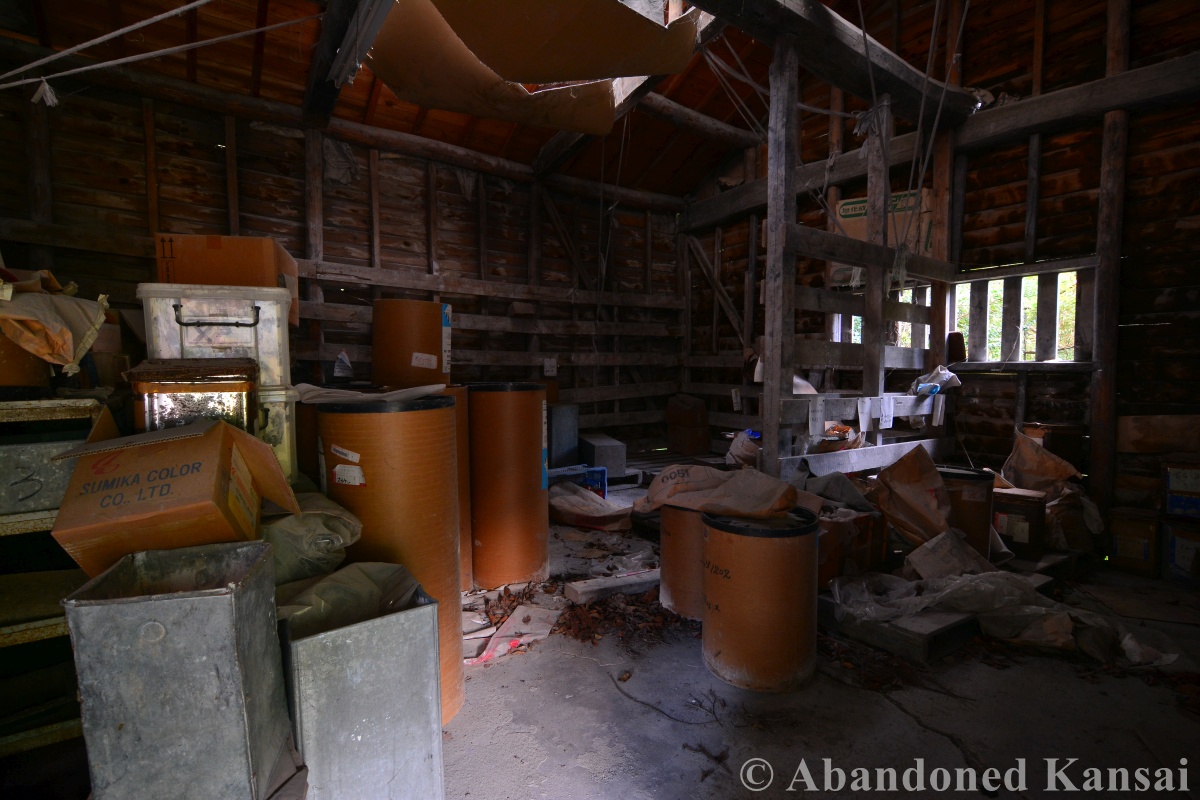
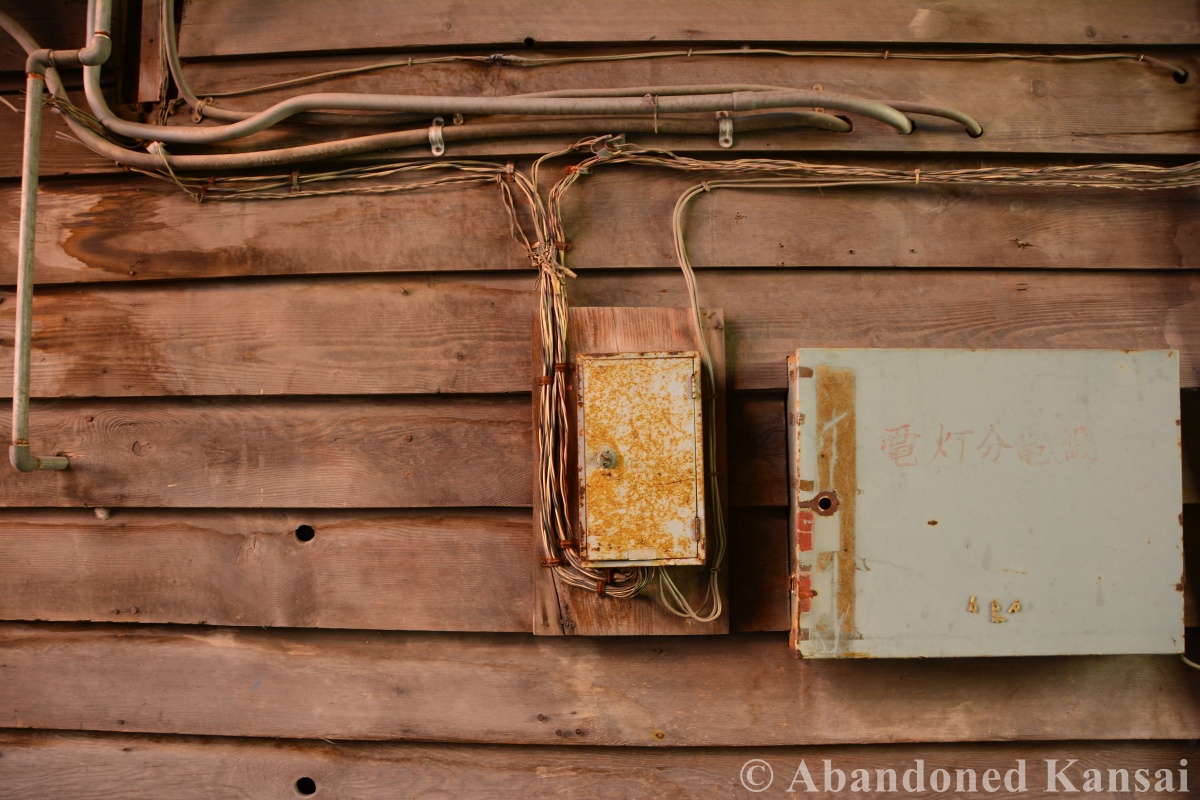
It wasn’t until selecting photos from both sets for this article that I realized how different the factory looked on both visits. During my first exploration I wasn’t sure about the status of the place, but when comparing those photos with the second set, it’s super clear that the factory was still in use during the first visit – electrical wires and other cables hadn’t been cut yet, some tables and areas looked like active workspaces, there was less vegetation… and of course the factory was still complete and not partly demolished.
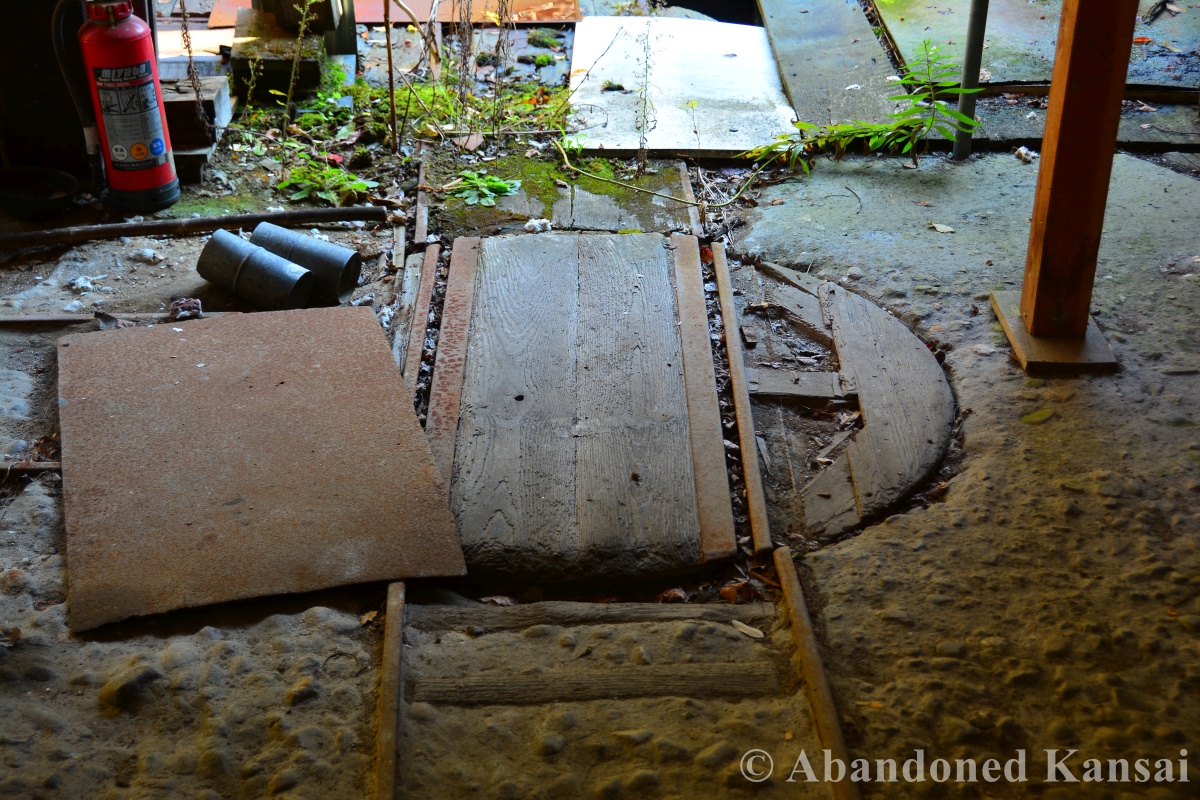
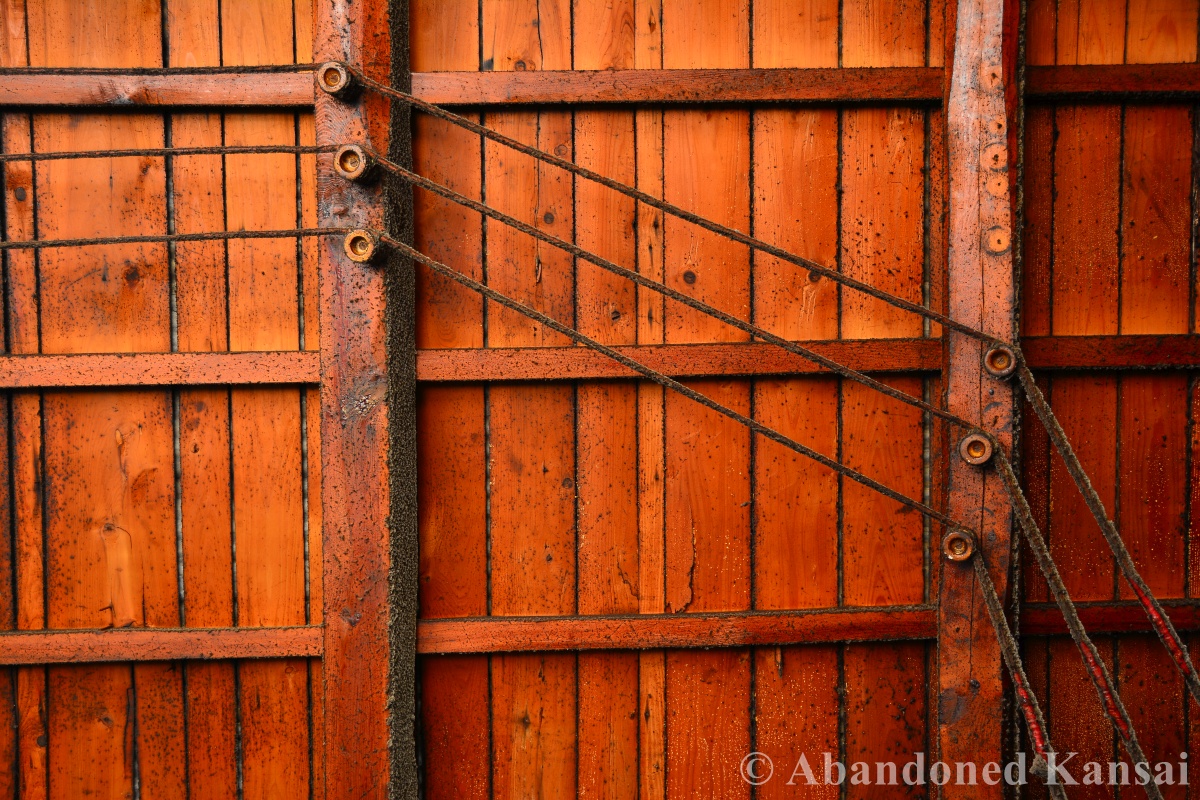
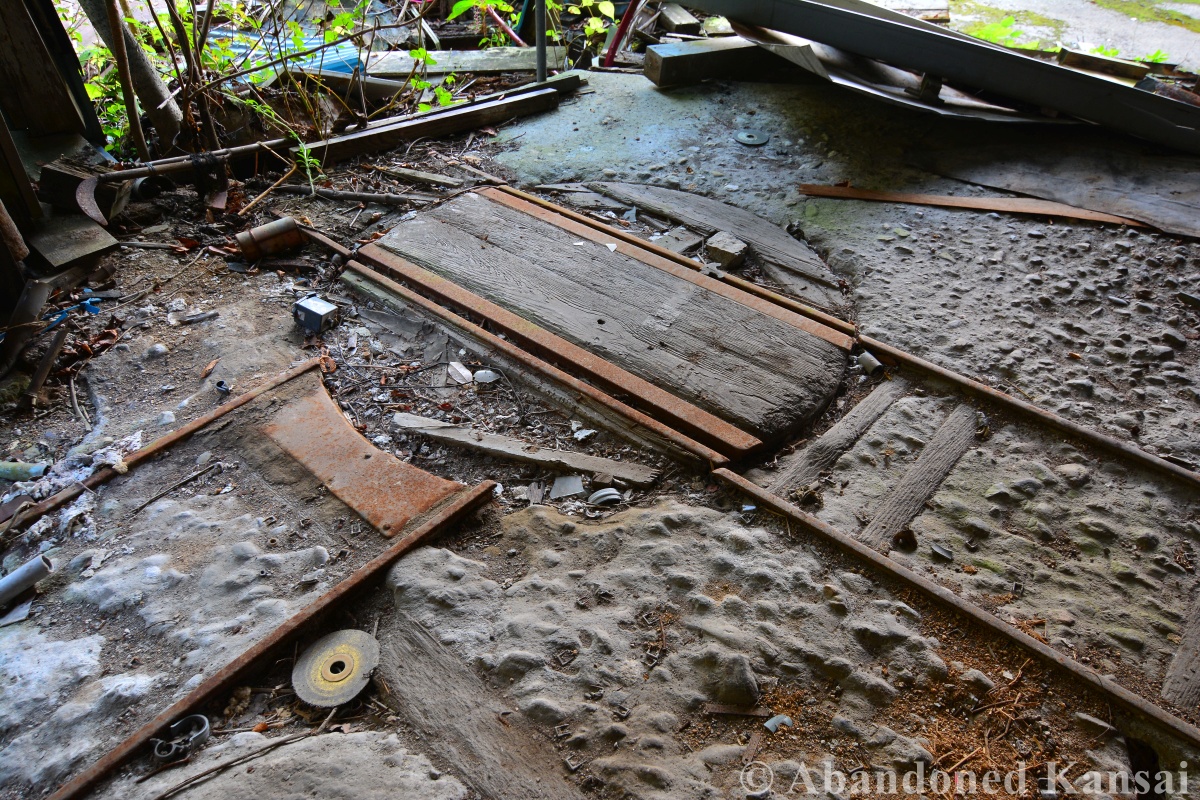
Technically this is not one of the most beautiful photo sets I’ve ever published, but it’s an original find and Showa AF – maybe even Meiji. At the same time parts of the Kyoto Countryside Factory had almost a fantasy vibe, if you were able to ignore the computers and cables and plastic crates… I’ve been to more than my fair share of abandoned wooden structures, but this facility was huge and had hardly any metal elements. Even the small rail system had more wooden elements than metal ones and could have been right out of an 80s fantasy flick. So, yeah, even if the photos are not great, I really enjoyed exploring this place. Which is rare, as I hardly do revisits, despite the fact that this is the second location in a row with a combined gallery of two explorations. So next time I’ll post a one-off again. Which one? I don’t know yet, but you should definitely *check out some older locations*!

(*Like Abandoned Kansai on Facebook* or *follow us on Twitter* if you don’t want to miss the latest articles and exclusive content – and subscribe to the *video channel on Youtube* to receive a message right after a new video is online…)

Read Full Post »
I’ve been urbexing for almost 15 years. During that time I’ve never written any articles about equipment, despite being very happy with three different Nikon DSLRs, two Manfrotto tripods, and a Sanyo video camera – which broke in 2019 after almost 15 years of recording countless hours at hundreds of locations as well as places like Chernobyl and North Korea. Videos I always considered a bonus anyway… and I’m still having a hard time thinking of myself as a photographer, given that I have no formal education in that field and only do it as a hobby. A really time-consuming hobby, but nevertheless just a hobby. I also don’t have a background in technology, so what’s the point of reviewing camera equipment when I just have an opinion based on learning by doing? Well, that doesn’t keep countless “influencers” and Youtubers from churning out incompetent nonsense, but I wouldn’t want to be found dead with either label on me! And like my favorite professor at university once said in regards to papers we had to hand in: “Don’t claim anything you can’t proof!”

Fortunately there is no need to be technical or scientific about this Insta360 X4 article, because unfortunately we never got that far…
Like I said, I always considered video walkthroughs of the locations I explore a bonus. I started them pretty much right away, but at first I didn’t even publish them, because I only took them for myself. And even when I published them, I didn’t edit them. No cuts, no voice overs. Just me walking around breathing heavily into the silence. That all came to a sudden halt when my Sanyo stopped working after exploring the abandoned *Trump Hotel*, also wiping out the recordings of the whole day. At that point I was tired of doing the videos anyway – and my co-explorers were increasingly annoyed, because I added 10 to 30 minutes at the end of every exploration for the walkthrough. So I stopped doing them.
For the past 18 months I’ve been exploring solo again (don’t ask, it’s complicated and often quite frustrating, to be honest), but a few weeks ago a colleague of mine showed me an older model Insta360 video camera that a visiting cousin from the States forgot at his place in Japan. I was fascinated by the easy to use 360 photos and videos, so I did some research and decided to get one. I’ve read reviews, I’ve read product pages – I did my best to make an informed decision, because at first I considered buying the X2 or X3 as older models often are cheaper with only slightly fewer / worse features. The X2 was out of the race when I read in a review that it required a smartphone to be activated – something I didn’t read anywhere about the X3 and X4. I guess because it’s an idea that is so stupid that it probably was a one-time mistake by Insta360, facing so much backlash that they removed the requirement from following models. The price difference between the X3 and X4 wasn’t very big and since the latter was only four weeks old at the time, the price on Amazon and in brick and mortar stores was the same, so I decided to get it at my local Yodobashi Camera (street block sized electronics stores with hundreds of employees each, in case you are not familiar with the chain), where I’ve been a customer for almost 18 years – ever since I moved to Japan.
BIG MISTAKE!

Yodobashi Camera was extremely stingy, giving only 1% points on the video camera, despite a promotional campaign of giving 13% points for purchases over amount X – except for (small print)… But when you shell out 80k Yen on a new video camera you are looking forward to use, store points are the last thing you worry about anyway. Fortunately I still had some of those points, which I used to get a seriously overpriced MicroSD card, because without it the video camera would be useless and I wanted to try it out on the weekend before an upcoming urbex trip. 83500 Yen poorer, but with a big smile on my face I left Yodobashi Camera on a Friday evening after an otherwise pretty horrible week.

Saturday was supposed to be a great day, though it started with a rude awakening / realization…
After sleeping in and having a delicious breakfast, I enjoyed a nice unboxing. The first slight disappointment was when I realized that the included battery was dead. Well, not dead dead, but completely empty. Whatever, an hour or two wouldn’t make a difference. It would not dent my great mood for sure. That came a few hours later when the battery was fully charged. I booted the small brick for the first time, its screen came to life, asking me to choose a language – and then the screen showed what the camera was seeing… for about a second or so. Then some text popped up and my heart sank. You gotta be kidding me! What I was looking at was a screen telling me to download an app by Insta360 to a smartphone, iOS or Android, to unlock the video camera. What. The. Heck? I literally felt it in my fingers how my blood-pressure exploded, because unlike pretty much every person on the planet above the age of 6 years I don’t own a smartphone. Never have. In the late 90s I had a black and white Nokia for work (yes, I’m not the youngest anymore, though I started working full-time in my early 20s). When I moved to Japan I had a flip phone or two, but for the past 15 years or so I didn’t have any mobile phone at all, smart or not, because I don’t like them as they turn way too many people into dumb zombies. So here I had a brand-new, quite expensive video camera… that forced me to make it usable by using another device with cameras? Who comes up with stupid ideas like that?!
Certainly not Nikon! Their D7500 DSLR I bought just weeks prior worked with a partly charged battery and regular SD cards straight out of the box 5 minutes after purchase – without any charging or unlocking BS!
So I started to do some research… and didn’t find much. Like I said, I couldn’t care less about smartphones, apps and all that stuff, so I tried to find a solution to unlock the darn X4 via PC or MicroSD card. Of course I couldn’t find anything about that either, so I contacted Insta360 directly – who apparently didn’t read my message and instead sent me a standard reply. So I got back to them, apologized for not describing my problem properly (I’ve been in Japan too long…), and this time got an answer that at least implied that they understood the situation I was in – without being able to help, because though it seems to be nowhere stated on the box, the promo material or even on the X4 website (at least back in mid / late May, maybe they changed it by now)… you really need a smartphone and the Insta360 app to use a newly bought X4 video camera, that seems to work perfectly fine, but is made not usable on purpose by the manufacturer. Which absolutely blows my mind!
How is that even legal?
How can a company force you to use a completely unrelated piece of expensive technology that actually partly does the job of the product you just bought, to make your purchase usable? Without mentioning that essential detail with big warnings before purchase! And in addition, forces you to use an app, which does who knows what in the background without one knowing?
What’s next? You need an electric bike with WiFi to unlock your newly bought car? And if you don’t… sucks to be you, it’s completely useless!

Yodobashi Camera – (The Lack Of) Customer Service In Japan!
After some back and forth it was Monday and I came to the conclusion that I won’t be able to use the Insta360 X4, because it really needs a smartphone to unlock, which wasn’t properly communicated. So after work I went back to Yodobashi Camera, my go-to electronics store for the past almost 18 years. Never had a problem with them, because all the products I bought worked as intended right out of the box. So I went back to the cashier counter where I bought the video camera… and already ran into the first minor bump in the road – apparently I hadn’t paid for it in the camera department, but a neighboring one, which wasn’t a problem on Friday evening, but very well on Monday evening. So I went 20 meters over to the camera department and told them about my unfortunate situation: That I had bought this video camera three days prior, but couldn’t use it, because it doesn’t work without a smartphone, which wasn’t properly communicated by Insta360 or Yodobashi Camera. But I was very careful with everything, I didn’t even remove the protective film from either of the lenses. Some air through the teeth sucking, some going back behind the counter to talk to a superior and then something like the following conversation – it’s in quotation marks, but they are not really quotes, you know… just something like that, from memory:
“I can’t sell this anymore, you opened the box. You can’t return it.”
“But I can’t use the video camera.”
“I can’t sell this anymore, you opened the box. You can’t return it.”
“I don’t have a smartphone. The X4 is useless to me.”
“I can’t sell this anymore, you opened the box. You can’t return it.”
“I did proper research and I only found out about this after I opened the box and tried to use the X4.”
“I can’t sell this anymore, you opened the box. You can’t return it.”
“I bought a D7500 last month, it worked out of the box…”
“I can’t sell this anymore, you opened the box. You can’t return it.”
“Then take it back and ask Insta360 to exchange the X4 – you have dozens of them here, you probably have to return one once in a while anyway.”
“I can’t sell this anymore, you opened the box. You can’t return it.”
“Are you serious? I’ve been a customer here for almost 18 years, spent millions at your store and other ones in the building that has your name. Never had a problem – and the first time I have, you are stonewalling me?”
“I can’t sell this anymore, you opened the box. You can’t return it.”
“Really?”
“I can’t sell this anymore, you opened the box. You can’t return it.”

At this point I gave up and exchanged a few more e-mails with Insta360 (“You should try to return the X4 where you bought it!” No kidding…), but their responses quickly became as useless and repetitive as the one of the guy at Yodobashi Camera – who is just a small cog in a big machine, so I don’t blame him; he’s punished enough with the lighting in the store and the uniform he has to wear all day.
So here we are, after me falling for the usual misconception about (customer) service in Japan, because I rarely ever had a real problem anywhere. It’s great as long as everything is within procedures – if somebody has planned for it, it most likely will go smoothly. Service is great. When service becomes customer service though, i.e. an individual customer needs help that requires improvisation outside of the planned service… you’re basically on your own. The only thing flexible in Japan is bamboo.

Nevertheless I still have moments when I wonder: AITAH?
I’m a huge believer in personal responsibility. If I make a mistake, I stand by it. I find behavior like ordering 20 items of clothes in different sizes and colors with the intention of sending 18 of them back despicable. In fact I’ve never sent anything back that I’ve ordered online, except for two USB-HDDs – and only because they didn’t work. I don’t do fast fashion, I don’t buy garbage from questionable sites like Shein oder Temu, I don’t replace electronics unless they are broken. (RIP, Nikon D7100!) I did due diligence before buying the Insta360 X4 and to this day everything in that (opened…) box is in mint condition. If I would have known about the smartphone requirement, I wouldn’t have bought the X4. It’s the reason why I didn’t buy the X2.
This is actually only the second time that I tell this story to anybody, because part of me is a bit ashamed that this series of unfortunate events happened – despite all the research before buying. But spending more than 80k on a useless brick of tech isn’t exactly something to be proud of. I don’t regret much in my life, but buying the Insta360 X4 I regret. And buying it at Yodobashi Camera is something I regret, too. Maybe Amazon would have been more accommodating with returns…
But I guess it is what it is – only money in the end. And no videos for Abandoned Kansai in the future. Heck, even if I would get the currently useless X4 to work, I would always be reminded of this story. Screw video cameras! Never was a fan, now I dislike them almost as much as smartphones. Which kind of closes the circle. But I’ll make sure to never ever even consider buying anything from Insta360 again – I still don’t understand how it’s even legal that they can do this. What’s next to unlock their cameras? Having to send them a voice message, swearing loyalty to Winnie the Xi(thead)? Apparently they can do anything without people questioning it…
I went back to Yodobashi Camera once more though, two days ago. I spent the remaining shop points I had on presents for my nephews without having to pay a single sen – my goal was it to hit +/- 20 points/Yen, but going to exactly 0 was priceless – and so I left the Yodobashi Camera building one last time with a big smile on my face. Upon arriving back home I cut up my loyalty card after almost 18 years. It probably doesn’t mean much to a large store chain like that. But it meant a lot to me!

Thank you for reading till the end and… What has your worst experience with Japanese (customer) service been? Write it in the comments!

(*Like Abandoned Kansai on Facebook* or *follow us on Twitter* if you don’t want to miss the latest articles and exclusive content – and subscribe to the *video channel on Youtube* to receive a message right after a new video is online…)

Read Full Post »
An abandoned school in the mountains of Kyoto hardly anybody of the usual suspects has ever visited before? Count me in!

So far I’ve explored eight abandoned / closed / repurposed schools just in Japan this year, which means that I have to write about a deserted Japanese school about every two months to avoid that they pile up – more often actually, especially since the urbex year is far from being over. The last time I presented a closed school in the land of the Rising Sun was in August. So… ready or not, here comes another one!
The Kyoto Elementary School was located along a tiny road somewhere in the mountains of Kyoto prefecture – not in a town, but between several now abandoned hamlets, similar to the amazing *Shizuoka Countryside School*, which was located on top of a mountain and accessible from at least two valleys. It was closed 25 years ago, 23 years before my visit, and little to nothing is known about it, except for its real name and the fact that it was an elementary school. Walking up to the school I saw an open area and some markings on the wall of the remaining building – signs that at least parts of the school have been demolished. Whether those parts were another building or just a shed with toilets I don’t know, but it seems like the other structure was either just one storey tall or connected by a lower hallway.
A lot of the abandoned schools I’ve visited recently either impressed with tons of items left behind, from musical instruments to taxidermy animals, or they stood out thanks to their unusual looks – decaying wooden structures / swallowed by fog / … The Kyoto Elementary School offered hardly any of that. An announcement speaker here, a record player there. Tatami mats in some of the rooms (which is rather unusual for a school), a couple of organ or pianos. Nothing I hadn’t seen better several times at other places. Even the building itself was rather unspectacular. Maybe 1950s or 60s? At least it was still in good condition, so we didn’t have to worry about crashing through a floor, which is often the case at old wooden schools that haven’t had any maintenance in years. Overall an unspectacular exploration saved by the fact that this was a rather rare school – and that we found an abandoned factory on the way there. But that’s a story for another time… 🙂

(*Like Abandoned Kansai on Facebook* if you don’t want to miss the latest articles and exclusive content – and subscribe to the *video channel on Youtube* to receive a message right after a new video is online…)

Read Full Post »
When I wrote about *my first visit to the Kyoto Dam* two years ago, it turned out to be one of the most popular articles on *Abandoned Kansai* – let’s have a look what the place looks like in winter!

In spring of 2010 I found this cute little abandoned dam / power plant nestled in the mountains of Kyoto prefecture on a Japanese hiking blog – and in summer of 2010, just weeks after the series finale of Lost, I finally had the chance to have a look myself. Except from the heat and the insane humidity it was an awesome experience, because this location looked like a lost Lost set with its massive concrete constructions, the fragile little hut… and some instruments inside still working, getting power from who knew where. My timing was just awesome, everything came together perfectly… 🙂
About half a year later I went back to this amazing abandoned place – again with “awesome” timing: Saturday, March 12 2011. Less than 24 hours prior a devastating earthquake had hit the Japanese Tohoku region, the following tsunami seriously damaged the Fukushima Daiichi nuclear power plant, causing only the second Level 7 incident on the International Nuclear Event Scale – thought at that time most likely nobody knew how serious the disaster really was.

To be honest, more than five and a half years later I don’t remember many details of this visit, except that I had a great time and experienced a completely different atmosphere. During my first visit nature was buzzing, water was both on the ground and in the air, the dam was half overgrown and only partly accessible – during my second visit nature was dormant, there was hardly any water on the ground and even less in the air, the atmosphere was extremely peaceful. The Lost atmosphere of the first visit was a bit unnerving, this time I enjoyed more freedom of movement, a better sight, and overall felt more comfortable; though the significantly lower humidity was probably the most important factor. I also took more time to take everything in: The first time I stay about 1.5 hours, this time I stayed 2.5 hours. I actually liked it so much that I came back a week later with a flyjin friend of mine, who had left Kanto to get some distance between himself and the unstable reactor, but only a handful photos of that set made it to this article.

It’s hard to believe that it’s been more than six years since my first visit to the Kyoto Dam – and that it is still a location that barely ever pops up on urbex blogs; because I really love the location. It’s a bit off the beaten tracks, which is why I don’t go there very often, but so far it has always been worth taking the trip…
Now the question is: *summer* or winter? Which one did you like better?

(*Like Abandoned Kansai on Facebook* if you don’t want to miss the latest articles and exclusive content – and subscribe to the *video channel on Youtube* to receive a message right after a new video is online…)

Read Full Post »
I felt Lost. It was a hot and humid early summer day in Japan, about six weeks after the controversial finale of the infamous TV show – and I was hiking up a rocky path. Down the slope next to me the concrete leftovers of turbine mountings, in front of me the buzzing green hell of a Japanese July. Seconds later the rather low concrete dam appeared in front of me and I climbed a flight of stairs to get to the top of it. I knew that this solid construction that once supplied electricity for a small amount of people would be there, yet it felt very mysterious in its slightly surreal environment and state. Right next to the dam, on the other side of the narrow valley, stood a small wooden building, little more than a shack, that looked like it was straight out of the 70s. I got closer and had a peek through an opening – an electronic device with a glowing display was slightly brightening the darkness, showing numbers in bright red… and all I could think of was 4, 8, 15, 16, 23 and 42!

Of course I didn’t dare to enter the shack, worrying to set off an alarm (or a self-destruction device…), but I took a couple of photos. It turned out that the display was labelled “Pressure Indicator”, though I still don’t know where exactly and what kind of pressure was measured by the device. Instead I stumbled backwards a couple of steps, when less than a meter away from me a big branch crashed to the ground; I guess they are called “widow makers” in English, and now I understand why, though no widow would have cried over me.
A locked and not really confidence inspiring metal staircase was leading down to the now dry basin, so I continued further to the back, where mushrooms were growing on moist trees. Luckily I didn’t hear any voices whispering in the background, but the atmosphere was still quite spooky, despite the bright sunshine. From the back, the concrete and metal construction looked like a little bit like a submarine turned into stone, but since I was all alone, I didn’t want to take any risks – so I headed back to the part below the dam, the one with the giant turbine sockets.
This area was extremely humid as countless tiny rivulets were running through, making me feel like I was in a steam sauna, sweat dripping from every pore of my body. Moss was growing on the huge concrete blocks, trees and vines made exploration tougher than necessary. At the lowest end I found huge concrete pipes leading underground, blocked off carefully by solid metal grids, water rushing in the background – if removed most likely the end of countless uncareful animals and humans!
When I finally left after about 1.5 hours I felt strangely relieved and sad at the same time. As spooky as the remote Kyoto Dam was, as wonderfully fascinating was it in many regards. Long before I saw the first signs of modern civilization again I knew one thing for sure: I had to go back! And I did… *Please click here to find out more about my second visit!*

(*Like Abandoned Kansai on Facebook* if you don’t want to miss the latest articles and exclusive content – or subscribe to the *video channel on Youtube* to receive a message right after a new video is online…)

Read Full Post »
Uji is famous for green tea. And of course for the Byodo-in, the Buddhist temple on the 10 Yen coin, as well as for the final chapters of “The Tale of Genji”, one of the most popular pieces of classic Japanese literature. But overall the city is most famous for green tea.

Green tea (ryokucha, 緑茶) has been served and sold in Uji at least since 1160 when the cities’ (and probably the world’s) oldest tea shop opened, Tsuen. About 200 years later the famous shogun Ashikaga Yoshimitsu promoted the cultivation of green tea in Uji, resulting in what is now known as ujicha (宇治茶) – Uji tea. Located in the most southern part of Kyoto prefecture right next to Nara and Shiga prefectures, Uji still influences tea production across borders – and while most people think that Kyoto city is famous for green tea (thanks to its political significance for centuries and the perfection of tea ceremonies involving powdered green tea, matcha, 抹茶), it is actually the town of Uji that perfected its cultivation. So when you visit the city to have a look at the Byodo-in, you’ll see dozens of tea shops, selling several varieties of green tea and products like castella (a cake of Portuguese origin), manju (Japanese sweets made of flour, rice powder, buckwheat) as well as all kinds of cakes, cookies, puddings, chocolates and ice cream – if you like the taste of green tea, then come to Uji and you’ll feel like being in heaven!
There is hardly a dish in that town that they don’t flavor with matcha… (Even the vending machines in Uji sell 80 – 100% green tea!)

The Spring Tea Shop in Uji is the first and so far only abandoned tea store I found in Japan. Sadly there is little to nothing known about this beautiful straw-thatched little building, which is slowly falling into disrepair after it was vandalized probably for years. I’m not even sure about its name, since zenmai, which I translated as spring, can also be a name or the name of a plant, so maybe a more correct transcription would have been Zenmai Tea Shop or Japanese Royal Fern Tea Shop.
According to a calendar left behind the place was closed in 1999, but who knows who left that calendar behind? And there was not much else there… A couple of plates and cups, some cans… and that’s pretty much it (although trash and a dozen porn DVDs were dumped there probably long after the tea shop was closed and abandoned). The kitchen interior was gone, and so was most of the furniture. It was a small rest house for day-trippers and hikers, enough space for maybe 20 to 30 guests at the same time, with a little pond as a center piece and a rather big garden in the back.

Although there was not much left to see and to take photos of, the place strangely intrigued me. The building itself, despite its bad condition, was still gorgeous and I guess it must have been at least 50 years old, probably much, much older. Sadly my fellow explorer *Rory* and I were running out of time quickly, so the rather blurry photos I took don’t live up to the experience I had at this lovely place, that a lot of you might remind of a Miyazaki anime.

(*Like Abandoned Kansai on Facebook* if you don’t want to miss the latest articles and exclusive content – or subscribe to the *video channel on Youtube* to receive a message right after a new video is online…)

Read Full Post »
An old GPS system can be a blessing in disguise. For the longest time my buddy Dan’s car was equipped with a navigational system that must have been about ten years old, maybe 15 – you know, from an era when Japan was a magical place with color screen mobile phones, by far the best video games in the world and… well… the first navi systems in regular cars. But what was so great about an ancient GPS device in 2013? Well, pretty much all the abandoned places we visited together were still in the system as active locations, making it very easy to find them. But one day last summer it got even better! Dan and I were cruising through the countryside, when I saw the name of a ski resort appearing on the screen – a ski resort I had never heard of, neither as active nor as abandoned. So we went on a little detour…

… and the resort turned out to be abandoned. By the looks of it pretty much around the same time Dan’s GPS was installed, maybe even before that. Located at a half-overgrown side-road in the middle of nowhere and covered by the most blurry satellite shot on online maps you can imagine, this rather small ski slope is close to impossible to find; unless you know where it is or you have a GPS system so old that it’s still marked there. (It isn’t on GoogleMaps…)

Sadly this also means that I know nothing about the Kyoto Ski Resort, which is obviously a shortened name to protect its exact location. Absolutely nothing. Not when it was opened, not when it was closed, and of course I can only assume the reasons why it was shut down, which are probably the same everywhere. Not enough snow, not enough customers, outdated equipment, short piste.

Exploring an abandoned ski resort in summer is a bit strange as a location like that looks out of place at that time of the year, but if you are (un)lucky like I was, it still can make a good story.
At the bottom of the slope were two wooden buildings, a restaurant and what looked like a gear rental / general shop. From there we walked up the mountain to a smaller restaurant / snack bar in questionable condition; the wooden beams outside were crumbling away and we had to be very careful where we stepped. After passing some shacks in extremely poor condition, used as restrooms and storages, I reached the now rusty ski lift.
I took some photos up there, minding my own business, when I was hit in the head what felt like a golf ball or a tennis ball, right after I heard something buzzing. This surprising event caused me to make a noise that can be described as “less than manly”, but hey, despite my explorations in the middle of nowhere I actually like nature tamed or grilled, not kamikaze attack me. Anyway, my less than manly outcry caused Dan to laugh his ass off, which was kind of good as we actually had lost sight of each other. Minutes later Dan’s head popped up behind one of the shacks, still laughing. And while he came closer, all of a sudden I heard that buzzing noise again, followed by Dan yelling “SUZUMEBACHI!!!” – and him running down the slope as if the devil himself was after him! Not so funny all of a sudden, if they are after you… (Just in case you don’t know: suzumebachi, also known as Japanese Giant Hornets or just Killer Hornets, are gigantic hornets with a body length of about 50 millimeters, a stinger of 6 millimeters and a wingspan of about 75 millimeters; they kill 40 people in average every year in Japan, especially in the countryside.)
I followed my fellow explorer down the hill for a while, but I hadn’t taken a video yet – so I went back up to the abandoned ski lift, where the suzumebachi probably had their nest. Aware of the dangerous situation I started the video right away and did the usual tour…
Urban exploration is not a fun thing to do in Japan during summer – not only are there giant killer hornets, there are also huge spiders and pretty big snakes as well as all kinds of non-venomous critters. From June till September the whole country‘s wildlife is buzzing and it seems like all of those buzzers are eager to have a look at you when you visit their habitats; and some like to have a bite! So after the suzumebachi incident we had a quick look at the restaurant at the lower end of the slope; a wooden building in dilapidated state, the floor arching and a HUGE old suzumebachi nest right under the ceiling. And then we left. There was not much to see anyway – and everything was in rather bad condition.

Overall the Kyoto Ski Resort was a neat original find. Nothing you would rent a car for and spend a day on finding / exploring, but it did a good job as a bonus between two locations we were eager to see.

(*Like Abandoned Kansai on Facebook* if you don’t want to miss the latest articles and exclusive content – or subscribe to the *video channel on Youtube* to receive a message right after a new video is online…)

Read Full Post »
Schools are probably the most common abandoned places in Japan. Rare in populated areas, they can be found by the dozen in the countryside. In all of Japan there must be hundreds, nevertheless I only wrote about two of them so far (the *F# Elementary School* and the *North Korean School in Gifu*). The main reason for that is that until last year I did almost all of my explorations by using public transportation – and the vast majority of those abandoned schools are in the middle of nowhere, often part of (almost) deserted villages. By now I’ve been to about eight or ten *haikyo* schools (a.k.a. haikou), though most of them were either boarded up, under security supervision or in really bad condition.
The Kyoto Countryside School on the other hand turned out to be a hidden gem – and to keep it that way I gave it this rather generic name…

When my buddy Dan and I drove up to the Kyoto Countryside School in a stunningly beautiful picture book village in the middle of the mountains I kind of had a bad feeling. The school itself was in rather good condition and the grass in front of it was about 10 to 15 centimeters high – higher than usual, but not “abandoned for 20 years” high; implying that somebody was still taking care of the school and its side-buildings. But we were lucky… While the front entrance and all the windows were locked, the back entrance was open; and so was the kitchen building.
Sadly I don’t know much about the history of the school, only that it was closed 22 years prior to our visit – which was hard to believe as pretty much all rooms, despite being almost empty, looked like they were just closed for the summer. I am actually pretty sure that the school building is still used every once in a while, probably for some village celebrations or stuff like that.
Visiting the Kyoto Countryside School was part of a one day urbex trip in July; something I tend to avoid, because Japanese summers are nasty – hot, humid and full of insects as well as other animals you don’t want to run into. Luckily the school was in almost pristine condition, one of the cleanest places I have ever explored; bug free! But it was a typical summer day, just past high noon, and being in the mountains helped surprisingly little.
A sweaty, yet interesting exploration – opening that door was like stepping into the past, and in that regard it reminded me of the *Old Higashi-Aoyama Station* I wrote about last week. Most rooms were empty, except for the secretariat… and things on the walls. Photos, relics of art classes, info posters, mirrors. One room has a handwritten banner, showing Japanese number units. 10.000 = man, 100.000.000 = oku, and so on. The longest number was a 1 with 88 zeros, 4 kanji reading muryoutaisuu – I’m pretty sure 99.999% of the Japanese population haven’t heard of that number. But finds like that made this exploration so much fun. If you just looked through the windows you probably would have thought “Boooooring!”, but once inside the place revealed dozens of little things that caught me eye; my favorite part being the gorgeous wooden hallway, perfectly lit at that time of the day.
Surprisingly interesting was the most western part of the building, separated by a now locked door, but accessible from the outside: a small storage room full of left behind school books and the school’s toilet – with song sheets above the tiny pissoirs and old electric wiring along the wooden ceiling, probably added years after the school was built…

(If you don’t want to miss the latest article you can *like Abandoned Kansai on Facebook* and *follow this blog on Twitter* – and of course there is the *video channel on Youtube*…)

Read Full Post »
“Flash? I don’t use flash! Most photos look ugly when using flash!”
In February of 2010 I had no clue what my dear friend *Enric* was talking about. I had my first DSLR for 3 months and I had no clue about photography either. But when I was using the flash of my D90 in the darker corners of the Kasagi Sightseeing Hotel my now truly missed buddy got really upset. I didn’t think much about it, to be honest. I just picked up urban exploration and photography as a hobby, and I was happy about every decent shot I was able to take. Flash or not…
Who cares? Just let the crazy Spaniard talk! — Gosh, was I ignorant. But I really had no clue what I was doing. Couldn’t have known a good photo from a bad one even if Ansel Adams would have hit me in the face with a picture book! I continued the learning by doing process and half a year later I bought an ultra-wide angle lens and a tripod – and I guess my photos improved massively since then, probably because I barely ever used flash again. But whenever I do, I remember Enric’s words at the Kasagi Tourist Hotel…

I don’t know why it took me more than 3 years to write about the Kasagi Hotel; this is actually one of the oldest unpublished locations I had on my hard-drive – and the other ones are way less interesting! It’s probably because of the name… or its rather convenient location in walking distance of a train station… Guess which one! Although I have to admit “convenient” and “walking distance” is relative. It’s convenient and in walking distance for urban explorers. If you arrived as guests with suitcases you better took a taxi!
Although one of the most popular abandoned places in Japan for many, many years there is not much information floating around about the Kasagi Hotel. It’s widely known as a ghost spot, since rumors have it that the owner committed suicide by arson – half of the Japanese blogs writing about the place admit that they didn’t dare to enter. Or care to find out more about the hotel’s history. So here’s some information I got from reading a dented sign near the entrance and that is nowhere to be found on any Japanese blog: It seems like the Kasagi Hotel was famous for its onsen. The hot spring was fed by a spring 1200 meters below the hotel, rich in sodium and alkali. Staying at the hotel for one night including two meals was 6500 Yen, onsen only was 1000 Yen, onsen and one meal 2000 Yen.
Enric and I didn’t mind those suicide stories to scare away children and walked straight in, past the barricade that once prevented nosy people from entering; but of course it was ripped apart by some vandals by the time of our arrival. We mostly ignored the smaller storage buildings to the right and headed straight for the hotel, squeezing past another barricade made of conjugated iron, a lot more solid, but nevertheless wide open even for foreigners.
The ground floor was a pitiable sight. Half destroyed by arson and littered by bent and rusted iron it offered a sample of the general condition of the Kasagi Hotel. I guess that’s the downside of the hotel’s fame and location: It was vandalized like hardly any place I’ve been to before or after – graffiti, arson and ripped apart walls, floors, ceilings… you name it. Even two staircases were completely ripped apart, although it looked like that was done professionally and with heavy machinery; especially since there was barely any rubble left. The whole floor was dark and gloomy, with holes in the wooden floor spared by the fire. The hotel kitchen also became the victim of flames, underlining the spooky first impression.
A concrete and graffiti stained staircase in the back lead to the upper floors, but the door to the second one was blocked by a huge welded metal plate. Somebody built an improvised metal ladder from 1F to 2F, but I preferred not to climb it – especially since 2F suffered as much damage from vandals as all the other floors. Except for the ground floor and the top floor all the floors looked pretty much the same with different kinds of destructions: On one floor the toilets were completely intact, on other floors you could still see parts of the wallpaper, while on another floor the intact walls gave a good impression how big the rooms really were – the whole building was one big puzzle.

The Kasagi Hotel was one of the first 20 explorations I did and therefore everything was extremely exciting. Looking back years later it was one of the more unspectacular locations I visited; except for the view. The view was fantastic, especially from the terrace on the roof top and from the corner baths, which allowed free sight on the Kizu River ten meters below the ground floor of the hotel.
One word of warning though to all the people planning trips there to have a look themselves: I wouldn’t do it! About a year ago I went there again for a quick revisit. More about that trip later this week or early next week…

(If you don’t want to miss the latest article you can *follow Abandoned Kansai on Twitter* and *like this blog on Facebook* – and of course there is the *video channel on Youtube*…)

Read Full Post »
The Mt. Hiei Artificial Ski Slope is an abandoned ski resort near the top of Mount Hiei on the border between Kyoto prefecture and Shiga prefecture. Famous for its Enryaku Tempel and the Kokuhoden Museum this holy mountain was once thought to be the home of gods and demons in the Shinto belief system. Interestingly enough the predominantly religion on Mt. Hiei has always been Buddhism. The monk Saicho founded the Enryaku-ji in 788 as the first outpost of the Tiantai / Tendai sect and it remained the Tendai headquarters till this very day, although it was famously destroyed by Oda Nobunaga in 1571 to vanish the rising power of the local warrior monks, killing about 20,000 people (including civilians) in the area. The temple was rebuilt soon after and is one of the main tourist attractions in Shiga prefecture today, accessible via two cable car lines, several beautiful hiking trails and a toll road for cars, motorcycles and busses.

Along the “Kitayama East Course” lies the Mt. Hiei Artificial Ski Slope, probably the most visited haikyo in all of Japan. On an average day during the hiking seasons in spring and autumn you’ll never be alone in the area as people are constantly passing by – about half a dozen hiking trails meet here and a close-by cable car station, serving the longest funicular line in Japan, attracts hundreds of people a day. Most hikers barely notice the abandoned ski lift and ski slope, hardly anybody peeks through the broken windows of the gear rental store or has a look at the undamaged closed restaurant. Why wasting a thought on that ugly stain when the surrounding nature is of such beauty? Because beauty lies in the eye of the beholder and though the ski resort on Mount Hiei was rather small it nevertheless offers a few neat angles now that it is abandoned.

Wanna know some facts about the resort? Okay, this is what I was able to find out: The Mt. Hiei Artificial Ski Slope was opened in 1964 and on November 1st of 2002 the newspaper Kyoto Shimbun reported that the ski resort was closed for good after a hot summer in 2000 and a way too warm winter in 2001 – followed by a year of temporary closing; which explains why both the restaurant and the rental store are still stocked with all kinds of items. In the almost 40 years of operation the already mentioned facilities welcomed customers for both a summer and a winter season. In winter a combination of natural and artificial snow (provided by a snow gun) offered fun for the whole family, in summer grass skiing was the business of choice. A lift transported guest for a distance of 170 meters so they could enjoy the pretty short slope of up to 200 meters with a vertical drop of 38 meters.

Oh, before I forget: The nearby “Garden Musem Hiei”, a flower park, once was an amusement park with a haunted house, a small Ferris wheel and a viewing platform, but I guess it was converted quickly enough to never been considered abandoned.

And that’s it for now from Mount Hiei. For now, because the ski resort was actually my second urbex trip there and my fourth or fifth overall – I really like Mount Hiei! Next time I’ll take you there I’ll either show you an abandoned rest house on a steep slope or a mysterious construction I’ve never seen anywhere else on the internet…

(If you don’t want to miss the latest article you can *follow Abandoned Kansai on Twitter* and *like this blog on Facebook* – and of course there is the*video channel on Youtube*…)

Read Full Post »
Older Posts »