Feeds:
Posts
Comments

Archive for the ‘Okinawa’ Category

I’ve been urbexing for almost 15 years. During that time I’ve never written any articles about equipment, despite being very happy with three different Nikon DSLRs, two Manfrotto tripods, and a Sanyo video camera – which broke in 2019 after almost 15 years of recording countless hours at hundreds of locations as well as places like Chernobyl and North Korea. Videos I always considered a bonus anyway… and I’m still having a hard time thinking of myself as a photographer, given that I have no formal education in that field and only do it as a hobby. A really time-consuming hobby, but nevertheless just a hobby. I also don’t have a background in technology, so what’s the point of reviewing camera equipment when I just have an opinion based on learning by doing? Well, that doesn’t keep countless “influencers” and Youtubers from churning out incompetent nonsense, but I wouldn’t want to be found dead with either label on me! And like my favorite professor at university once said in regards to papers we had to hand in: “Don’t claim anything you can’t proof!”

Fortunately there is no need to be technical or scientific about this Insta360 X4 article, because unfortunately we never got that far…
Like I said, I always considered video walkthroughs of the locations I explore a bonus. I started them pretty much right away, but at first I didn’t even publish them, because I only took them for myself. And even when I published them, I didn’t edit them. No cuts, no voice overs. Just me walking around breathing heavily into the silence. That all came to a sudden halt when my Sanyo stopped working after exploring the abandoned *Trump Hotel*, also wiping out the recordings of the whole day. At that point I was tired of doing the videos anyway – and my co-explorers were increasingly annoyed, because I added 10 to 30 minutes at the end of every exploration for the walkthrough. So I stopped doing them.
For the past 18 months I’ve been exploring solo again (don’t ask, it’s complicated and often quite frustrating, to be honest), but a few weeks ago a colleague of mine showed me an older model Insta360 video camera that a visiting cousin from the States forgot at his place in Japan. I was fascinated by the easy to use 360 photos and videos, so I did some research and decided to get one. I’ve read reviews, I’ve read product pages – I did my best to make an informed decision, because at first I considered buying the X2 or X3 as older models often are cheaper with only slightly fewer / worse features. The X2 was out of the race when I read in a review that it required a smartphone to be activated – something I didn’t read anywhere about the X3 and X4. I guess because it’s an idea that is so stupid that it probably was a one-time mistake by Insta360, facing so much backlash that they removed the requirement from following models. The price difference between the X3 and X4 wasn’t very big and since the latter was only four weeks old at the time, the price on Amazon and in brick and mortar stores was the same, so I decided to get it at my local Yodobashi Camera (street block sized electronics stores with hundreds of employees each, in case you are not familiar with the chain), where I’ve been a customer for almost 18 years – ever since I moved to Japan.
BIG MISTAKE!

Yodobashi Camera was extremely stingy, giving only 1% points on the video camera, despite a promotional campaign of giving 13% points for purchases over amount X – except for (small print)… But when you shell out 80k Yen on a new video camera you are looking forward to use, store points are the last thing you worry about anyway. Fortunately I still had some of those points, which I used to get a seriously overpriced MicroSD card, because without it the video camera would be useless and I wanted to try it out on the weekend before an upcoming urbex trip. 83500 Yen poorer, but with a big smile on my face I left Yodobashi Camera on a Friday evening after an otherwise pretty horrible week.

Saturday was supposed to be a great day, though it started with a rude awakening / realization…
After sleeping in and having a delicious breakfast, I enjoyed a nice unboxing. The first slight disappointment was when I realized that the included battery was dead. Well, not dead dead, but completely empty. Whatever, an hour or two wouldn’t make a difference. It would not dent my great mood for sure. That came a few hours later when the battery was fully charged. I booted the small brick for the first time, its screen came to life, asking me to choose a language – and then the screen showed what the camera was seeing… for about a second or so. Then some text popped up and my heart sank. You gotta be kidding me! What I was looking at was a screen telling me to download an app by Insta360 to a smartphone, iOS or Android, to unlock the video camera. What. The. Heck? I literally felt it in my fingers how my blood-pressure exploded, because unlike pretty much every person on the planet above the age of 6 years I don’t own a smartphone. Never have. In the late 90s I had a black and white Nokia for work (yes, I’m not the youngest anymore, though I started working full-time in my early 20s). When I moved to Japan I had a flip phone or two, but for the past 15 years or so I didn’t have any mobile phone at all, smart or not, because I don’t like them as they turn way too many people into dumb zombies. So here I had a brand-new, quite expensive video camera… that forced me to make it usable by using another device with cameras? Who comes up with stupid ideas like that?!
Certainly not Nikon! Their D7500 DSLR I bought just weeks prior worked with a partly charged battery and regular SD cards straight out of the box 5 minutes after purchase – without any charging or unlocking BS!
So I started to do some research… and didn’t find much. Like I said, I couldn’t care less about smartphones, apps and all that stuff, so I tried to find a solution to unlock the darn X4 via PC or MicroSD card. Of course I couldn’t find anything about that either, so I contacted Insta360 directly – who apparently didn’t read my message and instead sent me a standard reply. So I got back to them, apologized for not describing my problem properly (I’ve been in Japan too long…), and this time got an answer that at least implied that they understood the situation I was in – without being able to help, because though it seems to be nowhere stated on the box, the promo material or even on the X4 website (at least back in mid / late May, maybe they changed it by now)… you really need a smartphone and the Insta360 app to use a newly bought X4 video camera, that seems to work perfectly fine, but is made not usable on purpose by the manufacturer. Which absolutely blows my mind!
How is that even legal?
How can a company force you to use a completely unrelated piece of expensive technology that actually partly does the job of the product you just bought, to make your purchase usable? Without mentioning that essential detail with big warnings before purchase! And in addition, forces you to use an app, which does who knows what in the background without one knowing?
What’s next? You need an electric bike with WiFi to unlock your newly bought car? And if you don’t… sucks to be you, it’s completely useless!

Yodobashi Camera – (The Lack Of) Customer Service In Japan!
After some back and forth it was Monday and I came to the conclusion that I won’t be able to use the Insta360 X4, because it really needs a smartphone to unlock, which wasn’t properly communicated. So after work I went back to Yodobashi Camera, my go-to electronics store for the past almost 18 years. Never had a problem with them, because all the products I bought worked as intended right out of the box. So I went back to the cashier counter where I bought the video camera… and already ran into the first minor bump in the road – apparently I hadn’t paid for it in the camera department, but a neighboring one, which wasn’t a problem on Friday evening, but very well on Monday evening. So I went 20 meters over to the camera department and told them about my unfortunate situation: That I had bought this video camera three days prior, but couldn’t use it, because it doesn’t work without a smartphone, which wasn’t properly communicated by Insta360 or Yodobashi Camera. But I was very careful with everything, I didn’t even remove the protective film from either of the lenses. Some air through the teeth sucking, some going back behind the counter to talk to a superior and then something like the following conversation – it’s in quotation marks, but they are not really quotes, you know… just something like that, from memory:
“I can’t sell this anymore, you opened the box. You can’t return it.”
“But I can’t use the video camera.”
“I can’t sell this anymore, you opened the box. You can’t return it.”
“I don’t have a smartphone. The X4 is useless to me.”
“I can’t sell this anymore, you opened the box. You can’t return it.”
“I did proper research and I only found out about this after I opened the box and tried to use the X4.”
“I can’t sell this anymore, you opened the box. You can’t return it.”
“I bought a D7500 last month, it worked out of the box…”
“I can’t sell this anymore, you opened the box. You can’t return it.”
“Then take it back and ask Insta360 to exchange the X4 – you have dozens of them here, you probably have to return one once in a while anyway.”
“I can’t sell this anymore, you opened the box. You can’t return it.”
“Are you serious? I’ve been a customer here for almost 18 years, spent millions at your store and other ones in the building that has your name. Never had a problem – and the first time I have, you are stonewalling me?”
“I can’t sell this anymore, you opened the box. You can’t return it.”
“Really?”
“I can’t sell this anymore, you opened the box. You can’t return it.”

At this point I gave up and exchanged a few more e-mails with Insta360 (“You should try to return the X4 where you bought it!” No kidding…), but their responses quickly became as useless and repetitive as the one of the guy at Yodobashi Camera – who is just a small cog in a big machine, so I don’t blame him; he’s punished enough with the lighting in the store and the uniform he has to wear all day.
So here we are, after me falling for the usual misconception about (customer) service in Japan, because I rarely ever had a real problem anywhere. It’s great as long as everything is within procedures – if somebody has planned for it, it most likely will go smoothly. Service is great. When service becomes customer service though, i.e. an individual customer needs help that requires improvisation outside of the planned service… you’re basically on your own. The only thing flexible in Japan is bamboo.

Nevertheless I still have moments when I wonder: AITAH?
I’m a huge believer in personal responsibility. If I make a mistake, I stand by it. I find behavior like ordering 20 items of clothes in different sizes and colors with the intention of sending 18 of them back despicable. In fact I’ve never sent anything back that I’ve ordered online, except for two USB-HDDs – and only because they didn’t work. I don’t do fast fashion, I don’t buy garbage from questionable sites like Shein oder Temu, I don’t replace electronics unless they are broken. (RIP, Nikon D7100!) I did due diligence before buying the Insta360 X4 and to this day everything in that (opened…) box is in mint condition. If I would have known about the smartphone requirement, I wouldn’t have bought the X4. It’s the reason why I didn’t buy the X2.
This is actually only the second time that I tell this story to anybody, because part of me is a bit ashamed that this series of unfortunate events happened – despite all the research before buying. But spending more than 80k on a useless brick of tech isn’t exactly something to be proud of. I don’t regret much in my life, but buying the Insta360 X4 I regret. And buying it at Yodobashi Camera is something I regret, too. Maybe Amazon would have been more accommodating with returns…
But I guess it is what it is – only money in the end. And no videos for Abandoned Kansai in the future. Heck, even if I would get the currently useless X4 to work, I would always be reminded of this story. Screw video cameras! Never was a fan, now I dislike them almost as much as smartphones. Which kind of closes the circle. But I’ll make sure to never ever even consider buying anything from Insta360 again – I still don’t understand how it’s even legal that they can do this. What’s next to unlock their cameras? Having to send them a voice message, swearing loyalty to Winnie the Xi(thead)? Apparently they can do anything without people questioning it…
I went back to Yodobashi Camera once more though, two days ago. I spent the remaining shop points I had on presents for my nephews without having to pay a single sen – my goal was it to hit +/- 20 points/Yen, but going to exactly 0 was priceless – and so I left the Yodobashi Camera building one last time with a big smile on my face. Upon arriving back home I cut up my loyalty card after almost 18 years. It probably doesn’t mean much to a large store chain like that. But it meant a lot to me!

Thank you for reading till the end and… What has your worst experience with Japanese (customer) service been? Write it in the comments!

(*Like Abandoned Kansai on Facebook* or *follow us on Twitter* if you don’t want to miss the latest articles and exclusive content – and subscribe to the *video channel on Youtube* to receive a message right after a new video is online…)

Read Full Post »
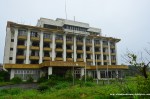
In early 2017 I was able to do an unplanned revisit – now the Nakagusuku Hotel Ruin is under demolition.

Okinawa’s tourism industry suffered quite a few setbacks recently. First two cactus theme parks closed (*this one* and *especially this one*), then plans for a proposed Universal Studios Okinawa fell through. In the summer of 2019 the demolition of the Nakagusuku Hotel Ruin began (you probably think I’m kidding, but it actually became kind of a tourist attraction, much like *Nara Dreamland*) – and on October 31st parts of the famous Shuri Castle in Naha burned to the ground. A series of unfortunate events that might be a blessing in disguise, because if cities like Kyoto, Nara, and even Osaka are any indication, the mass tourism of recent years isn’t always a good thing – especially for the people who live there. (Or just ask the people of Venice, Italy, what they think. I found it terribly crowded and when I went there as a teenager during a family vacation in the late 80s, early 90s – I can only imagine how nightmarish the situation has become in recent years…)

In early 2017 I went to Okinawa for a relaxing long weekend, escaping the “winter” in Kansai for a couple of days in pursuit of eating and drinking as much shikuwasa-related food as possible. No urbex on the schedule, I didn’t even bring my trusted tripod. Nevertheless I found myself next to the Nakagusuku Hotel Ruin just hours after my arrival in Japan’s most southern prefecture when visiting the Nakagusuku Castle Ruin, a UNESCO World Heritage site I rushed through during my first visit to Okinawa about five years earlier. I did my best to enjoy one of the few remaining tourist attractions on the island, but in the an a leopard cannot change his spots – especially after observing several foreign and local tourists walking past the warning signs and heading towards the hotel ruins.
The first time I explored the Nakagusuku Hotel Ruin it was an eight hour long endeavor on a sunny spring day with full equipment – this time I came during 20°C weather on an overcast, slightly rainy and overall rather gloomy day without a tripod and probably even without a second lens. Not a big problem for outside shots, but everything inside was quite tough. Sometimes the lighting situation was so difficult that I had to put down the camera and improvise to avoid blurry photos. In addition to the high humidity and the overall situation (a LOT more warning signs than five years prior!) a rather unpleasant experience I didn’t drag out much beyond the 1.5 hour mark (including video, but plus outside shots), though I kinda had the feeling that this would be my last visit to one the most amazing locations I’ve ever been to.

If you want to know *more about the mind-boggling background story of the Nakagusuku Hotel Ruin, then please click here*. *More about my first exploration you can read by clicking here.* Both articles contain dozens of photo and some lengthy videos, so they come highly recommended!

(*Like Abandoned Kansai on Facebook* or *follow us on Twitter* if you don’t want to miss the latest articles and exclusive content – and subscribe to the *video channel on Youtube* to receive a message right after a new video is online…)

Read Full Post »
I hate to be the bearer of bad news, but the demolition of the legendary Nakagusuku Hotel construction ruin has begun in May of this year and will conclude in March of 2020. The premises are completely fenced in by now and the iconic tower, which offered a fantastic view of the surroundings in pretty much every direction, has already been demolished.

Located in sight of the UNESCO World Hertitage site “Nakagusuku Castle”, the construction of the Nakagusuku Hotel began in the early 1970s under strange and chaotic circumstances and apparently without finished blueprints, resulting in a winding concrete complex with quite a few design problems. It looks like the hotel was only partly finished… and construction ended when the owner was committed to a mental hospital. I attached a couple of photos and a video to the end of this article, but *you can find out more about the hotel’s history by clicking here**or if you are more interested in my eight hour long exploration you can click here*.

(*Like Abandoned Kansai on Facebook* or *follow us on Twitter* if you don’t want to miss the latest articles and exclusive content – and subscribe to the *video channel on Youtube* to receive a message right after a new video is online…)

Read Full Post »
If you want to learn about the history of modern day Okinawa and the old kingdom of Ryukyu (as the group of islands were called before Japan renamed them in 1879 after annexing them in 1872), you have many opportunities to do so while visiting Japan’s most southern prefecture – museums, historical sites, special exhibitions… and two themed parks called Ryukyu Mura (mura = village) and Okinawa World. Active themed parks still open for business, though both of them seemed to be struggling a bit during my visit in January 2015; a non-urbex trip and a good opportunity to take some photos of potential future abandoned places… Like many visitors of Okinawa I was wondering which of the both to visit – and since even the tourist information near the famous Kokusai Street in Naha wasn’t able or willing to give me clear advice, I checked out both myself.

Ryukyu Mura

First I visited *Ryukyu Mura*, about 30 kilometers north of Naha, accessible by bus #120 every 30 minutes (get off at Ryukyu Mura-Mae / 琉球村前 – 1070 Yen for the 80 minutes long ride from Naha Bus Terminal). Open from 8:30 a.m. to 5:30 p.m. for an entrance fee of 1200 Yen, the Ryukyu Village is composed of several original Okinawan houses that were dismantled and rebuilt there, plus some original buildings. Despite being a commercial themed park with occasional signs, the place felt rather organic; like a mix of real village and outdoor museum, plus some shops / stalls here and there. While about half of the houses just sat there, the other half was filled with life – people in local / traditional clothes, some offering lessons in dance, arts & crafts or playing instruments. When I passed through the park’s pottery barn, I saw that you were able to make your own shisa there, the infamous lion-dog from Okinawan mythology – 3300 Yen plus shipping (a month later, no overseas shipping!), pretty much the same total amount you pay for pre-made ones in Naha or any other tourist shop. Having no pottery experience whatsoever, but a patient teacher, it took me about 2 hours to make the little fella that is now guarding my desk at work. On the way out I tried a serving of soki soba (the local noodle soup variation featuring spare ribs) at the usual array of restaurants and gift shops. I didn’t visit the on-location snake center (included in the entrance fee) and my timing was a bit off, so I missed the twice a day parades, but overall it was a great day trip that I finished stopping at the Mihama American Village, kind of the US version of Chinatown right across a huge military base, on the way back to Naha. EXTREMELY touristy, but interesting to see…

Okinawa World

The next day I visited *Okinawa World*, about 10 kilometers southeast of Naha, accessible by bus #83 every one to two hours (get off at the terminal stop Gyokusendo-Mae / 玉泉洞前 – 580 Yen for the 60 minutes long ride from Naha Bus Terminal). Open from 9 a.m. to 6 p.m. Okinawa World is quite a touristy, commercial place which becomes evident even before you enter as there are several combo tickets available, depending on whether you want to see the village, the cave and / or the snake center – from 620 Yen up to 1650 Yen. Still not interested in snakes, I chose the 1240 Yen option for the village and the cave. The Gyokusendo Cave is a five kilometer long… cave… of which 850 meters are fitted with a metal walkway and countless lights for tourists to enjoy (you can do a free StreetView tour *here*). A nice bonus to what quickly turned out to be a rather small and therefore disappointing Okinawan village. There, pretty much every building was made use of to sell goods or services, much more aggressively than at Ryukyu Mura, where some buildings just sat there, rusting / decaying tools and other exhibits slowly fading away – and yet it would have taken barely 5 minutes to pass through the whole Okinawan World village… which lead to a huge exit building featuring an underwhelming Okinawan buffet (for the very affordable price of 1260 Yen, I guess you get what you pay for…) and a GIGANTIC gift shop. I’ve been to quite a few gift shops in Japan, but this one was without the shadow of a doubt one of the biggest!
The bonus location at Okinawa World was the Valley of Gangala right across the street – a cave / forest walking tour for people who can plan in advance as reservations are needed according to pamphlets and their homepage. I arrived without one 5 minutes after a tour started; too late to catch up, but I was offered to wait 90 minutes for the next tour to get together – which I had to decline politely as I had a plane to catch…

The Verdict

Despite being very similar at their cores, featuring all kinds of hands on experiences, local food and tons of merchandising, my experiences at Okinawa World and Ryukyu Mura were quite different. If you only have half a day to spend or want to go to the Valley of Gangala anyway, you are kind of stuck with the much more commercial Okinawa World, but if you can take your time, I would recommend Ryukyu Mura over Okinawa World at any time (*check out their locations on a GoogleMap*). Okinawa World felt like one of many fake tourist spots you can find all over Japan – while fake churches and fake castles are excusable to some degree, a fake Okinawan village on Okinawa Island is not. And even if some of the houses were not fake, they felt fake. Ryukyu Mura on the other hand had a much more relaxed atmosphere… not all constructions were event or sale spaces, everything there seemed to be a little bit more rustic and run-down, more authentic, less pushy. If you have to choose between Okinawa World and Ryukyu Mura, definitely go to Ryukyu Mura! (And check out their homepage before visiting! Ryukyu Mura offers a similar amount of events and hands-on stuff as Okinawan World, but since they don’t push it on you, you will barely know just by walking through the park…)
If you are actually not that much into those regular tourist things to do, let me remind you of the abandoned places I visited on Okinawa during a previous trip, like the *Nakagusku Hotel Ruin* and the now demolished *Sunset View Inn Shah Bay*!

(*Like Abandoned Kansai on Facebook* if you don’t want to miss the latest articles and exclusive content – and subscribe to the *video channel on Youtube* to receive a message right after a new video is online…)

Read Full Post »
When *Michael* and I drove to the Himeyuri Park we had no idea what to expect. Would we be able to find it? Would it be really abandoned? Would there be security? Would we be able to get in? Or was demolished already? And was it really a cactus park, so close to the cemetery-turned cactus park *Okinawa Seimeinooka Park*?

A huge sign at the entrance still welcomed potential visitors, but the road to the parking lot was blocked, so we tried to find some kind of back entrance. On the way there we were impressed by the massive walls surrounding the place – as I found out later is was 2.5 kilometers long, up to 10 meters high and made of 150.000 tons of Okinawan limestone! Our efforts were fruitless – and we didn’t have a chance to look at the entrance, so we turned around and walked straight up to the place. Who knows, maybe a gigantic security guard was waiting for innocent urban explorers like us with a whole selection of deadly weapons?

Well, there was no gigantic security guard. Not even a skinnyfat one. Just an empty parking lot for 240 cars. (I didn’t count – whenever I throw in facts I know about the Himeyuri Park it’s thanks to research I did after I returned to Kansai; we had zero information about the park when exploring it!) Right in front of the parking lot we found a couple of gigantic shade-giving metal cowboy hats, so called ten gallon hats – those were actually big enough to easily hold 10 gallons / 40 liters, not just three liters like the real hats. Well, they could have hold that much liquid if they wouldn’t have been in rather bad shape and even lost most of their shade-giving properties; giving no protection to the stacks of pamphlets and merchandise on the tables underneath the hats.

After we checked out the rest of the surroundings we found a way into the park that was clearly divided into two parts, represented in this article by two videos. Right at the entrance was a big building with a huge gift shop and a restaurant (the kitchen interior being completely removed), the tall pointy roofs visible from quite a distance. In the back Michael and I found several office rooms and a locker room for the employees – all areas have been pretty much completely vandalized, although this clearly abandoned cactus amusement park never popped up on any Japanese or Western haikyo blog, at least not to my knowledge. The place was damaged so badly that I had to find out afterwards that the Himeyuri Park was actually a Wild West themed cactus park – hence the enormous cowboy hats at the entrance. But all the other signs, like prairie schooners and similar stuff, were long gone. I found a totem pole in the second main part, the actual cactus park, but I didn’t think much about it since Japanese theme parks tend to take elements from all kinds of places and create a strange mix.

The restaurant and gift shop building was in a dilapidated state, especially since both pointy roofs were severely damaged and offered no protection against the elements anymore. Everything was wet and moldy, not really a nice place to be at. It seems like they sold all kinds of souvenirs there, like Disney merchandise, photos and the previously mentioned Okinawan shirts called kariyushi shirts. (They started out as a marketing tool in the 1970s to attract tourist, which means that they were introduced to Okinawa 40 years after Ellery Chun invented the modern Aloha shirt! Those were made of leftover kimono fabric and so the circle is complete…) Of course there also was cactus-related stuff, like cactus ice cream. Also worth mentioning are the weird coconut shaped lamps hanging from the ceiling – I didn’t know why, but their tackiness caught my attention several times.
The office part of the building wasn’t as wet, but not less vandalized. Things were scattered all over the floors in most of the rooms and there is not much to say about it since it was just another vandalized office area you can see at an estimated 75% of all abandoned places. One room was kind of interesting since it looked like a 70s living room with carpeted floor and some more or less comfy looking chairs. It also contained some documents and a stack of business cards belonging to a person working for the Taiwan Pineapple Corporation – and this is where the story gets messed up and rather interesting. For example the small fact that the address given on the business card isn’t in Okinawa… it’s in Ryukyu, Okinawa’s old name…

As for the park’s unusual history: Himeyuri Park was opened in 1983 (earlier than the Mexico Cactus Park Sarabanda!) as a subsidiary of the Tohnan Botanical Garden (東南植物楽園, Southeast Bontanical Gardens) and closed due to poor business performance in 2005 (later than the Mexico Cactus Park Sarabanda…). But before that happened it was bought by the Taiwan Pineapple Corporation, a subsidiary of the Typhone Group, one of Taiwan’s most powerful companies. But this investment wasn’t just a business decision, it was mostly political. At the time Taiwan tried to expand its influence in Japan, especially Okinawa – not a surprise given the fact that the Okinawan Islands are rather close to Taiwan. It actually seems like the Kuomintang, the Chinese Nationalist Party, was behind the deal, trying to negotiate a no visa entrance to Japan for all Taiwanese tourists and businessmen in return for an investment of up to 1 billion dollars. Lee Teng-hui, Taiwan’s president and chairman of the Kuomintang from 1988 till 2000, was friends with the father of Ohbayashi Yukino, the director of the Tohnan Botanical Garden – who also was from Taiwan. At one point Lee met the Okinawan governor at Tohnan and repeated the claim that the Senkaku Islands in fact belong to Taiwan. (The Senkaku Islands are five uninhabited islands and three barren rocks in the East China Sea. They are administered by Japan and claimed by the People’s Republic of China as well as by Taiwan (the Republic of China) for territorial reasons.) Despite that statement Lee’s efforts weren’t ill-willed with the intent to undermine or infiltrate Okinawa, they were supposed to bring both countries closer together as Lee grew up at a time when Taiwan was occupied (and to some degree modernized) by Japan.
But business at Himeyuri Park was bad and after Lee’s influence vanished the Taiwan Pineapple Corporation sold the management rights in 2003 to a company called Yakushido (short for Yakushi-do Seiyaku Kako (薬師堂製薬化工, Hall of the Medicine Buddha Pharmaceutical Chemical Industry / Yakushi Hall Pharmaceutical Chemical Industry – the company is known so little I couldn’t even find out what they do exactly or if they still exist). And now it gets really complicated as Himeyuri Park was closed shortly afterwards and then reopened in 2004, just to be closed again in 2005. On October 20th 2005 the Ryukyu Shimpo (Ryukyu News(paper)) reported online that the Himeyuri Park was closed one day prior after the entrance to the parking lot was blocked on October 18th. It seems like in February of 2005 the owners of Himeyuri Park (most likely the Taiwan Pineapple Corporation) started to receive payments from Yakushido after settling some rental contract issues in front of Naha’s summary court (probably dating back to 2003). The total sum was 40 million Yen and Yakushido paid some installments, but something wasn’t working out – so operations were shut down. The newspaper article was rather vague and so the end of Himeyuri Park lies… well, not in the dark, but somewhat in the shadows…
(This whole section about Himeyuri Park’s history was a gigantic puzzle with lots of endlessly long Japanese sentences – it would be missing almost completely if it wouldn’t have been for the generous and extensive help of my incredibly smart and dedicated friend Mayuko; thanks a lot!)
Oh – in September of 2010 there was a sign in front of the park stating in Japanese “For sale – 28.000 tsubo” (about 80.000 square meters) and a phone number. The sign was gone (if I remember correctly…) when Michael and I explored the place in May of 2012, so the park either has a new owner or the real estate company in charge (based in Naha) stopped caring…
But now back to the exploration!

Separated from main building by one of those gigantic limestone walls was the actual park part of the park. According to several tourist and advertising sites the Himeyuri Park had 100.000 cacti and other plants, amongst them 4000 banyan; fig trees from the Himalaya. Highlights of the park were of course the 450 different kinds of cacti, up to 10 meters tall and up to 1000 years old. Every year there was a special event called Flower Aquarium where large displays depicted ocean animals composed by 275.000 flowers in vases. Opening hours were from 8.30 a.m. to 6 p.m. (9 a.m. to 5.30 p.m. from October to March) and the entrance fee was 850 Yen for adults (430 Yen for ages 3 to middle school) when the park closed, in 1994 it was 720 Yen for adults and 360 Yen discounted.
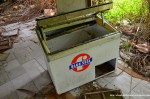
The huge maze like area is mostly overgrown now, making it hard to navigate and even harder to spot most of the abandoned cacti. In the center of the park was a rest house, pretty unspectacular, though it had a rusty freezer with a Blue Seal logo on it. (Blue Seal is the most popular ice cream brand in Okinawa, going back to 1948 when it was founded as Foremost Co.)

If it wouldn’t have been for the cactus theme Himeyuri Park would have been quite an uninteresting exploration – moldy, vandalized, overgrown. But how often do you get the chance to explore an abandoned cactus park? One that to this very day doesn’t appear on any Japanese urbex blogs, and I was actually looking for articles! So overall it was an exciting 3 hours from driving to the park to leaving it. Nothing worth *flying to Okinawa* for, but most definitely a nice chance from the usual vandalized and moldy hotels you can find everywhere…

(If you don’t want to miss the latest article you can *follow Abandoned Kansai on Twitter* and *like this blog on Facebook* – and of course there is the *video channel on Youtube*…)

Read Full Post »

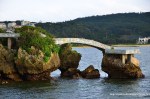
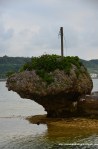
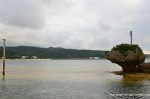
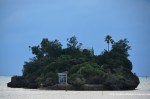
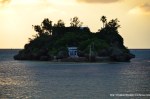
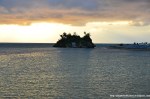
The Dolphin Island Restaurant is one of those weird, unique places I love Japan for – and it’s one of the few urbex insider tips in Okinawa. It is also one of the toughest places to access. Not because of security, but because of timing. Nowadays located just a stone’s throw away from the Okinawan coast the Dolphin Island Restaurant can be reached by wading through the water if the timing is right and the tide is low…

After a day of exploration *Michael* was kind enough to revisit one of the places he explored when *he went to Okinawa in 2011*. The Dolphin Island Restaurant is a gorgeous little island, sadly there is little to nothing known about its history. Massive concrete and wooden electricity posts let me come to the conclusion that the current supply came from the mainland about 300 meters to the east and that it was constructed in the 1950s or 60s. Nowadays you can almost walk up to the place from the north, getting as close as maybe 10 meters, but I doubt the area looked like that when the restaurant island was still open for business. Judging by the shape of the close-by warehouse area / harbor I’m pretty sure that this part of Okinawa is artificial land, one of the many reclamation projects Japan did in the past couple of decades – this one was limited by the Dolphin Island, but it got as close as possible…
I can imagine that business was though back in the days, because without access via a bridge all the visitors must have gotten to the island by boat – and that most likely meant no business on stormy days and that it took quite some effort by potential guests to reach the restaurant.
It’s said that the Dolphin Island Restaurant was not only a restaurant, but also hosted an aquarium – hence the name “Dolphin Island” or “Hiituu Island” in Okinawan dialect.
Since it was getting late that day and the tide was already rising I refrained from wading through the water and stayed on dry land. With proper equipment like airtight bags to get my camera to the island safely I might have taken a swim, but given the situation that day I decided to just take some photos and a video. Later on Michael and I went to the original coast line and took some pictures from the beach, waiting for the sun to set – not our lucky day, because the sky got cloudy for the few couple of minutes we were hoping for a spectacular horizon…

And with that the Dolphin Island Restaurant became the third location on Okinawa (after the *Nakagusuku Hotel Ruin* and the *Sunset View Inn Shah Bay*) I would like to revisit one day… Well, at least the last location on Michael’s and my *trip to Okinawa* was a great success – somewhat of an original find and a really unique location with an exciting and unusual history! Up next on Abandoned Kansai…

(If you don’t want to miss the latest article you can *follow Abandoned Kansai on Twitter* and *like this blog on Facebook* – and of course there is the *video channel on Youtube*…)

Read Full Post »

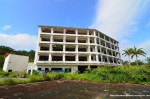
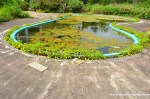
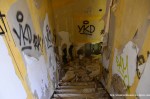
The Lequio Resort Okinawa, to the net usually known as the Rekio Hotel thanks to the usual katakana transcription problems, is one of those countless hotel ruins you can find all over Japan and that most urban explorers only visit because nobody has torn them down yet. The most interesting thing I can say about the place is the fact that it was built in the 1970s during the Okinawan hotel boom and right in time for the Okinawan Ocean Expo in 1975 – like the *Nakagusuku Hotel Ruin*, the most amazing unfinished hotel I’ve ever seen. Unlike the Nakagusku Hotel the Lequio Resort was actually finished and opened, at least for a while. Nowadays it’s completely vandalized and gutted, almost as bare Okinawa’s all outshining haikyo further down south. Bare except for the impressive amount of graffiti – almost as plenty, but barely ever as good as at the *La Rainbow Hotel* in Okayama. Built halfway up a mountain overlooking a gorgeous bay the Rekio Hotel offered some stunning views and visitors should be very careful where their steps lead them, because the place is a death trap with barely any safety barriers. The elevator shaft was cracked open on every floor and the balconies had no railings, except for some low hanging ropes on some of them. The vandalized state and the exposed position of the hotel make it and everybody inside susceptible for the always present winds, so seriously: Be careful when you go there. If you go there, because there is really not much to see. My favourite part was the glasses shaped pool, now green, moldy and pretty disgusting. But overall *Michael* and I spent just about an hour at the Lequio Resort – which is a ridiculously short amount of time for a hotel of that size, considering that it took me more than 12 minutes to shoot a walking tour there. If the Rekio Hotel would have been one of my first explorations I’m sure it would have been an exciting adventure, but after seeing so many abandoned hotels it turned out to be barely more than a footnote in my (imaginary) haikyo book…

(Addendum 2012-07-19: It seems like “Lequio” was the Portuguese name for Okinawa when it was still the kingdom of Ryukyu – thanks to my dear colleague and regular reader Mayuko for that information!)

(If you don’t want to miss the latest article you can *follow Abandoned Kansai on Twitter* and *like this blog on Facebook* – and of course there is the *video channel on Youtube*…)

Read Full Post »

Exploring the Sunset View Inn Shah Bay (combining two dozen cottages and the Shah Bay hotel) was one of the worst urbex experiences I ever had – so bad that I cut it short and left after about half an hour. I could have easily faked an interesting article about a smooth exploration since I took enough photos and even a short video, but what’s the point? Not all urbex trips go as planned and not all explorations are successful. Here’s one that turned out to be a nerve-wrecking waste of time.

The Sunset View Inn is (or better: was) a resort complex in the northern part of Okinawa on top of a mountain with a gorgeous view, but pretty much in the middle of nowhere even by Okinawan standards. When *Michael* and I drove up there using narrow countryside roads and half-overgrown streets of decent size I already was kind of aware that we were slipping into a disaster. Tired from the previous day we arrived on the mountain top with no food, drinks or umbrellas at the nearby scenic outpost when it just started to drizzle again. Michael opted for a bathroom break (yes, there was a maintained concrete restroom at an abandoned scenic outpost…) while I walked down the road for a couple of dozen meters as I thought I saw an abandoned concrete building behind a wall of green – I was right. Sadly I didn’t bring my camera, but it was unspectacular anyway; just a vandalized one floor concrete building, probably a restaurant. Of course the rain got stronger, so I had to wait for about ten minutes before I could reunite with Michael. It still drizzled heavily when my haikyo buddy told me that he saw house with some activity and a sign that says that the police will be called if somebody gets close to the hotel. Great. Could it get any worse? Yes: When we climbed over a road block on the way to the hotel Michael made me aware of another sign informing potential visitors about security patrolling the area. And of course the rain was pouring heavily again. Hot, humid, hungry, tired, potential security, heavy rain, no umbrella – a nightmare scenario. After about 150 meters the road split. Right cottages, left the Shah Bay hotel. We decided to have a look at the cottages first, but even their slightly vandalized state didn’t make me more confident. I felt uneasy and would have probably left at that point if I would have been alone. The road lining up the cottages lead back to the entrance area where Michael told me the occupied house with the warning sign was… Was the street leading there? Could security get to us by car? (The way we entered was blocked for vehicles.) Or even worse: silently on foot? I mentioned it before in other articles – I’m tired of vandalized hotels, and those abandoned cottages looked all the same, were all moldy, had all the typical look, feel and smell of abandoned Japanese accommodations. Michael didn’t seem to be that excited either, so after about ten minutes we decided to turn around and go to the hotel. Hot, wet, sweaty, nervous, tired and bored we approached the big deserted building when all of a sudden Michael yelled whisperingly “There’s a car coming, there’s a car coming!” (or something like that) – so we sprinted and dug into the wet bushed while the rain continued to get stronger. Of course there was no car coming, but now we were completely wet and at least I was a nervous wreck and getting seriously paranoid. As I mentioned twice recently (*here* and *here*) I am not into infiltration, I have explored way too many haikyo (especially hotels) and I am just too old for this shit! But the situation got worse. We entered the empty lobby of the hotel with a beautiful, untouched area straight out of a museum to the left when all of a sudden I thought I heard footsteps. We ran again, this time hiding in the close-by former gift shop. While my knees were screaming in pain I still heard footsteps – irregularly, louder and quieter. After two or three minutes I had enough. I already told Michael at the cottages that I didn’t like the current situation and while hiding at the gift shop I finally draw the line – this far and not a single step further. So I left. Michael decided to stay and joined me at the car about an hour later. It turned out that the footsteps were a mix of dripping water and an unspecified animal making noises – we couldn’t get in contact because the phone reception up there was close to non-existent. I couldn’t have gotten back in anyways since tourists in cars were coming up constantly to pay a visit to the abandoned observation point. So I took a couple of photos there and in passing found out that the first warning sign wasn’t at the house where people lived, but at an derelict kiosk a couple of meters away, outside of the premises – small details…

I know this article doesn’t fit the self-publicizing image of urban explorers hiding from the police, dodging security and doing all kinds of “cool” things. But that’s not me anyways. I’m just a regular guy who likes to take pictures of urban decay. This exploration turned into a small disaster for many reasons and I’m actually still shocked that Michael and I, two of the most experienced foreign urban explorers in Japan, stumbled into this adventure the way we did. But then again… Isn’t the only currency in this bankrupt world what we share with someone else when we are uncool?
Would I go back to the Sunset View Inn Shah Bay with sufficient supplies on a sunny day? Most likely yes. The area looked awesome and the map close to the abandoned viewpoint showed that the resort had more to offer than the cottages and the hotel – there was also a stone garden, a huge fountain, an area for band practice, a gateball course, tennis courts, a sports club house, a BBQ area, some kind of race track and two pools. I had seen the pools on a satellite photo and it really hurt that I missed them. Luckily I was able to take abandoned hotel pool shots later that day when we visited another one of those concrete giants that obviously never get demolished in Japan.
Chances that the Sunset View Inn Shah Bay will get demolished are rather slim, too. Opened in 1986 in the structurally weak north of Okinawa by a successful businessman from Naha (sounds familiar, eh?) the resort went bankrupt and closed in 1995, less than 10 years after the hopeful opening. So no Persian investor as the name might have implied. Shah is actually an old Okinawan / Ryukyuan word, meaning salt – the owner of the resort named the Shah Bay hotek after he saw the term on a map in Matthew Perry’s “The Japan Expedition”. (Matthew Perry as in “the guy who forced Japan to open its ports for foreign ships”, not the “Friends” goofball!) Shah Bay once was the name of the bight at the feet of the hotel, the one that made the sunset view so remarkable, the one that people still try to see from the once so wonderful vantage point…

(If you don’t want to miss the latest article you can *follow Abandoned Kansai on Twitter* and *like this blog on Facebook* – and of course there is the *video channel on Youtube*…)

Read Full Post »

A place known to the net simply as Okinawa Cactus Park was one of the haikyo I really wanted to see when *Michael Gakuran* and I went to Okinawa earlier this year. The official name of the park was Mexico Cactus Park Sarabanda. It was opened in 1993 and closed in September of 1999, its big Mayan style head becoming an Okinawa urbex icon. The park wasn’t a super spectacular place (although there were 150.000 plants of more than 800 kinds) or a very popular one, but it was unique. I’ve never been to a cactus park before and for sure not to an abandoned one.

When Michael and I drove up to the place I had a very bad feeling – the road and the parking lot were in way too good condition and not blocked at all. As soon as we saw the main building it was pretty clear that we were either at the wrong location or the place had been refurbished / converted. Luckily Michael is a chatty guy fluent in Japanese, so he walked up to the next best person and found out that we were at the right spot at the wrong time. The cactus park, abandoned for more than 10 years, had been reconverted about 1.5 years prior to our visit, unnoticed by the Japanese urbex scene (where I borrowed the term haikyo (ruin) from, just in case you are a rather new reader).

“Cactus Park – Rest in Peace” would have been a more appropriate headline for this article than you might have expected, because the former theme park was actually converted into a graveyard. A gorgeous graveyard I might add. Located at the southern coast of Okinawa the whole area is just beautiful (I marked it on my *Map of Demolished Places in Japan*). And instead of leveling the whole cactus park the architectural office responsible for the new design did a great job using existing structures. All the old roads and paths of the former cactus park were still there, so was the main building at the entrance and a smaller building close to the cliffs, offering a stunning view and a place to rest. The cacti were all removed, except for maybe a dozen on a big rock close to the entrance – traces of the former theme park were there, but we had to look closely to find them.

The new name of the huge area is Okinawa Seimeinooka Park (沖縄清明の丘公園) and it’s a non-profit cemetery not only for all confessions, but for all religions. The barrier-free area has the size of 68830 square meters and offers space for a total of 1.740 graves which strangely correlates to the parking lot with 174 spaces (I assume those 1.740 graves include the spaces of the “joint enshrinement grave”). Each grave has a size between 2 and 15 square meters and costs 140.000 Yen per square meter (one-off) plus 10.000 Yen per year.

Michael and I were both a bit disappointed not to be able to explore an abandoned cactus park, but we agreed that they did a wonderful job converting it. We didn’t spend too much time on the premises, but before we left Michael talked to one of the employees at the beautiful Roman style main building. To my total surprise he found out that there were two cactus parks in the area in the late 90s. This one, the Mexiko Cactus Park Sarabanda, and another one called Himeyuri Park – not to be confused with the Peace Memorial Park and the Himeyuri no To monument. The Himeyuri Park was also closed and abandoned, but not destroyed and reconverted. So off we went to our next adventure on our *trip to Okinawa*

(If you don’t want to miss the latest article you can *follow Abandoned Kansai on Twitter* and *like this blog on Facebook* – and of course there is the *video channel on Youtube*…)

Read Full Post »

When *Michael* and I approached the Nakagusuku Hotel Ruin I knew we were in for a treat. I’ve explored enough ruins (about 200 so far…) to recognize a triple A, a five star, a first class abandoned place. But in this case I had no clue about the epic glory that was waiting for us. I actually didn’t find out until 5 hours into our exploration. At that point I was lying on the hot concrete roof of the hotel in the merciless Okinawan sun, hiding from a group of tourists visiting the Nakagusuku Castle, when a gigantic Lockheed C-130 Hercules (Edit: Thanks to La Mian World I now know that it was a C17 Globemaster! Which replaced the Hercules…) was heading towards me as if it was trying to bomb both the castle and the hotel…

“But how did it come to this?”, I hear ya say. Well, it’s a long story. Come closer, and I’ll tell ya. It all started… earlier that day. And what a day that was. It’s what I call… an excellent exploration day. (To everybody not admiring Conker’s Bad Fur Day: Sorry for this silly paragraph, I just had to do it. And if by any chance Robin Beanland and / or Chris Seavor read this: Thanks for creating one of the best platformers ever, a true masterpiece!)

If I would have judged Nakagusuku Hotel Ruin after the first two hours I would have been disappointed. Yes, it was big. Yes, it was made of concrete. Yes, it was abandoned. Yes, it was overgrown. But entering the place and following the beaten paths countless urban explorers and by-chance-visitors have walked along for more than 30 years was actually quite disillusioning. The hotel looked awesome from the distance, but the entrance area was rather dull. It even had a burned-out area, though there was hardly anything to burn. I didn’t want to stray too far away from Michael since last time he visited the place he saw a white pick-up truck driving by and I read in one report that there was security. So at one point, probably two hours into our little adventure, I walked up to Michael and told him that I was bored – after he spent about half an hour taking pictures of a column of ants at the wall of a small room. My highlight up to that point? Taking photos of a singing bird sitting at one of the smaller roofs outside…

We continued to the north across a little covered bridge over a small road (leading up the hill to the top part of the hotel) – and there things started to become interesting. While the architecture at the entrance area was quite quirky (wide aisles, small rooms and corners that didn’t have a clear purpose) all of a sudden it became downright weird. The annex wasn’t properly connected to the main building, it was about a meter too low. And there were no stairs, not even a ladder. But it got stranger… and stranger… and stranger. (You can see all of that in the video I published with *the first article about the Nakagusuku Hotel Ruin*.) The staircase in the annex… it wasn’t high enough for an adult to walk upright and it was freakishly narrow. Nevertheless that’s where we headed next. If we were incautious Michael and I could have been seen from the castle, but we had a great view at the overgrown lower parts of the hotel and at the landmark top of it. Michael wasn’t happy with the cloud situation, so while he killed some time on the roof I took the long video I published with the last article – we agreed to meet in the burned out main hall later. From there we walked up the mountain and entered the annex complex again. Basically the area you can see in the first half of the third video. Michael and I left the building to take some photos when all of a sudden we heard voices. We ducked down, being as quiet as possible. The voices came closer… two female, one male – obviously American tourists who saw the hotel ruin when visiting the castle ruin. They passed by us without noticing us when Michael realized that the cloud was finally gone, so we went back to the little tower of the annex building. While still on a lower floor the family came back and we decided to scare them a little bit. Sadly we were quite indecisive about it, so by the time Michael yelled at them in Japanese with a low aggressive voice right out of a classic samurai movie they were already too far down the road for us to see their reaction. Well, it wasn’t that funny anyway…

So up the annex building and taking more photos outside. That’s when Michael realized that he could walk across the roof of the covered bridge to reach the roof of the main building. I’m sure it was perfectly safe, but since I saw another way to reach the main building’s roof I made my way through the main building when I received a phone call from Michael – he was pinned down on the roof thanks to a bunch of tourists at the castle. So I went back to get his tripod and finally made it to the upper part of the main building to get onto the roof myself. Five minutes later I was lying there with the C-130 Hercules flying over my head… and I couldn’t get a close-up since I had my ultra wide-angle lens mounted and not a snowball’s chance in hell to switch it in time. (Edit: Thanks to La Mian World I now know that it was a C17 Globemaster, not a Hercules…)

After having seen most of the Nakagusuku Hotel Ruin Michael and I were willing to take more risks and finally walked up the hill to the exposed skeleton part of the hotel ruin. On the ground floor there we made an unexpected discovery – a completely burned out and rusted car INSIDE the building. It definitely was a car, but in absolutely abysmal condition, so I have no idea which manufacturer or model it was. Then we went to the top of the building and enjoyed a spectacular view – the hotel, the castle, the small cities and of course the Pacific Ocean and the East Chinese Sea. A slight breeze and the gorgeous view almost made us forget that we were completely exposed.

On the way back to the exit I shot the second and the third video, both published with this article. Although the exploration was great I was kind of eager to get out of the deserted hotel after seven hours when Michael found a building we hadn’t been to yet. Which lead to a lower floor, which lead to a balcony, which lead to a whole new world. The annex building we explored 4 hours earlier was actually the gateway to an area mostly overgrown and lower than the rest of the construction, reminding me of Mayan or Aztec temple in the middle of the jungle. The sun was already setting (it was past 5 p.m. which basically prefaces the end of the day in Japanese spring time…) and bathed the area in warm light. As much as I wanted to get out of there, this part of the hotel was just way too gorgeous to be left behind without us having seen it. So we went deeper and deeper, up and down staircases, through walls of green and past all kinds of weird and sometimes dangerous architecture (one photo shows a flight of stairs separated by a massive concrete handrail – if you would have walked up the right side you would have banged your head unless you are smaller than 30cm…). I really wonder if there was no construction supervision agency in Japan back in the 70s… or what they did all day. Or what the architect was paid for. If there was an architect. Why nobody on the construction site said “If we do it like that people won’t be able to use it properly…”. But whatever, for people with a predilection for the surreal it’s a mind-blowing place to see, although some things don’t make sense at first. Like when Michael jumped into the now empty pool and had no clue where he was, because things just didn’t made sense at first sight. From the pool we had an awesome view looking up to the hotel complex, some overgrown concrete water slides in the background. At that point we were in such a hurry that we didn’t even set up our tripods for good photos – snapshots, snapshots, snapshots. When we finally left the lost civilization area we did it via a part of the building that was home to the cage like installations you can see at the end of the last video where my camera ran out of memory space. It seems like the hotel had a rather decently sized half-underground zoo, although I’m pretty sure that no animal ever lived there. The main area there was composed of a maze of stairs, most of them basically unusable thanks to the ubiquitous misplanning – I loved it, though I’m about 1.90 meters tall. It’s hard to believe that a place like that exists, especially when coming from a country where the state’s building control department is such a powerful institution.

After about eight hours Michael and I finally left the Nakagusuku Hotel Ruin, exhausted but happy.
When Michael told me about the hotel *two months prior to our visit* I was skeptical. When I saw it that morning I was excited. After two hours I was slightly disappointed – and from that point on it grew on me. And it actually kind of still does. The Nakagusku Hotel Ruin is one of the most amazing places I ever had to the pleasure to explore. The location was gorgeous, the fact that most of it was never finished lessened the effect of the always present vandalism, the warm and sunny spring day and a couple of singing birds following us up the mountain was heartwarming, no security present was a pleasant surprise, the size of the site was enormous (I think it would take about an hour of straight ambling without stopping to look at details to see the whole complex) – but what really separated the Nakagusuku Hotel Ruin from most other places was the constant flow of surprises. The architecture of the place was mind-blowing in so many ways, and items like the wrecked car made it such a unique exploration. It actually made it an exploration. At so many other urbex spots you get what you expect and once you’ve seen one floor you’ve basically seen 90% of the site. The Nakagusuku Hotel Ruin put exploration back in urban exploration – I never knew what to expect behind the next corner, on the next floor, below the next overgrown flight of stairs. And although I spent about eight hours on the premises the Nakagusku Hotel Ruin became one of the few places I really want to revisit, if possible in late winter (whatever that means in Okinawa…) when there is a little less vegetation – without the shadow of a doubt the best abandoned hotel I’ve ever been to, probably the most amazing urbex hotel in the world!

(If you don’t want to miss the latest article you can *follow Abandoned Kansai on Twitter* and *like this blog on Facebook* – and of course there is the *video channel on Youtube*…)

ADDENDUM 2013-2-12: On February 9th user stuzbob left a comment on one of the videos, shedding some light on the car remains: “The engine appears to be a Nissan J-series and the remains of the leaf springs and solid frame at the back lead me to conclude that it was, at one time, a Nissan 520 or 521 pickup.” Thanks a lot stuzbob, much appreciated!

Read Full Post »

Older Posts »