Feeds:
Posts
Comments

Archive for the ‘Pachinko’ Category

It’s summer and I can’t explore, so this month I’ll throw in a bonus location. It’s not a spectacular one, but they can’t all be…

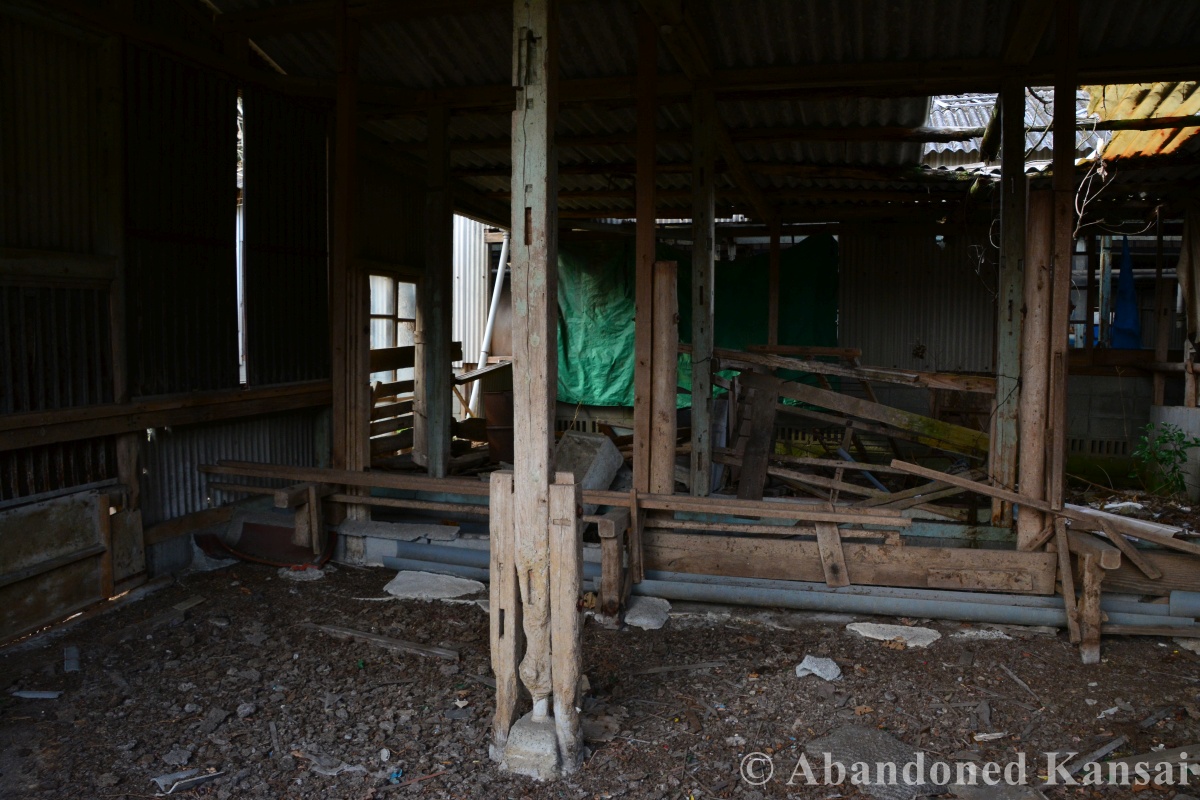
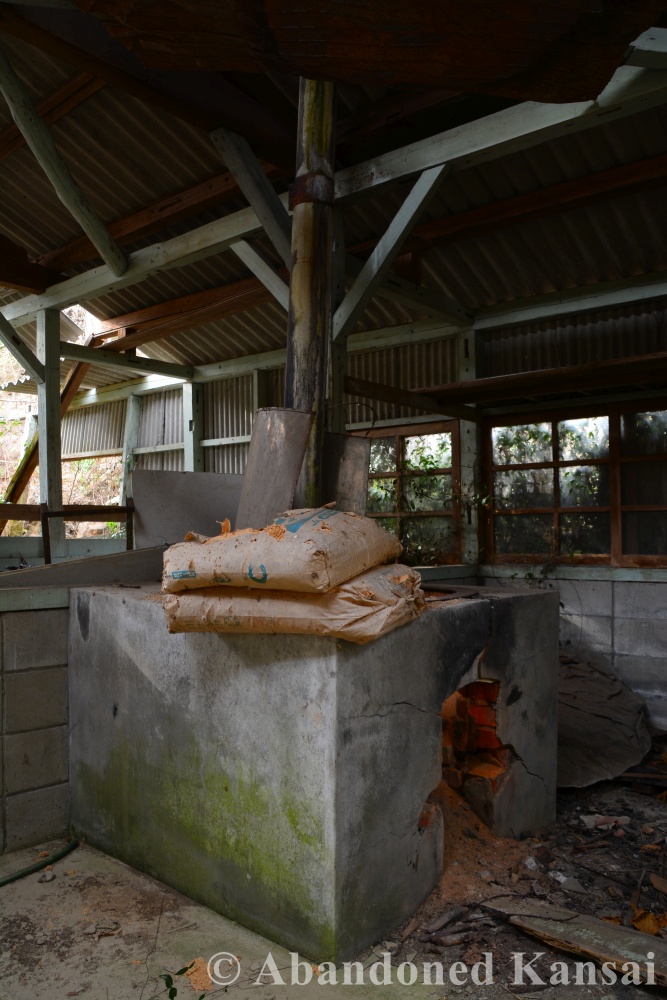
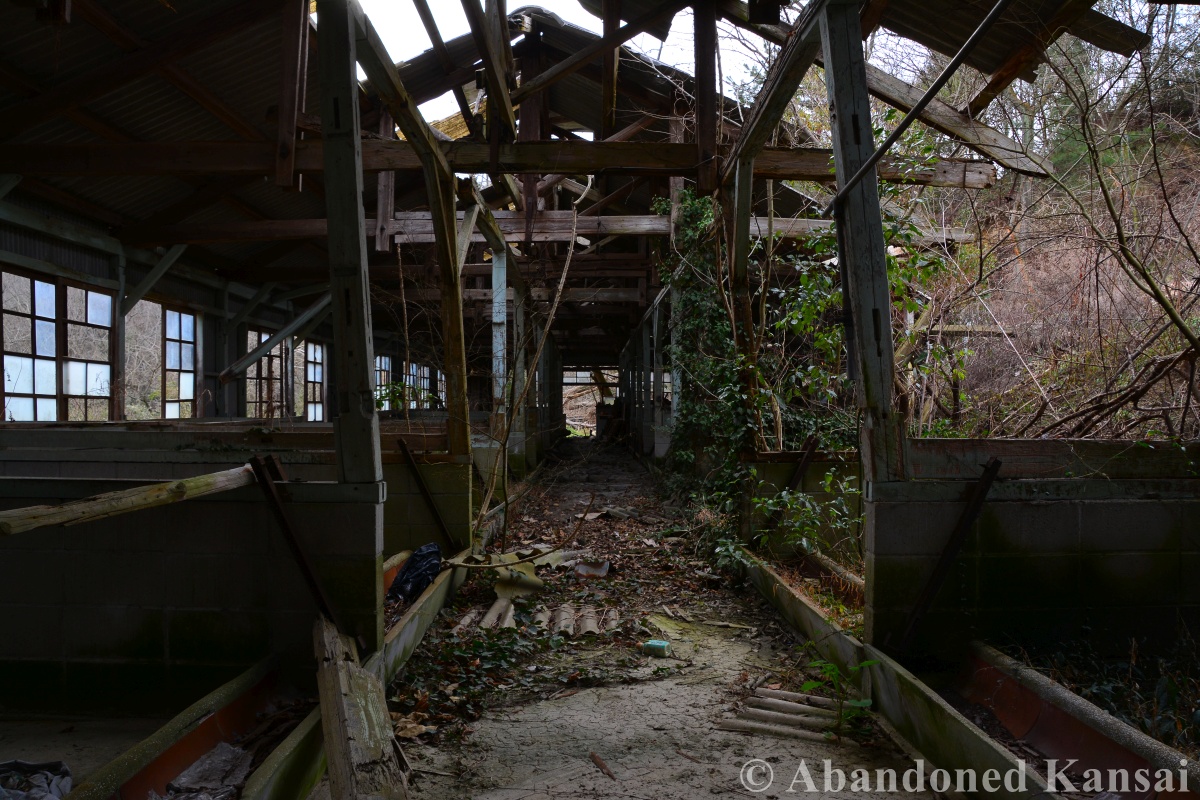
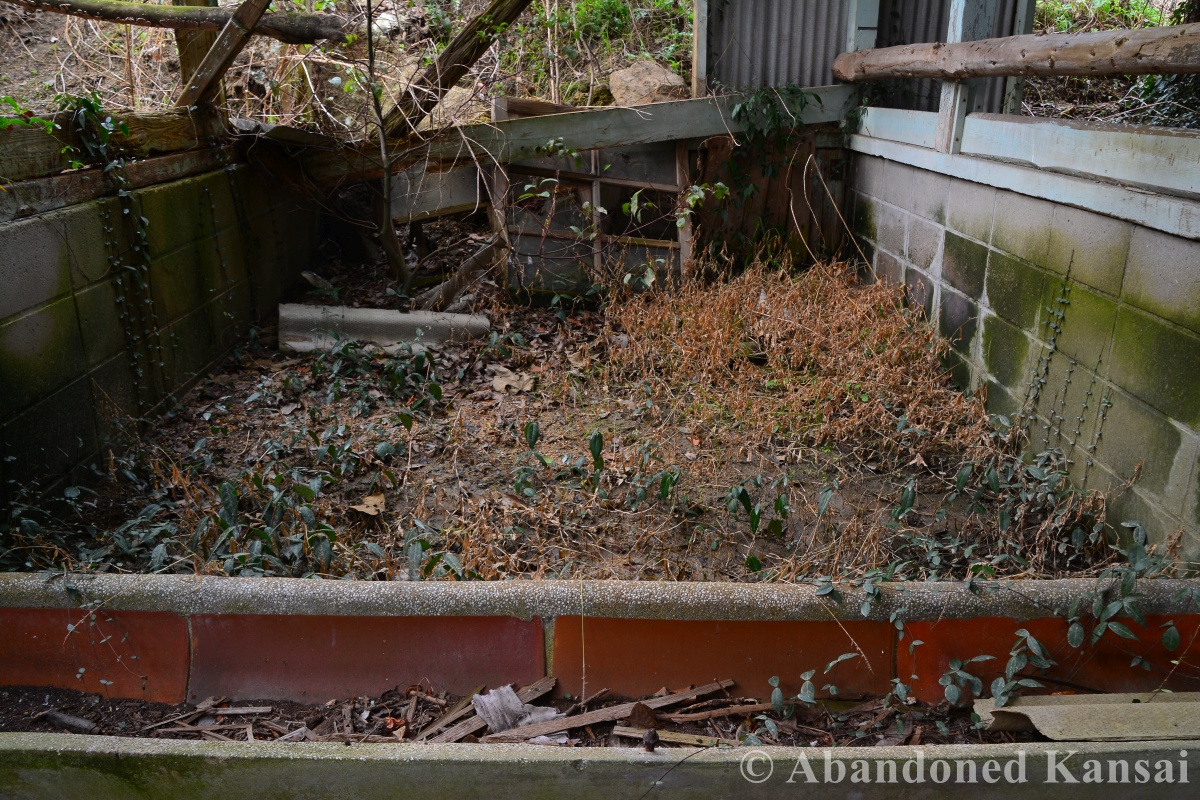
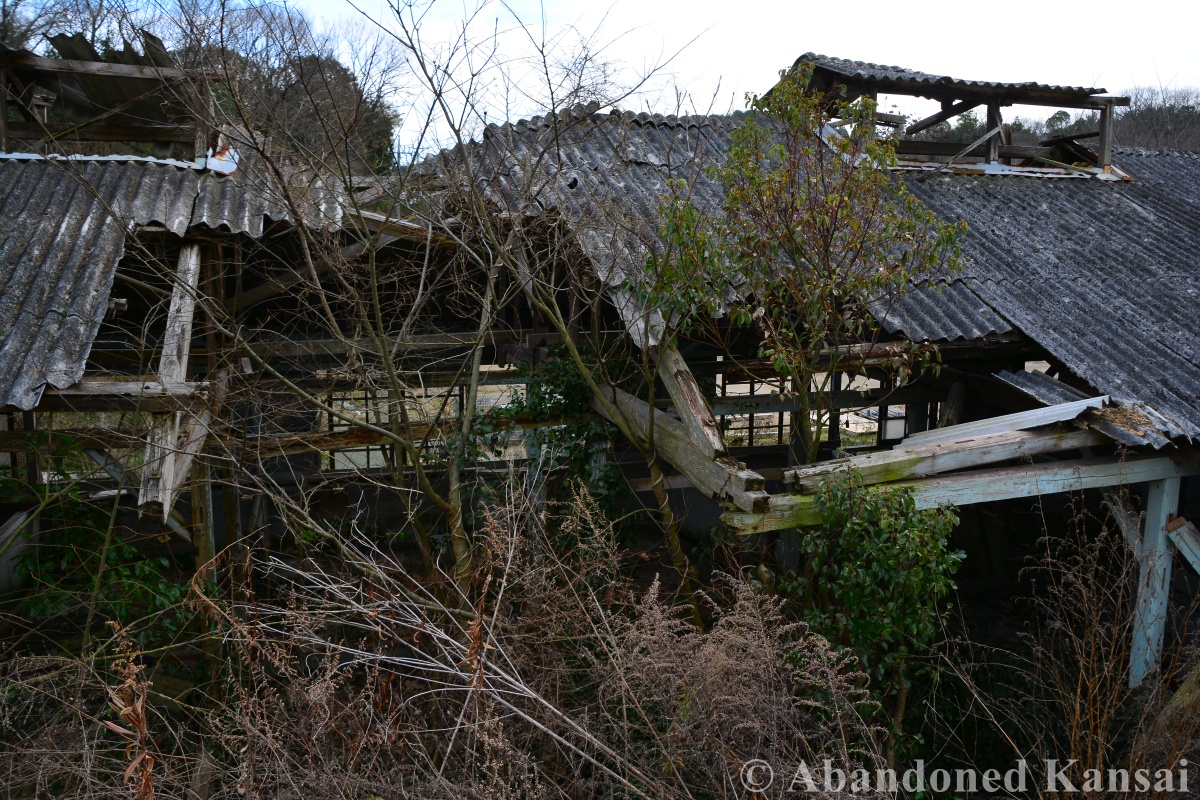
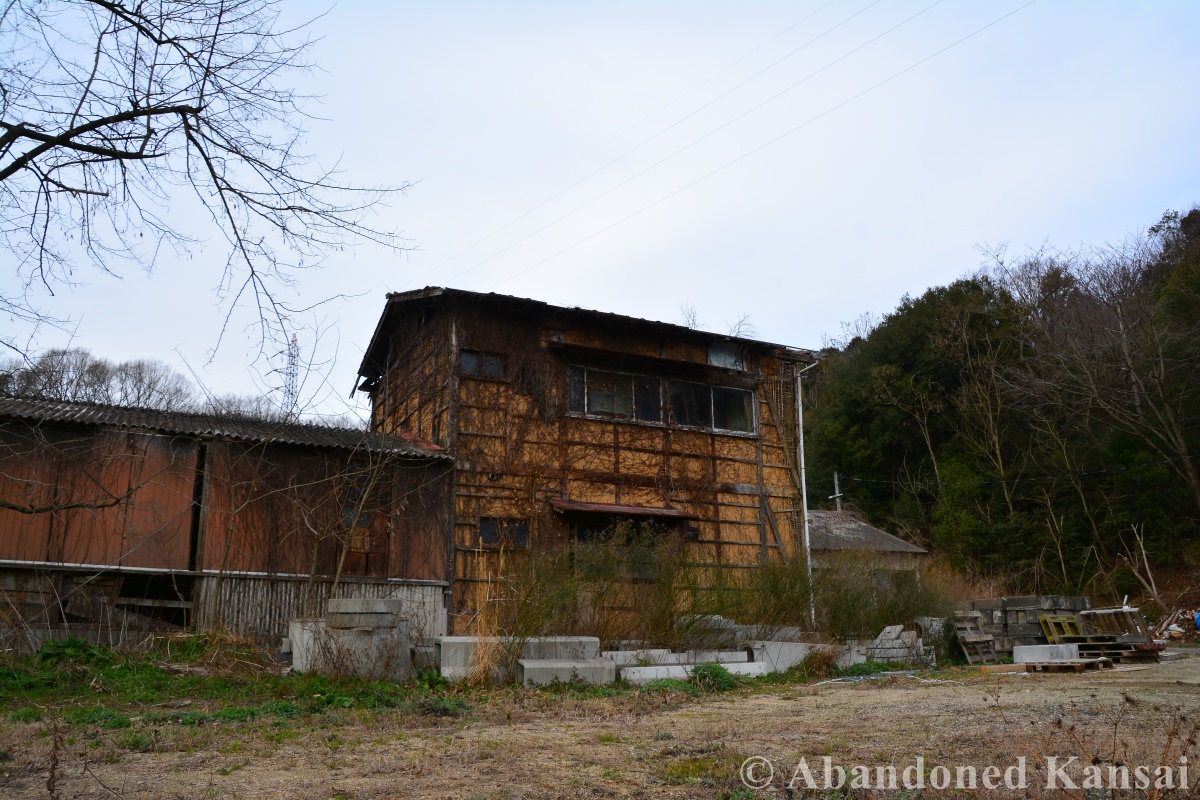
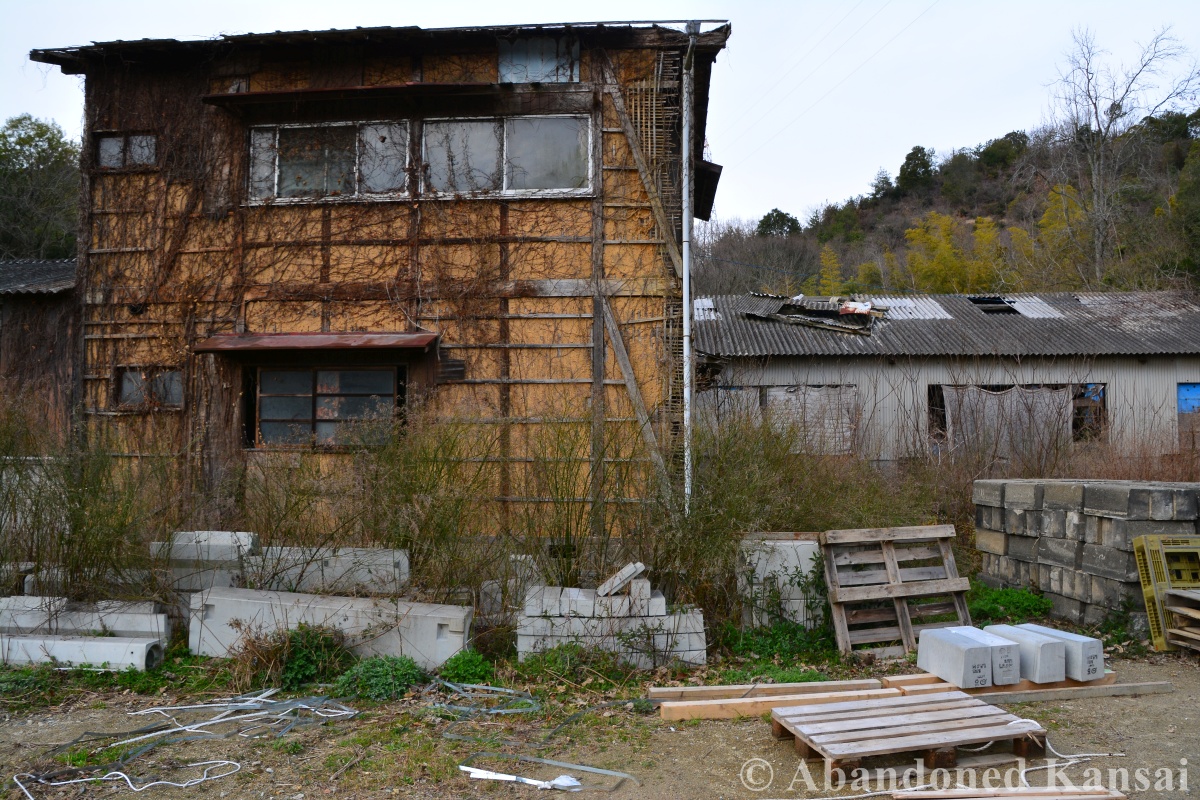
Animal farms reek – even more so than Osaka, which smells pretty bad, especially in summer, especially after a shower of rain. But not as bad as cattle or chicken farms, which is why people live in Osaka and animal farms are banned to the countryside. Not even the regular small town countryside. Remote places halfway up a hill – out of sight, sound and smell of the local yokels who have to work there since the Japanese countryside is dying faster than poultry during an outbreak of the bird flu. I grew up in a pretty agricultural small town in Germany, I have relatives with a farm and restaurant in the Black Forest – despite living in the big bad city for the past 25 years I know what livestock smells like. But it’s nothing in comparison to the chicken farms I passed by in Japan. Holy crap, those things smell like sewage plants. Maybe worse. I guess it depends on the part of the sewage plant. Anyway, what I am trying to say is: Japan has tons of animal farms, you just never see them since they are tucked away in the countryside, far away from the noses of locals and tourists alike. Quite a few of those farms are abandoned – and this is one of them!
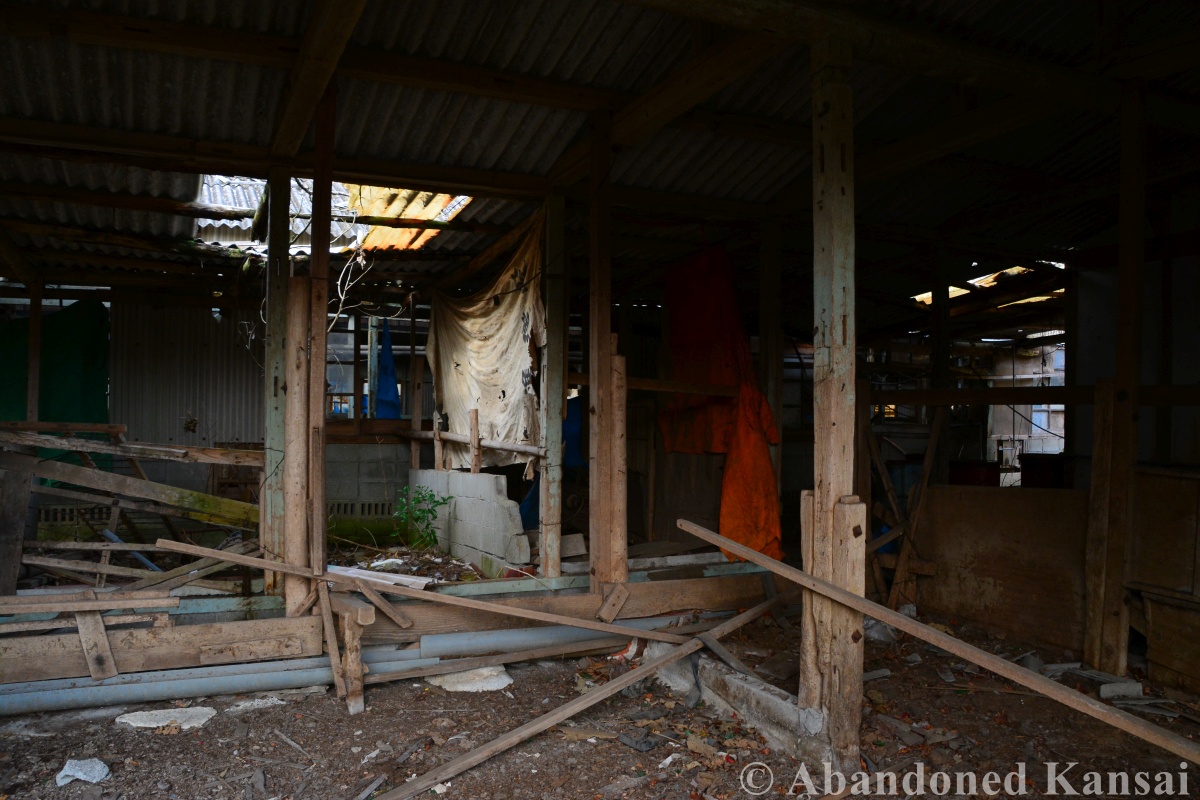
When I found the Pachinko Animal Farm it was nothing more than a rather random smudge on GoogleMaps, a blurry greyish-green blob indicating a couple of buildings in the middle of nowhere on the way to a rather famous abandoned hotel. I was on a no risk exploration day trip with three generations of Americans, age about 7 months to 70 years; obviously none of them were my family, but I’ve been exploring with my parents in Japan before, so I knew what kind of places to select. After a day of nice locations and surprisingly good beach hut pizza, we were about to check out said famous hotel to have a look from the outside when I realized that the Pachinko Animal Farm was basically on the way there, so we made a stop to have a look around. And what can I say? It wasn’t exactly the *Billionaire’s Villa*, but it wasn’t that bad either. Since it was an original find, it was first and foremost exciting, especially for my co-explorers. Okay, maybe not for the 7 months old, but the other ones! (And before some of you turn a lump of coal into a diamond with your butt cheeks: The baby never entered a building all day – no risk, fresh air. It was even fed outside… No child was harmed during any of my explorations ever!)
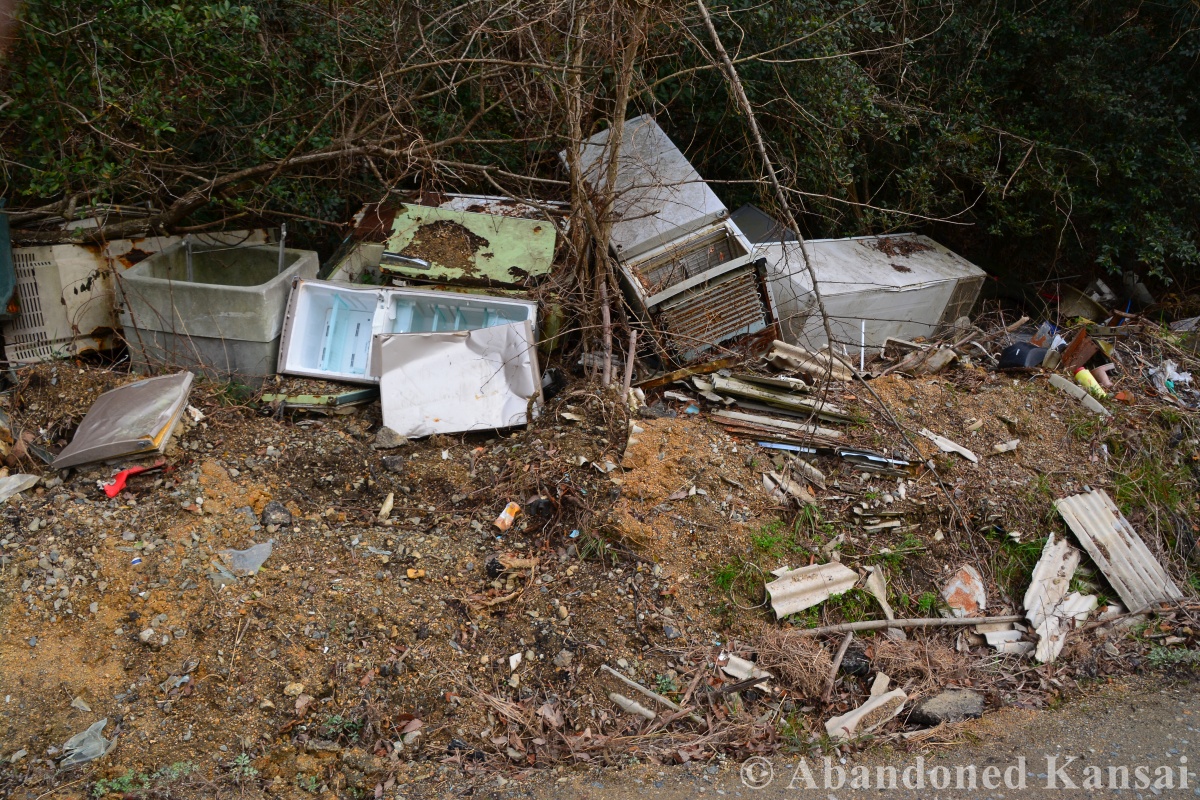
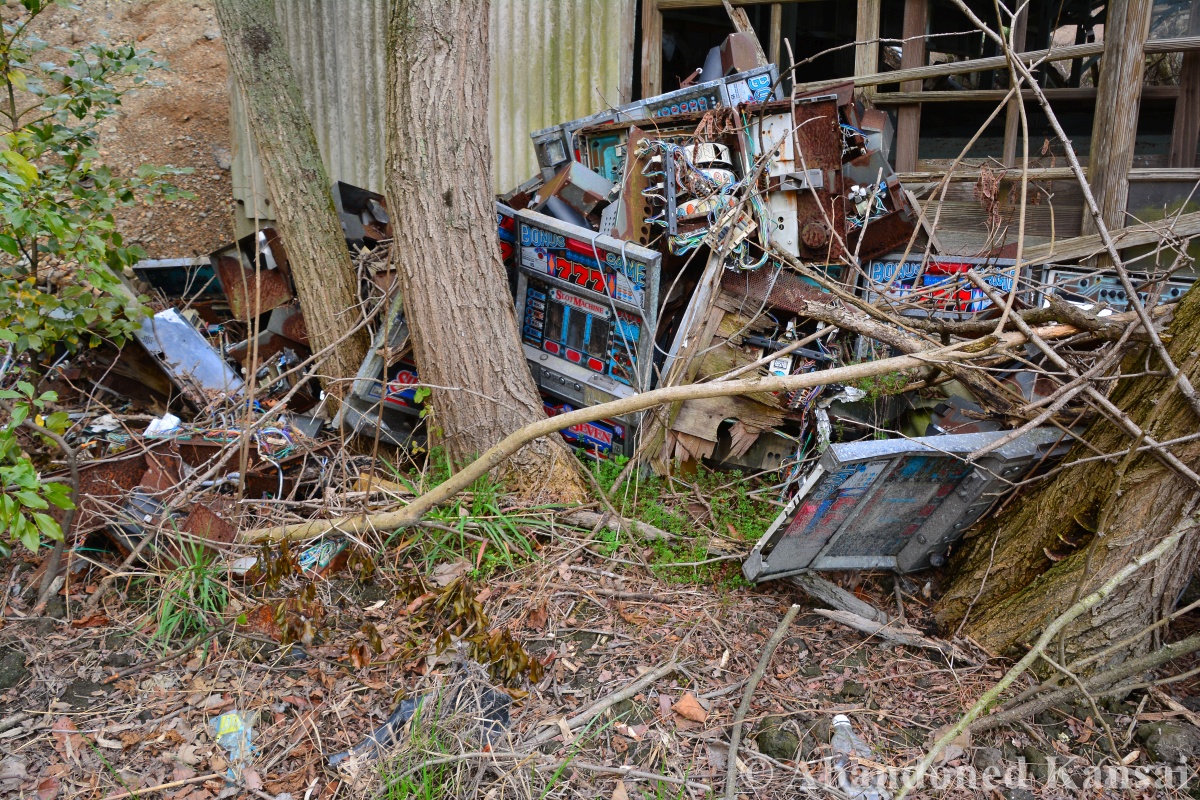
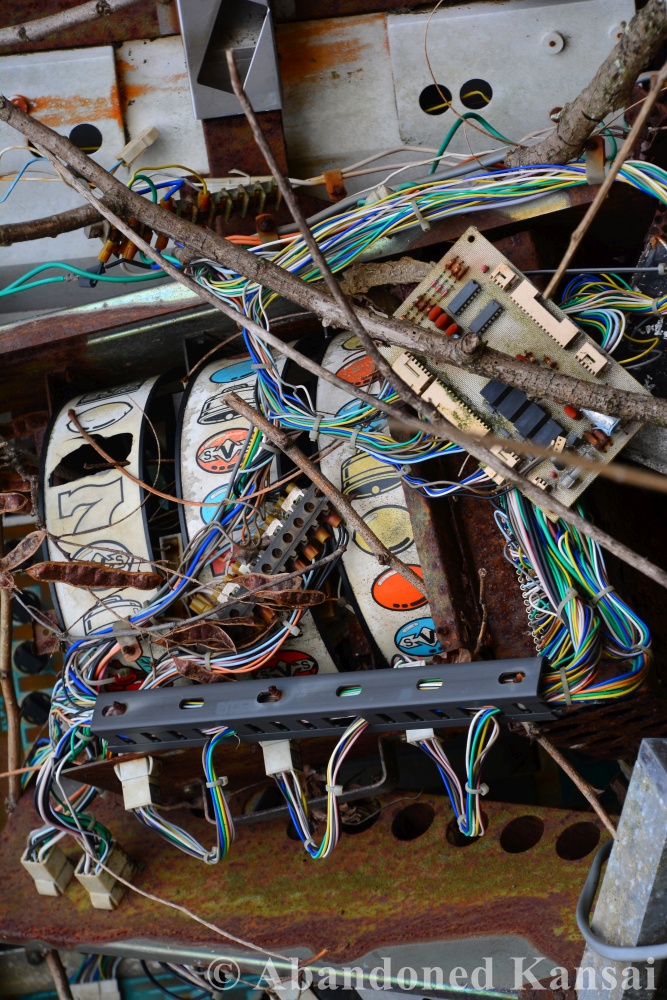
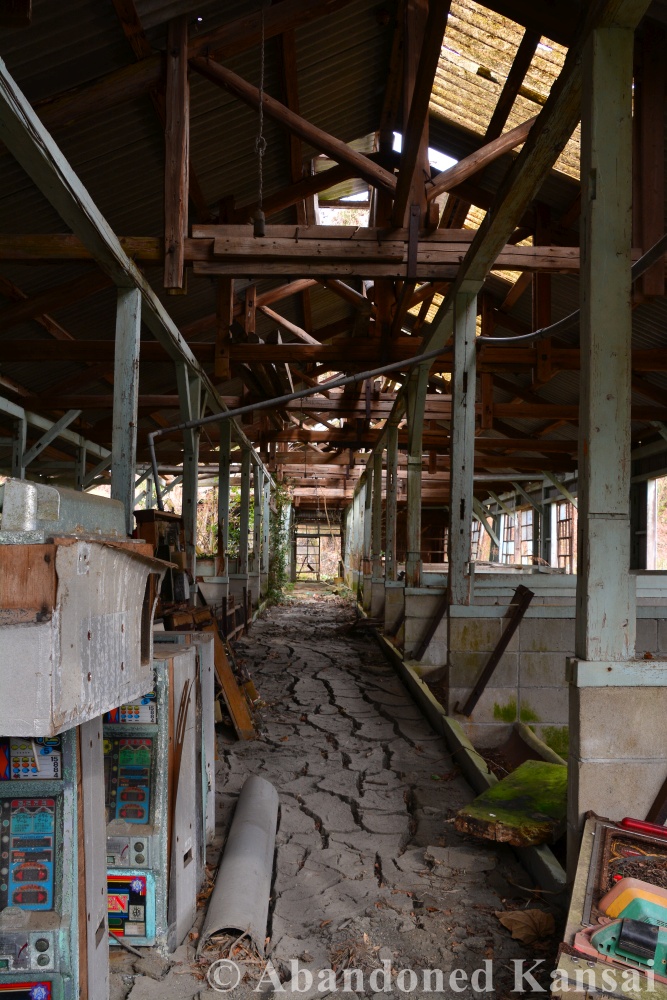
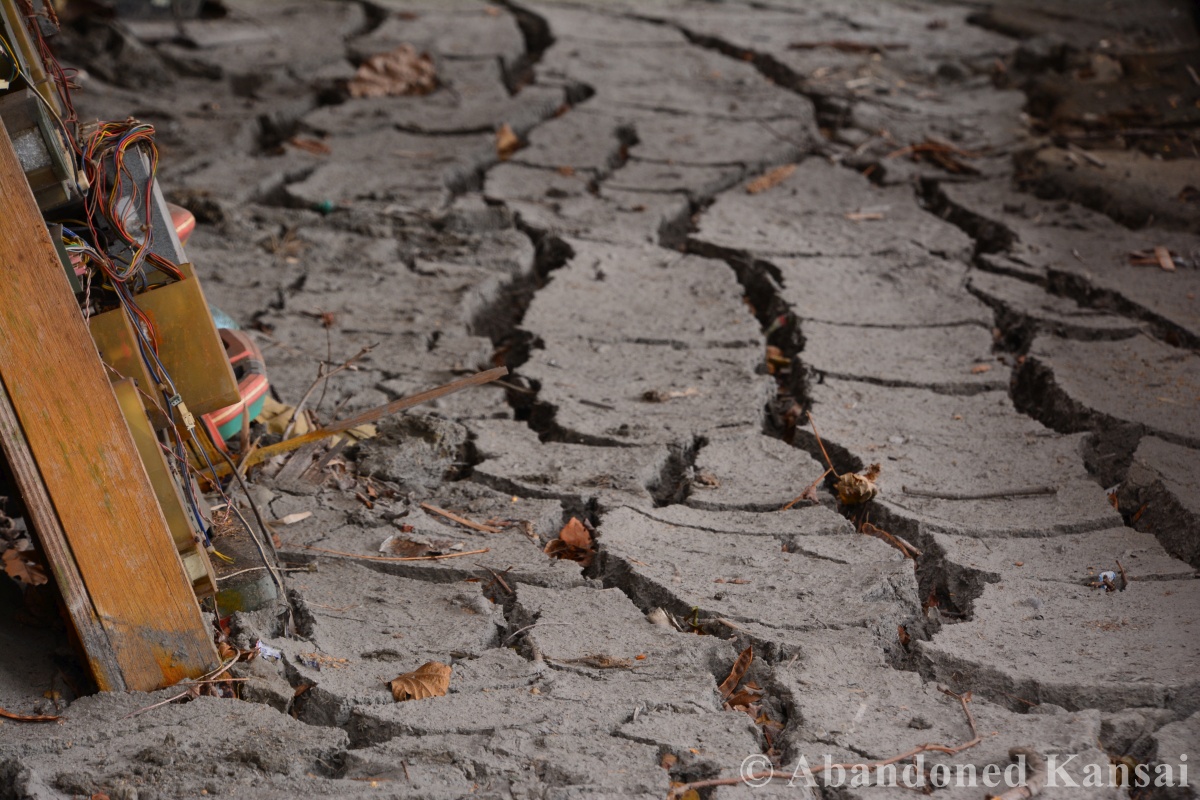
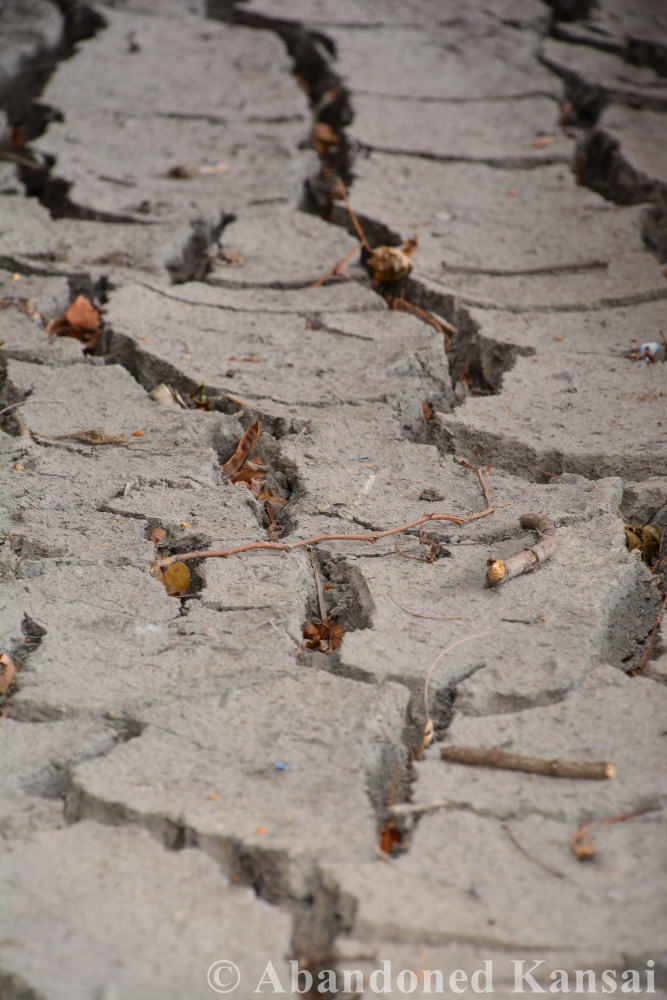
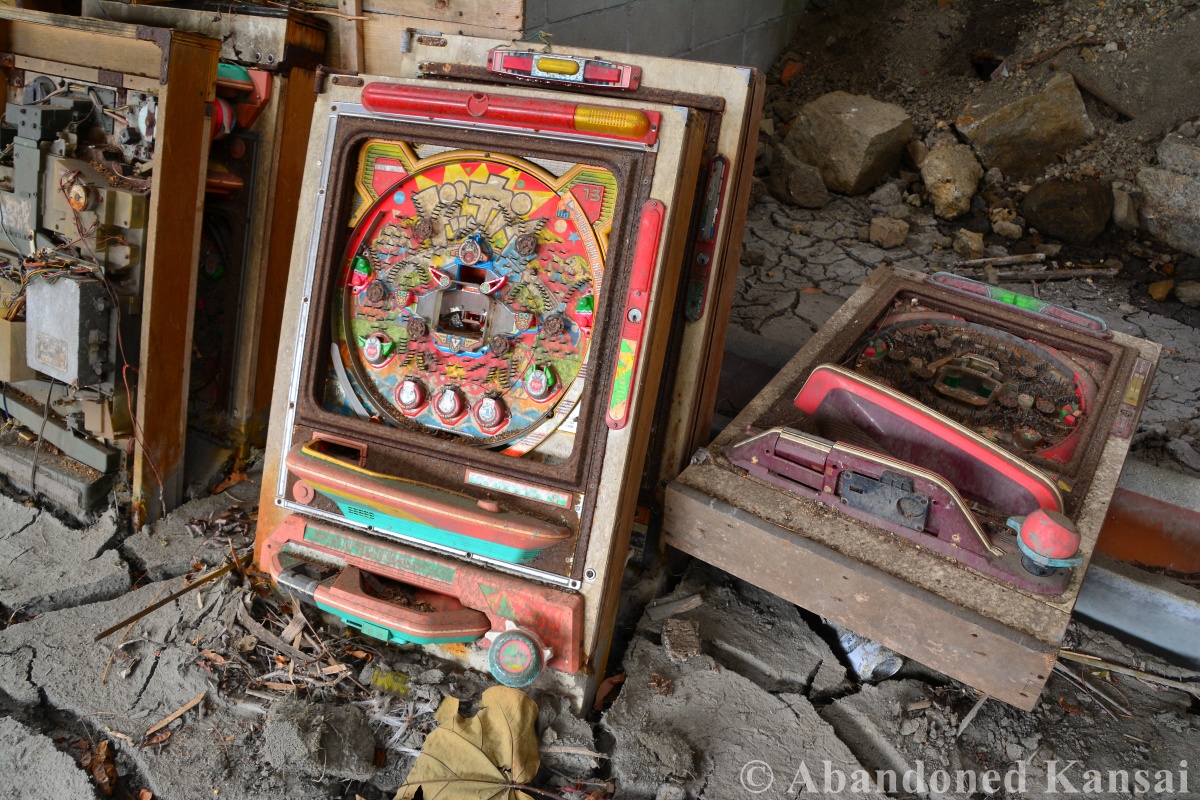
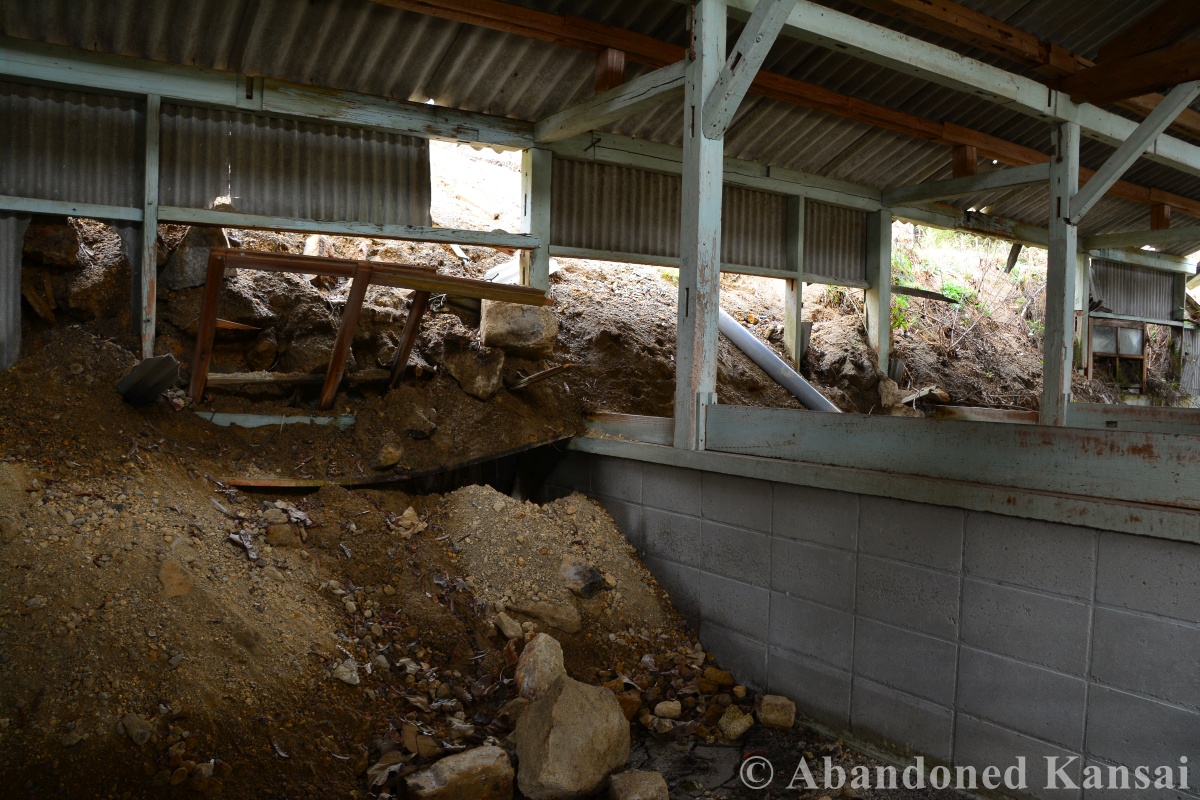
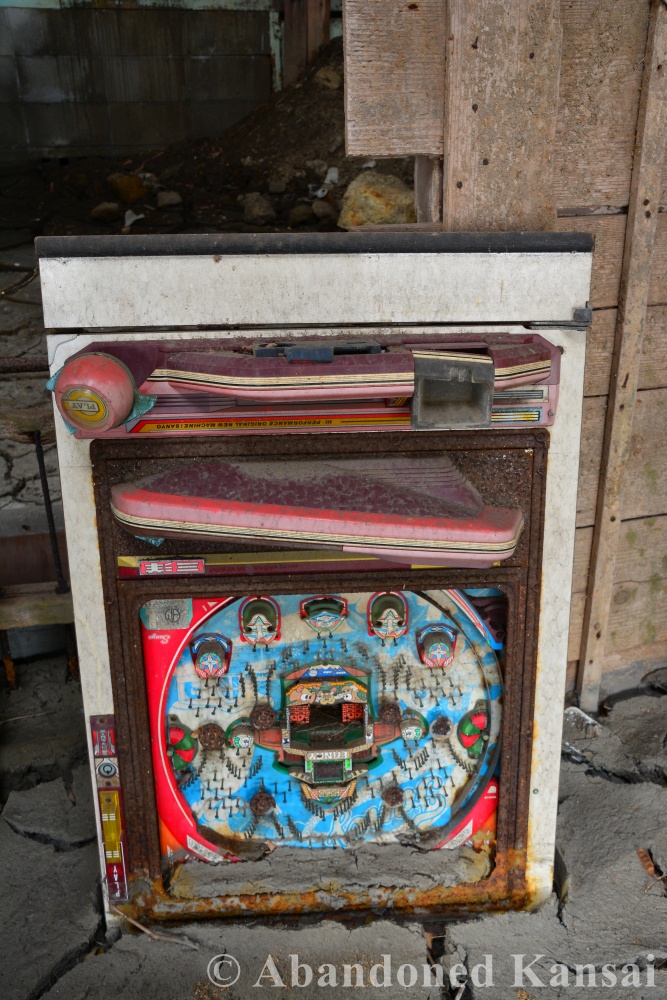
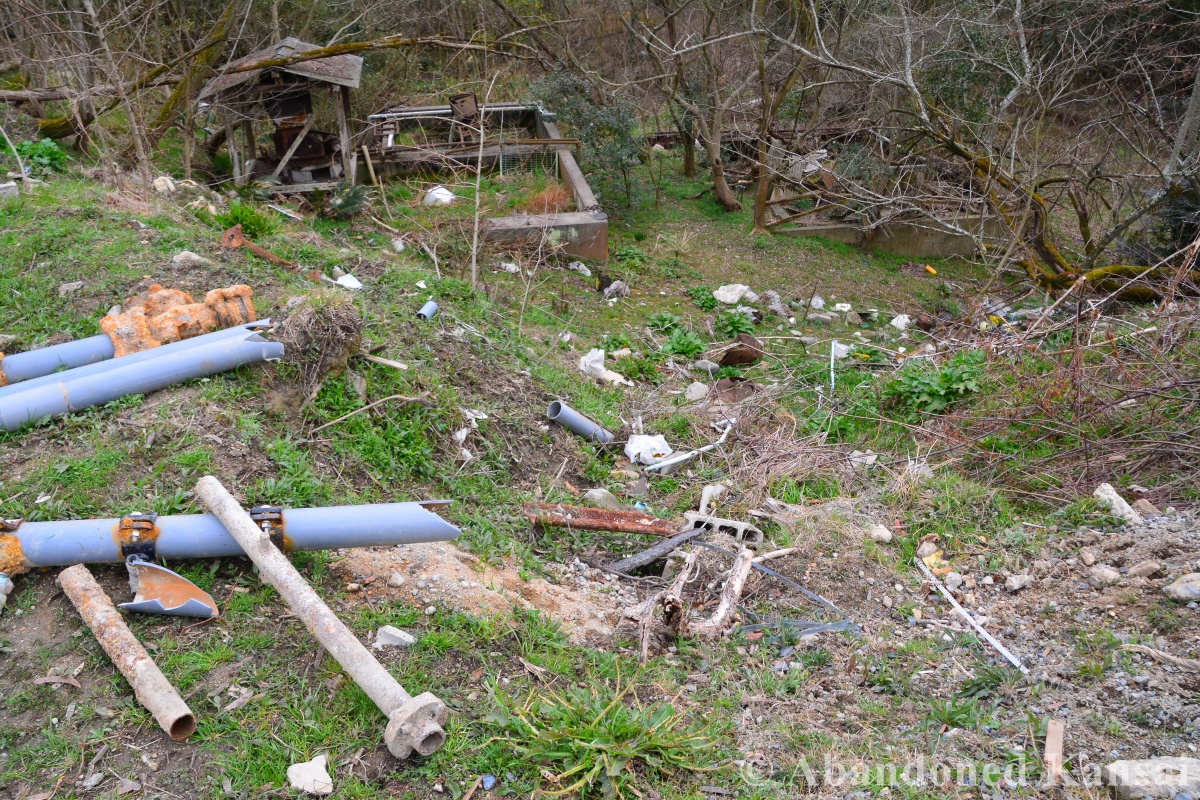
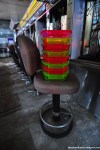
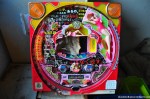
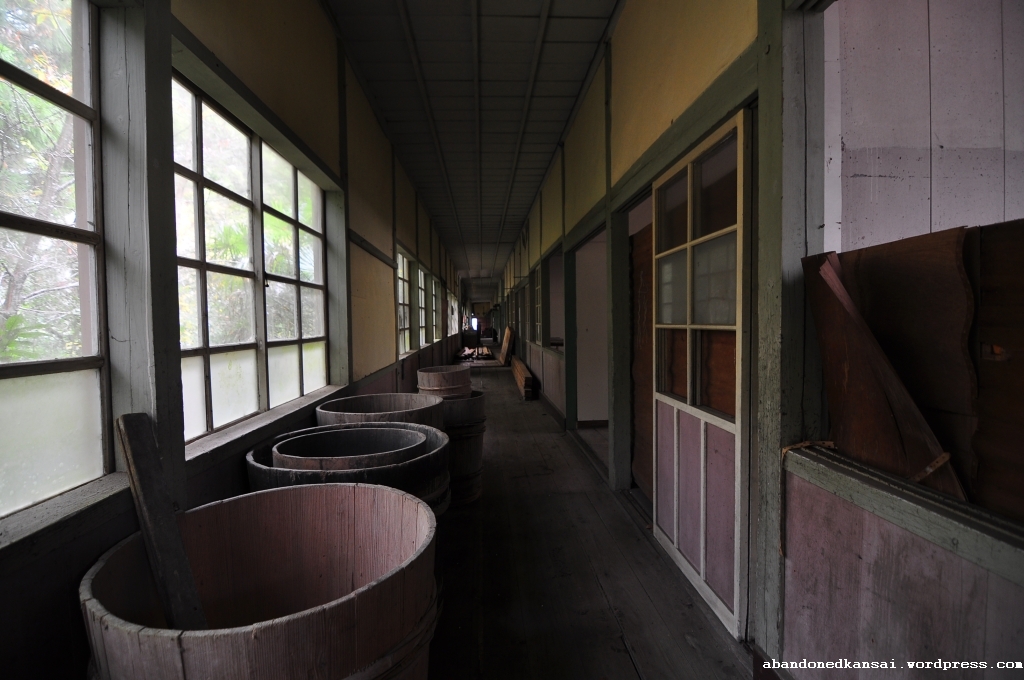
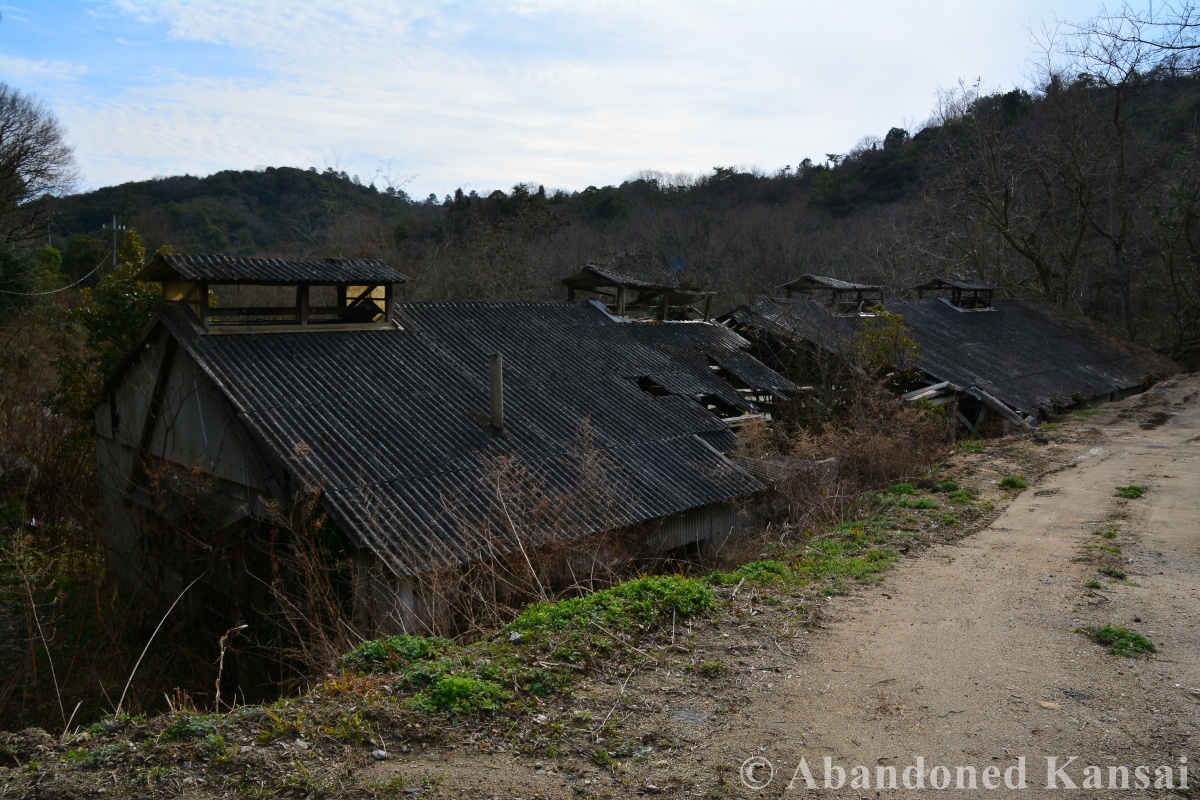
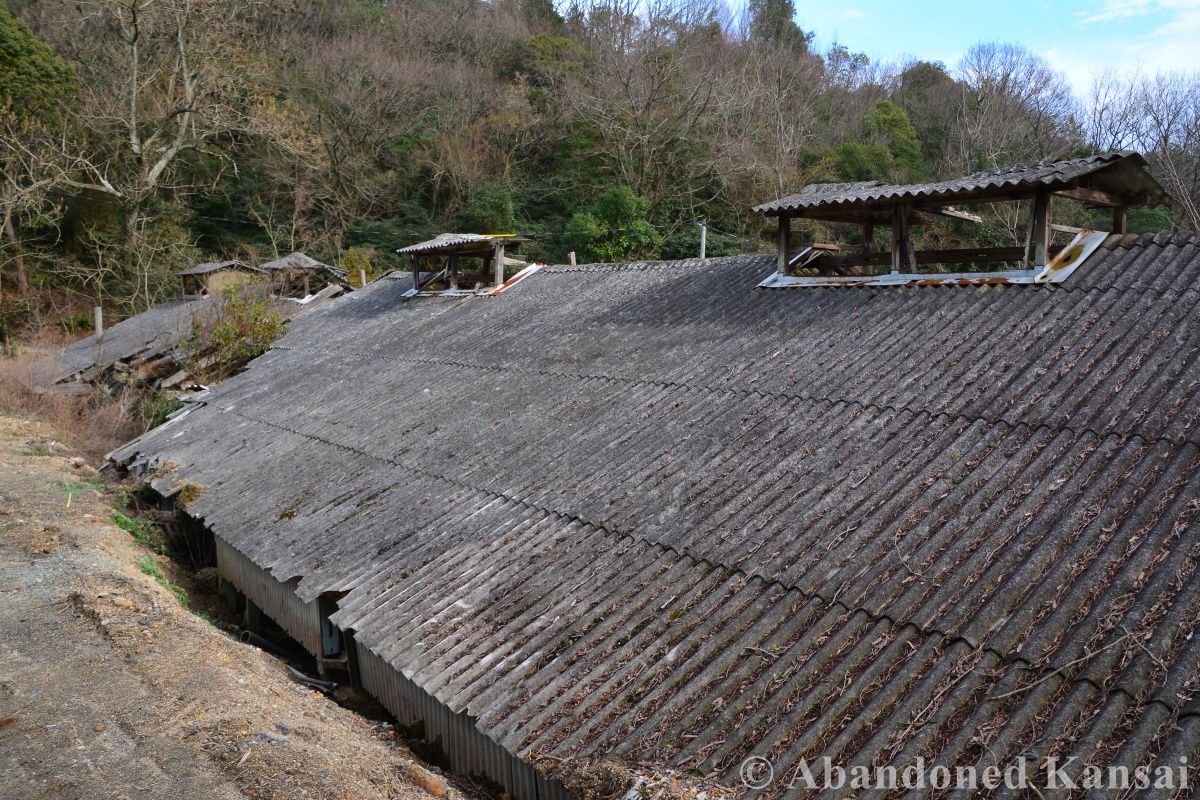
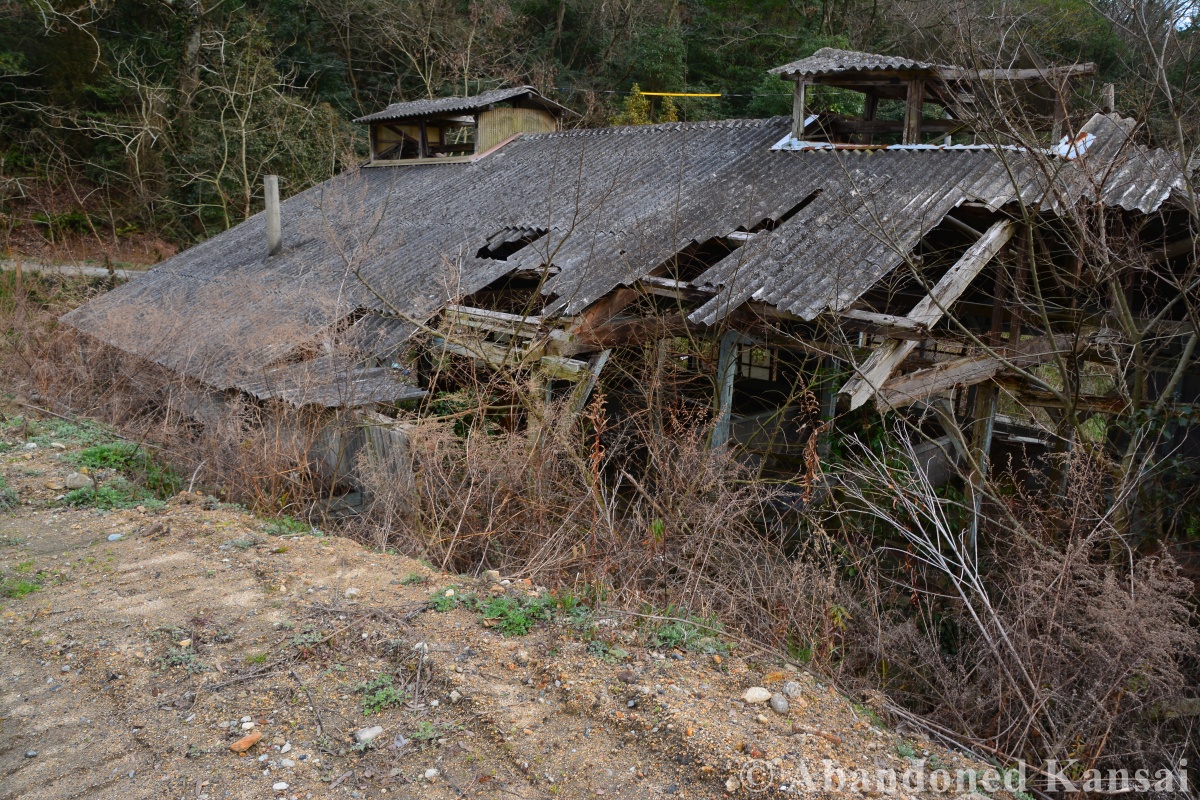
It looked like a mudslide damaged the stables, though it’s hard to say if that happened before or after abandonment. Probably after, given the cracked floors that reminded me of *an abandoned school that I’ve explored years prior*. Also completely unexpected: The dozen or so abandoned pachinko machines, most of them broken. They looked rather old, maybe from the 70s, and were probably just dumped there. I’ve never heard of a combined poultry/pachinko business before… So, yeah, a decent place to explore, nothing spectacular at all, but still better than nothing. Next week though… Boy, oh, boy… Next week’s location will be one of my favorite unpublished places. I’m looking forward to it. I hope you do, too!

(*Like Abandoned Kansai on Facebook* or *follow us on Twitter* if you don’t want to miss the latest articles and exclusive content – and subscribe to the *video channel on Youtube* to receive a message right after a new video is online…)

Read Full Post »
I’ve been urbexing for almost 15 years. During that time I’ve never written any articles about equipment, despite being very happy with three different Nikon DSLRs, two Manfrotto tripods, and a Sanyo video camera – which broke in 2019 after almost 15 years of recording countless hours at hundreds of locations as well as places like Chernobyl and North Korea. Videos I always considered a bonus anyway… and I’m still having a hard time thinking of myself as a photographer, given that I have no formal education in that field and only do it as a hobby. A really time-consuming hobby, but nevertheless just a hobby. I also don’t have a background in technology, so what’s the point of reviewing camera equipment when I just have an opinion based on learning by doing? Well, that doesn’t keep countless “influencers” and Youtubers from churning out incompetent nonsense, but I wouldn’t want to be found dead with either label on me! And like my favorite professor at university once said in regards to papers we had to hand in: “Don’t claim anything you can’t proof!”

Fortunately there is no need to be technical or scientific about this Insta360 X4 article, because unfortunately we never got that far…
Like I said, I always considered video walkthroughs of the locations I explore a bonus. I started them pretty much right away, but at first I didn’t even publish them, because I only took them for myself. And even when I published them, I didn’t edit them. No cuts, no voice overs. Just me walking around breathing heavily into the silence. That all came to a sudden halt when my Sanyo stopped working after exploring the abandoned *Trump Hotel*, also wiping out the recordings of the whole day. At that point I was tired of doing the videos anyway – and my co-explorers were increasingly annoyed, because I added 10 to 30 minutes at the end of every exploration for the walkthrough. So I stopped doing them.
For the past 18 months I’ve been exploring solo again (don’t ask, it’s complicated and often quite frustrating, to be honest), but a few weeks ago a colleague of mine showed me an older model Insta360 video camera that a visiting cousin from the States forgot at his place in Japan. I was fascinated by the easy to use 360 photos and videos, so I did some research and decided to get one. I’ve read reviews, I’ve read product pages – I did my best to make an informed decision, because at first I considered buying the X2 or X3 as older models often are cheaper with only slightly fewer / worse features. The X2 was out of the race when I read in a review that it required a smartphone to be activated – something I didn’t read anywhere about the X3 and X4. I guess because it’s an idea that is so stupid that it probably was a one-time mistake by Insta360, facing so much backlash that they removed the requirement from following models. The price difference between the X3 and X4 wasn’t very big and since the latter was only four weeks old at the time, the price on Amazon and in brick and mortar stores was the same, so I decided to get it at my local Yodobashi Camera (street block sized electronics stores with hundreds of employees each, in case you are not familiar with the chain), where I’ve been a customer for almost 18 years – ever since I moved to Japan.
BIG MISTAKE!

Yodobashi Camera was extremely stingy, giving only 1% points on the video camera, despite a promotional campaign of giving 13% points for purchases over amount X – except for (small print)… But when you shell out 80k Yen on a new video camera you are looking forward to use, store points are the last thing you worry about anyway. Fortunately I still had some of those points, which I used to get a seriously overpriced MicroSD card, because without it the video camera would be useless and I wanted to try it out on the weekend before an upcoming urbex trip. 83500 Yen poorer, but with a big smile on my face I left Yodobashi Camera on a Friday evening after an otherwise pretty horrible week.

Saturday was supposed to be a great day, though it started with a rude awakening / realization…
After sleeping in and having a delicious breakfast, I enjoyed a nice unboxing. The first slight disappointment was when I realized that the included battery was dead. Well, not dead dead, but completely empty. Whatever, an hour or two wouldn’t make a difference. It would not dent my great mood for sure. That came a few hours later when the battery was fully charged. I booted the small brick for the first time, its screen came to life, asking me to choose a language – and then the screen showed what the camera was seeing… for about a second or so. Then some text popped up and my heart sank. You gotta be kidding me! What I was looking at was a screen telling me to download an app by Insta360 to a smartphone, iOS or Android, to unlock the video camera. What. The. Heck? I literally felt it in my fingers how my blood-pressure exploded, because unlike pretty much every person on the planet above the age of 6 years I don’t own a smartphone. Never have. In the late 90s I had a black and white Nokia for work (yes, I’m not the youngest anymore, though I started working full-time in my early 20s). When I moved to Japan I had a flip phone or two, but for the past 15 years or so I didn’t have any mobile phone at all, smart or not, because I don’t like them as they turn way too many people into dumb zombies. So here I had a brand-new, quite expensive video camera… that forced me to make it usable by using another device with cameras? Who comes up with stupid ideas like that?!
Certainly not Nikon! Their D7500 DSLR I bought just weeks prior worked with a partly charged battery and regular SD cards straight out of the box 5 minutes after purchase – without any charging or unlocking BS!
So I started to do some research… and didn’t find much. Like I said, I couldn’t care less about smartphones, apps and all that stuff, so I tried to find a solution to unlock the darn X4 via PC or MicroSD card. Of course I couldn’t find anything about that either, so I contacted Insta360 directly – who apparently didn’t read my message and instead sent me a standard reply. So I got back to them, apologized for not describing my problem properly (I’ve been in Japan too long…), and this time got an answer that at least implied that they understood the situation I was in – without being able to help, because though it seems to be nowhere stated on the box, the promo material or even on the X4 website (at least back in mid / late May, maybe they changed it by now)… you really need a smartphone and the Insta360 app to use a newly bought X4 video camera, that seems to work perfectly fine, but is made not usable on purpose by the manufacturer. Which absolutely blows my mind!
How is that even legal?
How can a company force you to use a completely unrelated piece of expensive technology that actually partly does the job of the product you just bought, to make your purchase usable? Without mentioning that essential detail with big warnings before purchase! And in addition, forces you to use an app, which does who knows what in the background without one knowing?
What’s next? You need an electric bike with WiFi to unlock your newly bought car? And if you don’t… sucks to be you, it’s completely useless!

Yodobashi Camera – (The Lack Of) Customer Service In Japan!
After some back and forth it was Monday and I came to the conclusion that I won’t be able to use the Insta360 X4, because it really needs a smartphone to unlock, which wasn’t properly communicated. So after work I went back to Yodobashi Camera, my go-to electronics store for the past almost 18 years. Never had a problem with them, because all the products I bought worked as intended right out of the box. So I went back to the cashier counter where I bought the video camera… and already ran into the first minor bump in the road – apparently I hadn’t paid for it in the camera department, but a neighboring one, which wasn’t a problem on Friday evening, but very well on Monday evening. So I went 20 meters over to the camera department and told them about my unfortunate situation: That I had bought this video camera three days prior, but couldn’t use it, because it doesn’t work without a smartphone, which wasn’t properly communicated by Insta360 or Yodobashi Camera. But I was very careful with everything, I didn’t even remove the protective film from either of the lenses. Some air through the teeth sucking, some going back behind the counter to talk to a superior and then something like the following conversation – it’s in quotation marks, but they are not really quotes, you know… just something like that, from memory:
“I can’t sell this anymore, you opened the box. You can’t return it.”
“But I can’t use the video camera.”
“I can’t sell this anymore, you opened the box. You can’t return it.”
“I don’t have a smartphone. The X4 is useless to me.”
“I can’t sell this anymore, you opened the box. You can’t return it.”
“I did proper research and I only found out about this after I opened the box and tried to use the X4.”
“I can’t sell this anymore, you opened the box. You can’t return it.”
“I bought a D7500 last month, it worked out of the box…”
“I can’t sell this anymore, you opened the box. You can’t return it.”
“Then take it back and ask Insta360 to exchange the X4 – you have dozens of them here, you probably have to return one once in a while anyway.”
“I can’t sell this anymore, you opened the box. You can’t return it.”
“Are you serious? I’ve been a customer here for almost 18 years, spent millions at your store and other ones in the building that has your name. Never had a problem – and the first time I have, you are stonewalling me?”
“I can’t sell this anymore, you opened the box. You can’t return it.”
“Really?”
“I can’t sell this anymore, you opened the box. You can’t return it.”

At this point I gave up and exchanged a few more e-mails with Insta360 (“You should try to return the X4 where you bought it!” No kidding…), but their responses quickly became as useless and repetitive as the one of the guy at Yodobashi Camera – who is just a small cog in a big machine, so I don’t blame him; he’s punished enough with the lighting in the store and the uniform he has to wear all day.
So here we are, after me falling for the usual misconception about (customer) service in Japan, because I rarely ever had a real problem anywhere. It’s great as long as everything is within procedures – if somebody has planned for it, it most likely will go smoothly. Service is great. When service becomes customer service though, i.e. an individual customer needs help that requires improvisation outside of the planned service… you’re basically on your own. The only thing flexible in Japan is bamboo.

Nevertheless I still have moments when I wonder: AITAH?
I’m a huge believer in personal responsibility. If I make a mistake, I stand by it. I find behavior like ordering 20 items of clothes in different sizes and colors with the intention of sending 18 of them back despicable. In fact I’ve never sent anything back that I’ve ordered online, except for two USB-HDDs – and only because they didn’t work. I don’t do fast fashion, I don’t buy garbage from questionable sites like Shein oder Temu, I don’t replace electronics unless they are broken. (RIP, Nikon D7100!) I did due diligence before buying the Insta360 X4 and to this day everything in that (opened…) box is in mint condition. If I would have known about the smartphone requirement, I wouldn’t have bought the X4. It’s the reason why I didn’t buy the X2.
This is actually only the second time that I tell this story to anybody, because part of me is a bit ashamed that this series of unfortunate events happened – despite all the research before buying. But spending more than 80k on a useless brick of tech isn’t exactly something to be proud of. I don’t regret much in my life, but buying the Insta360 X4 I regret. And buying it at Yodobashi Camera is something I regret, too. Maybe Amazon would have been more accommodating with returns…
But I guess it is what it is – only money in the end. And no videos for Abandoned Kansai in the future. Heck, even if I would get the currently useless X4 to work, I would always be reminded of this story. Screw video cameras! Never was a fan, now I dislike them almost as much as smartphones. Which kind of closes the circle. But I’ll make sure to never ever even consider buying anything from Insta360 again – I still don’t understand how it’s even legal that they can do this. What’s next to unlock their cameras? Having to send them a voice message, swearing loyalty to Winnie the Xi(thead)? Apparently they can do anything without people questioning it…
I went back to Yodobashi Camera once more though, two days ago. I spent the remaining shop points I had on presents for my nephews without having to pay a single sen – my goal was it to hit +/- 20 points/Yen, but going to exactly 0 was priceless – and so I left the Yodobashi Camera building one last time with a big smile on my face. Upon arriving back home I cut up my loyalty card after almost 18 years. It probably doesn’t mean much to a large store chain like that. But it meant a lot to me!

Thank you for reading till the end and… What has your worst experience with Japanese (customer) service been? Write it in the comments!

(*Like Abandoned Kansai on Facebook* or *follow us on Twitter* if you don’t want to miss the latest articles and exclusive content – and subscribe to the *video channel on Youtube* to receive a message right after a new video is online…)

Read Full Post »

A rundown abandoned „Japanese pinball“ venue with a shocking surprise on the upper floor – welcome to the Nightmare Pachinko Parlor!

In recent weeks pachinko parlors quite often made national news during the coronavirus crisis in Japan, especially in Tokyo and Osaka, when several prefectures ordered them to close temporarily as they were / are considered hotspots for spreading the disease. In addition, legally opened parlors attracted attention, when gamblers from prefectures with successful shutdowns crossed borders specifically to play pachinko, The 1985 opened Nightmare Pachinko Parlor fell into neither category as it was closed down for good (or should I say „bad“?) more than a decade prior to my exploration in 2017; a decade that didn’t treat the establishment kindly…
It was a cold, rainy autumn day and the trash scattered all across the slightly overgrown parking lot lowered my hope of having found another good abandoned pachinko parlor significantly – the busted doors and windows didn’t help either… The good news: It was still there and easily accessible. The bad news: Pretty much everything else. Because of course the inside was severly vandalized and dark instead of pristine and well-lit. But that’s not all! Since it took me a while to take pictures due to the difficult lighting, my buddy R. kept exploring the rest of the building – which included a soba and udon restaurant as well as the non-public rooms upstairs, usually a mix of offices and living spaces for owners and employees. And when I was finally documenting one of the rooms that was either part of the restaurant or the prize exchange (you can’t win money with pachinko, only „gifts“ of limited value), which included the boxes of several sex toys, R. came back and told me a little disturbing story. While he was upstairs he saw a young guy hiding in the cabinets! Since there was no longer exchange of words we don’t know if it was somebody hanging out there for the afternoon, if he was some kind of squatter (very unusual in Japan!) or maybe a murderer on the run, but R. suggested that I could have a look myself in case I didn’t believe him. But there is one thing you can believe me – I believed him! And I had not the slightest urge to turn this really bad exploration into a nightmare…

Exploring the Nightmare Pachinko Parlor felt more like a duty than fun (it was there, so I had a look…) – but I’m generally not a big fan of rundown, vandalized, trashed places on rainy days. Add unexpected people to the mix and it’s even worse. If you want to see some abandoned pachinko parlors in much better condition and find out more about the economics of pachinko, please have a look *here* and *here*.

(*Like Abandoned Kansai on Facebook* or *follow us on Twitter* if you don’t want to miss the latest articles and exclusive content – and subscribe to the *video channel on Youtube* to receive a message right after a new video is online…)

Read Full Post »
The *Demolition of Nara Dreamland* started almost three years ago, yet there are still some parts of it that are widely unknown to fans of this once amazing abandoned theme park. Today I’ll present another building most explorers walked by, but didn’t get in – the Parking Lot Game Center!

One of the first photos I ever took of Nara Dreamland back in December 2009 showed parts of the eastern parking lot, the parking garage, the ticket booth… and a locked white building with a brown roof. This was before Nara Dreamland became famous on the internet, so it was in very good condition and without any signs of vandalism. Just 14 months later the roller shutters were covered in graffiti, but the unmarked building was still inaccessible.
Fast forward to 2016: 5 years and thousands of urbex tourists later somebody finally took an effort to pry open one of the shutters for about one third – Nara Dreamland had been sold in an auction in late 2015 and the massive amount of scaffolding on the parking lot implied that demolition word would start rather sooner than later; and I guess we all know how much of a motivator running out of time can be! I still didn’t know for sure what the building was exactly, but I think I’ve been told that it was a pachinko parlor that closed several years before Nara Dreamland shut down for good in 2006.
Well, not much of a surprise that it turned out to be a ransacked game center. About 1/3 of the large, dark room was pretty much empty, the rest of it was cluttered with all kinds of equipment – stools, tools, pachinko ball baskets, a statue on a counter… a large counter. The way the stuff was placed was clearly to discourage people who entered through the front from going through all the stuff, kind of a barricade. And whoever did it, was successful in the case of yours truly. After spending half the night and quite a few daytime hours in the park I was tired and exhausted, so I took a few pictures and a quick video… or so I thought. Because unfortunately I couldn’t find any photos of the inside of the Parking Lot Game Center when I dug deep into my archive last weekend. So I guess pictures from the outside, dating from 2009 to 2017, will have to do… and the video, of course!

Finally exploring the inside of the Parking Lot Game Center was exciting and underwhelming at the same time. On the one hand it was little more than a rundown, underequipped pachinko parlor (no signs of the billiard tables advertised on the window signs!), on the other hand I had to wait almost eight years for this moment – and I knew that not a lot of people had seen what I was just seeing. It was a nice, exotic piece of this huge puzzle Nara Dreamland had been. And if you like rare stuff, have a look at *part 1* and *part 2* of this series about places at Nara Dreamland hardly any visitor knew existed.

(*Like Abandoned Kansai on Facebook* or *follow us on Twitter* if you don’t want to miss the latest articles and exclusive content – and subscribe to the *video channel on Youtube* to receive a message right after a new video is online…)

Read Full Post »
Pidgeon Pachinko or Garbage Pachinko – quite suitable alternative names for this virtually unknown abandoned pachinko parlor…

Pachinko is probably one of the most sketchy businesses you can get yourself into in Japan. About 40% of the parlors are run by the yakuza, another 40% by exile Koreans with ties to the northern half of the motherland. And the majority of the rest is probably owned by large chains with gigantic parlors – and despite that there are quite a few abandoned pachinko parlors all over Japan, from inner cities to the middle of nowhere. A surprising large number of them are actually in rather bad condition – you would think that criminals, borderline criminals and corporations would pay better attention to their properties, but maybe the abandoned ones are all closed independent parlors; who knows? I don’t, that’s for sure. But I am not much of a gambler. Never even entered an active pachinko parlor and hated every second when visiting one of the highly regulated casinos back in Germany.

The Grazia Pachinko parlor though I will remember as by far the shittiest place I’ve explored, the biggest pile of garbage; unfortunately not only figuratively, but also literally – thanks to a flock of pidgeons living in the entrance area and a hobo filling the upper floor with trash.
I try to approach every exploration with the most positive attitude as possible as I actually look forward to every single one of them (except for revisits – I’m really not a revisit guy… except for *Nara Dreamland*, of course!), but when I was approaching the Grazia on this January morning (a chill winter bastard though dry), I kinda wished the weather were better – luckily it wasn’t, because I think these days, summer days, the parlor is borderline inexplorable. Partly covered by graffiti on the outside, quite unusual for Japan, the innards of the Grazia Pachinko parlor weren’t much more of a looker. The last owner basically removed anything of value and / or interest, the outdoor “artists” and / or their following did the rest. Even worse, several dozen pidgeons decided to occupy the entrance area (now the back of the parlor) and leave huge piles of scat everywhere – now I was grateful for the close to 0°C weather, because neither money nor pidgeon shit has much smell at those temperatures. Well, ground floors of abandoned pachinko parlors tend to be crappy places in general, maybe the living area above the parlor (not a lot of people know that, but most pachinko parlors have a whole apartment area on top!) would be more interesting? The vandalized staircase wasn’t very promising and the real thing fully lived up to the now extremely lowered expectations. The entrance to the boiler room to the left was blocked by a horizontal door and filled with trash, the almost empty kitchen to the right filthy to a level you wouldn’t expect of an empty room. The hallway was kinda darkish and cluttered, nevertheless I followed it down to the next door, where I was welcomed by a breathtaking surprising – the whole bedroom behind it was filled almost knee-deep with trash, most of it empty plastic food containers. Too bad that there is no thing as smell photography, because I totally would have used that technology in this case! And just to remind you, this was dry 0 degree weather in January. Now in July we often reach very humid 35°C during the days and still above 30° at night. At that point I had enough and didn’t even venture further down the hallway. I love exploring like hardly anybody else, but buildings that were turned into garbage dumps… seriously, nobody needs locations like that. Behind the parlor I had a quick look at the building where the few lucky winners could exchange their balls for prizes (locked) and a small bungalow building, but they were of little interest and it was still early in the day – there were other places to explore… more promising places!

(*Like Abandoned Kansai on Facebook* or *follow us on Twitter* if you don’t want to miss the latest articles and exclusive content – and subscribe to the *video channel on Youtube* to receive a message right after a new video is online…)

Read Full Post »
“Another Pachinko parlor? Really? With no videos and just a few pictures? Are you serious?”
Well, welcome to exploration reality…

Reading the comments here and on Facebook I realize that there are quite a few misperceptions about Abandoned Kansai. While this blog and all connected social media channels (including every bit of content) are run by only one person as a hobby (although it takes as much time as a part time job…), this is far from being a one man show. I have group of about ten people I go exploring with irregularly, i.e. whenever the opportunity arises – back home in Germany usually family members and old friends, here in Japan most of the time new friends I met thanks to the blog. But we don’t go exploring every Tuesday or even every weekend – sometimes I go several weekends in a row, sometimes not for weeks. Tuesday is just the publishing day of the weekly blog article. And the articles are not in chronological order. Some locations I explored months or even years ago, some indeed just a few days prior to writing an article. More often than not I choose on Monday or Tuesday which abandoned place I’ll write about that week – not in random order, but based on how much time I have, how much material I have, what I feel like… and most importantly, what I have written about recently; just to avoid presenting three deserted hotels in a row – even though I often explore three abandoned hotels in a row; sometimes on the same day. The length of a video and the amount of pictures usually depend on how big and how interesting a location is – of course I get much more material when I stay seven hours at a place like the *Nakagusuku Hotel Ruin* than when I spend 20 minutes at the Smile P&A Pachinko Parlor… How much time I spend on a location depends of course on factors like size, how interesting it is, security, what the plans for the rest of the days are – and sometimes my fellow explorers lose their patience and want to move on.

As for the Smile P&A Pachinko Parlor – small location, not really interesting, a guy next door eyeing us, other places to check out, bored fellow explorers; 13 photos in 20 minutes, no video. One of the most rushed explorations, definitely snapshots as I didn’t have time to properly frame a single photo. As Japan becomes super busy (with all kinds of duties and parties) before shutting down for a week just after Christmas, this location is actually a blessing in disguise for the blog as I don’t have to go through a lot of photos and research, because this was just another random abandoned countryside pachinko parlor – I hope you enjoyed it anyway. And if not, you can look forward to an article about an abandoned theme park I worked on for a while… and of course to a look back at 2017, including some gorgeous photos of mind-blowing locations not yet published or even mentioned on Abandoned Kansai! Add the yearly Merry XXX-Mas article and you know what to expect for the rest of December… 🙂

(*Like Abandoned Kansai on Facebook* if you don’t want to miss the latest articles and exclusive content – and subscribe to the *video channel on Youtube* to receive a message right after a new video is online…)

Read Full Post »
Closed pachinko parlors are everywhere in Japan – from right opposite train stations in busy city centers to the middle of nowhere in the countryside. Yet it has been six years (!) since I last wrote about one…

Pachinko is as Japanese as it gets – probably even more so than sushi and sumo as it is mostly contained to Zipangu. Currently there are between 15000 and 16000 parlors in Japan, and from the looks of it about 10% of them are closed or even abandoned. Although the number of regular players was cut in half between 2002 and 2012, there are still more than 10 million regulars in Japan. Some 34000 of them are professionals while the majority of players loses money big time; in 2006 the average customer spent a whopping 28124 Yen (!) per visit (today about 250 USD / 210 EUR). About the legal problems pachinko parlors face and how they are connected to North Korea in a way that’s hard to believe *I wrote about in a previous article*, so I won’t repeat it here.

Back in 2010/11 I found and explored two abandoned pachinko parlors in excellent condition and therefore wasn’t aware how rare they are in that state. In the following years I realized that most of those closed / abandoned parlors are either tightly locked – or completely filled with trash. I must have tried at least half a dozen of them under a variety of different circumstances, but none of the attempts lead to an exploration worth documenting. Until recently, when I came across the Countryside Pachinko Parlor in a small onsen town. While most of the machines were gone, the parlor was still in good condition overall. Most stools were still there, some advertising, the frames for the pachinko AND the slot machines… and nobody vandalized the large mirror / chrome / neon installments at the main entrance. Even the living area on the upper floor was accessible – featuring one of the slot machines, a kitchen / dining area, several balconies and half a dozen bedrooms. Nothing special, but better than nothing – especially after all those years, especially on a rainy day. (Exploring on rainy days sucks. Outdoor locations are hardly doable and even indoor places are a pain as everything is / can be wet and uncomfortable – from access points to whole floors…)
Overall the Countryside Pachinko Parlor was a decent exploration, but since you most likely never saw the much better earlier explorations I did, I strongly recommend checking out the now demolished *K-1 Pachinko Parlor* and the now classic *Big Mountain*!

(*Like Abandoned Kansai on Facebook* if you don’t want to miss the latest articles and exclusive content – and subscribe to the *video channel on Youtube* to receive a message right after a new video is online…)

Read Full Post »
Pretty much a year ago, a couple of weeks after we explored the *Love Hotel Gion* and the *Biwako Tower & Igosu 108* together, I met up again with my haikyo buddies Andrew and Damon. Our goal was a mine in the mountains on the border between Shiga and Gifu, but we got distracted pretty quickly.
Andrew was driving along the highway when Damon spotted a big red building that looked abandoned. We turned around only to find out that the place was not only abandoned, but a pachinko parlor. 2 months prior, while on the road with Jordy, I was able to explore an example of this oh so typically Japanese kind of entertainment location in Shikoku called *Big Mountain Pachinko Parlor* – this time we stumbled across the abandoned K-1 Pachinko Parlor.
While entering Big Mountain was a piece of cake it took us a while longer to enter K-1, but after a couple of minutes we found a way in. Against all odds and to our total surprise K-1 was in similar good shape as Big Mountain. Usually abandoned pachinko parlors are boarded up and / or looted and / or vandalized. K-1 showed some signs of all three factors, but none of them to a point where it hurt the atmosphere severely. When I wrote about Big Mountain I wrote quite a bit about pachinko in Japan in general (and its importance for North Korea), so if you are interested in that kind of background information then *please look here*.
While Jordy and I were in quite a hurry and squeezed Big Mountain between the hotel *shangri-la* and the *F# Elementary School* Andrew, Damon and I were able to took our time – this time we were even able to explore the upper floor Jordy and I missed in Tokushima. Coming up the stairs I found something that made me laugh out loud: Next to a page from a Japanese porn magazine lied a gripper – you gotta love the local humor! (Or was it North Korean humor? Who knows…)
The first room we entered upstairs was the main office / surveillance room. Three big monitors once hooked up to security cameras were still in place, and so was the big safe. Business cards, prizes, furniture and other stuff were scattered all over the floor, making the room quite a mess. The kitchen across the hallway on the other side was in pretty immaculate condition and looked like it was just left the other day. I’m not exactly sure when the K-1 Pachinko Parlor was closed, but judging by the calendars and train schedules on the walls it must have been around summer 2003. (Outside on the building was still a big sign from a real estate company trying to sell the thing – if you want me to make contact for you let me know!)
The hallway itself was pretty cluttered, too. We found some pretty big shoes and lots of porn, magazines as well as videos, in one of cabinets. What is it with porn in abandoned buildings? There seems to be a mysterious connection…
Most of the other rooms on the upper floor were actually living rooms / bed rooms. Some of them looked like they were ready to use, others not so much. One of them was stuffed with countless pachinko machines and spare parts. Also worth mentioning was the relaxing area out on the flat roof. There we found a couch, a table and a TV outside. Since it was snowing I’m sure all items were useless at that point, but I could clearly imagine some exhausted pachinko parlor employees far away from home sitting outside after a tough day of work, chilling with a chilled beer, enjoying their off-hours on a nice spring or autumn evening; you know, living the life!
Before we left heading for the mine we explored a small building across the parking lot of the K-1 Pachinko Parlor. In my article about Big Mountain I explained how the pachinko balls people win are exchanged for prizes since gambling is rather strictly regulated in Japan. Those prizes usually are getting off at “pawn shops” near the pachinko parlor – and the building on the parking lot most likely was one of those pawn shops. It was accessible, but completely gutted and therefore totally unspectacular. Nevertheless it was nice to have seen one of those shops, just to make the experience complete…

(*Like Abandoned Kansai on Facebook* if you don’t want to miss the latest articles and exclusive content – or subscribe to the *video channel on Youtube* to receive a message right after a new video is online…)

Read Full Post »
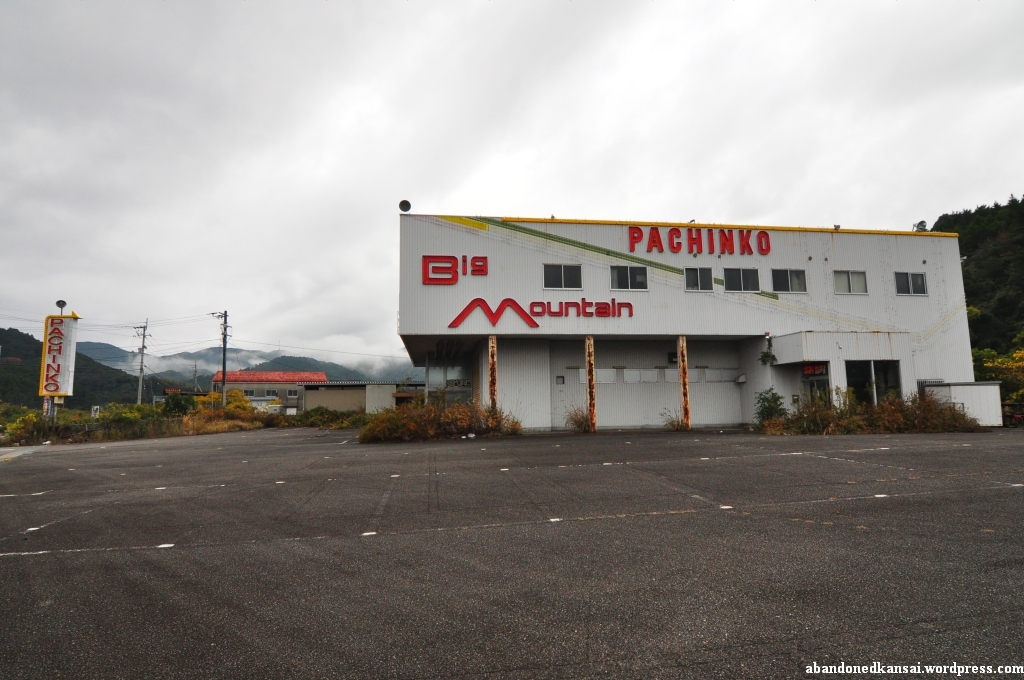
While I am happily taking credit for finding the hotel shangri-la it was thanks to my fellow explorer that we entered the Big Mountain (or Big Mountein… as they misspelled their own name occasionally) pachinko parlor. We were on the road again to finally get to that abandoned school in the middle of the mountains when we saw said abandoned place of amusement. We turned around, parked the car and actually found an easy way in.
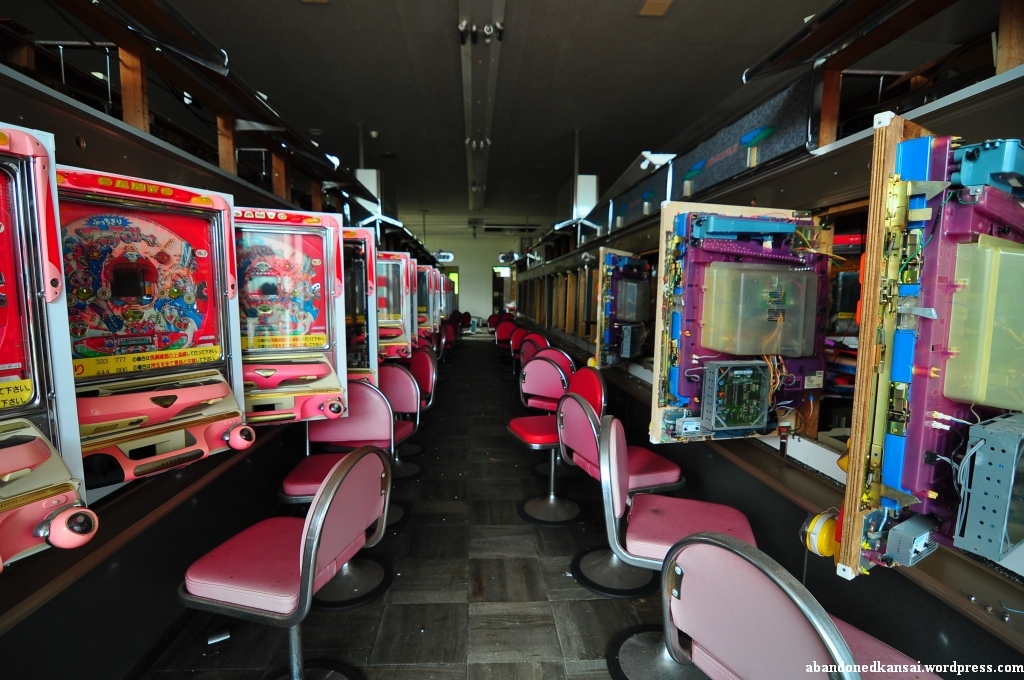
There are plenty of abandoned pachinko parlors in Japan, it’s maybe the most common kind of haikyo overall. But usually they are either boarded up or completely gutted. The Big Mountain on the other hand was in pretty decent shape. Most of the machines were opened, but only a few were missing. Since new pachinko parlors are opened all the time a lot of the equipment gets recycled, but in this case most of it was still there (machines, stools, balls, containers for the balls, signs, …) and in decent condition – especially considering that the most recent calendar sheets we found were from 1996.
Since gambling is strictly controlled by the Japanese state there are only a few possibilities to actually win money – with lotteries and betting. Playing pachinko (パチンコ) you can only win prizes by exchanging the pachinko balls you’ve won for prizes worth less than 10.000 Yen each (82 Euros / 117 Dollars). Popular items are perfumes, expensive lighters and tiny gold bars. Conveniently most pachinko parlors have a “pawn shop” close-by where you can get rid of your prizes; of course 10 to 30% under value! 16 million Japanese play pachinko on a regular basis, about 34.000 play for a living – yes, professional pachinko players…
What most people don’t know, especially in the West, is that the majority of pachinko parlors in Japan are run by the so-called Zainichi Koreans, the biggest ethnic minority in Japan. Of the estimated 16.000 parlors about 50% are run by South Koreans, 30 to 40% by *North Koreans* and the rest by Chinese and Japanese; most of the latter ones associated with the Yakuza, the “Japanese Mafia”. The parlors run by North Koreans usually are under the control of the Chongryon (Ch’ongryŏn / 총련 / 總聯 / 朝鮮総連), the “General Association of Korean Residents in Japan” which has close ties to North Korea. According to an article in the Japan Times up to 200 billion Yen a year are flowing to North Korea that way – currently that’s about 1.7 billion Euros or 2.4 billion Dollars…
Sadly we were running out of time and we still wanted to go to that school, so we left the Big Mountain Pachinko Parlor after about 30 minutes. We even forgot to go upstairs, where you usually can find a couple of sleeping rooms, a kitchen, and a security room with surveillance monitors and a safe. Luckily I explored another pachinko parlor a few months later, this time in Shiga – but that’s *a story for another time*

Read Full Post »

Recently I went on a three day road trip to Awaji Island and Shikoku. Fellow urban explorer Jordy came down to Kobe, we rented a car and off we went. Since Jordy likes to drive and I like to do research we combined our powers to go to some places off the beaten tracks. Pretty much all of the locations will be English speaking firsts, some of them are even barely known to the Japanese haikyo community – including two original finds: A pachinko parlor with all the machines and a hotel called shangri-la. In addition to that we went to an abandoned monument (with a museum right next to it), another hotel, a nursery school, a restaurant with a spectacular view, an abandoned and very countryside elementary school, a spa built on a cliff and, most important of all, an abandoned doctor’s house that makes the previously posted Doctor’s Shack look like… well… a shack.
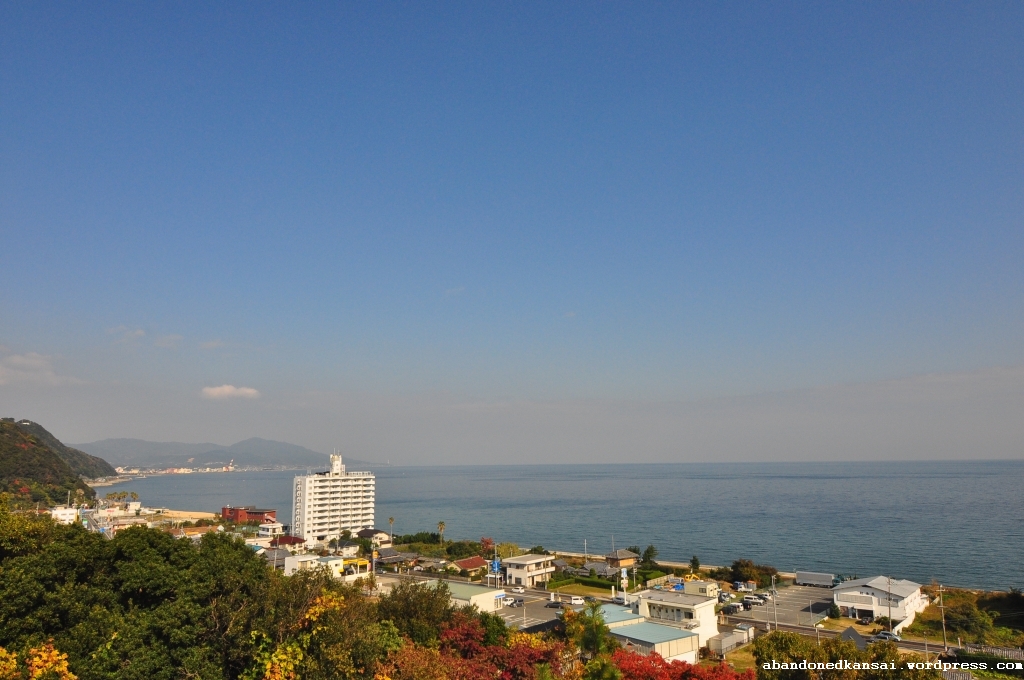
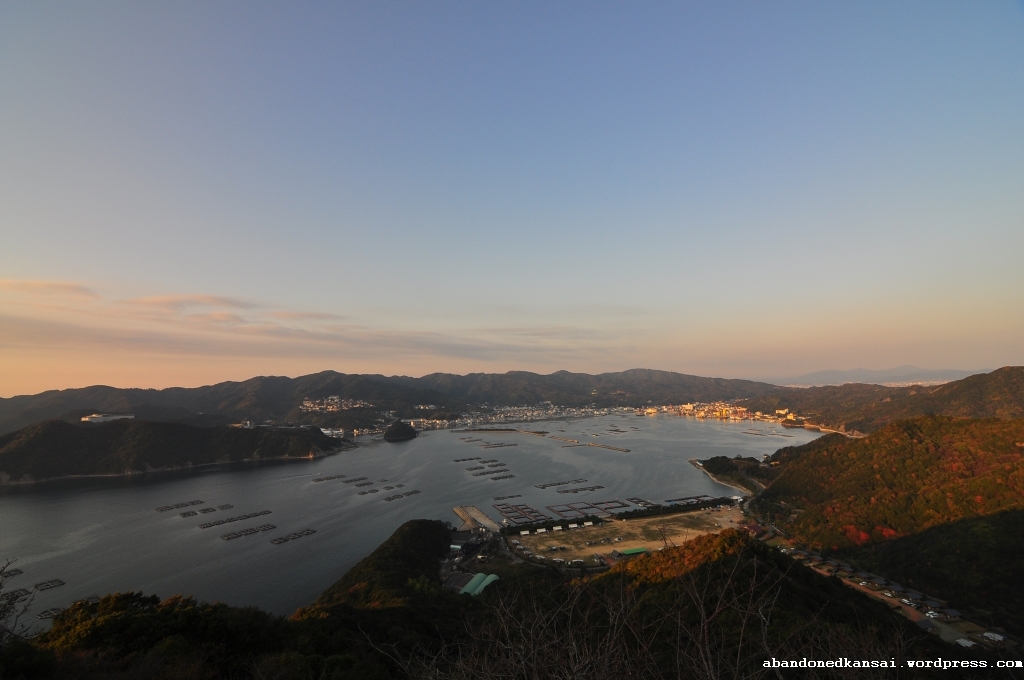
Please enjoy the preview pictures below – a series of articles about the trip will start ASAP, most likely by the end of this week.

Read Full Post »