Feeds:
Posts
Comments

Archive for the ‘Snow’ Category

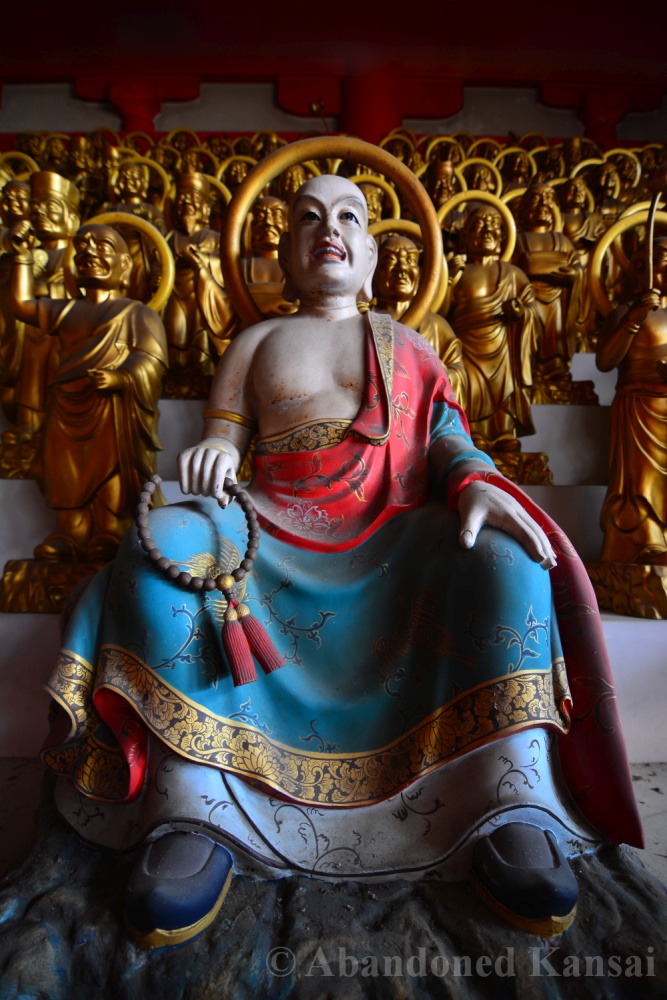
Despite their often more than questionable reputation, Japanese animal cafés. aquariums, zoos, and other animal parks are super popular – some of them have cartoonishly long lines that can rival those of branded theme parks. One of the most bizarre stories I’ve heard in recent years was when a high school classmate told me at a reunion that their daughter has been to Japan recently and that her favorite place was a capybara café in Tokyo, because, as we all know, nothing says Japan like large South American rodents that are hunted for their meat… I’m not really a fan of animal prisons (or animal ownership, for that matter – and if you unironically refer to yourself as the mommy of a fur baby, you don’t want to know what I refer to you… not to be mean, but to keep the terminology consistent!) and even after 20 years of living in Osaka I’ve never made it to the local and super famous aquarium, let alone any of those animal cafés, but during an urbex trip in late 2018 I basically passed by one of the more unusual and “off the beaten path” parks that is actually rather mainstream by now – the Zao Fox Village near Sendai. So I had a look. *And you can read all about it here.*
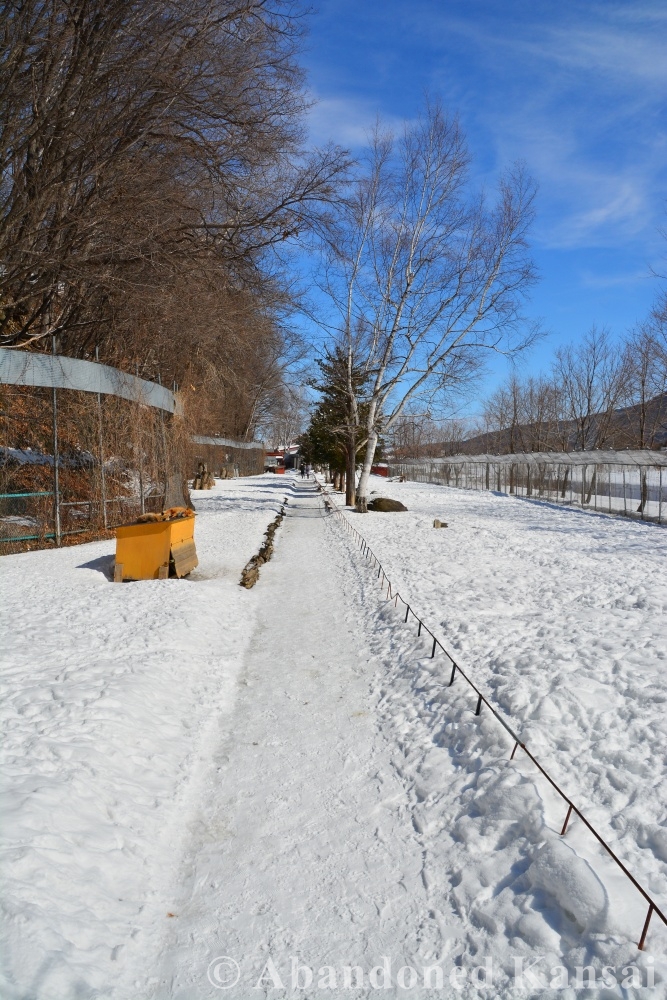
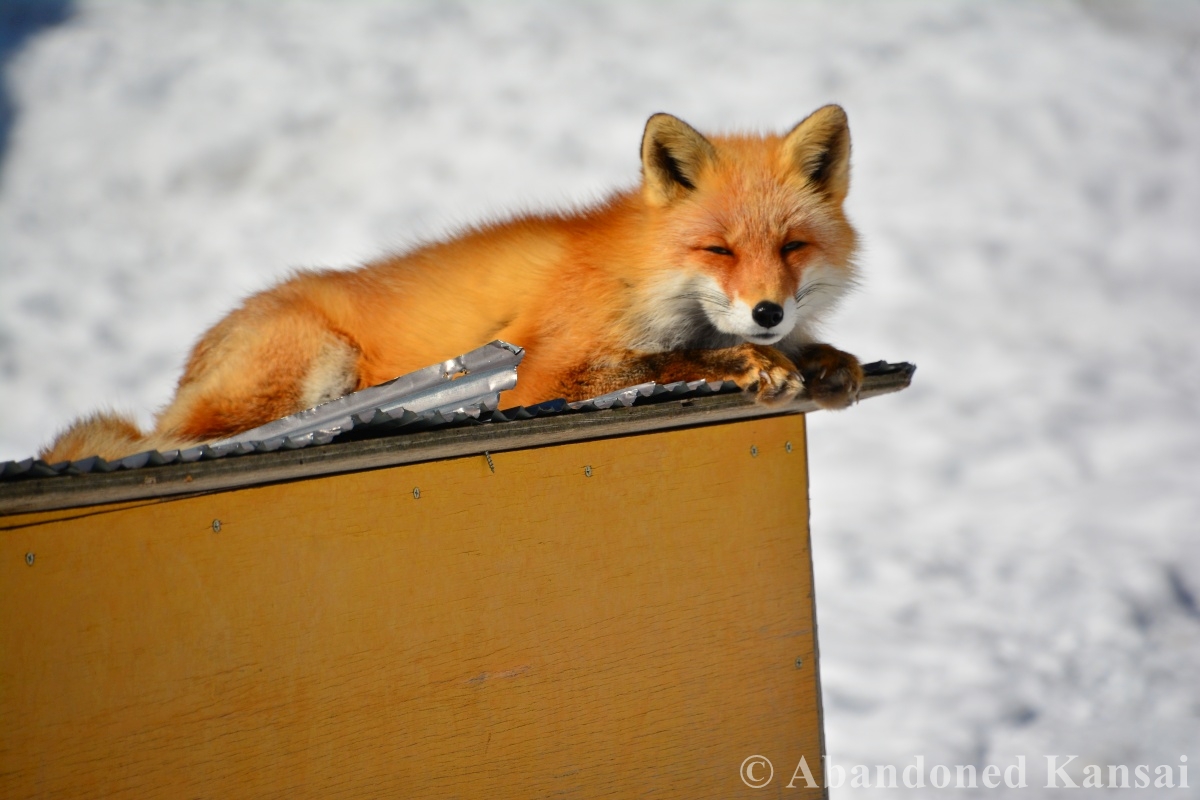
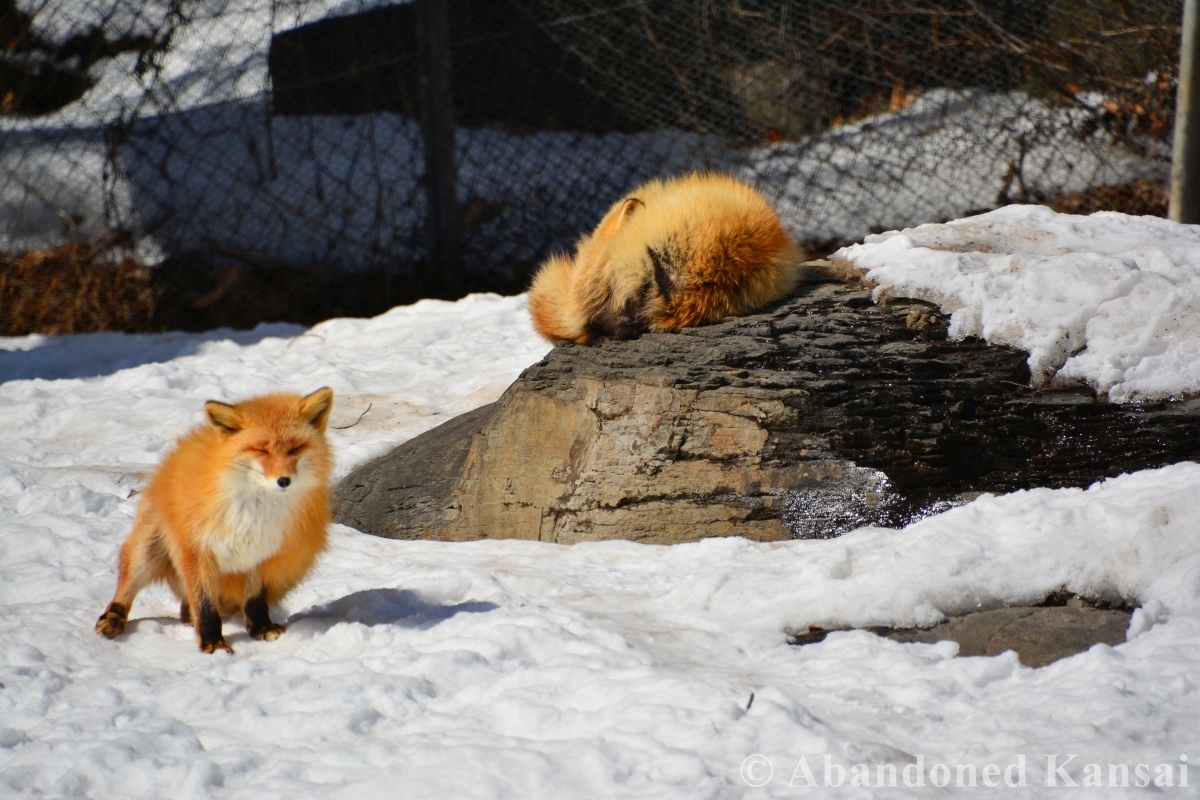
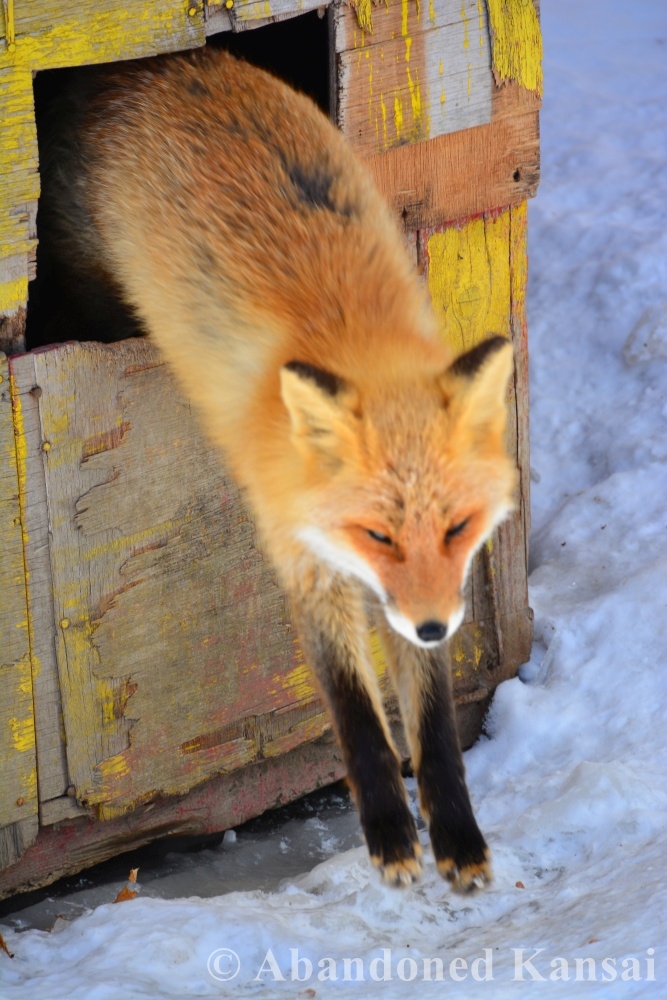
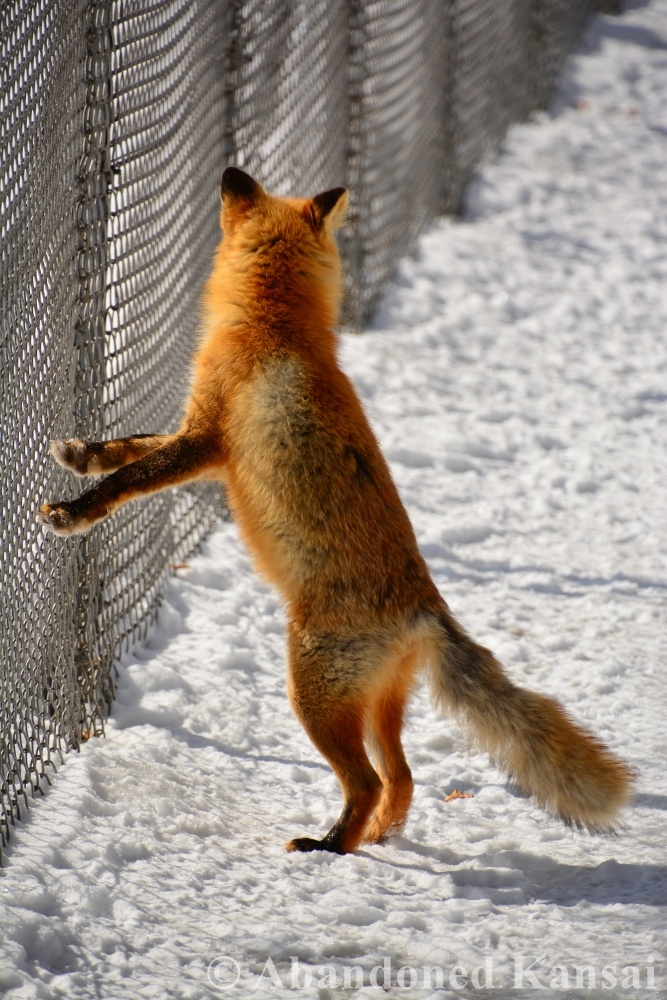
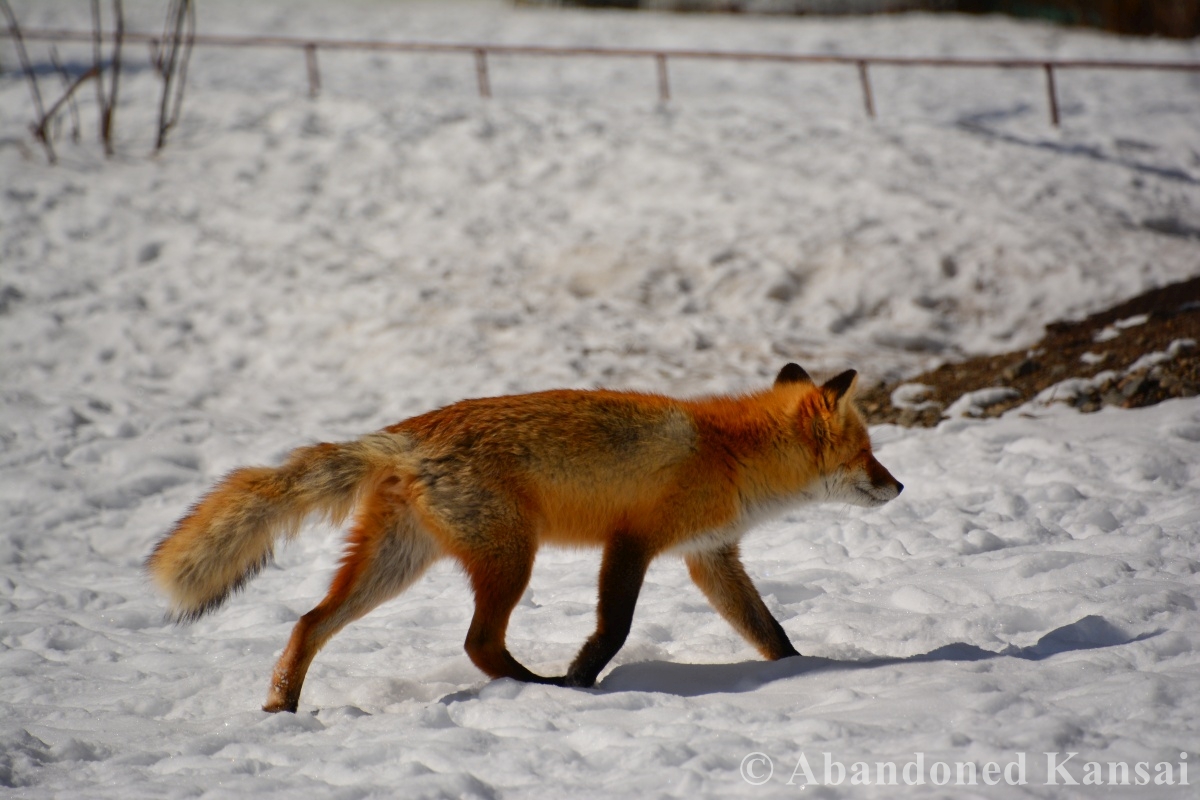
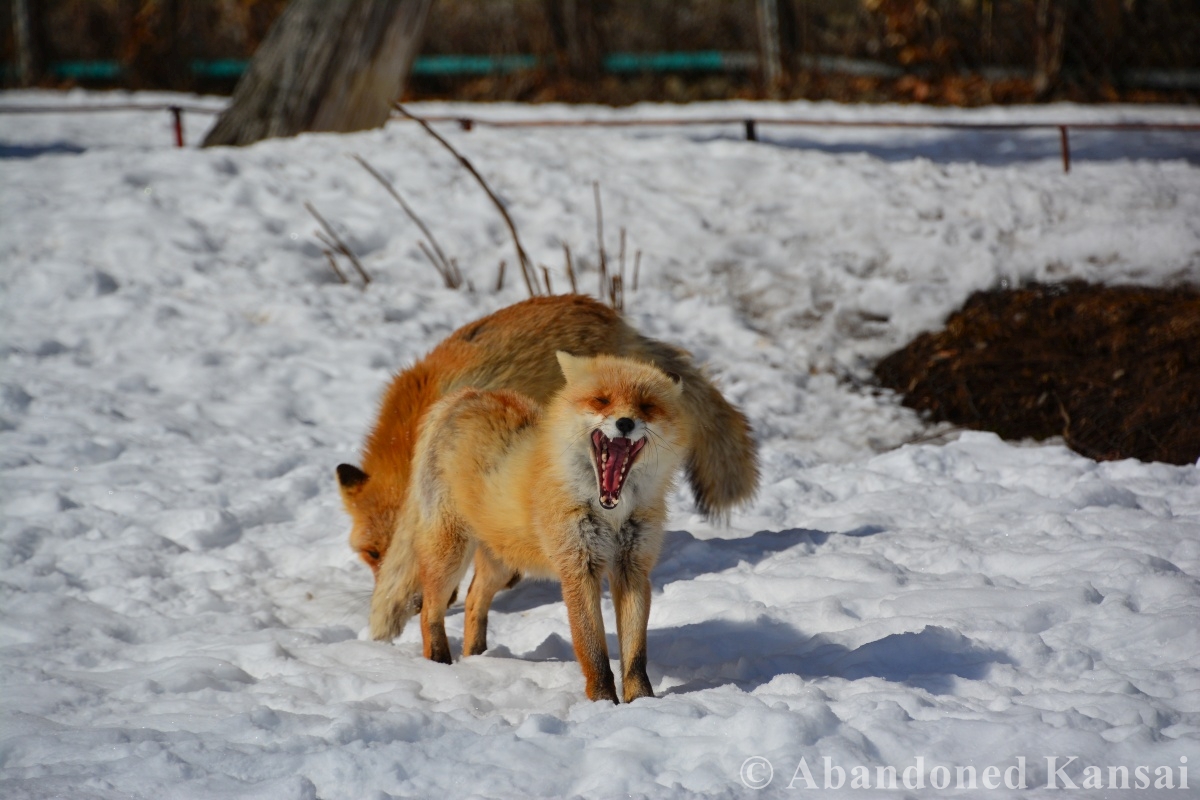
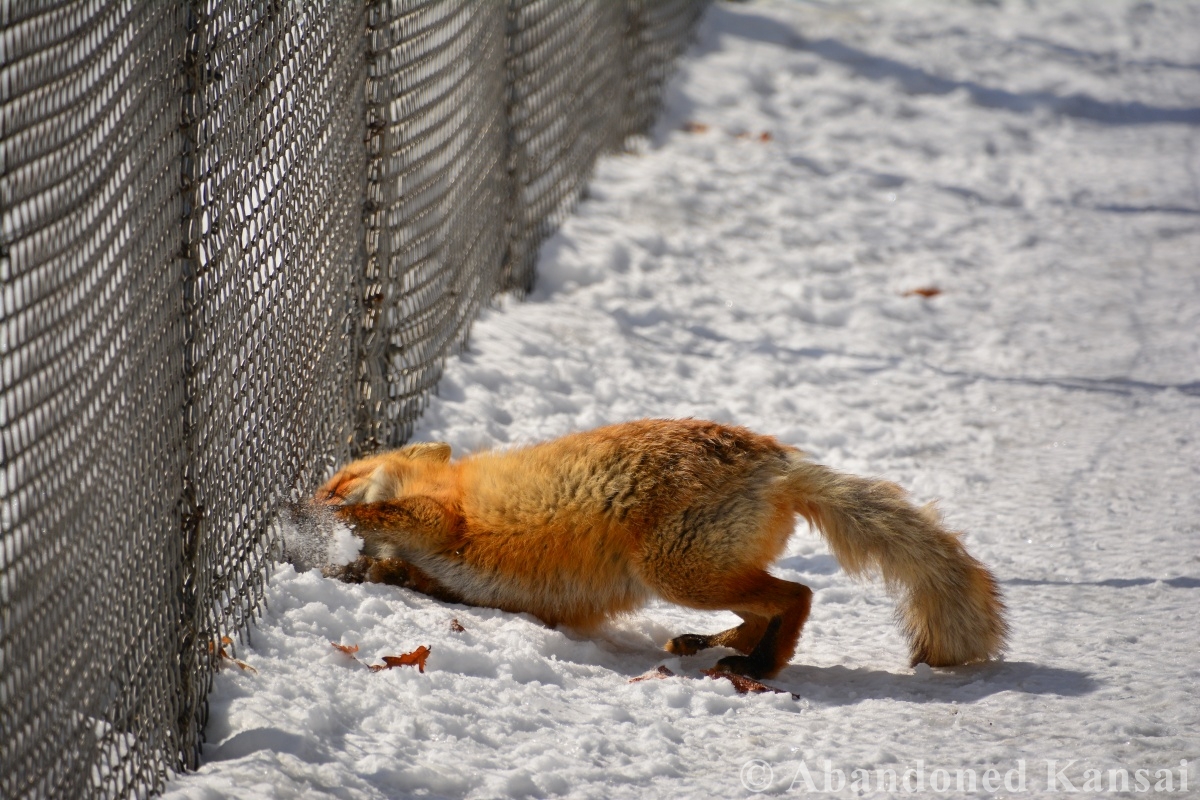
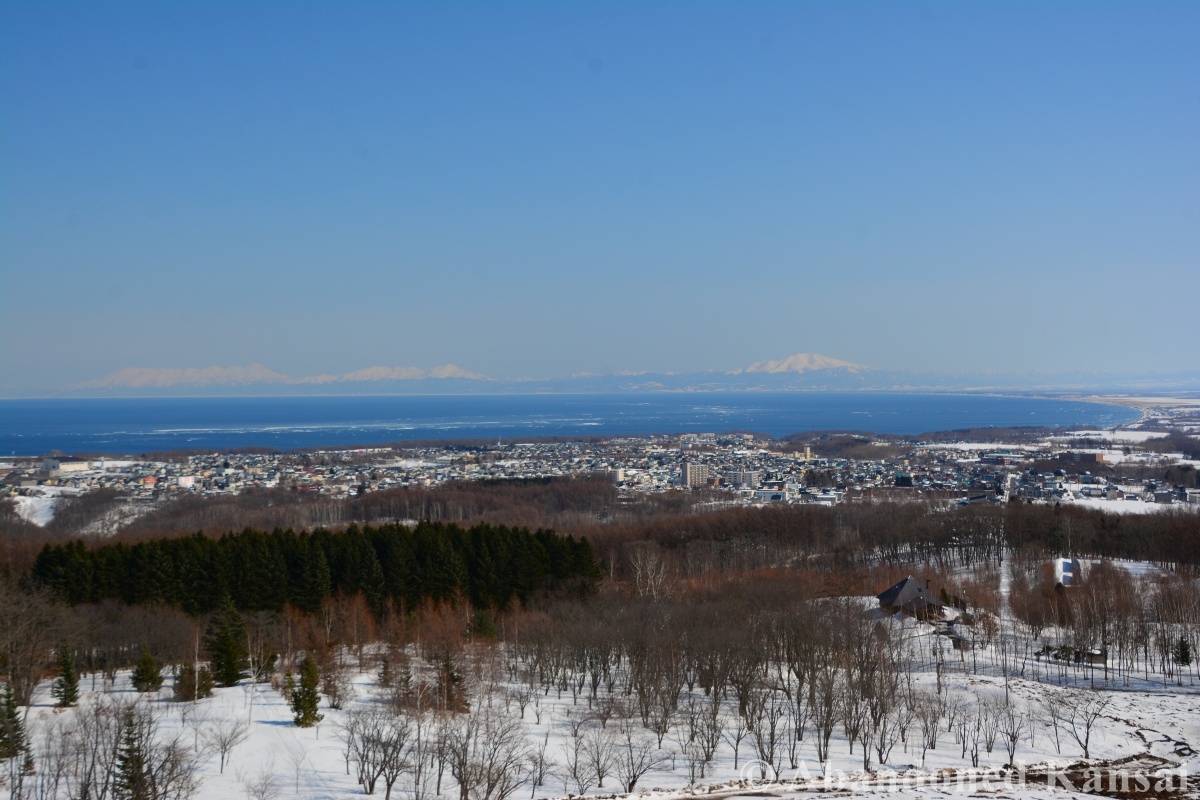
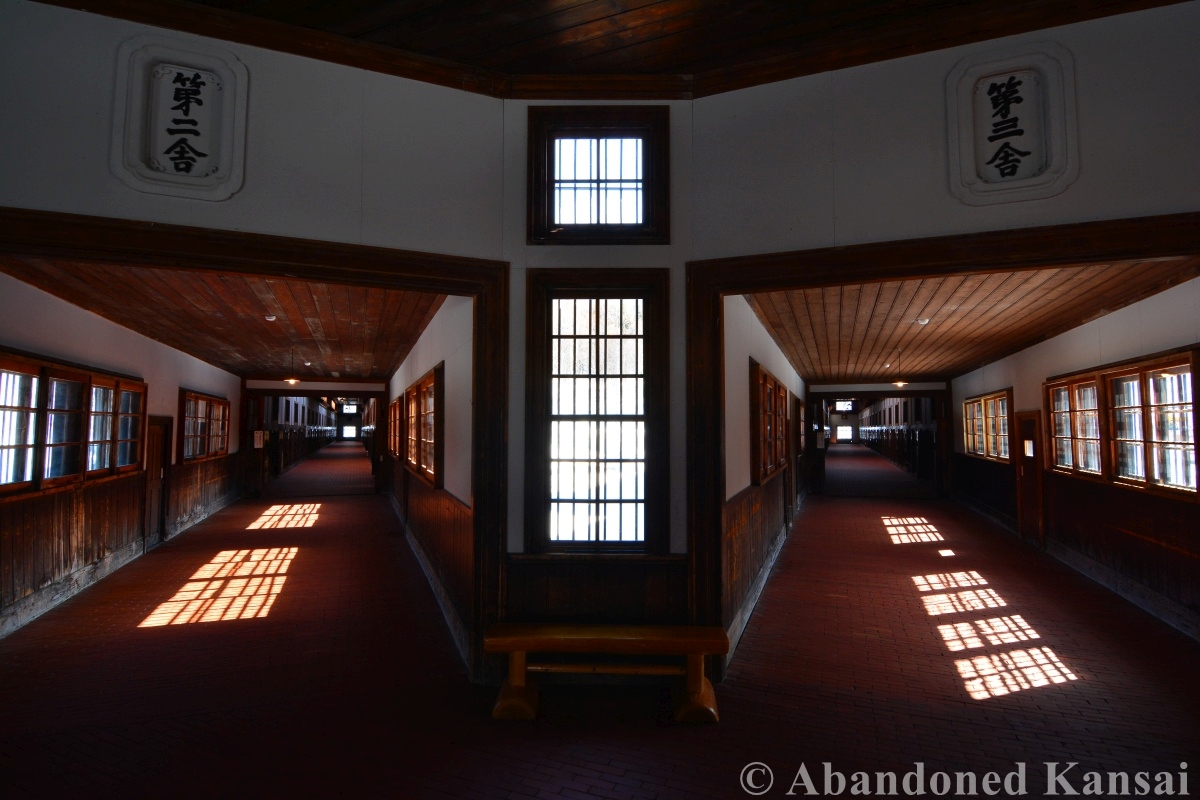
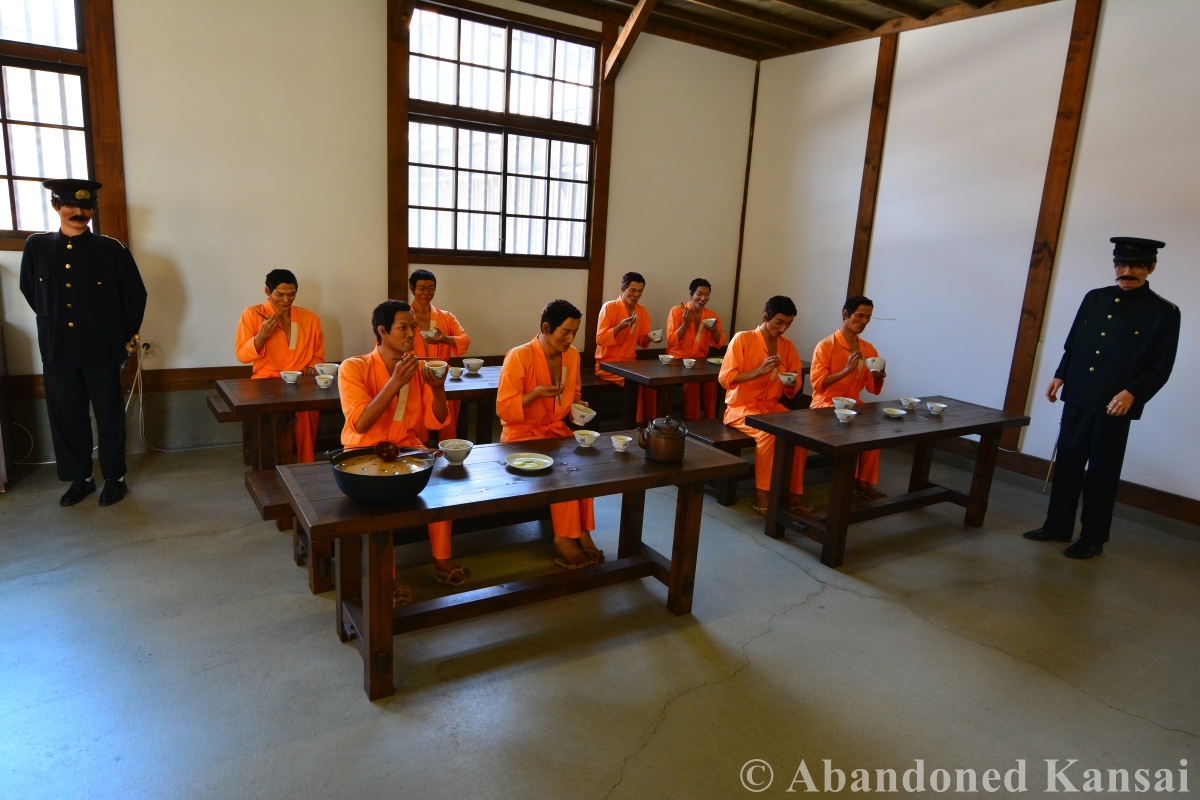
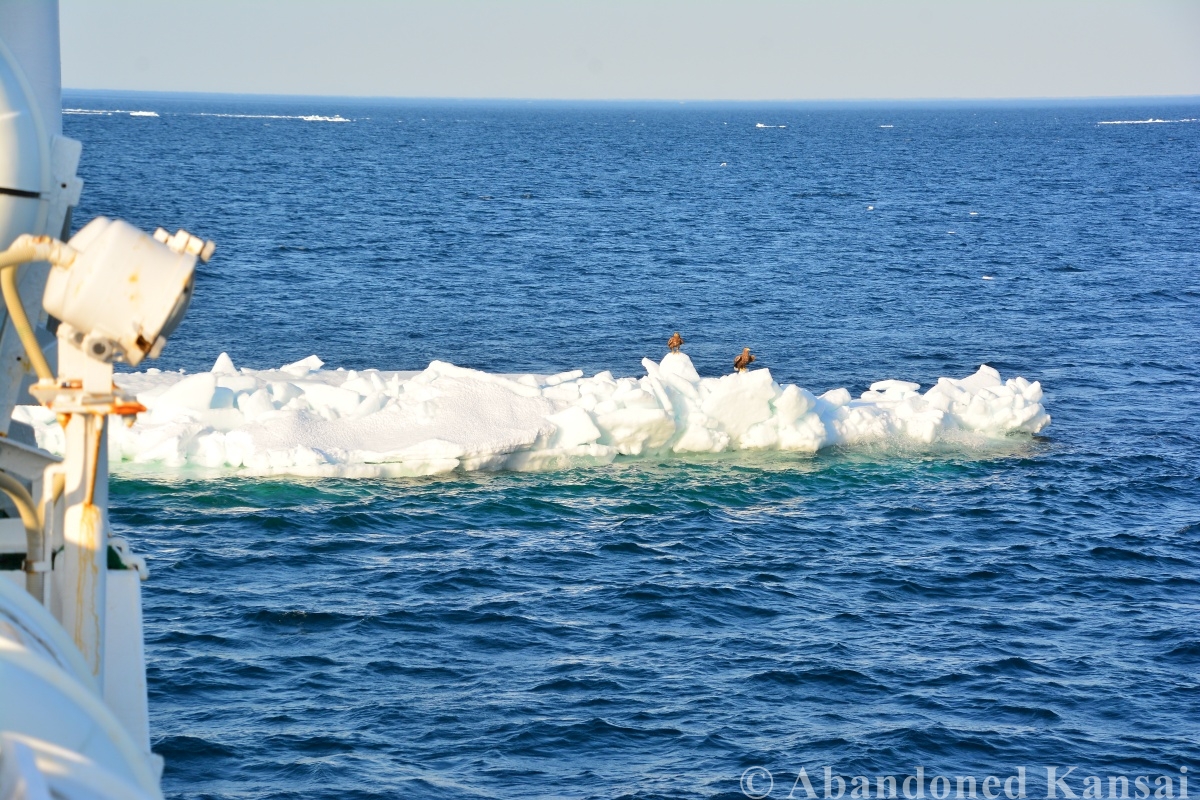
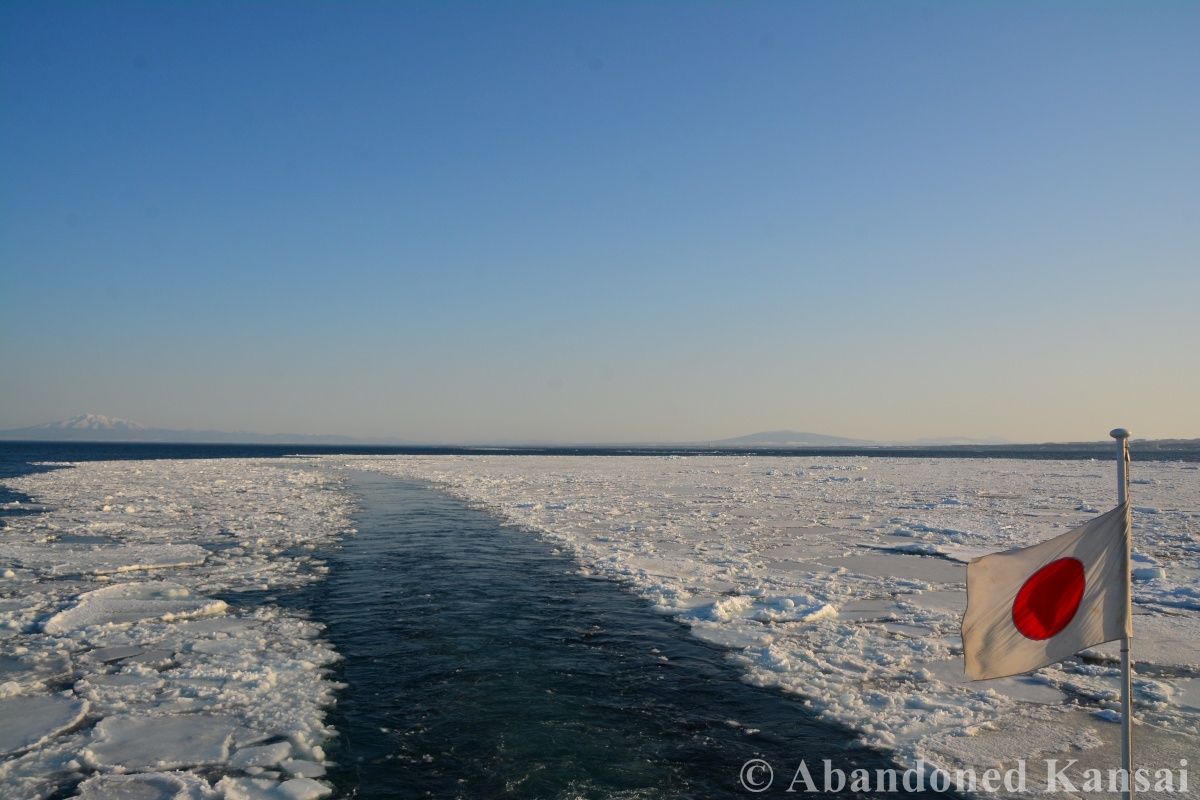
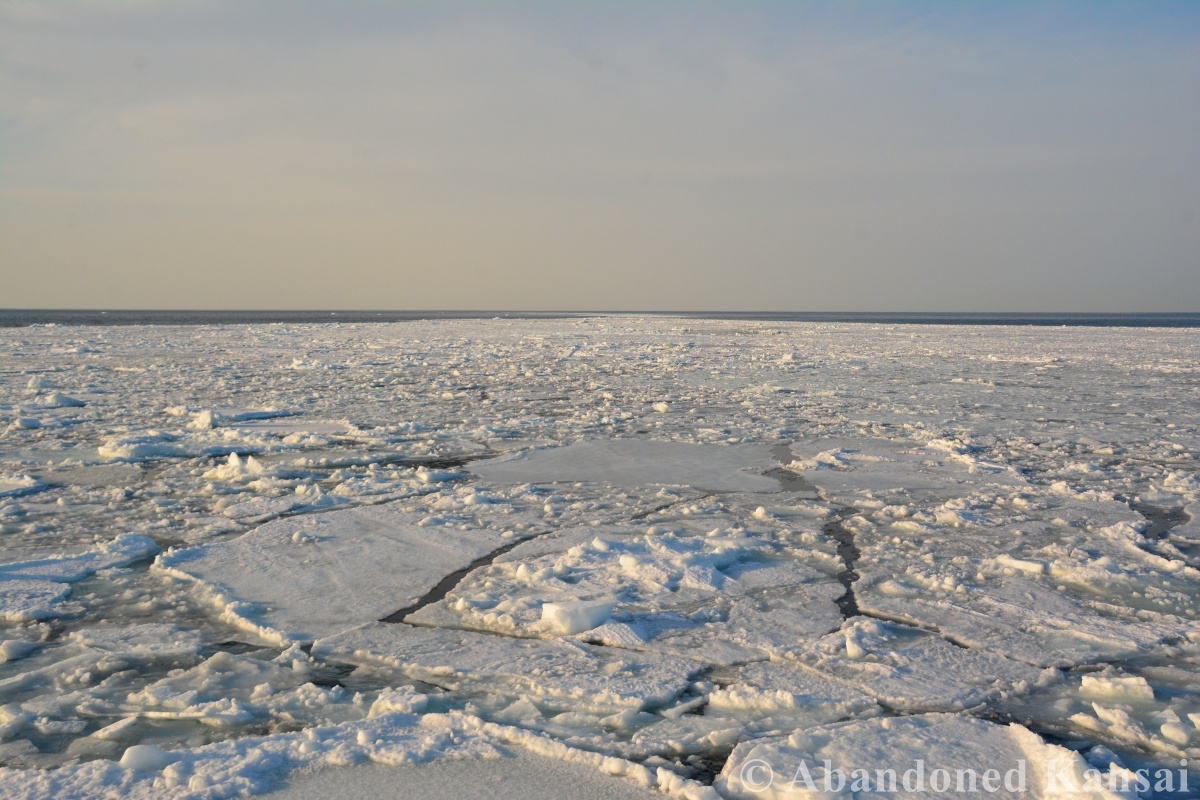
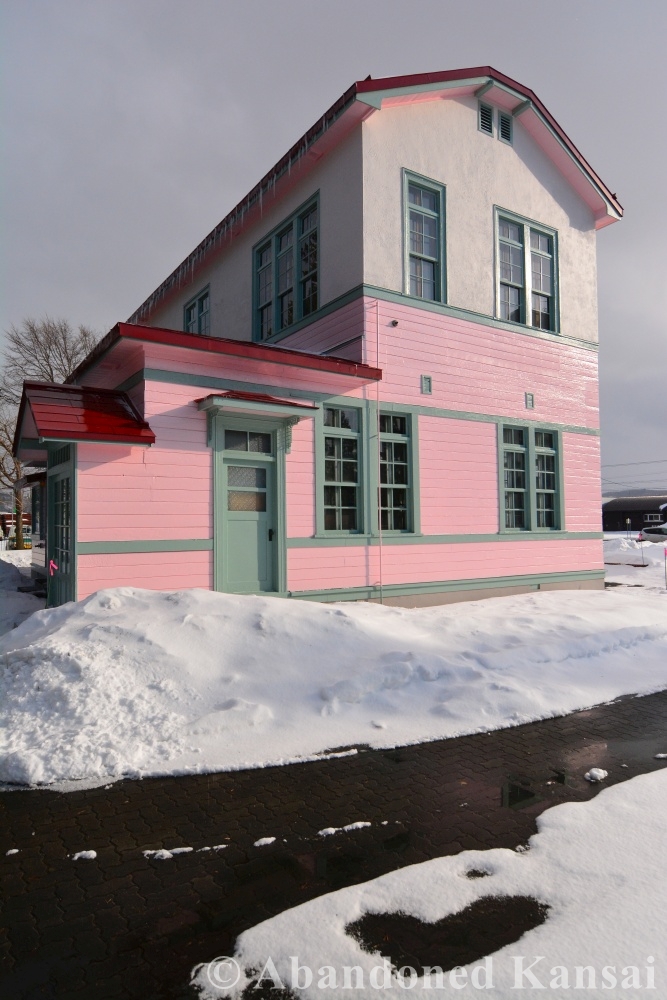
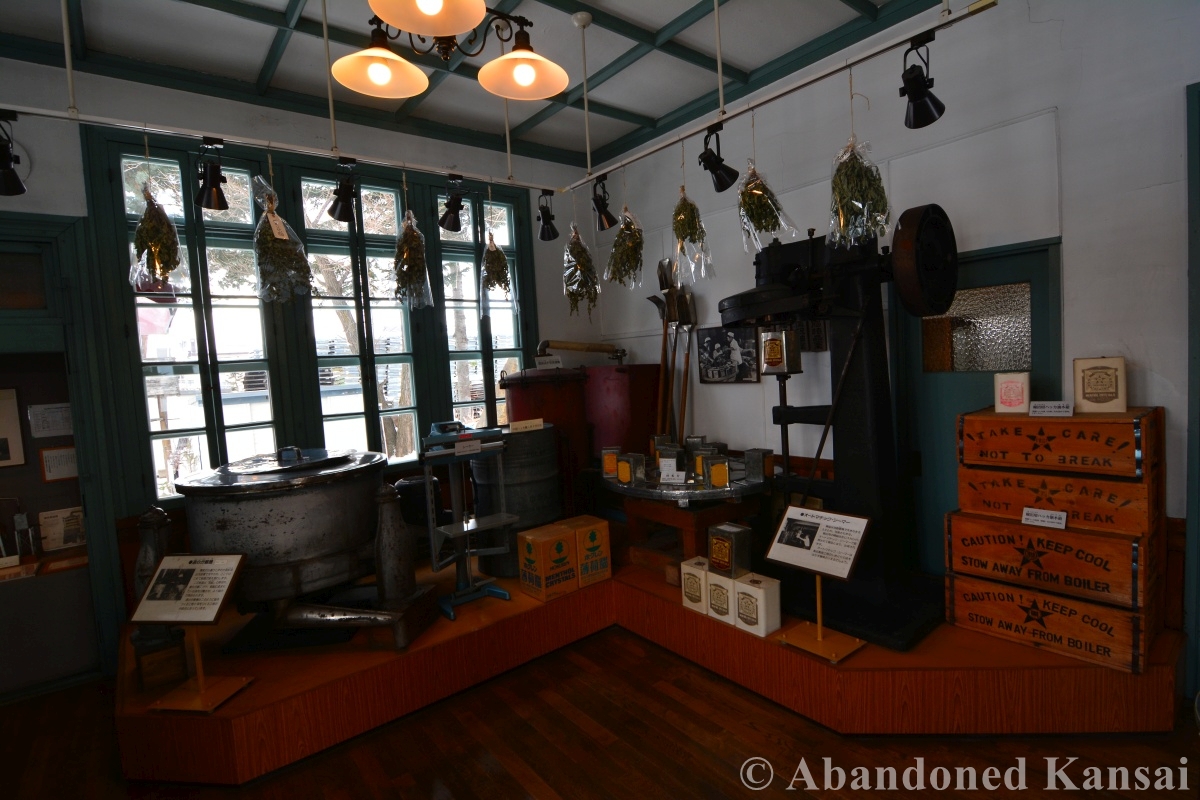
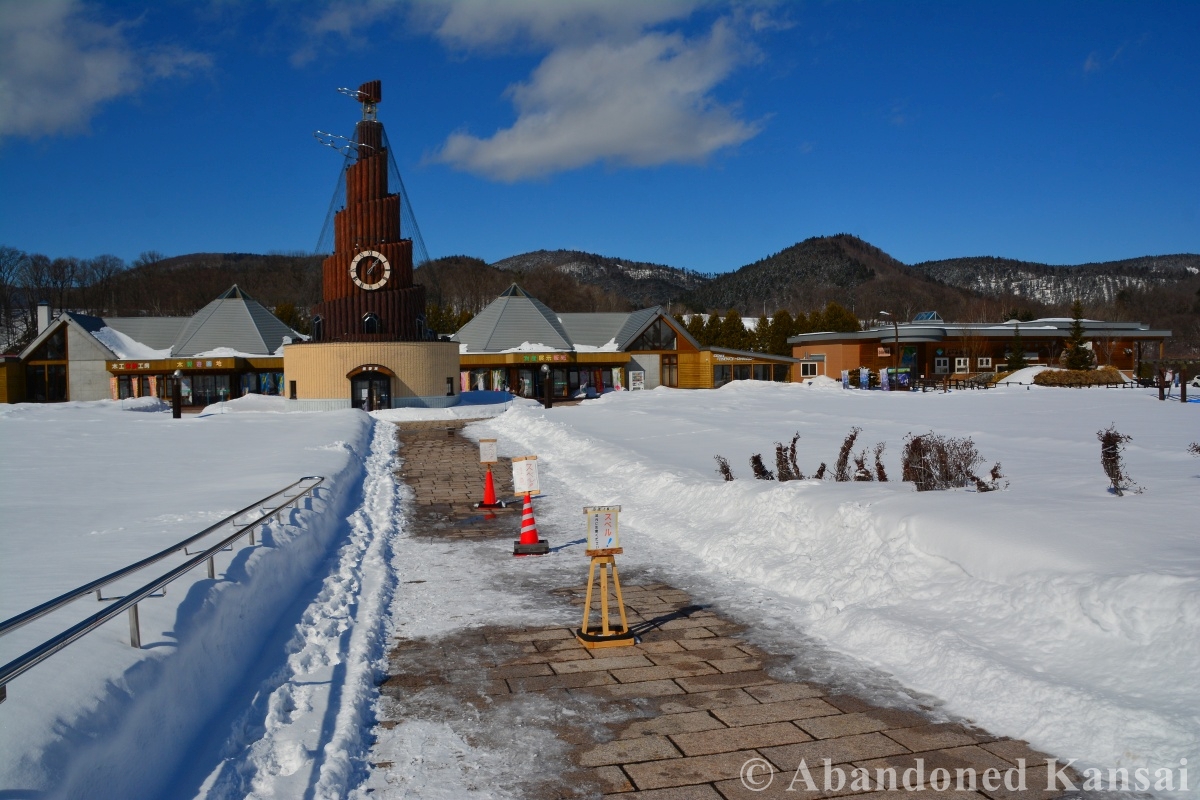
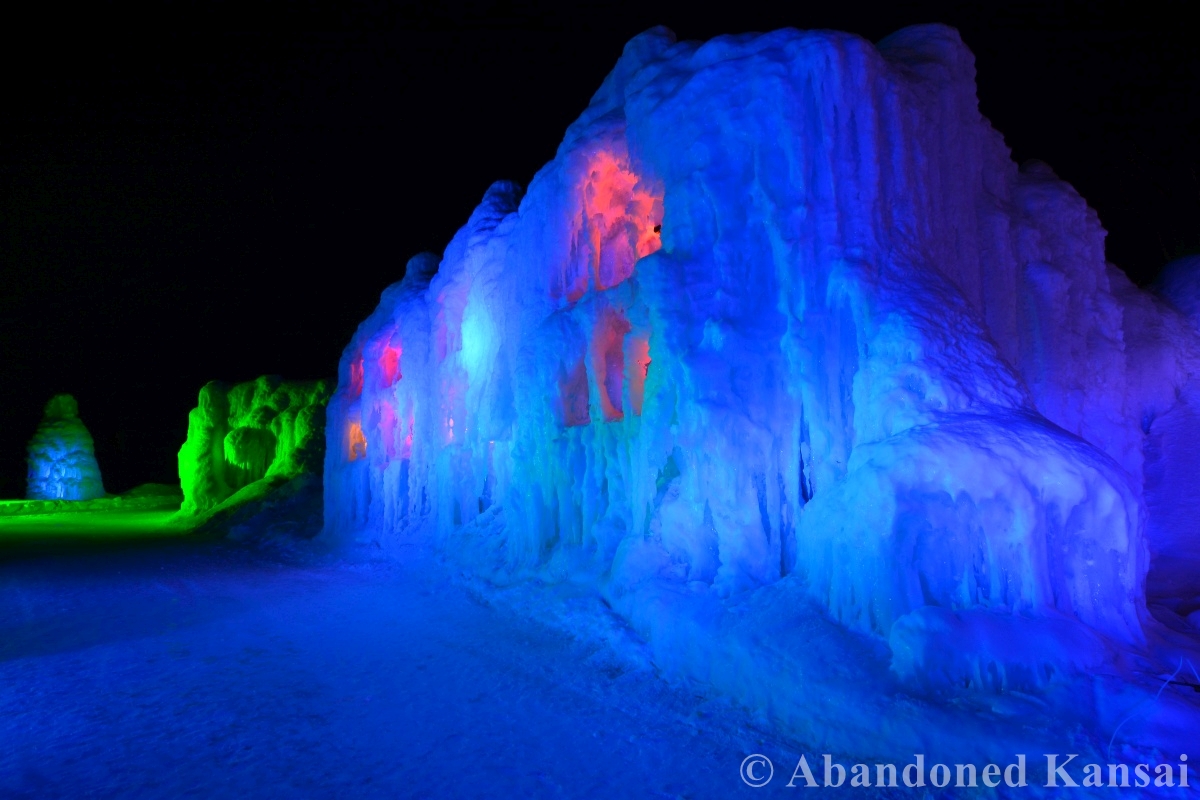
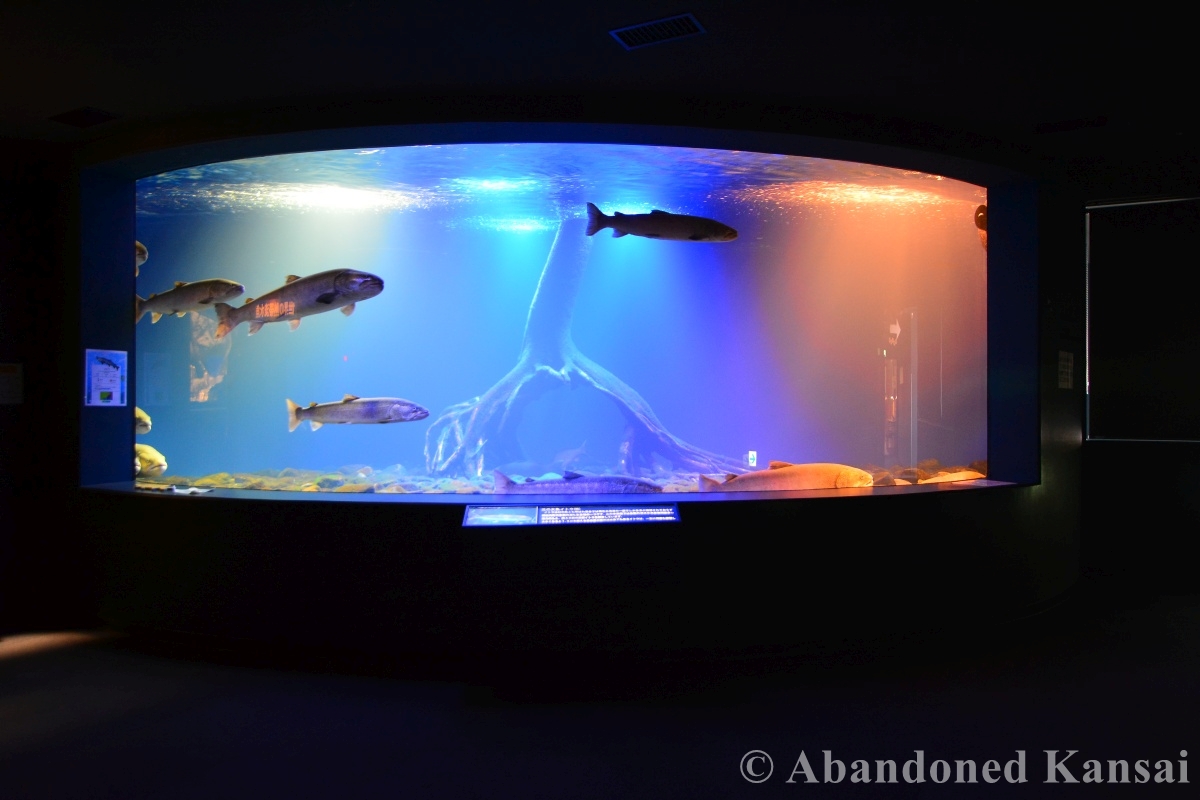
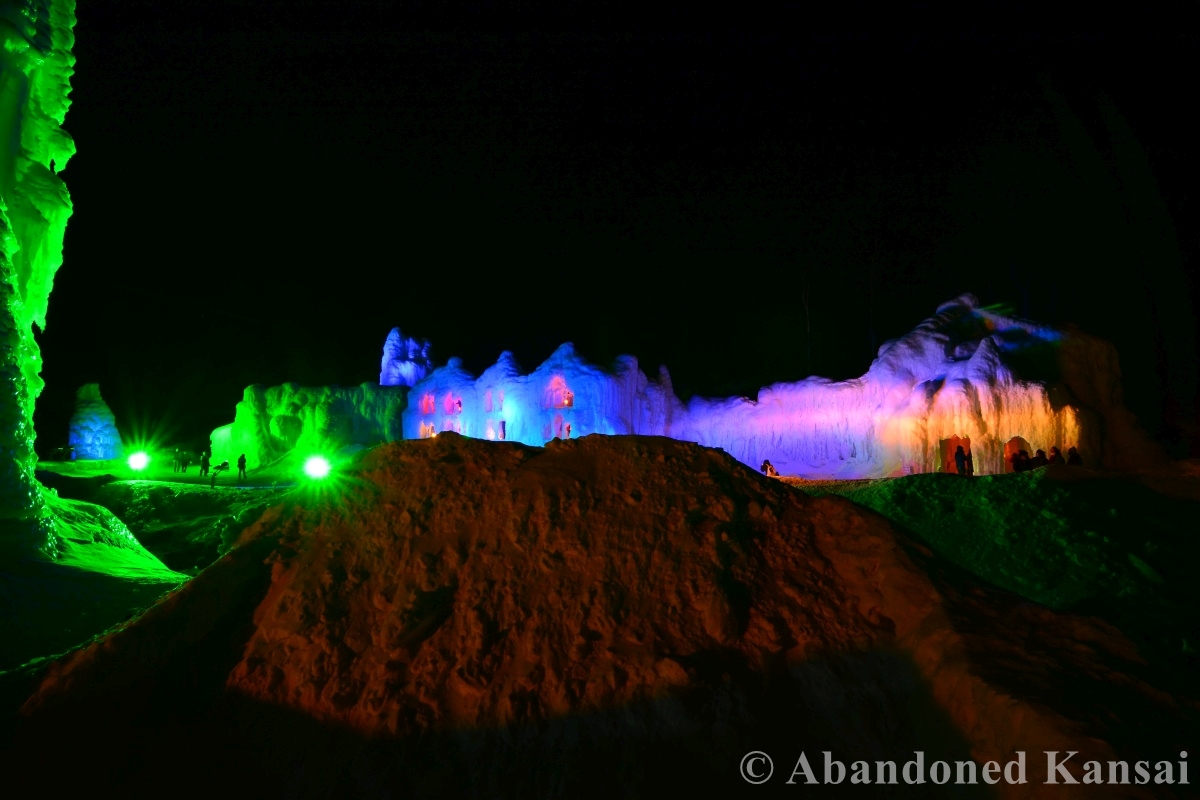
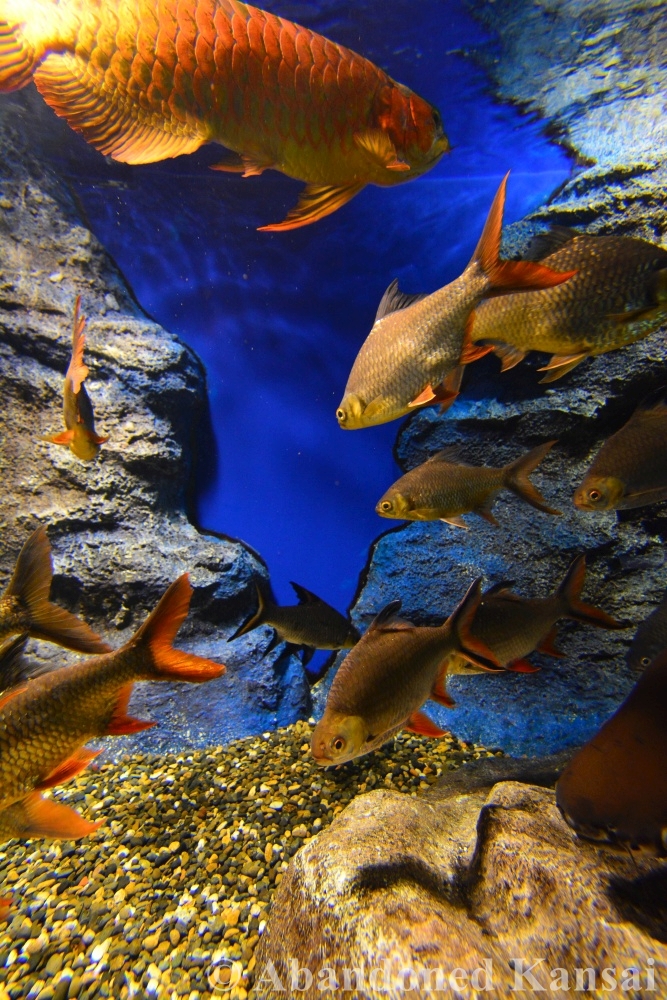
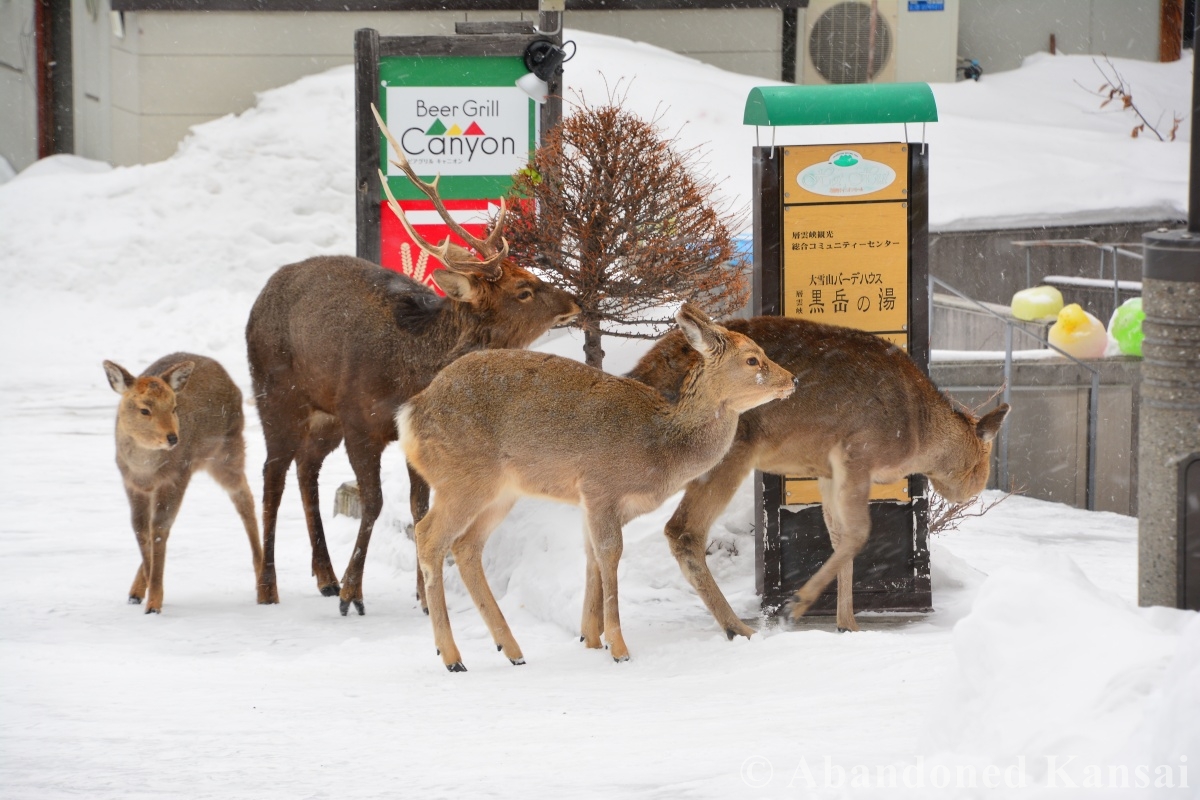
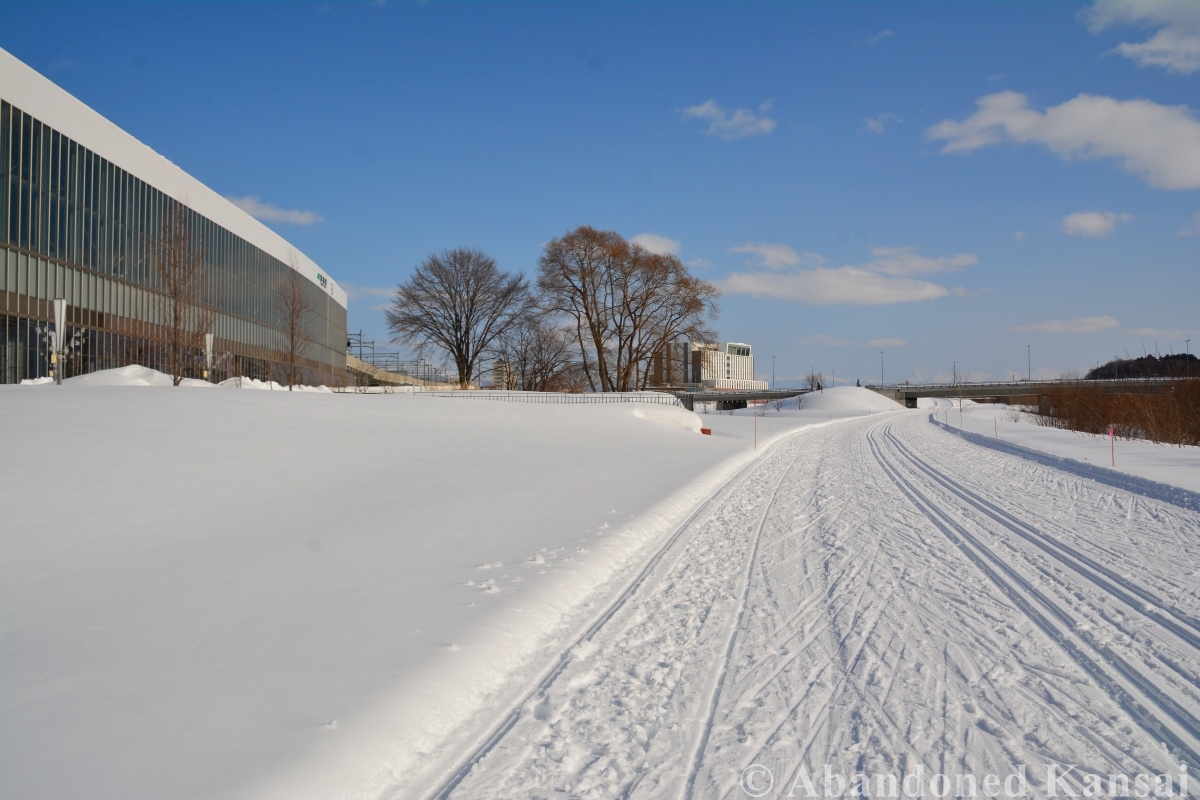
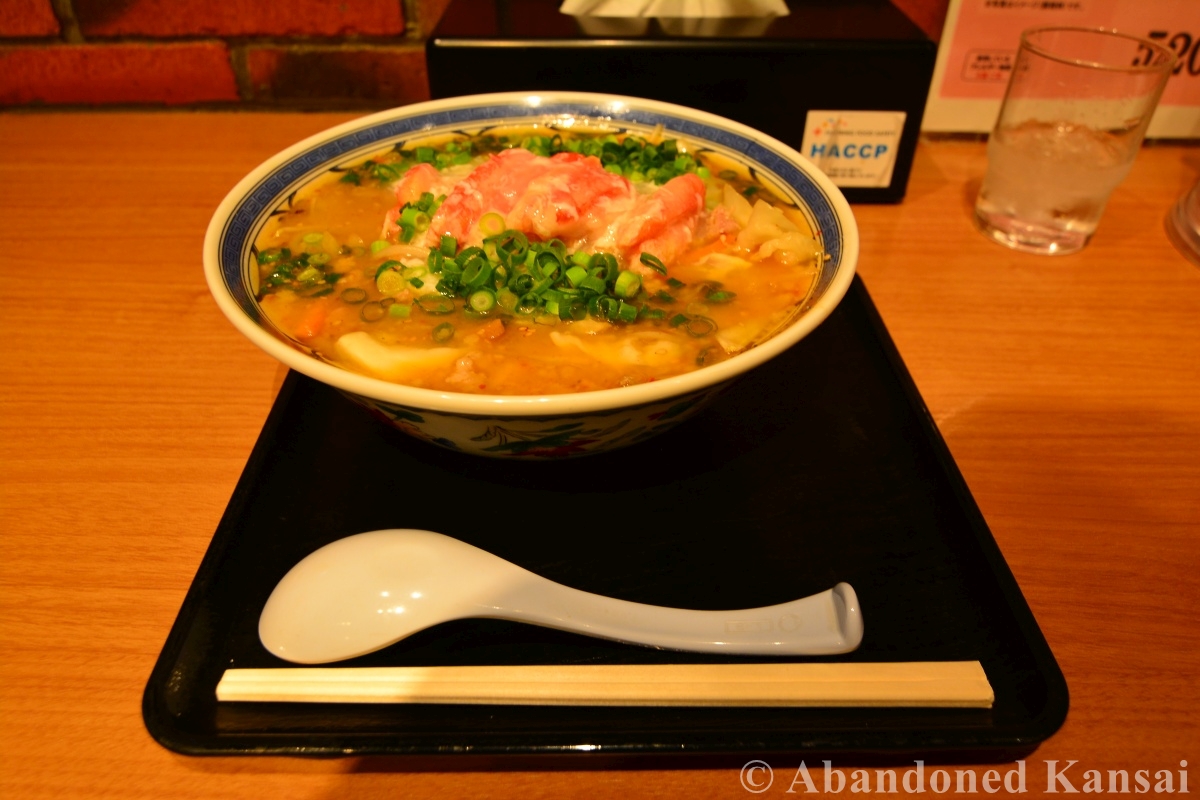
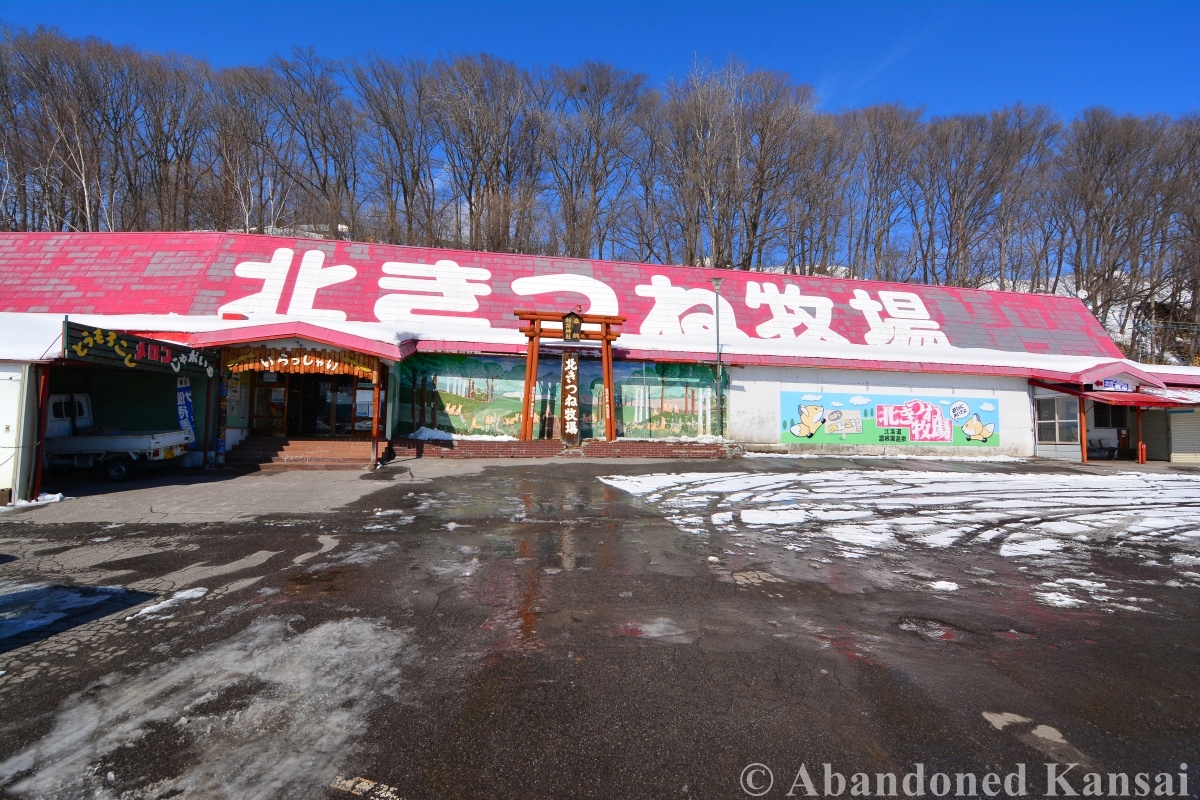
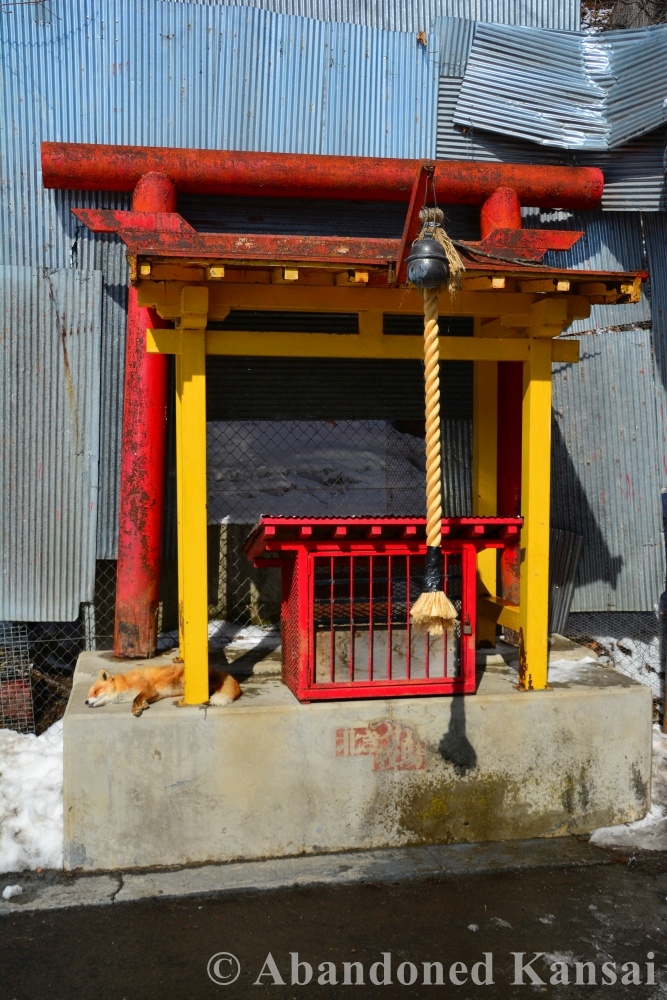
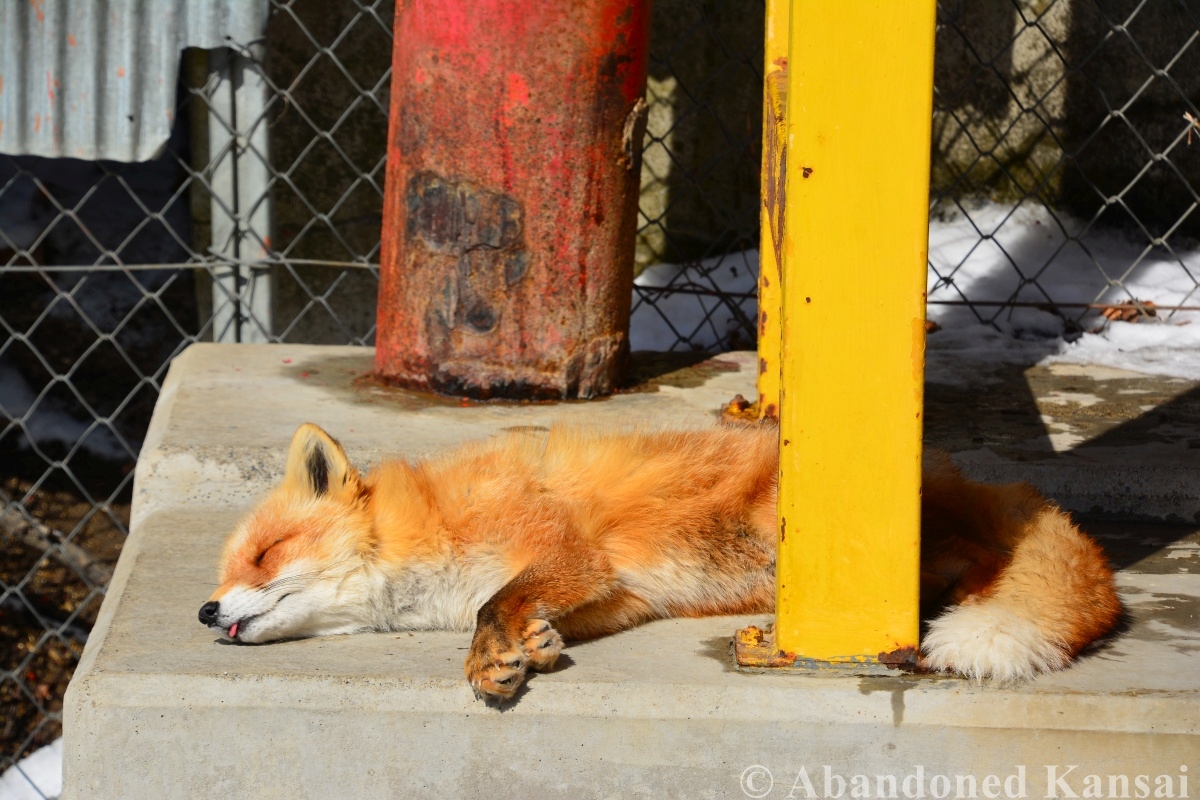
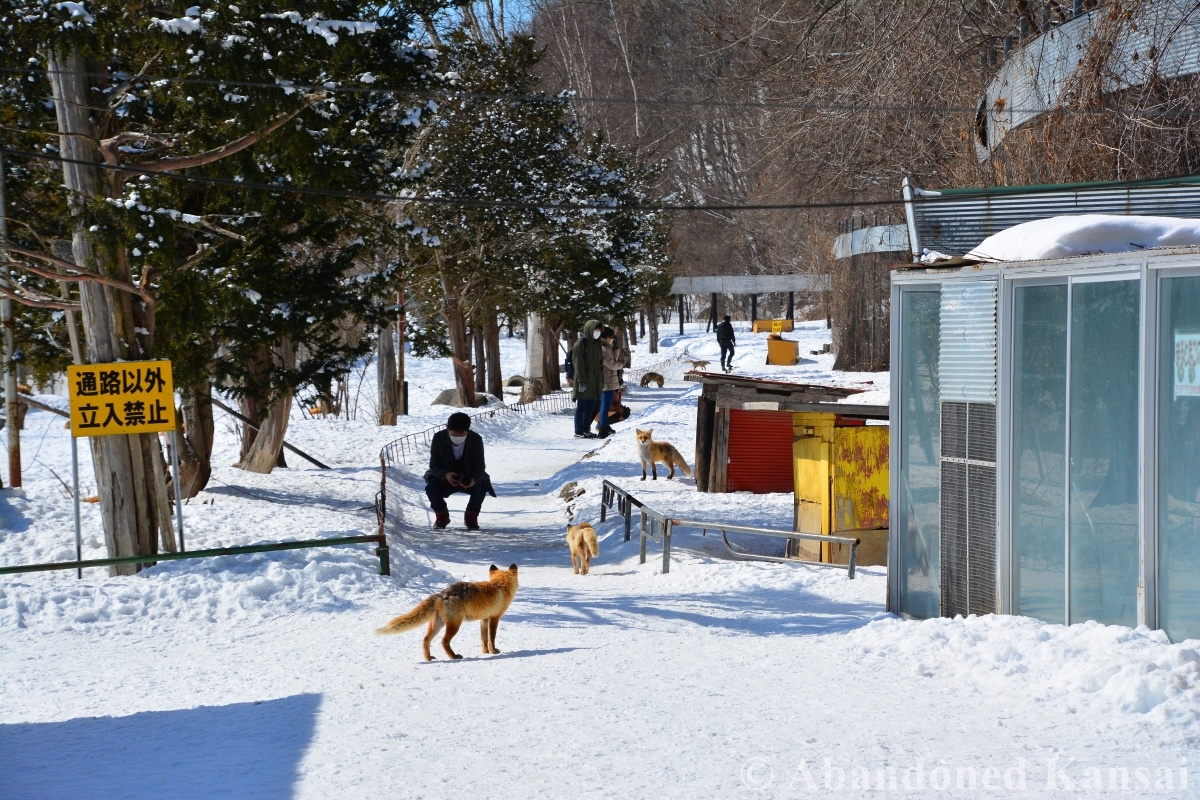
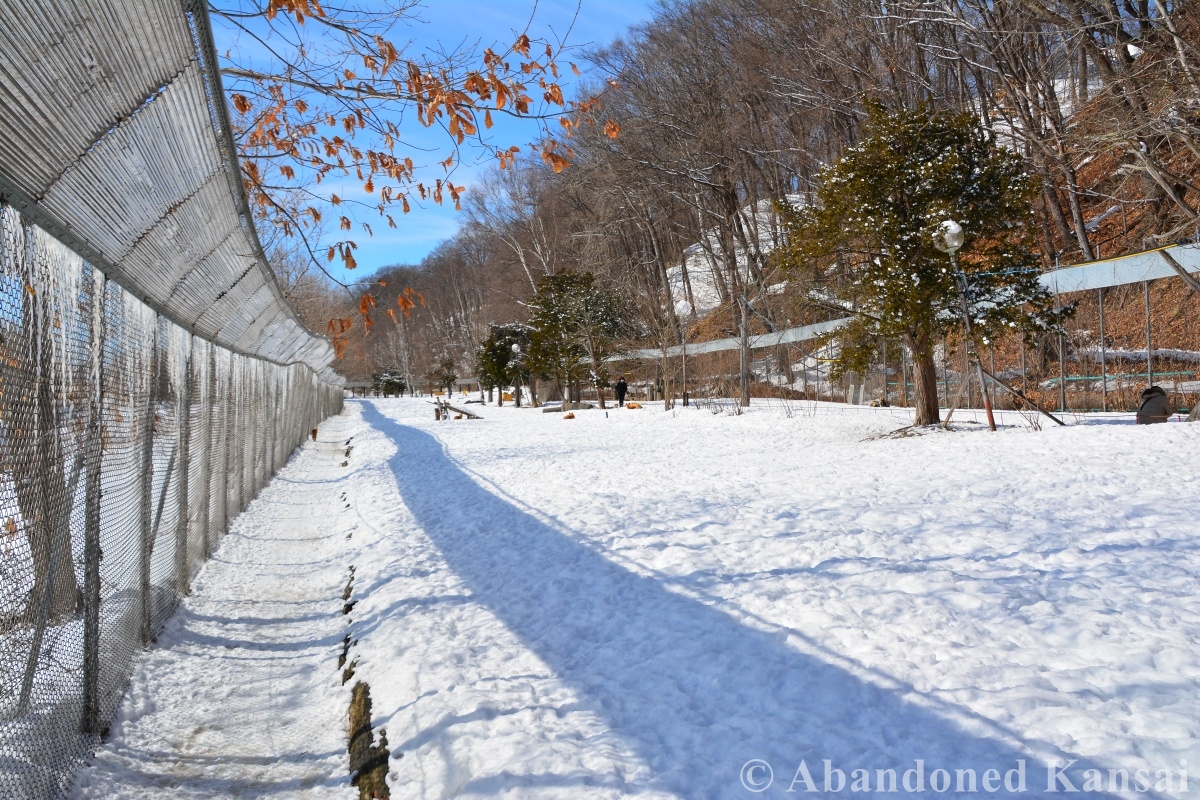
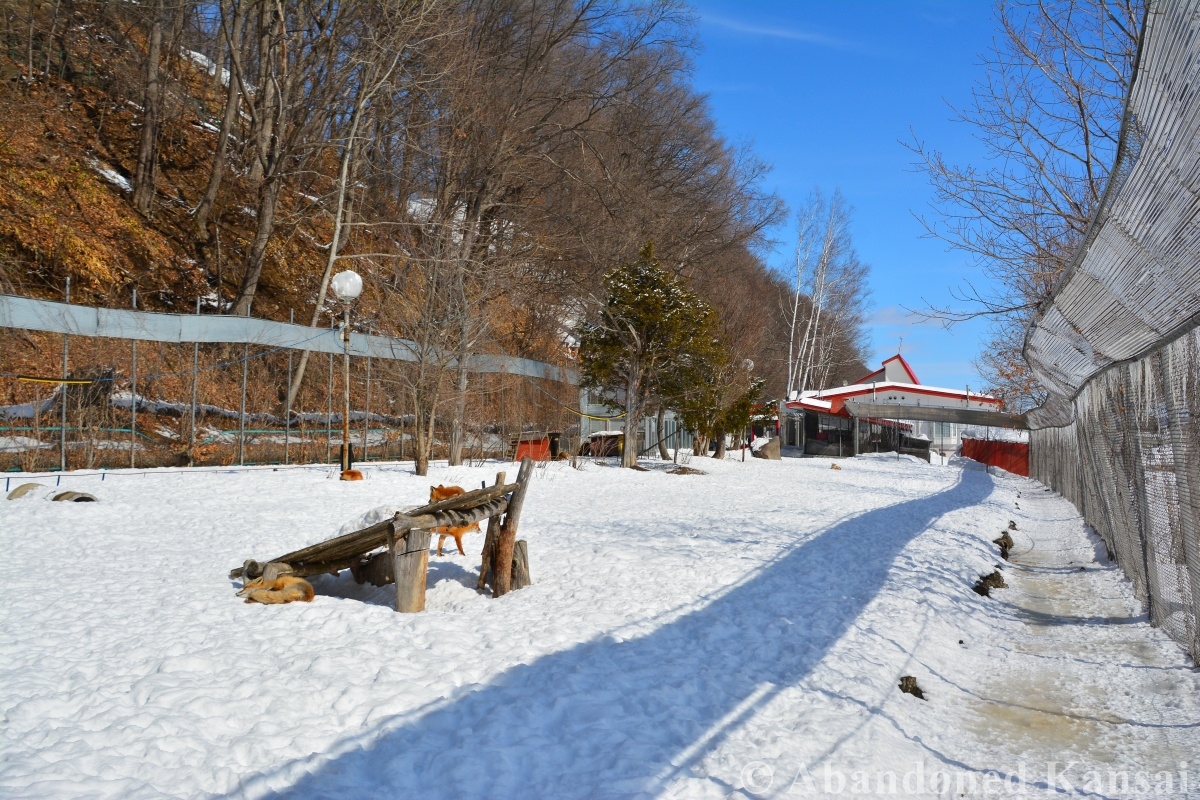
Three years later, during the best time to “explore” Japan (Covid…) I spent a spectacular week in Hokkaido. On route from Abashiri (to see the drift ice and the prison museum) to Asahikawa I made a stop in Kitami (for the mint museum – not coins, peppermint!) and took a bus from there with an overnight stop in Sounkyo Onsen, which held its annual ice waterfall festival, despite being mostly shut down at the time. The bus ran 3 or 4 times per day back then, so I decided to get off and on again in Onneyu Onsen to check out the local Michi no Eki, the freshwater aquarium and the Kitakitsune Farm.
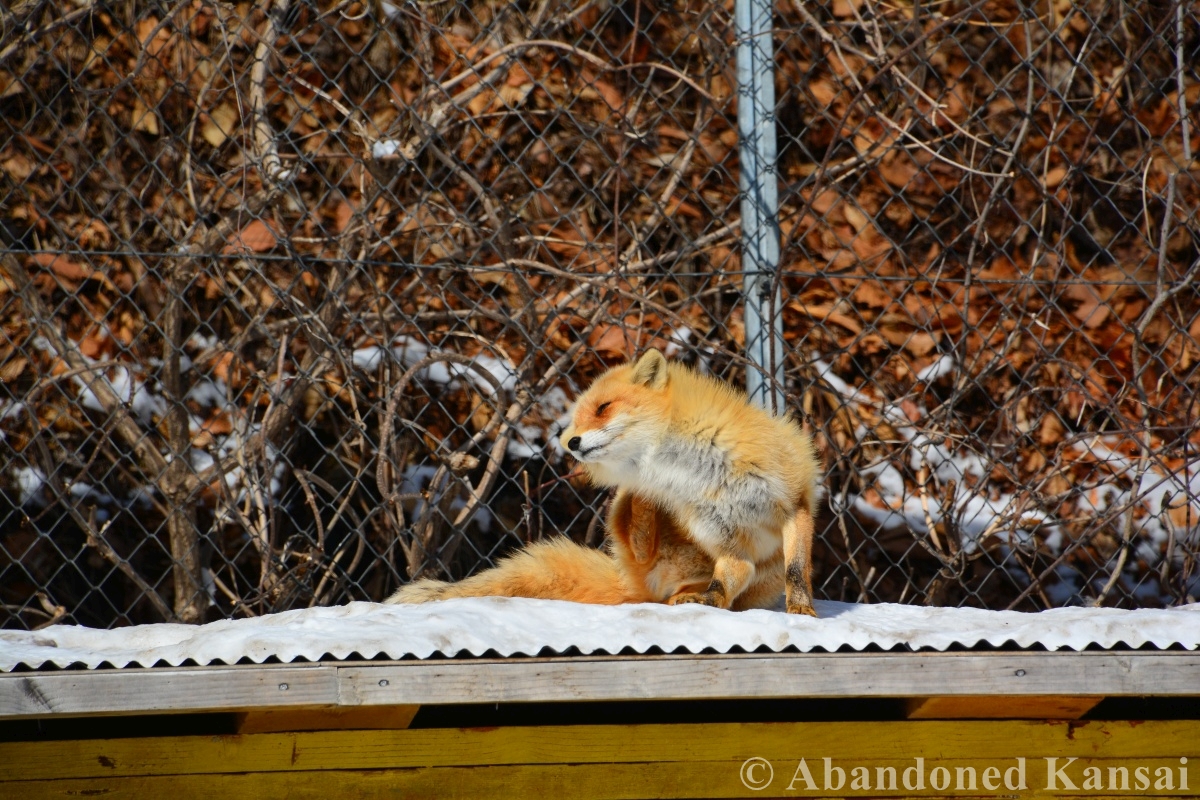
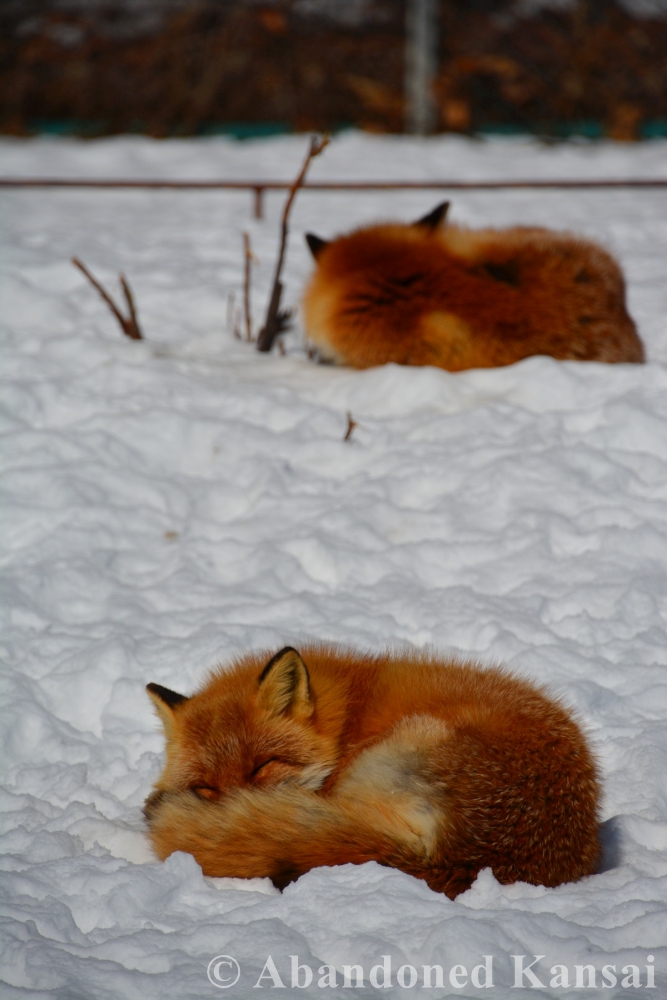
Like I said, I usually avoid animal prisons, so I’m in no way qualified to judge how good or bad the Kitakitsune Farm is run. To me the foxes looked healthy and peaceful. But in comparison to my visit at the Zao Fox Village the weather was sunnier, it was colder outside, the ground was snow covered, I was there earlier in the day, the variety of foxes was much lower (1 VS 6), there was a lot less fighting among the foxes (none that I can remember half a decade later…). I spent an hour there and had a good time. Nothing I would travel to Hokkaido for, but it was a nice way to break up the day, considering that there were also other things to do in Onneyu Onsen. On GoogleMaps the Kitakitsune Farm has a rating of 3.9 after almost 2000 reviews, the Zao Fox Village is at 3.8 after more than 7000 reviews – predominantly in English… 500 Yen and open every day (Farm) VS 1500 Yen and closed on Wednesdays (Village) are important differences though you might want to keep in mind, As for the photo gallery – most of the pictures were, of course, taken at the Kitakitsune Farm, but I also added some bonus snapshots of the other locations I mentioned in this article. The next one will be all urbex again… and following few most likely, too. (That being said: My favorite animal place in Japan is still Barbacoa. Just kidding! It’s the *poison gas / rabbit island Okunoshima*. 🙂 )

(*Like Abandoned Kansai on Facebook* or *follow us on Twitter* if you don’t want to miss the latest articles and exclusive content – and subscribe to the *video channel on Youtube* to receive a message right after a new video is online…)

Read Full Post »
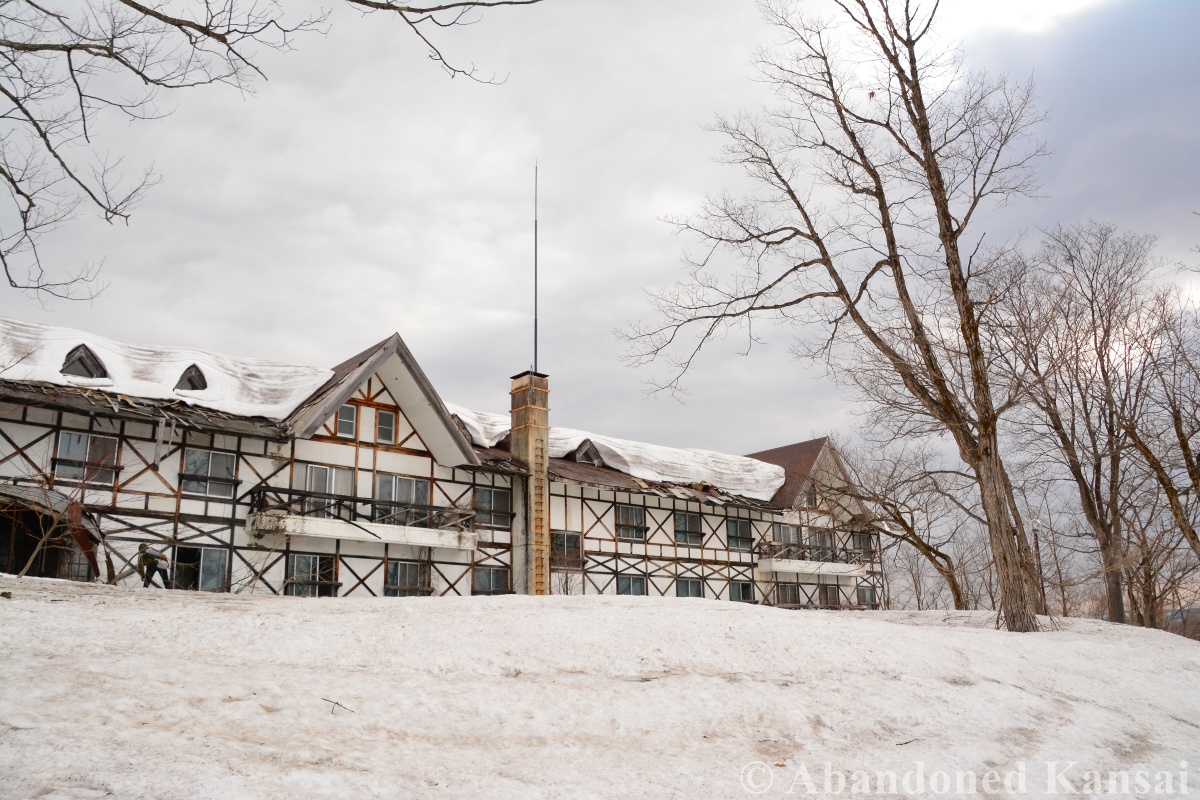
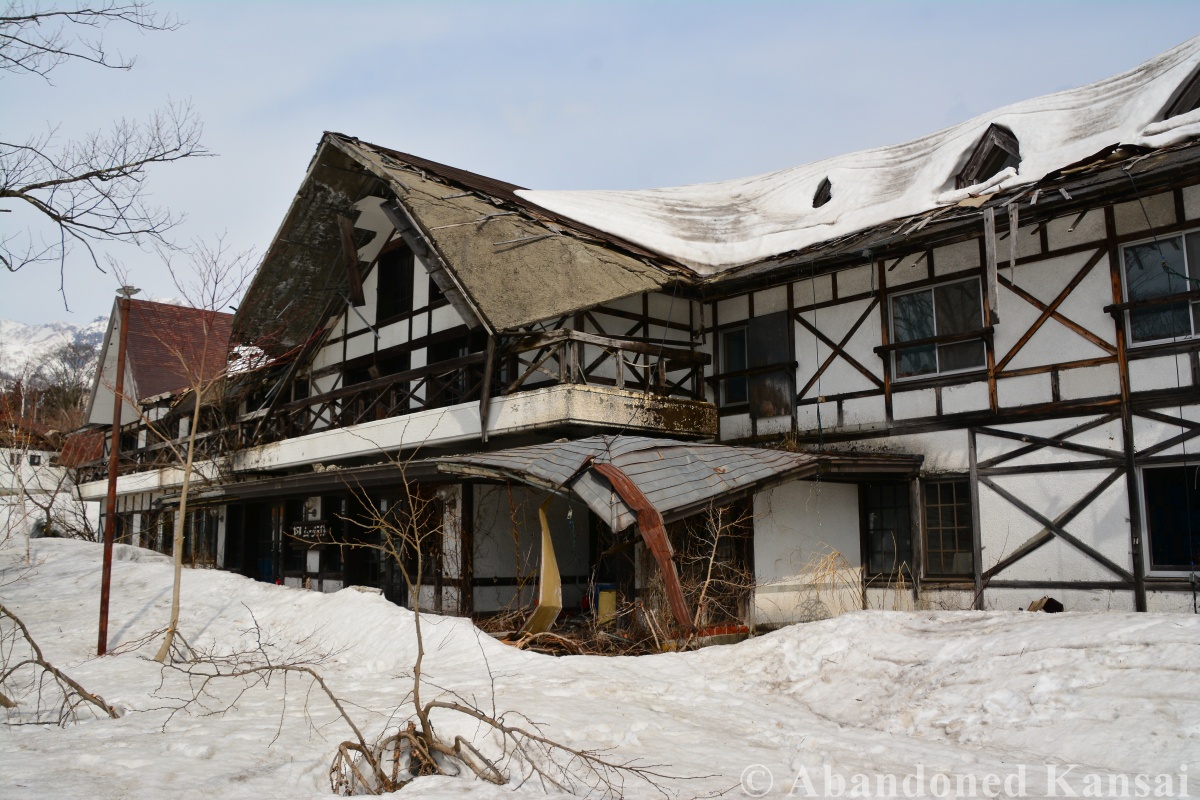
The first location of the Nagano day trip I mentioned before was in a somewhat well-known and still active skiing town. Unfortunately nobody told me ahead of time, because otherwise I probably would have questioned the idea of going to a ski resort for urban exploration in early April for obvious reasons. In case it’s not obvious enough: snow. It wasn’t obvious enough for my co-explorers and so I stared into 5 Pikachu faces. Obviously nobody considered this: Just because we already had +20°C in Osaka doesn’t mean that there couldn’t be two meters of snow in other places of Japan (or three or four…). Like a skiing town in the Japanese Alps. It only shows that common sense is far from common. And while accommodations still in business are easily accessible even in winter, guess what – abandoned lodges are not, because nobody removes the snow. Second round of Pikachu faces…
I tried to be a good sport about it, but the thing is: I’m on the taller and wider end as far as humans go. On the one hand, it makes me a rather careful explorer, which is a good thing in my book. Hardly any urbex injuries, because I rather don’t climb a rusty or brittle staircase – sometimes to the frustration… or amusement… of my co-explorers. The latter in this case. I still think it’s stupid to cross an untouched snow-covered surface when you have no idea how solid it is and what’s underneath it. But I guess it’s much easier to cross when you weigh less than my dinner. So I hurled my grumpy fat ass up that wall of snow and towards the abandoned hotel my dear friends picked out first (I actually didn’t know half of the people, and I think my main purpose that day was seat warmer and gas money / highway fee sharer…). Years prior I explored the *Matsuo Mine Apartment Buildings* with another group of friends, and when going from one building to another one of my legs sank into the snow balls deep. Not a pleasant memory – and with that in mind I approached that rundown looking hotel. Screw my life, I could have stayed at home and watch anime with a Strong Zero. All. Weekend. Long! On the other hand: I never did that, so why start now? So I kept walking toward the dilapidated hotel on unstable ground, much to the entertainment of half a dozen half-heights, sinking into various depths with every stop, sometimes involuntarily voicing my concerns about what’s happening with sounds, if you know what I mean. Ha, ha, ha, the fat foreigner is scared doing something extremely stupid…
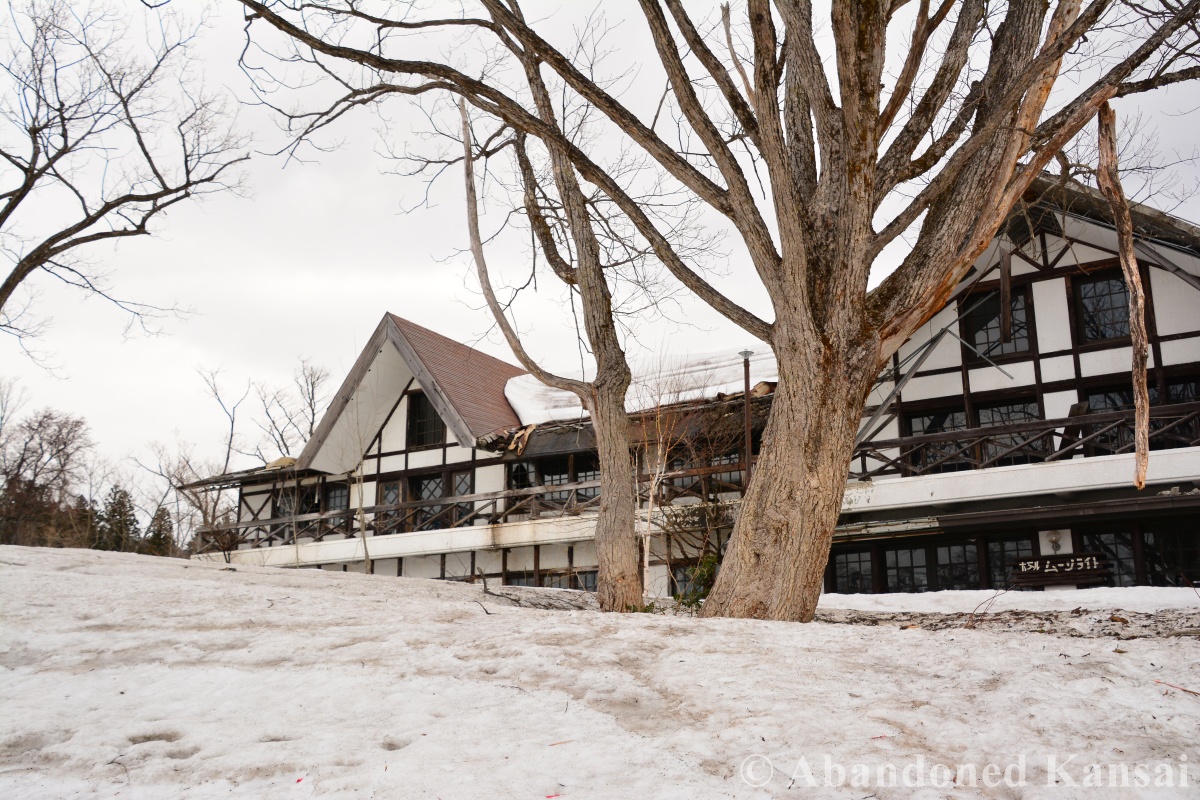
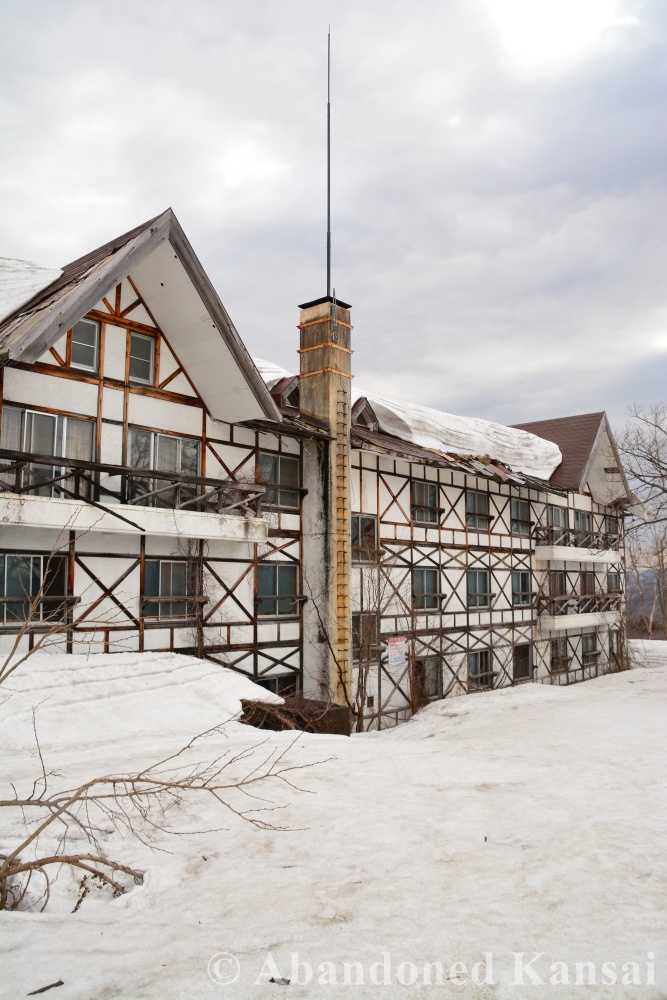
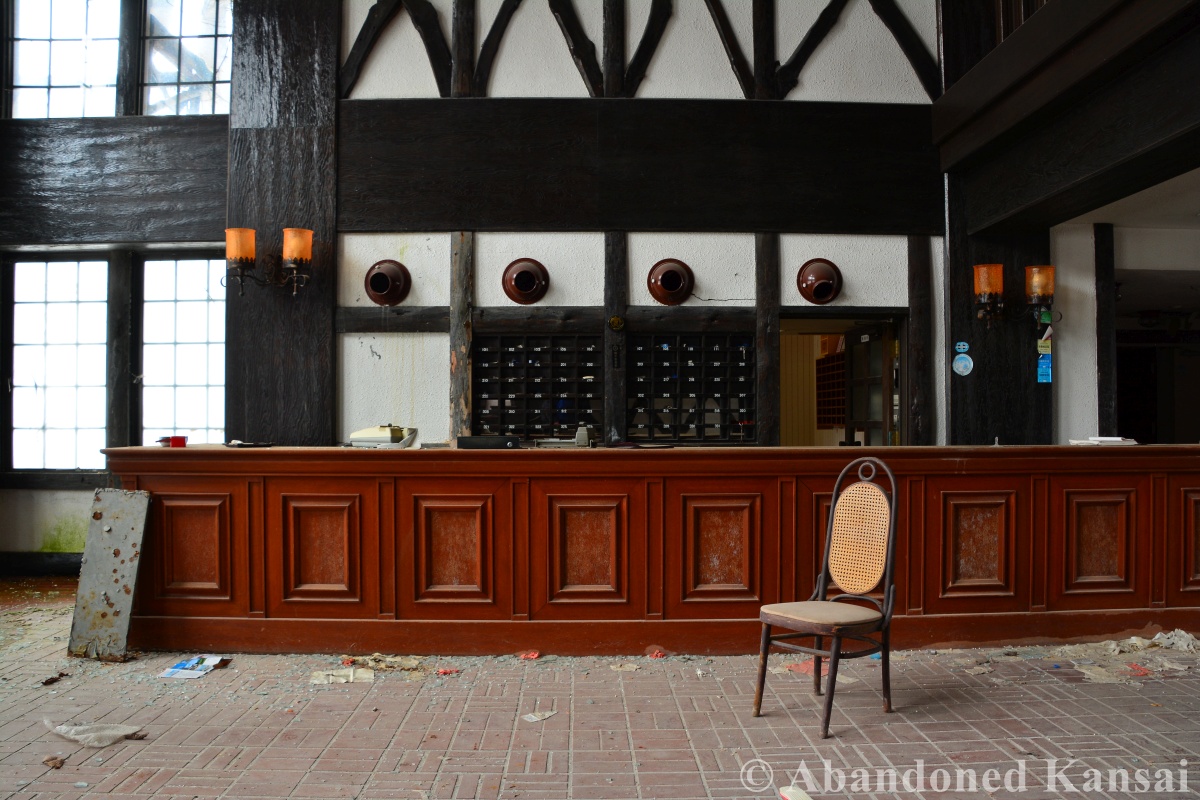
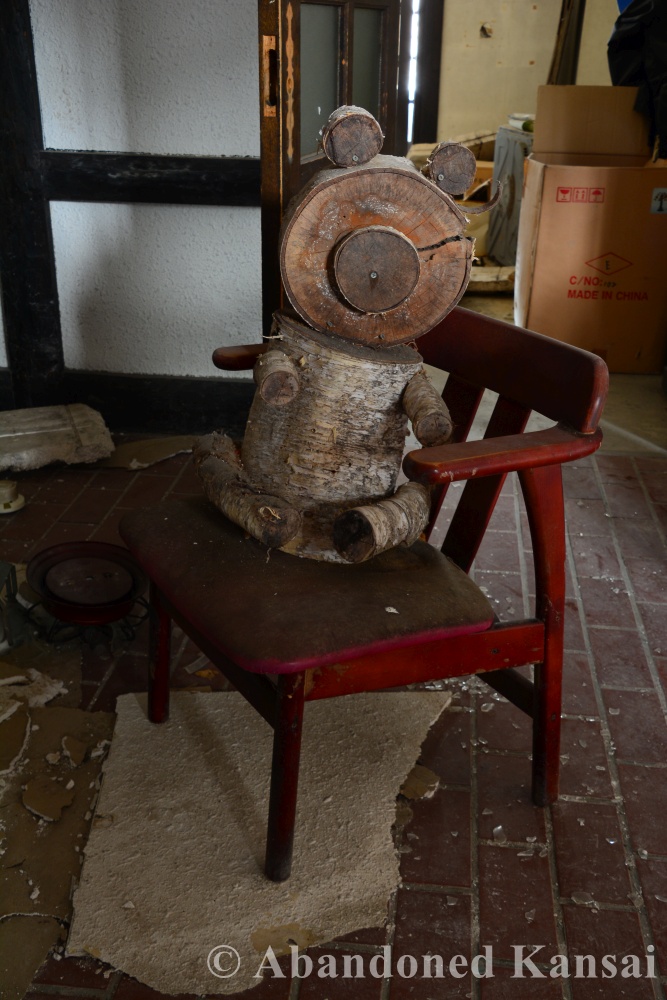
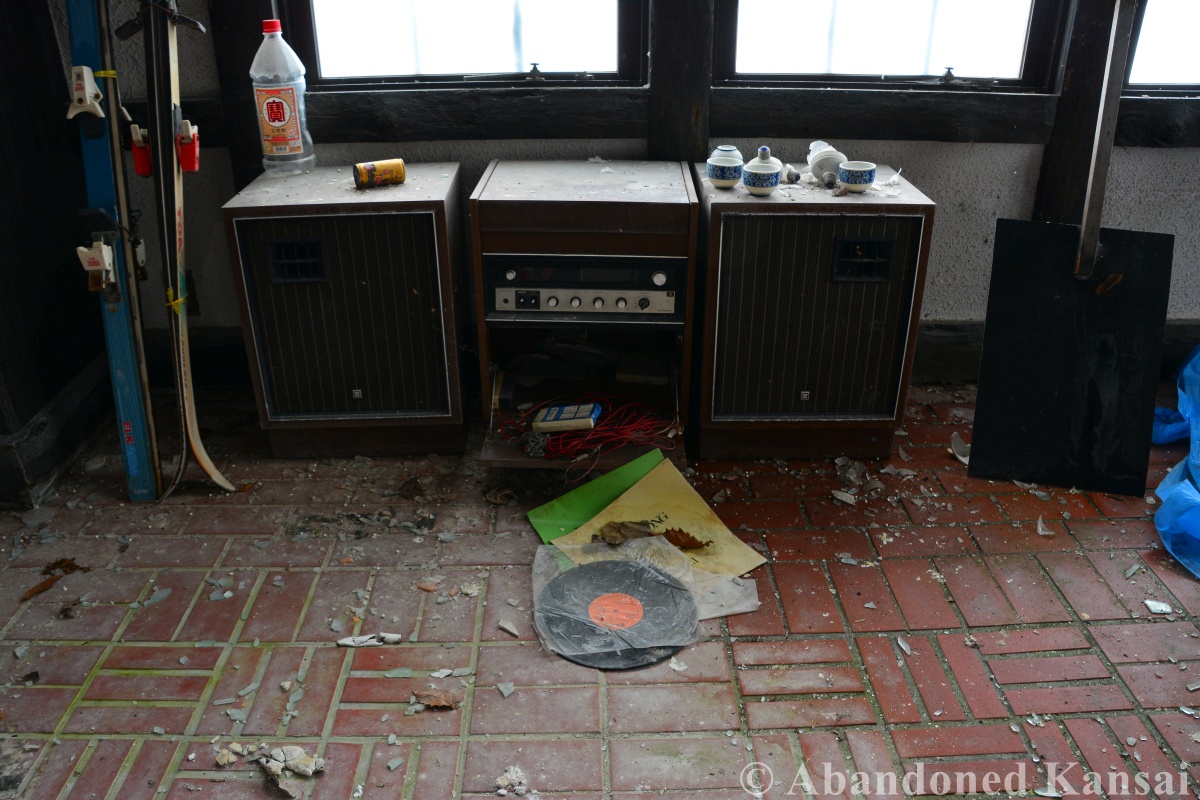
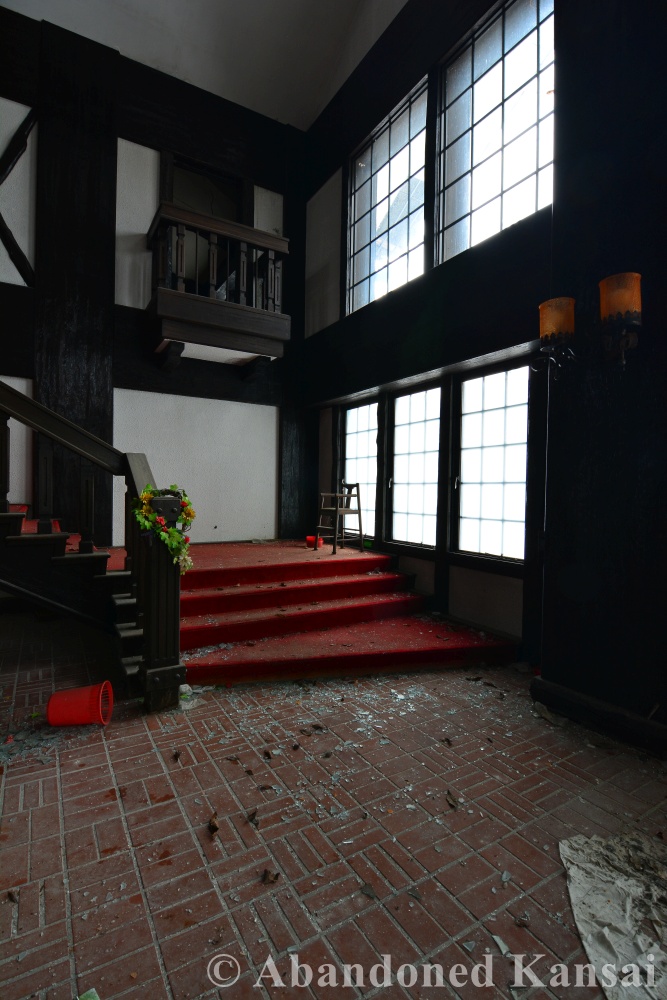
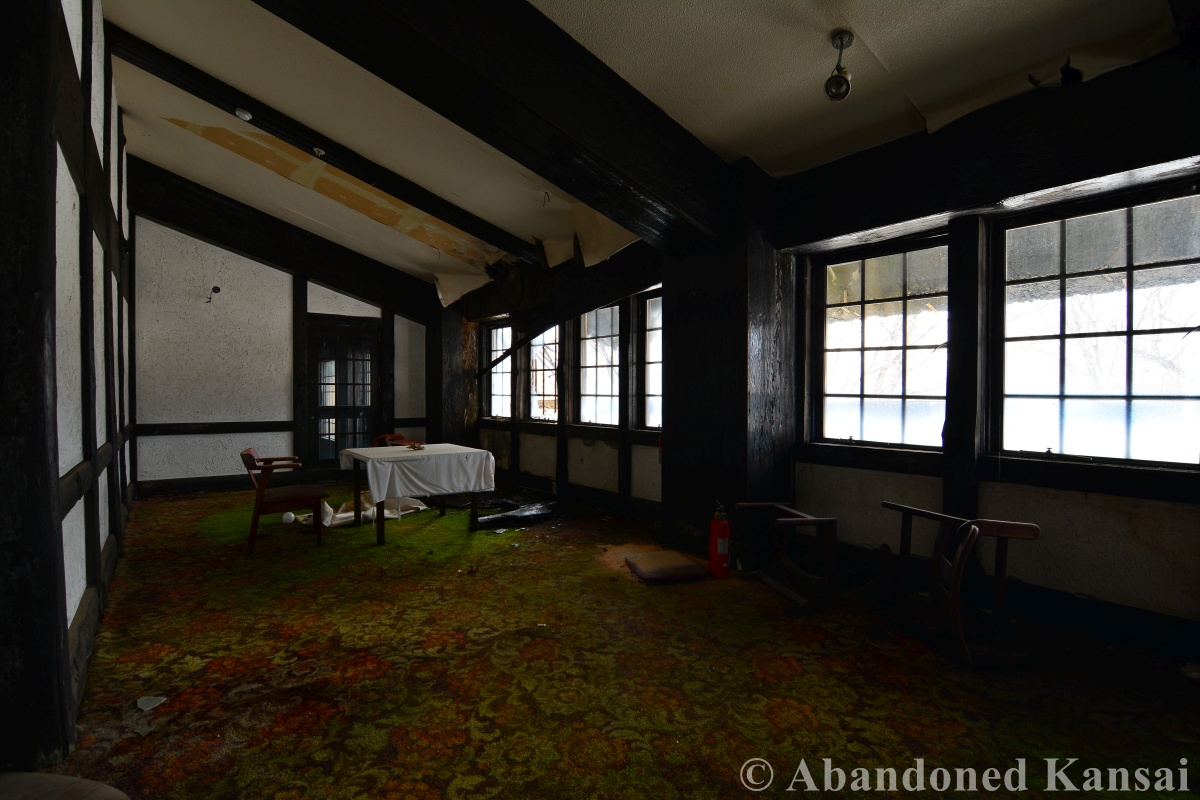
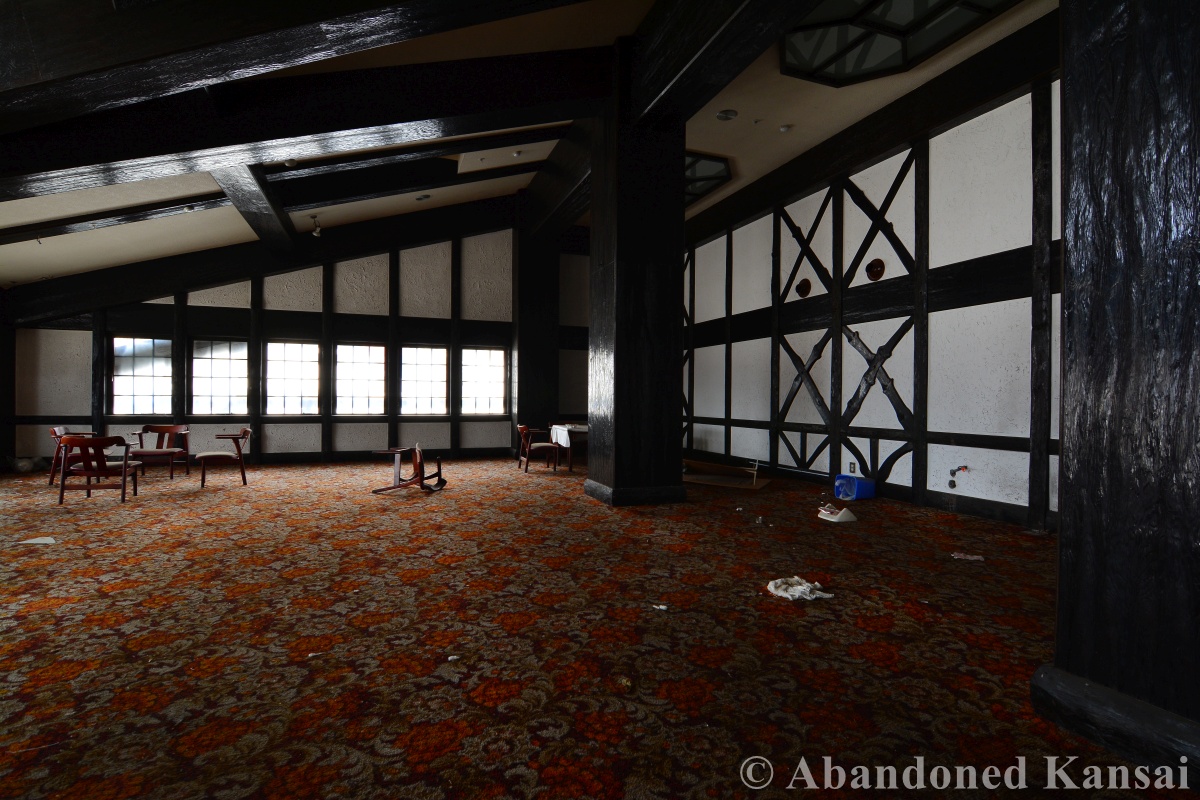
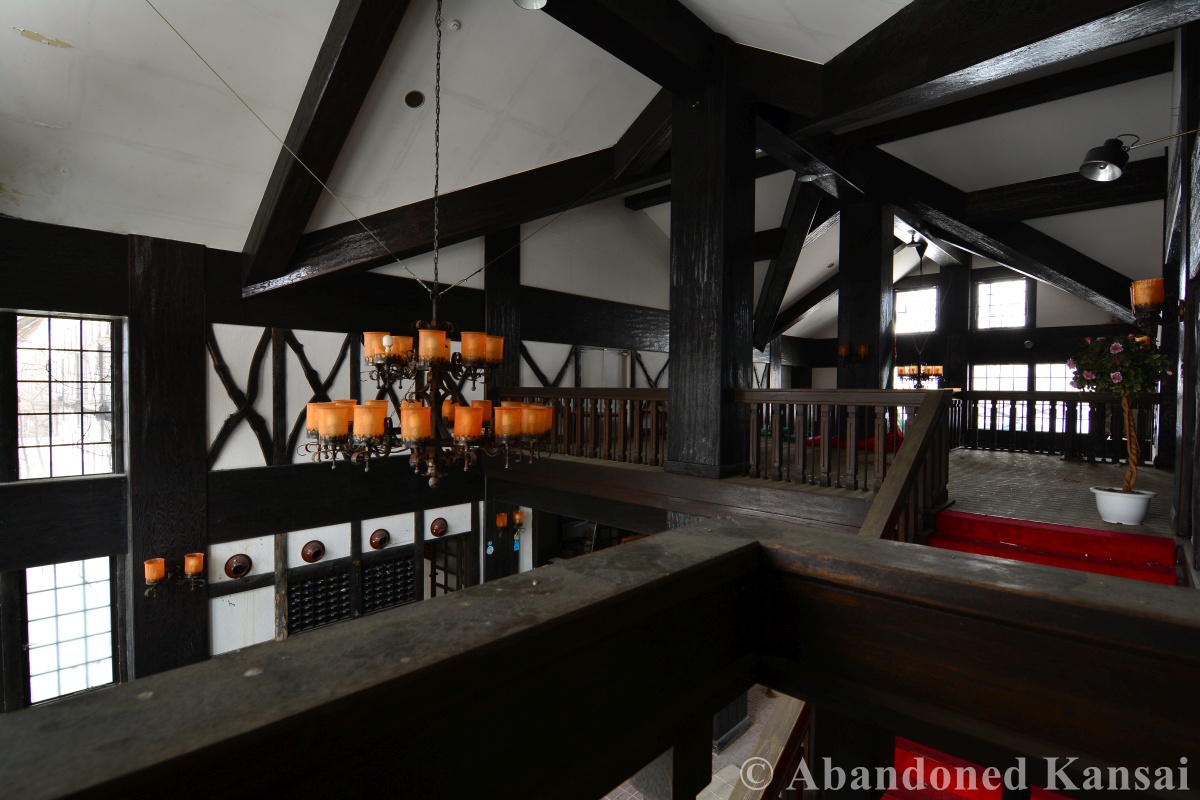
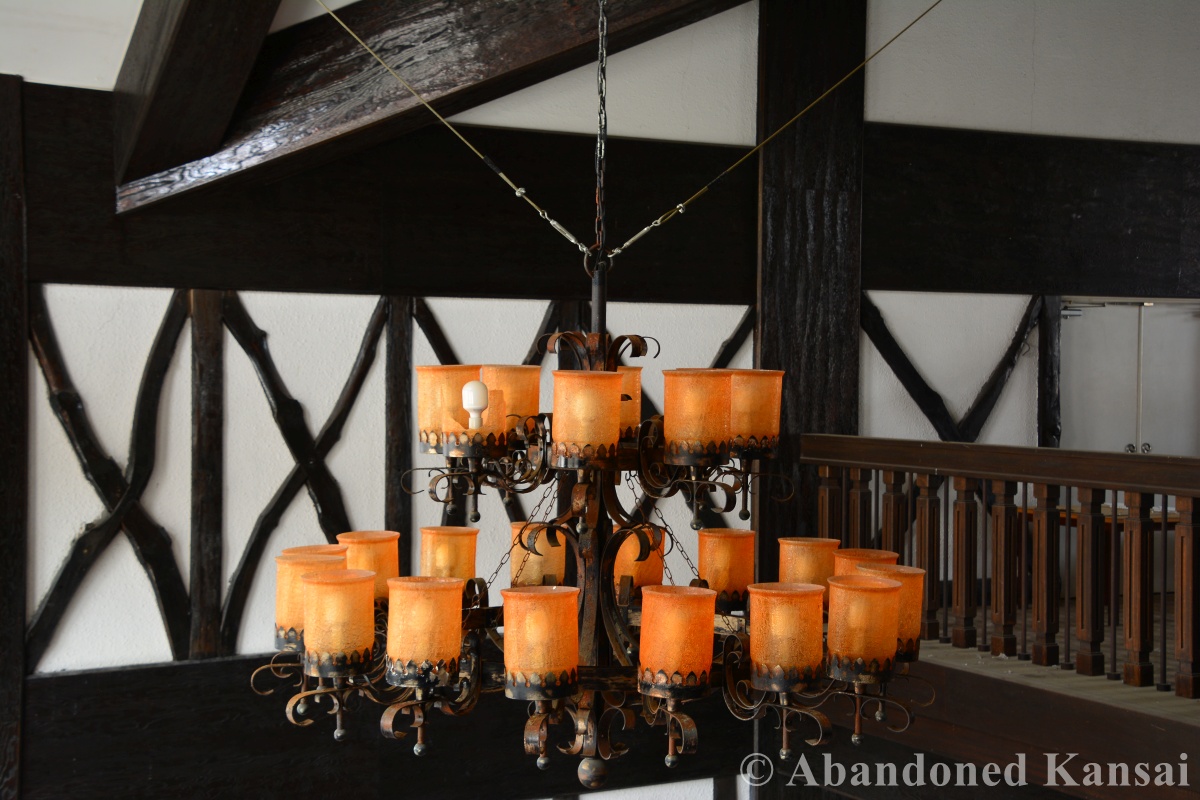
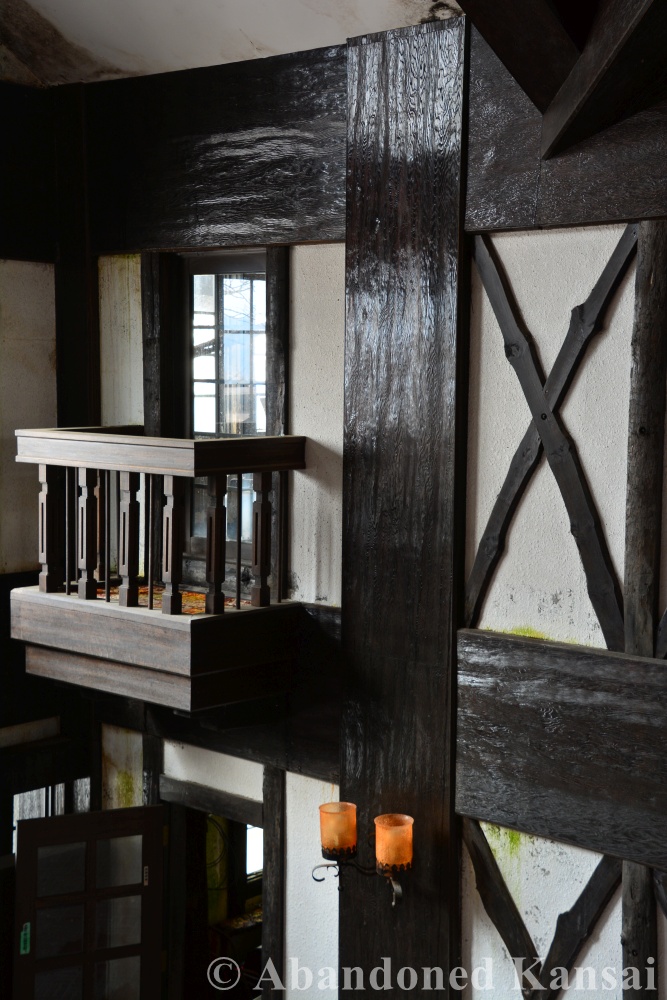
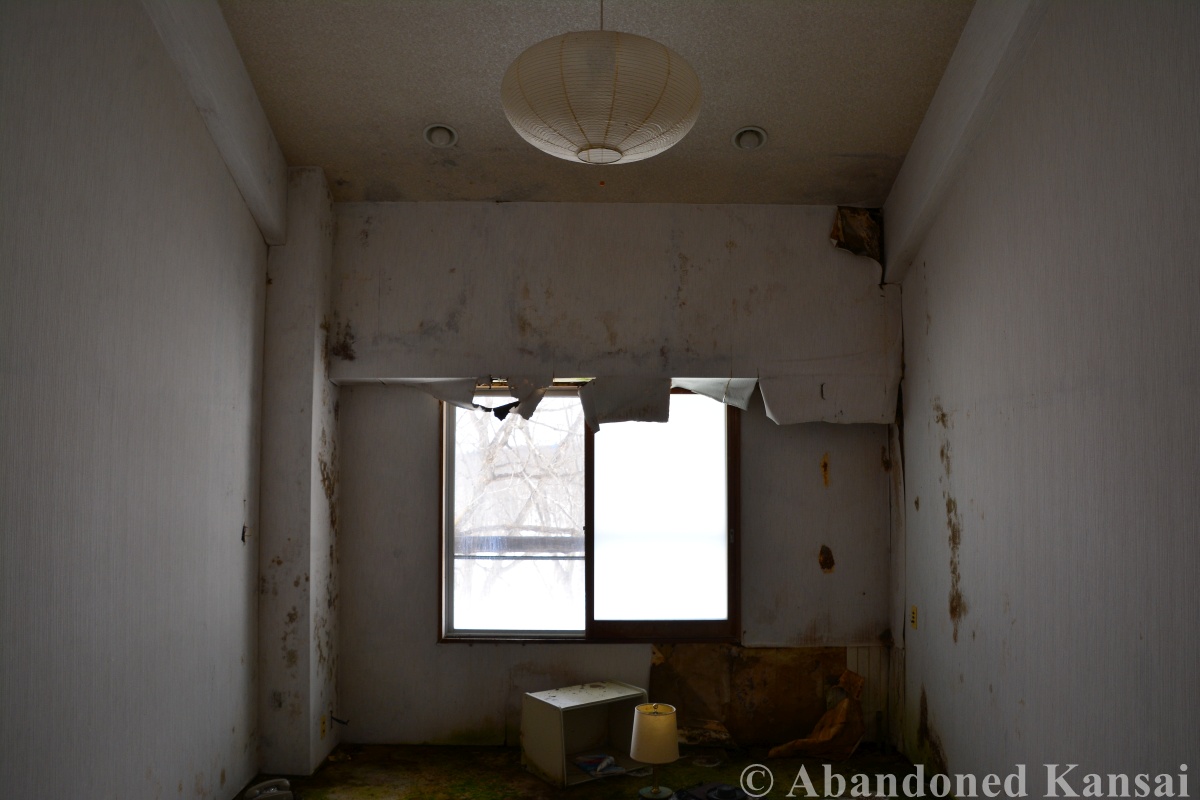
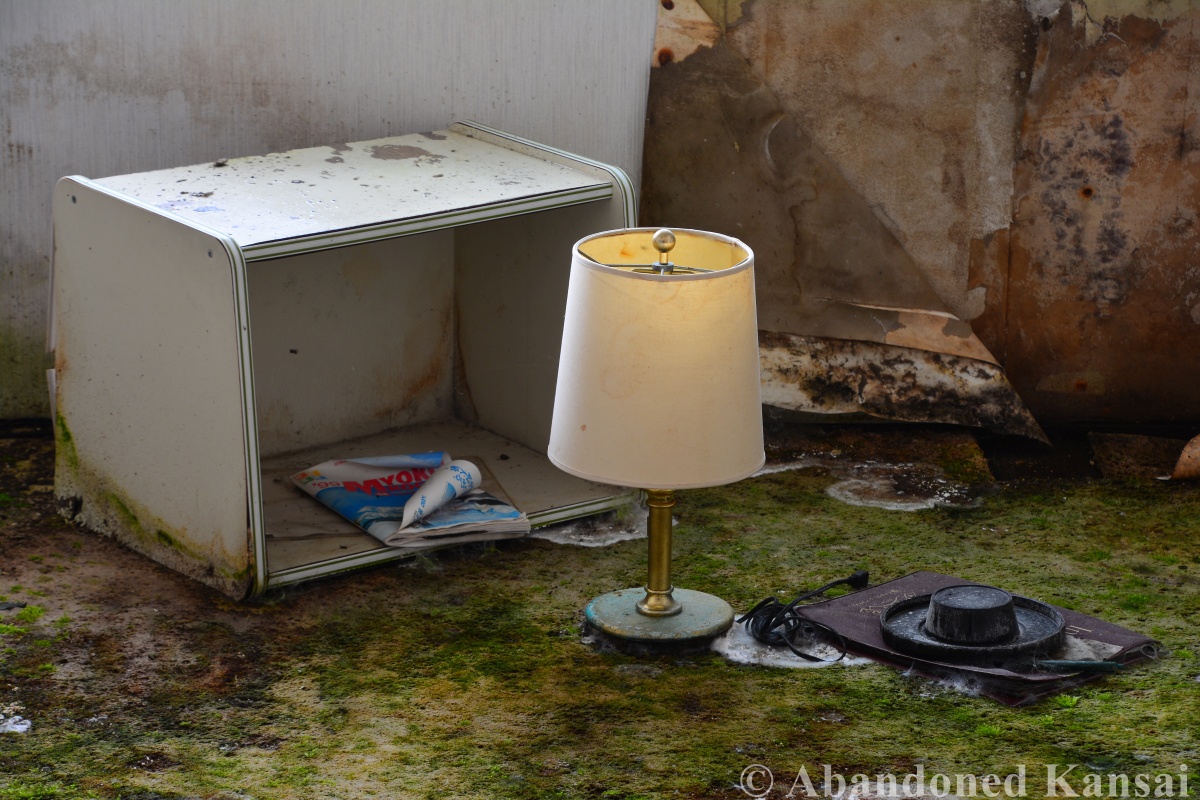
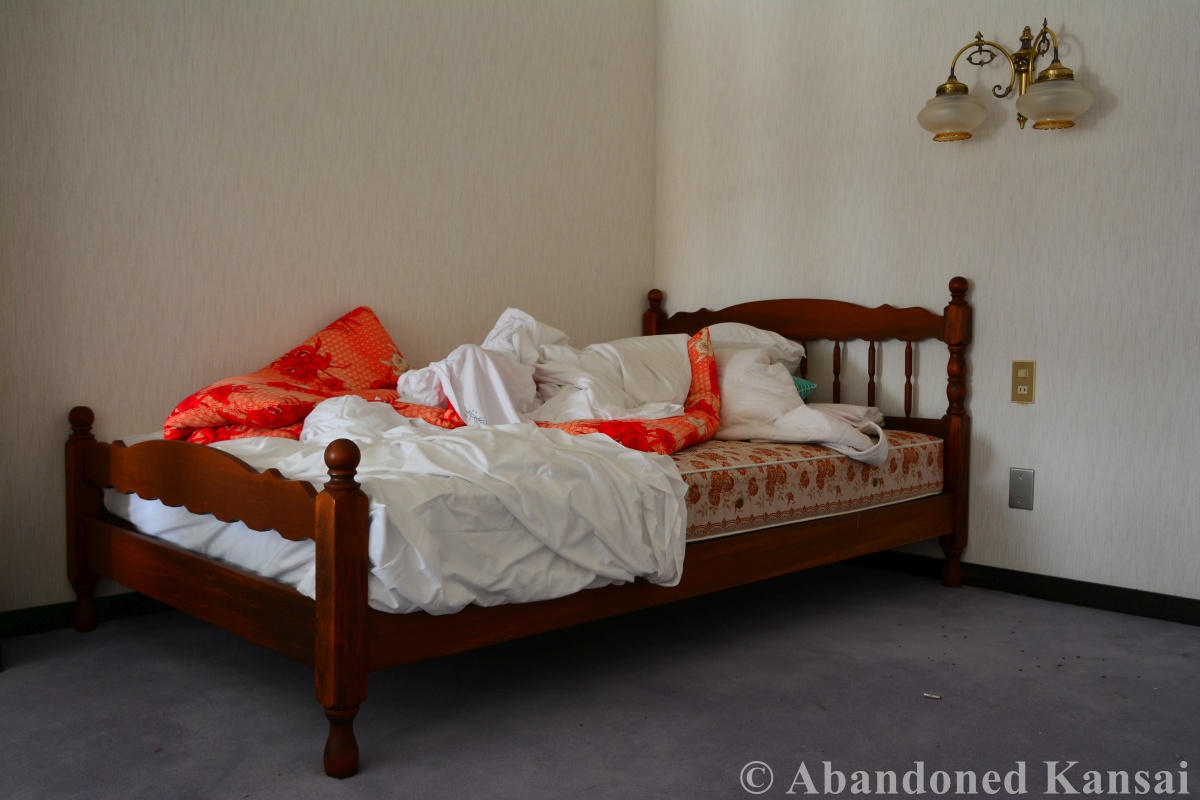
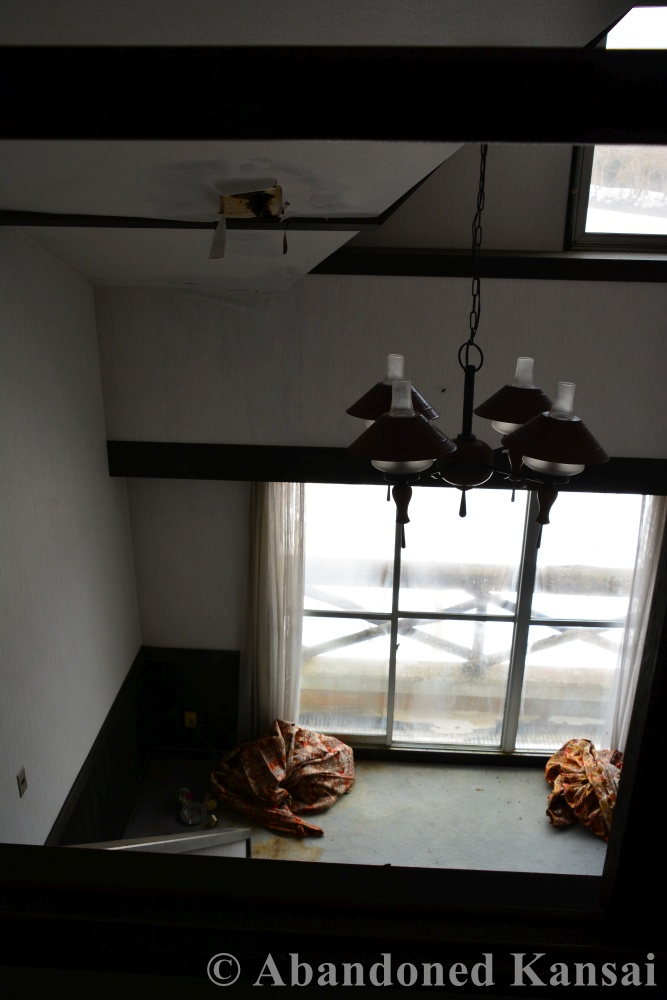
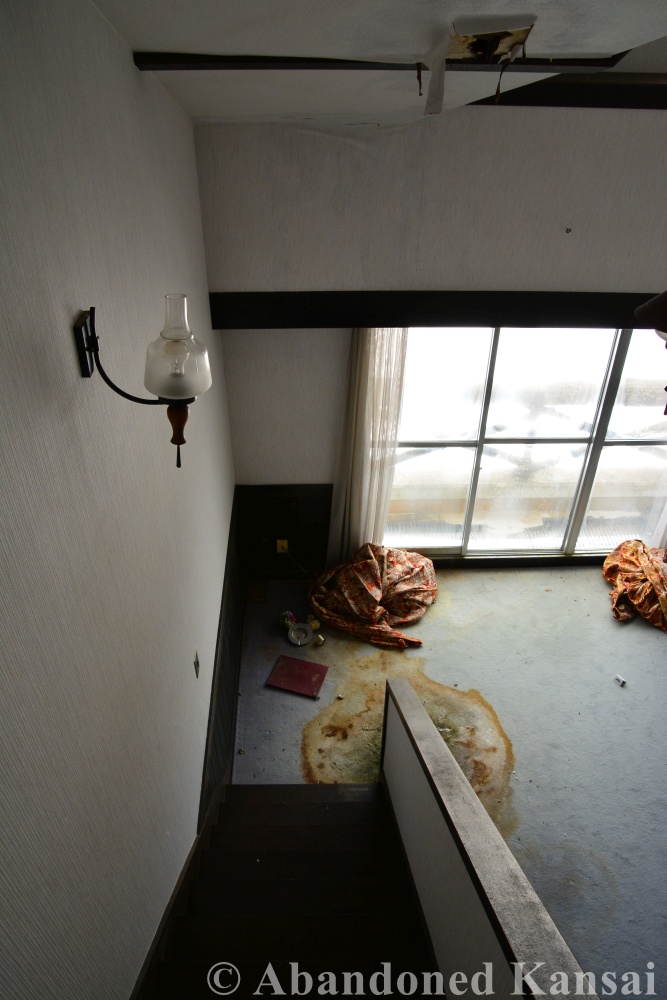
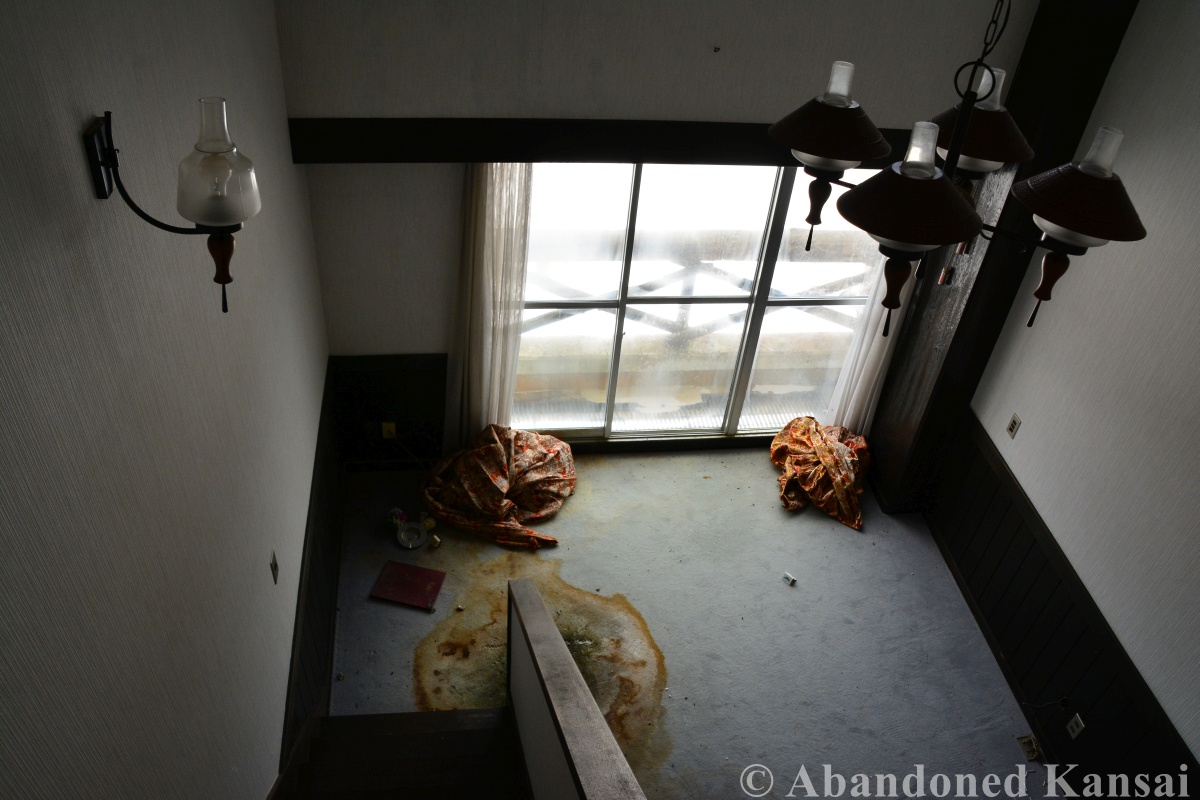
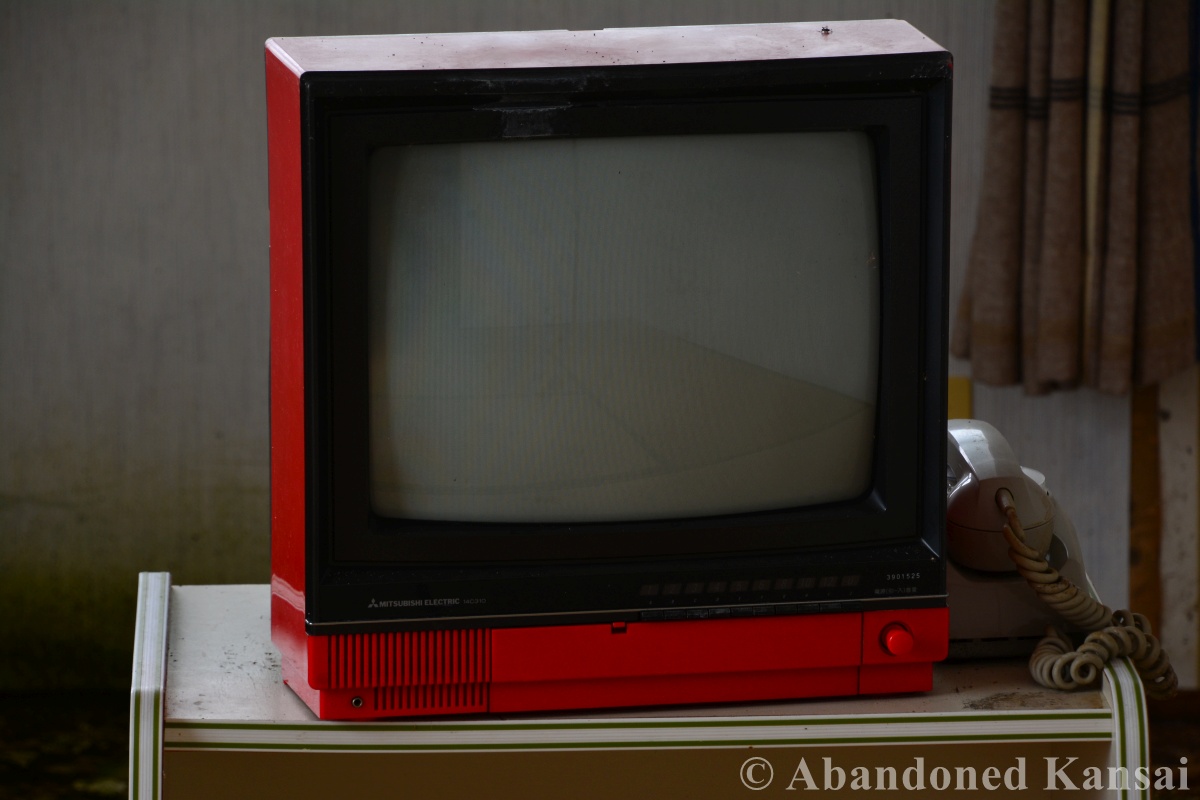
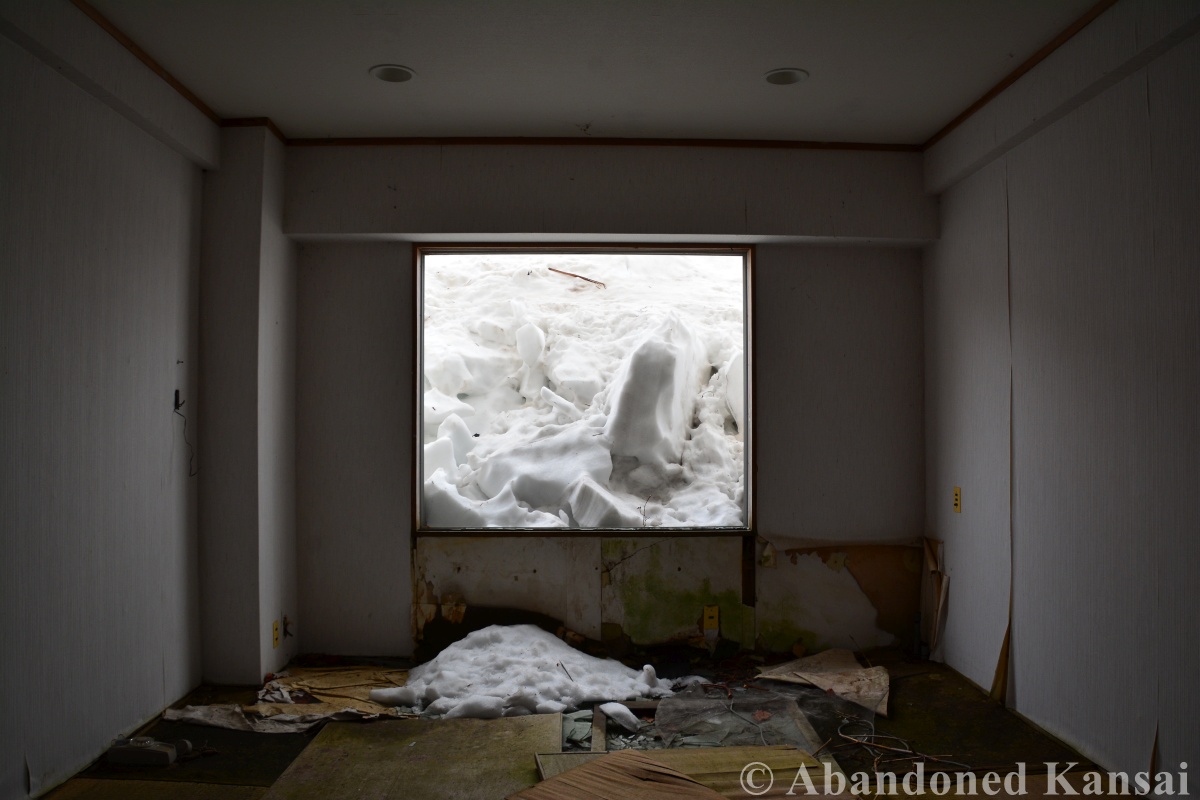
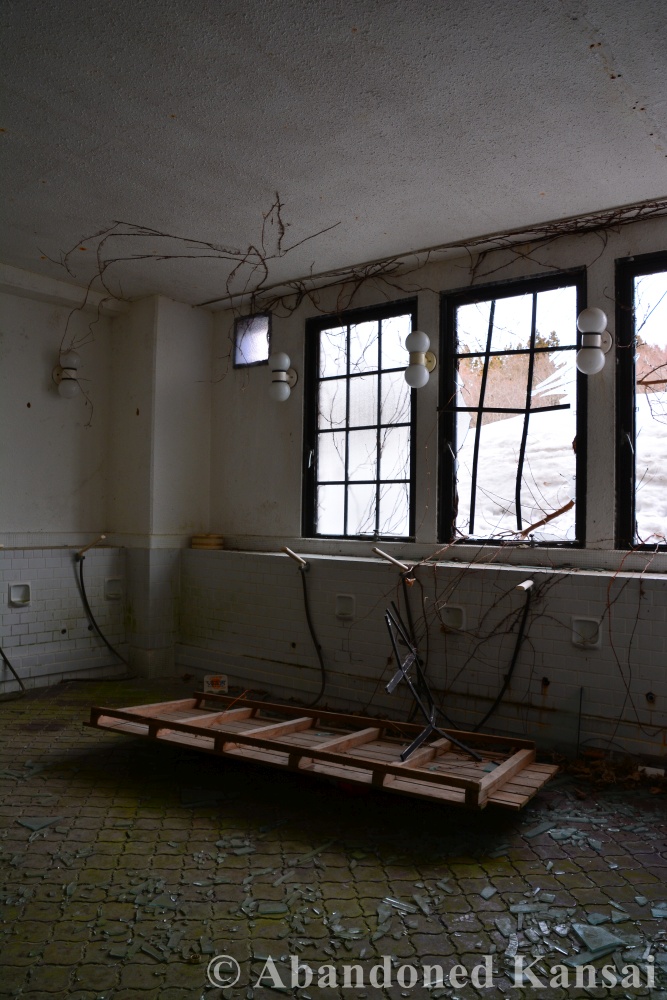
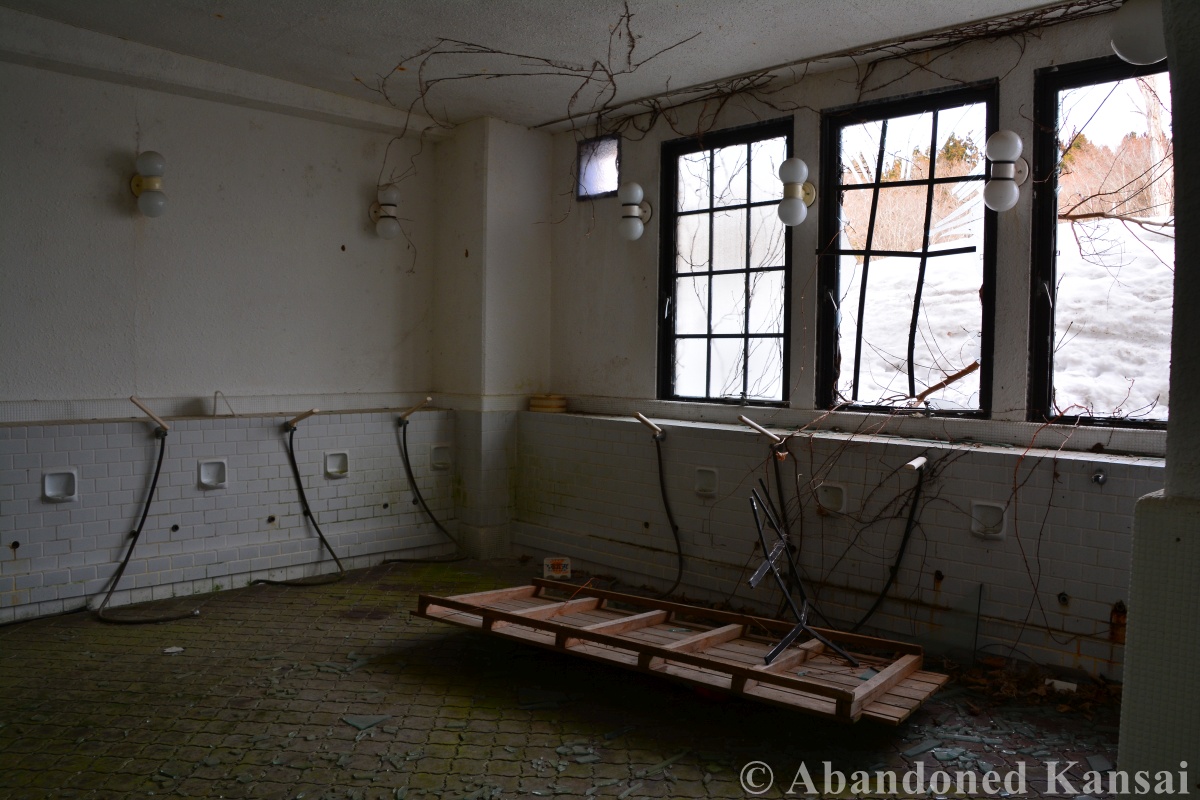
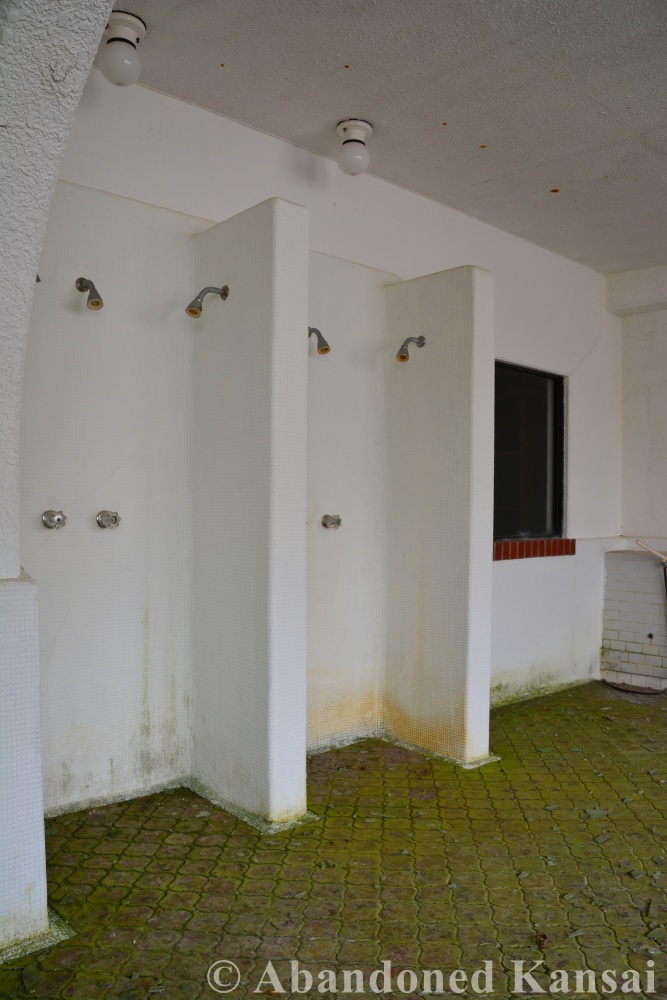
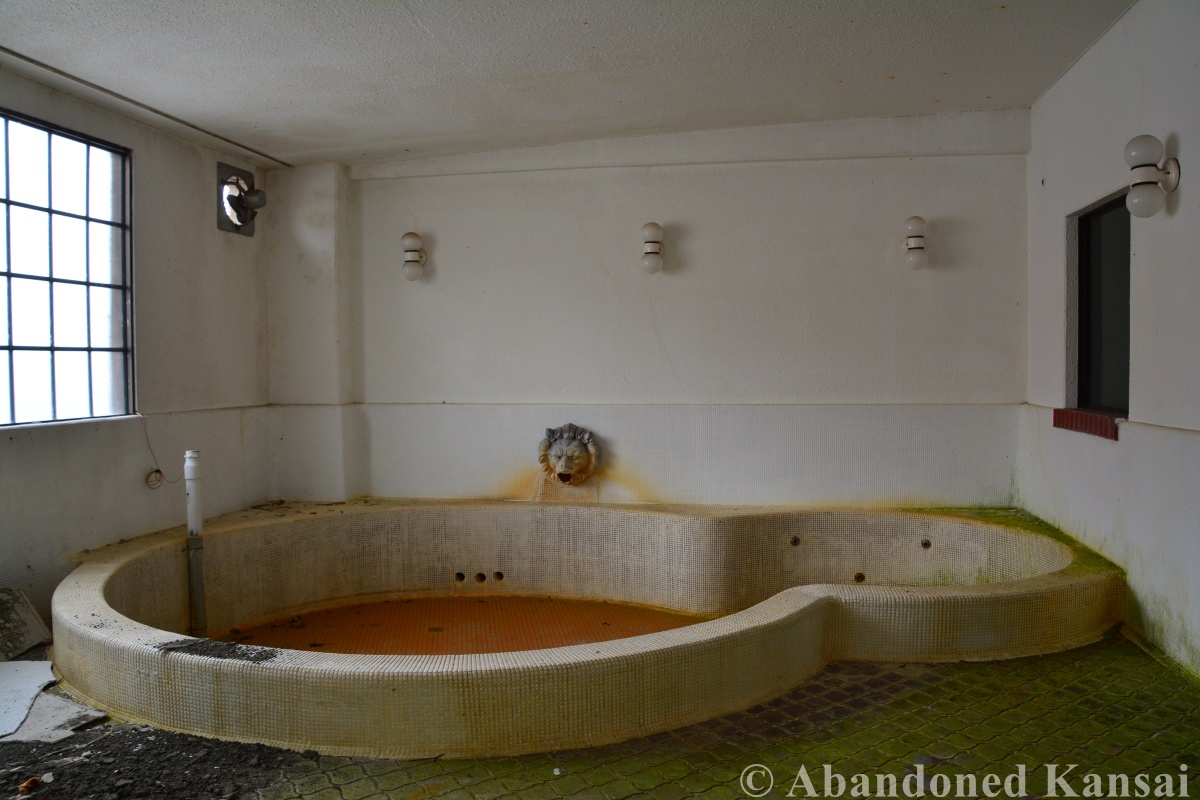
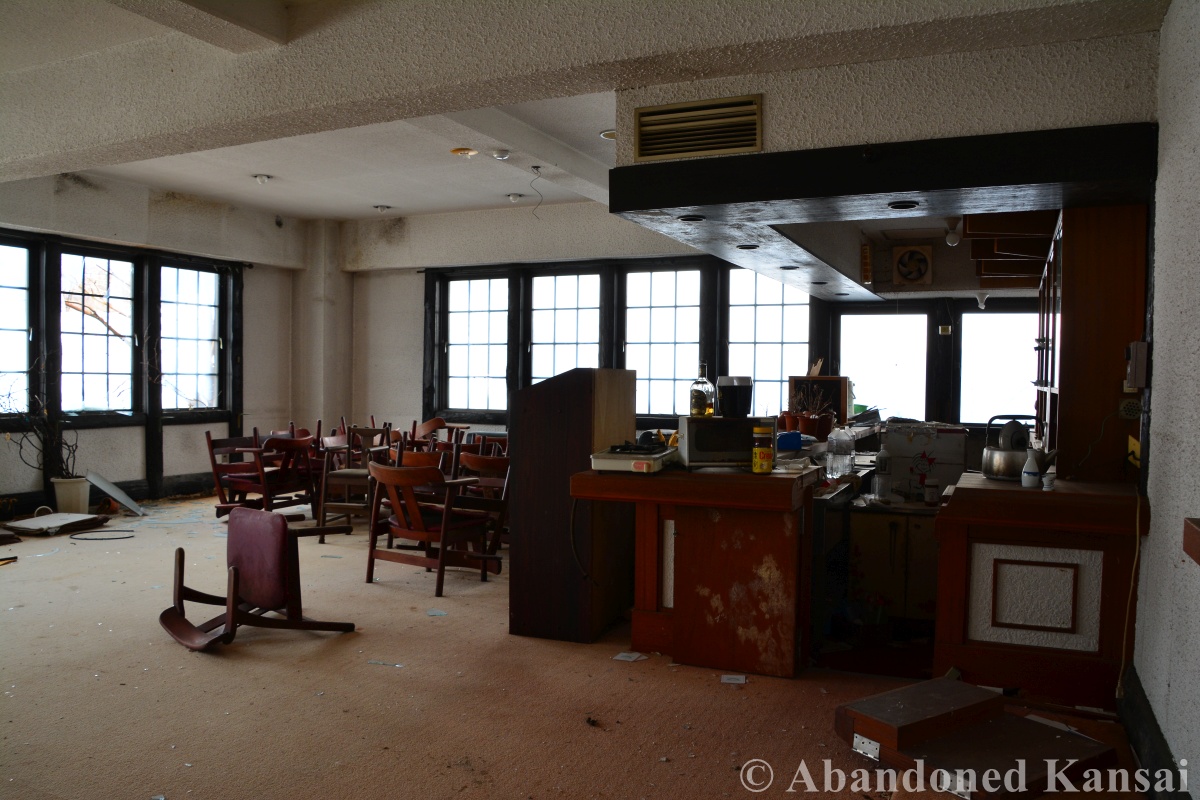
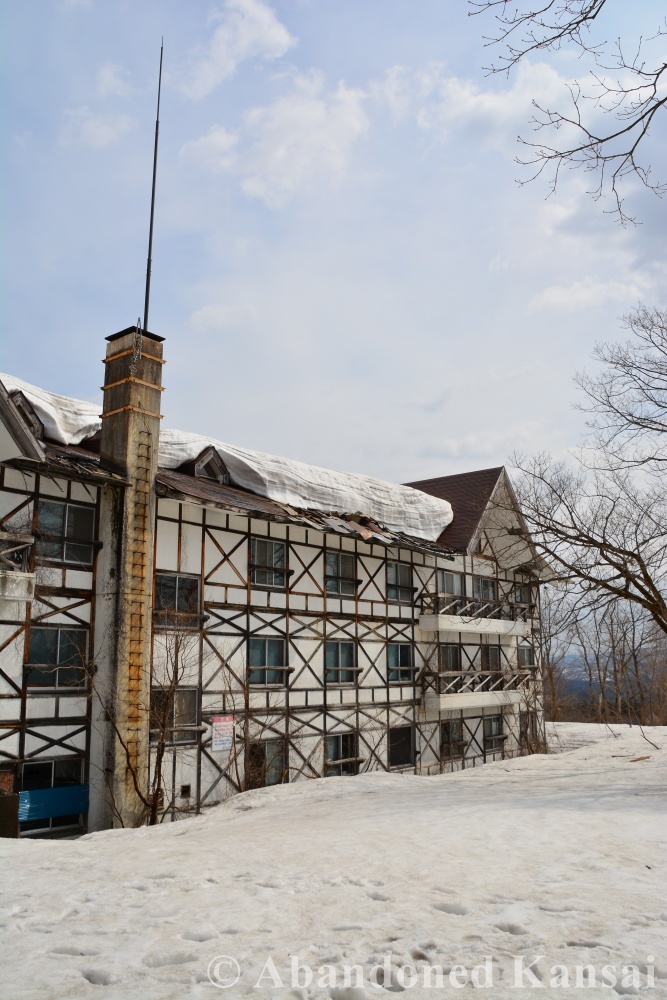
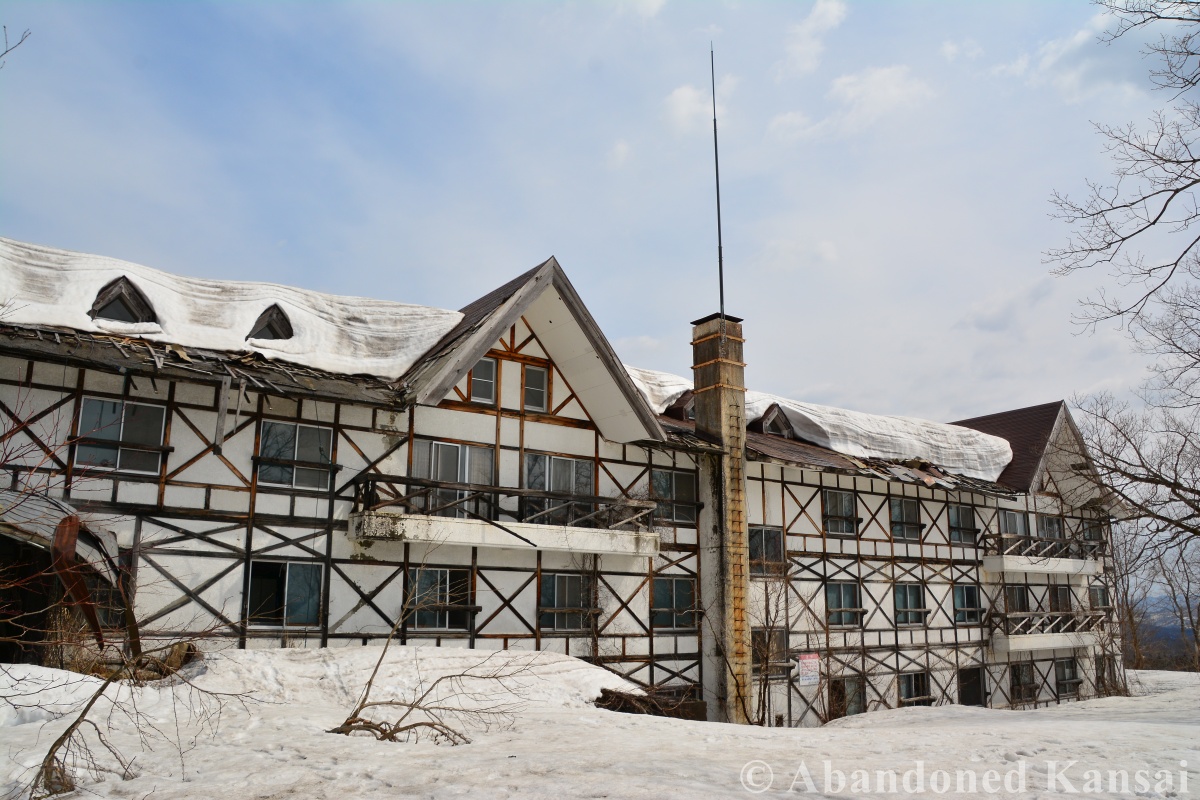
Well, I made it across and into the building, which was… okay-ish, I guess? One of those fake timber constructions non-Alps people build when they create their fake version of the real deal. But with a shared gender-separated bath. All bitterness of the moment aside, as far as abandoned hotels go, this was actually one of the better ones. The looks were unusual by Japanese standards, the rooms all had two floors, the melting snow looked nice once you were inside and the floors indoors were actually solid, despite being abandoned for 20 year. (The Tudor style hotel was opened around 1980, was renamed in the late 90s and closed after about 20 years in business – rather short, even by Japanese standards.)
Was it worth the long trip and the effort to get inside? Probably not, this one was a tough one overall. But hey, I don’t do many snow explorations and February is perfect for a set like that, so I hope you’ll enjoy it and maybe have a look at the *Canadian World Park* afterwards – a snowed in themed park modeled after Anne of Green Gables by Canadian author Lucy Maud Montgomery.

(*Like Abandoned Kansai on Facebook* or *follow us on Twitter* if you don’t want to miss the latest articles and exclusive content – and subscribe to the *video channel on Youtube* to receive a message right after a new video is online…)

Read Full Post »
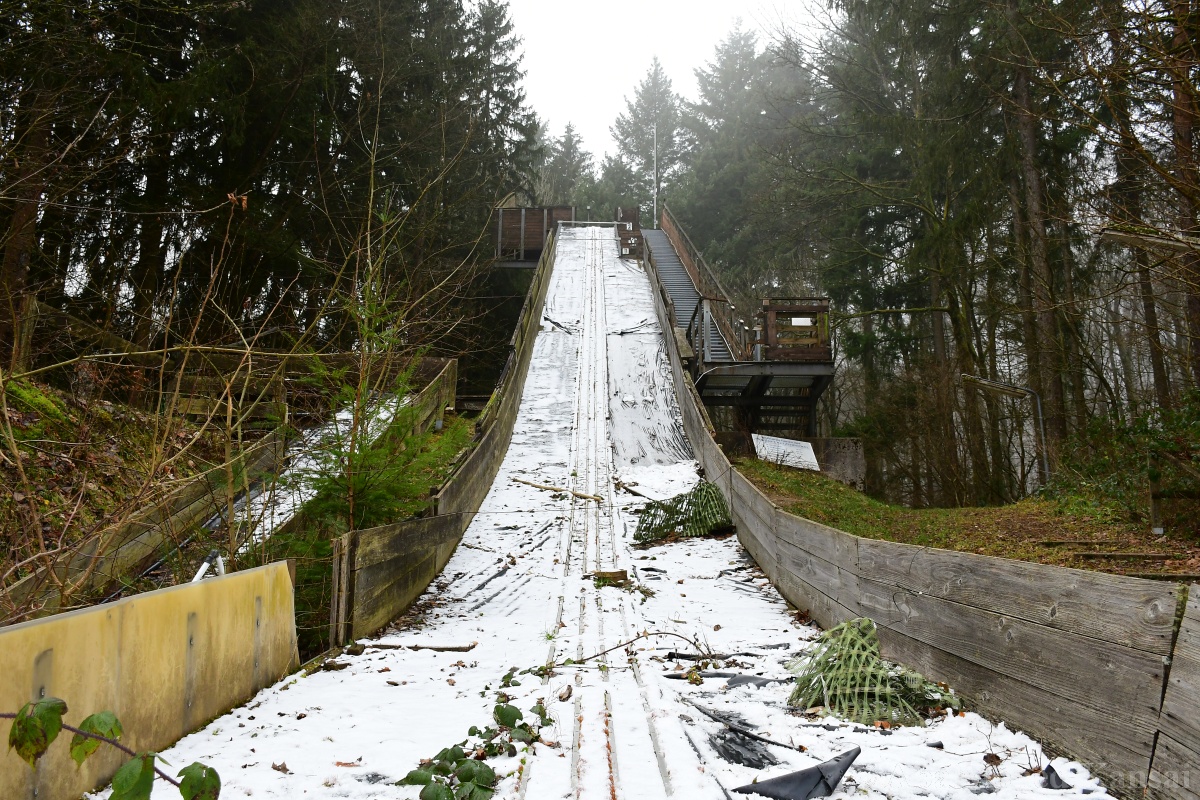
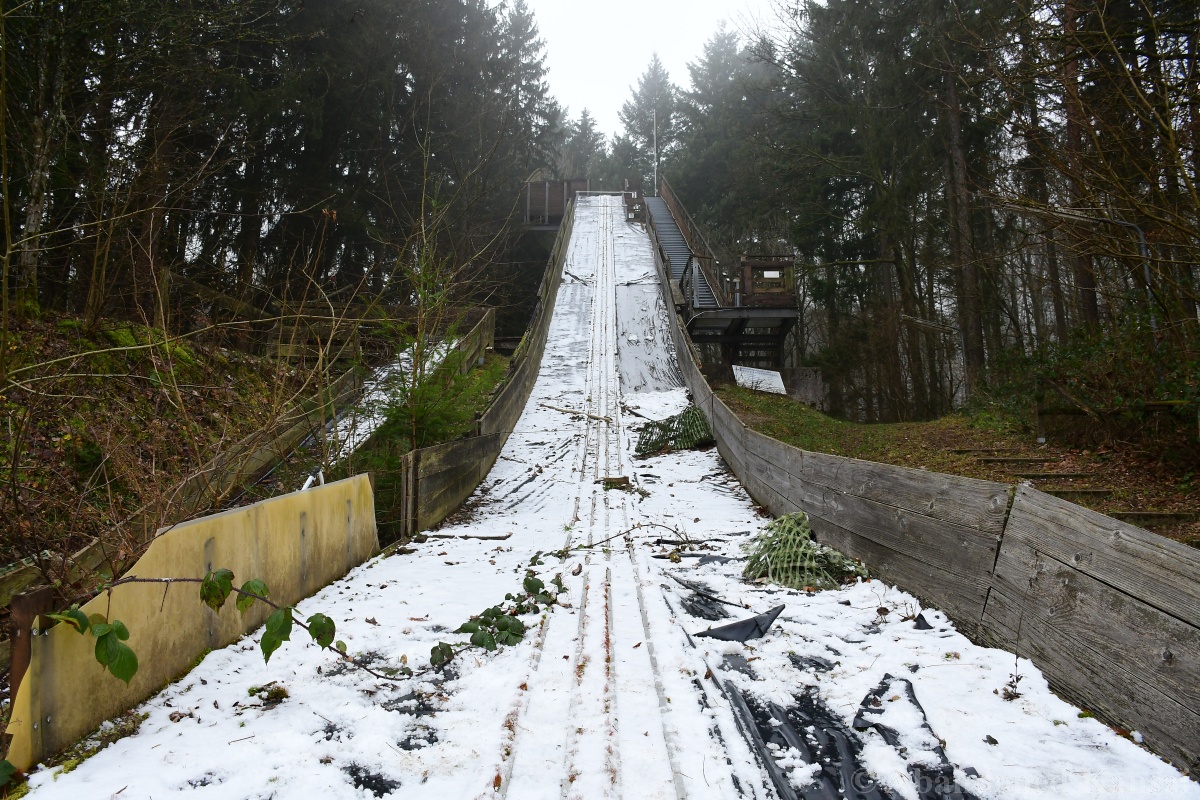
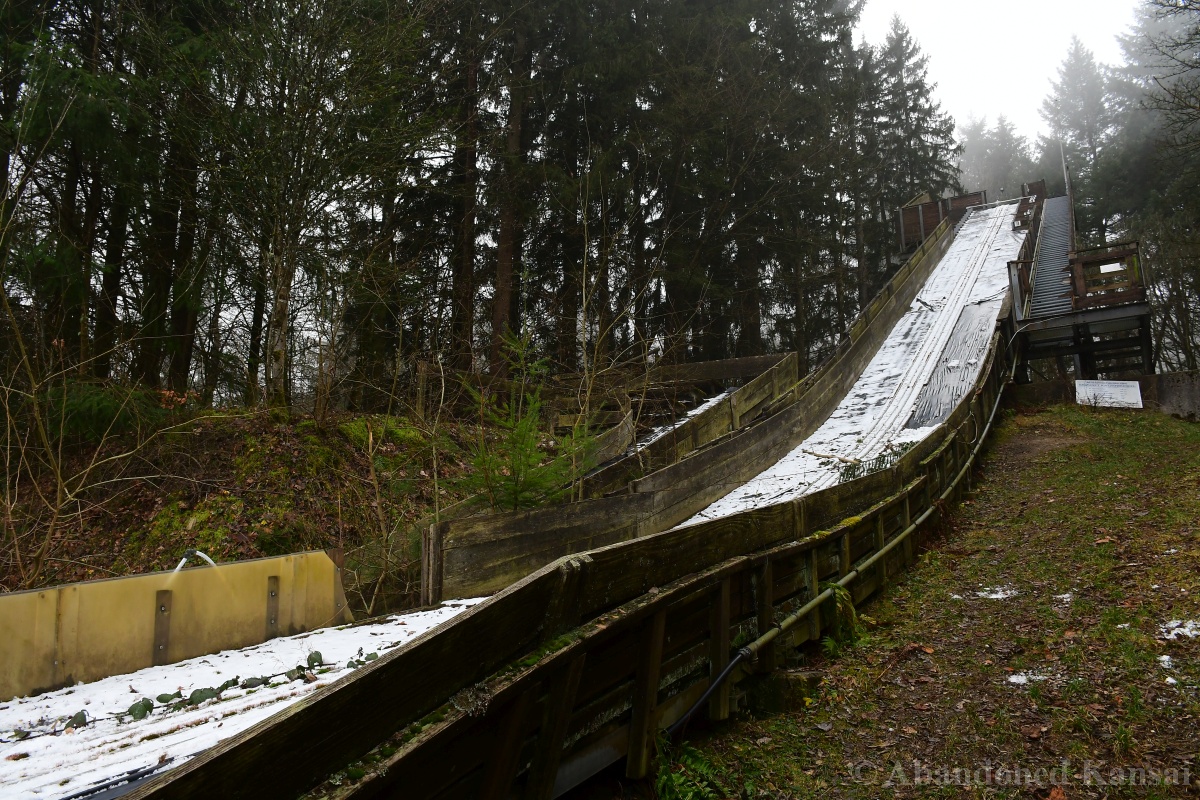
In the 1990s ski jumping was super popular in Germany thanks to successful athletes like Jens Weisflog, Dieter Thoma, Martin Schmitt, and Sven Hannawald – major events were even broadcasted on popular TV stations. Kind of a surprise to me as it is a sport hardly anybody actively does themselves – every kid plays soccer at one point, maybe not in a team, but in school or on the street. But who actually does ski jumping? Only a few thousand people worldwide. In the past 20 years interest went down a bit, despite actives like Severin Freund and Andreas Wellinger continuously being successful. In addition to dwindling interest, climate change is a threat to ski jumping as it has left some ski resorts and ski jumping hill without enough snow to run them with financial success.

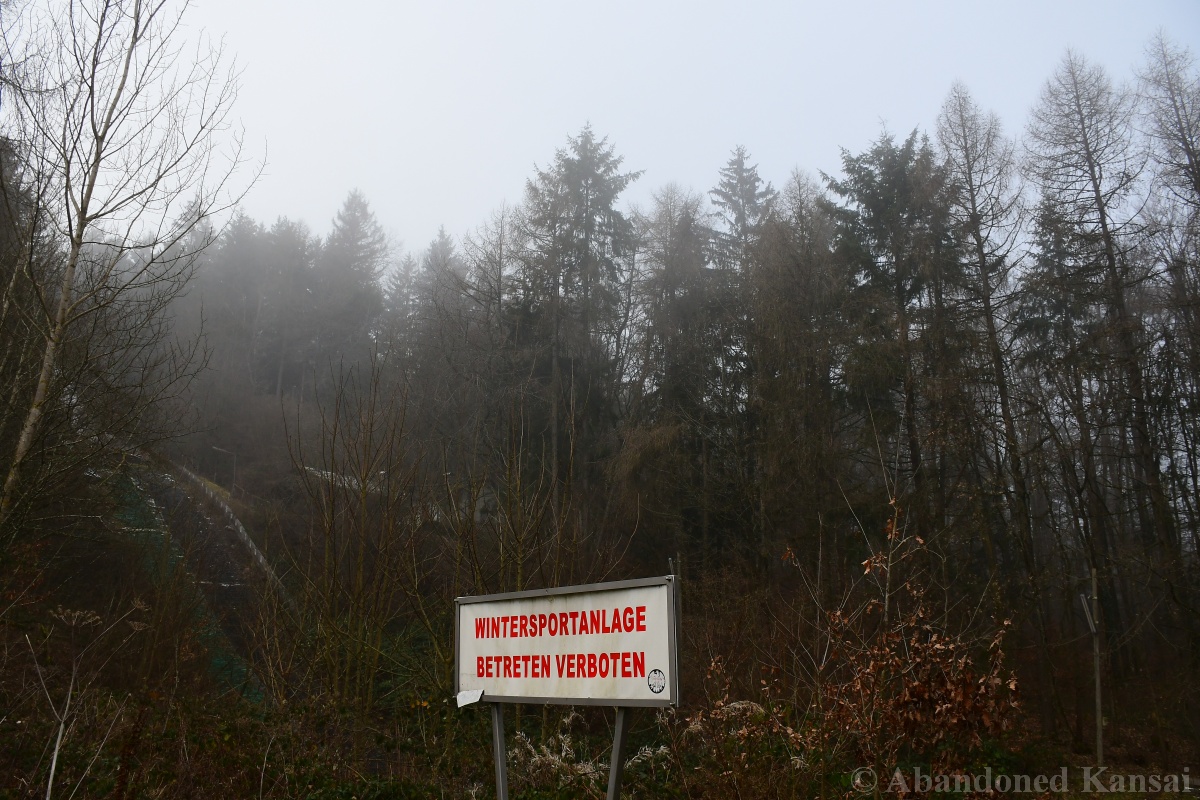
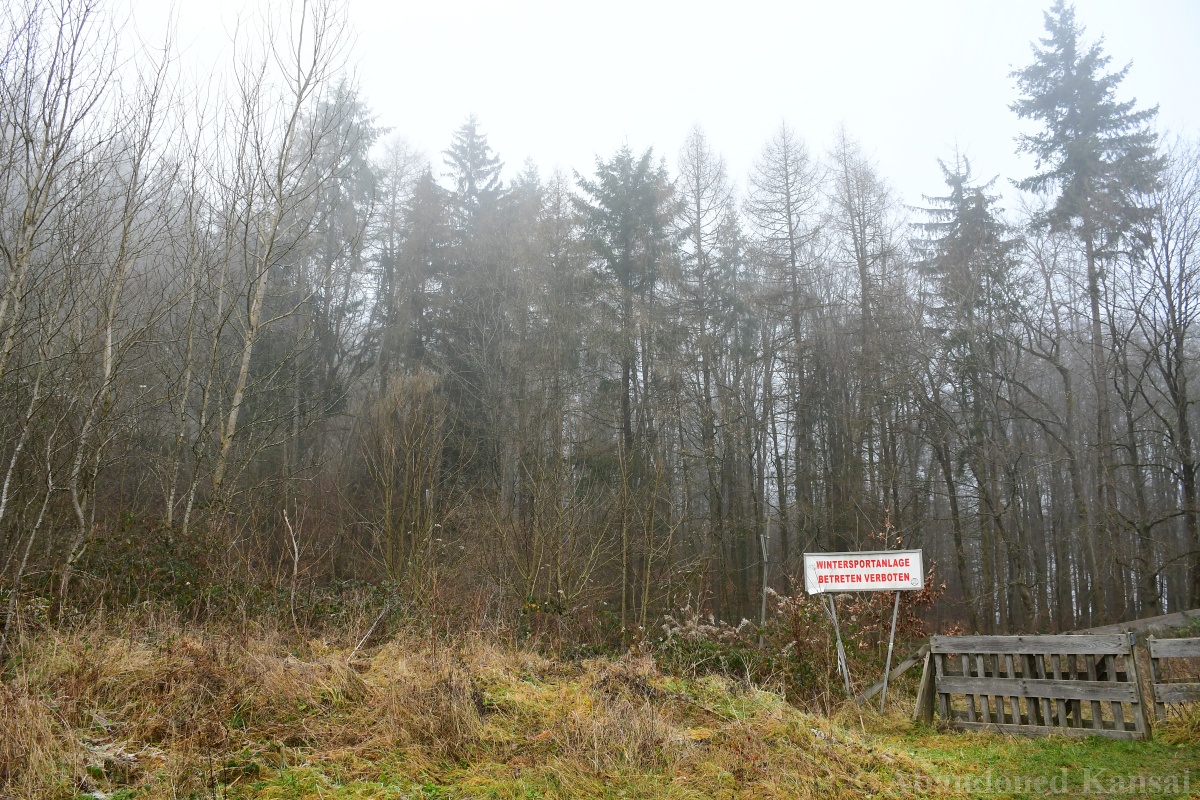
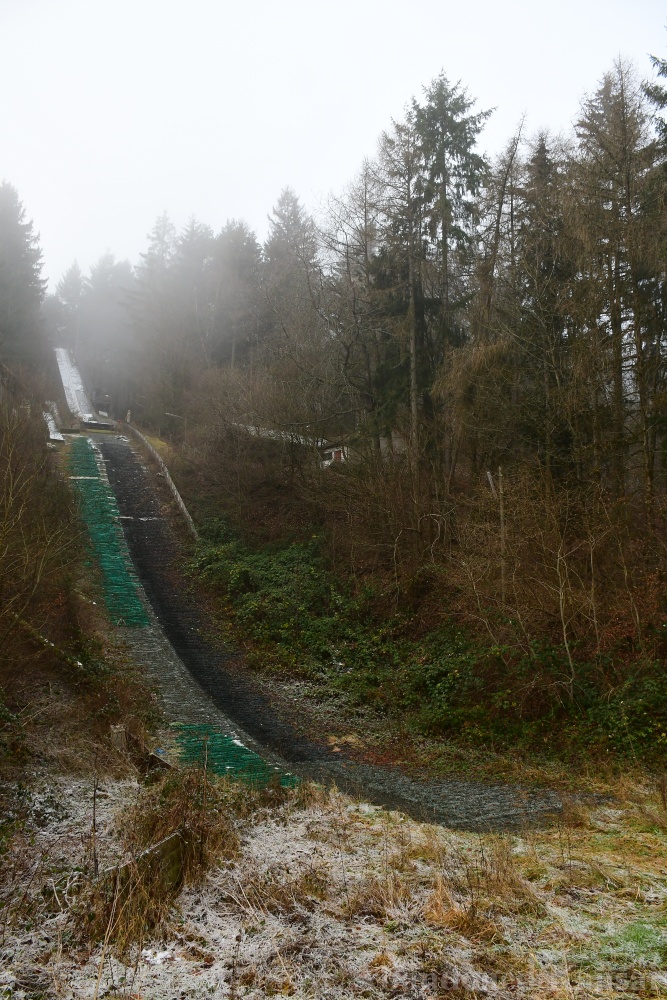
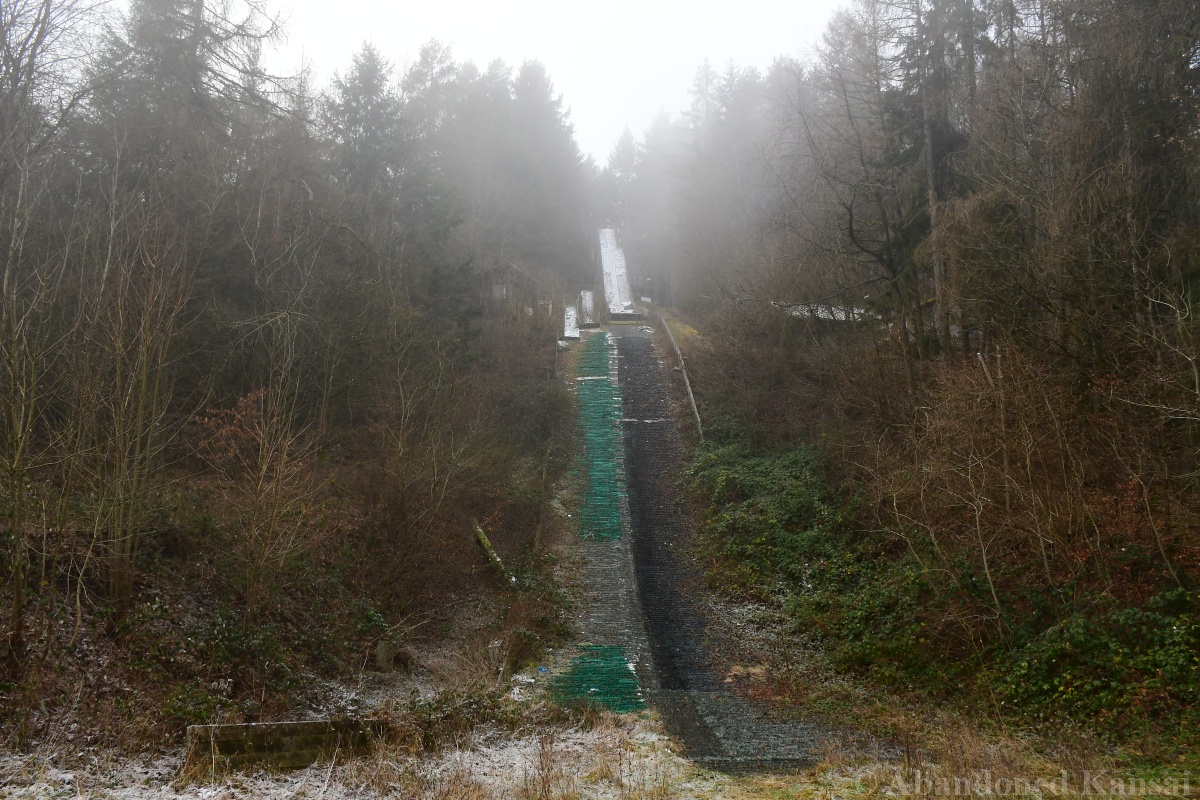
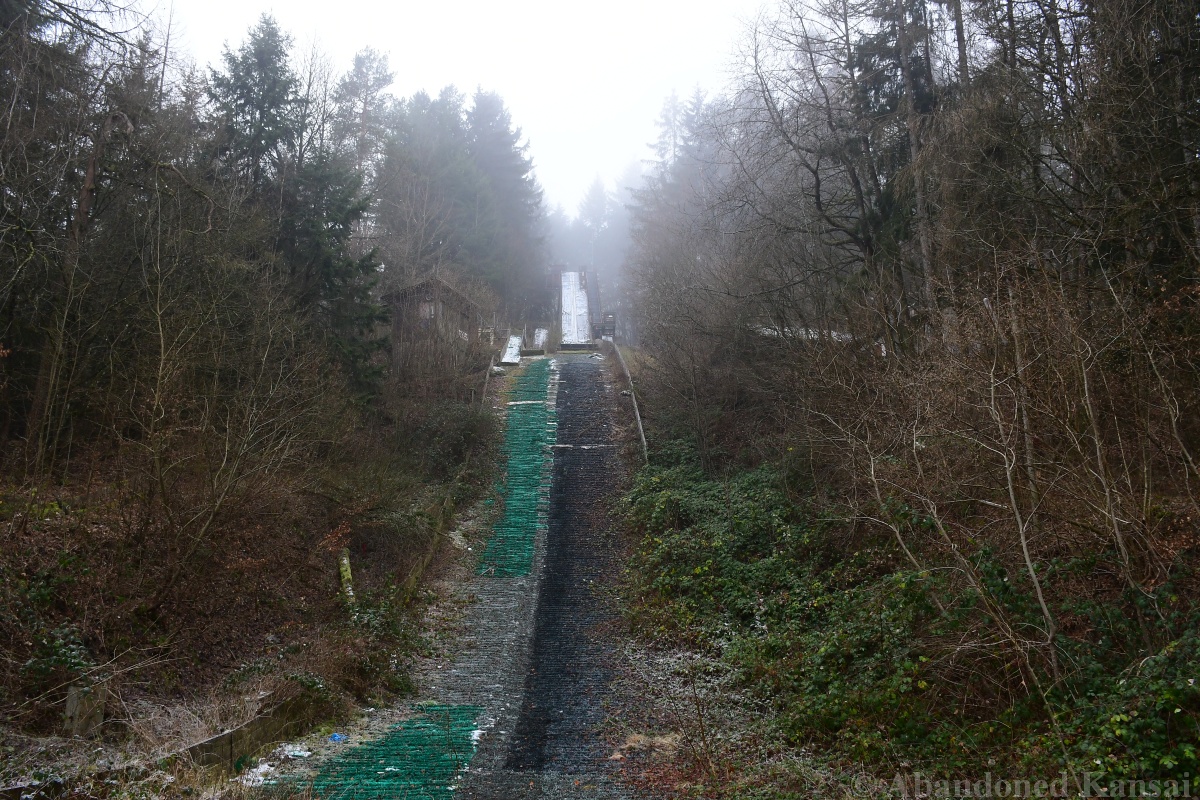
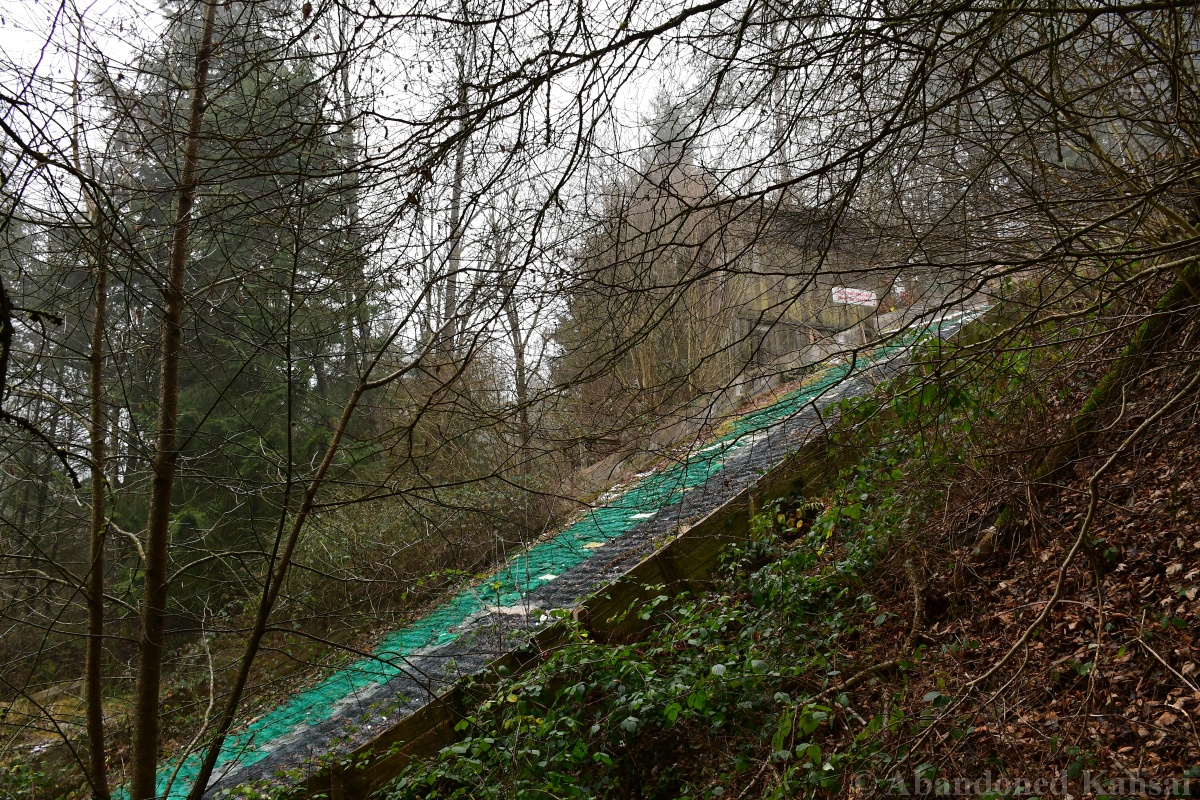
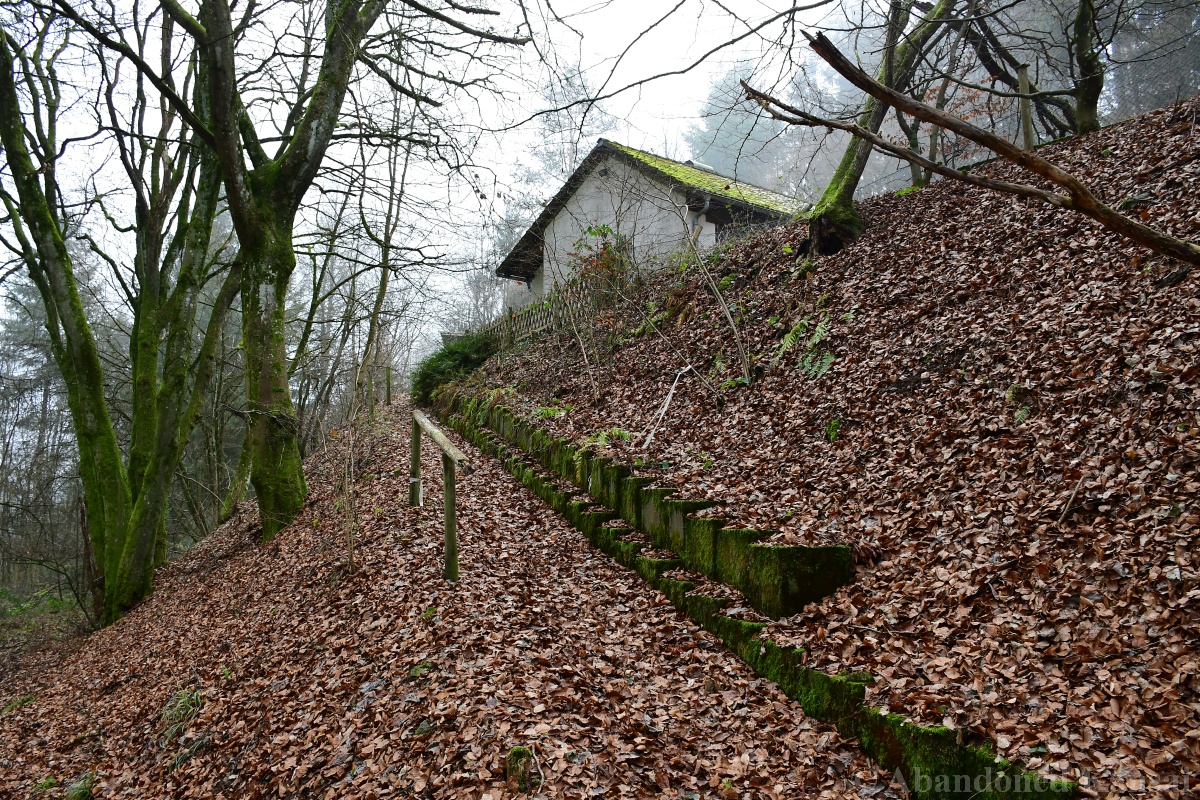
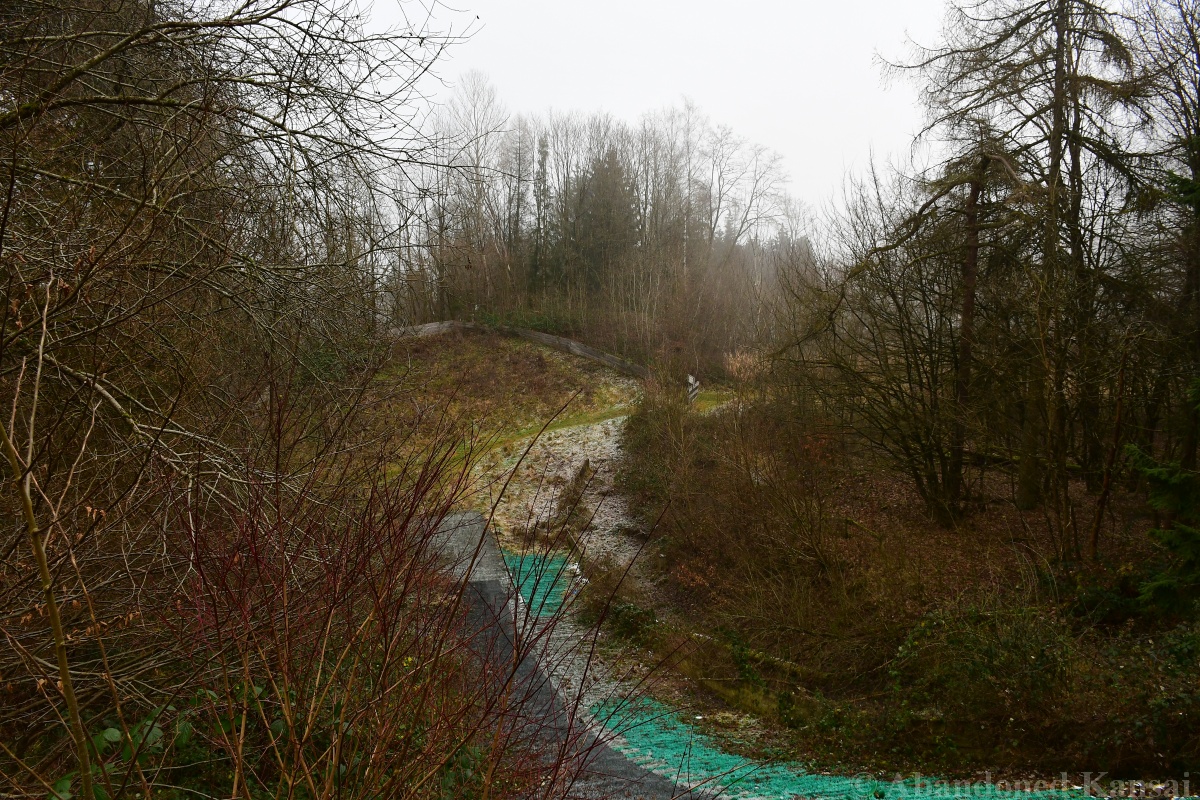
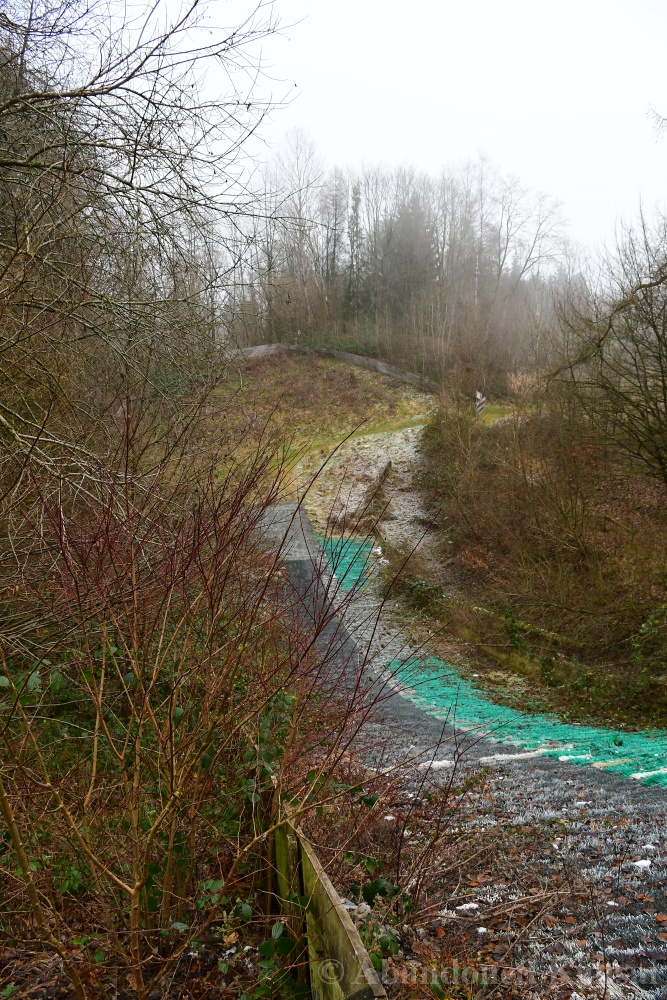
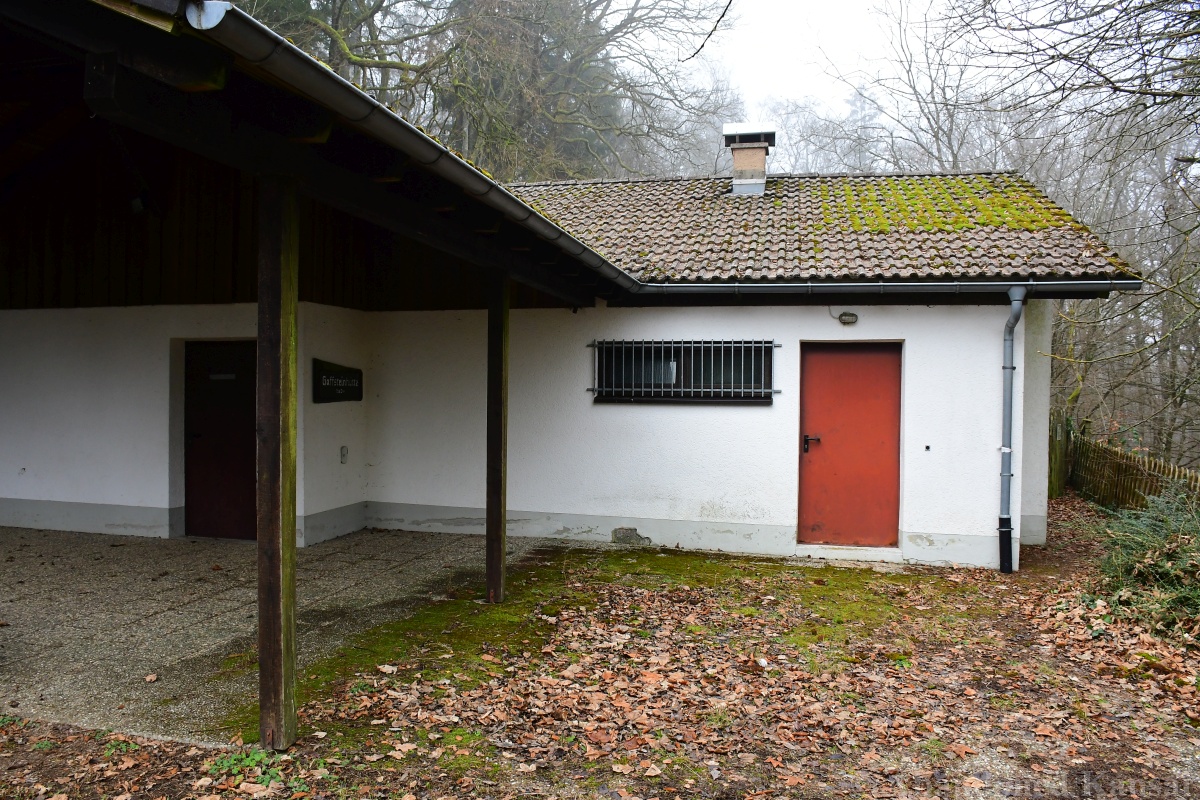
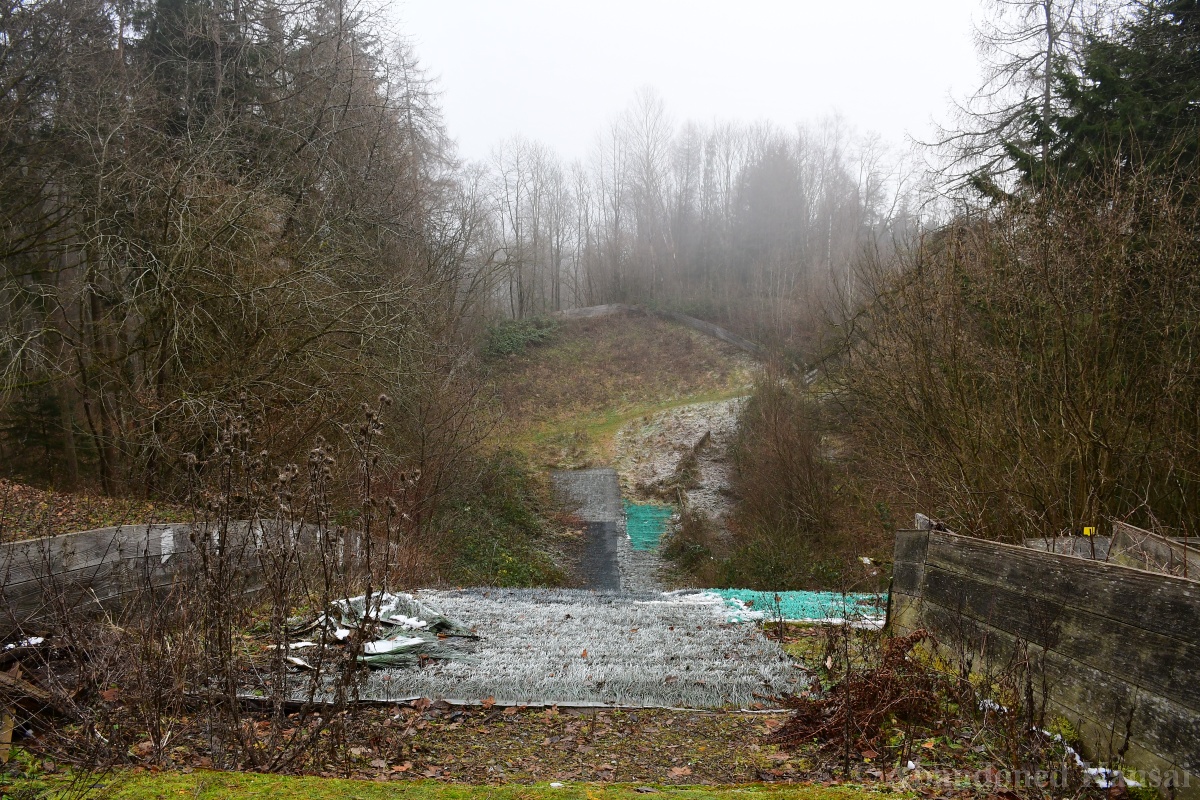
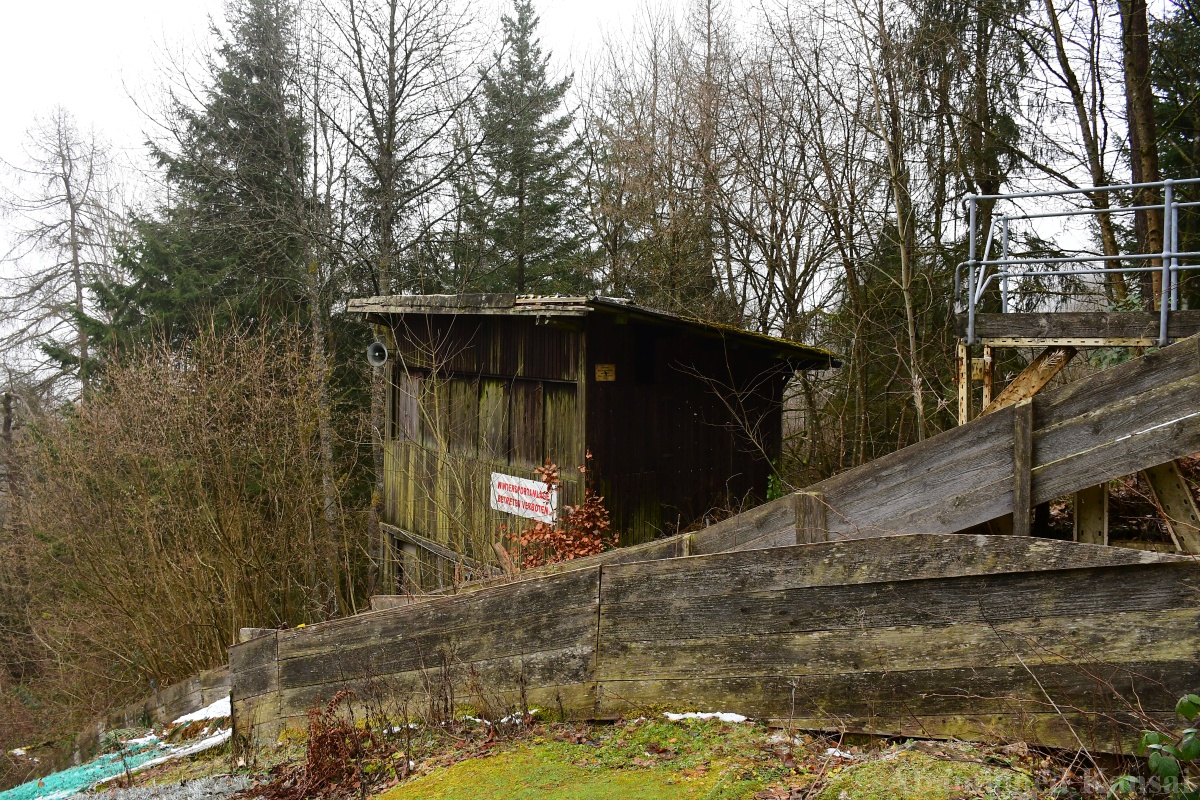
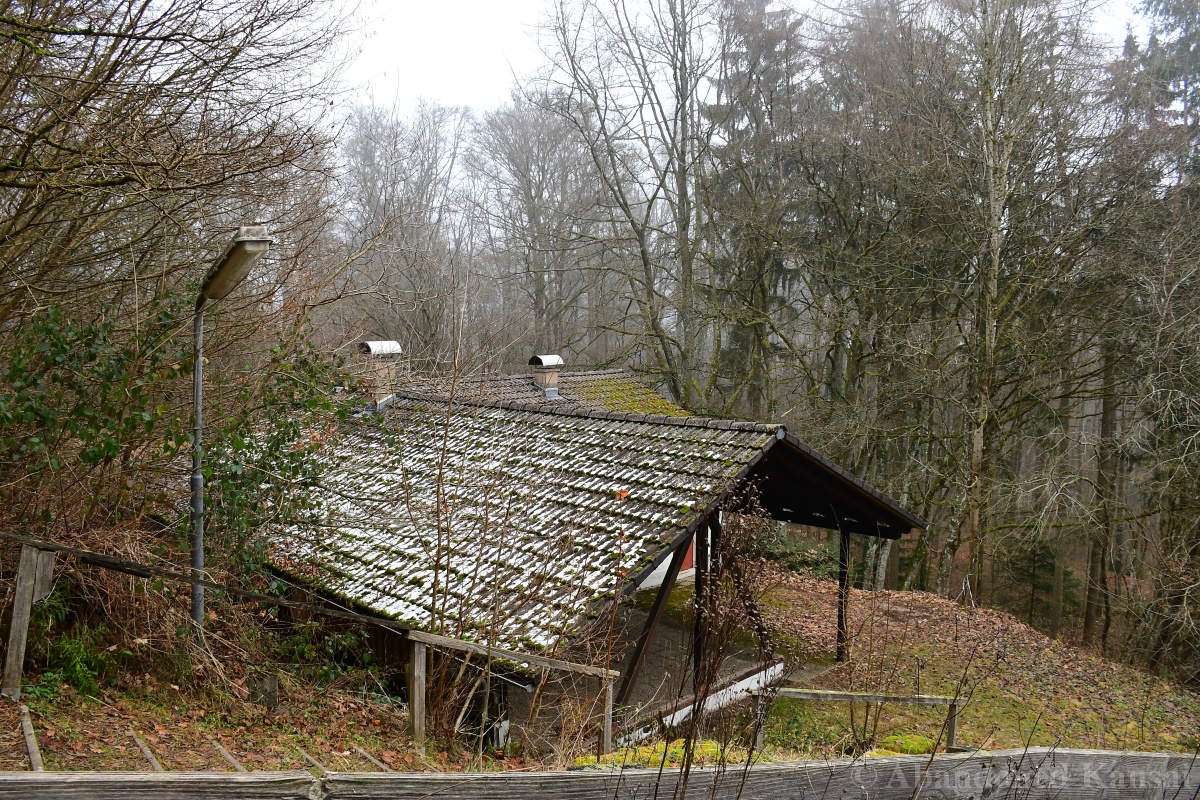
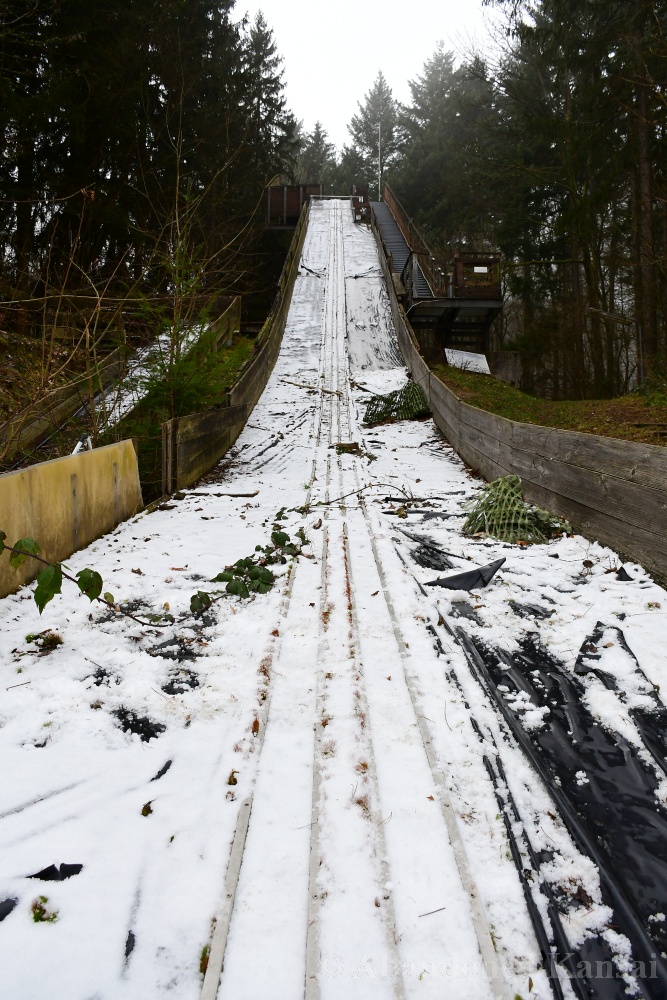
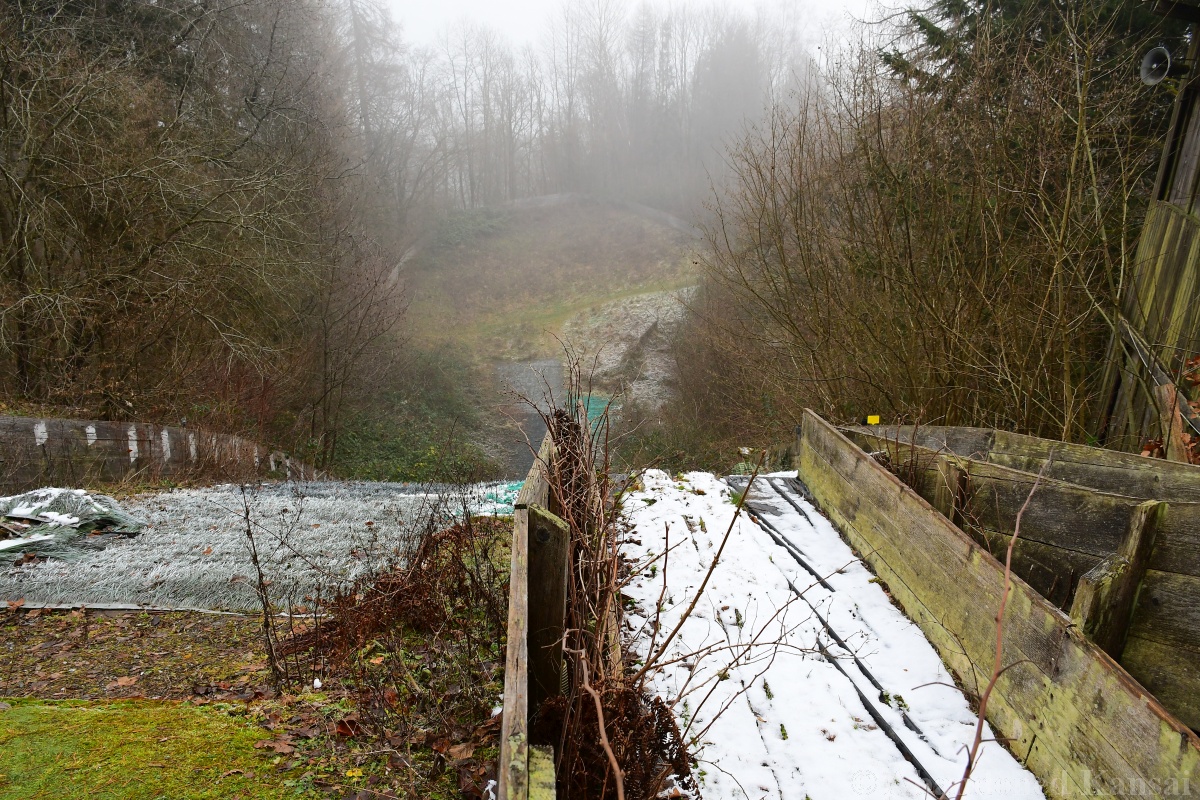
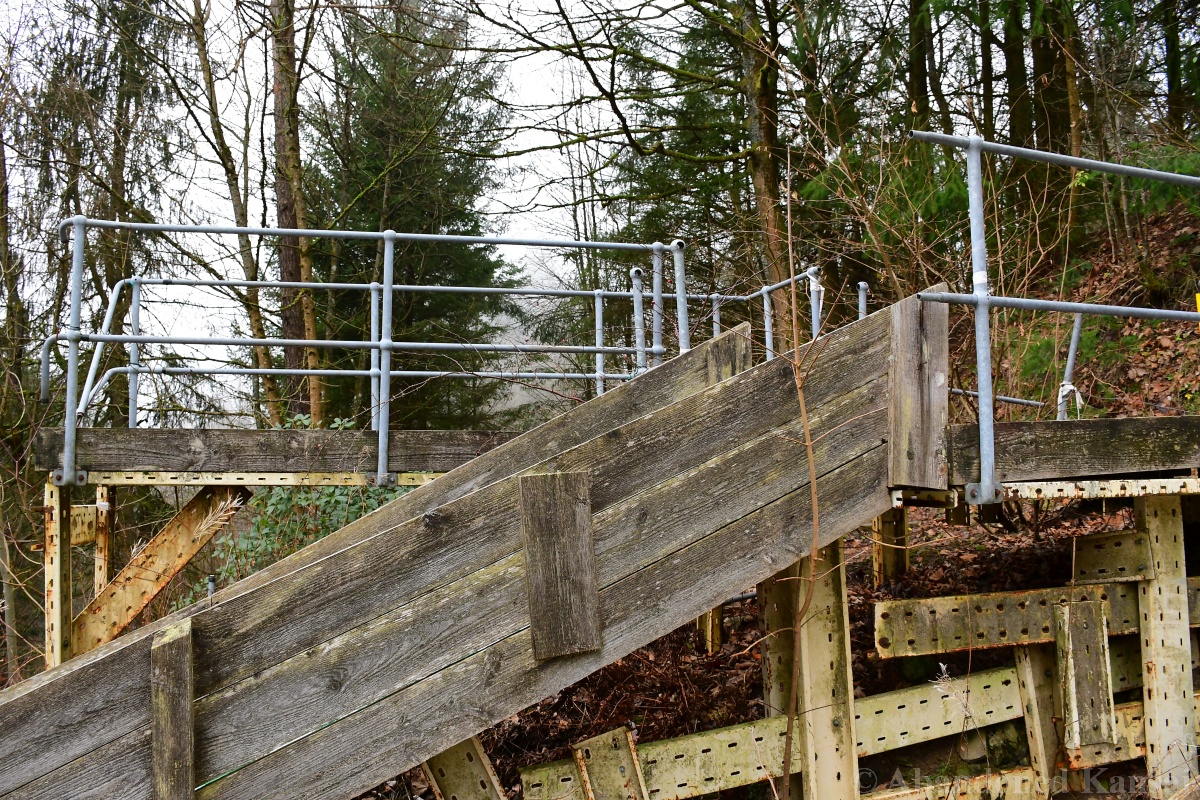
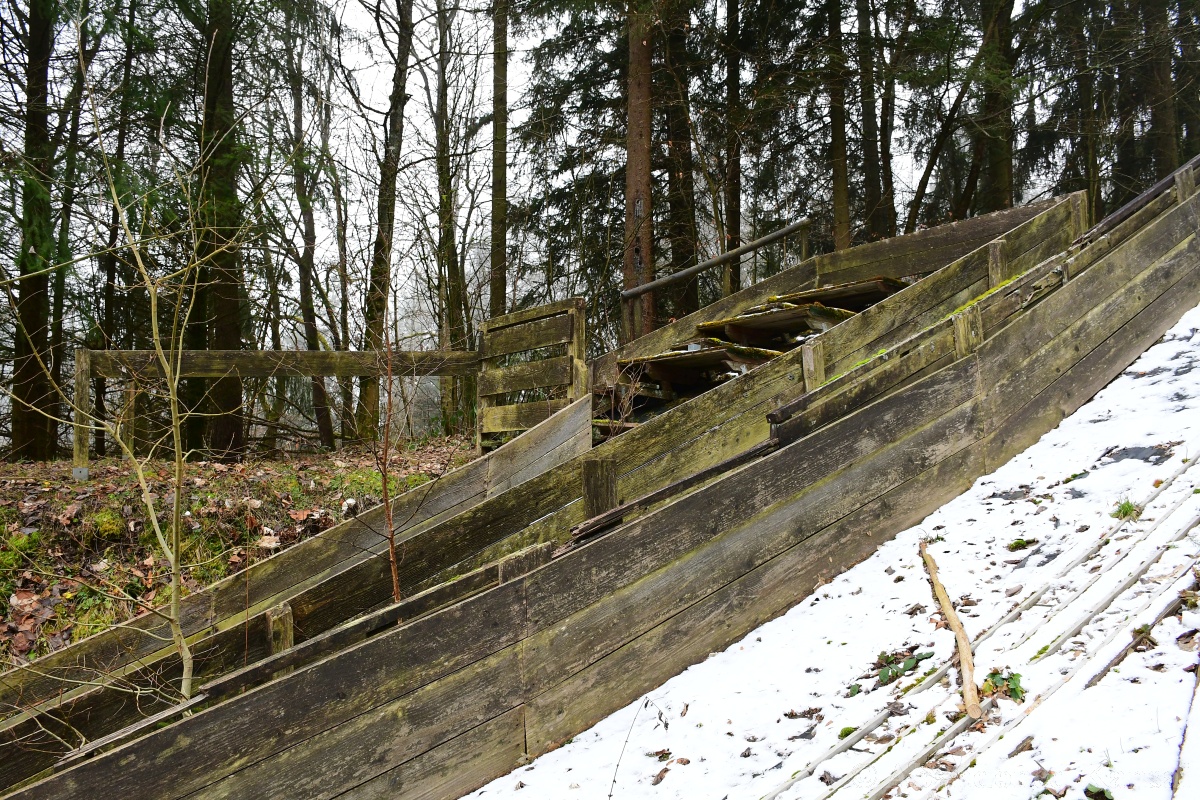
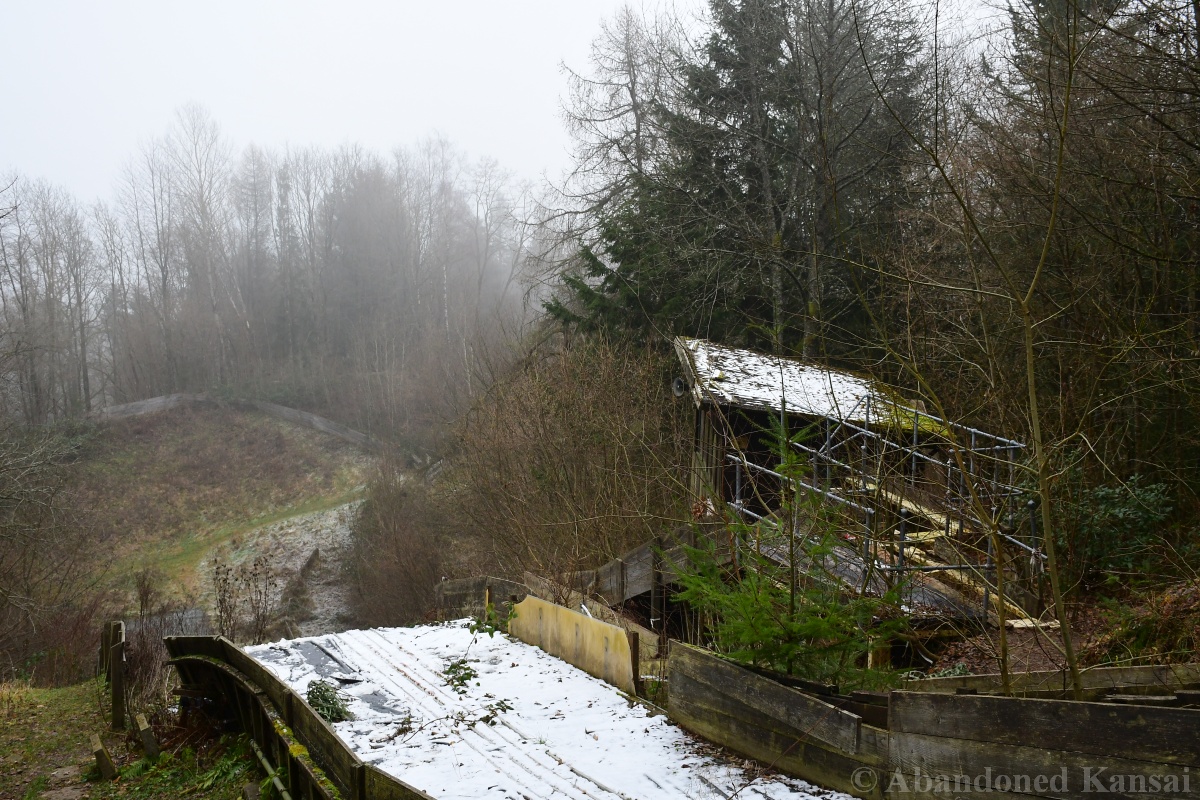
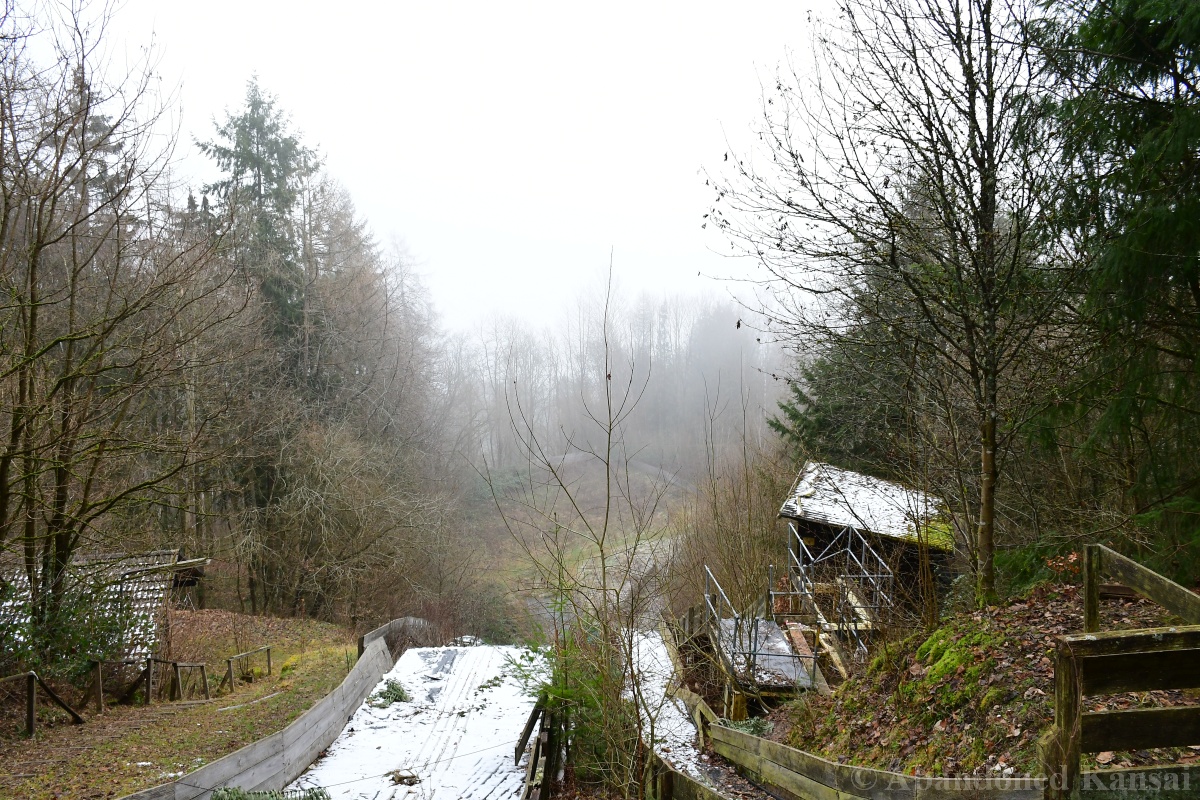
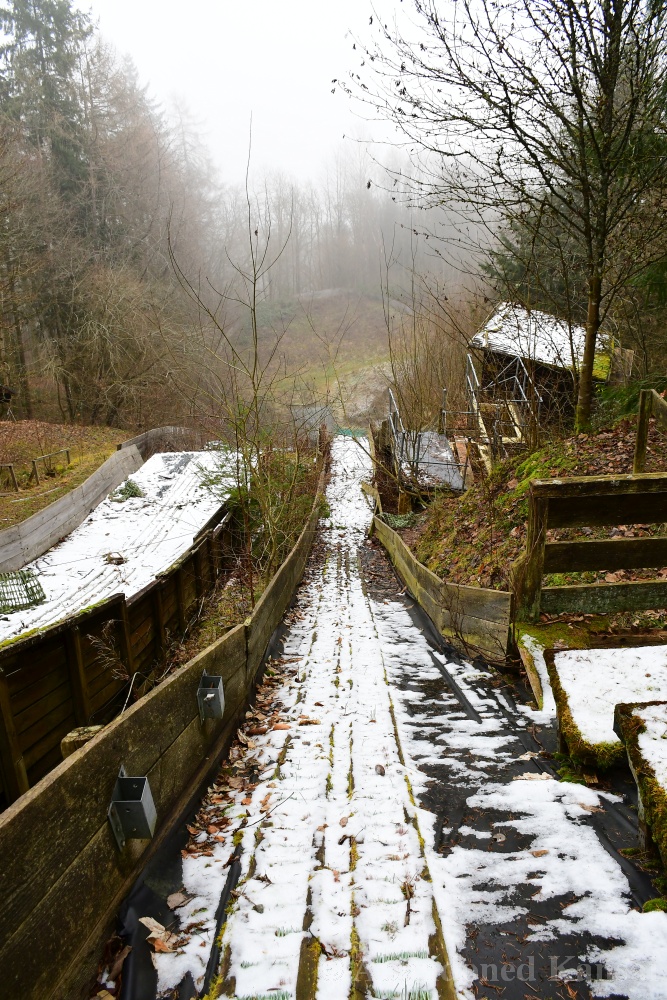
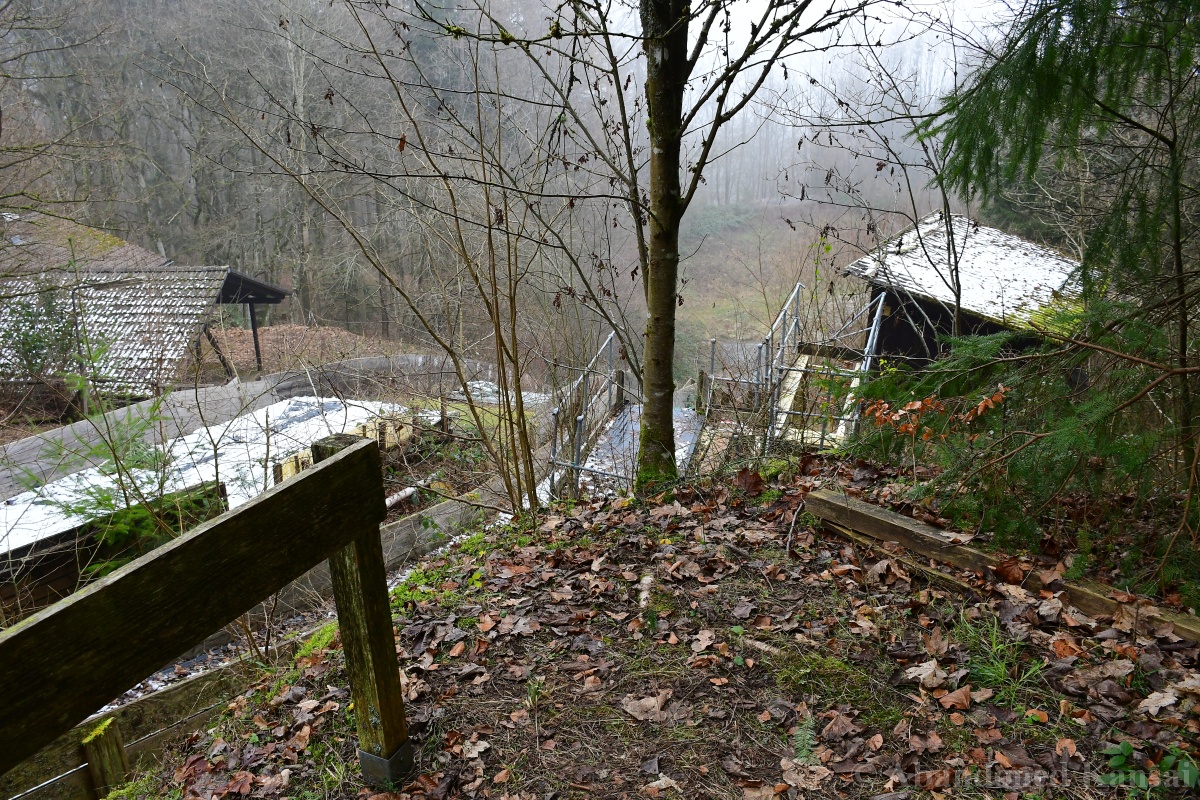
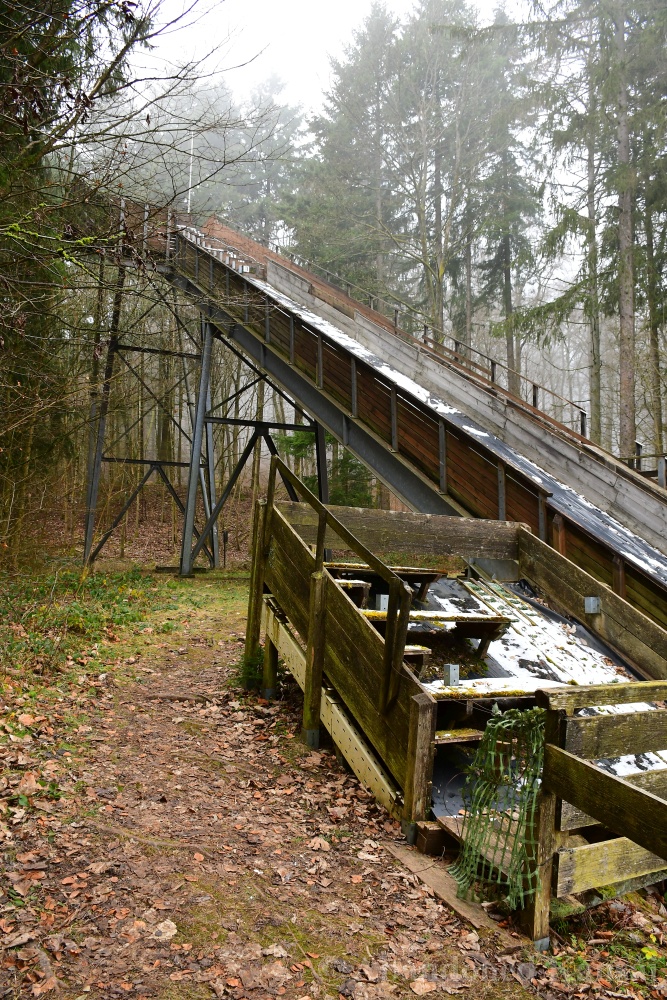
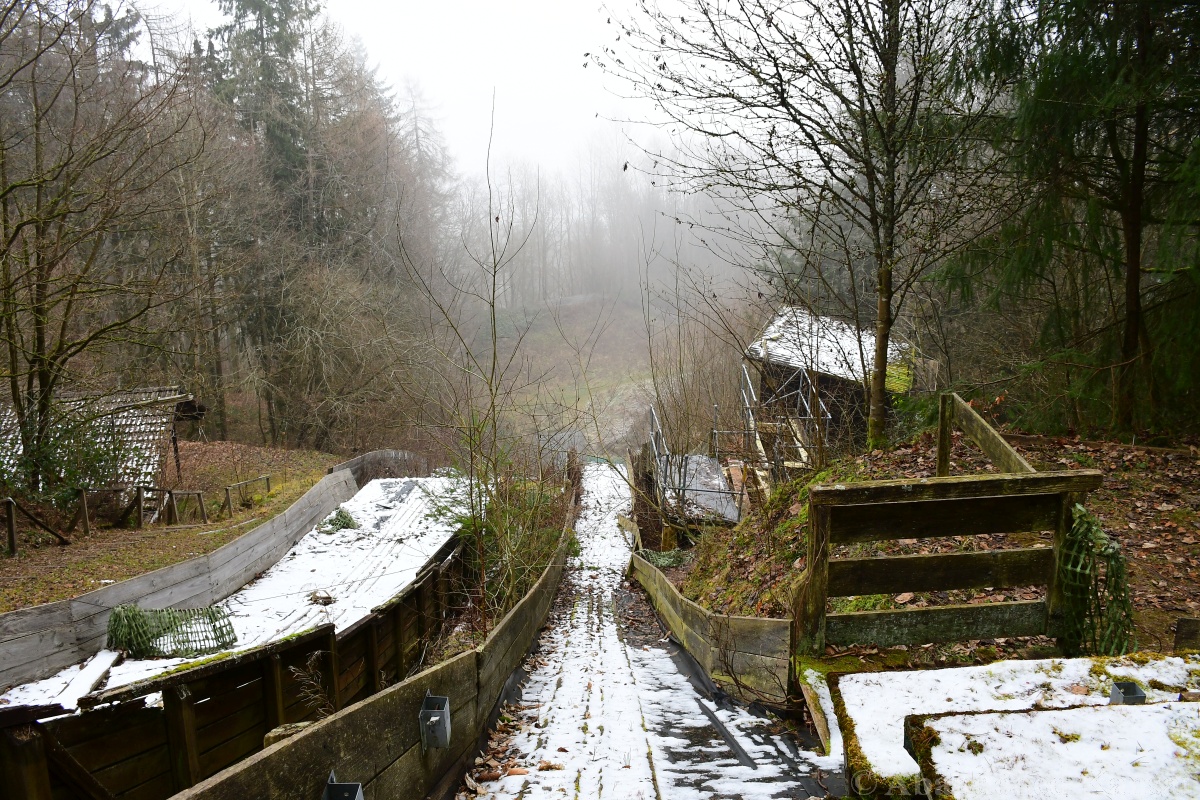
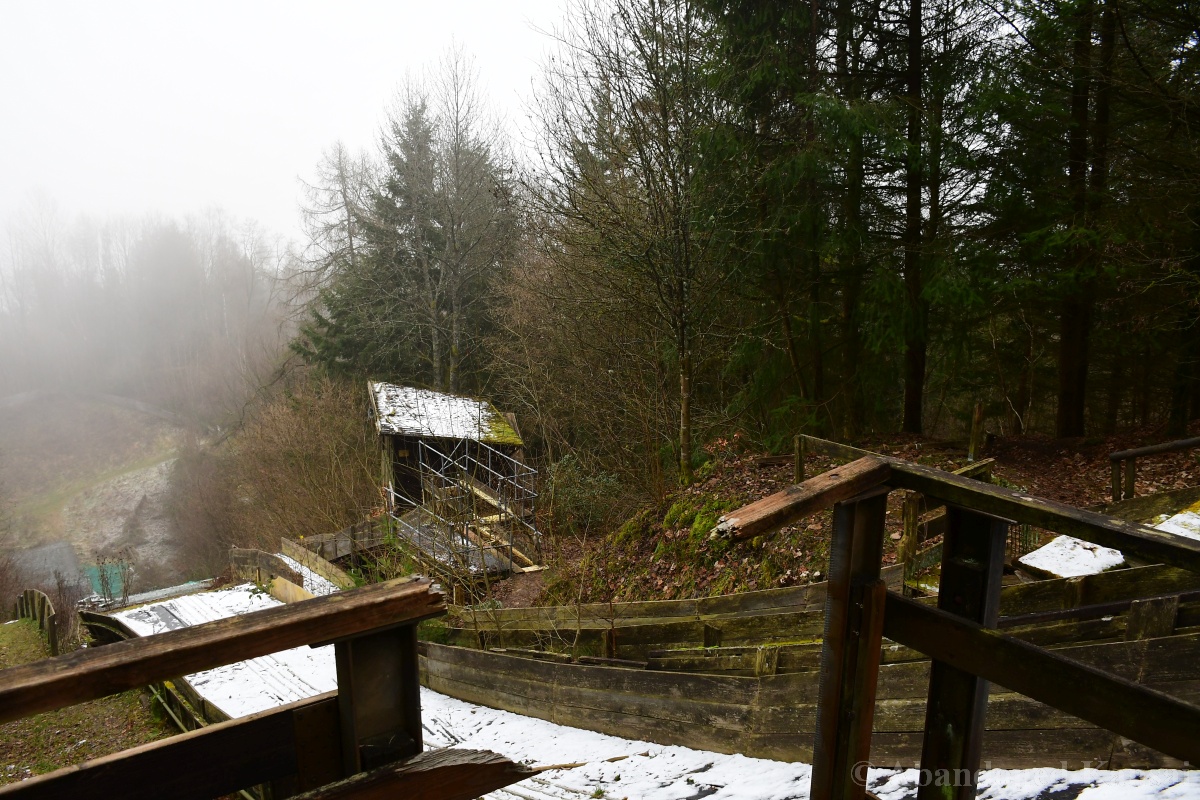
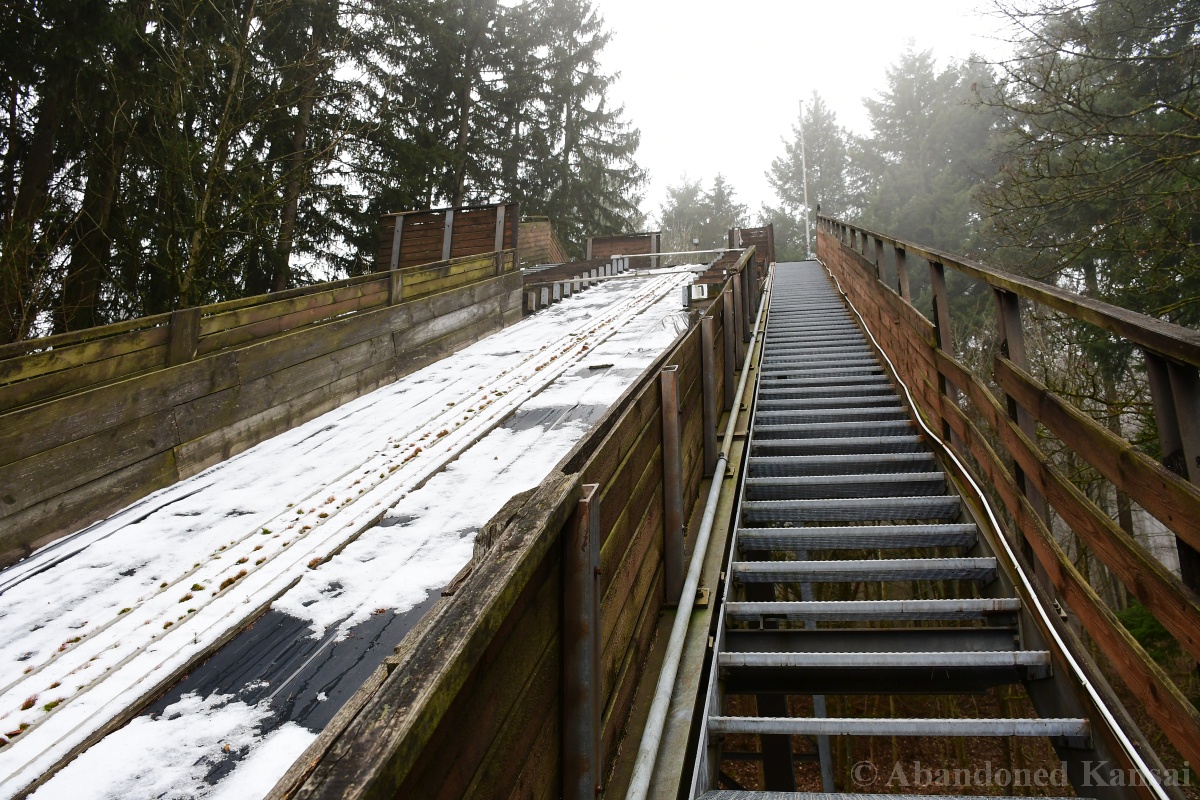
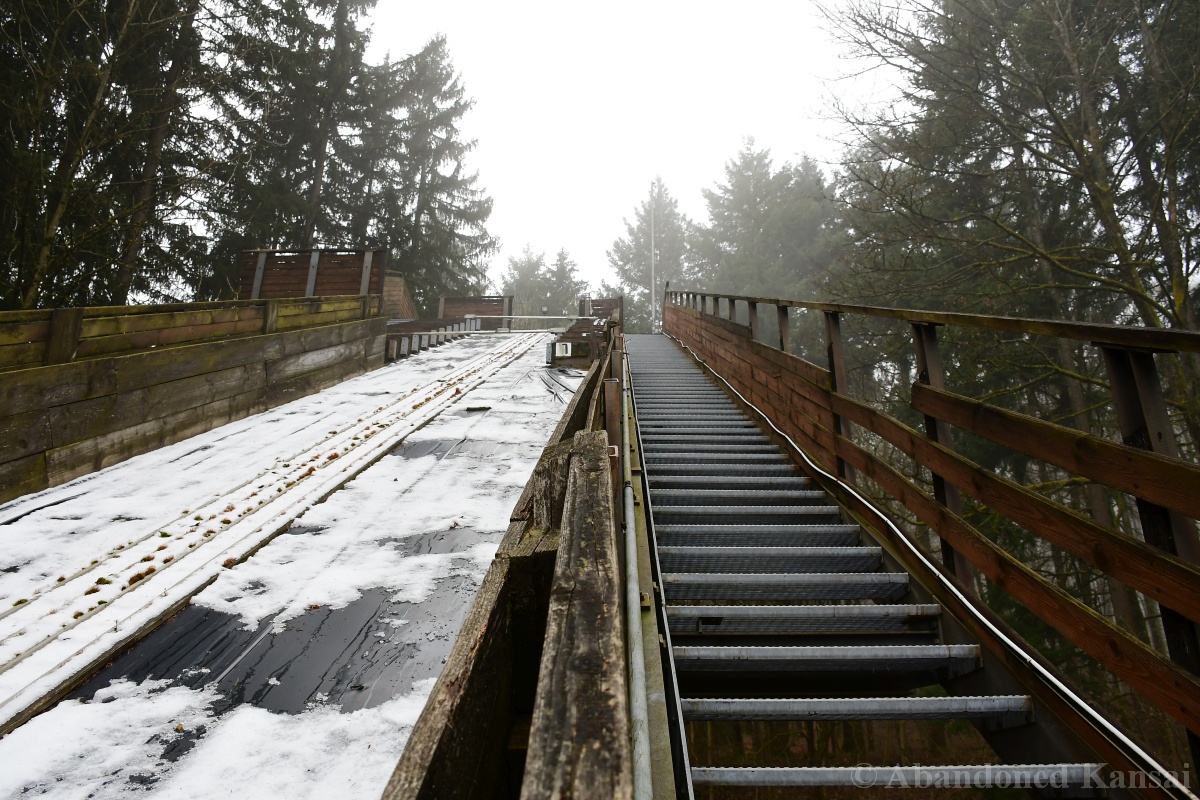
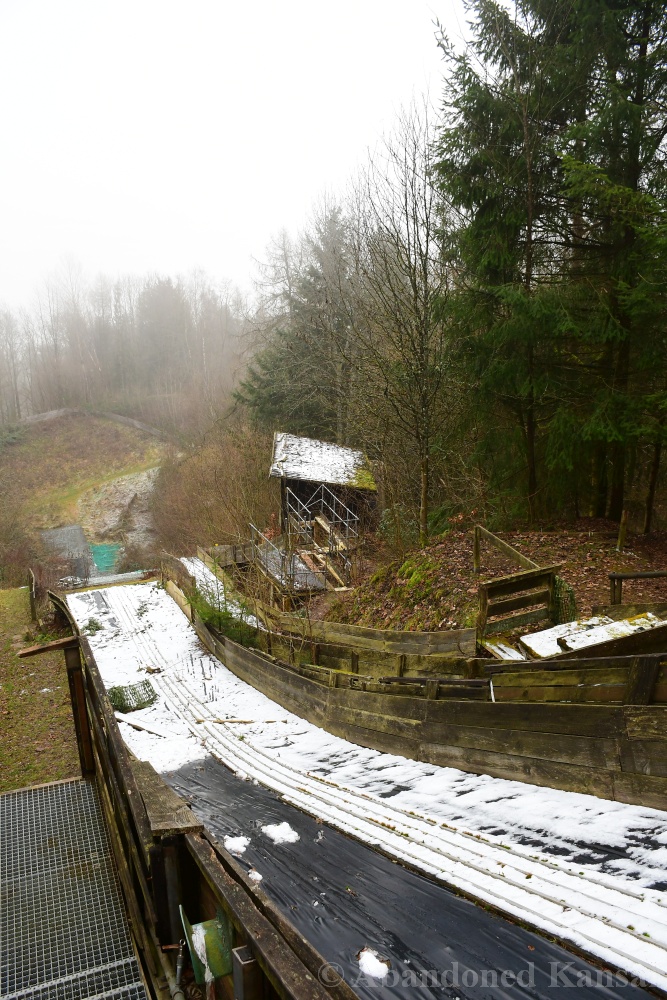
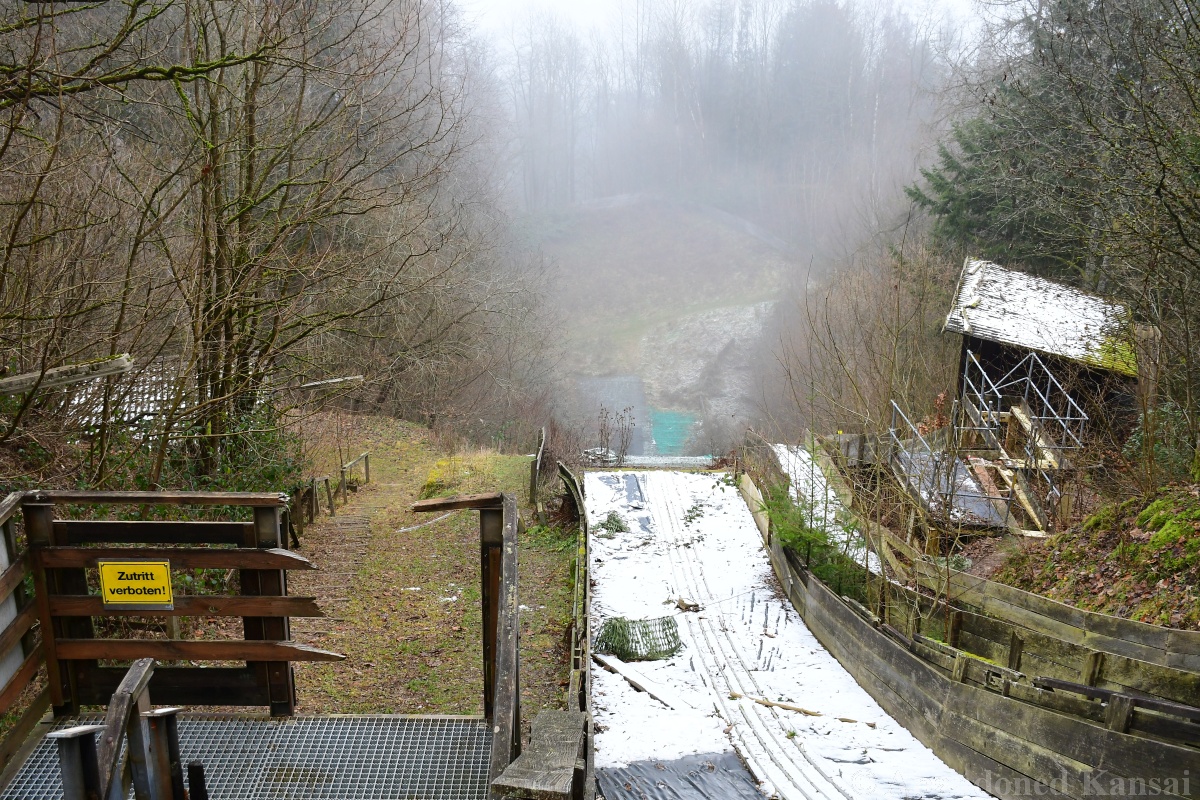
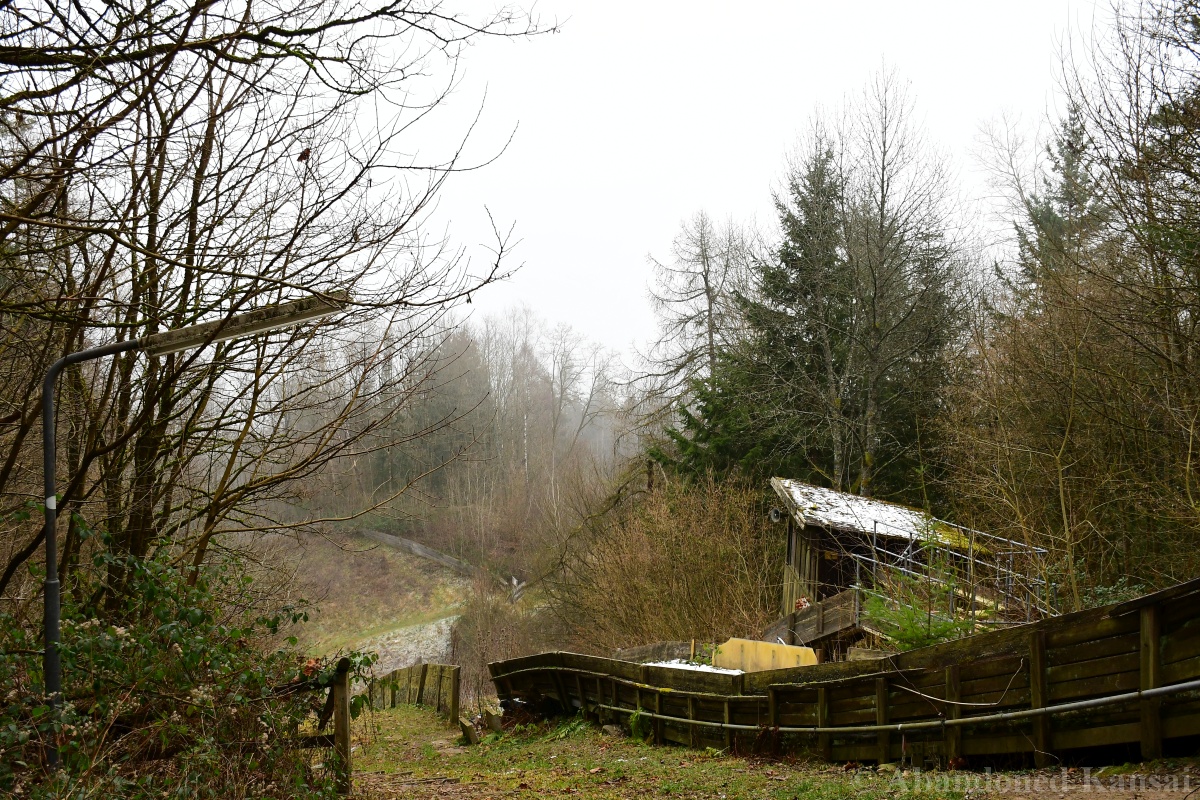
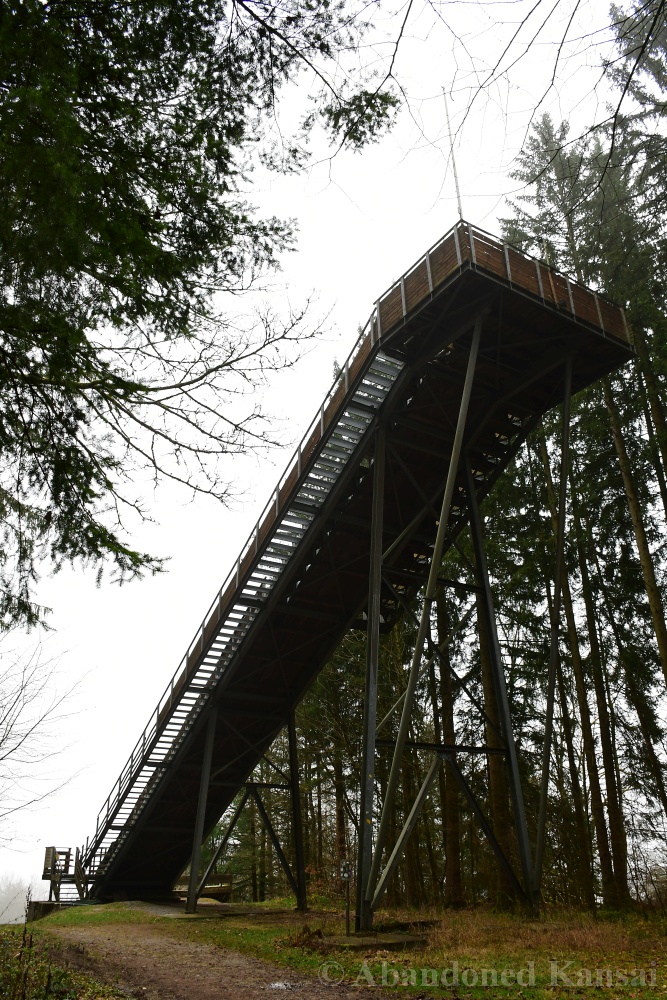
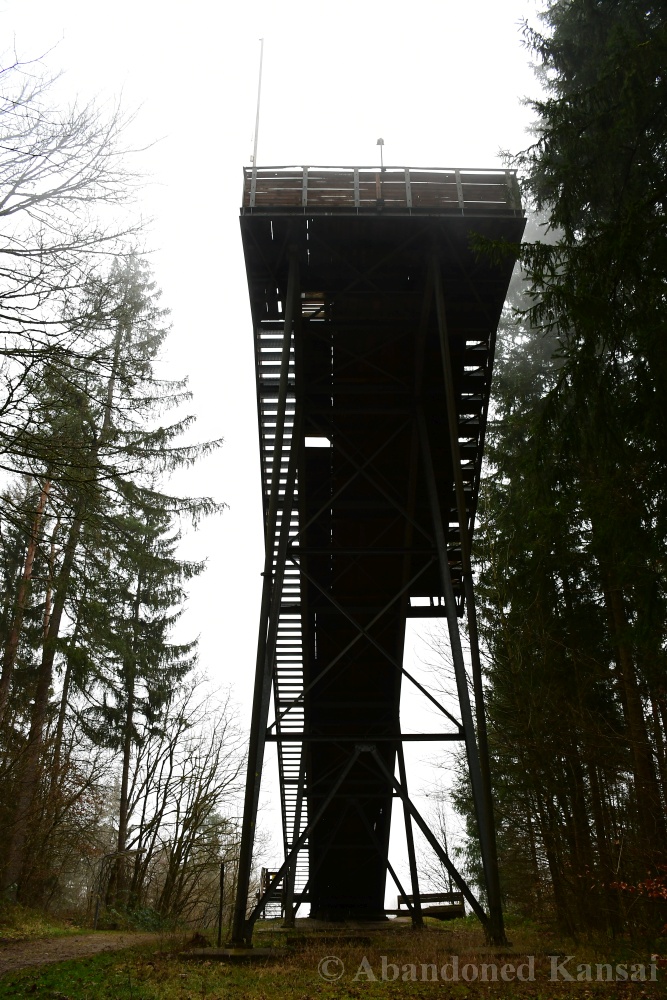
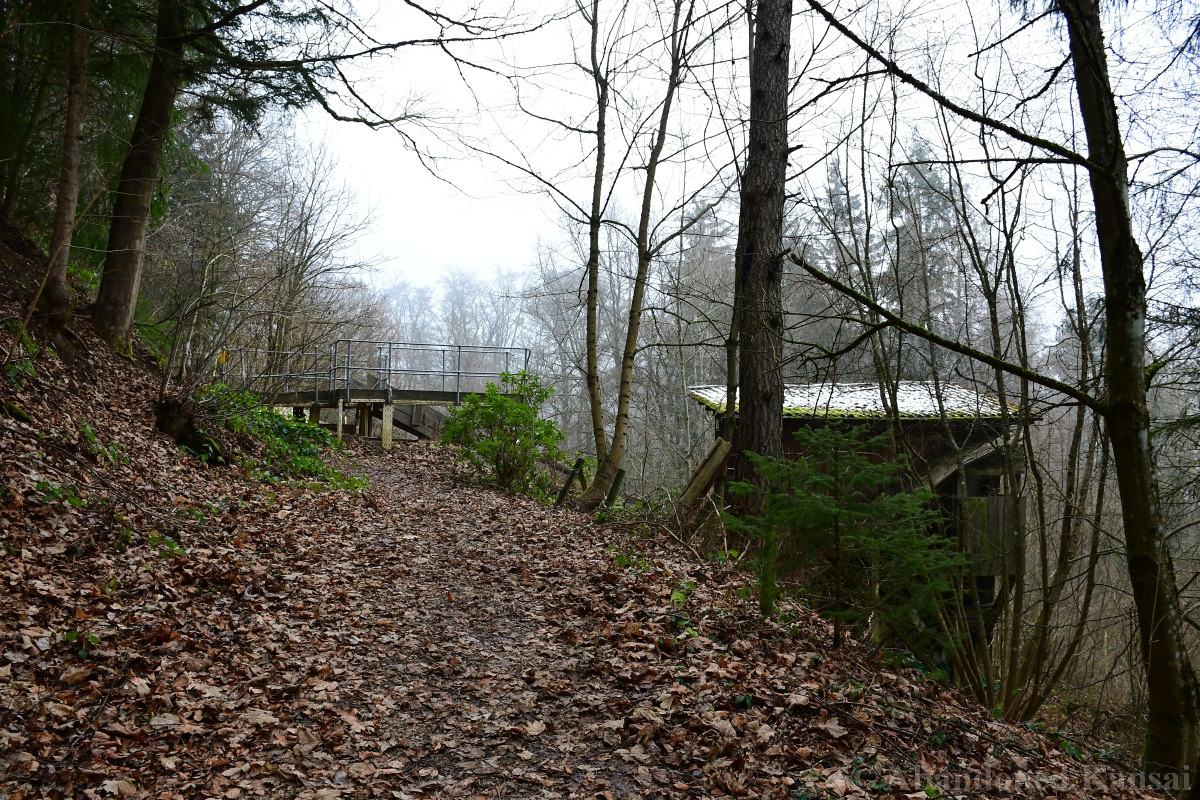
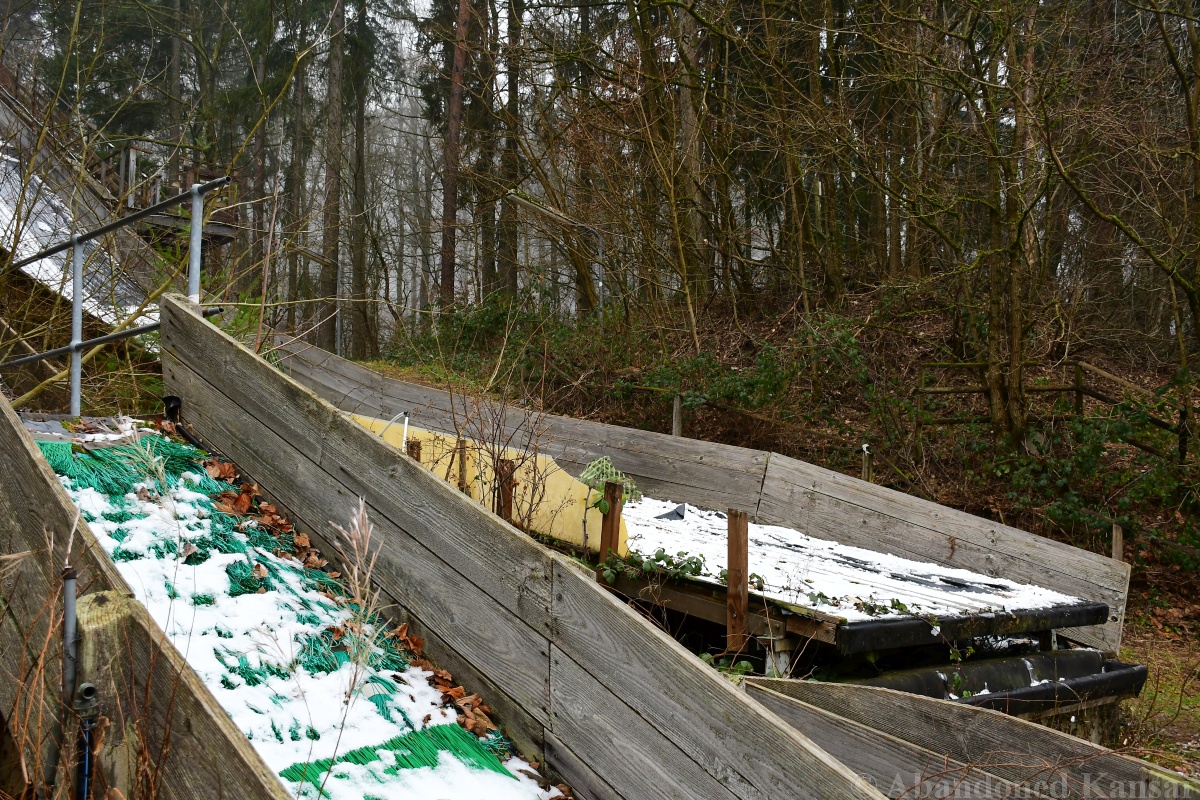
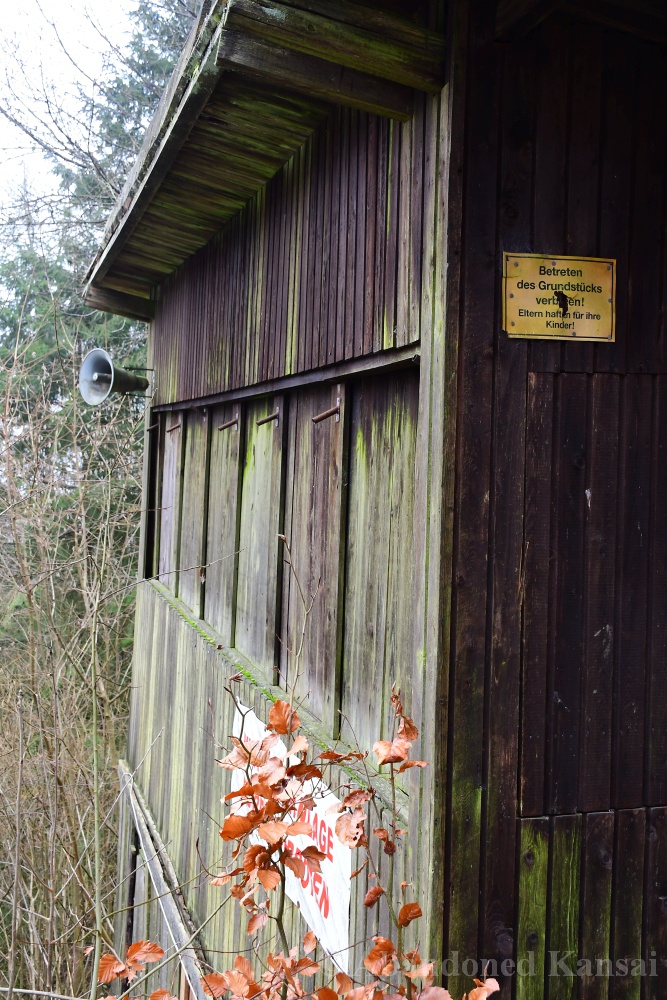
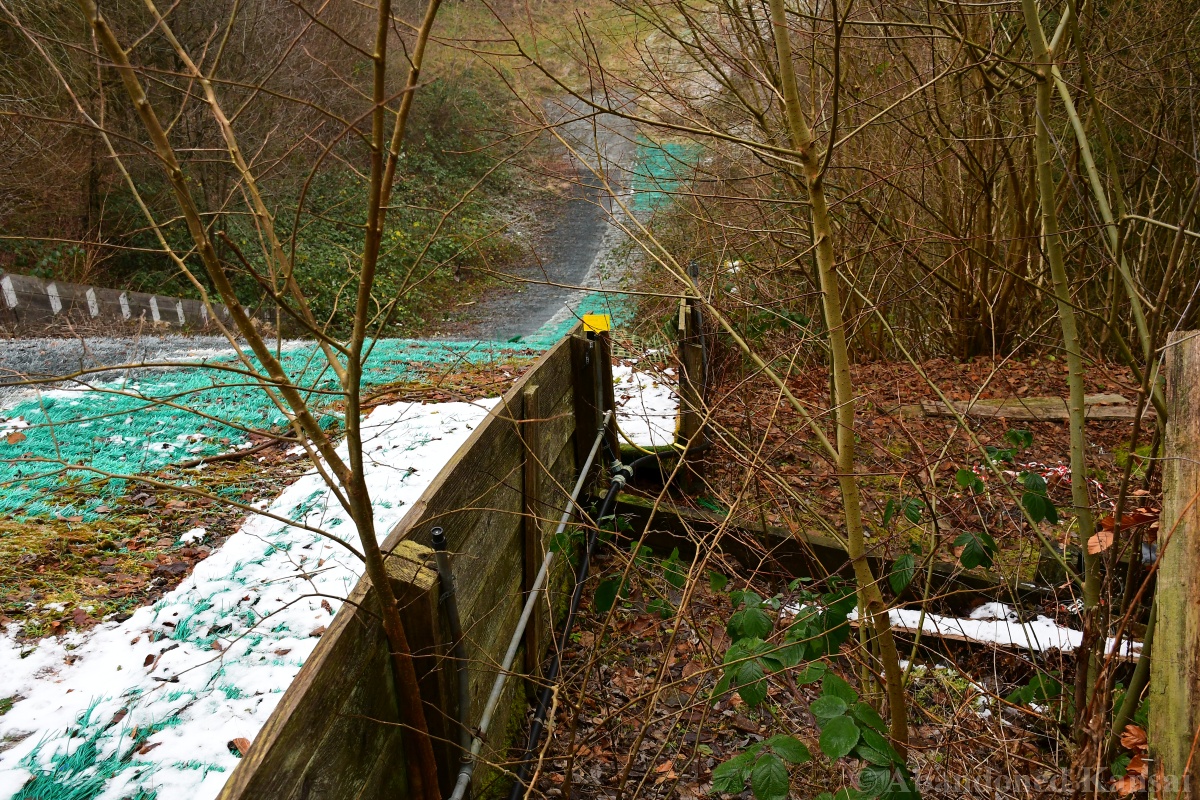
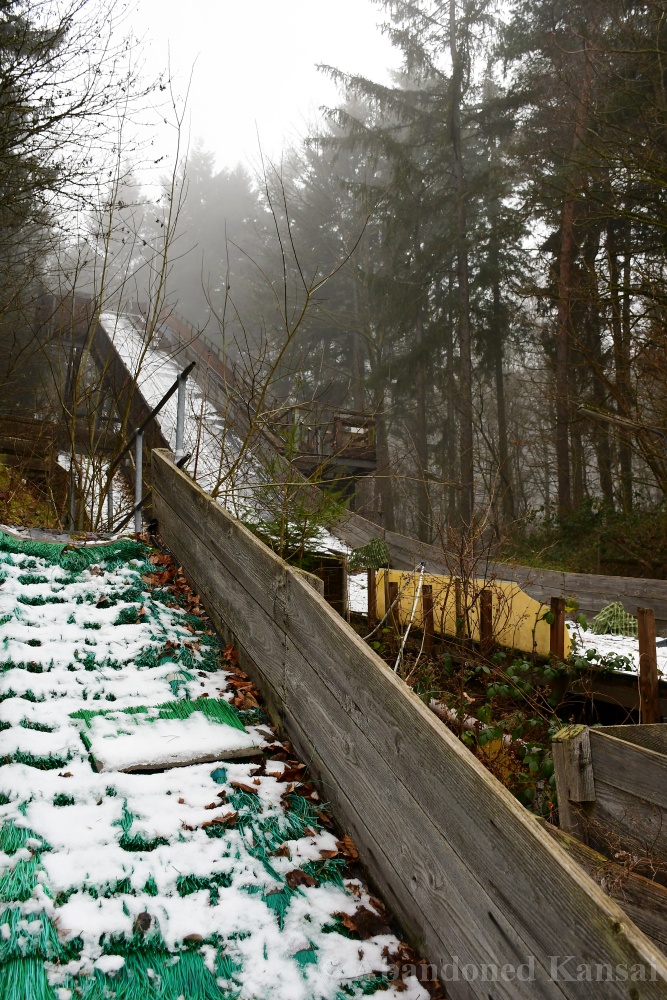
The 624m high Katzenbuckel (which translates to something like cat hump) is the highest peak of a lovely low mountain range full of history called Odenwald, roughly stretching from Darmstadt to Heidelberg (north/south) and to Wertheim in the east. In 1949 the Skizunft Katzenbuckel (skiing guild Katzenbuckel) was founded, a year later the first ski jumping hill was constructed, which allowed jump of up to 15 meters. The hill was steadily enlarged and 10 years the length of the original jumps was more than doubled. In 1976 a brand-new ski jump was built, including a 17-meter-high tower. Fueled by the German jumping success of the 90s a new plastic covered ski jumping hill with a steel tower was inaugurated in 1995 – also featuring two junior hills for young talents. It’s a bit unclear when the Schanze was finally closed – there are several reports from the 00s about activities there, but it seems like they started to fizzle out in the 2010s. If not dead already at the time, Corona definitely killed it as there are plenty of reports about the abandoned Schanze from 2020/21 on, when hiking became a popular activity during the years of social distancing. Those reports mostly were from local hikers, not urban explorers… so depending on which group you are looking at, I was either rather late or perfectly on time to the party, which I am fine with, given that I wasn’t able to go back home to Germany for several years.

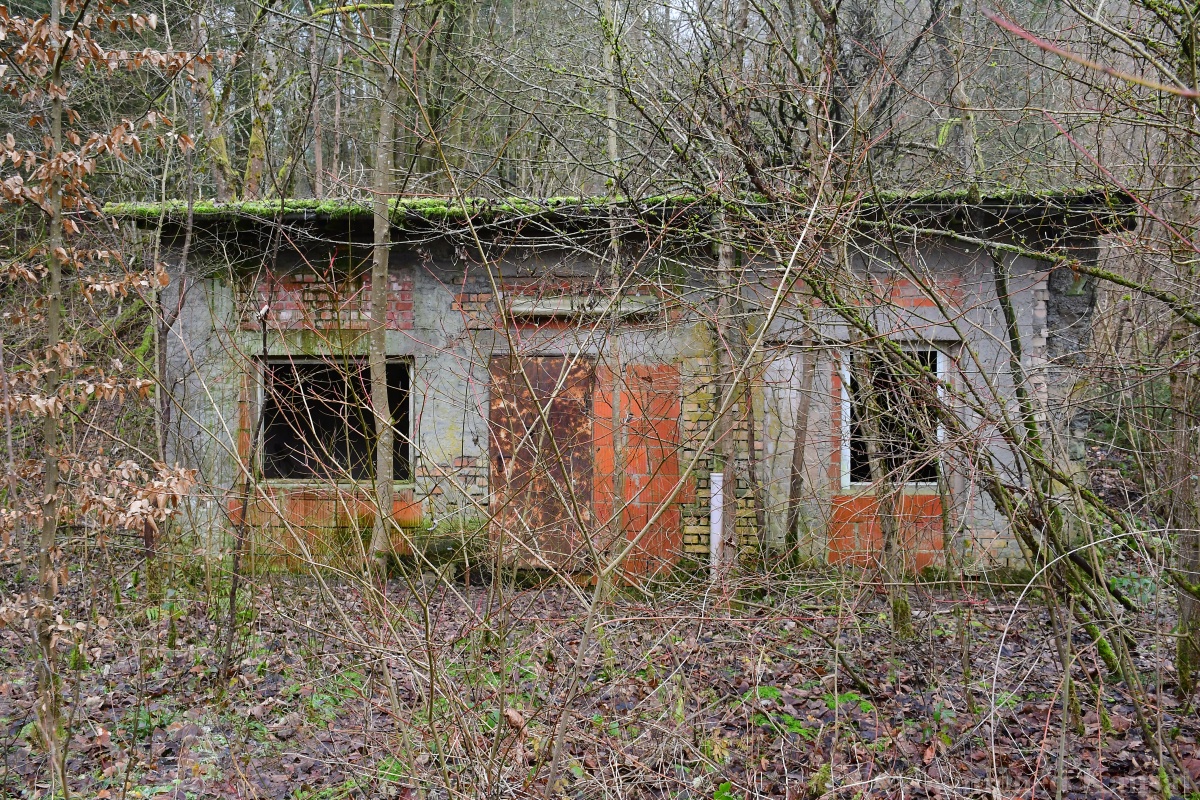
Exploring the Katzenbuckel-Sprungsschanze was super easy and became a little family event. There was a free parking lot for hikers and other nature lovers just a few hundred meters away, which brings me to why I’m rather open with information about the Schanze: It was probably the busiest place I’ve ever explored due to two hiking trails running through – one behind the tower, one through the landing area. Even on a cold and damp winter day there were several dozen people walking past or through, some also had a closer look. Outdoor explorations far away from civilization are among my favorites, so despite the weather I really enjoyed this one… especially after exploring half a dozen ski-jumping hills in Japan, for example the *Overgrown Ski-Jumping Hill* and the spectacular *Hokkaido Ski-Jumping Hill*.

(*Like Abandoned Kansai on Facebook* or *follow us on Twitter* if you don’t want to miss the latest articles and exclusive content – and subscribe to the *video channel on Youtube* to receive a message right after a new video is online…)

Read Full Post »
I’ve been urbexing for almost 15 years. During that time I’ve never written any articles about equipment, despite being very happy with three different Nikon DSLRs, two Manfrotto tripods, and a Sanyo video camera – which broke in 2019 after almost 15 years of recording countless hours at hundreds of locations as well as places like Chernobyl and North Korea. Videos I always considered a bonus anyway… and I’m still having a hard time thinking of myself as a photographer, given that I have no formal education in that field and only do it as a hobby. A really time-consuming hobby, but nevertheless just a hobby. I also don’t have a background in technology, so what’s the point of reviewing camera equipment when I just have an opinion based on learning by doing? Well, that doesn’t keep countless “influencers” and Youtubers from churning out incompetent nonsense, but I wouldn’t want to be found dead with either label on me! And like my favorite professor at university once said in regards to papers we had to hand in: “Don’t claim anything you can’t proof!”

Fortunately there is no need to be technical or scientific about this Insta360 X4 article, because unfortunately we never got that far…
Like I said, I always considered video walkthroughs of the locations I explore a bonus. I started them pretty much right away, but at first I didn’t even publish them, because I only took them for myself. And even when I published them, I didn’t edit them. No cuts, no voice overs. Just me walking around breathing heavily into the silence. That all came to a sudden halt when my Sanyo stopped working after exploring the abandoned *Trump Hotel*, also wiping out the recordings of the whole day. At that point I was tired of doing the videos anyway – and my co-explorers were increasingly annoyed, because I added 10 to 30 minutes at the end of every exploration for the walkthrough. So I stopped doing them.
For the past 18 months I’ve been exploring solo again (don’t ask, it’s complicated and often quite frustrating, to be honest), but a few weeks ago a colleague of mine showed me an older model Insta360 video camera that a visiting cousin from the States forgot at his place in Japan. I was fascinated by the easy to use 360 photos and videos, so I did some research and decided to get one. I’ve read reviews, I’ve read product pages – I did my best to make an informed decision, because at first I considered buying the X2 or X3 as older models often are cheaper with only slightly fewer / worse features. The X2 was out of the race when I read in a review that it required a smartphone to be activated – something I didn’t read anywhere about the X3 and X4. I guess because it’s an idea that is so stupid that it probably was a one-time mistake by Insta360, facing so much backlash that they removed the requirement from following models. The price difference between the X3 and X4 wasn’t very big and since the latter was only four weeks old at the time, the price on Amazon and in brick and mortar stores was the same, so I decided to get it at my local Yodobashi Camera (street block sized electronics stores with hundreds of employees each, in case you are not familiar with the chain), where I’ve been a customer for almost 18 years – ever since I moved to Japan.
BIG MISTAKE!

Yodobashi Camera was extremely stingy, giving only 1% points on the video camera, despite a promotional campaign of giving 13% points for purchases over amount X – except for (small print)… But when you shell out 80k Yen on a new video camera you are looking forward to use, store points are the last thing you worry about anyway. Fortunately I still had some of those points, which I used to get a seriously overpriced MicroSD card, because without it the video camera would be useless and I wanted to try it out on the weekend before an upcoming urbex trip. 83500 Yen poorer, but with a big smile on my face I left Yodobashi Camera on a Friday evening after an otherwise pretty horrible week.

Saturday was supposed to be a great day, though it started with a rude awakening / realization…
After sleeping in and having a delicious breakfast, I enjoyed a nice unboxing. The first slight disappointment was when I realized that the included battery was dead. Well, not dead dead, but completely empty. Whatever, an hour or two wouldn’t make a difference. It would not dent my great mood for sure. That came a few hours later when the battery was fully charged. I booted the small brick for the first time, its screen came to life, asking me to choose a language – and then the screen showed what the camera was seeing… for about a second or so. Then some text popped up and my heart sank. You gotta be kidding me! What I was looking at was a screen telling me to download an app by Insta360 to a smartphone, iOS or Android, to unlock the video camera. What. The. Heck? I literally felt it in my fingers how my blood-pressure exploded, because unlike pretty much every person on the planet above the age of 6 years I don’t own a smartphone. Never have. In the late 90s I had a black and white Nokia for work (yes, I’m not the youngest anymore, though I started working full-time in my early 20s). When I moved to Japan I had a flip phone or two, but for the past 15 years or so I didn’t have any mobile phone at all, smart or not, because I don’t like them as they turn way too many people into dumb zombies. So here I had a brand-new, quite expensive video camera… that forced me to make it usable by using another device with cameras? Who comes up with stupid ideas like that?!
Certainly not Nikon! Their D7500 DSLR I bought just weeks prior worked with a partly charged battery and regular SD cards straight out of the box 5 minutes after purchase – without any charging or unlocking BS!
So I started to do some research… and didn’t find much. Like I said, I couldn’t care less about smartphones, apps and all that stuff, so I tried to find a solution to unlock the darn X4 via PC or MicroSD card. Of course I couldn’t find anything about that either, so I contacted Insta360 directly – who apparently didn’t read my message and instead sent me a standard reply. So I got back to them, apologized for not describing my problem properly (I’ve been in Japan too long…), and this time got an answer that at least implied that they understood the situation I was in – without being able to help, because though it seems to be nowhere stated on the box, the promo material or even on the X4 website (at least back in mid / late May, maybe they changed it by now)… you really need a smartphone and the Insta360 app to use a newly bought X4 video camera, that seems to work perfectly fine, but is made not usable on purpose by the manufacturer. Which absolutely blows my mind!
How is that even legal?
How can a company force you to use a completely unrelated piece of expensive technology that actually partly does the job of the product you just bought, to make your purchase usable? Without mentioning that essential detail with big warnings before purchase! And in addition, forces you to use an app, which does who knows what in the background without one knowing?
What’s next? You need an electric bike with WiFi to unlock your newly bought car? And if you don’t… sucks to be you, it’s completely useless!

Yodobashi Camera – (The Lack Of) Customer Service In Japan!
After some back and forth it was Monday and I came to the conclusion that I won’t be able to use the Insta360 X4, because it really needs a smartphone to unlock, which wasn’t properly communicated. So after work I went back to Yodobashi Camera, my go-to electronics store for the past almost 18 years. Never had a problem with them, because all the products I bought worked as intended right out of the box. So I went back to the cashier counter where I bought the video camera… and already ran into the first minor bump in the road – apparently I hadn’t paid for it in the camera department, but a neighboring one, which wasn’t a problem on Friday evening, but very well on Monday evening. So I went 20 meters over to the camera department and told them about my unfortunate situation: That I had bought this video camera three days prior, but couldn’t use it, because it doesn’t work without a smartphone, which wasn’t properly communicated by Insta360 or Yodobashi Camera. But I was very careful with everything, I didn’t even remove the protective film from either of the lenses. Some air through the teeth sucking, some going back behind the counter to talk to a superior and then something like the following conversation – it’s in quotation marks, but they are not really quotes, you know… just something like that, from memory:
“I can’t sell this anymore, you opened the box. You can’t return it.”
“But I can’t use the video camera.”
“I can’t sell this anymore, you opened the box. You can’t return it.”
“I don’t have a smartphone. The X4 is useless to me.”
“I can’t sell this anymore, you opened the box. You can’t return it.”
“I did proper research and I only found out about this after I opened the box and tried to use the X4.”
“I can’t sell this anymore, you opened the box. You can’t return it.”
“I bought a D7500 last month, it worked out of the box…”
“I can’t sell this anymore, you opened the box. You can’t return it.”
“Then take it back and ask Insta360 to exchange the X4 – you have dozens of them here, you probably have to return one once in a while anyway.”
“I can’t sell this anymore, you opened the box. You can’t return it.”
“Are you serious? I’ve been a customer here for almost 18 years, spent millions at your store and other ones in the building that has your name. Never had a problem – and the first time I have, you are stonewalling me?”
“I can’t sell this anymore, you opened the box. You can’t return it.”
“Really?”
“I can’t sell this anymore, you opened the box. You can’t return it.”

At this point I gave up and exchanged a few more e-mails with Insta360 (“You should try to return the X4 where you bought it!” No kidding…), but their responses quickly became as useless and repetitive as the one of the guy at Yodobashi Camera – who is just a small cog in a big machine, so I don’t blame him; he’s punished enough with the lighting in the store and the uniform he has to wear all day.
So here we are, after me falling for the usual misconception about (customer) service in Japan, because I rarely ever had a real problem anywhere. It’s great as long as everything is within procedures – if somebody has planned for it, it most likely will go smoothly. Service is great. When service becomes customer service though, i.e. an individual customer needs help that requires improvisation outside of the planned service… you’re basically on your own. The only thing flexible in Japan is bamboo.

Nevertheless I still have moments when I wonder: AITAH?
I’m a huge believer in personal responsibility. If I make a mistake, I stand by it. I find behavior like ordering 20 items of clothes in different sizes and colors with the intention of sending 18 of them back despicable. In fact I’ve never sent anything back that I’ve ordered online, except for two USB-HDDs – and only because they didn’t work. I don’t do fast fashion, I don’t buy garbage from questionable sites like Shein oder Temu, I don’t replace electronics unless they are broken. (RIP, Nikon D7100!) I did due diligence before buying the Insta360 X4 and to this day everything in that (opened…) box is in mint condition. If I would have known about the smartphone requirement, I wouldn’t have bought the X4. It’s the reason why I didn’t buy the X2.
This is actually only the second time that I tell this story to anybody, because part of me is a bit ashamed that this series of unfortunate events happened – despite all the research before buying. But spending more than 80k on a useless brick of tech isn’t exactly something to be proud of. I don’t regret much in my life, but buying the Insta360 X4 I regret. And buying it at Yodobashi Camera is something I regret, too. Maybe Amazon would have been more accommodating with returns…
But I guess it is what it is – only money in the end. And no videos for Abandoned Kansai in the future. Heck, even if I would get the currently useless X4 to work, I would always be reminded of this story. Screw video cameras! Never was a fan, now I dislike them almost as much as smartphones. Which kind of closes the circle. But I’ll make sure to never ever even consider buying anything from Insta360 again – I still don’t understand how it’s even legal that they can do this. What’s next to unlock their cameras? Having to send them a voice message, swearing loyalty to Winnie the Xi(thead)? Apparently they can do anything without people questioning it…
I went back to Yodobashi Camera once more though, two days ago. I spent the remaining shop points I had on presents for my nephews without having to pay a single sen – my goal was it to hit +/- 20 points/Yen, but going to exactly 0 was priceless – and so I left the Yodobashi Camera building one last time with a big smile on my face. Upon arriving back home I cut up my loyalty card after almost 18 years. It probably doesn’t mean much to a large store chain like that. But it meant a lot to me!

Thank you for reading till the end and… What has your worst experience with Japanese (customer) service been? Write it in the comments!

(*Like Abandoned Kansai on Facebook* or *follow us on Twitter* if you don’t want to miss the latest articles and exclusive content – and subscribe to the *video channel on Youtube* to receive a message right after a new video is online…)

Read Full Post »
It’s been almost two months since the last article, the longest time ever in AK history. Heck, even when I traveled to *North Korea* I kept the weekly publishing rhythm by scheduling prewritten stuff. But that was back in 2013 – and a lot has changed since then…
I actually don’t really know where to start or end, but I wanted to write a sneak peek article for quite a while now, so maybe the good news first – at the end of this… rant?… you’ll find a gallery with photos of 30 of my favorite yet unpublished locations. Could have stopped at 20, could have easily gone to 40 or 50, but I thought 30 would be a good number as it is about the average number of photos per article. The photos are between a few days and more than 10 years old. Some I held back on purpose, others I’ve just overlooked and always chose different places to write about for various reasons. Some have become super popular amongst explorers in Japan, others are original finds. Some haven’t changed a bit since I’ve documented them, quite a few have been vandalized, one or two even have been demolished – most of them have been featured on *Facebook* and *Twitter*, but I don’t think any of them made it here, to the blog. So here is a small selection of my favorite unpublished places as a sneak peek, because… well… you never know what’s going to happen to me or Abandoned Kansai. At least this way you get a taste of some of the locations that are close to my heart.

That’s 30 of maybe 200 already documented unpublished abandoned places – if I would stop exploring today I could run Abandoned Kansai for about 4 more years with weekly articles; which is not going to happen for sure. First of all I won’t give up exploring any time soon, as long as I can walk I will go out there, even though 2021 was a mixed bag – some amazing, borderline mind-blowing explorations in all nine regions of Japan, resulting in a surplus since I “only” published 28 articles in 2021; though 2.3 articles per month isn’t a bad average, considering that this is a non-profit one man hobby project. Well, the blog is, the explorations aren’t, which is one of the reasons why the monthly average went down. Due to Covid and (fur) babies, 2021 was the first year in a decade or so that I did more explorations solo than with co-explorers – which is a huge difference in how I experience locations and the hobby in general. Solo explorations are always more nerve-racking, more costly, more exhausting, more secretive. Whenever I explored solo I am much less inclined to talk about the experience – it’s so much more personal, especially when the location/s was / were original finds. In 2021 I explored on maybe a handful of days with friends and those explorations were amazing, especially since they usually included the better lunch breaks! But it also meant that 2021 was a much less social exploration year, which definitely affected my urge to write articles for the blog. The blog… I know the format is outdated now and the chosen layout probably has been from day 1, but I guess that is what happens when somebody who never read blogs starts his own one, even at the heyday of blogging. Nowadays it seems like the attention span has become so short that people are not just overwhelmed by blogs, but if you attach more than two photos on social media. It’s all about bite sized portions – but many of them! Which is kind of frustrating, too. The Abandoned Kansai pages on *Facebook* and *Twitter* are still growing and are much easier to feed as they only require a photo and a sentence per shot – but I’m just irritated by the lack of appreciation that is shown there. I ride four rush hour trains per work day, and the amount of posts people consume on their way to / from work is locust like; they go through dozens of entries on their feeds, barely ever leaving a reaction or even comment, showing hardly any respect for the content creators; especially the small ones. At the same time pretty much all the blogs I started to read after I initiated mine have faltered in the last 4 or 5 years; most of them I removed from my Blogroll already, but even the remaining ones are basically dead. Back in 2013/14/15 some of my articles received up to three digits in WordPress internal Likes and dozens of comments – nowadays the WordPress Like system is almost not existent anymore and articles hardly ever have more than five or six comments (shoutout to long-term readers like beth, Brandon, maclifer, Benjamin, Elias, and especially Gred Cz, who accounts for about 50% of the comments these days :)…). Those comments were a huge motivation, not just because most of them were positive (and I’m not exempt from enjoying reading nice things about what I created!), but because I enjoyed the communication with all kinds of people in general, especially those who actually knew the abandoned place I’ve written about when they were still in use. 90% of that communication has been replaced with silence at best… and unpleasant exchanges at worst, from multi-million USD companies trying to get free photos over rude messages like “Yo dawg, coordinates?” to flat-out insults. Thanks to Amazon, Tripadvisor, Yelp and such EVERYBODY has become a critic – and anonymity turned a surprisingly large number of people into characters I’d rather stay away from… Which isn’t exactly motivating me to publish things on any internet platform.

Add a couple of health scares (no Covid, I’m just getting old…), blog / explorations related personal disappointments (that alone could fill an article…), general Covid restrictions as well as some grown-up responsibilities to the mix and I guess you’ll understand why the time between articles has become longer and longer over the last two or three years…

To wrap this up: What is going to happen to Abandoned Kansai? Your guess is as good as mine! No articles at all is as unlikely as going back to a weekly pace. I’ll probably continue to write articles and publish them when they are done – aiming for at least one per month, but more likely two (or three, if a month has five Tuesdays). And if you see something by Abandoned Kansai on social media, please feel free to show a reaction so I know that I actually reach an audience. Comments are always welcome, especially if you have a “always be kind” policy when commenting; not just at AK, but in general. Abandoned Kansai has been running for more than twelve years now – and if a few dozen of you stay with me, I don’t see a reason why we shouldn’t reach 20 or 25 years! Thank you for reading (till) the end – and please enjoy the gallery!

(*Like Abandoned Kansai on Facebook* or *follow us on Twitter* if you don’t want to miss the latest articles and exclusive content – and subscribe to the *video channel on Youtube* to receive a message right after a new video is online…)

Read Full Post »
I have no idea what Disney, Elsa, Anna, and Olaf (“Berzerker!”) would say about this abandoned theme park deep in the mountains of Japan – but it was definitely Frozen… uhm… frozen!

General weather statements are difficult for a country that stretches about 3000 kilometers from north to south, but the areas known for snow, like Tohoku, the Japanese Alps, and Hokkaido, tend to start their winter seasons from mid to late November on, the center of the Kii-Peninsula a couple of weeks later. Coming from 20something degree weather in Osaka (Celsius, not Fahrenheit!) it was quite a shock arriving to light snowfall and more than ankle deep snow at the Frozen Theme Park in early November three years ago. Luckily there wasn’t a strong wind, because I wasn’t really prepared for this, neither physically nor mentally.
Since the area around the former main entrance seemed surprisingly busy, I headed straight towards the back, where they had a smaller side entrance and a few mid-sized parking lots. The disadvantage of that strategy: all fresh snow, so if somebody would have seen my footprints he could have just followed them and get straight to me. So I entered a little bit on edge, following the snowed in wide steps down into the park. To the left the former water park and the go-kart track, to the right the main area of the park, featuring a large restaurant, a ticket shop for the pay as you go attractions and several other houses and huts, featuring everything from rest rooms to small exhibitions to eateries. The park was located in a valley with roads on both slopes and bridges crossing, so I instinctively headed for the restaurant building to get out of sight of passing cars and pedestrians – nothing special there, basically just an abandoned restaurant, though the rest room signs were kind of cool. Not *Shidaka Utopia* cool, but still cool!
About an hour into my exploration, I just had left the rest(aurant) area to head towards the water park, the inevitable happened – sirens in the distance, coming closer and closer and closer… Seriously worried that the powers that be were coming for me I rushed towards the stairs to leave the park, but by the time that I reached the side entrance / exit, the sirens stopped; in a distance that could have been near the main entrance – meaning two things:
1. They weren’t specifically looking for me, because then they would have used the abandoned side entrance.
2. They (police, security, whatever, …) could still enter the park through the main entrance looking for intruders on foot, making it virtually impossible to see them before they see me.
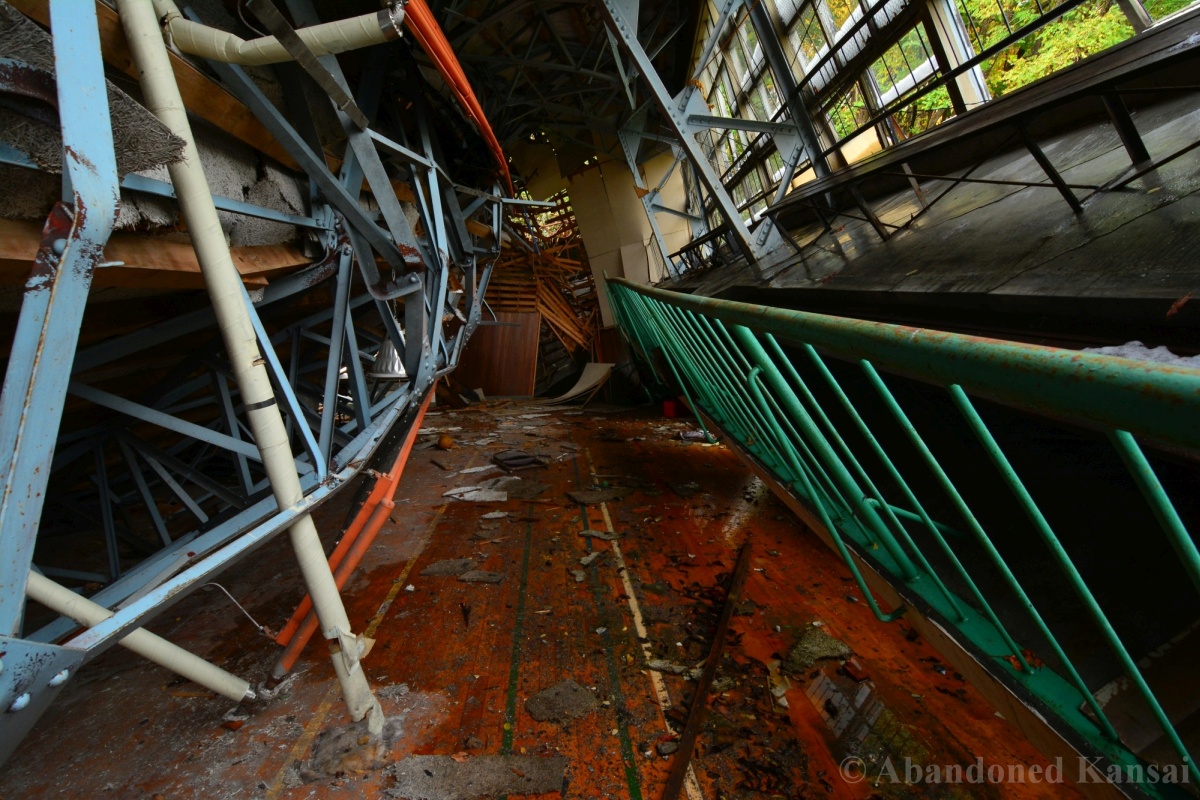
Nervously I went back into the park via another… path… I found, avoiding the main area completely and heading directly to the abandoned water park. What a brilliant idea to include an outdoor water park to a theme park that gets about 5 months of snow per year! I wonder how long its season was when even regular water parks in much warmer areas of Japan only get about two months of use per year. A shame, considering that it was actually designed quite nicely, taking advantage of the valley’s slope. The most interesting part, of course, was the large green water slide on its bright yellow metal structure – especially since it was partly collapsed. When I was on location I assumed that heavy snowfall caused all the damage to the water slide, but the park hadn’t been closed for very long, only a few years; an outdoor slide like that should have a longer lifespan, even without maintenance. Given that the park had been partly demolished already, it’s more likely that one of the demolition machinery operators had two minutes of fun to prevent local children from playing at the abandoned slide and get hurt in the process.
When I was about to finish up taking pictures at the water park I heard sirens again coming closer, so I rushed out of the park instead of heading deeper inside. Again false alarm, but I was running out of time anyway, so I looked for higher ground to get some ultrawide shots of the park and then called it quits.

Exploring the Frozen Theme Park was an exciting adventure – not just because of the sirens and the snow, but also because it was virtually unknown at the time of my exploration back in 2016. Since then the water slide popped up once in a while, but people seemed to be generally uninterested in this remote little gem. Sure, even three years ago most of the original rides had been removed, but I still found it worth checking out – though I have to admit that the surprise snow just added to the atmosphere. No *Nara Dreamland*, but I’ve been to worse abandoned theme parks… much worse.

(*Like Abandoned Kansai on Facebook* or *follow us on Twitter* if you don’t want to miss the latest articles and exclusive content – and subscribe to the *video channel on Youtube* to receive a message right after a new video is online…)

Read Full Post »
Climate change is a hoax – and if it’s not, the problem will be fixed by God? Yeah, tell that to the countless companies who closed down their ski resorts in Japan…

If you travel to Sapporo or Nagano between December and March you’ll inevitably run into tourists from Southeast Asia, from early November on the online tourist message boards are full of “Where can we already see snow?” questions. Believe it or not, but quite a few people see snow for the first time in Japan, not in their home country; you know, the unfortunate ones who don’t have four seasons – which is unique to Japan, as every expat has been told at least half a million times… (No story about that yet, Rising Wasabi?)
But more and more ski resorts in Japan are struggling with age and the increasing lack of snow. There are dozens, maybe even hundreds of abandoned ski resorts all over the country – most of them of course in the northern half from the Japanese Alps to Hokkaido. The majority of closed / abandoned ski resorts are actually not worth the visit. Ski lifts are worth being removed, unmaintained buildings either collapse or rot rather quickly, if they don’t get demolished in the lift removal process – and since satellite pictures on the internet are not always the latest, there is a certain risk involved scheduling time to explore ski resorts.
I wasn’t able to find out much about the Nagano Ski Resort. Apparently it was closed in / after the 2004 season and brought back a year later after some management changes, but only for another season or so. The oldest pictures I saw were from 2009 – the lifts and all buildings still standing, it obviously took them a couple of years to come to the conclusion that there wouldn’t be a second revival.
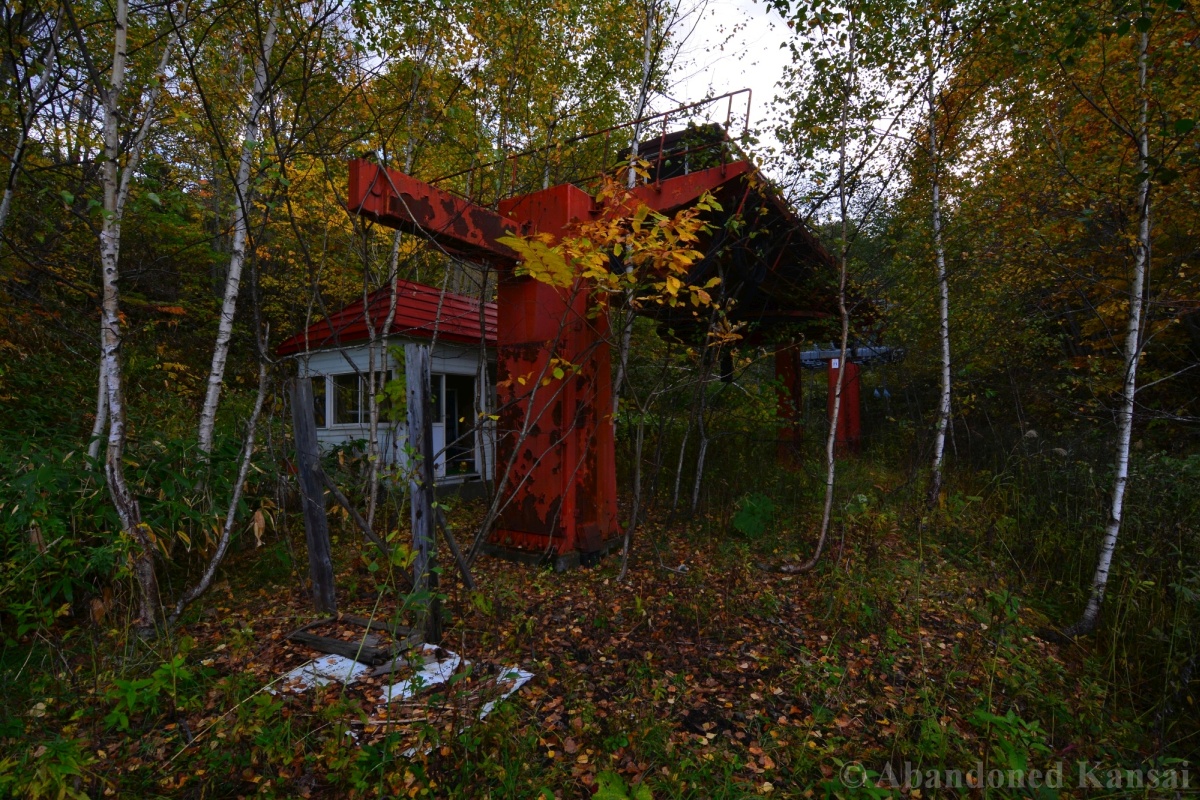
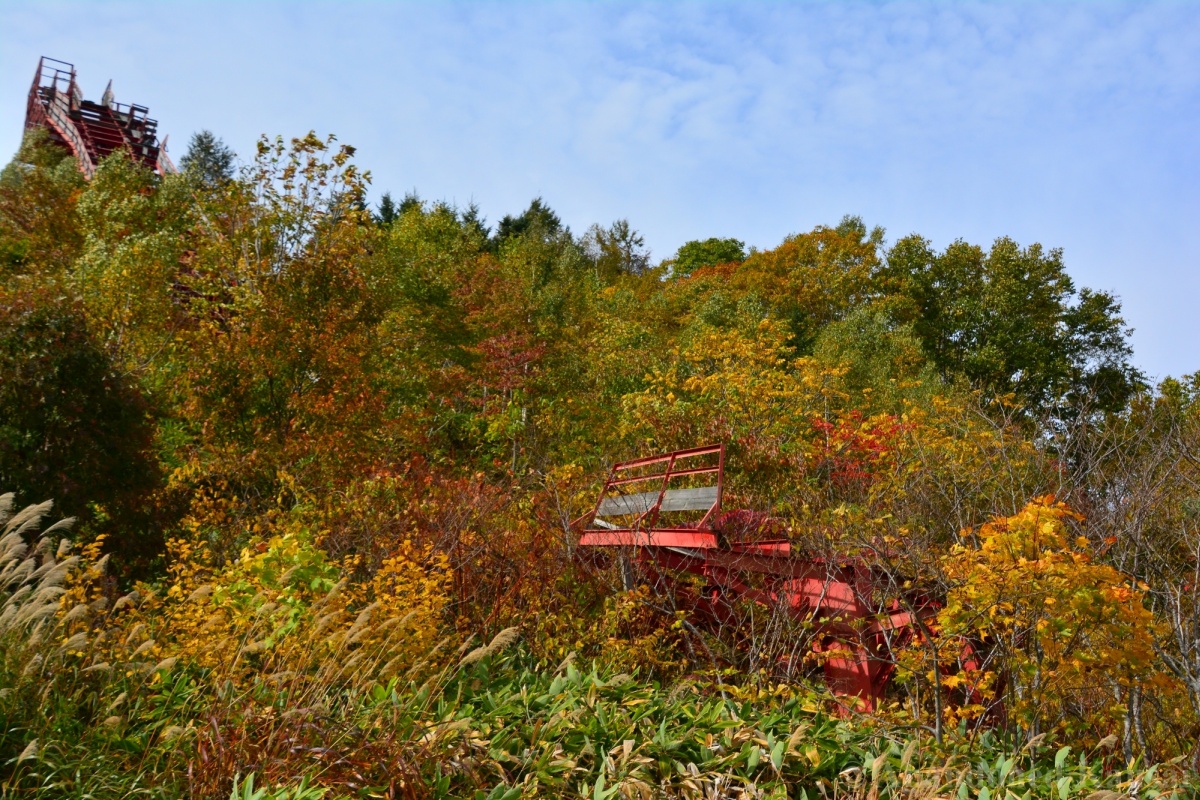
Overall the Nagano Ski Resort turned out to be an average location – worth having a look when nearby, but not driving something like 300 kilometers from Osaka or Tokyo. Six buildings were still standing, the rest had been demolished. Strangely enough two active hotels were amongst those six buildings, probably because the slope is also one trailhead for hikers and mountain climbers. Unfortunately the lifts were already gone, but two massive metal frameworks with speakers and lights implicated that people there used to enjoy their après-ski! The two wooden buildings halfway up the hill were in even worse condition with their collapsed outdoor decks.
Exploring the half demolished area was good fun since hardly anybody else was around and the weather played along – on a rainy day this would probably be a rather miserable experience, especially if you were lucky enough to have been able to explore spectacular abandoned ski resorts like the *Arai Mountain & Spa* or the *Gunma Ski Resort*

(*Like Abandoned Kansai on Facebook* or *follow us on Twitter* if you don’t want to miss the latest articles and exclusive content – and subscribe to the *video channel on Youtube* to receive a message right after a new video is online…)

Read Full Post »

The Sand Dune Palace is one of the few well-known urbex locations in Tottori – although it shouldn’t be…

I first visited the Tottori Sand Dune Palace during Golden Week of 2012 and *wrote about it half a year later*. Built in 1965 right across the street from the famous sand dunes, Tottori’s #1 tourist attraction, the Sand Dune Palace was used as a restaurant and souvenir shop for a few decades before falling into disrepair and out of business – giving it the abandoned look both urban explorers and readers of urbex blogs like so much. But looks are deceiving… and the dune palace has actually never been really abandoned.
When I first explored the palace solo in spring of 2012 it was quite a famous urbex location, yet nobody had ever posted inside photos – which is usually a bad sign. But the building looked somewhat interesting with its round lookout on the top floor, so I gave it a chance. There were plenty of potential entry points – large windows, several doors on different floors, but they were all locked… and the outdoor staircases were blocked by rusting barbed wire. Yesterday I went back to the Sand Dune Palace with two great explorer friends on the way back to Osaka. The whole area, including the sand dunes, was covered by a thick layer of snow, so my second visit was a completely different experience, though not much less disappointing. People had cut through the barbed wire and made the higher floors accessible, but only on the outside. All the upper doors were locked, too, and nobody dares to smash a window; which is quite unusual for a building that sees some traffic passing by, but is not really in busy area. On the ground floor one of the doors apparently had been fixed… and the formerly empty main room was now filled with boxes, so clearly somebody is / was using the Sand Dune Palace as a storage facility. The question is… for how much longer? On the parking lot I saw tons of ready to use scaffolding, which gave me a serious flashback to May 2016, when I first saw scaffolding in front of *Nara Dreamland* – a few months later the greatest abandoned theme park of all time was gone…
As on my first visit, the photos of the Sand Dune Palace look much more interesting than the place actually was, so if you like the picture set below, *please click here to get to the previous exploration* for more photos!

(*Like Abandoned Kansai on Facebook* if you don’t want to miss the latest articles and exclusive content – and subscribe to the *video channel on Youtube* to receive a message right after a new video is online…)

Read Full Post »

Go big or go home! Over the last few weeks I’ve presented a couple of smaller locations on *Abandoned Kansai*, but now it’s time to come back with an impressive abandoned place – and it’s not going to get bigger than the Arai Mountain And Spa a.k.a. Lotte Arai Resort, a large ski resort north of Nagano.

2 million square meters (200 hectare). That’s how big the Arai Mountain And Spa resort was. Almost seven times as big as *Nara Dreamland*, the greatest abandoned theme park the world has ever seen. And as Nara Dreamland, the Arai Mountain And Spa was all about fun… at least for a while.
Developed by Hideo Morita, the eldest son of Sony co-founder Akio Morita, in the early 1990s for a whopping 50 billion Yen (about 440 million USD, both back then and today), the large ski and spa resort about 50 kilometers north of Nagano (but in Niigata prefecture) opened in 1993 with state of the art facilities around a huge center square, basically its own town with several restaurants, shops, accommodations, indoor and outdoor pools, entertainment facilities – and of course access to the 11 slopes for skiing and snowboarding via a gondola and four lifts, two of them starting at the center square. Located at a height of about 330 meters the total vertical descent of the slopes was 951 meters – the longest run possible was 5200 meters long. Sadly the Arai Mountain And Spa had management and therefore financial problems right from the start, despite more than 200000 visitors in the 1998-99 skiing season. Between the opening of the resort in 1993 and its closing in 2006 the Morita family reportedly invested another 23 billion Yen (200 million USD) to fix problems and keep the resort running – a disastrous investment, even if you are rich…
After the lights went out at the Arai Mountain And Spa, rumors about this gigantic closed / abandoned spread all over the internet, yet only a few urban explorers seemed to have the guts to have a look themselves – I found out about it via a Japanese skiing blog back in 2010 or 2011. Rumors included tight security and reports about barricades, two rather off-putting elements, especially in Japan, where most abandoned places are actually abandoned; except for schools, which are usually just closed… In addition to that, Myoko and its suburb Arai are not exactly accessible in a time- and cost-efficient way from Kansai, so it took me until November 2014 to get there as part of a road trip with my buddy *Hamish*.

Let’s go!

Very well aware of the security rumors and quite impressed by the good condition of the gigantic complex of buildings, Hamish and I decided to explore the outskirts first, so we drove up the mountain… until the snowy road prevented us to go any further in our small rental car with summer tires. But we made it past one of the ski lifts, so we stopped there, took some pictures inside and outside and enjoyed the breathtaking view. We also confirmed that there was no visible activity at the main plaza – no security, no maintenance, no other people. On the way down we also stopped at the Roppongidaira Station, which connected the Village Station with the Zendana Station and gave guests of the resort access to a ski lift that lead to another set of slopes. Everything was locked, but in overall good condition. Nobody was mowing the pampas grass anymore, so it was rather unclear if there was some maintenance going on or if the area was just lucky to be spared by vandals, despite minor signs of destruction were visible all across the resort – though nothing worth mentioning, considering how much money was invested into the business…
By the time Hamish and I arrived back at the building complex we were pretty confident not to run into anybody, especially after gaining access to the main square without having to jump and fences or getting past any barricades. It was a sunny November day, rather warm, overall gorgeous – and the plaza, measuring about 150 by 100 meters on three levels (connected by several staircases and roofed escalators), was absolutely awe-inspiring. At that point I had seen my share of abandoned places – but nothing of that size, nothing in that good condition; even with an ultra-wide angle lens I was able to capture only parts of the area at a time. This really was the *Nara Dreamland* equivalent of an abandoned ski resort!
At the same time the lack of vandalism also meant that 90% of the buildings were not accessible. Not the spa, not any of the hotels, neither of the two ski stations, … Nevertheless an amazing exploration with some stunning photos. Speaking of which: Usually I publish the photos in the same order they were taken to give you an idea of my progress through a location. Since the plaza photos are much more spectacular than the early morning pictures, I decided to put the main area photos first and then jump to the accessible ski lift station halfway up the mountain. To get a better idea of how big the Arai Mountain And Spa really was I strongly recommend to watch the walkthrough video at the end of this article. You can also have a look at GoogleMaps (or any other online map…) – here are the coordinates: 36.990680, 138.181261

There is more!

Now, before you get a heart attack over me posting coordinates – there is more to the story as you might have already figured out reading the title. At the time of my visit in November of 2014 the Arai Mountain And Spa was up for public auction after Myoko City seized the resort due to unpaid property tax. Hm, have I already mentioned parallels to *Nara Dreamland*? Yes? Okay, so let’s move on. The city set the minimum bid at 914 million Yen and some change for the property, including all of the 200 hectares of land and 22 buildings (that’s about 8 million USD – a fraction of the original costs and barely more than what Nara Dreamland sold for in late 2015). A golf course developer won the bid at 1.3 billion Yen, but apparently there were some problems, so Myoko City gave it another try in June of 2015, this time starting at 884 million Yen. The winning bid? More than double, 1.8 billion Yen – from Lotte, a multinational conglomerate with 5000 employees in Japan… and 180000 in South Korea. They quickly renamed their latest purchase Lotte Arai Resort and started renovations for a piece by piece reopening from late 2016 on. Realizing that those plans wouldn’t work very well, the restart of the former Arai Mountain And Spa was scheduled for the 2017 season – not only with all the fully renovated previous facilities, but also some proposed new ones, like a new half pipe near the top of the mountain, a luge run, and some zip lines. I’ve seen photos of the renovation works, taken in August and in November of 2016 – so now the property is actually fenced off and most likely guarded by security… much like *Nara Dreamland*, but with the opposite outcome.

(Please *like Abandoned Kansai on Facebook* if you don’t want to miss the latest articles and exclusive content – and subscribe to the *video channel on Youtube* to receive a message right after a new video is online…)

Read Full Post »
In Japan “skylines” often describe scenic toll roads on top of beautiful mountain ridges – a lot of them feature rest stops with restaurants and souvenir shops, some even have a funicular line for people without cars… or had, like in this case.

When you are used to German highways, the world famous Autobahn, Japanese highways are a disgrace and barely tolerable. First of all: They are not even real highways – the majorities of Japanese highways, the National Routes, are country roads at best; most of them even are regular (inner city) streets with no by-pass function whatsoever. If you want to go fast and past inner cities, you have to use the so-called expressways – a nationwide network of roads that look the like Autobahn at first sight, but is not nearly as good; initially built and financed by the State, but later split into three main areas and privatized in 2005. First of all: Unlike the German Autobahn, Japanese expressways are not free. They are toll roads that currently cost 24.6 Yen per kilometer / 39.36 Yen per mile for a regular passenger car! You take a ticket when you drive on and pay, rounded to the nearest 50 Yen, when you get off. It doesn’t sound like that much at first sight, but it adds up – a day trip can easily include 400 to 500 kilometers of driving, which means more than 100 bucks just for highway fees! But that’s not all! While more than half of the Autobahn network only has an advisory speed limit (i.e. you can drive as fast as your car and common sense allows), the speedlimit on Japanese expressways is… 100 km/h. If you are lucky. Even without road works it’s often lowered to 80 km/h. And while an Autobahn has at least two lanes (in each direction, sometimes up to four!), two is the standard in Japan. Sometimes three, but more often one.
Long story short: Japanese highways are not bad, but they are expensive and often mind-numbingly slow – especially when you are trying to return to a big city like Osaka or Tokyo at the end of a long weekend. Bumper to bumper to bumper to…
In addition to “fast” toll roads, you also have “beautiful” toll roads – sometimes they can be used as a short cut (like the Arima Driveway between Kobe and the old onsen town of Arima), sometimes they are their own tourist destination; for example the Ibuki Driveway up Mount Ibuki in northern Shiga prefecture.

The Skyline in Mie was a little bit of both. Kind of a shortcut, though you probably lost quite some time driving up and down the curvy road instead of staying on a flat one, and at the same it offered quite a few viewing points with gorgeous lookouts at both the mountains and the sea. The reason I wanted to have a look up there were a deserted rest stop and an abandoned cable car…
The Mount Asama Cable Car (not related to the also abandoned *Asama Volcano Museum* in Nagano prefecture!) was opened in 1925, but closed in 1944 as a non-essential line, because the Japanese military needed every piece of metal it could get. While the power lines remained, the cable car wasn’t restored / reopened after World War 2 and officially abandoned in 1962. Due to natural decay in the following decades, the upper terminus turned more and more into a deathtrap and therefore was secured with barbed wire (!) and fenced off with a regular black metal fence in 2006. (What’s with Japan and “securing” stuff with barbed wire? I’ve been hiking a lot a few years ago and came across trails that were “secured” with barbed wire, so if you slipped, your fall were at least temporarily stopped… before you bled to death three days later…) Luckily they didn’t combine the fence and the barbed wire, so it was rather easy to have a look at the upper terminus, which was little more than a concrete shell with holes 70 years after it closed for good. But the roof offered a nice view at the area below with the beautiful Mie coast line. A coast line I mistook for another one about 300 kilometers away, when I first tried to locate the cable car four years prior – interestingly enough I found an abandoned gondola station thanks to this mix-up, but that’s a story for another time… What I will remember the most about the Mount Asama Cable Car is the fact how cold it was up there. Since there is no real winter in Osaka (it snows only every other year and never strong enough to stick on the ground for longer than a few hours – in addition to that most buildings are overheated) I am not used to low temperatures anymore – and in combination with the hard wind I was freezing like hardly ever before anywhere in Japan.

The sun was already setting, so we moved on to what once was a rest stop along the skyline – large parking lot, large concrete complex with large windows. While the toilet area and a couple of separate souvenir were still open for business, the main building once housing a large restaurant had been closed, but in decent condition. The combination of toll road, remote location and regular visitors prevented 99% of the possible vandalism the place could have suffered if it wouldn’t have been for those protective factors. And while the view at the cable car was limited in northeastern direction, the rest stop area offered an almost 360° view – absolutely gorgeous!

Overall the The Ruins Of The Skyline were a nice way to end a day trip to the countryside. It took me a while to find the cable car station… and even longer to get there – and there’s always something special to cross an old entry off the list… 🙂

(*Like Abandoned Kansai on Facebook* if you don’t want to miss the latest articles and exclusive content – and subscribe to the *video channel on Youtube* to receive a message right after a new video is online…)

Read Full Post »
Older Posts »