Feeds:
Posts
Comments

Archive for the ‘Temple’ Category

I’ve been urbexing for almost 15 years. During that time I’ve never written any articles about equipment, despite being very happy with three different Nikon DSLRs, two Manfrotto tripods, and a Sanyo video camera – which broke in 2019 after almost 15 years of recording countless hours at hundreds of locations as well as places like Chernobyl and North Korea. Videos I always considered a bonus anyway… and I’m still having a hard time thinking of myself as a photographer, given that I have no formal education in that field and only do it as a hobby. A really time-consuming hobby, but nevertheless just a hobby. I also don’t have a background in technology, so what’s the point of reviewing camera equipment when I just have an opinion based on learning by doing? Well, that doesn’t keep countless “influencers” and Youtubers from churning out incompetent nonsense, but I wouldn’t want to be found dead with either label on me! And like my favorite professor at university once said in regards to papers we had to hand in: “Don’t claim anything you can’t proof!”

Fortunately there is no need to be technical or scientific about this Insta360 X4 article, because unfortunately we never got that far…
Like I said, I always considered video walkthroughs of the locations I explore a bonus. I started them pretty much right away, but at first I didn’t even publish them, because I only took them for myself. And even when I published them, I didn’t edit them. No cuts, no voice overs. Just me walking around breathing heavily into the silence. That all came to a sudden halt when my Sanyo stopped working after exploring the abandoned *Trump Hotel*, also wiping out the recordings of the whole day. At that point I was tired of doing the videos anyway – and my co-explorers were increasingly annoyed, because I added 10 to 30 minutes at the end of every exploration for the walkthrough. So I stopped doing them.
For the past 18 months I’ve been exploring solo again (don’t ask, it’s complicated and often quite frustrating, to be honest), but a few weeks ago a colleague of mine showed me an older model Insta360 video camera that a visiting cousin from the States forgot at his place in Japan. I was fascinated by the easy to use 360 photos and videos, so I did some research and decided to get one. I’ve read reviews, I’ve read product pages – I did my best to make an informed decision, because at first I considered buying the X2 or X3 as older models often are cheaper with only slightly fewer / worse features. The X2 was out of the race when I read in a review that it required a smartphone to be activated – something I didn’t read anywhere about the X3 and X4. I guess because it’s an idea that is so stupid that it probably was a one-time mistake by Insta360, facing so much backlash that they removed the requirement from following models. The price difference between the X3 and X4 wasn’t very big and since the latter was only four weeks old at the time, the price on Amazon and in brick and mortar stores was the same, so I decided to get it at my local Yodobashi Camera (street block sized electronics stores with hundreds of employees each, in case you are not familiar with the chain), where I’ve been a customer for almost 18 years – ever since I moved to Japan.
BIG MISTAKE!

Yodobashi Camera was extremely stingy, giving only 1% points on the video camera, despite a promotional campaign of giving 13% points for purchases over amount X – except for (small print)… But when you shell out 80k Yen on a new video camera you are looking forward to use, store points are the last thing you worry about anyway. Fortunately I still had some of those points, which I used to get a seriously overpriced MicroSD card, because without it the video camera would be useless and I wanted to try it out on the weekend before an upcoming urbex trip. 83500 Yen poorer, but with a big smile on my face I left Yodobashi Camera on a Friday evening after an otherwise pretty horrible week.

Saturday was supposed to be a great day, though it started with a rude awakening / realization…
After sleeping in and having a delicious breakfast, I enjoyed a nice unboxing. The first slight disappointment was when I realized that the included battery was dead. Well, not dead dead, but completely empty. Whatever, an hour or two wouldn’t make a difference. It would not dent my great mood for sure. That came a few hours later when the battery was fully charged. I booted the small brick for the first time, its screen came to life, asking me to choose a language – and then the screen showed what the camera was seeing… for about a second or so. Then some text popped up and my heart sank. You gotta be kidding me! What I was looking at was a screen telling me to download an app by Insta360 to a smartphone, iOS or Android, to unlock the video camera. What. The. Heck? I literally felt it in my fingers how my blood-pressure exploded, because unlike pretty much every person on the planet above the age of 6 years I don’t own a smartphone. Never have. In the late 90s I had a black and white Nokia for work (yes, I’m not the youngest anymore, though I started working full-time in my early 20s). When I moved to Japan I had a flip phone or two, but for the past 15 years or so I didn’t have any mobile phone at all, smart or not, because I don’t like them as they turn way too many people into dumb zombies. So here I had a brand-new, quite expensive video camera… that forced me to make it usable by using another device with cameras? Who comes up with stupid ideas like that?!
Certainly not Nikon! Their D7500 DSLR I bought just weeks prior worked with a partly charged battery and regular SD cards straight out of the box 5 minutes after purchase – without any charging or unlocking BS!
So I started to do some research… and didn’t find much. Like I said, I couldn’t care less about smartphones, apps and all that stuff, so I tried to find a solution to unlock the darn X4 via PC or MicroSD card. Of course I couldn’t find anything about that either, so I contacted Insta360 directly – who apparently didn’t read my message and instead sent me a standard reply. So I got back to them, apologized for not describing my problem properly (I’ve been in Japan too long…), and this time got an answer that at least implied that they understood the situation I was in – without being able to help, because though it seems to be nowhere stated on the box, the promo material or even on the X4 website (at least back in mid / late May, maybe they changed it by now)… you really need a smartphone and the Insta360 app to use a newly bought X4 video camera, that seems to work perfectly fine, but is made not usable on purpose by the manufacturer. Which absolutely blows my mind!
How is that even legal?
How can a company force you to use a completely unrelated piece of expensive technology that actually partly does the job of the product you just bought, to make your purchase usable? Without mentioning that essential detail with big warnings before purchase! And in addition, forces you to use an app, which does who knows what in the background without one knowing?
What’s next? You need an electric bike with WiFi to unlock your newly bought car? And if you don’t… sucks to be you, it’s completely useless!

Yodobashi Camera – (The Lack Of) Customer Service In Japan!
After some back and forth it was Monday and I came to the conclusion that I won’t be able to use the Insta360 X4, because it really needs a smartphone to unlock, which wasn’t properly communicated. So after work I went back to Yodobashi Camera, my go-to electronics store for the past almost 18 years. Never had a problem with them, because all the products I bought worked as intended right out of the box. So I went back to the cashier counter where I bought the video camera… and already ran into the first minor bump in the road – apparently I hadn’t paid for it in the camera department, but a neighboring one, which wasn’t a problem on Friday evening, but very well on Monday evening. So I went 20 meters over to the camera department and told them about my unfortunate situation: That I had bought this video camera three days prior, but couldn’t use it, because it doesn’t work without a smartphone, which wasn’t properly communicated by Insta360 or Yodobashi Camera. But I was very careful with everything, I didn’t even remove the protective film from either of the lenses. Some air through the teeth sucking, some going back behind the counter to talk to a superior and then something like the following conversation – it’s in quotation marks, but they are not really quotes, you know… just something like that, from memory:
“I can’t sell this anymore, you opened the box. You can’t return it.”
“But I can’t use the video camera.”
“I can’t sell this anymore, you opened the box. You can’t return it.”
“I don’t have a smartphone. The X4 is useless to me.”
“I can’t sell this anymore, you opened the box. You can’t return it.”
“I did proper research and I only found out about this after I opened the box and tried to use the X4.”
“I can’t sell this anymore, you opened the box. You can’t return it.”
“I bought a D7500 last month, it worked out of the box…”
“I can’t sell this anymore, you opened the box. You can’t return it.”
“Then take it back and ask Insta360 to exchange the X4 – you have dozens of them here, you probably have to return one once in a while anyway.”
“I can’t sell this anymore, you opened the box. You can’t return it.”
“Are you serious? I’ve been a customer here for almost 18 years, spent millions at your store and other ones in the building that has your name. Never had a problem – and the first time I have, you are stonewalling me?”
“I can’t sell this anymore, you opened the box. You can’t return it.”
“Really?”
“I can’t sell this anymore, you opened the box. You can’t return it.”

At this point I gave up and exchanged a few more e-mails with Insta360 (“You should try to return the X4 where you bought it!” No kidding…), but their responses quickly became as useless and repetitive as the one of the guy at Yodobashi Camera – who is just a small cog in a big machine, so I don’t blame him; he’s punished enough with the lighting in the store and the uniform he has to wear all day.
So here we are, after me falling for the usual misconception about (customer) service in Japan, because I rarely ever had a real problem anywhere. It’s great as long as everything is within procedures – if somebody has planned for it, it most likely will go smoothly. Service is great. When service becomes customer service though, i.e. an individual customer needs help that requires improvisation outside of the planned service… you’re basically on your own. The only thing flexible in Japan is bamboo.

Nevertheless I still have moments when I wonder: AITAH?
I’m a huge believer in personal responsibility. If I make a mistake, I stand by it. I find behavior like ordering 20 items of clothes in different sizes and colors with the intention of sending 18 of them back despicable. In fact I’ve never sent anything back that I’ve ordered online, except for two USB-HDDs – and only because they didn’t work. I don’t do fast fashion, I don’t buy garbage from questionable sites like Shein oder Temu, I don’t replace electronics unless they are broken. (RIP, Nikon D7100!) I did due diligence before buying the Insta360 X4 and to this day everything in that (opened…) box is in mint condition. If I would have known about the smartphone requirement, I wouldn’t have bought the X4. It’s the reason why I didn’t buy the X2.
This is actually only the second time that I tell this story to anybody, because part of me is a bit ashamed that this series of unfortunate events happened – despite all the research before buying. But spending more than 80k on a useless brick of tech isn’t exactly something to be proud of. I don’t regret much in my life, but buying the Insta360 X4 I regret. And buying it at Yodobashi Camera is something I regret, too. Maybe Amazon would have been more accommodating with returns…
But I guess it is what it is – only money in the end. And no videos for Abandoned Kansai in the future. Heck, even if I would get the currently useless X4 to work, I would always be reminded of this story. Screw video cameras! Never was a fan, now I dislike them almost as much as smartphones. Which kind of closes the circle. But I’ll make sure to never ever even consider buying anything from Insta360 again – I still don’t understand how it’s even legal that they can do this. What’s next to unlock their cameras? Having to send them a voice message, swearing loyalty to Winnie the Xi(thead)? Apparently they can do anything without people questioning it…
I went back to Yodobashi Camera once more though, two days ago. I spent the remaining shop points I had on presents for my nephews without having to pay a single sen – my goal was it to hit +/- 20 points/Yen, but going to exactly 0 was priceless – and so I left the Yodobashi Camera building one last time with a big smile on my face. Upon arriving back home I cut up my loyalty card after almost 18 years. It probably doesn’t mean much to a large store chain like that. But it meant a lot to me!

Thank you for reading till the end and… What has your worst experience with Japanese (customer) service been? Write it in the comments!

(*Like Abandoned Kansai on Facebook* or *follow us on Twitter* if you don’t want to miss the latest articles and exclusive content – and subscribe to the *video channel on Youtube* to receive a message right after a new video is online…)
Read Full Post »

*Hatsumode*. *First shrine visit of the year*. *Been there, done that*. *Yada, yada, yada*. *Enjoy*! (And yes, I know, it’s a temple, but who cares? Most people don’t know the difference. Not even Japanese people, as proven recently by the makers of a successful fighting game…)

(*Like Abandoned Kansai on Facebook* or *follow us on Twitter* if you don’t want to miss the latest articles and exclusive content – and subscribe to the *video channel on Youtube* to receive a message right after a new video is online…)

Read Full Post »

Hatsumode, the first temple or shrine visit of the year, has become a tradition on Abandoned Kansai – and this year’s hatsumode is especially special!

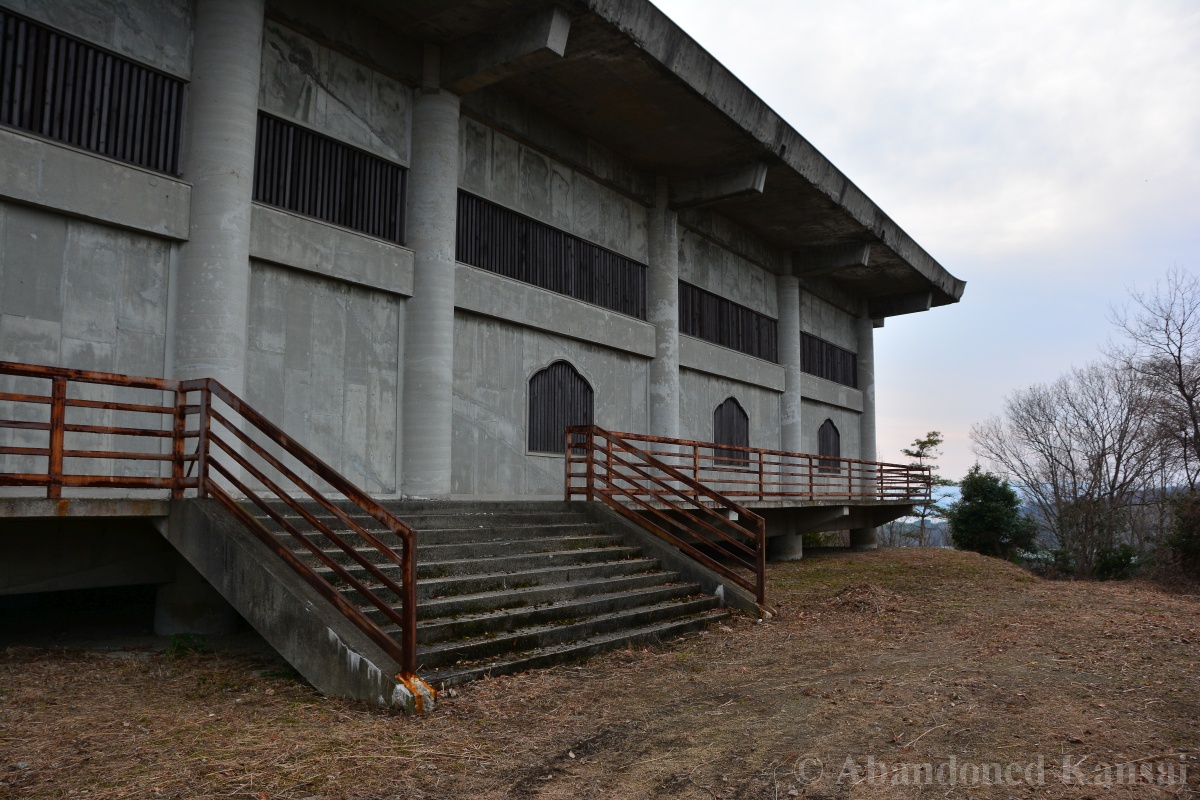
Abandoned temples and shrines are quite hard to find in Japan, despite the fact that there must be tens of thousands of them. But no matter how remote the location, there always seems to be somebody who takes care of. Sure, some of them are rarely visited and not in good condition anymore, but really abandoned are only a few of them. The abandoned temple for this hatsumode actually hasn’t even been finished yet – it’s still under construction. Or was, about a decade ago. And it’s not actually a temple (or shrine…) – it’s a stupa.
A stupa is a hemispherical structure containing relics, usually the remains of important Buddhist monks, and is used as a place to meditate. Predecessors of the stupa date back to the 8th century BC in Phrygia and its appearance changed quite a bit until its arrival in Japan around the 4th century AD.
Traditionally stone constructions, the Temple Construction Ruin cut some corners by being made from ferro-concrete… and never finished. There isn’t much known about the history of this location, but it looks like construction began at least a decade ago, though several older buildings imply that the premises have been used much longer before being abandoned completely in the early 2010s.

Overlooking a gorgeous plain, unexpected snowfall turned out to be a blessing in disguise. It made access a bit thougher than expected… but even against the grey sky, the half-finished stupa looked absolutely amazing. After some outdoor shots I went inside and was totally fascinated by a Buddha sculpture with blue hair – Marge Simpson style. Much to my surprise it wasn’t a solid statue, but made from light material. To more surprise, people left money and other offerings… so… who know how abandoned even this place was. Through a rather narrow opening the center of the stupa was accessible. While the outside featured some withered wooden ladders, the inside had some metal scaffolding to access the upper parts, probably two to three storeys tall. This part really reminded me of the *La Rainbow Hotel & Tower*, a classic location in Japanese urbex. Absolutely fascinating and strangely beautiful in its own way, literally inside and out. Speaking of outside: The weather brightened up and the sun came out for about half an hour, so I rushed outside to retake some of the shots I did with a grey background – because, let’s be honest, the colors just pop a lot more, especially with the autumn leaves surrounding.

Exploring abandoned places can be quite nerve-wrecking, but exploring the Temple Construction Ruin was as serene as you hope an abandoned religious place to be. It was just a great experience, from the beginning till the end – and it even surpassed my exploration of a finished stupa several years prior to this exploration and the hatsumode “tradition”; the *Golden Buddha Park* in front of a cherry blossom background.

(*Like Abandoned Kansai on Facebook* or *follow us on Twitter* if you don’t want to miss the latest articles and exclusive content – and subscribe to the *video channel on Youtube* to receive a message right after a new video is online…)

Read Full Post »

About two years ago I first wrote about hatsumode, the first shrine / temple visit of the new year, on the *Facebook page of Abandoned Kansai* after exploring the *Shiga Shrine*. Let’s make abandoned temples and shrines a new New Year’s tradition by following up with the Shimane Temple…

As I mentioned before, I take much pride in the fact that I do the vast majority of my location research myself, which often is a slow and tedious process, but extremely rewarding when successful. Since the spring of 2016 I’ve been extremely lucky to explore on occasion (i.e. two or three times a year) with an amazing Japanese couple and their friends. Explorations that include the weirdest hours (getting up at 3:30!), but also locations I haven’t even heard of before – and strangely enough after, it’s almost as if they create their own places that mysteriously vanish after we leave. And all I have left as proof are some quick photos and shaky videos… (I guess that’s the advantage of being well-connected – and being native speakers!)
One of those mysterious trips / locations included the Shimane Temple. At least I think it was in Shimane, Japan’s second least populous prefecture – but who knows for sure? We started in the middle of the night (not at midnight!) and explored two other places before we all of a sudden stopped on a tiny mountain road on that rainy and slightly foggy autumn day. Silence for a couple of seconds, then somebody said in Japanese: “We are here – it’s to the right, over there!” And indeed there it was, mysterious, almost surreal through the low hanging clouds: A large temple building, about three storeys tall… and it looked as if a giant creature, a demon probably, ripped off its whole front. If large wooden constructions could be injured like a living being, this one had a gigantic gashing wound revealing the innards of the temple. (And aren’t there people out there considering their bodies a temple?) I had never seen or heard of this location before, so it was an extremely stunning sight as it literally and figuratively came out of nowhere. Sadly, as always, time was of the essence with my Japanese friends, so I had less than 90 minutes to explore the temple and the nearby abandoned monk’s house… enough to enjoy the amazing atmosphere up there, but barely enough to do due diligence to this unique location. (And no, I don’t know anything about this temple. Not its name, not when it was built, not when it was abandoned, not when or why it collapsed. Strangely enough I actually don’t care in this case, the lack of information just adds to the mystery of the location.)
As much as I dislike exploring on rainy days, I strongly believe that the unfortunate weather elevated the experience that day – it felt a little bit like being in a different world, being in a different time. Everything came together perfectly… like on that sunny summer day when I explored the *Kyoto Dam*.

(*Like Abandoned Kansai on Facebook* if you don’t want to miss the latest articles and exclusive content – and subscribe to the *video channel on Youtube* to receive a message right after a new video is online…)

Read Full Post »

Like many other countries, Japan struggled with religion and its negative attending ills many times. In 794 the capital was moved from Nara to Heian-kyo, modern day Kyoto, when Buddhist clergy became too powerful and the Imperial household decided to break free from its influence. In the early 17th century Tokugawa Hidetada and Tokugawa Iemitsu struggled with Christian merchants and missionaries so much, that the Sakoku Edict of 1639 turned pre-modern Japan into North Korea 0.9 – more than 200 years later, religious freedom was restored, the total power of an absolute leader was abolished and the country opened again for modernization, trade and travelling. Since World War 2 a more moderate country in many ways, Japan had to dispel only two religious groups for criminal activities in the past 70 years: Aum Shinrikyu after their sarin gas attack at the Tokyo subway in 1995… and Ibaraki’s Myokaku temple for financial fraud – welcome to the Japanese Gold Cult!

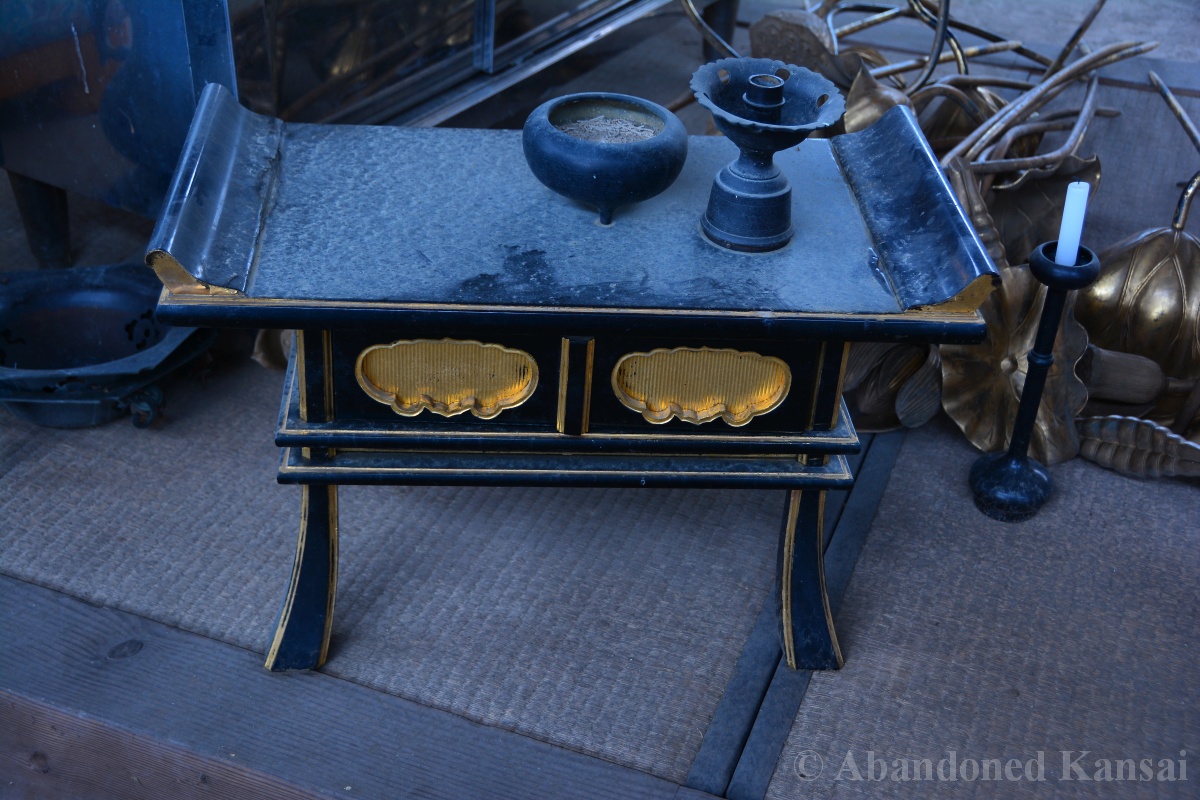
The whole story started back in 1984, at the same time when Aum Shinrikyu was founded. The superintendent priest of the Myokaku Temple in Chiba prefecture established a company that sold aborted fetus bodhisattva. In 1987 he established a religious enterprise called Hongaku Temple and started to sell all over Kanto, before becoming an independent temple in 1988. Soon after, the Consumer Affairs Agency started to receive complaints and temporarily shut down business. Unimpressed, the gold cult bought the Myokaku Temple on Mount Koya in Wakayama prefecture to expand its business to Kansai – which at that point included spiritual consultations for 3000 Yen and performing memorial services for 1 million Yen (back then and currently more than 9000 USD!) as well as selling overpriced item like marble vases and items made from gold. Center of the scam were the ihai, spirit tablets believed to hold the souls of deceased people – the cult took care of thousands of them and placed them in two special buildings at the Myokaku temple; but obviously they didn’t take of them in a proper way, hence the fraud accusations. In December 1999 a Wakayama district court finally followed the Agency for Cultural Affairs request to dissolve Myokaku / Hongaku Temple – the organization subsequently lost a legal battle for survival in front of the Supreme Court.
Sadly and surprisingly I couldn’t find anything about the case in English or German, so I had to piece together above information from various very complicated Japanese sources; please feel free to correct me if I misunderstood something! (My knowledge about Buddhism is limited, so I tried to avoid specialized terminology when possible… and I still don’t know what happened to Mount Koya’s Myokaku temple.)

After hiking through the mountainous Japanese countryside for about an hour on a hot, sunny spring day I finally reached the headquarters of the former Japanese Gold Cult:  a cluster of about half a dozen buildings – and after climbing a rather long and steep flight of stairs I reached a regular looking building that probably was used for meetings and as living quarters. To the right, past a pond and a collapsed gate, there was a comparatively small storage house – nothing of interest. Up another small flight of stairs I found the main hall, which was hard to miss at it was by far the biggest building. Almost as good as new, with lots of dark corners and significantly colder than the outside, it felt kind of strange being there. Solo explorations are always a lot more nerve-wrecking than group explorations… but this location had a spiritual / religious component to it, obviously. I don’t believe in ghosts and I am not religious at all, nevertheless there is some awe-inspiring element to a lot of those institutions – graveyards like the Okunoin, cathedrals like the Kölner Dom… and abandoned fake temples like this one.
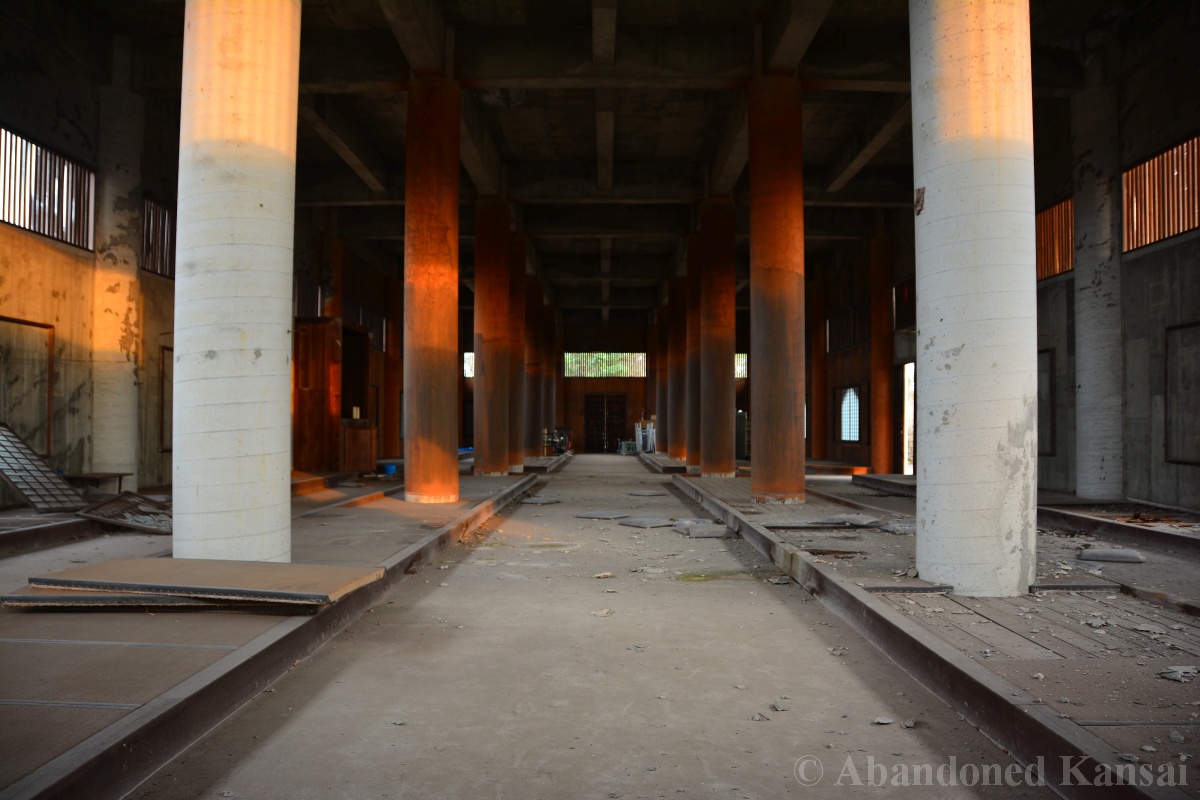
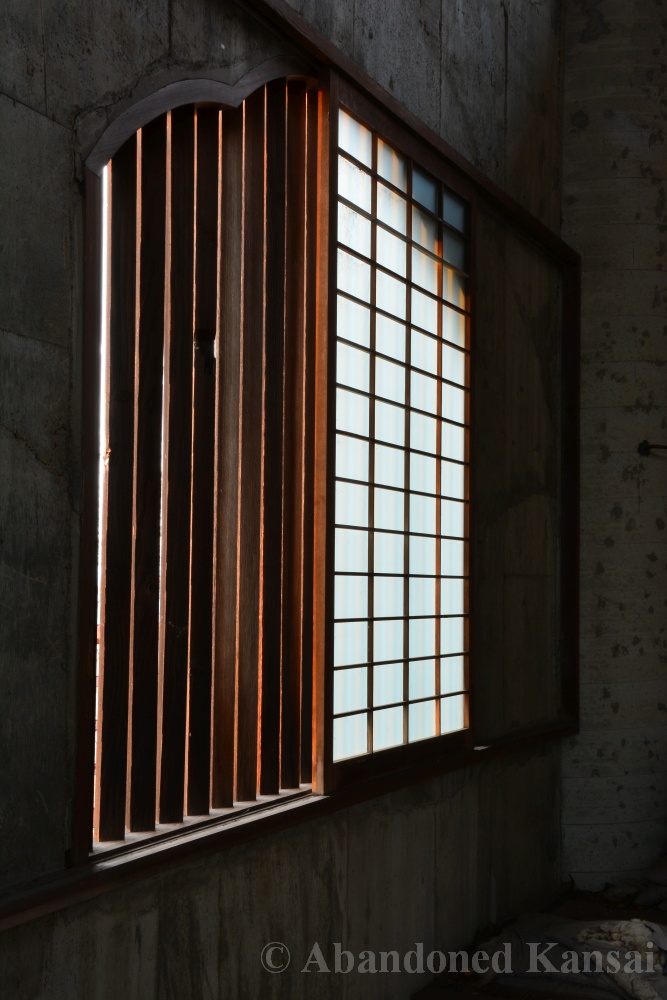
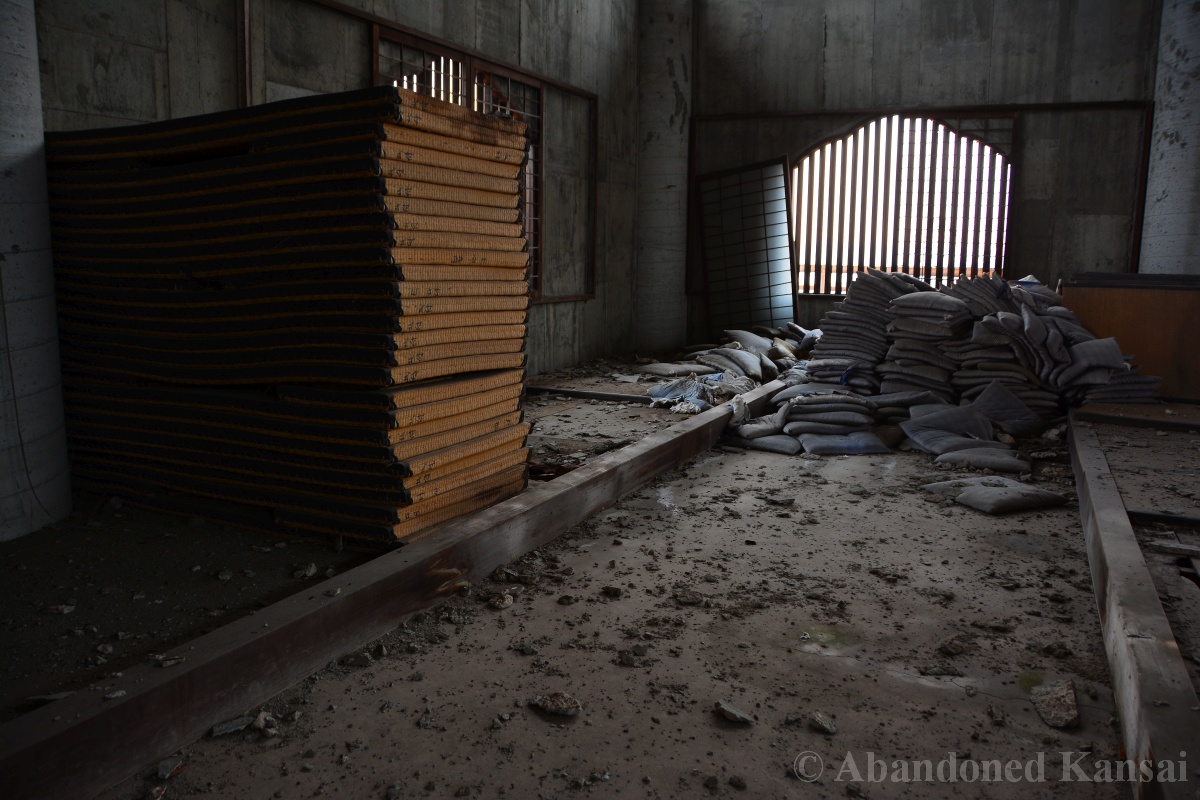
The main reason though why explorers from all over Japan travel to the middle of nowhere are two small buildings behind the main hall, in which the Japanese Cold Cult stored all the ihai – and the bling-bling of gold and black lacquer was indeed quite impressive and worth the long trip from Kansai!
I just had entered an official looking, administrative building, probably the one where visitors were welcomed, when I saw somebody outside through a window – so I left through the back without taking any video material or interesting photos. The parts I saw were small offices and a main room full of boxes and random items, not of interest.
The last building looked like a big, chaotic family home and was probably used for meditation. Since it was pretty much busted open, nature was taking over again and parts of the floor were rather soft and brittle. Again, items were scattered all over the place, as if somebody was looking for valuables without finding anything.

Three hours after my arrival I left with a heavy heart as I had an afternoon flight to catch. Exploring the headquarters of the Japanese Gold Cult was a weird and unique experience. On the one hand I felt a bit uneasy as I was exploring a crime scene solo, and the garden there wasn’t out of control (which means that somebody still had an eye on it), on the other hand it was such a tranquil and beautiful place, the peaceful atmosphere disrupted only once in a while by farmers tilling their nearby fields. The Japanese Gold Cult had been kept a secret for about a year or two – now that Japanese explorers gave away too many hints and its exact location kind of became common knowledge, I really hope that people will keep respecting it. Not because it’s a (fake) sacred site, but because it’s a beautiful and unique abandoned place that deserves respect!

(*Like Abandoned Kansai on Facebook* if you don’t want to miss the latest articles and exclusive content – and subscribe to the *video channel on Youtube* to receive a message right after a new video is online…)

Read Full Post »

Momijigari (紅葉狩, red leaves / maple leaves hunting) is almost as popular in Japan as the worldwide way more famous hanami (花見, flower viewing). In spring even the biggest couch potato leaves the house to view first the plum and then the cherry blossoms, in autumn they go to different spots to have a look at the autumn leaves. Of course every bigger city has special spots for both, but some countryside towns are pretty much dead for 50 weeks a year and completely swamped on two or three weekends. In Kansai prime examples would be Yoshino (hanami) and Minoh (momijigari). Why? Because those two spots are considered the best – or at least amongst the best. Surprisingly many Japanese people pursue the best of everything – the best food, the best company as an employer, the best spots to view nature. Or at least they pursue what the majority considers the best. With the result that some food is insanely expensive, employers with famous names exploit their employees (because they can!) and the best spots to view nature are so overrun that it’s not really fun anymore going there – you stand in crowded trains for hours just to be pushed past gorgeous trees and through crowded streets with souvenir shops.
So while half of Kansai “enjoyed” autumn leaves in Minoh and Kyoto (just to put up photos on Mixi and Facebook to let everybody know where they went for momijigari…) I made my way to the Hyogo countryside in late November of 2011. My goal was to climb a small mountain with an abandoned temple on top. 15 months prior I was able to explore an abandoned shrine (*you can your all about it here*), so I guess it was only natural to follow an abandoned Shinto site with an abandoned Buddhist site. (I know that there are plenty of abandoned churches – but how about mosques? Has anybody ever heard of an abandoned mosque?)

The Shuuhen Temple popped up on two or three Japanese haikyo blogs before, but it was surprisingly hard to locate. Even more surprisingly since the place is still marked on GoogleMaps, and when you are rather close you can find guide signs – which left me rather puzzled for a couple of minutes about how abandoned the place really was. I guess now it’s more abandoned than ever, because in September of 2011 the street up the mountain was closed. Halfway up the mountain a landslide flushed away the small asphalt road on a length of about 5 or 6 meters – even tiny cars could barely pass here anymore safely.
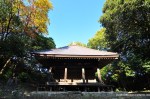
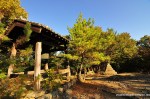
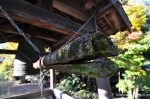
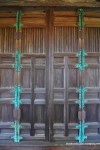
When I reached the mountain top I must have been one of the happiest people in all of Kansai: A stunning view, gorgeous autumn leaves and a temple all for myself. Sure, I couldn’t tweet “I’m in Arashiyama! (Be jealous!)”, but I wasn’t bothered by souvenir shops and crowded locations. Quite the opposite. When I was walking around I had to be careful not to run into one of many one square-meter large spider webs with a nasty middle finger long black and yellow spider in it. The abandoned temple itself was rather unspectacular. All buildings were closed, in rather good condition, and I didn’t even have a closer look if there was a way to open them. I’m not very religious myself, but I respect the beliefs of others and try to be respectful. (Which doesn’t keep me from making fun of them if it’s getting too ridiculous – you know, thetans, magic underwear and stuff like that…)

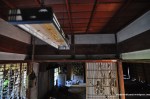
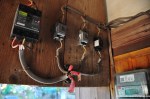
Open and rather interesting was the house of the monk that lived near the Shuuhen Temple. It’s hard to tell when it was abandoned. Some buildings in Japan fade away in no time, others withstand the ravages of time as if they couldn’t care less. It looked like it was built in the 60s or 70s, given the black and white photos of the bell and the belle; judging by the wiring maybe even earlier. The decay there was clearly natural, because thanks to the temple’s location the average bored youth vandal spares the place. Strangely enough the digital display of the power meter still worked…

The temple itself seems to have quite a long history. According to the homepage of the city it is located in, the Shuuhen Temple dated back to Emperor Kotoku’s days (596 – 654) and was first built in 651. In 1578 it was burnt to the ground and stayed a ruin for more than a century until 1682, when it was revived again. Not much information, but way more than one could get for most other temples and shrines in Japan… Now it is famous not so much amongst urban explorers, but more amongst Japanese fans of ghost spots (心霊スポット). I guess it makes sense to look for paranormal activity where people traditionally believe(d) in spirits.

Exploring the Shuuhen Temple was one of those nice, mellow urbex experiences. Sleeping in, taking some local trains, a nice and sunny autumn day, some hiking, some solitude, cold temperatures, but warm sun, beautiful countryside. A relaxed Japanese Indian Summer day…

(*Like Abandoned Kansai on Facebook* if you don’t want to miss the latest articles and exclusive content – and subscribe to the *video channel on Youtube* to receive a message right after a new video is online…)

Read Full Post »