Feeds:
Posts
Comments

Archive for the ‘Tokushima’ Category

I’ve been urbexing for almost 15 years. During that time I’ve never written any articles about equipment, despite being very happy with three different Nikon DSLRs, two Manfrotto tripods, and a Sanyo video camera – which broke in 2019 after almost 15 years of recording countless hours at hundreds of locations as well as places like Chernobyl and North Korea. Videos I always considered a bonus anyway… and I’m still having a hard time thinking of myself as a photographer, given that I have no formal education in that field and only do it as a hobby. A really time-consuming hobby, but nevertheless just a hobby. I also don’t have a background in technology, so what’s the point of reviewing camera equipment when I just have an opinion based on learning by doing? Well, that doesn’t keep countless “influencers” and Youtubers from churning out incompetent nonsense, but I wouldn’t want to be found dead with either label on me! And like my favorite professor at university once said in regards to papers we had to hand in: “Don’t claim anything you can’t proof!”

Fortunately there is no need to be technical or scientific about this Insta360 X4 article, because unfortunately we never got that far…
Like I said, I always considered video walkthroughs of the locations I explore a bonus. I started them pretty much right away, but at first I didn’t even publish them, because I only took them for myself. And even when I published them, I didn’t edit them. No cuts, no voice overs. Just me walking around breathing heavily into the silence. That all came to a sudden halt when my Sanyo stopped working after exploring the abandoned *Trump Hotel*, also wiping out the recordings of the whole day. At that point I was tired of doing the videos anyway – and my co-explorers were increasingly annoyed, because I added 10 to 30 minutes at the end of every exploration for the walkthrough. So I stopped doing them.
For the past 18 months I’ve been exploring solo again (don’t ask, it’s complicated and often quite frustrating, to be honest), but a few weeks ago a colleague of mine showed me an older model Insta360 video camera that a visiting cousin from the States forgot at his place in Japan. I was fascinated by the easy to use 360 photos and videos, so I did some research and decided to get one. I’ve read reviews, I’ve read product pages – I did my best to make an informed decision, because at first I considered buying the X2 or X3 as older models often are cheaper with only slightly fewer / worse features. The X2 was out of the race when I read in a review that it required a smartphone to be activated – something I didn’t read anywhere about the X3 and X4. I guess because it’s an idea that is so stupid that it probably was a one-time mistake by Insta360, facing so much backlash that they removed the requirement from following models. The price difference between the X3 and X4 wasn’t very big and since the latter was only four weeks old at the time, the price on Amazon and in brick and mortar stores was the same, so I decided to get it at my local Yodobashi Camera (street block sized electronics stores with hundreds of employees each, in case you are not familiar with the chain), where I’ve been a customer for almost 18 years – ever since I moved to Japan.
BIG MISTAKE!

Yodobashi Camera was extremely stingy, giving only 1% points on the video camera, despite a promotional campaign of giving 13% points for purchases over amount X – except for (small print)… But when you shell out 80k Yen on a new video camera you are looking forward to use, store points are the last thing you worry about anyway. Fortunately I still had some of those points, which I used to get a seriously overpriced MicroSD card, because without it the video camera would be useless and I wanted to try it out on the weekend before an upcoming urbex trip. 83500 Yen poorer, but with a big smile on my face I left Yodobashi Camera on a Friday evening after an otherwise pretty horrible week.

Saturday was supposed to be a great day, though it started with a rude awakening / realization…
After sleeping in and having a delicious breakfast, I enjoyed a nice unboxing. The first slight disappointment was when I realized that the included battery was dead. Well, not dead dead, but completely empty. Whatever, an hour or two wouldn’t make a difference. It would not dent my great mood for sure. That came a few hours later when the battery was fully charged. I booted the small brick for the first time, its screen came to life, asking me to choose a language – and then the screen showed what the camera was seeing… for about a second or so. Then some text popped up and my heart sank. You gotta be kidding me! What I was looking at was a screen telling me to download an app by Insta360 to a smartphone, iOS or Android, to unlock the video camera. What. The. Heck? I literally felt it in my fingers how my blood-pressure exploded, because unlike pretty much every person on the planet above the age of 6 years I don’t own a smartphone. Never have. In the late 90s I had a black and white Nokia for work (yes, I’m not the youngest anymore, though I started working full-time in my early 20s). When I moved to Japan I had a flip phone or two, but for the past 15 years or so I didn’t have any mobile phone at all, smart or not, because I don’t like them as they turn way too many people into dumb zombies. So here I had a brand-new, quite expensive video camera… that forced me to make it usable by using another device with cameras? Who comes up with stupid ideas like that?!
Certainly not Nikon! Their D7500 DSLR I bought just weeks prior worked with a partly charged battery and regular SD cards straight out of the box 5 minutes after purchase – without any charging or unlocking BS!
So I started to do some research… and didn’t find much. Like I said, I couldn’t care less about smartphones, apps and all that stuff, so I tried to find a solution to unlock the darn X4 via PC or MicroSD card. Of course I couldn’t find anything about that either, so I contacted Insta360 directly – who apparently didn’t read my message and instead sent me a standard reply. So I got back to them, apologized for not describing my problem properly (I’ve been in Japan too long…), and this time got an answer that at least implied that they understood the situation I was in – without being able to help, because though it seems to be nowhere stated on the box, the promo material or even on the X4 website (at least back in mid / late May, maybe they changed it by now)… you really need a smartphone and the Insta360 app to use a newly bought X4 video camera, that seems to work perfectly fine, but is made not usable on purpose by the manufacturer. Which absolutely blows my mind!
How is that even legal?
How can a company force you to use a completely unrelated piece of expensive technology that actually partly does the job of the product you just bought, to make your purchase usable? Without mentioning that essential detail with big warnings before purchase! And in addition, forces you to use an app, which does who knows what in the background without one knowing?
What’s next? You need an electric bike with WiFi to unlock your newly bought car? And if you don’t… sucks to be you, it’s completely useless!

Yodobashi Camera – (The Lack Of) Customer Service In Japan!
After some back and forth it was Monday and I came to the conclusion that I won’t be able to use the Insta360 X4, because it really needs a smartphone to unlock, which wasn’t properly communicated. So after work I went back to Yodobashi Camera, my go-to electronics store for the past almost 18 years. Never had a problem with them, because all the products I bought worked as intended right out of the box. So I went back to the cashier counter where I bought the video camera… and already ran into the first minor bump in the road – apparently I hadn’t paid for it in the camera department, but a neighboring one, which wasn’t a problem on Friday evening, but very well on Monday evening. So I went 20 meters over to the camera department and told them about my unfortunate situation: That I had bought this video camera three days prior, but couldn’t use it, because it doesn’t work without a smartphone, which wasn’t properly communicated by Insta360 or Yodobashi Camera. But I was very careful with everything, I didn’t even remove the protective film from either of the lenses. Some air through the teeth sucking, some going back behind the counter to talk to a superior and then something like the following conversation – it’s in quotation marks, but they are not really quotes, you know… just something like that, from memory:
“I can’t sell this anymore, you opened the box. You can’t return it.”
“But I can’t use the video camera.”
“I can’t sell this anymore, you opened the box. You can’t return it.”
“I don’t have a smartphone. The X4 is useless to me.”
“I can’t sell this anymore, you opened the box. You can’t return it.”
“I did proper research and I only found out about this after I opened the box and tried to use the X4.”
“I can’t sell this anymore, you opened the box. You can’t return it.”
“I bought a D7500 last month, it worked out of the box…”
“I can’t sell this anymore, you opened the box. You can’t return it.”
“Then take it back and ask Insta360 to exchange the X4 – you have dozens of them here, you probably have to return one once in a while anyway.”
“I can’t sell this anymore, you opened the box. You can’t return it.”
“Are you serious? I’ve been a customer here for almost 18 years, spent millions at your store and other ones in the building that has your name. Never had a problem – and the first time I have, you are stonewalling me?”
“I can’t sell this anymore, you opened the box. You can’t return it.”
“Really?”
“I can’t sell this anymore, you opened the box. You can’t return it.”

At this point I gave up and exchanged a few more e-mails with Insta360 (“You should try to return the X4 where you bought it!” No kidding…), but their responses quickly became as useless and repetitive as the one of the guy at Yodobashi Camera – who is just a small cog in a big machine, so I don’t blame him; he’s punished enough with the lighting in the store and the uniform he has to wear all day.
So here we are, after me falling for the usual misconception about (customer) service in Japan, because I rarely ever had a real problem anywhere. It’s great as long as everything is within procedures – if somebody has planned for it, it most likely will go smoothly. Service is great. When service becomes customer service though, i.e. an individual customer needs help that requires improvisation outside of the planned service… you’re basically on your own. The only thing flexible in Japan is bamboo.

Nevertheless I still have moments when I wonder: AITAH?
I’m a huge believer in personal responsibility. If I make a mistake, I stand by it. I find behavior like ordering 20 items of clothes in different sizes and colors with the intention of sending 18 of them back despicable. In fact I’ve never sent anything back that I’ve ordered online, except for two USB-HDDs – and only because they didn’t work. I don’t do fast fashion, I don’t buy garbage from questionable sites like Shein oder Temu, I don’t replace electronics unless they are broken. (RIP, Nikon D7100!) I did due diligence before buying the Insta360 X4 and to this day everything in that (opened…) box is in mint condition. If I would have known about the smartphone requirement, I wouldn’t have bought the X4. It’s the reason why I didn’t buy the X2.
This is actually only the second time that I tell this story to anybody, because part of me is a bit ashamed that this series of unfortunate events happened – despite all the research before buying. But spending more than 80k on a useless brick of tech isn’t exactly something to be proud of. I don’t regret much in my life, but buying the Insta360 X4 I regret. And buying it at Yodobashi Camera is something I regret, too. Maybe Amazon would have been more accommodating with returns…
But I guess it is what it is – only money in the end. And no videos for Abandoned Kansai in the future. Heck, even if I would get the currently useless X4 to work, I would always be reminded of this story. Screw video cameras! Never was a fan, now I dislike them almost as much as smartphones. Which kind of closes the circle. But I’ll make sure to never ever even consider buying anything from Insta360 again – I still don’t understand how it’s even legal that they can do this. What’s next to unlock their cameras? Having to send them a voice message, swearing loyalty to Winnie the Xi(thead)? Apparently they can do anything without people questioning it…
I went back to Yodobashi Camera once more though, two days ago. I spent the remaining shop points I had on presents for my nephews without having to pay a single sen – my goal was it to hit +/- 20 points/Yen, but going to exactly 0 was priceless – and so I left the Yodobashi Camera building one last time with a big smile on my face. Upon arriving back home I cut up my loyalty card after almost 18 years. It probably doesn’t mean much to a large store chain like that. But it meant a lot to me!

Thank you for reading till the end and… What has your worst experience with Japanese (customer) service been? Write it in the comments!

(*Like Abandoned Kansai on Facebook* or *follow us on Twitter* if you don’t want to miss the latest articles and exclusive content – and subscribe to the *video channel on Youtube* to receive a message right after a new video is online…)

Read Full Post »

Finding abandoned places can be a pain in the ass. Nowadays it’s either impossible to find places (because people don’t reveal names anymore, let alone prefectures or cities) – or you look at a map. Yes, there are more and more blogs with maps, revealing the exact locations of some of the best abandoned places in the world. I don’t like either approach very much as the first one is friggin’ teasing and the latter one contributes to the littering and vandalizing of once beautiful spots. Only a handful of serious people go through the time-consuming shenanigans of piecing information together, but that’s the way I prefer to do it…

Finding the Amano Clinic was a pain in the ass. I did some research on it more than 3 years ago and it took me ages to even pin down the area where the damn thing could have been. It was a famous ghost spot, so quite a few people wrote about the place (in Japanese…) – and everybody dropped another piece of the puzzle. After a couple of hours I concluded that the Amano Clinic must have been in a suburb of Yoshinogawa in Tokushima prefecture, a couple of hundred meters away from JR Awakawashima Station. Easy as pie from that point on, right? Wrong!

When Gianluigi and I arrived in Yoshinogawa (we thought) we knew the area the hospital was in and we (definitely) knew what the place looked like from the inside – but we had no idea what the hospital would look like from the outside! (Or if we really were in the right area…) So we parked the car and had a walk through the rural neighborhood. Up a hill we found an abandoned building… but it was just a barn with an office, not interesting at all. Heck, it was so uninteresting I didn’t even take photos.
So we kept on searching:
Cars? Not abandoned…
People? Not abandoned…
Neat gardens? Not abandoned…
Toys? Not abandoned…
Trimmed hedges? Not abandoned…
Laundry? Not abandoned…

After a while we found a house that probably was abandoned – we opened the door and Gianluigi fired the whole set phrase barrage about “Sorry, anybody home?”, which is an estimated 20 times longer in Japanese. Nobody was home and inside the place looked kind of abandoned, but we weren’t sure (not all houses in Japan are locked…). All we were sure of was that it didn’t look like a hospital or clinic, so we left quickly. In another part of the area we found some old-style storage buildings – raising our confidence that we were getting closer. A house close-by looked abandoned, too, but it was locked-up. So Gianluigi asked the neighbors who came back from grocery shopping and they gave us the final hint where the abandoned hospital was. Hallelujah, we didn’t waste valuable time hunting a ghost…

Like the *Tokushima Countryside Clinic* the premises were huge and overgrown. A bamboo forest turned out to be impenetrable, so we followed a surrounding path till we finally found a fence with a hole in it. We slipped through, made our way through a beautiful (and abandoned) Japanese garden and arrived at the back of a wooden house, abandoned for sure, but with an open door. Before we entered we cleared the surroundings and Gianluigi confirmed that we were at the right place when he saw the name written to the side of the building in gigantic but fading letters – Amano Hospital! Old style – in kanji, from right to left; which is quite unusual as nowadays Japanese texts are either written left to right or top to bottom.

Driving to the Amano Clinic took us several hours, finding it after parking the car took us about 60 minutes – exploring it and taking photos took us less than 20 minutes…
Since most of the windows were nailed up it was almost dark inside and the rotting floors / vandalized interior didn’t help either. The building might have had a history as a local doctor’s residence, but there was nothing left for us to see – it looked just like another abandoned Japanese countryside building, the most common and most boring *haikyo* there is.
A couple of months after exploring the Amano Hospital I read on a Japanese ghost spot blog that the clinic had been demolished. I tried to verify that statement for this article and found my old source again. This time I had a closer look at the text and it said that it is unknown when the Amano Clinic was demolished, but it was before the night porter’s house was torn down, which happened in late 2003. The problem is: Gianluigi and I visited the Amano Clinic in early 2011.
That can mean three things:
1.) The guy wanted to write 2011, but wrote 2003.
2.) The guy found another demolished building and thought it was the Amano Clinic.
3.) The Amano Clinic was demolished before 2004 and somebody nailed its sign to a regular old house – the one Gianluigi and I explored…
My guess would be #2, but I don’t know for sure, so contrary to my announcement in the *Second Road Trip To Shikoku* article I won’t add the Amano Clinic to my *map of demolished abandoned places in Japan* – just in case it’s still there… Sorry for that!

And with that you’ve seen all the locations Gian and I visited on our trip to Shikoku. Next week you’ll find out how I almost died while exploring an abandoned ryokan in Osaka prefecture…

(If you don’t want to miss the latest article you can *follow Abandoned Kansai on Twitter* and *like this blog on Facebook* – and of course there is the *video channel on Youtube*…)

Read Full Post »

The Sudden Stop Syndrome is a widespread phenomenon in Japan. When you least expect it, people just stop walking without any warning signs. Half a meter in front of an open train door (even after lining up for minutes!), 5 cm inside of a train (basically in the middle of the door), at the end of elevators, moving walkways and steps, or right in front of you just as you walk down a street. No slowing down, no looking over the shoulder – just a sudden stop as if they were the last person on the planet. So far no deadly incidents have occurred, but there is always the risk of bumping into somebody… The worst part about it: There is no treatment and it can happen to everybody at any time. I don’t know how widespread the Sudden Stop Syndrome is in your country, but in Japan you most likely will observe it at one point or the other. (And by that I mean “at least weekly”.)
I wonder if the Sudden Stop Syndrome was known to the doctor(s) running the Tokushima Countryside Clinic (TCC) from as early as the 1930s on. Probably not. I imagine back then the times were less rushed – and the slower you walk, the less sudden a stop is.

The Tokushima Countryside Clinic is without the shadow of a doubt one of the best abandoned hospitals in Japan, probably in the world – although “hospital” and “clinic” are words that are used rather loosely in Japan.
When I hear the terms in English (or my native tongue German) I imagine rather big health care facilities with several doctors and departments; buildings for dozens or even hundreds of patients and inpatients. In Japan basically every family practice is called a clinic – but even some hospitals can host only a handful of inpatients and close on the weekends. Clinics are usually named after the doctor who owns and runs it, or by the town they are in.
The spookiest hospital I’ve ever been to is the *Hospital #126 in Pripyat*, abandoned in the aftermath of the *Chernobyl Disaster* – a big hospital with several floors and never-ending hallways, with paint flaking off the walls and wind making scary noises; just right out of a horror movie, though reality probably was scarier.
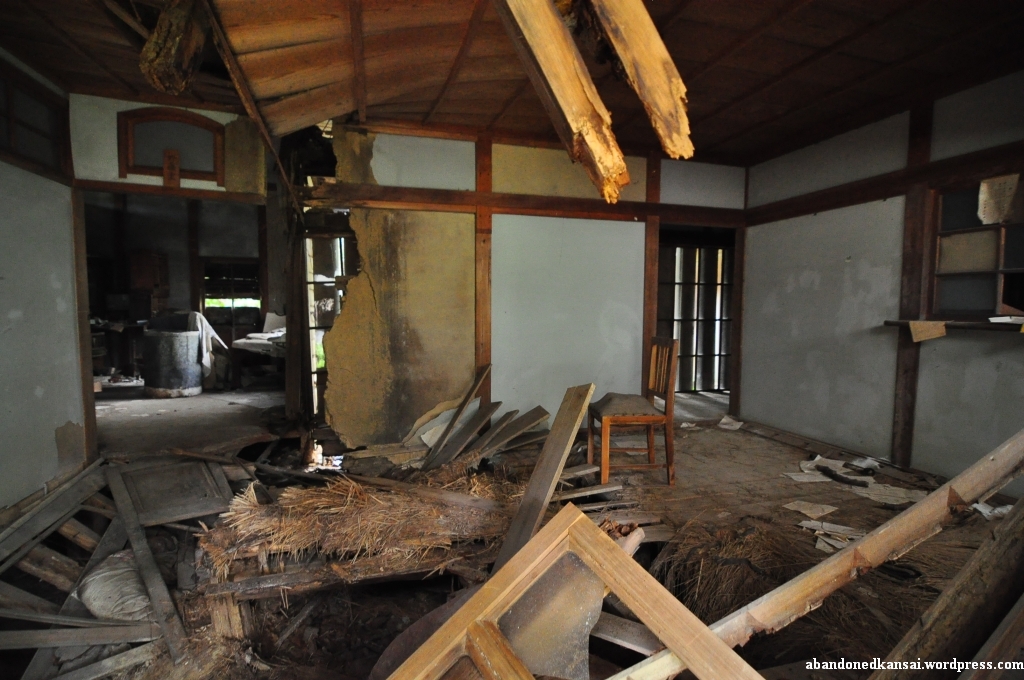
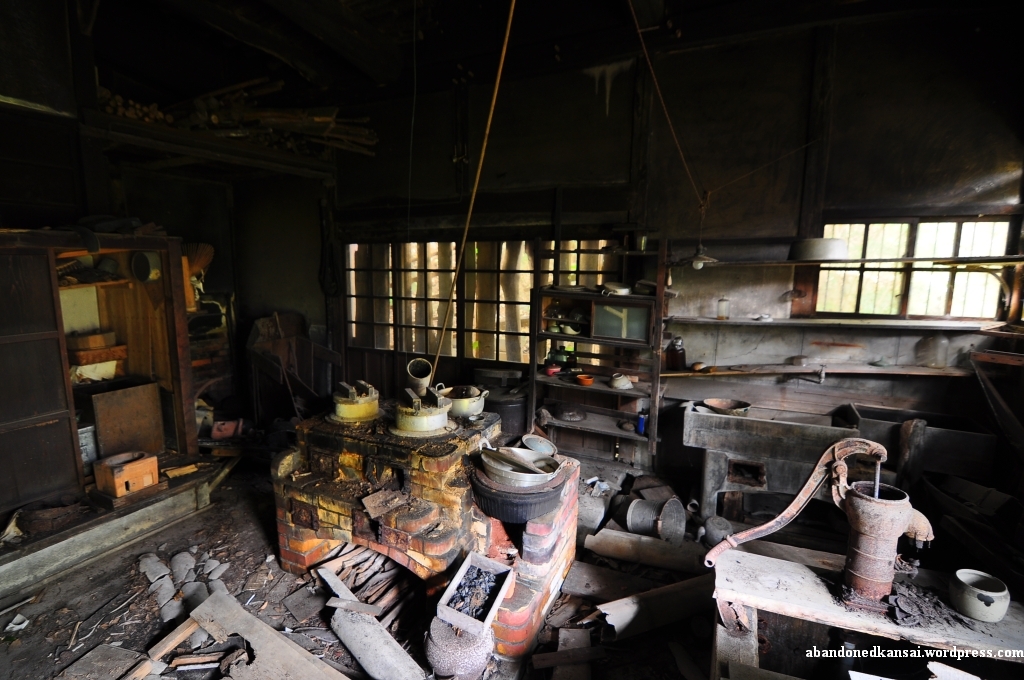
The Tokushima Countryside Clinic on the other hand offered quite a different experience. Located in a small town in the countryside of Tokushima prefecture it once were the rather big premises of the local doctor; half private house, half clinic. Even without the medical equipment it would have been a gorgeous example of an early modern Japanese estate, built about 100 years ago – most likely earlier.
Hidden in the backstreet of a side street in a tiny town the Tokushima Countryside Clinic really is off the beaten tracks and for years it was one of the most secret abandoned places in Japan. Although deserted more than 30 years prior to both of my visits (November 2010 and April 2011) the clinic was in amazing condition – you can find out a little bit more about the clinic’s history *in the article about my first visit*.

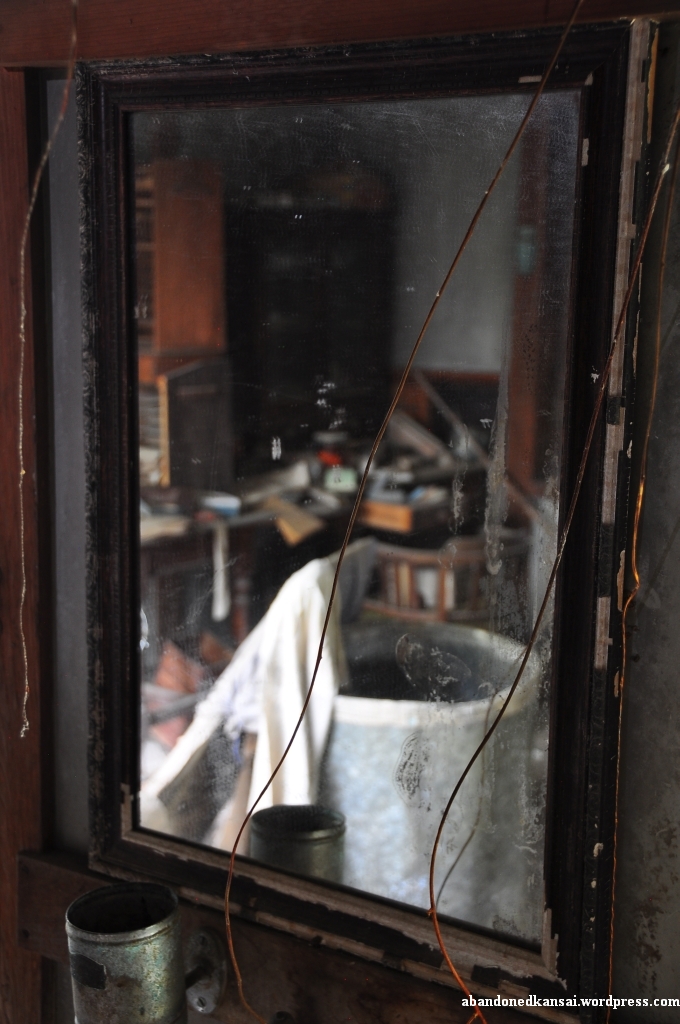
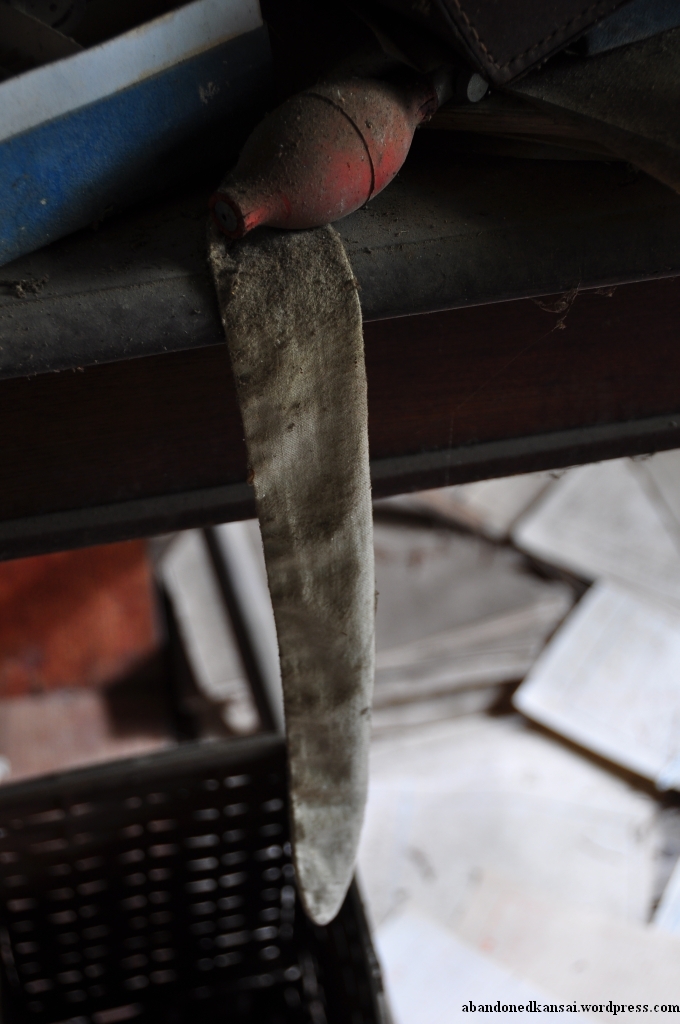
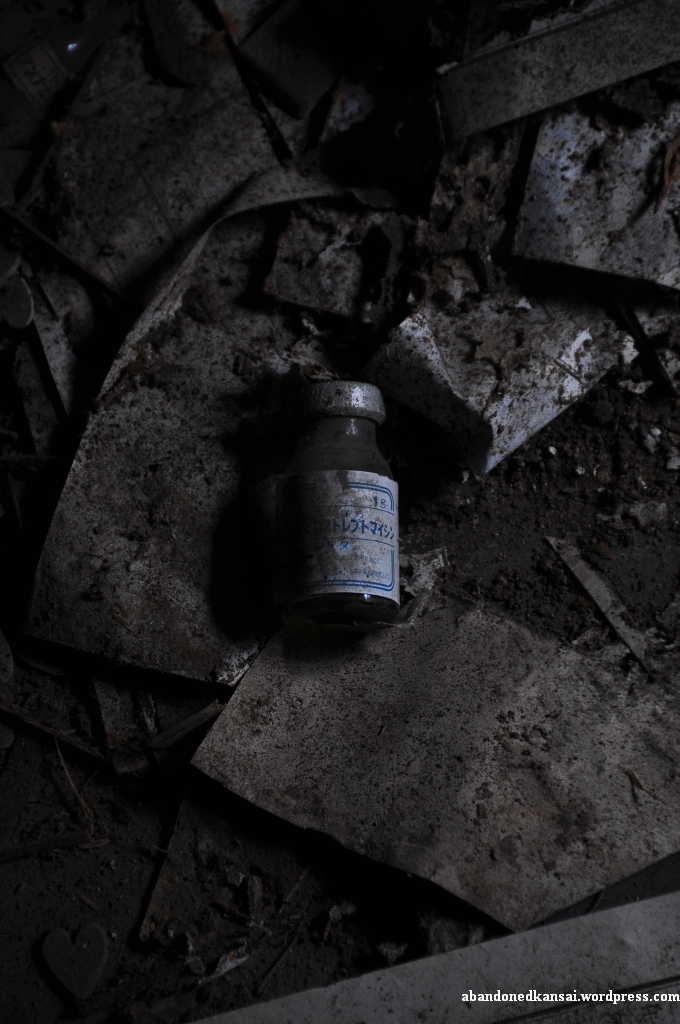
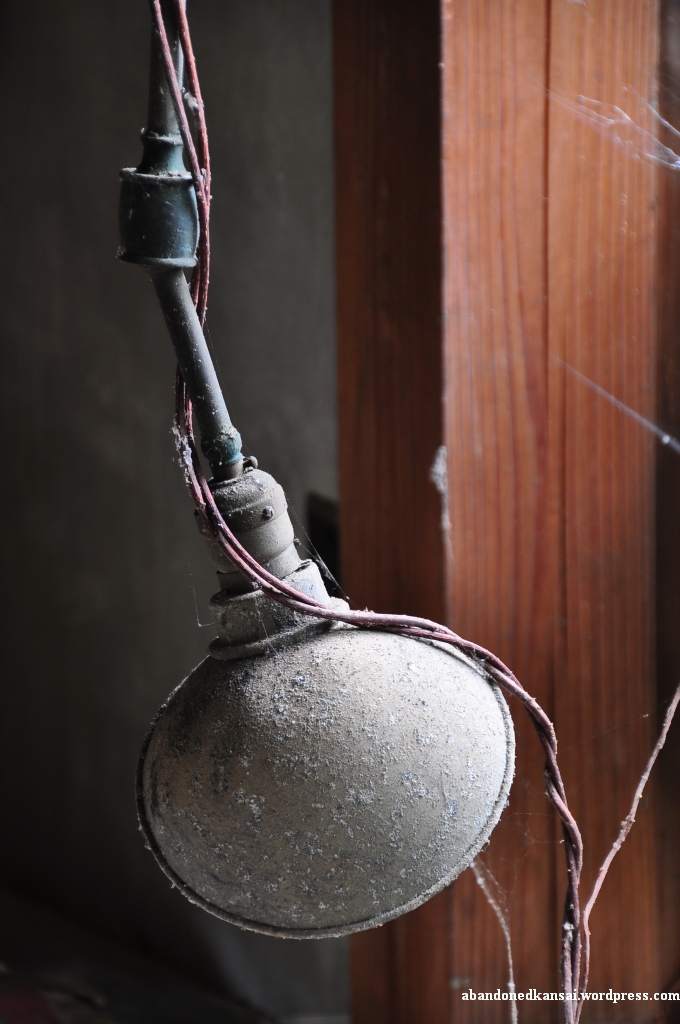
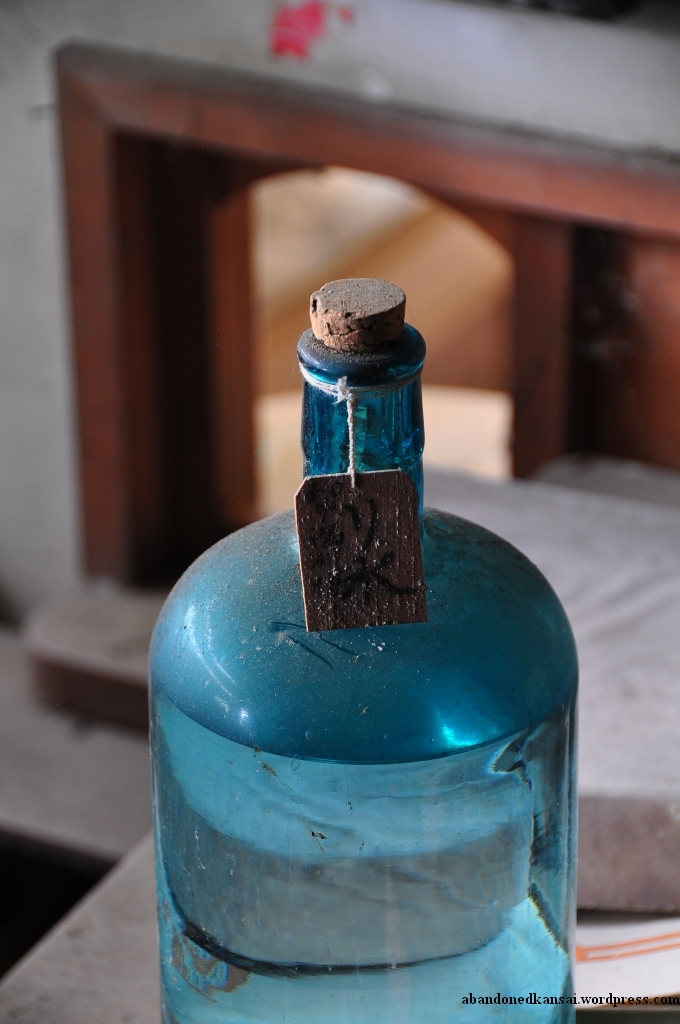
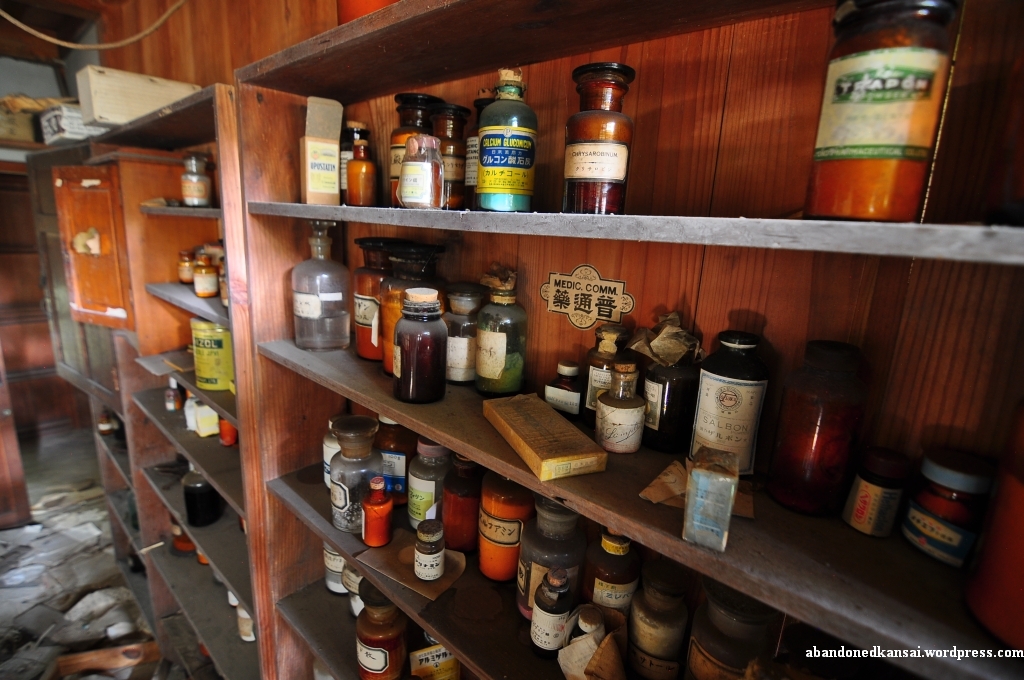
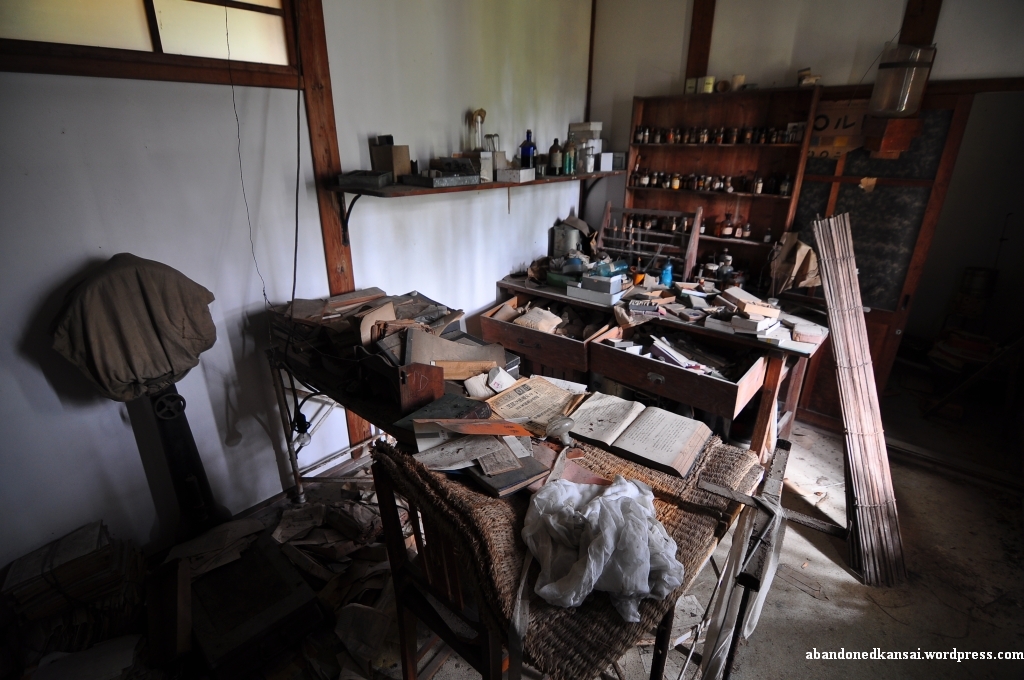
Being at the TCC you actually breathe history. The amount of books, chemicals and equipment left behind is amazing!
On one photo you can see containers of Risoban plaster. “Medical use, “Ideal adhesive plaser”, “Trade mark” – probably high-end when bought, but completely unknown to the internet today.
Oude Meesters on the other hand is still in business. The South African company with the Dutch name is famous for its brandies and actually still uses the same logo you can find on a bottle of Villa Rosa in one uf the photos – putting it dangerously close to containers filled with chemicals probably wasn’t a good idea though.
A box of “Koyamas Safe Pessaries” has written Osaka Juzen Hospital on the side – don’t get your hopes up, that’s not the real name of the Tokushima Countryside Clinic, it’s the hospital Dr. Sakae Koyama was the president of when he developed his birth control method: Koyama designed the conical shaped soft rubber diaphragm, patented as “Koyama Suction Pessary”, first and foremost out of personal motivation as him and his wife were parents to 12 children. The doc made history when he tried to market his invention in the States and the pessaries were seized by the customs as birth control was illegal in the United States in the early 1930s – that lead to a couple of lawsuits legalizing the trade of contraceptives in December 1936.
And the list goes on… and on… and on. Somebody should actually get all the stuff inside of the Tokushima Countryside Clinic and rebuild it as a room in a museum. I think you could spend weeks or months researching all the items in this wonderful family practice, spanning about 50 years in six different decades, maybe seven.

During this two hour long second visit I didn’t even enter the living quarters of this stunningly beautiful mansion – so you have to *look at the previous article* for photos of that part. And like in the article about my original visit I will publish the photo set in monochrome as it adds so much to the atmosphere in this case. I didn’t think much about the TCC recently, but when I went back to the photo set and my notes to write this article I got all excited about it again – some of the pictures actually gave me goosebumps and I hope you’ll enjoy them as much as I do.

(If you don’t want to miss the latest article you can *follow Abandoned Kansai on Twitter* and *like this blog on Facebook* – and of course there is the *video channel on Youtube*…)

Read Full Post »

One of my favorite things about urban exploration is travelling. Most of the time I do day trips within Kansai, but every couple of months I go on mini vacations to other regions. *Okinawa*, *Kyushu*, *Hokkaido*, *Shikoku* … and a couple of more that will be revealed in the future.
I lived in Japan for several years before I started to visit abandoned places – and in those first years I barely travelled within Japan. Kansai has plenty of castles, temples and shrines, some of the most famous in all of Japan. More than enough to get templed out, shrined out and castled out, so I didn’t feel the urge to spend hundreds of bucks on train tickets – and then a similar amount on hotels. Only to see more castles, temples and shrines that look similar to what I can see down the street. Abandoned places on the other hand are unique – and some of them are actually worth spending a couple of hundred bucks, at least to me.
The spring of 2011 saw my second overnight trip to Shikoku. *During the first one* my favorite location on Japan’s least populated main island was the spectacular *Tokushima Countryside Clinic*, a small town doctor’s house, barely harmed by vandals and the ravages of time. My friend Gianluigi, an avid photographer for almost two decades, loved the photos I took at the clinic, so I convinced him to go on a road trip – I would show him that wonderfully spooky gem if we would stop on other abandoned places along the way…
If you are a regular reader of Abandoned Kansai you might remember two articles I wrote about really unique haikyo about half a year ago – the abandoned Japanese spa *Shimizu Onsen Center* and the giant Buddha statue / viewing platform *World Peace Giant Kannon*; both of them were actually part of this second trip to Shikoku.
So here is a complete list of all the locations:
Amano Hospital
Daiwa Pottery
Kuroshio Lodge
Shimizu Onsen Center
Tokushima Countryside Clinic Revisited
World Peace Giant Kannon

One of these places has been demolished since I visited it two years ago – you’ll find out soon which one… and then I’ll add it to my *GoogleMap of Demolished Haikyo*.

(If you don’t want to miss the latest article you can *follow Abandoned Kansai on Twitter* and *like this blog on Facebook* – and of course there is the *video channel on Youtube*…)

Read Full Post »

The Shimizu Onsen Center was the last stop on a road trip to Shikoku my buddy Gianluigi and I did in the spring of 2011. Usually I write a short road trip summary in advance, but these days I’m a bit busy, so maybe I’ll make up leeway some day in the future – after all it was quite a busy road trip with six locations in two days.

Onsen is the Japanese term for hot spring, but usually it is more about the hotel / restaurant that is making use of the water. The Shimizu Onsen Center is one of those hidden gems of the beaten tracks deep in the mountains of Shikoku – and the name is just perfect, because shimizu actually means “pure water”. Pure water that won’t be soiled by many visitors, because the Shimizu Onsen Center closed a couple of years ago. If you try to find some information about it yourself, make sure to not confuse it with several other towns named Shimizu all over Japan (like in Fukui, Hokkaido, Kochi, Shizuoka, and Wakayama). You can imagine that the name is quite popular…

When Gian and I drove onto the already slightly overgrown parking lot we had no idea at all what expect – I had never seen photos of the Shimizu Onsen Center and I’ve never seen any since I’ve been there, so please consider it an original find that hasn’t appeared on any blog about Japanese ruins, neither in English nor in Japanese. As we got out of the car it just started to rain and we were pretty tired after a series of exciting but energy-sapping explorations. Nevertheless we closed in quickly, but carefully, just in case the low buildings nearby were home to some curious spectators. But we were lucky and able to enter the Shimizu Onsen Center without trouble of any kind. Not only that, but there was a note taped to the entry glass door of the spa, explaining a little bit about the place’s history. According to this it was opened in 1981 and operated for 14 years before it was sold to a new owner. Financial trouble began in 2003 and in late November of 2007 the place closed with 160 million Yen of debt – just three and a half years before Gian and I visited.

The Shimizu Onsen Center was fed by a sodium hydrogen carbonate spring with a temperature of 17 degrees Celsius, helpful to treat rheumatism, neuralgia, diabetes, and skin diseases. It targeted mainly day-trippers and tourists who booked accommodations nearby. Opening hours were from 9 a.m. till 9 p.m. (closed every 1st and 3rd Thursday of each month) and the entrance fee was 600 Yen. In the northern part I found a couple of Japanese style guest rooms with tatami mats and small TVs, but I’m not sure if they were used for overnight stays or just to relax between two baths.

Gian and I entered through the normal entrance on the second floor and went straight downstairs to the first floor, where the baths were. Both the one for males as well as the ones for females were equipped with a sauna and featured several frog statues. The Japanese word for frog is “kaeru”, which can also mean “to return”, and that made them good luck charms / symbols for money and coming back safely. This floor also featured the already mentioned guest rooms, which could be reached through a very, very dark hallway. The whole floor and all the items there looked a bit old and run down (like the massage chairs in the hallway and vending machine for razors), but there were no signs of vandalism or theft.

That also applied for the second floor with the front desk and a huge tatami room with a stage – a typical Japanese party room for long karaoke sessions with dozens of attendees. The tiny coop next to the stage even still had all the music equipment including countless tapes. No vandalism, no theft. In the entrance area we found a bin stuffed with umbrellas, slippers were still lined up and the front desk was neat and tidy.

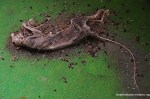
The rather small third floor was exciting and disappointing at the same time. On the one hand the former bar was removed and so were the arcade machines that one day must have been there. On the other hand I finally found some dead animals, in amazingly good condition actually. Two skeletonized birds and a rat with some of the skin left, surrounded and partly covered by dead maggots. One of the bird skeletons was on the stairs on the way up, but the other one was just a couple of centimeters away from the rat – it looked like hunter and prey died at the same time at the same place. And that rat was huge! Maybe 30 centimeters long, and by that I mean the body alone. Since it was grey outside and I had to bring my tripod for the interior shots anyway I set up my little equipment to a comfortable height and zoomed to get a decent picture, being the lazy photographer I am sometimes. I was aware that the exposure time was rather long (a quarter of a second), but I didn’t realize that I zoomed to a point where gravity took over and the lens continued to zoom on its own – and so I accidentally created one of my favorite photos ever, one that still makes me a bit dizzy to this very day. Excited by this new discovery (commonly known as radial blur) I took some additional similar shots with both the rat skeleton and the bird skeleton next to it before we finally ran out of time – we were in the middle of nowhere in Shikoku on a rainy day and had less than 3.5 hours to get the car back to the rental company. Which really reminded me of my *first trip to Shikoku*, but this time the car rental was in Osaka, not in Kobe – and due to Golden Week the roads were a lot busier…

(If you don’t want to miss the latest article you can *follow Abandoned Kansai on Twitter* and *like this blog on Facebook* – and of course there is the *video channel on Youtube*…)

Read Full Post »

I have to admit: After almost five years working for a big company in Japan my view on the country and its people changed quite a bit. Foreigners visiting Japan as tourists and exchange students tend to have a very romanticized image of Japan, even more extreme in the case of people longing to visit Japan for the first time. Actually working in Japan is a totally different thing as the usual struggles at work get multiplied by cultural differences and, yes, sometimes xenophobia – and if you work in an industry that locks you up in rooms without daylight with a lot of “characters” for the major part of the week you tend to generalize certain things. Which is really bad – and the main reason I like to get outside on the weekends and travel to other parts of the Japan to get in contact with people that have nothing to do with my line of work…
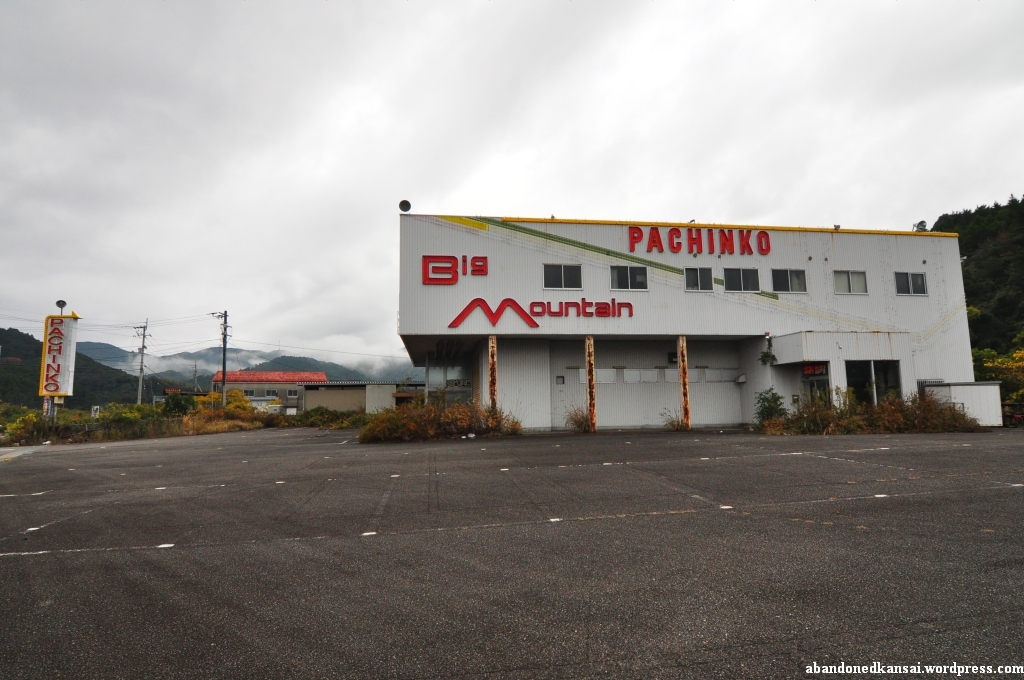
After finding the shangri-la and the Big Mountain Pachinko Parlor on our way from the Sky Rest New Muroto to our next haikyo we finally entered the mountainous part of Shikoku. The roads were getting smaller and the weather got worse. When we reached the area we suspected the F# Elementary School was (we only had vague hints…) it was pouring and the road was so narrow it was only wide enough for one car, villages so small they were not more but an accumulation of a few buildings. And none of them looked like a school. We were driving up and down a road and its backstreets while the time was ticking away – in only a few hours we had to return the car…
Doing urban exploration you don’t want to attract a lot of attention as you never know what people might think of you and your undertaking. After about half an hour we decided we had nothing to lose and when we saw a guy from a well-known telecommunications company having a break in his car Jordy insisted asking him about the school. The guy knew where the school was and told us that it was abandoned in the 1960s, but that it was under construction now. Just down the road, we couldn’t miss it (well, we did before…). Very nice guy – and we were so happy that we finally got some directions. We followed the road for about five minutes, parked our car and then something happened I never thought would happen, especially after being surrounded by dopey and to some extent ignorant people for the bigger part of the year: The guy showed up, not only making sure that we found the school, but also talking to the construction workers, telling them the same story we told him (that we were photographers from France and Germany taking pictures of abandoned places), allowing us to enter the school and taking pictures for as long as we wanted. There it was, the personification of the positive image most people have of Japan – and it blew me away. To all the expats in Japan getting frustrated, and I know there are a lot: Go on weekend trips, re-connect with the Japan you once loved so much. Working crazy hours and having only a few paid days off a year it’s easy and dangerous to generalize, especially when gathering with other foreigners who are frustrated, too…
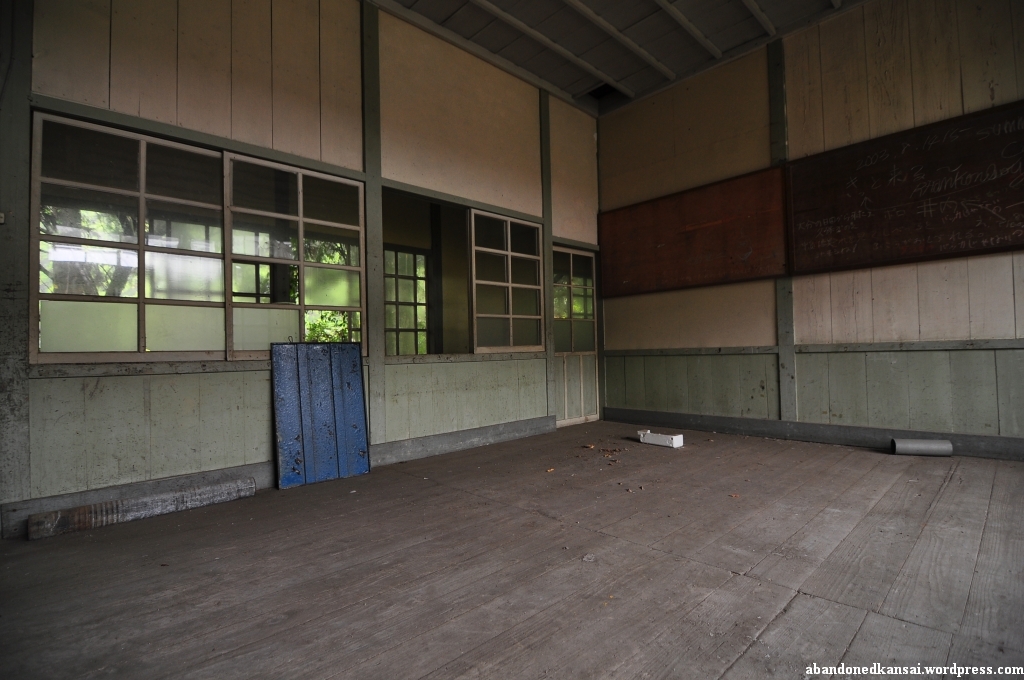
That being said I can finally write a few words about the school itself, although I know barely anything about it. Closed in the 1960s this wooden construction was withstanding decay for several decades until somebody decided not to tear it down, but to renovate it. Construction started about a month prior to our visit (= end of October 2010) and was supposed to finish March 10th 2011. Luckily they spent most of the time building ramps for trucks and machinery as well as taking care of a side building, so the main building of the school was barely touched – giving us the opportunity to take unique pictures as I’m sure the building looks completely different now…
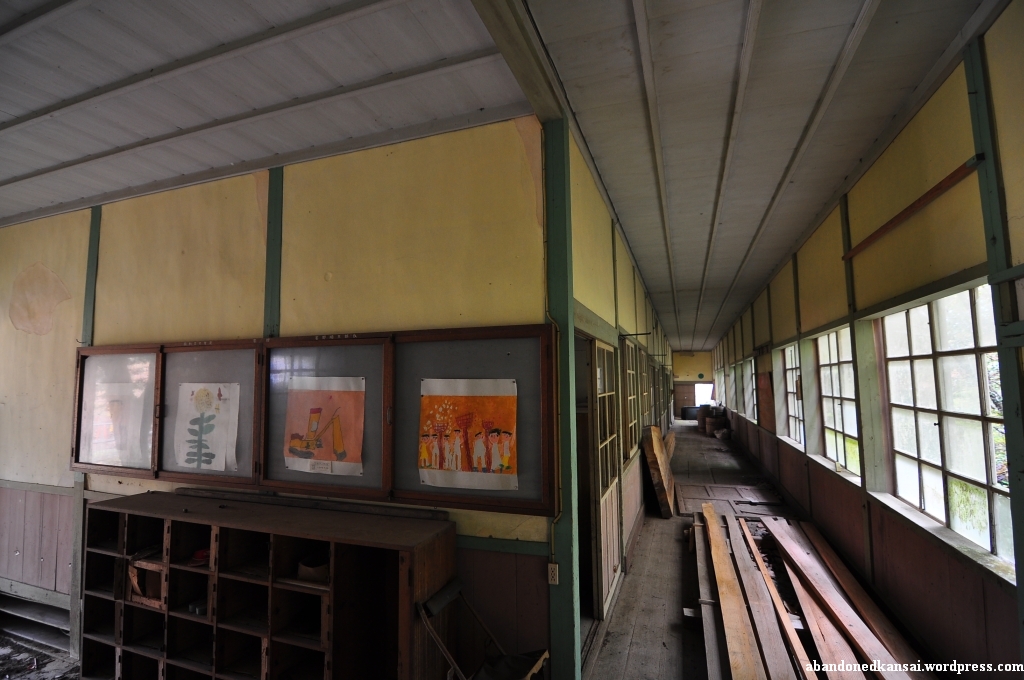
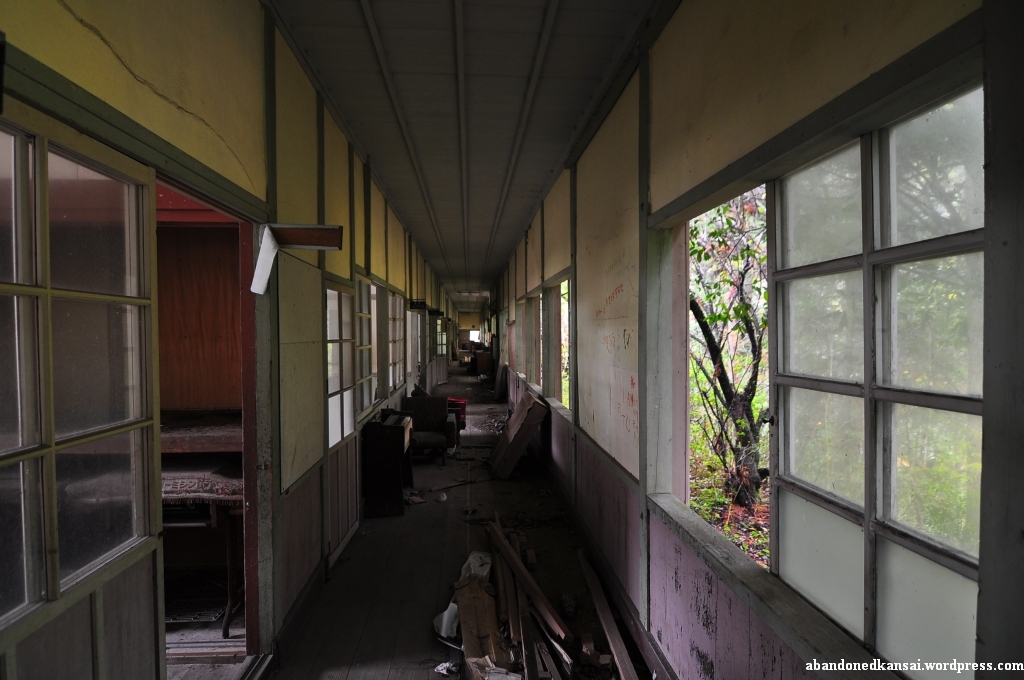
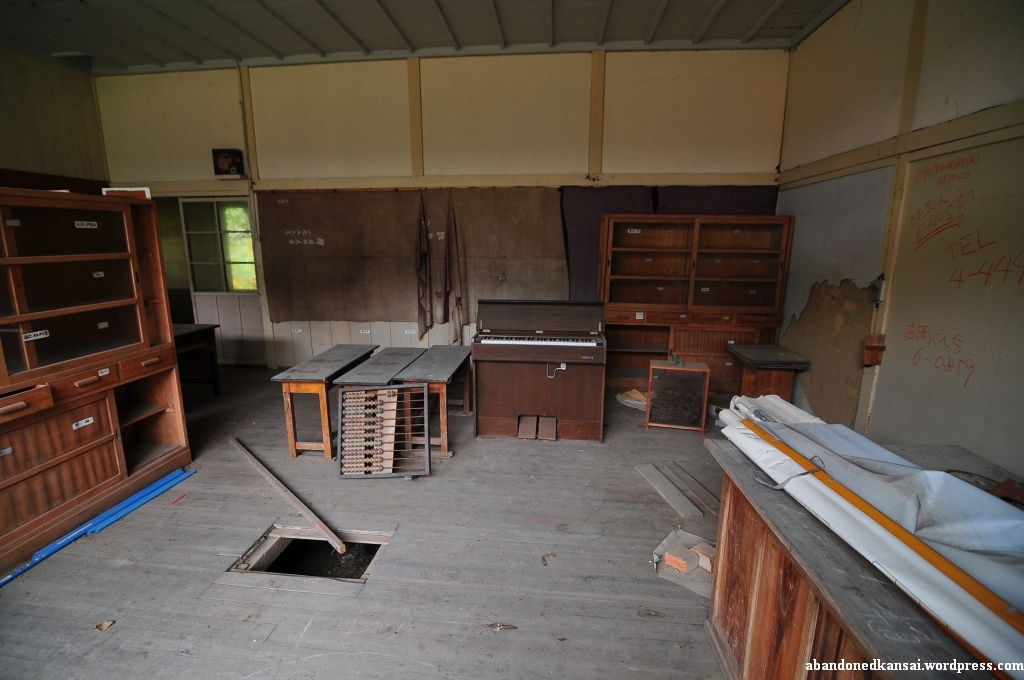
The F# Elementary School was a typical Japanese school of its time: A rather narrow wooden building with a long hallway, classrooms (and other rooms) only to one side. While we entered through a side entrance the main entrance with some lockers and paintings created by students was located in the middle of the building – restrooms being outside on the back side of the school. Most of the rooms were empty, but others were full of all kinds of items: furniture, educational materials, pianos. Yes, pianos. Like the Middle School #3 in Pripyat this school was also stuffed with pianos – I saw at least half a dozen. Another kind of item I didn’t expect were a couple of sewing machines made by Brother, nowadays more famous for printers than for their original core business.
Since this was my first (and so far only) abandoned Japanese school it was an amazing experience to explore it – especially since it was about to be reconstructed and even more so given the story leading to the exploration. The perfect final location of my (first) Haikyo Trip To Shikoku!

Read Full Post »

While I am happily taking credit for finding the hotel shangri-la it was thanks to my fellow explorer that we entered the Big Mountain (or Big Mountein… as they misspelled their own name occasionally) pachinko parlor. We were on the road again to finally get to that abandoned school in the middle of the mountains when we saw said abandoned place of amusement. We turned around, parked the car and actually found an easy way in.
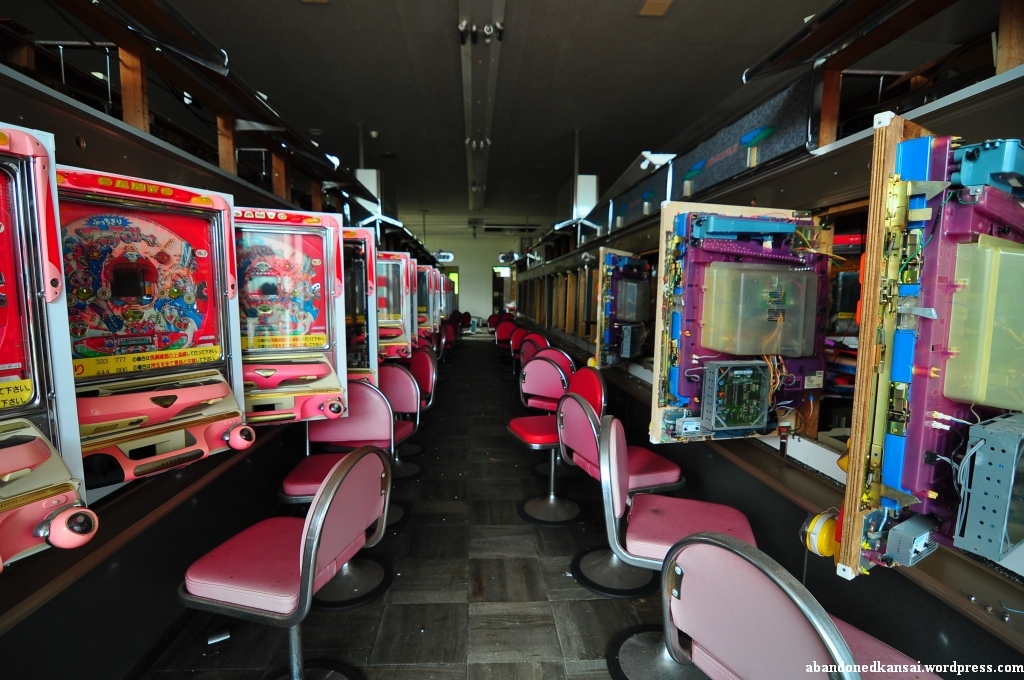
There are plenty of abandoned pachinko parlors in Japan, it’s maybe the most common kind of haikyo overall. But usually they are either boarded up or completely gutted. The Big Mountain on the other hand was in pretty decent shape. Most of the machines were opened, but only a few were missing. Since new pachinko parlors are opened all the time a lot of the equipment gets recycled, but in this case most of it was still there (machines, stools, balls, containers for the balls, signs, …) and in decent condition – especially considering that the most recent calendar sheets we found were from 1996.
Since gambling is strictly controlled by the Japanese state there are only a few possibilities to actually win money – with lotteries and betting. Playing pachinko (パチンコ) you can only win prizes by exchanging the pachinko balls you’ve won for prizes worth less than 10.000 Yen each (82 Euros / 117 Dollars). Popular items are perfumes, expensive lighters and tiny gold bars. Conveniently most pachinko parlors have a “pawn shop” close-by where you can get rid of your prizes; of course 10 to 30% under value! 16 million Japanese play pachinko on a regular basis, about 34.000 play for a living – yes, professional pachinko players…
What most people don’t know, especially in the West, is that the majority of pachinko parlors in Japan are run by the so-called Zainichi Koreans, the biggest ethnic minority in Japan. Of the estimated 16.000 parlors about 50% are run by South Koreans, 30 to 40% by *North Koreans* and the rest by Chinese and Japanese; most of the latter ones associated with the Yakuza, the “Japanese Mafia”. The parlors run by North Koreans usually are under the control of the Chongryon (Ch’ongryŏn / 총련 / 總聯 / 朝鮮総連), the “General Association of Korean Residents in Japan” which has close ties to North Korea. According to an article in the Japan Times up to 200 billion Yen a year are flowing to North Korea that way – currently that’s about 1.7 billion Euros or 2.4 billion Dollars…
Sadly we were running out of time and we still wanted to go to that school, so we left the Big Mountain Pachinko Parlor after about 30 minutes. We even forgot to go upstairs, where you usually can find a couple of sleeping rooms, a kitchen, and a security room with surveillance monitors and a safe. Luckily I explored another pachinko parlor a few months later, this time in Shiga – but that’s *a story for another time*

Read Full Post »

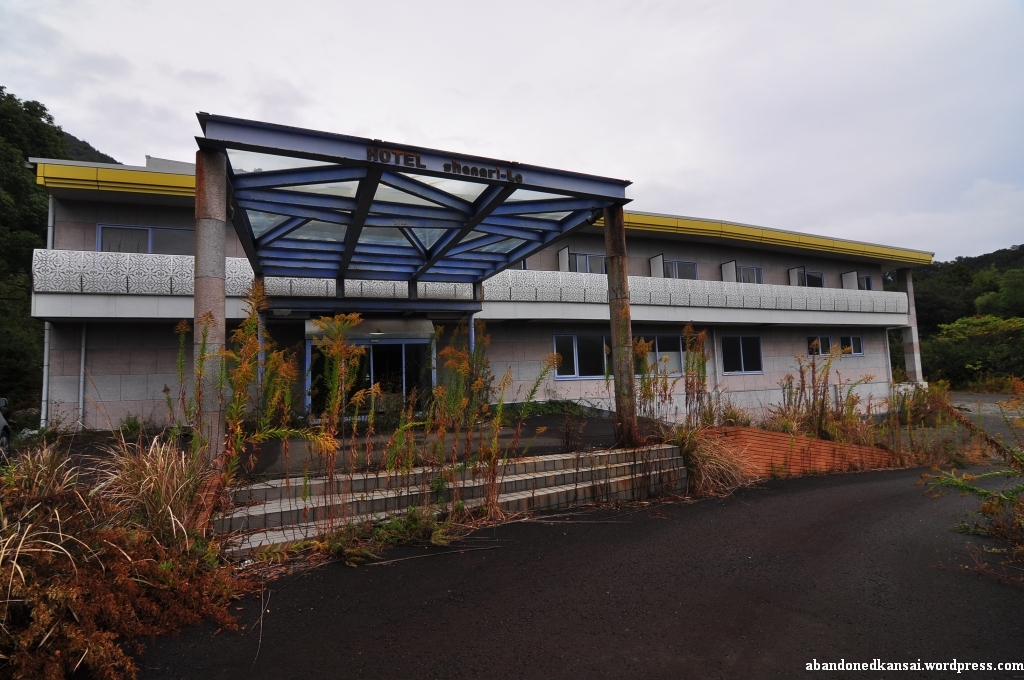
After visiting the Sky Rest New Muroto in the southern part of Shikoku Jordy and I got back on the road to find an abandoned school in the middle of nowhere about 50 kilometers away. While the most popular way of finding places to explore seems to be (mostly useless) books like Nippon No Haikyo and doing research on the internet the most effective way to do it actually is to rent a car and hit the road. In our case we stumbled across two amazing abandoned places (or haikyo (廃墟), ruins, as they are known in Japan) on our way to the school: an abandoned hotel and an abandoned Pachinko parlor in amazing condition.
After about half an hour on the road I saw a huge sign advertising a hotel – and the sign looked like it wasn’t taken care of for at least a decade. I told Jordy about it and we decided to turn around. Driving up a hill for only a short distance there it was, the shangri-la (yes, lower case spelling…). Very unspectacular from the outside Jordy cracked some jokes about how the place doesn’t live up to its name, but we were disabused soon…
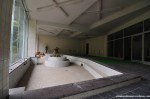
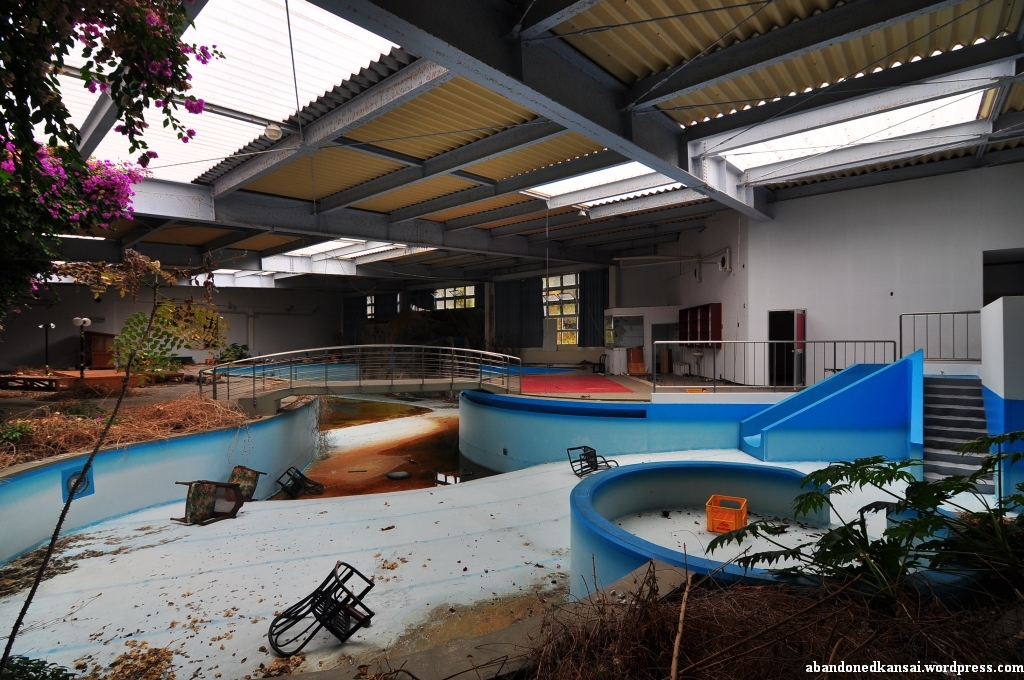
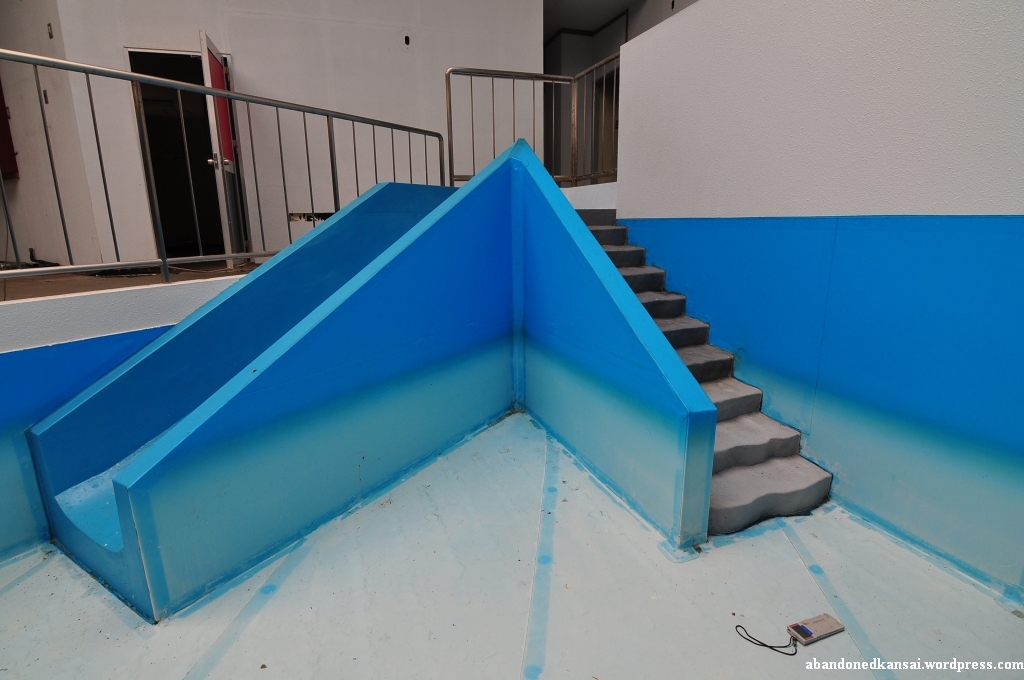
With the front desk gone and the kid’s play area and gift shop almost empty, the shangri-la became interesting when I entered the office behind the front desk. Amongst the mess of documents and office items like ink cartridges scattered all over the floor I found a photo album with wedding pictures. Was the shangri-la maybe more than it appeared from the outside? It was. Right around the corner was a rental counter for towels and other bathing equipment and from there I could already see the indoor water park – huge by Japanese standards, well below average being used to European facilities like that. Nevertheless fascinating, especially since the pool was quite complex with several small water slides and a bridge across to where I assume once a bar was.
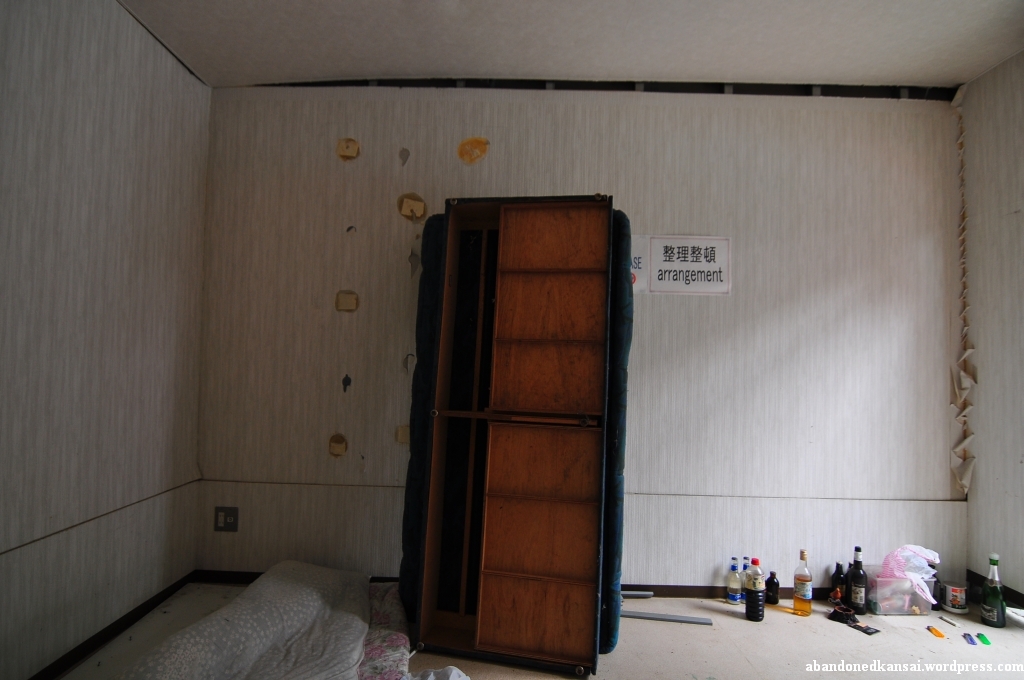
The rest of the ground floor was occupied by a kitchen, another bar and a small recreational area outside. The hotel part of the shangri-la was on the second floor. All rooms were empty by the time of my visit, but one of them was labeled “CHAPEL”, so I guess it’s easy to say that the shangri-la was a wedding hotel.
No Japanese hotel is complete without two shared baths (one for men, one for women) and the ones here were quite nice, including a rather spacious sauna considering the size of the shangri-la.
Jordy and I weren’t the first visitors to the shangri-la in the 10 years since it was closed (judging by the ad for a marathon in November of 2000), but to my surprise I’ve never seen it on the internet before. There was a bit of chaos here and there, but almost none of the typical signs of vandalism ruining the more famous… ruins. No arson, hardly any smashed interior, no broken windows – hardly any mold, well-lit, secluded. A truly great place to explore!

(*Like Abandoned Kansai on Facebook* if you don’t want to miss the latest articles and exclusive content – and subscribe to the *video channel on Youtube* to receive a message right after a new video is online…)

Read Full Post »

Bathing is a very important aspect of Japanese culture, deeply rooted in centuries-old traditions. Although most apartments and houses have their own baths nowadays (unlike 30 years ago), public bath houses are still popular even in residential areas of big Japanese cities. Onsen and sentō are gender-separated places of tranquility where people enjoy a relaxing hot bath (usually around 40°C) after a hard day of work or an intense workout. Onsen towns in the middle of nowhere are popular vacation destinations for the Japanese domestic tourism and a must see / do for many foreign visitors.
Waterparks with slides and wave pools on the other hand are not nearly as popular in Japan as they are in the States or Europe. Most of the time they are considered one amongst many attractions of amusement parks (like at Nara Dreamland) – and indoor waterparks are even more rare.
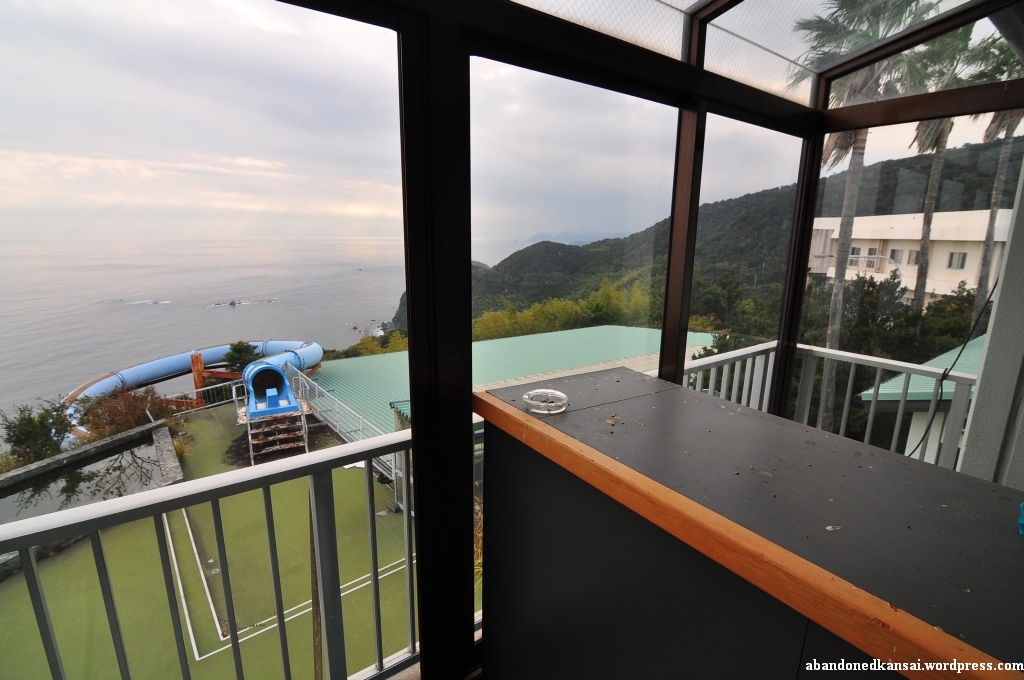
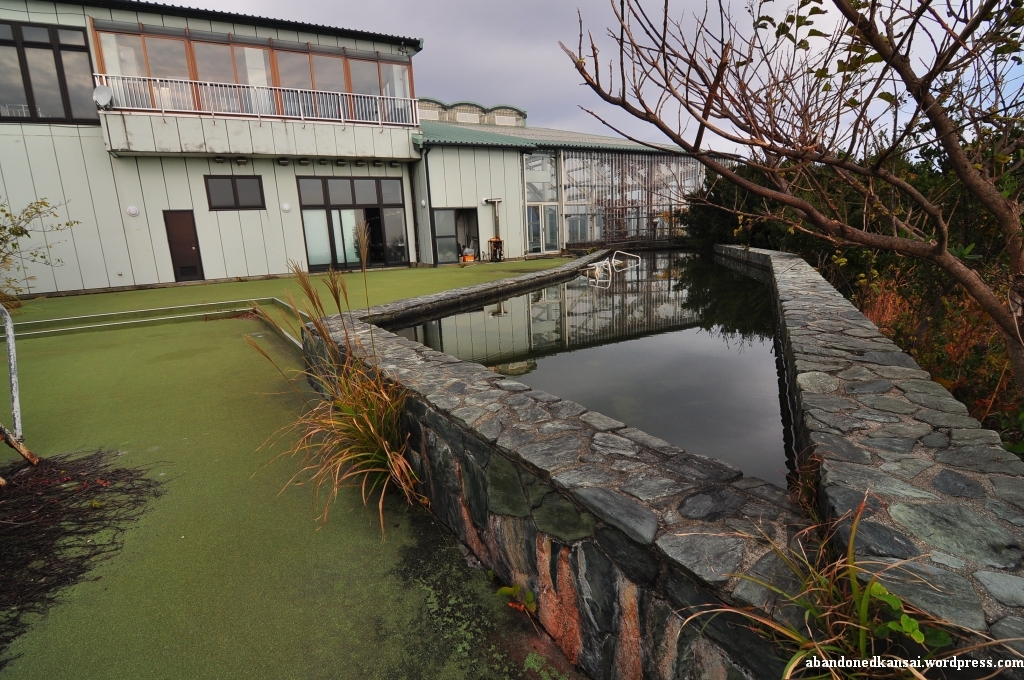
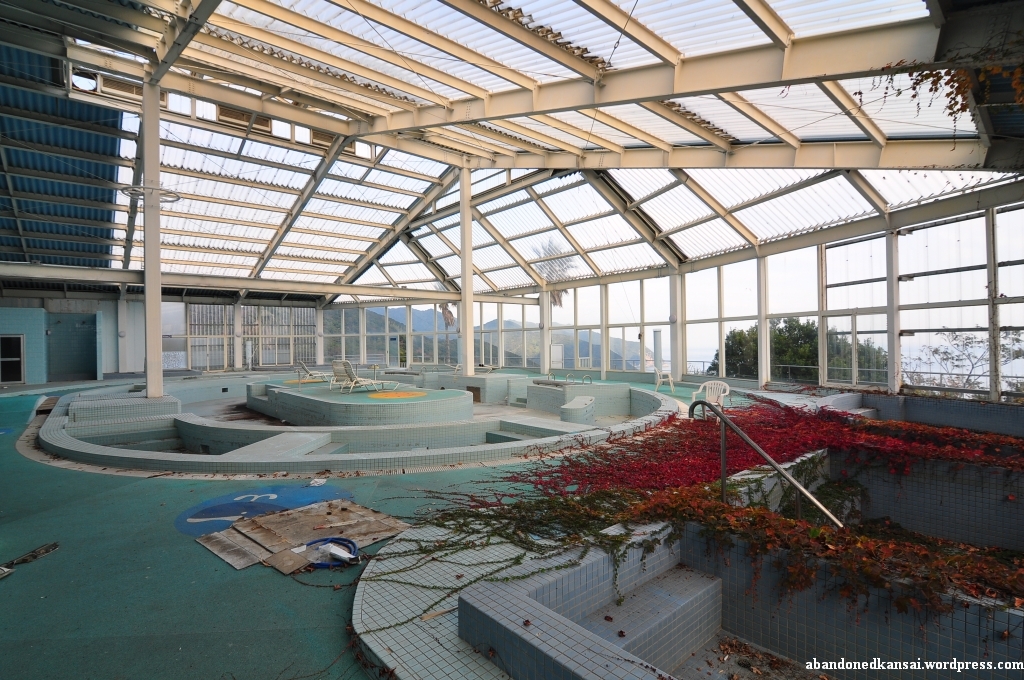
From what I was able to find out the Tokushima Countryside Healthspa (お水荘ヘルスピア), an indoor water park with some hotel rooms, was opened in 1975 (under a different name) to complement a countryside farm, attracting visitors with millions of flowers. It was renovated and expanded in 1994 to be re-opened under its current name – making dance shows and karaoke new selling points. Due to its remote location (35 minutes by bus from the next train station) and the economic crisis the number of guests decreased while the debt piled up to 800 million Yen – and lowering the entry fee from reasonable 1700 Yen per day (10 a.m. to 10 p.m.) with special promotions (Ladies Day on Thursdays for 850 Yen and Friends Day on Fridays for 1000 Yen) didn’t help either – at the end they reportedly sold tickets for as low as 100 Yen… So in 2002, after 27 years, the lights went out at Tokushima Countryside Healthspa.
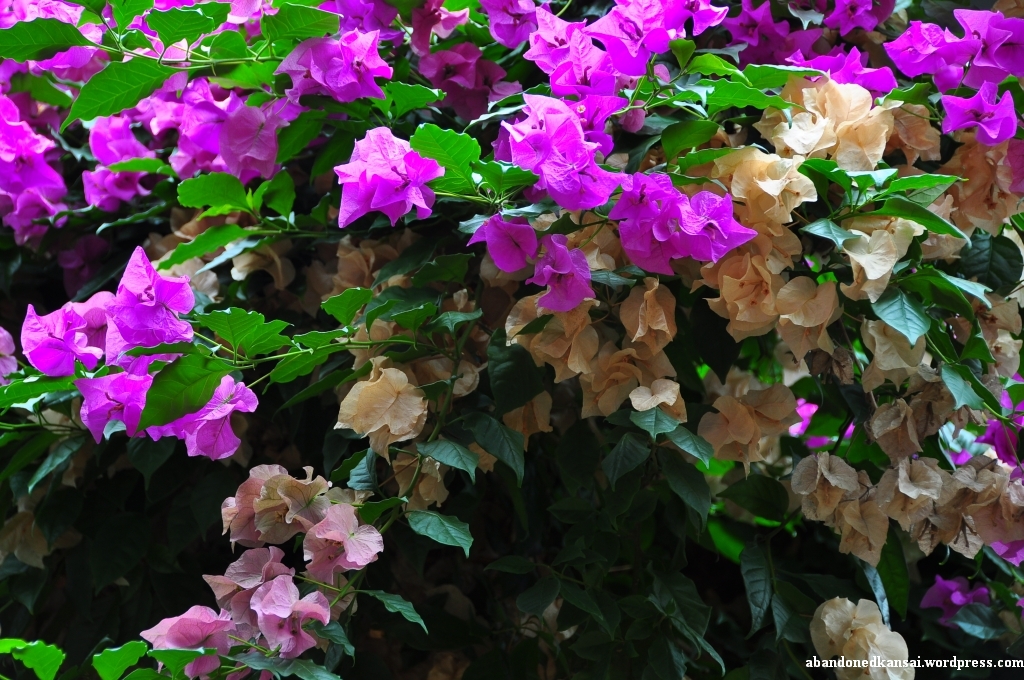
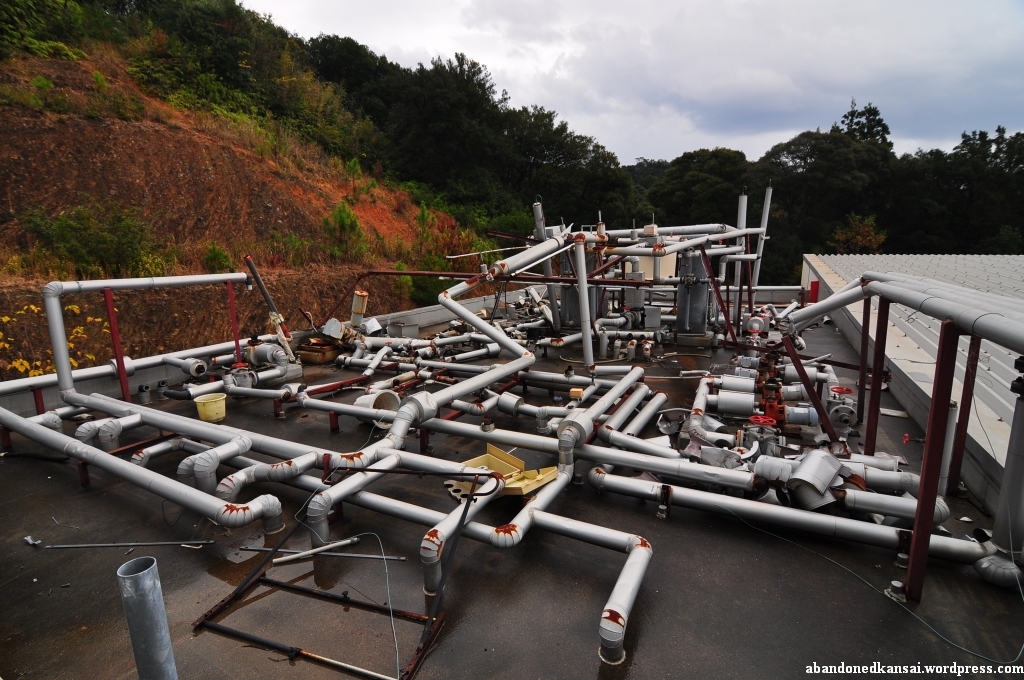
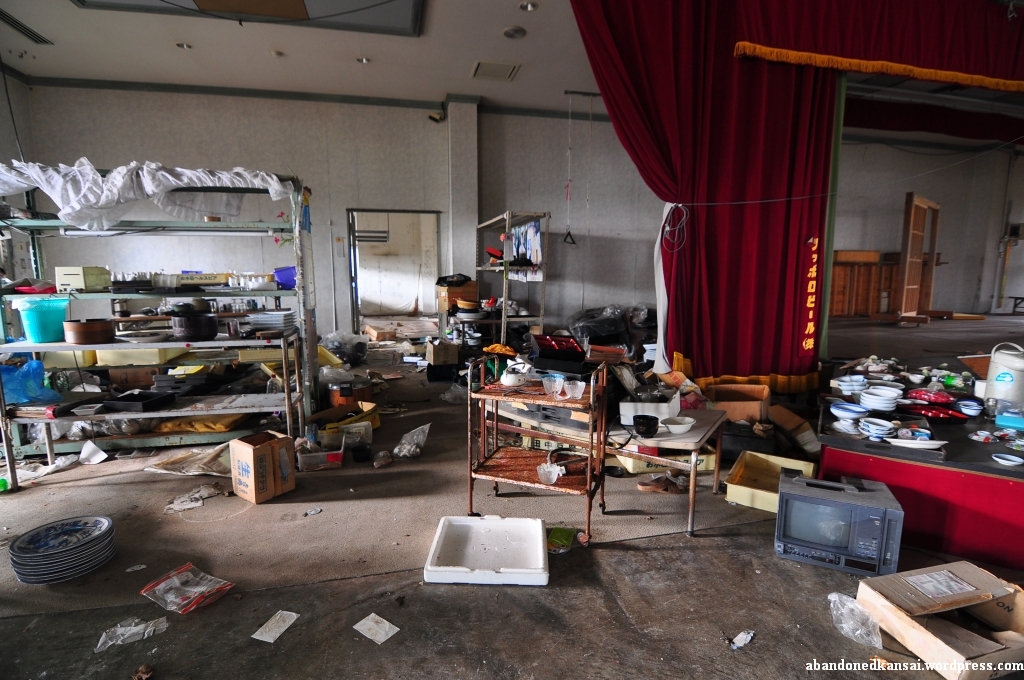
I have to admit: I love indoor waterparks. It’s one of the few leisure activities I really miss living in Japan. Back home in Germany you can find quite a few abandoned public swimming pools, indoor and outdoor, but no abandoned waterparks. So I enjoyed every minute of the two hours I spent there. The hotel part was quite vandalized and rather boring, so I left it rather quickly to go over to the swimming pools and the waterslide. On the way I passed a kitchen and some functional rooms. In two of them quite a few goods and training equipment were lined up, here and there I found price tags scattered all over the place – it seems like the owner tried to sell as much as possible before closing for good. The now empty main pool looked pretty much like a rather local indoor water park in Germany and I loved how red and green leafed plants were growing inside; if there ever was a zombie attack you know where to go to if the Shime Coal Mine is already occupied – if you know what I mean…
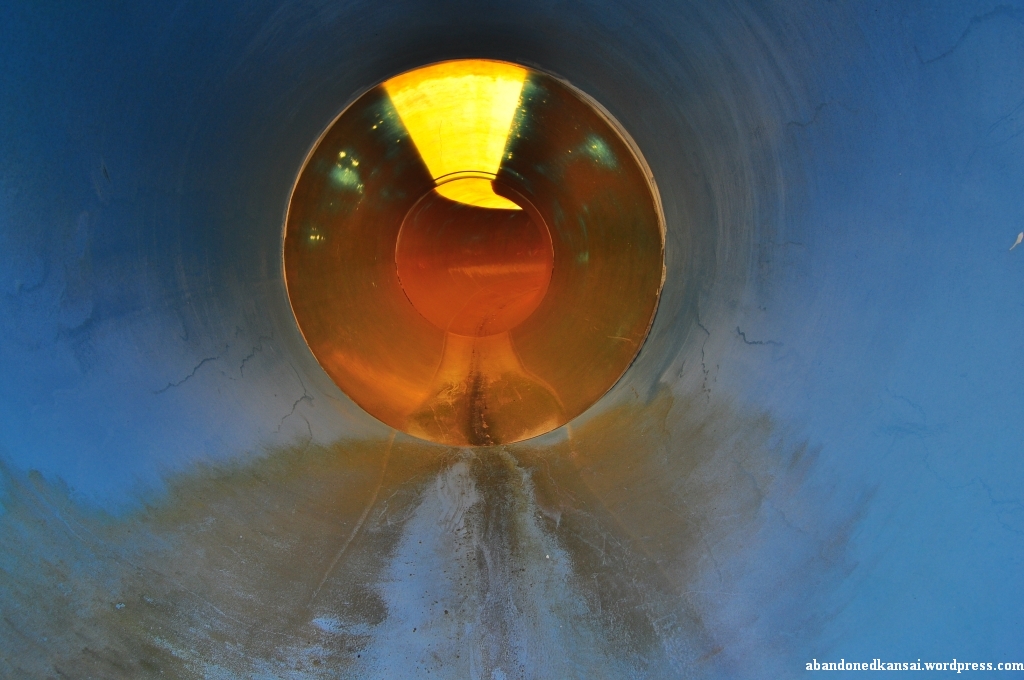
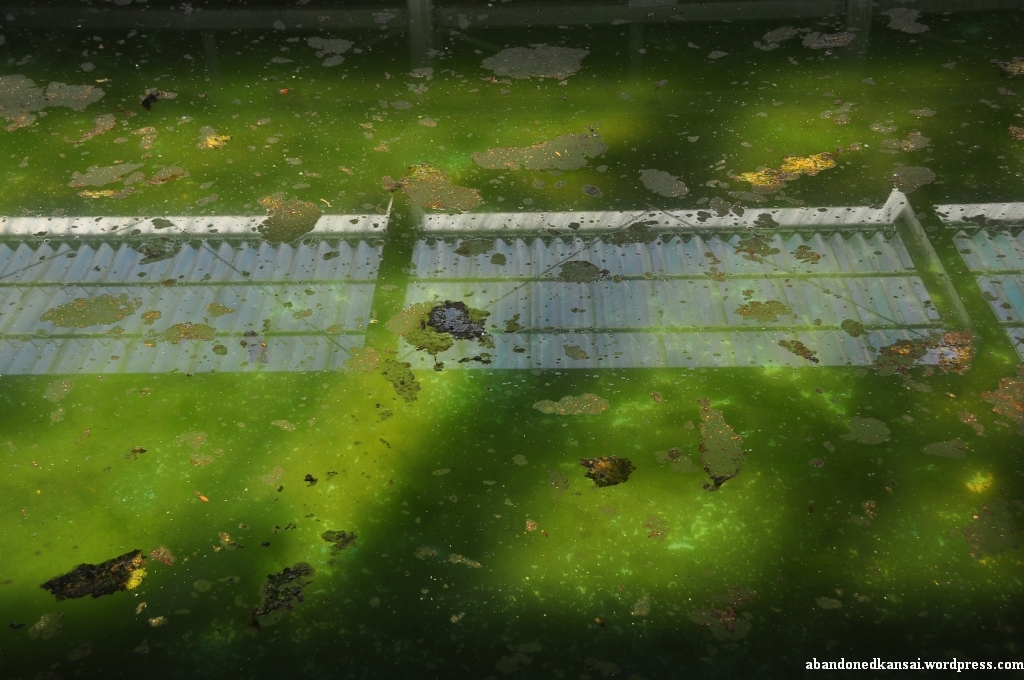
The outside waterslide at the bold cliff looked absolutely amazing, the weather just contributing to the atmosphere, so please have a look at the videos, too. Next to the waterslide was a staircase leading down to a pool, now filled with moldy brackish water, two dead greenish doves lying at the pool edge. Again, amazing atmosphere – kinda spooky, but not dangerous at all; neither physically nor in the form of security or other “guests” thanks to the remote location.
Like pretty much all of the previous and upcoming locations of my Haikyo Road Trip To Shikoku the Tokushima Countryside Healthspa was a unique, relaxed and fascinating place to explore. Shikoku, an urbex heaven!

Read Full Post »

Okay, after quite a few articles about the Zone Of Alienation it’s about time to go back to Japan. I’ll return by posting the previously announced color set of a location I already described before the “Chernobyl & Pripyat” special: The Tokushima Countryside Clinic. I went there in November of 2010 and wrote a long article about it in December. Please *click here to read what I had to say* and enjoy the same pictures as below – just in black and white. (Next week I’ll continue with another location from my Haikyo Road Trip To Shikokuan abandoned indoor waterpark, which is quite a rarity in Japan!)

Read Full Post »

Older Posts »