Feeds:
Posts
Comments

Archive for the ‘US Military’ Category

I’ve been urbexing for almost 15 years. During that time I’ve never written any articles about equipment, despite being very happy with three different Nikon DSLRs, two Manfrotto tripods, and a Sanyo video camera – which broke in 2019 after almost 15 years of recording countless hours at hundreds of locations as well as places like Chernobyl and North Korea. Videos I always considered a bonus anyway… and I’m still having a hard time thinking of myself as a photographer, given that I have no formal education in that field and only do it as a hobby. A really time-consuming hobby, but nevertheless just a hobby. I also don’t have a background in technology, so what’s the point of reviewing camera equipment when I just have an opinion based on learning by doing? Well, that doesn’t keep countless “influencers” and Youtubers from churning out incompetent nonsense, but I wouldn’t want to be found dead with either label on me! And like my favorite professor at university once said in regards to papers we had to hand in: “Don’t claim anything you can’t proof!”

Fortunately there is no need to be technical or scientific about this Insta360 X4 article, because unfortunately we never got that far…
Like I said, I always considered video walkthroughs of the locations I explore a bonus. I started them pretty much right away, but at first I didn’t even publish them, because I only took them for myself. And even when I published them, I didn’t edit them. No cuts, no voice overs. Just me walking around breathing heavily into the silence. That all came to a sudden halt when my Sanyo stopped working after exploring the abandoned *Trump Hotel*, also wiping out the recordings of the whole day. At that point I was tired of doing the videos anyway – and my co-explorers were increasingly annoyed, because I added 10 to 30 minutes at the end of every exploration for the walkthrough. So I stopped doing them.
For the past 18 months I’ve been exploring solo again (don’t ask, it’s complicated and often quite frustrating, to be honest), but a few weeks ago a colleague of mine showed me an older model Insta360 video camera that a visiting cousin from the States forgot at his place in Japan. I was fascinated by the easy to use 360 photos and videos, so I did some research and decided to get one. I’ve read reviews, I’ve read product pages – I did my best to make an informed decision, because at first I considered buying the X2 or X3 as older models often are cheaper with only slightly fewer / worse features. The X2 was out of the race when I read in a review that it required a smartphone to be activated – something I didn’t read anywhere about the X3 and X4. I guess because it’s an idea that is so stupid that it probably was a one-time mistake by Insta360, facing so much backlash that they removed the requirement from following models. The price difference between the X3 and X4 wasn’t very big and since the latter was only four weeks old at the time, the price on Amazon and in brick and mortar stores was the same, so I decided to get it at my local Yodobashi Camera (street block sized electronics stores with hundreds of employees each, in case you are not familiar with the chain), where I’ve been a customer for almost 18 years – ever since I moved to Japan.
BIG MISTAKE!

Yodobashi Camera was extremely stingy, giving only 1% points on the video camera, despite a promotional campaign of giving 13% points for purchases over amount X – except for (small print)… But when you shell out 80k Yen on a new video camera you are looking forward to use, store points are the last thing you worry about anyway. Fortunately I still had some of those points, which I used to get a seriously overpriced MicroSD card, because without it the video camera would be useless and I wanted to try it out on the weekend before an upcoming urbex trip. 83500 Yen poorer, but with a big smile on my face I left Yodobashi Camera on a Friday evening after an otherwise pretty horrible week.

Saturday was supposed to be a great day, though it started with a rude awakening / realization…
After sleeping in and having a delicious breakfast, I enjoyed a nice unboxing. The first slight disappointment was when I realized that the included battery was dead. Well, not dead dead, but completely empty. Whatever, an hour or two wouldn’t make a difference. It would not dent my great mood for sure. That came a few hours later when the battery was fully charged. I booted the small brick for the first time, its screen came to life, asking me to choose a language – and then the screen showed what the camera was seeing… for about a second or so. Then some text popped up and my heart sank. You gotta be kidding me! What I was looking at was a screen telling me to download an app by Insta360 to a smartphone, iOS or Android, to unlock the video camera. What. The. Heck? I literally felt it in my fingers how my blood-pressure exploded, because unlike pretty much every person on the planet above the age of 6 years I don’t own a smartphone. Never have. In the late 90s I had a black and white Nokia for work (yes, I’m not the youngest anymore, though I started working full-time in my early 20s). When I moved to Japan I had a flip phone or two, but for the past 15 years or so I didn’t have any mobile phone at all, smart or not, because I don’t like them as they turn way too many people into dumb zombies. So here I had a brand-new, quite expensive video camera… that forced me to make it usable by using another device with cameras? Who comes up with stupid ideas like that?!
Certainly not Nikon! Their D7500 DSLR I bought just weeks prior worked with a partly charged battery and regular SD cards straight out of the box 5 minutes after purchase – without any charging or unlocking BS!
So I started to do some research… and didn’t find much. Like I said, I couldn’t care less about smartphones, apps and all that stuff, so I tried to find a solution to unlock the darn X4 via PC or MicroSD card. Of course I couldn’t find anything about that either, so I contacted Insta360 directly – who apparently didn’t read my message and instead sent me a standard reply. So I got back to them, apologized for not describing my problem properly (I’ve been in Japan too long…), and this time got an answer that at least implied that they understood the situation I was in – without being able to help, because though it seems to be nowhere stated on the box, the promo material or even on the X4 website (at least back in mid / late May, maybe they changed it by now)… you really need a smartphone and the Insta360 app to use a newly bought X4 video camera, that seems to work perfectly fine, but is made not usable on purpose by the manufacturer. Which absolutely blows my mind!
How is that even legal?
How can a company force you to use a completely unrelated piece of expensive technology that actually partly does the job of the product you just bought, to make your purchase usable? Without mentioning that essential detail with big warnings before purchase! And in addition, forces you to use an app, which does who knows what in the background without one knowing?
What’s next? You need an electric bike with WiFi to unlock your newly bought car? And if you don’t… sucks to be you, it’s completely useless!

Yodobashi Camera – (The Lack Of) Customer Service In Japan!
After some back and forth it was Monday and I came to the conclusion that I won’t be able to use the Insta360 X4, because it really needs a smartphone to unlock, which wasn’t properly communicated. So after work I went back to Yodobashi Camera, my go-to electronics store for the past almost 18 years. Never had a problem with them, because all the products I bought worked as intended right out of the box. So I went back to the cashier counter where I bought the video camera… and already ran into the first minor bump in the road – apparently I hadn’t paid for it in the camera department, but a neighboring one, which wasn’t a problem on Friday evening, but very well on Monday evening. So I went 20 meters over to the camera department and told them about my unfortunate situation: That I had bought this video camera three days prior, but couldn’t use it, because it doesn’t work without a smartphone, which wasn’t properly communicated by Insta360 or Yodobashi Camera. But I was very careful with everything, I didn’t even remove the protective film from either of the lenses. Some air through the teeth sucking, some going back behind the counter to talk to a superior and then something like the following conversation – it’s in quotation marks, but they are not really quotes, you know… just something like that, from memory:
“I can’t sell this anymore, you opened the box. You can’t return it.”
“But I can’t use the video camera.”
“I can’t sell this anymore, you opened the box. You can’t return it.”
“I don’t have a smartphone. The X4 is useless to me.”
“I can’t sell this anymore, you opened the box. You can’t return it.”
“I did proper research and I only found out about this after I opened the box and tried to use the X4.”
“I can’t sell this anymore, you opened the box. You can’t return it.”
“I bought a D7500 last month, it worked out of the box…”
“I can’t sell this anymore, you opened the box. You can’t return it.”
“Then take it back and ask Insta360 to exchange the X4 – you have dozens of them here, you probably have to return one once in a while anyway.”
“I can’t sell this anymore, you opened the box. You can’t return it.”
“Are you serious? I’ve been a customer here for almost 18 years, spent millions at your store and other ones in the building that has your name. Never had a problem – and the first time I have, you are stonewalling me?”
“I can’t sell this anymore, you opened the box. You can’t return it.”
“Really?”
“I can’t sell this anymore, you opened the box. You can’t return it.”

At this point I gave up and exchanged a few more e-mails with Insta360 (“You should try to return the X4 where you bought it!” No kidding…), but their responses quickly became as useless and repetitive as the one of the guy at Yodobashi Camera – who is just a small cog in a big machine, so I don’t blame him; he’s punished enough with the lighting in the store and the uniform he has to wear all day.
So here we are, after me falling for the usual misconception about (customer) service in Japan, because I rarely ever had a real problem anywhere. It’s great as long as everything is within procedures – if somebody has planned for it, it most likely will go smoothly. Service is great. When service becomes customer service though, i.e. an individual customer needs help that requires improvisation outside of the planned service… you’re basically on your own. The only thing flexible in Japan is bamboo.

Nevertheless I still have moments when I wonder: AITAH?
I’m a huge believer in personal responsibility. If I make a mistake, I stand by it. I find behavior like ordering 20 items of clothes in different sizes and colors with the intention of sending 18 of them back despicable. In fact I’ve never sent anything back that I’ve ordered online, except for two USB-HDDs – and only because they didn’t work. I don’t do fast fashion, I don’t buy garbage from questionable sites like Shein oder Temu, I don’t replace electronics unless they are broken. (RIP, Nikon D7100!) I did due diligence before buying the Insta360 X4 and to this day everything in that (opened…) box is in mint condition. If I would have known about the smartphone requirement, I wouldn’t have bought the X4. It’s the reason why I didn’t buy the X2.
This is actually only the second time that I tell this story to anybody, because part of me is a bit ashamed that this series of unfortunate events happened – despite all the research before buying. But spending more than 80k on a useless brick of tech isn’t exactly something to be proud of. I don’t regret much in my life, but buying the Insta360 X4 I regret. And buying it at Yodobashi Camera is something I regret, too. Maybe Amazon would have been more accommodating with returns…
But I guess it is what it is – only money in the end. And no videos for Abandoned Kansai in the future. Heck, even if I would get the currently useless X4 to work, I would always be reminded of this story. Screw video cameras! Never was a fan, now I dislike them almost as much as smartphones. Which kind of closes the circle. But I’ll make sure to never ever even consider buying anything from Insta360 again – I still don’t understand how it’s even legal that they can do this. What’s next to unlock their cameras? Having to send them a voice message, swearing loyalty to Winnie the Xi(thead)? Apparently they can do anything without people questioning it…
I went back to Yodobashi Camera once more though, two days ago. I spent the remaining shop points I had on presents for my nephews without having to pay a single sen – my goal was it to hit +/- 20 points/Yen, but going to exactly 0 was priceless – and so I left the Yodobashi Camera building one last time with a big smile on my face. Upon arriving back home I cut up my loyalty card after almost 18 years. It probably doesn’t mean much to a large store chain like that. But it meant a lot to me!

Thank you for reading till the end and… What has your worst experience with Japanese (customer) service been? Write it in the comments!

(*Like Abandoned Kansai on Facebook* or *follow us on Twitter* if you don’t want to miss the latest articles and exclusive content – and subscribe to the *video channel on Youtube* to receive a message right after a new video is online…)

Read Full Post »
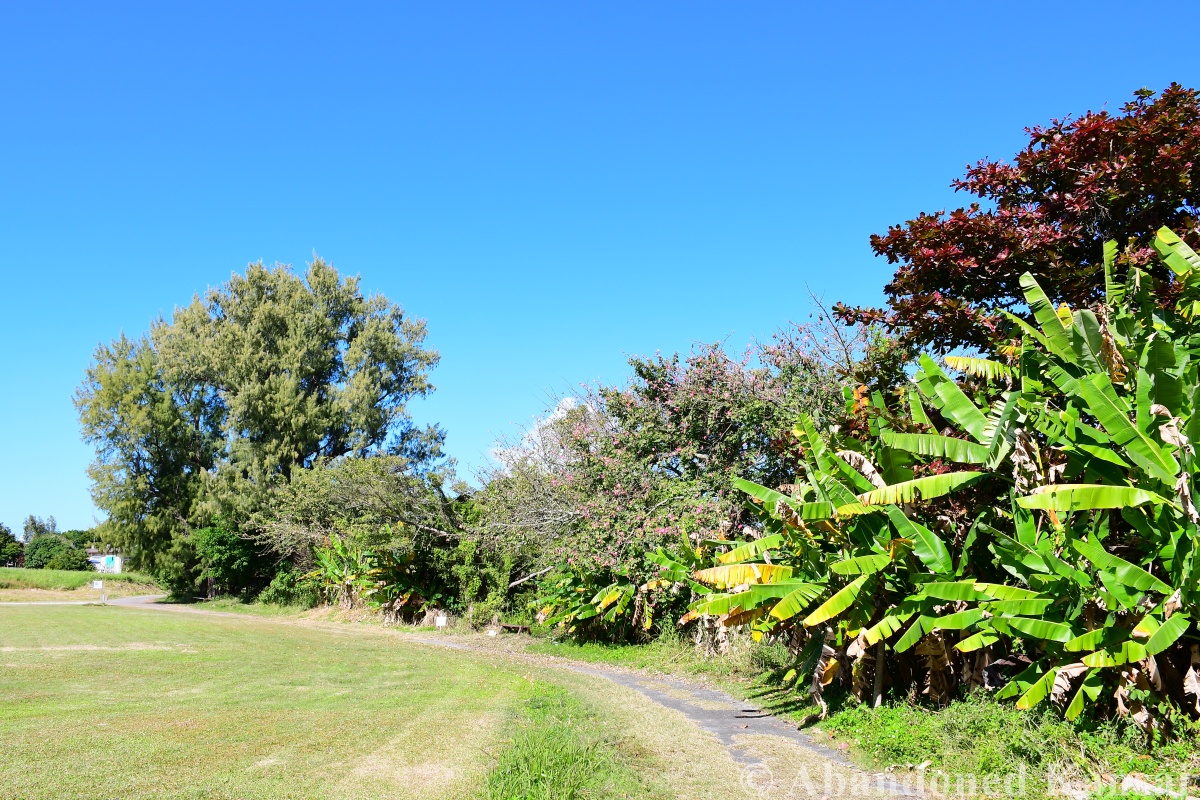
The Patton Barracks in Heidelberg, once the headquarters of the United States Army Garrison Heidelberg, were closed in 2013, along with the nearby Patrick Henry Village – earlier this summer I had a quick look…

While the PHV was quickly used as an emergency shelter for refugees of the European Migrant Crisis after being transferred to the Bundesanstalt für Immobilienaufgaben (“Institute for Federal Real Estate”) in mid-2014, the Patton Barracks went a different way and got bought by the city of Heidelberg, who has big plans with the property that included 29 buildings (everything from storages and repair shops to a theater and even a church!) on 14.8 ha and has access to two street car and bus stops. Currently there are two main projects going on – the planning and construction of an indoor sports arena for up to 5000 paying visitors (planned grand open: October 2019), and a brand-new high tech center (Heidelberg Innovation Park, HIP) for IT, digital media and industry 4.0 businesses to keep up with the city’s latest twin towns – Palo Alto and Hangzhou!
Sadly I wasn’t able to find out much about the history of the Patton Barracks. Apparently it was founded before World War 2, but the first mentioning I found was in connection with the 110th Infantry Regiment, which was activated in 1936 and lead to the construction of a new base (from 1938 on Großdeutschlandkaserne, after WW2 Campbell Barracks) as the existing Grenadier-Kaserne (now Patton Barracks) wasn’t big enough. In 1952 the Patton Barracks became the headquarters of the United States Army Garrison Heidelberg… and 61 years later they were closed, leading to the current activities.
Sorry, just a small article about a quick Exploration, but Abandoned Kansai has a long history of covering closed US military bases in Germany, going all the way back to the *Cambrai-Fritsch-Kaserne* in 2011. Next week’s piece will be much more… mysterious… and Japanese! 🙂

(*Like Abandoned Kansai on Facebook* if you don’t want to miss the latest articles and exclusive content – and subscribe to the *video channel on Youtube* to receive a message right after a new video is online…)

Read Full Post »
Once a massive air base and home to 13000 people, now a partly abandoned civilian airport – the Flughafen Frankfurt-Hahn is kind of a zombie facility in the middle of nowhere, more dead than alive, surrounded by countless abandoned and partly abandoned buildings.
The tax wasting drama began 1951 in Paris, when the occupying French forces decided to build a military airport in the countryside of Rhineland-Palatinate; 100 kilometers west of Frankfurt, Germany. A year later the United States took over and expanded the airfield to the seventh biggest Air Force base in Europe and the second largest in Germany – thanks to the 7356th Air Base Group. In late summer of 1953 the 50th Fighter Bomber Wing was transferred from Cannon Air Force Base in Clovis, New Mexico, and consisted of the 10th Fighter-Bomber, the 81st Fighter-Bomber and the 417th Fighter-Bomber squadrons; the last one being commanded by legendary test pilot Charles Elwood “Chuck” Yeager. Three years later the 50th Fighter Bomber Wing was transferred to France for safety reasons, the Americans being worried that Warsaw Pact forced could overrun West Germany and get hold of the wing’s nuclear weapons. Over the years many different units / squadrons were stationed at Hahn Air Base, including the 496th Fighter-Interceptor Squadron, the 7425th Air Base Group, and the 50th Tactical Fighter Wing. When the Cold War ended, Hahn AB was one of seven major US air bases within 100 kilometers – and the first one to be closed. In 1991 all flying units were inactivated or transferred, and on September 30th 1993 most of Hahn Air Base (consisting of 672 apartments in 43 buildings, 25 barracks, 22 office buildings, 52 repair shops, 51 storage buildings, 343 hangars and bunkers, 23 shops, 5 schools, a hospital consisting of four buildings as well as more than 30 leisure facilities, including a golf course, a football field and a shooting range!) was returned to the German authorities, who had already decided to turn it into a civilian airport.
While current the name of the Frankfurt-Hahn Airport is borderline deceit of potential customers (it is located about 100 kilometers away from Frankfurt in another German federal state without a train or direct highway connection), the intentions were good – the remains of Hahn Air Base basically provided everything you needed to run a civilian airport, due to its remote location it came with a night flight permission, and Frankfurt Airport (the real one, 10 kilometers south of Frankfurt) was at its limits anyway. At first named Rhein-Mosel Airport and mostly run by Fraport (the same company responsible for Frankfurt Airport), the former military airport grew quickly from 19k passengers in 1997 to almost 4 million passengers in 2007 – but neither growth nor size means financial success, so Fraport sold its 65% shares to the federal state of Rhineland-Palatinate for 1 EUR – and 120 million EUR in debt. In the following years the state tried to consolidate the airport, but passenger numbers dropped significantly to less than 2.5 million in 2014; a rather insignificant number in comparison to Frankfurt Airport’s 59.5 million. Despite losing about 10 million EUR per year and the state’s futile efforts to sell at least parts of its shares to investors, Rhineland-Palatinate keeps Frankfurt-Hahn running and is even investing it its future, reactivating / expanding a decommissioned railroad track by 2018 to make access to the airport more comfortable.

Meanwhile other parts of the former Hahn Air Base became abandoned and started to fall into disrepair. Despite most buildings being used by the Frankfurt-Hahn Airport, a police academy, and rented to private companies running a variety of businesses, a lot of them were of no / little commercial value in an area with low population density… especially the barracks / apartment buildings and their parking lots. Some have been demolished to accommodate the needs of the new civilian airport, but quite a few are still standing there, with open fences and barely visible “private property” signs.
Although other facilities in rather close proximity are still in use, most of the abandoned apartment buildings suffered severely from vandalism and consequential damages like mold; not so much externally, but inside – hardly any graffiti, but lots of smashed windows, shelves and fixtures. Some of the buildings have been boarded up after initial damages, but after 20 years of standing around without being used, you can see that whoever is in charge of the former housing area has basically given up on it. A handful of blocks were still in decent condition, but most of them looked like they were beyond repair. A few hundred meters away from the main area of abandonment we found a closed “Ringeltaube” (wood pigeon) shop, right next to and in the same building as the commissary of the Hahn AB. (I didn’t know about them either, but my sister was with the German Air Force for several years and did training at / with Lufthansa – and Ringeltaube is a chain of shops exclusively for Lufthansa employees; food and non-food.)

I guess it’s safe to say (and a bad pun) that the future of the airport Frankfurt-Hahn is up in the air – and so is the future of the remains of Hahn Air Base. Looking at the area on GoogleMaps, it is pretty obvious that the level of abandonment has increased since those satellite photos were taken – and so has the amount of destruction. While there were no signs of active demolition work, some of the apartment buildings still visible online are already missing… and the parking lot in front of the Ringeltaube / commissary is not nearly as busy anymore; it actually went down from several dozen cars to… zero. With that in mind it’s only a matter of time until all visible signs of Hahn Air Base are nothing but a memory, absorbed by Frankfurt-Hahn Airport… and nature. Let’s hope that the airport will survive the current struggle and be profitable soon – the livelihood of hundreds, probably thousands of people depends on it. And there are already enough abandoned airports all over the world… *even one in Frankfurt*!

(*Like Abandoned Kansai on Facebook* if you don’t want to miss the latest articles and exclusive content – and subscribe to the *video channel on Youtube* to receive a message right after a new video is online…)


Read Full Post »
The world famous Rhein-Main Airport in Frankfurt is more active than ever, but like most other big cities, the Hessian banking metropolis had more than one airfield available when aviation was in its early days – the now abandoned Military Airport Frankfurt-Eschborn was one of them.

Built by Nazi Germany as part of the preparations for war, the Military Airbase Frankfurt-Sossenheim (later renamed after Frankfurt’s district Eschborn, or in German: Militärflugplatz Eschborn) was constructed at some time between 1935 and 1939; information varies due to the utmost secrecy of the project. The airport originally consisted of five hangars made of bricks while the rest of the buildings, including the commandant’s office, were made of wood. The runway was a simple patch of grass, kept short by a herd of sheep (hence the code name Schafsweide, sheep pasture) –concrete areas were in front and inside of the hangars to store and maintain the aircrafts. The main purpose of the airport: training pilots and getting military gliders behind enemy lines. The first flying units were stationed at the Military Airbase Frankfurt-Eschborn in 1941, the same year further construction was stopped in favor of the Rhein-Main Airport just some 10 kilometers away. The Nazis used the airfield till August 15th 1944, when it was severely damaged by an American airstrike.
Even before the official end of World War II the Americans took over and the Military Airbase Frankfurt-Eschborn became Camp Eschborn (Y-74). They had some of the damages repaired by German prisoners of war and used the facilities as an alternate airport until the destroyed Rhein-Main Airport was rebuilt. After that the area was used by sapper units with heavy equipment. Overall the Americans were rather secretive about Camp Eschborn, and rumors have it that atomic mines were stored there in case the Cold War would turn hot and the Russian would try to break through the Fulda Gap.
Camp Eschborn was used till October 15th 1991 (when the 317th Engineer Battalion left) and finally returned to the German State in 1992. At first some of the barracks were used to house asylum seekers, then most of the buildings were demolished, so the area could be turned into a nature reserve and a commercial zone. What finally will happen to the rest of the former flying field is still up in the air, and until then the one remaining hangar and a couple of partly demolished buildings are used by several groups for regular training sessions, including the Federal Agency for Technical Relief and the German Federal Police – both training with dogs, which is one of the reasons why you should be extra careful at this only partly abandoned place. Oh, and a bunch of minors (not miners!) use the area as a hangout!

It were those minors and my friend Torsten that made exploring the rather unspectacular remains of Camp Eschborn so memorable. As you can imagine, the remains of the hangar area were fenced off and we had to find a way in. As chance would have it, we saw a bunch of those kids, teenagers… age 14 to 17, probably… and while I would have avoided them completely, my old buddy was up for a little chat and waved them over. Torsten is the fatherly friend kind of guy, always mellow, always friendly; must be the social worker in him. So he talked to those kids for a while, gained their trust, and of course they told him how they got in and described to us how we could, too, maybe a 20 minute walk from where we were on the other side of the area. We thanked them and were about to leave or even already turned to go, when Torsten addressed them again with something like: “Uhm, guys, that stuff in your hands… that isn’t beer, is it? You look way too young to be of legal drinking age! That stuff really isn’t good for you at your age…” I know I probably should have been more loyal to my friend, but he totally cracked me up with that, so I bursted into laughter: “Dude, you just interrogated those kids for five minutes on how to commit trespass – and now you give them a lecture on legal drinking age?!” while at the same time the guy on the other side was like: “I am 16 already. I know I look younger, but I swear, I am already 16!” (And 16 is the legal drinking age for beer in Germany…) It was just hilarious! Everything calmed down immediately after that, of course. But for a second or two this was one of the funniest things ever to me. After the guy left with his bottle and I convinced Torsten that it really didn’t matter if he was 15 or 16 (though I barely ever drink alcohol myself and I wouldn’t mind if they’d change the legal drinking age to 20 or 21, like in many other countries), we continued on the road we would have continued on anyway… and found a hole in the fence just around the next corner.
The rest of the exploration was less entertaining and not exactly spectacular, though of course we met our teenage friends again, who were hanging out with more of their friends – and the second group clearly wasn’t happy at all that the leader of the first group turned into some kind of self-proclaimed guide for us. Neither were Torsten and I, because first of all it destroyed the atmosphere just a tiny little bit – and then there was the risk factor. The buildings, including the hangar, were in pretty bad condition and I have no problem taking responsibility for myself. But at the same time I was a bit worried that one of those slightly drunk youngsters would hurt themselves… and then what? I don’t need stuff like that, so after a while we managed to say goodbye when the second group left us with a little speech about how they planned on climbing the roof now. At that point we had seen most of the few leftovers anyway, despite the fact that most of the hangar windows were bricked up, so we went to the maintenance concrete area, where I shot the usual walkthrough video before we finally left the former Military Airport Frankfurt-Eschborn.

(*Like Abandoned Kansai on Facebook* if you don’t want to miss the latest articles and exclusive content – and subscribe to the *video channel on Youtube* to receive a message right after a new video is online…)

Read Full Post »
My summer vacation to Germany in 2013 felt a little bit like the weirdest USO tour ever as I was basically heading from one abandoned military base to the next – in the end I went to about a dozen of them, ranging from “demolished” to “dangerously decaying” to “in almost perfect condition”. And of course some of them turned out to be just closed and heavily guarded… but since urbex is one big grey area I’ll write about all of them sooner or later.
The Babenhausen Kaserne I remember vividly from back in the late 1990s, when I saw it every couple of weeks on my way from my hometown to my place of study – I was always impressed by the massive red stone wall and the surprisingly beautiful buildings, but I had no idea that its history dated back to the turn of the century (between the 19th and 20th century that is…).

After the necessary negotiations with the Reichstag and the war ministry in 1899 (pre-Orwell and therefore pre euphemisms like Ministry of Defense!), the construction of the Babenhausen Kaserne began in the following year, with a groundbreaking ceremony on July 3rd. 15 months later the construction of 21 buildings and a water tower were finished and the 2nd battalion of the 61st field artillery regiment of the Grand Duke of Hesse was the first unit to move in. Almost 13 years down the road, on August 7th 1914, the regiment was transferred to fight in World War I. Now empty, the Kaserne soon was used as a hospital during the war. Upon Imperial Germany’s defeat in November 1918 the regiment briefly returned and then was deactivated in December; three months later the hospital was closed. In the following 15 years the Kaserne had many tenants: a French infantry battalion, a Reichswehr regiment, the Hessian security police, the Hessian police school, a section of the University of Darmstadt, the SA, the 36th Field Artillery Regiment, a horse riding and driving school for the German cavalry, a flying school and development detachment, a maintenance company, a Flak unit and several other smaller groups – and for some time it was even completely empty.
On March 25th 1945 the 3rd infantry division of the US Army liberated Babenhausen, confiscated private houses and used the Kaserne as a camp for displaced persons and as a POW camp for up to 30.000 German soldiers – PWTE-A-20 was disbanded in October 1946…
In May 1947 the US Army officially took over the Kaserne for the United Nations Relief and Rehabilitation Administration (UNRRA), organizing refugee camps for Russians and Poles as well as shelter for displaced people from Lithuania, Estonia and Latvia.
From February 1951 on the Kaserne became a military purpose again. The US Army expanded the base and in August the 36th field artillery group moved in – followed by the 36th FA GP; 18th, 519th and 593rd field artillery battalions, the 41st field artillery group (later becoming the 41st field artillery brigade). In the early 1990s the HHB 41 Brigade, 1/27 FA, 4/77 FA, 77 Maintenance Co and the 72nd Ordnance Battalion supported Operation Desert Storm from Babenhausen.
The deactivation of the Babenhausen Kaserne began in 2005 and on July 9th 2007 more of 100 years of military history ended with a closing ceremony.

Phew – researching and writing about the history of the Kaserne in Babenhausen actually took a lot longer than exploring it as the whole area was fenced off and guarded very well. Heck, when I got close to the main gate a watchdog started to bark and didn’t stop until I was very, very far away. Heading for the back of the area, now home to a small airfield, didn’t do much either – barbed wire metal fences, concrete blockades and massive gate made it impossible to infiltrate the base without getting hurt or caught by security.

Sadly the future of the Babenhausen Kaserne is still uncertain. Right after the barracks were closed several interest groups developed the Brundtland-Park concept, but a dedicated homepage in German hasn’t been updated since 2009. More recent news articles show that there has been lots of talking in the past years, but no decision making – and so the area is slowly decaying, heavily guarded…

(*Like Abandoned Kansai on Facebook* if you don’t want to miss the latest articles and exclusive content – or subscribe to the *video channel on Youtube* to receive a message right after a new video is online…)

Read Full Post »
Urbex is quite an unpredictable hobby, especially in Japan, where wrecking crews can demolish buildings in no time; abandoned or not. (It actually happened once that I went on vacation and when I came back a building in the neighborhood was turned into an asphalted parking lot…) But demolition is not the only enemy urbexers have. Sometimes you go to a place and you think you know exactly where it is, but it turns out that your research wasn’t good enough. Luckily that never happen to me, but I’ve been on trips with fellow explorers who carried wrongly marked maps – and in that case is can be enough to be off by a street or two and you will never find what you are looking for (it almost happened to me when looking for the *Amano Clinic*, a frustrating and time-consuming experience!). Sometimes buildings have been boarded-up and are therefore inaccessible now, on other occasions they are still locked and electronically secured, which explains why your source only had outside photos. Every once in a while you run into nosy neighbors who keep a close eye on you, and sometimes places are so trashed that it’s not worth having a closer look. The latest trend, at least in Germany, is turning abandoned military bases into solar parks – they get rid of the remaining buildings and use the vast areas of concrete and asphalt to set up some green energy. With no good videos and barely a handful of photos, those locations are not worth an own article, but as compilations they should be entertaining enough to carry this blog for a week. Welcome to the first issue of “Worst Of” – 14 disappointing locations on 6 exploration days!

The first dud of my trip to Germany in 2013 was the Türkenlouis-Kaserne (a.k.a. Quartier Turkenlouis) in Rastatt. Built by the French occupational forces in the 1950s and left behind in 1999, the barracks weren’t able to find a new owner, so they were demolished in 2011 – I had a hunch that it happened, but I wanted to see for myself and was (not) disappointed.
Just a few kilometers away I had a look at the vandalized entrance of the BWR, Bauknecht Werk Rastatt, founded originally as Waggonfabrik Rastatt (Rastatt Coach Factory) in 1897. The company struggled several times from the 1970s on, was split up and partly closed. Upon my visit, parts of the area were used by the BWR Waggonreparatur GmbH (BWR Wagon Repair Company) – and their employees kept an eye on the abandoned area.
Down the street in walking distance I found a partly collapsed, unnamed factory. Sadly the employees of a neighboring business had a company party on their parking lot…
On the way home I stopped at what supposed to be an abandoned gravel pit, but there were cars parked on the premises and a diving competition at the nearby lake prohibited any reasonable exploration.
But that’s not all! The fifth dud of the day (out of six locations!) was the Special Ammunitions Site Philippsburg, which actually looked quite active – it was probably used for training by the police or other groups. What a frustrating day, especially for my childhood friend Nina, who actually did all the driving. Sorry again, Nina – but that’s urbex sometimes… 😦

The next day I was going exploring with my sister Sabine. At the fortified Lampertheim Training Area I took a crappy photo through the fence – and the closed bunkers of the Panzerwald Viernheim were very disappointing in comparison to the awesome *Hochspeyer Munitions Storage*.
The HMS I explored with my friend Catherine and it was in walking distance of another former military base, which is still visible on GoogleMaps, but has been demolished more than a year ago to be replaced with one of said green energy facilities, in this case the Solarpark Metro Tango Ost.
Since my article about the *Cambrai-Fritsch-Kaserne* was a huge success I decided to go back there on a second day of exploration with my sister. We parked in the area and walked for like 10 meters, when a security guard stopped his car right next to us and forbid us to take photos. Straight ahead. No polite small talk, not friendly asking to refrain from taking photos. “I forbid you to take photos!” Well, I’m not a media lawyer, but as far as I know you can take photos on public streets pretty much wherever / whenever you want in Germany – hence Google’s Street View (though some people in Germany had their houses pixeled like Japanese porn, but they were not able to have Google remove the images completely). Since the guy acted like a stubborn a**hole right from the beginning of course I pretended to agree and just waited until he was around the next. He wasn’t even smart enough to come back two minutes later to see if we would really obey his rule. And nothing much had changed anyway, so I took a few snapshots and then we moved on to the Santa Barbara Village down the road and across the street – it was interesting to see though that they tightened security at the CFK instead of turning it into student dormitories, as the original plan was. The St. Barbara Village on the other hand is an example for successful privatization. Once a housing area for the surrounding barracks it is now a neat, quiet residential area and far from being abandoned.

The Old Argonner Barracks in Hanau are currently under redevelopment – the housing area is getting renovated, the former school on the premises is now a special educational center to support kids in the areas learning, language development and physical development, called Elisabeth-Schmitz-Schule. (I took a quick video, but with a different camera, so please excuse the quality…)

The Ray Barracks in Friedberg are famous for one special soldier, Rock and Roll legend Elvis Presley, who was part of the 3rd Armored Division and met his wife Priscilla while being stationed there. The base was closed in 2007 and it seems like not much has happened since then – the grass kept growing and the surrounding fence was airtight, so my buddy Torsten and I left after a couple of minutes, realizing that it was a big mistake to suffer through a painfully long evening rush hour traffic jam…

Last on the list of failures in Germany 2013 was a three location streak with my old friend Gil.
The Quartier Castelnau, a former French military base south of Trier, was under redevelopment in its third year and one big construction site. We found a way onto the premises in a very remote part, but there was not much to see, barely worth spending any time on – so we didn’t and moved on.
The Quartier DeLattre, another French occupational military base, was definitely closed, but not really abandoned either. Parts of it were used by the municipal works, but it didn’t look like there was much activity on the premises. Much more so outside. Lots of kids and walkers, including an old French guy and his wife who wanted to have another look at the place he spent a couple of years at almost half a century prior.
Third and final flop of the day (and the trip) was the so-called Weingeisthaus (Spirit of the Wine House, an old mansion in the middle of a vineyard, famous amongst urban explorers for its beautiful exterior and the dilapidated condition inside. It seemed though that somebody invested quite a bit of time and money to keep intruders out, installing two lines of pretty tight fences. Running out of time that day and respecting the effort, Gil and I took a couple of shots from the distance before leaving.

And that’s it. Lots of short impression, but nothing really spectacular. What do you think I should do with small / failed explorations in the future? Ignore them completely and pretend they never happened, write collections like this one or publish individual small articles, but keep them as the lead for only a day instead of a week?

(*Like Abandoned Kansai on Facebook* if you don’t want to miss the latest articles and exclusive content – or subscribe to the *video channel on Youtube* to receive a message right after a new video is online…)

Read Full Post »
The Radio Relay Site Langerkopf is a relic of the Cold War and one of the urbex highlights of my summer trip to Germany in 2013. Sometimes referred to as CRC Langerkopf (CRC = Control and Reporting Center), this former US communications installation looks like a mix of summer camp and high security prison. It is named after the highest point of the Mosisberg (Mount Mosis?), called Langer Kopf (long head).
The history of the Langerkopf site dates back to the 1950s and 60s. Back then the base was indeed a Control and Reporting Center, manned by the 603rd AC&W Sq (603rd Aircraft Control and Warning Squardron) and featuring a radar unit called “Surveillance Radar” just outside of the current premises. In the late 60s the station was remodeled and taken over by the Det 4, 2134th Comm Sqnd (Detachment 4, 2134th Communications Squadron) of the USAFE contingent in the area, to function as a microwave radio relay hub for the European Telefone System called AUTOVON as well as for the radio data transmission system AUTOSYN. From the 1980s on the station was operated remotely before it was shut down and partly demolished in 2007.
In late 2011 a couple of scenes for the German mystery thriller “Lost Place” (the rather ridiculous “German” term for an abandoned location… amongst both geocachers and urban explorers) was shot at the Langerkopf site. I would sum up the story for you, but the flick ended up with a 5.2 rating on imdb.com, so I guess it’s safe to say that nobody gives a damn anyway.
Also on the premises and still in use till this very day is a tiny unmanned, but definitely secured station of the AFCENT CIP 67 system (Allied Forces Central Europe Communication Improvement Program 1967).
Sadly I couldn’t find a more detailed history of the Radio Relay Site Langerkopf – and even the little I found I had to compile from half a dozen sources, both English and German. It also looks like that the whole area was locked up after my visit, with official tours now organized by BUND / AK Denkmalschutz, IG Area One and VEWA.

Despite being (in)famous for its foggy weather, my friend Catherine and I arrived in Palatine and at the Langer Kopf during the most beautiful sunshine possible. While recent photos show the heavy gate shut tight, it was wide open when we carefully approached the former military base. The massive concrete walls behind the barbed wire NATO fence were impressive to a degree that we both felt a bit intimidated. We expected a run-down collection of shacks somewhere in the woods – not a high security prison that could hold the Joker! We passed another gate to get closer, only to find all the doors of the installation busted wide open, the interior smashed to pieces; graffiti everywhere. Outside, below the radio relay tower, some kind of generator. Heading further east we passed what once must have been some kind of security checkpoint with what looked like embrasures. The building there, yellow and in good condition from the outside, turned out to be a gym on the upper and an administrative building on the lower floor – severely damaged on the inside by arson, but at least not completely burned out like the next building.

Back outside and the smell of burning still in my nose, I headed over to the AFCENT CIP 67 station – barbed wire fence, use of firearms warning, really nothing to see.
Well, nothing except for the back part of the Langerkopf Radio Relay Site. Which looked pretty much exactly what I had expected in the first place: severely vandalized, decaying buildings from the 1960s, 70s and maybe 80s. The first one to the right must have been the barracks for the personnel (basically gutted now), followed by some light shacks beyond repair, mainly consisting of brittle wood and thin metal. To the left another building that looked decent from the outside, but was severely damaged inside – while about every second abandoned place in Japan shows signs of airsoft players, Europeans prefer paintball; you can imagine the results… and if you can’t, just have a look at the photo gallery below!
At the farthest end of the base, close to the barbed wire fence, we explored a one room building with turquoise pipes and storage tanks, probably the (backup) power supply of the station. Not only did we not expect to see that lovely color at a highly secured military base – we also didn’t expect to find a July 1991 copy of Model Railroader! If you left yours there, you might be happy to hear that it’s still waiting to be picked up…

The Langerkopf Communication Station was close to what I would call a perfect exploration. In the middle of nowhere, open, unique, in decent condition overall (or at least in interesting condition), just the right size, beyond my expectations, fantastic weather, lovely company. In a perfect world the place would have been barely touched, but considering reality, this was pretty much as good as it gets. Good times – especially after exploring the *Hochspeyer Munitions Storage* earlier that day! 🙂

(*Like Abandoned Kansai on Facebook* if you don’t want to miss the latest articles and exclusive content – or subscribe to the *video channel on Youtube* to receive a message right after a new video is online…)

Read Full Post »