All abandoned: Chernobyl / Pripyat, Nara Dreamland, Anti-Zombie Fortress, Japanese Sex Museum – and many, many more! Plus: North Korea Special – 2 trips, 16 days / 14 nights! As seen on CNN…
Air Koryo is the state owned and government run airline of North Korea, based at Pyongyang’s Sunan International Airport. It was founded under the name SOKAO in 1950 as a joint venture between North Korea and Soviet Russia, but had to suspend business shortly after due to the Korean War. A successor was established in 1954 under the name of Choson Minhang and started operations in late September of 1955 before being renamed Air Koryo in 1993. Air Koryo from the beginning was placed under the control of the Civil Aviation Administration, a part of the North Korean Airforce – which means that all pilots are military officers. Due to North Koreas close affiliation with the soviets all airplanes in the fleet of Air Koryo are Russian models. Antonovs, Ilyushins, Tupolevs. During the Cold War Air Koryo flew to more than three dozen destinations within Korea and all over the world – nowadays there are only three regular international connections (Beijing three times a week, Shenyang twice a week and Vladivostok once a week) plus a couple of charter flights. In Europe Air Koryo is blacklisted since March 2006, though that ban was lifted four years later for two newly acquired Tupolev Tu-204s.
It was on board of one of those two machines that my fellow travelers and I started our trip to Pyongyang in Beijing. Some websites still recommend using Air China (or the 24 hour train…) to get to North Korea’s capital, but I would have chosen Air Koryo anyway if I would have been asked to choose. How often do you have the opportunity to fly Air Koryo?!
Interestingly enough our predominantly white Air Koryo plane was parked right next to a predominantly blue plane by Korean Air – the flag carrier and largest airline of South Korea. Since the Korean Air machine took off before we even boarded I had the great opportunity to take a photo of both machines at the same time when the Seoul bound machine was on its way to the runway. Two planes, one photo. It didn’t cross my mind at the time, but I am sure North Koreans would have loved the picture, them being all about one united Korea. (And so would have the dozen Christians wearing “A United Korea 4 The World” sweatshirts that boarded the plane with us. I seriously hope they were able to leave the country without running into trouble – they might love Korea, but (North) Korea doesn’t love missionaries. And those guys looked like they were on a mission from God…)
Air Koryo actually was the first positive surprise of my *trip to the DPRK*. After using *Ukraine International Airlines to Kiev* three years prior, my expectations on (former) communist airlines were as low as they can get; but the Tupolev Tu-204 was a perfectly fine modern plane with the usual seat spacing, the flight attendants were as friendly as they were beautiful (and they were gorgeous!) and the food was living up to international standards, too.
When checking in I was asking for a seat away from the wings to be able to look outside and maybe take a quick video secretly. At that point the photography situation was a bit up in the air (no pun intended…) – we were told that it’s okay to take photos on board, but not of the stewardesses; and nobody asked about video or footage through the windows. So I took a few quick snapshots until one of the other foreign travelers was shut down when he violated the instructions we got and took photos of a flight attendant… Even worse: After we all settled in and were ready to take off about a dozen Koreans boarded the plane and occupied seats all over the aircraft cabin. Just a coincidence? Or a way to keep an eye on the foreigners at a time when the official guides were still waiting for our arrival in Pyongyang? I felt a bit uneasy, but decided to give the rather young fella sitting next to me the benefit of the doubt. Which turned out to be right about an hour later. Lunch was just served and I was wondering if it was okay to take a photo of the meal – as we all know from Western media: Taking pictures most likely is a crime… So I slowly unwrapped all the small containers and before I could even start to eat my meal the guy in the neighboring seat pulled out his smart phone and took a photo himself. Easy going! The same situation a couple of minutes later. While I was wondering whether it was okay to take some photos of the landscape passing by (there could have been airports or train stations or military camps – or worse!) we were informed that we just entered Korean airspace – and all of a sudden everybody took photos, including our late arriving Koreans. Lesson learned: Don’t shove a lens into somebody’s face and you can take photos of pretty much everything you want…
Air Koryo’s home airport Pyongyang Sunan International Airport is as small as you think it is – two landing strips, one of them closed permanently. There are 10 regular international flights a week at Sunan (7 by Air Koryo, 3 by Air China), plus charter flights and some cargo flights – that’s it! There are no official statistics about flight movements within the DPRK, but I doubt that there are many, given the rather high cost of air transport and the regime’s problem to get fuel.
On the positive side: Immigration is a piece of cake. You show your filled out forms, your passport and your visa – and then you are in. No bag checks, no other bullshit. When you want to enter Japan on the other hand you get treated like a criminal as they take your finger prints and a photo. Every… friggin… time! I’m on my third Japanese long-term visa, I never ran into trouble, I always pay my taxes – nevertheless I get treated like a murder suspect every time I come back from an overseas trip… Welcome home! (Of course this treatment only applies to foreigners, Japanese people just waltz in…)
I have been to North Korea!
Not a lot of people can say that – probably not a lot of people want to say that. I am actually pretty sure that I scared away a couple of dozen readers just with the headline; and I probably will again during this upcoming series of articles about my recent trip to North Korea from April 27th to May 4th – most likely including the few North Koreans with internet access. I know I already pissed them off by continuously referring to the Democratic People’s Republic of Korea (DPRK) as North Korea, a term not much liked in North Korea… North Korea, North Korea, North Korea – Jehova… Jehova… Jehova…
Growing up in a divided Germany I’ve been interested in Korea as long as I can think, and that curiosity continued to grow step by step. Reading George Orwell’s Nineteen Eighty-Four and Aldous Huxley’s Brave New World, going to *Pripyat & Chernobyl*, exploring an *abandoned North Korean School* in Gifu prefecture. Nevertheless I was hesitant going there for years, mainly because of two reasons:
1.) I didn’t want to support the system with foreign currencies.
2.) I didn’t want to travel a country struck by famines.
The economic situation in the DPRK is rather dull due to lack of useable land (most of Korea is rather mountainous), skilled labor, energy and means of transportation – and of course the international sanctions don’t help at all… Even if the government is able to scoop up some oil they have to pay in advance in US Dollars, so the country is desperate for foreign currencies – and I was hesitant to support the system with mine. Which only makes sense if you don’t think much about it, because tourism doesn’t keep the country running. About 3500 Westerners a year visit North Korea, but even if each one of them ends up spending 1000 Euros (which is way too high as some tours don’t even cost that much!) it would mean that the DPRK would have a tourism revenue of 3.5 million a year; minus their costs. Most ski villages in the Alps make more money than that! I highly doubt that you’ll be able to finance 1.2 million soldiers and a nuclear weapons program with that amount of money – with the *200 billion Yen Japanese pachinko players transfer indirectly every year* on the other hand though… (That’s 2 billion US Dollars or 1.5 billion Euros!)
The food situation though was harder to dismiss and I still kind of have a bad feeling about it. According to international statistics the food supply situation in the DPRK improved massively since the mid-90s when hundreds of thousands of North Koreans died due to famines, but the country is still depending on food imports (so is Japan, which is lucky to be able to pay for the high quality deliveries and doesn’t have to rely on handouts). I don’t know exactly where the food we were given came from, but I hope it was specifically imported with the money we paid for the trip, *like the meals that I had in Chernobyl*. But even if not 3500 tourists a year won’t make much of a difference – the amount of food thrown away in restaurants in Dandong right across the border between China and North Korea (and all over the industrialized world for that matter…) actually disgusts and worries me much more by now.
Western media paint a pretty clear and consistent picture of the Democratic People’s Republic of Korea – and it’s not a positive one, so I had certain expectations before travelling the country. I expected the Korean tour guides to be party principle hardasses, I expected to be spied on all the time, I expected to be not allowed to take many photos / hardly any video, I expected to have no contact with the locals at all – and I expected the tour to be one big scripted event. To my surprise hardly any of this came true…
I booked the “May Day Long Tour” of *Koryo Tours* like any other vacation via the internet, barely 4 weeks before departure; easy as booking a flight. On April 26th there was a pre-meeting at the Koryo office in Beijing to receive last minute instructions and get any open questions answered, on April 27th we met early in the morning to go to Beijing Capital International Airport to catch our *Air Koryo* plane to Pyongyang. The group consisted of 11 people from all over the world plus Sarah, our guide from Britain; all of them very well-traveled and highly educated – the DPRK isn’t exactly a destination for all-inclusive beach tourists…
Upon arrival in Pyongyang we were welcomed by two of our three Korean guides, Mr. Yu and Mr. Kim, who were joined by Ms. Pak the next day, a 21 year old tourism student in her 4th year at university. A friend of mine who has been to Korea three times told me that the first 24 hours are crucial for the relationship with the guides – and he was right. A bit stiff at the beginning of the tour our Korean guides clearly loosened up after we behaved commendably at the *Arch of Triumph* the same night, dressed up with shirt and tie as requested the next morning and paid our respect by bowing according to local customs when *visiting the mausoleum of Kim Il-sung and Kim Jong-il*. We showed the guides that we came to Korea out of genuine interest and they instantly rewarded us with their trust. Don’t get me wrong, all of them were convinced socialists and wouldn’t even think of criticizing the system – but they didn’t try to impose their views on us and they were very interested in what we had to say; about politics, history, technology, pop-culture… everything. Their English was astonishingly articulate, especially considering them not being able to travel abroad, and their kind of humor was surprisingly compatible with the groups’; something I miss at times here in Japan… Overall all three of them were just fun and easy to talk to. (Mr. Yu actually appears in the recent “undercover” BBC documentary with the sappy and overly dramatic music (John Sweeny is not only good at reporting about manipulations, he is also a great manipulator himself…), where he is portrayed as a guard, not a guide – my experience with the man was completely different, and he never told me not to take photos. Whenever I asked in case of doubt I was given permission by him – though I saw people being refused by the staff of Air Koryo and shops; which I find perfectly normal as I wouldn’t want to be photographed without permission either…)
The guides were not only easy to talk to, they were also easy on us. At the meeting in Beijing we were asked not to take photos of random people, not to take photos of construction or poverty. None of that was enforced on us by the local guides. We even got permission to take photos / videos from the bus – not just in Pyongyang, but also in Nampo and Kaesong as well as on the overland drives between cities; a privilege not given to another Koryo Tours group arriving with us on the same day. Different guides and different behavior by the group results in different rules… Off limit for everybody: military, except at the DMZ.)
Of course there were certain restrictions though. In Nampo we were not allowed to leave the hotel, in Kaesong we were not allowed to leave bungalow resort and in Pyongyang we were only allowed to roam freely half of the island the *Yanggakdo Hotel* was on (which is half an island more than most reports on North Korea state…). One night I told Mr. Kim that I wanted to go to the tip of the island to take some night shots and he was totally fine with that. I found my way through the darkness outside with a flashlight and enjoyed the breathtaking view – when I did the same thing on the same route the next night without telling anybody beforehand I triggered an alarm twice, on the way there and on the way back; sound, light and a guard with a flashlight who saw me, but ignored me. I’m still not sure if that was a coincidence or not – because the rest of the time I didn’t feel spied on at all.
Despite those limitations we had several opportunities to make contact with the locals; in my case thanks to group member Jeff, who was fluent in Korean. When we visited the Pyongyang subway we were on the platform for several trains arriving and leaving – and when we finally entered one our group split spontaneously to board different wagons. At no point we were kept from making contact, sometimes a brave Korean kid even made use of an English word or two they learned at school.
On May 1st I participated in the Fun Run, the first charity run in North Korea (for an orphanage in Nampo). Basically a 5k along Taedong River up to Kim Il-sung Square in the city center of Pyongyang. While some participants were taking the run rather seriously I decided to use the opportunity to make it a relaxed photo walk with a snapshot camera (for weight reasons, others brought their DSLRs). There were track marshals every couple of hundred meters to show us the way, but other than that we were on our own – since my Korean is basically non-existent I wasn’t able to talk to anybody, but I could have if I wanted to.
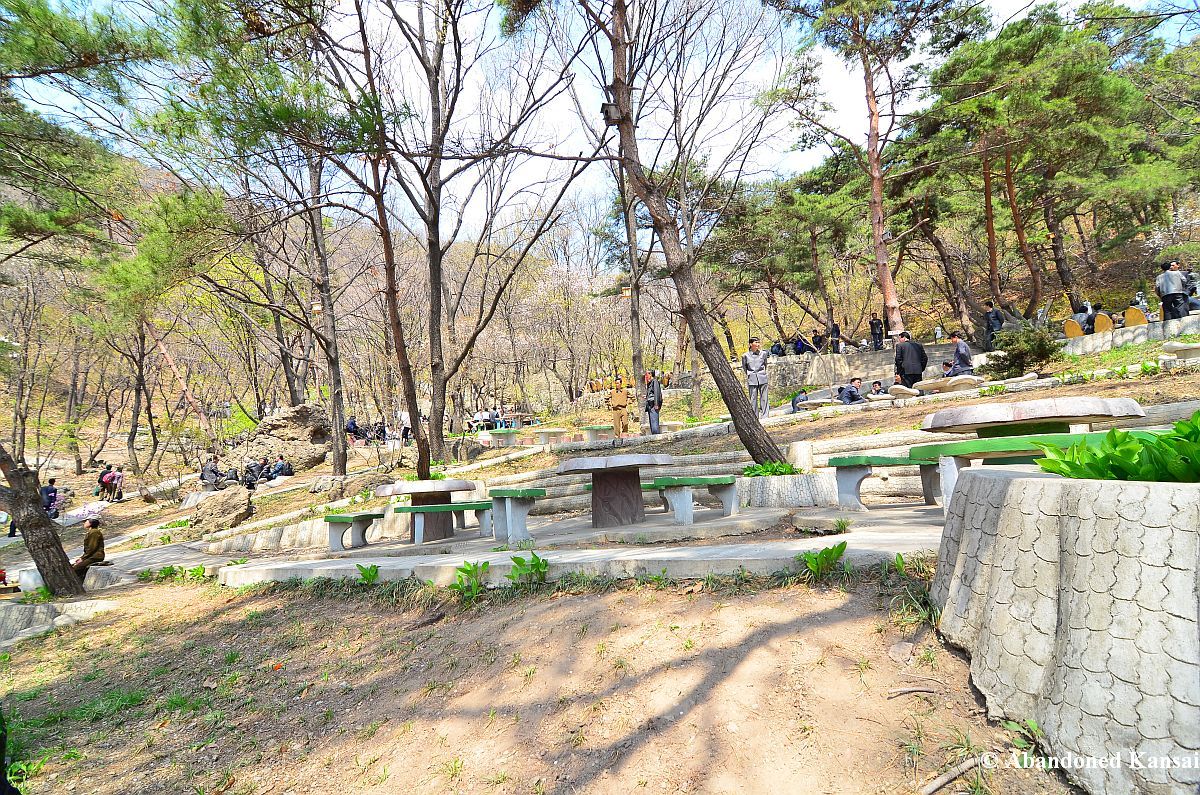
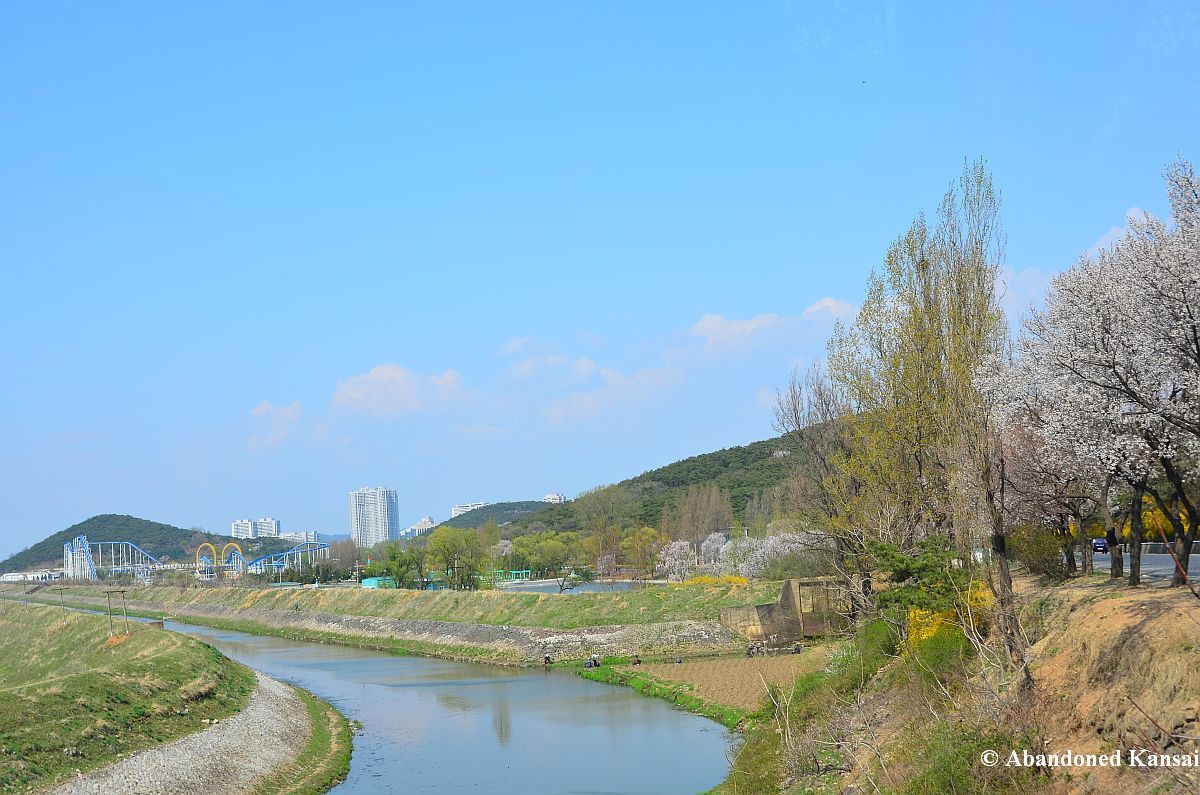
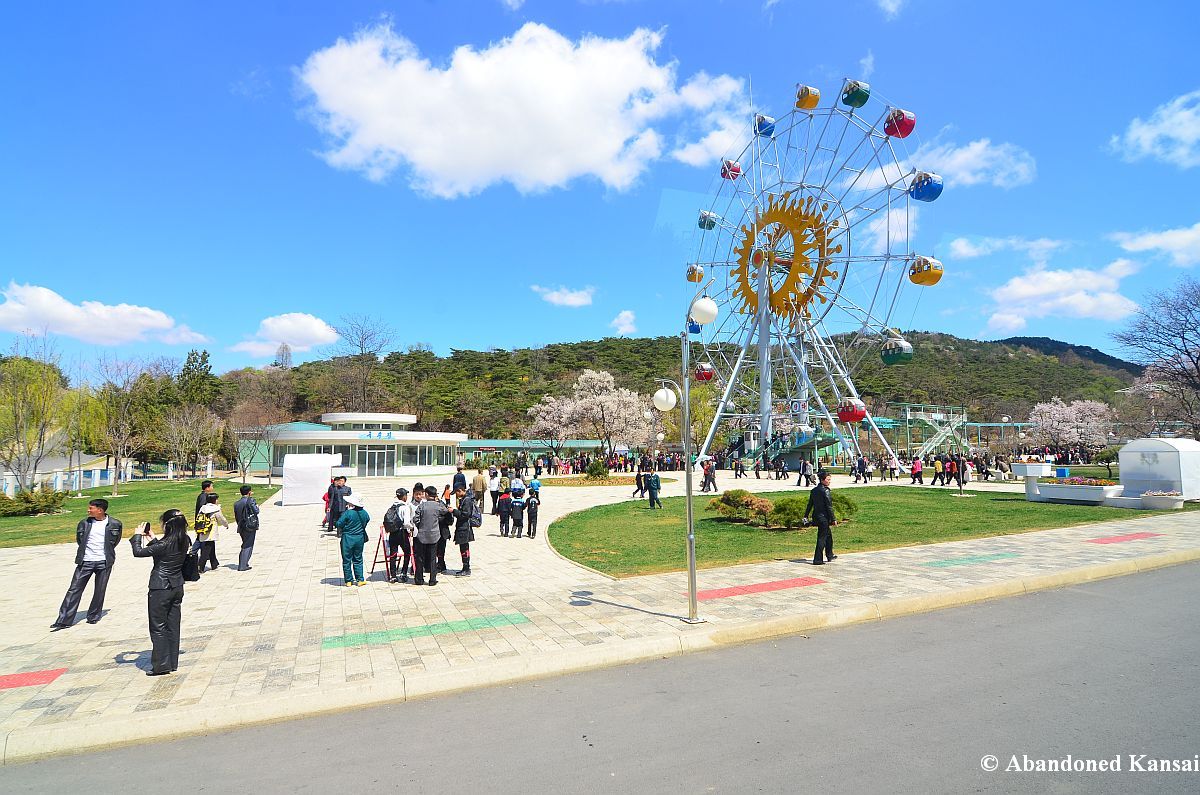
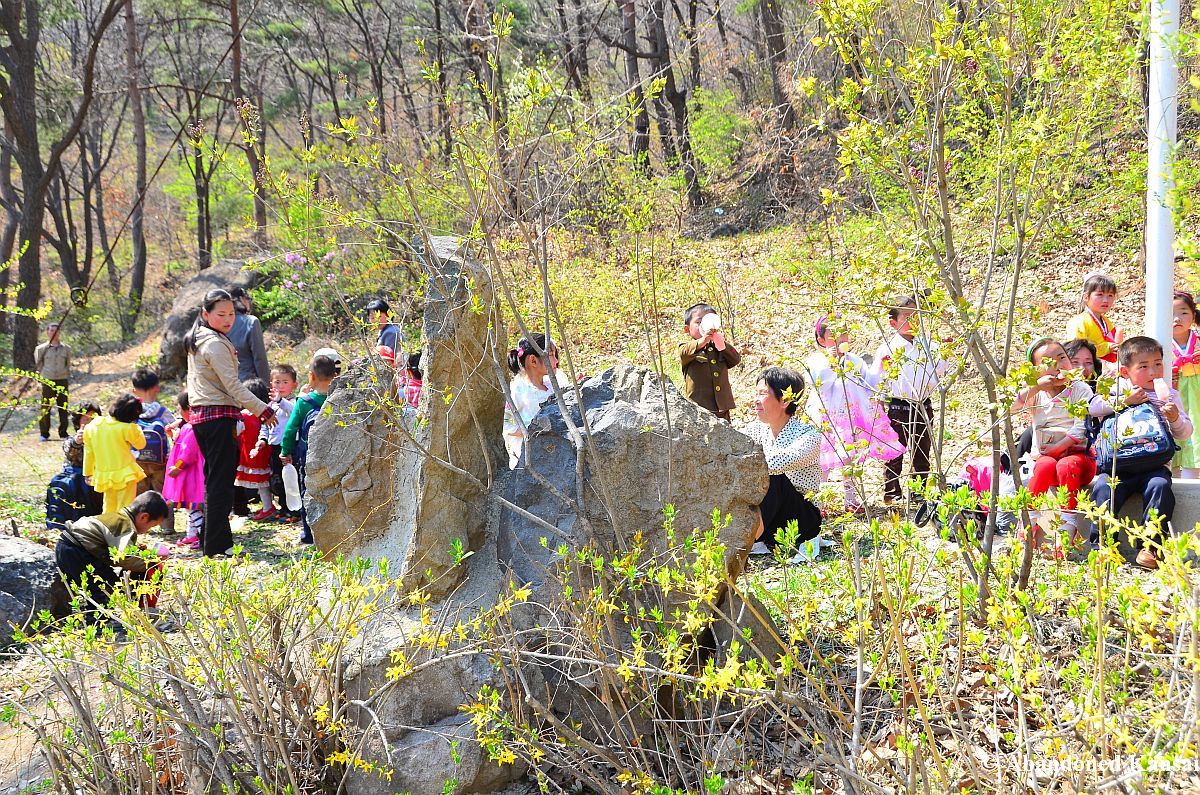
My favorite stop of the tour was at the Taesongsan park and fun fair in the outskirts of Pyongyang. It was right before lunch time when we had a little bit more than an hour to roam freely, an opportunity we put to use extensively. I will go into more detail with the help of a separate article later this month, but the trip’s absolute highlight without the shadow of a doubt was when Jeff randomly approached one of countless families sitting on blankets, having a BBQ under cherry trees – a regular hanami party Japan is famous for. They invited not only the big guy without hesitation, but also the three foreigners in his tow. So we sat down and enjoyed some regular local food and alcohol, which was absolutely delicious. When more people of our group passed by and saw us, our temporary Korean hosts invited them, too. We were chatting (with gestures and Jeff translating), laughing, sharing photos and just had a great time – 3 generations of Koreans and foreigners from the States, Canada, Great Britain, Austria and Germany. I’ve never felt more welcome anywhere in my life! (And of course we contributed some bottles of local alcohol and snacks we brought from home, too – it was just a regular BBQ in a park…)
Believe me, I am very well aware that throughout the tour we were in a privileged position and that North Korea has more than its share of problems. It’s an incredibly poor country, the political situation is more than dubious and the human rights situation is atrocious. Every information given had to be taken with a grain of salt (our guides definitely got some numbers wrong…) and sometimes they clearly put on a show (like at the Pyongyang Schoolchildren’s Palace where they showed us some young kids drawing – though they were clearly not; more about that later, too).
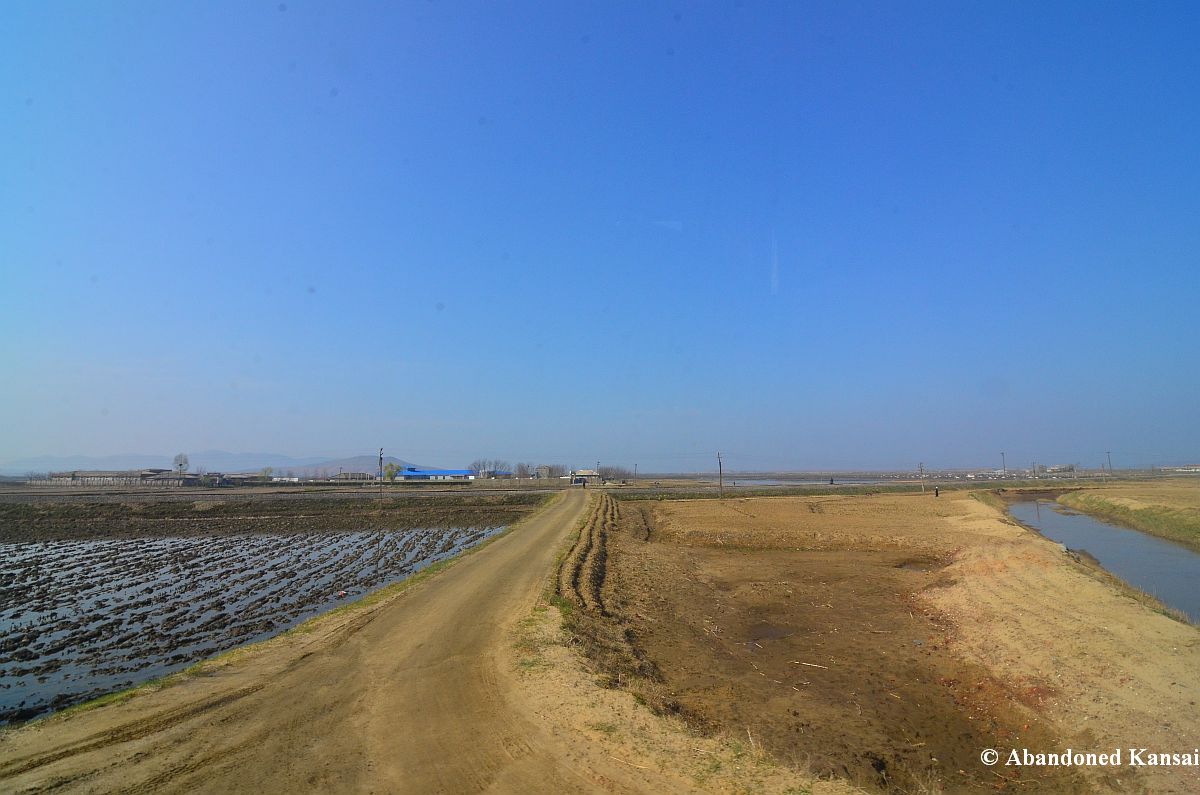
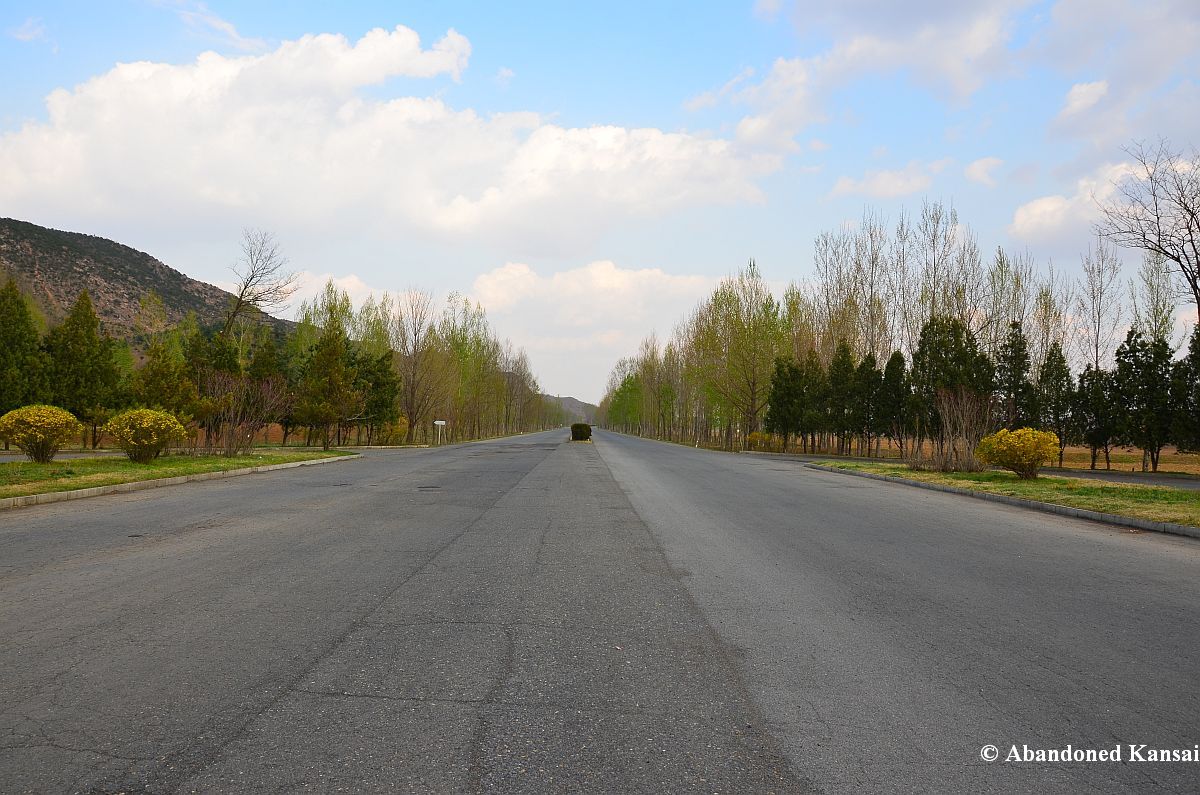
BUT: That applies for every source of information, also and especially for Western mass media. The Democratic People’s Republic of Korea is definitely not a great place to live in and how conflicted it is shows by its name – as the country is everything but democratic. But the situation, judging by the superficial observations I was able to make spending 8 days / 7 nights in the country, is not nearly as bad as we are made believe by the sensationalistic mass media business where stories sell better the more dramatic they are. I was able to talk to North Koreans without having to rely on indoctrinated guides, I was able to see locals in three different cities and on hours of overland drives – and to be honest, I didn’t get the impression that they were overly fanatic or unbelievably unhappy, especially given that North Korea is one of the poorest countries in the world, a fact they seem to be very well aware of. Of course they are trying to masquerade that by showing flagship factories and stores to foreign visitors – but at the same time it’s more than obvious that most of the farming is done without any modern equipment, that some roads are in abysmal condition and that people are comparatively small and skinny due the sharp supply situation that is having a grip on the country for decades.
While in North Korea I was engaged in countless conversations with my fellow travelers about the country’s situation, especially since we went there in times of rather high political tensions. It became obvious pretty quickly that there is no easy solution for this incredibly complex struggle. As you know I am not a journalist and I don’t have a political or economical agenda, so I am basically writing this article to show you what I experienced and to make you aware that the situation isn’t black and white, but very, very grey. When I hear voices saying that North Korea should be leveled and that the Americans should just bomb the shit out of the country it makes me sick to the stomach, because I was able to get a glimpse at the unstaged, human side of North Korea. Or maybe I am just a gullible idiot and I fell for the greatest show that was ever put up, involving thousands of extras…
In the following days and weeks I’ll write a couple more articles about my trip to the DPRK to go into further details and to show you plenty of additional photos and videos – *you can find an overview here*. Until then please have a look at my *GoogleMap about tourist spots in North Korea* and enjoy the media published with this article.
Addendum 2013-11-19: I just posted a general article about my second trip to North Korea in October 2013 – quite a different experiece. *Please click here to read all about it!*)
I visited the *Japanese Sex Museum* for the first time in March of 2012 – it was not only a very unique exploration, it was also a very long one, me spending about 4 hours in the pitch-black exhibition rooms.
About 2 months later *I went to Kyushu and failed miserably* when I was unable to find a hotel room due to Japan’s wanderlust during Golden Week. I can be quite persistent, so I went back down south a week or two later to explore the northern Kyushu locations I was eager to visit for quite a while. This time everything went according to plan, so my tour ended in Yamaguchi prefecture with half a day to spare. So I jumped on a train and went back to the Japanese Sex Museum.
A ton of people watched the walking tour video I shot there, but while the feedback was generally positive, some viewers thought that it was way too short, being only 6 minutes long. Open for constructive criticism my idea was to go back to the museum, shoot a longer video and maybe take some additional photos. In and out in an hour, two tops – I had been there just recently, how much could have changed in less than 2 months? Well… I left after four hours to catch my last train back to Osaka!
Interestingly enough not a lot changed. The place looked almost the same, except for one minor difference – somebody opened two doors, emergency exits, allowing not only some foliage to enter, but also a few rays of light. Not much, but enough to use natural light with the help of a tripod and long exposure times for almost every single photo. During my first visit I had to illuminate about 80% of the photos manually and individually with a flashlight since it was completely dark in most of the rooms. On my second visit the process was almost as time-consuming as before, but the photos looked completely different, even when I took pictures of the same objects. And so one hour turned into two turned into three turned into four…
This is actually more or less a photo and video update since I already wrote about the sex museum’s history in my previous article – and since nothing happened while I revisited the place, here is the new material for your viewing pleasure without further ado. Enjoy!
The Kuroshio Lodge is one of the oldest and most famous abandoned places in Japan – even pioneer *haikyo* blogs who haven’t been updated in years feature this almost completely trashed hotel with the iconic bar; a beautiful photo opportunity thanks to its rusty stools and bright orange and yellow lamps. Nevertheless I struggled for about a year to find out where the Kuroshio Lodge was… and then another six months to find a ride as it is close to impossible to get to the place by public transportation – luckily it was *on the way to Shikoku* for Gianluigi and I, so we made a stop to stretch our legs and to take some photos.
Kuroshio means “black tide” and is also the name of a northeast-flowing ocean current stretching from Taiwan past Japan to the North Pacific Current – hence the nicknames Black Stream and Japanese Current, deriving from the deep blue of its waters and the country it flows by.
It’s pretty safe to say that the Kuroshio Lodge was named after the current – despite the fact that the Kuroshio (current) isn’t visible from where the lodge is located. The lodge on the other hand isn’t visible from the beautiful coastline of Awaji Island. You can get as close as 100 meters (beeline) on a busy street, look up a hill and see nothing but trees. At the same time you have a gorgeous view at the mountains of Awaji Island and the stunning Seto Inland Sea from the rooftop of the lodge… It’s all a matter of location!
At first and third sight the Kuroshio Lodge is a big disappointment. After huffing and puffing up a rather steep mountain road on foot, Gianluigi and I reached the back of the mid-size grey building. After years without maintenance the outside walls looked dirty, but that was nothing in comparison to what we saw when peeking through some open windows – the exposed rooms were filled with rotting vandalized futons and other interior. Not exactly a great start.
In close proximity of the abandoned hotel we found a couple of small houses at the slope; hut-sized, most likely the former living quarters of employees. We entered one of them, but the lighting in there was horrible and neither of us brought a tripod. There was not much to see anyway – I didn’t even bother to take a video.
Back up the slope we finally entered the Kuroshio Lodge – and were positively surprised by the lobby area with its famous turquoise chairs and the bar with its even more famous lamps and stools. You could take 100 interesting photos there and still won’t be bored!
Sadly disappointment stroke again right behind the counter. The kitchen next to the lobby / bar was completely vandalized and rotten, so we made our way up to 2F (first floor in Europe, second in Japan). No wonder that you barely ever see other rooms than the lobby when people post about the Kuroshio Lodge. The whole rest of the place was either vandalized and rotten or completely boring. I took a couple of snapshots here and there (like the lamp and the bath, although they were not really exciting subjects…) and then called it a day, taking the obligatory video on the way back to the lobby.
Since I visited the Kuroshio Lodge almost two years ago I found several Japanese articles about the hotel claiming that the area is overrun by wild dogs from a former dog breeder close to the hotel. They also claim that those dogs were involved in some rituals… whatever that means. Luckily I didn’t run into any mad dogs, crazy cultists or bloodthirsty sadists – although I remember seeing some kind of triangular sign on a metal plate in the boiler room (the one at the beginning of the video below, I just missed to catch the symbol on film… sorry for that, I didn’t think it was on any significance). The whole thing sounds a little bit like an exaggerated version of the usual ghost story surrounding basically every abandoned hotel in Japan. A lot of Japanese people are surprisingly superstitious, so whenever a place is abandoned you get some variation of the “owner committed suicide” story. Stories that are virtually impossible to verify. Nevertheless I thought I better mention the wild dogs. You know, just in case you walk up to the Kuroshio Lodge one day, get surrounded by them and think “Florian never mentioned those damn dogs!”…
To me the Kuroshio Lodge was a rather disappointing location. I loved the entrance area, but the rest of the building gave me a “been there, done that” kind of vibe – which is not what I was hoping for after putting so much time and effort into finding the place. But hey, what can you do? At least the bar and the lobby didn’t fail to deliver. And sometimes one room is all you need to make a visit worthwhile…
Daiwa Pottery or Yamato Ceramics?
Researching abandoned Japanese places can be a pain. Even if you have a name in kanji (those complicated Japanese characters that the island-dwellers use up to 20.000 different ones of…) doesn’t mean that you know how to pronounce it or do some research with it. In this case I found the name in kanji both on a chimney as well as written across the entrance of the main building – nevertheless I couldn’t find out anything about the company behind those characters; or how to read those characters as kanji can have several readings and meanings. Sure, I found a company of the same name in Osaka, but their logo didn’t match the one on the building I explored. I also found photos by two Japanese explorers, taken around the same time my buddy Gianluigi and I explored the factory – sadly neither of those fellow explorers put some visible effort into researching the history of the place; they just used the kanji they found written to name their pictures…
It got even more confusing at the end of the exploration when I took a photo of a piece of paper taped to the locked office door. Thanks to Gianluigi I know now that the sales team of the company moved to a different location in late 2006 / early 2007 – but on that sheet the name of the company was given as Daito, in katakana (those less complicated Japanese characters mainly used for foreign terms and to make terms stand out). So I did some research on the internet… At first without success, but then I found a Japanese page selling roof tiles, presenting some made by Daito. Full of excitement I sent the link to Gianluigi – who told me that I missed the top part of the page where it says that Daito went bankrupt.
So I guess the company started out as Daiwa Pottery / Yamato Ceramics, changed their name to Daito (maybe due to pressure from the Osaka company of the same name?), moved their sales team 7 years ago and went bust since then… which leaves me with a new abandoned place nobody knows about yet. 🙂
(BTW: The standard Daiwa Pottery / Yamato Ceramics roof tiles were 345mm by 345mm, weighed 3.6kg each and came in the colors Straight Black, Matt Brown, Matt Green, Metallic Black and Caribbean Blue.)
Exploring this abandoned tile factory was ill-starred anyway; mainly because it was only a matter of time until the stars were visible as *we arrived way behind schedule* at around 6 p.m. – sunset in early May in Japan, where complete darkness hits shortly after 7. An hour of twilight was all we got left, so we rushed through the backyard and the storage area below the main building first. By the time we actually entered the unlocked parts of the factory (another factory building was locked, so was the office) it was already too dark to take photos without a tripod – so I left it on the ground, on tables, machinery and whatever seemed to offer space. Exposure times quickly reached 30 seconds, so I hurried to take a flashlight assisted video before we finally ran out of time for good.
Like most last locations of a day the tile factory definitely deserved another hour or two, preferably with better lighting conditions. But well, what can you do? If I ever come to that area again I’ll make sure to revisit the place as it was a lot better than the few decent photos indicate. And I’ll stop by the now closed “new” sales office, maybe I will be able to find out more about the company’s history – or at least its name…
I love the Toyoko Inn hotel chain in Japan. Their prices are fair, they are located right next to bigger train and subway stations, they offer free breakfast from 7 till 9.30 and free WiFi / internet 24/7, their staff usually speaks at least a little bit of English, they have a discount and point system for members – and you can make online reservations via their English homepage.
One reason I was hesitating to go on a trip *as mention in the previous blog post* was the fact that I was in-between credit cards for a couple of weeks. (In my experience it’s close to impossible for foreigners to get a credit card in Japan – but I am looking forward to the comments of every expat who got one… I know people who were rejected more than half a dozen times, I tried it once or twice and then got one in Germany…) But you need a credit card to make an online reservation at a Toyoko Inn – or so I thought.
When it was clear that I would spend the first night of my trip in Nagoya I stopped worrying. Last weekend wasn’t a typical time to travel in Japan (unlike *Golden Week*) and Toyoko Inn has six hotels in Nagoya, eight if you count the ones close to the airport – I was sure I would get a room somewhere. So the plan was to show up at one of them and ask the staff to make a reservation for me for the second night, which I planned to spend in Matsusaka – a town famous for its high quality beef, which turned out to be more dead then the cows it is famous for.
Luckily my plan was a good one, so I checked in at the hotel of my choice in Nagoya and asked the staff to call their sister hotel in Matsusaka to get me a reservation for the following night since I didn’t have a credit card. The friendly lady at the counter pointed to the opposite wall across the lobby and asked me to use the internet to make the reservation myself. I repeated that I didn’t have a credit card and therefore couldn’t make the online reservation. The answer was “You don’t need a credit card to make an online reservation.” – so I told her that I needed one when I tried to make one the night before. Since the hotel receptionist insisted that I wouldn’t need a card and was eager to show me that she was right we started the procedure on their English homepage – as usual. Another guest arrived so I filled out the form, scrolled down and… there it was, the section for the credit card information. I left it blank, tried to continue and of course it didn’t work and I got an error message. When the receptionist showed up again she seemed to be very surprised, switched the language settings of the homepage to Japanese and… finished the reservation without having to enter credit card information! She didn’t even have to log out / start the procedure from the beginning, she just switched the language settings and pressed a button to finalize the reservation.
I totally understand that hotels need some kind of security when people make online reservations and that’s the reason I never had a problem entering my credit card information when making an online reservation at a Toyoko Inn, 15 times for trips in 2012 alone. In fact they don’t charge your credit card and you can pay cash upon arrival, it’s just a security measure for no-shows, which I completely understand. Nevertheless I am kind of irritated by the fact that you have to put in your credit card information when you make the reservation in English, but not when you make it in Japanese – to me it implies that Toyoko Inn considers people who prefer to make reservations in Japanese more reliable than people who make reservations in English; which could be considered borderline racist. Again, I understand that (most) online hotel reservations require credit card information. But either it’s a general requirement for Toyoko Inn or not – doing it on the basis of the language chosen on the homepage feels wrong to me, as it means that not all customers are treated equally.
What do you think? „WTF?“ or “WTF!”?
(To end this posting on a lighter note I’ll add some non-urbex photos and videos I took during my three day trip. Inuyama Castle, Tagata Shrine Festival, Mount Gozaisho, Yunoyama Onsen, Toba, Iruka Island, Ise Shrine, … If anybody is familiar with dolphins please have a look at the video and let me know what you think – to me it looks like the poor creature was desperate to get away as it repeated the same motion at the “prison gates” to the ocean over and over again; I didn’t watch any shows on the island and didn’t spend any money there – Iruka Island (iruka = dolphin) was an optional stop on a harbor cruise I took in Toba.)
One of the trends during the Japanese Asset Price Bubble of 1986 to 1991 was building company retreats – on top of mountains with stunning views, in old onsen towns, along the coast. Regular trips for team building in addition to the weekly drinking nights were a given anyway, so why not go all in and build a weekend house with the company logo on it? It surely was a lot more prestigious than sending the staff off to a ryokan or a hotel. As soon as a company had a couple of hundred employees it also had a more or less big and luxurious house somewhere; and not only companies – universities and private high schools, too. Some of those buildings were small wooden huts for 6 to 8 people, others were kind of company hotels with (part-time) staff, taking care of chores like cooking, cleaning and gardening. Most of them were for class trips, department vacations and team building events – others could be booked like a hotel with internal company credit.
As we all know the real estate bubble burst and the Japanese economy began to struggle. It actually still does, probably more than ever since World War 2. Over the past 10 to 15 years a lot of those relaxation retreats became too expensive and were just abandoned; because the company went bankrupt or because it couldn’t afford the running expenses anymore and wasn’t able to sell the property.
In 2012 I visited about 100 abandoned places in Japan and Germany and I had quite a slow start into 2013 – the weather wasn’t exactly great and I felt a bit exhausted. Last Thursday I had to make a decision whether to go on a (non-urbex) trip for three days as I wanted to see a shrine festival near Nagoya, but I still felt tired and worn out by one of those colds that get you in Japan every couple of weeks in winter, since most companies don’t have sick days and therefore people drag themselves to the office instead of taking a paid day off. It was on that Thursday morning when I found two extremely motivating comments by Nikki praising the last two photo sets I published – and while I appreciate every comment (especially the positive ones! :)) it was the timing of those two that gave me the final push to see Inuyama Castle, attend the Tagata Shrine Festival, take the gondola up Mount Gozaisho, do a boat trip from Toba to Iruka Island and finally pay a visit to the famous Ise Grand Shrine. Although I knew that there were abandoned places near all of those locations I didn’t do much preparation as I wanted to experience Japan again the same way I did when I fell in love with it – as a tourist, doing touristy things.
While I was walking along a countryside road on one of those three days, minding my own business, thinking about this and that, I saw a house with an open door from the corner of my eye, MISATO.TENNIS.CLUB written in neon green letters above it. If the door would have been closed I probably would have passed by as the building was in good condition and there was nothing unusual about it. But an open door and neon green letters… who knows?
So I turned around and had a closer look. While I was entering I was trying to remember simple phrases in Japanese, like “Excuse me, do you know where can I buy something to drink?”, just in case I would run into somebody – but nobody was there. From the outside the building looked like a normal single-family house, but the entrance area and the name above the door made it pretty clear that it was one of those company vacation facilities.
Since I have never seen the Misato Tennis Club Lodge anywhere on the internet I tried to be as careful as possible. Original finds are always especially exciting to explore, but this one was in exceptional condition – no graffiti, no vandalism, barely any signs that the place was really abandoned. The saddest thing about this lodge was a dead bird I found in the hallway of the upper floor. Other than that it was a clean place with lots of stuff left behind – like the model of a boat on the counter at the entrance, lots of plates near the kitchen and plenty of furniture. With a couple of cleaning products you could make that place ready for occupancy within a day! (I guess that’s what the Misato Tennis Club is thinking, too, as I found a completely faded sign with a phone number outside…)
I had been to similar places before (although I haven’t written about them yet), so I didn’t take a lot of photos – especially since I didn’t bring my tripod and the lighting conditions inside the building weren’t always great. But it turned out that the lodge was full of lines and fascinating details. Well, at least fascinating to me. If you want to see what the place looked like in general I recommend to watch the video – the photo set mostly shows those details I was strangely attracted to; in that regard the lodge reminded me of the *Takarazuka Macadam Industrial Plant*. All of the photos I took were taken freehand within 30 minutes. And while not all of them turned out the way I hoped others still put a smile on my face. So much that I had to write about the place right away, although it really wasn’t that spectacular. But it was an original find in great condition, a rare combination nowadays, where you have more urbex blogs than abandoned places…
The downside of an original find is that it’s close to impossible to find any information about it. The Misato Tennis Club Lodge could have been abandoned a year ago, maybe five; maybe it just wasn’t used during winter and somebody forgot to close the door when he had a look at what to fix for the new season? Some places in Japan go to shit in a heartbeat, others look barely touched after 30 years. In this case one to three years kind of sound reasonable, the remote location being the reason why it was spared by vandals. (There actually is a Misato Tennis Club in driving distance of the lodge – and like I said, their phone number can be found on a sign outside. They have locations in Yokkaichi and Suzuka, and about a dozen trainers; including head coach Robert “Bobie” Angelo, a Davis Cup player from the Philippines.)
I always try to be as respectful as possible when exploring an abandoned place, but I think this time I didn’t even leave footprints… I actually wiped off my shoes on the doormat before entering! Like all exceptional original finds the Misato Tennis Club Lodge will forever have a special place in my heart and I really hope it will find a new owner before it falls victims to vandals or the forces of nature.
Sometimes you just gotta be lucky. Like my friend Nina and I were when we were walking up to the former Ammunition Depot Achern in the southern part of Germany. We didn’t know anything about the location except that it was there – and when we tried the handle of the gate it opened to our surprise. Right next to the entrance we found a small building in excellent condition, locked, a bicycle inside, the logo of the Technisches Hilfswerk (THW) on the side. In case you are not familiar with German institutions – the THW is a Federal Office, the official English name is Federal Agency for Technical Relief; the THW helps in cases of floods, earthquakes and other disasters. So the depot wasn’t part of the Bundeswehr (Federal Armed Forces) anymore, but now belonged to the THW… interesting, from military to civil protection. Right next to the building the road split 3 ways and we walked down the most southern one, towards the 17 former ammunition bunkers of different sizes and an abandoned train used for training missions. We took a couple of photos and then we heard voices… Damn! When we reached the end of the road we headed north to the middle road and saw a couple of guys on a training mission. Since they didn’t see us and we didn’t want to cause any trouble we took the most northern road and headed back to the entrance, continuing to take photos as we made a strange discovery in that area: A huge aviary inhabited by dozens of exotic birds. The former ammunition depot really wasn’t that abandoned…
I forgot how we knew, but when we came back to the entrance we realized that somebody must have had entered or left since we got inside. Maybe the gate was not fully closed anymore or we left it open and it was closed now. Maybe there was another bike… I forgot, but I remember that we knew that people were still coming / going. Being back to safety I got gutsier again while Nina decided to wait at the entrance just in case somebody would show up and lock the gate without us knowing; which would have been bad, because the place once was a restricted military area and still is in the possession of the German state – if we would have gotten caught we most likely would have been in trouble; but if we would have gotten locked in, there most likely wouldn’t have been a way out due to lots of barbed wire everywhere… and probably motion detectors on the fences. Nevertheless I went back inside to take a quick video before we finally left after about half an hour altogether.
I mentioned it before and I’ll stick with it: I don’t like infiltration and this was (hopefully…) the last time I did it; mainly because I misjudged the situation – I actually wasn’t aware that the THW is a Federal Agency, I thought it was a private NGO / NPO like the Red Cross, probably because 99% of its members are volunteers… So I guess I dodged at bullet at the abandoned ammunition depot! 🙂
One thing Japan is famous for all over the world is its bathing culture – which is hard to believe if you ever had to spend some time on a rush hour train…
While surprisingly little of Japan’s vast coastline is used for swimming (due to pollution, rocky shores or cement tetrapods) there are three different main terms to describe Japanese baths:
furo (風呂): usually the polite form “ofuro” is used for this traditional wooden bathtub
onsen (温泉): hot spring, sometimes translated as spa, especially when part of a hotel, ryokan (Japanese inn) or minshuku (Japanese bed and breakfast)
sento (銭湯): communal bath house – onsen and ofuro can be part of a sento
The use of those three terms can be confusing at times. While (o)furo technically describes a bathtub (traditional ones made of wood, modern ones made of plastic) with steep sides of about 60 cm height used for a relaxing soak at 38°C to 42°C after (!) you cleaned yourself, it can also be used for the public bath at a gym – although those baths fit more what is describes by the term sento.
A sento is a communal bath with a locker room and a bathing area – gender separated! You get undressed and lock your clothes before you enter the tiles bathing area with a hand towel. Near the entrance you usually find small stools, buckets and faucets. There you sit down and clean yourself before you enter the bathtub, which can be tiled or wooden – and therefore resemble ofuro. (To see what not to do, watch the movie Mr. Baseball…) Modern sento also include small saunas similar to the ones you know from your home country.
Onsen are hot springs and the most famous part of the Japanese bathing culture. Indoor onsen look much like sento and their number is quite low – the vast majority and well-known to everybody even slightly interested in Japan are outdoor onsen, also known as roten-buro (露天風呂). The behavioral code at an onsen is pretty identical to the one at a sento – the main difference is that onsen are fed by natural hot springs, not by heated tap water; and that they are usually more luxurious and beautiful – dozens of countryside towns all over Japan are famous for their onsen resorts and a lot of places to stay charge several hundred bucks per person and night (including breakfast and dinner).
Personally I am not a big fan of ofuro, sento and onsen – mainly because the water is just way too hot for my taste. I’m sweating enough as it is in Japan thanks to the rather high humidity here. I really don’t need to soak myself in water that is higher than my body temperature. The other reason, to be honest with you, is the fact that you stick out there as a foreigner – and I am really tired of being stared at. It’s bad enough at the subway sometimes, even in a city like Osaka. Imagine you being the only foreigner in a countryside bath then… If I’d be the last man on earth and would show up in my birthday suit at the “World Congress of Nudist Nymphomaniacs” near a naturist beach of your choice – I couldn’t earn more stares that way! I get it, most Japanese men don’t have the opportunity to see a naked foreigner and they have an urge to find out if the cliché is true and everything is smaller in Japan, but come on! It’s really impolite…
(Fun fact: Most Japanese people don’t know that public bathes in Japan were mixed until the Meiji era (1868-1912) when the nation started to open to the west. Germany, especially the eastern part, has a long naturist tradition and when I tell Japanese friends that we have mixed nudist beaches and bathes in Germany they are totally shocked and claim that they would never go there since people must stare at each other all the time, which isn’t the case at all. Fact of the matter is that I get way more stares fully clothed on a train in Japan than naked at a beach in Germany…)
Exploration
The Meihan Health Land technically was an onsen since it was fed by a natural hot spring, but it lacked most of the idyllic countryside aesthetics that come to mind when hearing the term – it looked more like a western spa trying to copy some Japanese flair. Located right next to one of the few free of charge highways in Japan and at least 30 minutes away by foot from the next train station it was clearly targeting the masses – families and busses full of tourists; a gigantic parking lot of more than 20.000 square meters supports that claim. The building itself, constructed in 1987 during the Japanese asset price bubble, was about 5.700 square meters big – it seems like it was the first “super sento” in Japan (or at least one of the first) and quite a lot followed. The Health Land closed 2 decades later with a renewal open planned for July of 2008 or 2009, but now it is on sale for 430 million Yen (currently about 3.5 million Euros / 4.6 million Dollars) – a sum it might have been worth right after it was closed, but a mere 2 years later, during my visit in November of 2011, it was already in abysmal condition.
The regular entrance fee for adults was 1300 Yen with an additional surcharge of 1050 Yen for guests staying overnight – yes, the Health Land was a 24/7 facility, offering loungers for tired guests. And of course the usual services like restaurants, shops, karaoke, …
Located in the mountains of Mie prefecture the running expenses must have been insanely high (considering that there is much isolation, but hardly any insulation in Japan…) and I am not surprised at all that the Health Land went bankrupt. I am surprised though how fast it fell into disrepair. The few photos I saw before exploring the place myself made me expect a super sento in good condition. What I found when I arrived with my buddy Hamish was a shock. From the outside the building still looked amazing, easy to see from far away thanks to two gigantic Chinese dragons on the top of the roof. The huge red lantern in front of the Health Land had seen better days, but the full amount of damage the place had suffered was only visible after entering.
The yakiniku (grilled meat) restaurant in the same building was smashed to pieces and so was the lobby of the former spa. There the ceiling was high, maybe 5 or 6 meters – nevertheless it looked like it saw an outburst of violence with damage far beyond anything natural decay could do within a year or two. I have no idea what happened there. Some of the damage, especially the water on both 1F and 2F, could have been explained by the holes in the roof – but how did those holes get into the roof in the first place? The place really looked like as if a supernatural force ripped it apart…
Next to the lobby we found a snack bar and deeper into the darkness of the building was a staircase to 2F as well as the separated bathing areas for men and women, both severely vandalized. The steam room of the men’s area featured some neat female nude drawings – drawings that attracted some homeless people, or at least one person. We found some belongings there, including a newspaper barely 2 weeks old..
Sadly the whole area, for both men and women, was smashed beyond recognition. Windows were kicked in, mirrors were broken, metal installations were ripped apart. Carpets and wallpapers were moldy and water was dripping everywhere.
The upper floor was in even worse condition. The restaurant area was only recognizable due to some signs, the former party room with a stage looked like it was vandalized and abandoned a decade ago. Pretty much all interior was either gone or smashed. Water and mold everywhere. Not really a pleasant exploration, but you never know in advance what you’ll find…
Like that taxidermy bull in some kind of concrete storage underneath the Health Land. We were already ready to leave when we found that half-overgrown door that lead into the building again… and there it was, a stuffed bull, covered by what looked from the distance like an Ostfriesennerz (“East Frisian Mink”, a yellow hooded heavy-duty medium-length PVC rain coat – and you thought German terms were long!). Of course it wasn’t the famous German clothing item, just a simple tarp. Nevertheless a neat find that put smiles on our faces, before we walked to the next train station; wondering how the Health Land could get into that kind of state so quickly.
Timing is everything, at least in the world of urban exploration. If you come too early a place is still in use, if you come too late it’s demolished. If it has security you need a special kind of timing, but even regular explorations need some planning. Some locations are only good at certain seasons – a lot of mines in Hokkaido are inaccessible in winter due to snow, other mines in Kansai are inaccessible in summer since they are completely overgrown. And don’t even mention mosquitos, snakes and spiders!
The Tatsuyama Mine falls in the “inaccessible in summer” category. Luckily I, my buddy Dan and two of his friends went there in spring, when the green hell was nothing more than a brownish limbo. Nevertheless our timing wasn’t perfect – basically because we were running out of time. The Tatsuyama Mine (literally: Dragon Mountain Mine!) was the last stop on a looooong daytrip and we really had to rush to make it to the mountainous Okayama countryside after visiting the abandoned *Japanese Strip Club* and before the sun went down. The sun sets early in Japan, especially in spring, especially in the mountains, but Lady Fortune was on our side – the valley the mine was in opened to the west, allowing us to make the most of the little daylight that was left. On the long drive there I almost gave up hope that we would arrive on time, but in the end we had about an hour… little compared to what we could have used for a proper exploration (3 to 4 hours!), but still better than nothing.
The Tatsuyama Mine is one of those locations everybody seems to know about, but hardly anybody writes about. Photos pop up here and there, but little is known about this abandoned copper mine – except that it was closed in 1961. Yes, 1961. A solid 50 years before me and my friends had a look… Deserted before most other locations presented on Abandoned Kansai were even built!
Unsure what to expect we parked the car on the “main street” and rushed on foot down into the valley, passing shacks we probably would have ignored even if we would not have been in a rush. The mine was built on a slope right in front of us, and then I saw a rather big wooden house appear to the left. While my friends continued straight ahead I quickly entered the building for a short look. There was not much interior left and the staircase to the upper floor was falling apart, so I continued to the mine itself – after a bat let me know that it was its house, not mine. Realizing that soon it would be too dark for a decent video I went back and shot a walking tour for my memories and your viewing pleasure before climbing the slope, partly inside, partly outside of the concrete and wooden structure that once was probably was the sifting plant of the Tatsuyama copper mine. At that point I was really happy to be there in early spring, not in summer – no poisonous animals, no plants blocking progress and light.
The concrete parts still seemed to be in solid condition, but the wooden parts were fading away; not really a surprise after 50 years. With barely any time left I didn’t have to make tough decisions though if it was worth risking a broken leg (or neck…) entering certain parts – I just wanted to get to the top and down again before it was getting dark. With advice from my friends (“Go that way to reach a higher level!”) I actually accomplished that, even finding the entrance to the mine near the top of the plant – now blocked by a small dam (i.e. earth and stones…) and completely filled with water.
I am a huge fan of abandoned mines! The aesthetics of brittle wood, rusty metal and concrete structures just don’t get old to me (no pun intended…), so I enjoyed every second exploring the Tatsuyama Mine, although I wish there would have been more time. Well, maybe a revisit is in order, though it’s unlikely given that the mine is in the middle of nowhere, about 2.5 hours by car from where I live…






 Abandoned Kansai