Feeds:
Posts
Comments

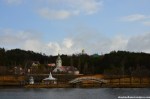
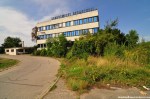
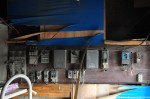
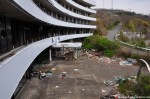
After a couple of explorations with family and friends during my summer vacation 2011 it was about time to fly solo for the first time in Germany. The place to go: an abandoned shipyard along the river Rhine in a really nice little town called Germersheim, the city of syringa and the nightingale, just south of the way more famous Speyer. Germersheim was first mentioned in written form in 1090, but it was most likely founded more than a 1000 years prior to that. One of many beautiful small towns in the Rhine-Neckar Metropolitan Region.

It was kind of by chance that I stumbled across the place since I never saw it on the usual German urbex blogs and homepages – but the more excited I was about it. So enjoy, dear German urban explorers. While you can…

At first I was actually thinking about calling this location Shipyard G# – but that would have prohibited me from writing about the long and and turbulent history of the Shipyard Germersheim. Founded as “Oberrheinische Schiffswerft Spatz & Co GmbH” (Upper-Rhenish Shipyard Spatz & Co., Ltd.) in 1927 the company was renamed to “Germersheimer Schiffswerft” (Shipyard Germersheim) in 1953 after the “Reederei Reichel & Co” (Shipping Company Reichel & Co.) bought into the dockyard – but for whatever reasons the sign on top of the buildings says “Schiffswerft Germersheim”. In 1989 the company had to file for bankrupcy, but a rescue company with the creative name “Neue Germersheimer Schiffswerft” (New Shipyard Germersheim) was founded. Interesting fact: When Germany granted a guarantee to build two ships it was ordered by Brussels in December of 1990 to withdraw it since the whole procedure was repugnant to the Treaty of Rome (the whole thing was rather complicated, but it had something to do with a development aid project for the benefit of Senegal – we’ll kinda get to that topic later on again…). The new company was nevertheless successful for a couple of years, but finally failed in 2002. In 2009 a few scenes of an episode of the most popular German crime TV show “Tatort” (there is an English Wikipedia entry about the series if you wanna look it up… more than 800 episodes since 1970 – eat that, CSI!) called “Tod auf dem Rhein” (Death on the Rhine) was shot at the abandoned (New) Shipyard Germersheim and broadcasted in early 2010. A guy passing by on his bike told me that there are plans to tear everything down to build some mansions (with marinas, I guess), but nothing has happened yet to my knowledge…

The shipyard started by building inland cargo ships and pusher crafts, but later added tugboats, tankers and passenger ships to their portfolio. In the Spatz years the dockyard was also famous for (and a European leader in) repairing and conversions. More international fame was gained with the towboat Zongwe and the coastal motor vessel Lukuga, both built in pieces at the shipyard in Germersheim and assembled on location at Lake Tanganyika. In 1990, after the reboot, the ferry Le Joola (80 meters long, 12.5 meters wide, designed for 536 passengers and and a crew of 44) was built to cruise the coast of Senegal – one of the biggest ships ever to be built on the Upper-Rhine. 2002 turned out to be a horrible year for both the shipyard and the Le Joola. The ferry capsized and sank off the coast of Senegal, more than 1800 people died while 65 were rescued, making it the second largest naval desaster since World War 2.

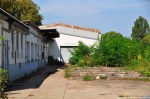
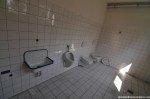
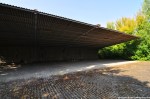
I actually didn’t know any of that background when exploring the shipyard on a hot and humid late summer day. The gate to the area with access to the Rhine was wide open, so I had a look at the backside first. Later I spotted some anglers and probably some geocachers at the waterfront, too (there is a cache on the premises or at least very close by… lost places geocaches are becoming more and more popular and people go there with their whole families). Back at the main street I saw that the sliding gate at the entrance and the porter’s office were closed – the door to the management office building was secured by an additional chain with a heavy lock. I decided to have a look at the rest of the area from the outside to think about how to enter, so that’s what I did. After visiting the *Kawaminami Shipyard* just a couple of months prior it was interesting to see a dockyard that survived way longer although it was founded earlier. Some of the construction buildings were very old, probably from the founding days – too bad they were pretty much empty. So was the office building – way more modern, but empty. And moldy! I’m sure the hot and humid day didn’t help, but I could actually feel how it became more difficult to breathe inside of the building – that’s why I kinda hurried to get out of there again.

It’s hard to imagine that once 140 people were planning, constructing and welding ships at this quiet, almost tranquil place. All the machines were gone and about half of the former dockyard area was already taken over by another business – one that continues the metal work and painting: a car tuning and repair shop. (At least that’s what it looked like from the distance, I didn’t get really close to avoid drawing any kind of attention.)

Visiting the Shipyard Germersheim was a great experience overall. Sunny weather, a pretty much unknown and rather unique location with a long history und barely any hazards – it’s good to know that there are still places to uncover back home in Germany…

(*Like Abandoned Kansai on Facebook* if you don’t want to miss the latest articles and exclusive content – and subscribe to the *video channel on Youtube* to receive a message right after a new video is online…)

Addendum 2014-08-06: Three years later I *revisited the Shipyard Germersheim* – only to find it completely vandalized… 😦

Takarazuka is one of those bedroom towns at the foot of the Rokko Mountains, home to thousands of commuters working in Kobe and Osaka. Like Nishinomiya and Ashiya (both to the south) Takarazuka is a rich suburb. While Nishinomiya is famous for sake and the Hanshin Tigers in all of Japan till this very day, Takarazuka’s brightest days are in the past – although it’s still a beautiful place to live and attracts hordes of tourists every weekend. The days of Hanshinkan Modernism, which made Takarazuka one of THE places to be in the early 20th century, may be long gone, but a few parts of this cultural heyday survived for almost a century. Prime example being the Takarazuka Revue, an all-female musical theater troupe, founded in 1913 by the president of Hankyu Railways to attract more people to come to Takarazuka and its hot springs – and of course to sell train tickets… 99 years later the revue is popular as always with ticket prices up to 11.000 Yen. While the hot springs are outshined by the nearby Arima Onsen town Takarazuka gained a new attraction in 1994 when the Osamu Tezuka Manga Museum (Takarazuka’s Tezuka Osamu Memorial Hall) opened its door. This three floor museum is dedicated to Osamu Tezuka (who would have thought it?), the godfather of anime, father of manga, Japan’s Walt Disney – and creator of Astro Boy, Kimba the White Lion (still in development hell at Nintendo?) and Black Jack. Oh, and of course there are dozens of hiking trails in the mountains to Takarazuka’s west and north!

Being one modern and tidy city Takarazuka is way less famous for abandoned places. I’ve actually never seen one on any of the Japanese haikyo blogs. The more surprised I was when I spotted some rusty machinery on my way back from a hiking trip a couple of years ago, long before I started urban exploration as a hobby. So when I remembered the rusty gold a few months ago I saved it for one of those “I wanna explore an abandoned place, but I don’t wanna get up at 6 a.m. to ride several trains for 3 or 4 hours” days. In February of 2012 I finally went back to Takarazuka again – after lunch, because I could!

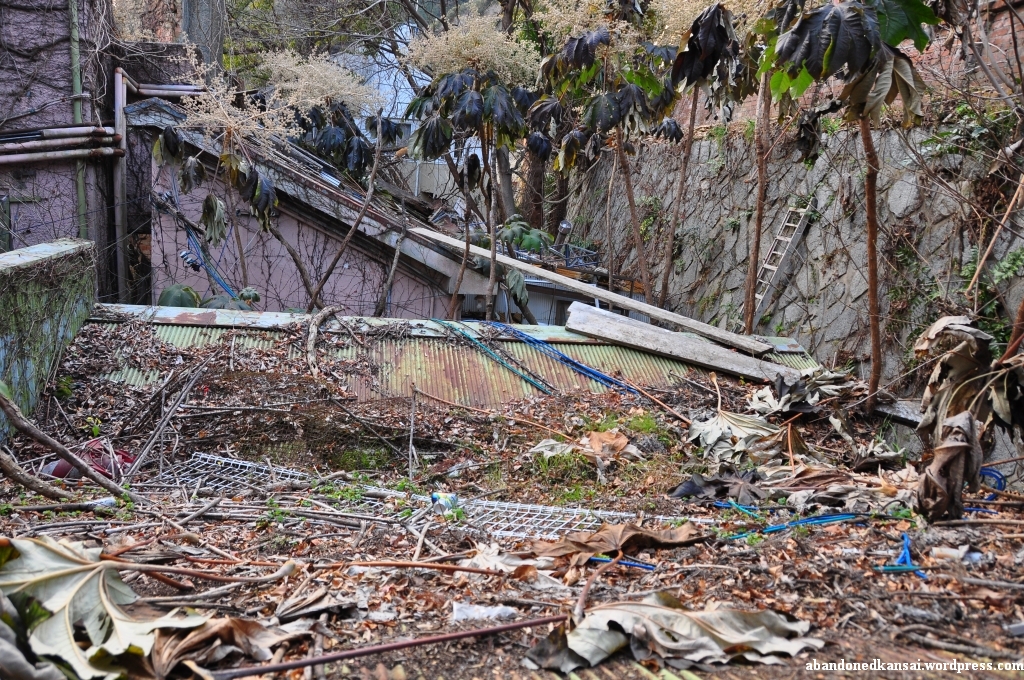
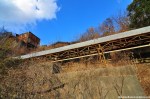
When I was exploring the Takarazuka Macadam Industrial Plant I wasn’t sure what the place was exactly. Judging by the look of the surroundings and the machinery left behind I guessed it was another limestone mine, an industry almost omnipresent in Japanese countryside – just without the chemical plant the *White Stone Mine* had. A stone crusher was also missing, which is kind of ironic in retrospect given the fact that the kanji for macadam are the same as the ones used in the Japanese term for “crushing stones”. So basically all I found were a couple of loading bays (probably with sorting devices to separate small stones from bigger ones) and conveyor belts; plus controls for the machinery. Some installed within wooden huts in dangerously desolate state, some in wooden boxes just nailed and bolted to concrete walls; I guess waterproof wasn’t invented back then…

Exploring the area was especially exciting since I’ve never seen the place anywhere on the internet before – and it was dangerous! Every step forward, every corner revealed more unsound wood and brittle metal. I guess somebody lived for a while in one of the shacks and left behind, among other things, a suitcase full of porn. Yes, not just a couple of magazines – a whole suitcase full of the censored Japanese school girl porn that seems to be so common for abandoned places in this country… I guess you could call it the Porn Shack.

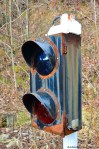
The other thing that really fascinated me was the already mentioned wooden box containing some of the controls for some of the machinery. Being located at the foot of a mountain range Takarazuka gets its share of rain, so I really wonder who thought it would be a good idea to nail a wooden control box to a concrete wall – and put a metal control panel right next to it. One can only imagine how much maintenance those things needed…

And finally a couple of words about the history of the place – stuff I found out after I explored the plant based on the information gathered there; and of course the internet was a big help… The whole rusty thing is / was owned by a company which could (should?) be translated as Osaka Macadam Industrial Place (大阪砕石工場, Osaka Saiseki), which is still a major player in the earthwork / crushed stone industry with 350 employees and several plants all over Japan. But my limestone assumption was wrong, hence the lack of a chemical plant. Osaka Saiseki was founded 1934 and the macadam plant in Takarazuka was opened in 1938. I assume the area I explored was the old separation and transportation line that was abandoned when the plant moved further into the valley to continue ripping some chunks out of the Rokko mountain range…

The Mt. Hiei Artificial Ski Slope is an abandoned ski resort near the top of Mount Hiei on the border between Kyoto prefecture and Shiga prefecture. Famous for its Enryaku Tempel and the Kokuhoden Museum this holy mountain was once thought to be the home of gods and demons in the Shinto belief system. Interestingly enough the predominantly religion on Mt. Hiei has always been Buddhism. The monk Saicho founded the Enryaku-ji in 788 as the first outpost of the Tiantai / Tendai sect and it remained the Tendai headquarters till this very day, although it was famously destroyed by Oda Nobunaga in 1571 to vanish the rising power of the local warrior monks, killing about 20,000 people (including civilians) in the area. The temple was rebuilt soon after and is one of the main tourist attractions in Shiga prefecture today, accessible via two cable car lines, several beautiful hiking trails and a toll road for cars, motorcycles and busses.

Along the “Kitayama East Course” lies the Mt. Hiei Artificial Ski Slope, probably the most visited haikyo in all of Japan. On an average day during the hiking seasons in spring and autumn you’ll never be alone in the area as people are constantly passing by – about half a dozen hiking trails meet here and a close-by cable car station, serving the longest funicular line in Japan, attracts hundreds of people a day. Most hikers barely notice the abandoned ski lift and ski slope, hardly anybody peeks through the broken windows of the gear rental store or has a look at the undamaged closed restaurant. Why wasting a thought on that ugly stain when the surrounding nature is of such beauty? Because beauty lies in the eye of the beholder and though the ski resort on Mount Hiei was rather small it nevertheless offers a few neat angles now that it is abandoned.

Wanna know some facts about the resort? Okay, this is what I was able to find out: The Mt. Hiei Artificial Ski Slope was opened in 1964 and on November 1st of 2002 the newspaper Kyoto Shimbun reported that the ski resort was closed for good after a hot summer in 2000 and a way too warm winter in 2001 – followed by a year of temporary closing; which explains why both the restaurant and the rental store are still stocked with all kinds of items. In the almost 40 years of operation the already mentioned facilities welcomed customers for both a summer and a winter season. In winter a combination of natural and artificial snow (provided by a snow gun) offered fun for the whole family, in summer grass skiing was the business of choice. A lift transported guest for a distance of 170 meters so they could enjoy the pretty short slope of up to 200 meters with a vertical drop of 38 meters.

Oh, before I forget: The nearby “Garden Musem Hiei”, a flower park, once was an amusement park with a haunted house, a small Ferris wheel and a viewing platform, but I guess it was converted quickly enough to never been considered abandoned.

And that’s it for now from Mount Hiei. For now, because the ski resort was actually my second urbex trip there and my fourth or fifth overall – I really like Mount Hiei! Next time I’ll take you there I’ll either show you an abandoned rest house on a steep slope or a mysterious construction I’ve never seen anywhere else on the internet…

(If you don’t want to miss the latest article you can *follow Abandoned Kansai on Twitter* and *like this blog on Facebook* – and of course there is the*video channel on Youtube*…)

Japan is one of only 25 countries in the world without military – at least by some people’s definition. Others see it a little bit different thanks to Japan’s Self-Defense Force (自衛隊, Jieitai) with active personnel of about 240,000 people – plus about 60,000 in reserve. Abandoned military institutions are nevertheless rare in Japan, usually places (partly) given up by the Americans, like the Tachikawa Air Base, the Fuchu Air Base or Camp Drake – all located in the Tokyo / Yokohama area.
So when I was back in my home country of Germany for vacation I was eager to explore a military basis of the Federal Armed Forces / Federal Defense Force / German armed forces – or just Bundeswehr (that’s what they are called in German). While the Jieitai are still going strong the Bundeswehr had to deal with several structural reforms over the past two decades, main reasons for that being the fall of the Iron Curtain and the German reunification in 1990. Back in the 1980s the Bundeswehr had about half a million employees (career soldiers and conscripts), in 2010 the number was down to 250,000 – with plans to reduce further to a little as 175,000 soldiers; about a quarter of what both German armies (Bundeswehr and NVA (Nationale Volksarmee – National People’s Army)) had combined in the late 1980s… Reducing personnel that seriously you can’t (and won’t…) maintain all the military bases. A lot of them were demolished, some got reconverted to housing projects and business parks – but a few slipped through the cracks and became abandoned; because nobody took proper care or because there were problems reusing the property.
The Federal Armed Forces Depot Pfeddersheim (Bundeswehr-Depot Pfeddersheim – officially “Wehrbereichsgerätelager IV”) is one of these cases where the infamous German bureaucracy took its toll; on a personal note: German bureaucracy actually isn’t that bad, especially when compared to other countries. Built to house Car Pool Company 621 (Fahrzeugpark-Kompanie 621 – and by company I mean the military unit, not the business…) in the early 1950s on the site of the the cannery Braun AG (Konservenfabrik Braun AG), a factory of international fame in business from 1871 till 1951, the depot was one of the main Bundeswehr storages in Germany for many decades. It was closed with effect from 2004-12-31 with the last employees leaving by 2005-03-31 – at that point only 14 people were working at the depot.
Of course early on local politicians were aware what was going to happen and they tried to make use of the location as smoothly as possible, even visiting the still active depot in late 2004. Since Pfeddersheim lost its indepence in 1969 and now is part of the venerable city of Worms a lot of people have a say in what’s going to happen – the Institute for Federal Real Estate (Bundesanstalt für Immobilienaufgaben / BIMA), a city planning officer from Worms, a municipal administrator from Pfeddersheim and of course the citizens of Pfeddersheim; just to name a few. And while everybody was debating whether the depot should be turned into a housing project with a supermarket or being used by established and new businesses the usual hordes of bored youth vandals trashed the place – seven years later the property is still for sale, one of the latest suggestions was to build a showcase project for climate protection housing.
Well at least the buildings were still standing when I paid them a visit in July of 2011 with my high school friend Ira. The main gate was wide open when we arrived and as we were about to enter a building we saw a guy on a bike coming towards us. Judging by his shirt he must have worked for the local public utility company and brought back one of the municipal vehicles. So I told him what I was doing (urbex, Japan, photos…) and if we could take some pictures – he didn’t seem to like the idea, but after some more explanation he said that the main gate actually isn’t locked sometimes; so I told him that we didn’t see him if he didn’t see us – and off he went, with a word of warning that his colleague will lock the gate in the near future. So while I was exploring the first building Ira got familiar with the area and had a look for the colleague to come. When we were about to enter the second building the other guy actually showed up in a car – he stopped next to us, so I told him what I was doing (urbex, Japan, photos…) and if it was okay to take some pictures. He said it was and drove away only to be back a couple of seconds later. “Why?” Well, to keep the memories about those places alive – it’s always nice to hear from people who have been to / worked at places that I visited in their abandoned state. He put up a “those young, crazy people – I’m going to have a beer now and do better things with my time” smile and drove away, this time for good. So Ira and I explored the second building, the open repair shop and strolled along the sealed warehouses and garages. When we were about to leave we found the main gate closed – and locked. The second guy forgot to mention that he would actually do that! Luckily we found an alternative way in and out of the depot while exploring the location – and now was the time to make use of that knowledge…
(If you don’t want to miss the latest article you can *follow Abandoned Kansai on Twitter* and *like this blog on Facebook* – and of course there is the*video channel on Youtube*…)


The La Rainbow Hotel & Tower (a.k.a. as the Graffiti Hotel) was one of my favorite explorations of 2011. I knew about that place for quite a while and I guess it’s one of the most popular abandoned places in west Japan for a number of reasons. First of all it’s in that ineffable “Nippon No Haikyo” book – and then of course there are the countless colorful graffiti, the unusual architecture and the observation tower with its moveable platform…

I’m always happy to introduce friends to my urban exploration hobby, so when my buddy Luis showed some interest in accompanying me I suggested a place I wanted to go for a long time; one I’ve never made it to due to the rather long train ride there. (About 3 hours plus and at least half an hour of walking – or 2 hours for double the fare taking one stop on the fastest Shinkansen.)
Usually the journey to an abandoned place isn’t exactly a fun time, but thanks to some very interesting and insightful conversations with Luis we both arrived at the La Rainbow Hotel & Tower in a very good mood – which got even better once we realized that the place was off the main street and had no security whatsoever; which came with both the good and the bad aspects (easy to access, relaxing photo and video shoots for hours / vandalism, arson, …).
One thing was perfectly clear from the first second: The La Rainbow Hotel (I never got why Japanese love to mix languages!) was a pretty big building! It was so huge the floors were not only connected by staircases and elevators, but also by escalators.
To my surprise the number of guest rooms was rather limited. There were none on the first floor. Or on the second floor. Neither on the fifth or sixth floor. So here’s a floor overview:
1F: entrance to the hotel, exit of the observation tower, ticket machines, arcade, bathes
2F: entrance to the observation tower, front desk of the hotel, party rooms, kitchen
3F: guest rooms 301-327
4F: guest rooms 401-437
5F: upper entrance to the building via a bridge, kitchen, family restaurant “La Rainbow”
6F: bar, beer garden

Having learned from previous experiences (never explore a floor when you are not sure in which condition the rooms below are in…) Luis and I made our way up. 1F, 2F, 3F, 4F, 5F, 6F. The hotel was equipped with several large Japanese style gathering / party rooms, one of them even still had a karaoke machine, but some of the guest rooms were Western style. This was rather interesting, especially since it looked like as if the rooms were designed and furnished individually – a common thing in love hotels, but not in standard tourist hotels. Another huge difference from normal hotels: the gigantic window fronts of most of the rooms. The La Rainbow Hotel had ceiling to floor windows with a rather nice view at the Seto Inland Sea and the Great Seto Bridge.
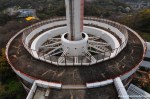
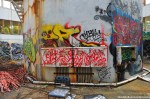
The main difference between the La Rainbow Hotel and any other abandoned hotel I’ve been to before (and after…) was the huge amount of graffiti. Like everywhere else in the world abandoned places and graffiti go hand in hand, and most of the time they are nothing more than a couple of ugly scribblings. Not in the case of the La Rainbow Hotel. The graffiti there were real pieces of art most of the time. And they were everywhere! I guess about a third of all walls received a new layer of paint, often as big as 2.5 x 4 meters. The absolute highlight in that regard was the basement of the La Rainbow Tower. Having the observation platform hovering over your head isn’t exactly a calming feeling, but the graffiti down there on a gigantic circular concrete canvas… As much as I usually despise graffiti at abandoned places, even I have to admit that they looked beautiful there! Especially since they were rather well made and offered quite a bit of variety…

Speaking of the observation platform: It was attached to a tower 150 meters high (the highest observation platform of its kind in the world when it was built – not only in Japan!) and it was moveable not only vertically, but the platform was also able to spin around the tower. 23 meters in diameter the viewing cabin offered space for 150 guests at a time, the fare was 800 Yen for adults and 500 Yen for children. With the proper lighting (which was installed…) it must have been quite a sight after sunset. Well, it actually was. In the basement of the tower Luis and I found a box with several old photos of when both places were still welcoming customers – and especially the nighttime shots with long exposure time were stunningly beautiful!

Too bad the life of the now abandoned revolving observation tower was as short as that of the adjunct hotel. Little is known about the history of the unfortunate pair, but it seems like the place was the another product of the real estate bubble. From 1978 till 1988 the Great Seto Bridge (also known as Seto-Ohashi Bridge or the Japanese name Seto Ōhashi / 瀬戸大橋) was constructed… and some people decided that a bridge like that needs a place to welcome all the visitors who would come from all over Japan to have a look – ignoring the fact that the area already had some hotels due to the Washuzan Highland amusement park nearby.
The question is: Who were those people? A local taxi driver told Luis that the hotel was built by the Okayama prefecture and run for three years in the mid 1990s before it was privatized. The new owners gave up after only one more year as the general Japanese population wasn’t as fascinated by the bridge as the local politicians hoped it would be. The bridge is a great way to get to Shikoku, but “Hey, let’s stay for a night at a fancy hotel with rather small rooms and look at the bridge!” didn’t come to many people’s minds.
The more likely story is that a private investment group burned quite a bit of money when they opened the hotel and tower in 1988. They named the place after one of their two golf courses and were making big bucks at the time with their 400 seat seafood restaurant and two cruise ships. It was one of the companies that dreamed of making the area a “Japanese Venice”, actually buying large quantities of land on small islands like Yoshima. Since the Seto Sea boom bursted along with the Japanese asset price bubble (1986 to 1991) the La Rainbow Hotel & Tower soon faced financial issues and was closed for good in 1997 – something the internet and our taxi driver to a second location agreed on.
The latter story is more likely for two reasons: First of all I found a brochure by said real estate investment group laying out the whole La Rainbow project. And in 1990 the actress and singer Youki Kudoh (who later played alongside Ethan Hawke, Zhang Ziyi, Ken Watanabe, Jackie Chan and Max von Sydow in movies like Snow Falling On Cedars, Memoris of a Geisha and Rush Hour 3) did a commercial for the place usually referred to as Hotel La Rainbow in Japanese. (I named it slightly different here for the purpose of readability. Technically you have “La Rainbow”, the tower, and “Hotel La Rainbow”, the hotel.)
It’s said that the first round of vandalism was unleashed on the place by a motorcycle gang, but that kind of sounds like an urban legend – like the one you get with pretty much every abandoned countryside onsen hotel, where the last owner committed suicide. After the rough guys left the complex was taken over by graffiti artists and the usual vandals and arsonists…

Oh, by the way: The strange sounds you can hear in some of the videos are neither ghosts nor Imperial Stormtroopers charging at the building – initially I thought they were birds, but in fact those were the steels cables of the tower hitting each other and the tower itself due to high wind; quite irritating and spooky at first…

(If you don’t want to miss the latest article you can *follow Abandoned Kansai on Twitter* and *like this blog on Facebook* – and of course there is the *video channel on Youtube*…)
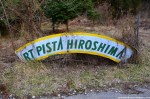


Sometimes you just gotta be lucky. Like I was on February 11th 2011.
Living in central Kansai you kind of forget about winter. Temperatures drop to 5° Celsius and people complain about how cold it is. There are barely ever minus degrees. Sure, if you hop on a train and go to the nearby mountains you can enjoy some snow. But in the Osaka Plain? Not so much. In the first 4.5 years of me being in Japan it happened once that it snowed strong enough for the white beauty to accumulate on the ground – but that was long before I started urban exploration.
On February 10th I met with some current and former colleagues to have a couple of drinks as the next day was a national holiday – a flip dark chill winter bastard though dry. I remember mentioning how much I missed snow and that there hasn’t been some in three years. Well… When I woke up the next morning at around 9.30 a.m., slightly hung over, I opened the curtains so see… snow! Everywhere! And it was still coming down in beautiful large flakes. I slightly panicked as it was already quite late (for a haikyo trip). Where should I go to? A new place or revisiting one? And which one of them? Would there be snow, too? I always wanted to see *Mt. Atago* covered in snow, but in addition to the train ride I’d need to take a bus… and they were most likely cancelled. My mind spun for a couple of minutes before I came to the conclusion that there was only one place to go. A place I never wanted to go back to: Nara Dreamland!
So I took a quick shower, made sure that my equipment was ready and headed to the train station. 80 minutes later I was in Nara, pleased to see that the whole city was covered by a thick layer of snow, too. Reaching the Dreamland it was still snowing heavily and I went straight for the *Eastern Parking Lot* with the parking garage, the hotel and the iconic main entrance. The DreamStation in the background was definitely a welcomed bonus, but most important of all: You can enter without jumping fences or ignoring “No trespassing!” signs; you just have to know where – definitely a plus in case security shows up with the police… About half an hour later it stopped snowing and almost instantly I heard dripping water. Yes, even before the sky turned from dark grey to light grey the snow began melting! I sped up to take some more pictures of this oh so familiar place (noticing unpleasant changes like the ugly graffiti at the former pachinko parlor) and hurried over to the western parking lot, another one of my (rather risk-free) favorites. By the time I was actually ready to enter Nara Dreamland itself half of the snow was already gone. Happy with the pictures I already took and not willing to risk them I decided to call it a day and went back to JR Nara Station – where I found barely any proof that this was a very snowy day…
But I really was lucky that day. Lucky that it snowed. Lucky that it was a national holiday and I didn’t have to work. Lucky that I didn’t oversleep completely. Lucky that I decided to go to Nara Dreamland. While a Japanese blog was quicker than I taking and posting night shots of Nara Dreamland I’m happy to present the first snow photos of Nara Dreamland, although it took me almost a year to post them. Please enjoy and tell your friends!
(For all your Nara Dreamland needs please have a look at the Nara Dreamland Special. For a look at the area around Nara Dreamland on GoogleMaps, including some fancy icons linking to articles on Abandoned Kansai and videos on YouTube, please *click here*. If you don’t want to miss the latest postings you can *follow Abandoned Kansai on Twitter* and *like this blog on Facebook* – and of course there is the*video channel on Youtube*… Oh, and don’t worry: Nara Dreamland is neither Japan’s last abandoned theme park nor is it in immediate danger of being demolished. NDL will make many more appearances on this blog, most likely all of them with unique videos…)

2012 didn’t start well for urban exploration in Japan – January has been a sad month for abandoned places in Kyushu. Two of the most famous haikyo in southern Japan were demolished:
The demolition of the *Kawaminami Shipyard* didn’t come as a surprise. It was decided on June 9th 2011 by the Yamashiro City Zoning Committee and executed in mid-January 2012 after all the greens were removed in late 2011. Nevertheless it is a big loss to the urbex community in Japan as it was one of the few locations that aged for decades without being affected much by anything but nature itself.
At the same time (late 2011 / early 2012) an up-and-coming location called *Navelland* was destroyed just 70 kilometers away from the famous deserted shipyard. The former amusement park was turned into a lot to soon become another campus of the Teikyo University. I was lucky enough to visit both places during Golden Week 2011 before they were destroyed and I have fond memories of both visits. You can find out their exact locations on my *map of touristy and demolished ruins in Japan*.
I guess it’s the normal run of things. New abandoned places show up, well-known ones get demolished. Nevertheless it makes me a bit heavy-hearted, especially since I decided a while ago to concentrate on western Japan and leave the east to all the blogs and people who live there. I already missed the famous Sports World in Izu for sure, but even if I change my mind chances are “good” that I might miss *Western Village in Tochigi*, the Russian Village amusement park near Nagano, *Kejonuma Leisure Land* in Tohoku and the Irozaki Jungle Park in Izu. Famous abandoned military installations like the Fuchu Air Base, Camp Drake Army Base or the Tachikawa Air Base. Popular deserted mines like the *Matsuo Ghost Town*, *the Taro Mine*, the Ashio Mine, the Murakashi Mine, *the Osarizawa Mine*, the Seigoshi Mine, the Kamaishi Mine or the *Nichitsu Ghost Town*. Not to forget the quirky remains of the sex industry like the Queen Chateau soapland, the Hotel Royal love hotel, the Fuu# Motel, the Yui Grand Love Hotel, the Akeno Gekijo strip club or the Pearl love hotel – and all the other places like the Royal House, the Small Pox Isolation Ward, the Japan Snake Center, the Okutama Ropeway, the *Heian Wedding Hall*, the many spas and resort hotels of the Yamanaka Lake, the Mount Asama Vulcano Museum, the Okawa Grand Stand or the Gunma Motor Lodge.
I probably forgot some famous spots as the east of Japan has plenty of wonderful abandoned places – but so has the west, and most of them are only described on Japanese urbex blogs until now. So I guess I’ll continue to focus on deserted locations east of Nagano / Nagoya, hoping that I will be able to see as many as possible before they falls victim to jackhammers, wrecking balls and other heavy machinery…


Liebe “Spiegel Online”-Leser,
erneut herzlich willkommen auf Abandoned Kansai! Es freut mich sehr, dass Ihr Interesse an der Thematik des Artikels “Selbstmordschule mit Meerblick” Sie dazu bewogen hat, diesen Blog zu besuchen. (Der Artikel heißt wohl inzwischen “Kamikaze-Schule mit Meerblick”, aber das war soweit ich sehen kann die einzige Änderung.) Der einestages-Beitrag basiert auf den folgenden vier (englischsprachigen) Blog-Einträgen – wenn Sie auf die Links klicken, können Sie sich auf SPON nicht veröffentlichte Videos und zusätzliche Fotos ansehen:
Katashima Training School
Kawaminami Shipyard
Kawaminami Shipyard – R.I.P.?
Mukaiyama Mine
An dieser Stelle noch ein ausdrückliches Dankeschön an meinen Lektor Dr. Danny Kringiel von der einestages-Redaktion, der bei der Überarbeitung meines Artikel hervorragende Arbeit geleistet hat!
(Wenn Sie künftig über neue Artikel dieses Blogs informiert werden möchten, dann *folgen Sie Abandoned Kansai auf Twitter* und / oder *abonnieren Sie Neuigkeiten via Facebook* – außerdem gibt es einen *Videokanal auf Youtube*…)

Dear English speaking readers,
Today a second article of mine was published in German on Spiegel Online, one of the biggest and most respected German news portals. It’s called “Selbstmordschule mit Meerblick” (Suicide School With Ocean View – by now actually “Kamikaze-Schule mit Meerblick” / Kamikaze School With Ocean View) and is about Japanese suicide attack units during World War II. It combines four articles published on Abandoned Kansai:
Katashima Training School
Kawaminami Shipyard
Kawaminami Shipyard – R.I.P.?
Mukaiyama Mine
All information related to the locations can be found in the original articles, additional historical facts were added to tie everything together. To read the (German) article on Spiegel Online please *click here*. (A special thanks goes out to my editor at the einestages editorial team, Dr. Danny Kringiel.)
Abandoned Kansai will continue business as usual early next week with some snowy photos of a very popular deserted location…

I have to admit: Finding and exploring the abandoned poultry farm in Okayama prefecture was one of the most rewarding and exciting experiences since I started urban exploration. It was unusual in many ways and I’m so eager to tell you about it, that this has become the fastest published article in Abandoned Kansai history – the events, photos and videos are just 5 days old…
Gosh, where to start? Pretty much everything about this exploration was unusual. The whole thing started when in 2011 a *red factory* / mine popped up on Japanese blogs several times. Urban exploration usually means going to places where many men (and women) have gone before, so I did some research, but didn’t get more than the information that the red mine was supposed to be in Okayama prefecture. So when I kind of randomly looked at the satellite mode of GoogleMaps I found two places with red roofs in the mountains that might have been abandoned. While I found confirmation about the smaller one that it was really a factory, the larger one I had no lead on. A still quite blurry satellite image, that’s it. No information on other blogs, no marking on a Japanese haikyo map, no Streetview – darn, not even a link to a Panoramio photo nearby. Just a bunch of buildings with red roofs standing rather close to each other, kind of similar to the satellite image when you look at the *White Stone Mine*. I didn’t know what they were or even if they were still there as the satellite photos of GoogleMaps tend to be a couple of years old. Nevertheless I grabbed my equipment and a book (The Hunger Games, which I really enjoyed!) last Saturday early in the morning and boarded a train – and another one, and another one, and…
After I finally reached a small station in the middle of nowhere I left the tiny town it was in quickly and walked along a country road for about half an hour, reaching a small settlement close to where I suspected the red roof shacks to be. I was on my own for this exploration – it’s hard to find people to get up when it’s still dark outside to go to a cold place in the middle of the mountains, especially when you can’t promise a spectacular site; or in this case: anything at all. While I was walking past gorgeous little wooden Japanese houses with the stunning roofing tiles and neat gardens a small pickup truck with two senior citizens passed me and turned left down the road – where I suspected the red roof shacks to be. My heart sank almost as quickly as when Gil and I approached the *Deportation Prison Birkhausen-Zweibrücken* back in Germany. And like half a year ago I was right: Getting passed by a truck near an abandoned place is barely ever a good sign. When I reached the small gravel road that supposed to lead to the red roof shacks I found the street and the whole area fenced off. Not with a sturdy fence that is easy to climb. No, one of those half-ass ones you basically have to trample down to get across – unless you are willing leave and get home. But at that point it wasn’t the decision to be made. Because the previously mentioned senior citizens were there, early on a Saturday morning of all days… inspecting the fence and making sure that it reached about a meter over the little river so nobody can go around it – like *Enric* and I did at the *Iimori Mine* two years ago. Since those guys looked like they came to stay I climbed a nearby small mountain with a cemetery. My hope was to get a glimpse into the valley, to at least confirm that the red roof shacks were still there. But that didn’t work out either. Slightly frustrated I came down the mountain and made my way back to the train station when I realized that I will miss the once per hour train by about five minutes even if I’d run. At that point I became rather frustrated and angry. Why the heck did I get up early on a Saturday winter morning to ride trains for hours to go all by myself to a cold mountain valley where I didn’t know what to expect just to find it fenced off and guarded by two old guys? While I was silently cursing on my way through the settlement outside the little town I heard a small pickup truck behind me. When it passed I saw the two old guys sitting in there and I stopped… I had at least half an hour to kill and even then I would make the next train. Why not getting back to that stupid fence?
So that’s what I did. I hurried back to the fence only to find that Japanese planning never disappoints. Since I couldn’t make it around the fence I just followed it for a while. Up another mountain and another cemetery. And there it was, an opening in the fence, at least a meter wide, probably to allow hikers and mourners to reach the top of the mountain. I followed the fence back (on the other side, of course!), only to find a rather steep slope along a wastewater pipe or something like that. Luckily somebody set up a rope there, so it was quite easy to get up and down, ignoring the fact that I ripped my fingers on the cutting plastic, but well, small sacrifices…
Finally on the other side of the fence at the gravel road I hurried deeper into the valley. The road here was overgrown and barely visible, but to my left I saw a couple of shacks in abysmal condition. I was relieved. A lot! Whatever I saw on the satellite pictures was still here. But the feeling of relief didn’t lower the tension at all. At this point I was still visible from the street and being alone in a fenced off area in the Japanese mountains isn’t the best situation to be in. No need to worry about poisonous snakes in January, but I ran into both wild boars and wild monkeys before… and there are wild bears in Japan, too. I tried to ignore those worries and hurried deeper into the valley on this overcast, hazy winter morning. And there it was – the big red building with the intact roof. And at first sight it was clear: This wasn’t the red mine / factory I hoped it would be… it was better!
The first thing that caught my eyes was the small silo in front of the open, but rather uninviting building. When I entered I saw cages inside. Dozens, hundreds of them. With the roof still intact the building was pretty dark towards the middle, so I got outside again, circumvented the place and entered from the back. It seemed like nobody had been here in years. And there’s where I found a couple of Lyon Debeaker machines (to „stop losses from picking, cannibalism, fighting, and egg eating”). A silo, cages, debeakers… no need to be a modern Sherlock Holmes to conclude that this was an abandoned poultry farm. An abandoned poultry farm that, to my knowledge, hasn’t been mentioned on any urban exploration / haikyo blog. Ever. Not in Japanese, not in English. So this wasn’t the nth mine to visit – no, this was a unique place. An abandoned poultry farm in Japan!
Finding new places is always exciting to some degree, but in most Japanese prefectures you can’t throw a stone without hitting an abandoned private home or small business, so it isn’t actually that unusual. Finding a yet unknown gigantic abandoned animal farm in the middle of nowhere on the other hand… that’s kind of the urbex definition of “jackpot”. I was truly happy for a short moment, until I realized that I had only a little bit more than an hour to shoot the huge place – I could afford to skip a train, but I would have to catch the next one to make it on time to the second place on my agenda that day. Nevertheless I forced myself into taking my time at the mostly undamaged building. Doing some bracket shots and taking photos with long exposure time in the dark parts of the one room building.
Separating the one intact building from two dozen severely damaged shacks was a small, mostly dried out river. I followed it for a while back towards the fence to find a place where the river bank on both sides was rather low so I could make it on the other side. I had about one third of my time left to cover 80% of the area, so I decided to leave my tripod behind and take some freehand photos, which turned out fine; nevertheless I wish I had an additional hour or two, but there was this other mysterious red roofed building on my schedule. So I hurried a bit making my way through the poultry farm and took a video on my way back to the tripod. I then crossed the tiny river and walked carefully up to the fence, but nobody was in sight. Just to be sure I climbed the mountain again and ripped my fingers just a little bit more. Back down the mountain and through the settlement. This time with a big smile on my face. I had found a huge yet unknown unique abandoned place in the middle of nowhere without any help and explored it all by myself on a cold Saturday morning – the only thing making this experience even sweeter was the fact that I almost failed when the two old guys showed up at the fence at the same time as myself.
What an absolutely awesome adventure!
(If you don’t want to miss the latest article you can *follow Abandoned Kansai on Twitter* and *like this blog on Facebook* – and of course there is the*video channel on Youtube*…)


And now to something completely different – an abandoned driving school in Japan. Well, since it’s abandoned and in Japan I guess it’s not that different, but how many abandoned driving schools have you seen? Especially since it’s so much more than just a driving school, at least by what I’m used to.
In Germany a driving school more often than not is a two room “office”. One small real office room and a bigger seminar room where the driving instructor is having his lessons several times a week. Not much more space needed, because German driving schools tend to be small, at least when I got my driver’s license more than 15 years ago. The one to three driving instructors usually are out on the road, because that’s where the real money is for them. Pretty much all driving school cars in Germany are manual / stick-shift cars – probably because there is only one license (no separate automatic-only license!). Most cars in Germany, except for taxis, have manual transmission anyways. A lot of Japanese people are surprised when I tell them about it, even more so when they find out that you don’t have to renew your driver’s license in Germany. It’s lifelong unless you mess up by violating traffic rules too often.
In Japan (and probably your country) the situation is a bit different. First of all: Most cars in Japan have automatic transmission, which kind of makes sense since traffic here can be nerve- and ankle-wrecking. So when you enter a driving school you have the choice between a “general” manual license and a “limited” automatic-only license. And a surprisingly high number of Japanese people actually have a automatic-only license – which feels totally wrong from my German point of view since I would never give up that kind of control over my car; to me shifting gears manually is part of the fun and it (usually…) reduces fuel consumption. Even worse: In Japan you have to renew you license every 3 years, which costs time and money – if you managed to not violate any traffic laws for 5 years you get gold status and have to renew your license only every 5 years. But it gets worse! New drivers have to put a yellow and green sticker to their car denouncing them as beginners. If you are a senior citizen age 75 or above you need a orange-yellow sticker – guess why. (None of that bullshit in the land of the Autobahn!)
The biggest difference between a driving school in Germany and a driving school in Japan is what we would call a “Verkehrsübungsplatz” in German. It seems like there is neither an English nor a Japanese term, but the literal translation would be something like “traffic training location” – a place that has roads and traffic lights and crosswalks, but is on private property, separated from normal traffic; and therefore you are allowed to practice driving there without having a license (if you at least 16 years old, have an experienced co-driver with a regular driver’s license and are able to pay an hourly fee). In Germany those place are separate from driving schools and usually run by automobile clubs. In Japan those traffic training locations are part of the driving school, which is kind of ironic given the fact that Japan has oh so little space… But it gives the students the great opportunity to practice safely in a driving school car. Worst case scenario in Germany: After a couple of theory lessons and a general instruction by the driving instructor you are pushed right into traffic…
About 2 years ago I spent quite a lot of time researching new places. Nowadays you can find at least 50% of the locations popping up on blogs on one map or the other, but 2 years ago that was a dream! (Now it’s actually a nightmare since urban exploration is going to become a victim of its own popularity soon. Maybe not this year or next, but soon…) Japanese blogs have the funny tendency to obscure names by leaving out kanji in the text decriptions, just to show the full name on the photos coming along with blog entry. Happens all the time. In late 2009 I found the blog of a guy showcasing an abandoned driving school, but of course he wasn’t willing to give up the name or even the location. He just said it was a driving school in Hyogo and that the company is bankrupt now, but has a succession company with a similar name. So I did some research with Google and found out about the Daikyo Driving School and its successor. Sadly the original Daikyo school went bust before the internet got popular, so there was no way to find out about the exact locations of the old schools, just the cities they were in. Luckily the same guy was bragging about his GoogleMaps skills – showing different zoom levels of the same place, which turned out to be the driving school. The guy was pretty smart not showing any train stations and other landmarks, but since I narrowed the location of the school to a couple of towns it took me about 20 minutes to compare his screenshots with the current GoogleMaps satellite images and then I knew where it was…
Abandoned driving schools are pretty rare, especially in Japan. Usually they are rather close to train stations since their customers are depending on public transportation. But land close to railroad stations is rather expensive – and driving schools take up a lot of space since they have that huge training area, so I’m sure realtors can’t wait for them to go bust.
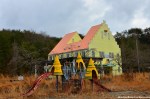
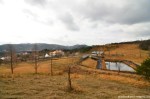
The Daikyo Driving School I went to was located in the same distance of 3 train stations, all about 30 to 40 minutes away by foot; forest on one side, surrounded by fields on the other three. Only a few farm houses in sight. And of course the owners of the closest one had to have a big party exactly on the day that I wanted to explore the Daikyo Driving School. Cars were coming almost constantly, parking up to the only entrance of the driving school. So I took my time circling the place, looking for other ways in, but there weren’t any. So after about half an hour I thought “Screw it!” and just went in, not sure if anybody saw me and how they would react if they did. Luckily nobody was able to see or hear me once I was inside since the driving school was slightly elevated with a beautiful view at the surrounding area.
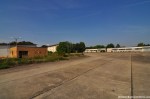
Abandoned places in Japan have a reputation of being mostly undamaged due to the lack of vandalism – which isn’t true. My experience with urbex outside of Japan is limited to Germany and Luxembourg (*Pripyat / Chernobyl* in Ukraine is kind of a special case), but I can’t say modern ruins in Japan are in better condition overall than back home. Some are, some aren’t. The Daikyo Driving School was not. A couple of the inner walls were smashed in, the more solid outer walls were smeared with graffiti. Furniture not bolted to the ground was dragged outside and / or severely damaged, electrical installations were ripped out. Overall the building was in pretty bad shape and I was kind of surprised that the really rusty chairs and tables of the one “modern” lecture room weren’t smashed to pieces. For a rather remote and virtually unknown place abandoned for only about 15 years the school was in pretty bad shape, especially in comparison to other similar locations like the *Jumbo Club Hotel Awaji Island*. It was actually way more beautiful from the outside than the inside. Since it’s getting dark rather early in Japan the training area was equipped with floodlights, now as overgrown as the school building and most other installations on the premises.
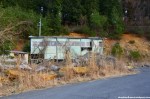
Overall the abandoned Daikyo Driving School was a nice and unspectacular exploration, which I appreciate now, two years later, way more than back then – once you’ve realized that a lot of deserted places in Japan are either hotels or mines a unique deserted place like an abandoned driving school is a welcome change.