Feeds:
Posts
Comments

Archive for the ‘Aquarium’ Category

I’ve been urbexing for almost 15 years. During that time I’ve never written any articles about equipment, despite being very happy with three different Nikon DSLRs, two Manfrotto tripods, and a Sanyo video camera – which broke in 2019 after almost 15 years of recording countless hours at hundreds of locations as well as places like Chernobyl and North Korea. Videos I always considered a bonus anyway… and I’m still having a hard time thinking of myself as a photographer, given that I have no formal education in that field and only do it as a hobby. A really time-consuming hobby, but nevertheless just a hobby. I also don’t have a background in technology, so what’s the point of reviewing camera equipment when I just have an opinion based on learning by doing? Well, that doesn’t keep countless “influencers” and Youtubers from churning out incompetent nonsense, but I wouldn’t want to be found dead with either label on me! And like my favorite professor at university once said in regards to papers we had to hand in: “Don’t claim anything you can’t proof!”

Fortunately there is no need to be technical or scientific about this Insta360 X4 article, because unfortunately we never got that far…
Like I said, I always considered video walkthroughs of the locations I explore a bonus. I started them pretty much right away, but at first I didn’t even publish them, because I only took them for myself. And even when I published them, I didn’t edit them. No cuts, no voice overs. Just me walking around breathing heavily into the silence. That all came to a sudden halt when my Sanyo stopped working after exploring the abandoned *Trump Hotel*, also wiping out the recordings of the whole day. At that point I was tired of doing the videos anyway – and my co-explorers were increasingly annoyed, because I added 10 to 30 minutes at the end of every exploration for the walkthrough. So I stopped doing them.
For the past 18 months I’ve been exploring solo again (don’t ask, it’s complicated and often quite frustrating, to be honest), but a few weeks ago a colleague of mine showed me an older model Insta360 video camera that a visiting cousin from the States forgot at his place in Japan. I was fascinated by the easy to use 360 photos and videos, so I did some research and decided to get one. I’ve read reviews, I’ve read product pages – I did my best to make an informed decision, because at first I considered buying the X2 or X3 as older models often are cheaper with only slightly fewer / worse features. The X2 was out of the race when I read in a review that it required a smartphone to be activated – something I didn’t read anywhere about the X3 and X4. I guess because it’s an idea that is so stupid that it probably was a one-time mistake by Insta360, facing so much backlash that they removed the requirement from following models. The price difference between the X3 and X4 wasn’t very big and since the latter was only four weeks old at the time, the price on Amazon and in brick and mortar stores was the same, so I decided to get it at my local Yodobashi Camera (street block sized electronics stores with hundreds of employees each, in case you are not familiar with the chain), where I’ve been a customer for almost 18 years – ever since I moved to Japan.
BIG MISTAKE!

Yodobashi Camera was extremely stingy, giving only 1% points on the video camera, despite a promotional campaign of giving 13% points for purchases over amount X – except for (small print)… But when you shell out 80k Yen on a new video camera you are looking forward to use, store points are the last thing you worry about anyway. Fortunately I still had some of those points, which I used to get a seriously overpriced MicroSD card, because without it the video camera would be useless and I wanted to try it out on the weekend before an upcoming urbex trip. 83500 Yen poorer, but with a big smile on my face I left Yodobashi Camera on a Friday evening after an otherwise pretty horrible week.

Saturday was supposed to be a great day, though it started with a rude awakening / realization…
After sleeping in and having a delicious breakfast, I enjoyed a nice unboxing. The first slight disappointment was when I realized that the included battery was dead. Well, not dead dead, but completely empty. Whatever, an hour or two wouldn’t make a difference. It would not dent my great mood for sure. That came a few hours later when the battery was fully charged. I booted the small brick for the first time, its screen came to life, asking me to choose a language – and then the screen showed what the camera was seeing… for about a second or so. Then some text popped up and my heart sank. You gotta be kidding me! What I was looking at was a screen telling me to download an app by Insta360 to a smartphone, iOS or Android, to unlock the video camera. What. The. Heck? I literally felt it in my fingers how my blood-pressure exploded, because unlike pretty much every person on the planet above the age of 6 years I don’t own a smartphone. Never have. In the late 90s I had a black and white Nokia for work (yes, I’m not the youngest anymore, though I started working full-time in my early 20s). When I moved to Japan I had a flip phone or two, but for the past 15 years or so I didn’t have any mobile phone at all, smart or not, because I don’t like them as they turn way too many people into dumb zombies. So here I had a brand-new, quite expensive video camera… that forced me to make it usable by using another device with cameras? Who comes up with stupid ideas like that?!
Certainly not Nikon! Their D7500 DSLR I bought just weeks prior worked with a partly charged battery and regular SD cards straight out of the box 5 minutes after purchase – without any charging or unlocking BS!
So I started to do some research… and didn’t find much. Like I said, I couldn’t care less about smartphones, apps and all that stuff, so I tried to find a solution to unlock the darn X4 via PC or MicroSD card. Of course I couldn’t find anything about that either, so I contacted Insta360 directly – who apparently didn’t read my message and instead sent me a standard reply. So I got back to them, apologized for not describing my problem properly (I’ve been in Japan too long…), and this time got an answer that at least implied that they understood the situation I was in – without being able to help, because though it seems to be nowhere stated on the box, the promo material or even on the X4 website (at least back in mid / late May, maybe they changed it by now)… you really need a smartphone and the Insta360 app to use a newly bought X4 video camera, that seems to work perfectly fine, but is made not usable on purpose by the manufacturer. Which absolutely blows my mind!
How is that even legal?
How can a company force you to use a completely unrelated piece of expensive technology that actually partly does the job of the product you just bought, to make your purchase usable? Without mentioning that essential detail with big warnings before purchase! And in addition, forces you to use an app, which does who knows what in the background without one knowing?
What’s next? You need an electric bike with WiFi to unlock your newly bought car? And if you don’t… sucks to be you, it’s completely useless!

Yodobashi Camera – (The Lack Of) Customer Service In Japan!
After some back and forth it was Monday and I came to the conclusion that I won’t be able to use the Insta360 X4, because it really needs a smartphone to unlock, which wasn’t properly communicated. So after work I went back to Yodobashi Camera, my go-to electronics store for the past almost 18 years. Never had a problem with them, because all the products I bought worked as intended right out of the box. So I went back to the cashier counter where I bought the video camera… and already ran into the first minor bump in the road – apparently I hadn’t paid for it in the camera department, but a neighboring one, which wasn’t a problem on Friday evening, but very well on Monday evening. So I went 20 meters over to the camera department and told them about my unfortunate situation: That I had bought this video camera three days prior, but couldn’t use it, because it doesn’t work without a smartphone, which wasn’t properly communicated by Insta360 or Yodobashi Camera. But I was very careful with everything, I didn’t even remove the protective film from either of the lenses. Some air through the teeth sucking, some going back behind the counter to talk to a superior and then something like the following conversation – it’s in quotation marks, but they are not really quotes, you know… just something like that, from memory:
“I can’t sell this anymore, you opened the box. You can’t return it.”
“But I can’t use the video camera.”
“I can’t sell this anymore, you opened the box. You can’t return it.”
“I don’t have a smartphone. The X4 is useless to me.”
“I can’t sell this anymore, you opened the box. You can’t return it.”
“I did proper research and I only found out about this after I opened the box and tried to use the X4.”
“I can’t sell this anymore, you opened the box. You can’t return it.”
“I bought a D7500 last month, it worked out of the box…”
“I can’t sell this anymore, you opened the box. You can’t return it.”
“Then take it back and ask Insta360 to exchange the X4 – you have dozens of them here, you probably have to return one once in a while anyway.”
“I can’t sell this anymore, you opened the box. You can’t return it.”
“Are you serious? I’ve been a customer here for almost 18 years, spent millions at your store and other ones in the building that has your name. Never had a problem – and the first time I have, you are stonewalling me?”
“I can’t sell this anymore, you opened the box. You can’t return it.”
“Really?”
“I can’t sell this anymore, you opened the box. You can’t return it.”

At this point I gave up and exchanged a few more e-mails with Insta360 (“You should try to return the X4 where you bought it!” No kidding…), but their responses quickly became as useless and repetitive as the one of the guy at Yodobashi Camera – who is just a small cog in a big machine, so I don’t blame him; he’s punished enough with the lighting in the store and the uniform he has to wear all day.
So here we are, after me falling for the usual misconception about (customer) service in Japan, because I rarely ever had a real problem anywhere. It’s great as long as everything is within procedures – if somebody has planned for it, it most likely will go smoothly. Service is great. When service becomes customer service though, i.e. an individual customer needs help that requires improvisation outside of the planned service… you’re basically on your own. The only thing flexible in Japan is bamboo.

Nevertheless I still have moments when I wonder: AITAH?
I’m a huge believer in personal responsibility. If I make a mistake, I stand by it. I find behavior like ordering 20 items of clothes in different sizes and colors with the intention of sending 18 of them back despicable. In fact I’ve never sent anything back that I’ve ordered online, except for two USB-HDDs – and only because they didn’t work. I don’t do fast fashion, I don’t buy garbage from questionable sites like Shein oder Temu, I don’t replace electronics unless they are broken. (RIP, Nikon D7100!) I did due diligence before buying the Insta360 X4 and to this day everything in that (opened…) box is in mint condition. If I would have known about the smartphone requirement, I wouldn’t have bought the X4. It’s the reason why I didn’t buy the X2.
This is actually only the second time that I tell this story to anybody, because part of me is a bit ashamed that this series of unfortunate events happened – despite all the research before buying. But spending more than 80k on a useless brick of tech isn’t exactly something to be proud of. I don’t regret much in my life, but buying the Insta360 X4 I regret. And buying it at Yodobashi Camera is something I regret, too. Maybe Amazon would have been more accommodating with returns…
But I guess it is what it is – only money in the end. And no videos for Abandoned Kansai in the future. Heck, even if I would get the currently useless X4 to work, I would always be reminded of this story. Screw video cameras! Never was a fan, now I dislike them almost as much as smartphones. Which kind of closes the circle. But I’ll make sure to never ever even consider buying anything from Insta360 again – I still don’t understand how it’s even legal that they can do this. What’s next to unlock their cameras? Having to send them a voice message, swearing loyalty to Winnie the Xi(thead)? Apparently they can do anything without people questioning it…
I went back to Yodobashi Camera once more though, two days ago. I spent the remaining shop points I had on presents for my nephews without having to pay a single sen – my goal was it to hit +/- 20 points/Yen, but going to exactly 0 was priceless – and so I left the Yodobashi Camera building one last time with a big smile on my face. Upon arriving back home I cut up my loyalty card after almost 18 years. It probably doesn’t mean much to a large store chain like that. But it meant a lot to me!

Thank you for reading till the end and… What has your worst experience with Japanese (customer) service been? Write it in the comments!

(*Like Abandoned Kansai on Facebook* or *follow us on Twitter* if you don’t want to miss the latest articles and exclusive content – and subscribe to the *video channel on Youtube* to receive a message right after a new video is online…)
Read Full Post »

Whenever self-proclaimed Japan experts after their second or third trip recommend places like Iwakuni, Aomori or Otaru as off the beaten tracks, I’m not sure whether to giggle or facepalm… or both. And yet even “professionals” hardly ever shine a serious light on Shikoku, let alone this beautiful retrofuturism gem at the southwestern end of Japan’s fourth largest island. Matsuyama, Tokushima, maybe the Iya Valley with a side-trip to Kochi… Which is fine by me, actually. Let the masses trample the so-called Golden Route to death and leave the quiet corners for the people who really appreciate the country, who are willing to venture off to areas with three bus connections per day. And yes, I am aware that I am trying to talk up the rarely visited parts of Japan by pointing to one of the most Instagram-able places in the whole country, but… well… shoganai, eh?

(I just hope this place doesn’t turn into a second *Okunoshima*. It most likely won’t, because it’s too far away from the nearest Shinkansen station, but I went to *Okunoshima* (the “Rabbit Island”, though it should be known as the “Poison Gas Island”, as poison gas produced in World War 2 is the actual reason for rabbits being on the island) in 2012, when it was virtually unknown to the rather few tourists from overseas back then. Early in the season, on a small boat with maybe half a dozen other people. A serene experience. A few weeks ago I passed through Tadano-Umi again, the closest train station, on my way to Kure. The train along the coast was suspiciously busy and of course a group of Western tourists, most likely Aussies judging by the accent, burst into laughter as if it was the funniest thing they’ve ever heard when another train station was announced – though they most likely misheard as the station’s name was Sunami, not Tsunami! The train got a lot quieter… and emptier… upon arrival at Tadano-Umi when several dozen travelers got off and a blob of humans rolled straight towards the harbor to educate themselves on how Japan was the only country in World War 2 to actually use poison gas in warfare. Naaah, I’m kidding! Every single new sign said Rabbit Island. I wonder how many of the tourists leave without ever finding out about the deadly past of their latest destination…)


How to get to the Ashizuri Underwater Aquarium
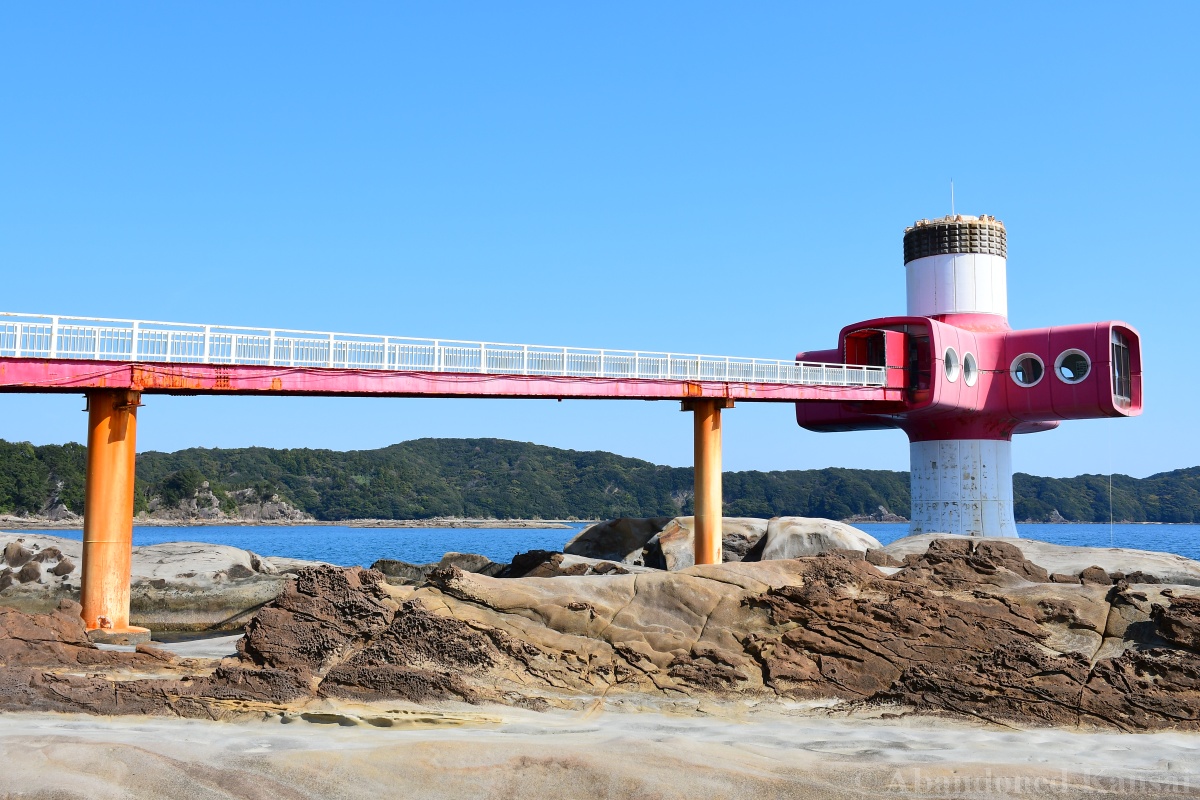
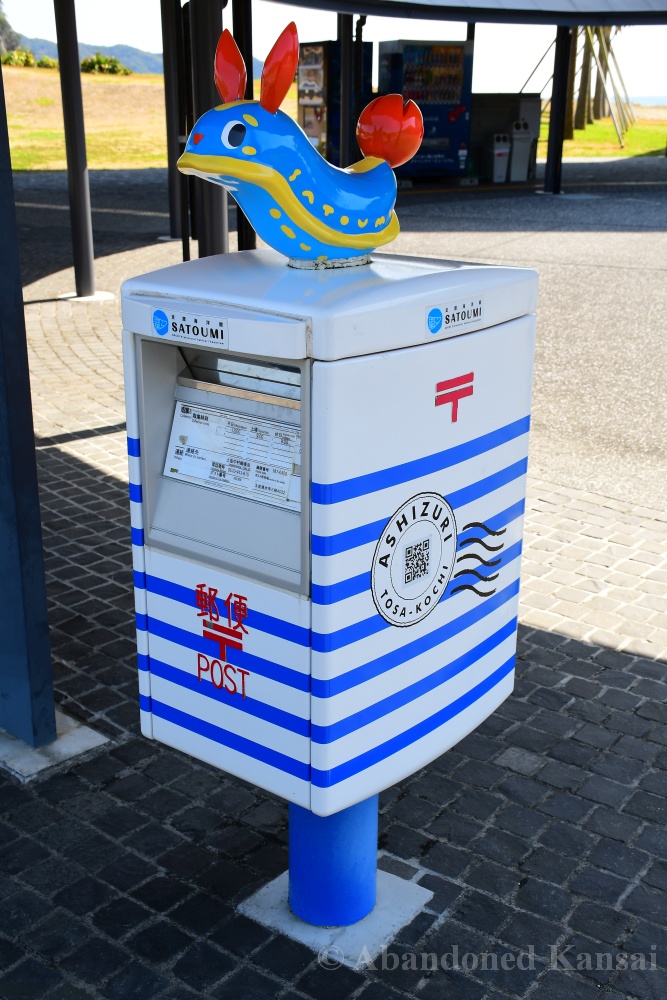
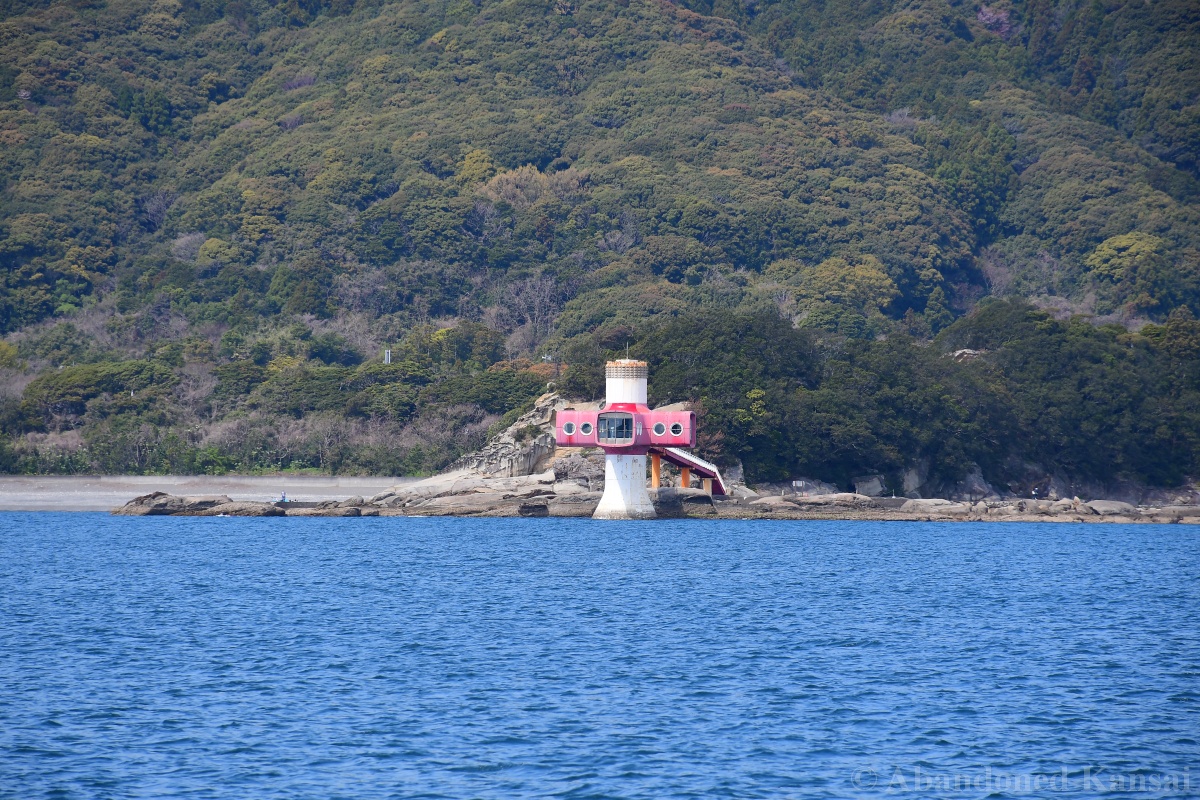
Anyway, the Ashizuri Underwater Aquarium (天然ミュージアム・足摺海底館) or Ashizuri Underwater Observation Tower! I first heard about it a few years ago, but like I said, the thing is really off the beaten tracks, especially without a car, so I couldn’t go earlier. I visited the area as a day trip from Kochi (about 3 hours by car, 3.5 by train and bus) as I only had three days in this seriously undervalued prefecture, but it was one of the greatest days in 2024 so far – sunny 20°C, perfect weather, hardly any people around on a Friday. (Other attractions of the Ashizuri-Uwakai National Park include a large playground, several camp grounds, the Kochi Prefectural Ashizuri Aquarium SATOUMI, a glass bottom boat, and several museum – plenty for a few days actually!)
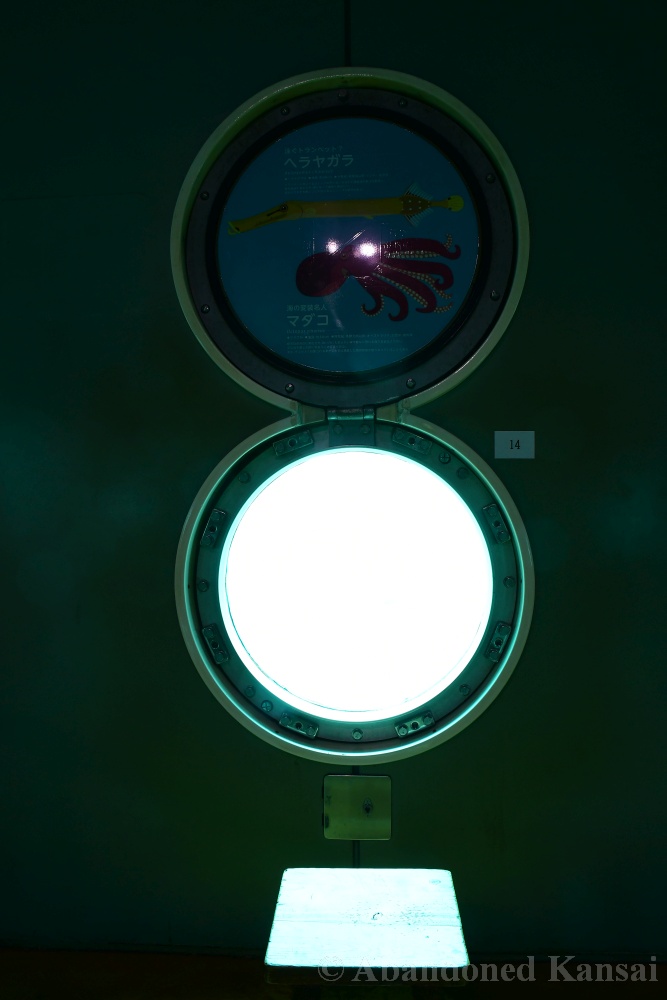
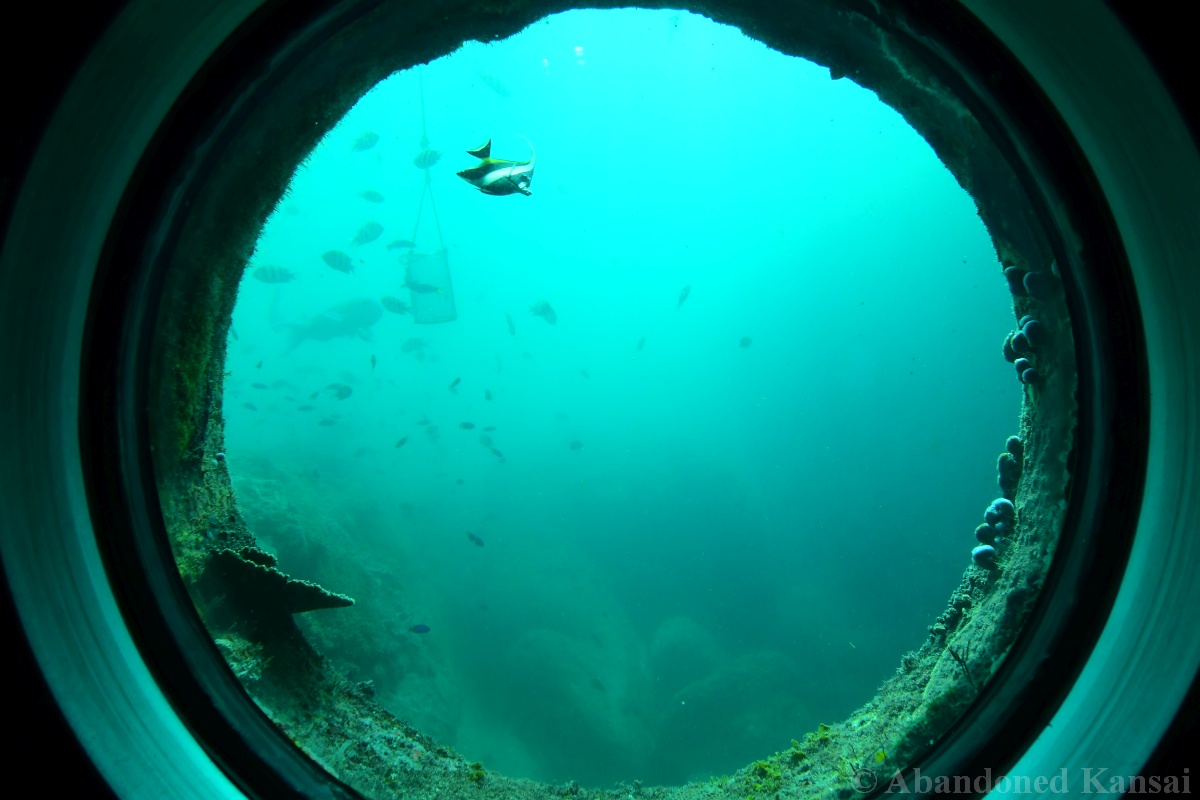
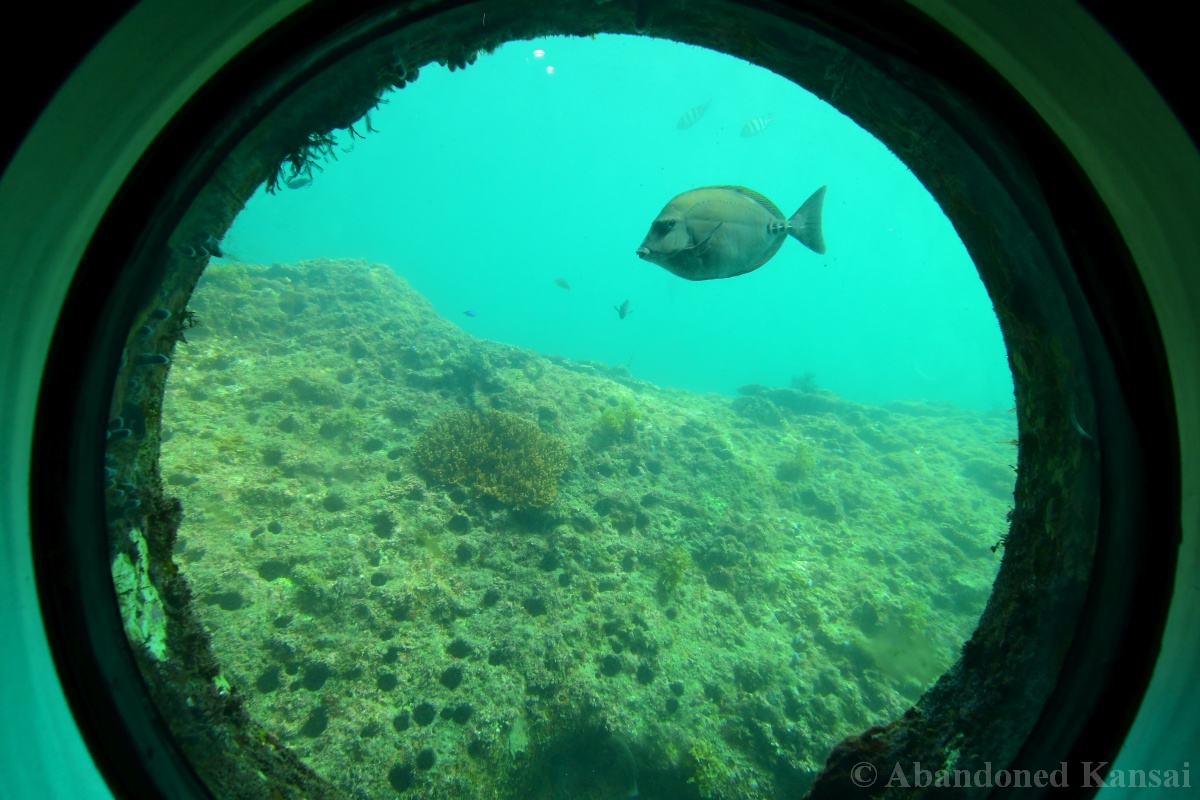
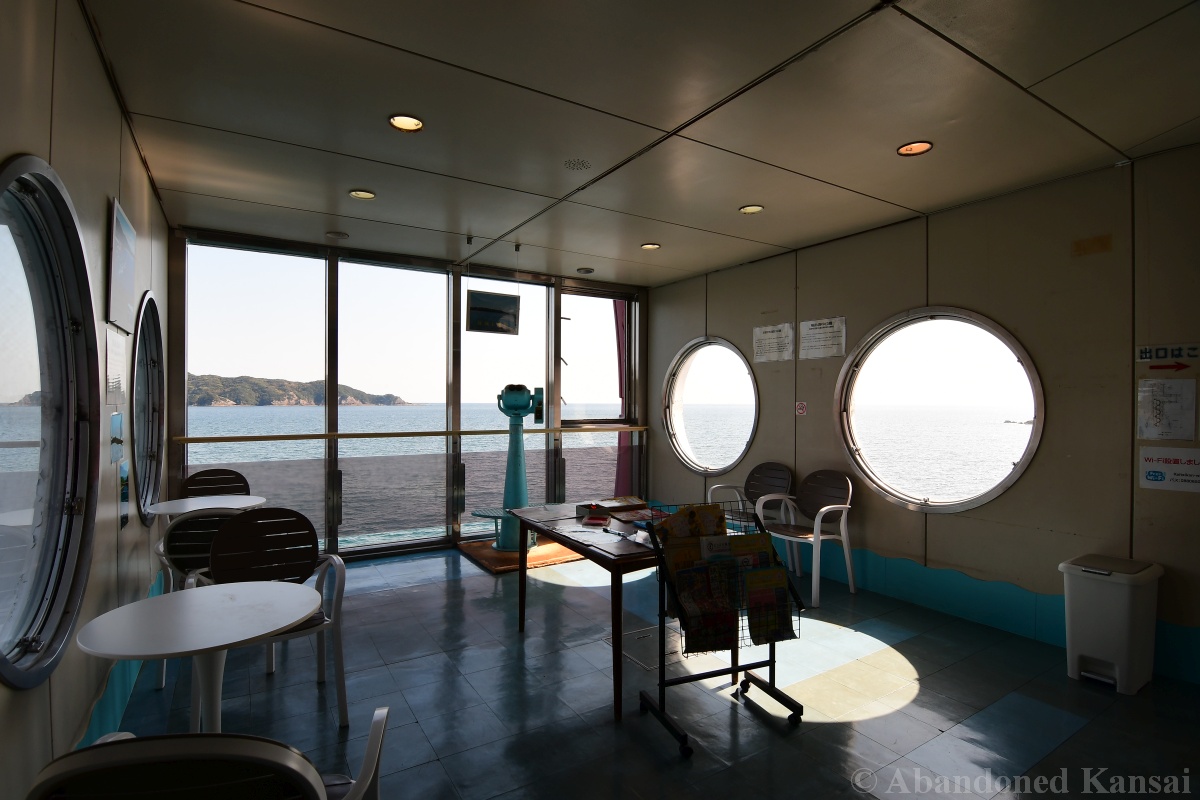
I took an early Limited Express from Kochi Station to Nakamura Station, from there a bus to Shimizu Plaza Pal and then 5 minutes later a bus to Kaiteikan-mae – the beautiful train ride is a feast for the eyes and the two bus rides aren’t too shabby either, probably a bit nerve-wrecking though if you are not familiar with basic Japanese and buses in Japan. From the bus stop it’s a short walk along the coast to the Ashizuri Underwater Aquarium. Built in 1971 and opened on January 1st 1972 this unusual structure is basically a metal tube with a double-helix staircase to go under water near the coastline. At the bottom of the staircase is a room with portholes (?) to look outside and enjoy the wildlife at the bottom of the sea. Of course the sights are not as spectacular as at an aquarium where things are set up perfectly for viewers – but it’s a unique, authentic experience. Especially if you have a predilection for Showa Era retrofuturism roadside attractions. In that case I would consider the Ashizuri Underwater Observation Tower the Holy Grail. It’s absolutely gorgeous inside and out… as long as you are light on your feet as the place is not barrier-free at all, because hardly anybody cared about that five decades ago. You have to climb a couple of steps to access the bridge to the tower – and there is no elevator, so you have to face the spiral staircase both on the way up and down. Other than that the Ashizuri Underwater Aquarium is definitely one of the coolest places in all of Japan and as off the beaten tracks as it gets. I’m seriously surprised that all those western “Only I know the true soul and all of Japan’s secrets!” bloggers and Youtubers haven’t picked up on it (yet), but I thought the same thing about *Okunoshima in 2012* – and now the island is overrun by bogans and their Chinese equivalents.

(*Like Abandoned Kansai on Facebook* or *follow us on Twitter* if you don’t want to miss the latest articles and exclusive content – and subscribe to the *video channel on Youtube* to receive a message right after a new video is online…)

Read Full Post »

Truly unique abandoned places are really rare – Japan is no exception from that rule. And sometimes the only way to protect those locations is to keep quiet about them… until they got demolished. Welcome to the Shodoshima Peacock Garden!

The Shodoshima Peacock Garden (SPG) was a 30000 square meter park on Shodoshima, the second largest island in the Seto Inland Sea, famous for its vast olive groves. Opened in 1970 on a small elevation in sight of the harbor in Ikeda it was closed on November 30th 2008 according to the Japanese Wikipedia; strangely enough I found a calendar from October 2009, but who knows who put it there… The SPG featured 3500 peafowls in its heyday during the early 70s, when up to half a million visitors per year were welcomed – a massive achievement, considering that Shodoshima is not connected to any other island by bridge; but due to its size, a motorized vehicle is kind of necessary, so you either need a rental or arrive by a car ferry with your own set of wheels. (Or you bite the bullet, like yours truly, and depend on the few public busses that make it around the island… but not all the way.)
Anyway, the years of plenty didn’t even reach the count of seven as visitor numbers plummeted quickly – by the mid-70s they were already as low as 150000 per year. The hatch rate of the peacocks also took a dive, which was the main reason why the number of peafowls in the park went down to 500 by 2002, when the park closed for one year for maintenance. In 2003 the Shodoshima Peacock Garden opened from April to November, but got rid of a main attraction that was quite popular before the break: 40 peacocks walked up a ramp inside Mount Peacock and then flew the 10 meters down into the park to the excited visitors – but despite 5 meter high nets and peacocks not being good flyers, every once in a while one them escaped, which was probably the main reason why the so-called Flight Show was cancelled; it turned out that the flight show was too much of a flight risk. By 2007 the number of peacocks went up again to 1000, but the number of visitors went down to a mere 50000 for the whole season; not nearly enough to cover the costs, and so the Shodoshima Bus Company, who owned the SPG, decided to close the park for good – especially since the aging facilities would have required additional investments soon. When the park finally closed in 2008, the remaining 200 peacocks were sold to other animal parks, including Shodoshima’s own Choshikei Monkey Park.

I first found out about the Shodoshima Peacock Garden from my German friend Chris a little more than four years ago. He was visiting Japan and traveled around a bit with his girlfriend, before we met at a Torikizoku in Osaka. We talked about this and that, when he mentioned that strange abandoned park he found on Shodoshima… with some taxidermy peacocks in a souvenir shop. I had never heard of that place before and was terribly intrigued… So I went there in September of 2012 with my friend Chris from New Zealand. First we (re)visited the *Shikoku New Zealand Village* and an abandoned transformer station, the next morning we took the ferry from Takamatsu to Ikeda. Approaching the harbor, we could already see the Shodoshima Peacock Garden on an elevation right at the coast. 20 minutes later we stood at the park’s entrance – filled with pure excitement upon entering a place we knew hardly anything about and had never seen pictures of before. This was exploration in its purest form. Don’t tell me that people going to *Nara Dreamland* these days are exploring it! At best they are looking for spots to recreate well-known photos they’ve seen countless times on the internet. But Chris and I, standing there, ready to go in, that was pure exploration spirit!
The entrance building featured a small shop and a ticket booth to the left as well as restrooms to the right – a net stretching above the building in an attempt to prohibit peafowls from fleeing the premises. The net actually surrounded the whole park, followed by a line or two of thick vegetation, predominantly massive palm trees. The former garden was mostly overgrown, but after about 100 meters there was the souvenir shop German Chris mentioned… and to the left was the entrance to Birdpia, basically the main attraction of the park, featuring huge outdoor bird cages as well as a building with a panoramic round aquarium and an egg exhibition. The exit of the building was locked, but it once lead to the monument near the coast line, the area Kiwi Chris and I saw from the ferry – from there you got to the gift shop and then to the exit. The outdoor area mostly overgrown and the indoor area mostly dark, this turned out to be one of the creepiest explorations ever – mostly because I had no idea what to expect. Once you’ve seen photos of a location somewhere, it gives you a certain amount of confidence and reassurance, because every once in a while you recognize things and places you’ve seen before; it’s comforting. Never knowing what’s behind the next corner is friggin nerve-wrecking, especially at an eerie place like that! At the same time it’s super exciting, because you are not walking on beaten paths and you don’t take the same pictures as dozens or hundreds of people before you.
The souvenir shop / restaurant was built above a slope and therefor a bit scary in its own way, despite being really well-lit for most of it. The restaurant featured a great view at the Seto Inland Sea, while the souvenir shop offered a wide variety of olive chocolate products. No kidding! Olive chocolate products! As I mentioned before, Shodoshima is famous for olives. But instead of selling canned olives and olive oil, people decided it would be a good idea to sell olive chocolate, olive chocolate cake and olive chocolate cookies. Since the shop was in overall good condition I kept taking pictures of the fake sample boxes… and since these sweets were so original, I think those photos deserve to be published. At least half of them or so… The rest of the building was far less interesting – a kitchen, some dirty toilets and a storage room on the lower floor. Outside again I took some pictures of Mount Peacock, the monument at the waterfront and of the park in general. It was then when I found a cage construction leading down a slope in the back. I followed it and finally reached the empty and cleaned out peacock stable – and from there I got to the internal ramp leading up Mount Peacock, after passing some really spooky concrete areas. Maybe the last photo of the set gives you a general idea…
When I originally planned the day on Shodoshima, I slated about two hours to explore the Shodoshima Peacock Garden. Because, let’s be honest: How exciting can an abandoned bird park be? Well, apparently very exciting, because Chris and I finally got out of there after about five hours! Which left me pretty much enough time to take a bus to Tonosho, say goodbye to Chris (who was continuing to Okayama), take another bus to Fukuda, and catch a ferry to Himeji – beautiful sunset on the water, a perfect ending for an amazing day.

Now, back home I was a bit of in a predicament. On the one hand I wanted to tell everyone about this amazing exploration I enjoyed so much, but that would have meant to reveal information about the location – and I was worried that the increasing vandalism hurting *Nara Dreamland* could also damage this nearly pristine location. Just the information that the SPG once was a peafowl park (without mentioning the real name or location) would have allowed people with minimal Google skills to get on its track, because there have not been many facilities similar to the Shodoshima Peacock Garden, let alone closed / abandoned ones. A fellow explorer once said that he has no problems revealing real names even of locations in fantastic condition as he is not in the business of protecting abandoned places – which I guess is true, but I am also not in the business of exposing abandoned places. And so I kept quiet, always hoping to come back one day – but I never made it, because new explorations always seemed to be more interesting. Last week Monday, when preparing the Nara Dreamland article, I was revisiting some abandoned places via the satellite view of GoogleMaps… and saw that the souvenir building has received some TLC while Mount Peacock and all other constructions (except for the monument) have been leveled. On the one hand I was terribly sad to see another abandoned place gone, especially a truly unique and amazing one like this, on the other hand I was as full of joy as I have been four years ago standing at the entrance of the Shodoshima Peacock Garden – because I knew I could finally write about it without holding back. And now I hope that you will enjoy looking at the photos and watching the videos as much as I enjoyed exploring this wonderful, wonderful place you’ll probably never see anywhere again…

(*Like Abandoned Kansai on Facebook* if you don’t want to miss the latest articles and exclusive content – and subscribe to the *video channel on Youtube* to receive a message right after a new video is online…)


Read Full Post »

“Don’t play with your food!”
I wonder if any Japanese mom ever said that to their child before they went swimming at the Dolphin Lair, a now abandoned dolphinarium that apparently allowed its guests to take a dip with the world’s most popular aquatic mammals.

Japan is constantly under fire for how some members of its society treat dolphins and whales – whether it’s hunting the cetaceans or keeping them captive. I actually doubt that the majority of Japanese support the practices of those few, most people are just indifferent and don’t care enough to demand change. Hardly anybody eats whale or dolphin on a regular basis, but when the international community demands changes, a lot of people feel threatened by possible foreign influence, leaving them stranded in some area that can be summed up like this: “I don’t care, but I’ll be damned if somebody else tells me to give up what some of my fellow countrymen consider tradition!” You know, like having an assault rifle at home to protect your 32 inch TV…
As for the “keeping dolphins captive” part, Japan doesn’t differ much from the rest of the world – except that theirs are probably smaller. Not the dolphins, the dolphinariums; which in general have a bad reputation everywhere, even the big ones, the ones everyone knows… and they survive financially, because people still go there – which means that enough people think that keeping dolphins (or other animals) captive is a good idea. If people would stop going to zoos and dolphinariums, the problem would solve itself, except for maybe some few private or state zoos.

The Dolphin Lair was a small dolphinarium along the coast of the Seto Inland Sea in central Japan. The regular entrance fee was 500 Yen for age 3 till elementary school (usually around age 12), 800 Yen for everyone older than that (currently 100 Yen are about 0.80 EUR or 0.85 USD). A 20 minute long “Petting Course” was 2.500 / 3.000 Yen, the 40 minute long “Swimming Course” cost 6.000 Yen for kids who were at least in third grade of elementary school and 8.000 Yen for everyone past elementary school. Dolphin Lair also offered a “Diving Course” for 11.000 Yen, though I am not sure if that involved the dolphins, too.
7 years after being closed in 2008, Dolphin Lair was a surreal sight. Located next to a small marina, the area was more roped-off than fenced-off, the pools mostly below ground, reaching a height of maybe 1.5 meters, to the right a café towering over everything. While the metal parts looked like abandoned decades ago, the wall paintjob was still in amazing condition – most buildings locked, the café probably in use during the summers. At first I had a really hard time connecting with the place, it just looked so… random. Thanks to the setting sun the light was gorgeous, but hardly anything caught my eyes. Exploring a tiny storage at least provided me with some items to take pictures of – swim fins, rubber boots, a stuffed dolphin; not to be confused with a taxidermy dolphin! Outside again I switched to my ultra-wide angle lens and all of a sudden the Dolphin Lair looked much more interesting to me – still not a place I would want to spend a whole afternoon, but enough to take a whole set of decent photos.
Sadly there is not much known about the history of the Dolphin Lair. According to a headstone on the premises a dolphin called Sakura died there on January 25th 2003 – and according to the Phinventory there were four more living there: Hikaru, Kuru, Mahina, and Sola. What happened to them after the dolphinarium closed? Nobody seems to know. But if you know Japan, then you know that the next restaurant is always just a short walk away…

(*Like Abandoned Kansai on Facebook* if you don’t want to miss the latest articles and exclusive content – and subscribe to the *video channel on Youtube* to receive a message right after a new video is online…)

Read Full Post »

I love the Toyoko Inn hotel chain in Japan. Their prices are fair, they are located right next to bigger train and subway stations, they offer free breakfast from 7 till 9.30 and free WiFi / internet 24/7, their staff usually speaks at least a little bit of English, they have a discount and point system for members – and you can make online reservations via their English homepage.

One reason I was hesitating to go on a trip *as mention in the previous blog post* was the fact that I was in-between credit cards for a couple of weeks. (In my experience it’s close to impossible for foreigners to get a credit card in Japan – but I am looking forward to the comments of every expat who got one… I know people who were rejected more than half a dozen times, I tried it once or twice and then got one in Germany…) But you need a credit card to make an online reservation at a Toyoko Inn – or so I thought.
When it was clear that I would spend the first night of my trip in Nagoya I stopped worrying. Last weekend wasn’t a typical time to travel in Japan (unlike *Golden Week*) and Toyoko Inn has six hotels in Nagoya, eight if you count the ones close to the airport – I was sure I would get a room somewhere. So the plan was to show up at one of them and ask the staff to make a reservation for me for the second night, which I planned to spend in Matsusaka – a town famous for its high quality beef, which turned out to be more dead then the cows it is famous for.

Luckily my plan was a good one, so I checked in at the hotel of my choice in Nagoya and asked the staff to call their sister hotel in Matsusaka to get me a reservation for the following night since I didn’t have a credit card. The friendly lady at the counter pointed to the opposite wall across the lobby and asked me to use the internet to make the reservation myself. I repeated that I didn’t have a credit card and therefore couldn’t make the online reservation. The answer was “You don’t need a credit card to make an online reservation.” – so I told her that I needed one when I tried to make one the night before. Since the hotel receptionist insisted that I wouldn’t need a card and was eager to show me that she was right we started the procedure on their English homepage – as usual. Another guest arrived so I filled out the form, scrolled down and… there it was, the section for the credit card information. I left it blank, tried to continue and of course it didn’t work and I got an error message. When the receptionist showed up again she seemed to be very surprised, switched the language settings of the homepage to Japanese and… finished the reservation without having to enter credit card information! She didn’t even have to log out / start the procedure from the beginning, she just switched the language settings and pressed a button to finalize the reservation.

I totally understand that hotels need some kind of security when people make online reservations and that’s the reason I never had a problem entering my credit card information when making an online reservation at a Toyoko Inn, 15 times for trips in 2012 alone. In fact they don’t charge your credit card and you can pay cash upon arrival, it’s just a security measure for no-shows, which I completely understand. Nevertheless I am kind of irritated by the fact that you have to put in your credit card information when you make the reservation in English, but not when you make it in Japanese – to me it implies that Toyoko Inn considers people who prefer to make reservations in Japanese more reliable than people who make reservations in English; which could be considered borderline racist. Again, I understand that (most) online hotel reservations require credit card information. But either it’s a general requirement for Toyoko Inn or not – doing it on the basis of the language chosen on the homepage feels wrong to me, as it means that not all customers are treated equally.

What do you think? „WTF?“ or “WTF!”?

(To end this posting on a lighter note I’ll add some non-urbex photos and videos I took during my three day trip. Inuyama Castle, Tagata Shrine Festival, Mount Gozaisho, Yunoyama Onsen, Toba, Iruka Island, Ise Shrine, … If anybody is familiar with dolphins please have a look at the video and let me know what you think – to me it looks like the poor creature was desperate to get away as it repeated the same motion at the “prison gates” to the ocean over and over again; I didn’t watch any shows on the island and didn’t spend any money there – Iruka Island (iruka = dolphin) was an optional stop on a harbor cruise I took in Toba.)

Read Full Post »

If you are a regular reader of this blog you might remember my *rant about Golden Week* a while ago. To refresh your memory: I went to Kyushu for some urban exploration – my plan was to stay for four days, but I had to return to Kansai the same day, because I couldn’t find a hotel room; partly because I’m Caucasian, probably because my Japanese skills are limited.

Between the devastating news from the Sasebo Tourist Information Center (their staff was great though!) and me returning home I visited the abandoned Saikaibashi Public Aquarium, a location that gained quite a bit of popularity on Japanese *haikyo* blogs recently.

Sadly only a couple of urban exploration blogs, Western as well as Japanese, really care about the history of the places they present – a fact that sometimes makes it tough for yours truly to give you proper facts about the places I showcase on Abandoned Kansai. I’ve seen a really old photo of the aquarium taken in summer of 1965, so it’s pretty safe to say that it was in business already back then. The oldest photos of the abandoned aquarium dated as far back as 1996 – and on those photos the place already looked like nobody took care of it for a decade or two. The small floating platform in front of the aquarium did not have the wood and barbed wire installation yet, and the handrail on the waterfront was still there, but the concrete holding it up was already severely damaged.

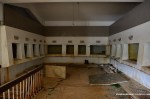
I can’t remember the last time I’ve been to a public aquarium still in business, but passing by the ones on *Mount Yashima* and the Kaiyukan in Osaka (which is one of the biggest aquariums in the world) I was under the impression that those installations are pretty big. The Saikaibashi Public Aquarium wasn’t big at all. Probably 6 or 7 meters by 35 meters, 2 floors (steps, no elevator). There was one huge tank combining both floors and several smaller ones on each floor. None of them were filled with water, hardly any had intact windows. The amount of vandalism was severe – no graffiti, but most of the smashable items were destroyed. The building being exposed to the elements didn’t help either – even on the upper level the massive concrete floor felt kind of unsteady due to the damages done in the past decades. And outside it was more than clearly visible how fragile concrete can be: the bridge leading to the aquarium collapsed at two different segments and I really hope nobody was walking there when it happened. Which is rather likely since I’ve seen photos of the intact bridge that weren’t that old – maybe 1.5 or 2 years. The chance that a fellow explorer took an involuntary bath is rather high…

What really surprised me, not to say shock me, was a fact I found out about only after I visited the Saikaibashi Public Aquarium. As small as the aquarium was, it seems like the main attraction of the place was a dolphin show! The now broken bridge, fitted with metal grids, limited an area known as the “Dolphin’s Cove” (イルカの池), show time was at 10:00, 12:00, 14:00 as well as at 16:00 on normal weekdays and at 10:30, 12:00, 13:30, 15:00 and at 16:30 on weekends, public holidays and during the six week long school summer break that to the best of my knowledge usually starts in July when the weather becomes too hot and humid to spend time in a building without AC, which applies for most Japanese schools.

Though small and vandalized, the one hour I had to explore and document the Saikaibashi Public Aquarium felt a bit short. How often do you have the chance to visit an abandoned aquarium? But at that point I was still hoping to get a hotel room in Fukuoka, so I had to leave prematurely and hurry to save my third Kyushu trip…

(If you don’t want to miss the latest article you can *follow Abandoned Kansai on Twitter* and *like this blog on Facebook* – and of course there is the *video channel on Youtube*…)

Read Full Post »