Feeds:
Posts
Comments

Archive for the ‘Farm’ Category

It’s summer and I can’t explore, so this month I’ll throw in a bonus location. It’s not a spectacular one, but they can’t all be…

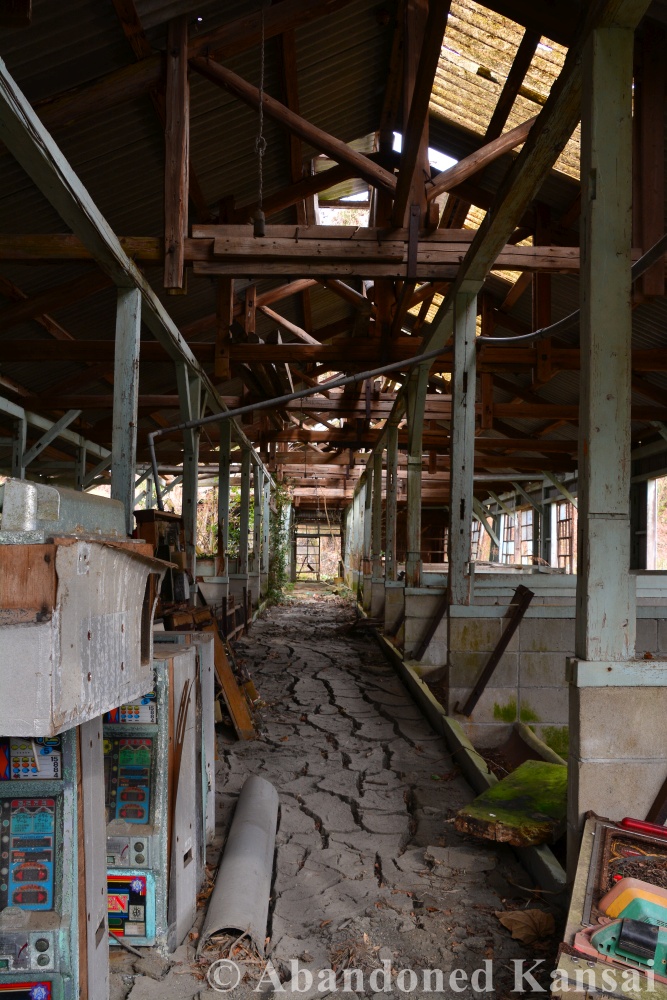
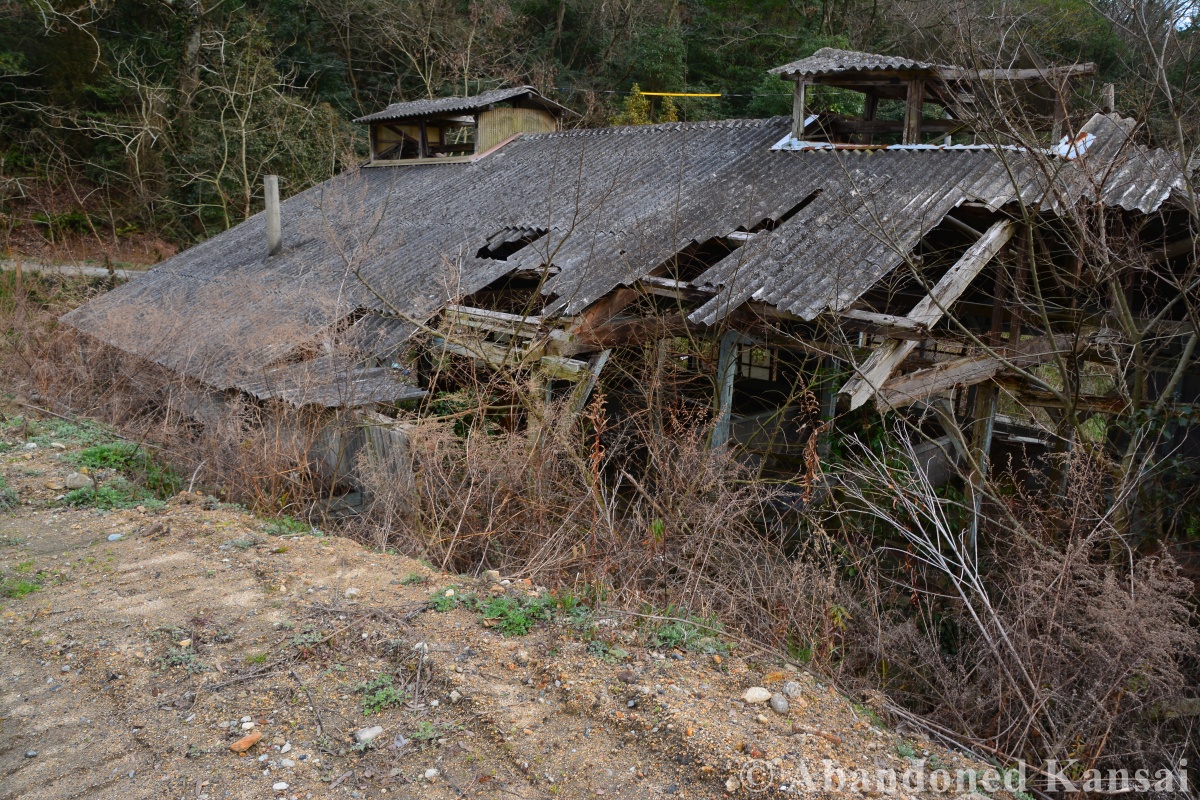
Animal farms reek – even more so than Osaka, which smells pretty bad, especially in summer, especially after a shower of rain. But not as bad as cattle or chicken farms, which is why people live in Osaka and animal farms are banned to the countryside. Not even the regular small town countryside. Remote places halfway up a hill – out of sight, sound and smell of the local yokels who have to work there since the Japanese countryside is dying faster than poultry during an outbreak of the bird flu. I grew up in a pretty agricultural small town in Germany, I have relatives with a farm and restaurant in the Black Forest – despite living in the big bad city for the past 25 years I know what livestock smells like. But it’s nothing in comparison to the chicken farms I passed by in Japan. Holy crap, those things smell like sewage plants. Maybe worse. I guess it depends on the part of the sewage plant. Anyway, what I am trying to say is: Japan has tons of animal farms, you just never see them since they are tucked away in the countryside, far away from the noses of locals and tourists alike. Quite a few of those farms are abandoned – and this is one of them!
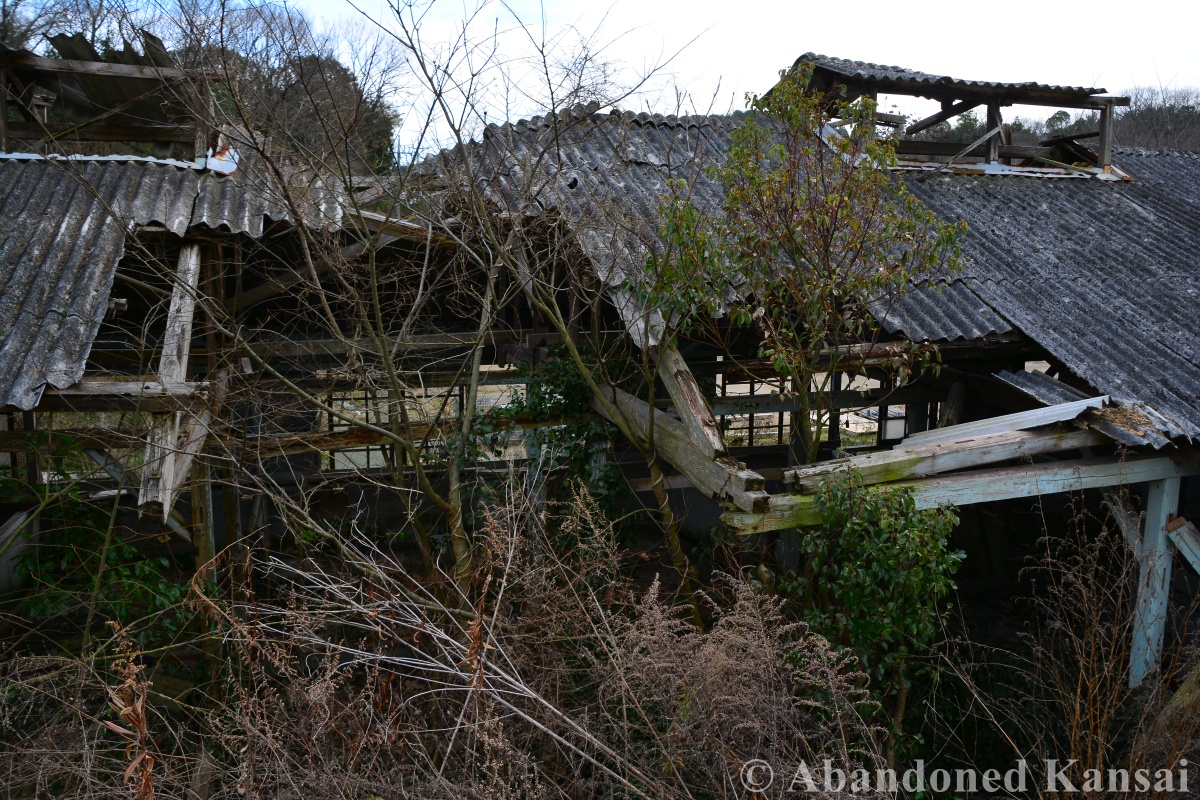
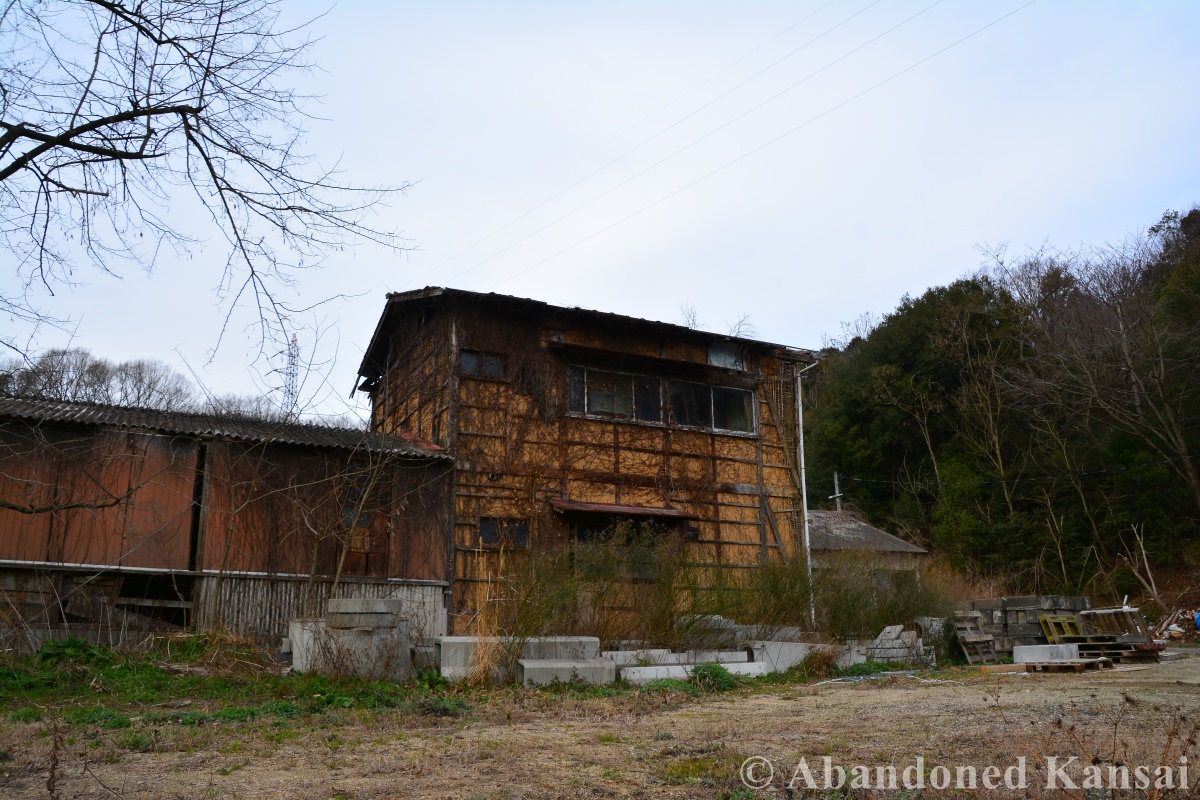
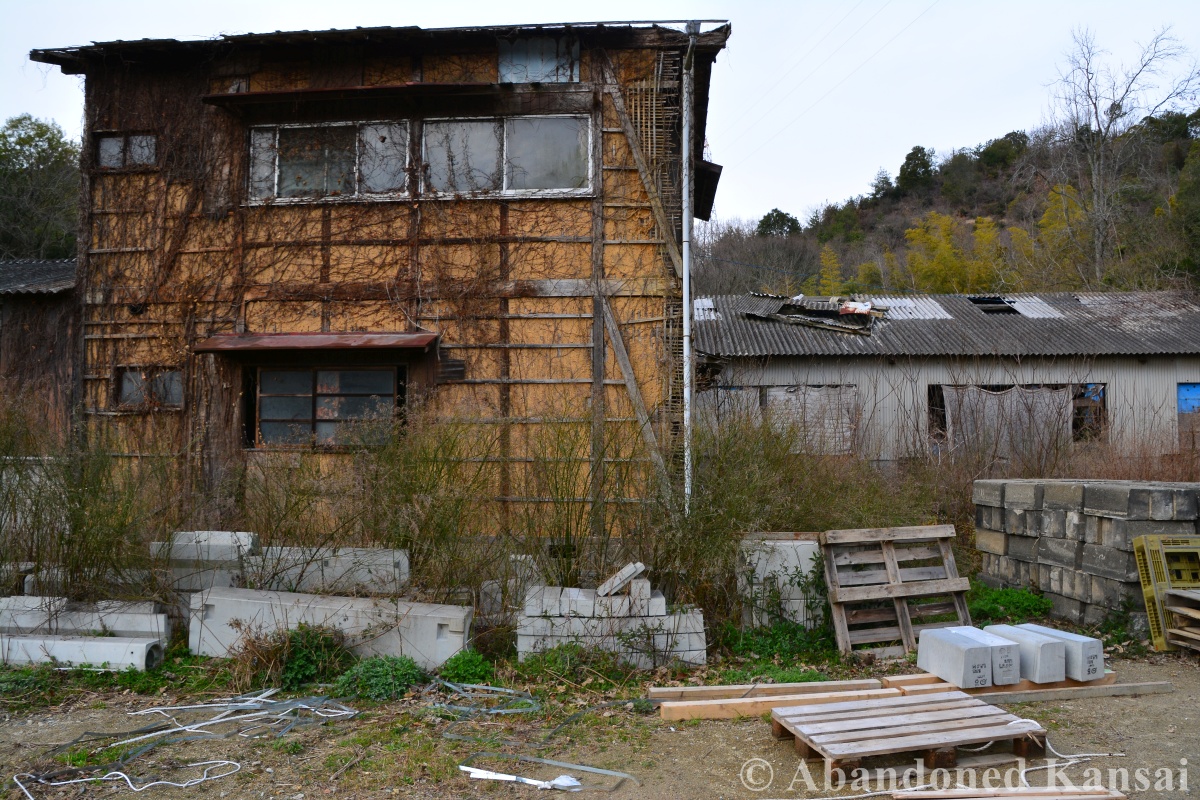
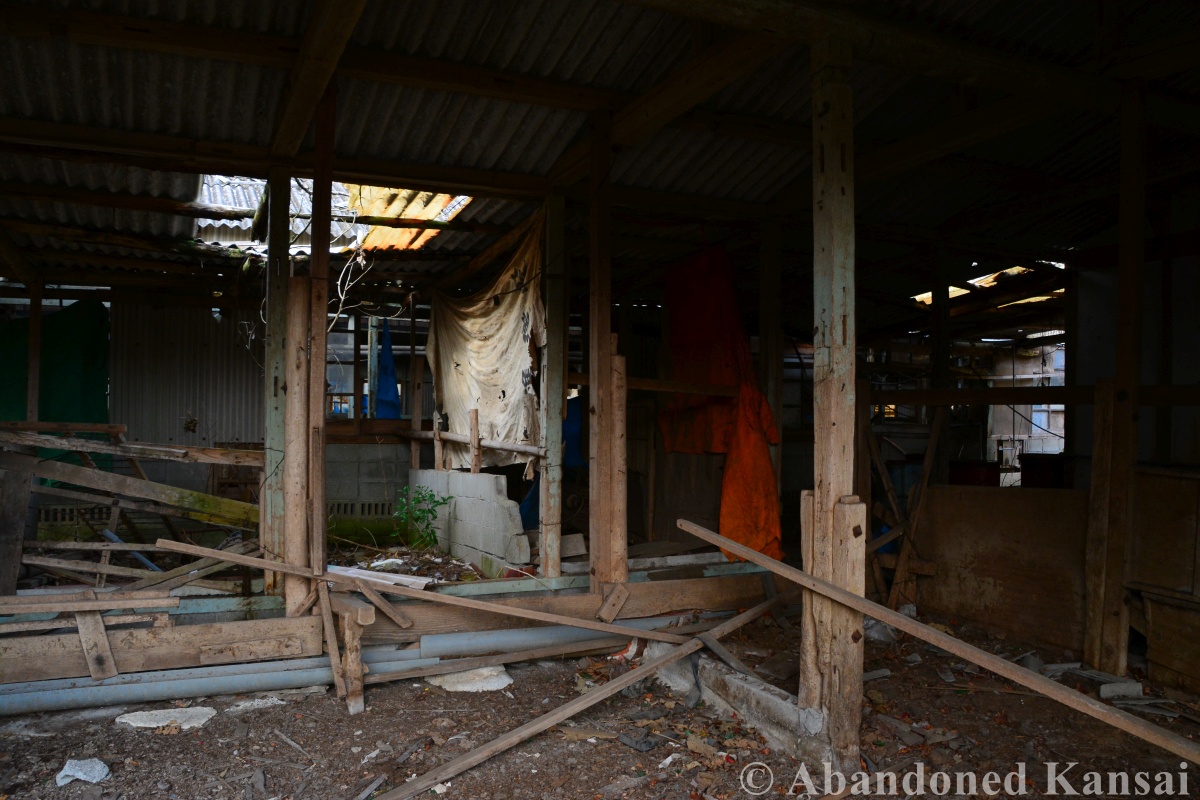
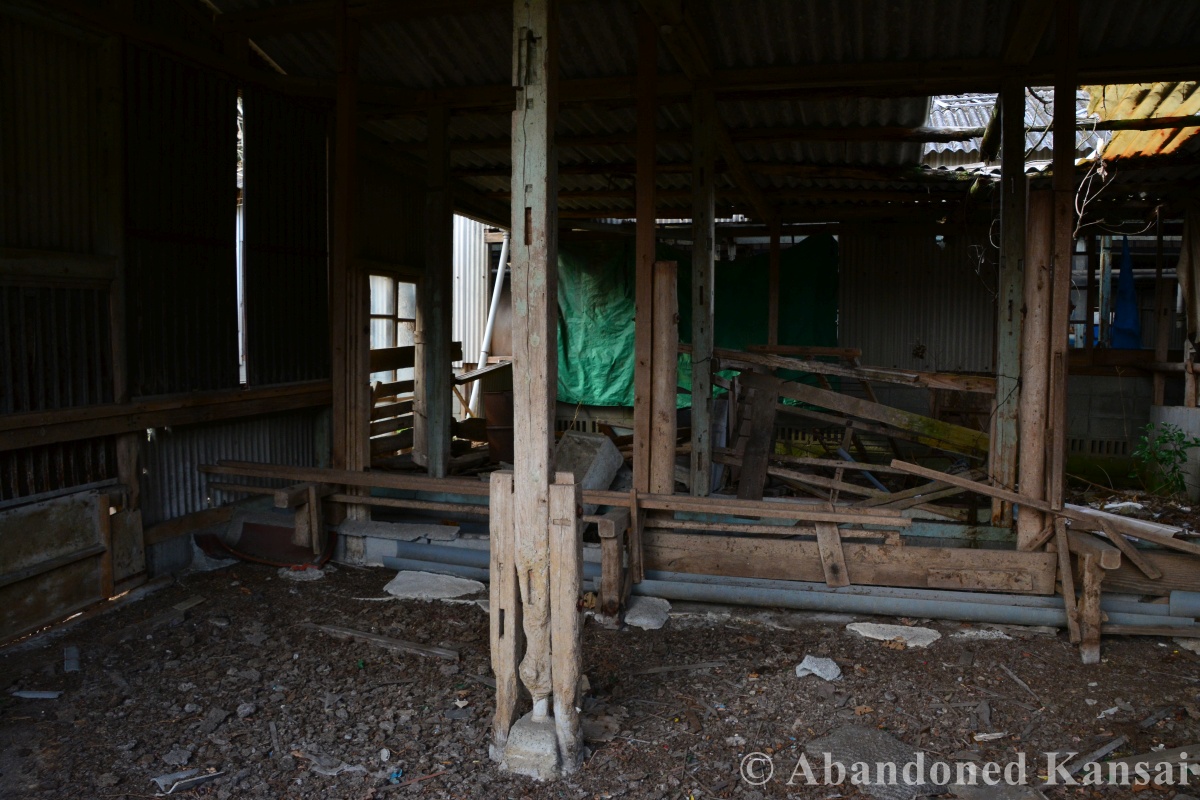
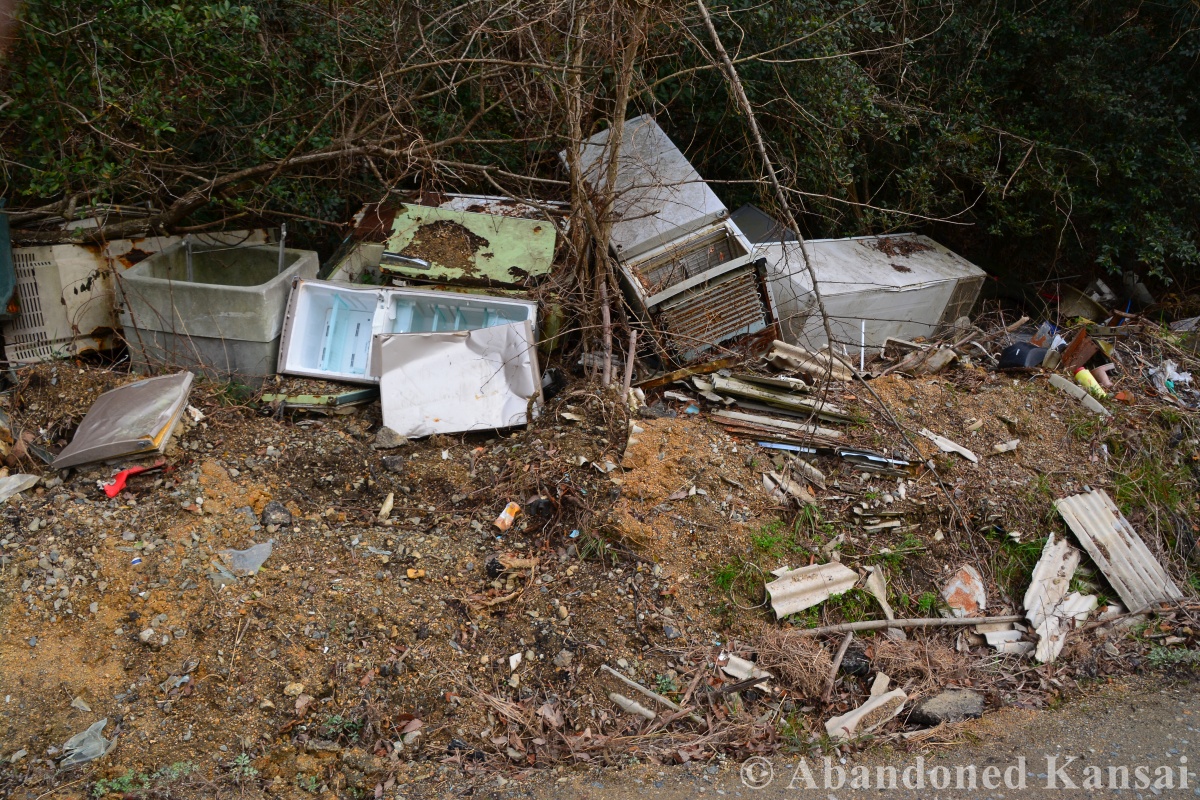
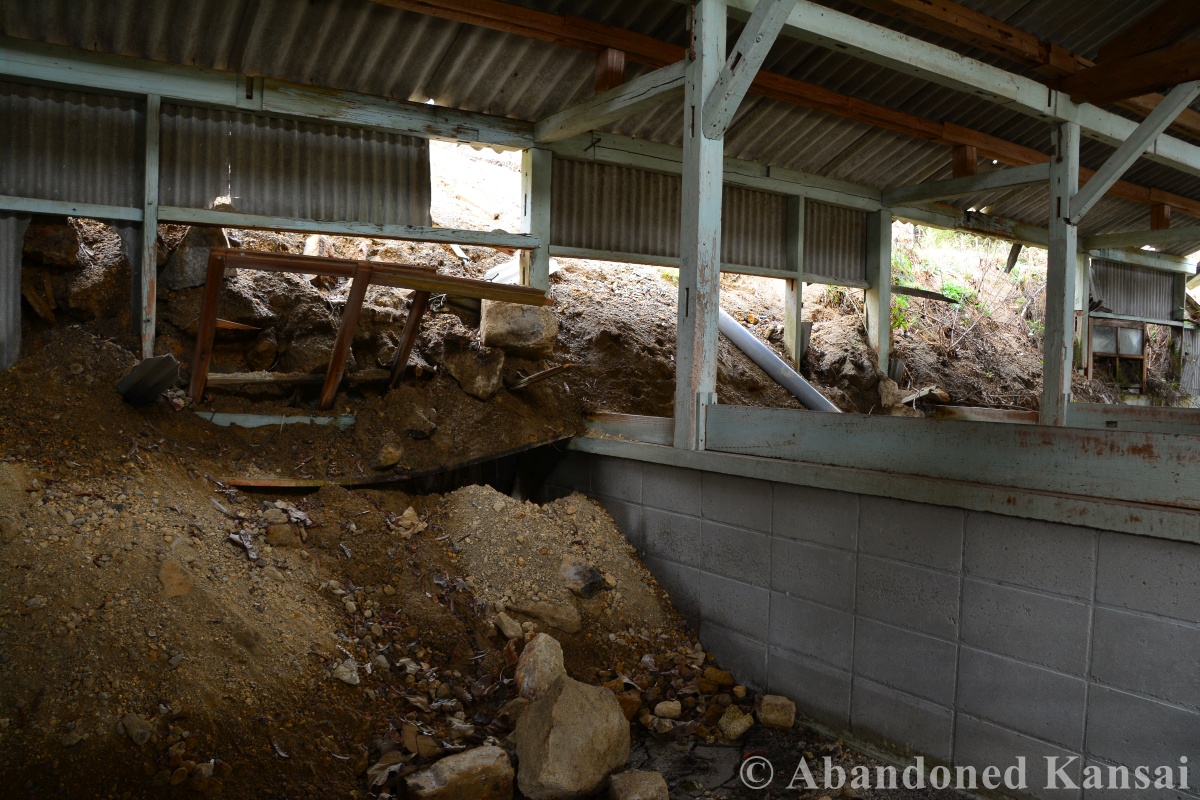
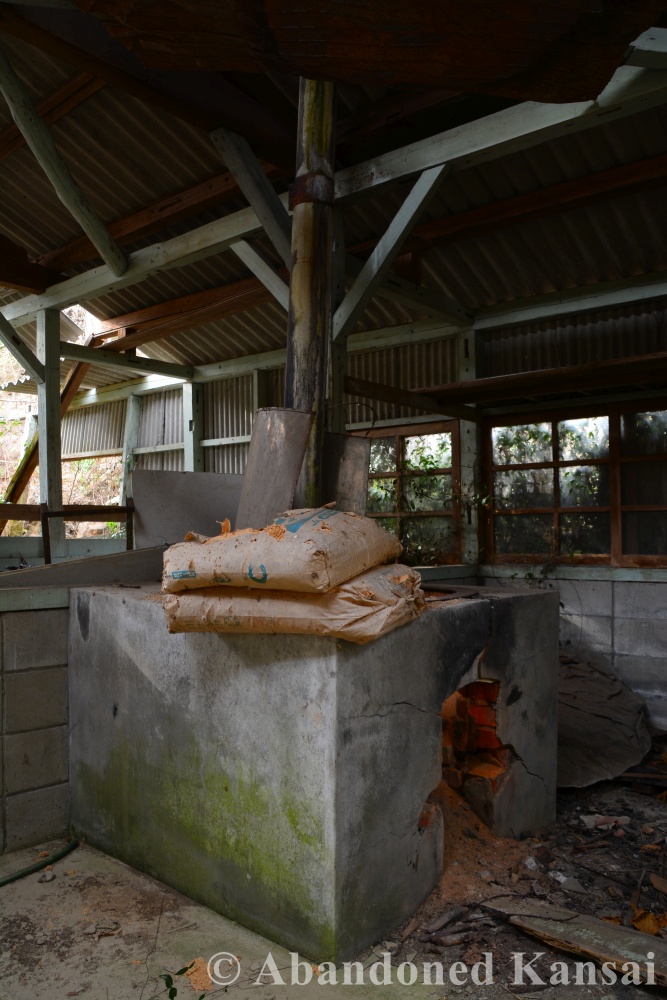
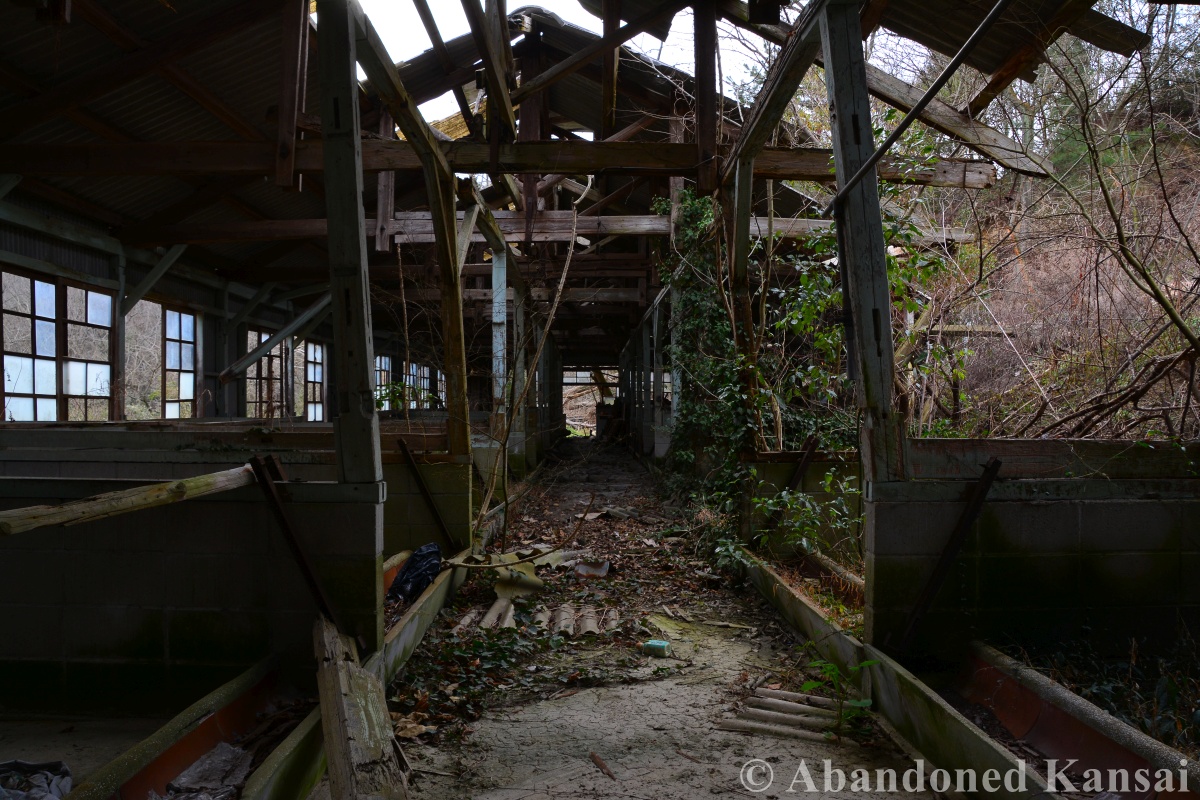
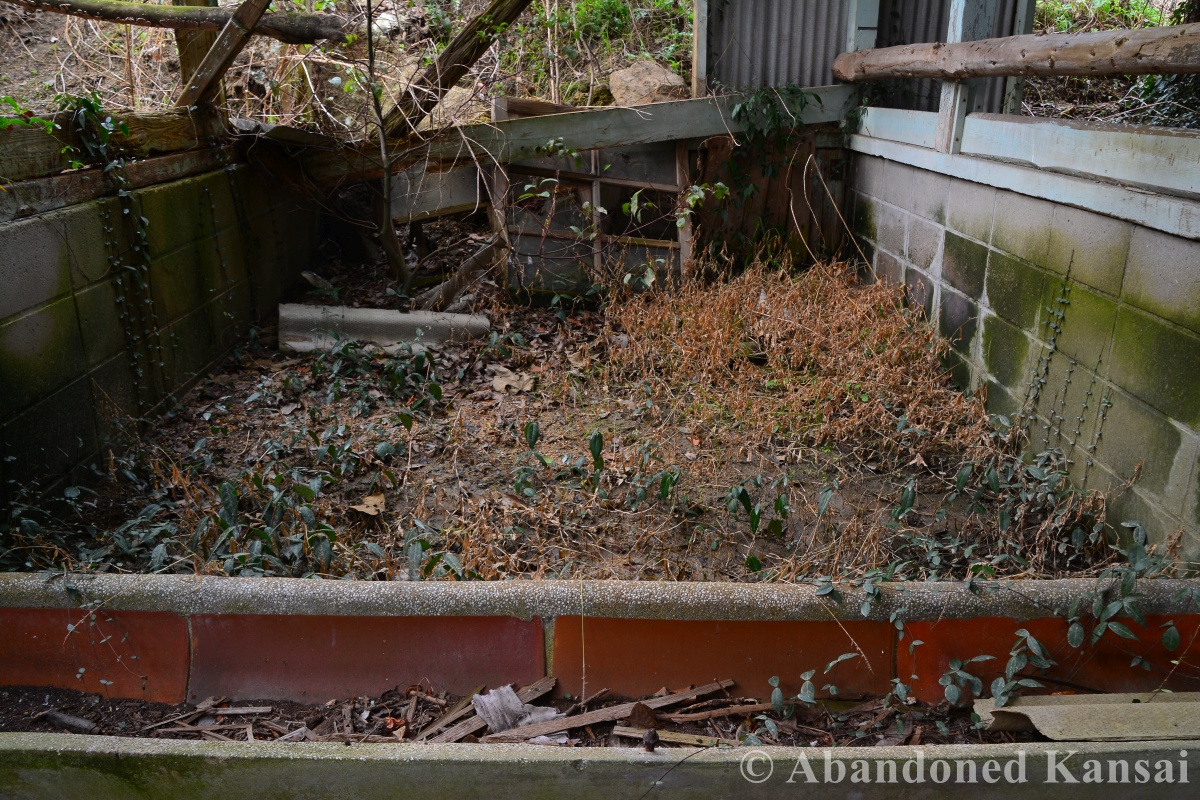
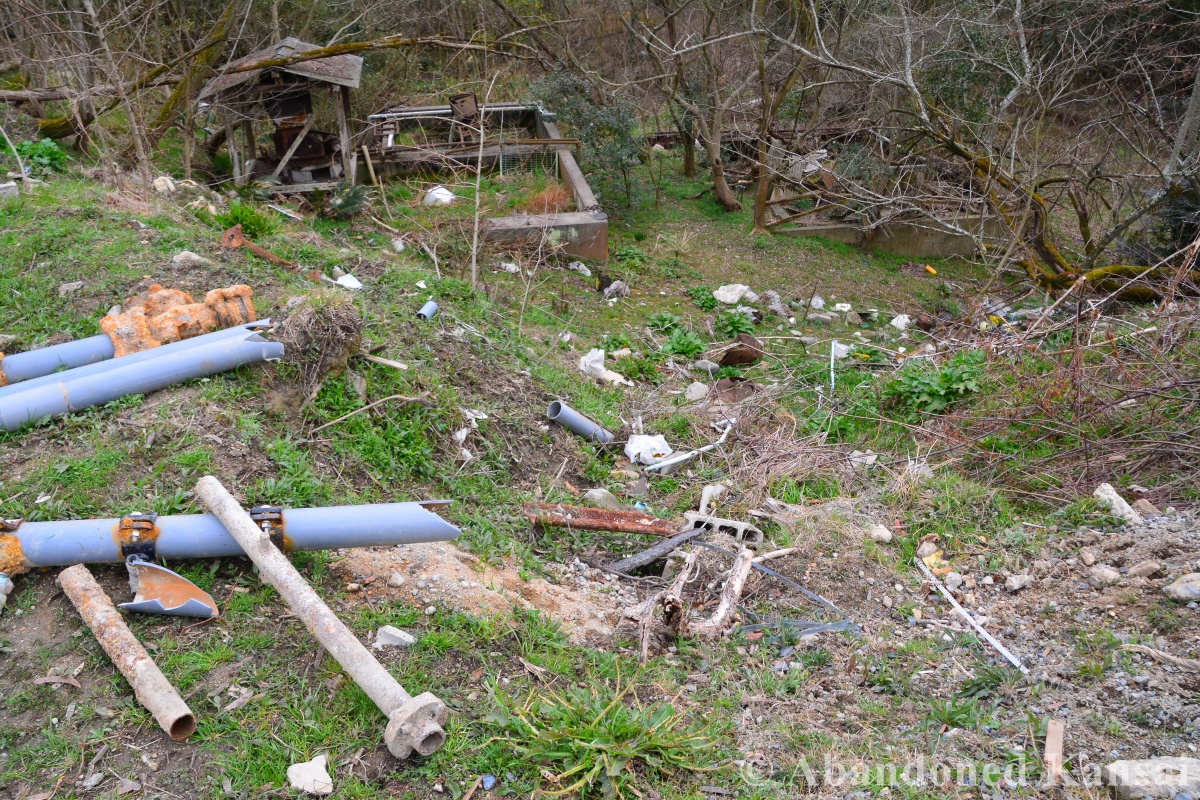
When I found the Pachinko Animal Farm it was nothing more than a rather random smudge on GoogleMaps, a blurry greyish-green blob indicating a couple of buildings in the middle of nowhere on the way to a rather famous abandoned hotel. I was on a no risk exploration day trip with three generations of Americans, age about 7 months to 70 years; obviously none of them were my family, but I’ve been exploring with my parents in Japan before, so I knew what kind of places to select. After a day of nice locations and surprisingly good beach hut pizza, we were about to check out said famous hotel to have a look from the outside when I realized that the Pachinko Animal Farm was basically on the way there, so we made a stop to have a look around. And what can I say? It wasn’t exactly the *Billionaire’s Villa*, but it wasn’t that bad either. Since it was an original find, it was first and foremost exciting, especially for my co-explorers. Okay, maybe not for the 7 months old, but the other ones! (And before some of you turn a lump of coal into a diamond with your butt cheeks: The baby never entered a building all day – no risk, fresh air. It was even fed outside… No child was harmed during any of my explorations ever!)
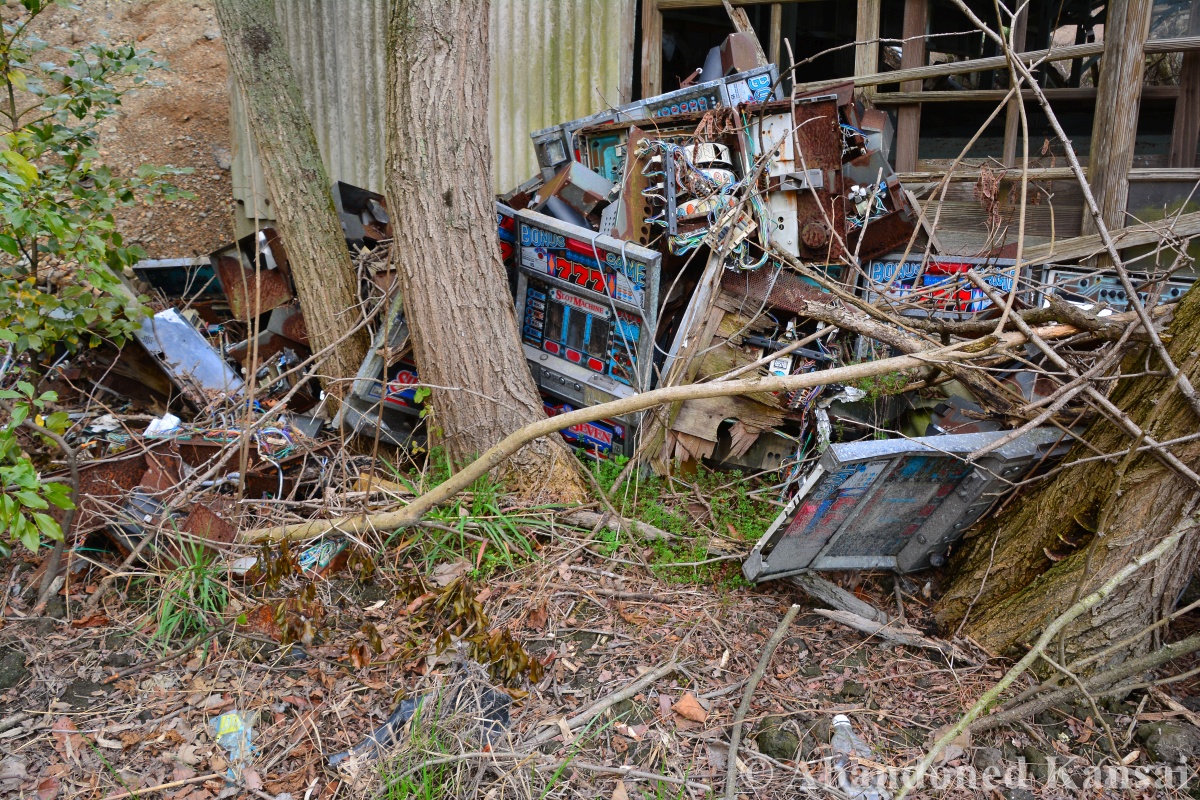
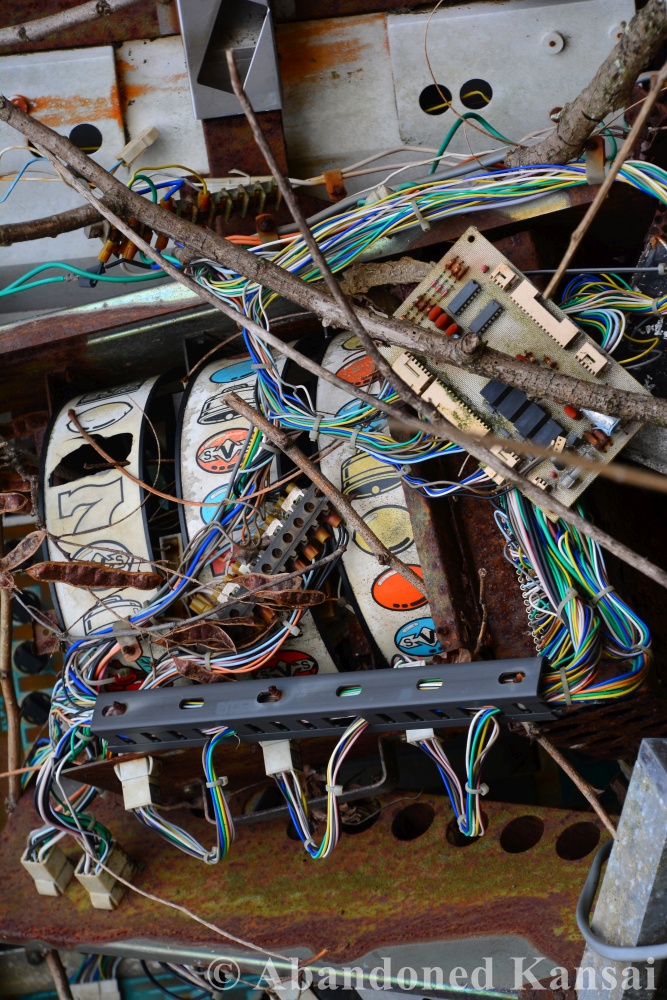
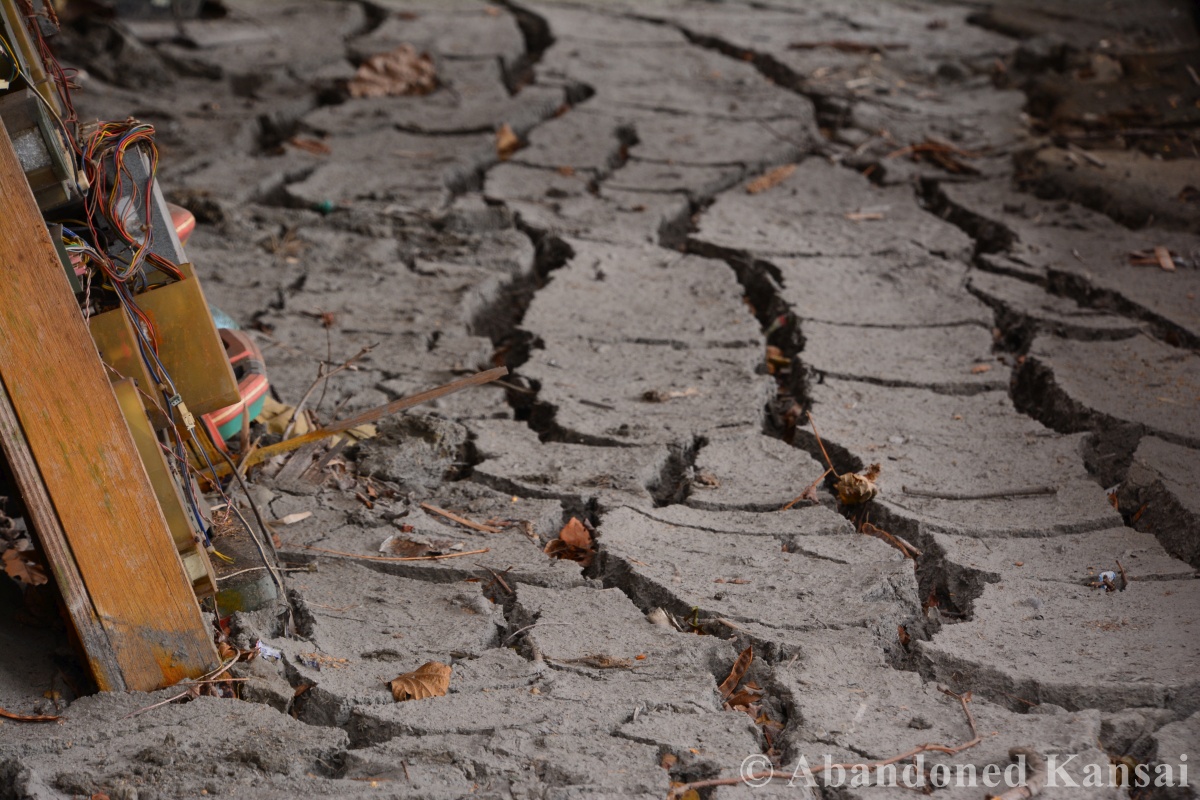
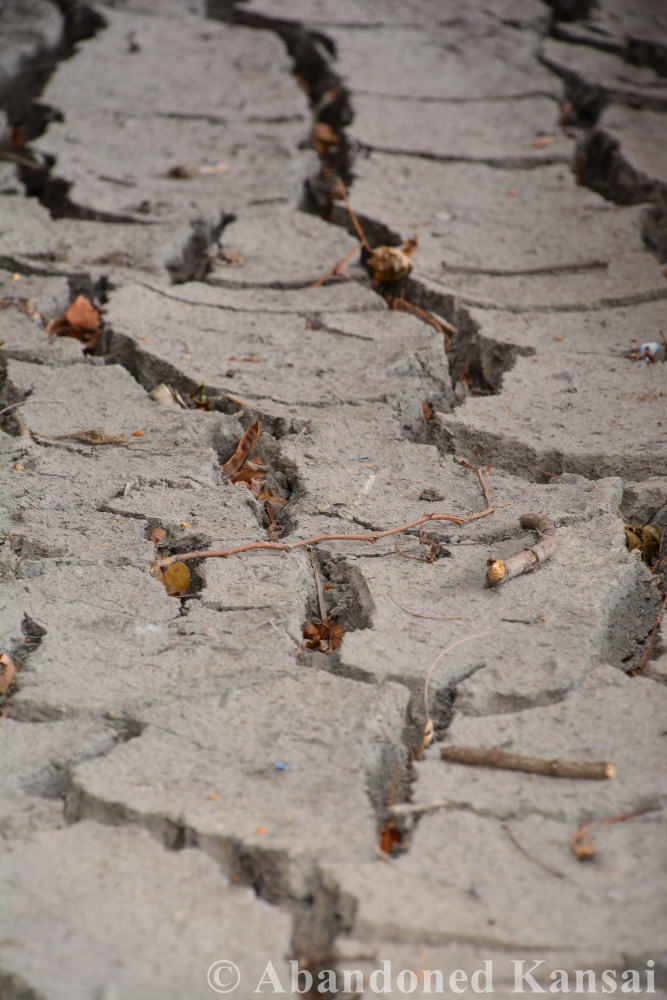
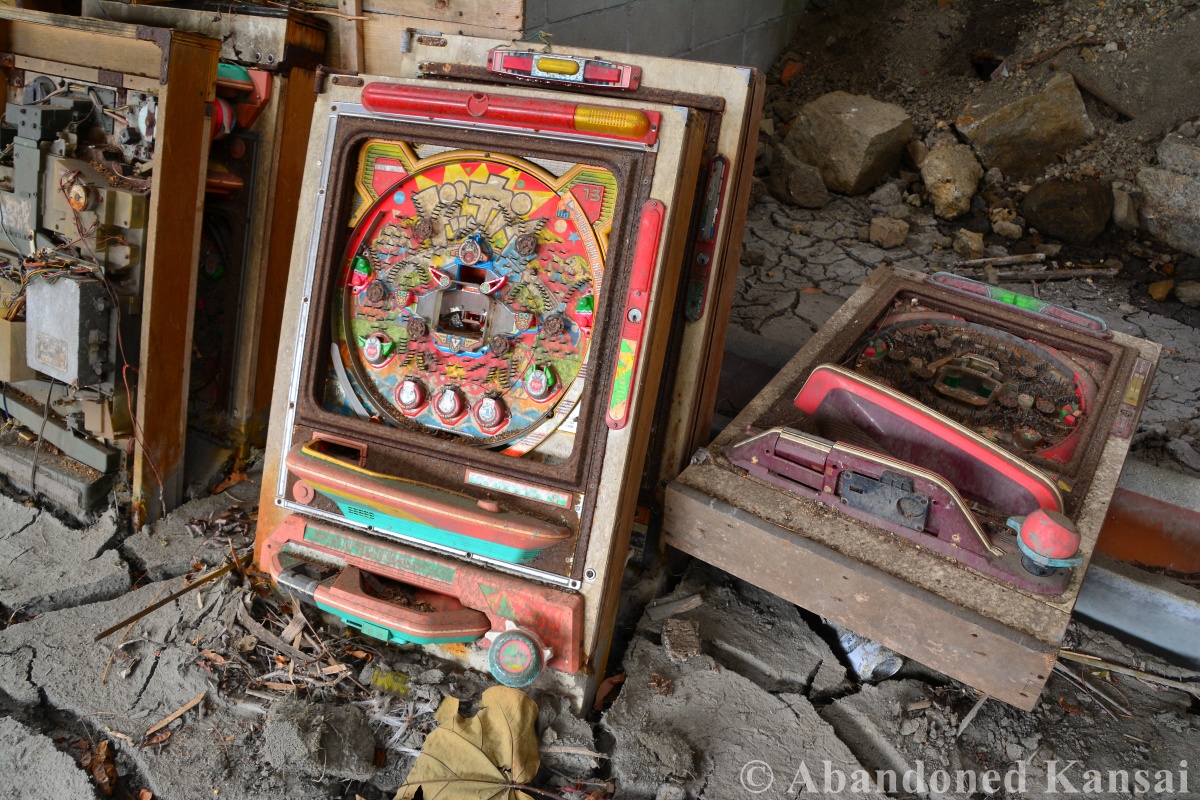
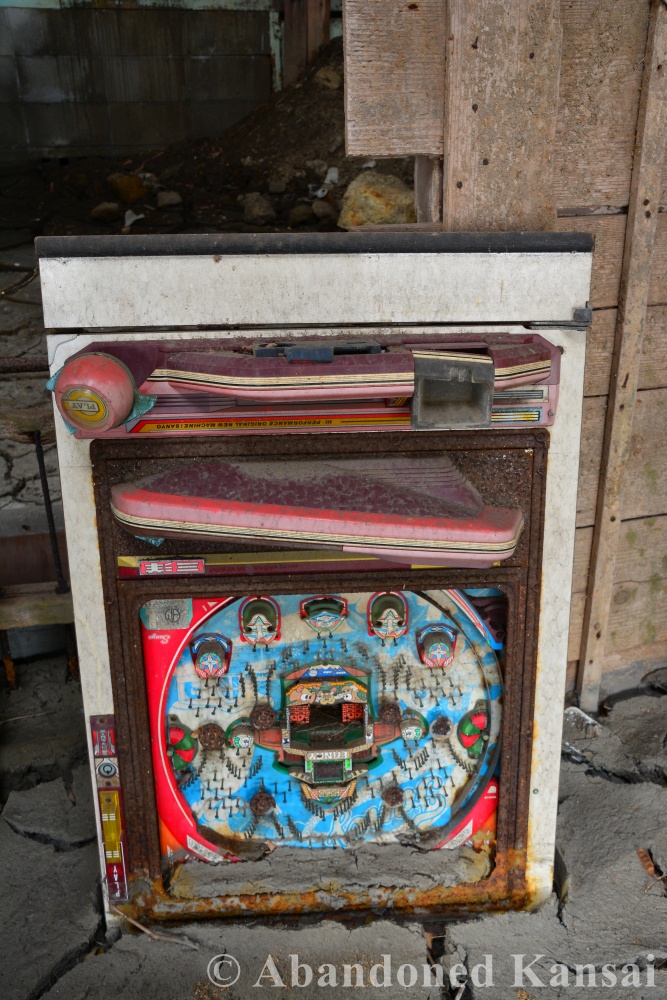
It looked like a mudslide damaged the stables, though it’s hard to say if that happened before or after abandonment. Probably after, given the cracked floors that reminded me of *an abandoned school that I’ve explored years prior*. Also completely unexpected: The dozen or so abandoned pachinko machines, most of them broken. They looked rather old, maybe from the 70s, and were probably just dumped there. I’ve never heard of a combined poultry/pachinko business before… So, yeah, a decent place to explore, nothing spectacular at all, but still better than nothing. Next week though… Boy, oh, boy… Next week’s location will be one of my favorite unpublished places. I’m looking forward to it. I hope you do, too!

(*Like Abandoned Kansai on Facebook* or *follow us on Twitter* if you don’t want to miss the latest articles and exclusive content – and subscribe to the *video channel on Youtube* to receive a message right after a new video is online…)

Read Full Post »
I’ve been urbexing for almost 15 years. During that time I’ve never written any articles about equipment, despite being very happy with three different Nikon DSLRs, two Manfrotto tripods, and a Sanyo video camera – which broke in 2019 after almost 15 years of recording countless hours at hundreds of locations as well as places like Chernobyl and North Korea. Videos I always considered a bonus anyway… and I’m still having a hard time thinking of myself as a photographer, given that I have no formal education in that field and only do it as a hobby. A really time-consuming hobby, but nevertheless just a hobby. I also don’t have a background in technology, so what’s the point of reviewing camera equipment when I just have an opinion based on learning by doing? Well, that doesn’t keep countless “influencers” and Youtubers from churning out incompetent nonsense, but I wouldn’t want to be found dead with either label on me! And like my favorite professor at university once said in regards to papers we had to hand in: “Don’t claim anything you can’t proof!”

Fortunately there is no need to be technical or scientific about this Insta360 X4 article, because unfortunately we never got that far…
Like I said, I always considered video walkthroughs of the locations I explore a bonus. I started them pretty much right away, but at first I didn’t even publish them, because I only took them for myself. And even when I published them, I didn’t edit them. No cuts, no voice overs. Just me walking around breathing heavily into the silence. That all came to a sudden halt when my Sanyo stopped working after exploring the abandoned *Trump Hotel*, also wiping out the recordings of the whole day. At that point I was tired of doing the videos anyway – and my co-explorers were increasingly annoyed, because I added 10 to 30 minutes at the end of every exploration for the walkthrough. So I stopped doing them.
For the past 18 months I’ve been exploring solo again (don’t ask, it’s complicated and often quite frustrating, to be honest), but a few weeks ago a colleague of mine showed me an older model Insta360 video camera that a visiting cousin from the States forgot at his place in Japan. I was fascinated by the easy to use 360 photos and videos, so I did some research and decided to get one. I’ve read reviews, I’ve read product pages – I did my best to make an informed decision, because at first I considered buying the X2 or X3 as older models often are cheaper with only slightly fewer / worse features. The X2 was out of the race when I read in a review that it required a smartphone to be activated – something I didn’t read anywhere about the X3 and X4. I guess because it’s an idea that is so stupid that it probably was a one-time mistake by Insta360, facing so much backlash that they removed the requirement from following models. The price difference between the X3 and X4 wasn’t very big and since the latter was only four weeks old at the time, the price on Amazon and in brick and mortar stores was the same, so I decided to get it at my local Yodobashi Camera (street block sized electronics stores with hundreds of employees each, in case you are not familiar with the chain), where I’ve been a customer for almost 18 years – ever since I moved to Japan.
BIG MISTAKE!

Yodobashi Camera was extremely stingy, giving only 1% points on the video camera, despite a promotional campaign of giving 13% points for purchases over amount X – except for (small print)… But when you shell out 80k Yen on a new video camera you are looking forward to use, store points are the last thing you worry about anyway. Fortunately I still had some of those points, which I used to get a seriously overpriced MicroSD card, because without it the video camera would be useless and I wanted to try it out on the weekend before an upcoming urbex trip. 83500 Yen poorer, but with a big smile on my face I left Yodobashi Camera on a Friday evening after an otherwise pretty horrible week.

Saturday was supposed to be a great day, though it started with a rude awakening / realization…
After sleeping in and having a delicious breakfast, I enjoyed a nice unboxing. The first slight disappointment was when I realized that the included battery was dead. Well, not dead dead, but completely empty. Whatever, an hour or two wouldn’t make a difference. It would not dent my great mood for sure. That came a few hours later when the battery was fully charged. I booted the small brick for the first time, its screen came to life, asking me to choose a language – and then the screen showed what the camera was seeing… for about a second or so. Then some text popped up and my heart sank. You gotta be kidding me! What I was looking at was a screen telling me to download an app by Insta360 to a smartphone, iOS or Android, to unlock the video camera. What. The. Heck? I literally felt it in my fingers how my blood-pressure exploded, because unlike pretty much every person on the planet above the age of 6 years I don’t own a smartphone. Never have. In the late 90s I had a black and white Nokia for work (yes, I’m not the youngest anymore, though I started working full-time in my early 20s). When I moved to Japan I had a flip phone or two, but for the past 15 years or so I didn’t have any mobile phone at all, smart or not, because I don’t like them as they turn way too many people into dumb zombies. So here I had a brand-new, quite expensive video camera… that forced me to make it usable by using another device with cameras? Who comes up with stupid ideas like that?!
Certainly not Nikon! Their D7500 DSLR I bought just weeks prior worked with a partly charged battery and regular SD cards straight out of the box 5 minutes after purchase – without any charging or unlocking BS!
So I started to do some research… and didn’t find much. Like I said, I couldn’t care less about smartphones, apps and all that stuff, so I tried to find a solution to unlock the darn X4 via PC or MicroSD card. Of course I couldn’t find anything about that either, so I contacted Insta360 directly – who apparently didn’t read my message and instead sent me a standard reply. So I got back to them, apologized for not describing my problem properly (I’ve been in Japan too long…), and this time got an answer that at least implied that they understood the situation I was in – without being able to help, because though it seems to be nowhere stated on the box, the promo material or even on the X4 website (at least back in mid / late May, maybe they changed it by now)… you really need a smartphone and the Insta360 app to use a newly bought X4 video camera, that seems to work perfectly fine, but is made not usable on purpose by the manufacturer. Which absolutely blows my mind!
How is that even legal?
How can a company force you to use a completely unrelated piece of expensive technology that actually partly does the job of the product you just bought, to make your purchase usable? Without mentioning that essential detail with big warnings before purchase! And in addition, forces you to use an app, which does who knows what in the background without one knowing?
What’s next? You need an electric bike with WiFi to unlock your newly bought car? And if you don’t… sucks to be you, it’s completely useless!

Yodobashi Camera – (The Lack Of) Customer Service In Japan!
After some back and forth it was Monday and I came to the conclusion that I won’t be able to use the Insta360 X4, because it really needs a smartphone to unlock, which wasn’t properly communicated. So after work I went back to Yodobashi Camera, my go-to electronics store for the past almost 18 years. Never had a problem with them, because all the products I bought worked as intended right out of the box. So I went back to the cashier counter where I bought the video camera… and already ran into the first minor bump in the road – apparently I hadn’t paid for it in the camera department, but a neighboring one, which wasn’t a problem on Friday evening, but very well on Monday evening. So I went 20 meters over to the camera department and told them about my unfortunate situation: That I had bought this video camera three days prior, but couldn’t use it, because it doesn’t work without a smartphone, which wasn’t properly communicated by Insta360 or Yodobashi Camera. But I was very careful with everything, I didn’t even remove the protective film from either of the lenses. Some air through the teeth sucking, some going back behind the counter to talk to a superior and then something like the following conversation – it’s in quotation marks, but they are not really quotes, you know… just something like that, from memory:
“I can’t sell this anymore, you opened the box. You can’t return it.”
“But I can’t use the video camera.”
“I can’t sell this anymore, you opened the box. You can’t return it.”
“I don’t have a smartphone. The X4 is useless to me.”
“I can’t sell this anymore, you opened the box. You can’t return it.”
“I did proper research and I only found out about this after I opened the box and tried to use the X4.”
“I can’t sell this anymore, you opened the box. You can’t return it.”
“I bought a D7500 last month, it worked out of the box…”
“I can’t sell this anymore, you opened the box. You can’t return it.”
“Then take it back and ask Insta360 to exchange the X4 – you have dozens of them here, you probably have to return one once in a while anyway.”
“I can’t sell this anymore, you opened the box. You can’t return it.”
“Are you serious? I’ve been a customer here for almost 18 years, spent millions at your store and other ones in the building that has your name. Never had a problem – and the first time I have, you are stonewalling me?”
“I can’t sell this anymore, you opened the box. You can’t return it.”
“Really?”
“I can’t sell this anymore, you opened the box. You can’t return it.”

At this point I gave up and exchanged a few more e-mails with Insta360 (“You should try to return the X4 where you bought it!” No kidding…), but their responses quickly became as useless and repetitive as the one of the guy at Yodobashi Camera – who is just a small cog in a big machine, so I don’t blame him; he’s punished enough with the lighting in the store and the uniform he has to wear all day.
So here we are, after me falling for the usual misconception about (customer) service in Japan, because I rarely ever had a real problem anywhere. It’s great as long as everything is within procedures – if somebody has planned for it, it most likely will go smoothly. Service is great. When service becomes customer service though, i.e. an individual customer needs help that requires improvisation outside of the planned service… you’re basically on your own. The only thing flexible in Japan is bamboo.

Nevertheless I still have moments when I wonder: AITAH?
I’m a huge believer in personal responsibility. If I make a mistake, I stand by it. I find behavior like ordering 20 items of clothes in different sizes and colors with the intention of sending 18 of them back despicable. In fact I’ve never sent anything back that I’ve ordered online, except for two USB-HDDs – and only because they didn’t work. I don’t do fast fashion, I don’t buy garbage from questionable sites like Shein oder Temu, I don’t replace electronics unless they are broken. (RIP, Nikon D7100!) I did due diligence before buying the Insta360 X4 and to this day everything in that (opened…) box is in mint condition. If I would have known about the smartphone requirement, I wouldn’t have bought the X4. It’s the reason why I didn’t buy the X2.
This is actually only the second time that I tell this story to anybody, because part of me is a bit ashamed that this series of unfortunate events happened – despite all the research before buying. But spending more than 80k on a useless brick of tech isn’t exactly something to be proud of. I don’t regret much in my life, but buying the Insta360 X4 I regret. And buying it at Yodobashi Camera is something I regret, too. Maybe Amazon would have been more accommodating with returns…
But I guess it is what it is – only money in the end. And no videos for Abandoned Kansai in the future. Heck, even if I would get the currently useless X4 to work, I would always be reminded of this story. Screw video cameras! Never was a fan, now I dislike them almost as much as smartphones. Which kind of closes the circle. But I’ll make sure to never ever even consider buying anything from Insta360 again – I still don’t understand how it’s even legal that they can do this. What’s next to unlock their cameras? Having to send them a voice message, swearing loyalty to Winnie the Xi(thead)? Apparently they can do anything without people questioning it…
I went back to Yodobashi Camera once more though, two days ago. I spent the remaining shop points I had on presents for my nephews without having to pay a single sen – my goal was it to hit +/- 20 points/Yen, but going to exactly 0 was priceless – and so I left the Yodobashi Camera building one last time with a big smile on my face. Upon arriving back home I cut up my loyalty card after almost 18 years. It probably doesn’t mean much to a large store chain like that. But it meant a lot to me!

Thank you for reading till the end and… What has your worst experience with Japanese (customer) service been? Write it in the comments!

(*Like Abandoned Kansai on Facebook* or *follow us on Twitter* if you don’t want to miss the latest articles and exclusive content – and subscribe to the *video channel on Youtube* to receive a message right after a new video is online…)

Read Full Post »

Japanese men have a thing for chicks! They love young firm breasts and meaty thighs, preferably while getting drunk. And while some of those school girl fantasies could be considered borderline child pornography outside of Japan, restaurants serving chicken dishes are also quite popular…

Yakitori restaurants are amongst the most popular eateries in Japan, especially for groups and couples. As the name yakitori implies (焼き – grilled / 鳥 – chicken), those places focus on grilled chicken dishes, usually on skewers. Chicken meatballs, pieces of chicken breast, chicken hearts, chicken livers, chicken skin, chicken cartilage – the latter gives you an impression of what it is like to bite somebody’s nose or ear off, but some people seem to like it. In addition to meat there are usually some side dishes available. French fries, salads, kimchi, pickles, … Prices vary dramatically from affordable to “I didn’t want to buy the whole friggin’ farm!” and depend on several factors, like most restaurants. Since Japanese people tend to prefer fatty thigh meat over the perceived dry breast meat, rather cheap chicken chain places often serve breast meat – much to the joy of most foreigners, who tend to prefer breast meat. In any case, yakitori restaurants are awesome places to hang out with colleagues or friends for a quick dinner or to have food and alcohol all night long… and unlike at *yakiniku restaurants* you get your food properly cooked and don’t have to do it yourself. (BTW: While not considered a yakitori restaurant, KFC is widely popular in Japan. So popular that they managed to establish buckets of KFC chicken as a common Christmas dinner!)

Growing up in a rather small town in German I was always aware that meat comes from animals and doesn’t grow pre-packed on trees, but I’m pretty sure that the vast majority of Japanese people have never seen a chicken farm – mainly because they are much better hidden than in Germany, where you can often see them from highways or in the outskirts of small towns. In Japan they tend to be in small side-valleys or halfway up a mountain; out of sight, out of mind, out of smelling distance.
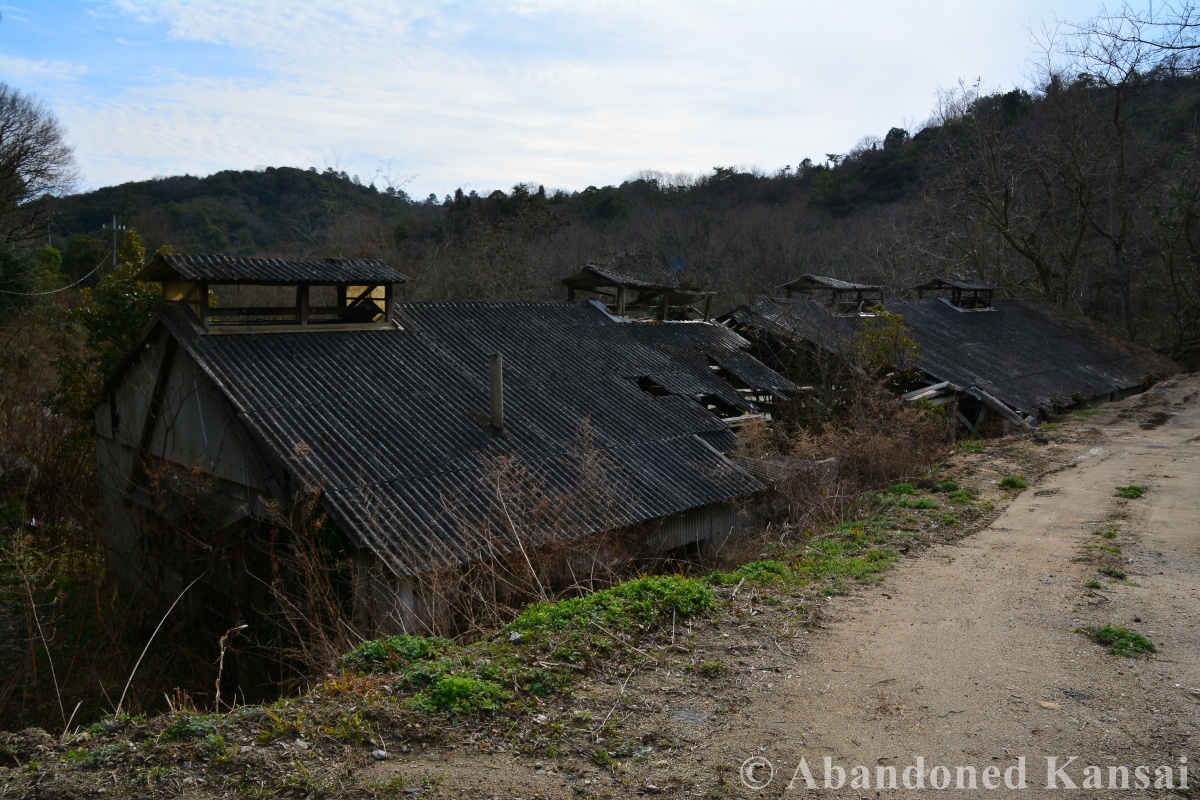
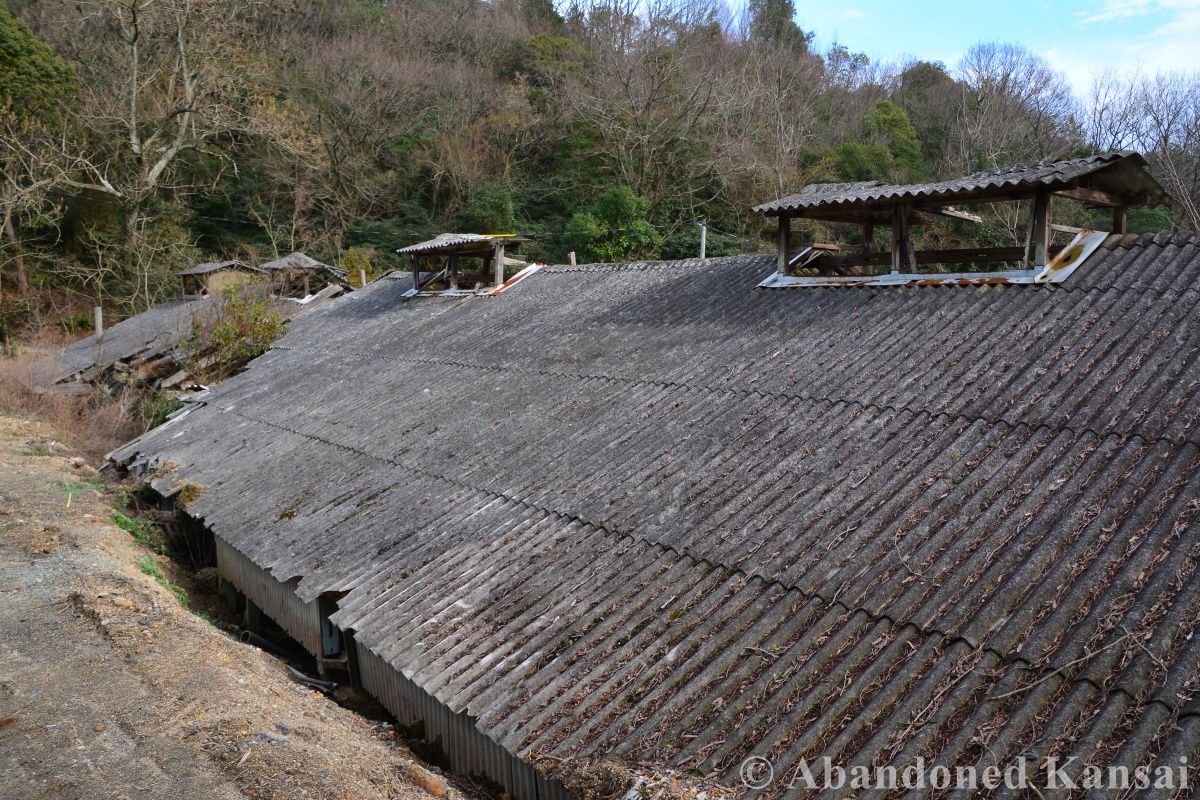
As urbex locations chicken farms are not super interesting, but ‘better than nothing’. Being unusual places only a few people have regular contact with they have the potential to feature some unusual items – like the debeaker I found at the *Poultry Farm* six years ago. The Japanese Chicken Farm was the last location of spring exploration day and got more and more interesting the further I got, which means that I ran out of light and therefore out of time after 45 minutes. At first the farm looked quite unimpressive, an agglomeration of long and narrow metal sheds, most of them more or less empty – but then there was this extremely rusted, yet still almost complete one that featured a ton of machinery and other interesting items. No word on when and why it was abandoned though…

(*Like Abandoned Kansai on Facebook* if you don’t want to miss the latest articles and exclusive content – and subscribe to the *video channel on Youtube* to receive a message right after a new video is online…)

Read Full Post »
You would think that after eight years in Japan surprises and weird situations should become rather rare, yet Hachijojima was full of them – good and bad…

In early 2014 a bunch of interesting looking abandoned hotels popped up on Japanese urbex blogs, with one thing in common: they all were located on an island I hadn’t even heard of before, Hachijojima. Turns out that it is right next to Aogashima, a hard to reach volcanic island that is often part of those “the most remote places in the world” lists that are so popular on Facebook and other social media sites. When you are living in Kansai, basically one big city of 22 million people (plus 0.7 million spread across the countryside), “the most remote place in the world” sounds wonderful, at least to me – so I decided to do a combined Hachijojima / Aogashima trip during the first half of Golden Week. Long story short: I was able to locate three gigantic abandoned hotels on Hachijojima, but I failed to organize the side trip to Aogashima due to unpredictable weather, high risk of boats getting cancelled and the season I was travelling in; *Golden Week can be a real pain* as even the biggest Japanese couch potatoes think that they should travel, because everybody else is. So I stayed on Hachijojima for 3.5 days – part relaxing vacation, part urbex trip.

For the first night I booked a small minshuku on the east coast, just five minutes away from one of the abandoned hotels. Sadly the place turned out to be in a very remote area with hardly anything around… and even worse, it was terribly overpriced due to Golden Week. So instead of extending my stay, I took a taxi to the local tourist information the next morning – and the super friendly staff managed to get me a cute little hut at a local lodge with breakfast, bathroom and internet for the same price as the basic tatami room with shared bath / toilet and without food or internet, a.k.a. the night before. They even drove to my new accommodation to introduce me to the owners of the family business as they barely spoke any English – a pleasant surprise after the cold reception at a local sushi restaurant the previous night; upon entering the chef, smoking outside, was asking his wife who just came in… and she answered “a foreigner”, using the slightly derogative term “gaijin”. Thanks a lot for the warm welcome! Luckily my new hosts were the exact opposite, some of the friendliest and nicest people I ever had the pleasure to meet. Should you ever go to Hachijojima and don’t mind a little bit of a language barrier, try the *pension Daikichimaru*!

I continued Day 2 by exploring the second big hotel on the island before climbing the most famous local mountain, Mount Nishi (literally “West Mountain” – guess where it is located…), better known as Hachijo-Fuji, thanks to its resemblance to Japan’s most famous mountain. 854 meters tall and of volcanic origin, Hachijo-Fuji turned out to be quite an exhausting and steep climb, especially on the last few hundred meters – but the view up there was amazing; one of the most rewarding hikes I ever did. (You can actually see the hiking trail on the first photo I took from the plane during landing approach.) If you are free from giddiness you can even walk along a sometimes just foot-wide path along the crater, but from where I started it looked like a rather risky walk, so I opted to descent to the green hell of Mount Nishi’s caldera; 400 meters wide and 50 meters deep it is home to lavish vegetation and even a shrine!
On the way down from Hachijo-Fuji I made a quick stop at the Hachijo-Fuji Fureai-Farm, a dairy products selling petting farm, which offers a great view at the plain between Hachijojima’s two mountain ranges. Upon arrival at the base of the mountain, near the airport, I came across a local guy and his dog. Despite being on a leash, the pooch ran towards me at full speed, barking like a mad dog (not a spaniel!) without any Englishmen; stopped by the slightly mental grinning owner maybe 20 centimeters from my ankles. Luckily it was one of those field goal dogs and not a German Shepherd or a British Bulldog, so I wasn’t too worried, but still… what a weirdo!
Almost as weird as my visit to a local supermarket the night before. After the sushi snack I had (made from local varieties like flying fish), I thought it would be nice to get some local products, so I entered a mom-and-pop store, the owner at the cash register talking to a customer. I grabbed a couple of things and when I was about to pay I saw the other customer leaving – and the owner told me that the shop was closed. So I asked if I could pay for the items I already grabbed. No! So I put the stuff back, which probably took longer than paying for it, and left empty handed… literally. Really strange 24 hours!

Day 3 was a lot more unspectacular. I took a bus to the southern part of Hachijojima and explored the third gigantic abandoned hotel after passing a police car basically in sight of it. Then I continued by bus to the Nankoku Onsen Hotel – which turned out to be a vandalized, boarded up piece of garbage with a neighboring house just 10 meters across the street. So instead of wasting any time I enjoyed a soak at a really, really nice onsen (without a hotel).

My last day on the island I spent mostly walking – to the Kurosuna sand hill and then along the coast back to the second abandoned hotel and then to the pension, from where I got a free ride to the airport.

Spending a couple of days on Hachijojima was one of the best things I did in all of 2014 – it’s just such a surreal and yet neat place! The main roads on the island for example look brand-new and very expensive. Given the massive drop in tourist numbers one wonders how a place like that can survive financially. Sure, three planes and a ferry per day bring quite a few tourists, but at the same time the three biggest hotels on the island and a few smaller ones are abandoned. Back in the 1950s and 60s Hachijojima was known as “Japan’s Hawaii” as it is much closer to Tokyo, Yokohama, Nagoya and Osaka than Okinawa, but those days are long gone and I doubt that fishing and some local farm products can pay to keep the island as neat as it is today.
Some of the islanders were just plain weird… and others were quite the opposite, the most helpful and welcoming people you could dream up. While mainland Japan became somewhat predictable to me over the years, Hachijojima gave me that “first visit feeling” back, where you just roll with the punches and expect the unexpected at all times. The nature on Hachijojima was absolutely stunning, the food was amazing (especially at the *izakaya Daikichimaru*, same owners as the pension; the best sushi I ever had!) and I even enjoyed the onsen visit… though usually I don’t like onsen at all – but the entrance fee was part of the bus ticket, so I gave it another try and liked it tremendously.
*Facebook followers of Abandoned Kansai* might remember two photos I posted to the “Brand-new and Facebook exclusive!” album in late April this year – those will show up in future articles as I will start the Hachijojima series with the most unspectacular of the three hotels on Thursday, two days from now; though unspectacular is relative, especially if you are into abandoned arcade machines…

(*Like Abandoned Kansai on Facebook* if you don’t want to miss the latest articles and exclusive content – and subscribe to the *video channel on Youtube* to receive a message right after a new video is online…)

Read Full Post »
Farms are probably the last things that come to mind when you think of Japan. Temples, shrines, beautiful landscapes. Neon lights, skyscrapers, robots. But farms? Maybe rice paddies and small wooden barns, where cattle is fed with beer and grain to produce wagyu, Japanese beef. But real farms?
You might be surprised to hear that the Japanese Mountain Farm is a regular on *haikyo* blogs, despite the fact that the location is rather remote, snowed in for several months per year and relatively hard to find. It seems like nobody knows or is willing to share the real name of the place, so even the Japanese blogs call to it “Mountain Farm” or “A Mountain Farm”; the “A” referring to the next bigger city, which is neither very close nor very big…

After spending a beautiful sunshine day exploring (mostly demolished) mines in the Hyogo countryside, the weather more and more turned on my regular urbex buddy Dan and I the closer we got to the Japanese Mountain Farm – the sun started to hide behind clouds and by the time we arrived at the bottom of a mountain road leading up to the farm, the atmosphere was actually pretty spooky. The sky was a greyish mess and the dusk light made it hard to take photos. All day long we were risking a spring sunburn and all of a sudden it felt like we reached the outskirts of Silent Hill. Ten minutes on foot later, after passing some abandoned cars, or at least we hoped they were abandoned, the farm finally appeared behind some trees in front of us. The road under our feet was rather bad and partly overgrown, slightly muddy. There wasn’t any fog, but the area looked like the situation could change any minute. It was already past 5 p.m., so time was of the essence…
To the left we found a few 2-storey dwelling houses, in front of us a rather big metal barn, to the right an overgrown mess, including a severely damaged abandoned white car. Since I wasn’t sure how big the farm really was (blurry satellite photos…) I left Dan behind and followed the road passing the barn. Now there was a forest to my left and several barns and other buildings to the right – this location turned out to be pretty big, maybe 120 meters by 50 meters. In the end the farm’s premises were limited by slopes and the usual waste dump at the furthest point, far beyond where the road ended. I rushed back to buildings and started to take photos inside the barns and stables, most of them being connected and partly overgrown. It was a vast area, yet there was stuff everywhere, including at least one abandoned car, truck and bulldozer. In one of the buildings I found a calendar on the wall, last turned in June of 1998 – and the 15 years of abandonment showed everywhere. Metal was usually rusty, moss and other stuff grew everywhere. Some of the building faced south, over the slope, and they were in rather bad condition. As you can see on the one named after the place, “Japanese Mountain Farm”, there were huge cracks in both some walls and floors. The whole atmosphere was damp…
Running out of light I headed back to the residential area. The buildings there were run-down and moldy, countless visitors before went through all the stuff left behind. The partly locked barns with their abandoned vehicles and animal medicine had been much more interesting elements to offer, so I took a few quick snapshots and started my video tour on the second floor of the main living quarters. Upon my return it was pretty much pointless to try and take more photos inside of buildings, so Dan and I returned to the car and headed back home – leaving the Japanese Mountain Farm and god knows what kind of lurking creatures behind…

(*Like Abandoned Kansai on Facebook* if you don’t want to miss the latest articles and exclusive content – or subscribe to the *video channel on Youtube* to receive a message right after a new video is online…)

Read Full Post »